


Abstract
This study explores changes in the transmission patterns between domestic and global grain prices under different grain price regulation policies. Price transmission is influenced by both policy interventions and external market dynamics. We conducted a segmented regression analysis to examine these relationships. The analysis focuses on how changes in international grain prices are transmitted to domestic prices before and after key policy adjustments. We interpret the results as shifts in price transmission coefficients across different policy regimes rather than as definitive causal impacts of specific policies. The study focuses on four major grains: wheat, rice, corn, and soybeans. We evaluated policy tools such as minimum purchase prices, temporary storage programs, target pricing mechanisms, and producer subsidies. Our findings show that the correlation between international and domestic grain prices became more strongly positive after specific policy changes. These changes include the introduction of the wheat minimum purchase price in 2006, the implementation of temporary storage for corn and soybeans in 2008, and the shift to producer subsidies for corn in 2016. These results indicate a shift towards more interconnected and resilient price transmission within the grain market system. In contrast, before the reduction in the rice minimum purchase price in 2018, international rice prices exhibited a slightly negative association with domestic prices. This negative association became more pronounced after the policy change. A similar shift occurred for soybeans, where the transmission pattern of global prices shifted from positive to negative following the adjustment of soybean price regulations in March 2017. These findings provide guidance for optimizing national grain pricing policies and strengthening the overall resilience and adaptability of food security systems, with an emphasis on their complex, interrelated nature.
1. Introduction
Since joining the WTO, China has significantly reduced tariffs and non-tariff barriers. At the same time, the scale of agricultural product imports and exports has continuously expanded [1,2,3]. According to WTO statistics, China’s agricultural trade volume grew from $36.75 billion in 2001 to $380.35 billion in 2023, representing an average annual growth rate of 10.8%, and making it one of the leading agricultural trade countries globally (https://stats.wto.org/, accessed on 10 February 2026). As trade volume expands, domestic agricultural market shows increasing interconnection with the international market. The concurrent volatility patterns between global and domestic prices suggest strong associations during this period [4,5,6,7].
Chinese grain price regulation policies have shifted from stability-focused to market-oriented [8,9,10,11]. In 2004 and 2006, China implemented minimum purchase prices for wheat and rice. While this policy was associated with grain production stability in the short term, market inefficiencies and price distortions were observed in the long run [12,13]. In response, the government reduced the minimum purchase prices in 2015 and 2016 to reduce stockpiles, stabilize expectations, and promote market-driven pricing. Similarly, the implementation of the temporary storage policy for corn and soybeans in 2008 also served as a means of price support [14,15]. From 2016, corn temporary storage was replaced by producer subsidies, and soybean target price subsidies and producer subsidies were introduced in 2014 and 2017, reflecting the direction of market-oriented reforms in the grain sector [16,17,18].
Regarding the impact of grain price regulation policies, some studies have highlighted significant associations between these policies and changes in farmers’ income and social welfare [19,20,21,22]. Contrary to the mainstream view, some scholars contend that agricultural support policies are associated with alterations in market-based pricing mechanisms and price signal transmission patterns [23,24]. These studies, however, have limited focus on major grain varieties and have not fully explored the interconnected nature of the domestic and global grain markets, nor the complex feedback mechanisms triggered by policy changes across different commodities. Furthermore, the use of Granger causality tests and time-varying impulse response methods, while informative, does not fully capture the systemic dynamics between agricultural policies, market signals, and external shocks.
This research systematically examines the associations between Chinese agricultural price control measures and price transmission dynamics between global and domestic grain markets. We focus on understanding how interconnected policy, market, and environmental elements shape price transmission mechanisms. Utilizing a segmented regression approach within an econometric framework, the study investigates both linear and nonlinear variations in price transmission effects across different policy periods, reflecting the nonlinear nature of market systems and policy interventions. The research focuses on four key commodities: wheat, rice, corn, and soybeans, and analyzes major policy transitions, including the implementation of the wheat minimum purchase price, the initial substantial reductions in wheat and rice buying prices, the establishment of temporary storage programs for corn and soybeans, the shift from temporary storage to producer subsidies for corn, and the transition from temporary storage to target price subsidies and then to producer subsidies for soybeans. Through causal analysis of these key points, the study identifies regime-dependent patterns in how policies such as minimum purchase prices and temporary storage relate to the transmission of international grain price shocks, providing empirical evidence for optimizing grain price regulation policies and enhancing the resilience and adaptability of the agricultural price system.
The marginal contribution of this study is threefold. First, while prior research using Granger causality tests and impulse response analysis has shown that food price regulation policies alleviate international price shocks, it has not thoroughly examined these effects’ direction, magnitude, and statistical significance. Unlike previous approaches, this research employs segmented regression analysis to evaluate how domestic grain prices respond to international price fluctuations across different policy regimes, while controlling for key economic variables. This research evaluates how Chinese grain market interventions affect cross-border price transmission by analyzing variations in regression coefficient sizes and their statistical significance levels.
Secondly, existing literature has overlooked the potential nonlinear relationships between global and domestic grain price dynamics across different phases of agricultural policy implementation. This study innovatively adds the quadratic term of global grain prices as an explanatory variable in the segmented regression model before and after policy changes, systematically identifying the regulatory role of domestic price policies in the nonlinear transmission of international grain prices. This provides a new perspective for understanding the grain price formation mechanism in a complex policy environment.
Thirdly, this study takes a more comprehensive approach in selecting policy time points, fully presenting the dynamic regulatory effects at different policy cycle stages. It explores how the impact of international price transmission changes before and after the implementation of the minimum purchase price policy for wheat and rice. Additionally, the study examines variations in market reactions when the minimum purchase price stops increasing. The study adds the effect of the shift from target price subsidies to producer subsidies for soybeans. By systematically comparing these policy points, this research more accurately and comprehensively identifies the role of various grain price regulation policies in the “international-to-domestic” price transmission dynamics, offering empirical support for optimizing national grain market regulations.
2. Literature Review and Theoretical Foundation
2.1. Literature Review
The U.S. holds structural power in the global food system, weakening other countries’ influence in pricing mechanisms [25]. U.S. grain prices impact the Chinese market through international trade and futures markets [26,27]. Qi et al. (2025) [28] noted that market transmission in the food sector mainly relies on international trade. The markets for soybeans and corn in China are primarily influenced by market dynamics and are highly sensitive to fluctuations in international prices. Ke et al. (2019) [29] applied the Copula model and discovered that U.S. agricultural futures exert a stronger contagion effect on Chinese price risks compared to the reverse. Additionally, as an essential tool for hedging financial risks, international grain prices can also affect domestic markets through short-term capital flows [30,31,32,33,34]. Regarding policy impacts on price linkage, Li et al. (2020) [35] argued that lowering or removing the minimum purchase price for wheat helps reduce the disparity between domestic and international prices. Tan et al. (2024) [36] argued that grain price control policies undermine the market mechanism and diminish the influence of international prices on the domestic market. Tripathi (2024) [37] found that regulatory interventions in wheat pricing mechanisms tend to destabilize market equilibrium conditions. Zhang and Liu (2020) [38] applied Granger causality tests and nonlinear ARDL models, revealing a one-way causal relationship where international prices influence Chinese prices for soybeans and corn, with Chinese prices showing a stronger positive response to global price shocks.
Some studies on grain price regulation policies focus on their impact on crop yields and social welfare. For instance, Wang et al. (2021) [39] observed a significant increase in cotton yields following the introduction of the target price subsidy policy; Chen and Cheng (2025) [40] emphasized how the minimum purchasing price influences the efficiency of wheat production; and Sun et al. (2024) [18] argued that target price subsidies for soybeans and cotton influence agricultural producers’ earnings. Conversely, Dai et al. (2023) [41] employed a spatial econometric model to examine the regional transmission effects of corn prices within China.
While existing research has explored the price transmission mechanisms in grain markets and the impact of the minimum purchase price policies on domestic-international price connections, several methodological constraints remain unaddressed. First, the selected price regulation policies are not comprehensive. For instance, China later reduced the minimum purchase price for wheat and rice and introduced producer subsidies for corn and soybeans. Second, while Granger causality tests established statistical relationships between global and domestic grain prices, they failed to quantify the economic magnitude of these effects. Similarly, impulse response analysis measures policy-induced changes in impact strength but does not evaluate the directional nature of these effects. Finally, existing studies have not analyzed the nonlinear effects of international grain prices before and after policy changes.
2.2. Theoretical Foundation
2.2.1. Mechanism of Grain Price Regulation Policies Affecting Price Transmission
According to the theory of price transmission, the degree to which global grain prices impact domestic prices is shaped by factors such as market openness, trade policies, and government intervention. From a systems perspective, grain price support mechanisms, including minimum purchase guarantees and temporary stockpile measures for major crops (wheat, rice, corn, and soybeans), function as direct market interventions that affect the dynamic interactions between domestic and international price signals. These interventions significantly alter price transmission efficiency, both in terms of short-term adaptive responses and long-term systemic impacts.
For example, the minimum purchase price raises domestic grain prices, creating a ‘policy floor’ (a government-guaranteed minimum price designed to protect producers from sharp price drops) that reduces sensitivity to international price fluctuations. This intervention acts as a stabilizing mechanism within the price system, buffering against external shocks, such as import-driven inflation when international prices rise. However, it also leads to a disconnect between domestic prices and the international market when global prices fall, resulting in a “policy premium”, which distorts market signals and weakens the adaptive capacity of the domestic market. The temporary storage policies for corn and soybeans further isolate the domestic market, by boosting inventories and limiting circulation, thus decreasing the system’s feedback loops between domestic and international markets. While target price subsidies and producer subsidies lessen direct market intervention, they continue to affect the decision-making processes of farmers, indirectly influencing price transmission through these systemic interventions.
Market expectation theory posits that changes in grain price policies shape the expectations of market participants, thereby influencing the transmission mechanism between domestic and international prices. When an increase in the purchase price is expected, planting costs and speculative demand rise, causing domestic grain prices to increase in advance. Conversely, if policy relaxation or subsidy reductions are anticipated, producers adjust their output expectations, leading to declining domestic prices. During stable policy periods, the market expects a “policy floor,” with traders and processors relying on policy-driven price signals, which weakens the influence of international prices. However, during periods of policy adjustments (e.g., the removal of corn temporary storage in 2016 or rice price reductions in 2018), systemic uncertainty increases, as market participants reassess the stability of price signals. This dynamic leads to amplified price transmission effects in the short term, and can even cause overshooting, as seen with the sharp drop in corn prices. These systemic feedbacks highlight the complex relationship between policy adjustments and market reactions, which can create unintended consequences within the agricultural pricing system.
Grain market policy adjustment involves complex learning within the socio-technical system. Market participants continuously interpret price signals during periods that trigger policy responses. This creates a feedback process in which policy announcements first alter expectations and behavior, observed market outcomes then inform policy refinements, and accumulated knowledge gradually reshapes price transmission pathways. For instance, after China’s 2008 corn temporary storage policy, early uncertainty increased volatility. Once stakeholders understood intervention patterns and adopted adaptive strategies, market responses to international price shocks shifted from reactive to anticipatory. This shows policy interventions should be viewed as evolving system elements, where price transmission effectiveness depends on both institutional design and collective market learning.
2.2.2. Heterogeneous Effects of Various Grain Price Control Policies on Price Transmission Effects
From an economic standpoint, the minimum purchase price policy alters market equilibrium by establishing a price floor, effectively preventing the transmission of global grain price fluctuations. In terms of systems theory, its isolation effect is observed in two key ways: first, the administrative pricing mechanism replaces market price signals, interrupting the natural flow of market information and reducing the feedback interactions between domestic grain prices and global supply-demand forces. Second, with a strong reserve system, the government can regulate market supply through auctions after purchasing grain at the minimum price, using it as a strategic reserve to respond to external shocks and stabilize the domestic market. This strategy reinforces the resilience of the domestic system, yet it also contributes to systemic rigidity, preventing the market from fully adjusting to global price signals. Based on this, the study proposes Hypotheses 1–3 regarding the impact of minimum purchase price policies for wheat and rice on the transmission effects between domestic and global prices.
Hypothesis 1.
Prior to the introduction of the minimum purchase price policy for wheat in May 2006, the positive effect of international wheat prices on domestic prices was stronger than it was following the policy’s implementation.
Specifically, it is expected that both the linear coefficient (β1) and the absolute value of the negative quadratic coefficient (|β2|) will be larger before the policy than after, indicating stronger price transmission through both direct and nonlinear channels prior to policy intervention.
Hypothesis 2.
Following the announcement in May 2015 that the wheat purchase price would remain unchanged, the positive impact of global wheat prices on domestic prices became more pronounced compared to before the announcement.
It is expected that the linear coefficient (β1) will shift from negative to positive, and the quadratic coefficient (β2) will become more negative after the policy adjustment, reflecting enhanced market-based price transmission.
Hypothesis 3.
Following the substantial reduction in the rice minimum purchase price in February 2018, the influence of global rice prices on domestic markets became more noticeable compared to the period before the change.
It is expected that both the linear coefficient (β1) and quadratic coefficient (β2) will become statistically significant and larger in absolute magnitude after the policy reduction, as international price signals transmit more strongly to the domestic market.
These hypotheses expect that the minimum purchase price policy primarily produces an insulation effect, weakening the transmission of international price shocks to domestic markets during the policy implementation period.
The temporary storage strategy for corn led to higher domestic prices and effectively shielded the market from short-term drops in international prices. However, the effect of temporary storage on soybeans was less impactful. Given China’s high reliance on soybean imports, the significant price difference between stored and imported soybeans made it challenging to isolate domestic prices through trade controls, leading to greater price distortions. On one hand, domestic soybeans remained high due to the storage price; on the other, imported soybean prices were determined by the international market, leading processors to prefer imports, reducing the domestic soybean market space. Therefore, for soybeans, which rely heavily on imports, temporary storage failed to isolate external shocks and may have worsened structural imbalances. Building on this, hypotheses 4 and 5 are formulated to analyze the influence of temporary storage policy on the transmission of corn and soybean prices.
Hypothesis 4.
Before China adopted the temporary storage policy for corn in October 2008, the positive impact of global corn prices on domestic prices was more pronounced than after the policy was put into effect.
It is expected that both the linear coefficient (β1) and the absolute value of the negative quadratic coefficient (|β2|) will be smaller before the policy than after, suggesting that the temporary storage policy amplifies rather than insulates price transmission.
Hypothesis 5.
Following the adoption of the temporary storage policy for soybeans in October 2008, the effect of global soybean prices on domestic prices became more pronounced compared to the period before the policy was implemented.
It is expected that both the positive linear coefficient (β1) and the absolute value of the negative quadratic coefficient (|β2|) will increase after policy implementation, indicating amplified price transmission due to structural market distortions.
For corn, the temporary storage policy is expected to generate an insulation effect; however, for soybeans with high import dependence, the policy may fail to insulate domestic prices and could instead trigger expectation-driven amplification effects.
In contrast to the temporary storage scheme, the soybean target price subsidy does not directly affect how market prices are determined. Instead, if market prices drop below the target, the government compensates farmers according to the area cultivated and the price gap. This “price-subsidy separation” approach is designed to theoretically minimize market distortions while securing farmers’ basic income. As a result, it is anticipated that the soybean target price subsidy will have a more restricted impact on shielding domestic prices from fluctuations in international soybean prices, in contrast to the temporary storage policy. Hypothesis 6 is proposed regarding the effects of international soybean prices before and after the shift from temporary storage to target price subsidies. This hypothesis expects that the transition to target price subsidies reduces insulation effects compared to temporary storage, allowing stronger transmission of international price signals and producing expectation-driven amplification effects as markets adjust to the more market-oriented policy regime.
Hypothesis 6.
In April 2014, China replaced the temporary storage policy for soybeans with a target price subsidy, and the positive effect of international soybean prices on domestic prices became more pronounced compared to before the policy change.
It is expected that both the linear coefficient (β1) and the absolute value of the negative quadratic coefficient (|β2|) will shift from statistically insignificant to positive and significant, reflecting the transition to market-based pricing.
Since 2017, China has transitioned from providing target price subsidies for soybeans to offering producer subsidies. The main differences are: first, the subsidy standards differ, with producer subsidies requiring coordination between corn and soybean production and higher standards; second, the calculation method varies, with target price subsidies based on the market price-cost difference, while producer subsidies are direct and more straightforward to implement. As producer subsidies are based on planting area or historical yield and are decoupled from market prices, domestic prices rely more on supply and demand, making them more susceptible to international price shocks. Based on this, hypotheses 7 and 8 are developed to analyze how the shift from price regulation policies to producer subsidies influences the transmission of corn and soybean prices between domestic and international markets. These hypotheses expect that producer subsidies, being decoupled from market prices, eliminate insulation effects and generate expectation-driven amplification effects, as market participants adjust their expectations regarding policy support levels and future price movements.
Hypothesis 7.
Following the shift from the temporary storage policy for corn to a producer subsidy policy in March 2016, the influence of international corn prices on domestic prices became more significant than it had been prior to the policy change.
It is expected that both the linear coefficient (β1) and the absolute value of the negative quadratic coefficient (|β2|) will increase substantially and become statistically significant after the policy shift, as the elimination of price support mechanisms enhances market responsiveness to international signals.
Hypothesis 8.
After China transitioned from target price subsidies to producer subsidies for soybeans in March 2017, the impact of global soybean prices on domestic prices became more significant compared to before the policy change.
It is expected that the linear coefficient (β1) will shift from positive to negative, and the quadratic coefficient (β2) will shift from negative to positive after the policy change, reflecting a reversal in transmission patterns due to trade tensions and import cost structures.
3. Data and Method
3.1. Domestic and International Grain Price Data
The daily futures prices for domestic wheat and rice are selected from the Zhengzhou Commodity Exchange, using the strong-gluten wheat and early rice prices. Daily prices for corn and soybeans are based on the corn and soybean indexes from the Dalian Commodity Exchange. All futures price series are constructed using front-month (most actively traded) contracts, with rollovers to the next contract conducted when trading volume in the nearby contract declines, typically 5–10 trading days before delivery to maintain liquidity and data continuity. The daily closing prices for U.S. wheat, rice, corn, and soybeans are sourced from the corresponding contracts on the CBOT. The unit of the closing prices for U.S. wheat, corn, and soybean futures is cents per bushel, while the unit for CBOT rice closing prices are dollars per hundredweight. The unit of the closing prices for the four main grain futures in China is RMB per ton.
Although Brazil has expanded its soybean exports to China, we use U.S. CBOT soybean futures as the international benchmark because: (1) Brazil’s B3 soybean futures (launched 2022) and CME’s Brazilian soybean contract (launched 2020) are widely viewed as regional hedging tools rather than independent pricing centers; (2) these contracts are cash-settled using benchmarks linked to CBOT, reinforcing alignment with global pricing mechanisms; and (3) CBOT remains the dominant global reference price that transmits international market signals to China throughout our study period.
By selecting common dates for the futures data of the four major grains in the U.S. and China, we conducted a segmented regression using data from the one-year period before and after the policy implementation or adjustment. This specific timeframe was selected to capture short-run transmission responses immediately following policy shocks, rather than long-run equilibrium adjustments which may be confounded by other market factors over extended periods. For wheat, the data interval before the first implementation of the minimum purchase price is from 31 May 2005 to 28 April 2006, and the subsequent interval is from 8 May 2006 to 5 April 2007. For wheat, before the first non-increase in the minimum purchase price, the data interval is from 28 May 2014 to 30 April 2015, and the subsequent interval is from 4 May 2015 to 6 April 2016. For rice, the data interval before the reduction in the minimum purchase price is from 7 March 2017 to 31 January 2018, and the post-reduction interval is from 1 February 2018 to 7 January 2019. For corn, the data interval before the first implementation of the temporary storage policy is from 29 October 2007 to 26 September 2008, and the subsequent interval is from 6 October 2008 to 2 September 2009. For corn, before the transition from temporary storage to the producer subsidy policy, the data interval is from 27 July 2015 to 30 June 2016, and the subsequent interval is from 1 July 2016 to 8 June 2017. For soybeans, the data interval before the first implementation of the temporary storage policy is from 29 October 2007 to 26 September 2008, and the subsequent interval is from 6 October 2008 to 2 September 2009. For soybeans, before the transition from temporary storage to the target price subsidy policy, the data interval is from 23 May 2013 to 30 April 2014, and the subsequent interval is from 5 May 2014 to 9 April 2015. For soybeans, before the transition from target price subsidy to producer subsidy policy, the data interval is from 22 March 2016 to 28 February 2017, and the subsequent interval is from 1 March 2017 to 25 January 2018.
Due to frequent policy-induced price rigidity in domestic grain spot markets, which often show no variation, this study employs futures prices as a substitute for spot data. Although this substitution introduces basis risk because policy interventions directly target spot markets and may temporarily decouple them from futures markets, several factors support the validity of our approach. First, high long-term correlations are observed between futures and spot prices; for example, the correlation is 0.80 for wheat and 0.70 for rice, with most coefficients exceeding 0.6 as shown in Table 1. Second, Engle-Granger cointegration tests confirm a long-run equilibrium between futures and spot prices for all grains, indicating that any short-term deviations are temporary. Third, our regression model controls for crude oil prices and exchange rates, which helps absorb common drivers of futures-–spot basis fluctuations, such as global risk appetite, liquidity conditions, and speculative flows, thereby reducing potential estimation bias. Fourth, the one-year event windows used around each policy change are specifically designed to capture immediate transmission shifts. During these periods, futures markets often lead spot markets in price discovery, making futures prices particularly informative for detecting policy-induced regime changes. Therefore, despite theoretical limitations, the combined evidence from correlation analysis, cointegration tests, and our controlled regression design provides strong justification for using futures prices to identify policy-specific effects on international price transmission.
Table 1.
Relationship between spot and futures prices of the four major grains in China.
Figure 1 shows the futures price data for wheat, rice, corn, and soybeans in China and the United States, while Table 2 presents the descriptive statistics for the corresponding samples. The results in Table 2 indicate that there are significant differences in futures prices between the two countries during the sample period. U.S. corn and soybean futures exhibit greater volatility, with average prices of 367.01 and 896.54 cents per bushel, and standard deviations of 149.88 and 328.25, respectively. Rice prices are relatively stable, with a standard deviation of only 2.09. In China, grain futures prices fluctuate between 2000 and 3800 RMB per ton, with soybeans showing the highest volatility, having a standard deviation of 1090.13. In the U.S. grain data shown in the right column of Figure 1, U.S. grain prices stabilized after a significant rise from 2010 to 2013, and then increased again after 2021. In contrast, the grain data from China in the left column of Figure 1 show that Chinese grain prices have generally risen since 2014, with significant fluctuations between 2021 and 2022, reflecting the combined effects of the international market, domestic policies, and supply and demand factors. Additionally, the dashed lines in Figure 1 indicate the corresponding points of grain price policy adjustments. From these points in Figure 1, it can be preliminarily observed that the relationship between U.S. and Chinese grain prices may have changed before and after the policy shifts.
Figure 1.
Price trends of the four central grain spot and futures in China and U.S.
Table 2.
Descriptive statistics of futures data for four major grains in the U.S. and China.
3.2. Segmented Regression Method
Figure 2 presents the technical roadmap of this study, illustrating the research steps, content, and methodologies. First, by understanding the context of the increasing global food trade, the significance of grain price policy adjustments can be derived. Next, through a review of prior research and theoretical analysis, hypotheses regarding the transmission relationship between domestic and international grain prices before and after policy adjustments are proposed. Furthermore, using segmented regression, the study verifies the four major grains and eight research hypotheses involved. The robustness of the empirical analysis is thoroughly tested by expanding the data scope, replacing control variables, and applying lagged regressions. At the end of Figure 2, the reasons for the confirmation or refutation of the research hypotheses are analyzed, and relevant policy recommendations are offered.
Figure 2.
Technical roadmap.
Using domestic grain prices as the dependent variable and U.S. grain prices (international prices) as the independent variable, we examine changes in the impact coefficients and statistical significance of international grain prices before and after price regulation policies, while controlling for key economic variables, through segmented regression analysis.
Our segmented regression approach differs from commonly used methods in the literature in three key ways. First, unlike VAR or regime-switching models that endogenously identify structural breaks based on statistical criteria, we use exogenous policy intervention dates as predetermined breakpoints. This allows us to directly attribute changes in price transmission patterns to specific policy regimes. Second, while nonlinear ARDL models capture asymmetric relationships without explicitly accounting for discrete policy shifts, our method incorporates both linear and quadratic international price terms within clearly defined policy periods. This enables quantification of the magnitude and direction of transmission effects before and after each policy adjustment. Third, by examining one-year windows around each policy node while controlling for crude oil prices and exchange rates, our approach isolates policy-specific impacts more effectively than methods using longer time series, which may conflate multiple structural changes.
Crucially, this causal interpretation rests on the identification assumption that the policy intervention is the dominant structural break within the window. We mitigate potential confounding from concurrent macroeconomic shocks by explicitly controlling for crude oil prices and exchange rates, assuming no other unobserved factors systematically altered transmission at the exact breakpoints.
The selection of control variables considers factors that impact domestic grain prices but do not affect the independent variable (international grain prices). This chapter uses the spot price of Daqing crude oil to reflect the influence of domestic energy prices and the USD/CNY exchange rate to capture the impact of exchange rates. By including these two economic variables, the regression analysis more clearly reflects changes in the effects of international grain prices before and after policy implementation. Additionally, the quadratic term of global grain prices is added as an explanatory variable to study the nonlinear effects of international grain prices before and after the policy change, as shown in Equation (1).
In Equation (1), represents domestic grain prices, where stands for wheat , rice , corn , and soybeans . is divided into pre- and post-policy periods for segmented regression. represents U.S. grain prices, is the linear impact coefficient of U.S. grain prices, with definitions of and consistent with . is the quadratic term for U.S. grain prices, and is the nonlinear impact coefficient. Economically, this quadratic term captures the non-constant elasticity of price transmission, allowing us to test whether domestic price sensitivity intensifies or diminishes as international prices rise (e.g., detecting saturation effects caused by policy ceilings or acceleration effects driven by market panic). includes the control variables: domestic crude oil price and the USD/CNY exchange rate . The segmented regression model for the four grain varieties uses a one-year time span before and after each policy time point, with estimation performed via OLS.
4. Empirical Results
4.1. The Effect of the Wheat Minimum Purchase Price Policy on the Transmission of International Wheat Prices
Before conducting the segmented regression analysis, we performed Augmented Dickey–Fuller (ADF) unit root tests on all domestic and international grain price series. The results indicate that the data series are stationary, satisfying the prerequisites for time series regression analysis.
This study examines the effects of wheat minimum purchase price policy at two key points. First, in May 2006, when the policy was launched to protect domestic prices and isolate international wheat price shocks; and second, in May 2015, when the policy was announced not to increase the minimum purchase price, signaling policy adjustment, alleviating inventory and fiscal pressures, and promoting market-driven wheat pricing.
Initially, we conducted OLS estimation using Equation (1), with the results, illustrating how international wheat prices affected domestic wheat prices before and after May 2006, presented in Table 3, Panel A. Panel A of Table 3 shows that prior to the introduction of the minimum purchase price policy in May 2006, the linear coefficient for international wheat prices was 8.72, significant at the 5% level, implying that domestic prices were highly sensitive to changes in international prices. Economically, this large coefficient (8.72) suggests an amplified market reaction, where speculative demand or panic buying likely exacerbated the transmission of global price shocks before the stabilization policy was fully effective. The coefficient for the quadratic term was −0.0109, significant at the 10% level, suggesting a nonlinear transmission of international wheat prices before the policy, though with less impact than the linear term. Following the policy implementation, the linear coefficient for international wheat prices dropped to 0.8219 and remained significant, suggesting that the policy successfully buffered international price fluctuations, resulting in more stable domestic prices. Additionally, the quadratic term significantly decreased to −0.0004, reflecting a reduction in the nonlinear transmission of international wheat prices after the policy was enacted. The negative quadratic coefficients indicate diminishing marginal transmission effects: as international wheat prices rise, demand substitution and supply constraints reduce their impact on domestic prices. The smaller β2 after policy implementation (−0.0004 vs. −0.0109) suggests the minimum purchase price linearized transmission by creating a policy floor that compressed price volatility. The adjusted and F-statistics for both models are satisfactory, confirming Hypothesis 1. Furthermore, the ADF-statistics for the residuals reported in Table 3 are statistically significant, indicating that the regression residuals are stationary. This confirms that the regression results are reliable and not spurious. Similar residual stationarity tests were conducted for all subsequent models presented in Table 4, Table 5 and Table 6, consistently validating the reliability of our regression estimates. Furthermore, the Durbin-Watson (DW) statistics reported in Table 3 (ranging from 1.95 to 2.23) are all close to 2, indicating the absence of significant first-order serial correlation in the residuals. Together with the residual stationarity confirmed by the ADF tests, this provides strong evidence that the statistical inference drawn from the models is reliable and robust against autocorrelation bias.
Table 3.
The impact of U.S. wheat price before and after the adjustment of wheat price intervention policy.
Table 4.
Policy effects before and after the significant reduction in the minimum purchase price for rice in February 2018.
Table 5.
The impact of U.S. corn price before and after the adjustment of corn price intervention policy.
Table 6.
The impact of U.S. soybean price before and after the adjustment of soybean price intervention policy.
The robustness checks involved in this study are conducted on three aspects. First, the data range was extended one month before and after the policy implementation or adjustment, and segmented regression (Equation (1)) was re-estimated. Second, control variables were replaced: the spot price of Daqing crude oil was replaced with the spot price of Shengli crude oil and the CFETS USD/CNY spot exchange rate was employed in place of the PBOC USD/CNY central parity rate , and Equation (1) was re-estimated. Third, all explanatory variables were lagged by one period to prevent potential reverse causality from domestic wheat prices affecting international wheat prices.
For the first robustness check in Table 3, Panel A, the results show that the linear coefficient for international wheat prices was 13.35 prior to policy implementation and 2.33 after the implementation, both of which are statistically significant. The quadratic coefficients for international wheat prices were −0.0179 before the policy and −0.0015 afterward, both of which are also statistically significant. Therefore, this robustness check confirms the main regression hypothesis. Similarly, the second and third robustness checks also further reinforce the findings presented in Table 3.
Hypothesis 1 is supported by empirical evidence. Before the implementation of the minimum purchase price policy, domestic wheat prices were mainly influenced by market supply and demand, with international price fluctuations directly affecting domestic prices through both linear and nonlinear channels. Following the policy implementation, the minimum purchase price established a price floor. When global prices were above the support price, domestic prices remained anchored to the policy price; when they were below the support price, domestic prices were raised through purchases, reducing the impact of international prices and making the relationship more linear.
Segmented regression analysis was conducted to examine the policy change in May 2015, when China first announced it would not raise the wheat purchase price. The findings are presented in Table 3, Panel B. Panel B of Table 3 reveals that before the policy adjustment, the linear coefficient for international wheat prices was −2.85, significant at the 5% level. Following the policy change, the linear coefficient for international wheat prices increased to 5.39, which was also statistically significant. This suggests that before the minimum purchase price remained unchanged, international wheat prices had a negative effect on domestic prices. However, after the market became more market-driven, this linear effect turned positive. The quadratic term was 0.0029 before the policy change and −0.0038 after, both significant, suggesting a significant nonlinear impact of international wheat prices before and after the policy change, with the nonlinear effect being relatively more substantial after marketization. Overall, the adjusted and F-statistics for both models are satisfactory, confirming Hypothesis 2.
For the first robustness check in Table 3, Panel B, the results show that before the first announcement of not increasing the wheat minimum purchase price, the coefficient for international wheat prices was −1.99, which changed to 8.60 after the policy shift, with both values being statistically significant. Before the policy change, the quadratic coefficient was 0.0021, and after the change, it was −0.0066, with both values being statistically significant. Thus, this robustness check supports the central regression hypothesis. Similarly, the second and third robustness checks also support the conclusions in Table 3, Panel B.
Hypothesis 2 is confirmed through empirical analysis. The explanation lies in the fact that, prior to any increase in the wheat minimum purchase price, China had applied the policy for nine years, during which the fixed purchase price created a ‘price ceiling’ effect. A price ceiling functions as a maximum allowable price, often maintained by releasing government reserves to prevent consumer prices from rising too high. This suppressed the domestic wheat price’s response to international price increases, even causing a decline. As global wheat prices continued to rise, the domestic price decline slowed, indicating the limits of policy intervention. Once international prices exceeded a critical threshold, some cost pressures were still transmitted to the domestic market. After the first increase in the minimum purchase price, market signals were gradually released, leading to smoother price transmission, and domestic wheat prices began to follow international price movements more closely.
4.2. The Effect of the Minimum Purchase Price Policy for Rice on the Transmission of International Rice Prices
The empirical results in Table 4 reveal that prior to the significant reduction in minimum purchase price for rice in February 2018, both the linear coefficient for international rice prices and the nonlinear coefficient were not statistically significant, suggesting that the previous policy effectively shielded domestic prices from international price fluctuations. After the price reduction, the linear coefficient for international rice prices became −965.60 (significant at the 1% level), a significant rise when compared to the negligible −11.81 observed prior to the decrease, suggesting a considerable intensification of the negative linear impact. While mathematically significant, this substantial negative coefficient (−965.60) is economically driven by a policy-induced structural break: China slashed its support price to clear massive stockpiles exactly when global prices were rising, creating a strong inverse statistical relationship rather than a standard market transmission. The quadratic term’s coefficient was 47.61 (significant at the 5% level), compared to the insignificant 1.13 before the reduction, showing a substantial increase in the positive nonlinear impact of international rice prices. The adjusted and F-statistics indicate that, before the reduction, the model fit poorly for both the linear and quadratic terms of international rice prices. Still, the fit improved after the price reduction. Therefore, the empirical analysis disproves Hypothesis 3, which initially suggested that the reduction would produce a more substantial positive impact on international rice prices. In fact, before the reduction, the effect was insignificant, but post-reduction, it became a more significant negative.
For the first robustness check in Table 4, the results show that before the first announcement of not increasing the wheat minimum purchase price, the coefficient for international wheat prices was −1.99, which changed to 8.60 after the policy shift, with both values being statistically significant. Before the policy change, the quadratic coefficient was 0.0021, and after the change, it was −0.0066, with both values being statistically significant. Thus, this robustness check supports the central regression hypothesis. Similarly, the second and third robustness checks also support the conclusions in Table 4.
It is particularly noteworthy that this study reveals a significant negative price relationship following the substantial reduction in rice minimum purchase price in February 2018, which directly contradicts the expected outcome of Hypothesis 3. This counterintuitive finding, in which international rice prices exert a negative rather than positive influence on domestic prices, warrants careful attention from stockpile management policymakers. This anomalous negative transmission may stem from several mechanisms: (1) the large-scale price adjustment disrupted market expectations, triggering contrarian trading behaviors among market participants; (2) temporal misalignment between stockpile releases and international price movements created short-term market distortions; (3) defensive positioning by domestic traders anticipating further policy adjustments. These findings underscore that market-oriented reforms, when implemented with excessive magnitude or inadequate complementary measures, may generate unintended market effects contrary to policy objectives. This serves as a critical reminder that the relationship between marketization and price transmission is not always linear or predictable.
4.3. The Impact of Corn Price Regulation Policies on the Transmission of International Corn Prices
This study examines two crucial policy points to examine changes in the impact of international corn prices on domestic corn prices. First, in October 2008, China introduced the temporary storage policy for corn in Northeast areas (Jilin, Heilongjiang, Liaoning, and Inner Mongolia) with a purchase price of 1500 yuan per ton. Second, in July 2016, it replaced this policy with a “market-oriented purchase and subsidy” system, testing corn producer subsidies in the three northeastern provinces and one autonomous region, with initial subsidies ranging from 300 to 400 yuan per ton.
Panel A of Table 5 presents the results regarding the effect of international corn prices on domestic corn prices, both before and after the implementation of the temporary storage policy in October 2008. Panel A shows that before the policy was implemented, the coefficient for international corn prices was 2.20, and the coefficient for the quadratic term was −0.0013, with both coefficients being significant at the 1% level. Following the implementation of the temporary storage policy, the linear coefficient for international corn prices rose to 11.09, and the coefficient for the quadratic term was −0.0150, with both being statistically significant at the 1% level. The larger negative quadratic coefficient after the temporary storage policy (β2 = −0.0150 vs. −0.0013) reflects intensified nonlinearity due to: (1) inventory release effects that dampen transmission at moderate price levels but lose effectiveness at extreme highs; (2) import quota thresholds that create non-monotonic arbitrage responses; and (3) speculative behavior amplifying transmission in mid-price ranges while substitution toward alternative grains (sorghum, barley) dampens it at very high prices. Before the policy, the adjusted of the regression model was 0.76, with an F-value of 313.3; after the policy, the adjusted decreased to 0.65, with an F-value of 183.3. As a result, Hypothesis 4 is refuted, since the empirical findings reveal that following the implementation of the temporary storage policy in October 2008, the positive effect of international corn prices on domestic prices became more pronounced.
For the first robustness check in Table 5, Panel A, the results show that prior to the implementation of the corn temporary storage policy, the linear coefficient for international corn prices was 2.29, and it was statistically significant. Meanwhile, the quadratic term coefficient was −0.0013 and was significant. After the policy change, the linear coefficient rose to 10.48 and remained statistically significant, while the quadratic term coefficient was −0.0144, which was also notable. Therefore, the first robustness check supports the central regression hypothesis. Similarly, the results of the second and third robustness checks also support the conclusions in Table 5, Panel A.
Hypothesis 4 is disproven due to a formulation oversight: the hypothesis assumed policy implementation would immediately align markets, failing to account for the isolating effect of the widening domestic-international price gap. Three reasons explain this: First, the widening domestic-international price gap increased the sensitivity to international corn prices. After the policy was implemented, domestic corn prices were systematically raised, while international prices remained market-driven, resulting in a long-term price gap. Traders and processors, sensitive to price fluctuations, found imported corn more attractive when international prices dropped, amplifying the impact of international prices through expectations and arbitrage behavior. Second, the temporary storage policy coincided with the 2008 global food and financial crises, causing international corn prices to surge and sharply decline, while capital flows and exchange rate volatility further destabilized prices. The policy’s buffering effect was ineffective against external shocks, making domestic prices more sensitive. Third, the surge in demand for feed and bioethanol, driven by the increased subsidies for biomass energy (such as corn ethanol), further amplified the sensitivity to international price increases. These domestic demand and supply fluctuations resulted in greater linear and negative quadratic coefficients in the regression.
In July 2016, China substituted the corn temporary storage policy with a corn producer subsidy policy. This study evaluates the impact of international corn prices on domestic prices before and after the policy adjustment, applying Equation (1), with the findings presented in Table 5, Panel B. The results in Panel B indicate that prior to the shift from temporary storage to producer subsidies, the linear and quadratic coefficients for international corn prices were 10.07 and −0.0160, respectively, though neither was significant. After the policy change, the coefficients for the linear and quadratic terms became 61.12 and −0.0795, both significant at the 1% level. The magnitude of this linear coefficient (61.12) is exceptionally high, plausibly reflecting a ‘catch-up’ correction where domestic prices, previously artificially inflated, crashed rapidly to converge with international levels immediately after price supports were removed. The results prove Hypothesis 7. Interestingly, the coefficients for the linear and nonlinear components of international corn prices before the policy change, 10.07 and −0.0160, are strikingly similar to those observed after a period of policy implementation in Table 5 (11.09 and −0.0150). This illustrates the impact of global corn prices in both the initial phase of the temporary storage policy and after its prolonged application.
For the first robustness check in Table 5, Panel B, the results indicate that prior to the transition of corn price policy from temporary storage to producer subsidies, the coefficients for both the linear and squared terms of international corn prices were not statistically significant. After the policy change, the linear coefficient significantly increased to 63.83, and the quadratic term became −0.0835, which was also significant. Therefore, the first robustness check supports the central regression hypothesis. Similarly, the second and third robustness checks also support the conclusions in Table 5, Panel B.
Hypothesis 7 is empirically confirmed. The explanation follows: First, the policy intervention model shifted fundamentally. With the producer subsidy policy, corn prices are now driven by domestic supply and demand, as the government no longer sets a price floor. This shift makes domestic prices more susceptible to international price declines, as evidenced by the substantial rise in the regression coefficient. Second, the pressure to reduce stocks and international price fluctuations created a compounded effect. After removing temporary storage, China auctioned off large corn stockpiles, and the decline in international prices, coupled with domestic stock reduction pressures, led to a larger and faster drop in domestic prices. When international prices rebounded and stock pressures eased, domestic prices responded more quickly. Third, international supply-demand and exchange rate fluctuations jointly impacted prices. From 2014 to 2016, global corn supply was ample, and prices declined, but after 2016, international prices began to rebound. Meanwhile, from late 2015 to 2016, the CNY/USD exchange rate dropped from 6.2 to 6.7, increasing import costs and amplifying the domestic price sensitivity to international fluctuations. Under the subsidy policy, the exit of temporary storage, combined with changes in international supply-demand and exchange rates, significantly increased the transmission coefficient in the regression.
4.4. The Effect of Soybean Price Regulation Policies on the Transmission of Soybean Prices
This chapter focuses on three key time points regarding the soybean price regulation policies: first, in October 2008, when the temporary storage policy for soybeans was launched in Northeast areas (Heilongjiang, Jilin, Liaoning, and Inner Mongolia); second, in May 2014, when the policy transitioned from temporary storage to a target price subsidy, with the target price fixed at 4800 yuan per ton; and third, in March 2017, when China gradually phased out the target price subsidy and transitioned to a producer subsidy policy.
A regression analysis was performed using Equation (1) to evaluate the effect of international soybean prices on domestic soybean prices before and after the implementation of Chinese initial soybean storage policy in October 2008, with the results presented in Table 6, Panel A. Panel A shows that before the temporary storage policy, the linear coefficient for international soybean prices was 8.73, significant at the 1% level. After the implementation of temporary storage policy, the linear coefficient increased significantly to 13.96. The nonlinear coefficient for international soybean prices before the policy was −0.0024, and after the policy, it became −0.0065, with both coefficients significant. Additionally, the adjusted and F-statistics demonstrate strong results both before and after the policy change. As a result, Hypothesis 5 put forward in this study is supported by empirical evidence.
For the first robustness check in Table 6, Panel A, the results show that before implementing the soybean temporary storage policy, the linear coefficient for international soybean prices was 8.95, and the quadratic term coefficient was −0.0025, both significant. After the policy implementation, the linear impact increased to 14.74, and the quadratic term changed to −0.0068, both significant. Therefore, the first robustness check in Table 6, Panel A, supports the central regression hypothesis. Similarly, the second and third robustness checks also support the conclusions in Table 6, Panel A.
Hypothesis 5 is validated for three reasons: first, severe droughts in Central and South America in 2008 led to a tight global soybean supply and a surge in international prices. The delayed temporary storage intervention and the rapid rise in international prices amplified domestic responsiveness to international signals. Even after the policy implementation, the domestic market could not fully isolate this volatility. Second, during this period, domestic soybean consumption and import dependence increased, with rapid growth in the oilseed processing industry, raising reliance on imported soybeans. While the temporary storage policy stabilized domestic soybean prices, it could not change the market share of imported soybeans. International price fluctuations were transmitted to the domestic market through import costs and downstream oilseed prices. Third, the limited soybean stockpiles, relative to the large domestic consumption, led to a persistent supply shortage. When international prices rose, the domestic market prioritized consuming existing stock, causing a shortage of available soybeans and increasing spot prices. When international prices fell, the slow pace of stock sales softened the domestic price decline. This stock logic intensified the nonlinear characteristics of price transmission, making the quadratic coefficient more significant in the regression.
An additional analysis was carried out to assess the effect of international soybean prices on domestic soybean prices before and after China transitioned its soybean price regulation policy from temporary storage to target price subsidies in May 2014, with the regression results displayed in Table 6, Panel B. Panel B indicates that prior to the policy change, the coefficients for the linear and quadratic terms of international soybean prices were 0.46 and −0.0002, respectively, neither of which were statistically significant. Following the implementation of the target price subsidy policy, the linear effect of international soybean prices rose to 2.50, and the coefficient for the quadratic term shifted to −0.0010, with both being statistically significant at the 1% level. Therefore, Hypothesis 6 is confirmed by the empirical data.
For the first robustness check in Table 6, Panel B, the results show that before China shifted its soybean price policy to a target price subsidy, the linear and nonlinear impact coefficients for international soybean prices were insignificant. After the policy adjustment, the linear coefficient significantly increased to 2.21, and the nonlinear coefficient became −0.0009, which was also significant. Therefore, the first robustness check supports the central regression hypothesis. Similarly, the second and third robustness checks also support the conclusions in Table 6, Panel B.
Hypothesis 6 is empirically confirmed. The target price subsidy policy differs from temporary storage in that it provides cash assistance to farmers or distributors, determined by the disparity between the target price and the prevailing market price, without the need for government-held reserves. Before 2014, temporary storage artificially raised domestic soybean prices through support purchases. For example, the support price was 4600 yuan/ton, significantly higher than the international price of 3500 yuan/ton. This caused a disconnect between domestic and global prices, hindering the transmission of international soybean prices. This was reflected in the regression, where the linear coefficient was 0.4559 and the nonlinear coefficient was −0.0002, both insignificant. Starting in May 2014, the policy shifted to a target price subsidy, where the government no longer directly purchased soybeans but instead subsidized farmers when market prices were below the target price, following the principle of “market pricing, price-subsidy separation.” This system enabled domestic soybean prices to be market-driven and more closely aligned with international prices, as evidenced by the notable rise in the linear coefficient to 2.5027 and the significant shift in the nonlinear coefficient to −0.0010.
Finally, an analysis was conducted to assess the impact of international soybean prices on domestic soybean prices before and after China began to reduce the target price subsidy and transitioned to a producer subsidy policy in March 2017, with the regression results shown in Table 6, Panel C. Panel C reveals that before the policy shift, the linear and nonlinear coefficients for international soybean prices were 10.20 and −0.0049, respectively, both significant at the 1% level. After the policy change to producer subsidies, the linear effect turned negative (−15.77), and the nonlinear impact became positive (0.0092), with both coefficients significant. In economic terms, the shift to a large negative coefficient (−15.77) indicates a decoupling of markets, where domestic prices were driven down by the urgency to de-stock local inventory, overriding the upward signals from the international market. The sign reversal to a positive quadratic term (β2 = 0.0092) captures accelerating inverse transmission: as U.S. soybean prices rose during the trade war period, the Brazilian premium compressed, paradoxically reducing China’s overall import costs and causing domestic prices to decline relative to rising U.S. benchmarks—an economically meaningful nonlinearity driven by trade policy dynamics and import source diversification.
The adjusted R2 and F-statistics for the models before and after the policy change are satisfactory. Consequently, Hypothesis 8 is disproven, as the empirical findings indicate that, following March 2017, the influence of international soybean prices on domestic prices changed from positive to negative.
For the first robustness check in Table 6, Panel C, the results show that before China shifted its soybean price policy from target price subsidies to producer subsidies, the linear and nonlinear coefficients for international soybean prices were 11.64 and −0.0055, respectively, both statistically significant at the 1% significance level. After the policy adjustment, the linear coefficient became −13.33, and the nonlinear coefficient was 0.0081, both still significant. Therefore, the first robustness check in Table 6, Panel C supports the central regression hypothesis. Similarly, the second and third robustness checks also support the conclusions in Table 6, Panel C.
Hypothesis 8 is empirically disproven. This suggests the hypothesis focused too narrowly on the subsidy mechanism change, neglecting the dominant, overriding influence of geopolitical trade frictions and supply-side constraints. The explanation is as follows: Starting in March 2017, China shifted its soybean subsidy from “price” to “quantity.” However, from 2017 to 2019, the demand for soybean crushing and consumption skyrocketed, while domestic production capacity expanded slowly, and import dependence remained high. During this period, South America experienced a bumper crop, leading to global over-supply, and CBOT futures prices remained low, between 800 and 1000 cents per bushel. Simultaneously, the structural adjustment of domestic planting structure was still in transition, causing domestic prices to decouple from the global downward trend driven by the South American bumper crop. Despite international price pressure and declines, domestic prices were limited in their decline due to insufficient production capacity and higher import costs, even rising at times, leading to a significant adverse effect of global soybean prices on domestic prices.
Moreover, the factors leading to the nonlinear transmission of global grain prices are as follows. First, policy interventions altered the elasticity structure of international price transmission. The “rigid” or “flexible” support mechanisms established by various grain price regulations resulted in a gradual reduction in the responsiveness of domestic prices to changes in international prices following prolonged, one-way fluctuations in the global market. Second, demand elasticity caused the marginal transmission effect of international prices to decrease. Domestic demand for major grains adjusts with changes in international prices, and when international prices are high, domestic demand elasticity increases, limiting further positive transmission of international prices. Third, transaction costs are a contributing factor; the flow of international grain prices to domestic markets must navigate through exchange rates, tariffs, and transportation, while also overcoming market frictions and information imbalances. These elements increase the marginal cost of transmission at both high and low prices points, leading to slower price transmission at various levels, which is evident in the quadratic effect.
5. Discussion
This study differs from previous research on grain regulation policies in that, first, past studies primarily used Granger causality tests and time-varying impulse response analysis to examine price transmission effects before and after policy changes [42,43,44,45]. However, Granger causality tests are not a rigorous method for inferring causality, and time-varying impulse response analysis can only indicate whether the effect increases or decreases at a specific point after policy changes. It cannot cover more periods before and after policy changes or determine the direction of the effect. This study, using a segmented regression method that controls for economic variables, allows for a statistically rigorous assessment of whether U.S. grain prices significantly affect Chinese grain prices and provides both the magnitude and direction of the effect before and after policy adjustments, resulting in more specific and reliable empirical results.
The socio-technical systems framework is substantiated through grain market evidence: (1) Technical components, such as futures infrastructure and storage facilities, enable physical price transmission; (2) social components include policy instruments (e.g., minimum purchase prices), market expectations, and regulatory feedback; (3) dynamic interactions are seen in the shift from isolated domestic pricing before 2006 to increasingly integrated markets after 2016, demonstrating how policies alter socio-technical coupling. For instance, our regression results show transmission coefficients shifting from 8.72 before wheat price policies to 0.82 afterward, indicating a fundamental reconfiguration of price transmission. Nonlinear terms further reflect the system’s adaptive capacity, where diminishing marginal responses suggest threshold behavior consistent with complex socio-technical systems. These patterns align with systems theory predictions of path dependence and nonlinear dynamics, thus validating the framework with measurable outcomes.
Previous studies have suggested that the higher the degree of marketization of domestic grain markets after policy adjustments, the greater the impact of foreign grain prices on domestic prices. While empirical analysis in this study confirms Hypotheses 1, 5, 6, and 7, previous research has lacked explanations for the underlying causes of these phenomena, merely presenting empirical results [46]. This study provides more convincing and realistic explanations. Consistent with market integration theory, our findings confirm that shifting from direct price controls (e.g., minimum purchase price) to producer subsidies (e.g., for corn and soybeans) significantly enhances the transmission of international price signals. This transition marks a shift from a “policy-driven market” to a “market-oriented mechanism,” where domestic prices realign with global fundamentals. However, this increased integration also exposes domestic farmers to greater external volatility, necessitating more robust risk management tools beyond simple price floors.
Furthermore, this study covers a broader range of policies and identifies different policy effects. For example, it examines the first instance of the unchanged wheat minimum purchase price, a significant reduction in the rice minimum purchase price, and three policy changes for soybeans, which were not addressed in previous research. Previous studies typically focused on a single grain type or policy.
Additionally, this study uniquely refutes hypotheses 3, 4, and 8, meaning the conclusion that “the higher the marketization of the grain sector, the greater the influence of international grain prices” does not hold for China’s rice minimum purchase price reduction, the implementation of the temporary corn storage policy, or the shift from target price subsidies to producer subsidies for soybeans. The study offers realistic and economically meaningful explanations, providing a different perspective and enriching research on the transmission effects of grain policies. Crucially, our analysis reveals that policy liberalization does not always guarantee stronger price transmission, particularly under structural imbalances. The refutation of Hypothesis 3 and 8 highlights two specific barriers: the “inventory effect” and geopolitical friction. For rice, massive state stockpiles dampened the market’s response even after price support was lowered, acting as a buffer against international signals. For soybeans, the decoupling of U.S. and Chinese prices after 2017 (Hypothesis 8) demonstrates how trade tensions and supply-chain shifts (e.g., substituting U.S. soybeans with South American imports) can override domestic market reforms. This suggests that trade relations are as critical as domestic policies in determining price linkages.
The quadratic terms across all models capture three systematic mechanisms: (1) policy-induced threshold effects—support prices create kinked transmission functions where marginal effects vary across price ranges; (2) demand/supply elasticity variations—substitution effects and capacity constraints cause transmission to diminish at high price levels (negative β2); and (3) nonlinear arbitrage costs—fixed trade costs suppress transmission at small price gaps while capacity limits re-emerge at extreme differentials. Marginal transmission calculations confirm economic significance: for example, in post-2008 corn storage, transmission reverses from +3.59 at low prices to −2.41 at high prices, validating that quadratic specifications capture substantive nonlinear dynamics beyond statistical fit.
To address potential bias arising from window selection, we conducted a sensitivity analysis by extending the observation period by three months before and after each policy node. The regression results remained consistent with the primary findings, confirming that the identified policy effects are robust and not sensitive to the specific choice of time interval.
These findings offer broader implications for food security policy. While market-oriented reforms improve efficiency, they must be accompanied by mechanisms to manage “imported instability.” The use of futures markets and income insurance schemes should be prioritized over direct price interventions to balance the dual goals of ensuring farmer income and maintaining market fluidity.
6. Conclusions and Implications
This research uses a segmented regression method to investigate the impact of grain price adjustment policies on international price transmission. It offers an in-depth examination of how the effect of international grain prices on domestic prices has evolved before and after the introduction of different price regulation policies for four key grains: wheat, rice, corn, and soybeans. We draw the following conclusions:
- (1)
- Before China implemented the minimum purchase price for wheat in May 2006, U.S. wheat prices had a more significant positive impact on domestic prices than after the policy. The price floor set by the policy weakened this influence. After the decision in May 2015 not to raise the wheat purchase price, the impact of U.S. wheat prices on domestic prices became more pronounced. This change stemmed from the nine years of minimum price policy, which set a ‘price ceiling,’ allowing market signals to flow more freely and improving the transmission between domestic and international wheat prices.
- (2)
- Before the February 2018 reduction in the rice minimum purchase price, the negative impact of U.S. rice prices on domestic prices was minimal. After the reduction, this impact became more pronounced, due to three factors: a larger price adjustment for rice than wheat, China’s large rice stockpiles and import pressure, and the relatively balanced supply and demand for rice, with cheaper U.S. rice intensifying the negative effect of international prices.
- (3)
- After the October 2008 implementation of the temporary corn storage policy, the positive impact of U.S. corn prices on domestic prices grew. This was due to three factors: first, the widening gap between domestic and international prices, increasing sensitivity to U.S. price fluctuations; second, the 2008 global food and financial crises, heightening price and exchange rate volatility; and third, a surge in domestic demand driven by the feed industry and bioethanol production. After the shift to the producer subsidy policy in March 2016, the positive impact of U.S. corn prices became more pronounced, due to: first, the policy change eliminating the government price floor, strengthening price signal transmission; second, reduced stock pressure and global price fluctuations; and third, a relatively ample U.S. corn supply and the depreciation of the RMB.
- (4)
- After the October 2008 implementation of the temporary soybean storage policy, the positive impact of U.S. soybean prices on domestic prices grew due to three factors: first, droughts in Central and South America led to global soybean shortages, raising international prices; second, soybean consumption and import dependence increased; third, domestic soybean stocks were limited. After China shifted from the temporary storage policy to the target price subsidy in April 2014, the positive impact of U.S. soybean prices became more significant, as domestic prices aligned with international prices under market-driven forces. In March 2017, when the policy changed to a producer subsidy, the effect of global soybean prices on domestic prices turned negative. This was due to high domestic consumption, the U.S.-China trade war hindering import cost reductions, and strong soybean harvests in South America. Despite a drop in U.S. soybean prices, domestic prices either slightly decreased or showed small increases, resulting in a negative impact from the U.S.
Additionally, the grain price control policies impacted domestic demand responsiveness, while transaction costs played a role in the transmission of international grain price fluctuations. As a result, the nonlinear impact of global grain prices consistently negatively adjusts domestic prices, weakening the momentum effect of domestic prices following international price changes.
This study makes several contributions. Theoretically, we extend price transmission theory by adopting a socio-technical systems perspective and identifying heterogeneous policy impacts across grain varieties—revealing that market-oriented reforms do not uniformly strengthen international price transmission. We advance understanding of nonlinear transmission mechanisms and demonstrate how policy regimes systematically alter transmission dynamics. Methodologically, we employ rigorous segmented regression with comprehensive diagnostic tests, systematically examining eight policy transitions across four grains.
Several limitations warrant acknowledgment. For one thing, we use futures prices as proxies for spot prices and examine one-year windows around policy changes, potentially missing longer-term adjustments. For another, our analysis examines price transmission but not broader welfare, environmental, or development impacts. Additionally, while this study uses a one-year window around policy interventions to capture immediate market responses, we recognize that this timeframe may not fully reveal longer-term structural shifts in the grain market system. Although short-term analysis can identify direct policy effects and price transmission dynamics, it may miss gradual adaptations and delayed feedback that emerge over time. Future research should therefore incorporate multi-year analysis (e.g., 2–3 years before and after implementation) to distinguish between temporary market adjustments and lasting structural changes in grain pricing systems.
Future research should integrate quantitative and qualitative approaches to conduct cross-country comparisons of agricultural policies, such as those of India (Minimum Support Price, MSP), the European Union (Common Agricultural Policy, CAP), and the United States (agricultural subsidies).
Author Contributions
Conceptualization, Y.C., Z.T., X.Z. and Z.F.; Methodology, C.G. and B.D.; Software, C.G. and B.D.; Writing—original draft, Y.C., X.Z. and Z.F.; Writing—review and editing, Z.T. and Z.F.; Supervision, C.G. and B.D.; Funding acquisition, Z.T. All authors have read and agreed to the published version of the manuscript.
Funding
This research work was supported by the National Natural Science Foundation of China under Grant No. 72341030.
Data Availability Statement
The original contributions presented in this study are included in the article material. Further inquiries can be directed to the corresponding authors.
Conflicts of Interest
The authors declare no conflicts of interest.
References
- Shpak, N.; Matviyishyn, Y.; Dziurakh, Y.; Gvozd, M. Simulation of the impact of changes in the volume of production and export of products on the food security of the country: On the example of Ukraine. Front. Sustain. Food Syst. 2024, 8, 1361625. [Google Scholar] [CrossRef] [Scilit]
- Blundell, W.; Devadoss, S.; Luckstead, J. Effects of mergers and acquisitions on US agri-food trade. Rev. Int. Econ. 2025, 33, 679–693. [Google Scholar] [CrossRef] [Scilit]
- Du, J.; Liu, Y.; Luo, S.; Luo, X. A study on the trade efficiency and potential of China’s agricultural products export to Association of South East Asian Nations countries: Empirical analysis based on segmented products. Agriculture 2024, 14, 1387. [Google Scholar] [CrossRef] [Scilit]
- Cattivelli, L.; Antonioli, F. When cointegration is interrupted: Price transmission analysis in the Italian dairy-feed industry. Agribusiness 2023, 39, 744–761. [Google Scholar] [CrossRef] [Scilit]
- Kornher, L.; Balezentis, T.; Santeramo, F.G. EU food price inflation amid global market turbulences during the COVID-19 pandemic and the Russia–Ukraine War. Appl. Econ. Perspect. Policy 2024, 46, 1563–1584. [Google Scholar] [CrossRef] [Scilit]
- Bareith, T.; Fertő, I.; Podruzsik, S. Price transmission in the Hungarian pork market. Agric. Food Econ. 2025, 13, 11. [Google Scholar] [CrossRef] [Scilit]
- Kazak, H.; Mensi, W.; Gunduz, M.A.; Kilicarslan, A.; Akcan, A.T. Connections between gold, main agricultural commodities, and Turkish stock markets. Borsa Istanb. Rev. 2025, 25, 296–310. [Google Scholar] [CrossRef] [Scilit]
- Lyu, J.; Li, X. Effectiveness and sustainability of grain price support policies in China. Sustainability 2019, 11, 2478. [Google Scholar] [CrossRef] [Scilit]
- Ahn, D.; Orden, D. China–Domestic support for agricultural producers: One policy, multiple parameters imply modest discipline. World Trade Rev. 2021, 20, 389–404. [Google Scholar] [CrossRef] [Scilit]
- Elliott, L.; Elliott, M.; Te Slaa, C.; Wang, Z. New generation grain contracts in corn and soybean commodity markets. J. Commod. Mark. 2020, 20, 100113. [Google Scholar] [CrossRef] [Scilit]
- Winders, B. The global context of the US Farm Bill in 2018: World markets, instability, and policy preferences in agriculture. Renew. Agric. Food Syst. 2020, 35, 367–375. [Google Scholar] [CrossRef] [Scilit]
- Carter, C.A.; Steinbach, S. Did grain futures prices overreact to the Russia–Ukraine War due to herding? J. Commod. Mark. 2024, 35, 100422. [Google Scholar] [CrossRef] [Scilit]
- Ameye, H.; Bachewe, F.N.; Minten, B. The rising price of nutritious foods: The case of Ethiopia. Glob. Food Secur. 2021, 31, 100582. [Google Scholar] [CrossRef] [Scilit]
- Tripathi, H.G.; Smith, H.E.; Sait, S.M.; Sallu, S.M.; Whitfield, S.; Jankielsohn, A.; Kunin, W.E.; Mazibuko, N.; Nyhodo, B. Impacts of COVID-19 on diverse farm systems in Tanzania and South Africa. Sustainability 2021, 13, 9863. [Google Scholar] [CrossRef] [Scilit]
- Liu, Y.; Yang, H. The overall spatial spillover effects of local agricultural policy: A study on China’s corn stockpiling policy based on Adaptive Expectation Theory and Spatial Durbin Model. Agric. Econ. 2025, 71, 160–172. [Google Scholar] [CrossRef] [Scilit]
- Lopez, R.A.; He, X.; De Falcis, E. What drives China’s new agricultural subsidies? World Dev. 2017, 93, 279–292. [Google Scholar] [CrossRef] [Scilit]
- Negi, D.S. Global food price surge, in-kind transfers, and household welfare: Evidence from India. World Dev. 2022, 158, 106009. [Google Scholar] [CrossRef] [Scilit]
- Sun, G.; Liu, Y.; Zhu, Y. Target price policy and rural household income: Evidence from China. Agric. Econ. Zemědělská Ekon. 2024, 70, 5. [Google Scholar] [CrossRef] [Scilit]
- Watson, D.D. The political economy of food price policy during the global food price crisis of 2006–2008. Food Secur. 2017, 9, 497–509. [Google Scholar] [CrossRef] [Scilit]
- Richards, C.; Kjærnes, U.; Vik, J. Food security in welfare capitalism: Comparing social entitlements to food in Australia and Norway. J. Rural Stud. 2016, 43, 61–70. [Google Scholar] [CrossRef] [Scilit]
- Gill, K.A.; Teimouri, N.; Bogard, J.; Cullerton, K. What policy support do smallholders in high-income countries need to contribute to healthy, sustainable food systems? A scoping review. Glob. Food Secur. 2025, 44, 100839. [Google Scholar] [CrossRef] [Scilit]
- Gizachew Tilore, F.; Kuma Shano, B.; Tafesse Shirko, A.; Hawitibo, A.L. Effect of value addition participation on food security of smallholder ginger farmers: The case of Southern and Central Ethiopia. Cogent Food Agric. 2025, 11, 2509683. [Google Scholar] [CrossRef] [Scilit]
- Morales, L.E.; Balié, J.; Magrini, E. How has the minimum support price policy of India affected cross-commodity price linkages? Int. Food Agribus. Manag. Rev. 2021, 24, 179–196. [Google Scholar] [CrossRef] [Scilit]
- Lu, R.; Zhang, X.; Yang, D.; Chen, Y.; Cui, M. Centralization or equalization? Policy trend guidance for improving grain production security in China. Foods 2025, 14, 966. [Google Scholar] [CrossRef] [Scilit]
- Bakas, D.; Konstantakopoulou, I.; Triantafyllou, A. Commodity price uncertainty and international trade. Eur. Rev. Agric. Econ. 2023, 50, 1453–1481. [Google Scholar] [CrossRef] [Scilit]
- Beckmann, J.; Belke, A.; Czudaj, R. Does global liquidity drive commodity prices? J. Bank. Financ. 2014, 48, 224–234. [Google Scholar] [CrossRef] [Scilit]
- Dhoubhadel, S.P.; Ridley, W. China’s meat sector growth and US grain and oilseed exports. Appl. Econ. Perspect. Policy 2025, 47, 275–303. [Google Scholar] [CrossRef] [Scilit]
- Qi, C.; Meng, C.; Yan, S. Transmission effect of international grain prices on China’s grain prices. Front. Sustain. Food Syst. 2025, 9, 1483424. [Google Scholar] [CrossRef] [Scilit]
- Ke, Y.; Li, C.; McKenzie, A.M.; Liu, P. Risk transmission between Chinese and US agricultural commodity futures markets—A CoVaR approach. Sustainability 2019, 11, 239. [Google Scholar] [CrossRef] [Scilit]
- Guilleminot, B.; Ohana, J.J.; Ohana, S. The interaction of speculators and index investors in agricultural derivatives markets. Agric. Econ. 2014, 45, 767–792. [Google Scholar] [CrossRef] [Scilit]
- Palazzi, R.B.; Assaf, A.; Klotzle, M.C. Dynamic connectedness between energy markets and the Brazilian cash market: An empirical analysis pre- and post-COVID-19. J. Futures Mark. 2024, 44, 27–56. [Google Scholar] [CrossRef] [Scilit]
- Brignoli, P.L.; Varacca, A.; Gardebroek, C.; Sckokai, P. Machine learning to predict grains futures prices. Agric. Econ. 2024, 55, 479–497. [Google Scholar] [CrossRef] [Scilit]
- Salisu, A.A.; Gupta, R.; Demirer, R. Global financial cycle and the predictability of oil market volatility: Evidence from a GARCH-MIDAS model. Energy Econ. 2022, 108, 105934. [Google Scholar] [CrossRef] [Scilit]
- Svanidze, M.; Đurić, I. Global wheat market dynamics: What is the role of the EU and the Black Sea wheat exporters? Agriculture 2021, 11, 799. [Google Scholar] [CrossRef] [Scilit]
- Li, J.; Liu, W.; Song, Z. Sustainability of the adjustment schemes in China’s grain price support policy—An empirical analysis based on the partial equilibrium model of wheat. Sustainability 2020, 12, 6447. [Google Scholar] [CrossRef] [Scilit]
- Tan, Y.; Yue, R.; Chen, L.; Li, C.; Chen, K.Z. Grain price support policy and the distortion of market price. China Agric. Econ. Rev. 2024, 16, 507–526. [Google Scholar] [CrossRef] [Scilit]
- Tripathi, A.K. Price support policy and market price dynamics: The case of Indian wheat. Agric. Econ. 2024, 55, 412–427. [Google Scholar] [CrossRef] [Scilit]
- Zhang, X.; Liu, Y. The dynamic impact of international agricultural commodity price fluctuation on Chinese agricultural commodity prices. Int. Food Agribus. Manag. Rev. 2020, 23, 391–410. [Google Scholar] [CrossRef] [Scilit]
- Wang, W.; Zhang, C.; Song, J.; Xu, D. The impact of target price policy on cotton cultivation: Analysis of county-level panel data from China. Agriculture 2021, 11, 988. [Google Scholar] [CrossRef] [Scilit]
- Chen, Y.; Cheng, M. The minimum purchase price policy in China and wheat production efficiency: A historical review, mechanisms of action, and policy implications. Front. Nutr. 2025, 12, 1536002. [Google Scholar] [CrossRef] [Scilit]
- Dai, J.; Feng, Y.; Wang, Y.; Wang, X. Agricultural support and spatial price transmission: Evidence from China’s maize sector. Int. Food Agribus. Manag. Rev. 2023, 26, 325–340. [Google Scholar] [CrossRef] [Scilit]
- Chen, Z.M.; Wang, L.; Zhang, X.B.; Zheng, X. The co-movement and asymmetry between energy and grain prices: Evidence from the crude oil and corn markets. Energies 2019, 12, 1373. [Google Scholar] [CrossRef] [Scilit]
- Iorgulescu, E.A.M.; Pütz, A. Does speculation increase volatility in grain futures markets? Evidence from the Interwar Chicago Board of Trade. Eur. Rev. Econ. Hist. 2025, 29, 1–27. [Google Scholar] [CrossRef] [Scilit]
- Lu, G.; Miao, Y.; Dong, X.; Dong, Z.; An, H.; Li, X. Strategies for improving food security under the impact of external grain price fluctuations: Evidence from China. Appl. Econ. 2025, 57, 887–903. [Google Scholar] [CrossRef] [Scilit]
- Han, J.; Ng’ombe, J.N. The relation between wheat, soybean, and hemp acreage: A Bayesian time series analysis. Agric. Food Econ. 2023, 11, 1. [Google Scholar] [CrossRef] [Scilit]
- Ceballos, F.; Hernandez, M.A.; Minot, N.; Robles, M. Grain price and volatility transmission from international to domestic markets in developing countries. World Dev. 2017, 94, 305–320. [Google Scholar] [CrossRef] [Scilit]
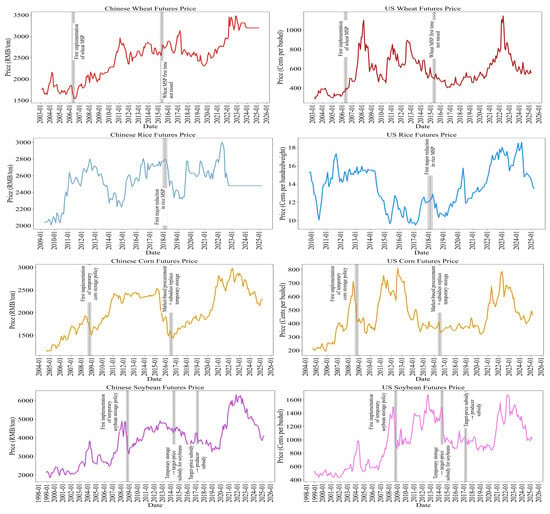
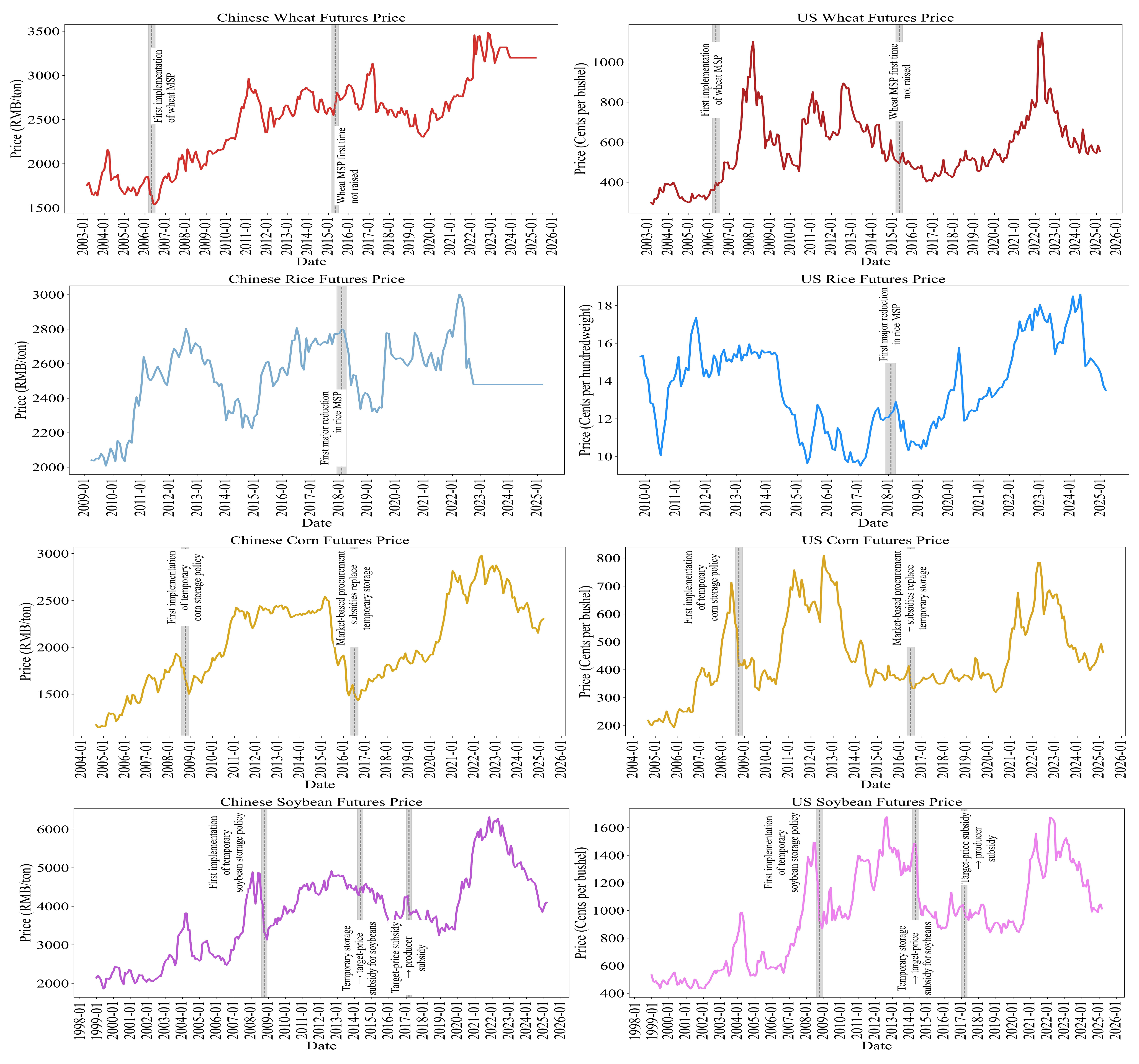
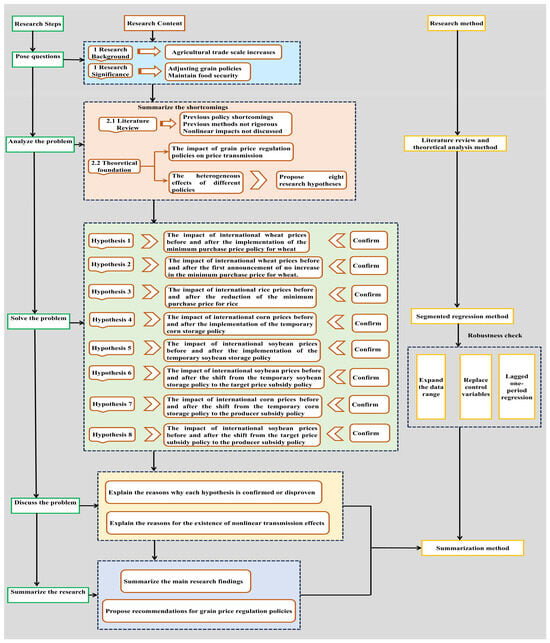
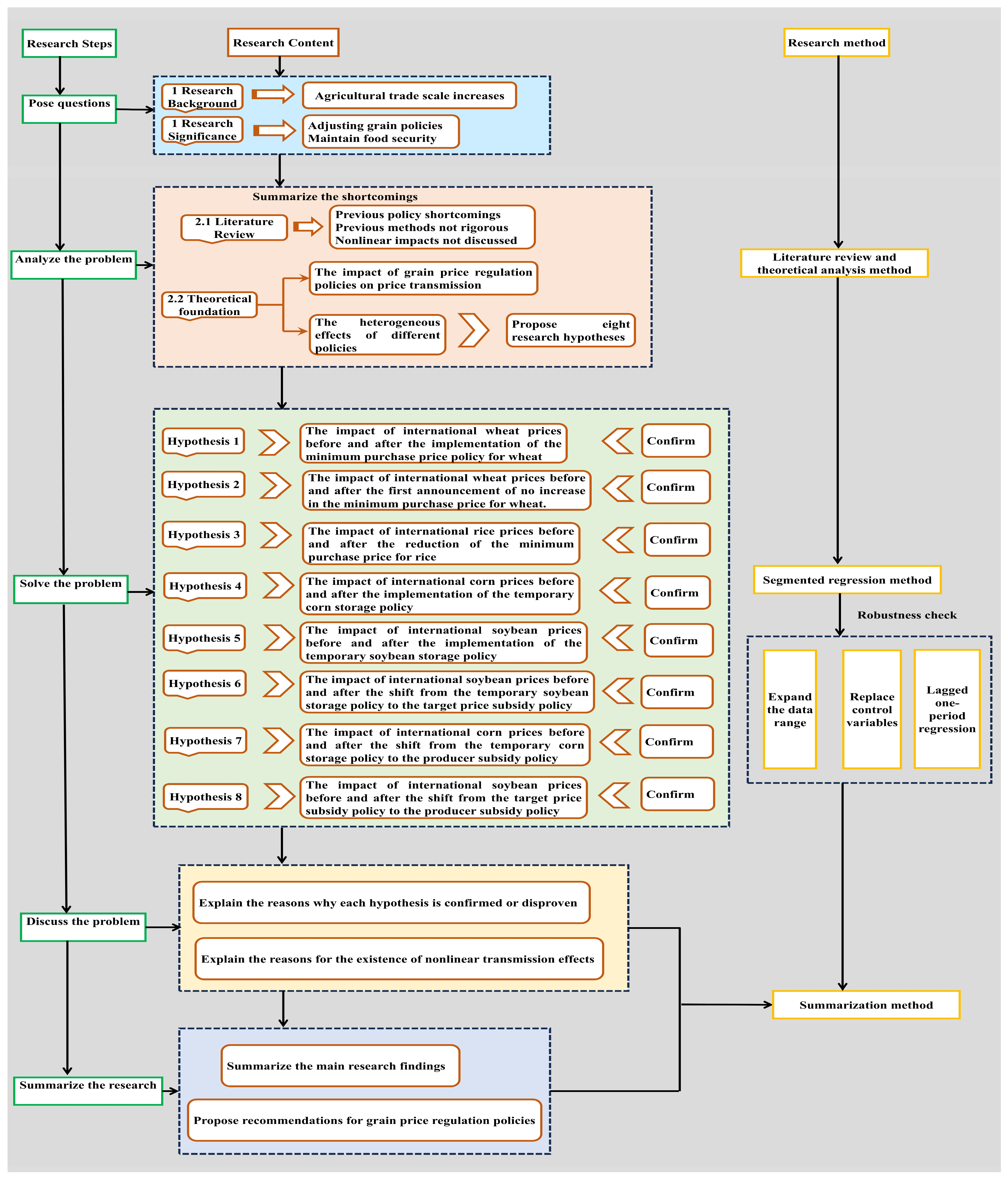

Disclaimer/Publisher’s Note: The statements, opinions and data contained in all publications are solely those of the individual author(s) and contributor(s) and not of MDPI and/or the editor(s). MDPI and/or the editor(s) disclaim responsibility for any injury to people or property resulting from any ideas, methods, instructions or products referred to in the content. |
© 2026 by the authors. Licensee MDPI, Basel, Switzerland. This article is an open access article distributed under the terms and conditions of the Creative Commons Attribution (CC BY) license.