


Highlights
An expert-refined TOE model is utilized to examine AI adoption considerations for PMOs in GCC banks. The findings represent exploratory expert perceptions and motivate future confirmatory and longitudinal research.
Please indicate how your work links to systems science via your contributions to systems practice, theory, and/or methodology.
- •
- The study frames AI adoption in GCC banking PMOs as a socio-technical system in which technological readiness, organizational capability, governance conditions, vendor readiness, and stakeholder considerations interact to shape PMO transformation.
- •
- It contributes a literature-derived and expert-refined TOE model that integrates PMO maturity and governance considerations, demonstrating how a systems perspective can organize AI adoption conditions across technological, organizational, and environmental dimensions rather than treating adoption as an isolated technology decision in banking PMO contexts.
What are the main findings and/or the implications of the main findings?
- •
- Evidence from 61 experts indicates comparatively strong endorsement of management support, governance practices, and organizational readiness. Technological and environmental conditions were also endorsed, but their interpretation was qualified by system compatibility, data quality, regulatory clarity, and vendor fit.
- •
- For GCC banks, AI-enabled PMO transformation should be approached as a coordinated governance and capability-building process, combining robust data foundations, leadership sponsorship, workforce development, accountable AI controls, relevant use cases, and context-sensitive implementation support.
Abstract
Although the adoption of artificial intelligence (AI) in banking has accelerated across customer-facing and operational domains, its application within Project Management Offices (PMOs) remains underexplored, particularly in Gulf Cooperation Council (GCC) banks, where PMOs support portfolio governance, transformation, and IT strategy execution. Drawing on the Technology–Organization–Environment (TOE) framework, with the Organizational Project Management Maturity Model (OPM3) serving as a complementary PMO-context lens, this study develops an expert-refined model of conditions perceived as important for AI adoption in GCC banking PMOs. A mixed-methods survey combining Likert-scale items and open-ended responses was completed by 61 experts. Quantitative analysis was performed to assess the experts’ endorsements, as well as thematic analysis to interpret their contextual meanings. All eight literature-derived constructs received endorsement, with management support, governance practices, and organizational readiness receiving the strongest mean endorsements. The experts interpreted AI-enabled PMO transformation as an organizationally led process involving governed data, leadership sponsorship, capability-building, accountable governance, regulatory assurance, and context-relevant vendor support. This study contributes a contextually grounded TOE-based model of AI adoption for PMOs in GCC banks and offers practical considerations for PMO professionals, banking executives, regulators, and AI vendors. It should be noted that the reported findings are exploratory and reflect expert perceptions, rather than supporting causal or predictive relationships.
1. Introduction
Project Management Offices (PMOs) coordinate projects, programs, and portfolios to support methodological consistency, portfolio visibility, and strategic alignment [1]. In banking, these roles are further influenced by regulatory scrutiny, data governance requirements, and accountability concerns. PMOs are not merely viewed as administrative reporting entities [2]; rather, they function as strategic governance mechanisms that align projects with organizational objectives and balance delivery with risk management, compliance, auditability, and accountability [3,4].
These responsibilities create demand for timely portfolio insight, risk sensing, and decision support beyond that provided by fragmented tools, sub-optimal resource management, and retrospective reporting [5]. AI may augment a PMO’s capability through analytics, automation, forecasting, and decision support; however, in GCC banks, consideration of AI is shaped by prudential oversight, data governance requirements, legacy systems, and evolving AI-related expectations, rather than technical implementation alone.
The GCC banking sector has shifted toward digital and innovation-focused operating models shaped by economic diversification, regulatory modernization, and national digital strategies targeting improvements in operational efficiency and customer experience [6,7]. PMOs have come to play important governance roles in GCC banks [8], supporting strategic alignment, portfolio coordination, and the execution of enterprise-wide transformation [9].
Given the highly regulated nature [10] of GCC banking environments [11], the adoption of AI introduces additional concerns relating to governance transparency, explainability, compliance, cybersecurity, data privacy, and regulatory accountability, further distinguishing AI from traditional technologies. Although AI adoption has been studied in banking and project management contexts [12,13], the adoption of AI within PMOs—as governance-intensive units in GCC banks—remains underexamined [14].
As PMOs operate across portfolios, governance, and transformation, AI-enabled PMO transformation refers to an organization-level consideration rather than simply the adoption of an isolated departmental tool [15,16,17]. Such considerations extend beyond perceived benefits [18] to technological and organizational readiness, governance requirements, and environmental conditions [19].
Accordingly, this study uses the Technology–Organization–Environment (TOE) framework as its principal theoretical lens [18], as it organizes technological, organizational, and environmental conditions relevant to the adoption of technology at the organization level [20]. The Organizational Project Management Maturity Model (OPM3) [21] is used as a complementary PMO-domain lens to interpret how process maturity, governance routines, and capability development shape the practical setting in which AI adoption is considered. It should be noted that OPM3 does not function as a second explanatory theory, and the model’s core structure remains TOE-based.
Drawing on the TOE framework, this study develops a literature-derived conceptual model of conditions perceived as important for AI-enabled PMO transformation in GCC banks, then refines their contextual interpretation through expert-based mixed-methods evidence. It assesses expert endorsement and interpretation; it does not statistically test causal effects, mediation, or prediction.
The key research question is as follows:
RQ: Which technological, organizational, and environmental conditions do experts perceive as important for AI adoption for the purpose of PMO transformation in GCC banks, and how are these conditions interpreted in practice?
To answer this question, a PRISMA-guided literature review was combined with a concurrent mixed-methods questionnaire administered to 61 experts [22,23]. Closed-ended items were used to assess the experts’ endorsements and internal consistency, while open-ended responses were thematically analyzed to identify contextual meanings, qualifications, and refinements. These strands are integrated through a joint display in Section 5.
The study’s key contribution lies not in the identification of new adoption conditions but rather in contextualizing established TOE-related conditions for governance-intensive PMOs in GCC banks through an expert-refined conceptual map. A literature review is presented in the next section, followed consecutively by the initial model, methodology, integrated findings, discussion, and conclusions.
2. Literature Review
This section presents a PRISMA 2020-guided systematic literature review, conducted to identify the literature-derived conditions relevant to AI adoption for PMO transformation in GCC banks. The review is organized to identify the major gaps relevant to PMOs in the GCC banking context and to derive the initial constructs for the conceptual model. As the considered phenomenon spans several partially overlapping domains, the review intentionally included both direct evidence on the use of AI in banking and PMOs and adjacent evidence on organizational technology adoption, project and portfolio governance, maturity, and regulated environments.
The review served to synthesize the fragmented evidence across the banking, AI adoption, project management, and PMO transformation literature, which thus informed the development of the initial conceptual model for subsequent expert-based refinement. It therefore served not only as a background synthesis but also as the formal basis for construct identification and proposition development.
2.1. Review Protocol, Eligibility, and Synthesis
The review was conducted between July and October 2025, guided by logic of the Preferred Reporting Items for Systematic Reviews and Meta-Analyses (PRISMA 2020). Searches were performed in Web of Science, Scopus, Google Scholar, ProQuest, IEEE Xplore, and ScienceDirect. The search strategy combined terms relating to (i) artificial intelligence and related digital technologies; (ii) PMOs, projects, programs, and portfolio management; (iii) banking and financial services; (iv) GCC, Gulf Cooperation Council, and individual GCC countries; and (v) adoption, transformation, governance, readiness, maturity, technology, organization, and environment. English-language publications from 2019 up to the search date were considered, although earlier foundational works were retained where relevant. A small number of 2026 sources that were not part of the original search results were added during subsequent manuscript updating; these were used for contextual currency, rather than for construct derivation, such that the eight literature-derived constructs rest solely on the systematically searched corpus. The search syntax was adapted to the functionality of each database. The complete database-specific search strings, dates, applied filters, and retrieved records are reported in Supplementary Table S1.
The review included peer-reviewed journal articles, conference papers, scholarly book chapters (where relevant), and selected practitioner or organizational publications. Practitioner sources were retained only when issued by recognized regulatory bodies, professional associations (e.g., PMI), multilateral institutions (e.g., World Bank), or established industry organizations, and only when they made a substantive contribution to the contextual or conceptual analysis.
For the literature review, we considered recency, relevance, and quality. Sources were excluded when they were detected as duplicates; unavailable in English; non-retrievable in full text; focused solely on technical aspects of AI adoption without organizational, adoption, governance, banking, or PMO relevance; or lacked adequate relevance to the research question. The full inclusion and exclusion criteria are provided in Supplementary Table S2. Regarding the geographic coverage of prior studies, they mostly originate from North America, Europe, and East Asia, with limited empirical focus on GCC banking contexts, highlighting the need for studies examining AI adoption within GCC banking PMOs.
The database searches identified 1625 records. Following removal of 55 duplicates, 1570 records were screened. A further 75 records were identified through websites or organizational publications (n = 10) and backward or forward citation searching (n = 65), which followed a parallel screening route. Of the database-derived records, 515 were excluded at the title and abstract screening stage because they addressed AI techniques without an organizational or adoption dimension, concerned individual consumer acceptance, or lacked banking, project governance, or PMO relevance. The remaining 1055 reports were sought for retrieval; 395 could not be obtained in full text and were recorded as not retrieved. Of the 660 reports assessed for eligibility, 385 were excluded because they lacked organizational adoption content, duplicated findings already represented in the corpus, or made no contribution to a TOE dimension or PMO maturity theme. Of the 75 reports sought for retrieval from other methods, 15 were not retrieved, leaving 60 assessed for eligibility, of which 25 were excluded, and finally, 35 were selected based on the same criteria. The final review corpus comprised 310 sources selected for model creation, with 275 retrieved through database searches and 35 from other identification methods. Figure 1 presents the PRISMA flow diagram.
Figure 1.
PRISMA 2020 flow diagram for identification, screening, eligibility assessment, and inclusion of sources in the literature review.
The lead researcher (corresponding author) conducted title, abstract, and full-text screening. The final screened corpus and its relevance to the developing conceptual model were reviewed informally together with the supervisory team (supporting authors). This process did not involve independent duplicate screening or calculation of inter-author agreement, which is considered a limitation of the review process.
Rather than applying a single formal critical appraisal instrument across the heterogeneous corpus, source quality was assessed through structured consideration of publication type, scholarly or institutional authority, methodological transparency (where applicable), conceptual relevance, and contextual relevance to AI adoption, PMO transformation, banking, or regulated environments.
To accurately extract and evaluate research gaps, data from the selected studies were organized in a structured Excel spreadsheet mapping framework. Each retained source was coded according to its keyword themes, research problem(s), key findings, theoretical lens (where stated), adoption conditions, limitations and scope for future research, and relevance to the technological, organizational, and/or environmental dimensions of the TOE framework. The PMO maturity literature, including OPM3-related work, was used to contextualize organizational themes related to governance, process discipline, capability development, and measurement. The codes were iteratively aggregated into eight higher-order literature-derived constructs, and the source-to-construct coding framework is reported in Supplementary Table S4.
The literature review was conducted with the TOE framework as the primary framework for organizing the review and deriving the initial constructs, while the OPM3 was used only as a complementary PMO-domain lens for determination of the specific capabilities required; notably, it does not constitute a co-equal explanatory theory or an empirically tested causal mechanism in this study. Detailed database-specific search strings, search dates, applied filters, eligibility criteria, construct-to-item mapping, and the source-to-construct coding matrix are detailed in Supplementary Tables S1–S4.
2.2. Context and Research Gaps: AI-Enabled PMO Transformation in GCC Banks
GCC banks are pursuing digital transformation while operating under high expectations for prudential compliance [24], data protection [25], auditability, cybersecurity [19], and accountable decision-making. Across the region [26], banking systems are adopting national mandates related to economic diversification, financial liberalization, and growing regional competition, and are aligning themselves with state-led modernization strategies that position digital transformation as a central lever of competitiveness and resilience.
More recently, GCC banking institutions have increasingly been embedding AI into their front-office functions such as client servicing and input processing [27], as well as middle- and back-office processes such as fraud detection, compliance, reporting, and financial supervision [28]. These changes indicate that GCC banks are no longer merely digitizing processes; rather, they are progressively reorganizing their data platforms, governance models, and engaging ecosystem plays for true enterprise-wide transformations.
AI has therefore attracted attention not only for customer-facing and operational applications [29] but also for its potential to support internal forecasting, portfolio analytics, risk sensing [30], reporting, and decision support [31]. In such settings, the relevant adoption question extends beyond whether an individual employee accepts an AI tool; rather, it concerns whether the organization can effectively introduce AI capabilities within governance-intensive processes while maintaining control, transparency, and regulatory confidence [32].
PMOs are a pertinent but underexamined setting [33] for this question. Driven by the adoption of AI in banking processes, its applicability to PMO processes and knowledge areas has gained significant attention in recent years, given the unique nature of projects, differences in requirements, project structures, and stakeholder interactions which create barriers to widespread AI adoption in PMOs [34]. Existing AI adoption research in banking settings has concentrated largely on customer-facing services, fraud detection, compliance, and operational analytics, and much of the existing literature has failed to explore the interactions between AI technologies across different areas of project management [4]. The integration of such technologies also depends on the quality and accessibility of data, their fit with established PMO workflows and banking systems, and their compatibility with governance and control requirements.
In parallel, AI and project management research has often focused on task-level applications such as estimation, scheduling, forecasting, risk prediction, and automation, while rarely theorizing AI as a governance enabler [35,36]. Across both streams, the adoption literature has primarily focused on customer-facing applications, with limited attention having been paid to organizational conditions associated with the adoption of AI within PMOs for enterprise governance functions, particularly in GCC banking contexts [10,37,38].
The organizational dimension is central to the adoption question. Organizational studies have consistently highlighted the roles of leadership sponsorship, change management, governance, ethics, and skills development [38,39], yet governance mechanisms that institutionalize leadership intent—such as AI governance, risk controls, and performance measurement—remain under-theorized, particularly in regulated banking environments [40]. PMO maturity research has further drawn attention to process discipline, performance measurement, governance routines, capability development, and continuous improvement. Environmental considerations include regulatory clarity, institutional support, national digital agendas, data protection expectations, privacy, and the availability of credible implementation partners; however, PMO-specific adoption decisions in regulated contexts also remain under-theorized [41]. Furthermore, there is a gap in the understanding of obstacles to AI adoption when the regulatory landscape is complex and evolving, such as in the banking sector [10].
The interactions between technological, organizational, and environmental conditions have not been sufficiently synthesized to understand their influence on AI adoption in GCC banking PMOs. These gaps point to the need for a comprehensive model that effectively captures the relationships among technological readiness, organizational mechanisms, and environmental constraints. This review therefore informed the development of an initial TOE-based model, on the basis of the conditions that the literature identifies as relevant to AI adoption for PMO transformation in GCC banks. In this regard, the key contribution is not the discovery of wholly new adoption variables; rather, it is the contextualization of established adoption conditions for a governance-intensive function operating in a regulated regional banking environment.
2.3. Theoretical Framing: The TOE Framework with OPM3 Contextualization
Theoretical frameworks play a crucial role in academic research by providing critical scaffolding for researchers to examine complex phenomena, as per Gregor, S. (2006) [42], and ensuring a systematic approach to data collection and analysis, as per Eisenhardt, K. M. (2021) [43].
This study uses the Technology–Organization–Environment (TOE) framework [20] as its principal theoretical structure, as it organizes organization-level technology adoption decisions across technological, organizational, and environmental domains. It provides an appropriate basis for organizing the literature on AI adoption for PMO transformation because the focal phenomenon concerns an enterprise governance function, rather than the acceptance of an isolated tool by individual users. Relevant AI adoption studies have also applied the TOE framework to examine organization-level readiness and adoption conditions in banking, financial services, and related settings [44,45].
The Organizational Project Management Maturity Model (OPM3) [46] is used as a complementary domain lens, rather than as a second explanatory theory. It helps to interpret how PMO process maturity, governance routines, capability development, and continuous improvement orientation shape the practical conditions under which AI adoption may become feasible in transformation-oriented PMO settings.
Therefore, the TOE framework supplies the primary domain structure, while the OPM3 enables PMO-specific contextual interpretation of organizational readiness and governance practices. Notably, the present study does not test whether PMO maturity causes AI adoption, whether AI adoption changes maturity, or whether these relationships are reciprocal; these propositions remain appropriate topics for future longitudinal research for empirical testing. Together, the TOE framework and OPM3 provide a disciplined basis for identifying literature-derived conditions which are relevant to AI adoption in GCC banking PMOs. Figure 2 and Figure 3 illustrate the two models, adapted to the context of this study.
Figure 2.
The TOE framework, used as the principal theoretical structure for the literature-derived initial model. (Source: developed by the authors based on Tornatzky and Fleischer, 1990, [20]).
Figure 3.
OPM3-informed contextual lens for interpreting PMO maturity across process, routines, capability development, and continuous improvement in the present study’s setting. (Source: developed by the authors, informed by PMI’s OPM3 maturity logic).
2.3.1. Rationale for TOE Framework
AI adoption can be examined through several established theories. The Technology Acceptance Model (TAM) [47] emphasizes the perceived usefulness and perceived ease of use of a technology, while the Unified Theory of Acceptance and Use of Technology (UTAUT) [48] focuses on performance expectancy, effort expectancy, social influence, and facilitating conditions. These frameworks are well suited to explaining individual user perceptions, behavioral intentions, and motivations. Diffusion of Innovation (DOI) [49] similarly informs a better understanding of innovation attributes, including relative advantage and compatibility.
However, this study does not only focus on the acceptance of AI by individual users [50]; instead, focus is placed on the adoption of AI within PMOs in GCC banks, where relevant decisions are shaped by factors including cross-functional governance, data and technology architecture, leadership sponsorship, regulatory accountability, risk controls, and external vendor capability [40,51]. This distinction is important because PMOs do not operate as isolated user groups; rather, they influence enterprise prioritization, reporting, control, portfolio visibility, project governance, and decision-making across the bank [52].
For this reason, the TOE framework was selected because it provides a parsimonious structure for integrating the technological, organizational, and environmental conditions identified in the review. Additionally, it has previously been leveraged extensively in other regions [44,45] to address similar research problems.
Figure 2 presents the TOE framework as the principal organizing structure for the initial conceptual model. The technological domain captures readiness, compatibility with existing systems, and AI tool capabilities (e.g., predictive analytics); the organizational domain captures internal characteristics such as culture, management support, organizational readiness, and governance practices; and the environmental domain captures external factors including the regulatory environment, external pressures, and vendor ecosystem. It should be noted that these constructs are literature-derived preliminary conditions to be examined through expert endorsement and contextual interpretation; they are not presented as statistically validated causal determinants in the present study.
While powerful, the TOE framework alone cannot fully account for PMO domain-specific characteristics; for this reason, it was important to explore additional theories that are capable of capturing mature PMO processes, stronger controls, governance frameworks [53], routines, and capabilities to absorb advanced technologies such as AI.
2.3.2. OPM3 as a Contextual PMO Domain Lens
The TOE framework does not specify how the internal organizational conditions of a PMO should be interpreted. Accordingly, this study uses the Organizational Project Management Maturity Model (OPM3) as a complementary PMO-domain lens. The PMI’s OPM3 model provides a structured approach to assessing PMO maturity and effectiveness (PMI, 2013). Past research [54,55,56] has demonstrated how the OPM3 can improve process efficiency, data scope, and schedule controls. The OPM3 directs attention to PMO process standardization, performance measurement, governance routines, capability development, and continuous improvement [57,58]—themes that are relevant to the practical interpretation of the TOE framework’s organizational dimension, particularly organizational readiness and governance practices [59].
The OPM3 is not treated as a co-equal explanatory theory but rather serves to sensitize the review to PMO-specific manifestations of organizational capability; for example, it supports the interpretation of organizational readiness in terms of process maturity, performance management, governance routines, skill development, and implementation capability [60]. It also supports the interpretation of governance practices in terms of decision rights, accountability, risk management, and continuous-improvement practices [33]. Relevant PMO maturity and governance studies support this contextualization [9,61].
The present study does not test whether PMO maturity causes AI adoption or vice versa as, although such relationships are theoretically plausible, their validation would require longitudinal and confirmatory designs. In the present exploratory study, the OPM3 is used only to contextualize expert interpretations of the literature-derived TOE constructs.
Figure 3 summarizes the PMO process and governance context that informed the interpretation of organizational readiness and governance practices; it is not incorporated as a separately tested explanatory mechanism in the initial TOE-based model.
2.3.3. Theoretical Synthesis
In summary, the TOE framework provides the primary structure for synthesizing the literature and deriving the initial conceptual model, while the OPM3 adds a limited but important contextual contribution by helping to interpret PMO-specific organizational capability, process maturity, governance routines, and continuous improvement practices [62]. This framing avoids treating maturity as an independently tested explanatory mechanism while preserving the distinct domain context of PMOs. Section 2.4 applies this structure to derive eight literature-based constructs across the technological, organizational, and environmental dimensions of the TOE framework.
2.4. Derivation of Initial TOE-Based Constructs
2.4.1. Construct Derivation Procedure
The literature retained at the end of the PRISMA-guided retrieval process was coded iteratively using the TOE framework as the primary organizing structure. Sources were first coded against technological, organizational, and environmental conditions associated with AI adoption. Within each domain, recurring concepts derived from findings and common research gaps were compared across banking and financial services studies, the PMO and project management literature, and organizational adoption research. Concepts were retained as initial constructs when they showed recurring theoretical relevance, conceptual distinctiveness, and applicability to the PMO transformation context [63]. The OPM3-informed literature was used only to contextualize the PMO-specific organizational themes, not as a separate construct or fourth TOE domain.
This process allowed the model variables to emerge from repeated patterns across the literature reviewed, ultimately yielding the following eight literature-derived constructs: AI readiness, system compatibility, and relative advantage within the technological domain; management support, organizational readiness, and governance practices within the organizational domain; and GCC environment and vendor ecosystem readiness within the environmental domain. Table 1 summarizes the construct definitions and their contextual refinements. The full source-to-construct coding matrix is provided in Supplementary Table S4.
Table 1.
Summary of constructs derived from the structured literature review.
The following subsections summarize how, through the PRISMA-guided literature review, the main constructs were identified and grouped under the technological, organizational, and environmental dimensions of the TOE framework, while also incorporating PMO maturity-related insights, where relevant.
2.4.2. Technological Conditions
Within the technology dimension, the surveyed literature converged around three recurring related but conceptually distinct conditions—readiness for AI, system compatibility, and relative advantage of AI over other technologies.
AI readiness emerged from studies emphasizing the importance of reliable data [64], scalable infrastructure, secure environments [65], and the technical capacity to support AI-enabled analysis and automation. Across banking, information systems, and project management studies, researchers repeatedly identified data quality [66], infrastructure adequacy, tool availability [67], and secure architecture [68] as foundational conditions for AI adoption, particularly where decisions depend on integrated operational and governance data [69].
System compatibility refers to the fit between AI solutions and existing systems [70], workflows [71], data structures [72], and reporting routines [73]. This construct is distinct from AI technology readiness, as an organization possessing the relevant data and infrastructure may still face practical barriers if AI applications do not integrate with PMO platforms [74], legacy banking systems, governance workflows [71,75], or regulatory reporting requirements. In general, the literature lacks systematic studies on the long-term evaluation of AI systems [50,76] particularly in terms of assessing the effectiveness of AI augmentation in the financial and banking sectors. In GCC banking PMOs, compatibility therefore requires technical interoperability as well as alignment with established processes [77], controls, and decision routines [78,79].
Relative advantage concerns the value that organizations perceive AI may offer, when compared with existing PMO tools and digital technologies [80]. The literature identifies potential AI-enabled values, especially in predictive analytics [81], forecasting [82], portfolio monitoring, risk sensing, intelligent reporting [83], prioritization [84], resource management, and decision support [85]. However, in governance-intensive banking PMOs, relative advantage should be interpreted as use-case-specific and evidence-based, rather than as a generic expectation of board-based efficiency [86]. Accordingly, the review retained AI readiness, system compatibility, and relative advantage as the three technological conditions in the initial conceptual model.
2.4.3. Organizational Conditions
The organizational literature identifies management support, organizational readiness, and governance practices as distinct internal conditions shaping whether organizations move from interest in AI to credible adoption and implementation. In this study, organizational readiness [87] was retained as a specific PMO-construct, as also determined under the OPM3 model. In addition, governance practices [88] were also strengthened by combining the TOE framework with OPM3, as a maturity-specific mechanism in PMO-specific settings.
Management support concerns senior sponsorship [89], strategic alignment, resource commitment [90], and visible ownership [91,92], reflecting the culture transformation required for AI adoption. In banking PMOs, such support is unlikely to be provided by a single technology or operations leader, and may require coordination across PMO, business, technology, data, risk, compliance, and control functions.
Organizational readiness refers to the capability and preparedness required to introduce AI in an organizational setting, including workforce capabilities [93], data literacy [87,94], learning structures [95], experimentation, process flexibility [96], and change management capability. The OPM3-informed literature supports the contextual interpretation of this construct by drawing attention to PMO process discipline, performance visibility, capability development, and continuous-improvement routines. This is particularly relevant in Banking, as per [97,98] in which workforce skill development was shown to be necessary for managing new technologies, and where inter-generational differences and the evolution of personalities may affect AI adoption at different levels within an organization [99]. This contextualization does not make PMO maturity a separate construct; rather, it specifies how organizational readiness may appear in a PMO setting.
Governance practices comprise the arrangements through which AI use is directed, monitored, and held accountable, including data governance, risk controls [100], ethical safeguards [101], model monitoring to support transparency [102,103], decision rights [104], performance management [105], and human oversight [106]. This construct is conceptually distinct from management support and organizational readiness, in that leaders may sponsor AI, and employees may possess relevant skills, yet implementation may remain constrained without clear accountability, auditable controls, and mechanisms for model, performance, and decision risk management. These concerns are particularly relevant to GCC banking PMOs, where portfolio and project decisions must be traceable, defensible, and aligned with regulatory and internal control expectations.
Overall, the review suggests that organizational conditions are likely to be decisive in determining whether AI can move beyond experimentation into sustained PMO transformation. Accordingly, management support, organizational readiness, and governance practices were retained as the three organizational constructs in the initial TOE-based model.
2.4.4. Environmental Conditions
The environmental-centered literature identifies two conditions that are relevant to AI adoption for PMO transformation in the present study’s setting; namely, GCC environment and vendor ecosystem readiness. The former covers the broader policy environment [107], regulatory clarity, and regional privacy- and risk-related considerations [108], while the latter points to the need for a strong local eco-system [109] of mature, reliable, and accountable vendors [110].
The GCC environment refers to external institutional conditions that shape organizational confidence in AI adoption, including the regulatory clarity [111], national digital transformation agendas [112], data protection expectations [113], policy support [114], and broader institutional confidence in emerging technologies. This construct does not assume that GCC states are institutionally uniform [115,116]; rather, it captures the regionally relevant external context within which banks interpret the evolving requirements for privacy, accountability [117], security [118], and responsible AI use [119,120].
Vendor ecosystem readiness refers to the availability of credible vendors [121], contextually appropriate solutions, implementation and integration support [122], industry standards [123], and accountability mechanisms [124]. In GCC banking PMOs, the relevant question is not merely internal readiness or whether an AI product is available [125]; instead, it is whether the provider can demonstrate banking-relevant expertise, local and regulatory awareness [126], secure implementation support, auditable controls [127], and fit with PMO use cases [128].
Following the review, GCC environment and vendor ecosystem readiness were therefore retained as the two environmental conditions in the initial model. Together, these constructs reflect the idea that AI adoption for PMO transformation is shaped not only by technology availability and readiness or internal organizational capability, but also by the surrounding institutional and implementation ecosystem.
2.4.5. Literature Synthesis and Research Gaps
Through the literature synthesis, four interrelated gaps were identified. First, research on AI adoption in banking has concentrated primarily on customer-facing services, fraud and risk detection, compliance, credit assessment, and operational streamlining, with limited attention having been paid to PMOs, as governance-intensive transformation functions. Second, PMO-related research has examined tool availability, automation use cases, and value delivery, but has paid limited attention to AI adoption as an organizational and governance challenge. Third, although prior research has identified a combination of technological, organizational, and environmental conditions as relevant to AI adoption, their contextual meaning regarding regulated GCC banking PMOs remains insufficiently explored. Fourth, there is limited expert-informed evidence on how practitioners interpret the relevance, implementation boundaries, and other qualifications of these conditions in practice.
It should be reiterated here that this study does not suggest the eight constructs—that is, management support, organizational readiness, technological readiness, compatibility, tooling advantages, governance practices, regulatory clarity, and external support—as wholly new; in fact, they are well-established themes in technology adoption research. Instead, the key contribution of the present study lies in contextualizing these conditions for AI-enabled PMO transformation in GCC banks. For example, technological readiness is interpreted in terms of data quality, purpose-fit AI for PMO tools, secure architecture, and scalable infrastructure; compatibility is considered in terms of fit with PMO workflows, legacy banking systems, and control requirements; relative advantage is assessed through credible PMO use cases; and vendor ecosystem readiness concerns accountability frameworks, banking PMO-specific mature providers, and locally mature implementation capability.
Taken together, the review supports an initial TOE-based model comprising eight literature-derived conditions: AI readiness, system compatibility, relative advantage, management support, organizational readiness, governance practices, GCC environment, and vendor ecosystem readiness. Its initial structure is detailed in Section 3 below.
The proposed model is intentionally preliminary. It is used to structure the subsequent expert-based mixed-methods study, enabling an assessment of the degree to which the conditions are endorsed by respondents and how they are interpreted, qualified, or refined in the GCC banking PMO context. The study does not empirically test causal effects, predictive relationships, mediation, or moderation pathways. Section 3 presents the literature-based initial conceptual model and the preliminary proposition statements used to guide the expert assessment and refinement process.
3. Literature-Based Initial Conceptual Model and Preliminary Proposition Statements
Drawing on the TOE framework and the construct derivation presented in Section 2.4, Figure 4 presents the literature-based initial conceptual model for AI adoption for PMO transformation in GCC banks. The model organizes the eight literature-derived conditions across the technological, organizational, and environmental dimensions of the TOE framework. The model is exploratory, and these eight literature-review-derived constructs should not be considered to constitute empirically validated causal paths. The OPM3 informs the contextual interpretation of organizational readiness and governance practices; it is not presented as a fourth model dimension, a separate construct, or an explanatory mechanism.
Figure 4.
Literature-derived initial TOE-based model of conditions considered relevant to AI-enabled PMO transformation in GCC banks.
The focal construct is labeled “AI adoption for PMO transformation in GCC banks.” This label refers to organizational consideration and preparedness for AI-enabled PMO transformation, rather than directly observed adoption behavior or a causally predicted or empirically tested outcome. The model includes three technological conditions—(i) AI readiness (IR), (ii) system compatibility (SC), and (iii) relative advantage (RA); three organizational conditions—(i) management support (MS), (ii) organizational readiness (OR), and governance practices (GP); and two environmental conditions—(i) GCC environment (GE) and (ii) vendor ecosystem readiness (VR). Definitions, evidence streams, and source-level coding are provided in Section 2.4, Table 1, and Supplementary Tables S3 and S4.
3.1. Literature-Derived Conditions and Preliminary Proposition Statements
In Figure 4, we outline the literature-driven model before refinement using expert inputs. Propositions P1–P8 were deductively derived from the PRISMA-guided literature review and specify the expected relevance of each construct to AI-enabled PMO transformation in GCC banks. The expert study did not serve to statistically test these propositions as causal hypotheses; rather, it comprised an assessment of the extent to which they are endorsed, qualified, or refined in practice. Their full derivation is presented in Section 2.4.3 and Supplementary Table S4.
3.1.1. Technology Conditions
The technological dimension comprises three literature-derived conditions: AI readiness (IR), system compatibility (SC), and relative advantage of AI (RA). AI readiness concerns the availability and quality of governed data, secure and scalable infrastructure, and the technical capability needed for AI-enabled PMO activities [129,130]. System compatibility concerns the technological fit with existing PMO workflows, banking systems, data structures, and reporting controls [131]. Relative advantage concerns the use-case-specific value that AI may offer compared with existing PMO tools and practices, including portfolio reporting, forecasting, risk sensing, prioritization, and resource decision support [132]. Together, these conditions distinguish technical capability, integration fit, and perceived application value.
- •
- P1. AI technology readiness, characterized by high-quality project data, availability of specific AI tools, scalable infrastructure, and secure architecture, is proposed as a literature-derived condition that experts may perceive as important for AI-enabled PMO transformation in GCC banks.
- •
- P2. System compatibility, reflected by fit with PMO workflows, banking systems, data platforms, and reporting controls, is proposed as a literature-derived condition that experts may perceive as important for AI-enabled PMO transformation in GCC banks.
- •
- P3. The relative advantage of AI over traditional technologies, particularly in PMO-specific use cases such as predictive analytics, real-time insights, automation, intelligent resource management, or knowledge support, is proposed as a literature-derived condition that experts may perceive as important for AI-enabled PMO transformation in GCC banks.
3.1.2. Organizational Conditions
The organizational TOE dimension comprises three literature-derived conditions: management support (MS), organizational readiness (OR), and governance practices (GP). Management support concerns senior sponsorship, strategic alignment, resource commitment, and cross-functional ownership of AI-enabled change [133]. Organizational readiness concerns workforce capability, data literacy, learning capacity, experimentation, process flexibility, and change readiness [106,134]. Governance practices concern accountability, data governance, risk controls, ethical safeguards, model monitoring, performance management, decision rights, and human oversight [36,135].
- •
- P4. Management support, articulated as strategic sponsorship, cross-functional ownership, resource allocation, and change management, is proposed as a literature-derived condition that experts may perceive as important for AI-enabled PMO transformation in GCC banks.
- •
- P5. Organizational readiness, as reflected in workforce skill maturity, learning capacity, experimentation support, and process flexibility, is proposed as a literature-derived condition that experts may perceive as important for AI-enabled PMO transformation in GCC banks.
- •
- P6. Governance practices, such as ethics, data governance, performance management, accountability structures, and risk management processes, are proposed as a literature-derived condition that experts may perceive as important for AI-enabled PMO transformation in GCC banks.
3.1.3. Environmental Factors
The environmental TOE dimension comprises two literature-derived conditions: GCC environment (GE) and vendor ecosystem readiness (VR). GCC environment concerns the conditions related to regulatory clarity [136], local government support, jurisdiction-specific frameworks, and market environment within which banks consider AI-enabled PMO transformation. Vendor ecosystem readiness concerns the availability of credible banking-aware providers [117,137], contextually appropriate solutions, implementation and integration support [16], relevant standards [138], and accountability mechanisms [54]. The two conditions are conceptually distinct; in particular, the GCC environment concerns the external institutional setting, whereas vendor ecosystem readiness concerns the capability and credibility of the implementation ecosystem.
- •
- P7. GCC environment, characterized by regulatory clarity, governmental policy support, national digital agendas, and supervisory confidence, is proposed as a literature-derived condition that experts may perceive as important for AI-enabled PMO transformation in GCC banks.
- •
- P8. Vendor ecosystem readiness, as reflected in banking-aware providers, contextually appropriate solutions, implementation support, industry standards, and vendor accountability mechanisms, is proposed as a literature-derived condition that experts may perceive as important for AI-enabled PMO transformation in GCC banks.
4. Methodology
This section describes the exploratory expert-based mixed-methods study design used to assess the respondents’ endorsement and contextual interpretation of the eight literature-derived conditions relevant to AI-enabled PMO transformation in GCC banks. Table 2 outlines the research methodology.
Table 2.
Overall methodology of this study.
4.1. Research Design and Study Scope
Given the exploratory nature of AI-enabled PMO transformation in GCC banks, this study adopted a concurrent mixed-methods expert survey design. This design was selected [55] because the research required both descriptive evidence on the degree to which the experts endorsed the eight literature-derived conditions and interpretive evidence on how those conditions were understood, qualified, or refined in GCC banking PMO practice [22]. Closed- and open-ended responses were collected concurrently through a single online questionnaire, analyzed separately, and subsequently integrated through a joint display.
The study followed a sequential conceptual logic. Firstly, the PRISMA-guided literature review enabled the development of the initial TOE-based model containing eight conditions across technological, organizational, and environmental dimensions. OPM3 was used as a supporting contextual lens for the domain studied, and not as a separate construct. Second, these literature-based constructs were examined through the structured questionnaire administered to 61 experts using concurrently collected closed- and open-ended responses. The quantitative strand was used to assess the experts’ endorsement of the constructs, while the qualitative strand was used to interpret the underlying meaning, contextual conditions, and possible refinements to the initial conceptual model. Finally, both strands were integrated through a joint display, consistent with mixed-methods logic in pragmatic designs involving experts. Mixed-methods research is appropriate for analyses of complex organizational phenomena (e.g., AI adoption in the less-mature GCC banking PMO industry), as it allows for integration across methods and forms of evidence [142,143]. Integration was carried out for conceptual refinement, rather than statistical validation. Accordingly, the study does not establish causal effects, predictive relationships, mediation effects, reciprocal pathways, or population-level prevalence. This study’s approach is outlined in Figure 5 below.
Figure 5.
Flowchart of the sequential research process for deriving, assessing, and contextually refining the initial TOE-based model through a concurrent mixed-methods expert survey.
4.2. Pragmatic Orientation
In the present study, a pragmatic approach is followed to allow for the combination of descriptive ratings with interpretive expert comments, enabling the examination of a complex organizational phenomenon that has not yet been adequately theorized in the GCC banking PMO context. This orientation is appropriate where a phenomenon is context-dependent [22] and insufficiently specified in the prior literature [139].
As previously established in [144,145], pragmatism is appropriate in the present study because it is focused on a practical organizational problem. Given the exploratory nature of the present study, pragmatism allows for the use of quantitative data to describe expert endorsements and qualitative data to examine contextual meanings, qualifications, and refinements.
4.3. Sampling, Recruitment, and Participants
Purposive expert sampling was conducted to recruit respondents with experience relevant to AI-enabled PMO transformation in the GCC banking sector. Eligible participants were professionals with at least 5 years of relevant experience in one or more of the following areas: GCC banking, PMO practice, digital transformation, AI implementation, consulting, governance, or related managerial functions.
Potential participants were identified using LinkedIn, local PMI chapter forums, and professional networking groups, and were invited to complete the survey electronically between October and November 2025. A total of 86 individuals were invited to participate. Of these, 61 provided usable responses within the data collection window, representing a response rate of 71%. The final sample represented professionals from banking, consulting, technology firms, and PMOs.
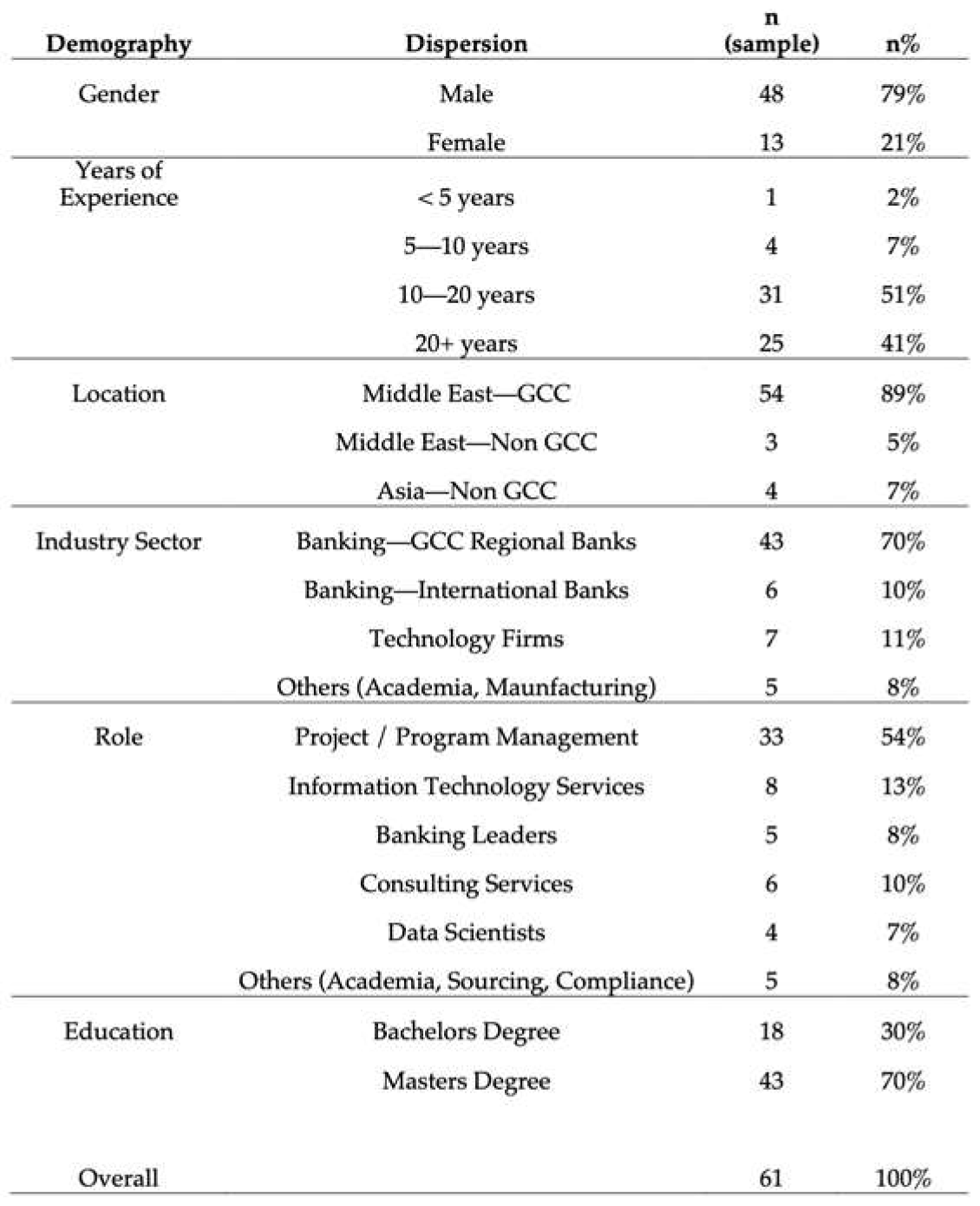
Of the 61 respondents, 54 were based in GCC countries, 3 were based elsewhere in the Middle East, and 4 were based in Asia. More than 60% of the GCC-based respondents were located in the United Arab Emirates or Saudi Arabia, with the remainder distributed across other GCC countries.
The largest professional-role group was project or program management (54%), followed by IT (13%), consulting (10%), banking leadership (8%), data science (7%), and other roles, including academia and compliance (8%). Detailed respondent profile information, including their industry, experience, location, role, gender, and educational background, is presented in Section 5.1. Employer identities and organization-level counts are not reported, in order to preserve anonymity.
This purposive sampling approach is appropriate for expert-based exploratory research [146] because the aim is not statistical generalization but, rather, informed assessment of the relevance and contextual fit of the proposed constructs. Nevertheless, the sample remains vulnerable to selection and self-selection effects; for example, professionals with greater interest in AI, digital transformation, or governance may have been more likely to participate. The predominantly male sample (79%) and the inability to disclose organization-level clustering further limit transferability of the results. These limitations are acknowledged in Section 4.8 and Section 7.
4.4. Instrument Development and Data Collation
Data were collected through a structured expert questionnaire, which was administered digitally via Google Forms. The questionnaire-based format combined 29 closed-ended Likert-scale items (1 = strongly disagree; 5 = strongly agree) with open-ended comment prompts and participant demographic questions. The questionnaire was designed to assess the experts’ perceptions of conditions relevant to AI-enabled PMO transformation, rather than to measure observed adoption behaviors or test causal relationships.
The 29 closed-ended items were derived from the eight literature-based constructs identified through the PRISMA-guided review; namely, AI readiness (n = 4), system compatibility (n = 3), relative advantage (n = 5), management support (n = 4), organizational readiness (n = 3), governance practices (n = 4), GCC environment (n = 3), and vendor ecosystem readiness (n = 3). These constructs were treated as conceptually distinct because they represent different aspects of the organizational consideration of AI adoption; although related in practice, they were assessed separately to enable transparent expert endorsement and contextual interpretation.
No formal pilot study was undertaken. Before deployment, the draft instrument was reviewed informally by the supervisory team for clarity, relevance, and alignment with the research gaps, which resulted in language edits to improve contextual suitability. The absence of a formal pilot or independent content validation analysis is acknowledged as a measurement limitation.
The open-ended prompts invited respondents to add contextual comments under each construct, suggest changes to the questionnaire, and identify additional conditions which they consider to be important for AI adoption. These prompts supported the identification of qualifications, cross-cutting themes, and potential omissions in the initial model. The full questionnaire is available in Supplementary Table S1. Construct definitions, sub-dimensions, item wording, item counts, and literature-source bases are reported in Supplementary Table S3.
4.5. Quantitative Analysis
The closed-ended responses were analyzed using descriptive statistics, including item- and construct-level means and standard deviations, in order to summarize the degree of expert endorsement for each literature-derived construct. As this is an exploratory expert refinement study, these descriptive results were used to gauge expert endorsement rather than as tests of statistically significant causal effects.
Cronbach’s alpha was calculated for each of the 8 constructs, which remains a widely used indicator of internal consistency [147] and, in exploratory instrument-based studies, a score of at least 0.6 is considered appropriate [148]. In this exploratory study, the Cronbach’s alpha values were interpreted cautiously as evidence regarding the coherence of the item sets, not as evidence of construct/discriminant validity or for validation of the conceptual model. Given the sample size (n = 61) and the study’s exploratory purpose, confirmatory factor analysis and structural equation modeling were not undertaken. The absence of independent construct validation is recognized as a limitation and a priority for future confirmatory research.
Item-level analysis, utilizing means and standard deviations, was performed to identify response patterns and dispersion across the 29 closed-ended items. Item total and inter-item correlations were not calculated. Consequently, the analysis provides limited evidence regarding the internal structure of the item sets, and the alpha coefficients cannot be interpreted as indicating which items contribute most to each construct. This is acknowledged as a measurement limitation.
4.6. Qualitative Analysis
The qualitative analysis was conducted based on the responses of the 48 participants who provided meaningful open-ended comments. The remaining 13 respondents only completed the closed-ended items. The qualitative findings should therefore be interpreted as the views of the former subsample, rather than as representative of all 61 survey participants.
As outlined in Figure 6, the open-ended responses were analyzed using a hybrid deductive–inductive thematic approach informed by Braun and Clarke’s six-phase process. Prior qualitative or exploratory research studies [149] have employed a similar approach. The analysis began with familiarization through repeated reading of the anonymized responses. Initial codes were then generated, compared, and consolidated into candidate themes. During deductive coding, the TOE-based initial model was used as a sensitizing framework, and further inductive coding was carried out to capture themes that extended beyond the eight constructs or cut across TOE domains.
Figure 6.
Flowchart of the hybrid thematic analysis process used to interpret and contextually refine the literature-derived TOE conditions.
The lead researcher conducted the initial coding of the open-ended responses. The supervisory team reviewed a subset of the responses, associated code assignments, and developed interpretations to assess the coherence of the thematic classification and challenge interpretations, where necessary. Therefore, this process involved supervisory review and reflexive peer debriefing rather than formal independent duplicate coding, thus precluding inter-coder reliability assessment. As the TOE categories were fixed before the qualitative material was read, there was a clear risk that comments would simply be absorbed into the pre-determined categories. Two steps were taken to mitigate this issue. First, any statement that did not fit into an existing category was recorded as an open code rather than assigned to the nearest TOE container; the cross-cutting themes reported in Section 5.3 emerged through that route, rather than from the initial framework. In addition, the supervisory review deliberately involved testing whether alternative readings of the same comments could be defended, rather than confirming the classification already made. The absence of independent duplicate coding nonetheless remains a limitation of the study. An illustrative audit trail, showing the progression from anonymized expert responses to initial codes, themes, and TOE locations, is provided in Appendix A.
4.7. Integration and Joint-Display Decision Rules
The quantitative and qualitative findings were then integrated through a construct-level joint display [150,151]. For each literature-derived construct, the display juxtaposed the mean and standard deviation of closed-ended responses with related qualitative themes, illustrative comments, and an integrated interpretation. It should be noted that this integration was carried out to identify convergence, qualification, and contextual refinement; it was not used to validate causal paths, test mediation, or estimate effect sizes. Table 3 sets out the decision rules used for the integrated interpretations reported in Section 5.4.
Table 3.
Decision rules for joint display interpretation.
These four categories are mutually exclusive and, between them, cover the full range of construct means observed in this study. They are interpretive integration labels, not statistical tests or indicators of causal influence. Separately from these construct-level labels, qualitative evidence that clarifies or redefines the practical meaning of a condition is reported as contextual refinement in Section 5.3 and Section 6.2 (e.g., change management, human oversight, use case specificity, implementation pacing, or pilot-to-scale transition), rather than forced into a single TOE construct.
4.8. Quality Considerations and Study Limitations
Several design features support the trustworthiness, credibility, and transparency of the study. These include purposive recruitment of domain-relevant experts, a structured instrument administered consistently to all participants, concurrent collection of closed- and open-ended responses, a documented hybrid thematic process, and joint-display integration. These design features are consistent with the quality criteria applied in comparable exploratory studies, such as [55,144]. The study also maintains an audit trail from literature-derived conditions to instrument items, coded qualitative themes, and integrated findings.
These procedures do not eliminate the study’s sampling, common-source, qualitative non-response, measurement, and time-sensitivity limitations. These limitations and their implications for interpreting the findings are discussed in Section 7.3.
4.9. Ethics
The study was approved by the Ethics Research Committee of the SP Jain School of Global Management on 30 April 2025 (Approval No. REC Reference: 03335G/202514). Participation was voluntary. Before accessing the questionnaire, respondents received information about the study purpose, voluntary nature of participation, confidentiality arrangements, and research-only use of the data, and provided informed consent electronically.
The responses were stored and analyzed in anonymized form, and the findings are reported using anonymized identifiers rather than names, titles, email addresses, or organization names. These safeguards were particularly important, considering the sensitivity of data relating to banking, governance, and technology adoption in regulated environments such as the GCC, and guaranteed confidentiality to ensure that the respondents were comfortable in providing candid views and honest responses.
5. Findings
This section reports the findings of the expert-based mixed-methods analysis. It presents the respondents’ demographic profile, closed-ended expert endorsement patterns, internal consistency scores, qualitative themes from the open-ended responses, and an integrated joint display. The results describe the experts’ perceptions of the eight literature-derived conditions relevant to AI-enabled PMO transformation in GCC banks, leading to implications informing the refined literature-derived model presented in Section 6. It should be noted that these results do not test causal effects or validate predictive relationships.
5.1. Respondent Profile
A total of 61 experts completed the closed-ended questionnaire and were included in the quantitative analysis. The sample was professionally experienced and closely connected to the study setting, with 56 respondents (92%) reporting more than 10 years of professional experience and 54 respondents (89%) being based in GCC countries. Of the remaining respondents, three (5%) were based in adjacent regions such as MENA excluding the GCC countries and four (7%) were based in Asia. More than 60% of GCC-based respondents were located in the United Arab Emirates or Saudi Arabia, with the remainder distributed across other GCC countries.
Figure 7 presents the demographic and professional profile of the 61 responding experts. Industry representation is closely aligned to the study context, with 43 respondents (70%) reporting to work in GCC regional banks and 6 (10%) working in international banks within the GCC, indicating that 80% of the sample were direct GCC banking sector representatives. Other respondents represented technology firms (11%) and adjacent sectors, including academia, policy, and manufacturing (8%), thus bringing useful adjacent perspectives on governance, systems integration, regulation, and innovation implementation.
The role composition was also aligned to the nature of the research. Project or program management was the largest professional-role group (54%), followed by information technology services (13%), consulting (10%), banking leadership (8%), data science roles (7%), and other roles, including academic, sourcing, and compliance positions (8%). This bolsters the study as, beyond PMO practitioners, it also covers roles which shape the architecture, risk, policy, and organizational conditions surrounding AI adoption.
Finally, the sample comprised 48 male respondents (79%) and 13 female respondents (21%), and 43 respondents (70%) held a master’s degree while 18 (30%) held a bachelor’s degree. The sample composition supports contextual expert inquiry but should not be treated as representative of the wider GCC banking PMO population. In particular, the gender imbalance and purposive recruitment approach may have limited the diversity and transferability of the perspectives represented. The predominantly male sample may lead to underrepresentation of gender-related differences in perceptions of workforce displacement, role change, risk, and change management requirements; importantly, the female sub-sample was too small to support inferential comparison. This should be considered during any future interpretations or follow-on studies.
Figure 7.
Demographic and professional profile of the 61 expert respondents.
5.2. Closed-Ended Findings
5.2.1. Expert Endorsement Patterns
The closed-ended analysis involved response data from all 61 participants. On the 5-point agreement scale, the constructs’ mean scores ranged from 3.97 to 4.54. Management support received the highest mean expert endorsement (M = 4.54, Std Dev = 0.47), followed by governance practices (M = 4.33, Std Dev = 0.53), GCC environment (M = 4.25, Std Dev = 0.59), and AI readiness (M = 4.22, Std Dev = 0.56). System compatibility (M = 3.97, Std Dev = 0.74) was the lowest-rated construct, indicating that the respondents generally regarded compatibility as slightly less relevant while expressing comparatively greater variation in views about the practical fit of AI with established PMO workflows, banking systems, and reporting requirements. These descriptive patterns represent expert perceptions and should not be interpreted as estimates of causal influence or predictive importance.
5.2.2. Internal Consistency Diagnosis
Internal consistency was assessed using Cronbach’s alpha for each of the eight constructs. As reported in Table 4 below, the values ranged from 0.6440 to 0.7377. Management support and governance practices showed acceptable internal consistency, whereas the remaining constructs showed modest to moderate internal consistency. Although 0.70 is a commonly used benchmark, six constructs had coefficients below 0.70 and are therefore treated as modest exploratory internal consistency diagnostics rather than evidence of construct validity. Notably, α values between 0.60 and 0.7 may be considered acceptable in exploratory research [152], where instruments are newly developed and constructs are still being refined.
Table 4.
Construct reliability scores for closed-ended responses.
These coefficients should be interpreted cautiously; in particular, they indicate the degree of coherence among the items within each construct but do not establish construct validity, discriminant validity, or validation of the conceptual model. Given the exploratory design and sample size, confirmatory factor analysis (CFA) and structural equation modeling (SEM) were not undertaken.
5.2.3. Construct-Level Expert Endorsement
The descriptive analysis demonstrated consistently high scores across all TOE dimensions, indicating broad expert agreement regarding the importance of organizational, technological, and environmental conditions for AI-enabled PMO transformation. Organizational factors received the highest aggregate rating, followed by environmental conditions and technological factors. These findings suggest that the experts perceive AI adoption within PMOs primarily as an organizational transformation challenge, supported by external regulatory and ecosystem conditions, rather than as a purely technological implementation issue.
All eight literature-derived constructs received positive mean ratings from the 61 expert respondents, although the level of endorsement varied across constructs. Management support received the highest mean endorsement, followed by governance practices, GCC environment, and AI readiness. These patterns indicate that respondents viewed leadership sponsorship, governance arrangements, external institutional conditions, and technical data readiness as particularly relevant.
System compatibility received the lowest construct mean and the greatest dispersion; this suggests that, while the respondents generally regarded integration fit as relevant, integration remains a context-dependent concern and varies according to the compatibility of AI with PMO workflows, legacy banking systems, and reporting controls. Relative advantage and vendor ecosystem readiness both received positive mean ratings, and their practical meaning was further interpreted according to the qualitative findings.
When summarized at the TOE dimension level, organizational conditions received the highest average endorsement, followed by environmental and technological conditions. This descriptive pattern suggests that the respondents tended to frame AI-enabled PMO transformation primarily as an organizational and governance matter, while also recognizing the relevance of technological capability and the external institutional environment.
Table 5 presents the construct-level results, while Table 6 presents the corresponding TOE dimension summary. These ratings summarize the experts’ perceptions of the literature-derived conditions; they do not test causal effects, demonstrate population-level importance, or validate the conceptual model.
Table 5.
Construct-level summary of scores on closed-ended responses.
Table 6.
Aggregated scores by TOE dimension.
5.3. Qualitative Findings
Thematic Overview
Meaningful open-ended comments were provided by 48 of the 61 expert respondents. Therefore, the qualitative findings reflect the views of this subsample and may not represent the perspectives of the 13 respondents who completed only the closed-ended items.
The analysis generated 96 coded references, each representing an analytically meaningful segment of text gleaned from the open-ended responses. As a single comment could contribute to more than one code or theme, the coded-reference total (96) exceeds the number of respondents and comments (48). Organizational themes accounted for the largest share of coded references (n = 43), followed by technological (n =35) and environmental (n = 18) themes.
Using the hybrid deductive–inductive thematic approach informed by Braun and Clarke’s six-phase logic described in Section 4.6, the analysis involved interpreting the eight literature-derived TOE conditions while also identifying cross-cutting refinements that extend beyond the initial construct boundaries. This meant reviewing the raw comments first, followed by thorough familiarization with the open-ended responses, the generation of initial codes and, later, consolidation into themes, refinement of the themes, and finally linking them back to the TOE-informed model factors [153].
These refinements were made based on considerations such as use case specificity, change management, human oversight, implementation pacing, and pilot-to-scale transition. Table 7 provides a qualitative thematic overview, and an illustrative audit trail from anonymized excerpts to initial codes, higher-order themes, and TOE or cross-cutting dimensions is detailed in Appendix A.
Table 7.
Qualitative thematic overview.
The thematic overview indicated that the open-ended evidence both converged with the literature-derived TOE conditions and also added contextual qualifications to them. The following analysis reports how the respondents interpreted technological, organizational, and environmental conditions in practice, before identifying cross-cutting refinements that extended beyond the initial construct map. Short illustrative quotations are used to substantiate the themes and exemplify how experts qualified the literature-derived constructs.
Technological conditions. The respondents emphasized that AI adoption in PMOs depends heavily on data quality, systems integration, infrastructure readiness, and secure architecture. At the same time, the qualitative material revealed that technological support was not uniform, with caution around compatibility, implementation complexity, and the need to define specific PMO use cases rather than pursuing generic AI deployment.
For example, one respondent stated that “Structured Data consistency, reliability and accuracy are the key to the AI usage” (R29), while another emphasized that a “Clean and simplified data set is crucial for AI adoption” (R38). Other comments qualified this technological readiness by stressing the need for targeted use cases rather than generic AI deployment, with one expert noting that “specific use cases need to be targeted with specific AI implementation which is fit for purpose to derive any meaningful output” (R51). Another emphasized the importance of “Clear Alignment with Project Management Goals and project documentation templates” (R6).
Collectively, these responses indicate that these experts perceive technological conditions as essential, but contingent on data maturity, integration feasibility, and fit-for-purpose implementation.
Organizational conditions. Organizational themes were the most prominent in the open-ended expert responses. Themes related to organizational factors, such as governance, ethics, change management, and accountability, were frequently raised by the respondents. They referred to active support, vision, and strategic alignment from the banking organization’s leadership as central conditions shaping whether AI could be adopted meaningfully in PMO contexts. In addition, they also emphasized the importance of the internal norms, values, existing processes, and structural characteristics of the banking organization. Furthermore, the experts highlighted the need for solutions that align with internal standards, data governance, and regulatory requirements.
Illustrative comments include “push from top” (R7) and “Training and overcoming skill gap in the adoption of AI is a key tool” (R35). Governance was interpreted as more than simply compliance documentation. One participant stated: “AI Governance needs strategic organization changes of roles responsibilities policy processes and procedures” (R12). Another expert emphasized the breadth of change required, noting that “holistic change management practices need to be used to establish across PMO or even across organization” (R37).
Together, these accounts contextualize governance practices, organizational readiness, and management support as interdependent conditions for AI-enabled PMO transformation.
Environmental conditions. The experts’ environmental comments indicated that they did not treat PMO AI adoption simply as an internal organizational matter. Instead, they linked adoption to regulatory frameworks, the maturity of vendors and implementation partners, the availability of credible business cases, and the broader financial and competitive pressures affecting GCC institutions, as illustrated by the comment that “Regulator policies and frameworks pave the way for AI adoption” (R50).
They also cautioned that vendor offerings must be contextually appropriate; for example, one respondent stated, “It does not facilitate the adoption when being too generic” (R9). The open-ended comments hinted at skepticism toward local vendor maturity, clarity of regulatory support, and fit-for-purpose use cases versus copy–pasting of non-regional use cases. These comments refine the GCC environment construct to better reflect institutional assurance and the vendor ecosystem readiness construct with respect to the availability of banking-aware, locally relevant, and accountable implementation capability.
The respondents also emphasized the need for credible value propositions and evidence for return-on-investment. One respondent observed that “ROI from AI adoption is one of the critical factors” and cautioned against offerings without “solid evidence of ROI” (R52). This qualification suggests that vendor and institutional conditions are evaluated not only by their formal availability, but also by their practical credibility in banking PMO use cases.
Cross-cutting refinements. Several of the coded findings extended beyond the eight initial constructs. For example, the respondents repeatedly positioned AI as a means for augmentation, rather than replacement, of professional judgment. One expert noted that AI “should not be relied on 100% alone” and that a balanced approach, in which it “complements the expertise of employees,” supports better oversight and project outcomes (R40). Other comments emphasized implementation pacing with regard to adoption; for example, one respondent highlighted “Gradual adoption with a test and learn approach” (R33).
These cross-cutting findings indicate that successful AI-enabled PMO transformation is not viewed as a one-time technology implementation process. Instead, the respondents emphasized gradual movement from specific use cases and pilot activity toward broader implementation, supported by human oversight, organizational change, and demonstrable value. These contextual refinements are incorporated into the integrated joint display in Section 5.4 and interpreted further in Section 6.
5.4. Integrated Findings
Table 8 integrates the closed- and open-ended findings at the construct level. This joint display brings together descriptive ratings with related qualitative themes and illustrative quotations to identify where the two strands converged by construct, as well as where the experts’ comments added qualification or contextual nuance to the initial literature-based model. The integrated labels apply the decision rules specified in Section 4.7; as such, they are interpretive classifications of expert evidence and do not represent statistical tests of influence or confirmation of hypotheses.
Table 8.
Joint display of integrated expert findings.
The joint display of integrated findings indicates broad convergence between the closed-ended ratings and qualitative themes. Organizational conditions received the strongest overall endorsement, particularly management support and governance practices. Environmental conditions were also positively endorsed, although vendor ecosystem readiness was qualified by concerns about local relevance, implementation capability, accountability, and credible value propositions. Technological factors were positively endorsed but contingent on governed data, system compatibility, and fit-for-purpose use cases.
The qualitative evidence extended the initial construct map by foregrounding cross-cutting considerations, including change management, human oversight and augmentation, use case maturity, implementation pacing, and pilot-to-scale transition. These points of convergence and qualification contextualize rather than causally validate the TOE-based conditions and provide the basis for the interpretive discussion and expert-refined model presented in Section 6.
6. Discussion
This section interprets the integrated findings in relation to the initial literature-derived TOE-based model and the study’s research question. The findings reflect expert perceptions of conditions that are relevant to AI adoption for PMO transformation in GCC banks; statistical confirmation of causal effects, predictive relationships, or the study’s propositions are not claimed. The discussion therefore focuses on patterns of expert endorsement, contextual qualifications, and refinements to the established technology adoption conditions.
6.1. Interpreting the Integrated Findings
The integrated findings demonstrate that all eight literature-derived conditions received positive expert endorsement; however, from the pattern of ratings and qualitative comments, they were not regarded as equally salient or equally straightforward to operationalize. The respondents viewed AI-enabled PMO transformation as an organizational and governance-led undertaking, rather than a narrow technology procurement decision. Organizational conditions received the highest aggregate endorsement, with management support and governance practices receiving the highest construct-level ratings.
This pattern should not be interpreted as evidence that management support or governance practices causally determine AI adoption; rather, it indicates that the participating experts perceived senior sponsorship, accountability arrangements, resource commitment, and governance controls as particularly important considerations when GCC banks assess AI-enabled PMO transformation. The open-ended evidence reinforced this interpretation, with the importance of leadership support captured succinctly through the statement “push from top” (R7), while governance was described as requiring “strategic organization changes of roles responsibilities policy processes and procedures” (R12).
Technological conditions were also positively endorsed, but more qualified around compatibility, specific use cases, and implementation fit. AI readiness was interpreted less as the simple availability of tools and more as access to reliable, secure, and usable project and portfolio data. System compatibility received the lowest mean endorsement and the greatest dispersion, indicating that the respondents showed practical variation in their perceptions regarding whether AI could fit into established PMO workflows, banking systems, and reporting controls. Relative advantage was similarly interpreted as use-case-specific, rather than assumed from generic AI tooling capability.
Environmental conditions were more prominent than initially anticipated. The experts viewed environmental conditions as important sources of institutional and implementation confidence. Regulatory clarity, government support, and the broader regional AI policy framework were perceived as relevant to the GCC environment. Vendor ecosystem readiness was positively endorsed, but repeatedly qualified; in particular, the respondents emphasized that AI offerings must be locally relevant, banking-aware, secure, auditable, and capable of supporting specific PMO use cases. As one respondent stated, “It does not facilitate the adoption when being too generic” (R9).
This overall pattern suggests that AI adoption for PMO transformation in GCC banks is not perceived as a stand-alone technology choice but, rather, that adoption is shaped by the interaction of data and systems readiness, leadership support, governance formalization, workforce capability, regulatory assurance, and the maturity of the surrounding vendor ecosystem.
6.2. Contextual Refinement of TOE Conditions
This study’s contribution does not lie in identifying wholly new adoption conditions, and the intent of the integrated findings is not to claim statistical confirmation of causal effects; instead, it was carried out to refine the practical meaning of these conditions for governance-intensive PMOs in GCC banks.
AI Readiness. AI readiness is refined into data and operational readiness. The findings suggest that reliable project, portfolio, cost, schedule, benefits, and risk data; secure access arrangements; scalable architecture; and data quality controls are central factors influencing whether AI-enabled PMO activities are considered credible. This interpretation is consistent with prior research emphasizing data quality, infrastructure, and secure architecture in organizational AI adoption [154,155,156,157], while further specifying their relevance to PMO information and governance processes. The expert remarks also illustrate this point clearly; for example, one respondent stated that “Structured Data consistency, reliability and accuracy are the key to the AI usage” (R29), another noted that “Clean and simplified data set is crucial for AI adoption” (R38), and a further response emphasized data permissions and restrictions based on sensitivity as a precondition for meaningful adoption (R1).
Consequently, AI readiness is best interpreted here in terms of not only technical availability but also secure information environments, controls, and monitoring conditions that make AI outputs dependable in practice.
System Compatibility. System compatibility recorded the lowest mean score and the highest dispersion among the eight constructs, suggesting that, although the respondents recognized its importance, they also saw it as more difficult and uneven in real implementation settings. System compatibility is refined into institutional and process fit. In the present context, compatibility encompasses more than software interoperability, with the respondents linking it to PMIS and enterprise banking system integration, project documentation templates, portfolio-reporting routines, governance checkpoints, and banking control requirements. This interpretation is consistent with the literature on AI integration in environments with multiple control layers, emphasizing inter-operability with legacy systems and architectures [158,159,160,161]. Additionally, one respondent emphasized the need for “Clear Alignment with Project Management Goals and project documentation templates” (R6), while another stressed the importance of the involvement of business operations teams in building the business case and defining how AI solutions would align with actual operational problems (R4).
These findings indicate that compatibility is less about isolated software interoperability and more about institutional embedding. This suggests that even technically capable AI solutions may face adoption barriers if they disrupt established PMO governance logic or fail to integrate meaningfully into a bank’s institutional architecture.
Relative advantage of AI. Relative advantage is refined into credible, use-case-specific value. Rather than endorsing AI in broad or abstract terms as a general source of efficiency, the respondents referred to particular PMO applications—such as forecasting, risk sensing, resource decisions, portfolio reporting, and knowledge support—that must demonstrate practical relevance and measurable value.
This interpretation aligns with prior studies identifying this as an area of importance [162], with [163] stressing the need to “assess the business impact of rule-based AI automation in PMO routines” and that the “the impact of conversational AI on knowledge sharing and retention in PMOs is largely unmeasured” [164]. The statement in this study that “specific use cases need to be targeted with specific AI implementation which is fit for purpose to derive any meaningful output” (R51) further illustrates this qualification.
In this sense, the findings suggest that the value of AI is judged pragmatically, through its ability to improve recognizable PMO tasks and governance outcomes. This is an important theoretical clarification. In traditional adoption models, relative advantage is often treated as a broad perception of superiority over prior practice; however, the present findings suggest that, in PMO transformation contexts, it is filtered through implementation credibility, business case specificity, and contextual fit.
Management support. Management support received the highest expert endorsement and was interpreted as visible, cross-functional sponsorship rather than support from a single executive. This indicates that experts do not see AI adoption in PMOs as an isolated technology decision focused on tool choice alone, but as an enterprise-level transformation that requires formal authorization, political backing, and sustained attention from senior decision makers.
The respondents associated it with strategic ownership, resource commitment, partnership development, and change leadership across PMO, business, technology, data, risk, compliance, and transformation functions. The concise observation “push from top” (R7) captures the perceived importance of visible leadership commitment. This finding is consistent with prior research emphasizing the importance of senior sponsorship, strategic alignment, and resource commitment in organizational technology adoption initiatives [154,165], which places importance “on change practices, reskilling, communication and employee buy-in for AI projects” [166], and whether “senior management’s resource allocation for AI in PMOs are lacking,” thus hindering adoption intentions and behaviors.
In GCC banking PMOs, where transformation initiatives are shaped by control, hierarchy, and scrutiny over investment decisions, active management support appears to operate as the central enabling catalyst that moves AI from interest and experimentation toward institutional adoption.
Organizational readiness. Organizational readiness was endorsed as a capability to introduce and sustain AI-enabled PMO practices. In particular, this construct was interpreted through workforce skills, data literacy, learning capacity, controlled experimentation, process flexibility, and change management capability. The experts interpreted readiness not simply as technical knowledge, but as the organization’s wider ability to absorb AI into established ways of working; for example, one respondent emphasized that “Training and overcoming skill gap in the adoption of AI is a key tool” (R35), while another stressed the importance of broader change structures across the PMO and the wider organization (R37).
This interpretation is consistent with prior studies highlighting workforce capability, innovation, and organizational preparedness as important foundations for AI uptake [129,167,168,169].
These findings indicate that, even where AI interest exists, it may be difficult to adopt unless the PMO and the bank possess sufficient absorptive capacity to embed it into their governance-led delivery practices. This indicates that, in this setting, organizational readiness extends well beyond willingness to adopt, including aspects such as the ability to mobilize skills, absorb new routines, coordinate stakeholders, and manage the human consequences of process redesign.
Governance practices. Governance practices received strong expert endorsement and were interpreted as the arrangements that make AI use accountable, auditable, and controllable. In this regard, the respondents emphasized ethics, data governance, risk controls, model monitoring, oversight, performance management, and human oversight. One participant stated that “AI Governance needs strategic organization changes of roles responsibilities policy processes and procedures” (R12). This refinement aligns with the literature on AI adoption in banking and similar regulated environments, where governance is linked with trust, transparency, explainability, risk management, institutional responsibility, and accountable decision-making [170,171,172,173], while also highlighting the particular relevance of auditability and control in banking PMOs.
This is a particularly important finding for the refined model. While governance is treated as a supporting organizational condition in many generic technology adoption studies, here it appears as a central organizing mechanism through which AI becomes legitimate, safe, and actionable in banking PMOs.
GCC environment. The GCC environment condition was endorsed as an important contextual enabler, particularly through policy clarity and institutional support, indicating that the external institutional environment is not simply background context but an active part of the adoption logic in the GCC banking setting.
The respondents highlighted regulatory clarity, data protection expectations, policy support, national digital agendas, and supervisory confidence as relevant external conditions; the comment that “Regulator policies and frameworks pave the way for AI adoption” (R50) illustrates this interpretation.
This finding is consistent with prior research that emphasized the importance of regulatory clarity, institutional support, compliance pressures, and policy signals in the context of financial services technology adoption [99,174,175], while further recognizing that regulatory and market conditions may vary across GCC jurisdictions. The present findings sharpen that insight by revealing that the GCC environment is perceived not only as a source of external constraints, but also as a source of assurance that reduces uncertainty in a rapidly evolving technological environment.
Vendor ecosystem readiness. Vendor ecosystem readiness—as reflected by the availability of viable local partners which are context-aware, accountable, and regionally relevant—was endorsed with qualification. The respondents did not interpret vendor support as a matter of simple market availability; instead, they emphasized that relevant vendors must provide locally appropriate, banking-aware, PMO-specific, secure, auditable, and accountable implementation capability. Generic offerings were viewed cautiously; for example, one respondent stated that “It does not facilitate the adoption when being too generic” (R9). Respondents also linked vendor credibility to a demonstrable business case, noting that “ROI from AI adoption is one of the critical factor” (R52).
This interpretation refines existing work emphasizing local fit, auditable delivery, and credible value in GCC banking PMOs, in which researchers have previously highlighted the need for “scale and competence of local AI service providers catering to PMOs in the GCC” and stressed that “AI vendor certification standards for banking PMO projects remain largely unformulated at GCC level” [176]. The refined interpretation in this study suggests that vendor ecosystem readiness matters most when providers can offer banking-relevant, auditable, implementation-ready, and non-generic solutions that fit the governance-heavy environment of PMO transformation.
Taken together, these refinements indicate that, while the eight TOE-based conditions remain useful organizing concepts, their practical meaning is shaped by the rigor of governance, data sensitivity, process maturity, partner readiness, and institutional assurance. The cross-cutting themes of change management, human oversight, use case maturity, implementation pacing, and pilot-to-scale transition further qualify how the conditions are enacted in practice.
The next step is to translate these integrated expert interpretations into a refined set of literature-derived proposition statements and implications on the basis of the literature-derived conceptual model. Section 6.3 presents this refinement, retaining the eight original conditions while specifying their context-dependent contents and boundaries for future empirical examination.
6.3. Expert Refinement of Preliminary Propositions and Conceptual Model
Continuing from Section 6.2, the integrated expert evidence supported retaining the eight preliminary propositions as literature-derived conditions for future empirical examination, while refining their practical meaning in the context of GCC banking PMOs. The propositions should therefore be understood as an expert-refined conceptual basis for subsequent confirmatory research, rather than statistically validated causal hypotheses.
Table 9 summarizes the degree and form of expert endorsement, the corresponding contextual refinement, and the resulting status of each proposition. The refinements preserve the TOE structure but specify the conditions under which the original literature-derived concepts were regarded as relevant by participating experts. In particular, the refinements emphasize the importance of governed data, institutional and process fit, use-case-specific value, cross-functional sponsorship, organizational capability, accountable governance, institutional assurance, and locally credible implementation support.
Table 9.
Expert refinement of preliminary proposition statements.
Figure 8 visually summarizes the expert-refined conceptual map, in which the eight literature-derived TOE conditions are retained while incorporating the contextual meanings and cross-cutting refinements identified through the integrated findings. The figure should be read as a conceptual synthesis of expert evidence, rather than as a causal path model.
Figure 8.
Expert-refined conceptual model of conditions perceived as relevant to AI adoption for PMO transformation in GCC banks. Note: The model is interpretive and exploratory. It does not depict statistically tested causal relationships, independent/dependent variables, or a separately measured adoption intention outcome.
Overall, the expert-refined model does not replace the initial framework but instead sharpens it. Figure 8 demonstrates that AI adoption in PMOs is not solely determined by technological readiness or exclusively by organizational or environmental conditions. Rather, successful AI adoption intention is interpreted as arising from combined influence of these three dimensions, with organizational capability appearing to play a pivotal role. While the present study was intentionally exploratory, these findings provide a theoretically grounded and practitioner-informed framework that can serve as the basis for subsequent confirmatory research using larger samples and structural equation modeling. The map retains the eight literature-derived TOE conditions and incorporates contextual refinements gleaned from the integrated expert evidence. The OPM3 is represented only as a complementary PMO-context lens for organizational readiness and governance practices.
Together, Table 9 and Figure 8 demonstrate that the TOE conditions remain useful organizing concepts, while their practical meaning is context-dependent and shaped by governance, data, process, institutional, and implementation requirements. The exploratory design of this study and limited sample size preclude formal testing of indirect relationships, which remains a priority for future confirmatory research.
7. Conclusions
This study developed an expert-refined TOE-based conceptual model for AI-enabled PMO transformation in GCC banks. Overall, the expert respondents interpreted AI-enabled PMO transformation as an organizationally led, technologically enabled, and environmentally conditioned process, rather than a stand-alone technological decision.
Additionally, the study revealed that the value of the model lies not only in retaining the TOE structure as a useful organizing framework but also in refining how each construct should be interpreted in practice. By integrating technological, organizational, and environmental conditions with PMO-specific governance, capability, and process discipline considerations, this study offers a context-sensitive conceptual map of conditions that are perceived as relevant to AI-enabled PMO transformation in highly regulated banking environments such as those in GCC countries.
7.1. Theoretical Contribution
This study contributes to the body of knowledge on AI adoption and project management in three related ways. First, it extends the TOE framework in the context of a governance-intensive and underexamined setting—namely, GCC banking PMOs—where adoption considerations are interpreted according to not only technological characteristics but also organizational controls, portfolio governance, regulatory expectations, and ecosystem conditions. In this way, the study responds to the gap identified in the literature regarding AI adoption in governance-oriented project environments, rather than customer-facing or purely operational domains.
Second, it contributes a contextually grounded TOE-based model for GCC banking PMOs that retains the eight literature-derived constructs while refining their practical meaning, qualification, and perceived salience through integrated expert evidence, particularly the comparatively stronger expert endorsement of management support, governance practices, organizational readiness, and contextual environmental assurance. These refinements move the model beyond a generic adoption theory toward a more context-sensitive conceptual account of how AI adoption considerations are interpreted in project governance settings.
Third, the study contributes methodologically by illustrating how an expert-based mixed-methods design can be leveraged to assess experts’ endorsements of literature-derived conditions, interpret their contextual meaning, and refine a conceptual model without claiming statistical confirmation of causal effects.
7.2. Practical Implications
The study also offers practical implications for stakeholders in GCC banking and adjacent ecosystems, providing a context-sensitive diagnostic lens through which GCC banks may consider their AI-enabled PMO strategy, governance, and implementation readiness.
The findings offer several implications for PMO leaders, banking executives, regulators, and AI vendors operating in the GCC. For PMO leaders and transformation offices, the study’s results suggest that AI adoption should begin with governed data quality, secure architecture, compatibility assessment, and clearly scoped PMO use cases, rather than broad tool acquisition alone.
For senior leaders in banks, the findings emphasize that visible sponsorship should be accompanied by governance and change capability rather than remaining limited to top-level endorsement. The findings suggest that leadership commitment is most credible when accompanied by resource allocation, organizational patience, and explicit governance structures that clarify accountability, oversight, and implementation responsibilities.
For regulators and policymakers, the findings suggest the value of clearer AI-related policy signals, sector-specific guidance, aligned governance expectations, and appropriate cross-jurisdictional coordination to reduce uncertainty for banks while preserving accountability. For AI vendors and technology implementation partners, the practical message is equally clear: generic AI offerings are unlikely to be persuasive in this domain unless they are adapted to PMO processes, local GCC context, banking compliance expectations, and demonstrable value cases. Vendors should move beyond broad AI claims and instead offer interoperable, banking-specific, and PMO-contextualized solutions supported by credible case studies, accountability, liability frameworks, and demonstrable evidence for value realization.
7.3. Limitations and Scope for Future Research
The study has important limitations that should be acknowledged. The evidence is based on a purposive expert sample, open-ended responses, and a cross-sectional questionnaire design, which means that the findings support contextual interpretation and conceptual refinement rather than statistical generalization. The sample was predominantly male (79%), which may limit the diversity of professional perspectives represented. While this broadly reflects the composition of senior banking technology and PMO leadership across the region, it means that the findings capture a mainly male professional perspective. Gender-related differences in risk perception, attitudes toward workforce displacement and role changes, and views on change management may therefore be under-represented in the endorsement patterns reported here. The purposive, non-probability sample may be affected by self-selection bias, leading to the over-representation of professionals who are interested in AI, digital transformation, or governance. Further, both closed- and open-ended data were obtained from the same respondents through a single questionnaire at one point in time, creating possible common-source and common-method biases.
Several procedural remedies recommended for self-report designs were used during the study to reduce these risks. Participation was voluntary and anonymous in order to reduce evaluation apprehension. Respondents were not shown the construct labels, the preliminary propositions, or the relationships that the model anticipated, so they could not infer the pattern of answers that was expected. Items were grouped by topic without revealing the underlying framework, and open-ended prompts were worded neutrally. These procedural measures do not eliminate common-method bias, which therefore remains a limitation. While the mixed-methods design reduces the risk and broadens the interpretation, it does not eliminate this limitation completely.
As 48 of the 61 respondents provided meaningful open-ended comments, the qualitative themes are therefore based on the views of the commenting subset and may not fully represent the perspectives of the 13 respondents who did not provide open-ended responses. The study is also geographically centered on the GCC banking context and relied on a single round of expert responses, which limits the ability to assess how adoption patterns may evolve as AI capabilities, regulatory frameworks, and organizational maturity continue to change. Expert assessments of readiness, vendor maturity, and regulatory clarity are time-sensitive; the findings should therefore be interpreted in the context of the October–November 2025 data-collection period rather than as stable characterizations. In addition, although a small number of possible cross-construct relationships were identified in the discussion, these remain exploratory and should be formally tested as mediation pathways.
Measurement limitations also require caution. The instrument did not undergo a formal pilot study or independent content validation exercise before administration. Cronbach’s alpha was used only as an internal consistency diagnostic, and neither confirmatory factor analysis nor structural equation modeling was undertaken. Therefore, the study does not establish the construct or discriminant validity of the expert-refined conceptual map. This is the first priority for follow-on confirmatory work, where item-level diagnostics should precede any factor-analytic work. Finally, although the OPM3 was used as a complementary PMO-context lens, the study did not test whether PMO maturity causes AI adoption, whether AI adoption increases PMO maturity, or whether these relationships are reciprocal.
Further studies could assess the proposed model using larger and more diverse samples, independently validated measurement instruments, and separately measured adoption or implementation outcomes. Such research could conduct confirmatory factor analysis and structural equation modeling, where appropriate, to examine the expert-refined proposition statements and the potential indirect relationships. Comparative work across industries, regions, or PMO maturity levels could also help to determine which elements are context-specific to GCC banking and which may apply to other governance-heavy sectors. Multi-source research drawing on PMO, executive, technology, risk, compliance, vendor, and archival implementation data could also reduce the potential common-source bias and provide stronger evidence about how the refined conditions operate in practice.
Supplementary Materials
The following supporting information can be downloaded at: https://www.mdpi.com/article/10.3390/systems14101330/s1: Supplementary Table S1, Reconstructed search strategy and identification records; Supplementary Table S2, Review eligibility criteria; Supplementary Table S3, Expert questionnaire and construct-to-item mapping; and Supplementary Table S4, Source-to-construct coding matrix.
Author Contributions
Conceptualization, methodology, writing—review and editing, validation, N.K.K., V.B. and A.A.B.; supervision, N.K.K. and V.B. All authors have read and agreed to the published version of the manuscript.
Funding
This research received no external funding.
Institutional Review Board Statement
The study was conducted in accordance with the ethical requirements of SP Jain School of Global Management. Ethical approval was granted by the Ethics Research Committee on 30 April 2025 (Approval No. REC Reference: 03335G/202514).
Informed Consent Statement
Informed consent was obtained electronically from all participants involved in the study.
Data Availability Statement
The data presented in this study are available on request from the corresponding author. Raw respondent-level data are not publicly available because of confidentiality commitments and the sensitivity of banking, governance, and technology adoption discussions.
Acknowledgments
The authors would like to acknowledge the guidance and support of the DBA office and supervisory team at SP Jain School of Global Management.
Conflicts of Interest
The authors declare no conflicts of interest.
Abbreviations
The following abbreviations are used in this manuscript:
| AI | Artificial Intelligence |
| AI/ML | Artificial Intelligence and Machine Learning |
| CIO | Chief Information Officer |
| CFA | Confirmatory Factor Analysis |
| DOI | Diffusion of Innovation |
| GFC | Global Financial Crisis |
| GCC | Gulf Cooperation Council |
| GE | GCC Environment |
| GenAI | Generative Artificial Intelligence |
| GP | Governance Practices |
| HR | Human Resources |
| IR | AI Readiness |
| IT | Information Technology |
| IJPM | International Journal of Project Management |
| KPI | Key Performance Indicator |
| KM | Knowledge Management |
| MENA | Middle East and North Africa |
| MS | Management Support |
| NLP | Natural Language Processing |
| OPM3 | Organizational Project Management Maturity Model |
| OR | Organizational Readiness |
| PM | Project Management |
| PMI | Project Management Institute |
| PMIS | Project Management Information System |
| PMO | Project Management Office |
| PRISMA | Preferred Reporting Items for Systematic Reviews and Meta-Analyses |
| RA | Relative advantage of AI |
| ROI | Return on Investment |
| SC | System Compatibility |
| SD | Standard Deviation |
| SEM | Structural Equation Modeling |
| SMCI | Standardize–Measure–Control–Optimize |
| TAM | Technology Acceptance Model |
| TOE | Technology–Organization–Environment |
| UTAUT | Unified Theory of Acceptance and Use of Technology |
| VR | Vendor Ecosystem Readiness |
| α | Cronbach’s Alpha |
Appendix A
Table A1 presents illustrative examples of how the anonymized open-ended responses were coded and consolidated into higher-order themes. It illustrates the progression from raw data to the thematic structure reported in Table 7 and the integrated interpretation in Table 8.
Table A1.
Illustrative example of sample codes generated during thematic analysis.
References
- Project Management Institute (PMI). A Guide to the Project Management Body of Knowledge and The Standard for Project Management, 8th ed.; Project Management Institute: Newtown Square, PA, USA, 2025. [Google Scholar]
- Simard, M.; Aubry, M. The Project Management Office’s Active Participation in a Digital Transformation: A Trajectory Full of Twists and Turns. Proj. Manag. J. 2025, 56, 124–140. [Google Scholar] [CrossRef] [Scilit]
- Müller, R.; Locatelli, G.; Holzmann, V.; Nilsson, M.; Sagay, T. Artificial Intelligence and Project Management: Empirical Overview, State of the Art, and Guidelines for Future Research. Proj. Manag. J. 2024, 55, 9–15. [Google Scholar] [CrossRef] [Scilit]
- Varajão, J.; Lopes, L.; Tenera, A. Framework of standards, guides and methodologies for project, program, portfolio, and PMO management. Comput. Stand. Interfaces 2025, 92, 103888. [Google Scholar] [CrossRef] [Scilit]
- The Standish Group. CHAOS 2020: Beyond Infinity; The Standish Group: Boston, MA, USA, 2020. [Google Scholar]
- KPMG. GCC Listed Banks Results: FY25 Analysis. 2026. Available online: https://assets.kpmg.com/content/dam/kpmgsites/qa/pdf/2026/03/gcc-listed-banks-results-fy25.pdf (accessed on 9 August 2026).
- Khan, H.U.; Malik, M.Z.; Alomari, M.K.B.; Khan, S.; Al-Maadid, A.A.S.A.; Hassan, M.K.; Khan, K. Transforming the Capabilities of Artificial Intelligence in GCC Financial Sector: A Systematic Literature Review. Wirel. Commun. Mob. Comput. 2022, 2022, 8725767. [Google Scholar] [CrossRef] [Scilit]
- Project Management Institute (PMI). PMI 2021 Pulse of the Profession®: Beyond Ability; Project Management Institute: Newtown Square, PA, USA, 2021. [Google Scholar]
- PWC Middle East. The Journey to Project Management Office Maturity in the Middle East. 2023. Available online: https://www.pwc.com/m1/en/publications/documents/the-journey-to-pmo-maturity-in-the-middle-east.pdf (accessed on 20 April 2026).
- Prasetyo, M.L.; Peranginangin, R.A.; Martinovic, N.; Ichsan, M.; Wicaksono, H. Artificial intelligence in open innovation project management: A systematic literature review on technologies, applications, and integration requirements. J. Open Innov. Technol. Mark. Complex. 2025, 11, 100445. [Google Scholar] [CrossRef] [Scilit]
- Al-Baity, H.H. The Artificial Intelligence Revolution in Digital Finance in Saudi Arabia: A Comprehensive Review and Proposed Framework. Sustainability 2023, 15, 13725. [Google Scholar] [CrossRef] [Scilit]
- Adamantiadou, D.S.; Tsironis, L. Leveraging Artificial Intelligence in Project Management: A Systematic Review of Applications, Challenges, and Future Directions. Computers 2025, 14, 66. [Google Scholar] [CrossRef] [Scilit]
- Uddin, S.; Ong, S.; Lu, H. Machine learning in project analytics: A data-driven framework and case study. Sci. Rep. 2022, 12, 15252. [Google Scholar] [CrossRef] [Scilit]
- Aubry, M.; Hobbs, B.; Thuillier, D. Organisational project management: An historical approach to the study of PMOs. Int. J. Proj. Manag. 2008, 26, 38–43. [Google Scholar] [CrossRef] [Scilit]
- Aubry, M.; Hobbs, B.; Müller, R.; Blomquist, T. Identifying Forces Driving PMO Changes. Proj. Manag. J. 2010, 41, 30–45. [Google Scholar] [CrossRef] [Scilit]
- Yaseen, H.; Al-Amarneh, A. Adoption of Artificial Intelligence-Driven Fraud Detection in Banking: The Role of Trust, Transparency, and Fairness Perception in Financial Institutions in the United Arab Emirates and Qatar. J. Risk Financ. Manag. 2025, 18, 217. [Google Scholar] [CrossRef] [Scilit]
- Alqudah, A.; Lara, A.; Khaled, E.D. Financial Technology as an Anti-Corruption Tool: A Review of Blockchain, AI, and RegTech Applications. J. Tianjin Univ. Sci. Technol. 2025, 58, 44–68. [Google Scholar] [CrossRef]
- Oliveira, T.; Fraga Martins, M. Literature Review of Information Technology Adoption Models at Firm Level. Electron. J. Inf. Syst. Eval. 2011, 14, 110. [Google Scholar]
- Hentzen, J.K.; Hoffmann, A.; Dolan, R.; Pala, E. Artificial intelligence in customer-facing financial services: A systematic literature review and agenda for future research. Int. J. Bank Mark. 2022, 40, 1299–1336. [Google Scholar] [CrossRef] [Scilit]
- Tornatzky, L.G.; Fleischer, M. The Processes of Technological Innovation; Lexington Books: Lanham, MD, USA, 1990. [Google Scholar]
- Gomes, J.V.; Romão, M.B.; Bento, I. Project Management Maturity: OMP3 Study; IGI Global Scientific Publishing: Hershey, PA, USA, 2024; pp. 220–245. [Google Scholar] [CrossRef] [Scilit]
- Creswell, J.W.; Clark, V.L.P. Designing and Conducting Mixed Methods Research, 3rd ed.; SAGE Publications: Thousand Oaks, CA, USA, 2018. [Google Scholar]
- Clark, R.S.; Plano Clark, V.L. The use of mixed methods to advance positive psychology: A methodological review. Int. J. Wellbeing 2022, 12, 35–55. [Google Scholar] [CrossRef] [Scilit]
- Caron, M.S. The Transformative Effect of AI on the Banking Industry. Bank. Financ. Law Rev. 2019, 34, 169–214. Available online: https://www.proquest.com/openview/5fe6582838c76de628baba9b0b94f40a/1 (accessed on 13 October 2026).
- O’Keefe, E.; Carter, J.; Byrne, S.; Meeks, B.; Stoker, J.; Shields, R. Can we keep up with the machines? Stronger and faster artificial intelligence systems require robust risk management practices. J. Financ. Compliance 2022, 5, 294–306. [Google Scholar] [CrossRef] [Scilit]
- Subramanian Iyer, S.; Alsheroa, H. Key Factors Influencing AI Opportunities in UAE Municipal Services. J. Pioneer. Artif. Intell. Res. 2025, 1, 1–21. [Google Scholar] [CrossRef]
- Wijethilake, C. Ethical Challenges in Utilizing Artificial Intelligence in Banking Operations: A Systematic Review. 2025. Available online: https://urn.fi/URN:NBN:fi:jyu-202505234573 (accessed on 17 July 2026).
- Albous, M. Hyper-Personalized Banking in the GCC: A Kuwaiti Context with UAE Perspectives. Mod. Financ. 2024, 2, 19–45. [Google Scholar] [CrossRef] [Scilit]
- Fares, O.H.; Butt, I.; Lee, S.H.M. Utilization of artificial intelligence in the banking sector: A systematic literature review. J. Financ. Serv. Mark. 2023, 28, 835–852. [Google Scholar] [CrossRef] [Scilit]
- Noreen, U.; Shafique, A.; Ahmed, Z.; Ashfaq, M. Banking 4.0: Artificial Intelligence (AI) in Banking Industry & Consumer’s Perspective. Sustainability 2023, 15, 3682. [Google Scholar] [CrossRef] [Scilit]
- Jannat, S.F.; Ahmed, S.; Rajput, S.A.; Hasan, S. AI-Powered Project Management: Myth or Reality? Analyzing the Integration and Impact of Artificial Intelligence in Contemporary Project Environments. Int. J. Appl. Eng. Technol. 2024, 6, 1810–1820. [Google Scholar]
- Fridgeirsson, T.V.; Ingason, H.T.; Jonasson, H.I.; Jonsdottir, H. An authoritative study on the near future effect of artificial intelligence on project management knowledge areas. Sustainability 2021, 13, 2345. [Google Scholar] [CrossRef] [Scilit]
- Davahli, M.R. The Last State of Artificial Intelligence in Project Management. arXiv 2012, arXiv:2012.12262. [Google Scholar]
- Shang, G.; Low, S.P.; Lim, X.Y.V. Prospects, drivers of and barriers to artificial intelligence adoption in project management. Built Environ. Proj. Asset Manag. 2023, 13, 629–645. [Google Scholar] [CrossRef] [Scilit]
- Joslin, R.; Müller, R. Relationships between a project management methodology and project success in different project governance contexts. Int. J. Proj. Manag. 2015, 33, 1377–1392. [Google Scholar] [CrossRef] [Scilit]
- Ruiz, J.G.; Torres, J.M.; Crespo, R.G. The application of artificial intelligence in project management research: A review. Int. J. Interact. Multimed. Artif. Intell. 2021, 6, 54–66. [Google Scholar] [CrossRef] [Scilit]
- Belharet, A.; Bharathan, U.; Dzingina, B.; Madhavan, N.; Mathur, C.; Toti, Y.D.B.; Babbar, D.; Markowski, K. Report on the Impact of Artificial Intelligence on Project Management. Mach. Learn. eJournal 2020. [Google Scholar] [CrossRef] [Scilit]
- Pattnaik, D.; Ray, S.; Raman, R. Applications of artificial intelligence and machine learning in the financial services industry: A bibliometric review. Heliyon 2024, 10, e23492. [Google Scholar] [CrossRef] [Scilit]
- Yesuf, Y.; Fields, Z. Artificial Intelligence Adoption as a Driver of Innovation and Competitiveness in SMEs: A Bibliometric and Systematic Review. F1000Research 2025, 14, 1187. [Google Scholar] [CrossRef] [Scilit]
- Ghandour, A. Opportunities and Challenges of Artificial Intelligence in Banking: Systematic Literature Review. TEM J. 2021, 10, 1581–1587. [Google Scholar] [CrossRef] [Scilit]
- Hannemann, I.-H.S. A Comparative Study of Traditional and Data-Driven Approaches in the Project Management Performance. Master’s Thesis, Universitat Politècnica de Catalunya, Barcelona, Spain, 2023. [Google Scholar]
- Gregor, S. The Nature of Theory in Information Systems. MIS Q. 2006, 30, 611–642. [Google Scholar] [CrossRef] [Scilit]
- Eisenhardt, K.M. What is the Eisenhardt Method, really? Strateg. Organ. 2021, 19, 147–160. [Google Scholar] [CrossRef] [Scilit]
- Morawiec, P.; Sołtysik-Piorunkiewicz, A. ERP System Development for Business Agility in Industry 4.0—A Literature Review Based on the TOE Framework. Sustainability 2023, 15, 4646. [Google Scholar] [CrossRef] [Scilit]
- Ramírez-Gutiérrez, A.G.; Solano García, P.; Morales Matamoros, O.; Moreno Escobar, J.J.; Tejeida-Padilla, R. Systems Approach for the Adoption of New Technologies in Enterprises. Systems 2023, 11, 494. [Google Scholar] [CrossRef] [Scilit]
- Farrokh, J.; Mansur, A.K. Project Management Maturity Models and Organizational Project Management Maturity Model (OPM3®): A Critical Morphological Evaluation. Proj. Manag. J. 2013, 7, 23–33. [Google Scholar] [CrossRef]
- Davis, F.D. Perceived Usefulness, Perceived Ease of Use, and User Acceptance of Information Technology. MIS Q. 1989, 13, 319–340. [Google Scholar] [CrossRef] [Scilit]
- Venkatesh, V.; Morris, M.G.; Davis, G.B.; Davis, F.D. User Acceptance of Information Technology: Toward A Unified View. MIS Q. 2003, 27, 425–478. [Google Scholar] [CrossRef] [Scilit]
- Rogers, E.M. Diffusion of Innovations. In An Integrated Approach to Communication Theory and Research; Simon & Schuster: Manhattan, NY, USA, 2003. [Google Scholar]
- Bharti, S.S.; Prasad, K.; Sudha, S.; Kumari, V. Customer acceptability towards AI-enabled digital banking: A PLS-SEM approach. J. Financ. Serv. Mark. 2023, 28, 779–793. [Google Scholar] [CrossRef] [Scilit]
- Wall, A.-M. Guidelines for Artificial Intelligence-Driven Enterprise Compliance Management Systems. Doctoral Dissertation, Edinburgh Napier University, Edinburgh, UK, 2021. [Google Scholar] [CrossRef]
- Dai, X. TOE Framework-Based Digital Strategy Analysis for New Energy Vehicle Enterprises. In Proceedings of the 2025 10th International Conference on Social Sciences and Economic Development (ICSSED 2025), Shanghai, China, 28 February–2 March 2025; pp. 545–558. [Google Scholar] [CrossRef] [Scilit]
- Kurre, J. The Accountability, Responsibility & Governance as a Unified Strategy for AI; National American University: Rapid City, SD, USA, 2024. [Google Scholar]
- El Khatib, M.; Al Kaabi, A.; Al Khateri, A.; Al Harmoodi, S. E-Governance in Projects Management: Models and Approaches and Disruptive Technologies. Int. J. Bus. Anal. Secur. 2024, 4, 210–236. [Google Scholar] [CrossRef] [Scilit]
- Alshabragi, A.M.; Almohsen, A.S.; Bin Mahmoud, A.A. Developing a Maturity Rating System for Project Management Offices. Systems 2024, 12, 367. [Google Scholar] [CrossRef] [Scilit]
- Karim, M.A.; Ong, T.S.; Ng, S.H.; Muhammad, H.; Ali, N.A. Organizational Aspects and Practices for Enhancing Organizational Project Management Maturity. Sustainability 2022, 14, 5113. [Google Scholar] [CrossRef] [Scilit]
- Aubry, M.; Hobbs, B.; Thuillier, D. A new framework for understanding organisational project management through the PMO. Int. J. Proj. Manag. 2007, 25, 328–336. [Google Scholar] [CrossRef] [Scilit]
- Cooke-Davies, T.J.; Arzymanow, A. The maturity of project management in different industries. Int. J. Proj. Manag. 2003, 21, 471–478. [Google Scholar] [CrossRef] [Scilit]
- Roghabadi, M.A.; Moselhi, O. A Fuzzy-Based Decision Support Model for Risk Maturity Evaluation of Construction Organizations. Algorithms 2020, 13, 115. [Google Scholar] [CrossRef] [Scilit]
- Tshuma, B.; Steyn, H.; van Waveren, C.C. The mediation role of the PMO in the transfer of knowledge between projects—A case study of five PMOs. Int. J. Manag. Proj. Bus. 2022, 15, 150–174. [Google Scholar] [CrossRef] [Scilit]
- Portman, H. Project management maturity and excellence models: Stirring in the fruit bowl. PM World J. 2022, 11, 1–32. Available online: https://pmworldjournal.com/ (accessed on 13 October 2026).
- Celani de Souza, H.J.; Salomon, V.A.P.; Sanches da Silva, C.E. Statistical Predictors of Project Management Maturity. Stats 2023, 6, 868–888. [Google Scholar] [CrossRef] [Scilit]
- El Khatib, M.; Yaish, A.; Al Ali, H. Organization Project Management Maturity (OPM3) Implementation, Critical Success Factors and Challenges. Int. J. Theory Organ. Pract. 2024, 3, 66–83. [Google Scholar] [CrossRef] [Scilit]
- Tleubay, A. Information Technology Approaches to Credit Monitoring Systems in Banking: Architecture, Implementation, and Use Cases. Int. J. Sci. Res. Technol. 2025, 2, 335–341. Available online: https://www.ijsrtjournal.com/article/Information+Technology+Approaches+to+Credit+Monitoring+Systems+in+Banking+Architecture+Implementation+and+Use+Cases (accessed on 13 October 2026).
- Sheikh, N. Securing the cloud: A comprehensive analysis of data security challenges and solutions. Int. J. Sci. Res. Arch. 2024, 13, 3471–3483. [Google Scholar] [CrossRef] [Scilit]
- Byambaa, O.; Yondon, C.; Rentsen, E.; Darkhijav, B.; Rahman, M. An empirical examination of the adoption of artificial intelligence in banking services: The case of Mongolia. Future Bus. J. 2025, 11, 76. [Google Scholar] [CrossRef] [Scilit]
- Bang, S.; Aarvold, M.O.; Hartvig, W.J.; Olsson, N.O.E.; Rauzy, A. Application of Machine Learning to Limited Datasets: Prediction of Project Success. J. Inf. Technol. Constr. 2022, 27, 732–755. [Google Scholar] [CrossRef] [Scilit]
- Alkuwaiti, S.A.A.A.; Ahmad, A.N.A.; Mosali, N.A. Service Quality Factors Influencing the Use of Artificial Intelligent Security Technology in UAE. Int. J. Sustain. Constr. Eng. Technol. 2023, 14, 76–87. [Google Scholar] [CrossRef] [Scilit]
- Lin, L.S.F. Examining the Role of Deepfake Technology in Organized Fraud: Legal, Security, and Governance Challenges. Front. Law 2025, 4, 6–17. [Google Scholar] [CrossRef] [Scilit]
- Salih, S.; Husain, O.; Abdalla, E.A.M.; Ibrahim, A.O.; Hashim, A.H.A.; Elshafie, H.; Motwakel, A. Generative AI for Industry Transformation: A Systematic Review of ChatGPT’s Capabilities and Integration Challenges. IJCSNS Int. J. Comput. Sci. Netw. Secur. 2025, 25, 221–249. [Google Scholar] [CrossRef]
- Bhattacharya, C.; Sinha, M. The Role of Artificial Intelligence in Banking for Leveraging Customer Experience. Australas. Account. Bus. Financ. J. 2022, 16, 89–105. [Google Scholar] [CrossRef] [Scilit]
- Hans, R.; Mnkandla, E. Using the PMO to enforce and standardize the attention of software project managers to needs of software project teams. Int. J. Inf. Syst. Proj. Manag. 2023, 11, 5–22. [Google Scholar] [CrossRef] [Scilit]
- Slavinski, T.; Todorović, M.; Obradović, V. The past will guide us: What the future could bring according to the last 40 years of IJPM? Int. J. Proj. Manag. 2023, 41, 102481. [Google Scholar] [CrossRef] [Scilit]
- Syalevi, R.; Raharjo, T.; Wibowo, W.S. The impact of Project Management Offices on organizational performance: A comprehensive review of the literature. Int. J. Inf. Syst. Proj. Manag. 2024, 12, 72–94. [Google Scholar] [CrossRef] [Scilit]
- Karamthulla, M.J.; Malaiyappan, J.N.A.; Tillu, R.; Muthusubramanian, M. From Theory to Practice: Implementing AI Technologies in Project Management. Int. J. Multidiscip. Res. 2024, 6, 1–11. [Google Scholar] [CrossRef]
- Aljunaid, S.K.; Almheiri, S.J.; Dawood, H.; Khan, M.A. Secure and Transparent Banking: Explainable AI-Driven Federated Learning Model for Financial Fraud Detection. J. Risk Financ. Manag. 2025, 18, 179. [Google Scholar] [CrossRef] [Scilit]
- Abat Casas, M. Navigating the AI Transformation Journey in GCC Banking: A Case Study of Strategic Implementation and Outcomes. DBA Thesis, University of Warwick, Warwick, 2024. Available online: https://wrap.warwick.ac.uk/190704/ (accessed on 17 July 2026).
- Mac Donald, K.; Rezania, D.; Baker, R. A grounded theory examination of project managers’ accountability. Int. J. Proj. Manag. 2020, 38, 27–35. [Google Scholar] [CrossRef] [Scilit]
- Fernandes, G.; Sousa, H.; Tereso, A.; O’sullivan, D. Role of the project management office in university research centres. Sustainability 2021, 13, 12284. [Google Scholar] [CrossRef] [Scilit]
- Tubman, A. “Information Management Systems” The Use of Artificial Intelligence IN International Decision-Making Processes in Project Management. SSRN Electron. J. 2022. [Google Scholar] [CrossRef] [Scilit]
- Diggins, C.; Ferinde, T.; Rifkin, E. From Descriptive Analytics to Predictive and Prescriptive Analytics: Navigating the ‘In-Between Times’ of Generative AI in a Global Solution Services Company. Doctoral Capstone Project, Vanderbilt University, Nashville, TN, USA, 2024. [Google Scholar]
- Whyte, J. How Digital Information Transforms Project Delivery Models. Proj. Manag. J. 2019, 50, 177–194. [Google Scholar] [CrossRef] [Scilit]
- Nabeel, M.Z. AI-Enhanced Project Management Systems for Optimizing Resource Allocation and Risk Mitigation: Leveraging Big Data Analysis to Predict Project Outcomes and Improve Decision-Making Processes in Complex Projects. Asian J. Multidiscip. Res. Rev. 2024, 5, 53–91. [Google Scholar]
- Woolcott, B.J.; Karch, D.P.; Research Advisor Kent Lacy; Olson, B. Data Governance and Data Ethics Measures Advancing PMO Maturity: A Framework to Integrate Data Governance and Data Ethics Measures in Project Management Maturity Assessments. Doctoral Dissertation, The College of St. Scholastica, Duluth, MN, USA, 2024. [Google Scholar]
- Bihani, D.; Ubamadu, B.C.; Daraojimba, A.I. Integrating Blockchain with AI: A Data-Driven Model for Secure, Scalable Decentralized Finance (DeFi) Systems. World J. Innov. Mod. Technol. 2025, 9, 58–85. [Google Scholar] [CrossRef] [Scilit]
- Hadi, A.; Liu, Y.; Li, S. Transcending the silos through project management office: Knowledge transactions, brokerage roles, and enabling factors. Int. J. Proj. Manag. 2022, 40, 142–154. [Google Scholar] [CrossRef] [Scilit]
- Wiewiora, A.; Chang, A.; Smidt, M. Individual, project and organizational learning flows within a global project-based organization: Exploring what, how and who. Int. J. Proj. Manag. 2020, 38, 201–214. [Google Scholar] [CrossRef] [Scilit]
- Ninčević Pašalić, I.; Ćukušić, M. Understanding E-participation adoption: Exploring technological, organizational, and environmental factors. Technol. Forecast. Soc. Change 2024, 207, 123633. [Google Scholar] [CrossRef] [Scilit]
- Joseph, M.; Boudreaux, A. Transformational Leadership in AI-Driven Industry 4.0: Cultivating Adaptive, Ethical, and Resilient Leaders. Doctoral Dissertation, South College, Knoxville, TN, USA, 2024. [Google Scholar]
- Palma, C.; Dias, R.; Galvão, R.; Alexandre, P.; Gonçalves, S. Evolution of Artificial Intelligence in the Banking Sector: A Systematic Literature Review. In Proceedings of the International Scientific Conference—EMAN 2024; Association of Economists and Managers of the Balkans: Belgrade, Serbia. [CrossRef] [Scilit]
- Kineber, A.F.; Elshaboury, N.; Oke, A.E.; Aliu, J.; Abunada, Z.; Alhusban, M. Revolutionizing construction: A cutting-edge decision-making model for artificial intelligence implementation in sustainable building projects. Heliyon 2024, 10, e37078. [Google Scholar] [CrossRef] [Scilit]
- Aliu, J.; Oke, A.E.; Kineber, A.F.; Ebekozien, A.; Aigbavboa, C.O.; Alaboud, N.S.; Daoud, A.O. Towards a New Paradigm of Project Management: A Bibliometric Review. Sustainability 2023, 15, 9967. [Google Scholar] [CrossRef] [Scilit]
- Frank, E. Driving Buy-In: How CIOs Get Hesitant Workforces to Adopt AI ProQuest Document Link. 27 May 2024. Available online: https://www.cio.com/article/2112616/driving-buy-in-how-cios-get-hesitant-workforces-to-adopt-ai.html (accessed on 13 October 2026).
- Donmez, S.; Celikel, A.T.; Sarica, Y.P.S.; Develi, E.I. Understanding AI Adoption at Organizations: Literature Review of Toe Framework. Pressacademia 2025, 21, 64–69. [Google Scholar] [CrossRef] [Scilit]
- Dowson, J.; Unterhitzenberger, C.; Bryde, D.J. Facilitating and improving learning in projects: Evidence from a lean approach. Int. J. Proj. Manag. 2024, 42, 102559. [Google Scholar] [CrossRef] [Scilit]
- Muhammad-Lawal, M. Exploring Quality Processes Mature Project Management Offices in Information Technology Consulting Companies Use to Provide Organizational Value A Dissertation Presented in Partial Fulfillment of the Requirements for the Degree of Doctor of Management. Doctoral Dissertation, Colorado Technical University, Colorado Springs, CO, USA, 2024. [Google Scholar]
- Madanchian, M.; Taherdoost, H. Barriers and Enablers of AI Adoption in Human Resource Management: A Critical Analysis of Organizational and Technological Factors. Information 2025, 16, 51. [Google Scholar] [CrossRef] [Scilit]
- Golgeci, I.; Ritala, P.; Arslan, A.; McKenna, B.; Ali, I. Confronting and alleviating AI resistance in the workplace: An integrative review and a process framework. Hum. Resour. Manag. Rev. 2025, 35, 101075. [Google Scholar] [CrossRef] [Scilit]
- Alabbasi, B.M. Digital Transformation and Change Management Practices in Qatari Organizations: Challenges and Recommendations. 2018. Available online: https://basemalabbasi.com/wp-content/uploads/2019/04/For-Publishing-Digital-Transformation-Basem-Alabbasi.pdf (accessed on 13 October 2026).
- Santos, M.P. Exploring Generative AI on Humans: The impact on the Project Manager and the Team Roles. Master’s Thesis, NOVA Information Management School, Universidade NOVA de Lisboa, Lisbon, Portugal, 2025. [Google Scholar]
- Agu, E.E.; Abhulimen, A.O.; Obiki-Osafiele, A.N.; Osundare, O.S.; Adeniran, I.A.; Efunniyi, C.P. Discussing ethical considerations and solutions for ensuring fairness in AI-driven financial services. Int. J. Frontline Res. Multidiscip. Stud. 2024, 3, 001–009. [Google Scholar] [CrossRef] [Scilit]
- Shafiabady, N.; Hadjinicolaou, N.; Din, F.U.; Bhandari, B.; Wu, R.M.X.; Vakilian, J. Using Artificial Intelligence (AI) to predict organizational agility. PLoS ONE 2023, 18, e0283066. [Google Scholar] [CrossRef] [Scilit]
- Zwikael, O.; Huemann, M. Project benefits management: Making an impact on organizations and society through projects and programs. Int. J. Proj. Manag. 2023, 41, 102538. [Google Scholar] [CrossRef] [Scilit]
- Fenwick, A.; Molnar, G.; Frangos, P. The critical role of HRM in AI-driven digital transformation: A paradigm shift to enable firms to move from AI implementation to human-centric adoption. Discov. Artif. Intell. 2024, 4, 34. [Google Scholar] [CrossRef] [Scilit]
- Mustafa, H.N.; Ab Ghani, N.I.; Adam, A. ENHANCING PERFORMANCE IN SMES: A CONCEPTUAL FRAMEWORK FOR AI ADOPTION THROUGH DIGITAL READINESS AND EMPLOYEE DIGITAL SKILLS. Int. J. Entrep. Manag. Pract. 2025, 8, 226–236. [Google Scholar] [CrossRef] [Scilit]
- Kurup, S.; Gupta, V. Factors Influencing the AI Adoption in Organizations. Metamorph. A J. Manag. Res. 2022, 21, 129–139. [Google Scholar] [CrossRef] [Scilit]
- Chiad, F. The Relationship between Information and Communications Technology and Banking Stability in GCC Countries. Ekonomika 2025, 104, 113–131. [Google Scholar] [CrossRef] [Scilit]
- Mojali, E.; El-Tawy, N.; Al-Ajmi, J. Disruptive Digital Experiences in the GCC Insurance Industry. In Business Development via AI and Digitalization; Hamdan, A., Harraf, A., Eds.; Springer: Cham, Switzerland, 2024; Volume 538, pp. 21–30. [Google Scholar] [CrossRef] [Scilit]
- Aldossary, A.; Aramco, S. Digital Transformation and Sustainable Innovation in the GCC The Role of AI, IoT, and Blockchain. In International Conference on Sustainability and Innovation Processes and Systems; Springer: Cham, Switzerland, 2026. [Google Scholar] [CrossRef] [Scilit]
- Moshashai, D.; Leber, A.M.; Savage, J.D. Saudi Arabia plans for its economic future: Vision 2030, the National Transformation Plan and Saudi fiscal reform. Br. J. Middle East. Stud. 2020, 47, 381–401. [Google Scholar] [CrossRef] [Scilit]
- Hossain, I. Transition to AI-augmented Decision-Making in financial supervision: Case study in Qatar Financial Centre Regulatory Authority. Master’s Thesis, Aalto University, Espoo, Finland, 2024. [Google Scholar]
- Albous, M.R.; Al-Jayyousi, O.R.; Stephens, M. AI Governance in the GCC States: A Comparative Analysis of National AI Strategies. J. Artif. Intell. Res. 2025, 82, 2389–2422. [Google Scholar] [CrossRef] [Scilit]
- Liang, W.; Mary, B.J.; Hamzah, F.; Taofeek, A.; Mattew, B.; Blessing, M.; John, B.; Oluwaferanmi, A. Next-Gen AML Technologies and Financial Crime: The Role of AI and Blockchain in Regulating Cryptocurrency Markets. 2025. Available online: https://www.researchgate.net/publication/392590946 (accessed on 13 October 2026).
- Shaikh, A.A.; Kumar, A.; Mishra, A.; Elahi, Y.A. A study of customer satisfaction in using banking services through Artificial Intelligence (AI) in India. Public Adm. Policy 2024, 27, 167–181. [Google Scholar] [CrossRef] [Scilit]
- Almarzooqi, A. Towards an Artificial Intelligence (AI)-Driven Government in the United Arab Emirates (UAE): A Framework for Transforming and Augmenting Leadership Capabilities. Doctoral Dissertation, Pepperdine University, Malibu, CA, USA, 2019. [Google Scholar]
- Almulhem, F.A. The Effect of Socio-Cultural Norms on The Adoption of E-Government in Gcc Countries: A Saudi Arabian Case Study. Master of Philosophy Thesis, Aston University, Birmingham, UK, 2018. [Google Scholar]
- Alshehhi, K.; Cheaitou, A.; Rashid, H. Procurement of Artificial Intelligence Systems in UAE Public Sectors: An Interpretive Structural Modeling of Critical Success Factors. Sustainability 2024, 16, 7724. [Google Scholar] [CrossRef] [Scilit]
- Sheth, J.N.; Jain, V.; Roy, G.; Chakraborty, A. AI-driven banking services: The next frontier for a personalised experience in the emerging market. Int. J. Bank. Mark. 2022, 40, 1248–1271. [Google Scholar] [CrossRef] [Scilit]
- Consultative Group on Risk Management. Governance of AI Adoption in Central Banks; Bank for International Settlements: Basel, Switzerland, 2025; Available online: https://www.bis.org/publ/othp90.htm (accessed on 13 October 2026).
- Paderanga, C.C.; Soni, A.; Nisa, N.U. Artificial Intelligence Adoption Among Accountants in the UAE: An Integrated AI Acceptance-Avoidance Model. Glob. Sci. Acad. Res. J. Econ. Bus. Manag. 2023, 2(11), 61–86. Available online: https://gsarpublishers.com/gsarjebm-vol-2-issue-11-november-2023/ (accessed on 12 May 2026).
- Fakhry, S. The Effect of Internal Factors within the Government Entities on the Implementation of E-gov Projects by External IT Service Providers: An Empirical Study on GCC Area. Int. J. Manag. Public Sect. Inf. Commun. Technol. 2021, 12, 01–18. [Google Scholar] [CrossRef] [Scilit]
- Lerma, I.D.F.P.; Kwarteng, P.M.A.; Owusu, V.K.; Sefa, T.O. Post-Pandemic: Reframing the Debate on SMEs’ Adoption of AI Technologies Using Symmetrical and Asymmetrical Approaches. In Proceedings of the Society for Marketing Advances (SMA) Annual Conference, Tampa, FL, USA, 6–9 November 2024. [Google Scholar]
- Reddy Gadekallu, T.; Dev, K.; Khowaja, S.A.; Wang, W.; Feng, H.; Fang, K.; Pandya, S.; Wang, W. Framework, Standards, Applications and Best Practices of Responsible AI: A Comprehensive Survey. arXiv 2025, arXiv:2504.13979. [Google Scholar]
- Obeid, R. Fintech, Banking Factors, and Economic Drivers of Efficiency in Jordan’s Banking Sector: Insights from DEA, SBM, and Logit Models. Int. J. Econ. Financ. Issues 2025, 15, 293–300. [Google Scholar] [CrossRef] [Scilit]
- Hirtranusi, S.A.; Ranti, B.; Nugroho, W.S.; Jatmiko, W. A Systematic Literature Review on Organizational Readiness for Artificial Intelligence Adoption Based on the TOE Framework. Int. J. Adv. Comput. Sci. Appl. 2026, 17, 491–503. [Google Scholar] [CrossRef] [Scilit]
- Obaid, R.S.; Aldhaheri, H. Moving Towards Artificial Intelligence (AI) and Planning of Youth for Future Livelihood: Perspective of Public Sector Employees in UAE. Professional Doctorate Thesis, Aberystwyth University, Aberystwyth, UK, 2023. [Google Scholar]
- Fadlelmula, F.K.; Qadhi, S.M. A systematic review of research on artificial intelligence in higher education: Practice, gaps, and future directions in the GCC. J. Univ. Teach. Learn. Pract. 2024, 21. [Google Scholar] [CrossRef] [Scilit]
- Shiyyab, F.S.; Alzoubi, A.B.; Obidat, Q.M.; Alshurafat, H. The Impact of Artificial Intelligence Disclosure on Financial Performance. Int. J. Financ. Stud. 2023, 11, 115. [Google Scholar] [CrossRef] [Scilit]
- Uren, V.; Edwards, J.S. Technology readiness and the organizational journey towards AI adoption: An empirical study. Int. J. Inf. Manag. 2023, 68, 102588. [Google Scholar] [CrossRef] [Scilit]
- Ul Haq, F.; Suki, N.M. AI-driven innovation in emerging markets: Extending the technology acceptance model–technology-organization-environment framework in small- and medium-sized enterprises. Data Sci. Manag. 2025, 8, 485–499. [Google Scholar] [CrossRef] [Scilit]
- Qasaimeh, G.M.; Jaradeh, H.E. The Impact of Artificial Intelligence on The Effective Applying of Cyber Governance in Jordanian Commercial Banks. Int. J. Technol. Innov. Manag. 2022, 2, 68–86. [Google Scholar] [CrossRef] [Scilit]
- Ajlouni, M.; Waleed Hmedat, M.; Hmedat, W. The Relative Efficiency of Jordanian Banks and Its Determinants Using Data Envelopment Analysis. J. Appl. Finance Bank. 2011, 1, 33–58. [Google Scholar]
- Ranesh, M.M.A.; Samuel, S.J.; Natchadalingam, R.; Jeyanthi, P. Information Technology (IT) Governance Framework with Artificial Neural Network and Balance Scorecard to Improve the Success Rate of Software Projects. In 2022 6th International Conference on Electronics, Communication and Aerospace Technology, Coimbatore, India, 1–3 December 2022; IEEE: New York, NY, USA, 2022; pp. 1216–1221. [Google Scholar] [CrossRef] [Scilit]
- Liu, D.; Lei, X.; Huang, Y.; Liu, W.; Zhang, J. Competency requirements for engineering management undergraduates in the era of intelligent construction. J. Asian Archit. Build. Eng. 2024, 24, 3916–3939. [Google Scholar] [CrossRef] [Scilit]
- Tromboni, P.; Nascimento, S. Universidade de São Paulo Faculdade de Economia, Administração e Contabilidade Departamento de Administração Programa de Pós-Graduação em Administração as Mudanças de Processos de Negócios na Implementação de Inteligência Artificial Business Processes Changes on the Implementation of Artificial Intelligence Oscar Do Amaral Adorno. Master’s Dissertation, University of São Paulo, São Paulo, Brazil, 2020. [Google Scholar]
- Al Busaidi, K.A.; Al Muharrami, S. Leveraging ICT investments in financial institutions in Oman. Int. J. Bus. Inf. Syst. 2022, 40, 192. [Google Scholar] [CrossRef] [Scilit]
- Hafeez, F.; Mas’ud, A.A.; Al-Shammari, S.; Sheikh, U.U.; Alanazi, M.A.; Hamid, M.; Azhar, A. Autonomous Vehicles Perception, Acceptance, and Future Prospects in the GCC: An Analysis Using the UTAUT-Based Model. World Electr. Veh. J. 2024, 15, 186. [Google Scholar] [CrossRef] [Scilit]
- Rosén, D.; Jönköping, T.B. Factors influencing pre-development AI integration in manufacturing. Master’s Thesis, Jönköping University, Jönköping, Sweden, 2024. Available online: https://ju.diva-portal.org/smash/get/diva2:1924372/FULLTEXT01.pdf (accessed on 20 April 2025).
- González-Díaz, R.R.; Bustamante-Cabrera, G.I. Predictive Sequential Research Design to Study Complex Social Phenomena. Entropy 2021, 23, 627. [Google Scholar] [CrossRef] [Scilit]
- Moutinho, A.; Sousa, P.; Tereso, A. Applying the PRiSMTM Methodology to Raise Awareness of the Importance of Using Sustainable Project Management Practices in Organizations. Systems 2025, 13, 69. [Google Scholar] [CrossRef] [Scilit]
- Braun, V.; Clarke, V. Using thematic analysis in psychology. Qual. Res. Psychol. 2006, 3, 77–101. [Google Scholar] [CrossRef] [Scilit]
- Mhlongo, P.M. Fostering Employee Engagement Through Systems Thinking in Universities of Technology: Organizational Members’ Perspectives. Systems 2026, 14, 570. [Google Scholar] [CrossRef] [Scilit]
- Mitansha, M.; Potangaroa, R. Investigating the Connection Between Individual Resilience and Organisational Resilience. Systems 2025, 13, 907. [Google Scholar] [CrossRef] [Scilit]
- Pacheco-Cubillos, D.B.; Boria-Reverter, J.; Gil-Lafuente, J. Transitioning to Agile Organizational Structures: A Contingency Theory Approach in the Financial Sector. Systems 2024, 12, 142. [Google Scholar] [CrossRef] [Scilit]
- Zhang, Y.; Dong, C. Exploring the Digital Transformation of Generative AI-Assisted Foreign Language Education: A Socio-Technical Systems Perspective Based on Mixed-Methods. Systems 2024, 12, 462. [Google Scholar] [CrossRef] [Scilit]
- Ahmadi Eftekhari, N.; Mani, S.; Bakhshi, J.; Mani, S. Project Manager Competencies for Dealing with Socio-Technical Complexity: A Grounded Theory Construction. Systems 2022, 10, 161. [Google Scholar] [CrossRef] [Scilit]
- Thorndike, R.M. Book Review: Psychometric Theory (3rd ed.) by Jum Nunnally and Ira Bernstein New York: McGraw-Hill, 1994, xxiv + 752 pp. Appl. Psychol. Meas. 1995, 19, 303–305. [Google Scholar] [CrossRef] [Scilit]
- Hair, J.; Alamer, A. Partial Least Squares Structural Equation Modeling (PLS-SEM) in second language and education research: Guidelines using an applied example. Res. Methods Appl. Linguist. 2022, 1, 100027. [Google Scholar] [CrossRef] [Scilit]
- Potts, A.J.; Nobles, J.; Shearn, K.; Danks, K.; Frith, G. Embedded Researchers as Part of a Whole Systems Approach to Physical Activity: Reflections and Recommendations. Systems 2022, 10, 69. [Google Scholar] [CrossRef] [Scilit]
- Riti, R.I.; Bacali, L.; Abrudan, C.I. From AI Adoption to ESG in Industrial B2B Marketing: An Integrated Multi-Theory Model. Sustainability 2025, 17, 8595. [Google Scholar] [CrossRef] [Scilit]
- Mezher, M.A.; Gunawan, I.; Fayezi, S. Lean 4.0 as a Socio-Technical System: Mapping the Interaction of Soft Practices and Industry 4.0 in Digital Transformation. Systems 2025, 14, 9. [Google Scholar] [CrossRef] [Scilit]
- Hair, J.F.; Black, W.C.; Babin, B.J.; Anderson, R.E. Multivariate Data Analysis: A Global Perspective, 7th ed.; Pearson Education: London, UK, 2010. [Google Scholar]
- Önden, A. A Systemic Approach to Decision Support and Automation: The Role of Big Data Analytics and Real-Time Processing in Management Information Systems. Systems 2026, 14, 216. [Google Scholar] [CrossRef] [Scilit]
- Alqahtani, M.M.M.; Singh, H.; Haddadi, E.A.A.; Al-Shibli, F.S.R.; Al-balushi, H.A.A. Impact of Internet of Things, Cloud Computing, Artificial Intelligence, Digital Capabilities, Digital Innovation, IT Flexibility on Firm Performance in Saudi Arabia Islamic Bank. Adv. Soc. Sci. Res. J. 2024, 11, 71–91. [Google Scholar] [CrossRef] [Scilit]
- Alenezi, M.; Akour, M. AI-Driven Innovations in Software Engineering: A Review of Current Practices and Future Directions. Appl. Sci. 2025, 15, 1344. [Google Scholar] [CrossRef] [Scilit]
- Umasekar, V. Evaluating the Role of Project Management Offices (PMOs) in Large-Scale Construction Projects: Insights from Construction Industry Professionals. Int. J. Multidiscip. Appl. Bus. Educ. Res. 2024, 5, 302–310. [Google Scholar] [CrossRef] [Scilit]
- Min, S.; Kim, B. Adopting Artificial Intelligence Technology for Network Operations in Digital Transformation. Adm. Sci. 2024, 14, 70. [Google Scholar] [CrossRef] [Scilit]
- Zaczek, M. Machine Learning Techniques in Generative AI (Chatbots). Bachelor Thesis, University of Hradec Kralove, Hradec Králové, Czech Republic, 2025. [Google Scholar]
- Hasmukh, H. Application of Artificial Intelligence in Project Management. Master’s Dissertation, Instituto Universitario de Lisboa (Portugal), Portugal, 2024. [Google Scholar]
- Enshassi, M.; Nathan, R.J.; Soekmawati; Ismail, H. Unveiling barriers and drivers of AI adoption for digital marketing in Malaysian SMEs. J. Open Innov. Technol. Mark. Complex. 2025, 11, 100519. [Google Scholar] [CrossRef] [Scilit]
- Shaiful Fitri Abdul Rahman, N.; Adam Hamid, A.; Lirn, T.C.; Al Kalbani, K.; Sahin, B. The adoption of industry 4.0 practices by the logistics industry: A systematic review of the gulf region. Clean. Logist. Supply Chain 2022, 5, 100085. [Google Scholar] [CrossRef] [Scilit]
- Jiwane, S. The impact of artificial intelligence on project management. Kajaani University of Applied Sciences, 2025. Available online: https://www.theseus.fi/handle/10024/882241 (accessed on 20 November 2025).
- Hsu, M.-W.; Dacre, N.; Senyo, P. Applied Algorithmic Machine Learning for Intelligent Project Prediction: Towards an AI Framework of Project Success. Adv. Proj. Manag. 2021, 21. [Google Scholar] [CrossRef] [Scilit]
- Jha, A. AI-Augmented Project Management: The Rise of the Intelligent Project Manager and the Intelligent PMO. J. Adv. Dev. Res. 2025, 16. [Google Scholar] [CrossRef] [Scilit]
- Cintrón, J.J.V.; Ramos, C. Factors Influencing It Managers’ Acceptance of Artificial Intelligence (AI) in Digital Transformation; Capella University: Minneapolis, MN, USA, 2022. [Google Scholar]
- Schaller, J.M. Digital Transformation Managing Cross-Cultural Change in Capital-Intensive Industries. Master’s Thesis, Delft University of Technology, Delft, The Netherlands, 2025. Available online: https://resolver.tudelft.nl/uuid:f98c2de2-f247-4beb-a818-67e322c005dc (accessed on 13 October 2026).
- Pelau, C. Artificial Intelligence in Enterprises: How Staff Competencies Requirements of Business Organisations are Evolving through the Integration of Artificial Intelligence. Amfiteatru Econ. 2024, 26, 698–701. [Google Scholar] [CrossRef] [Scilit]
- Gama, F.; Magistretti, S. Artificial intelligence in innovation management: A review of innovation capabilities and a taxonomy of AI applications. J. Prod. Innov. Manag. 2023, 42, 76–111. [Google Scholar] [CrossRef] [Scilit]
- Felcenloben, P. Future trends in IT project management—Large organizations perspective. Humanit. Soc. Sci. Rev. 2023, 11, 11–24. [Google Scholar] [CrossRef] [Scilit]
- Kalva, R. Transforming Banking Operations with Generative AI Innovations in Customer Experience, Fraud Detection, and Risk Management. Int. Res. J. Innov. Eng. Technol. 2024, 8(12), 157–166. [Google Scholar] [CrossRef]
- Ali, M.; Darshaka, B.; Freund, D. Understanding the Role of Trust in AI Chatbot Adoption: Evidence from Sri Lankan Banking Customers. Bachelor’s Thesis, Mälardalen University, Västerås, Sweden, 2025. [Google Scholar]
- Agarwal, B. Ethical Dilemmas in AI Development:Balancing Innovation with Responsibility Development. International Journal of Advanced Research 2025, 13(9), 13. (accessed on 13 October 2026). [Google Scholar] [CrossRef] [Scilit]
- Goyal, K.; Garg, M.; Malik, S. Adoption of artificial intelligence-based credit risk assessment and fraud detection in the banking services: A hybrid approach (SEM-ANN). Future Bus. J. 2025, 11, 44. [Google Scholar] [CrossRef] [Scilit]
- Kanellopoulou, D.; Giannakopoulos, G.; Terlixidis, P. Embarking the AI journey: Insights from ahedd DIH on Greece’s (potential) AI adopters. J. Innov. Entrep. 2025, 14, 45. [Google Scholar] [CrossRef] [Scilit]
- Megahed, N.; Al Kayaly, D.; Al Hadad, A. Relevance of DOI and TOE for assessing FinTech adoption by banks: Comparative analysis between Egypt and Bahrain. J. Glob. Bus. Adv. 2021, 14, 768. [Google Scholar] [CrossRef] [Scilit]
- Al Humaid Alneyadi, M.R.M.; Normalini, M.K. FACTORS INFLUENCING USER’S INTENTION TO ADOPT AI-BASED CYBERSECURITY SYSTEMS IN THE UAE. Interdiscip. J. Inf. Knowl. Manag. 2023, 18, 459–486. [Google Scholar] [CrossRef] [Scilit]
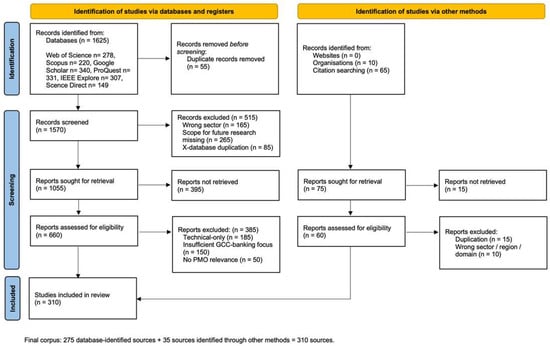
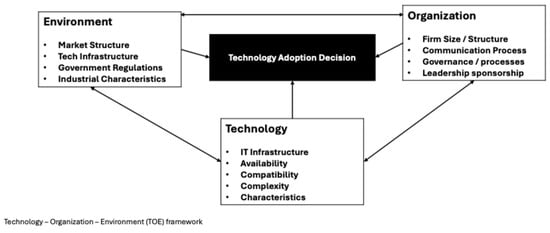
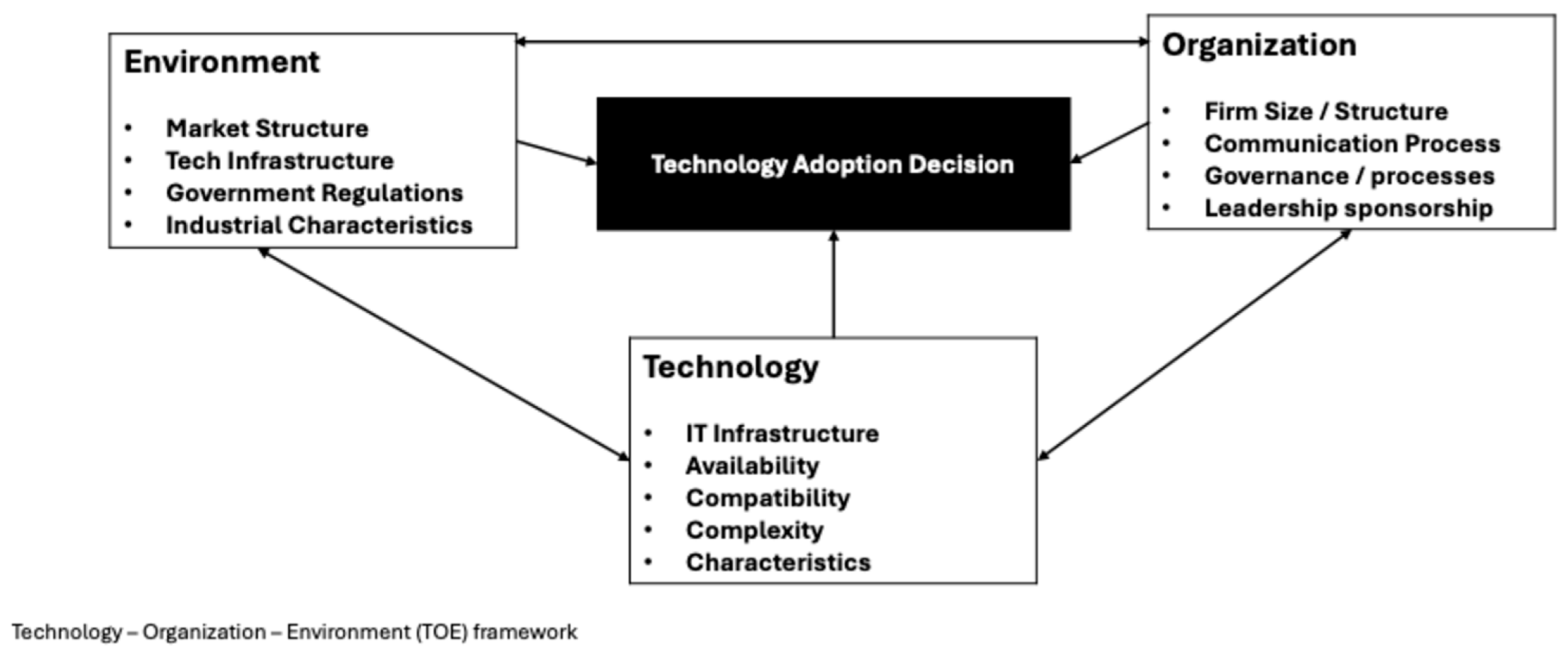
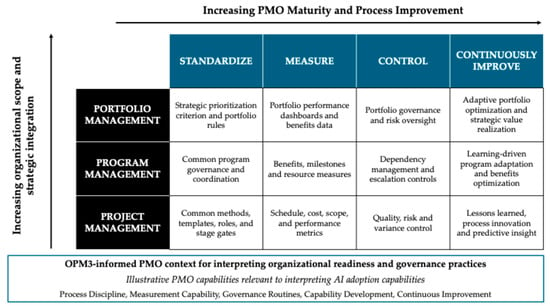
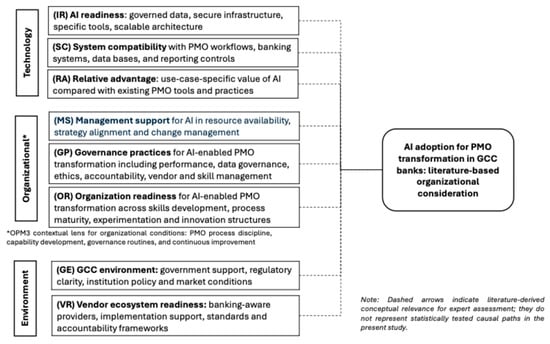
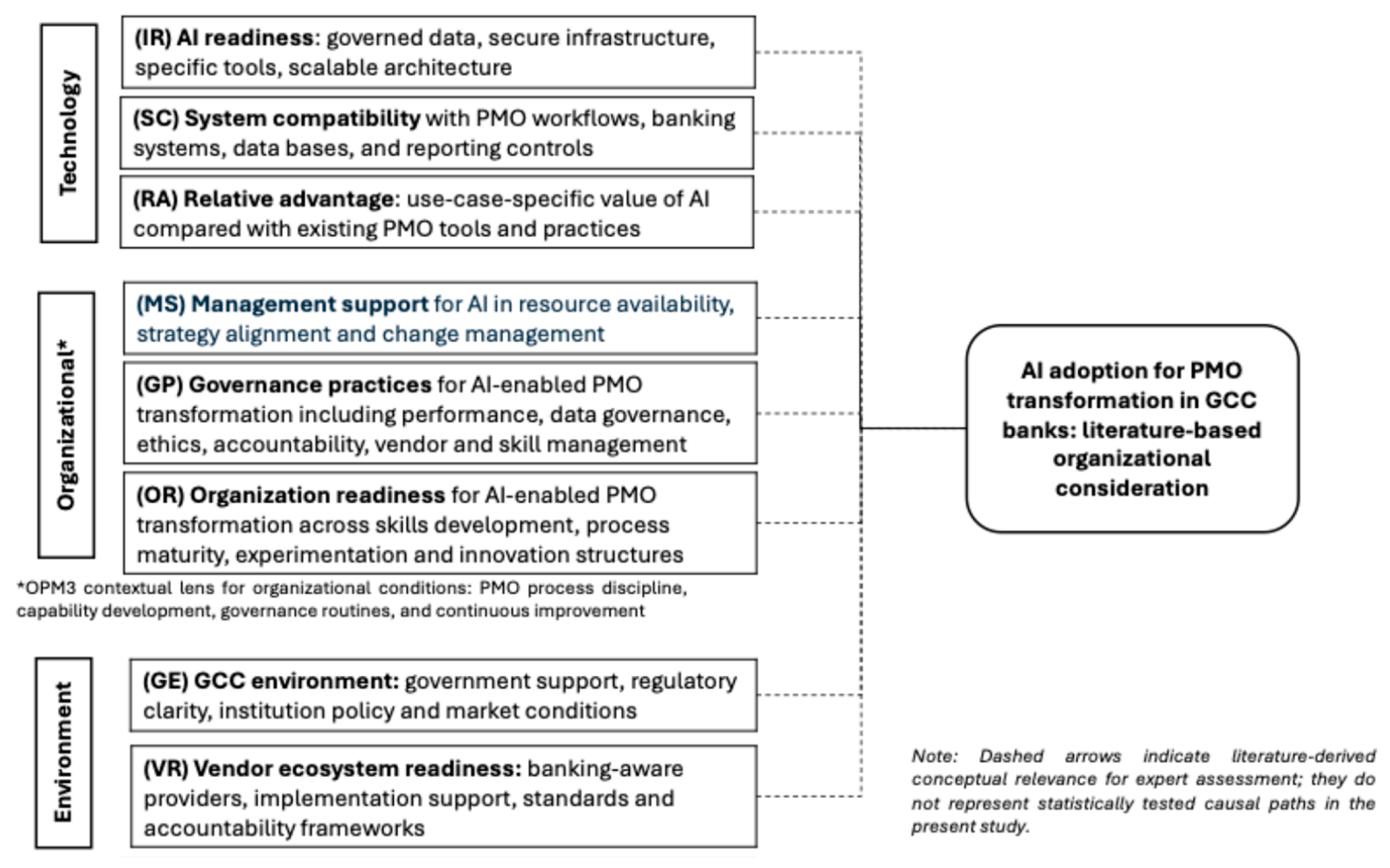
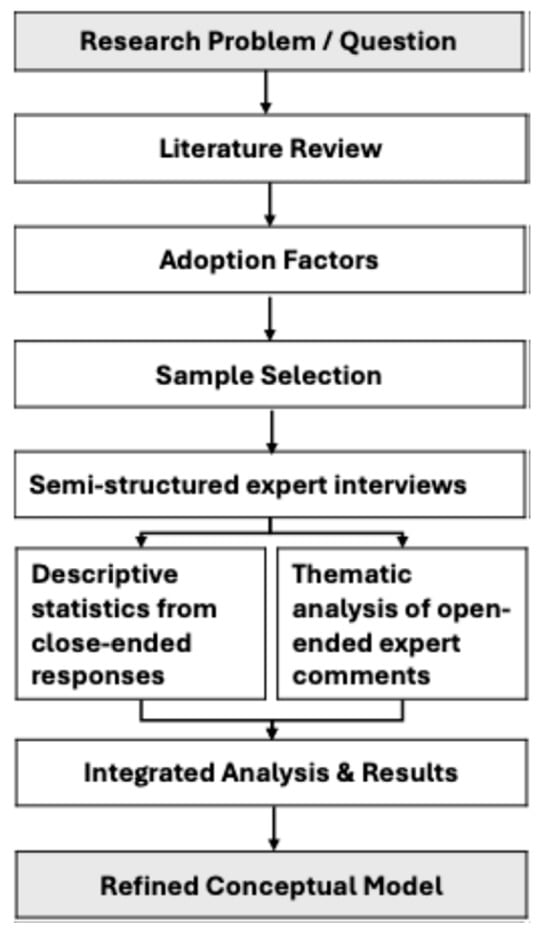
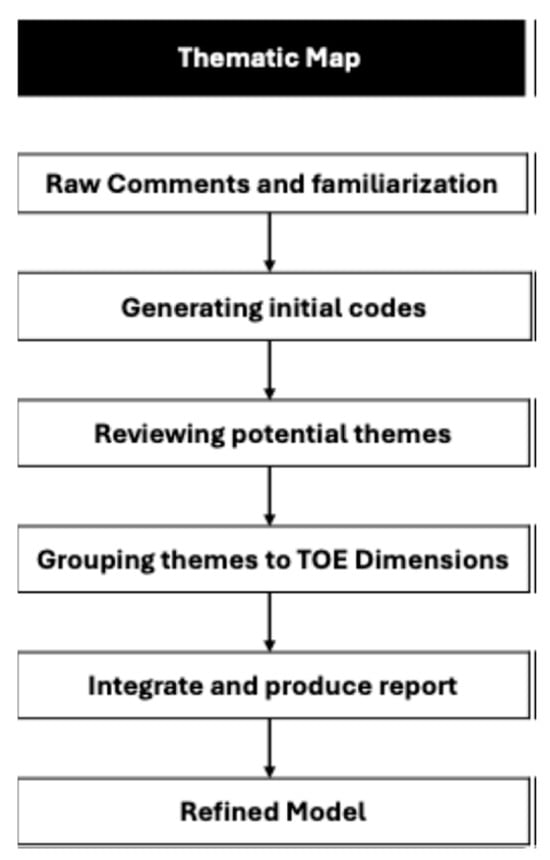
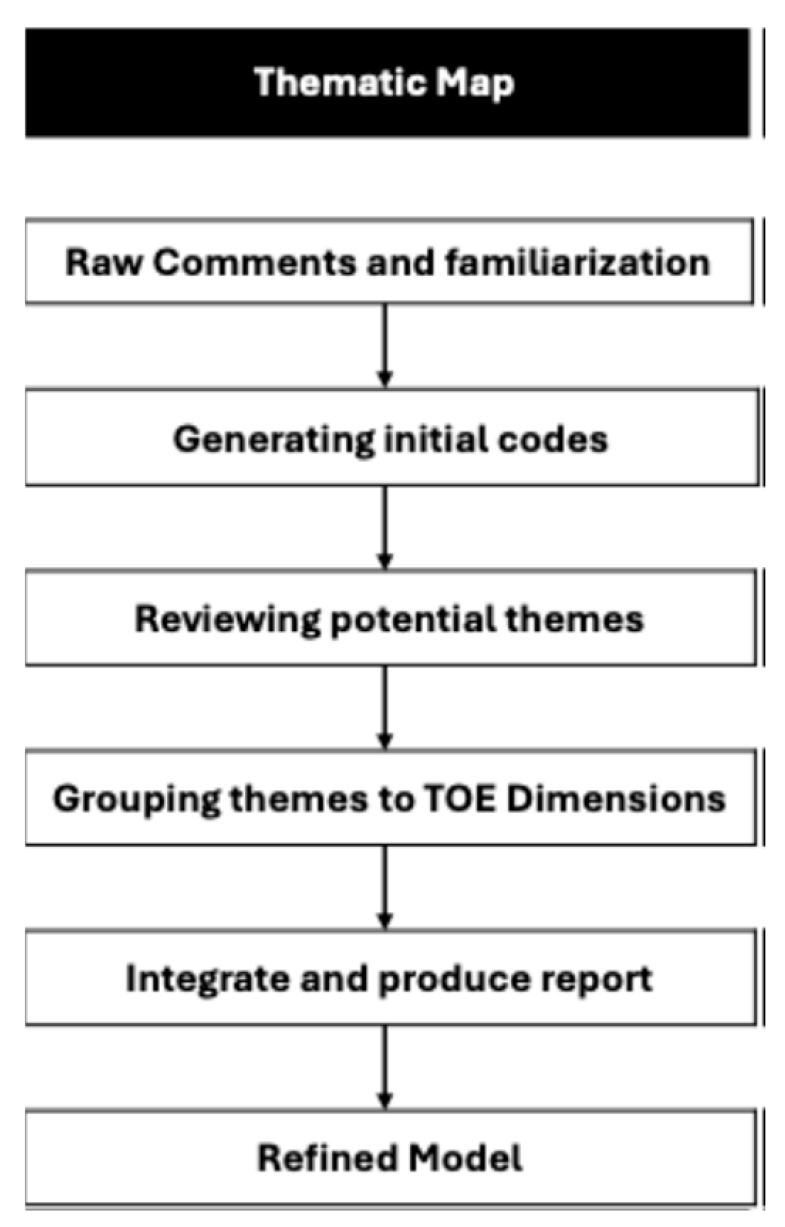
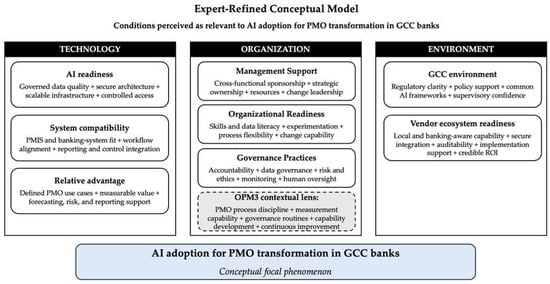
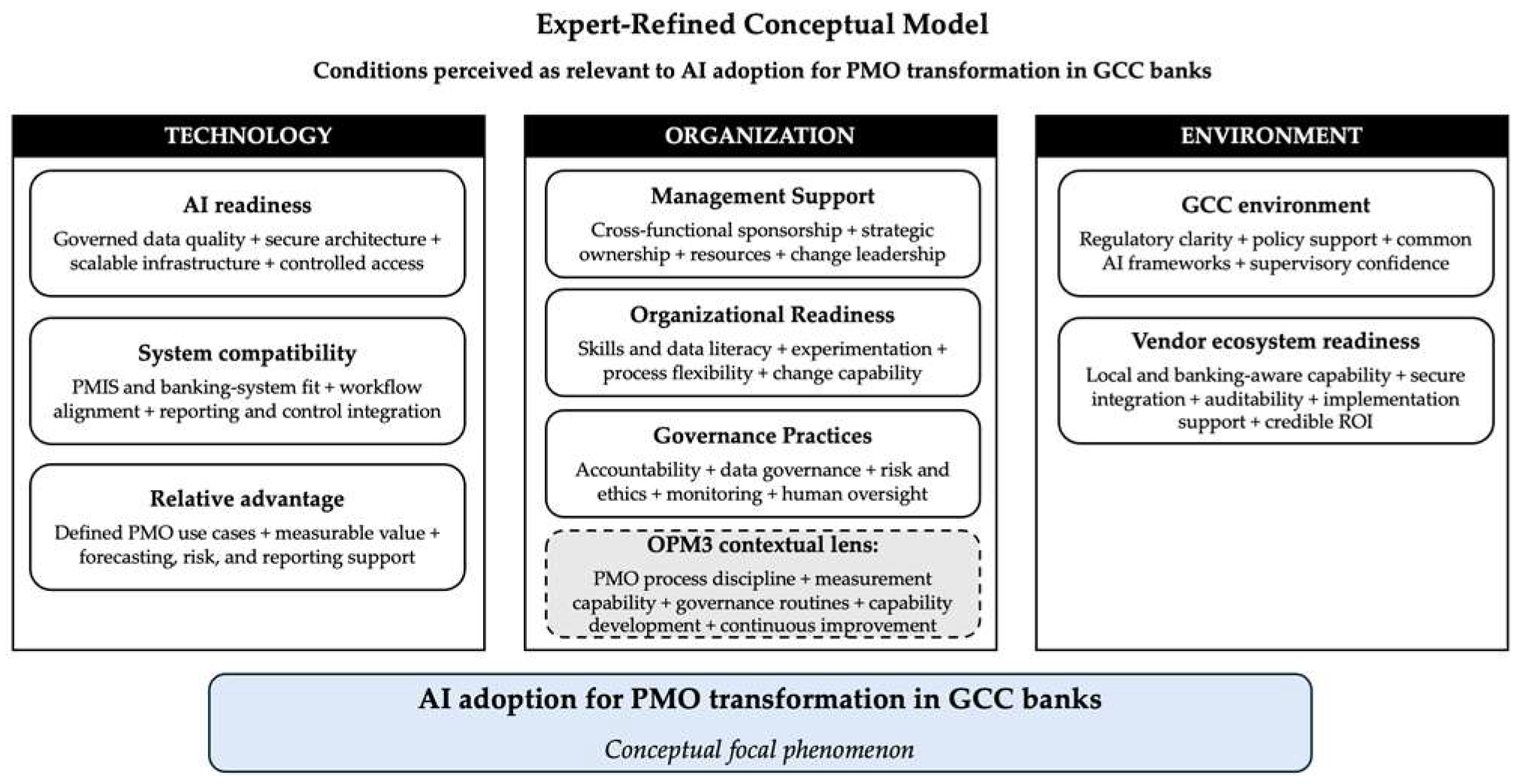

Disclaimer/Publisher’s Note: The statements, opinions and data contained in all publications are solely those of the individual author(s) and contributor(s) and not of MDPI and/or the editor(s). MDPI and/or the editor(s) disclaim responsibility for any injury to people or property resulting from any ideas, methods, instructions or products referred to in the content. |
© 2026 by the authors. Licensee MDPI, Basel, Switzerland. This article is an open access article distributed under the terms and conditions of the Creative Commons Attribution (CC BY) license.