


Highlights
Please indicate how your work links to systems science via your contributions to systems practice, theory, and/or methodology.
- •
- STS-based “Four-in-One” collaborative governance system for AI-empowered university data governance.
- •
- Reveals multi-level risk feedback loops across technical, institutional, organizational, and ethical dimensions.
What are the main findings and/or the implications of the main findings?
- •
- Value and risk co-constitute; governance balances efficiency, resilience, and humanistic care.
- •
- Integrated pathways align AI innovation with educational values.
Abstract
The purpose of this study is to explore a sustainable paradigm for data governance in universities empowered by artificial intelligence (AI), creating a collaborative governance system that integrates technological, institutional, organizational, and ethical dimensions to combine intelligence, resilience, and humanistic care. This study adopts an inductive–deductive qualitative content analysis to propose an integrative “Value–Risk–Pathway” analytical framework. The study first identifies the sustainable benefits of AI in university data governance. These benefits include enhanced data integration, improved decision support, and increased governance effectiveness. It then examines the potential risks associated with employing AI. These risks include foundational, normative, structural, and ethical aspects. The study proposes a theoretical transmission pathway through which these risks may influence and amplify each other within the context of universities. To address these risks, a collaborative governance system is proposed. This system integrates technological governance, institutional adjustments, organizational collaboration, and ethical regulations. This research contributes to existing knowledge in several ways: (1) It moves beyond the existing focus on technical efficiency or isolated risks, presenting an integrated analytical perspective that balances value and risk as co-constitutive phenomena. (2) It reveals the dynamic transmission and reinforcement mechanisms among multidimensional risks. (3) The proposed “Four-in-One” collaborative governance system offers a sustainable governance paradigm for data management in higher education in the digital age. Additionally, at the practical level, the “Four-in-One” collaborative governance system provides a theoretical basis for university administrators to develop AI application policies that align with the essence of education. It also offers targeted guidance for addressing risks at different levels, facilitating effective proactive governance.
1. Introduction
As a core strategic resource driving the high-quality development of education, data has made its governance effectiveness a key yardstick for measuring the modernization of governance systems and the long-term development capacity of universities. However, the traditional linear governance model based on “data-rule” can hardly support the sustainable development demands of personalized education, intelligent research and smart management due to the limitations of “data silos”, rigid rules and delayed response. It is also unable to effectively adapt to the rapidly changing internal and external environments. Artificial Intelligence (AI) technology, with its powerful data fusion and intelligent analysis capabilities, provides a key impetus to crack the above dilemma and empower universities to transform into intelligence and sustainability [1,2]. However, at the same time, the deep embedding of AI has also given rise to a new type of governance space intertwined with “data-algorithm-power”, whose operation logic poses a fundamental challenge to the traditional university data governance paradigm based on the hierarchical system and triggers profound tensions in terms of algorithmic accountability, privacy protection, academic autonomy, and institutional adaptation [3,4].
Recently, there has been extensive scholarly discussion on this topic. Dai et al. [5] assert that AI’s integration in educational decision-making processes facilitates a symbiotic collaboration between human and machine, enhancing administrative efficiency and fostering a more human-centric and resilient educational environment. Wu and Deng [6] propose that leveraging AI and wireless web crawler technology enables more accurate and efficient analysis of public opinion in educational institutions, thereby optimizing the allocation of resources and improving governance on campuses. Si et al. [7] provide a comprehensive framework for research data ethics governance, demonstrating that cross-sectoral and multi-stakeholder collaborations enhance the efficiency and adaptability of data management systems, ultimately optimizing resource allocation and supporting ethical compliance in research environments through AI-enabled policy analysis. However, most of them are confined to the perspective of ‘technological instrumentalism’, failing to fully reveal the deep reshaping effect on the original power structure, academic ethics and organizational culture after the algorithm is embedded in the complex academic organizational arena of universities [8]. Afroogh et al. [9] emphasize that while AI technologies have vast potential, their inherent complexities and algorithmic biases pose challenges to transparency and fairness, necessitating robust ethical frameworks and certification processes to enhance trust. Birkstedt et al. [10] suggest that fairness disputes caused by AI applications can be resolved by seeking a balance between different stakeholders. Jang and Kim [11] stress the necessity of developing comprehensive data governance components to mitigate risks related to data quality and algorithmic bias, thereby ensuring the reliability and fairness of AI applications. While these studies offer valuable insights at the organizational and institutional levels—such as ethical certification, stakeholder balancing, and data governance design—they tend to treat AI governance primarily as a matter of regulatory and procedural arrangement. Consequently, they leave less examined the deeper structural impact of excessive technological rationality on the academic ecosystem and the essence of education, as well as the potential weakening of institutional resilience in higher education through technological dependency. Recently, many researchers have tried to explore the emerging interdisciplinary field of “governance-technology” studies [12,13,14], which are committed to integrating ethical and governance considerations into the early stages of technology design, providing new perspectives to break through the aforementioned dichotomy.
Although these studies have advanced the understanding of AI governance in higher education, they largely treat value creation and risk regulation as separate concerns and rarely examine their intrinsic interconnection. Moreover, existing governance proposals tend to be fragmented, addressing specific risks in isolation rather than offering a systemic solution. To address this gap, this study constructs an integrative “Value–Risk–Pathway” framework that repositions value and risk as co-constitutive processes, traces how risks evolve across multiple dimensions, and proposes a collaborative governance system to achieve sustainable value creation while containing risks. As a theoretical study, the remainder of the paper proceeds as follows: Section 2 outlines the methodology; Section 3 clarifies the value of AI-enabled data governance in higher education and explores the coexistence of value and risk; Section 4 analyzes the systemic risks associated with the deep integration of artificial intelligence technology; Section 5 dissects the mechanisms of risk transmission; and Section 6 proposes the “Four-in-One” collaborative governance system; Section 7 concludes; and Section 8 discusses limitations and future research.
To ensure clarity and consistency throughout the study, four core concepts are operationally defined as follows, tailored to the context of AI-empowered university data governance: (1) Sustainability: The ability of the data governance system to dynamically balance technological application, institutional adaptation, organizational collaboration, and ethical adherence, thereby supporting the essence of university education, the health of the academic ecosystem, and organizational development goals in the long term. (2) Resilience: The capacity of the governance system to maintain core functions and rapidly recover and optimize when facing external shocks such as technical failures, risk transmission, and environmental changes. (3) Humanistic care: Adhering to a “people-centered” principle in governance, prioritizing human dignity, autonomy, and well-being in AI deployment. Operationally, it requires: protecting individual privacy and agency in data processing; ensuring algorithmic decisions remain contestable and subject to human oversight; and preserving spaces for human judgment, creativity, and interpersonal interaction that resist full automation. (4) Governance effectiveness: The comprehensive improvement of operational efficiency, decision-making quality, compliance accuracy, and teacher-student satisfaction.
2. Methodology
2.1. Research Method Selection
This study employed a combined inductive-deductive qualitative content analysis to examine the value creation, risk generation, and governance responses associated with AI-empowered university data governance. This approach was selected because the types of value and risks associated with AI-empowered university data governance have not yet reached a unified consensus in the existing literature. Therefore, an inductive procedure was used to identify value dimensions and risk types from the literature set. A deductive procedure was subsequently used at the governance-response stage to systematically address the identified governance requirements through the lens of Socio-Technical Systems (STS) theory.
The deductive procedure was used only at the governance-response stage to structure governance implications through STS theory; it did not assume a one-to-one correspondence between the proposed governance dimensions and Leavitt’s four elements.
2.2. Literature Collection
The literature search was conducted using the Web of Science Core Collection. To improve the alignment between the retrieval strategy and the substantive focus of the study, a topic search was conducted using the following Boolean expression: TS = (“artificial intelligence” OR “AI”) AND (“data governance” OR “university data governance” OR “data management”) AND (“university” OR “universities” OR “higher education”).
The publication period was restricted to studies published between 1 January 2020 and 31 December 2025, inclusive. The search was limited to document types of Article and Review Article. The search returned 209 records. No additional records were added manually after the database search in order to maintain the reproducibility of the retrieval procedure.
The 209 records retrieved from the Web of Science Core Collection were screened according to predefined inclusion and exclusion criteria. Studies were included if they: (1) focused on universities or higher education; (2) substantively addressed artificial intelligence or AI-enabled technologies; and (3) discussed data governance, data management, data-driven institutional decision making, or related governance issues, particularly in relation to value creation, risks, ethical concerns, or governance responses. Studies were excluded when they: (1) focused exclusively on K–12 education; (2) focused on non-educational organizational settings; (3) focused purely on technical algorithm development; (4) mentioned AI or data management only incidentally; or (5) did not provide sufficient information for qualitative coding. Screening was conducted sequentially through title/abstract assessment and full-text assessment. Following this process, 48 publications were retained as the final analytical corpus (analytical corpus as shown in File S1).
2.3. Literature Coding
The 48 included publications were subjected to qualitative content analysis. The basic coding unit was a textual passage containing a substantive statement concerning the value, risk, or governance implications of AI-empowered university data governance. The coding process proceeded through three levels of abstraction. First, 226 initial codes were assigned to relevant passages while remaining close to the meaning of the original text. Second, conceptually similar initial codes were compared and grouped into 34 higher-order categories. Third, the higher-order categories were synthesized into 7 aggregate dimensions representing the principal value and risk domains identified in the literature. Through iterative comparison between the coded passages and emerging categories, the value-related evidence was organized into three aggregate dimensions: data integration, decision support, and governance effectiveness. The risk-related evidence was organized into four aggregate types: foundational risks, normative risks, structural risks, and ethical risks (coding record as shown in File S2).
The four risk dimensions were treated as analytically distinguishable rather than mutually exclusive. Where a phenomenon could generate consequences across several dimensions, classification was based on the primary mechanism emphasized in the source passage rather than on the surface terminology alone. For example, bias originating from deficiencies in training data was coded as a foundational risk, whereas passages emphasizing discriminatory outcomes, inequity, or unfair treatment were coded as ethical risks. Multiple coding was permitted when a passage contained analytically distinct mechanisms. Representative examples of the coding hierarchy are presented in Table 1.
Table 1.
Coding hierarchy of AI-empowered university data governance (representative examples).
2.4. Inter-Coder Reliability and Analytical Consistency
To assess the reliability of the coding framework, two researchers independently coded 14 randomly selected articles from the final corpus of 48 studies using the same coding manual. After removing duplicate extraction, a total of 86 meaning units were retained. Each unit was assigned to one of seven primary categories: data integration, decision support, governance effectiveness, foundational risks, normative risks, structural risks, and ethical risks. Inter-coder agreement was reached on 78 of the 86 meaning units, with disagreements occurring in the remaining 8 units. Inter-coder agreement was calculated using Cohen’s kappa (inter-coder reliability as shown in File S3). The observed agreement was Po = 0.907, the expected agreement was Pe = 0.155, and Cohen’s κ = 0.890, indicating almost perfect inter-coder agreement. All disagreements were ultimately resolved through discussion. These results indicate that the coding scheme is sufficiently reliable for the subsequent analysis of value dimensions, risk categories, and governance responses. A 7 × 7 inter-coder confusion matrix summarizing the agreement and disagreement patterns is provided in Appendix A Table A1.
2.5. Theoretical Interpretation and Boundary Conditions
The categories of value and risk were generated primarily through qualitative analysis of the literature rather than being predetermined by STS theory. STS theory was introduced at a subsequent interpretive stage to organize the governance implications arising from the coding results. Rather than assuming a strict one-to-one correspondence between the proposed governance dimensions and individual elements of Leavitt’s model, this study treats STS as a relational theoretical lens. From this perspective, effective AI governance requires the joint optimization of technological arrangements and social-organizational conditions.
The dimensions of technology, institutions, organization, and ethical governance are analytically distinguishable but mutually interdependent. The mapping therefore represents a theory-informed synthesis rather than a deterministic one-to-one derivation from Leavitt’s technology–task–structure–actor categories.
The proposed risk-transmission mechanism is similarly conceptual rather than empirically causal. The coding evidence demonstrates recurrent relationships and co-occurrences among different forms of risk in the literature, whereas the directional pathways presented in the conceptual model represent theoretically plausible mechanisms that require further empirical testing.
The findings should therefore be interpreted within three boundaries. First, the analytical corpus is limited to literature indexed in the Web of Science Core Collection and should not be regarded as an exhaustive representation of all scholarship on university AI governance. Second, the categories reflect patterns reported in the selected literature rather than direct observations of university governance practices. Third, the proposed governance system and risk-transmission relationships constitute analytical propositions whose applicability may vary according to institutional, regulatory, technological, and cultural contexts.
3. The Sustainable Value of AI-Empowered University Data Governance
As an extension of human cognitive ability, AI is gradually becoming the transformative force of data governance in universities through its capabilities. Its sustainable value is primarily reflected in multidimensional empowerment that aligns with higher education data governance scenarios, encompassing data integration, decision support, and governance efficacy. As illustrated in Figure 1, the multidimensional value framework of AI-empowered data governance in higher education clearly delineates the pathways through which technological capabilities translate into governance outcomes. It not only specifies the concrete scenarios related to the three core values of data integration, decision support, and governance effectiveness, but also lays the groundwork for subsequent dialectical analysis of “value and risk coexistence.” The realization process of each value dimension inherently encompasses the generation logic of specific risks.
Figure 1.
The co-constitutive value-risk architecture of AI-empowered university data governance: from technical capabilities to governance outcomes and risk exposure.
3.1. The Innovative Value of the Data Integration Dimension
The core of the innovation of AI in data integration comes from the breakthrough of the multimodal paradigm of deep learning. This paradigm breaks the traditional boundaries of computer vision, natural language processing and other fields, and realizes the efficient association between perception characteristics and semantic abstraction through basic models [15,16], thus providing unified underlying technical support for cross-domain data association and unstructured data mining.
From the perspective of cross-domain data synergy, AI breaks down data silos by facilitating inter-departmental data association. In the governance scenario of universities, many business systems such as academic affairs, student services, and scientific research have been operating independently for a long time. Massive data resources are scattered and stored in various heterogeneous data management platforms, forming isolated “data silos” from each other, which hinders cross-departmental data sharing and overall decision-making. Based on intelligent data gateways and knowledge atlas, it provides a system solution to this problem. Using the AI-driven data integration platform, it can automatically identify, map and connect the data interfaces of heterogeneous systems to realize the “semantic-level” docking of different data patterns, rather than simple field matching. The knowledge atlas builds a semantic association network, reveals the inherent logic of data, and forms a semantic network that reveals the relationship between all elements of universities. The technical path has been verified in the educational scenario [17]. Certainly, this integration of semantics also carries risks. As the connectivity of data increases, it may exacerbate the spread of biases across different fields and raise the risk of privacy breaches.
In addition, AI can optimize the processing of unstructured data, thereby expanding the scope of data governance. In the scenario of universities, unstructured data accounts for a relatively large proportion of the total amount of data and contains rich information, but it is usually difficult to be effectively utilized through traditional data processing methods. AI technologies, such as natural language processing (NLP) and video analysis technologies, provide new ways for the processing and value mining of unstructured data in universities. These technologies can automatically extract key information from unstructured data, identify knowledge associations and induce trends, thus converting them into analysable information resources. For example, in teaching activities, natural language processing technology is used to analyze the teaching interaction frequency and content quality of course videos to provide an objective basis for teaching evaluation.
3.2. The Adaptation Value of the Decision Support Dimension
Through predictive analytics and multi-scenario simulations, AI facilitates a profound transformation in university decision-making models, shifting from “experience-driven” to “data-driven” approaches. The adaptive value of its decision support systems is primarily reflected in two dimensions.
At the operational decision-making level, AI improves the scientific basis of decision-making. The traditional decision-making mechanism of higher education relies on subjective methods such as expert scoring and questionnaires for a long time. It is easily disturbed by factors such as individual experience and preferences, which affects the scientific level of decision-making. AI can efficiently extract key information from unstructured texts with the help of natural language processing technology, and continuously optimize the weight of indicators through machine learning algorithms to realize the standardization and dynamic adjustment of the evaluation process. This process effectively overcomes human interference and enhances the objectivity and interpretability of decision-making results. In practical applications, artificial intelligence (AI) not only helps identify academic risks and deliver targeted interventions, but also drives the shift in teaching decision-making from a one-size-fits-all paradigm to precision education. In doing so, it enables teachers to accurately pinpoint students’ knowledge gaps, supports the implementation of adaptive teaching, and ultimately enhances the precision of decision-making pertaining to talent cultivation [18,19,20,21].
At the strategic planning level, AI further enhances foresight to address the dynamic nature of university governance. University decision-making is inherently contextual; its highly situational nature requires the decision-making process to adapt closely to changes in both internal and external environments. However, traditional higher education decision-making often relies on static historical experience and static data, and it is difficult to cope with the rapidly changing internal and external environment, resulting in a lack of strategic forward-looking. AI can flexibly allocate human, material, financial and scientific research resources of universities through dynamic simulation and multi-objective optimization, so as to enhance the decision-making of universities’ scientific, systematic and adaptive. For example, the AI model can analyze data and identify laws and associations through automated data, accurately locate the entry point and frontier direction for scientific researchers, and provide an important basis for hypothesis verification and experimental design, effectively reducing the blindness of scientific research and exploration, and improving the efficiency of scientific research decision-making [22].
3.3. The Leaping Value of Governance Effectiveness
Relying on the technical advantages of data processing and process optimization, AI promotes the transformation of college data governance from a manual passive response mode to an active empowerment mode with deep integration of automation and intelligence. The core value of this transformation is reflected in the precise enhancement of administrative efficiency and the deepening of compliance governance.
AI has promoted the intelligence of the governance process. AI replaces repetitive labor with technology, extends service boundaries with intelligence, and releases the value creation space for administrators. In terms of technical adaptability, AI can achieve completely autonomous operation in “precise, fast, and repetitive” administrative scenarios [23], and its efficiency in processing data-driven decision-making and analyzing complex problems significantly exceeds that of humans [24,25]. Currently, technologies such as Robotic Process Automation (RPA) are widely used in labor-intensive settings [26,27]. These technologies reduce the human resource burden in higher education while significantly improving service satisfaction among faculty and students.
AI has improved the accuracy of compliance governance. AI provides technical guarantees for data security and compliance audits of universities by building a closed-loop management mechanism of “real-time monitoring, abnormal identification, risk warning and rapid disposal”. The abnormal detection system based on machine learning can cover the entire life cycle of data, dynamically monitor data access rights, usage scope and flow paths, automatically identify unauthorized access, over-authorized export, format tampering and other risk behaviors, and trigger real-time warnings to block the spread of risks. For example, by deploying an intelligent network operation and maintenance system and the ASec network security intelligent management platform, Peking University has reduced the average fault discovery time by 88.9%, the positioning time by 80%, the high-risk security vulnerabilities by 94%, and the adjustment time for the strategy was reduced from 2 min, as required by humans, to just 15 s, significantly improving the response speed and execution accuracy of compliance governance [28]. This case validates the leap in governance effectiveness within the framework, achieving a transition from passive compliance regulation to proactive risk prevention.
It is crucial to emphasize that the sustainable value and potential risks of AI-empowered university data governance are co-constitutive rather than sequential phenomena. Specifically, while AI facilitates data integration, it simultaneously exacerbates foundational risks such as data bias and trust crises. In providing decision support, AI may introduce structural risks related to algorithmic dependency and normative risks concerning ambiguous accountability. Additionally, although AI enhances governance efficiency, it also tends to lead to ethical risks such as the alienation of algorithmic power and the erosion of privacy. Conversely, effective risk governance does not suppress value; rather, it creates conditions for the sustainable release of value. Recognizing the interdependent and mutually constraining relationship between value and risk is essential to avoid a myopic pursuit of efficiency or an excessive aversion to risk.
4. The Risk Challenges of AI-Empowered University Data Governance
As a practical force created by humans, technology has inherently carried potential risks since its inception. In this sense, value creation and risk emergence associated with AI technologies do not occur sequentially but rather constitute a co-constitutive process. Each value dimension discussed above inherently gives rise to specific risk configurations. Moreover, as AI becomes more deeply embedded in university governance to unlock value, the associated risks become increasingly profound and systemic. By structuring the classification system along four distinct levels, namely foundational, normative, structural, and ethical, this study ensures that risk analysis encompasses the full continuum from technology to regulation, organizational arrangements, and underlying values. This multilayered approach addresses a common limitation found in previous research, where technological errors and ethical lapses are frequently conflated.
To avoid conflating technological errors, regulatory gaps, organizational dysfunctions, and value conflicts—which prior studies have often treated interchangeably—this study distinguishes four risk categories according to their primary generative source and the governance level at which they operate. Foundational risks originate in the technical-data infrastructure; normative risks arise at the rule-institution interface; structural risks emerge from organizational-power configurations; and ethical risks stem from the educational value order. While real-world AI risks may traverse multiple levels simultaneously, each category is classified here according to its dominant logic to enable targeted and non-overlapping governance interventions. The discriminating dimensions of the four risk categories are shown in Table 2.
Table 2.
Discriminating dimensions of the four risk categories.
4.1. Foundational Risks
Foundational risks come from the inherent attributes of AI technology and the congenital defects within the data ecology of universities, rather than from institutional design choices or value conflicts. These pertain to the “hard” technical infrastructure. This category is distinct as it concerns the reliability of the tools themselves. These risks represent fundamental challenges at the data technology level and are particularly evident in three key aspects.
Data quality defects may generate technical bias at the model level, which may distort automated decisions even when the algorithm is designed neutrally. The decision-making quality of AI models is heavily reliant on the accuracy of input data. When faced with data from multiple sources that vary in heterogeneity and inconsistent standards, alongside the prevalence of incomplete and erroneous information during the model training process, automated decision-making can become misaligned [29]. Moreover, algorithms can inadvertently reinforce historical biases present in the training data, translating into systematic discrimination at the technical level and worsening existing inequalities [30]. For instance, algorithms designed to predict college enrollment based on test scores may negatively impact high-performing students from disadvantaged backgrounds [31,32].
The black box characteristics of algorithms may lead to a crisis of trust. In the context of deep learning algorithms, the final output for a specific input can be clarified (such as the final decision regarding ‘eligibility for research preservation’). However, the core information on how the algorithm derives this result through data interactions is often unclear. Additionally, it is not always evident which data elements serve as key variables influencing the results. This lack of transparency and interpretability at the technical level undermines users’ trust in algorithmic decision-making [33].
The lack of robustness in the system may exacerbate security vulnerabilities. The AI model has low fault tolerance for abnormal data. Combined with the openness of the university system and the complexity of manual operations, this situation makes risk prevention and control more challenging. External attackers may manipulate the models by injecting adversarial samples, a possibility that can increase the likelihood of erroneous decisions. For instance, if the format of student academic performance data is altered, it could result in misjudgment of student grades, ultimately affecting educational equity.
4.2. Normative Risk
Normative risk originates from the insufficient compatibility between institutional rules and the application of AI technology. Positioned above the technical domain, these risks pertain to the “soft” rules that govern organizational practice. Specifically, normative risk is characterized by the lag between rapid technological innovation and relatively static institutional procedures. Meanwhile, distinct from ethical risks, which pertain to moral principles and the safeguarding of values, normative risks are compliance risks at the level of rules and institutions, concerning adherence to regulations. The core of normative risks focuses specifically on the misalignment between AI operations and established institutional rules, legal frameworks, and procedural requirements. These risks are mainly reflected in the following three aspects.
Unclear data ownership can create dilemmas regarding data authorization and access rights. The ownership of personal data from faculty and students, as well as data related to teaching and research outcomes, lacks adequate legal frameworks and university regulations, a situation that may leave room for regulatory gaps. As a result, two issues arise: universities may violate the ‘minimal necessary’ principle by collecting excessive data, and faculty and students may refuse to grant authorization due to concerns about their rights. This may limit the integration and value creation of the data.
Automated tools can serve as a ‘moral buffer,’ allowing decision-makers to shift responsibility to the algorithm [34]. When automated decisions harm the rights of faculty and students, it is often unclear who is responsible. Developers, implementers, and operators may blame each other. A significant issue is that universities usually lack comprehensive auditing, impact assessments, and objection mechanisms for algorithmic decisions. This makes it hard to find effective channels for rights relief.
Institutional supply lags behind technological development. The rapid advancement of AI often creates application scenarios that are not clearly covered by existing laws. For example, the ‘Personal Information Protection Law of the People’s Republic of China’ states that ‘personal information processors using personal data for automated decision-making must ensure transparency and fairness in their decisions’ [35]. However, in AI-empowered university data governance, automated decisions often fail to meet transparency requirements, and current regulations do not clearly define how to assess the fairness of AI decision-making, conditions that may be associated with heightened compliance risks during application.
4.3. Structural Risks
Structural risk stems from the impact and reshaping of AI technology on the traditional governance structure of universities. These risks address the power dynamics and role distributions within the university. Unlike foundational risks, which are inherent to the technical attributes of AI, structural risks are rooted in the organizational embedding of AI systems. For instance, excessive reliance on AI for decision-making in higher education institutions may gradually erode internal organizational capabilities, which highlights their distinctive organizational nature. These risks manifest as systemic risks in three key forms.
Departmental coordination barriers solidify data silos. The internal “chimney-type” management system of universities runs counter to the principles of organizational coordination, resulting in the data being scattered across different departments such as academic affairs, research, and finance, with limited cross-domain integration. For instance, because the comprehensive evaluation system of college students cannot obtain library borrowing data and dormitory behavior data, the AI model can only generate evaluation reports based on grades and attendance, and cannot truly reflect its comprehensive literacy.
Key infrastructure dependence triggers path dependence risk. The teaching, research and management of universities increasingly depend on centralized data platforms and AI computing facilities. Once these key infrastructures are paralyzed due to technical failures, supply chain interruptions or malicious attacks, they may lead to school-wide stagnation, exposing huge system vulnerabilities.
The imbalance in human–computer collaboration weakens organizational capacity. Over-reliance on AI tools for data analysis and decision-making can hinder students’ critical thinking and independent judgment. Students are likely to accept conclusions from algorithms without engaging in personal analysis or questioning [36]. This dependency can also diminish key professional skills among faculty and administrators, such as situational awareness and professional judgment. Consequently, when faced with unclear, complex, or unexpected situations that algorithms cannot handle, their ability to respond effectively may be significantly reduced.
4.4. Ethical Risks
Ethical risks come from the erosion of the rationality of educational value by technical rationality. These risks concern the purpose of higher education. This category is essential to capture the potential alienation of human subjectivity and algorithmic bias, which cannot be explained by technical or structural failures alone. These risks manifest in three critical areas.
The erosion of privacy boundaries. The comprehensive digitalization of the campus and the non-intrusive analysis by AI keep the learning, work, and life trajectories of teachers and students in a state that can be continuously analyzed. Traditional one-time informed consent forms cannot cover complex algorithmic analysis scenarios and potential uses, a limitation that may contribute to a gradual erosion of privacy boundaries and may be associated with a dilemma of “acquiesced transparency”. This phenomenon stems from the mismatch between static consent mechanisms and dynamic AI data processing, and it further weakens the control of individuals over their own data.
The alienation of algorithmic power. When key decisions such as admissions, graduations, and promotions are dominated by algorithms, algorithmic power begins to replace traditional academic judgment and administrative decision-making. As a result, the fates of teachers and students are influenced by anonymous code rules. This marginalizes teachers’ autonomy and reduces the complex teaching process to mere calculations and automated tasks [37]. A Pollfish survey (2023) shows that 30% of U.S. college students use ChatGPT for written assignments, with 75% knowing it is cheating but continuing to do so [38]. In the long term, this excessive reliance on AI undermines academic integrity and students’ critical thinking [39,40], reflecting the risk that technical tools may reverse the subject-object relationship between humans and technology in education.
Beyond technical malfunction, algorithmic power can convert opacity and data bias into a governance rationality that displaces educational values. Fairness is thus threatened not merely by model error, but by the normalization of opaque, unaccountable rule. This is not simply a technical black-box problem, but an ethical problem of power asymmetry and exclusion from accountability. Because AI systems are often opaque, it is difficult to review how they make decisions [41]. This allows social biases found in historical data to persist and grow, forming a cycle where bias is ingrained in algorithms and reinforces inequality. Additionally, many algorithms are proprietary, with companies claiming trade secrets to avoid sharing details [42]. This practice prevents stakeholders from being involved in the auditing process, denying universities and faculty their right to understand and question these systems-contradicting the principle of openness in academia. Ultimately, such algorithms may unintentionally reinforce existing social inequalities, turning education from a tool for upward mobility into one that perpetuates class divisions. This finding indicates that technical neutrality does not guarantee outcome fairness, and algorithmic bias can amplify structural inequalities in education.
5. Risk Transmission Mechanism in AI-Empowered University Data Governance
Based on the static analysis of the four types of risks, it is important to emphasize that the four categories are analytical constructs rather than ontologically discrete phenomena. The conceptual proximity among certain categories is not a shortcoming but rather reflects the sociotechnical interconnectedness inherent in AI systems, and they may be interrelated through a dynamic transmission pathway.
As shown in Figure 2, while a theoretically plausible pathway may originate from foundational risks—driven by the inherent contradiction between AI’s technical characteristics and the attributes of institutional rules—this should not be interpreted as a fixed or deterministic sequence. Technical issues such as data quality problems, the algorithmic black box, and lack of robustness create the basis for these systemic risks. At this point, these risks remain potential threats. Their danger lies not in the defects themselves but in the ability of regulatory frameworks to identify and control them effectively. Risk escalation may occur when technological complexity exceeds current regulations’ ability to respond. For instance, Rector Petra De Sutter of Ghent University incorporated erroneous quotations into her speech at the opening of the academic year as a result of using generative AI. Although the technical flaw—specifically, AI hallucination—originally constituted a foundational risk, its transformation from a latent threat into an explicit normative risk occurred precisely because Ghent University lacked clear review mechanisms and accountability norms governing the use of AI in administrative contexts [43].
Figure 2.
Proposed theoretical risk-transmission and feedback mechanism in AI-empowered university data governance.
Normative and structural risks may co-evolve and mutually reinforce each other through two mechanisms: rising collaboration costs and capacity substitution. On the one hand, institutional ambiguity significantly raises the trust and compliance costs associated with cross-departmental collaboration. On the other hand, an over-reliance on AI systems can weaken skills within the organization. For instance, Australian Catholic University (ACU) erroneously accused students of using AI to cheat in their assignments based on an AI detection tool. More troublingly, ACU had been aware of the tool’s accuracy issues for over a year, yet continued to rely on it as the basis for allegations [44]. This institutional ambiguity may hinder departments from forming a shared understanding of evidentiary standards, may contribute to rising coordination costs between academic affairs and committee bodies, and leaves students with no choice but to prove their own innocence. Furthermore, when managers and faculty depend too much on algorithmic tools, their professional judgment, critical thinking, and situational awareness may decline. This can diminish the organization’s ability to self-correct, resulting in increased rigidity and reduced resilience. Consequently, risks may shift from being manageable technical and institutional issues to deeper structural problems within the organization, marking a significant escalation in the nature of these risks.
Ethical risks may emerge from the cumulative interactions among foundational, normative, and structural risks, affecting the core subjects of education—teachers and students. However, this emergence should not be regarded as a terminal stage of risk escalation. As organizational capacity diminishes, universities increasingly lose their ability to identify and address algorithmic fairness issues. Additionally, inherent biases in data and algorithms, along with ongoing institutional failures and structural rigidity, may be associated with major challenges at the level of values. Harrison Sharples, a medical student at the University of St Andrews, was falsely accused of AI-generated writing simply because his dissertation displayed “perfect” grammar. The accusation was upheld, reducing his grade to a pass and leaving a permanent mark on his GMC record. On appeal, the university conceded that technical failures had rendered the hearing procedurally unfair and withdrew the charges, yet Sharples stated that the semester-long anxiety had already taken a serious toll on his studies [45]. At this point, the power of algorithms is no longer just an auxiliary tool, but a hidden dominant power that erodes the autonomy and criticality of teachers and students, shaking the ‘human-centered’ rationality of education, and which can be interpreted as a transgression of instrumental rationality over value rationality.
Crucially, risk transmission does not end linearly here. Risk transmission forms a self-reinforcing negative feedback loop driven by governance behavior deviations caused by ethical crises. When ethical risks are associated with trust deficits, universities tend to adopt two counterproductive responses: universities may adopt defensive technology exclusion strategies due to excessive risk aversion, which may in turn contribute to stagnant governance and loss of the technological dividend; or they may respond to ethical pressures by introducing rigid systems that are out of touch with practice, which in turn inhibits innovation, increases compliance costs, and falls into the trap of regulatory rigidity. As evidenced by the persistent occurrence of collective student cheating with AI tools in online examinations at Korean universities, the institutional responses—whether reverting to in-person testing or promulgating ambiguous non-binding guidelines—tend to exacerbate rather than resolve existing structural contradictions, thereby trapping the entire system in a self-reinforcing cycle [46].
The risks associated with the empowerment of AI in university data governance represent a complex process that transmits and amplifies issues within multi-level socio-technical systems. Initial technical problems, when combined with institutional failures, may create conditions in which risks persist; this is theorized to contribute to distortions in organizational structures and may ultimately contribute to a crisis of values. The confusion resulting from this value crisis may, in turn, hinder effective institutional design and technological governance. This implies that effective risk prevention requires a shift away from linear thinking characterized by a “treating symptoms rather than root causes” approach. Instead, it should shift towards a system governance perspective centered on sustainability.
6. Implementation Pathways for AI-Empowered University Data Governance
Based on the finding that value and risk are symbiotic, as well as the interconnected risks identified previously, a “Four-in-One” collaborative governance system is proposed. This system is informed by STS theory and by Leavitt’s model of organizational change, which together provide a sensitizing framework for considering the joint optimization of technical and social elements.
STS theory views organizations as constituted by the interplay of social and technical subsystems, holding that technological innovation must be co-optimized with social factors—such as work organization and personnel collaboration—to enhance overall system performance [47]. Building on this foundation, Harold Leavitt proposed a model of organizational change centered on four core elements: technology, task, structure, and actor [48]. Crucially, however, these elements are not a fixed template; their specific content and boundaries must be adapted to the technological and institutional context in question [49]. For AI-empowered university data governance, this co-optimization principle provides our theoretical point of departure. This is achieved through the co-optimization of technological, institutional, organizational, and ethical subsystems, thereby attaining a dynamic equilibrium between technological efficiency and educational values. Effective governance here demands more than technical sophistication: it must also engage the institutional rules that coordinate tasks and distribute authority, the organizational arrangements that enable cross-departmental collaboration, and the value commitments that preserve the educational mission. Following this logic, four governance focal points tailored to the higher education setting were derived. The first is the technological foundation, encompassing data quality, algorithmic transparency, and system robustness—it addresses the artifact–data interface of the socio-technical system. The second concerns institutional rules, including data ownership clarification, accountability standards, and regulatory adaptability—it addresses rule-based coordination and the allocation of authority. The third is organizational coordination, realized through cross-departmental committees, role specialization, and human–AI collaboration—it addresses task allocation and role relationships across organizational boundaries. The fourth addresses ethical norms, covering privacy protection, educational value preservation, and bias prevention; it addresses the value commitments and normative constraints that shape human actors’ judgment. Together, these four dimensions address distinct facets of the coupling that STS theory identifies as essential for system performance, providing a theoretically grounded answer to the operational questions of viability, execution, and accountability. Figure 3 illustrates the overall architecture of this “Four-in-One” collaborative governance system.
Figure 3.
The “Four-in-One” collaborative governance system for AI-empowered university data governance.
In contrast to models that treat risk as a side effect requiring separate management, this system positions risk management as an intrinsic driver of value creation. To facilitate comprehension, Table 3 summarizes the core components of this system, mapping each governance dimension to its corresponding risk type, key measures, and expected outcomes.
Table 3.
The mapping between governance dimensions and risk types.
6.1. Technological Governance Pathway: Build a Reliable Intelligent Governance Base
Conducting technological governance is fundamental to ensuring the effective empowerment of AI in the data governance of higher education institutions. Focuses on data quality, algorithmic transparency, and system robustness, directly mitigating foundational risks. Effective technical controls not only reduce errors and opacity but also create dependable information for regulatory and policy development, thus facilitating normative governance. A key strategy is the implementation of a “data foundation” initiative to address challenges related to data quality. Given the diverse and heterogeneous nature of data in universities, as well as the absence of standardized protocols, it is essential to reconstruct the data processing workflow through a combination of standardization and intelligent approaches. This involves developing a unified data standard for campuses and utilizing a centralized data platform to facilitate the standardized integration of disparate data sources. Additionally, introducing machine learning-based tools for intelligent data cleaning and verification can establish a dynamic quality monitoring system that spans the entire data lifecycle, allowing for the automatic identification and correction of errors, thus mitigating the risks of bias from the outset.
Enhancing algorithm design to improve interpretability is another critical aspect. The development and application of XAI technologies facilitate the generation of intuitive visual reports for complex predictive and decision-support processes, such as academic evaluations and research funding allocations. By transforming intricate model logic into human-understandable reasoning processes, XAI solves the foundational risk of “algorithmic black box”, which is the core of the technological governance pathway to consolidate the governance foundation. Moreover, establishing a mechanism for verifying algorithmic fairness through a comprehensive process that includes historical data bias detection, monitoring of the model training process, and anti-discrimination assessments of decision outcomes can further reduce systemic bias against disadvantaged groups.
Finally, enhancing system security and resilience against risks is essential. This can be achieved by incorporating cutting-edge techniques such as adversarial training, differential privacy, and federated learning to improve the capability of AI models to withstand malicious attacks and data noise. Additionally, setting up a security monitoring and encryption system covering the entire data lifecycle ensures the continuity and reliability of the governance process.
6.2. Institutional Adjustment Path: Enhancing the Agile and Inclusive Rule System
Institutional adjustment plays a vital role in effectively guiding and regulating AI applications. It establishes clear rules, standards, and accountability structures for AI use, primarily addressing normative risks. Rigorous policies encode legal compliance, due process, and oversight requirements. These institutional adjustments empower organizational coordination and reduce ambiguities that otherwise fuel structural risks. A key aspect of this effort is clarifying the boundaries of data ownership and usage. Establishing “Management Measures for the Classification and Grading of Campus Data” alongside “Ethical Guidelines for the Application of AI” at the university level can significantly aid in this process. These guidelines should define ownership relationships, intended use, and authorization mechanisms for various data types, including teaching, research, and behavioral data. It is essential to adhere to principles like “purpose limitation” and “data minimization,” ensuring that data is collected and used responsibly. Moreover, implementing a dynamic consent mechanism and allowing both teachers and students to maintain control over their data utilized in AI analyses.
Improving algorithmic accountability and audit practices. Clearly delineating responsibilities in the development, deployment, and operation of AI systems is necessary. An independent algorithm audit committee can conduct regular evaluations of core AI applications within the institution, focusing on fairness, accuracy, and compliance. Such evaluations will help balance rational data utilization with the protection of individual rights. Additionally, establishing a clear channel for objections and complaints regarding algorithmic decision-making ensures that those adversely affected by automated decisions have access to effective manual review and recourse.
Optimizing the institutional supply and fostering adaptive governance. Higher education institutions should actively engage in the formulation of national standards and industry norms concerning AI applications in education. Providing feedback based on frontline practices can inform regulatory and policy discussions. Implementing a “supervision sandbox” mechanism can facilitate the testing of innovative AI applications in specific, risk-controlled areas within the institution’s regulatory framework, effectively bridging the structural gap between the rapid pace of technological advancement and the slower cycle of system updates.
6.3. Organizational Collaborative Pathway: Shaping a Collaborative and Efficient Resilient Governance Structure
To enhance the resilience of governance, it is essential to optimize the organizational structure and promote collaboration. Internally, a cross-departmental ‘University Data Governance Committee’ should be established. This committee will bring together key areas such as teaching, research, information technology, and legal affairs. Its main responsibilities will include developing strategies, reviewing projects, and managing risks. Additionally, the analysis suggests that a CDO system is analytically necessary to bridge the cognitive gap between technical developers and administrative decision-makers, thereby resolving the structural risk of organizational silos.
Externally, it is essential to strengthen industry–academia–research cooperation and reduce dependence on external technical support. Enhance in-depth cooperation with departments such as computer science and information management to foster independent technical capacity building. Set up a professional digital infrastructure and security operation and maintenance team to continuously respond to the core system and respond to emergencies. Carry out digital literacy training for all employees, and build a physical digital ecology that can maintain core functions even in the event of technical failure. Finally, promote the construction of a human–computer coordination mechanism to prevent the hollowing out of organizational capacity. Clarify the auxiliary positioning of AI. In all key decision-making scenarios, it is important to adhere to the principle of “human in the loop”, retaining and strengthening the situational insight and final discretion of managers and teachers, while avoiding algorithmic dictatorship. At the same time, strengthen the algorithm literacy and critical thinking training of teachers and students, so that they can effectively collaborate with AI rather than passively comply with algorithmic outputs, so as to maintain and strengthen the core cognition and judgment ability of the organization.
6.4. Ethical Regulation Pathway: Embedding Human-Centered Value Concepts
It embeds human-centered value concepts and establishes procedures for ethical review and inclusive dialog. This ensures that decisions align with core academic values, addressing ethical risks while providing a feedback channel for other governance layers to remain value-congruent. Technological rationality tends to prioritize efficiency metrics. It is recommended to incorporate ethical principles early in the technology design process. Adopting the Ethics-by-Design philosophy [50], integrating core ethical values such as fairness, non-discrimination, privacy protection, and human agency as an ex-ante constraint mechanism within the algorithm development lifecycle can cut off the transmission of “Ethical Risks” at the source.
Additionally, it is advisable to strengthen the subjectivity of education and defend the essence of education. In all educational applications, the roles of teachers as guides and students as active participants should be clearly defined and maintained. The use of AI should aim to enhance interaction between teachers and students and stimulate creative thinking, rather than reduce or replace the meaningful educational process. Clear academic standards for AI assistance can be established to guide students in its appropriate use, preventing issues related to academic integrity and cognitive inertia.
Moreover, it is recommended to establish an ongoing ethical dialog and public participation mechanism. A regular ethical discussion framework should be created, involving teachers, students, administrators, researchers, and community representatives. This group can engage in thorough discussions about the ethical challenges and social impacts of using AI in higher education. Such collaboration helps to address ethical concerns and align AI applications with the public value of education.
6.5. Navigating the Governance-Efficiency Trade-Off: A Phased Implementation Roadmap
While the “Four-in-One” collaborative governance system proposed above offers a comprehensive theoretical architecture for AI governance in higher education, the implementation of XAI, the establishment of independent algorithm audit committees, and the conduct of ongoing ethical dialogs all require substantial financial and administrative resources. This may give rise to what could be termed a “governance paradox”—namely, that overhead costs offset the efficiency gains brought by AI, thereby undermining the very sustainability that the governance mechanisms are designed to uphold.
To resolve this paradox, this study proposes a phased implementation roadmap that enables institutions to prioritize governance investments according to their resource endowments and institutional maturity. The roadmap comprises three progressive stages:
Stage I: Foundational Governance–For resource-constrained institutions with limited digital infrastructure. Core tasks include establishing basic AI usage guidelines and academic integrity policies, creating an inventory of AI assets to achieve cost visibility, and mandating human review for high-stakes decisions (e.g., admissions, scholarship awards). This stage requires minimal financial outlay and focuses on institutional capacity building.
Stage II: Systematic Governance—For institutions with moderate digital maturity and growing AI adoption. Core tasks include introducing XAI in high-impact decision scenarios, establishing internal algorithmic ethics review mechanisms, and implementing cross-departmental data governance coordination. This stage requires selective technical investment concentrated on areas of greatest risk exposure.
Stage III: Comprehensive Governance—For well-resourced institutions where AI is deeply embedded across governance processes. Core tasks include full deployment of XAI and algorithmic fairness verification, independent third-party algorithm auditing, and sustained ethical dialog and public participation mechanisms. This stage represents the full realization of the “Four-in-One” collaborative governance system.
7. Conclusions
The AI-empowered governance of university data signifies a profound restructuring of universities’ governance models in the digital age and a transition toward a sustainable governance paradigm. This paradigm cannot be realized merely by maximizing technological value or by minimizing risks. Instead, value and risk must be understood as co-constitutive elements, and their dynamic transmission must be addressed through a collaborative governance system. By constructing a “Value–Risk–Pathway” framework, this study achieves three conceptual innovations: First, whereas existing scholarship predominantly bifurcates AI value creation and risk management into opposing forces—technocentric models prioritizing algorithmic efficiency while relegating risks to post hoc externalities—this study reframes value and risk as co-constitutive processes. It posits that risk is not merely an external side effect but is intrinsic to value creation itself. This symbiotic perspective prevents university governance from oscillating between myopic efficiency pursuits and excessive risk aversion, offering a more balanced ontological foundation. Second, while prior studies have extensively cataloged ethical, normative, and structural risks as static and isolated domains, this study advances the field by revealing the dynamic transmission mechanism through which foundational technical defects escalate into structural imbalances and may escalate ethical crises. This contribution uncovers the theorized non-linear relationships that govern risk evolution within university settings, providing a theoretical basis for understanding how isolated risks accumulate and amplify across socio-technical subsystems. Third, this study responds to the “fragmentation trap” in previous governance literature—where segmented interventions address specific risks in isolation without closing the feedback loop between technology and administration. By proposing a “Four-in-One” collaborative governance system, this study proposes how technological, institutional, organizational, and ethical dimensions can operate as a closed-loop system, wherein institutional resilience and ethical constraints actively reshape technological implementation, offering a theoretically coherent alternative to piecemeal strategies.
Together, these contributions not only advance AI governance theory by resolving the value-risk dichotomy, but also enrich higher education governance research by embedding institutional adaptability as an endogenous governance component, and extend sustainability studies by integrating organizational resilience and value rationality into the analytical framework of educational sustainability.
This research holds significant practical implications. For university administrators, this system provides actionable guidance for designing AI-empowered university data governance, with the phased implementation roadmap in particular providing universities with a strategic and proactive governance model rather than a reactive mechanism for crisis management. For policymakers and technology developers, it offers insights into context-sensitive regulatory approaches and ethical-by-design principles that facilitate responsible AI innovation while protecting stakeholder rights and academic values.
8. Limitations and Future Research
As a theoretical study, the main aim of this paper is to propose an explanatory analytical framework rather than empirically test it. Accordingly, the framework operates under specific scope conditions: it presumes foundational digital infrastructure, baseline cross-departmental collaboration capacity, established data governance regulations, and institutional commitment to educational values over narrow efficiency metrics—preconditions that may not hold in resource-constrained or early-stage digitalization contexts. All causal relationships described in the framework—particularly the risk transmission pathway—are theoretical propositions that require empirical verification through future case studies, process tracing, or comparative research. Therefore, the limitations of this research are as follows: First, the literature search was restricted to the Web of Science Core Collection. Relevant studies indexed only in regional or non-WoS databases may have been omitted. Future research should validate the proposed framework through multi-database searches. Second, the specific implementation effectiveness, costs and trade-offs between the dimensions of the “Four-in-One” governance path await further exploration through case studies or practical research. Future research can build on this framework to conduct in-depth empirical studies or apply it to the digital transformation analysis of other knowledge-intensive organizations, to further test, refine, and develop this theoretical model.
Supplementary Materials
The following supporting information can be downloaded at: https://www.mdpi.com/article/10.3390/systems14101288/s1, File S1: Analytical corpus; File S2: Coding record; File S3: Inter-coder reliability.
Author Contributions
Conceptualization, J.G. and C.L.; methodology, J.G.; validation, J.G. and C.L.; data curation, J.G.; writing—original draft preparation, J.G. and C.L.; writing—review and editing, J.G.; supervision, C.L.; funding acquisition, C.L. All authors have read and agreed to the published version of the manuscript.
Funding
This research was jointly funded by the General Project of Education of the National Social Science Foundation, grant number BIA210179, and the Graduate Education and Teaching Reform Program of Yanshan University, grant number YDYJG202639.
Institutional Review Board Statement
Not applicable.
Informed Consent Statement
Not applicable.
Data Availability Statement
The raw data supporting the conclusions of this article will be made available by the authors on request.
Conflicts of Interest
The authors declare no conflicts of interest.
Abbreviations
The following abbreviations are used in this manuscript:
| AI | Artificial Intelligence |
| STS | Socio-Technical Systems |
| CDO | Chief Data Officer |
| NLP | Natural Language Processing |
| XAI | Explainable Artificial Intelligence |
| RPA | Robotic Process Automation |
Appendix A
Table A1.
7 × 7 inter-coder confusion matrix for the reliability subsample (N = 88).
References
- Abulibdeh, A.; Zaidan, E.; Abulibdeh, R. Navigating the confluence of artificial intelligence and education for sustainable development in the era of industry 4.0: Challenges, opportunities, and ethical dimensions. J. Clean. Prod. 2024, 437, 140527. [Google Scholar] [CrossRef] [Scilit]
- Oncioiu, I.; Bularca, A.R. Artificial intelligence governance in higher education: The role of knowledge-based strategies in fostering legal awareness and ethical artificial intelligence literacy. Societies 2025, 15, 144. [Google Scholar] [CrossRef] [Scilit]
- Lim, W.M.; Gunasekara, J.L.; Pallant, J.I.; Pechenkina, E. Generative AI and the future of education: Ragnarök or reformation? A paradoxical perspective from management educators. Int. J. Manag. Educ. 2023, 21, 100790. [Google Scholar] [CrossRef] [Scilit]
- Fuchs, K. Exploring the opportunities and challenges of NLP models in higher education: Is ChatGPT a blessing or a curse? Front. Educ. 2023, 8, 1166682. [Google Scholar] [CrossRef] [Scilit]
- Dai, T.M.; Rawolle, S. The roles of AI and educational leaders in AI-assisted administrative decision-making: A proposed framework for symbiotic collaboration. Aust. Educ. Res. 2025, 52, 1471–1487. [Google Scholar] [CrossRef] [Scilit]
- Wu, W.; Deng, Z.H. Analysis of public opinion in colleges and universities based on wireless web crawler technology in the context of artificial intelligence. Mob. Inf. Syst. 2022, 2022, 7745028. [Google Scholar] [CrossRef] [Scilit]
- Si, L.; Liu, X. Nip risks in the bud: Research data ethics governance framework and collaborative network from the perspective of UK policy. Aslib J. Inf. Manag. 2025, 77, 599–619. [Google Scholar] [CrossRef] [Scilit]
- Tang, Y. Cultivating university data culture in the age of artificial intelligence: A conceptual framework and critical reflections. Inf. Res. 2025, 30, 500–507. [Google Scholar] [CrossRef] [Scilit]
- Afroogh, S.; Akbari, A.; Malone, E.; Kargar, M.; Alambeigi, H. Trust in AI: Progress, challenges, and future directions. Humanit. Soc. Sci. Commun. 2024, 11, 1568, Correction in Humanit. Soc. Sci. Commun. 2025, 12, 67. [Google Scholar] [CrossRef] [Scilit]
- Birkstedt, T.; Minkkinen, M.; Tandon, A.; Mäntymäki, M. AI governance: Themes, knowledge gaps, and future agendas. Internet Res. 2023, 33, 133–167. [Google Scholar] [CrossRef] [Scilit]
- Jang, K.A.; Kim, W.J. Development of data governance components using DEMATEL and content analysis. J. Supercomput. 2021, 77, 3695–3709. [Google Scholar] [CrossRef] [Scilit]
- Xu, R.H. Making higher education market through open data platform: Digital educational governance and struggling universities. High. Educ. Policy 2025, 38, 1–19. [Google Scholar] [CrossRef] [Scilit]
- Bower, M.; Henderson, M.; Slade, C.; Southgate, E.; Gulson, K.; Lodge, J. What generative artificial intelligence priorities and challenges do senior Australian educational policymakers identify (and why)? Aust. Educ. Res. 2025, 52, 2069–2094. [Google Scholar] [CrossRef] [Scilit]
- Makridis, C.A.; Mueller, J.; Tiffany, T.; Borkowski, A.A.; Zachary, J.; Alterovitz, G. From theory to practice: Harmonizing taxonomies of trustworthy AI. Health Policy Open 2024, 7, 100128. [Google Scholar] [CrossRef] [Scilit] [PubMed]
- Bommasani, R.; Hudson, D.A.; Adeli, E.; Altman, R.; Arora, S.; von Arx, S.; Bernstein, M.S.; Bohg, J.; Bosselut, A.; Brunskill, E.; et al. On the opportunities and risks of foundation models. arXiv 2022. [Google Scholar] [CrossRef] [Scilit]
- Holmes, W.; Tuomi, I. State of the art and practice in AI in education. Eur. J. Educ. 2022, 57, 542–570. [Google Scholar] [CrossRef] [Scilit]
- Hao, M.; Wang, Y.; Peng, J. Empirical research on AI technology supported precision teaching in high school science subjects. Appl. Sci. 2024, 14, 7544. [Google Scholar] [CrossRef] [Scilit]
- Khan, I.; Ahmad, A.R.; Jabeur, N.; Mahdi, M.N. An artificial intelligence approach to monitor student performance and devise preventive measures. Gt. South Inf. Syst. 2021, 8, 17. [Google Scholar] [CrossRef] [Scilit]
- Kasneci, E.; Sessler, K.; Küchemann, S.; Bannert, M.; Dementieva, D.; Fischer, F.; Gasser, U.; Kasneci, G. ChatGPT for good? On opportunities and challenges of large language models for education. Learn. Individ. Differ. 2023, 103, 101149. [Google Scholar] [CrossRef] [Scilit]
- Guan, C.; Mou, J.; Jiang, Z. Artificial intelligence innovation in education: A twenty-year data-driven historical analysis. Int. J. Novation Stud. 2020, 4, 134–147. [Google Scholar] [CrossRef] [Scilit]
- Tsai, S.C.; Chen, C.H.; Shiao, Y.T.; Ciou, J.S.; Wu, T.N. Precision education with statistical learning and deep learning: A case study in Taiwan. Int. J. Educ. Technol. High. Educ. 2020, 17, 12. [Google Scholar] [CrossRef] [Scilit]
- de Jong, R.M.; Bus, D. Searching the scholarly literature with artificial intelligence: An Introduction. Res. Softw. Community Leiden. 2023, 54, 1–21. [Google Scholar]
- Shrestha, Y.R.; Ben-Menahem, S.M.; Von Krogh, G. Organizational decision-making structures in the age of artificial intelligence. Calif. Manag. Rev. 2019, 61, 66–83. [Google Scholar] [CrossRef] [Scilit]
- Jarrahi, M.H. Artificial intelligence and the future of work: Human-AI symbiosis in organizational decision making. Bus. Horiz. 2018, 61, 577–586. [Google Scholar] [CrossRef] [Scilit]
- Wang, Y. Artificial intelligence in educational leadership: A symbiotic role of human-artificial intelligence decision-making. J. Educ. Adm. 2021, 59, 256–270. [Google Scholar] [CrossRef] [Scilit]
- Schiff, D. Education for AI, not AI for education: The role of education and ethics in national AI policy strategies. Int. J. Artif. Intell. Educ. 2022, 32, 527–563. [Google Scholar] [CrossRef] [Scilit]
- Horvat, D.; Pjanić, M.; Ivanišević, R.; Gluščević, L. The impact of robotic process automation in financial institutions. BizInfo Blace 2025, 16, 67–74. [Google Scholar] [CrossRef] [Scilit]
- Zhong, L.R.; Ma, L. (Eds.) China Higher Education Digitalization Development Report 2024; Higher Education Science Research Development Center of the Ministry of Education & China Higher Education Association for Educational Informatization: Beijing, China, 2024; pp. 1–320. [Google Scholar]
- Manakul, P.; Liusie, A.; Gales, M. Self Check GPT: Zero-Resource Black-Box Hallucination Detection for Generative Large Language Models. arXiv 2023. [Google Scholar] [CrossRef] [Scilit]
- Deshpande, K.V.; Pan, S.; Foulds, J.R. Mitigating demographic bias in AI-based resume filtering. In Proceedings of the 28th ACM Conference on User Modeling, Adaptation and Personalization, Utrecht, The Netherlands, 25–29 May 2020. [Google Scholar]
- Broussard, M. When Algorithms Give Real Students Imaginary Grades. The New York Times. Available online: https://www.nytimes.com/2020/09/08/opinion/international-baccalaureate-algorithm-grades.html (accessed on 10 September 2020).
- Katwala, A. An Algorithm Determined UK Students’ Grades. Chaos Ensued. Wired. Available online: https://www.wired.com/story/an-algorithm-determined-uk-students-grades-chaos-ensued/ (accessed on 10 September 2020).
- Busuioc, M. Accountable artificial intelligence: Holding algorithms to account. Public Adm. Rev. 2020, 81, 825–836. [Google Scholar] [CrossRef] [Scilit] [PubMed]
- Cummings, M.L. Automation and accountability in decision support system interface design. J. Technol. Stud. 2006, 32, 23–31. [Google Scholar] [CrossRef] [Scilit]
- Personal Information Protection Law of the People’s Republic of China. Available online: https://en.spp.gov.cn/2021-12/29/c_948419_2.htm (accessed on 21 December 2021).
- Kouzov, O. The new paradigms in education and support of critical thinking with artificial intelligence (AI) tools. Serdica J. Comput. 2019, 13, 27–40. [Google Scholar] [CrossRef] [Scilit]
- Wang, Q. Exploring the development path of artificial intelligence universities in response to the current status and problems of typical application scenarios of artificial intelligence in higher education. Int. J. Arts Humanit. Soc. Sci. 2025, 6, 16–28. [Google Scholar] [CrossRef] [Scilit]
- Intelligent.com. Nearly 1 in 3 College Students Have Used ChatGPT on Written Assignments. Available online: https://www.intelligent.com/nearly-1-in-3-college-students-have-used-chatgpt-on-written-assignments/ (accessed on 23 January 2023).
- Civil, B. ChatGPT Can Hinder Students’ Critical Thinking Skills: Artificial Intelligence is Changing How Students Learn to Write. The Queen’s Journal. Available online: https://www.queensjournal.ca/story/2023-03-16/opinions/chatgpt-can-hinder-students-critical-thinking-skills/ (accessed on 16 March 2023).
- Warschauer, M.; Tseng, W.; Yim, S.; Webster, T.; Jacob, S.; Du, Q. The affordances and contradictions of AI-generated text for writers of English as a second or foreign language. J. Second Lang. Writ. 2023, 62, 101071. [Google Scholar] [CrossRef] [Scilit]
- Argyle, L.P.; Busby, E.C.; Fulda, N.; Gubler, J.R.; Rytting, C.; Wingate, D. Out of one, many: Using language models to simulate human samples. Political Anal. 2023, 31, 337–351. [Google Scholar] [CrossRef] [Scilit]
- Carlson, A.M. The need for transparency in the age of predictive sentencing algorithms. Iowa Law Rev. 2017, 103, 303–329. [Google Scholar]
- Incorrect Quotes in the Rectoral Speech at the Opening of the Academic Year: Reaction from Petra De Sutter. Available online: https://www.ugent.be/en/news-events/incorrect-quotes-reaction-petra-de-sutter.htm (accessed on 8 January 2026).
- An Australian University Made a Mistake by Relying on an AI System to Check Homework, Falsely Accusing Students of Cheating with AI. Available online: https://tech.ifeng.com/c/8nPcOoa3L1y (accessed on 13 October 2025).
- I Was Accused of Using AI in My Dissertation but I Wrote it all Myself. Available online: https://www.bbc.com/news/articles/crelev8gw5xo (accessed on 11 August 2026).
- Suspected of Using AI in Online Exams, South Korean Universities Expose Collective Cheating Scandal Again. Available online: http://news.youth.cn/gj/202512/t20251222_16422523.htm (accessed on 22 December 2025).
- Trist, E.L.; Bamforth, K. Some social and psychological consequences of the long wall method of coal getting. Hum. Relat. 1951, 4, 3–38. [Google Scholar] [CrossRef] [Scilit]
- Leavitt, H.J. Applied Organizational Change in Industry: Structural, Technological and Humanistic Approaches; Rand McNally & Company: Chicago, IL, USA, 1965; pp. 1144–1170. [Google Scholar]
- Bisconti, P.; Mcintyre, A.; Russo, F. Synthetic socio-technical systems: Poiêsis as meaning making. Philos. Technol. 2024, 37, 94. [Google Scholar] [CrossRef] [Scilit]
- Cartolovni, A.; Tomicic, A.; Mosler, E.L. Ethical, legal, and social considerations of AI-based medical decision-support tools: A scoping review. Int. J. Med. Inform. 2022, 161, 104738. [Google Scholar] [CrossRef] [Scilit] [PubMed]
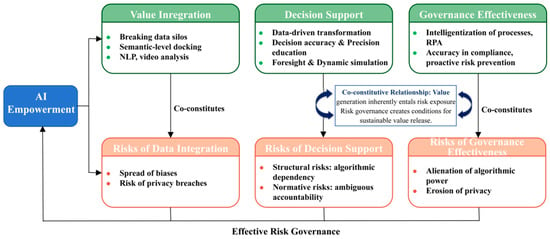
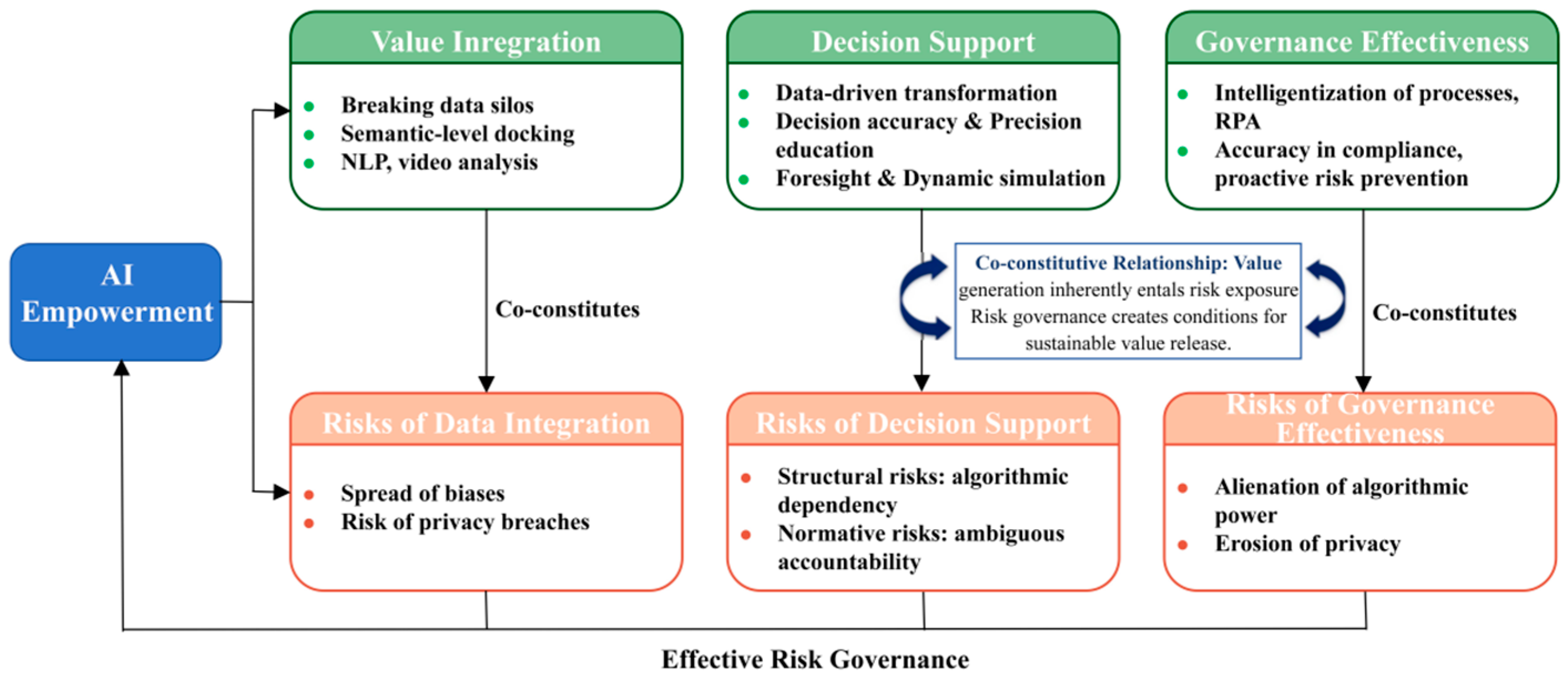
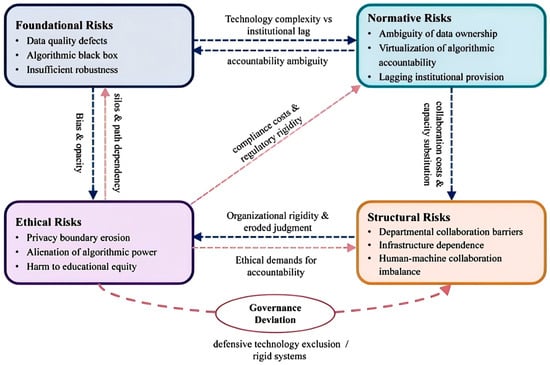
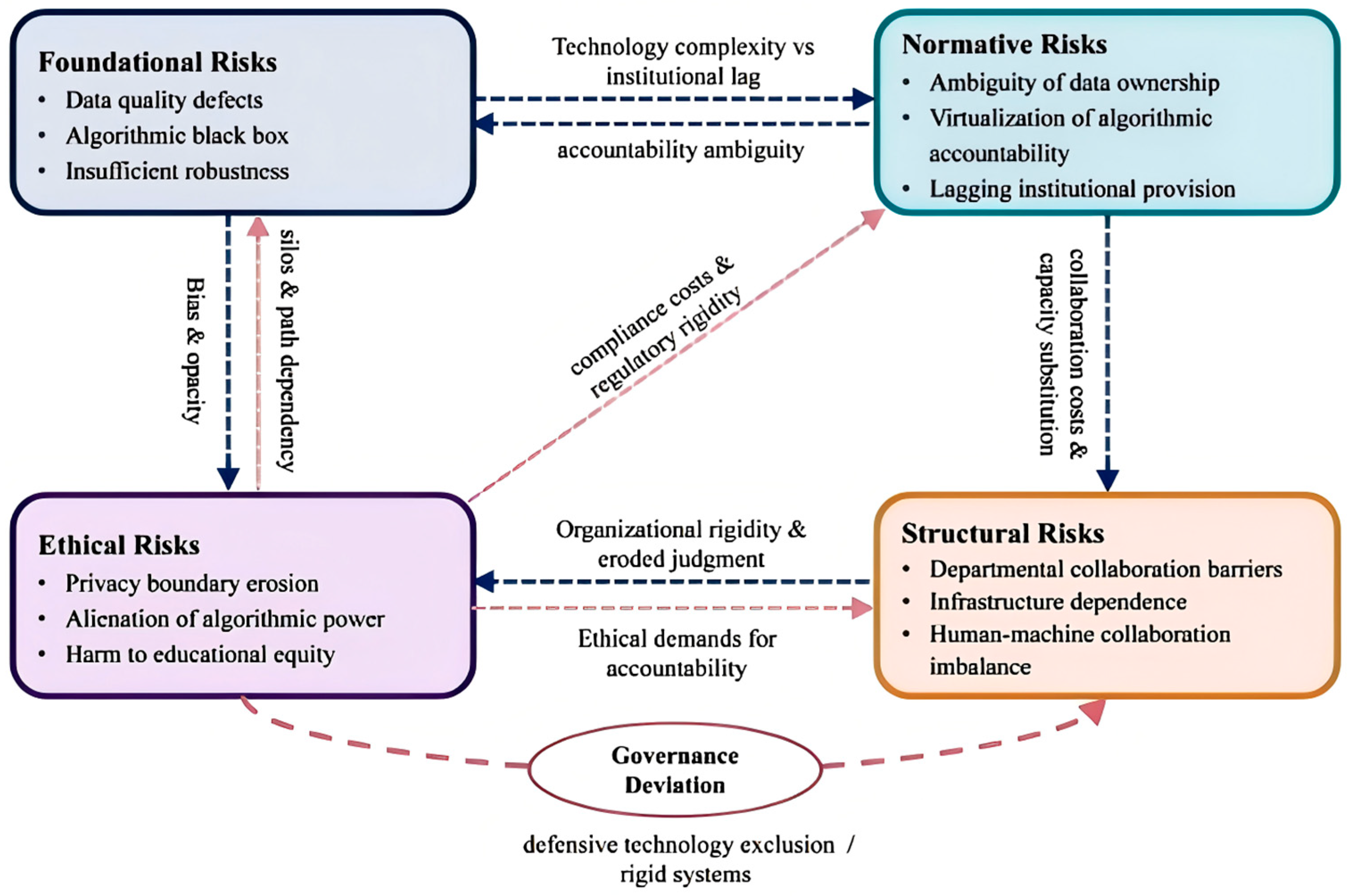
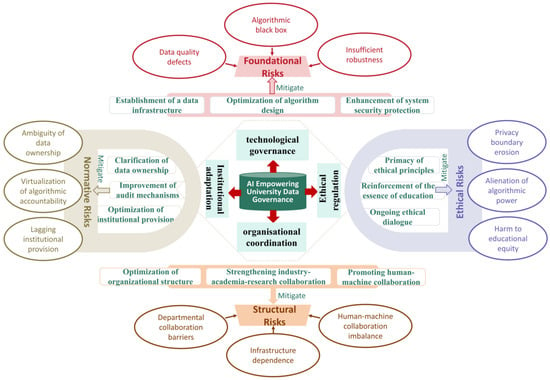
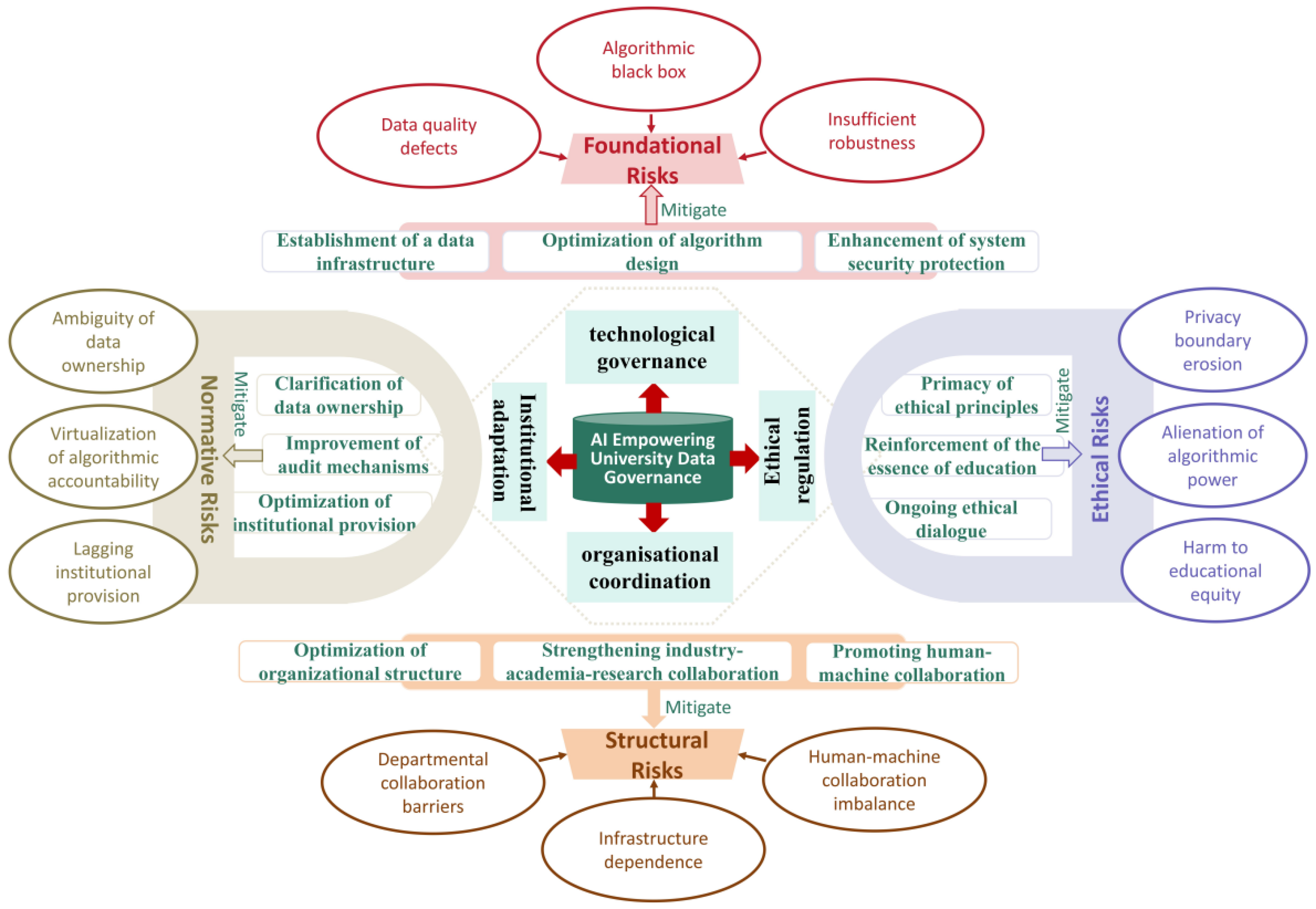

Disclaimer/Publisher’s Note: The statements, opinions and data contained in all publications are solely those of the individual author(s) and contributor(s) and not of MDPI and/or the editor(s). MDPI and/or the editor(s) disclaim responsibility for any injury to people or property resulting from any ideas, methods, instructions or products referred to in the content. |
© 2026 by the authors. Licensee MDPI, Basel, Switzerland. This article is an open access article distributed under the terms and conditions of the Creative Commons Attribution (CC BY) license.