


Highlights
Please indicate how your work links to systems science via your contributions to systems practice, theory, and/or methodology.
- This study frames China’s registration-based IPO market as a regulatory information system linking stock exchanges, issuers, investors, and climate risk information.
- It examines exchange-issued climate risk inquiries as an institutional mechanism associated with the production, transmission, and pricing of climate-related information within capital markets.
What are the main findings and/or the implications of the main findings?
- IPO climate risk inquiries are significantly associated with lower IPO first-day returns, with channel-consistent evidence of greater supplemental climate risk disclosure and weaker investor subscription demand.
- The pricing association varies across risk and policy environments, and firms receiving climate risk inquiries exhibit lower post-IPO market valuation and higher environmental investment intensity.
Abstract
Against the backdrop of frequent extreme weather events and the accelerating low-carbon transition, how climate risk information enters IPO pricing has become increasingly important. Using 1137 firms listed under China’s registration-based IPO system from July 2019 to February 2024, this study identifies climate-risk-related questions in exchange-issued IPO review inquiry letters through question-level textual analysis. We estimate OLS regressions with listing-year, industry, and listing-board fixed effects and heteroskedasticity-robust standard errors. Climate risk inquiries are measured using an inquiry indicator and the logarithmic number of questions, and the results are tested using alternative dependent variables, a narrower dictionary, controls for other inquiry topics, and propensity-score-matched samples. The results show that climate risk inquiries are significantly associated with lower IPO first-day returns, greater supplemental climate risk disclosure, and weaker investor subscription demand. The pricing association varies across risk and policy environments. Firms receiving climate risk inquiries also show lower post-IPO Tobin’s Q and higher environmental investment intensity. These findings suggest that the IPO review inquiry process may serve as an institutionalized mechanism associated with the elicitation, transmission, and pricing of climate risk information.
1. Introduction
As global climate change intensifies, the frequency and severity of heatwaves, heavy rainfall, flooding, droughts, and compound disasters have continued to increase, making the implications of climate risk for the financial system and the broader economy increasingly salient [1]. As one of the countries highly sensitive to global climate change, China faces growing uncertainty in both regional economic systems and firm-level operations. Firms, as the basic units of economic activity, are exposed not only to physical risks arising from extreme weather events but also to transition risks associated with the green and low-carbon transition [2,3]. Yet relatively little is known about the climate-related risks faced by firms, the extent to which such risks are disclosed, and the strategic actions firms take to manage and mitigate them [4]. Capital markets can identify firm-specific risks through pricing mechanisms and incorporate them into asset prices. Climate-related information has therefore become an important basis for economic decision-making and resource allocation by investors, creditors, regulators, and other stakeholders [5,6,7].
Meanwhile, China’s registration-based IPO reform places information disclosure at the center of the issuance review process. Under this regime, the focus of regulatory review is no longer on making substantive judgments about the investment value of issuers. Instead, it is to ensure that issuers provide sufficient, truthful, and accurate information relevant to investors’ decisions. Accordingly, the review of IPO applications is mainly undertaken by the stock exchanges, while the CSRC performs the registration function. The review focus has therefore shifted from value screening to information revelation. After receiving IPO application materials submitted by issuers, sponsors, and securities service providers, the Shanghai and Shenzhen stock exchanges issue IPO review inquiry letters that require issuers to clarify issues of concern and provide supplemental materials where necessary. Exchange-issued IPO review inquiries have thus become an important institutional mechanism for eliciting decision-useful information for investors [8]. Against this background, whether climate risk information is sufficiently elicited during the IPO process, and how such information is incorporated into capital market pricing, are important questions for improving the information disclosure system under the registration-based regime and enhancing the efficiency of capital market resource allocation. Figure 1 presents China’s registration-based IPO review process.
Figure 1.
China’s Registration-Based IPO Review Process (CSRC represents the China Securities Regulatory Commission; Source: Compiled by the authors based on public IPO review procedures under China’s registration-based IPO system).
Prior research has generated substantial insights into IPO pricing, climate-related disclosure, and regulatory review inquiries. Early studies on capital market pricing focused primarily on the information content of traditional financial reporting, showing that financial information and disclosure activities affect the speed of price adjustment and market liquidity, thereby improving pricing efficiency [9,10,11]. More recent research has shifted attention to the pricing implications of unstructured and qualitative “soft information” contained in IPO prospectuses. In particular, the textual tone of prospectuses and the extent of uncertainty-related disclosure have been shown to influence IPO pricing outcomes [12,13]. Risk disclosure in prospectuses has also been found to reduce IPO underpricing [14,15]. Beyond general textual and risk-related information, prior studies document that investors incorporate various forms of nonfinancial information into IPO valuation, including information on the intended use of proceeds [16,17], competitively sensitive strategic information [18], data asset disclosure [19], innovation-related information [20,21], ESG information [22], and green innovation-related information [23]. This literature suggests that IPO pricing is not driven solely by traditional financial “hard information”; rather, capital market participants also price a wide range of nonfinancial “soft information” disclosed during the IPO process.
Among the various forms of nonfinancial information, the pricing implications of climate-related disclosure merit particular attention. Existing studies have examined this issue from the perspectives of environmental disclosure and carbon disclosure, showing that information on carbon emissions and environmental risks can be recognized by capital markets and reflected in firm valuation, stock returns, the cost of capital, and stock price risk [24,25,26,27,28]. More recently, climate risk has been increasingly incorporated into research on investor decision-making and asset pricing. Firm-level climate change exposure and climate-related news shocks have been shown to affect investor expectations and asset prices [29,30,31]. A growing body of research has further extended the analysis of climate risk information to the IPO setting. For example, climate change vulnerability is associated with higher IPO underpricing [32], whereas more extensive climate change disclosure in IPO prospectuses helps reduce underpricing [33,34]. These findings suggest that climate risk information also carries pricing implications in the IPO market.
However, corporate disclosure is shaped to a considerable extent by institutionalized external pressures. Prior research generally recognizes regulatory regimes at the government and stock exchange levels as important external mechanisms that induce firms to disclose information [35]. In the IPO setting, regulatory review inquiries and comment letters have been shown to affect offer price revisions and IPO underpricing [36,37,38]. In the context of China’s registration-based IPO reform, exchange review inquiries have likewise been found to perform information-extraction and value-discovery functions, thereby improving IPO pricing efficiency [39]. Taken together, these studies point to three related but still insufficiently connected issues: IPO pricing depends heavily on information disclosed during the issuance process; climate risk information has pricing implications in capital markets; and regulatory review inquiries can elicit additional information from issuers. The focus of this study is the intersection of these issues: how exchange-issued climate risk inquiries during the IPO review process elicit climate-related information and are associated with IPO pricing.
Despite these important advances, two gaps remain. First, research on climate risk pricing has paid limited attention to IPO review inquiries as an institutionalized mechanism of information production. Existing studies have documented the pricing implications of climate-related information in capital markets, but they have rarely examined the dynamic process through which such information is elicited by institutional mechanisms and transmitted to the market. This omission is particularly important because climate risk is technically complex, less visible, and subject to long-term uncertainty. As a result, issuers may tend to omit, downplay, or provide vague disclosure of climate-related risks at the initial filing stage [40]. Exchange review inquiries can bring such under-disclosed risks to light through institutionalized follow-up questions, allowing investors to incorporate this information into IPO pricing. Second, the channels through which IPO climate risk inquiries are associated with IPO pricing remain underexplored. Although IPO review inquiries may have independent information effects and risk-salience effects, little research has investigated these mechanisms in the specific context of climate risk inquiries. In particular, it remains unclear whether climate risk inquiries are associated with IPO pricing through greater incremental climate risk disclosure and changes in investors’ risk perceptions and subscription demand. Addressing these questions is important for understanding how climate-related information is produced, transmitted, and priced during the IPO process.
To address these gaps, this study uses a sample of 1137 firms that went public on the STAR Market, ChiNext, and Main Board under China’s registration-based IPO system between July 2019 and 29 February 2024. We manually collect IPO review inquiry letters and identify questions related to climate risk, thereby examining the association between exchange-issued climate risk inquiries and IPO pricing. The empirical results show that IPO climate risk inquiries are negatively associated with first-day returns. Channel-consistent analyses indicate that climate risk inquiries are associated with greater supplemental climate risk disclosure and weaker investor subscription demand. In addition, the pricing association of climate risk inquiries varies across risk scenarios and policy environments.
This study contributes to the literature in two main ways. First, it extends research on IPO pricing and climate finance by shifting attention from static climate-related disclosure to exchange-issued climate risk inquiries as an institutionalized information-production mechanism. Rather than treating climate disclosure as a firm’s voluntary reporting choice only, this study examines how stock exchanges elicit climate-risk-related information during the IPO review process and how such information is associated with investors’ valuation and subscription decisions. Second, this study develops a systems perspective on climate risk information production in the IPO market. The system boundary covers the process from the initial filing prospectus and exchange review inquiries to issuer responses, registration draft prospectuses, investor subscription demand, first-day market pricing, and short-term post-listing outcomes. The key actors include stock exchanges, issuers, sponsors and other intermediaries, institutional and retail investors, and post-listing regulators. Information flows from issuers’ initial disclosures to exchange-issued inquiries, then to issuer responses and revised prospectuses, and finally to investor quotes, subscription demand, and first-day prices. Feedback occurs when climate issues raised during IPO review are reflected in post-listing valuation, environmental investment, and continuing disclosure supervision. This systems perspective clarifies how climate risk information is produced, transmitted, interpreted, and priced within China’s registration-based IPO market.
The remainder of this paper is organized as follows. First, the theoretical analysis is conducted, and the research hypotheses are proposed. Subsequently, the research design is elaborated on. Next, the empirical analysis results are presented, including baseline regressions, channel-consistent analyses, heterogeneity analyses, and post-IPO analyses. Finally, conclusions are drawn, and implications are discussed.
2. Theoretical Analysis and Research Hypotheses
2.1. IPO Climate Risk Inquiries and IPO First-Day Returns
IPO underpricing has long been a central issue in corporate finance [41]. Classical theories of IPO underpricing emphasize information asymmetry as a key explanation for high initial returns. The winner’s curse model argues that issuers possess private information about firm value, while investors are informationally disadvantaged. To compensate uninformed investors for the adverse selection risk they bear, issuers underprice IPO shares to encourage their participation in the offering [42]. Within this framework, disclosure that reduces information asymmetry should, in principle, improve valuation accuracy and reduce IPO underpricing [12].
China’s registration-based IPO reform places information disclosure at the center of the issuance review process. Under this regime, exchange-issued IPO review inquiries serve as an important institutional channel through which stock exchanges elicit additional information from issuers. In this sense, they function as an institutionalized mechanism of information production and disclosure, consistent with the broader literature on regulatory review and information revelation in IPO markets [37]. Recent evidence from China’s IPO market further shows that stock-exchange oversight through IPO comment letters is associated with institutional investors’ quote decisions, and that investors pay greater attention to oversight-oriented questions than to purely factual disclosure questions. Because firms going public typically lack a public trading history, investors rely heavily on information released during the IPO process to assess firm value. By introducing regulatory scrutiny into this process, IPO review inquiries require issuers to clarify relevant issues and provide supplemental disclosure, thereby improving the information environment of the IPO market.
When such inquiries focus on climate risk, their information content is particularly important. Climate risk is a typical form of nonfinancial risk. It is long-term, less visible, and difficult to quantify precisely [43]. Given its technical complexity, issuers may disclose climate-related risks only in broad or boilerplate terms at the initial filing stage. However, against the backdrop of increasingly frequent extreme weather events, climate risk has evolved from peripheral “soft information” into a material pricing factor that may directly affect firm value. Institutional investors increasingly view climate risk as a financially material investment risk and have a clear demand for firm-level climate risk disclosure [44,45]. Climate-risk-related inquiries issued by stock exchanges therefore prompt issuers to transform highly uncertain internal assessments into public clarification and supplemental disclosure. This process may reduce information asymmetry between issuers and investors and make climate-related risks more visible to investors. As a result, firms receiving climate risk inquiries may be associated with more cautious valuation assessments and lower first-day price run-ups. Based on this reasoning, we propose the following hypothesis:
H1.
The receipt of climate-risk-related inquiries during the IPO review process is negatively associated with IPO first-day returns.
2.2. Risk Revelation Channel: Supplemental Climate Risk Disclosure
Climate risk mainly includes physical risk and transition risk. Physical risk refers to the direct impact of extreme heat, heavy rainfall, flooding, droughts, typhoons, and other climate-related events on firms’ asset safety, production continuity, and supply chain stability. Transition risk arises from policy and technological changes associated with carbon constraints, the green and low-carbon transition, and energy substitution, which may increase compliance costs, capital expenditures, and operating pressures [46,47,48]. Climate risk inquiries require issuers to provide substantive responses regarding the specific types, potential impacts, mitigation measures, and financial consequences of climate-related risks. In doing so, they help make previously vague, generic, or underemphasized climate risk information more concrete and decision-useful [49].
From the perspective of signaling theory, such inquiries not only increase the amount of information available to investors but also convey a regulatory signal that the firm may have material climate risk exposure [50]. Investors may then reassess the firm’s future cash flow volatility, asset loss risk, compliance costs, and transition pressures, and incorporate these risks into their valuation. As climate risk information becomes more fully revealed, investors form more cautious assessments of firm value, thereby narrowing the scope for first-day price run-ups. Based on this reasoning, we propose the following channel-consistent hypothesis:
H2.
IPO climate risk inquiries are positively associated with supplemental climate risk disclosure in registration draft prospectuses.
2.3. Investor Demand Channel: Information Salience and Risk Perception
Behavioral finance suggests that the way information is presented influences investors’ risk perception. According to salience theory, information that is more salient receives disproportionate attention and carries greater weight in decision-making [51]. Climate risk inquiries represent precisely such an institutional mechanism that increases the salience of previously overlooked risks. In conventional IPO disclosure, climate-related risks are typically embedded within lengthy prospectus sections on risk factors and presented alongside numerous other risks, reducing their prominence. When stock exchanges issue dedicated inquiries on climate risk, however, these risks are extracted from general disclosure and transformed into a distinct information event with explicit regulatory attention.
The increased salience of climate-related information activates investors’ availability heuristic [52], making potential losses associated with extreme weather events, business interruption, supply-chain disruptions, and carbon-related costs more cognitively accessible. Consequently, previously abstract and distant tail risks become more concrete, leading investors to perceive greater downside risk and respond more cautiously [53]. As climate-related risks become more salient, investors may respond more cautiously in IPO subscriptions. Therefore, climate risk inquiries may be associated with weaker investor subscription demand and lower first-day price run-ups. Based on this reasoning, we propose the following channel-consistent hypothesis:
H3.
IPO climate risk inquiries are negatively associated with investor subscription demand.
Taken together, the disclosure channel and the investor demand channel should be interpreted as complementary rather than competing. The disclosure channel focuses on the objective information-production role of IPO review inquiries, whereby climate risk inquiries elicit additional and more specific risk-related disclosure from issuers. The investor demand channel focuses on the subjective response of investors, whereby the newly elicited information may become more salient and be incorporated into subscription and valuation decisions. These two channels therefore correspond to different stages of the same information transmission process: climate risk inquiries first make climate-related risks more visible through supplemental disclosure, and investors may subsequently interpret and price this information in the IPO market. Figure 2 presents the overall research framework and hypothesized relationships of this study.
Figure 2.
Research Framework of Climate Risk Inquiries and IPO Pricing. (Source: Authors’ elaboration).
3. Research Design
3.1. Model Construction
To examine the association between IPO climate risk inquiries and IPO first-day returns, we estimate the following OLS regression model, specified in Equation (1):
where Ad_Pricei denotes the market-adjusted first-day stock return of firm i. ClimateInquiryi is the key explanatory variable, measured alternatively by a climate risk inquiry indicator (If_Climatei) and the intensity of climate risk inquiries (Ln_Climatei). Controlsi represents a vector of control variables. λt denotes listing-year fixed effects, δj denotes industry fixed effects, μm denotes listing-board fixed effects, and εi is the error term. All regressions are estimated with heteroskedasticity-robust standard errors.
3.2. Data Source
The sample period extends from July 2019, when the STAR Market launched the pilot registration-based IPO system, to February 2024. The sample includes IPO firms that successfully went public on the STAR Market, ChiNext, and the Main Board during this period. We focus on successfully listed firms because IPO offer prices, first-day closing prices, and post-IPO outcomes are observable only after firms complete the IPO process. We exclude firms whose registration had become effective but whose shares had not yet begun trading, delisted firms, and observations with missing key variables. The final sample consists of 1137 IPO firms, including 568 firms listed on the STAR Market, 525 on ChiNext, and 44 on the Main Board.
IPO offer prices, first-day closing prices, and major financial and issuance data are obtained from the CSMAR database. Data on intermediary reputation are collected from the official websites of the Chinese Institute of Certified Public Accountants and the China Securities Regulatory Commission. IPO prospectuses are collected in two versions: the initial filing prospectus submitted before exchange review inquiries and the registration draft prospectus prepared after the inquiry-and-response process. These prospectuses, together with issuer responses to IPO review inquiries, are obtained from the websites of the Shanghai and Shenzhen stock exchanges. To mitigate the influence of outliers, all continuous variables are winsorized at the 1st and 99th percentiles.
3.3. Variable Definition
3.3.1. Dependent Variable: Market-Adjusted IPO First-Day Return
The main dependent variable in this study is the market-adjusted first-day stock return (Ad_Price). Following the definition of IPO initial returns in Ritter [54] and Ritter and Welch [41], we first calculate the raw IPO first-day return (Ri) as the return from the offer price to the first-day closing price, as shown in Equation (2):
where denotes the first-day closing price of firm i and denotes its IPO offer price.
To remove the effect of overall market movements on the listing day, we further adjust the raw first-day return by the corresponding market index return on the firm’s listing day. The market-adjusted IPO first-day return is calculated as shown in Equation (3):
where Rm is the return of the corresponding market index on the listing day of firm i. A higher value of Ad_Price indicates a higher first-day market premium relative to the market benchmark and, therefore, a higher level of IPO underpricing.
3.3.2. Explanatory Variables: IPO Climate Risk Inquiries
The key explanatory variable in this study is IPO climate risk inquiries. We identify climate-risk-related questions from first-round IPO review inquiry letters at the question level. The original inquiry texts are in Chinese. Before classification, the inquiry texts are preprocessed by removing duplicated spaces, abnormal line breaks, tables, page numbers, and irrelevant formatting symbols. Each inquiry letter is then segmented into individual questions according to the numbering patterns and question markers in the original Chinese text. Following the IFRS S2 classification of climate-related physical risks and climate-related transition risks, and drawing on keyword dictionaries used in prior studies on climate-related disclosure, we conduct question-level identification of first-round IPO review inquiries [3,33].
We adopt a dictionary-and-context procedure. Specifically, some keywords are treated as direct-identification terms because they explicitly refer to climate risks. Inquiry questions containing these terms are classified as climate risk inquiries once such terms appear. Other broader expressions are treated as context-dependent terms and are classified as climate risk inquiries only when the surrounding context refers to risks, impacts, business operations, asset losses, supply chains, compliance, costs, disclosure, explanation, or verification. Negation and uncertainty expressions are not coded mechanically; the final coding decision depends on whether the question asks the issuer to explain or verify climate-related risk exposure or business impacts. Questions containing only general environmental, operational, or ESG-related expressions without a clear climate-risk context are not classified as climate risk inquiries. The full Chinese dictionary and contextual coding rules are reported in Table A1 and Table A2.
We construct the baseline climate risk inquiry variables using first-round IPO review inquiry letters. First-round letters are issued at the early stage of the exchange review process and reflect the exchange’s initial concerns about issuers’ disclosure, risk exposure, and compliance issues. Compared with later-round letters, which are conditional on issuers’ previous responses and remaining review concerns, first-round letters are more comparable across IPO firms and less affected by response quality or subsequent filing complexity. We construct two measures of IPO climate risk inquiries. If_Climate equals 1 if a firm receives at least one climate-risk-related question in the first round of IPO review inquiries, and 0 otherwise. Ln_Climate is defined as the natural logarithm of one plus the number of climate-risk-related questions.
The baseline classification is conducted using an automated dictionary-and-context procedure and is then validated against a manually labelled subsample. For manual validation, coders are trained using the same coding protocol, and disagreements are resolved through discussion to form reconciled labels. For the overall climate risk inquiry classification, the validation results show a precision of 0.808, recall of 1.000, F1 score of 0.894, and Cohen’s kappa of 0.940. These results suggest that the dictionary-and-context procedure performs well in identifying climate-risk-related inquiry questions.
3.3.3. Control Variables
Following prior studies on IPO pricing and climate-related disclosure, we control for firm financial characteristics, governance characteristics, IPO issuance characteristics, and pre-inquiry climate risk disclosure [13,33]. Firm financial and governance characteristics include firm age (Age), firm size (Size), leverage (Lev), return on assets (ROA), ownership concentration (Herf), employee size (Worker), and PE/VC backing (Risk_Capital). IPO issuance characteristics include the number of shares issued (Shares), fundraising size (Fundraise), audit quality (Accounting), and sponsor reputation (Sponsor).
In addition, a firm’s climate risk disclosure before IPO review inquiries may reflect both its underlying climate risk exposure and its voluntary disclosure tendency, and may also affect the likelihood of receiving subsequent climate risk inquiries from the stock exchange. To avoid confounding the key explanatory variable with pre-existing differences in climate risk disclosure, we further control for pre-inquiry climate risk disclosure intensity (Pre_Climate). Pre_Climate is constructed from the initial filing prospectus submitted before IPO review inquiries. Using the same original Chinese climate-risk dictionary reported in Table A1, we count the number of climate risk keywords in the cleaned initial filing prospectus and divide it by the total word count of that prospectus. The prospectus texts are preprocessed by removing redundant spaces, abnormal line breaks, page headers and footers, while retaining Chinese characters, English abbreviations, and numbers. All variable definitions are shown in Table 1.
Table 1.
Definition of variables.
4. Empirical Analysis
4.1. Descriptive Statistics
Table 2 reports the descriptive statistics for the main variables. The mean value of the market-adjusted IPO first-day return (Ad_Price) is 1.266, indicating an average market-adjusted first-day return of 126.6%. This corresponds to a market-adjusted gross return of 2.266, suggesting substantial IPO underpricing in the sample. The median value is 0.835 and the standard deviation is 1.407, indicating considerable variation in first-day IPO performance across firms. These results suggest that IPO pricing outcomes remain highly differentiated under the registration-based IPO system.
Table 2.
Descriptive statistics results.
The mean value of the climate risk inquiry indicator (If_Climate) is 0.445, suggesting that nearly half of the sample firms received climate-risk-related questions during the IPO review process. This indicates that climate risk has become an important issue in exchange review inquiries. The mean value of climate risk inquiry intensity (Ln_Climate) is 0.519, with a median of 0 and a maximum of 2.996. These statistics indicate that some firms were subject to relatively intensive climate risk inquiries, reflecting substantial firm-level heterogeneity in regulatory attention to climate risk.
4.2. Baseline Regression
Table 3 reports the baseline regression results. Columns (1) and (3) include the control variables, while Columns (2) and (4) further include listing-year, industry, and listing-board fixed effects. Industry fixed effects are based on the CSRC industry classification provided by CSMAR. Listing-board fixed effects distinguish the STAR Market, ChiNext, and the Main Board, thereby controlling for systematic differences across listing boards. All regressions are estimated using OLS with heteroskedasticity-robust standard errors. Since the sample is a firm-level cross-section and each IPO firm appears only once, heteroskedasticity-robust standard errors are used to account for potential heteroskedasticity across firm-level observations.
Table 3.
Baseline regression results.
The results show that IPO climate risk inquiries are negatively associated with market-adjusted IPO first-day returns. In Column (2), the coefficient on If_Climate is −0.188 and is statistically significant at the 5% level. This indicates that, after controlling for firm characteristics, issuance characteristics, intermediary characteristics, and fixed effects, firms receiving climate-risk-related inquiries have lower market-adjusted IPO first-day returns than firms without such inquiries. The 95% confidence interval for this coefficient is [−0.341, −0.036]. In economic terms, based on the sample mean of Ad_Price of 1.266, the coefficient corresponds to approximately 14.8% of the mean first-day return. In Column (4), the coefficient on Ln_Climate is −0.185 and is statistically significant at the 1% level. This result indicates that a greater number of climate-risk-related inquiry questions is associated with lower market-adjusted IPO first-day returns. The 95% confidence interval for this coefficient is [−0.319, −0.050]. Economically, a one-unit increase in Ln_Climate is associated with a decrease in Ad_Price equivalent to approximately 14.6% of the sample mean. Overall, the baseline results suggest that IPO climate risk inquiries are significantly associated with lower IPO underpricing.
Additional diagnostic tests support the baseline specification. The pairwise correlation matrix does not indicate severe correlations among the explanatory variables and controls. The mean VIF values are 2.23 in the If_Climate specification and 2.28 in the Ln_Climate specification, both well below conventional thresholds. The Breusch–Pagan/Cook–Weisberg tests reject the null of homoscedasticity in both specifications, supporting the use of heteroskedasticity-robust standard errors. Joint significance tests also indicate that the fixed effects are statistically relevant. In the If_Climate specification, the listing-year, industry, and listing-board fixed effects are jointly significant, with F-statistics of 83.35, 6.46, and 4.98, respectively. The three sets of fixed effects are also jointly significant, with an F-statistic of 27.58. In the Ln_Climate specification, the corresponding F-statistics are 83.28, 6.51, 4.56, and 27.56. These results support the inclusion of listing-year, industry, and listing-board fixed effects in the baseline model.
4.3. Primary-Market Investor Quote Analysis
The baseline results show that IPO climate risk inquiries are associated with lower market-adjusted IPO first-day returns. Because IPO first-day returns are jointly determined by the first-day closing price and the IPO offer price, a decline in first-day returns may arise from two sources: a lower secondary-market price on the listing day or a higher offer price. If the decline is mainly driven by a higher offer price, climate risk inquiries may not be associated with investors’ lower assessment of firm value. Instead, they may simply raise the pricing benchmark at issuance. To address this concern, we further examine the association between climate risk inquiries and primary-market investor quotes. The offer-price-normalized offline investor quote (OIBid) is used as the dependent variable to re-estimate Equation (1). Specifically, for each IPO firm, we first collect the valid offline subscription quotes submitted by institutional investors during the bookbuilding stage. Since each IPO firm usually receives multiple offline investor quotes, we aggregate these quotes by taking their arithmetic mean. We then divide the average offline investor quote by the IPO offer price and take the natural logarithm. A higher value of OIBid indicates that offline institutional investors submit higher quotes relative to the final offer price. The sample size is reduced from 1137 to 1031 because offline investor quote data are unavailable or incomplete for some IPO firms. The results are reported in Table 4. Columns (1) and (2) report the results using the climate risk inquiry indicator (If_Climate), while Columns (3) and (4) report the results using climate risk inquiry intensity (Ln_Climate). The coefficients on both If_Climate and Ln_Climate are negative and statistically significant, both before and after including listing-year, industry, and listing-board fixed effects. These results suggest that climate risk inquiries are not associated with higher offer-price-normalized offline investor quotes. Instead, firms receiving climate risk inquiries tend to receive lower investor quotes relative to the final offer price during the bookbuilding stage. This provides supplementary evidence against the interpretation that the lower first-day market premium is driven by more aggressive primary-market investor quotes or more optimistic investor valuation during bookbuilding.
Table 4.
IPO climate risk inquiries and primary-market investor quotes.
4.4. Robustness Tests
4.4.1. Alternative Variable Measures
To ensure that the results are not driven by the market-adjustment procedure, we replace the dependent variable with the raw IPO first-day return (R). The results are reported in Columns (1) and (2) of Table 5. The coefficients on If_Climate and Ln_Climate are −0.184 and −0.184, respectively, and both are statistically significant. These results show that IPO climate risk inquiries are also negatively associated with unadjusted IPO first-day returns.
Table 5.
Alternative variable measures results.
Columns (3) and (4) use Ln_Ad_Price, defined as ln(1 + Ad_Price), as the dependent variable. This transformation reduces the influence of the right tail in the distribution of IPO first-day returns. The coefficient on If_Climate is −0.056 and is statistically significant at the 5% level, while the coefficient on Ln_Climate is −0.054 and is also statistically significant at the 5% level. These results show that the negative association between IPO climate risk inquiries and IPO first-day returns remains when the dependent variable is transformed into logarithmic form.
Columns (5) and (6) further construct a narrower measure of climate risk inquiries using only the direct-identification terms, thereby excluding broad context-dependent terms that may generate false positives. Using this narrower classification, the coefficient on If_Climate_nar is −0.164 and is significant at the 10% level, while the coefficient on Ln_Climate_nar is −0.123 and is also significant at the 10% level. These results indicate that the negative association between IPO climate risk inquiries and market-adjusted IPO first-day returns remains when potentially ambiguous keywords are excluded from the identification procedure.
4.4.2. Excluding Upper-Tail Observations
IPO first-day returns are often highly dispersed, and a small number of firms with extremely high first-day returns may exert disproportionate influence on the estimation results. We therefore exclude observations above the 95th percentile of Ad_Price and re-estimate the baseline regressions. Columns (1) and (2) of Table 6 report the results. The coefficients on If_Climate and Ln_Climate are −0.096 and −0.090, respectively, and both are statistically significant at the 10% level. These results suggest that the negative association between IPO climate risk inquiries and market-adjusted IPO first-day returns is not driven by firms with extremely high first-day returns.
Table 6.
Robustness Tests: Upper-Tail Observations, Board Composition, and Board-by-Year Fixed Effects.
4.4.3. Excluding Main Board Firms
IPO firms listed on different boards may differ in review rules, investor composition, and market performance. In addition, the number of Main Board IPOs under the registration-based system is relatively small in our sample. We therefore exclude Main Board firms and re-estimate the regressions. Columns (3) and (4) of Table 6 show that the coefficients on If_Climate and Ln_Climate are −0.201 and −0.191, respectively, and both are statistically significant. This result suggests that the negative association between IPO climate risk inquiries and IPO first-day returns is not driven by Main Board firms.
4.4.4. Controlling for Board-by-Year Fixed Effects
To further control for time-varying institutional and market conditions at the listing-board level, we replace the separate listing-year and listing-board fixed effects with listing-board-by-year fixed effects, while retaining industry fixed effects. This specification absorbs board-specific shocks in each year, such as changes in board-level issuance conditions, investor demand, and differences in the implementation process of the registration-based IPO system. Columns (5) and (6) of Table 6 report the results. The coefficients on both If_Climate and Ln_Climate are −0.177 and are statistically significant at the 5% level. These results indicate that the negative association between IPO climate risk inquiries and market-adjusted IPO first-day returns remains after controlling for board-specific year effects.
4.4.5. Controlling for Other Inquiry Topics
A single IPO review inquiry letter usually covers multiple inquiry topics. If these topics are omitted, the estimated coefficient on climate risk inquiries may partly capture the overall complexity of the inquiry letter rather than the effect of climate risk inquiries themselves [8]. To mitigate this concern, we further control for other topics included in the first-round IPO review inquiry letters. Specifically, we classify non-climate-risk inquiries into ten categories: technology, production and operations, customers and suppliers, inventory, internal control, ownership structure, related-party relationships, material events, labor issues, and media concerns. For each category, we construct a dummy variable that equals 1 if the firm is asked about that topic, and 0 otherwise. We then sum these ten dummy variables and take the natural logarithm of one plus the sum to construct the variable for other inquiry topics (lnOthInq), which is added to Equation (1).
Table 7 reports the regression results. After controlling for other inquiry topics, the coefficients on If_Climate and Ln_Climate remain negative and statistically significant. Specifically, the coefficients on If_Climate and Ln_Climate are −0.161 and −0.162, respectively, and both are significant at the 5% level. These results indicate that, after accounting for other inquiry topics and the overall complexity of the inquiry letter, the negative association between IPO climate risk inquiries and market-adjusted IPO first-day returns remains.
Table 7.
Regression results controlling for other inquiry topics.
4.4.6. Propensity Score Matching
We further use propensity score matching to reduce observable differences between firms with and without climate risk inquiries. The matched samples are constructed using kernel matching with common support. Kernel matching uses observations within the common support and assigns larger weights to control firms with closer propensity scores. We conduct two matching exercises: one based on firm characteristics and the other based on other inquiry-letter characteristics.
The common-support and balance diagnostics indicate that the matching procedure improves the comparability between treated and control firms. For the firm-characteristic matching, 1078 of the 1121 observations with valid propensity scores fall within the common support, including 463 treated firms and 615 control firms. The pseudo R-squared decreases from 0.175 before matching to 0.008 after matching, and the likelihood-ratio test becomes statistically insignificant after matching, with a p-value of 0.537. The mean standardized bias decreases from 15.8 to 5.8, while Rubin’s B decreases from 73.5 to 21.8 and Rubin’s R changes from 25.92 to 0.99. For the inquiry-letter-characteristic matching, 1028 of the 1036 observations with valid propensity scores fall within the common support, including 498 treated firms and 530 control firms. The pseudo R-squared decreases from 0.015 to 0.001, the mean standardized bias decreases from 10.3 to 1.5, and the likelihood-ratio test becomes statistically insignificant after matching, with a p-value of 0.999. The common-support graphs are reported in Figure A1, and the covariate balance diagnostics are reported in Table A3 and Table A4. These diagnostics suggest that the matched samples achieve improved covariate balance.
Table 8 reports the matched-sample regression results. Columns (1) and (2) report the results based on firm-characteristic matching. The coefficients on If_Climate and Ln_Climate are −0.200 and −0.210, respectively, and both are significant at the 10% level. Columns (3) and (4) report the results based on inquiry-letter-characteristic matching. The coefficient on If_Climate is −0.161 and is significant at the 10% level, while the coefficient on Ln_Climate is −0.155 and is significant at the 5% level. Overall, the matched-sample results remain consistent with the baseline findings, indicating a negative association between IPO climate risk inquiries and market-adjusted IPO first-day returns after accounting for observable differences between firms.
Table 8.
Propensity-score-matched regression results.
In addition, we use one-to-one nearest-neighbor matching with replacement, a caliper of 0.05, and common support as an alternative matching specification to examine the sensitivity of the PSM results to matching choices. The results show that the coefficients on the core explanatory variables remain negative under this alternative matching specification. The corresponding matched-sample results are reported in Table A5.
4.5. Channel-Consistent Evidence
The preceding results show that IPO climate risk inquiries are significantly associated with lower IPO first-day returns. This section further examines two empirical patterns that are consistent with the proposed channels: incremental climate risk disclosure and investor subscription demand. The results are reported in Table 9.
Table 9.
Channel-consistent results.
First, we examine whether climate risk inquiries are associated with additional climate risk disclosure by issuers. We measure incremental climate risk disclosure (CRRE) as the difference between the share of climate risk keywords in the registration draft prospectus and the corresponding share in the initial filing prospectus, multiplied by 100. Both keyword shares are calculated using the same original Chinese climate-risk dictionary and the same text preprocessing procedure described in Section 3.3.2 and Table A1. Specifically, for each prospectus, we count the number of climate risk keywords after text cleaning and divide it by the total word count of the corresponding prospectus. To reduce the concern that CRRE merely captures a mechanical increase in document length, we further control for the change in prospectus length, measured as the logarithm of the increase in the number of characters from the initial filing prospectus to the registration draft prospectus after removing spaces and line breaks. Columns (1) and (2) show that the coefficients on If_Climate and Ln_Climate are 0.011 and 0.017, respectively, and both are significant at the 1% level. This indicates that firms receiving climate risk inquiries tend to provide more climate-risk-related information in their subsequent registration draft prospectuses. The coefficient on prospectus length change is statistically insignificant, suggesting that the increase in CRRE is not simply driven by the general expansion of prospectus length. These results are consistent with the information-revelation role of exchange-issued climate risk inquiries.
Second, we examine the association between climate risk inquiries and investor subscription demand. We measure investor subscription demand (SubHeat) as the natural logarithm of one plus the total oversubscription ratio. Columns (3) and (4) show that the coefficients on If_Climate and Ln_Climate are −0.041 and −0.025, respectively, and both are statistically significant. These results suggest that IPO climate risk inquiries are associated with weaker investor subscription demand.
The results in Table 9 provide evidence consistent with both disclosure-based and demand-side channels. Climate risk inquiries are associated with more supplemental climate-related disclosure, which may make firm-level climate risks, environmental compliance pressures, and transition costs more visible during the IPO review process. At the same time, these inquiries are associated with lower investor subscription demand, suggesting that investors may respond to more salient climate risk information by adjusting their valuation expectations [53]. Taken together, these results suggest two complementary channels. The disclosure-based channel reflects the objective production and disclosure of climate risk information, whereas the demand-side channel captures investors’ subjective perception and pricing response to that information.
4.6. Heterogeneity Analysis
To examine whether the association between IPO climate risk inquiries and IPO first-day returns varies across policy, industry, and regional risk environments, we estimate pooled interaction models. The model is specified as follows:
where Zi denotes the heterogeneity variable and is replaced by Pilot, RiskInd, and CRisk in different specifications. Pilot captures whether a firm is located in a climate adaptation pilot region. China launched the first batch of climate adaptation city pilots in 2017, covering 28 pilot regions, and designated a second batch of pilot regions in 2024, including 39 cities and districts. Given the sample period of this study and to avoid look-ahead bias, Pilot is coded based on policy information available at the firm’s listing date. Specifically, it equals one if the firm is located in one of the first-batch climate adaptation pilot regions, and zero otherwise. RiskInd captures whether a firm belongs to a high climate-risk-exposure industry. It equals one if the firm operates in an industry that is high-carbon, heavily polluting, energy-dependent, or sensitive to extreme weather, and zero otherwise. This variable is constructed based on the CSRC 2012 industry classification. CRisk denotes the city-level climate risk index obtained from the ISETS Energy Finance Network. This index is constructed using extreme cold days, extreme heat days, extreme rainfall days, and extreme drought days, and is used to measure the overall climate risk exposure of the city where the firm is located.
4.6.1. Heterogeneity by Climate Adaptation Pilot Region
Climate adaptation pilot regions provide a distinct policy environment for examining the pricing relevance of climate risk inquiries. These pilots are designed to strengthen local climate adaptation capacity, improve climate risk governance, and promote the integration of climate risk considerations into urban development and management [55,56]. Therefore, in climate adaptation pilot regions, IPO climate risk inquiries are more likely to be interpreted by the market as information with substantive risk implications and to be incorporated into IPO pricing. Firms and investors in these regions may therefore be more sensitive to climate-related regulatory signals.
Columns (1) and (2) of Table 10 report the results for climate adaptation pilot regions. The interaction terms between climate risk inquiries and Pilot are negative and statistically significant. Specifically, the coefficient on If_Climate × Pilot is −0.487 and is significant at the 5% level, while the coefficient on Ln_Climate × Pilot is −0.696 and is significant at the 5% level. These results indicate that the negative association between IPO climate risk inquiries and market-adjusted IPO first-day returns is more pronounced for firms located in climate adaptation pilot regions. This pattern suggests that, in regions with stronger climate adaptation policy attention, climate risk inquiries may be more likely to be interpreted by investors as information with substantive risk implications.
Table 10.
Heterogeneity analysis results.
4.6.2. Heterogeneity by Industry Climate Risk Exposure
Climate risk exposure also differs across industries [57]. Based on the CSRC 2012 industry classification, we identify high climate-risk-exposure industries from two dimensions. The first includes high-carbon, heavily polluting, or energy-dependent industries, such as electricity and heat production and supply, ferrous and non-ferrous metal smelting and processing, non-metallic mineral products, chemical raw materials and chemical products, chemical fibers, rubber and plastics, papermaking and paper products, textiles, leather and footwear, pharmaceutical manufacturing, and water transportation. The second includes industries more sensitive to extreme weather, such as agriculture, animal husbandry, agricultural and sideline food processing, food manufacturing, beverage and refined tea manufacturing, warehousing, civil engineering construction, building installation, building decoration and other construction, real estate, accommodation, public facilities management, ecological protection and environmental governance, and comprehensive utilization of waste resources.
Columns (3) and (4) of Table 10 report the interaction results for industry climate risk exposure. The coefficients on If_Climate × RiskInd and Ln_Climate × RiskInd are −0.416 and −0.596, respectively, and both are statistically significant at the 10% level. These results indicate that the negative association between IPO climate risk inquiries and market-adjusted IPO first-day returns is stronger for firms in high climate-risk-exposure industries. A possible explanation is that, when firms operate in industries more exposed to physical or transition risks, climate risk inquiries convey more pricing-relevant information about future compliance costs, transition pressures, operational uncertainty, and exposure to extreme weather.
4.6.3. Heterogeneity by Regional Climate Risk Exposure
This section further examines whether the association between climate risk inquiries and IPO first-day returns varies with regional climate risk exposure. We use the city-level climate risk index from the ISETS Energy Finance Network to measure regional climate risk exposure. The index is constructed based on extreme cold days, extreme heat days, extreme rainfall days, and extreme drought days, and therefore provides a comprehensive measure of city-level climate risk exposure. When regional climate risk exposure is higher, the information contained in climate risk inquiries is more likely to have a concrete local risk basis and to be incorporated by investors into their assessment of firms’ future operating uncertainty and risk costs.
Columns (5) and (6) of Table 10 report the results. The interaction terms between climate risk inquiry variables and CRisk are negative and statistically significant. Specifically, the coefficient on If_Climate × CRisk is −0.019 and is significant at the 10% level, while the coefficient on Ln_Climate × CRisk is −0.018 and is also significant at the 10% level. These results indicate that the negative association between IPO climate risk inquiries and market-adjusted IPO first-day returns becomes stronger as regional climate risk exposure increases. This suggests that climate risk inquiries are more informative to investors when firms are located in cities with higher climate risk exposure.
4.6.4. Heterogeneity by Type of Climate Risk Inquiry
We further distinguish IPO climate risk inquiries into physical risk inquiries and transition risk inquiries. Physical risk inquiries refer to questions related to extreme weather events, natural disasters, and climate-related physical impacts, while transition risk inquiries refer to questions related to environmental regulation, low-carbon transition, emissions reduction, energy structure, and compliance costs. To formally compare the two types of inquiries, we include both variables in the same regression model and conduct a coefficient-equality test.
The results are reported in Table 11. The coefficient on physical risk inquiries is −0.212 and is statistically significant at the 5% level. The coefficient on transition risk inquiries is −0.141 and is statistically significant at the 10% level. These results indicate that both physical and transition risk inquiries are negatively associated with market-adjusted IPO first-day returns. The coefficient-equality test does not reject the null that the two coefficients are equal, with a p-value of 0.577. Therefore, although the coefficient on physical risk inquiries is larger in magnitude, the difference between physical and transition risk inquiries is not statistically significant. Overall, both types of climate risk inquiries appear to contain pricing-relevant information, but their associations with IPO first-day returns are not statistically different from each other.
Table 11.
Heterogeneity results by type of climate risk inquiry.
4.7. Additional Analysis: Post-IPO Outcomes
This section further examines the post-IPO outcomes associated with climate risk inquiries. We focus on two dimensions: post-IPO market valuation and environmental investment intensity. Post-IPO market valuation is measured by Tobin’s Q (Q), calculated as market value divided by total assets. Environmental investment intensity (IEP) is measured as environmental investment divided by year-end total assets. Environmental investment refers to funds invested in pollution prevention and control, energy conservation and emission reduction, and the construction and operation of environmental protection facilities. Based on the information disclosed in listed firms’ annual reports, environmental investment is measured as the sum of environment-related expenditures reported under construction in progress and administrative expenses. Both Q and IEP are calculated as the average values over the listing year and the following year.
Table 12 reports the results. Columns (1) and (2) use Q as the dependent variable. The coefficient on If_Climate is −0.086 and is significant at the 5% level, while the coefficient on Ln_Climate is −0.064 and is significant at the 10% level. These results indicate that firms receiving climate risk inquiries tend to have lower post-IPO market valuation. Columns (3) and (4) use IEP as the dependent variable. The coefficient on If_Climate is 0.001 and is significant at the 5% level, while the coefficient on Ln_Climate is 0.001 and is significant at the 10% level. These results indicate that firms receiving climate risk inquiries tend to have higher environmental investment intensity after listing.
Table 12.
Post-IPO valuation and environmental investment.
The post-IPO results are consistent with the interpretation that climate risk inquiries identify firms with more salient climate-related risks or regulatory concerns. Firms receiving such inquiries are associated with both lower IPO first-day returns and lower post-IPO Tobin’s Q, suggesting that climate-related risks revealed during the IPO review process may continue to be reflected in market valuation after listing. At the same time, these firms exhibit higher environmental investment intensity, which may reflect environmental compliance pressure, risk management needs, environmental remediation requirements, or responses to climate-related concerns [58].
5. Discussion
The findings of this study contribute to the literature on IPO pricing, regulatory review inquiries, and climate risk disclosure in several ways. Prior IPO studies have shown that textual disclosure, risk disclosure, and regulatory inquiries can shape the information environment of new issues. Our results extend this literature by showing that exchange-issued climate risk inquiries are associated with IPO pricing outcomes in China’s registration-based IPO system. Different from studies that focus mainly on voluntary climate-related disclosure in prospectuses, this study emphasizes the institutional role of stock exchanges in eliciting climate risk information through the IPO review process. The evidence is consistent with the interpretation that climate risk inquiries may serve as a disclosure-enhancing mechanism and regulatory signal that makes firm-level climate risks more visible to investors.
The negative association between climate risk inquiries and IPO first-day returns should be interpreted in this context. Lower first-day returns do not necessarily imply more efficient pricing in a causal sense. Rather, the results are consistent with weaker investor subscription demand when climate-related risks become more salient. The analysis of primary-market investor quotes further suggests that this lower first-day market premium is not accompanied by higher offer-price-normalized investor quotes during bookbuilding.
The post-IPO results further indicate that firms receiving climate risk inquiries have lower short-term Tobin’s Q but higher environmental investment intensity after listing. This pattern suggests that the risks identified during IPO review may continue to be reflected in market valuation after listing. At the same time, higher environmental investment intensity may reflect environmental compliance pressure, risk management needs, remediation requirements, or firms’ responses to climate-related concerns raised during the IPO review process. Overall, these results support the systems perspective of this study: climate risk information is elicited by stock exchanges, disclosed by issuers, interpreted by investors, incorporated into IPO pricing, and further connected with post-listing valuation and environmental investment behavior.
6. Conclusions and Policy Implications
6.1. Conclusions
This study examines the pricing association of exchange-issued climate risk inquiries under China’s registration-based IPO system. Using a sample of 1137 firms that went public on the STAR Market, ChiNext, and the Main Board between July 2019 and February 2024, we conduct a textual analysis of IPO review inquiry letters. The results show that IPO climate risk inquiries are significantly associated with lower IPO first-day returns. This negative association becomes stronger as the number of climate-risk-related questions increases. Channel-consistent analyses further show that climate risk inquiries are associated with greater supplemental climate risk disclosure in registration draft prospectuses and weaker investor subscription demand. These results are consistent with the view that exchange-issued climate risk inquiries may both elicit additional risk-related information from issuers and make such information more salient to investors. Heterogeneity analyses show that the negative association between climate risk inquiries and IPO first-day returns varies across risk and policy environments. The association is more pronounced for firms in high climate risk exposure industries, firms located in regions with higher climate risk exposure, and firms located in climate adaptation pilot regions. In terms of inquiry type, both physical risk inquiries and transition risk inquiries are negatively associated with IPO first-day returns. Additional analyses further show that firms receiving climate risk inquiries have lower post-IPO Tobin’s Q and higher environmental investment intensity. These findings suggest that IPO climate risk inquiries are associated not only with first-day market pricing but also with short-term post-listing valuation and environmental investment behavior. Nevertheless, since inquiries regarding climate risk are not randomly assigned, the evidence in this study should be interpreted as reflecting conditional associations. Overall, the findings indicate that climate risk inquiries are associated with lower first-day market premiums, more extensive supplemental climate risk disclosures, weaker investor subscription demand, and selected post-IPO outcomes.
6.2. Policy Implications
Based on the findings, this study offers the following policy implications. First, regulators and stock exchanges could further refine the content framework and disclosure standards for climate risk inquiries, so as to shift climate risk disclosure from general statements to substantive disclosure. Drawing on the TCFD framework, climate risk inquiries can be expanded from broad questions to systematic inquiries covering risk identification, governance arrangements, strategic implications, financial impacts, and quantitative metrics. Differentiated inquiry guidelines should also be developed for firms in different industries, regions, and policy environments. Firms in industries or regions with high climate risk exposure should be required to provide more detailed quantitative information, while firms with lower climate risk exposure may begin with qualitative disclosure and gradually move toward quantitative disclosure and scenario analysis. Second, regulators and stock exchanges should improve the market’s interpretation of climate risk inquiry information. Climate risk should neither be overlooked by the market nor be treated simply as a negative signal of firm value. Through investor education, explanations of typical inquiry cases, and guidance on disclosure practices, regulators and exchanges can help investors form a more balanced understanding of climate risk. Investors should be encouraged to evaluate firms by considering risk exposure, risk management capacity, adaptation measures, and transition plans. This may help climate risk information be incorporated into capital market pricing in a more effective and rational manner. Third, IPO climate risk inquiries could be better connected with post-listing supervision. Regulators and stock exchanges may incorporate climate risk issues that receive close attention during the IPO review process into the scope of continuing supervision after listing. Firms should be encouraged to continuously disclose changes in relevant risks, response measures, and environmental investment. For firms whose climate-related disclosure weakens substantially after listing, stock exchanges can strengthen disclosure consistency through annual report inquiries, continuing supervision, and information disclosure evaluations.
6.3. Limitations and Research Outlook
This study also has some limitations. First, IPO climate risk inquiries are not randomly assigned. Although we include firm controls, pre-inquiry climate risk disclosure, fixed effects, robustness tests, and propensity score matching analyses, unobservable factors may still influence both the likelihood of receiving climate risk inquiries and IPO pricing outcomes. Therefore, the results should still be interpreted as conditional associations rather than causal effects. Second, our measures of climate risk inquiries mainly capture whether a firm receives such inquiries and the number of related questions, but they do not fully distinguish the depth, specificity, or severity of inquiry content. Although we conduct manual validation of the textual classification, ambiguous inquiry questions may still involve measurement error. Future research could develop more refined measures of inquiry quality, for example by classifying whether inquiries request disclosure of quantitative financial impacts, firm-specific risk scenarios, risk mitigation measures, supply-chain risk exposure, or compliance costs. Machine learning methods could also be used to more accurately identify differences in the content and complexity of climate risk inquiries. Third, because IPO offer prices, first-day returns, and post-IPO outcomes are observable only for listed firms, the sample is limited to successfully listed IPO firms. In addition, our post-IPO analysis is constrained by the limited observation window. Future research could extend the post-listing period to examine whether firms’ responses to climate risk inquiries persist, weaken, or reverse over time. Finally, although we include listing-board fixed effects and listing-board-by-year fixed effects, these controls may not fully capture all rule-level changes in China’s registration-based IPO system during the sample period.
Author Contributions
Conceptualization, B.G., F.X. and D.W.; methodology, B.G., F.X., D.W. and L.Z.; data curation, B.G., H.L., Y.Z. and L.Z.; formal analysis, B.G., F.X., H.L., Y.Z. and L.Z.; writing—original draft preparation, B.G.; writing—review and editing, B.G. and L.Z.; visualization, L.Z.; project administration, D.W. All authors have read and agreed to the published version of the manuscript.
Funding
This research was funded by the Central Public-interest Scientific Institution Basal Research Fund (No. BSRF202602), the National Institute of Natural Hazards, Ministry of Emergency Management of China (Nos. ZDJ2025-11 and ZDJ2025-20), and the Office of the Decision-Making Advisory Committee of the Shanxi Provincial People’s Government, the Shanxi Earthquake Administration, and the Shanxi Academy of Social Sciences (No. SXFZJZZS2601).
Institutional Review Board Statement
Not applicable.
Informed Consent Statement
Not applicable.
Data Availability Statement
Data will be made available on request.
Conflicts of Interest
The authors declare no conflicts of interest.
Appendix A
Table A1.
Original Chinese dictionary for identifying climate risk inquiries.
Table A2.
Contextual coding rules for climate risk inquiry classification.
Figure A1.
Common support of propensity scores. (Source: Authors’ estimations).
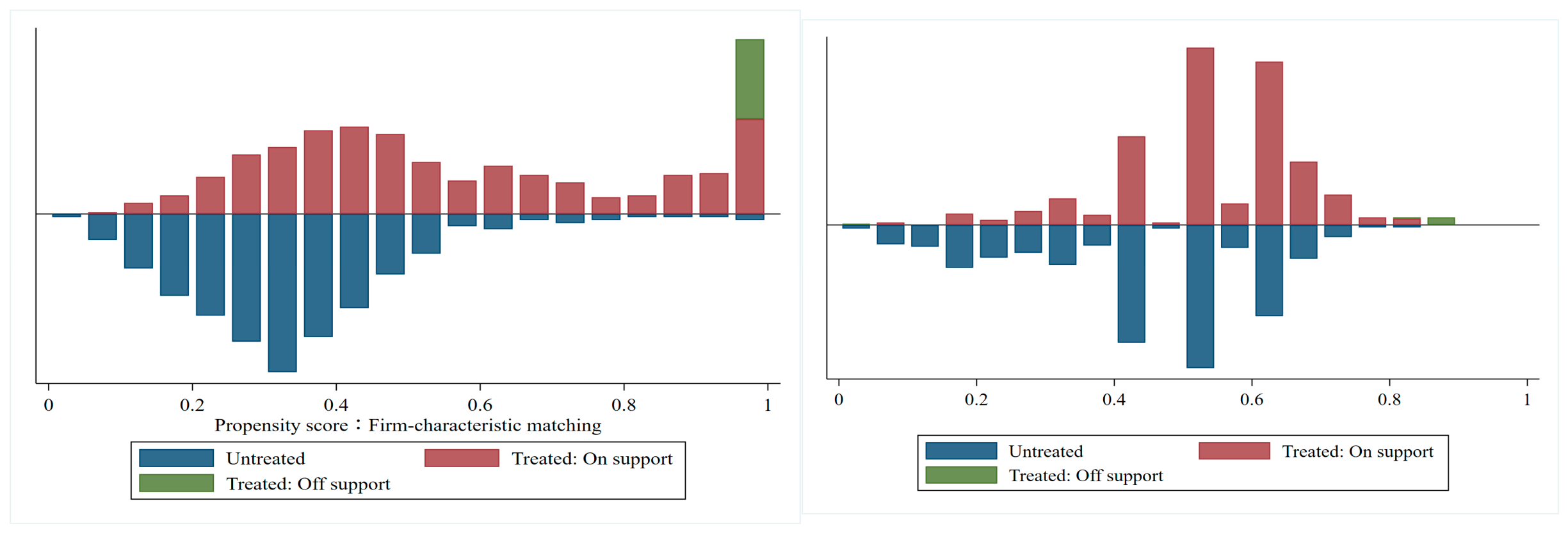
Table A3.
Covariate balance diagnostics for firm-characteristic matching.
Table A4.
Covariate balance diagnostics for inquiry-letter-characteristic matching.
Table A5.
Sensitivity test using one-to-one nearest-neighbor matching.
References
- Monasterolo, I. Climate change and the financial system. Annu. Rev. Resour. Econ. 2020, 12, 299–320. [Google Scholar] [CrossRef] [Scilit]
- Giglio, S.; Kelly, B.; Stroebel, J. Climate finance. Annu. Rev. Financ. Econ. 2021, 13, 15–36. [Google Scholar] [CrossRef] [Scilit]
- Sautner, Z.; VAN Lent, L.; Vilkov, G.; Zhang, R. Firm-level climate change exposure. J. Finance 2023, 78, 1449–1498. [Google Scholar] [CrossRef] [Scilit]
- Flammer, C.; Toffel, M.W.; Viswanathan, K. Shareholder activism and firms’ voluntary disclosure of climate change risks. Strateg. Manag. J. 2021, 42, 1850–1879. [Google Scholar] [CrossRef] [Scilit]
- Battiston, S.; Dafermos, Y.; Monasterolo, I. Climate risks and financial stability. J. Finance Stab. 2021, 54, 100867. [Google Scholar] [CrossRef] [Scilit]
- Hong, H.; Karolyi, G.A.; Scheinkman, J.A. Climate finance. Rev. Financ. Stud. 2020, 33, 1011–1023. [Google Scholar] [CrossRef] [Scilit]
- Lin, B.; Wu, N. Climate risk disclosure and stock price crash risk: The case of China. Int. Rev. Econ. Finance 2023, 83, 21–34. [Google Scholar] [CrossRef] [Scilit]
- Yu, X.; Tsang, A.; Wu, Y.; Leng, Z. Stock exchange oversight and investor quotes: Evidence from initial public offering comment letters in China. Br. Account. Rev. 2024, 56, 101361. [Google Scholar] [CrossRef] [Scilit]
- Beaver, W.; Lambert, R.; Morse, D. The information content of security prices. J. Account. Econ. 1980, 2, 3–28. [Google Scholar] [CrossRef] [Scilit]
- Holthausen, R.W.; Verrecchia, R.E. The effect of informedness and consensus on price and volume behavior. Account. Rev. 1990, 65, 191–208. [Google Scholar] [CrossRef] [Scilit]
- Barron, O.E.; Qu, H. Information asymmetry and the ex ante impact of public disclosure quality on price efficiency and the cost of capital: Evidence from a laboratory market. Account. Rev. 2014, 89, 1269–1297. [Google Scholar] [CrossRef] [Scilit]
- Hanley, K.W.; Hoberg, G. The information content of IPO prospectuses. Rev. Financ. Stud. 2010, 23, 2821–2864. [Google Scholar] [CrossRef] [Scilit]
- Loughran, T.; McDonald, B. IPO first-day returns, offer price revisions, volatility, and form S-1 language. J. Finance Econ. 2013, 109, 307–326. [Google Scholar] [CrossRef] [Scilit]
- Gu, X.; He, X.; Liu, H. Risk information disclosure effect on IPO pricing efficiency: Evidence from China. Int. Rev. Econ. Financ 2025, 103, 104492. [Google Scholar] [CrossRef] [Scilit]
- Xu, Z.; Yu, M.; Li, S. Information disclosure and IPO underpricing: A textual analysis of prospectuses under China’s registration reform. Pac. Basin Finance J. 2026, 99, 103231. [Google Scholar] [CrossRef] [Scilit]
- Leone, A.J.; Rock, S.; Willenborg, M. Disclosure of intended use of proceeds and underpricing in initial public offerings. J. Account. Res. 2007, 45, 111–153. [Google Scholar] [CrossRef] [Scilit]
- Tang, W.; Zhou, Z.G. Does information disclosed in “use of proceeds” from prospectuses affect IPO initial underpricing? Asia-Pac. J. Finance Stud. 2022, 51, 828–858. [Google Scholar] [CrossRef] [Scilit]
- Boone, A.L.; Floros, I.V.; Johnson, S.A. Redacting proprietary information at the initial public offering. J. Finance Econ. 2016, 120, 102–123. [Google Scholar] [CrossRef] [Scilit]
- Tang, X.; Zhou, Z. The nonlinear impact of data asset information disclosure divergence on IPO underpricing. Finance Res. Lett. 2026, 109, 110505. [Google Scholar] [CrossRef] [Scilit]
- Heeley, M.B.; Matusik, S.F.; Jain, N. Innovation, appropriability, and the underpricing of initial public offerings. Acad. Manag. J. 2007, 50, 209–225. [Google Scholar] [CrossRef] [Scilit]
- Zhou, L.J.; Sadeghi, M. The impact of innovation on IPO short-term performance–evidence from the Chinese markets. Pac. Basin Finance J. 2019, 53, 208–235. [Google Scholar] [CrossRef] [Scilit]
- Baker, E.; Boulton, T.J.; Braga-Alves, M.V.; Morey, M.R. ESG government risk and international IPO underpricing. J. Corp. Finance 2021, 67, 101913. [Google Scholar] [CrossRef] [Scilit]
- Meng, Q.; Peng, T.; Song, X.; Wang, S. Green innovation and IPO return: Evidence from China. Int. Rev. Econ. Finance 2024, 93, 660–677. [Google Scholar] [CrossRef] [Scilit]
- Matsumura, E.M.; Prakash, R.; Vera-Muñoz, S.C. Firm-value effects of carbon emissions and carbon disclosures. Account. Rev. 2014, 89, 695–724. [Google Scholar] [CrossRef] [Scilit]
- Bolton, P.; Kacperczyk, M. Do investors care about carbon risk? J. Finance Econ. 2021, 142, 517–549. [Google Scholar] [CrossRef] [Scilit]
- Gao, B.; Zhang, J.; Xie, J.; Zhang, W. The impact of carbon risk on the pricing efficiency of the capital market: Evidence from a natural experiment in China. Finance Res. Lett. 2023, 57, 104268. [Google Scholar] [CrossRef] [Scilit]
- Hsu, P.H.; Li, K.; Tsou, C.Y. The pollution premium. J. Finance 2023, 78, 1343–1392. [Google Scholar] [CrossRef] [Scilit]
- Zhang, J.; Yang, Y. Can environmental disclosure improve price efficiency? The perspective of price delay. Finance Res. Lett. 2023, 52, 103556. [Google Scholar] [CrossRef] [Scilit]
- Engle, R.F.; Giglio, S.; Kelly, B.; Lee, H.; Stroebel, J. Hedging climate change news. Rev. Financ. Stud. 2020, 33, 1184–1216. [Google Scholar] [CrossRef] [Scilit]
- Krueger, P.; Sautner, Z.; Starks, L.T. The importance of climate risks for institutional investors. Rev. Financ. Stud. 2020, 33, 1067–1111. [Google Scholar] [CrossRef] [Scilit]
- Sautner, Z.; van Lent, L.; Vilkov, G.; Zhang, R. Pricing climate change exposure. Manag. Sci. 2023, 69, 7540–7561. [Google Scholar] [CrossRef] [Scilit]
- Boulton, T.J.; Cumming, D.J.; Zutter, C.J. Climate Change Vulnerability and IPO Underpricing Around the World; Available at SSRN 4112282; Social Science Research Network: Rochester, NY, USA, 2021. [Google Scholar] [CrossRef] [Scilit]
- Chen, J.W.; Khoo, E.S.; Peng, Z. Climate change disclosure and the information environment in the initial public offering market. Account. Finance 2023, 63, 907–952. [Google Scholar] [CrossRef] [Scilit]
- Kang, E.; Lam, N.B. The impact of environmental disclosure on initial public offering underpricing: Sustainable development in Singapore. Corp. Soc. Responsib. Environ. Manag. 2023, 30, 119–133. [Google Scholar] [CrossRef] [Scilit]
- Gounopoulos, D.; Loukopoulos, G.; Loukopoulos, P.; Wood, G. Corporate political activities and the SEC’s oversight role in the IPO process. J. Manag. Stud. 2024, 61, 375–412. [Google Scholar] [CrossRef] [Scilit]
- Li, B.; Liu, Z. The oversight role of regulators: Evidence from SEC comment letters in the IPO process. Rev. Account. Stud. 2017, 22, 1229–1260. [Google Scholar] [CrossRef] [Scilit]
- Lowry, M.; Michaely, R.; Volkova, E. Information revealed through the regulatory process: Interactions between the SEC and companies ahead of their IPO. Rev. Financ. Stud. 2020, 33, 5510–5554. [Google Scholar] [CrossRef] [Scilit]
- Köchling, G.; Schmidtke, P.; Posch, P.N. SEC Workload, IPO Filing Reviews, and IPO Pricing; Available at SSRN 3793477; Research Network: Rochester, NY, USA, 2021. [Google Scholar] [CrossRef] [Scilit]
- Shuang, X.; Yu, W. Can responses to comment letters improve the efficiency of IPO pricing in the STAR market? Evidence from divergence of institutional investors’ bids. J. Finance Econ. 2022, 48, 138–153. [Google Scholar] [CrossRef]
- Pope, S.; Peillex, J.; El Ouadghiri, I.; Gomes, M. Floodlight or spotlight? Public attention and the selective disclosure of environmental information. J. Manag. Stud. 2024, 61, 1230–1265. [Google Scholar] [CrossRef] [Scilit]
- Ritter, J.R.; Welch, I. A review of IPO activity, pricing, and allocations. J. Finance 2002, 57, 1795–1828. [Google Scholar] [CrossRef] [Scilit]
- Rock, K. Why new issues are underpriced. J. Finance Econ. 1986, 15, 187–212. [Google Scholar] [CrossRef] [Scilit]
- Rising, J.; Tedesco, M.; Piontek, F.; Stainforth, D.A. The missing risks of climate change. Nature 2022, 610, 643–651. [Google Scholar] [CrossRef] [Scilit] [PubMed]
- Cohen, S.; Kadach, I.; Ormazabal, G. Institutional investors, climate disclosure, and carbon emissions. J. Account. Econ. 2023, 76, 101640. [Google Scholar] [CrossRef] [Scilit]
- Ilhan, E.; Krueger, P.; Sautner, Z.; Starks, L.T. Climate risk disclosure and institutional investors. Rev. Financ. Stud. 2023, 36, 2617–2650. [Google Scholar] [CrossRef] [Scilit]
- Borsuk, M.; Du, Z.; Duan, T.; Kowalewski, O.; Qi, J.; Shrimali, G. Twin threats: The compound effect of transition and physical climate risks on firms’ credit ratings. J. Corp. Finance 2026, 98, 102942. [Google Scholar] [CrossRef] [Scilit]
- Li, Q.; Shan, H.; Tang, Y.; Yao, V. Corporate climate risk: Measurements and responses. Rev. Financ. Stud. 2024, 37, 1778–1830. [Google Scholar] [CrossRef] [Scilit]
- Pankratz, N.M.; Schiller, C.M. Climate change and adaptation in global supply-chain networks. Rev. Financ. Stud. 2024, 37, 1729–1777. [Google Scholar] [CrossRef] [Scilit]
- Yan, X.; Zhang, J. Customer concentration and suppliers’ impression management in climate disclosures. J. Environ. Manag. 2026, 411, 130202. [Google Scholar] [CrossRef] [Scilit] [PubMed]
- Allen, F.; Faulhaber, G.R. Signalling by underpricing in the IPO market. J. Finance Econ. 1989, 23, 303–323. [Google Scholar] [CrossRef] [Scilit]
- Bordalo, P.; Gennaioli, N.; Shleifer, A. Salience theory of choice under risk. Q. J. Econ. 2012, 127, 1243–1285. [Google Scholar] [CrossRef] [Scilit]
- Tavakolifar, M.; Omar, A.; Lemma, T.T.; Samkin, G. Media attention and its impact on corporate commitment to climate change action. J. Clean. Prod. 2021, 313, 127833. [Google Scholar] [CrossRef] [Scilit]
- Li, Y.; Goodell, J.W.; Shen, D. Market reaction to climate risk report disclosures: The roles of investor attention and sentiment. Finance Res. Lett. 2023, 58, 104290. [Google Scholar] [CrossRef] [Scilit]
- Ritter, J.R. The long-run performance of initial public offerings. J. Finance 1991, 46, 3–27. [Google Scholar] [CrossRef]
- Gao, Z.; Zhang, X.; Jia, Z.; Yang, C.; Afthanorhan, A.; Hao, Y. Managing climate risks through adaptation policy: Evidence from China’s climate-adaptive city pilots. Clim. Risk Manag. 2026, 52, 100823. [Google Scholar] [CrossRef] [Scilit]
- Zhao, L.; Ma, Y.; Chen, N.; Wen, F. How does climate policy uncertainty shape corporate investment behavior? Res. Int. Bus. Finance 2025, 74, 102696. [Google Scholar] [CrossRef] [Scilit]
- Çelik, A.K.; Yalçınkaya, Ö.; Söylemez, Y.; Cavlak, H. Spillover effects of climate risks on stock markets: A sectoral analysis. Finance Res. Lett. 2026, 93, 109633. [Google Scholar] [CrossRef] [Scilit]
- Tomar, S. Greenhouse gas disclosure and emissions benchmarking. J. Account. Res. 2023, 61, 451–492. [Google Scholar] [CrossRef] [Scilit]
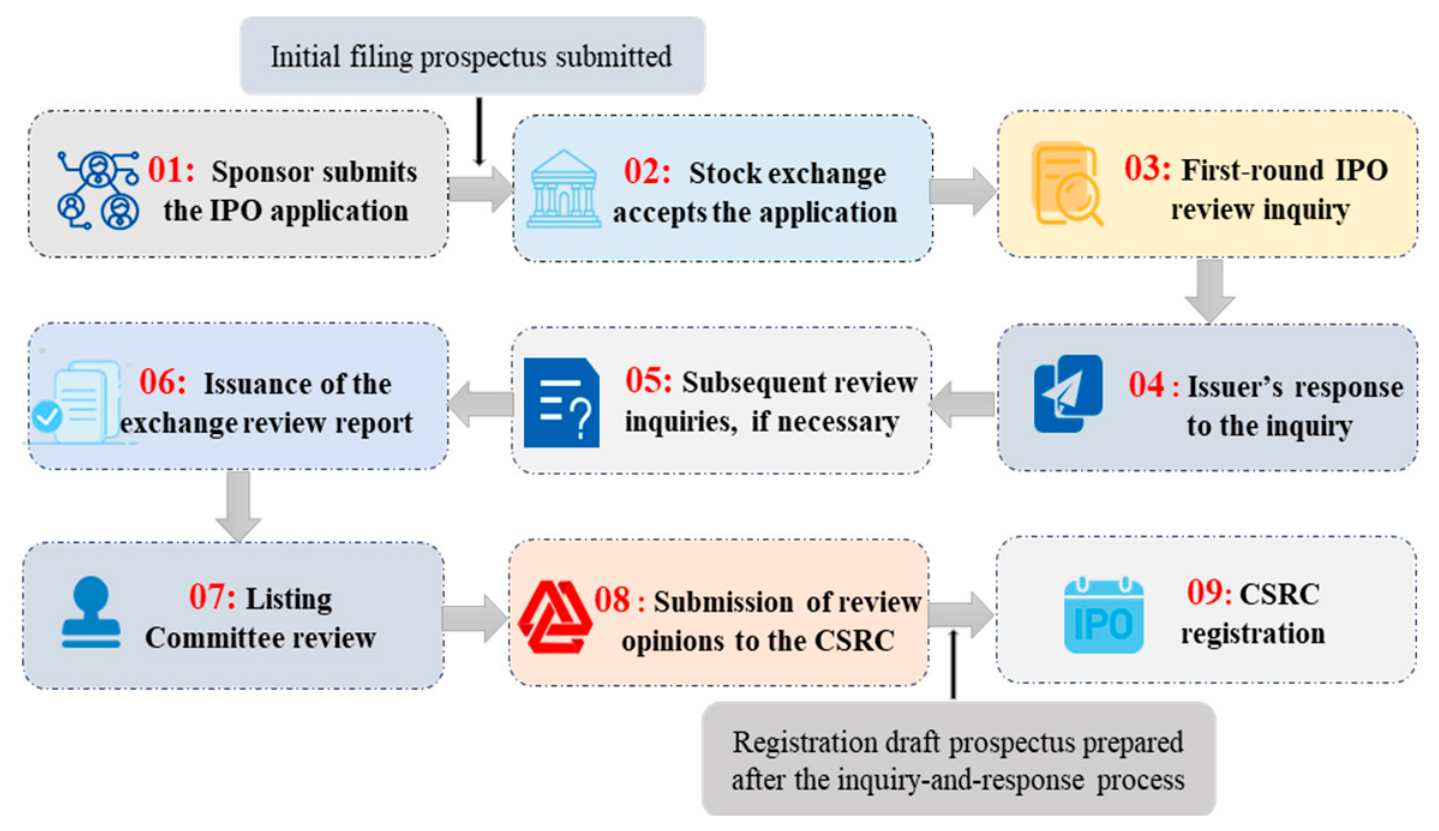
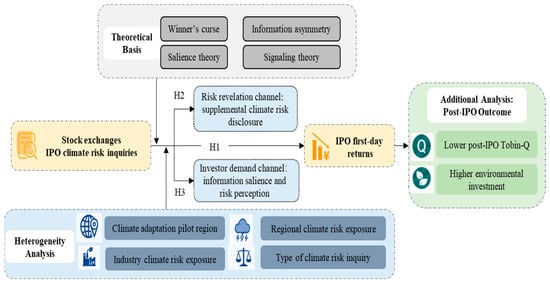
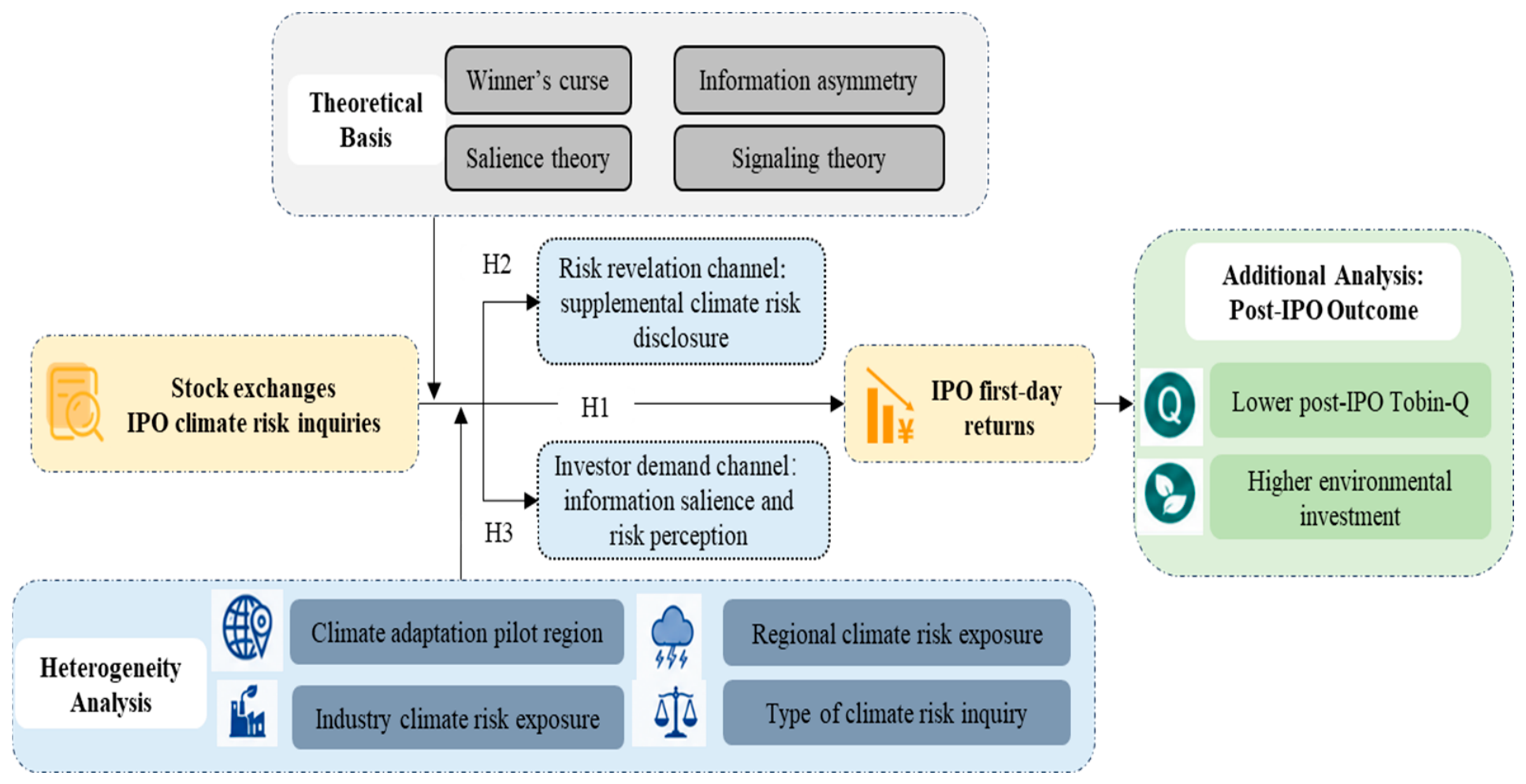

Disclaimer/Publisher’s Note: The statements, opinions and data contained in all publications are solely those of the individual author(s) and contributor(s) and not of MDPI and/or the editor(s). MDPI and/or the editor(s) disclaim responsibility for any injury to people or property resulting from any ideas, methods, instructions or products referred to in the content. |
© 2026 by the authors. Licensee MDPI, Basel, Switzerland. This article is an open access article distributed under the terms and conditions of the Creative Commons Attribution (CC BY) license.