


Simple Summary
The LBD (lateral organ boundaries) gene family constitutes a critical class of transcriptional regulators in plant morphogenesis and stress responses, but their features and functions remain largely unexplored in cucumber. In this work, we identified and analyzed the sequence characteristics of CsLBD gene members using bioinformatic methods and explored their expression patterns under biotic and abiotic stresses in cucumber. Forty-one CsLBD genes were identified. Phylogenetic analysis classified them into two major classes, which were unevenly distributed across seven chromosomes. In addition, their encoded proteins contained characteristic conserved domains. Analysis of cis-acting elements showed that, in their promoter regions, there are a large number of regulatory elements associated with hormone response, stress adaptation and growth regulation. Expression profiling demonstrated that some genes (e.g., CsLBD19, CsLBD26, CsLBD30) exhibited higher expression in tendrils, while other genes (e.g., CsLBD12, CsLBD15, CsLBD27) showed significant expression in roots, indicating that these genes may be involved in the regulation of organ development. Moreover, transcriptome analysis showed that the CsLBD family was widely responsive to powdery mildew, downy mildew, gray mold and heat stress. This study presented a comprehensive genomic and transcriptomic overview of CsLBD genes, offering novel insights into their regulatory roles in cucumber growth and stress responses, and thereby providing valuable genetic resources for trait improvement in cucumber breeding.
Abstract
LATERAL ORGAN BOUNDARIES DOMAIN (LBD) transcription factors play pivotal roles in plant growth, development and stress responses. However, their genome-wide characterization and functions in cucumber (Cucumis sativus L.) remain largely unexplored. In this study, we conducted a comprehensive bioinformatic analysis of the CsLBD gene family and investigated its expression patterns under different stresses in cucumber. A total of 41 CsLBD genes were identified and phylogenetically classified into two major classes. The CsLBD genes exhibited an uneven distribution across cucumber chromosomes, and their encoded proteins contain the characteristic conserved domains, specifically including the canonical CX2CX6CX3C zinc finger domain and the LX6LX3LX6L leucine zipper-like motif. Promoter cis-element analysis suggested potential roles for CsLBDs in hormone signaling, stress response, and growth regulation. Tissue-specific expression profiling revealed that several members, including CsLBD19, CsLBD26, and CsLBD30, were highly expressed in tendril, whereas others such as CsLBD12, CsLBD15, and CsLBD27 were preferentially expressed in root, implying their distinct roles in organ development. Crucially, expression analysis under various stresses demonstrated that the CsLBD family was widely involved in responses to both biotic and abiotic stresses. Notably, CsLBD07, CsLBD11, and CsLBD14 were significantly upregulated upon powdery mildew infection; numerous members exhibited substantial expression changes in response to gray mold and heat stress; CsLBD02 and CsLBD17 were specifically induced in a resistant line, suggesting their potential roles in disease resistance. Interestingly, CsLBD02 and CsLBD10 responded to all the stresses tested. Our results provide a systematic overview of the CsLBD gene family and contribute valuable insights towards the further functional characterization of these genes in cucumber growth and stress responses.
1. Introduction
Cucumber (Cucumis sativus L.) is a globally cultivated vegetable crop of substantial economic and nutritional importance [1,2]. Renowned for its unique taste, it is widely favored by consumers. Furthermore, given its unique growth habit and shoot architecture of Cucurbitaceae, cucumber is also used as a model species for the study of sex determination, fruit development and vascular biology [3,4]. However, the regulatory mechanisms of cucumber shoot architecture remain largely unexplored. Meanwhile, cucumber plants usually suffer a range of biotic and abiotic stresses during their lifespan, resulting in reduced production and even causing the death of the whole vine. Therefore, it is significant to identify new functional genes involved in the regulation of cucumber stress resistance and growth for improving quality and productivity in cucumber. Transcription factors, such as AP2/ERF (APETALA2/ethylene response factor), bZIP (basic leucine zipper) and LBD (lateral organ boundaries) gene families, are crucial for plant growth and stress responses by modulating the expression of target genes [5,6].
The LBD gene family, also known as asymmetric leaves 2-like (ASL), is a class of plant-specific transcription factors [7]. The protein structure of the LBD gene family mainly includes two highly conserved domains. According to the structural characteristics of the N-terminal AS2/LOB domain (ASYMMETRIC LEAVES2/LATERAL ORGAN BOUNDARIES), the LBD gene family can be divided into two categories. The class I LBD subfamily contains a fully conserved CX2CX6CX3C’ (zinc finger domain), which is composed of four conserved cysteines (C), some non-conservative amino acid residues (X) and the leucine zipper structure of the ‘LX6LX3LX6C’ sequence. It is mainly involved in the protein dimerization process and plays an important regulatory role. The class II LBD subfamily only has a conserved ‘CX2CX6CX3C’ zinc finger domain, which is also composed of four conserved cysteines (C), but does not have a leucine zipper structure. The zinc finger domain of the class II LBD subfamily may be involved in DNA-binding function, thereby regulating gene expression [8].
The LBD gene family functions as a critical class of transcriptional regulators in plant morphogenesis and stress responses. Extensive evidence has demonstrated that LBD genes play vital roles in plant hormone responses, lateral organ development, secondary growth regulation and environmental signal responses [9,10,11,12]. For example, the interaction between SlLOB1 and SlMYB1/2 regulates fruit texture and cell wall components to regulate fruit ripening [13,14]. AtLBD7 and AtLBD42 are involved in the regulation of leaf formation and development [15,16]. AtLBD17, AtLBD18, AtLBD19 and AtLBD30, which control lateral root formation, were identified as key regulatory genes for callus induction. AtLBD17 is a key component of the accessory pathway that regulates lateral root formation [17,18]. AtLBD19 can bind to the EXP14 promoter to regulate lateral root growth [19]; AtLBD17, AtLBD18 and AtLBD30 can also interact with auxin response factors ARF8 and ARF20 to regulate lateral root formation [20,21,22,23]. Moreover, in rice, the down-regulation of the LBD gene OsIG1 leads to abnormal double ovules and abnormal development of various floral organs and large gametophytes [24]. Chinese cabbage, the LBD gene is involved in callus formation and promotes plant regeneration in vitro [25]. In melon, CmLBD2 may be involved in ethylene-regulated fruit ripening and softening [26]. In soybean, GmLBD9 and GmLBD88 play a negative regulatory role in plant immunity, while GmLBD16 and GmLBD23 play a positive regulatory role in plant immunity [27]. The up-regulation of StLBD2-6 and StLBD3-5 in potato improves their metabolism and drought resistance [28]. Overexpression of maize ZmLBD5 can significantly increase the number and pore size of Arabidopsis stomata, thereby improving the drought resistance of plants [29]. In addition, studies on pepper [30], grape [31] and walnut [32] revealed the different expression levels of LBD family members under environmental stress.
While LBD genes have been extensively characterized across multiple plant species, their features and functions remain largely unexplored in cucumber. In this study, bioinformatic methods were used to study the sequence similarity, gene structure, and expression pattern of the CsLBD gene family. These findings provided a more complete characterization of cucumber LBD gene family members, thereby establishing a foundation for further functional analyses aimed at elucidating their roles in plant growth and stress responses.
2. Materials and Methods
2.1. Identification of CsLBD Genes in Cucumber
Cucumber genomic datasets were acquired from the Cucurbit Genomics Database (http://cucurbitgenomics.org/) (accessed on 1 March 2024) and the National Center for Biotechnology Information (NCBI, https://www.ncbi.nlm.nih.gov/, accessed on 1 March 2024). The hidden Markov model (HMM) profile corresponding to the conserved LBD (PF03195) was obtained from the Pfam database (http://pfam.xfam.org/, accessed on 1 March 2024). Genome-wide identification of cucumber CsLBD genes was performed via HMMER 3.0, with default parameters and an E-value cutoff set to 0.01. All candidate CsLBD sequences were subsequently validated to confirm the presence of the conserved CsLBD domain using the CDD (https://www.ncbi.nlm.nih.gov/cdd/, accessed on 22 June 2024), Pfam (http://pfam.xfam.org/search#tabview=tab1, accessed on 29 June 2024), and SMART (http://smart.embl-heidelberg.de/, accessed on 29 June 2024) online tools. Finally, all identified CsLBD genes were annotated based on their physical positions on the seven cucumber chromosomes.
2.2. Gene Structure and Motif Analysis
The coding DNA sequences (CDS) and genomic data of CsLBD genes, which were retrieved from the C. sativus genome database (http://cucurbitgenomics.org/organism/20, accessed on 8 April 2025), were visualized via the online tool Gene Structure Display Server (http://gsds.gao-lab.org/, accessed on 8 April 2025) [33]. The conserved motifs of CsLBD proteins were identified using MEME version 4.9.1 (http://meme-suite.org/, accessed on 8 April 2025) [34], and the visualization of identified motifs was performed with WebLogo (http://weblogo.threeplusone.com, accessed on 8 April 2025) [35]. In this analysis, the total number of motifs to be identified (nmotifs) was set to 10, with the minimum motif length (minw) set to 6 amino acids and the maximum motif length (maxw) set to 10 amino acids.
2.3. Phylogenetic Analysis and Multiple Sequence Alignment
The protein sequences of cucumber CsLBD were imported into MEGA v7.0 software, and multiple sequence alignment was performed using the ClustalW 2.x algorithm. Subsequently, the phylogenetic relationships among all CsLBD proteins were constructed via the neighbor-joining method, with 1000 bootstrap replicates to test the reliability of the phylogenetic tree topology. Finally, phylogenetic tree visualization was completed using Evolview (https://evolgenius.info//evolview-v2/#login, accessed on 8 April 2025).
2.4. Gene Duplication Analysis and Chromosomal Distribution of CsLBD Genes
The chromosomal positions of CsLBD loci were extracted from the cucumber genome database (http://cucurbitgenomics.org/organism/20, accessed on 8 April 2025), and the distribution of these loci on cucumber chromosomes was visualized using MapChart 3.x [36].
2.5. Cis-Element Analysis of CsLBD Gene Promoter Regions
The 1.5-kb genomic sequences upstream of the initiation codon (ATG) of each CsLBD gene were retrieved from the Cucurbit Genomics Database (http://cucurbitgenomics.org/organism/20, accessed on 8 April 2025). The cis-regulatory elements in the promoter regions were then analyzed using the online tool PlantCARE (http://bioinformatics.psb.ugent.be/webtools/plantcare/html/, accessed on 8 April 2025) [37].
2.6. Transcriptomic Expression Analysis of CsLBD Genes in Cucumber
The expression patterns of CsLBD genes were characterized based on published transcriptomic data covering cucumber roots, stems, leaves, flowers, ovaries and tendrils. The public RNA-Seq dataset (accession number SRA046916) was downloaded from the Cucurbit Genomics Database (http://cucurbitgenomics.org/, accessed on 8 September 2025) [38]. Preprocessed clean reads that had been remapped to the reference genome, along with recalculated fragments per kilobase of transcript per million mapped reads (FPKM) values, were used to analyze the expression profiles of CsLBD genes. Genome-wide expression patterns of CsLBD genes were visualized as a heatmap using TBtools v2.x [39]. Heatmap values were calculated via the following procedure: first, the fold change in FPKM values between the treatment group and the control group was calculated, followed by log2-transformation of the obtained fold change values.
The cucumber inbred line used in this study was ‘Chinese long’ 9930, a North China-type. Nine tissues, including roots, stems, leaves, female flowers, male flowers, ovaries, expanding unfertilized ovaries, expanding fertilized ovaries and tendrils, were collected for analysis, with three biological replicates for each tissue. MeV 4.9.0 software was used to visualize the genome-wide expression of CsLBD genes in the heatmap, and the expression levels were exhibited via a color gradient from blue to red.
2.7. Transcriptome Analysis of CsLBD in Response to Abiotic and Biotic Stresses
To characterize the expression patterns of CsLBD under distinct stress conditions, publicly available cucumber transcriptome datasets covering heat stress (GSE151055) [40], downy mildew stress (SRP009350) [3] and powdery mildew stress (GSE81234) [41] were retrieved from the NCBI database (https://www.ncbi.nlm.nih.gov/, accessed on 8 December 2025). After mapping the gene IDs to the reference cucumber genome, the genome-wide expression profile of CsLBD genes was visualized as a heatmap using TBtools V2.056. Differentially expressed CsLBD genes (DEGs) were screened with the threshold of FDR (or p-value) ≤ 0.05 and |log2(fold-change)| ≥ 1 for subsequent analysis.
2.8. Plant Materials, Stress Treatments, and qRT-PCR Analysis
Seedlings of ‘Chinese long’ 9930 were subjected to heat stress at 42 °C. Leaf samples were collected at 0 h, 3 h and 6 h after heat treatment for transcriptome sequencing and quantitative real-time PCR (qRT-PCR) analysis. For cold treatment, seedlings of ‘Chinese long’ 9930 were grown in a growth chamber under day/night temperatures of 4 °C, with a 16 h/8 h light/dark period, and sampled at 0 h, 3 h, 6 h, 12 h and 24 h for qRT-PCR analysis. Seedlings of ‘Chinese long’ 9930 at the two-leaf-one-heart stage were irrigated with 200 mM NaCl solution (Solarbio, Beijing, China) for salt stress. Leaf samples were collected at 0 h, 6 h, 12 h, 24 h, 48 h and 96 h for qRT-PCR analysis. For downy mildew inoculation, cucumber ‘Vlaspik’ grew at 22 °C (12 h light/dark). Pseudoperonospora cubensis MSU-1 was cultured as previously reported [42]. Four-week-old leaves were drop-inoculated with 10 μL sporangia drops (1 × 10⁵ sporangia/mL). Plants were kept in the dark with 100% humidity for 24 h before regular cultivation. Samples were collected at 1, 2, 3, 4, 6, and 8 days post-inoculation for transcriptome sequencing. For powdery mildew assays, the PM-susceptible cultivar D8 and PM-resistant cultivar SSL508-28 were used. Conidia were washed from infected leaves with 0.01% Tween-20 water (Solarbio, Beijing, China) to prepare 106 spores/mL suspension. Seedlings at the third true-leaf stage were sprayed for inoculation and grown at 25 °C day/20 °C night (16/8 h light/dark). Samples inoculated with PM for 48 h were collected for transcriptome sequencing. All samples were immediately frozen in liquid nitrogen and preserved at −80 °C until further use. Unless noted otherwise, every treatment had three biological replicates. Total RNA was extracted using the TRIzol reagent (Accurate Biotechnology, Changsha, China). The cDNA was generated using the Evo M-MLV RT Mix Kit (Accurate Biotechnology, Changsha, China). The qRT-PCR experiment was conducted with ChamQ Universal SYBR® qPCR Master Mix (Vazyme, Nanjing, China) on a Bio-Rad CFX Opus 96 Real-Time PCR System (BIORAD, Hercules, CA, USA). The qRT-PCR results were analyzed using the 2−∆∆Ct method, and the primer sequences were provided in Table S1.
2.9. Data Processing and Analytical Methods
All bioinformatic analyses were performed using HMMER 3.0, MEGA v7.0, MEME v4.9.1, TBtools v2.x, MeV and MapChart 3.x. The sequence similarity and homology relationships among CsLBD proteins were determined via multiple sequence alignment using the ClustalW 2.x algorithm. In addition, the raw transcriptomic data used in this study were obtained from published datasets with completed standard normalization. Therefore, no extra global data normalization was conducted in our analysis, and only log2fold-change transformation was performed for expression visualization and DEG screening.
3. Results
3.1. Identification and Phylogenetic Analyses of CsLBD
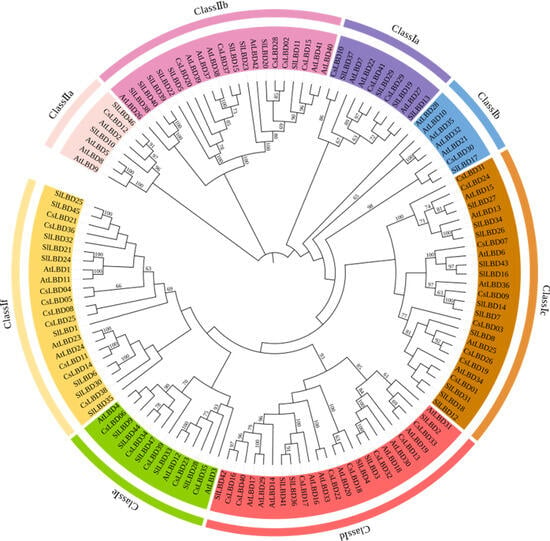
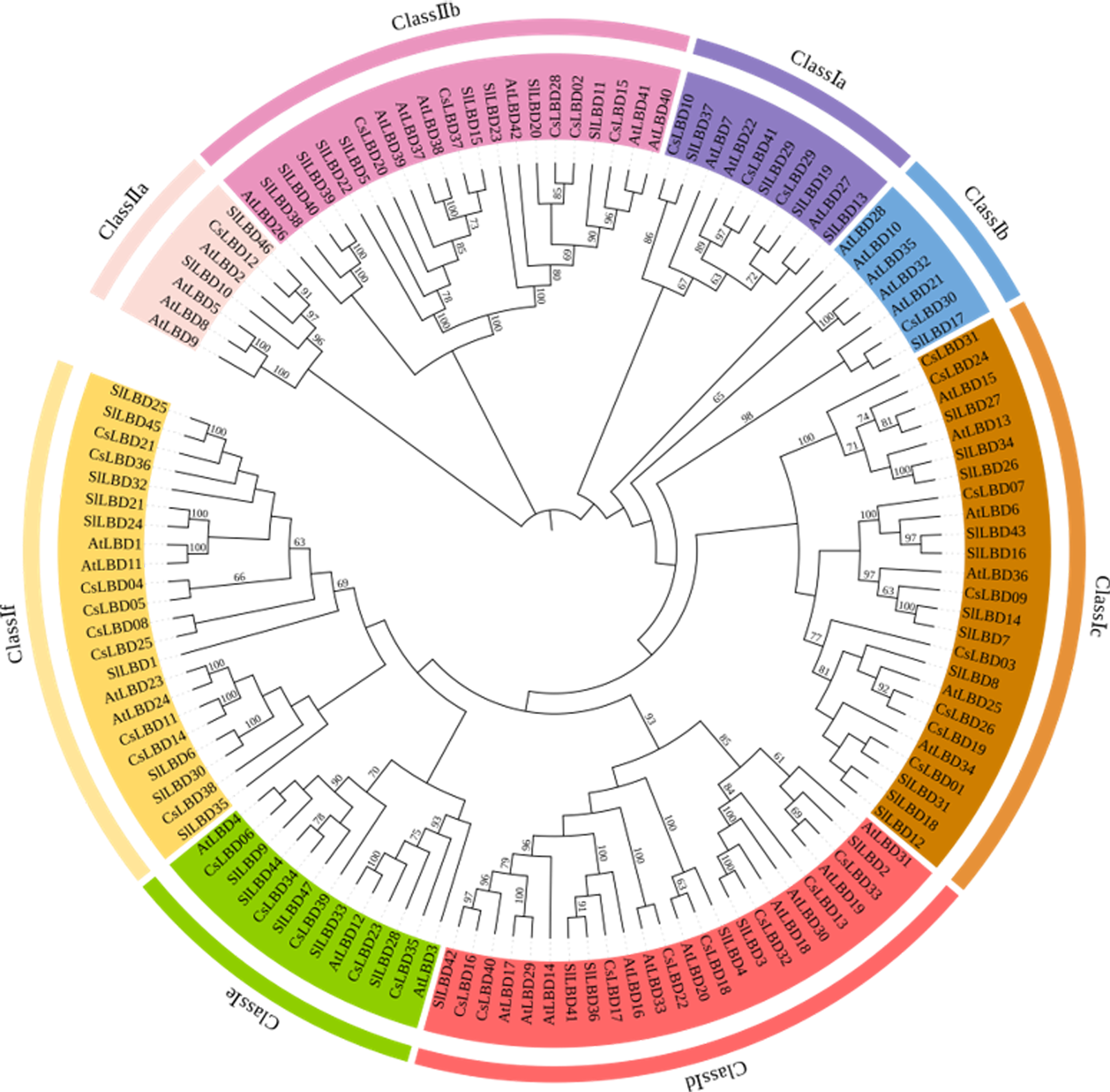
Earlier studies have annotated 39 CsLBD genes in the V1 version of the cucumber genome [43]. With the release of the updated V3 cucumber genome assembly, this study conducted a comprehensive re-identification and re-annotation of the CsLBD gene family. This effort identified 41 CsLBD genes in the updated V3 version (Table 1), and their evolutionary relationships were examined through phylogenetic analysis. The phylogenetic tree elucidates the phylogenetic relationships among LBD proteins from Cucumis sativus, Arabidopsis thaliana, and Solanum lycopersicum. A total of 128 LBD members were identified and categorized into two major classes (Class I and Class II). The larger Class I was further subdivided into six well-supported clades (designated as Class Ia through Class If), while Class II formed a separate, distinct clade subdivided into Class IIa and Class IIb (Figure 1).
Table 1.
Characteristics of the LBD family in cucumber.
Figure 1.
The phylogenetic tree of the LBD proteins from Cucumis sativus, Solanum lycopersicum and Arabidopsis thaliana: Different colors in the figure correspond to distinct subgroups of the LBD family. The maximum-likelihood phylogenetic analysis was conducted using MEGA 11 software with 1000 bootstrap replicates to evaluate the reliability of the phylogenetic tree topology.
The distribution of members across these clades is summarized as follows: clade Class Ia contains 10 members, Class Ib 7, Class Ic 25, Class Id 24, Class Ie 13, and Class If 22. Class II comprises 28 members in total (Figure 1). Notably, most clades contain LBD proteins from all three species, suggesting potential functional conservation of these genes across the Arabidopsis, cucumber, and tomato lineages. The detailed amino acid sequences are provided in Dataset S1.
3.2. Analysis of Protein Motif and Gene Structure Differences in CsLBDs
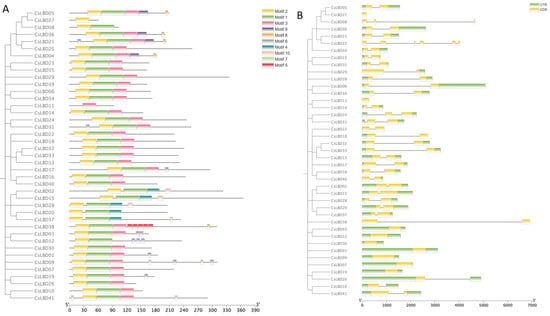
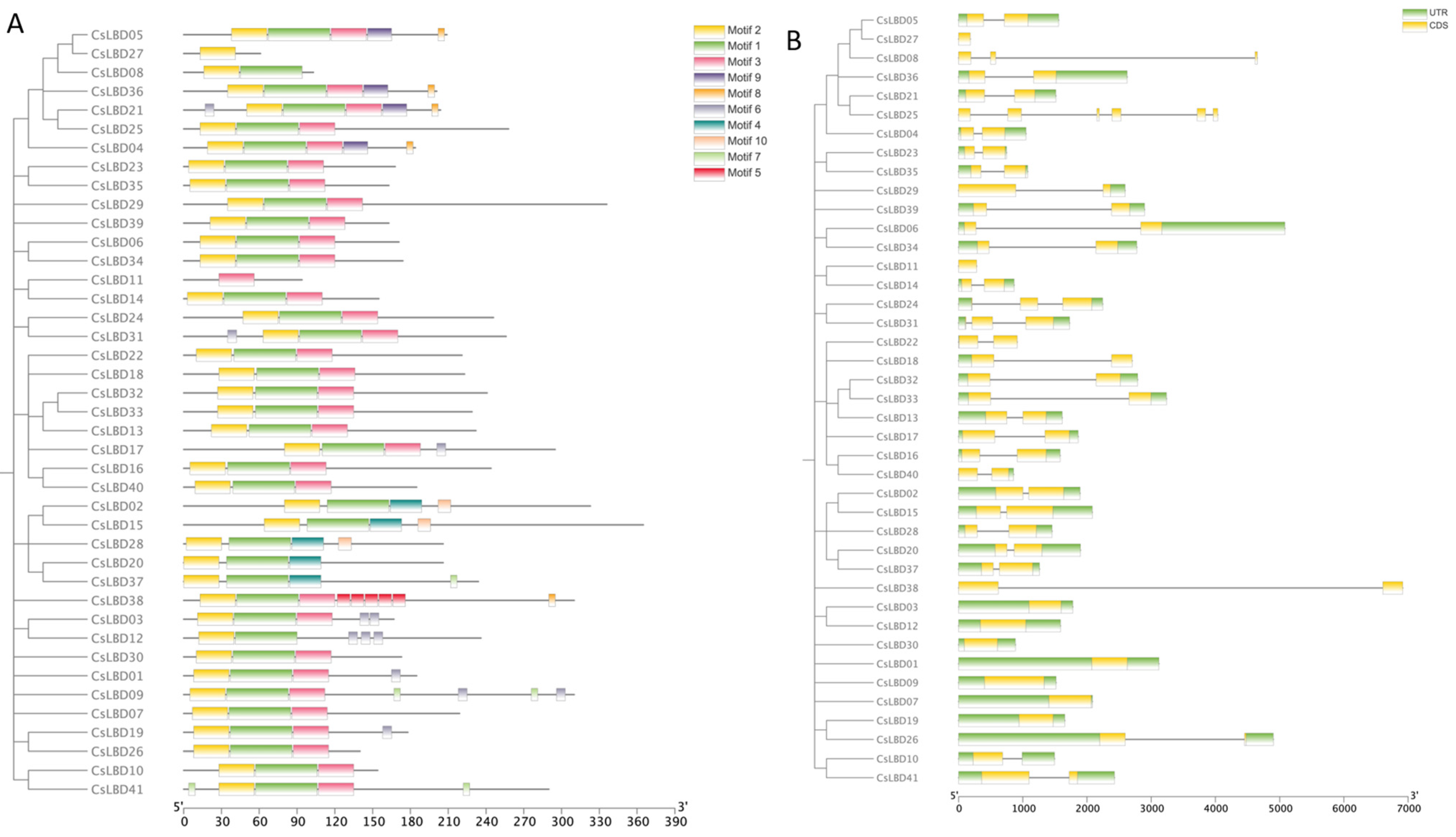
Analysis of the gene structure and conserved protein motifs within the CsLBD family revealed that most members contained three to five motifs, all of which included the highly conserved Motif 1, Motif 2, and Motif 3. Notably, CsLBD27 and CsLBD11 contained only a single motif (Figure 2A). Furthermore, gene structure analysis showed that the majority of members possessed between one and three exons, while CsLBD25 was distinctive in containing six exons (Figure 2B).
Figure 2.
Analysis of phylogenetic relationships, gene structure, and protein motif differences among CsLBD family members in cucumber. (A) Motif distribution of CsLBD proteins. (B) Gene structure of CsLBD genes.
3.3. Analysis of Cis-Acting Elements in Promoter Region of CsLBD
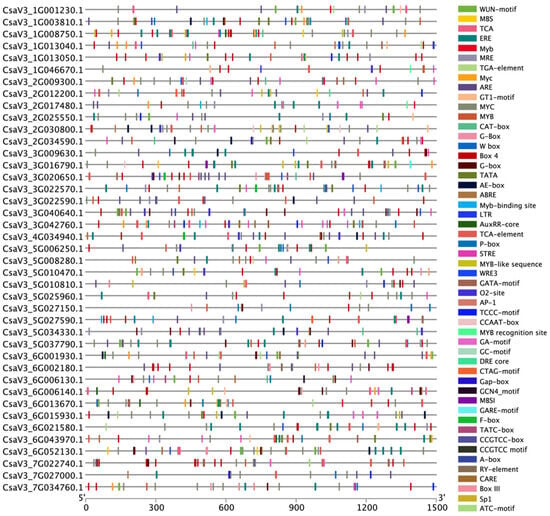
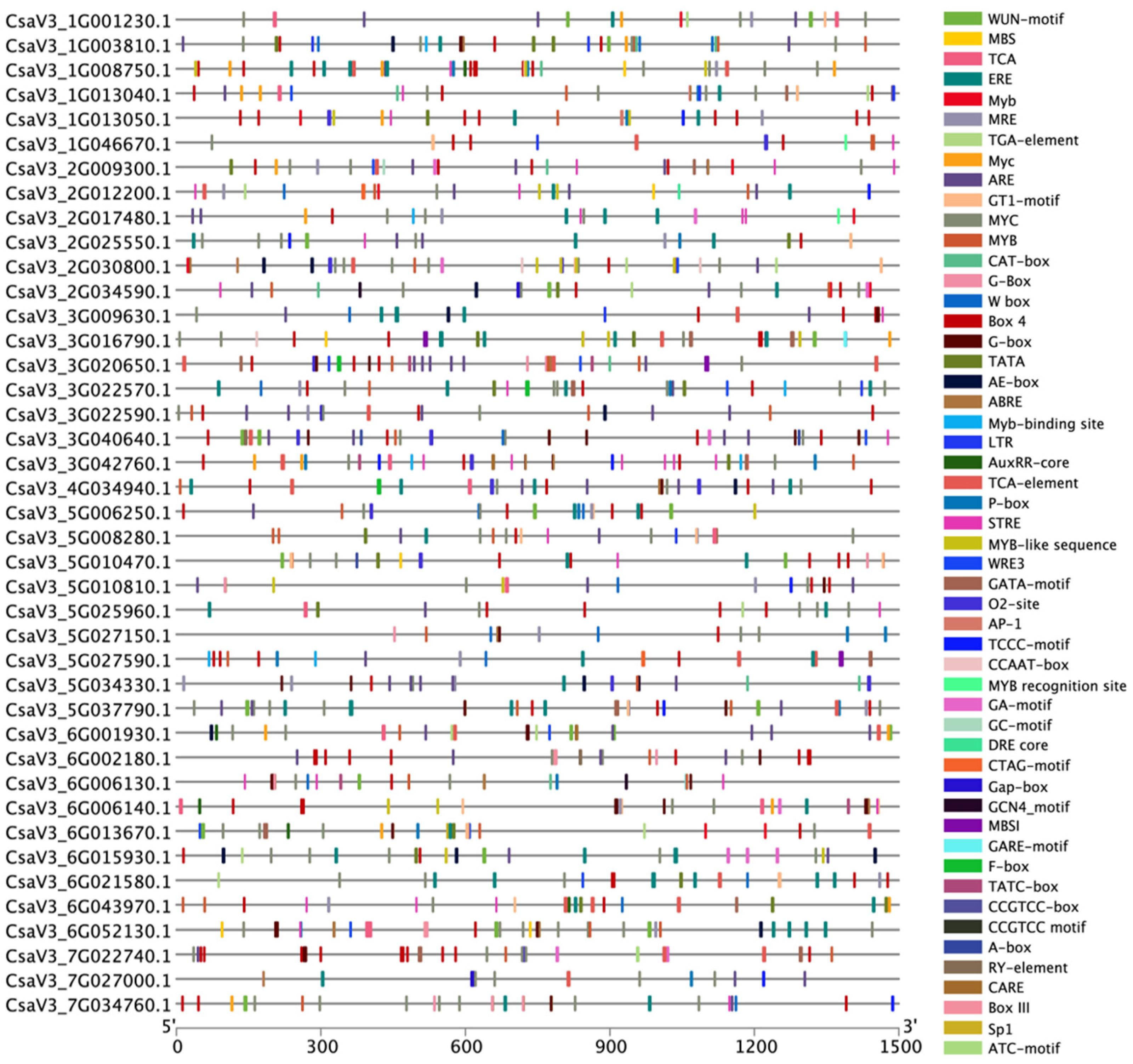
The cis-acting element analysis of the upstream promoter region (1500 bp) of each CsLBD gene showed that the family members contained a variety of hormone response elements (such as ABRE, CGTCA-motif, etc.), stress response elements (such as MBS) and growth and development-related elements (such as ARE, CAT-box). These results suggest that the CsLBD transcription factor family may be widely involved in various biological processes such as hormone signal transduction, stress response and growth and development of cucumber (Figure 3).
Figure 3.
Analysis of cis-elements in promoter regions of CsLBD genes. The promoter region is defined as the 1.5 kb sequence located upstream of the translation initiation codon of CsLBD genes. In this study, identification of cis-acting elements was performed using the online bioinformatics tool PlantCARE. Different categories of cis-acting elements are marked with filled boxes of distinct colors.
3.4. Chromosome Distribution Analysis of CsLBD Genes
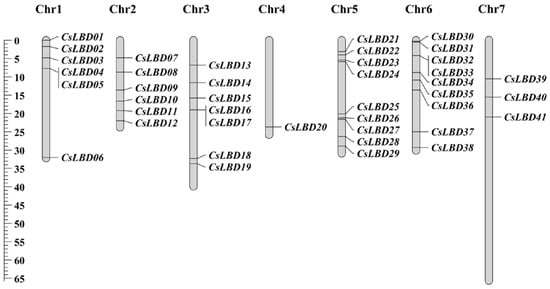
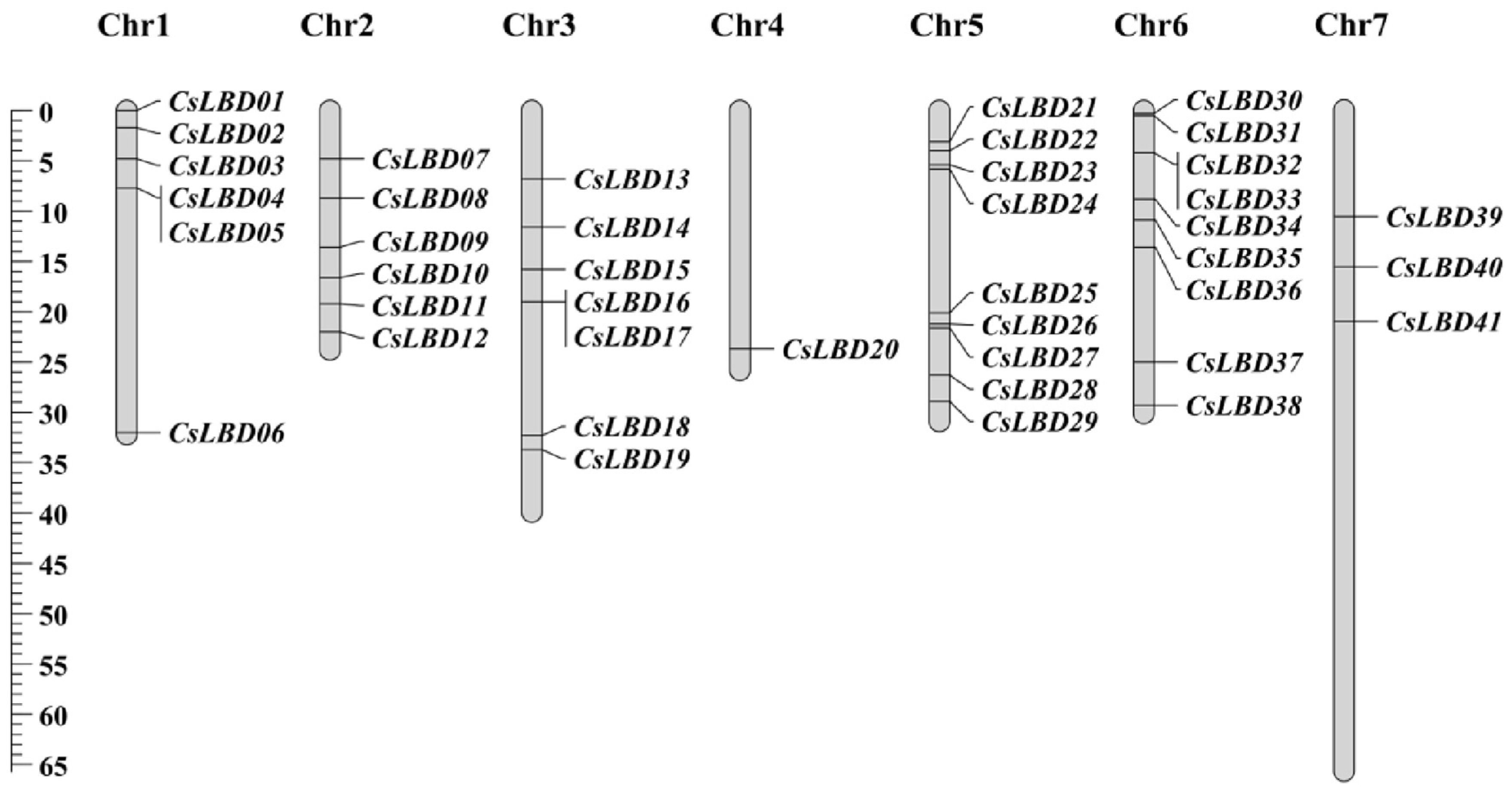
Chromosome distribution analysis of cucumber CsLBD genes revealed that these genes are unevenly distributed across the seven cucumber chromosomes (Figure 4). Among them, there is only one CsLBD gene on chromosome 4, three CsLBD genes on chromosome 7, six CsLBD genes on chromosomes 1 and 2, seven CsLBD genes on chromosome 3, and nine CsLBD genes on chromosomes 5 and 6, respectively (Figure 4).
Figure 4.
Chromosomal location of CsLBD genes.
3.5. Multiple Sequence Alignment
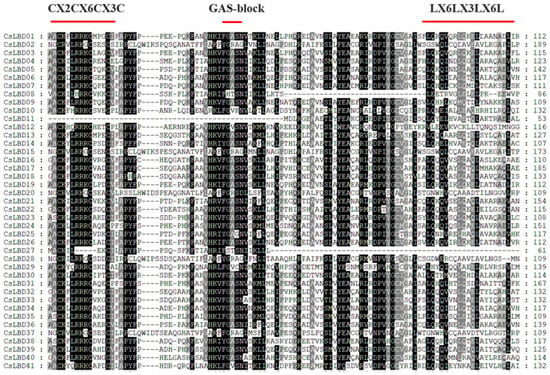
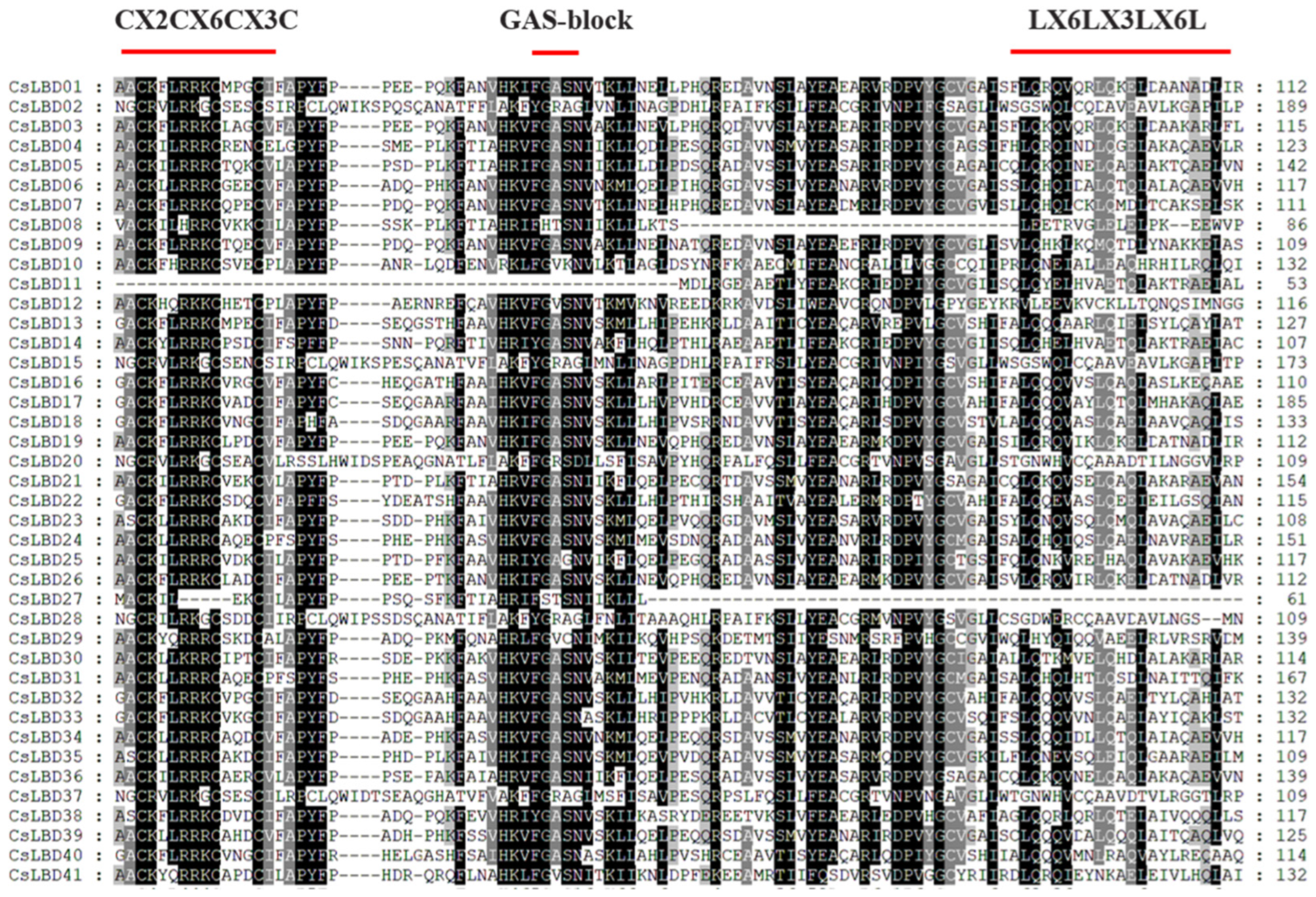
This study further analyzed the conserved amino acid sequences of the LBD transcription factors in cucumber. Results of the multiple sequence alignment indicated that all 41 cucumber LBD transcription factors harbor three characteristic conserved domains at the N-terminus: the zinc finger-like motif CX2CX6CX3C, the Gly-Ala-Ser (GAS) block region, and the leucine zipper-like coiled-coil motif LX6LX3LX6L at the C-terminus. Notably, each LBD protein was identified to contain two GAS-block regions (Figure 5).
Figure 5.
The multiple protein sequence alignment of the domains of LBD from cucumber. Conserved sequences are indicated through black and grey shading, where black shading denotes fully conserved sequences and grey shading denotes partially conserved sequences. Regions shaded in black exhibit sequence similarity exceeding 80%, while regions shaded in grey exhibit sequence similarity ranging between 60% and 80%.
3.6. Expression Patterns of CsLBD Genes in Different Tissues
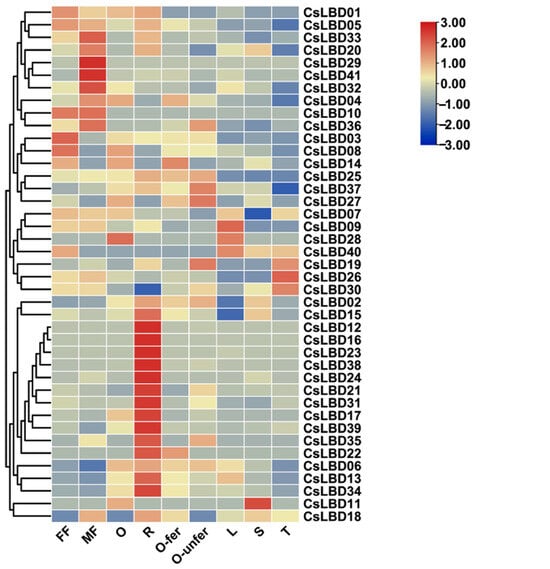
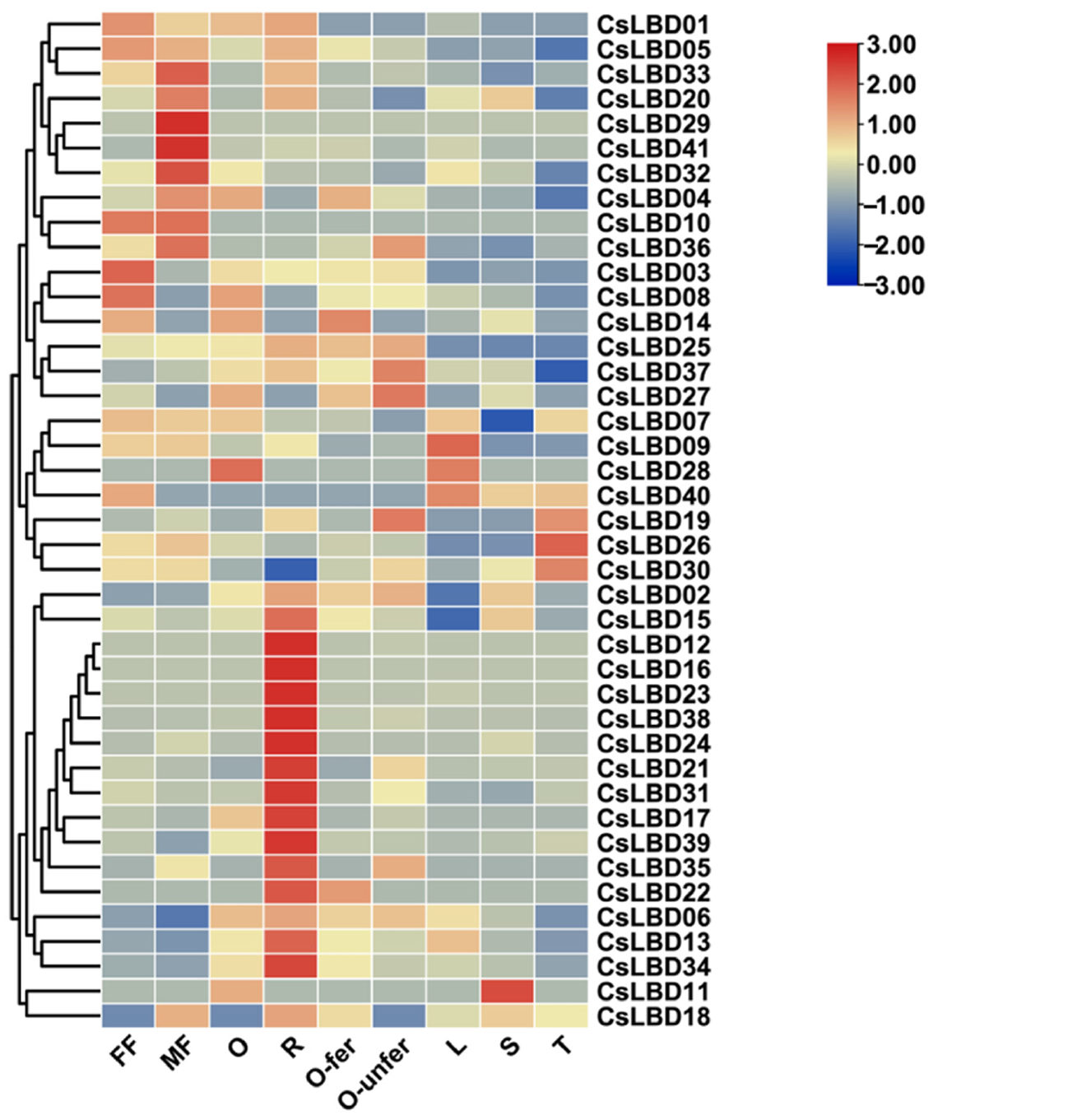
To explore the potential functions of CsLBD genes in cucumber growth and development, we analyzed their expression profiles across different tissues using publicly available RNA-seq data. The results revealed that the majority of CsLBD genes exhibited relatively low expression in stems (Figure 6). In contrast, CsLBD19, CsLBD26, and CsLBD30 were highly expressed in tendrils, suggesting their potential roles in tendril development. Several members, including CsLBD12, CsLBD15, CsLBD27, and CsLBD35, showed preferential expression in roots, indicating that they may be involved in root growth and nutrient uptake. CsLBD14, CsLBD19, and CsLBD21 were predominantly expressed in female or male flowers, implying their possible roles in floral differentiation and reproductive development. In addition, some genes such as CsLBD01, CsLBD23, and CsLBD36 exhibited higher expression in the ovary, cotyledon, leaf, or seed, suggesting that these members may participate in tissue-specific developmental processes (Figure 6).
Figure 6.
Temporal-spatial expression of cucumber LBD genes. This heatmap illustrates the expression profiles of CsLBD genes across nine distinct cucumber tissues. The RNA-seq dataset analyzed in this figure, corresponding to BioProject accession PRJNA80169, was retrieved from the Cucurbit Genomics Database. The color scale represents Log2(FPKM) values, where blue and red indicate low and high expression levels, respectively. The FPKM values of CsLBD genes can be found in Table S2. R: root; S: stem; L: leaf; FF: female flower; MF: male flower; O: unexpanded ovary; O-fer: expanded fertilized ovary; O-unfer: expanded unfertilized ovary; T: tendril.
3.7. Expression Profiles of CsLBD Genes Under Abiotic and Biotic Stresses
Although studies in many species have demonstrated that LBD genes participate in various stress responses, their roles in cucumber remain largely unexplored. In this study, based on publicly available transcriptome data, we performed an analysis of the expression profiles of CsLBD genes under multiple abiotic and biotic stress conditions, including heat stress, downy mildew (DM, Pseudoperonospora cubensis), gray mold (Botrytis cinerea), and powdery mildew (PM, Podosphaera fusca), with the aim of characterizing their potential functions in plant stress response processes.
Following gray mold inoculation, most CsLBD genes exhibited substantial changes in expression, except for CsLBD03, CsLBD29, CsLBD11, CsLBD14, CsLBD16, CsLBD22, and CsLBD27. These results suggest that members of the CsLBD family are broadly involved in transcriptional responses to gray mold, suggesting that they play potential roles in plant defense (Figure 7).
Figure 7.
Expression of LBD genes in cucumber after inoculation with Botrytis cinerea. Blue regions indicate down-regulated expression, while red regions indicate up-regulated expression. The color scale shows increasing expression levels from blue to red. The FPKM values of CsLBD genes can be found in Table S3.
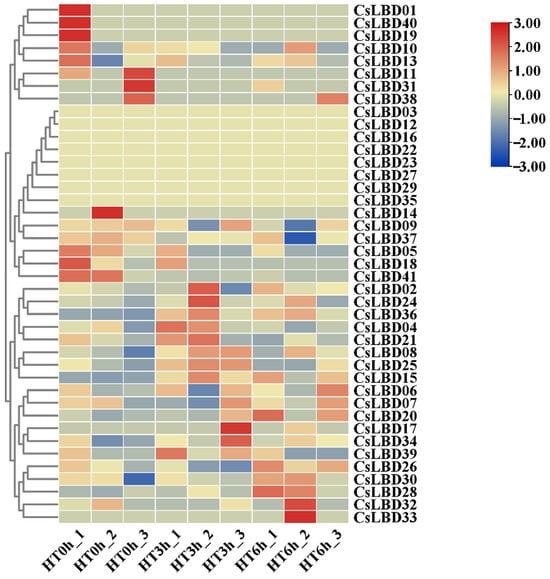
We further examined the response of CsLBD genes to heat stress. CsLBD41, CsLBD05, CsLBD18, CsLBD09, CsLBD37, CsLBD19, CsLBD01, CsLBD40, CsLBD10 and CsLBD14 were significantly downregulated at 3 h and 6 h of heat treatment. In contrast, CsLBD15, CsLBD08, CsLBD25, CsLBD04, CsLBD21, CsLBD02, CsLBD24, CsLBD36, CsLBD32, CsLBD33, CsLBD28 and CsLBD26 were significantly upregulated at 3 h. Meanwhile, the expression of CsLBD03, CsLBD12, CsLBD16, CsLBD22, CsLBD23, CsLBD27, CsLBD29 and CsLBD35 could not be induced under heat stress (Figure 8).
Figure 8.
Expression profiles of CsLBD genes in response to heat stress treatments: Based on the normalized expression values, the color scale was artificially set to span the range of −3.00 to 3.00. The color gradient progresses from blue to red, corresponding to a gradual increase in gene expression level. The FPKM values of all tested CsLBD genes are provided in Supplementary Table S4. Abbreviations: HT, heat treatment; HT0h, heat treatment for 0 h; HT3h, heat treatment for 3 h; HT6h, heat treatment for 6 h.
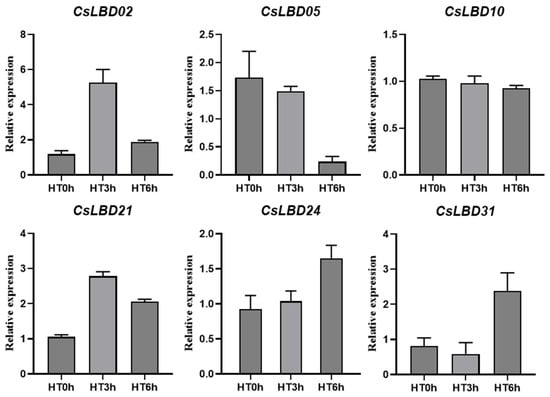
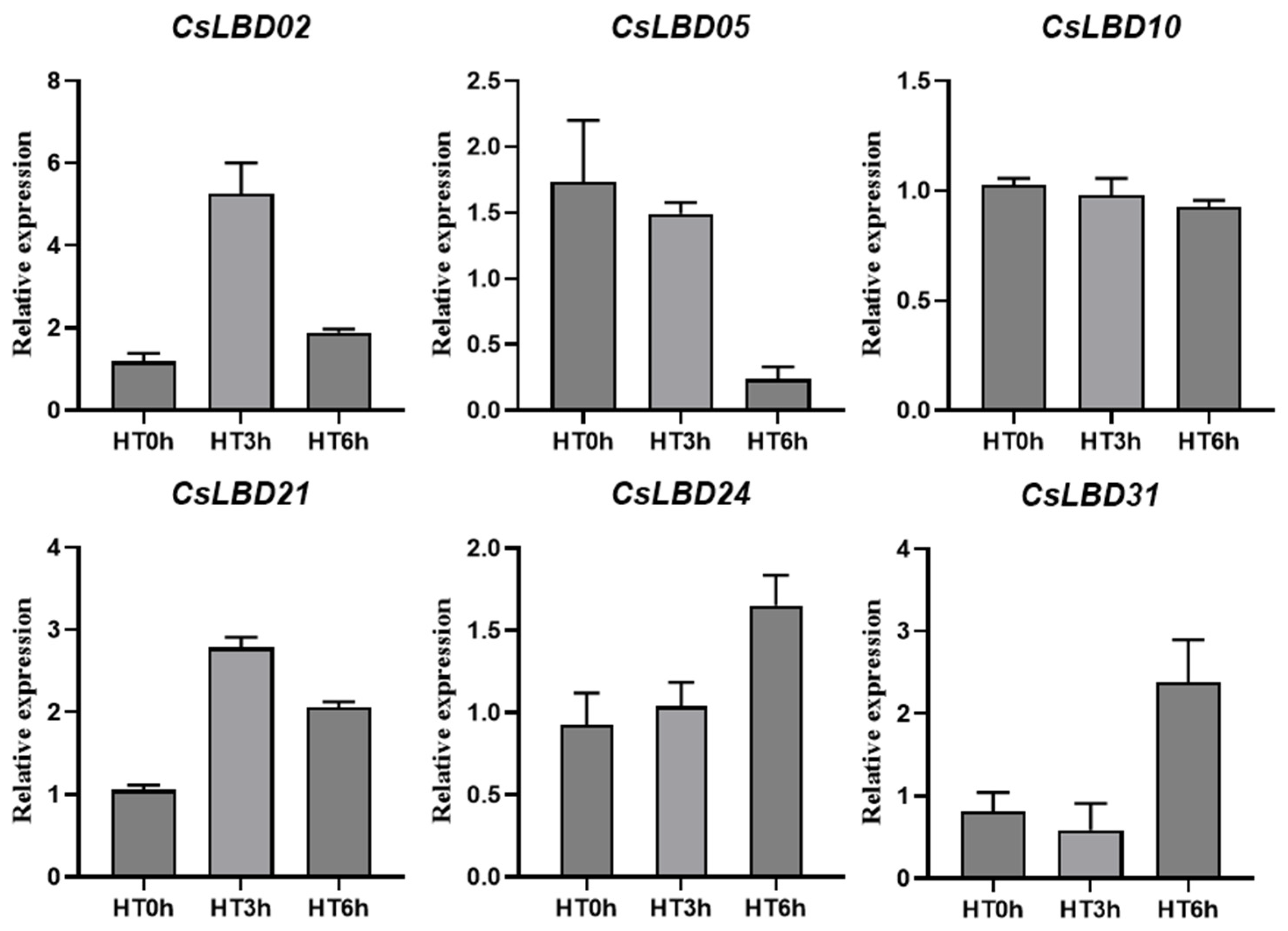
The expression patterns of six selected CsLBD genes (CsLBD02, CsLBD05, CsLBD10, CsLBD21, CsLBD24 and CsLBD31) in cucumber seedling leaves at intervals of 0, 3 and 6 h after treatment at 42 °C were further examined by qRT-PCR (Figure 9). The results revealed distinct temporal expression patterns among these genes. The expression levels of CsLBD05 and CsLBD10 were repressed at 3 h and 6 h. The expression levels of CsLBD02, CsLBD21 and CsLBD24 increased at 3 h and 6 h. The expression of CsLBD31 decreased at 3 h but rapidly increased at 6 h. The expression patterns of all tested genes were consistent with those obtained from transcriptome analysis. Furthermore, using qRT-PCR, we found that these six genes also exhibited distinct temporal expression patterns under salt and cold treatments (Figures S1 and S2), indicating the potential functions of CsLBDs in response to abiotic stresses. Under cold treatment, CsLBD10 showed significantly increased expression across all three post-treatment time points. CsLBD02, CsLBD05, CsLBD21 and CsLBD24 exhibited relatively high expression at the early time points, with their expression levels dropping thereafter; in contrast, CsLBD31 gradually increased in expression over time (Figure S1). Under 200 mM NaCl treatment, the expression of CsLBD10 was upregulated at 12 and 96 h, while CsLBD21 showed increased expression at 6 and 96 h. In contrast, the other four genes all exhibited downregulated expression under salt stress (Figure S2).
Figure 9.
The qRT-PCR analysis of CsLBD genes under heat stress. The cucumber seedlings were treated with 42 °C for heat stress, and leaves were collected at 0, 3, and 6 h. The cucumber β-actin gene was used as a reference gene. Error bars illustrate the standard error of three biological replicates. HT0h, heat treatment for 0 h; HT3h, heat treatment for 3 h; HT6h, heat treatment for 6 h.
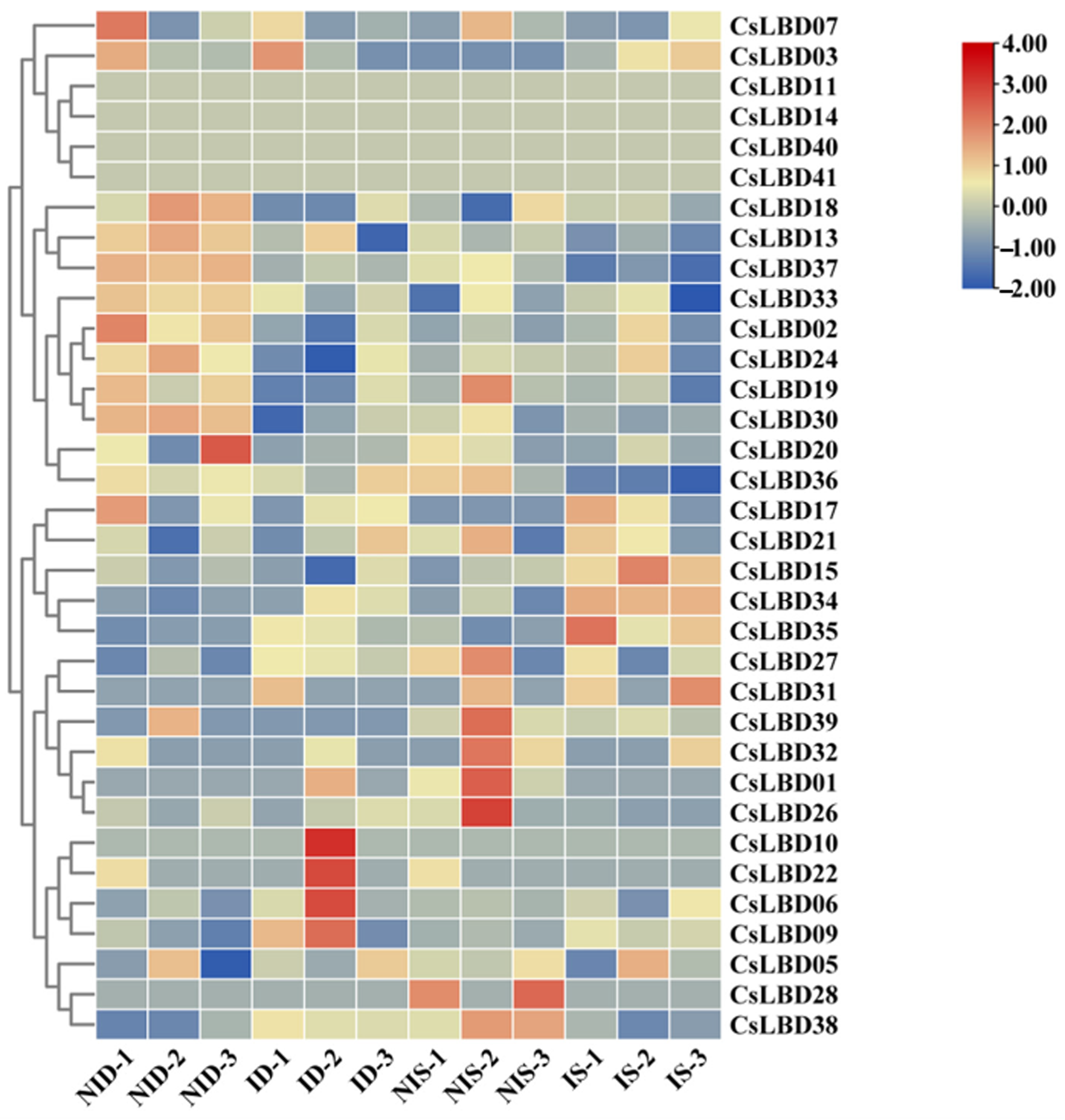
To investigate the potential roles of CsLBD genes in cucumber resistance to powdery mildew (PM), we performed transcriptome analysis of the susceptible line D8 and resistant line SSL508-28 under PM-inoculated and control conditions. A heatmap was generated to visualize the expression profiles of CsLBD family genes (Figure 10).
Figure 10.
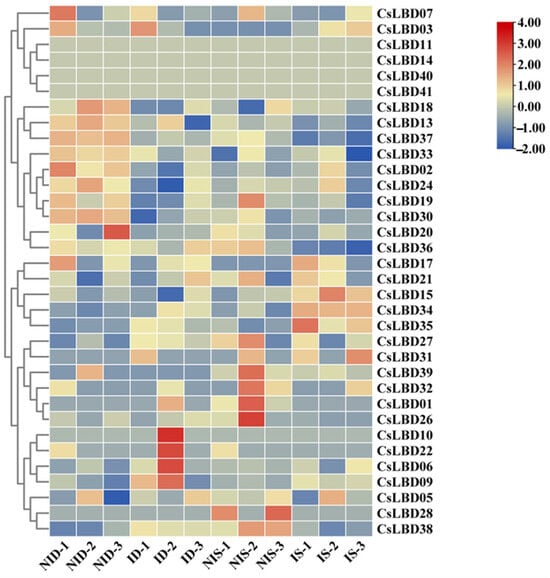
Expression analysis of CsLBD under biotic stresses: The transcriptional levels of CsLBD genes after infection with powdery mildew (PM) for 48 h are shown on the heatmaps. The color scale shows increasing expression levels from blue to red. ID, PM-inoculated susceptible cucumber line D8 leaves; NID, non-inoculated D8 leaves; IS, PM-inoculated resistant cucumber line SSL508-28 leaves; NIS, non-inoculated SSL508-28 leaves. The FPKM values of CsLBD genes can be found in Table S5.
The results showed that CsLBD07, CsLBD11, CsLBD14, and CsLBD40 were significantly upregulated in both susceptible (ID) and resistant (IS) lines after PM inoculation, indicating that these genes may participate in general responses to pathogen attack. In contrast, CsLBD18, CsLBD19, and CsLBD20 were markedly downregulated after infection, suggesting potential negative regulatory roles in defense responses (Figure 10).
Interestingly, some CsLBD members exhibited line-specific expression patterns. For instance, CsLBD10 and CsLBD38 showed relatively higher expression in the susceptible line D8, whereas CsLBD02 and CsLBD17 were induced in the resistant line SSL508-28. These distinct expression profiles suggest that different subsets of CsLBD genes may regulate cucumber susceptibility and resistance to PM via diverse molecular pathways (Figure 10).
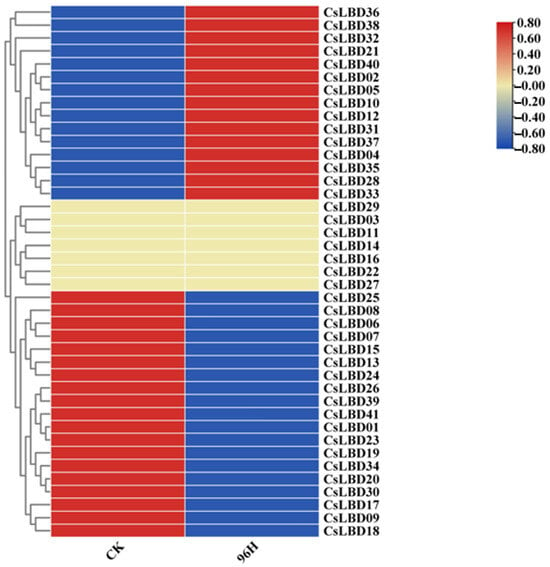
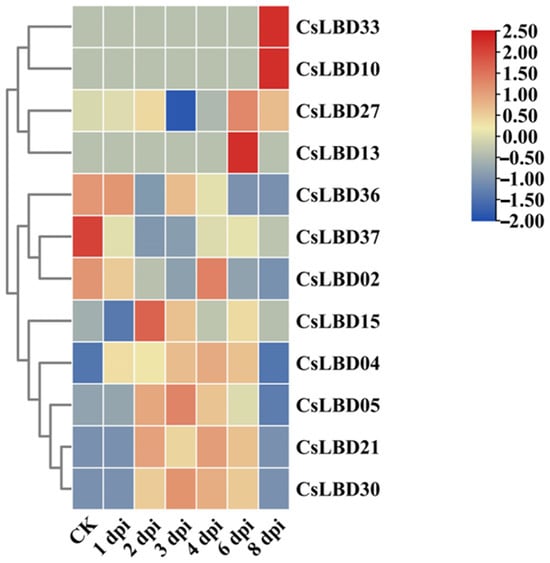
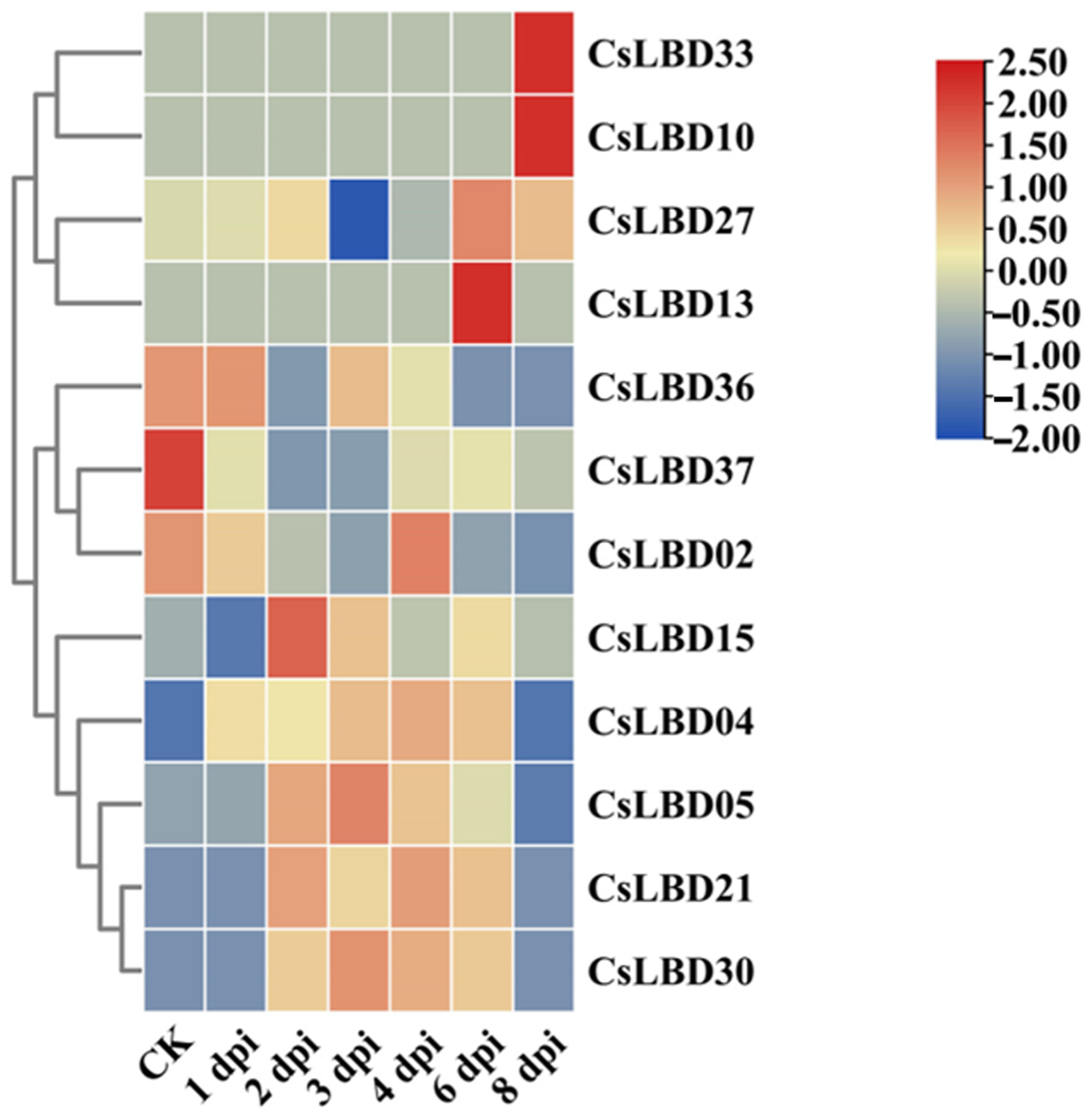
Among the transcriptome data of cucumber seedlings inoculated with downy mildew (DM), only 12 CsLBD genes were detected. The expression of CsLBD33, CsLBD10, CsLBD27, and CsLBD13 was upregulated, whereas CsLBD36, CsLBD37, and CsLBD02 were downregulated. Additionally, CsLBD15, CsLBD04, CsLBD05, CsLBD21, and CsLBD30 showed a transient expression pattern, with initial upregulation followed by a decrease after DM inoculation (Figure 11).
Figure 11.
Expression analysis of CsLBD under biotic stresses: The transcriptional levels of CsLBD genes after infection with downy mildew (DM) for 1–8 days post-inoculation are shown on the heatmaps. The color scale shows increasing expression levels from blue to red. CK, control check; dpi, days post-inoculation. The FPKM values of CsLBD genes can be found in Table S6.
4. Discussion
As genes encoding plant-specific transcription factors, LBDs play pivotal roles in regulating plant growth and stress responses. LBD gene family has been characterized in model plants like Arabidopsis and crops. For example, the gene numbers of this family are 43 in Arabidopsis thaliana, 46 in tomato, 44 in maize, 32 in melon, 33 in foxtail millet, 19 in Eucommia ulmoides, and 40 in grape [7,13,18,44,45,46,47]. However, the characteristics and functional landscape of LBD genes in cucumber remain largely unknown. Our genome-wide analysis identified 41 CsLBD genes in the updated cucumber V3 genome, providing a solid foundation for investigating their roles in cucumber biology.
CsLBD proteins can be categorized into two distinct classes, namely Class I and Class II (Figure 1), which aligns with the canonical classification of LBD families reported in other plant species [8]. Class I LBD genes mainly modulate plant growth and development, while Class II LBDs are likely involved in environmental stress responses [48,49]. Existing research confirms that tighter phylogenetic clustering corresponds to greater functional conservation among these genes. In Arabidopsis thaliana, AtLBD13 participates in the regulation of meristems [50]. Thus, we hypothesize that CsLBD31, CsLBD24, CsLBD07, CsLBD09, CsLBD03, CsLBD26, CsLBD19 and CsLBD01, clustered in the same clade, may modulate meristem formation in cucumber. Consistent with previous reports in tomato and Arabidopsis thaliana, structural analysis further demonstrated that all identified CsLBDs contain the characteristic conserved domains, including the zinc-finger-like motif (CX2CX6CX3C) and the leucine zipper-like motif (LX6LX3LX6L), which are essential for their functions in DNA binding and protein dimerization [8,13,20]. However, we observed notable structural variations among family members. For instance, CsLBD27 contains only a single motif, while CsLBD25 possesses six exons, contrasting with the typical one to three exons found in most members (Figure 2). These structural differences suggest potential functional diversification within the CsLBD family, possibly through gene duplication and subsequent divergence, as observed in other plant species [16].
The presence of various hormone-responsive and stress-related cis-elements in CsLBD promoters implies their involvement in complex regulatory networks, integrating hormonal and environmental signals. The promoter regions of AtLBD17, AtLBD18, AtLBD19 and AtLBD30 in Arabidopsis thaliana contain abundant auxin-responsive elements. These genes are clustered into the Class I clade and exert crucial regulatory functions upon auxin induction [20,21,22,23]. Our study found that the homologous genes clustered within the same clade, including CsLBD16, CsLBD40, CsLBD17, CsLBD22, CsLBD18, CsLBD32, CsLBD13 and CsLBD33, also possess numerous auxin-responsive elements in their promoter sequences (Figure 3). We speculate that these genes may also be induced by auxin to mediate cucumber growth and development. The AtLBD40 gene participates in regulating plant responses to gibberellin [51]. Accordingly, we propose that CsLBD20, CsLBD37, CsLBD28, CsLBD02 and CsLBD15, located on the same clade, may play vital roles in modulating cucumber cell morphogenesis under gibberellin treatment (Figure 1). The chromosomal distribution of CsLBD genes, with notable clustering on chromosomes 5 and 6 (Figure 4), suggests possible tandem duplication events that contributed to the expansion of this gene family in cucumber.
Different CsLBD members exhibit distinct spatial expression patterns (Figure 5), implying their specialized roles in cucumber development. The high expression of CsLBD19, CsLBD26 and CsLBD30 in tendrils is particularly interesting, as tendrils are specialized organs crucial for cucumber climbing. This finding suggests these genes may regulate tendril development, similar to how AtLBD genes control lateral organ formation in Arabidopsis [7]. We therefore infer that these three tendril-enriched CsLBD paralogs have undergone subfunctionalization after gene duplication, specializing to orchestrate the initiation, elongation and structural shaping of cucumber tendril lateral boundaries rather than generic leaf development. The preferential expression of CsLBD12, CsLBD15, CsLBD27, and CsLBD35 in roots indicates their potential roles in root development and function, possibly analogous to the roles of AtLBD17, AtLBD18, and AtLBD19 in regulating lateral root formation [17,18,19]. It is reasonable to hypothesize that these root-preferred CsLBDs mediate cucumber root branching, nutrient absorption and underground organ establishment under regular growth conditions. Additionally, CsLBD14, CsLBD19 and CsLBD21 were predominantly detected in male and female flower tissues, mirroring the floral developmental function of rice OsIG1, whose altered expression disrupts ovule and floral organ morphogenesis [24]. These floral-specific CsLBD candidates likely participate in cucumber sex differentiation, floral organ boundary definition and fertilization-related ovary development, a critical agronomic trait determining cucumber fruit yield.
Numerous investigations have demonstrated that LBDs play critical roles in plant defense responses to biotic and abiotic stresses [27,28,29,30,31,32]. In this study, we analyzed the response patterns of CsLBDs across biotic and abiotic challenges, including gray mold, powdery mildew, downy mildew, high temperature, cold and salinity. Consistent with the abundant stress and hormone cis-elements identified in CsLBD promoter regions (Figure 3), nearly all family members exhibited robust transcriptional reprogramming upon pathogen or heat exposure, confirming the dual regulatory capacity of CsLBDs in both growth and stress signaling networks. Most CsLBD genes underwent significant fold-change shifts following gray mold inoculation (Figure 7), implying that the LBD family acts as a broad-spectrum transcriptional layer modulating cucumber basal defense against necrotrophic fungal pathogens. The widespread response of CsLBD genes to gray mold infection demonstrates their involvement in defense against fungal pathogens. The distinct expression patterns observed in resistant and susceptible lines under powdery mildew infection provide particularly valuable insights. Our comparative transcriptome profiling of powdery mildew-resistant and susceptible cucumber lines delivers novel, crop-specific insights unavailable from single-genotype datasets. Two genes, CsLBD02 and CsLBD17, were uniquely and sharply induced only in the resistant genotype SSL508-28 post-infection (Figure 10); their activation pattern is analogous to soybean GmLBD16 and GmLBD23, which positively activate immunity against oomycete pathogens [27]. We propose CsLBD02 and CsLBD17 as candidate positive regulators of cucumber powdery mildew resistance that can be prioritized for future transgenic validation. By contrast, CsLBD10 and CsLBD38 were specifically upregulated in susceptible line D8 after inoculation (Figure 10), which suggests they may facilitate pathogen colonization or suppress defense cascades, representing potential susceptibility factors in cucumber-powdery mildew interaction. Transcriptome data from downy mildew infection further reinforced this divergent stress-response model (Figure 11): only a subset of 12 CsLBDs showed detectable expression, with distinct upregulated, downregulated and transiently modulated subgroups, reflecting specialized subfamily roles against different oomycete pathogens. Heat stress transcriptome results expand our understanding of CsLBD function beyond biotic stress to abiotic environmental adaptation. A cohort of CsLBDs, including CsLBD15 and CsLBD25, were markedly upregulated at the 3 h heat treatment timepoint (Figure 8), indicative of their rapid activation in early thermotolerance signaling. Functional studies in potato and maize have validated that LBD family members improve plant resistance to osmotic stress by regulating stomatal development and reactive oxygen species homeostasis [28,29]; by analogy, heat-induced CsLBDs may mitigate heat-triggered cell damage via conserved stress mitigation pathways in cucumber. Conversely, multiple genes such as CsLBD41 and CsLBD05 displayed sustained transcriptional repression under prolonged high-temperature conditions. This downregulation may reflect heat-induced suppression of normal growth regulatory pathways, or these CsLBDs could serve as negative modulators of heat tolerance whose repression is required to activate protective stress responses. Furthermore, qRT-PCR analysis revealed that six selected CsLBD genes (CsLBD02, CsLBD05, CsLBD10, CsLBD21, CsLBD24 and CsLBD31) responded to cold and salinity treatments, suggesting their potential roles in plant abiotic stress responses. Interestingly, CsLBD02 and CsLBD10 responded to all the stresses tested. These findings provide some clues that it might be valuable to explore the function of CsLBD02 and CsLBD10 in multiple stress resistance.
In summary, through mining publicly available multi-tissue and multi-stress RNA-seq datasets, we performed a cost-effective, genome-wide screening of all 41 CsLBD members, which provided a solid base for further functional analysis. In future work, gene knockout or overexpression transgenic cucumber materials are needed to confirm the direct biological functions of the candidate genes such as CsLBD02, CsLBD10 and the tendril-specific CsLBD19/26/30. In addition, our stress expression analysis based on transcriptome data of leaf tissue might be limited, lacking data from root, stem or fruit responsive to biotic and abiotic stimuli, which may overlook tissue-specific CsLBD regulatory networks during stress acclimation. In follow-up research, the expression profiling analysis from multiple tissues treated by these stresses at time gradients, combined with CRISPR editing of key candidate CsLBD genes, will be conducted to validate their genetic roles in cucumber organ development and disease/heat resistance for molecular breeding application.
5. Conclusions
This study provides a comprehensive analysis of the CsLBD gene family in cucumber, identifying 41 members. Phylogenetic classification revealed two major classes and seven subclasses, with members within the same subclass showing conserved gene structures and protein motifs. Most members contain 3–5 motifs, with motifs 1, 2, and 3 being highly conserved; however, CsLBD11 and CsLBD27 contained only a single motif. Gene structure analysis showed that most members possess 1–3 exons, while CsLBD25 uniquely contains six. Promoter analysis identified abundant cis-acting elements related to hormone response, stress adaptation, and growth regulation. Expression profiling indicated functional diversification: specific genes (CsLBD19, CsLBD26, CsLBD30) showed tissue-specific expression in tendril, while others (CsLBD02, CsLBD10) responded significantly to all the stresses tested. These results systematically reveal the evolutionary and structural characteristics of CsLBD genes, providing a foundation for future functional studies on key candidates and their application in cucumber breeding.
Supplementary Materials
The following supporting information can be downloaded at: https://www.mdpi.com/article/10.3390/biology15232178/s1. Dataset S1: Amino acid sequences of cucumber LBD members. Figure S1: The qRT-PCR analysis of CsLBD genes under cold stress. Figure S2: The qRT-PCR analysis of CsLBD genes under salt stress. Table S1: Gene-specific primers used for qRT-PCR. Table S2: The FPKM values of the cucumber LBD genes; Table S3: The FPKM values of the cucumber LBD genes under gray mold; Table S4: The FPKM values of the cucumber LBD genes under heat stress treatments; Table S5: The FPKM values of the cucumber LBD genes under powdery mildew; Table S6: The FPKM values of the cucumber LBD genes under downy mildew.
Author Contributions
Conceptualization, J.H. and Z.W.; methodology, H.Q., Y.Z., Z.W. and J.H.; software, J.H., F.W., M.Y., P.Z., X.H., C.Z., Y.W., Q.W., K.D., M.Z. and J.W.; data analysis, J.H., F.W. and M.Y.; resources, Z.W., H.Q. and Y.Z.; investigation, J.H., M.Y. and Z.W.; data curation, J.H., F.W. and M.Y.; writing—original draft preparation, J.H., F.W. and M.Y.; writing—review and editing, Y.Z., Z.W. and H.Q.; supervision, H.Q., Y.Z., J.H. and C.Z.; project administration, J.H. and C.Z.; funding acquisition, J.H., C.Z. and Y.Z. All authors have read and agreed to the published version of the manuscript.
Funding
This work was supported by the Scientific Research Foundation for High-level Talented Scholars of Liaocheng University (318042401), the Doctoral Research Startup Foundation of Liaocheng University (318052317), the Open Project of Liaocheng University Landscape Architecture Discipline (31946221211), the Young Talent of Lifting engineering for Science and Technology in Shandong, China (SDAST2024QTA053), and Liaocheng “Science and Technology Vice President” Collaborative Innovation Project (2024XT07).
Data Availability Statement
The data presented in this study are available in this article and Supplementary Materials.
Acknowledgments
We extend our appreciation to the anonymous reviewers for their valuable suggestions to help improve this article.
Conflicts of Interest
The authors declare no conflicts of interest.
References
- Li, C.; Zeng, Q.; Han, Y.; Zhou, X.; Xu, H. Effects of Bacillus subtilis on Cucumber Seedling Growth and Photosynthetic System under Different Potassium Ion Levels. Biology 2024, 13, 348. [Google Scholar] [CrossRef] [Scilit] [PubMed]
- Ma, J.; Liu, J.; Shi, Y.; Xie, X.; Chai, A.; Xiang, S.; Sun, X.; Li, L.; Li, B.; Fan, T. Coating Seeds with Paenibacillus polymyxa ZF129 Microcapsule Suspension Enhanced Control Effect on Fusarium Root Rot and Promoted Seedling Growth in Cucumber. Biology 2025, 14, 375. [Google Scholar] [CrossRef] [Scilit] [PubMed]
- Adhikari, B.N.; Savory, E.A.; Vaillancourt, B.; Childs, K.L.; Hamilton, J.P.; Day, B.; Buell, C.R. Expression profiling of Cucumis sativus in response to infection by Pseudoperonospora cubensis. PLoS ONE 2012, 7, e34954. [Google Scholar] [CrossRef] [Scilit] [PubMed]
- Yin, S.; Chen, C.; Liu, J.; Lou, A.; Zhang, Y. Genome-Wide Identification and Expression Analysis of CsALL Gene Family in Cucumber. Veg. Res. 2025, 5, e044. [Google Scholar] [CrossRef] [Scilit]
- Wang, C.; Han, J.; Wang, T.; Chen, C.; Liu, J.; Xu, Z.; Zhang, Q.; Wang, L.; Ren, Z. Pan-Genome-Wide Identification and Transcriptome-Wide Analysis of DREB Genes That Respond to Biotic and Abiotic Stresses in Cucumber. Agriculture 2022, 12, 1879. [Google Scholar] [CrossRef] [Scilit]
- Abbas, W.; Shad, M.A.; Li, W.; Shalmani, A.; Zhang, J.; Iqbal, A.; Liu, L. A Comprehensive Profiling of the Rice LATERAL ORGAN BOUNDARIES DOMAIN (LBD) Gene Family: Structure, Evolution, and Expressional Dynamics. Plants 2025, 14, 3996. [Google Scholar] [CrossRef] [Scilit] [PubMed]
- Shuai, B.; Reynaga-Peña, C.G.; Springer, P.S. The lateral organ boundaries gene defines a novel, plant-specific gene family. Plant Physiol. 2002, 129, 747–761. [Google Scholar] [CrossRef] [Scilit] [PubMed]
- Semiarti, E.; Ueno, Y.; Tsukaya, H.; Iwakawa, H.; Machida, C.; Machida, Y. The ASYMMETRIC LEAVES2 gene of Arabidopsis thaliana regulates formation of a symmetric lamina, establishment of venation and repression of meristem-related homeobox genes in leaves. Development 2001, 128, 1771–1783. [Google Scholar] [CrossRef] [Scilit] [PubMed]
- Gombos, M.; Zombori, Z.; Szécsényi, M.; Sándor, G.; Kovács, H.; Györgyey, J. Characterization of the LBD gene family in Brachypodium: A phylogenetic and transcriptional study. Plant Cell Rep. 2017, 36, 61–79. [Google Scholar] [CrossRef] [Scilit] [PubMed]
- Thatcher, L.F.; Powell, J.J.; Aitken, E.A.B.; Kazan, K.; Manners, J.M. The lateral organ boundaries domain transcription factor LBD20 functions in Fusarium wilt susceptibility and jasmonate signaling in Arabidopsis. Plant Physiol. 2012, 160, 407–418. [Google Scholar] [CrossRef] [Scilit] [PubMed]
- Wang, L.; Wang, W.; Xu, D.Y.; Chang, Z.Y.; Chui, X.F. Overexpression of Arabidopsis ASL25/LBD28 gene affects leaf morphogenesis. Acta Bot. Boreali Occident. Sin. 2010, 30, 888–893. [Google Scholar]
- Rubin, G.; Tohge, T.; Matsuda, F.; Saito, K.; Scheible, W.R. Members of the LBD family of transcription factors repress anthocyanin synthesis and affect additional nitrogen responses in Arabidopsis. Plant Cell 2009, 21, 3567–3584. [Google Scholar] [CrossRef] [Scilit] [PubMed]
- Wang, X.F.; Liu, X.; Su, L.; Sun, Y.J.; Zhang, S.Z.; Hao, Y.J.; You, C.X. Identification, evolution and expression analysis of the LBD gene family in tomato. Sci. Agric. Sin. 2013, 46, 2501–2513. [Google Scholar]
- Shi, Y.; Vrebalov, J.; Zheng, H.; Xu, Y.; Yin, X.; Liu, W.; Liu, Z.; Sorensen, I.; Su, G.; Ma, Q.; et al. A tomato LATERAL ORGAN BOUNDARIES transcription factor, SlLOB1, predominantly regulates cell wall and softening components of ripening. Proc. Natl. Acad. Sci. USA 2021, 118, e2102486118. [Google Scholar] [CrossRef] [Scilit] [PubMed]
- Iwakawa, H.; Ueno, Y.; Semiarti, E.; Onouchi, H.; Kojima, S.; Tsukaya, H.; Hasebe, M.; Soma, T.; Ikezaki, M.; Machida, C.; et al. The ASYMMETRIC LEAVES2 gene of Arabidopsis thaliana, required for formation of a symmetric flat leaf lamina, encodes a member of a novel family of proteins characterized by cysteine repeats and a leucine zipper. Plant Cell Physiol. 2002, 43, 467–478. [Google Scholar] [CrossRef] [Scilit] [PubMed]
- Chalfun-Junior, A.; Franken, J.; Mes, J.J.; Marsch-Martinez, N.; Pereira, A.; Angenent, G.C. ASYMMETRIC LEAVES2-LIKE1 gene, a member of the AS2/LOB family, controls proximal-distal patterning in Arabidopsis petals. Plant Mol. Biol. 2005, 57, 559–575. [Google Scholar] [CrossRef] [Scilit] [PubMed]
- Kim, M.J.; Kim, J. Identification of nuclear localization signal in ASYMMETRIC LEAVES2-LIKE18/LATERAL ORGAN BOUNDARIES DOMAIN16 (ASL18/LBD16) from Arabidopsis. J. Plant Physiol. 2012, 169, 1221–1226. [Google Scholar] [CrossRef] [Scilit] [PubMed]
- Cabrera, J.; Díaz-Manzano, F.E.; Sanchez, M.; Rosso, M.N.; Melillo, T.; Goh, T.; Fukaki, H.; Cabello, S.; Hofmann, J.; Fenoll, C.; et al. A role for LATERAL ORGAN BOUNDARIES-DOMAIN 16 during the interaction Arabidopsis-Meloidogyne spp. provides a molecular link between lateral root and root-knot nematode feeding site development. New Phytol. 2014, 203, 632–645. [Google Scholar] [CrossRef] [Scilit] [PubMed]
- Kim, J.; Lee, H.W. Direct activation of EXPANSIN14 by LBD18 in the gene regulatory network of lateral root formation in Arabidopsis. Plant Signal. Behav. 2013, 8, e22979. [Google Scholar] [CrossRef] [Scilit] [PubMed]
- Okushima, Y.; Fukaki, H.; Onoda, M.; Theologis, A.; Tasaka, M. ARF7 and ARF19 regulate lateral root formation via direct activation of LBD/ASL genes in Arabidopsis. Plant Cell 2007, 19, 118–130. [Google Scholar] [CrossRef] [Scilit] [PubMed]
- Okushima, Y.; Overvoorde, P.J.; Arima, K.; Alonso, J.M.; Chan, A.; Chang, C.; Ecker, J.R.; Hughes, B.; Lui, A.; Nguyen, D.; et al. Functional genomic analysis of the AUXIN RESPONSE FACTOR gene family members in Arabidopsis thaliana: Unique and overlapping functions of ARF7 and ARF19. Plant Cell 2005, 17, 444–463. [Google Scholar] [PubMed]
- Fan, M.; Xu, C.; Xu, K.; Hu, Y. LATERAL ORGAN BOUNDARIES DOMAIN transcription factors direct callus formation in Arabidopsis regeneration. Cell Res. 2012, 22, 1169–1180. [Google Scholar] [CrossRef] [Scilit] [PubMed]
- Feng, Z.; Zhu, J.; Du, X.; Cui, X. Effects of three auxin-inducible LBD members on lateral root formation in Arabidopsis thaliana. Planta 2012, 236, 1227–1237. [Google Scholar] [CrossRef] [Scilit] [PubMed]
- Zhang, J.; Tang, W.; Huang, Y.; Niu, X.L.; Zhao, Y.; Han, Y.; Liu, Y.S. Down-regulation of a LBD-like gene, OsIG1, leads to occurrence of unusual double ovules and developmental abnormalities of var- ious floral organs and megagametophyte in rice. J. Exp. Bot. 2015, 66, 99–112. [Google Scholar] [CrossRef] [Scilit] [PubMed]
- Li, Q.; Su, T.B.; Yu, S.C.; Zhang, F.L.; Yu, Y.J.; Zhang, D.S.; Zhao, Y.Y.; Wang, W.H.; Lu, G.X.; Zhu, Y.L. Primary study on LBD genes involving in callus formation and plant regeneration of Chinese cabbage. Acta Agric. Boreali Sin. 2015, 30, 83–89. [Google Scholar]
- Chen, Q.; Zou, M.K.; Song, J.M.; Zhang, C.; Wu, L.K. Identification of melon LBD gene family and expression analysis during fruit development [ J ]. Biotechnol. Bull. 2023, 39, 176–183. [Google Scholar]
- Feng, S.; Shi, J.; Hu, Y.; Li, D.; Guo, L.; Zhao, Z.B.; Lee, G.S.; Qiao, Y.L. Genome-wide analysis of soybean lateral organ boundaries domain gene family reveals the role in Phytophthora root and stem rot. Front. Plant Sci. 2022, 13, 865165. [Google Scholar] [CrossRef] [Scilit] [PubMed]
- Liu, H.; Cao, M.; Chen, X.; Ye, M.; Zhao, P.; Nan, Y.; Li, W.; Zhang, C.; Kong, L.; Kong, N.; et al. Genome-wide analysis of the lateral organ boundaries domain (LBD) gene family in Solanum tuberosum. Int. J. Mol. Sci. 2019, 20, 5360. [Google Scholar] [CrossRef] [Scilit] [PubMed]
- Xiong, J.; Zhang, W.; Zheng, D.; Xiong, H.; Feng, X.; Zhang, X.; Wang, Q.; Wu, F.; Xu, J.; Lu, Y. ZmLBD5 Increases drought sensitivity by suppressing ROS accumulation in Arabidopsis. Plants 2022, 11, 1382. [Google Scholar] [CrossRef] [Scilit] [PubMed]
- Zheng, Z.F.; Zhang, Y.L.; Hu, C.; Dai, X.Z.; Liu, F.; Yuan, Z.H. Genome-wide identification and expressing analysis of LBD transcription factors in pepper. Acta Hortic. Sin. 2016, 43, 683–694. [Google Scholar]
- He, H.H.; Ma, Z.H.; Zhang, Y.X.; Zhang, J.; Lu, S.X.; Zhang, Z.Q.; Zhao, X.; Wu, Y.X.; Mao, J. Identification and expression analysis of LBD gene family in grape. Sci. Agric. Sin. 2018, 51, 4102–4118. [Google Scholar]
- Huang, Y.C.; Guo, W.L.; Wang, Z.J. Genome-wide identification and bioinformatics analysis of LBD family of transcription factors in Carya illinoensis. J. Zhejiang A&F Univ. 2021, 38, 464–475. [Google Scholar]
- Hu, B.; Jin, J.; Guo, A.Y.; Zhang, H.; Luo, J.; Gao, G. GSDS 2.0: An upgraded gene feature visualization server. Bioinformatics 2015, 31, 1296–1297. [Google Scholar] [CrossRef] [Scilit] [PubMed]
- Bailey, T.L.; Williams, N.; Misleh, C.; Li, W.W. MEME: Discovering and analyzing DNA and protein sequence motifs. Nucleic Acids Res. 2006, 34, W369–W373. [Google Scholar] [CrossRef] [Scilit] [PubMed]
- Crooks, G.E.; Hon, G.; Chandonia, J.M.; Brenner, S.E. WebLogo: A sequence logo generator. Genome Res. 2004, 14, 1188–1190. [Google Scholar] [CrossRef] [Scilit] [PubMed]
- Voorrips, R.E. MapChart: Software for the graphical presentation of linkage maps and QTLs. J. Hered. 2002, 93, 77–78. [Google Scholar] [CrossRef] [Scilit] [PubMed]
- Lescot, M.; Déhais, P.; Thijs, G.; Marchal, K.; Moreau, Y.; Van de Peer, Y.; Rouzé, P.; Rombauts, S. PlantCARE, a database of plant cis-acting regulatory elements and a portal to tools for in silico analysis of promoter sequences. Nucleic Acids Res. 2002, 30, 325–327. [Google Scholar] [CrossRef] [Scilit] [PubMed]
- Li, Z.; Zhang, Z.; Yan, P.; Huang, S.; Fei, Z.; Lin, K. RNA-Seq improves annotation of protein-coding genes in the cucumber genome. BMC Genom. 2011, 12, 540. [Google Scholar] [CrossRef] [Scilit] [PubMed]
- Chen, C.; Chen, H.; Zhang, Y.; Thomas, H.R.; Frank, M.H.; He, Y.; Xia, R. TBtools: An Integrative Toolkit Developed for Interactive Analyses of Big Biological Data. Mol. Plant. 2020, 13, 1194–1202. [Google Scholar] [CrossRef] [Scilit] [PubMed]
- Chen, X.; Wang, Z.; Tang, R.; Wang, L.; Chen, C.; Ren, Z. Genome-Wide identification and expression analysis of Hsf and Hsp gene families in cucumber (Cucumis sativus L.). Plant Growth Regul. 2021, 95, 223–239. [Google Scholar] [CrossRef] [Scilit]
- Xu, Q.; Xu, X.; Shi, Y.; Qi, X.; Chen, X. Elucidation of the molecular responses of a cucumber segment substitution line carrying Pm5.1 and its recurrent parent triggered by powdery mildew by comparative transcriptome profiling. BMC Genom. 2017, 18, 21. [Google Scholar] [CrossRef] [Scilit] [PubMed]
- Tian, M.; Win, J.; Savory, E.; Burkhardt, A.; Held, M.; Brandizzi, F.; Day, B. Genome sequencing of Pseudoperonospora cubensis reveals effector proteins with a QXLR translocation motif. Mol. Plant Microbe Interact. 2011, 24, 543–553. [Google Scholar] [CrossRef] [Scilit] [PubMed]
- Wu, J.; Liu, S.; Guan, X.; Chen, L.; He, Y.; Wang, J.; Lu, G. Genome-wide identification and transcriptional profiling analysis of auxin response-related gene families in cucumber. BMC Res. Notes 2014, 7, 218. [Google Scholar] [CrossRef] [Scilit] [PubMed]
- Zhang, Y.; Zhang, S.; Zhang, C. Genomewide analysis of lateral organ boundaries domain gene family in Zea mays. J. Genet. 2014, 93, 79–91. [Google Scholar] [CrossRef] [Scilit] [PubMed]
- Wang, Z.; Zhang, R.; Cheng, Y.; Lei, P.; Song, W.; Zheng, W.; Nie, X. Genome-Wide Identification, Evolution, and Expression Analysis of LBD Transcription Factor Family in Bread Wheat (Triticum aestivum L.). Front. Plant Sci. 2021, 12, 721253. [Google Scholar] [CrossRef] [Scilit] [PubMed]
- Li, M.; Cao, H.; Duan, G.; Li, G.Q.; Xu, R. Characteristics and expression analysis of VvLBD28 gene in grape. North. Hortic. 2022, 57−63. [Google Scholar]
- Liu, J.; Li, L.; Chen, Y.; Wu, Y.; Liu, Y.; Ren, S.; Dong, C. Identification, evolution and expression analysis of LBD gene family in Eucommia ulmoides. Chin. Tradit. Herb. Drugs 2022, 53, 3142–3155. [Google Scholar]
- Kong, Y.; Xu, P.; Jing, X.; Chen, L.; Li, L.G.; Li, X. Decipher the ancestry of the plant-specific LBD gene family. BMC Genom. 2017, 18, 951. [Google Scholar] [CrossRef] [Scilit] [PubMed]
- Yang, Y.; Yu, X.; Wu, P. Comparison and evolution analysis of two rice subspecies LATERAL ORGAN BOUNDARIES domain gene family and their evolutionary characterization from Arabidopsis. Mol. Phylogenet. Evol. 2006, 39, 248–262. [Google Scholar] [CrossRef] [Scilit] [PubMed]
- Nakazawa, M.; Ichikawa, T.; Ishikawa, A.; Kobayashi, N.; Tsuhara, T.; Kawashima, R.; Suzuki, Y.; Matsui, M. Activation tagging, a novel tool to dissect the functions of a gene family. Plant J. 2003, 34, 741–750. [Google Scholar] [CrossRef] [Scilit] [PubMed]
- Zentella, R.; Zhang, Z.; Park, M.; Thomas, S.; Endo, A.; Murase, K.; Fleet, C.; Jikumaru, Y.; Nambara, E.; Kamiya, Y.; et al. Global analysis of DELLA direct targets in early gibberellin signaling in Arabidopsis. Plant Cell 2007, 19, 3037–3057. [Google Scholar] [CrossRef] [Scilit] [PubMed]

Disclaimer/Publisher’s Note: The statements, opinions and data contained in all publications are solely those of the individual author(s) and contributor(s) and not of MDPI and/or the editor(s). MDPI and/or the editor(s) disclaim responsibility for any injury to people or property resulting from any ideas, methods, instructions or products referred to in the content. |
© 2026 by the authors. Licensee MDPI, Basel, Switzerland. This article is an open access article distributed under the terms and conditions of the Creative Commons Attribution (CC BY) license.