


Simple Summary
Triazole fungicides difenoconazole and propiconazole are widely used for rice disease control in rice–crayfish co-culture regions. We evaluated their acute toxicity, bioaccumulation, and human dietary risk toward Procambarus clarkii using commercial pesticide formulations. Propiconazole exerted high acute toxicity to crayfish, while difenoconazole showed low acute toxicity. Both fungicides had low bioaccumulation, with tissue concentrations ranked gill > hepatopancreas > muscle. Microplot simulation indicated negligible human dietary risk from crayfish edible tissues.
Abstract
Difenoconazole and propiconazole are triazole fungicides widely used to control rice sheath blight and rice blast, and the crayfish Procambarus clarkii is commonly reared in rice–crayfish co-culture systems; however, data on their residues, bioaccumulation, and associated health risks in P. clarkii remain limited. In acute toxicity tests, difenoconazole showed low toxicity to P. clarkii (96-h LC50 > 1000 mg/L), whereas propiconazole was highly toxic (96-h LC50 = 0.52 mg/L); both fungicides exhibited low bioaccumulation potential, with tissue concentrations ranked gill > hepatopancreas > muscle. After 28 days in a field co-culture trial, difenoconazole was not detected in muscle, whereas propiconazole residues in muscle and hepatopancreas were 3.85 and 19.54 µg/kg, respectively. Both fungicides degraded rapidly in paddy water, although low residual concentrations persisted. Accumulation in environmental matrices followed Hydrilla verticillata > water > sediment. Dietary risk assessment indicated negligible health risks from consuming P. clarkii edible tissues. Under the present experimental conditions, difenoconazole exhibited relatively low acute toxicity to P. clarkii, while propiconazole requires cautious use in rice–crayfish co-culture systems due to its high acute toxicity.
1. Introduction
Difenoconazole and propiconazole are broad-spectrum triazole fungicides, which are applied to vegetables, fruits, and grain crops. In rice production, they are primarily used to control rice sheath blight (Rhizoctonia solani) and rice blast (Magnaporthe oryzae). These fungicides are usually sprayed at the early onset of diseases during rice tillering, jointing, and heading stages. Their scientific and rational application is important for crop protection and sustaining yields. Integrated rice–fish farming has been accepted as a sustainable and economical agricultural system that improves the utilization of paddy land and water resources [1,2]. The total rice–fishery co-culture area in China is approximately 264,480 ha, of which rice–crayfish (Procambarus clarkii) co-culture accounts for 52.95% [3].
P. clarkii is the most prevalent crayfish species used in rice–crayfish co-culture [3]. In this system, P. clarkii feeds on rice straw, insects, and humus and contributes to weed and pest removal, whereas its excreta serve as a nutrient source for rice. However, there is no evidence that P. clarkii alters the occurrence or prevalence of rice diseases; therefore, fungicides are still required to control rice diseases in rice–crayfish co-culture systems. The triazole fungicides difenoconazole and propiconazole are commonly applied to vegetables, fruits, grains, and other crops [4,5,6]. Moreover, they are among the most important and widely used pesticides for rice disease control [7,8]. Difenoconazole and propiconazole are regulated, including their uses and residue limits, in different countries (e.g., the United States, the United Kingdom, China) and regions (e.g., the European Union). In addition, both fungicides are ubiquitous environmental pollutants detected worldwide [9,10,11,12].
Aquatic toxicity studies of difenoconazole and propiconazole have mostly focused on aquatic vertebrates such as zebrafish. Difenoconazole can disrupt thyroid and lipid metabolism and alter embryonic development in zebrafish, and it exerts toxic effects on the spleen, heart, and kidney of carp [13,14,15,16]. Propiconazole can induce abnormal behavior and reproductive toxicity in zebrafish and inhibit embryonic development [17,18]. Relevant toxicity and bioaccumulation data for crustaceans are still limited, although accumulating evidence has shown that many triazoles exhibit diverse toxic effects on aquatic invertebrates, including acute lethality, developmental disturbance, molting disruption, and genotoxicity in cladocerans and crustaceans [19,20]. Specifically, propiconazole can impair embryonic development of Daphnia magna and induce morphological and molting alterations in penaeid shrimp [21,22], while difenoconazole also poses toxic risks to freshwater crustaceans at environmentally relevant concentrations [23]. Owing to its habit of shuttling between land, water, and sediment, P. clarkii may be more vulnerable to residual pollutants than fish. Although difenoconazole and propiconazole are known to bioaccumulate in fish, no information is available on their bioaccumulation in crayfish, and it remains unclear whether residues of these fungicides in P. clarkii pose a risk to humans through consumption [24].
In this study, the residue levels of difenoconazole and propiconazole were monitored in a rice–crayfish co-culture system, and the acute toxicity and bioaccumulation of these fungicides in P. clarkii were evaluated. The potential dietary risk of fungicide residues in P. clarkii as a food source was also assessed. This study provides guidance for the scientific application of difenoconazole and propiconazole in integrated rice–crayfish co-culture systems.
2. Materials and Methods
2.1. Experimental Animals
Healthy P. clarkii with intact appendages were selected. All individuals were hard-shelled and in the intermolt stage before the test. A total of 1400 P. clarkii of uniform size (21.05 ± 2.56 g, body weight) and (7.5–9.0 cm, total length) were obtained from Shashi Farm, Jingzhou City, Hubei Province, China. The animals were acclimatized to laboratory conditions for approximately one week in an aquarium, and one-third of the water was renewed daily. Baffles and artificial aquatic plants were added to prevent cannibalism. The test water was fully aerated groundwater with continuous oxygenation, maintained at 20.1 ± 0.3 °C, pH 7.14 ± 0.18, and dissolved oxygen of 8.06 ± 0.20 mg/L. The animals were fed ad libitum, and feeding was stopped before the experiments began.
2.2. Chemicals
Difenoconazole suspension concentrate (40% SC) was purchased from Qingdao Jinzheng Pesticide Co., Ltd. (Qingdao, China), and propiconazole emulsifiable concentrate (250 g/L EC) was purchased from Shandong Bainongsida Biological Co., Ltd. (Qingzhou, China). Stock standard solutions of difenoconazole and propiconazole (100 mg/L in methanol) were supplied by the Yangtze River Fisheries Research Institute, Chinese Academy of Fishery Sciences, Wuhan, China. Neutral alumina small columns (500 mg/3 mL) and formic acid, acetonitrile, methanol, dichloromethane, and acetone (all HPLC grade) were obtained from Anpel (Shanghai, China). Primary secondary amine (PSA) and graphitized carbon black (GCB) sorbents were purchased from Agela Technologies (Tianjin, China). Sodium chloride (99.5%) and anhydrous magnesium sulfate (analytical grade) were purchased from Sinopharm Chemical Reagent (Beijing, China).
2.3. Acute Toxicity and Bioaccumulation Test
The acute toxicity of difenoconazole and propiconazole to P. clarkii was assessed according to the test guidelines for environmental safety assessment of chemical pesticides [25]. A static-renewal acute toxicity test was adopted in this study. P. clarkii were acclimated in aquaria for 7 d before the test. Aerated tap water was used as the culture medium with continuous aeration. The water temperature was maintained at approximately 20 °C, dissolved oxygen at 7.5–8.5 mg/L, and pH at 6.9–7.3. Water was renewed daily, and feed was supplied during acclimation. Healthy P. clarkii with intact appendages, strong activity, and uniform size were selected as test organisms. Feeding was suspended 24 h prior to toxicity testing. The preliminary range-finding test was conducted using commercial formulations. The arithmetic concentration gradient was set based on the concentration of the active ingredient: 0 (control group), 0.01, 0.1, 1, 10, 100, and 1000 mg/L. Ten P. clarkii were assigned to each concentration, with three replicates per concentration. The test solutions were renewed every 24 h with freshly prepared solutions of the same nominal concentration. Mortality was recorded daily, and dead individuals were removed promptly. Based on the results of the preliminary test, the concentration causing total mortality (Cm) and the concentration causing no mortality (C0) were determined. Within the range between C0 and Cm, six geometrically spaced test concentrations (0.2, 0.4, 0.8, 1.6, 3.2 and 6.4 mg/L) were prepared using the commercial fungicide formulation and diluent (acetonitrile–water = 80:20, v/v, containing 0.1% formic acid). Toxicity comparisons in this study refer to commercial formulations rather than pure active ingredients owing to different adjuvants between SC and EC. A blank control group and a solvent control group were also included, with three replicates for each treatment. The formal test lasted for 96 h, and the survival status of P. clarkii was checked at 24, 48, 72, and 96 h. P. clarkii were judged dead if no stress response was observed within 30 s after gentle prodding of the tail with forceps.
Based on the above acute toxicity results, commercial formulations were used for the outdoor exposure experiment, and dosages were calculated as active ingredients. P. clarkii samples were exposed to difenoconazole and propiconazole dissolved in water under static conditions for 8 days, and the test concentrations were set to the actual residual concentrations measured in paddy field water. It should be noted that only the uptake phase was adopted in the 8-day static bioaccumulation test to simulate realistic aquaculture conditions. Difenoconazole was applied at 0.13 mg/L (low-concentration group) and 0.26 mg/L (high-concentration group), and propiconazole at 0.26 mg/L (low-concentration group) and 0.52 mg/L (high-concentration group) [7,8,26]. The fungicides were sprayed onto the culture water.
P. clarkii were sampled at 2, 6, 12, 24, 48, 72, 96, 120, 144, 168, and 192 h (n = 3 per time point). The gills, muscle, and hepatopancreas were frozen at −20 °C until analysis. Water samples (>500 mL) were collected simultaneously and stored in the dark at 4 °C until analysis. The bioconcentration factor (BCF) of each fungicide was calculated as follows:
where Cfs is the pesticide concentration in P. clarkii (mg/kg), and Cw is the nominal exposure concentration of the pesticide in water (mg/L).
BCF = Cfs/Cw
2.4. Field Experiment
A rice–crayfish co-culture site in Jingzhou, China, was selected for this study, which was carried out in 2021. The experiment was conducted in an open-air microplot (1 m × 1.5 m × 0.6 m), and the fungicides were applied once at the same concentrations as in the bioaccumulation tests (see above). This microplot system is a controlled simulation unit rather than a representative commercial paddy field.
The recommended application rate of difenoconazole is 67.5 g a.i./hm2, and the twofold recommended rate is 135 g a.i./hm2. For propiconazole, the recommended rate is 90 g a.i./hm2, and the twofold recommended rate is 180 g a.i./hm2. Briefly, 40% difenoconazole suspension concentrate was diluted with water and sprayed onto the paddy field at active ingredient rates of 67.5 g/hm2 and 135 g/hm2. Similarly, 250 g/L propiconazole emulsifiable concentrate was diluted with water and applied at active ingredient rates of 90 g/hm2 and 180 g/hm2. A blank control plot without difenoconazole or propiconazole application was included. Each treatment received a single pesticide application, and the fungicide was sprayed uniformly over the paddy using a handheld sprayer.
The submerged macrophyte collected in our microplot experiment was Hydrilla verticillata, a submerged plant commonly planted in rice–P. clarkii co-culture systems in China. It can improve aquaculture water quality and provide shelter and partial food resources for crayfish [27].
A total of 30 such ponds were used in this field microplot experiment. Fifteen crayfish were stocked in each pond. Three subsamples were collected from each pond; tissues from three individual crayfish were pooled to form one composite sample. Crayfish were stocked at a density of 10 ind./m2. Samples of P. clarkii tissues, H. verticillata, paddy water, and sediment (n = 3 per matrix; these three samples are subsamples from the same microplot and not independent plot replicates) were collected from each plot on days 1, 2, 3, 4, 5, 6, 7, 10, 14, 21, and 28. All samples were stored at −20 °C and analyzed within one month. Results from this microplot should be interpreted cautiously and are not directly extrapolatable to commercial rice–crayfish paddy fields.
2.5. Statistical Analysis
At each time point, mortality was regressed by ordinary least squares against the base-10 logarithm of concentration, and the LC50 was read from the fitted line as the concentration at which predicted mortality reached 50%. Goodness of fit was assessed from the coefficient of determination, and 95% confidence intervals were obtained by bootstrap resampling. All analyses were performed in R v4.0.0 (R Core Team, 2020).
Inferential statistical tests such as ANOVA were not performed for either laboratory bioaccumulation datasets or field microplot residue datasets. Field microplot samples are subsamples collected within individual microplots without independent plot-level replication. All results are expressed as mean ± standard deviation (SD).
2.6. Dietary Risk Assessment
The dietary risk of residual chemicals in aquatic products was assessed on the basis of the toxicity of the chemical [28]. The estimated daily intake (EDI) of difenoconazole and propiconazole through P. clarkii consumption was calculated using the following equation [29]:
where EDI is the estimated daily intake (mg/kg/d), C is the residue concentration in P. clarkii (mg/kg), R is the daily food ingestion (kg/d), and BW is the body weight (kg).
EDI = (C × R)/BW
According to the China Statistical Yearbook, the average per capita annual consumption of aquatic products in China was 15.1 kg in 2024 [30]. For a conservative risk estimate, the highest consumption value from Hainan Province (35.9 kg per year, converted to a daily intake of 98.35 g/d) was used as R, and the average body weight of Chinese adults was set at 65 kg.
HI = EDI/ADI
Here, HI is the health risk index, and ADI is the acceptable daily intake; HI > 1 was considered to indicate a high health risk from P. clarkii consumption [28]. The ADI values of difenoconazole and propiconazole in China are 0.01 and 0.07 mg/kg bw/d, respectively [31].
2.7. Sample Preparation and HPLC-MS/MS Analysis
Sample preparation for P. clarkii tissues, H. verticillata, water, and sediment was performed as follows. A homogenized sample (2.00 g) was weighed into a 15 mL screw-capped polypropylene tube, and 4 mL of the extraction solvent was added, followed by shaking for 30 s. NaCl (0.5 g) and MgSO4 (1 g) were then added, and the mixture was vortexed vigorously for 30 s. After centrifugation at 8000 rpm for 5 min, the supernatant was transferred to another 15 mL centrifuge tube. The extraction was repeated, and the two supernatants were combined. Next, 0.1 g of PSA and 0.1 g of GCB were added; after vortexing for 30 s and centrifugation at 8000 rpm for 5 min, the supernatant was purified through a neutral alumina column and collected. The purified extract was evaporated to dryness under a gentle stream of nitrogen at approximately 40 °C, and the residue was re-dissolved in 1 mL of an acetonitrile–water mixture (90:10, v/v). After vortexing for 30 s, the aqueous layer was filtered through a 0.22 μm syringe filter for HPLC-MS/MS analysis.
A TSQ Quantum Access MAX HPLC-MS/MS system (Thermo Fisher, Pittsburgh, PA, USA), equipped with a triple quadrupole mass spectrometer, a binary HPLC pump, and an autosampler, was used. Separation was performed on a Symmetry C18 column (100 mm × 2.1 mm, 3.5 μm) at 35 °C. Data were acquired and processed using Thermo Xcalibur software (version 2.1.0). The analytes were eluted with a gradient mobile phase consisting of (A) 0.1% (v/v) formic acid in water and (B) acetonitrile containing 0.1% (v/v) formic acid, at a flow rate of 0.3 mL/min and an injection volume of 10 μL. Heated electrospray ionization (HESI) in positive mode was used, and the ion source parameters were optimized by monitoring the MS/MS spectra of the analytes. Selected reaction monitoring (SRM) was conducted to simultaneously monitor the corresponding protonated molecular ions of all analytes, using a spray voltage of 3500 V, a vaporizer temperature of 200 °C, an ion transfer tube temperature of 350 °C, sheath gas (high-purity nitrogen) at 30 psi, auxiliary gas (high-purity nitrogen) at 10 arb, collision gas (ultra-high-purity argon) at 1.50 mTorr, and Q1 and Q3 peak widths of 0.70 amu. The relevant parameters of this method are listed in Table 1.
Table 1.
Mass spectrometric parameters.
When analyte concentrations exceeded the upper limit of the matrix-matched calibration range, samples were diluted with the corresponding blank matrix. The dilution factor was determined based on preliminary test results. After dilution, the mixture was vortexed thoroughly and filtered through a 0.22 μm PTFE filter prior to LC-MS/MS injection.
2.8. Quality Assurance and Quality Control
The limit of detection (LOD) was defined as the concentration producing a signal area three times the baseline noise, and the limit of quantification (LOQ) as the concentration producing a signal-to-noise ratio of 10 [32]. The selectivity of the method for detecting difenoconazole and propiconazole residues in muscle, hepatopancreas, and gills was evaluated by comparing the HPLC-MS/MS responses of blank samples (n = 6) with those of samples fortified with standard solutions of the two fungicides. Potential exogenous and endogenous interferences were minimized by optimizing the HPLC separation and purification conditions. Matrix effects were assessed using matrix-matched calibration curves prepared by spiking blank tissue samples with standard solutions of difenoconazole and propiconazole at 1 × 10⁻³, 2 × 10⁻³, 5 × 10⁻³, 10 × 10−3, 20 × 10−3, and 50 × 10−3 mg/L. All calibration curves were constructed by linear regression of the peak area ratios of the standards against their nominal concentrations, and the correlation coefficients and slopes were calculated for each matrix. Matrix effect (ME, %) was calculated according to the following equation:
where Slopematrix-matched: slope of calibration curve prepared by spiking blank matrix extracts (gill, hepatopancreas, muscle, water, sediment, and H. verticillata); Slopesolvent: slope of calibration curve prepared in pure acetonitrile–water solvent. ME = 80–120% indicates no matrix effect; ME > 120% indicates matrix enhancement; and ME < 80% indicates matrix suppression.
ME (%) = Slopematrix-matched/Slopesolvent × 100%
Since all matrices could not be processed in a single batch, each matrix-matched calibration curve was paired with an individual solvent calibration curve.
The accuracy of the method was assessed through recovery experiments, in which blank samples were fortified in six replicates at three levels (1 × 10⁻³, 10 × 10−3, and 20 × 10−3 mg/kg). To evaluate precision, repeatability (intraday precision) was expressed as the coefficient of variation of the measured concentrations, determined by analyzing samples fortified at the three levels on the same day with the same instrument and operator. Reproducibility (intermediate precision) was assessed by analyzing samples spiked with the target compounds on three separate days using the identical method, instrument, and operator.
3. Results
3.1. Chromatograms of Difenoconazole and Propiconazole
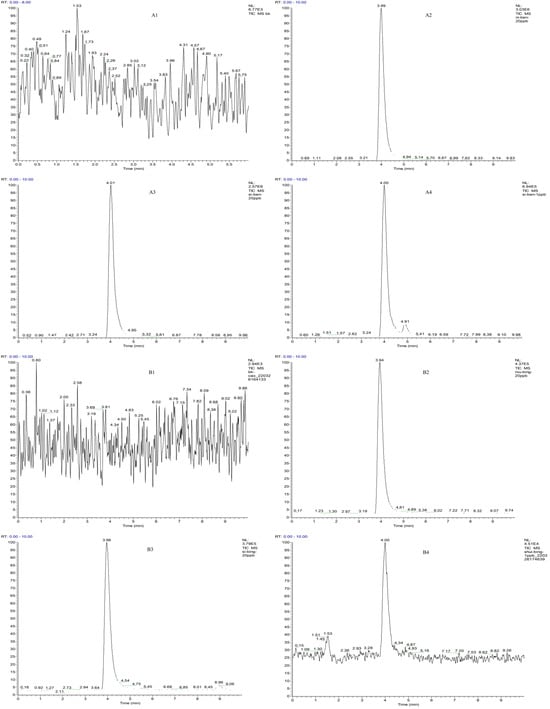
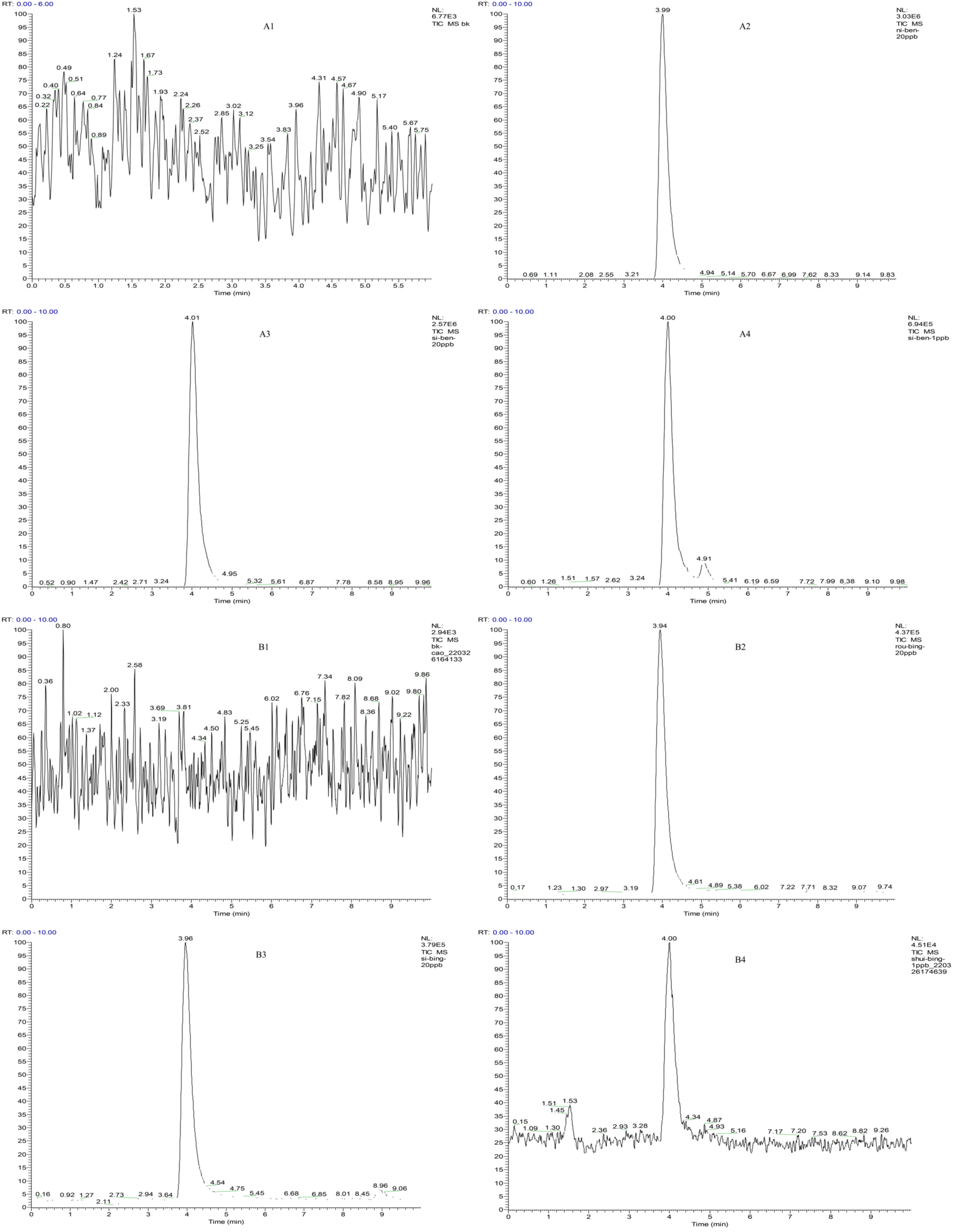
The chromatograms of difenoconazole and propiconazole obtained with the analytical system showed that the two compounds could be cleanly separated (Figure 1).
Figure 1.
Chromatograms of difenoconazole and propiconazole in blank gill, standard solution, spiked gill, and sample gill: (A1–A4) difenoconazole; (B1–B4) propiconazole; 1. blank gill; 2. standard solution; 3. spiked gill; 4. sample gill.
3.2. Method Validation
Six-point calibration curves ranging from 1 × 10⁻³ to 50 × 10−3 mg/L were established in H. verticillata, sediment, and P. clarkii tissues, and an additional six-point calibration curve ranging from 0.01 × 10⁻³ to 50 × 10−3 mg/L was prepared in paddy water [33]. The calibration curves showed good linearity, with correlation coefficients (R2) of 0.992–0.999 (Table 2 and Table 3), and were used to calculate the residual fungicide concentrations. The LOD and LOQ were 5.0 × 10⁻⁶ mg/L and 1.0 × 10⁻⁵ mg/L, respectively, in water, and 0.5 × 10⁻³ mg/kg and 1.0 × 10⁻³ mg/kg, respectively, in the other matrices.
Table 2.
Linear equations of difenoconazole and propiconazole.
Table 3.
Matrix linear equations of difenoconazole and propiconazole.
Recovery was assessed by spiking standard solutions into paddy water, H. verticillata, sediment, and P. clarkii tissues at three concentration levels (LOQ, 10 × LOQ, and 20 × LOQ). The mean recoveries of difenoconazole ranged from 82.35% to 104.82%, with relative standard deviations (RSDs) of 5.27–13.95%, and those of propiconazole ranged from 80.51% to 110.87%, with RSDs of 6.07–14.0%. All matrices met the acceptance criteria of mean recovery > 70% and RSD < 15%, in accordance with the SANTE guidance for pesticide residue analytical quality control [34].
3.3. Bioaccumulation in P. clarkii Tissues
No mortality or abnormal behavioral responses were observed in P. clarkii exposed to the highest nominal concentration of 1000 mg/L difenoconazole for 96 h; therefore, the 96-h LC50 could not be determined (i.e., >1000 mg/L). In contrast, the 96-h LC50 of propiconazole was 0.52 mg/L (95% CI: 0.29–0.78 mg/L), indicating high toxicity [25]. Bioaccumulation is an important indicator for evaluating the residual effects and hazardous potential of pesticides in the environment. In the present study, difenoconazole and propiconazole were stable under laboratory conditions, with hydrolysis and volatilization losses below 10%; accordingly, a static test procedure was adopted for the bioaccumulation test.
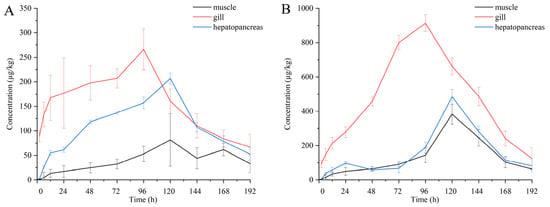
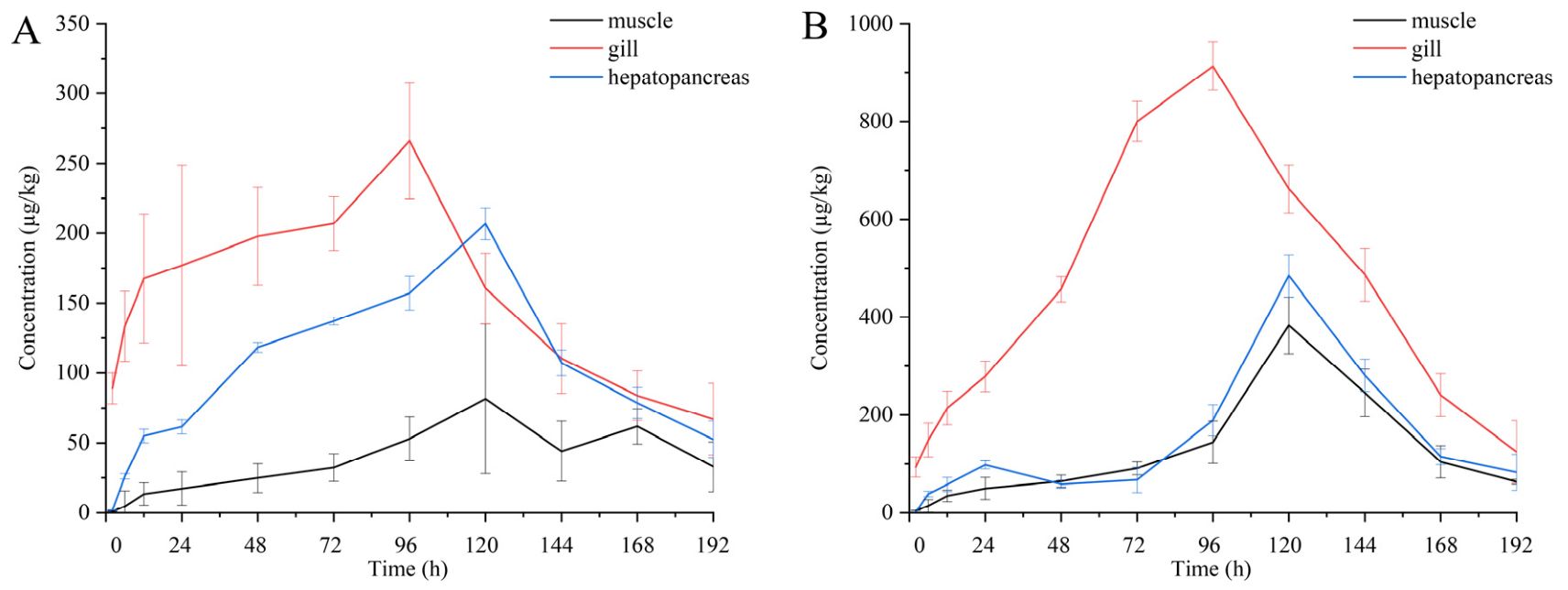
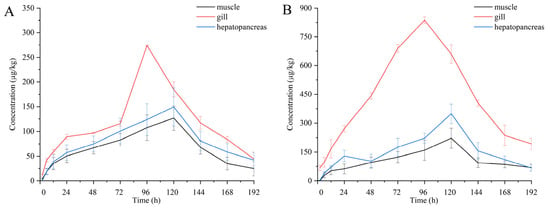
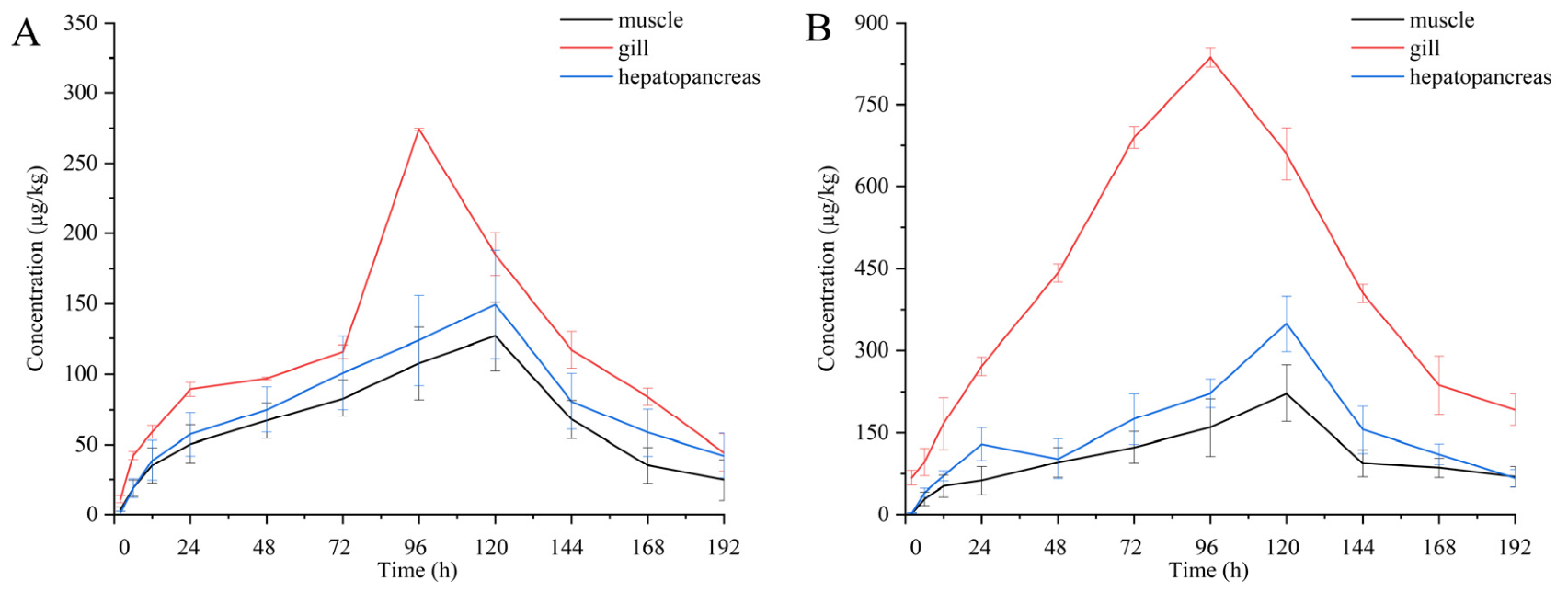
Water and crayfish tissue samples (muscle, gill, hepatopancreas) from the blank control group were collected and analyzed. Neither difenoconazole nor propiconazole was detected in these samples. In the exposure groups, changes in the concentrations of difenoconazole and propiconazole in P. clarkii were similar between the high- and low-concentration treatment groups. Both fungicides were first detected in tissues at 2 h after exposure. The concentrations in muscle and hepatopancreas increased continuously and peaked at 120 h, whereas those in gills peaked at 96 h. Thereafter, tissue concentrations did not increase further even though the surrounding water still contained high concentrations of the fungicides. Under the high-concentration treatment, the maximum bioaccumulation of difenoconazole in muscle, hepatopancreas, and gills was 0.382, 0.484, and 0.913 mg/kg, respectively, and that of propiconazole was 0.222, 0.348, and 0.837 mg/kg, respectively. For both fungicides, the bioaccumulation was ranked as gill > hepatopancreas > muscle (Figure 2 and Figure 3).
Figure 2.
Accumulation of difenoconazole (mean ± SD) in tissues of P. clarkii: (A) low-concentration group; (B) high-concentration group.
Figure 3.
Accumulation of propiconazole (mean ± SD) in tissues of P. clarkii: (A) low-concentration group; (B) high-concentration group.
During the exposure period, neither treatment group reached steady-state equilibrium of propiconazole between test water and crayfish tissues. Therefore, the 8-day bioconcentration factor (BCF8d), defined as the peak residue concentration in crayfish tissue divided by the measured aqueous concentration during the uptake phase, was adopted to characterize bioaccumulation [25]. It should be noted that BCF8d was calculated only from the uptake stage without a depuration phase, and it is not equivalent to the conventional steady-state BCF. The aqueous concentrations of both fungicides remained stable throughout the exposure period. During the test, the measured concentrations of difenoconazole in water varied within 20% of the nominal concentrations: the measured concentrations ranged from 0.119 to 0.129 mg/L for the low-dose group (nominal 0.13 mg/L) and 0.251 to 0.264 mg/L for the high-dose group (nominal 0.26 mg/L). For propiconazole, measured water concentrations also stayed within 20% of nominal values, ranging from 0.249 to 0.258 mg/L at the nominal concentration of 0.26 mg/L and 0.482 to 0.526 mg/L at the nominal concentration of 0.52 mg/L. Since the measured water concentrations were close to the nominal exposure concentrations, the BCFs in Table 4 were finally calculated from peak tissue concentrations and nominal exposure concentrations. The BCF of difenoconazole in P. clarkii ranged from 0.64 to 3.54, and the BCF8d of propiconazole ranged from 0.43 to 1.61 (Table 4). Accordingly, both fungicides were classified as having low bioaccumulation potential [25]. Notably, tissue residue concentrations of both fungicides declined gradually after reaching peak values under constant aqueous exposure. This decline indicates the occurrence of elimination and biotransformation of the target compounds in crayfish tissues.
Table 4.
Bioconcentration Factor of difenoconazole and propiconazole in various tissues of P. clarkii.
It is noteworthy that the 8-day uptake-only laboratory bioaccumulation test in this study was designed to capture the maximum tissue residue concentrations under controlled laboratory conditions, providing a supporting reference for understanding residue patterns observed in outdoor rice–crayfish microplot trials. Steady-state equilibrium was not reached for difenoconazole and propiconazole within the 8-day exposure. The calculated BCF8d is an apparent parameter derived only from uptake-phase data and is not equivalent to regulatory steady-state BCF. The low bioaccumulation-potential classification was inferred from the plateauing trend of tissue-concentration curves in late exposure, rather than from BCF8d values alone.
3.4. Field Experiment
Laboratory bioaccumulation tests focus on a single exposure pathway and are limited to aquatic animals; therefore, they may not accurately reflect the natural environment [35]. In the field, multiple exposure pathways contribute to pollutant accumulation and better represent real conditions. Accordingly, a field experiment was necessary.
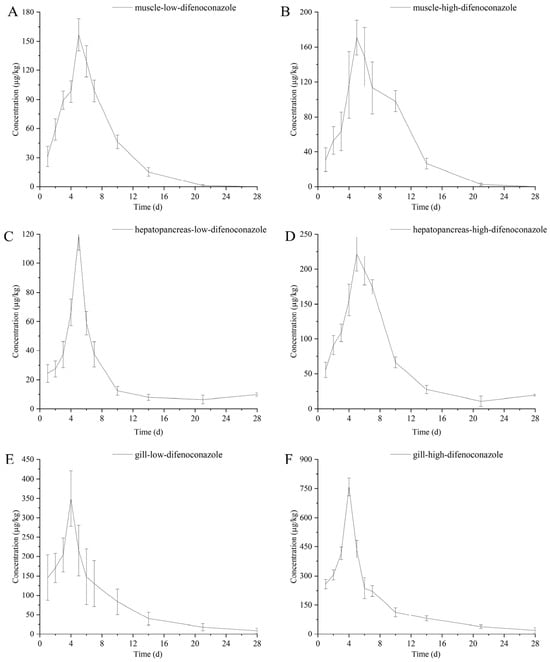
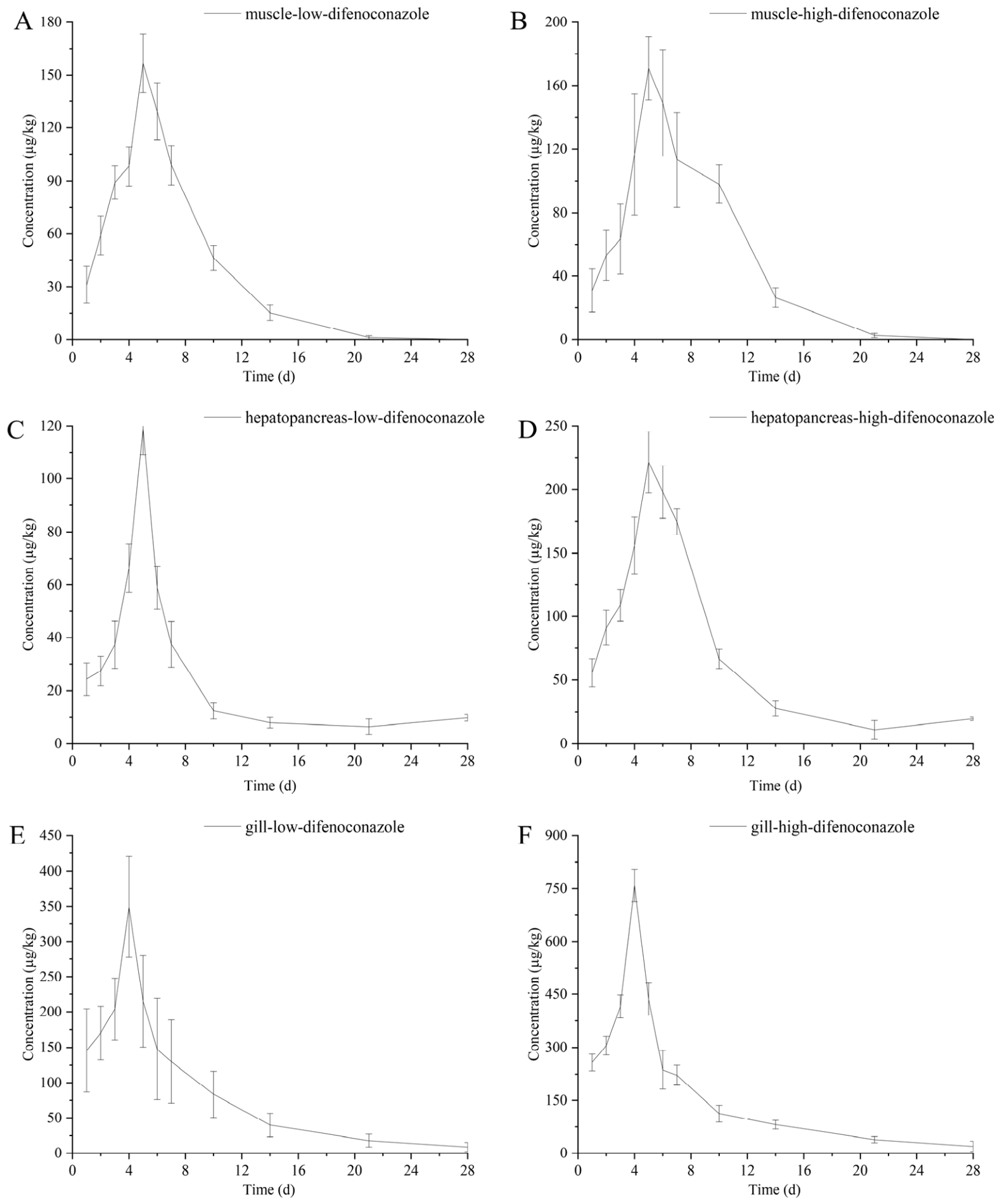
In the 28-day field experiment, difenoconazole residues in the muscle of the low- and high-concentration groups peaked on day 5 at 156.51 × 10⁻³ and 170.74 × 10⁻³ mg/kg, respectively. On day 21, the muscle residues of the low- and high-concentration groups were similar, at 1.17 × 10⁻³ and 2.59 × 10⁻³ mg/kg, respectively, and difenoconazole was no longer detected in muscle on day 28 (Figure 4). Hepatopancreas concentrations fluctuated before reaching maxima of 118.87 × 10⁻³ and 221.35 × 10⁻³ mg/kg in the low- and high-concentration groups, respectively, after which they declined rapidly to 9.83 × 10⁻³ and 19.71 × 10⁻³ mg/kg, respectively, on day 28 (Figure 4). In contrast, gill residues were markedly higher than those in the other tissues, reaching maxima of 348.92 × 10⁻³ and 759.51 × 10⁻³ mg/kg, respectively, 4 days after application, before declining to a stable level above baseline (Figure 4). After 28 days, difenoconazole was not detected in muscle, whereas propiconazole residues in muscle and hepatopancreas were 3.85 and 19.54 µg/kg, respectively. The residual difenoconazole in P. clarkii was ranked as gill > hepatopancreas > muscle.
Figure 4.
Residue of difenoconazole (mean ± SD) in (A,B) muscle, (C,D) hepatopancreas, and (E,F) gill of P. clarkii by long-term immersion: (A,C,E) low-concentration group; (B,D,F) high-concentration group. Error bars represent the dispersion of subsamples taken within each microplot.
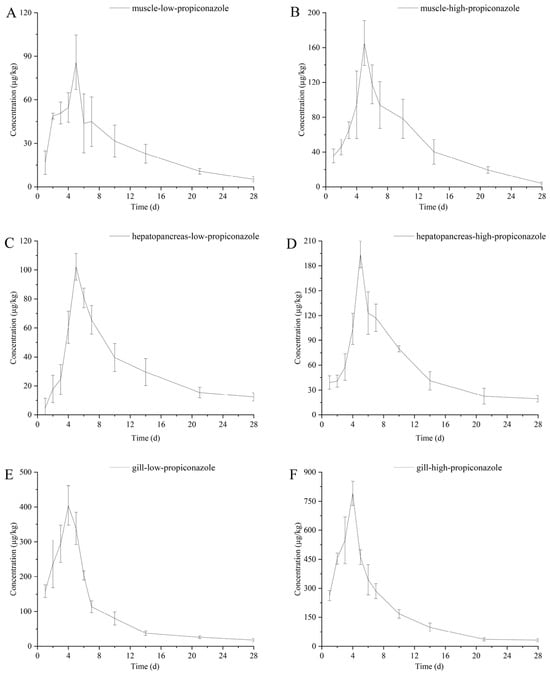
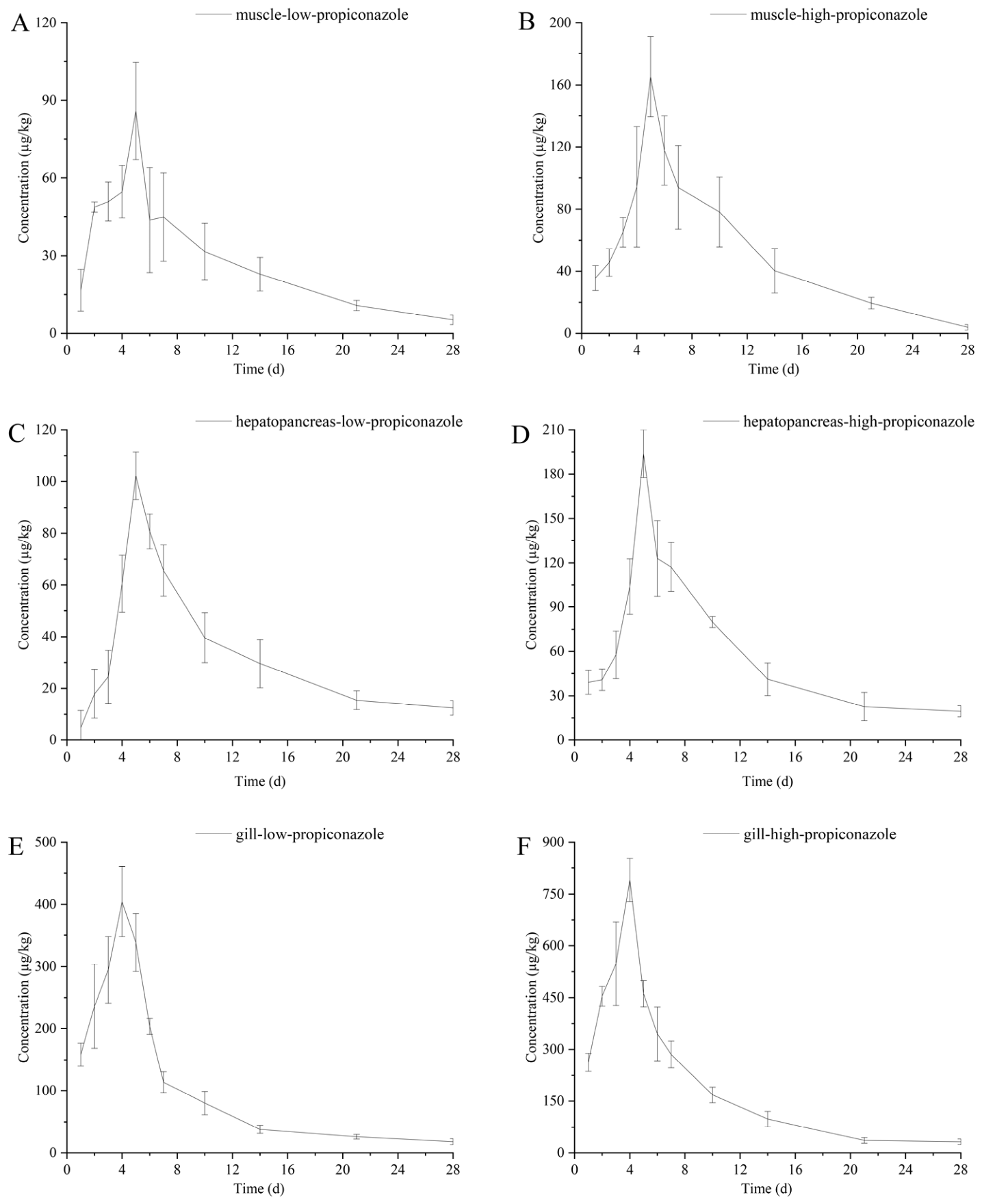
Propiconazole residues were monitored for 28 days, and the accumulation trends were similar to those of difenoconazole, although elimination was slower. In the high-concentration group, the highest propiconazole concentrations in muscle, hepatopancreas, and gills were 165.18 × 10⁻³, 193.74 × 10⁻³, and 790.76 × 10⁻³ mg/kg, respectively. Both the low- and high-concentration groups retained detectable propiconazole residues in all tissues throughout the 28 days (Figure 5). The accumulation of propiconazole in P. clarkii was ranked as gill > hepatopancreas > muscle.
Figure 5.
Residue of propiconazole (mean ± SD) in (A,B) muscle, (C,D) hepatopancreas, and (E,F) gill of P. clarkii by long-term immersion: (A,C,E) low-concentration group; (B,D,F) high-concentration group. Error bars represent the dispersion of subsamples taken within each microplot.
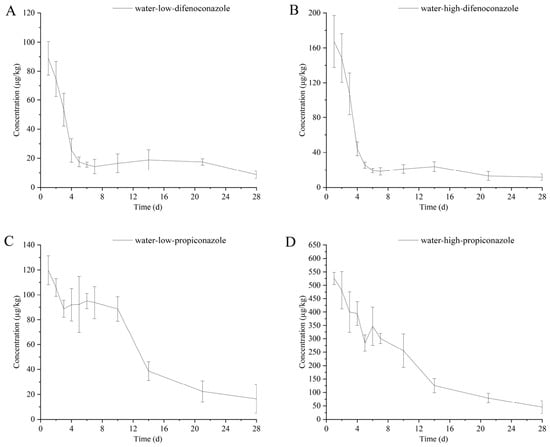
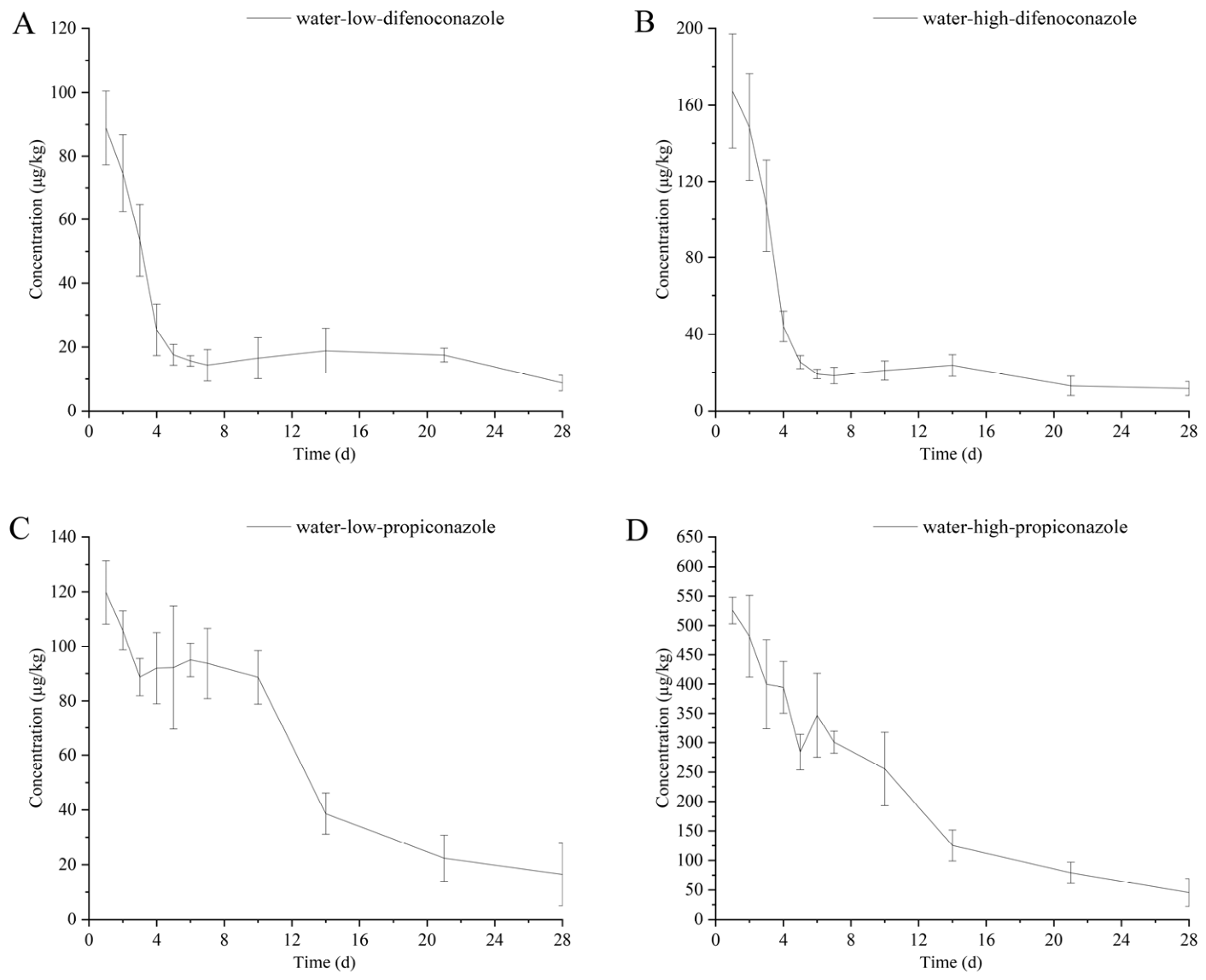
In the rice–crayfish co-culture system, the fungicides were introduced by spraying, and the numerous degradation pathways present—such as photodegradation, microbial degradation, and uptake by organisms—were the main differences from the indoor experiments. Consequently, the fungicide concentrations in water declined rapidly at the beginning of the field test, as observed in this study. The concentration of difenoconazole in paddy water decreased within 5 days and then remained relatively constant from day 6 to day 28. Propiconazole decreased markedly over the first 10 days and declined further, staying within low residual levels thereafter (Figure 6).
Figure 6.
Measured concentrations of (A,B) difenoconazole and (C,D) propiconazole (mean ± SD) in water from the rice–crayfish co-culture field plot: (A,C) low-concentration group; (B,D) high-concentration group. Error bars represent the dispersion of subsamples taken within each microplot.
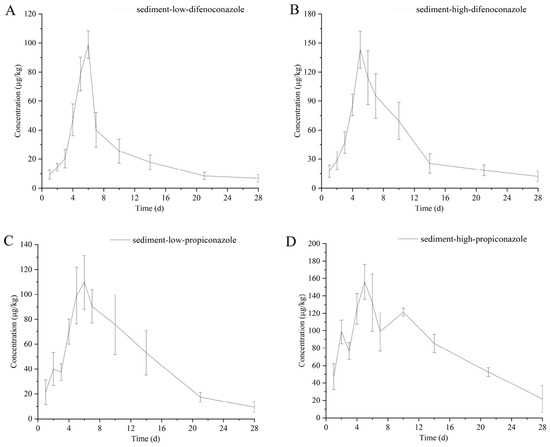
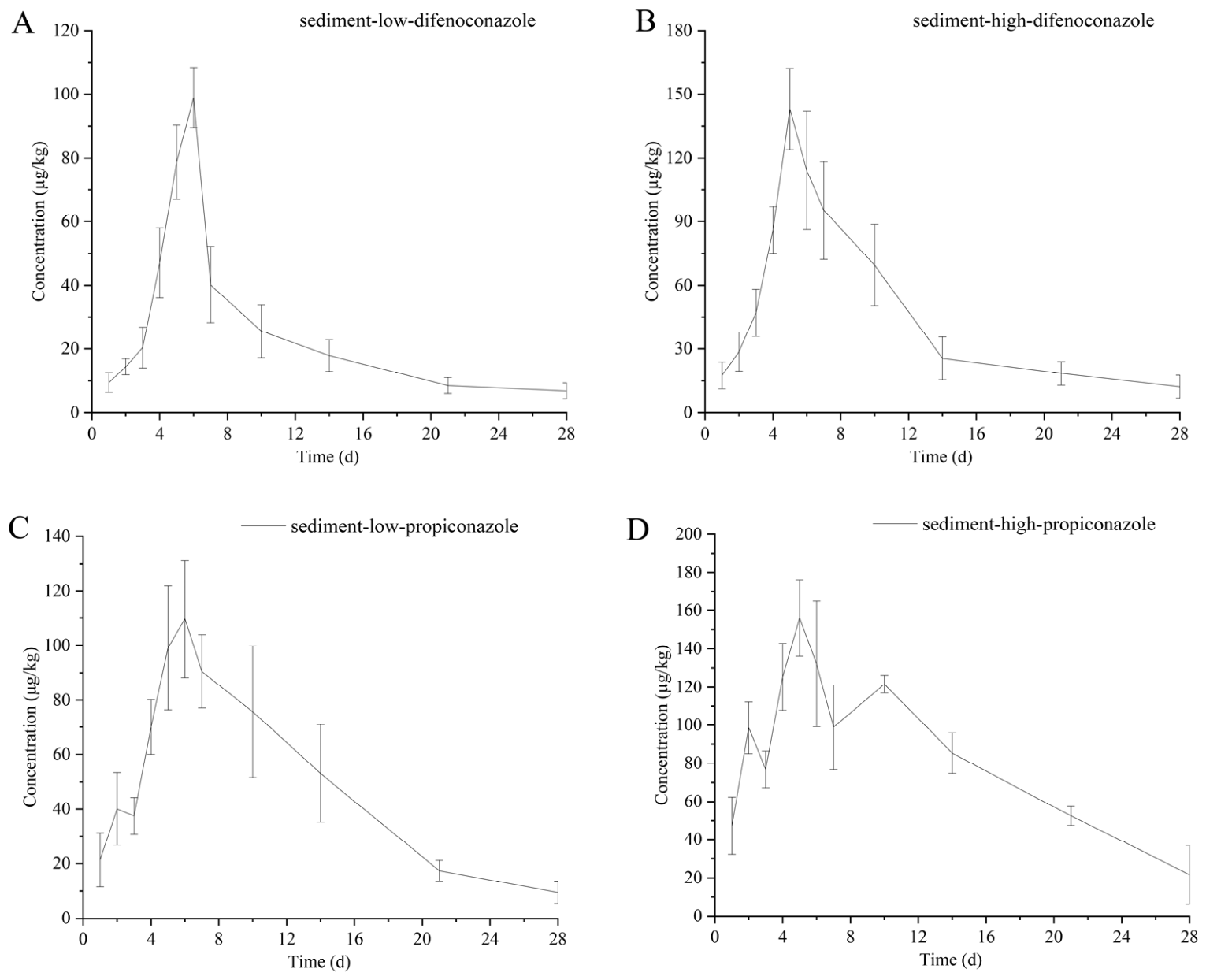
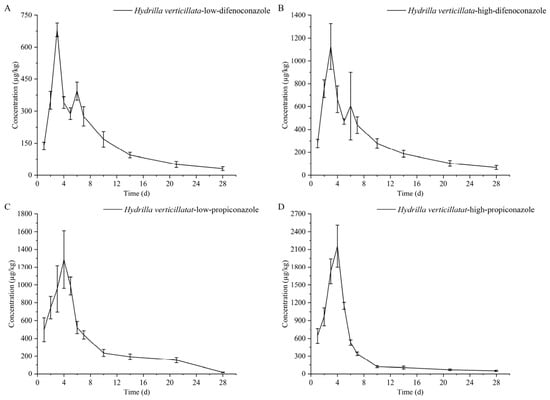
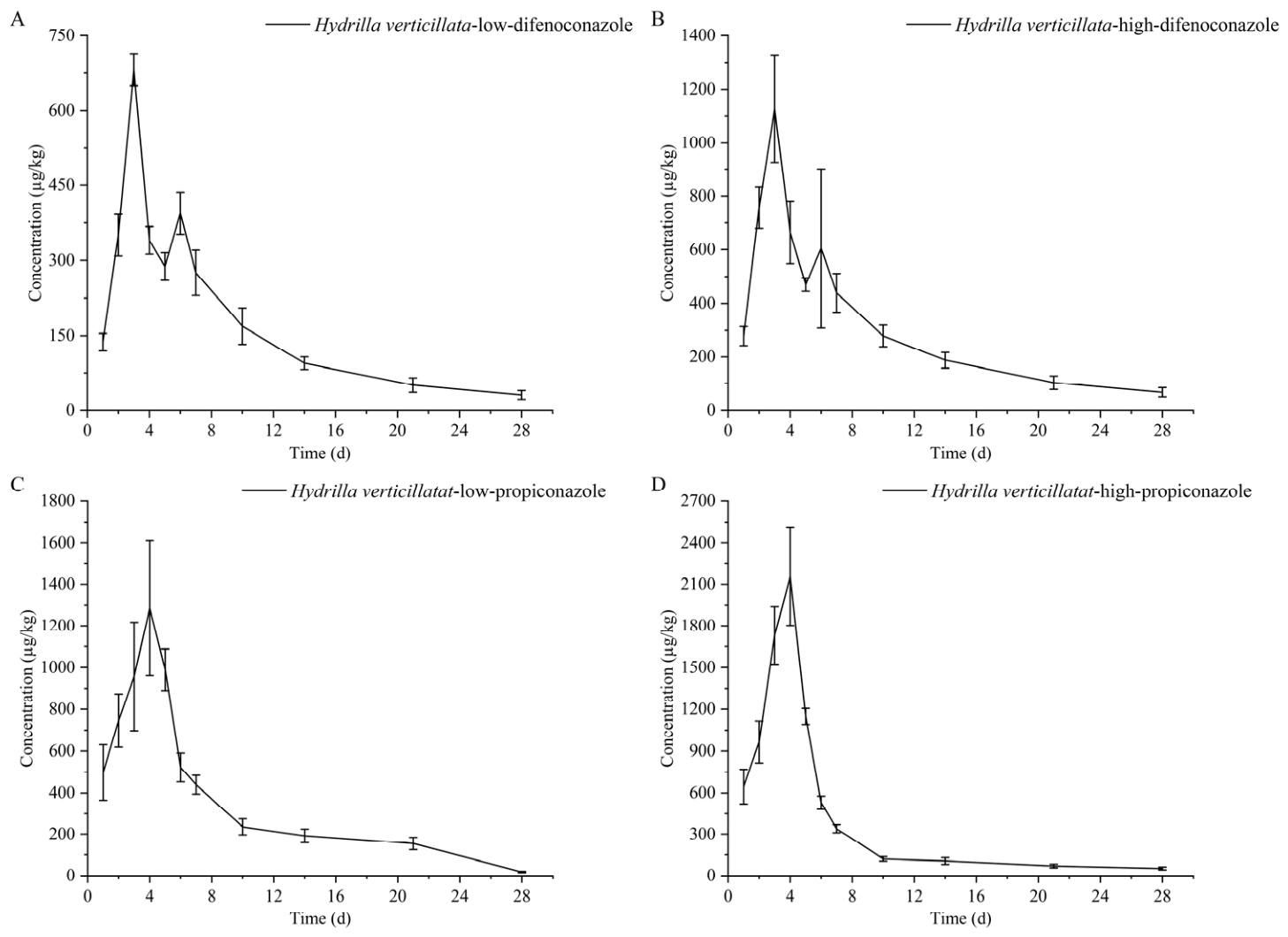
In sediment, difenoconazole concentrations peaked on day 5 and then declined in the high-concentration group, whereas propiconazole peaked on day 5, decreased rapidly, and stabilized after day 14 (Figure 7). The capacity for accumulating the fungicides differs substantially among aquatic macrophyte species. In H. verticillata, both fungicides were taken up rapidly by stems and leaves, after which their concentrations fell sharply from day 4 to day 14 and then remained relatively constant (Figure 8). The temporal variations in difenoconazole and propiconazole concentrations in H. verticillata, water, and sediment were closely related.
Figure 7.
Measured concentrations of (A,B) difenoconazole and (C,D) propiconazole (mean ± SD) in sediment from the rice–crayfish co-culture field plot: (A,C) low-concentration group; (B,D) high-concentration group. Error bars represent the dispersion of subsamples taken within each microplot.
Figure 8.
Measured concentrations of (A,B) difenoconazole and (C,D) propiconazole (mean ± SD) in H. verticillata from the rice–crayfish co-culture field plot: (A,C) low-concentration group; (B,D) high-concentration group. Error bars represent the dispersion of subsamples taken within each microplot.
3.5. Dietary Risk of P. clarkii Consumption
To estimate the potential risk posed by the detected pesticide residues, an exposure analysis was conducted. The maximum residue values of difenoconazole and propiconazole in muscle and hepatopancreas were used to calculate the EDI and HI for P. clarkii. Both fungicides presented no potential health risk, as all HI values were below the critical value of 1 (Table 5). Peak residue concentrations in muscle and hepatopancreas were used to calculate HI values in this study. This is mainly because crayfish may be harvested and marketed at any time after fungicide application under practical rice–crayfish aquaculture conditions. This peak-residue-based assessment can be used to judge whether a pre-harvest interval is required: if HI exceeds the safety threshold, a post-application harvest interval can be proposed; if HI remains below the threshold even at the peak residue level, the applied dosage will not pose food safety risks to consumers. Thus, although the residues were relatively high in some tissues, they did not translate into a health risk for consumers.
Table 5.
Calculated dietary risk values for P. clarkii.
4. Discussion
According to a plan issued by the Ministry of Agriculture and Rural Affairs, the average effective utilization rate of pesticides in China is only about 40%, meaning that most residual pesticides enter soil and water through runoff and leakage [36]. When pesticides are applied in rice fields, aquatic organisms may be exposed for long periods, posing a potential threat to their health. Therefore, this study first monitored the residual dissipation of difenoconazole and propiconazole in an integrated rice–crayfish cultivation system and further examined their toxicity and bioaccumulation in P. clarkii.
It should be noted that the field residue test in this study was a single-site, single-season microplot trial without independent plot replication, and subsampling within microplots was adopted. The confined microplot system differs from actual paddy fields in water exchange, crayfish activity range, and population structure. Accordingly, the residue distribution characteristics observed herein cannot be directly extrapolated to farm-scale rice–crayfish co-culture systems. Multi-site, multi-season trials with independent replicated plots are required for more reliable field risk assessment. In addition, commercial pesticide formulations instead of technical-grade active ingredients were used for acute toxicity and bioaccumulation assays. Thus, the observed biological responses may partly originate from inert adjuvants in the formulations. Our results are interpreted based on nominal active-ingredient concentrations and cannot fully represent the effects induced by pure technical-grade compounds.
Research on pesticide toxicity to P. clarkii has mainly focused on insecticides and herbicides. For example, trichlorfon, isoprothiolane, acetochlor, pretilachlor, and diquat dibromide show high toxicity to P. clarkii [37,38]. In addition, phoxim, chlorpyrifos, imidacloprid, avermectin, and cypermethrin are also highly toxic to P. clarkii [39,40]. In contrast, fungicides are generally less toxic to P. clarkii, including gatifloxacin sulfide, metalaxyl (Ridomil), and chlorothalonil [41]. The acute toxicity tests in the present study showed that difenoconazole was not acutely lethal to P. clarkii at 1000 mg/L, whereas the 96-h LC50 of propiconazole was 0.52 mg/L, classified as highly toxic.
Pesticides absorbed into the environment can accumulate in plants and animals, amplifying their biological effects and allowing transfer through the food chain. Triazole fungicides have been shown to bioaccumulate in organisms; for example, tebuconazole, hexaconazole, and myclobutanil accumulate in zebrafish [42,43], and several triazoles accumulate in rainbow trout [44]. Crabs and Procypris merus can enrich difenoconazole, propiconazole, and tricyclazole [1,24]. In the present study, no mortality was observed in P. clarkii during the bioaccumulation experiments; nevertheless, these fungicides could be enriched by higher-level predators and transferred through the food chain. Difenoconazole and propiconazole are absorbed mainly through the gills via respiration and through the digestive tract, which explains the higher concentrations in gills than in other tissues. In addition, both fungicides have high hydrophobicity and lipophilicity; therefore, they tend to bioaccumulate in lipid-rich tissues, explaining the higher concentrations in the hepatopancreas than in muscle.
P. clarkii is one of the most popular summer foods in China; therefore, the potential health risks associated with its consumption deserve attention. No maximum residue limit (MRL) has been established for difenoconazole or propiconazole in fish, fish products, or other aquatic foods. In China, the MRLs of difenoconazole in mammalian meat and viscera are 0.2 and 1.5 mg/kg, respectively, and those of propiconazole are 0.01 and 0.5 mg/kg. In the residue test, difenoconazole concentrations in gills, muscle, and hepatopancreas were below the corresponding MRLs, whereas propiconazole concentrations exceeded them in gills. Although gill tissues are inedible, muscle and hepatopancreas are the most commonly consumed tissues; the health risk assessment indicated HI values below 1 for all tissues. The ADI values of difenoconazole and propiconazole are 0.01 and 0.07 mg/kg bw/d, respectively. The highest mean aquatic product consumption in China (98.35 g/d, Hainan Province) was conservatively adopted as the daily ingestion rate in the dietary risk assessment [45]. Considering the limited consumption of hepatopancreas and muscle in certain periods, the potential adverse health effects of difenoconazole and propiconazole residues on consumers are extremely low. This is consistent with the conclusion that consumption of crabs containing propiconazole residues has no adverse health effects on consumers [7].
Under the tested conditions, difenoconazole exhibited low acute toxicity and weak bioaccumulation in P. clarkii. By contrast, propiconazole displayed low bioaccumulation but high acute toxicity; the tested exposure concentration may induce high mortality of crayfish, which could lead to potential economic loss and environmental risk in rice–crayfish co-culture systems. After 28 days of application, the residues of both fungicides in P. clarkii are unlikely to affect consumer health.
In conclusion, given the observed toxicity characteristics under the present microplot test conditions, difenoconazole poses relatively lower risks to P. clarkii, while propiconazole carries high acute toxicity risk, and its use should be reduced or avoided in rice–crayfish co-culture systems to protect crayfish health and aquaculture economic benefits.
5. Conclusions
Under the present laboratory and micro-simulation conditions, difenoconazole exhibited low acute toxicity and weak bioaccumulation in P. clarkii. By contrast, propiconazole possessed low bioaccumulation capacity but high acute toxicity; the tested exposure concentrations may cause crayfish mortality and may bring potential economic risks for rice–crayfish co-culture systems. After 28-day exposure in microplots, residues of both fungicides in crayfish tissues posed negligible health risks for human consumers according to dietary risk assessment.
It should be emphasized that these findings are obtained from laboratory assays and a single-site, single-season, non-replicated microplot test using commercial pesticide formulations. The results cannot be directly extrapolated to practical large-scale rice–crayfish paddy production. Multi-site and multi-season replicated field experiments are needed to further clarify the actual environmental risk of the two fungicides under real farming scenarios.
Author Contributions
Q.Y.: conceptualization, methodology, writing—review and editing. L.X.: writing—original draft preparation, software. X.A.: data curation, writing—review and editing. J.D.: validation, investigation, formal analysis, project administration. S.Z.: visualization, supervision, writing—review and editing. All authors have read and agreed to the published version of the manuscript.
Funding
This research was funded by the Major Technological Innovation of Hubei Province of China (grant number: 2019ABA077).
Institutional Review Board Statement
The animal study protocol was approved by the Animal Welfare and Research Ethics Committee of Yangtze River Fisheries Research Institute (YFI2021-002-2).
Informed Consent Statement
Not applicable.
Data Availability Statement
The raw data supporting the conclusions of this article will be made available by the authors without undue reservation.
Acknowledgments
The authors appreciate the time and effort devoted to this manuscript by all contributors.
Conflicts of Interest
The authors declare no conflicts of interest.
References
- Li, C.; Chen, Y.; Huang, L.; Zhang, Y.; Cao, N.; Guo, X.; Yao, C.; Li, X.; Duan, L.; Pang, S. Potential toxicity and dietary risk of tricyclazole to Chinese mitten crab (Eriocheir sinensis) in the rice-crab co-culture model. Environ. Pollut. 2022, 316, 120514. [Google Scholar] [CrossRef] [Scilit]
- Zhang, Y.; Chen, M.; Zhao, Y.-Y.; Zhang, A.-Y.; Peng, D.-H.; Lu, F.; Dai, C.-C. Destruction of the soil microbial ecological environment caused by the over-utilization of the rice-crayfish co-cropping pattern. Sci. Total Environ. 2021, 788, 147794. [Google Scholar] [CrossRef] [Scilit]
- Yu, X.; Hao, X.; Dang, Z.; Yang, L.; Wang, X.; Zhang, Y.; Cai, J.; Zhang, Y. Report on China’s Crayfish Industry Development (2022). China Fish. 2022, 559, 20–27. [Google Scholar]
- Jiang, L.; Fu, L.; Xue, W.; Qu, J.; Wu, H.; Fan, K. Toxicity of nine triazole fungicides to Botryosphaeria dothidea and their control efficacy on apple ring rot. Plant Prot. 2021, 47, 243–248. [Google Scholar] [CrossRef]
- Majeed, M.; Badri, Z.A.; Bhat, Z.A.; Makhdhoomi, M.I.; Parveen, P. Evaluation of Different Fungicides in Management of Early Blight Disease of Tomato Caused by Alternaria solani. J. Pestic. Sci. 2022, 34, 8–14. [Google Scholar] [CrossRef] [Scilit]
- Song, J.; Zheng, Z.; Fang, H.; Li, T.; Wu, Z.; Qiu, M.; Shen, H.; Mei, J.; Xu, L. Deposition and dissipation of difenoconazole in pepper and soil and its reduced application to control Pepper anthracnose. Ecotoxicol. Environ. Saf. 2023, 252, 114591. [Google Scholar] [CrossRef] [Scilit]
- Yu, L.; Li, C.; Zhang, Y.; Guo, X.; Cao, N.; Guo, S.; Wu, S.; Li, X.; Pang, S. Residue Monitoring of Propiconazole in the Rice–Crab Co-Culture Field and its Toxicity and Bioaccumulation to Eriocheir sinensis. Front. Environ. Sci. 2022, 10, 848348. [Google Scholar] [CrossRef] [Scilit]
- Wang, K.; Wu, J.; Zhang, H. Dissipation of difenoconazole in rice, paddy soil, and paddy water under field conditions. Ecotoxicol. Environ. Saf. 2012, 86, 111–115. [Google Scholar] [CrossRef] [Scilit]
- Castillo, L.E.; Martínez, E.; Ruepert, C.; Savage, C.; Gilek, M.; Pinnock, M. Water quality and macroinvertebrate community response following pesticide applications in a banana plantation, Limon, Costa Rica. Sci. Total Environ. 2006, 367, 418–432. [Google Scholar] [CrossRef] [Scilit]
- Chau, N.D.G.; Sebesvari, Z.; Amelung, W.; Renaud, F.G. Pesticide pollution of multiple drinking water sources in the Mekong Delta, Vietnam: Evidence from two provinces. Environ. Sci. Pollut. Res. 2015, 22, 9042–9058. [Google Scholar] [CrossRef] [Scilit]
- Kahle, M.; Buerge, I.J.; Hauser, A.; Müller, M.D.; Poiger, T. Azole fungicides: Occurrence and fate in wastewater and surface waters. Environ. Sci. Technol. 2008, 42, 7193–7200. [Google Scholar] [CrossRef] [Scilit]
- Mu, X.; Chai, T.; Wang, K.; Zhu, L.; Huang, Y.; Shen, G.; Li, Y.; Li, X.; Wang, C. The developmental effect of difenoconazole on zebrafish embryos: A mechanism research. Environ. Pollut. 2016, 212, 18–26. [Google Scholar] [CrossRef] [Scilit]
- Jiang, J.; Chen, L.; Wu, S.; Lv, L.; Liu, X.; Wang, Q.; Zhao, X. Effects of difenoconazole on hepatotoxicity, lipid metabolism and gut microbiota in zebrafish (Danio rerio). Environ. Pollut. 2020, 265, 114844. [Google Scholar] [CrossRef] [Scilit]
- Liu, F.; Li, X.; Bello, B.K.; Zhang, T.; Yang, H.; Wang, K.; Dong, J. Difenoconazole causes spleen tissue damage and immune dysfunction of carp through oxidative stress and apoptosis. Ecotoxicol. Environ. Saf. 2022, 237, 113563. [Google Scholar] [CrossRef] [Scilit]
- Wang, J.; Gao, X.; Liu, F.; Wang, F.; Dong, J.; Zhao, P. Difenoconazole causes cardiotoxicity in common carp (Cyprinus carpio): Involvement of oxidative stress, inflammation, apoptosis and autophagy. Chemosphere 2022, 306, 135562. [Google Scholar] [CrossRef] [Scilit]
- Wu, X.; Xu, B.; Chen, H.; Qiang, J.; Feng, H.; Li, X.; Chu, M.; Pan, E.; Dong, J. Crosstalk of oxidative stress, inflammation, apoptosis, and autophagy under reactive oxygen stress involved in difenoconazole-induced kidney damage in carp. Fish Shellfish Immunol. 2023, 132, 108508. [Google Scholar] [CrossRef] [Scilit]
- Teng, M.; Chen, X.; Wang, C.; Song, M.; Zhang, J.; Bi, S.; Wang, C. Life cycle exposure to propiconazole reduces fecundity by disrupting the steroidogenic pathway and altering DNA methylation in zebrafish (Danio rerio). Environ. Int. 2020, 135, 105384. [Google Scholar] [CrossRef] [Scilit]
- Teng, M.; Zhao, F.; Zhou, Y.; Yan, S.; Tian, S.; Yan, J.; Meng, Z.; Bi, S.; Wang, C. Effect of Propiconazole on the Lipid Metabolism of Zebrafish Embryos (Danio rerio). J. Agric. Food Chem. 2019, 67, 4623–4631. [Google Scholar] [CrossRef] [Scilit]
- Zubrod, J.P.; Bundschuh, M.; Arts, G.; Brühl, C.A.; Imfeld, G.; Knäbel, A.; Payraudeau, S.; Rasmussen, J.J.; Rohr, J.; Scharmüller, A.; et al. Fungicides: An Overlooked Pesticide Class? Environ. Sci. Technol. 2019, 53, 3347–3365. [Google Scholar] [CrossRef] [Scilit]
- Song, W.; Zhu, H.; Xu, X.; Liu, P.; Yin, X.; Liu, X. Research progress on aquatic environment toxicology of triazole fungicides. Chin. J. Pestic. Sci. 2024, 26, 23–35. [Google Scholar]
- Kast-Hutcheson, K.; Rider, C.V.; LeBlanc, G.A. The fungicide propiconazole interferes with embryonic development of the crustacean Daphnia magna. Environ. Toxicol. Chem. 2001, 20, 502–509. [Google Scholar] [CrossRef] [Scilit]
- Betancourt-Lozano, M.; Baird, D.J.; Sangha, R.S.; González-Farias, F. Induction of morphological deformities and moulting alterations in Litopenaeus vannamei (Boone) juveniles exposed to the triazole-derivative fungicide tilt. Arch. Environ. Contam. Toxicol. 2006, 51, 69–78. [Google Scholar] [CrossRef] [Scilit]
- Moreira, R.A.; Daam, M.A.; Vieira, B.H.; Sanches, A.L.M.; Reghini, M.V.; da Silva Mansano, A.; de Freitas, E.C.; Espindola, E.L.G.; Rocha, O. Toxicity of abamectin and difenoconazole mixtures to a Neotropical cladoceran after simulated run-off and spray drift exposure. Aquat. Toxicol. 2017, 185, 58–66. [Google Scholar] [CrossRef] [Scilit]
- Chen, L.; Wang, Z.; Zhang, C.-F.; Jiang, W.-Y.; Li, X.-S. Environmental Hormone Effects and Bioaccumulation of Propiconazole and Difenoconazole in Procypris merus. Bull. Environ. Contam. Toxicol. 2022, 109, 823–830. [Google Scholar] [CrossRef] [Scilit]
- GB/T 31270.7-2014; Test Guidelines on Environmental Safety Assessment for Chemical Pesticides—Part 7: Bioconcentration Test. General Administration of Quality Supervision, Inspection and Quarantine of the People’s Republic of China, Standardization Administration of the People’s Republic of China: Beijing, China, 2014.
- Hu, R.; Gong, D.; Shen, F.; Li, J. Residue Dynamics of difenoconazole and propiconazole in Paddy Field. Pestic. Sci. Adm. 2010, 31, 30–34. [Google Scholar]
- Wu, L.; Han, G.; Qin, B.; Kou, X.; Wang, S.; Zhang, J.; Zhu, L.; Bi, J.; Tang, H. Effects of three species of aquatic plant on growth performance and intestinal natural diet composition of crayfish (Procambarus clarkii). South China Fish. Sci. 2025, 21, 188–196. [Google Scholar] [CrossRef]
- Song, C.; Li, L.; Zhang, C.; Qiu, L.; Fan, L.; Wu, W.; Meng, S.; Hu, G.; Chen, J.; Liu, Y.; et al. Dietary risk ranking for residual antibiotics in cultured aquatic products around Tai Lake, China. Ecotoxicol. Environ. Saf. 2017, 144, 252–257. [Google Scholar] [CrossRef] [Scilit]
- Khan, N.; Yaqub, G.; Hafeez, T.; Tariq, M. Assessment of Health Risk due to Pesticide Residues in Fruits, Vegetables, Soil, and Water. J. Chem. 2020, 2020, 5497952. [Google Scholar] [CrossRef] [Scilit]
- National Bureau of Statistics of China. China Statistics Yearbook 2025; China Statistics Press: Beijing, China, 2025. [Google Scholar]
- Bureau of Fisheries and Fishery Administration, Ministry of Agriculture and Rural Affairs of the People’s Republic of China; National Fisheries Technology Extension Center; China Society of Fisheries. China Fishery Statistical Yearbook 2022; China Agriculture Press: Beijing, China, 2022. [Google Scholar]
- Zhang, S.; Liang, Y.; Su, M.; Pan, Y.; Jiang, Y.; Huang, Y.; Huang, L. Simultaneous determination of diafenthiuron, fluopicolide, fluxapyroxad and spirotetramat in fruits and vegetables by high performance liquid chromatography-mass spectrometry. Chem. Anal. Meterage 2021, 30, 15–19. [Google Scholar]
- Yang, Q.; Xu, L.; Zhou, S.; Yang, Y.; Dong, J.; Liu, Y.; Xu, N.; Ai, X. Determination of difenoconazole and propiconazole residues in integrated rice and Procambarus clarkii breeding environments by high performance liquid chromatography-tandem mass spectrometry. Chin. J. Anal. Lab. 2023, 42, 807–812. [Google Scholar] [CrossRef]
- European Commission. Analytical Quality Control and Method Validation Procedures for Pesticide Residues Analysis in Food and Feed; European Commission, Directorate-General for Health and Food Safety: Brussels, Belgium, 2024. [Google Scholar]
- Weisbrod, A.V.; Woodburn, K.B.; Koelmans, A.A.; Parkerton, T.F.; McElroy, A.E.; Borgå, K. Evaluation of Bioaccumulation Using In Vivo Laboratory and Field Studies. Integr. Environ. Assess. Manag. 2010, 5, 598–623. [Google Scholar] [CrossRef] [Scilit]
- Jin, S.; Zhou, F. Zero Growth of Chemical Fertilizer and Pesticide Use: China’s Objectives, Progress and Challenges. J. Resour. Ecol. 2018, 9, 50–58. [Google Scholar] [CrossRef] [Scilit]
- Wu, L.; Han, G.; Wang, S.; Zhang, J.; Kou, X.; Bi, J.; Wang, G.; Tang, H.; Li, B.; Xu, R.; et al. Acute toxicity of three amide herbicides to Procambarus clarkii. J. Biosaf. Biosecur. 2019, 28, 301–305. [Google Scholar]
- Yang, L.; Tao, Q.; Wang, M.; Zhong, G.; Tang, J. Study on the toxicity of herbicide Diquat to Procambarus clarkii. Curr. Fish. 2022, 63–64. [Google Scholar]
- Lu, J.; Zhang, J.; Wang, P.; Qing, H.; Zhou, G. Toxicity and Safety Evaluation of Two Pesticides against Red Swamp Crayfish Procambarus clarkii and Chinese Mitten Crab Eriocheir sinensis. Fish. Sci. 2020, 39, 908–914. [Google Scholar] [CrossRef]
- Xu, B.; Zhu, X.; Wei, K.; Ma, B. Acute toxicity of four pesticides in rice field to Procambarus clarkii. Freshw. Fish. 2014, 44, 38–42. [Google Scholar] [CrossRef]
- Zhen, R.; Hu, K. Acute toxicity of four chemical drugs including fenvalerate to Procambarus clarkii and the histopathological observation. J. South. Agric. 2021, 52, 1727–1734. [Google Scholar]
- Andreu, S.O.; Paraíba, L.C.; Jonsson, C.M.; Carrasco, J.M. Acute toxicity and bioconcentration of fungicide tebuconazole in zebrafish (Danio rerio). Environ. Toxicol. 2012, 27, 109–116. [Google Scholar] [CrossRef] [Scilit]
- Pang, S.; Guo, M.; Zhang, X.; Yu, L.; Zhang, Z.; Huang, L. Myclobutanil Developmental Toxicity, Bioconcentration and Sex Specific Response in Cholesterol in Zebrafish (Danio rerio). Chemosphere 2020, 242, 125209. [Google Scholar] [CrossRef] [Scilit]
- Konwick, B.J.; Garrison, A.W.; Avants, J.K.; Fisk, A.T. Bioaccumulation and Biotransformation of Chiral Triazole Fungicides in Rainbow trout (Oncorhynchus mykiss). Aquat. Toxicol. 2006, 80, 372–381. [Google Scholar] [CrossRef] [Scilit]
- Bureau of Fisheries, Ministry of Agriculture and Rural Affairs of the People’s Republic of China. China Fisheries Statistics Yearbook 2021; China Agriculture Press: Beijing, China, 2021. [Google Scholar]

Disclaimer/Publisher’s Note: The statements, opinions and data contained in all publications are solely those of the individual author(s) and contributor(s) and not of MDPI and/or the editor(s). MDPI and/or the editor(s) disclaim responsibility for any injury to people or property resulting from any ideas, methods, instructions or products referred to in the content. |
© 2026 by the authors. Licensee MDPI, Basel, Switzerland. This article is an open access article distributed under the terms and conditions of the Creative Commons Attribution (CC BY) license.