


Simple Summary
Salmonella is one of the leading causes of foodborne illness worldwide. Food manufacturers control it with processing steps such as washing, drying, salting, chilling and heating, but each step is usually tested on its own, using cultures grown fresh in the laboratory. Real contamination rarely works that way. By the time Salmonella reaches a lethal step, it has often already survived several milder stresses, and that experience can change how it responds. This review brings together the published evidence on what happens when the organism faces these stresses one after another. Earlier exposure can make Salmonella harder to kill or easier to kill, or leave it largely unaffected. The outcome depends on the order of the stresses, their strength and duration, the strain, and the food itself. Drying is a good example: dried cells cope better with heat and ultraviolet light but become more vulnerable to organic acids such as acetic acid, the main acid in vinegar. We also suggest practical ways in which experiments and safety assessments could account for this prior history. The condition of the bacterium matters as much as the strength of the treatment, and recognising this should help manufacturers design processes that protect consumers more reliably.
Abstract
Food processing is still commonly evaluated one hurdle at a time. Salmonella enterica is rarely encountered in that condition: before a lethal step is applied, cells have often passed through acid, salt, desiccation, mild heat, chilling, oxidative conditions or sanitisers, and may reach a physiological state that a standardised laboratory culture does not reproduce. This review asks what that history does to survival. Prior exposure yields cross-protection, cross-sensitisation or no detectable change, according to exposure order, intensity and duration, the interval between exposures, strain and food matrix. Desiccation illustrates this: it raises tolerance to heat, ultraviolet irradiation and several sanitisers while leaving cells more vulnerable to organic acids. Stress regulators, membrane remodelling, protein maintenance and osmoprotectant accumulation underlie them, but transcriptional change is not the mechanism, and greater killing by a combination does not show that the first step sensitised survivors. Sublethal injury distorts apparent inactivation, altered virulence-associated traits do not establish greater pathogenicity, and few current predictive models capture much beyond prior sublethal heating. We therefore propose a history-aware approach: we compare conditioned with unconditioned populations under matched challenge, apply interventions in their actual sequence, and validate in the relevant matrix with recovery that detects injured survivors. Treating physiological history as a variable rather than noise should make multihurdle control of Salmonella more reliable.
1. Introduction
Non-typhoidal Salmonella enterica remains a major foodborne pathogen, with infections arising from commodities as varied as poultry, meat, eggs, fresh produce and low-moisture products. That range is itself a problem for manufacturers, because conditions that prevent Salmonella from growing rarely eliminate viable cells. Control therefore rests on combinations of physical, chemical and environmental barriers intended to prevent contamination, limit survival or inactivate the organism. How well those barriers perform depends on more than their antimicrobial intensity; it depends also on the physiological condition of the contaminating population at the moment the treatment is applied [1].
Salmonella rarely meets a processing intervention in a naive state. Across production, processing, distribution and storage, it encounters successive shifts in temperature, pH, water activity, osmotic pressure, nutrient supply and oxidative conditions before any sanitiser or antimicrobial treatment is applied. These exposures differ in intensity and duration, and some permit survival while altering the cell considerably: protective responses are induced, cellular structures are modified, metabolic activity changes, or sublethal injury accumulates. The population reaching a later intervention may therefore bear little physiological resemblance to the laboratory-grown culture used to validate it. Critically, such responses are not confined to the stress that provoked them. Adaptation to one condition can alter tolerance to another, a phenomenon described as cross-protection [2,3]. A single intervention cannot always be interpreted in isolation from what preceded it.
The experimental evidence bears this out. Gruzdev et al. [2] found that desiccation raised the tolerance of S. Typhimurium to heat, ultraviolet irradiation and several chemical agents, though not uniformly across treatments. Shah et al. [3] showed that cold preadaptation at 5 °C for 5 h markedly improved survival during a subsequent acid challenge at pH 4.0, accompanied by changes in stress-response pathways and cellular redox status. An environmental exposure with no obvious relationship to the later treatment can therefore govern its outcome. Order matters as well. Tiganitas et al. [4] obtained different inactivation outcomes from sequential acid and osmotic challenges depending on which came first. In chicken breast meat, de Melo et al. [5] found that successive cold, acid and osmotic exposures altered both the thermotolerance and the simulated gastrointestinal survival of S. Enteritidis and S. Typhimurium.
Prior exposure does not reliably help the organism. An initial stress may leave cells more vulnerable to the next one, a response termed cross-sensitisation, or change nothing measurable at all. Leyer and Johnson [6] found that acid adaptation sensitised S. Typhimurium to hypochlorous acid while also protecting it against other antimicrobial conditions. Jiao et al. [7] detected neither direct protection nor cross-protection after radio-frequency-induced sublethal injury. Context adds further variability: in the work of Gavriil et al. [8], whether sublethal acetic acid exposure induced acid resistance depended on the challenge conditions and on the properties of the food matrix. Stress adaptation does not, then, produce a uniformly hardened phenotype. Whether an initial exposure protects Salmonella, sensitises it, or leaves it unchanged is a property of the particular stress pair and of the conditions under which that pair is tested.
These divergent outcomes reflect overlapping regulatory and physiological responses rather than one universal resistance mechanism. Transcriptional regulators, membrane and cell-envelope remodelling, osmoprotectant accumulation, protein maintenance and metabolic adjustment each contribute, in proportions that shift with the initiating stress and the challenge that follows. Recent work has sharpened the mechanistic picture. Chen et al. [9] showed that prior sublethal exposure altered the ultraviolet-C susceptibility of S. enterica on raw whole almonds and fresh-cut leafy greens, implicating the general stress-response regulator RpoS. The same group subsequently found that physiological preconditioning also influenced responses to gaseous chlorine dioxide and sequential ultraviolet-C treatment in these commodities [10]. Zhao et al. [11] established regulatory contributions of RpoS and RpoE during acid-induced osmotic cross-stress in S. Typhimurium, linking both regulators to coordinated shifts in metabolism and other cellular functions. As valuable as these studies are, a regulatory association or a transcriptional change is not equivalent to a demonstration that a particular mechanism causes the altered survival.
The consequences for process design are direct. Hurdle-based preservation combines barriers on the expectation that their effects accumulate, yet the outcome may reflect interactions beyond the immediate lethality of each step: an early exposure may improve the performance of a later one, or leave behind a population that resists it. Food-matrix composition and structure, strain and serovar, the physiological state of the cells and the interval between treatments all modify the result [5,9,10]. This variability limits how far laboratory findings transfer to real products, and it exposes a weakness in challenge studies conducted exclusively with unstressed cultures. It also requires that genuine physiological cross-protection be distinguished from matrix-mediated protection, from cumulative treatment lethality and from the poor recovery of sublethally injured survivors.
Two recent reviews address parts of this problem. Oliveira et al. [12] synthesised the morphological, transcriptional and metabolic responses of Salmonella to osmotic and desiccation stress, an organism-specific account confined to two stress types. Chen [13] treated prior sublethal exposure as a hidden variable in postharvest microbial control and process validation, a broader perspective on stress history but one scoped to postharvest operations rather than to a single organism across the food chain. Neither account provides what is attempted here. The present review differs in four specific respects. First, it is organised around stress pairs and their order rather than around individual stressors, so that reciprocal sequences are compared directly and the conditions separating cross-protection from cross-sensitisation can be identified. Second, it applies an explicit and uniform evidence hierarchy, defined in Section 5 for phenotypic studies and in Section 6 for mechanistic ones, which separates direct conditioned-versus-unconditioned comparisons from indirect associations and from treatment-sequence effects, rather than reporting all published outcomes at equal weight. Third, it treats the persistence of an acquired phenotype between interventions, and the recovery of injured survivors, as determinants of the measured outcome rather than as experimental detail. Fourth, it carries these distinctions through to challenge testing, predictive modelling and process validation, and states for each recommendation whether it is supported by published experiments or remains to be validated. What has been missing is therefore a Salmonella-specific synthesis that compares alternative stress orders directly, identifies the conditions separating cross-protection from cross-sensitisation, asks how long adaptive responses persist between interventions, and tests how far laboratory findings transfer to particular food matrices. Equally absent is a consistent separation of sequence effects demonstrated experimentally from those that are only mechanistically plausible, a distinction that matters most where such evidence is used to justify an industrial decision. Cross-sensitisation and unchanged susceptibility are accordingly given the same weight as cross-protection throughout.
The current narrative review aimed to close that gap by critically examining how successive food-associated stresses influence the survival and subsequent susceptibility of S. enterica. Its specific objectives were to (i) evaluate the experimental evidence that an initial stress exposure modifies the response to a subsequent stress or processing intervention, covering cross-protection, cross-sensitisation and unchanged susceptibility; (ii) examine the molecular and physiological mechanisms underlying these outcomes, distinguishing directly demonstrated mechanisms from inferred associations; (iii) assess how exposure order, stress intensity, duration, recovery interval, strain variability and food-matrix characteristics shape the final response; and (iv) consider what these interactions imply for hurdle selection, microbial recovery, challenge testing, predictive food microbiology and process validation. By setting experimental outcomes alongside mechanistic evidence and realistic processing conditions, the review seeks to establish when prior exposure compromises subsequent inactivation, and when a deliberately chosen treatment sequence offers more reliable control of Salmonella.
2. Literature Search Strategy
This narrative review examined how previous exposure to food-associated stresses affects the subsequent survival, inactivation and recovery of Salmonella enterica. Elsevier LeapSpace supported the identification of relevant publications and the mapping of topics across the literature. Coverage focused on studies published between 2010 and October 2026. Earlier papers were retained when they provided essential experimental, mechanistic or methodological background.
During revision, PubMed was searched on 29 October 2026 to check literature coverage and support source verification. The search combined Salmonella with terms covering cross-protection, cross-tolerance, cross-sensitisation, sequential stress, stress adaptation, preadaptation, and preconditioning. A further group included food, processing, storage, acid, heat, cold, desiccation, osmotic stress, and sanitisers. Related word forms were included to accommodate differences in terminology. Alternative terms within each group were linked with OR, and the organism, adaptation, and food-associated stress groups were combined with AND. Searches were restricted to title and abstract fields, with a publication-date filter from 1 January 2010 to 29 October 2026.
Priority was given to original studies linking an initial stress exposure to a subsequent bacterial challenge, particularly in food matrices and processing environments. Studies of storage survival, microbial recovery, and sequential-treatment efficacy were also considered where they helped explain the consequences of stress history. Mechanistic investigations and relevant reviews provided supporting context, while literature unrelated to food-associated stress responses was generally excluded. Comparisons considered exposure order, stress intensity and duration, strain, food matrix, experimental controls and recovery methods. Particular attention was paid to conflicting findings and differences between laboratory experiments and studies conducted in foods.
Also, during revision, targeted checks compared bibliographic details and selected experimental findings with PubMed records and accessible primary full texts. These checks focused on stress conditions, control groups, survival outcomes, and the evidence supporting mechanistic interpretations. LeapSpace assisted publication discovery; the cited studies provided the experimental evidence. Findings were synthesised narratively, without exhaustive systematic screening or quantitative meta-analysis [14,15]. Relevant studies may therefore have been missed.
3. From a Single Stress Response to Sequential Stress Adaptation
How Salmonella enterica responds to an environmental stress depends on the condition it was in beforehand. Individual stresses are usually studied in isolation, yet cells carry forward physiological changes induced by an earlier challenge, and those changes may raise survival, lower it, or make no measurable difference. Interpreting sequential stress therefore depends on separating several phenomena that are related but biologically distinct (Table 1).
3.1. Stress Adaptation
Stress adaptation is the set of physiological adjustments by which cells cope with adverse conditions. A nonlethal or sublethal exposure can activate regulatory networks that maintain cellular integrity, repair damaged macromolecules and preserve essential metabolic function, and these adjustments may improve survival during a subsequent challenge.
Heat adaptation is the classical example. Kim et al. [16] found that heat-shock treatment raised subsequent thermal resistance in S. Typhimurium while also protecting against selected ethanol and osmotic challenges. Cold preadaptation likewise improved survival during a later acid exposure [3], indicating that protection can extend beyond the stress that induced it.
Survival of an initial treatment is not itself evidence of adaptation. The same exposure may injure cells, depress metabolic activity, or simply remove the most susceptible members of the population. Adaptation is demonstrated only by comparing previously stressed and unstressed populations under the same subsequent challenge, with their physiological condition and survival established beforehand.
3.2. Cross-Protection
Cross-protection occurs when exposure to one stress raises tolerance to a different stress applied afterwards. Unlike homologous adaptation, which improves resistance to the same challenge, cross-protection reflects interaction between distinct response pathways, and is therefore directly relevant to processing lines that impose successive and physicochemically unrelated treatments.
Desiccation provides the clearest evidence. Gruzdev et al. [2] showed that dried S. enterica tolerated heat, ethanol, ultraviolet irradiation, oxidising agents and selected sanitisers better than non-desiccated cells, though the response differed among serovars. Cold preadaptation produces a comparable effect against acid [3], and prior sublethal stress altered ultraviolet-C susceptibility on raw almonds and fresh-cut leafy greens in a manner that depended on both the initiating stress and the commodity [9].
Cross-protection is therefore a property of a particular stress pair in a particular system, not a fixed attribute of any treatment. It must be demonstrated by survival measurement, not inferred from the activation of stress-related genes.
3.3. Cross-Sensitisation
Cross-sensitisation is the opposite outcome: an initial stress leaves cells more susceptible to a different subsequent challenge. It receives less attention than cross-protection but carries equal weight when sequential interventions are being evaluated.
Acid adaptation sensitised S. Typhimurium to hypochlorous acid while protecting it against other antimicrobial conditions [6]. Desiccated cells, protected against the treatments listed above, were more susceptible to acetic and citric acids than non-desiccated populations [2]. A third outcome is no measurable effect at all: radio-frequency-induced sublethal injury conferred neither direct protection nor cross-protection against the stresses examined [7]. Such results matter because they prevent every sequential exposure from being read as an adaptive event.
Cross-sensitisation offers a basis for selecting complementary interventions, but exploiting it requires direct validation: a condition that sensitises at one intensity, in one matrix, or in one strain may not do so in another.
3.4. Stable Resistance Versus Physiological Tolerance
Resistance and tolerance are often used interchangeably in food microbiology, although they describe different processes. Two definitions are applied consistently throughout this review, in the text, in Table 1 and in the classifications used in Section 5 and Section 7.5. Physiological (phenotypic) tolerance denotes a transient, non-heritable increase in survival during a defined lethal or sublethal exposure, arising from altered regulation, membrane properties, metabolic activity or induced protective mechanisms; it changes the kinetics of killing but not the concentration or intensity that prevents growth, and it is lost once cells are grown under non-stress conditions. Stable resistance denotes a heritable phenotype that is transmitted to progeny, is retained after growth under non-stress conditions, and permits growth under conditions that would otherwise be inhibitory; for antimicrobials it is expressed as an increased minimum inhibitory concentration.
The distinction matters most for antimicrobials and sanitisers, where improved survival after sublethal exposure is readily mistaken for the emergence of resistant cells. As Balaban et al. [17] argued that antimicrobial susceptibility, resistance, tolerance and persistence demand different experimental interpretations. For sequential processing stresses the test is whether the altered phenotype survives recovery and growth under non-stress conditions; repeated survival measurements, recovery of survivors, and assessment of phenotype stability can establish this. The duration of an adaptive response varies with the stress pair and with the intervening conditions (Section 6.8). Prolonged or repeated sublethal exposure may additionally select variants whose altered susceptibility is heritable; such populations fall under stable resistance rather than physiological tolerance, and the two outcomes should not be reported interchangeably (Section 7.5).
3.5. Sublethal Injury, Persistence, and Viable but Non-Culturable States
Cells that survive a challenge are not necessarily functional or readily recoverable. Sublethal injury can impair structures or metabolic processes without causing death, so stressed cells may grow poorly on selective media while remaining culturable under less restrictive conditions. Kobayashi et al. [18] reported substantial differences between selective and non-selective enumeration of heat-injured S. Enteritidis, illustrating how the recovery method itself shapes apparent treatment efficacy (see also [19]).
Stress may also prolong survival or reduce culturability, but environmental persistence, antibiotic-associated persister phenotypes and the viable but non-culturable (VBNC) state are not interchangeable. VBNC cells retain evidence of viability while failing to form colonies under routine cultivation [20,21]. Persister cells constitute a phenotypically tolerant subpopulation that survives bactericidal treatment without heritable resistance [17]. Each state requires its own experimental evidence and none should be inferred from prolonged survival or reduced counts alone.
These distinctions matter here because an initial stress may change both the true susceptibility of Salmonella to a later intervention and the efficiency with which survivors are recovered. An apparent difference in inactivation may reflect physiological protection, cellular injury, or a limitation of the enumeration method. The central question is not whether cells survive an initial stress, but how that exposure alters their physiological condition, their subsequent susceptibility, and the survival that can actually be measured.
Table 1.
Key concepts, definitions, and experimental interpretation of sequential stress responses in Salmonella enterica.
4. Sequential Stress Exposure Along the Food Chain
Conditions along the food chain are dynamic: temperature, moisture, pH and nutrient supply all change before, during and after processing. Preservation treatments are evaluated under controlled laboratory conditions, but contaminating cells have usually experienced environmental challenges beforehand, and the nature of those challenges varies with commodity, process and contamination route. Figure 1 summarises where successive exposures arise, from pre-processing through to gastrointestinal transit, and the three outcomes they may produce [5,12].
Figure 1.
Sequential exposure of Salmonella enterica to environmental and food-processing stresses along the food chain. (A) Potential sequential stress exposures during pre-processing, harvesting and handling, processing, storage, and gastrointestinal transit; (B) the influence of prior stress exposure on bacterial physiological state and subsequent stress responses; (C) three possible outcomes: cross-protection, no detectable change, or cross-sensitization. The occurrence and magnitude of these responses depend on the stress sequence, exposure conditions, bacterial strain and food matrix. The illustrated pathways are representative and do not imply that all foods undergo the same sequence of treatments. Asterisks indicate illustrative, context-dependent conditions or comparisons that may vary with the food matrix and processing system.
4.1. Pre-Processing Physiological History
The physiological condition of Salmonella entering a processing facility is shaped by what happened earlier in the production chain. In agricultural and food-associated environments, cells encounter fluctuating temperature and moisture, nutrient limitation, osmotic change and oxidative challenge, all of which affect metabolism, membrane integrity and stress-response regulation [2,12].
Desiccation is particularly relevant because Salmonella persists under conditions that do not support growth. Previously desiccated cells showed altered susceptibility to several subsequent stresses [2], and cold preadaptation enhanced subsequent acid survival in S. Typhimurium [3]. Cells entering a process therefore need not share the stress susceptibility of a freshly cultured laboratory population. Whether adaptation actually occurs still depends on exposure intensity and duration, the strain and the conditions that follow, so pre-processing exposure is best treated as a potential determinant of later susceptibility rather than as evidence that incoming contamination is inherently stress-resistant.
4.2. Processing-Associated Stress Sequences
Processing exposes surviving populations to successive physical and chemical interventions: chilling, washing, acidification, osmotic treatment, drying, heating or nonthermal antimicrobial technologies. Combining these barriers is intended to improve control, but the effect of each may be modified by physiological changes induced earlier.
Poultry processing provides direct evidence. De Melo et al. [5] exposed S. Enteritidis and S. Typhimurium in chicken breast meat to sequential cold, acid and osmotic stresses before thermal treatment, and observed increased thermotolerance after particular combinations, whereas oregano essential oil reduced tolerance to certain subsequent challenges. Cold exposure alone did not consistently increase acid tolerance, so the outcome depended on the specific sequence rather than on accumulated stress.
Nonthermal processing shows the same pattern. Gabriel [23] found that prior acidification and reduced water activity altered the ultraviolet-C susceptibility of S. enterica in a coconut beverage, with the greatest resistance following successive acid and desiccation-related challenges. Chen et al. [10] applied gaseous chlorine dioxide followed by ultraviolet-C to previously stressed S. enterica on almonds and leafy greens: the combination improved overall reductions relative to chlorine dioxide alone, yet the susceptibility of pre-stressed populations still varied with their initial exposure and the commodity.
Neither outcome can be read from the combined result alone: greater overall inactivation does not demonstrate cross-sensitisation, and survival of several treatments does not demonstrate cross-protection. The criteria applied throughout this review to separate the two are set out in Section 5.
4.3. Storage and Post-Processing Stresses
Storage introduces further challenges. Refrigeration, freezing, reduced water activity, prolonged holding and temperature fluctuation all affect cellular physiology without necessarily eliminating viable populations, and their effects depend on what preceded them.
Chen and Meng [22] followed sublethally stressed S. enterica on baby spinach under refrigeration and temperature abuse. Desiccation-stressed cells persisted better under temperature abuse, prior acid or oxidative exposure was associated with lower survival than unstressed populations, and heat-shocked cells showed no significant advantage. One storage regime can therefore reveal protective, sensitising and negligible effects of prior exposure simultaneously.
Low-moisture foods behave differently again, since prolonged survival occurs without multiplication. Li et al. [24] held desiccation-adapted S. Enteritidis in skim milk, ginger and chocolate powders for 12 weeks and observed increased heat resistance, the magnitude of which depended on the matrix. Storage is thus not a passive interval between processing and consumption: it may sustain or erode a previously induced response, with food composition and temperature shaping the final phenotype. How long particular adaptive responses persist after the initiating stress is removed remains poorly resolved across food systems.
4.4. Transition from Food to the Host
For surviving cells, ingestion imposes a further succession of challenges: gastric acidity, bile, changing osmotic conditions and host antimicrobial defences. The physiological state acquired during processing or storage may influence survival through this transition, though greater gastrointestinal tolerance should not be read as greater virulence.
S. Enteritidis and S. Typhimurium surviving sequential food-associated stresses showed enhanced survival during simulated gastrointestinal digestion [5]. Prior exposure to dry-cured meat increased acid tolerance in three Salmonella serovars, whereas simulated gastric-fluid experiments used S. Typhimurium in meat homogenates [25]. Because the gastric assay retained the matrix and did not independently vary fat content or assess molecular mechanisms, it could not separate physiological adaptation from matrix-mediated protection. The effects of fat content and water activity on gastric survival are discussed further in Section 9.2. In low-moisture systems, physiological state and dry-storage conditions influenced the survival of S. Tennessee during simulated gastrointestinal passage [26]. These findings connect food-associated stress to survival under host-like conditions, but they rest on in vitro digestion and related endpoints, which establish neither increased infectivity nor greater disease severity.
Sequential stress exposure is therefore continuous and context-dependent, running from the contamination environment through processing and storage to the host.
5. Evidence for Cross-Protection During Sequential Food-Processing Stresses
Cross-protection has been demonstrated in S. enterica under several defined stress sequences, but the evidence does not support a uniform adaptive response. The same initial stress may raise survival during one subsequent challenge while sensitising cells to another or leaving them unchanged, and responses in laboratory media may differ from those in foods, where composition, water availability and processing conditions influence both adaptation and inactivation. Assessment must therefore consider the initiating exposure, the physiological condition of survivors, the subsequent intervention and the resulting phenotype together. Representative findings are summarised in Table 2 and are classified there against the criteria set out below.
Table 2.
Experimental evidence on prior stress exposure, subsequent susceptibility, storage survival, and sequential-treatment efficacy in Salmonella enterica. Entries are classified using the four evidence tiers defined in Section 5.
Because the studies compared here differ in design, each entry in Table 2 has been assigned to one of four evidence tiers according to what was measured and against which comparator. Tier 1, direct evidence of altered susceptibility, requires that a conditioned population and a matched unconditioned population, prepared in parallel from the same culture, were challenged under identical conditions and enumerated by the same method, so that the difference in survival can be attributed to the preceding exposure; Tier 1 entries are labelled cross-protection, cross-sensitisation or no detectable change according to the direction of that difference. Tier 2, mechanistic evidence, denotes experiments in which the contribution of a defined genetic determinant to a sequential phenotype was tested by deletion and, where reported, by complementation. Tier 3, indirect or associated evidence, covers studies whose measured endpoint was storage survival, an inhibitory or bactericidal concentration, antimicrobial susceptibility, biofilm formation or gene expression rather than survival during a defined subsequent challenge; such findings record a change that accompanies prior exposure, but they do not establish altered susceptibility to a later intervention. Tier 4, treatment-sequence effects, describes comparisons between combined, single or differently ordered interventions in which no conditioned-versus-unconditioned comparison was made; a greater reduction in that design demonstrates cumulative or order-dependent lethality, not physiological sensitisation.
Applying these criteria deliberately separates findings that are frequently reported together. The improved persistence of desiccation-stressed cells on stored baby spinach, and the poorer survival of oxidation-stressed cells in the same system [22], are both measurements of storage survival rather than of susceptibility to a defined subsequent treatment, and are therefore placed in Tier 3 even though the direction of each effect is clear. The approximate doubling of the acetic acid minimum inhibitory and bactericidal concentrations after repeated hypochlorite exposure [32] is likewise an inhibitory-threshold measurement, and is tiered separately from the thermal and freezing challenges reported in the same study, which do satisfy Tier 1. Conversely, the greater reduction obtained when cold plasma precedes intense pulsed light [33], or when ultraviolet-C and cold plasma are applied in alternative orders [34], establishes an order-dependent treatment effect without identifying any change in the cells, and both are placed in Tier 4. Where an entry satisfies Tier 1 under only some of the conditions examined, the qualifying variable—exposure duration, matrix or commodity—is stated alongside the classification. No outcome is labelled cross-protection or cross-sensitisation in the absence of an unconditioned population challenged in parallel, irrespective of the terminology used in the original report.
A comparable discipline is required for the magnitude of the reported effects, and Table 2 accordingly records for each entry the comparator against which the effect was measured, together with the size of the difference where the primary study reported it in a form that can be set beside the others. Four limitations became apparent in compiling this. The endpoints are heterogeneous: log reductions after a fixed treatment, decimal reduction times, times to the first log reduction and inhibitory concentrations are not interconvertible, so a ratio of D-values cannot be compared directly with a difference in survivors after a fixed exposure. The number of strains ranges from one to more than a hundred, and most mechanistic studies use a single reference strain, so an effect demonstrated convincingly within a study may nonetheless be a property of that isolate (Section 8). Biological replication, the distinction between biological and technical replicates, and the dispersion of the survival data are reported inconsistently, and several studies state statistical significance without an effect size. Finally, the reference condition itself differs between studies, being in some cases an unconditioned culture, in others the same population at the start of storage, and in others a single treatment applied alone. These differences are reported here rather than reconciled, since a quantitative comparison of effect sizes would require access to the primary data and is beyond the scope of a narrative synthesis. For the field to progress beyond this point, studies of sequential stress should report, as a minimum, the survival of conditioned and unconditioned populations at matched sampling times with a measure of dispersion, the number of independent biological replicates, the number and identity of the strains examined, and the recovery medium used.
5.1. Acid Adaptation and Subsequent Stress Tolerance
Acid adaptation is among the most extensively investigated forms of cross-stress protection. Ye et al. [27] adapted S. Enteritidis at pH 4.5–6.0 for 1–4 h and found increased tolerance to subsequent heating at 50 °C and to 8% NaCl, in both exponential- and stationary-phase populations, although adaptation intensity and cold tolerance varied with growth phase. Expression of genes associated with heat, osmotic and acid responses also rose, pointing to overlapping rather than independent regulatory pathways.
Combining acid with a second stress complicates the picture. Kang et al. [28] subjected S. Enteritidis to prolonged acid and salt exposure, then refrigeration, then heating at 60 °C. Adaptation to either acid or salt alone increased thermal resistance under selected conditions, whereas simultaneous acid–salt exposure reduced heat tolerance; longer refrigeration lowered the decimal reduction time (D-value) at 60 °C and reduced expression of heat-shock-associated genes. Two sublethal stresses did not reinforce one another, and the resulting physiological state was less heat-tolerant than either produced alone.
In chicken breast meat, prior lactic acid exposure increased osmotic tolerance in S. Enteritidis and S. Typhimurium, and certain sequential combinations also raised thermotolerance and survival through simulated gastrointestinal digestion; the response depended on the preceding treatments, and oregano essential oil diminished these advantages under some conditions [5].
Mechanistic support has strengthened. Zhao et al. [11] showed that disrupting rpoS or rpoE impaired growth and survival-associated responses during acid-induced osmotic cross-stress in S. Typhimurium, with transcriptomic and physiological analyses implicating trehalose metabolism, compatible-solute regulation, energy metabolism and amino acid pathways.
The limits are equally informative. Sublethal acetic acid exposure did not consistently induce acid resistance in S. Enteritidis once challenge-substrate characteristics were taken into account [8], whereas prior acid stress increased ultraviolet-C resistance on raw whole almonds [9]. Acid adaptation is best read as a conditional response governed by acidity, exposure conditions, growth phase, the subsequent treatment and the food environment, rather than as a predictor of broad cross-protection.
5.2. Desiccation and Low-Water-Activity Adaptation
Desiccation-associated cross-protection matters most in low-moisture foods, where Salmonella remains viable for long periods under unfavourable water availability. Desiccated S. Typhimurium tolerated dry heat, ultraviolet irradiation, ethanol, hydrogen peroxide, sodium hypochlorite, quaternary ammonium compounds and elevated NaCl better than non-desiccated cells, yet acetic and citric acids produced greater reductions in dried populations, and the response differed among serovars [2].
The surrounding matrix modifies this response over longer storage. Across 12 weeks in skim milk, ginger and chocolate powders, the heat resistance of S. Enteritidis rose with storage duration but to differing extents: cells recovered from ginger powder were the most thermotolerant, while those from skim milk powder survived simulated gastrointestinal exposure best [24]. Adaptation under reduced water availability cannot be separated from the composition of the food in which it occurs.
Produce-associated systems show the same effect. Desiccation-stressed S. enterica persisted better than unstressed cells on baby spinach subjected to brief temperature abuse followed by refrigeration, and the advantage was diminished in an rpoS deletion mutant [22]. Desiccation-stressed populations were also more tolerant of gaseous chlorine dioxide and of sequential chlorine dioxide–ultraviolet-C treatment on almonds and leafy greens, even though the combined intervention improved overall inactivation [10]. Greater resistance under dry conditions does not, however, imply that the same population will better withstand acidification: interpretation remains stress-pair specific, with the physical and chemical properties of the matrix weighed alongside the adaptive response.
5.3. Osmotic Adaptation and Subsequent Stress Responses
Osmotic adaptation is not invariably protective. Prior exposure to salt alone increased subsequent thermal resistance in S. Enteritidis under selected conditions, but the effect was reduced when salt exposure was combined with acidification [28], which matters because salt-containing foods frequently impose acidic, osmotic and low-temperature challenges together.
Osmotic conditioning can also increase susceptibility. Comparing several initial exposures before an acid challenge in S. Typhimurium, Shah et al. [3] found that osmotic shock and prolonged osmotic exposure significantly reduced subsequent acid survival, in contrast to the protection conferred by cold preadaptation. Activation of an osmotic stress response is therefore not evidence of generalised protection against acidification.
At the molecular level, RpoS and RpoE coordinate the response of S. Typhimurium to sequential acid–osmotic exposure, with changes in trehalose metabolism, amino acid regulation and cellular energy pathways suggesting a physiological basis for the interaction [11]. Osmotic stress can thus contribute to subsequent thermal protection while leaving acid susceptibility unchanged or worsened. Sequences involving sugar-mediated water-activity reduction, alternative osmoprotectants and subsequent chemical sanitation in real foods remain to be clarified.
5.4. Mild Heat Exposure and Subsequent Resistance
Moderately elevated temperature produces homologous thermotolerance and, in some circumstances, cross-protection against chemically unrelated stresses. Heat-shocked S. Typhimurium survived subsequent heating at 60 °C better than unshocked cells and showed reduced membrane damage, with cross-protection also evident against high ethanol and NaCl concentrations but not against the other challenges examined [16]. The response was selective rather than a general increase in environmental resistance.
The consequences of sublethal heating depend heavily on how the heat is delivered. Radio-frequency heating generated sublethally injured S. Typhimurium without producing detectable protection against subsequent ethanol, acid or salt exposure [7]. Cells surviving a physical treatment may therefore be injured rather than adapted, and survival of an initial heating step is not evidence of acquired thermotolerance.
Irradiation provides a further counterexample. Mild heating at 42 °C increased X-ray resistance in Escherichia coli O157:H7 but produced no statistically significant protective effect in S. Typhimurium under the conditions tested [29], cautioning against extending findings between bacterial species even when the stress pair is identical. Increased resistance to a second heating step cannot be extrapolated to chemical sanitation, irradiation or freezing.
5.5. Cold and Freezing Adaptation
Cold exposure influences subsequent susceptibility, but the response depends on whether the initial treatment involves chilling, freezing or recovery from low-temperature injury. Preadaptation of S. Typhimurium at 5 °C for 5 h significantly improved survival during subsequent acid exposure at pH 4.0 for 90 min, with associated changes in stress-response gene expression, cellular redox balance and damage-repair pathways [3].
This response was not reproduced in food. Prior cold exposure did not significantly increase the tolerance of S. Enteritidis or S. Typhimurium to subsequent lactic acid treatment in chicken breast meat, although additional acid and osmotic challenges did modify subsequent thermal resistance [5]. Matrix, exposure conditions and stress combination together determine whether cold-associated protection is expressed.
Freezing behaves differently from chilling. Adaptation of S. Enteritidis to 5% ethanol for 1 h increased survival during a later freezing challenge at −20 °C but did not improve tolerance to refrigeration at 4 °C, heating at 50 °C or 10% NaCl; proteomic and mutagenic analyses implicated multiple transport and metabolic functions in ethanol-induced freezing protection [30,35]. Chilling may induce a protective response while freezing introduces additional injury-related processes, so protection against one low-temperature challenge does not extend to the other.
5.6. Oxidative Stress as a Priming Event
Oxidative exposure is a complex initiating stress because it can trigger protective responses while simultaneously damaging cellular components, and its consequences depend on the oxidant, the intensity and the subsequent treatment. Peroxide shock before an acid challenge reduced subsequent survival in S. Typhimurium, in contrast to the protection conferred by cold preadaptation [3].
Food-based studies give contrasting results. Oxidation-stressed S. enterica generally survived less well than unstressed populations during storage on baby spinach [22], whereas prior oxidative stress increased ultraviolet-C resistance on fresh-cut leafy greens, with rpoS-deficient cells more susceptible to ultraviolet-C [9]. Oxidation-stressed populations were also more resistant to gaseous chlorine dioxide and subsequent ultraviolet-C under specific conditions, although the combined intervention remained more effective than chlorine dioxide alone [10]. Cross-protection can therefore occur within an intervention that still works: a protective phenotype does not render the combination ineffective.
5.7. Sublethal Sanitiser Exposure
Repeated exposure to insufficiently lethal sanitiser concentrations raises the prospect of tolerant populations and altered susceptibility to later interventions. Repeated exposure of S. Heidelberg to increasing chlorine concentrations produced cells with greater chlorine tolerance together with altered colony morphology, biofilm-forming behaviour and antibiotic susceptibility [36]—changes that should be distinguished from demonstrated protection against a subsequent processing intervention.
Quaternary ammonium compounds and hypochlorite give more direct evidence of cross-stress effects. Short-term benzalkonium bromide adaptation in S. Enteritidis increased tolerance to sodium hypochlorite and conferred cross-protection against freezing, desiccation and heating, whereas long-term adaptation did not reproduce this breadth; membrane compositional change was proposed as a contributing mechanism [31]. Repeated hypochlorite exposure likewise increased tolerance to subsequent thermal and freezing challenges and raised inhibitory and bactericidal thresholds for acetic acid, though not consistently for other acids [32]. The duration and pattern of sanitiser exposure, not merely its occurrence, shape the resulting phenotype.
Sublethal sodium hypochlorite exposure also altered protein abundance, reduced membrane fluidity and changed metabolic and transport pathways in S. Enteritidis [37]. Such molecular evidence cannot establish cross-protection on its own, and transient physiological adaptation, selection of tolerant variants and stable resistance remain distinct explanations.
5.8. Conventional and Emerging Technologies in Sequence
Sequential combinations of conventional and emerging technologies allow treatment order to be tested directly, but studies reporting greater reductions after combined treatment must be distinguished from those demonstrating physiological cross-protection or cross-sensitisation: improved killing may simply reflect cumulative antimicrobial exposure.
Evaluating thermal treatment, ultraviolet irradiation and chemical sanitisers individually and in combination on almonds, Xu and Chen [38] found that selected sequential treatments achieved substantial reductions, yet prolonged mild heating outperformed several ultraviolet- and sanitiser-based interventions while better preserving product quality. The greater lethality of a combination does not by itself establish that the first intervention sensitised survivors.
Experiments incorporating prior conditioning are more informative. Gaseous chlorine dioxide followed by ultraviolet-C produced considerably greater reductions than chlorine dioxide alone on almonds and fresh-cut leafy greens, yet desiccation- and oxidation-stressed populations remained more resistant than unstressed cells under selected conditions [10]. An effective sequential intervention may still perform differently according to the physiological state of the inoculum.
Order and duration also affect emerging technologies. Cold plasma followed by intense pulsed light reduced Salmonella on cabbage slices by 3.1 log CFU/g under the selected conditions [33], and sequential application of cold plasma and ultraviolet-C light-emitting diodes on packaged king oyster mushrooms outperformed the corresponding individual or simultaneous treatments when sufficient treatment time was applied [34]. These findings support the importance of sequencing without establishing physiological cross-sensitisation.
Two considerations therefore run through sequence design: the direct antimicrobial contribution of each successive intervention, and the possibility that the first alters susceptibility to the next. They must be evaluated separately. For high-pressure processing—ultrasound, plasma and irradiation in particular—stronger evidence will require experiments that compare matched treatment orders, quantify injury and recovery, and determine whether altered susceptibility persists between interventions. Across the sequences reviewed here, the outcome is set not by the identity of either stress alone but by their interaction with exposure conditions and the physiological state of survivors.
Read across the tiers, the differences that can be compared are modest in relation to the lethality of the processing steps themselves. The largest directly measured difference in Table 2 is of the order of one log, approximately 1.5 against 0.5 log reductions for organic acids acting on desiccated and non-desiccated cells [2], while effects on thermal challenge are generally expressed as changes in decimal reduction time rather than as additional survivors. The most pronounced effect recorded here is produced by habituation within a food matrix, an approximately fourteen-fold increase in the ultraviolet-C exposure required for the first log reduction in dry-fermented sausage [39]; that figure, however, combines physiological adaptation with matrix-mediated protection and is not attributable to the cells alone. Prior exposure therefore tends to erode the margin of a processing step rather than to abolish it, and it is in that sense, rather than as a mechanism of process failure, that these findings bear on process design.
6. Molecular Basis of Cross-Protection and Sequential Stress Adaptation
Survival of successive challenges reflects interaction among stress-responsive regulatory networks, cellular protection systems and metabolic processes, which do not operate independently: changes induced by an initial exposure may alter membrane integrity, protein maintenance, osmotic balance and energy metabolism, and so modify susceptibility to a later treatment. The relationship between these molecular changes and cross-protection is rarely straightforward. Activation of a stress-response pathway does not necessarily confer survival, and mechanisms associated with resistance to a single stress may not explain the outcome of successive exposures. Throughout this section, direct genetic evidence is therefore distinguished from transcriptional association, as summarised in Table 3 and represented schematically in Figure 2 [11,40,41].
Figure 2.
Molecular pathways implicated in sequential stress adaptation in Salmonella enterica. (A) Prior conditioning exposures that may alter the physiological state of S. enterica; (B) major stress-response regulators and associated cellular processes, including membrane and cell-envelope remodelling, osmoprotection, protein maintenance, oxidative defences, and metabolic regulation; (C) subsequent stress challenges and three possible outcomes, assessed by comparing conditioned and unconditioned cells: cross-protection, no detectable change, or cross-sensitisation. Connections drawn as solid lines denote regulatory relationships for which the cited studies provide genetic evidence (grades M1 and M2 in Table 3); connections drawn as dashed lines denote associations inferred from transcriptional, proteomic or metabolomic data that have not been tested genetically under sequential exposure (grade M3). The network integrates evidence from multiple studies and does not represent a single experimentally validated pathway. Elements have been enlarged and the number of annotated links reduced relative to the previous version to improve legibility at print size.
Three grades of mechanistic evidence are distinguished in Table 3 and in the text below. The strongest, M1, comprises experiments in which a defined gene was deleted, the mutant and its parent were exposed to the same ordered sequence of stresses, the phenotype was measured as survival during the second challenge, and the phenotype was restored by complementation. The intermediate grade, M2, covers deletion experiments that satisfy the sequential design but report no complementation, or that report complementation only for stresses applied separately. The weakest, M3, comprises transcriptional, proteomic or metabolomic associations, in which expression of a regulator or pathway changed alongside an altered phenotype but was not itself manipulated. A caution applies across all three grades. Deletion of a global regulator such as rpoS, or of an envelope determinant, commonly impairs growth rate, stationary-phase physiology and general stress tolerance, so reduced survival in a mutant may reflect a diminished baseline rather than a specific contribution to sequence-dependent adaptation. Separating the two requires that mutant and parent enter the second challenge with comparable viable counts and physiological condition, and that the mutant be tested against the unconditioned as well as the conditioned challenge. Few of the studies summarised below report both controls, and the evidence levels in Table 3 are assigned on that basis rather than on the conclusions drawn in the original reports.
6.1. Global Stress Regulators
Alternative sigma factors redirect transcription according to environmental conditions. RpoS, RpoE and RpoH are the most relevant to sequential adaptation because they govern general stress survival, envelope-associated responses and protein maintenance respectively; their contributions vary with the exposure, and increased expression does not by itself indicate improved resistance to the subsequent challenge [11,28,42].
The contributions of RpoS and RpoE to acid-induced osmotic adaptation are now well supported. Using rpoS and rpoE deletion mutants under acidic (pH 4.5), osmotic (3.5% NaCl) and sequential acid–osmotic conditions, Zhao et al. [11] found that disrupting either regulator prolonged the lag phase and reduced maximum population size, with transcriptomic and physiological analyses implicating both in trehalose metabolism, osmolyte regulation, amino acid metabolism and energy utilisation. The relative importance of the downstream pathways remains to be resolved.
Food-based work supports a role for RpoS: deletion of rpoS altered the ultraviolet-C susceptibility of previously stressed S. enterica on almonds and fresh-cut leafy greens, although the magnitude of protection varied with the preceding exposure and the commodity, so RpoS-dependent responses do not confer uniform resistance to irradiation [9].
RpoH is more closely tied to protein maintenance during thermal stress. Changes in rpoH, dnaK and groEL expression accompanied altered thermal resistance in S. Enteritidis after prolonged acid–salt exposure and refrigeration, with single-stress adaptation raising heat tolerance while combined acid–salt exposure reduced it, and longer refrigeration was associated with lower D-values at 60 °C and reduced heat-shock transcription [28]. Transcriptional correlation of this kind cannot establish RpoH as the causal determinant. RpoS and RpoE thus have comparatively strong genetic support in defined cross-stress experiments, whereas the contribution of RpoH rests mainly on phenotypic and transcriptional association [9,11,28].
6.2. Two-Component Regulatory Systems
Two-component systems detect environmental change and adjust gene expression through sensor kinases and response regulators. PhoPQ, OmpR/EnvZ, CpxAR and PmrAB have all been implicated in stress tolerance, membrane regulation or survival, though their roles in individual stress responses are better established than their contribution to ordered processing exposures [41,43,44].
Comparing S. Enteritidis with isogenic mutants lacking rpoS, dps or ompR after exposure to oregano and rosemary essential oils or their major constituents, Cariri et al. [41] found that subsequent tolerance depended on which regulator was absent: RpoS influenced acid and osmotic responses while OmpR contributed to thermal tolerance. The same initial antimicrobial exposure can therefore engage different regulatory determinants according to the challenge that follows.
Screening 26 response-regulator deletion mutants of S. Enteritidis, Hu et al. [43] implicated PhoP and CpxR in high-salt tolerance and PhoP additionally in oxidative-stress responses, with OmpR influencing motility and biofilm-associated phenotypes. This establishes functional diversity within the network without demonstrating that these regulators mediate cross-protection across a defined sequence.
PmrAB has more direct support. The system is not functionally isolated from PhoP/PhoQ: in addition to responding directly to ferric iron and mild acid, PmrA/PmrB is activated post-transcriptionally through the PhoP-dependent connector protein PmrD, so the two systems converge on a common set of envelope modifications [44]. Describing PmrAB as PhoP/PhoQ-independent is therefore accurate only with respect to its own direct signal inputs. In acid-adapted S. Typhimurium, deletion of pmrA impaired acid tolerance and subsequent resistance to heating at 55 °C, 8% NaCl and hydrogen peroxide, with transcriptomic analyses implicating lipopolysaccharide modification, peptidoglycan synthesis, glycerophospholipid metabolism and glutathione-associated pathways [44]. CpxR also contributes to stress survival and envelope maintenance in S. Enteritidis surviving antibacterial egg white [45], although that system does not establish CpxAR-mediated cross-protection between two independently applied processing treatments. Among the systems considered here, PmrAB and OmpR currently offer the most relevant evidence for experimentally defined cross-stress phenotypes, while claims concerning PhoPQ, CpxAR and Rcs require qualification.
6.3. Membrane and Cell-Envelope Remodelling
The envelope mediates between environmental challenge and cellular survival, and changes in membrane lipid composition, permeability and structural integrity influence responses to thermal, osmotic, oxidative and chemical stress. Growth temperature altered membrane fatty-acid composition and susceptibility to subsequent acid and thermal treatment in S. Enteritidis, with cells grown at 42 °C showing greater heat resistance, a lower unsaturated-to-saturated fatty-acid ratio and increased rpoH expression, though the individual contribution of lipid composition was not isolated [42].
Stronger genetic evidence comes from Lu et al. [46], who characterised Sep, a GntR-family regulator related to YieP, in food-associated S. enterica isolates. Deletion of Sep impaired survival during heat, desiccation, osmotic and oxidative challenge and compromised membrane integrity, membrane potential and fatty-acid composition, with reduced cyclopropane and increased unsaturated fatty acids; complementation largely restored these phenotypes. The study compared responses to different individual stresses, so it does not establish that Sep governs the outcome of any particular sequence.
Envelope remodelling also accompanies sanitiser adaptation: sublethal sodium hypochlorite exposure altered membrane physiology, protein abundance and stress-associated metabolic pathways in S. Enteritidis [37]. Membrane remodelling is thus a plausible mechanistic link between chemically unrelated stresses, with the strongest evidence coming from genetic manipulation and phenotype restoration rather than from lipid composition or transcription alone.
6.4. Protein Quality Control and Heat-Shock Systems
Environmental stress disrupts protein folding and stability, creating demand for molecular chaperones and other maintenance systems. In S. Thompson exposed to thymol alone or with salt or low temperature, chaperone expression varied with the imposed conditions: thymol enhanced several chaperone responses while simultaneous salt exposure did not [47]. The result illustrates non-additive behaviour under combined stress rather than a defined sequential mechanism.
Phenotypic associations are more direct elsewhere. Prior exposure of several Salmonella serovars to sublethal heating at 45 °C for 3 min increased survival during subsequent heating at 70 °C, accompanied by increased dnaK transcription, though the same work found strain-dependent transcriptional changes and increased thermal resistance after adaptation to peanut oil [40]. Expression of dnaK and groEL was likewise associated with thermal resistance after acid–salt exposure and refrigeration, yet the combined stress suppressed rather than reinforced subsequent heat tolerance [28]. Protein-maintenance transcription is therefore not a quantitative predictor of thermal survival without phenotypic confirmation.
6.5. Osmoprotectants and Compatible Solutes
Compatible solutes help maintain osmotic balance and stabilise intracellular macromolecules. Trehalose, glycine betaine and proline are most relevant to osmotic and desiccation-related challenge, though their contributions depend on regulatory and metabolic context. Disruption of the glycine betaine transporter opuABCD increased trehalose accumulation in S. Typhimurium, and the mutant resisted high salt, low pH and hydrogen peroxide better in a manner dependent on trehalose biosynthesis [48]. These experiments establish that compatible-solute regulation influences susceptibility to several distinct stresses, but they do not address an ordered processing sequence.
In a directly sequential model, RpoS and RpoE coordinated trehalose metabolism and osmolyte regulation during acid-induced osmotic stress in S. Typhimurium, implicating the TreY/TreZ pathway, trehalase activity and amino acid metabolism including proline [11]. Solute regulation is thus integrated with broader transcriptional and metabolic change rather than operating as an independent protective module.
6.6. Oxidative-Defence Systems
Oxidative responses coordinate control of reactive oxygen species, redox balance and repair of damaged components. Hydrogen peroxide exposure altered expression of approximately 45% of the S. Enteritidis genome, spanning iron homeostasis, DNA and protein repair, redox regulation, osmotic adaptation and membrane transport [49]. That breadth plausibly explains interactions between oxidative exposure and other stresses, but transcriptional overlap does not demonstrate protection against a subsequent intervention.
Dps and RpoS influenced selected stress-tolerance responses after exposure to essential oils or their constituents, including subsequent sodium hypochlorite susceptibility [41], and prior oxidative exposure increased ultraviolet-C resistance on fresh-cut leafy greens [9,41]. OxyR, SoxRS, catalases, superoxide dismutases and iron-associated defences are components of the wider network, but their involvement in single-stress experiments should not be equated with causal control of sequential cross-protection unless tested under matched exposure conditions [9,49].
6.7. Metabolic Reprogramming
Adaptation is accompanied by metabolic change that may alter the energy and protective resources available during a later challenge. Transcriptomic analysis of dehydrated S. Typhimurium revealed substantial shifts in amino acid metabolism, energy production, ion transport and stress responses, with strong induction of the kdpFABC potassium transport operon indicating pronounced adjustment of ion homeostasis [50]. These responses demonstrate the metabolic complexity of adaptation to reduced water availability without establishing their contribution to subsequent heat or sanitiser resistance.
Metabolic and stress-response regulation are integrated: RpoS- and RpoE-associated changes in glucose utilisation, amino acid metabolism, trehalose regulation and energy pathways accompanied acid–osmotic exposure [11], and membrane-associated stress resistance involved regulatory change extending beyond structural lipid remodelling [46]. Metabolic reprogramming may nonetheless carry physiological costs, and improved tolerance under one condition should not be read as increased fitness under another; establishing such trade-offs requires direct comparison of growth, competitive fitness, recovery and subsequent survival.
6.8. Regulatory Memory and Persistence of Adaptive Responses
Whether physiological changes induced by an initial stress remain stable enough to influence a later challenge, once the original exposure has ended, is unresolved. Physiological memory is a useful descriptive term but should not imply a distinct molecular mechanism without evidence of persistence through a defined recovery period.
Duration and intervening conditions appear to matter. Thermal resistance following acid–salt exposure changed during subsequent refrigeration, with longer storage associated with reduced D-values and declining heat-shock gene expression [28], and extended adaptation to peanut oil altered heat resistance [40]. Neither study established a general duration for adaptive carry-over or demonstrated hysteresis as a common regulatory mechanism. Resolving this will require experiments that separate exposure duration from the interval between stresses and test whether the altered phenotype survives recovery under non-stress conditions.
The molecular evidence therefore supports a network interpretation of sequential adaptation. Global regulators and two-component systems influence multiple cellular functions, while membrane remodelling, compatible-solute regulation, protein maintenance and metabolic adjustment offer routes by which earlier exposure changes later susceptibility. The strongest conclusions rest on genetic disruption and phenotype restoration; transcriptomic association provides weaker support. None of these pathways guarantees cross-protection, and the outcome must be established experimentally for each stress sequence and food system [11,41,44,46].
Table 3.
Molecular determinants implicated in Salmonella enterica stress adaptation and their experimental relevance to subsequent stress susceptibility.
7. Why Stress Sequence Matters
Sequential stress cannot be explained by the antimicrobial properties of the treatments alone. Two interventions may produce different outcomes depending on their order, intensity and duration, and on the physiological condition of the surviving population. A change in overall treatment lethality is not the same as a change in bacterial susceptibility: the first is established by comparing reductions after different combinations, the second requires evidence that the initial exposure modified the response to what followed. That distinction explains why apparently similar processing conditions yield contrasting results.
7.1. Order of Exposure
Treatment order can alter the effectiveness of successive interventions even when the treatments themselves are unchanged. Comparing ultraviolet-C irradiation and mild heating applied simultaneously or in either order against S. enterica at 55 °C, Gayán et al. [51] obtained a reduction of approximately 1.69 log when heating preceded irradiation and 2.34 log in the reverse sequence, while simultaneous treatment achieved approximately 5.09 log. Order influences inactivation, though these differences do not by themselves establish a stable physiological sensitisation.
Chemically distinct stresses show the same complexity. Successive lactic acid and sodium chloride challenges applied to S. Typhimurium in homologous and heterologous combinations produced differences in antimicrobial susceptibility, relative fitness, surface charge and stress-related gene expression, and these responses were not uniformly protective [52]. Prior exposure may therefore modify several bacterial characteristics without improving survival under the subsequent condition. Comparisons between sequences nevertheless require equivalent treatment conditions and appropriate single-treatment controls; without them, differences in inactivation cannot confidently be attributed to sequence-dependent physiology.
7.2. Stress Intensity
The severity of an initial stress may determine whether survivors become protected or more vulnerable, which matters wherever sublethal preservation conditions are used. Habituating several foodborne pathogens, including S. Enteritidis, to different salt concentrations before exposure to acid, bile salts or heating, Yoon et al. [53] found that salt-habituated S. Enteritidis became more susceptible to subsequent acid and thermal challenge than non-habituated cells. Surviving an extended adaptation period is therefore no guarantee of heterologous protection: a treatment that permits survival may still compromise resistance to another intervention, so the intensity of the initiating stress and the conditions of the subsequent challenge must both be defined before protective or sensitising effects can be claimed.
7.3. Duration of Exposure
Longer exposure should not be assumed to produce progressively greater protection. Adaptive processes take time, while sustained unfavourable conditions may alter cellular activity or cause injury. Examining temporal expression of the heat-responsive gene ibpA in stationary-phase S. Montevideo during sublethal heating at 40 or 45 °C for 5 to 240 min, Carroll et al. [54] developed a nonlinear model of the transcriptional response, establishing that the molecular response to heating is time-dependent.
Transcriptional induction is not acquired thermotolerance. Relating exposure duration to protection requires corresponding survival measurements during a subsequent lethal treatment, a distinction that matters particularly in molecular studies, where changes in stress-response gene expression may precede, accompany or occur independently of a measurable protective phenotype.
7.4. Recovery Interval Between Successive Stresses
The interval between treatments is a further source of variability: during it, survivors may repair sublethal damage, resume metabolic activity or undergo additional physiological change, so susceptibility measured immediately after an initial exposure may differ from that measured after recovery. Investigating resuscitation of heat-injured S. Typhimurium in different recovery media, Han et al. [55] found that approximately 1 h was sufficient to improve detection of injured cells under the conditions evaluated, demonstrating that the interval following treatment can alter the apparent number of survivors, particularly when selective culture methods are used.
Repair of injury and persistence of an adaptive phenotype are different biological processes, even though both alter the outcome of subsequent treatment. Direct evidence on how long cross-protection persists after the initiating stress is removed remains limited, and future work should compare immediate and delayed challenges while assessing injury, recovery and subsequent susceptibility independently.
7.5. Repeated Stress Exposure
Repeated exposure raises the possibility that an observed response reflects not transient adaptation but selection of populations with more persistent changes in susceptibility, which becomes important where bacteria meet recurring sublethal concentrations of preservatives or disinfectants.
Over 70 days of prolonged acetic acid exposure, populations of S. Enteritidis maintained under increasing acid concentrations developed higher acetic acid minimum inhibitory concentrations and altered growth characteristics, with whole-genome sequencing identifying changes in stress-response and other genes [56]. Gradual adaptation of monophasic S. Typhimurium to benzalkonium chloride increased disinfectant tolerance, raising minimum inhibitory concentrations approximately two- to sixfold, while subsequent responses to heat and acid varied with strain and treatment conditions [57]. Immediate cross-protection and adaptation developed through repeated exposure and selection may produce similar survival patterns but differ in stability, mechanism and implications for processing control.
7.6. Growth Phase and Physiological Condition
The physiological condition of the population before exposure also shapes subsequent survival, since growth history influences metabolic activity and stress responsiveness while strain differences modify the direction and magnitude of the phenotype. Examining how suboptimal preculture conditions and acid shock influenced the thermal resistance of two Salmonella strains, Georgalis et al. [58] recorded up to a threefold increase in thermal resistance in the reference strain after certain treatments, whereas the more heat-resistant strain showed reductions of up to twofold. Prior exposure does not produce a uniform response even when thermal resistance is measured comparably.
These findings do not isolate growth phase as the sole determinant. Direct comparisons of exponential- and stationary-phase populations under matched sequential treatments are still needed. Future studies could use continuous-culture reactors (chemostats) to standardise growth rate and nutrient supply in growing populations, alongside stationary-phase cultures prepared by a defined batch-culture protocol. Culture preparation, physiological condition and the interval between stresses should be reported with the initiating stress and subsequent challenge. Sequential stress responses thus arise from interactions among exposure conditions and bacterial physiology rather than from a predictable accumulation of protective effects. Four requirements follow for experimental design: distinguish treatment-order effects from physiological cross-protection; avoid inferring protection from survival of the initial stress; confirm transcriptional kinetics with survival assays; and separate repair of injury from persistence of adaptation. Establishing the relative contributions of order, intensity, duration and physiological history is a precondition for translating laboratory findings into processing recommendations.
8. Strain and Serovar Dependence
The diversity of S. enterica complicates the interpretation of sequential stress responses. Strains from different serovars, or from the same serovar, may differ substantially in their capacity to withstand environmental and processing stresses, which affects the magnitude of subsequent inactivation and hampers comparison between studies using different isolates. Resistance to one stress does not predict resistance to another, and serovar identity alone describes the relevant physiology incompletely [59].
8.1. Strain-to-Strain Variability
Examining genetically diverse S. enterica isolates under refrigeration, heating, desiccation, osmotic stress and organic acid exposure, Pye et al. [60] found an S. Kedougou isolate more thermally resistant at 60 °C than representatives of S. Typhimurium, S. Heidelberg and S. Kentucky, while two monophasic S. Typhimurium isolates were highly desiccation-tolerant and another S. Typhimurium lineage considerably less so. Relative resistance changes with the stress examined, which makes it inappropriate to designate any serovar as uniformly resistant.
Variation also occurs within commonly encountered serovars. Across representative strains from ten serovars, Abdullah et al. [59] identified pronounced differences in acid resistance, bile tolerance, motility and biofilm-associated characteristics, with differences between the least and most resistant strains reaching approximately 10- to 19-fold for several traits. Variation persisted among strains possessing functional RpoS, so differences in this global regulator alone cannot explain the phenotypic diversity, and reliance on a few reference strains risks overlooking relevant variation.
Diversity becomes most consequential when prior exposure precedes a more severe treatment. Screening 108 Salmonella strains from 39 serotypes for dry-heat resistance following desiccation, Wang et al. [61] found survival differences approaching 5 log under selected conditions; comparative genomic analysis identified accessory genes associated with the resistant phenotype, and functional expression experiments confirmed that several candidates contributed to resistance. Strain-level genetic differences can therefore influence post-desiccation survival beyond the contribution of broadly conserved stress-response pathways.
Among 190 S. enterica strains from the soybean production chain, increasing desiccation duration reduced survival overall, but the extent of injury and subsequent recovery varied, and some previously desiccated isolates were markedly heat-tolerant [62]. This work is particularly relevant because it links strain diversity to successive stresses encountered in a low-moisture production environment rather than to unrelated phenotypes measured in isolation.
Evidence from single serovars reinforces the need for caution. Of 25 S. Infantis strains from human, food and veterinary sources, most survived the acid challenge tested and substantial populations remained viable after oxidative and osmotic exposure, yet the thermal treatments evaluated were lethal to all [63]. Survival under several adverse conditions does not translate into broad thermal resistance. Studies of individual stress tolerance and studies of genuine sequential adaptation answer different questions: baseline resistance profiles can guide strain selection, but the capacity to develop cross-protection must be established by comparing previously stressed populations with matched unstressed controls.
8.2. Implications for Challenge Studies
Strain variability has practical consequences for challenge testing. A process evaluated with a single laboratory isolate yields inactivation estimates describing that strain under those conditions, which cannot be generalised to the wider population associated with a commodity.
Between-strain variability itself depends on the environment. Across 60 S. enterica isolates grown at different pH and sodium chloride concentrations, the coefficient of variation in maximum specific growth rate was 6.1% at pH 7.0 with 0.5% NaCl, 11.8% under more acidic conditions and 23.5% at 6% NaCl [64]. Although these measurements concern growth rather than sequential inactivation, they show that variability widens as conditions become less favourable, which is directly relevant to selecting populations for experiments involving acidification or osmotic stress.
Food-associated isolates are particularly informative because they reflect populations recovered from environments relevant to the intended intervention. Survival of 15 Salmonella strains representing 11 serovars in broiler feed differed among isolates and was associated with changes in genes involved in fatty-acid synthesis and other processes [65], so even within a common low-moisture environment, individual isolates differ in persistence and stress-associated response.
A further complication is that the strain with the greatest baseline tolerance may not develop the strongest protective response after preconditioning. Selection based only on unstressed heat or acid resistance may therefore miss the population hardest to inactivate following a preceding treatment. A more informative strategy assesses selected strains both before and after relevant preconditioning, using comparable exposure conditions, recovery procedures and survival endpoints, so that inherent resistance can be distinguished from the capacity to acquire cross-protection or cross-sensitisation.
8.3. Selection of Representative Strain Cocktails
Using multiple strains improves representation of biological diversity, but selection requires more than combining familiar serovars: the appropriate composition depends on the product, contamination routes, anticipated processing stresses and purpose of the validation.
A defensible strategy begins by characterising individual isolates under conditions relevant to the target food system, then evaluating strains representing different serovars, isolation sources and resistance phenotypes against the proposed treatment sequence. Screening should cover both baseline susceptibility and survival following the most relevant preceding stresses, particularly where desiccation, refrigeration, acidification or osmotic exposure may precede a lethal intervention. The contrasting resistance profiles reported by Pye et al. [60] and the genetic and phenotypic diversity in dry-heat resistance documented by Wang et al. [61] support selecting strains on demonstrated characteristics rather than assuming that a serovar reliably represents the most resistant population.
Where a cocktail is used, the survival of its individual constituents may not be apparent from the total viable count, so pooling can obscure changes in population composition during successive treatments. Selection should also reflect the limits of available evidence: some serovars have been studied extensively, others through few isolates or narrow conditions, and inclusion in a comparative study does not make a strain representative of its serovar.
S. enterica should therefore not be treated as physiologically uniform when sequential processing stresses are evaluated. Strain identity, genetic background and previous environmental exposure may all influence subsequent survival, but their relative contributions must be determined experimentally. The practical consequences for inoculum and cocktail design are developed in Section 11.5 and Section 16.3.
9. Food Matrix as a Modifier of Sequential Stress Responses
The food matrix shapes how S. enterica responds to successive stresses. Unlike laboratory media, foods present heterogeneous conditions in which water availability, lipid and protein content, acidity and structural organisation influence survival. These properties may modify the physiological response to an initial exposure, affect delivery of a subsequent antimicrobial treatment, or alter recovery of injured cells, so survival differences observed in foods cannot be attributed to bacterial adaptation alone. Figure 3 summarises these three routes of matrix influence across the principal commodity classes. Distinguishing matrix-mediated protection from genuine change in cellular susceptibility is essential throughout [66].
Figure 3.
Food matrix–dependent modulation of Salmonella enterica stress responses. Schematic illustration of how low-moisture (A), lipid-rich (B), meat and poultry (C) and fresh produce (D) matrices influence Salmonella survival and susceptibility to subsequent stresses. (1) Physiological adaptation following prior matrix exposure; (2) physical protection against antimicrobial treatments; (3) matrix-dependent recovery of injured cells; and (4) possible outcomes: cross-protection, no detectable change or cross-sensitisation. These mechanisms are context-dependent and should not be interpreted as universally occurring across food commodities. Solid arrows indicate the sequence of processes, wavy arrows represent stress treatments, and green arrows indicate post-treatment recovery.
9.1. Low-Moisture Foods
Low-moisture commodities, including nuts, cereals, spices, powders and dehydrated ingredients, present distinctive challenges because Salmonella remains viable under conditions that do not permit growth. The effect of desiccation on subsequent thermal susceptibility depends strongly on composition, water activity and drying conditions.
Investigating desiccation and thermal resistance of S. Enteritidis, S. Senftenberg and S. Typhimurium in pet food, a binder formulation and skim milk powder equilibrated to water activities of 0.33 or 0.75 before heating at 70 °C, Dhaliwal et al. [66] found that both strain identity and food composition significantly influenced thermal inactivation. Changing the inoculation procedure also affected the response, indicating that the physiological history established during drying and the physical properties of the matrix both contribute.
Desiccation-related responses may change during subsequent storage. In S. Tennessee and S. Eimsbuettel following dehydration and refrigerated storage, desiccation altered culturability and stress-associated gene expression differently in the two serovars, and refrigeration of previously dried cells was accompanied by increased transcription of genes involved in osmotic adaptation and general stress responses [67]; these molecular changes did not establish increased resistance to every subsequent intervention. Water activity alone therefore cannot characterise the susceptibility of previously desiccated Salmonella, and thermal-resistance measurements from one powdered product should not be transferred to another with different composition or moisture-binding characteristics.
9.2. High-Fat Food Matrices
Lipid-rich foods combine low water availability with high fat content, a context in which bacterial physiology and subsequent survival can diverge markedly from behaviour in nutrient-rich laboratory media. Comparing the transcriptome of S. Enteritidis held in peanut oil at a water activity of approximately 0.30 with cells grown in Luria–Bertani broth, Deng et al. [68] found transcriptional activity markedly reduced, with fewer than 5% of genes detectably transcribed against approximately 78% in broth-grown populations; the remaining transcripts included genes associated with stress regulation and cellular protection. Adaptation in a lipid-rich, low-moisture environment may therefore involve substantial metabolic restriction rather than broad activation of protective pathways.
Composition also affects survival beyond processing. In peanut butter formulations differing in fat content and water activity, both increased fat and reduced water activity improved survival of S. Tennessee during the simulated gastric phase, and after the intestinal phase, populations in high-fat formulations were approximately 2 log CFU/g higher than in low-fat formulations [69]. Such effects should not be attributed automatically to cellular cross-protection: lipids may alter the immediate environment surrounding cells while prolonged exposure independently changes their physiological state. Separating these contributions requires comparing cells with equivalent stress histories challenged in different matrices, and cells conditioned differently but tested under identical conditions.
9.3. Meat and Poultry Products
Meat and poultry products contain complex mixtures of proteins, lipids, dissolved nutrients and organic constituents that influence both adaptation and subsequent susceptibility, including how long an acquired tolerance remains detectable after the initiating stress is removed. Following exposure of S. Enteritidis to 5% ethanol for 60 min, He et al. [70] found that acquired tolerance disappeared within 40 min at 37 °C or 60 min at 25 °C in laboratory broth but persisted for at least 48 h at 4 °C, while exposure to chicken or pork juice maintained or enhanced ethanol tolerance under selected conditions. Meat-derived constituents and storage temperature therefore modify the persistence of a previously induced response.
Prior physiological condition also shapes behaviour on poultry surfaces. Comparing unstressed, heat-stressed, cold-stressed and acid-stressed S. Typhimurium on chicken wings stored at 4, 10 or 20 °C, Jia et al. [71] recorded D-values approximately 3–4 days longer for cold-stressed cells at 4 °C, while at 20 °C prior exposure influenced lag duration, growth rate and maximum population size, particularly after acid stress. Subsequent behaviour thus depends on storage temperature as well as on the preceding exposure.
Formulation can alter the effectiveness of combined technologies. Evaluating high-pressure processing of raw pet food containing different lactic acid concentrations followed by frozen storage, Serra-Castelló et al. [72] obtained Salmonella reductions ranging from approximately 1 to 9 log according to pressure, holding time and acid concentration; lactic acid enhanced inactivation particularly below 600 MPa, and subsequent freezing limited recovery and produced further reductions under many conditions. These results demonstrate the importance of formulation and storage to overall efficacy but do not show that prior acid exposure induced physiological cross-sensitisation.
9.4. Fresh Produce and Plant-Derived Matrices
Plant-associated environments introduce further variability, since interactions with plant tissues depend on both the physiological condition of the organism and the characteristics of the plant. Cells of S. Typhimurium LT2 previously grown in lettuce-derived medium survived significantly better in soil than broth-grown cells over 56 days, though the advantage did not extend to S. Typhimurium 14028s or S. Senftenberg [73]. Although this concerns agricultural persistence rather than a processing intervention, it shows that exposure to plant-derived substrates can modify subsequent survival in a strain-dependent manner.
Growth conditions also influence internalisation. S. Typhimurium grown in low-salt or diluted nutrient medium internalised into lettuce leaves far more extensively than cells grown in conventional Luria–Bertani broth, with the proportion of microscopic fields containing internalised bacteria rising from approximately 15% to 62% and 59% respectively; mutant experiments implicated selected universal stress proteins [74]. Enhanced internalisation is not equivalent to demonstrated resistance to washing, sanitisers or irradiation, which must be established by treatment-specific survival experiments.
Plant-derived liquid foods provide additional evidence. Across seven S. enterica strains exposed to acidification, desiccation or mild heating before ultraviolet-C treatment in coconut liquid endosperm, preceding physicochemical exposures altered subsequent ultraviolet-C susceptibility [75], supporting the need to evaluate stress history when validating treatments for plant-derived beverages, while recognising that conclusions from liquid systems do not transfer automatically to intact produce surfaces.
9.5. Acidified and Fermented Foods
Acidified and fermented foods are especially relevant because survivors may encounter acidity, organic acids, salt, reduced water activity and refrigeration across successive production stages. Susceptibility cannot be predicted from pH alone, since the type and concentration of undissociated acid influence the adaptive response. Among six Salmonella strains adapted to different combinations of pH and undissociated acetic acid before exposure to mayonnaise stored at 5 °C, the capacity to acquire increased acid resistance differed substantially: two isolates that were not the most resistant before adaptation developed the strongest responses, whereas other initially resistant strains gained little or nothing, and changes in acid-resistance-associated gene expression did not consistently predict the measured phenotype [76].
Habituation within a food matrix can markedly reduce the efficacy of a later intervention. Comparing ultraviolet-C inactivation of S. Typhimurium immediately after inoculation onto dry-fermented sausage with cells previously habituated in the same product for 24 h, Mutz et al. [39] found that habituated cells required approximately 14 times longer exposure to achieve the first log reduction. Reduced susceptibility after habituation does not, however, identify which component of the food environment is responsible: acidification, reduced water activity, interaction with food constituents and physical protection may all contribute, and their relative weights are difficult to separate without controlled matrix-comparison experiments.
Interactions among fermentation, drying and storage compound the effect. Evaluating Salmonella in dry-fermented sausages produced with and without acidifying starter cultures, Serra-Castelló et al. [77] recorded reductions from approximately 0.8 to 6.5 log across subsequent storage temperatures and water activities, and found that the influence of acidity on the time to the first log reduction differed from its effect on the overall shape of the inactivation curve. Matrix characteristics may therefore act on distinct aspects of survival kinetics, and acidified and fermented foods are best assessed as dynamic systems rather than as environments defined by a single physicochemical measurement.
9.6. Transferability Between Matrices and Processing Scales
The evidence summarised above was generated at three different removes from a working process, and that distinction governs how far any of it transfers. Most stress-pair and mechanistic studies were performed in laboratory media or in model desiccation systems [2,3,11,16,27,28,44,46,48], where the matrix is defined and uniform and the conditioning and challenge can be varied independently; these establish that an effect exists and identify the pathways involved, but they do not indicate its size in a product. A second group was performed in real food matrices under laboratory-scale treatment, including chicken breast meat [5], baby spinach [22], almonds and leafy greens [9,10], low-moisture powders [24], dry-fermented sausage [39], peanut butter [69] and coconut endosperm [23,75]; these are the most directly informative, because the matrix contributes to the conditioning and to the challenge as it would in the product. Only a small number were conducted at pilot or commercial scale: slow cooking of whole-muscle roasts in a pilot oven [78], pelleting of broiler feed in a pilot feed mill [79], high-pressure processing of raw pet food [72], and industrial-style production of dry-fermented sausages [77]. Findings from the first group are accordingly treated here as hypotheses to be tested in the second, and only the third supports a statement about process performance.
Transferring a result between matrices requires that the properties through which the matrix acts be matched, not merely that the two products belong to the same commodity class. Four are consistently decisive. Water activity at the treatment temperature, rather than at ambient temperature, governs thermal resistance and alters it steeply [80,81]. Fat content changes both the immediate environment of the cell and survival during gastric passage [69]. Structure determines whether the treatment reaches the organism at all, which is why surface decontamination data do not transfer to internalised populations [74], and why ground and whole-muscle products behave differently during heating (Section 14.2). The inoculation and equilibration procedure establishes a physiological history of its own, which measurably alters the result within the same product and in a direction that differs between commodities [82,83]. Where any of these four differ, a resistance estimate should be treated as untransferred until it has been remeasured. What does transfer is the qualitative proposition, reproduced across media, model systems and foods, that prior exposure can change subsequent susceptibility in either direction; the numerical values do not.
The three routes by which a matrix acts—physiological change during the prior exposure, modification of the efficacy of the subsequent treatment, and altered survival or recovery of injured cells—can be separated experimentally, although few studies do so. Challenging populations with an identical stress history in different matrices isolates the second route; challenging differently conditioned populations within one matrix isolates the first; and enumerating the same samples on selective and non-selective media isolates the third (Section 12.1). The habituation effect reported in dry-fermented sausage [39] shows what is lost when these are not separated: an approximately fourteen-fold increase in the ultraviolet-C exposure required for the first log reduction is an industrially significant observation, but without such controls it cannot be apportioned between acidification, reduced water activity, interaction with food constituents and physical shielding, and it therefore cannot be predicted for a sausage of different formulation.
Transferring laboratory-derived resistance estimates to processing applications requires experimental confirmation under product-relevant conditions, matching drying, inoculation and water-activity conditions to the target product and evaluating acid composition and adaptation intensity rather than pH alone.
10. When Hurdles Protect the Pathogen: Implications for Hurdle Technology
Hurdle technology combines preservation factors acting through different physicochemical mechanisms, but the effectiveness of a combined treatment depends on more than the antimicrobial activity of its components. Where successive exposures leave viable cells capable of responding physiologically, an initial hurdle may modify susceptibility to the next; equally, well-chosen combinations may enhance inactivation through complementary mechanisms. Treatment lethality, stress-induced cross-protection and genuine cross-sensitisation must therefore be distinguished, as illustrated in Figure 4. The central question is whether the first hurdle merely reduces the surviving population or also changes how the remainder responds to the second.
Figure 4.
Conceptual survival responses illustrating cross-protection, unchanged susceptibility and cross-sensitisation during sequential food-processing stresses. Schematic survival curves comparing a conditioned population with a matched unconditioned population challenged in parallel: increased tolerance after prior exposure (A), unchanged physiological susceptibility (B) and increased susceptibility after preconditioning (C). In panel B the two survival curves are superimposed because the preceding exposure left the susceptibility of the cells unchanged; any additional killing achieved by the second treatment is then additive, and additivity is a property of the combination of treatments rather than of the cells. Additive lethality and unchanged physiological susceptibility are therefore distinct concepts, and a combination that kills more than either treatment alone is compatible with all three panels. The curves represent conceptual responses rather than experimental measurements.
10.1. Unintended Cross-Protection
An initial treatment may create conditions permitting physiological adaptation without achieving sufficient inactivation, a possibility particularly relevant to acid-based interventions. Investigating acid adaptation under conditions relevant to organic acid decontamination of chilled meat, Gao et al. [84] found that exposure to a residual acidic environment at pH 5.4 induced an acid tolerance response and increased subsequent heat resistance. An insufficiently lethal acid treatment may thus reduce environmental suitability for growth while leaving survivors better equipped to withstand a later intervention.
Such a response does not mean the overall process increases contamination. Cross-protection describes a relative change in the susceptibility of survivors, not an increase in their absolute number, and an intervention may achieve a net reduction while leaving a less susceptible surviving fraction. Judging the food-safety significance requires measuring both the reduction achieved by the initial treatment and the additional inactivation obtained at the next step. Residual exposure conditions therefore warrant examination during process development wherever acidification precedes thermal or osmotic treatment.
10.2. Additive Versus Interactive Hurdle Effects
The combined effect of two interventions may be additive, synergistic or antagonistic, depending on treatment conditions and on the reference model used to define their expected independent effects. These outcomes are distinct from changes in bacterial physiology: a combination producing greater inactivation than either treatment alone does not demonstrate synergy, and synergistic killing does not establish that the initial treatment induced a stable sensitised phenotype.
Investigating temperature, acidity and organic acid salts against S. Typhimurium, Milillo et al. [85] found antimicrobial efficacy dependent on temperature, pH and the chemical properties of the acid, with sodium propionate more effective than sodium acetate under comparable conditions; measurements of potassium leakage, osmotic response and membrane structure supported membrane destabilisation as an important contributor. Treatments producing little measurable loss of viability nevertheless induced cellular stress, which is precisely why stress induction and antimicrobial effectiveness should not be treated as equivalent outcomes.
Enhanced combined lethality is also well documented: pulsed electric fields (PEF), mild heating and essential oils in liquid whole egg achieved reductions approaching 4 log in S. Senftenberg 775W, with synergy identified under particular conditions, allowing substantial reductions without more severe individual processing [86]. Such results must be read according to the experimental design. Simultaneous exposure differs from sequential treatment in which survivors experience an intervening period, so enhanced lethality in simultaneous treatments may arise directly from interacting antimicrobial mechanisms, whereas additional effects in sequential treatments may involve injury, recovery or adaptation. Rigorous evaluation therefore requires each treatment separately, the combined sequence and, where relevant, the reverse sequence; where physiological carry-over is the question, survival during the second treatment must also be compared between previously stressed and matched unstressed populations.
10.3. Exploiting Cross-Sensitisation
Cross-sensitisation offers an alternative to simply increasing treatment intensity: rather than allowing the initial hurdle to induce protective responses, preservation could be designed to interfere with adaptation or create vulnerabilities exploited by the next intervention. Direct evidence of deliberate, reproducible sensitisation in realistic processing sequences nevertheless remains limited.
Testing whether oregano essential oil and calcium chloride could suppress the acid tolerance response developing during acid adaptation, Gao et al. [84] found that the combined treatment reduced subsequent acid survival and lowered expression of phoP and rpoS; half the minimum inhibitory concentration of oregano essential oil with 10 mmol/L calcium chloride increased the reduction in viable cells by 1.32 log CFU/mL relative to the control during a subsequent acid challenge. The interaction was stress-dependent: oregano essential oil reduced acid- and heat-associated protection but increased resistance to hyperosmotic conditions when applied without calcium chloride. Suppressing adaptation to one stress therefore does not eliminate protection against another, and an intervention chosen to improve thermal inactivation may need separate evaluation if the product later encounters osmotic stress.
Complementary treatments can also enhance inactivation directly. Dry heating followed by hydrogen peroxide treatment of S. Typhimurium on alfalfa seeds reduced populations by 1.66–3.60 log CFU/g against 0.26–2.76 log CFU/g for dry heating alone, without impairing germination under the reported conditions [87]. This does not establish that the heating step created a stable sensitised state, since the enhanced effect could equally reflect residual injury or the independent activity of hydrogen peroxide. Targeted investigation of sensitising combinations is warranted, but the desired phenotype must be established for the particular stress pair, organism and matrix, rather than assumed.
10.4. Sequence Optimisation
Optimising hurdle combinations requires attention to order, intensity, duration and the interval between interventions, all of which influence overall inactivation and may modify the physiological condition of survivors. The objective extends beyond identifying effective individual treatments to determining the sequence that achieves reliable control under realistic product conditions.
Alfalfa seed decontamination illustrates the value of considering the complete sequence. Evaluating hydrogen peroxide treatment, drying, vacuum packaging and subsequent dry heating against S. Typhimurium, Hong et al. [88] reduced populations below the direct detection limit after 8 h at 70 °C or 3 h at 73 °C, with longer heating required under some conditions once recovery of injured cells was considered; vacuum packaging contributed by retaining seed moisture during dry heating. Combining vacuum-assisted hydrogen peroxide vapour treatment with vacuum-sealed dry heating achieved reductions exceeding 5 log CFU/g on alfalfa seeds, with treated populations below the reported detection limit and no significant deterioration in germination [89].
Treatment conditions interact with food composition, which argues for a process-specific approach. In predictive models of combined ultraviolet-heat treatment against foodborne pathogens, including S. Typhimurium, in liquid foods of differing physicochemical character, the optimal treatment temperature depended principally on thermal resistance while the magnitude of the synergistic effect also depended on ultraviolet susceptibility within the relevant medium [90]. A combination optimised for one product cannot be assumed to perform identically in another.
11. Consequences for Challenge Testing and Process Validation
Challenge testing establishes whether a defined process achieves an intended reduction of a target pathogen in a particular product. For Salmonella enterica, that estimate depends partly on the physiological condition of the inoculum, since exposure before the lethal step can change resistance, sometimes in opposite directions between strains. Validation should therefore consider both the organism selected and the conditions it plausibly experienced beforehand. Table 4 sets the conventional approach against the stress-history-aware evidence for each component of a validation study [58].
Table 4.
Key considerations for incorporating prior stress exposure into Salmonella enterica challenge testing and process validation.
11.1. Limitations of Conventional Challenge Tests Using Unstressed Cells
Standardised cultures are essential for reproducible challenge tests, but a conventionally prepared inoculum is not physiologically neutral. Growth medium, harvest phase, washing, transfer to the food and equilibration together establish a particular exposure history. Comparing five inoculation procedures for Salmonella Enteritidis in wheat flour at approximately 0.45 water activity, Hildebrandt et al. [82] found that the procedures differed in population stability, repeatability and measured thermal resistance despite using the same strain and treatment conditions. Inoculum preparation is an experimental variable to be reported, not a preliminary step.
The difference between a standardised inoculum and process-exposed contamination has no predictable direction. Preceding growth and acid-shock conditions raised thermal resistance up to threefold in one Salmonella strain and reduced it by as much as twofold in another [58]. A conventional culture may therefore give either a conservative or an optimistic estimate for a particular strain–history combination—a more informative position than assuming that previous stress always yields more resistant cells.
Conditions prevailing during treatment limit transferability further: for low-moisture products, recording water activity only at ambient temperature is insufficient to interpret thermal resistance under processing conditions, because resistance rises steeply as water activity at the treatment temperature falls and as the relative humidity during heating changes [80,81] (Section 9.6).
11.2. Incorporating Pre-Adapted Cells into Challenge Studies
Pre-adapted populations are most informative when their preparation reflects a plausible step in the production chain. Salmonella Typhimurium habituated in dry-fermented sausage for 24 h required about 14 times the ultraviolet-C dose of freshly inoculated cells to achieve the first log reduction [39]. Findings of this kind justify testing relevant prior exposures alongside standardised controls rather than replacing those controls.
Preconditioning should be drawn from the product and process history—drying before thermal treatment, acid exposure before another preservation step, chilled holding between interventions—with intensity, duration, intervening conditions and starting viable count documented. Preconditioned and reference populations are then challenged under equivalent conditions and enumerated identically, which separates the susceptibility of survivors from differences in the numbers entering treatment.
The interval between adaptation and challenge deserves particular attention. Ethanol-induced tolerance in Salmonella Enteritidis declined rapidly at 25–37 °C but remained detectable during refrigerated holding, and chicken and pork juices influenced its persistence [70]. An immediate second challenge may therefore test a phenotype that has weakened, or remained stable, by the time the corresponding industrial operation occurs. Artificially severe preconditioning should be avoided unless that history is realistic for the food system being assessed.
11.3. Defining a Plausible Worst-Case Physiological State
A highly resistant reference strain is not necessarily the most challenging inoculum after preconditioning. Among six Salmonella strains adapted to different combinations of pH and undissociated acetic acid before a refrigerated mayonnaise challenge, two strains with less pronounced inherent acid resistance developed the strongest adaptive responses while some intrinsically resistant strains gained little [76]. Baseline screening alone can miss a relevant post-adaptation phenotype.
For a defined process, a defensible worst-case challenge is a plausible combination of strain, preceding exposure, food matrix and treatment conditions, not the most extreme laboratory stress. That means identifying credible histories from process measurements, screening a small but diverse strain set before and after them, and confirming the most persistent survivors in the actual product, with conventional and pre-adapted inocula run in parallel so the added uncertainty can be quantified.
This is an evidence-informed validation strategy requiring product-specific justification, not a universal regulatory standard. Drastic preconditioning that kills most cells may enrich selected survivors or produce injury rather than reproduce the transient physiological state likely to occur on the processing line; operational criteria for setting the preconditioning are given in Section 11.5.
11.4. Implications for Inactivation Kinetics and Process Performance
Previous exposure may change the decimal reduction time, but a single D-value does not describe all inactivation behaviour. On flaxseed, D-values at 71 °C differed among four Salmonella serovars and changed over the storage period; the comparison in that study was made between serovars and between storage intervals within the same experiment, and not against a separately conditioned reference population, and the absolute differences were small [92]—an important counterpoint to studies reporting pronounced adaptation, since prior storage or stress does not necessarily alter process requirements to a practically meaningful degree.
Temperature dependence also requires attention. A commercial-style nut muffin validation gave z-values of 6.1 and 9.0 °C for Salmonella cocktails introduced through inoculated flour and walnuts, respectively [91]. These concern different contamination routes and product conditions rather than adaptation, but they show why kinetic parameters should not be transferred uncritically between ingredient pathways or formulations.
Survivor curves may show shoulders or tails rather than a log-linear decline, and prior stress can produce shoulders in thermal survival curves [58]. Curve shape should therefore be examined before a log-linear model is fitted. Dynamic processing conditions can be evaluated with non-isothermal models, though model selection and parameter uncertainty need explicit attention [93,94].
Observed reductions also depend on how survivors are recovered. Approximately 1 h of broth resuscitation improved detection of heat-injured Salmonella Typhimurium [55], and in the muffin study, Salmonella remained detectable by enrichment after direct plating yielded no colonies at the evaluated endpoint [91]. Direct-plating results should not be described as complete elimination while recovery-based testing remains positive.
Validation should ultimately reflect the measured product temperature profile, relevant water activity, a plausible inoculum history and an enumeration strategy capable of detecting injured survivors. Detecting cross-protection does not invalidate a process; it identifies a possible reduction in the margin between achieved lethality and the intended reduction. Estimating that margin, under conditions the food system can reasonably generate, is the purpose of a stress-history-aware test.
11.5. Operational Criteria for Preconditioning, Strain Selection and Meaningful Change
The recommendations above become usable only if the preconditioning itself can be specified, and four decisions define it. The identity of the preceding exposure should be taken from the process record rather than from the literature: the relevant step is the last one before the intervention under evaluation at which cells can survive, which in practice is usually chilled or ambient holding, an incomplete acid or sanitiser treatment, or a drying or equilibration stage. Its intensity should be set at the value the process actually generates, taken from measured pH, water activity, temperature and time at the position in the line where contamination is plausible, rather than at the most severe condition the organism can survive in a laboratory; where the process varies, the bounding value within normal operation is the appropriate choice, and any condition outside normal operation should be justified explicitly as a deviation scenario. Its duration should match the residence time at that step, because an exposure prolonged for experimental convenience may select survivors or cause injury rather than reproduce a transient physiological state. The interval between conditioning and challenge should match the interval in the plant, since an adaptive phenotype may weaken or persist across it according to holding temperature and matrix [70]. All four values should be reported with the result, together with the viable count entering the challenge, so that a difference in susceptibility is not confounded with a difference in the number of cells treated.
Strain selection follows from the same reasoning. A defensible set is small enough for its members to be characterised individually and diverse enough to span the variation that matters: isolates representing different serovars, different isolation sources including the commodity itself, and contrasting baseline phenotypes, with at least one isolate recovered from the production environment under evaluation, where such an isolate exists. Each candidate should be screened in both the unconditioned and the conditioned state, because the ranking changes between them; strains of unremarkable inherent acid resistance developed the strongest adaptive responses in refrigerated mayonnaise, while intrinsically resistant strains gained little [76]. Where a cocktail is used for the final validation, its members should first be characterised separately, since a pooled count cannot reveal which of them survived, and mechanistic questions continue to require individually characterised strains.
What counts as a meaningful change in susceptibility requires a threshold stated in advance, and this is the element most often left implicit. A difference between conditioned and unconditioned populations is interpretable only if it exceeds the reproducibility of the measurement in that product, which should be established from independent biological replicates of the unconditioned control rather than assumed; differences in measured thermal resistance between nominally equivalent inoculation procedures in the same product are themselves substantial [82]. Beyond statistical detectability, the question that matters for a process is whether the difference consumes the margin between the lethality the process delivers and the reduction it is required to achieve. A change of a few per cent in the decimal reduction time is unlikely to be consequential where the delivered reduction lies well above the target, whereas the same proportional change matters considerably where the margin is narrow. The threshold is therefore a property of the process rather than of the organism, and it should be derived from the validated process capability before the challenge study is designed. A result falling below that threshold is an informative negative finding and should be reported as such, since sequences that produce no detectable change are currently under-represented in the published literature.
12. Detection and Recovery of Sequentially Stressed Salmonella
How effective a processing intervention appears depends partly on whether surviving Salmonella enterica can be recovered and detected afterwards. Successive stresses may reduce culturability without eliminating all indicators of viability, creating discrepancies between colony counts and other measurements, and this matters most where an initial exposure causes injury that influences recovery during or after the next intervention. Interpreting inactivation therefore requires attention to both the physiological condition of survivors and the analytical method used to assess them. Figure 5 sets out the complementary approaches and the interpretation each supports [95,96].
Figure 5.
Complementary approaches for detecting and characterising stressed Salmonella enterica populations. Schematic overview of culture-based recovery (A), enrichment (B), molecular viability assays (C), and physiological confirmation (D) following environmental or food-processing stresses. The four possible outcomes are: (1) Recoverable injury: Cells grow on nonselective media but poorly on selective media; (2) VBNC-suspected: Cells remain culture-negative but show signs of viability; (3) Nonviable: Neither culture nor viability assays give positive results; and (4) Unresolved: Conflicting results require further testing. Interpretation depends on the complementary strengths and limitations of each method. Abbreviations: ddPCR, droplet digital PCR; PMA, propidium monoazide; PMA-PCR, propidium monoazide polymerase chain reaction; qPCR, quantitative polymerase chain reaction; VBNC, viable but non-culturable. The panel content has been simplified and the quantity of text within the graphic reduced relative to the previous version to improve legibility.
12.1. Sublethal Injury and Its Influence on Enumeration
Sublethal injury compromises cellular function without immediately removing the capacity for recovery, so injured cells may grow on nonselective media while failing to form colonies on more restrictive selective agar. Assessing survival by selective enumeration alone can therefore overestimate treatment lethality.
Comparing thermal inactivation and injury kinetics of S. enterica in broth and on agar surfaces, Wang et al. [95] found that selective plating produced predominantly log-linear curves whereas nonselective recovery revealed significant shoulders under certain conditions, and decimal reduction times calculated from the total recoverable population exceeded those estimated from uninjured cells. The enumeration medium thus shapes both apparent resistance and the interpretation of survival kinetics.
Low-energy X-ray inactivation of 18 Salmonella strains in liquid egg white showed the same pattern: injured populations were recovered more efficiently on nonselective than selective media, and refrigerated storage at 4 °C after irradiation increased injury and reduced culturability under selected strain–dose combinations [96]. The condition detected immediately after treatment may therefore differ from that observed after storage. Where a sequence produces substantial damage, selective and nonselective recovery give complementary information on the fate of survivors.
12.2. Recovery During Pre-Enrichment and Enrichment
Pre-enrichment is intended to recover stressed populations before exposure to more selective conditions, but its effectiveness depends on medium composition and the physiological state of the cells. Supplementation with sodium pyruvate, proline and magnesium sulfate improved recovery of filter-injured S. Typhimurium [97]; although filter-induced injury differs from acid, heat or sanitiser damage, the result establishes that recovery efficiency depends on both injury type and medium.
More directly relevant to sanitation, an improved enrichment system for sodium hypochlorite-injured S. Typhimurium enhanced recovery and detection in experimental chicken-meat and salad-mix systems, including populations difficult to detect by conventional procedures [98]. Post-sanitisation recovery conditions can therefore determine whether surviving cells are found at all.
Enrichment also introduces selection. Different selective enrichment and plating media altered the relative representation of Salmonella serovars recovered from poultry-associated samples, and minority serovars could become more prominent after enrichment depending on medium composition and competitive fitness [99]. A post-enrichment isolate may thus misrepresent the surviving population. Two implications follow for sequential-stress work: recovery conditions should be documented and evaluated wherever substantial injury is expected, and enrichment-based detection should not be read as quantitative evidence of the viable population remaining immediately after treatment.
12.3. Viable but Non-Culturable Cells
The viable but non-culturable (VBNC) state poses a further challenge. Unlike conventionally recoverable injured cells, VBNC populations fail to form colonies under the tested conditions while retaining independent indicators of viability, so establishing the state requires more than a negative culture result—particularly since residual DNA or intact structures may persist after lethal treatment.
Direct evidence involving food-associated stress comes from desiccation-adapted S. Typhimurium in powdered infant formula, where biofilm-associated cells entered a VBNC-like condition more readily than planktonic cells during prolonged storage, and desiccation adaptation also influenced subsequent thermal and sanitiser susceptibility [100]. Reduced culturability and altered stress tolerance can therefore coexist in one system. Plasma-activated water induced VBNC-associated responses in S. Newport that varied among sequence types, accompanied by changes in intracellular ATP, outer membrane vesicle production and stress-related gene expression [101].
VBNC formation should nonetheless not be assumed whenever culture counts fall after sequential processing. Demonstrating a viable non-culturable population requires suitable controls and complementary evidence of cellular activity or integrity, and claims of resuscitation require direct demonstration. Without that discipline, analytical disagreement is easily mistaken for continued infective potential.
12.4. Molecular Versus Culture-Based Detection
Molecular methods identify bacterial targets that remain detectable when colony formation is impaired. PCR and quantitative PCR detect Salmonella DNA sensitively, but a positive result does not establish viability because DNA persists after death; equally, a negative culture does not exclude severely injured or non-culturable populations.
Viability-associated PCR seeks to bridge this gap using reagents that suppress amplification from cells with compromised membranes. Evaluating droplet digital PCR and quantitative PCR with DNA-intercalating dyes for S. Typhimurium in flour and after antimicrobial treatment, Li and Bae [102] detected DNA associated with viability indicators under conditions where conventional plating recovered no colonies—though different dyes gave different results, showing that molecular viability estimates depend on which cellular property the assay measures. Comparing propidium monoazide quantitative PCR with plate counting for Salmonella in sliced, vacuum-packaged turkey breast, Severo et al. [103] found the methods strongly correlated, with plate counting slightly lower, particularly under stressful storage.
Propidium monoazide detection primarily reflects DNA accessibility associated with membrane integrity; it does not evidence metabolic activity, reproductive capacity or resuscitation, and molecular quantification cannot replace culture-based enumeration where the objective is a recoverable microbial reduction. The appropriate method depends on whether the question concerns culturability, residual bacterial targets or the physiological condition of cells remaining after treatment.
Sequential stress may therefore influence both bacterial survival and the capacity of analytical methods to detect it. A rigorous assessment distinguishes recoverable injury from non-culturability, allows for enrichment bias and interprets molecular viability signals within the limits of the assay—integrating measurements where justified, without assuming that every disagreement between methods represents a viable or infectious population.
13. Does Sequential Stress Adaptation Affect Virulence?
The consequences of sequential adaptation may extend beyond survival during processing. Environmental exposure can influence virulence-associated gene expression, epithelial interactions and survival under gastrointestinal conditions, but these responses are not necessarily coordinated, and increased stress tolerance should not be equated with enhanced pathogenicity. The evidence is strongest for changes in individual virulence-related phenotypes; direct demonstration that food-associated preconditioning increases disease severity remains limited. Table 5 summarises the reported effects alongside the limits of their interpretation [104,105].
Table 5.
Evidence for stress-associated changes in Salmonella enterica virulence-related phenotypes and limitations of their interpretation.
13.1. Virulence Gene Expression Following Stress Exposure
Food-associated stresses can modify host-interaction genes without producing a uniform increase in virulence-associated function. In S. Typhimurium exposed to sublethal heating at 42 °C, transcription of genes associated with pathogenicity islands SPI-2 and SPI-5 rose while SPI-1 genes were repressed, and fimbrial genes and stress-associated regulatory components were also enhanced [104]. A single environmental challenge can therefore produce contrasting transcriptional responses among virulence-associated pathways.
This matters because genes governing epithelial invasion and intracellular survival are regulated differently, so an increase in one group of virulence-related transcripts cannot establish that the organism has become more pathogenic overall. Gene expression evidences regulatory adjustment; its biological significance depends on whether the corresponding functions are expressed and influence host-associated phenotypes. This distinction is functionally specific. SPI-1 encodes the type III secretion system driving entry into intestinal epithelial cells, whereas the SPI-2 system and its translocated effectors act after internalisation, sustaining bacterial replication within the Salmonella-containing vacuole of phagocytic cells [110]. The phenotype corresponding to elevated SPI-2 transcription is therefore intracellular survival in macrophages rather than epithelial invasion, and the two endpoints cannot substitute for one another.
Genetic evidence illustrates the connection between stress regulation and virulence. Deletion of ompR in the monophasic variant of S. Typhimurium reduced tolerance to several environmental stresses, impaired motility, altered virulence-associated gene expression and attenuated pathogenicity in a mouse infection model [109]. This establishes a contribution of OmpR to both stress tolerance and virulence, but it does not show that prior exposure to a processing stress increases virulence in genetically unchanged cells.
13.2. Adhesion and Invasion of Intestinal Epithelial Cells
Changes in virulence-associated expression may be accompanied by measurable differences in interaction with intestinal epithelial cells, though the direction depends on the preceding stress. Cold exposure at 5 °C for 48 h significantly increased adhesion to and invasion of cultured Caco-2 cells by S. Typhimurium, with altered virulence-gene expression and genetic experiments implicating the prophage-associated gene STM2699 [106]. Increased invasion of cultured cells does not, however, establish greater infectivity in humans.
More complex environmental histories do not reproduce this. Following sequential passage of two S. Typhimurium DT104 strains through soil, lettuce, modified-atmosphere storage and simulated gastrointestinal conditions, prior environmental exposure reduced subsequent attachment to and invasion of intestinal epithelial cells despite improved survival during certain gastrointestinal stages [105]. Improved resistance during host transit and enhanced epithelial invasiveness are not interchangeable outcomes, and measuring a single virulence-associated endpoint can mislead: increased adhesion may occur without any corresponding increase in invasion, intracellular survival or disease-causing capacity.
13.3. Survival During Simulated Gastrointestinal Transit
Gastric acidity and subsequent intestinal conditions, including bile, determine how many surviving cells reach sites of intestinal interaction, but gastrointestinal survival is only one component of pathogenic potential. In the sequential food-chain model of Oliveira et al. [105], prior exposure to soil and lettuce increased survival during simulated gastric passage and improved growth in simulated intestinal fluid, yet the overall probability of surviving the complete gastrointestinal model declined while epithelial adhesion and invasion fell. Enhanced tolerance to one host-associated barrier does not improve performance across the whole infection-related sequence.
Antibiotic-resistant S. Typhimurium populations showed increased tolerance to gastric acidity and bile salts under successive simulated conditions, with altered expression of acrA, acrB, tolC, hilA and other virulence-associated genes [108]. These connections among stress survival, efflux regulation and virulence transcription do not independently establish increased pathogenicity, and the antibiotic-resistance background limits extrapolation to bacteria conditioned solely by processing stresses. Gastrointestinal survival is therefore best evaluated as a distinct endpoint rather than a surrogate for virulence, with measurement through the complete digestive sequence and subsequent epithelial interaction more informative than gastric acid resistance alone.
13.4. Implications for Pathogenicity and Food-Safety Assessment
The available endpoints represent different levels of biological evidence: changes in virulence-related transcription indicate regulatory responses, adhesion and invasion assays measure defined host-cell interactions, and altered disease severity requires evidence from infection models. The distinction is illustrated by Xia et al. [109], where genetic disruption of ompR reduced both stress tolerance and pathogenicity in mice—supporting a shared regulatory contribution, but addressing a different causal question from physiological preconditioning. The same caution that applies to stress phenotypes applies here: deletion of a regulator that governs envelope composition and stationary-phase physiology reduces general fitness, so attenuation in a mutant does not show that an intact organism becomes more virulent when it experiences the corresponding stress. No study identified here has demonstrated that food-processing conditioning of a genetically unaltered population increases pathogenicity in an infection model, and the entries in Table 5 should be read as evidence about defined endpoints rather than about disease risk.
Laboratory stress exposures and simplified intestinal models do not reproduce the full range of conditions encountered during production, consumption and infection, and the contrasting results after heat conditioning, cold exposure and sequential passage through fresh produce show why virulence-related effects cannot be generalised across stress histories. The most informative approach distinguishes the survival benefit conferred by previous exposure from its possible consequences for host interaction: where increased gastrointestinal survival is observed, further phenotypic evidence is required before concluding greater virulence, and reduced adhesion or invasion under particular conditions should not be read as elimination of pathogenic potential.
A practical consequence concerns the choice of endpoint in future assessments. Epithelial models such as Caco-2 adhesion and invasion are convenient and reproducible, but they interrogate the SPI-1-dependent entry step alone, whereas systemic salmonellosis depends on what follows uptake by phagocytes. Since sublethal heating raised SPI-2 transcription without any corresponding functional test [104], the measurement matching that observation is intracellular survival in macrophages. Macrophage models are already discriminating enough for this purpose: among ten atypical serovars recovered from multistate foodborne outbreaks, intracellular survival varied substantially between isolates, and differentiated human THP-1 macrophages distinguished them more informatively than the murine RAW 264.7 line [107]. We therefore suggest that virulence assessment of processing-conditioned Salmonella complement epithelial assays with an intracellular survival assay in macrophages, comparing conditioned and unconditioned populations under matched conditions and reporting internalised counts separately from survival at later time points, so that altered uptake is not mistaken for altered intracellular persistence. This would also bring the non-growing, antibiotic-tolerant subpopulations that form on macrophage internalisation [111] within the same interpretive discipline applied to injury and non-culturability in Section 12. Such an endpoint remains an in vitro measurement and does not establish disease severity, but it is closer to the determinants of systemic infection than epithelial attachment alone, and would give a more defensible basis for judging whether processing history carries consequences for human infection risk.
Sequential stress can therefore modify virulence-associated characteristics of S. enterica, but the direction and significance of those changes depend on the preceding conditions and the experimental model. Current evidence does not support a general conclusion that food-processing adaptation increases virulence—a distinction essential to interpreting laboratory findings without generating unsupported predictions about human infection risk.
14. Incorporating Physiological History into Predictive Food Microbiology
Predictive food microbiology describes bacterial growth or inactivation in relation to measurable environmental factors: temperature, pH, water activity and exposure time. These approaches have improved quantitative assessment of microbial behaviour under changing conditions, but predictions developed from a defined inoculum may not account for physiological changes acquired before or during the treatment being evaluated. Two S. enterica populations under identical conditions may behave differently if their preceding exposures have altered their susceptibility. This has motivated models that account explicitly for previous sublethal treatment, whose performance nonetheless depends on the food matrix and validation conditions. Table 6 compares current modelling approaches and the opportunities each offers for incorporating physiological history [112,113].
Table 6.
Predictive modelling approaches for Salmonella enterica: current capabilities, validation evidence and opportunities to incorporate physiological history.
14.1. Limitations of Conventional Predictive Models
Conventional models combine primary equations describing population change over time with secondary relationships linking kinetic parameters to environmental conditions, and their predictive ability under variable conditions depends on whether those relationships hold throughout the exposure history.
A dynamic model for Salmonella growth in ground pork, using the Baranyi growth model with a temperature-dependent secondary equation, estimated population changes within approximately 0.5 log CFU/g of observation under linear, exponential and sinusoidal temperature profiles, but became less reliable following exposure below the organism’s minimum growth temperature, where physiological change was not adequately captured [112]. A comparable model for scrambled egg mix performed satisfactorily during simulated temperature fluctuation, with root mean square errors of 0.47 and 0.42 log CFU/mL for low- and high-temperature profiles, though the experiments did not establish how prior acid, osmotic or desiccation adaptation would alter the predicted response [114].
More recent work has added food-system complexity: a dynamic growth model for Salmonella in raw ground pork incorporating competition with background mesophilic aerobic bacteria placed 90% of residual errors within the study’s acceptable prediction zone [118]. Accounting for competition does not, however, resolve the separate question of whether a preceding stress has altered physiological state. Dynamic environmental modelling and physiological-history modelling address related but distinct problems: a model can follow changing temperature accurately while still resting on assumptions about initial bacterial condition and the persistence of adaptive responses.
14.2. Dynamic Inactivation and Path-Dependent Models
Physiological history matters most during thermal processing, where prolonged exposure to sublethal temperatures may alter resistance before the product reaches its intended lethal temperature—an effect that models based solely on instantaneous temperature cannot capture.
Evaluating a path-dependent thermal inactivation model with an eight-serovar Salmonella cocktail in ground turkey, beef and pork across 53 non-isothermal treatment combinations with different heating rates, sublethal holding periods and lethal temperatures, Tenorio-Bernal et al. [113] found that conventional state-dependent models produced root mean square errors of 2.9, 2.2 and 4.6 log CFU/g respectively, which, incorporating the preceding thermal exposure, reduced to 0.90, 0.81 and 0.82 log CFU/g. The effects of previous heating can therefore be represented quantitatively rather than absorbed as unexplained variability. Figure 6 shows this comparison.
Figure 6.
Reduction in prediction error achieved by incorporating prior sublethal heating into thermal inactivation models for Salmonella enterica. Root mean square errors obtained with a conventional state-dependent model and with a path-dependent model that accounts for the preceding thermal exposure, for an eight-serovar Salmonella cocktail in ground turkey, beef and pork subjected to non-isothermal treatments [113]. Lower values indicate closer agreement between predicted and observed survival. The plotted values are the root mean square errors reported by Tenorio-Bernal et al. [113]; the figure was prepared by the present authors from those published values, and no part of the original artwork is reproduced. Subsequent pilot-scale validation indicated that the improvement was product-dependent [78].
Improved performance under controlled conditions does not guarantee reliable prediction in industrial systems. During slow cooking of whole-muscle turkey, beef and pork roasts in a pilot-scale oven, the path-dependent approach improved predictions for turkey but not for beef or pork, and overprediction of lethality in some products raised concerns about applying a model outside its validated conditions [78].
The origin of that gap is likely thermodynamic rather than microbiological. Tenorio-Bernal et al. [113] worked with ground meat, in which small and compositionally uniform samples heat quickly and almost uniformly, so a single recorded temperature profile approximates the history experienced by the whole population. A whole-muscle roast instead heats by conduction inwards from the surface: every position follows its own time–temperature path, and the slowest-heating region remains at sublethal temperatures for much of the cook. Transient heat-transfer modelling of a whole pork loin through successive heating and cooling stages shows this directly, tracking the cold spot at the geometric centre and deriving thermal conductivity, density and specific heat from the water, fat and protein content of the product [121]. Because those properties, the characteristic dimension and the surface heat-transfer coefficient all differ between turkey, beef and pork roasts, the sublethal exposure that a path-dependent model takes as its input is a spatially distributed quantity that a single probe cannot specify.
Temperature is not the only field that varies. Evaporation at the surface removes water and establishes a moisture gradient that migrates inwards as cooking proceeds, so water activity is distributed in space and time much as temperature is. The pork-loin model above could neglect moisture transfer only because the product was enclosed in a low-permeability casing and lost under 4% of its water [121]; an unwrapped roast in a convection oven is not so constrained. The distinction matters because water activity at the treatment temperature is among the strongest determinants of thermal resistance in Salmonella, which rises exponentially as water activity falls [80], and because the humidity prevailing during heating measurably alters D-values [81]. A drying surface therefore carries a more heat-resistant population than the moist interior, while the interior is the last region to reach lethal temperature; the two gradients oppose one another, and neither is visible in a centre-point thermocouple trace. In a few grams of ground meat, both are negligible, which is one reason the path-dependent formulation performed well there. Differences in initial moisture, fat content and surface-to-volume ratio between turkey, beef and pork roasts would be expected to change the magnitude of this coupling, which offers a testable explanation for the product-dependent performance observed at pilot scale [78].
The shortfall is therefore one of coupling rather than of biological principle. A path-dependent model is a kinetic expression whose parameters respond to the local thermal and moisture history, and supplying it with one measured curve assumes a uniformity that a roast does not possess. What is required is simultaneous solution of the transport equations and the microbial kinetics: Fourier conduction and moisture diffusion within the product, the convective field in the oven governed by the Navier–Stokes equations setting the surface heat and mass transfer coefficients, and the inactivation rate evaluated at the local temperature and local water activity of each node rather than at a single reference point. Computational fluid dynamics already provides this architecture, and lethality is routinely integrated from simulated temperature fields in other thermal processes [122]. We therefore recommend that history-dependent inactivation kinetics be embedded within coupled computational fluid dynamics simulations of heat and mass transfer, and validated against both the slowest-heating and the driest regions of the product, with geometry, composition and measured thermophysical properties reported alongside the microbiological endpoint. Until the thermal and moisture fields are specified at that resolution, a discrepancy between laboratory and plant performance cannot confidently be attributed to physiological history, because the competing explanation lies in the transport physics rather than in the organism.
Representing survival curves poses a related challenge. For thermal inactivation of Salmonella in chicken meat, a combination of double-Weibull and Bigelow models described biphasic inactivation usefully, with acceptable prediction up to 20 °C/min, although it did not independently characterise prior acid, cold or desiccation adaptation [115]. Two requirements follow: accounting for the environmental history of the treatment, and representing the physiological response of the population. Non-linear models describe heterogeneous survival without identifying its origin; a history-dependent model requires evidence linking previous exposure to subsequent susceptibility. Statistical fit does not establish mechanism.
14.3. Representing Physiological History as a Model Variable
An initial physiological-state parameter offers one route to incorporating previous conditions. In Baranyi-type models, the initial adjustment parameter influences lag duration, but it does not identify the preceding stress or indicate whether its effects persist, disappear or change during later processing. Growth models for Salmonella in raw lamb liver, built on Baranyi primary equations with temperature-dependent secondary relationships and integrated into a quantitative risk assessment spanning handling, chilling, transport, retail and consumption, illustrate how growth models can be linked across food-chain stages without providing a mechanistic model of cross-protection [119].
Physiological history could be represented more explicitly through variables describing the type and intensity of the preceding exposure, the resulting condition, and the interval between treatments—variables that could influence growth lag, inactivation rate, or the contribution of more tolerant subpopulations. The objective would not be a universal correction factor but a test of whether measured differences in previous exposure explain variation that conventional environmental predictors cannot.
Parameterisation would need care. Adaptation to one stress may improve resistance to a subsequent challenge while a different combination produces sensitisation, so a useful model must permit change in either direction rather than assuming that prior exposure always increases survival, and any representation of adaptive carry-over should allow the response to change during recovery or storage. These extensions remain a proposed strategy rather than a validated framework: developing them requires experiments in which previous exposure, subsequent challenge and intervening conditions are varied independently, and without such data, a physiological-state variable may add complexity without improving reliability.
14.4. Strain Variability, Probabilistic Approaches, and Model Uncertainty
Deterministic predictions describe the expected response of a population, but the predicted mean may conceal differences among individual cells, strains or observations. Probabilistic approaches characterise these differences explicitly, though interpretation depends on whether the model addresses biological variability, parameter uncertainty or both.
A stochastic approach to thermal inactivation of S. Oranienburg described reduction times with a cumulative gamma function, expressing survival probabilistically and showing how heterogeneity could influence predicted endpoints, though without incorporating defined stress histories [116]. Bayesian modelling of S. Typhimurium DT104 under reduced water activity estimated probability distributions for kinetic parameters, quantifying uncertainty in predicted reductions and treatment times; most validation observations fell within the 95% prediction intervals, and global regression produced less uncertain estimates than the conventional two-step approach [117]. Communicating uncertainty alongside predicted lethality is more informative than a point estimate.
Computational approaches offer another direction. Comparing mechanistic and machine-learning models for Salmonella inactivation in a hybrid protein matrix exposed to variation in oregano essential oil, acidity, salt and temperature, Ezzaky et al. [120] obtained an R2 of 0.91 with Random Forest modelling while the experimental data frequently showed biphasic inactivation. High predictive accuracy for measured environmental variables does not establish that a model can predict responses to unobserved stress histories. A history-aware probabilistic model would need to separate variation arising from strain, initial physiological condition and processing environment from uncertainty introduced by limited data; hierarchical or probabilistic modelling could supply the statistical tools, but the relevant distributions and interactions must be estimated from representative observations rather than assumed.
14.5. Requirements for Developing and Validating History-Aware Models
The next advance should be judged by whether incorporating previous exposure improves predictions under independent, process-relevant conditions—which requires more than fitting complex equations to existing inactivation curves.
A suitable dataset would include conventionally prepared and previously stressed populations challenged under matched conditions, recording the initial exposure, its duration and intensity, and the interval before the subsequent treatment, and would compare strains and matrices to test whether a history-dependent parameter transfers or needs product-specific calibration. Performance should then be judged against conventional alternatives on independent data, with attention to prediction error, directional bias, coverage of prediction intervals and the frequency of predictions that underestimate survival. The contrast between the controlled performance of Tenorio-Bernal et al. [113] and the product-dependent pilot-scale results of Breslin et al. [78] shows why independent validation matters.
Added complexity should be justified by measurable improvement. A model requiring extensive strain- and treatment-specific parameters may be scientifically informative yet impractical if those parameters cannot be estimated reliably, whereas a simpler model identifying the conditions under which prior stress materially changes predictions may offer more immediate value.
Physiological history can therefore be incorporated into predictive microbiology, and doing so may substantially improve inactivation estimates. The evidence nonetheless remains concentrated in particular treatments, especially sublethal heating, while validated approaches covering multiple stress types, recovery intervals and food matrices are comparatively limited. Developing them would provide a quantitative means of connecting stress-adaptation experiments with industrial food-safety decisions.
15. Major Knowledge Gaps and Research Priorities
How prior stress modifies subsequent susceptibility is central to reliable control of Salmonella enterica during processing, yet the direction, persistence and reproducibility of adaptive responses remain uncertain. Acid-preconditioned S. Enteritidis and S. Senftenberg showed contrasting thermal responses to the same initial challenge, which illustrates the difficulty of generalising [123]. Resolving these uncertainties requires designs that separate the effects of treatment sequence from those of strain, physiological condition and food matrix. Table 7 sets each priority below against a proposed experimental strategy.
Table 7.
Priority research gaps and the experimental strategies proposed here, none of which has yet been validated, for investigating sequential stress adaptation in Salmonella enterica.
15.1. Which Sequences Protect, and Which Sensitise?
The comparative strength of cross-protection across processing stresses is poorly characterised. Sodium chloride pre-exposure altered the subsequent thermal and acid resistance of three foodborne pathogens including S. Typhimurium, showing that the consequences of osmotic conditioning depend on the subsequent challenge [124], but investigating selected combinations cannot establish their relative importance. A standardised stress-pair matrix with matched pretreatment intensities, unstressed controls and survival measurement would permit direct comparison. Reciprocal sequences are especially informative, since protection observed in one order cannot establish the outcome of its reversal.
Cross-sensitisation may offer preservation opportunities, but the conditions producing it need systematic study. Temperature cycling between 4 and 37 °C reduced the viability of desiccated Salmonella and weakened subsequent acid tolerance, with physiological changes associated with energy expenditure and stress-related functions, though matrix characteristics influenced effectiveness [125]. The critical distinction is between an initial exposure that increases susceptibility to the next challenge and two treatments that merely produce greater cumulative inactivation; demonstrating cross-sensitisation requires comparing conditioned and unconditioned populations during the same second treatment.
15.2. How Long Does Adaptation Persist, and Does the Interval Matter?
How long an acquired protective phenotype lasts is unresolved for most stress combinations. Proteomic analysis of S. Typhimurium after desiccation, equilibration at different water activities and thermal treatment showed substantial differences between dry and rehydrated populations, with rehydration associated with loss of acquired thermal tolerance [126]. A protective phenotype can therefore change once the conditions producing it are removed. Persistence should be measured longitudinally as subsequent susceptibility, not inferred from continued expression of stress-associated proteins.
The interval between treatments is a distinct variable from the duration of adaptation. Metabolic profiles of S. Enteritidis differed substantially between an initial 24 h desiccation and three months of storage in skim milk powder, indicating that physiological condition changes over time, although the study did not test how varying that interval affects subsequent inactivation [127]. Resolving this requires holding the initiating exposure and subsequent challenge constant while varying the intervening period under defined holding conditions, with injury and survival measured separately.
15.3. Multiple Stresses, Multiple Strains and Real Foods
Processing may impose several successive challenges, and multistress outcomes cannot be predicted from individual treatments. Osmotic, acid, heat, cold and freezing conditions interacted differently among Salmonella serovars and could either increase or decrease biofilm formation [128]—interacting environmental factors rather than deliberately ordered treatments. Multistage sequences drawn from actual processing histories should be evaluated with survival quantified after each step, which would establish whether an outcome reflects cumulative lethality, adaptation or interactions emerging only after several exposures.
Strain differences substantially affect interpretation. Previous acid exposure reduced the thermal resistance of S. Senftenberg while S. Enteritidis changed little under comparable conditions [123]. Multiple food-associated isolates should therefore be compared under identical exposure sequences, including reciprocal orders and standardised recovery, with reproducibility assessed across replicates and, where possible, independent laboratories. The distribution of responses across strains would show whether a sequence presents a consistent processing concern or an isolate-specific phenomenon.
Translation to foods remains constrained by differences in composition and microenvironment. Across 57 S. enterica strains under simulated gastric conditions, survival depended on both strain and surrounding food, with chicken more protective than several alternative carriers [129]. Cross-protection studies should compare the same preconditioned populations in laboratory media and in relevant products, with particular attention to separating changes in bacterial physiology from direct protection provided by the food.
15.4. Mechanisms and Predictive Biomarkers
Several stress-response pathways have been associated with altered susceptibility, but their contribution to protective versus sensitising outcomes is unresolved. Transcriptomic and metabolomic analysis of S. Typhimurium exposed to sublethal thyme and cinnamon essential oils identified changes in gene expression and metabolic pathways alongside increased tolerance to subsequent challenges [130], yet association does not establish which changes produce the phenotype. Protective and sensitising responses should be compared under matched conditions, then candidate regulators evaluated through genetic disruption, complementation and survival measurement. Identifying what determines the direction of the response is more informative than cataloguing genes whose expression changes.
Biomarkers that reliably predict subsequent susceptibility remain elusive. S. Enteritidis prepared by lawn and broth cultivation differed in desiccation tolerance, survival behaviour and transcriptomic profile, showing that inoculum preparation influences both phenotype and molecular signature [131]. A useful biomarker predicts a measurable response to a subsequent challenge rather than recording previous exposure, which requires integrating omics measurement with independently quantified survival and validating candidates across strains, histories and matrices.
15.5. Population Heterogeneity and Predictive Models
Population means may conceal heterogeneity among individual cells. Monitoring 831 microcolonies from five S. Typhimurium strains revealed substantial within- and between-strain variation in growth lag and specific growth rate [132]. More directly relevant to processing injury, machine-learning models of single-cell lag times in S. Enteritidis after heat and chlorine treatment identified population lag time and sublethal injury rate as important predictors of recovery [133], without establishing whether particular subpopulations consistently survive successive lethal interventions. Single-cell imaging and lineage-based approaches could determine whether survivors are physiologically distinct from the original population.
Physiological history can be built into predictive microbiology, but not yet for successive processing stresses. A neural-network model for S. Typhimurium growth including previous growth pH alongside current pH, temperature and time performed satisfactorily against independent validation data [134]. Extending this would require models accounting for the initial exposure, its intensity, the recovery interval and changes in susceptibility—models that must distinguish enhanced resistance from sensitisation and allow for differences among populations, validated independently in actual foods with attention to predictions that underestimate survival.
These priorities share a methodological requirement: the effects of previous exposure must be linked directly to subsequent microbial behaviour under controlled and food-relevant conditions.
16. Towards History-Aware Design of Food-Safety Interventions
The evidence reviewed above indicates that the effectiveness of a processing intervention cannot always be evaluated independently of the exposures experienced by the surviving population. Prior stress may modify susceptibility, while food composition and recovery conditions further influence the apparent outcome. These effects are not invariably protective: in air-dried beef products, acid-adapted Salmonella populations were more susceptible to processing than non-adapted counterparts, demonstrating that preconditioning does not necessarily generate the most resistant challenge population [135].
This provides a rationale for incorporating physiological history into the design and validation of sequential interventions. We propose a seven-component framework, shown in Figure 7, connecting plausible previous exposures with bacterial susceptibility, treatment sequencing and product-specific validation. The seven components are grouped in Figure 7 as follows: component 1 in panel A; components 2 and 3 in panel B; components 4 and 5 in panel C; and components 6 and 7 in panel D. Each component is labelled below according to whether it is supported by published experimental findings or is proposed here and remains to be validated. It complements established food-safety practice rather than prescribing a universally optimal sequence.
Figure 7.
History-aware framework for designing and validating sequential food-safety interventions against Salmonella enterica. Conceptual framework integrating prior environmental exposures (A), susceptibility comparisons between conditioned and unconditioned populations (B), alternative treatment sequences (C) and product-specific validation (D). The four panels correspond to the seven framework components as follows: panel A to component 1 (Section 16.1); panel B to components 2 and 3 (Section 16.2 and Section 16.3); panel C to components 4 and 5 (Section 16.4 and Section 16.5); and panel D to components 6 and 7 (Section 16.6 and Section 16.7). The proposed approach emphasises physiological history, treatment order, food-matrix effects, and survivor recovery to guide the selection of reliable antimicrobial interventions. The number of annotated elements has been reduced and the labels enlarged relative to the previous version to improve legibility. The illustrated responses and treatment sequences are conceptual and require experimental validation under relevant processing conditions.
16.1. Identify Plausible Pre-Processing Exposures
The first consideration is the environmental history Salmonella may experience before reaching the intervention under evaluation, which should reflect the product and processing system rather than an arbitrary laboratory treatment. Successive chlorine dioxide treatment, drying and dry heating of contaminated pak choi seeds substantially reduced S. enterica, yet survivors remained detectable and subsequent sprouting permitted extensive growth [136]—the complete processing and post-processing sequence matters more than immediate reduction in isolation.
Exposure histories should therefore be reconstructed from documented handling, processing and storage conditions, with attention to stages where cells may survive an incomplete intervention or remain under sublethal conditions, and their relevance judged by product and contamination pathway. Evidence status: partly supported. Multistage processing studies show that the complete sequence, rather than any single step, determines the outcome [136], but no published work compares alternative reconstructions of exposure history for the same product.
16.2. Determine Whether Previous Exposure Alters Susceptibility
The second component is whether a plausible preceding exposure changes susceptibility to the intended intervention, established experimentally rather than inferred from stress-response activation. Comparing acid-adapted and non-adapted Salmonella challenge cultures during biltong and droëwors processing, Adhikari et al. [135] found greater reductions in acid-adapted populations, averaging approximately 5.3 log against 3.8 log. This challenges the assumption that acid adaptation necessarily provides a conservative challenge condition in foods subjected to acidification, salting and drying.
The relevant outcome is the difference in susceptibility attributable to the preceding exposure, considered alongside the absolute inactivation achieved—a distinction that prevents a protective phenotype from being confused with inadequate overall lethality. Evidence status: supported. Direct conditioned-versus-unconditioned comparisons of this kind have been performed in a working product format [135] and underpin the Tier 1 entries in Table 2.
16.3. Select Representative Strains and Physiological States
Challenge organisms should suit the intended product and the conditions likely to precede treatment, since a strain highly resistant in the laboratory need not represent the most resistant population after processing exposure. Inoculation procedures influenced the thermal resistance of S. Enteritidis PT30 in fabricated almond, wheat and date products, and the direction differed among commodities: inoculation before fabrication increased resistance in almond products and date paste but reduced it in wheat products [83]. Even with an identical strain, preparation and localisation of the challenge population affected the measured response.
Designs should therefore include strains selected for product relevance and characterised susceptibility, with both conditioned and unconditioned populations where previous exposure is plausible, rather than assuming that stationary-phase, acid-adapted or desiccated cells will prove most resistant. Evidence status: partly supported. The influence of strain and of inoculation procedure on measured resistance is well documented [60,61,82,83]; the proposal that strains be screened both before and after preconditioning has not itself been evaluated systematically.
16.4. Evaluate Interventions in Their Actual Sequence
Interventions should then be evaluated in the order in which they occur, with comparison against alternative sequences where justified. The multistage seed-decontamination study of Choi et al. [136] illustrates why: the combined treatment reduced contamination substantially but incompletely, and its effectiveness could not be understood from the individual interventions alone.
A rigorous comparison distinguishes the reduction achieved by each treatment from the susceptibility of cells entering the next stage, which requires matched controls, reverse-order comparisons where order is under investigation, and measurements at intermediate stages. Evidence status: supported for the comparison of treatment orders [51,136]; proposed for routine measurement at intermediate stages, which few published studies report.
16.5. Investigate Cross-Sensitising Combinations
A further opportunity is to identify combinations in which an initial exposure leaves survivors more susceptible to the next intervention, treated as an experimentally testable strategy rather than an established property of particular hurdles. The greater reductions in acid-adapted Salmonella during air-dried beef processing provide proof of concept that preconditioning can produce a less resistant population under specific multihurdle conditions [135], though the same outcome cannot be assumed elsewhere.
Candidate combinations should be assessed for subsequent susceptibility, overall efficacy, reproducibility under realistic conditions and effects on product quality. A promising sensitising response does not justify relaxing an independently established lethality requirement. Evidence status: proposed. Cross-sensitisation has been demonstrated in individual systems [2,84,135], but no study has deliberately designed a processing sequence around it and validated the resulting process.
16.6. Validate the Complete Process in the Relevant Food Matrix
Laboratory evidence must be read against the environment in which the intervention will operate, since matrix composition, structure and process conditions affect transferability. An interlaboratory evaluation of Enterococcus faecium NRRL B-2354 as a Salmonella surrogate during thermal treatment of six low-moisture foods found it generally more heat-resistant, with relative performance varying among products [137]. The gap between laboratory and processing scale was reinforced by pilot-scale feed pelleting, where inactivation of E. faecium was substantially lower than laboratory thermal studies would suggest [79].
Product-specific validation should integrate relevant physiological states, actual treatment conditions and suitable microbial measurements. Where commercial-scale work requires a nonpathogenic surrogate, its suitability must be established for that product, intervention and exposure history rather than assumed from performance elsewhere. Evidence status: supported. Product-specific validation and surrogate qualification are established requirements, and the limits of transferring surrogate performance between products and scales have been demonstrated experimentally [79,137].
16.7. Account for Cellular Injury, Recovery, and Persistent Changes
The final component concerns interpretation of survivors. Apparent inactivation may be shaped by the recovery method, while repeated exposure can introduce change beyond transient adaptation. In S. Agona and S. Mbandaka repeatedly heated in a low-water-activity, high-fat matrix, genetic differences accumulated across successive cycles without demonstrated gains in fitness, and substantial sublethal injury was observed among survivors [138]. Repeated exposure may therefore generate genomic variation without producing a more resistant population.
Post-treatment assessment should distinguish recoverable injury, altered susceptibility and persistent population change, with procedures suited to the physiological condition expected. Conclusions about cross-protection or cross-sensitisation must rest on differences in subsequent survival rather than on molecular change or reduced culturability alone. Evidence status: supported for the influence of the recovery method on the measured outcome [55,95,96]; proposed for the routine separation of injury, altered susceptibility and persistent population change within a single validation study.
The framework places physiological history within the broader evaluation of processing performance. Its central principle is that intervention efficacy should be established for relevant bacterial states under the actual sequence and conditions of treatment. Linking exposure history, subsequent susceptibility, strain selection, matrix effects and post-treatment recovery could strengthen the interpretation of challenge studies and help identify combinations that maintain reliable control. Of the seven components, two rest directly on published demonstrations, four are partly supported by existing findings, and one is a proposal that has not yet been tested, as stated for each component above. The framework as a whole therefore remains a proposal requiring prospective, product-specific validation.
17. Conclusions
The response of Salmonella enterica to a food-processing intervention cannot always be predicted from the properties of that treatment alone. Previous exposure to environmental or processing stresses may alter subsequent susceptibility, producing cross-protection, cross-sensitisation or no detectable change, and the outcome depends on the nature and sequence of exposure, its intensity and duration, the physiological condition of survivors and the food matrix. Increased survival does not establish stable resistance, just as greater inactivation after combined treatment does not establish physiological sensitisation.
These findings bear on the interpretation of challenge studies and the validation of multihurdle strategies. Conventional approaches remain essential, but a single laboratory-grown population may not represent the range of physiological states encountered during production and storage—and previously adapted cells should not automatically be treated as the most resistant challenge population. The relevant question is whether a plausible exposure history materially changes susceptibility under the conditions of the intended intervention. Reliable interpretation also requires separating genuine inactivation from sublethal injury, altered culturability and matrix-mediated protection.
Several uncertainties must be resolved before sequential stress responses can be incorporated consistently into food-safety assessment. Priority belongs to direct comparisons of treatment order, the persistence of adaptive phenotypes, responses to multiple successive stresses, and reproducibility across strains and food matrices. Integrating these experiments with mechanistic investigation, single-cell analysis and predictive modelling would establish which aspects of physiological history meaningfully improve estimates of subsequent survival.
We therefore propose that physiological history be considered alongside strain selection, treatment conditions and product characteristics when sequential interventions are designed and validated. This history-aware perspective is intended to strengthen established food-safety practice rather than replace it. The objective is not merely to identify treatments capable of inactivating Salmonella, but to establish intervention sequences that remain reliable despite plausible differences in the physiological condition of the contaminating population.
Author Contributions
Conceptualisation, M.A. and E.M.A.; methodology, M.A. and E.M.A.; investigation (literature search, screening and source verification), M.A. and E.M.A.; validation, E.M.A.; writing—original draft preparation, M.A. and E.M.A.; writing—review and editing, M.A. and E.M.A.; visualisation, M.A.; supervision, M.A.; project administration, M.A.; funding acquisition, M.A. All authors have read and agreed to the published version of the manuscript.
Funding
This research received no external funding.
Institutional Review Board Statement
Not applicable.
Informed Consent Statement
Not applicable.
Data Availability Statement
No new data were created or analysed in this study. All data discussed are available in the cited publications.
Acknowledgments
The researchers would like to thank the Deanship of Graduate Studies and Scientific Research at Qassim University (www.qu.edu.sa) for financial support (QU-APC-2026). During the preparation of this manuscript, the authors used ChatGPT (GPT-6, OpenAI) solely for grammar correction, language editing and improving the clarity and readability of the text. The authors reviewed and approved the final manuscript and take full responsibility for its scientific content.
Conflicts of Interest
The authors declare no conflicts of interest.
References
- Ehuwa, O.; Jaiswal, A.K.; Jaiswal, S. Salmonella, food safety and food handling practices. Foods 2021, 10, 907. [Google Scholar] [CrossRef] [Scilit] [PubMed]
- Gruzdev, N.; Pinto, R.; Sela, S. Effect of desiccation on tolerance of Salmonella enterica to multiple stresses. Appl. Environ. Microbiol. 2011, 77, 1667–1673. [Google Scholar] [CrossRef] [Scilit] [PubMed]
- Shah, J.; Desai, P.T.; Chen, D.; Stevens, J.R.; Weimer, B.C. Preadaptation to cold stress in Salmonella enterica serovar Typhimurium increases survival during subsequent acid stress exposure. Appl. Environ. Microbiol. 2013, 79, 7281–7289. [Google Scholar] [CrossRef] [Scilit] [PubMed]
- Tiganitas, A.; Zeaki, N.; Gounadaki, A.S.; Drosinos, E.H.; Skandamis, P.N. Study of the effect of lethal and sublethal pH and aw stresses on the inactivation or growth of Listeria monocytogenes and Salmonella Typhimurium. Int. J. Food Microbiol. 2009, 134, 104–112. [Google Scholar] [CrossRef] [Scilit] [PubMed]
- de Melo, A.N.F.; de Souza, G.T.; Schaffner, D.; de Oliveira, T.C.M.; Maciel, J.F.; de Souza, E.L.; Magnani, M. Changes in thermo-tolerance and survival under simulated gastrointestinal conditions of Salmonella Enteritidis PT4 and Salmonella Typhimurium PT4 in chicken breast meat after exposure to sequential stresses. Int. J. Food Microbiol. 2017, 251, 15–23. [Google Scholar] [CrossRef] [Scilit] [PubMed]
- Leyer, G.J.; Johnson, E.A. Acid adaptation sensitizes Salmonella typhimurium to hypochlorous acid. Appl. Environ. Microbiol. 1997, 63, 461–467. [Google Scholar] [CrossRef] [Scilit] [PubMed]
- Jiao, S.; Zhang, H.; Liao, M.; Hayouka, Z.; Jing, P. Investigation of the potential direct and cross protection effects of sublethal injured Salmonella Typhimurium induced by radio frequency heating stress. Food Res. Int. 2021, 150, 110789. [Google Scholar] [CrossRef] [Scilit] [PubMed]
- Gavriil, A.; Thanasoulia, A.; Skandamis, P.N. Sublethal concentrations of undissociated acetic acid may not always stimulate acid resistance in Salmonella enterica subsp. enterica serovar Enteritidis Phage Type 4: Implications of challenge substrate associated factors. PLoS ONE 2020, 15, e0234999. [Google Scholar] [CrossRef] [Scilit] [PubMed]
- Chen, Z.; Zheng, J.; Micallef, S.A.; Meng, J. Sub-lethal stress-induced cross-protection against ultraviolet-C in Salmonella enterica on raw whole almonds and fresh-cut leafy greens. Front. Microbiol. 2025, 16, 1599380. [Google Scholar] [CrossRef] [Scilit] [PubMed]
- Chen, Z.; Zheng, J.; Micallef, S.A.; Meng, J. Sequential combination of gaseous chlorine dioxide and ultraviolet-C: Tackling sub-lethally stressed Salmonella enterica on raw whole almonds and fresh-cut leafy greens. Food Res. Int. 2025, 221, 117412. [Google Scholar] [CrossRef] [Scilit] [PubMed]
- Zhao, N.; Xiang, X.; Liu, D.; Zhou, K.; Hu, K.; Li, Q.; Li, J.; Liu, A.; Yang, Y.; Ao, X.; et al. Regulatory roles of rpoS and rpoE on the response profiles of Salmonella enterica serovar Typhimurium to acid and osmosis sequential cross-stress treatment. Food Res. Int. 2026, 235, 119136. [Google Scholar] [CrossRef] [Scilit] [PubMed]
- Oliveira, M.M.; Amorim-Neto, D.P.; Sant’Ana, A.S. How Salmonella works under osmotic and desiccation stresses. Compr. Rev. Food Sci. Food Saf. 2026, 25, e70439. [Google Scholar] [CrossRef] [Scilit] [PubMed]
- Chen, Z. When “mild” is not harmless: Sub-lethal stress history as a hidden variable in postharvest microbial control. Curr. Opin. Food Sci. 2026, 71, 101456. [Google Scholar] [CrossRef] [Scilit]
- Grant, M.J.; Booth, A. A typology of reviews: An analysis of 14 review types and associated methodologies. Health Inf. Libr. J. 2009, 26, 91–108. [Google Scholar] [CrossRef] [Scilit] [PubMed]
- Baethge, C.; Goldbeck-Wood, S.; Mertens, S. SANRA—A scale for the quality assessment of narrative review articles. Res. Integr. Peer Rev. 2019, 4, 5. [Google Scholar] [CrossRef] [Scilit] [PubMed]
- Kim, J.-Y.; Song, H.; Kim, D.; Lee, S.-Y. Physiological changes and stress responses of heat shock treated Salmonella enterica serovar Typhimurium. Food Control 2021, 124, 107915. [Google Scholar] [CrossRef] [Scilit]
- Balaban, N.Q.; Helaine, S.; Lewis, K.; Ackermann, M.; Aldridge, B.; Andersson, D.I.; Brynildsen, M.P.; Bumann, D.; Camilli, A.; Collins, J.J.; et al. Definitions and guidelines for research on antibiotic persistence. Nat. Rev. Microbiol. 2019, 17, 441–448. [Google Scholar] [CrossRef] [Scilit] [PubMed]
- Kobayashi, H.; Miyamoto, T.; Hashimoto, Y.; Kiriki, M.; Motomatsu, A.; Honjoh, K.-I.; Iio, M. Identification of factors involved in recovery of heat-injured Salmonella Enteritidis. J. Food Prot. 2005, 68, 932–941. [Google Scholar] [CrossRef] [Scilit] [PubMed]
- Back, K.-H.; Kim, S.-O.; Park, K.-H.; Chung, M.-S.; Kang, D.-H. Spray method for recovery of heat-injured Salmonella Typhimurium and Listeria monocytogenes. J. Food Prot. 2012, 75, 1867–1872. [Google Scholar] [CrossRef] [Scilit] [PubMed]
- Oliver, J.D. Recent findings on the viable but nonculturable state in pathogenic bacteria. FEMS Microbiol. Rev. 2010, 34, 415–425. [Google Scholar] [CrossRef] [Scilit] [PubMed]
- Jayeola, V.; Farber, J.M.; Kathariou, S. Induction of the viable-but-nonculturable state in Salmonella contaminating dried fruit. Appl. Environ. Microbiol. 2022, 88, e0173321. [Google Scholar] [CrossRef] [Scilit] [PubMed]
- Chen, Z.; Meng, J. Persistence of Salmonella enterica and Enterococcus faecium NRRL B-2354 on baby spinach subjected to temperature abuse after exposure to sub-lethal stresses. Foods 2021, 10, 2141. [Google Scholar] [CrossRef] [Scilit] [PubMed]
- Gabriel, A.A. Previous physicochemical stress exposures influence subsequent resistance of Escherichia coli O157:H7, Salmonella enterica, and Listeria monocytogenes to ultraviolet-C in coconut liquid endosperm beverage. Int. J. Food Microbiol. 2015, 201, 7–16. [Google Scholar] [CrossRef] [Scilit] [PubMed]
- Li, S.; Xu, W.; Lin, M.; Lu, Z.; Ma, Z.; Chen, S.; Yang, Y.; Zhang, H. Heat resistance, virulence, and gene expression of desiccation-adapted Salmonella Enteritidis during long-term storage in low-water activity foods. Foodborne Pathog. Dis. 2024, 21, 119–126. [Google Scholar] [CrossRef] [Scilit]
- Mutz, Y.S.; Rosario, D.K.A.; Castro, V.S.; Bernardes, P.C.; Paschoalin, V.M.F.; Conte-Junior, C.A. Prior exposure to dry-cured meat promotes resistance to simulated gastric fluid in Salmonella Typhimurium. Foods 2019, 8, 603. [Google Scholar] [CrossRef] [Scilit] [PubMed]
- Aviles, B.; Klotz, C.; Eifert, J.; Williams, R.; Ponder, M. Biofilms promote survival and virulence of Salmonella enterica sv. Tennessee during prolonged dry storage and after passage through an in vitro digestion system. Int. J. Food Microbiol. 2013, 162, 252–259. [Google Scholar] [CrossRef] [Scilit] [PubMed]
- Ye, B.; He, S.; Zhou, X.; Cui, Y.; Zhou, M.; Shi, X. Response to acid adaptation in Salmonella enterica serovar Enteritidis. J. Food Sci. 2019, 84, 599–605. [Google Scholar] [CrossRef] [Scilit]
- Kang, I.-B.; Kim, D.-H.; Jeong, D.; Park, J.-H.; Seo, K.-H. Heat resistance of Salmonella Enteritidis under prolonged exposure to acid-salt combined stress and subsequent refrigeration. Int. J. Food Microbiol. 2018, 285, 165–172. [Google Scholar] [CrossRef] [Scilit]
- Bae, S.-H.; Ha, J.-W. Effect of mild heat-stress at 42 °C on X-ray resistance in Escherichia coli O157:H7, Salmonella Typhimurium, and Listeria monocytogenes, and analysis of cross-protection mechanism. LWT 2026, 255, 119805. [Google Scholar] [CrossRef] [Scilit]
- He, S.; Zhou, X.; Shi, C.; Shi, X. Ethanol adaptation induces direct protection and cross-protection against freezing stress in Salmonella enterica serovar Enteritidis. J. Appl. Microbiol. 2016, 120, 697–704. [Google Scholar] [CrossRef] [Scilit] [PubMed]
- Zeng, J.; Fu, R.; Ji, J.; Xing, T.; Hou, D.; Li, Z.; Zhao, Z.; Li, S.; Zhang, H. Stress responses and physiological changes of Salmonella enterica serovar Enteritidis on short-term and long-term benzalkonium bromide adaptation. Foodborne Pathog. Dis. 2025, 22, 302–308. [Google Scholar] [CrossRef] [Scilit] [PubMed]
- Zhang, L.; Yin, D.; Li, L.; Gao, Y. Effects of cross-resistance of Salmonella enterica serovar Enteritidis induced by sodium hypochlorite to environmental stress. Indian J. Microbiol. 2024, 64, 1558–1569. [Google Scholar] [CrossRef] [Scilit] [PubMed]
- Kim, Y.E.; Min, S.C. Consecutive treatments of cold plasma and intense pulsed light for microbial decontamination of fresh cabbage slices in plastic containers. Int. J. Food Microbiol. 2022, 369, 109626. [Google Scholar] [CrossRef] [Scilit] [PubMed]
- Im, S.; Min, S.C. Sequential in-package UVC-LED and cold plasma treatment inactivates Salmonella and extends the microbial shelf life of small king oyster mushrooms (Pleurotus eryngii). Int. J. Food Microbiol. 2026, 459, 111908. [Google Scholar] [CrossRef] [Scilit] [PubMed]
- He, S.; Fong, K.; Shi, C.; Shi, X. Proteomic and mutagenic analyses for cross-protective mechanisms on ethanol adaptation to freezing stress in Salmonella Enteritidis. Food Control 2023, 144, 109376. [Google Scholar] [CrossRef] [Scilit]
- Obe, T.; Nannapaneni, R.; Sharma, C.S.; Kiess, A. Homologous stress adaptation, antibiotic resistance, and biofilm forming ability of Salmonella enterica serovar Heidelberg ATCC8326 on different food-contact surfaces following exposure to sublethal chlorine concentrations. Poult. Sci. 2018, 97, 951–961. [Google Scholar] [CrossRef] [Scilit] [PubMed]
- Li, D.; He, S.; Dong, R.; Cui, Y.; Shi, X. Stress response mechanisms of Salmonella Enteritidis to sodium hypochlorite at the proteomic level. Foods 2022, 11, 2912. [Google Scholar] [CrossRef] [Scilit] [PubMed]
- Xu, S.; Chen, H. Mild heat treatment achieved better inactivation of Salmonella and preservation of almond quality than ultraviolet light and chemical sanitizers. Int. J. Food Microbiol. 2023, 399, 110253. [Google Scholar] [CrossRef] [Scilit] [PubMed]
- Mutz, Y.S.; Rosario, D.K.A.; Bernardes, P.C.; Paschoalin, V.M.F.; Conte-Junior, C.A. Modeling Salmonella Typhimurium inactivation in dry-fermented sausages: Previous habituation in the food matrix undermines UV-C decontamination efficacy. Front. Microbiol. 2020, 11, 591. [Google Scholar] [CrossRef] [Scilit] [PubMed]
- Fong, K.; Wang, S. Heat resistance of Salmonella enterica is increased by pre-adaptation to peanut oil or sub-lethal heat exposure. Food Microbiol. 2016, 58, 139–147. [Google Scholar] [CrossRef] [Scilit] [PubMed]
- Cariri, M.L.; de Melo, A.N.F.; Mizzi, L.; Ritter, A.C.; Tondo, E.; de Souza, E.L.; Valdramidis, V.; Magnani, M. Quantitative assessment of tolerance response to stress after exposure to oregano and rosemary essential oils, carvacrol and 1,8-cineole in Salmonella Enteritidis 86 and its isogenic deletion mutants Δdps, ΔrpoS and ΔompR. Food Res. Int. 2019, 122, 679–687. [Google Scholar] [CrossRef] [Scilit] [PubMed]
- Yang, Y.; Khoo, W.J.; Zheng, Q.; Chung, H.-J.; Yuk, H.-G. Growth temperature alters Salmonella Enteritidis heat/acid resistance, membrane lipid composition and stress/virulence related gene expression. Int. J. Food Microbiol. 2014, 172, 102–109. [Google Scholar] [CrossRef] [Scilit] [PubMed]
- Hu, M.; Zhou, Z.; Liu, C.; Zhan, Z.; Cui, Y.; He, S.; Shi, X. Roles of response regulators in the two-component system in the formation of stress tolerance, motility and biofilm in Salmonella Enteritidis. Foods 2024, 13, 3709. [Google Scholar] [CrossRef] [Scilit] [PubMed]
- Yang, H.; Jiang, X.; Nychas, G.-J.E.; Yang, K.; Dong, P.; Liu, M.; Zhang, Y.; Zhu, L.; Liu, Y. Investigating the impact of acid adaptation on cross-protection in Salmonella Typhimurium and its regulatory mechanisms based on the PmrA/B two-component system. J. Food Prot. 2026, 89, 100749. [Google Scholar] [CrossRef] [Scilit] [PubMed]
- Huang, X.; Zhou, X.; Jia, B.; Li, N.; Jia, J.; He, M.; He, Y.; Qin, X.; Cui, Y.; Shi, C.; et al. Transcriptional sequencing uncovers survival mechanisms of Salmonella enterica serovar Enteritidis in antibacterial egg white. mSphere 2019, 4, e00700-18. [Google Scholar] [CrossRef] [Scilit] [PubMed]
- Lu, P.; Xue, J.; Shi, A.; Ji, X. Sep, a YieP homolog, orchestrates membrane remodeling and multi-stress resistance in Salmonella enterica isolates from food. Int. J. Food Microbiol. 2025, 442, 111385. [Google Scholar] [CrossRef] [Scilit] [PubMed]
- Di Pasqua, R.; Mauriello, G.; Mamone, G.; Ercolini, D. Expression of DnaK, HtpG, GroEL and Tf chaperones and the corresponding encoding genes during growth of Salmonella Thompson in presence of thymol alone or in combination with salt and cold stress. Food Res. Int. 2013, 52, 153–159. [Google Scholar] [CrossRef] [Scilit]
- Pilonieta, M.C.; Nagy, T.A.; Jorgensen, D.R.; Detweiler, C.S. A glycine betaine importer limits Salmonella stress resistance and tissue colonization by reducing trehalose production. Mol. Microbiol. 2012, 84, 296–309. [Google Scholar] [CrossRef] [Scilit] [PubMed]
- Liu, X.; Omar, M.; Abrahante, J.E.; Nagaraja, K.V.; Vidović, S. Insights into the oxidative stress response of Salmonella enterica serovar Enteritidis revealed by the next generation sequencing approach. Antioxidants 2020, 9, 849. [Google Scholar] [CrossRef] [Scilit] [PubMed]
- Gruzdev, N.; McClelland, M.; Porwollik, S.; Ofaim, S.; Pinto, R.; Saldinger-Sela, S. Global transcriptional analysis of dehydrated Salmonella enterica serovar Typhimurium. Appl. Environ. Microbiol. 2012, 78, 7866–7875. [Google Scholar] [CrossRef] [Scilit] [PubMed]
- Gayán, E.; Serrano, M.J.; Raso, J.; Álvarez, I.; Condón, S. Inactivation of Salmonella enterica by UV-C light alone and in combination with mild temperatures. Appl. Environ. Microbiol. 2012, 78, 8353–8361. [Google Scholar] [CrossRef] [Scilit] [PubMed]
- Dawan, J.; Liao, X.; Ding, T.; Ahn, J. Phenotypic and genotypic responses of foodborne pathogens to sublethal concentrations of lactic acid and sodium chloride. Microb. Drug Resist. 2024, 30, 332–340. [Google Scholar] [CrossRef] [Scilit] [PubMed]
- Yoon, J.-H.; Kim, D.; Joung, H.; Lee, S.-Y. The habituation to different concentrations of salt may variably influence the ability of Cronobacter sakazakii, Salmonella enterica serovar Enteritidis, Bacillus cereus, and Staphylococcus aureus to resist acid, bile salt, and heat stresses. Food Microbiol. 2025, 128, 104723. [Google Scholar] [CrossRef] [Scilit] [PubMed]
- Carroll, L.M.; Bergholz, T.M.; Hildebrandt, I.M.; Marks, B.P. Application of a nonlinear model to transcript levels of upregulated stress response gene ibpA in stationary-phase Salmonella enterica subjected to sublethal heat stress. J. Food Prot. 2016, 79, 1089–1096. [Google Scholar] [CrossRef] [Scilit] [PubMed]
- Han, J.-Y.; Song, W.-J.; Kang, D.-H. Optimization of broth recovery for repair of heat-injured Salmonella enterica serovar Typhimurium and Escherichia coli O157:H7. J. Appl. Microbiol. 2019, 126, 1923–1930. [Google Scholar] [CrossRef] [Scilit] [PubMed]
- Ghoshal, M.; Bechtel, T.D.; Gibbons, J.G.; McLandsborough, L. Adaptive laboratory evolution of Salmonella enterica in acid stress. Front. Microbiol. 2023, 14, 1285421. [Google Scholar] [CrossRef] [Scilit] [PubMed]
- Yang, M.; Dong, Q.; Niu, H.; Li, J.; Lin, Z.; Aslam, M.Z.; Wang, X.; Li, Z.; Liu, Y.; Ma, Y.; et al. Exposure of Salmonella enterica serovar 1,4,[5],12:i:- to benzalkonium chloride leads to acquired resistance to this disinfectant and antibiotics. J. Appl. Microbiol. 2023, 134, lxad177. [Google Scholar] [CrossRef] [Scilit] [PubMed]
- Georgalis, L.; Tsagkaropoulou, T.; Karatzas, K.A.G.; Fernández, P.S.; Garre, A. Stress response variability can cause up to 3-fold increase in the thermal resistance of Salmonella strains. Int. J. Food Microbiol. 2025, 442, 111347. [Google Scholar] [CrossRef] [Scilit] [PubMed]
- Abdullah, W.Z.W.; Mackey, B.M.; Karatzas, K.A.G. High phenotypic variability among representative strains of common Salmonella enterica serovars with possible implications for food safety. J. Food Prot. 2018, 81, 93–104. [Google Scholar] [CrossRef] [Scilit] [PubMed]
- Pye, H.V.; Thilliez, G.; Acton, L.; Kolenda, R.; Al-Khanaq, H.; Grove, S.; Kingsley, R.A. Strain and serovar variants of Salmonella enterica exhibit diverse tolerance to food chain-related stress. Food Microbiol. 2023, 112, 104237. [Google Scholar] [CrossRef] [Scilit] [PubMed]
- Wang, Z.; Zhu, T.; Chen, Z.; Meng, J.; Simpson, D.J.; Gänzle, M.G. Genetic determinants of stress resistance in desiccated Salmonella enterica. Appl. Environ. Microbiol. 2021, 87, e0168321. [Google Scholar] [CrossRef] [Scilit] [PubMed]
- Furtado, M.M.; Silva, B.S.; Freire, L.; Graça, J.S.; Alvarenga, V.O.; Hungaro, H.M.; Sant’Ana, A.S. Investigating desiccation resistance, post-rehydration growth, and heat tolerance in desiccation-injured cells of Salmonella enterica isolated from the soybean production chain. Int. J. Food Microbiol. 2023, 405, 110387. [Google Scholar] [CrossRef] [Scilit] [PubMed]
- Vilela, F.P.; Rodrigues, D.D.P.; Beiting, D.; Falcão, J.P. Analysis of the survival capacity and transcriptional response of Salmonella enterica serovar Infantis under stress conditions of clinical and food safety relevance. J. Appl. Microbiol. 2025, 136, lxaf186. [Google Scholar] [CrossRef] [Scilit] [PubMed]
- Lianou, A.; Koutsoumanis, K.P. Effect of the growth environment on the strain variability of Salmonella enterica kinetic behavior. Food Microbiol. 2011, 28, 828–837. [Google Scholar] [CrossRef] [Scilit] [PubMed]
- Andino, A.; Pendleton, S.; Zhang, N.; Chen, W.; Critzer, F.; Hanning, I. Survival of Salmonella enterica in poultry feed is strain dependent. Poult. Sci. 2014, 93, 441–447. [Google Scholar] [CrossRef] [Scilit] [PubMed]
- Dhaliwal, H.K.; Gänzle, M.; Roopesh, M.S. Influence of drying conditions, food composition, and water activity on the thermal resistance of Salmonella enterica. Food Res. Int. 2021, 147, 110548. [Google Scholar] [CrossRef] [Scilit] [PubMed]
- Abdelhamid, A.G.; Yousef, A.E. Collateral adaptive responses induced by desiccation stress in Salmonella enterica. LWT 2020, 133, 110089. [Google Scholar] [CrossRef] [Scilit]
- Deng, X.; Li, Z.; Zhang, W. Transcriptome sequencing of Salmonella enterica serovar Enteritidis under desiccation and starvation stress in peanut oil. Food Microbiol. 2012, 30, 311–315. [Google Scholar] [CrossRef] [Scilit] [PubMed]
- Aviles, B.; Klotz, C.; Smith, T.; Williams, R.; Ponder, M. Survival of Salmonella enterica serotype Tennessee during simulated gastric passage is improved by low water activity and high fat content. J. Food Prot. 2013, 76, 333–337. [Google Scholar] [CrossRef] [Scilit] [PubMed]
- He, S.; Fong, K.; Wang, S.; Shi, X. Meat juice contributes to the stability of ethanol adaptation in Salmonella enterica serovar Enteritidis. Food Qual. Saf. 2021, 5, fyab017. [Google Scholar] [CrossRef] [Scilit]
- Jia, Z.; Gonzalez, B.J.; White, S.N.; Huang, L.; Kafle, R.; Owen, K.; Srikumar, S.; Morey, A.; Garner, L.; Rohling, L.; et al. Growth and survival of heat-, cold-, and acid-stressed Salmonella Typhimurium and native bacteria on chicken wings during refrigerated storage and temperature abuse. Poult. Sci. 2026, 105, 107618. [Google Scholar] [CrossRef] [Scilit] [PubMed]
- Serra-Castelló, C.; Possas, A.; Jofré, A.; Garriga, M.; Bover-Cid, S. High pressure processing to control Salmonella in raw pet food without compromising the freshness appearance: The impact of acidulation and frozen storage. Food Microbiol. 2023, 109, 104139. [Google Scholar] [CrossRef] [Scilit] [PubMed]
- Fornefeld, E.; Schierstaedt, J.; Jechalke, S.; Grosch, R.; Schikora, A.; Smalla, K. Persistence of Salmonella Typhimurium LT2 in soil enhanced after growth in lettuce medium. Front. Microbiol. 2017, 8, 757. [Google Scholar] [CrossRef] [Scilit] [PubMed]
- Kroupitski, Y.; Gollop, R.; Belausov, E.; Pinto, R.; Sela Saldinger, S. Salmonella enterica growth conditions influence lettuce leaf internalization. Front. Microbiol. 2019, 10, 639. [Google Scholar] [CrossRef] [Scilit] [PubMed]
- Estilo, E.E.C.; Gabriel, A.A. Previous stress exposures influence subsequent UV-C resistance of Salmonella enterica in coconut liquid endosperm. LWT 2017, 86, 139–147. [Google Scholar] [CrossRef] [Scilit]
- Gavriil, A.; Paramithiotis, S.; Skordaki, A.; Tsiripov, E.; Papaioannou, A.; Skandamis, P.N. Prior exposure to different combinations of pH and undissociated acetic acid can affect the induced resistance of Salmonella spp. strains in mayonnaise stored under refrigeration and the regulation of acid-resistance related genes. Food Microbiol. 2021, 95, 103680. [Google Scholar] [CrossRef] [Scilit] [PubMed]
- Serra-Castelló, C.; Bover-Cid, S.; Garriga, M.; Hansen, T.B.; Gunvig, A.; Jofré, A. Risk management tool to define a corrective storage to enhance Salmonella inactivation in dry fermented sausages. Int. J. Food Microbiol. 2021, 346, 109160. [Google Scholar] [CrossRef] [Scilit] [PubMed]
- Breslin, T.J.; Tenorio-Bernal, M.I.; Marks, B.P.; Booren, A.M.; Ryser, E.T.; Hall, N.O. Evaluation of Salmonella thermal inactivation model validity for slow cooking of whole-muscle meat roasts in a pilot-scale oven. J. Food Prot. 2014, 77, 1897–1903. [Google Scholar] [CrossRef] [Scilit] [PubMed]
- Coe, C.; Boltz, T.; Rowen, E.; Moritz, J.; Freshour, G.; Rion, M.S.I.; Long, C.; Knarr, L.; Bowen, K.; Jaczynski, J.; et al. Thermal inactivation of Salmonella surrogate, Enterococcus faecium, in mash broiler feed pelleted in a university pilot feed mill. Poult. Sci. 2025, 104, 104998. [Google Scholar] [CrossRef] [Scilit] [PubMed]
- Liu, S.; Tang, J.; Tadapaneni, R.K.; Yang, R.; Zhu, M.-J. Exponentially increased thermal resistance of Salmonella spp. and Enterococcus faecium at reduced water activity. Appl. Environ. Microbiol. 2018, 84, e02742-17. [Google Scholar] [CrossRef] [Scilit] [PubMed]
- Tadapaneni, R.K.; Xu, J.; Yang, R.; Tang, J. Improving design of thermal water activity cell to study thermal resistance of Salmonella in low-moisture foods. LWT 2018, 92, 371–379. [Google Scholar] [CrossRef] [Scilit]
- Hildebrandt, I.M.; Marks, B.P.; Ryser, E.T.; Villa-Rojas, R.; Tang, J.; Garces-Vega, F.J.; Buchholz, S.E. Effects of inoculation procedures on variability and repeatability of Salmonella thermal resistance in wheat flour. J. Food Prot. 2016, 79, 1833–1839. [Google Scholar] [CrossRef] [Scilit] [PubMed]
- Limcharoenchat, P.; Buchholz, S.E.; James, M.K.; Hall, N.O.; Ryser, E.T.; Marks, B.P. Inoculation protocols influence the thermal resistance of Salmonella Enteritidis PT30 in fabricated almond, wheat, and date products. J. Food Prot. 2018, 81, 606–613. [Google Scholar] [CrossRef] [Scilit] [PubMed]
- Gao, X.; Liu, Y.; Luo, X.; Zhu, L.; Mao, Y.; Yang, X.; Han, G.; Zhang, Y.; Dong, P. Effect of addition of oregano essential oil and calcium chloride during acid adaptation on the acid tolerance response and concurrent multiple stress resistance of Salmonella. Food Sci. 2024, 45, 136–144. [Google Scholar] [CrossRef]
- Milillo, S.R.; Martin, E.; Muthaiyan, A.; Ricke, S.C. Immediate reduction of Salmonella enterica serotype Typhimurium viability via membrane destabilization following exposure to multiple-hurdle treatments with heated, acidified organic acid salt solutions. Appl. Environ. Microbiol. 2011, 77, 3765–3772. [Google Scholar] [CrossRef] [Scilit] [PubMed]
- Espina, L.; Monfort, S.; Álvarez, I.; García-Gonzalo, D.; Pagán, R. Combination of pulsed electric fields, mild heat and essential oils as an alternative to the ultrapasteurization of liquid whole egg. Int. J. Food Microbiol. 2014, 189, 119–125. [Google Scholar] [CrossRef] [Scilit] [PubMed]
- Hong, E.-J.; Kang, D.-H. Effect of sequential dry heat and hydrogen peroxide treatment on inactivation of Salmonella Typhimurium on alfalfa seeds and seeds germination. Food Microbiol. 2016, 53, 9–14. [Google Scholar] [CrossRef] [Scilit] [PubMed]
- Hong, E.-J.; Park, S.-H.; Kang, D.-H. Sequential treatment of hydrogen peroxide, vacuum packaging, and dry heat for inactivating Salmonella Typhimurium on alfalfa seeds without detrimental effect on seeds viability. Food Microbiol. 2019, 77, 130–136. [Google Scholar] [CrossRef] [Scilit] [PubMed]
- Song, W.-J.; Kang, D.-H. Inactivation of Salmonella Typhimurium, Escherichia coli O157:H7 and Listeria monocytogenes on alfalfa seeds by the combination treatment of vacuumed hydrogen peroxide vapour and vacuumed dry heat. Lett. Appl. Microbiol. 2022, 74, 909–915. [Google Scholar] [CrossRef] [Scilit] [PubMed]
- Gayán, E.; Serrano, M.J.; Álvarez, I.; Condón, S. Modeling optimal process conditions for UV-heat inactivation of foodborne pathogens in liquid foods. Food Microbiol. 2016, 60, 13–20. [Google Scholar] [CrossRef] [Scilit] [PubMed]
- Channaiah, L.H.; Michael, M.; Acuff, J.C.; Lopez, K.; Phebus, R.K.; Thippareddi, H.; Milliken, G. Validation of a nut muffin baking process and thermal resistance characterization of a 7-serovar Salmonella inoculum in batter when introduced via flour or walnuts. Int. J. Food Microbiol. 2019, 294, 27–30. [Google Scholar] [CrossRef] [Scilit] [PubMed]
- Malekmohammadi, S.; Shah, M.K.; Ramsett, M.K.T.; Bergholz, T.M. Survival and thermal resistance among four Salmonella serovars inoculated onto flaxseeds. Food Microbiol. 2020, 91, 103516. [Google Scholar] [CrossRef] [Scilit] [PubMed]
- Garre, A.; Fernández, P.S.; Lindqvist, R.; Egea, J.A. Bioinactivation: Software for modelling dynamic microbial inactivation. Food Res. Int. 2017, 93, 66–74. [Google Scholar] [CrossRef] [Scilit] [PubMed]
- Peñalver-Soto, J.L.; Garre, A.; Esnoz, A.; Fernández, P.S.; Egea, J.A. Guidelines for the design of (optimal) isothermal inactivation experiments. Food Res. Int. 2019, 126, 108714. [Google Scholar] [CrossRef] [Scilit] [PubMed]
- Wang, X.; Devlieghere, F.; Geeraerd, A.; Uyttendaele, M. Thermal inactivation and sublethal injury kinetics of Salmonella enterica and Listeria monocytogenes in broth versus agar surface. Int. J. Food Microbiol. 2017, 243, 70–77. [Google Scholar] [CrossRef] [Scilit] [PubMed]
- Mi, J.; Lu, L.; Seck, H.L.; Yu, H.; Zhou, W. Low-energy X-ray inactivation of Salmonella in liquid egg white reveals storage-dependent sublethal injury. Innov. Food Sci. Emerg. Technol. 2026, 112, 104691. [Google Scholar] [CrossRef] [Scilit]
- Kim, U.; Moon, Y.-J.; Kim, J.-H.; Lee, S.-Y.; Oh, S.-W. Development of modified enrichment broth for short enrichment and recovery of filter-injured Salmonella Typhimurium. Int. J. Food Microbiol. 2022, 362, 109497. [Google Scholar] [CrossRef] [Scilit] [PubMed]
- Seo, Y.-H.; Kim, U.; Oh, S.-W. Enhancing recovery and detection of sodium hypochlorite-injured Salmonella Typhimurium using improved enrichment media and gene expression analysis. Food Biosci. 2025, 71, 107191. [Google Scholar] [CrossRef] [Scilit]
- Gorski, L.; Shariat, N.W.; Richards, A.K.; Siceloff, A.T.; Noriega, A.A.; Harhay, D.M. Growth assessment of Salmonella enterica multi-serovar populations in poultry rinsates with commonly used enrichment and plating media. Food Microbiol. 2024, 119, 104431. [Google Scholar] [CrossRef] [Scilit] [PubMed]
- Chen, G.; Lin, M.; Chen, Y.; Xu, W.; Zhang, H. Induction of a viable but nonculturable state, thermal and sanitizer tolerance, and gene expression correlation with desiccation-adapted biofilm and planktonic Salmonella in powdered infant formula. J. Food Prot. 2021, 84, 1194–1201. [Google Scholar] [CrossRef] [Scilit] [PubMed]
- Sun, Y.; Gao, R.; Liao, X.; Shen, M.; Chen, X.; Feng, J.; Ding, T. Stress response of Salmonella Newport with various sequence types toward plasma-activated water: Viable but nonculturable state formation and outer membrane vesicle production. Curr. Res. Food Sci. 2024, 8, 100764. [Google Scholar] [CrossRef] [Scilit] [PubMed]
- Li, L.; Bae, S. Quantitative detection and survival analysis of VBNC Salmonella Typhimurium in flour using droplet digital PCR and DNA-intercalating dyes. Microbiol. Spectr. 2024, 12, e0024924. [Google Scholar] [CrossRef] [Scilit] [PubMed]
- de Sousa Severo, D.; Martins, W.F.; Miotto, M.; Verruck, S.; de Oliveira, R.R.; de Aragão, G.M.F. Propidium monoazide (PMA) qPCR assay compared to the plate count method for quantifying the growth of Salmonella enterica serotypes in vacuum-packaged turkey breast combined with a mathematical modeling approach. Food Microbiol. 2025, 125, 104650. [Google Scholar] [CrossRef] [Scilit] [PubMed]
- Sirsat, S.A.; Burkholder, K.M.; Muthaiyan, A.; Dowd, S.E.; Bhunia, A.K.; Ricke, S.C. Effect of sublethal heat stress on Salmonella Typhimurium virulence. J. Appl. Microbiol. 2011, 110, 813–822. [Google Scholar] [CrossRef] [Scilit] [PubMed]
- Oliveira, M.; Wijnands, L.; Abadias, M.; Aarts, H.; Franz, E. Pathogenic potential of Salmonella Typhimurium DT104 following sequential passage through soil, packaged fresh-cut lettuce and a model gastrointestinal tract. Int. J. Food Microbiol. 2011, 148, 149–155. [Google Scholar] [CrossRef] [Scilit] [PubMed]
- Shah, J.; Desai, P.T.; Weimer, B.C. Genetic mechanisms underlying the pathogenicity of cold-stressed Salmonella enterica serovar Typhimurium in cultured intestinal epithelial cells. Appl. Environ. Microbiol. 2014, 80, 6943–6953. [Google Scholar] [CrossRef] [Scilit] [PubMed]
- Hurley, D.; Hoffmann, M.; Muruvanda, T.; Allard, M.W.; Brown, E.W.; Martins, M.; Fanning, S. Atypical Salmonella enterica serovars in murine and human macrophage infection models. Infect. Immun. 2020, 88, e00353-19. [Google Scholar] [CrossRef] [Scilit] [PubMed]
- He, X.; Ahn, J. Survival and virulence properties of multiple antibiotic-resistant Salmonella Typhimurium under simulated gastrointestinal conditions. Int. J. Food Sci. Technol. 2011, 46, 2164–2172. [Google Scholar] [CrossRef] [Scilit]
- Xia, C.; Li, Z.; Dong, Q.; Luo, M.; Liu, T.; Gao, B.; Xue, J.; Ma, Y.; Xia, X.; Qin, X. Effects of ompR deletion on stress tolerance and virulence in Salmonella Typhimurium monophasic variant. Microorganisms 2026, 14, 1503. [Google Scholar] [CrossRef] [Scilit] [PubMed]
- Pillay, T.D.; Hettiarachchi, S.U.; Gan, J.; Diaz-Del-Olmo, I.; Yu, X.-J.; Muench, J.H.; Thurston, T.L.M.; Pearson, J.S. Speaking the host language: How Salmonella effector proteins manipulate the host. Microbiology 2023, 169, 001342. [Google Scholar] [CrossRef] [Scilit] [PubMed]
- Stapels, D.A.C.; Hill, P.W.S.; Westermann, A.J.; Fisher, R.A.; Thurston, T.L.; Saliba, A.-E.; Blommestein, I.; Vogel, J.; Helaine, S. Salmonella persisters undermine host immune defenses during antibiotic treatment. Science 2018, 362, 1156–1160. [Google Scholar] [CrossRef] [Scilit] [PubMed]
- Velugoti, P.R.; Bohra, L.K.; Juneja, V.K.; Huang, L.; Wesseling, A.L.; Subbiah, J.; Thippareddi, H. Dynamic model for predicting growth of Salmonella spp. in ground sterile pork. Food Microbiol. 2011, 28, 796–803. [Google Scholar] [CrossRef] [Scilit] [PubMed]
- Tenorio-Bernal, M.I.; Marks, B.P.; Ryser, E.T.; Booren, A.M. Evaluating the predictive ability of a path-dependent thermal inactivation model for Salmonella subjected to prior sublethal heating in ground turkey, beef, and pork. J. Food Prot. 2013, 76, 220–226. [Google Scholar] [CrossRef] [Scilit] [PubMed]
- Li, L.; Cepeda, J.; Subbiah, J.; Froning, G.; Juneja, V.K.; Thippareddi, H. Dynamic predictive model for growth of Salmonella spp. in scrambled egg mix. Food Microbiol. 2017, 64, 39–46. [Google Scholar] [CrossRef] [Scilit] [PubMed]
- Milkievicz, T.; Badia, V.; Souza, V.B.; Longhi, D.A.; Galvão, A.C.; da Silva Robazza, W. Modeling Salmonella spp. inactivation in chicken meat subjected to isothermal and non-isothermal temperature profiles. Int. J. Food Microbiol. 2021, 344, 109110. [Google Scholar] [CrossRef] [Scilit] [PubMed]
- Abe, H.; Koyama, K.; Kawamura, S.; Koseki, S. Stochastic evaluation of Salmonella enterica lethality during thermal inactivation. Int. J. Food Microbiol. 2018, 285, 129–135. [Google Scholar] [CrossRef] [Scilit] [PubMed]
- Koyama, K.; Aspridou, Z.; Koseki, S.; Koutsoumanis, K. Describing uncertainty in Salmonella thermal inactivation using Bayesian statistical modeling. Front. Microbiol. 2019, 10, 2239. [Google Scholar] [CrossRef] [Scilit] [PubMed]
- Haque, M.; Wang, B.; Mvuyekure, A.L.; Chaves, B.D. Modeling the growth of Salmonella in raw ground pork under dynamic conditions of temperature abuse. Int. J. Food Microbiol. 2024, 422, 110808. [Google Scholar] [CrossRef] [Scilit] [PubMed]
- Qadiry, Z.; Salari, A.; Rezaeigolestani, M. Salmonella in raw lamb liver: Experimental growth kinetics and a quantitative microbial risk assessment from evisceration to consumption. Food Biosci. 2026, 79, 108885. [Google Scholar] [CrossRef] [Scilit]
- Ezzaky, Y.; Zanzan, M.; Hui, A.V.Y.; Achemchem, F.; Chen, W.N. Predictive modeling of Salmonella inactivation in a hybrid alternative protein matrix: A comparative evaluation of mechanistic and machine learning approaches. Food Chem. Adv. 2026, 10, 101261. [Google Scholar] [CrossRef] [Scilit]
- Feyissa, A.H.; Frosch, S. An integrated model of heat transfer in meat products during multistage operations. Foods 2023, 12, 3369. [Google Scholar] [CrossRef] [Scilit] [PubMed]
- Szpicer, A.; Bińkowska, W.; Stelmasiak, A.; Zalewska, M.; Wojtasik-Kalinowska, I.; Piwowarski, K.; Piepiórka-Stepuk, J.; Półtorak, A. Computational fluid dynamics simulation of thermal processes in food technology and their applications in the food industry. Appl. Sci. 2025, 15, 424. [Google Scholar] [CrossRef] [Scilit]
- Clemente-Carazo, M.; Leal, J.-J.; Huertas, J.-P.; Garre, A.; Palop, A.; Periago, P.M. The different response to an acid shock of two Salmonella strains marks their resistance to thermal treatments. Front. Microbiol. 2021, 12, 691248. [Google Scholar] [CrossRef] [Scilit]
- Bae, Y.-M.; Lee, S.-Y. Effect of pre-exposure to sodium chloride on the resistance of pathogens to thermal and acid stresses. J. Food Saf. 2010, 30, 1016–1025. [Google Scholar] [CrossRef] [Scilit]
- Lin, Z.; He, S.; Liang, Z.; Li, D. Temperature cycling between 4 °C and 37 °C could reduce Salmonella viability in low-moisture foods. Int. J. Food Microbiol. 2025, 428, 110995. [Google Scholar] [CrossRef] [Scilit] [PubMed]
- Maserati, A.; Lourenco, A.; Diez-Gonzalez, F.; Fink, R.C. iTRAQ-based global proteomic analysis of Salmonella enterica serovar Typhimurium in response to desiccation, low water activity, and thermal treatment. Appl. Environ. Microbiol. 2018, 84, e00393-18. [Google Scholar] [CrossRef] [Scilit] [PubMed]
- Li, S.; Chen, Y.; Zeng, J.; Zeng, H.; Ma, Z.; Chen, S.; Yang, Y.; Zhang, H. Metabolomics-based response of Salmonella to desiccation stress and skimmed milk powder storage. Front. Microbiol. 2023, 14, 1092435. [Google Scholar] [CrossRef] [Scilit] [PubMed]
- Kaboudari, A.; Aliakbarlu, J.; Mehdizadeh, T. Interactive effects of osmotic, acid, heat, cold, and freezing stresses on the biofilm formation ability of Salmonella serotypes. J. Food Saf. 2024, 44, e13156. [Google Scholar] [CrossRef] [Scilit]
- Godínez-Oviedo, A.; Tamplin, M.L.; Bowman, J.P.; Hernández-Iturriaga, M. Effects of intrinsic characteristics of Salmonella enterica strains isolated from foods and humans, and their interaction with food matrices during simulated gastric conditions. Int. J. Food Microbiol. 2024, 413, 110584. [Google Scholar] [CrossRef] [Scilit] [PubMed]
- Chen, L.; Zhao, X.; Li, R.; Yang, H. Integrated metabolomics and transcriptomics reveal the adaptive responses of Salmonella enterica serovar Typhimurium to thyme and cinnamon oils. Food Res. Int. 2022, 157, 111241. [Google Scholar] [CrossRef] [Scilit] [PubMed]
- Liu, S.; Xue, R.; Qin, W.; Yang, X.; Ye, Q.; Wu, Q. Performance and transcriptome analysis of Salmonella enterica serovar Enteritidis PT 30 under persistent desiccation stress: Cultured by lawn and broth methods. Food Microbiol. 2023, 115, 104323. [Google Scholar] [CrossRef] [Scilit] [PubMed]
- Papagianeli, S.D.; Lianou, A.; Aspridou, Z.; Stathas, L.; Koutsoumanis, K. The magnitude of heterogeneity in individual-cell growth dynamics is an inherent characteristic of Salmonella enterica ser. Typhimurium strains. Food Res. Int. 2022, 162, 111991. [Google Scholar] [CrossRef] [Scilit] [PubMed]
- Lin, Z.; Qin, X.; Li, J.; Aslam, M.Z.; Sun, T.; Li, Z.; Wang, X.; Dong, Q. Machine learning approach for predicting single cell lag time of Salmonella Enteritidis after heat and chlorine treatment. Food Res. Int. 2022, 156, 111132. [Google Scholar] [CrossRef] [Scilit] [PubMed]
- Oscar, T.P. Neural network model for growth of Salmonella Typhimurium in brain heart infusion broth. Int. J. Food Sci. Technol. 2018, 53, 2610–2616. [Google Scholar] [CrossRef] [Scilit]
- Adhikari, P.; Karolenko, C.E.; Wilkinson, J.; Muriana, P.M. Acid adaptation leads to sensitization of Salmonella challenge cultures during processing of air-dried beef (biltong, droëwors). Appl. Microbiol. 2025, 5, 106. [Google Scholar] [CrossRef] [Scilit]
- Choi, S.; Beuchat, L.R.; Kim, H.; Ryu, J.-H. Viability of sprout seeds as affected by treatment with aqueous chlorine dioxide and dry heat, and reduction of Escherichia coli O157:H7 and Salmonella enterica on pak choi seeds by sequential treatment with chlorine dioxide, drying, and dry heat. Food Microbiol. 2016, 54, 127–132. [Google Scholar] [CrossRef] [Scilit]
- Ahmad, N.H.; Hildebrandt, I.M.; Pickens, S.R.; Vasquez, S.; Jin, Y.; Liu, S.; Halik, L.A.; Tsai, H.-C.; Lau, S.K.; D’Souza, R.C.; et al. Interlaboratory evaluation of Enterococcus faecium NRRL B-2354 as a Salmonella surrogate for validating thermal treatment of multiple low-moisture foods. J. Food Prot. 2022, 85, 1538–1552. [Google Scholar] [CrossRef] [Scilit] [PubMed]
- Baert, L.; Gimonet, J.; Barretto, C.; Fournier, C.; Jagadeesan, B. Genetic changes are introduced by repeated exposure of Salmonella spiked in low water activity and high fat matrix to heat. Sci. Rep. 2021, 11, 8144. [Google Scholar] [CrossRef] [Scilit] [PubMed]
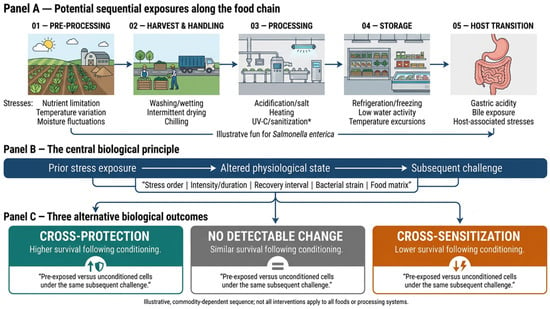
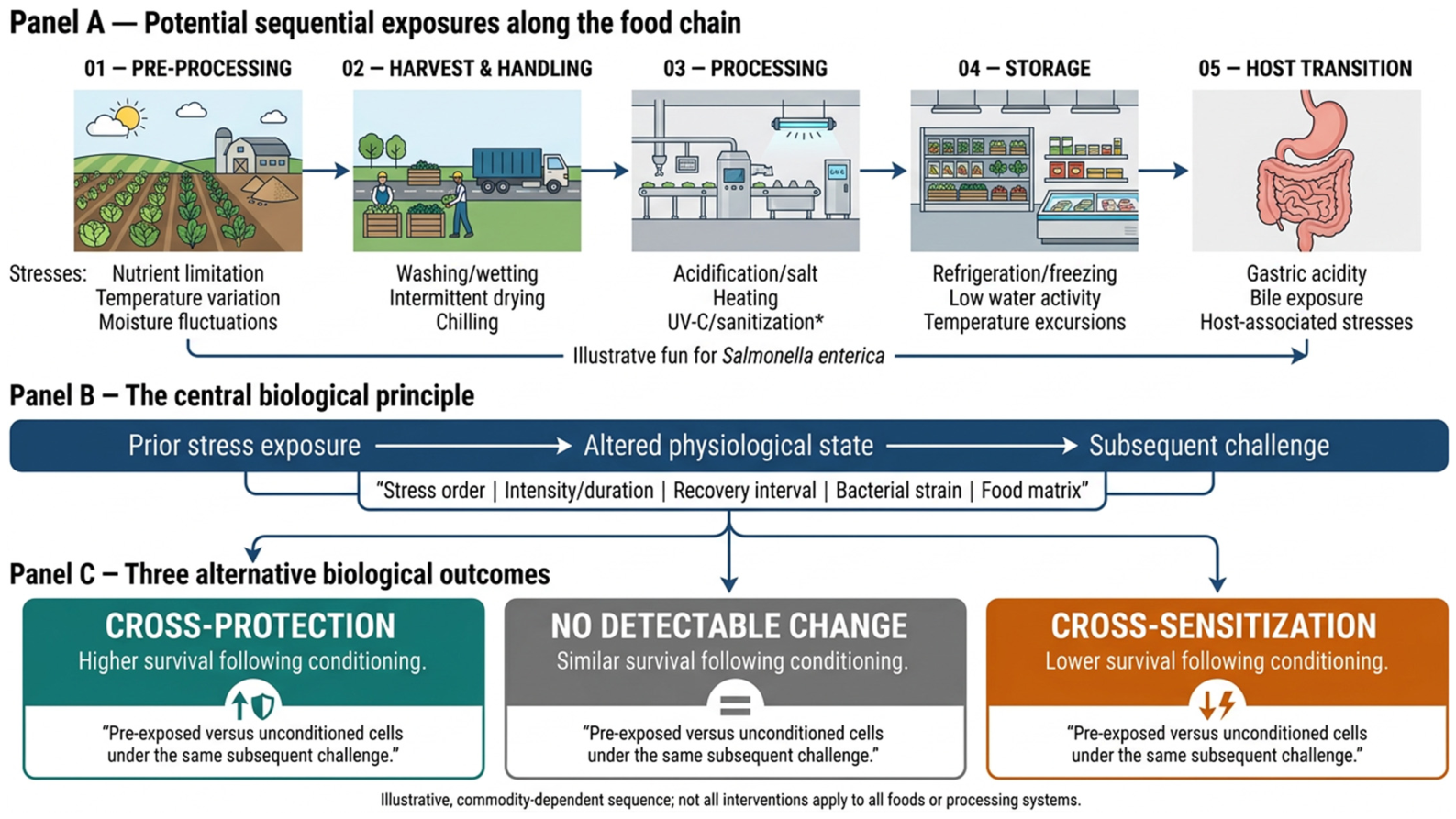
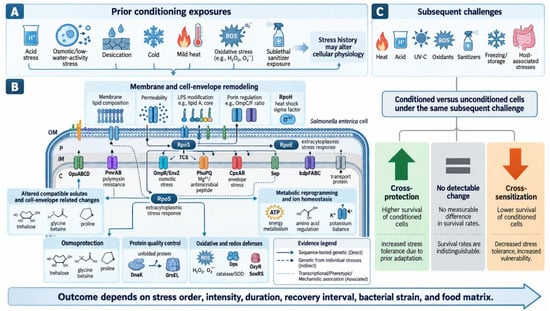
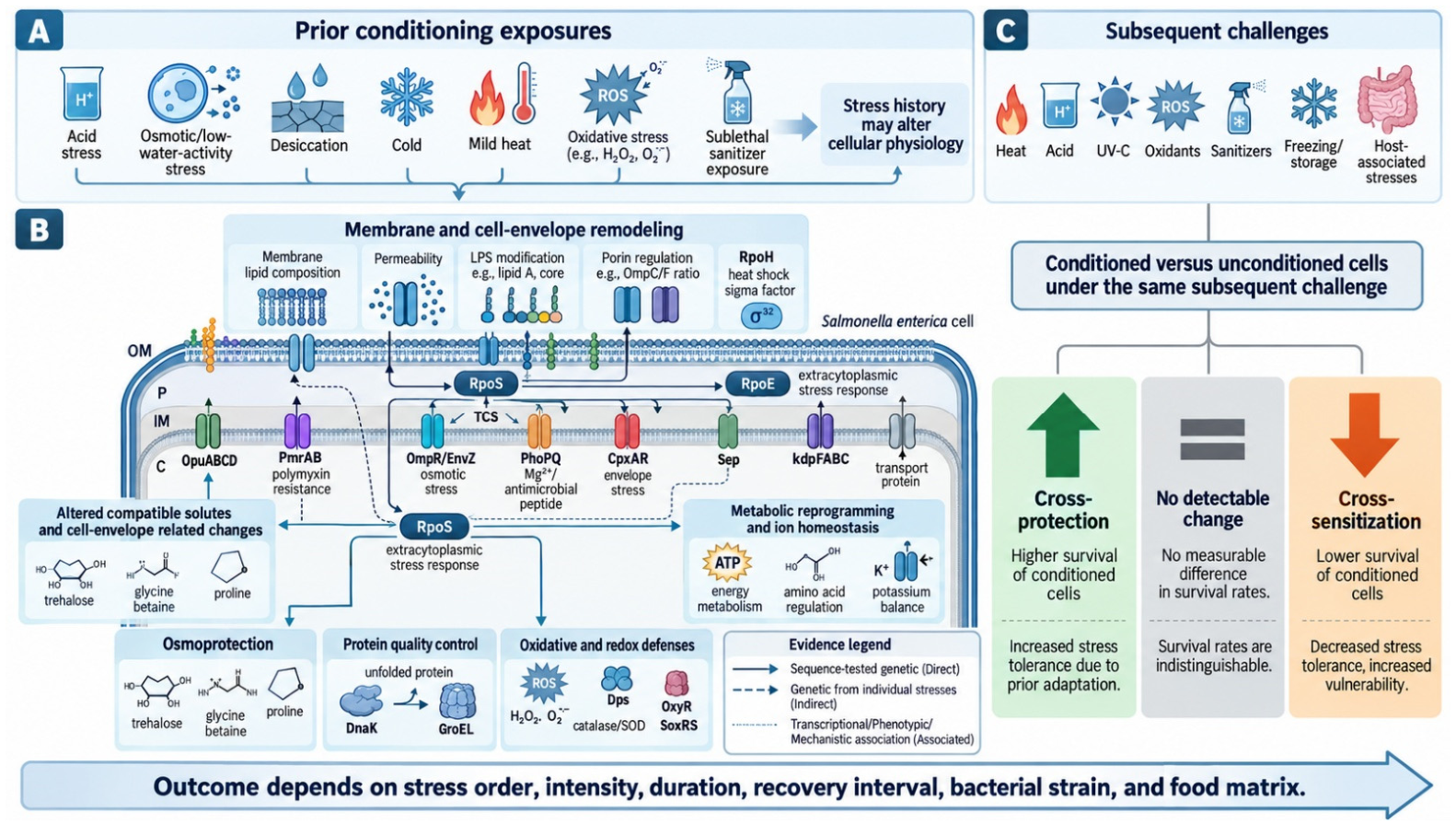
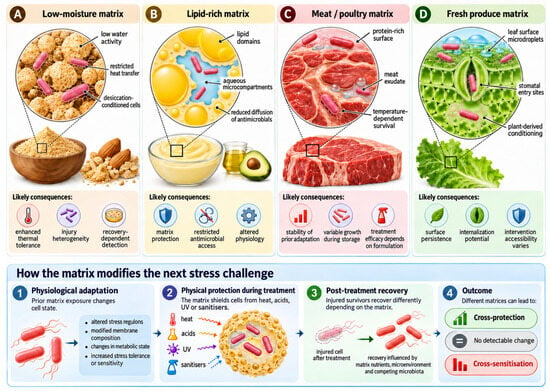
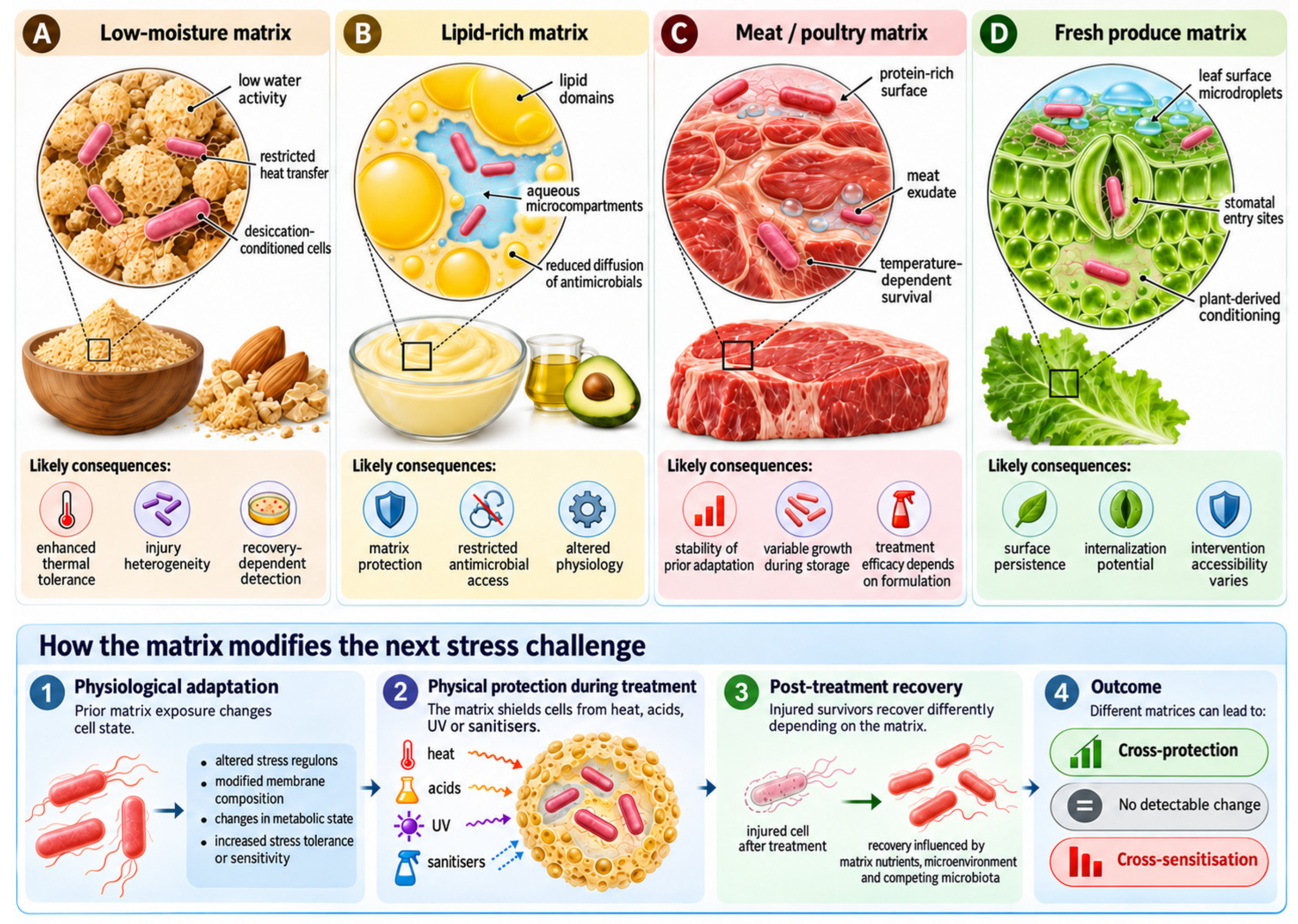
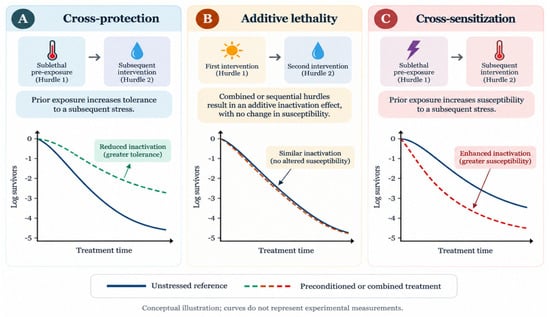
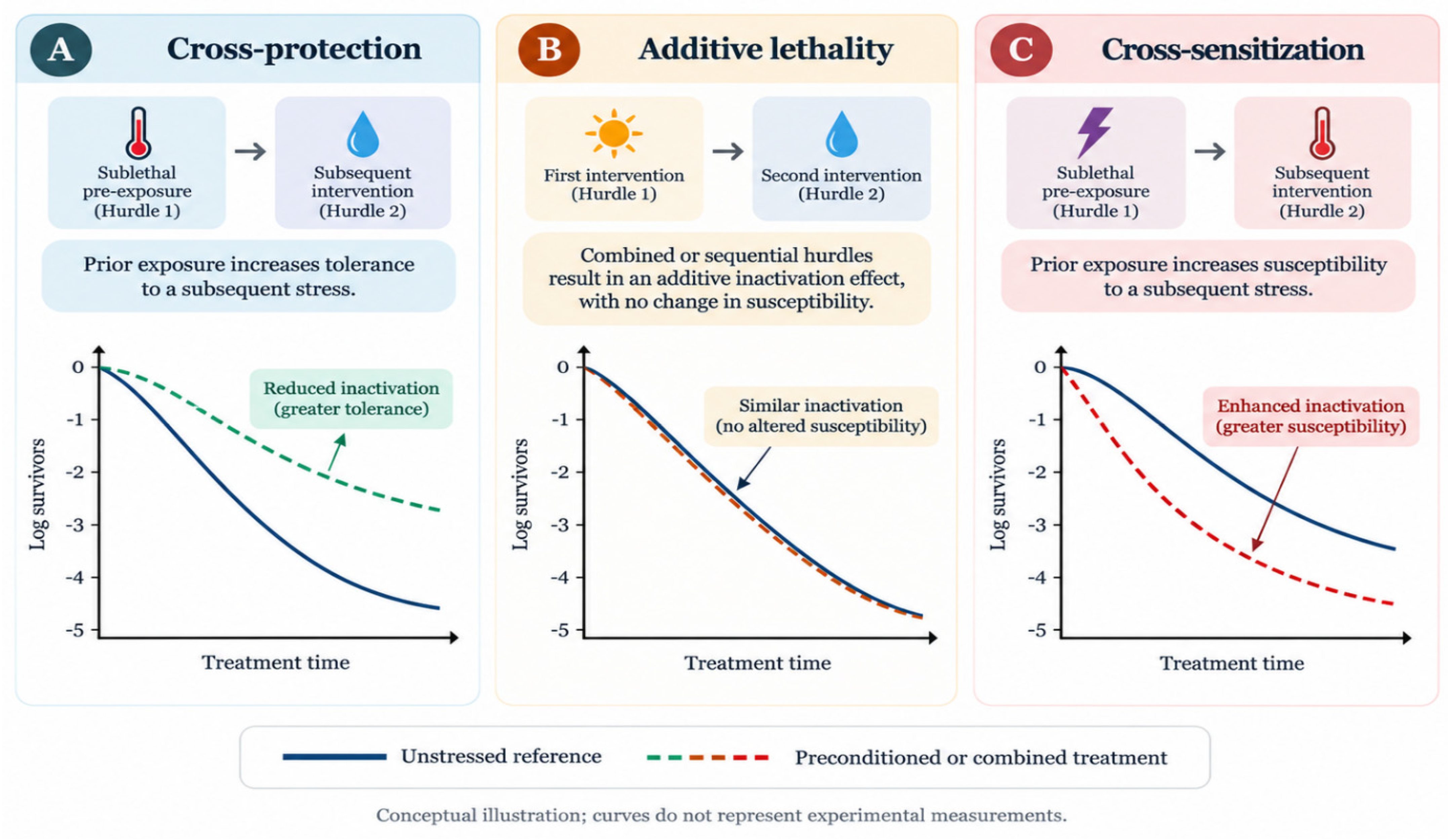
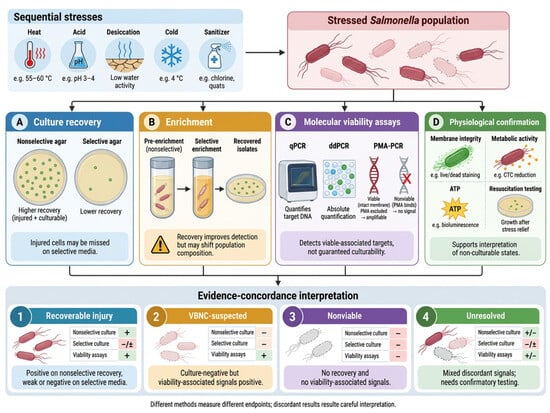
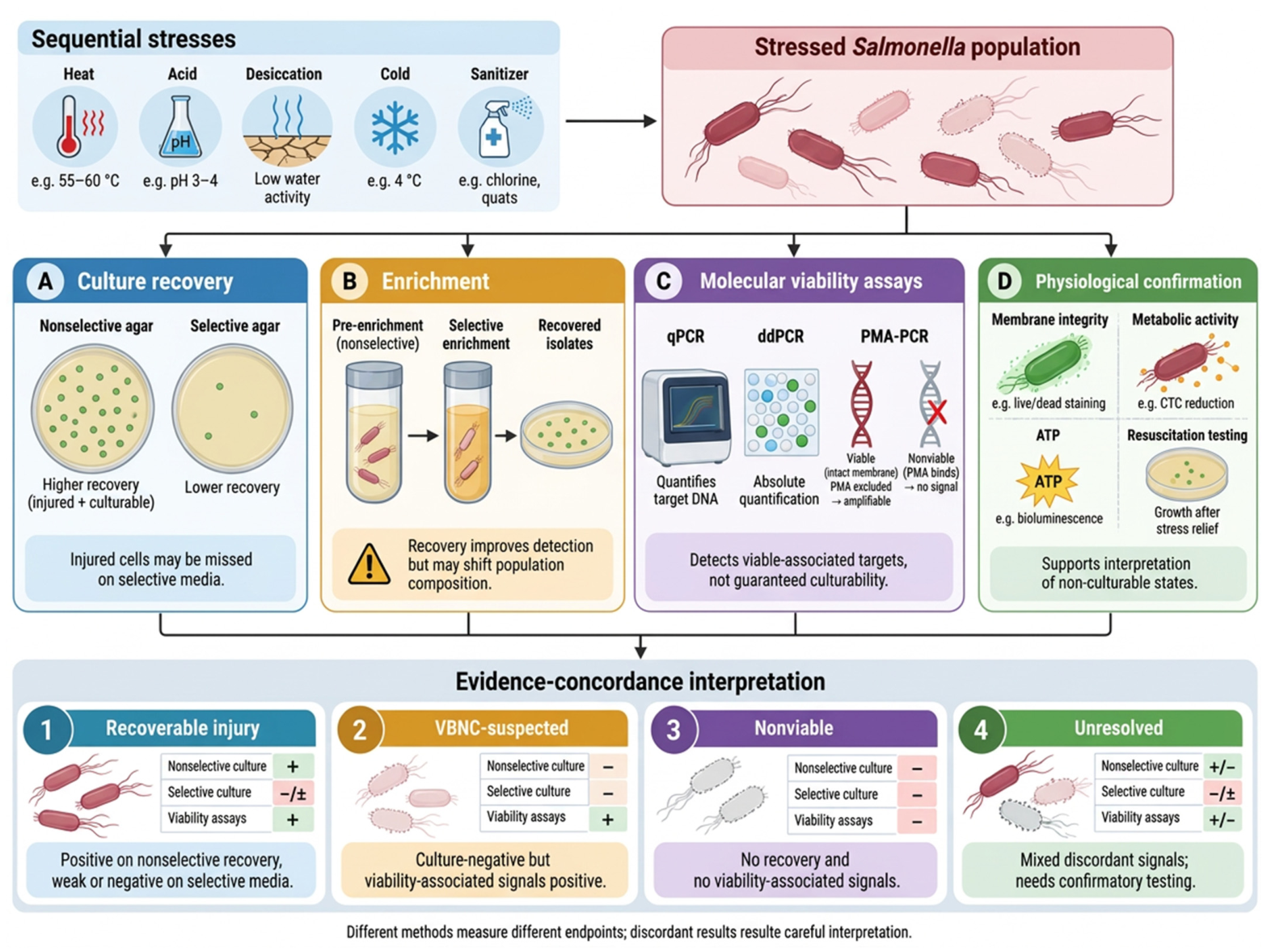
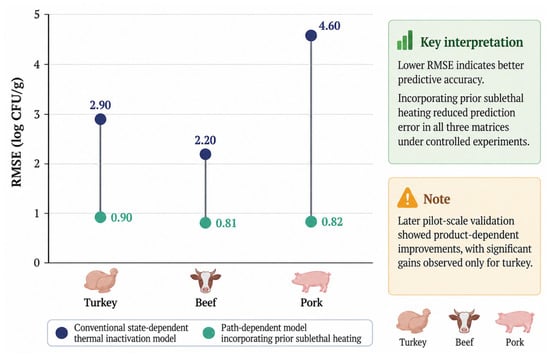
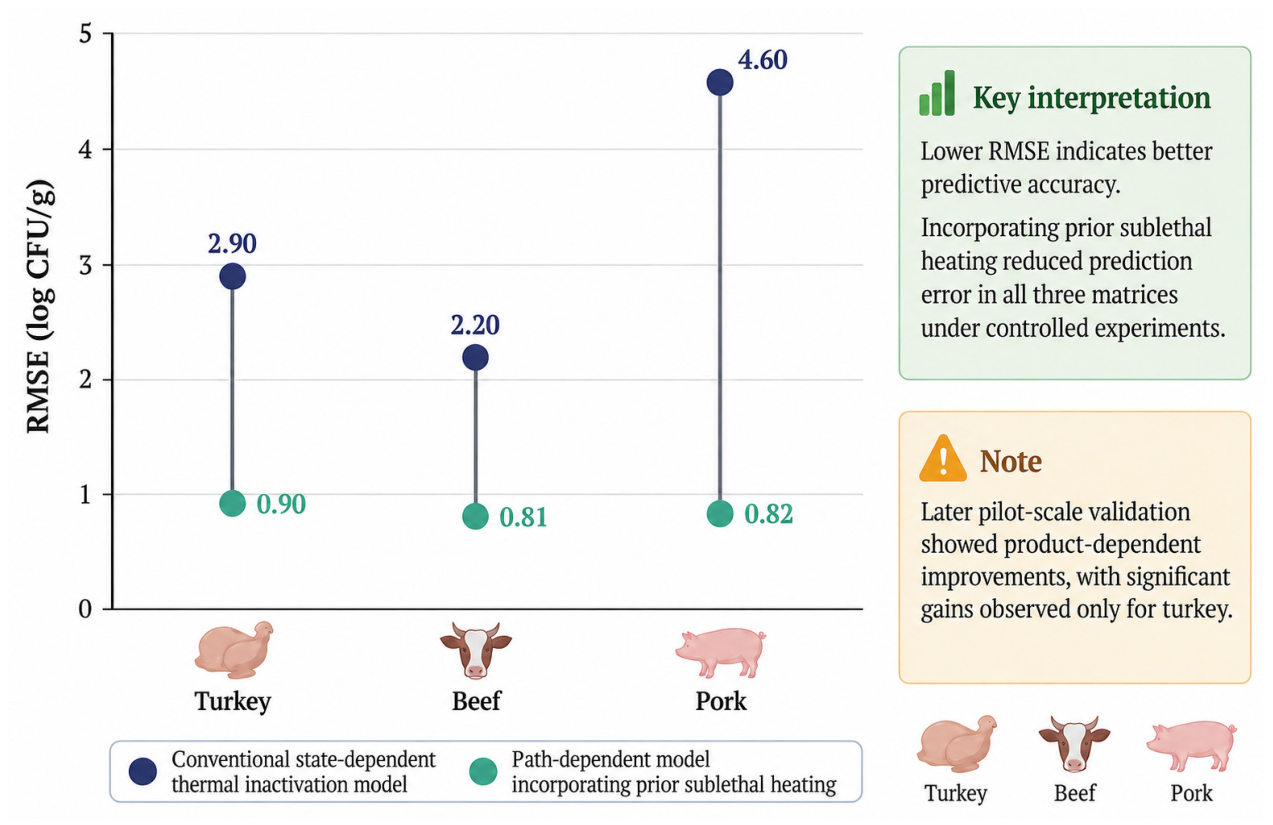
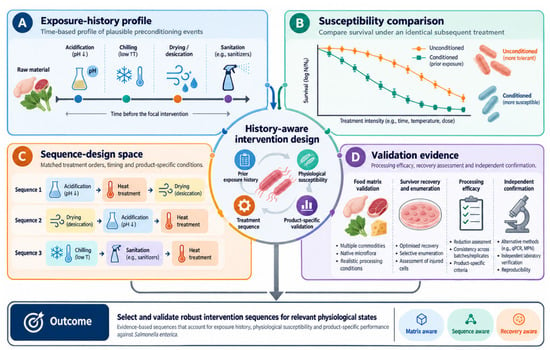
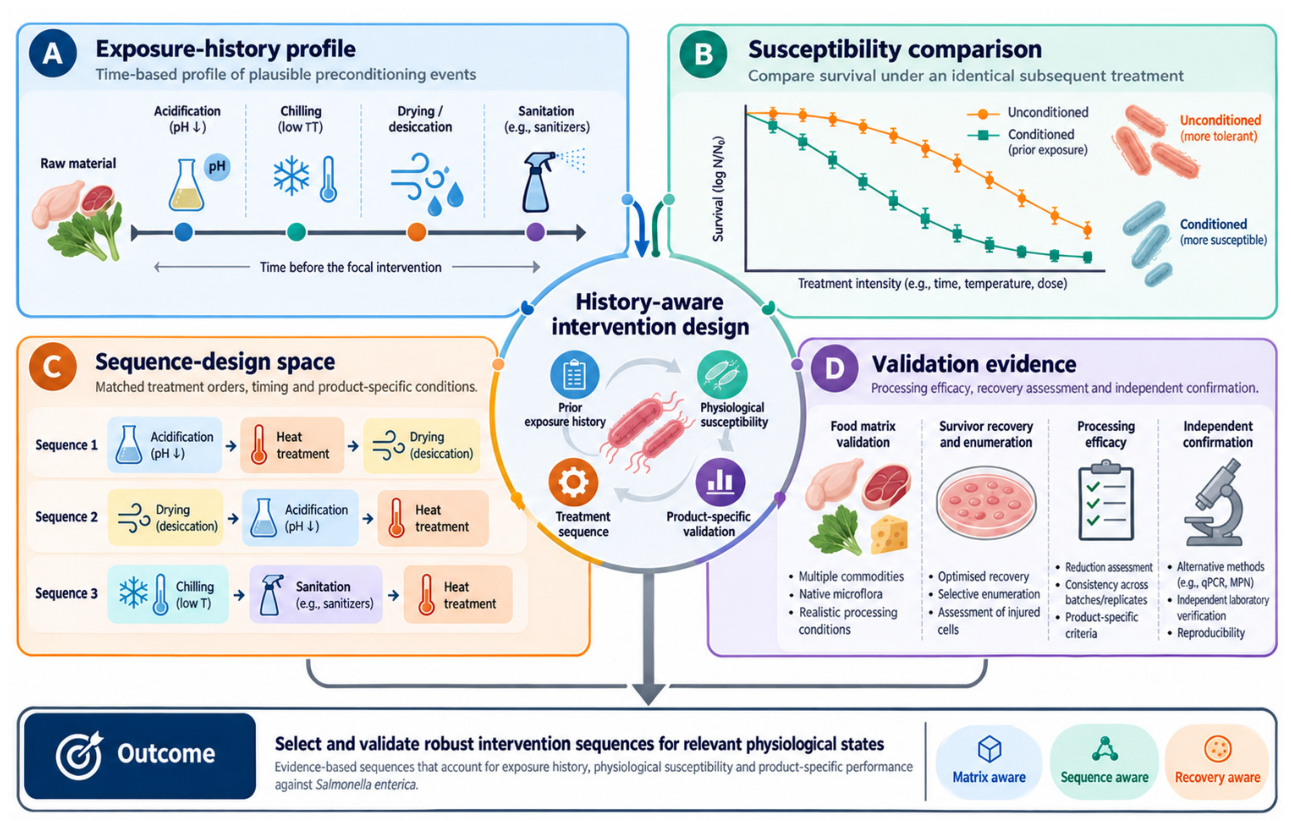

Disclaimer/Publisher’s Note: The statements, opinions and data contained in all publications are solely those of the individual author(s) and contributor(s) and not of MDPI and/or the editor(s). MDPI and/or the editor(s) disclaim responsibility for any injury to people or property resulting from any ideas, methods, instructions or products referred to in the content. |
© 2026 by the authors. Licensee MDPI, Basel, Switzerland. This article is an open access article distributed under the terms and conditions of the Creative Commons Attribution (CC BY) license.