


Abstract
Increasing the ampacity of transmission lines can ensure safe operation while simultaneously achieving higher transmission capacity and energy-saving goals. Using a high-infrared-emissivity surface is an effective approach to enhancing the heat-dissipation performance of conductors and enabling low-cost capacity upgrades. In this study, a nanoporous structure was constructed on the surface of aluminum conductors by anodization. The influences of different pore diameters and pore depths on the infrared emissivity and current-induced temperature rise characteristics were systematically compared, and the optimal structure was fabricated on aluminum stranded conductors for performance validation. The results show that the nanoporous aluminum stranded conductor with a pore diameter of approximately 100 nm and a pore depth of approximately 30 μm achieves the highest ampacity, with a 26.6% increase compared with the bare aluminum stranded conductor. The improvement can be attributed to (1) enhancing thermal emissivity to strengthen radiative cooling, and (2) increasing the effective surface area to promote convective heat transfer. Therefore, the as-prepared nanoporous aluminum stranded conductor exhibits excellent heat dissipation performance and demonstrates promising application potential in the capacity upgrading of transmission conductors.
1. Introduction
Global warming is making extreme weather more common and intense. This causes sharp seasonal increases in electricity use during summer and winter, putting great stress on grid infrastructure like transmission lines and switchgear [1,2]. As a result, power grids are already struggling to keep up with fast-growing demand [3,4], while transmission and transformation equipment suffer more and more breakdowns. In serious cases, this can lead to massive blackouts that threaten social stability and disrupt people’s work and lives. In August 2023, a major blackout hit Brazil’s power grid when overloads caused protection systems to fail. A total of 23,368 MW of load was lost—the entire northern region went dark, and the northeast lost about 65.7% of its load, with some areas without power for up to six hours [5]. This shows that transmission lines may not have enough capacity to meet rising electricity demand [2,6,7], so it is urgent to study and develop new technologies that can increase the current ampacity.
Among capacity-enhancement technologies, Dynamic Line Rating (DLR) has been reported to dynamically adjust the ampacity limit of transmission lines by real-time monitoring of environmental and line operating conditions [1,8], thus achieving line capacity enhancement from the perspective of power system design.
From the materials engineering perspective, heat-resistant, heat-radiative, and heat-dissipation porous conductors were studied to improve the ampacity. The mechanism by which these conductors enhance current-carrying capacity is as follows: bare conductors have a maximum allowable operating temperature of 70 °C [4,8]; exceeding this temperature leads to increased line sag, which reduces the clearance to ground and poses safety hazards [4]. In contrast, some surface-coated conductors exhibit better heat dissipation performance, resulting in a lower temperature rise at the same current. Consequently, they can carry a larger current within the 70 °C safety limit, thereby achieving ampacity enhancement. Heat-resistant aluminum alloy conductors and composite-core conductors have been reported to improve mechanical properties and thermal conductivity [4,9], thereby increasing conductor endurance under high transmission temperatures [4,8]. However, their high cost limits wider application.
Moreover, passive radiative cooling (PRC) coatings enable zero-energy and environmentally benign cooling by augmenting the emissivity of objects in the 8–13 μm atmospheric window [10], thus dissipating heat to the ~3 K outer space [7,11]. Although various approaches—such as multilayer paints [10] and porous polymers [12]—have been explored, their practical deployment is largely constrained by issues including weak interfacial bonding, large thermal resistance, intricate processing, and potential environmental contamination.
Porous anodic aluminum oxide (AAO) is an in situ grown porous structure on Al substrates [13,14], featuring isotropic permittivity, strong far-IR absorption, high UV–Vis–NIR transparency [15], and tunable pore size/film thickness for radiative cooling. For the formation of porous anodic aluminum oxide, the type of electrolyte is the key factor determining the porous morphology. Acidic electrolytes (pH < 5) induce pore formation via field-assisted dissolution [13,14], following a four-stage growth process [16]. Key parameters such as anodizing voltage, current density, time, and electrolyte type affect pore diameter and interpore spacing [16]. These structural parameters are expected to influence the thermal conductivity of the oxide layer. Regarding the thermal conductivity of anodic porous structures, reported thermal conductivity values range from 0.53 to 1.62 W m−1 K−1, depending on the electrolyte used (e.g., oxalic acid and sulfuric acid), and are also influenced by the chemical composition and porosity of the oxide layer [15,17].
Compared to conventional PRC coatings, in situ growth of AAO avoids interfacial adhesion failure and high thermal resistance [18], while the porosity lowers permittivity and optimizes air impedance. AAO can offer enhanced adhesion and improved heat dissipation, exhibiting significant advantages over conventional PRC coatings [4,7,17]. Wu et al. [19] employed oxidation to prepare a black thermal control coating on an aluminum alloy surface. By optimizing the electrolyte and oxidation parameters, the obtained coating achieved a solar absorptance of 0.92 and an infrared emissivity of 0.88 in the 8–13 μm range, significantly improving thermal radiation capability. In another study, scholars [20] used the hydroxide on the aluminum surface as a precursor and in situ generated a porous alumina structure via a laser-induced reaction technique. The prepared surface reached a solar reflectance of 0.93, and under high-intensity laser irradiation of 2000 W/cm2, the back-side temperature was only 159 °C. The above studies determined that porous structures can enhance surface heat dissipation performance [15]. However, whether these coatings can reduce temperature under the rated current of transmission lines and increase ampacity at limit temperatures remains to be studied and confirmed.
In this study, an anodization method was employed to prepare nanoporous films with different structural parameters (pore diameter and depth) on the surface of transmission aluminum conductors by varying the electrolyte, current density, and oxidation time. The effects of different structural parameters on thermal emissivity and temperature rise under applied current were investigated to determine the optimal structural parameters and preparation process. The scientific insight of this work is the identification of two pathways through which AAO improves heat dissipation: (1) enhancing thermal emissivity to strengthen radiative cooling, and (2) increasing the effective surface area to promote convective heat transfer. Subsequently, the corresponding aluminum conductor steel-reinforced (ACSR) with optimal structural parameters was fabricated, and their temperature rise characteristics under rated current were experimentally studied.
2. Experiment Setup
2.1. Preparation of Anodized Nanoporous Structure
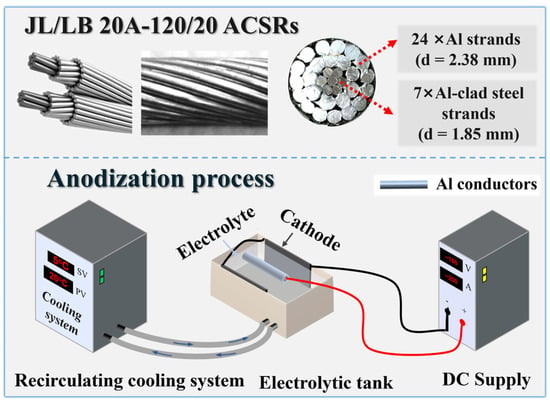
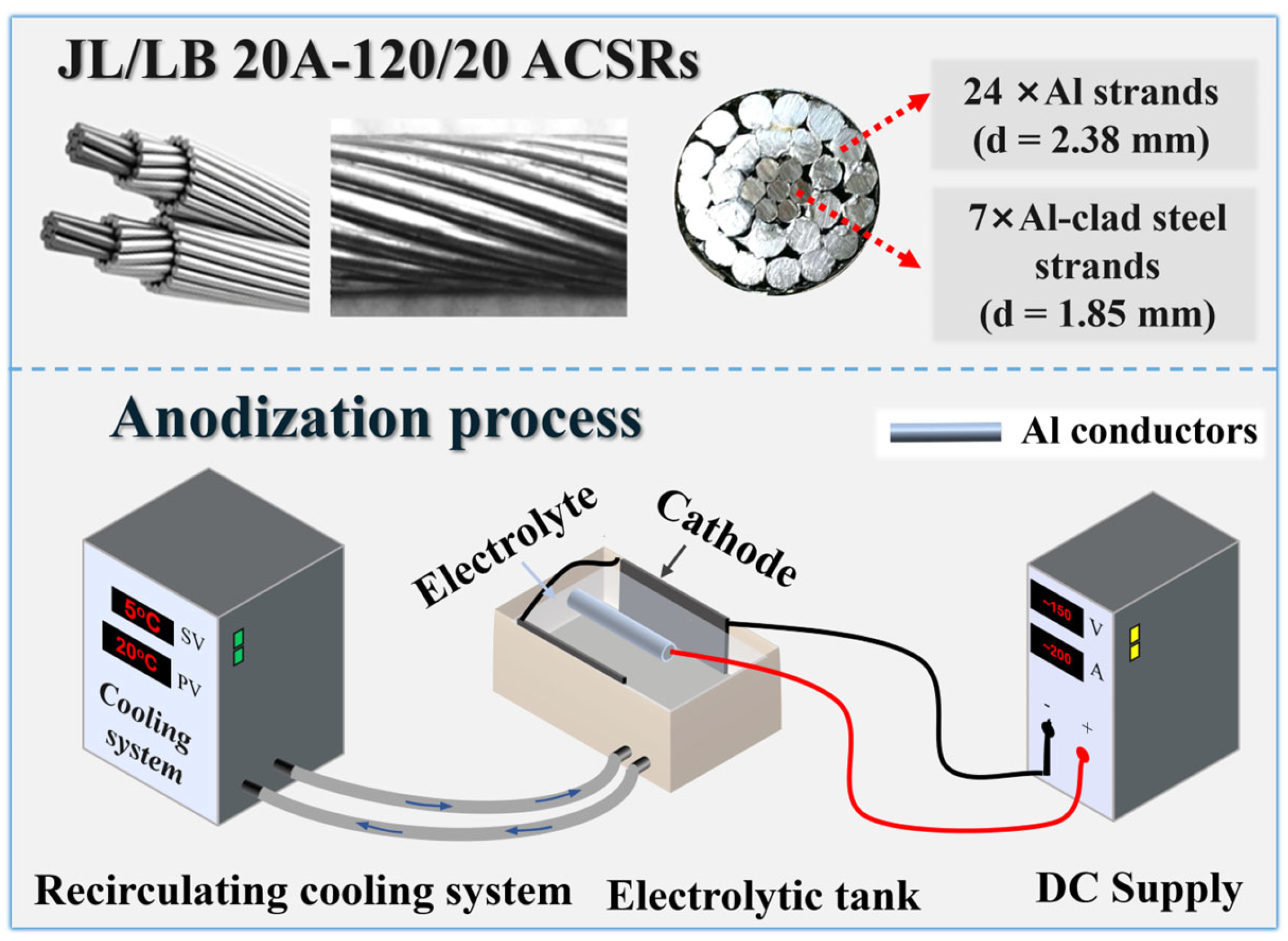
In this study, the JL/LB 20A 120/20 type aluminum conductor, Aluminum Cable Steel-Reinforced (ACSR) without insulating layers in Figure 1, is manufactured by precision stranding of 24 pure aluminum wires with a diameter of 2.38 mm and 7 aluminum-clad steel core wires with a diameter of 1.85 mm. Figure 1 illustrates in detail the physical appearance and a schematic cross-sectional structure of the conductor. Detailed dimensional parameters, including the overall outer diameter of the conductor, conform to the IEC 61089:1991 standard.
Figure 1.
Specimen preparation: Tested Al conductors of JL/LB 120/20 Aluminum Cable Steel-Reinforced (ACSR) and anodization process.
Al strands (d = 2.38 mm) and ACSRs with a length of 5 m were soaked in a 1 mol/L sodium hydroxide solution for 5 min to remove the natural oxide film from the surface before the anodization process. For the anodization processes in Figure 1, the DC stabilized power supply (WYJ-110A) outputs the current densities with different anodizing times on the bare Al conductors in 1 mol/L oxalic acid, phosphoric acid, and mixed acid solutions, respectively. The anodization was performed in a constant-current mode, and the oxidation voltage was recorded in real time. The bath temperature was maintained within the range of 20–35 °C using a circulating chiller. Referring to related studies [21,22,23,24] on anodization, this work investigated nanoporous structures with pore depths of 10–30 μm and pore diameters of 100–300 nm. Different nanopore diameters of nanoporous structures can be prepared by changing electrolyte types. Al strands with nanoporous structures of different nanopore diameters (~300 nm, ~100 nm, and ~200 nm) were anodized with different electrolyte types (phosphoric acid, oxalic acid, and mixed acid). These strands can be named as d = 300 nm, d = 100 nm, and d = 200 nm, respectively. Moreover, referring to related studies [25], different nanopore depths of nanoporous structures can be prepared by changing electrolyte types. Al strands with nanoporous structures of different nanopore depths (~10 μm, ~15 μm, ~20 μm, and ~30 μm) were anodized under 1 mol/L oxalic acid electrolyte with different anodizing times (5 min, 10 min, 15 min, and 20 min). These strands can be named as h = 10 μm, h = 15 μm, h = 20 μm, and h = 30 μm, respectively. During the anodization process, the temperature of the reaction process is controlled by a magnetic stirrer and water chiller (CZ3457-5HP). Here, all Al conductors were used as the anode, while the 305 stainless steel sheet was the cathode. After the anodization process, all anodized specimens were washed with ethanol solution, then ultrasonically cleaned in deionized water for 20 min to remove residual contaminants from the pore surface. Afterward, the conductors were dried in the oven for 1 h to achieve the Al conductors with nanoporous structures.
2.2. Characterization and Properties Tests
The microstructure of samples was characterized by scanning electron microscopy (SEM, Zeiss Auriga, Reutlingen, Germany). The voltage during SEM testing was 3–5 kV.
Heat dissipation measurements: Referring to ASTM C1371 (for thermal emissivity), thermal emissivity was measured using a Nicolet iS50 FTIR spectrometer (Thermo Fisher, Waltham, MA, USA) equipped with a gold-coated integrating sphere and an MCT detector. Spectra were collected in reflectance mode over 2.5–15.3 μm at 4 cm−1 resolution, averaging 128 scans with a gold background.
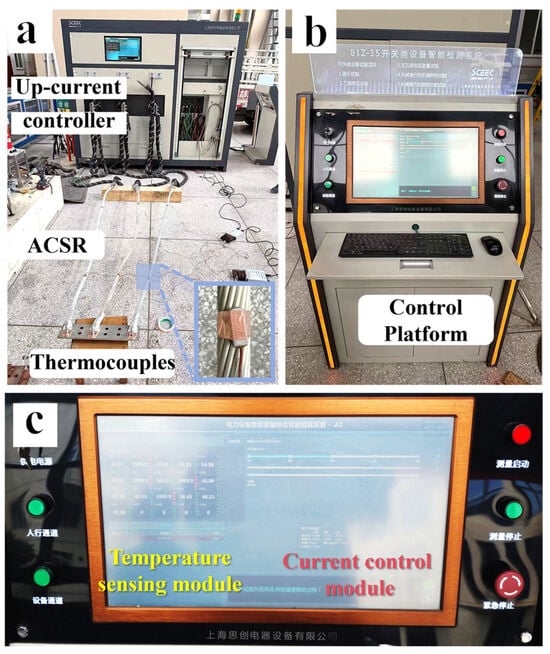
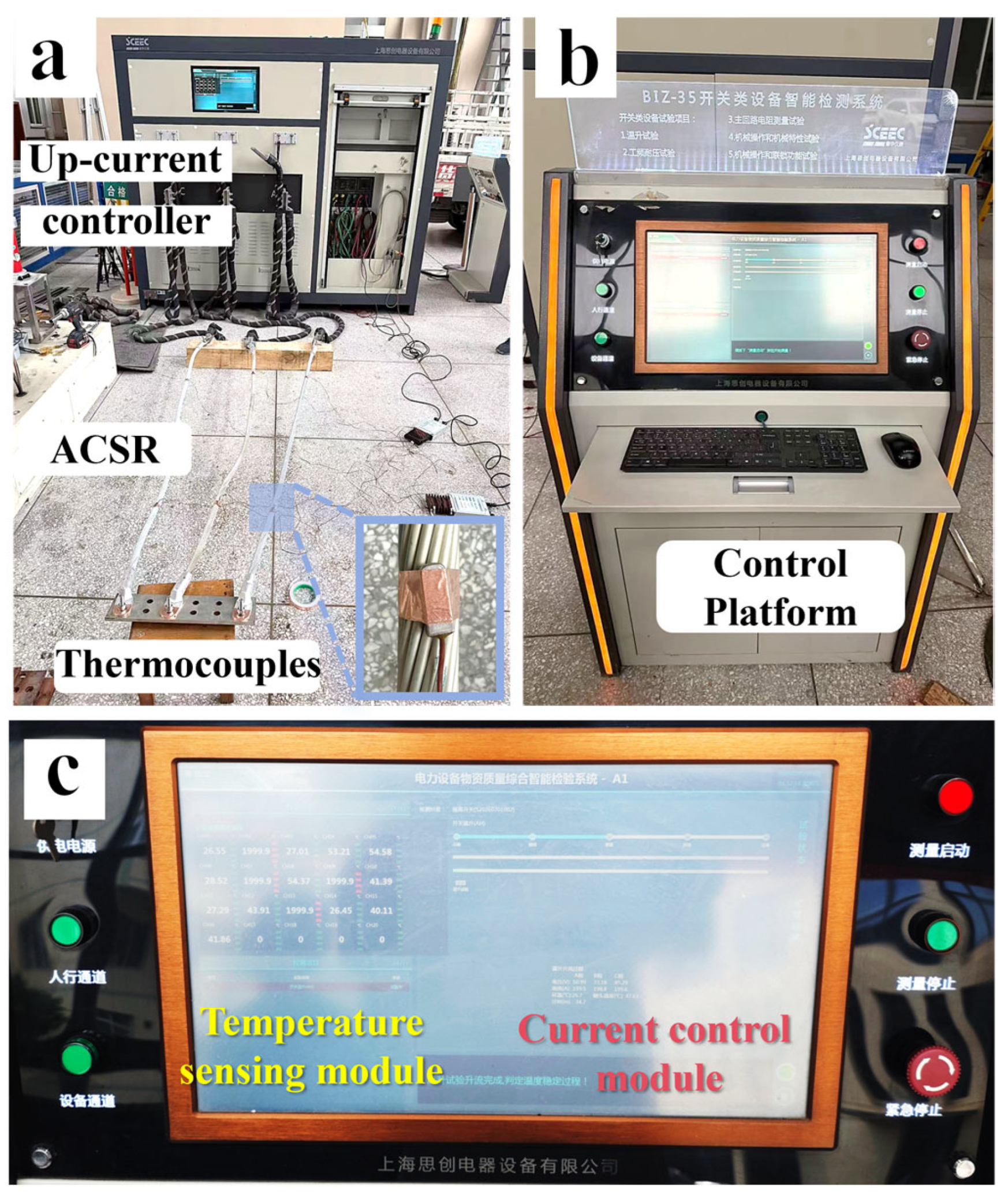
The laboratory temperature-rise test is illustrated in Figure 2. The setup was implemented in accordance with DL/T 1948-2018 and T/CEC 632-2022. A current control console, model KZT (Z, X)-1.5/0.5: 0–400 V (Luzhou Special Transformer Co., Ltd., Luzhou, China), was employed. The control platform employs the BIZ-35 intelligent monitoring system for switchgear, manufactured by Shanghai Sichuang Electrical Equipment Co., Ltd. (Shanghai, China). This system provides an output current ranging from 0 to 1.5 kA, and a TP1608 temperature inspection instrument is used as the temperature acquisition device. In the experiment, both terminations of the 3 m test line were connected to the output ports of the current-rise transformer, and the current magnitude was set via the control console. Three thermocouples were mounted at distinct locations on the surface of the conductor. These thermocouples were interfaced with a multi-channel temperature recorder for data acquisition. After each step increase in current, the line temperatures were logged once they had stabilized (no appreciable drift within a 60 min interval). The average of the three thermocouple readings was taken as the representative temperature for that measurement. For each test, three parallel specimens were used, and the results are expressed as the mean ± error bars. Based on this procedure, temperature-rise curves corresponding to different current-carrying capacities can be constructed [26].
Figure 2.
Measurement of Al conductors under applied current: (a) test setup, (b) up-current controller platform, and (c) operation interface with temperature sensing and current modules.
3. Results and Discussion
3.1. Influence of the Nanopore Diameter on Thermal Emissivity and Temperature Rise Properties
To investigate the influence of nanopore diameter on heat dissipation performance, three types of samples with different pore sizes were prepared by varying the electrolyte type [16] while controlling the oxidation time (20 min) and current density (0.3 A/cm2).
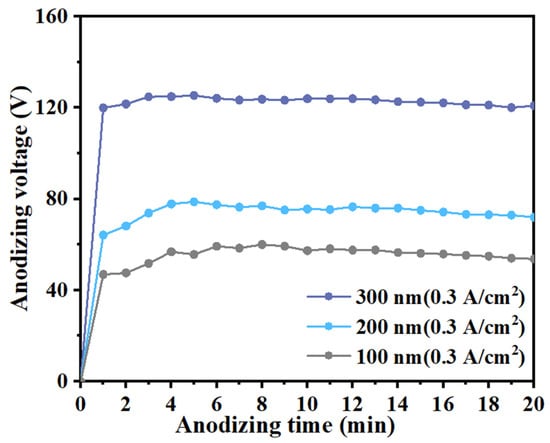
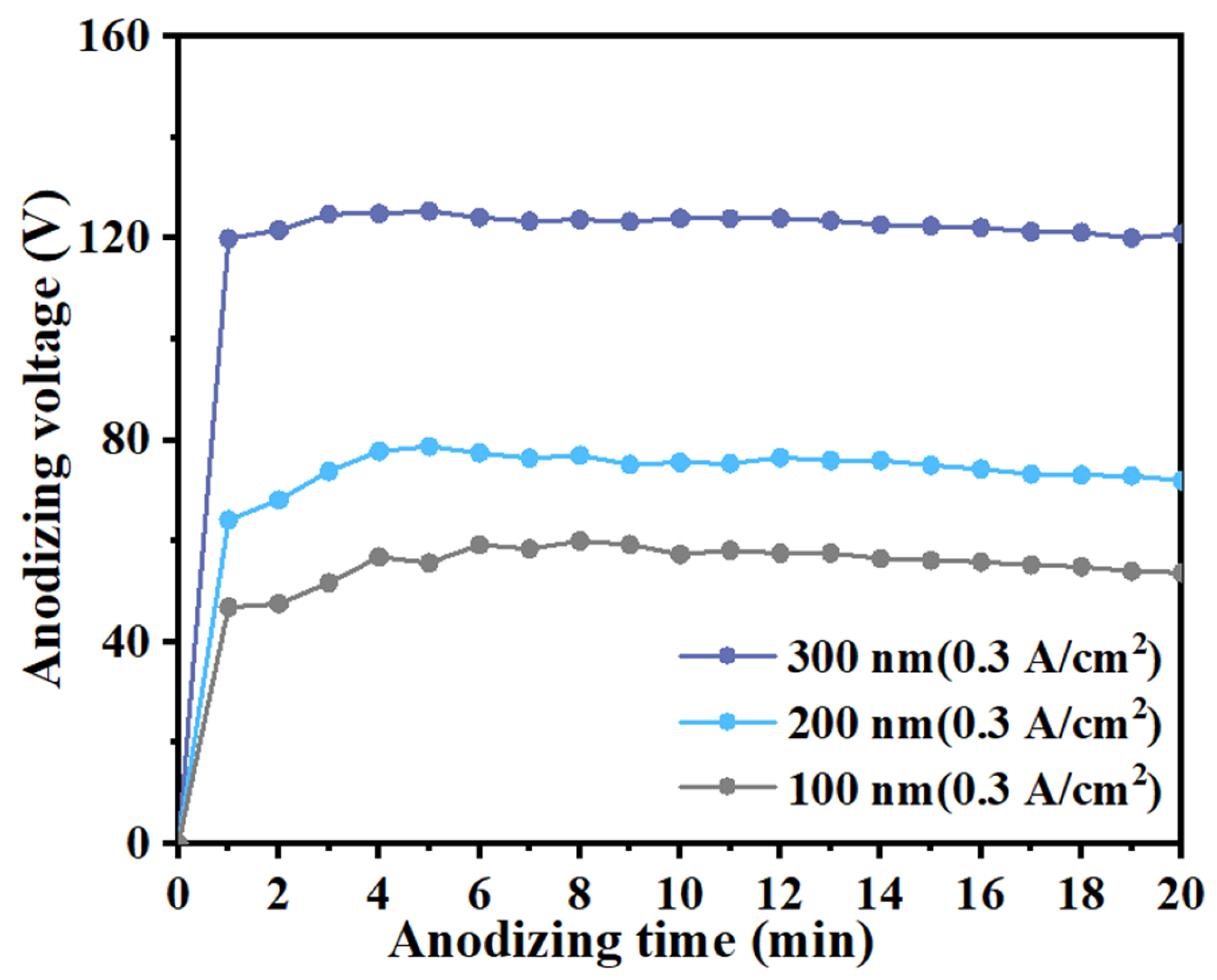
The anodizing voltage–time curves are shown in Figure 3. During the initial stage, the voltage rises rapidly and then stabilizes, which may be related to the electrochemical equilibration during oxide film growth [13,14]. The steady-state anodizing voltages differ markedly among the electrolyte systems, with values of approximately 120.6 V, 71.7 V, and 53.2 V corresponding to pore diameters of 300 nm, 200 nm, and 100 nm, respectively. According to related studies [16], the interpore distance (Dint) of porous alumina is related to the applied voltage (U) by Dint = ζU, where ζ is a proportionality coefficient dependent on the electrolyte type [16,27]. Thus, when the electrolyte composition varies, both ζ and the steady-state voltage U change, leading to different interpore distances. The voltage variation observed in this study reflects the influence of electrolyte composition on the anodization behavior.
Figure 3.
Anodizing voltage–time curves in constant current mode (0.3 A/cm2) recorded for different specimens.
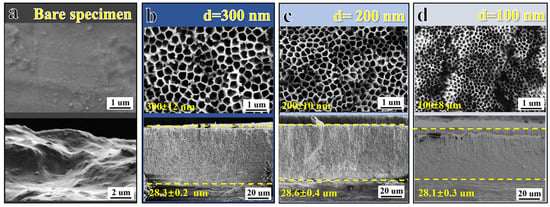
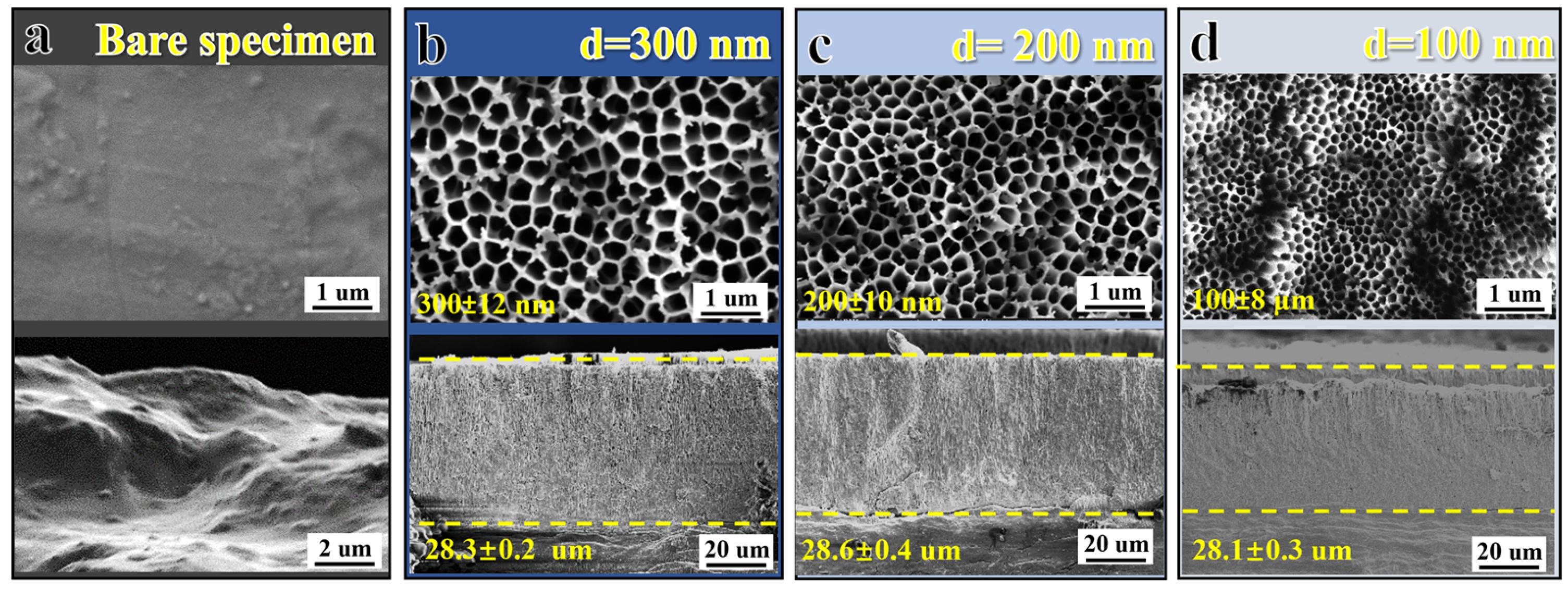
Figure 4 shows the surface and cross-sectional micrographs of the aluminum wires with different porous structures. Measurements indicated that the nanopore depths and porosities of these three porous structures were similar, with pore depths of approximately 28.1–28.6 μm and porosities of approximately 65.1%–62.0%, which were measured using ImageJ software (Version 1.53t, National Institutes of Health, USA). The pore diameters of these structures were different, being ~300 nm, ~200 nm, and ~100 nm, respectively. Moreover, the composition of the anodized oxide layer was determined as amorphous Al2O3, characterized by XRD and EDS methods (Figures S1 and S2, Supplementary Materials).
Figure 4.
Morphological and cross-sectional images of bare strands and anodized strands with nanoporous structures of different nanopore diameters: (a) bare specimens; anodized specimens of (b) d = 300 nm, (c) d = 200 nm, (d) d = 100 nm.
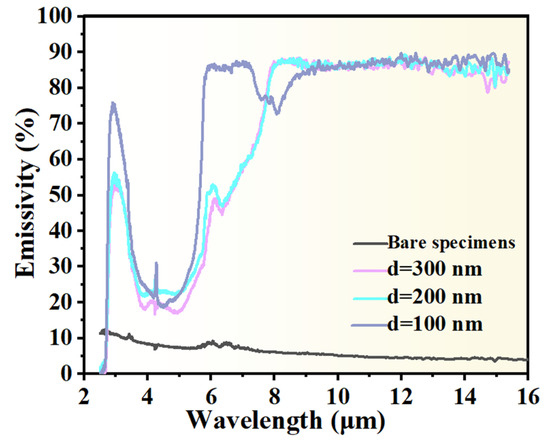
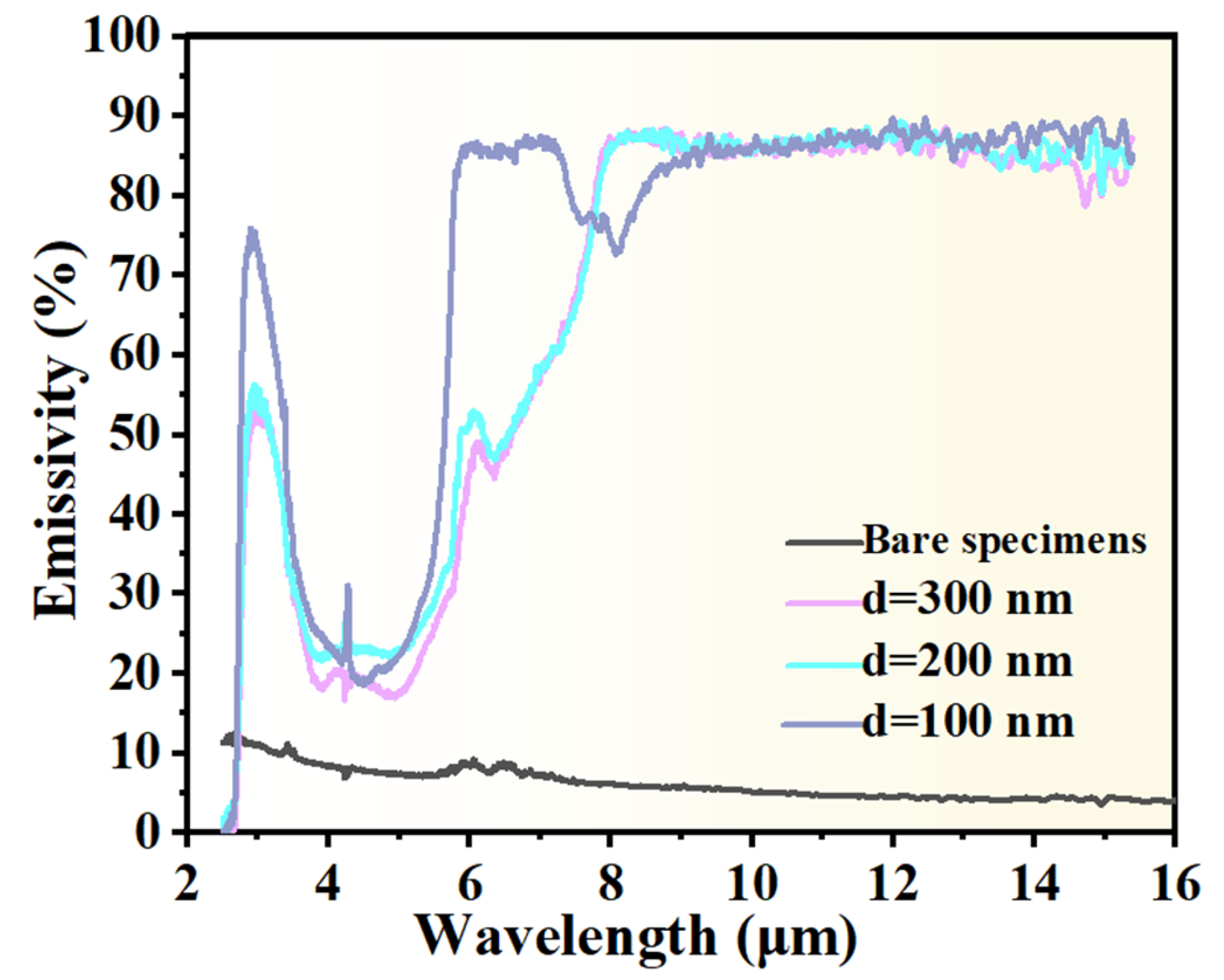
Emissivity is an important factor influencing the radiative heat dissipation performance of a sample: the higher the infrared emissivity, the stronger the radiative heat dissipation capability. The measured infrared emissivity for samples with different pore diameters is shown in Figure 5. It can be seen that the smaller the pore diameter, the higher the infrared emissivity. Among them, the sample with a pore diameter of 100 nm exhibited the highest infrared emissivity, with an average emissivity of 84.48% in the atmospheric window band (8–14 μm) and 52.75% over the full infrared band. This was because a smaller pore diameter reduced the inter-wall spacing and increased the pore channel density, significantly raising the probability of photons colliding with the pore walls per unit propagation distance [15]. Each reflection was accompanied by partial energy absorption by the amorphous Al2O3 medium; thus, the small-pore structure possessed a stronger effective absorption capability for incident infrared radiation, resulting in a higher infrared emissivity [15]. From a microstructural perspective, under similar pore depth and porosity, a smaller pore diameter led to a larger total heat dissipation area [26], which enhanced both convective and radiative heat dissipation [28]. Therefore, the porous structure with a pore diameter of 100 nm not only delivered the highest infrared emissivity but also exhibited the best overall heat dissipation performance.
Figure 5.
Emissivity of specimens with different nanopore diameters: (a) bare specimens, (b) d = 300 nm, (c) d = 200 nm, (d) d = 100 nm.
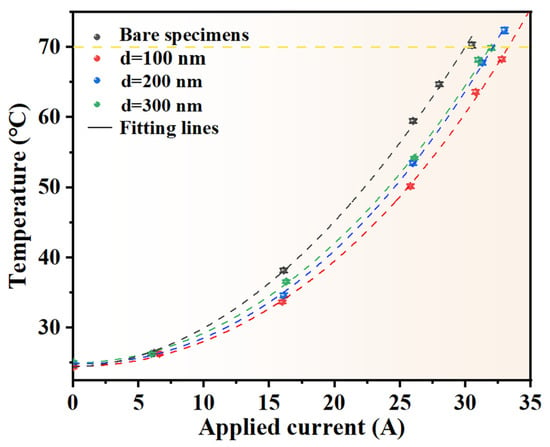
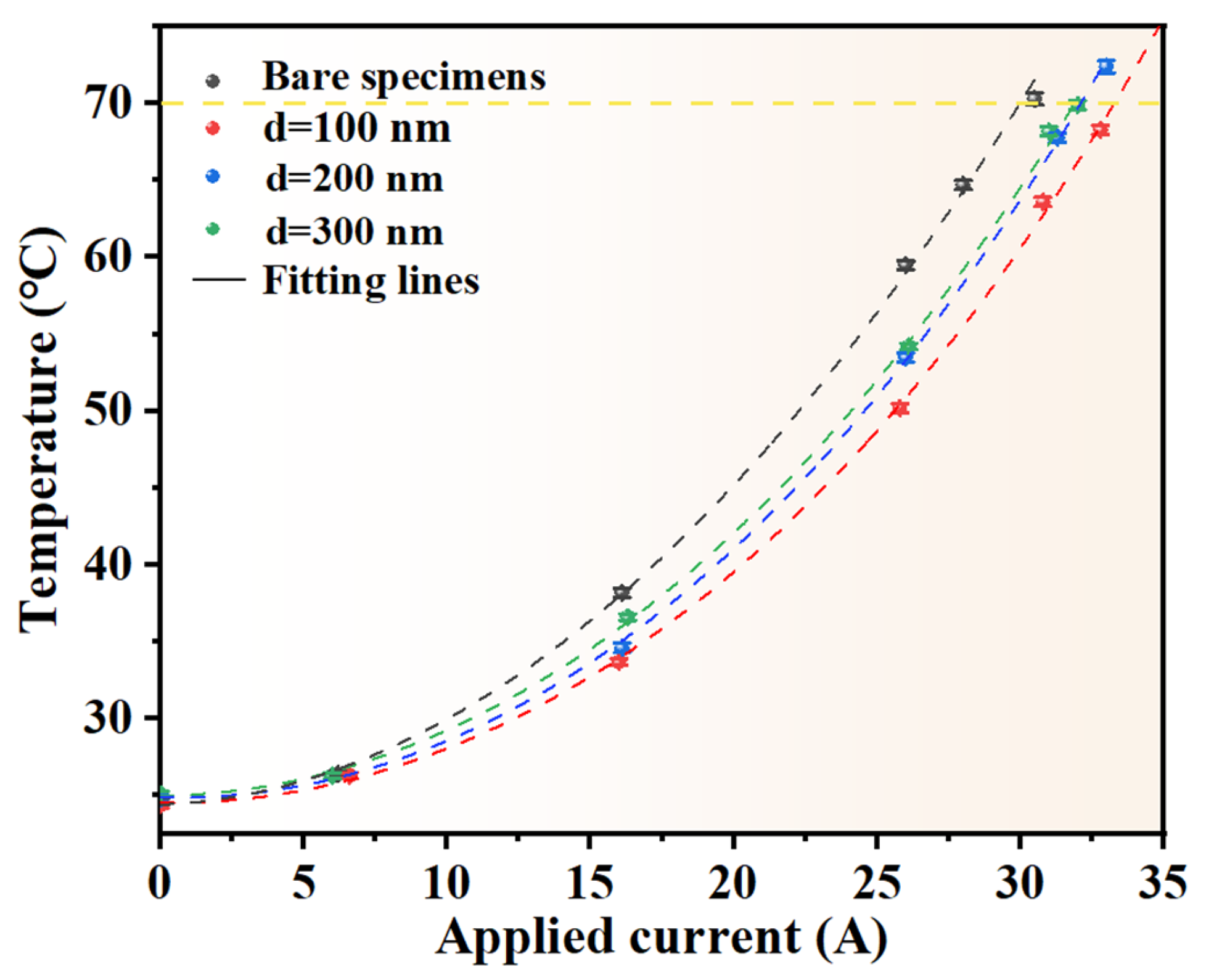
The temperature rise test results of Al strands with different pore sizes are shown in Figure 6 and Table 1. As the applied current increased, the wire surface temperature gradually rose. The allowable current-carrying temperature of the transmission line shall not exceed 70 °C; therefore, the ampacity at 70 °C was used to evaluate the heat dissipation performance of the specimens [26]. The steady-state currents at 70 °C for the bare aluminum strands and the anodized strands (with pore diameters d = 300 nm, 200 nm, and 100 nm) were 30.1 A, 31.6 A, 32.2 A, and 33.4 A, respectively. This indicated that the smaller the pore diameter, the stronger the heat dissipation capability of the anodized Al strands, and thus the higher the current they could carry at the same allowable temperature. Among them, the aluminum wire with a pore diameter of 100 nm achieved the best ampacity enhancement, with its current-carrying capacity increased by 11.0% compared with the bare strands. This was attributed to the fact that this pore structure combined the highest infrared emissivity with the largest heat dissipation area, thereby exhibiting the optimal overall heat dissipation performance.
Figure 6.
Temperature rises under applied current curves for anodized Al strands with different pore diameters and bare Al strands.
Table 1.
Temperature rises under applied current results for anodized Al strands with different pore diameters and bare Al strands.
The trendline in Figure 6 represents a polynomial fit to the experimental data using Equation (1), where x denotes the applied current. This functional form is motivated by the two physical models: the linear term (B1x) corresponds to the convective heat transfer contribution described by Newton’s cooling law in Equation (2) [29], and the quartic term (B4x4) corresponds to the radiative heat transfer contribution described by the Stefan–Boltzmann law in Equation (3) [29]. At elevated currents, Joule heating is also proportional to the square of the current, and thus the quadratic term (B2x2) is included to account for this effect. It should be noted that this fitting is preliminary and intended primarily for trend exploration, serving to visualize the data variation; the fitting parameters are not interpreted quantitatively at this stage. The fitting parameters provided in Table 2 show a high coefficient of determination (R2).
Table 2.
Fitting parameters of the temperature-rising curves.
3.2. Influence of the Nanopore Depth on Thermal Emissivity and Temperature Rise Properties
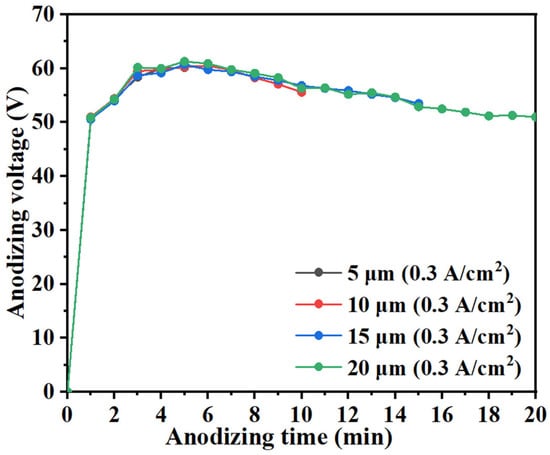
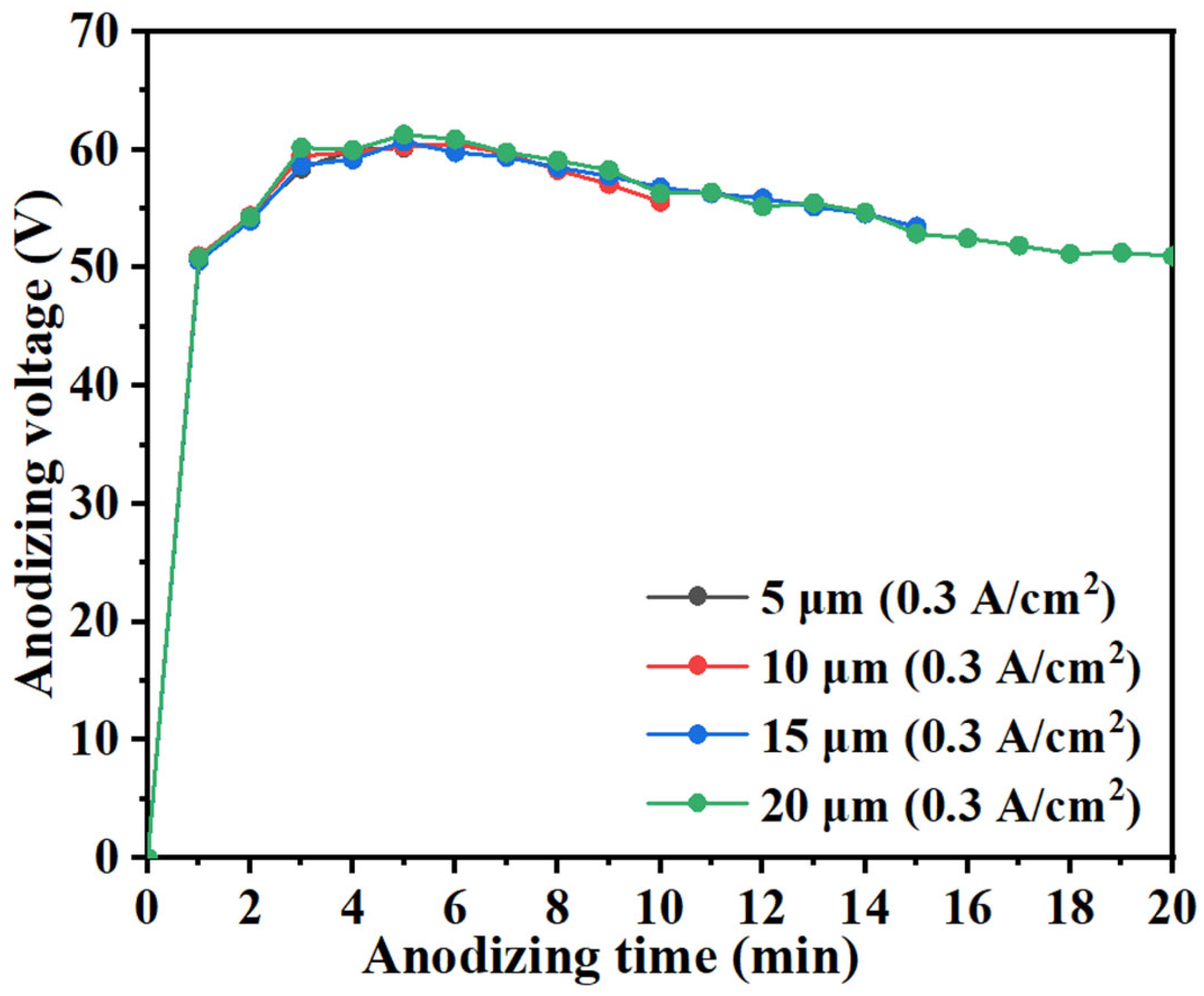
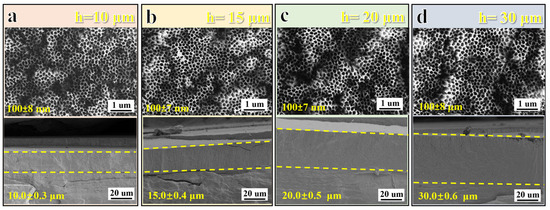
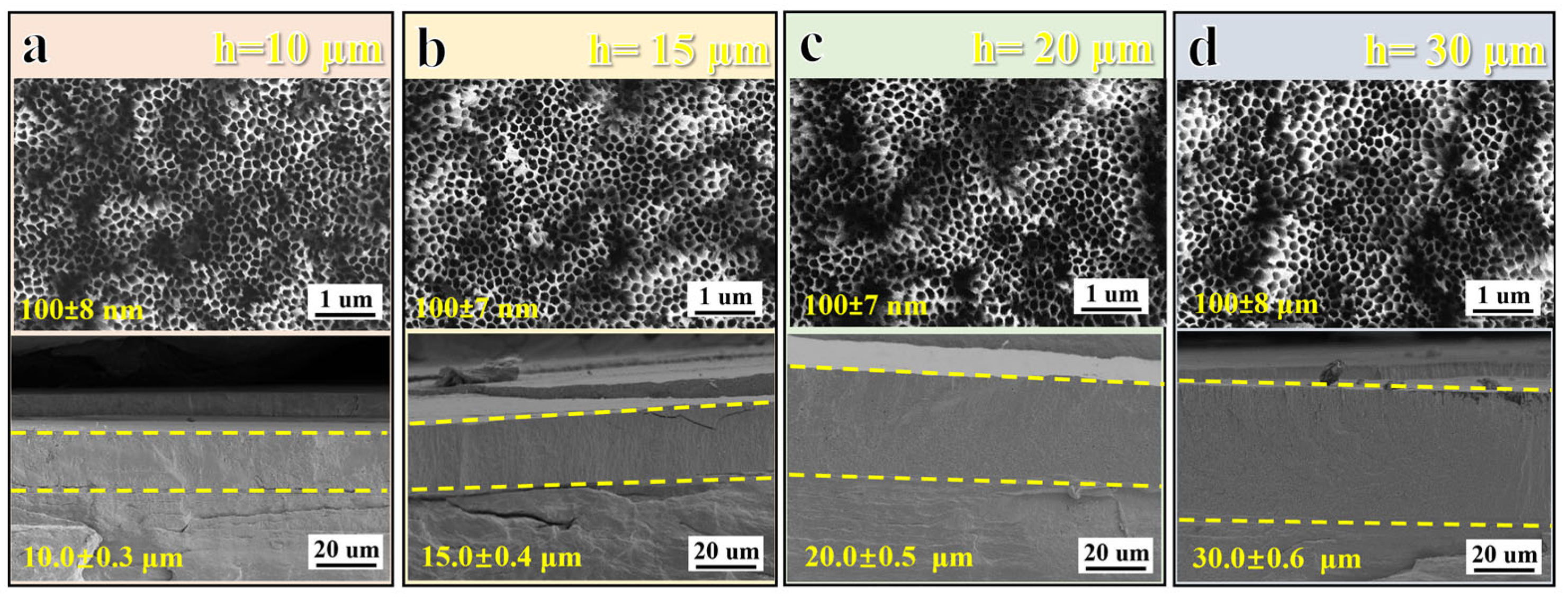
Based on the optimal thermal emissivity and temperature rise performance exhibited by the pore structure with a diameter of 100 nm, the influence of nanopore depth on heat dissipation performance was further investigated. By varying the anodization time while controlling the electrolyte type (oxalic acid) and current density (0.3 A/cm2), four types of samples with different pore depths were prepared. The anodizing voltage–time curves are shown in Figure 7. For the samples with different oxidation times (corresponding to pore depths of 10, 15, 20, and 30 μm, respectively), the steady-state anodizing voltages are very close, with values of approximately 58.5, 55.6, 53.5, and 51.2 V, respectively. Figure 8 shows the surface and cross-sectional micrographs of aluminum strands with different pore depths. After measurements, the nanopore diameters and porosities of these four structures indicated similar values, with pore diameters of approximately 100–108 nm and porosities ranging from approximately 62.6% to 65.7%. The pore depths of these structures were different, being approximately 10 μm, 15 μm, 20 μm, and 30 μm, respectively.
Figure 7.
Anodizing voltage–time curves in constant-current mode (0.3 A/cm2) recorded for different specimens.
Figure 8.
Morphological and cross-sectional images of bare strands and anodized strands with nanoporous structures of different nanopore depths: (a) h = 10 μm, (b) h = 15 μm, (c) h = 20 μm, (d) h = 30 μm.
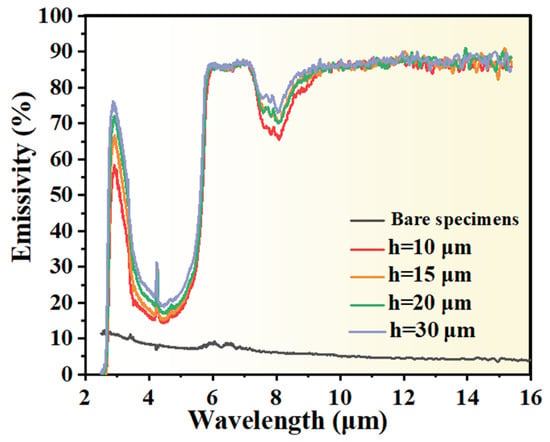
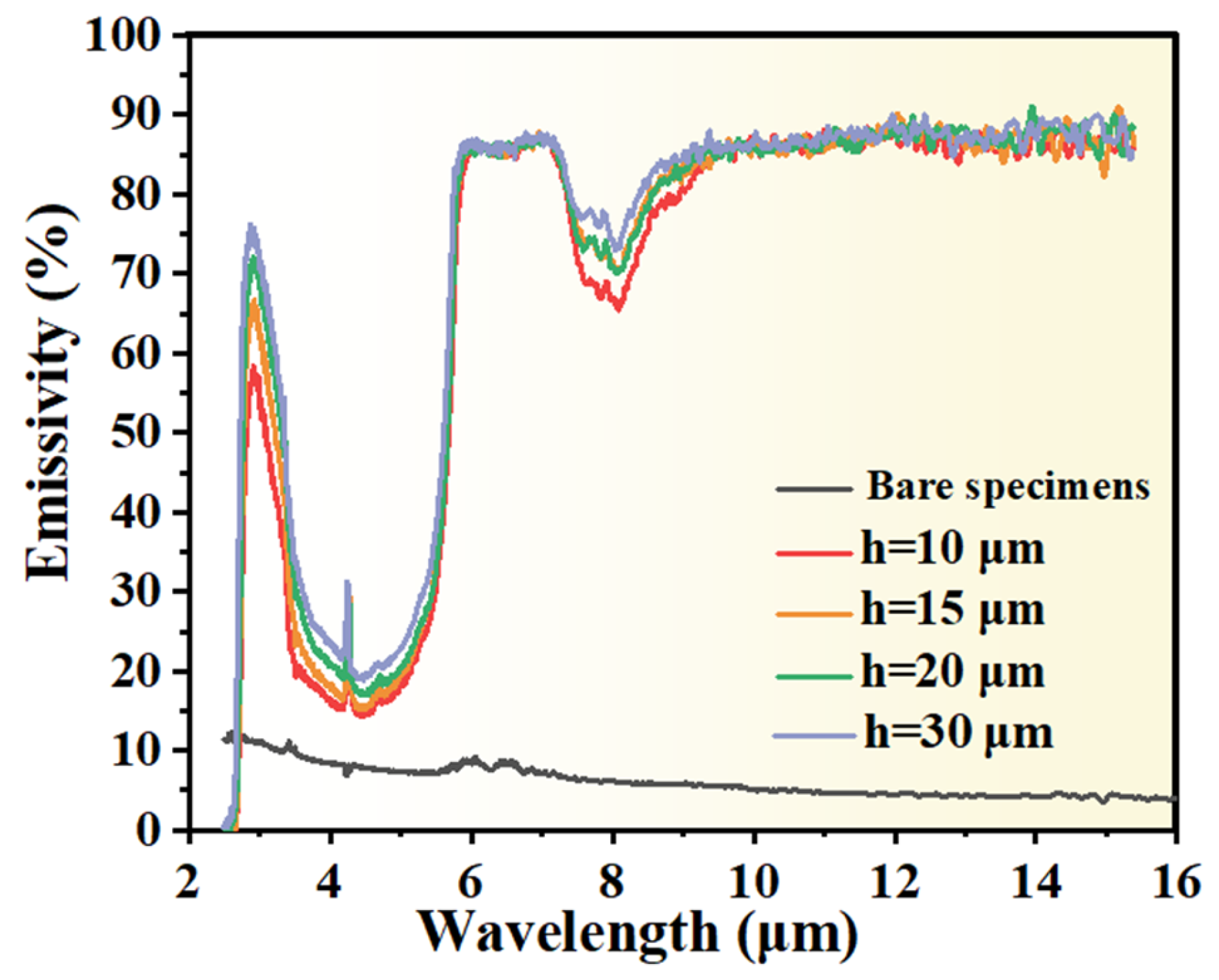
The measured infrared emissivity results for samples with different pore depths were presented in Figure 9. The bare Al wire exhibited extremely low infrared emissivity, with an average emissivity of only 5% in the atmospheric window band (8–14 μm) and 6.3% over the full infrared band. After anodization, the infrared emissivity of the porous samples increased substantially and rose with increasing pore depth. At a pore depth of 30 μm, the sample achieved the highest infrared emissivity, with the atmospheric window band (8–14 μm) emissivity increasing to 84.48% and the full-band emissivity to 52.75%. This phenomenon could be attributed to the light-trapping effect induced by the anodized nanoporous structure: incident infrared radiation underwent multiple reflections between the pore walls, and each reflection was accompanied by partial absorption by the amorphous Al2O3 medium [15]. A higher pore depth extended the propagation path of the radiation within the pores, resulting in a higher absorption fraction and thus an enhanced effective absorptivity [30]. According to Kirchhoff’s law of thermal radiation [31], under thermal equilibrium conditions, the spectral absorptivity of a material equals its spectral emissivity [32]. Consequently, the improvement in absorptivity directly led to an increase in infrared emissivity and an enhancement of heat dissipation.
Figure 9.
Emissivity of specimens with different nanopore depths: (a) h = 10 μm, (b) h = 15 μm, (c) h = 20 μm, and (d) h = 30 μm.
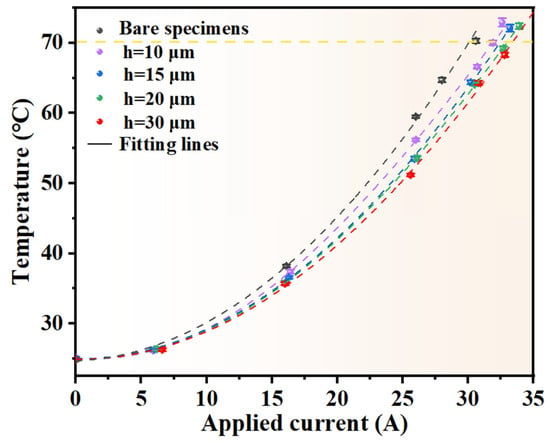
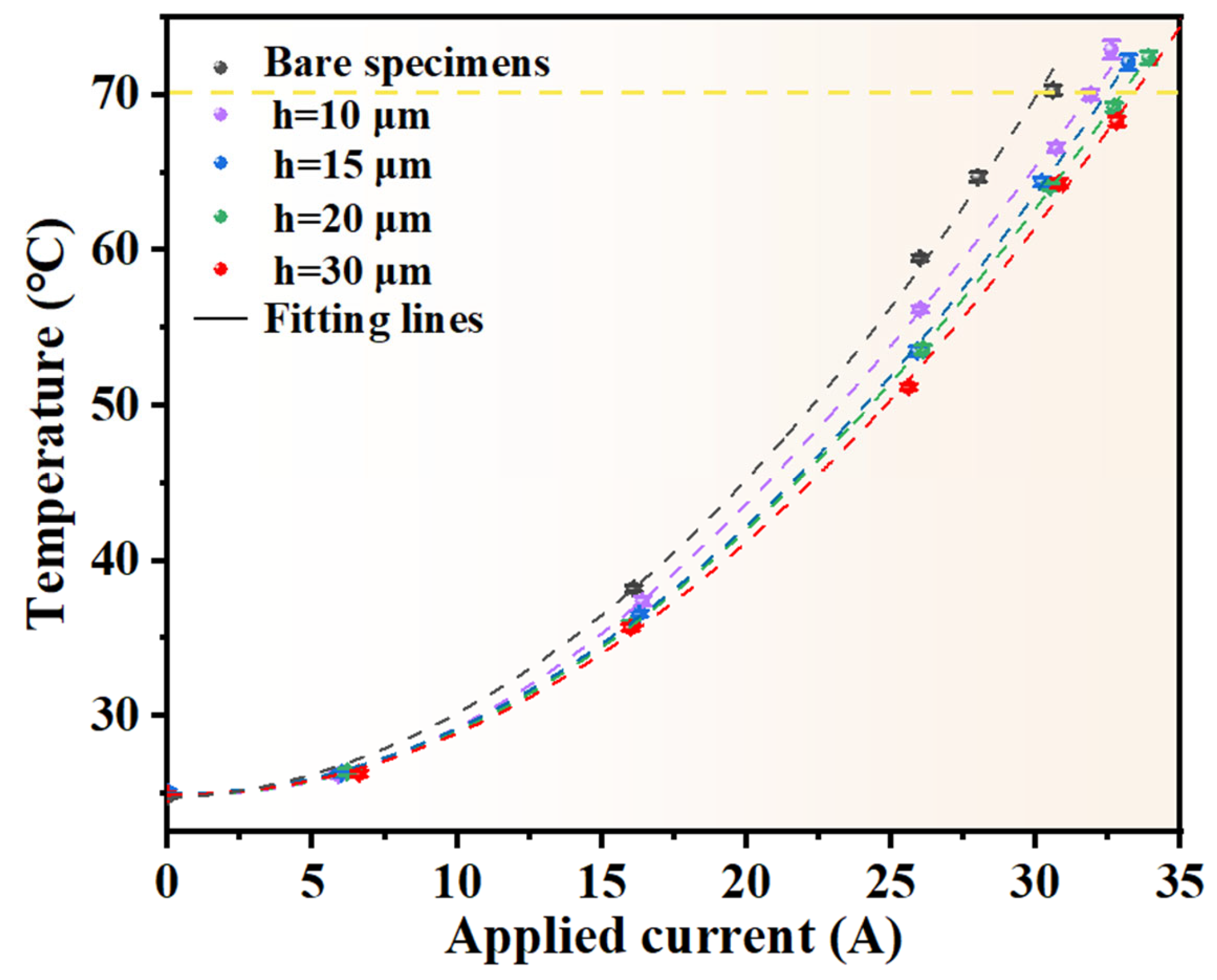
The current/temperature rise results for single strands with different pore depths were presented in Figure 10 and Table 3. The high coefficient of determination (R2) in Table 4 shows the ideal fitting. As the applied current increased, the wire surface temperature gradually rose. Under the condition that the allowable operating temperature of the wire was 70 °C [28], the steady-state currents for the untreated aluminum wire and the anodized samples (with pore depths of approximately 10 μm, 15 μm, 20 μm, and 30 μm, respectively) were 30.1 A, 31.8 A, 32.4 A, 32.9 A, and 33.4 A. This indicated that the greater the pore depth, the stronger the heat dissipation of the anodized Al strands, and thus the higher the current they could carry at the same allowable temperature [1,33]. Among them, the specimens with a pore depth of approximately 30 μm achieved the best ampacity enhancement, with their current capacity increased by 11.0% compared with the bare specimen. As the pore depth increased, the infrared emissivity of the nanoporous structure improved, and the heat dissipation area enlarged [34], thereby yielding the desired overall heat dissipation and an increase in current capacity.
Figure 10.
Temperature rises under applied current curves for anodized Al strands with different pore depths and bare Al strands.
Table 3.
Temperature rises under applied current results for anodized Al strands with different pore depths and bare Al strands.
Table 4.
Fitting parameters of the temperature-rising curves.
3.3. Temperature-Rising Properties Tests of Real Aluminum Cable Steel-Reinforced (ACSR)
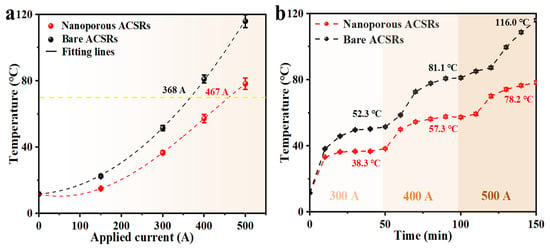
Based on the Al strand with the optimal ampacity-enhancement pore structure (h = 30 μm, d = 100 nm), this study further investigated the temperature rise behavior of aluminum conductor steel-reinforced (ACSR) conductors under applied current. The temperature rise versus current curves for the bare ACSRs and the nanoporous ACSRs are shown in Figure 11a and Table 5. The high coefficient of determination (R2) in Table 6 shows the ideal fitting. As the current increased, the temperature difference between the bare ACSRs and the nanoporous ACSRs gradually widened, and the heat dissipation advantage of the nanoporous conductor became increasingly evident. When the current reached 300 A, the surface temperature of the bare ACSRs was 51 °C, while that of the nanoporous ACSRs was 38 °C. When the current was further increased to 400 A, the surface temperature of the bare ACSRs had already exceeded the allowable operating temperature of 70 °C, reaching 81 °C, whereas the nanoporous ACSRs reached only 57 °C, still within the safe operating temperature range. As the current was raised to 500 A, the temperature of the bare ACSRs reached 115.92 °C, and the temperature of the nanoporous ACSRs reached 78.26 °C. When the bare ACSRs reached 70 °C, the temperature of the nanoporous ACSRs was only 49 °C, representing a reduction of 21 °C. Under the allowable operating temperature of 70 °C, the current of the bare ACSRs was 368 A, while that of the nanoporous ACSRs was 466 A, indicating that the nanoporous conductor provided an increase of 98 A and a 26.6% improvement in ampacity. The nanoporous conductor could effectively lower the operating temperature during power transmission and increase the current capacity at the rated operating temperature.
Figure 11.
(a) Temperature rise behavior under increased current curves and (b) temperature–time relationships for anodized and bare ACSRs.
Table 5.
Temperature rises under applied current results for anodized Al and bare Al ACSR.
Table 6.
Fitting parameters of the temperature-rising curves.
The temperature–time relationships of the ACSR at different currents were recorded during the current-induced temperature rise experiment, divided into three stages: 300 A, 400 A, and 500 A, as shown in Figure 11b, and Table 7. The results showed that the temperature of the nanoporous ACSR was consistently lower than that of the bare ACSR. During the 0–50 min stage at 300 A, the temperature of the nanoporous ACSR rose to 38.3 °C, while the bare ACSR reached 51.5 °C, indicating that the high-emissivity anodic oxide film could already effectively enhance radiative heat dissipation under low-load conditions. Upon entering the 50–100 min stage at 400 A, the bare ACSR reached 81.2 °C, while the temperature of the nanoporous ACSR decreased to 57.3 °C, widening the relative difference to 35.6%. When the current was increased to 500 A, the temperature of the bare ACSR surged to 115.9 °C, with pronounced heat accumulation, whereas the nanoporous ACSR maintained a moderate temperature of 78.3 °C. By 150 min, the temperature of the nanoporous ACSR was 32.6% lower than that of the bare ACSR, further indicating the advantage of the nanoporous structure in suppressing temperature rise behavior.
Table 7.
Temperature under applied current for the elongated time for anodized Al and bare Al ACSR.
4. Mechanisms of Improved Ampacity in Nanoporous Conductors
According to IEEE Std 738 [29], the ampacity of an aluminum transmission conductor is determined by the heat balance equation, in which the heat exchange includes convective heat dissipation, radiative heat dissipation, and solar heat gain. Since this study was conducted in an indoor environment, the solar heat gain is zero, and heat dissipation from the conductor occurs through convection and radiation.
For convective heat transfer, the heat dissipation Qd can be calculated using Newton’s cooling law [29]. In Equation (2). where A is the heat dissipation area (m2); tw is the surface temperature of the object (°C); tf is the fluid temperature (the air temperature, °C); and ac is the convective heat transfer coefficient (W/(m2·°C)). The main factors affecting convective heat transfer are: (i) heat transfer area; (ii) temperature difference between the object and the fluid; and (iii) physical properties and flow state of the fluid.
Radiative heat Qr can be described by the Stefan–Boltzmann law [29]. In Equation (3), where Qr is the radiative heat dissipation rate (w); A is the heat transfer area (m2); ε is the surface emissivity, which depends on the material type, surface temperature, and surface characteristcs; σ is the Stefan–Boltzmann constant, taken as 5.67032 × 10⁻⁸ w/(m2·K4) and Tw and Tf are the absolute temperatures (K) of the object surface and the environment, respectively.
Therefore, measures to enhance convective and radiative heat dissipation include: (i) increasing the heat dissipation area or raising the temperature difference between the object and the environment; and (ii) surface treatments to increase the surface emissivity.
In this study, the nanoporous structure yielded a surface area approximately 200–300 times that of the bare aluminum surface, significantly increasing the heat dissipation area and thus improving Qd. Moreover, the nanoporous structure effectively enhanced the radiative emissivity of the aluminum surface (see Figure 4 and Figure 7), and the interfacial thermal resistance between the in situ anodized layer and the aluminum substrate is nearly negligible, which benefits overall heat dissipation. Based on the above analysis, the nano-porous aluminum surface simultaneously enhances both the convective heat dissipation (Qd) and radiative (Qr) capabilities of the aluminum conductor, and can effectively reduce its current-induced temperature rise.
Compared with bare conductors, both the anodized aluminum single strand and the multi-stranded ACSR exhibit higher ampacity under the same temperature rise control condition of 70 °C. The single strand has a limited heat dissipation area, so the heat dissipation gain from anodization is relatively modest. In contrast, the total effective heat dissipation area of the multi-stranded ACSR is much larger than that of a single strand; after anodization, each strand surface can form a high-emissivity oxide film, thereby multiplying the overall heat dissipation capability. Moreover, the bare ACSR has low surface emissivity, and heat readily accumulates within the stranded structure and is difficult to dissipate outward, making the heat dissipation deficiency more pronounced. The staged comparison of temperature rise rates further demonstrates that the nanoporous ACSR enhances radiative heat dissipation through anodization, exhibiting significantly lower temperature rise rates than the bare ACSR at applied currents, with this advantage growing as the current load increases. This not only validates the sensitivity and applicability of the temperature rise rate as an indicator for evaluating heat dissipation but also indicates that the heat dissipation enhancement achieved by the anodized surface has greater engineering value under high current loading conditions, as it can suppress operational risks such as excessive sag caused by rapid temperature rise. Therefore, the ACSR conductor with a nanoporous structure fabricated by anodization possesses remarkable heat dissipation behavior and higher ampacity.
5. Conclusions
In this study, the effects of different nanoporous structures (varying pore diameters and pore depths) on the heat dissipation and temperature-rising properties of aluminum conductors were investigated. Aluminum single strands with nanoporous structures of different pore diameters and depths were fabricated by anodization. By comparing their temperature rise characteristics, the optimal structural parameters were determined to be a pore diameter of approximately 100 nm and a pore depth of approximately 30 μm; this structure increased the ampacity by about 11% at the allowable temperature of 70 °C compared with the bare single strand. Compared with the bare ACSR, the nanoporous ACSR exhibited a 26.6% enhancement in ampacity. At a high current of 500 A, its operating temperature was reduced by approximately 32.6% relative to that of the bare ACSR.
The main findings are as follows:
- (1)
- The optimized nanoporous structure (100 nm pore diameter, 30 μm pore depth) exhibited the highest infrared emissivity among all tested samples, reaching 0.6–0.8, compared with approximately 0.05–0.1 for bare aluminum.
- (2)
- The high infrared emissivity promotes radiative cooling, while the increased effective surface area enhances convective heat transfer, together contributing to the observed temperature reduction.
- (3)
- The multi-strand configuration of the ACSR further amplifies the total heat dissipation area, resulting in a greater ampacity enhancement for the stranded conductor (26.6%) than for the single strand (11%).
While these laboratory-scale results demonstrate that nanoporous ACSR conductors produced by anodization can offer significant ampacity enhancement and energy-saving benefits, further field validation and long-term durability assessments are necessary before their practical application in power transmission systems can be considered.
Supplementary Materials
The following supporting information can be downloaded at: https://www.mdpi.com/article/10.3390/coatings16070845/s1, Figure S1 XRD pattern of anodized Al conductors; Figure S2. EDS content of anodized Al conductors; Figure S3. Micro-morphologies of bare and nanoporous conductors after thermal aging of 30~90 days; Figure S4. Temperature rises under applied current curves for conductors after thermal aging; Figure S5. Micro-morphologies of bare and nanoporous conductors after UV aging; Figure S6. Temperature rises under applied current curves for conductors after thermal aging [35,36].
Author Contributions
Conceptualization, X.D., J.X., and Y.Y.; validation, J.Z., X.H., S.L., H.X., A.L., and R.L.; formal analysis, J.Z., X.H., H.X., X.H., A.L., Z.Y., and R.L.; investigation, X.D. and J.X.; resources, J.Z.; writing—original draft preparation, X.D. and J.X.; writing—review and editing, X.D.; visualization, J.Z. and Y.Y.; supervision, Y.Y. and R.L.; project administration, J.Z.; funding acquisition, J.Z. and Y.Y. All authors have read and agreed to the published version of the manuscript.
Funding
This research was funded by the Research Service on Preparation and Performance of Novel Heat-Dissipating and Capacity-Increasing Conductors, State Grid Chongqing Electric Power Research Institute (Contract Number: 2025 YuDian KeJi 88#).
Data Availability Statement
Data are contained within this article.
Conflicts of Interest
Authors Jing Zhao, Huiying Xiang, Shengfang Li were employed by the company Institute of Electric Power Science of Chongqing Power Grid Co., Ltd. The remaining authors declare that the research was conducted in the absence of any commercial or financial relationships that could be construed as potential conflicts of interest.
References
- Douglass, D.A.; Edris, A.A.; Pritchard, G.A. Field application of a dynamic thermal circuit rating method. IEEE Trans. Power Deliv. 1997, 12, 823–831. [Google Scholar] [CrossRef] [Scilit]
- Guo, Z.; Ma, L.; Liu, P.; Jones, I.; Li, Z. A multi-regional modelling and optimization approach to China’s power generation and transmission planning. Energy 2016, 116, 1348–1359. [Google Scholar] [CrossRef] [Scilit]
- Guddanti, K.P.; Bharati, A.K.; Nekkalapu, S.; Mcwherter, J.; Morris, S.L. A Comprehensive Review: Impacts of Extreme Temperatures Due to Climate Change on Power Grid Infrastructure and Operation. IEEE Access 2025, 13, 49375–49415. [Google Scholar] [CrossRef] [Scilit]
- Dai, X.; Yuan, Y.; Liao, R.; Ci, W. Preparation and Experimental Studies of Novel Anti-icing Aluminum Conductors to Enhance the Transmission Capacity. In Proceedings of the 2023 6th International Conference on Energy, Electrical and Power Engineering (CEEPE), 12–14 May 2023; IEEE: Piscataway, NJ, USA, 2023; pp. 32–36. [Google Scholar]
- Wu, Y.-K.; Chang, S.M.; Hu, Y.-L. Literature Review of Power System Blackouts. Energy Procedia 2017, 141, 428–431. [Google Scholar] [CrossRef] [Scilit]
- Byles, D.; Kuretich, P.; Mohagheghi, S. Generation and Transmission Expansion Planning: Nexus of Resilience, Sustainability, and Equity. Processes 2024, 12, 590. [Google Scholar] [CrossRef] [Scilit]
- Chae, D.; Lim, H.; So, S.; Son, S.; Ju, S.; Kim, W.; Rho, J.; Lee, H. Spectrally Selective Nanoparticle Mixture Coating for Passive Daytime Radiative Cooling. ACS Appl. Mater. Interfaces 2021, 13, 21119–21126. [Google Scholar] [CrossRef] [Scilit] [PubMed]
- Muñoz, F.; Torres, F.; Martínez, S.; Roa, C.; García, L. Case study of the increase in capacity of transmission lines in the Chilean system through probabilistic calculation model based on dynamic thermal rating. Electr. Power Syst. Res. 2019, 170, 35–47. [Google Scholar] [CrossRef] [Scilit]
- Yue, Q.; Zhang, L.; He, C.-Y.; Liu, B.-H.; Wang, W.-M.; Lu, Z.-W.; Liu, G.; Gao, X.-H. Polymer composites with hierarchical architecture and dielectric particles for efficient daytime subambient radiative cooling. J. Mater. Chem. A 2023, 11, 3126–3135. [Google Scholar] [CrossRef] [Scilit]
- Mandal, J.; Fu, Y.; Overvig, A.C.; Jia, M.; Sun, K.; Shi, N.N.; Zhou, H.; Xiao, X.; Yu, N.; Yang, Y. Hierarchically porous polymer coatings for highly efficient passive daytime radiative cooling. Science 2018, 362, 315–319. [Google Scholar] [CrossRef] [Scilit] [PubMed]
- Cheng, Z.; Han, H.; Wang, F.; Yan, Y.; Shi, X.; Liang, H.; Zhang, X.; Shuai, Y. Efficient radiative cooling coating with biomimetic human skin wrinkle structure. Nano Energy 2021, 89, 106377. [Google Scholar] [CrossRef] [Scilit]
- Xiang, B.; Zhang, R.; Luo, Y.; Zhang, S.; Xu, L.; Min, H.; Tang, S.; Meng, X. 3D porous polymer film with designed pore architecture and auto-deposited SiO2 for highly efficient passive radiative cooling. Nano Energy 2021, 81, 105600. [Google Scholar] [CrossRef] [Scilit]
- Poznyak, A.; Knörnschild, G.; Karoza, A.; Norek, M.; Pligovka, A. Peculiar Porous Aluminum Oxide Films Produced via Electrochemical Anodizing in Malonic Acid Solution with Arsenazo-I Additive. Materials 2021, 14, 5118. [Google Scholar] [CrossRef] [Scilit] [PubMed]
- Ghorbanhossaini, A.; Rafiee, R.; Pligovka, A.; Salerno, M. Dental composites with strength after aging improved by using anodic nanoporous fillers: Experimental results, modeling, and simulations. Eng. Comput. 2023, 39, 387–398. [Google Scholar]
- Díaz-Lobo, A.; Martin-Gonzalez, M.; Morales-Sabio, Á.; Manzano, C.V. Suitability of Anodic Porous Alumina as a Passive Radiative Cooler: An In-Depth Study. ACS Appl. Opt. Mater. 2024, 2, 980–990. [Google Scholar] [CrossRef] [Scilit] [PubMed]
- Lee, W.; Ji, R.; Gösele, U.; Nielsch, K. Fast fabrication of long-range ordered porous alumina membranes by hard anodization. Nat. Mater. 2006, 5, 741–747. [Google Scholar] [CrossRef] [Scilit] [PubMed]
- Lee, J.; Kim, D.; Choi, C.-H.; Chung, W. Nanoporous anodic alumina oxide layer and its sealing for the enhancement of radiative heat dissipation of aluminum alloy. Nano Energy 2017, 31, 504–513. [Google Scholar] [CrossRef] [Scilit]
- Tang, H.; Zhou, Z.; Jiao, S.; Zhang, Y.; Li, S.; Zhang, D.; Zhang, J.; Liu, J.; Zhao, D. Radiative cooling of solar cells with scalable and high-performance nanoporous anodic aluminum oxide. Sol. Energy Mater. Sol. Cells 2022, 235, 111498. [Google Scholar] [CrossRef] [Scilit]
- Wu, X.; Qin, W.; Cui, B.; Jiang, Z.; Lu, W. Black Ceramic Thermal Control Coating Prepared by Microarc Oxidation. Int. J. Appl. Ceram. Technol. 2007, 4, 269–275. [Google Scholar] [CrossRef] [Scilit]
- Li, W.; Zhu, Y.; He, Z.; Gao, L.; Ma, Z. Effect of the Dynamic Porous Structure Generation in Laser Irradiated Multi-Functional Coatings. Materials 2024, 17, 4493. [Google Scholar] [CrossRef] [Scilit] [PubMed]
- Xiang, H.; Yuan, Y.; Zhang, C.; Dai, X.; Zhu, T.; Song, L.; Gai, Y.; Liao, R. Key Factors Affecting Durable Anti-Icing of Slippery Surfaces: Pore Size and Porosity. ACS Appl. Mater. Interfaces 2023, 15, 3599–3612. [Google Scholar] [CrossRef] [Scilit] [PubMed]
- Chernyakova, K.; Ispas, A.; Karpicz, R.; Ecke, G.; Vrublevsky, I.; Bund, A. Formation of ordered anodic alumina nanofibers during aluminum anodizing in oxalic acid at high voltage and electrical power. Surf. Coat. Technol. 2020, 394, 125813. [Google Scholar] [CrossRef] [Scilit]
- Liu, G.Y.; Yuan, Y.; Liao, R.J.; Xiang, H.Y.; Wang, L.; Yu, Q.; Zhang, C. Robust and self-healing superhydrophobic aluminum surface with excellent anti-icing performance. Surf. Interfaces 2022, 28, 101588. [Google Scholar] [CrossRef] [Scilit]
- Zhu, W.; Deng, Y.; Guo, X. Influence of adjusting the anodizing and aging sequences on the microstructure, fatigue property and corrosion resistance of anodized AA6082 alloys. Mater. Charact. 2022, 189, 111941. [Google Scholar] [CrossRef] [Scilit]
- Xu, R.; Zeng, Z.; Lei, Y. Well-defined nanostructuring with designable anodic aluminum oxide template. Nat. Commun. 2022, 13, 2435. [Google Scholar] [CrossRef] [Scilit] [PubMed]
- Dai, X.; Yuan, Y.; Liao, R.; Liu, G.; Zhang, C.; Huang, H. Experimental Studies of a Novel Anti-Icing Aluminum Conductor With Excellent Durability and Improved Electrical Performance. IEEE Trans. Power Deliv. 2023, 38, 4489–4500. [Google Scholar] [CrossRef] [Scilit]
- Poznyak, A.; Pligovka, A.; Turavets, U.; Norek, M. On-Aluminum and Barrier Anodic Oxide: Meeting the Challenges of Chemical Dissolution Rate in Various Acids and Solutions. Coatings 2020, 10, 875. [Google Scholar] [CrossRef] [Scilit]
- Dai, X.; Yuan, Y.; Liao, R.; Xiang, H.; Chen, K. Experimental Studies on Anti-Icing Properties of Anodized Conductors With Nanoporous Structures in Natural Environments. IEEE Trans. Power Deliv. 2026, 41, 522–533. [Google Scholar] [CrossRef] [Scilit]
- IEEE Std 738; Calculating the Current-Temperature Relationship of Bare Overhead Conductor. IEEE Power and Energy Society: Piscataway, NJ, USA, 2012.
- Liu, X.; Tyler, T.; Starr, T.; Starr, A.F.; Jokerst, N.M.; Padilla, W.J. Taming the Blackbody with Infrared Metamaterials as Selective Thermal Emitters. Phys. Rev. Lett. 2011, 107, 045901. [Google Scholar] [CrossRef] [Scilit] [PubMed]
- Tanyi, E.K.; Burton, B.T.; Narimanov, E.E.; Noginov, M.A. Thermal radiation of Er doped dielectric crystals: Probing the range of applicability of the Kirchhoff’s law. Sci. Rep. 2017, 7, 2040. [Google Scholar] [CrossRef] [Scilit] [PubMed]
- Piao, F.; Wei, L.; Liu, Y.; Zhang, Y. Study on the Influence of Thermal Radiation Wavelength Control on Radiative Cooling. In Proceedings of the 2024 3rd International Conference on Advanced Sensing, Intelligent Manufacturing (ASIM), 20–22 December 2024; IEEE: Piscataway, NJ, USA, 2024; pp. 142–146. [Google Scholar]
- Black, C.R.; Chisholm, W.A. Key Considerations for the Selection of Dynamic Thermal Line Rating Systems. IEEE Trans. Power Deliv. 2015, 30, 2154–2162. [Google Scholar] [CrossRef] [Scilit]
- Zhang, Z.; Collins, M.; Lau, E.; Botting, C.; Bahrami, M. The Role of Anodization in Naturally Cooled Heat Sinks for Power Electronic Devices. J. Heat Transf. 2020, 142, 052901. [Google Scholar] [CrossRef] [Scilit]
- Morozov, I.G.; Belousova, O.V.; Sathasivam, S.; Kuznetcov, M.V. Room-temperature ferromagnetism in an amorphous alumina on the surface of aluminum nanoparticles. J. Alloys Compd. 2019, 777, 1347–1356. [Google Scholar] [CrossRef] [Scilit]
- Leontiev, A.P.; Roslyakov, I.V.; Napolskii, K.S. Complex influence of temperature on oxalic acid anodizing of aluminium. Electrochim. Acta. 2019, 319, 88–94. [Google Scholar] [CrossRef] [Scilit]

Disclaimer/Publisher’s Note: The statements, opinions and data contained in all publications are solely those of the individual author(s) and contributor(s) and not of MDPI and/or the editor(s). MDPI and/or the editor(s) disclaim responsibility for any injury to people or property resulting from any ideas, methods, instructions or products referred to in the content. |
© 2026 by the authors. Licensee MDPI, Basel, Switzerland. This article is an open access article distributed under the terms and conditions of the Creative Commons Attribution (CC BY) license.