


Abstract
To address the inherent drawbacks of micro-arc oxidation (MAO), this study employed MAO combined with sol–gel processing to fabricate ZrO2/Al2O3-CeO2 composite coatings on ZrH1.8 surfaces, aiming to solve the hydrogen evolution problem of zirconium hydride (ZrH1.8) materials in high-temperature environments. By adjusting the aluminum concentration in the sol (0.1~0.5 mol/L), a series of composite thin films were prepared on the ZrH1.8 surface using MAO combined with dip-coating, and their surface morphology and phase composition were characterized. The microstructure, morphology, and hydrogen barrier performance of the thin films were systematically analyzed using scanning electron microscopy (SEM), XRD, laser confocal microscopy, and quadrupole mass spectrometry. The results showed that the composite coating had a low surface porosity, with a maximum hydrogen permeation reduction factor (PRF) of 18.1. When the aluminum concentration was 0.4 mol/L, the relative content of tetragonal ZrO2 (T-ZrO2) reached 13.88%, the surface porosity was as low as 4.87%, and the initial temperature of hydrogen loss was increased to 730 °C. Mechanism analysis indicated that CeO2 may stabilize the tetragonal phase (T-ZrO2) of ZrO2 through solid solution effects and inhibit the phase transformation to monoclinic phase (M-ZrO2), thereby reducing cracks caused by volume expansion. Meanwhile, the synergistic effect of the MAO densified layer and the sol–gel sealed porous layer significantly reduced the coating porosity and blocked hydrogen diffusion paths, thus achieving excellent hydrogen barrier performance under high-temperature conditions.
1. Introduction
ZrH1.8 possesses advantages such as high hydrogen content, good thermal stability, a negative temperature coefficient of reactivity, and a low neutron absorption cross-section, making it irreplaceable in nuclear reactor systems [1,2,3,4]. However, due to the operating temperature of space nuclear power systems being approximately 650 °C, hydrogen in ZrH1.8 readily decomposes at this temperature, thereby reducing its service life as a moderator [5], which is highly unfavorable for long-term operation. At about 650 °C, the weakened Zr-H bond allows lattice hydrogen to overcome desorption energy and diffuse outwards via coating pores in gaseous H2 form under thermal driving force. Therefore, preparing a zirconium oxide hydrogen barrier film on the surface of ZrH1.8 [6,7,8] is an effective method to significantly extend its service life. Traditional methods for improving defects in MAO coatings primarily focus on optimizing electrolyte composition, adjusting electrical parameters, and post-treatment strengthening [9]. While these can reduce defect density to some extent, they cannot fundamentally eliminate cracks and pores caused by phase transformation and thermal stress, resulting in limited pore sealing and repair effects. The sol–gel method offers advantages such as low coating temperature, good coating uniformity, strong compositional controllability, and high adhesion to the substrate [10,11], enabling the fabrication of ultra-thin, dense sealing layers on MAO coatings to precisely fill surface and internal defects. The combination of the two technologies produces a synergistic effect: the inner MAO layer ensures reliable bonding with the substrate, while the outer sol–gel layer seals pores to block hydrogen diffusion paths. Al2O3 has high density, high hardness, good chemical stability, and low hydrogen permeability. CeO2 has unique oxygen vacancy storage and release capabilities [12,13]. Ce4+ can enter the ZrO2 lattice via ionic substitution to form cerium-zirconium solid solutions, effectively stabilizing tetragonal ZrO2 (T-ZrO2) and inhibiting the formation of phase transformation cracks [14]. The combination of both can achieve the dual effects of structural sealing and phase stabilization [6,10,15], making it an ideal material for sealing and repairing MAO coatings.
To address the problem of hydrogen loss in metal hydrides at high temperatures, hydrogen-blocking membrane layers are typically used to suppress the external diffusion rate of hydrogen [16]. For internal diffusion, a common approach is to dope metal atoms to form stable compounds with hydrogen atoms. However, introducing impurity ions into the matrix often affects the hydrogen barrier efficiency, and this method still requires further exploration. For gaseous desorption, hydrogen-blocking membrane layers are usually employed to inhibit hydrogen external diffusion and achieve hydrogen blocking, which is a simple and practical method and has become the mainstream solution for hydrogen loss problems. Chen Weidong et al. [9] successfully prepared a 40-micron electroplated chromium layer using an electroplating method at a current density of 3.6 A·dm−2. This technology significantly reduces the hydrogen loss rate of zirconium hydride at high temperatures and is one of the most common methods currently used for preparing hydrogen-blocking permeation membranes. Yan Guoqing et al. [16] studied and developed a multi-element hydrogen-blocking permeation membrane composed of C, N, and O. The interaction between these three elements contributes to the membrane’s hydrogen-blocking properties. Additionally, by providing special oxygen-deficient structures such as Zr2N2O and T-ZrO2, hydrogen molecule penetration is prevented, thereby greatly enhancing the membrane’s hydrogen-blocking performance. Wang Zhigang [9] used an orthogonal experimental approach to study the preparation of MAO membranes. Their research found that the hydrogen-blocking performance of MAO membranes was significantly improved, and adjusting the parameters of the MAO power supply did not affect the membrane performance. Using arc deposition technology, Wang J et al. [17,18] prepared a novel Er2O3 membrane using F82H (8Cr2W) steel. Studies showed that hydrogen diffusion in oxides mainly occurs through grain boundaries, and fine grains can effectively prevent hydrogen permeation.
This paper takes the sol–gel aluminum concentration as a single variable and prepares a series of composite coatings using the dip-coating pulling and annealing process. By combining XRD, SEM, EDS, XPS, laser confocal microscopy, scratch tester, and high-temperature dehydrogenation experiments, comprehensive characterization is conducted from multiple dimensions including macroscopic properties, microscopic morphology, phase structure, elemental distribution, and chemical bond states. The regulation rules of aluminum concentration on the structural evolution and hydrogen-blocking behavior of composite coatings are systematically analyzed. The growth mechanism of composite coatings and multi-scale hydrogen-blocking mechanisms are revealed, providing scientific guidance and data support for the design, preparation, and engineering application of high-performance hydrogen-blocking coatings on zirconium hydride surfaces.
The existing hydrogen resistance schemes such as chromium plating and single MAO coating have their own shortcomings, and there is a lack of research on simultaneous sealing and crystal stabilization of Al2O3-CeO2 sol. In this paper, the composite process was used to explore the regulation of aluminum concentration on the microstructure and hydrogen resistance of the coating. Therefore, in this work, the composite coating was prepared by adjusting the concentration of sol Al, and the related experimental research was carried out.
2. Material and Experimental Methods
2.1. Materials
The matrix material of this experiment is ZrH1.8 provided by Beijing Ytria Group (Beijing, China), with an H/Zr atomic ratio of approximately 1:8. The ZrH1.8 samples are cylindrical with dimensions of φ20 × 100 mm. They are cut into thin slices of φ20 × 3 mm using CNC wire cutting. To facilitate MAO experiments, a φ2 mm circular hole is drilled in each sample using a bench drill, with the hole positioned close to the sample edge. After drilling, the samples are progressively polished with 400# to 1500# sandpaper until the surface exhibits a metallic luster. They are then ultrasonically cleaned in anhydrous ethanol for 10 min. Following cleaning, the samples are weighed, and a MAO layer is prepared on the ZrH1.8 surface.
2.2. MAO Treatment
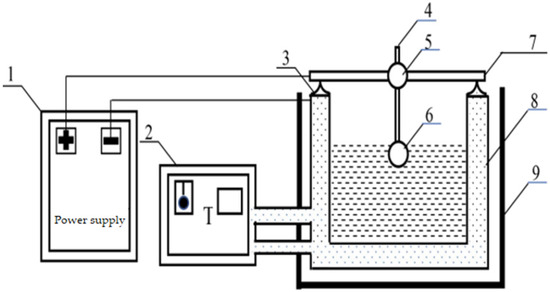
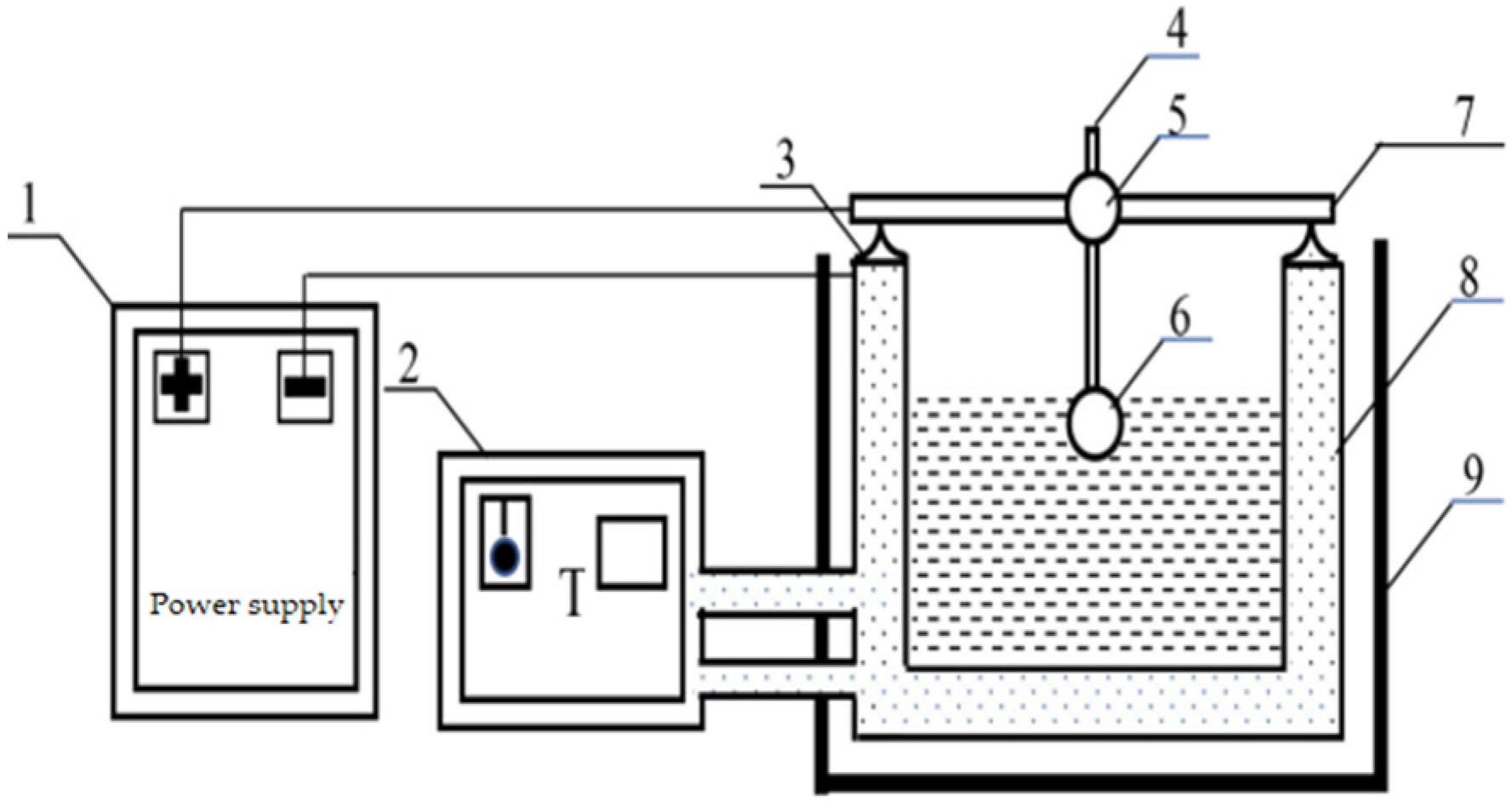
This experiment first prepares an oxide coating on the surface of ZrH1.8 using MAO. The components of the MAO equipment include a MAO power supply, an electrolyte cooling circulation device, an electrolyte stirring system, and a bipolar power supply, as shown in Figure 1. The preparation and concentration of the MAO electrolyte used in this study are detailed in Table 1. The MAO equipment employed is the T-MAO-B30 (Xi’an Aotian New Material Co., Ltd., Xi’an, China), with its process parameters detailed in Table 2.
Figure 1.
Schematic diagram of MAO equipment (1. MAO power supply; 2. Cooling water circulation control system; 3. Insulation bracket; 4. Aluminum wire; 5. Tighten thread; 6. sample; 7. Stainless steel electrode; 8. Stainless steel electrolytic cell; 9. Insulation cover).
Table 1.
Experimental reagents and concentrations used in MAO electrolyte.
Table 2.
MAO electrical parameters.
2.3. Preparation of the Sol Layer
Al2O3-CeO2 composite sol was prepared using aluminum nitrate as the aluminum source, cerium nitrate as the cerium source, anhydrous ethanol as the solvent, and citric acid as the chelating agent. Sol systems with aluminum concentrations of 0.1, 0.2, 0.3, 0.4, and 0.5 mol/L were formulated, with a fixed molar ratio of cerium to aluminum of 1:8. In our preliminary experiments, Ce/Al molar ratios of 1:4, 1:6, 1:8, 1:10, and 1:12 were systematically screened. The results indicated that excessively high Ce content (e.g., 1:4, 1:6) led to poor sol stability and obvious agglomeration during aging. In contrast, excessively low Ce content (e.g., 1:10, 1:12) weakened the lattice doping effect of Ce4+ and reduced the stabilization ability of tetragonal ZrO2. The 1:8 molar ratio was therefore selected, which can well balance the long-term stability of composite sol and the phase regulation effect of Ce dopant. Al concentration was selected as the unique variable since it dominates sol viscosity and final Al2O3 content, avoiding disturbance from varying Ce amounts. Aluminum nitrate and cerium nitrate were weighed according to the stoichiometric ratio and slowly added to anhydrous ethanol. The mixture was magnetically stirred at room temperature for 30 min until the solids were completely dissolved. Citric acid chelating agent was then slowly added dropwise, and stirring continued for 60 min to ensure thorough chelation of metal ions. The prepared sol was aged at room temperature for 24 h to obtain a stable and uniform composite sol. A self-made dip-coating device was used for coating. Micro-arc oxidized samples were vertically immersed in the sol for 30 s to allow the sol to fully wet the surface and interior of the film defects. The samples were then uniformly pulled out at a speed of 5 mm/s. After pulling, the samples were dried in an 80 °C oven for 30 min to remove solvents and moisture. They were then transferred to a muffle furnace for annealing at a heating rate of 5 °C/min, held at 500 °C for 3 h, and cooled to room temperature with the furnace. Finally, MAO/Al2O3-CeO2 composite coatings were obtained.
2.4. Characterization
Film thickness was characterized by an Oxford CMI233 magnetic thickness gauge (Oxford Instruments, Oxford, UK). Five different positions on each sample were tested, and the average value was taken. The mass of the samples before and after coating was weighed using an electronic analytical balance with a precision of 0.0001 g to calculate the percentage increase in mass. The phase constitution of as-prepared coatings was characterized via XRD using a Rigaku Smart Lab 9 kW diffractometer (Rigaku, Tokyo, Japan). The testing conditions were Cu Kα radiation, tube voltage of 40 kV, tube current of 40 mA, scanning range of 20–80°, and scanning speed of 5°/min. The volume fractions of T-ZrO2 and M-ZrO2 were calculated using the RIR method. Surface and cross-sectional morphologies of the as-prepared coatings were characterized via scanning electron microscopy (SEM, NOVA NANOSEM 230, FEI, Hillsboro, OR, USA) operated at an accelerating voltage of 20 kV. An in situ equipped energy-dispersive X-ray spectrometer (EDS) attached to the identical SEM instrument was adopted for elemental mapping and semi-quantitative compositional analysis of O, Zr, Al, and Ce. For cross-sectional SEM observation, samples were embedded in cold epoxy resin, ground sequentially from 400# to 2000# abrasive papers, polished with diamond paste, ultrasonically cleaned in ethanol and dried at ambient temperature before observation. A laser confocal microscope was used to obtain the three-dimensional surface morphology of the coatings and calculate the average roughness Ra, with the average value taken from three regions per sample. The adhesion strength between the coating and substrate was determined by scratch testing using a scratch tester. A Rockwell-C diamond indenter with spherical tip radius of 200 μm was adopted for scratch test. Preload was set as 1 N, loading rate was 10 N/min and total scratch length was 5 mm. XPS was performed on an Escalab 250Xi spectrometer (Thermo Scientific, Waltham, MA, USA) equipped with an Al Kα X-ray source (1486.6 eV). All XPS spectra were processed via CasaXPS software (Version 2.3.25PR1) with Shirley background subtraction. C1s peak at 284.8 eV was used for charge correction, and fixed FWHM constraints were employed to separate overlapping Ce3+ and Ce4+ components in Ce3d spectra. XPS measurement was only performed on the sample prepared at an Al concentration of 0.4 mol/L (optimal sample). The phase variation in other groups had been characterized by XRD and EDS, so extra XPS tests for all specimens were unnecessary.
2.5. Hydrogen Barrier Performance Testing
There are two characterization methods for the hydrogen barrier performance of the coating. One is to conduct a high-temperature dehydrogenation experiment, characterized by the hydrogen PRF. The other involves monitoring hydrogen release during temperature elevation using a quadrupole mass spectrometer, with performance characterized by the rate and temperature of hydrogen loss.
Before heating, the quartz tube was purged with flowing high-purity Ar (50 mL/min for 30 min) to remove air inside the reactor. The sample is heated from 25 °C to 750 °C at a rate of 5 °C/min. It is then held at 750 °C for 10 h before being cooled down with the furnace to room temperature. After the test, the hydrogen barrier performance of the coating is characterized by Equation (1) hydrogen PRF. A higher PRF value indicates better hydrogen barrier performance.
The experimental process for monitoring hydrogen evolution during heating using a quadrupole mass spectrometer is similar to the high-temperature dehydrogenation experimental process. The difference is that before the experiment begins, the tube furnace and the quadrupole mass spectrometer must be connected via a three-way valve. The mass spectrometer aspirates gas through its self-aspirating inlet to monitor the temperature rise process of the tube furnace. Under an argon atmosphere, the sample is heated from 25 °C to 750 °C at a rate of 5 °C/min, and then cooled to room temperature with the furnace. After the experiment, a hydrogen release rate versus temperature curve can be obtained. A smaller hydrogen loss rate indicates a slower hydrogen loss speed and better hydrogen-blocking effect.
2.6. Layer-by-Layer Thinning Experiment
The coating layer-by-layer thinning test was carried out with a precision metallographic polishing instrument. Approximately 2 μm coating was removed per polishing cycle. The actual thinning depth was verified alternately by micrometer and laser confocal thickness measurement after each polishing step.
3. Results
3.1. Thickness and Weight Gain
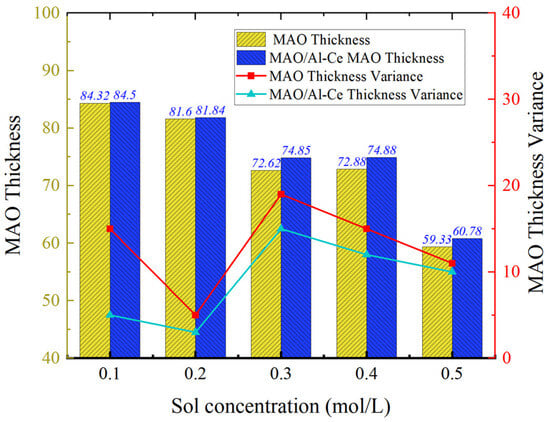
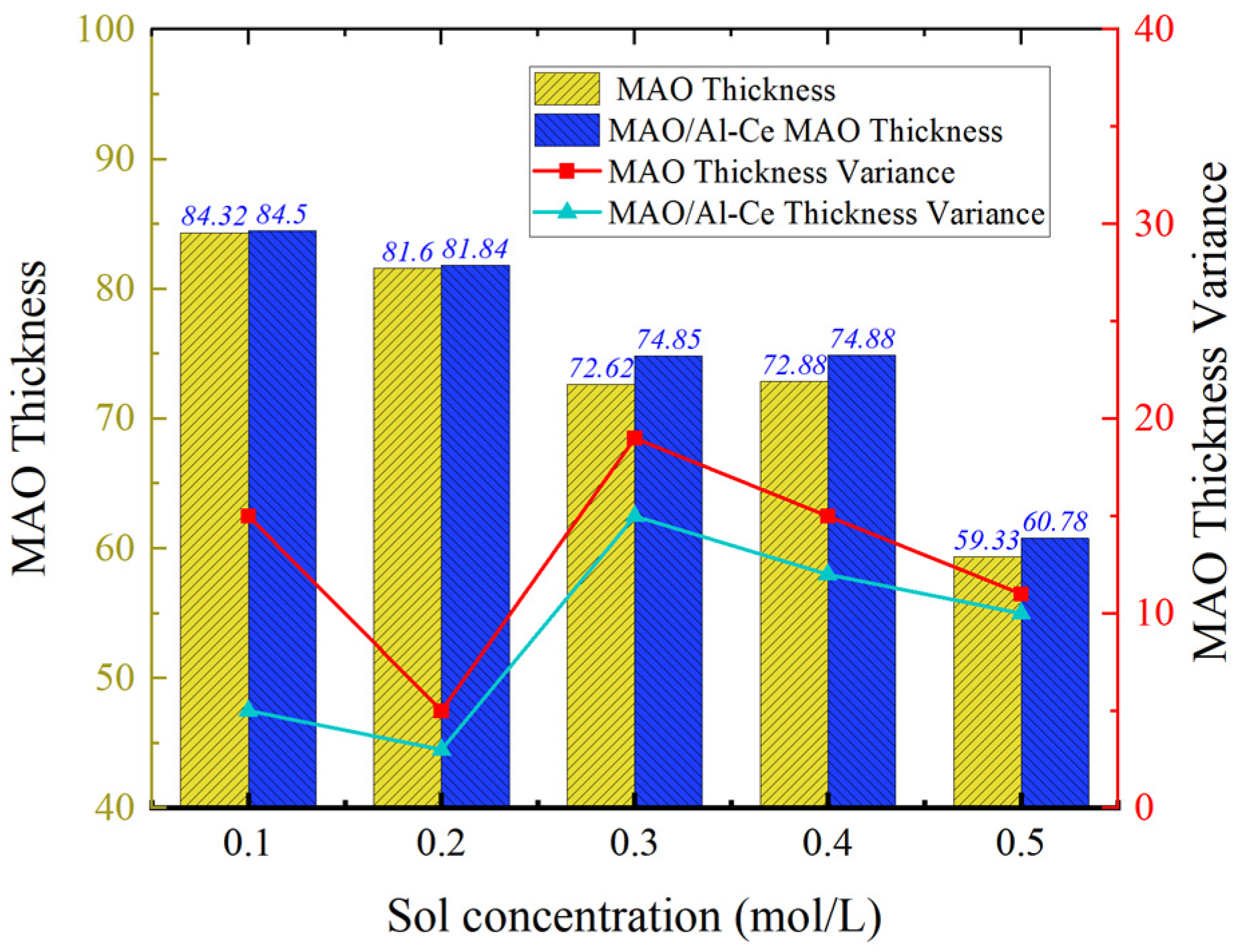
Film thickness and weight gain are key indicators reflecting the film-forming ability, adsorption efficiency, and defect-filling degree of sols, directly determining the integrity and effectiveness of the sealed layer. Figure 2 shows the variation in composite film thickness under different aluminum concentrations. After sol coating, the thickness of all samples increased slightly, with an overall trend of first increasing and then decreasing. When the aluminum concentration in the sol was 0.1 mol/L, the thickness change was minimal, only 0.18 μm. When the aluminum concentration was 0.3 mol/L, the thickness increased by 2.23 μm. Since sols preferentially form at defects in the MAO film layer, the increment in film thickness from sol coating is not significant, and the focus is primarily on the sealing effect after sol coating. The variance calculated for the film thickness before and after sol sealing indicates that the variance of the film thickness after sol coating is always less than that of the original MAO layer. This suggests that the sol film thickness is more uniform overall, filling the depressions in the MAO layer, resulting in a more uniform thickness across the film compared to the MAO layer. Capillary force enables the sol to infiltrate into open pores and microcracks inside the MAO coating. Upon heat treatment, the sol is converted into Al2O3-CeO2 composite oxides, which occupy original voids and block hydrogen diffusion paths effectively.
Figure 2.
Thickness and Variance Changes in MAO/Al2O3-CeO2 Sol Composite Films Prepared with Different concentrations of Sol.
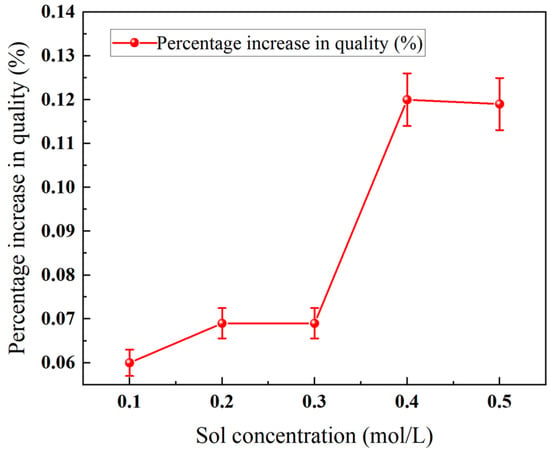
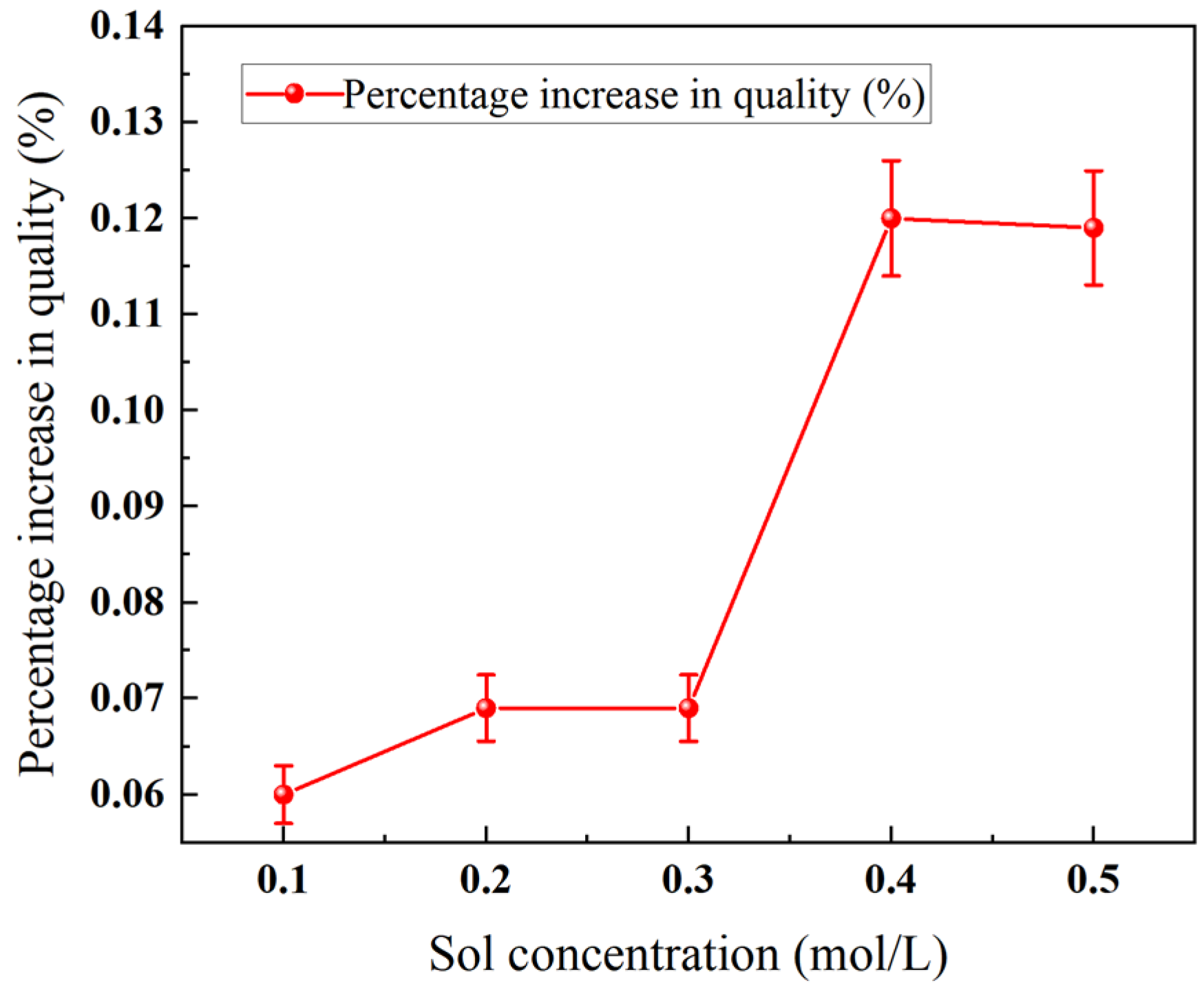
To further understand the film thickening situation, the weight gain of samples during composite film preparation was analyzed and compared. Figure 3 shows the weight gain variation curve of MAO/Al2O3-CeO2 composite films under different aluminum concentrations. Each group of samples was tested for three parallel specimens, and experimental results were expressed as average values. It can be seen that as the aluminum concentration in the sol increases, the film weight gain first increases and then decreases. When the aluminum concentration in the sol is below 0.3 mol/L, the weight gain is not significant due to the uneven thickness of the film. The composite film prepared with an aluminum concentration of 0.4 mol/L has the maximum weight gain of 0.12%. This is mainly due to differences in sol viscosity: higher aluminum concentration leads to higher sol viscosity, resulting in a tighter bond between the sol and the MAO layer. During the dipping process, the dripping loss caused by the sol’s own gravity is relatively small, leading to a relatively larger increment. However, excessively high viscosity affects coating and adhesion quality. When the aluminum concentration continues to increase to 0.5 mol/L, the sol viscosity increases, reducing its flowability, and the weight gain decreases, but not significantly. The coating effect is optimal when the aluminum concentration in the sol is 0.4 mol/L, with noticeable weight gain and film thickening.
Figure 3.
Weight gain curves of MAO/Al2O3-CeO2 sol composite film samples prepared with different Al concentration sols.
3.2. Phase Structure Analysis
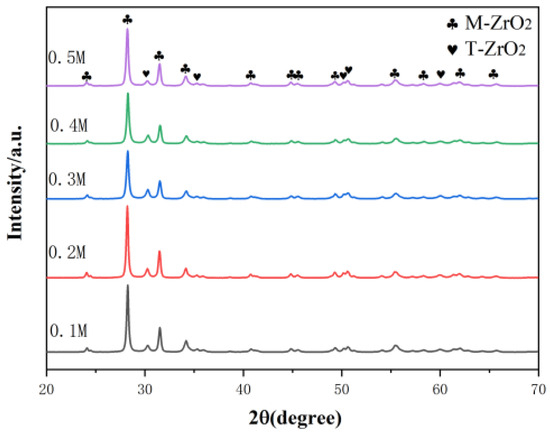
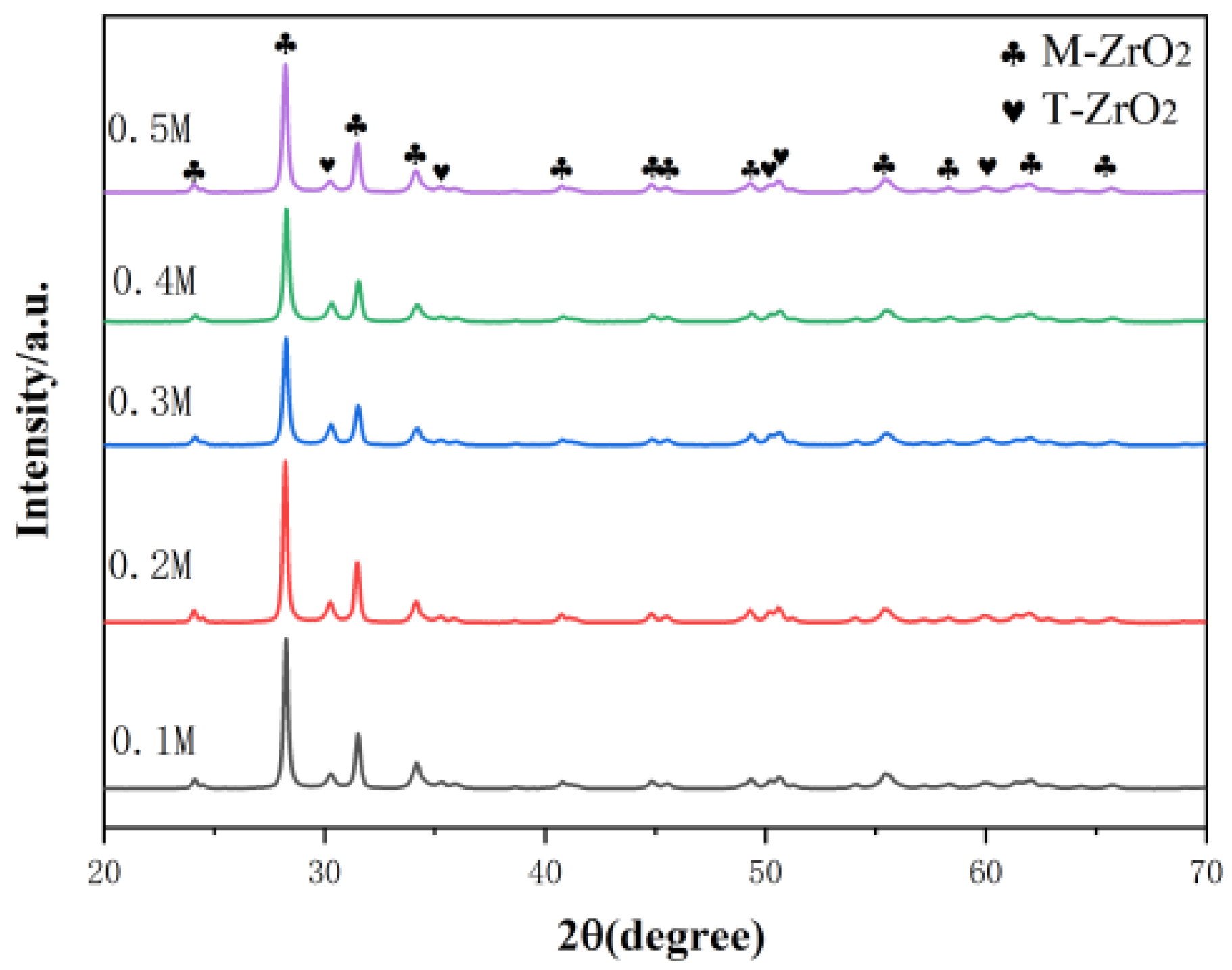
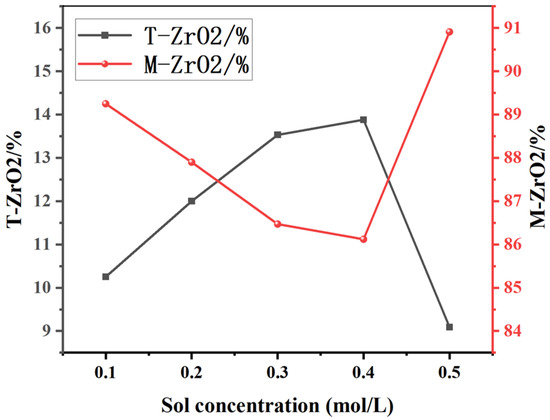
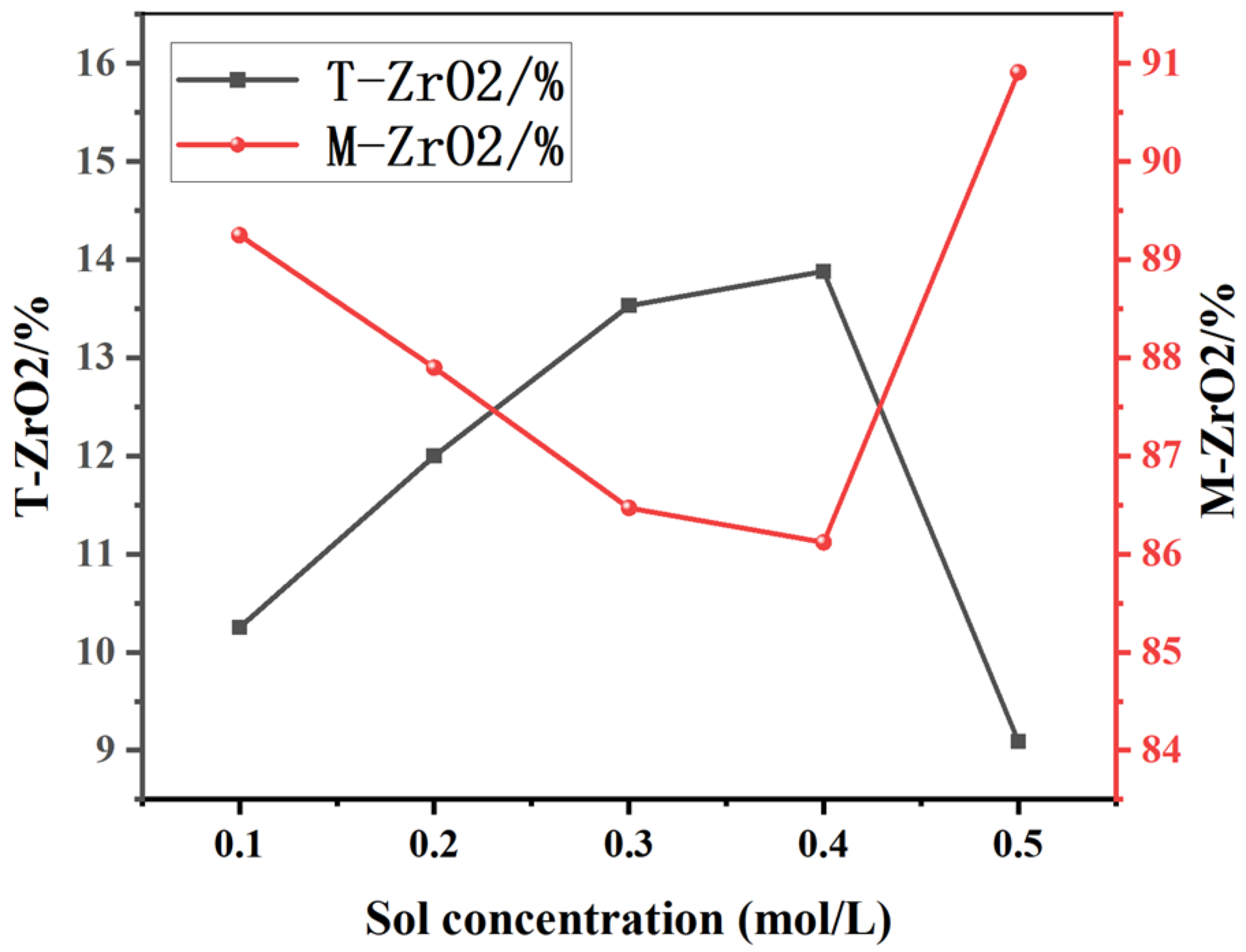
For comparison, the volume fraction of T-ZrO2 of original unsealed MAO coating without sol modification was measured via RIR method to be 8.21%. It can be confirmed that appropriate sol sealing treatment effectively raises the relative content of T-ZrO2, while excessive Al concentration reversely reduces the tetragonal phase proportion. The XRD patterns of the composite films at different aluminum concentrations are shown in Figure 4. The diffraction peaks of all samples are mainly T-ZrO2 and M-ZrO2, and no obvious characteristic Al2O3 and CeO2 peaks are detected. The reasons for this phenomenon mainly include two aspects. One is that the mass ratio of Al2O3 and CeO2 in the film layer is less than 5%, which is lower than the detection limit of conventional XRD equipment. The other is that the Al2O3 formed by the sol after annealing at 500 °C is mostly amorphous, and its weak diffraction peak is completely covered by the strong ZrO2 substrate peak, which only presents the characteristics of the broad amorphous halo and cannot be directly identified. In addition, no obvious broad amorphous hump of amorphous Al2O3 at 20–30° 2θ is observed in XRD patterns. The intense and sharp diffraction peaks originating from dominant ZrO2 substrate completely overlap and shield the weak amorphous scattering signal of alumina, resulting in an invisible amorphous envelope under current test conditions. The quantitative results of T-ZrO2 and M-ZrO2 volume fractions calculated by RIR method are shown in Figure 5 [19]. The RIR calibration curve proposed by Toraya was originally established for pure ZrO2 powder. In this multi-component coating system containing amorphous Al2O3, CeO2, and Ce-Zr solid solution, tiny impurity phases with low content barely interfere with the relative peak intensity ratio between M-ZrO2 and T-ZrO2 due to their extremely weak diffraction signals. Therefore, the RIR method is still feasible to calculate the relative volume fraction of two ZrO2 polymorphs, whereas absolute phase content of accessory oxides cannot be accurately quantified by this approach, which is recognized as the inherent limitation of the adopted quantitative method. The results show that the relative content of T-ZrO2 increases first and then decreases with the increase in aluminum concentration. It reaches a maximum of 13.88% at 0.4 mol/L and drops sharply to 9.09% at 0.5 mol/L. This change rule is directly related to the phase stability of Ce4+. The gradual increase in T-ZrO2 fraction from 0.1 mol/L to 0.4 mol/L Al is mainly ascribed to two synergistic effects. First, rising Al content raises sol infiltration capacity, more Ce4+ penetrates into MAO inner pores and substitutes Zr4+ within the ZrO2 lattice to form Ce-Zr solid solution, generating abundant oxygen vacancies and lattice distortion to stabilize metastable T-ZrO2 and restrain T→M phase transformation. Second, gradually increased amorphous Al2O3 distributes along ZrO2 grain boundaries, confines grain coarsening, and suppresses thermally driven monoclinic transformation of T-ZrO2 during high-temperature annealing. With continuously optimized sol viscosity from 0.1 to 0.4 mol/L, sol fills coating defects more sufficiently, maximizing the above dual stabilization effect and leading to continuous growth of T-ZrO2 content. Excessively high Al (0.5 mol/L) brings overhigh sol viscosity, poor film integrity, and large thermal stress, thus reducing T-ZrO2 content reversely. The radius of the Ce4+ ion is close to that of Zr4+, which can replace Zr4+ in the ZrO2 lattice to form Ce-Zr solid solution, introduce a large number of oxygen vacancies and produce lattice distortion, effectively inhibit the high-temperature phase transition from T-ZrO2 to M-ZrO2, and improve the retention rate of metastable T-ZrO2. Although more Ce element is introduced at 0.5 mol/L Al concentration, excessive sol viscosity worsens coating spreading and continuity, resulting in incomplete sealing and uneven film formation. Severe mismatched thermal expansion coefficient generates large residual thermal stress after annealing, which triggers partial transformation of metastable T-ZrO2 into stable M-ZrO2. Therefore, apart from Ce doping effect, coating integrity and thermal stress become dominant adverse factors leading to obvious reduction in tetragonal ZrO2 content at high sol concentration.
Figure 4.
XRD patterns of film surface after sealing with different Al concentrations of sol.
Figure 5.
Volume fraction of relative content of each phase in the coating layer after sealing with different concentrations of sol.
3.3. Surface Morphology
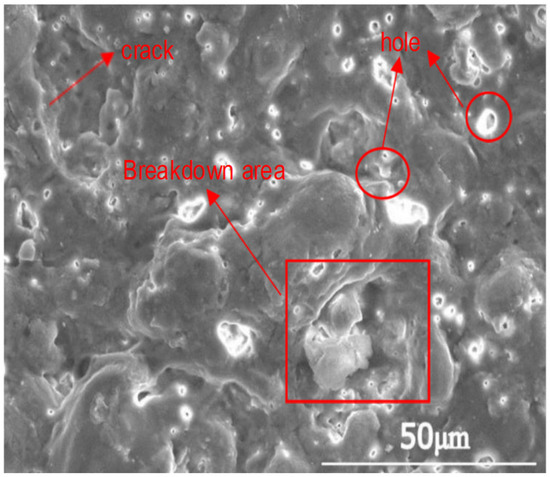
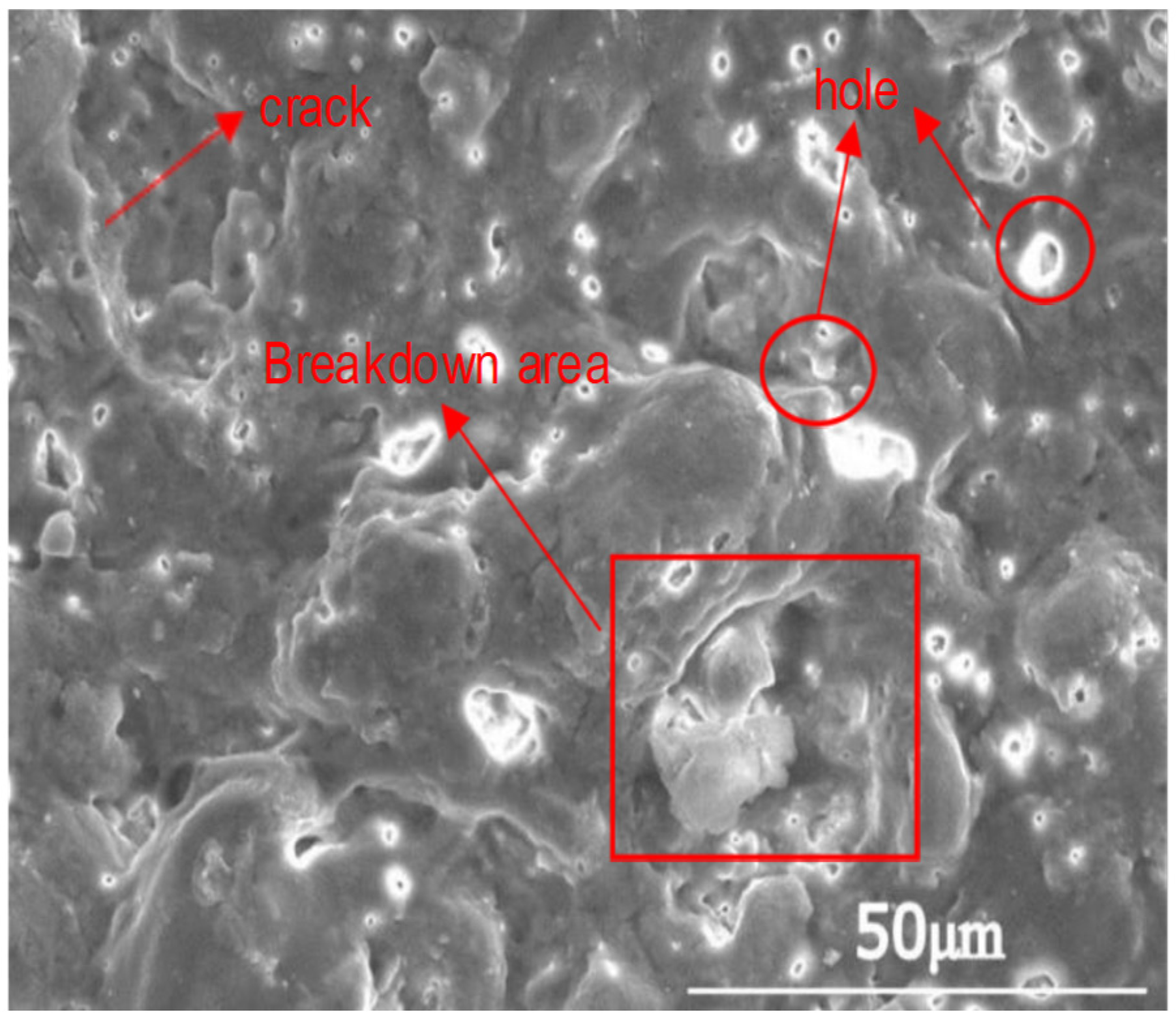
Figure 6 presents the micro-morphology of MAO film. Through the microscopic morphology of the film surface, it can be found that there are long cracks on the surface of the MAO film and the cracks are connected with each other, and the film is divided into different block areas. There are many overburnt nodular structures near the crack. The distribution of overburnt cracks increases the surface roughness of MAO, and the loose and porous overburnt structure is not conducive to the improvement of the hydrogen resistance of zirconia film. The reason for the formation of this phenomenon is that more T-ZrO2 transforms to M-ZrO2 during the formation of MAO film, resulting in phase transition and the emergence of cracks; at the same time, since the temperature of the MAO discharge area can reach 2000 °C, a huge temperature gradient is formed with the electrolyte environment, so that a large amount of stress is stored during the cooling process of the zirconia film, which aggravates the initiation and propagation of cracks to a certain extent. The phase transformation from metastable tetragonal T-ZrO2 to stable monoclinic M-ZrO2 is accompanied by approximately 3%–5% irreversible volume expansion at cooling stage. The volume increment produces substantial internal tensile stress inside the MAO coating. Once the accumulated tensile stress exceeds the intrinsic fracture toughness of the ZrO2 ceramic layer, microcracks initiate and propagate along grain boundaries. Moreover, intensive local heat accumulation during MAO discharging introduces extra thermal residual stress, which superimposes with phase-transformation-induced stress and further accelerates crack interconnection, eventually forming the interconnected crack network observed in Figure 6. In the later stage of MAO, the discharge is still more intense as the discharge arc of the thicker zirconia film layer has been formed, so it is difficult to break down again. Therefore, the discharge arc is concentrated at the crack. Repeated discharge breakdown forms an overburnt area.
Figure 6.
Surface Micromorphology of Microarc Oxidation Film.
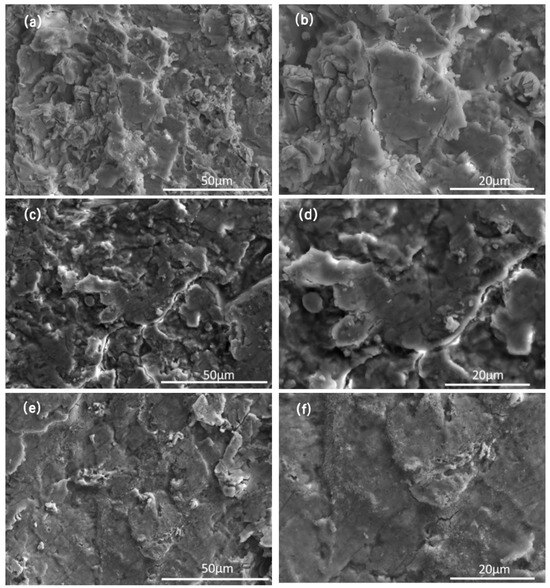
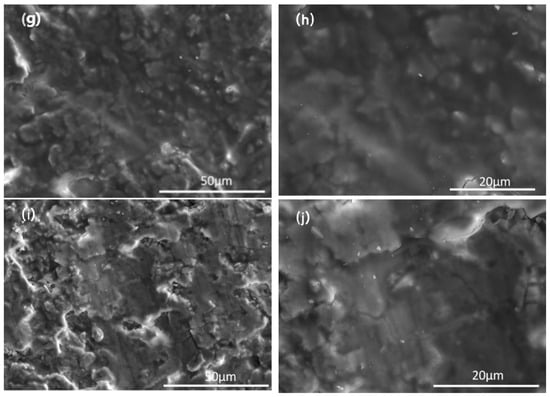
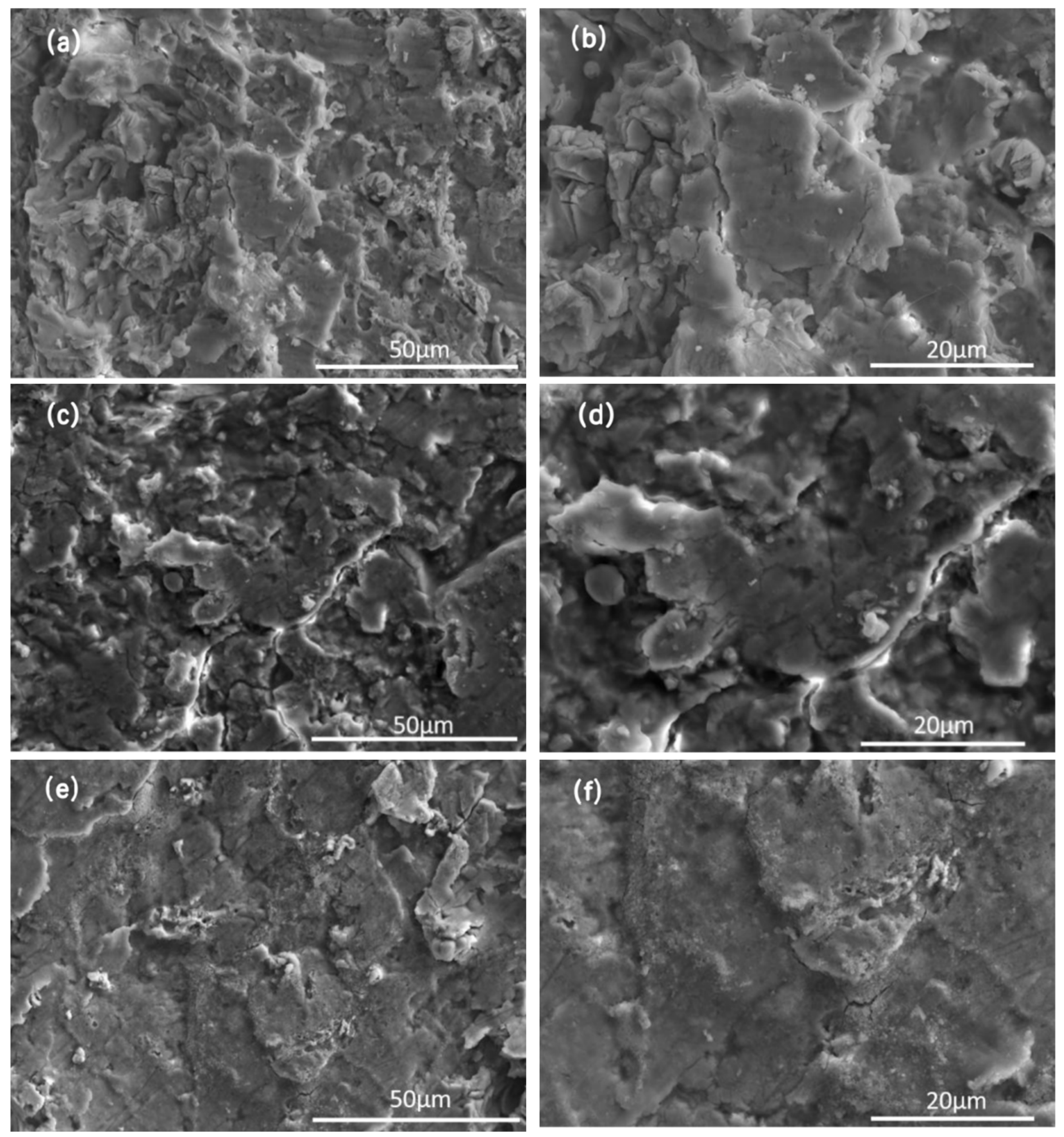
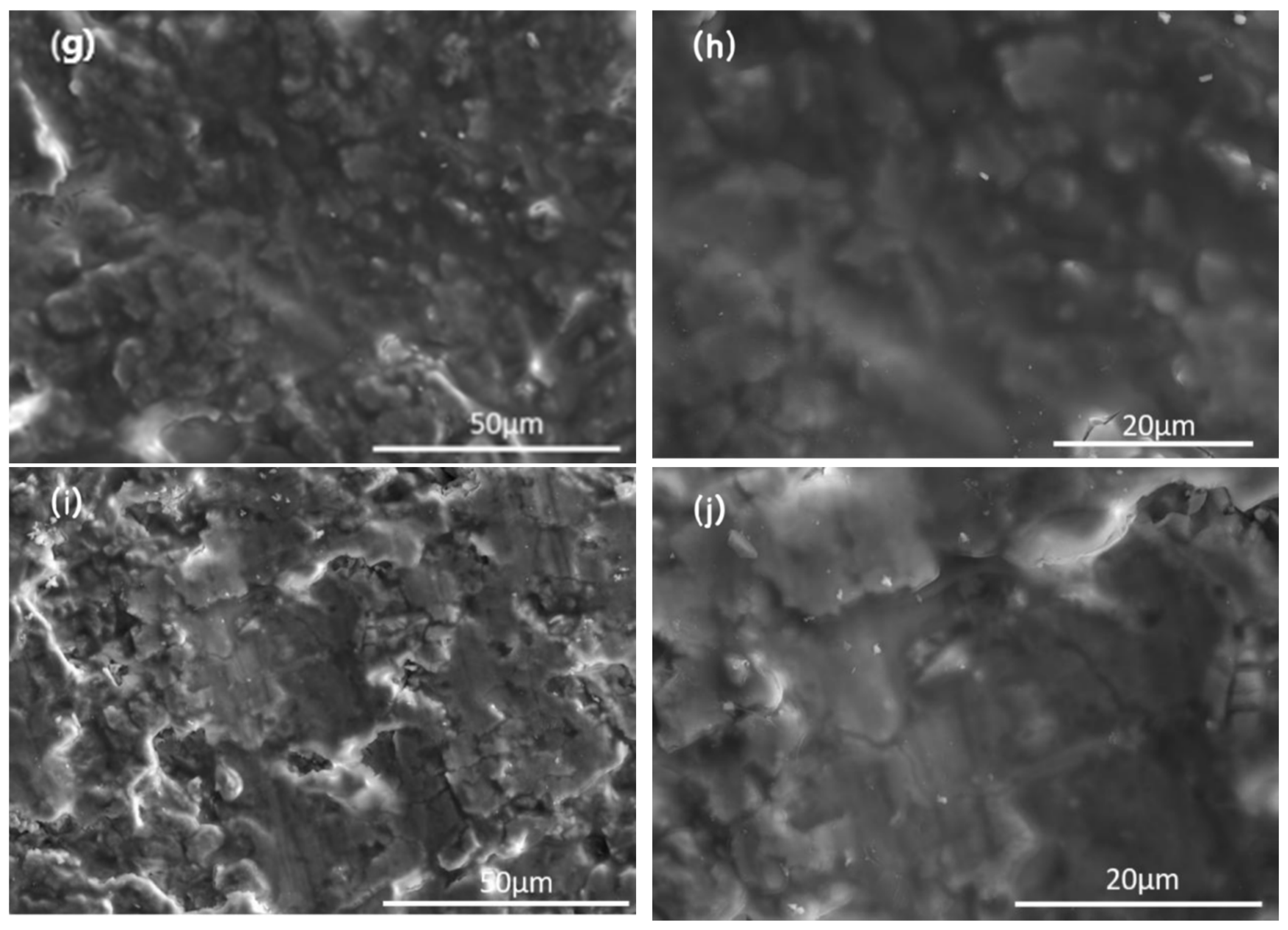
Figure 7 presents the surface morphology of the sol-sealed film under different aluminum concentrations. Compared with the MAO film, it can be found that the surface of the film after sol-sealed treatment is smoother, and the number of cracks and pores decreases significantly. This is because the sol has a certain fluidity, and will enter the defects of the MAO film during the coating process. After heat treatment, Al2O3 and CeO2 are formed in the sealing film to fill the defects. After sealing, the film is dense and flat. With the increase in aluminum concentration in the sol, the surface defects gradually decrease, and the cracks and pores are covered by the sol sealing film. When the aluminum concentration is low, the fluidity of the sol is good but the viscosity is small, so the film-forming performance is poor, and it is difficult to form a continuous sealing film on the surface. Although some sols enter the pores to achieve a certain filling effect, the cracks and nodular protrusions have a blocking effect on the coating of the sol. The sol cannot be completely coated to form a complete sealing film layer, but the surface is divided into flaky areas. The parts are uneven and the overall effect is not good. With the increase in aluminum concentration, the viscosity of the sol increases, and the continuity of the sealing film is improved. The effect of film segmentation caused by cracks and nodular protrusions is improved, and the film tends to be continuous. At this time, surface cracks and nodular protrusions begin to be covered. When the aluminum concentration is 0.4 mol/L, there are no obvious defects such as cracks and pores on the surface. In Figure 7g, it can be observed that the sealing film is dense and uniform, no pores are generated, and occasionally large particles are embedded in the surface film, which is related to the fact that Ce doping fails to stir evenly during sol preparation. When the aluminum concentration in the sol is continuously increased to 0.5 mol/L, the quality of the sol sealing film decreases and the film begins to crack compared with the aluminum concentration of 0.4 mol/L. This may be due to the high sol concentration and Ce doping amount. After the sol is made, it is easy to gel, the viscosity increases, and the fluidity deteriorates. It is difficult to form a continuous film on the surface of the MAO, resulting in some cracks becoming exposed. In addition, the thermal expansion coefficient of Al2O3 and ZrO2 does not match. When the aluminum concentration in the sol is high, CeO2 has a limited improvement on the thermal stability of Al2O3 and is prone to crystal transformation. At the same time, the thicker film layer aggravates the influence of the thermal expansion coefficient. After annealing treatment, the film layer cracks and forms new hot cracks. Therefore, when the aluminum concentration in the sol is 0.4 mol/L, the sealing film layer is better. ImageJ (Version 1.54f) quantitative statistics based on SEM images reveal that the bare MAO coating possesses high crack density and pore density. After sol–gel sealing with increasing Al concentration from 0.1 to 0.4 mol/L, the average crack length and crack density gradually decrease, and pore density declines synchronously; the minimum pore density reaches 4.87% at 0.4 mol/L Al, consistent with the porosity data in Section 3.8. Moderately increased sol viscosity improves infiltration into interior pores and crack gaps of MAO substrate, solidifying into dense Al2O3-CeO2 oxides after annealing to fill original defects and block crack extension paths, thus smoothing the coating surface. When Al concentration rises to 0.5 mol/L, excessive sol viscosity deteriorates infiltration uniformity, and partial incomplete filling and extra annealing thermal stress trigger new tiny cracks, leading to a slight rebound of crack density and pore density again.
Figure 7.
Surface Micromorphology of MAO/Al2O3-CeO2 Composite Film under Different Aluminum Concentrations: (a) 0.1 mol/L 50 μm; (b) 0.1 mol/L 20 μm; (c) 0.2 mol/L 50 μm; (d) 0.2 mol/L 20 μm; (e) 0.3 mol/L 50 μm; (f) 0.3 mol/L 20 μm; (g) 0.4 mol/L 50 μm; (h) 0.4 mol/L 20 μm; (i) 0.5 mol/L 50 μm; (j) 0.5 mol/L 20 μm.
3.4. Component Distribution Analysis
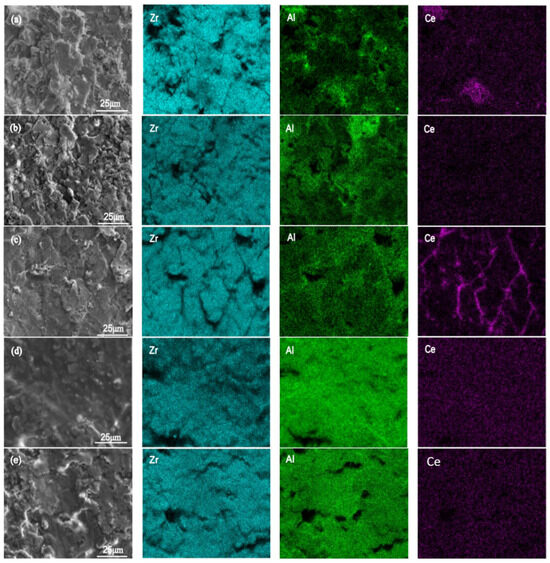
EDS images of the surface of the MAO film after sealing with different aluminum concentrations are shown in Figure 8. It was found that the films obtained after sol sealing at different aluminum concentrations were composed of four elements: O, Zr, Al, and Ce. When the aluminum concentration is 0.1 mol/L, as shown in Figure 8a, the MAO layer fails to obtain a good sealing effect, and most of the pores and cracks are not filled. At the same time, although the Al element is covered on the surface, the Ce element is less distributed. This phenomenon shows that when the aluminum concentration in the sol is low, the sol adhesion is poor, and the total amount of Al and Ce elements is low. It is difficult to form enough oxide film to cover the surface after annealing treatment. The sol preferentially adheres to the flat area of the MAO layer, and it is difficult to provide the adhesion environment of the sol at the defect. With the increase in aluminum concentration, the content of Al and Ce elements increases, the distribution of Al and Ce elements gradually homogenizes, and Al and Ce elements begin to appear at the defects. When the aluminum concentration in the sol is 0.3 mol/L, there is still an area where the Al element is not fully covered in the sealing film formed, but the Ce element is well dispersed and aggregated along the crack site. As the concentration of sol aluminum continues to increase, the distribution of Al and Ce elements in the film tends to be uniform, and they are enriched at the defects of the MAO layer, which plays a sealing role. When the aluminum concentration is high, it can be seen from the energy spectrum image that Al and Ce elements form a uniform coverage film on the surface. The two elements are evenly distributed on the surface of the MAO film, and the coating is dense. When the aluminum concentration in the sol is 0.4 mol/L, it begins to have a better sealing effect.
Figure 8.
Surface energy spectrum of MAO/Al2O3-CeO2 composite film under different aluminum concentrations: (a) 0.1 mol/L; (b) 0.2 mol/L; (c) 0.3 mol/L; (d) 0.4 mol/L; (e) 0.5 mol/L.
3.5. Cross-Sectional Morphology
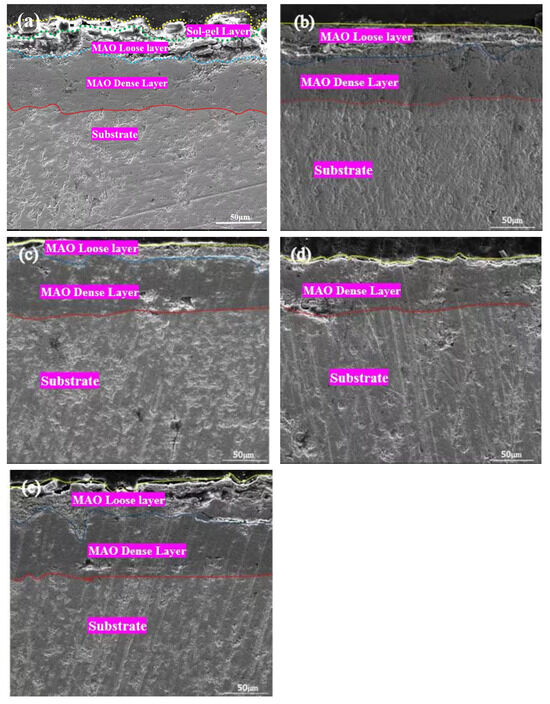
Figure 9 shows the cross-sectional morphologies of ZrO2/Al2O3-CeO2 composite films after sol sealing with different Al concentrations. It can be seen from Figure 9a that the ZrO2/Al2O3-CeO2 composite film layer consists of a dense MAO layer, a loose MAO layer, and a sol–gel layer. There are no obvious cracks in the dense layer of MAO, and the compactness is good. There are cracks and holes in the loose layer of MAO, which will cause hydrogen to precipitate from these cracks and holes. The sol sealing layer formed on the MAO layer is thinner. Whether the sol–gel layer is closely combined with the MAO film layer and whether there is obvious stratification will affect the sealing effect. When the aluminum concentration in the sol is 0.1 mol/L, the particle size of the sol is fine and uniform, and it is easier for the sol to enter the pores. However, due to the low viscosity, it is difficult for the sol to form a uniform and complete film on the surface. Therefore, the sol sealing film is not observed in the cross-sectional scanning diagram, and the distribution of Al-Ce elements in the loose layer is more uniform and dense. With the increase in aluminum concentration in the sol, the particle size does not change much, but the viscosity increases. When the aluminum concentration is 0.2 mol/L, the sol will agglomerate at some positions after entering the loose layer, and the viscosity has not yet reached the strength of the supporting sol to form a film on the surface. When the aluminum concentration continues to increase to 0.3 mol/L, the elements entering the loose layer begin to decrease. The loose layer gradually becomes dense after Al2O3 and CeO2 enter the filling, forming a concave and convex surface to increase the roughness of the film. When the concentration reaches 0.4 mol/L, the sealing effect of the surface film layer is the most obvious. At this point, there is no obvious stratification between the sealing film layer and the MAO film layer on the cross-sectional scanning image, and the loose layer no longer presents obvious holes and other defects. The film layer is close to the dense layer of MAO. After annealing treatment, the loose layer is mainly composed of Al2O3, CeO2, and ZrO2. As the aluminum concentration in the sol continues to increase, the viscosity of the sol becomes larger, and the larger viscosity causes the agglomerated gel to appear on the surface of the MAO. After the annealing treatment, the sol film layer appears to peel off, which confirms that the expected sealing film layer does not appear on the cross-sectional scan map. At the same time, the larger viscosity makes it difficult for the sol to enter the interior of the film, which reduces the amount of elements in the sealing layer, so that the interior of the pore is not fully filled, which is reflected in the cross-sectional scan image. The pores still occupy the majority of the film.
Figure 9.
Cross-section morphology of MAO/Al2O3-CeO2 composite film under different aluminum concentrations: (a) 0.1 mol/L; (b) 0.2 mol/L; (c) 0.3 mol/L; (d) 0.4 mol/L; (e) 0.5 mol/L.
3.6. Surface Roughness
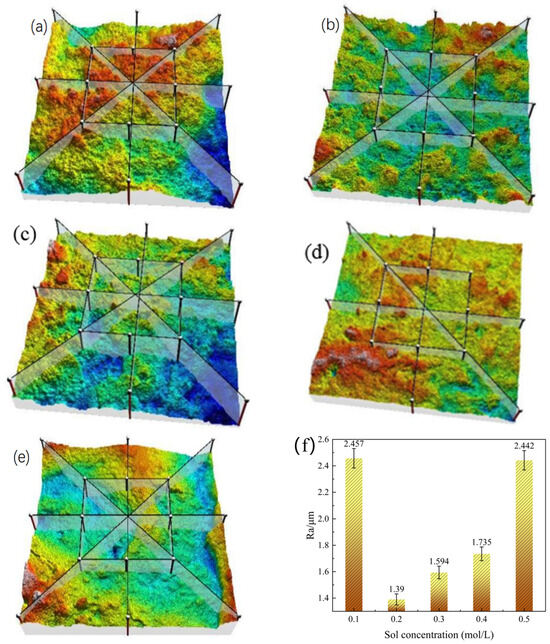
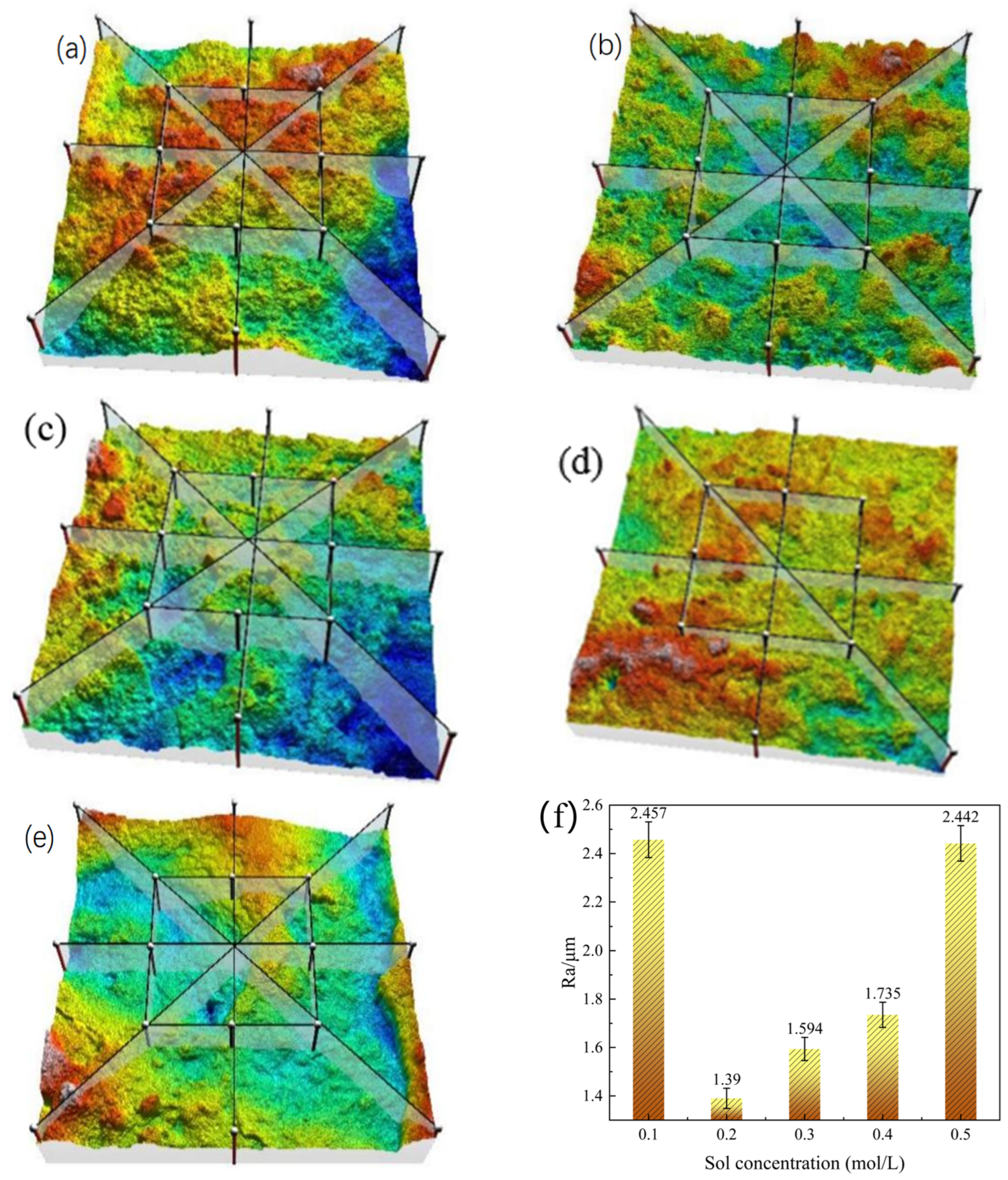
Figure 10 is the three-dimensional surface morphology of the film after sol coating with different aluminum concentrations. It can be seen from the diagram that the surface roughness of the film decreases first and then increases with the increase in the aluminum concentration in the sol. Figure 10f is the average surface roughness of MAO/Al2O3-CeO2 composite coating. Each group of samples was tested for three parallel specimens, and experimental results were expressed as average value. When the aluminum concentration in the sol is 0.2 mol/L, the roughness is 1.39 μm. At this time, the sol has good fluidity but poor viscosity. It is more difficult for the sol to adhere to the surface of the film layer, and it is more likely to accumulate in the surface depression of the MAO film layer. Some defects such as pores and micro-cracks in the surface film layer are filled to achieve the effect of reducing surface roughness. When the aluminum concentration with the better sealing effect is 0.4 mol/L, the surface roughness increases. Most of the organic components from the aluminum salt precursor evaporate upon high-temperature annealing which leads to minor surface burrs, while trace residual carbon remains trapped inside the coating matrix, instead of complete removal. When the aluminum concentration in the sol is 0.5 mol/L, due to the excessive viscosity of the sol at this time, the surface of the sol is agglomerated after coating. After annealing and sintering, it is more difficult for the bonding force of the thicker sealing film to maintain the bonding state of the two films. It is easier for part of the sealing film to fall off from the surface of the MAO film, and the MAO film and the sealing film are discontinuous on the surface of the sample, which makes the surface roughness increase. The variation trend of surface roughness is highly consistent with the changing law of crack density and pore density under different Al concentrations.
Figure 10.
Three-Dimensional Surface Morphology of MAO/Al2O3-CeO2 Sol Composite Films Prepared by Sols with Different Al Concentrations: (a) 0.1 mol/L; (b) 0.2 mol/L; (c) 0.3 mol/L; (d) 0.4 mol/L; (e) 0.5 mol/L; (f) surface roughness.
3.7. Bonding Force
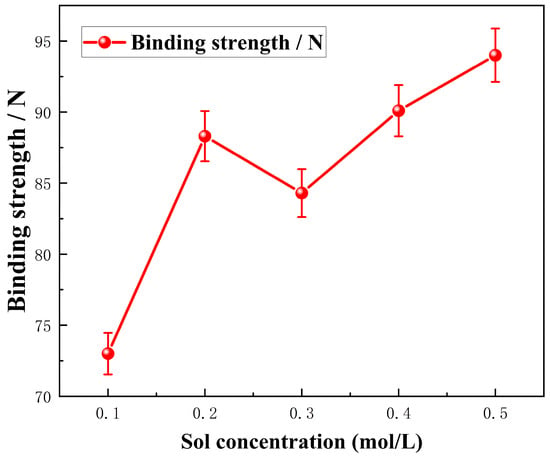
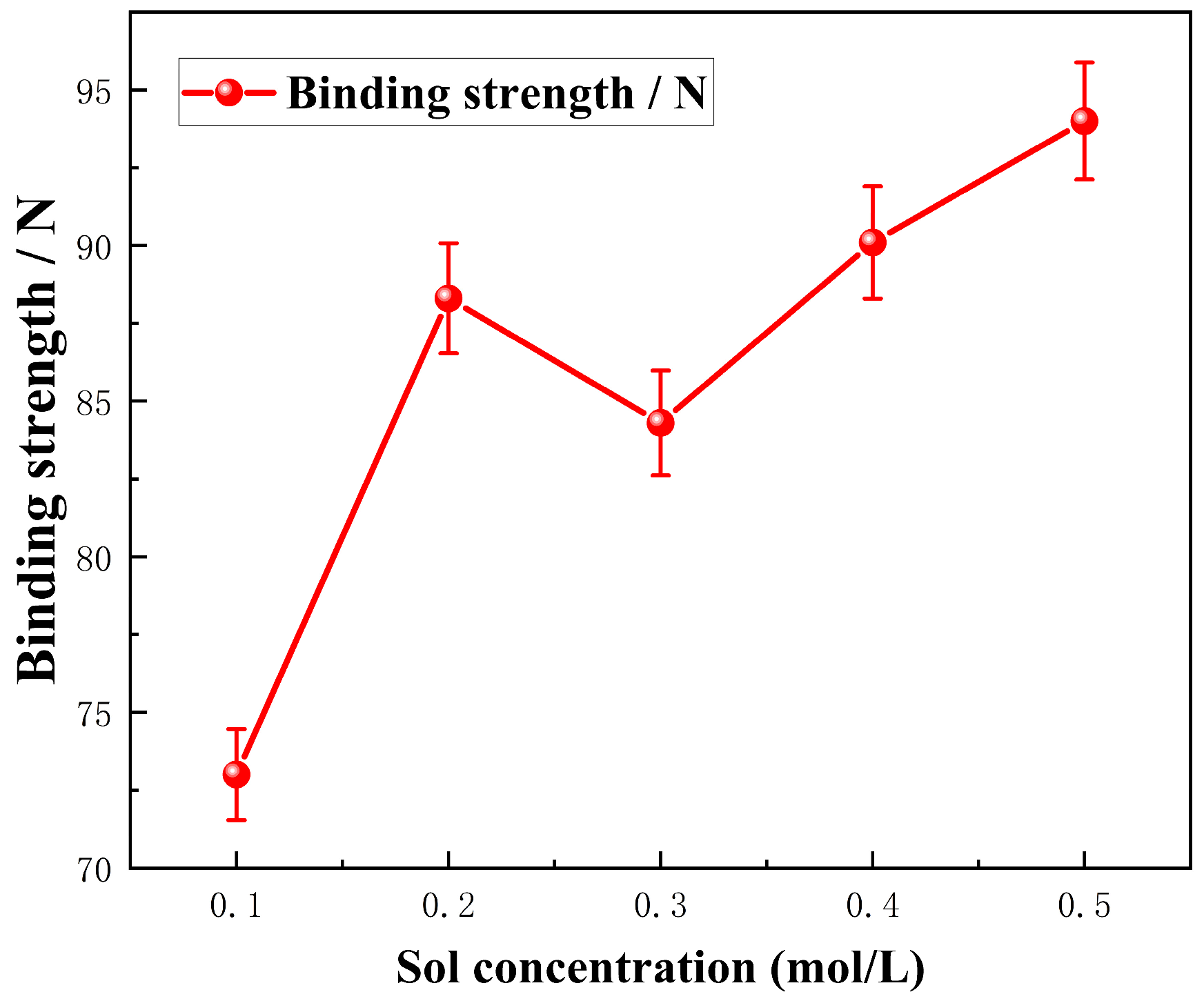
Figure 11 shows the adhesion strength of MAO/Al2O3-CeO2 composite coatings prepared by sol coating with different aluminum concentrations. Each group of samples was tested for three parallel specimens, and experimental results were expressed as average value. Compared with the MAO film, the adhesion force of the film after sol sealing treatment increased slightly. With the increase in aluminum concentration in the sol, the adhesion force of the film generally increased gradually. When the aluminum concentration was 0.3 mol/L, the adhesion force of the film decreased slightly to 84.2 N, and then increased continuously. When the aluminum concentration was 0.5 mol/L, the maximum adhesion force was 93.85 N. The adhesion strength of the sol–MAO film is related to the characteristics of the film. The viscosity and fluidity of the sol are affected by the concentration. When the aluminum concentration is less than 0.3 mol/L, the viscosity of the sol is small, but the fluidity is good. At this point, the sol basically enters the loose layer in a near-liquid state. Sintering at high temperature increases the compactness of the loose layer and improves its adhesion strength. When the aluminum concentration is greater than 0.3 mol/L, the increase in the adhesion of the film layer is mainly due to the formation of Al2O3-CeO2 film on the surface of the MAO film by the sol. The coating of the Al2O3-CeO2 film layer enhances the adhesion of the loose layer on the surface. It should be noted that the high scratch adhesion of the 0.5 mol/L sample represents the overall bonding between the inner MAO substrate layer and the zirconium hydride matrix. The cracking and peeling observed in SEM only occur on the outermost thin sol–gel coating instead of damaging the interface between the MAO layer and substrate, thus resulting in high macroscopic adhesion strength despite defective outer surface morphology. Although the sample prepared at 0.5 mol/L presents surface cracks and partial peeling of the outermost sol–gel film, its maximum adhesion strength of 93.85 N is attributed to the firm interface between the inner dense MAO layer and the ZrH1.8 substrate. The defects only appear on the thin top sealing layer and do not damage the bonding of the inner coating. In addition, the scratch testing characterizes the overall interfacial bonding of the entire composite coating system rather than the independent adhesion of the single outer sol–gel layer alone.
Figure 11.
Adhesion of MAO/Al2O3-CeO2 sol composite films prepared with different concentrations of sol.
3.8. Porosity
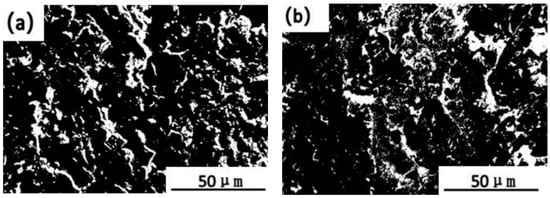
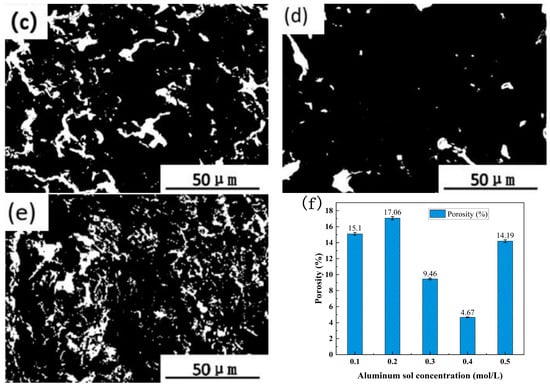
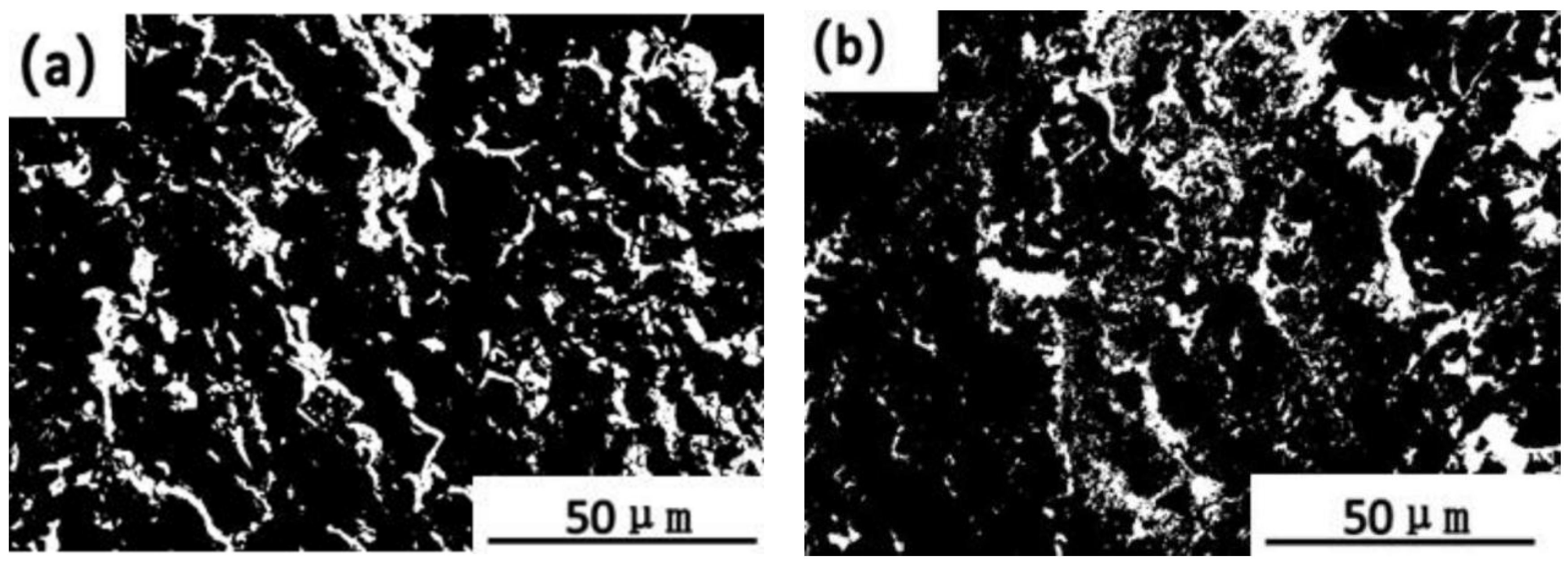
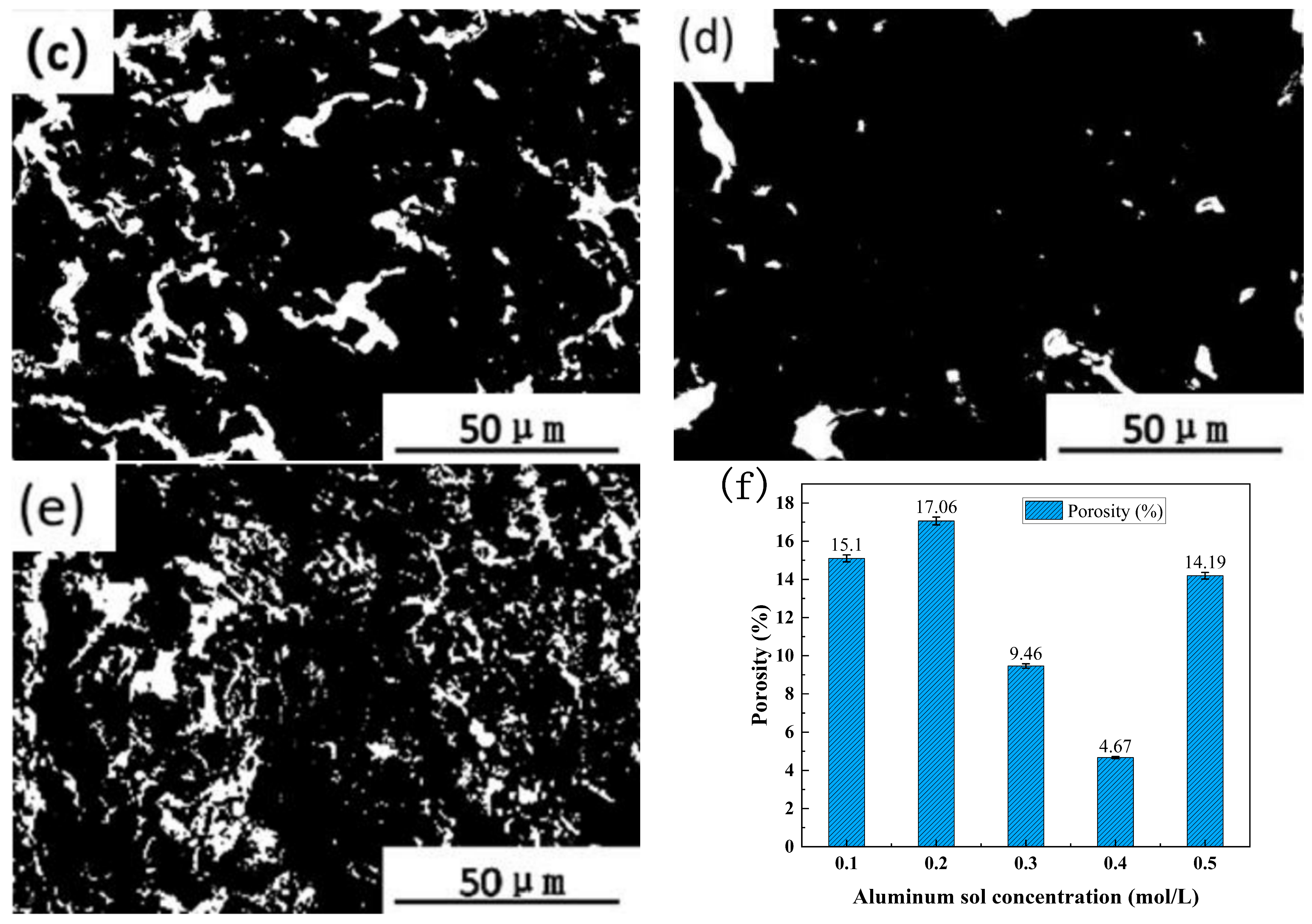
Figure 12 displays the pore distribution map on the surface of MAO/Al2O3-CeO2 composite film. The SEM images of the composite film prepared under different aluminum concentrations were processed by ImageJ software (Version 1.54f). The black part corresponds to a relatively dense and uniform part in the SEM image. The white areas denote the location of defects such as pores, microcracks and crater-like protrusions in the SEM image. By calculating the percentage of the white area to the total area, the porosity of the film surface can be obtained. The calculated surface porosity of the film is shown in Figure 12f. Combined with the two, with the increase in aluminum concentration in the sol, the porosity of the film surface first decreased and then increased. When the aluminum concentration in the sol was 0.4 mol/L, the porosity was the lowest—only 4.87%.
Figure 12.
Surface Pore Distribution of MAO/Al2O3-CeO2 Film Layer: (a) 0.1 mol/L; (b) 0.2 mol/L; (c) 0.3 mol/L; (d) 0.4 mol/L; (e) 0.5 mol/L; (f) statistical surface defect area fraction.
The changing trend of porosity corresponds to the hydrogen resistance of the sample film. When the surface porosity is low, the number of escape channels of hydrogen atoms decreases, and the escape difficulty of hydrogen atoms increases. At the same time, the composite membrane layer is a strong hindrance to hydrogen permeation. The migration of hydrogen elements to the surface in the membrane layer is very difficult.
3.9. Hydrogen Barrier Properties
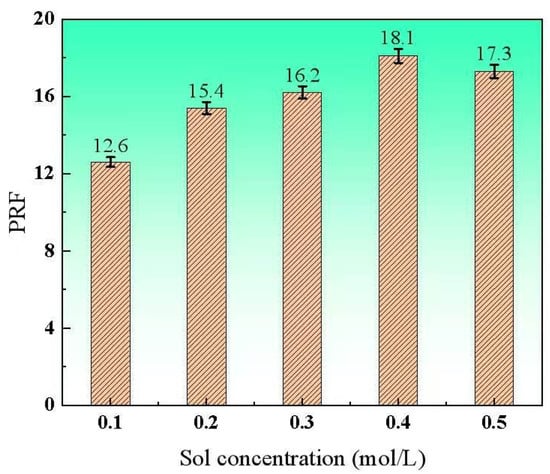
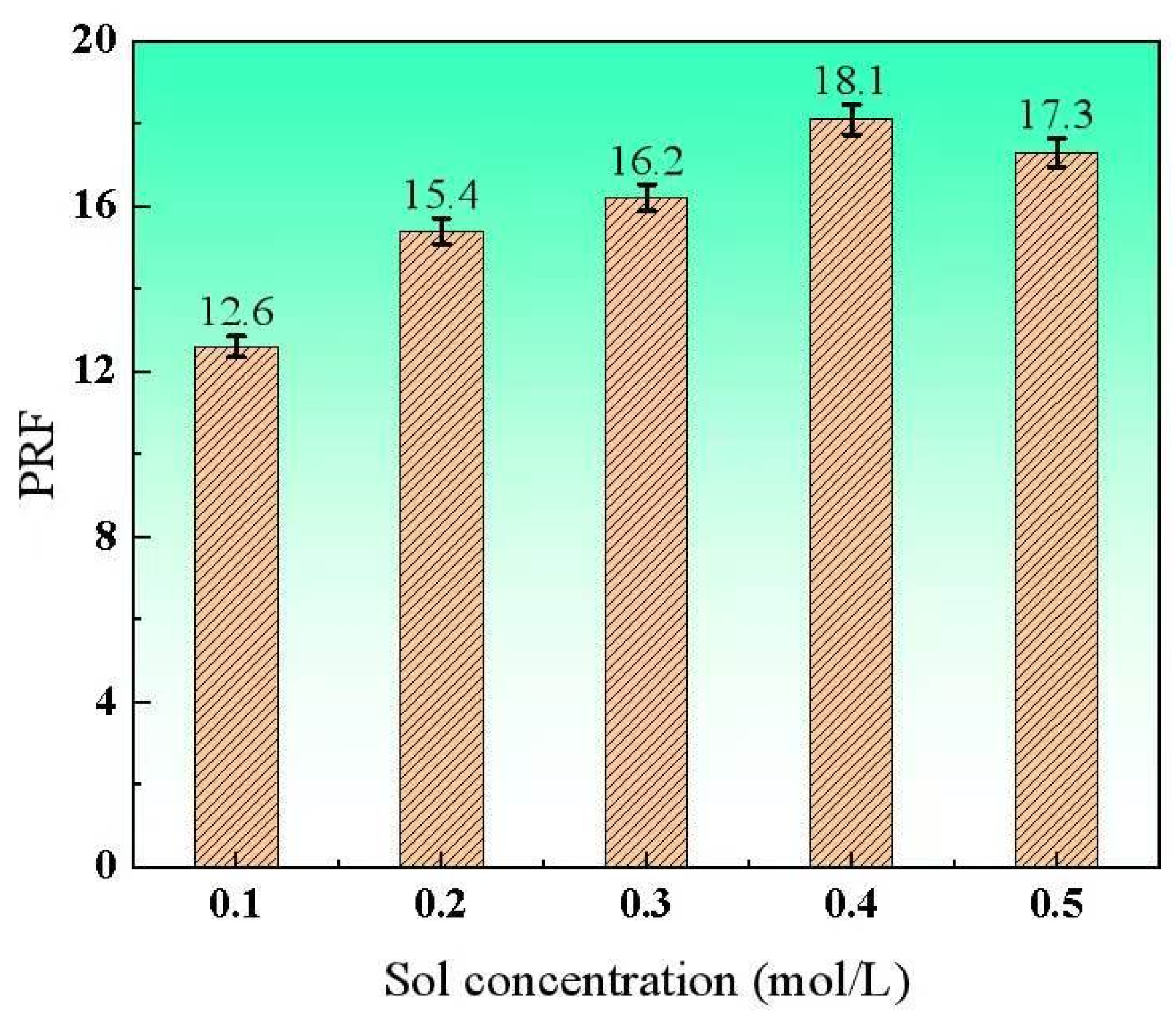
Figure 13 presents a comparison of the hydrogen permeation resistance of MAO/Al2O3-CeO2 composite film under different aluminum concentrations. Each group of samples was tested for three parallel specimens, and experimental results were expressed as average value. Through the high-temperature dehydrogenation experiment, it was found that the hydrogen permeation resistance of the film increased first and then decreased with the extension of oxidation time. When the aluminum concentration in the sol is 0.4 mol/L, the hydrogen barrier effect of the film is the best, and the PRF value is 18.1. For benchmark comparison with published analogous systems on identical ZrH1.8 substrate, single bare MAO zirconia coatings typically deliver PRF values ranging from 7.1 to 12.5 under identical high-temperature dehydrogenation test conditions, while conventional electroplated chromium barrier coatings widely used in engineering obtain PRFs around 12–15. Several Ce-modified single MAO coatings can reach a maximum PRF of ~19 in existing reports. The PRF of 18.1 achieved by our composite coating is close to the optimal value of reported Ce-doped MAO coatings and obviously superior to common MAO and electroplated chromium coatings, demonstrating excellent hydrogen-blocking performance. To clearly compare the hydrogen barrier performance with reported coatings, the PRF values of different systems are summarized in Table 3. When the aluminum concentration in the sol is lower than 0.3 mol/L, the fluidity of the dip-coating process plays a leading role, and the sealing effect of the sol manifests more in the loose layer of the MAO film. The thickness of the sol sealing film is low or discontinuous, and it is difficult to form a complete sealing film of uniform thickness. When the aluminum concentration is higher than 0.3 mol/L, the viscosity effect is more prominent during the impregnation process. The Al2O3-CeO2 film is formed on the surface of the MAO layer, and the sealing effect is further improved. When the aluminum concentration is 0.4 mol/L, the sealing film has the best hydrogen resistance. When the concentration of aluminum continues to increase to 0.5 mol/L, the viscosity of the sol increases, and the sol coated on the surface of the MAO film is easy to peel off from the surface after heat treatment, which makes the film discontinuous, and the sealing effect and hydrogen resistance decrease.
Figure 13.
Hydrogen permeation resistance of MAO/Al2O3-CeO2 film layers prepared with different concentrations of Al sol.
Table 3.
Comparison of PRF values of different hydrogen barrier coatings on ZrH1.8 substrate.
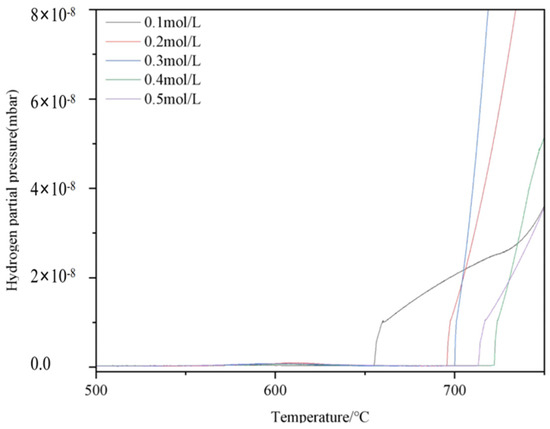
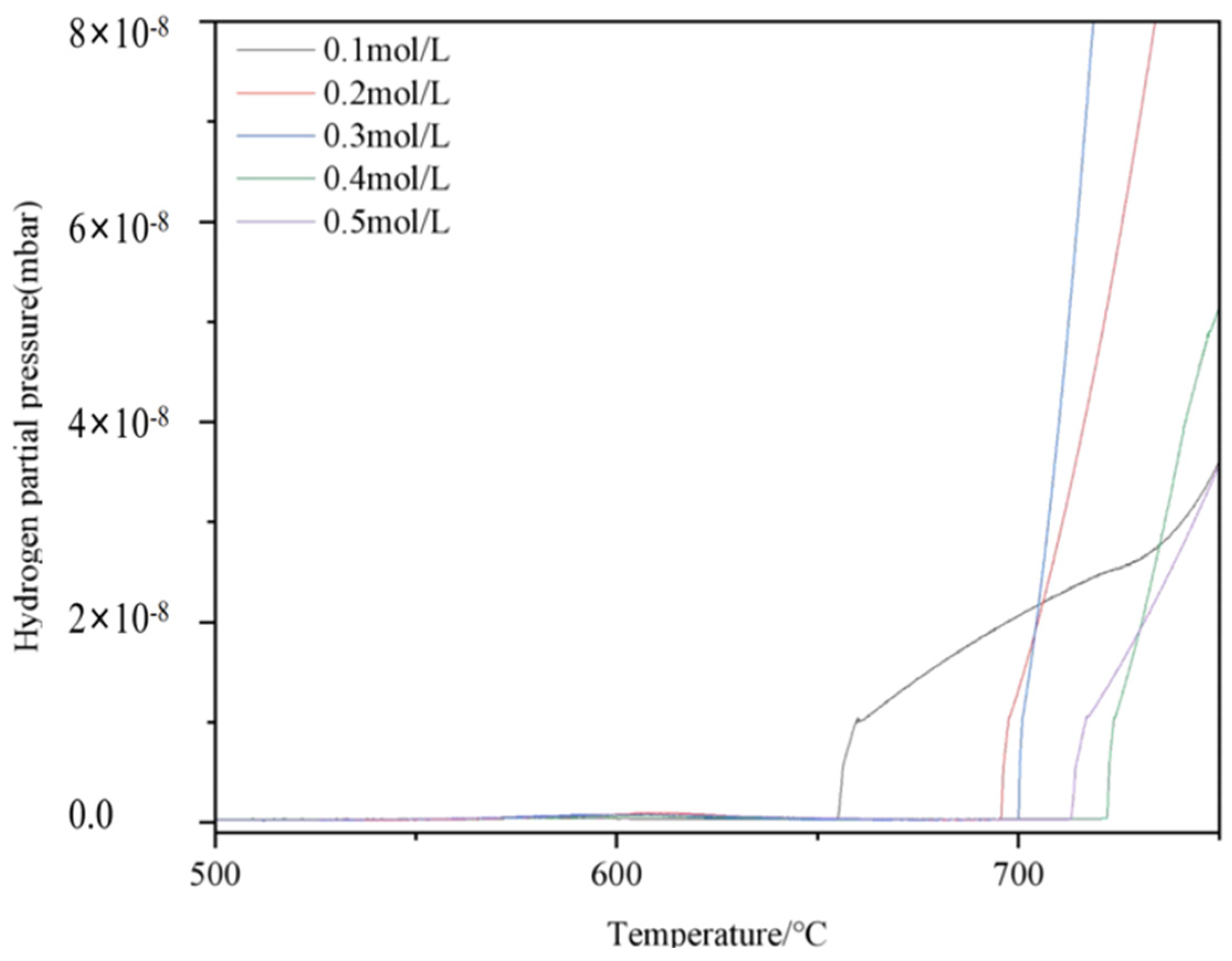
Figure 14 shows the hydrogen loss rate curve of MAO/Al2O3-CeO2 composite film prepared under different aluminum concentration conditions. The sample is placed in a tubular heating furnace, and the partial pressure of hydrogen during the heating process is observed in real time. It was found by curve observation that the MAO/Al2O3-CeO2 composite film had a good hydrogen permeation resistance effect on the zirconium hydride matrix sample. With the increase in aluminum concentration in the sol, the hydrogen loss temperature of the sample increases first and then decreases. When the aluminum concentration is 0.1 mol/L, the hydrogen loss begins at about 660 °C. This is mainly because the Al2O3-CeO2 sol film has low viscosity under this condition, and the film formation is not perfect, and thus cannot impart a good sealing effect. When the aluminum concentration is 0.2 mol/L, the viscosity increases. Compared with 0.1 mol/L, more pores and cracks in the MAO layer are coated, blocking more channels for hydrogen escape, thereby improving the hydrogen resistance of the composite film. When the aluminum concentration in the sol is 0.4 mol/L, the hydrogen loss temperature can be delayed to about 730 °C. This is mainly due to the moderate viscosity at this concentration and the relatively complete film formation. The Al2O3-CeO2 sealing film formed on the surface of zirconium hydride MAO has better film formation quality and hydrogen resistance performance. However, when the concentration continues to increase to 0.5 mol/L, a complete dense film cannot be prepared due to the excessive viscosity of the sol. At the same time, it is difficult for the sol to enter the loose layer for filling, so the hydrogen resistance performance is reduced and the hydrogen loss temperature begins to decrease.
Figure 14.
Temperature-dependent curve of hydrogen loss of MAO/Al2O3-CeO2 sol composite film sample.
4. Growth Mechanism and Hydrogen Resistance Mechanism of Composite Film
4.1. Film Growth Mechanism
By comparing and analyzing the phase structure, surface morphology, cross-sectional morphology, and hydrogen resistance of MAO and MAO/Al2O3-CeO2 composite films, it is found that the MAO/Al2O3-CeO2 composite film formed after sealing treatment of MAO film plays a sealing role and can improve hydrogen resistance. In order to further understand the distribution of cracks and discharge holes in the dense layer, the distribution of Al and Ce elements in the film after sol–gel coating was analyzed. The MAO/Al2O3-CeO2 composite film was thinned by 2 μm, 5 μm, 10 μm, and 20 μm, respectively. The surface morphology, element distribution, and porosity of the film at different thicknesses were observed. By observing the surface morphology of the film under different thinning degrees, the crack distribution and the sealing effect of the discharge hole during the formation of the film were explored, and the film formation growth mechanism of the sol–gel on the surface of the MAO layer was further understood.
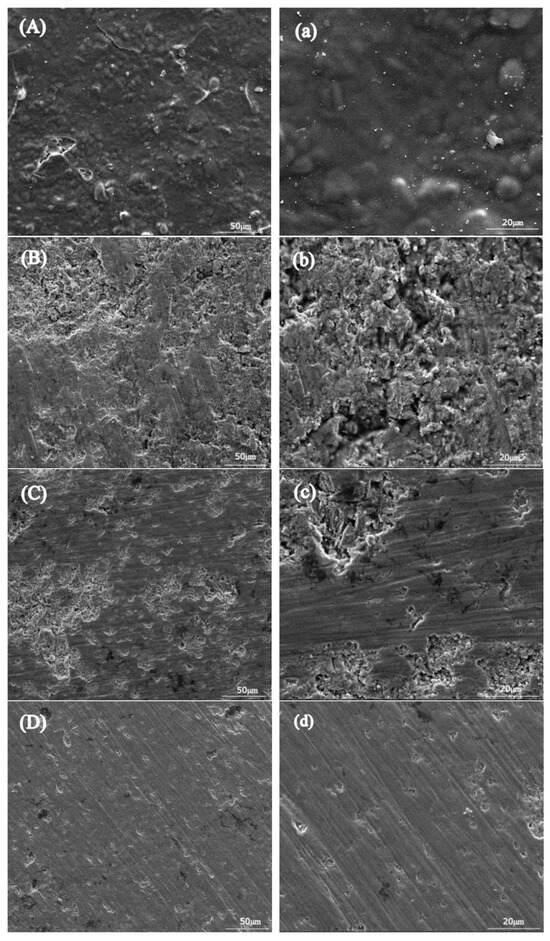
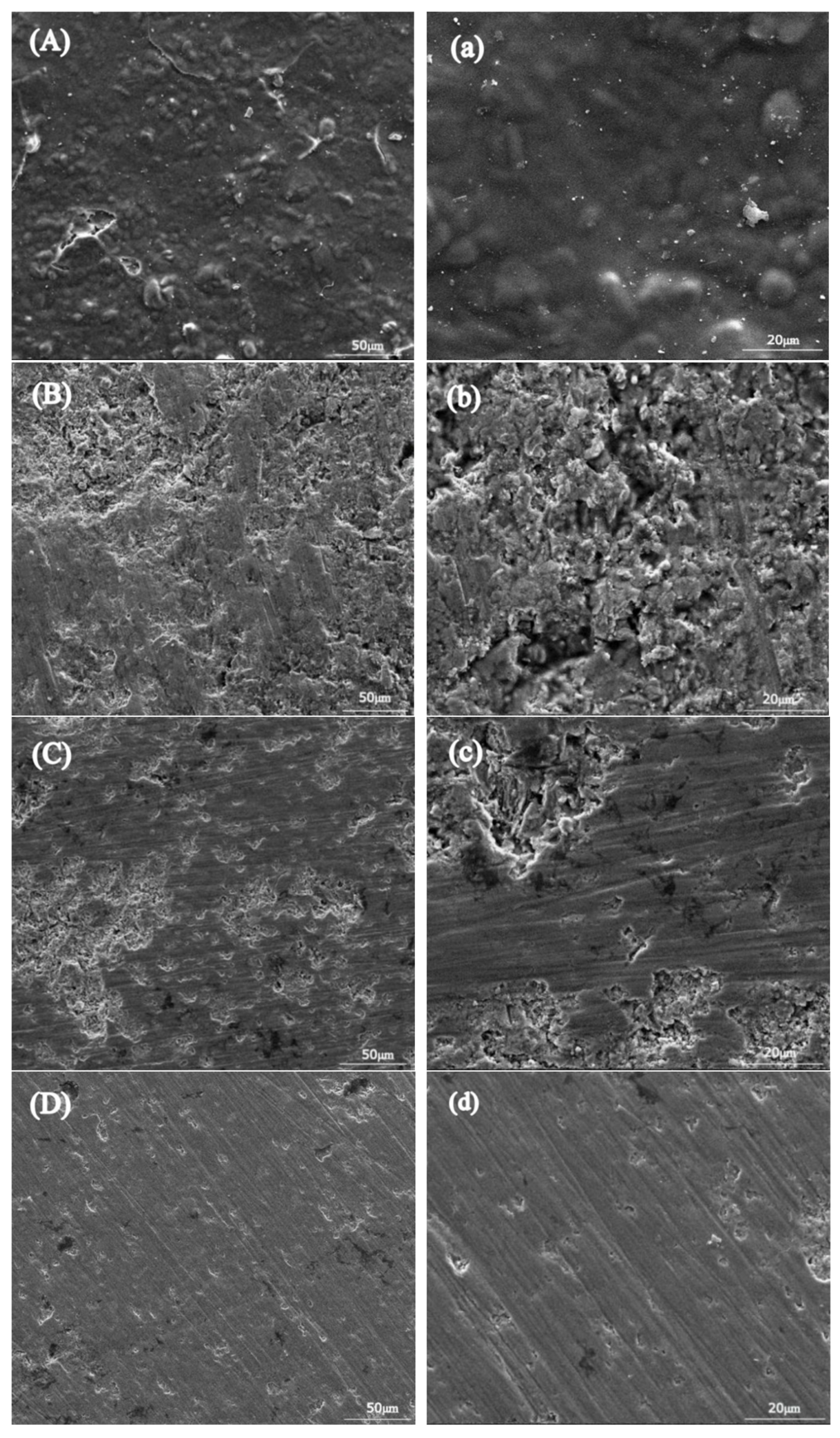
Figure 15 shows the surface morphology of MAO/Al2O3-CeO2 composite film with different thinning thicknesses when the aluminum concentration in the sol is 0.4 mol/L. When the thinning thickness is small, the surface of the film is dense and uniform. At this point, the film is still a sol-sealed film, and the defects on the surface of the film are mainly due to hot cracks during sintering. With the increase in thinning thickness, the sol-sealed film layer is gradually worn out and removed. When the thinning is 10 μm, micropore defects begin to appear frequently in the film layer. Such defects are mainly caused by the obstruction of the liquid sol when it enters the interior of the MAO loose layer, and the internal pores cannot be completely closed. At the same time, it can be seen that there are some dense areas in the loose layer. When the thinning is 15 μm, the surface defects increase. When the thinning continues to 20 μm, there are no obvious defects on the surface. At this point, it has entered the dense layer of the MAO film layer.
Figure 15.
Surface Micromorphology of MAO/Al2O3-CeO2 Composite Film with Different Thinning Thicknesses: (A) thinning 2 μm; (B) thinning 5 μm; (C) thinning 10 μm; (D) thinning 20 μm; (a) thinning 2 μm; (b) thinning 5 μm; (c) thinning 10 μm; (d) thinning 20 μm.
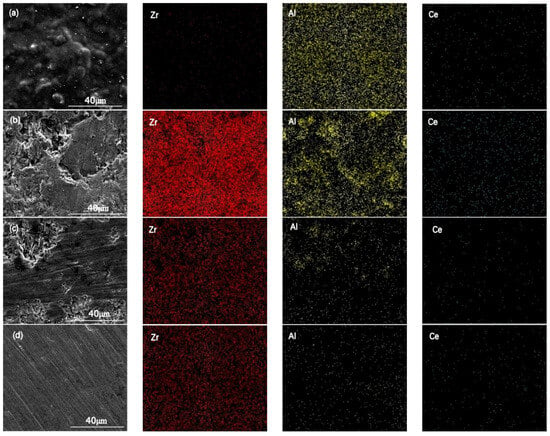
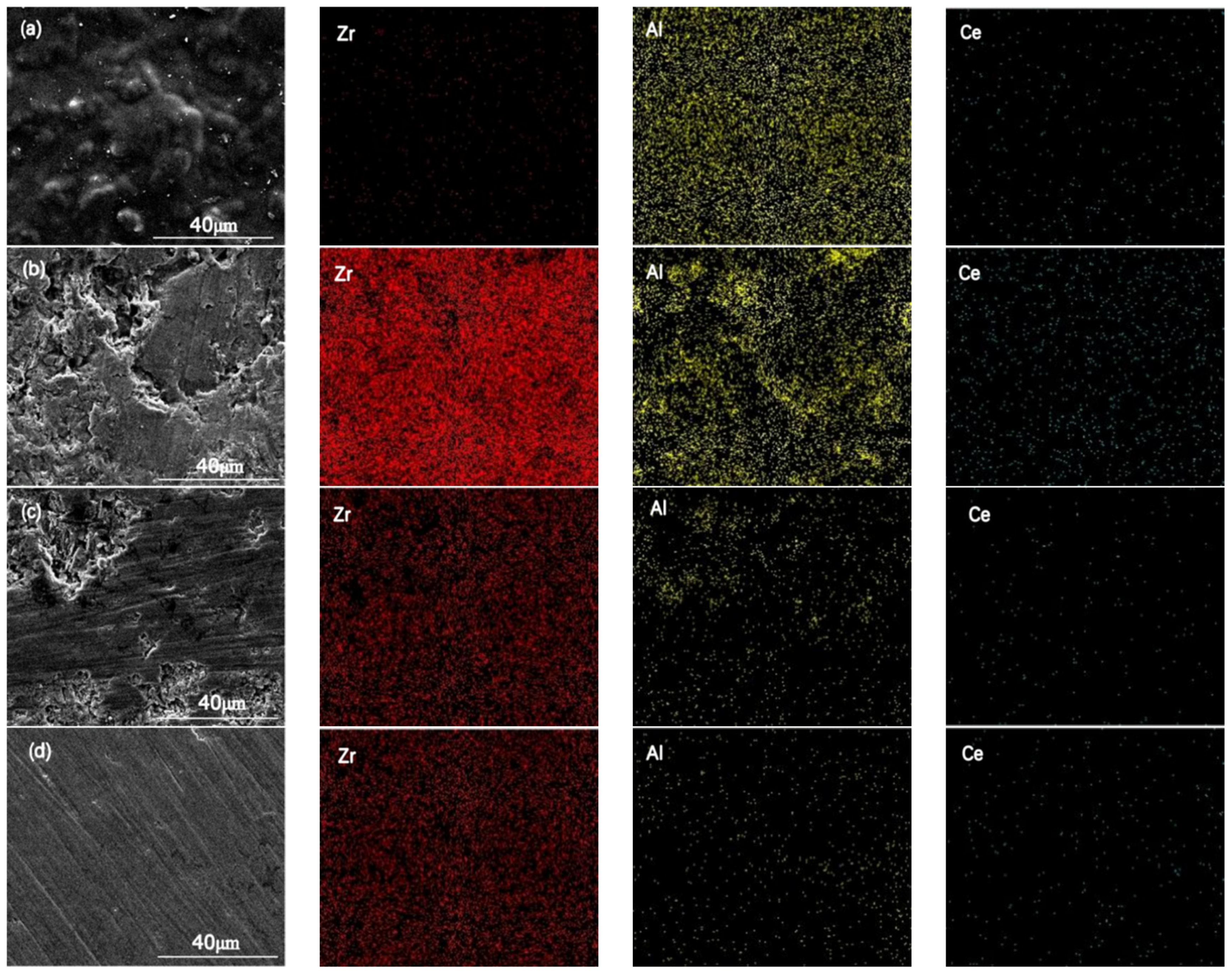
In order to further understand the distribution of Al and Ce elements in the film at different depths, EDS energy spectrum analysis was performed on the MAO/Al2O3-CeO2 composite film with different thinning thicknesses when the aluminum concentration in the sol was 0.4 mol/L. As shown in Figure 16, when the thinning thickness is small, the Al-Ce element is mainly dominant and evenly distributed on the surface of the film. With the increase in thinning thickness, the proportion of Al and Ce elements decreases, and the proportion of Zr elements increases. At the same time, the distribution of Al and Ce elements is irregular. First, faults appear at the defects of the film. When the thinning thickness continues to increase, the distribution of Al and Ce elements in the film becomes uneven, and the content is reduced. This shows that sol sealing is a process from the outside to the inside. When the sample is immersed in the sol liquid, the sol gradually enters the MAO film, with the defects such as pores and cracks on the surface of the MAO film, and grows along the defects. Because the sol is affected by its viscosity, the permeability in the film decreases with the increase in thickness, and the defects of the film gradually decrease. It is more difficult for the sol to fill the inside of the film, and the sealing effect on the pores begins to decrease. The sol deposition state on the surface of the film is most affected by the viscosity. The surface sol adhesion of the sample after dip-coating depends on the viscosity of the sol itself, so a thicker film cannot be formed.
Figure 16.
Surface EDS spectra of MAO/Al2O3-CeO2 film with different thinning thicknesses: (a) thinning 2 μm; (b) thinning 5 μm; (c) thinning 10 μm; (d) thinning 20 μm.
4.2. Hydrogen Resistance Mechanism of the Film
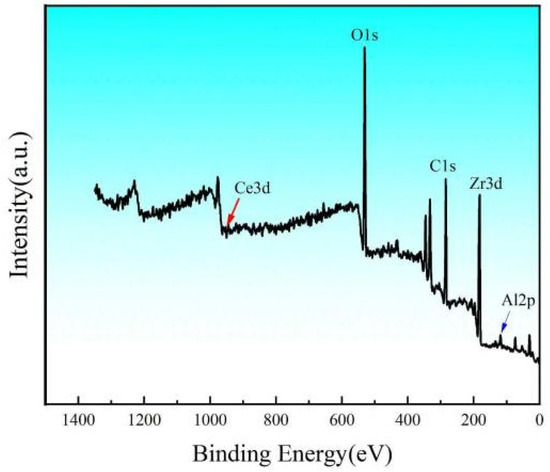
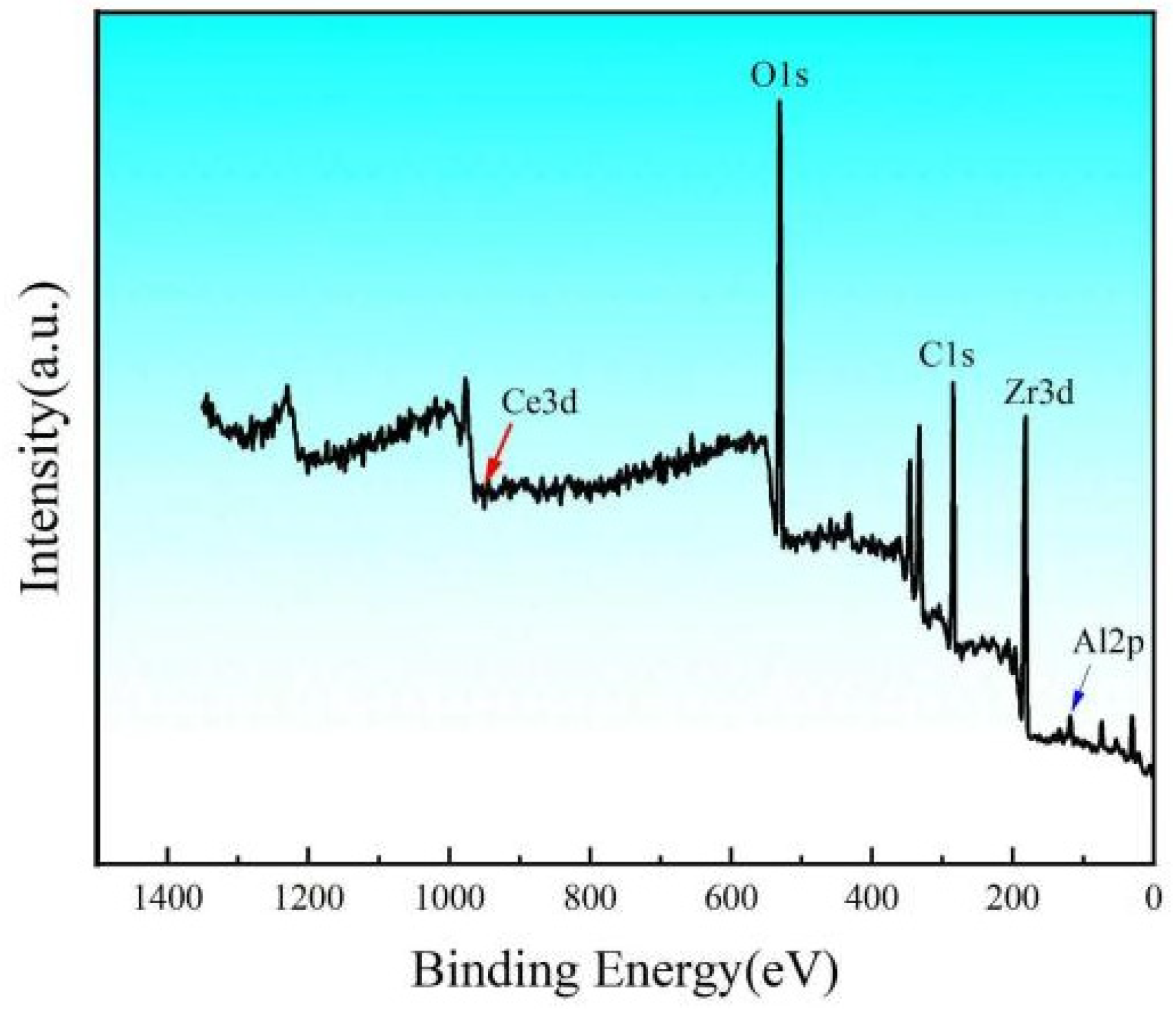
Figure 17 shows the XPS spectrum of the 0.4 mol/L MAO/Al2O3-CeO2 composite film layer. It can be seen from the graph that the main components of the composite film layer are oxides composed of Zr, Al, and Ce elements. The binding energy peaks of Al and Ce are lower than those of Zr. It can be seen that ZrO2 is still the main component in the film layer. By calculating the peak area, the percentage of Al and Ce is 8.56% and 0.62%, respectively, which is also close to the composition ratio of 8:1 designed by the sol. Common bulk Ce-stabilized ZrO2 ceramics usually require 8–12 mol% Ce (roughly 7~11 at.% Ce) to achieve prominent tetragonal phase stabilization via uniform lattice substitution, which is widely accepted as the critical Ce threshold in conventional Ce-ZrO2 binary systems. However, only 0.62 at.% surface Ce detected by XPS in our composite coating still brings notable T-ZrO2 retention, mainly from three unique factors: First, most Ce species preferentially enrich at ZrO2 grain boundaries rather than uniform bulk lattice dispersion, resulting in high local Ce concentration at grain boundaries even for low overall average content. Second, coexisting amorphous Al2O3 constrains ZrO2 grain growth and suppresses T→M phase transition via grain size confinement effects. Third, partial Ce4+→Ce3+ transformation generates abundant localized oxygen vacancies around grain boundaries, which further stabilize metastable T-ZrO2 at far lower bulk Ce loading than traditional bulk Ce-ZrO2 materials. Therefore, the low average Ce atomic fraction measured by surface XPS is consistent with the observed T-ZrO2 stabilization under this multi-component composite coating system. It can also be seen that the sol is more evenly coated on the MAO film.
Figure 17.
XPS spectrum of powder stripped from coating surface after sol sealing.
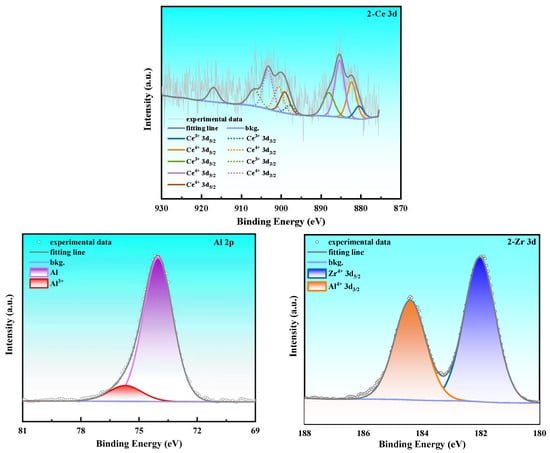
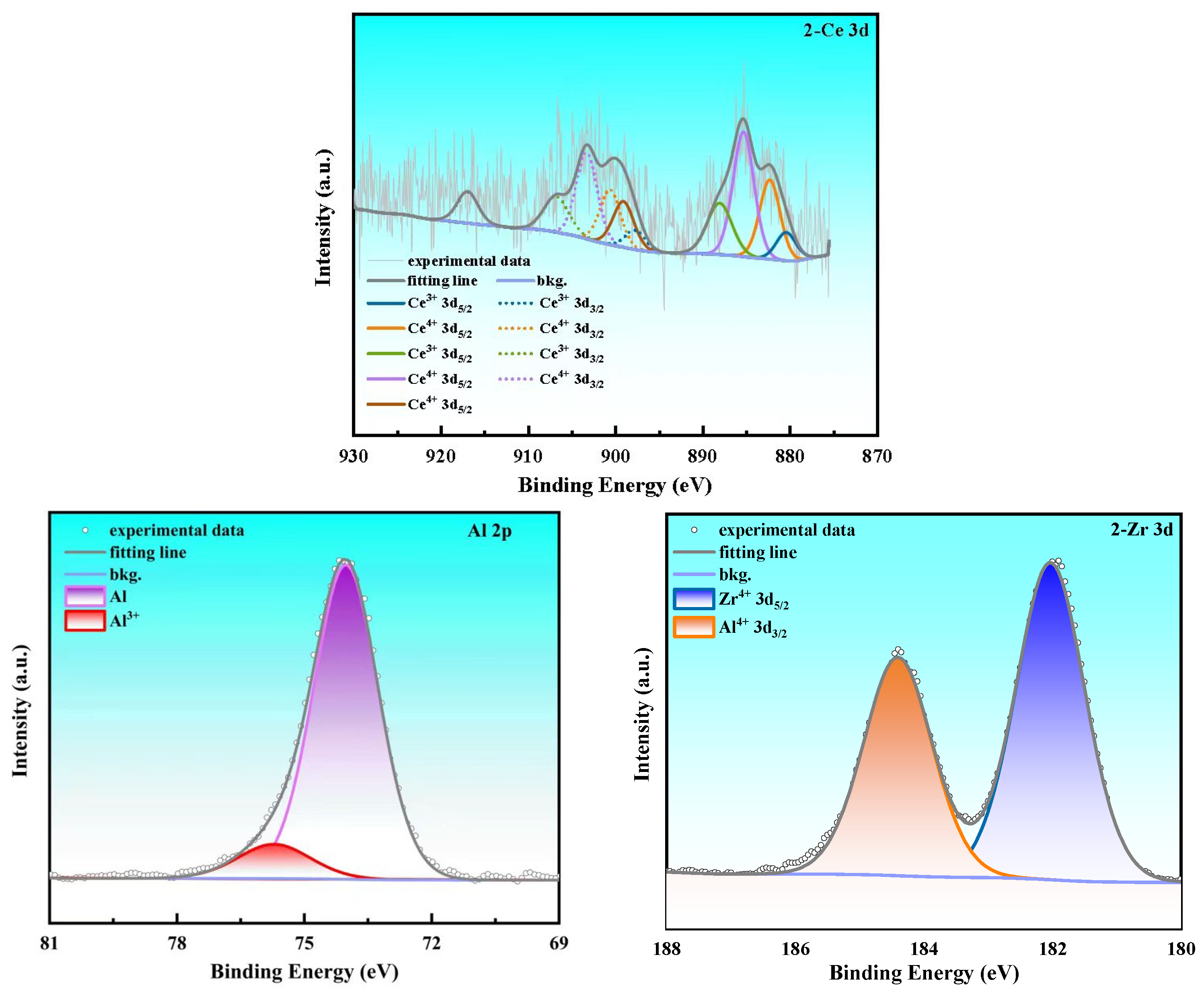
Figure 18 shows the narrow spectrum of Zr, Al, and Ce in the composite film. It can be seen that the binding energy of the orbital characteristic peak of Zr3d is 184.35 ev and 182 ev, which correspond to Zr4+ 3d3/2 and Zr4+ 3d5/2, respectively. The binding energy of the characteristic peak of aluminum 2p orbital is 74.30 ev, which is consistent with that of Al2O3, indicating that Al2O3 exists in the film after sintering [12,13]. During the sintering process, alumina grows along the grain boundary of zirconia grains, which increases the resistance to phase transformation during the cooling process of zirconia, so that tetragonal zirconia is preserved in a metastable state, reducing phase transformation defects [6,10,20,21], and thus ensuring its hydrogen resistance at working temperature. The binding energy of Ce3d is mainly concentrated at 885.34 ev, 903.25 eV, and 906.3 eV, which correspond to the binding energies of Ce4+ and Ce3+. Ce3+ ions themselves are unstable and easily oxidized. During the sintering process, the temperature is kept at 500 °C for 3 h. At this point, Ce3+ is first formed to form Ce2O3 [16]. As the temperature increases and the holding time increases, some Ce2O3 is oxidized to CeO2 and stored in the film. At the same time, CeO2 has a cubic structure. Ce4+ replaces Zr4+ to make CeO2 dissolve in the ZrO2 lattice to form a cerium-zirconium solid solution, which further stabilizes the phase structure of ZrO2 and significantly improves the high-temperature structural stability of the system [6,10,22,23]. The mechanism analysis shows that Ce2O3 may stabilize the tetragonal phase (T-ZrO2) of ZrO2 and inhibit the phase transition of the monoclinic phase (M-ZrO2) through the solid solution effect. It is speculated that C and O species inside the coating may trap diffusing hydrogen to generate C–H and O–H bonds, and oxygen vacancies derived from increased tetragonal ZrO2 possibly exert pinning restrictions on migrating hydrogen atoms, which is regarded as one potential factor for improved hydrogen barrier capacity. The residual trace carbon left after organic decomposition is the primary source for in situ C–H bond formation with diffused hydrogen. Amorphous alumina will transform to the metastable transition phase and then to steady-state α-Al2O3 when heated at high temperature. Al2O3 crystals are mainly composed of O2− compact accumulation, while aluminum fills in the gap of tetrahedron or octahedron. With the high temperature phase transition, Al2O3 crystals gradually develop towards the close direction of the crystal structure, Al-O bond structure is more stable, and the ability of O to capture H is continuously strengthened [24].
Figure 18.
Narrow spectra of powder Zr, Al, and Ce of surface coating layer after sol sealing.
5. Conclusions
In this work, MAO combined with sol–gel was adopted to prepare ZrO2/Al2O3-CeO2 composite coatings on ZrH1.8 substrate, and the regulation law of sol aluminum concentration (0.1–0.5mol/L) on coating microstructure and high-temperature hydrogen barrier performance was systematically investigated via multiple characterization methods. Main quantitative findings are summarized as follows:
- (1)
- The relative fraction of T-ZrO2 first rises and then declines with increasing Al concentration. The maximum T-ZrO2 content of 13.88% is obtained at 0.4 mol/L Al, while it decreases to 9.09% at 0.5 mol/L due to aggravated thermal stress and poor film continuity. The bare unmodified MAO coating only contains 8.21% T-ZrO2, verifying the positive phase-stabilization effect of Al2O3-CeO2 sol sealing.
- (2)
- Coating compactness is strongly dominated by sol viscosity tuned via Al content. The minimum surface porosity reaches 4.87% at the optimal 0.4 mol/L Al, accompanied by preferable uniform element distribution and complete defect filling; lower Al leads to insufficient sol attachment and incomplete sealing, whereas excessive Al increases sol viscosity and restricts sol penetration into inner pores.
- (3)
- Coating adhesion gradually increases with Al concentration, achieving 93.85 N at 0.5 mol/L, while the optimized sample at 0.4 mol/L exhibits moderate favorable bonding strength around 90 N.
- (4)
- Hydrogen barrier properties present a volcano-type variation against Al concentration. The coating prepared at 0.4 mol/L Al delivers the highest PRF of 18:1 and lifts the initial hydrogen-loss temperature up to 730 °C, superior to conventional single MAO and electroplated Cr coatings reported in the literature.
- (5)
- As a main limitation of this preparation system, excessively high Al concentration (0.5 mol/L) causes excessive sol viscosity, deteriorated fluidity, discontinuous sol–gel topcoat, and surface thermal cracks, which severely deteriorate final hydrogen-blocking performance.
Overall, sol with 0.4 mol/L Al is confirmed as the optimum formulation for fabricating dense, crack-free composite barrier coating with outstanding comprehensive performance.
Author Contributions
Investigation, conceptualization, initial drafting, L.C. Formal analysis, writing—guidance and editing, Z.W. Supervision, software, data treatment, J.S. Validation, writing—review and editing, Z.Z. All authors have read and agreed to the published version of the manuscript.
Funding
This research was funded by Specialized Intelligent Manufacturing Engineering Laboratory grant number PT2022TS02 and The APC was funded by Specialized Intelligent Manufacturing Engineering Laboratory.
Data Availability Statement
Data are contained within this article.
Acknowledgments
The authors gratefully acknowledge the financial support from the Specialized Intelligent Manufacturing Engineering Laboratory under Grant No. PT2022TS02, which also covered the Article Processing Charge (APC) of this manuscript. We would like to express our sincere gratitude to the Hebei Technology Innovation Center for Intelligent Production Line of Prefabricated Building Components for providing valuable research resources. Special thanks are extended to Inner Mongolia University of Technology for offering experimental conditions and technical support to complete relevant tests in this work.
Conflicts of Interest
The authors declare no conflict of interest.
References
- Yamanaka, S.; Yoshioka, K.; Uno, M.; Katsura, M.; Anada, H.; Matsuda, T.; Kobayashi, S. Thermal and mechanical properties of zirconium hydride. J. Alloys Compd. 1999, 293–295, 23–29. [Google Scholar] [CrossRef] [Scilit]
- Olander, D.; Greenspan, E.; Garkisch, H.D.; Petrovic, B. Uranium–zirconium hydride fuel properties. Nucl. Eng. Des. 2009, 239, 1406–1424. [Google Scholar] [CrossRef] [Scilit]
- Zou, X.; Sun, Y.; Yang, B.; Liu, Y. Analysis of the atomic ratio of H and Zr effect on the neutronics parameters of ZrH moderated space nuclear reactor. Nucl. Eng. Technol. 2024, 56, 5014–5021. [Google Scholar] [CrossRef] [Scilit]
- Oono, N.; Kasada, R.; Higuchi, T.; Sakamoto, K.; Nakatsuka, M.; Hasegawa, A.; Kondo, S.; Matsui, H.; Kimura, A. Irradiation hardening and microstructure evolution of ion-irradiated Zr-hydride. J. Nucl. Mater. 2011, 419, 366–370. [Google Scholar] [CrossRef] [Scilit]
- Yan, G.Q.; Chen, W.D.; Zhong, X.K.; Yan, S.F. Properties of oxide coating on the surface of ZrH1.8 prepared by microarc oxidation with different positive voltages. Rare Met. 2013, 32, 169–173. [Google Scholar] [CrossRef] [Scilit]
- Li, Z.L.; Kang, Y.X.; Yan, S.F.; Yang, S.H.; Chen, W.D.; Guo, C.X.; Ma, W. Enhanced hydrogen barrier performance of ZrH1.8 via yttria-zirconia composite film developed through the ECD-MAO technique. Corros. Sci. 2024, 232, 112013. [Google Scholar] [CrossRef] [Scilit]
- Li, Z.L.; Yan, S.F.; Chen, W.D.; Zhang, Z.H.; Kang, Y.X.; Ma, W. The effect of current density on the anodic oxidation hydrogen barrier film on ZrH1.8 surface. Corros. Sci. 2024, 227, 111740. [Google Scholar] [CrossRef] [Scilit]
- Cui, X.L.; Chen, L.W.; Li, Z.L. Optimization of In Situ CO2 Oxidation Temperature for Hydrogen-Resistant ZrO2 Films on Zirconium Hydride. Coatings 2026, 16, 348. [Google Scholar] [CrossRef] [Scilit]
- Wang, Z.G.; Chen, W.D.; Yan, S.F.; Fan, X.J.; Feng, G.; Xu, Z.G. Optimization of electrical parameters for MAO of zirconium hydride alloy. Rare Met. 2015, 22, 1–7. [Google Scholar]
- Chen, L.W.; Yan, S.F.; Li, Z.L.; Wang, Y.; Kang, Y.X.; Chen, W. Unraveling the microstructure-driven hydrogen blocking mechanism of zirconium hydride MAO/ZrO2-Y2O3 composite coatings. J. Alloys Compd. 2026, 1066, 187973. [Google Scholar] [CrossRef] [Scilit]
- Wu, M.; Peng, J.; Yan, G.; Chen, Y.; He, Z.; Xu, Z.; Wang, L. Preparation and properties of composite hydrogen permeation barrier on ZrH1.8 by sol–gel technique. Surf. Coat. Technol. 2018, 352, 159–165. [Google Scholar] [CrossRef] [Scilit]
- Haurat, E.; Crocombette, J.P.; Tupin, M. Interactions of hydrogen with zirconium alloying elements and oxygen vacancies in monoclinic zirconia. Acta Mater. 2022, 225, 117547. [Google Scholar] [CrossRef] [Scilit]
- Kato, T.; Takagi, I.; Sakamoto, K.; Aomi, M. Hydrogen diffusivity in oxide layers formed in Zr alloy in air or steam. J. Nucl. Mater. 2017, 494, 79–86. [Google Scholar] [CrossRef] [Scilit]
- Chen, W.D.; Wang, L.J.; Lu, S. Influence of oxide layer on hydrogen desorption from zirconium hydride. J. Alloys Compd. 2009, 469, 142–145. [Google Scholar] [CrossRef] [Scilit]
- Peng, J.; Chen, Y.; Wu, M.; Yan, G.; Wang, L.; Li, J.; Guo, Z. Hydrogen desorption behavior of the hydrides of ZrY alloys under Ar and CO2 atmosphere. J. Alloys Compd. 2017, 693, 103–109. [Google Scholar] [CrossRef] [Scilit]
- Yan, G.Q. Preparation and Hydrogen Blocking Mechanism of Multi-Component Hydrogen Barrier Layers on Zirconium Hydride Surface. Ph.D. Thesis, General Research Institute for Nonferrous Metals, Beijing, China, 2017. [Google Scholar]
- Wang, J.; Li, Q.; Xiang, Q.Y.; Cao, J.L. Performances of AlN coatings as hydrogen isotopes permeation barriers. Fusion Eng. Des. 2016, 102, 94–98. [Google Scholar] [CrossRef] [Scilit]
- Li, Q.; Wang, J.; Xiang, Q.Y.; Tang, T.; Rao, Y.C.; Cao, J.L. Thickness impacts on permeation reduction factor of Er2O3 hydrogen isotopes permeation barriers prepared by magnetron sputtering. Int. J. Hydrogen Energy 2016, 41, 3299–3306. [Google Scholar] [CrossRef] [Scilit]
- Toraya, H.; Yoshimura, M.; Somiya, S. Calibration curve for quantitative analysis of the monoclinic-tetragonal ZrO2 system by X-ray diffraction. J. Am. Ceram. Soc. 1984, 67, C-119–C-121.A. [Google Scholar] [CrossRef] [Scilit]
- Zheng, L.; Xu, A.; Li, F.; Li, M.; Yan, Y.; Wang, X.; Li, H. Improving Hydrogen Permeation Resistance in Ultrathin ZrO2 Coating via Y Dopant Tuning. ACS Appl. Mater. Interfaces 2025, 17, 50011–50023. [Google Scholar] [CrossRef] [Scilit]
- Kese, K.; Olsson, P.A.T.; Holston, A.M.A.; Broitman, E. High temperature nanoindentation hardness and Young’s modulus measurement in a neutron-irradiated fuel cladding material. J. Nucl. Mater. 2017, 487, 113–120. [Google Scholar] [CrossRef] [Scilit]
- Tamura, M.; Noma, M.; Yamashita, M. Characteristic change of hydrogen permeation in stainless steel plate by BN coating. Surf. Coat. Technol. 2014, 260, 148–154. [Google Scholar] [CrossRef] [Scilit]
- Wang, Z.G.; Chen, W.D.; Yan, S.F.; Zhong, X.K.; Ma, W.; Song, X.W.; Wang, Y.M.; Ouyang, J.H. Direct fabrication and characterization of zirconia thick coatings on zirconium hydride as a hydrogen permeation barrier. Coatings 2023, 13, 884. [Google Scholar] [CrossRef] [Scilit]
- Chen, W.; Wang, L.; Han, L.; Chen, S. Properties of hydrogen permeation barrier on the surface of zirconium hydride. Rare Met. 2008, 27, 473–478. [Google Scholar] [CrossRef] [Scilit]

Disclaimer/Publisher’s Note: The statements, opinions and data contained in all publications are solely those of the individual author(s) and contributor(s) and not of MDPI and/or the editor(s). MDPI and/or the editor(s) disclaim responsibility for any injury to people or property resulting from any ideas, methods, instructions or products referred to in the content. |
© 2026 by the authors. Licensee MDPI, Basel, Switzerland. This article is an open access article distributed under the terms and conditions of the Creative Commons Attribution (CC BY) license.