


Abstract
Mild steel is prone to corrosion due to environmental factors like humidity, O2, salt, pH, and pollutants. Corrosion inhibitors offer a practical solution to this problem. This study involved synthesising protein-based carbon dots from waste oyster meat via a hydrothermal reaction. These CDs were subsequently modified with stearic acid to enhance their hydrophobicity. Unmodified and modified CDs were tested for their corrosion inhibition properties using weight loss and electrochemical measurements in 0.5 mol/L H2SO4. The findings showed that the modified CDs achieved a corrosion inhibition efficiency of up to 93.19% at 100 mg/L. This improvement is attributed to the enhanced hydrophobicity of the modified CDs, which enables them to form a more effective protective film. The research emphasises the potential of modified CDs as a promising approach for the high-value utilisation of waste resources and the development of corrosion inhibitors from biomass sources.
1. Introduction
Metallic materials, known for their superior mechanical properties and heat resistance, play a pivotal role across diverse sectors such as energy, transportation, construction, and chemicals due to their versatile applicability [1,2]. However, metallic materials still face numerous challenges due to corrosion. Corrosion of metals is a chemical reaction between a metal and its environment, resulting in damage to its surface or internal structure [3]. It not only results in huge economic losses but also leads to serious safety hazards, especially in high-risk areas such as chemical processing, power systems, and marine engineering, where corrosion represents a major threat to operational safety [4,5]. According to statistics, metal corrosion causes global economic losses that reach trillions of dollars every year. This figure continues to rise. Beyond economic losses, corrosion also leads to resource waste and environmental pollution. Many metallic materials undergo degradation due to corrosion, resulting in a waste of valuable resources. Additionally, emissions generated during metal production impose considerable pressure on both the ecological environment and industrial processes [6]. Consequently, developing efficient, green, and sustainable metal corrosion protection technologies is crucial for addressing these challenges [7,8,9]. Currently, metal corrosion protection technologies mainly include physical and chemical protection methods. Although traditional coatings [10] and alloying protection [11] have achieved significant results in some applications, these methods are usually expensive [12,13]. In contrast, corrosion inhibitors represent an effective strategy for corrosion protection, as they can appreciably reduce the corrosion rate by forming a protective film [14]. Although traditional corrosion inhibitors have been widely applied, they do not meet the requirements for environmental protection and sustainable development [15,16].
Developing green corrosion inhibitors, particularly from biomass sources, has become a major research focus [17]. Carbon quantum dots, as a new type of nanomaterial, have unique physicochemical properties, including good solubility, low toxicity, and fluorescence properties [18,19]. In recent years, carbon quantum dots have demonstrated notable potential in applications spanning nanotechnology, sensing, and catalysis [20]. Recent studies have demonstrated the application of carbon-based materials in membrane systems and pollutant removal processes [21]. CDs have emerged as eco-friendly corrosion inhibitors due to their high surface area, tunable functional groups, and good aqueous dispersibility. They adsorb onto metal surfaces, forming protective films that suppress both anodic and cathodic reactions. Studies report that nitrogen-doped p-phenylenediamine (p-PD) and o-phenylenediamine (o-PD) [22] and citric acid-derived CDs [23] achieve high inhibition efficiencies (often >90%) in acidic media, while advanced systems such as N,S- [24] and Cu,N-doped [25] CDs further enhance performance by modifying interfacial electrochemical behaviour. CDs inhibit corrosion primarily through adsorption and barrier layer formation, though their performance depends on factors such as pH, temperature, and surface functionality.
In particular, carbon quantum dots from biomass sources are synthesised through hydrothermal reaction of waste biomass, such as plants, animals, microorganisms, and food waste, as raw materials, which not only responds to the reuse of waste resources, but also effectively reduces the environmental pollution, and provides the possibility of realising green chemistry [26,27,28]. Most reported biomass-derived carbon dots are primarily synthesised from conventional precursors such as glucose, citric acid, or plant-based wastes [29,30,31], while the use of animal-derived waste sources remains relatively unexplored in corrosion inhibition applications. In this work, oyster meat waste is utilised as a novel animal-derived biomass precursor for the synthesis of carbon dots, providing a distinct heteroatom-rich surface chemistry compared to commonly reported plant-based systems [32].
Oyster meat is a common by-product of the aquaculture process, which is rich in collagen, glutamic acid, glycine, and other amino acids and minerals, and these natural organic groups provide abundant precursor structures for the formation of CDs and their subsequent surface modification [33,34]. The high collagen and lipid content in oyster meat helps to generate CDs with a certain self-assembly structure or surface activity, which is a unique advantage in corrosion inhibitor design. Furthermore, a hydrophobic surface modification strategy is introduced to regulate the interfacial properties of carbon dots, promoting the formation of a more compact and water-repellent protective film on the steel surface. Modifying the surface hydrophobicity of biomass waste CDs can significantly enhance their ability to form a compact film on metal surfaces, thereby improving their corrosion resistance in acidic conditions [35]. Therefore, this study not only expands the range of sustainable biomass sources for carbon dot synthesis but also demonstrates how surface engineering can significantly enhance their corrosion inhibition efficacies.
This study focuses on the development of environmentally friendly CDs as corrosion inhibitors and their surface modification and modulation mechanisms. Structural characterisation and performance evaluation of unmodified CDs with different degrees of hydrophobicity were carried out to determine the structural composition and microscopic morphology using FTIR, XRD, and TEM analysis, and the changes in surface wettability were analysed using a contact angle test. Secondly, the corrosion inhibition effect of CDs with various modification levels on MS in 0.5 mol/L H2SO4 was evaluated using weight loss, EIS, and PDP analysis. Comparative analyses were carried out with unmodified CDs. The protective film’s structure was determined using XPS and SEM analysis, with its protective mechanism clarified through the correlation analysis of hydrophobicity and corrosion inhibition performance. Appropriate hydrophobicity modulation can enhance the compatibility between CDs and the metal surface and promote film densification. These improvements can effectively prolong the lifespan of CDs in actual corrosive environments. CDs derived from oyster meat not only achieve the high-value use of waste resources but also present a new approach to the functional development of biomass CDs.
2. Materials and Methods
2.1. Materials
The working electrode was mild steel (MS), consisting of C 0.160%, Si 0.080%, Mn 0.210%, P 0.015%, S 0.012%, and the remainder Fe. During electrochemical testing, the treated MS was sealed with epoxy resin, exposing a 1.0 cm2 area to use as the working electrode. Before testing, samples were wet-polished with sandpaper of varying grit sizes (100#, 220#, 400#, 800#, 1000#, 1500#, 2000#), then sequentially cleaned with ethanol/acetone to remove impurities and air dried. Further, 0.5 mol/L H2SO4 was prepared as the experimental corrosive medium. The corrosion inhibitor was dissolved in it at 25, 50, 75, and 100 mg/L.
2.2. Preparation of CDs and Modified CDs
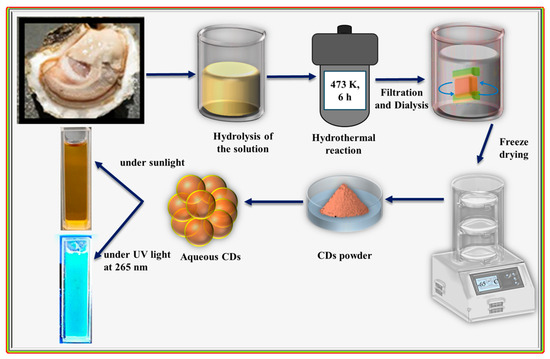
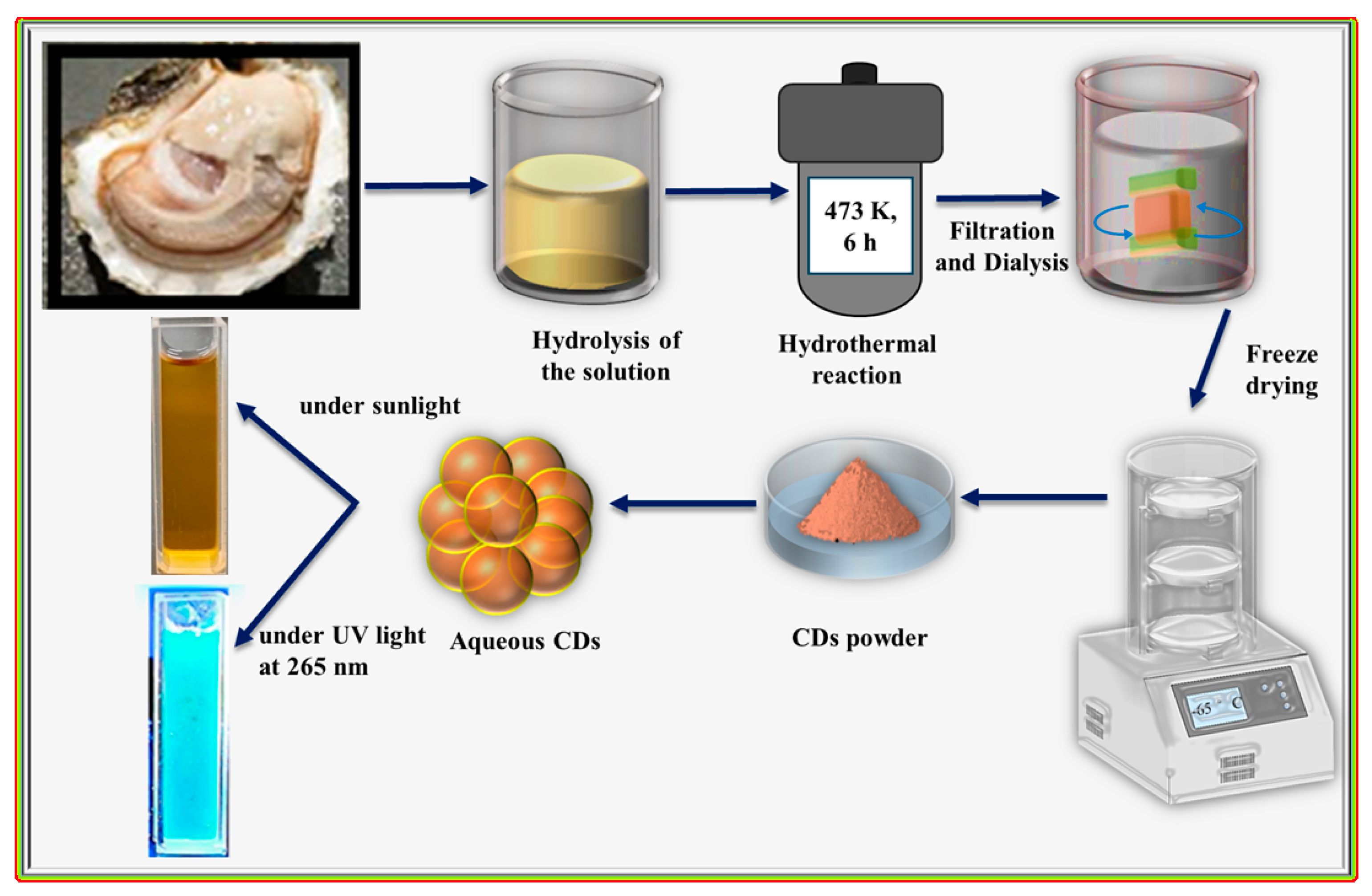
Figure 1 shows the preparation of the protein-derived CDs. Firstly, oyster meat needs to be rinsed repeatedly with water to eliminate any surface impurities. Once cleaned, the oyster meat was chopped into pieces and then pulverised into a purée, which helped enhance the hydrolysis rate. The mixture was washed with a 70% ethanol solution. It was then heated in a water bath at 313 K with continuous stirring for 2 h, followed by centrifugation at 4000 r/min. It was then mixed with deionised water at a 1:30 (v/v) ratio, and the pH was adjusted to 9.5. Subsequently, 4.0 mol/L HCl was added to facilitate protein processing. The mixture was heated for 10 h, followed by centrifugation to isolate the proteins. Finally, the extracted proteins were subjected to hydrothermal treatment in a reactor for 6 h. Finally, the product was freeze-dried and then pulverised into a powder to obtain CDs. Further, modified CDs were prepared by dissolving stearic acid in ethanol followed by ultrasonic treatment to ensure complete dissolution. The equal mass of CDs was separately added to the stearic acid solution to ensure uniform dispersion. Different degrees of modification were prepared by varying the mass ratios of CDs to stearic acid (1:1, 1:2, and 1:3), which were designated as CDs1, CDs2, and CDs3, respectively. The resulting mixtures were then stirred at 323 K for 12 h to promote complexation between CDs and stearic acid. Finally, the modified CDs were collected by centrifugation, followed by solvent removal and drying.
Figure 1.
Preparation process of CDs [36].
2.3. Instrument Details
In this study, FTIR spectra of CDs, CDs1, CDs2, and CDs3 were taken using Nicolet IS10 (Thermo Scientific, Waltham, MA, USA) in the wave number range of 4000 cm−1 to 400 cm−1. An Evolution 300 UV–Vis spectrometer (Thermo Scientific, USA) was used for UV–Vis testing of various concentrations of CDs, CDs1, CDs2, and CDs3 in the range of 200–700 nm. The D8 Advance X-ray diffractometer from Bruker, Germany was used to determine the crystalline structure, cell parameters, and phase composition of CDs, CDs1, CDs2, and CDs3 by analysing the diffraction angle 2θ and peak intensity distribution. TEM analysis was done using Tecnai G2 Spirit (FEI Company, Hillsboro, OR, USA) to observe the micro-morphological features of CDs2.
2.4. Weight Loss Measurement
The MS used in the weight loss experiments had dimensions of 3.0 cm × 2.0 cm × 1.0 cm. Before conducting the tests, the weight of the MS was determined using a weighing balance. All the steel samples were immersed in an acidic solution containing corrosion inhibitor at varying concentrations for 6 h at 298 K. After the immersion period, each sample was rinsed with water to effectively eliminate corrosion residues. To prevent further oxidation or surface corrosion, the samples were dried using a gentle stream of cold air. The treated samples were reweighed precisely to determine their final mass, and used to calculate the corrosion rate (ν, g m−2 h−1) and inhibition efficacies (ηw%) with the following formulas [37,38]:
where is the mass loss, is the surface area of the MS, is the immersion time (h), and and denote the corrosion rate of MS immersed in acidic solution with and without corrosion inhibitors, respectively.
2.5. Electrochemical Measurement
In this work, electrochemical measurements were performed using a CHI660E workstation (Shanghai Chenhua Instrument Co., Ltd., Shanghai, China) with a standard three-electrode system. The working electrode (WE) was a carbon steel electrode, the counter electrode (CE) was a platinum sheet, and the reference electrode (RE) was a silver/silver chloride (Ag/AgCl) electrode. Before each test, the working electrode was polished as reported in Section 2.1. For the open circuit potential (OCP) test, the working electrode was immersed in the test solution for 1800 s to ensure a steady state. The spectra were recorded using a sinusoidal voltage with a frequency range of 100 kHz to 0.01 Hz and a signal amplitude of 10 mV.
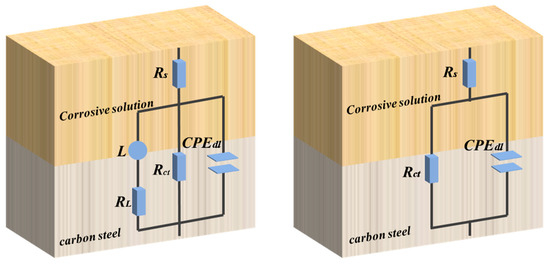
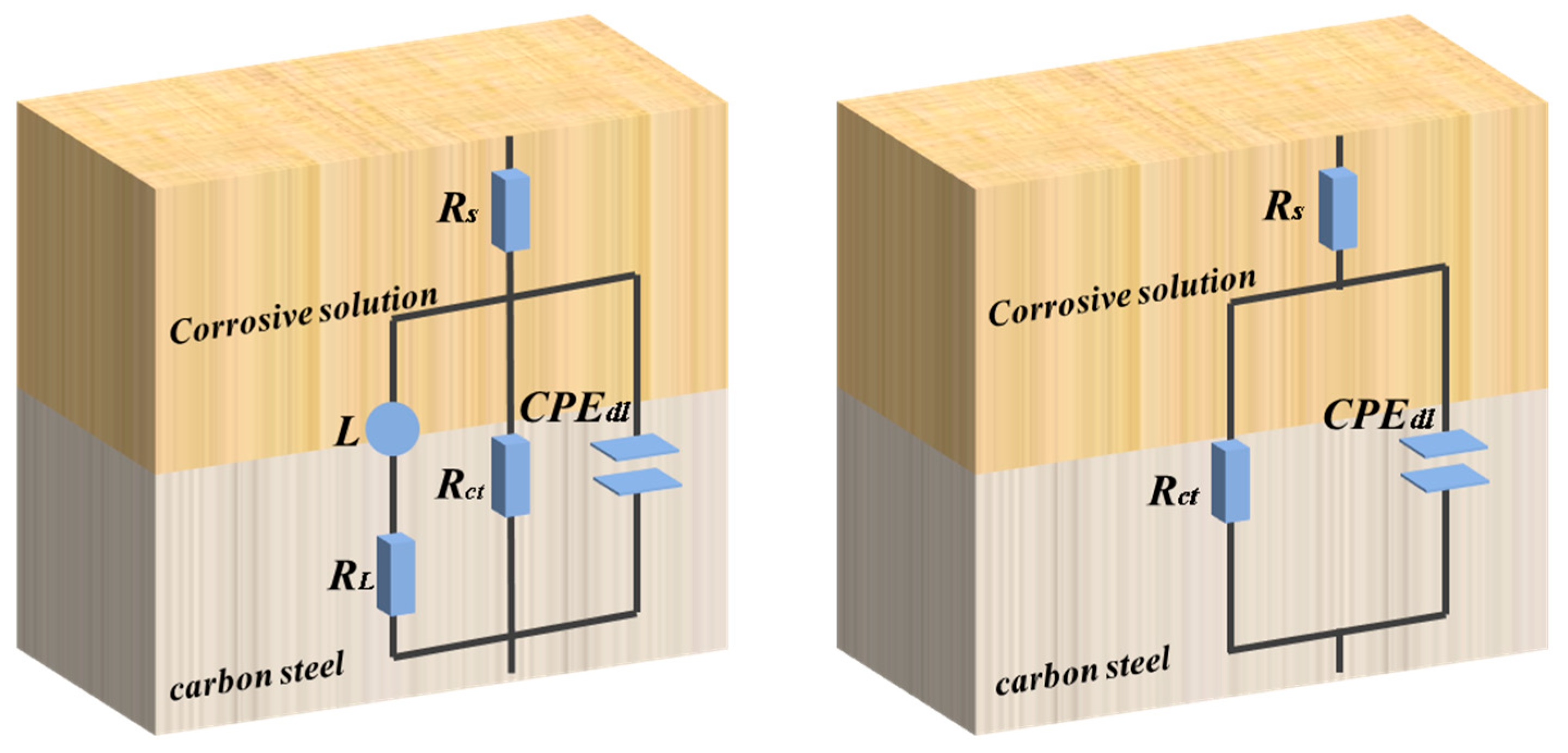
The data was fitted and analysed using the ZSimpWin software. As shown in Figure 2, two classical equivalent circuit models were applied to determine the parameters, with serving as the goodness-of-fit indicator. The fitting allows for obtaining the electrochemical reaction parameters, including solution resistance (Rs), charge transfer resistance (Rct), inductance (), inductance resistance (), double-layer capacitance (), and constant phase element parameters (), which are computed by the following equations [39,40,41,42]:
Figure 2.
Impedance spectrum fitted using an equivalent circuit.
In Equations (3) and (4), is the imaginary unit, is the angular frequency (=), and is the dispersion index, whose value is between −1 and 1. The corrosion inhibitor’s inhibition efficiency (), based on the charge transfer resistance, can be calculated using the following equation [43,44]:
In Equation (5), the charge transfer resistance in corrosive solutions is represented by without inhibitors and with inhibitors.
2.6. Surface Characterisation
SU 8020 equipment (Hitachi, Tokyo, Japan) was used to analyse the morphological changes that occurred on MS surface in the absence and presence of CDs. Following cleaning as described above, the samples were immersed in a blank solution and in solutions with 100 mg/L CDs and varying concentrations of CDs2 for 6 h. SEM–EDS and AFM analysis was carried to study the surface morphology and elemental composition. Thermo Escalab 250Xi (Thermo Fisher Scientific, USA) was employed to perform XPS analysis. The chemical bonding state of CDs2 on the MS surface was assessed through XPS analysis, which was standardised using the C1s binding energy. Moreover, MS samples immersed in CDs, CDs1, CDs2, and CDs3 were tested using an OCA50 contact angle metre (Dataphysics, Filderstadt, Germany) to evaluate their hydrophobicity.
3. Results and Discussion
3.1. Characteristics of CDs and Modified CDs
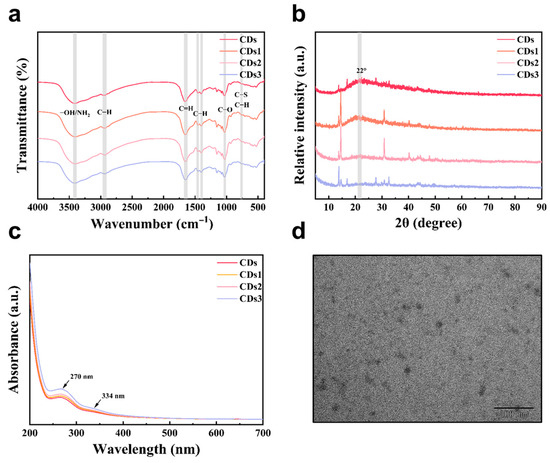
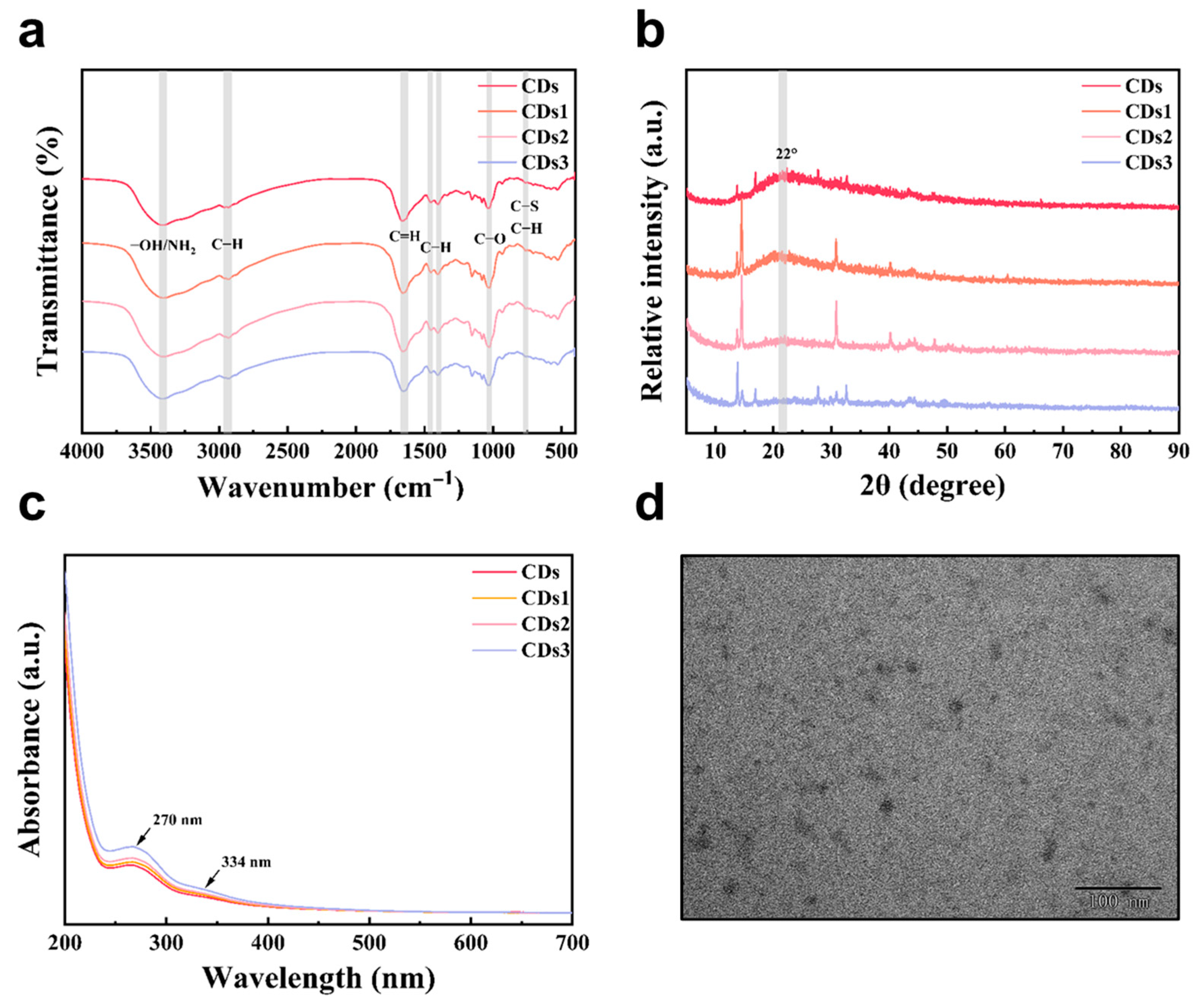
Figure 3a shows FTIR spectra of CDs before and after modification to explore their chemical composition. The characteristic peaks of hydroxyl (−OH) and amino (−NH2) stretching vibration of CDs before and after modification were observed at 3412 cm−1 [27,45]. The peak at 2928 cm−1 was associated with the stretching vibration of saturated C–H in CDs both before and after modification [46,47]. The peak at 1664 cm−1 is related to the C=O stretching vibration of amide groups in CDs [48]. The peak at 1454 cm−1 corresponds to the C–H bending vibration, likely related to the alkyl groups in the CDs [49,50]. The characteristic peaks at 1401 cm−1 and 1032 cm−1 correspond to C–H bending and C–O stretching vibrations, which may be associated with benzene rings and cyclic structural compounds [51]. The peaks at 704 cm−1 and 668 cm−1 correspond to C–H bending and C–S stretching vibrations in aromatic compounds [52,53]. According to Figure 3b, the XRD plot shows that the CDs before and after modification display a broad, less intense diffraction peak, indicating an amorphous or weak crystalline structure. A diffraction peak appeared at 22°, usually associated with the amorphous structure of CDs [54]. When CDs are modified with stearic acid, the stearic acid may be physically adsorbed or chemically bonded to the CDs, forming a surface film. This results in the appearance of diffraction peaks of stearic acid on the XRD patterns of modified CDs. The diffraction peaks of the modified CDs are more prominent due to the more crystalline nature of stearic acid, which shows some degree of structural rearrangement. The study examined the UV–Vis absorption spectra of CDs in solution. According to the results shown in Figure 3c, CDs showed absorption peaks at 270 nm and 334 nm. The main absorption occurring at 270 nm and 334 nm is the n–π* migration of C=O [55,56]. The mixing of CDs and stearic acid may result in the polar groups of stearic acid interacting with the surface functional groups of the CDs and altering the electron distribution, which in turn affects the UV absorption properties of CDs. The TEM results in Figure 3d clearly provided the morphology and size of CDs, revealing that they have a spherical form with an approximate size of 10 nm. It can be concluded that CDs possess functional groups such as amino, hydroxyl, and aromatic (benzene) groups. These functional groups, along with the elemental composition of CDs, enable them both before and after modification to adsorb onto metal surfaces and thereby effectively inhibit metal corrosion.
Figure 3.
Characterisation images of PCQDs: (a) FTIR, (b) XRD, (c) UV–Vis, and (d) TEM.
3.2. Weight Loss Measurements
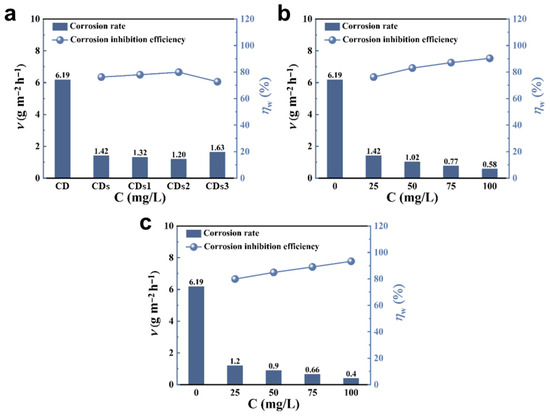
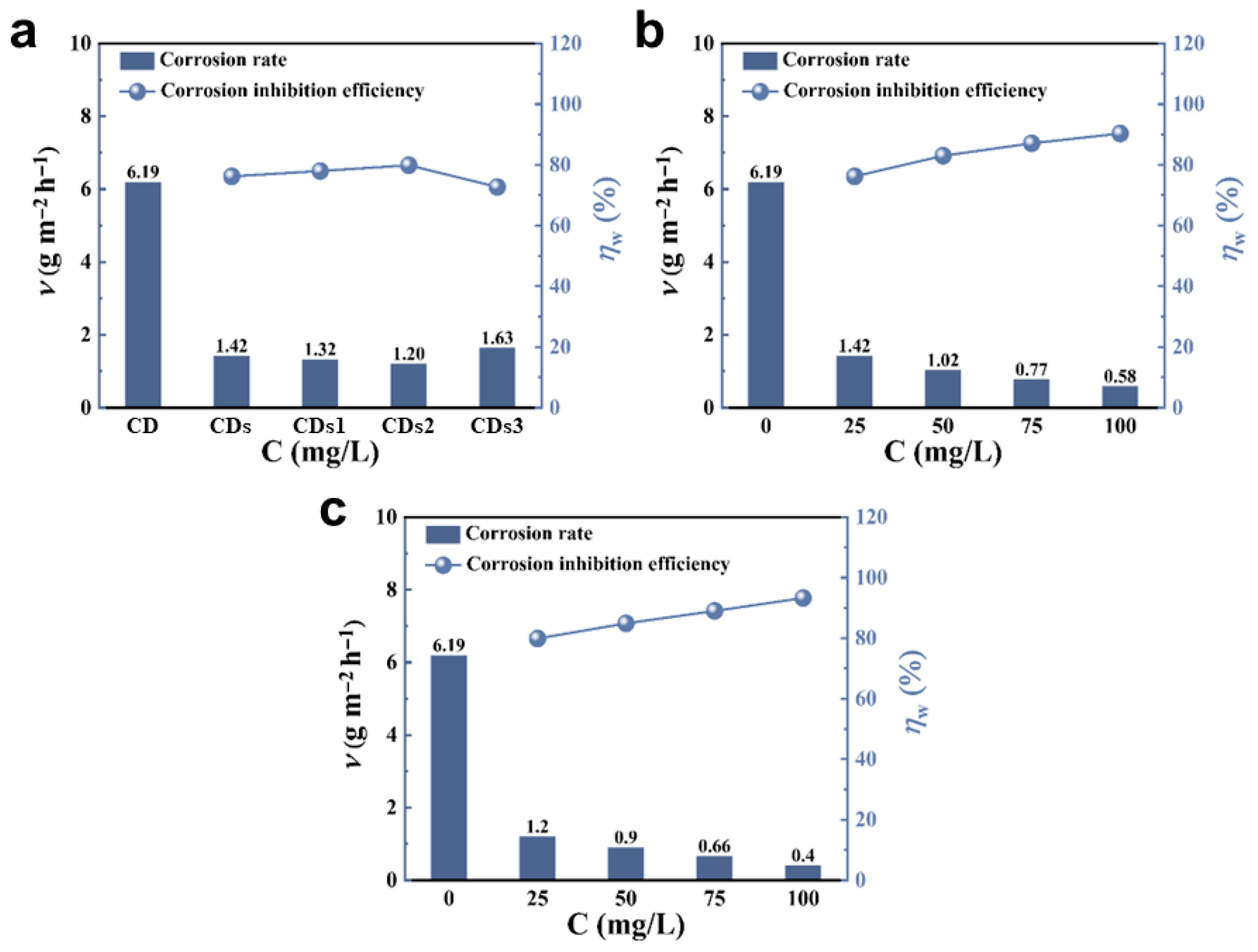
Figure 4 shows how various concentrations and different degrees of modification of CDs affect the corrosion rate and inhibition efficiency of MS in 0.5 mol/L H2SO4. Figure 4a indicates that as the degree of modification increases, the corrosion rate first decreases and then increases, while the corrosion inhibition efficiency exhibited the opposite trend.
Figure 4.
Weight loss test results of MS immersed in 0.5 mol/L H2SO4: (a) the same concentration of CDs with different degrees of modification, (b) various concentrations of CDs, and (c) various concentrations of CDs2.
Table 1 shows that the modified CDs exhibit good corrosion inhibition performance. The corrosion rate of CDs2 decreases from 6.19 g m−2 h−1 in the blank solution to 1.20 g m−2 h−1, corresponding to a corrosion inhibition efficiency of 79.88%, indicating that CDs2 has the optimal degree of modification. Figure 4b,c show that increasing the concentration of CDs reduces the corrosion rate and increases the inhibition efficiency. Among the different types of CDs tested, modified CDs demonstrate superior performance in inhibiting MS corrosion. The corrosion inhibition efficiency was especially significant at 100 mg/L, reaching over 93%. This highlights that both the concentration and the modification degree of CDs are crucial in determining the corrosion inhibition effectiveness. Higher concentrations and optimal modification facilitate the formation of a robust protective coating, which significantly enhances the metal’s resistance to corrosion in acidic environments.
Table 1.
Corrosion rates and corrosion inhibition efficiencies of MS in 0.5 mol/L H2SO4 without and with (a) the same concentration of CDs with different degrees of modification, (b) various concentrations of CDs, and (c) various concentrations of CDs2.
3.3. Electrochemical Analysis
3.3.1. OCP
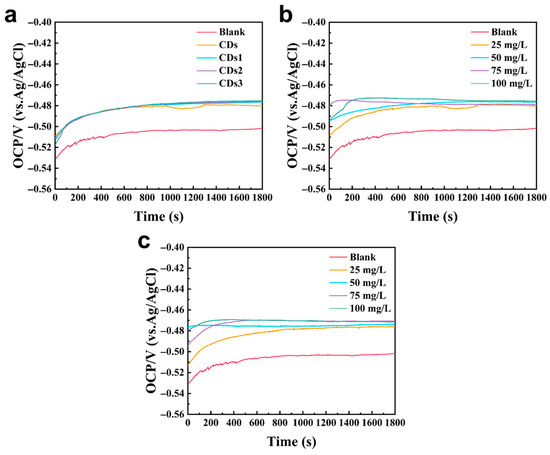
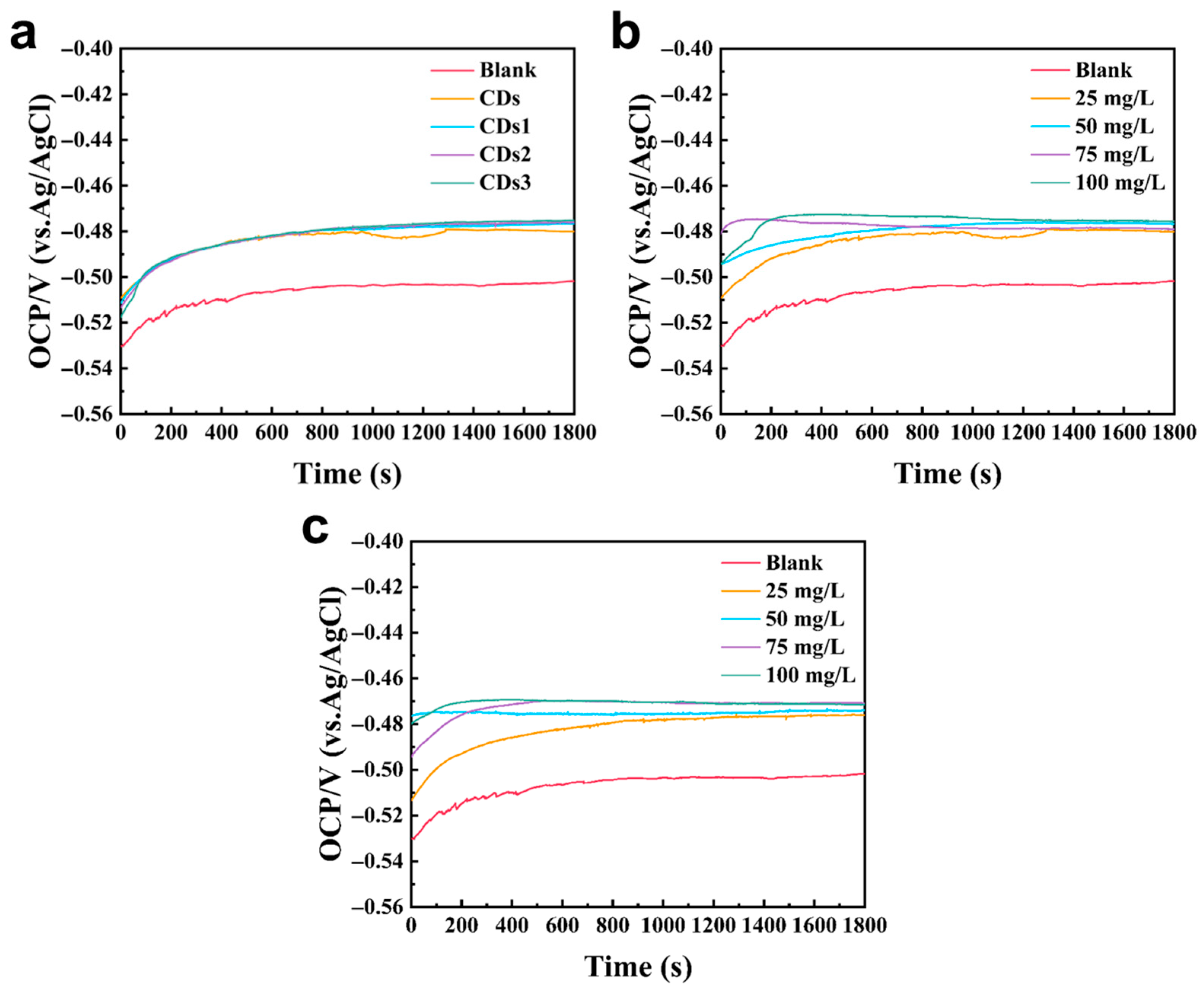
Figure 5 shows the OCP curves of MS immersed in H2SO4 for 1800 s. OCP curves tend to stabilise after 1200 s of immersion. The OCP values of MS moved in a positive direction with increasing CD concentration. At higher CD concentrations, the OCP of MS became more stable, which implies that the concentration of CDs is positively correlated with the corrosion inhibition performance of MS [57]. The positive shift in the OCP curves suggests that both the concentration and the degree of modification of CDs play important roles in enhancing the corrosion resistance of MS.
Figure 5.
OCP curves of MS immersed in 0.5 mol/L H2SO4: (a) the same concentration of CDs with different degrees of modification, (b) various concentrations of CDs, and (c) various concentrations of CDs2.
3.3.2. EIS Study
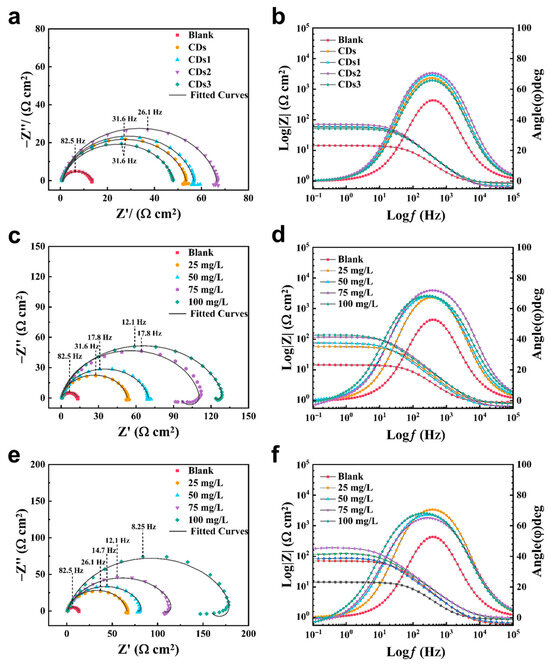
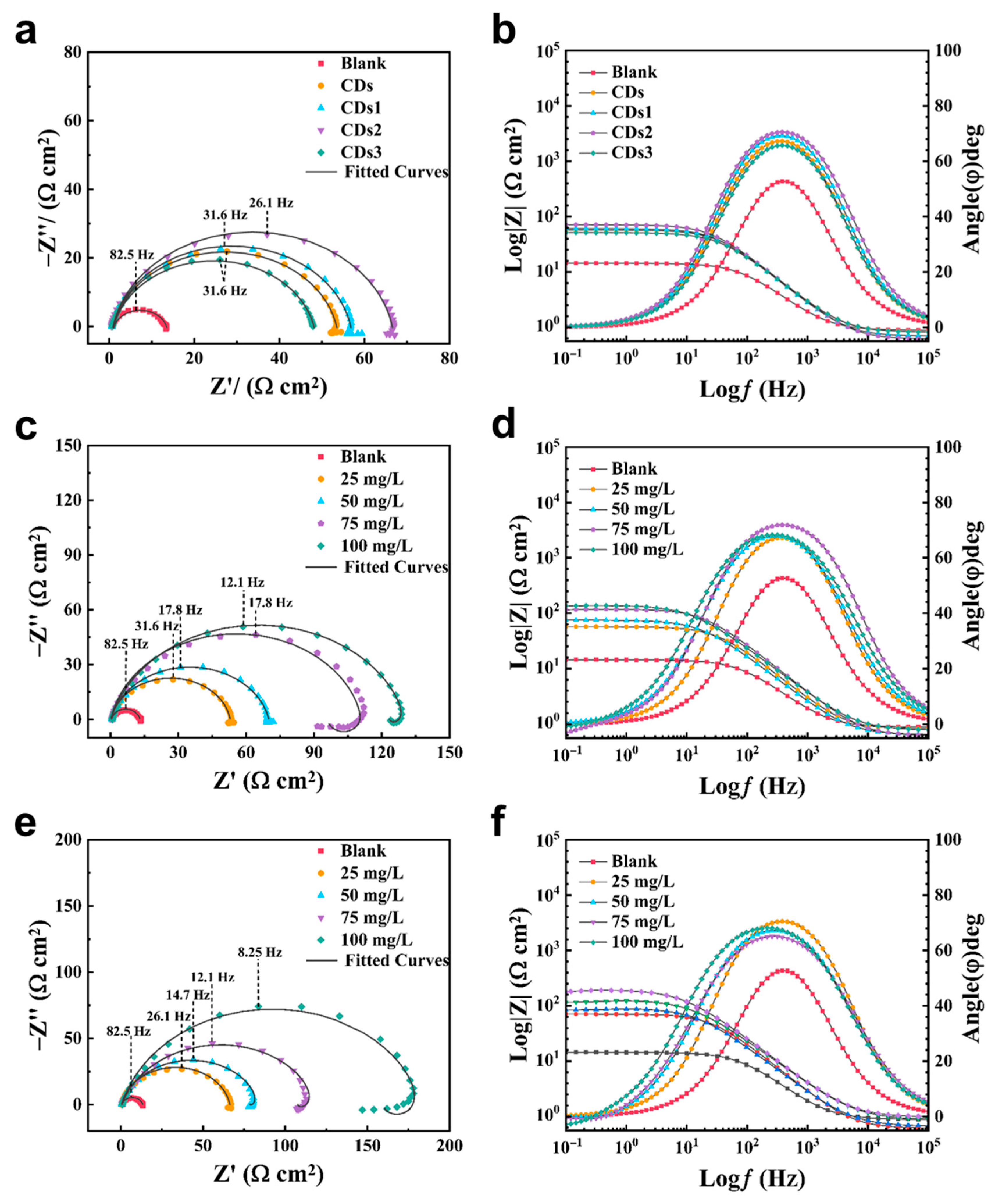
The Nyquist plot in Figure 6 illustrates the corrosion behaviour of MS, where CDs and CDs2 with varying degrees of modification and concentrations were tested. In Figure 6a, the semicircle diameter initially increases and then decreases with increasing degree of modification at the same CD concentrations. In Figure 6c,e, the semicircular diameters of CDs and CDs2 are larger than those of the blank solutions across concentration ranges, and they further increase with increasing concentration. This behaviour is consistent with the role of CDs as a corrosion inhibitor, which increases the charge transfer resistance by adsorbing on the electrode surface to form a protective film [58]. This irregularity becomes less pronounced with increasing concentration, indicating that CDs and CDs2 can stabilise the electrode surface and reduce the surface inhomogeneity to some extent [40]. The Bode plots in Figure 6b,d,f further illustrate the electrode response characteristics. The significant increase in impedance modulus with increasing concentration suggests that CDs and CDs2 effectively improve the electrochemical stability of MS and slow down corrosion [59].
Figure 6.
Nyquist and Bode plots of MS immersed in 0.5 mol/L H2SO4: (a,b) CDs of the same concentration with different degrees of modification, (c,d) CDs with various concentrations, and (e,f) CDs2 with various concentrations.
Table 2 lists the various impedance parameters of MS in CDs and CDs2 solutions with different degrees of modification and various concentrations. In the same concentration with different modification degrees, the of CDs2 is significantly higher than that of CDs, indicating that CDs2 has the best modification effect. With the increase in CDs and CDs2 concentration, both Rs and Rct showed an increasing trend. Rct reached 130.5 Ω cm2 and 183.3 Ω cm2 at 100 mg/L for CDs and CDs2, respectively, indicating that CDs and modified CDs improved the electrochemical stability. With a higher concentration of CDs, progressively enhances stability. The corrosion inhibition rate, , hits 90.44% for CDs and climbs to 93.19% for CDs2 when the concentration reaches 100 mg/L. This suggests that the modified CDs significantly boost the protective capabilities compared to the unmodified ones.
Table 2.
Impedance parameters of MS in 0.5 mol/L H2SO4: CDs of the same concentration with different degrees of modification, CDs, and CDs2 with various concentrations.
3.3.3. PDP Analysis
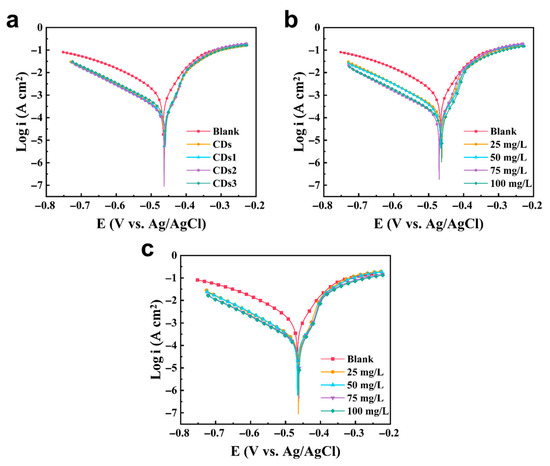
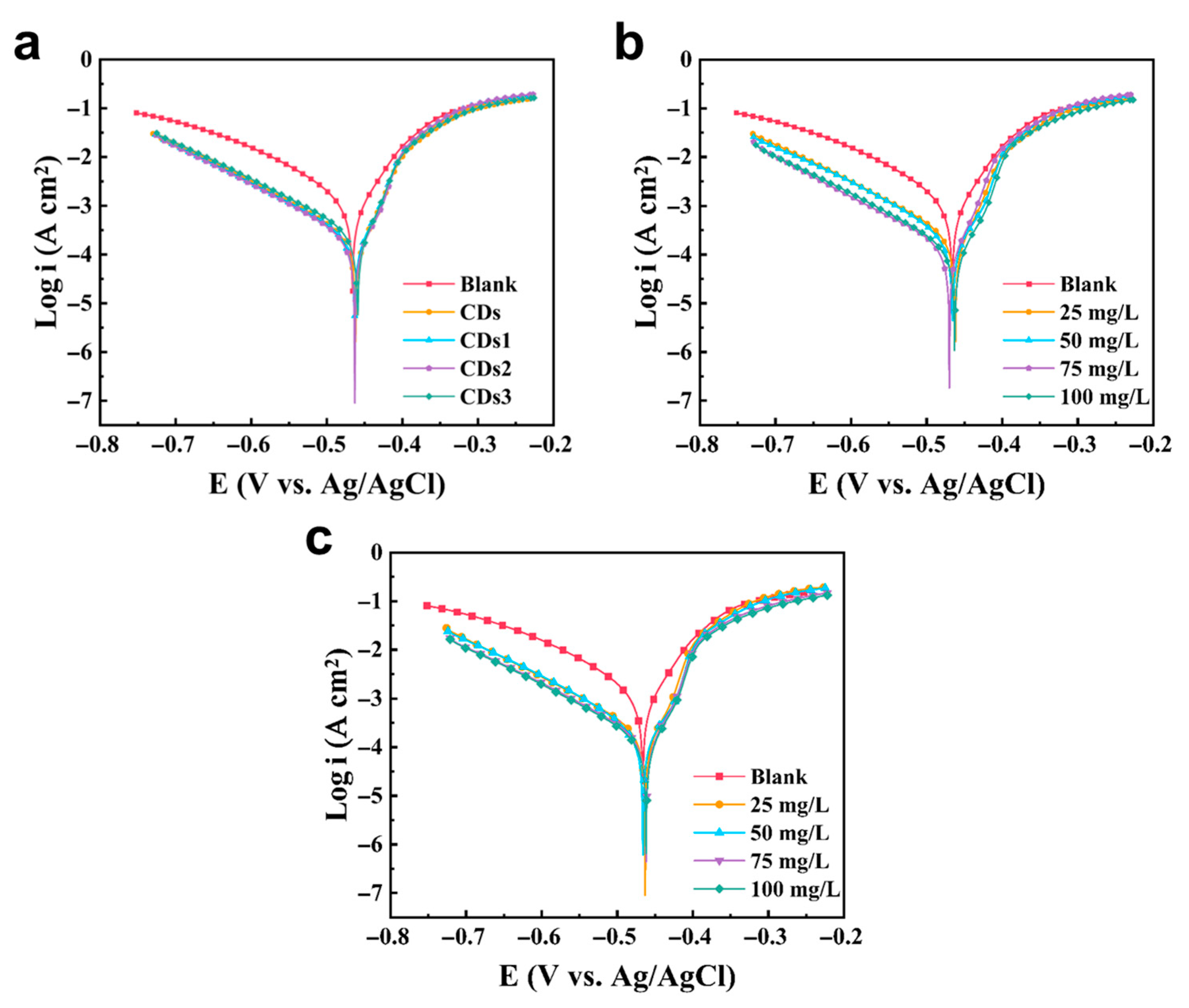
Figure 7 presents the polarisation curves of MS immersed in CDs with varying degrees of modification and concentrations. The curves indicate that the corrosion potential (Ecorr) of MS in CDs and CDs2 solutions at various concentrations undergoes a change compared to the blank solution. When CDs before and after modification were added, both anodic and cathodic responses showed a shift towards lower current density. The results showed that CDs before and after modification could effectively reduce the current density in the corrosion reaction and delay the anodic and cathodic reactions. The small magnitude of Ecorr changes at various concentrations, usually within ±85 mV, suggests that CDs act as a hybrid corrosion inhibitor on the MS surfaces without altering the electrochemical properties of the metal surface [60].
Figure 7.
Polarisation curve plots of MS in 0.5 mol/L H2SO4: (a) CDs of the same concentration with different degrees of modification, (b) CDs with various concentrations, and (c) CDs2 with various concentrations.
In Table 3, decreased significantly with increasing CD concentration, showing that CDs effectively inhibit the corrosion reaction. In the blank solution, the was 1459 μA cm−2, while in the 25 mg/L CD solution, it decreased to 186.7 μA cm−2. With further increase in concentration, the continues to decrease, reaching 121.1 μA cm−2 at 100 mg/L. In particular, the modified CDs2 showed the most significant effect, with of 99.01 μA cm−2 at 100 mg/L, indicating that it still had good inhibitory properties at higher concentrations. This change indicated that CDs effectively reduced the charge transfer on the metal surface and lowered the corrosion rate. ηp is an important index to evaluate the effect of corrosion inhibitors. With the increase in CD concentration, ηp gradually increased. In a 25 mg/L CD solution, ηp was 87.20%, while in a 100 mg/L CD solution, ηp increased to 91.70%. For modified CDs2, its ηp exhibited higher values at various concentrations. The corrosion inhibition efficiency continued to increase with increasing concentration, which indicated that the high concentration of CDs2 could significantly reduce the corrosion reaction on the MS surface. At 100 mg/L CDs2, ηp reached 93.21%, indicating that the superior performance of modified CDs in improving the corrosion inhibition effect. Overall, the modified CDs2 exhibited a stronger corrosion inhibition effect than the unmodified CDs. Therefore, modified CDs2 exhibits excellent corrosion inhibition than unmodified CDs and shows strong potential for practical application.
Table 3.
Polarisation parameters of MS in 0.5 mol/L H2SO4: CDs of the same concentration with different degrees of modification, CDs, and CDs2 with various concentrations.
3.4. Surface Analysis
3.4.1. SEM–EDS Analysis
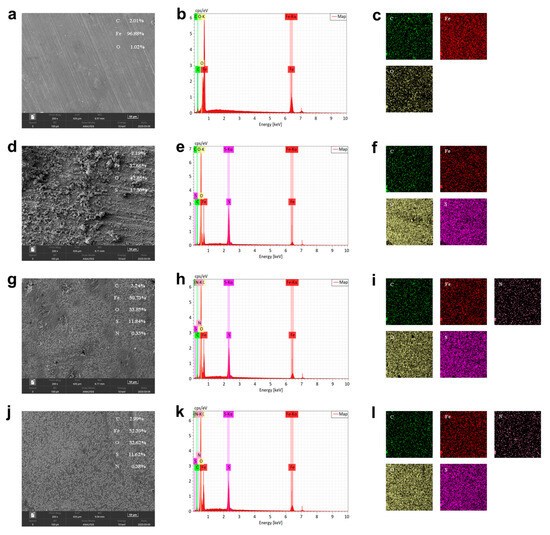
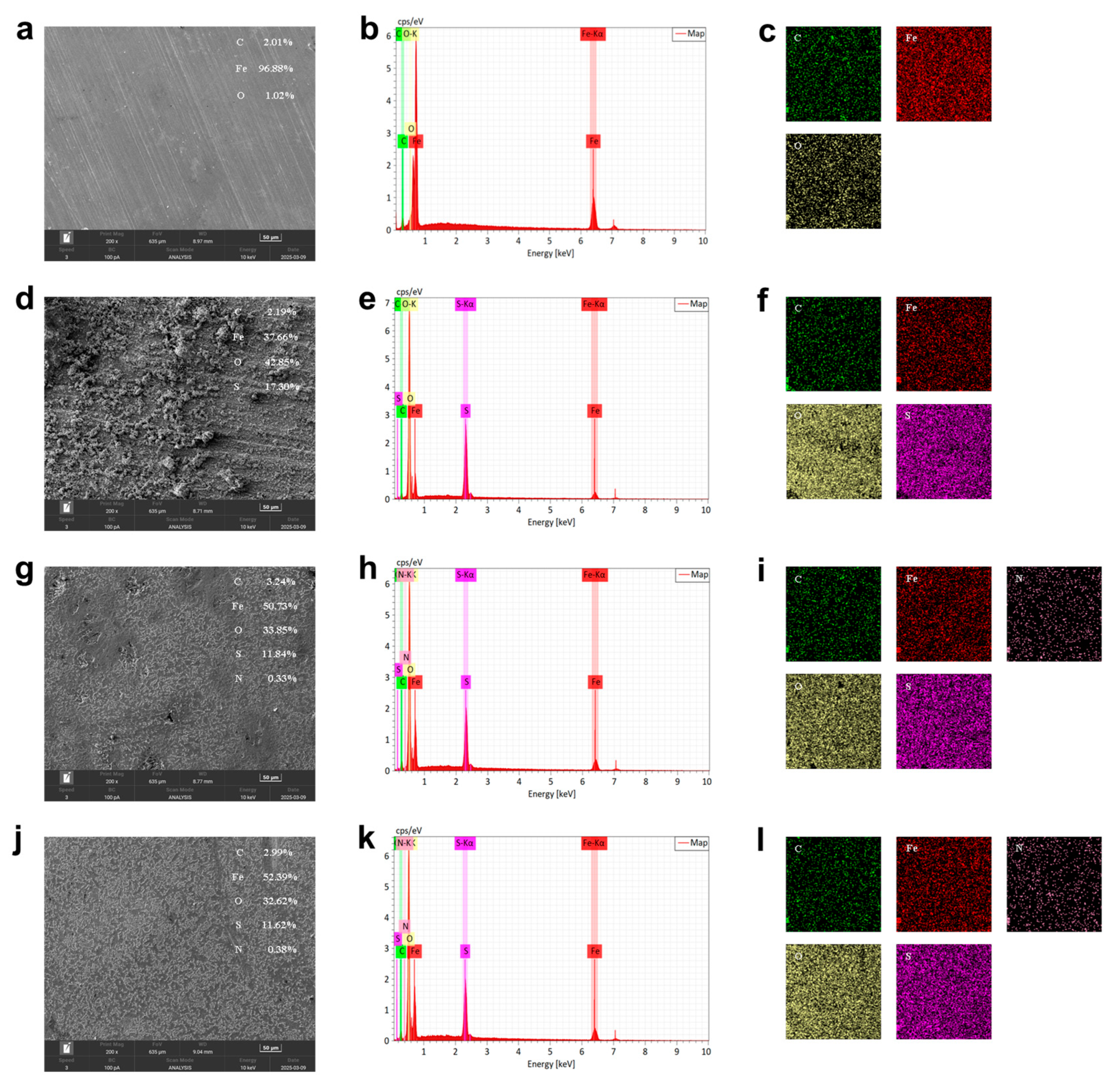
Figure 8a–i demonstrate the surface morphology and composition of the MS treated with CDs before and after polishing and MS immersed in H2SO4 without and with the addition of modifications. In Figure 8a, the polished MS surface appears smooth and uniform, featuring no obvious defects or corrosion marks. On the contrary, in Figure 8d, MS was exposed to H2SO4 showed significant corrosion damage characterised by dense corrosion pits, cracks or localised spalling. This morphology reflects the strong corrosive nature of H2SO4 on MS, leading to the formation of an inhomogeneous corrosion product layer. In Figure 8g, the addition of 100 mg/L of CDs significantly decreased corrosion damage compared with the uninhibited specimen. The surface becomes smoother, and both the number and size of corrosion pits were reduced. This inhibition can be attributed to the adsorption of CDs, leading to increased surface coverage, thus preventing direct contact between acid and the substrate. Figure 8j shows that with the addition of 100 mg/L CDs2, the degree of surface corrosion is further reduced, with some areas approaching a polished appearance. This improvement suggests stronger adsorption and more effective surface blocking, which is consistent with electrochemical results.
Figure 8.
SEM/EDS morphology of MS immersed in 0.5 mol/L H2SO4: (a–c) polished, (d–f) blank, (g–i) addition of 100 mg/L CDs, and (j–l) addition of 100 mg/L CDs2.
Combined with the energy spectrum analysis as shown in Figure 8b,e, a high content of O and S elements can be detected on the surface of the blank sample, which is associated with corrosion products such as iron oxides and iron sulfates formed during acid attack. The increase in C content seen in Figure 8h,k with the addition of CDs/CDs2 suggests that the corrosion inhibitor molecules were enriched and formed adsorption films. Furthermore, the contents of O and S elements in CDs2 samples were significantly lower than those in the blank group, implying that its adsorption layer not only covers the metal surface but may also form coordination bonds with Fe2+, thereby inhibiting the generation of corrosion products through chemical interaction. Comparing CDs and CDs2, the Fe content increased from 50.73% to 52.39%, while the O and S contents decreased from 33.85% to 32.62% and from 11.84% to 11.62%, respectively. CDs2 also exhibits a homogeneous distribution of carbon on the surface, a higher content of Fe content, and lower residual O and S contents. These results further confirm that its improved corrosion inhibition efficiency stems from a more optimised adsorption behaviour and improved molecular activity.
3.4.2. AFM Analysis
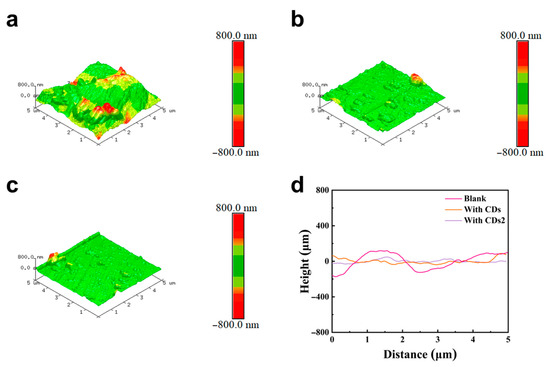
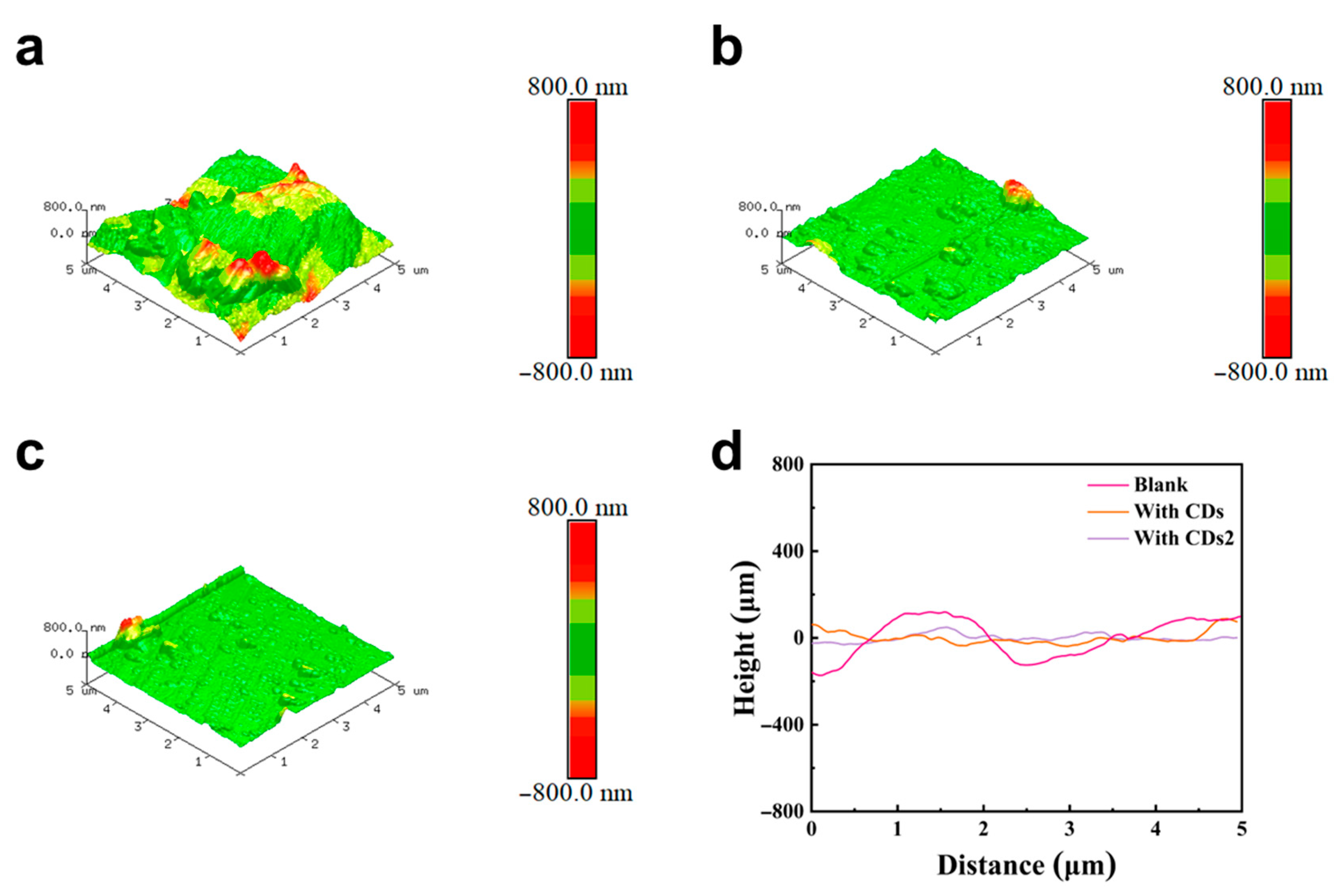
Figure 9a–d show a three-dimensional morphological study of MS samples after being immersed for 6 h in H2SO4 solution with the addition of 100 mg/L CDs and 100 mg/L CDs2, using AFM at 298 K. Figure 9a shows the surface morphology of MS without any corrosion inhibitor. The MS surface shows severe surface degradation with deep grooves and irregular corrosion damage. This morphology indicates that the MS surface suffered severe corrosion in H2SO4 solution with high roughness and a lack of a protective layer on the surface, showing strong corrosion loss. In Figure 9b, the surface morphology of MS after immersion in H2SO4 solution containing 100 mg/L CDs is demonstrated. From the image, it is evident that the MS surface was relatively well protected, with a roughness of 45.1 nm, which is lower than that of the blank group. Although a certain degree of corrosion could still be observed, the surface damage was significantly slowed down compared to that without corrosion inhibitors. The MS surface was shielded by a film of CDs, which decreased the solution’s corrosive effect. Figure 9c displays the surface morphology of MS in H2SO4 solution containing 100 mg/L CDs2. The surface roughness is 37.4 nm, and CDs2 shows a smoother surface with a reduced roughness compared to CDs, further slowing down the corrosion. The reduction in surface roughness indicates improved surface coverage and inhibition of localised corrosion sites due to the adsorption of inhibitor molecules. This result further confirms that CDs2 effectively reduces MS corrosion in H2SO4 solution.
Figure 9.
AFM morphology of MS immersed in 0.5 mol/L H2SO4: (a) blank, (b) with 100 mg/L CDs, (c) with 100 mg/L CDs2, and (d) diagonal section.
3.4.3. XPS Analysis
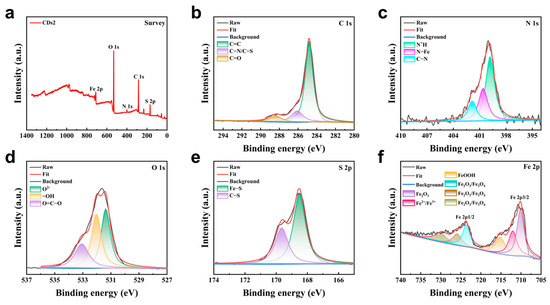
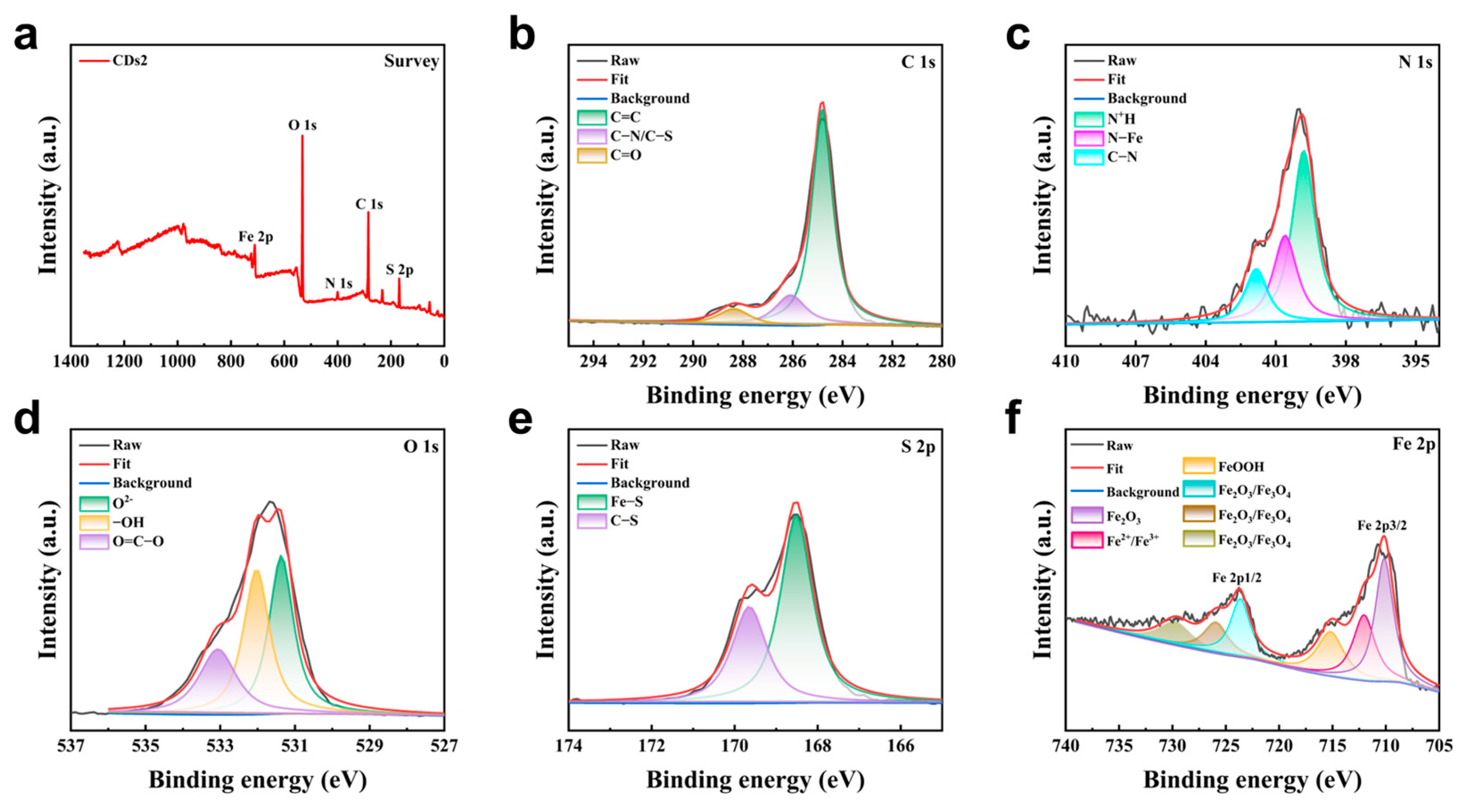
The XPS spectra of MS after 6 h of immersion in H2SO4 solution with 100 mg/L CDs2 is illustrated in Figure 10a–e. From Figure 10a, it is evident that C, O, N, S, and Fe elements are mainly present on the MS surface. The spectral peaks of C 1s in Figure 10b are fitted at 284.8 eV, 286.0 eV, and 288.5 eV, which correspond to C=C, C–N/C–S, and C=O, respectively [26,61]. As shown in Figure 10c, the fitted spectral peak of N 1s shows that the peak at 399.4 eV is associated with the N–Fe bond, indicating coordination between nitrogen-containing groups and Fe atoms (chemisorption) [38]. In Figure 10d, the fitted result for O 1s shows three peaks corresponding to O2−, −OH, and O=C–O, confirming the presence of adsorbed inhibitor species on the MS surface [60,62]. Figure 10e reveals S 2p peaks at 168.5 eV (Fe–S) and 169.5 eV (C–S), indicating H2SO4 erosion of the MS surface [49]. In Figure 10f, the Fe 2p spectrum shows six peaks. The peak at 710.3 eV is associated with Fe2O3, whereas the peak at 712.3 eV pertains to Fe2+ and Fe3+ [50]. At 719.7 eV, the adsorption of CDs2 on the MS surface is evidenced by the Fe 2p1/2, with the other three peaks corresponding to Fe2O3/Fe3O4 [51], indicating interaction between inhibitor molecules and Fe surface and suggesting the formation of a protective adsorption layer These results confirm that CDs2 inhibits corrosion through a mixed adsorption mechanism (physisorption and chemisorption), leading to the formation of a stable protective interfacial film.
Figure 10.
XPS spectra of MS after 6 h of immersion in 0.5 mol/L H2SO4 containing 100 mg/L CDs2: (a) survey, (b) C 1s, (c) N 1s, (d) O 1s, (e) Fe 2p, and (f) S 2p.
3.5. Anti-Corrosion Mechanism Analysis
3.5.1. Contact Angle (CA) Analysis
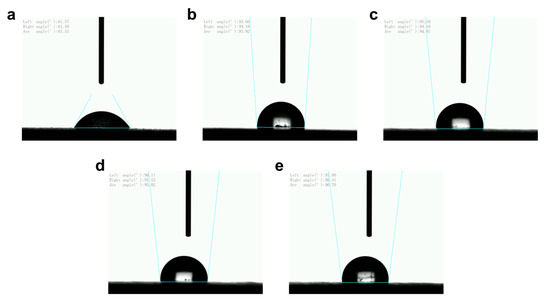
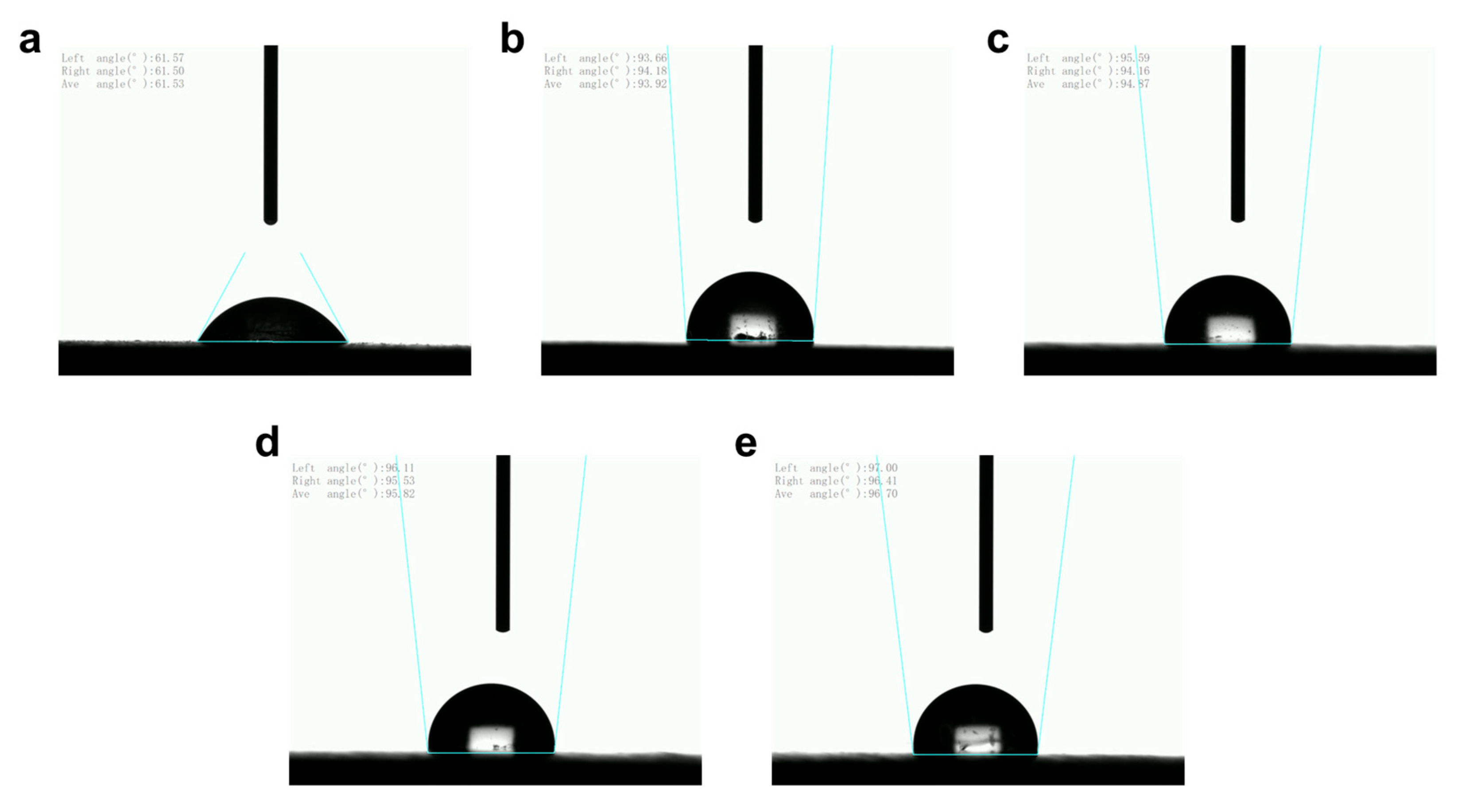
The CA test was used to assess the hydrophobicity or hydrophilicity of CD corrosion inhibitors on the MS surfaces to help understand their role in corrosion prevention. In Figure 11, the effect of the contact angle of CDs with different levels of modification (CDs, CDs1, CDs2, and CDs3) on the MS surface is demonstrated. The smaller contact angle of the CDs indicates that the surface of the CDs exhibits a strong hydrophilicity. This results in the CDs binding onto the metal surface, and the protective film formed is relatively thin. Excessive hydrophilicity may also lead to insufficient binding of the corrosion inhibitor molecules to the metal surface, resulting in unstable corrosion inhibitors in the corrosive environment, thus limiting their corrosion inhibition performance. As the degree of modification increases, the contact angle gradually decreases, indicating that the surface of the CDs becomes more hydrophobic. In acidic environments especially, hydrophobic material can effectively isolate the metal and the liquid medium. This means that the modified CDs can form a more stable film layer after interacting with the MS surface to avoid the contact of corrosive medium, thus improving the corrosion inhibition effect. Improved hydrophobicity enhances interfacial stability and reduces penetration of aqueous corrosive species. Thus, wettability changes further support the formation of a stable surface-adsorbed layer responsible for corrosion protection.
Figure 11.
CA images of MS immersed in CDs 0.5 mol/L H2SO4 containing different degrees of modification: (a) blank, (b) CDs, (c) CDs1, (d) CDs2, (e) CDs3.
3.5.2. Pickling Simulation Study
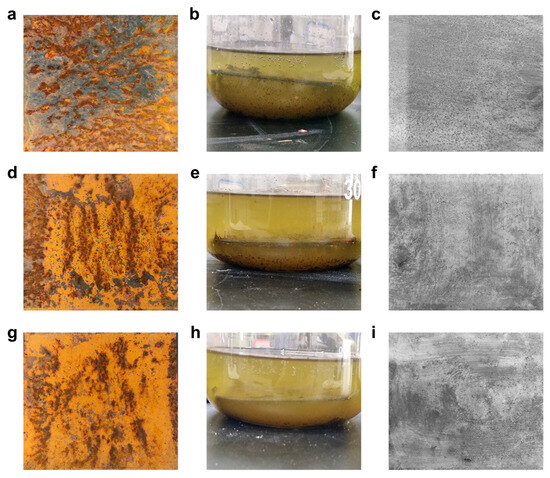
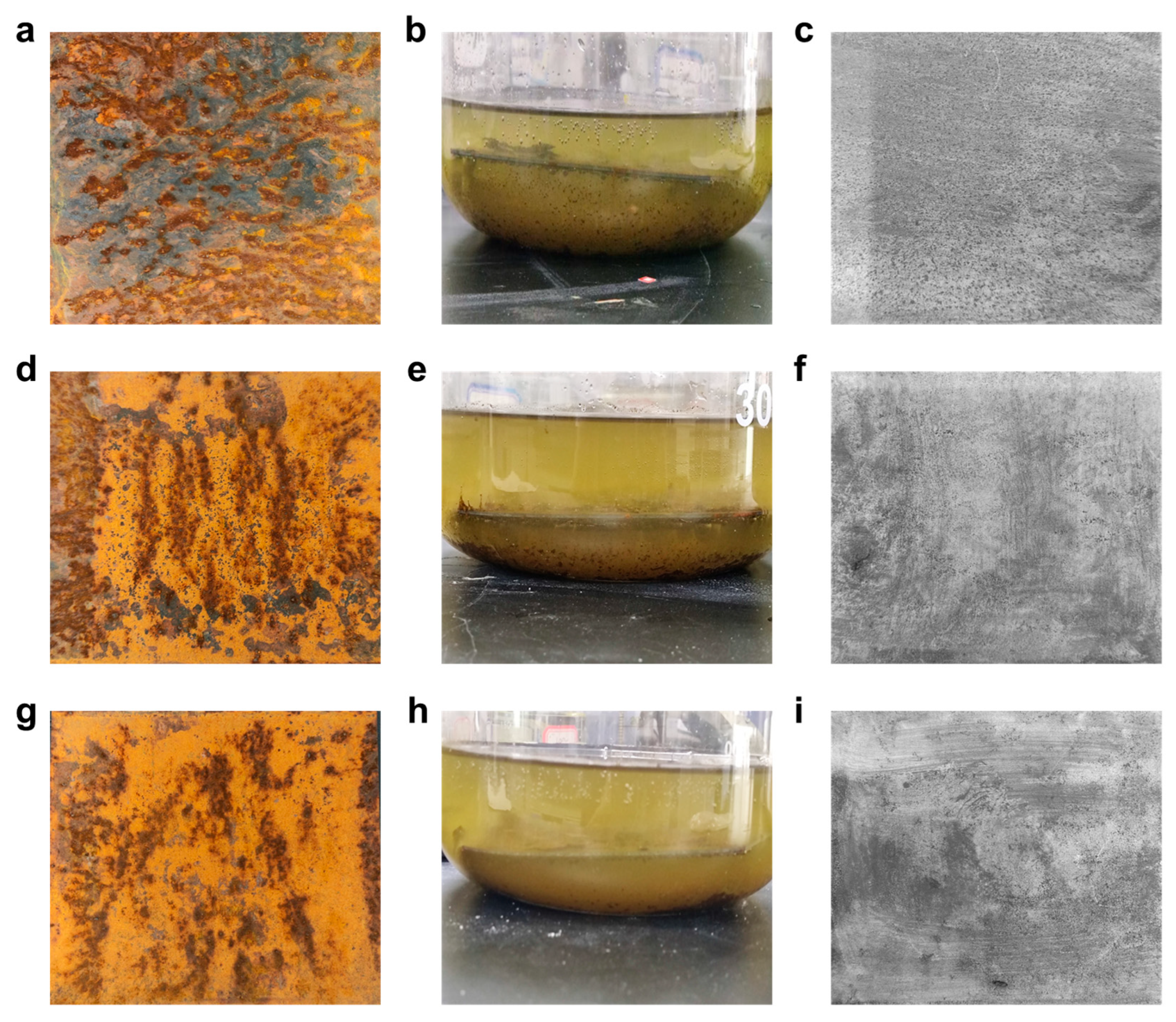
Figure 12a,d,g show the corrosion morphology of MS exposed to the environment, with apparent corrosion traces. Figure 12b,e,h show the MS surface in the pickling process. Comparison of these images shows that the amount of hydrogen precipitation emitted from MS containing CDs and CDs2 is noticeably reduced, indicating that incorporating these additives can significantly inhibit the hydrogen evolution reaction on MS. Additionally, Figure 12c,f,i show the surface morphology of MS after undergoing 72 h pickling process in H2SO4 solution with 100 mg/L CDs and CDs2 added, respectively. From the observed surface state, the original impurities and oxide layer on the MS surface were effectively removed, resulting in a smoother surface and significantly improved cleanliness. The corrosion inhibition performance of CDs2 was superior to that of CDs. This indicates that the addition of CDs and CDs2 not only hinders the pickling process but also effectively suppresses corrosion.
Figure 12.
Effect of pickling on MS immersed in 0.5 mol/L H2SO4: (a–c) blank, (d–f) 100 mg/L CDs, and (g–i) 100 mg/L CDs2.
3.5.3. Adsorption Isotherm Analysis
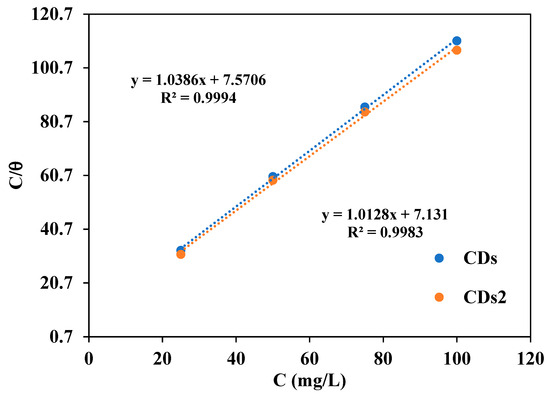
The adsorption behaviour of the CDs was evaluated using the Langmuir isotherm model, as illustrated in Figure 13. The linearised Langmuir equation is expressed as [63]:
where C (mg/L)—equilibrium concentration; θ—surface coverage; K1—Langmuir adsorption constant related to the affinity of binding sites.
C/θ = (1/K1) + C
Figure 13.
Langmuir adsorption isotherm plot of MS immersed in 0.5 mol/L H2SO4 with CDs.
A strong linear relationship between C and C/θ was observed for both CDs and CDs2 over the investigated concentration range (25–100 mg/L), indicating that the adsorption process follows Langmuir assumptions, suggesting monolayer adsorption over a uniform surface containing a finite number of equally active catalytic sites [29,31]. For CDs, the linear regression equation was y = 1.0386x + 7.5706 with a coefficient of determination (R2) value of R2 = 0.9994; for CDs2, the results were y = 1.0128x + 7.131 and R2 = 0.9983. The large R2 values for both samples indicate the usability of the Langmuir model; a better fit is observed for CDs2, expressing the more ideal monolayer adsorption behaviour than CDs [30].
The thermodynamic feasibility of the adsorption process was further evaluated by estimating the standard Gibbs free energy change (ΔGads°) from the Langmuir constant using Equation (7) [30].
where T = 298 K and R = 8.314 J mol−1 K−1.
The calculated ΔGads° values were found to be −29.213 kJ mol−1 for CDs and −29.361 kJ mol−1 for CDs2. The negative values of ΔGads° confirm that the adsorption process is spontaneous for both systems.
3.5.4. Corrosion Inhibition Mechanism
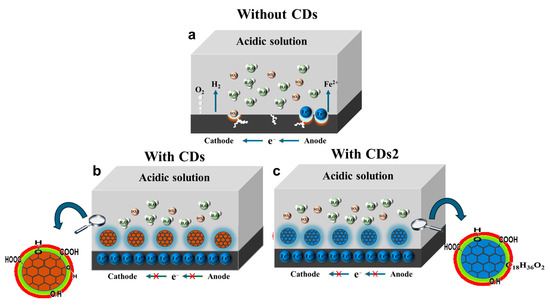
Figure 14 shows how CDs act as a corrosion inhibitor for MS in H2SO4 solution. The mechanism involves the dissolution of the metal at the anodic sites and the reduction in H+ at the cathode. In H2SO4 solution, the MS surface is positively charged, and SO42− ions are easily adsorbed. Without any inhibitors in the solution, corrosive substances can easily diffuse to the MS surface and cause severe corrosion. When CDs are added, the protonated N and S atoms interact with the MS surface electrostatically, replacing H2O molecules adsorbed on the MS surface, and adsorb on the MS surface by adsorption.
Figure 14.
Schematic of MS adsorption and corrosion prevention in 0.5 mol/L H2SO4: (a) without CDs, (b) with CDs, and (c) with CDs2 [36].
4. Conclusions
This study explores the ability of oyster meat-derived CDs and modified CDs to serve as corrosion inhibitors for MS immersed in 0.5 mol/L H2SO4, alongside an examination of their underlying inhibition mechanism. The novelty of this work lies in the use of animal waste-derived carbon dots, i.e., oyster meat waste, and their surface modification to enhance adsorption and hydrophobic barrier formation for corrosion protection. The following conclusions were drawn:
- (1)
- The composition and microstructure of CDs before and after modification were investigated by FTIR, UV, XRD, and TEM techniques to confirm the composition of the CDs and the nature of their adsorption on MS.
- (2)
- Electrochemical assessments reveal that the corrosion inhibition efficiency of CDs increases from 76.24% to 90.44% with increasing concentration, while that of modified CDs2 increases from 81.03% to 93.19%.
- (3)
- AFM, SEM–EDS, XPS, and FTIR analyses confirm that both unmodified and modified CDs form a protective film on the steel surface. This film notably reduces corrosion product formation and enhances surface smoothness, proving its potential as an effective corrosion inhibitor.
- (4)
- The contact angle test and pickling simulation test studies show that CDs2 can create a more stable film on the metal surface than CDs, preventing contact with corrosive substances. The improved inhibition performance offered by CDs2 is mainly due to its stronger adsorption on the steel surface, leading to the formation of a compact, hydrophobic, and stable protective film that effectively blocks the ingress of corrosive species.
All in all, the results proved that the modified CDs2 have better corrosion protection for MS in 0.5 mol/L H2SO4. Future work may focus on long-term stability evaluation and optimisation of surface functionalisation for industrial applications.
Author Contributions
Y.S. (Yi Sui): Writing—original draft, Validation, Methodology, Investigation. L.L.: Validation, Formal analysis, Conceptualization. R.W.: Visualisation, Investigation. R.A.: Conceptualisation, Writing—review and editing, Data curation. Y.S. (Yi Sun): Visualisation, Resources. W.Y.: Resources, Data curation. W.F.: Writing—review and editing, Formal analysis, Resources. Q.W.: Writing—review and editing, Writing—original draft, Methodology, Funding acquisition, Conceptualisation. All authors have read and agreed to the published version of the manuscript.
Funding
This work was supported by the Science and Technology Research Program of Chongqing Municipal Education Commission (Grant No. KJQN202201518, KJZD–M202201501), Natural Science Foundation of Chongqing (No. CSTB2024NSCQ–MSX1178, CSTB2022NSCQ–LZX0052), China Postdoctoral Science Foundation (2023M740422), and Natural Science Foundation Project of Chongqing (CSTB2023NSCQ-MSX0035).
Data Availability Statement
The data that support the findings of this study are available from the corresponding authors upon reasonable request.
Conflicts of Interest
The authors declare that they have no known competing financial interests or personal relationships that could have appeared to influence the work reported in this paper.
References
- Fragassa, C.; Lesiuk, G.; Epp, J. High-Performance Applications of Metals and Alloys: Material Properties, Behaviour Modeling, Optimal Design and Advanced Processes. Metals 2023, 13, 1485. [Google Scholar] [CrossRef] [Scilit]
- Meng, X.; Wang, W.; Xie, Y.; Wang, N.; Ma, X.; Dong, J.; Gao, J.; Yang, T.; Huang, Y. Microstructural modification and stress corrosion mechanisms of in-situ rolling friction stir welding joints. Mater. Charact. 2026, 231, 115884. [Google Scholar] [CrossRef] [Scilit]
- Hanini, K.; Merzoug, B.; Boudiba, S.; Selatnia, I.; Laouer, H.; Akkal, S. Influence of different polyphenol extracts of Taxus baccata on the corrosion process and their effect as additives in electrodeposition. Sustain. Chem. Pharm. 2019, 14, 100189. [Google Scholar] [CrossRef] [Scilit]
- Brycki, B.; Szulc, A. Gemini surfactants as corrosion inhibitors. A review. J. Mol. Liq. 2021, 344, 117686. [Google Scholar] [CrossRef] [Scilit]
- Jiyaul, H.; Ridwan, Z.M.F.; Nabilah, I.; A, Q.M.; Sabri, M.G.M.; Elyor, B.; Bin, W.N.W.M.N. Environmentally Benign Water-Soluble Sodium L-2-(1-Imidazolyl) Alkanoic Acids as New Corrosion Inhibitors for Mild Steel in Artificial Seawater. ACS Omega 2023, 8, 24797–24812. [Google Scholar] [CrossRef] [Scilit]
- El Ouaddari, A.; Kellal, R.; Ait El Caid, Z.; Albarakati, R.; Wazzan, N.; Al-Qurashi, O.S.; Safi, Z.; Iben Moussa, S.; El Amrani, A.; Zertoubi, M.; et al. Insight into anti-corrosion behavior of Cladanthus mixtus (L.) flower extracts as a biodegradable inhibitor for carbon steel in acid medium: Experimental and theoretical studies. Mater. Chem. Phys. 2024, 326, 129827. [Google Scholar] [CrossRef] [Scilit]
- Yang, D.; Ye, Y.; Su, Y.; Liu, S.; Gong, D.; Zhao, H. Functionalization of citric acid-based carbon dots by imidazole toward novel green corrosion inhibitor for carbon steel. J. Clean. Prod. 2019, 229, 180–192. [Google Scholar] [CrossRef] [Scilit]
- da Rocha, J.C.; da Cunha Ponciano Gomes, J.A.; D’Elia, E. Corrosion inhibition of carbon steel in hydrochloric acid solution by fruit peel aqueous extracts. Corros. Sci. 2010, 52, 2341–2348. [Google Scholar] [CrossRef] [Scilit]
- Zapata-Loría, A.D.; Pech-Canul, M.A. Corrosion Inhibition of Aluminum in 0.1 m Hcl Solution by Glutamic Acid. Chem. Eng. Commun. 2014, 201, 855–869. [Google Scholar] [CrossRef] [Scilit]
- Chhipa, S.M.; Sharma, S.; Kumar Bagha, A. Recent development in polymer coating to prevent corrosion in metals: A review. Mater. Today Proc. 2024. [Google Scholar] [CrossRef] [Scilit]
- Huynh, T.; Graydon, K.; Ayers, N.; Sohn, Y. Phase transformations in additively manufactured high carbon-bearing steel. Mater. Sci. Addit. Manuf. 2025, 4, 025100011. [Google Scholar] [CrossRef] [Scilit]
- Bahlakeh, G.; Ramezanzadeh, M.; Ramezanzadeh, B. Experimental and theoretical studies of the synergistic inhibition effects between the plant leaves extract (PLE) and zinc salt (ZS) in corrosion control of carbon steel in chloride solution. J. Mol. Liq. 2017, 248, 854–870. [Google Scholar] [CrossRef] [Scilit]
- Wang, D.; Li, Y.; Chen, B.; Zhang, L. Novel surfactants as green corrosion inhibitors for mild steel in 15% HCl: Experimental and theoretical studies. Chem. Eng. J. 2020, 402, 126219. [Google Scholar] [CrossRef] [Scilit]
- Teng, X.; Deng, S.; Li, X. Synergistic corrosion inhibition of rubber seed extract with KI on cold rolled steel in sulfuric acid solution. J. Taiwan Inst. Chem. Eng. 2024, 161, 105564. [Google Scholar] [CrossRef] [Scilit]
- Anupama, K.K.; Ramya, K.; Shainy, K.M.; Joseph, A. Adsorption and electrochemical studies of Pimenta dioica leaf extracts as corrosion inhibitor for mild steel in hydrochloric acid. Mater. Chem. Phys. 2015, 167, 28–41. [Google Scholar] [CrossRef] [Scilit]
- Li, H.; Qiang, Y.; Zhao, W.; Zhang, S. A green Brassica oleracea L extract as a novel corrosion inhibitor for Q235 steel in two typical acid media. Colloids Surf. A Physicochem. Eng. Asp. 2021, 616, 126077. [Google Scholar] [CrossRef] [Scilit]
- Kumar, H.; Yadav, P.; Kumari, R.; Sharma, R.; Sharma, S.; Singh, D.; Dahiya, H.; Kumar, P.; Bhardwaj, S.; Kaur, P. Highly efficient green corrosion inhibitor for mild steel in sulfuric acid: Experimental and DFT approach. Colloids Surf. A Physicochem. Eng. Asp. 2023, 675, 132039. [Google Scholar] [CrossRef] [Scilit]
- Wang, B.Y.; Waterhouse, G.I.N.; Lu, S.Y. Carbon dots: Mysterious past, vibrant present, and expansive future. Trends Chem. 2023, 5, 76–87. [Google Scholar] [CrossRef] [Scilit]
- Zhang, H.D.; Chen, A.Y.; Gan, B.; Jiang, H.; Gu, L.J. Corrosion protection investigations of carbon dots and polydopamine composite coating on magnesium alloy. J. Magnes. Alloys 2022, 10, 1358–1367. [Google Scholar] [CrossRef] [Scilit]
- Ren, H.; Miao, Z.; Wang, J.; Jin, L.; Li, F.; Wu, P. Lignin carbon dots: Synthesis from alkali lignin, sensing mechanism for Fe3+, performance evaluation, and azo dye composite test paper for dual-mode detection. Biomass Bioenergy 2026, 212, 109293. [Google Scholar] [CrossRef] [Scilit]
- Aquino, M.; Santoro, S.; Politano, A.; D’Andrea, G.; Siciliano, A.; Straface, S.; La Russa, M.F.; Curcio, E. Environmentally Friendly Photothermal Membranes for Halite Recovery from Reverse Osmosis Brine via Solar-Driven Membrane Crystallization. Membranes 2024, 14, 87. [Google Scholar] [CrossRef] [Scilit]
- Cui, M.; Ren, S.; Zhao, H.; Wang, L.; Xue, Q. Novel nitrogen doped carbon dots for corrosion inhibition of carbon steel in 1 M HCl solution. Appl. Surf. Sci. 2018, 443, 145–156. [Google Scholar] [CrossRef] [Scilit]
- Ye, Y.; Yang, D.; Chen, H.; Guo, S.; Yang, Q.; Chen, L.; Zhao, H.; Wang, L. A high-efficiency corrosion inhibitor of N-doped citric acid-based carbon dots for mild steel in hydrochloric acid environment. J. Hazard. Mater. 2020, 381, 121019. [Google Scholar] [CrossRef] [Scilit]
- Cui, M.; Li, X. Nitrogen and sulfur Co-doped carbon dots as ecofriendly and effective corrosion inhibitors for Q235 carbon steel in 1 M HCl solution. RSC Adv. 2021, 11, 21607–21621. [Google Scholar] [CrossRef] [Scilit] [PubMed]
- Padhan, S.; Rout, T.K.; Nair, U.G. N-doped and Cu,N-doped carbon dots as corrosion inhibitor for mild steel corrosion in acid medium. Colloids Surf. A Physicochem. Eng. Asp. 2022, 653, 129905. [Google Scholar] [CrossRef] [Scilit]
- Cen, H.; Chen, Z.; Guo, X. N,S co-doped carbon dots as effective corrosion inhibitor for carbon steel in CO2-saturated 3.5% NaCl solution. J. Taiwan Inst. Chem. Eng. 2019, 99, 224–238. [Google Scholar] [CrossRef] [Scilit]
- Migahed, M.A.; Rashwan, S.M.; Kamel, M.M.; Habib, R.E. Synthesis, characterization of polyaspartic acid-glycine adduct and evaluation of their performance as scale and corrosion inhibitor in desalination water plants. J. Mol. Liq. 2016, 224, 849–858. [Google Scholar] [CrossRef] [Scilit]
- Reza, N.A.; Akhmal, N.H.; Fadil, N.A.; Taib, M.F.M. A Review on Plants and Biomass Wastes as Organic Green Corrosion Inhibitors for Mild Steel in Acidic Environment. Metals 2021, 11, 1062. [Google Scholar] [CrossRef] [Scilit]
- Cao, S.; Cao, Y.; Li, Y.; Wang, H. Biomass derived nitrogen and sulfur codoped carbon dots as efficient corrosion inhibitors for carbon steel in acidic environment. Sci. Rep. 2026, 15, 34828. [Google Scholar] [CrossRef] [Scilit]
- Aslam, R.; Aslam, J.; Wang, Q.; Sun, Y.; Verma, C.; Alfantazi, A.; Yan, Z. Biomolecules-modified carbon dots for enhanced surface and interface properties and sustainable corrosion protection: Experimental and computational studies. J. Ind. Eng. Chem. 2025, 152, 175–192. [Google Scholar] [CrossRef] [Scilit]
- Aslam, R.; Sun, X.; Zhao, J.; Wang, Q.; Yan, Z. Assessment of Anticorrosive Application of Biomass-Derived Carbon Quantum Dots for Mild Steel in 15% HCl Solution: Chemical and Electrochemical Studies. Waste Biomass Valorization 2025, 16, 6877–6905. [Google Scholar] [CrossRef] [Scilit]
- Shen, J.; Shang, S.; Chen, X.; Wang, D.; Cai, Y. Facile Synthesis of Fluorescence Carbon Dots from Sweet Potato for Fe3+ Sensing and Cell Imaging. Mater. Sci. Eng. C Mater. Biol. Appl. 2017, 76, 856. [Google Scholar] [CrossRef] [Scilit]
- Wang, T.; Cao, S.; Sun, Y.; Liu, D.; Pan, S.; Ma, A.; Kuvarega, A.T.; Mamba, B.B.; Gui, J. Ionic liquid-assisted preparation of N, S-rich carbon dots as efficient corrosion inhibitors. J. Mol. Liq. 2022, 356, 118943. [Google Scholar] [CrossRef] [Scilit]
- Soni, H.; Pamidimukkala, P.S. Green synthesis of N, S co-doped carbon quantum dots from triflic acid treated palm shell waste and their application in nitrophenol sensing. Mater. Res. Bull. 2018, 108, 250–254. [Google Scholar] [CrossRef] [Scilit]
- Zeng, Y.; Kang, L.; Wu, Y.; Wan, S.; Liao, B.; Li, N.; Guo, X. Melamine modified carbon dots as high effective corrosion inhibitor for Q235 carbon steel in neutral 3.5 wt% NaCl solution. J. Mol. Liq. 2022, 349, 118108. [Google Scholar] [CrossRef] [Scilit]
- Wang, Q.H.; Wang, R.Z.; Zhao, J.M.; Zou, Z.H.; Huang, Q.; Sui, Y.; Shi, J.; Aslam, R.; Sun, Y.; Yan, Z.T. Corrosion inhibition performance of protein derived carbon quantum dots as corrosion inhibitors on low carbon steel in sulfuric acid solution. Microchem J. 2024, 207, 111957. [Google Scholar] [CrossRef] [Scilit]
- Singh, A.K.; Quraishi, M.A. Investigation of adsorption of isoniazid derivatives at mild steel/hydrochloric acid interface: Electrochemical and weight loss methods. Mater. Chem. Phys. 2010, 123, 666–677. [Google Scholar] [CrossRef] [Scilit]
- Zarrok, H.; Zarrouk, A.; Hammouti, B.; Salghi, R.; Jama, C.; Bentiss, F. Corrosion control of carbon steel in phosphoric acid by purpald—Weight loss, electrochemical and XPS studies. Corros. Sci. 2012, 64, 243–252. [Google Scholar] [CrossRef] [Scilit]
- Sığırcık, G.; Yildirim, D.; Tüken, T. Synthesis and inhibitory effect of N, N’-bis (1-phenylethanol) ethylenediamine against steel corrosion in HCl Media. Corros. Sci. 2017, 120, 184–193. [Google Scholar] [CrossRef] [Scilit]
- Sun, X.; Qiang, Y.; Hou, B.; Zhu, H.; Tian, H. Cabbage extract as an eco-friendly corrosion inhibitor for X70 steel in hydrochloric acid medium. J. Mol. Liq. 2022, 362, 119733. [Google Scholar] [CrossRef] [Scilit]
- Ma, C.; Xie, Z.; Miao, J.; Shi, W.; Xue, S. Preparation of novel silica mannich base nanoparticles and corrosion inhibition properties on N80 steel under high acidic conditions. Appl. Surf. Sci. 2025, 692, 162715. [Google Scholar] [CrossRef] [Scilit]
- Tomar, A.; Khan, A.M.; Ji, G.; Sarkar, A. Synthesis of Schiff bases of 4-methoxybenzyl amine and hydrazide derivatives and their application in corrosion inhibition of mild steel in 1.0 M HCl. J. Adhes. Sci. Technol. 2025, 39, 615–634. [Google Scholar] [CrossRef] [Scilit]
- Wang, Q.; Zhang, Q.; Liu, L.; Zheng, H.; Wu, X.; Li, Z.; Gao, P.; Sun, Y.; Yan, Z.; Li, X. Experimental, DFT and MD evaluation of Nandina domestica Thunb. extract as green inhibitor for carbon steel corrosion in acidic medium. J. Mol. Struct. 2022, 1265, 133367. [Google Scholar] [CrossRef] [Scilit]
- Ani, O.O.; Zgueni, H.; Oucheikh, L.; Youssefi, Y.; Salah, M.; Matine, A.; Mabrouk, E.H.; Oubair, A.; Chebabe, D.; Znini, M. Experimental and theoretical studies of the effect of Ballota hirsuta essential oil on carbon steel corrosion in a molar concentration of HCl. J. Mol. Struct. 2025, 1332, 141657. [Google Scholar] [CrossRef] [Scilit]
- Wu, Y.; Gong, Z.; Guo, L.; AlObaid, A.A. Batatas lam leaf extract as a biodegradable corrosion inhibitor for copper in 0.5 M H2SO4 solution. Sustain. Chem. Pharm. 2024, 39, 101601. [Google Scholar] [CrossRef] [Scilit]
- Wang, Q.; Zhao, C.; Zhang, Q.; Zhang, X.; Zheng, H.; Wu, X.; Liu, L.; Wang, R.; Yan, Z.; Sun, Y.; et al. Fish processing discards extract as an eco-friendly corrosion inhibitor for carbon steel in hydrochloric acid. J. Adhes. Sci. Technol. 2023, 38, 877–897. [Google Scholar] [CrossRef] [Scilit]
- Yousif, Q.A.; Nazeer, A.A.; Fadel, Z.; Hajji, L.A.A.; Shalabi, K. Design of New Ecofriendly Schiff Base Inhibitors for Carbon Steel Corrosion Protection in Acidic Solutions: Electrochemical, Surface, and Theoretical Studies. ACS Omega 2024, 9, 14153–14173. [Google Scholar] [CrossRef] [Scilit]
- Rahimi, A.; Farhadian, A.; Berisha, A.; Shaabani, A.; Varfolomeev, M.A.; Mehmeti, V.; Zhong, X.; Yousefzadeh, S.; Djimasbe, R. Novel sucrose derivative as a thermally stable inhibitor for mild steel corrosion in 15% HCl medium: An experimental and computational study. Chem. Eng. J. 2022, 446, 136938. [Google Scholar] [CrossRef] [Scilit]
- Zhang, Y.; Tan, B.; Zhang, X.; Guo, L.; Zhang, S. Synthesized carbon dots with high N and S content as excellent corrosion inhibitors for copper in sulfuric acid solution. J. Mol. Liq. 2021, 338, 116702. [Google Scholar] [CrossRef] [Scilit]
- Qiu, L.; Li, X.; Xu, D.; Shao, D.; Du, G.; Deng, S. Comparison of the corrosion inhibition property on cold rolled steel in sulfuric acid media between reflux and ultrasound extracts from rapeseed meal. Ind. Crops Prod. 2024, 216, 118809. [Google Scholar] [CrossRef] [Scilit]
- Wang, Q.; Zheng, H.; Liu, L.; Zhang, Q.; Wu, X.; Yan, Z.; Sun, Y.; Li, X. Insight into the anti–corrosion behavior of Reineckia Carnea leaves extract as an eco–friendly and high–efficiency corrosion inhibitor. Ind. Crops Prod. 2022, 188, 115640. [Google Scholar] [CrossRef] [Scilit]
- Paiva, V.M.; Nunes, R.d.S.; de Lima, K.C.d.S.; de Oliveira, S.M.; de Araujo, J.R.; Archanjo, B.S.; do Valle, A.F.; D’Elia, E. Novel eco-friendly green inhibitor of corrosion based on acerola (Malpighia glabra) waste aqueous extract for mild steel in 1 mol L−1 HCl solution. Surf. Interfaces 2024, 47, 104187. [Google Scholar] [CrossRef] [Scilit]
- Basiony, N.M.E.; Salim, M.M.; Elaraby, A.; Elbalaawy, A.Y.; Nasser, A.; Migahed, M.A.; Raouf, M.A.; Shin, J.; Shaban, S.M.; Kim, D.H.; et al. ρ-Substituted imine cationic surfactants as carbon steel corrosion inhibitors: Experimental and theoretical (DFT and MCs) approaches. J. Mol. Liq. 2024, 400, 124475. [Google Scholar] [CrossRef] [Scilit]
- Yang, Y.; Lu, R.; Chen, W.; Mei, P.; Lai, L. Amphiphilic carbon dots as high-efficiency corrosion inhibitor for N80 steel in HCl solution: Performance and mechanism investigation. Colloids Surf. A Physicochem. Eng. Asp. 2022, 649, 129457. [Google Scholar] [CrossRef] [Scilit]
- Walton, I.M.; Cox, J.M.; Benson, C.A.; Patel, D.G.; Chen, Y.-S.; Benedict, J.B. The role of atropisomers on the photo-reactivity and fatigue of diarylethene-based metal-organic frameworks. New J. Chem. 2016, 40, 101–106. [Google Scholar] [CrossRef] [Scilit]
- Barrahi, A.; Mekhzoum, M.E.M.; Thakur, A.; Qaiss, A.E.K.; Kaichouh, G.; Faydy, M.E.; Benhiba, F.; Dikici, B.; Bouhfid, R.; Abuelizz, H.A.; et al. An investigation of benzothiazole ionic compound as corrosion inhibitor for carbon steel in acidic media using electrochemical research, surface techniques, DFT, and MD simulation studies. Int. J. Electrochem. Sci. 2025, 20, 100917. [Google Scholar] [CrossRef] [Scilit]
- Zeng, J.; Gan, Y.; Xu, Z.; Zhu, H.; Tan, B.; Li, W. Adsorption films based on indazole derivatives for application to protect Cu in sulfuric acid: Experimental and theoretical approaches. J. Taiwan Inst. Chem. Eng. 2023, 151, 105134. [Google Scholar] [CrossRef] [Scilit]
- Wang, J.; Liu, D.; Cao, S.; Pan, S.; Luo, H.; Wang, T.; Ding, H.; Mamba, B.B.; Gui, J. Inhibition effect of monomeric/polymerized imidazole zwitterions as corrosion inhibitors for carbon steel in acid medium. J. Mol. Liq. 2020, 312, 113436. [Google Scholar] [CrossRef] [Scilit]
- Tan, B.; Fu, A.; Guo, L.; Ran, Y.; Xiong, J.; Marzouki, R.; Li, W. Insight into anti-corrosion mechanism of Dalbergia odorifera leaves extract as a biodegradable inhibitor for X70 steel in sulfuric acid medium. Ind. Crops Prod. 2023, 194, 116106. [Google Scholar] [CrossRef] [Scilit]
- Li, H.; Zhang, S.; Qiang, Y. Corrosion retardation effect of a green cauliflower extract on copper in H2SO4 solution: Electrochemical and theoretical explorations. J. Mol. Liq. 2021, 321, 114450. [Google Scholar] [CrossRef] [Scilit]
- Zheng, Q.; Liang, C.; Jiang, J.; Li, S. Understanding anti-corrosion mechanisms of the 2,6-dithiopurine (DTP) inhibitor molecule on iron surfaces. J. Environ. Chem. Eng. 2024, 12, 113176. [Google Scholar] [CrossRef] [Scilit]
- Abd El-Lateef, H.M.; Shalabi, K.; Tantawy, A.H. Corrosion inhibition and adsorption features of novel bioactive cationic surfactants bearing benzenesulphonamide on C1018-steel under sweet conditions: Combined modeling and experimental approaches. J. Mol. Liq. 2020, 320, 114564. [Google Scholar] [CrossRef] [Scilit]
- Adamu, A.A.; Iyun, O.R.A.; Habila, J.D. Adsorption and thermodynamic studies of the corrosion Inhibition effect of Desmodium adscendens (Swartz) extract on carbon steel in 2 M HCl. BMC Chem. 2025, 19, 163. [Google Scholar] [CrossRef] [Scilit] [PubMed]

Disclaimer/Publisher’s Note: The statements, opinions and data contained in all publications are solely those of the individual author(s) and contributor(s) and not of MDPI and/or the editor(s). MDPI and/or the editor(s) disclaim responsibility for any injury to people or property resulting from any ideas, methods, instructions or products referred to in the content. |
© 2026 by the authors. Licensee MDPI, Basel, Switzerland. This article is an open access article distributed under the terms and conditions of the Creative Commons Attribution (CC BY) license.