


Abstract
Designing materials with superior corrosion resistance is critical for seawater electrolysis systems to achieve efficient and long-term stable hydrogen production. In the current study, CrAlN coatings were deposited on TA1 titanium substrates by reactive magnetron sputtering with nitrogen flow ratios ranging from 40%–70% to investigate the effect of nitrogen stoichiometry on corrosion behavior in simulated alkaline seawater (pH ≈ 14, chloride-containing). Microstructural characterization (Scanning Electron Microscopy (SEM), Energy Dispersive X-ray Spectroscopy (EDS), Grazing Incidence X-Ray Diffraction (GIXRD), Transmission Electron Microscopy (TEM), X-Ray Photoelectron Spectroscopy (XPS), Atomic Force Microscopy (AFM)) reveals that a 60% nitrogen ratio promotes grain refinement, improved CrN/AlN phase stoichiometry, and reduced oxygen-related defects, resulting in a dense columnar structure with minimized diffusion pathways. Electrochemical measurements show that this condition yields the lowest corrosion current density (0.297 μA·cm−2) and the highest polarization resistance (123.9 kΩ·cm2). Electrochemical impedance spectroscopy confirms enhanced charge transfer resistance and suppressed ionic transport at the coating/electrolyte interface. The results establish a clear correlation between nitrogen-controlled phase evolution, defect density, and passivation kinetics in highly alkaline chloride environments relevant to seawater electrolysis. This study targets the fabrication of protective coatings for alkaline seawater electrolysis via nitrogen flow ratio optimization. The optimized CrAlN coating achieves remarkably improved corrosion resistance compared with existing coatings, showing promising practical value for long-term stable seawater electrolysis.
1. Introduction
Renewable energy is expected to become the mainstream in future energy systems. Developing renewable energy is also crucial to align with global energy trends, to reduce carbon dioxide emissions, and to accelerate the transition towards carbon neutrality. Hydrogen is recognized as one of the most sustainable energy carriers as its only byproduct during electricity generation is water. Furthermore, hydrogen possesses a high energy density (140 MJ/kg) [1,2,3]. Seawater electrolysis for hydrogen production has attracted extensive attention due to its abundant resources, environmental friendliness, and sustainability [4,5]. However, selecting reliable structural materials for hydrogen production equipment and platforms poses significant challenges. It is well known that seawater contains high levels of chlorine, with chloride ions concentrations up to about 0.6 M, which imposes a significant corrosion threat to most metallic materials [6,7,8]. Developing highly corrosion-resistant materials is essential for seawater electrolysis systems, as it ensures efficient and durable hydrogen production.
Metal nitrides (MNs) exhibit high structural stability and chemical inertness owing to the strong metal-nitrogen bonds [9,10,11,12,13]. Several MNs, such as TiN, CrN, ZrN, and NbN, exhibit high performance in challenging service conditions (corrosion, high temperatures, and frictional environments, etc.) [14,15,16,17,18]. Therefore, MNs represent promising coating candidates for service in harsh environments. In contrast to single-metal nitride coatings such as CrN and TiN, the incorporation of multiple metallic elements into nitrides has been widely reported to yield a denser microstructure and significantly improved corrosion resistance [19,20,21,22]. Deng et al. [23] fabricated CrN, TiN, CrAlN, and TiAlN coatings via Cathodic Arc Evaporation, and evaluated their microstructure and erosion behavior. Their results showed that the multi-metallic elements nitride coatings (CrAlN and TiAlN) exhibited higher erosion wear resistance than those without Al (CrN and TiN). Chim et al. [24] evaluated the oxidation behavior of TiN, CrN, TiAlN, and CrAlN coatings, and their results demonstrated that the ternary nitride coatings (TiAlN, CrAlN) exhibited evidently better oxidation resistance than their binary counterparts. Barshilia et al. [25] prepared and characterized CrN and CrAlN coatings. The results showed the CrAlN coating sample exhibited much reduced corrosion current (1.03 μA·cm−2 ) than that of CrN coating sample (6.95 μA·cm−2). All the results demonstrate that the ternary nitride coatings provide better performance than binary nitride coating.
The preparation conditions also greatly impact the structure and properties of coatings. Khamseh et al. [26] investigated the fabrication of thin CrAlN films under different pulse frequencies, demonstrating that the prepared CrAlN films could achieve higher hardness, increased internal stress, and finer grain size when the pulse frequency exceeds 160 kHz. Furthermore, Li et al. [27] prepared CrAlN coatings with different Ar/N2 gas ratios. Their results indicated that the CrAlN coating deposited at N2 pressure of 3.0 Pa exhibited the highest corrosion resistance. In addition, Su et al. [28] investigated CrAlN coatings prepared by unbalanced magnetron sputtering, and further synthesized MAX-phase Cr2AlN coatings via annealing at 1000 °C in an inert atmosphere. Their results indicated that the formation of Cr2O3 and Al2O3 on the CrAlN coating surface is favorable for improving the corrosion resistance of the coating, which exhibited a corro-sion current as low as 0.535 μA/cm2 in a simulated PEMFC environment. Despite advances in depositing CrAlN coatings to enhance corrosion resistance on various substrates, their behavior on titanium alloys in seawater electrolysis environments remains underexplored.
Alkaline seawater electrolysis serves as a core route for large-scale green hydrogen production, but the highly alkaline and chloride-rich harsh environment causes severe corrosion failure of key components, which has become a key bottleneck restricting the stable operation and service life of electrolyzers.
The present study aims to elucidate the role of nitrogen flow ratio in governing phase constitution, defect structure, and corrosion passivation behavior of magnetron-sputtered CrAlN coatings deposited on TA1 titanium alloy substrates. By systematically varying the nitrogen ratio (40%–70%) during reactive sputtering, we investigate microstructural evolution using SEM, AFM, GIXRD, TEM, and XPS, and correlate these structural features with electrochemical performance in simulated alkaline seawater. Particular emphasis is placed on establishing the relationship between nitrogen-controlled stoichiometry, ionic transport resistance, and passive film formation mechanisms. Through combined electrochemical and surface chemical analyses, this work seeks to clarify how defect engineering via nitrogen regulation can optimize corrosion resistance in highly alkaline chloride environments relevant to seawater electrolysis systems. In comparison with prior studies, our study focused on the corrosion performance in the complex environment of alkaline and simulated seawater, and the sample still shows good corrosion resistance relative to the single seawater environment.
2. Materials and Methods
These CrAlN films were deposited on TA1 substrates (20 mm × 20 mm × 1 mm) using PVD magnetron sputtering equipment. Prior to coating deposition, the substrate was polished using sandpaper up to 2000# grit and subsequently ultrasonically cleaned in acetone and anhydrous ethanol for 30 min. They were then rinsed with deionized water, dried in a vacuum drying oven, and mounted onto the sample rotation tray in the magnetron sputtering chamber. The experiment was conducted using the DZD600 composite coating system manufactured by Shenyang Keyou Vacuum Technology Co., Ltd. (Shenyang, China) This system comprises four sputtering target modules, a vacuum assembly, and a circulating cooling water system. The substrate was maintained at a floating potential during deposition.
Before deposition, the targets were subjected to glow discharge pre-sputtering in a high-purity argon atmosphere (99.999%) to eliminate surface contaminants and native oxide layers. The vacuum level in the sputtering chamber was maintained at 5.0 × 10⁻⁴ Pa. A Cr buffer layer was first deposited for 30 min to serve as a transition zone. The CrAlN functional layer was then synthesized atop the Cr layer with a total deposition time of 120 min. The deposition process utilized Cr and Al targets at a constant power of 150 W each, with a sample rotation speed of 5 rpm and a target-to-substrate distance of 150 mm. Argon was introduced at a flow rate of 10 sccm to maintain the plasma. To assess the effect of nitrogen content on the properties of the Cr/CrAlN coatings, the nitrogen gas flow ratio was adjusted to 40%, 50%, 60%, and 70%, with a total gas flow rate of 20 sccm. The corresponding N2: (Ar + N2) flow rates for the four samples were 8:12, 10:10, 12:8, and 14:6 sccm, respectively. The detailed deposition parameters are summarized in Table 1.
Table 1.
The PVD parameters for the deposition of Cr/CrAlN films.
Surface microstructure and cross-sectional morphology were characterized using a scanning electron microscope (SEM, Quanta FEG 250, FEI Company, Hillsboro, OR, USA) and an atomic force microscope (AFM, Dimension Icon, Bruker Nano GmbH, Karlsruhe, Germany). The chemical composition of the coating surface was identified via energy-dispersive X-ray spectroscopy (EDS, with the matching detector of the above SEM system). In the EDS results, the elemental contents of N and O are for reference only and mutually corroborate the XRD and XPS results. For elemental quantification: The relative atomic percentages (at.%) of elements were calculated from the integrated peak areas of high-resolution spectra, normalized by the atomic sensitivity factors (ASF) provided by the instrument manufacturer. An X’Pert Pro X-ray diffractometer (PANalytical, Almelo, The Netherlands) was employed, utilizing a Cu-Kα radiation source with a step size of 0.02°. The sampling range (2θ) was set from 20 to 80°. The phase composition and preferred crystallographic orientation of the coatings were determined via X-ray diffraction (XRD) analysis.
X-ray photoelectron spectroscopy (XPS, Thermo Scientific K-Alpha, Thermo Fisher Scientific, Waltham, MA, USA) was utilized to characterize and analyze the surface elemental constituents and chemical compound types of the as-deposited coatings. The instrumental parameters for XPS were set as follows: an accelerating voltage of 12 kV, a filament current of 6 mA, and an Al-Kα radiation source with a characteristic photon energy of 1486.6 eV.
To simulate marine corrosion, electrochemical measurements were performed using a Corrtest-CS350 workstation (Wuhan Corrtest Instruments Co., Ltd., Wuhan, China). An artificial seawater electrolyte (composition detailed in Table 2) served as the corrosive medium. For electrochemical impedance spectroscopy (EIS), measurements were conducted at an initial potential of 0 V vs. OCP, covering a frequency range from 105 to 10−2 Hz with a 10 mV sinusoidal amplitude after an initial 3600 s stabilization period. Potentiodynamic polarization (Tafel) tests were performed at a scan rate of 1.0 mV/s, ranging from −1.2 V to 0.5 V relative to the open circuit potential. All corrosion tests were conducted in a static mixed solution of simulated seawater and NaOH.
Table 2.
Chemicals in Simulated Seawater Electrolysis Solution.
3. Results
3.1. Microstructure and Phase Composition of CrAlN Coatings
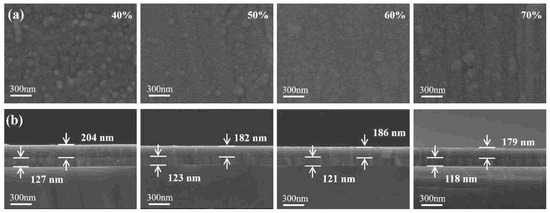
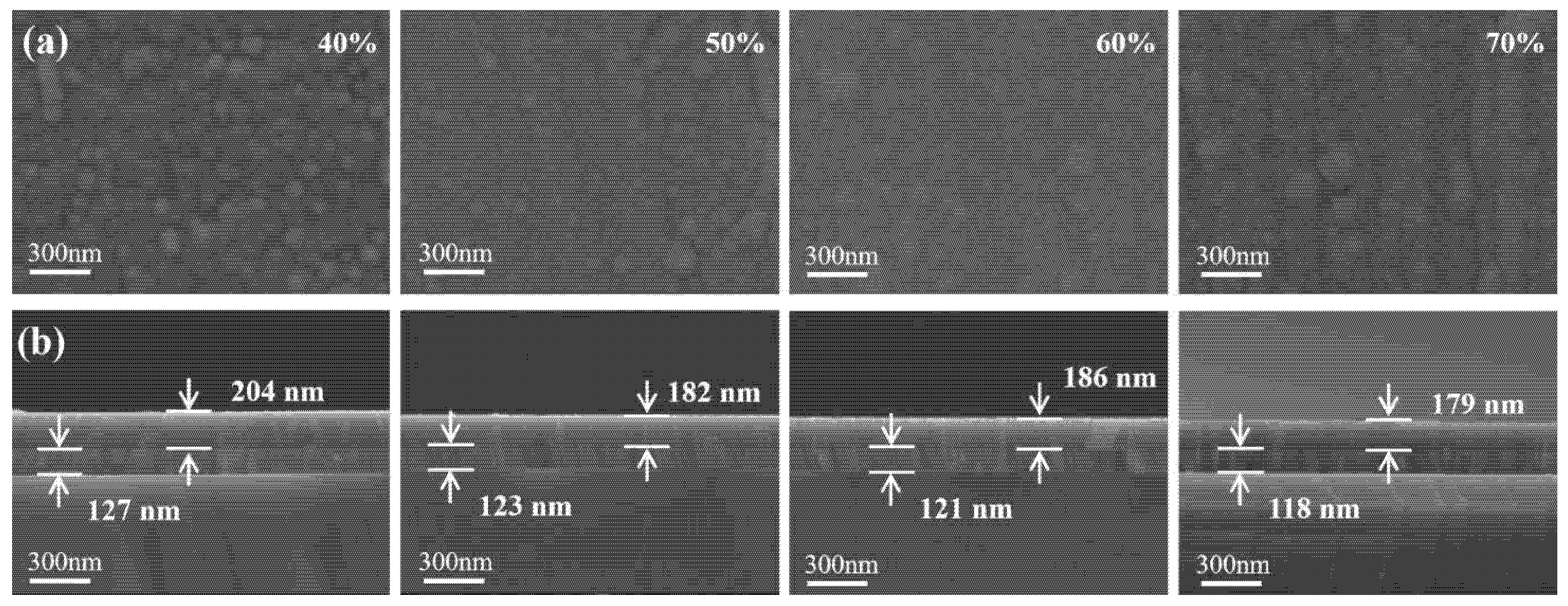
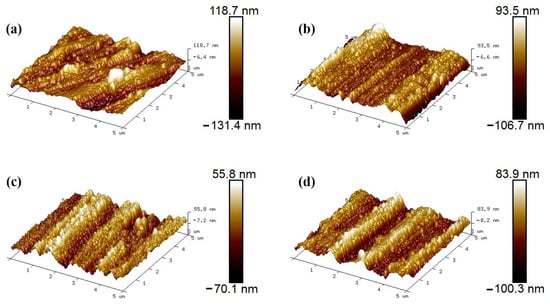
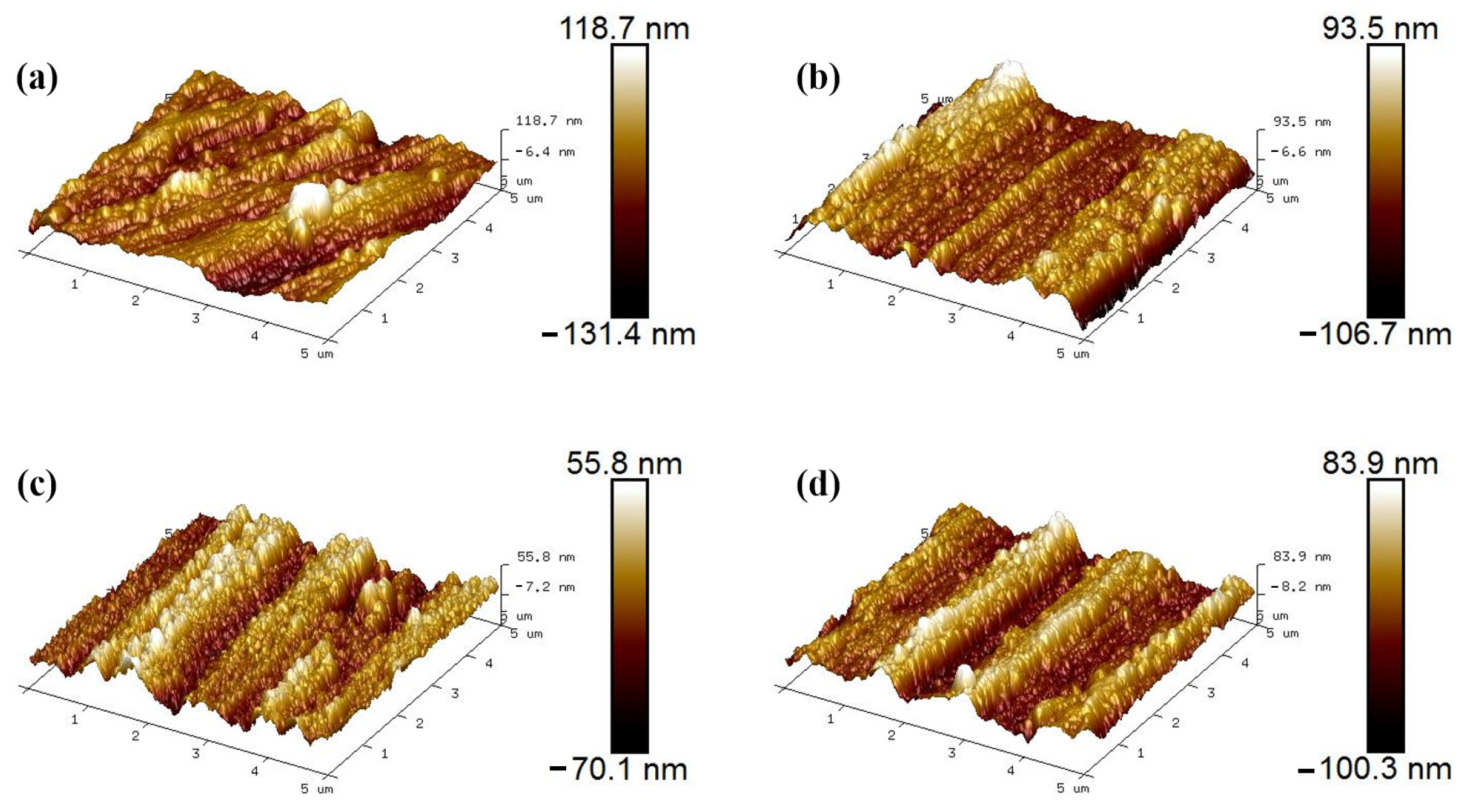
Figure 1 displays the surface and cross-sectional SEM morphologies of the coatings synthesized at various nitrogen flow ratios. After a detailed examination, it was observed that the CrAlN grains became finer with the increase in N2/N2 + Ar ratio up to 60%. However, when the ratio increased to 70%, the CrAlN grains were coarsened. The appearance of “macro-particles” on the coating surfaces is common in magnetron sputtering, which occurs as ionized argon atoms bombard the target surface, causing material clusters to detach and deposit onto the substrate. As shown in Figure 1b, the total coating thickness was approximately 310 nm, featuring a distinct interface between the Cr transition layer and the CrAlN functional layer. It can be seen from Table 3 that with the increase in the ratio, the thickness of the CrAlN coating sputtered on silicon wafers gradually decreases from 331 nm to 297 nm. This is because the reduction in Ar content decreases the flux of ions bombarding the target, thereby reducing the sputtering and deposition rate of the coating. The cross-sectional analysis confirms a dense coating microstructure with high interfacial adhesion to the titanium alloy substrate. Subsequent performance tests indicate that coating thickness exerts an insignificant influence on the corrosion resistance within the thickness range investigated in this study. The surface morphology of the coatings was characterized using AFM and the results are shown in Figure 2. As the N2/(N2 + Ar) ratio increased from 40% to 60%, the average surface roughness (Ra) decreased significantly from 20.3 nm to 13.5 nm, indicating progressive surface densification and grain refinement. However, further increasing the nitrogen ratio to 70% led to a pronounced rise in roughness (20.4 nm), which could imply the onset of microstructural instability or defect formation under excessive nitrogen conditions. Reduced surface roughness is generally associated with lower defect density and fewer open diffusion pathways for aggressive species. Therefore, the coating deposited at a 60% N2/(N2 + Ar) ratio exhibits the most compact surface morphology, which is expected to minimize electrolyte penetration and enhance corrosion resistance.
Figure 1.
Surface morphology (a) and cross-sectional morphology (b) of CrAlN coatings deposited at different N2 ratios.
Table 3.
Coating thickness of CrAlN coatings prepared with different N2 ratios.
Figure 2.
AFM height image of the CrAlN coating surface: (a) 40%, (b) 50%, (c) 60%, (d) 70%.
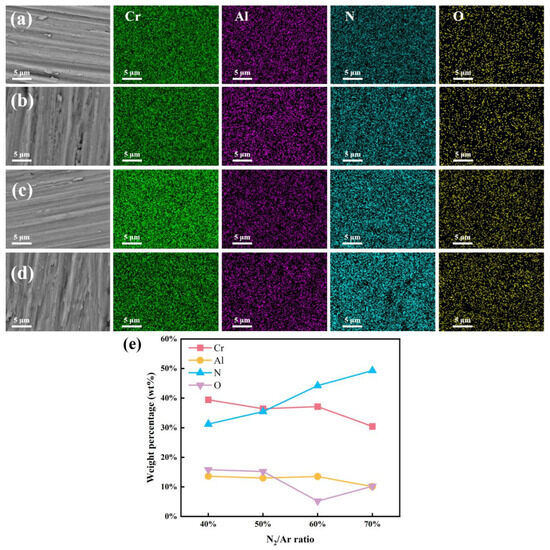
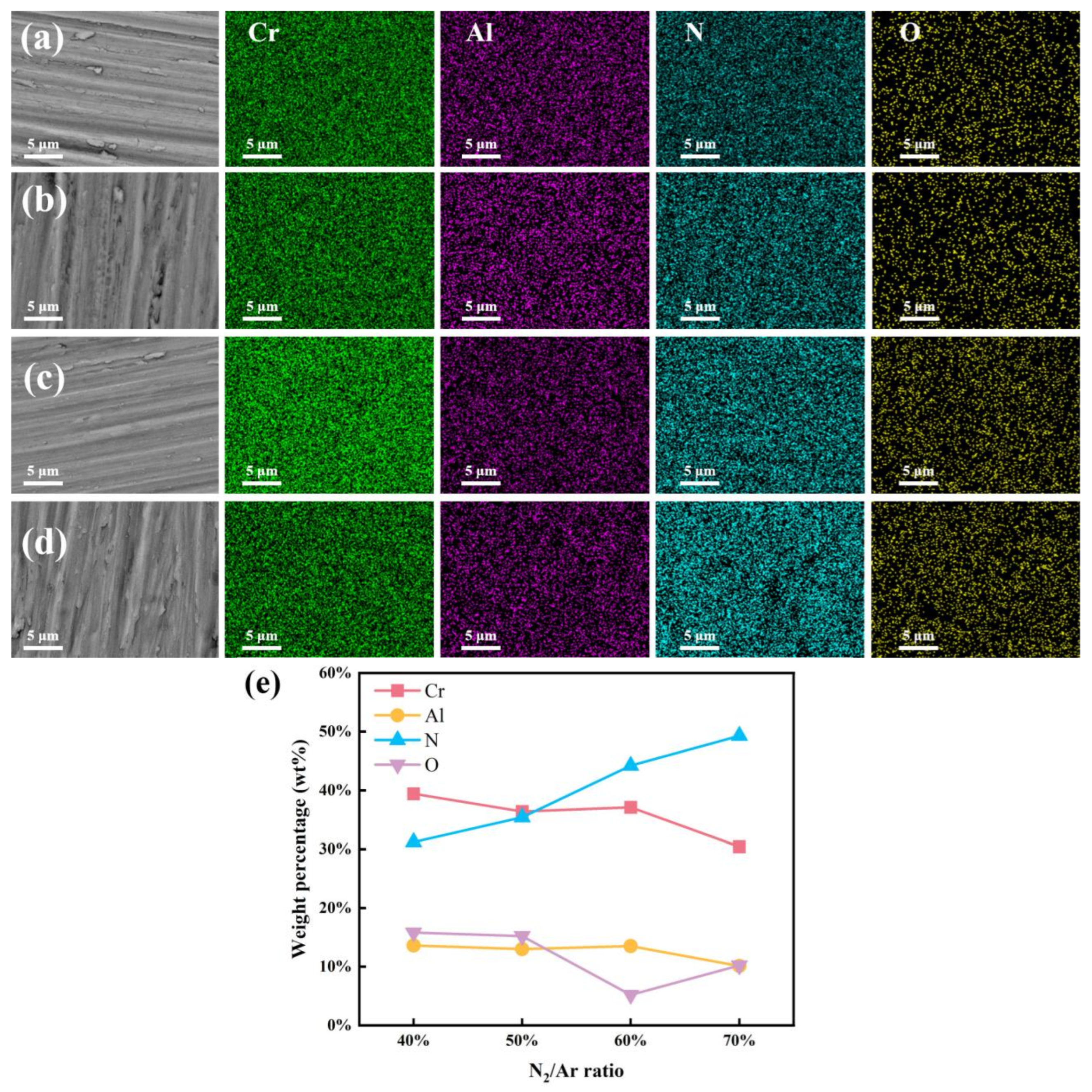
Elemental compositions and spatial distributions of the coatings were analyzed by EDS, as presented in Figure 3a–d. The elemental maps demonstrate a homogeneous distribution of Cr, Al, and N across the coating surface, indicating uniform co-deposition without apparent elemental segregation. With increasing N2/(N2 + Ar) flow ratio, the nitrogen content in the films gradually increased, accompanied by a corresponding decrease in oxygen concentration, reflecting improved nitridation and reduced oxide incorporation during deposition. Notably, EDS semi-quantitative results (for light elements N and O, for reference only) show that the coating prepared at a 60% nitrogen ratio exhibits the lowest relative oxygen content, suggesting enhanced structural compactness and reduced defect-mediated oxygen uptake. In contrast, at a 70% nitrogen ratio, a slight reduction in Cr and Al contents is observed together with an unexpected increase in relative oxygen signal. This relative trend, consistent with subsequent XPS quantitative analysis, implies that excessive nitrogen flow may induce microstructural defects or stress-related porosity, thereby facilitating oxygen incorporation and increasing susceptibility to surface oxidation.
Figure 3.
EDS elemental maps (a–d) and corresponding elemental composition percentage curves (e) of CrAlN coatings deposited at different N2 ratios: (a) 40%, (b) 50%, (c) 60%, and (d) 70%.
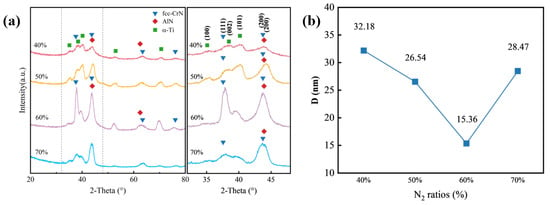
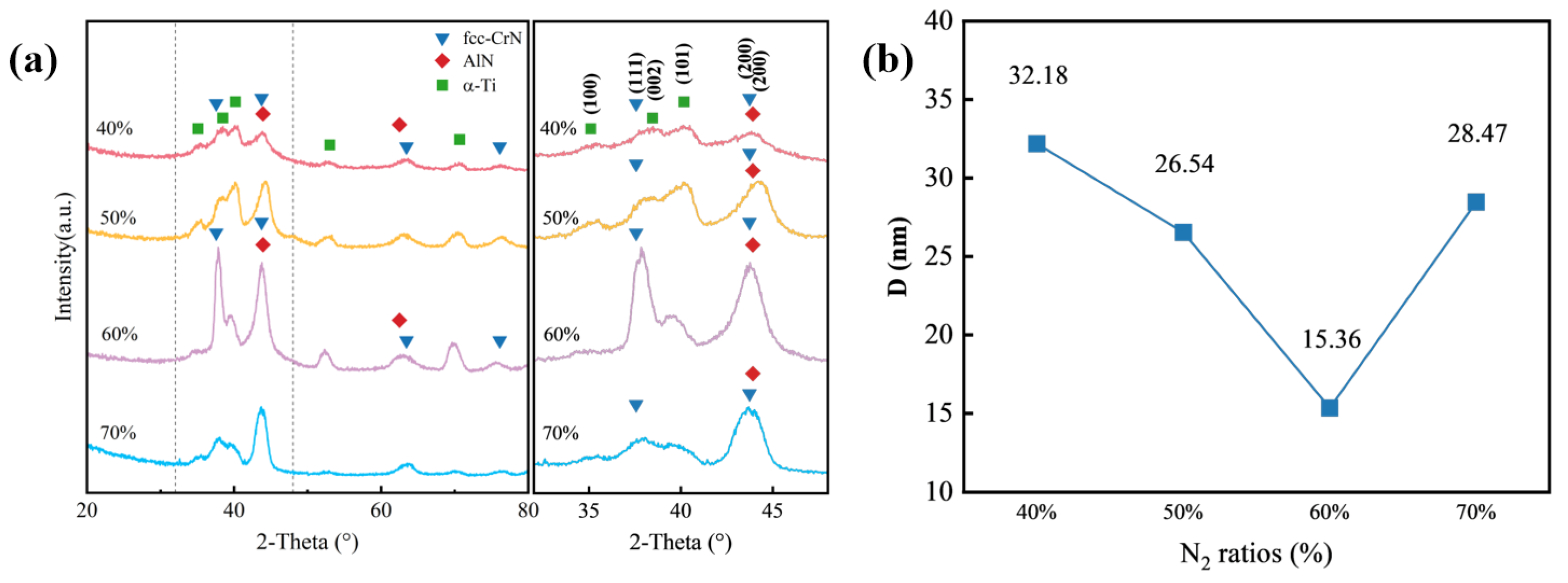
Figure 4 presents the GIXRD patterns of the CrAlN coatings deposited at different nitrogen flow ratios. Diffraction results demonstrate that the coatings exhibit a dominant face-centered cubic (fcc) CrN-type structure, with Al atoms dissolved into the lattice to form a CrAlN solid solution. All samples exhibit characteristic reflections corresponding to fcc-CrN, confirming that the dominant phase remains structurally consistent across the investigated nitrogen ratios. A preferred orientation evolution is observed, with pronounced diffraction intensity along the (200) and (111) planes depending on the nitrogen content. With increasing the N2/(N2 + Ar) ratio up to 60%, the diffraction peaks become sharper and slightly shift toward the standard positions of CrN(110) (≈37.5°) and CrN(200) (≈43.7°), suggesting improved crystallinity and enhanced phase stoichiometry. The peak sharpening implies grain refinement and reduced structural disorder, while the peak position adjustment indicates a lattice parameter closer to that of stoichiometric CrN. These structural changes confirm that optimizing the nitrogen ratio promotes the formation of a more crystalline and chemically stable CrAlN phase. No obvious characteristic diffraction peaks of oxide phases were observed in the GIXRD analysis. Combined with the issue of oxygen content obtained from EDS analysis, a detailed investigation will be conducted in subsequent XPS measurements.
Figure 4.
GIXRD patterns with the corresponding enlarged regions (a) and corresponding grain sizes (b) calculated by the Debye-Scherrer formula of the CrAlN films deposited with different N2 ratios.
The average crystallite size of the coatings was estimated using the Debye-Scherrer equation (Equation (1)) [29], where K = 0.9, λ = 0.15406 nm (Cu Kα radiation), β represents the corrected full width at half maximum (FWHM) in radians, and θ is the Bragg diffraction angle. As shown in Figure 4b, the calculated crystallite size decreases progressively with increasing nitrogen ratio up to 60%, indicating pronounced grain refinement. This refinement is associated with enhanced nitridation and improved phase formation of CrN and AlN, which promote nucleation over grain growth during deposition. The reduced crystallite size suggests a denser microstructure with minimized intercolumnar spacing, which is expected to improve barrier properties against corrosive species penetration.
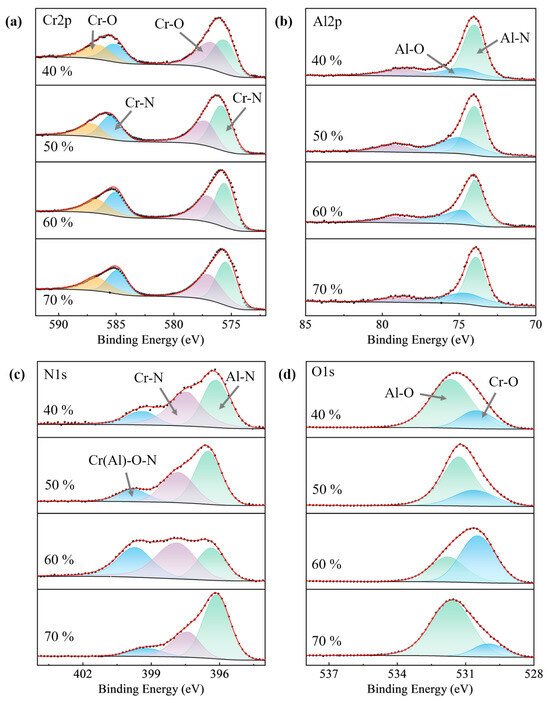
Figure 5 displays the high-resolution XPS core-level spectra and corresponding peak deconvolution results for CrAlN coatings deposited at different nitrogen ratios. XPS measurements were directly conducted on the coating surface to characterize its surface properties. The Cr 2p spectra (Figure 5a) exhibit the characteristic spin–orbit doublet located at binding energies of approximately 576.2 ± 0.4 eV (Cr 2p3/2) and 585.8 ± 0.4 eV (Cr 2p1/2). Deconvolution of the Cr 2p3/2 envelope reveals multiple chemical states: the component centered at ~575.5 eV is assigned to Cr-N bonds in CrN, while peaks located at higher binding energies are attributed to oxidized chromium species, including Cr2O3 and non-stoichiometric CrOx species [30]. A clear compositional trend is observed with an increasing N2/(N2 + Ar) ratio. Samples prepared with nitrogen ratios ≥ 60% exhibit a higher relative intensity of the Cr-N component (74.3%) and a reduced contribution from Cr-O species (25.7%) compared to those deposited at ≤50% nitrogen. This shift in chemical state distribution indicates enhanced nitridation and improved phase stoichiometry under optimized nitrogen supply, resulting in reduced oxygen incorporation and suppressed surface oxidation during deposition.
Figure 5.
XPS spectra of CrAlN coatings (a) Cr 2p, (b) Al 2p, (c) N 1s, (d) O 1s at different N2 ratios.
The high-resolution Al 2p spectra of the coatings prepared at different nitrogen ratios are presented in Figure 5b. The spectra can be deconvoluted into two primary components: a dominant peak centered at ~74.2 eV corresponding to Al-N bonding in AlN, and a secondary peak near ~74.9 eV attributed to Al-O species in non-stoichiometric AlOx [31,32]. As the N2/(N2 + Ar) ratio increases, the relative intensity of the Al-N component progressively rises and reaches a maximum proportion of 89.3%, while the contribution from Al-O species gradually decreases to a minimum value of 10.7%. This evolution indicates enhanced nitridation efficiency and improved chemical stoichiometry under higher nitrogen supply, leading to preferential formation of the AlN phase. The compositional trend observed in XPS is consistent with the GIXRD results (Figure 4), where enhanced crystallinity and strengthened diffraction features associated with nitride phases were detected at optimized nitrogen ratios. Together, these findings confirm that nitrogen flow regulation plays a critical role in controlling phase constitution and suppressing oxide incorporation during film growth.
Figure 5c presents the high-resolution N 1s spectra of the CrAlN coatings deposited at different nitrogen ratios. At a 40% nitrogen ratio, the dominant peak located at ~396.8 eV is attributed to N-Al bonding in AlN, while a broader component centered near ~399.7 eV can be assigned to N-O-Cr(Al) configurations or chemisorbed nitrogen-containing species, possibly originating from surface oxidation or post-deposition exposure [33]. With increasing N2/(N2 + Ar) ratio, the component near ~396.6 eV, corresponding to N-Cr bonding in CrN, becomes progressively more pronounced, indicating enhanced formation and increased fraction of the CrN phase. This evolution is consistent with the GIXRD results, which show improved crystallinity and strengthened diffraction features of CrN at optimized nitrogen ratios. Concurrently, subtle shifts in peak position and relative intensity suggest a redistribution of nitrogen between Cr-N and Al-N bonds, reflecting compositional and structural adjustment within the CrAlN solid solution.
The deconvoluted O 1s spectra (Figure 5d) exhibit two principal components at approximately 530.5 eV and 531.8 eV, which are attributed to lattice oxygen in Cr2O3/Al2O3 and non-stoichiometric surface oxide species, respectively. The relative decrease in these oxygen-related contributions at intermediate nitrogen ratios further supports the suppression of oxide incorporation and the enhancement of nitride phase stability under optimized nitrogen flow conditions.
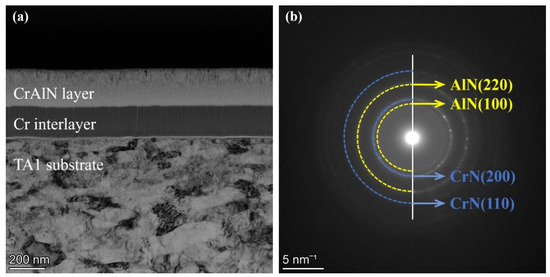
Figure 6 presents the cross-sectional transmission electron microscopy (TEM) image and corresponding selected-area electron diffraction (SAED) pattern of the CrAlN coating deposited at the optimal 60% nitrogen ratio. The sample were obtained via FIB milling. The cross-sectional TEM image in Figure 6a reveals a well-defined bilayer architecture consisting of a Cr interlayer (~180 nm) and the CrAlN functional layer above it. The Cr interlayer exhibits a typical columnar morphology growing perpendicular to the TA1 substrate surface, providing a transitional bonding layer that enhances adhesion and accommodates lattice mismatch. The overlying CrAlN layer shows dense columnar growth with limited intercolumnar voids, supporting the conclusion that the 60% nitrogen ratio promotes a compact microstructure favorable for corrosion protection. As shown in Figure 6b, the SAED pattern exhibits a series of concentric diffraction rings that can be indexed to the (110)/(200)/(100)/(220) family planes of the fcc CrN-based structure with AlN incorporation. The ring-like morphology confirms the polycrystalline nature of the coating and indicates the absence of strong epitaxial texture, consistent with the GIXRD results (Figure 4). The relatively sharp and continuous diffraction rings further suggest improved crystallinity under the optimized nitrogen condition.
Figure 6.
The TEM results of CrAlN Coating prepared at 60% N2 ratio: (a) cross-sectional image and (b) SAED pattern.
3.2. Properties and Corrosion Behavior of CrAlN Coatings
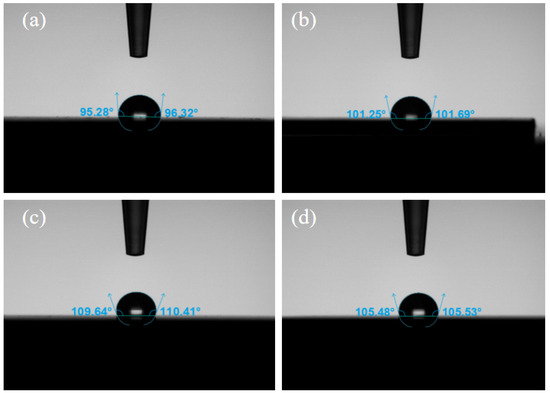
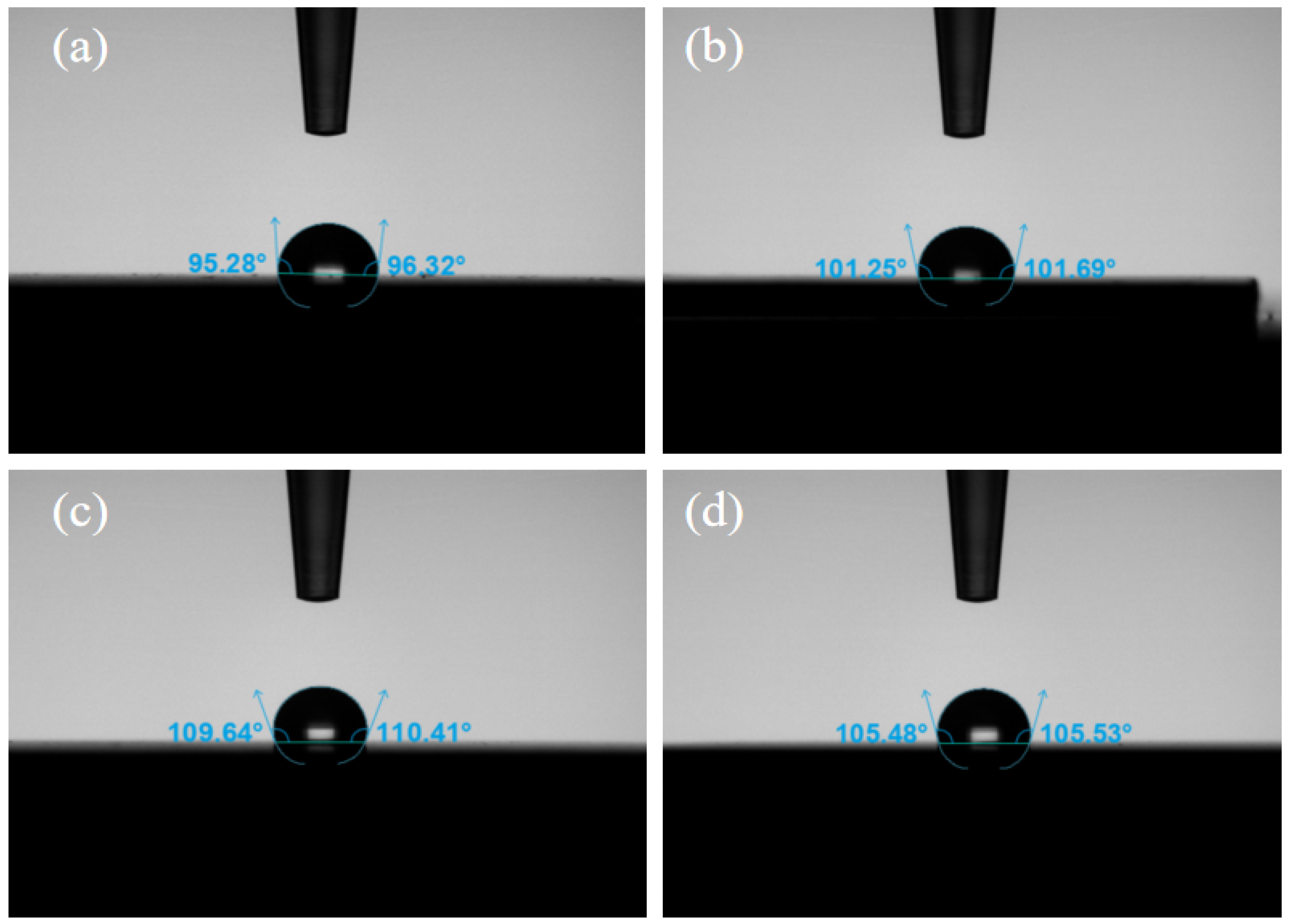
Figure 7 presents the water contact angle measurements of the CrAlN coatings deposited at different nitrogen ratios. The contact angles marked in the figure were measured in five replicate tests, with the standard deviation within 3°. The contact angle increases progressively from 40% to 60% N2/(N2 + Ar), followed by a decrease at 70%, indicating a non-monotonic dependence on nitrogen content. The maximum contact angle is observed at 60%, reflecting enhanced surface hydrophobicity under the optimized deposition condition. The increased contact angle suggests reduced surface wettability and lower effective surface energy, which can limit electrolyte spreading and decrease the residence time of corrosive species on the coating surface. Such hydrophobic characteristics are beneficial for corrosion mitigation, as they reduce the probability of localized electrolyte accumulation and restrict ionic penetration into surface defects. Therefore, the improved wettability behavior at 60% nitrogen ratio contributes synergistically to the enhanced corrosion resistance observed in electrochemical measurements.
Figure 7.
Contact Angle images of CrAlN coatings with N2 ratios of 40% (a), 50% (b), 60% (c) and 70% (d).
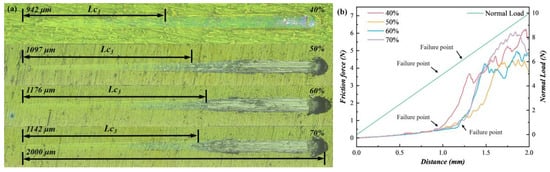
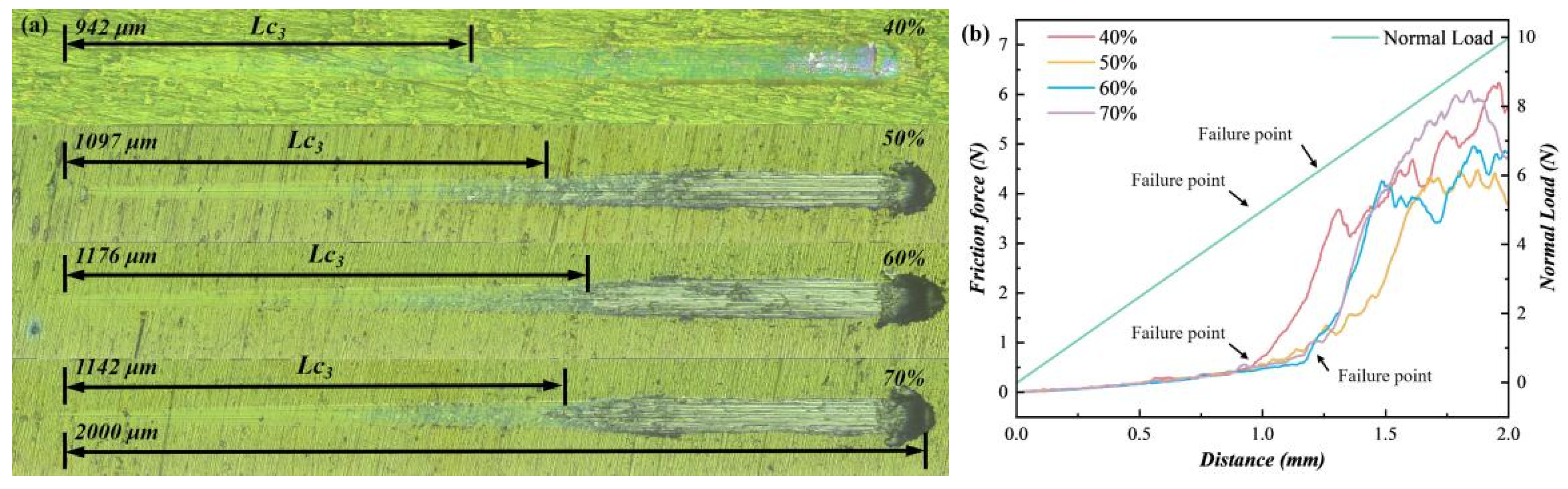
Regarding mechanical integrity, adhesion between the coating and substrate is primarily facilitated by mechanical interlocking and interfacial cohesion provided by the Cr interlayer. Scratch testing was conducted to quantitatively assess the adhesion strength of the coatings deposited on the TA1 substrate. As illustrated in Figure 8 and summarized in Table 4, the coating prepared at a 60% N2/(N2 + Ar) ratio exhibits the highest critical failure load (Lc3), reaching 6283 mN at a scratch distance of 1176 μm. Compared to the 40% ratio specimen (4840 mN), the 60% ratio specimen shows better film-substrate adhesion. The enhanced adhesion at this nitrogen ratio can be attributed to the optimized microstructure and improved phase stoichiometry, which reduce internal defects and promote load transfer across the coating-substrate interface. In contrast, coatings deposited at lower or higher nitrogen ratios exhibit comparatively reduced critical loads, likely due to increased structural defects or stress-induced microstructural instability. The superior adhesion at 60% nitrogen is consistent with its dense morphology and contributes to improved mechanical stability under corrosive service conditions.
Figure 8.
(a) Scratch morphology and (b) relationship between critical load and force/frictional load of CrAlN coatings prepared under different nitrogen ratios.
Table 4.
Mechanical properties of CrAlN coatings prepared with different N2 ratios.
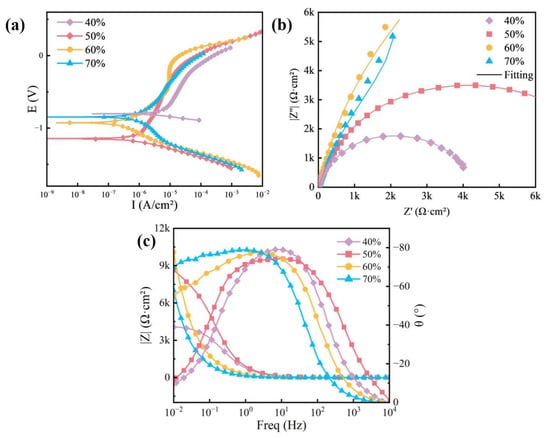
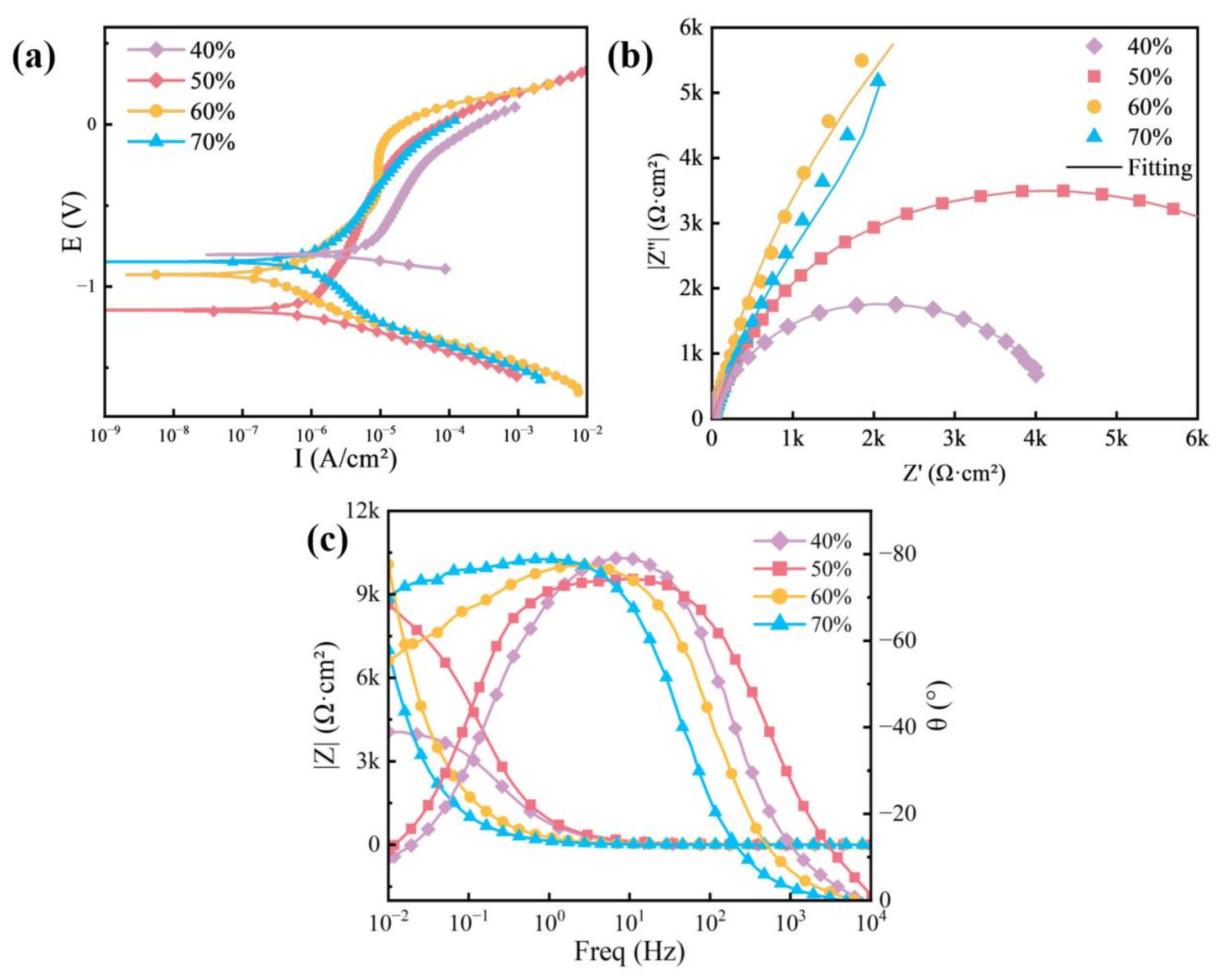
The potentiodynamic polarization curves are shown in Figure 9a, and the extracted electrochemical parameters are summarized in Table 5. The corrosion current density (icorr) serves as a quantitative indicator of corrosion kinetics, with lower values reflecting suppressed anodic dissolution and improved barrier performance. As the N2/(N2 + Ar) ratio increases from 40% to 60%, icorr decreases markedly from 8.139 μA·cm−2 to 0.297 μA·cm−2, indicating a substantial reduction in corrosion rate. A slight increase to 0.303 μA·cm−2 is observed at 70%, suggesting the onset of microstructural deterioration.
Figure 9.
Electrochemical tests of CrAlN coatings prepared with different N2 ratios: (a) Potentiodynamic polarization curves (Tafel plots), (b) Nyquist plots of impedance and (c) Bode plots of impedance.
Table 5.
Electrochemical corrosion properties of CrAlN coatings prepared with different N2 ratios.
The polarization resistance (Rp), calculated using the Stern-Geary equation (Equation (2)) [31], further confirms this trend. The coating deposited at 60% nitrogen exhibits the highest Rp (123.884 kΩ·cm2), nearly 26 times higher than that of the 40% sample, demonstrating optimal electrochemical stability.
where βc and βa represent the slopes of the cathodic and anodic curves, respectively, and icorr denotes the corrosion current density.
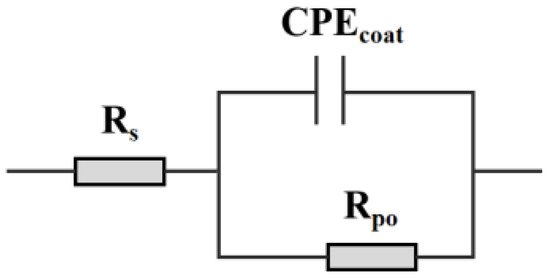
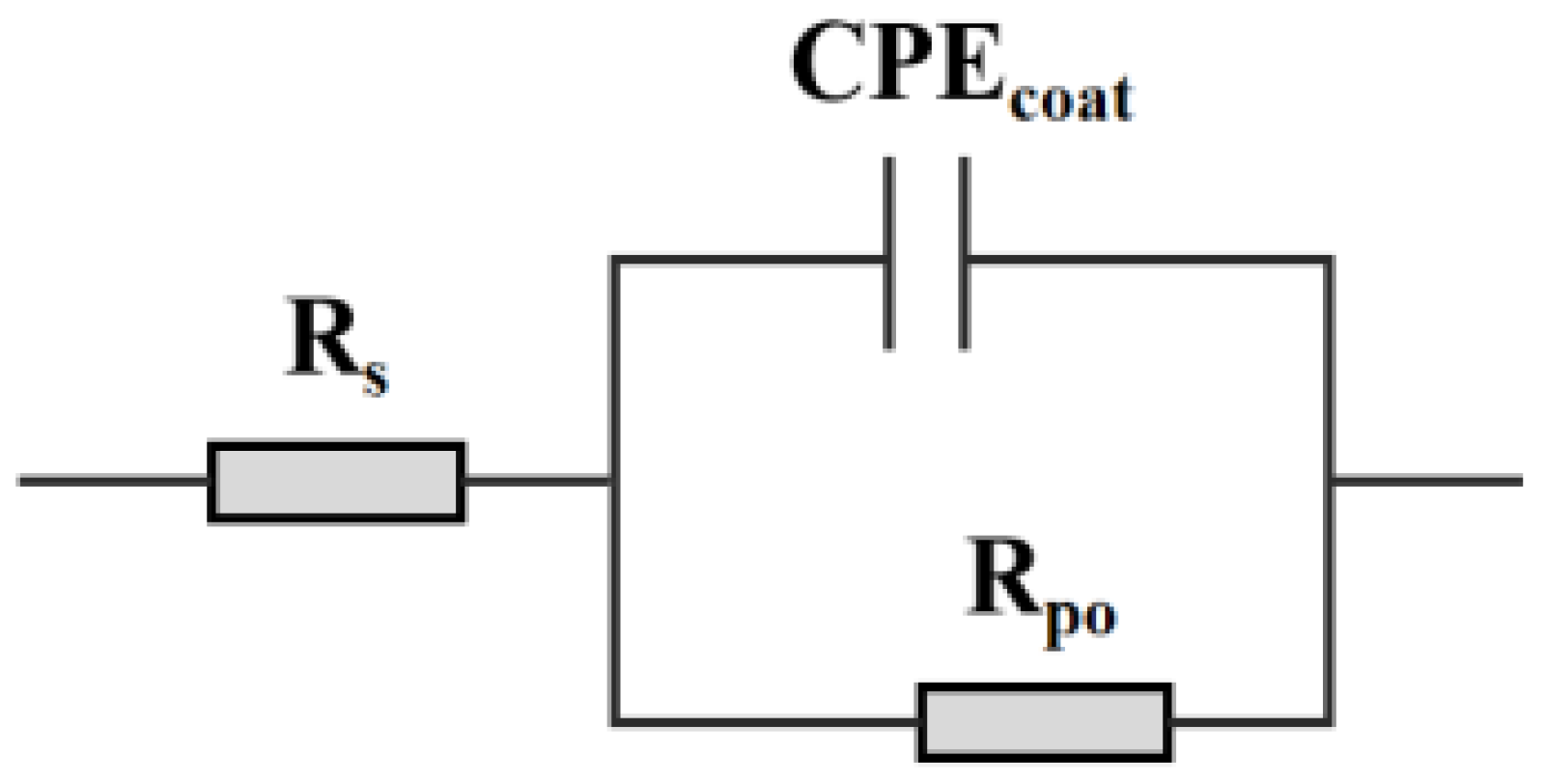
Electrochemical Impedance Spectroscopy (EIS) results (Figure 9b,c) corroborate this trend. The Nyquist plots display depressed capacitive semicircles characteristic of non-ideal capacitive behavior. The largest semicircle diameter is observed at 60% nitrogen, indicating maximum polarization resistance (Rpo). Bode plots reveal higher impedance modulus at low frequencies for this condition, reflecting enhanced barrier performance. Equivalent circuit fitting (Figure 10) shows that the constant phase element exponent (ncoat) reaches its highest value (0.9206) at 60% nitrogen (Table 6), approaching ideal capacitive behavior and suggesting a more homogeneous and defect-free coating surface.
Figure 10.
Equivalent circuit diagram for EIS fitting.
Table 6.
Equivalent circuit fitting parameters of EIS spectra for CrAlN coatings prepared with different N2 ratios.
The CPEcoat (Q) value also reaches its minimum at 60% nitrogen, indicating that the coating exhibits the highest compactness and the smallest effective contact area with the electrolyte, thus demonstrating the optimal barrier performance against corrosive species. In line with the EIS fitting results, the CPEcoat value of the 70% nitrogen ratio sample is notably higher than that of the 60% sample, while the ncoat value decreases to 0.8724, deviating further from ideal capacitive behavior. This quantitative variation directly indicates an increased defect density and reduced structural homogeneity in the 70% N2 coating, which creates more available diffusion pathways for corrosive ions and consequently leads to slightly inferior corrosion resistance compared with the optimal 60% nitrogen condition.
The optimized CrAlN coating (60% N2) delivers an ultra-low corrosion current density of 0.297 μA·cm−2 and a high polarization resistance of 123.9 kΩ·cm2 in the target highly alkaline chloride-containing environment (pH ≈ 14), outperforming the corrosion data of CrAlN-based coatings reported in previous literature (e.g., 0.535 μA·cm−2 in Ref. [26]). This marked enhancement in corrosion performance, particularly under the harsh alkaline conditions mimicking industrial seawater electrolysis, underscores the practical application value of the optimized coating (Table 7).
Table 7.
Comparison of corrosion parameters obtained from potentiodynamic polarization measurements for various nitride coatings.
Notably, the Rs values exhibit negligible variation, indicating that the test conditions were essentially consistent across all samples and that measurement errors were minimal.
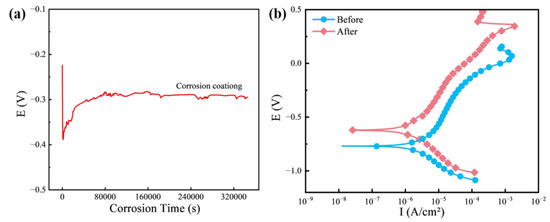
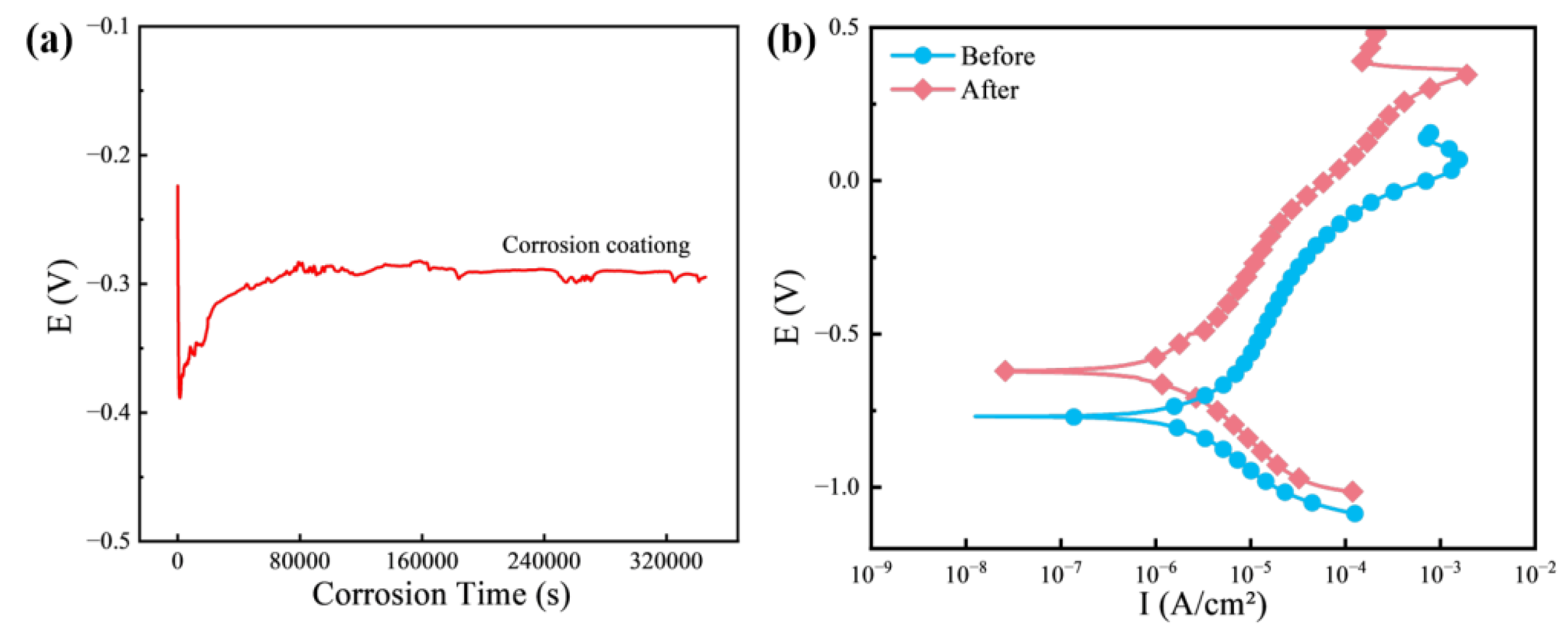
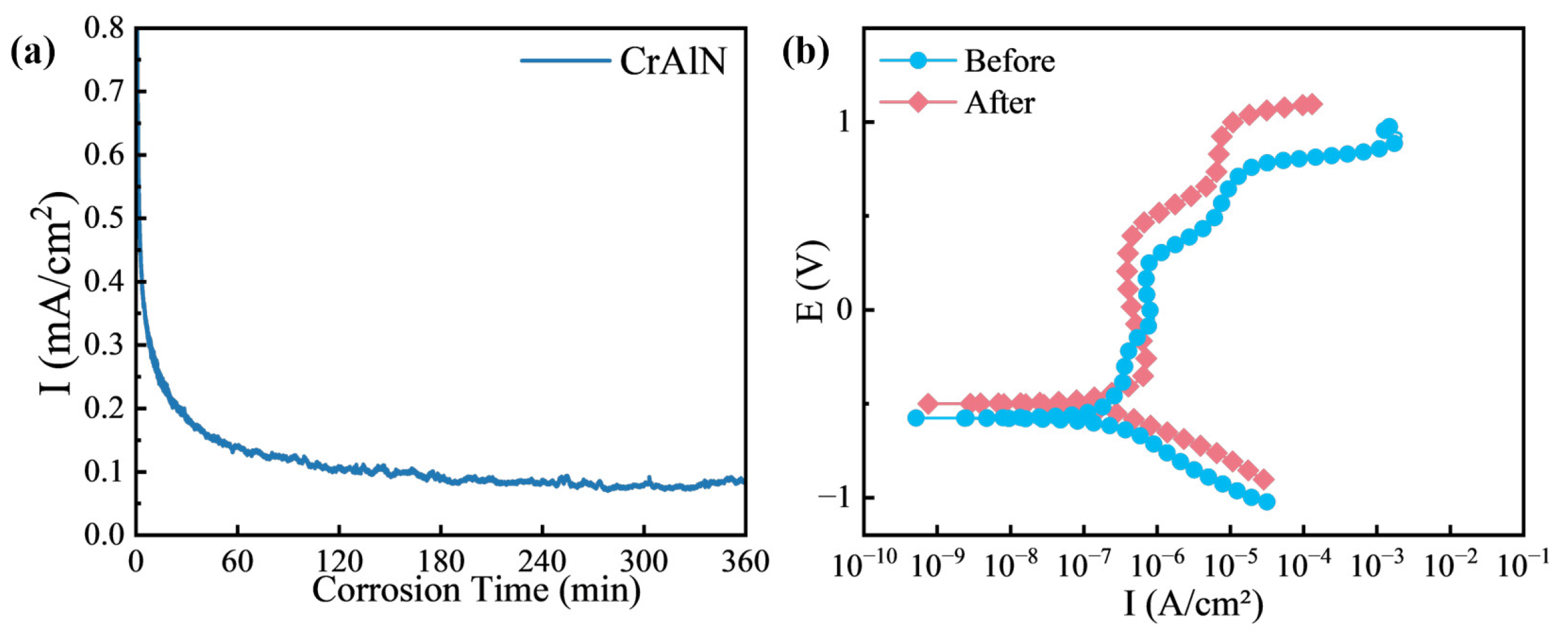
To evaluate long-term stability, the optimal coating (60% nitrogen) was subjected to 96 h immersion in simulated alkaline seawater. The open circuit potential evolution (Figure 11a) shows an initial negative shift followed by gradual stabilization at approximately −0.3 V, indicating the formation of a protective surface film. The transient potential drop corresponds to initial surface activation, whereas subsequent stabilization suggests passivation. Post-immersion polarization curves (Figure 11b) show a positive shift in Ecorr (from −0.75 V to −0.63 V) with minimal variation in icorr, indicating stable electrochemical performance after prolonged exposure. This behavior confirms the formation of a chemically stable passive layer.
Figure 11.
Open circuit potential (a) and potentiodynamic polarization tests (b) before and after corrosion for the CrAlN coating prepared under a 60% nitrogen ratio in a corrosive environment.
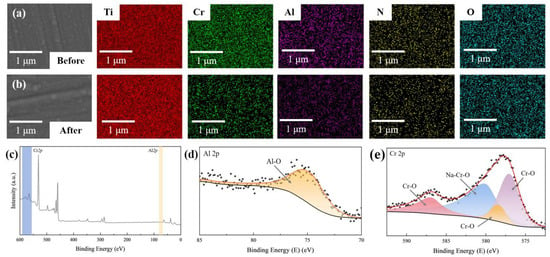
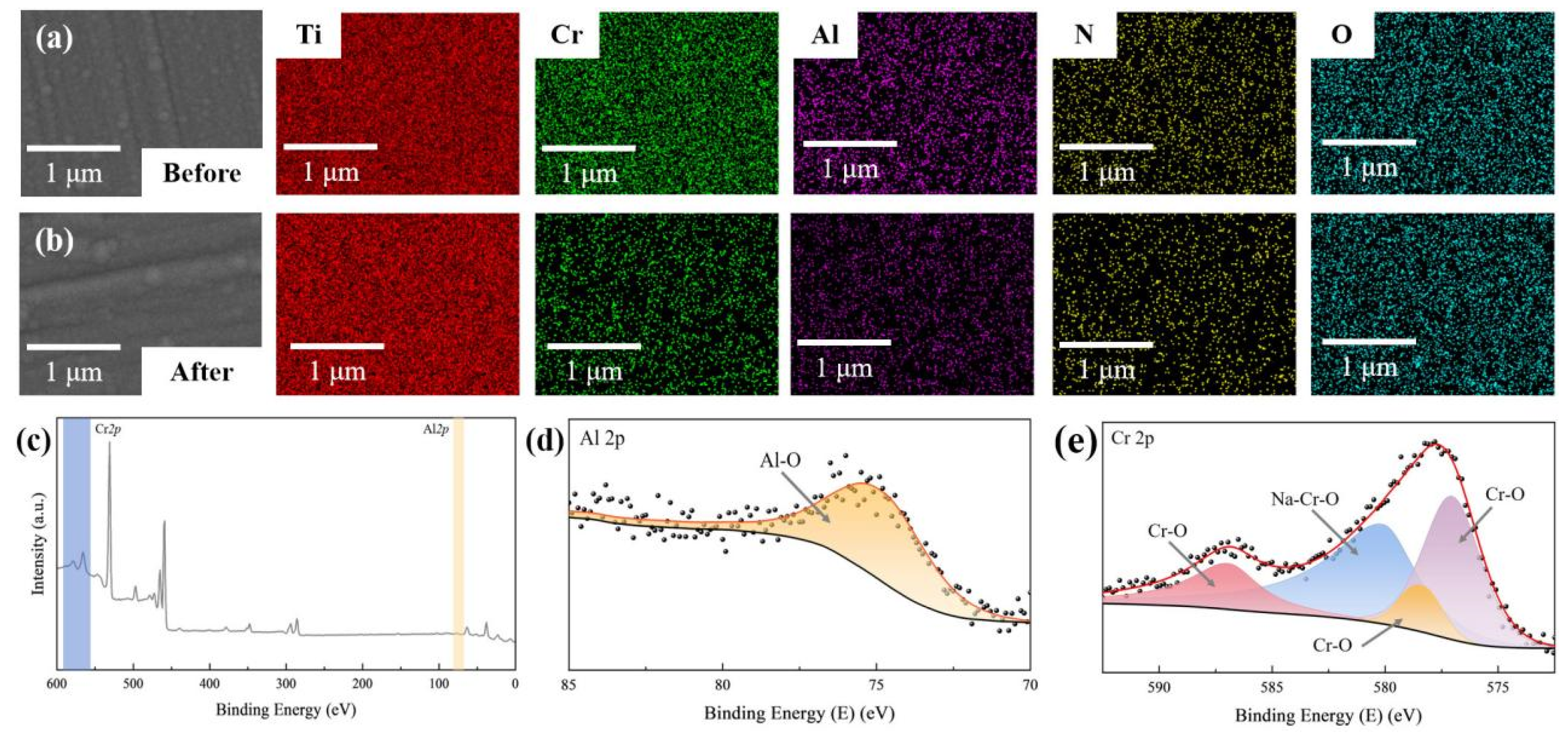
EDS and XPS analyses (Figure 12) reveal significant surface chemistry evolution after immersion. EDS indicates decreased Al content and increased oxygen concentration. High-resolution Al 2p spectra display a dominant peak at ~74.9 eV corresponding to Al-O bonding, confirming the formation of Al2O3-rich species. The Cr 2p spectra exhibit oxidized chromium states, including CrO3 and CrOx, and a peak at ~580.5 eV associated with Na-Cr-O species (Na2CrO4). These findings suggest that alkaline exposure promotes partial oxidation of CrN and AlN phases, resulting in a composite passive film composed of aluminum oxides and chromium-based oxides/chromates. This in situ formed composite layer acts as a chemically stable and ion-impermeable barrier, consistent with the electrochemical observations.
Figure 12.
EDS results of the CrAlN coating (a,b) and XPS analysis showing the full spectrum (c), high-resolution Al 2p spectrum (d), and high-resolution Cr 2p spectrum (e), before and after corrosion testing.
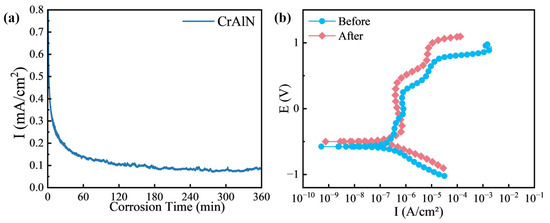
To further evaluate the service life of the coating in a seawater electrolysis environment, the optimal coating (60% N2) was subjected to potentiostatic polarization at 2 V for 6 h in simulated alkaline seawater. As shown in Figure 13a, the polarization current decreased rapidly within the initial half hour and then stabilized at approximately 80 μA·cm−2, indicating that the surface reactions of the coating tended to be steady. The Tafel plots recorded after potentiostatic polarization (Figure 13b) exhibited a slight positive shift in Ecorr (about 0.05 V) and a negligible change in icorr. These results are consistent with those of the immersion tests, further verifying that this sample possesses excellent long-term corrosion resistance and durability.
Figure 13.
Potentiostatic polarization curves (a) and Potentiodynamic polarization curves (b) before and after potentiostatic polarization for the CrAlN coating prepared under 60% nitrogen ratio in a corrosive environment.
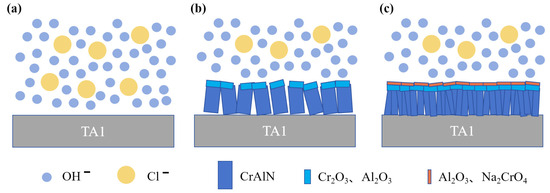
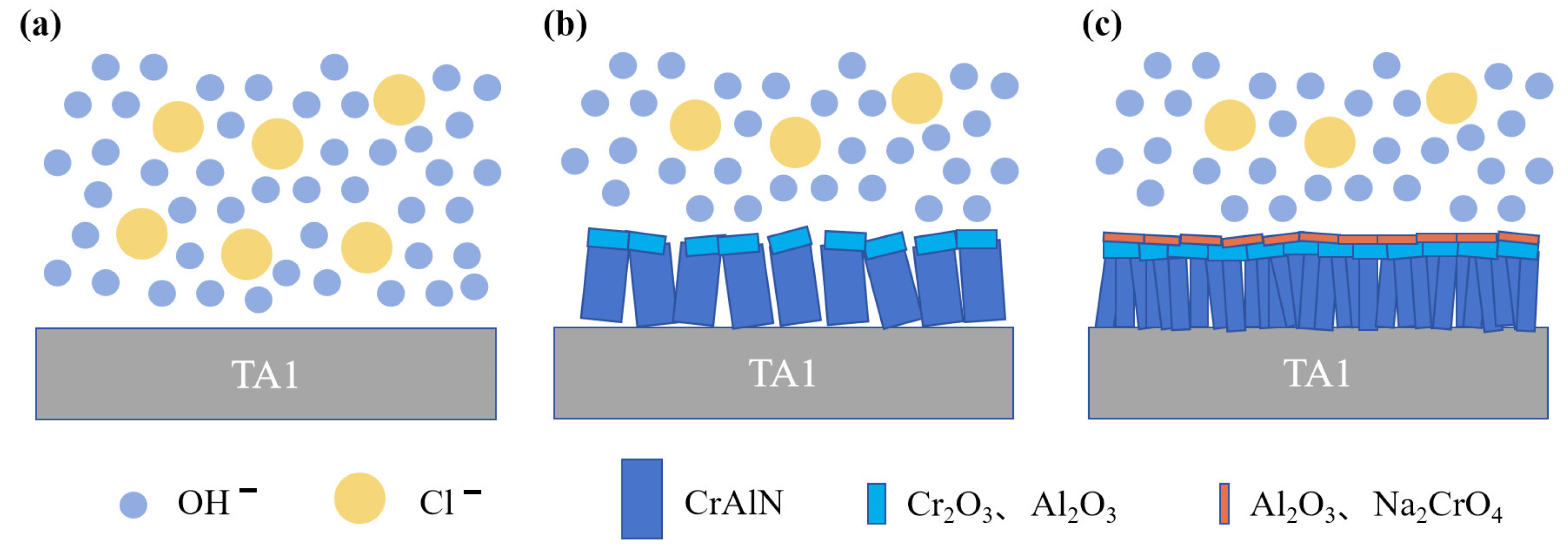
Figure 14 schematically illustrates the corrosion mechanisms under different nitrogen ratios. In nitrogen-deficient coatings, under-stoichiometric CrxN/AlxN phases contain higher vacancy concentrations and intercolumnar defects. These structural discontinuities serve as rapid diffusion pathways for Cl− and OH− ions, leading to localized degradation and eventual substrate exposure. At the optimal 60% nitrogen ratio, near-stoichiometric CrN and AlN phases form with refined grains and reduced defect density. The dense microstructure limits ionic transport through tortuous grain boundary pathways. Simultaneously, a dual-passivation mechanism operates:
Figure 14.
Schematic diagrams of corrosion mechanism of (a) Ti substrate; (b) CrAlN coating prepared with low nitrogen-to-argon ratio; and (c) CrAlN coating prepared with high nitrogen-to-argon ratio.
- The CrN matrix provides electronic stability and forms chromium oxides/chromates under alkaline conditions.
- The AlN phase preferentially oxidizes to produce a dense Al2O3-rich layer that seals nanoscale defects and grain boundaries.
This synergistic interaction between structural densification and chemically stable oxide formation significantly enhances corrosion resistance.
As evidenced by the impedance fitting data, excessive nitrogen (e.g., 70%) likely introduces elevated residual stress or microcracking, increasing defect density and slightly reducing barrier performance. Therefore, the superior corrosion resistance at 60% nitrogen arises from the optimized balance between phase stoichiometry, microstructural compactness, and formation of a stable dual-oxide passivation layer, ensuring sustained protection of the titanium substrate in highly alkaline chloride environments.
The superior corrosion resistance achieved at the optimal 60% nitrogen ratio originates from the synergistic coupling of the CrN and AlN phases and the resulting microstructural densification. As schematically illustrated in Figure 13, the nitrogen flow ratio governs phase stoichiometry and defect evolution, thereby dictating barrier performance. At low nitrogen ratios, nitrogen-deficient CrxN and AlxN phases form, accompanied by a high density of vacancies, columnar gaps, and intergranular defects. These structural discontinuities serve as rapid diffusion channels for aggressive Cl− and OH− ions, accelerating electrolyte penetration and substrate attack.
In contrast, deposition at 60% nitrogen approaches near-stoichiometric fcc-CrN and AlN formation, enhancing thermodynamic stability and promoting grain refinement. The resulting compact, fine-grained architecture increases diffusion tortuosity and suppresses through-thickness transport pathways. The protective mechanism operates through a dual-barrier effect: the CrN matrix ensures mechanical robustness and electronic passivation, while AlN preferentially oxidizes to form a dense Al2O3-rich layer in alkaline media. This in situ oxide film seals nanoscale defects and grain-boundary grooves, producing a chemically stable composite surface that effectively impedes electrolyte ingress. When the nitrogen ratio exceeds the optimum (e.g., 70%), excessive residual stress and potential microcracking disrupt this synergy, leading to reduced protection. Therefore, the 60% nitrogen ratio provides the optimal balance between stoichiometry, structural compactness, and interfacial stability, ensuring sustained protection of the titanium substrate under simulated alkaline seawater electrolysis conditions.
4. Conclusions
CrAlN coatings were deposited on TA1 titanium alloy by magnetron sputtering with nitrogen flow ratios of 40%–70%. The nitrogen ratio was identified as the critical parameter governing phase constitution, microstructure, adhesion, and corrosion performance. It was found that the coating prepared at 60% nitrogen exhibited a dense, fine-grained structure with well-developed fcc-CrN and AlN phases. Electrochemical tests demonstrated that this sample achieved the lowest corrosion current density (0.297 μA·cm−2) and the highest polarization resistance (123.884 kΩ·cm2), indicating superior barrier efficiency and long-term stability. Compared with previously reported CrAlN coatings evaluated in neutral NaCl solution or standard artificial seawater, the optimized coating in this work presents more superior corrosion resistance in the highly alkaline chloride-containing environment that is highly consistent with the actual service conditions of alkaline seawater electrolysis.
This study reveals the regulation mechanism of nitrogen flow ratio on the microstructure and corrosion passivation of CrAlN coatings, providing a feasible design strategy and experimental basis for developing high-performance protective coatings for seawater electrolysis equipment.
Author Contributions
Conceptualization, J.M., Y.F., L.H. and Q.Y.; methodology, Y.L.; software, Y.L.; validation, Y.L. and Q.Y.; formal analysis, M.L. and Z.D.; investigation, M.L.; resources, Y.L., J.M., Y.F., L.H. and Q.Y.; data curation, Y.L. and Q.Y.; writing—original draft preparation, M.L.; writing—review and editing, Y.L., J.M., Y.F., Z.D. and Q.Y.; visualization, M.L. and Y.L.; supervision, L.H. and Q.Y.; project administration, J.M., L.H. and Q.Y. All authors have read and agreed to the published version of the manuscript.
Funding
This research was funded by the National Key Research and Development Program of China. Grant number No. 2023YFB4005102.
Institutional Review Board Statement
Not applicable.
Informed Consent Statement
Not applicable.
Data Availability Statement
Data are contained within the article.
Conflicts of Interest
Authors Mingyu Liu, Yu Liu, Jing Mi, Yanyan Fu, Lei Hao, Ziqiang Dong and Qinghe Yu were employed by the company China GRINM Group Co., Ltd. and GRIMAT Engineering Institute Co., Ltd. The remaining authors declare that the research was conducted in the absence of any commercial or financial relationships that could be construed as a potential conflict of interest.
Abbreviations
The following abbreviations are used in this manuscript:
| SEM | Scanning Electron Microscope |
| EDS | Energy Dispersive Spectroscopy |
| GIXRD | Grazing Incidence X-Ray Diffraction |
| AFM | Atomic Force Microscope |
| TEM | Transmission Electron Microscope |
| XPS | X-ray Photoelectron Spectroscopy |
| SAED | Selected Area Electron Diffraction |
References
- Kumar, S.S.; Himabindu, V. Hydrogen production by PEM water electrolysis—A review. Mater. Sci. Energy Technol. 2019, 2, 442–454. [Google Scholar]
- Wu, S.; Yang, W.; Yan, H.; Zuo, X.; Cao, Z.; Li, H.; Shi, M.; Chen, H. A review of modified metal bipolar plates for proton exchange membrane fuel cells. Int. J. Hydrogen Energy 2021, 46, 8672–8701. [Google Scholar] [CrossRef] [Scilit]
- Kazem, H.A.; Chaichan, M.T.; Al-Waeli, A.H.; Sopian, K.; Alnaser, W.E.; Kazmerski, L.; Alnaser, N.W. A review of photovoltaic/thermal (PV/T) incorporation in the hydrogen production process. Glob. Energy Interconnect. 2025, 8, 363–393. [Google Scholar] [CrossRef] [Scilit]
- Fukuzumi, S.; Lee, Y.M.; Nam, W. Fuel production from seawater and fuel cells using seawater. ChemSusChem 2017, 10, 4264–4276. [Google Scholar] [CrossRef] [Scilit]
- Kumaravel, V.; Abdel-Wahab, A. A short review on hydrogen, biofuel, and electricity production using seawater as a medium. Energy Fuels 2018, 32, 6423–6437. [Google Scholar] [CrossRef] [Scilit]
- Al-Fozan, S.A.; Malik, A.U. Effect of seawater level on corrosion behavior of different alloys. Desalination 2008, 228, 61–67. [Google Scholar] [CrossRef] [Scilit]
- Ahmad, F.; Jamal, A.; Iqbal, M.; Alqurashi, M.; Almoshaogeh, M.; Al-Ahmadi, H.M.; E. Hussein, E. Performance evaluation of cementitious composites incorporating nano graphite platelets as additive carbon material. Materials 2021, 15, 290. [Google Scholar] [CrossRef] [Scilit]
- Ahmad, Z.; Qureshi, M.I.; Ahmad, F.; El Ouni, M.H.; Asghar, M.Z.; Ghazouani, N. Effect of macro synthetic fiber (MSF) on the behavior of conventional concrete and the concrete containing e-waste aggregates. Mater. Struct. 2025, 58, 234. [Google Scholar] [CrossRef] [Scilit]
- Narayan, J.; Tiwari, P.; Chen, X.; Singh, J.; Chowdhury, R.; Zheleva, T. Epitaxial growth of TiN films on (100) silicon substrates by laser physical vapor deposition. Appl. Phys. Lett. 1992, 61, 1290–1292. [Google Scholar] [CrossRef] [Scilit]
- Xiao, S.; Suzuki, R.; Miyake, H.; Harada, S.; Ujihara, T. Improvement mechanism of sputtered AlN films by high-temperature annealing. J. Cryst. Growth 2018, 502, 41–44. [Google Scholar] [CrossRef] [Scilit]
- Roman, D.; Bernardi, J.; de Amorim, C.L.; de Souza, F.S.; Spinelli, A.; Giacomelli, C.; Figueroa, C.A.; Baumvol, I.J.; Basso, R.L. Effect of deposition temperature on microstructure and corrosion resistance of ZrN thin films deposited by DC reactive magnetron sputtering. Mater. Chem. Phys. 2011, 130, 147–153. [Google Scholar] [CrossRef] [Scilit]
- Pogrebnjak, A.; Beresnev, V.; Smyrnova, K.; Kravchenko, Y.O.; Zukowski, P.; Bondarenko, G. The influence of nitrogen pressure on the fabrication of the two-phase superhard nanocomposite (TiZrNbAlYCr) N coatings. Mater. Lett. 2018, 211, 316–318. [Google Scholar] [CrossRef] [Scilit]
- Wan, X.; Zhao, S.; Yang, Y.; Gong, J.; Sun, C. Effects of nitrogen pressure and pulse bias voltage on the properties of Cr–N coatings deposited by arc ion plating. Surf. Coat. Technol. 2010, 204, 1800–1810. [Google Scholar] [CrossRef] [Scilit]
- Abdallah, B.; Kakhia, M.; Alsadat, W. Deposition of TiN and TiAlVN thin films by DC magnetron sputtering: Composition, corrosion and mechanical study. Int. J. Struct. Integr. 2020, 11, 819–831. [Google Scholar] [CrossRef] [Scilit]
- Ruden, A.; Restrepo-Parra, E.; Paladines, A.; Sequeda, F. Corrosion resistance of CrN thin films produced by dc magnetron sputtering. Appl. Surf. Sci. 2013, 270, 150–156. [Google Scholar] [CrossRef] [Scilit]
- Huang, J.-H.; Kuo, K.-L.; Yu, G.-P. Oxidation behavior and corrosion resistance of vacuum annealed ZrN-coated stainless steel. Surf. Coat. Technol. 2019, 358, 308–319. [Google Scholar] [CrossRef] [Scilit]
- Zhang, S.; Wang, J.; Wu, R.; Liu, L.; Pan, B.; Liu, C. Structural and corrosion resistance properties of sputtered zirconium nitride thin films as electrode material for supercapacitor. J. Alloys Compd. 2022, 900, 163506. [Google Scholar] [CrossRef] [Scilit]
- Fonseca, R.; Soares, R.; Carvalho, R.; Tentardini, E.; Lins, V.; Castro, M. Corrosion behavior of magnetron sputtered NbN and Nb1-xAlxN coatings on AISI 316L stainless steel. Surf. Coat. Technol. 2019, 378, 124987. [Google Scholar] [CrossRef] [Scilit]
- Li, X.; Xu, Z.; He, Z.; Wang, C. Effect of deposition temperature on the phase structure, mechanical performance, and corrosion resistance of CrMoN coatings prepared by magnetron sputtering. J. Vac. Sci. Technol. A 2025, 43, 063102. [Google Scholar] [CrossRef] [Scilit]
- Cai, F.; Yang, Q.; Huang, X.; Wei, R. Microstructure and corrosion behavior of CrN and CrSiCN coatings. J. Mater. Eng. Perform. 2010, 19, 721–727. [Google Scholar] [CrossRef] [Scilit]
- Chang, W.; Zhang, H.; Li, X.; Huang, C.; Wang, Y.; Song, L.; Duo, S. Oxidation behavior of cu doped CrAlN coating deposited by magnetron sputtering at 800 °C. IOP Conf. Ser. Mater. Sci. Eng. 2019, 678, 012157. [Google Scholar] [CrossRef] [Scilit]
- Wang, D.; Fu, Y.; Hu, M.; Jiang, D.; Gao, X.; Wang, Q.; Yang, J.; Sun, J.; Weng, L. Effect of Nb content on the microstructure and corrosion resistance of the sputtered Cr-Nb-N coatings. J. Alloys Compd. 2018, 740, 510–518. [Google Scholar] [CrossRef] [Scilit]
- Deng, J.; Wu, F.; Lian, Y.; Xing, Y.; Li, S. Erosion wear of CrN, TiN, CrAlN, and TiAlN PVD nitride coatings. Int. J. Refract. Met. Hard Mater. 2012, 35, 10–16. [Google Scholar] [CrossRef] [Scilit]
- Chim, Y.; Ding, X.; Zeng, X.; Zhang, S. Oxidation resistance of TiN, CrN, TiAlN and CrAlN coatings deposited by lateral rotating cathode arc. Thin Solid Films 2009, 517, 4845–4849. [Google Scholar] [CrossRef] [Scilit]
- Barshilia, H.C.; Selvakumar, N.; Deepthi, B.; Rajam, K. A comparative study of reactive direct current magnetron sputtered CrAlN and CrN coatings. Surf. Coat. Technol. 2006, 201, 2193–2201. [Google Scholar] [CrossRef] [Scilit]
- Khamseh, S.; Nose, M.; Kawabata, T.; Nagae, T.; Matsuda, K.; Ikeno, S. A comparative study of CrAlN films synthesized by dc and pulsed dc reactive magnetron facing target sputtering system with different pulse frequencies. J. Alloys Compd. 2010, 508, 191–195. [Google Scholar] [CrossRef] [Scilit]
- Li, M.; Yu, Y.; Zou, C.; Tian, C.; Xiang, Y. Tribological and Corrosion Performance of CrAlN/CrN Coatings in Artificial Seawater under Varied Nitrogen Pressures. Coatings 2023, 13, 2090. [Google Scholar] [CrossRef] [Scilit]
- Su, Y.; Kao, W.; Horng, J.; Hsueh, H.; Cian, Y.; Hsieh, T. Corrosion resistance and conductivity behavior of Cr-Al-N MAX phase coatings prepared by magnetron sputtering technology. Thin Solid Films 2024, 793, 140274. [Google Scholar] [CrossRef] [Scilit]
- Endrino, J.L.; Fox-Rabinovich, G.S.; Reiter, A.; Veldhuis, S.; Galindo, R.E.; Albella, J.; Marco, J. Oxidation tuning in AlCrN coatings. Surf. Coat. Technol. 2007, 201, 4505–4511. [Google Scholar] [CrossRef] [Scilit]
- Barshilia, H.C.; Deepthi, B.; Selvakumar, N.; Jain, A.; Rajam, K. Nanolayered multilayer coatings of CrN/CrAlN prepared by reactive DC magnetron sputtering. Appl. Surf. Sci. 2007, 253, 5076–5083. [Google Scholar] [CrossRef] [Scilit]
- Wang, L.; Zhang, G.; Wood, R.; Wang, S.; Xue, Q. Fabrication of CrAlN nanocomposite films with high hardness and excellent anti-wear performance for gear application. Surf. Coat. Technol. 2010, 204, 3517–3524. [Google Scholar] [CrossRef] [Scilit]
- Lv, Y.; Ji, L.; Liu, X.; Li, H.; Zhou, H.; Chen, J. The structure and properties of CrAlN films deposited by mid-frequency unbalanced magnetron sputtering at different substrate bias duty cycles. Surf. Coat. Technol. 2012, 206, 3961–3969. [Google Scholar] [CrossRef] [Scilit]
- Stern, M.; Geary, A. A theoretical analysis of the shape of polarization curves. J. Electrochem. Soc. 1957, 104, 56–63. [Google Scholar] [CrossRef] [Scilit]
- Chun, S.-Y.; Kim, S.-J. Enhancement of the corrosion resistance of CrN film deposited by inductively coupled plasma magnetron sputtering. Corros. Sci. Technol. 2021, 20, 112–117. [Google Scholar]
- Rakhadilov, B.; Muktanova, N.; Buitkenov, D.; Turabekov, Y.; Akhmetova, E.; Dautbekov, M. Influence of gas mixture on the mechanical and physical properties of CrN coatings obtained by magnetron sputtering method. AIMS Mater. Sci. 2025, 12, 1215–1240. [Google Scholar] [CrossRef] [Scilit]
- Castro, J.D.; Pinto, B.; Ferreira, F.; Serra, R.; Carvalho, S. Wettability and corrosion resistance of zirconium nitride films obtained via reactive high-power impulse magnetron sputtering. J. Vac. Sci. Technol. A 2023, 41, 023106. [Google Scholar] [CrossRef] [Scilit]
- Azizi-Malekabadi, M.; Bakhshi, H.; Shahbazi, H.; Nosrati, H. Enhancement of the Ti-6Al-4V alloy corrosion resistance by applying CrN/CrAlN multilayer coating via Arc-PVD method. Int. J. Appl. Ceram. Technol. 2021, 18, 1288–1296. [Google Scholar] [CrossRef] [Scilit]
- Xie, Y.; Wang, P.; Deng, W.; Duan, Y.; Chen, Y.; Huang, Y. Corrosion resistance of TiN/Al2O3 multilayer films deposited on NdFeB surface by magnetron sputtering. J. New Mater. Electrochem. Syst. 2020, 23, 20–24. [Google Scholar] [CrossRef] [Scilit]

Disclaimer/Publisher’s Note: The statements, opinions and data contained in all publications are solely those of the individual author(s) and contributor(s) and not of MDPI and/or the editor(s). MDPI and/or the editor(s) disclaim responsibility for any injury to people or property resulting from any ideas, methods, instructions or products referred to in the content. |
© 2026 by the authors. Licensee MDPI, Basel, Switzerland. This article is an open access article distributed under the terms and conditions of the Creative Commons Attribution (CC BY) license.