


Abstract
Background: Appropriate antibiotic availability in the public healthcare system depends not only on funding but also on health facilities’ capacity to determine their antibiotic requirements accurately. This study examines hospital-level procurement planning practices that influence antibiotic availability in Uganda’s public healthcare sector. Methods: This qualitative study employed semi-structured face-to-face interviews with personnel involved in the procurement planning exercise across 22 public health facilities in Uganda. Thematic analysis was used to examine the procurement planning practices and the roles of personnel involved in the antibiotic planning process. The reported facility-level procurement planning process was also mapped. Results: Antibiotic procurement planning at the hospital level of care is a multidisciplinary process conducted annually. It was found that planning personnel adapted their selection, quantification, prioritisation practices, and decisions to financial constraints, strict institutional policies and guidelines, demand uncertainty, and variation in disease patterns. The use of historical consumption data to estimate antibiotic requirements was hindered by limited data availability and incomplete records. The findings demonstrate that procurement planning constraints may affect the facility’s ability to anticipate and meet antibiotic requirements. Conclusions: Implementing a planned preventive maintenance programme could ensure the continuous functioning of the different data management systems and equipment, thereby supporting the quality of consumption data. More frequent planning and periodic updates to relevant clinical and procurement planning guidelines may improve the accuracy of antibiotic requirement estimation. However, the effectiveness of these approaches on antibiotic availability warrants further investigation. Accurate procurement planning could enhance procurement processes while ensuring continuous antibiotic availability, further supporting responsible use while mitigating potential antibiotic resistance.
1. Introduction
According to the Global Antibiotic Research and Development Partnership (GARDP), a life is lost to antibiotic resistance (AMR) every second. Antibiotic resistance occurs when bacteria mutate and no longer respond to treatment, and it is a growing public health challenge [1,2]. The World Health Organisation (WHO) reports limited access to antibiotics as a factor contributing to the spread and emergence of AMR [3]. On average, 4 in every 10 individuals who visit a health facility are treated with an antibiotic, with prescribing decisions influenced by the presence of bacterial infections, severity of conditions, stock availability and the prescriber’s experience with antibiotic prescribing [4]. Limited medicine availability in public healthcare facilities may compel patients to obtain prescribed medicines from private pharmacies before treatment, potentially delaying care and increasing out-of-pocket costs [5]. However, the extent of this practice specifically for antibiotics requires further investigation. This behaviour shows that antibiotic availability shapes appropriate use and effective prescribing practices. Importantly, antibiotic availability in the public sector is reported to be supply-driven rather than based on rationality or an essential medicines list [6]. Non-availability of antibiotics implies missed or delayed doses, and that resistant infections remain untreated, escalating the AMR crisis [7,8,9]. The use of broad-spectrum antibiotics in response to stockouts or shortages challenges the development of empirical guidelines [10]. To address this concerning AMR issue, it is important to ensure continuous antibiotic availability across all public health facilities by improving hospital-level procurement planning.
Healthcare planning is becoming increasingly complex as health systems are operating in an environment that is continuously becoming dynamic [11]. This implies that hospital-level planners need to continuously estimate antibiotic requirements in an environment where treatment needs and the effectiveness of existing antibiotics change over time. The emergence of AMR further complicates planning, as bacteria can develop resistance that reduces the effectiveness of existing antibiotics [12]. Existing healthcare planning studies explore the factors influencing the availability of procurement plans in hospitals in Kenya and Uganda [13,14] and identify opportunities and challenges encountered by the planning committee during the process [15]. Although a limited budget has consistently been highlighted as the primary challenge impeding accurate forecasting for health facility needs in the public health sector [16] the amount of money lost to expired medicines across the supply chain questions the need to improve the budget [17]. This relates to 19 tons of medicines from the Mthatha and Port Elizabeth depots in South Africa destroyed due to expiration in 2011 [18]. Expiration is reported to occur during distribution and storage due to poor need estimation and coordination [19,20], as low-priority medicine types are held excessively in the pipeline [21]. Growing evidence of irrational use, expired medicines, developing resistance patterns, and prescribing challenges may highlight the need to understand how antibiotic requirements are assessed and translated into procurement needs to support continuous availability. Antibiotic procurement planning at the hospital level is significant, as demand informs supply, with any demand estimation inaccuracies at this point misinforming strategic decision-making on procurement and budgeting, timely tender awards, and monitoring of supplier performance [22].
Conceptual Framework
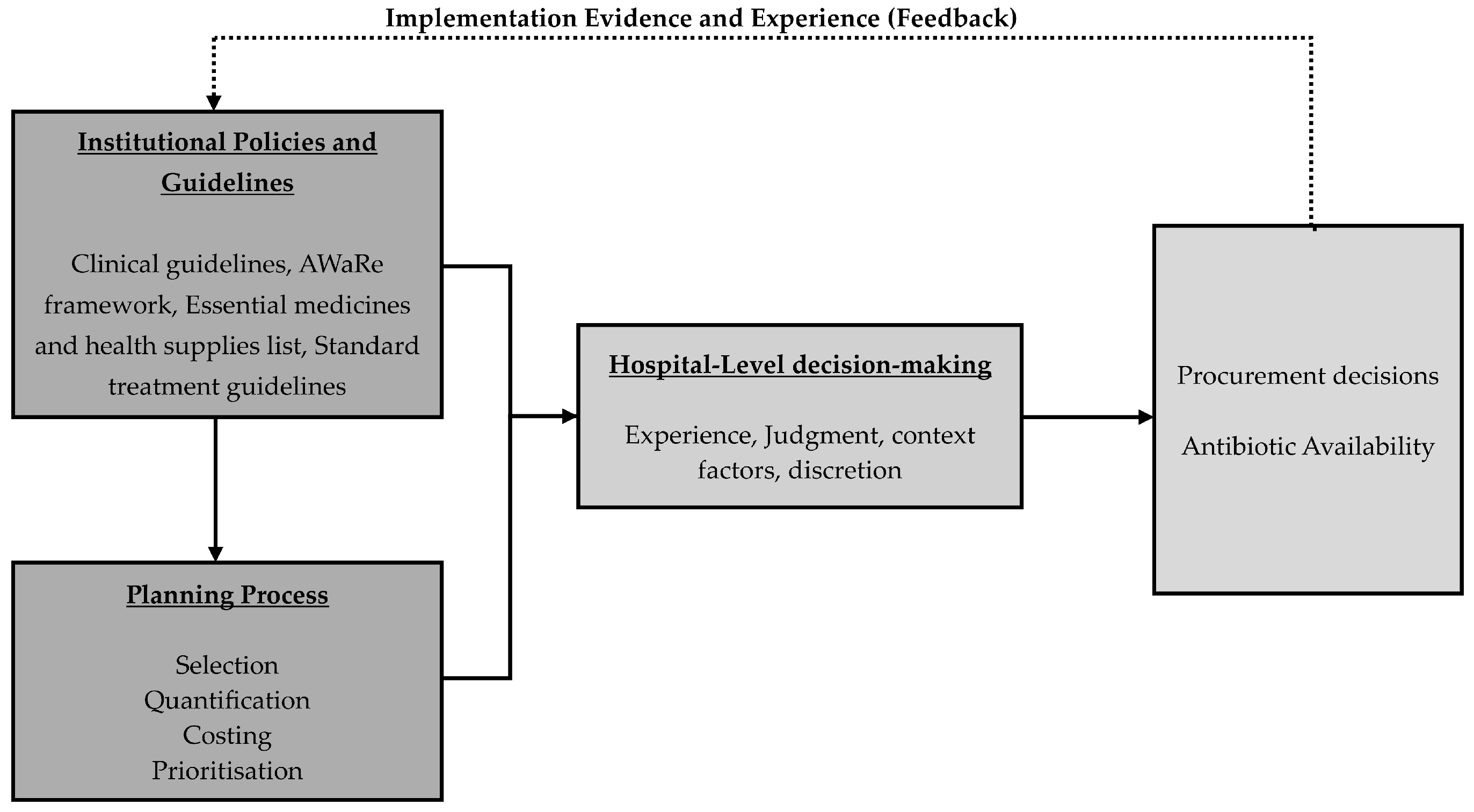
Hospital-level antibiotic procurement planning is conceptualised as an interaction between formal institutional policies and individual facility decision-making, which together affect antibiotic procurement decisions and the continuous availability of antibiotics in the public healthcare sector (Figure 1).
Figure 1.
A conceptual framework informing procurement planning at the hospital. The feedback loop represents a proposed theoretical relationship within the conceptual framework and was not empirically examined or validated in the current study. (Source: Authors).
Evidence indicates that antibiotic procurement is flawed due to rigid adherence to the standard medicine list and that planners’ decisions are driven more by cost and demand considerations than by clinical evidence related to AMR, which is often disregarded [23]. In the public health sector, strict institutional policies and guidelines formalise antibiotic procurement planning at the public hospital level of care. These policies and guidelines guide the iterative process of identifying antibiotic needs and selecting, quantifying, costing, and prioritising them. The WHO essential medicines list (EML) and AWaRe classification of antibiotics framework support planners in optimising financial resources [14,24] while ensuring the selection of therapeutically effective and safe antibiotics that meet population needs. The AWaRe classification framework also categorises antibiotics into three groups of access, watch, and reserve, thereby supporting the monitoring and surveillance of antibiotic consumption [12]. Although policies exist and support the process at the hospital level of care, procurement planning decisions depend on the individual organisation, its environment, particular circumstances, and culture [25].
This relates to the country’s WHO EMLs, which are formulated based on a country’s disease patterns, public health relevance, scientific data and evidence of performance in a variety of settings, adequacy of quality, favourable cost–benefit ratio, desirable pharmacokinetic properties, available infrastructure and equipment, the capacity of medical staff to prescribe the medicine, the possibility for local manufacture and availability as single compounds [26]. Although these differences imply that a country can rely only on its EML, bacterial infections have many causal factors that are difficult to identify, measure, and evaluate, making prediction and procurement decision-making for the right antibiotic quantities difficult [27,28]. As such, planners consult guidelines beyond their own countries; for example, a study in India by Torumkuney et al. reported that clinicians used several international antibiotic prescribing guidelines and country-specific local guidelines, arguing that current systems cannot respond to growing antibiotic demand [29]. Such constraints are especially relevant in resource-constrained public healthcare systems, where limited budgets make it harder to procure the quantities of antibiotics needed to treat ever-changing bacterial infections and resistance emerging from irrational use and prescribing. A study in India reported that antibiotics indicated on the full standard medicine list (SML) could not be procured due to an insufficient medicine budget, further affecting continuous antibiotic availability [30].
This adaptation implies that hospital planners apply and interpret these formal guidelines in the context of available resources and may introduce judgements and bias as they respond to financial constraints, changing disease patterns, institutional requirements, and local circumstances. These challenges increase the likelihood of inaccuracies in the plan [31], contributing to a mismatch between institutional requirements and antibiotic procurement decisions, which may subsequently affect availability. The conceptual framework in Figure 1 proposes that individual hospital-level experiences of antibiotic procurement planning and availability inform strategic decision-making, indicating the possibility of organisational learning. This is evident in Uganda, where healthcare professional recommendations inform the review and update of institutional policies and guidelines (EMLs, clinical guidelines, standard treatment guidelines) [32]. Importantly, this feedback-loop element is theoretical and is not supported by the current study’s empirical dataset.
2. Results
In total, 28 interviews were conducted at 22 public health facilities and hospitals, with some facilities having more than one participant interviewed separately. A total of 26 of the 28 participants had a health-related background, with an average of 4 years of work experience; only 2 had an operations background (Table 1). Including these respondents demonstrates the response strengths and the involvement of a multidisciplinary team in planning at the point of consumption.
Table 1.
Study participants’ demographics.
2.1. Institutional Policies and Regulations
It was found that antibiotic procurement planning in the public health sector is conducted once at the beginning of the financial year, spearheaded by the central distributor, National Medical Stores (NMS). NMS communicates the individually allocated budget to hospitals and district health officers for the health facilities. However, the extent of facility participation varied, with facilities indicating that the exercise was not always conducted independently but was supervised by the district officer, senior pharmacist and a central distributor representative for lower-tier facilities, and by hospital superintendents. It was found that some hospitals participated in the strategic decisions, during which they could request budget increases based on previous performance. However, other participants reported no involvement in these discussions. Health facility and hospital respondents reported planning for antibiotics based on the Uganda Clinical Guidelines (UCG) and the Essential Medicines and Health Supplies List (EMHSLU). However, most respondents were not aware of the WHO AWaRe classification framework.
2.2. Planning Exercise in the Hospital
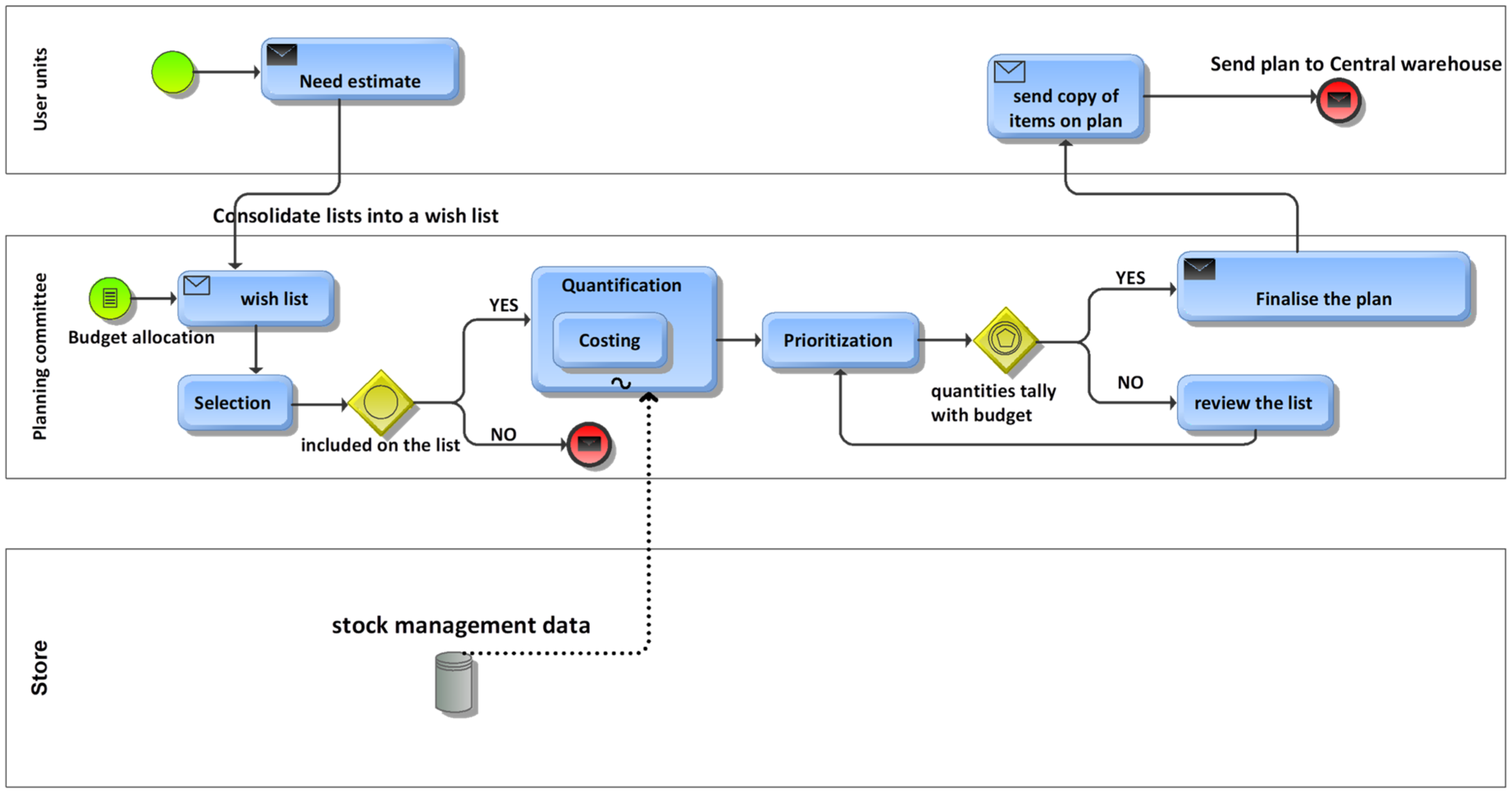
During data collection, we asked respondents at the facility level of care to map the procurement planning process at their facility and identify the personnel responsible for each step (Figure 2). Planning at the point of consumption was described as a collaborative process involving multiple departments, including the user units, stores, finance, pharmacy, and laboratories. However, the personnel involved in planning varied by point of consumption depending on staff availability and facility size. This included nurses, clinicians, nurse-in-charge, district health offices, senior pharmacists, inventory officers, procurement officers, auditors, laboratory technicians, therapeutic team, radiologists, and accountants.
Figure 2.
A business process map representing a simple antibiotic procurement planning and decision-making process at the public hospital level of care with a planning committee. The map includes the different departments and activities involved in procurement planning at the hospital level of care. The map was validated by hospital personnel in Uganda’s public healthcare system. (Source: Authors).
All respondents from HC IV, general hospitals, regional referral hospitals, and national referral hospitals reported conducting the planning exercise; six reported having a Medicines and Therapeutics Committee (MTC) responsible for planning, and seven were not aware of any committee in their hospitals. Of the health facilities interviewed, 40.9%, consisting of HCII and HCIII, reported no involvement in the planning exercise, while others indicated that a representative from the district and NMS visited the facility to discuss the facility’s performance for the previous financial year, as quoted below:
“For us, we do not plan; NMS just pushes medicines to us”.(Nurse in charge, HCII)
“At the beginning of the financial year, representatives from the district and NMS come to the facility to discuss the facility performance for the previous financial year”.(Nurse in charge, HCIII and senior pharmacist, HCIV)
2.2.1. Need Analysis
Depending on facility size, need analysis involves the inpatient and outpatient units, where a nurse, doctor, or clinician in charge provides a projection of the department’s annual antibiotic requirements. They answer questions of what we want, what we need but do not have, and the required quantities, informing a wish list detailing the antibiotic type and quantities. The projections are forwarded to the senior pharmacists who commence antibiotic selection.
2.2.2. Antibiotic Selection
Some facilities reported that antibiotic selection involves a team of senior pharmacists, laboratory technicians, and radiologists, while others reported that only the senior pharmacist selects the antibiotics. Participants reported that personnel responsible for selection consolidate the user unit’s wish list into a single comprehensive list, categorising the antibiotics using the VEN analysis while detailing the medicine name, strength, and unit size as recorded in the stock book for easy identification. Although the UCG and EMHSLU informed antibiotic selection in the public health sector, the guidelines available during data collection in 2022 were last updated in 2016. Additionally, while health facility respondents reported creating the wish list based on these guidelines, hospital respondents reported including antibiotics outside these guidelines. However, they reported including small quantities of these antibiotics due to uncertainty about antibiotic prices and whether the central procurement team could source them on time. Hospital respondents further argued that these guidelines do not reflect the dynamism and evolution of disease and infection management, which requires new medicines.
“During planning, we go further to consult the Kenya essential medicines supplies list”.(Senior Pharmacist, National Referral Hospital)
“Sometimes we introduce new drugs to the procurement plan which are not on the Essential Medicines List of Uganda; we just input a minimum quantity as it may take the distributor six (6) months through the tendering process to have the drug available. We don’t want to put money on an item we know we will not receive in the current financial year”.(Senior Pharmacist, National Referral Hospital)
Respondents reported difficulty selecting antibiotics according to the guidelines, as they restrict facilities from handling specific antibiotics, yet diseases do not discriminate based on settlement, facility size, or staff availability.
“We do not handle erythromycin and injectables, so if a patient needs it, we just write for them to go and buy from private facilities. If they cannot travel to the next public health facility, this has seen most patients going without treatment because they cannot afford travelling, let alone buying”.(Nurse in charge, HCII)
“This is the only public facility in this location serving almost 5000 people living in the slums; patients come here with so many diseases; being a low-level health facility, the guidelines do not permit us to handle some medicines, yet they are needed—so we usually refer them to higher facilities, which require patients to incur transportation costs”.(Nurse in charge, HCIII)
2.2.3. Quantification of Antibiotics
All participating hospitals and health facilities relied primarily on historical consumption data to estimate the antibiotic quantities needed to meet population needs over the next year. However, respondents expressed concerns that this data does not adequately capture the prescribing rationale, uncertainties, and actual antibiotic demand. Of the participating national referrals, regional referrals, and general hospitals, 10 reported having the electronic information management systems (eLMIS), client self-service portals (CSSPs) and RxSolution databases in place. However, these systems were not operational at the time of our visit in three of these 10 facilities (30%; n = 3). In addition, all participating health facilities reported manually tracking consumption rates using stock cards and stock books, which were not up to date during our data collection visits.
“Sometimes we project that we will finish a given quantity of drugs, and things don’t work as anticipated; sometimes we plan for less, and patients overwhelm us, or sometimes, something may happen, and consumption of drugs is lower than expected”.(Inventory management officer, National Referral Hospital)
Although the morbidity method was reported as an alternative quantification approach, most of the participating facilities reported this to be more reliable for human immunodeficiency virus (HIV) related medication than other medicine types. Participants reported challenges with limited and inaccurate data on morbidity patterns and patient attendance.
“If you are seeking HIV services, you need to have registered with the locality; you need to show the documentation on picking up a prescription”.(Store personnel, HC IV)
Some facilities reported quantifying based on the facility catchment area. At the same time, other respondents argued that this is insufficient, as service delivery is unregulated, as people move freely across regions to access public healthcare, with an exemption for HIV services. This further aligns with a general hospital respondent who reflected on the impact of COVID-19 and the introduction of standard operating procedures on stockouts in their facility. Furthermore, the national and regional referral hospitals reported quantifying based on the entire country’s population, as patients are regularly referred to them.
“During the COVID-19 lockdown, everyone returned to the village, so the numbers coming to the hospital to get medicines increased, yet we had not planned for them”.(Senior pharmacists, General Hospital)
“As a referral hospital, we serve nine districts with all the health facilities referring patients to us; also, patients may decide to come to the facility with the perception that we have all the medicines, so they do not waste time going to health centres”.(Inventory management officer, Regional Referral Hospital)
“As an HCIV, we are estimated to serve 3000 people, but in most cases, we end up serving triple the number of people we planned for as they keep moving from neighbouring villages to our facility to seek services”.(Senior pharmacist HCIV)
It was found that antibiotic quantification decisions varied across facilities to account for seasonal changes, patient load, usage, and average monthly consumption.
“There are times when the seasons are different; for example, we usually have the malaria season during the rainy days, so the consumption of antimalarials and other antiparasitics like paracetamol and Panadol will be higher during that season, and the consumption of antibiotics will be low, but there is a season where there are more respiratory infections influencing the increase in antibiotic consumption rate”.(Senior pharmacist, General Hospital)
“We look into the patient load, usage, and average monthly consumption to inform the procurement plan”.(Inventory management officer, National Referral Hospital)
2.2.4. Costing
Participants across the different health facilities reported using a standard unit price for medicines, irrespective of facility size, location or distance from the distributor. The unit prices were based on those provided by the central distributor or derived from recent delivery invoices and delivery notes. Although respondents reported this as a significant step in determining which antibiotics to exclude from the wish list, all participants reported that the budget was limited, affecting the antibiotic quantities and classes included in the annual plan.
“There is a budget constraint limiting us from planning for all that we need. We plan within the budget, implying we may end up having smaller volumes for some medicines”.(Inventory management officer, National Referral Hospital)
“Sometimes the money is little, but we have to plan; if you exceed your budget sometimes, you allow the distributor to think for you, who may decide to give you more of an item you do not need”.(Senior Pharmacists, Regional Referral Hospital)
Some facilities reported receiving revolving-fund (RBF) support from donors to purchase essential medicines, whereas others did not.
“We receive some RBF to enable us to procure more medicines, which helps bridge the gap with the limited budget”.(Senior pharmacist, HCIV)
“Ahh, we do not receive the RBF. We used to get the funds, but it has been a while since I have seen the funding allocated to our facility”.(Senior pharmacists, Regional Referral Hospital)
2.2.5. Vetting
Vetting involves a senior pharmacist with expertise across the spectrum of different antibiotic activity against bacterial pathogens and an accountant who adjusts and reconciles final quantities, primarily based on the allocated budget. Although respondents reported that inclusion and exclusion decisions extended beyond the budget to encompass priority diseases and age groups, the most expensive last-resort antibiotic in WHO reserve class was excluded during prioritisation. This decision allowed planners to increase the volumes of narrow-spectrum WHO access antibiotics and a broad spectrum of WHO watch antibiotics. However, respondents reported using a variety of tools to support their decision-making, including the therapeutic category and VEN analysis to identify the Vital, essential and necessary antibiotics to be consumed over a year, and the activity-based costing (ABC) analysis to analyse their expenditure while accounting for high-usage and high-cost antibiotics.
2.2.6. Submitting the Plan
After the list is amended, user departments are informed of the final decision on which antibiotics they can and cannot obtain. The final procurement plan is approved and sent to the central procurement point (NMS) if antibiotics on the plan comply with the guidelines and are within the allocated budget. NMS consolidates the individual facility plans into an annual national procurement plan informing local and international sourcing. However, a challenge of placing orders throughout the year based on the quantified antibiotics is reported, with the argument that the ±10% ordering deviation implemented by the central distributor to account for potential increases or decreases in demand is for safety stock.
“When you order, the distributor refers to your plan; if you planned for eight (8) boxes of amoxicillin bi-monthly, you cannot twist the figures over a sudden ten (10) boxes; your request will be denied and given your initial order. There is a deviation introduced by the distributor, but this is too small to account for safety stock”.(Inventory management officer, Regional Referral Hospital)
“Sometimes expiries happen because of the selection process during the procurement planning; that is, if you planned for more of a medicine type, but all of a sudden, the prescribers are not prescribing it”.(Senior Pharmacist, General Hospital)
3. Discussion
Accurate antibiotic procurement planning at the hospital level is essential for effective procurement decisions and for ensuring continuous antibiotic availability. However, forecasting antibiotic requirements is complex because infection patterns change over time while AMR continues to emerge and spread. Mapping the antibiotic procurement planning process at a public hospital from start to finish provides a visual overview of the steps and personnel involved, further supporting the identification of bottlenecks. Although the map showed collaboration among different personnel in estimating hospital antibiotic needs, it was found that procurement planning practices depend on individual planners’ behaviour and decisions. This is even worse in Uganda’s public healthcare sector, where hospital planning occurs once a year with a constrained budget, which may affect the continuous availability of antibiotics. Although some hospitals reported participating in budgeting decisions by challenging the previous ceiling and requesting an increase based on previous expenditure and performance, these requests were not guaranteed. Evidence from Uganda supports this, indicating that regional referral hospitals have limited influence over procurement budget allocations, with available funding constraining the quantity of medicines that can be procured [33]. This aligns with existing studies identifying limited funding as a major barrier to accurate forecasting of public health facility needs [14,24]. In addition, a study in Punjab, India, found that 122.5% of the medicine budget was needed to procure SML-indicated antibiotic quantities, suggesting the available budget was insufficient, increasing the likelihood of affecting the continuous availability of antibiotics [30]. These constraints may create a mismatch between hospital-level requirements and the available budget, as planners responded by prioritising antibiotics while excluding expensive reserve and watch classes from procurement plans.
Antibiotic procurement planning was also shaped by stringent policies and guidelines, which required facilities to follow the EMHSLU and clinical guidelines. Although infections and diseases occur across all geographic areas, these guidelines determine which antibiotics are stocked and prescribed at each level of care. Restrictions on antibiotic handling may disproportionately affect patients in rural and underserved areas and those seeking care at lower-level facilities. Limited access to certain antibiotics may lead to referrals to higher-level facilities, resulting in additional transport costs and possible treatment delays. The study also found that most respondents were unfamiliar with the WHO AWaRe classification framework; familiarity was reported mainly by respondents at higher-level referral hospitals, which may reflect differences in professional responsibilities and exposure to stewardship information. Meanwhile, reliance on established national guidelines during planning may partly explain the limited awareness across facilities. Consequently, limited awareness of the AWaRe framework may hinder the integration of antibiotic stewardship into selection, prioritisation, and consumption monitoring, including distinctions between antibiotic classes.
Although EMHSLU and UCG in Uganda were updated in 2023, during our 2022 data collection period, facilities relied on the 2016 editions to inform their practice, which may have contributed to challenges in antibiotic selection. This observation relates to Faradiba et al., who concluded that planning difficulties often stem from weak procedures [34]. Although decisions and unique environmental variables differ across countries over time [27,35,36], our findings show that hospital planners considered guidelines and parameters beyond country-specific EMHSLU and the UCG during planning and consulted Kenya’s EMLs with the assumption that conditions are likely to be similar between the countries because of geographical proximity. This finding is supported by a study in Kazakhstan that found national standards of care for common infections in primary care recommended antibiotic prescribing for several conditions for which the WHO AWaRe antibiotic book either discouraged use or restricted it by specifying clinical criteria [37]. Updating the guidelines at least once every two years is likely to address changing infections and the emergence of resistance, as antibiotics used to treat these conditions will be listed. This is supported by Sarria-Santamera et al., who reported that the EML and the WHO model list of EMLc should be updated at least once a year in Kazakhstan [37]. This emphasises the importance of a facility having a multidisciplinary procurement planning team with operations, diagnostic, and clinical skills, who can think beyond existing policies and guidelines and consider key assumptions. Our study, however, found that some facilities did not have a planning committee due to staff availability. This is consistent with Faradiba et al., who conclude that the absence of a pharmacy and therapeutic committee at the facility level of care may lead to irregularities in medication selection and inconsistencies in prescribing patterns [34].
Given the uncertainties, hospital planners reported relying on population density and catchment area-based assumptions. However, these assumptions were reported to be difficult to incorporate into prediction, as patients freely moved across areas when deciding where to access care services. This is supported by Koala et al., who state that planning relies on what-if scenarios that may be inaccurate or affected by unforeseen events such as war, pandemics, environmental, economic, and social factors, and even weather [38]. This was evident during the outbreak of COVID-19, when lockdowns and movement restrictions enforced across Uganda forced most people to return to their hometowns, increasing demand for hospital services in those locations. Hospitals reported that antibiotic availability was affected as stock ran out faster than anticipated. In addition, hospital planners considered seasonal shifts in infections and diseases; however, these patterns may vary by specific pathogens, geographical locations, and population characteristics. Participants reported higher antibiotic demand in the dry season, which they associated with an increased occurrence of bacterial infections, compared to the wet season when antimalarials were in high demand. A study in China supports this finding, reporting that bacterial and fungal infections peaked predominantly in summer, unlike the viral infections prevalent in spring and winter [39].
Although some facilities considered seasonality during procurement planning, rainfall variations and temperature changes may greatly influence the timing and incidence of certain infectious diseases, contributing to potential implications for estimating antibiotic requirements. A study in China found that Gram-negative infections were more susceptible to seasonal temperature fluctuations than Gram-positive infections [39]. Evidence from Uganda during 2011–2014 found that admissions at Bwindi Community Hospital were 16% higher on days when the average temperature was extremely high, between 22.3 °C and 29.7 °C, with the most common diagnoses including combined acute respiratory infections, malaria, and acute gastrointestinal illness [40]. Although this study did not attribute antibiotic requirements or admission patterns to long-term climate change, it indicates that weather-sensitive healthcare demand may be relevant to adaptation procurement planning. WHO reports unpreparedness as the main cause of high vulnerability in Uganda’s healthcare, relating to the identified exposure to drought in 47.6% of healthcare facilities, floods in 39.7% and storms in 31.1%, thereby calling for the need to integrate climate change considerations into national health planning to mitigate the impact of extreme weather events [41]. Furthermore, the WHO and Unitaid expert consultation on climate-resilient health supply chains recommends integrating climate resilience into the healthcare supply chain logistics from production to point of consumption or end users [42]. However, the perceived effects of climate change on antibiotic procurement planning and availability warrant further investigation. Taken together, these findings demonstrate the need to consider climate-related demand uncertainty, environmental factors, seasonal changes, and local epidemiological variation. This is because changes in bacterial infections could alter the types and quantities of antibiotics required at different levels of care, potentially aligning procurement plans with population needs.
Hospitals primarily relied on historical antibiotic consumption data to quantify their needs. This quantification method is considered preferable when policies are in place and infectious disease patterns remain stable [38]. However, antibiotic consumption changes frequently due to usage patterns, prescribing practices, care-seeking behaviour, evolving infections, and the emergence of resistance. Eyaa and Ntayi support this, noting that the dynamic nature of demand and supply renders reliance on historical data for planning inaccurate [43]. Consequently, some facilities incorporated morbidity quantification methods alongside historical consumption data but encountered challenges due to insufficient data on infection-related morbidity and resistance cases. Koala et al. also report limited morbidity data and difficulties in accurately predicting patient attendance as limitations of this approach [38]. They further recommend that planners cross-check and validate morbidity patterns against consumption data, a process that remains challenging across facilities. Despite the implementation of various data management systems in Ugandan public facilities, these systems were not operational in all locations. Lower-tier facilities often lacked computers, leading to reliance on manual data. Poor data management increases the risk of using inaccurate information for quantification, thereby affecting antibiotic procurement and availability. This finding underscores the need to strengthen the maintenance of existing data management systems and equipment through planned preventive maintenance programmes, complemented by predictive maintenance where feasible.
Antibiotic procurement planning varied across facilities, as planners interpreted, adapted, or resisted existing guidelines in response to resource constraints. This variation was evident in decision-making processes, with planners selectively including or excluding parameters to improve the accuracy of antibiotic requirement estimates. Hospital-level decisions during procurement planning have downstream effects on antibiotic procurement, availability, and prescribing, ultimately influencing AMR development. This finding aligns with a study in Uganda that identifies a significant association between the planning teams’ expertise and the availability of a plan [14]. Additionally, some low-level health facilities misinterpreted procurement planning for the push distribution system, suggesting limited knowledge and understanding of procurement and supply chain management practices [44]. Therefore, available staff should receive periodic training on accurate antibiotic procurement planning in resource-constrained settings to support appropriate procurement and the continuous availability of antibiotics at the point of consumption.
Sharing lessons and challenges encountered during procurement planning may promote organisational learning within public health facilities. Maintaining complete, accurate, and up-to-date records of antibiotic consumption could further strengthen the evidence base for antibiotic planning and help identify discrepancies between planned quantities and actual demand. Improved record-keeping, combined with lessons from facility-level experiences, could inform future procurement planning and identify areas where existing guidelines may need clarification or revision, supporting the feedback loop proposed in the conceptual framework (Figure 1). This aligns with the development of health policies and the periodic revision of clinical guidelines and medicine lists, which incorporate recommendations from health professionals at the Ministry of Health and health facilities [32]. Importantly, the proposed feedback loop in Figure 1 is theoretical and was not empirically examined or validated in our study. Therefore, further research is needed to investigate whether and how historical antibiotic procurement experiences and availability data inform relevant guideline revisions.
4. Materials and Methods
In most African countries, the public healthcare sector is a mechanism for achieving Universal Health Coverage (UHC) and United Nations Sustainable Development Goal 3 (UN SDG 3). In Uganda, 8 in 10 sick people visit a hospital, and approximately 76.7% of the population attended a public health facility in 2017/18 [45]. According to the Uganda Bureau of Statistics (UBOS), an average of 45% of the population uses a public health facility as its first point of consultation, with attendance higher in rural areas than urban areas [46]. Uganda’s public health system operates on a referral network of National Referral Hospitals (NRH), Regional Referral Hospitals (RRH), General Hospitals (GH), and Health centres (HC) IV, HC III, HC II, and HC I across the country. In this study, we refer to NRH, RRH, and GH as hospitals, and HC I, II, III, and IV as health facilities. To achieve UHC, UN SDG 3, and GARDP goals, antibiotics must be continuously available at the right time and in the right facilities to treat the right ailments while addressing the risk of AMR. In this study, antibiotic availability is measured at the point of consumption, at the hospital or health facility level.
Antibiotic procurement planning is a key step in ensuring effective procurement and the continuous availability of appropriate antibiotics. In the public health sector, the planning exercise involves a multidisciplinary team of agents across different supply chain echelons, including central and local government, central distributors, district health officers, and hospitals and health facilities. However, this study focuses on antibiotic procurement planning at the final point of consumption, the facility level, a vital point in demand estimation, with errors in their estimates affecting other supply chain decision-makers on resource allocation, budgeting, procurement, availability, use, and prescription. Our study employs a qualitative exploratory case study approach to assess how hospital planners’ practices and decisions affect effective antibiotic procurement and availability in the public health sector. A case study approach allows for an in-depth exploration of how procurement planning operates in the real-life context of the public health sector in a resource-constrained setting [47]. Assessing planning practices and ensuring effective antibiotic procurement and continuous antibiotic availability in resource-constrained settings is significant, as WHO reports drug resistance to be a burden in countries least equipped to respond [3].
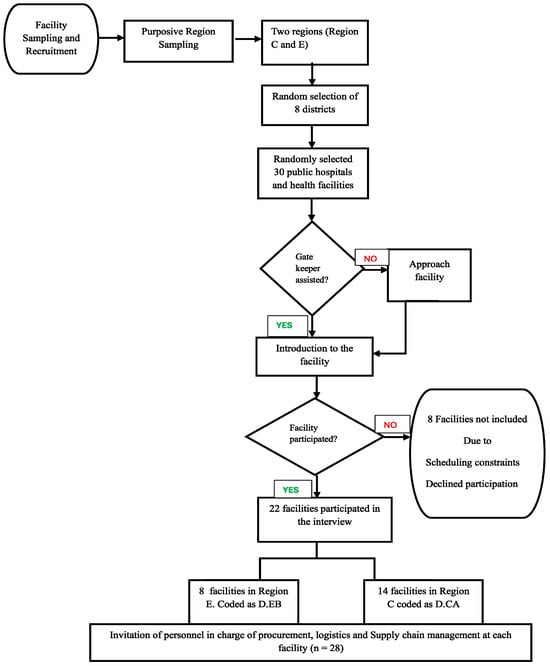
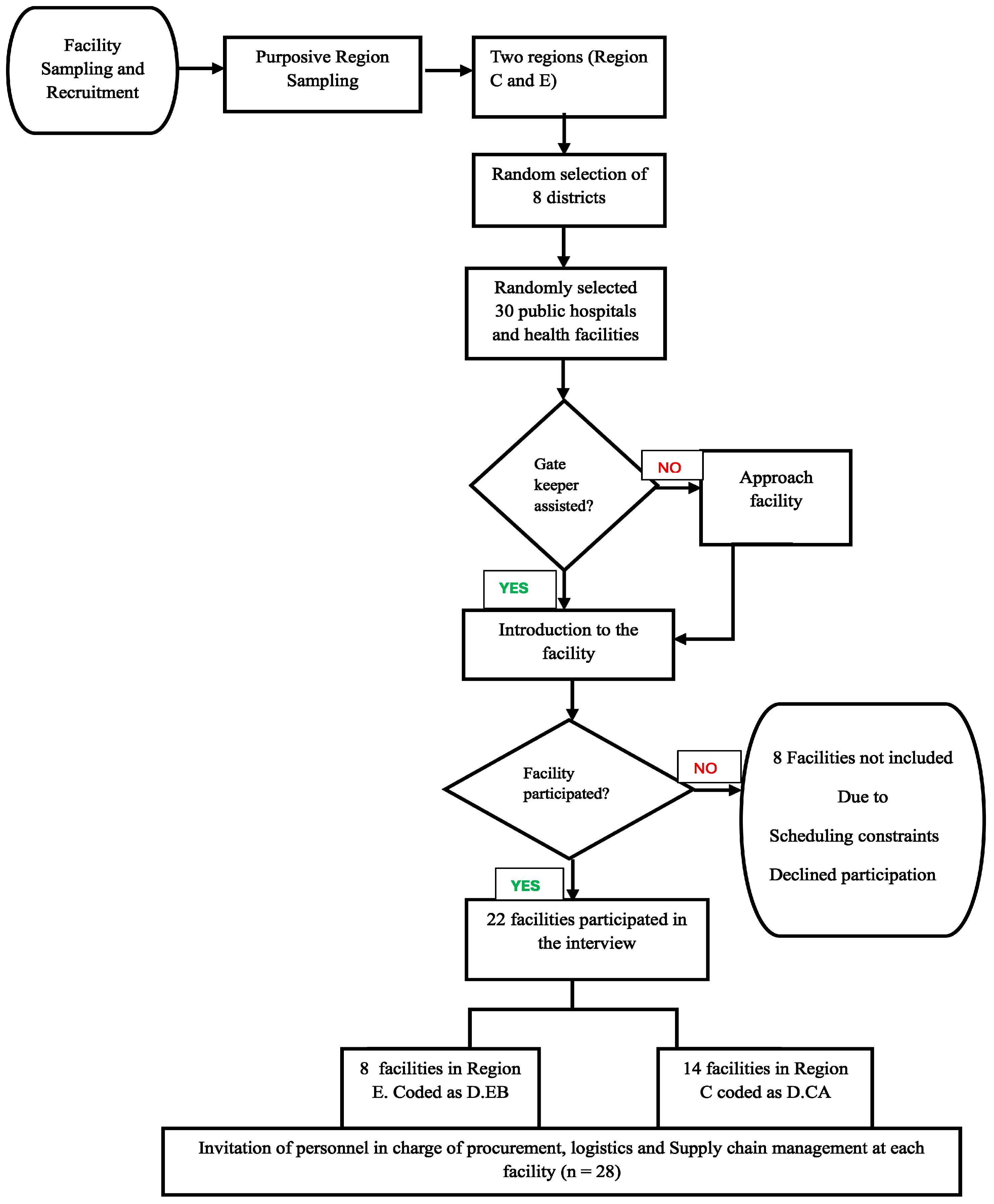
Uganda is divided into four regions—Central, Eastern, Northern, and Western—and 135 districts, which are further divided into counties → Sub-counties → parishes. As shown in Figure 3, two regions (coded as Region C and Region E) were purposively selected because of the COVID-19 outbreak and the COVID-19 standard operating procedures (SOPs) in hospitals and health facilities. These are Uganda’s most densely populated regions, a factor that may be associated with poverty, as people in densely populated areas compete for resources that must be continuously available. Furthermore, multidimensional poverty has been reported to contribute independently to antibiotic resistance through intersecting pathways [48]. Eight districts were then randomly sampled from Regions C and E. Finally, with guidance from a senior pharmacist, 30 public hospitals and health facilities were randomly selected using the Uganda National Health Facility Master List as of November 2018 [49]. To mitigate sampling bias, all levels of care in rural, urban, and semi-urban areas across the eight districts were considered. However, by the time data were collected in 2022, some public facilities on the list had been upgraded. Including all levels of care across different regions is important, as the literature reports that access to antibiotics from unlicensed providers was most strongly predicted among rural residents [48]. This behaviour may, however, be attributed to the long distance between patients’ homes and licenced health facilities, self-prescription through repeat courses with suboptimal dosing [48], and patients’ experiences of medicines being unavailable at public health facilities. These behaviours are likely to escalate AMR, potentially necessitating more expensive generic antibiotics in the watch and reserve classes.
Figure 3.
Stages in sampling and recruitment of public health facilities and participants.
Of the 30 randomly selected public health facilities and hospitals approached, 22 participated in the study, while eight did not. All NRHs and RRHs approached participated; non-participation occurred among GHs and HCs. Reasons included declined participation and scheduling constraints, such as difficulty arranging interviews with personnel responsible for procurement, logistics, and supply chain management, staff unavailability, and requests to reschedule. Travel and fieldwork logistics across the two study regions also limited opportunities for repeat visits to some facilities. As shown in Table 2, fourteen (14) participating facilities were in Region C (coded as D.CA, representing District A in Region C), and eight (8) were in Region E (coded as D.EB, representing District B in Region E).
Table 2.
The sample size of the public health facilities that participated in the study.
4.1. Participant Recruitment
Study participant recruitment was facilitated by three gatekeepers. In region E, Gatekeeper 1 introduced the authors to two (2) additional gatekeepers, 1a and 1b. During recruitment, Gatekeeper 1b assisted with the necessary district-level administrative clearance and guided the areas considered safe for fieldwork. Gatekeeper 2 facilitated introductions to the different national referral hospitals and regional referrals across the two regions. In contrast, Gatekeeper 3 facilitated introductions to low-level health facilities in Region C and provided contextual information on local government responsibilities for public health facility management. At each facility, an introductory letter from the Ministry of Health, Uganda, and institutional ethics approval were presented to the executive directors and district health officers to obtain permission to conduct the study at each of the 22 facilities that agreed to participate. Following authorisation from each facility, the researcher was introduced to personnel in charge of procurement, logistics, and supply chain management. Participant information sheets and informed consent forms were shared with each participant, clearly informing them of their rights before the interview was conducted. Although facilities to be approached were randomly selected before recruitment, gatekeepers’ involvement in facilitating introductions may have influenced which eligible personnel were approached and participated in the study, potentially introducing selection bias.
4.2. Interview Guide
All interviews were conducted by HN as part of her doctoral research. Her academic background is in healthcare operations and management science.
A pilot study was conducted with academic experts and hospital-level healthcare professionals, including pharmacists and doctors, to assess the clarity and relevance of the semi-structured interview guide questions. This process enabled refinement of the interview tool to incorporate insights into the impact of COVID-19 on antibiotic availability across facilities. Semi-structured, face-to-face interviews lasting an average of 50 min were conducted with personnel responsible for logistics, procurement, and supply chain management at the public hospital and health facility. In the absence of supply chain personnel, the procurement planning responsibilities were undertaken by other healthcare professionals, including pharmacists, nurses, in-charges, or senior pharmacists. With participants’ permission, interviews were audio-recorded, and notes were taken where audio recording was not possible. The semi-structured interview structure allowed the interviewer to ask follow-up questions and explore participants’ experiences of procurement planning practices in depth, increasing the richness of the collected data [50]. The interview guide questions are included in Appendix A. Participants’ professional designations were used in presenting findings rather than their names, as this will not allow for easy traceback. Furthermore, secondary sources from the Ministry of Health database, Uganda clinical guidelines, and the EMHLU were also consulted to contextualise and corroborate information obtained through interviews, where applicable.
4.3. Data Analysis
Firstly, recorded interview data were transcribed verbatim. We then carefully reviewed the transcripts and interview notes to familiarise ourselves with the data, capture participants’ expressions, and mitigate the risk of overlooking key aspects [51]. Data were coded in NVivo 2020 using a broader coding structure covering antibiotic supply chain management and its perceived implications for continuous antibiotic availability. The immediate sub-themes were procurement planning, procurement, inventory management, warehousing, transportation, and customer service. This analysis focused on the antibiotic procurement planning sub-theme, describing planning practices and their perceived influence on antibiotic availability at the hospital level. The planning practices sub-theme covered the steps involved in antibiotic procurement planning (selection, quantification, costing, prioritisation, and submission of the procurement plan), key decision-making points, and the personnel responsible for each step. Institutional policies and guidelines emerged as a sub-theme, reflecting their reported role and their influence in decision-making throughout the hospital-level planning process. The findings were then interpreted in relation to the conceptual framework in Figure 1. Individual facility-level process maps were developed from participants’ accounts of planning practices at each facility. After reviewing the individual facility process maps, they were consolidated into a merged hospital-level antibiotic procurement planning process map, created using ARIS Express 2.4d (Figure 2).
4.4. Study Limitation
This study relied on self-reported data from public healthcare personnel, which may have introduced social desirability bias. As the research focused on planners’ practices, recall bias could have affected the accuracy of participants’ accounts of previous procurement planning activities. Participants may also have described practices more favourably than they occur in practice. Although public health facilities across various levels of healthcare delivery in the two most populated regions of Uganda were included, limiting the study to these regions may have reduced the diversity of procurement planning practices captured. Consequently, differences in staff availability and resources may limit the generalisability of the findings to public healthcare facilities in other geographical contexts. The sample of participating facilities was also influenced by willingness to participate and logistical constraints, potentially introducing selection bias. Finally, incomplete stock cards may have affected the reliability of historical consumption data that facilities used to estimate antibiotic requirements during procurement planning.
5. Conclusions
Improving the availability of appropriate antibiotics requires strengthening the supply chain through mechanisms that manage the selection, procurement, and distribution of antibiotics across public hospitals, thereby reducing costs, waste, and inappropriate selection. This study provides a foundation for adaptive antibiotic procurement planning at public health facilities, where constrained budgets and strict guidelines established by strategic decision-makers shape procurement and availability. More frequent procurement planning and periodic updates to clinical guidelines, such as the EMHSLU and UCG at least every two years, may improve the accuracy of requirement forecasts by accounting for uncertainties, evolving infection patterns, and the potential development of antimicrobial resistance (AMR). Although this study does not evaluate these approaches, future research could examine how frequent planning and periodic guideline updates affect antibiotic procurement and availability.
The current analysis is limited to a single tier of the antibiotic supply chain at the facility level, and does not include perspectives from central distribution, the Ministry of Health, or other entities. Consequently, the study may not fully capture national-level procurement and budget allocation processes or the institutional factors that shape facility-level planning decisions. Future research could examine how procurement planning at the Ministry of Health’s strategic level and at the central distribution point may affect antibiotic procurement and availability. Exploring the national procurement planning process, including strategic budgeting at the parliamentary level, may clarify the factors influencing budget allocation across hospital levels and the resulting effects on antibiotic procurement and availability.
The Ministry of Health in Uganda could consider establishing a health procurement planning oversight committee to periodically visit facilities and document challenges related to antibiotic resistance, shortages, stockouts, and expiry. This initiative could bridge the gap between facility-level realities and national budgeting, ensuring that critical underfunded needs are identified and prioritised. Periodic training for personnel involved in procurement planning, particularly on planning under resource constraints, would likely improve procurement practices. Although this study did not determine whether limited familiarity with the WHO AWaRe classification framework affected antibiotic planning, procurement, or availability, increasing awareness among all healthcare personnel involved in procurement planning may provide additional evidence-based guidance on antibiotic selection and prioritisation, complementing the EMHSLU and UCG. Antimicrobial stewardship programmes could coordinate interventions to measure and improve appropriate antibiotic use by promoting optimal regimens, including dose, duration, and route of administration. While this study focuses on antibiotics, the insights gained may apply to other medicine types and healthcare supply chain management.
Author Contributions
Conceptualisation, H.N., R.V.D.M. and M.S.A.A.; methodology, H.N., R.V.D.M., M.S.A.A., E.O. and B.D.; software, H.N., R.V.D.M. and M.S.A.A.; validation, H.N., R.V.D.M., M.S.A.A., E.O. and B.D.; formal analysis, H.N., R.V.D.M. and M.S.A.A.; investigation, H.N., R.V.D.M. and M.S.A.A.; resources, H.N., R.V.D.M. and M.S.A.A.; data curation, H.N., R.V.D.M. and M.S.A.A.; writing—original draft preparation, H.N., R.V.D.M. and M.S.A.A.; writing—review and editing, H.N., R.V.D.M., M.S.A.A., E.O. and B.D.; visualisation, H.N., R.V.D.M., M.S.A.A., E.O. and B.D.; supervision, R.V.D.M. and M.S.A.A.; project administration, H.N., R.V.D.M. and M.S.A.A.; funding acquisition, H.N. All authors have read and agreed to the published version of the manuscript.
Funding
This research received no external funding.
Institutional Review Board Statement
The study obtained ethics approval from the University of Strathclyde Department of Management Science, approved on 25 January 2022; Makerere University Department of Humanities and Social Sciences protocol number MAKSSREC 03.22.538, approved on 4 March 2022; and the Uganda National Council of Science and Technology (UNCST) protocol number SS1240ES, approved on 7 April 2022.
Informed Consent Statement
Informed consent was obtained from all subjects involved in the study.
Data Availability Statement
The original contributions presented in this study are included in the article. Further inquiries can be directed to the corresponding author.
Acknowledgments
The authors have reviewed and edited the output and take full responsibility for the content of this publication.
Conflicts of Interest
The authors declare no conflicts of interest.
Abbreviations
The following abbreviations are used in this manuscript:
| AMR | Antibiotic Resistance |
| GARDP | Global Antibiotic Research and Development Partnership |
| WHO | World Health Organisation |
| EML | Essential Medicine List |
| SML | Standard Medicine List |
| HC | Health Centre |
| EMHSLU | Essential Medicines and Health Supplies |
| UCG | Uganda Clinical Guidelines |
| NRH | National Referral Hospital |
| RRH | Regional Referral Hospital |
| GH | General Hospital |
Appendix A. Questions That Guided the Interviews at the Facility Level
Interview Guide Questions
| Designation: …………………. | Gender: ……………………. |
| Background: …………………. | Years of experience: ……… |
| Level of care: ………………… | Region: …………………….. |
| Interview venue: ……………. | Language: …………………. |
- Section A. Antibiotic procurement planning
- Could you take me through the procurement planning process at your facility?
- How often are you permitted to amend the procurement plan?
- What interventions could be implemented to improve the accuracy of procurement planning?
- What steps are followed when determining facility resupply quantities, and who is involved in these decisions?
- Who supplies the different medicines to your facility?
- Section B. Ordering, Distribution and Stock Management
- Could you take me through the process of ordering and receiving antibiotics? How frequently are orders placed?
- How long does it usually take the supplier to replenish stock at your facility?
- How often does your facility experience medicine expiries?
- How are medicines stored at your facility?
- How frequently do medicine stock levels reach zero?
- How are unused medicines or remaining quantities managed?
- How did you learn to complete inventory management forms?
- Section C: Antibiotic Shortage and Availability
- Does your facility have guidelines or procedures for managing medicine shortages?
- Is there a protocol for substituting antibiotics when the prescribed antibiotic is unavailable?
- Are antibiotics used to treat pneumonia consistently available at your facility?
- Do patients receive all the antibiotics prescribed to them?
- What interventions could be implemented to improve medicine availability at your facility?
- Section D: Clinical Practices and Antibiotic Use
- What is the prevalence of pneumonia at your facility?
- Does your facility have infection prevention and control guidelines?
- Are there established strategies for disseminating guidance on appropriate antibiotic use to clinicians?
- Are antibiotic prescribing decisions influenced by patient demand or perceptions?
- Are antibiotics administered according to recommended dosage schedules? If not, what alternative dosage frequencies or administration times are used?
- Section E: Impact on COVID-19
- How has COVID-19 impacted the availability of antibiotics at the facility level of care?
- Section F: Closing Question
- Is there anything else you want us to discuss regarding medicine procurement, supply chain management or antibiotic availability?
References
- Chigome, A.K.; Meyer, J.C.; Brink, A.; Essack, S.; Bronkhorst, E.; Dawood, H.; Johnson, Y.; Coetzee, R.; Maphathwana, C.; Phaho, M.; et al. Development of AWaRe-Based Quality Indicators to Assess the Appropriateness of Antibiotic Prescribing in Primary Healthcare in South Africa. Antibiotics 2026, 15, 196. [Google Scholar] [CrossRef] [Scilit] [PubMed]
- Saleem, Z.; Godman, B.; Cook, A.; Khan, M.A.; Campbell, S.M.; Seaton, R.A.; Siachalinga, L.; Haseeb, A.; Amir, A.; Kurdi, A.; et al. Ongoing Efforts to Improve Antimicrobial Utilization in Hospitals among African Countries and Implications for the Future. Antibiotics 2022, 11, 1824. [Google Scholar] [CrossRef] [Scilit] [PubMed]
- World Health Organization. Antimicrobial Resistance. Available online: https://www.who.int/news-room/fact-sheets/detail/antimicrobial-resistance (accessed on 9 November 2026).
- Kagoya, E.K.; Royen, K.V.; Waako, P.; Royen, P.V.; Iramiot, J.S.; Obakiro, S.B.; Kostyanev, T.; Anthierens, S. Experiences and views of healthcare professionals on the prescription of antibiotics in Eastern Uganda: A qualitative study. J. Glob. Antimicrob. Resist. 2021, 25, 66–71. [Google Scholar] [CrossRef] [Scilit] [PubMed]
- Ozawa, S.; Shankar, R.; Leopold, C.; Orubu, S. Access to medicines through health systems in low- and middle-income countries. Health Policy Plan 2019, 34, iii1–iii3. [Google Scholar] [CrossRef] [Scilit] [PubMed]
- Kotwani, A.; Holloway, K. Access to antibiotics in New Delhi, India: Implications for antibiotic policy. J. Pharm. Policy Pract. 2013, 6, 6. [Google Scholar] [CrossRef] [Scilit] [PubMed]
- Gulumbe, B.H.; Sahal, M.R.; Abdulrahim, A.; Faggo, A.A.; Yusuf, Z.M.; Sambo, K.H.; Usman, N.I.; Bagwai, M.A.; Muhammad, W.N.; Adamu, A.; et al. Antibiotic resistance and the COVID-19 pandemic: A dual crisis with complex challenges in LMICs. Health Sci. Rep. 2023, 6, e1566. [Google Scholar] [CrossRef] [Scilit] [PubMed]
- Nguyen, K.V.; Thi Do, N.T.; Chandna, A.; Nguyen, T.V.; Pham, C.V.; Doan, P.M.; Nguyen, A.Q.; Thi Nguyen, C.K.; Larsson, M.; Escalante, S.; et al. Antibiotic use and resistance in emerging economies: A situation analysis for Viet Nam. BMC Public Health 2013, 13, 1158. [Google Scholar] [CrossRef] [Scilit] [PubMed]
- Saleem, Z.; Mekonnen, B.A.; Orubu, E.S.; Islam, M.A.; Nguyen, T.T.P.; Ubaka, C.M.; Buma, D.; Thuy, N.D.T.; Sant, Y.; Sono, T.M.; et al. Current access, availability and use of antibiotics in primary care among key low- and middle-income countries and the policy implications. Expert Rev. Anti Infect. Ther. 2026, 24, 545–586. [Google Scholar] [CrossRef] [Scilit] [PubMed]
- Khanal, S.; Acharya, U.; Trotter, A.B.; Tripathi, P.; Koirala, S.; Pahari, B.; Acharya, S.P. Challenges and opportunities in the implementation of an antimicrobial stewardship program in Nepal. Antimicrob. Steward. Healthc. Epidemiol. 2023, 3, e58. [Google Scholar] [CrossRef] [Scilit]
- Zuckerman, A.M. Healthcare Strategic Planning; Health Administration Press: Chicago, IL, USA, 2005. [Google Scholar]
- WHO. AWaRe. Available online: https://aware.essentialmeds.org/groups (accessed on 1 September 2026).
- Nyaga, J.N.; Kihara, D. Factors influencing implementation of procurement plans in public hospitals in Kenya: A case of Kenyatta National Hospital. Strateg. J. Bus. Change Manag. 2017, 4, 445–460. [Google Scholar] [CrossRef] [Scilit]
- Ajulong, M.G.; Okiria, J.C.; Owako, M. Factors Influencing Annual Procurement Planning of Medicines and Medical Supplies in Public Health Facilities in Kampala District. Rwanda J. Med. Health Sci. 2021, 4, 292–309. [Google Scholar] [CrossRef] [Scilit] [PubMed]
- Ambe, I.M.; Badenhorst-Weiss, J.A. Procurement challenges in the South African public sector. J. Transp. Supply Chain Manag. 2012, 6, 242–261. [Google Scholar] [CrossRef] [Scilit]
- Duong, M.H.; Moles, R.J.; Chaar, B.; Chen, T.F. Stakeholder perspectives on the challenges surrounding management and supply of essential medicines. Int. J. Clin. Pharm. 2019, 41, 1210–1219. [Google Scholar] [CrossRef] [Scilit] [PubMed]
- Yang, C.; Wu, L.; Cai, W.; Zhu, W.; Shen, Q.; Li, Z.; Fang, Y. Current Situation, Determinants, and Solutions to Drug Shortages in Shaanxi Province, China: A Qualitative Study. PLoS ONE 2016, 11, e0165183. [Google Scholar] [CrossRef] [Scilit] [PubMed]
- Bateman, C. Drug stock-outs: Inept supply-chain management and corruption. S. Afr. Med. J. 2013, 103, 600–602. [Google Scholar] [CrossRef] [Scilit] [PubMed]
- Jbaily, A.; Feldhaus, I.; Bigelow, B.; Kamareddine, L.; Tolla, M.T.; Bouvier, M.; Kiros, M.; Verguet, S. Toward health system strengthening in low- and middle-income countries: Insights from mathematical modeling of drug supply chains. BMC Health Serv. Res. 2020, 20, 776. [Google Scholar] [CrossRef] [Scilit] [PubMed]
- Privett, N.; Gonsalvez, D. The top ten global health supply chain issues: Perspectives from the field. Oper. Res. Health Care 2014, 3, 226–230. [Google Scholar] [CrossRef] [Scilit]
- Quadri, F.; Mazer-Amirshahi, M.; Fox, E.R.; Hawley, K.L.; Pines, J.M.; Zocchi, M.S.; May, L. Antibacterial drug shortages from 2001 to 2013: Implications for clinical practice. Clin. Infect. Dis. 2015, 60, 1737–1742. [Google Scholar] [CrossRef] [Scilit] [PubMed]
- Magadzire, B.P.; Ward, K.; Leng, H.M.J.; Sanders, D. Inefficient procurement processes undermine access to medicines in the Western Cape Province of South Africa. S. Afr. Med. J. 2017, 107, 581–584. [Google Scholar] [CrossRef] [Scilit] [PubMed]
- Afzal, S.; Bajwa, M.; Ahmed, N.; Jabeen, J.; Haroon, M.S.; Mushtaq, R.M.Z.; Saleem, Z. The antibiotic procurement saga: A long-neglected stewardship target to combat antimicrobial resistance in Pakistan. Antimicrob. Resist. Infect. Control 2025, 14, 7. [Google Scholar] [CrossRef] [Scilit] [PubMed]
- Kindermans, J.M.; Vandenbergh, D.; Vreeke, E.; Olliaro, P.; D’Altilia, J.P. Estimating antimalarial drugs consumption in Africa before the switch to artemisinin-based combination therapies (ACTs). Malar. J. 2007, 6, 91. [Google Scholar] [CrossRef] [Scilit] [PubMed]
- Tsolakis, N.; Srai, J.S. Inventory planning and control in ‘green’ pharmacies supply chains—A System Dynamics modelling perspective. Comput. Aided Chem. Eng. 2017, 40, 1285–1290. [Google Scholar] [CrossRef] [Scilit]
- World Health Organization. The Selection of Essential Drugs; World Health Organisation Technical Report Series 615; WHO: Geneva, Switzerland, 1977; pp. 1–36. [Google Scholar]
- Song, Q.; Zheng, Y.-J.; Huang, Y.-J.; Xu, Z.-G.; Sheng, W.-G.; Yang, J. Emergency drug procurement planning based on big-data driven morbidity prediction. IEEE Trans. Ind. Inform. 2018, 15, 6379–6388. [Google Scholar] [CrossRef] [Scilit]
- Bvuchete, M.; Grobbelaar, S.S.; Van Eeden, J. A case of healthcare supply chain visibility in South Africa. In Proceedings of the 2018 3rd Biennial South African Biomedical Engineering Conference (SAIBMEC), Stellenbosch, South Africa, 4–6 April 2018; pp. 1–5. [Google Scholar] [CrossRef] [Scilit]
- Torumkuney, D.; Poojary, A.; Shenoy, B.; Nijhara, P.; Dalal, K.; Manenzhe, R. Country data on AMR in India in the context of community-acquired respiratory tract infections: Links between antibiotic susceptibility, local and international antibiotic prescribing guidelines, access to medicine and clinical outcome. J. Antimicrob. Chemother. 2022, 77, i10–i17. [Google Scholar] [CrossRef] [Scilit] [PubMed]
- Afzal, S.; Bajwa, M.; Haroon, M.S.; Arooj, H.; Mushtaq, R.M.Z.; Saleem, Z. Unequal budgeting and limited WHO AWaRe Access antibiotics in Punjab: Procurement policy gaps in Pakistan’s National Action Plan against antimicrobial resistance. Arch. Public Health 2025, 83, 259. [Google Scholar] [CrossRef] [Scilit] [PubMed]
- Svahn, S.; Lindgreen, A.; Westerlund, M. Purchasing strategies in supply relationships. J. Bus. Ind. Mark. 2009, 24, 173–181. [Google Scholar] [CrossRef] [Scilit]
- Ministry of Health. Essential Medicines and Health Supplies List for Uganda (EMSHLU) 2023; Ministry of Health, Department of Pharmaceuticals and Natural Medicines: Kampala, Uganda, 2023. [Google Scholar]
- Masembe, I.K. A Study on Strategic Planning and Procurement of Medicals in Uganda’s Regional Referral Hospitals. J. Public Health Afr. 2016, 7, 558. [Google Scholar] [CrossRef] [Scilit] [PubMed]
- Faradiba, F.; Satibi, S.; Aditama, H.; Prasetyo, S.D. Identification of Problems or Barriers in Medicine Procurement Process in Low-and Lower-Middle-Income Countries: A Narrative Review. Indones. J. Pharm./Maj. Farm. Indones. 2022, 33, 159–173. [Google Scholar]
- Rajagopal, S.; Bernard, K.N. Strategic procurement and competitive advantage. Int. J. Purch. Mater. Manag. 1993, 29, 12–20. [Google Scholar] [CrossRef] [Scilit]
- Spekman, R.E.; Kamauff, J.W.; Salmond, D.J. At last purchasing is becoming strategic. Long Range Plan. 1994, 27, 76–84. [Google Scholar] [CrossRef] [Scilit]
- Sarria-Santamera, A.; Gajdacs, M.; Raimbayeva, A.; Belikhina, T.; Pivina, L.; Aukenov, N.; Makalkina, L.; Aldiyarova, N.; Semenova, Y. How Health Policies Shape Antibiotic Use: A Nationwide Study of “Access”-Group Antibiotics Availability and Consumption in a Middle-Income Country: The Case of Kazakhstan. Antibiotics 2026, 15, 585. [Google Scholar] [CrossRef] [Scilit] [PubMed]
- Koala, D.; Yahouni, Z.; Alpan, G.; Frein, Y. Factors influencing Drug Consumption and Prediction Methods. arXiv 2021, arXiv:2109.11779. [Google Scholar]
- Li, Q.; Liang, Z.; Dong, Z.; Xiang, J.; Li, Q.; Wang, T.; Xiao, D.; Chen, Z. Sex, age, and seasonal distribution characteristics of bacterial and fungal infections. PLoS ONE 2026, 21, e0355413. [Google Scholar] [CrossRef] [Scilit] [PubMed]
- Bishop-Williams, K.E.; Berrang-Ford, L.; Sargeant, J.M.; Pearl, D.L.; Lwasa, S.; Namanya, D.B.; Edge, V.L.; Cunsolo, A.; Team, I.R.; Bwindi Community, H.; et al. Understanding Weather and Hospital Admissions Patterns to Inform Climate Change Adaptation Strategies in the Healthcare Sector in Uganda. Int. J. Environ. Res. Public Health 2018, 15, 2402. [Google Scholar] [CrossRef] [Scilit] [PubMed]
- WHO—African Region. Health Topics (Uganda). Available online: https://www.afro.who.int/countries/uganda/topic/health-topics-uganda (accessed on 8 October 2026).
- World Health Organization. Report of Climate Resilient and Environmentally Sustainable Supply Chains in the Health Sector Expert Consultation. 2025. Available online: https://www.who.int/publications/m/item/report-of-climate-resilient-and-environmentally-sustainable-supply-chains-in-the-health-sector-expert-consultation (accessed on 8 October 2026).
- Eyaa, S.; Ntayi, J.M. Procurement practices and supply chain performance of SMEs in Kampala. Asian J. Bus. Manag. 2010, 2, 82–88. [Google Scholar]
- Al-Shboul, M.d.A.; Garza-Reyes, J.A.; Kumar, V. Best supply chain management practices and high-performance firms. Int. J. Product. Perform. Manag. 2018, 67, 1482–1509. [Google Scholar] [CrossRef] [Scilit]
- Ministry of Health. Annual Health Sector Performance Report FY 2017/18; Ministry of Health: Kampala, Uganda, 2018. [Google Scholar]
- UBOS. Uganda Bureau of Statistics. National Service Delivery Survey. Available online: https://www.ubos.org/wp-content/uploads/publications/12_2022NSDS_2021_Final_Report_2022.pdf (accessed on 16 June 2023).
- Yin, R.K. Case Study Research and Applications: Design and Methods, 6th ed.; SAGE Publications, Inc.: Thousand Oaks, CA, USA, 2018. [Google Scholar]
- Edessa, D.; Asefa Kumsa, F.; Dinsa, G.; Oljira, L. Inappropriate antibiotic access practices at the community level in Eastern Ethiopia. Sci. Rep. 2024, 14, 17751. [Google Scholar] [CrossRef] [Scilit] [PubMed]
- Division of Health Information. National Health Facility Master List 2018; Ministry of Health: Kampala, Uganda, 2018. [Google Scholar]
- Creswell, J.W. Research Design: Qualitative, Quantitative, and Mixed Method Approaches, 2nd ed.; Sage Publications: Thousand Oaks, CA, USA, 2003. [Google Scholar]
- Svend, B.; Steinar, K. Transcribing interviews. In Doing Interviews, 2nd ed.; SAGE Publications Ltd.: London, UK, 2018; pp. 105–114. [Google Scholar]

Disclaimer/Publisher’s Note: The statements, opinions and data contained in all publications are solely those of the individual author(s) and contributor(s) and not of MDPI and/or the editor(s). MDPI and/or the editor(s) disclaim responsibility for any injury to people or property resulting from any ideas, methods, instructions or products referred to in the content. |
© 2026 by the authors. Licensee MDPI, Basel, Switzerland. This article is an open access article distributed under the terms and conditions of the Creative Commons Attribution (CC BY) license.