


Abstract
Background: Beta-lactam antibiotic allergy is one of the most frequently reported drug hypersensitivities. True allergy is rarely confirmed. Inaccurate labeling leads to unnecessary avoidance of beta-lactams, antimicrobial resistance, and increased healthcare costs. Delabeling is mainly evaluated using electronic databases, whereas patient perceptions, quality of life, and real-world barriers remain uncertain. Methods: This cross-sectional, questionnaire-based study included 96 adults with a reported history of beta-lactam hypersensitivity: 46 after successful specialist delabeling and 50 before specialist evaluation. Structured telephone interviews assessed diagnostic pathways, perceived correctness of diagnosis or exclusion, confidence in beta-lactam safety, antibiotic use, and symptom recurrence. Quality of life was assessed using the WHOQOL-BREF questionnaire. Results: Perceived safety of beta-lactam antibiotics was significantly higher in the delabeled group than in the non-delabeled group (7.37 vs. 2.40; p < 0.001). WHOQOL-BREF scores were similar between groups, except for a small difference in the Environment domain, favoring delabeled (p = 0.029) patients. Among delabeled patients, 57% required antibiotics during follow-up; of these, 65% received beta-lactams. In 35% of cases with an indication, physicians withheld beta-lactams despite documented delabeling. Self-reported mild cutaneous symptoms occurred in 18% of patients re-exposed to beta-lactam antibiotics despite delabeling; the significance of this finding needs to be assessed in the future. Conclusions: Patients who underwent beta-lactam allergy delabeling reported greater perceived safety regarding the use of beta-lactam antibiotics, while no significant differences in quality of life were observed. Persistent reluctance among patients and physicians may, however, limit the real-world benefits of delabeling.
1. Introduction
Beta-lactam antibiotics, particularly penicillin and its derivatives, remain among the most prescribed and effective antibacterial agents worldwide [1]. Up to 10% of the general population reports a history of penicillin allergy, making it one of the most frequently documented drug hypersensitivity labels in medical records [2]. True IgE- or T-cell-mediated hypersensitivity is confirmed in fewer than 10% of patients with a reported penicillin allergy, indicating that most of the beta-lactam allergy labels are inaccurate or outdated [3,4].
Persisting beta-lactam allergy labels have significant clinical and public health consequences. According to the European Surveillance of Antimicrobial Consumption Network (ESAC-Net), penicillins accounted for 47% of antibiotic consumption in the European Union in 2023, with cephalosporins and other beta-lactams accounting for 12% [5]. Mislabeling often leads to the use of alternative, broad-spectrum antibiotics, which may be less effective, more toxic, and more expensive [6,7].
These substitutions are associated with increased risks of treatment failure, antimicrobial resistance, longer hospital stays, and Clostridioides difficile infections [8]. From a public health perspective, inappropriate avoidance of beta-lactams contributes to the growing global problem of antibiotic resistance [9].
The systematic evaluation and removal of an incorrect allergy label, known as delabeling, involves risk stratification, detailed clinical history, skin testing, specific IgE measurement, and drug provocation testing [10,11]. Several studies have demonstrated that structured delabeling programs are safe, cost-effective, and highly beneficial [10,11,12]. Delabeling not only enables the optimal use of first-line antibiotics but also improves antibiotic stewardship and reduces healthcare costs [11,13].
While the clinical benefits of delabeling are well established, its psychosocial impact remains poorly understood. Patients labeled as penicillin-allergic may experience anxiety, uncertainty, and reduced confidence in antibiotic treatment [14]. Conversely, undergoing specialist assessment and delabeling may alleviate these concerns, improving patients’ trust in medical care and their quality of life [15]. Tools such as the WHOQOL-BREF (World Health Organization Quality of Life—BREF) questionnaire [16] provide valuable insights into how delabeling may influence various dimensions of well-being, including physical, psychological, social, and environmental health.
Most evaluations of beta-lactam allergy delabeling rely on prescription databases and electronic clinical records [17,18,19,20]. Little is known about patients’ perceptions and attitudes toward antibiotic use after allergy exclusion and penicillin use after delabeling.
The present cross-sectional study aimed to assess patient experiences, perceptions, and quality of life of both delabeled and non-delabeled patients and to explore patients’ experiences with beta-lactam antibiotic use in groups after delabeling and before diagnostic evaluation.
2. Results
2.1. Study Population and Baseline Characteristics
A total of 96 patients were included in the analysis, comprising 46 patients in the delabeled group and 50 in the non-delabeled group. The mean age was 51.1 ± 16.6 years in the delabeled group and 47.3 ± 13.8 years in the non-delabeled group, with no statistically significant difference between the groups (p = 0.22). The age ranges were 21–85 and 24–77 years, respectively. Females accounted for 72% (n = 33) of the delabeled group and 78% (n = 39) of the non-delabeled group. The groups did not differ significantly in terms of sex distribution (p = 0.48).
2.2. Diagnostic Pathways and Perceived Correctness of Diagnosis
In both groups, several patients underwent multiple procedures.
Despite the fact that all patients from the delabeled group underwent drug provocation testing, 74% of patients (n = 34) claimed that drug provocation testing was the most important diagnostic method contributing to delabeling in their mind. Thus, this implies that one-fourth of patients valued supplementary tests more, such as an interview with a physician, in vitro diagnostics, or skin testing.
In the non-delabeled group, self-diagnosis was the most common form of allergy diagnosis (n = 42, 84%), followed by physician interview (n = 24, 48%). Only four patients (8%) reported having undergone provocation testing in the past, though the results were unsatisfactory for evaluation. Those patients were considered labeled and were awaiting reevaluation in the allergy clinic.
Perceived correctness of the medical decision was similarly high in both groups on a 1–10-point scale: The mean score for assessing the validity of exclusion of the beta-lactam allergy was 8.3 in the delabeled group. The mean score for determining the validity of the beta-lactam allergy diagnosis was 8.7 in the non-delabeled group.
2.3. Perceived Safety of Beta-Lactam Antibiotics
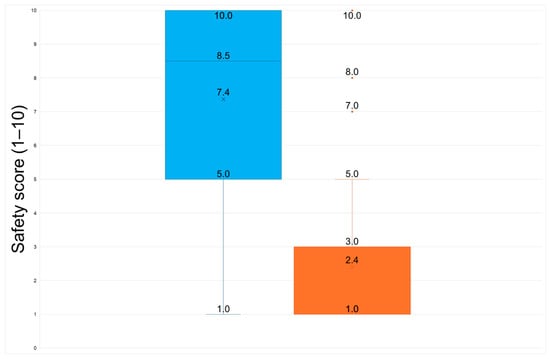
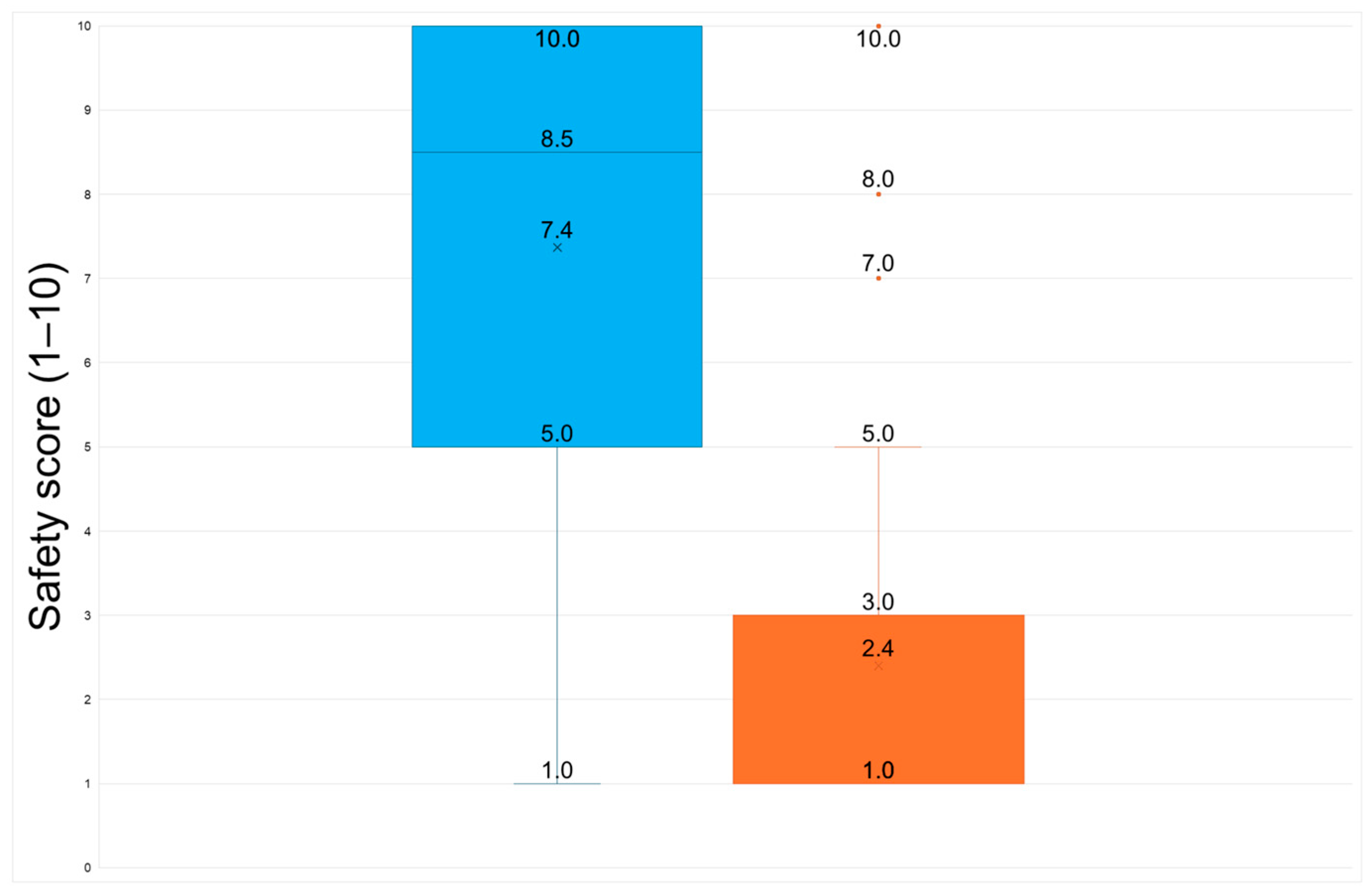
Perceived safety regarding beta-lactam antibiotic use differed substantially between the cohorts (Figure 1). Patients following successful delabeling rated beta-lactam use as significantly safer than those with an active allergy label (mean score: 7.37 vs. 2.40 on a 10-point scale; p < 0.001). Nevertheless, only 17 out of 46 delabeled patients (37.0%) reported complete trust (10/10 points) in this safety despite having undergone the procedure, while 15 patients (32.6%) rated perceived safety as 5 points or lower.
Figure 1.
Perceived safety of beta-lactam antibiotic use in patient groups after delabeling and before delabeling. Safety scores (1–10 scale) are presented for delabeled patients (n = 46, blue) and non-delabeled patients (n = 50, orange) regarding beta-lactam antibiotics use. Box plots show median and interquartile range; whiskers indicate the range. The mean is marked with an “×”.
2.4. Quality of Life (WHOQOL-BREF)
One patient from the non-delabeled group declined to complete the WHOQOL-BREF questionnaire but participated in the remaining part of the survey.
Descriptive and inferential statistics for WHOQOL-BREF are shown in Supplementary Table S1. All variables were non-normally distributed (p < 0.05).
No significant group differences were found in overall quality of life (Q1), general health (Q2), or the Physical, Psychological, and Social Relationships domains (all p > 0.05). A significant difference was observed only in the Environment domain, with delabeled patients reporting higher scores than non-delabeled patients (17.15 ± 1.88 vs. 16.50 ± 1.82; two-tailed p = 0.029).
2.5. Post-Delabeling Antibiotic Use and Clinical Outcomes
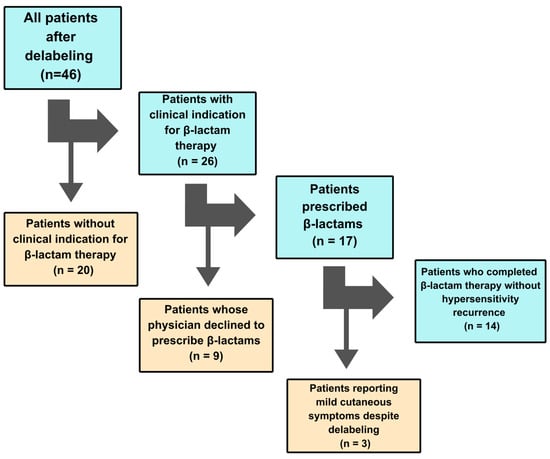
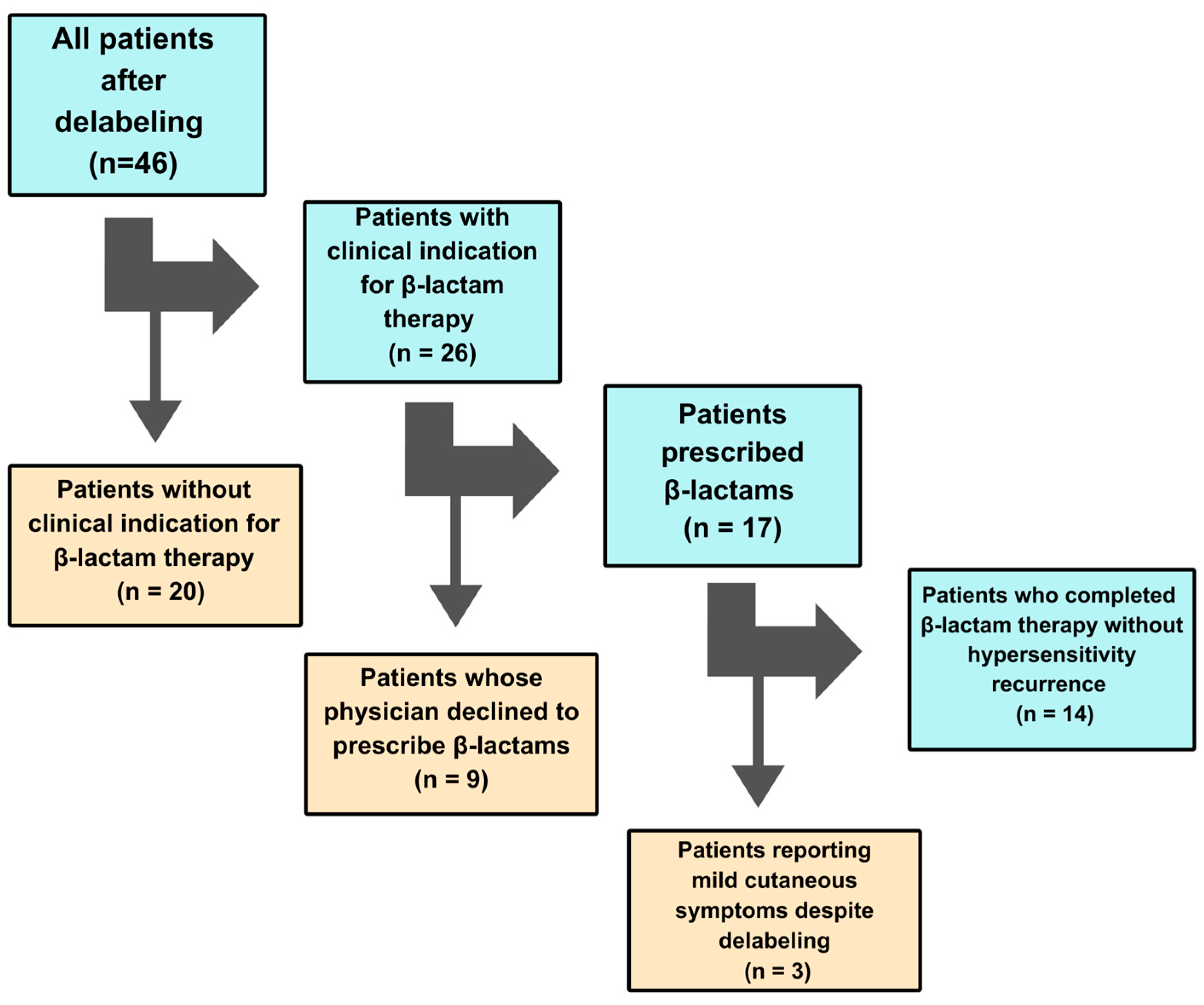
Post-delabeling clinical outcomes are summarized in Figure 2. Among patients after delabeling (n = 46), 26 (57%) reported at least one clinical indication for beta-lactam therapy during follow-up, while 20 (43%) had no indication. Of the 26 patients with indications, 17 (65%) received at least one beta-lactam antibiotic prescription.
Figure 2.
Post-delabeling clinical follow-up and beta-lactam re-exposure outcomes. Flowchart showing the clinical trajectory of the delabeled cohort (n = 46) following the removal of the beta-lactam allergy label. The diagram illustrates the progression from clinical indication to actual prescription and subsequent tolerability of therapy. Among patients requiring antibiotic treatment (n = 26), 34.6% (n = 9) reported that their treating physicians declined to prescribe beta-lactams despite the patient presenting official documentation of successful allergy delabeling. Mild cutaneous symptoms were observed in 6.5% of the total delabeled cohort (n = 3), although those were self-reported symptoms that need to be assessed in the future in the allergy clinic.
Among the subset of patients with a clinical indication for antibiotic therapy (n = 26), 34.6% (n = 9) were not prescribed beta-lactams. According to patient reports, their treating physicians declined to prescribe these first-line agents due to a previously documented allergy history, even though the patients presented official documentation confirming successful delabeling. In all such cases, alternative non-beta-lactam antibiotics were prescribed instead.
The median follow-up duration from the day of beta-lactam allergy delabeling to the day of the study interview was 754.5 days (IQR: 540.3–1296.3 days; range: 25–2370 days), corresponding to 2.07 years (IQR: 1.48–3.55 years; range: 0.07–6.49 years). Overall, 17 out of 46 patients (37.0%) received at least one course of antibiotic therapy, whereas 29 patients (63.0%) required no antibiotic treatment during follow-up. Across the entire cohort, the median annualized antibiotic consumption rate was 0.00 courses per patient per year (IQR: 0.00–0.35). Among the subgroup of patients who received antibiotic therapy (n = 17), the median annualized consumption rate was 0.44 courses per patient per year (IQR: 0.28–0.80; range: 0.20–1.20 courses/year).
No patients reported modifying their beta-lactam dosage or treatment schedule due to uncertainty regarding the delabeling outcome. Among the 17 patients who received beta-lactam antibiotics, 14 (82%) completed the full treatment course without recurrence of any hypersensitivity symptoms, although the group is relatively small. Three patients (18% of those who received beta-lactams) reported mild cutaneous symptoms, including urticaria (n = 1) and rash (n = 2), which they described as similar to their pre-delabeling reactions.
2.6. Spectrum of Historical Hypersensitivity Symptoms
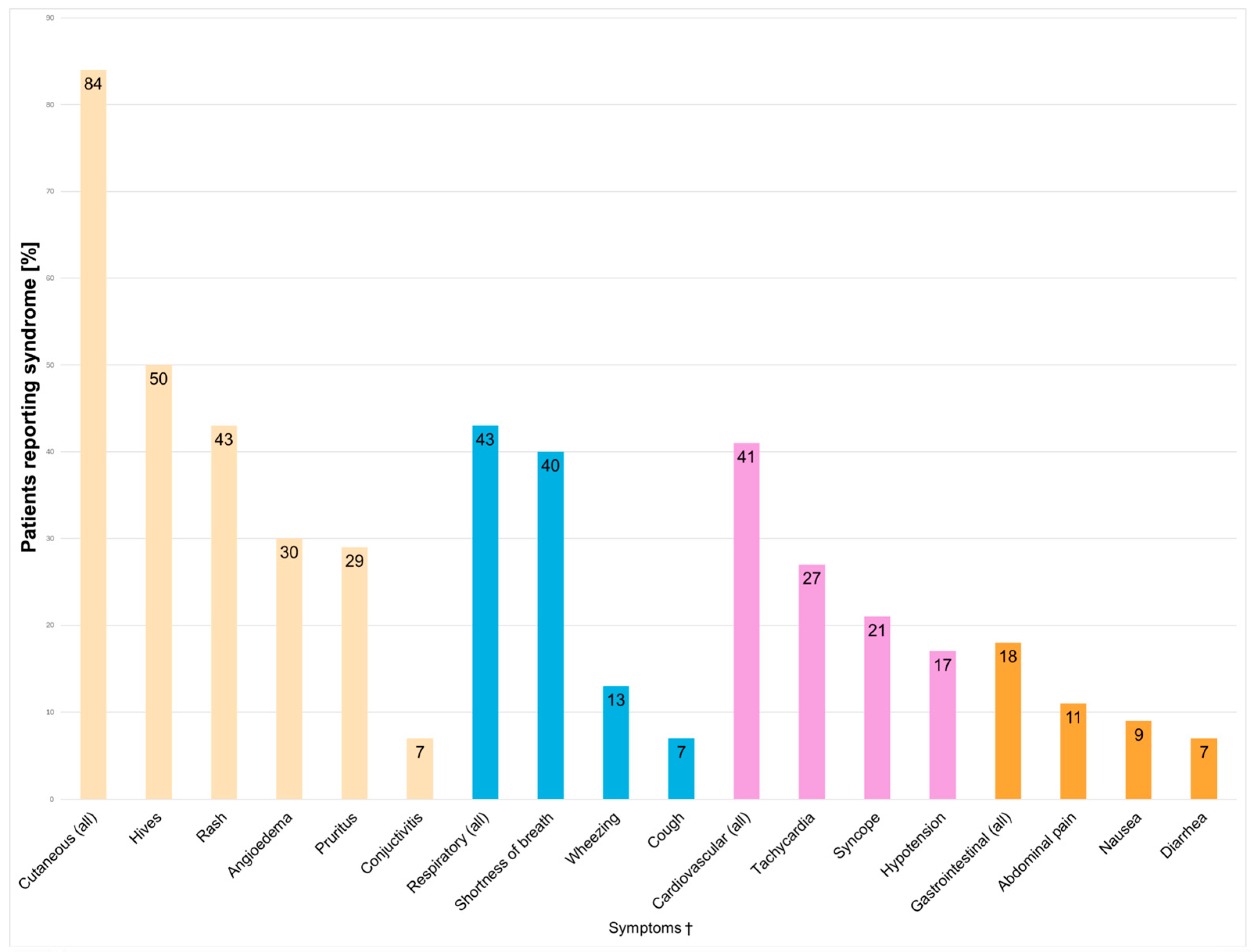
The distribution of initial hypersensitivity symptoms among all patients across organ systems is presented in Figure 3.
Figure 3.
Distribution of initial hypersensitivity symptoms among all patients (n = 96) across organ systems. Symptoms are grouped by organ system and color-coded as follows: cutaneous (light apricot), respiratory (blue), cardiovascular (pink), and gastrointestinal (orange). † Multiple symptoms could be Cutaneous symptoms were the most frequent manifestations. Cutaneous symptoms were the most common initial manifestation of hypersensitivity (n = 81, 84%), whereas gastrointestinal symptoms were the least frequent (n = 17, 18%). Overall, 91 of 96 patients (95%) reported at least one major symptom category. Forty-eight patients (50.0%) experienced symptoms limited to a single category, while 43 (44.8%) presented multisystem involvement: 29 (30.2%) had symptoms in two categories, 11 (11.5%) in three categories, and 3 patients (3.1%) in all four categories.
Overall, 21 patients (21.9%) reported having experienced an anaphylactic reaction. It is worth noting that this was the patients’ perception based on symptoms such as angioedema, bronchospasm, hives, and administration of adrenaline.
2.7. Antibiotic Use During Beta-Lactam Allergy Labeling
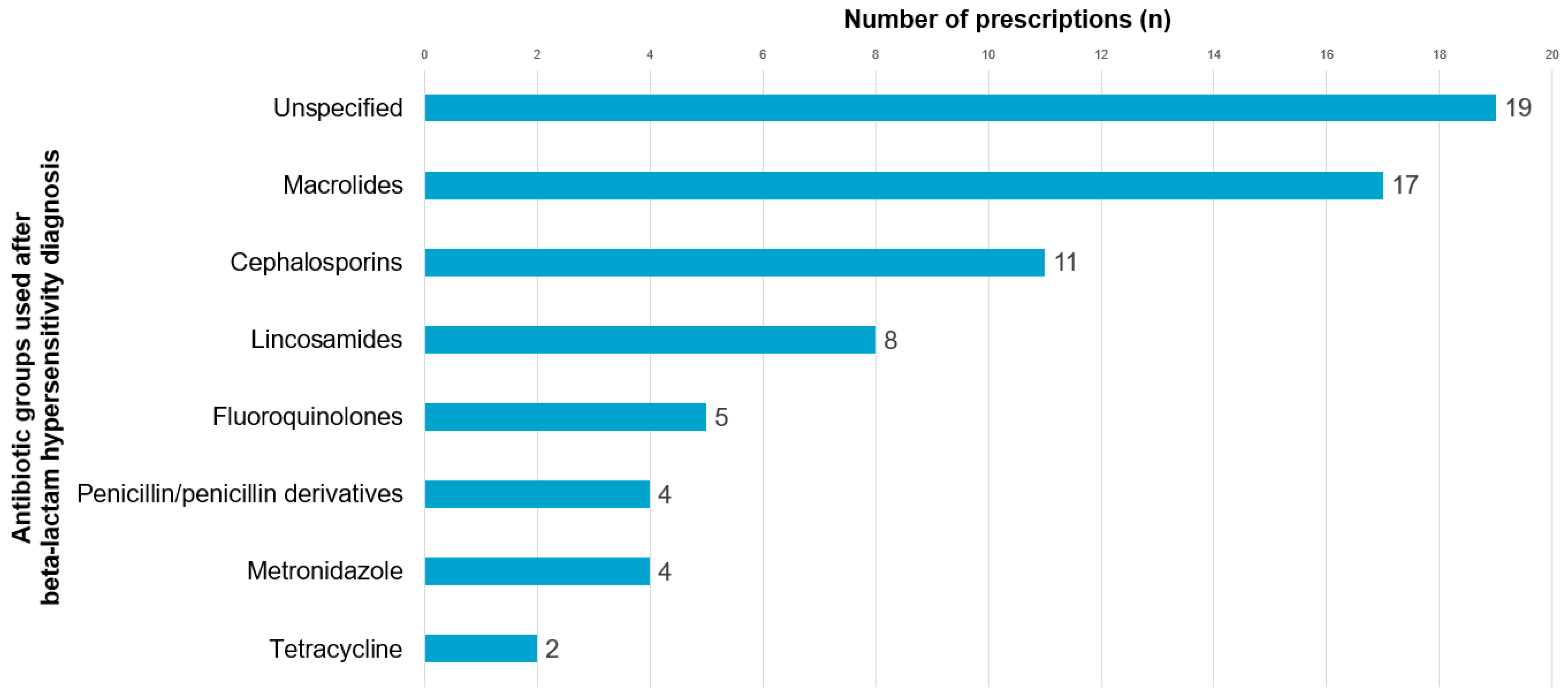
The distribution of alternative antibiotic classes used during the labeling period is presented in Figure 4. Following the initial allergy labeling, patients from both the delabeled and non-delabeled groups were most frequently prescribed macrolides as the alternative therapy. Overall, 56 patients (21 from the delabeled group and 35 from the non-delabeled group) reported the use of alternative antibiotics while being labeled. Forty-three patients were prescribed an antibiotic from only one group, 12 patients from two groups, and one patient from three groups, resulting in 70 prescriptions in total. Notably, a significant proportion of patients (n = 19, 34%) could not recall the specific antibiotic class used. The figure does not indicate that the mentioned antibiotic groups were used as an alternative therapy for beta-lactam antibiotics, but rather presents the overall profile of antibiotic use during the labeled period.
Figure 4.
Distribution of alternative antibiotic classes used during the labeling period. The bars represent the absolute number of prescriptions of each class of antibiotics. Multiple antibiotic groups could have been prescribed for one patient: 43 patients were prescribed an antibiotic from only one group, 12 patients from two groups, and one patient from three groups, resulting in 70 prescriptions in total. “Unspecified” indicates instances where patients were aware of antibiotic treatment but could not specify the drug class.
3. Discussion
This cross-sectional study provides new insight into patient-centered outcomes in a group following beta-lactam allergy delabeling and in a group before diagnostic assessment. Although beta-lactam allergy labels are frequently inaccurate and often persist without confirmatory testing, relatively few studies have investigated both delabeled and non-delabeled patients’ perceptions and their real-world antibiotic use. Differences between both groups regarding beta-lactam antibiotic use were significant and showed that the delabeled group ranked perceived safety higher than the group before evaluation. Delabeling was associated with a low rate of self-reported symptom recurrence, although in three cases, a further diagnostic approach is needed to assess the mild skin reactions after delabeling. Multiple factors, including allergy labeling in the past and physicians’ concerns regarding beta-lactam reuse, may influence the effectiveness of delabeling.
The majority of delabeled patients indicated drug provocation testing as the primary diagnostic method leading to delabeling, although 26 of patients % (n = 12) attributed their delabeling primarily to other diagnostic methods. Drug provocation remains the gold standard for confirming or excluding beta-lactam allergy [21,22]. A meta-analysis by Stul et al. showed that in 97.13% of 1070 patients who were previously labeled as penicillin-allergic, no reaction occurred during the oral provocation test [23]. Our findings indicate a high level of patient trust in this method, with a high score for assessing the validity of exclusion in the delabeled group. Improved communication and patient education may strengthen the understanding of provocation testing and its importance in drug allergy delabeling [24].
In contrast, most non-delabeled participants attributed their allergy diagnosis to self-diagnosis or physician interview without objective testing, mirroring global trends where up to 90% of labeled beta-lactam allergies are ultimately disproven [25]. This highlights the essential role of accurate diagnostic evaluation and the potential for over-labeling when objective testing is not performed. In a study conducted by Harada et al., only 45.5% of 88 patients with a documented penicillin allergy reported awareness that testing for penicillin allergy was available [26]. The importance of addressing misconceptions early in the diagnostic pathway and supporting ongoing education of non-allergist physicians was highlighted in a study by Lucas et al. [27].
Patients in the delabeled group reported higher perceived safety of beta-lactams compared with those still carrying the allergy label. This aligns with previous studies demonstrating that the removal of inaccurate beta-lactam allergy labels increases patient confidence and reduces anxiety related to antibiotic treatment [28].
Although the mean perceived safety score in the delabeled cohort was substantially higher than in the non-delabeled group, one-third of patients after successful delabeling still rated the perceived safety of beta-lactam antibiotics at 5 points or lower. This persistence of apprehension aligns with findings by Pinto et al., who demonstrated that 14% of delabeled patients continued to reject penicillin prescriptions during a 1-year follow-up [29].
In a previous study conducted in a pediatric population, 59% (n = 29) of parents of children with low-risk penicillin allergy labels expressed reluctance toward future delabeling testing [30]. These observations highlight the enduring psychological impact of prior adverse drug reactions and indicate that delabeling may require accompanying educational strategies for patients and families to restore trust in safe beta-lactam reuse [31,32].
An interesting finding was the high level of confidence of patients in the validity of the medical decision in both groups. Patients in the non-delabeled group rated the validity of their existing beta-lactam allergy diagnosis highly, whereas patients in the delabeled group similarly expressed strong confidence in the validity of allergy exclusion. This may suggest that patients tend to accept and trust the outcome of the diagnostic process, whether it confirms the existing allergy label or leads to its removal [14].
Although overall quality-of-life measures were generally similar between cohorts, a minor, isolated difference was observed in the Environment domain (p = 0.029), with delabeled patients scoring modestly higher. However, this finding must be interpreted with substantial caution. First, this isolated result may represent an artifact of multiple statistical testing without adjustment, or reflect unmeasured socioeconomic confounders between the cohorts (such as income, education, or healthcare access) rather than a true effect of delabeling itself. Second, the modest effect size indicates that diagnostic clearing alone exerts a very limited impact on general quality-of-life metrics. Although we wanted to use standardized generic instruments like the WHOQOL-BREF in this instance, it may lack the sensitivity to capture subtle, allergy-specific psychological or behavioral shifts. In contrast, disease-specific tools, such as the Drug Hypersensitivity Quality of Life Questionnaire (DrHy-Q) [33], may be more efficient. Mak et al. reported that 86.6% of delabeled patients experienced an average 40% improvement in quality of life when evaluated using the DrHy-Q [34]. Finally, non-significant findings in the remaining domains should not be definitively interpreted as a total absence of effect.
Among delabeled patients, more than half required antibiotic treatment during follow-up, and 65% of these received a beta-lactam. A large Danish cohort study by Fransson et al. has demonstrated significant increases in penicillin dispensing after delabeling, from 0.07 to 0.53 prescriptions per patient, 1 year after allergy investigation, as assessed through national prescription databases [17]. In a study by Hills et al., based on an electronic dispensing data repository, in patients undergoing penicillin allergy assessment in a population of 215 delabeled patients, penicillin courses per year increased from 0.24 to 0.80 after a mean follow-up of 4.55 years [19].
While registry-based studies demonstrate prescribing shifts after delabeling, they do not capture the clinical decision-making process or patient-level barriers influencing antibiotic selection. In contrast, our interview-based approach revealed that in 35% of cases with an indication for beta-lactam therapy according to the patients, beta-lactams were withheld due to physician concerns despite documented delabeling, highlighting implementation barriers not detectable in administrative datasets. In a study among internal medicine residents, low confidence in stratifying beta-lactam allergy risk was reported, with major barriers including a lack of institutional protocols, insufficient knowledge, and time constraints [35].
In another study, conducted on 89 patients, at 1-year follow-up after delabeling, only 37% of patients had a correct allergy status in primary care records, despite 94% in the hospital electronic medical record, indicating that allergy status is frequently not properly updated [29]. In a study by Van De Sijpe et al., the primary physician and community pharmacist were contacted after delabeling to identify uneventful re-exposure and discordances [36]. This may be a valuable approach from an allergist’s perspective to assess the results of delabeling. Antimicrobial stewardship requires better communication among allergologists, primary care physicians, and pharmacists [37]. The fear of inducing an allergic reaction and adding further complexity to patient care is the reason why professionals in the medicine field do not implement the new approach into everyday patient care, despite delabeling, as presented in a study by Alagoz et al. [38].
Although true recurrence rates after negative drug provocation testing are very low [39], given the small size of the re-exposed subgroup (n = 17) in our study, the absence of severe reactions should be interpreted with caution. These findings underscore the need for structured clinical diagnostic evaluations and prospective monitoring in larger patient cohorts in the future to definitively characterize post-delabeling safety and reaction patterns. Further diagnostic evaluation is planned for these patients to reassess the reported reactions and determine whether they represent recurrent drug hypersensitivity or rather an infection symptom or coincidence.
In another patient-focused study by Loprete et al., 17 out of 146 delabeled patients received a beta-lactam antibiotic during the 8-week follow-up period, with no allergic reactions, except one participant who experienced anaphylaxis following exposure to amoxicillin–clavulanic acid 1 year after delabeling [40]. In a study by Vyles et al., one out of 36 patients from a pediatric population developed a rash despite delabeling in the past [41]. This corresponds to our findings that even though delabeling remains safe and effective, mild reactions, predominantly cutaneous, can occur.
Cutaneous symptoms were the most frequently reported initial reactions, followed by respiratory and cardiovascular manifestations, while gastrointestinal symptoms were the least common. Nearly half of patients reported multisystem involvement, and a minority described symptoms consistent with anaphylaxis. The distribution of symptoms observed in our cohort is consistent with published pharmacovigilance and clinical cohort data [42,43,44,45]. An analysis performed on 1387 hypersensitivity reports in the European ADR database EudraVigilance of the European Medicines Agency (EMA) showed that the three most commonly reported types of hypersensitivity reactions were rashes, eruptions, and exanthems (42.7%, n = 592), anaphylactic and anaphylactoid reactions (13.1%), and urticarial manifestations (11.5%) [45].
Reitmajer et al. conducted a study on 34 patients, with cutaneous symptoms occurring in 94.1% of cases, followed by respiratory (50%) and cardiovascular (26.5%) reactions. Only 11.8% exhibited gastrointestinal symptoms [46]. In another study by Buffone et al., the most common allergic reactions among 300 patients were rash (18.7%) and hives or urticaria (8.8%) [47]. These patterns mirror observations in our study.
Our findings indicate that macrolides were the most frequently prescribed alternative antibiotics during active allergy labeling. This aligns with findings by Anton-Vazquez et al., who demonstrated that patients with a documented penicillin allergy label are predominantly prescribed non-beta-lactam alternatives, most notably glycopeptides, macrolides, and fluoroquinolones [6]. Such reliance on broad-spectrum agents is widely associated with higher healthcare costs, treatment failures, and an increased risk of Clostridioides difficile infections or antimicrobial resistance [8,9]. Notably, over a third of our respondents (34%, n = 19) could not recall the specific alternative class prescribed, highlighting a pervasive gap in patient health literacy that underscores the need for improved communication and post-delabeling documentation [14,40].
A major strength of this study is the comprehensive assessment of patient-reported outcomes after delabeling, including real-world antibiotic use, symptom recurrence, perceived safety, and quality of life, rather than relying solely on prescription data from electronic health records. Another strength is the comparison of delabeled and non-delabeled groups, enabling evaluation of how diagnostic confirmation influences clinical and psychological measures.
Limitations include the sample size, which may have limited the detection of small differences in questionnaire outcomes. The study relied on self-reported data regarding historical allergic symptoms and antibiotic consumption prior to evaluation, which may introduce potential recall bias and misclassification, although symptom categories were systematically explained during interviews. These limitations are common in patient-reported outcome measures [48].
Our findings indicate that patients who had undergone penicillin allergy delabeling differed from non-delabeled patients in terms of perceived safety and quality of life. The cross-sectional design does not allow definitive conclusions regarding causality. While the delabeled and non-delabeled cohorts exhibited similar demographic distributions (e.g., age and sex), demographic parity alone does not guarantee baseline comparability. Potential selection bias cannot be ruled out, as the groups may have differed in unmeasured clinical characteristics, including historical reaction severity, underlying comorbidities, or individual health-seeking behavior and motivation to pursue allergy testing. Furthermore, even though all patients come from the Pomerania region of Poland, variations in local access to diagnostic pathways and patient motivation to complete evaluation may have influenced cohort composition.
Quality of life was assessed using the WHOQOL-BREF, a generic instrument capturing global well-being rather than disease-specific outcomes. While widely validated and suitable for cross-group comparisons and not used to date in similar studies, it may not fully capture subtle psychological, emotional, or behavioral changes related to beta-lactam allergy delabeling. Disease-specific instruments may reveal additional differences not captured by generic quality-of-life measures.
Finally, this single-center study may limit the generalizability of the findings to other healthcare settings with different diagnostic pathways, stewardship practices, or patient populations.
4. Materials and Methods
4.1. Study Design and Participants
This study was a cross-sectional, questionnaire-based survey conducted among adult patients with a reported history of hypersensitivity to any beta-lactam antibiotics. All patients were recruited from the Allergology Department database at the University Clinical Center in Gdansk, Poland, and were residents of the Pomerania region in Poland. The initial screening data included age, sex, cause of admission, and formal consent for telephone contact. All questionnaires were administered through telephone interviews conducted in Polish by trained medical personnel and physicians.
Two distinct patient groups were included:
Delabeled group: patients who had previously been labeled as allergic to beta-lactam antibiotics but underwent successful delabeling in the years 2017–2025. Delabeling consisted of an interview with an allergologist, skin testing, and drug provocation testing. Measurement of specific IgE antibodies was performed rarely. The removal of the penicillin allergy label was documented in the patient’s medical records; patients had the opportunity to consult the results with an allergologist, and the allergy status was updated in the electronic medical record (EMR), where applicable. Patients were advised to inform their healthcare providers of the updated allergy status and were provided with information regarding the antibiotics that could subsequently be used.
Non-delabeled group: patients with a self-reported or physician-reported diagnosis of beta-lactam hypersensitivity who had not yet undergone specialist evaluation at an allergy department but were registered for diagnostics at an allergy clinic in the years 2025–2026.
4.2. Inclusion and Exclusion Criteria
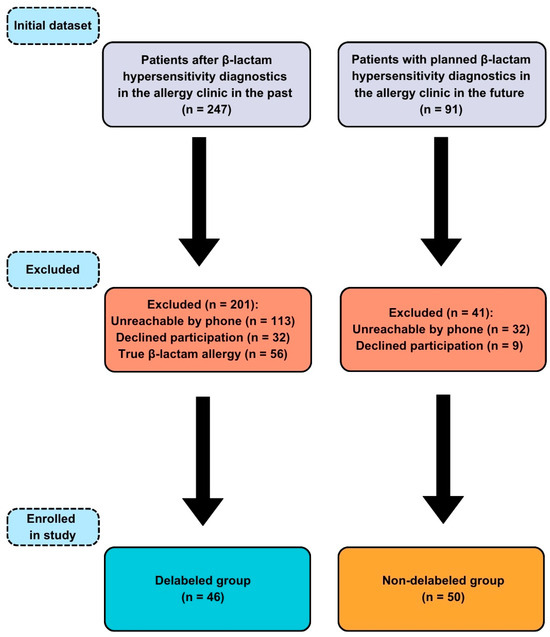
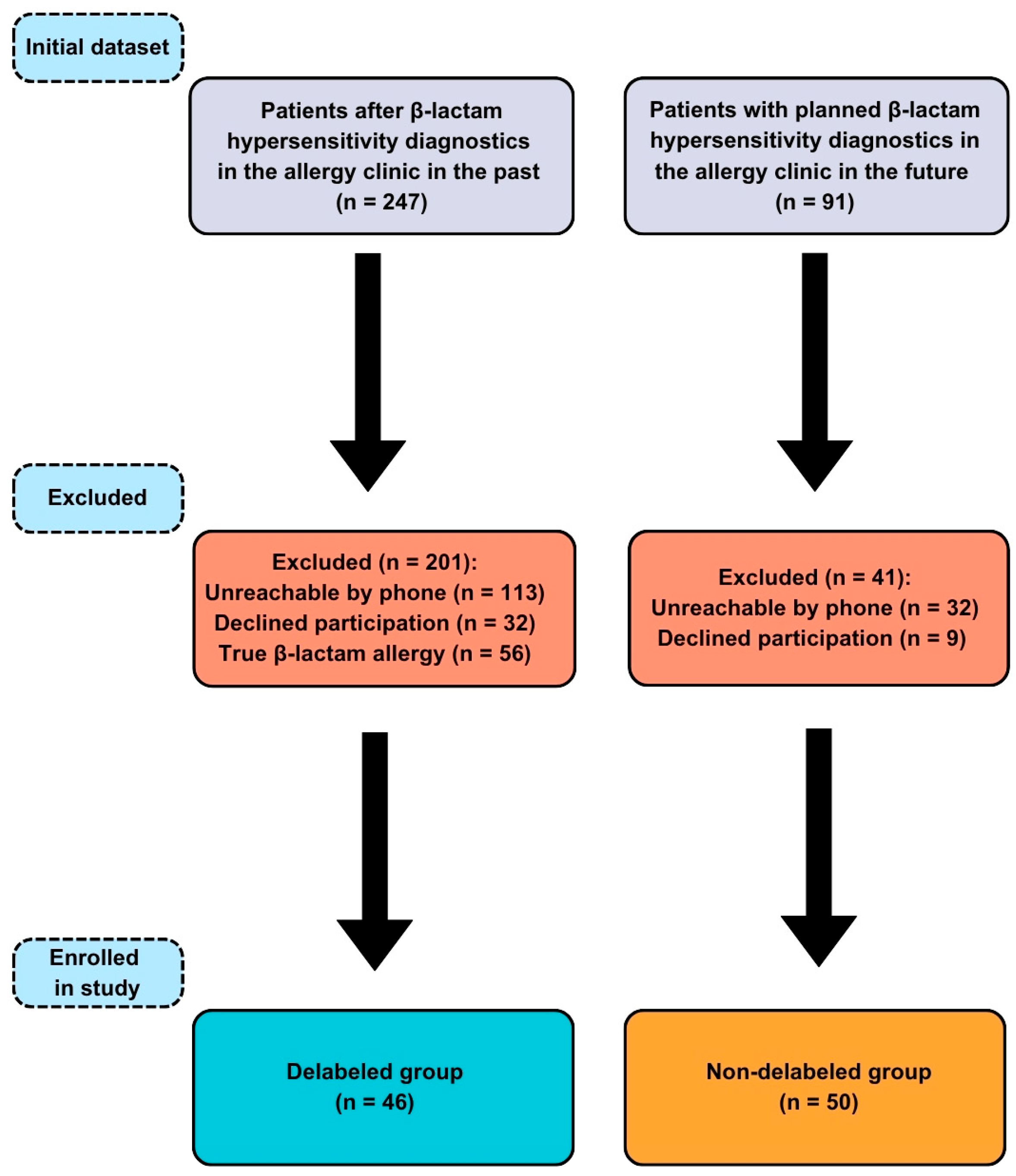
All participants were adults (≥18 years old) with a documented or self-reported history of suspected hypersensitivity to beta-lactam antibiotics, before or after the specialist diagnostic tests. Patients were excluded if they were unable to provide informed verbal consent, did not complete the survey, or had comorbidities that prevented reliable participation. They were also excluded if they did not give formal consent for telephone contact or had a confirmed true beta-lactam sensitivity during specialist evaluation at an allergy clinic. The overall screening and allocation process is summarized in the study flow diagram (Figure 5).
Figure 5.
Patient flowchart illustrating the recruitment, exclusions, and final allocation of participants into the delabeled and non-delabeled groups. The flowchart delineates the identification and enrollment process for two distinct patient groups: a delabeled cohort and a non-delabeled cohort. Patients were screened from the Allergology Department database at the University Clinical Center in Gdansk, Poland. Exclusions were categorized by logistical barriers (unreachable, declined participation) and clinical findings (confirmed beta-lactam hypersensitivity). Final analysis included 46 patients in the delabeled group and 50 patients in the non-delabeled group.
4.3. Data Collection and Instruments
Data were collected via structured telephone interviews between 31 July 2025 and 4 November 2025.
Two separate but thematically related authorial questionnaires were used for each study group. The surveys are presented in Supplementary Table S2. To simplify the answering process, the questionnaire consisted predominantly of dichotomous (yes/no) questions, with the exception of two items assessed using a 10-point rating scale ranging from 1 to 10.
Initially, both questionnaires included a question about treatment administered in previous reactions, including antihistamine drugs, steroids, and adrenaline, but due to patients’ inability to recall the treatment, data from this question were not included. A question about patients’ perceived confidence in taking a beta-lactam antibiotic when prescribed by an allergist compared with another physician was also omitted, as the analysis of the results indicated that patients could have misunderstood the question due to the complexity of the Polish language.
Antibiotic names reported by patients were checked and grouped into major groups for clarification.
Additionally, the participants completed the WHOQOL-BREF questionnaire [16] to assess health-related quality of life across physical, psychological, social, and environmental domains. The Polish validated version of the questionnaire was used [49].
4.4. Ethical Considerations
The study received approval (no. KB/217/2025) on 28 March 2025 from the Bioethics Committee for Scientific Research at the Medical University of Gdansk.
Informed consent was obtained from all participants before their participation. All data were anonymized and handled in accordance with applicable data protection regulations and the Declaration of Helsinki. The authors declare no conflicts of interest in relation to this work.
4.5. Statistical Analysis
Responses were coded and analyzed using Statistica software (version 13.3, StatSoft, Inc., Tulsa, OK, USA). Descriptive statistics were used to summarize demographic and clinical data. Categorical variables were expressed as frequencies and percentages, and continuous variables as means ± standard deviations and medians. The Shapiro–Wilk test and quantile–quantile plots were used to assess normality. Between-group comparisons were performed using chi-square tests for categorical data. T-tests for independent samples and Mann–Whitney U tests for independent samples were used for continuous data. A p-value < 0.05 was considered statistically significant.
5. Conclusions
In this cross-sectional study, patients who had undergone beta-lactam allergy delabeling exhibited higher perceived safety regarding beta-lactam antibiotic use compared to those awaiting evaluation. However, optimal real-world benefits of delabeling remain constrained by barriers, including incomplete post-delabeling trust and knowledge gaps, as well as ongoing clinical reluctance among prescribers. While no robust between-group differences in overall quality of life were observed, these findings highlight that diagnostic clearing alone is insufficient without dedicated patient education and targeted stewardship strategies. Prospective, longitudinal studies on larger patient cohorts are warranted to evaluate causal trajectories and long-term outcomes.
Supplementary Materials
The following supporting information can be downloaded at: https://www.mdpi.com/article/10.3390/antibiotics15111058/s1. Supplementary Table S1. Comparison of WHOQOL-BREF scores between patients after delabeling (POST) and before delabeling (PRE) and general population. Supplementary Table S2. Questions included in the author’s questionnaires.
Author Contributions
Conceptualization, M.P. and J.R.; methodology, M.P.; software, M.P.; validation, M.C. and M.N.; formal analysis, M.P.; investigation, M.P., J.G., I.I., J.P., N.L., A.M., D.G., M.K., K.K., J.Ś., N.D., M.S. and A.S.; resources, J.R., M.C. and M.N.; data curation, M.P.; writing—original draft preparation, M.P., J.G. and I.I.; writing—review and editing, J.R. and M.N.; visualization, M.P.; supervision, J.R., M.C. and M.N. All authors have read and agreed to the published version of the manuscript.
Funding
This research was funded by the Medical University of Gdańsk under the ‘Excellence Initiative—Research University’ program (Grant No. 61-00206/IDUB).
Institutional Review Board Statement
The study was conducted in accordance with the Declaration of Helsinki and received approval (no. KB/217/2025) on 28 March 2025 from the Bioethics Committee for Scientific Research at the Medical University of Gdansk.
Informed Consent Statement
Informed consent was obtained from all subjects involved in the study.
Data Availability Statement
The study database is available on demand.
Conflicts of Interest
The authors declare no conflicts of interest.
References
- Bush, K.; Bradford, P.A. β-Lactams and β-Lactamase Inhibitors: An Overview. Cold Spring Harb. Perspect. Med. 2016, 6, a025247. [Google Scholar] [CrossRef] [Scilit] [PubMed]
- Zhou, L.; Dhopeshwarkar, N.; Blumenthal, K.G.; Goss, F.; Topaz, M.; Slight, S.P.; Bates, D.W. Drug Allergies Documented in Electronic Health Records of a Large Healthcare System. Allergy 2016, 71, 1305–1313. [Google Scholar] [CrossRef] [Scilit] [PubMed]
- Fu, M.; Hu, L.; Han, K.; Wang, G.; Li, H.; Ma, Z.; Wushouer, H.; Shi, L.; Guan, X. The Burden of β-Lactam Allergy Labels in Health Care: A Systematic Review and Meta-Analysis. Lancet Infect. Dis. 2025, 25, 896–908. [Google Scholar] [CrossRef] [Scilit] [PubMed]
- Tejedor-Alonso, M.; Perez-Encinas, M.; Sanz Márquez, S.; Martinez Simon, J.; Moreno-Nuñez, L.; Gonzalez-Moreno, A.; Macias-Iglesias, J.; Rosado-Ingelmo, A. How Far Are We from Achieving Delabeling of False Penicillin/ß-Lactam Allergy Alerts? A Population Problem. J. Investig. Allergy Clin. Immunol. 2025, 35, 12–23. [Google Scholar] [CrossRef] [Scilit] [PubMed]
- European Centre for Disease Prevention and Control. Antimicrobial Consumption in the EU/EEA: Annual Epidemiological Report for 2023; European Centre for Disease Prevention and Control (ECDC): Stockholm, Sweden, 2023. [Google Scholar]
- Anton-Vazquez, V.; Ferretti, F.; Kaya, D.; Mishra, S.; Kerneis, S.; Eden, C.; Doan, H.; Leung, H.F.; Baltazar, J.; Starkey, S.; et al. Impact of Penicillin Allergy Records on Antimicrobial Prescribing in Hospitalised Patients. Clin. Med. 2024, 24, 100024. [Google Scholar] [CrossRef] [Scilit] [PubMed]
- Powell, N.; Honeyford, K.; Sandoe, J. Impact of Penicillin Allergy Records on Antibiotic Costs and Length of Hospital Stay: A Single-Centre Observational Retrospective Cohort. J. Hosp. Infect. 2020, 106, 35–42. [Google Scholar] [CrossRef] [Scilit] [PubMed]
- Webb, B.J.; Subramanian, A.; Lopansri, B.; Goodman, B.; Jones, P.B.; Ferraro, J.; Stenehjem, E.; Brown, S.M. Antibiotic Exposure and Risk for Hospital-Associated Clostridioides Difficile Infection. Antimicrob. Agents Chemother. 2020, 64, e02169-19. [Google Scholar] [CrossRef] [Scilit] [PubMed]
- Macy, E.; Contreras, R. Health Care Use and Serious Infection Prevalence Associated with Penicillin “Allergy” in Hospitalized Patients: A Cohort Study. J. Allergy Clin. Immunol. 2014, 133, 790–796. [Google Scholar] [CrossRef] [Scilit] [PubMed]
- Providencia, R.; Aali, G.; Zhu, F.; Leas, B.F.; Orrell, R.; Ahmad, M.; Bray, J.J.H.; Pelone, F.; Nass, P.; Marijon, E.; et al. Penicillin Allergy Testing and Delabeling for Patients Who Are Prescribed Penicillin: A Systematic Review for a World Health Organization Guideline. Clin. Rev. Allergy Immunol. 2024, 66, 223–240. [Google Scholar] [CrossRef] [Scilit] [PubMed]
- Trubiano, J.; Phillips, E. Antimicrobial Stewardship’s New Weapon? A Review of Antibiotic Allergy and Pathways to “de-Labeling”. Curr. Opin. Infect. Dis. 2013, 26, 526–537. [Google Scholar] [CrossRef] [Scilit] [PubMed]
- McDonald, M.S.; Smith, D. Proactive Penicillin Allergy Delabeling: Lessons Learned from a Quality Improvement Project. Fed. Pract. 2025, 42, 308–313a. [Google Scholar] [CrossRef] [Scilit] [PubMed]
- Sobrino-García, M.; Muñoz-Bellido, F.J.; Moreno-Rodilla, E.; Martín-Muñoz, R.; García-Iglesias, A.; Dávila, I. Delabeling of Allergy to Beta-Lactam Antibiotics in Hospitalized Patients: A Prospective Study Evaluating Cost Savings. Int. J. Clin. Pharm. 2024, 46, 1067–1075. [Google Scholar] [CrossRef] [Scilit] [PubMed]
- Wanat, M.; Anthierens, S.; Butler, C.C.; Savic, L.; Savic, S.; Pavitt, S.H.; Sandoe, J.A.T.; Tonkin-Crine, S. Patient and Primary Care Physician Perceptions of Penicillin Allergy Testing and Subsequent Use of Penicillin-Containing Antibiotics: A Qualitative Study. J. Allergy Clin. Immunol. Pract. 2019, 7, 1888–1893.e1. [Google Scholar] [CrossRef] [Scilit] [PubMed]
- Rhyou, H.-I.; Nam, Y.-H. The Psychological Relieving Effect of Drug Provocation Test in Drug Hypersensitivity. J. Asthma Allergy 2022, 15, 1337–1345. [Google Scholar] [CrossRef] [Scilit] [PubMed]
- Skevington, S.M.; Lotfy, M.; O’Connell, K.A. The World Health Organization’s WHOQOL-BREF Quality of Life Assessment: Psychometric Properties and Results of the International Field Trial. A Report from the WHOQOL Group. Qual. Life Res. 2004, 13, 299–310. [Google Scholar] [CrossRef] [Scilit] [PubMed]
- Fransson, S.; Boel, J.B.; Mosbech, H.F.; Garvey, L.H. Penicillin Allergy Delabeling Has a Significant Impact on Subsequent Antibiotic Use in Primary Care. World Allergy Organ. J. 2024, 17, 100958. [Google Scholar] [CrossRef] [Scilit] [PubMed]
- Molina-Molina, G.-J.; Garnica Velandia, D.R.; Andrés-López, B.; Perales, C.; Marin-Asensio, L.; Jurgens, Y.; Esteso, O.; Escobar, C.; Vidal, X.; Vendrell, L.; et al. Delabelling Beta-Lactam Allergy. Front. Pharmacol. 2024, 15, 1423719. [Google Scholar] [CrossRef] [Scilit] [PubMed]
- Hills, T.; Arroll, N.; Duffy, E.; Capstick, J.; Jordan, A.; Fitzharris, P. Penicillin Allergy De-Labeling Results in Significant Changes in Outpatient Antibiotic Prescribing Patterns. Front. Allergy 2020, 1, 586301. [Google Scholar] [CrossRef] [Scilit] [PubMed]
- Quiralte, J.; Del Robledo Ávila, M.; Domínguez, I.; Menéndez, E.; Cisneros, J.M.; Guisado, A.B. β-Lactam Allergy Delabeling Is Safe and Saves Costs in Primary Care. Aten. Primaria 2024, 56, 102925. [Google Scholar] [CrossRef] [Scilit] [PubMed]
- Barbaud, A.; Garvey, L.H.; Torres, M.; Laguna, J.J.; Arcolaci, A.; Bonadonna, P.; Scherer Hofmeier, K.; Chiriac, A.M.; Cernadas, J.; Caubet, J.C.; et al. EAACI/ENDA Position Paper on Drug Provocation Testing. Allergy 2024, 79, 565–579. [Google Scholar] [CrossRef] [Scilit] [PubMed]
- Trubiano, J.A.; Vogrin, S.; Copaescu, A.; Nasra, M.; Douglas, A.; Holmes, N.E.; Chua, K.Y.L. Direct Oral Penicillin Challenge for Penicillin Allergy Delabeling as a Health Services Intervention: A Multicenter Cohort Study. Allergy 2022, 77, 1038–1042. [Google Scholar] [CrossRef] [Scilit] [PubMed]
- Stul, F.; Heytens, S.; Ebo, D.G.; Sabato, V.; Piessens, V. Safe Penicillin Allergy Delabeling in Primary Care: A Systematic Review and Meta-Analysis. J. Allergy Clin. Immunol. Pract. 2024, 12, 2415–2426.e1. [Google Scholar] [CrossRef] [Scilit] [PubMed]
- Popiolek, I.; Blasiak, M.; Kozak, A.; Pietak, E.; Bulanda, M.; Porebski, G. Diagnostic Value of Oral Provocation Tests in Drug Hypersensitivity Reactions Induced by Nonsteroidal Anti-Inflammatory Drugs and Paracetamol. Diagnostics 2022, 12, 3074. [Google Scholar] [CrossRef] [Scilit] [PubMed]
- Marwood, J.; Aguirrebarrena, G.; Kerr, S.; Welch, S.A.; Rimmer, J. De-labelling Self-reported Penicillin Allergy within the Emergency Department through the Use of Skin Tests and Oral Drug Provocation Testing. Emerg. Med. Australas. 2017, 29, 509–515. [Google Scholar] [CrossRef] [Scilit] [PubMed]
- Harada, K.; Baker, M.G.; Agarwal, S. Patient Perspectives on Penicillin Allergy and Testing. Allergy Asthma Proc. 2022, 43, 64–69. [Google Scholar] [CrossRef] [Scilit] [PubMed]
- Lucas, M.; Mak, H.W.F.; Lee, J.T.Y.; Kulkarni, R.; Chan, S.S.C.; Li, P.H. Impact of a Drug Allergy Education Course for Non-specialists: Findings from ADAPT—A Randomized Crossover Trial. Allergy 2025, 80, 525–533. [Google Scholar] [CrossRef] [Scilit] [PubMed]
- Nagarajan, S. Shedding Misconceptions: The Importance and Impact of Drug Allergy de-Labelling. Med. Res. Arch. 2024, 12, 5516. [Google Scholar] [CrossRef] [Scilit]
- Pinto, T.; Li, J.; Boyle, T.; Zaragoza, R.; Fernando, S.L. Follow-up of Penicillin Allergy Labels 1 Year after Successful Penicillin Delabeling. Ann. Allergy Asthma Immunol. 2023, 130, 80–83.e3. [Google Scholar] [CrossRef] [Scilit] [PubMed]
- Yang, C.; Graham, J.K.; Vyles, D.; Leonard, J.; Agbim, C.; Mistry, R.D. Parental Perspective on Penicillin Allergy Delabeling in a Pediatric Emergency Department. Ann. Allergy Asthma Immunol. 2023, 131, 82–88. [Google Scholar] [CrossRef] [Scilit] [PubMed]
- Augustino, A.; Alvarez, K.S.; Kassem, L.; Roy, L.; Termulo, C.; Smartt, J.; Sparks, M.; Mercadel, C.; Chow, T.G. Patient Perceptions of Penicillin Allergy Testing in a Public Health System. J. Allergy Clin. Immunol. Pract. 2024, 12, 3337–3345.e2. [Google Scholar] [CrossRef] [Scilit] [PubMed]
- Stone, C.A.; Prigmore, H.L.; McCoy, A.B.; Stollings, J.L.; Dear, M.L.; Hiser, W.; Van Winkle, G.; Kripalani, S.; Wright, A.; Harrell, F.E.; et al. The Pragmatic Removal of Penicillin Allergy Electronic Health Record Labels (PROPEL) Trial: A Randomized Clinical Trial. J. Allergy Clin. Immunol. Pract. 2025, 13, 2747–2755. [Google Scholar] [CrossRef] [Scilit] [PubMed]
- Baiardini, I.; Braido, F.; Fassio, O.; Calia, R.; Giorgio, W.C.; Romano, A.; DrHy-Q PROs Research Italian Group. Development and Validation of the Drug Hypersensitivity Quality of Life Questionnaire. Ann. Allergy Asthma Immunol. 2011, 106, 330–335. [Google Scholar] [CrossRef] [Scilit] [PubMed]
- Mak, H.W.F.; Chan, E.T.S.; Yim, J.S.H.; Lee, E.; Lam, D.L.Y.; Chiang, V.; Li, P.H. Validation of the Chinese Drug Hypersensitivity Quality of Life Questionnaire: Role of Delabeling. Asia Pac. Allergy 2023, 13, 3–9. [Google Scholar] [CrossRef] [Scilit] [PubMed]
- Aloyan, T.; Salimova, D.; Antonov, E.; Chandra, G.; McGrath, K. Penicillin Allergy Delabeling: Provider Knowledge, Practice Patterns, and Barriers Among Internal Medicine Residents in a Large Urban Community Teaching Hospital. Cureus 2025, 17, e97928. [Google Scholar] [CrossRef] [Scilit] [PubMed]
- Van De Sijpe, G.; Gilissen, L.; Vandebotermet, M.; Peetermans, W.E.; Spriet, I.; Schrijvers, R. Non-invasive Delabeling and Refining of Beta-lactam Allergy Labels in Inpatients to Optimize Antimicrobial Stewardship. Allergy 2022, 77, 3157–3159. [Google Scholar] [CrossRef] [Scilit] [PubMed]
- Mengato, D.; van der Linden, P.; Berti, G.; Barbieri, E.; Van Hest, R.M.; Donà, D. Hospital Pharmacists in Antimicrobial Stewardship Programmes: A Call for Harmonised Action across Europe. Eur. J. Hosp. Pharm. 2025, 32, 199–201. [Google Scholar] [CrossRef] [Scilit] [PubMed]
- Alagoz, E.; Saucke, M.; Balasubramanian, P.; Lata, P.; Liebenstein, T.; Kakumanu, S. Barriers to Penicillin Allergy De-Labeling in the Inpatient and Outpatient Settings: A Qualitative Study. Allergy Asthma Clin. Immunol. 2023, 19, 88. [Google Scholar] [CrossRef] [Scilit] [PubMed]
- Stone, C.A.; Trubiano, J.; Coleman, D.T.; Rukasin, C.R.F.; Phillips, E.J. The Challenge of De-Labeling Penicillin Allergy. Allergy 2020, 75, 273–288. [Google Scholar] [CrossRef] [Scilit] [PubMed]
- Loprete, J.; Katelaris, C.H.; Evans, L.; Kane, A.; McMullan, B.; Wainstein, B.; Wong, M.; Post, J.; Suan, D.; Swaminathan, S.; et al. Standardized Testing and Written Communication Improve Patient Understanding of Beta-Lactam Allergy Testing Outcomes: A Multicenter, Prospective Study. J. Allergy Clin. Immunol. Glob. 2022, 1, 99–105. [Google Scholar] [CrossRef] [Scilit] [PubMed]
- Vyles, D.; Chiu, A.; Routes, J.; Castells, M.; Phillips, E.J.; Kibicho, J.; Brousseau, D.C. Antibiotic Use After Removal of Penicillin Allergy Label. Pediatrics 2018, 141, e20173466. [Google Scholar] [CrossRef] [Scilit] [PubMed]
- Broyles, A.D.; Banerji, A.; Barmettler, S.; Biggs, C.M.; Blumenthal, K.; Brennan, P.J.; Breslow, R.G.; Brockow, K.; Buchheit, K.M.; Cahill, K.N.; et al. Practical Guidance for the Evaluation and Management of Drug Hypersensitivity: Specific Drugs. J. Allergy Clin. Immunol. Pract. 2020, 8, S16–S116. [Google Scholar] [CrossRef] [Scilit] [PubMed]
- Khan, D.A.; Banerji, A.; Blumenthal, K.G.; Phillips, E.J.; Solensky, R.; White, A.A.; Bernstein, J.A.; Chu, D.K.; Ellis, A.K.; Golden, D.B.K.; et al. Drug Allergy: A 2022 Practice Parameter Update. J. Allergy Clin. Immunol. 2022, 150, 1333–1393. [Google Scholar] [CrossRef] [Scilit] [PubMed]
- Pongdee, T.; Li, J.T. Evaluation and Management of Penicillin Allergy. Mayo Clin. Proc. 2018, 93, 101–107. [Google Scholar] [CrossRef] [Scilit] [PubMed]
- Dubrall, D.; Schulz, M.; Schmid, M.; Sachs, B. Descriptive Analysis of Adverse Drug Reaction Reports for Hypersensitivity Reactions Stratified in Relation to Different Beta-Lactam Antibiotics. Allergol. Sel. 2022, 6, 42–60. [Google Scholar] [CrossRef] [PubMed]
- Reitmajer, M.; Strauss, A.; Klinger, C.; Maaß, M.; Kempf, W.E.; Fischer, J.; Kneilling, M.; Volc, S. Determining the Role of Basophil Activation Testing in Reported Type 1 Allergy to Beta-Lactam Antibiotics. Front. Allergy 2024, 5, 1512875. [Google Scholar] [CrossRef] [Scilit] [PubMed]
- Buffone, B.; Lin, Y.-C.; Grant, J. β-Lactam Exposure Outcome among Patients with a Documented Allergy to Penicillins Post-Implementation of a New Electronic Medical Record System and Alerting Rules. J. Assoc. Med. Microbiol. Infect. Dis. Can. 2021, 6, 104–113. [Google Scholar] [CrossRef] [Scilit] [PubMed]
- Nguyen, H.; Butow, P.; Dhillon, H.; Sundaresan, P. A Review of the Barriers to Using Patient-Reported Outcomes (PROs) and Patient-Reported Outcome Measures (PROMs) in Routine Cancer Care. J. Med. Radiat. Sci. 2021, 68, 186–195. [Google Scholar] [CrossRef] [Scilit] [PubMed]
- Wołowicka, L.; Jaracz, K. Polska wersja WHOQOL-100 i WHOQOL-BREF. In Jakość Życia w Naukach Medycznych; Wołowicka, L., Ed.; Wydawnictwo Uczelniane AM w Poznaniu: Poznań, Poland, 2001; pp. 235–280. [Google Scholar]
Disclaimer/Publisher’s Note: The statements, opinions and data contained in all publications are solely those of the individual author(s) and contributor(s) and not of MDPI and/or the editor(s). MDPI and/or the editor(s) disclaim responsibility for any injury to people or property resulting from any ideas, methods, instructions or products referred to in the content. |
© 2026 by the authors. Licensee MDPI, Basel, Switzerland. This article is an open access article distributed under the terms and conditions of the Creative Commons Attribution (CC BY) license.