Article

A Self-Powered, Skin Adhesive, and Flexible Human–Machine Interface Based on Triboelectric Nanogenerator


1
Engineering Research Center of Intelligent Materials and Advanced Medical Devices, School of Biology and Engineering, Guizhou Medical University, Guian New District, Guiyang 561113, China
2
Key Laboratory of Infectious Immune and Antibody Engineering of Guizhou Province, Engineering Research Center of Cellular Immunotherapy of Guizhou Province, School of Biology and Engineering/School of Basic Medical Sciences, Guizhou Medical University, Guian New District, Guiyang 561113, China
3
Immune Cells and Antibody Engineering Research Center of Guizhou Province, Key Laboratory of Biology and Medical Engineering, Guizhou Medical University, Guian New District, Guiyang 561113, China
*
Authors to whom correspondence should be addressed.
These authors contributed equally to this work.
Nanomaterials 2024, 14(16), 1365; https://doi.org/10.3390/nano14161365
Submission received: 15 July 2024 / Revised: 16 August 2024 / Accepted: 19 August 2024 / Published: 20 August 2024
(This article belongs to the Special Issue Self-Powered Flexible Sensors Based on Triboelectric Nanogenerators)

Abstract

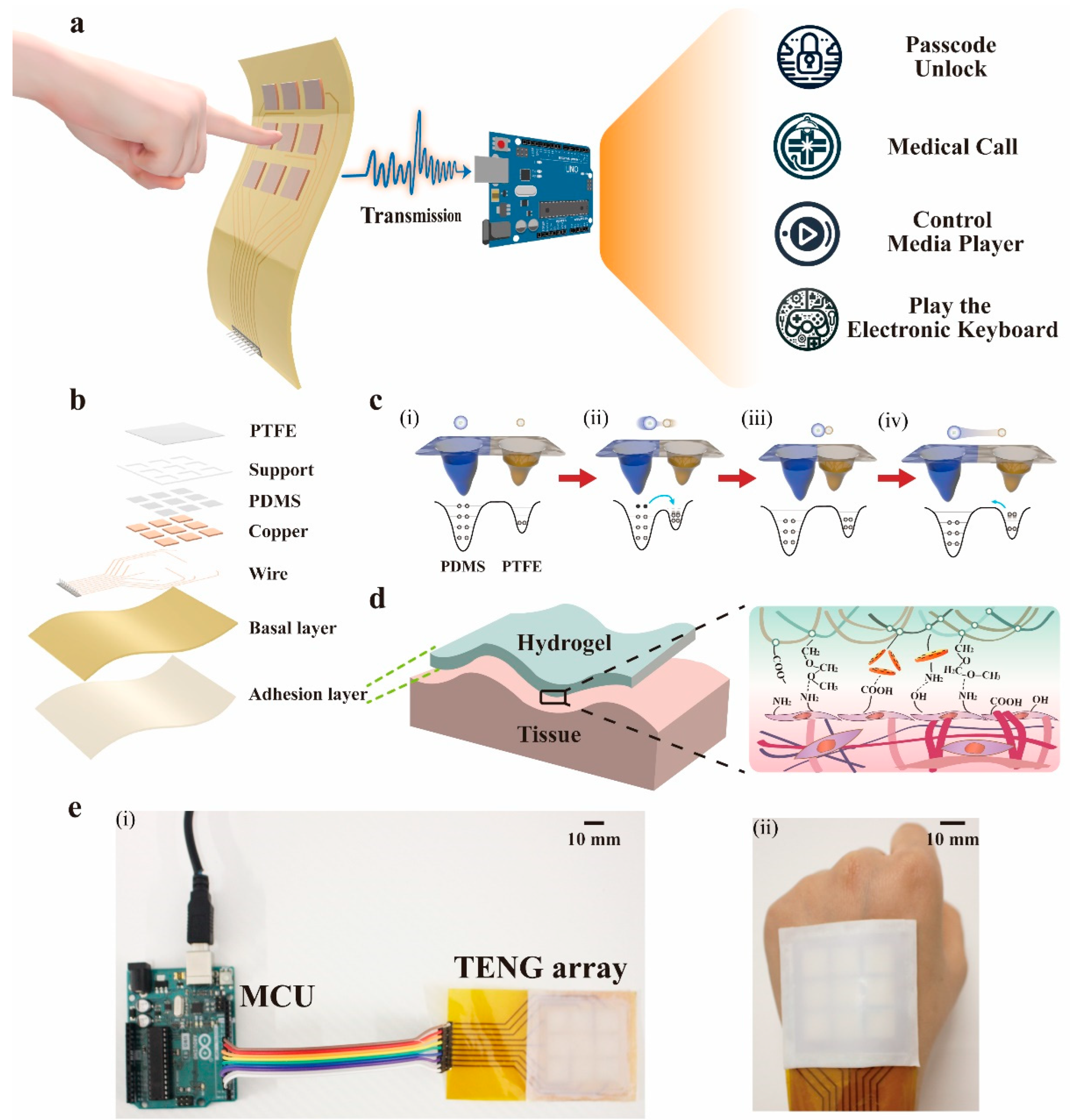
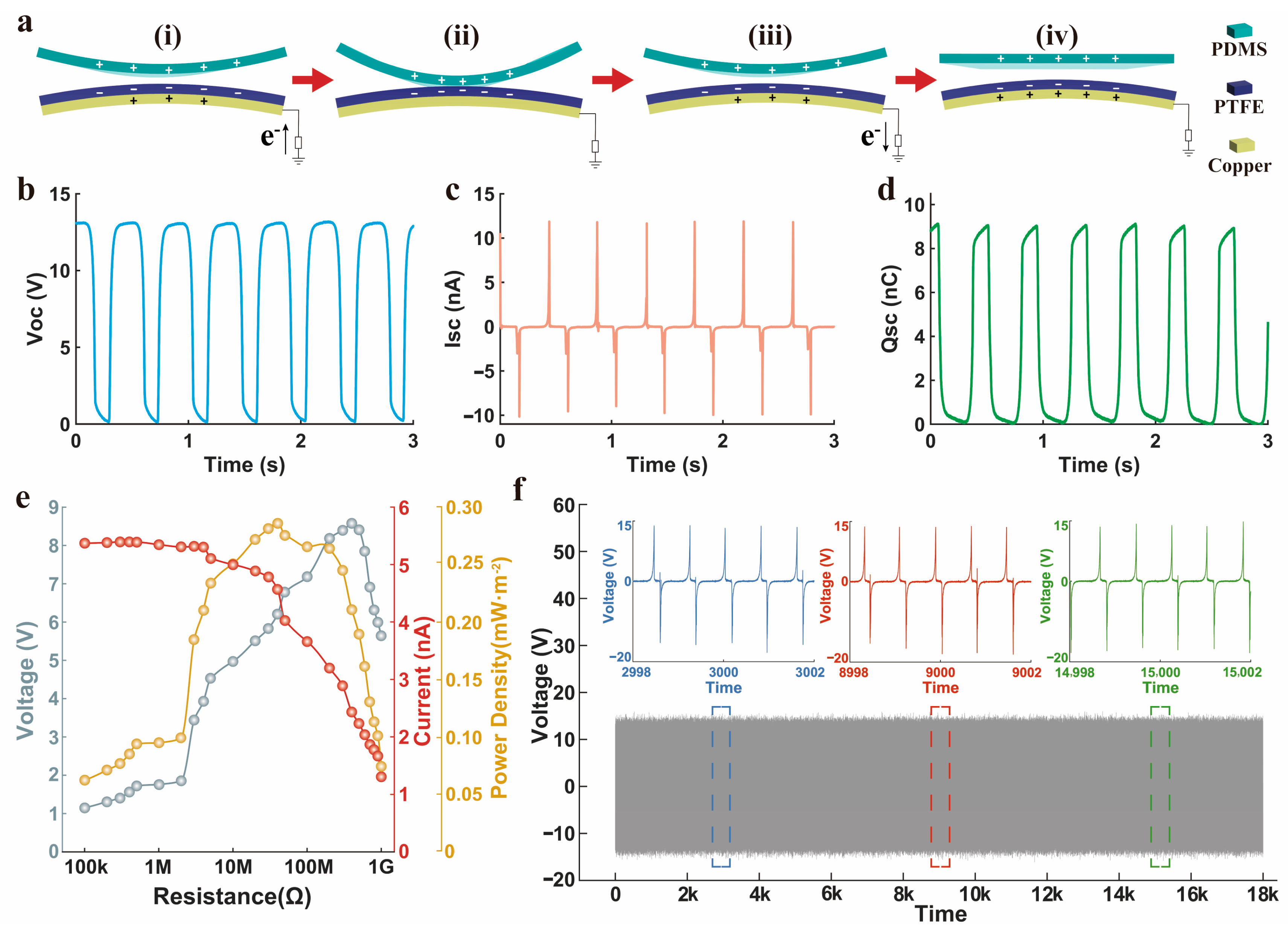
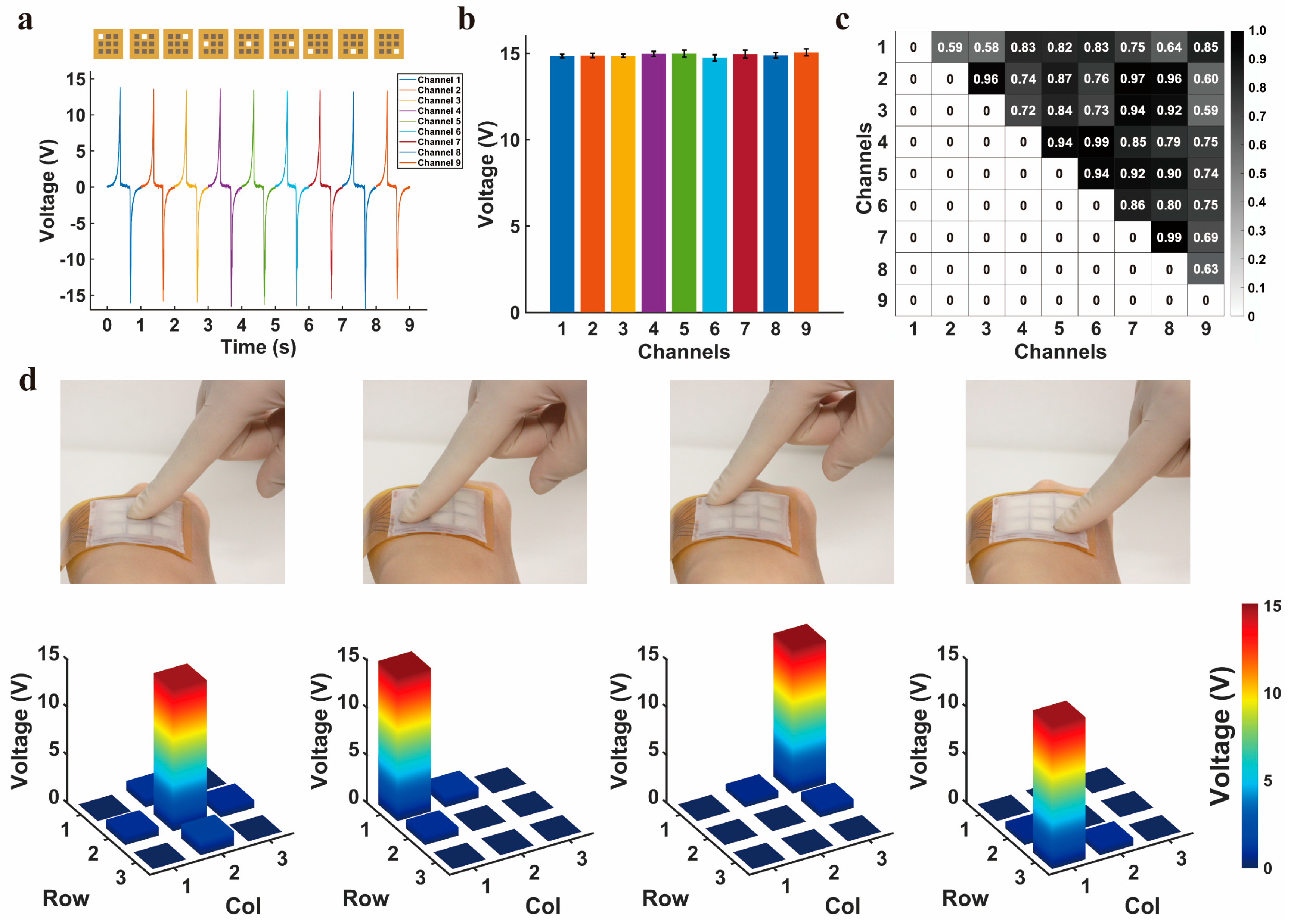
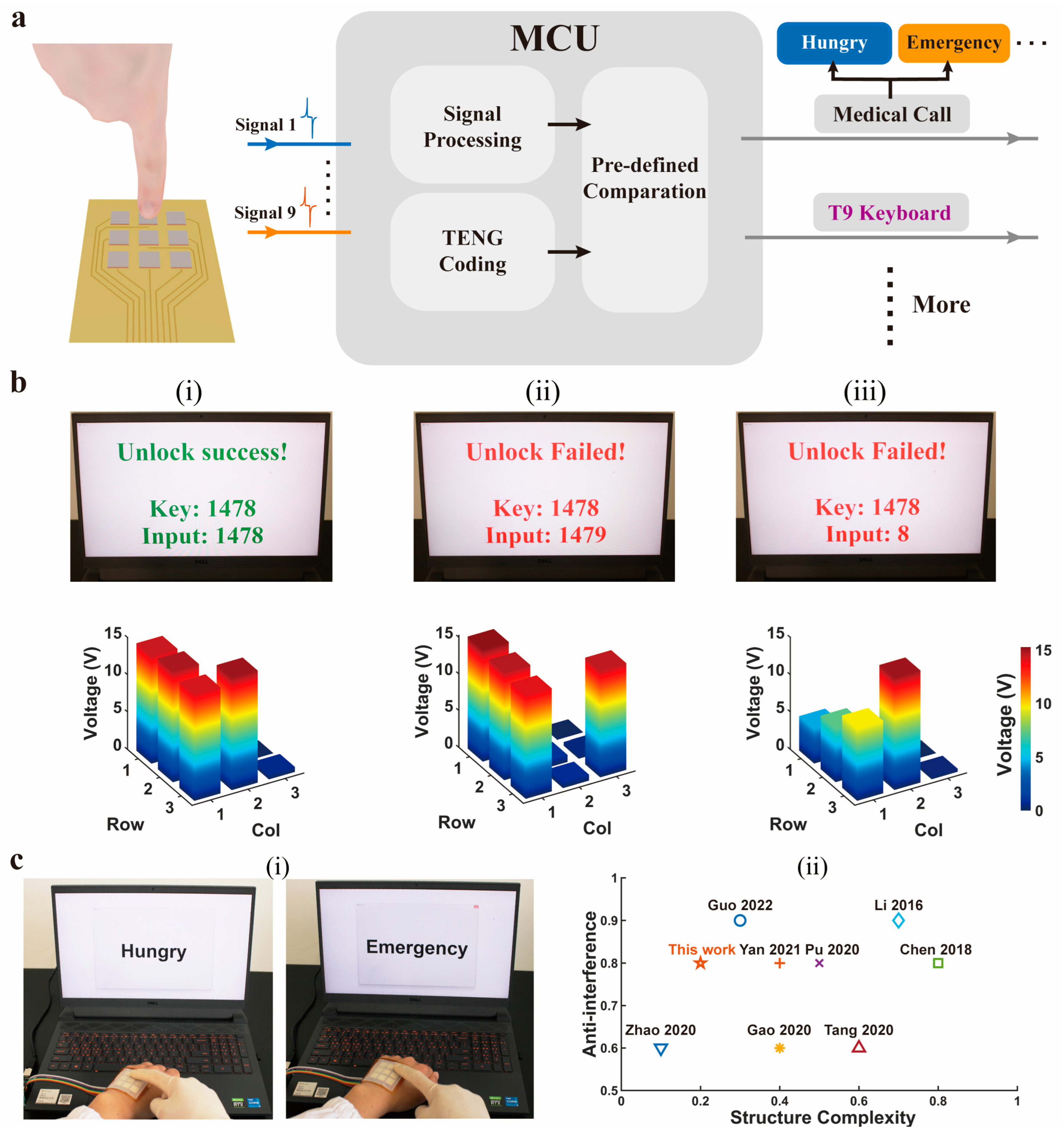
Human–machine interactions (HMIs) have penetrated into various academic and industrial fields, such as robotics, virtual reality, and wearable electronics. However, the practical application of most human–machine interfaces faces notable obstacles due to their complex structure and materials, high power consumption, limited effective skin adhesion, and high cost. Herein, we report a self-powered, skin adhesive, and flexible human–machine interface based on a triboelectric nanogenerator (SSFHMI). Characterized by its simple structure and low cost, the SSFHMI can easily convert touch stimuli into a stable electrical signal at the trigger pressure from a finger touch, without requiring an external power supply. A skeleton spacer has been specially designed in order to increase the stability and homogeneity of the output signals of each TENG unit and prevent crosstalk between them. Moreover, we constructed a hydrogel adhesive interface with skin-adhesive properties to adapt to easy wear on complex human body surfaces. By integrating the SSFHMI with a microcontroller, a programmable touch operation platform has been constructed that is capable of multiple interactions. These include medical calling, music media playback, security unlocking, and electronic piano playing. This self-powered, cost-effective SSFHMI holds potential relevance for the next generation of highly integrated and sustainable portable smart electronic products and applications.
Keywords: triboelectric nanogenerators; human–machine interaction; self-powered; flexible; skin adhesive triboelectric nanogenerators; human–machine interaction; self-powered; flexible; skin adhesive