Abstract
Current research into the role of engineered nanoparticles in drug delivery systems (DDSs) for medical purposes has developed numerous fascinating nanocarriers. This paper reviews the various conventionally used and current used carriage system to deliver drugs. Due to numerous drawbacks of conventional DDSs, nanocarriers have gained immense interest. Nanocarriers like polymeric nanoparticles, mesoporous nanoparticles, nanomaterials, carbon nanotubes, dendrimers, liposomes, metallic nanoparticles, nanomedicine, and engineered nanomaterials are used as carriage systems for targeted delivery at specific sites of affected areas in the body. Nanomedicine has rapidly grown to treat certain diseases like brain cancer, lung cancer, breast cancer, cardiovascular diseases, and many others. These nanomedicines can improve drug bioavailability and drug absorption time, reduce release time, eliminate drug aggregation, and enhance drug solubility in the blood. Nanomedicine has introduced a new era for drug carriage by refining the therapeutic directories of the energetic pharmaceutical elements engineered within nanoparticles. In this context, the vital information on engineered nanoparticles was reviewed and conferred towards the role in drug carriage systems to treat many ailments. All these nanocarriers were tested in vitro and in vivo. In the coming years, nanomedicines can improve human health more effectively by adding more advanced techniques into the drug delivery system.
1. Introduction
Drug delivery systems (DDSs) have been used in past eras to treat numerous ailments. All medicines rely on pharmacologic active metabolites (drugs) to treat diseases [1]. Some of the drugs are designed as the inactive precursor, but they become active when transformed in the body [2]. Their effectiveness depends on the route of administration. In conventional drug delivery systems (CDDSs), drugs were delivered usually via oral, nasal, inhaled, mucosal, and shot methods [3]. The conventionally delivered drugs were absorbed less, distributed randomly, damaged unaffected areas, were excreted early, and took a prolonged time to cure the disease [4]. They were less effective due to many hurdles like their enzymatic degradation or disparity in pH, many mucosal barriers, and off-the-mark effects, and their immediate release enhanced toxicity in blood [5].
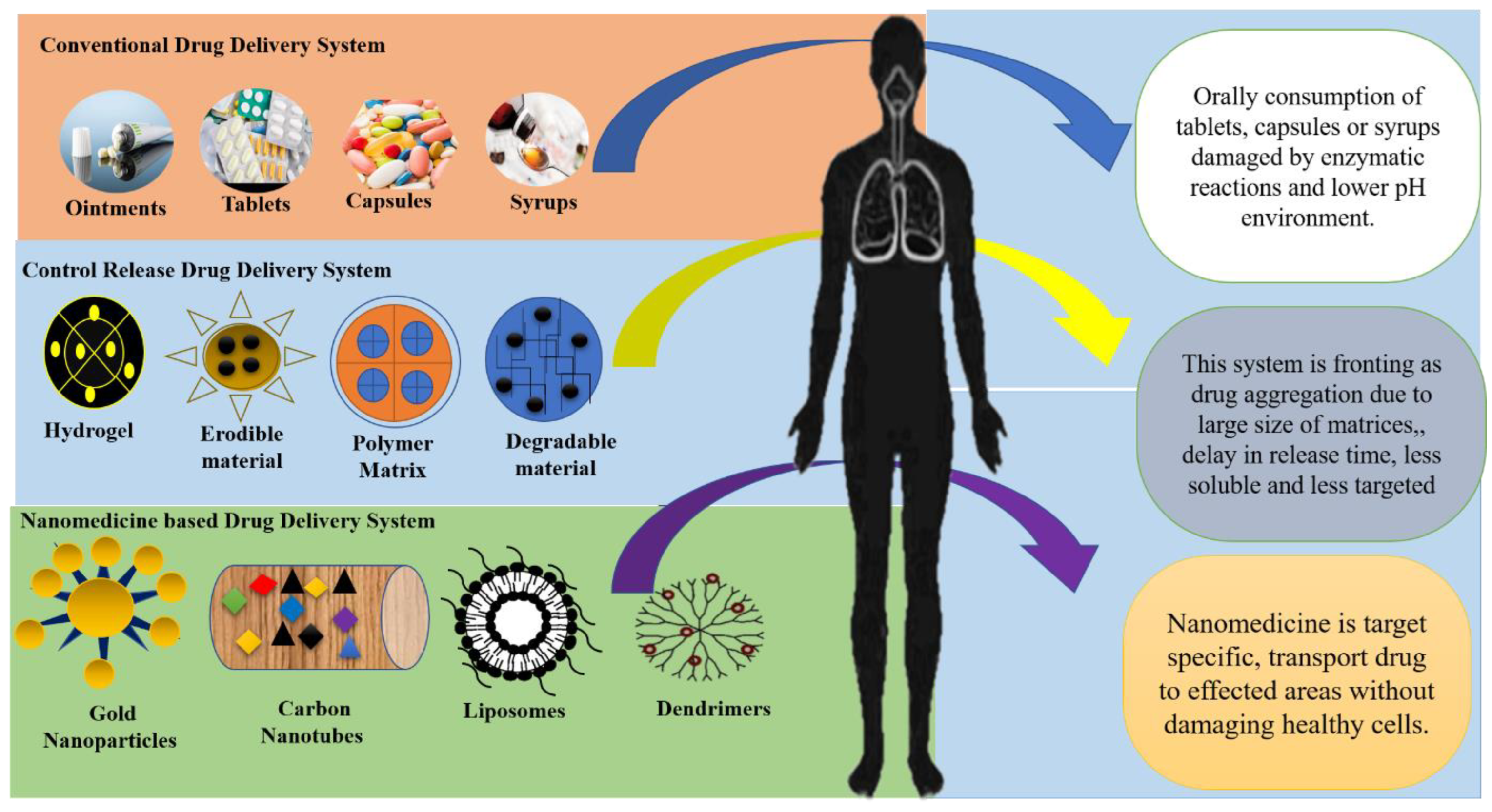
Due to all such reasons, the controlled-release drug delivery system was developed. Such evolution in the DDS enhances drug effectiveness in many ways [6]. DDSs have been engineered in recent years to control drug release [7]. Such engineered DDSs used various novel strategies for controlled drug release into the diseased areas. These strategies were erodible material, degradable material, matrix, hydrogel, osmotic pump, and reservoir [8]. They all provided a medium for the medicines to deliver at the desired sites like tissues, cells, or organs. In these approaches, drugs are often available for many diseases [9]. Such strategies were unsuccessful due to lower distribution, less solubility, higher drug aggregation, less target selection, and poor effects for disease treatment [10]. Moreover, drug development is the most expensive, intricate, and time-consuming process [5]. The innovative drug findings involved the identification of new chemical entities (NCEs), [11] having the vital distinguishing characteristics of drug capacity and pharmaceutical chemistry. This methodology, however, was confirmed to be less effective in terms of the overall attainment percentage [12], as 40% of drug development was botched due to its changeable responses and unpredicted noxiousness in humans [13]. From past decades until now, drug development and its delivery are shifting from the micro to the nano level to prolong life expectancy by revolutionizing drug delivery systems (Figure 1) [14].
Figure 1.
Illustration of how traditional medications were administered without the use of nanocarriers and harm was done to healthy organs or cells. In contrast, modern procedures use nanomedicines to transport medications to specific parts of the body.
In 1959, Feynman was the first physicist to introduce the notion of nanotechnology in the lecture entitled “There’s Plenty of oom at the Bottom”. This concept initiated remarkable developments in the arena of nanotechnology [15]. Nanotechnology is the study of extremely tiny things and is basically the hub of all science disciplines including physics, chemistry, biology, engineering, information technology, electronics, and material science [16]. The structures measured with nanotechnology range from 1–100 nm at the nanoscale level [17]. Nanoparticles have different material characteristics because of submicroscopic size and also provide practical implementations in a wide range of fields including engineering, drug delivery, nanomedicine, environmental indemnification, and catalysis, as well as target diseases such as melanoma and cardiovascular diseases (CVD), skin diseases, liver diseases, and many others [18].
Therefore, medicines linked with nanotechnology can enhance efficiency of medicines and their bioavailability [19]. The relation of nanoparticles to biomedicine was demonstrated in late the 1970s, and over 10,000 publications have referred to this association with the term “nanomedicine”. Almost thirty papers on this term were accessible by 2005 [20].
After 10 to 12 years, Web of Science published more than 1000 nanomedicine articles in 2015 and most of the articles relating nanoparticles (NPs) for biomedical usage [21]. Nanocarriers such as dendrimers, liposomes, peptide-based nanoparticles, carbon nano tubes, quantum dots, polymer-based nanoparticles, inorganic vectors, lipid-based nanoparticles, hybrid NPs, and metal nanoparticles are the advanced forms of NPs [22]. Nanoparticles are nowadays a growing arena for drug delivery, microfluidics, biosensors, microarrays, and tissue micro-engineering for the specialized treatment of diseases [23,24,25].
Nanoparticles are less effective and can treat cancer by selectively killing all cancerous cells [26]. In 2015, the Food and Drug Administration (FDA) approved the clinical trials of onivyde nanomedicine in the treatment of cancer [27]. The characteristic properties of nanocarriers are physicochemical properties, supporting the drugs by improving solubility, degradation, clearance, targeting, theranostics, and combination therapy [28]. Studies on nanomedicine based on protein used for drug delivery in which various protein subunits combine to deliver medicine on site to a specific tumor have been reported [29]. Many altered kinds and forms of nanocarriers arranged to carry medicine are protein-based podiums, counting several protein coops, nanoparticles, hydrogels, films, microspheres, tiny rods, and minipellets [30]. All proteins, including ferritin–protein coop, the small heat shock protein (sHsp) cage, plant-derived viral capsids, albumin, soy and whey protein, collagen, and gelatin-implemented proteins are characterized for drug carriage [31].
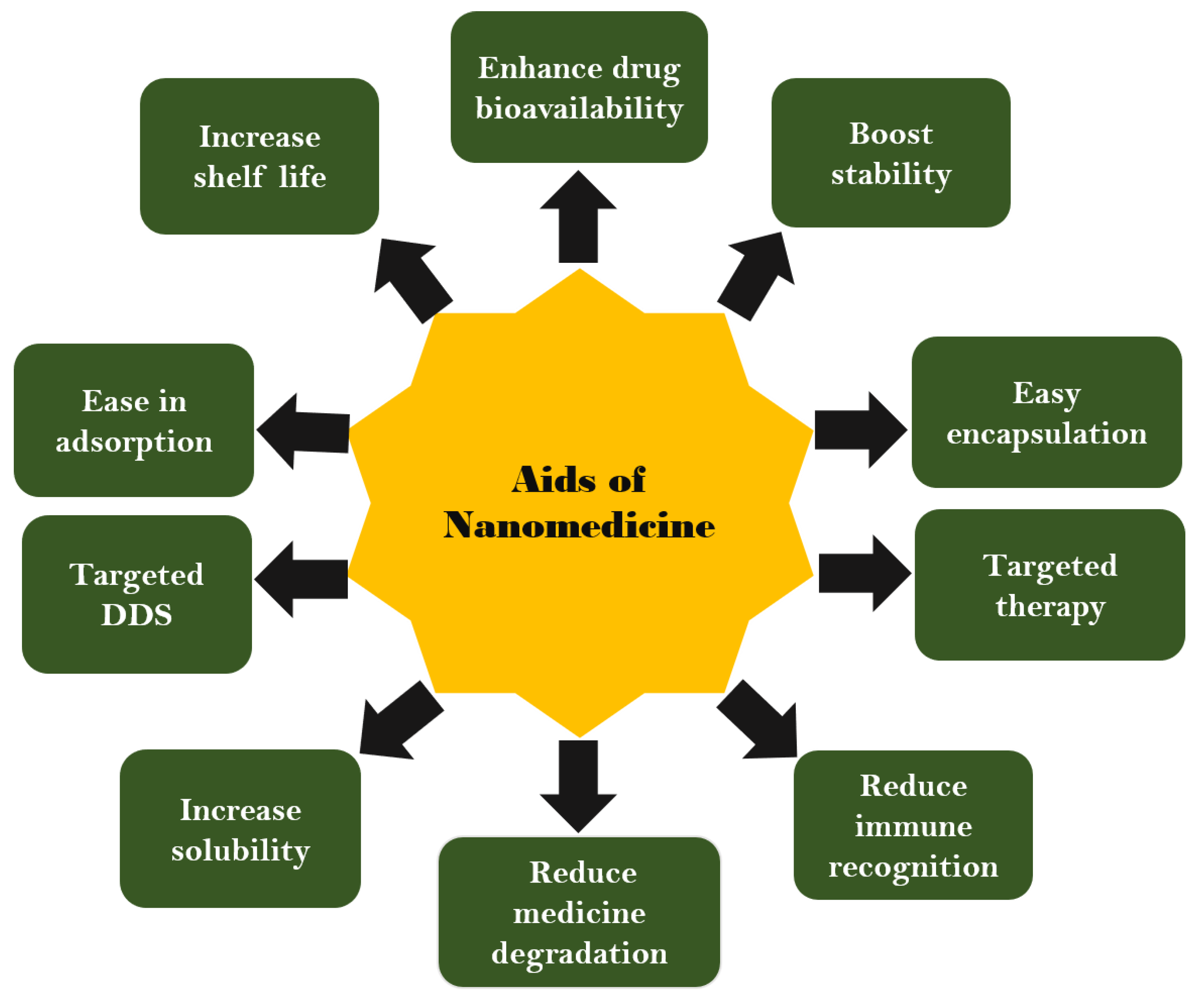
The nanomedicines are escorted in a new-fangled epoch, meant for drug carriage by refining the therapeutic directories of the energetic pharmacological elements engineered inside nanoparticles [32]. In this epoch, nanomedicine-based targeted-design structures can deliver multipurpose freight with favorable pharmacokinetics and capitalized so as to enhance drug specificity, usefulness, and safety, as shown in (Figure 2) [33]. The failure of chemotherapeutic approaches has increased the recurrence chances of disease, which enhances the complexity of lethal diseases [34].
Figure 2.
Aids of using nanomedicine platform for delivering drugs to the tumor complex.
2. History
Petros and his colleague reported a study about mid-19th century work on nanotechnology. As they reported, polymers and drugs were conjugated in 1955 [35], the first controlled-release polymer device appeared in 1964, the liposome was discovered by Bangham in 1965, albumin-based NPs were reported in 1972, liposome-based drugs were formulated in 1973, the first micelle was formulated and approved in 1983, the FDA approved the first controlled formulation in 1989, and first polyethylene glycol (PEG) conjugated with protein entered the market in 1990 [36]. Further studies have produced incredibly encouraging results for treating a variety of disorders (Table 1).
Table 1.
Evolution of nanoparticles from 1991 to 2022 in detail discussed here.
3. Recent Approaches Used in Drug Carriage System for Treatment of Various Diseases
3.1. Brain Drug Delivery System and Its Types
Under the most pathological circumstances of diseases such as strokes, seizures, multiple sclerosis, AIDS, diabetes, glioma, Alzheimer’s disease, and Parkinson’s disease, the blood–brain barrier (BBB) is disrupted [103]. An important reason for the breakdown of the blood–brain barrier is the remodeling of the protein complex in intra-endothelial junctions under the pathological conditions [104]. Normally, the blood–brain barrier acts to maintain blood–brain homeostasis by preventing entry of macromolecules and micromolecules from the blood [105]. If a drug crosses the BBB, it restricts accumulation of the drug in the intracerebral region of brain, and bioavailability is reduced, due to which brain diseases cannot be treated [106]. Therefore, the optimal drug delivery system (DDS) is a cell membrane DDS, virus-based DDS, or exosome-based DDS designed for BBB penetrability, lesion-targeting ability, and standard safety [107]. For the cure of brain diseases, the nanocarrier-assisted intranasal drug carriage system is widely used [108]. Now, at the advanced level, drugs poorly distributed to the brain can be loaded into a nanocarrier-based system, which would interact well with the endothelial micro vessel cells at the BBB and nasal mucosa to increase drug absorption time and the olfactory nerve fibers to stimulate straight nose-to-brain delivery [109], thus greater drug absorption in brain parenchyma through the secondary nose-to-blood-to-brain pathway [110]. The current strategies used are viral vectors, nanoparticles, exosomes, brain permeability enhancers, delivery through active transporters in the BBB, alteration of administration route, nanoparticles for the brain, and imaging/diagnostics under diseased conditions [111].
3.1.1. Role of Nanocarriers in Alzheimer’s Disease
Alzheimer’s disease is one of the fastest growing neurodegenerative diseases in the elderly population. Clinically, it is categorized by abstraction, damage to verbal access, and diminishing in spatial skills and reasoning [112]. Furthermore, engrossment of amyloid β (Aβ) aggregation and anxiety in the brain have significant parts [113]. The treatment of different diseases with nanotechnology-based drug delivery uses nanotechnology-based approaches [114]. In Alzheimer’s diseases, polymeric nanoparticles, liposomes, solid lipid nanoparticles, nano-emulsions, micro-emulsions, and liquid-crystals are used for treatment.
Polymeric Nanoparticles
- I.
- The drug Tacrine was loaded on polymeric nanoparticles and administered through an intravenous route. It enhanced the concentration of tacrine inside the brain and also reduced the whole-dose quantity [115].
- II.
- Rivastigmine drug was loaded on polymeric nanoparticles and administered through an intravenous route. It enhanced learning and memory capacities [116].
Solid Lipid Nanoparticles (SLNPs)
SLNPs enhanced drug retention in the brain area, raising absorption across the BBB [117]. Some of the drug’s effects are listed below.
- I.
- Piperine drug is loaded on solid lipid nanoparticles through an intraperitoneal route inside the brain to decrease plaques and masses and to increase AChE enzyme activity [118].
- II.
- Huperzine A improved cognitive functions. No main irritation was detected in rat skin when the drug was loaded on SLNPs in an in vitro study [119].
In recent reports, the coating of SLNPs with polysorbate enhances drug bioavailability [120,121]. Some of the coated NPs are listed below.
- I.
- The drug clozapine was loaded on a Dynasan 116 [Tripalmitin] lipid matrix coated with surfactant Poloxamer 188, Epikuron 200 to unload the drug safely into the brain microenvironment [122,123].
- II.
- Vitamin A was loaded on a lipid matrix Glyceryl behenate with coated surfactant hydroxypropyl distarch to unload the drug safely across the BBB [124,125].
- III.
- Diminazine was loaded on a stearic acid matrix coated with polysorbate 80 to deliver to an infected area safely [126,127].
- IV.
- Doxorubicin was loaded on stearic acid SLNs coated with Taurodeoxycholate surfactant to deliver the drug without reducing its effectiveness [128,129].
Liposomes
Liposomes have gained attention as auspicious tactics for brain-targeted drug delivery [130]. The recorded beneficial features of liposomes are their capacity to integrate and carry a large quantity of drugs and their likelihood to adorn their exterior with diverse ligands [131,132].
- Curcumin–PEG derivative was loaded on liposomes and showed high affinity on senile plaques in an ex vivo experiment. Furthermore, in vitro it demonstrated the ability for Aβ aggregation and was taken inside by the BBB in a rat model [133].
- Folic acid was loaded on liposomes, administered through an intranasal route and absorbed through the nasal cavity [134].
Nanoemulsions
- I.
- Beta-Asarone was loaded on nanoemulsions, administered through an intranasal route, and enhanced bioavailability [130].
Micro Emulsion
- I.
- Tacrine was loaded on a microemulsion and improved memory. Such nanoparticles absorbed rapidly via the nose to the brain through an intranasal route [135].
Liquid Crystals
- I.
- T. divaricate was loaded on liquid crystals and injected through a transdermal route. It increased permanency of the drug in designs and also increased skin infusion and retention [136].
3.1.2. Role of Nanocarriers in Parkinson’s Disease (PD)
Parkinson’s disease is considered the second most common neurological ailment, and it faces problems in reliable drug delivery for treatment and diagnosis [137]. The conventional anti-Parkinson’s drug is Levodopa, but it experiences low bioavailability and deprived transfer to the brain; this is the most thought-provoking problem [138]. To solve this problem, nanotechnology comes to the fore with insightful solutions to solve this problem. Various nanoparticles like metal nanoparticles, quantum dots, cerium oxide nanoparticles, organic nanoparticles, liposomes, and gene therapy are used in PD treatment [139]. All these nanoparticles enable drugs to enter through numerous ways across the blood–brain barrier (BBB) [140]. In the current study, Bhattamisra et al. reported Rotigotine drug loaded on chitosan NPs in human SH-SY5Y neuroblastoma cells and delivered from the nose to the brain in rat model of Parkinson’s disease. A study of the pharmacokinetic data proposed that the intranasal route is the best path for a straight channel of rotigotine to the brain [125].
Ropinirole (RP)
Ropinirole (RP) is a dopamine agonist used for Parkinson’s treatment. RP-loaded solid lipid nanoparticles (RP-SLNs) with nanostructured lipid carriers (RP-NLCs) comprising hydrogel (RP-SLN-C and RP-NLC-C) formulations are better for oral and topical distribution [141]. Generally, the results confirmed that lipid nanoparticles and consistent hydrogel formulations can be measured as another carriage methodology for the upgraded oral and topical delivery of RP for the active treatment of PD [142]. Neurodegenerative pathologies such as AD and PD can be treated with solid lipid nanoparticles, as this permits the drug to cross the BBB and reach the damaged area of the central nervous system [143].
3.2. Mechanism of Nanoparticles’ Brain Drug Delivery (across BBB)
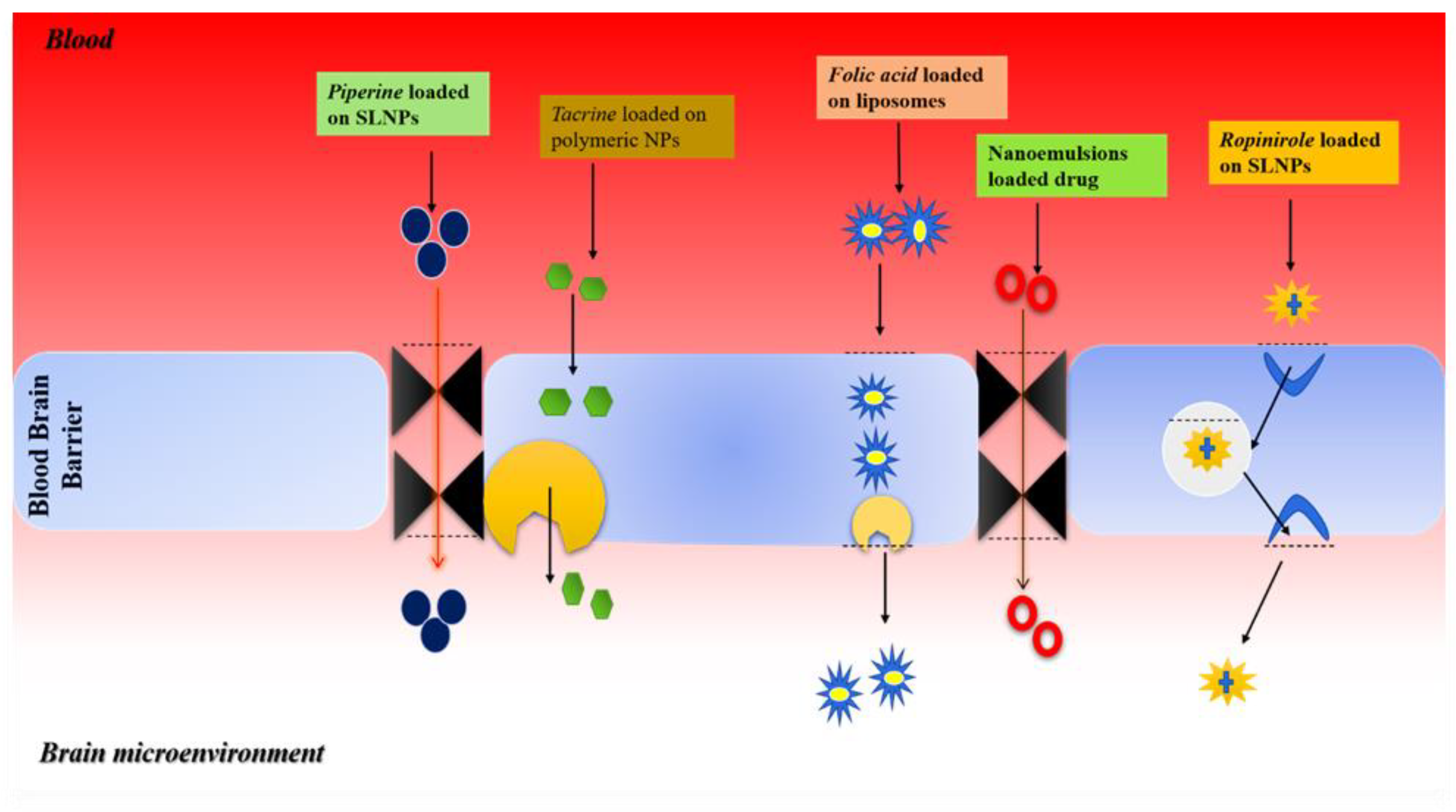
The NPs are commonly administered via intranasal, intraventricular, intraparenchymal routes. All these routes enabled nanoparticles to cross the BBB due to their small size. When nanoparticles reach the BBB, several mechanisms are used, like receptor-mediated mechanisms, active transport, and passive transport to deliver nanoparticles into the brain. Nanoparticles are small in size, can diffuse passively across the endothelial cells of the BBB, and can interact favorably with brain receptors and recognize ligands for interaction (Figure 3) [144].
Figure 3.
Diagram showing the mechanism of targeted drug delivery across BBB in brain microenvironment. Piperine loaded on SLNPs is injected intraperitonially, across BBB efferently to stop plaque formation. Polymeric nanoparticles are used for Tacrine delivery inside the brain, folic acid are loaded on the liposomes crossing blood–brain barrier to treat Alzheimer’s disease, while nanoemulsions and SLNP are loaded with drugs used to deliver medicines inside the targeted brain area to cure Parkinson’s disease.
3.3. Advantages and Disadvantages of Nanomedicines
When employed for brain illnesses, nanomedicines have both benefits and drawbacks (Table 2).
Table 2.
Advantages and disadvantages of nanomedicine.
4. Nanocarriers Role in Major Cancers
4.1. Brain Cancer
Brain malignancy is the most critical disease in the sense of treatment [150]. Malignancies of the brain are most difficult to treat due to limits imposed by the blood–brain barrier [151]. The brain microvascular endothelium is present in the BBB and creates barriers that distinguish blood from the neural tissues of the brain [152]. The BBB prevents the entry of harmful toxins, xenobiotic and other metabolites from entering the brain [153]. The majority of brain cancers include glioma and glioblastoma. Both of these are among the most lethal forms of brain cancer [154]. The annual occurrence is 5.26 per 100,000 people or 17,000 new diagnoses each year. The most common treatment is radiation surgery and chemotherapy, usually implemented with with temozolomide (TMZ) [155]. Nanoparticles have a high potential to treat brain cancer because of their small size in nm, tissue-specific targeting properties, and ease in crossing the BBB [156] (Table 3).
Table 3.
Various nanoparticles involved in brain cancer treatment in recent era.
4.2. Breast Cancer
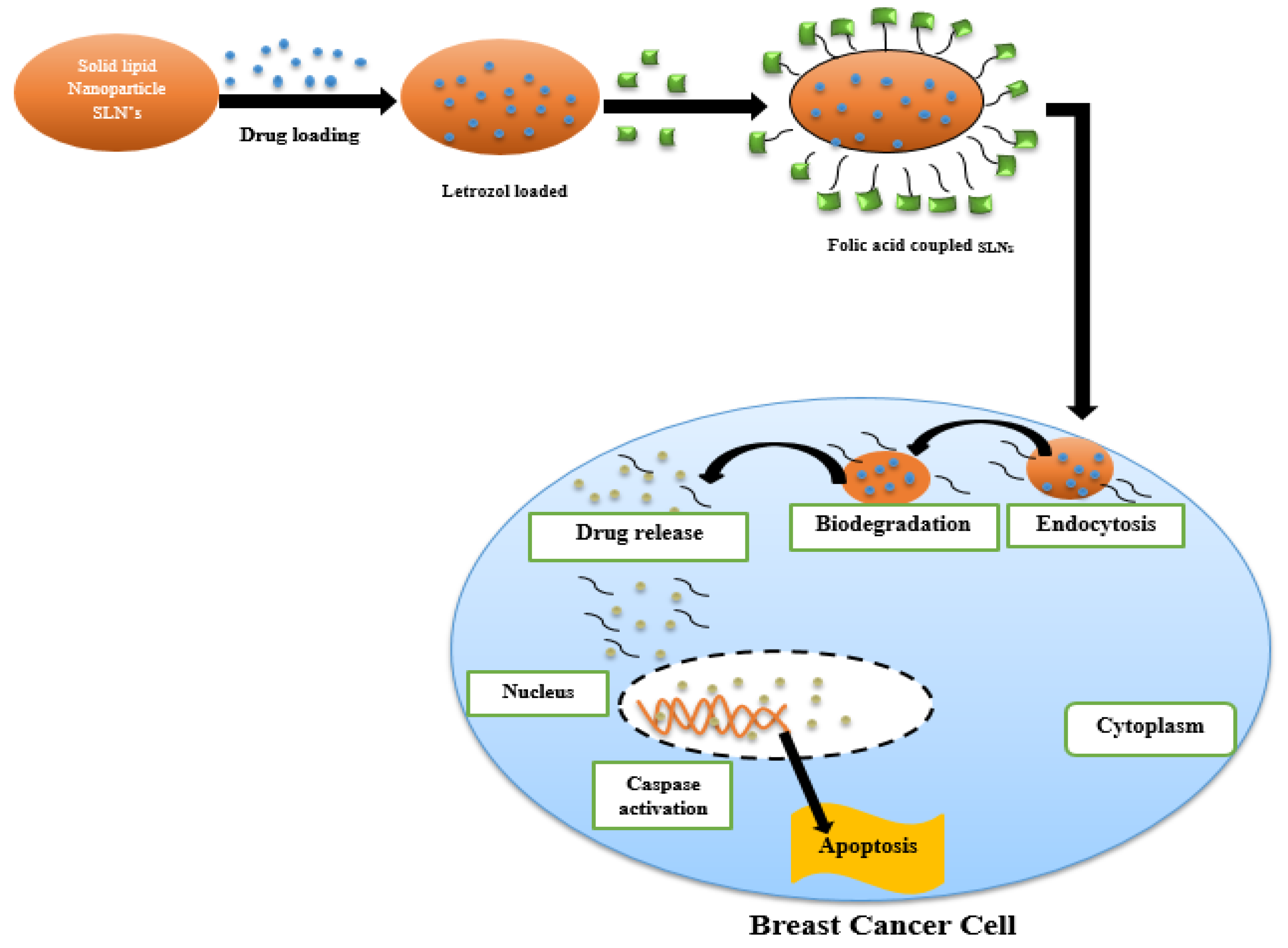
Cancer causes major deaths all over the world. Tumors spread due to the proliferation of cells [171], which invade through the lymphatic system to various parts of the body if they becomes malignant [172]. According to WHO, the ratio of deaths globally due to cancer is assessed to be 13%, attributing 8.2 million deaths every year [173]. Breast cancer is the most recorded type of melanoma present in only females, and its severity leads to mortality more often than lung cancer [174]. In 2012, estimated female breast cancer cases were 1.7 million, with 25% of deaths all over the world [175]. In a recent study, a report published in the name of Global Cancer Statistics 2020: GLOBOCAN estimates the incidence and mortality worldwide for 36 cancers in 185 countries and provides an update on cancer internationally [176]. A reported estimate is 19.3 million new cancer cases (18.1 million excluding non-melanoma skin cancer) and almost 10 million cancer deaths (9.9 million without non-melanoma skin cancer) occurring in 2020 worldwide. Female breast cancer has exceeded lung cancer as the most frequently diagnosed cancer, with an estimated 2.3 million new cases (11.7%), followed by lung (11.4%), prostate (7.3%), colorectal (10%), and stomach (5.6%) cancers [177]. For the effective treatment of breast cancer, surgery, chemotherapy, radiation therapy, hormonal therapy, and targeted therapy are performed [178]. However, nowadays, nanotechnology has gained interest for breast cancer treatment. Various organic and inorganic nanocarriers are used to deliver drugs to the specific target site [179]. Nanocarriers enhance the hydrophobicity of the anticancer drugs and promote specific target drug delivery [180]. Organic nanocarriers include polymeric nanocarriers, liposome nanocarriers, and solid lipid nanocarriers, while inorganic nanocarriers include magnetic nanocarriers, quantum dots, and carbon nanotubes (CNTs); both categories show great results towards treatment of heart diseases (Table 4) [181]. The mechanism of drug delivery in breast cancer is shown in Figure 4.
Table 4.
Nanoparticles’ role in treatment of breast cancer.
Figure 4.
Schematic representation of mechanism of drug letrozol loaded on solid lipid nanoparticles (SLNs) and folic acid coupled to SLNs. The whole carrier was delivered inside the animal rat model to treat effects on breast cancer cell lines. Inside cytoplasm, biodegradation occurred, as well as drug release and caspases’ activation inside nucleus, causing apoptosis.
4.3. Lung Cancer
Lungs are basically responsible for inhalation [194]. The lung is composed airways (conveying the air inside and outside of the lungs) and alveoli (gas exchange zones) [195]. In fact, airways are comparatively tough barriers for particles to enter through, while the barrier along the alveolar wall and the capillaries is relatively fragile in the gas exchange component [196]. The huge exterior area of the alveoli and deep air blood exchange cause the alveoli to be less healthy when affected by environmental injuries. Such injuries may be the reason for some pulmonary illnesses, including lung malignancy [197]. Several nanoparticles are now being established for respiratory applications that aim at eliminating the restrictions of orthodox drugs [198] (Table 5). Nanoparticles aid the cure of many lung diseases, such as asthma, tuberculosis, emphysema, cystic fibrosis, and cancer [199].
Table 5.
Recent discovered nanoparticle’s role in lung cancer treatment.
5. Drug Delivery Approach in Heart Diseases
Cardiovascular diseases include myocardial infraction (MI) [213], ischemic impairment, coronary artery disease (CAD), heart arrhythmias, pericardial disease, cardiomyopathy (heart muscle disease), and congenital heart disease [214,215]. All these illnesses are the basic main cause of mortality and morbidity in the world [216]. Cardiac diseases in humans involve incongruity in the morphogenesis of heart arrangement, functionality, and the healing and periodic shrinkage of cardiac muscles [217,218]. Around 50% of patients suffering from MI die within five years [216]. The insistence for a novel and effective remedy has brought about progress in direct drug carriage to the heart [219]. Modern therapeutic approaches have been developed to stop the incidence of heart failure after myocardial infarction [220]. Liposomes, silica NPs, dendrimers, cerium oxide NPs, micelles, TiO2 NPs, stents with nano-coatings, microbubbles, and polymer–drug conjugates are used for drug delivery. Magnetic nanoparticles like magnetoliposomes (MLs) are made up of the union of liposomes and magnetic nanoparticles. They are used as magnetic-targeted drug delivery [221]. The PEGylation of MLs increases their rate of flow in the blood, and pairing of the MLs with antibodies raises the rate of active target to pretentious positions [222]. Namdari and his co-workers performed experiments in a mice model afflicted with myocardial infraction (MI). Liposomes are used with various modifications and in different ways; they are adapted to load drugs on NPs for efficient delivery inside the cell. Cationic liposomes, perfluorocarbon nanoparticles, polyelectrolyte nanoparticles, and polymeric nanoparticles are the modified forms of nanocarriers [223] (Table 6).
Table 6.
Different forms of NPs; their experiment studies show its role in treatment of heart diseases.
6. Drug Delivery Approach in Skin Diseases
Skin diseases are follicular and cutaneous. These dermatological diseases are treated nowadays with nanotechnology. Nanoparticle delivery for cutaneous disease treatment is preferred, with minor side effects. The conventionally used creams, gels, and ointments are insufficient for delivering drugs due to low penetration in skin tissues. To address this, polymeric, lipid, and surfactant nanocarriers are used. The polymeric micelles enhance drug penetration into the skin tissue to treat skin cancer. As in this reported study, chitosan polymeric NPs, liposomes, and gold nanoparticles can treat atopic dermatitis by improving drug penetration into the dermal and epidermal layers [246]. Gold nanoparticles are extremely small in size and can penetrate easily and effectively with very low toxicity and no skin damage. As such, they are used widely in nanocarrier formulations for skin diseases.
7. Drug Delivery Approach in Bone Diseases
Bone diseases includes bone defects due to many pathological factors, such as fracture, trauma, osteoporosis, arthritis, infections, and many other diseases. In fact, bone regeneration as a disease treatment is a very complex process, due to which nanomaterials and biological materials are fused to repair bones effectively. The combination of biomaterial and nanomaterial has reduced bone implantation through the development of bone bioscaffolds [247].
Mechanism of Drug Delivery
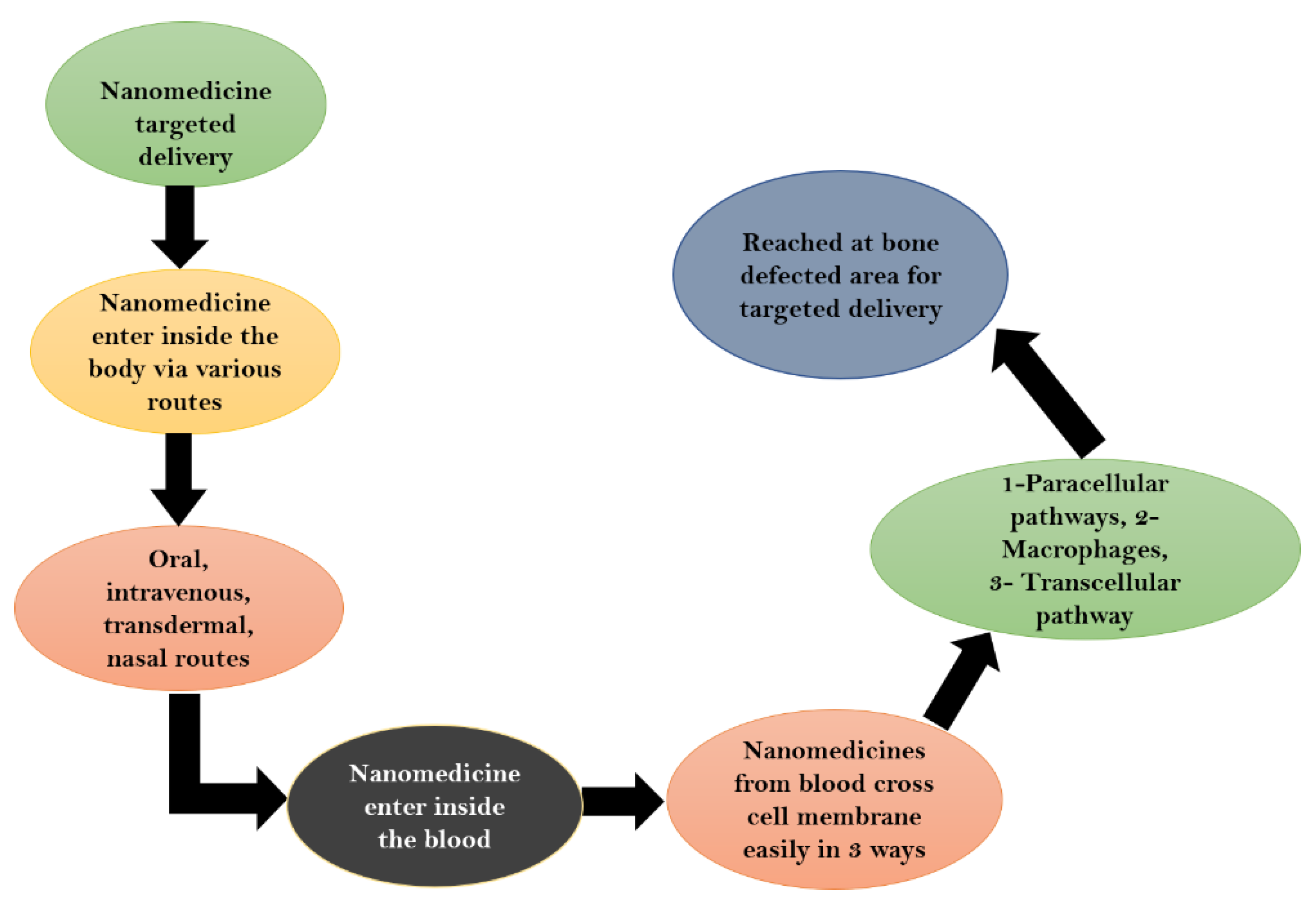
The drugs encapsulated inside the nanoparticle is delivered through blood to the targeted area in the bones. The management of the sending nanoparticles as shown herenin (Figure 5).
Figure 5.
Mechanism of nanomedicine delivery in bone diseases.
8. Drug Delivery Approach in Blood Diseases
There are various types of blood diseases, like hemopoietic blood disorder, as well as iron deficiency, leukemia, anemia, hemophilia, platelet diseases, and blood cancer. The conventionally used chemotherapeutic system causes damage to the immune system, with high risk of mortality. Bone marrow transplant is also an expensive and intricate process. For example, thalassemia is treated with deferoxamine, a chelating agent to treat excessive iron in the blood. The siRNA-coated nanocomposite has the inhibitory activity for tumor cells in vivo [248]. The treatment of blood disorders with nanomedicine is still under investigation.
9. Future Challenges of Nanomedicines
In the field of nanomedicine, there are many innovations which show its importance in clinical and other medical aspects. Many scientists have investigated in their research how nanomedicine is involved in treating malignancies and reducing mortality and morbidity rates. However, there are also future challenges that nanomedicines have been facing until now [249]. The implementation of nanomedicine in clinical practice will face many issues with insurance companies, regulatory agencies, and the public health sector. Until now, the FDA has not developed any specific regulation for the products containing nanomaterials. Due to a lack of nanomaterial standardization and other safety issues, US agencies, such as the EPA and NIOSH, are giving less funding to these research endeavors.
10. Conclusions
Nanotechnology-based nanomedicine is a diverse field for disease treatment. Nowadays, in every sort of disease, nanotechnology is emerging as the best therapeutic to cure disease. At California University, researchers are developing methods to deliver cardiac stem cells to the heart. They attached nanovesicles that directly target injured tissue to increase the amount of stem cells there. Thus, the involvement of stem cells with nanotechnology will develop many solutions for the disease-based queries in the medical arena. However, nanomedicine and nano drugs deal with many doubts. Irregularities and toxicity and safety valuations will be the topic of development in the future. Nanotechnology will be in high demand. Nowadays, drug-targeted delivery through nanoparticles is catching the attention of pharmaceutical researchers all over the world. Nanomedicine will overcome all the side effects of traditional medicines. This nanoscale technology will be incorporated in the medical system to diagnose, transport therapeutic drugs, and detect cancer growth, according to the National Cancer Institute. Experts are trying to treat SARS-CoV-2 with nanomedicine, as nanoparticles with 10–200 nm size can detect, for site-specific transfer, SARS-CoV-2, exterminate it, and improve the immune system of the body. Nanotechnology could help to combat COVID-19 by stopping viral contamination. Highly accurate nano-based sensors will be made in the future that will quickly recognize the virus and act by spraying to protect frontline doctors and the public. Furthermore, many antiviral disinfectants are being developed through nanobiotechnology to stop virus dissemination. In the future, nanotechnology will evolve to develop drugs with high activity, less toxicity, and sustained release to target tissue. Therefore, personalized medicine and nanomedicine both will be potential therapies to treat COVID-19 successfully, as well as to treat upcoming diseases in future.
Author Contributions
Conceptualization, M.S.N. and I.K.; original draft, O.A., M.S.N., B.M. and O.A.; writing—review and editing, O.A., S.I.A., A.S.A.A., A.T., B.M., B.N.M., S.I. and N.R.; funding acquisition, W.H.A. All authors have read and agreed to the published version of the manuscript.
Funding
The Project was funded by Deanship of Scientific Research at Umm Al-Qura University, and this work was supported by Grant Code (Project Code: 22 UQU4310387DSR40).
Data Availability Statement
Not applicable.
Acknowledgments
The authors are thankful to Umm Al-Qura University, Makkah, Saudi Arabia, for supporting this project (Project number 224UQU4310387DSR40).
Conflicts of Interest
The authors declare no conflict of interest.
References
- Li, S.; Zhang, H.; Chen, K.; Jin, M.; Vu, S.H.; Jung, S.; He, N.; Zheng, Z.; Lee, M.S. Applicatio of chitosan/alginate nanoparticle in oral drug delivery systems: Prospects and challenges. Drug Deliv. 2022, 29, 1142–1149. [Google Scholar] [CrossRef] [PubMed]
- Vlachopoulos, A.; Karlioti, G.; Balla, E.; Daniilidis, V.; Kalamas, T.; Stefanidou, M.; Bikiaris, N.D.; Christodoulou, E.; Koumentakou, I.; Karavas, E.; et al. Poly (Lactic Acid)-Based Microparticles for Drug Delivery Applications: An Overview of Recent Advances. Pharmaceutics 2022, 14, 359. [Google Scholar] [CrossRef] [PubMed]
- Tibbitt, M.W.; Dahlman, J.E.; Langer, R. Emerging frontiers in drug delivery. J. Am. Chem. Soc. 2016, 138, 704–717. [Google Scholar] [CrossRef] [PubMed]
- Builders, P.F.; Arhewoh, M.I. Pharmaceutical applications of native starch in conventional drug delivery. Starch-Stärke 2016, 9–10, 864–873. [Google Scholar] [CrossRef]
- Alshammari, M.K.; Alshehri, M.M.; Alshehri, A.M.; Alshlali, O.M.; Mahzari, A.M.; Almalki, H.H.; Kulaybi, O.Y.; Alghazwni, M.K.; Kamal, M.; Imran, M. Camptothecin loaded nano-delivery systems in the cancer therapeutic domains: A critical examination of the literature. J. Drug Deliv. Sci. Technol. 2022, 79, 104034. [Google Scholar] [CrossRef]
- Lai, H.; Liu, S.; Yan, J.; Xing, F.; Xiao, P. Facile Fabrication of Biobased Hydrogel from Natural Resources: L-Cysteine, Itaconic Anhydride, and Chitosan. ACS Sustain. Chem. Eng. 2020, 8, 4941–4947. [Google Scholar] [CrossRef]
- Marco-Dufort, B.; Willi, J.; Vielba-Gomez, F.; Gatti, F.; Tibbitt, M.W. Environment Controls Biomolecule Release from Dynamic Covalent Hydrogels. Biomacromolecules 2021, 22, 146–157. [Google Scholar] [CrossRef]
- Smolensky, M.H.; Peppas, N.A. Chronobiology, drug delivery, and chronotherapeutics. Adv. Drug Deliv. Rev. 2018, 9–10, 828–851. [Google Scholar]
- Jamieson, L.E.; Byrne, H.J. Vibrational spectroscopy as a tool for studying drug-cell interaction: Could high throughput vibrational spectroscopic screening improve drug development. Vib. Spectrosc. 2017, 91, 16–30. [Google Scholar] [CrossRef]
- Mak, K.K.; Pichika, M.R. Artificial intelligence in drug development: Present status and future prospects. Drug Discov. Today 2019, 24, 773–780. [Google Scholar] [CrossRef]
- Patra, J.K.; Das, G.; Fraceto, L.F.; Campos, E.V.R.; Rodriguez-Torres, M.D.P.; Acosta-Torres, L.S.; Diaz-Torres, L.A.; Grillo, R.; Swamy, M.K.; Sharma, S.; et al. Nano based drug delivery systems: Recent developments and future prospects. J. Nanobiotechnol. 2018, 16, 1–33. [Google Scholar] [CrossRef] [PubMed]
- Jain, K.K. Drug delivery systems—An overview. Drug Deliv. Syst. 2008, 437, 1–50. [Google Scholar]
- Ma, C.; Peng, Y.; Li, H.; Chen, W. Organ-on-a-Chip: A new paradigm for drug development. Trends Pharmacol. Sci. 2021, 42, 119–133. [Google Scholar] [CrossRef]
- Su, Y.; Xie, Z.; Kim, G.B.; Dong, C.; Yang, J. Design strategies and applications of circulating cell-mediated drug delivery systems. ACS Biomater. Sci. Eng. 2005, 4, 201–217. [Google Scholar] [CrossRef] [PubMed]
- Baig, N.; Kammakakam, I.; Falath, W. Nanomaterials: A review of synthesis methods, properties, recent progress, and challenges. Mater. Adv. 2021, 2, 1821–1871. [Google Scholar] [CrossRef]
- Prasad, R.D.; Charmode, N.; Shrivastav, O.P.; Prasad, S.R.; Moghe, A.; Sarvalkar, P.D.; Prasad, N.R. A review on concept of nanotechnology in veterinary medicine. ES Food Agrofor. 2021, 4, 28–60. [Google Scholar] [CrossRef]
- Lateef, A.; Darwesh, O.M.; Matter, I.A. Microbial nanobiotechnology: The melting pot of microbiology, microbial technology and nanotechnology. In Microbial Nanobiotechnology; Springer: Singapore, 2021; pp. 1–19. [Google Scholar]
- Mansor, N.I.; Nordin, N.; Mohamed, F.; Ling, K.H.; Rosli, R.; Hassan, Z. Crossing the blood-brain barrier: A review on drug delivery strategies for treatment of the central nervous system diseases. Curr. Drug Deliv. 2019, 16, 698–711. [Google Scholar] [CrossRef]
- Mughal, T.A.; Ali, S.; Hassan, A.; Kazmi, S.A.R.; Saleem, M.Z.; Shakir, H.A.; Nazer, S.; Farooq, M.A.; Awan, M.Z.; Khan, M.A.; et al. Phytochemical screening, antimicrobial activity, in vitro and in vivo antioxidant activity of Berberis lycium Royle root bark extract. Braz. J. Biol. 2021, 84. [Google Scholar] [CrossRef]
- Bonifácio, B.V.; da Silva, P.B.; dos Santos Ramos, M.A.; Negri, K.M.S.; Bauab, T.M.; Chorilli, M. Nanotechnology-based drug delivery systems and herbal medicines: A review. Int. J. Nanomed. 2014, 9, 1–15. [Google Scholar]
- Astruc, D. Introduction to Nanomedicine. Molecules 2016, 21, 4. [Google Scholar] [CrossRef]
- Peer, D.; Karp, J.M.; Hong, S.; Farokhzad, O.C.; Margalit, R.; Langer, R. Nanocarriers as an emerging platform for cancer therapy. Nano-Enabled Med. Appl. 2021, 61–91. [Google Scholar] [CrossRef]
- Cleal, K.; He, L.; Watson, P.D.; Jones, A.T. Endocytosis, intracellular traffic and fate of cell penetrating peptide-based conjugates and nanoparticles. Curr. Pharm. Des. 2013, 19, 2878–2894. [Google Scholar] [CrossRef] [PubMed]
- Mirza, A.Z.; Siddiqui, F.A. Nanomedicine and drug delivery: A mini review. Int. Nano Lett. 2014, 4, 94. [Google Scholar] [CrossRef]
- Dizaj, S.M.; Jafari, S.; Khosroushahi, A.Y. A sight on the current nanoparticle-based gene delivery vectors. Nanoscale Res. Lett. 2014, 9, 252. [Google Scholar] [CrossRef] [PubMed]
- Hussain, Z. Nanomedicines as emerging platform for simultaneous delivery of cancer therapeutics: New developments in overcoming drug resistance and optimizing anticancer efficacy. Artif. Cells Nanomed. Biotechnol. 2018, 46, 1015–1024. [Google Scholar] [CrossRef]
- Carmeliet, P.; Jain, R.K. Principles and mechanisms of vessel normalization for cancer and other angiogenic diseases. Nat. Rev. Drug Discov. 2011, 10, 417–427. [Google Scholar] [CrossRef]
- Cho, H.-Y. Tumor homing reactive oxygen species nanoparticle for enhanced cancer therapy. ACS Appl. Mater. Interfaces 2019, 11, 23909–23918. [Google Scholar] [CrossRef]
- Dilnawaz, F.; Acharya, S.; Sahoo, S.K. Recent trends of nano-medicinal approaches in clinics. Int. J. Pharm. 2018, 538, 263–278. [Google Scholar] [CrossRef]
- Tran, S.; DeGiovanni, P.-J.; Piel, B.; Rai, P. Cancer nanomedicine: A review of recent success in drug delivery. Clin. Transl. Med. 2017, 6, 1–21. [Google Scholar] [CrossRef]
- Cheng, R.; Meng, F.; Deng, C.; Klok, H.-A.; Zhong, Z. Dual and multi-stimuli responsive polymeric nanoparticles for programmed site-specific drug delivery. Biomaterials 2013, 34, 3647–3657. [Google Scholar] [CrossRef]
- Ge, Z.; Liu, S. Functional block copolymer assemblies responsive to tumor and intracellular microenvironments for site-specific drug delivery and enhanced imaging performance. Chem. Soc. Rev. 2013, 42, 7289–7325. [Google Scholar] [CrossRef] [PubMed]
- Liu, Z.; Jiang, W.; Nam, J.; Moon, J.J.; Kim, B.Y. Immunomodulating nanomedicine for cancer therapy. Nano Lett. 2018, 18, 6655–6659. [Google Scholar] [CrossRef] [PubMed]
- Iyer, A.K.; Singh, A.; Ganta, S.; Amiji, M.M. Role of integrated cancer nanomedicine in overcoming drug resistance. Adv. Drug Deliv. Rev. 2013, 65, 1784–1802. [Google Scholar] [CrossRef] [PubMed]
- MaHam, A.; Tang, Z.; Wu, H.; Wang, J.; Lin, Y. Protein-based nanomedicine platforms for drug delivery. Small 2009, 5, 1706–1721. [Google Scholar] [CrossRef] [PubMed]
- Harrington, K.J. Phase II study of pegylated liposomal doxorubicin (CaelyxTM) as induction chemotherapy for patients with squamous cell cancer of the head and neck. Eur. J. Cancer 2001, 37, 2015–2022. [Google Scholar] [CrossRef] [PubMed]
- Torchilin, V.P. Recent advances with liposomes as pharmaceutical carriers. Nat. Rev. Drug Discov. 2005, 4, 145–160. [Google Scholar] [CrossRef]
- Couvreur, P.; Vauthier, C. Poly alkyl cyanoacrylate nanoparticles as drug carrier: Present state and perspectives. J. Control. Release 1991, 17, 187–198. [Google Scholar] [CrossRef]
- Vauthier, C.; Dubernet, C.; Chauvierre, C.; Brigger, I.; Couvreur, P. Drug delivery to resistant tumors: The potential of poly (alkyl cyanoacrylate) nanoparticles. J. Control. Release 2003, 93, 151–160. [Google Scholar] [CrossRef]
- Shinto, Y.; Uchida, A.; Korkusuz, F.; Araki, N.; Ono, K. Calcium hydroxyapatite ceramic used as a delivery system for antibiotics. J. Bone Joint Surg. Br. 1992, 74, 600–604. [Google Scholar] [CrossRef]
- Esterhai, J.L., Jr.; Bednar, J.; Kimmelman, C.P. Gentamicin-induced ototoxicity complicating treatment of chronic osteomyelitis. Clin. Orthop. 1986, 209, 185–188. [Google Scholar] [CrossRef]
- Couvreur, P.; Puisieux, F. Nano-and microparticles for the delivery of polypeptides and proteins. Adv. Drug Deliv. Rev. 1993, 10, 141–162. [Google Scholar] [CrossRef]
- Hwang, S.R.; Byun, Y. Advances in oral macromolecular drug delivery. Expert Opin. Drug Deliv. 2014, 11, 1955–1967. [Google Scholar] [CrossRef] [PubMed]
- Müller, J.J.; Lukowski, G.; Kröber, R.; Damaschun, G.; Dittgen, M. Acrylic acid copolymer nanoparticles for drug delivery: Structural characterization of nanoparticles by small-angle x-ray scattering. Colloid Polym. Sci. 1994, 272, 755–769. [Google Scholar] [CrossRef]
- Lukowski, G.; Müller, R.H.; Müller, B.W.; Dittgen, M. Acrylic acid copolymer nanoparticles for drug delivery. Part II: Characterization of nanoparticles surface-modified by adsorption of ethoxylated surfactants. Colloid Polym. Sci. 1993, 271, 100–105. [Google Scholar] [CrossRef]
- Fresta, M.; Puglisi, G.; Giammona, G.; Cavallaro, G.; Micali, N.; Furneri, P.M. Pefloxacine mesilate-and ofloxacin-loaded poly ethyl cyanoacrylate nanoparticles: Characterization of the colloidal drug carrier formulation. J. Pharm. Sci. 1995, 74, 895–902. [Google Scholar] [CrossRef]
- Cavallaro, G.; Fresta, M.; Giammona, G.; Puglisi, G.; Villari, A. Entrapment of β-lactams antibiotics in polyethylcyanoacrylate nanoparticles: Studies on the possible in vivo application of this colloidal delivery system. Int. J. Pharm. 1994, 111, 31–41. [Google Scholar] [CrossRef]
- Pardridge, W.M. Physiologic-based strategies for protein drug delivery to the brain. J. Control. Release 1996, 39, 281–286. [Google Scholar] [CrossRef]
- Partridge, W.M. Drug and gene targeting to the brain via blood–brain barrier receptor-mediated transport systems. Int. Congr. Ser. 2005, 1277, 49–62. [Google Scholar] [CrossRef]
- Labhasetwar, V.; Song, C.; Levy, R.J. Nanoparticle drug delivery system for restenosis. Adv. Drug Deliv. Rev. 1997, 24, 63–85. [Google Scholar] [CrossRef]
- Labhasetwar, V.; Underwood, T.; Schwendeman, S.P.; Levy, R.J. Iontophoresis for modulation of cardiac drug delivery in dogs. Proc. Natl. Acad. Sci. USA 1995, 92, 2612–2616. [Google Scholar] [CrossRef]
- Kwon, G.S. Diblock copolymer nanoparticles for drug delivery. Crit. Rev. Ther. Drug Carr. Syst. 1998, 5, 481–512. [Google Scholar] [CrossRef]
- Kataoka, K.; Harada, A.; Nagasaki, Y. Block copolymer micelles for drug delivery: Design, characterization and biological significance. Adv. Drug Deliv. Rev. 2012, 64, 37–48. [Google Scholar] [CrossRef]
- Fernández-Urrusuno, R.; Calvo, P.; Remuñán-López, C.; Vila-Jato, J.L.; Alonso, M.J. Enhancement of nasal absorption of insulin using chitosan nanoparticles. Pharm. Res. 1999, 16, 1576–1581. [Google Scholar] [CrossRef] [PubMed]
- Zhang, X.; Zhang, H.; Wu, Z.; Wang, Z.; Niu, H.; Li, C. Nasal absorption enhancement of insulin using PEG-grafted chitosan nanoparticles. Eur. J. Pharm. Biopharm. 2008, 68, 526–534. [Google Scholar] [CrossRef] [PubMed]
- Kong, G.; Braun, R.D.; Dewhirst, M.W. Hyperthermia enables tumor-specific nanoparticle delivery: Effect of particle size. Cancer Res. 2000, 60, 4440–4445. [Google Scholar] [PubMed]
- May, J.P.; Li, S.-D. Hyperthermia-induced drug targeting. Expert Opin. Drug Deliv. 2013, 10, 511–527. [Google Scholar] [CrossRef]
- Calvo, P. PEGylated poly cyanoacrylate nanoparticles as vector for drug delivery in prion diseases. J. Neurosci. Methods 2001, 111, 151–155. [Google Scholar] [CrossRef]
- Collinge, J. Molecular neurology of prion disease. J. Neurol. Neurosurg. Psychiatry 2005, 76, 906–919. [Google Scholar] [CrossRef]
- Qian, Z.M.; Li, H.; Sun, H.; Ho, K. Targeted drug delivery via the transferrin receptor-mediated endocytosis pathway. Pharmacol. Rev. 2002, 54, 561–587. [Google Scholar] [CrossRef]
- Ulbrich, K.; Hekmatara, T.; Herbert, E.; Kreuter, J. Transferrin-and transferrin-receptor-antibody6modified nanoparticles enable drug delivery across the blood–brain barrier (BBB). Eur. J. Pharm. Biopharm. 2009, 71, 251–256. [Google Scholar] [CrossRef]
- Shankar, S.S.; Ahmad, A.; Pasricha, R.; Sastry, M. Bio reduction of chloroaurate ions by geranium leaves and its endophytic fungus yields gold nanoparticles of different shapes. J. Mater. Chem. 2003, 13, 1822–1826. [Google Scholar] [CrossRef]
- Panyam, J.; Labhasetwar, V. Targeting intracellular targets. Curr. Drug Deliv. 2004, 1, 235–247. [Google Scholar] [CrossRef]
- Ashihara, H.; Suzuki, T. Distribution and biosynthesis of caffeine in plants. Front Biosci. 2005, 9, 1864–7336. [Google Scholar] [CrossRef] [PubMed]
- Paciotti, G.F.; Kingston, D.G.; Tamarkin, L. Colloidal gold nanoparticles: A novel nanoparticle platform for developing multifunctional tumor-targeted drug delivery vectors. Drug Dev. Res. 2006, 67, 47–54. [Google Scholar] [CrossRef]
- Hattori, Y.; Maitani, Y. Folate-linked lipid-based nanoparticle for targeted gene delivery. Curr. Drug Deliv. 2005, 2, 243–252. [Google Scholar] [CrossRef] [PubMed]
- Lu, Y.; Low, P.S. Folate-mediated delivery of macromolecular anticancer therapeutic agents. Adv. Drug Deliv. Rev. 2002, 54, 675–693. [Google Scholar] [CrossRef]
- Xiao, S. Preparation of folate-conjugated starch nanoparticles and its application to tumor-targeted drug delivery vector. Chin. Sci. Bull. 2006, 51, 1693–1697. [Google Scholar] [CrossRef]
- Yu, D.; Xiao, S.; Tong, C.; Chen, L.; Liu, X. Dialdehyde starch nanoparticles: Preparation and application in drug carrier. Chin. Sci. Bull. 2007, 52, 2913–2918. [Google Scholar] [CrossRef]
- Han, G.; Ghosh, P.; Rotello, V.M. Multi-Functional Gold Nanoparticles for Drug Delivery. In Bio-Applications of Nanoparticles; Chan, W.C.W., Ed.; Springer: New York, NY, USA, 2007; pp. 48–56. [Google Scholar]
- Ghosh, P.; Han, G.; De, M.; Kim, C.K.; Rotello, V.M. Gold nanoparticles in delivery applications. Adv. Drug Deliv. Rev. 2008, 60, 1307–1315. [Google Scholar] [CrossRef]
- Kim, H.S.; Lee, D.Y. Near-infrared-responsive cancer photothermal and photodynamic therapy using gold nanoparticles. Polymers 2018, 10, 961. [Google Scholar] [CrossRef]
- Cheng, Y.; Samia, A.C.; Meyers, J.D.; Panagopoulos, I.; Fei, B.; Burda, C. Highly efficient drug delivery with gold nanoparticle vectors for in vivo photodynamic therapy of cancer. J. Am. Chem. Soc. 2008, 130, 10643–10647. [Google Scholar] [CrossRef] [PubMed]
- Gazori, T.; Khoshayand, M.R.; Azizi, E.; Yazdizade, P.; Nomani, A.; Haririan, I. Evaluation of Alginate/Chitosan nanoparticles as antisense delivery vector: Formulation, optimization and in vitro characterization. Carbohydr. Polym. 2009, 77, 599–606. [Google Scholar] [CrossRef]
- Sarmento, B.; Ribeiro, A.J.; Veiga, F.; Ferreira, D.C.; Neufeld, R.J. Insulin-loaded nanoparticles are prepared by alginate ionotropic pre-gelation followed by chitosan polyelectrolyte complexation. J. Nanosci. Nanotechnol. 2007, 7, 2833–2847. [Google Scholar] [CrossRef] [PubMed]
- Rosenholm, J.M.; Peuhu, E.; Bate-Eya, L.T.; Eriksson, J.E.; Sahlgren, C.; Lindén, M. Cancer-Cell-Specific Induction of Apoptosis Using Mesoporous Silica Nanoparticles as Drug-Delivery Vectors. Small 2010, 6, 1234–1241. [Google Scholar] [CrossRef] [PubMed]
- Kohler, N.; Sun, C.; Wang, J.; Zhang, M. Methotrexate-modified superparamagnetic nanoparticles and their intracellular uptake into human cancer cells. Langmuir 2005, 21, 8858–8864. [Google Scholar] [CrossRef]
- Alhaddad, A. Nanodiamond as a vector for siRNA delivery to Ewing sarcoma cells. Phys. Q.-Bio. 2011, 21, 3087–3095. [Google Scholar] [CrossRef] [PubMed]
- Mengesha, A.E.; Youan, B.C. Nano diamonds for drug delivery systems. In Diamond-Based Materials for Biomedical Applications; Elsevier: Amsterdam, The Netherlands, 2013; pp. 186–205. [Google Scholar]
- Arjunan, N.K.; Murugan, K.; Rejeeth, C.; Madhiyazhagan, P.; Barnard, D.R. Green Synthesis of Silver Nanoparticles for the Control of Mosquito Vectors of Malaria, Filariasis, and Dengue. Vector-Borne Zoonotic Dis. 2012, 12, 262–268. [Google Scholar] [CrossRef]
- Jadoun, S.; Arif, R.; Jangid, N.K.; Meena, R.K. Green synthesis of nanoparticles using plant extracts: A review. Environ. Chem. Lett. 2021, 19, 355–374. [Google Scholar] [CrossRef]
- Brown, P.K.; Qureshi, A.T.; Moll, A.N.; Hayes, D.J.; Monroe, W.T. Silver Nanoscale Antisense Drug Delivery System for Photoactivated Gene Silencing. ACS Nano 2013, 7, 2948–2959. [Google Scholar] [CrossRef]
- Minelli, C.; Lowe, S.B.; Stevens, M.M. Engineering nanocomposite materials for cancer therapy. Small 2010, 21, 2336–2357. [Google Scholar] [CrossRef]
- Rajeshkumar, S. Synthesis of silver nanoparticles using fresh bark of Pongamia pinnata and characterization of its antibacterial activity against gram positive and gram negative pathogens. Resour.-Effic. Technol. 2016, 2, 30–35. [Google Scholar] [CrossRef]
- Beg, M. Green synthesis of silver nanoparticles using Pongamia pinnata seed: Characterization, antibacterial property, and spectroscopic investigation of interaction with human serum albumin. J. Mol. Recognit. 2017, 30, e2565. [Google Scholar] [CrossRef] [PubMed]
- Urbán, P.; Ranucci, E.; Fernàndez-Busquets, X. Polyamidoamine nanoparticles as nanocarriers for the drug delivery to malaria parasite stages in the mosquito vector. Nanomed 2015, 10, 3401–3414. [Google Scholar] [CrossRef] [PubMed]
- Chamundeeswari, M.; Jeslin, J.; Verma, M.L. Nanocarriers for drug delivery applications. Environ. Chem. Lett. 2019, 17, 849–865. [Google Scholar] [CrossRef]
- Kulbacka, J. Electroporation and lipid nanoparticles with cyanine IR-780 and flavonoids as efficient vectors to enhanced drug delivery in colon cancer. Bioelectrochemistry 2016, 110, 19–31. [Google Scholar] [CrossRef]
- Lamichhane, T.N.; Raiker, R.S.; Jay, S.M. Exogenous DNA loading into extracellular vesicles via electroporation is size-dependent and enables limited gene delivery. Mol. Pharm. 2015, 12, 3650–3657. [Google Scholar] [CrossRef]
- Ju, Z.; Sun, W. Drug delivery vectors based on filamentous bacteriophages and phage-mimetic nanoparticles. Drug Deliv. 2017, 24, 1898–1908. [Google Scholar] [CrossRef]
- Jahromi, M.A.M.; Zangabad, P.S.; Basri, S.M.M.; Zangabad, K.S.; Ghamarypour, A.; Aref, A.R. Recent progress in targeted delivery vectors based on biomimetic nanoparticles. Signal Transduct. Target. Ther. 2021, 6, 225. [Google Scholar]
- Aljabali, A.A. Innovative Applications of Plant Viruses in Drug Targeting and Molecular Imaging—A Review. Curr. Med. Imaging 2021, 17, 491–506. [Google Scholar] [CrossRef]
- Slita, A.; Egorova, A.; Casals, E.; Kiselev, A.; Rosenholm, J.M. Characterization of modified mesoporous silica nanoparticles as vectors for siRNA delivery. Asian J. Pharm. Sci. 2018, 13, 592–599. [Google Scholar] [CrossRef]
- Wu, S.H.; Mou, C.Y.; Lin, H.P. Synthesis of mesoporous silica nanoparticles. Chem. Soc. Rev. 2013, 42, 3862–3875. [Google Scholar] [CrossRef] [PubMed]
- Garg, U.; Chauhan, S.; Nagaich, U.; Jain, N. Current Advances in Chitosan Nanoparticles Based Drug Delivery and Targeting. Adv. Pharm. Bull. 2019, 9, 195–204. [Google Scholar] [CrossRef]
- Pathak, C.; Vaidya, F.U.; Pandey, S.M. Mechanism for development of nanobased drug delivery system. Appl. Target. Nano Drugs Deliv. Syst. 2019, 1, 35–67. [Google Scholar]
- Ghaz-Jahanian, M.A.; Abbaspour-Aghdam, F.; Anarjan, N.; Berenjian, A.; Jafarizadeh-Malmiri, H. Application of chitosan-based nanocarriers in tumor-targeted drug delivery. Mol. Biotechnol. 2015, 157, 201–218. [Google Scholar] [CrossRef] [PubMed]
- Assa, F. Chitosan magnetic nanoparticles for drug delivery systems. Crit. Rev. Biotechnol. 2017, 37, 492–509. [Google Scholar] [CrossRef]
- Li, Y.; Wang, S.; Song, F.X.; Zhang, L.; Yang, W.; Wang, H.X. A pH-sensitive drug delivery system based on folic acid-targeted HBP-modified mesoporous silica nanoparticles for cancer therapy. Colloids Surf. Physicochem. Eng. Asp. 2020, 590, 124470. [Google Scholar] [CrossRef]
- Shafiei, N.; Nasrollahzadeh, M.; Iravani, S. Green Synthesis of Silica and Silicon Nanoparticles and Their Biomedical and Catalytic Applications. Comments Inorg. Chem. 2021, 41, 317–372. [Google Scholar] [CrossRef]
- Shariatinia, Z. Inorganic Material-Based Nanocarriers for Delivery of Biomolecules. Nanoeng. Biomater. Biomed. Appl. 2022, 2, 245–293. [Google Scholar]
- Ho, W.; Gao, M.; Li, F.; Li, Z.; Zhang, X.; Xu, X. Next-Generation Vaccines: Nanoparticle-Mediated DNA and mRNA Delivery. Adv. Healthc. Mater. 2021, 10, 2001812. [Google Scholar] [CrossRef]
- Thi, T.T.; Suys, E.J.; Lee, J.S.; Nguyen, D.H.; Park, K.D.; Truong, N.P. Lipid-based nanoparticles in the clinic and clinical trials: From cancer nanomedicine to COVID-19 vaccines. Vaccines 2021, 9, 359. [Google Scholar] [CrossRef]
- Mallakpour, S.; Azadi, E.; Hussain, C.M. The latest strategies in the fight against the COVID-19 pandemic: The role of metal and metal oxide nanoparticles. New J. Chem. 2021, 45, 6167–6179. [Google Scholar] [CrossRef]
- Kelleni, M.T. Resveratrol-zinc nanoparticles or pterostilbene-zinc: Potential COVID-19 mono and adjuvant therapy. Biomed. Pharmacother. 2021, 139, 111626. [Google Scholar] [CrossRef] [PubMed]
- Zhang, H.; Zhang, L.; Zhong, H.; Niu, S.; Ding, S.; Lv, S. Iridium oxide nanoparticles-based theranostic probe for in vivo tumor imaging and synergistic chem/photothermal treatments of cancer cells. Chem. Eng. J. 2022, 430, 132–675. [Google Scholar] [CrossRef]
- Cao, S.; Deng, Y.; Zhang, L.; Aleahmad, M. Chitosan nanoparticles, as biological macromolecule-based drug delivery systems to improve the healing potential of artificial neural guidance channels: A review. Int. J. Biol. Macromol. 2022, 201, 569–579. [Google Scholar] [CrossRef]
- Fricke, I.B.; Schelhaas, S.; Zinnhardt, B.; Viel, T.; Hermann, S.; Couillard-Després, S.; Jacobs, A.H. In vivo bioluminescence imaging of neurogenesis—The role of the blood brain barrier in an experimental model of Parkinson’s disease. Eur. J. Neurosci. 2017, 45, 975–986. [Google Scholar] [CrossRef]
- Komarova, Y.A.; Kruse, K.; Mehta, D.; Malik, A.B. Protein Interactions at Endothelial Junctions and Signaling Mechanisms Regulating Endothelial Permeability. Circ. Res. 2017, 120, 179–206. [Google Scholar] [CrossRef]
- Stamatovic, S.M.; Keep, R.F.; Andjelkovic, A.V. Brain endothelial cell-cell junctions: How to ‘open’ the blood brain barrier. Curr. Neuropharmacol. 2008, 6, 179–192. [Google Scholar] [CrossRef]
- Sahni, J.K.; Doggui, S.; Ali, J.; Baboota, S.; Dao, L.; Ramassamy, C. Neurotherapeutic applications of nanoparticles in Alzheimer’s disease. J. Control. Release 2012, 152, 208–231. [Google Scholar] [CrossRef]
- Nazıroğlu, M.; Muhamad, S.; Pecze, L. Nanoparticles as potential clinical therapeutic agents in Alzheimer’s disease: Focus on selenium nanoparticles. Expert Rev. Clin. Pharmacol. 2017, 16, 73–782. [Google Scholar] [CrossRef]
- Kaur, I.P.; Bhandari, R.; Bhandari, S.; Kakkar, V. Potential of solid lipid nanoparticles in brain targeting. J. Control. Release 2008, 127, 97–109. [Google Scholar] [CrossRef]
- Alam, M.I.; Beg, S.; Samad, A.; Baboota, S.; Kohli, K.; Ali, J.; Ahuja, A.; Akbar, M. Strategy for effective brain drug delivery. Eur. J. Pharm. Sci. 2010, 40, 385–403. [Google Scholar] [CrossRef] [PubMed]
- Chen, Y.; Wei, C.; Lyu, Y.; Chen, H.; Jiang, G.; Gao, X. Biomimetic drug-delivery systems for the management of brain diseases. Biomater. Sci. 2020, 8, 1073–1088. [Google Scholar] [CrossRef] [PubMed]
- Kreuter, J. Nanoparticles system for brain delivery of drugs. Adv. Drug Deliv. Rev. 2001, 47, 65–81. [Google Scholar] [CrossRef] [PubMed]
- Chen, Y.; Dalwadi, G.; Benson, H.A.E. Drug delivery across the blood—Brain barrier. Cur. Drug Deliv 2004, 1, 361–376. [Google Scholar] [CrossRef] [PubMed]
- Fundaro, A.; Cavalli, R.; Bagoni, A.; Vighetto, D.; Zara, G.P.; Gasco, M.R. Non-stealth and stealth solid lipid nanoparticles(sln) carrying doxorubicin: Pharmacokinetic and tissue distribution after IV administration to rats. Pharm. Res. 2000, 42, 337–343. [Google Scholar] [CrossRef] [PubMed]
- Venkateshwarlu, V.; Manjunath, K. Preparation, characterization and in vitro release kinetics of clozapine Solid Lipid Nanoparticles. J. Control. Release 2004, 65, 627–638. [Google Scholar] [CrossRef] [PubMed]
- Olbrich, C.; Kayser, O.; Muller, R.H. Lipase degradation of Dynasan 114 & 116 SLN-effect of surfactant, storage time & crystallinity. Int. J. Pharm. 2002, 237, 119–128. [Google Scholar]
- Cavalli, R.; Caputo, O.; Carlotti, M.E.; Trotta, M.; Scarnecchia, C.; Gasco, M.R. Sterilization and freeze drying of drug-free and drug-loaded solid lipid nanoparticles. Int. J. Pharm. 1997, 148, 47–54. [Google Scholar] [CrossRef]
- Jenning, V.; Gysler, A.; Schäfer-Korting, M.; Gohla, S.H. Vitamin A loaded solid lipid nanoparticles for topical use: Occlusive properties and drug targeting to the upper skin. Eur. J. Pharm. Biopharm. 2000, 49, 211–218. [Google Scholar] [CrossRef]
- Olbrich, C.; Gessner, A.; Schroder, W.; Kayser, O.; Muller, R.H. Lipid drug conjugate nanoparticles of the hydrophilic drug diminazine-cytotoxicity testing and mouse serum adsorption. J. Control. Release 2004, 96, 425–435. [Google Scholar] [CrossRef]
- Schwarz, C.; Mehnert, W.; Lucks, J.S.; Muller, R.H. Solid lipid nanoparticles for controlled drug delivery. I. Production, characterization and sterilization. J. Control. Release 1994, 96, 83–96. [Google Scholar] [CrossRef]
- Zimmermann, E.; Müller, R.H.; Mader, K. Influence of different parameters on reconstitution of lyophilized SLN. Int. J. Pharm. 2000, 196, 211–213. [Google Scholar] [CrossRef] [PubMed]
- Kreuter, J. Physicochemical characterization of polyacrylic nanoparticles. Int. J. Pharm. 1983, 65, 43–58. [Google Scholar] [CrossRef]
- Wissing, S.A.; Kayser, O.; Müller, R.H. Solid lipid nanoparticles for parenteral drug delivery. Adv. Drug Deliv. Rev. 2004, 56, 1257–1272. [Google Scholar] [CrossRef] [PubMed]
- Müller, R.H.; Rühl, D.; Runge, S.A. Biodegradation of solid lipid nanoparticles as a function of lipase incubation time. Int. J. Pharm. 1996, 144, 115–121. [Google Scholar] [CrossRef]
- Lai, F.; Fadda, A.M.; Sinico, C. Liposomes for brain delivery. Expert Opin. Drug Deliv. 2013, 10, 1003–1022. [Google Scholar] [CrossRef]
- Samad, A.; Sultana, Y.; Aqil, M. Liposomal drug delivery systems: An update review. Curr. Drug Deliv. 2007, 4, 297–305. [Google Scholar] [CrossRef]
- Leonor Pinzon-Daza, M.; Campia, I.; Kopecka, J.; Garzón, R.; Ghigo, D.; Rigant, C. Nanoparticle-and liposome-carried drugs: New strategies for active targeting and drug delivery across blood-brain barrier. Curr. Drug Metab. 2013, 14, 625–640. [Google Scholar] [CrossRef]
- Gharbavi, M.; Amani, J.; Kheiri-Manjili, H.; Danafar, H.; Sharafi, A. Niosome: A promising nanocarrier for natural drug delivery through blood-brain barrier. Adv. Pharmacol. Sci. 2018, 2018, 6847971. [Google Scholar] [CrossRef]
- Bhattamisra, S.K.; Shak, A.T.; Xi, L.W.; Safian, N.H.; Choudhury, H.; Lim, W.M.; Shahzad, N.; Alhakamy, N.A.; Anwer, M.K.; Radhakrishnan, A.K.; et al. Nose to brain delivery of rotigotine loaded chitosan nanoparticles in human SH-SY5Y neuroblastoma cells and animal model of Parkinson’s disease. Int. J. Pharm. 2020, 579, 119148. [Google Scholar] [CrossRef]
- Fan, Y.; Chen, M.; Zhang, J.; Maincent, P.; Xia, X.; Wu, W. Updated Progress of Nanocarrier-Based Intranasal Drug Delivery Systems for Treatment of Brain Diseases. Crit. Rev. Ther. Drug Carr. Syst. 2018, 5, 433–467. [Google Scholar] [CrossRef] [PubMed]
- Dong, X. Current Strategies for Brain Drug Delivery. Theranostics 2018, 8, 1481–1493. [Google Scholar] [CrossRef] [PubMed]
- Rafiee, Z.; Nejatian, M.; Daeihamed, M.; Jafari, S.M. Application of different nanocarriers for encapsulation of curcumin. Crit. Rev. Food Sci. Nutr. 2019, 59, 3468–3497. [Google Scholar] [CrossRef] [PubMed]
- Wilson, B.; Samanta, M.K.; Santhi, K.; Kumar, K.P.S.; Paramakrishnan, N.; Suresh, B. Targeted delivery of tacrine into the brain with polysorbate 80-coated poly(n-butylcyanoacrylate) nanoparticles. Eur. J. Pharm. Biopharm. 2008, 70, 75–84. [Google Scholar] [CrossRef]
- Fonseca-Santos, B.; Gremião, M.P.D.; Chorilli, M. Nanotechnology-based drug delivery systems for the treatment of Alzheimer’s disease. Int. J. Nanomed. 2015, 10, 4981–5003. [Google Scholar] [CrossRef]
- Yusuf, M.; Khan, M.; Khan, R.A.; Ahmed, B. Preparation, characterization, in vivo and biochemical evaluation of brain targeted Piperine solid lipid nanoparticles in an experimentally induced Alzheimer’s disease model. J. Drug Target. 2013, 21, 300–311. [Google Scholar] [CrossRef]
- Patel, P.A.; Patil, S.C.; Kalaria, D.R.; Kalia, Y.N.; Patravale, V.B. Comparative in vitro and in vivo evaluation of lipid based nanocarriers of Huperzine A. Int. J. Pharm. 2013, 446, 16–23. [Google Scholar] [CrossRef]
- Mourtas, S.; Lazar, A.N.; Markoutsa, E.; Duyckaerts, C.; Antimisiaris, S.G. Multifunctional nanoliposomes with curcumin–lipid derivative and brain targeting functionality with potential applications for Alzheimer disease. Eur. J. Med. Chem. 2014, 80, 175–183. [Google Scholar] [CrossRef]
- Ravouru, N.; Kondreddy, P.; Korakanchi, D.H.M. Formulation and Evaluation of Niosomal Nasal Drug Delivery System of Folic Acid for Brain Targeting. Curr. Drug Discov. Technol. 2013, 10, 270–282. [Google Scholar] [CrossRef]
- Hersh, A.M.; Alomari, S.; Tyler, B.M. Crossing the blood-brain barrier: Advances in nanoparticle technology for drug delivery in neuro-oncology. Int. J. Mol. Sci. 2022, 23, 4153. [Google Scholar] [CrossRef]
- Zorkina, Y.; Abramova, O.; Ushakova, V.; Morozova, A.; Zubkov, E.; Valikhov, M.; Melnikov, P.; Majouga, A.; Chekhonin, V. Nano carrier drug delivery systems for the treatment of neuropsychiatric disorders: Advantages and limitations. Molecules 2020, 25, 5294. [Google Scholar] [CrossRef] [PubMed]
- Agrawal, M.; Saraf, S.; Saraf, S.; Antimisiaris, S.; Hamano, N.; Li, S.-D.; Chougule, M.; Shoyele, S.A.; Gupta, U.; Uddin, A.; et al. Recent advancements in the field of nanotechnology for the delivery of anti-Alzheimer drug in the brain region. Expert Opin. Drug Deliv. 2018, 15, 589–617. [Google Scholar] [CrossRef] [PubMed]
- Shah, P.; Chavda, K.; Vyas, B.; Patel, S. Formulation development of linagliptin solid lipid nanoparticles for oral bioavailability enhancement: Role of P-gp inhibition. Drug Deliv. Transl. Res. 2021, 11, 1166–1185. [Google Scholar] [CrossRef] [PubMed]
- Li, X.; Tsibouklis, J.; Weng, T.; Zhang, B.; Yin, G.; Feng, G.; Cui, Y.; Savina, I.N.; Mikhalovska, L.I.; Sandeman, S.R.; et al. Nano carriers for drug transport across the blood–brain barrier. J. Drug Target. 2017, 25, 17–28. [Google Scholar] [CrossRef]
- Majumder, J.; Taratula, O.; Minko, T. Nanocarrier-based systems for targeted and site-specific therapeutic delivery. Adv. Drug Deliv. Rev. 2018, 144, 57–77. [Google Scholar] [CrossRef]
- Jogani, V.V.; Shah, P.J.; Mishra, P.; Mishra, A.K.; Misra, A.R. Intranasal Mucoadhesive Microemulsion of Tacrine to Improve Brain Targeting. Alzheimer Dis. Assoc. Disord. 2008, 22, 116–124. [Google Scholar] [CrossRef]
- Chaiyana, W.; Rades, T.; Okonogi, S. Characterization and in vitro permeation study of microemulsions and liquid crystalline systems containing the anticholinesterase alkaloidal extract from Tabernaemontana divaricata. Int. J. Pharm. 2013, 452, 201–210. [Google Scholar] [CrossRef]
- Hayes, M.T. Parkinson’s disease and parkinsonism. Am. J. Med. 2019, 132, 802–807. [Google Scholar] [CrossRef]
- Ishihara, L.; Brayne, C. A systematic review of depression and mental illness preceding Parkinson’s disease. Acta Neurol. Scand. 2006, 113, 211–220. [Google Scholar] [CrossRef]
- Kyle, S.; Saha, S. Nanotechnology for the detection and therapy of stroke. Adv. Healthc. Mater. 2014, 3, 1703–1720. [Google Scholar] [CrossRef]
- Ghazy, E.; Rahdar, A.; Barani, M.; Kyzas, G.Z. Nanomaterials for Parkinson disease: Recent progress. J. Mol. Struct. 2021, 1231, 129698. [Google Scholar] [CrossRef]
- Dudhipala, N.; Gorre, T. Neuroprotective Effect of Ropinirole Lipid Nanoparticles Enriched Hydrogel for Parkinson’s Disease: In Vitro, Ex Vivo, Pharmacokinetic and Pharmacodynamic Evaluation. Pharmaceutics 2020, 12, 448. [Google Scholar] [CrossRef] [PubMed]
- Barcia, E.; Boeva, L.; García-García, L.; Slowing, K.; Fernández-Carballido, A.; Casanova, Y. Nanotechnology-based drug delivery of ropinirole for Parkinson’s disease. Drug Deliv. 2017, 24, 1112–1123. [Google Scholar] [CrossRef] [PubMed]
- Cacciatore, I.; Ciulla, M.; Fornasari, E.; Marinelli, L.; Di Stefano, A. Solid lipid nanoparticles as a drug delivery system for the treatment of neurodegenerative diseases. Expert Opin. Drug Deliv. 2016, 13, 1121–1131. [Google Scholar] [CrossRef]
- Jha, A.; Mukhopadhaya, K. Supporting Diagnosis and Treatment. In Alzheimer’s Disease; Springer: Berlin/Heidelberg, Germany, 2021; pp. 65–85. [Google Scholar]
- McMahon, D.; O’Reilly, M.A.; Hynynen, K. Therapeutic Agent Delivery across the Blood–Brain Barrier Using Focused Ultrasound. Annu. Rev. Biomed. Eng. 2021, 23, 89–113. [Google Scholar] [CrossRef]
- Bhaskar, S.; Tian, F.; Stoeger, T.; Kreyling, W.; de la Fuente, J.M.; Grazú, V. Multifunctional Nanocarriers for diagnostics, drug delivery and targeted treatment across blood-brain barrier: Perspectives on tracking and neuroimaging. Part. Fibre Toxicol. 2010, 7, 3. [Google Scholar] [CrossRef]
- Saraiva, C.; Praça, C.; Ferreira, R.; Santos, T.; Ferreira, L.; Bernardino, L. Nanoparticle-mediated brain drug delivery: Overcoming blood–brain barrier to treat neurodegenerative diseases. J. Control. Release 2016, 235, 34–47. [Google Scholar] [CrossRef]
- Mendez, G.; Ozpinar, A.; Raskin, J.; Gultekin, S.H.; Ross, D.A. Case comparison and literature review of glioblastoma: A tale of two tumors. Surg. Neurol. Int. 2014, 5, 121. [Google Scholar]
- Omuro, A.; DeAngelis, L.M. Glioblastoma and Other Malignant Gliomas: A Clinical Review. JAMA 2013, 310, 1842–1850. [Google Scholar] [CrossRef]
- Zhao, Z.; Ukidve, A.; Kim, J.; Mitragotri, S. Targeting strategies for tissue-specific drug delivery. Cell 2020, 181, 151–167. [Google Scholar] [CrossRef]
- Prasad, B.L.V. Cytotoxicity of sophorolipid -gellan gum- gold nanoparticle conjugates and their doxorubicin loaded derivatives towards human glioma and human glioma stem cell lines. Nanoscale 2011, 3, 575–580. [Google Scholar]
- Mazur, J.; Roy, K.; Kanwar, J.R. Recent advances in nanomedicine and survivin targeting in brain cancers. Nanomedicine 2018, 13, 105–137. [Google Scholar] [CrossRef] [PubMed]
- Wan, X.; Zheng, X.; Pang, X.; Pang, Z.; Zhao, J.; Zhang, Z. Lapatinib-loaded human serum albumin nanoparticles for the prevention and treatment of triple-negative breast cancer metastasis to the brain. Oncotarget 2016, 7, 34038–34051. [Google Scholar] [CrossRef] [PubMed]
- Erin, N.; Kale, Ş.; Tanrıöver, G.; Köksoy, S.; Duymuş, Ö.; Korcum, A.F. Differential characteristics of heart, liver, and brain metastatic subsets of murine breast carcinoma. Breast Cancer Res. Treat 2013, 139, 677–689. [Google Scholar] [CrossRef] [PubMed]
- Gao, H.; Yang, Z.; Cao, S.; Xi, Z.; Zhang, S.; Pang, Z. Behavior and anti-glioma effect of lapatinib-incorporated lipoprotein-like nanoparticles. Nanotechnology 2012, 23, 435101. [Google Scholar] [CrossRef] [PubMed]
- Bonde, G.V.; Yadav, S.K.; Chauhan, S.; Mittal, P.; Ajmal, G.; Thokala, S.; Mishra, B. Lapatinib nano-delivery systems: A promising future for breast cancer treatment. Expert Opin. Drug Deliv. 2018, 15, 495–507. [Google Scholar] [CrossRef] [PubMed]
- Ghorbani, M.; Bigdeli, B.; Jalili-baleh, L.; Baharifar, H.; Akrami, M.; Dehghani, S. Curcumin-lipoic acid conjugate as a promising anticancer agent on the surface of gold-iron oxide nanocomposites: A pH-sensitive targeted drug delivery system for brain cancer theranostics. Eur. J. Pharm. Sci. 2018, 114, 175–188. [Google Scholar] [CrossRef] [PubMed]
- Kim, E.H.; Sohn, S.; Kwon, H.J.; Kim, S.U.; Kim, M.J.; Lee, S.J.; Choi, K.S. Sodium selenite induces superoxide-mediated mitochondrial damage and subsequent autophagic cell death in malignant glioma cells. Cancer Res. 2007, 67, 6314–6324. [Google Scholar] [CrossRef]
- Agrawal, P.; Singh, R.P.; Sonali; Kumari, L.; Sharma, G.; Koch, B. TPGS-chitosan cross-linked targeted nanoparticles for effective brain cancer therapy. Mater. Sci. Eng. C 2017, 74, 167–176. [Google Scholar] [CrossRef]
- Muthu, M.S.; Avinash Kulkarni, S.; Liu, Y.; Feng, S.-S. Development of docetaxel-loaded vitamin E TPGS micelles: Formulation optimization, effects on brain cancer cells and biodistribution in rats. Nano Diam. 2012, 7, 353–364. [Google Scholar] [CrossRef]
- Lara-Velazquez, M.; Alkharboosh, R.; Norton, E.S.; Ramirez-Loera, C.; Freeman, W.D.; Guerrero-Cazares, H. Chitosan-Based Non-viral Gene and Drug Delivery Systems for Brain Cancer. Front. Neurol. 2020, 11, 740. [Google Scholar] [CrossRef] [PubMed]
- Denora, N.; Trapani, A.; Laquintana, V.; Lopedota, A.; Trapani, G. Recent advances in medicinal chemistry and pharmaceutical technology-strategies for drug delivery to the brain. Curr. Top. Med. Chem. 2009, 9, 182–196. [Google Scholar] [CrossRef] [PubMed]
- Shinde, G.; Shiyani, S.; Shelke, S.; Chouthe, R.; Kulkarni, D.; Marvaniya, K. Enhanced brain targeting efficiency using 5-FU (fluorouracil) lipid–drug conjugated nanoparticles in brain cancer therapy. Prog. Biomater. 2020, 9, 259–275. [Google Scholar] [CrossRef] [PubMed]
- Arias, J.L.; Clares, B.; Morales, M.E.; Gallardo, V.; Ruiz, M.A. Lipid-based drug delivery systems for cancer treatment. Curr. Drug Targets 2011, 12, 1151–1165. [Google Scholar] [CrossRef]
- Folkman, J. Role of angiogenesis in tumor growth and metastasis. Semin. Oncol. 2002, 29, 15–18. [Google Scholar] [CrossRef]
- Wicki, A.; Witzigmann, D.; Balasubramanian, V.; Huwyler, J. Nanomedicine in cancer therapy: Challenges, opportunities, and clinical applications. J. Control. Release 2015, 200, 138–157. [Google Scholar] [CrossRef]
- Bray, F.; Ferlay, J.; Soerjomataram, I.; Siegel, R.L.; Torre, L.A.; Jemal, A. Global cancer statistics 2018: GLOBOCAN estimates of incidence and mortality worldwide for 36 cancers in 185 countries. CA Cancer J. Clin. 2018, 68, 394–424. [Google Scholar] [CrossRef]
- Dey, S.; Soliman, A.S. Cancer in the global health era: Opportunities for the Middle East and Asia. Asia Pac. J. Public Health 2010, 22, 75S–82S. [Google Scholar] [CrossRef]
- Torre, L.A.; Bray, F.; Siegel, R.L.; Ferlay, J.; Lortet-Tieulent, J.; Jemal, A. Global cancer statistics, 2012. CA Cancer J. Clin. 2015, 65, 87–108. [Google Scholar] [CrossRef]
- Çelikgün, S.; Koç, T.; Tuncer, E.; Özer, H.; Nur, N. Cancer Map between 2010–2019 Sivas City. Int. J. Acad Med. Pharm. 2021, 3, 273–276. [Google Scholar] [CrossRef]
- Sung, H.; Ferlay, J.; Siegel, R.L.; Laversanne, M.; Soerjomataram, I.; Jemal, A. Global Cancer Statistics 2020: GLOBOCAN Estimates of Incidence and Mortality Worldwide for 36 Cancers in 185 Countries. CA Cancer J. Clin. 2020, 71, 209–249. [Google Scholar] [CrossRef] [PubMed]
- Maughan, K.L.; Lutterbie, M.A.; Ham, P. Treatment of breast cancer. Am. Fam. Physician 2010, 81, 1339–1346. [Google Scholar] [PubMed]
- Jin, K.-T.; Lu, Z.-B.; Chen, J.-Y.; Liu, Y.-Y.; Lan, H.-R.; Dong, H.-Y. Recent trends in nanocarrier-based targeted chemotherapy: Selective delivery of anticancer drugs for effective lung, colon, cervical, and breast cancer treatment. J. Nanomater. 2020, 2020, 9184284. [Google Scholar] [CrossRef]
- Biswas, S.; Kumari, P.; Lakhani, P.M.; Ghosh, B. Recent advances in polymeric micelles for anti-cancer drug delivery. Eur. J. Pharm. Sci. 2016, 83, 184–202. [Google Scholar] [CrossRef] [PubMed]
- Lee, J.J.; Saiful Yazan, L.; Che Abdullah, C.A. A review on current nanomaterials and their drug conjugate for targeted breast cancer treatment. Int. J. Nanomed. 2017, 12, 2373–2384. [Google Scholar] [CrossRef] [PubMed]
- Yassemi, A.; Kashanian, S.; Zhaleh, H. Folic acid receptor-targeted solid lipid nanoparticles to enhance cytotoxicity of letrozole through induction of caspase-3 dependent-apoptosis for breast cancer treatment. Pharm. Dev. Technol. 2020, 25, 397–407. [Google Scholar] [CrossRef] [PubMed]
- Chen, Q.; Zheng, J.; Yuan, X.; Wang, J.; Zhang, L. Folic acid grafted and tertiary amino based pH-responsive pentablock polymeric micelles for targeting anticancer drug delivery. Mater. Sci. Eng. 2018, 82, 1–9. [Google Scholar] [CrossRef]
- Chen, Y.; Tezcan, O.; Li, D.; Beztsinna, N.; Lou, B.; Etrych, T.; Ulbrich, K.; Metselaar, J.M.; Lammers, T.; Hennink, W.E. Overcoming multidrug resistance using folate receptor-targeted and pH-responsive polymeric nanogels containing covalently entrapped doxorubicin. Nanoscale 2017, 9, 10404–10419. [Google Scholar] [CrossRef]
- Fathy Abd-Ellatef, G.-E.; Gazzano, E.; Chirio, D.; Ragab Hamed, A.; Belisario, D.C.; Zuddas, C. Curcumin-Loaded Solid Lipid Nanoparticles Bypass P-Glycoprotein Mediated Doxorubicin Resistance in Triple Negative Breast Cancer Cells. Pharmaceutics 2020, 12, 96. [Google Scholar] [CrossRef]
- Wang, W.; Chen, T.; Xu, H.; Ren, B.; Cheng, X.; Qi, R.; Liu, H.; Wang, Y.; Yan, L.; Chen, S.; et al. Curcumin-loaded solid lipid nanoparticles enhanced anticancer efficiency in breast cancer. Molecules 2018, 12, 1578. [Google Scholar] [CrossRef]
- Riganti, C.; Gazzano, E.; Gulino, G.R.; Volante, M.; Ghigo, D.; Kopecka, J. Two repeated low doses of doxorubicin are more effective than a single high dose against tumors overexpressing P-glycoprotein. Cancer Lett. 2015, 23, 219–226. [Google Scholar] [CrossRef] [PubMed]
- Naruphontjirakul, P.; Viravaidya-Pasuwat, K. Development of anti-HER2-targeted doxorubicin–core-shell chitosan nanoparticles for the treatment of human breast cancer. Int. J. Nanomed. 2019, 14, 4105–4121. [Google Scholar] [CrossRef] [PubMed]
- Naruphontjirakul, P.; Viravaidya-Pasuwat, K. Development of doxorubicin—Core Shell chitosan nanoparticles to treat Cancer. In Proceedings of the 2011 International Conference on Biomedical Engineering and Technology, Kuala Lumpur, Malaysia, 4–5 June 2011. [Google Scholar]
- Di, H.; Wu, H.; Gao, Y.; Li, W.; Zou, D.; Dong, C. Doxorubicin-and cisplatin-loaded nanostructured lipid carriers for breast cancer combination chemotherapy. Drug Dev. Ind. Pharm. 2016, 42, 2038–2043. [Google Scholar] [CrossRef] [PubMed]
- Namdari, M.; Cheraghi, M.; Negahdari, B.; Eatemadi, A.; Daraee, H. Recent advances in magnetoliposome for heart drug delivery. Artif. Cells Nanomed. Biotechnol. 2017, 45, 1051–1057. [Google Scholar] [CrossRef] [PubMed]
- Looga, R. Reflex cardiovascular responses to lung inflation: A review. Respir. Physiol. 1997, 12, 95–106. [Google Scholar] [CrossRef] [PubMed]
- Garcia-Mouton, C.; Hidalgo, A.; Cruz, A.; Pérez-Gil, J. The Lord of the Lungs: The essential role of pulmonary surfactant upon inhalation of nanoparticles. Eur. J. Pharm. Biopharm. 2016, 144, 230–243. [Google Scholar] [CrossRef] [PubMed]
- Jud, C.; Clift, M.; Petri-Fink, A.; Rothen-Rutishauser, B. Nanomaterials and the human lung: What is known and what must be deciphered to realize their potential advantages? Swiss Med. Wkly. 2013, 143, w13758. [Google Scholar] [CrossRef] [PubMed]
- Donaldson, K.; Poland, C.A. Inhaled nanoparticles and lung cancer—What we can learn from conventional particle toxicology. Swiss Med. Wkly. 2012, 142, w13547. [Google Scholar] [CrossRef]
- Kuzmov, A.; Minko, T. Nanotechnology approaches for inhalation treatment of lung diseases. J. Control. Release 2015, 219, 500–518. [Google Scholar] [CrossRef]
- Azarmi, S.; Roa, W.H.; Löbenberg, R. Targeted delivery of nanoparticles for the treatment of lung diseases. Adv. Drug Deliv. Rev. 2008, 60, 863–875. [Google Scholar] [CrossRef]
- Han, S.; Liu, Y.; Nie, X.; Xu, Q.; Jiao, F.; Li, W. Efficient Delivery of Antitumor Drug to the Nuclei of Tumor Cells by Amphiphilic Biodegradable Poly(L-Aspartic Acid-co-Lactic Acid)/DPPE Co-Polymer Nanoparticles. Small 2012, 8, 1596–1606. [Google Scholar] [CrossRef] [PubMed]
- Lu, X.; Zhu, T.; Chen, C.; Liu, Y. Right or left: The role of nanoparticles in pulmonary diseases. Int. J. Mol. Sci. 2014, 15, 17577–17600. [Google Scholar] [CrossRef] [PubMed]
- Aouameur, D.; Cheng, H.; Opoku-Damoah, Y.; Sun, B.; Dong, Q.; Han, Y.; Zhou, J.; Ding, Y. Stimuli-responsive gel-micelles with flexible modulation of drug release for maximized antitumor efficacy. Nano Res. 2018, 11, 4245–4264. [Google Scholar] [CrossRef]
- Kamat, C.D.; Shmueli, R.B.; Connis, N.; Rudin, C.M.; Green, J.J.; Hann, C.L. Poly(β-amino ester) Nanoparticle Delivery of TP53 Has Activity against Small Cell Lung Cancer In Vitro and In Vivo. Mol. Cancer Ther. 2013, 12, 405–415. [Google Scholar] [CrossRef] [PubMed]
- Cordeiro, R.A.; Serra, A.; Coelho, J.F.; Faneca, H. Poly(β-amino ester)-based gene delivery systems: From discovery to therapeutic applications. J. Control. Release 2019, 310, 155–187. [Google Scholar] [CrossRef] [PubMed]
- Nan, Y. Lung carcinoma therapy using epidermal growth factor receptor-targeted lipid polymeric nanoparticles co-loaded with cisplatin and doxorubicin. Oncol. Rep. 2019, 42, 2087–2096. [Google Scholar] [CrossRef]
- Xu, C.; Wang, Y.; Guo, Z.; Chen, J.; Lin, L.; Wu, J. Pulmonary delivery by exploiting doxorubicin and cisplatin co-loaded nanoparticles for metastatic lung cancer therapy. J. Control. Release 2019, 295, 153–163. [Google Scholar] [CrossRef]
- Tan, S.; Wang, G. Redox-responsive and pH-sensitive nanoparticles enhanced stability and anticancer ability of erlotinib to treat lung cancer in vivo. Drug Des. Devel. Ther. 2017, 11, 3519–3529. [Google Scholar] [CrossRef]
- Wang, X.; Chen, H.; Zeng, X.; Guo, W.; Jin, Y.; Wang, S. Efficient lung cancer-targeted drug delivery via a nanoparticle/MSC system. Acta Pharm. Sin. B 2019, 9, 167–176. [Google Scholar] [CrossRef]
- Rehman, S.; Nabi, B.; Pottoo, F.H.; Baboota, S.; Ali, J. Nanoparticle based gene therapy approach: A pioneering rebellion in the management of psychiatric disorders. Curr. Gene Ther. 2020, 20, 164–173. [Google Scholar] [CrossRef]
- Mahmoudi, S.; Ghorbani, M.; Sabzichi, M.; Ramezani, F.; Hamishehkar, H.; Samadi, N. Targeted hyaluronic acid-based lipid nanoparticle for apigenin delivery to induce Nrf2-dependent apoptosis in lung cancer cells. J. Drug Deliv. Sci. Technol. 2019, 49, 268–276. [Google Scholar] [CrossRef]
- Chan, M.; Huang, W.; Wang, J.; Liu, R.; Hsiao, M. Next-Generation Cancer-Specific Hybrid Theranostic Nanomaterials: MAGE-A3 NIR Persistent Luminescence Nanoparticles Conjugated to Afatinib for In Situ Suppression of Lung Adenocarcinoma Growth and Metastasis. Adv. Sci. 2020, 7, 1903741. [Google Scholar] [CrossRef] [PubMed]
- Wang, L.; Jia, E. Ovarian cancer targeted hyaluronic acid-based nanoparticle system for paclitaxel delivery to overcome drug resistance. Drug Deliv. 2016, 23, 1810–1817. [Google Scholar] [CrossRef] [PubMed]
- Sadighian, S.; Rostamizadeh, K.; Hosseini-Monfared, H.; Hamidi, M. Doxorubicin-conjugated core–shell magnetite nanoparticles as dual-targeting carriers for anticancer drug delivery. Colloids Surf. B Biointerfaces 2014, 117, 406–413. [Google Scholar] [CrossRef] [PubMed]
- Guo, Z.; Sui, J.; Ma, M.; Hu, J.; Sun, Y.; Yang, L. pH-Responsive charge switchable PEGylated ε-poly-l-lysine polymeric nanoparticles-assisted combination therapy for improving breast cancer treatment. J. Control. Release 2020, 326, 350–364. [Google Scholar] [CrossRef] [PubMed]
- Chen, S.; Huang, S.; Li, Y.; Zhou, C. Recent advances in epsilon-poly-L-lysine and L-lysine-based dendrimer synthesis, modification, and biomedical applications. Front. Chem. 2021, 9, 169. [Google Scholar] [CrossRef]
- Shi, C.; He, Y.; Feng, X.; Fu, D. ε-Polylysine and next-generation dendrigraft poly-L-lysine: Chemistry, activity, and applications in biopharmaceuticals. J. Biomater. Sci. Polym. Ed. 2015, 26, 1343–1356. [Google Scholar] [CrossRef]
- Devi, L.; Gupta, R.; Jain, S.K.; Singh, S.; Kesharwani, P. Synthesis, characterization and in vitro assessment of colloidal gold nanoparticles of Gemcitabine with natural polysaccharides for treatment of breast cancer. J. Drug Deliv. Sci. Technol. 2020, 56, 101–565. [Google Scholar] [CrossRef]
- Kush, P.; Bajaj, T.; Kaur, M.; Madan, J.; Jain, U.K.; Kumar, P.; Deep, A.; Kim, K.H. Biodistribution and pharmacokinetic study of gemcitabine hydrochloride loaded biocompatible iron-based metal organic framework. J. Inorg. Organomet. Polym. Mater. 2020, 30, 2827–2841. [Google Scholar] [CrossRef]
- Pooja, D.; Panyaram, S.; Kulhari, H.; Reddy, B.; Rachamalla, S.S.; Sistla, R. Natural polysaccharide functionalized gold nanoparticles as biocompatible drug delivery carrier. Int. J. Biol. Macromol. 2015, 80, 48–56. [Google Scholar] [CrossRef]
- Farid, R.M.; Gaafar, P.M.E.; Hazzah, H.A.; Helmy, M.W.; Abdallah, O.Y. Chemotherapeutic potential of L-carnosine from stimuli-responsive magnetic nanoparticles against breast cancer model. Nanomedicine 2020, 15, 891–911. [Google Scholar] [CrossRef] [PubMed]
- Li, X.; Li, W.; Wang, M.; Liao, Z. Magnetic nanoparticles for cancer theranostics: Advances and prospects. J. Control. Release 2021, 335, 437–448. [Google Scholar] [CrossRef] [PubMed]
- White, H.D.; Chew, D.P. Acute myocardial infarction. Lancet 2008, 372, 570–584. [Google Scholar] [CrossRef] [PubMed]
- Bhat, T.; Teli, S.; Rijal, J.; Bhat, H.; Raza, M.; Khoueiry, G.; Meghani, M.; Akhtar, M. Costantino Neutrophil to lymphocyte ratio and cardiovascular diseases: A review. Expert Rev. Cardiovasc. Ther. 2013, 11, 55–59. [Google Scholar] [CrossRef]
- Everson-Rose, S.A.; Lewis, T.T. Psychosocial factors and cardiovascular diseases. Annu. Rev. Public Health 2005, 26, 469–500. [Google Scholar] [CrossRef]
- Andrade, J.; Khairy, P.; Dobrev, D.; Nattel, S. The Clinical Profile and Pathophysiology of Atrial Fibrillation. Circ. Res. 2014, 114, 1453–1468. [Google Scholar] [CrossRef]
- Tahere, T.; Zohreh, V.; Robabeh, M.; Mehrdad, N. Quality of Nursing Documentations in CCU by Hospital Information System (HIS). IJCCN 2012, 5, 53–62. [Google Scholar]
- Muñoz-Aguirre, P.; Flores, M.; Macias, N.; Quezada, A.D.; Denova-Gutiérrez, E.; Salmerón, J. The effect of vitamin D supplementation on serum lipids in postmenopausal women with diabetes: A randomized controlled trial. Clin. Nutr. Edinb. Scotl. 2015, 34, 799–804. [Google Scholar] [CrossRef]
- Bartels, K.; Karhausen, J.; Clambey, E.T.; Grenz, A.; Eltzschig, H.K. Perioperative organ injury. Anesthesiology 2013, 119, 1474–1489. [Google Scholar] [CrossRef]
- Fattahi, H.; Laurent, S.; Liu, F.; Arsalani, N.; Elst, L.V.; Muller, R.N. Magnetoliposomes as multimodal contrast agents for molecular imaging and cancer nanotheragnostics. Nanomedicine 2011, 6, 529–544. [Google Scholar] [CrossRef]
- Soenen, S.J.; Velde, G.V.; Ketkar-Atre, A.; Himmelreich, U.; De Cuyper, M. Magnetoliposomes as magnetic resonance imaging contrast agents. Wiley Interdiscip. Rev. Nanomed. Nanobiotechnol. 2011, 3, 197–211. [Google Scholar] [CrossRef] [PubMed]
- Banai, S.; Chorny, M.; Gertz, S.D.; Fishbein, I.; Gao, J.; Perez, L. Locally delivered nanoencapsulated tyrphostin (AGL-2043) reduces neointima formation in balloon-injured rat carotid and stented porcine coronary arteries. Biomaterials 2005, 26, 451–461. [Google Scholar] [CrossRef] [PubMed]
- McDowell, G.; Slevin, M.; Krupinski, J. Nanotechnology for the treatment of coronary in stent restenosis: A clinical perspective. Vasc. Cell. 2011, 3, 1–5. [Google Scholar] [CrossRef] [PubMed]
- Chen, J.; Pan, H.; Lanza, G.M.; Wickline, S.A. Perfluorocarbon nanoparticles for physiological and molecular imaging and therapy. Adv. Chronic Kidney Dis. 2013, 20, 466–478. [Google Scholar] [CrossRef] [PubMed]
- Cheraghi, M.; Negahdari, B.; Daraee, H.; Eatemadi, A. Heart targeted nanoliposomal/nanoparticles drug delivery: An updated review. Biomed. Pharmacother. 2017, 86, 316–323. [Google Scholar] [CrossRef]
- Yin, X.; Fu, Y.; Yutani, C.; Ikeda, Y.; Enjyoji, K.; Kato, H. HVJ-AVE liposome-mediated Tissue Factor Pathway Inhibitor (TFPI) gene transfer with recombinant TFPI (rTFPI) irrigation attenuates restenosis in atherosclerotic arteries. Int. J. Cardiol. 2009, 135, 245–248. [Google Scholar] [CrossRef]
- Haeri, A.; Sadeghian, S.; Rabbani, S.; Shirani, S.; Anvari, M.S.; Dadashzadeh, S. Physicochemical characteristics of liposomes are decisive for their antirestenosis efficacy following local delivery. Nanomed 2017, 12, 131–145. [Google Scholar] [CrossRef]
- Oduk, Y.; Zhu, W.; Kannappan, R.; Zhao, M.; Borovjagin, A.V.; Oparil, S. VEGF nanoparticles repair the heart after myocardial infarction. Am. J. Physiol.-Heart Circ. Physiol. 2018, 314, H278–H284. [Google Scholar] [CrossRef]
- Schwarz, E.R. Evaluation of the effects of intramyocardial injection of DNA expressing vascular endothelial growth factor (VEGF) in a myocardial infarction model in the rat—Angiogenesis and angioma formation. J. Am. Coll. Cardiol. 2000, 35, 1323–1330. [Google Scholar] [CrossRef]
- Güngör, S.; Kahraman, E. Nanocarriers mediated cutaneous drug delivery. Eur. J. Pharm. Sci. 2021, 158, 105638. [Google Scholar] [CrossRef]
- Zhou, J.; Zhang, Z.; Joseph, J.; Zhang, X.; Ferdows, B.E.; Patel, D.N.; Chen, W.; Banfi, G.; Molinaro, R.; Cosco, D.; et al. Biomaterials and nanomedicine for bone regeneration: Progress and future prospects. Exploration 2021, 2, 20210011. [Google Scholar] [CrossRef]
- Hussein-Al-Ali, S.H.; Hussein, M.Z.; Bullo, S.; Arulselvan, P. Chlorambucil- iron oxide nanoparticles as a drug delivery system for leukemia cancer cells. Int. J. Nanomed. 2021, 16, 6205. [Google Scholar] [CrossRef] [PubMed]
- Gonzalez-Valdivieso, J.; Girotti, A.; Schneider, J.; Arias, F.J. Advanced nanomedicine and cancer: Challenges and opportunities in clinical translation. Int. J. Pharm. 2021, 599, 120438. [Google Scholar] [CrossRef] [PubMed]
- Tewabe, A.; Abate, A.; Tamrie, M.; Seyfu, A.; Siraj, E.A. Targeted drug delivery—From magic bullet to nanomedicine: Principles, challenges, and future perspectives. J. Multidiscip. Healthc. 2021, 14, 1711. [Google Scholar] [CrossRef]
Publisher’s Note: MDPI stays neutral with regard to jurisdictional claims in published maps and institutional affiliations. |
© 2022 by the authors. Licensee MDPI, Basel, Switzerland. This article is an open access article distributed under the terms and conditions of the Creative Commons Attribution (CC BY) license (https://creativecommons.org/licenses/by/4.0/).