


Abstract
Health chatbots have been growing into a necessary tool for dealing with risky and important contexts, such as medical and health information seeking. Meanwhile, trust towards chatbots influences people’s willingness to embrace technology and use it consistently. Thus, it is important to explore the mechanism of forming trust towards the health chatbots. The TAM has been introduced to explain the mechanism. This study extends the TAM framework by incorporating perceived risk and self-efficacy to develop an expanded model that explains the mechanisms underlying trust formation in health chatbots, applying a survey and investigating 480 Chinese chatbot users on the Credamo. The findings show that perceived risk reduces trust both directly and indirectly through perceived usefulness, perceived ease of use, and self-efficacy. Both parallel and serial mediation pathways were supported. These results offer a more complete insight into trust formation in high-risk AI contexts and provide practical guidance for chatbot design and governance in health communication.
1. Introduction
Recently, the use of artificial intelligence (AI) as a transformative tool in fields such as the economy, transportation, and communication has grown rapidly. Powered by technological advancements, AI has shaped the decision-making and persuasion processes by filtering data for informed decisions and generating personalised advertising campaigns [1]. Within the scope of all AI tools, chatbots stand out as one of the most accessible and popular AI applications in society, showing significant potential to improve life quality [2]. Chatbots are AI-driven conversational systems designed to replicate human dialogue through text or voice, enabling real-time interaction and the provision of information or support. The advancement of natural language processing (NLP) and machine learning algorithms has enhanced chatbots’ ability to understand user intent, adapt responses, and provide increasingly human-like interactions [1,3]. Since it is AI-powered, they can also provide massive amounts of information with a single click, at no additional cost. Chatbots are widely applied in society and facilitate people’s daily life, for example, chatbots are able to provide instant and detailed responses to users in shopping websites; making travel plans according to budgets and destination; guiding people to identify their health problem and providing suggestion on health behaviours; Existing studies have proven its role as a cost-effective customer-service tool [4], a generator of conversational marketing campaigns [5], and a database of massive information [3]. More importantly, health chatbots are not only service agents. Beyond customer service and marketing, chatbots have also been integrated into healthcare to provide preliminary medical service [6], including filtering information to provide customised advice, encouraging health behaviour, and providing emotional support with their human-like characteristics. Notably, in clinical and rehabilitation contexts, health chatbots should function as complementary tools rather than replacements for human professionals—facilitating continuous monitoring, patient education, and communication among patients, physicians, and therapists. Integrating health chatbots with clinical supervision and caregiver feedback can enhance reliability, ensure medical accuracy, and strengthen patients’ trust.
In this study, we define health chatbots as AI-driven conversational systems that provide health-related information or guidance to users. Unless otherwise specified, this term is used consistently throughout the paper.
Concerns such as privacy issues about health chatbots have also been arising alongside their development, while existing studies have proved that trust towards technology is significantly associated with behavioural intention [7,8], yet the specific mechanisms through which perceived risk shapes trust in AI-driven health contexts remain underexplored. Existing TAM extensions have largely focused on usability and utility, without adequately accounting for the role of risk perception or individual-level factors such as self-efficacy. This study addresses that gap by extending TAM in two distinct ways: first, by integrating perceived risk as a negative antecedent that operates both directly and indirectly on trust; and second, by positioning self-efficacy as a second-stage mediator that captures how users’ confidence in their own abilities moderates the risk–trust pathway.
The Technology Acceptance Model (TAM), which explains the mechanism of how humans embrace new technology, has been widely employed in academia since it was introduced by Davis [9,10]. Davis explained that the two main elements influencing people’s desire to accept and use new technology, which are perceived usefulness (PU) and perceived ease of use (PEU), have an impact on their actual behaviour [9,10]. Researchers have also developed the TAM according to the development of new technology and the improvement of academia. Researchers have been focused on defining the influential factors for perceived usefulness and perceived ease of use. According to Venkatesh and Davis [11], perceived usefulness is influenced by both the social influence processes and cognitive instrumental processes. In addition, Venkatesh and Bala [12] pointed out that perceived ease of use has also been constructed by multiple factors such as computer self-efficacy, perceptions of external control, computer anxiety, computer playfulness and perceived enjoyment. One of the most widely used models—the Unified Theory of Acceptance and Use of Technology (UTAUT)—combined multiple models and explained the mechanism of how individuals accept and use new technology, referring to the role that social influence, facilitating circumstances, performance expectancy, and effort expectancy have on behavioural intention [13].
Although perceived risk has been recognised as a barrier to technology adoption [8], its theoretical integration within the TAM framework remains underdeveloped. Critically, how perceived risk interacts with core TAM constructs to shape downstream trust and behavioural intention has not been systematically examined. This gap is especially pronounced in health chatbot contexts, where the stakes of misplaced trust are considerably higher than in general technology adoption scenarios. Addressing this, the present study points out perceived risk not only as a standalone barrier but as a construct that actively reshapes the relationships among TAM’s core variables, offering a more insightful view of how users come to trust or distrust health chatbots. Perceived usefulness and perceived ease of use both emphasise the benefits and positive aspects of technology adoption. Perceived risk, conversely, refers to negative perceptions towards certain objects and plays a role in impacting behaviour intention.
For example, existing studies showed that users’ concerns about privacy risks of using health chatbot applications in personalised healthcare services negatively affect their behavioural intentions [14]. Therefore, incorporating perceived risk into existing studies may provide a more comprehensive understanding of users’ decision-making processes regarding technology adoption. However, the impact of perceived risk on perceived usefulness and perceived ease of use has not been explained clearly in the health-communication context, so the first research question is proposed as follows: In the health-communication context, does users’ perceived risk toward health chatbots directly reduce their perceived usefulness and perceived ease of use when seeking medical or wellness information online?
Trust plays an important role towards the final transaction due to concerns about technological issues, and therefore, it is also valuable to examine the factors that impact trust towards technology. Although existing studies proved that trust contributes to perceived risk, perceived usefulness, and perceived ease of use [15], what remains unclear is the reverse impact of perceived risk on perceived usefulness and perceived ease of use, and thereby trust. Therefore, the second research question is proposed as follows: In the health-communication context, does users’ perceived risk toward health chatbots lower perceived usefulness and perceived ease of use, thereby impairing their trust towards health chatbots-generated health guidance?
To answer these questions, it is important to explore the cognitive–motivational mechanisms behind the relationship. One factor that has been identified as influencing trust is self-efficacy; people are more inclined to trust a new technology if they have faith in their capacity to comprehend, use, and enhance it [16]. At the same time, perceptions of usefulness and ease of use can cultivate self-efficacy in the context of using a health chatbot. When individuals perceive health chatbots as a useful and easy tool, they are more likely to experience early success and a sense of control—primary sources of efficacy beliefs—thereby strengthening their self-efficacy [17]. Evidence also indicates that higher perceived usability and benefits predict subsequent growth in technology self-efficacy over time [18,19]. But the mediation role of self-efficacy is lacking in empirical evidence; thus, the third research question follows: In the health-communication context, does self-efficacy in using AI health chatbots serve as a second-stage mediator, transmitting the effect of perceived risk through perceived usefulness and perceived ease of use to users’ trust and acceptance of AI—assisted health communication?
The reason to introduce perceived risk and self-efficacy into the Technology Acceptance Model (TAM) is to extend its explanatory power under high-uncertainty AI contexts such as health chatbots. In addition, self-efficacy explains the motivational mechanism rather than cognitive perception.
From a practical view, this study contributes to guiding health chatbots design and governance by considering perceived risk and forming trust, including the product managers who specialise in designing health chatbots in the context of health communication. In addition, it also provides a guide for policymakers and healthcare service providers. In the Chinese context, China has established a comprehensive digital-governance framework over the past decade, such as the Cybersecurity Law (2017), Data Security Law (2021), and Personal Information Protection Law (2021), which are often referred to as the “three fundamental data laws.” These frameworks emphasise data localisation, classification and hierarchical protection, minimal collection, informed consent, sensitive data safeguards, and cross-border transfer assessments [20,21,22]. In addition, recent regulations such as the Provisions on Algorithmic Recommendation Management (2022) and the Provisions on Deep Synthesis of Internet Information Services (2023) aim to ensure algorithmic transparency, user rights to explanation and opt-out, content labelling, and mechanisms to prevent bias or misinformation [23]. With the development of AI-enabled tools, governance and regulations are crucial for preventing potential privacy issues. This study can illustrate the path of forming trust towards an AI tool, providing theoretical reliance to practical regulations and governance. In addition, health chatbots hold strong practical value in improving health literacy among medically vulnerable groups, such as older adults or patients in remote areas, by providing accessible, low-cost, and personalised health guidance. Simplifying chatbot interfaces, using plain language, and integrating educational dialogues can help these users better understand medical information and make informed health decisions.
2. Literature Review
2.1. Perceived Risk
Perceived risk refers to negative cognitions, such as fear, hesitation, and negative emotions, that individuals experience due to the uncertainty of a choice they have made [24]. Perceived risk in this study refers to the uncertainty associated with using AI technology, such as a health chatbot, to consult health-related questions or search for relevant information. The dimension of perceived risk has been constructed and investigated by different researchers. The perceived risk into performance, financial, time, psychological, social, and privacy risks in the context of e-services [8]. Performance risk refers to the possibility that the products will not perform as planned and provide a disappointing outcome [25]. Financial risk refers to the potential risk associated with the initial purchase price and related maintenance cost [25], time risk refers to the wasted time from an inappropriate purchase decision [8], and psychological risk refers to the potential negative effect on consumers’ minds or self-perception caused by the selection or performance of the products [26]. Social risk refers to the social norms, meaning that threats to individuals’ social image result from adopting a new service [8]. Lastly, privacy risk refers to the concerns about information leak, data spill and exfiltration [8,27]. Another popular dimension is the construction proposed by Forsythe et al. [28], which elaborates that perceived risk consists of performance risk, financial risk, and convenience risk in a study that investigates online shoppers’ perception. In addition, Botha et al. [29] also listed the security and privacy concerns, biased and discriminatory service, unexpected errors and lack of transparency as construction of perceived risk in the context of an AI tool in health communication.
While these frameworks offer comprehensive typologies, they were largely developed in e-commerce or general IT settings. A common limitation across these studies is that they treat all risk dimensions as equally applicable, without considering whether each dimension is relevant to the specific context under study. In health chatbot contexts, where interactions are typically non-transactional and private, not all dimensions carry the same weight.
This study focuses on how perceived risk, as a general construct, shapes trust in health chatbots, with the aim of clarifying the core mechanism rather than decomposing risk into exhaustive subdimensions. Drawing on Featherman and Pavlou’s (2003) framework [8], one of the most widely adopted and comprehensively validated conceptualisations of perceived risk in technology acceptance research, this study selectively operationalises the construct to fit the health chatbot context. Dimensions originally developed for e-service and payment settings, such as financial and time risk, were excluded on the grounds of conceptual misalignment, as these concerns are not salient in non-transactional health chatbot interactions. Dimensions such as psychological and social risk were similarly set aside, given that their relevance and significance have not been consistently established in comparable populations or AI-mediated health contexts [8]. Rather than treating this selection as an arbitrary narrowing, the present study grounds its construct boundaries in both theoretical fit and empirical precedent. Accordingly, perceived risk is operationalised through three dimensions that are most conceptually coherent and contextually relevant: performance risk, reflecting concerns about the health chatbots’ functional reliability; privacy risk, capturing anxieties about data security and personal information disclosure; and overall risk, representing users’ holistic appraisal of uncertainty in health chatbots use. This targeted conceptualisation is consistent with recent empirical work examining risk perceptions in AI-powered healthcare services, which similarly foregrounds performance and privacy concerns as the most theoretically defensible and practically meaningful dimensions in this domain. Hassan et al. compared two health chatbots in personalised medical healthcare service in a qualitative analysis, addressing that perceived risk is one of the main obstacles to new technology adoption [14]. Similarly, Choudhury et al. conducted a cross-sectional survey of 556 participants from India, the United Kingdom, and the United States, and illustrated that perceived risk negatively affects the usage intention of DeepSeek, an AI-powered tool, for healthcare purposes [7]. Both studies focused primarily on performance and privacy concerns, which supports the dimensional selection adopted in this study. However, neither study examined the mechanism through which perceived risk affects trust, leaving a gap that the present study aims to address.
2.2. TAM
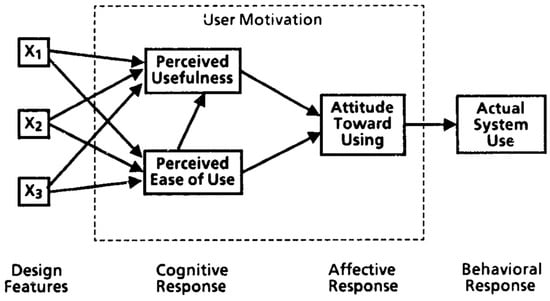
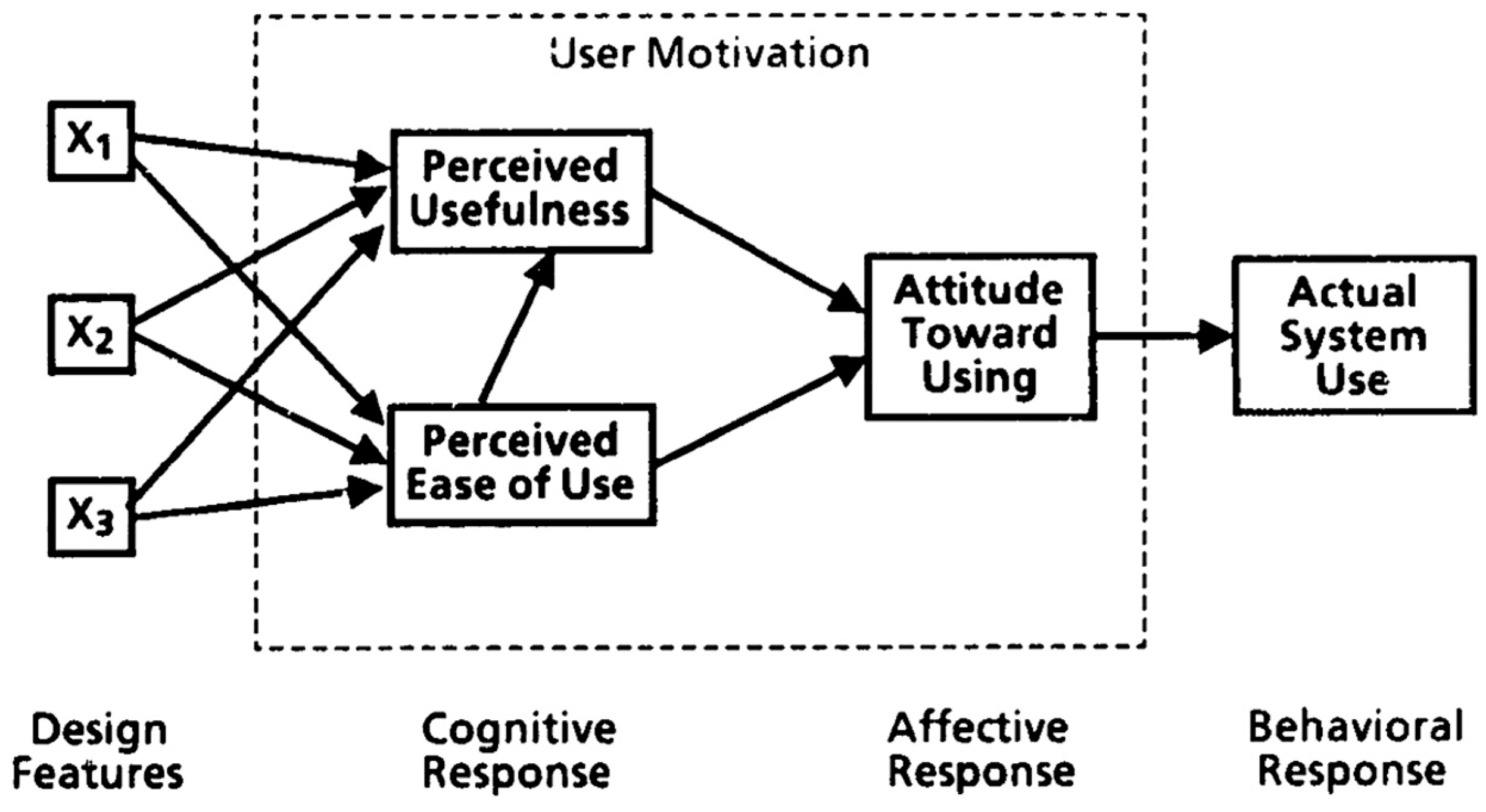
The Technology Acceptance Model (TAM), proposed by Davis [10], revealed the impact of perceived usefulness and perceived ease of use on people’s technology acceptance and adoption. Perceived usefulness refers to the degree to which a person believes that using a particular system would enhance his or her job performance, and perceived ease of use refers to the degree to which a person believes that using a particular system would be free of effort [10]. Those two key factors have been widely proven to have an impact on users’ intention of accepting and adopting new technology [8,10,11]. This study conceptualises perceived usefulness and perceived ease of use according to their initial conceptualisation, as they are widely proven and related to the technology context. The original TAM follows as below: see Figure 1.
Figure 1.
Technology Acceptance Model.
However, the TAM did not explain the influential factors of perceived usefulness and perceived ease of use at the beginning, leaving an academic gap for future research. Alongside the development of theory, TAM has been extended in further study, with the factors of perceived usefulness and perceived ease of use being progressively analysed. For example, Venkatesh and Bala [12] highlighted the influence of factors such as computer self-efficacy, perceptions of external control, computer anxiety, computer playfulness, and perceived enjoyment on the perceived ease of use. Additionally, Venkatesh and Davis [11] identified key elements affecting perceived usefulness, noting that both social influence, processes and cognitive instrumental processes significantly contribute to shaping this perception. Moreover, the UTAUT was developed by integrating various models, including TAM, to provide a comprehensive framework for understanding the technology adoption process [13].
Despite these extensions, a common pattern is that most TAM-based studies have introduced social or contextual factors, while largely overlooking the role of negative cognitive factors such as perceived risk. Perceived risk has subsequently been introduced and incorporated into TAM. Featherman and Pavlou [8] proved that perceived risk significantly affects attention alongside perceived usefulness and perceived ease of use. Further study also proved that perceived risk is a key factor influencing both perceived usefulness and perceived ease of use. Existing evidence proved that perceived risk negatively affects perceived usefulness in a health context [24]. Similarly, a study conducted among nurses about their willingness to adopt a new mobile medical record system showed that when nurses perceived higher levels of risk, they tended to view the system as less useful and harder to use [30]. However, these studies largely established the direct link between perceived risk and TAM constructs without explaining the downstream consequences. In particular, whether perceived risk affects trust indirectly through perceived usefulness and perceived ease of use remains underexplored in health chatbot contexts. Thus, Hypothesis 1 is proposed:
H1.
Perceived risk negatively affects perceived usefulness and perceived ease of use.
2.3. Self-Efficacy
Self-efficacy is a widely used concept in various areas such as psychology, communication, and the humanities. It refers to an individual’s belief in their own capacity to complete a task or successfully perform a certain behaviour [31]. Fishbein and Ajzen [32] addressed that Self-efficacy has an impact on behavioural intention in the Integrative Model of Behavioural Prediction (IM model). In the IM model, self-efficacy has been proven to be one of the predictors towards behavioural intention alongside attitudes and perceived norms. Eastin and LaRose [33] proved that self-efficacy significantly affects the frequency, experience, and related psychological status of using the internet. These studies confirm the importance of self-efficacy in technology use, but only a few studies have examined whether self-efficacy can function as a mediating variable, one that is actively shaped by how users perceive a system’s usefulness and usability. Self-efficacy is influenced by several factors, such as perceived usefulness and perceived ease of use, which are both positively linked to self-efficacy [18,33,34]. People are more likely to believe in their own abilities to accept new technology when they perceive the new technology as user-friendly. Similarly, when users perceive a technology as useful, it increases both their motivation to accept it and, consequently, their belief in their own ability to use it [35,36]. A study investigated American teachers’ acceptance towards technology and the evaluation of the impact of self-efficacy on TAM compared to computer self-efficacy, concluding that self-efficacy significantly influences technology acceptance adoption [18]. This relationship can be interpreted through Bandura [37], the concept of mastery experience: when users find a system useful and easy to operate, they accumulate positive interaction experiences that reinforce their confidence. This suggests that self-efficacy in the chatbot context is not simply a fixed personality trait, but a product of how users evaluate the system. With all the evidence above, we assume that perceived usefulness and perceived ease of use are also positively associated with self-efficacy in the health-communication context. Thus, Hypothesis 2 is proposed:
H2.
Perceived usefulness and perceived ease of use are positively associated with self-efficacy. The more useful and easier the technology is perceived to be, the higher the level of self-efficacy.
2.4. Trust Towards the Health Chatbots
The definition of trust that has been widely used in academia is that trust is a willingness to rely on a system under uncertainty [38,39]. Specifically, in technology adoption, trust is often defined as the perception of a technology as believable, competent, and trustworthy [40]. In this article, it specifically refers to the degree to which people perceive health chatbots as believable and are willing to accept and adopt their suggestions in a health-communication context. Trust is a cognitive perception that builds on several internal and external factors. The role of trust towards an AI-driven tool has also been studied before. Choudhury et al. [7] pointed out that trust plays a mediating role in the relationship between perceived ease of use and technology adoption. In addition, it also proved that perceived ease of use contributes to forming trust towards AI-driven tools. Similarly, Kauttonen et al. [41] also explained that trust affects users’ adoption towards AI applications in healthcare. In addition, an existing study reviewed over 40 studies published from 2013 to 2023, concluding that some influential factors, such as user-related factors, machine-related factors, interaction-related factors, social elements and context-related factors, revealed that one of the most influential factors affecting trust towards chatbots is perceived risk, including concerns about information leakage and the privacy risks associated with using chatbots [41]. More specifically, Esmaeilzadeh et al. [42] and Chen et al. [43] also examined the impact of perceived risk on trust towards AI-enabled tools. Patients hold less trust and are less likely to use a new AI medical system when they perceive a higher privacy and safety risk of using it [42]. In addition, in the context of using a health chatbot, Chen et al. [43] investigated the influential factors towards users’ trust of ChatGPT, one of the most popular chatbots. They pointed out that perceived risk, such as privacy concern and performance risk, significantly decreases the trust towards ChatGPT.
These studies further proved the assumption that perceived risk reduces trust. However, the majority of the study examined the direct relationship between perceived risk and trust and did not examine the mechanism through which perceived risk impacts trust. Specifically, whether perceived usefulness and perceived ease of use serve as mediators in this relationship has not been tested in health chatbot settings. According to the TAM, perceived usefulness and perceived ease of use are not only the outcome of perceived risk, but also convey their impacts to downstream constructs. One of the potential downstream dimensions to which perceived utility and perceived ease of use may have an impact is trust. People are less likely to view health chatbots as helpful and simple to use when they believe there is a greater risk involved [24,37]. Subsequently, they are less likely to rely on this system, which, in our definition, holds less trust towards the health chatbots. Therefore, we expect parallel mediation of perceived usefulness and perceived ease of use on the connection between perceived risk and trust towards health chatbots. Thus, H3 has been formed:
H3.
Perceived usefulness and perceived ease of use mediate the relationship between perceived risk and trust.
Existing studies have identified several factors that influence individuals’ trust towards AI-enabled tools, such as self-efficacy and the mechanism behind how self-efficacy affects the trust towards chatbots [44]. Users are more confident in their ability to comprehend and apply AI technology when they have a higher level of self-efficacy, which in turn leads to a higher perception of credibility toward AI and a higher willingness to adopt AI tools [44]. Similarly, Kim [45], in a study involving over 1000 participants, found that individuals with greater self-efficacy in digital environments are more likely to perceive AI systems as trustworthy. Therefore, Hypothesis 4 is proposed:
H4.
Self-efficacy positively affects trust towards the health chatbots; the higher the degree of self-efficacy an individual holds, the higher the trust they place towards the health chatbots.
Looking back at the existing study, it is also noticeable that self-efficacy plays a mediating role in the mechanism of perceived risk and trust towards health chatbots. When users perceive a higher risk of health chatbots, they are less likely to perceive this tool as useful and easy to use [24,37]. Consequently, they perceive fewer mastery experiences and feel less in control, reducing health chatbots-specific self-efficacy [34,35]. In turn, lower self-efficacy indicates lower trust towards the health chatbots [44,45]. However, this serial pathway, from perceived risk through perceived usefulness and perceived ease of use to self-efficacy and then to trust, has not been directly tested in the health chatbot literature. Most prior studies either examined the self-efficacy to trust link in isolation or treated self-efficacy as an antecedent rather than a mediator. This represents a meaningful gap, as it leaves open the question of whether individual-level confidence transmits the downstream effects of risk and usability perceptions onto trust. Therefore, we expect a serial pathway beyond the direct and parallel pathways; thus, hypothesis 5 is formed as follows:
H5.
Perceived risk will reduce trust indirectly through a serial pathway by first decreasing perceived usefulness and perceived ease of use, which in turn reduces users’ health chatbots-specific self-efficacy, resulting in lower trust.
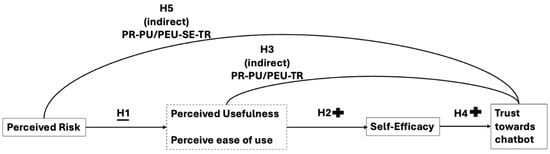
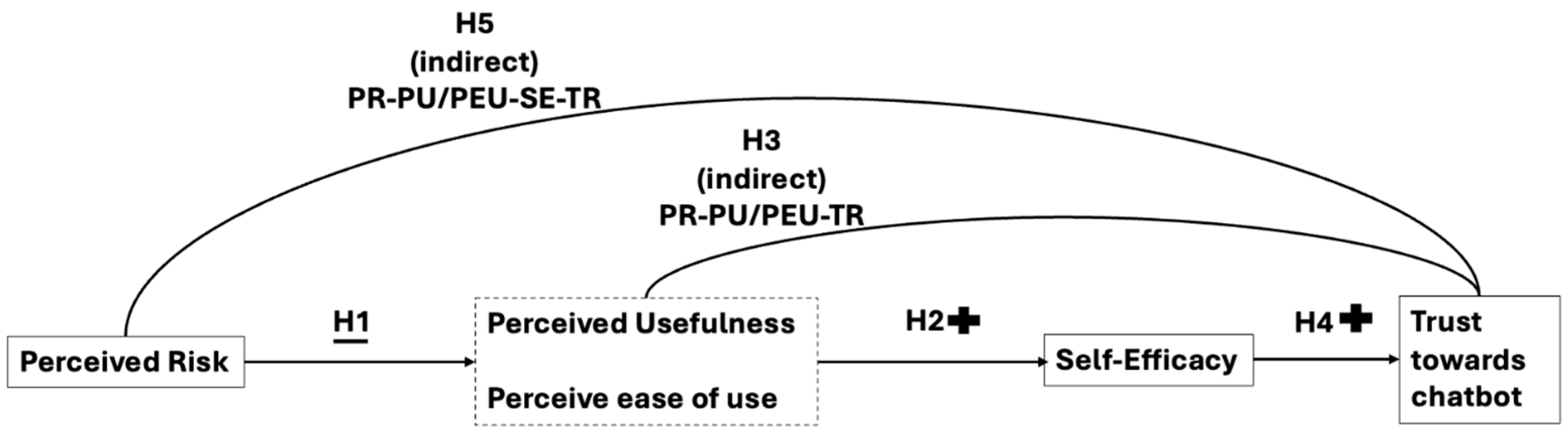
Based on the above discussion, a conceptual model is constructed, as shown in Figure 2.
Figure 2.
The conceptual model of this research.
3. Materials and Methods
3.1. Research Design
Our study seeks to investigate the mechanism of the impact of perceived risk on trust towards health chatbots under the guidance of TAM, requiring the individuals’ perception to conduct an empirical study. This study is a quantitative, cross-sectional survey study that examines the association among perceived risk, perceived usefulness, perceived ease of use, self-efficacy, and trust in the context of health chatbots according to the existing theoretical framework. More specifically, a self-reported survey has been applied in this study to gather information about the individuals’ perception regarding their interaction with health chatbots in the context of health communication. The questionnaire consisted of valid scales from existing studies, measuring perceived risk [8], perceived usefulness and perceived ease of use [10], self-efficacy [35], and trust [38]. Noticeably, all scales were revised to fit the health chatbots context and measured with a seven-point Likert scale (1: strongly disagree; 7: strongly agree).
The target participants were general chatbot users, particularly those who had experience in seeking health-related information with health chatbots. Noticeably, the demographic information of participants has not been limited except for nationality, as we aim to collect data from a wider sample and consequently provide insights to a greater population. Another reason for choosing general users is that chatbots have been widely used in different age groups. Liu et al. [24] addressed that chatbots have users across all age groups, from young to old. Their study showed that chatbot users include people aged from 18 to 75 years old. Thus, we did not exclude any age group in our study.
3.2. Participants
To recruit participants, the scales were translated into Chinese, and the sampling techniques applied in our study were platform-based self-selected sampling. All questionnaires were distributed on Credamo (https://www.credamo.com), a professional Chinese data collection platform designed for academic research and market investigation, featuring a large database. All participants were recruited online on Credamo. As compensation, all participants received CNY 1.00 after they completed the survey. Data collection lasted for 5 days, from 28 August 2025 to 1 September 2025. Noticeably, the data collection is comparably short because our survey was distributed on a professional platform. Thus, the data quality has also been ensured with built-in quality control features, including response time monitoring, attention-check items, and IP restrictions to prevent duplicate submissions. All participants in the final sample were informed about the aim of this study and gave their consent for the use of their data before they officially started the questionnaire. They are also eligible to quit this survey at any time, and their answer will be reported as incomplete; further statistical analysis will not include any incomplete data. This study achieved ethics approval before gathering participants’ data. See Appendix A for the full informed consent. Ethics committee ID is SXUIRB 2025-0408. In total, 480 questionnaires were distributed successfully.
We also acknowledge that this self-reported questionnaire is likely to be biased and therefore affect the research. However, several measures were taken to minimise this risk. First, the survey was distributed on Credamo, a professional platform with built-in quality control features, including response time monitoring, attention-check items, and IP restrictions to prevent duplicate submissions. Second, participants were informed of the study’s purpose in advance and gave informed consent, which helps ensure that responses reflect genuine perceptions. Third, the survey order was designed to place the independent variable before the mediators and dependent variable, reducing the likelihood of response consistency bias. Finally, all incomplete responses were excluded from analysis. The potential limitations of self-reported data, including common method bias and social desirability effects, are discussed further in the limitations section.
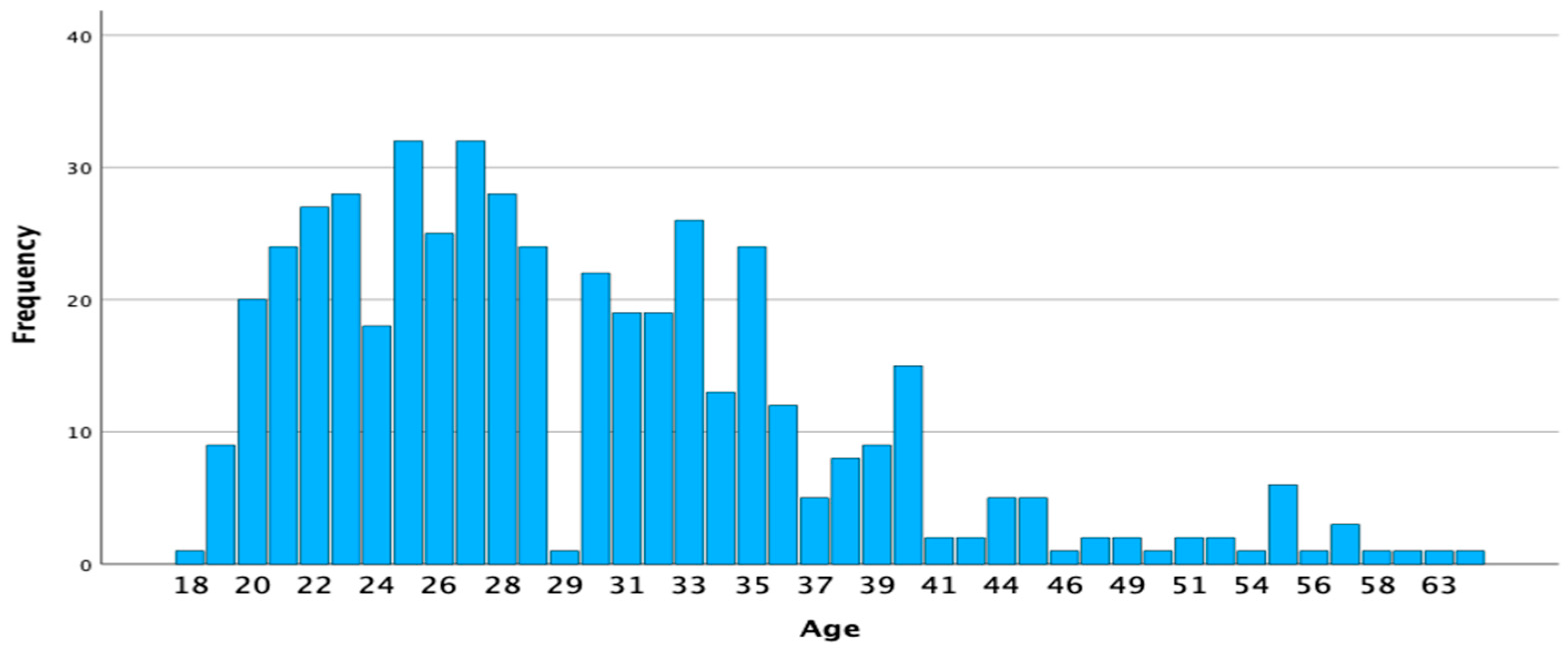
After checking the competence of the questionnaire, we found that all 480 participants had completed the questionnaire and passed the attention check. Thus, all participants are valid, and the final number of participants stays at 480. A priori power analysis was determined using linear multiple regression in G*Power 3.1. The parameters were set as: effect size f2 = 0.05 (small-to-medium), α = 0.05, power (1 − β) = 0.80. For the parallel mediation assumption, our study needs 107 individuals in order to have a medium effect size (f2 = 0.15) according to the power analysis. For the serial mediation assumption, 89 participants are required to reach a medium effect size (f2 = 0.15). In the final sample, 480 participants were recruited, thus both requirements were satisfied, which means our sample size is appropriate in our design. The majority of the final sample is female, 285 participants, or in percentage, 59.4% of the sample, were female. Two people chose not to reveal their gender, and the remaining 193 participants, or in percentage 40.2% of the sample, were male. Generally, the majority of the participants in this study were young adults (M = 30.05, SD = 8.34). In addition, our sample was composed of highly educated people; 86.7% of them obtained a bachelor’s degree or above. Table 1 and Figure 3 show the demographic information of the participants. See below.
Table 1.
Gender and education level of participants.
Figure 3.
Age distribution of participants.
3.3. Procedure
After providing their consent, participants were asked for demographic information. They were then given an explanation of health chatbots and an example to help them understand. After that, they were asked to identify the health chatbots correctly to continue the questionnaire. Perceived Risk (PR) is the first measurement, and participants were asked to respond on a seven-point Likert scale. After that, their perceived usefulness (PU) and perceived ease of use (PEU) were separately measured by three items on a seven-point Likert scale. Self-efficacy (SE) was measured by six items on a seven-point Likert scale. Similarly, a six-item scale on a seven-point scale was applied in our study to measure trust. All scales in our study have been revised to ensure contextual relevance, clarity, and data quality in the health communication setting.
3.4. Measurement
The Kaiser-Meyer-Olkin (KMO) value of sampling adequacy was calculated for each scale. The KMO values ranged from 0.67 (PU) to 0.87 (Trust), all reaching the minimum requirements of 0.60, indicating that the data were adequate for factor analysis. Noticeably, the KMO value of perceived usefulness, self-efficacy, and trust all exceed 0.8; perceived usefulness and perceived ease of use were 0.69 and 0.67. Perceived usefulness and perceived ease of use consist of 3 items, which could be the reason for a comparably lower KMO value.
All variables in our study are measurable and measured with modified scales derived from existing studies. The perceived risk towards health chatbots is a 7-point Likert scale consisting of 5 items (1: strongly disagree; 7: strongly agree). Our study applies a revised scale introduced by Featherman and Pavlou [8]. The original scale was developed to measure perceived risk towards e-service. In our study, only the dimensions of performance risk, privacy risk and overall risk have been selected to form the new scales to measure health chatbots, since financial risk and time risk are not relevant in the health chatbots context. Consequently, the items reflected financial or time risk in overall risk, for example, using e-service to pay my bills would be risky, and has also been deleted. In addition, some repeated statements have been deleted to ensure participants are able to complete this survey. A principal axis factor analysis (PAF) reveals that the five items from the perceived risk scale constitute a single unidimensional scale: only one component has an eigenvalue greater than 1, accounting for 75.2% of the variance, with factor loadings ranging from 0.84 to 0.92. Following a direct oblimin rotation, all items show a positive correlation with the first factor. The reliability is indicated by a Cronbach’s Alpha of 0.94.
The perceived usefulness and perceived ease of use were separately measured using a 7-point Likert scale that consisted of 3 items (1: strongly disagree; 7: strongly agree), developed by Davis [10]. Compare to the original scale, a revised version has been applied in our study, repeated statements has been deleted to ensure the participants can complete the questionnaire carefully, for example, in the revised construct of perceived usefulness, ‘Using this system improves my performance in my job’, ‘Using this system increases my productivity’ and ‘Using this system enhances my effectiveness on the job’ have been merged into one statement that measures overall performance. A principal axis factor analysis (PAF) indicates that the three items form a single unidimensional scale, as only one component has an eigenvalue greater than 1, explaining 52.9% of the variance with factor loadings between 0.64 and 0.78. After performing a direct oblimin rotation, all items are positively correlated with the first factor. For reliability, Cronbach’s Alpha = 0.77. Similarly, elimination has also been made into the construct of perceived ease of use to ensure the questionnaire is direct and understandable. For the principal axis factor analysis, the results revealed that the 3 items only formed one component with an eigenvalue above 1, indicating that these items form a single unidimensional scale, and 44.9% of the variance has been explained with the factor loading from 0.63 to 0.72. Following a direct oblimin rotation, all items demonstrate a positive correlation with the initial factor. The reliability is indicated by a Cronbach’s Alpha of 0.71.
Self-efficacy is measured by the scale developed by Compeau and Higgins [35]; items were also excluded based on their relevance to the health chatbots context, for example, if I had only the package manuals for reference from the original scale, while health chatbots do not provide any package manuals. The revised scale is a 7-point Likert scale consisting of 6 items (1: strongly disagree; 7: strongly agree). A principal axis factor analysis (PAF) shows that the 6 items form a single unidimensional scale: only one component has an eigenvalue above 1, and 44.9% of the variance has been explained with the factor loading from 0.52 to 0.70. After a direct oblimin rotation, all items positively correlate with the first factor. For reliability, Cronbach’s Alpha = 0.80.
The dependent variable trust was revised from the E-commerce Trust Scale developed by McKnight et al. [36]. We chose two items from each dimension and rephrased them into a health chatbot context. For example, this vendor is competent at what it does, and it can do its job well. This health chatbot is competent in providing reliable health suggestions. A 7-point Likert Scale consisting of 6 items has been applied to measure trust. A principal axis factor analysis (PAF) shows that the 6 items form a single unidimensional scale: only one component has an eigenvalue above 1, and 46.8% of the variance has been explained with the factor loading from 0.62 to 0.74. After a direct oblimin rotation, all items positively correlate with the first factor. For reliability, Cronbach’s Alpha = 0.84. The Table 2 shows the results of factor analysis and reliability in detail.
Table 2.
Factor analysis and reliability results.
To sum it up, all exclusions of items from the existing scale have been reported frankly. The reason for this exclusion has also been explained in detail in this article. This selection is validated by the strong factor loadings and high reliability. EFA supports that all scales only contain one component with an eigenvalue above 1, which confirms that the chosen items form a coherent and reliable construct. Methodologically, when established scales are adapted to a new context rather than developed from scratch, exploratory factor analysis (EFA) serves as the appropriate first step for evaluating the dimensionality of the modified measures [46]. Confirmatory factor analysis (CFA) is more suitable for testing factor structures that have already been established through EFA, and is typically conducted in follow-up studies or with independent samples [46]. Since the present study represents the first application of these adapted scales to the health chatbot context, the research is positioned at the exploratory stage of scale adaptation, making EFA a methodologically appropriate choice.
4. Results
4.1. Descriptive Results
Descriptive statistics and correlation analyses were conducted in our text to overview the variables and their associations. According to the results, PR (M = 4.05, SD = 1.54) was negatively correlated with PU (M = 5.75, SD = 0.83), PEU (M = 5.87, SD = 0.75), and TR (M = 5.52, SD = 0.78). Both PU and PEU were positively correlated with SE (M = 5.85, SD = 0.67) and TR. In addition, SE was positively associated with TR. These results primarily supported our assumption of all hypotheses. Please see Table 3 below.
Table 3.
Descriptive Statistics and Correlations Results Among Variables.
4.2. Total Effect
PROCESS results showed that perceived risk had a significantly negative direct effect on trust. The higher risk individuals perceive, the less trust they hold towards the health chatbots, b = −0.223, 95% CI [−0.27, −0.18], p < 0.001. This finding suggests that higher perceived risk directly decreases users’ trust towards health chatbots.
4.3. Direct Effect
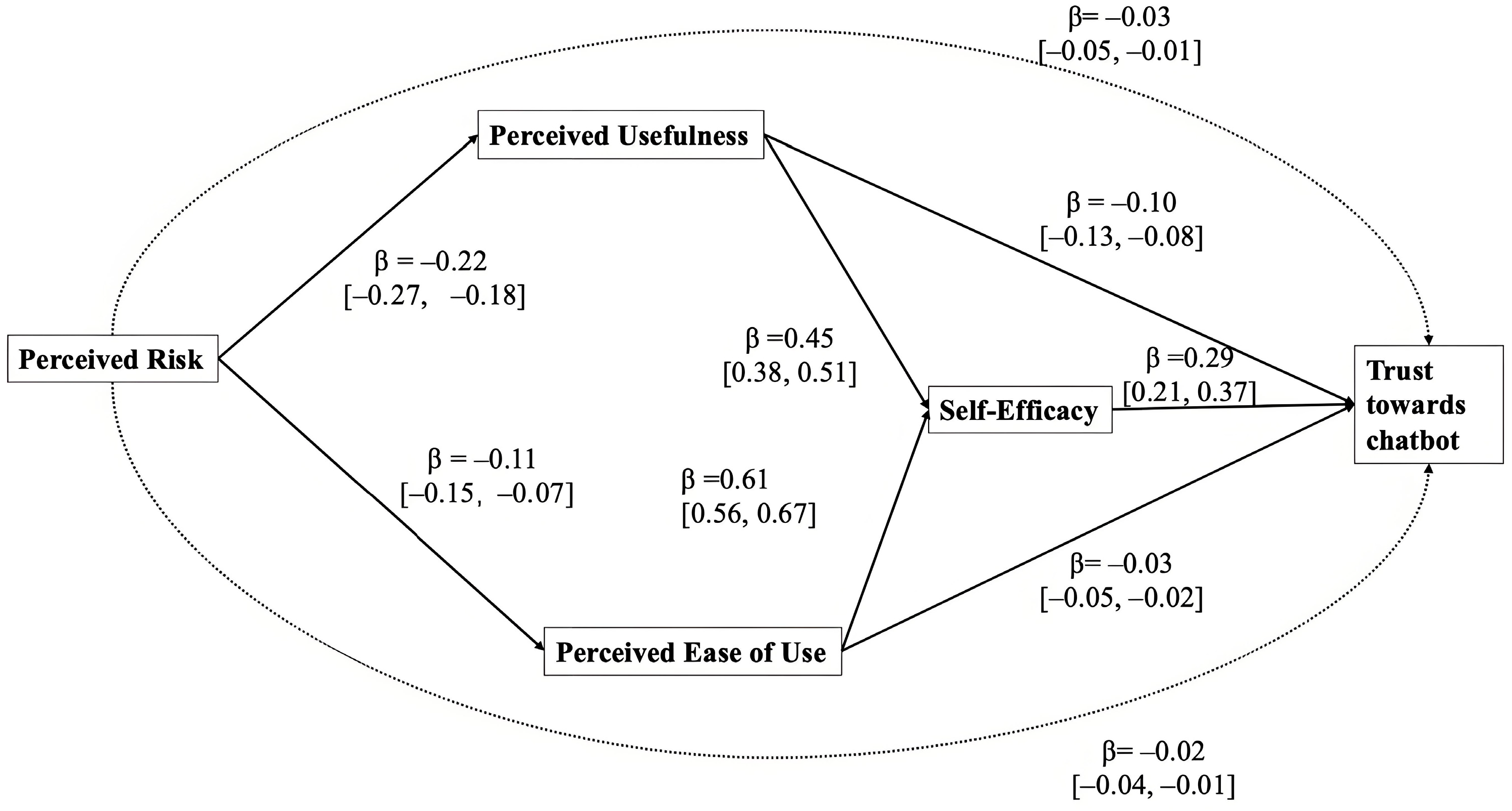
PROCESS v.4.2 (Model 4) and PROCESS v.4.2 (Model 6) were applied in our study to examine the relationship between variables. The statistical results showed that perceived risk significantly and negatively predicted perceived usefulness (b = −0.223, SE = 0.033, p < 0.001). Similarly, perceived risk has also been proven to negatively predict perceived ease of use (b = −0.113, SE = 0.028, p < 0.001). Thus, H1 has been supported. In addition, statistical results also showed that both perceived usefulness (b = 0.460, p < 0.001) and perceived ease of use (b = 0.282, p < 0.001) positively predicted trust.
According to our results, perceived usefulness positively predicted self-efficacy (b = 0.445, SE = 0.039, p < 0.001). Similarly, perceived ease of use also positively predicted self-efficacy (b = 0.615, SE = 0.045, p < 0.0001). Thus, H2 has been supported. Self-efficacy, in turn, positively predicted trust (B = 0.280, p < 0.001), supporting H4.
4.4. Indirect Effect
The significance of the indirect effects of perceived risk on trust through perceived usefulness was also confirmed (Effect = −0.103, 95% CI [−0.134, −0.076]). Similarly, the mediation role of perceived ease of use was also proven (Effect = −0.032, 95% CI [−0.051, −0.015]). Thus, H3 has been supported.
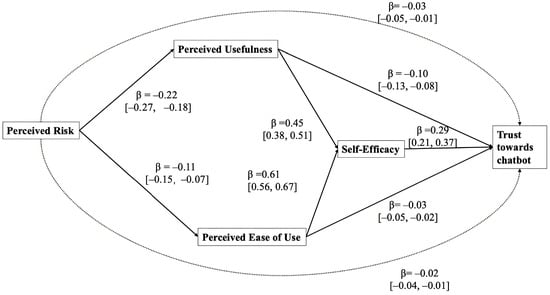
The significance of serial mediation paths was also confirmed statistically. The mediation relationship between perceived risk and trust via perceived usefulness and self-efficacy was significant (Effect = −0.029, 95% CI [−0.046, −0.014]); similarly, the mediation via perceived ease of use and self-efficacy was also significant (Effect = −0.019, 95% CI [−0.035, −0.007]). Thus, H5 has been supported. According to these findings, the second-stage mediator role of self-efficacy, after the perceived usefulness and perceived ease of use mediated the relationship between perceived risk and trust towards the health chatbots, was confirmed. Table 4 presents the statistical results, while Figure 3 shows the relationship among factors. See Table 4 and Figure 4.
Table 4.
Statistical results of the effect of the consumption of PR (perceived risk) and the TR (trust) towards health chatbots with mediators PU (perceived usefulness), PEU (perceived ease of use), SE (self-efficacy), using 5000 Bootstraps.
Figure 4.
The path analysis diagram among model factors.
5. Discussion
The growing concerns surrounding health chatbots underscore the need to understand trust formation in high-stakes health contexts. While prior research establishes trust as a key driver of behavioural intention, its development mechanisms in AI-mediated settings remain underexplored. This study reveals that perceived risk undermines trust through both direct and indirect pathways involving perceived usefulness (PU), perceived ease of use (PEOU), and self-efficacy (SE), operating in parallel and serial sequences.
This study also showed an asymmetric pattern of effects beyond our assumption: perceived risk more strongly influences PU (β = −0.22) than PEOU (β = −0.11), while PEOU shows the strongest effect on SE (β = 0.61) compared to PU (β = 0.45). This dynamic suggests the perceived risk mainly lands on the PU rather than PEOU, but once PEOU is established, it powerfully affects users’ confidence. Theoretically, users appear to first question a health chatbot’s functional value under uncertainty, with usability serving less as a barrier and more as a critical stream to self-efficacy.
Consistent with prior work, perceived risk negatively biases PU and PEOU evaluations prior to substantive interaction, with stronger effects in health contexts than lower-stakes domains like e-commerce, reflecting the heightened emotional stakes of health risks. PU and PEOU, in turn, build SE by fostering mastery experiences, repositioning it from a stable antecedent—as in prior studies—to an outcome of system perceptions. Both TAM constructs and SE further predict trust, revealing a cognitive-motivational chain where risk-induced uncertainty propagates unevenly through the model.
Practically, the findings guide the responsible design and governance of health chatbots. Generally, many users still distrust or refuse to use health chatbots due to privacy concerns and fear of misinformation; enhancing transparency, explainability, and human-AI collaboration can help rebuild user confidence and promote responsible adoption. For developers, our findings inspire them to reduce perceived risk through transparent data practices, explainable AI design, and privacy protection in technology design and application to enhance users ‘trust. For policymakers, our study also revealed the importance of reducing perceived risk through establishing ethical and governance frameworks that ensure data safety and transparency in building public trust. More specifically, these findings are applicable under the current policy. In the Chinese context, governance measures create a dual effect on health chatbot users’ perceived risk: appropriate compliance reduces privacy/performance concerns and enhances PU/PEOU, while excessive restrictions may heighten uncertainty and weaken self-efficacy/trust.
Therefore, institutional compliance mechanisms—such as privacy-by-design, transparent data-handling procedures, clear consent and withdrawal options, and algorithmic interpretability—should be viewed as external moderators in the risk–trust relationship. From a practical standpoint, aligning health chatbots’ design with China’s digital health governance framework can systematically mitigate the negative transmission path and promote a synergistic development of compliance, usability, and trustworthiness.
For healthcare and rehabilitation service providers, health chatbots should be integrated as supportive tools that complement professional care, improve efficiency, and promote users’ digital health literacy. Together, these strategies can enhance trust and foster the responsible adoption of health chatbots in health communication.
Despite these contributions, there are also several limitations of this study that should be acknowledged and further improved. Firstly, this study relied on self-reported survey data as its database; this data source may be lacking in accuracy due to misunderstandings or a lack of attention. Moreover, our participants were recruited via Credamo, a professional online survey platform widely used for behavioural and social research in China. Although the sample can be considered reasonably representative of active Chinese internet users, certain selection biases may exist, and external validity may be affected. For instance, online participants are typically more digitally literate and younger than the general population, which might lead to a higher health chatbots familiarity and self-efficacy. Furthermore, as the data were collected mainly from Chinese participants, our samples are lacking cross-cultural insights for health chatbots. Future researchers should apply cross-cultural or multi-group comparisons to examine whether the proposed model is still effective across different populations. Third, the study focused on health chatbots as the research context. Although this is a highly relevant field, future studies could extend the model to other AI tools, such as educational or financial chatbots, to see whether similar mechanisms apply. Finally, the predictors of trust in our study, such as perceived risk, perceived usefulness, perceived ease of use, and self-efficacy, were all individual perceptions. To give a more thorough knowledge of the process of building trust, future studies should investigate other constructs, such as social or other external factors’ influence.
6. Conclusions
In conclusion, this study manages to examine how negative factors, such as perceived risk, affect individuals’ trust towards the health chatbot under the guidance of TAM. This study also incorporates self-efficacy as a second-stage mediator into this mechanism to examine the importance of the individuals’ competence in health communication. The findings showed that perceived risk not only directly reduces trust but also indirectly impairs it by negatively affecting users’ perceptions of usefulness and ease of use, which further decreases their self-efficacy. In detail, this study also found that perceived risk affects perceived usefulness rather than perceived ease of use; by integrating perceived risk and self-efficacy into the Technology Acceptance Model, this research extends existing theories and highlights the importance of negative perception in the TAM and the mechanism of forming trust. Practically, the results suggest that reducing users’ risk perceptions, enhancing the usefulness and ease of use, and strengthening users’ self-efficacy are critical steps for building trust and encouraging the responsible adoption of health chatbots in health communication. However, these findings did not provide a subjective construction of this mechanism that can be applied in a wider context. Future research should employ longitudinal or experimental designs to test whether interventions that reduce perceived risk produce downstream gains in self-efficacy and trust over time. Cross-cultural replications would further clarify whether the observed pathways hold beyond Chinese internet users. In addition, our study only has a very limited representative sample; most of our participants are well-educated young adults who already have high health literacy. Further study should also take a greater population into account and apply this study to different cultural or social contexts.
Author Contributions
Conceptualisation and methodology, writing, original draft preparation and editing, L.S.; questionnaire survey, data analysis and supervision, J.L.; writing, review, supervision and proofreading, M.Y. and M.M.M. All authors have read and agreed to the published version of the manuscript.
Funding
This research received no external funding.
Institutional Review Board Statement
The study was conducted in accordance with the Declaration of Helsinki and approved by the Office of Science and Technology, Shanxi University (protocol code SXUIRB 2025-0408, 8 April 2025).
Informed Consent Statement
Informed consent was obtained from all subjects involved in the study.
Data Availability Statement
Everyone who is concerned about this topic can obtain the data generated during the study from gs58630@student.upm.edu.my.
Acknowledgments
The authors have reviewed and edited the output and take full responsibility for the content of this publication.
Conflicts of Interest
The authors declare no conflicts of interest.
Abbreviations
The following abbreviations are used in this manuscript:
| TAM | Technology acceptance model |
| AI | Artificial intelligence |
| NLP | Natural language processing |
| PU | Perceived usefulness |
| PEU | Perceived ease of use |
| UTAUT | Theory of Acceptance and Use of Technology |
| PR | Perceived Risk |
| PAF | Principal axis factor |
| SE | Self-efficacy |
| KMO | Kaiser-Meyer-Olkin |
Appendix A. Questionnaire
- Informed Consent
- Thank you for participating in this survey on “How Perceived Risk Influences Trust in Chatbots.” This survey aims to understand how perceived risk influences user trust in chatbots in the context of obtaining healthcare information. Participation is completely voluntary, and you may withdraw from the survey at any time without providing a reason. All responses will be kept strictly confidential and used only for academic research analysis. Your personal information will not be disclosed or used for other commercial purposes. Participating in the survey does not pose any risk or discomfort to you, and your opinions are very important to this research.
- If you agree to participate in this survey, please click “I Agree” to continue.
- ○
- I Agree
- ○
- Exit
- Demographic
- Demo1 What is your gender? [Single-select question]
- ○
- Male
- ○
- Female
- ○
- Non-binary
- ○
- I prefer not to say
- Demo2 Please select your highest level of education. [Single-select question]
- ○
- Primary school or below
- ○
- Junior high school
- ○
- Senior high school/technical secondary school/vocational or technical school
- ○
- Associate degree/college diploma
- ○
- Bachelor’s degree
- ○
- Master’s degree
- ○
- Doctoral degree
- Demo3 Please enter your age. [Open-ended question]
- Control
- Please carefully read the following definition of a chatbot and answer the related question:
- A chatbot is an intelligent programme that can converse with people. It uses artificial intelligence to understand questions and generate responses. We often encounter chatbots in daily life, for example:
- Customer service for shopping: Intelligent customer service on platforms such as Taobao and JD.com can answer questions about delivery, returns, and other issues.
- Health consultation: Consultation bots in platforms such as Ping An Good Doctor or AliHealth allow users to enter symptoms and receive preliminary advice.
- Government services: In apps such as “Yue Sheng Shi,” chatbots can help users check policies related to medical insurance, housing provident funds, and more.
- Banking and financial services: Intelligent assistants in Alipay or China Merchants Bank can remind users about repayments and explain financial products.
- Learning support: AI assistants in apps such as Zuoyebang and Yuanfudao can help solve problems or check homework.
- Social companionship: AI chat companions in apps such as Xiaoice or Soul can chat casually and help relieve loneliness.
- New-generation large language model chatbots: Examples include ChatGPT, DeepSeek, and Doubao. They can answer various questions, assist with writing and translation, and even help with programming, making them more like “all-purpose conversational assistants.”
- In simple terms, a chatbot is an AI-powered “conversational assistant.” It now appears in many contexts, including shopping, healthcare, government services, finance, education, and social interaction. With the development of large language models such as ChatGPT, DeepSeek, and Doubao, chatbots are becoming more and more like true “intelligent companions.”
- Which of the following is not a chatbot? [Single-select question]
- ○
- ChatGPT
- ○
- Taobao intelligent customer service
- ○
- AI-assisted automatic driving
- ○
- DeepSeek
- Based on the information above, you now have a basic understanding of the definition of chatbots and common examples of chatbots. Next, please answer the following questions honestly based on your experience using chatbots to seek medical and health-related information. (1: Strongly Disagree; 2: Disagree; 3: Somewhat Disagree; 4: Neither Agree nor Disagree; 5: Somewhat Agree; 6: Agree; 7: Strongly Agree.)
- PR [scale]
- Pr1. The Chatbot might not perform well and create problems.
- Pr2. There may be something wrong with the performance of the chatbot, or it might not work properly.
- Pr3. Using the chatbot could lead to a loss of privacy because my personal information might be used without my knowledge.
- Pr4. Hackers might gain access to my personal information if I use the chatbot.
- Pr5. On the whole, using the chatbot would be risky.
- PU [scale]
- PU1. Using chatbots improves my performance
- PU2. Using chatbots makes it easier to complete my tasks
- PU3. Overall, I find chatbot useful.
- PEU [scale]
- PEU1. Learning to operate chatbot is easy for me.
- PEU2. My interaction with chatbot is clear and understandable.
- PEU3. Overall, I find chatbot is easy to use.
- SE [scale]
- SE1. I could complete the task using the chatbot if there was no one around to tell me what to do.
- SE2. I could complete the task using the chatbot if I had never used a system like it before.
- SE3. I could complete the task using the chatbot if I had only the chatbot’s help function or manuals for reference.
- SE4. I could complete the task using the chatbot if I had observed someone else using it before trying it myself.
- SE5. I could complete the task using the chatbot if I had plenty of time available
- SE6. I could complete the task using the chatbot if I had prior experience with similar digital tools.
- TR [scale]
- TR1. This health-advice chatbot is competent in providing reliable health suggestions.
- TR2. This chatbot has the necessary expertise to answer health-related questions.
- TR3. This chatbot is designed with users’ best interests in mind.
- TR4. This chatbot cares about the well-being of its users.
- TR5. This chatbot provides health information in an honest and transparent way.
- TR6. This chatbot can be relied upon to keep consistent with what it claims to offer.
References
- Tsai, W.S.; Lun, D.; Carcioppolo, N.; Chuan, C. Human versus chatbot: Understanding the role of emotion in health marketing communication for vaccines. Psychol. Mark. 2021, 38, 2377–2392. [Google Scholar] [CrossRef] [Scilit]
- Wright, D. Service Now Brand Voice: Chatbots and Beyond: Six AI Trends Reshaping the Workplace. Retrieved from Forbes. 2020. Available online: https://www.forbes.com/sites/servicenow/2020/02/04/chatbots-and-beyond-six-ai-trends-reshaping-the-workplace/ (accessed on 14 April 2025).
- Cosma, C.; Radi, A.; Cattano, R.; Zanobini, P.; Bonaccorsi, G.; Lorini, C.; Del Riccio, M. Exploring Chatbot contributions to enhancing vaccine literacy and uptake: A scoping review of the literature. Vaccine 2025, 44, 126559. [Google Scholar] [CrossRef] [Scilit]
- Hinds, R. By 2020, You’re More Likely to Have a Conversation with This than with Your Spouse. Retrieved from ING. 2018. Available online: https://www.inc.com/rebecca-hinds/by-2020-youre-more-likely-to-have-a-conversation-with-this-than-with-your-spouse.html (accessed on 18 April 2025).
- Cancel, D.; Gerhardt, D. Conversational Marketing: How the World’s Fastest Growing Companies Use Chatbots to Generate Leads 24/7/365 (and How You Can Too); John Wiley & Sons: Hoboken, NJ, USA, 2019. [Google Scholar]
- Sharma, A.; Lin, I.W.; Miner, A.S.; Atkins, D.C.; Althoff, T. Human–AI collaboration enables more empathic conversations in text-based peer-to-peer mental health support. Nat. Mach. Intell. 2023, 5, 46–57. [Google Scholar] [CrossRef] [Scilit]
- Choudhury, A.; Shahsavar, Y.; Shamszare, H. User Intent to Use DeepSeek for Health Care Purposes and Their Trust in the Large Language Model: Multinational Survey Study. JMIR Hum. Factors 2025, 12, e72867. [Google Scholar] [CrossRef] [Scilit]
- Featherman, M.S.; Pavlou, P.A. Predicting e-services adoption: A perceived risk facets perspective. Int. J. Hum.-Comput. Stud. 2003, 59, 451–474. [Google Scholar] [CrossRef] [Scilit]
- Davis, F.D. A Technology Acceptance Model for Empirically Testing New End-User Information Systems: Theory and Results. Doctoral Dissertation, Massachusetts Institute of Technology, Cambridge, MA, USA, 1985. [Google Scholar]
- Davis, F.D. Perceived usefulness, perceived ease of use, and user acceptance of information technology. MIS Q. 1989, 13, 319–340. [Google Scholar] [CrossRef] [Scilit] [PubMed]
- Venkatesh, V.; Davis, F.D. A theoretical extension of the technology acceptance model: Four longitudinal field studies. Manag. Sci. 2000, 46, 186–204. [Google Scholar] [CrossRef] [Scilit]
- Venkatesh, V.; Bala, H. Technology acceptance model 3 and a research agenda on interventions. Decis. Sci. 2008, 39, 273–315. [Google Scholar] [CrossRef] [Scilit]
- Venkatesh, V.; Morris, M.G.; Davis, G.B.; Davis, F.D. User acceptance of information technology: Toward a unified view1. MIS Q. 2003, 27, 425–478. [Google Scholar] [CrossRef] [Scilit]
- Hassan, M.; Ghani, A.; Zaffar, M.F.; Bashir, M. Decoding user concerns in AI health chatbots: An exploration of security and privacy in app reviews. arXiv 2025, arXiv:2502.00067. [Google Scholar] [CrossRef] [Scilit]
- Pavlou, P.A. Consumer acceptance of electronic commerce: Integrating trust and risk with the technology acceptance model. Int. J. Electron. Commer. 2003, 7, 101–134. [Google Scholar] [CrossRef] [Scilit]
- Montag, C.; Kraus, J.; Baumann, M.; Rozgonjuk, D. The propensity to trust in (automated) technology mediates the links between technology self-efficacy and fear and acceptance of artificial intelligence. Comput. Hum. Behav. Rep. 2023, 11, 100315. [Google Scholar] [CrossRef] [Scilit]
- Bandura, A. Self-Efficacy: The Exercise of Control; W. H. Freeman: New York, NY, USA, 1997. [Google Scholar]
- Holden, H.; Rada, R. Understanding the influence of perceived usability and technology self-efficacy on teachers’ technology acceptance. J. Res. Technol. Educ. 2011, 43, 343–367. [Google Scholar] [CrossRef] [Scilit]
- Pan, X. Technology acceptance, technological self-efficacy, and attitude toward technology-based self-directed learning: A study of Chinese undergraduate students. Front. Psychol. 2020, 11, 564294. [Google Scholar] [CrossRef] [Scilit]
- DigiChina. Cybersecurity Law of the People’s Republic of China (English Translation and Analysis). Retrieved from Stanford University. 2017. Available online: https://digichina.stanford.edu/work/translation-cybersecurity-law-of-the-peoples-republic-of-china-effective-june-1-2017/ (accessed on 12 May 2025).
- Skadden. China’s Data Security Law: Overview and Compliance Implications. Retrieved from Skadden Publication. 2021. Available online: https://www.skadden.com/insights/publications/2021/11/chinas-new-data-security-and-personal-information-protection-laws (accessed on 19 April 2025).
- WilmerHale. China’s Personal Information Protection Law: Key Provisions and Global Impact. Retrieved from WilmerHale. 2021. Available online: https://www.wilmerhale.com/en/insights/client-alerts/20210830-china-promulgates-new-personal-information-protection-law (accessed on 18 April 2025).
- Piper, D.L.A. Telehealth Regulations in China. Retrieved from DLA Piper. 2025. Available online: https://intelligence.dlapiper.com/telehealth/?t=05-privacy-and-data-protection&c=CN (accessed on 23 April 2025).
- Liu, D.; Li, Q.; Han, S. Using extended technology acceptance model to assess the adopt intention of a proposed IoT-based health management tool. Sensors 2022, 22, 6092. [Google Scholar] [CrossRef] [Scilit]
- Grewal, D.; Gotlieb, J.; Marmorstein, H. The moderating effects of message framing and source credibility on the price-perceived risk relationship. J. Consum. Res. 1994, 21, 145–153. [Google Scholar] [CrossRef] [Scilit]
- Mitchell, V.W. Understanding consumers’ behaviour: Can perceived risk theory help? Manag. Decis. 1992, 30, 26–31. [Google Scholar] [CrossRef] [Scilit]
- Shin, D. The effects of explainability and causability on perception, trust, and acceptance: Implications for explainable AI. Int. J. Hum.–Comput. Stud. 2021, 146, 102551. [Google Scholar] [CrossRef] [Scilit]
- Forsythe, S.; Liu, C.; Shannon, D.; Gardner, L.C. Development of a scale to measure the perceived benefits and risks of online shopping. J. Interact. Mark. 2006, 20, 55–75. [Google Scholar] [CrossRef] [Scilit]
- Botha, N.N.; Segbedzi, C.E.; Dumahasi, V.K.; Maneen, S.; Kodom, R.V.; Tsedze, I.S.; Akoto, L.A.; Atsu, F.S.; Lasim, O.U.; Ansah, E.W. Artificial intelligence in healthcare: A scoping review of perceived threats to patient rights and safety. Arch. Public Health 2024, 82, 188. [Google Scholar] [CrossRef] [Scilit] [PubMed]
- Kuo, K.M.; Liu, C.F.; Ma, C.C. An investigation of the effect of nurses’ technology readiness on the acceptance of mobile electronic medical record systems. BMC Med. Inform. Decis. Mak. 2013, 13, 88. [Google Scholar] [CrossRef] [Scilit]
- Venkatesh, V. Determinants of perceived ease of use: Integrating control, intrinsic motivation, and emotion into the technology acceptance model. Inf. Syst. Res. 2000, 11, 342–365. [Google Scholar] [CrossRef] [Scilit]
- Fishbein, M.; Ajzen, I. Predicting and Changing Behavior: The Reasoned Action Approach; Psychology Press: New York, NY, USA, 2010. [Google Scholar]
- Eastin, M.S.; LaRose, R. Internet self-efficacy and the psychology of the digital divide. J. Comput. -Mediat. Commun. 2000, 6, JCMC611. [Google Scholar] [CrossRef] [Scilit]
- Marakas, G.; Johnson, R.; Clay, P.F. The evolving nature of the computer self-efficacy construct: An empirical investigation of measurement construction, validity, reliability and stability over time. J. Assoc. Inf. Syst. 2007, 8, 2. [Google Scholar] [CrossRef] [Scilit]
- Compeau, D.R.; Higgins, C.A. Computer self-efficacy: Development of a measure and initial test. MIS Q. 1995, 19, 189–211. [Google Scholar] [CrossRef] [Scilit]
- McKnight, D.H.; Choudhury, V.; Kacmar, C. Developing and validating trust measures for e-commerce: An integrative typology. Inf. Syst. Res. 2002, 13, 334–359. [Google Scholar] [CrossRef] [Scilit]
- Bandura, A. Self-efficacy: Toward a unifying theory of behavioural change. Psychol. Rev. 1977, 84, 191–215. [Google Scholar] [CrossRef] [PubMed]
- Jian, J.-Y.; Bisantz, A.M.; Drury, C.G. Foundations for an empirically determined scale of trust in automated systems. Int. J. Cogn. Ergon. 2000, 4, 53–71. [Google Scholar] [CrossRef] [Scilit]
- Lin, T.C.; Hwang, L.L.; Lai, Y.J. Effects of argument quality, source credibility and self-reported diabetes knowledge on message attitudes: An experiment using diabetes related messages. Health Inf. Libr. J. 2017, 34, 225–235. [Google Scholar] [CrossRef] [Scilit]
- Ng, S.W.T.; Zhang, R. Trust in AI chatbots: A systematic review. Telemat. Inform. 2025, 97, 102240. [Google Scholar] [CrossRef] [Scilit]
- Kauttonen, J.; Rousi, R.; Alamäki, A. Trust and acceptance challenges in the adoption of AI applications in health care: Quantitative survey analysis. J. Med. Internet Res. 2025, 27, e65567. [Google Scholar] [CrossRef] [Scilit]
- Esmaeilzadeh, P.; Mirzaei, T.; Dharanikota, S. Patients’ perceptions toward human–artificial intelligence interaction in health care: Experimental study. J. Med. Internet Res. 2021, 23, e25856. [Google Scholar] [CrossRef] [Scilit]
- Chen, S.Y.; Kuo, H.Y.; Chang, S.H. Perceptions of ChatGPT in healthcare: Usefulness, trust, and risk. Front. Public Health 2024, 12, 1457131. [Google Scholar] [CrossRef] [Scilit]
- Lankton, N.K.; McKnight, D.H.; Tripp, J. Technology, humanness, and trust: Rethinking trust in technology. J. Assoc. Inf. Syst. 2015, 16, 1. [Google Scholar] [CrossRef] [Scilit]
- Kim, S. Perceptions of discriminatory decisions of artificial intelligence: Unpacking the role of individual characteristics. Int. J. Hum. -Comput. Stud. 2025, 194, 103387. [Google Scholar] [CrossRef] [Scilit]
- Worthington, R.L.; Whittaker, T.A. Scale development research: A content analysis and recommendations for best practices. Couns. Psychol. 2006, 34, 806–838. [Google Scholar] [CrossRef] [Scilit]

Disclaimer/Publisher’s Note: The statements, opinions and data contained in all publications are solely those of the individual author(s) and contributor(s) and not of MDPI and/or the editor(s). MDPI and/or the editor(s) disclaim responsibility for any injury to people or property resulting from any ideas, methods, instructions or products referred to in the content. |
© 2026 by the authors. Licensee MDPI, Basel, Switzerland. This article is an open access article distributed under the terms and conditions of the Creative Commons Attribution (CC BY) license.