


Abstract
Scams targeting older adults increasingly combine social engineering with generative technology such as voice cloning, video deepfakes and text produced by large language models (LLMs). Adults aged 60 and over reported losses of USD 7.7 billion to the FBI Internet Crime Complaint Center in 2025, 59% more than in 2024. This review, supported by a documented search of four databases (2019–2026), examines how such scams are structured, why older adults are susceptible, and how artificial intelligence (AI) can detect or mitigate them. Of 992 screened records, 60 studies met the eligibility criteria, and three more were identified through citation chasing. Most evaluations with older users measured knowledge, confidence or intentions after an educational intervention; where detection performance or real-world exposure was measured, results were mixed and often null. None of the included studies evaluated an AI-based scam-detection system with older users in a field setting, and the only study testing audio-deepfake detectors on older speakers found that detectors trained on standard benchmarks roughly doubled their error rate. We propose a six-layer conceptual framework, not yet validated, for engineering elder-scam protection as a socio-technical system, and identify age-diverse evaluation, field trials of real-time assistance, privacy preservation and trust calibration as the principal open challenges.
1. Introduction
Growing older populations and digitized living come at a time when the fraud business has become increasingly commercialized. Specifically, in the US alone, 201,266 complaints were lodged by people aged 60 and over to the FBI Internet Crime Complaint Center (IC3) with an amount lost of USD 7.748 billion; there has been a 37% and 59% rise in the number of complaints and losses respectively from 2024 [1]. Losses reported to the U.S. Federal Trade Commission (FTC) by people aged 60 and over totaled USD 2.4 billion in 2024, four times the USD 0.6 billion reported in 2020 [2]. In the IC3 data, 22,364 complaints of all ages cited the use of artificial intelligence (AI) by the perpetrators with a loss of USD 893 million, while those aged 60 and over cited a loss of approximately USD 352 million [1]. Systematic review evidence places the annual prevalence of financial fraud victimization among community-dwelling older adults at approximately 5%, itself likely an undercount [3].
The title of this article captures a distinction that is of value in the engineering sense even though the phenomena themselves overlap. Human-generated scams are fraud schemes in which the person in question directly generates the deceptive material, via script on the telephone, by writing a phishing letter, or physically committing the deception act. AI-generated scams are schemes in which there is an artificial generation of some component of the deception—be it voice, message, picture/video, or the entire personality in the conversation [4]. Real cases routinely combine the two, and this review treats them as a continuum rather than as discrete categories.
Prior work has approached each element of this problem separately. Work from gerontology explains why older people are susceptible to being defrauded; work from the field of cybersecurity creates deepfake and phishing detectors that are primarily evaluated using datasets from the general population; and policy work talks about awareness campaigns and regulatory measures. To the best of our knowledge, no prior literature review has combined these elements to provide a comprehensive view of detecting human and AI-driven scams for older people using an AI-based digital engineering approach. This review addresses that gap. Rather than asking whether a given machine learning model can classify a scam artefact correctly, it asks how detection, explanation, human-in-the-loop verification, institutional response and governance can be engineered together into protective socio-technical systems for this demographic.
The objectives of this review are threefold:
- To characterize how human-operated and AI-generated scams targeting older adults differ, and how this threat landscape is evolving;
- To synthesize the cognitive, social and technological factors that explain older adults’ disproportionate vulnerability to these scams;
- To map existing and proposed AI-based detection and protection mechanisms into a structured, layered framework that can guide future system design and research.
These objectives are operationalized through three research questions:
- RQ1: How do the structure and practice of human-operated and AI-generated scams differ, and how is this landscape changing as generative AI matures?
- RQ2: What are the factors that make elderly people susceptible to such scams?
- RQ3: What are the AI-based systems that could be utilized to help protect elderly people from scams, and how can such systems be integrated into the scam protection system?
This paper is structured as follows. Section 2 describes the background of the research. Section 3 describes the search, selection and evidence-weighting methods. Section 4 discusses the findings of the research, what type of AI-generated content can mislead older people, and what the studies identified by the database search add (Section 4.4). Section 5 proposes a six-layer conceptual framework for protecting older adults from AI-enabled scams. Section 6 argues that protecting older adults from AI-enabled scams requires more than artefact-level detection, demanding real-time intervention and explainability. Finally, Section 7 concludes and advances the six-layer framework alongside calls for age-diverse datasets, field trials, distributed support networks and privacy-preserving designs.
2. Background
2.1. The Evolving Threat Landscape
Analyzing 84 scams documented by AARP, the FTC and the IC3, Herrera et al. [5] propose a general scam anatomy consisting of protection factors (including awareness, experience, warning signs, technical and procedural controls, other people and caution) and scam components, the latter divided into support materials, communications (a message conveyed through text, image, audio, video or in-person channels), and processes (such as victim targeting, reconnaissance, support-material design and scammer training). The scam categories that most affect older adults remain dominated, for now, by classical social-engineering formats: technical-support fraud, romance fraud developed over weeks or months of relationship-building [6,7], family-emergency or grandparent scams, government-impersonation schemes, and investment fraud, which now accounts for the single largest share of reported losses among adults aged 60 and older at USD 3.52 billion in 2025 [1]. Underreporting is a persistent confound across all these figures: older victims cite shame and fear of losing independence as reasons for remaining silent [8]; in a population-based survey of Americans aged 50 and over, 8.7% reported having experienced fraud in the previous five years [9]; and the FTC, drawing on survey research, estimates that only about 4.8% of fraud victims report to a government entity, putting total 2024 losses among older adults at USD 10.1–81.5 billion against the USD 2.4 billion reported [2].
Voice cloning is currently the most mature and most exploited AI enhancement of classical scam formats. Modern text-to-speech and voice-conversion models can reproduce a target’s voice from a few seconds of reference audio, often scraped from social media, and use it to power family-emergency or distress calls. The IC3 reports that voice cloning is used to imitate a loved one in distress and that victims claimed losses of more than USD 5 million to such distress scams in 2025 [1]. Practitioner accounts describe cases such as that of an 86-year-old woman who lost USD 6000 after hearing what she took to be her granddaughter’s voice [10], and news reporting describes a 73-year-old woman in Canada and her husband who withdrew CAD 3000 for a cloned grandson’s ‘bail’ and realized it was a scam only when a manager at a second bank branch warned them [11]. Video deepfakes extend the same principle to synchronous video calls: in a widely reported case, a finance employee in Hong Kong authorized a transfer of approximately USD 25 million after joining a video conference in which every other participant, including a fabricated chief financial officer, was a real-time deepfake [12]. These cases are news or practitioner reports rather than verified empirical evidence and are cited to establish that the attack modalities have been observed in practice, not to indicate how often they occur (see Section 3.5).
Large language models (LLMs) have similarly reshaped text- and voice-based scam communication. Where earlier phishing emails were frequently recognizable by awkward grammar or generic greetings, LLM-generated messages can be fluent and free of the linguistic tells that anchored a generation of awareness training. Controlled studies show that models can generate personalized spear-phishing content at negligible marginal cost [13] and that commercial models can be induced to produce functional phishing websites and emails from unmodified prompts [14]. In a field experiment with 112 participants, emails generated automatically by GPT-4 achieved click-through rates of 30–44%, above generic control emails (19–28%) but below emails designed manually by experts (69–79%) [15]. In the only study we identified that tested AI-generated phishing on older adults, 12 of 108 senior volunteers (11%) were compromised by at least one email, and most of the six frontier models tested could be induced to write such emails [16]. Industry figures relayed in policy commentary suggest that AI use is now widespread in phishing campaigns [17], although independent measurement of its prevalence remains limited. Robot-generated fraud, as the term is used in this paper, refers to the automated and machine-based distribution network of today’s schemes: the use of massive robocalling and robotic messaging systems and AI chatbots for conducting many thousands of fraudulent chats at once.
2.2. Why Older People Are Especially Vulnerable
Gerontological and psychological studies indicate the existence of several factors. Normative cognitive aging involves measurable declines in processing speed, working memory and executive control [18], which can impair real-time evaluation of a fast-moving, high-pressure deceptive narrative. Prospective cohort evidence indicates that low scam awareness is associated with subsequent incident mild cognitive impairment and Alzheimer dementia, suggesting that susceptibility can be an early marker of decline rather than only a consequence of it [19]. Susceptibility is nonetheless present in older adults without dementia and correlates with lower financial literacy and reduced psychological wellbeing [20], and in 175 scam cases investigated by Adult Protective Services, two-thirds of the older adults involved showed deficits in financial decision-making [21]. Personality also matters: in a sample of 151 community-dwelling adults aged 61–89, fraud victims scored lower than non-victims on cognitive ability, honesty–humility and conscientiousness, whereas self-reported interpersonal trust did not differ [22].
Alongside these individual-level factors, qualitative work on older adults’ attitudes toward cybersecurity finds that engagement is shaped as much by confidence and emotional comfort with the topic as by factual knowledge [23]. Older adults are often described as slow to adopt new technologies [5], and the resulting digital divide has motivated proposals for on-demand digital assistance [24]. In a quasi-experimental study of 160 adults aged 60 and over in Egypt, a five-week cybersecurity-awareness program improved self-reported awareness and security behaviors relative to a control group [25], but awareness alone does not reliably translate into safe behavior under acute emotional pressure. Across large-sample epidemiological work, the combination of these factors is associated with a substantial and likely under-counted prevalence of financial fraud victimization among community-dwelling older adults [3].
2.3. Research Gap Addressed by This Review
The threat-landscape literature (Section 2.1) and the vulnerability literature (Section 2.2) have largely developed in parallel, with limited cross-referencing between technical detection research and gerontological vulnerability research. Detection systems are usually tested on general-population datasets without taking into account the cognitive, sensory or technology-adoption characteristics of older people. Conversely, the literature on vulnerability in later life is seldom informed about the technical strengths and weaknesses of the available AI-based defense technologies. This review attempts to fill this gap through a synthesis of both streams of research within one engineering perspective (Section 5).
3. Materials and Methods
3.1. Review Type and Rationale
Given the interdisciplinarity and rapid evolution of the subject, which spans cybersecurity, natural language processing (NLP), speech and vision processing, gerontology, human–computer interaction and public health policy, this review adopts a narrative design supported by a documented, reproducible database search rather than a fully systematic protocol. Reporting follows the PRISMA extension for scoping reviews (PRISMA-ScR) where applicable [26], and the completed checklist is provided as Supplementary File S2; items relating to formal risk-of-bias assessment and quantitative synthesis are not applicable to a narrative synthesis of heterogeneous evidence and are not reported. The review protocol was not registered in a public registry.
3.2. Search Strategy
The evidence base rests on a documented database search, run on 7 October 2026 in Scopus, IEEE Xplore, PubMed and arXiv, using the database-specific strings, field codes and filters listed in Appendix A (Table A1). Scopus was added because it indexes the main journals in gerontology, criminology and human–computer interaction as well as most computing proceedings. The search combined three concept blocks—older adults; fraud and scam types; and AI, protection or susceptibility terms—and was limited to English-language records published from 1 January 2019 to the search date. In IEEE Xplore and arXiv, which index mainly technical literature, the third block was omitted. All searches were run through the databases’ web interfaces; the arXiv query was submitted as a URL to its public interface, and the results were exported from each database. The ACM Digital Library could not be searched because its user registration was unavailable at the time; most ACM conference proceedings are indexed in Scopus, through which eight of the included reports published by the ACM were retrieved. Google Scholar and SSRN were not searched formally, because their result sets cannot be exported or reproduced, and were used only for citation chasing. An earlier exploratory search of the same and further platforms (arXiv, IEEE Xplore, the ACM Digital Library, ScienceDirect, PubMed/PMC, SSRN and Google Scholar, up to July 2026) and citation chasing supplied the background sources. Annual statistical reports from the FBI IC3 and the FTC were retrieved directly from the issuing agencies. Elder-specific works published before 2019 were included only when identified through citation chasing as foundational to one of the research questions [3,20,22]; older general technical and methodological works are cited as background.
3.3. Eligibility Requirements
Table 1 sets out the eligibility criteria applied to the database search. To be charted as evidence, a study had to concern older adults and to belong to one of four groups: (a) empirical studies of AI-enabled scams involving older adults; (b) AI- or technology-based protective tools designed for, or evaluated with, older adults, including design proposals and prototypes; (c) evaluated non-AI protective interventions with older adults, such as education, training, games or institutional measures; and (d) reviews of scams against older adults or of their prevention. Studies of susceptibility, prevalence or risk factors without such a component were not charted; the core studies among them are discussed narratively in Section 2.2 as background to the second research question.
Table 1.
Eligibility criteria applied to the database search.
Sources were assigned to one of two strands. Elder-specific evidence comprises studies whose participants, data or explicit focus concern older adults; it includes the 63 studies charted under Table 1 and the core susceptibility studies discussed in Section 2.2. General technical background comprises studies of detection or generation techniques evaluated on general-population data, included because the technology is directly relevant to elder-scam defense. Conclusions about older adults are drawn from the first strand; the second strand is used to describe what current techniques can do, not how well they work for older users.
3.4. Selection Process and Composition of the Evidence Base
Records from the four databases were exported, merged and de-duplicated by digital object identifier and normalized title. Titles and abstracts were then screened against Table 1. Screening was supported by a generative AI tool (Section 3.6): for every record the tool proposed an eligibility code with a reason, and the proposal was then checked and accepted or changed by a researcher, so that no decision was left to the tool. Of 1317 records identified (Scopus 825, IEEE Xplore 193, PubMed 281, arXiv 18), 323 duplicates were removed automatically and two manually; of the 992 records screened, 185 were excluded as ineligible publication types and 744 on title and abstract, leaving 63 reports of 60 studies (Figure 1) [27]. A further three studies that met the criteria had been identified through the exploratory search and citation chasing; they are discussed in Section 4.1, Section 4.2 and Section 4.3. Design, sample, representation of older adults, AI component, main finding and framework layer were charted from titles and abstracts into Table S1 by the same procedure, with each entry checked manually. Full texts were not systematically assessed for all reports; however, the 14 studies whose findings underpin the central conclusions (Section 4.4, Section 6.2 and Section 7) were checked against their full texts (they are marked in Table S1), and where the full text differed from the abstract, the full text was used; for two further studies cited in Section 4.4, the full text was not accessible. In Table S1, ‘not reported in the abstract’ marks information that is absent from an abstract that was not checked further, whereas ‘not reported’ is used only where the full text was checked. Screening and charting were performed by a single researcher, which is noted as a limitation in Section 6.4. Where a preprint had later been published in peer-reviewed form, the peer-reviewed version was cited.
Figure 1.
Flow diagram of the database search and selection of sources, following the PRISMA 2020 template [27].
The review cites 102 sources, each characterized in Table S1: 57 journal articles, 31 peer-reviewed conference or symposium papers, seven preprints that have not undergone peer review, two institutional statistical reports, and five news, industry or practitioner items used solely as illustrative case material. Of these, 66 reports of 63 studies form the charted elder-specific evidence base, and 36 are background sources: 15 general technical studies, nine gerontological and psychological studies of susceptibility, and 12 statistical, illustrative or methodological sources. Because the review concerns older adults, we also recorded whether each source contains data from older adults; 55 do: 37 studies with older participants, one dataset of older speakers’ speech, two sets of administrative or transaction data with an older-age breakdown, and 15 reviews of studies of older adults; a further five sources include older adults within wider age groups. Among the technical studies of detection, only one uses data from older people (Section 4.2), and none of the included studies evaluates a scam-detection system with older users in a field setting. This composition defines the limits of what the review can claim, and it is carried into the conclusions.
The relationship between these counts is as follows. The 102 cited sources consist of the 66 reports in the charted evidence base and 36 background sources. The 66 reports describe 63 studies: 63 reports of 60 studies from the database search and three studies identified through citation chasing. Three studies from the search are described in two reports each—a trial protocol and its results, a conference and a journal report of the same interview study, and a conference and a journal report of the same serious game. Such companion reports are marked in Table S1, are cited together and are counted once as studies. Of the 60 studies from the search, 17 are reviews and 43 are primary studies; 29 of the primary studies collected data from older adults, and 21 evaluated a tool or intervention with them. The reviews synthesize primary studies that may overlap with those included here, and several primary studies describe prototypes without users. The counts therefore describe the composition of the cited literature; they are not a tally of independent empirical evaluations.
3.5. Treatment of Evidentiary Weight
The eligibility criteria in Table 1 deliberately admit heterogeneous source types, which is necessary for a problem spanning technical research, gerontological evidence and rapidly changing criminal practice. These source types do not carry equal evidentiary weight, and this review does not treat them as if they did. Peer-reviewed journal articles and peer-reviewed conference papers are treated as the primary evidence base for claims about detection performance, vulnerability mechanisms and intervention effectiveness. Preprints are treated as emerging evidence: they are identified as preprints at the point at which conclusions are drawn from them, and those conclusions are qualified accordingly. Institutional statistical reports are treated as authoritative for prevalence and loss figures within their stated sampling frame, which for the IC3 and FTC data means reported incidents only. Industry and news reporting is used exclusively as illustrative case material, to establish that a given attack modality has been observed in practice, and never as evidence of prevalence, effectiveness or detection performance. The evidence type underlying each mechanism, and whether it includes data from older adults, is recorded explicitly for every mechanism in the summary table at the end of Section 4.3. The publication status of every preprint was re-checked on 4 October 2026, and that of the preprints identified by the database search on 9 October 2026: three [5,24,28] had since appeared in peer-reviewed proceedings and are cited in that form. The status of the remaining preprints was checked again at the proof stage on 22 October 2026: one further preprint [29] had since appeared in a peer-reviewed journal and is cited in that form. For the 63 reports from the database search, data were charted from abstracts, with the exceptions described in Section 3.4; their findings are reported as their authors state them, and their risk of bias was not appraised.
3.6. Use of Generative AI
During the preparation of this manuscript and its revisions, the authors used Claude (Opus 5 and Opus 5.5 models; Anthropic, San Francisco, CA, USA) to propose the initial six-layer structure of the framework in Section 5, together with the assignment of reviewed sources to layers, which were reviewed and adopted (Section 5 describes this in detail); to generate the framework schematic in Section 5; to assist in locating candidate references; to convert prose content into the tables of Section 3, Section 4 and Section 5; and, during revision, to draft and edit revised text, to re-check the bibliographic details and cited findings of the references against the original sources, to write the Python script (Python 3.11; Python Software Foundation, Wilmington, DE, USA) that de-duplicated the exported records, to propose an eligibility code and reason for each record, and to chart the included studies from their abstracts. The eligibility codebook and the charting instructions given to the tool, together with a description of the verification, are provided in File S3. Every eligibility proposal was checked in a spreadsheet that showed the record’s title, abstract and the tool’s reason and was accepted or changed; every charted entry was checked against the abstract and, where necessary, corrected; and no record was included or excluded on the tool’s proposal alone. The tool therefore processed bibliographic records and abstracts, but it did not generate study data and performed no statistical analysis; all counts reported in this review were computed from the verified decisions. The authors reviewed and edited all output and take full responsibility for the content of this publication.
4. Findings
The literature reviewed in this section falls into four groups: (i) technical machine learning and NLP research on the detection of scams and deepfakes (Section 4.1 and Section 4.2); (ii) AI-based education, assistance and real-time support (Section 4.3); (iii) the gerontological and psychological studies of fraud vulnerability introduced in Section 2.2; and (iv) the studies identified by the database search, which are summarized by group in Section 4.4. Institutional statistical reports from the FBI IC3 and the FTC are used to measure the extent of the problem.
4.1. Detecting Human-Generated Scam Content
Natural language processing and large language models have become the dominant approach to phishing and scam-message detection. Transformer-based classifiers fine-tuned for this task can be paired with post hoc explanation methods such as SHapley Additive exPlanations (SHAP) [30] or Local Interpretable Model-agnostic Explanations (LIME) [31] to give a human reviewer a rationale for each flagged message rather than an opaque score; one such study reports 98.45% test accuracy for a fine-tuned RoBERTa classifier whose LIME and Transformers Interpret explanations are combined into a single attribution, on a single public email dataset and without external validation [29]. A newer line of work targets scam detection during a live conversation: in an offline evaluation on Chinese call transcripts, five prompted LLMs flagged scam calls before the call ended with a recall of 0.98–1.00, but precision fell from 0.94–1.00 on authentic transcripts to 0.70–0.77 on synthetic ones, and no user study was conducted [32]. In the financial sector, industry reporting describes banks using machine-learning models to narrow hundreds of thousands of daily transactions to the few hundred or few thousand that merit human review, with vendor systems flagging signals such as a declining balance that is inconsistent with past activity, new individuals being granted account access, or a missing pension deposit among customers over 65 [33]. More recent academic work proposes an explainable transaction-triage model specifically for elder financial exploitation [34]. It is a preprint and was evaluated only on 200,000 synthetic transactions; at full recall its precision was 0.024, below the 0.043 of its own logistic-regression baseline, which is the figure its abstract reports for the proposed model.
4.2. Detecting AI-Generated (Synthetic) Scam Content
Audio deepfake detection has progressed from classical machine learning classifiers using hand-engineered prosodic and spectral features to deep, self-supervised detectors [35]. Standardized evaluation has been driven largely by the ASVspoof benchmark series [36], whose evaluation protocols do not report results by speaker age. Classical approaches remain valued for interpretability and low computational cost: a recent preprint reports about 93% accuracy and a 7% equal error rate (EER) for a support-vector machine on two-second clips at both 44.1 and 16 kHz [37]; self-supervised detectors generally achieve higher accuracy but with reduced interpretability. Whether these detectors work as well for older speakers has, to our knowledge, been tested directly in only one study [38]. Its authors built an elderly-speech dataset from a Mandarin corpus of 202 speakers aged 75–85 and an English corpus that includes speakers aged 60 and over, resynthesized with 14 neural audio-codec variants. Two state-of-the-art detectors trained on an existing codec-fake benchmark reached EERs of 25.8–30.2% on elderly speech, roughly double the 12.9–14.1% they reached on younger speakers from the same English corpus, whereas foundation models trained on the elderly data reached 4.6–8.3%, and 1.7% when two of them were fused. This points to a gap in training data rather than an intrinsic limit of detection, but its scope is narrow: it concerns codec-resynthesized rather than cloned speech, was not tested on telephone audio or real scam calls, comes from a single preprint, and has not been replicated. Detectors in both the audio and the video modality degrade under cross-domain shift in general [35,39], but among the sources reviewed we found no study that evaluates video or face-manipulation detectors on older faces, so no age-specific claim can be made for video. The practical implication is therefore conditional: a detector validated only on younger voices cannot be assumed to perform equivalently for older users, and the available evidence suggests that age-diverse training data, rather than a different detection paradigm, is the most direct remedy. Table 2 compares the technical studies discussed in Section 2.1, Section 4.1, Section 4.2, Section 4.3 and Section 4.4 on data, size, representation of older adults, method, result and validation status.
Table 2.
Technical studies cited in this review: data, representation of older adults, method, main result and validation status.
4.3. AI-Based Education, Assistance and Real-Time Support
A third category of AI application targets the human side of the defense equation directly. Large language models have been proposed as situational digital assistants for older users, designed to help them navigate unfamiliar digital situations—including potential scams—in context and on demand, rather than relying solely on training completed weeks or months before an incident; the published proposal illustrates the idea with two commercial models on four scenario tasks but has not yet been evaluated with older users [24]. Generative AI is also used for training: in a role-reversal application, older adults coach an AI that plays a scam victim, and in experiential simulations they see their own face and voice inserted into deepfake scam scenarios (Section 4.4) [42,43]. Whether conversational agents reduce scam risk by reducing isolation is untested: loneliness has been linked to the distress experienced by romance-scam victims [6], and romance-scam victimization to impulsivity and an addictive disposition [7], but we found no study testing whether reducing isolation lowers scam susceptibility. Physical companion and social robots occupy a similar dual position: they can support wellbeing and independence, but their data-collection and monitoring functions raise privacy concerns; in a survey of 825 adults with a mean age of 63.9 years, respondents placed considerable weight on data protection and transparency when judging companion robots [44], echoing longstanding ethical concerns about deception, dependency and reduced human contact in the aged-care robotics literature [45]. Table 3 summarizes the mechanisms identified across these three categories.
Table 3.
Summary of AI-based mechanisms identified in the reviewed literature, by category, with the type of evidence on which each entry rests and whether it includes data from older adults.
4.4. Evidence from the Database Search
The database search identified 63 reports of 60 studies that met the criteria of Table 1; Table S1 charts each of them. The evidence is recent: 47 of the 63 reports were published in 2024 or later. It comprises 13 reports on AI-enabled scams involving older adults [5,16,43,46,47,48,49,50,51,52,53,54,55], 11 on AI- or technology-based protective tools [40,41,42,56,57,58,59,60,61,62,63], 22 on evaluated non-AI interventions [25,28,64,65,66,67,68,69,70,71,72,73,74,75,76,77,78,79,80,81,82,83] and 17 reviews [84,85,86,87,88,89,90,91,92,93,94,95,96,97,98,99,100]. Of these, 31 reports of primary studies contain data from older adults, but only 22 evaluate a tool or intervention with older users, and most of these measure knowledge, confidence or intentions shortly after an educational intervention. These counts describe the composition of the included literature, not independent empirical evaluations (Section 3.4). The findings below are reported as their authors state them; for the studies marked in Table S1, they were checked against the full text.
Studies of AI-enabled threats concentrate on video deepfakes. In interviews, older adults judged deepfake videos by character appearance, non-human visual elements, audio cues, personal knowledge and external sources [53,54]; they used the same strategies as young adults but relied more on accumulated life experience [46], and in a three-week diary study the number of strategy combinations they used increased over time [52]. In an experiment, older adults (n = 37) were less accurate than younger adults (n = 35) at distinguishing real faces from deepfakes, and perceived attractiveness lowered accuracy for deepfakes, especially among older adults [48]. Survey studies found that seniors believed others to be more likely than themselves to suffer deepfake harms [49], and that this third-person effect was larger among seniors than among young adults [47]. For text, the end-to-end study cited in Section 2.1 found that AI-generated phishing emails compromised 11% of 108 senior volunteers [16]. No included study measured older adults’ ability to recognize a cloned voice on its own, although voice cloning is the AI modality most often reported in practice (Section 2.1); audio appeared only as one cue in judgements of video [46,53] or as part of simulated scams [43]. Qualitative work points to the social side of defense: older adults frequently rely on trusted relationships to detect scams [55], and older participants in a participatory-design workshop asked that safeguards respect their autonomy and their role in decision-making [50].
Most AI-based protective tools designed for older adults have not been evaluated with them. Of the 11 reports in this group, six describe prototypes, proposals or purely technical evaluations, among them LLM-based companions and assistants [56,58], small language models that re-estimate scam risk at each turn of a conversation [41] and an LLM-derived rubric for scoring scam emails [59]. The only detection study that uses data from older people remains the elderly-speech study discussed in Section 4.2 [38]. A machine-learning analysis of 5499 older adults in China ranked income, consumption, education and age as the strongest predictors of fraud victimization, which could help target prevention [57]. Two reports evaluated an AI-based tool with older users. An LLM agent that explains why an SMS message is phishing reached 98.8% accuracy on real-world messages, and in online user studies (N = 175) in which 70 participants were aged 65 and over, its explanations raised older participants’ detection accuracy from 0.71 to 0.94 [40]; and a generative-AI application in which older adults coach an AI ‘victim’ to recognize fraud improved self-efficacy and user experience among 40 older adults [42].
Evaluations of non-AI interventions are the largest group and give the clearest picture of what education achieves. Studies with a comparison group report better short-term knowledge, self-efficacy, awareness or intentions: an anti-scam board game (n = 109) increased self-efficacy and awareness and reduced perceived susceptibility, immediately and two weeks later [78]; among 220 older adults randomly assigned to a 30 min video or a comic-style booklet, the video group reported higher comprehension, emotional engagement and behavioral intentions immediately afterwards, although no baseline or follow-up was measured [67]; and awareness training improved self-reported security behaviors [25]. Where detection performance or real-world exposure was measured, the results were mixed. Role-based simulation improved the immediate identification of online fraud among 144 adults aged 50 and over when they took the role of the person experiencing or helping with the fraud, but the difference was no longer observed about one month later [66]. In contrast, training older adults on valid facial or verbal cues to deception improved recognition of the trained cues but not the detection of deceit, and the group trained on facial cues became less accurate [80]; reading about or interactively learning the features of scams did not change older or younger adults’ sensitivity in judging emails, but made both more likely to label emails as scams [65]; after phishing education, 37 participants aged 65 and over reported more confidence in identifying phishing emails, but on the training platform they identified only 37% of phishing cues on average and did not improve from one email to the next [74]; a randomized comparison of general and fraud-specific cognitive training in 230 older adults found no differential benefit on its primary outcomes, and a fraud-detection interaction at 12 months that its authors regard as a possible chance finding [81,82]; and an informational postcard campaign sent to all Swedish households with a resident aged 70 or over had no measurable effect on the number of police-reported fraud victims aged 70–74, compared with those aged 65–69 [72]. Older adults preferred to receive prevention advice one-to-one through friends and family [75]. Institutional measures are rarely studied: an analysis of the temporary holds that banks in Minnesota may place on suspected exploitation found that holds increased by 180% between 2022 and 2025 and were more likely when larger sums were at stake, but it examined how holds are used rather than how much loss they prevent [83].
The reviews that examine risk factors agree on the main ones—cognitive decline, social isolation, limited knowledge or skills for recognizing and preventing fraud, and emotional or psychological vulnerability [87,96,98,100]—but not on whether age itself increases risk: one systematic review found no evidence that older adults are over-represented among victims of online fraud [95], another found people of all ages vulnerable, with fraud types differing in prevalence across age groups [88], and a meta-analysis of phishing user studies found a significant relationship between age and susceptibility, although more than half of the primary studies reported none [89]. Reviews of prevention describe measures that are mostly low-tech, with high-tech solutions emerging [92], call for combinations of technological, educational, regulatory and community measures [86,93], survey current countermeasures [97,99], and note that only interventions that raise older internet users’ awareness and skills had been trialed [96]. The reviews that address AI directly raise the issue central to this review: models trained on non-representative data may be biased against vulnerable groups [91], and the psychological effects of AI-based protection on older people, such as anxiety, dependence and loss of confidence, are largely unknown [90]. Further reviews cover the growth of the literature [85], romance fraud [94] and technology-based financial exploitation [84].
Mapped onto the framework of Section 5 (Table S1), the 63 reports are unevenly distributed: 47 inform Layer 5 (education and digital literacy), 14 Layer 1 (sensing and detection), 11 Layer 4 (institutional and community response), nine Layer 2 (real-time assistive intervention), seven Layer 6 (policy and governance) and four Layer 3 (human-in-the-loop verification); a report can inform more than one layer. Only two of the reports informing Layer 2 and one of those informing Layer 3 evaluated anything with older users, although these are the layers that act at, or just after, the moment of decision. The database search therefore broadens the evidence base considerably without changing its central gap: protection that does not depend on the older adult recognizing a scam unaided remains the least tested.
5. A Six-Layer Framework for Elder-Scam Protection
From a digital-engineering standpoint, the reviewed literature suggests a layered system-design problem rather than a single-model optimization problem. We therefore propose the framework set out in Figure 2 and Table 4. It is a conceptual proposal rather than a finding of the reviewed literature, it is intended as a starting point for system design and for organizing future empirical evaluation rather than as a validated architecture, and it remains to be empirically evaluated.
Figure 2.
Six-layer conceptual framework for engineering AI-based elder-scam protection systems. Evidence escalates upward; design constraints propagate downward. Five requirements cut across all layers. The layer structure was proposed with AI assistance and adopted by the authors (Section 5); the figure was generated with the assistance of Claude (Opus 5, Anthropic) and reviewed by the authors.
Table 4.
A six-layer conceptual framework for engineering AI-based elder-scam protection systems.
The six-layer structure was not derived through formal qualitative coding. An initial structure, together with the assignment of reviewed sources to layers, was proposed with the assistance of a generative AI tool (Section 3.6) that was given the mechanisms identified in Section 4; each assignment was then checked against the source, and the structure was adopted. Each layer groups mechanisms by the protective function they perform: what they detect or do, at which point in the scam lifecycle they act, and who operates them. Table 4 lists the sources for each layer, and Table S1 gives the layer assignment of every source, including the reports from the database search, which were assigned in the same way and checked manually. The assignment was made by one author; no independent second coding was performed, so inter-rater reliability could not be assessed. We checked the resulting structure against two existing framings: the scam anatomy of Herrera et al. [5], whose protection factors correspond to our Layers 3 and 5, and defense-in-depth reasoning in information security, in which no single control is assumed to remain effective indefinitely. Every mechanism in Table 3 maps to one layer and every layer is populated by at least one reviewed source, but this shows only that the structure accommodates the present corpus, not that it is the only or the best partition. Independent coding by more than one analyst and expert elicitation are needed to establish its reliability and validity (Section 7).
Where a mechanism could belong to more than one layer, it was assigned by the point in the scam lifecycle at which it acts and by who acts. A step that pauses a pending high-risk action until the older adult, a trusted contact or a bank employee confirms it—for example, trusted-contact confirmation before a first payment to a new payee—belongs to Layer 3. Action that follows a flagged case beyond the individual transaction, such as referral to adult protective services, reporting to the authorities or alerting other institutions, belongs to Layer 4. A mechanism that does both, such as a temporary hold that pauses a transfer and triggers a review by a state agency, is listed under both layers in Table S1. Mechanisms that act before any specific incident, such as training, belong to Layer 5, and the rules, standards and liability arrangements that govern the other layers belong to Layer 6. These rules make the assignment reproducible, but they do not remove the need for independent coding (Section 7).
In the proposed arrangement, evidence ascends from the lower layers to the upper ones as material on which an institutional or governance decision can be taken, while design constraints propagate downward from the governance layers. Neither direction of flow has been instrumented in a deployed system, and both are properties of the proposal rather than observations from the literature.
6. Discussion
6.1. Cross-Cutting Patterns
Several patterns recur across the literature reviewed in Section 4. First, detection and generation are engaged in a continuing adversarial arms race: as detection improves, generation is refined against it, which is why Herrera et al. [5] argue that protecting older adults should not rely indefinitely on artefact-level detection alone but must also strengthen situational awareness and support networks that do not depend on any single technical countermeasure remaining effective. Second, the age-related performance gap described in Section 4.2 is, if it generalizes beyond the one study that documents it, a direct and to date insufficiently addressed engineering risk for this population; the same study suggests that it can be narrowed with age-diverse training data. Third, false positives carry a distinct cost in this context: overly sensitive systems risk alert fatigue and loss of trust, while systems calibrated to minimize false positives risk missing novel scam patterns; established human–AI interaction guidelines ask designers to make clear how well a system performs and to support efficient dismissal and correction of its outputs [101], but how to calibrate these for older users has not been studied.
Fourth, as noted in Section 4.3, privacy and autonomy concerns are central to elder-protective AI rather than incidental to it [44,45]; the design consequence, which is ours rather than the literature’s, is that any mechanism in Layers 1 or 2 acquires monitoring capability as a by-product and must be justified against that cost. Fifth, explainability and trust calibration are closely linked engineering requirements rather than optional extras, which is why explainable approaches [29,34] are highlighted throughout this review; in one online study, LLM-generated explanations improved phishing detection among participants aged 65 and over [40], but whether this holds in real use, outside a controlled study, has not been tested. Finally, the same slow, cautious pattern of technology adoption that partly explains older adults’ vulnerability to novel scam formats also limits the speed at which they adopt novel protective technologies [5].
6.2. Awareness, Just-in-Time Assistance and Institutional Verification
The conclusion that awareness-based prevention is insufficient on its own should not be read as a claim that awareness has little value. Three intervention classes appear in the reviewed literature, and they differ in timing, in who carries the cognitive load at the decisive moment, and in the strength of evidence available for each. Treating them as interchangeable obscures those differences.
General cybersecurity awareness training acts before any specific incident and corresponds to Layer 5. It is the best-studied class: controlled evaluations with older adults report short-term gains in awareness, self-efficacy and intentions from training programs, games, simulations and video materials [25,66,67,78], and it is the least intrusive of the three classes, imposing no monitoring and leaving the older adult in full control. Its limits are equally clear: it must be recalled under acute emotional pressure, at a moment the perpetrator has engineered precisely to defeat deliberate reasoning; much existing training material depends on linguistic and audiovisual tells that generative models are removing [13,15]; and where detection performance or real-world exposure was measured, effects were mixed: absent in several studies [65,72] and negative for one form of training [80].
Just-in-time assistance acts during a suspicious interaction and corresponds to Layer 2. LLM-based live call analysis [32], explainable warnings for suspicious messages [40] and situational digital assistants [24] are designed to deliver a warning at the moment of decision, which is when recall of prior training is weakest. The trade-off is that this class requires access to the content of the interaction, raising the privacy concerns discussed above, and its value depends on trust calibration: a warning that is dismissed, or that drives the user away from the technology altogether, affords no protection. The available evidence comes from offline evaluation on call transcripts, from scenario walkthroughs and early prototypes, and from one controlled online study that included older users; effectiveness with older users in real use remains to be evaluated.
Human or institutional verification acts after the decision but before the irreversible action, and corresponds to Layer 3. Risk-based friction on a high-risk financial action, such as trusted-contact confirmation before a first payment to a new payee or a mandatory delay on an atypical transfer, does not require the older adult to detect the deception at all; the case of the Canadian couple in Section 2.1, stopped by a bank manager, illustrates the principle [11]. Trusted relationships already serve this function informally [55], and temporary holds placed by banks are an institutional form of it whose use, but not yet its effect, has been studied [83]. This is the only one of the three classes that does not depend on the prospective victim correctly identifying a scam in real time, and it has the clearest institutional locus of responsibility. Its costs are friction imposed on legitimate transactions and, if designed carelessly, a paternalistic reduction in financial autonomy, which older victims themselves describe as one of the harms that follow fraud [8].
We propose, on this basis, that comparative evaluation across the three classes is a more informative research design than optimization within any one of them, particularly since the classes differ in whether they place the detection burden on the user, the system or the institution. We are not aware of a study that has attempted such a comparison.
6.3. Stakeholder Implications
The selection of AI-based protection mechanisms directly affects several stakeholder groups. For older adults themselves, the question extends beyond financial security to autonomy and dignity, since an excessively controlling protective system can reproduce the same loss of control that the fraud itself inflicts. For family members and caregivers, it determines how far protective responsibility is shared rather than borne by the older person alone. For financial institutions and telecommunications providers, it determines where liability and operational cost fall. For policymakers, it defines the standards against which responsible elder-protective AI can eventually be certified. Misalignment between a system’s technical design and the needs of any one of these groups can produce poor adoption, ethical harm, or both.
This review does not apply quantitative ranking to the mechanisms identified in Table 3 and Table 4, and how often a mechanism is discussed is not evidence that it works. In the literature reviewed, real-time in-context intervention (Layer 2), explainability (Layers 1 and 4) and demographic generalization to elderly users are the most frequently emphasized considerations, while policy and governance mechanisms (Layer 6) are discussed least. Demonstrated effectiveness is distributed differently: the only interventions evaluated with older adults against a comparison group are educational (Layer 5), and their effects are mainly short-term (Section 4.4), whereas none of the mechanisms in Layers 1–3 has been shown to protect older users in real use. We therefore offer the priorities in Section 7 as research recommendations derived from these gaps, not as conclusions established by the frequency of discussion. Future work employing formal multi-criteria decision-making techniques, for example the analytic hierarchy process or fuzzy TOPSIS [102], with domain-expert elicitation, could provide a more rigorous and empirically grounded prioritization of these layers.
6.4. Limitations
First, this is a narrative review supported by a documented database search, not a registered systematic review. The database search reported in Section 3.4 is reproducible, but titles and abstracts were screened by a single researcher with AI-assisted pre-screening, so relevant work may have been missed and screening reliability could not be assessed, and the ACM Digital Library could not be searched, although most ACM proceedings are indexed in Scopus. Second, the included studies were charted from their abstracts; full texts were checked only for the 14 studies that underpin the central conclusions, and risk of bias was not appraised. Third, only literature in English was considered, which means that scams and countermeasures specific to other languages and regions may be underrepresented. Fourth, seven of the 102 sources are preprints that lack peer review, including the only study that tests detection on older speakers. Fifth, the evidence specific to older adults is thin where it matters most: 55 sources contain data from older adults, but most evaluations measure short-term knowledge or confidence, and none of the included studies evaluated a scam-detection system with older users in a field setting. Sixth, the six-layer framework was proposed with the assistance of a generative AI tool, its source-to-layer assignment was not coded independently by a second analyst, and it has not been validated empirically or by experts. Seventh, this review synthesizes secondary literature and institutional statistics rather than collecting primary data on older adults’ lived experience of AI-enhanced scams.
7. Conclusions
Fraudulent activity targeting seniors has progressed from being completely manual, relying on scripts to be carried out, to a hybrid approach in which AI technology is able to imitate the voice, face and conversational style of someone the senior knows. The monetary and emotional costs involved are significant and increasing; reported fraud losses among adults above 60 years amounted to USD 7.748 billion in 2025, up by 59% compared to the previous year [1]. It is clear from this review that AI plays an integral role in both the crime and the defense against it. It has also shown that these defensive technologies cannot simply be transplanted from general-population cybersecurity research: they must be engineered with explicit attention to older users’ cognitive, social and technology-adoption characteristics, to the preliminary evidence that audio-deepfake detectors trained on general benchmarks perform markedly worse on older speakers—a gap that training on age-diverse data appears able to close—and to the ethical stakes of deploying monitoring-capable AI with a population that has a well-founded interest in retaining autonomy over its own data. The database search adds a second, more empirical conclusion about the included literature: most of what it evaluates with older adults is education, the measured benefits are mostly short-term changes in knowledge and confidence, and protection that acts at or after the moment of decision has hardly been tested with them. These conclusions should be read with the limitations of Section 6.4 in view. They rest on a narrative review with single-researcher, AI-assisted screening, on English-language sources only, on charting from abstracts for most of the 63 reports from the database search, with full texts checked only for the studies that underpin these conclusions, and on a technical literature in which preprints are common; the claim that current detection systems underperform for older users in particular is the least firmly established of the conclusions drawn here and is the one most in need of replication. What can be said with more confidence is narrower: that in the literature reviewed the question has not been adequately tested, and that deploying detection systems for this population without testing it is an unquantified risk. The six-layer framework proposed in Section 5, together with the recommendations at the end of Section 7, is a conceptual proposal, developed with AI assistance and not yet validated, rather than a finding of the reviewed literature. It is offered as a foundation for engineering elder-scam protection as a coherent socio-technical system rather than a collection of point solutions, and as an agenda for the more formal systematic review that this fast-moving field will eventually warrant.
Recommendations and Future Work
Each recommendation below is tied to a specific gap identified earlier in this review. The recommendations are research priorities derived from gaps in the included literature, not findings of it, and they were not ranked by how often a mechanism is discussed.
- Age-diverse detection benchmarks. Section 4.2 identified that audio-deepfake benchmarks do not report results by speaker age, that the one study testing older speakers is unreplicated, and that none of the reviewed studies evaluates video detectors on older faces. A benchmark adequate to close this gap would need stratified representation across age bands above 60 rather than a single ‘elderly’ category; coverage of age-associated voice characteristics such as reduced pitch stability, breathiness and slower articulation rate; both resynthesized and cloned speech; recording conditions matching the channels actually used in scams, in particular narrowband telephony; and scam scenario coverage spanning family-emergency, institutional-impersonation and investment formats. Per-age-band error rates should be reported as standard rather than pooled accuracy.
- Longitudinal field evaluation of just-in-time assistance. Section 6.2 noted that evidence for Layer 2 mechanisms comes from offline transcript evaluation, scenario walkthroughs, early prototypes and one controlled online study. Field studies with older users should report not only detection accuracy but warning adherence, false-positive burden per user-week, and attrition, since a system abandoned by its users provides no protection regardless of its accuracy.
- Comparative evaluation across intervention classes. Section 6.2 distinguished awareness training, just-in-time assistance and institutional verification, and found no included study comparing them. A design comparing all three against a common outcome measure would establish where protective effort is best allocated, and whether the classes are additive or substitutive.
- Distributed support-network models. Section 6.1 identified the concentration of detection responsibility on the individual as a structural weakness. Research should operationalize the distribution of that responsibility across family members, financial institutions and community organizations, and establish the conditions under which such distribution protects rather than erodes the older adult’s financial autonomy.
- Privacy-preserving infrastructure. Section 4.3 and Section 6.1 identified monitoring capability as an intrinsic by-product of Layer 1 and 2 mechanisms. Before on-device inference or federated learning can be deployed at scale, three questions require answers: whether on-device models retain acceptable accuracy under the compute constraints of the devices older adults actually use; what a federated update discloses about an individual participant under realistic adversarial assumptions; and whether cross-institutional pattern sharing can be achieved without transferring transaction-level data.
- Participatory co-design. The privacy and autonomy concerns documented in Section 4.3 and Section 6.2 were raised by survey respondents of mostly middle and older age and by older scam victims themselves [8,44], and a participatory study shows that older adults can shape safeguards directly [50], which argues for including older adults in design and evaluation rather than consulting them after the fact.
- Validation of the framework. The framework of Section 5 was proposed with AI assistance, its source-to-layer assignment was made by one author, and it has not been validated. Independent coding of the sources by at least two analysts with a reported agreement statistic, followed by expert elicitation with multi-criteria prioritization, for example the analytic hierarchy process or fuzzy TOPSIS [102], would test whether practitioners recognize the same six layers, and a deployed case study in a banking or telecommunications setting would test whether the layers are separable in practice.
- A registered systematic review. Section 6.4 identified single-researcher, AI-assisted screening and abstract-level charting as limitations of the present search. A formally registered PRISMA review with dual screening, full-text assessment and risk-of-bias appraisal, once the technical literature matures beyond its current preprint-heavy state, would complement the broader disciplinary coverage offered here.
Supplementary Materials
The following supporting information can be downloaded at: https://www.mdpi.com/article/10.3390/info17111065/s1, Table S1: Characteristics of all cited sources; File S1: De-duplicated records of the database search with screening proposals and decisions; File S2: PRISMA-ScR checklist; File S3: Eligibility codebook, charting instructions and verification of the AI-assisted screening and charting. Table S1 lists all references of the main text [1,2,3,4,5,6,7,8,9,10,11,12,13,14,15,16,17,18,19,20,21,22,23,24,25,26,27,28,29,30,31,32,33,34,35,36,37,38,39,40,41,42,43,44,45,46,47,48,49,50,51,52,53,54,55,56,57,58,59,60,61,62,63,64,65,66,67,68,69,70,71,72,73,74,75,76,77,78,79,80,81,82,83,84,85,86,87,88,89,90,91,92,93,94,95,96,97,98,99,100,101,102], and File S2 cites reference [26].
Author Contributions
Conceptualization, B.V. and C.S.-L.; methodology, B.V.; formal analysis, B.V.; investigation, B.V.; writing—original draft preparation, B.V.; writing—review and editing, B.V. and C.S.-L.; visualization, B.V.; supervision, C.S.-L. All authors have read and agreed to the published version of the manuscript.
Funding
This research received no external funding.
Institutional Review Board Statement
Not applicable.
Informed Consent Statement
Not applicable.
Data Availability Statement
The search strings are given in Appendix A. The de-duplicated record list with the database of origin, the AI pre-screening proposal and the final screening decision for every record (File S1) and the characteristics of all cited sources (Table S1) are provided in the Supplementary Materials. The database exports themselves are not redistributed because of database license terms; they can be regenerated with the search strings in Appendix A.
Acknowledgments
During the preparation of this manuscript and its revisions, the authors used Claude (Anthropic; Opus 5 and Opus 5.5 models) for the purposes of proposing the initial structure of the six-layer framework and the assignment of sources to layers, generating the schematic in Figure 2, assisting with reference retrieval, converting prose content into the tables, drafting and editing revised text, re-checking the references against their original sources, de-duplicating the exported records, proposing eligibility codes for screening, and charting the included studies from their abstracts. The authors checked every screening decision and charted entry, reviewed and edited the output, and take full responsibility for the content of this publication.
Conflicts of Interest
The authors declare no conflicts of interest.
Abbreviations
The following abbreviations are used in this manuscript:
| AI | Artificial intelligence |
| ASVspoof | Automatic Speaker Verification Spoofing and Countermeasures Challenge |
| EER | Equal error rate |
| FTC | Federal Trade Commission |
| IC3 | Internet Crime Complaint Center |
| LIME | Local Interpretable Model-agnostic Explanations |
| LLM | Large language model |
| ML | Machine learning |
| NLP | Natural language processing |
| PRISMA | Preferred Reporting Items for Systematic Reviews and Meta-Analyses |
| PRISMA-ScR | Preferred Reporting Items for Systematic Reviews and Meta-Analyses extension for Scoping Reviews |
| SHAP | SHapley Additive exPlanations |
| TOPSIS | Technique for Order of Preference by Similarity to Ideal Solution |
Appendix A
Table A1 lists the exact search strings, interfaces, filters and record counts of the database search described in Section 3.2. All searches were run on 7 October 2026. The ACM Digital Library could not be searched because its user registration was unavailable.
Table A1.
Database-specific search strings of the database search.
References
- Federal Bureau of Investigation, Internet Crime Complaint Center. 2025 Internet Crime Report; FBI: Washington, DC, USA, 2026. Available online: https://www.ic3.gov/AnnualReport/Reports/2025_IC3Report.pdf (accessed on 4 October 2026).
- Federal Trade Commission. Protecting Older Consumers 2024–2025: A Report of the Federal Trade Commission; FTC: Washington, DC, USA, 2025. Available online: https://www.ftc.gov/reports/protecting-older-consumers-2024-2025-report-federal-trade-commission (accessed on 4 October 2026).
- Burnes, D.; Henderson, C.R.; Sheppard, C.; Zhao, R.; Pillemer, K.; Lachs, M.S. Prevalence of financial fraud and scams among older adults in the United States: A systematic review and meta-analysis. Am. J. Public Health 2017, 107, e13–e21. [Google Scholar] [CrossRef] [Scilit] [PubMed]
- Mirsky, Y.; Lee, W. The creation and detection of deepfakes: A survey. ACM Comput. Surv. 2021, 54, 7. [Google Scholar]
- Herrera, L.D.; Van Sickle, L.; Podhradsky, A. Bridging the Protection Gap: Innovative Approaches to Shield Older Adults from AI-Enhanced Scams. In Proceedings of the 2024 Cyber Awareness and Research Symposium, CARS 2024; IEEE: Piscataway, NJ, USA, 2024. [Google Scholar] [CrossRef] [Scilit]
- Buchanan, T.; Whitty, M.T. The online dating romance scam: Causes and consequences of victimhood. Psychol. Crime Law 2014, 20, 261–283. [Google Scholar] [CrossRef] [Scilit]
- Whitty, M.T. Do you love me? Psychological characteristics of romance scam victims. Cyberpsychol. Behav. Soc. Netw. 2018, 21, 105–109. [Google Scholar] [CrossRef] [Scilit] [PubMed]
- Parti, K.; Tahir, F. “If we don’t listen to them, we make them lose more than money”: Exploring reasons for underreporting and the needs of older scam victims. Soc. Sci. 2023, 12, 264. [Google Scholar] [CrossRef] [Scilit]
- DeLiema, M.; Deevy, M.; Lusardi, A.; Mitchell, O.S. Financial fraud among older Americans: Evidence and implications. J. Gerontol. B Psychol. Sci. Soc. Sci. 2020, 75, 861–868. [Google Scholar] [CrossRef] [Scilit] [PubMed]
- Zweighaft, D.; Silverstone, H. Elder Fraud Rises as Scammers Use AI. 2026. Available online: https://www.journalofaccountancy.com/issues/2026/apr/elder-fraud-rises-as-scammers-use-ai/ (accessed on 4 October 2026).
- Verma, P. They Thought Loved Ones Were Calling for Help. It Was an AI Scam. The Washington Post, 5 March 2023. Available online: https://www.washingtonpost.com/technology/2023/03/05/ai-voice-scam/ (accessed on 4 October 2026).
- Chen, H.; Magramo, K. Finance Worker Pays Out $25 Million After Video Call with Deepfake “Chief Financial Officer”. CNN, 4 February 2024.
- Hazell, J. Spear phishing with large language models. arXiv 2023, arXiv:2305.06972. [Google Scholar]
- Roy, S.S.; Thota, P.; Naragam, K.V.; Nilizadeh, S. From chatbots to phishbots? Phishing scam generation in commercial large language models. In Proceedings of the 2024 IEEE Symposium on Security and Privacy (SP), San Francisco, CA, USA, 20–23 May 2024; IEEE: Piscataway, NJ, USA, 2024. [Google Scholar]
- Heiding, F.; Schneier, B.; Vishwanath, A.; Bernstein, J.; Park, P.S. Devising and detecting phishing emails using large language models. IEEE Access 2024, 12, 42131–42146. [Google Scholar] [CrossRef] [Scilit]
- Heiding, F.; Lermen, S. Can AI models be jailbroken to phish elderly victims? An end-to-end evaluation. arXiv 2025, arXiv:2511.11759. [Google Scholar]
- Lien, C. Helping Older Adults Navigate AI Scams. Think Global Health, Council on Foreign Relations. 2026. Available online: https://www.thinkglobalhealth.org/article/helping-older-adults-navigate-ai-scams (accessed on 4 October 2026).
- Salthouse, T.A. Selective review of cognitive aging. J. Int. Neuropsychol. Soc. 2010, 16, 754–760. [Google Scholar] [CrossRef] [Scilit] [PubMed]
- Boyle, P.A.; Yu, L.; Schneider, J.A.; Wilson, R.S.; Bennett, D.A. Scam awareness related to incident Alzheimer dementia and mild cognitive impairment: A prospective cohort study. Ann. Intern. Med. 2019, 170, 702–709. [Google Scholar] [CrossRef] [Scilit] [PubMed]
- James, B.D.; Boyle, P.A.; Bennett, D.A. Correlates of susceptibility to scams in older adults without dementia. J. Elder Abuse Negl. 2014, 26, 107–122. [Google Scholar] [CrossRef] [Scilit] [PubMed]
- Lichtenberg, P.A.; Tocco, M.; Hall, L.N. Financial decision-making deficits in scam cases: How frequent are they? J. Elder Abuse Negl. 2024, 36, 84–89. [Google Scholar] [CrossRef] [Scilit] [PubMed]
- Judges, R.A.; Gallant, S.N.; Yang, L.; Lee, K. The role of cognition, personality, and trust in fraud victimization in older adults. Front. Psychol. 2017, 8, 588. [Google Scholar] [CrossRef] [Scilit] [PubMed]
- Morrison, B.; Coventry, L.; Briggs, P. How do older adults feel about engaging with cyber-security? Hum. Behav. Emerg. Technol. 2021, 3, 1033–1049. [Google Scholar] [CrossRef] [Scilit]
- Roberts, J.; Roberts, L.; Reed, A. Supporting the digital autonomy of elders through LLM assistance. Proc. AAAI Symp. Ser. 2024, 4, 182–186. [Google Scholar] [CrossRef] [Scilit]
- Atta, M.H.R.; Alkubati, S.A.; Khalil, M.I.M.; Abd El Fatah, N.K.; Alsololi, R.S.; Aldawsari, M.M. Safeguarding seniors in the digital age: An experimental study on the influence of cybersecurity awareness training on technology adoption, security behaviors, and cybercrime consciousness. Front. Public Health 2026, 14, 1780758. [Google Scholar] [CrossRef] [Scilit] [PubMed]
- Tricco, A.C.; Lillie, E.; Zarin, W.; O’Brien, K.K.; Colquhoun, H.; Levac, D.; Moher, D.; Peters, M.D.J.; Horsley, T.; Weeks, L.; et al. PRISMA extension for scoping reviews (PRISMA-ScR): Checklist and explanation. Ann. Intern. Med. 2018, 169, 467–473. [Google Scholar] [CrossRef] [Scilit] [PubMed]
- Page, M.J.; McKenzie, J.E.; Bossuyt, P.M.; Boutron, I.; Hoffmann, T.C.; Mulrow, C.D.; Shamseer, L.; Tetzlaff, J.M.; Akl, E.A.; Brennan, S.E.; et al. The PRISMA 2020 statement: An updated guideline for reporting systematic reviews. BMJ 2021, 372, n71. [Google Scholar] [CrossRef] [Scilit] [PubMed]
- Sheil, A.; Camilleri, J.; Cronin, M.; Gruben, M.; O’Keeffe, M.; Murray, H.; Das, S. Enhancing Personalised Cybersecurity Guidance for Older Adults in Ireland. In Companion Publication of the 2024 Conference on Computer-Supported Cooperative Work and Social Computing (CSCW Companion ’24); ACM: New York, NY, USA, 2024; pp. 478–484. [Google Scholar] [CrossRef] [Scilit]
- Uddin, M.A.; Mahiuddin, M.; Sarker, I.H. An explainable transformer-based model for phishing email detection: A large language model approach. Comput. Netw. 2026, 277, 112061. [Google Scholar] [CrossRef] [Scilit]
- Lundberg, S.M.; Lee, S.-I. A unified approach to interpreting model predictions. In Advances in Neural Information Processing Systems 30, Proceedings of the 31st Conference on Neural Information Processing Systems, Long Beach, CA, USA, 4–9 December 2017; Curran Associates: Red Hook, NY, USA, 2017; pp. 4765–4774. [Google Scholar]
- Ribeiro, M.T.; Singh, S.; Guestrin, C. “Why should I trust you?”: Explaining the predictions of any classifier. In Proceedings of the 22nd ACM SIGKDD International Conference on Knowledge Discovery and Data Mining; San Francisco, CA, USA, 13–17 August 2016, ACM: New York, NY, USA, 2016; pp. 1135–1144. [Google Scholar]
- Shen, Z.; Yan, S.; Zhang, Y.; Luo, X.; Ngai, G.; Fu, E.Y. “It warned me just at the right moment”: Exploring LLM-based real-time detection of phone scams. In Extended Abstracts of the CHI Conference on Human Factors in Computing Systems (CHI EA ’25), Yokohama, Japan, 26 April–1 May 2025; ACM: New York, NY, USA, 2025; p. 18. [Google Scholar] [CrossRef] [Scilit]
- Crosman, P. Can AI help banks thwart elder abuse? American Banker, 30 January 2019. Available online: https://www.americanbanker.com/news/can-ai-help-banks-thwart-elder-abuse (accessed on 4 October 2026).
- Mostafa, M. Explainable AI for detecting elder financial exploitation: A transparent transaction-triage framework for U.S. banking. SSRN Electron. J. 2025. [Google Scholar] [CrossRef] [Scilit]
- Yi, J.; Wang, C.; Tao, J.; Zhang, X.; Zhang, C.Y.; Zhao, Y. Audio deepfake detection: A survey. arXiv 2023, arXiv:2308.14970. [Google Scholar]
- Wang, X.; Yamagishi, J.; Todisco, M.; Delgado, H.; Nautsch, A.; Evans, N.; Sahidullah, M.; Vestman, V.; Kinnunen, T.; Lee, K.A.; et al. ASVspoof 2019: A large-scale public database of synthesized, converted and replayed speech. Comput. Speech Lang. 2020, 64, 101114. [Google Scholar] [CrossRef] [Scilit]
- Ahmad, F.; Ahmed, A.; Imtiaz, M. Classical machine learning baselines for deepfake audio detection on the Fake-or-Real dataset. arXiv 2026, arXiv:2604.13400. [Google Scholar]
- Chetia Phukan, O.; Girish; Akhtar, M.M.; Lee, C.-C. Bridging the age gap: Towards detecting neural audio codec synthesized elderly speech deepfake. arXiv 2026, arXiv:2606.21735. [Google Scholar]
- Tolosana, R.; Vera-Rodriguez, R.; Fierrez, J.; Morales, A.; Ortega-Garcia, J. Deepfakes and beyond: A survey of face manipulation and fake detection. Inf. Fusion 2020, 64, 131–148. [Google Scholar] [CrossRef] [Scilit]
- Wang, Y.; Zhai, H.; Wang, C.; Hao, Q.; Cohen, N.A.; Foulger, R.; Handler, J.A.; Wang, G. Can You Walk Me Through It? Explainable SMS Phishing Detection using LLM-based Agents. In Proceedings of the 21st Symposium on Usable Privacy and Security, SOUPS 2025; USENIX Association: Berkeley, CA, USA, 2025; pp. 37–56. [Google Scholar]
- Ghafariasl, P.; Fu, W.; Guo, X.; Chang, S.I. Incremental Risk Assessment of Progressive Elder Financial Scams via Instruction-Tuned Small Language Models. In Proceedings of the 2026 2nd International Conference on Federated Learning and Intelligent Computing Systems, FLICS 2026; IEEE: Piscataway, NJ, USA, 2026; pp. 57–62. [Google Scholar] [CrossRef] [Scilit]
- Liu, Z.; Xu, Z.; Muroi, F.; Chang, F.; Yang, H.; Zhu, D. Human-AI Conversational Role Reversal for Fraud Awareness: Interaction Design and Usability Evaluation with Older Adults. Int. J. Hum.–Comput. Interact. 2026; in press. [CrossRef] [Scilit]
- Oh, H.; Lee, E.; Shin, S.; Lee, K.; Pyun, M.; Lim, H. DeepAware: Using Experiential Deepfake Simulations to Enhance Cybersecurity Awareness in Older Adults. In Proceedings of the 2026 CHI Conference on Human Factors in Computing Systems; ACM: New York, NY, USA, 2026; p. 171. [Google Scholar] [CrossRef] [Scilit]
- Berridge, C.; Zhou, Y.; Robillard, J.M.; Kaye, J. AI companion robot data sharing: Preferences of an online cohort and policy implications. J. Elder Policy 2023, 2, 19–54. [Google Scholar] [CrossRef] [Scilit]
- Sparrow, R.; Sparrow, L. In the hands of machines? The future of aged care. Minds Mach. 2006, 16, 141–161. [Google Scholar] [CrossRef] [Scilit]
- Tang, Z.; Goh, D.H.-L.; Lee, C.S.; Chen, C. Understanding Deepfake Detection Strategies Among Young Adults and Seniors. Int. J. Hum.–Comput. Interact. 2026, 42, 14210–14228. [Google Scholar] [CrossRef] [Scilit]
- Huang, S.; Huang, L.; Goh, D.H.-L. Third-Person Perception of Deepfake Harms: Comparing Seniors and Young Adults. Proc. Assoc. Inf. Sci. Technol. 2025, 62, 920–925. [Google Scholar] [CrossRef] [Scilit]
- Stockner, M.; Convertino, G.; Marchetti, M.; Corvitto, L.; Maiano, L.; Papa, L.; Amerini, I.; Mazzoni, G. The More Attractive the More Real? Cognitive Processes Involved in Deepfake Detection in Young and Older Adults. Int. J. Hum.–Comput. Interact. 2026; in press. [CrossRef] [Scilit]
- Huang, L.; Huang, S.; Goh, D.H.-L.; Lee, C.S. Third-Person Effects on the Perceptions of Deepfake Harms Among Seniors. In Communications in Computer and Information Science; Springer: Cham, Switzerland, 2025; Volume 2525, pp. 199–206. [Google Scholar] [CrossRef] [Scilit]
- Zhai, Y.; Xue, X.; Guo, Z.; Jin, T.; Diao, Y.; Jeung, J. Hear Us, then Protect Us: Navigating Deepfake Scams and Safeguard Interventions with Older Adults through Participatory Design. In Proceedings of the 2025 CHI Conference on Human Factors in Computing Systems; ACM: New York, NY, USA, 2025; p. 521. [Google Scholar] [CrossRef] [Scilit]
- Huang, Q.-Z.; Tai, N.-C. Seeing to Not Believing: An AI-Based Web Tool to Boost Fraud Awareness Among Seniors. In Proceedings of the 13th IEEE International Conference on Consumer Electronics-Taiwan: Sustainable and Human-centered AI in Consumer Electronics; IEEE: Piscataway, NJ, USA, 2026; pp. 63–64. [Google Scholar] [CrossRef] [Scilit]
- Huang, S.; Chun, R.W.Y.; Goh, D.H.-L.; Lee, C.S. Through the eyes of seniors: Uncovering strategies for identifying deepfakes. J. Inf. Sci. 2026; in press. [CrossRef] [Scilit]
- Tang, Z.; Goh, D.H.-L.; Lee, C.S.; Yang, Y. Understanding strategies employed by seniors in identifying deepfakes. Aslib J. Inf. Manag. 2026, 78, 430–448. [Google Scholar] [CrossRef] [Scilit]
- Tang, Z.; Goh, D.H.-L.; Lee, C.S.; Yang, Y. Understanding Seniors’ Strategies for Identifying Deepfakes. In Communications in Computer and Information Science; Springer: Cham, Switzerland, 2024; Volume 2115, pp. 236–244. [Google Scholar] [CrossRef] [Scilit]
- LaRubbio, K.; Lanter, A.; Lee, S.; Ramesh, M.; Freed, D. Intergenerational Support for Deepfake Scams Targeting Older Adults. arXiv 2025, arXiv:2508.11579. [Google Scholar]
- Apeh, E.; Awad, A.; Khamis, M. Poster: EVERESTS: A Mobile-First, AI-Driven Cyber-Safety Companion for Older Adults. In Companion Proceedings of the 24th ACM Annual International Conference on Mobile Systems, Applications and Services, Part of MobiSys 2026; ACM: New York, NY, USA, 2026; pp. 51–52. [Google Scholar] [CrossRef] [Scilit]
- Xu, L.; Xu, J.; Tang, Y.; Li, H.; Wu, X. Predictors of fraud victimization among the older adults in China: A machine learning analysis. Leg. Criminol. Psychol. 2026, 31, 185–201. [Google Scholar] [CrossRef] [Scilit]
- Sayeed, M.S.; Tamut, H.; Dutta, I.K. ElderConnect: An AI-Powered Platform to Empower Seniors Against Cyberthreats. In Proceedings of the 2025 IEEE 6th Annual World AI IoT Congress, AIIoT 2025; IEEE: Piscataway, NJ, USA, 2025; pp. 41–48. [Google Scholar] [CrossRef] [Scilit]
- DiMario, C.L.; Bacha, R.C.; Butka, B.K. Combatting Senior Scams Using a Large Language Model-Created Rubric. In ACM International Conference Proceeding Series; ACM: New York, NY, USA, 2024; pp. 130–136. [Google Scholar] [CrossRef] [Scilit]
- Sales, S.; Pervez, S.; Nadeem, M.; Hosseini, S.E.; Siddhu, M.K. Personalized AI-Based Cybersecurity Training for Older Adults. Int. J. Interact. Mob. Technol. 2026, 20, 32–47. [Google Scholar] [CrossRef] [Scilit]
- Sima, H.; Chen, J.; Wei, J.; Chen, W.; Thaichon, P. Fight Fire with Fire: How Does AI-Powered Technology Empower the Elderly Anti-AI Fraud Through a Socio-Technical Systems Theory Lens? J. Consum. Behav. 2026, 25, 998–1017. [Google Scholar] [CrossRef] [Scilit]
- Saha, D.; Chavan, B.B. Securing Digital Banking for Seniors-Preventing Elder Financial Exploitation Using AI. In Proceedings of the 2025 IEEE Evolution-Life Members Conference: Technology, Applications, and Contributions, Evolution 2025; IEEE: Piscataway, NJ, USA, 2025. [Google Scholar] [CrossRef] [Scilit]
- Jayasekara, J.M.L.U.; Jayathissa, P.G.A.I.; Chandrapriya, W.A.A.S.; Vidanage, B.V.K.I. Inclusive Multimodal Fraud Detection for Differently Abled Users in Digital Banking. In Proceedings of the IEEE International Research Conference on Smart Computing and Systems Engineering, SCSE 2026; IEEE: Piscataway, NJ, USA, 2026. [Google Scholar] [CrossRef] [Scilit]
- Camilleri, J.; Sheil, A.; O’Keeffe, M.; Cronin, M.; Gruben, M.; Murray, H. Cybersafety Card Game: Empowering Digital Educators to Teach Cybersafety to Older Adults. In Extended Abstracts of the CHI Conference on Human Factors in Computing Systems (CHI EA ’25); ACM: New York, NY, USA, 2025; p. 163. [Google Scholar] [CrossRef] [Scilit]
- Alberts, K.O.; Espiritu, I.J.; Castel, A.D. Spot the Scam: Identifying Email Scams and Scam Susceptibility in Younger and Older Adults. Exp. Aging Res. 2026, 52, 483–516. [Google Scholar] [CrossRef] [Scilit] [PubMed]
- Deng, Y.; Chen, X.; Liao, J.; Li, B.; Zou, Y. Experiencer, Helper, or Observer: Online Fraud Intervention for Older Adults Through a Role-based Simulation Approach. In Proceedings of the 2026 CHI Conference on Human Factors in Computing Systems; ACM: New York, NY, USA, 2026; p. 1314. [Google Scholar] [CrossRef] [Scilit]
- Zhou, Y.-B.; Bu, Y.-R.; Bao, Q.; Zhao, H.-J. Multimodal anti fraud education improves cognitive emotional and behavioral engagement in older adults. Sci. Rep. 2025, 15, 29389. [Google Scholar] [CrossRef] [Scilit] [PubMed]
- Yoshioka, T.; Awai, S.; Ide, K.; Chikano, M.; Iwasaki, S.; Yoshino, K.; Ikeda, H.; Shiraishi, M.; Konno, T. Demo: Preventing Phone Fraud by Victim Training Using Personalized Feedback for Behavioral Change. In Proceedings of the 2024 22nd Annual International Conference on Mobile Systems, Applications and Services; ACM: New York, NY, USA, 2024; pp. 588–589. [Google Scholar] [CrossRef] [Scilit]
- Voigt, V.; Wiethe, R.; Sassmann, C.; Will, M.; Delgado Rodriguez, S.; Alt, F. Safe Call: A Tangible Smartphone Interface That Supports Safe and Easy Phone Calls and Contacts Management for Older People. In Proceedings of the 22nd International Conference on Mobile and Ubiquitous Multimedia (MUM ’23); ACM: New York, NY, USA, 2023; pp. 556–558. [Google Scholar] [CrossRef] [Scilit]
- Parti, K.; Midkiff, A. Interactive Theatre as an Andragogical Tool: Assessing a Cybersecurity Program Across Adult Age Groups. Soc. Sci. 2026, 15, 367. [Google Scholar] [CrossRef] [Scilit]
- Lichtenberg, P.A.; Hall, L. A Pilot Intervention to Prevent Financial Exploitation. Clin. Gerontol. 2025, 48, 792–803. [Google Scholar] [CrossRef] [Scilit] [PubMed]
- Jakobsson, N.; Gerell, M. Evaluating the impact of an informational postcard campaign on telephone scams targeting the elderly. Nord. J. Criminol. 2023, 25, 1–6. [Google Scholar] [CrossRef] [Scilit]
- Razlan, N.H.; Abdul Rahman, T.F.; Buja, A.G.; Azam, N.A. Cyber Security Awareness Model for the Elderly in Malaysia: A Revisited Work. In Proceedings of the IEEE Symposium on Computer Applications and Industrial Electronics, ISCAIE; IEEE: Piscataway, NJ, USA, 2026. [Google Scholar] [CrossRef] [Scilit]
- Kazamia, S.; Culnane, C.; Gardham, D.; Prior, S.; Treharne, H. Phish and Tips: Phishing Awareness and Education for Older Adults. In Human Aspects of Information Security and Assurance (HAISA 2024); IFIP Advances in Information and Communication Technology; Springer: Cham, Switzerland, 2025; Volume 721, pp. 200–214. [Google Scholar] [CrossRef] [Scilit]
- Button, M.; Shepherd, D.; Hawkins, C.; Tapley, J. Disseminating fraud awareness and prevention advice to older adults: Perspectives on the most effective means of delivery. Crime Prev. Community Saf. 2024, 26, 385–400. [Google Scholar] [CrossRef] [Scilit]
- van der Lubbe, L.M.; Gerritsen, C.; Formolo, D.; Otte, M.; Bosse, T. A serious game for training verbal resilience to doorstep scams. In Lecture Notes in Computer Science; Springer: Cham, Switzerland, 2019; Volume 11385, pp. 110–120. [Google Scholar] [CrossRef] [Scilit] [PubMed]
- Lee, K.; Tang, W.; Jones, S.; Xu, L.; Cong, Z. The Money Smart for Older Adults Program: A Qualitative Study of the Participants’ Financial Well-Being. J. Gerontol. Soc. Work 2021, 64, 120–134. [Google Scholar] [CrossRef] [Scilit] [PubMed]
- Chung, E.K.H.; Yeung, D.Y.-L. Reducing older people’s risk of fraud victimization through an anti-scam board game. J. Elder Abuse Negl. 2023, 35, 121–138. [Google Scholar] [CrossRef] [Scilit] [PubMed]
- van der Lubbe, L.M.; Gerritsen, C.; Bosse, T. A serious game to improve the verbal resilience against doorstep scams. Int. J. Serious Games 2020, 7, 89–119. [Google Scholar] [CrossRef] [Scilit]
- Stanley, J.T.; Webster, B.A. A comparison of the effectiveness of two types of deceit detection training methods in older adults. Cogn. Res. Princ. Implic. 2019, 4, 26. [Google Scholar] [CrossRef] [Scilit] [PubMed]
- Yoon, J.-S.; Roque, N.A.; Andringa, R.; Harrell, E.R.; Lewis, K.G.; Vitale, T.; Charness, N.; Boot, W.R. Intervention Comparative Effectiveness for Adult Cognitive Training (ICE-ACT) Trial: Rationale, design, and baseline characteristics. Contemp. Clin. Trials 2019, 78, 76–87. [Google Scholar] [CrossRef] [Scilit] [PubMed]
- Gray, N.; Yoon, J.-S.; Charness, N.; Boot, W.R.; Roque, N.A.; Andringa, R.; Harrell, E.R.; Lewis, K.G.; Vitale, T. Relative Effectiveness of General Versus Specific Cognitive Training for Aging Adults. Psychol. Aging 2022, 37, 210–221. [Google Scholar] [CrossRef] [Scilit] [PubMed]
- DeLiema, M.; Gao, S.; Ambrose, T. Using Temporary Holds to Stop Elder Financial Exploitation: A Minnesota Case Study. J. Aging Soc. Policy, 2026; in press. [CrossRef] [Scilit] [PubMed]
- Zhang, T.; Morris, N.P.; McNiel, D.E.; Binder, R. Elder Financial Exploitation in the Digital Age. J. Am. Acad. Psychiatry Law 2023, 51, 173–180. [Google Scholar] [CrossRef] [Scilit] [PubMed]
- Lindez-Macarro, M.-E.; Gallego-Losada, R.; Montero-Navarro, A.; Rodríguez-Sánchez, J.-L. A bibliometric analysis of financial fraud exploiting the elderly in the digital age. Int. J. Bank Mark. 2025, 43, 943–978. [Google Scholar] [CrossRef] [Scilit]
- Bin Mohd Zukry, M.A.A.; Bin Khatiman, M.N.A.; Bin Haji Abdullah, R. Strategies for protecting senior citizens against online banking fraud and scams: A systematic literature review. J. Theor. Appl. Inf. Technol. 2024, 102, 5545–5555. [Google Scholar]
- Mosafer, H.; Soltani, S.; Rostami, Z.; Sharifi, S.; Mohammadi, M. Factors associated with financial exploitation in older adults: A systematic review. Geriatr. Nurs. 2025, 61, 662–671. [Google Scholar] [CrossRef] [Scilit] [PubMed]
- Dadà, C.B.; Colautti, L.; Rosi, A.; Cavallini, E.; Antonietti, A.; Iannello, P. Uncovering vulnerability to fraud and scams among adult victims in online and offline contexts: A systematic review. Comput. Hum. Behav. 2025, 172, 108734. [Google Scholar] [CrossRef] [Scilit]
- Baki, S.; Verma, R.M. Sixteen Years of Phishing User Studies: What Have We Learned? IEEE Trans. Dependable Secur. Comput. 2023, 20, 1200–1212. [Google Scholar] [CrossRef] [Scilit]
- Warankar, S.A.; Kale, M. A multidisciplinary review on AI for fraud prevention in elder care: Bridging technological, ethical, and psychological gaps. Niger. J. Technol. 2026, 45, 96–106. [Google Scholar] [CrossRef] [Scilit]
- Tummala, P.; Choi, H.; Gupta, A.; Lapnas, T.A.; Chung, Y.S.; Peterson, M.; Walther, G.; Purohit, H. Design Challenges for Scam Prevention Tools to Protect Neurodiverse and Older Adult Populations. In Proceedings of the 2024 IEEE 6th International Conference on Trust, Privacy and Security in Intelligent Systems, and Applications, TPS-ISA 2024; IEEE: Piscataway, NJ, USA, 2024; pp. 437–441. [Google Scholar] [CrossRef] [Scilit]
- Button, M.; Karagiannopoulos, V.; Lee, J.; Bae Suh, J.; Jung, J. Preventing fraud victimisation against older adults: Towards a holistic model for protection. Int. J. Law Crime Justice 2024, 77, 100672. [Google Scholar] [CrossRef] [Scilit]
- Tamut, H.; Dutta, I.K. Understanding and Mitigating Social Engineering Attacks to Elderly People: A Comprehensive Survey of Methods, Impacts, and Future Solutions. In Proceedings of the 2024 IEEE 15th Annual Ubiquitous Computing, Electronics and Mobile Communication Conference, UEMCON 2024; IEEE: Piscataway, NJ, USA, 2024; pp. 461–470. [Google Scholar] [CrossRef] [Scilit]
- Pope, T.; Seto, C.H. From swipe to swindle: A narrative review of research on older adult victims of romance fraud. J. Elder Abuse Negl. 2026, 38, 423–443. [Google Scholar] [CrossRef] [Scilit] [PubMed]
- Shang, Y.; Wu, Z.; Du, X.; Jiang, Y.; Ma, B.; Chi, M. The psychology of the internet fraud victimization of older adults: A systematic review. Front. Psychol. 2022, 13, 912242. [Google Scholar] [CrossRef] [Scilit] [PubMed]
- Burton, A.; Cooper, C.; Dar, A.; Mathews, L.; Tripathi, K. Exploring how, why and in what contexts older adults are at risk of financial cybercrime victimisation: A realist review. Exp. Gerontol. 2022, 159, 111678. [Google Scholar] [CrossRef] [Scilit] [PubMed]
- Sugunaraj, N.; Ramchandra, A.R.; Ranganathan, P. Cyber Fraud Economics, Scam Types, and Potential Measures to Protect U.S. Seniors: A Short Review. In Proceedings of the IEEE International Conference on Electro Information Technology; IEEE: Piscataway, NJ, USA, 2022; pp. 623–627. [Google Scholar] [CrossRef] [Scilit]
- Shao, J.; Zhang, Q.; Ren, Y.; Li, X.; Lin, T. Why are older adults victims of fraud? Current knowledge and prospects regarding older adults’ vulnerability to fraud. J. Elder Abuse Negl. 2019, 31, 225–243. [Google Scholar] [CrossRef] [Scilit] [PubMed]
- Rathor, S.; Zhang, M.; Goutam, R. Cybersecurity Challenges for the Elderly: Vulnerabilities and Risks. IT Prof. 2025, 27, 53–57. [Google Scholar] [CrossRef] [Scilit]
- Ebner, N.C.; Pehlivanoglu, D.; Shoenfelt, A. Financial Fraud and Deception in Aging. Adv. Geriatr. Med. Res. 2023, 5, e230007. [Google Scholar] [CrossRef] [Scilit] [PubMed]
- Amershi, S.; Weld, D.; Vorvoreanu, M.; Fourney, A.; Nushi, B.; Collisson, P.; Suh, J.; Iqbal, S.; Bennett, P.N.; Inkpen, K.; et al. Guidelines for human-AI interaction. In Proceedings of the 2019 CHI Conference on Human Factors in Computing Systems, Glasgow, UK, 4–9 May 2019; ACM: New York, NY, USA, 2019. [Google Scholar]
- Nădăban, S.; Dzitac, S.; Dzitac, I. Fuzzy TOPSIS: A general view. Procedia Comput. Sci. 2016, 91, 823–831. [Google Scholar] [CrossRef] [Scilit]
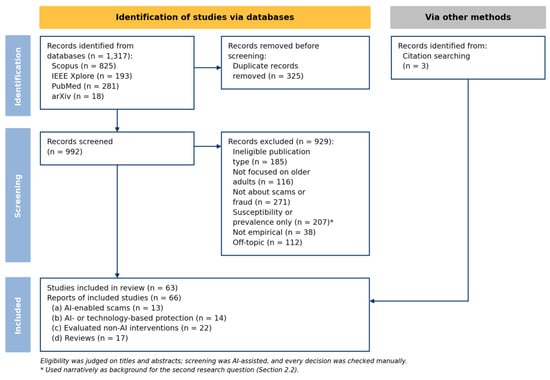
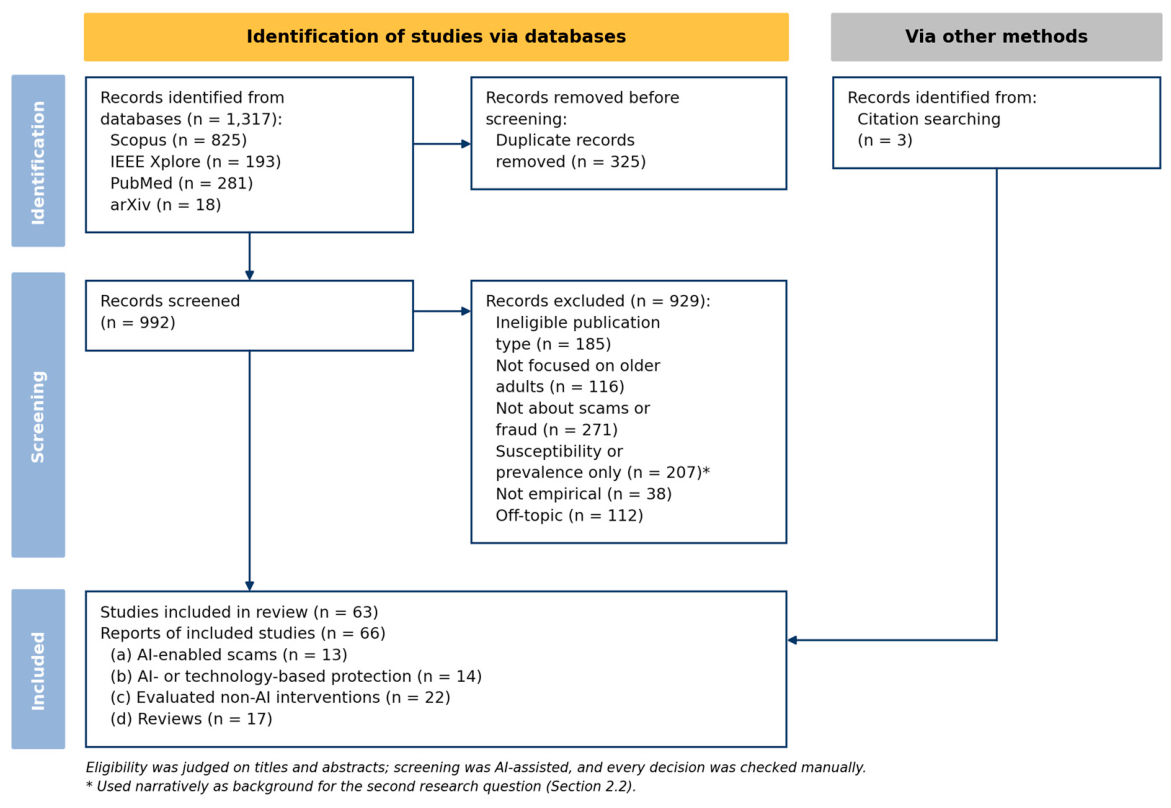
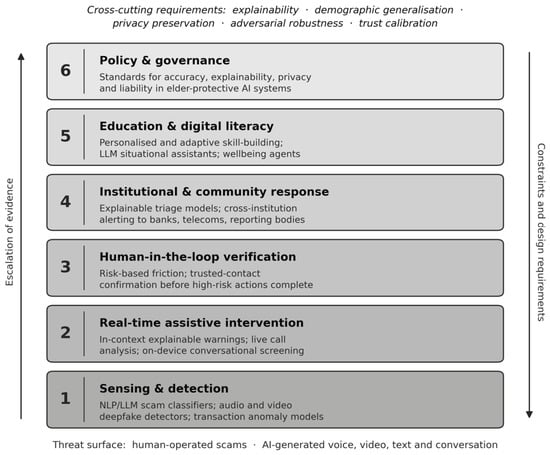
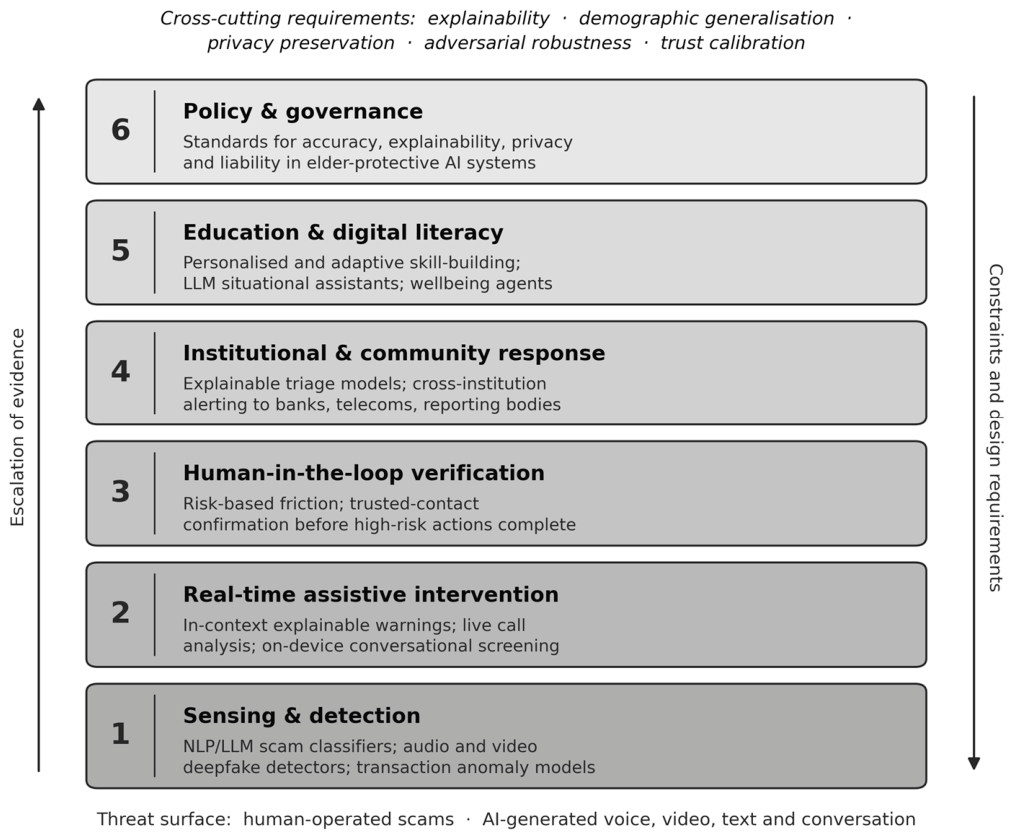

Disclaimer/Publisher’s Note: The statements, opinions and data contained in all publications are solely those of the individual author(s) and contributor(s) and not of MDPI and/or the editor(s). MDPI and/or the editor(s) disclaim responsibility for any injury to people or property resulting from any ideas, methods, instructions or products referred to in the content. |
© 2026 by the authors. Licensee MDPI, Basel, Switzerland. This article is an open access article distributed under the terms and conditions of the Creative Commons Attribution (CC BY) license.