


Abstract
Artificial intelligence (AI) and formal verification and validation (V&V) are two of the most consequential areas in safety-critical systems engineering, and they interact in a dual way: AI is increasingly used to support V&V, while V&V is increasingly applied to certify AI components whose high-dimensional and emergent behaviors resist classical methods. This study provides one of the first comprehensive bibliometric and science-mapping analyses of AI-assisted V&V for safety-critical systems over 2016–2026, combining, for the first time, Scopus and the Web of Science Core Collection into a single PRISMA 2020-compliant corpus of 425 documents. Descriptive bibliometrics, keyword co-occurrence and thematic mapping, trend-topic detection, and logistic lifecycle modelling reveal a field growing at 21.8% annually, mobilizing 1249 authors across 54 countries and organized into four thematic communities, formal verification with machine learning, model checking with agentic AI and large language models, and AI-driven runtime monitoring of cyber-physical systems, with large language models, theorem proving, and AI-systems verification as the youngest themes. Findings are situated against emerging AI-governance regimes, including the European Union Artificial Intelligence Act, the United States NIST AI Risk Management Framework, and ISO/IEC 42001. Beyond mapping, the study contributes the AI-Verification Assurance Framework (AVAF), a three-layer instrument that codes each study by verification direction, method, and property, grades the assurance it demonstrates on an A0–A4 scale, and maps it to certification regimes; AVAF is calibrated and pilot-tested on a stratified, subsample (intra-coder test–retest Cohen’s κ = 0.84). Its application reveals a certifiability gap: assurance concentrates in bounded-formal and statistical tiers, and no study in the coded calibration subsample attains a complete formal guarantee over a realistic model or certifiable, tool-qualified evidence (A4). The paper closes with a six-point research agenda on the certification, scalability, and multi-domain transfer of AI-assisted verification.
Keywords:
bibliometric analysis; formal verification; artificial intelligence; safety-critical systems; neural network verification; science mapping; machine learning; large language models; Scopus; Web of Science; PRISMA 2020 assurance framework; AI assurance levels; verification taxonomy; tool qualification; normative mapping 1. Introduction
Safety-critical systems, ranging from autonomous vehicles and railway control to aerospace systems and industrial cyber-physical systems (CPS) and medical devices, need to meet correctness properties that are formally provable prior to their deployment. Historically, formal verification and validation (V&V) approaches have formed the mainstay of this assurance, allowing engineers to demonstrate that a system meets a given set of properties, including safety invariants, liveness conditions and deadlock-freedom. A variety of classical methods, such as model checking, theorem proving, abstract interpretation, and process-algebraic reasoning, have been successfully applied to bounded, well-specified, deterministic domains [1,2]. Formal refinement-based techniques such as Event-B have likewise been applied to the verification of concurrent and IoT client systems [3,4]. The advent of artificial intelligence (AI), machine learning (ML), deep neural networks (DNNs), reinforcement learning (RL), and large language models (LLMs) has transformed this landscape, however, by infiltrating safety-critical decision-making pipelines. With the advent of AI-enabled components, their properties are inherently hard to check: they have high-dimensional input spaces, non-linear decision boundaries, distribution-shift sensitivity and emergent agentic behaviors [5,6]. This has led to a dual research challenge: how can classical V&V be augmented and enhanced by AI and how can novel paradigms of V&V be developed for the certification of AI components? Although there is a large amount of literature published in this area, there is no systematic bibliometric synthesis available for the field. Existing works focus on either verification of neural networks, runtime monitoring, or ML testing individually [7,8,9], and are narrative and selective in scope. The literature lacks a holistic and quantitative mapping of the evolution of the AI-V&V intersection, its intellectual core, its communities and thematic gaps. To fill this gap, this paper employs an extensive bibliometric analysis and science-mapping analysis of 425 documents retrieved from Scopus and the Web of Science Core Collection between 2016 and 2026 and selected according to the PRISMA 2020 protocol. The two most comprehensive multidisciplinary citation databases are combined to enhance the coverage of the formal methods and AI-verification communities, which are conference-driven, and reduce the single-database coverage bias of many focused science-mapping studies. Six research questions (RQs) are addressed in the study:
- RQ1: What is the longitudinal publication trend, and what does lifecycle modelling project for the near future?
- RQ2: Who are the most prolific and most cited authors, institutions, and countries?
- RQ3: What are the dominant thematic clusters identified through keyword co-occurrence and science mapping?
- RQ4: Which safety-critical domains and critical properties receive the most research attention?
- RQ5: What is the role of LLMs, agentic AI, and explainability in the evolving V&V landscape?
- RQ6: What are the principal open research challenges and future directions?
This study theoretically conceptualizes AI-assisted V&V as a new convergent socio-technical field that emerges from the intersection of formal methods, AI engineering and regulatory governance, offering a framework to account for the empirical phenomena emerging from the analysis. This study falls into the bibliometric and science-mapping tradition [10,11] using quantitative methods that have been widely used to map the intellectual structure, thematic evolution and collaboration of a research field. Bibliometric mapping is particularly suitable and widely used in rapid-changing, multi-disciplinary fields with an incomplete understanding of the overall structure, such as in studies of entire journals or disciplines over decades of time [12] to provide the patterns of knowledge production that cannot be captured by narrative-based review. The present study builds on this tradition and offers a methodologically sound, reproducible profile for the AI–V&V intersection, an area which has been previously unmapped as a coherent discipline. Beyond description, this paper makes a second, technical contribution: the AI-Verification Assurance Framework (AVAF), which grades the assurance level that each strand of work actually demonstrates and maps it to certification regimes, thereby addressing the recurring objection that bibliometric mapping alone offers no engineering-actionable output. The rest of the paper is organized as follows. Section 2 offers background, related work, and comparative positioning; Section 3 presents the methodology; Section 4 reports descriptive results; Section 5 presents science mapping; Section 6 introduces and applies AVAF; Section 7 discusses the findings; Section 8 sets out the research agenda; and Section 9 concludes.
2. Background and Related Work
2.1. Classical Verification and Validation of Safety-Critical Systems
Formal V&V encompasses rigorous mathematical techniques for establishing that a system satisfies its specification. Model checking exhaustively explores reachable states to verify temporal-logic properties expressed in computation tree logic (CTL), linear temporal logic (LTL), and probabilistic CTL [1]. Theorem-proving tools (Coq, Isabelle/HOL, PVS) construct machine-checked proofs of correctness. Abstract interpretation computes over-approximations of program behavior to establish invariants without full enumeration, and differential dynamic logic provides logical foundations for hybrid cyber-physical systems [2]. These methods have achieved industrial deployment under [1] (aviation), [13] (railway), [14] (functional safety), and [15] (automotive). Despite these successes, classical V&V faces fundamental scalability limitations with AI-enabled systems.
2.2. The Emergence of AI-Assisted Verification
ML has been applied to the abstraction-refinement cycle in model checking; RL has been used to train agents navigating the specification-counterexample feedback loop; and agent-oriented verification frameworks have established methods for reasoning about autonomous decision-making [16]. More recently, LLMs demonstrate the ability to generate proof sketches, suggest lemmas, and translate natural-language requirements into formal specifications, a development consistent with the broader neurosymbolic turn in AI research that seeks to integrate learning and logical reasoning [17]. Tools such as Lean Copilot appeared in the literature from 2023, and GPT-4-assisted specification generation has been documented in Computer-Aided Verification (CAV) and Formal Methods (FM) proceedings from 2024 onwards.
2.3. Verification of Neural Networks and Learned Components
Formal verification has, in turn, been directed at the learned artefacts themselves, principally the neural networks embedded in perception and control, whose behavior cannot be certified by construction. The ACAS Xu airborne collision-avoidance benchmark has become the canonical testbed. Tools including Reluplex, Marabou, NNV, and ERAN formalize neural-network verification as constraint satisfaction or reachability analysis over activation patterns [7,18], with early foundational work establishing output-range analysis for deep feedforward networks [19] and formal specification languages for DNN properties [20]. The international Verification of Neural Networks Competition (VNN-COMP), initiated in 2020, has structured the benchmarking of these tools [21]. Recent comprehensive surveys have consolidated the assurance landscape for AI in safety-critical domains, providing an integrative account of the standards, methods, and open challenges spanning the field [22].
2.4. Runtime Verification with AI
AI integration into runtime verification enables predictive and adaptive monitoring [8], particularly relevant for CPS and Internet-of-Things deployments where static verification is infeasible. This runtime dimension connects the field directly to the broader engineering literature on intelligent fault detection, diagnostics, and health monitoring, where ML and deep-learning methods have become the dominant paradigm for anomaly detection in safety-relevant industrial systems [23].
2.5. Trustworthy AI, Governance, and Assurance Frameworks
A parallel and increasingly influential development is the emergence of AI governance frameworks that create regulatory demand for rigorous V&V. The European Union Artificial Intelligence Act establishes mandatory conformity-assessment requirements for high-risk AI systems, including those used in safety-critical domains, and explicitly requires technical documentation of V&V processes [24]. The United States National Institute of Standards and Technology AI Risk Management Framework (NIST AI RMF 1.0) provides a structured approach to managing AI-related risks through measurement, evaluation, and improvement functions, all of which presuppose robust V&V capabilities [25]. The ISO/IEC 42001:2023 standard on AI management systems introduces audit and accountability requirements that depend on demonstrable V&V of AI component behavior [26]. Complementing these regulatory instruments, recent research roadmaps advocate quantitative safety guarantees for AI systems as a foundational design principle [27]. These frameworks collectively create an institutional pull for the research described in this paper: formal and AI-assisted V&V methods are becoming prerequisites for regulatory compliance in high-stakes AI deployments. The bibliometric analysis presented here captures the research community’s response to this emerging institutional environment.
2.6. Gaps in the Existing Literature
To the best of the authors’ knowledge, no prior bibliometric study has comprehensively mapped the AI–V&V intersection as a unified research field across both major citation databases. This study addresses that gap by providing a systematic science-mapping perspective and an empirically grounded foundation for research agenda-setting. Table 1 compares this study with related bibliometric and survey works to contextualize its novelty and scope.
Table 1.
Comparative positioning of the present study against related bibliometric and survey works.
Two recent secondary studies address adjacent ground and delimit the present contribution. [28] analyze the application of AI to formal methods, and Newcomb and [29] review formal methods for safety-critical machine learning. Each treats one direction of the AI–V&V relationship; neither maps the two directions jointly within a single corpus, and neither grades the assurance that the retrieved work demonstrates. The present study is positioned against both: its contribution is the integrated science-mapping of both directions together with an assurance-grading instrument (AVAF), rather than a claim that either direction was previously unmapped.
3. Methodology
3.1. Bibliometric Analysis Framework
Bibliometric science mapping is particularly suitable for rapidly evolving interdisciplinary domains where the intellectual structure, thematic evolution, and collaboration dynamics remain fragmented and incompletely understood, characteristics that precisely describe the AI–V&V intersection as documented in Section 2.6. By treating publications as observable traces of research activity, bibliometrics enables large-scale, reproducible analysis of knowledge-production patterns that would be intractable through narrative review. This study follows the framework of Aria and Cuccurullo [10] as implemented in the bibliometrix R package (v4.5.2) foundation for Statistical Computing, Vienna, Austria) and its Biblioshiny visual interface (K-Synth Srl, Naples, Italy), and its Biblioshiny visual interface. The PRISMA 2020 protocol [30] was followed for corpus construction. The complete study-selection process is illustrated in Figure 1 (PRISMA 2020 flow diagram). The comparative positioning of this study relative to prior work is provided in Table 1 (Section 2.6).
Figure 1.
PRISMA 2020 flow diagram for the merged Scopus + Web of Science corpus. Identification and screening counts (marked as completion fields) are populated from the authors’ retrieval-and-deduplication logs; the final corpus included in the bibliometric analysis is n = 425. Template: Page et al. ([30]). * Databases: Scopus and Web of Science. ** Records excluded at screening: outside the 2016–2026 window; proceedings volumes without authors or keyword metadata.
3.2. Databases and Search Strategy
Two databases were queried: Scopus (Elsevier) and the Web of Science Core Collection (Clarivate). Together these provide the broadest available multidisciplinary coverage of engineering and computer-science literature, strong indexing of conference proceedings, and metadata structures compatible with bibliometrix. A dual-database design was adopted deliberately, in preference to the single-database design of many focused science-mapping studies, because formal methods and AI verification are strongly conference-driven disciplines in which foundational contributions frequently appear first in peer-reviewed proceedings; combining Scopus and Web of Science reduces the source-coverage bias against the most active sub-communities. Conference proceedings were retained as eligible document types for the same reason. The searches were executed on 04 July 2026 using the parallel query structure presented in Table 2. To ensure comparability, the same three concept blocks, AI/ML methods, V&V methods, and system domain, were combined conjunctively in both databases, with database-specific field tags (TITLE-ABS-KEY in Scopus; TS in Web of Science).
Table 2.
Parallel Scopus and Web of Science query structure (search date: 4 July 2026). The three concept blocks were combined with logical AND in both databases.
3.3. Corpus Merging, Deduplication, and PRISMA 2020 Screening
Records exported from the two databases were converted to a common bibliographic structure and merged using the bibliometrix mergeDbSources routine, which harmonizes field tags and removes cross-database duplicates by matching on title, DOI, and source metadata. Eligibility criteria were defined a priori (Table 3). Following identification in the two databases, duplicate removal, title/abstract screening, and full-record eligibility assessment, a final corpus of 425 documents was retained for analysis. Because the retrieval and duplicate counts are specific to each retrieval session, the corresponding fields in the PRISMA flow diagram (Figure 1) are shown as completion fields to be populated from the authors’ retrieval logs; the final included count (n = 425) is fixed by the analyzed BiblioShiny corpus.
Table 3.
Inclusion (I) and exclusion (E) criteria applied during PRISMA 2020 screening of the merged Scopus + Web of Science corpus.
3.4. Data Cleaning and Normalization
Keyword normalization was performed using the bibliometrix synonym-thesaurus function (KW_Merged): variant forms such as ‘machine-learning’, ‘machine learning’, and ‘ML’ were consolidated, and the spelling variants ‘cyber physical system’ and ‘cyber-physical systems’ were unified. Approximately 2.6% of raw keyword tokens (70 of 2698) were unparsed or empty (labelled ‘na’) and were excluded from all keyword frequency, co-occurrence, and thematic-mapping analyses. For author disambiguation, Scopus and Web of Science author identifiers were used where available, and residual spelling variants were reconciled through standard bibliometrix name-matching; a small number of records (41, labelled ‘NAN’ in the raw export) carried missing or unparsed author fields and were retained for corpus-level statistics but excluded from author-level productivity and collaboration analyses. Affiliation normalization standardized affiliation strings to official English institutional names, although a limited amount of residual variant duplication remains (for example, ‘Vanderbilt Univ’ and ‘Vanderbilt University’ are indexed separately by the two databases); this is noted as a limitation in Section 7.4 and does not materially affect the institutional ranking reported in Section 4.5.
Two further steps addressed the dual-database design. Cross-database field harmonization reconciled the differing document-type taxonomies of the two sources (Scopus ‘conference paper’ versus Web of Science ‘proceedings paper’), which were merged into a single ‘conference/proceedings paper’ category for reporting; citation counts were taken from each record’s home database as merged by bibliometrix, which retains the higher-coverage citation field when a record is present in both sources. Finally, missing-data handling followed a conservative rule: records with missing non-essential fields (for example, funding or page range) were retained, whereas records missing fields essential to a specific analysis were excluded only from that analysis rather than from the corpus, with the affected proportions reported alongside the relevant results in Section 4 and Section 5.
Beyond these basic consolidations, a controlled thesaurus was constructed specifically for this corpus to support the science-mapping analyses. Twenty-four synonym groups were defined from the corpus’s own descriptor lists, normalizing lexical variants, acronym/full-form pairs (for example AI/artificial intelligence, ML/machine learning, DL/deep learning, DNN/deep neural network, LLM/large language model, CPS/cyber-physical system) and one source-database spelling error (“cyber-physical systems”) that had split a single concept across three nodes. The thesaurus is released in full as Supplementary Material.
A two-tier treatment of query-induced terms was then applied, because descriptors that name the search blocks themselves occur by construction and cannot discriminate the internal structure of the retrieved literature. Super-ordinate block terms (artificial intelligence, machine learning, formal verification, verification, validation, formal methods, safety-critical systems) were treated as domain stop terms and removed; subordinate terms that instantiate a block and genuinely partition the corpus (model checking, theorem proving, runtime verification, reinforcement learning, deep learning) were retained. To make the effect of this decision transparent, all keyword-based analyses were run under three descriptor regimes (raw; normalized; normalized with query stop terms removed), and the comparison is reported in the Supplementary Material.
Louvain community detection is a stochastic method that reports a consensus partition over 30 runs of the algorithm at γ = 1.0 keeping only descriptor pairs that were co-assigned in 50% of the runs. Robustness was evaluated in two manners: run-to-run agreement of the identical parameters (median Adjusted Rand Index = 0.44 over 30 restarts, k = 4–7; sensitivity across retained-descriptor counts (100/150/250) and resolutions (γ = 0.8/1.0/1.2), over which k ranged from 3 to 10. Thus, the number of communities depends on the resolution, and the solution is not a stable invariant but rather a consensus structure as γ = 1.0. The full grid is included as Supplementary Material.
3.5. Analytical Methods
The analytical protocol combined descriptive and network-based bibliometric techniques. Descriptive bibliometrics comprised annual scientific production, source distribution, author productivity, institutional and country distributions, and citation metrics, computed for the full 425-document corpus. Bradford’s law was applied to partition sources into core (Zone 1), intermediate (Zone 2), and peripheral (Zone 3) zones, identifying the small set of venues that concentrate a disproportionate share of the field’s output, while Lotka’s law was used to compare the empirical distribution of author productivity against the theoretical inverse-square law across the 1249 contributing authors.
Science mapping was conducted through four complementary analyses. A keyword co-occurrence (co-word) network was constructed from the top 50 normalized keywords, to which Louvain community detection was applied to identify thematic clusters, with betweenness centrality, closeness centrality, and PageRank computed for each node (Section 5.2). Keyword frequency evolution and trend-topic detection tracked cumulative keyword frequencies over time and located each term’s median publication year and interquartile range, distinguishing foundational from emerging themes (Section 5.3). Thematic mapping positioned themes on the Callon centrality–density plane [11], yielding a four-quadrant classification (motor, basic/transversal, niche, and emerging themes) computed independently of the co-occurrence network and therefore providing a complementary strategic view (Section 5.4). Finally, collaboration networks for authors and countries were constructed with association-strength normalization and Louvain community detection to characterize the field’s collaborative structure (Section 4). The lifecycle model used to project the field’s growth trajectory is described below.
Lifecycle modelling. A logistic (Lotka diffusion) growth model was fitted to the cumulative annual-production series by non-linear least squares, in the form C(t) = K/(1 + exp(−4(t − tm)/δt)), where C(t) is cumulative production, K the saturation ceiling, tm the inflection year (peak annual production), and δt the characteristic growth duration. A logistic (S-curve) model fitted to the annual cumulative output by non-linear least squares describes the observed growth well (R2 = 0.997), with an estimated carrying capacity K ≈ 815 (95% CI 609–1522), an intrinsic growth rate r ≈ 0.356, and an inflection at tm ≈ 2025.8 (95% CI 2024.2–2029.1). The model is nonetheless interpreted as exploratory: the inflection falls close to the truncated final year of the search window (mid-2026), and the wide confidence interval on K (a factor of about 2.5) shows that the projected ceiling is not tightly constrained. The fit therefore characterizes the growth observed to date rather than forecasting a specific production peak, and extrapolation beyond the window should be treated with caution.
4. Descriptive Bibliometric Results
This section reports the descriptive dimension of the analysis. Section 4.1, Section 4.2 and Section 4.3 characterize the corpus, its growth dynamics, and its intellectual nucleus (RQ1); Section 4.4, Section 4.5 and Section 4.6 examine the productive and citation structures at source, author, and country levels (RQ2). The science-mapping analyses addressing RQ3–RQ5 follow in Section 5.
4.1. General Overview of the Corpus
Table 4 presents key descriptive statistics of the final 425-document merged corpus.
Table 4.
Descriptive statistics of the final merged bibliometric corpus (n = 425).
4.2. Annual Scientific Production and Lifecycle Analysis
Annual scientific production rose from 10 documents in 2016 to 82 in 2025 (Figure 2), an annual growth rate of 21.8%. The trajectory is not uniform: output grew moderately through 2019–2022 before accelerating sharply from 2023 onwards. This inflection coincides with two concurrent developments, the diffusion of LLM-based tooling into formal-methods workflows, and the intensification of regulatory pressure following the European Union Artificial Intelligence Act [24] and the United States Executive Order on Safe, Secure, and Trustworthy AI (2023), although, as discussed in Section 7.4, bibliometric data alone cannot establish causal attribution. Fitting a logistic diffusion model to the cumulative series describes the observed growth well (K ≈ 815, 95% CI 609–1522; tm ≈ 2025.8; R2 = 0.997, exploratory; full parameters in Table A1), indicating a field still in its expansion phase rather than at maturity. Citation dynamics complement this production view: mean citations per article decline across publication cohorts, from 27.25 for the 2016 cohort to 1.42 for 2025. This recency effect is expected in a young, rapidly expanding corpus and cautions against comparing raw citation counts across years.
Figure 2.
Annual scientific production (2016–2026); annual growth rate = 21.8%; n = 425 documents.
4.3. Most Globally Cited Documents
The citation distribution across the corpus is steeply skewed: the ten most-cited documents (Table 5) account for a disproportionate share of total citations, and their composition reveals the field’s intellectual nucleus. Two complementary high-impact research programs emerge: the mathematical formalization of neural-network behavior as a V&V object, anchored by output-range analysis for deep feedforward networks [19], the vision of verified artificial intelligence [31], safety verification of RL-controlled CPS [32], and formal verification of neural-network-controlled autonomous systems [33]; and the application of agent-based formal methods to autonomous decision-making, anchored by practical verification of agent decision-making [34], safe reinforcement learning via formal methods [35], and formal verification of autonomous-vehicle platooning [36]. Complementary highly cited contributions address black-box safety validation of cyber-physical systems [37], robust ML system design [38], and, newly prominent in the merged corpus, a comprehensive survey of AI for safety-critical systems [22], whose high citations per year (37.3) mark it as a rapidly-rising integrative reference.
Table 5.
Top 10 most globally cited documents (TC = total citations; TC/yr = citations per year). Rows report merged-corpus records as indexed; documents discussed in the text are cited in the reference list.
4.4. Source Analysis and Bradford’s Law
The 425 documents are distributed across 300 venues. Bradford Zone 1 (core) is dominated by Lecture Notes in Computer Science (39 documents, including the LNAI/LNBI subseries), CEUR Workshop Proceedings (21), a further Lecture Notes in Computer Science listing (21), EPiC Series in Computing (9), Lecture Notes in Networks and Systems (5), and the AAMAS proceedings (5), followed by a cluster of archival journals, ACM Transactions on Embedded Computing Systems, IEEE Access, IEEE Transactions on Computer-Aided Design, and the Journal of Systems and Software (4 each). The dominance of conference proceedings (roughly two-thirds of output) reflects the fast-moving nature of this research landscape.
4.5. Author Productivity and Lotka’s Law
Author-level analysis reveals a field organized around a small number of highly productive research groups. The most prolific authors are Johnson T. T. (15 documents), Lopez D. M. (11), Fisher M. (10), Dennis L. (9), and Wang Y. (9), followed by Liu J. and Zhang M. (7 each) and Tran H.-D. (6). The temporal distribution of their activity reveals two distinct communities: the NNV/ARCH-COMP neural-network-verification group (Johnson, Lopez, Tran, Forets, Schilling), active from 2019, and the University of Liverpool autonomous-agents group (Fisher, Dennis), whose agent-verification research program [16,34] has been active throughout the study period. Lotka’s law shows that approximately 82.6% of the 1249 authors (1032 authors) contributed a single document, broadly consistent with the theoretical inverse-square law, though diverging slightly at higher productivity levels as expected in specialized technical domains. Author productivity is reported here as a descriptive property of the retrieved records; it is not evidence of corpus representativeness, which is addressed separately by the coverage and precision assessment in Section 3.2. Authorship concentration follows the pattern typical of established scientific fields.
4.6. Geographical and Institutional Distribution
Scientific production spans 54 countries, with pronounced concentration and a notable output–impact structure. Corresponding-author analysis, distinguishing single-country publications (SCPs) from multi-country publications (MCPs), shows international collaboration accounting for 11.91% of the corpus, which is modest and indicative of research communities that remain largely nationally organized. The United States leads in corresponding-author output (95 documents), followed by China (42), the United Kingdom (26), Germany (20), and Italy (18); Figure 3 (world map) confirms North America, Europe, and East Asia as the dominant regions, with the United States and China showing the steepest cumulative growth from 2023. On total citation impact, the United States leads decisively (1108 citations), followed by the United Kingdom (537) and China (367). The most analytically significant geographic finding is an impact-per-article dissociation: although the United States leads in both volume and total citations, the United Kingdom achieves the highest average citations per article among major producers (20.7), and smaller producers such as Singapore (54.5) and Israel (25.5) achieve exceptional per-article impact from concentrated, programmatic contributions, the United Kingdom figure being attributable in large part to the University of Liverpool autonomous-agent verification program [16,34]. At the institutional level, the most productive affiliations are Carnegie Mellon University (17 documents), Mälardalen University (14), East China Normal University (12), Vanderbilt University (11), the University of Pennsylvania (10), and Stanford University (9), consistent with the two author communities identified above.
Figure 3.
Country scientific-production world map (color intensity proportional to production volume; 53 contributing countries).
5. Science Mapping and Network Analysis
5.1. Most Relevant Keywords
Keyword-frequency analysis establishes the quantitative foundation for the thematic mapping that follows. After descriptor normalization and the removal of query-induced terms (Section 3.4), the dominant discriminating descriptors are model checking (115 occurrences), cyber-physical systems (91), autonomous agents (84), embedded systems (55), learning systems (54), safety engineering (49), large language models (44), reinforcement learning (37), neural networks (33) and theorem proving (25) (Figure 4). Two structural observations follow. First, model checking remains the single most frequent descriptor, confirming that the field stays anchored in the formal-methods tradition even as AI paradigms diffuse through it; large language models, absent from the earlier frequency ranking, now enter the top ten. Second, the co-presence of variant spellings (cyber-physical systems/cyber physical system; machine learning/machine-learning) at high frequency reflects terminological fragmentation across contributing communities, itself evidence of the field’s interdisciplinary and still-consolidating character. The frequency distribution is diffuse rather than monolithic: no single descriptor dominates once query-induced terms are removed, which is consistent with the multi-community structure identified below.
Figure 4.
Most relevant keywords by frequency (top 10; combined author keywords DE and index keywords ID).
5.2. Keyword Co-Occurrence (Co-Word) Network
Louvain community detection was applied to the co-occurrence network of the top 250 normalized descriptors (Figure 5). Because the algorithm is stochastic, the partition reported here is a consensus solution computed over 30 restarts at resolution γ = 1.0 (descriptor pairs co-assigned in at least half of the runs); the number of communities is resolution-dependent (Section 3.4 and Supplementary Material S6), so the solution is described as the consensus structure at γ = 1.0 rather than as a stable invariant. After descriptor normalization and removal of query-induced terms, the network resolves into four substantive thematic communities plus one small peripheral community, which is reported but not interpreted. The four communities are:
Figure 5.
Keyword co-occurrence (co-word) network on the normalized descriptors. Node color denotes the four-community consensus partition (Section 3.4); the peripheral community is shown in grey. For readability the network is computed on the top 250 descriptors and only the most central nodes are labelled. Query-induced terms were removed prior to network construction (Section 3.4).
Community 1: Model checking and autonomous agents: centered on model checking (the network’s dominant node), it groups autonomous agents, autonomous systems, agentic AI, reinforcement learning, autonomous vehicles, temporal logic and stochastic systems. It gathers the symbolic, logic-based and learning-based verification of autonomous decision-making, including its adversarial-robustness and transportation applications.
Community 2: Embedded and cyber-physical systems verification: organized around embedded systems, cyber-physical systems and learning systems, with hybrid systems, runtime verification, controllers, feedforward neural networks and neural-network control. It represents the verification and monitoring of learning-enabled cyber-physical systems.
Community 3: Safety engineering and neural-network assurance: centered on safety engineering, it groups neural networks, deep learning, deep neural networks, reachability analysis, robustness, software reliability and trustworthy AI. It corresponds to the assurance and formal verification of the learned artefacts themselves.
Community 4: Large language models, theorem proving and testing: organized around large language models, it groups software testing, formal specification, theorem proving, safety testing, natural-language-processing systems and network security. This community did not exist as a separate group in the originally reported solution; its emergence after descriptor normalization gives structural support to the LLM-oriented turn identified by the trend-topic analysis (Section 5.3).
The consensus solution resolves into four substantive thematic communities. This four-community structure reflects the descriptor normalization and the removal of query-induced terms (Section 3.4): terms that are ubiquitous by construction, because they define the search query, carry little power to discriminate the intellectual organization of the field, and their removal lets the underlying thematic structure emerge. Adversarial machine learning, temporal logic, automata theory, network security, and reachability analysis, in particular, become visible as discriminating themes only once the query-induced terms are removed.
5.3. Keyword Frequency Evolution and Trend Topics
The temporal dimension of the keyword space distinguishes established themes from recent ones. Recency of median publication year identifies recently prominent topics; it does not, by itself, establish emergence in the sense of sustained novelty, growth and persistence, and the terms below are therefore described as recent rather than as emerging research fronts (per-term novelty, growth and persistence indicators are provided as Supplementary Material S7). Cumulative frequency trajectories show formal verification and model checking growing steepest, both accelerating from 2022 onwards, evidence that the classical V&V core is expanding rather than being displaced by AI-era terminology. Per-term temporal concentration (Figure 6) then identifies genuinely recent arrivals, revealing three evolutionary phases. Phase I (2017–2018): model-based testing and computation theory, foundational CPS and classical formal methods. Phase II (2020–2022): computer circuits, automata theory, run-time verification, machine learning (median 2022), embedded systems (2022), and verification (2022), the ML–formal-methods convergence. Phase III (2023–2026): formal verification (median 2023), model checking (2023), safety engineering (2023), artificial intelligence (2024), cyber-physical systems (2024), autonomous agents (2024), and, at the frontier, large language models, theorem proving, and AI systems, all with median year 2025–2026. These are the most recent descriptors in the corpus and are best described as recently prominent rather than as established fronts. Because the search was executed on 4 July 2026, the final year is truncated, and the 2026 counts should not be read as evidence either of a downturn or of saturation.
Figure 6.
Trend topics: temporal distribution of research themes (bar = Q1–Q3 range; dot = median year, sized by term frequency; top = most recently emerging themes: language models, theorem proving, AI systems, median year 2025).
5.4. Thematic Mapping
The analyses in Section 5.1, Section 5.2 and Section 5.3 characterize themes by frequency, relational structure, and temporal position separately; thematic mapping integrates these dimensions into a single strategic representation. Each theme is positioned on two structural axes, centrality (the strength of its external connections to the rest of the field) and density (its internal cohesion), yielding four interpretive quadrants [11] whose occupancy characterizes the maturity and strategic position of every research theme simultaneously (Figure 7, Table 6). On the normalized descriptors, embedded and cyber-physical systems is the most central theme, occupying the basic/transversal region; model checking sits at the center of the diagram, combining the highest development (density) with mid-level centrality; large language models has the highest development but the lowest centrality, placing it among the niche/developing themes; and safety engineering and learning systems occupy the high-centrality margin. No single theme dominates the motor quadrant, a configuration consistent with a field in active structural reconfiguration rather than one organized around a single mature core.
Figure 7.
Thematic map of the AI–V&V research field: centrality (x-axis) vs. density (y-axis). Motor (upper-right): formal verification + ML; model checking + autonomous AI. Basic/transversal (lower-right/high-centrality): CPS monitoring, embedded AI. Niche (upper-left): probabilistic V&V, hybrid systems. Emerging (lower-left): LLMs, XAI, agentic verification.
Table 6.
Thematic-map interpretation: four-quadrant classification of research themes ([11]).
Motor themes: formal verification augmented by ML and neural-network analysis (Cluster 1) and model checking for autonomous systems (Cluster 2) are well-consolidated, highly central, and internally dense. They represent the established intellectual core, building cumulatively on recognized benchmarks (ACAS Xu, VNN-COMP) and tool ecosystems (NNV, Marabou, SPIN, UPPAAL); continued investment here will remain productive and well-connected to the rest of the field.
Basic/transversal themes: cyber-physical-systems monitoring and embedded-systems AI testing are highly connected externally, co-occurring with keywords from all four communities, but lack the internal density of motor themes. This is characteristic of application domains receiving contributions from multiple methodological communities without a consolidated methodological identity, and implies that CPS and embedded-AI verification would benefit from greater standardization and domain-specific benchmarks.
Niche themes: probabilistic model checking, process-algebra-based verification, and hybrid-system reachability are internally coherent and technically mature, evidenced by the PRISM, STORM, and KeYmaera X tool ecosystems, but have not achieved broad field-level connectivity, reflecting the specialized mathematical prerequisites that limit adoption beyond dedicated groups.
Emerging themes: LLM-based verification, explainable-AI verification, and agentic test generation occupy the emerging quadrant. Their low density reflects sparse co-occurrence structure; their low centrality reflects incomplete integration into the field’s main programs. The trend-topic analysis (Figure 6) confirms median publication year 2025 for these terms. Such themes may carry significant transformative potential precisely because they are underexplored, while also carrying the highest uncertainty about which specific directions will consolidate over the next decade.
6. The AI-Verification Assurance Framework (AVAF)
Section 4 and Section 5 establish what the field looks like, its size, communities, and thematic structure. They do not establish how strong the assurance is that this body of work actually delivers, nor how close it stands to the certification regimes that govern safety-critical deployment. Answering that question requires an evaluative instrument rather than a descriptive one. This section contributes such an instrument, the AI-Verification Assurance Framework (AVAF), and applies it to the corpus through a mixed-method design with triangulation. AVAF is the study’s technical contribution: it converts the bibliometric map into a graded assessment of demonstrated assurance and its regulatory admissibility.
6.1. Framework Architecture
AVAF has three layers (Figure 8). Layer 1 is a descriptive taxonomy that codes every study on five dimensions: verification direction (D1: AI→V&V, where AI serves the verification task, versus V&V→AI, where verification is applied to an AI artefact, or both); AI paradigm (D2); formal or analysis technique (D3); property class (D4); and application domain (D5). Layer 2 is an assurance scale, A0–A4, coded on what a study actually demonstrates rather than what it claims: A0 empirical evaluation with no bound; A1 a statistical or probabilistic bound; A2 a formal guarantee that is explicitly bounded (a restricted input region, strong stated assumptions, or toy-scale models); A3 a complete formal guarantee over the stated model with a verifiable certificate; and A4 the same as A3 together with explicit tool qualification, traceability, or auditability of the evidence. Layer 3 maps each study to the normative regime that would govern it in deployment [14,15,24,26,42,43].
Figure 8.
The AI-Verification Assurance Framework (AVAF): three analytical layers (L1 descriptive taxonomy, L2 assurance scale, L3 normative mapping), constructed and calibrated by mixed-method triangulation on a stratified sample of the corpus. Colors are illustrative: they distinguish the three layers and, for the A0–A4 scale, encode increasing assurance strength (light = weaker, dark = stronger).
AVAF is distinct from the assurance instruments it draws on. Assurance-case methodologies such as AMLAS and the UL 4600 safety-case standard guide the construction of a deployment a single system; design-assurance and integrity levels such as the Ref. [42] (A–E) and the Ref. [2] (A–D) set required rigor from hazard severity, not from evidence actually produced. AVAF is an analytic instrument of a different kind: it grades the assurance a body of published work demonstrates and situates that work against the regimes that would govern it, so that the A0–A4 scale reads as a research-evidence scale that must not be conflated with a certification integrity level. Its purpose is field diagnosis, not system certification.
6.2. Construction and Coding Protocol
AVAF was built and stress-tested by mixed-method triangulation. A stratified sample of 40 documents was drawn from the corpus—the twelve most-cited documents in each of the three co-word clusters of the initial mapping, plus four recent (2025–2026) documents to offset citation lag for recent LLM and agentic work. Under the revised four-community consensus structure (Section 5.2) the coded subsample spans all four substantive communities. Each document was coded against the five dimensions and assigned an assurance tier under a single decision rule: code the highest tier the paper demonstrates in its evaluation, not the tier announced in its abstract. A document-type gate precedes scoring, surveys, competition meta-analyses, and conceptual roadmaps are recorded as secondary or conceptual and are not placed on the A0–A4 scale. The A2/A3 boundary, the single most consequential coding decision, is fixed operationally: a formal guarantee is coded A2 when it holds only under a bounded or abstracted model, at non-industrial (toy) scale, over a restricted input region, or under undischarged assumptions, and A3 only when it is complete over a realistically-scoped model and yields a reusable, checkable certificate. Eight sample documents were gated out as surveys or essays; two further documents were excluded from scoring, one with no AI component, one addressing pure mathematics outside the safety-critical scope.
Because the study has a single author, reliability was assessed by intra-coder test–retest: the analyst re-coded nine sampled articles against the same codebook after an interval, and agreement between the two passes (Cohen’s κ) was high on every descriptive dimension, D1 0.82, D2 0.69, D3 0.85, D4 0.79, D5 1.00, and moderate on the assurance scale (κ = 0.58 for an overall κ of 0.84. Independent inter-coder validation, by raters not involved in the framework’s development, remains future work. The pattern is itself a finding: the taxonomy is reproducible, and the sole locus of unreliability is the A2/A3 boundary, which is exactly why the distribution below is reported with a sensitivity analysis. The three assurance disagreements were adjudicated against the codebook, one invited survey was reclassified as conceptual and removed from scoring, one runtime-monitoring study was moved to the empirical floor, and the agent-verification studies were aligned at A2 under the bounded-guarantee rule. The coding workbook, decision rules, reliability worksheet, and per-article justifying quotes are released as Supplementary Material; convergent validity is checked by aligning the qualitative D1–D5 coding with the four co-word communities (Section 6.5).
6.3. Assurance Distribution and the Certifiability Gap
Table 7 reports the coding of the calibration subsample used to construct and stress-test the framework; Table 8 summarizes the resulting assurance distribution. The expectation was that assurance would concentrate in the bounded and statistical tiers (A1–A2) and that the certifiable tier (A4) would be effectively empty. The second half holds without qualification: no coded study reaches A4. The finding is not an artefact of weak studies, the single study that demonstrates a complete formal guarantee, a kernel-verified proof-search system, stops at A3 because it claims no tool qualification in the sense of DO-178C §12.2 or IEC 61508-3 §7.4.4, and because it addresses mathematics rather than a safety-critical system. This is the field’s certifiability gap: it produces proofs, not certification-grade evidence. Under the fixed A2/A3 rule (Section 6.2), assurance is concentrated overwhelmingly in the bounded and statistical tiers: A1–A2 accounts for 68% of scored studies (13 of 19), A0 for 26%, and A3 for a single study, itself a kernel-verified mathematical-proof system lying outside the safety-critical scope. Within the safety-critical corpus, then, no study demonstrates a complete formal guarantee over a realistic model (A3) and none is tool-qualified (A4). The result is reported with a robustness check: under the more permissive reading that credits sound model-checking and reachability over a declared but abstracted model as complete, most of the A2 tier would move up, raising A3 toward half the sample and lowering A1–A2 correspondingly. A4 = 0 and the A0 floor are invariant across both readings, and the reliability analysis (Section 6.2) locates all disagreement in exactly this A2/A3 band (κ = 0.58).
Table 7.
AVAF coding of the calibration subsample (20 scored studies; #28 shown as excluded). Row numbers are indices in the 40-document stratified sample (Section 6.2); non-consecutive values are secondary or conceptual documents omitted from A-scoring. D1: A→V = AI→V&V, V→A = V&V→AI. D2: DL/ML/RL, BDI agentic, NA none. D3: MC, TP, Reach, RV, SMT, Test. D4: Saf, Rob, Func, RT, Oth. D5: Auto, Med, ICPS, Avio, X-dom. L3: I invoked-but-unmapped, F too-formal, N too-informal, M mapped. * no AI component; † invited survey, not scored.
Table 8.
Assurance-level distribution on the coded calibration subsample. A4 is empty under either boundary convention.
Robustness: the reliability analysis (Section 6.2) shows the descriptive coding is reproducible (κ ≥ 0.69 on every dimension, 1.00 on domain) and localizes all disagreement in the A2/A3 band (κ = 0.58). Under the conservative rule the A2 tier holds ten studies; under the permissive reading most move to A3. A4 = 0 and the empirical floor are invariant. Article #28 (no AI), rlCoP (pure mathematics), and Platzer (invited survey) are outside the scored set; eight further surveys and essays are gated out by document type.
6.4. Directional and Property Structure
Two structural regularities emerge. First, direction (D1) is markedly asymmetric: verification applied to AI artefacts (V&V→AI) outnumbers AI applied to verification tasks (AI→V&V) by roughly two to one in the coded sample, with a small number of co-constitutive cases in which the two directions are inseparable, an AI system whose training signal is itself a verification result. This asymmetry is the coded counterpart of the dual-nature reading in Section 7.2 and belongs in the field’s self-description. Second, the property dimension (D4) does not saturate: successive articles introduce new property modalities, ethical compliance, epistemic uncertainty, individual fairness, and, most recently, adversarial security, at a rate that does not slow. A descriptive dimension that grows with every article records rather than discriminates; AVAF therefore folds these modalities into a small set of abstract property classes (functional, adversarial, normative, epistemic) and records the fine-grained modality as a secondary attribute.
6.5. Triangulation with the Bibliometric Clusters
The qualitative coding converges with the four-community co-word structure of Section 5.2. The autonomous-agent and model-checking studies fall in Community 1 (model checking and autonomous agents); the learned-monitor, runtime and hybrid-systems studies fall in Community 2 (embedded and cyber-physical systems verification); the neural-network reachability and robustness studies fall in Community 3 (safety engineering and neural-network assurance); the theorem-proving and formal-specification studies align with Community 4 (large language models, theorem proving and testing); the reinforcement-learning and autonomous-vehicle studies fall within Community 1. This convergence between an independently derived taxonomy and the co-occurrence network is the triangulation that supports construct validity. The same exercise surfaces the corpus’s internal seams: two boundary cases, kernel-verified competition mathematics and human-in-the-loop behavioral ML evaluation from the HCI community, sit at the periphery of the safety-critical core, indicating that the merged corpus fuses at least two research literatures, a structural fact the co-word map recovers independently.
6.6. Normative Mapping and Its Blind Spots
Layer 3 coding resolves into a spectrum rather than a mapped/unmapped binary, with four regimes: operationally mapped (alignment to specific standard clauses); invoked-but-unmapped (a regulated domain and a stated certification intent, but no clause-level mapping), the median regime of the corpus; and two out-of-regulation regimes at opposite extremes, one too formal to fall under any deployment regime (fundamental proof research), one too informal to reach a safety standard (ML/HCI evaluation, at most touched by the EU AI Act or Ref. [26]. Normative coverage thus fails symmetrically at both ends of the methodological spectrum. The coding also exposes a hole in the four anchor standards: several automated-driving studies map most naturally to Refs. [15,56], which the initial anchor set omitted and which the framework now incorporates. Applied to the scored set, Layer 3 yields no operationally mapped study whatsoever (0 of 19); the mass is invoked-but-unmapped (15 of 19), with two studies too formal and two too informal. The absence of a single clause-level mapping independently corroborates the A4 = 0 result, since a study that maps to no standard clause cannot, by construction, be tool-qualified against one.
6.7. Framework Refinements Surfaced by the Coding
The value of the exercise is diagnostic: applying AVAF did not merely tally the corpus, it forced a sequence of refinements to the framework itself (Table 9). Separating document-type from the assurance scale, distinguishing assurance polarity (positive guarantee versus refutation/bug-finding), sub-typing the empirical floor, splitting guarantee-strength from regulatory status at the A4 apex, and adding a referent-of-guarantee axis (whether a proof certifies a fact about the world or about an agent’s internal state) are the substantive, transferable output of the study. These refinements (F1–F8) were surfaced by the calibration coding and are stated as the specification for the full-corpus coding; the distribution above is computed on the un-refined scale and is, in that sense, a conservative baseline. They are what distinguishes a framework contribution from a descriptive tally, and they directly answer the objection that a bibliometric study yields no engineering-actionable result.
Table 9.
Framework refinements surfaced by applying AVAF to the sample (design findings).
7. Discussion
The following discussion is organized around the theoretical frame introduced in Section 1: AI-assisted V&V as a convergent socio-technical domain. Section 7.1 answers each research question against the evidence; Section 7.2 and Section 7.3 interpret the two most consequential findings; Section 7.4 states the limitations; and Section 7.5 draws out implications.
7.1. Answers to the Research Questions
RQ1 (longitudinal trend and projection): the field grows at an annual rate of 21.8%, from 10 documents in 2016 to 82 in 2025 (Figure 2), and logistic diffusion modelling describes accelerating growth to date, with the fitted inflection near 2026 (tm ≈ 2025.8; R2 = 0.997, exploratory). The field is therefore in an accelerating growth phase rather than at maturity, with direct implications for the timing of research investment.
RQ2 (most prolific and cited authors, institutions, countries): the most prolific authors are Johnson T. T. (15), Lopez D. M. (11), and Fisher M. (10); two temporally distinct communities are visible, one anchored in neural-network-verification tooling and one in autonomous-agent verification. The United States leads both production and total citations (1108), whereas the United Kingdom leads per-article impact among major producers (20.7 citations/article), attributable to the Liverpool autonomous-agent program [16,34]. Author productivity follows Lotka’s law (descriptive property only).
RQ3 (dominant thematic clusters): Frequency (Figure 4) analysis confirms formal verification (149) and model checking (114) as the field’s dominant conceptual anchors, bridged by ‘artificial intelligence’. Co-word analysis (Figure 5) with Louvain community detection identifies four thematic communities: formal verification + ML integration; model checking + agentic AI/LLMs; and AI-driven CPS/embedded monitoring.
RQ4 (domains and properties): embedded and cyber-physical systems dominate the application domain (Cluster 3), while the most-studied critical properties are safety, robustness, and reachability, reflected in the prominence of safety engineering (49), robustness, and reachability analysis within Cluster 1. Aerospace and autonomous-vehicle domains recur through the canonical ACAS Xu and platooning benchmarks [33,36].
RQ5 (role of LLMs, agentic AI, explainability): trend analysis (Figure 6) places ‘language models’, ‘theorem proving’, and ‘AI systems’ at median year 2025, and the thematic map (Figure 7) locates them in the emerging quadrant, high growth potential, low current consolidation. These paradigms are reshaping the research frontier but have not yet entered the field’s motor themes.
RQ6 (open challenges and future directions): the principal gaps are scalability of neural-network verification, certifiability of AI-assisted V&V outputs, multi-domain method transfer, and auditability of LLM-generated verification evidence, developed into a six-point agenda in Section 8. Table 10 summarizes the mapping from each research question to its supporting evidence and answer.
Table 10.
Mapping of each research question to its supporting evidence and principal answer.
7.2. The Dual Nature of AI–V&V Research
The bibliometric analysis confirms that the AI–V&V intersection is genuinely and structurally bidirectional. The most-cited foundational works [19,31,32] address the mathematical formalization of neural-network behavior as a V&V object, while the autonomous-agent verification thread [34,35] approaches AI as a decision-making architecture requiring agent-level correctness guarantees. This duality is structurally confirmed by both the co-word network (Figure 5) and the thematic map (Figure 7, Table 6): ‘formal verification’ and ‘model checking’ occupy separate but bridged cluster centroids, with ‘artificial intelligence’ serving as the principal cross-cluster connector. The consolidation of Cluster 2 (model checking + LLMs + autonomous agents) as structurally distinct from Cluster 1 (formal verification + neural networks + ML) confirms that two parallel research programs are maturing. Their potential convergence, for instance, LLM-guided model checking of neural agent systems, may represent one of the most promising as-yet-underexplored directions suggested by this study.
7.3. Evidence of an LLM-Driven Shift in Research Orientation
The trend analysis strongly indicates an LLM-driven inflection (Figure 6): ‘language models’, ‘theorem proving’ and ‘AI systems’ have all been determined to have a median year of 2025 with interquartile ranges of 2025–2026. The increased production in 2025 (85 documents, Figure 2) reflects this trend, but does not imply causal attribution based on bibliometric information only. The LLM-based reasoning and proof generation seem to indicate a shift in how the proof is being generated, marking a transition away from human-only proofs to human-supervised LLM-generated proofs. The advantages and disadvantages of this shift are: hallucination remains an issue for LLMs; LLMs can produce formally invalid proof steps; and existing standards like Refs. [14,42] do not have a certification trail for LLMs. The bibliometric evidence for the emergence of LLMs is visible on several independent indicators (production trend, keywords, trend topics); its translation into verifiable practice of certification, on the other hand, continues to be a challenge.
7.4. Limitations
The goal of the present study is field-level science mapping, rather than evidence-effectiveness synthesis. In that system a few constraints need to be taken into account. First, the dual-database (Scopus + Web of Science) design significantly extends coverage relative to those database-based studies that rely on a single database, but publications that are only indexed in IEEE Xplore, the ACM Digital Library, or arXiv may still be underrepresented, and cross-database merging can cause small residual duplication or metadata inconsistencies despite automated deduplication. Second, the time-bound search (4 July 2026) does not include publications published after the retrieval date, and the 2026 count is a partial year count. Third, the bibliometric analysis offers quantitative measures for production, thematic development and collaboration structure, but it does not judge with respect to the methodological quality or empirical strength of the individual studies, which can be achieved better through systematic reviews that provide more in-depth qualitative assessment. Fourth, keyword normalization, though meticulously explained, might have caused some inconsistencies where the meanings of the terms are in dispute. Fifth, forecasting for the logistic lifecycle is subject to uncertainty due to a lack of data, at least a decade long, to support the forecast, and because the growth curve assumed is subject to material change by external factors. Sixth, co-occurrence and trend analysis can reveal associations and time trends, but not causal relationships (e.g., association between LLM availability and increase in publications).
7.5. Implications for Research and Practice
For researchers: LLM-assisted theorem proving, agentic V&V frameworks, and probabilistic hybrid-system extensions are the three highest-impact open directions identified by this study. The bibliometric emergence of LLM-based approaches should be balanced against their known limitations, susceptibility to hallucination, inability to produce independently auditable proof certificates, and current absence from tool-qualification frameworks, so that researchers advance both the capability and the auditability of these methods.
For practitioners and standards bodies: the gap between research capability and regulatory acceptance of AI-assisted V&V outcomes is a structural problem not yet addressed by Ref. [57] (formal-methods supplement to Ref. [42]), Ref. [15] Part 6, or the emerging [58] standard for AI-based systems. The European Union Artificial Intelligence Act [24] and the NIST AI Risk Management Framework [25] create regulatory demand for robust V&V of AI systems without specifying accepted formal methods, and Refs. [16,26] raises V&V requirements without resolving how AI-enabled verification outputs are to be qualified. Closing this regulatory–technical gap may prove one of the most consequential applied research directions the field faces in the coming decade.
8. Research Agenda and Future Directions
Based on the thematic analysis, trend-topic evidence, network structure, and identified gaps, this study proposes a six-point research agenda:
8.1. LLM-Assisted Formal Verification
Priority directions: (1) fine-tuning LLMs to generate valid Isabelle/HOL, Coq, and TLA+ proof scripts from natural-language safety requirements; (2) evaluating hallucination rates of LLM-generated formal specifications against certified ground truth; (3) constructing LLM-in-the-loop counterexample-guided abstraction-refinement (CEGAR) pipelines that use language-model reasoning to guide abstraction refinement.
8.2. Agentic Verification Frameworks
Research questions: formalizing the correctness of the verification agent itself (the meta-verification problem); bounding the computational cost of agentic V&V pipelines; and integrating human oversight at regulatory decision points consistent with DO-178C and IEC 61508 independence requirements.
8.3. Scalable Neural-Network Verification
The existing tools (NNV, Marabou, ERAN) seem to have scalability limitations when it comes to large DNNs, which are being actively developed to overcome these problems. Directions: Approximate verification with certified error bounds, compositional methods taking advantage of layer structure, and GPU-accelerated constraint solving. VNN-COMP needs to be expanded to recurrent networks, transformers and stochastic RL policies.
8.4. Multi-Domain Transfer of V&V Methods
Systematic evaluation of whether AI-assisted V&V methods transfer across domains (aviation → railway → medical devices → industrial automation), to identify domain-specific versus universal aspects and enable domain-agnostic framework development.
8.5. Certification and Regulatory Alignment
Research is needed on assurance cases incorporating AI-generated verification evidence; tool qualification under DO-330 for AI-assisted V&V tools; and interpretable AI-V&V outputs auditable by certification authorities under European Union Artificial Intelligence Act Article 9 requirements [24].
8.6. Probabilistic and Hybrid-System Verification
Integrating AI-driven abstraction into probabilistic model checking (PRISM, STORM) for quantitative safety analysis of autonomous systems subject to uncertainty and distribution shift. Hybrid-system verification (KeYmaera X, SpaceEx, Flow*) should be extended with ML-guided reachability computation [2].
9. Conclusions
A comprehensive bibliometric and science-mapping analysis of AI for V&V of safety-critical systems has been presented in this paper. Based on a corpus of 425 documents (2016–2026) extracted from Scopus and the Web of Science Core Collection, collected from 300 sources, 1249 authors and 54 countries using the PRISMA 2020 framework, the study yields the following main findings: (1) the field is growing at 21.8% per year, and the fitted logistic inflection is near 2026 (exploratory); (2) it has four thematic communities and four thematic quadrants (as interpreted in Section 5.4); (3) the United States is the leader in output and total citation impact, whereas the United Kingdom leads in per-article impact due to its autonomous-agent verification program; (4) language-model verification, theorem proving and AI-systems verification are among the themes that are emerging at the fastest rate (around 2025); (5) bibliometric indicators point to an LLM-driven shift in research orientation from 2023 onwards; and (6) the pace of research is not yet matched by the rate of regulatory-certification of AI-assisted V&V.
Beyond its empirical and methodological contributions, this study advances a theoretical conceptualization of AI-assisted V&V as a convergent socio-technical research domain. The field is not simply a technical intersection of two pre-existing disciplines; it is an emergent domain characterized by co-evolving methodological communities (the neural-network-verification program and the agent-verification program), a shared institutional environment (AI governance frameworks and safety standards), and a common set of convergence pressures (scalability of formal methods, certifiability of AI components, regulatory compliance). This conceptualization explains why the three bibliometric clusters are structurally stable, why basic/transversal themes persist as bridges rather than consolidating into motor themes, and why LLM-based approaches are emerging rapidly from the periphery. Future bibliometric studies should test whether this convergent socio-technical framing predicts the trajectory of cluster evolution over the next five years.
This study contributes to the literature in four ways: it provides a quantitative science-mapping portrait of AI-assisted V&V research across both major citation databases; it characterizes the structural and temporal dynamics of the domain through lifecycle, network, and thematic analyses; it formulates a targeted six-point research agenda derived from empirical evidence; and it contextualizes findings within the emerging AI governance landscape [24,25,26], demonstrating the direct policy relevance of formal V&V research. For practitioners and standards bodies, the study provides a structured overview of the dominant verification paradigms, emerging assurance technologies, and evolving certification challenges shaping future AI safety governance. More broadly, we anticipate this bibliometric map will serve as a reference for researchers, practitioners, standards bodies, journal editors, and funding bodies navigating the rapidly evolving interface between artificial intelligence and safety assurance.
Supplementary Materials
The following supporting information can be downloaded at: https://www.mdpi.com/article/10.3390/info17100974/s1, Supplementary S1: Reproducibility deposit (raw Scopus and Web of Science exports, R pipeline, and R session information), also archived in Zenodo https://doi.org/10.5281/zenodo.23027504. Supplementary S2: Controlled thesaurus (24 synonym groups used to normalize descriptors). Supplementary S3: Domain stop-term list (query-induced and uninformative terms removed before co-word analysis). Supplementary S4: Descriptor comparison (keyword frequencies before and after normalization). Supplementary S5: Top descriptors under three regimes (raw; normalized; normalized with query stop terms removed). Table S6: Robustness and sensitivity analysis (number of communities and Adjusted Rand Index across retained-descriptor counts and resolutions; run-to-run agreement over 30 restarts). Table S7: Emergence indicators (per-term novelty, growth and persistence for the trend-topic descriptors). Supplementary S8: AVAF coding workbook (codebook, coded subsample, per-article D1–D5/A0–A4/normative-regime codes, and intra-coder test–retest reliability).
Funding
This research received no specific grant from any funding agency in the public, commercial, or not-for-profit sectors.
Institutional Review Board Statement
Not applicable. This study is a secondary analysis of publicly available bibliographic records and involves no human participants.
Data Availability Statement
The merged Scopus and Web of Science dataset, the R analysis scripts (bibliometrix v4.x), and the BiblioShiny outputs are openly available in the Zenodo deposit cited above (https://doi.org/10.5281/zenodo.23027504). The AVAF coding workbook, comprising the stratified sample, the coding rules, the per-article D1–D5, assurance (A0–A4) and normative-regime codes, the intra-coder test–retest reliability worksheet, and the justifying quotes, is provided as Supplementary Material. The data, code, and coding materials supporting this study are openly available in Zenodo at https://doi.org/10.5281/zenodo.23027504. The repository contains the raw Scopus and Web of Science exports, a commented R script reproducing the full pipeline (import, merging, de-duplication, programmatic eligibility screening with per-reason exclusion counts, the controlled thesaurus and stop-term list, the co-word network, the consensus community partition, the sensitivity analysis, the thematic map, and the trend-topic analysis), the derived output tables and figures, and the R session information, with the random seed fixed for deterministic reproduction.
Conflicts of Interest
The authors declare no conflict of interest.
Abbreviations
The following abbreviations are used in this manuscript:
| AI | Artificial Intelligence |
| AI RMF | Artificial Intelligence Risk Management Framework |
| AMLAS | Assurance of Machine Learning for use in Autonomous Systems |
| ASIL | Automotive Safety Integrity Level |
| AVAF | AI-Verification Assurance Framework |
| BDI | Belief–Desire–Intention |
| CAV | Computer-Aided Verification |
| CPS | Cyber-Physical System |
| CTL | Computation Tree Logic |
| DAL | Design Assurance Level |
| DL | Deep Learning |
| DNN | Deep Neural Network |
| FM | Formal Methods |
| IoT | Internet of Things |
| LLM | Large Language Model |
| LTL | Linear Temporal Logic |
| MC | Model Checking |
| MCP | Multiple-Country Publication |
| ML | Machine Learning |
| NIST | National Institute of Standards and Technology |
| NN | Neural Network |
| PRISMA | Preferred Reporting Items for Systematic Reviews and Meta-Analyses |
| RL | Reinforcement Learning |
| RV | Runtime Verification |
| SCP | Single-Country Publication |
| SMT | Satisfiability Modulo Theories |
| SOTIF | Safety of the Intended Functionality |
| STL | Signal Temporal Logic |
| TP | Theorem Proving |
| V&V | Verification and Validation |
| VNN-COMP | Verification of Neural Networks Competition |
Appendix A. Reproducibility Details
In the interest of full reproducibility, the following details are provided for independent replication of the bibliometric analysis.
Table A1.
Reproducibility parameters for independent replication of the bibliometric analysis.
References
- Clarke, E.M.; Grumberg, O.; Peled, D.A. Model Checking; The Mit Press: Cambridge, MA, USA; London, UK, 1999; Volume 988. [Google Scholar]
- Platzer, A. Logical Foundations of Cyber-Physical Systems; Springer: Berlin/Heidelberg, Germany, 2018. [Google Scholar]
- Mouakher, I.; Dhaou, F.; Attiogbé, J.C. Event-based semantics of UML 2. X concurrent sequence diagrams for formal verification. J. Comput. Sci. Technol. 2022, 37, 4–28. [Google Scholar] [CrossRef] [Scilit]
- Mouakher, I.; Dhaou, F.; Attiogbé, J.C. Validating and verifying LwM2M clients with event-B. Int. J. Internet Protoc. Technol. 2023, 16, 75–91. [Google Scholar] [CrossRef] [Scilit]
- Amodei, D.; Olah, C.; Steinhardt, J.; Christiano, P.; Schulman, J.; Mané, D. Concrete problems in AI safety. arXiv 2016, arXiv:1606.06565. [Google Scholar]
- Marcus, G.; Davis, E. Rebooting AI: Building Artificial Intelligence We Can Trust; Vintage: New York, NY, USA, 2019. [Google Scholar]
- Huang, X.; Kroening, D.; Ruan, W.; Sharp, J.; Sun, Y.; Thamo, E.; Wu, M.; Yi, X. A survey of safety and trustworthiness of deep neural networks: Verification, testing, adversarial attack and defence, and interpretability. Comput. Sci. Rev. 2020, 37, 100270. [Google Scholar] [CrossRef] [Scilit]
- Falcone, Y.; Krstić, S.; Reger, G.; Traytel, D. A taxonomy for classifying runtime verification tools. Int. J. Softw. Tools Technol. Transf. 2021, 23, 255–284. [Google Scholar] [CrossRef] [Scilit]
- Zhang, J.M.; Harman, M.; Ma, L.; Liu, Y. Machine learning testing: Survey, landscapes and horizons. IEEE Trans. Softw. Eng. 2020, 48, 1–36. [Google Scholar] [CrossRef] [Scilit]
- Aria, M.; Cuccurullo, C. Bibliometrix: An R-tool for comprehensive science mapping analysis. J. Informetr. 2017, 11, 959–975. [Google Scholar] [CrossRef] [Scilit]
- Cobo, M.J.; López-Herrera, A.G.; Herrera-Viedma, E.; Herrera, F. An approach for detecting, quantifying, and visualizing the evolution of a research field: A practical application to the Fuzzy Sets Theory field. J. Informetr. 2011, 5, 146–166. [Google Scholar] [CrossRef] [Scilit]
- Shukla, A.K.; Janmaijaya, M.; Abraham, A.; Muhuri, P.K. Engineering applications of artificial intelligence: A bibliometric analysis of 30 years (1988–2018). Eng. Appl. Artif. Intell. 2019, 85, 517–532. [Google Scholar] [CrossRef] [Scilit]
- EN 50128:2011; Railway Applications—Communication, Signalling and Processing Systems—Software for Railway Control and Protection Systems. European Committee for Electrotechnical Standardization (CENELEC): Brussels, Belgium, 2011.
- IEC 61508:2010; Functional Safety of Electrical/Electronic/Programmable Electronic Safety-Related Systems. International Electrotechnical Commission: Geneva, Switzerland, 2010.
- ISO 26262:2018; Road Vehicles—Functional Safety. International Organization for Standardization (ISO): Geneva, Switzerland, 2018.
- Fisher, M.; Dennis, L.; Webster, M. Verifying autonomous systems. Commun. ACM 2013, 56, 84–93. [Google Scholar] [CrossRef] [Scilit]
- Lamb, L.C. Neurosymbolic ai: The 3rd wave. arXiv 2020, arXiv:2012.05876. [Google Scholar]
- Li, L.; Xie, T.; Li, B. Sok: Certified robustness for deep neural networks. In Proceedings of the 2023 IEEE Symposium on Security and Privacy (SP), San Francisco, CA, USA, 21–25 May 2023; pp. 1289–1310. [Google Scholar]
- Dutta, S.; Jha, S.; Sankaranarayanan, S.; Tiwari, A. Output range analysis for deep feedforward neural networks. In NASA Formal Methods Symposium; Springer: Cham, Switzerland, 2018; pp. 121–138. [Google Scholar]
- Seshia, S.A.; Desai, A.; Dreossi, T.; Fremont, D.J.; Ghosh, S.; Kim, E.; Shivakumar, S.; Vazquez-Chanlatte, M.; Yue, X. Formal specification for deep neural networks. In International Symposium on Automated Technology for Verification and Analysis; Springer: Cham, Switzerland, 2018; pp. 20–34. [Google Scholar]
- Brix, C.; Müller, M.N.; Bak, S.; Johnson, T.T.; Liu, C. First three years of the international verification of neural networks competition (VNN-COMP). Int. J. Softw. Tools Technol. Transf. 2023, 25, 329–339. [Google Scholar]
- Perez-Cerrolaza, J.; Abella, J.; Borg, M.; Donzella, C.; Cerquides, J.; Cazorla, F.J.; Englund, C.; Tauber, M.; Nikolakopoulos, G.; Flores, J.L. Artificial intelligence for safety-critical systems in industrial and transportation domains: A survey. ACM Comput. Surv. 2024, 56, 1–40. [Google Scholar] [CrossRef] [Scilit]
- Zonta, T.; Da Costa, C.A.; da Rosa Righi, R.; De Lima, M.J.; Da Trindade, E.S.; Li, G.P. Predictive maintenance in the Industry 4.0: A systematic literature review. Comput. Ind. Eng. 2020, 150, 106889. [Google Scholar] [CrossRef] [Scilit]
- European Parliament and Council of the European Union. Regulation (EU) 2024/1689 Laying Down Harmonised Rules on Artificial Intelligence (Artificial Intelligence Act). 2024. Available online: http://data.europa.eu/eli/reg/2024/1689/oj (accessed on 26 September 2026).
- National Institute of Standards and Technology. Artificial Intelligence Risk Management Framework (AI RMF 1.0); U.S. Department of Commerce: Gaithersburg, MD, USA, 2023. [CrossRef] [Scilit]
- ISO/IEC 42001:2023; Information Technology—Artificial Intelligence—Management System. International Organization for Standardization et International Electrotechnical Commission: Geneva, Switzerland, 2023.
- Dalrymple, D.; Skalse, J.; Bengio, Y.; Russell, S.; Tegmark, M.; Seshia, S.; Omohundro, S.; Szegedy, C.; Goldhaber, B.; Ammann, N.; et al. Towards guaranteed safe AI: A framework for ensuring robust and reliable AI systems. arXiv 2024, arXiv:2405.06624. [Google Scholar]
- Stock, S.; Dunkelau, J.; Mashkoor, A. Application of AI to formal methods—An analysis of current trends. Empir. Softw. Eng. 2025, 30, 175. [Google Scholar] [CrossRef] [Scilit]
- Newcomb, A.; Ochoa, O. Formal methods for safety-critical machine learning: A systematic literature review. Front. Artif. Intell. 2026, 9, 1749956. [Google Scholar] [CrossRef] [Scilit] [PubMed]
- Page, M.J.; McKenzie, J.E.; Bossuyt, P.M.; Boutron, I.; Hoffmann, T.C.; Mulrow, C.D.; Shamseer, L.; Tetzlaff, J.M.; Akl, E.A.; Brennan, S.E.; et al. The PRISMA 2020 statement: An updated guideline for reporting systematic reviews. BMJ 2021, 372, n71. [Google Scholar] [CrossRef] [Scilit] [PubMed]
- Seshia, S.A.; Sadigh, D.; Sastry, S.S. Toward verified artificial intelligence. Commun. ACM 2022, 65, 46–55. [Google Scholar] [CrossRef] [Scilit]
- Tran, H.-D.; Cai, F.; Diego, M.L.; Musau, P.; Johnson, T.T.; Koutsoukos, X. Safety verification of cyber-physical systems with reinforcement learning control. ACM Trans. Embed. Comput. Syst. (TECS) 2019, 18, 1–22. [Google Scholar] [CrossRef] [Scilit]
- Sun, X.; Khedr, H.; Shoukry, Y. Formal verification of neural network controlled autonomous systems. In Proceedings of the 22nd ACM International Conference on Hybrid Systems: Computation and Control, Montreal, QC, Canada, 16–18 April 2019; pp. 147–156. [Google Scholar]
- Dennis, L.A.; Fisher, M.; Lincoln, N.K.; Lisitsa, A.; Veres, S.M. Practical verification of decision-making in agent-based autonomous systems. Autom. Softw. Eng. 2016, 23, 305–359. [Google Scholar] [CrossRef] [Scilit]
- Fulton, N.; Platzer, A. Safe reinforcement learning via formal methods: Toward safe control through proof and learning. In Proceedings of the 32nd AAAI Conference on Artificial Intelligence, New Orleans, LA, USA, 2–7 February 2018. [Google Scholar]
- Kamali, M.; Dennis, L.A.; McAree, O.; Fisher, M.; Veres, S.M. Formal verification of autonomous vehicle platooning. Sci. Comput. Program. 2017, 148, 88–106. [Google Scholar] [CrossRef] [Scilit]
- Corso, A.; Moss, R.; Koren, M.; Lee, R.; Kochenderfer, M. A survey of algorithms for black-box safety validation of cyber-physical systems. J. Artif. Intell. Res. 2021, 72, 377–428. [Google Scholar] [CrossRef] [Scilit]
- Shafique, M.; Naseer, M.; Theocharides, T.; Kyrkou, C.; Mutlu, O.; Orosa, L.; Choi, J. Robust machine learning systems: Challenges, current trends, perspectives, and the road ahead. IEEE Des. Test 2020, 37, 30–57. [Google Scholar] [CrossRef] [Scilit]
- Aggarwal, A.; Lohia, P.; Nagar, S.; Dey, K.; Saha, D. Black box fairness testing of machine learning models. In Proceedings of the ESEC/FSE 2019: 27th ACM Joint Meeting on European Software Engineering Conference and Symposium on the Foundations of Software Engineering, Tallinn, Estonia, 26–30 August 2019. [Google Scholar] [CrossRef] [Scilit]
- Seshia, S.A.; Hu, S.; Li, W.; Zhu, Q. Design automation of cyber-physical systems: Challenges, advances, and opportunities. IEEE Trans. Comput.-Aided Des. Integr. Circuits Syst. 2016, 36, 1421–1434. [Google Scholar] [CrossRef] [Scilit]
- Chen, Y.; Poskitt, C.M.; Sun, J. Learning from mutants: Using code mutation to learn and monitor invariants of a cyber-physical system. In Proceedings of the 2018 IEEE Symposium on Security and Privacy (SP), San Francisco, CA, USA, 20–24 May 2018. [Google Scholar] [CrossRef] [Scilit]
- DO-178C; Software Considerations in Airborne Systems and Equipment Certification. RTCA, Inc.: Washington, DC, USA, 2011.
- DO-330; Software Tool Qualification Considerations. RTCA: Washington, DC, USA, 2011.
- Orzechowski, P.F.; Meyer, A.; Lauer, M. Tackling occlusions & limited sensor range with set-based safety verification. In Proceedings of the 2018 21st International Conference on Intelligent Transportation Systems (ITSC), Maui, HI, USA, 4–7 November 2018. [Google Scholar] [CrossRef] [Scilit]
- Cabrera, Á.A.; Ribeiro, M.T.; Lee, B.; DeLine, R.; Perer, A.; Drucker, S.M. Zeno: An interactive framework for behavioral evaluation of machine learning. In Proceedings of the 2023 CHI Conference on Human Factors in Computing Systems, Hamburg, Germany, 23–28 April 2023. [Google Scholar] [CrossRef] [Scilit]
- Bassan, S.; Katz, G. Towards formal XAI: Formally approximate minimal explanations of neural networks. In Tools and Algorithms for the Construction and Analysis of Systems (TACAS 2023); Lecture Notes in Computer Science; Springer: Cham, Switzerland, 2023. [Google Scholar] [CrossRef] [Scilit]
- Zhang, Z.; Ernst, G.; Sedwards, S.; Arcaini, P.; Hasuo, I. Two-layered falsification of hybrid systems guided by Monte Carlo tree search. IEEE Trans. Comput.-Aided Des. Integr. Circuits Syst. 2018, 37, 2894–2905. [Google Scholar] [CrossRef] [Scilit]
- Dennis, L.A.; Fisher, M. Verifiable self-aware agent-based autonomous systems. Proc. IEEE 2020, 108, 1011–1026. [Google Scholar] [CrossRef] [Scilit]
- Jiang, Y.; Song, H.; Wang, R.; Gu, M.; Sun, J.; Sha, L. Data-centered runtime verification of wireless medical cyber-physical system. IEEE Trans. Ind. Inform. 2017, 13, 1900–1909. [Google Scholar] [CrossRef] [Scilit]
- Balta, E.C.; Pease, M.; Moyne, J.; Barton, K.; Tilbury, D.M. Digital twin-based cyber-attack detection framework for cyber-physical manufacturing systems. IEEE Trans. Autom. Sci. Eng. 2024, 21, 1695–1712. [Google Scholar] [CrossRef] [Scilit]
- Meinke, K. Learning-based testing of cyber-physical systems-of-systems: A platooning study. In Computer Performance Engineering (EPEW 2017); Lecture Notes in Computer Science; Springer: Cham, Switzerland, 2017. [Google Scholar] [CrossRef] [Scilit]
- Zarei, M.; Wang, Y.; Pajic, M. Statistical verification of learning-based cyber-physical systems. In Proceedings of the 23rd International Conference on Hybrid Systems: Computation and Control (HSCC 2020), New York, NY, USA, 22–24 April 2020. [Google Scholar] [CrossRef] [Scilit]
- Choudhary, G.; Astillo, P.V.; You, I.; Yim, K.; Chen, I.-R.; Cho, J.-H. Lightweight misbehavior detection management of embedded IoT devices in medical cyber-physical systems. IEEE Trans. Netw. Serv. Manag. 2020, 17, 2496–2510. [Google Scholar] [CrossRef] [Scilit]
- Bergenhem, C. Quantitative safety analysis of a coordinated emergency brake protocol for vehicle platoons. In Leveraging Applications of Formal Methods, Verification and Validation (ISoLA 2018); Lecture Notes in Computer Science; Springer: Cham, Switzerland, 2018. [Google Scholar] [CrossRef] [Scilit]
- Hubert, T. Olympiad-level formal mathematical reasoning with reinforcement learning. Nature 2026, 651, 607–613. [Google Scholar] [CrossRef] [Scilit] [PubMed]
- ISO 21448:2022; Road Vehicles—Safety of the Intended Functionality (SOTIF). International Organization for Standardization (ISO): Geneva, Switzerland, 2022.
- RTCA. DO-333: Formal Methods Supplement to DO-178C and DO-278A; RTCA: Washington, DC, USA, 2011. [Google Scholar]
- ISO/IEC 5338:2023; Information Technology—Artificial Intelligence—AI System Life Cycle Processes. International Organization for Standardization (ISO): Geneva, Switzerland; International Electrotechnical Commission (IEC): Geneva, Switzerland, 2023.
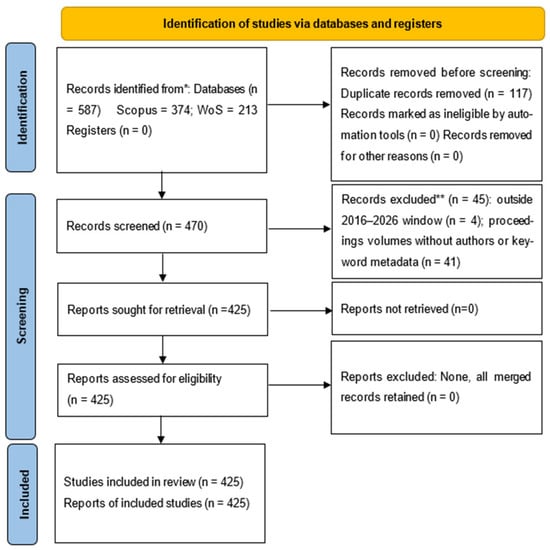
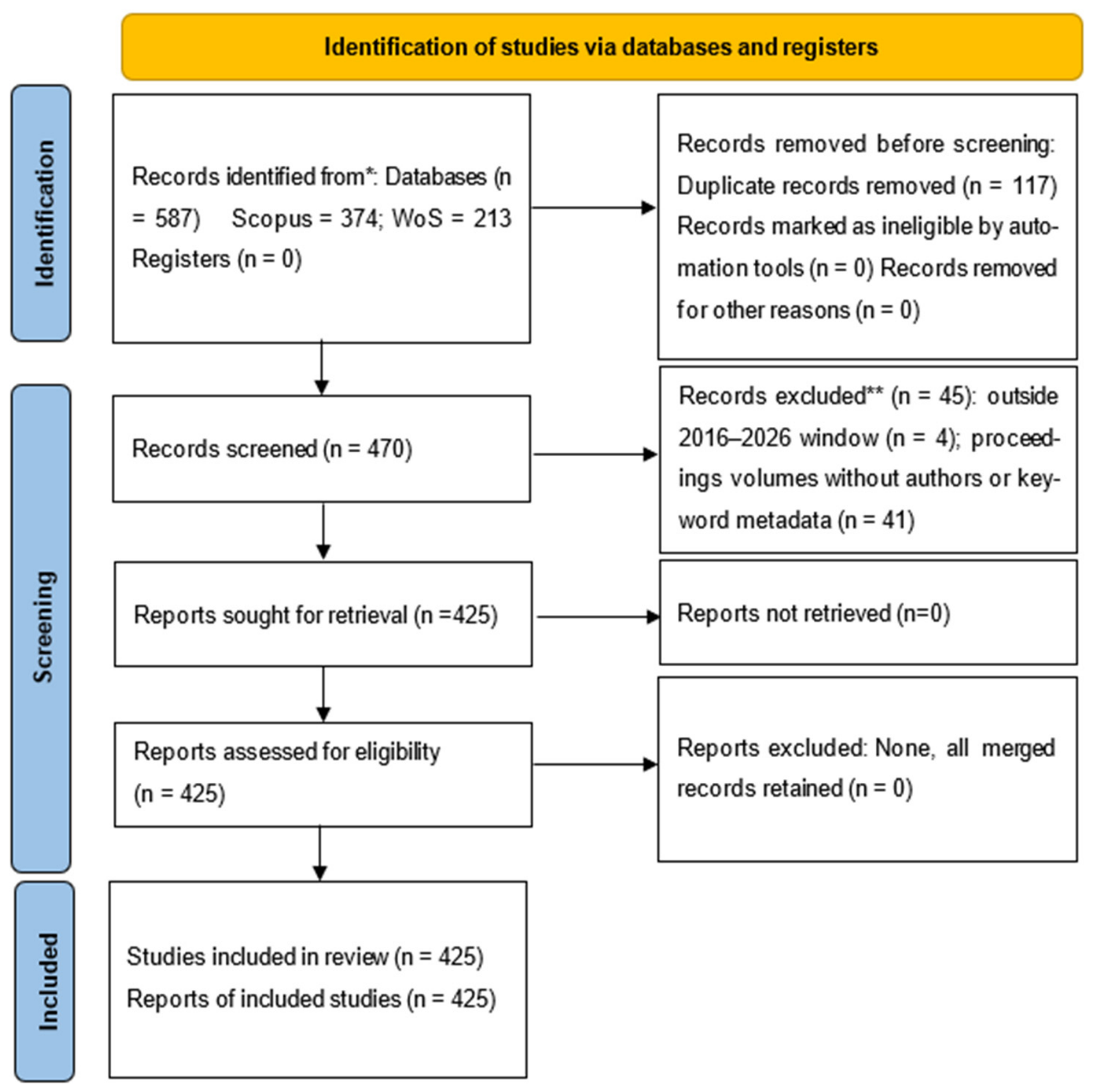
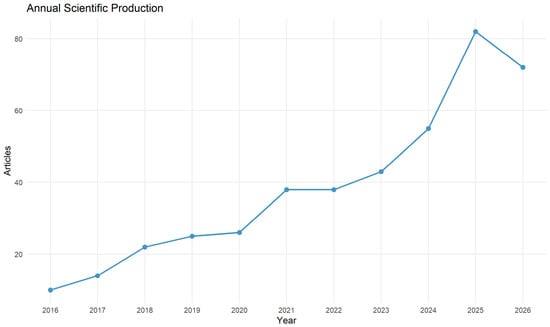
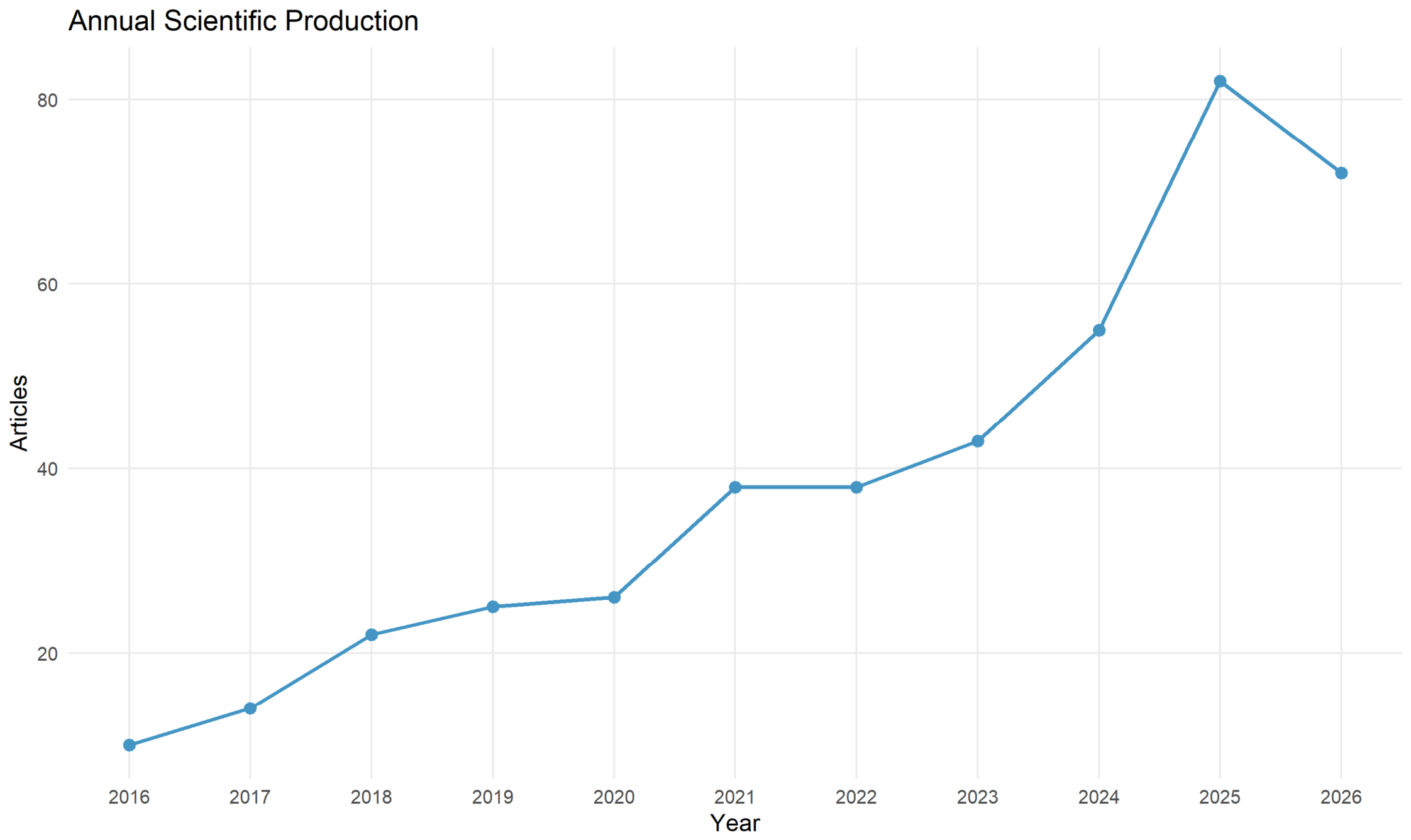
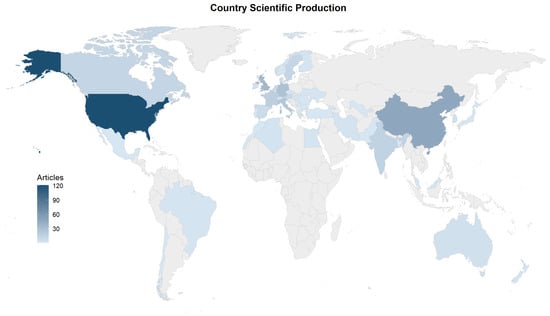
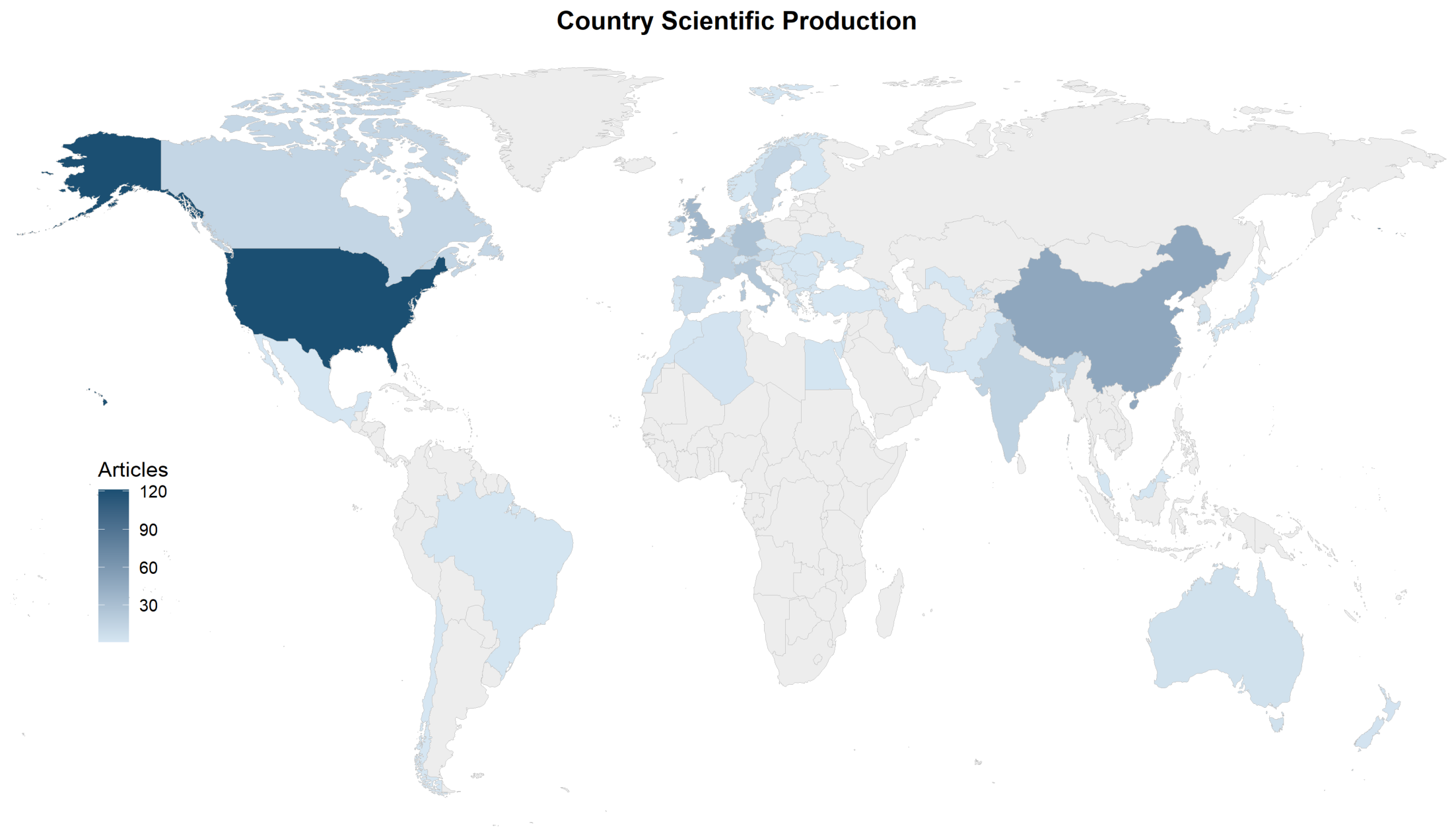
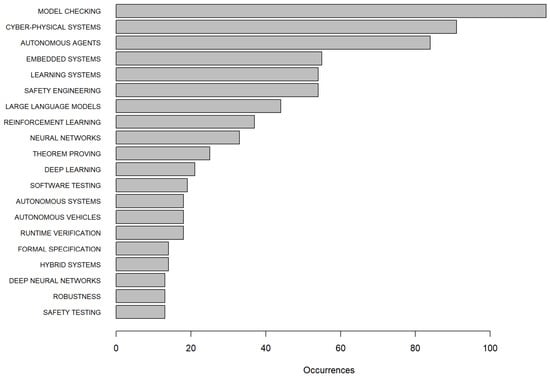
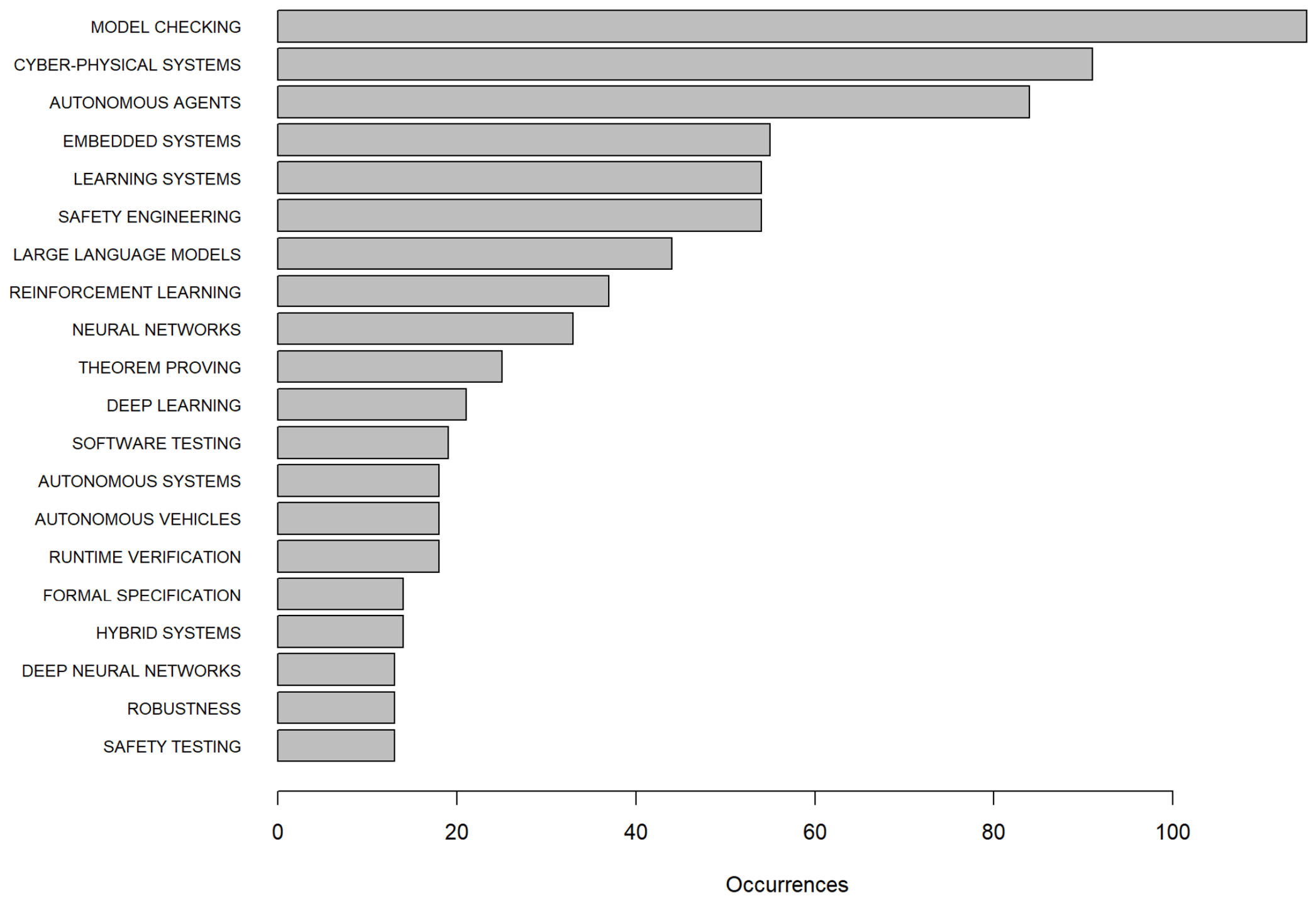
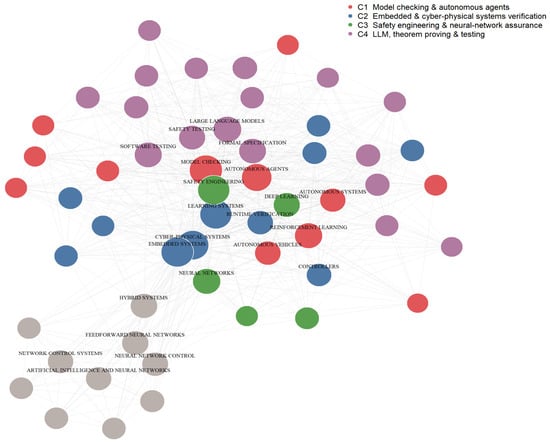
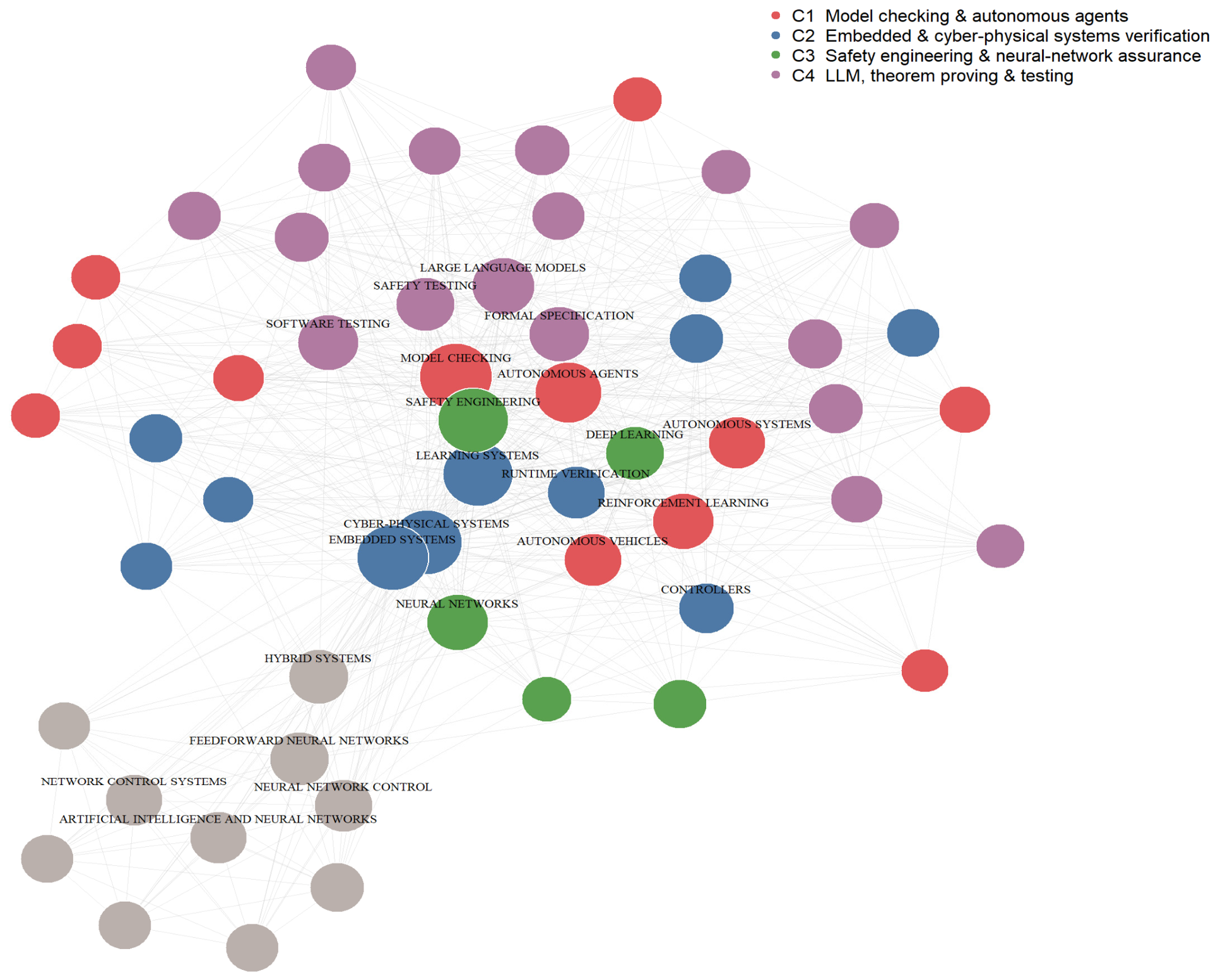
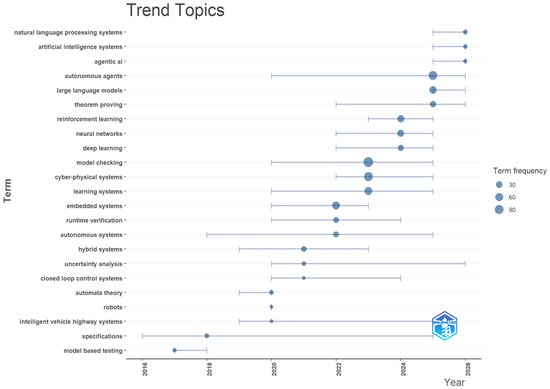
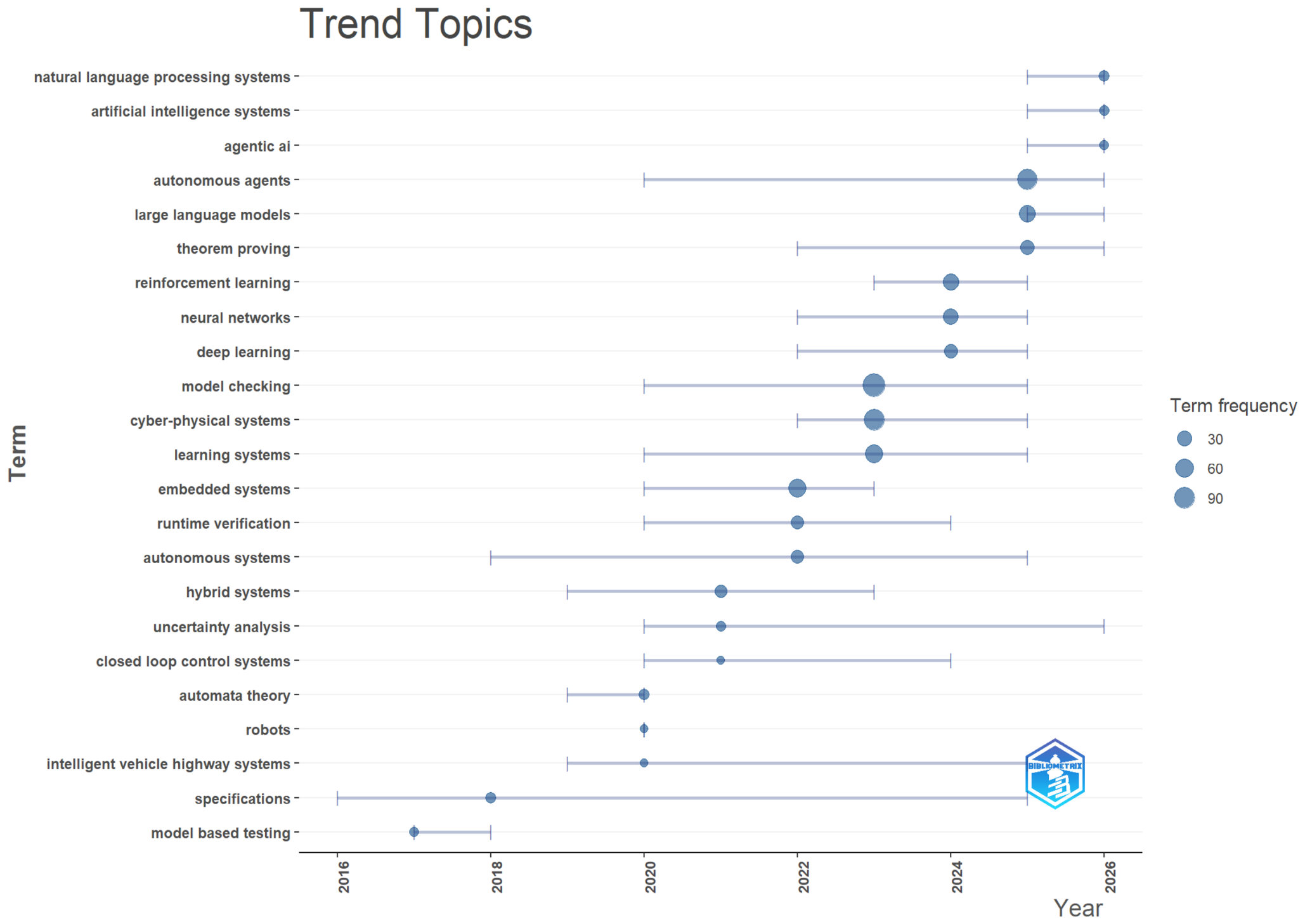
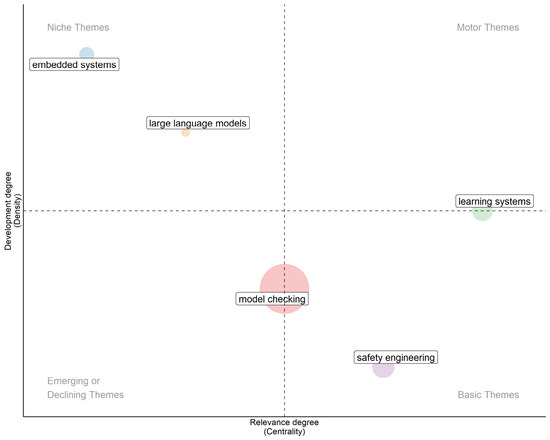
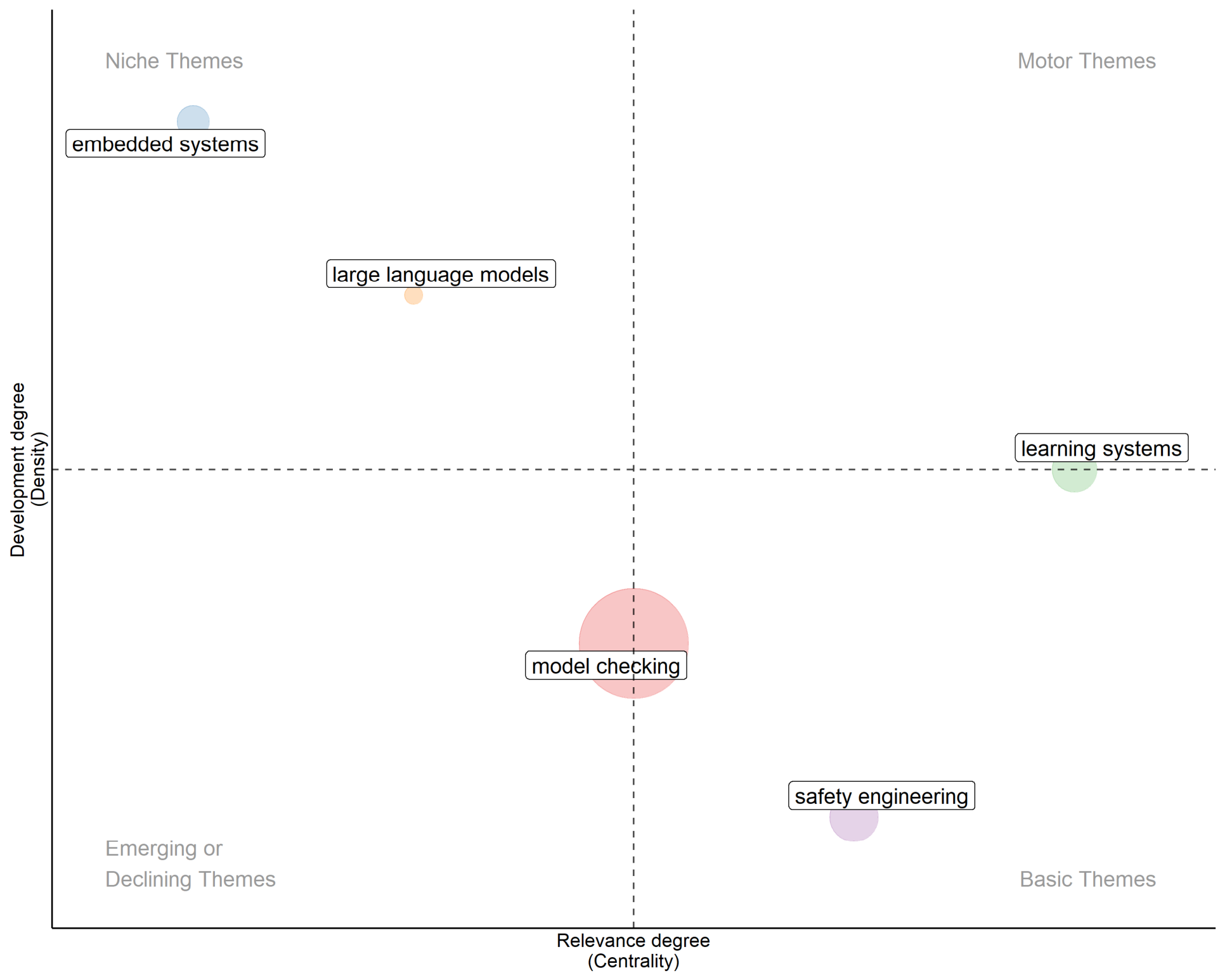
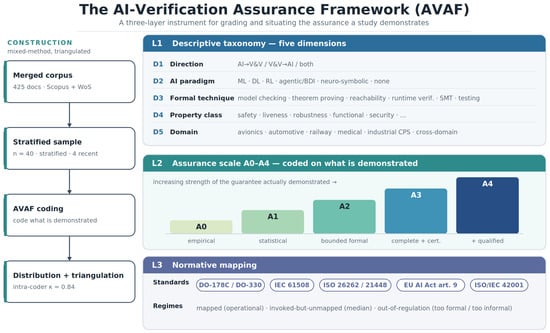
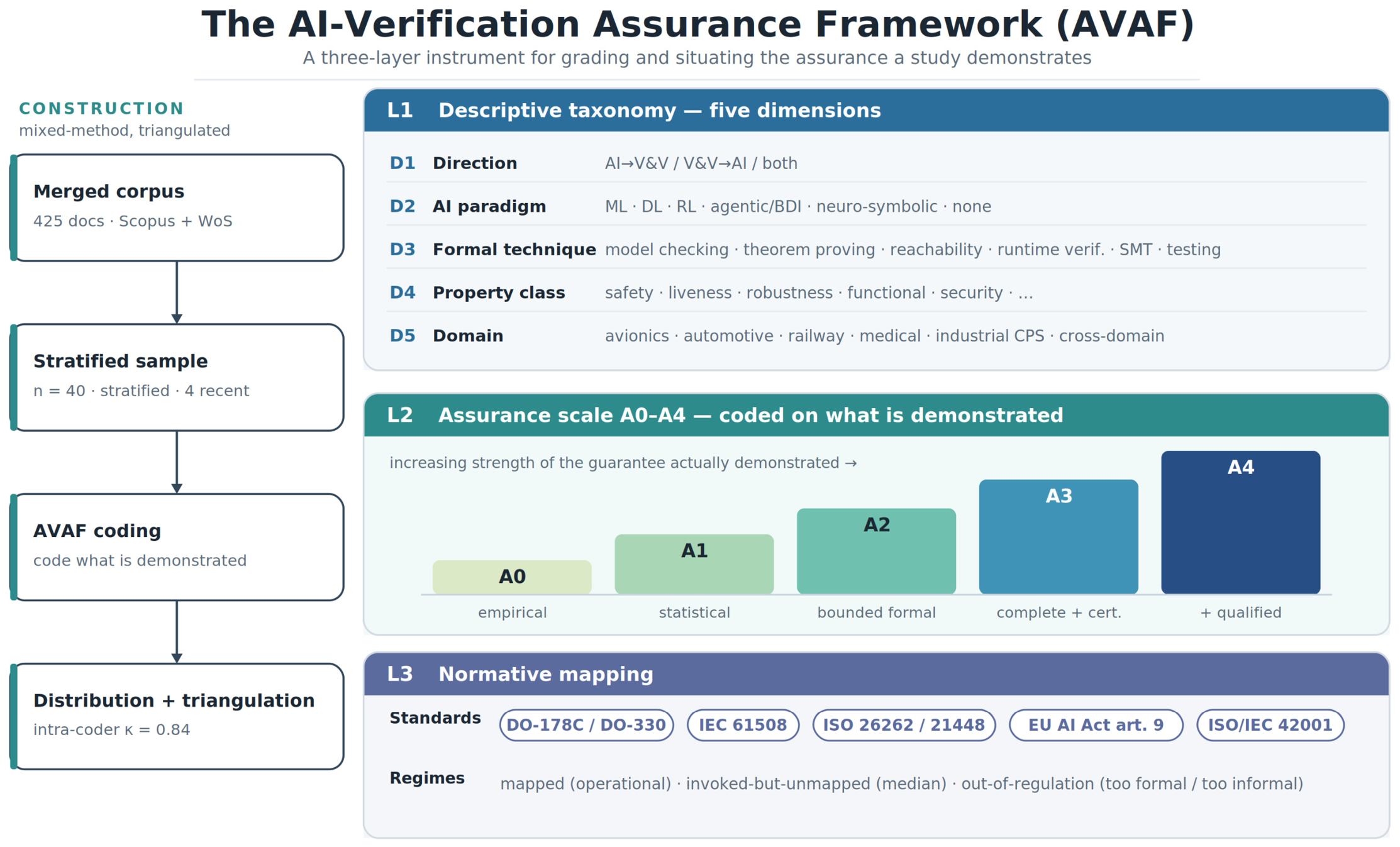

Disclaimer/Publisher’s Note: The statements, opinions and data contained in all publications are solely those of the individual author(s) and contributor(s) and not of MDPI and/or the editor(s). MDPI and/or the editor(s) disclaim responsibility for any injury to people or property resulting from any ideas, methods, instructions or products referred to in the content. |
© 2026 by the author. Licensee MDPI, Basel, Switzerland. This article is an open access article distributed under the terms and conditions of the Creative Commons Attribution (CC BY) license.