


Abstract
This paper investigates the role of digital television archives in preserving and shaping media memory, focusing on Italy’s Rai Teche. It addresses how digital archives influence collective and national identity through content selection, structuring, and accessibility. A comparative analysis with other European public broadcasters (BBC, INA, ZDF) highlights the Italian model’s strengths and limitations. Using web scraping, we extracted and analyzed metadata from Rai Teche’s catalog, focusing on fiction, variety, theater, health, and quiz shows. The findings reveal significant metadata gaps and inconsistencies, as well as curatorial emphasis on historical content under-representing contemporary genres like news. This study concludes that Rai Teche is a valuable cultural archive, but its interface and editorial choices limit accessibility. Recommendations include enhancing metadata, expanding genre representation, and improving user experience to align with European standards and democratize media memory.
1. Introduction
In the digital age, the archives of public broadcasting services have become crucial infrastructures for preserving, interpreting, and transmitting collective media memory. With the transformation of traditional television into a complex ecosystem of on-demand platforms, user-generated content, and algorithmic curation, digital archives are assuming an increasingly strategic role. Digital archives are now active sites where decisions about selection, cataloguing, and interface design shape what societies can remember, how they access that memory, and whose contributions are rendered visible or invisible. They are not merely repositories of the past.
The significance of these archives extends well beyond the academic world. As television’s centrality to twentieth-century cultural life is progressively historicized, the digital interfaces through which archival materials are made available become key mediators between institutional memory and public understanding. Exploring the contents, structures, and editorial logic of these archives allows us to trace the evolution of genres, production practices, and audience engagement, while also revealing the curatorial choices (often implicit and rarely documented) that determine what is preserved, what is made accessible, and what is allowed to fall into oblivion.
This paper investigates the digital television archive of Italy’s public broadcaster RAI, specifically its institutional interface Rai Teche www.teche.rai.it (accessed on 5 November 2024), through a dual interpretative lens: as a media infrastructure and as a cultural device. Through systematic data extraction (after a brief comparative analysis with other European public broadcasters like BBC, INA, ZDF, and RTÉ), we decode the site’s information architecture, assess the granularity and completeness of its metadata, and interpret the curatorial criteria guiding the selection and visibility of content.
This study is situated within the rapidly expanding field of television archive studies, which has developed its own institutional networks (FIAT/IFTA), publication venues (VIEW Journal), and large-scale research projects (EUscreen, ATLas) over the past decade. While much of this scholarship has focused on either transnational comparative frameworks or the recovery of marginalized archival collections (notably local and private broadcasting), systematic empirical analyses of major national public broadcasters’ digital archives remain surprisingly scarce. This paper contributes to filling that gap by offering a quantitative mapping of Rai Teche’s contents alongside a critical interpretation of its archival paradigm.
Our analysis is guided by three research questions:
- RQ1
- What is the selection of content in the Rai Teche digital archive across genres, and what temporal patterns characterize its coverage?
- RQ2
- To what extent do the metadata associated with Rai Teche’s archival records meet the standards established by European frameworks (EBU Core)?
- RQ3
- What is the representation of professional roles and gender within the archival record?
This paper is structured as follows. After situating this study within the relevant scholarly literature on archives, memory, and television heritage (Section 2), we present a comparative framework for evaluating European digital TV archives (Section 3). We then describe the dataset extracted from the Rai Teche website through web scraping and the methodological challenges encountered (Section 4). In Section 5, we show the results of our data extraction and analysis. In Section 6, we present an expanded discussion of the findings, organized around four thematic axes: the temporal architecture of the archive, the politics of genre selection, metadata quality, and gender representation. Section 7 concludes with recommendations for enhancing Rai Teche’s archival infrastructure and identifies directions for future research.
2. Related Literature
2.1. Archives, Memory, and Power: Theoretical Foundations
Over the past two decades, digital archives have attracted increasing attention from scholars across media studies, archival science, and heritage management. Critical archival scholarship has examined how appraisal, description, and access are socially situated practices. Refs. [1,2] address symbolic annihilation and feminist standpoint appraisal, whereas [3] focuses on community archives and the recovery of histories marginalized by institutional repositories. Research in media memory has emphasized the role of television and audiovisual records in mediating collective memory, national identity, and historical consciousness [4,5,6]. More specifically, Ref. [7] examines the televisual mediation of history, while Ref. [8] conceptualizes television as a medium of everyday memory.
2.2. Television Archive Studies: An Emerging Disciplinary Field
These theoretical insights largely originate from the broader fields of archival science and memory studies. Within this broader body of literature, television archive studies have developed into a recognizable interdisciplinary area, supported by specialist networks, research projects, journals, and collaborations between scholars and archival institutions.
A pivotal institutional actor in this field is the International Federation of Television Archives (FIAT/IFTA). Founded in 1977, FIAT/IFTA states that more than 250 members have joined the organization over its history. Since 2011, its annual survey ‘Where Are You on the Timeline?’ has monitored television archives’ progress towards digital archiving. It promotes cooperation among broadcast archives and professionals concerned with the preservation, management, and use of audiovisual heritage. The Media Studies Commission, chaired by Dana Mustata of the University of Groningen, promotes collaboration between academic researchers and archival institutions through initiatives including the Media Studies Grant, funding projects such as Ornella Castiglione’s work on Rai digital archives, and teaching methodologies for social inclusion [9].
Alongside FIAT/IFTA, the VIEW Journal of European Television History and Culture, established in 2012 as the first peer-reviewed, open-access e-journal in television studies, has become a key venue for scholarship at the intersection of archival practice and television history, and has dedicated several special issues to topics pertinent to this study. Ref. [10], in their foundational article “European Television History Online: History and Challenges”, introduced the notion of the archive as a network of connections that mediates between past and present, between history and memory, and between curatorial perspectives and popular uses. More recently, the special issue on “Re-bordering the Archive” [11] examined how digitization has reconfigured—rather than dissolved—archival borders, exploring the sociotechnical, legal–organizational, and cultural elements shaping access to television heritage. These contributions reveal that national frameworks and entrenched power dynamics in European archival landscapes constitute a structural feature of the field that demands theorization.
A further landmark contribution is the CROBORA (Crossing Borders Archives). It provides a relevant example of research combining archival metadata analysis and close reading to examine the cross-border reuse of audiovisual sequences [8]. This approach is methodologically relevant to the present study because it connects computational mapping with the interpretation of archival reuse.
The European landscape of television archiving has also been shaped by the EUscreen project and its successor EUscreenXL. Launched in 2009, EUscreen is a network of European broadcasters, audiovisual archives, media scholars, and technical experts. Its portal provides access to curated audiovisual materials and operates as a trusted aggregation partner for Europeana.
EUscreen developed a harmonized metadata model drawing on EBUCore, an EBU framework for representing descriptive and technical metadata and facilitating exchange across heterogeneous audiovisual collections. As metadata standards continue to evolve, future assessments should also consider the relationship between EBUCore and more recent EBU developments, including EBUCorePlus.
2.3. The Italian Context: Television, Archives, and Memory
Within the Italian context, television has long been interpreted as a powerful device for constructing collective memory. Ref. [12] highlights how the small screen functions as a mirror of Italian society, crystallizing shared events, rites, and myths, while Ref. [13] showed how television constantly renegotiates its past through strategies of re-presentation, fundamental in shaping collective imagination.
More directly pertinent, Ref. [14] examined how the catch-up television model reconfigured the cultural and commercial functions of archival materials within the Italian public broadcaster environment. Ref. [15] argued that archival representation in the Italian context oscillates between nostalgia, institutional branding, and the strategic deployment of heritage for audience-building. Ref. [16] provides a broader account of the historical and industrial logic of Italian television scheduling, while the reuse of Rai archival materials in catch-up environments is addressed more directly by [14].
Most recently, the PRIN 2020 research project ATLas-Atlante delle Televisioni Locali (Atlas of Local Televisions), coordinated by Luca Barra at the University of Bologna and involving four Italian universities, has opened a significant new chapter in Italian television archive studies. ATLas investigated the often-overlooked histories of privately owned local TV channels active in Italy between 1976 and 1990, combining archival analysis, oral history, and digital humanities methods to map an ecosystem of informal, fragmented, and at-risk audiovisual collections [17]. Its methodological reflections on designing an open-access repository for local television materials resonate with concerns central to this study: incomplete metadata, the epistemological implications of curatorial choices, and the tension between institutional archiving and the preservation of marginal television cultures. A companion special issue of Cinergie [18] further framed archival research on local television within a European comparative perspective, offering a theoretical vocabulary for issues of scale, access, and historiographical method in television archive studies.
Whereas ATLas examines the dispersed archival ecology of local and private broadcasting, the present study focuses on the public-facing interface of Italy’s national broadcaster. Read together, these perspectives illuminate the tension between centralized institutional heritage and the fragmented preservation of local television memory.
3. Digital TV Archives in Europe
The comparative analysis of European public television archives is a major background for this study. While several European public broadcasters have established digital archives for their historical programming (Table 1), these archives differ substantially in their scope, accessibility, metadata granularity, user experience design, and underlying presumed archival philosophy. This section proposes an analytical framework for evaluating these differences, drawing on the criteria developed within the EUscreen project and FIAT/IFTA. The list of archives is shown in Table 1. It is to be noted that we refer to the website selection of content rather than the full content stored in the archives.
Table 1.
TV operators with open digital archives.
3.1. Dimensions of Comparison
We structure our comparative analysis along seven dimensions reflecting the core characteristics of a digital television archive: (1) date of foundation; (2) collection size; (3) accessibility and openness; (4) digitization; (5) metadata standardization (e.g., the EBU Core standard [19]); (6) preservation focus; and (7) research access. The results are shown in Table 2. It is to be noted that the data refer to each overall archive rather than the selection available for online viewing, though we have included some data pertaining to the online version of the archive.
Table 2.
Comparison of major European TV archives.
As concerns size and age, INA (France) is the largest archive in Europe, with 22 million hours of content, despite being one of the youngest, founded in 1975. In contrast, the BBC has the oldest institutional roots (1922) but holds “only” 1 million hours. RTÉ is the smallest, with 100,000 h, reflecting Ireland’s shorter broadcasting history.
RTVE (Spain) stands out as a very open archive, offering free online streaming of a large portion of its collection. INA offers a mixed free/subscription model, while ZDF is limited to a 7–30 day catch-up window. RAI Teche (Italy) is quite closed, with full catalogue access only available in physical media libraries.
ZDF leads in having completed its full retro-digitization by 2022. INA is a pioneer in EU digitization initiatives. RTÉ faces the greatest challenges, as much of its early content from the 1960s–1970s is fragile or partially lost due to tape reuse—a common cost-saving practice of the era.
RAI Teche faces the most urgent preservation crisis, battling vinegar syndrome in its film collection, and is the sole custodian of Italian broadcasting history from 1954 to the 1980s. RTÉ similarly struggled with early content loss. The BBC, by contrast, has dedicated conservation labs and strong institutional support.
INA is quite academically oriented, running its own training school (INA Sup) and a dedicated academic portal (inathèque). RTVE offers open research licensing. RAI Teche and ZDF adopt restrictive policies for researchers, requiring access through partner institutions or university agreements.
3.2. European Models
The BBC Archive interface boasts broad online accessibility coupled with a clear organizational structure distinguishing radio, television, and photographic holdings, integrated within the BBC’s broader digital strategy, with materials freely available for streaming with editorial commentary. The separation between archival and current content is clearly maintained, reflecting sustained investment in digital design. Critically, the BBC model extends across all programming genres, including journalism and current affairs—a significant contrast with the Italian case, as we shall discuss below.
The Institut National de l’Audiovisuel (INA) in France represents perhaps the most institutionally developed model among European television archives, functioning not merely as a broadcaster’s archive but as a legally mandated national institution responsible for preserving the entirety of French audiovisual heritage. Its digital platform is highly structured, offering tiered access (free browsing, subscription-based viewing, commercial licensing) alongside educational and scholarly resources. INA’s metadata architecture is sophisticated, reflecting decades of professional cataloguing practice aligned with European standards—a benchmark few European counterparts have matched.
In Germany, ZDF has more recently introduced the Rufus portal (http://blog.rufus-portal.de (accessed on 13 July 2026)), available to scholars since 2024, offering comprehensive metadata—title, series information, broadcast dates, keywords, abstracts, and contributor credits [20]. Rufus is a research portal for metadata drawn from ZDF’s production archive. The portal requires authentication through FID Media, and does not provide direct audiovisual streaming. However, the range and searchability of the metadata represent a significant step towards metadata transparency and completeness, which Rai Teche currently lacks.
Ireland’s RTÉ Archives and Spain’s RTVE Archivo offer contrasting approaches. RTÉ Archives provides a public editorial interface to selected archival materials. RTVE integrates its archival collection within the broader RTVE Play environment. This arrangement bridges historical and current content, while also embedding archival discovery within the navigation and presentation logic of a general streaming platform.
3.3. Positioning Rai Teche
Against this European backdrop, Rai Teche occupies a distinctive but ambivalent position. On one hand, it maintains a dedicated website for its digital archive, separate from RaiPlay, Rai’s general streaming and catch-up platform. On the other hand, its accessibility is severely limited: full catalog consultation requires physical reservation at Rai libraries, online materials are an editorially curated selection rather than a comprehensive collection, and the interface has not kept pace with the digital design standards we observe in BBC, INA, or even RTÉ.
More fundamentally, Rai Teche’s archival philosophy appears oriented towards cultural historicization: a curatorial logic privileging the canonization of programming deemed historically and culturally significant, spanning not just paleotelevision (1954–1975) but a much longer arc extending through neotelevision into the early twenty-first century. As the quantitative analysis in Section 5 will show, nearly two-thirds of the archive’s holdings post-date 1975. This orientation, while legitimate from a heritage-preservation perspective, produces significant gaps: the web page archive’s genre taxonomy excludes major categories such as news and current affairs, and its temporal coverage effectively stops at 2012. This pattern suggests a functional separation between the historical representation offered by Rai Teche and the management of more recent programming through RaiPlay. The available evidence does not, however, establish the institutional reasons for the 2012 boundary.
4. Materials and Methods
Our analysis concerns the subset of the Rai Teche archive available at https://www.teche.rai.it (accessed on 13 July 2026). We show its sitemap in Figure 1.
Figure 1.
Sitemap of Rai Teche.
The website features four main links at the top of its homepage: Programs, Personalities, Articles, and TV Titles. Additionally, the site includes the section Historical Publications, with vertical sections on specific topics (e.g., “Philosophers: Encyclopedia of Philosophical Sciences”). Finally, there is the Featured section, which presents a selection of audiovisual materials curated by the website’s editors based on anniversaries, celebrations, birthdays, and other notable events.
We scraped all the data contained in the Tv Titoli (TV Titles) section, which adopts the following subdivision into five genres:
- Fiction;
- Variety;
- Theater;
- Health;
- Quiz.
We developed a Python (3.11) scraper to download all the pages of interest (using the requests library, version 2.31), and then we extracted the structured data, parsing HTML using the beautiful soup (v4.12) library [21] and then applying a mixture of regex and rule-based strategies (see, e.g., [22]). Since the metadata fields would vary by genre, we wrote a dedicated parser for each genre.
The data were scraped on 5 November 2024, in one shot, as HTML dumps of the web pages. Each page contained one or more HTML tables, whose structure differed between genres. Title and year were present in each entry, while metadata fields would vary by genre, so a dedicated parser was written for each genre.
The data-processing procedure was carried out as per the following sequence:
- Harvesting;
- Parsing per genre;
- Deduplicating;
- Normalizing/correcting dates;
- Expanding year ranges;
- Splitting and counting person fields;
- Dictionary-based gender-assigning.
Deduplication was performed on rows, considering two rows as duplicates if all the fields were identical in both rows. In the case of programmes spanning over several years, we expanded the range by creating a separate record for each year. Also, when metadata included multiple names (e.g., for authors), we split them and created a list of names. The processing results can be seen in Table 3, where we observe that the occurrence of duplicated entries was particularly significant in the variety genre. In that table, the Unique column includes all the entries after removing those that were totally identical (i.e., under all fields). The Yr exp counts all the entries resulting after we expanded them considering the year, so that the same programme aired over two different years counts as two in the Yr exp column. Finally, the Titles column counts the number of different programmes by considering only the programme title. Dates needed careful processing, as it is very likely that all the data were inserted manually. For that reason, dates were prone to typos, different formats, and missing or misplaced values. We corrected most errors manually according to the information about the programmes available online. Other typos were corrected by selecting the most likely entry (e.g., 1190 → 1990, 1793 → 1973).
Table 3.
Deduplication process results.
We performed gender classification based on a dictionary lookup against two lists of male and female names. We compiled those lists by merging the lists coming from four different sources, covering Italian, American, French, and international names, as follows:
- The website https://www.nomix.it (accessed on 13 July 2026) displays a list of Italian names;
- U.S. Social Security Administration—Baby Names, National Data (1880–2025), retrieved from the website https://www.ssa.gov/oact/babynames/ (accessed on 13 July 2026);
- INSEE—Fichier des prénoms 2024 (France 1900–2023); retrieved from the website https://www.insee.fr/fr/statistiques/8205621 (accessed on 13 July 2026);
- The international dictionary of names compiled by Jörg Michael in 2008, through the gender-guesser packet, available at https://github.com/lead-ratings/gender-guesser (accessed on 13 July 2026).
In order to cater to a few names out of this list, we added a heuristic rule for Italian names that considers all names ending in “o” as male names and all names ending in “a” as female names, since those letters are the typical inflections for male and female nouns, respectively, with very few exceptions. This combination allowed us to cover 96.9% of the names present on Rai Teche.
It is to be noted that this section includes just the titles belonging to this list of genres, while titles belonging to different genres (e.g., news) were excluded. The reason for the inclusion/exclusion of genres in this section is not known to us. Another section of the same website allows for the selection of individual archived materials based on their title (using alphabetical order) or the theme (e.g., Architecture or Economics and Finance). However, the latter selection presents the reader with nearly 40 thematic options, making it too fragmented for a significant analysis. We thus stuck to the five major genres adopted by RAI in the Tv Titoli section.
In addition to this preliminary remark, we must also consider the quality of the data. Unfortunately, all the data extracted from the Rai Teche website contained gaps and omissions. For example, in the variety show category, each title card included many fields (title, description, year, director, presenter, episodes, network, broadcast date, authors, and musical direction), but the majority were just partially filled. The most important fields (title, year, director, host, and author) were almost always present, but some fields may have been missing. The same applies to all other genres from which we extracted data. In Table 4, we show the percentage of empty records for each combination of role and genre. We limit ourselves to the most relevant roles, which also appear to be those with fewer coverage holes. That percentage is severely high in some cases, e.g., for authors’ names (missing in 72.1% of the fiction works).
Table 4.
Percentage of empty records.
This makes it difficult to carry out an exhaustive analysis of the Rai Teche content. It would be important to determine whether this incompleteness also exists in RAI’s physical archives, i.e., in the original paper records, or if it is due to shortcomings in the digitalization process, i.e., lack of correction after the OCR (Optical Character Recognition) process.
In order to provide a quantitative assessment of the completeness of the information contained in Rai Teche and answer RQ2, we resort to the framework set by EBU (European Broadcasters Association) in their technical standard EBUCore (see [23]), which provides a list of metadata elements. Though several approaches have been proposed to set metadata for TV content (see, e.g., [24,25] and the review by [26]), we adopted a standard produced by an institutional organization. The importance of metadata for future television cannot be overstressed (see [27]), since they can also provide the basis for personalized recommendation (see also [28,29,30,31]). When comparing the full set of metadata proposed by EBU with that provided in Rai Teche, we find out that Rai Teche supplies just 8 out the 192 elements in the EBUCore standard (i.e., a mere 4.17%). The set of metadata available in Rai Teche framed in the EBUCore standard is shown in Table 5.
Table 5.
EBUCore fill rate [%].
Due to the incomplete and partial nature of the data, we relied on the fields that were present in most cases for most genres: title, authors, and hosts. However, we acknowledge that even these fields may not be entirely complete.
5. Results
The operators did not make the entirety of the (huge) amount of material at their disposal openly available. What appears on digital archive websites is a selection, likely responding to some criterion. In this section, we examine the time distribution and content of the material released on the website of Rai Teche, answering RQ1.
In Figure 2, we see the distribution concerning all products (i.e., without distinction of genres). The selection stops at 2012, but starts reducing the amount of material since 2007. The selection appears to be slanted towards a historical view of the material.
Figure 2.
Archived programmes per year, across all genres—8679 programme–year observations, 1953–2012 (60 years, 0 of them with none); mean 144.7 per year, median 152.5, and SD 56.1; peak 268 in 1981.
We can examine the evolution of the mix of genres by looking at Figure 3. We adopted 1975 as the watershed between two epochs in Italian television, according to the definitions of paleotelevision and neotelevision by [32].
Figure 3.
Genre mix of the archive before and after 1975—up to 1974 2914 observations (Fiction 8.1%, Quiz 1.9%, Health 2.1%, Theater 60.9%, Variety 27.0%); 1975 onward grew this number to 5765 observations (Fiction 17.7%, Quiz 1.1%, Health 5.4%, Theater 27.6%, Variety 48.1%).
Till 1975, the dominant genre in the website selection was theater, whose share was more than twice as large as the runner-up, which was variety. Health programmes and quizzes had a very low percentage of titles, around 2% each, despite the iconic figure of Mike Bongiorno (https://en.wikipedia.org/wiki/Mike_Bongiorno (accessed on 13 July 2026)) and his top programme Rischiatutto (https://it.wikipedia.org/wiki/Rischiatutto (accessed on 13 July 2026)) (1970–1974), an adapted Italian version of Jeopardy!. The situation changed from 1975, with theater and variety swapping the top-two places (and variety titles nearly doubling theater ones). Fiction titles were still ranked third, but their share doubled to 17.7%. Quiz showed a further decrease in their share to slightly more than 1%, while health programmes got a boost to 5.4%. Fiction and theater appear anyway as the top genres consistently throughout the years. The scripted dramas were mostly adaptations of great literary classics and aimed to function as sorts of “circulating libraries”, as described by [33], for a population that, at the time, was still largely illiterate. Variety shows feature some of the biggest names in music, theater, and cinema, such as Mina (https://en.wikipedia.org/wiki/Mina_(Italian_singer) (accessed on 13 July 2026)), Ugo Tognazzi (https://en.wikipedia.org/wiki/Ugo_Tognazzi (accessed on 13 July 2026)), Vittorio Gassman (https://en.wikipedia.org/wiki/Vittorio_Gassman (accessed on 13 July 2026)), and Alberto Sordi (https://en.wikipedia.org/wiki/Alberto_Sordi (accessed on 13 July 2026)). The selection of genres offered to viewers changed significantly with the birth of neotelevision in 1975, when RAI’s television monopoly was broken and local broadcasters emerged, as well as with the establishment of the RAI/Mediaset duopoly starting in the 1980s. Large afternoon variety shows emerged, such as Portobello (1977–1987) (https://en.wikipedia.org/wiki/Portobello_(1977_TV_series) (accessed on 13 July 2026)), Domenica In (1976–today) (https://en.wikipedia.org/wiki/Domenica_in (accessed on 13 July 2026)), and Pronto Raffaella (1983–1985) (https://en.wikipedia.org/wiki/Raffaella_CarrÃă (accessed on 13 July 2026)).
A further comparative view of genres across the years is shown in Figure 4, where the gradual decline in the presence of theater and the emergence of fiction and variety are largely visible.
Figure 4.
Composition of the archive by genre, in percentage terms—shares of the 60 years with at least one programme, 1953–2012; mean annual share: Variety 39.0% (peak 100.0% in 1953); Theater 35.1% (peak 85.5% in 1956); Fiction 20.9% (peak 100.0% in 2008); Health 3.8% (peak 11.5% in 2005); Quiz 1.3% (peak 4.1% in 2002).
We can now see the temporal distribution of the genres in greater detail in Figure 5, Figure 6, Figure 7, Figure 8 and Figure 9.
Figure 5.
Archived programmes per year: Fiction—1260 programme–year observations, 1954–2012 (59 years, 0 of them with none); mean 21.4 per year, median 23.0, SD 10.2; peak 36 in 2012.
Figure 6.
Archived programmes per year: Quizzes—119 programme–year observations, 1954–2005 (52 years, 3 of them with none); mean 2.3 per year, median 2.0, SD 1.4; peak 7 in 2002.
Figure 7.
Archived programmes per year: Health—372 programme–year observations, 1954–2005 (52 years, 2 of them with none); mean 7.2 per year, median 7.5, SD 4.4; peak 15 in 2005.
Figure 8.
Archived programmes per year: Theater—3368 programme–year observations, 1954–2004 (51 years, 0 of them with none); mean 66.0 per year, median 68.0, SD 33.6; peak 160 in 1962.
Figure 9.
Archived programmes per year: Variety—3560 programme–year observations, 1953–2007 (55 years, 0 of them with none); mean 64.7 per year, median 69.0, SD 31.0; peak 116 in 1982.
Fiction (Figure 5) is represented across the archive’s full temporal window (from 1954 to 2012). Quiz shows (Figure 6) started in the 1950s, with significant growth in the 1970s and 1980s. Health programmes (Figure 7) experienced an increase starting in the 1970s. Theater (Figure 8) enjoyed substantial coverage from RAI’s earliest years, reaching its peak in 1962 (160 titles) as televised plays gained popularity, before gradually declining across the following decades through 2004. Variety (Figure 9) is a key genre in Italian TV, especially during its golden age from the 1960s to 1980s.
The full stop of available programmes on the platform in 2012 confirms that the archived material is primarily historical for all genres, featuring the past and the history of Italian public television. For more recent programmes, RaiPlay, Rai’s streaming platform, serves as the showcase for commercial and advertising purposes.
In conclusion, Rai Teche opts for an editorial strategy that emphasizes the development of Italian television from a historical–cultural perspective, offering a detailed representation of the genres that shaped public television schedules over the decades.
We can now pass to the analysis of roles in the archived material available on Rai Teche.
For example, Table 6, reporting the most frequently mentioned fiction directors, includes names ranging from those who worked at the beginning of public television to those active in more recent times. Fiction, in fact, has always been one of the cornerstones of Rai’s programming. In the early days, serialized storytelling was an essential tool for filling the schedule and fostering audience loyalty to the newly established medium of television. Over the years, as television language evolved, fiction has remained a central genre, capable of attracting large audiences and generating significant advertising revenue [34].
Table 6.
Most represented fiction directors.
Anton Giulio Majano (https://it.wikipedia.org/wiki/Anton_Giulio_Majano (accessed on 13 July 2026)), for instance, is one of the great names in Italian television drama (sceneggiato in the Italian terminology), serving as both director and screenwriter for numerous successful productions. From the mid-1950s, his work helped define the macro-genre as it transitioned from tele-theater to a fully developed narrative form. His approach to sceneggiato was that of extended theater, characteristic of early fiction, a concept also reflected in the work of Sandro Bolchi (https://en.wikipedia.org/wiki/Perlasca_âĂŞ_Un_eroe_Italiano (accessed on 13 July 2026)), another key figure in Rai’s sceneggiato, known for his adaptation of I promessi sposi, (The Betrothed), a masterpiece of the Italian literature by Alessandro Manzoni. During this period, television primarily drew from the great classics of Italian and world literature.
Giorgio Capitani (https://it.wikipedia.org/wiki/Giorgio_Capitani (accessed on 13 July 2026)) and Alberto Negrin (https://it.wikipedia.org/wiki/Alberto_Negrin (accessed on 13 July 2026)), on the other hand, represent more “modern” fiction directors, moving away from literary adaptations and filmed theater. Their works focus on telling the stories of major figures, both real and fictional. Capitani is responsible for the popular series Il maresciallo Rocca (https://en.wikipedia.org/wiki/Il_maresciallo_Rocca (accessed on 13 July 2026)), starring Gigi Proietti (https://en.wikipedia.org/wiki/Gigi_Proietti (accessed on 13 July 2026)), while Negrin has directed fiction centered on historical figures such as Giorgio Perlasca (https://en.wikipedia.org/wiki/Perlasca_âĂŞ_Un_eroe_Italiano (accessed on 13 July 2026)).
Table 7, listing the top actors and actresses from TV dramas, mostly features names of great figures from the past: Arnoldo Foà (https://it.wikipedia.org/wiki/Arnoldo_FoÃă (accessed on 13 July 2026)), Orso Maria Guerrini (https://it.wikipedia.org/wiki/Orso_Maria_Guerrini (accessed on 13 July 2026)), Paola Pitagora (https://it.wikipedia.org/wiki/Paola_Pitagora (accessed on 13 July 2026)), Ivo Garrani (https://it.wikipedia.org/wiki/Ivo_Garrani (accessed on 13 July 2026)), and Delia Boccardo (https://it.wikipedia.org/wiki/Delia_Boccardo (accessed on 13 July 2026))—all cinema and theater professionals who lent their talents during the golden years of RAI’s scripted shows. Those were years when the national television network carefully curated its scripted productions, adapting great classics from literature or the theater and calling upon renowned actors and actresses to perform them.
Table 7.
Most represented fiction actors.
Those were also years when, not only for dramas but also for other television programmes, RAI drew heavily from the world of cinema, and major professionals took part (from Vittorio Gassman (https://it.wikipedia.org/wiki/Vittorio_Gassman (accessed on 13 July 2026)) to Ugo Tognazzi (https://it.wikipedia.org/wiki/Ugo_Tognazzi (accessed on 13 July 2026)) to Walter Chiari (https://it.wikipedia.org/wiki/Walter_Chiari (accessed on 13 July 2026)), just to name a few). At that time, appearing on TV was not yet considered artistically inferior or discrediting compared to cinema and theater—quite the opposite.
In the 1980s, with the arrival of neotelevision and the corresponding general shift of TV channels toward easy entertainment content, we witnessed a distancing of major actors from the television medium. Only in more recent years, starting from the early 2000s, have dramas—now better referred to as TV series—become synonymous with high-quality television, and actors and actresses have returned to lending their presence to the small screen.
In contrast to fiction, Table 8 for variety show authors highlights how this genre has been historically confined to a specific period in Italian television history: the 1960s and 1970s. During these years, variety shows played a key role in shaping the precise aesthetic and ethical framework of early television (paleotelevisione, coined by Umberto Eco), characterized by high-quality entertainment—never vulgar, and meticulously crafted in both form and content. This was the era that saw the birth of the Sanremo Music Festival, the rise of Canzonissima (https://en.wikipedia.org/wiki/Canzonissima (accessed on 13 July 2026)), and, most notably, Studio Uno (https://en.wikipedia.org/wiki/Studio_Uno_(TV_series) (accessed on 13 July 2026)) and Theater 10 (https://it.wikipedia.org/wiki/Teatro_10 (accessed on 13 July 2026)) by Antonello Falqui (https://it.wikipedia.org/wiki/Antonello_Falqui (accessed on 13 July 2026)). Falqui’s absence from Table 8 is consistent with his primary role as the show’s director rather than its credited author, a distinction the archive’s metadata evidently preserves, but it also means the dataset offers no equivalent ranking against which to assess his own representation, since Rai Teche’s TV Titles section includes no directors’ table for variety (unlike fiction, in Table 6). The name of Italo Terzoli (https://en.wikipedia.org/wiki/Italo_Terzoli (accessed on 13 July 2026)), by contrast, is present among the top authors, a figure who collaborated with some of the biggest names in the variety shows of that era, including Raimondo Vianello (https://en.wikipedia.org/wiki/Raimondo_Vianello (accessed on 13 July 2026)), Sandra Mondaini (https://en.wikipedia.org/wiki/Sandra_Mondaini (accessed on 13 July 2026)), Walter Chiari (https://en.wikipedia.org/wiki/Walter_Chiari (accessed on 13 July 2026)), Gino Bramieri (https://en.wikipedia.org/wiki/Gino_Bramieri (accessed on 13 July 2026)), and Wanda Osiris (https://en.wikipedia.org/wiki/Wanda_Osiris (accessed on 13 July 2026)).
Table 8.
Most represented variety authors.
The quiz show genre has also been a cornerstone of Italian television since its early days. In Table 9, we show the top ten authors appearing in Rai Teche, observing that some of their names overlap with those of the quiz hosts themselves shown in Table 10. One standout figure is Mike Bongiorno (https://en.wikipedia.org/wiki/Mike_Bongiorno (accessed on 13 July 2026)), a pillar of Rai’s early television who later moved to Mediaset in the 1980s. Bongiorno also appears in the table of presenters, alongside other iconic Rai figures such as Pippo Baudo (https://en.wikipedia.org/wiki/Pippo_Baudo (accessed on 13 July 2026)) and Enzo Tortora (https://en.wikipedia.org/wiki/Enzo_Tortora (accessed on 13 July 2026))—hosts and often authors of legendary programmes that shaped television history, such as Rischiatutto, Portobello (https://en.wikipedia.org/wiki/Portobello_(1977_TV_series) (accessed on 13 July 2026)), and Fantastico (https://en.wikipedia.org/wiki/Fantastico_(TV_program) (accessed on 13 July 2026)), to name a few. Another individual present in both the author and presenter tables is Luciano Rispoli (https://en.wikipedia.org/wiki/Luciano_Rispoli (accessed on 13 July 2026)), a key figure in Rai during the duopoly years and the creator of successful programmes like Parola mia. Also included is Amadeus (who has since moved to Warner Discovery), both author and host of the hit quiz show L’eredità (https://en.wikipedia.org/wiki/L%27ereditÃă (accessed on 13 July 2026)) (an adaptation of an Argentine format). He played a crucial role during the period when Italian television began importing audiovisual formats from abroad.
Table 9.
Most represented quiz authors.
Table 10.
Most represented quiz presenters.
The table of quiz show presenters further illustrates how this genre spans the entire history of Italian television—starting from the early days of paleotelevision, moving through the duopoly of neotelevision, and continuing into today’s global format-driven market.
Table 11 shows the top variety presenters. We can immediately observe that it includes two females: Raffaella Carrà (https://en.wikipedia.org/wiki/Raffaella_CarrÃă (accessed on 13 July 2026)), an icon of Italian television—singer, dancer, and entertainer—and Milly Carlucci (https://en.wikipedia.org/wiki/Milly_Carlucci (accessed on 13 July 2026)), a highly successful presenter from the neotelevision era who remains widely appreciated today. Raffaella Carrà’s career spans the entire history of public television, appearing in some of the earliest variety shows, such as Canzonissima and MilleLuci, and later moving on to Pronto, Raffaella? and Carramba! Che sorpresa (an adaptation of a British format). The list also includes legendary presenters such as Pippo Baudo, Corrado, and Enzo Tortora, as well as more recent figures like Fabrizio Frizzi (https://en.wikipedia.org/wiki/Fabrizio_Frizzi (accessed on 13 July 2026)) and Carlo Conti (https://en.wikipedia.org/wiki/Carlo_Conti (accessed on 13 July 2026)).
Table 11.
Most represented variety presenters.
As already noted, Table 12 also features authors (many of whom were also hosts) who primarily worked starting in the 1980s, a period when the topics of well-being and body care became important in the cultural discourse of society. Standing out are the names of Luciano Onder and Piero Angela, who are both exemplary science communicators on these subjects.
Table 12.
Most represented healthcare programme authors.
Piero Angela (https://en.wikipedia.org/wiki/Piero_Angela (accessed on 13 July 2026)), furthermore, after his initial success with Quark, would continue his path of service to information and education, ranging across medicine, science, and history, thereby carving out a central role for himself in the history of Italian television.
Biagio Agnes’s name is also significant. He served as the Director General of RAI from 1982 to 1990, during which time he pursued an editorial line focused on maintaining public broadcasting’s dominance in the field of information, countering the entertainment-driven approach promoted by the Mediaset networks.
Among the main presenters of informational programmes related to health, shown in Table 13, it is interesting to note that—unlike in the other tables—several females appear: from Rosanna Lambertucci (https://en.wikipedia.org/wiki/Rosanna_Lambertucci (accessed on 13 July 2026)) to Livia Azzariti and even Anna La Rosa. Altogether, including Annalisa Manduca, there are four female presenters among the top 10 most frequently mentioned names.
Table 13.
Most represented healthcare programme presenters.
Perhaps this is because a female face is perceived as more suitable and reassuring for programmes dedicated to health—or perhaps it is because the topic, at least in those years, was thought to be of greater interest to females than to males?
This study does not aim to address the disparity in citations of and references to female authors, directors, screenwriters, and presenters. However, recent research on audiovisual archives indicates a significant bias in this regard. It remains unclear whether this is primarily due to the fact that television professions were historically male-dominated or if it results from an insufficient cataloguing process that favored male professionals. This disparity somewhat emerges in Table 14, where we show the highest rank held by females for each combination of role and genre.
Table 14.
Highest rank held by females.
Beyond this consideration, an overall analysis of the various names cited on the website suggests that the selection criteria were based on historical and cultural significance, effectively mapping the evolution of public television programming.
Logically speaking, it seems somewhat peculiar that in addition to quiz shows, variety, and fiction, the major genre of news and information was not included—despite being a pillar of paleotelevision and still highly relevant in today’s programming. In the early years of television, news content, not only in the form of newscasts but also documentaries, investigative reports, and talk shows, played a crucial role in shaping Rai’s language and communication. Figures such as Sergio Zavoli (https://en.wikipedia.org/wiki/Sergio_Zavoli (accessed on 13 July 2026)), Maurizio Costanzo (https://en.wikipedia.org/wiki/Maurizio_Costanzo (accessed on 13 July 2026)), and Enzo Biagi (https://en.wikipedia.org/wiki/Enzo_Biagi (accessed on 13 July 2026)) are essential to this history, and their exclusion from this section of the website appears to be a significant oversight. While they do appear elsewhere on the site, this particular metadata section under analysis does not mention them at all. Though news programmes may have been included within some of the thematic areas, their exclusion from the Titles section means that they were not considered a genre by themselves by the curators of the website.
6. Discussion
In this section, we present a systematic analysis of the data extracted from Rai Teche’s TV Titles section, moving beyond descriptive inventory to interpret the archival choices, metadata patterns, and structural silences that shape the archive’s construction of Italian television memory. Our discussion is organized around four thematic axes: the temporal architecture of the archive, the politics of genre selection, the quality and completeness of the metadata, and the representation of gender within the archival record.
6.1. The Temporal Architecture: A Fractured Memory
The temporal distribution of materials in Rai Teche’s TV Titles section reveals a striking pattern, as noticed in Section 5, that forms the basis for a more complete answer to RQ1: across all genres, the archive’s coverage begins in 1953, one year before the official inception of Italian television broadcasting in 1954, peaks during the 1970s and 1980s, and progressively thins from 2007 onwards, ceasing entirely in 2012 (Figure 2). This single-year anomaly may reflect either a pre-launch experimental broadcast retained in RAI’s records or a residual artifact of the date-normalization procedure described in Section 4, and would merit verification against the original archival records.
The year 2012 is far from arbitrary within Rai’s institutional history. It roughly coincides with the period during which Rai’s digital strategy underwent a fundamental reorientation: the progressive development of what would become RaiPlay (initially launched as Rai.tv, and later relaunched in its current form in 2016) established a separate platform for contemporary and recent programming, governed primarily by commercial and catch-up logic rather than heritage-preservation objectives. Rai Teche’s temporal boundary thus marks a point of institutional bifurcation: pre-2012 programming is construed as heritage, worthy of archival preservation and cultural valorization; after 2012, it is treated as content, managed through platform distribution for commercial and audience-building purposes.
This bifurcation has significant implications for the construction of media memory. As [14] observed in their analysis of digital terrestrial television and Rai’s archival heritage, the catch-up television model reconfigures the relationship between past and present programming in ways that privilege immediacy over historical depth. The result is a two-tier system in which the cultural memory of Italian television is structurally divided between an institutionally curated past (Rai Teche) and a commercially managed present (RaiPlay), with no mechanism for ensuring continuity between the two. The decade from 2012 to the present—a period that encompasses significant developments in Italian television, including the rise of original serial fiction, the transformation of variety formats, and the impact of streaming competition—risks becoming an archival lacuna, documented neither by the heritage logic of Rai Teche nor, in any systematic archival sense, by the commercial logic of RaiPlay.
A comparison with European peers underscores the exceptionality of this arrangement. INA’s legal mandate covers the entire corpus of French audiovisual production without temporal cut-offs. The BBC Archive maintains materials from the 1940s to the present within a unified framework. ZDF’s Rufus portal, while focused on metadata rather than streaming, encompasses the full chronological range of the broadcaster’s holdings. Rai Teche’s temporal self-limitation is thus not a structural necessity of digital television archiving, but rather appears as a specific institutional choice, one that deserves critical scrutiny and, we argue, revision.
Moreover, the temporal distribution varies significantly across genres, reflecting editorial decisions that are, themselves, historically meaningful. Fiction maintains the broadest chronological span of any genre in the archive, spanning the entire 1954–2012 window (59 years, Figure 5), longer than variety (1953–2007, 55 years, Figure 9), quiz and health (1954–2005, 52 years each, Figure 6 and Figure 7), and theater (1954–2004, 51 years, Figure 8). This continuity, including a marked peak in the archive’s final year (36 titles in 2012), is consistent with the genre’s centrality across all phases of Italian television history. Theater, by contrast, peaks sharply in 1962 (160 titles, Figure 8) and follows a long secular decline before archived coverage ends altogether in 2004, roughly a decade later than the mid-1990s one might infer from a cursory reading of the chart. This trajectory mirrors the genre’s actual decline in Italian broadcasting but also potentially reinforces its marginalization in contemporary cultural memory. Quiz and variety shows diverge in how their archival presence distributes across the paleotelevision/neotelevision divide (Figure 6 and Figure 9). Variety’s share of the archive nearly doubles from 27.0% up to 1974 to 49.1% from 1975 onwards, consistent with its growing centrality to neotelevision’s entertainment formats. Quiz shows, by contrast, hold a slightly larger relative share of the paleotelevision period (1.9% vs. 1.1%), even though their single highest year of archived output occurs considerably later, in 2002 (7 titles, Figure 6), likely reflecting the arrival of reformatted quiz shows such as L’eredità (Section 4) rather than a genuine paleotelevision-era concentration. Health programming, represented almost entirely from the 1970s onwards (Figure 7), reflects the emergence of wellness and body care as mass-mediated discourses in the post-economic miracle period. These genre-specific temporal patterns are not merely descriptive: they constitute an implicit historiography of Italian television, one that canonizes certain genres and periods while consigning others to relative invisibility.
6.2. The Politics of Genre Selection: What Is (Not) Archived
The genre taxonomy adopted by Rai Teche’s TV Titles section (fiction, variety, theater, health, and quiz) constitutes perhaps the most consequential curatorial decision governing the archive’s construction of Italian television memory. This five-genre classification encompasses significant portions of Rai’s programming history, but its exclusions are at least as revealing as its inclusions.
The most striking absence is that of news and current affairs programming (news, journalistic investigations, talk shows). From the earliest years of Italian public broadcasting, information programming represented one of the three pillars of the public service mission alongside education and entertainment, the tripartite mandate that [32] identified as the organizing principle of paleotelevision. Figures such as Sergio Zavoli, Enzo Biagi, and Maurizio Costanzo are not merely important television professionals; they are foundational figures in the history of Italian public discourse, and their work constitutes an indispensable archive of the country’s political, social, and cultural transformations. While these figures may appear in other sections of the Rai Teche website (e.g., Characters or Articles), their systematic absence from the structured, metadata-rich TV Titles section means that the archive’s most analytically tractable component offers no systematic access to the genre that most directly shaped Italian democratic life. This exclusion carries epistemological weight independently of its institutional origin: as noted in Section 4, the specific reasons behind RAI’s genre selection for this section of the website are not documented and remain unknown to us. Yet, as [35] argued, what archives choose not to preserve is as constitutive of collective memory as what they include, regardless of whether the omission was a deliberate editorial choice or an unreflected institutional habit. The decision to categorize Italian television heritage through a five-genre taxonomy centered on entertainment and cultural programming, while excluding information, implicitly constructs a narrative in which television’s contribution to Italian society is primarily cultural and aesthetic rather than political and civic.
This narrative may be consistent with Rai Teche’s institutional self-understanding as a custodian of cultural patrimony, but it sits uneasily with the historical reality of Italian public television’s deeply political role, from the lottizzazione system (political patronage) to the role of Rai news programmes in shaping public opinion on matters from terrorism to corruption scandals.
The comparison with INA is again revealing. The French national audiovisual institute makes no categorical distinction between entertainment and information genres in its archival architecture: news footage, documentary material, and journalistic programming are integrated within the same metadata framework as fiction, variety, and cultural programming. This integrated approach reflects a conception of audiovisual heritage in which all genres contribute equally to the construction of national memory, a principle that Rai Teche’s current taxonomy does not uphold.
A further notable absence is that of sport, which has constituted a major component of Italian television scheduling from the earliest years of broadcasting and whose archival preservation raises specific questions about rights management and commercial value. Similarly, reality television and the broader category of unscripted formats (which have dominated Italian scheduling since the early 2000s) are entirely absent from Rai Teche’s genre taxonomy. The archive’s temporal cut-off at 2012 offers only a weak explanation for this gap: variety and quiz shows continue to be archived up to 2007 and 2005, respectively (Table 3), well into the period when reality and unscripted formats were already reshaping Italian television, most visibly with Big Brother (launched in Italy in 2000). The exclusion is therefore better read as evidence of a curatorial hierarchy in which certain genres are deemed more archivally worthy than others, independent of their chronological availability, a hierarchy that itself deserves critical interrogations.
6.3. Metadata Quality: Gaps, Silences, and Their Consequences
The quality and completeness of metadata constitute a critical dimension of any digital archive’s functionality and epistemological integrity. In the context of television archives, metadata serve not only as finding aids but as the primary mechanism through which archival materials become discoverable, relatable, and interpretable—in short, through which they become part of an active cultural memory rather than a static repository. The metadata gaps documented in Table 4 are therefore not merely technical shortcomings but carry significant implications for how Rai Teche’s archive can be used, by whom, and for what purposes.
Our analysis reveals that metadata incompleteness in Rai Teche is pervasive but unevenly distributed across genres and professional roles. The most severe gaps affect authorship information in fiction (72.1% of records lacking author data), followed by presenter information in health programming (51.3% missing) and director information in both health and theater (approximately 37.6–37.7% missing in each). By contrast, the fiction director data are nearly complete (only 3.6% missing), as are the quiz show director (1.7%) and presenter (5.9%) data. These patterns suggest that metadata completeness is not random but systematically correlated with both genre and professional role: genres and roles that occupy a more prominent position in the institutional hierarchy of Italian television (the fiction director and the quiz show host) receive more thorough documentation, while behind-the-scenes creative roles (screenwriters and authors) suffer from greater metadata neglect regardless of genre. Health programming’s comparatively weak documentation (37.6% of director records and 51.3% of presenter records missing) is consistent with its lesser structural weight in the archive (Figure 7). Theater’s metadata gap (37.7% of director records missing) is harder to explain on the same grounds: far from a marginal genre, theater accounts for 60.9% of all archived material up to 1974 (Figure 3) and occupies a central place in the archive’s own paleotelevision canon (Section 6.1). Its documentation deficit therefore appears to reflect not a lack of cultural status but a more specific neglect of directorial credit keeping within the genre, a pattern that merits a separate explanation rather than being folded into a generic ’secondary genre’ category alongside health.
A crucial question that our data raise but cannot definitively answer concerns the origin of these gaps: are they inherited from the physical archives that were digitized, reflecting incomplete original record-keeping? Or are they artifacts of the digitization process itself, attributable to shortcomings in OCR (Optical Character Recognition) processing or selective data entry? This distinction matters significantly for the assessment of Rai Teche’s archival integrity. If the gaps are inherited, they document historical biases in how the Italian broadcasting industry has valued and recorded different types of creative labor. If they are introduced through digitization, they represent a correctable failure of the digital transition process.
In either case, the consequences for scholarly use are substantial. A metadata field that is empty in over 70% of records, as is the case for fiction authorship, effectively precludes systematic analysis of creative labor in Italian television fiction: researchers cannot reliably trace the careers of screenwriters, identify collaborative networks, or analyze the literary sources of adaptations. This limitation is particularly significant given the recent turn in television studies towards production culture approaches [36,37] that foreground the creative labor behind the screen. Without adequate metadata, the archive renders this labor invisible.
Evaluated against the EBU Core metadata standard (the minimum set of descriptive fields recommended by the European Broadcasting Union and adopted as the harmonization framework by EUscreen), Rai Teche’s metadata architecture falls significantly short. EBU Core specifies fields for contributor identification, rights information, technical specifications, and contextual descriptions that go well beyond the basic fields (title, year, director, author, presenter) available in Rai Teche’s TV Titles section. The comparison with ZDF’s Rufus portal, which includes detailed fields for keywords, abstracts, visual content descriptions, and comprehensive contributor credits [20], further highlights the distance between Rai Teche’s current metadata provision and the standards established by other European public broadcasters.
6.4. Gender Representation in the Archival Record
The analysis of gender representation across Rai Teche’s most frequently cited professionals reveals a pattern of systematic low representation of females that extends across all genres and professional roles, with partial exceptions in specific categories. Table 14 documents the highest rank achieved by a female in each combination of professional role and genre. The data show that in the majority of genre–role combinations, the first female does not appear until well below the top ten most cited professionals. In fiction directing, the first female appears at rank 29; in theater directing, at rank 32; in variety authorship, at rank 12. Only in health programming (where the first female appears at rank 1 for both directing and presenting) and in quiz show directing (rank 2) do females achieve prominent positions in the archival citation rankings.
These patterns require careful interpretation. They may reflect, at least partially, the historical reality of gender imbalances in Italian television professions: directing, writing, and hosting in fiction, variety, and theater were indeed male-dominated fields during the decades (1950s–1990s) most heavily represented in Rai Teche’s archive. However, the question of whether the archival record accurately mirrors professional demographics or whether metadata collection practices themselves introduced additional biases through, for example, the more thorough documentation of male professionals’ credits remains open and methodologically significant. A deep investigation would require the comparison of females’ presence in the archive with the gender composition of RAI’s workforce for each specific role. In the absence of such information, which should be provided by RAI itself, the observations shown in this section just reflect the presence of females in the archival material made available on Rai Teche.
The concentration of females’ visibility in health programming is particularly noteworthy. Four of the ten most frequently cited health presenters are females (Rosanna Lambertucci, Livia Azzariti, Annalisa Manduca, Anna La Rosa, Table 13), a proportion far exceeding any other genre in the archive. While one interpretation associates this pattern with cultural assumptions linking femininity to caregiving and health communication, an alternative reading recognizes that health programming may have functioned as one of the few genres within the Italian television system where females could access prominent on-screen roles outside the circumscribed positions of soubrette or co-host, typical of variety shows.
These findings resonate with broader concerns in archival studies about the gendered politics of preservation and visibility. The framework set by [2] of feminist standpoint appraisal, which calls for critical examination of whose perspectives are centered and whose are marginalized in archival formation processes, provides a productive lens for analyzing Rai Teche’s citation patterns. The challenge, however, is distinguishing between three overlapping phenomena: the historical under-representation of females in television professions, the potential additional bias introduced by metadata collection practices, and the amplification effects produced by archival canonization, in which the archive’s own citation hierarchies reinforce and perpetuate historical visibility gaps.
Future research should aim to disentangle these factors through targeted analysis, for example, by cross-referencing Rai Teche’s metadata with external sources (programme guides, industry records, union archives) to assess whether female professionals who were historically active in Italian television are systematically under-represented in the digital archive relative to their actual professional output. The quiz show directing exception (rank 2, Table 9) is a case in point: unlike health programming, where the pattern can at least provisionally be linked to gendered assumptions about caregiving and communication, the archive offers no comparable explanatory hook for why a female may have achieved early prominence specifically in the quiz show direction, and this case would benefit from the same kind of targeted, name-level investigation. Such analysis would contribute not only to a more accurate picture of Italian television history but also to the broader methodological debate within television archive studies about the relationship between archival records and historical reality.
7. Conclusions
This paper examined the Rai Teche digital archive through an empirical approach based on systematic data extraction and comparative analysis, decoding the site’s information architecture, assessing the quality and completeness of its metadata, and interpreting the curatorial criteria that govern the selection and visibility of its content. Our findings reveal an archival paradigm oriented towards what we have termed cultural historicization: a curatorial logic that privileges the canonization of programming deemed historically and culturally significant, primarily from the period spanning the origins of Italian television to the early twenty-first century, while marginalizing or excluding fundamental genres and more recent production.
In response to our three research questions, the analysis yields the following principal findings.
As concerns content selection and temporal coverage (RQ1), Rai Teche’s TV Titles section organizes its holdings around five genres (fiction, variety, theater, health, and quiz), with temporal coverage that begins in 1953, one year before the inception of Italian broadcasting (see Section 6.1), and effectively ceases at 2012. The temporal distribution varies significantly across genres, with each reflecting specific phases of Italian television history: the pedagogical mission of paleotelevision, the competitive dynamics of the RAI-Mediaset duopoly, and the format-driven globalization of the 2000s. However, the archive’s coverage progressively thins after 2007 and stops entirely at 2012, creating a structural caesura that coincides with the institutional bifurcation between Rai Teche (heritage) and RaiPlay (commercial platform).
A major consequential editorial decision shaping the archive is the exclusion of news and current affairs programming from the TV Titles genre taxonomy. This absence constructs a narrative of Italian television heritage centered on entertainment and cultural production, while omitting the genre most directly connected to the country’s democratic and civic life. The comparison with European peers—particularly INA, whose archival architecture makes no categorical distinction between entertainment and information genres—underscores the exceptionality and the implications of this choice. Additional excluded categories, including sport and unscripted formats, further restrict the archive’s representativeness.
As for metadata quality (RQ2), our analysis documents pervasive but unevenly distributed metadata gaps across genres and professional roles. Author information is missing in 72.1% of fiction records; presenter data are absent in 51.3% of health programme records; and director credits are incomplete in approximately 37% of health and theater records. These gaps are not random: they correlate systematically with the perceived institutional hierarchy of genres and professional roles, with behind-the-scenes creative labor suffering from the greatest documentation deficit. Evaluated against the EBU Core standard and the metadata provision of comparable European archives (notably, ZDF’s Rufus portal), Rai Teche’s metadata architecture falls significantly short of the interoperability and completeness standards that the European television heritage community has progressively established through initiatives such as EUscreen.
As for gender representation (RQ3), females are systematically under-represented across all genres and professional roles in the archival citation rankings, with the partial exception of health programming, where four of the ten most frequently cited presenters are females. Whether this pattern primarily reflects the historical male dominance of Italian television professions or is compounded by metadata collection biases that disproportionately affect female professionals remains an open question that calls for further investigation through cross-referencing with external sources.
This study contributes to the field of television archive studies in three principal ways. First, it provides the first systematic, empirically grounded mapping of the content and metadata structure of Italy’s national public broadcaster’s digital archive, filling a significant gap in a scholarly body of literature that has increasingly focused on comparative European frameworks and marginalized archival collections but has paid less attention to the major institutional archives that anchor national television memory. Read alongside the recent ATLas project’s work on local and private television archives [17,18], our analysis contributes to a more comprehensive understanding of Italy’s television archival ecosystem, one that encompasses both the centralized institutional heritage of the national broadcaster and the dispersed, precarious memory of local and private broadcasting.
Second, this study demonstrates that the methodological approach of web scraping and systematic metadata analysis can reveal structural features of digital archives (genre hierarchies, temporal boundaries, metadata gaps, gender patterns) that are not immediately visible to the casual user but that carry significant consequences for how television heritage is transmitted and who it serves. This computational approach to archival analysis is complementary to the qualitative, oral-history, and close-reading methodologies that have predominated television archive studies, and we suggest that combining these approaches in future research could yield particularly productive results.
Third, the comparative dimension of our analysis positions Rai Teche within the broader European landscape of digital television archives, revealing both its distinctive strengths, notably the maintenance of a dedicated archival site separate from its commercial streaming platform, and its significant limitations in terms of accessibility, metadata quality, genre coverage, and user experience. This comparison is not intended as a ranking exercise but as a contribution to the ongoing European conversation about standards, best practices, and institutional models for the preservation and democratization of audiovisual heritage, a conversation actively sustained by FIAT/IFTA, VIEW, and the EUscreen network.
On the basis of our findings, we offer five recommendations for enhancing Rai Teche’s role as a cultural infrastructure for Italian television memory.
First, metadata enrichment should be treated as a strategic priority. The systematic gaps documented in this study (particularly affecting authorship and screenwriting credits) compromise the archive’s scholarly utility and render significant categories of creative labor invisible. A structured metadata remediation programme, informed by the EBU Core standard and drawing on both original archival records and external sources, would substantially increase the archive’s research value and its interoperability with European platforms.
Second, the genre taxonomy governing the TV Titles section should be expanded to include news and current affairs programming, along with other currently excluded categories such as sport, documentary, and unscripted formats. The exclusion of information programming from the most structured and metadata-rich section of the archive represents a significant lacuna that distorts the representation of Italian television’s contribution to national culture and democratic life.
Third, the temporal boundary at 2012 should be addressed through an institutional strategy that ensures continuity between the heritage preservation function of Rai Teche and the content management function of RaiPlay. The current bifurcation risks creating a decade-long archival gap in the record of Italian television precisely during a period of profound transformation in production practices, genre innovation, and audience engagement. Mechanisms for the progressive transfer of materials from RaiPlay’s commercial catalogue to Rai Teche’s archival framework should be explored.
Fourth, the digital interface should be redesigned to improve accessibility, navigation, and user experience, drawing on the models established by European peers such as the BBC Archive, INA, and RTÉ. In particular, the current requirement for physical reservation to access the full multimedia catalogue represents a significant barrier that is inconsistent with the open-access principles increasingly adopted across the European digital heritage landscape.
Fifth, a gender audit of the archival record, systematically cross-referencing Rai Teche’s metadata with external sources to identify and correct the under-representation of females professionals, would contribute both to a more accurate and equitable archive and to the broader scholarly and institutional effort to document female contributions to Italian television history.
We must of course recognize some limitations of the present study that should inform the interpretation of its findings and guide future research. The analysis is based exclusively on the data available through the publicly accessible Rai Teche website; we did not have access to RAI’s internal archival systems, which may contain substantially richer metadata and broader genre coverage. The web scraping methodology, while enabling systematic extraction, is dependent on the structure and content of the website at the time of data collection, and subsequent updates to the site may have altered the available data. Furthermore, our analysis of gender representation relies on the citation frequencies generated by the archive’s own metadata, which, as we have argued, may themselves be subject to biases that compound historical underrepresentation; direct comparison with external databases of Italian television professionals would be necessary to disentangle archival bias from historical reality.
Future research directions are manifold. Empirical investigation of user practices, namely how scholars, students, educators, and general audiences actually access, navigate, and appropriate Rai Teche’s materials, would complement the supply-side analysis offered here with a demand-side perspective. Comparative studies extending beyond Western European public broadcasters to include Eastern European, Scandinavian, and non-European cases would further enrich the analytical framework. The application of computational methods to the full text descriptions and editorial annotations within Rai Teche could reveal discursive patterns and framing strategies that our metadata-focused analysis did not capture. Finally, the relationship between Rai Teche and RaiPlay, two institutional platforms that together constitute the digital presence of Italy’s television heritage, but that operate according to fundamentally different logic, deserves sustained scholarly attention as a case study in the institutional politics of media memory in the platform era.
Author Contributions
Conceptualization, M.N. and P.D.T.; methodology, M.N. and P.F.; software, P.F.; validation, M.N., P.D.T. and P.F.; formal analysis, M.N. and P.F.; investigation, M.N. and P.D.T.; resources, P.F.; data curation, P.F.; writing—original draft preparation, M.N. and P.D.T.; writing—review and editing, M.N. and P.D.T.; visualization, P.F.; supervision, M.N. and P.D.T.; project administration, M.N. and P.D.T. All authors have read and agreed to the published version of the manuscript.
Funding
This research received no external funding.
Institutional Review Board Statement
Not applicable.
Informed Consent Statement
Not applicable.
Data Availability Statement
Data available at https://github.com/paolofantozzi/teche_rai (accessed on 13 July 2026).
Conflicts of Interest
The authors declare no conflicts of interest.
References
- Caswell, M. Seeing yourself in history: Community archives and the fight against symbolic annihilation. Public Hist. 2014, 36, 26–37. [Google Scholar]
- Caswell, M. Dusting for fingerprints: Introducing feminist standpoint appraisal. J. Crit. Libr. Inf. Stud. 2021, 3. [Google Scholar] [CrossRef] [Scilit]
- Flinn, A. Community histories, community archives: Some opportunities and challenges. J. Soc. Arch. 2007, 28, 151–176. [Google Scholar] [CrossRef] [Scilit]
- Erll, A. Memory and Culture: A Semiotic Model. In Memory in Culture; Springer: Berlin/Heidelberg, Germany, 2011; pp. 95–112. [Google Scholar]
- Holdsworth, A. Television, Memory and Nostalgia; Springer: Berlin/Heidelberg, Germany, 2011. [Google Scholar]
- Hoskins, A. Digital Memory Studies: Media Pasts in Transition; Routledge: New York, NY, USA, 2018. [Google Scholar]
- Bell, E.; Gray, A. History on television: Charisma, narrative and knowledge. Eur. J. Cult. Stud. 2007, 10, 113–133. [Google Scholar]
- Bourdon, J. Some sense of time: Remembering television. Hist. Mem. 2003, 15, 5–35. [Google Scholar] [CrossRef] [Scilit]
- Castiglione, O. FIAT/IFTA Media Study Grant 2020; Technical Report; FIAT/IFTA Media Studies Commission: Paris, France, 2020. [Google Scholar]
- De Leeuw, S. European television history online: History and challenges. VIEW J. Eur. Telev. Hist. Cult. 2012, 1, 3–11. [Google Scholar] [CrossRef] [Scilit]
- Badenoch, A.; Clark, E.; Jancovic, M. Re-Bordering the Archive: European transnational archives and transnational entanglements. VIEW J. Eur. Telev. Hist. Cult.-J. 2023, 12, 1–10. [Google Scholar] [CrossRef] [Scilit]
- Grasso, A. Storia Della Televisione Italiana. Nuova Edizione Aggiornata; Garzanti: Milan, Italy, 2008. [Google Scholar]
- Scaglioni, M. La Tv Dopo La Tv. Il Decennio Che Ha Cambiato La Televisione: Scenario, Offerta, Pubblico; Vita e Pensiero: Milan, Italy, 2011. [Google Scholar]
- Barra, L.; Penati, C. Catch-up con gli archivi. Digitale terrestre e patrimonio Rai. In Storie e Culture Della Televisione Italiana; Mondadori: Milan, Italy, 2013; pp. 438–447. [Google Scholar]
- Scaglioni, M.; Barra, L. La storia che si ripete. Alcune note sugli archivi della televisione. In Appassionati Dissodatori. Storia e Storiografia Della Televisione in Italia. Studi in Onore Di Aldo Grasso; Vita e Pensiero: Milan, Italy, 2019; pp. 115–121. [Google Scholar]
- Barra, L. Palinsesto: Storia e Tecnica Della Programmazione Televisiva; Gius. Laterza & Figli Spa: Bari, Italy, 2015. [Google Scholar]
- Barra, L.; Cavallotti, D.; Rossi, E. ATLas Chronicles. Designing and Valorising an Italian Archive of Past Local TV Channels. VIEW J. Eur. Telev. Hist. Cult. 2025, 14, 1–14. [Google Scholar] [CrossRef] [Scilit]
- Crisanti, G.; Mereu, M.; Rossi, E.; Zeni, P. Introduction: Tele-Archives. Reframing Archival Research on Local Televisions Across Europe. Cinergie–II Cine. Altre Arti 2025, 14, 1–9. [Google Scholar] [CrossRef] [Scilit] [PubMed]
- Oomen, J.; Tzouvaras, V. Publishing Europe’s television heritage on the web: The EUscreen project. In Proceedings of the International Workshop on Multimedia for Cultural Heritage; Springer: Berlin/Heidelberg, Germany; pp. 136–142.
- Blume, P.F. Public Broadcasting Archives and Academic Use in Germany. Scopes of the Portal for Broadcast Search ‘rufus’. VIEW J. Eur. Telev. Hist. Cult. 2024, 13, 31–46. [Google Scholar] [CrossRef] [Scilit]
- Pant, S.; Yadav, E.N.; Sharma, M.; Bedi, Y.; Raturi, A. Web Scraping Using Beautiful Soup. In Proceedings of the 2024 International Conference on Knowledge Engineering and Communication Systems (ICKECS); IEEE: New York, NY, USA, 2024; Volume 1, pp. 1–6. [Google Scholar]
- Chapagain, A. Hands-On Web Scraping with Python: Perform Advanced Scraping Operations Using Various Python Libraries and Tools Such as Selenium, Regex, and Others; Packt Publishing Ltd.: Birmingham, UK, 2019. [Google Scholar]
- European Broadcasting Union. EBU Core Metadata Set (EBUCore). Technical Specification Tech 3293; European Broadcasting Union (EBU): Geneva, Switzerland, 2020. [Google Scholar]
- Messina, A.; Boch, L.; Dimino, G.; Bailer, W.; Schallauer, P.; Allasia, W.; Groppo, M.; Vigilante, M.; Basili, R. Creating rich metadata in the TV broadcast archives environment: The Prestospace project. In Proceedings of the 2006 Second International Conference on Automated Production of Cross Media Content for Multi-Channel Distribution (AXMEDIS’06); IEEE: New York, NY, USA, 2006; pp. 193–200. [Google Scholar]
- Knauf, R.; Kürsten, J.; Kurze, A.; Ritter, M.; Berger, A.; Heinich, S.; Eibl, M. Produce. annotate. archive. repurpose–accelerating the composition and metadata accumulation of tv content. In Proceedings of the 2011 ACM International Workshop on Automated Media Analysis and Production for Novel TV Services, Scottsdale, AZ, USA, 1 December 2011; pp. 31–36. [Google Scholar]
- Cox, M.; Mulder, E.; Tadic, L. Descriptive Metadata for Television: An End-to-End Introduction; CRC Press: Boca Raton, FL, USA, 2006. [Google Scholar]
- Lugmayr, A.; Niiranen, S.; Kalli, S. Digital Interactive TV and Metadata: Future Broadcast Multimedia; Springer Science & Business Media: Berlin/Heidelberg, Germany, 2004. [Google Scholar]
- Zhang, H.; Zheng, S. Personalized TV program recommendation based on TV-anytime metadata. In Proceedings of the Ninth International Symposium on Consumer Electronics, 2005 (ISCE 2005); IEEE: New York, NY, USA, 2005; pp. 242–246. [Google Scholar]
- Tsunoda, T.; Hoshino, M. Automatic metadata expansion and indirect collaborative filtering for TV program recommendation system. Multimed. Tools Appl. 2008, 36, 37–54. [Google Scholar] [CrossRef] [Scilit]
- Durand, G.; Kazai, G.; Lalmas, M.; Rauschenbach, U.; Wolf, P. A metadata model supporting scalable interactive TV services. In Proceedings of the 11th International Multimedia Modelling Conference; IEEE: New York, NY, USA, 2005; pp. 386–391. [Google Scholar]
- Berrani, S.A.; Lechat, P.; Manson, G. TV broadcast macro-segmentation: Metadata-based vs. content-based approaches. In Proceedings of the 6th ACM International Conference on Image and Video Retrieval, Amsterdam, The Netherlands, 9–11 July 2007; pp. 325–332. [Google Scholar]
- Eco, U. A Guide to the Neo-Television of the 1980s. In Culture and Conflict in Postwar Italy: Essays on Mass and Popular Culture; Springer: Berlin/Heidelberg, Germany, 1990; pp. 245–255. [Google Scholar]
- Cardini, D. La Lunga Serialità Televisiva: Origini e Modelli; Carocci: Rome, Italy, 2004. [Google Scholar]
- Buonanno, M. La Fiction Italiana: Narrazioni Televisive e Identità Nazionale; Gius. Laterza & Figli Spa: Bari, Italy, 2012. [Google Scholar]
- Cook, T. Evidence, memory, identity, and community: Four shifting archival paradigms. Arch. Sci. 2013, 13, 95–120. [Google Scholar] [CrossRef] [Scilit]
- Caldwell, J.T. Production Culture: Industrial Reflexivity and Critical Practice in Film and Television; Duke University Press: Durham, NC, USA, 2020. [Google Scholar]
- Mayer, V.; Banks, M.J.; Caldwell, J.T. Production Studies; Routledge: New York, NY, USA, 2009. [Google Scholar]
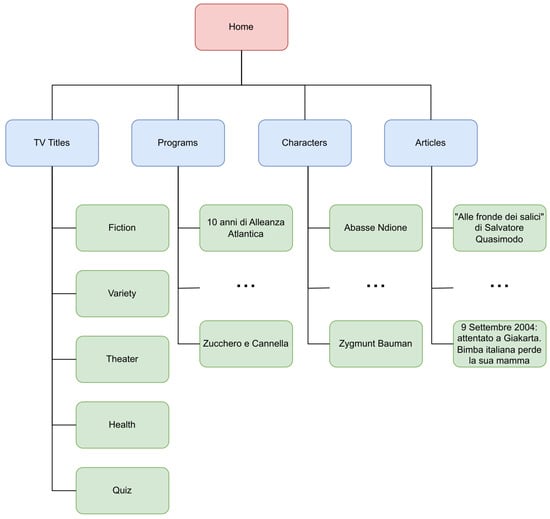
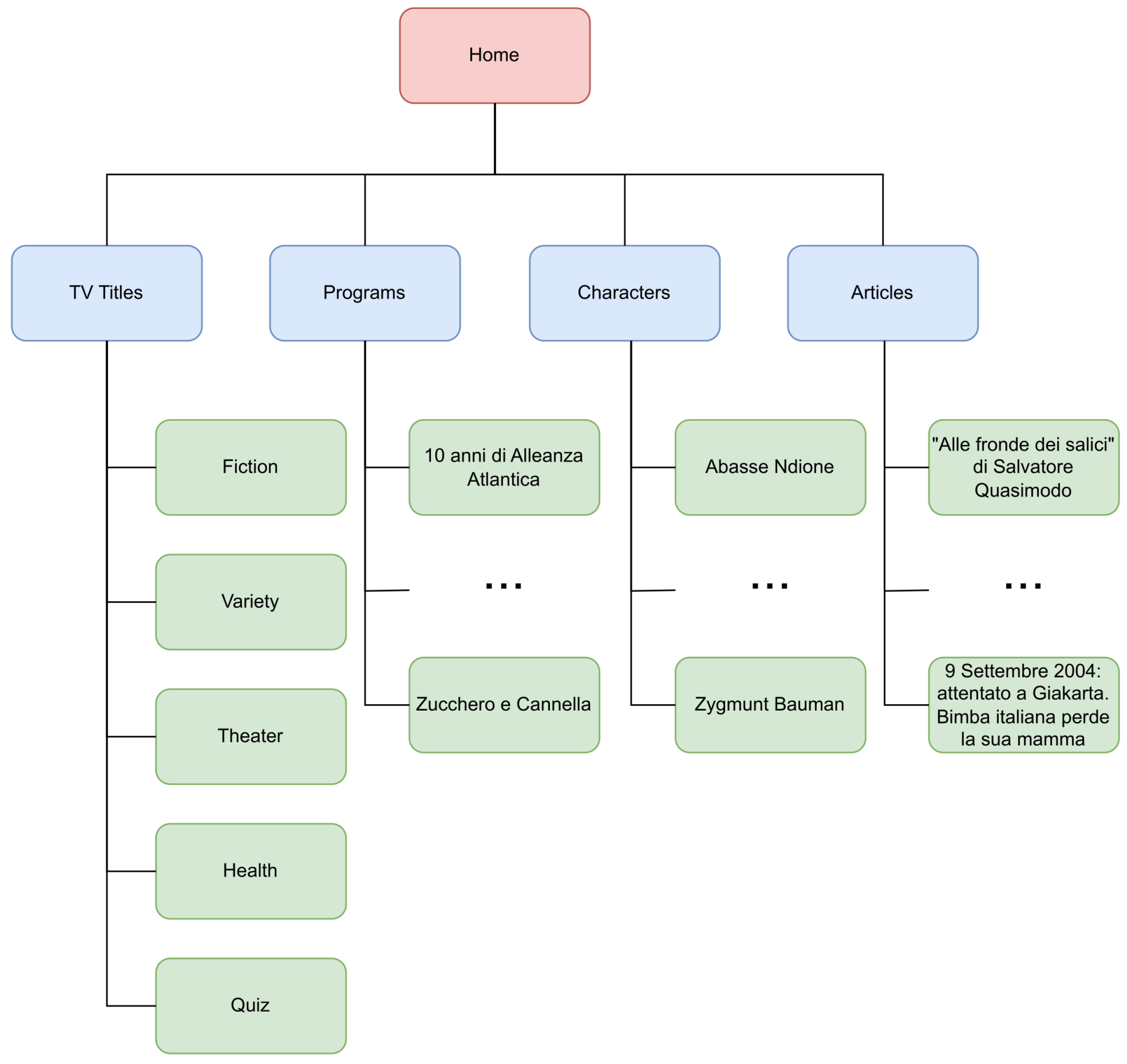
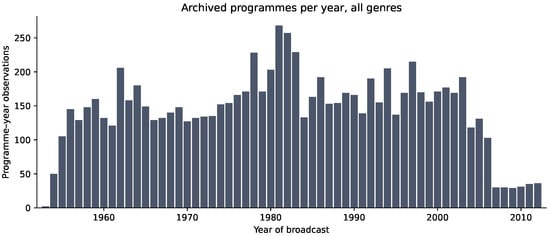
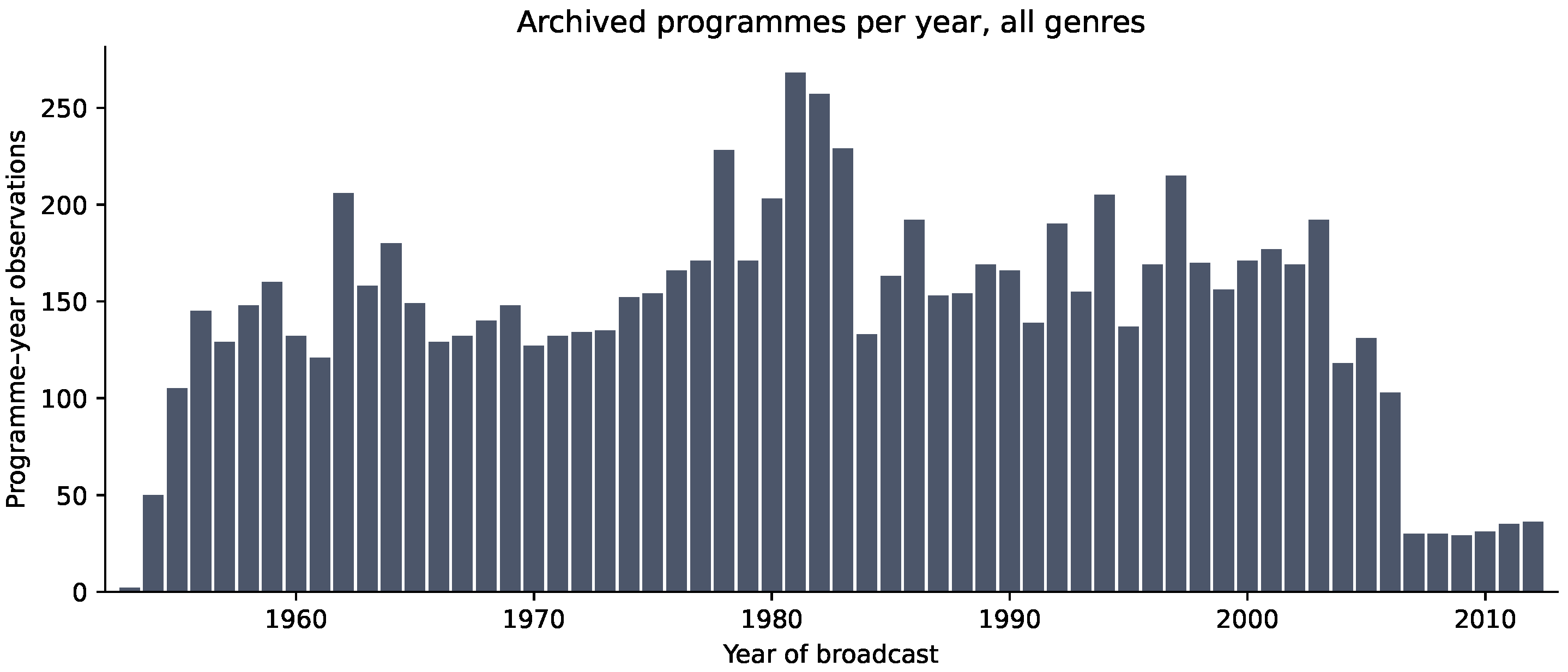
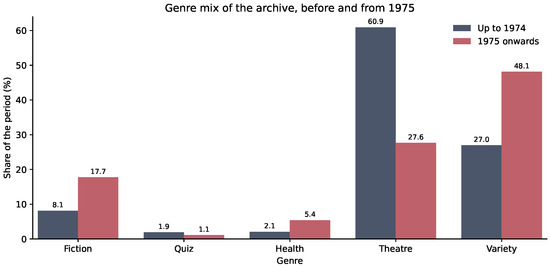
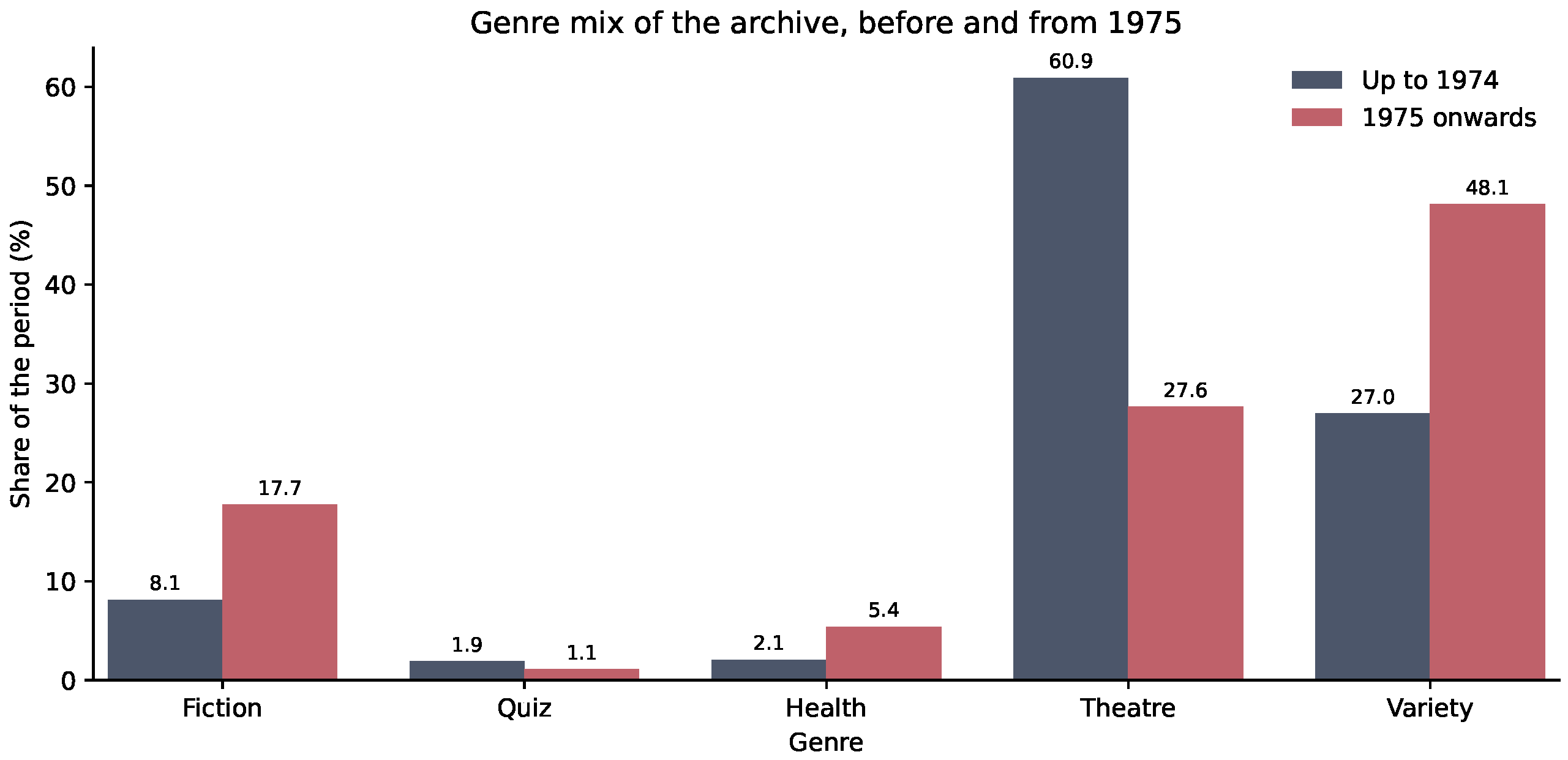
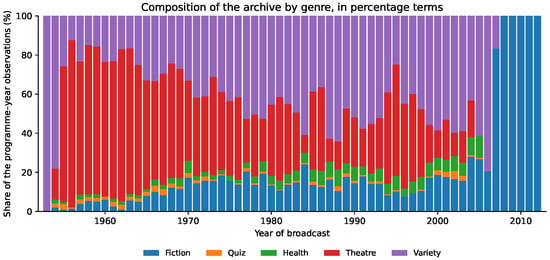
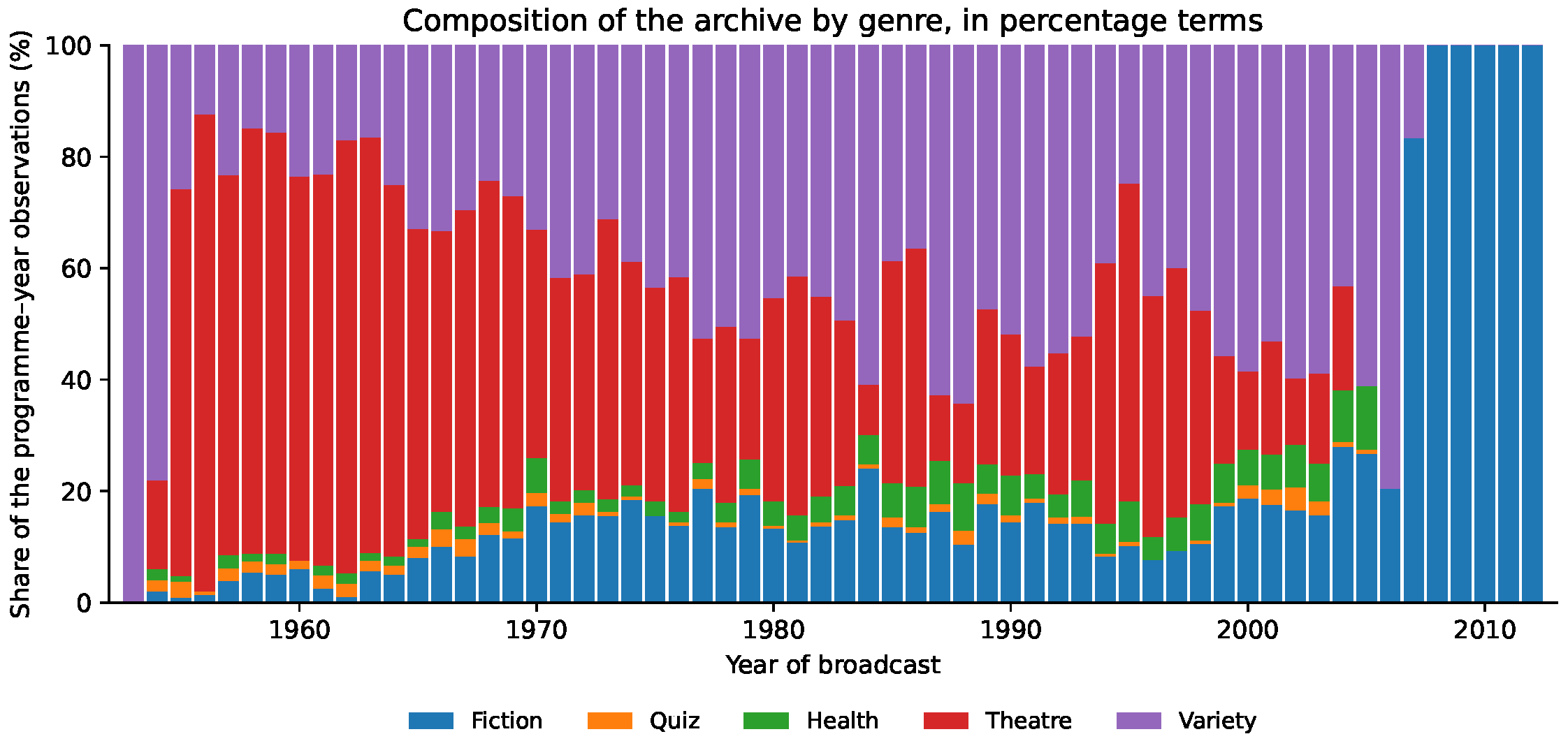
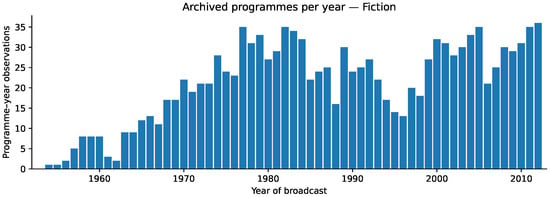
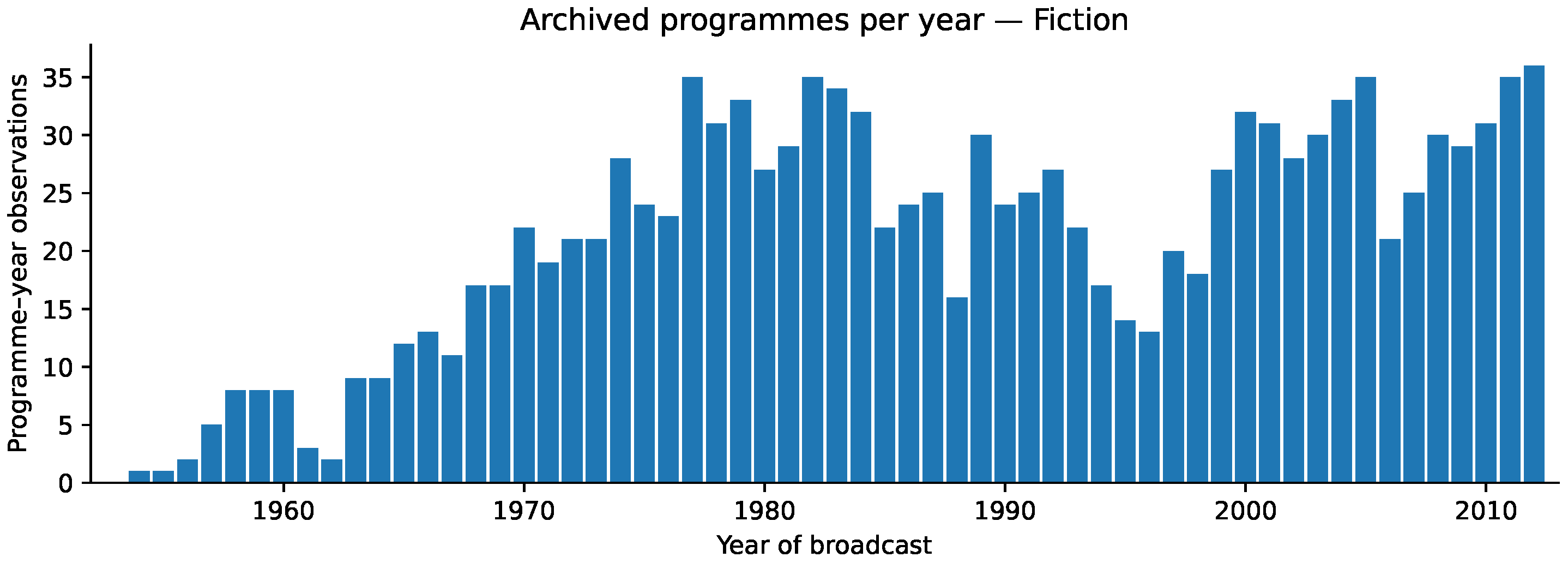
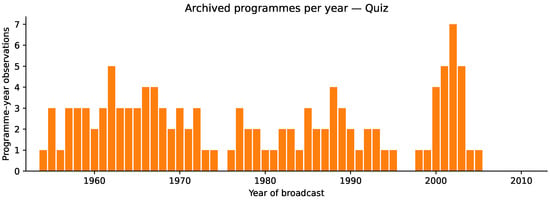
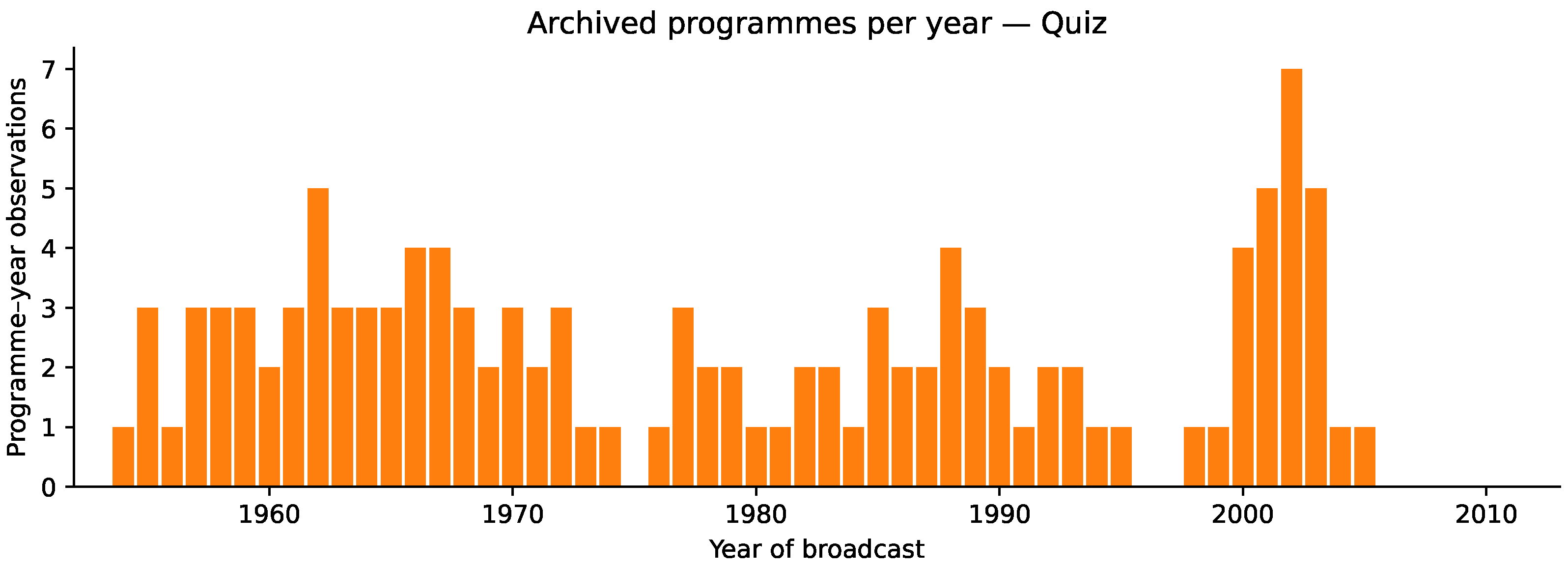
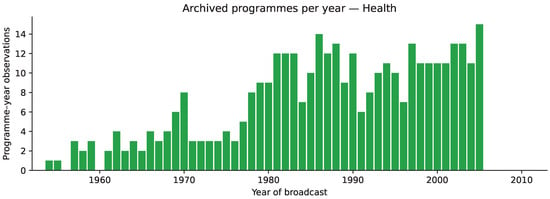
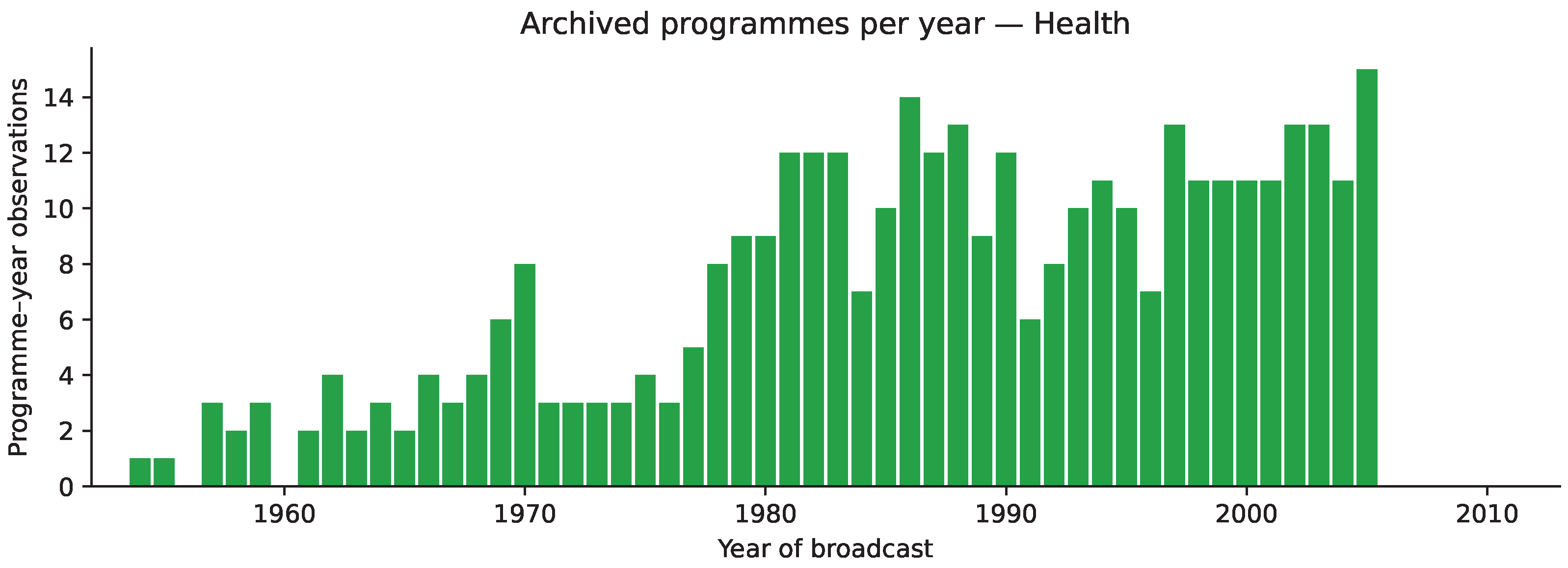
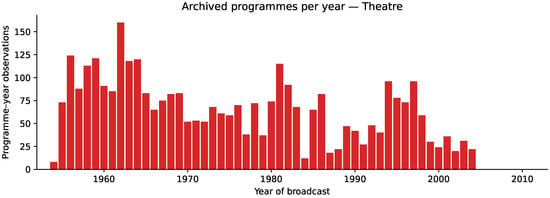
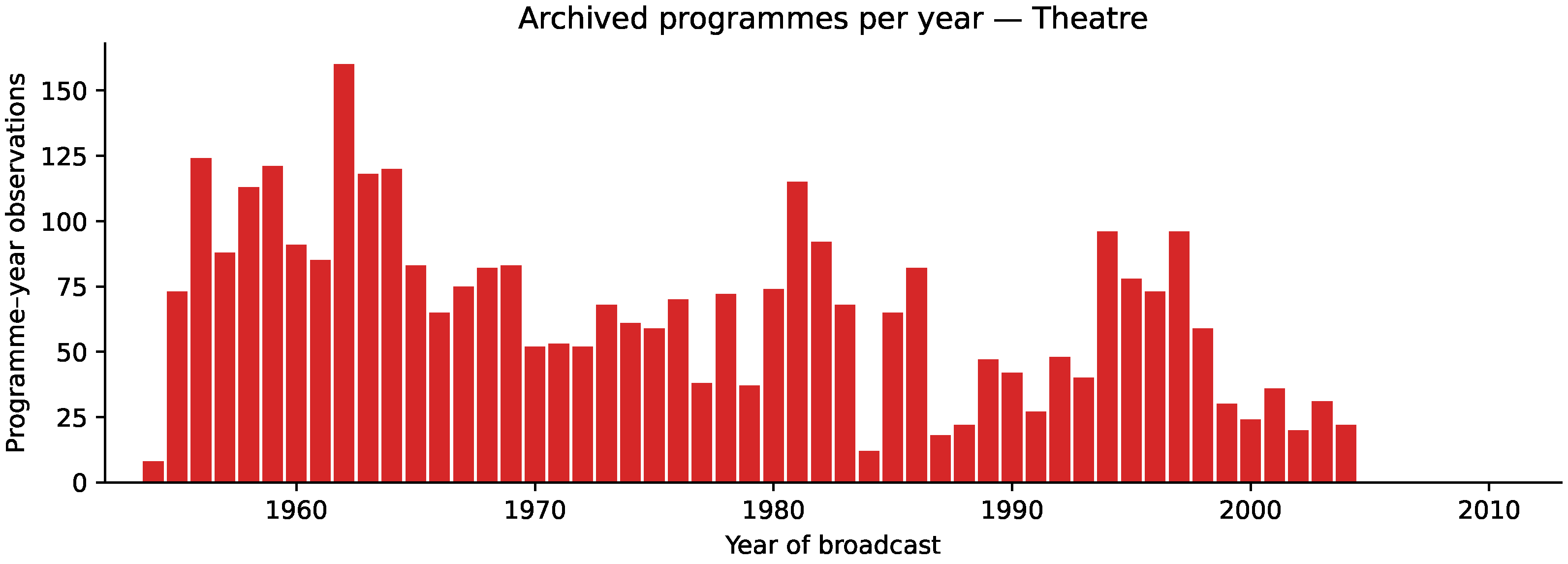
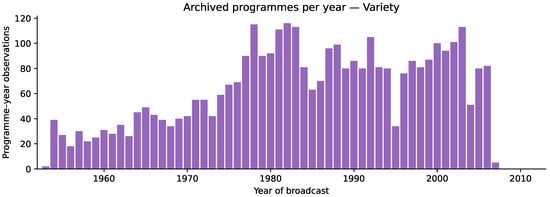
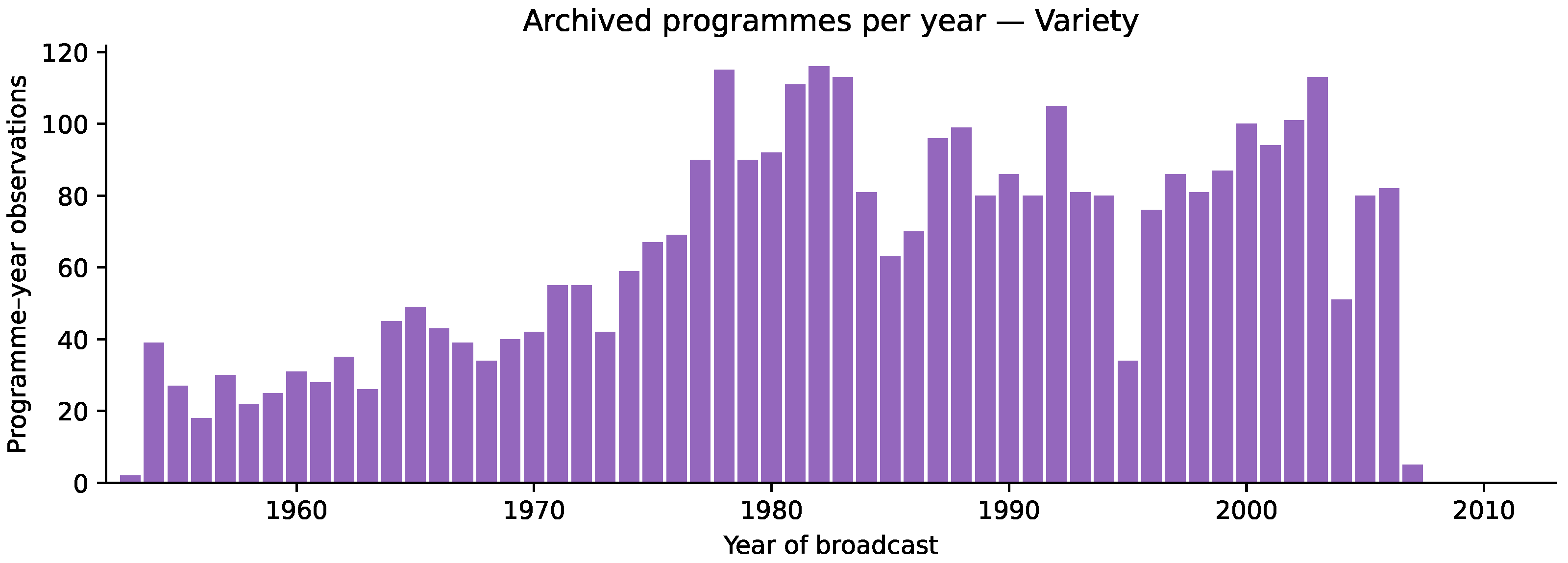

Disclaimer/Publisher’s Note: The statements, opinions and data contained in all publications are solely those of the individual author(s) and contributor(s) and not of MDPI and/or the editor(s). MDPI and/or the editor(s) disclaim responsibility for any injury to people or property resulting from any ideas, methods, instructions or products referred to in the content. |
© 2026 by the authors. Licensee MDPI, Basel, Switzerland. This article is an open access article distributed under the terms and conditions of the Creative Commons Attribution (CC BY) license.