


Abstract
In recent years, digital technology has brought major changes to financial services. These rapid changes have created both new opportunities and challenges for digital banking. This has encouraged researchers to study and investigate this phenomenon. Thus, this narrative review includes 35 peer-reviewed studies published between 2021 and 2026. It explores what motivates people from different countries and backgrounds to start using digital banking. The main factors are organised using several frameworks: Technology Acceptance Model (TAM), Unified Theory of Acceptance and Use of Technology (UTAUT), Task-Technology Fit (TTF), and Technology-Organization-Environment (TOE). These frameworks combine the key factors into six areas: trust and security; perceived usefulness and ease of use; customer experience and service quality; technological infrastructure and compatibility; demographic and socioeconomic factors; and institutional and regulatory influences. Thus, people are more likely to use digital banking if they trust it, find it easy to use, and believe it is safe. Age, education, and digital skills also affect adoption. Although digital banking is becoming more common, it still faces challenges such as privacy concerns, complex technology, limited digital infrastructure, and unclear regulations. This review highlights the main reasons people use financial technology and offers suggestions to make digital banking easier and more accessible.
1. Introduction
In recent years, digital technology has brought major changes to financial services. The most significant changes have been in digital banking, which offers services primarily or exclusively online and requires no visits to bank branches [1,2]. The wider FinTech sector, including mobile banking apps, digital payments, peer-to-peer lending, and blockchain-based services, has also changed how people and organisations handle their finances [3,4]. It can be argued that digital banking drives economic transformation and green finance by generating significant positive externalities (e.g., reduced paper waste and broader financial inclusion), alongside notable negative externalities (e.g., data centre energy consumption) [5].
The COVID-19 pandemic accelerated the adoption of digital financial services worldwide, as social distancing and branch closures made remote banking essential [6]. This brought both new opportunities and challenges for digital banking. Digital banking is more convenient, offers 24/7 access, lower transaction costs, and personalised services [7,8]. However, not everyone starts using it at the same rate. Adoption rates vary between regions and groups [9,10].
It is important to understand what helps or hinders people from using digital banking, as this affects many groups. Banks use this information to design user-friendly platforms, create better marketing, and manage customer relationships [11]. Policymakers use these insights to shape regulations, improve digital infrastructure, and support financial inclusion [12,13]. Researchers also benefit by using this knowledge to develop technology acceptance theories and gain real-world insights into how digital finance is used [14,15].
Although there is extensive research on the adoption of digital banking, the field remains divided by different theories, locations, and methods. Past studies have used frameworks such as the Technology Acceptance Model (TAM), Unified Theory of Acceptance and Use of Technology (UTAUT), Task-Technology Fit (TTF), and the Technology-Organization-Environment (TOE) framework to explain why people adopt digital banking [16,17]. However, the importance of each factor varies across studies, indicating that context, culture, and demographics play significant roles [18,19].
This literature review brings together findings from 35 peer-reviewed studies published between 2021 and 2026. Its main goals are to identify and categorise the key factors that affect digital banking adoption using established theories; to analyse how important these factors are in different settings and groups, and to highlight ongoing barriers while suggesting future research directions. By drawing on studies from both developed and developing countries, the review provides a broad view of digital banking adoption today.
The rest of this review is organised as follows. Section 2 covers the main theories used to study digital banking adoption. Section 3 looks at the main factors driving adoption, grouped into six areas. Section 4 explores the main barriers to adoption. Section 5 synthesises the findings and discusses their implications for theory and practice. Section 6 looks at the study’s limitations and offers ideas for future research. Section 7 gives the conclusion.
2. Methodology
This research employed a qualitative narrative literature review to examine key existing research on the factors influencing the adoption of digital banking. A narrative literature review involves a thorough, analytical synthesis of existing research on a specific subject [20]. Narrative reviews provide a direct account of the existing body of knowledge, offering perspectives, interpretations, and contextual understanding of the subject matter under examination. By employing this methodology, an all-encompassing investigation of the subject can be conducted, integrating varied viewpoints, approaches, and findings to construct a cohesive and nuanced narrative. A narrative literature review is a rigorous and transparent method for identifying, evaluating, and synthesising research evidence on a specific topic [21].
Search Strategy and Source Selection
A literature search was conducted using Google Scholar as the primary database to identify relevant literature published between 2021 and 2026. The search utilised combinations of key terms and Boolean operators, including “Factors influencing adoption” OR “Factors affecting adoption”, AND “digital banking” OR “digital financial services” OR “FinTech services”. Given the volume of results generated by Google Scholar, title and abstract screening were restricted to the relevant studies. Articles were included if they were: (1) peer-reviewed journal articles, book chapters, or conference papers, (2) published in English, and (3) directly addressing the factors that influence digital banking adoption. Non-peer-reviewed reports and opinion pieces were excluded. To complement the primary search, Google Scholar’s “Cited by” feature and the reference lists of key articles were reviewed to identify additional seminal works.
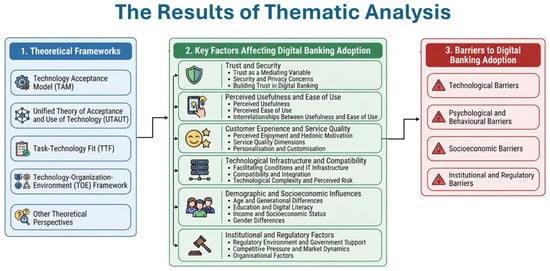
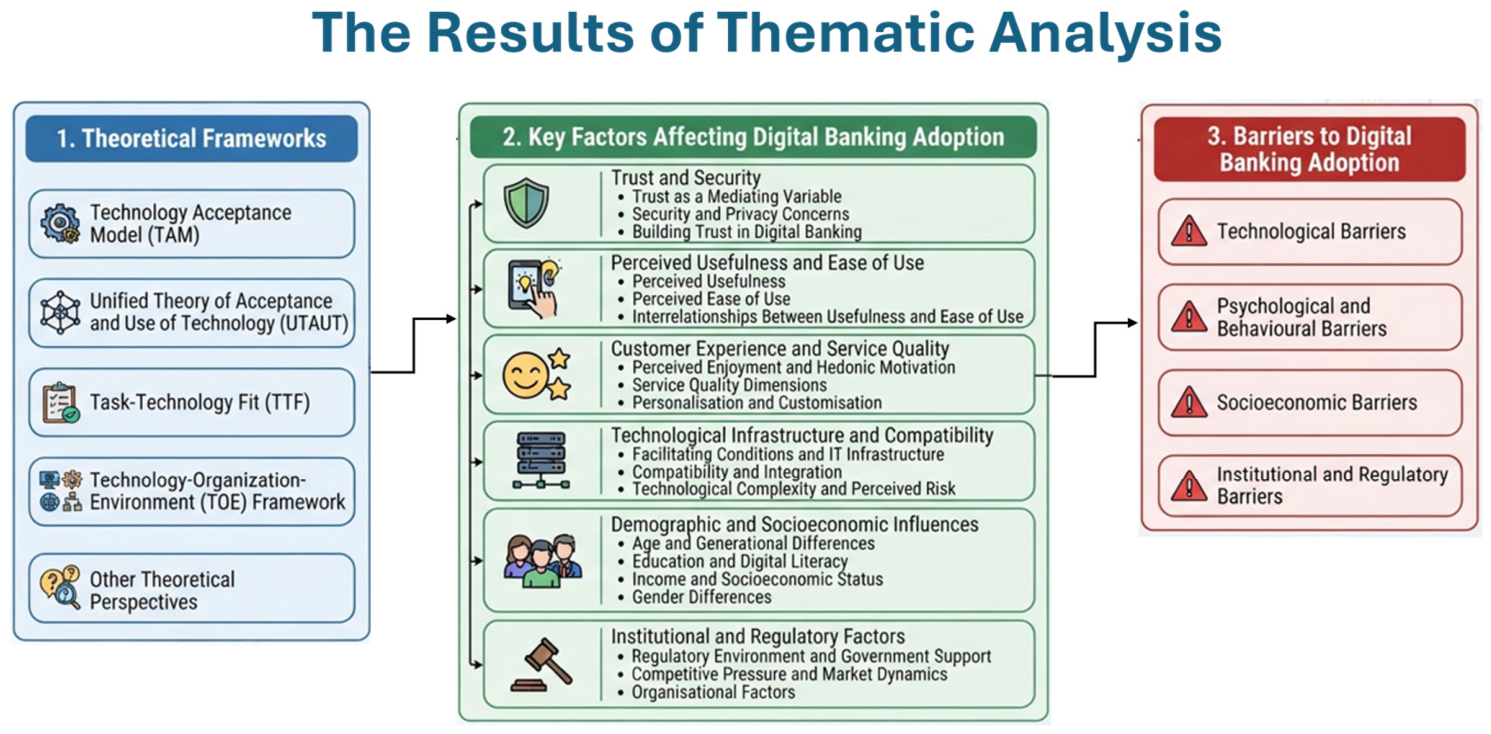
After screening titles and abstracts and removing duplicate entries and those not directly relevant, a focused, high-quality sample of 35 core papers was selected for in-depth evaluation, as shown in Table 1. Rather than performing a quantitative meta-analysis, these 35 articles were subjected to qualitative thematic synthesis—categorising key findings around core constructs such as theoretical frameworks, key factors affecting digital banking adoption, and barriers to digital banking adoption, to map the conceptual landscape of digital banking. These constructs are presented in Figure 1 and discussed in more detail in the following sections.
Table 1.
Characteristics and classification of the reviewed studies (N = 35).
Figure 1.
The Results of Thematic Analysis.
3. Theoretical Frameworks
To understand why people embrace digital banking, researchers draw on several well-established theories from the fields of information systems and technology adoption. This section outlines the main theoretical models used in recent studies. Specifically, it highlights their core ideas, how they are applied, and how they help explain the adoption of digital banking. The following subsections present these theories.
3.1. Technology Acceptance Model (TAM)
The Technology Acceptance Model (TAM), first introduced by Davis in 1989, remains the most widely used framework for studying digital banking adoption [1,18,22,23]. According to TAM, two core beliefs, perceived usefulness (PU) and perceived ease of use (PEOU), shape a person’s attitude towards using technology. These beliefs, in turn, influence their intention to use it and their actual usage behaviour [1,24].
In digital banking, perceived usefulness refers to how much users believe the service will help them manage their finances, work more efficiently, save time, or offer better features than traditional banks [25]. Perceived ease of use looks at how simple and intuitive it is for users to use the banking platform [26].
Recent research has supported and expanded TAM in digital banking. A study in Egypt found that perceived ease of use strongly affects behavioural intention, but perceived usefulness had mixed results [1]. Studies in Saudi Arabia and India have also shown that TAM remains important for understanding digital banking adoption, although its impact varies across cultures [19,27].
Researchers found that the original TAM did not fully explain how people adopt digital banking, so they expanded it by adding additional factors. For example, TAM2 by Venkatesh and Davis (2000) included subjective norms to show how social influence affects technology adoption [1]. Later versions added perceived risk, trust, security, and financial literacy to TAM-based models [1,19,28]. These changes help address the specific needs of financial services, where security and trust are key to adoption decisions [24,28].
3.2. Unified Theory of Acceptance and Use of Technology (UTAUT)
Venkatesh and his team introduced the Unified Theory of Acceptance and Use of Technology (UTAUT) in 2003 to combine eight major technology acceptance theories [4,7,15]. These theories are the Theory of Reasoned Action (TRA), Technology Acceptance Model (TAM), Motivational Model (MM), Theory of Planned Behaviour (TPB), Combined Technology Acceptance Model and Theory of Planned Behaviour (C-TAM-TPB), Model of PC Utilisation (MPCU), Innovation Diffusion Theory (IDT), and Social Cognitive Theory (SCT) [7]. UTAUT highlights four main factors that influence technology acceptance: performance expectancy, effort expectancy, social influence, and facilitating conditions. It also considers gender, age, experience, and voluntariness of use as moderating variables that can affect these factors [4,28,29,30].
When it comes to understanding why people switch to digital banking, the UTAUT model is incredibly useful because it tackles the decision from multiple angles. For instance, performance expectancy is all about the practical perks—does the user believe digital banking will make their life easier? [7]. Effort expectancy, on the other hand, deals with the learning curve and whether the platform feels simple or frustrating to use. Then there is social influence, which reminds us that no one decides in a vacuum; peer recommendations, family dynamics, and community norms heavily sway our choices [31]. Finally, facilitating conditions form the vital backbone of the experience, namely the technical and organisational setup, such as reliable internet access, a compatible device, and solid customer support [4].
Unsurprisingly, past research consistently shows that when people find digital banking useful and easy to navigate, they are much more likely to adopt it [7,31]. In Jordan, a study on mobile payments found that all four UTAUT factors play a major role in shaping whether people use the technology. We see similar validation in India and Pakistan, where UTAUT successfully predicts behaviour across a wide range of demographic groups [9]. However, the real takeaway from those South Asian studies is that the exact weight of each factor shifts depending on who you are asking—proving that culture and local realities matter.
Researchers have used the extended UTAUT2 model, which adds hedonic motivation, price value, and habit as predictors, to study digital banking [31,32,33]. When security is also considered, studies show that hedonic motivation, or the enjoyment of using digital banking, strongly affects adoption, especially for younger users [31,32,33].
3.3. Task-Technology Fit (TTF)
The Task-Technology Fit (TTF) theory explains that people are more likely to adopt and benefit from technology when task requirements, individual skills, and technology features are well aligned [15,16]. In digital banking, this means users are more likely to use digital banking when its features fit their financial management needs and preferences [15].
Recent studies have combined TTF with TAM and UTAUT to develop hybrid models that account for both how well technology fits tasks and the psychological factors that influence adoption [15,16]. Research on FinTech adoption shows that task-technology fit strongly shapes perceptions of usefulness and ease of use, which in turn shape users’ intention to use these platforms [15]. This suggests that digital banking platforms should not only be easy to use and generally helpful but also align with the specific financial tasks users want to complete, such as paying bills, transferring funds, managing investments, or applying for loans [16].
3.4. Technology-Organization-Environment (TOE) Framework
TAM, UTAUT, and TTF primarily examine how individuals adopt technology. In contrast, the Technology-Organization-Environment (TOE) framework offers another perspective by focusing on how organisations adopt digital banking technologies [2,12]. The TOE framework highlights three main factors that affect technology adoption: technological factors such as relative advantage, complexity, and compatibility; organisational factors such as top management support, organisational size, and financial resources; and environmental factors including competitive pressure, the regulatory environment, and vendor support [2].
A study in Ethiopia used the TOE framework to look at how financial service providers adopt FinTech services. It found that perceived risk and complexity made adoption less likely. At the same time, factors such as relative advantage, compatibility, support from top management, IT infrastructure, financial resources, regulations, government support, competition, and vendor support encouraged adoption [2]. This broader perspective helps explain the institutional barriers and supports for the adoption of digital banking, adding to what we learn from individual-level models such as TAM and UTAUT [2,12].
3.5. Other Theoretical Perspectives
In addition to the main frameworks already discussed, recent research on digital banking has used other theories to explain adoption behaviour. The Diffusion of Innovation (DOI) theory examines how digital banking spreads across different groups, such as innovators, early adopters, early majority, late majority, and laggards, depending on when they adopt [22,27]. Innovation Resistance Theory (IRT) helps explain why some people do not adopt digital banking, even when it seems beneficial, by focusing on psychological barriers like tradition, perceived risk, and concerns about image [14].
Researchers have added trust-based theories, such as Trust Transfer Theory and Institutional Trust Theory, to models of digital banking adoption. These theories show how trust in traditional banks extends to digital platforms and how factors such as regulations and security certifications help build consumer confidence [18,22,24]. The Theory of Planned Behaviour (TPB) is also used to study how attitudes, social influences, and perceived control affect people’s intentions to use digital banking [1,15].
The proliferation of theoretical frameworks in digital banking research reflects both the complexity of adoption phenomena and the need for context-specific models that account for technological, psychological, social, organisational, and institutional factors.
4. Key Factors Affecting Digital Banking Adoption
This section synthesises the principal factors influencing digital banking adoption at both the individual and organisational levels, grouped into six categories identified in the reviewed literature. These factors include trust and security, perceived usefulness and ease of use, customer experience and service quality, technological infrastructure and compatibility, demographic and socioeconomic influences, and institutional and regulatory factors. The following subsections address the relevant theoretical frameworks, key empirical findings, and contextual variations in the impact of these factors.
4.1. Trust and Security
Trust and security are the main reasons people adopt digital banking services across regions and demographics [6,8,18,22,24,28,34]. Since digital banking lacks the personal interactions of physical branches, users often feel less connected. As a result, trust becomes even more important and is often the key factor in users’ decisions to switch to digital banking platforms [28].
4.1.1. Trust as a Mediating Variable
Multiple studies have identified trust as a critical mediating variable between other adoption factors and behavioural intentions. Research from Indonesia on digital bank service adoption found that trust had the greatest effect on adoption, mediating the relationships between perceived security, perceived enjoyment, financial literacy, brand image, and adoption intention [28]. Similarly, research in Malaysia indicates that trust mediates the effects of perceived usefulness, perceived ease of use, and social influence on FinTech adoption. This underscores trust as an essential psychological mechanism through which these external factors influence users’ intentions [18].
Trust in digital banking includes three main parts. Competence concerns whether users believe the bank has the technical skills to operate effectively and deliver reliable services [18,24,34]. Trust with integrity is about whether users see the bank as honest, transparent, and ethical. Benevolence trust assesses whether customers believe the bank truly cares about their well-being, not just about making a profit. Research shows that all three are important for building trust, but their importance can change depending on local cultural norms [18,24].
4.1.2. Security and Privacy Concerns
Fear of security breaches remains one of the biggest barriers to digital banking, especially in areas where cybercrime, data leaks, and online fraud are common [8,12,19,28,31]. For instance, research from Saudi Arabia shows that a user’s perception of security strongly influences whether they will adopt digital banking. Customers there are highly anxious about identity theft, hacked accounts, and losing their money. This anxiety is not unique to non-users; even people who already use basic digital banking services hesitate to fully commit to online payments because security and privacy still hold them back [19].
The relationship between people’s views of security and their willingness to use digital banking is not straightforward; it depends heavily on the situation. On one hand, several studies show that when people feel a high level of risk, it acts as a massive barrier to adoption [1,2]. On the other hand, some studies show that these fears can be reduced when banks employ robust security measures, communicate transparently, and implement solid institutional safeguards [19,28,31]. A great example of this comes from Indonesia, where visible security features such as encryption and biometric logins not only protected accounts but also actively built customer trust, which ultimately drove user adoption [28].
4.1.3. Building Trust in Digital Banking
The literature shows how to build trust in the adoption of digital banking. A strong brand reputation is important, since established banks often earn trust in their digital services through their traditional banking experience [18,28,35]. Research has shown that brand image positively influences digital bank adoption by shaping trust, suggesting that marketing efforts emphasising institutional credibility, longevity, and reliability can enhance customer acceptance [28].
Protective regulations and policies in digital banking are key to building trust. In developing economies, trust depends on strong data security and consumer rights [2,12,28]. Studies show that essential policies, clear management, deposit insurance, and consumer protections are more likely to motivate people to trust and use digital banking [12,19].
Personal innovativeness and positive past experiences with digital technologies both affect how trust is formed. Studies on digital lending show that people who are more open to new technology are more likely to trust new digital financial services [34]. As a result, trust-building strategies should be adjusted for different users, depending on their comfort with technology and willingness to take risks [34].
4.2. Perceived Usefulness and Ease of Use
Perceived usefulness and perceived ease of use are the core concepts of TAM and are key to understanding how people adopt digital banking. However, their importance and manifestations can vary depending on the situation [1,4,7,15,19,22,25,26].
4.2.1. Perceived Usefulness
Perceived usefulness refers to whether users believe digital banking makes it easier and more effective to manage their finances. Some studies show that perceived usefulness is a strong reason people use digital banking [4,7,19,22], while others find little or no effect [1,25]. These mixed results suggest that the extent to which perceived usefulness matters may depend on factors such as the level of advancement of the digital banking system, the availability of other banking options, and users’ financial needs [1,15].
When the Technology Acceptance Model (TAM) is applied in Saudi Arabia, it indicates that people primarily choose digital banking because they find it useful. They appreciate how it simplifies transactions, saves time, and gives them greater control over their money [19]. Similar patterns appear in FinTech studies from India and Pakistan, where people’s expectations about how well the technology works play a big role in whether they decide to use it, especially among younger and more educated users [7,9]. In the end, people are most likely to switch to digital banking when it clearly offers better features than traditional banks [19,22].
However, research from Egypt found that perceived usefulness has not significantly influenced mobile banking adoption intention, suggesting that in contexts where digital banking is still emerging, other factors such as trust and ease of use may be more critical [1]. This finding aligns with the innovation diffusion literature, which suggests that while relative advantage drives early tech enthusiasts, mainstream populations in the later stages of technology diffusion prioritise mitigating complexity and security concerns before committing to adoption [22].
4.2.2. Perceived Ease of Use
Perceived ease of use is an important reason why people choose digital banking in many situations [1,4,7,15,19,26,36]. When digital banking has an intuitive design, simple navigation, and requires little mental effort, people are more likely to use it [1,26].
A study in Egypt found that perceived ease of use strongly affects people’s intention to use mobile banking, even if they do not see it as especially useful [1]. This means that for users who are new to digital banking, making the service simpler and easier to use could encourage adoption more than focusing on its features [1,26]. Other research on effort expectancy, which is similar to perceived ease of use in the UTAUT model, also shows that it strongly affects adoption, especially for older adults and people with less digital experience [4,7,29,30,31].
Ease of use matters not just when people first try a service, but also for keeping them satisfied over time. Research shows that user-friendly interfaces, clear instructions, helpful customer support, and smooth integration with other digital services all help increase user satisfaction and lower abandonment rates [8,26]. Studies on digital payment methods found that complexity and difficulty of use are major barriers, even for people who have already started using digital banking [12].
4.2.3. Interrelationships Between Usefulness and Ease of Use
According to TAM, when people find technology easy to use, they are also more likely to see it as useful [1,15]. Recent studies in digital banking have confirmed this link, showing that ease of use affects adoption intention by shaping perceived usefulness [15,19]. Improving a platform’s user-friendliness can directly encourage people to adopt it by making it easier to use. It can also indirectly help by making the platform seem more valuable [15].
Research on task-technology fit helps explain how usefulness and ease of use are connected. Studies that combine TTF and TAM show that when digital banking features match users’ financial tasks, people find the platforms more useful and easier to use [15,19]. Designing digital banking platforms to meet users’ financial management needs improves both their value and usability, which encourages more people to adopt them [15].
4.3. Customer Experience and Service Quality
Customer experience and service quality are now key factors in whether people choose and keep using digital banking. This shows a shift from focusing only on functions to considering the whole user experience [8,11,17,26,28,37]. The following sections outline these key considerations.
4.3.1. Perceived Enjoyment and Hedonic Motivation
In addition to practical benefits, the enjoyable, visually appealing features of digital banking, along with emotional satisfaction, play an important role in adoption, especially among younger users [28,31]. Research in Indonesia showed that when users find digital banking enjoyable, it builds trust and encourages them to adopt it. This means that engaging, attractive, and emotionally satisfying digital banking experiences can boost users’ confidence and willingness to use these services [28].
Studies using UTAUT2, which considers hedonic motivation, show that the pleasure people find in digital banking strongly affects their intention to use these services [31,32,33]. This shows that user experience design, gamification elements, and personalised interfaces play a key role in encouraging people to adopt digital banking, especially in competitive markets where services are similar [28,31].
4.3.2. Service Quality Dimensions
Service quality in digital banking includes system reliability, responsiveness, assurance, empathy, and features such as website design and mobile app interfaces [8,11]. Research shows that all five factors influence user satisfaction and adoption, but their importance differs across user groups [8].
System reliability means digital banking platforms work consistently, accurately, and dependably, which is a key part of service quality [8,11]. When systems often go down, make errors, or process transactions slowly, users lose confidence and are less likely to use them [8]. Fast customer support, quick problem-solving, and rapid transaction processing all help keep users satisfied and encourage continued use of the service [8].
In digital banking, assurance means that customers see providers as knowledgeable, polite, and trustworthy. This part of service quality is strongly linked to building customer trust [8,24]. Research shows that good customer support, clear security information, and open policies help create assurance and encourage people to use digital banking [8,28].
4.3.3. Personalisation and Customisation
Personalising digital banking experiences to fit individual preferences and needs has become a key reason why people choose these services [11,17]. Studies show that features such as personalised financial advice, customised dashboards, tailored product recommendations, and adaptive interfaces increase user satisfaction and engagement [11]. Research on customer experience in digital banking also finds that personalisation helps top digital banking providers stand out from competitors and build customer loyalty [11,17].
4.4. Technological Infrastructure and Compatibility
The technological infrastructure supporting digital banking and the compatibility of digital banking services with users’ existing devices, systems, and behaviours significantly influence adoption [2,4,11,12,13,15,16]. The following subsections show the importance of these concepts.
4.4.1. Facilitating Conditions and IT Infrastructure
Facilitating conditions are the organisational and technical systems that help people use digital banking more easily. Research using the UTAUT model shows that internet access, smartphone ownership, digital payment systems, and institutional support can affect whether people choose digital banking [4,7,13,29,30,31]. For instance, a reliable internet connection, access to smartphones, digital payment options, and help with digital transactions all matter [2,4,13].
A study in Ethiopia found that IT infrastructure plays a key role in FinTech adoption among service providers, and that poor technology is a major barrier in developing countries [2]. Research from Jordan also showed that good internet and compatible devices are important for mobile payment adoption in banks, as these factors strongly influence people’s willingness to use the technology [13].
The digital divide happens when people from different regions, income levels, or age groups cannot access digital technology and the internet equally. As a result, some groups find it hard to use digital banking services [10,12]. Studies show that people living in rural areas, those with lower incomes, and older adults often face challenges with digital banking because of poor infrastructure, limited access to devices, or unreliable internet connections [10,12].
4.4.2. Compatibility and Integration
Compatibility refers to how well digital banking services align with users’ values, experiences, and needs, and it strongly influences adoption [2,15,16]. Studies using the TOE framework show that when service providers see digital banking as compatible, they are more likely to adopt it. This means digital banking solutions that integrate smoothly with existing banking systems and workflows are more likely to be adopted [2].
For individual users, compatibility means that digital banking features fit their usual financial ways, work smoothly with other digital services such as e-commerce platforms and digital wallets, and provide a consistent experience across devices [15,16]. Research shows that platforms with cross-platform compatibility, links to popular payment systems, and support for users’ routines are adopted more often [15].
4.4.3. Technological Complexity and Perceived Risk
Technological complexity makes it harder for people to start using digital banking, especially older adults and those who are not comfortable with technology [2,12,14]. In Ethiopia, a study found that when people perceive digital banking as complicated, they are less likely to use FinTech. Complicated interfaces, confusing instructions, and a tough learning process turn many potential users away [2].
How users see technological complexity and risk is closely linked in digital banking. Research shows that complex security measures, such as requiring multiple authentication methods or frequent password changes, are intended to improve safety but can leave people feeling less secure and make the system harder to use [12,14]. This means digital banking platforms need to strike a balance between robust security and ease of use to encourage more people to use them [12,31].
4.5. Demographic and Socioeconomic Influences
Demographic and socioeconomic factors such as age, education, income, gender, and digital literacy significantly moderate digital banking adoption patterns [7,9,10,14,15,22,23]. These variables are explored in the subsections below.
4.5.1. Age and Generational Differences
Age is one of the main factors influencing digital banking adoption. Younger people use digital banking much more than older adults [7,9,14,22,23]. Research on millennials shows they are more open to new financial services, have higher digital skills, and prefer convenience and speed [22]. Studies from Poland found that most digital lending users are men aged 25 to 34, with university degrees and above-average incomes [34].
The relationship between age and adoption is complex. Research shows that people of different ages value different things [7,31]. Younger users are interested in enjoyment, social influence, and a service’s usefulness. Older users care more about ease of use, security, and trust [7,31]. Because of this, digital banking strategies should match the needs of each group. For younger users, banks can highlight innovation and social features. For older adults, banks should focus on making things simple and secure, and providing strong support [7,14].
4.5.2. Education and Digital Literacy
People with higher education and better digital skills are more likely to use digital banking [9,10,28,34,35]. Studies show that education helps in several ways. For example, it improves digital skills and confidence with technology, raises awareness of the benefits of digital banking, and makes the process seem less complicated and less risky [10,35].
Financial literacy refers to the knowledge and skills needed to make informed financial decisions, and it plays a key role in whether people use digital banking [28,35]. Research from Indonesia shows that financial literacy builds trust, helping users understand digital banking features, judge risks more accurately, and feel more confident about using these services [28]. These results show why financial education programs are important for encouraging digital banking, especially in places where financial literacy is low [35].
4.5.3. Income and Socioeconomic Status
Income and socioeconomic status affect how people use digital banking in several ways, such as whether they own devices, have internet access, feel comfortable with risk, and need financial services [10,12,34]. Studies show that people with higher incomes are more likely to use digital banking because they have better access to smartphones and the internet, engage in more financial transactions, and are more comfortable with the risks associated with new financial technologies [10,34].
The link between income and adoption is complex and context-dependent. In developed countries with strong digital infrastructure, income has less impact. In developing countries with large digital gaps, income is a strong predictor of adoption [10,12]. Studies on digital financial inclusion show that people with low incomes face several barriers to using digital banking, such as poor infrastructure, lack of devices, limited digital skills, and concerns about transaction costs [10,12].
4.5.4. Gender Differences
Researchers have found gender differences in digital banking adoption across many settings, but the magnitude and direction of these differences are not always consistent [7,9,34]. For example, a study from Poland showed that men are more likely than women to use digital lending services [34]. Other studies using the UTAUT model have found that gender plays an important role, with performance expectancy, effort expectancy, and social influence affecting men and women differently [7].
However, some studies suggest that gender differences in digital banking are becoming less noticeable, especially among younger people and in places where most people are comfortable with digital technology [9]. This means that the differences we observe may be due to factors such as digital access, financial independence, and social expectations, rather than gender itself [9,10].
4.6. Institutional and Regulatory Factors
Institutional and regulatory factors, including government policies, regulatory frameworks, competitive dynamics, and organisational support, significantly influence digital banking adoption at both individual and institutional levels [2,11,12,13,19]. These variables are explored in the subsections below.
4.6.1. Regulatory Environment and Government Support
The regulatory environment shapes the adoption of digital banking by setting rules for consumer protection, data privacy, licensing, and digital infrastructure [2,12,19,38]. A study from Ethiopia finds that supportive regulations and government backing facilitate service providers’ adoption of FinTech, underscoring the importance of strong regulatory frameworks [2].
Research on digital banking adoption shows that when data security is weak and consumer rights are unclear, trust in these services is lower, and use is less likely [12,28]. Where regulations are stronger and protections are clear, more people are willing to use digital banking [19].
Government efforts to promote digital financial inclusion, such as digital identity systems, investments in payment infrastructure, and financial literacy programs, strongly influence adoption [10,12,13]. A study in Jordan found that government support helps people adopt mobile payments by reducing transaction costs and improving system reliability [13].
4.6.2. Competitive Pressure and Market Dynamics
Competitive pressure refers to the intensity of competition in the financial services market. This competition encourages banks to invest in digital technologies and improve their services [2,11]. Studies using the TOE framework show that as competition increases, banks are more likely to adopt new digital banking solutions [2].
The rise in digital-only banks and FinTech startups has made the banking sector more competitive and pushed digital innovation forward [11,17]. Research shows that pressure from FinTech companies has led traditional banks to improve their digital services, enhance user experiences, and reduce transaction costs [11,17].
4.6.3. Organisational Factors
Organisational factors such as top management support, size, financial resources, and culture are important in determining whether institutions adopt digital banking technologies [2]. Research from Ethiopia found that top management support, financial resource commitment, and bank size all positively affect the intention to use FinTech. This shows that organisational readiness and commitment matter [2].
Vendor support includes reliable technology vendors, implementation help, and ongoing maintenance services, all of which affect whether institutions adopt new systems [2]. Research shows that working with established technology providers, having access to technical expertise, and getting customised solutions help financial institutions implement digital banking [2].
5. Barriers to Digital Banking Adoption
Despite the increased availability and advancement of digital banking services, significant barriers to widespread adoption persist. This section summarises the primary barriers identified in recent studies, categorising them as technological, psychological, socioeconomic, and institutional. The following subsections present these barriers.
5.1. Technological Barriers
Technological barriers make it difficult for people to adopt digital banking, especially in developing countries and among those with limited digital access [2,10,12,14]. Problems such as slow internet, weak mobile networks, and unreliable electricity often prevent users from using digital banking services regularly [2,10]. Studies from Ethiopia have shown that IT infrastructure problems are a major challenge for FinTech adoption [2].
Limited smartphone ownership, outdated devices that do not support modern banking apps, and small storage capacity make it harder for people to use these services [10,12]. Prior research found that many low-income people lack the devices required for these apps, a major barrier to financial inclusion [10].
Problems such as frequent downtime, slow transactions, and technical errors reduce user confidence and make people less likely to use these systems [8,11]. A study found that when users experience negative outcomes due to system failures, they are much less willing to continue using digital banking services [8].
5.2. Psychological and Behavioural Barriers
Psychological and behavioural barriers, such as resistance to change, behavioural inertia, and reluctance to try new things, make it harder for people to adopt digital banking. This is especially true for older adults and those who have long used traditional banks [14,22]. Studies show that for many traditional bank customers, routines, traditions, and a strong attachment to physical branches are major reasons they hesitate to switch to digital-only banks [14].
Perceived risk and security concerns are major psychological barriers. Users often worry about financial loss, identity theft, data breaches, and fraud [1,6,12,19]. Research shows that even strong security measures do not always ease these fears, and people’s sense of vulnerability can still prevent adoption [12,19].
People are less likely to use digital banking, especially digital-only banks with weak reputations, due to a lack of trust [14,18,24]. Studies find that this lack of trust is even greater in places where regulations are weak, consumer protection is limited, or there have been past cases of financial fraud [12,24].
5.3. Socioeconomic Barriers
Low income, limited education, and poor digital skills can make it difficult for some people to use digital banking [10,12,35]. The digital divide, or the gap in access to technology between socioeconomic groups, leads to unequal use of digital banking. As a result, people from disadvantaged backgrounds are less likely to benefit from these services [10].
Limited financial literacy can prevent potential users from understanding digital banking features, assessing risks, and making informed decisions about adoption [28,35]. Studies show that financial literacy programs help boost users’ confidence and skills in digital financial services [35].
Transaction expenses such as data charges, hardware costs, and service fees are barriers for low-income populations [10,12]. Research on digital financial inclusion shows that even small transaction costs can stop low-income users from adopting these services [10].
5.4. Institutional and Regulatory Barriers
Weak consumer protection, unclear legal rules, and limited oversight are institutional and regulatory barriers that reduce people’s willingness to trust and use new systems [2,12,19]. Prior research also found that uncertainty about data protection, liability for fraud, and dispute resolution make it harder for people to adopt these systems [12].
Inadequate customer support and service quality are additional barriers to adoption [8,12]. Studies show that unresolved issues, unresponsive support, and limited assistance channels, including the lack of phone support and physical branches, cause significant frustration and abandonment [8,12].
Problems such as incompatible digital banking platforms, poor integration with other digital services, and fragmented payment systems make digital banking less useful and less convenient [12,13]. Thus, users often struggle with cross-platform transactions and still rely on cash.
6. Discussion
This review synthesises findings from 35 peer-reviewed studies published between 2021 and 2026, demonstrating the multifaceted nature of digital banking adoption. By integrating diverse theoretical perspectives, geographic contexts, and user groups, the review identifies several key insights relevant to both researchers and practitioners.
6.1. Convergence on Core Factors
Although the studies reviewed use different theories, methods, and settings, they agree on several key factors. Trust and security are the most important predictors of digital banking adoption in almost every study [1,6,8,12,18,19,24,28,34,38]. This highlights the uniqueness of financial services. Because transactions are intangible, there is a risk of financial loss, and personal financial data is sensitive, trust becomes even more important than in other areas of technology adoption.
Perceived ease of use is consistently important across studies, indicating that usability is essential for people to adopt digital banking in various contexts [1,4,7,15,19,26]. This aligns with technology adoption research: even useful technologies are not adopted if people perceive them as too complicated or requiring too much effort.
In contrast, studies on perceived usefulness have produced mixed results. Some research finds strong positive effects [4,7,19,22], but other studies do not find a significant relationship [1,25]. These differences may be influenced by the level of advancement of the digital banking system, the available banking options, and users’ specific needs.
6.2. Theoretical Integration and Model Extensions
The literature review highlights a trend of combining theories and expanding existing models. Although TAM remains the most widely used framework, researchers are increasingly aware of its limitations in explaining the complexity of digital banking adoption [1,15,23,24]. As a result, many studies have added factors like trust, security, social influence, and other context-specific elements to TAM [1,18,19,28].
Researchers using the UTAUT model have expanded it to include security, trust, and hedonic motivations [13,29,30,31]. These updates show that adopting digital banking depends on emotional, social, and security factors, not just how easy or useful it is.
Combining theoretical frameworks such as TAM, UTAUT, TTF, and trust theories can guide future research [15,16,24]. Using these approaches together gives a clearer picture of the complex factors in digital banking adoption while keeping the theories easy to understand.
6.3. Contextual and Cultural Variations
Studies show that digital banking adoption depends on both context and culture. In developing economies, researchers point to infrastructure challenges, unclear regulations, and low financial literacy as the main barriers [2,10,12]. Meanwhile, research in developed economies focuses more on user experience, personalisation, and how banks set themselves apart from competitors [11,17].
Cultural differences also change how people decide to adopt new technology. For example, in collectivist cultures, people care deeply about social influence and what their community thinks [13]. On the other hand, people in individualist cultures care more about personal innovation and how fun or exciting the technology is [34]. Because of these differences, banks need to tailor their digital strategies to match local values and everyday routines.
6.4. The Central Role of Trust
Trust plays a key role in whether people adopt digital banking. Several studies show that trust is not just one of many factors but a crucial link shaping how other factors influence adoption [18,28]. This means that improving usefulness, ease of use, security, or service quality will only help if these changes also increase user trust.
Trust has several dimensions, including competence, integrity, and benevolence. The strategies to build trust need to address all of these at once [18,24]. Relying only on technical security is not enough; it should be supported by clear communication, ethical business practices, responsive customer service, and visible regulatory oversight [19,24,28].
6.5. Demographic Segmentation and Targeted Strategies
Demographic factors play a big role in how people use digital banking, so a single approach will not work for everyone [7,9,14,22,34]. Each group has its own reasons for adopting digital banking, along with different barriers and preferences. Because of this, strategies should be tailored to the needs of each group.
Younger users are more likely to respond to strategies that focus on innovation, social connections, enjoyable experiences, and practical benefits [7,22,31]. In contrast, older adults usually prefer approaches that provide simplicity, security, trust, and strong support [7,14,31]. For people with lower incomes, addressing infrastructure challenges, reducing transaction costs, and improving financial literacy are important [10,12,35].
6.6. From Adoption to Continued Usage
Most studies reviewed examine why people initially adopt a technology, but some also highlight the importance of continued use and user satisfaction [8,11,26]. The reasons people start using a technology can differ from those that sustain its use. Over time, factors such as service quality, system reliability, and customer support tend to become more important [8,11].
This difference has a real impact on daily life. Digital banking needs to attract users and keep them loyal by providing reliable service, helpful support, and regular updates [8,11,17]. Research shows that a single system failure, poor support, or a security issue can erode trust and cause even loyal users to look for other options [8,12].
6.7. Institutional and Policy Implications
The literature shows that institutional and regulatory factors play a key role in the adoption of digital banking [2,12,13,19]. Supportive regulations, strong consumer protection, and government efforts to promote digital financial inclusion all help encourage adoption [2,12,13].
These findings show that policymakers have a few important steps to take. They should set clear rules for digital banking, data protection, and consumer rights. Improving digital infrastructure will help more people access it. Financial literacy programs can give users more confidence and skills. Finally, deposit insurance and dispute resolution systems will help people trust digital banking [10,12,13,19,35].
These findings highlight that financial institutions should focus on user-centred design, clear security communication, responsive customer support, and ongoing innovation to keep up with changing user needs [8,11,17,28]. As FinTech startups and digital-only banks intensify competition, traditional banks need to accelerate their digital transformation and leverage their strong reputations to build trust in digital platforms [11,14,17].
7. Literature Gaps and Future Research Directions
This review provides an overview of digital banking adoption; however, several limitations remain, presenting opportunities for future research. The following sections outline these key considerations.
7.1. Methodological Gaps
Most of the studies reviewed use cross-sectional survey designs. These capture adoption intentions at a single point in time but do not show causal relationships or how adoption changes over time [1,4,7,9,13,15,19,31]. Future research should use longitudinal designs to examine how adoption factors change, how initial intentions translate into actual use, and how user experiences affect continued use and satisfaction.
Most studies rely on self-reported measures of adoption intention rather than tracking actual usage behaviour [1,4,7,15,19]. Although behavioural intention often predicts actual behaviour in technology adoption research, a gap remains between intention and action. Future research could use objective usage data, such as transaction logs or app analytics, to assess the accuracy of self-reported measures and explore the factors that influence the link between intention and behaviour.
Quantitative surveys are useful for testing theories and finding key predictors. However, they do not reveal much about people’s feelings, real-life situations, or the personal stories behind their decisions to adopt something new. To better understand how people begin using digital banking, future research should include interviews, focus groups, and ethnographic observations.
7.2. Theoretical Gaps
Research shows that TAM, UTAUT, and similar frameworks are widely used, but theoretical gaps remain. Most studies focus on how individuals start using digital banking, while less is known about how households or organisations make these choices [2]. Future research should examine how families decide to use digital banking, how family members influence one another, and how organisations influence adoption.
Second, the literature reviewed offers only limited insights into what happens after adoption, such as continued use, satisfaction, loyalty, and advocacy behaviours [8,11]. Future research could develop and test models of ongoing digital banking use, examining how first experiences, service quality, and changing user needs affect long-term usage.
Third, most studies focus on how people use individual digital banking services, such as mobile banking or digital payments, rather than looking at how they use integrated digital banking ecosystems [15,16]. Future research should explore how users manage multiple digital financial services simultaneously, how using one service affects the use of others, and how digital banking platforms can be designed to support adoption across the entire ecosystem.
There is a new area of research that requires further investigation. This area concerns digital banks, which are growing quickly by adopting new strategies and easy-to-use systems to attract customers. Studies using models such as TAM and UTAUT show that people choose digital platforms because they are practical, have lower fees, and are perceived as trustworthy [3,7,15].
7.3. Contextual Gaps
There is a clear geographical imbalance in the literature. Most research focuses on developed economies and emerging markets, but there is less attention to least-developed countries, conflict-affected regions, and rural areas [2,10,12]. Future studies should explore digital banking adoption in these less-studied places to better understand how poor infrastructure, political instability, and local culture affect adoption patterns.
The COVID-19 pandemic accelerated digital banking adoption worldwide, but few studies have examined its impact on this process [6]. Future research could explore how adoption during a crisis differs from voluntary adoption, whether people who started using digital banking during the pandemic continue to use it afterwards, and how the pandemic may have changed digital banking trends for good.
The literature reviewed provides only limited information on the adoption of new digital banking technologies. These include blockchain-based banking, artificial intelligence-powered financial advisory services, and biometric authentication systems [26]. Future studies should examine how these technologies affect adoption patterns and whether current adoption models remain applicable.
Nowadays, it can be argued that the use of digital banks is growing rapidly due to their lower additional costs, which in turn help them grow even faster. This growth also enables them to gather more data to improve risk checks and offer new services through embedded finance. Fintech continues to grow as more people adopt these changes, indicating that the market is open to new ideas [8,17,22]. Future studies should explore how people adopt these banks and the factors that affect this adoption. Moreover, researchers need to pay more attention to comparing these digital banks with traditional banks and their electronic services.
7.4. Demographic and Segmentation Gaps
Although the literature shows important demographic differences in adoption patterns, most studies treat demographic variables as control variables or moderators rather than focusing on them directly [7,9,14,22,34]. Future research should look more closely at specific groups, such as older adults, low-income populations, rural residents, and people with disabilities, to better understand their unique barriers, needs, and preferences.
The intersection of multiple demographic characteristics, such as how age and income jointly influence adoption or how gender and education interact, remains underexplored. Future research should use intersectional approaches to examine how multiple dimensions of identity and social position shape experiences of adopting digital banking.
7.5. Practical and Policy Research Needs
The literature reviewed so far offers little evaluation of specific ways to encourage digital banking adoption. Future studies should use experimental or quasi-experimental methods to rigorously test the effectiveness of strategies such as financial literacy programs, changes to user interfaces, security improvements, and marketing efforts.
The policy effects of digital banking, including its impact on financial inclusion, economic growth, and social inequality, warrant further study [10,12]. Future research should examine how digital banking shapes broader socioeconomic outcomes, whether it helps or worsens financial exclusion, and how policy can increase its social benefits while reducing potential risks.
Current research does not address every ethical issue in digital banking, including data privacy, algorithmic bias, and digital surveillance. Future studies should examine these topics, consider power dynamics in digital finance, and evaluate how institutions and regulations protect user rights and well-being.
8. Conclusions and Limitations
8.1. Conclusions of the Study
This literature review synthesised findings from 35 peer-reviewed studies published between 2021 and 2026 to provide an overview of the factors that influenced the adoption of digital banking. The research showed that adopting digital banking was a complex process influenced by many factors, including technology, psychology, social influences, demographics, institutions, and regulations. These factors affected individuals, organisations, and society.
Trust and security were the most important factors in getting people to use digital banking. This was because financial services involved risks of financial loss and the handling of sensitive personal data, so people needed to feel confident and safe. Ease of use was also important, showing that people wanted digital banking to be simple no matter the situation. However, how useful people found digital banking could vary. Its importance depended on factors like infrastructure development, available options, and each user’s needs.
Fintech users had a wide range of backgrounds. Factors like age, education, income, and satisfaction influenced their choices. As a result, people needed different things. Companies could meet these needs by introducing new trends and social features, while keeping their services simple, safe, and supported by strong customer service.
Clear regulations, robust fraud protection, and government backing were what truly drove digital banking adoption. To sustain this momentum, policymakers had to focus on four areas: crafting solid rules, upgrading technology infrastructure, launching financial literacy campaigns, and building public trust.
Although there was more research on this topic, important gaps remained. Most studies used cross-sectional surveys, which made it hard to understand cause-and-effect relationships or how adoption changed over time. There was also insufficient focus on what happened after adoption, how households adopted digital banking, or how adoption fitted within larger systems. In addition, research often overlooked the experiences of people in the least-developed countries, rural areas, and with new technologies, which limited how widely the findings could be applied.
As digital banking grew worldwide, it was important to understand what helped or hindered its adoption. This review brought together what we knew so far, highlighted ongoing gaps, and suggested directions for future research. By tackling these challenges and using proven strategies, stakeholders could help make digital banking a driver of financial inclusion, economic growth, and better financial well-being everywhere.
8.2. Limitations of the Study
This literature review has some limitations in the research method. First, the search for the relevant studies was restricted to Google Scholar. Although it includes many academic works, it does not include all the details available in databases such as Scopus, Web of Science, and ScienceDirect. This may lead to the omission of other studies in these databases.
Second, the retrieval process yielded a small sample of 35 peer-reviewed studies. Given this limited dataset, the findings may not generalise across all geographical, cultural, or economic contexts. The small sample size also means that unusual methods or data from specific regions could have a greater impact on the results. For these reasons, the conclusions in this review should be seen as an overview of a particular part of the literature, not a complete global summary of digital banking adoption.
Funding
This research received no external funding.
Institutional Review Board Statement
Not applicable.
Informed Consent Statement
Not applicable.
Data Availability Statement
No new data were created or analyzed in this study. Data sharing is not applicable to this article.
Conflicts of Interest
The author declares no conflicts of interest.
References
- Mostafa Hamdy Rady, A. Determinants of Customer Behavioural Intention Towards the Usage of Fin-tech Banking Services: Evidence from Egypt. Egypt. J. Commer. Stud. 2023, 47, 387–420. [Google Scholar] [CrossRef] [Scilit]
- Ayinaddis, S.G.; Mirete, T.G.; Getahun, B.W. Evaluating the factors influencing electronic banking adoption in Ethiopia: Analysis from customer perspective. J. Innov. Entrep. 2025, 14, 56. [Google Scholar] [CrossRef] [Scilit]
- Hedrayati, S.L.; Rapel, E.; Zulaika, T.; Rahmiati; Setiawan, R.Y.; Dyastiarini, A. Technology Adoption On Bank Services: A Systematic Literature Review. Seybold Rep. J. 2023, 18, 583–603. [Google Scholar] [CrossRef]
- Bhujel, S. Factors driving the adoption of fintech services: An empirical analysis of customers of commercial banks in Kathmandu. Apex J. Bus. Manag. 2024, 3, 67–85. [Google Scholar] [CrossRef] [Scilit]
- Wu, W.; Lin, X. Digital inclusive finance for green transformation: Insight from green innovation, industrial upgrading, and employment quality. J. Innov. Knowl. 2025, 10, 100726. [Google Scholar] [CrossRef] [Scilit]
- Albuainain, A.; Ashby, S. Enablers and barriers in FinTech adoption: A systematic literature review of customer adoption and its impact on bank performance. FinTech 2025, 4, 49. [Google Scholar] [CrossRef] [Scilit]
- Hosmani, A.P.; Raghukant, P. Fintech Adoption in the Digital Age: A Study Using the UTAUT Framework. Int. J. Adv. Res. Commer. Manag. Soc. Sci. 2025, 8, 83–92. [Google Scholar] [CrossRef] [Scilit]
- Neves, C.; Oliveira, T.; Santini, F.; Gutman, L. Adoption and use of digital financial services: A meta-analysis of barriers and facilitators. Int. J. Inf. Manag. Data Insights 2023, 3, 100201. [Google Scholar] [CrossRef] [Scilit]
- Shahzadi, A.; Ahmad, D.; Haq, M.Z.U. Exploring the Paradigm of Fintech Adoption Among Gen Z in Pakistan: An Empirical Examination. Int. J. Soc. Bus. Sci. 2025, 3, 1–26. [Google Scholar]
- Kumari, M. Adoption of digital financial services and its impact on financial behaviour: A review of literature. Int. J. Manag. (IJM) 2024, 15, 10–26. [Google Scholar]
- Sargsyan, H. Challenges of Digital Banking Development in the Context of Latest Banking Technologies. Katchar Acad. Soc. Sci. Period. 2025, 2025, 148–162. [Google Scholar]
- Dimitrova, I.; Öhman, P.; Yazdanfar, D. Barriers to bank customers’ intention to fully adopt digital payment methods. Int. J. Qual. Serv. Sci. 2022, 14, 16–36. [Google Scholar] [CrossRef] [Scilit]
- Anagreh, S.; Al-Momani, A.; Maabreh, H.M.A.; Sharairi, J.A.; Alrfai, M.M.; Abu Haija, A.A.; Rahahle, M.Y.; Alzyoud, M.; Mohammad, A.A.S.; Al-Hawary, S.I.S. Mobile payment and digital financial inclusion: A study in the Jordanian banking sector using the unified theory of acceptance and use of technology. In Business Analytical Capabilities and Artificial Intelligence-Enabled Analytics: Applications and Challenges in the Digital Era; Springer Nature: Cham, Switzerland, 2024; Volume 1, pp. 107–124. [Google Scholar]
- Nel, J.; Boshoff, C. Traditional bank customers’ resistance to digital-only banking: Evidence from South Africa. Int. J. Bank. Mark. 2021, 39, 429–454. [Google Scholar] [CrossRef] [Scilit]
- Saprikis, V.; Avlogiaris, G.; Katarachia, A. A comparative study of users versus non-users’ behavioural intention towards M-banking apps’ adoption. Information 2022, 13, 30. [Google Scholar] [CrossRef] [Scilit]
- Firmansyah, E.A.; Masri, M.; Anshari, M.; Besar, M.H.A. Factors affecting fintech adoption: A systematic literature review. FinTech 2022, 2, 21–33. [Google Scholar] [CrossRef] [Scilit]
- Himabindu, C.H.; Rao, D.B.S. A study on Digital Transformation: How Fintech is Revolutionising the Banking Landscape. J. Inform. Educ. Res. 2025, 5, 1277–1287. [Google Scholar] [CrossRef] [Scilit]
- Samarasekara, L.; Tanaraj, K.; Rajespari, K.; Sundarasen, S.; Rajagopalan, U. Unlocking the key drivers of FinTech adoption: The mediating role of trust among Malaysians. Migr. Lett. 2023, 20, 505–521. [Google Scholar] [CrossRef] [Scilit]
- Alnemer, H.A. Determinants of digital banking adoption in the Kingdom of Saudi Arabia: A technology acceptance model approach. Digit. Bus. 2022, 2, 100037. [Google Scholar] [CrossRef] [Scilit]
- Haddaway, N.R.; Bethel, A.; Dicks, L.V.; Koricheva, J.; Macura, B.; Petrokofsky, G.; Pullin, A.S.; Savilaakso, S.; Stewart, G.B. Eight problems with literature reviews and how to fix them. Nat. Ecol. Evol. 2020, 4, 1582–1589. [Google Scholar] [CrossRef] [Scilit]
- Snyder, H. Literature review as a research methodology: An overview and guidelines. J. Bus. Res. 2019, 104, 333–339. [Google Scholar] [CrossRef] [Scilit]
- Solarz, M.; Swacha-Lech, M. Determinants of the Adoption of Innovative FinTech Services by Millennials. E M Econ. Manag. 2021, 24, 149–166. [Google Scholar] [CrossRef] [Scilit]
- Yangchen, K.; Wangchuk, K.; Pelden, K.; Yangden, P.; Yangdon, P. Factors Influencing the Adoption of Digital Banking Platforms among the Customers of BoBL in Thimphu Dzongkhag. Bhutan J. Bus. Manag. 2024, 7, 38. [Google Scholar] [CrossRef] [Scilit]
- Papanikolaou, N.; Boufounou, P.; Eriotis, N. Determinants of Fintech Adoption: A Systematic Review Integrating Trust, Security, and User Perceptions within Technology Acceptance Frameworks. In Cryptocurrencies—Innovations, Challenges, and Future Prospects; IntechOpen: London, UK, 2025. [Google Scholar] [CrossRef] [Scilit]
- Jena, R.K. Factors influencing the adoption of fintech to enhance financial inclusion in rural India using a mixed-methods approach. J. Risk Financ. Manag. 2025, 18, 150. [Google Scholar] [CrossRef] [Scilit]
- Jena, R.K. Examining the factors affecting the adoption of blockchain technology in the banking sector: An extended UTAUT model. Int. J. Financ. Stud. 2022, 10, 90. [Google Scholar] [CrossRef] [Scilit]
- Yomboi, J.; Abubakari, A.R.; Majeed, M.; Alhassan, N. The Theoretical Perspective of the Adoption of Fintech in the Financial Services Industry. In Navigating the Fintech Frontier: Transformative Innovations and Risk Factors in Financial Services; Bentham Science Publishers: Sharjah, United Arab Emirates, 2025; Volume 20, pp. 10–20. [Google Scholar]
- Kantika, K.; Kurniasari, F.; Mulyono, M. The factors affecting digital bank service adoption, with trust as a mediating variable. J. Bus. Manag. Rev. 2022, 3, 690–704. [Google Scholar] [CrossRef] [Scilit]
- Mirzayeva, S. Exploring Factors Influencing Customers’ Adoption of Digital Banking in Azerbaijan. Turan-Sam 2023, 15, 264–282. [Google Scholar]
- Pandey, A.; Sharma, N. A Comprehensive Review of Factors Influencing Digital Banking Adoption: Insights from UTAUT Framework. In Recent Advances in Industrial Engineering: Select Proceedings of FLAME 2024; Springer: Singapore, 2026; pp. 325–340. [Google Scholar]
- Surya, V.; Suhartono, J.; Lusianah, L. Factors Influencing Consumer Intentions to Adopt Digital Banking Integrating UTAUT2 and Security. In 2025 4th International Conference on Creative Communication and Innovative Technology (ICCIT); IEEE: Piscataway, NJ, USA, 2025; pp. 1–7. [Google Scholar]
- Khan, I.U. How does culture influence digital banking? A comparative study based on the unified model. Technol. Soc. 2022, 68, 101822. [Google Scholar] [CrossRef] [Scilit]
- Kusmanto, A.H.; Surja, S. Factors influencing the adoption of digital banking service super apps in Indonesia using modified UTAUT2 model. In 2024 International Conference on Information Management and Technology (ICIMTech); IEEE: Piscataway, NJ, USA, 2024; pp. 695–700. [Google Scholar]
- Solarz, M.; Adamek, J. Trust and personal innovativeness as the prerequisites for using digital lending services offered by fintech lenders. Ann. Univ. Mariae Curie-Skłodowska Sect. H Oecon. 2023, 57, 197–218. [Google Scholar] [CrossRef] [Scilit]
- Jain, N.; Raman, T.V. A partial least squares approach to digital finance adoption. J. Financ. Serv. Mark. 2021, 27, 308. [Google Scholar] [CrossRef] [Scilit]
- Smitha, K.; Chandrahasa, R. Effect of Fintech: A Paradigm Shift in Customers’ Purchase in Karnataka. GBS Impact J. Multi-Discip. Res. 2023, 9, 62–70. [Google Scholar] [CrossRef] [Scilit]
- Dixit, V.; Shailesh, A. From Perception to Practice: Examining the Adoption of FinTech Services Among Indian Users. SMS J. Entrep. Innov. 2025, 11, 40–52. [Google Scholar] [CrossRef] [Scilit]
- Bayyoud, M.; Barakat, F.S.Q.; Sayyad, N.A. The fintech frontier: The impact of digital banking on Palestine’s financial future. J. Econ. Financ. Manag. Stud. (JEFMS) 2025, 8, 908–926. [Google Scholar] [CrossRef] [Scilit]

Disclaimer/Publisher’s Note: The statements, opinions and data contained in all publications are solely those of the individual author(s) and contributor(s) and not of MDPI and/or the editor(s). MDPI and/or the editor(s) disclaim responsibility for any injury to people or property resulting from any ideas, methods, instructions or products referred to in the content. |
© 2026 by the author. Licensee MDPI, Basel, Switzerland. This article is an open access article distributed under the terms and conditions of the Creative Commons Attribution (CC BY) license.