


Abstract
This article investigates the contested religious identities of Waraqah ibn Nawfal and the Negus of Abyssinia (Arabic: al-Najāshī) and argues that the Prophet Muḥammad’s engagement with both figures reflects a form of contextual inclusivism that transcends rigid confessional boundaries. Methodologically, the study combines hadith criticism, historical analysis, and contemporary theological reflection within the framework of contextual inclusive theology to reassess the evidentiary value and interpretive significance of the relevant sources. The analysis suggests that Waraqah was a Christian who recognised Muḥammad’s prophethood but did not formally join the emerging Muslim community, as no reliable evidence demonstrates his conversion to Islam. By contrast, the religious identity of al-Najāshī remains historically inconclusive due to the ambiguity and internal tensions of the available evidence. We argue that the Prophet’s engagement with both figures reveals a contextually grounded form of inclusivism in which moral integrity, religious sincerity, and recognition of truth carry significance beyond formal confessional affiliation. In doing so, the article offers a more nuanced understanding of religious identity and interreligious relations in early Islam.
1. Introduction
From its earliest formation, Islam developed in sustained and dynamic interaction with the religious traditions of Judaism and Christianity. These interactions did not occur at the periphery of the emerging community; rather, they formed an integral part of its intellectual and social environment. Within this broader context, the Prophet Muḥammad’s encounters with Christian figures occupy a particularly significant place in both Islamic historiography and contemporary interreligious discourse. Classical sources of the sīrah nabawiyyah—ranging from the early compilations of Ibn Hishām to modern historiographical reconstructions by scholars such as W. Montgomery Watt, Martin Lings, and Muḥammad Ḥusayn Haykal—recount a number of episodes in which the Prophet engaged directly with Christian individuals and communities. These narratives reveal not only the articulation of theological boundaries, but also the presence of recognition, dialogue, and forms of practical cooperation that complicate any rigid account of early Islamic exclusivism. Notable among these encounters are those involving Waraqah ibn Nawfal, a learned Christian and relative of Khadījah, and the King of Abyssinia, widely known in Islamic tradition as al-Najāshī. Both figures have attracted sustained attention within the Islamic intellectual tradition due to the distinctive nature of their relationships with the Prophet. The Qurʾān states that Christians were the people who showed their friendship and brotherhood to Muḥammad more than the Jews did (Qurʾān 5:82). The Qurʾān also contains a dedicated chapter, Sūrat al-Rūm (“The Byzantines”), which refers to the Byzantine defeat by the Persians and predicts a subsequent Byzantine victory. Classical Islamic tradition associates this prediction with the Prophet Muḥammad and the early Muslim community, who reportedly rejoiced when the Byzantines later prevailed, viewing the event as a vindication of the Qurʾānic prophecy.
This article addresses that gap through a comparative and methodologically grounded analysis of Waraqah ibn Nawfal and al-Najāshī. It advances a clear and focused thesis: although the available evidence does not establish that Waraqah and al-Najāshī formally embraced Islam, the Prophet’s engagement with both figures reflects a contextually grounded form of inclusivism in which recognition operates independently of strict juridical affiliation. In developing this argument, the study seeks not merely to revisit established historical questions, but to reframe them in a manner that foregrounds the interpretive and theological significance of early Islamic encounters with religious others.
In order to substantiate this thesis, the article proceeds through a set of clearly defined research questions that guide both its analytical and interpretive trajectory. These questions structure the inquiry by linking source-critical investigation with broader theological concerns, thereby ensuring that the discussion remains both empirically grounded and conceptually coherent. This article addresses the following questions through three closely related lines of inquiry: (1) What does a critical analysis of hadith and historical sources reveal about the religious identities of Waraqah ibn Nawfal and al-Najāshī? (2) How have classical and modern Muslim scholars interpreted the status of these two figures, and what methodological assumptions underlie their differing conclusions? (3) How can the Prophet Muḥammad’s attitudes toward Waraqah and al-Najāshī be interpreted through the lens of contextual inclusive theology, and what implications does this interpretation carry for contemporary interreligious engagement?
The significance of this article is threefold. First, it offers a systematic re-evaluation of primary sources concerning Waraqah and al-Najāshī, drawing attention to both points of convergence and areas of tension within the tradition. By examining the evidentiary field in a structured and critical manner, the study clarifies the extent to which the available material supports, complicates, or resists definitive conclusions regarding their religious identities.
Second, the article advances a sustained comparative analysis of two Christian figures closely associated with the Prophet, an approach that remains underdeveloped within existing scholarship. Rather than treating Waraqah and al-Najāshī as isolated cases, the study places them within a shared analytical framework, thereby illuminating broader patterns in early Islamic engagement with religious others.
Third, it develops a constructive theological argument that demonstrates how these historical encounters may inform a model of Muslim–Christian engagement grounded in contextual inclusivity. In doing so, the article moves beyond both exclusivist and relativistic paradigms and instead articulates a framework in which theological commitment coexists with a principled recognition of ethical integrity and religious sincerity beyond formal confessional boundaries. In developing this argument, the study seeks not merely to revisit established historical questions, but to reframe them in a manner that foregrounds the interpretive and theological significance of early Islamic encounters with religious others.
By combining rigorous source criticism with contemporary theological reflection, this study moves beyond the binary question of whether particular figures did or did not convert to Islam. Such a dichotomy often imposes an artificial degree of certainty on sources that preserve considerable ambiguity. Rather than attempting to resolve that ambiguity, we treat it as a valuable interpretive resource that illuminates the complexity of early Islamic encounters with religious others. Although the available evidence does not always permit definitive confessional classification, it nevertheless reveals recurring patterns of recognition, ethical evaluation, and relational proximity that transcend formal religious boundaries. By foregrounding these dimensions, the study offers a more nuanced account of prophetic engagement and advances a conceptual framework capable of accommodating historical complexity while generating resources for contemporary reflection on interreligious recognition, cooperation, and coexistence. In this article, contextual inclusivism denotes a mode of recognition in which the Prophet acknowledges moral integrity, sincerity, and responsiveness to truth beyond the formal boundaries of the Muslim community, while simultaneously maintaining the distinctiveness of Islamic belief and commitment.
2. Previous Studies
Modern scholarship has examined the Prophet Muḥammad’s encounters with Christian individuals and communities from a variety of historical, theological, and interreligious perspectives. Scholars have paid particular attention to the religious environment of Late Antiquity, the formation of early Islam, and the relationships that developed between the emerging Muslim community and its Christian neighbours. Despite these contributions, existing studies have rarely addressed the specific question that guides the present article: how the Prophet’s engagement with Waraqah ibn Nawfal and al-Najāshī may illuminate a mode of religious recognition that extends beyond formal confessional affiliation.
One of the earliest modern discussions of Waraqah ibn Nawfal appears in Muḥammad Hamidullah’s article Two Christians of Pre-Islamic Mecca: ʿUthmān ibn al-Ḥuwayrith and Waraqah ibn Nawfal (Hamidullah 1958). Hamidullah concentrates primarily on the political ambitions of ʿUthmān ibn al-Ḥuwayrith and his efforts to secure Byzantine support for leadership in Mecca. By contrast, he treats Waraqah only briefly. Drawing upon classical Islamic sources, Hamidullah presents Waraqah as a learned Christian familiar with Syriac and biblical traditions who recognised the significance of Muḥammad’s first revelatory experience. He also notes reports that describe the Prophet’s favourable vision of Waraqah in the afterlife (Hamidullah 1958). Although Hamidullah preserves valuable historical material, he does not investigate the theological implications of the Prophet’s positive assessment of a figure who apparently remained outside the formal Muslim community.
Craig Considine offers a substantially broader analysis in People of the Book: Prophet Muhammad’s Encounters with Christians (Considine 2021). Rather than focusing exclusively on Waraqah or al-Najāshī, Considine situates both figures within a wider network of Muslim–Christian encounters across Arabia and the Near East. His study highlights the constructive and cooperative character of many of these interactions. Of particular relevance to the present article is his treatment of al-Najāshī. Considine portrays al-Najāshī as a Christian ruler who protected the first Muslim emigrants without attempting to convert them or suppress their religious identity. He argues that profound theological disagreements did not prevent mutual respect, political cooperation, or ethical solidarity between the Muslim refugees and the Christian kingdom of Abyssinia (Considine 2021). According to Considine, al-Najāshī and his court recognised Islam as a legitimate monotheistic tradition, while the Muslim emigrants accepted the protection and friendship of a Christian ruler without treating theological differences as grounds for hostility. Considine thus foregrounds patterns of interreligious recognition and coexistence. However, he does not systematically explore how questions of confessional identity shaped the Prophet’s evaluation of particular non-Muslim individuals.
A different perspective emerges in Charles Tieszen’s The Christian Encounter with Muhammad: How Theologians Have Interpreted the Prophet (Tieszen 2021). Unlike the studies discussed above, Tieszen does not focus on Waraqah ibn Nawfal or al-Najāshī, nor does he seek to reconstruct the historical encounters between the Prophet and Christian individuals or communities. Instead, he examines the ways in which Christian theologians, polemicists, and apocalyptic writers interpreted Muḥammad across different historical periods. Tieszen demonstrates that many Christian authors understood Islam through the lenses of heresy, prophetic rivalry, or theological dependence upon earlier Christian traditions. Particularly significant are his discussions of Christian narratives concerning Baḥīrā, which portray Islam as emerging under Christian guidance and influence (Tieszen 2021). Although Tieszen’s primary concern differs from that of the present study, his work illuminates the wider intellectual context within which Christians and Muslims negotiated questions of religious authority, recognition, and identity. The present article departs from this approach by shifting attention from later Christian interpretations of Muḥammad to early Islamic representations of Christian figures who received positive recognition from the Prophet himself.
The most influential study devoted specifically to al-Najāshī remains Wim Raven’s article Some Early Islamic Texts on the Negus of Abyssinia (Raven 1988). Through a close analysis of numerous reports concerning al-Najāshī, Raven demonstrates that early Islamic traditions preserve multiple and often competing constructions of his religious identity. Some narratives depict him as a Christian ruler sympathetic to Islam; others portray him as a secret Muslim; still others present him as an explicit convert to Islam (Raven 1988). Raven argues that later theological, political, and legal concerns shaped many of these traditions. His analysis therefore challenges attempts to establish al-Najāshī’s religious identity with historical certainty and highlights the extent to which later Muslim communities reinterpreted his memory in light of their own concerns (Raven 1988). Raven’s contribution proves especially significant because it exposes the ambiguity of the primary evidence itself. Nevertheless, his study remains fundamentally historiographical. He investigates the development of traditions about al-Najāshī rather than the broader theological significance of the Prophet’s positive engagement with a figure whose confessional status remained uncertain.
A different perspective emerges in Fred M. Donner’s influential work Muhammad and the Believers: At the Origins of Islam (Donner 2010). Although Donner does not discuss Waraqah and al-Najāshī in detail, his reconstruction of the earliest Islamic movement provides an important framework for understanding both figures. Donner argues that the movement associated with Muḥammad initially functioned as a community of “Believers” rather than as a narrowly defined confessional community composed exclusively of Muslims in the later sense of the term. This movement included pious Jews, Christians, and Qurʾānic monotheists who shared commitments to monotheism, prophecy, revelation, righteous conduct, and preparation for the Last Day (Donner 2010). Within this early ecumenical environment, the distinction between believer and unbeliever did not coincide neatly with the confessional boundaries that emerged more clearly during the Umayyad period and afterwards. Donner’s thesis provides a compelling historical framework for understanding how figures such as Waraqah and al-Najāshī could receive positive recognition despite the uncertainty surrounding their formal religious affiliation. At the same time, Donner focuses on the development of the Believers’ movement as a whole and does not investigate the particular cases examined in this article.
Taken together, these studies establish an important foundation for understanding Waraqah ibn Nawfal, al-Najāshī, and the wider context of early Muslim–Christian relations. Hamidullah preserves key traditions concerning Waraqah; Considine highlights patterns of Christian–Muslim cooperation and mutual recognition; Raven demonstrates the ambiguity surrounding the religious identity of al-Najāshī; and Donner situates such interactions within the broader framework of an early ecumenical community of believers. Yet none of these studies directly addresses the question at the centre of the present inquiry: how the Prophet Muḥammad’s engagement with Waraqah and al-Najāshī may reveal a form of religious recognition that transcends strict confessional boundaries. By bringing source criticism into dialogue with historical analysis and contextual inclusive theology, this article seeks to fill that gap and to offer a more systematic account of the relationship between religious identity, recognition, and belonging in early Islam.
3. Method and Approach
This article integrates Islamic studies, particularly hadith studies, with historical inquiry and contemporary theological reflection through the framework of contextual inclusive theology. It begins with a critical examination of the sources. Classical hadith scholarship developed the discipline of al-jarḥ wa-l-taʿdīl to assess transmitters on the basis of their moral integrity (ʿadālah) and accuracy in transmission (ḍabṭ), with primary attention directed towards the chain of transmission (sanad). Rather than reproducing this method in its traditional form, the present study assembles the relevant reports and undertakes a critical analysis of their textual content (matn). It then places these findings in dialogue with modern historical criticism in order to reconstruct the historical contexts in which the reports emerged and circulated.
The analysis proceeds in two stages. First, it evaluates the authenticity of the available traditions by considering their established classifications, including ṣaḥīḥ, ḥasan, and ḍaʿīf. Second, it assesses their historical and interpretive significance through engagement with a range of scholarly perspectives. This comparative approach facilitates a more balanced reconstruction of the evidence and enables conclusions that satisfy contemporary expectations of academic rigour. In its treatment of source criticism and textual comparison, the study draws upon Harald Motzki’s isnād-cum-matn method (Motzki 1991, 2002). Whereas many classical scholars prioritise the sanad as the principal criterion of authenticity, Motzki analyses the chain of transmission and the textual content as interconnected components of a single tradition. Such an approach offers a more effective means of tracing the development and transmission of reports over time. Accordingly, this study collects multiple versions of the relevant traditions (jamʿ al-riwāyāt) and their textual variants in order to identify points of convergence, which may indicate broader acceptance within the tradition, as well as divergent reports that preserve alternative trajectories of transmission. While Motzki’s method primarily seeks to reconstruct the historical genealogy of traditions rather than assign classical labels of authenticity, this article adapts his approach to identify reports that possess both textual authority and interpretive significance, particularly in relation to the religious identities of Waraqah and al-Najāshī.
The study further employs Stephen B. Bevans’ model of contextual theology (Bevans 2018), which maintains that “a theology is conceived as a dialogue, a mutually critical dialogue between the experiences of the past and the experience of the present.” This framework enables a constructive reinterpretation of the narratives concerning Waraqah, al-Najāshī, and the Prophet Muḥammad by locating them within an ongoing dialogue between historical experience and contemporary theological concerns. Through this lens, these accounts acquire renewed relevance for present discussions of interreligious encounter, friendship, and coexistence, particularly within the context of Muslim–Christian relations.
4. Results
4.1. Waraqah Ibn Nawfal and the Problem of Islamic Identity
Waraqah ibn Nawfal occupies a distinctive position in early Islamic tradition because he stands at the intersection of two important questions: the recognition of Muḥammad’s prophethood and the boundaries of religious belonging during Islam’s formative period. Although the sources consistently portray him as a learned Christian who recognised the significance of Muḥammad’s revelatory experience, they do not establish with certainty whether he formally embraced Islam. This ambiguity has generated divergent interpretations within both the Islamic tradition and modern scholarship. By examining the principal hadith and historical reports concerning Waraqah, this section argues that the available evidence supports a model of recognition without conversion. In doing so, it distinguishes between theological acknowledgement and formal confessional affiliation, a distinction that lies at the heart of the broader argument advanced in this article.
One widely cited tradition describes Waraqah clothed in white garments in the afterlife, a symbolic indication of divine favour and spiritual honour. Another report records the Prophet as saying: “Do not criticise Waraqah, for I saw that he had already entered one or two gardens of Paradise.” Al-Ḥākim al-Naysābūrī preserves this tradition in his al-Mustadrak (Al-Naysābūrī 1990). According to al-Ḥākim, the report satisfies the criteria of authenticity established by al-Bukhārī and Muslim, despite its absence from their respective Ṣaḥīḥ collections. Abū ʿAbd Allāh Muḥammad al-Dhahabī later endorsed this assessment in Talkhīṣ al-Mustadrak, arguing that the report meets the standards of authenticity associated with the Bukhārī–Muslim tradition, even though neither compiler included it in his canonical collection.
According to al-Naysābūrī, the given hadith is related to the Prophet’s encounter with the Angel Gabriel in the cave of Ḥirāʾ, which marked the first revelation. Waraqah predicted that Muḥammad would become the new Prophet for the Arab people. In al-Naysābūrī’s following note, Waraqah also stated to Muḥammad, “...and I will come to you seriously and hope that there would be no chaos when you start preaching openly to them (Arabs)” (Al-Shaybānī 2001, p. 430).
We conduct a thorough investigation of the hadith saying that Waraqah prepared for one or two heavens. Our investigation indicates that this tradition appears only in al-Mustadrak (Saʿīd 1994, p. 128) and in an earlier musnad collection, namely the Musnad of al-Bazzār (ninth century CE). We found no trace of the report in the major canonical hadith collections. This hadith is not available in the six main books (al-kutub al-sittah): the books of Ṣaḥīḥ al-Bukhārī, Ṣaḥīḥ Muslim, Sunan Abī Dāwūd, Jāmiʿ al-Tirmidhī, Sunan al-Nasāʾī, Sunan Ibn Mājah, Musnad Aḥmad and Muwaṭṭaʾ Mālik. In writing the hadith about heaven for Waraqah, al-Naysābūrī also wrote poetry expressing Waraqah, which praised the Prophet and predicted his Prophethood.
In contrast to al-Naysābūrī, Imām al-Bukhārī narrates a hadith about Waraqah and the first revelation in his book entitled Ṣaḥīḥ al-Bukhārī as follows:
Waraqah said “this is the nāmūs (angel) that Allah sent to Moses. Oh my God, I hope I will still be alive when you are expelled by your people.” The Prophet said, “Will they expel me?”, Waraqah replied: “Yes, it is true, not a single person has been given a revelation like you whose opposition involve many people. If I still meet that day, of course I will help you as much as I can.” Not long after that conversation, Waraqah died and the revelations were interrupted for some time.(Al-Bukhārī 2001, p. 7)
The hadith concerning heaven for Waraqah in al-Mustadrak turns out to be closely related to the hadith of Ṣaḥīḥ al-Bukhārī regarding Waraqah’s statement that the Gabriel who came to Muḥammad in the cave of Ḥirāʾ was the same Gabriel who came to Moses more than five centuries earlier. Waraqah convinced Muḥammad that he was a messenger of God, and if Waraqah’s life had been long enough to witness the period of open preaching, when the Arabs were hostile to the prophet, Waraqah would have been eager to assist the prophet. During the dialogue between Waraqah and Muḥammad, Waraqah was already old and he had no clear vision (sightedness). However, according to al-ʿAsqalānī and Muḥammad Hārūn, Waraqah had in-depth knowledge of the Bible in Hebrew and Arabic, among which was information about the final prophet who would come, based upon Waraqah’s biblical comprehension. Waraqah did not formally pronounce the Islamic creed, but he confessed or predicted that Muḥammad was the new prophet in Mecca, and he was eager to help Muḥammad in preaching the new religion. According to several Muslim scholars, this is the main reason for the Prophet’s statement that he saw Waraqah in the afterlife wearing shining white clothes, and on other occasions, the Prophet saw him already in one or two heavens.
No records provide compelling evidence that Waraqah belonged to the earliest Muslim community. In Ṣaḥīḥ al-Bukhārī, Imām al-Bukhārī reports that the earliest converts included Muḥammad himself, five slaves, two women, and Abū Bakr (Al-Bukhārī 2001, p. 46). Elsewhere, he identifies Abū Bakr as the first free man to embrace Islam openly (A. A. M. I. I. Al-Bukhārī 1978, p. 8). Other traditions, including reports transmitted by Aḥmad ibn Ḥanbal and Ibn Mājah, name seven of the earliest converts: Muḥammad, Abū Bakr, ʿAmmār, ʿAmmār’s wife, Ṣuhayb, Bilāl, and al-Miqdād (A. A. M. I. I. Al-Bukhārī 1978, p. 8; Al-Shaybānī 2001, p. 382; Ibn Mājah n.d., p. 53).
Experts in Qurʾānic critical interpretation, as well as Muslim historian Ibn Kathīr, wrote that Abū Bakr was the first person to embrace Islam in the Muslim group, but Khadījah was the first person in the female group, before any adult man converted to Islam. Then, from among the servants, was Zayd ibn Ḥārithah, and from the group of children was ʿAlī ibn Abī Ṭālib. At that time ʿAlī was still a child. According to Ibn Kathīr, these three people—Khadījah, Zayd, and ʿAlī—are the prophet’s family members (Ibn Kathīr 2012, p. 89). Records from classical writers such as Imām al-Bukhārī, Aḥmad ibn Ḥanbal, Ibn Mājah and Ibn Kathīr concerning the earliest followers of Islam were written later by scholars and historical writers after this generation. Based upon those popular accounts of hadiths and history, Waraqah was not one of the very early Muslims, neither when the prophet acquired revelation, nor when the prophet was already preaching openly. These data show that Waraqah remained a Christian until his demise. However, he was an Arab Christian figure who acknowledged that Gabriel visited Muḥammad, and Waraqah was eager to help Muḥammad’s cause in preaching, even though he remained a Christian.
The figure of Waraqah ibn Nawfal occupies a pivotal yet analytically delicate position within early Islamic narrative, particularly in relation to the Prophet Muḥammad’s first encounter with revelation. The sources consistently present him as a learned Christian endowed with scriptural knowledge who recognised the prophetic significance of Muḥammad’s experience (Al-ʿAsqalānī 2009, p. 267; Ibn Hishām 1990, p. 243). This portrayal locates Waraqah at a crucial intersection between existing monotheistic traditions and the emergence of Islam, and it underscores his role as an informed religious interpreter of an unprecedented event. Yet the central issue does not concern whether Waraqah recognised Muḥammad’s prophethood; rather, it concerns whether such recognition implies formal religious conversion. A careful and methodologically grounded examination shows that these categories—recognition and affiliation—require clear analytical distinction, and that the sources themselves do not collapse one into the other.
There are few authentic records concerning the figure of Waraqah, especially from Christian scholars, except for a few notes from Muslim authors. In the accounts of Muslim writers, Waraqah is described as a Nestorian Christian living in Mecca. Records indicating that Waraqah was a Christian are very common in writings about him. Muḥammad Hārūn, for example, describes Waraqah as a Christian who understands the holy books of Judaism and Christianity. He did not worship idols just as the Arabs of Mecca did, but according to Hārūn, he firmly adhered to early Christianity, which was consistent with the truth of ḥanīf religion (al-millah al-ḥanīfiyyah) and the law of the Prophet Abraham (Hārūn 1973, p. 327). In the notes of al-ʿAsqalānī, a leading classical Muslim historian and theologian, Waraqah mastered Hebrew, and he was able to write the Bible in Hebrew and Arabic at the same time (Al-ʿAsqalānī 2009, p. 42).
Other writers such as Ibn ʿAsākir (1995) said that Waraqah not only criticized idol worship, but he often went outside Mecca to search for theological truths and compare some religions with the type of Christianity that he followed to. He eventually remained firm in his Christianity (Ibn ʿAsākir 1995). According to al-ʿAsqalānī, Waraqah met an orthodox Christian priest in Syria, and he received an information about the last prophet who would be an Arab person, namely Muḥammad (Al-ʿAsqalānī 2009, p. 42).
The primary evidentiary basis for reconstructing Waraqah’s role lies in the early hadith corpus, most notably in the report preserved in Ṣaḥīḥ al-Bukhārī, which recounts his encounter with the Prophet following the first revelation (Al-Bukhārī 2001, p. 7). In this account, Waraqah identifies the revelatory experience as issuing from the same divine agency that communicated with earlier prophets and thus situates Muḥammad within an established prophetic lineage. This recognition carries considerable interpretive weight, as it presents Waraqah not merely as a passive observer but as an informed interpreter of prophetic experience within a scriptural horizon.
Scholars have sometimes read this recognition as indicative of implicit belief. Yet the same report also states that Waraqah died shortly thereafter, before a clearly defined Muslim community emerged or Islamic ritual and doctrinal structures had taken shape (Al-Bukhārī 2001, p. 7; Al-ʿAsqalānī 2009, p. 42; Ibn Hishām 1990, p. 42). This chronological constraint significantly limits the plausibility of any claim that Waraqah participated in Islam as a fully articulated religious system. Indeed, it suggests that his engagement with Muḥammad’s experience occurred at an early and formative stage, when the categories of communal belonging had not yet assumed their later juridical clarity.
A second layer of evidence consists of hadith reports that attribute to the Prophet favourable eschatological statements concerning Waraqah, including visions of him clothed in white or residing in Paradise (Al-Naysābūrī 1990, p. 435; Al-Tirmidhī 1998, p. 110). Scholars have frequently invoked these reports in support of the claim that Waraqah must have been a Muslim, often on the assumption that salvation presupposes formal confessional affiliation (Al-Munāwī 2001, p. 520). This line of reasoning, however, rests on a prior theological commitment rather than on an explicit evidentiary claim contained within the texts themselves.
From a methodological perspective, these narrations do not establish conversion. They instead indicate a form of moral recognition and spiritual commendation that does not require formal incorporation into the Muslim community. The key analytical distinction therefore lies between eschatological affirmation and juridical identity. While the sources attribute to Waraqah a favourable spiritual status, they do not document a clear act of entry into Islam, nor do they provide evidence of participation in its defining practices.
This distinction proves crucial for any attempt to reconstruct the boundaries of belief, recognition, and belonging in the earliest strata of Islamic tradition. This distinction finds further support in classical scholarly discussions. A substantial body of early Islamic scholarship—represented by authorities such as Ibn Hishām, Ibn Kathīr, and Ibn Ḥajar—consistently describes Waraqah as a Christian monotheist who rejected idolatry while remaining within the framework of scriptural tradition (Al-ʿAsqalānī 2009; Ibn Hishām 1990; Ibn Kathīr 2012). These accounts emphasise continuity with Christianity rather than any formal transition into Islam, and they present Waraqah as a figure whose religious orientation remained stable even as he recognised the emergence of a new prophetic message.
By contrast, the minority view that attributes conversion to Waraqah rests largely on inferential reasoning and on reports of limited evidentiary strength, including mursal narrations that lack complete chains of transmission (Al-ʿAsqalānī 2009, p. 586). When one applies a consistent hierarchy of evidence—giving priority to well-attested and internally coherent reports—the interpretive landscape becomes considerably clearer. The stronger strands of the tradition support a model of recognition without conversion, whereas claims of conversion depend on weaker and less stable textual foundations. This pattern reinforces the analytical distinction between acknowledgment of prophethood and formal religious affiliation, and it underscores the need for methodological discipline in evaluating the evidentiary record.
Equally significant is the patterned absence of concrete markers of Islamic affiliation. No reliable report indicates that Waraqah pronounced the shahādah, entered the Muslim community, or practised the defining obligations of Islam (A. A. M. I. I. Al-Bukhārī 1978; Al-Shaybānī 2001; Ibn Kathīr 2012; Ibn Mājah n.d.).
This absence carries analytical significance rather than reflecting mere omission. In historical method, repeated silence across otherwise convergent sources often possesses evidentiary value, particularly when those sources display consistency in other respects.
In the present case, the sources consistently affirm Waraqah’s recognition of prophethood, yet they omit any reference to formal incorporation into the Muslim community. This recurrent pattern suggests that the tradition preserves a clear distinction between acknowledgment of prophetic truth and juridical membership. Such silence therefore supports, rather than undermines, the conclusion that Waraqah’s religious status remained external to Islam’s formal communal boundaries, even as he occupied a position of recognised theological proximity.
When these strands of evidence are assessed collectively—by prioritising stronger transmissions, distinguishing carefully between descriptive and inferential claims, and evaluating internal coherence—they converge upon a consistent analytical conclusion. Such an assessment does not depend on any single report; rather, it draws its force from the cumulative pattern that emerges across the evidentiary field. In this pattern, the various strands reinforce one another, producing a reading that remains both methodologically disciplined and historically grounded.
Within this framework, Waraqah emerges as a figure situated at the threshold between religious traditions: historically rooted within Christianity, yet intellectually and theologically oriented towards the emerging Islamic revelation. This liminal positioning reflects neither ambiguity nor indecision, but rather the complex nature of religious recognition in a formative context. On this basis, the most defensible conclusion is that Waraqah remained a Christian until his death, while recognising the truth of Muḥammad’s prophethood, without undergoing a formal act of conversion (Al-ʿAsqalānī 2009; Ibn Hishām 1990; Ibn Kathīr 2012).
This conclusion carries broader theoretical implications that extend beyond the reconstruction of Waraqah’s individual case. It challenges the assumption that recognition of religious truth must necessarily entail immediate juridical affiliation and instead points towards a more differentiated relationship between belief, recognition, and communal belonging within early Islamic sources. The evidentiary pattern suggests that acknowledgement of prophethood could operate in a register that did not require formal incorporation into an emerging religious community, particularly at a stage when such communal structures had not yet attained their later juridical definition.
We argue that the Prophet’s favourable eschatological assessment of Waraqah suggests that religious significance may extend beyond clearly demarcated confessional boundaries (Al-Naysābūrī 1990; Al-Tirmidhī 1998). This dimension of the tradition challenges any straightforward identification of salvation with formal communal membership and invites a more nuanced exploration of how early Islamic discourse conceptualised the relationship between faith, recognition, and belonging. Rather than fitting neatly into conventional categories of insider and outsider, Waraqah occupies a liminal position that resists rigid classification.
In our view, Waraqah’s case demonstrates that early Islamic sources could acknowledge forms of religious recognition that were not entirely contingent upon institutional affiliation. His example suggests that moral and theological recognition may precede formal incorporation into a religious community and may, at times, operate independently of it. Consequently, Waraqah supports the broader argument that early Islamic traditions articulated a more complex understanding of religious identity than binary models of inclusion and exclusion permit. By highlighting this complexity, his narrative opens an interpretive space for a richer conception of interreligious proximity, one that recognises meaningful forms of spiritual affinity while preserving the distinctiveness of confessional commitments.
4.2. Al-Najāshī and the Problem of Islamic Identity
The case of al-Najāshī, the king of Abyssinia, constitutes one of the most methodologically complex and conceptually challenging episodes in early Islamic historiography. According to Ibn Ḥajar, al-Najāshī was the title of the kings of al-Ḥabashah (Al-ʿAsqalānī 2009, p. 266). It was merely a title, not a name of a person. Although the English designation “Negus” may be more familiar to an international readership, this article adopts the Arabic form al-Najāshī throughout in the interest of terminological consistency and historical precision.
The sources consistently portray him as a just and discerning ruler who extended protection to the first Muslim migrants, thereby securing a crucial refuge for the early community (Haykal 1993; Ibn Hishām 1990, p. 243). This portrayal underscores his ethical significance and his proximity to the formative moment of Islam. Yet the question of his formal religious identity remains deeply contested, and it continues to generate divergent interpretations across the scholarly tradition.
Unlike the case of Waraqah, where the evidentiary pattern displays a relatively stable structure, the material concerning al-Najāshī reveals a persistent tension between normative inference, textual ambiguity, and historiographical contradiction. Some reports suggest his conversion, others remain silent on the matter, and still others present mutually incompatible accounts. This complexity requires careful methodological discipline. A rigorous analysis must therefore distinguish between what the sources explicitly attest, what later scholars infer from those attestations, and what can be established on strictly methodological grounds. Only by maintaining these distinctions can the analysis avoid conflating evidentiary claims with interpretive assumptions and provide a balanced assessment of al-Najāshī’s religious status.
The principal evidence adduced in support of al-Najāshī’s alleged conversion centres on the well-known report that the Prophet Muḥammad performed the absentee funeral prayer (ṣalāt al-ghāʾib) for him, as recorded in Ṣaḥīḥ al-Bukhārī and Ṣaḥīḥ Muslim (A. A. M. I. I. Al-Bukhārī 1978, p. 409; Muslim n.d., p. 656), and is also available in Sunan Abī Dāwūd (Al-Sijistānī n.d., p. 212) and Sunan al-Nasāʾī (Al-Nasāʾī 1986, p. 69).
Classical Muslim scholars such as Ibn Ḥajar, Ibn al-Athīr, Imām al-Nawawī al-Dimashqī, Imām Abū Ḥanīfah, Imām al-Zurqānī, Imām Mālik, and historian Ibn Hishām frequently interpret this action as proof of his conversion, on the assumption that such a prayer presupposes the Islamic identity of the deceased (Al-ʿAẓīm 1979, pp. 8–10; Al-ʿAsqalānī 1995, p. 252; 2009, p. 242; Ibn al-Athīr 1994, p. 252; Al-Nawawī al-Dimashqī 2015, p. 67). This interpretive move reflects a broader juridical logic, according to which ritual practice serves as an indicator of confessional status.
However, this conclusion rests on inference rather than on explicit textual evidence. The hadith records the Prophet’s action, but it does not state that al-Najāshī professed Islam or undertook any formal act of affiliation. The interpretive shift that equates the performance of the prayer with evidence of conversion therefore represents a movement from textual description to juridical deduction. From a methodological standpoint, such a move cannot provide conclusive historical proof. It instead highlights the need to distinguish carefully between what the sources directly attest and the theological or legal assumptions that later readers bring to their interpretation.
A second body of evidence consists of reports that appear to provide more explicit support for the claim of conversion, including narrations in Sunan Abī Dāwūd and the Musnad of Aḥmad ibn Ḥanbal, which attribute to al-Najāshī statements affirming Muḥammad’s prophethood or expressions that resemble the shahādah (Al-Shaybānī 2001, p. 409; Al-Sijistānī n.d., p. 212). At first glance, these reports seem to strengthen the case for his formal affiliation with Islam, as they move beyond symbolic actions to include verbal affirmations that might indicate assent.
When considered collectively, the material does not converge on a stable conclusion but instead exposes internal tensions that call the conversion thesis into question. The historiographical tradition introduces a further layer of complexity by preserving accounts that diverge in significant and sometimes irreconcilable ways. Some narratives depict al-Najāshī as openly declaring his acceptance of Islam before his court, notwithstanding the considerable political risks such a declaration might entail. Others, however, portray him as concealing his belief in order to preserve political stability and avoid potentially destabilising consequences for his rule (Al-Ṭabarī 1965, pp. 654–55; Ibn Hishām 1990, p. 341). These contrasting representations reflect not merely different emphases, but fundamentally distinct interpretive trajectories.
Such divergent portrayals resist straightforward reconciliation. Any attempt to harmonise them requires the privileging of one account over another, yet the sources themselves do not provide sufficient grounds for making such a decisive selection. As a consequence, the historiographical tradition appears to preserve multiple, competing constructions of al-Najāshī’s religious identity rather than a single, unified historical memory. This multiplicity does not simply complicate the evidentiary record; it also underscores the extent to which later interpretive frameworks shape the transmission and reception of early Islamic narratives.
The question of al-Najāshī’s alleged conversion becomes even more complex when viewed in light of the striking silence of the sources. Ibn Taymiyyah, for example, notes that the available evidence provides no indication that al-Najāshī publicly practised essential Islamic obligations such as the five daily prayers, fasting during Ramaḍān, paying zakāt, performing the pilgrimage, or participating in jihād. He explains this absence by reference to al-Najāshī’s political circumstances: an open profession of Islam and implementation of Islamic law could have jeopardised his authority and exposed him to opposition from his subjects. These reasons, according to Ibn Taymiyyah, prevented al-Najāshī from embracing Islam (Ibn Taymiyyah 1995, p. 218).Yet this explanation also raises important historical questions. The obligation of prayer had already been established years before al-Najāshī’s death, and reports concerning Jaʿfar ibn Abī Ṭālib’s dialogue with al-Najāshī indicate that the latter possessed substantial knowledge of Islamic teachings, including prayer, zakāt, and the prohibition of prostrating before anyone other than God. The issue, therefore, cannot be attributed simply to ignorance of Islam or unfamiliarity with its legal and religious requirements.
More significant, however, is the absence of clear and unambiguous evidence confirming al-Najāshī’s formal conversion despite the relative richness of the sources in other respects. From a historical perspective, such sustained silence carries evidentiary weight. When otherwise detailed and convergent traditions omit information that would be expected had a particular event occurred, that omission warrants careful consideration. Consequently, the silence surrounding al-Najāshī’s public adherence to Islamic law neither proves nor disproves his conversion. It does, however, caution against overly confident conclusions and highlights the ambiguity that characterises the historical record. This ambiguity, in turn, invites a more nuanced assessment of al-Najāshī’s religious identity, one that distinguishes between sympathy for Islam, recognition of the Prophet’s message, and formal incorporation into the Muslim community.
In this instance, the pattern suggests that later assertions of al-Najāshī’s Islamic identity may reflect processes of retrospective theological consolidation rather than contemporaneous documentation. The narrative of conversion emerges with greater clarity at the level of interpretive tradition than within the primary evidentiary record itself. This discrepancy reinforces the need to distinguish between what the sources directly attest and the meanings later communities derive from them. It also underscores the methodological caution required when reconstructing the religious identity of figures situated within complex and evolving historiographical traditions.
When these strands of evidence are evaluated collectively—by prioritising the most reliable hadith, assessing the credibility of their transmission, and examining their internal coherence—they produce a consistent analytical pattern. The most authoritative reports, such as the account of the funeral prayer, carry clear symbolic significance, yet they remain textually indeterminate with regard to al-Najāshī’s formal religious status. By contrast, the reports that appear to provide explicit confirmation of conversion rely on material that is either weaker in classification or contested in transmission.
The historiographical tradition does not resolve this tension; rather, it intensifies it by preserving divergent and sometimes contradictory accounts. As a result, the evidentiary record does not converge on a definitive conclusion. It instead reflects a sustained ambiguity that resists reduction to a single interpretive framework. In light of this pattern, the most methodologically defensible conclusion is that al-Najāshī’s Islamic identity remains historically indeterminate.
This indeterminacy carries important theoretical implications that extend beyond the immediate question of historical reconstruction. The Prophet’s treatment of al-Najāshī—particularly his public acknowledgment and his performance of the funeral prayer—indicates that recognition may operate independently of formally codified religious identity. These actions do not rely on an explicit declaration of conversion; instead, they reflect a mode of engagement that responds to ethical disposition and relational context rather than to juridical classification alone.
In our view, al-Najāshī emerges as a paradigmatic liminal figure whose status resists definitive categorisation while illuminating a distinctive mode of engagement that transcends rigid confessional boundaries. His case does not simply introduce uncertainty; rather, it discloses a structural feature of the sources themselves, in which ethical recognition and relational proximity operate alongside, and at times independently of, formal declarations of religious identity. This liminality invites a reconsideration of the analytical frameworks commonly used to interpret early Islamic narratives, particularly those that rely on sharp dichotomies between insider and outsider.
Within the broader argument of this study, the case of al-Najāshī reinforces the claim that early Islamic narratives preserve a form of contextually grounded inclusivism. In this framework, theological commitment does not exclude the possibility of acknowledging virtue, sincerity, and moral alignment in religious others. Instead, the sources suggest that such recognition forms an integral part of prophetic engagement. The figure of al-Najāshī therefore exemplifies a mode of interaction in which doctrinal boundaries remain meaningful, yet do not exhaust the terms of recognition, thereby supporting a more flexible and context-sensitive account of interreligious relations.
4.3. Contextual Inclusivism in Prophetic Practice: Reinterpreting Waraqah and Al-Najāshī Within Contemporary Theology
This article moves beyond the question of the formal Islamic identities of Waraqah ibn Nawfal and al-Najāshī in order to situate their encounters with the Prophet Muḥammad within a contemporary theological framework, namely that of contextual inclusive theology. In the study of religion, scholars commonly categorise attitudes towards religious others in terms of exclusivism, inclusivism, and pluralism. Exclusivism affirms the sole truth and salvific efficacy of one’s own religious tradition; inclusivism recognises the presence of partial truth in other traditions while maintaining the normative status of one’s own; pluralism affirms the equal validity of multiple religious paths. This typology provides a useful heuristic for mapping theological positions, particularly within modern comparative and systematic theology (Hick 1989; Knitter 1995, 2003; Rachman 2004; Shihab 1997; Smith 1991).
Its application to early Islamic sources, however, requires methodological caution. These categories emerge from modern theological discourse and reflect conceptual distinctions that do not map directly onto the historical and intellectual context of seventh-century Arabia. When scholars apply them retrospectively, they risk imposing a framework that may obscure as much as it clarifies. Any attempt to interpret early Islamic materials through this lens must therefore remain attentive to the historical specificity of the sources and avoid presupposing that later doctrinal classifications correspond neatly to earlier modes of thought and expression.
At the level of normative proclamation, the Prophet’s message affirms the truth and finality of Islam. This affirmation finds expression, for example, in the well-known hadith, “I have been commanded to fight (umirtu an uqātila) the people until they testify…” (Al-Bukhārī; Muslim). Many interpreters have taken this statement to indicate an exclusivist stance, reading it as a directive that establishes a sharp boundary between belief and unbelief. Such a reading gives prominence to the apparent absolutism of the formulation and situates it within a broader discourse on religious authority and legitimacy.
A closer linguistic and contextual analysis, however, suggests a more qualified interpretation. The verb uqātila denotes reciprocal engagement in conflict rather than unilateral coercion, and it therefore signals a context of warfare rather than enforced conversion. This nuance shifts the interpretive focus from doctrinal exclusion to the practical realities of conflict in a specific historical setting. When one reads the hadith in conjunction with Qurʾānic guidance on combat—particularly the framing of fighting as a response to aggression (Qurʾān 2:190)—the statement aligns with a defensive paradigm rather than a coercive one. In this light, the hadith does not straightforwardly support an exclusivist theology; instead, it reflects a contextually situated articulation of communal self-defence that must be understood within its historical and textual horizon. At the same time, Qurʾānic discourse complicates any attempt to classify the Prophetic stance in strictly exclusivist terms. The recognition of the People of the Book (ahl al-kitāb) establishes a distinct theological category for Jews and Christians, and acknowledges their participation in earlier revelatory traditions (Al-Ṭabarī 1965, p. 655). This recognition introduces an important qualification into any account of early Islamic attitudes towards religious others, as it affirms both continuity and difference within a shared monotheistic horizon. Moreover, Qurʾān 2:62 places explicit emphasis on belief in God, the Last Day, and righteous conduct as criteria for divine reward (Hasan 2022, pp. 306–7), thereby foregrounding ethical and theological orientation rather than formal communal affiliation as the decisive factor. This formulation does not dissolve confessional distinctions, but it complicates any simple equation between belonging and salvation. Taken together, these elements indicate that early Islamic sources preserve a differentiated and context-sensitive approach to religious others, one that accommodates doctrinal commitment while simultaneously recognising the soteriological and ethical significance of those situated beyond the formal boundaries of the Muslim community. It is within this tension between doctrinal affirmation and relational recognition that the notion of contextual inclusivism becomes analytically salient. As employed here, contextual inclusivism denotes a form of recognition in which ethical disposition, sincerity, and patterns of relational engagement acquire significance without presupposing formal confessional incorporation into the Muslim community. This concept does not dissolve doctrinal commitments; rather, it introduces a framework in which such commitments coexist with an attentiveness to the lived realities of interreligious encounter. The narratives concerning Waraqah and al-Najāshī illustrate this dynamic with clarity. In both cases, the Prophet’s responses—whether expressed through eschatological affirmation or through ritual acts of recognition—suggest an evaluative framework that does not rely solely on juridical identity. Instead, these responses foreground sincerity, moral integrity, and proximity to truth as meaningful criteria of recognition. Such an approach indicates that early Islamic discourse accommodates a more differentiated understanding of religious identity, one in which formal affiliation represents only one dimension within a broader field of ethical and theological evaluation. The theoretical foundation of this study draws upon Stephen B. Bevans’ model of contextual theology, which understands theology as a dynamic and mutually critical dialogue between the experiences of the past and those of the present (Bevans 2018). Rather than treating historical traditions as fixed repositories of meaning, this approach views them as active interlocutors in an ongoing process of interpretation. It therefore provides a disciplined framework for placing historical sources and contemporary concerns into constructive conversation, enabling inherited religious narratives to be re-examined in light of new contexts, questions, and challenges. Bevans’ model may be represented visually as follows (Figure 1):
Figure 1.
Contextual theology as a mutually critical dialogue (Bevans 2018).
Within this paradigm, scripture and tradition retain their normative significance, yet they do not function as self-contained authorities detached from interpretation. Instead, scholars interpret them in relation to present contexts and subject them to critical engagement that remains attentive to both continuity and transformation. Theology thus appears neither static nor abstract, but as an ongoing process shaped by historical experience, cultural location, and ethical reflection. This dynamic understanding aligns with the aims of the present study, which seeks to bring early Islamic narratives into constructive dialogue with contemporary concerns while preserving the integrity of the sources on which that dialogue depends (Bevans 2018, p. 2).
Among Bevans’ typology of contextual theology, two models bear particular relevance to the present analysis: the transcendental and the anthropological. The transcendental model emphasises the role of personal and communal experience as a locus for encountering the divine, thereby foregrounding the significance of lived engagement in shaping theological understanding (Bevans 2018, pp. 22–24). The anthropological model, by contrast, highlights the presence of the divine within human history and relational life, and thus directs attention to the ways in which religious meaning emerges through concrete social interactions and ethical commitments (Bevans 2018, pp. 12–13).
When applied to the encounters between the Prophet, Waraqah, and al-Najāshī, these models illuminate dimensions of recognition that do not depend exclusively on formal affiliation. They draw attention to how religious understanding unfolds within lived experience and relational contexts, where sincerity, ethical conduct, and responsiveness to truth acquire interpretive significance. In this perspective, recognition operates not only through doctrinal alignment, but also through the experiential and relational realities that shape human engagement with the divine and with one another.
From this perspective, the Prophet’s engagement with both figures reflects a mode of contextually mediated recognition that operates beyond rigid formal categories. In the case of Waraqah, his affirmation of Muḥammad’s prophethood—despite the absence of any recorded act of formal conversion—receives explicit eschatological validation in the sources. This response suggests that recognition does not depend solely on juridical incorporation into the Muslim community but may arise from a discernment of sincerity and proximity to truth within a shared monotheistic horizon.
A similar dynamic appears in the case of al-Najāshī. The Prophet’s performance of the absentee funeral prayer for him (as recorded in al-Bukhārī and Muslim) functions as a public act of recognition grounded in the latter’s justice and his protection of the early Muslim community. Here again, the act does not presuppose a clearly documented confessional status; rather, it acknowledges a form of ethical and relational alignment that commands respect within the prophetic framework. In both cases, recognition exceeds the boundaries of juridical classification and instead rests upon an evaluative orientation that gives weight to moral integrity, sincerity, and responsiveness to divine truth.
Accordingly, the cases of Waraqah and al-Najāshī exemplify a form of contextual—or conditionally articulated—inclusivism, in which the affirmation of Islamic truth claims coexists with the recognition of virtue and sincerity in religious others. This configuration does not dilute doctrinal commitment, nor does it collapse distinctions between traditions. Instead, it reflects an interpretive posture that acknowledges the integrity of one’s own theological framework while remaining attentive to the moral and spiritual significance manifested outside its formal boundaries.
Such a framework resists reduction to either pluralism or exclusivism. It does not affirm the equal validity of all religious paths, yet it also refuses to confine recognition within rigid limits of formal affiliation. Rather, it articulates a relational mode of engagement that occupies an intermediate space between doctrinal commitment and ethical openness. In this space, recognition arises through an evaluation of sincerity, moral integrity, and responsiveness to truth, thereby allowing for a more nuanced account of interreligious encounter that remains both principled and contextually grounded.
The implications of this model extend in significant ways into the domain of contemporary theology. It suggests that early Islamic narratives provide a historically grounded basis for interreligious engagement in which ethical recognition, moral accountability, and shared human values operate alongside, rather than in opposition to, confessional boundaries. In this respect, the sources offer more than historical insight; they furnish conceptual resources that can inform present discussions on the nature and limits of religious recognition.
In an era marked by intensified religious polarisation, such a framework carries particular relevance. It offers a mode of engagement that remains committed to theological integrity while fostering a principled openness to the moral and spiritual significance of others. By grounding this approach in carefully analysed textual evidence, the study articulates a foundation for Muslim–Christian dialogue that does not rely on abstract idealisation but instead emerges from historically rooted patterns of interaction. This combination of conceptual clarity and textual grounding strengthens the case for an approach to interreligious relations that emphasises mutual respect, critical understanding, and the possibility of meaningful coexistence.
When these historical findings are interpreted through the lens of contextual inclusive theology, they point towards a significant theological insight: The Prophet Muḥammad’s interactions with Waraqah and al-Najāshī reflect a mode of engagement that transcends rigid confessional categorisation. In both cases, the Prophet’s responses do not rest solely upon formal declarations of religious identity. Instead, they respond to a broader evaluative field that includes recognition, ethical disposition, and concrete acts of support, thereby introducing a more layered understanding of religious proximity.
5. Discussion
The findings of this study yield two principal conclusions concerning the limits of confessional categorisation in early Islamic sources. First, the available primary and secondary material consistently indicates that Waraqah ibn Nawfal remained a Christian until his death. Neither early hadith literature nor classical Islamic historiography identifies him as having formally embraced Islam, whether at the moment of the first revelation or during the later phases of the Prophet’s mission (Al-ʿAsqalānī 2009; Al-Bukhārī 2001; Ibn Hishām 1990). This absence of affiliation does not diminish his significance; rather, it clarifies the terms on which the tradition represents his role.
At the same time, Waraqah occupies an important place within the Islamic intellectual tradition because of his recognition of Muḥammad’s prophetic experience as analogous to that of earlier prophets, particularly Moses, and because of his expressed willingness to support the Prophet’s mission. His reported statement that he would have assisted Muḥammad, had he lived longer, reinforces the depth of his engagement and signals a form of theological sympathy that the sources treat with seriousness. These elements together suggest that the tradition remembers Waraqah not as a marginal or incidental figure, but as a meaningful interlocutor whose position illuminates a broader pattern of recognition that does not depend upon formal conversion.
These findings corroborate the positions of major classical authorities, including Ibn Ḥajar, Ibn Kathīr, and Ibn Hishām, as well as several modern scholars (Azzi 2005; Gwani 2020; Lattu 2019; Lecker 2017). The convergence of these voices across different periods of scholarship lends further weight to the interpretation advanced here and underscores the internal consistency of the evidentiary record when approached with methodological care. Rather than introducing a radically new conclusion, the analysis refines and reinforces a line of interpretation that has long remained present within the tradition, albeit sometimes overshadowed by competing claims.
At the same time, these findings call into question interpretations that attribute to Waraqah a definitive Islamic identity, such as that proposed by (Al-Munāwī 2001). Such readings tend to rely on selective use of evidence or on interpretive assumptions that equate recognition with conversion. When the full range of sources is considered, and when their relative evidentiary weight receives due attention, the cumulative picture supports a different conclusion. Waraqah’s significance lies not in any formal act of religious transition, but in his recognition of prophethood and his theological proximity to the emergent message. This distinction remains central to understanding both his position within the tradition and the broader patterns of recognition it preserves.
A crucial interpretive implication arises from hadith literature concerning eschatological judgement. Several contemporary scholars have observed that prophetic statements regarding Paradise and Hell do not always align directly with formal markers of Islamic identity. This observation calls into question any straightforward equation between juridical affiliation and ultimate salvation and invites closer attention to the ways in which the sources articulate eschatological evaluation.
A well-known report in Ṣaḥīḥ Muslim illustrates this complexity. It recounts the Prophet’s response to a man who enquired about the fate of his deceased father. The Prophet’s reply “Indeed, my father and your father are both in Hell (inna abī wa abāka fī al-nār)” has been interpreted by al-Nawawī not as a purely doctrinal pronouncement, but as an instance of pastoral engagement that reframes the man’s grief through a shared condition (Muslim 1334, p. 131; Al-Nawawī al-Dimashqī 1392, p. 79). In this reading, the statement performs a consolatory function that extends beyond literal affirmation, and it demonstrates that eschatological language may operate within relational and rhetorical contexts. This interpretive possibility further supports the argument that early Islamic discourse does not reduce questions of salvation to simple indicators of formal religious identity.
Lexical considerations further complicate any strictly literal reading of such reports. The Arabic term ab (“father”) may denote a broader range of kinship relations, including an uncle, rather than referring exclusively to a biological parent (Majmaʿ al-Lughah al-ʿArabiyyah 2004, p. 4). This semantic range introduces an additional layer of interpretive flexibility, as it allows the Prophet’s formulation to function within a wider rhetorical and relational context rather than within the confines of precise genealogical reference. In light of this, the statement may carry a consolatory and communicative purpose that extends beyond its surface meaning. When applied to the case of Waraqah—whom the Prophet reportedly described as among the people of Paradise—it suggests that eschatological affirmation does not necessarily depend on formal juridical affiliation. Instead, it reflects a broader evaluative framework in which recognition, sincerity, and moral orientation play a decisive role. Conversely, formal identification as a Muslim does not in itself guarantee salvation, as eschatological judgement in the hadith literature often operates within a more complex moral and theological horizon. Taken together, these observations indicate that the hadith material preserves a differentiated conception of salvation that resists reduction to formal religious identity alone. Rather than drawing a rigid boundary between insiders and outsiders, the sources allow for a more graduated understanding in which ethical disposition and responsiveness to divine truth contribute significantly to eschatological evaluation.
The second major finding concerns al-Najāshī, whose religious identity remains considerably more ambiguous. On the one hand, the Prophet’s performance of the absentee funeral prayer (ṣalāt al-ghāʾib) for al-Najāshī, as preserved in Ṣaḥīḥ al-Bukhārī and Ṣaḥīḥ Muslim, clearly constitutes a public act of recognition. Within Islamic normative practice, such a prayer ordinarily presupposes the Islamic identity of the deceased, particularly when performed by the Prophet himself. This action therefore carries strong symbolic significance and has led many interpreters to regard it as indirect evidence of conversion.
On the other hand, the available evidentiary basis for affirming al-Najāshī’s conversion remains inconclusive. The sources do not provide an explicit and unambiguous statement confirming his formal entry into Islam, nor do they present a consistently coherent narrative that would support such a conclusion without reservation. This tension between symbolic recognition and evidentiary uncertainty lies at the centre of the interpretive problem and calls for careful methodological distinction between what the sources directly attest and what later interpretation seeks to infer.
Reports that explicitly attribute conversion to al-Najāshī—such as those preserved in Sunan Abī Dāwūd and the Musnad of Aḥmad—do not consistently attain the level of ṣaḥīḥ (authentic). Some are classified as ḥasan, while others rely on transmitters whose reliability has been questioned within the hadith tradition (Al-ʿAẓīm 1979). Shuʿayb al-Arnaʾūṭ, the Syrian hadith scholar who edited the Musnad of Aḥmad, judges the hadith of Abū Dāwūd as weak (ḍaʿīf) in its sanad (Al-Shaybānī 2001, p. 409). These limitations weaken their evidentiary force and render them insufficient as independent proof of conversion. As a result, the reports require careful scrutiny, particularly when compared with more securely attested material.
The historiographical tradition further complicates the issue by preserving significant internal contradictions. Some accounts describe al-Najāshī as openly declaring Islam before his court, despite the political risks such an act would entail, whereas others portray him as concealing his belief to maintain political stability. These divergent representations do not easily cohere into a single narrative. Rather, they reflect competing interpretive trajectories within the tradition. Taken together, these tensions undermine attempts to construct a consistent and historically grounded account of al-Najāshī’s conversion, and they reinforce the need for methodological caution when assessing the available evidence.
Accordingly, the most defensible conclusion is that al-Najāshī’s Islamic identity cannot be established with historical certainty and is more appropriately described as indeterminate. The available evidence does not converge upon a clear and unequivocal account of conversion, and it resists attempts to impose a definitive classification upon his religious status. This indeterminacy does not reflect a lack of analytical clarity; rather, it follows directly from a careful and methodologically disciplined evaluation of the sources, which consistently preserve ambiguity rather than resolution.
Even if one were to posit a form of nominal adherence, classical reflections—such as those attributed to Ibn Taymiyyah—indicate that al-Najāshī did not practise Islamic law in any systematic manner prior to his death. This observation introduces an additional layer of complexity by distinguishing between nominal affiliation and lived religious practice. It challenges any assumption that formal identification, whether explicit or inferred, suffices as an adequate indicator of religious identity. Instead, it suggests that early Islamic discourse accommodates a more differentiated understanding in which belief, practice, and recognition do not necessarily coincide.
The question then arises: why did the Prophet Muḥammad perform the funeral prayer for al-Najāshī in the absence of clear evidence of his conversion? The absence of an explicit public declaration by the Prophet—despite his established practice of announcing the conversion of other individuals and political figures—suggests that this act cannot be explained solely in terms of juridical classification. If the prayer functioned strictly as a legal marker of confessional identity, one would expect a corresponding declaration that removes any ambiguity. The lack of such a declaration invites a different line of interpretation.
A more persuasive explanation lies in al-Najāshī’s ethical and political role within the formative history of the Muslim community. As ruler of Abyssinia, he provided asylum to two waves of Muslim emigrants at a moment of acute vulnerability, offering not only refuge but also protection, justice, and material support. His actions contributed directly to the survival and consolidation of the early community, and they established a relationship grounded in trust, reciprocity, and moral responsibility. Within this context, the Prophet’s performance of the funeral prayer may be understood as a recognition of these concrete acts of justice and solidarity. It expresses an evaluative response to lived ethical commitment, rather than a strictly juridical affirmation of formal religious identity.
This interpretation gains further support from broader reflections within the Islamic intellectual tradition. For instance, Muḥammad Saʿīd Ramaḍān al-Būṭī, a Syrian cleric who was killed by the bombing of ISIS terrorists, characterises the Prophet’s engagement with non-Muslim rulers as part of a new phase (Arabic: marḥalah jadīdah) in which diplomatic, humanitarian, and strategic considerations complemented earlier forms of religious proclamation. In this account, prophetic activity does not remain confined to the domain of doctrinal invitation; it expands to incorporate modes of interaction shaped by political reality, ethical responsibility, and the practical needs of an emerging community.
Within this framework, the Prophet’s actions reflect a shift from a narrowly defined theological engagement to a more complex geopolitical strategy that integrates dialogue, cooperation, and the protection of communal interests. Such a perspective does not displace theological commitment; rather, it situates it within a wider field of action in which ethical judgement and relational considerations play a significant role. In this light, the Prophet’s recognition of al-Najāshī may be understood as part of a broader pattern of engagement that responds not only to formal declarations of belief, but also to concrete acts of justice, support, and solidarity.
A systematic examination of the available sources indicates that the religious identity of Waraqah can be determined with a considerable degree of clarity, whereas that of al-Najāshī remains unresolved. The cumulative evidence drawn from hadith literature and classical historiography consistently supports the view that Waraqah did not formally embrace Islam. Although he recognised Muḥammad’s prophethood and expressed a willingness to support his mission, no reliable report records his pronouncement of the shahādah or his incorporation into the early Muslim community.
The divergence between classical and modern scholarly interpretations reflects not only differences in substantive conclusions but also differences in methodological orientation. Scholars who affirm the Islamic status of Waraqah or al-Najāshī often rely on selective readings of individual reports, or they privilege theological assumptions—such as the impossibility of the Prophet praying for a non-Muslim—over a systematic and critical evaluation of the sources. This tendency shifts the focus from evidentiary analysis to doctrinal coherence, and it risks conflating interpretive commitment with historical demonstration.
Taken together, these findings demonstrate that rigid categories of conversion and non-conversion cannot adequately capture the cases of Waraqah and al-Najāshī. Such binary classifications obscure the complexity of the evidentiary record and impose an artificial degree of certainty on sources that consistently preserve nuance and ambiguity. A closer reading reveals a broader pattern in early Islam in which recognition, moral evaluation, and relational proximity operate independently of formal religious identity. Although theological commitments clearly informed these judgements, they functioned alongside juridical considerations rather than being wholly determined by them.
Nor do the cases of Waraqah and al-Najāshī stand in isolation. Classical Islamic sources also preserve traditions concerning Mukhayrīq, a Jewish ally of the Prophet who reportedly died while fighting alongside the Muslims at Uḥud. Despite the absence of clear evidence that Mukhayrīq formally embraced Islam, several traditions attribute to the Prophet the statement, “Mukhayrīq was the best of the Jews” (Ibn Hishām n.d., p. 89). Although this article does not undertake a detailed investigation of Mukhayrīq’s historical status, the tradition nevertheless points to a broader pattern in early Islamic memory whereby the Prophet could extend religious recognition across confessional boundaries on the basis of loyalty, moral commitment, and support for the prophetic mission.
This study focuses on two individuals, Waraqah ibn Nawfal and al-Najāshī, whose religious identities remain contested in the historical sources. Other important episodes of Muslim–Christian encounter, most notably the Prophet’s engagement with the Christians of Najrān, raise related yet distinct questions concerning interreligious dialogue, theological disagreement, and communal coexistence. Although the sources portray the Prophet and the Christians of Najrān as engaging in substantive theological debate, these differences did not culminate in hostility or sectarian antagonism. Instead, the tradition presents a relationship marked by dialogue, mutual respect, and peaceful coexistence. Particularly significant is the tradition that the Prophet permitted members of the Najrān delegation to conduct their Christian worship in the Prophet’s Mosque in Medina. Whether understood primarily as an act of hospitality, recognition, or pragmatic accommodation, this episode has served as an important point of reference in discussions of Muslim–Christian relations. It illustrates a mode of engagement in which profound theological differences did not preclude continued dialogue and amicable relations. Consequently, it remains relevant to contemporary discussions of interreligious coexistence and engagement. Nevertheless, the Najrān delegation falls beyond the primary scope of this study because it involved a Christian community rather than individuals whose confessional status remained disputed. Future research could profitably examine whether the model of contextual inclusivism proposed here also illuminates the Prophet’s engagement with the Christians of Najrān and with other non-Muslim communities in early Islam.
These observations carry important implications for the study of Islamic theology. They expose the limitations of strictly juridical approaches to belief and belonging, particularly when such approaches rely on fixed criteria that fail to capture the full range of evaluative distinctions preserved in the sources. By drawing attention to the interplay between recognition, ethical assessment, and relational engagement, the present analysis opens conceptual space for more nuanced accounts of interreligious recognition. The evidence suggests that early Islamic discourse accommodated forms of engagement that extended beyond formal affiliation and therefore provides a valuable basis for rethinking the categories through which scholars interpret religious identity, belonging, and encounter.
Fred Donner’s thesis on the early community of Believers and the perspective advanced by Craig Considine provide an important framework for understanding the Prophet’s positive relationships with Christian figures such as Waraqah ibn Nawfal and al-Najāshī, as well as with Mukhayrīq. Donner argues that the earliest community associated with Muḥammad functioned not as a narrowly defined confessional body but as a broader community of Believers (alladhīna āmanū) united by a shared commitment to monotheism, revelation, righteous conduct, and preparation for the Last Day (Donner 2010). Within this framework, Jews, Christians, and the Qurʾānic believers inhabited a closely interconnected religious world, a reality reflected in the Qurʾānic recognition of the ahl al-kitāb (People of the Book). Considine likewise emphasises the constructive and cooperative character of many of the Prophet’s encounters with Christians. Taken together, these perspectives help explain why early Islamic sources portray the Prophet engaging positively with Christian individuals and communities, particularly Waraqah ibn Nawfal and al-Najāshī, as well as with figures such as Mukhayrīq.
This broader conception of the community of Believers also offers a valuable lens through which to understand later patterns of interreligious coexistence. Reflecting on the experience of medieval Muslim Spain, Max Dimont famously described that society as a “Spain of three religions and one bedroom”, highlighting the degree of social and cultural intimacy that often characterised relations among Jews, Christians, and Muslims despite their theological differences (Dimont 2001, p. 2). In the contemporary Indonesian context, Nurcholish Madjid, one of the most influential reformers of modern Indonesian Islamic thought, consistently advanced what he termed “religious pluralism” and argued that Islamic doctrine contains profound resources for recognising the dignity and spiritual worth of religious others. Although later political, legal, and theological developments produced more sharply defined confessional boundaries, Donner’s analysis suggests that the earliest community of Believers embraced a broader understanding of religious belonging than later formulations would allow.
Over time, political rivalries and struggles for power contributed to the gradual separation of Jews and Christians from the wider community of Believers in both classical and modern Islamic history. As confessional boundaries hardened, relations among the three Abrahamic traditions came to reflect not only theological disagreement but also changing political and social circumstances. Their shared history consequently encompasses periods of both cooperation and conflict, coexistence and antagonism. Nevertheless, the evidence examined in this study suggests that the Prophet grounded his engagement with religious others in recognition, ethical evaluation, and a shared commitment to monotheistic faith. In this respect, the narratives concerning Waraqah, al-Najāshī, and Mukhayrīq preserve an important historical resource for contemporary reflection on Muslim–Christian and Muslim–Jewish relations.
6. Conclusions
This article has examined the religious identities of Waraqah ibn Nawfal and al-Najāshī through a critical reading of hadith and historical sources and has interpreted the Prophet Muḥammad’s engagement with both figures through the lens of contextual inclusive theology. The study demonstrates that the available evidence does not conclusively establish whether either figure formally embraced Islam. Nevertheless, the sources consistently portray Waraqah as a truthful witness who recognised and affirmed Muḥammad’s prophetic calling, while they depict al-Najāshī as a just ruler whose protection of the early Muslim community earned the Prophet’s public appreciation. These portrayals suggest that prophetic recognition did not always depend exclusively upon juridically defined religious membership. Rather, the sources reveal a broader horizon of engagement in which theological insight, moral integrity, and ethical conduct carried significant religious weight.
On this basis, the article argues that the Prophet’s relationship with Waraqah and al-Najāshī exemplifies a form of contextually grounded inclusivism that acknowledges moral and theological significance beyond formal confessional affiliation. This conclusion does not diminish the normative claims of Islam or collapse into doctrinal pluralism. Instead, it preserves the integrity of Islamic theological commitment while recognising the presence of virtue, sincerity, and proximity to truth among those who remained outside the formal boundaries of the Muslim community. Such an approach offers a more nuanced understanding of religious identity, one that distinguishes between juridical classification and ethical–religious recognition and that better reflects the complexity of lived interreligious encounters.
The implications of these findings extend beyond historical reconstruction. The cases of Waraqah and al-Najāshī demonstrate that historical ambiguity need not constitute an interpretive obstacle; when approached with methodological care, it can illuminate alternative ways of understanding religious identity, belonging, and engagement. The Prophet Muḥammad’s interactions with these figures disclose a mode of relationship grounded in contextual awareness, moral evaluation, and relational recognition rather than in formal markers of communal membership alone. By integrating historical analysis with theological reflection, this article contributes to contemporary discussions of Muslim–Christian relations and proposes contextual inclusive theology as a constructive alternative to both exclusivist and relativist approaches. In doing so, it offers a framework that remains faithful to theological particularity while providing conceptual resources for a more nuanced understanding of interreligious coexistence in both historical and contemporary contexts.
Author Contributions
Conceptualization, M.Z.B. and A.S.; Methodology, M.Z.B.; investigation, M.Z.B. and A.S.; resources, M.Z.B. and A.S.; writing—original draft preparation, M.Z.B. and A.S.; writing—review and editing, M.Z.B. and A.S.; project administration, M.Z.B. All authors have read and agreed to the published version of the manuscript.
Funding
This research received no external funding.
Institutional Review Board Statement
Not applicable.
Informed Consent Statement
Not applicable.
Data Availability Statement
No new data were created or analyzed in this study. Data sharing is not applicable to this article.
Conflicts of Interest
The authors declare no conflicts of interest.
References
- Al-ʿAsqalānī, Ibn Ḥajar. 1995. Al-Iṣābah fī Tamyīz al-Ṣaḥābah. Beirut: Dār al-Kutub al-ʿIlmiyyah, vol. 6. [Google Scholar]
- Al-ʿAsqalānī, Ibn Ḥajar. 2009. Fatḥ Al-Bārī Sharḥ Ṣaḥīḥ al-Bukhārī. Translated by Amir Hamzah. Jakarta: Pustaka Azzam. [Google Scholar]
- Al-ʿAẓīm, Abu al-Ṭayyib Syams al-Ḥaq. 1979. ʿAwn al-Maʿbūd Sharḥ Sunan Abī Dāwūd. Cairo: Al-Maktabah al-Salafiyyah. [Google Scholar]
- Al-Bukhārī, Abu Abdullah Muhammad Ibn Ismail. 1978. Ṣaḥīḥ al-Bukhārī. Cairo: al-Maktabah al-Salafiyyah. [Google Scholar]
- Al-Bukhārī, Abu Abdullah Muhammad Ibn Ismail. 2001. Ṣaḥīḥ al-Bukhārī. Beirut: Dār Ṭawq al-Najāh. [Google Scholar]
- Al-Munāwī, ʿAbd al-Raʾūf. 2001. Fayḍ al-Qadīr Sharḥ al-Jāmiʿ al-Ṣaghīr. Beirut: Dār al-Kutub al-ʿIlmiyyah, vol. 6. [Google Scholar]
- Al-Nasāʾī, Ahmad Ibn Syuaib Ali al-Khurāsānī. 1986. Sunan al-Nasāʾī. Aleppo: Maktab al-Maṭbūʿāt al-Islāmiyyah. [Google Scholar]
- Al-Nawawī al-Dimashqī, Abu Zakaria Muhyidin Ibn Sharaf. 1392. Al-Minhāj Sharḥ Ṣaḥīḥ Muslim ibn al-Ḥajjāj. Beirut: Dār Iḥyāʾ al-Turāth al-ʿArabī. [Google Scholar]
- Al-Nawawī al-Dimashqī, Abu Zakaria Muhyidin Ibn Sharaf. 2015. Sharḥ Ṣaḥīḥ Muslim. Jakarta: Darus Sunnah. [Google Scholar]
- Al-Naysābūrī, Abu Abdillah al-Ḥākim. 1990. Al-Mustadrak ʿalā al-Ṣaḥīḥayn. Beirut: Dār al-Kitāb al-ʿArabī. [Google Scholar]
- Al-Shaybānī, Abū Abdullāh Aḥmad. 2001. Musnad Imām Aḥmad ibn Ḥanbal. Beirut: Muʾassasat al-Risālah. [Google Scholar]
- Al-Sijistānī, Abū Dāwūd Sulaymān Ibn al-Ashʿath. n.d. Sunan Abī Dāwūd, Kitāb al-Janāʾiz. Beirut: al-Maktabah al-ʿAṣriyyah, vol. 3. [Google Scholar]
- Al-Tirmidhī, Abū ʿĪsā M. 1998. Al-Jāmiʿ al-Kabīr Sunan al-Tirmidhī. Beirut: Dār al-Gharb al-Islāmī. [Google Scholar]
- Al-Ṭabarī, Abū Jaʿfar. 1965. Tārīkh al-Ṭabarī. Beirut: Dār al-Turāth. [Google Scholar]
- Azzi, Joseph. 2005. The Priest and the Prophet: The Christian Priest, Waraqa ibn Nawfal’s Profound Influence upon Muhammad, the Prophet of Islam. Casper: The Pen Publishers. [Google Scholar]
- Bevans, Stephen B. 2018. Essays in Contextual Theology. Leiden: Brill. [Google Scholar]
- Considine, Craig. 2021. People of the Book: Prophet Muhammad’s Encounters with Christians. London: Hurst Publishers. [Google Scholar]
- Dimont, Max I. 2001. The Jews in America: The Roots, History and Destiny of American Jews. Chicago: Olmstead Press. [Google Scholar]
- Donner, Fred M. 2010. Muhammad and the Believers: At the Origins of Islam. Cambridge, MA: Harvard University Press. [Google Scholar]
- Gwani, Jaafar Najmadin Ali. 2020. Hijrat al-Nabī Muḥammad bayna Bishārat Waraqah ibn Nawfal wa-l-Kitāb al-Muqaddas: Dirāsah Taḥlīliyyah Muqāranah. Zanco Journal of Human Sciences 4: 180–191. [Google Scholar]
- Hamidullah, Muhammad. 1958. Two Christians of Pre-Islamic Mecca: ʿUthmān ibn al-Ḥuwayrith and Waraqah ibn Nawfal (Pt. 97–103). Journal of the Pakistan Historical Society 6: 97–103. [Google Scholar]
- Hasan, Hamka. 2022. Ahl al-Kitāb Through the Interpretation of the Tartīb Nuzūlī Izzat Darwazah. Jurnal Ilmu Ushuluddin 9: 285–312. [Google Scholar] [CrossRef] [Scilit]
- Haykal, Muhammad Husein. 1993. The Life of Muhammad. Kuala Lumpur: Islamic Book Trust. [Google Scholar]
- Hārūn, ʿAbd al-Salām Muḥammad. 1973. Nawādir al-Makhṭūṭāt. Kairo: Muṣṭafā al-Bābī al-Ḥalabī, vol. 1. [Google Scholar]
- Hick, John. 1989. An Interpretation of Religion: Human Responses to the Transcendent. London: Macmillan Press. [Google Scholar]
- Ibn al-Athīr, ʿIzz al-Dīn. 1994. Usd al-Ghābah fī Maʿrifat al-Ṣaḥābah. Beirut: Dār al-Kutub al-ʿIlmiyyah. [Google Scholar]
- Ibn ʿAsākir. 1995. Tārīkh Madīnat Dimashq. Beirut: Dār al-Fikr. [Google Scholar]
- Ibn Hishām, Abū Muḥammad ʿAbd al-Malik. 1990. Al-Sīrah al-Nabawiyyah li-Ibn Hishām. Lebanon: al-Maktabah al-ʿIlmiyyah. [Google Scholar]
- Ibn Hishām. n.d. Al-Sīrah al-Nabawiyyah. Jeddah: Muʾassasat ʿUlūm al-Qurʾān, vol. 2. [Google Scholar]
- Ibn Kathīr, Abū al-Fidā Ismāīl. 2012. Al-Bidāyah wa-l-Nihāyah. Cairo: Dār al-Ḥadīth. [Google Scholar]
- Ibn Mājah, Muḥammad ibn Yazīd al-Rabā‘i al-Qazwinī Abū Abdillāh. n.d. Sunan Ibn Mājah. Cairo: Dār Iḥyāʾ al-Kutub al-ʿArabiyyah, vol. 1. [Google Scholar]
- Ibn Taymiyyah, Taqiyuddin Abu al-ʿAbbās. 1995. Majmūʿ al-Fatāwā. Madinah: Majmaʿ al-Malik Fahd li-Ṭibāʿat al-Muṣḥaf al-Sharīf. [Google Scholar]
- Knitter, Paul F. 1995. One Earth Many Religions: Multifaith Dialogue & Global Responsibility. Maryknoll: Orbis Books. [Google Scholar]
- Knitter, Paul F. 2003. Introducing Theologies of Religions. Maryknoll: Orbis Books. [Google Scholar]
- Lattu, Izak Y. 2019. Mutual Transformation in the Early Histories of Christianity and Islam. Qudus International Islamic Studies (QIJIS) 7: 1–24. [Google Scholar] [CrossRef] [Scilit]
- Lecker, Michael. 2017. The Monotheistic Cousin of Muḥammad’s Wife Khadīja. Der Islam 94: 363–84. [Google Scholar]
- Majmaʿ al-Lughah al-ʿArabiyyah. 2004. Al-Muʿjam al-Wasīṭ. Cairo: Maktabat al-Shurūq al-Dawliyyah. [Google Scholar]
- Motzki, Harald. 1991. The Muṣannaf of ʿAbd al-Razzāq al-Ṣanʿānī as a Source of Authentic Aḥādīth of the First Century A.H. Journal of Near Eastern Studies 50: 1–21. [Google Scholar] [CrossRef] [Scilit]
- Motzki, Harald. 2002. The Origins of Islamic Jurisprudence: Meccan Fiqh before the Classical School. Leiden: Brill. [Google Scholar]
- Muslim, Abu Husain Muslim Ibn al-Ḥajjāj. 1334. Ṣaḥīḥ Muslim. Beirut: Dār al-Jīl. [Google Scholar]
- Muslim, Abu Husain Muslim Ibn al-Ḥajjāj. n.d. Ṣaḥīḥ Muslim. Beirut: Dār Iḥyāʾ al-Turāth al-ʿArabī. [Google Scholar]
- Rachman, Budhy Munawar. 2004. Islam Pluralis: Wacana Kesetaraan Kaum Beriman. Jakarta: Srigunting. [Google Scholar]
- Raven, Wim. 1988. Some Early Islamic Texts on the Negus of Abyssinia. Journal of Semitic Studies 33: 197–218. [Google Scholar] [CrossRef] [Scilit]
- Saʿīd, Abu Hajar Muhammad. 1994. Mawsūʿat Aṭrāf al-Ḥadīth al-Nabawī al-Sharīf. Lebanon: Dār al-Fikr, vol. 7. [Google Scholar]
- Shihab, Alwi. 1997. Islam Inklusif, Menuju Sikap Terbuka Dalam Beragama. Bandung: Mizan. [Google Scholar]
- Smith, Huston. 1991. The World’s Religions: Our Great Wisdom Traditions. New York: HarperCollins Publisher. [Google Scholar]
- Tieszen, Charles. 2021. The Christian Encounter with Muhammad: How Theologians Have Interpreted the Prophet. London: Bloomsbury Academic. [Google Scholar]
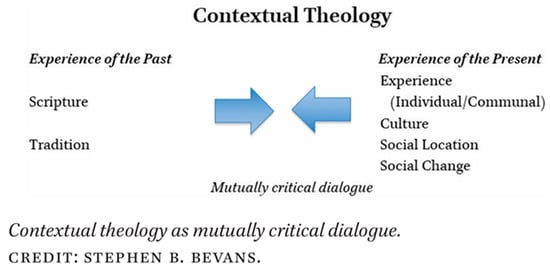
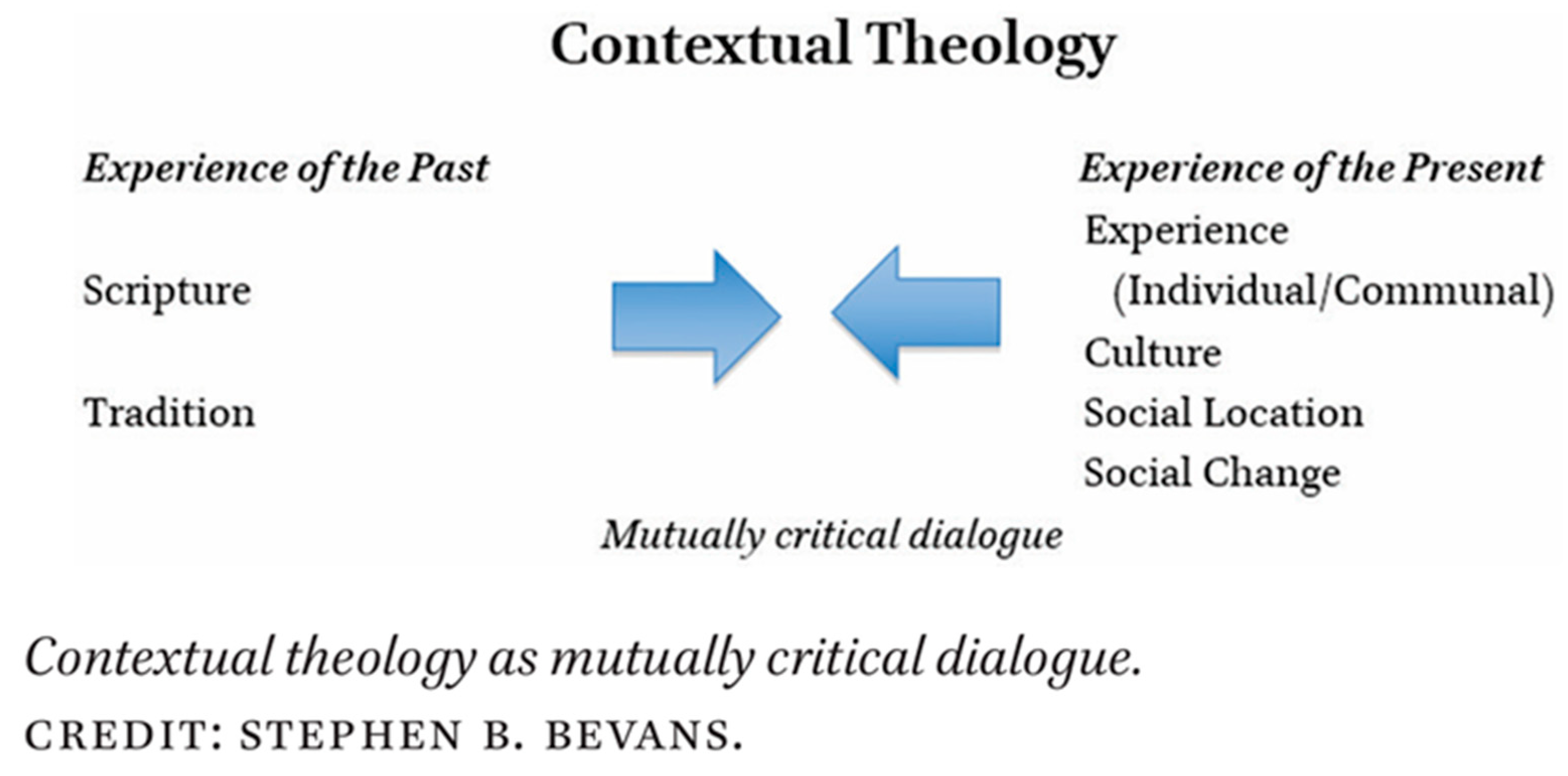
Disclaimer/Publisher’s Note: The statements, opinions and data contained in all publications are solely those of the individual author(s) and contributor(s) and not of MDPI and/or the editor(s). MDPI and/or the editor(s) disclaim responsibility for any injury to people or property resulting from any ideas, methods, instructions or products referred to in the content. |
© 2026 by the authors. Licensee MDPI, Basel, Switzerland. This article is an open access article distributed under the terms and conditions of the Creative Commons Attribution (CC BY) license.