


Abstract
Attention is a process that guides organisms to engage in goal-directed behavior, such as seeking food when hungry. However, attention is subject to distraction, which can impact the execution of these behaviors. The ocean is full of auditory stimuli that are potentially distracting. Bottlenose dolphins (Tursiops spp.), who rely on sound as their primary sensory and communicative modality, have been shown to be impacted by noise, especially anthropogenic noise. In our study, we assessed whether louder background noise, including both natural and anthropogenic noise, was associated with worse performance on two common cognitive tasks. Using previously recorded cognitive task data, we collected information on how long it took dolphins to make a choice, how many times they considered each alternative, whether they succeeded at the trial, and the root-mean-squared amplitude of the background noise across three frequency bands while they were making a choice. In both datasets, longer choice times and more oscillations between alternatives were associated with louder noise in the highest frequency band, which mostly consists of social sounds produced by nearby dolphins. Worse performance was also associated with this higher frequency band in one of the datasets. Results were mixed for low and middle frequency bands. Our results suggest that social sounds may be more distracting than vessel noise for dolphins in San Diego Bay, though these data are correlational and should be further investigated. Future experiments should manipulate the types and magnitudes of noise that are most distracting across additional types and difficulties of cognitive tasks. This would further shed light on both welfare considerations and comparative cognition.
1. Introduction
Attention is an important cognitive process for selecting information relevant to species survival from a constant stream of sensory input while ignoring irrelevant information [1]. However, attention is an imperfect process and can be subject to distraction, which may lead to significant negative welfare implications [2,3]. For example, bottlenose dolphins (Tursiops spp., further referred to as dolphins) are predominantly coastal, highly socially dynamic marine mammals that rely on their cognitive abilities to navigate their surroundings, socialize, learn and perform survival-critical behaviors, remember conspecifics, and adjust to changes around them. Environmental auditory attention demands for dolphins are high. Biological sounds from conspecifics and neighboring fauna, natural geological sounds, and anthropogenic sounds create a complex and increasingly loud soundscape [4]. It is known that anthropogenic noise can have deleterious welfare impacts on many species, including marine mammals (for reviews, see [4,5,6]). Specifically, anthropogenic noise has been associated with cetaceans shifting the frequency or timing of their calls to prevent masking [7], increasing time spent trying to escape the noise or noise source [8,9], decreasing time spent feeding or resting [9], increasing metabolic stressors [10], reduced ability to successfully cooperate [11], and in extreme cases, sudden death or mass stranding incidents (for reviews, see [12,13]).
Anthropogenic noise effects on cognition are nuanced and dynamic across populations. For example, one study found that moderate noise levels did not change dolphins’ vocalization behavior [14]. However, in another study, when tested across populations, dolphins paid more attention to anthropogenic noise than controls consisting of a dolphin ‘chirp’ vocalization and a reinforcing tone (trainer whistle) [15]. However, attentive responses to anthropogenic noise and anthropogenic noise types varied by facility, indicating habituation and sensitization processes. In an experimental paradigm, dolphins significantly increased attentive responses to a familiar large vessel sound source during an anthropause period, demonstrating that dolphins located near a busy cruise ship port could become habituated to specific, consistent anthropogenic noise sources in their environment over time [16]. Further studies showed that dolphins’ attention to anthropogenic noise is not static as they can also spend more time investigating a sound source (acoustic distraction) after periods of non-exposure [16]. These studies indicate that anthropogenic noise affects individuals differently based on previous experience. However, dolphins generally paid more attention to anthropogenic noise than control sounds indicating they are more distracted by human-made noise pollution than biological sounds.
The literature on the effects of distraction in dolphins is limited; therefore, we examined theoretically relevant studies across species. It has been demonstrated that cognitive task performance can be affected by distractions that disrupt working memory processes, especially when the distraction is from the same modality as the task ([17], for review, see [18,19]). When sounds were played during a short lecture, humans (Homo sapiens sapiens) displayed impaired recall of content, and this impairment was most significant when the distracting sound was speech, compared to other disruptive sounds [20]. Working dogs (Canis familiaris) exposed to auditory distractions while learning took significantly longer to learn the target behaviors and performed them slightly worse when evaluated [21]. When the same lab compared the impacts of auditory and visual distractors, dogs were significantly more impacted by auditory distractors [22]. In another study, songbirds (Taeniopygia guttata) were exposed to anthropogenic noise during a variety of associative learning, social, motor and memory tasks. The birds were significantly worse in almost all administered tasks when there was background noise [23]. A study in zoo-housed Japanese macaques (Macaca fuscata), chimpanzees (Pan troglodytes) and gorillas (Gorilla gorilla) asked whether abnormal noise produced during a local aviation performance produced changes in response time to threatening and non-threatening social stimuli. The study found that the macaques were slower to touch threatening social stimuli when the additional stressor of the aviation noise was present, while the apes did not show any clear changes in response time [24]. This study provides a more affective explanation rather than a cognitive load explanation but mirrors the observed negative impacts of anthropogenic noise on wild cetacean behavior. In sum, despite different hypothesized mechanisms, auditory distractors seem to show demonstrable negative effects on cognitive task performance.
Among the cognitive tasks administered to non-human primates, rodents, birds, and now marine mammals, there are ubiquitous adaptations of alternative choice paradigms, especially the match-to-sample (MTS) paradigm [25]. In alternative forced-choice (AFC) paradigms, subjects are presented with a set of n choices and respond by choosing one of the presented alternatives [26]. In an MTS paradigm, a subject must evaluate a sample stimulus and choose a match to the sample from a set of alternatives, generally on the basis of shape, color or other identifying features [27]. MTS has been used in dolphins to explore a variety of cognitive abilities. These include whether dolphins can match objects using echolocation alone [28,29], vision alone [30], and cross-modally between vision and echolocation [31,32,33,34]. Researchers have also tested whether dolphins can match via symbolic features rather than identity features of the stimuli [35], and the duration with which dolphins can hold the sample in working memory before making a choice [36]. Experiments specifically evaluating the effect of distraction during MTS are few and have had mixed results. For example, a study of visual MTS in pigeons showed that pigeons’ performance was only slightly worse when visual distractors were presented with the sample, and performance slightly improved when distractors were presented with the alternatives [37]. Another study in dolphins had them learn MTS and found that dolphins trained under exposure to anthropogenic noise playback did take longer to learn the tasks but performed better when retested a year later under noisy conditions, consistent with the cognitive phenomenon, context-dependent learning [15]. Perhaps the example most consistent with the previous distraction literature showed that during MTS in which there was a long delay between sample and alternative presentation, the dolphin performed worse. When this was accompanied by long durations of distracting noise during that delay (compared to short durations or silence), the dolphin showed the worst MTS performance of all the conditions [38]. It is important to note that the distracting noises in this study were pure tones played from an underwater speaker and not anthropogenic noise associated with maritime activities.
The prior cognition studies in dolphins have focused on anthropogenic noise or artificial tones played back by the researcher [15,16,38]. Conducting cognition studies underwater is preferable to allow dolphins to use their primary sensory modality, echolocation [30,39]; however, in a system of interconnected pools or sea pens, the dolphins who are currently participating in the tasks are also able to hear all of the noise being produced by conspecifics or the environment. The degree to which naturalistic background noise, including both environmental and social sounds, affects decision-making behavior remains largely unexplored, leading us to consider prior work beyond cetacean species. Contrary to the dolphin study in which they found vessel noise to be more distracting than a conspecific vocalization [16], a study in brown anoles (Anolis sagrei) showed that the presence of a conspecific can be more distracting than other environmental factors [40]. In humans and other animals, high processing load increased the interference of distractors compared to high perceptual load (humans—[41,42]; non-humans—[43]). This is evidence that the throttle on information happens when we must pay attention to multiple things simultaneously rather than just being exposed to multiple things simultaneously. If dolphins are executing a task that involves comparing echoes from various stimuli, the above described suggest that sounds from surrounding dolphins, maybe even more so than shipping noise, may be more distracting because social communication requires some interpretation. The conflicting results across different studies regarding the contributions of anthropogenic and biological sounds left a gap we aimed to fill using full-spectrum naturalistic recordings of noise occurring while decision-making processes were occurring.
Our studies examined whether background noise as a whole, including both environmental and social auditory stimuli, affected dolphins’ decision-making while performing cognitive tasks. We considered data previously recorded from a match-to-sample task conducted in 2024 and an alternative forced choice task conducted between 2025 and 2026. Globally, we hypothesized that during decision-making periods in both tasks, louder background noise at all frequencies would be associated with worse performance at the cognitive tasks. Some prior studies seem to suggest that animals are sensitized to vessel noise more than conspecific vocalization because it is unfamiliar, leading us to expect that excess noise at low frequencies may lead to decrements in decision-making [15,16,44,45]. Others suggest that social sounds may be more distracting due to their relevance to the individual, which would lead us to expect that excess noise at high frequencies would negatively affect decision-making [40].
However, accuracy is not the sole metric for optimizing decision-making, leading us to consider an alternative hypothesis based on psychometric evaluations of human performance [46]. The evidence in this study suggests that trials with more distraction result in longer decision time without affecting accuracy, which we could observe within our tasks. Decision time is not a perfect measure of underlying cognitive processes either. For example, a meta-analysis of performance at cognitive tasks across multiple species also showed that some animals demonstrate greater information-seeking behavior (evaluating more options) when they are uncertain or lack information [47]. Therefore, in addition to decision time, we hypothesize that dolphins will demonstrate greater information-seeking behavior by oscillation between response options more when louder noise is present.
2. Method
2.1. Participants
Our study involved two datasets. The first dataset consisted of archived data from match-to-sample (MTS) sessions for two Atlantic bottlenose dolphins (Tursiops truncatus, male = 2). The second dataset consisted of archived data from alternative forced choice (AFC) task sessions for four Atlantic bottlenose dolphins (male = 2). Dolphins participated in the cognitive tasks as part of a collaboration between the University of California San Diego and the U.S. Navy Marine Mammal Program that provided enrichment to the dolphins after hours by having them participate in cognitive tasks. The dolphins were rewarded with fish and secondary reinforcers like play, rubs and ice for their participation in these tasks and received their entire allotment of fish regardless of their performance at the task. If dolphins chose not to participate in the task for any reason or expressed any behaviors indicative of agitation or complete disinterest, they would be monitored and could receive reinforcement for alternative behaviors in these cases. We cannot determine if there is a relationship between the noise conditions and lack of participation since hydrophones were only deployed when the animal was under stimulus control with a trainer.
2.2. Permits
The U.S. Navy Marine Mammal Program (MMP) is accredited by AAALAC International and operates under the U.S. Public Health Service policy on the Humane Care and Use of Laboratory Animals and the Animal Welfare Act. The program is routinely reviewed by an Institutional Animal Care and Use Committee (IACUC) and the U.S. Navy Bureau of Medicine.
All procedures were conducted in accordance with Secretary of the Navy Instruction 3900.41H, which mandates the highest standards of animal care. The animal care and use protocol supporting the original MTS data was approved by NIWC Pacific’s IACUC (Protocol No. 148-2022; approved investigators: Dr. Christine Johnson & Christianna Royse). The animal care and use protocol supporting the original AFC data was approved by NIWC Pacific’s IACUC (Protocol No. 163-2024; approved investigator: Dr. Emma Miller).
2.3. Materials
The data used in this study were all collected using the same equipment setup. Video was recorded on GoPro HERO8 cameras worn by trainers on a head-mounted strap. Underwater acoustic recordings were obtained using two omnidirectional hydrophones (Cetacean Research Technology, model CR3) with a frequency response range of 0.0004–180 kHz (±3 dB) and an effective sensitivity of −209.45 dB re 1 V/µPa. Acoustic recordings were collected during cognitive task sessions in floating sea enclosures in San Diego, CA, and each hydrophone was positioned on opposite sides of the focal dolphin. Power was supplied to the hydrophones via a preamplifier, which provided 24 V DC at 4 mA of constant power through the integrated electronic piezoelectric (IEPE) system. Audio signals were recorded using a Tascam Portacapture recorder with a sampling rate of 192 kHz (Nyquist frequency of 96 kHz) and 24-bit resolution. Recording configurations were calibrated prior to analysis to allow conversion of recorded signals to absolute sound pressure levels (dB re 1 µPa). Hydrophone sensitivity and system gain were incorporated into calibration procedures within RavenPro to ensure comparability across sessions and recording systems.
2.4. Design
This study aimed to assess the relationship between the amplitude of background noise at three frequency bands and dolphins’ decision-making during two cognitive tasks. The frequency bands were chosen to grossly break up noise into low frequencies (<1 kHz), associated with large shipping vessel noise, middle frequencies (1–10 kHz), associated with small vessel motors and some lower-frequency dolphin whistles, and high frequencies (>10 kHz) dominated by dolphin vocalization [48,49]. Since we used archived data, the study followed a correlational design. Our predictor variables were the root-mean-squared sound pressure levels (RMS SPL, further abbreviated to RMS) of the three frequency bands, a measure that can be thought of as average amplitude, during the period the dolphin was evaluating the stimuli to make a response. Our outcome variables were trial success, time spent evaluating the stimuli before making a response and the number of times dolphins oscillated between each alternative. We initially planned on including both peak amplitude and RMS amplitude as predictors, but peak amplitudes were highly sensitive to loud sounds produced by the focal dolphin, so we ended up not considering them for the purposes of this study.
2.5. Procedure
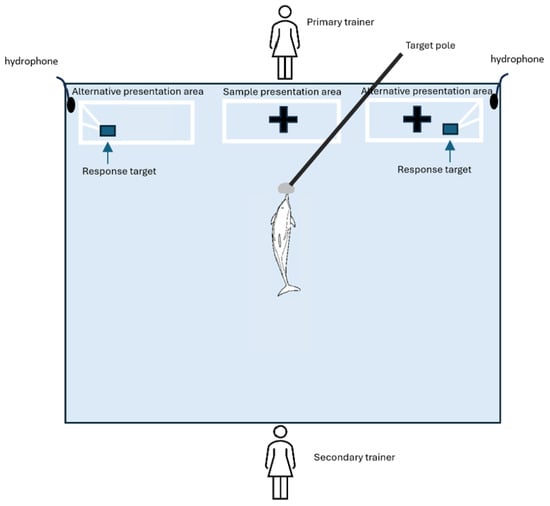
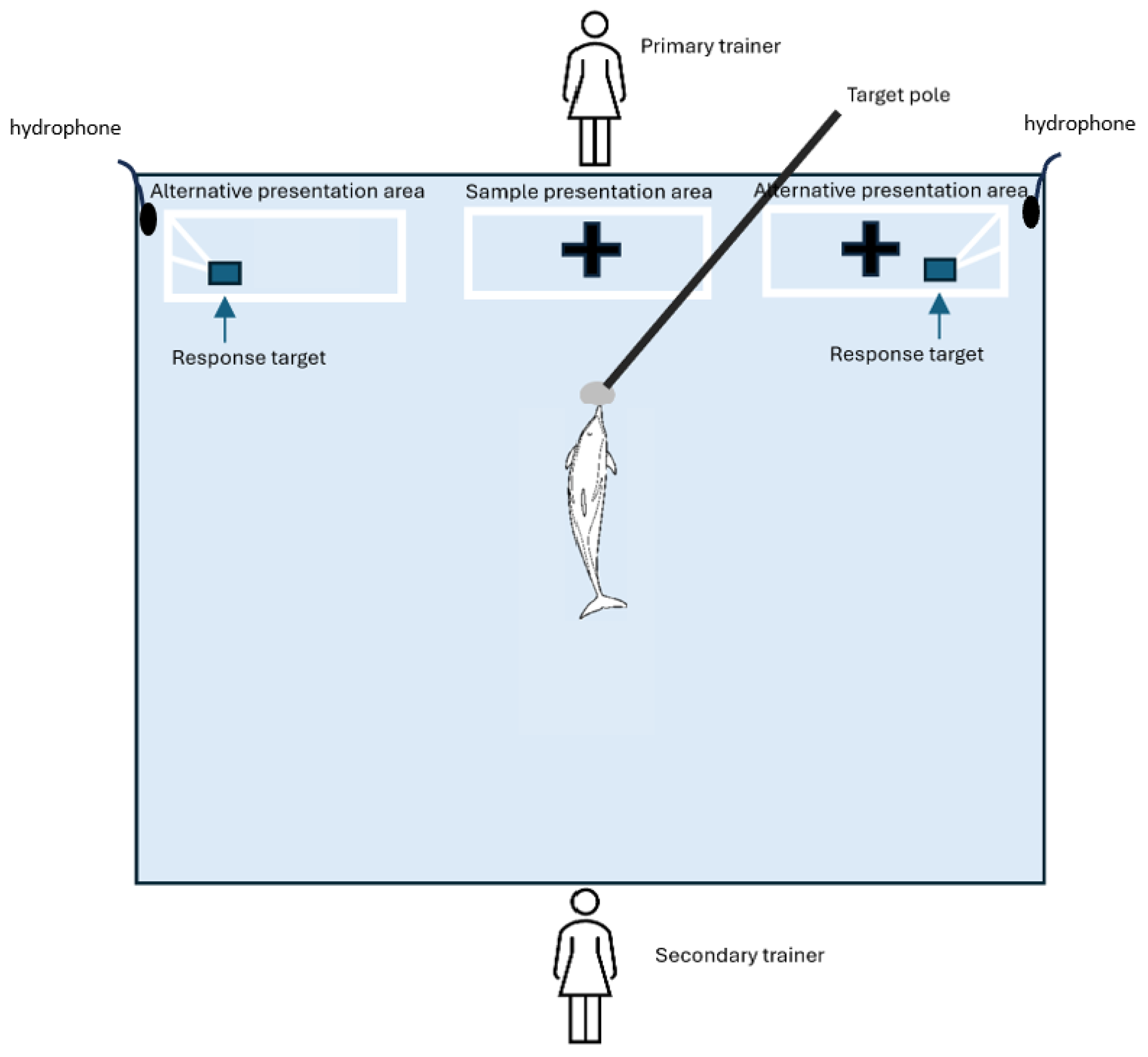
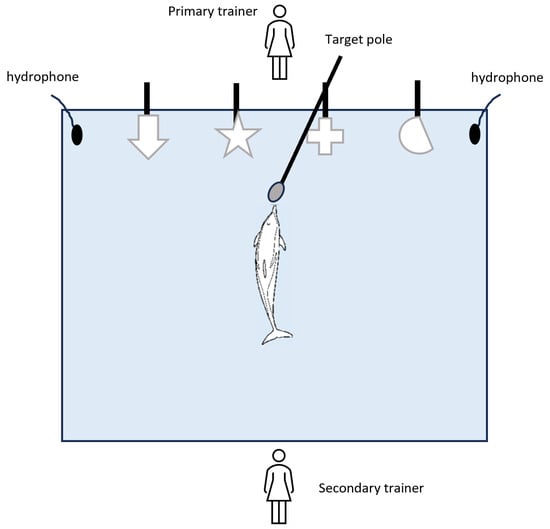
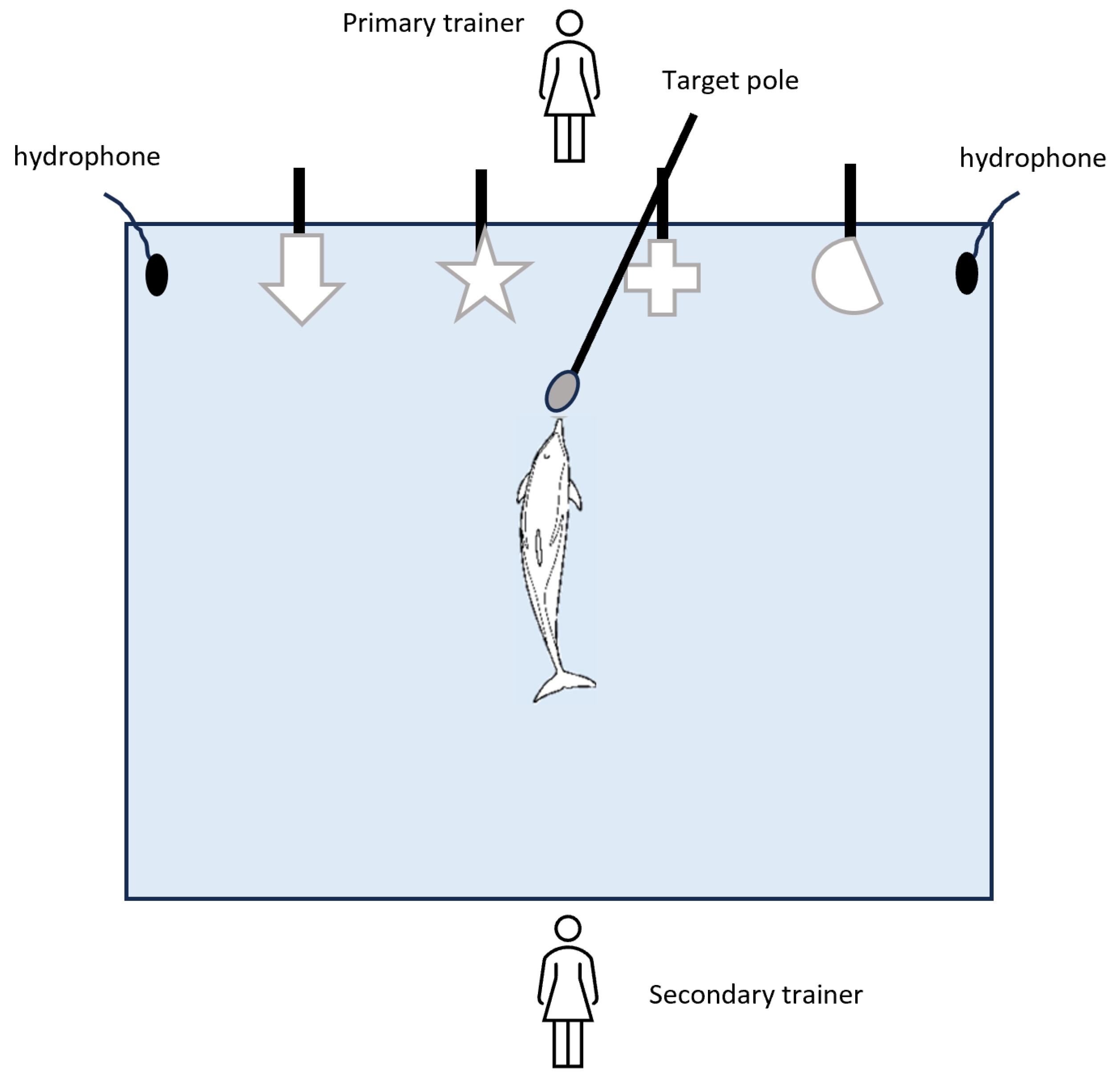
Archived audio and video recordings of MTS and AFC sessions were revisited for this study. To briefly describe the MTS task, dolphins swam over and stationed on a target that stretched horizontally from a point on deck over the water’s surface about 4 ft from the deck and 1 ft above the surface of the water while the sample was presented. After a few seconds, the alternatives were presented and the dolphin was released from the target pole. In this protocol, the sample was not removed from the presentation area, meaning the dolphins could examine the sample and the alternatives for the duration of the trial, reducing the role of memory in the task, but still requiring dolphins to compare the properties of the objects mentally to determine which alternative matched the sample. Dolphins responded by touching the response target of the presentation area where the alternative was presented. A diagram of the task is illustrated in Figure 1. For the AFC task, dolphins were presented with 2–4 white plastic air-filled objects. Dolphins would swim over and wait on a target until a trainer presented a hand signal that was associated with one of the presented objects. Dolphins would be released from the target and would respond by touching one of the presented objects. A diagram of the task is presented in Figure 2.
Figure 1.
Above-view schematic of MTS task free trial. Secondary trainer served as the control point for the dolphin between trials. Primary trainer provided the primary reinforcement after successful trial completion and sent the dolphin back to the secondary trainer after incorrect responses. Research assistants presented the alternatives and the target pole but are not depicted. Diagrams are not to scale for ease of viewing and shapes do not represent the actual shape of presented alternatives.
Figure 2.
Above-view schematic of 4-AFC task stage. Secondary trainer served as the control point for the dolphin between trials. Primary trainer provided the primary reinforcement after successful trial completion and sent the dolphin back to the secondary trainer after incorrect responses. Research assistants presented the alternatives and the target pole but are not depicted. Diagrams are not to scale for ease of viewing and shapes do not represent the actual shape of presented alternatives.
For both datasets, the researchers confirmed that both the audio and video data were aligned, uncorrupted and that events of interest could be confidently identified. In the period of MTS from which we were sampling, 92 sessions had to be excluded due to missing footage, missing hydrophone files, and technical errors introduced by the equipment. Supplemental Table S1 reports descriptives on performance across years and dolphins using the entire sample. In the MTS task, dolphins were presented with a mix of “free” trials, in which both response targets were available but only one had an alternative presented with it. The alternative presented in “free” trials always matched the sample. Dolphins could still fail a free trial if they touched the response target for the alternative presentation area where there was no alternative presented. “Choice” trials were normal MTS trials where a match and a non-match were presented. Choice trials were not considered from the MTS dataset because dolphins were performing at chance; thus, their performance could not be depressed further by noise. Free trials were used to help the dolphins initially learn the progression of the task and continued to be presented, interspersed with choice trials, to maintain dolphins’ motivation throughout the task, as too many repeated failures sometimes resulted in disengagement from the task. The surviving 29 sessions with complete video and hydrophone recordings that included free trials were then synchronized and annotated in the audio-visual annotation software ELAN version 7.1 [50].
For the AFC dataset, 70 sessions had to be excluded due to missing footage, audio recordings or equipment failures, leaving 125 sessions in the sample. Supplemental Table S2 reports descriptives for the full sample before A/V exclusions. Only sessions that had occurred after meeting a proficiency criterion of 19/24 consecutive trials at each AFC stage (two, three or four alternatives) were included and we did not report descriptives on pre-proficiency sessions. Recordings were synchronized to an event at the beginning of each session in which a partially submerged metal pipe was struck, creating a visual and acoustic moment that could be identified to the precision of a frame during analysis. Time stamps were extracted in ELAN for choice time. For both tasks, choice time was operationally defined as the time the dolphin was released from the target after viewing the sample to the time the dolphin made a response. For MTS, this was when they made contact with the response target and for AFC, it was when they made contact with one of the presented objects. We additionally recorded the number of times the dolphin oriented toward an alternative (referred to as oscillations between alternatives), and the outcome of each trial (success/failure).
2.6. Acoustic Auditing
Acoustic analysis was performed in Raven Pro v. 1.6 (Center for Conservation Bioacoustics, 2014) and Audition CC 2024 v.12 (Adobe Systems, Build 13.0.8.43). Spectrograms were viewed in Raven with a time axis of 60 s, a frequency axis of 96 kHz, a discrete Fourier transform (DFT) of 512, a 50% overlap, and a Hann window. All waveforms were checked for overloading and aliasing. For each trial, time windows corresponding to the onset and completion of the task were identified based on synchronized behavioral time stamps and annotated as selections.
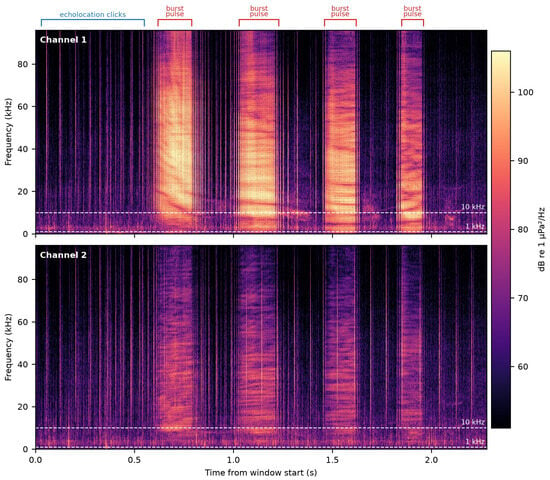
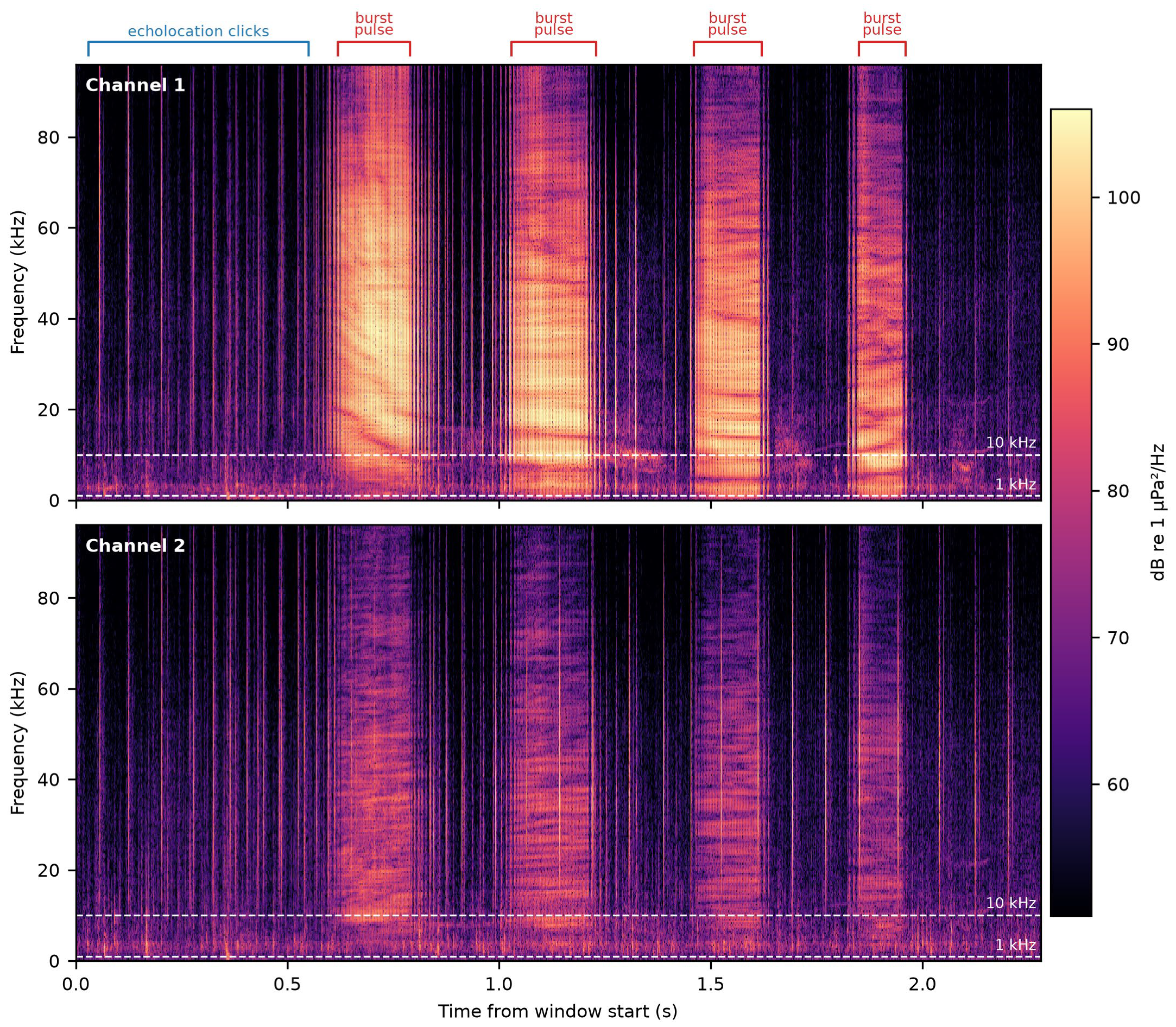
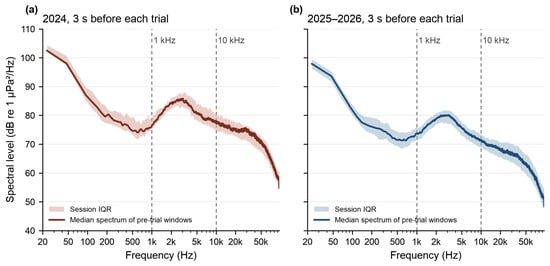
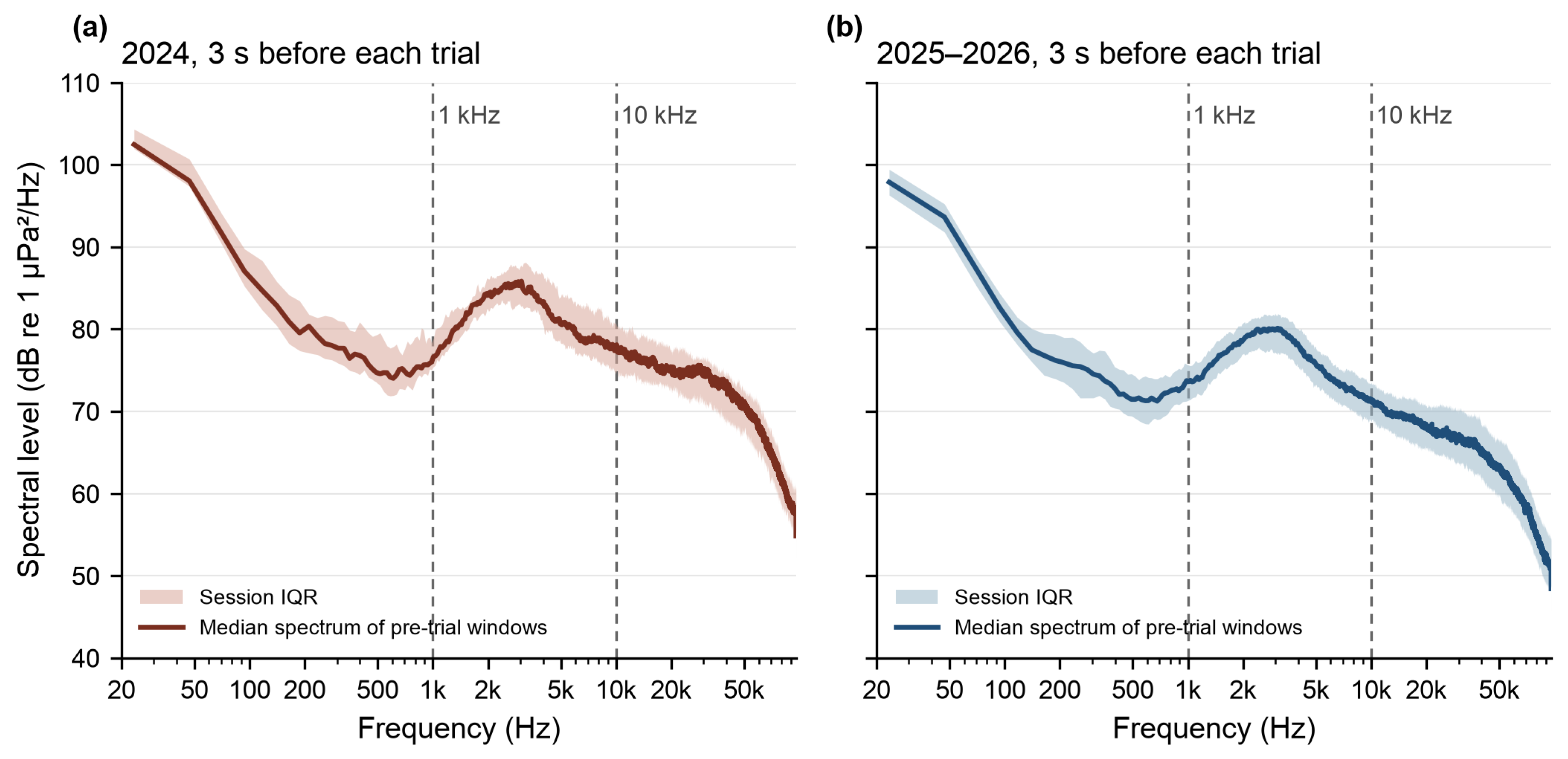
RMS levels (dB re 1 µPa) were calculated for two windows in each trial: the choice time and a three-second pre-trial period. The pre-trial period had a fixed duration, whereas the choice time varied. Each window was measured in four frequency bands: full broadband, 0 Hz–1 kHz, 1–10 kHz, and greater than 10 kHz. To minimize the contribution of self-generated sounds from the focal dolphin (e.g., echolocation clicks and/or burst pulses), root-mean-square sound pressure levels (RMS SPL; dB re 1 µPa) were extracted from both channels, and then the quieter channel was used for analyses. An example spectrogram is provided in Figure 3 (e.g., RMS amplitude levels from channel 2 would be used for analyses) and typical spectra for the pre-trial period for both MTS and AFC data are provided in Figure 4.
Figure 3.
Example spectrogram of echolocation clicks and burst pulses on two hydrophone channels.
Figure 4.
Typical spectra in the three seconds before each trial for MTS (2024) and AFC (2025–2026).
2.7. Statistical Analysis
Data were analyzed in R version 4.3.2 [51]. Alpha levels of 0.05 were used for all analyses. For the primary analyses, success was modeled using a binomial logistic regression from the “glmmTMB” package version 1.1.15.2 using the three frequency bands as predictors [52]. Across all models, we included random effects for dolphin and session to account for differences in participants and potential day-to-day variation in noise levels. In the AFC models, the number of alternatives (two, three or four) was included as a covariate to account for changes in response time caused by the presence of additional choices. For the choice time models, we modeled log-transformed choice time using each of the frequency bands in a linear mixed-effects model with the “lme4” package version 2.0.6 and included trial number as a covariate to account for fatigue throughout the session [53]. Satterthwaite’s method for degrees of freedom was retained because no meaningful change was observed using the more conservative Kenward–Roger method. The “car” package version 3.1.5 was used to assess multicollinearity [54]. Using the “performance” package version 0.18.2, we assessed the marginal and conditional r2 for the model and the intra-class correlation coefficients (ICCs) for both random effects [55]. For the oscillations, we tested whether a zero-inflated model would be most appropriate given the large number of zero-oscillation trials. We compared zero and non-zero inflated negative binomial models and zero and non-zero Poisson models using the DHARMa package version 0.5.0 in R [56]. Our analyses showed that the zero-inflated Poisson model had the lowest AIC and was the only model to pass the dispersion and zero-inflation tests using the DHARMa package and was retained for final analysis.
Before the main analyses for both datasets, we compared the average RMS value in the 3 s prior to the beginning of the choice time, when the dolphins’ heads were out of the water, to the quieter channel during the choice time. We did this primarily to test whether we successfully avoided most of the vocalization from the focal dolphin by using the contralateral quieter channel during the trial for the high frequency band. Our results for the high frequency band indicated that we avoided significant contributions of focal dolphin vocalizations because the RMS values from the quieter channel during the trial were not significantly different from the pre-trial period (MTS: t(119) = 0.02, p = 0.98, AFC: t(1292) = 0.11, p = 0.91). The tests showed that the low- and mid-frequency bands were significantly louder during the pre-trial period in both datasets by 0.27–1.09 dB. We have no a priori hypotheses as to why the low and mid frequencies were louder pre-trial and do not believe it meaningfully impacted the trials since dolphins’ heads were out of the water while waiting on the target. The ranges of RMS values across bands largely overlapped, so raw RMS values were used throughout the analyses and were plotted transparently in figures.
3. Results
3.1. MTS Dataset
For the MTS dataset, we collected data from 120 free trials across 29 sessions from two dolphin participants. A breakdown of sessions/trials per dolphin, as well as the average broadband RMS values, are given in Table 1. Both dolphins had been participating in the specific MTS procedure described above for approximately equal amounts of time.
Table 1.
Trials and average RMS values for surviving 2024 MTS sessions performed by each dolphin, including age and sex information.
3.1.1. Success in MTS
Out of 120 trials across two participants in the MTS dataset, there were four failed trials which were contributed by one individual. Success was near ceiling and variance was too low among trial outcomes and individuals to be appropriately modeled.
3.1.2. Choice Time in MTS
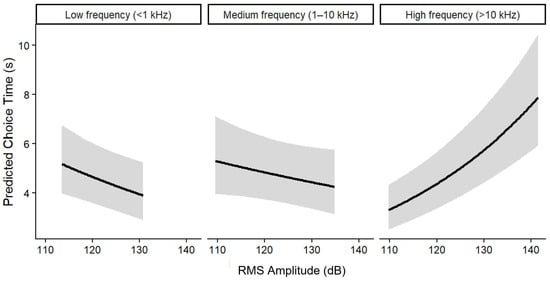
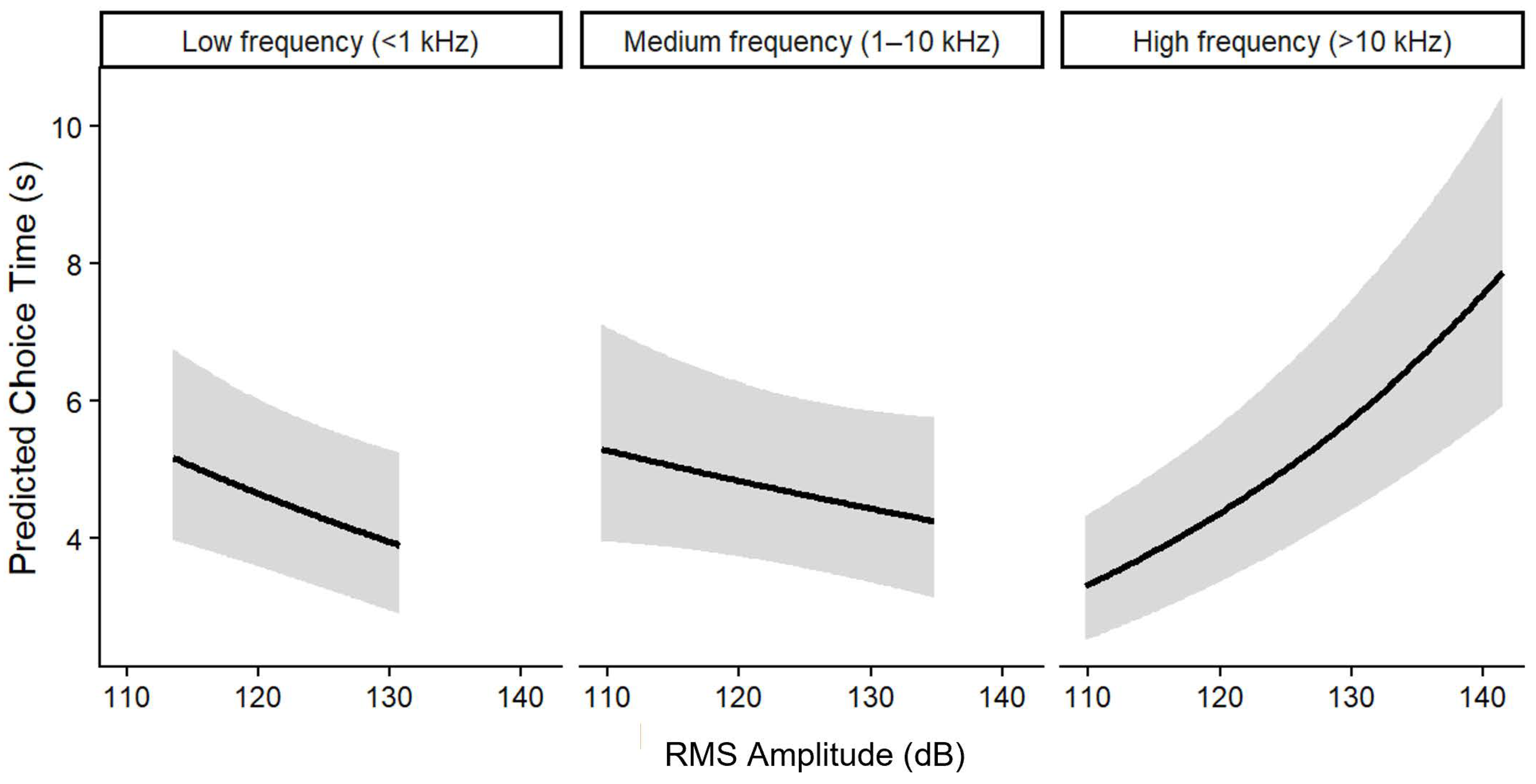
The prior literature suggested that higher levels of noise could result in longer choice times due to distraction. Our model used the three frequency bands to predict log-transformed time, with session and dolphin as random effects. Increases in the high-frequency RMS amplitude predicted longer decision times such that for every 1 dB increase in RMS amplitude above 10 kHz, there was a 2% increase in choice time, holding other bands constant (β = 0.02, SE = 0.006, t(101) = 3.85, p < 0.001, marginal r2 = 0.11, conditional r2 = 0.56). Low and medium frequency bands did not predict choice time. This result is visualized in Figure 5. Trial number significantly predicted slower choice time, suggesting a fatigue effect, but the effect survived this covariate. Variance inflation factors for the frequency bands were 2.11 or less, which did not indicate concerning levels of multicollinearity between frequency bands. Intra-class correlation coefficients were calculated for the random effects. Individual differences in dolphin decision-making time accounted for a large amount of variance (ICC = 0.47) and day-to-day variability in session parameters like time of day and environmental conditions accounted for very little variance (ICC = 0.01). Full model outputs are reported in Supplemental Table S3.
Figure 5.
Predicted choice time for each frequency band at observed RMS ranges, holding other bands constant for MTS data. Ribbons represent standard error.
3.1.3. Oscillations in MTS
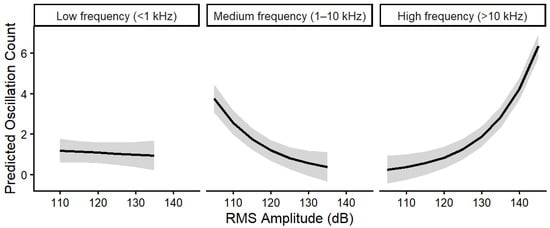
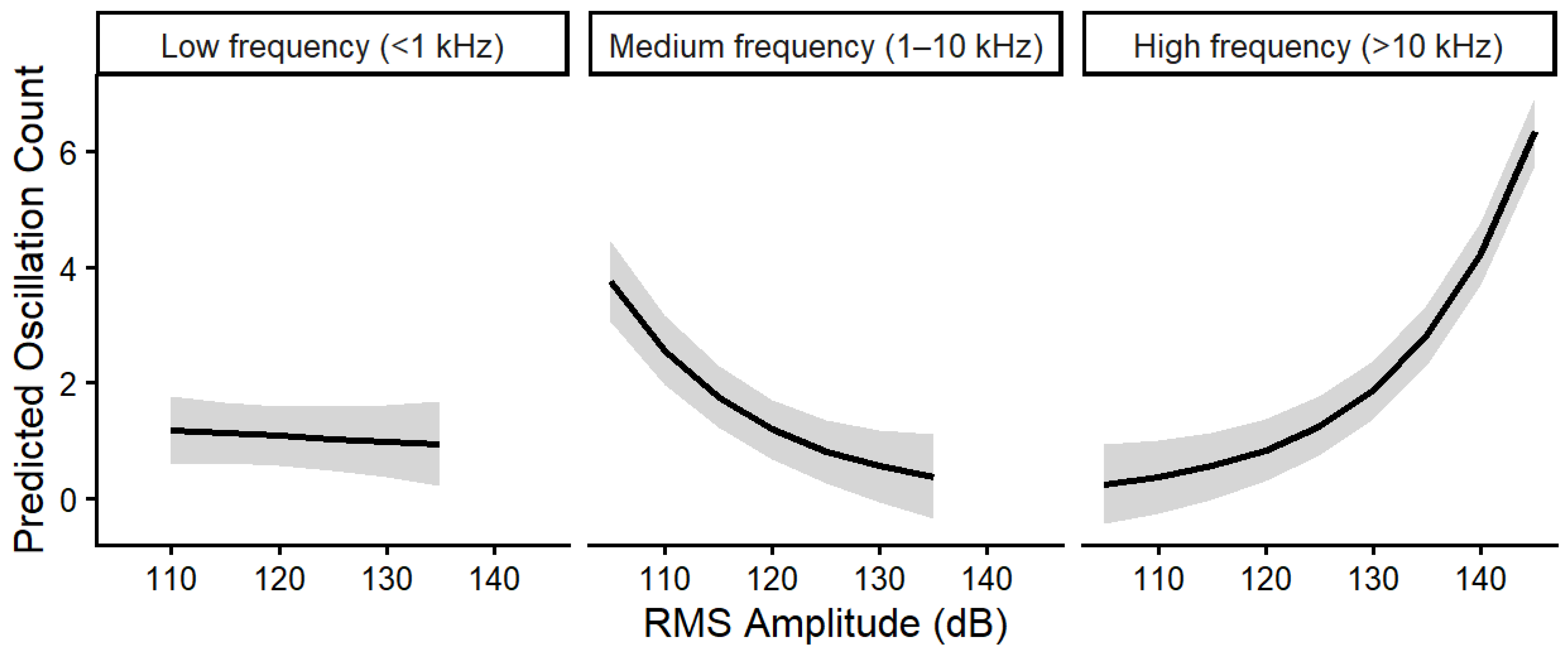
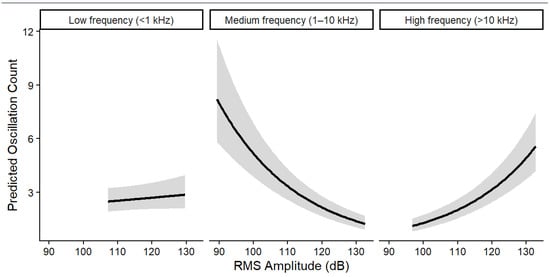
Following choice time, a related outcome variable was the number of oscillations between alternatives, which we considered an additional proxy for distraction or uncertainty. Mirroring the choice time results, the results of the zero-inflated Poisson model showed that increases in RMS amplitude in the high frequency band were associated with more oscillations between alternatives (β = 0.08, SE = 0.02, z = 4.13, p < 0.001, marginal r2 = 0.13, conditional r2 = 0.49). Additionally, increases in RMS amplitude in the middle frequency band were associated with fewer oscillations (β = −0.08, SE = 0.03, z = −2.31, p < 0.05). There was no effect of RMS amplitude on oscillations for the low frequency band. Full model outputs are reported in Supplemental Table S4. Results are visualized in Figure 6.
Figure 6.
Predicted oscillation count for each frequency band at observed RMS values holding other bands constant in MTS dataset. Ribbons represent standard error.
3.2. AFC Dataset
From the AFC sessions, we collected 1293 trials across 125 sessions performed by four dolphins (male = 2). A breakdown of sessions and trials per dolphin per stage of the AFC task, as well as the average broadband RMS values, are given in Table 2. The male dolphins (Dolphin I and Dolphin K) began training for the task approximately one month earlier than the females in the sample.
Table 2.
Trials, number of alternatives, sessions and average RMS values for surviving 2025–2026 AFC performed by each dolphin, including age and sex information.
3.2.1. Success in AFC
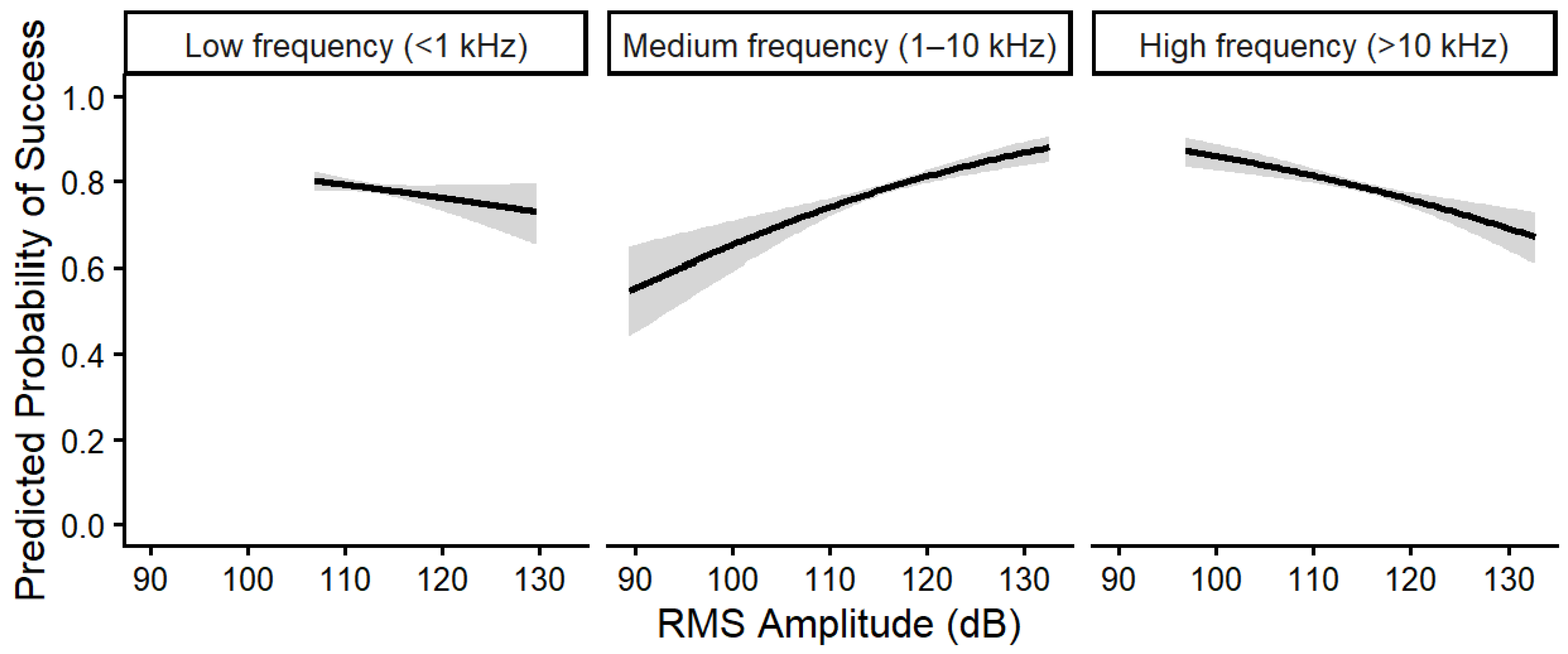
More variability in success at the AFC task allowed us to model it in this dataset. Dolphins still performed above chance at their respective stages, indicating that they had acquired the signal–object correspondence (two-alternative > 50%, three-alternative > 33%, four-alternative > 25%), and the number of alternatives was controlled for in all AFC analyses. Initially, we ran a binomial logistic linear mixed-effects model using our planned random effects of dolphin and session. A singular fit resulted from the inclusion of these random effects and variance captured by these effects was estimated at zero. AIC analysis marginally favored a binomial logistic regression model without random effects over the mixed-effects models with one or both random effects, and coefficients and patterns of results did not change when random effects were included vs. excluded; therefore, the simpler model was retained. Model outputs suggested that increases in RMS amplitude in the high frequency band predicted a lower probability of success such that for each 1 dB increase in RMS amplitude, the odds of success decreased by 3% (β = −0.03, SE = 0.02, z = −2.14, p < 0.05). Increases in RMS amplitude at middle frequencies predicted a higher probability of success such that the odds of success increased by 4% for each 1 dB increase in RMS amplitude (β = 0.04, SE = 0.02, z = −2.59, p < 0.01). Full model outputs are reported in Supplemental Table S5. A visualization of these results is provided in Figure 7. However, overall model discrimination was low (Tjur’s r2= 0.006) and results should be interpreted with caution. The variance inflation factor for the middle frequency band was 2.38 and was 2.29 for the high frequency band, indicating that some estimates may be less reliable due to correlations between fixed effects.
Figure 7.
Predicted probability of success for different frequency bands, holding other bands constant in AFC dataset. Error bars represent standard error.
3.2.2. Choice Time in AFC
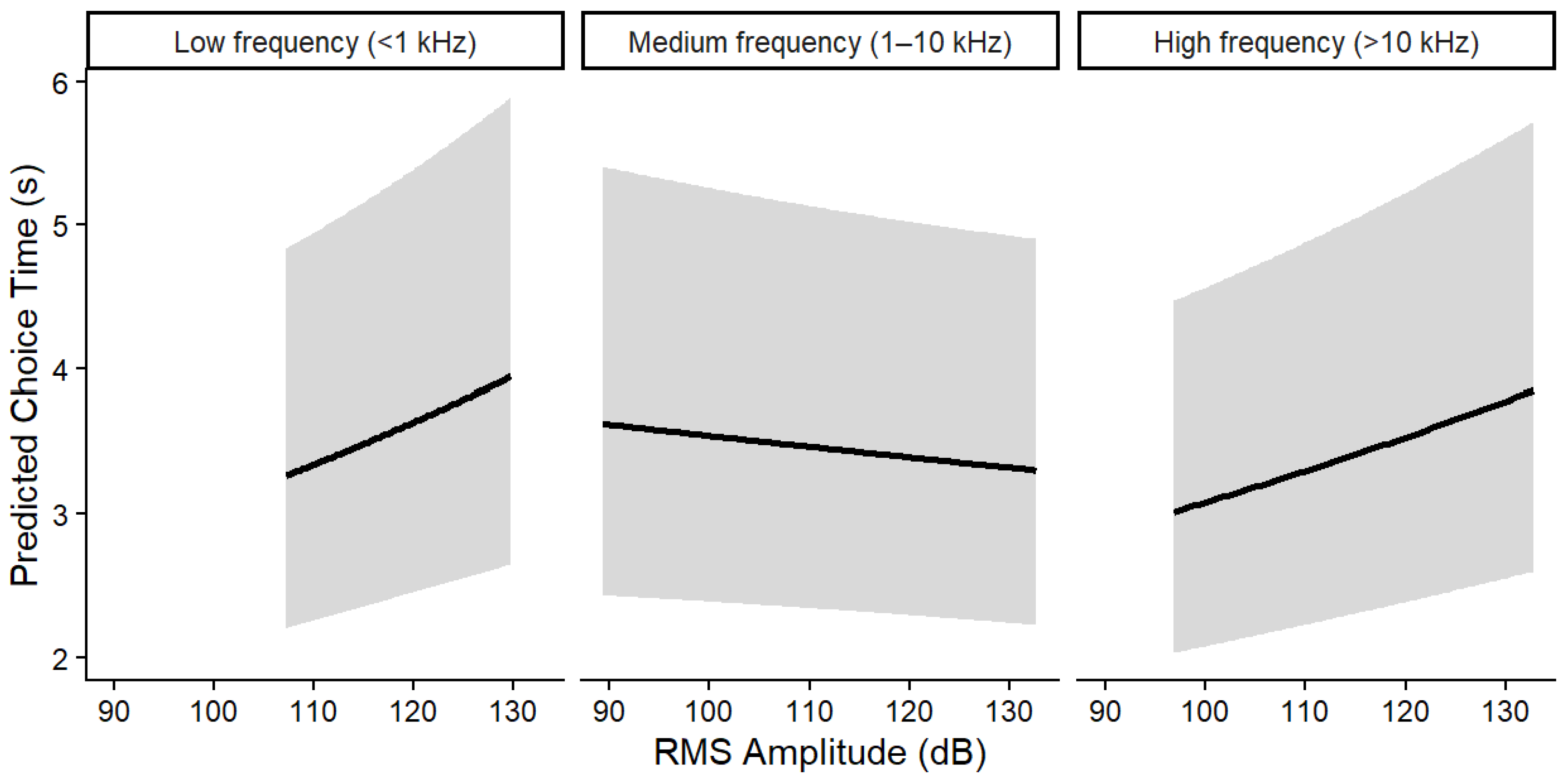
The choice time results for the AFC model indicated that the high frequency band also predicted choice time in this dataset. The effect was smaller, such that for every 1 dB increase in RMS amplitude at high frequencies, there was a 1% increase in choice time, holding other bands constant (β = 0.01, SE = 0.003, t(127) = 2.34, p < 0.05, marginal r2 = 0.005, conditional r2 = 0.84). In this dataset, we observed a similar effect for the low frequency band (β = 0.01, SE = 0.004, t(1034) = 2.15, p < 0.05). There was no effect observed for the middle frequency band. Trial number as a covariate significantly predicted choice time, suggesting a fatigue effect. Full model outputs are reported in Supplemental Table S6. Results are visualized in Figure 8. Variance inflation factors did not exceed 1.76 for this model, indicating that fixed effects were not concerningly multicollinear. Intra-class correlation coefficients were calculated for the random effects in this model, and their structure replicated the MTS model. Individual differences between dolphin response behavior while making a choice captured a large amount of variance (ICC = 0.78) while differences between sessions captured a small additional amount of variance (ICC = 0.05).
Figure 8.
Predicted choice time for different frequency bands at observed ranges, holding other bands constant in AFC dataset. Error bars represent standard error.
3.2.3. Oscillations in AFC
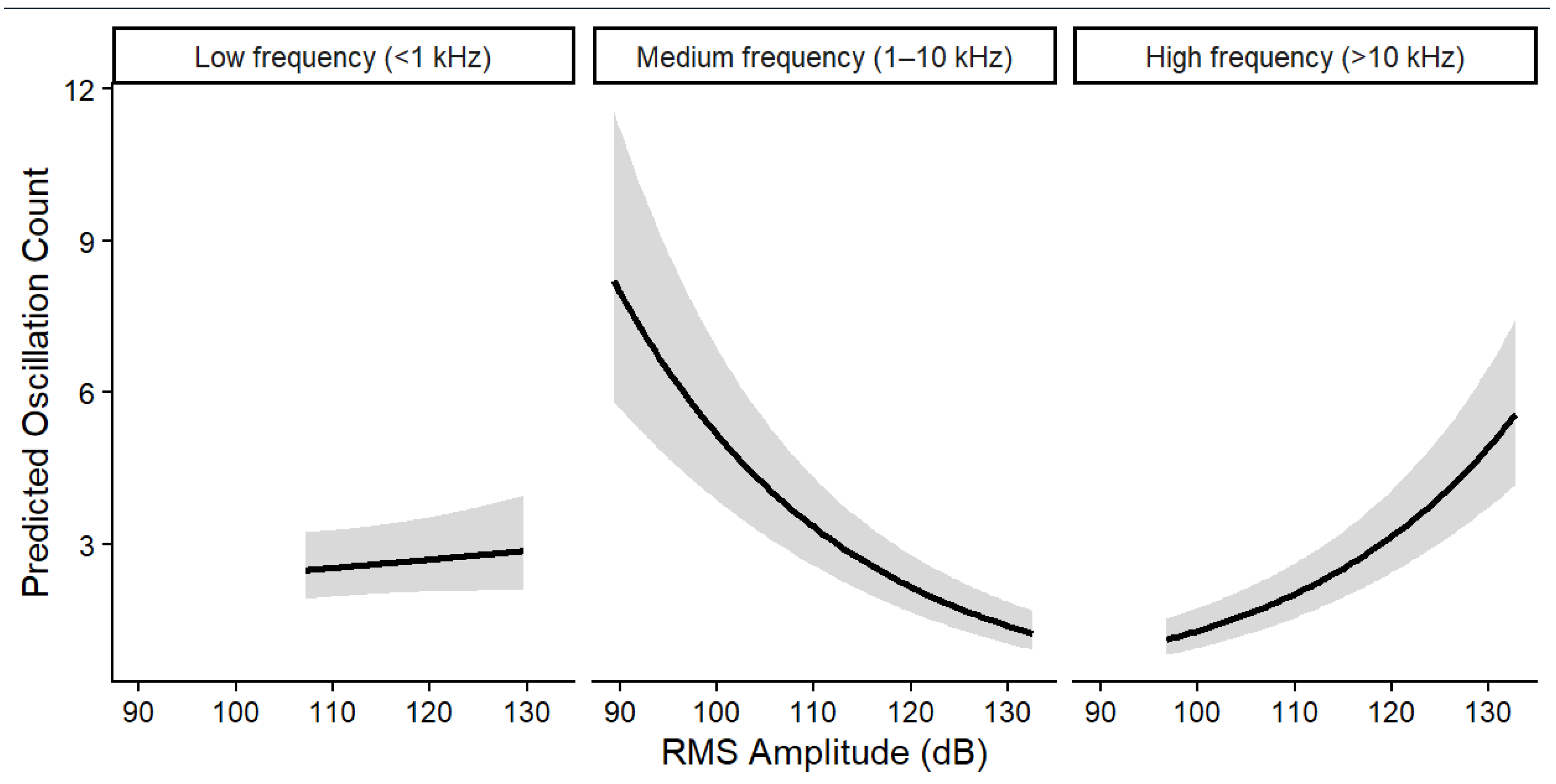
Replicating the MTS results, the zero-inflated Poisson model applied to the AFC data showed that increases in RMS amplitude in the high frequency band were associated with more oscillations between alternatives (β = 0.04, SE = 0.009, z = 5.01, p < 0.001, marginal r2 = 0.05, conditional r2 = 0.35). Additionally, increases in RMS amplitude in the middle frequency band were associated with fewer oscillations (β = −0.04, SE = 0.03, z = −4.85, p < 0.001). There was no effect of RMS amplitude on oscillations for the low frequency band. Full model outputs are reported in Supplemental Table S7. Results are visualized in Figure 9.
Figure 9.
Predicted oscillations for different frequency bands at observed ranges, holding other bands constant in AFC dataset. Error bars represent standard error.
4. Discussion
In this study, we explored the correlation between amplitude at frequency bands associated with different sources of noise and measures of decision-making in dolphins during a cognitive task. We predicted that louder amplitudes would be associated with slower decision-making time and worse performance, and would require dolphins to consider their choices more, particularly for middle and high frequencies associated with small vessel engine noise and with conspecific vocalizations. Consistent with our hypothesis, the most reliable effect we observed came from the high frequency band, which predicted worse performance, slower choice time, and more oscillations in every model tested in this study. As previously mentioned, social stimuli have been shown to be more distracting than environmental stimuli [40]. The high frequency band RMS, even when the focal dolphin was head-out, ranged from 100 to 135 dB, suggesting the presence of vocalization from nearby conspecifics. Our results lend support to this assertion that social sounds may be more distracting than other types of sounds.
While we could not isolate ship activity in our recordings, another study recorded from a similar eelgrass bed environment in San Diego Bay reported vessel noise greater than 50% of the time [44]. Some studies discussed in this paper have suggested that unexpected auditory violations are more distracting than those expected [24,44,45]. Typical spectra from pre-trial periods showed the highest sound levels among frequencies associated with large vessel noise [48]. Our results did not reliably indicate an association between worse decision-making and higher amplitudes in the low and middle frequency bands. Higher RMS amplitude in the low frequency band only predicted slower choice times in the AFC dataset, and contrary to our hypothesis, higher amplitudes in the middle frequency band predicted higher odds of success in the AFC dataset and fewer oscillations in both datasets. These results could suggest that dolphins housed in San Diego Bay are habituated to large and small vessel noise or may be facilitated by conditions in which tasks were learned, similar to prior results showing evidence of context-dependent learning and no change in vocalization behavior [14,15]. Our analysis at the level of frequency bands allows us to draw some conclusions about what types of sounds may be present; however, we cannot report precise types of events that occur and their typicality in the environment. Particularly, the makeup of the middle frequency band is spurious and could contain both social and anthropogenic noise based on reported cutoffs. Nevertheless, our results indicate that there may not be a uniformly distracting effect of different types of noise. Similarly, our results suggest that there are large individual differences in response behavior during the cognitive task, and whether this is due to sensitivity to noise remains unanswered. Future studies that can be conducted in more acoustically isolated conditions should experimentally vary intensities, predictabilities and types of sounds played back to determine if different thresholds exist for anthropogenic, non-social biological and social biological sounds, and whether habituation occurs differently for each type of sound. Additionally, testing on other tasks that more explicitly rely on dolphin audition may shed further light on disruptions caused by background noise, since in our tasks, dolphins could succeed at the task by choosing to rely on vision. Individual dolphin strategies while completing a cognitive task (e.g., considering all presented options vs. choosing by first look), as well as individual differences in executive control, may also affect susceptibility to distraction and warrant further examination.
Understanding how noise affects cognitive processing has important implications for both animal welfare and conservation in the wild and in human care. In natural environments, even subtle increases in decision time may influence behaviors that depend on rapid information processing, including social interactions, navigation, predator avoidance, and foraging decisions. Likewise, mistakes in choice of prey object can have serious consequences for survival. More broadly, studies of noise-related distraction will further contribute to our understanding of comparative cognition. Although dolphins differ from humans in their dominant sensory modality, both must continually filter relevant information from complex and noisy environments. Experimental paradigms comparing different types of sounds and different modalities of distractors will further elucidate the degree to which attentional and other cognitive control mechanisms are present in dolphins and in other species. This in turn will improve our understanding of how dolphins may perceive, interpret, and interact with their environment.
Supplementary Materials
The following supporting information can be downloaded at: https://www.mdpi.com/article/10.3390/jmse14212104/s1. Supplemental Table S1. Trials/sessions performed by each dolphin including all data recorded from 2024 MTS. Supplemental Table S2. Trials/sessions performed by each dolphin including all proficient session data recorded from 2025 to 2026 AFC. Supplemental Table S3. Model and output for MTS choice time model. Supplemental Table S4. Model and output for MTS oscillation model. Supplemental Table S5. Model and output for AFC success model. Supplemental Table S6. Model and output for AFC time model. Supplemental Table S7. Model and output for AFC oscillation model.
Author Contributions
Conceptualization, E.C.M. and P.E.S.-S.; methodology, E.C.M. and C.D.R.; software, E.C.M.; validation, E.C.M., C.D.R. and P.E.S.-S.; formal analysis, E.C.M.; investigation, E.C.M. and C.D.R.; resources, E.C.M. and C.D.R.; data curation, E.C.M. and C.D.R.; writing—original draft preparation, E.C.M.; writing—review and editing, C.D.R. and P.E.S.-S.; visualization, E.C.M.; supervision, E.C.M.; project administration, E.C.M. All authors have read and agreed to the published version of the manuscript.
Funding
This research did not receive any specific grant from funding agencies in the public, commercial or not-for-profit sectors.
Data Availability Statement
The original contributions presented in this study are included in the article/Supplementary Material. Further inquiries can be directed to the corresponding author.
Acknowledgments
The authors would like to thank the research assistants who help with the training of the animals and the operation of equipment, without whom none of this would be possible. We would also like to thank the dedicated trainers, veterinarians, and personnel of the U.S. Navy Marine Mammal Program who provide the animals with the highest standard of care.
Conflicts of Interest
The authors declare no conflicts of interest.
References
- Bater, L.R.; Jordan, S.S. Selective attention. In Encyclopedia of Personality and Individual Differences; Springer Nature: Cham, Switzerland, 2019; pp. 1–4. [Google Scholar]
- Chan, A.A.Y.H.; Giraldo-Perez, P.; Smith, S.; Blumstein, D.T. Anthropogenic noise affects risk assessment and attention: The distracted prey hypothesis. Biol. Lett. 2010, 6, 458. [Google Scholar] [CrossRef] [Scilit] [PubMed]
- Purser, J.; Radford, A.N. Acoustic noise induces attention shifts and reduces foraging performance in three-spined sticklebacks (Gasterosteus aculeatus). PLoS ONE 2011, 6, e17478. [Google Scholar] [CrossRef] [Scilit] [PubMed]
- Duarte, C.M.; Chapuis, L.; Collin, S.P.; Costa, D.P.; Devassy, R.P.; Eguiluz, V.M.; Erbe, C.; Gordon, T.A.; Halpern, B.S.; Harding, H.R.; et al. The soundscape of the Anthropocene ocean. Science 2021, 371, eaba4658. [Google Scholar] [CrossRef] [Scilit] [PubMed]
- Chan, A.A.Y.H.; Blumstein, D.T. Attention, noise, and implications for wildlife conservation and management. Appl. Anim. Behav. Sci. 2011, 131, 1–7. [Google Scholar] [CrossRef] [Scilit]
- Stevens, P.E.; Hill, H.M.; Bruck, J.N. Cetacean acoustic welfare in wild and managed-care settings: Gaps and opportunities. Animals 2021, 11, 3312. [Google Scholar] [CrossRef] [Scilit] [PubMed]
- Kragh, I.M.; McHugh, K.; Wells, R.S.; Sayigh, L.S.; Janik, V.M.; Tyack, P.L.; Jensen, F.H. Signal-specific amplitude adjustment to noise in common bottlenose dolphins (Tursiops truncatus). J. Exp. Biol. 2019, 222, jeb216606. [Google Scholar] [CrossRef] [Scilit] [PubMed]
- Marley, S.A.; Salgado Kent, C.P.; Erbe, C.; Parnum, I.M. Effects of vessel traffic and underwater noise on the movement, behaviour and vocalisations of bottlenose dolphins in an urbanised estuary. Sci. Rep. 2017, 7, 13437. [Google Scholar] [CrossRef] [Scilit] [PubMed]
- Miller, P.J.; Isojunno, S.; Siegal, E.; Lam, F.P.A.; Kvadsheim, P.H.; Curé, C. Behavioral responses to predatory sounds predict sensitivity of cetaceans to anthropogenic noise within a soundscape of fear. Proc. Natl. Acad. Sci. USA 2022, 119, e2114932119. [Google Scholar] [CrossRef] [Scilit] [PubMed]
- Dey, M.; Krishnaswamy, J.; Morisaka, T.; Kelkar, N. Interacting effects of vessel noise and shallow river depth elevate metabolic stress in Ganges river dolphins. Sci. Rep. 2019, 9, 15426. [Google Scholar] [CrossRef] [Scilit] [PubMed]
- Sørensen, P.M.; Haddock, A.; Guarino, E.; Jaakkola, K.; McMullen, C.; Jensen, F.H.; Tyack, P.L.; King, S.L. Anthropogenic noise impairs cooperation in bottlenose dolphins. Curr. Biol. 2023, 33, 749–754. [Google Scholar] [CrossRef] [Scilit] [PubMed]
- Nowacek, D.P.; Thorne, L.H.; Johnston, D.W.; Tyack, P.L. Responses of cetaceans to anthropogenic noise. Mammal Rev. 2007, 37, 81–115. [Google Scholar] [CrossRef] [Scilit]
- Weilgart, L.S. The impacts of anthropogenic ocean noise on cetaceans and implications for management. Can. J. Zool. 2007, 85, 1091–1116. [Google Scholar] [CrossRef] [Scilit]
- Sportelli, J.J.; Heimann, K.M.; Jones, B.L. Moderate anthropogenic noise exposure does not affect Navy bottlenose dolphin (Tursiops truncatus) whistle rates. J. Mar. Sci. Eng. 2024, 12, 441. [Google Scholar] [CrossRef] [Scilit]
- Stevens, P.E. Sound the Alarm: Exploring the Effects of Anthropogenic Noise on Attention, Learning, and Memory in Bottlenose Dolphins. Doctoral Dissertation, Oklahoma State University, Stillwater, OK, USA, 2024. [Google Scholar]
- Stevens, P.E.; Allen, V.; Bruck, J.N. A quieter ocean: Experimentally derived differences in attentive responses of Tursiops truncatus to anthropogenic noise playbacks before and during the COVID-19-related anthropause. Animals 2023, 13, 1269. [Google Scholar] [CrossRef] [Scilit] [PubMed]
- Hagen, J.W. The effect of distraction on selective attention. Child Dev. 1967, 38, 685–694. [Google Scholar] [CrossRef] [PubMed]
- Macken, W.J.; Phelps, F.G.; Jones, D.M. What causes auditory distraction? Psychon. Bull. Rev. 2009, 16, 139–144. [Google Scholar] [CrossRef] [Scilit] [PubMed]
- Murphy, G.; Groeger, J.A.; Greene, C.M. Twenty years of load theory—Where are we now, and where should we go next? Psychon. Bull. Rev. 2016, 23, 1316–1340. [Google Scholar] [CrossRef] [Scilit] [PubMed]
- Zeamer, C.; Fox Tree, J.E. The process of auditory distraction: Disrupted attention and impaired recall in a simulated lecture environment. J. Exp. Psychol. Learn. Mem. Cogn. 2013, 39, 1463. [Google Scholar] [CrossRef] [Scilit] [PubMed]
- Sheldon, E.L.; Hart, C.J.; Mills, D.S.; Soulsbury, C.D.; Sumner, R.; Wilkinson, A. The impact of auditory distraction on learning and task performance in working dogs. Appl. Anim. Behav. Sci. 2023, 265, 105977. [Google Scholar] [CrossRef] [Scilit]
- Sheldon, E.L.; Hart, C.J.; Wilkinson, A.; Soulsbury, C.; Ratcliffe, V.F.; Mills, D.S. Working dogs in dynamic on-duty environments: The impact of dark adaptation, strobe lighting and acoustic distraction on task performance. PLoS ONE 2024, 19, e0295429. [Google Scholar] [CrossRef] [Scilit] [PubMed]
- Osbrink, A.; Meatte, M.A.; Tran, A.; Herranen, K.K.; Meek, L.; Murakami-Smith, M.; Ito, J.; Nunnenkamp, C.; Templeton, C.N. Traffic noise inhibits cognitive performance in a songbird. Proc. R. Soc. B Biol. Sci. 2021, 288, 20202851. [Google Scholar] [CrossRef] [Scilit] [PubMed]
- Cronin, K.A.; Bethell, E.J.; Jacobson, S.L.; Egelkamp, C.; Hopper, L.M.; Ross, S.R. Evaluating mood changes in response to anthropogenic noise with a response-slowing task in three species of zoo-housed primates. Anim. Behav. Cogn. 2018, 5, 209–221. [Google Scholar] [CrossRef] [Scilit]
- Lind, J.; Enquist, M.; Ghirlanda, S. Animal memory: A review of delayed matching-to-sample data. Behav. Process. 2015, 117, 52–58. [Google Scholar] [CrossRef] [Scilit] [PubMed]
- Sparks, M.; Smith, C.E.; Washburn, D.A. Two-Alternative Forced-Choice Paradigm, The. In Encyclopedia of Animal Cognition and Behavior; Springer International Publishing: Cham, Switzerland, 2022; pp. 7101–7107. [Google Scholar]
- Cumming, W.W.; Berryman, R. The complex discriminated operant: Studies of matching-to-sample and related problems. In Stimulus Generalization; Mostofsky, D.I., Ed.; Stanford University Press: Stanford, CA, USA, 1965; pp. 284–330. [Google Scholar]
- DeLong, C.M.; Au, W.W.; Lemonds, D.W.; Harley, H.E.; Roitblat, H.L. Acoustic features of objects matched by an echolocating bottlenose dolphin. J. Acoust. Soc. Am. 2006, 119, 1867–1879. [Google Scholar] [CrossRef] [Scilit] [PubMed]
- Roitblat, H.L.; Penner, R.H.; Nachtigall, P.E. Matching-to-sample by an echolocating dolphin (Tursiops truncatus). J. Exp. Psychol. Anim. Behav. Process. 1990, 16, 85. [Google Scholar] [CrossRef]
- Chun, N.K. Aerial Visual Shape Discrimination and Matching-to-Sample Problem Solving Ability of an Atlantic Bottlenose Dolphin (NOSC Tech. Rep. 236, May); Naval Ocean Systems Center: San Diego, CA, USA, 1978. [Google Scholar]
- Forestell, P.H.; Herman, L.M. Delayed matching of visual materials by a bottlenosed dolphin aided by auditory symbols. Anim. Learn. Behav. 1988, 16, 137–146. [Google Scholar] [CrossRef] [Scilit]
- Herman, L.M.; Hovancik, J.R.; Gory, J.D.; Bradshaw, G.L. Generalization of visual matching by a bottlenosed dolphin (Tursiops truncatus): Evidence for invariance of cognitive performance with visual and auditory materials. J. Exp. Psychol. Anim. Behav. Process. 1989, 15, 124. [Google Scholar] [CrossRef] [Scilit]
- Herman, L.M.; Pack, A.A. Echoic-visual cross-modal recognition by a dolphin. In Marine Mammal Sensory Systems; Springer: Boston, MA, USA, 1992; pp. 709–726. [Google Scholar]
- Wei, C.; Hoffmann-Kuhnt, M.; Au, W.W.; Ho, A.Z.H.; Matrai, E.; Feng, W.; Ketten, D.R.; Zhang, Y. Possible limitations of dolphin echolocation: A simulation study based on a cross-modal matching experiment. Sci. Rep. 2021, 11, 6689. [Google Scholar] [CrossRef] [Scilit] [PubMed]
- Herman, L.M.; Thompson, R.K. Symbolic, identity, and probe delayed matching of sounds by the bottlenosed dolphin. Anim. Learn. Behav. 1982, 10, 22–34. [Google Scholar] [CrossRef] [Scilit]
- Herman, L.M.; Gordon, J.A. Auditory delayed matching in the bottlenose dolphin. J. Exp. Anal. Behav. 1974, 21, 19–26. [Google Scholar] [CrossRef] [Scilit] [PubMed]
- Ward, R.D.; Johnson, R.N.; Odum, A.L. Effects of prefeeding, extinction, and distraction during sample and comparison presentation on sensitivity to reinforcer frequency in matching to sample. Behav. Process. 2009, 81, 65–73. [Google Scholar] [CrossRef] [Scilit] [PubMed][Green Version]
- Herman, L.M. Interference and auditory short-term memory in the bottlenosed dolphin. Anim. Learn. Behav. 1975, 3, 43–48. [Google Scholar] [CrossRef] [Scilit]
- Tyack, P.L.; Miller, E.H. Vocal anatomy, acoustic communication and echolocation. Mar. Mammal Biol. Evol. Approach 2002, 59, 142–184. [Google Scholar]
- Yee, J.; Lee, J.; Desowitz, A.; Blumstein, D.T. The costs of conspecifics: Are social distractions or environmental distractions more salient? Ethology 2013, 119, 480–488. [Google Scholar] [CrossRef] [Scilit]
- Lavie, N. Distracted and confused?: Selective attention under load. Trends Cogn. Sci. 2005, 9, 75–82. [Google Scholar] [CrossRef] [Scilit] [PubMed]
- Marsh, J.E.; Hughes, R.W.; Jones, D.M. Auditory distraction in semantic memory: A process-based approach. J. Mem. Lang. 2008, 58, 682–700. [Google Scholar] [CrossRef] [Scilit]
- Blumstein, D.T.; Bouskila, A. Assessment and decision making in animals: A mechanistic model underlying behavioral flexibility can prevent ambiguity. Oikos 1996, 77, 569–576. [Google Scholar] [CrossRef] [Scilit]
- Nichols, T.A.; Anderson, T.W.; Širović, A. Intermittent noise induces physiological stress in a coastal marine fish. PLoS ONE 2015, 10, e0139157. [Google Scholar] [CrossRef] [Scilit] [PubMed]
- Röer, J.P.; Bell, R.; Buchner, A. What determines auditory distraction? On the roles of local auditory changes and expectation violations. PLoS ONE 2014, 9, e84166. [Google Scholar] [CrossRef] [Scilit] [PubMed]
- Festinger, L. Studies in decision: I. Decision-time, relative frequency of judgment and subjective confidence as related to physical stimulus difference. J. Exp. Psychol. 1943, 32, 291–306. [Google Scholar] [CrossRef] [Scilit]
- Qu, Z.; Shi, L.; So, B.C.L.; Yin, J.; Kwok, S.C. Uncertainty monitoring and information seeking in non-primate animals: Meta-analysis and systematic review. Front. Ethol. 2023, 2, 1246370. [Google Scholar] [CrossRef] [Scilit]
- Hildebrand, J.A. Anthropogenic and natural sources of ambient noise in the ocean. Mar. Ecol. Prog. Ser. 2009, 395, 5–20. [Google Scholar] [CrossRef] [Scilit]
- Jones, B.; Zapetis, M.; Samuelson, M.M.; Ridgway, S. Sounds produced by bottlenose dolphins (Tursiops): A review of the defining characteristics and acoustic criteria of the dolphin vocal repertoire. Bioacoustics 2020, 29, 399–440. [Google Scholar] [CrossRef] [Scilit]
- Brugman, H.; Russel, A. Annotating Multimedia/ Multi-modal resources with ELAN. In Proceedings of the LREC 2004, Fourth International Conference on Language Resources and Evaluation, Lisbon, Portugal, 24–30 May 2004. [Google Scholar]
- R Core Team. R: A Language and Environment for Statistical Computing, Version 4.3.2. [Computer Software]; R Foundation for Statistical Computing: Vienna, Austria, 2025. Available online: https://www.R-project.org/ (accessed on 20 October 2026).
- Brooks, M.E.; Bolker, B.; Kristensen, K.; Maechler, M.; Magnusson, A.; Skaug, H.; Nielsen, A.; Berg, C.; van Bentham, K.; McGillycuddy, M. glmmTMB: Generalized Linear Mixed Models Using Template Model Builder (R Package Version 1.1.15.2). 2026. Available online: https://cran.r-project.org/package=glmmTMB (accessed on 20 October 2026).
- Bates, D.; Mächler, M.; Bolker, B.; Walker, S. Fitting Linear Mixed-Effects Models Using lme4. J. Stat. Softw. 2015, 67, 1–48. [Google Scholar] [CrossRef] [Scilit]
- Fox, J.; Weisberg, S. An R Companion to Applied Regression, 3rd ed.; Sage: Thousand Oaks, CA, USA, 2019; Available online: https://www.john-fox.ca/Companion/ (accessed on 20 October 2026).
- Lüdecke, D.; Ben-Shachar, M.S.; Patil, I.; Waggoner, P.; Makowski, D. Performance: An R Package for Assessment, Comparison and Testing of Statistical Models. J. Open Source Softw. 2021, 6, 3139. [Google Scholar] [CrossRef] [Scilit]
- Hartig, F. DHARMa: Residual Diagnostics for Hierarchical (Multi-Level/Mixed) Regression Models (R Package Version 0.5.0). 2026. Available online: https://cran.r-project.org/package=DHARMa (accessed on 20 October 2026).

Disclaimer/Publisher’s Note: The statements, opinions and data contained in all publications are solely those of the individual author(s) and contributor(s) and not of MDPI and/or the editor(s). MDPI and/or the editor(s) disclaim responsibility for any injury to people or property resulting from any ideas, methods, instructions or products referred to in the content. |
© 2026 by the authors. Licensee MDPI, Basel, Switzerland. This article is an open access article distributed under the terms and conditions of the Creative Commons Attribution (CC BY) license.