


Abstract
When present in excess in the environment, nickel (Ni) can bioaccumulate along the food chain, and become toxic to plants and animals. Phytoremediation represents a sustainable alternative, using plants for soil decontamination. This study aimed to evaluate the growth and phytoremediation potential of four Crotalaria species, cultivated in Ni-contaminated soil. The study was conducted in a greenhouse, under a randomized block design, and a 4 × 5 factorial scheme, containing four species (C. juncea, C. spectabilis, C. breviflora, and C. ochroleuca) and five Ni treatments (0, 35, 70, 140, and 280 mg kg−1). When Ni concentration reached 70 mg kg−1, shoot dry mass decreased by approximately 52% in C. juncea, 53% in C. ochroleuca, 81% in C. breviflora, and 46% in C. spectabilis, compared to the control. C. juncea, C. ochroleuca, and C. breviflora maintained satisfactory growth at 35 mg kg−1 and, for C. breviflora, this concentration increased root dry mass. All species showed high Ni translocation to the shoot, indicating potential for phytoextraction. The concentrations observed did not reach the threshold commonly used to define hyperaccumulator plants (>1000 mg kg−1 dry mass). However, in C. spectabilis, the highest Ni dose led to an increase in root translocation and reduced shoot translocation. Therefore, Crotalaria species demonstrate potential for Ni phytoremediation, although they differ in strategies regarding growth, accumulation, and Ni mobilization.
1. Introduction
Nickel (Ni) is a micronutrient directly involved in nitrogen metabolism and plant growth, playing an important role in senescence, urease enzyme activity, and even in the synthesis of phytoalexins, compounds that are important for plant defense [1]. In addition to its biological function, Ni is widely used in the production of steel and metal alloys, and it can be released into the environment through municipal and industrial waste, fossil fuel combustion, and mining activities, leading to contamination of aquatic and terrestrial environments [2]. Thus, once present at high concentrations in seeds and leaves, this element can be bioaccumulated along the food chain, causing problems for human and animal health by causing a variety of pathological effects. Chronic exposure can lead to pulmonary fibrosis, kidney and cardiovascular diseases, and respiratory tract cancer, becoming an increasing environmental concern [1,3].
According to Brazilian legislation, the prevention value for Ni in soil is 30 mg kg−1 of dry weight, while intervention values are greater than 190 mg kg−1 of dry weight for agricultural use [4]. Thus, at toxic levels, Ni can alter plant structure, resulting in leaf necrosis, shortening of the stem and root system, as well as reducing biomass and crop yield [1,5]. In plant metabolism, high concentrations of Ni can induce oxidative stress (through ascorbic acid synthesis in plant biomass), disrupt the absorption and accumulation of other nutrients, inhibit photosynthesis, alter transpiration, and even lead to plant death [1,5]. In this context, Ni tolerance and phytotoxicity have been widely investigated, as they represent fundamental parameters for elucidating biological defense mechanisms and degrees of sensitivity in different plant species [6,7].
In recent years, Ni concentrations in polluted soils, surface waters, and air have been estimated to reach up to 26,000 mg kg−1, 0.2 mg L−1, and 2000 mg m−3, respectively [8]. In this context, phytoremediation emerges as a promising technique that uses plants for environmental decontamination, offering a low-impact and economically viable approach to mitigate anthropogenic impacts [9]. Plants employ different mechanisms to manage contaminants, particularly phytoextraction, which involves the transfer of pollutants from roots to shoots, and phytostabilization, which aims to limit the leaching and movement of these agents within the soil profile [10]. Phytoremediation is an effective strategy for risk mitigation and metal extraction, such as Ni. It is a technique with low operational cost and high environmental acceptance, as it minimizes contaminant dispersion and preserves the integrity of the original ecosystem [10].
The understanding of nickel (Ni) effects on legumes still presents gaps, especially regarding species diversity and the variables analyzed. Studies have focused on a few species, such as Glycine max, while a large portion of the Fabaceae family remains poorly investigated. In these species, tolerance mechanisms have been associated with the regulation of metal homeostasis and antioxidant responses [11,12]. However, these mechanisms may vary among leguminous species, and less-studied genera such as Crotalaria may exhibit distinct strategies of nickel tolerance, particularly regarding metal uptake, translocation, and accumulation [13]. These differences may also be associated with variations in physiological traits and nitrogen metabolism. In addition, most research emphasizes Ni toxicity, with less attention given to aspects such as growth and the integration of physiological responses. Although phytoremediation is often mentioned as a potential application, there is a lack of studies that directly evaluate Ni accumulation. In this context, investigations involving species such as those from the genus Crotalaria are important to expand the understanding of plant responses to Ni and to generate information applicable to their use in phytoremediation strategies [14].
Thus, species with potential for phytoremediation can be found within the Fabaceae family, due to the ability of legumes to thrive in low-nutrient environments [15]. This ability results from the strong interaction between legumes and nitrogen-fixing rhizobacteria, which ensures plant growth even under stress conditions such as degraded, acidic, and/or contaminated soils, especially by heavy metals [16]. Within this family, the genus Crotalaria L. stands out for containing species that exhibit phytoextraction and phytostabilization strategies for heavy metals, making them particularly interesting for use in environmental decontamination studies [17,18]. This study presents innovative information for four different species of Crotalaria, including comparisons of their Ni tolerance strategies and an assessment of the phytoremediation potential of these species. Therefore, the present study aimed to compare the nickel accumulation efficiency, translocation patterns, and tolerance differences among various Crotalaria species, cultivated in Ni-contaminated soil.
2. Materials and Methods
2.1. Soil Characterization and Experimental Design
The experiment was conducted from March to June 2024 in a greenhouse, with an average temperature of 27 ± 2 °C, under natural light conditions with a photoperiod of approximately 12 h of light per day and automatic irrigation (overhead microsprinklers). The study was carried out at UNESP, Ilha Solteira campus, São Paulo, Brazil (20°43′09″ S; 51°33′79″ W).
The soil used was a typical dystrophic Red Latosol [19], collected from the Teaching, Research, and Extension Farm (FEPE) in Selvíria, Mato Grosso do Sul, Brazil (20°22′11″ S; 51°25′9″ W), at a depth of 0–40 cm. Chemical and physical soil characterization was performed [20], yielding the following results: pH = 5.0; base saturation (V%) = 54.3; sum of bases = 18.5 mmolc dm−3; Ca2+ = 11.7 mmolc dm−3; K+ = 0.8 mmolc dm−3; Mg2+ = 6.0 mmolc dm−3; potential acidity (H+ + Al3+) = 15.7 mmolc dm−3; organic matter = 11.3 g dm−3; cation exchange capacity (CEC) = 34.2 mmolc dm−3; Al3+ = 1.0 mmolc dm−3; resin-extractable P = 2.0 mg dm−3.
Initially, field capacity was determined [20] for soil acidity correction, according to soil analysis conditions. A total of 1.1 g of dolomitic lime (CaCO3 + MgCO3: PRNT = 86%) was added to each pot.
Ni was artificially applied to the soil in the form of nickel sulfate hexahydrate (NiSO4·6H2O). Four Ni doses and a control were tested (T0, T35, T70, T140, and T280 mg kg−1). Individual stock solutions were prepared for each dose, and 250 mL were applied per pot. After homogenization, the soil was incubated in plastic bags for 20 days. After the stabilization period, the soil was transferred to 4 L pots for plant cultivation. Representative soil samples were collected for Ni analysis.
The experiment followed a randomized complete block design (RCBD), in a factorial scheme (4 × 5), with five replicates, totaling 100 experimental units. Four Crotalaria species (C. juncea, C. spectabilis, C. breviflora, and C. ochroleuca) were used, subjected to four Ni doses (35, 70, 140, and 280 mg kg−1) and a control treatment.
2.2. Biomassa and Ni Estimation in Plants
Crotalaria seeds were obtained commercially (BRSEEDS®, Araçatuba, Brazil). Four seeds were sown per pot at a depth of 2.5 cm below the soil surface for germination. Seedlings were thinned to one plant per pot, which were grown until the end of the reproductive stage.
After 54 days of cultivation, plants were harvested at a stage when they were well developed and prior to the flowering period. Because the experiment involved different species with distinct growth cycles, harvesting was established at a developmental stage corresponding to pre-flowering. At this time, some species had already begun the formation of the floral bud, with the C. juncea. Plants were washed under running water and dried with paper towels. Stem and root lengths were measured using a millimeter ruler (cm). Plant tissues were then separated into roots and shoots (stems and leaves), placed in paper bags, and dried in a forced-air circulation oven (Tecnal Model TE-394, Piracicaba, SP, Brazil) at 65 °C for 72 h. After drying, samples were ground and weighed to determine root dry mass (RDM) and shoot dry mass (SDM).
Subsequently, dried plant tissue samples (roots and shoots) were used to determine total Ni concentration via EPA 3051 extraction. A total of 500 mg of plant material was subjected to acid digestion with HNO3 (nitric acid) in a laboratory microwave oven. After digestion, sample volumes were adjusted to 25 mL with distilled H2O. Ni concentration was then determined by inductively coupled plasma optical emission spectrometry (ICP-OES) (Varian Model ES710) [21].
2.3. Ni Analysis in Soil
In parallel with plant tissue analyses, soil samples were used to determine bioavailable Ni concentrations. Quantification was performed using the US-EPA SW-846-3051A method for acid digestion, followed by determination using method 6010C (US-EPA, 2007).
Initially, 500 mg of soil was weighed and subjected to digestion with HNO3 in a laboratory microwave oven. The final volume was then adjusted to 50 mL with distilled H2O, and readings were performed using ICP-OES (Varian Model ES710, Palo Alto, CA, USA) [21].
2.4. Tolerance Index, Translocation Index, and Ni Transfer Factor
The phytoremediation potential was determined based on trace element accumulation in the shoots and roots, the translocation index (%) to shoots and roots, the transfer factor (%) to shoots and roots, and the tolerance index, according to Bomfim et al. [22]. The equations are listed below:
where
NiACS and NiACR: Ni accumulation in the shoot and root, respectively.
SDM and RDM: shoot and root dry mass, respectively.
TIS and TIR: translocation index to shoot and root, respectively.
TFS and TFR: transfer factor to shoot and root, respectively.
TI: tolerance index.
2.5. Statistical Analysis
Data normality and homoscedasticity were assessed using the Shapiro–Wilk and Bartlett tests, respectively, both at a 5% significance level. Data were then subjected to analysis of variance (ANOVA) using the F test (p ≤ 0.05). When significant, variables were compared using Tukey’s test (p < 0.05) for the interaction effect between doses and species. Statistical analyses were performed using R software (R Development Core Team, 2022), and graphs were generated using SigmaPlot software (Systat Software, 2022).
Data were subjected to Principal Component Analysis (PCA) to assess multivariate variation in physiological responses and nickel accumulation among species and doses. Analyses were performed in RStudio (version 2024.04.2+764) using the packages FactoMineR and factoextra. Data were normalized (unit variance scaling), and interpretation was based on the individual biplot and correlation circle.
3. Results
The results of the analysis of variance (ANOVA) are presented in detail in Appendix A. This section provides the complete statistical outputs supporting the results discussed in the main text, including the sources of variation and significance levels for the evaluated variables.
3.1. Growth of Species in Ni-Contaminated Soil
Figure 1 visually presents the development of Crotalaria species under different Ni doses. For shoot dry mass (Figure 2a), in the control treatment (T0), C. juncea showed higher values compared to C. ochroleuca. At T35, C. juncea, C. breviflora, and C. ochroleuca exhibited greater dry mass than C. spectabilis. At T70, C. juncea and C. spectabilis showed higher values than C. breviflora, while no differences among species were observed at T140 and T280.
Considering the effect of Ni doses within each species, C. juncea showed higher values at T0 and T35, exceeding those observed at T140 and T280. In C. spectabilis, T0 resulted in the highest dry mass, whereas T280 was lower than T35 and T70. For C. breviflora and C. ochroleuca, the highest values were observed at T0 and T35, surpassing T70, T140, and T280.
For root dry mass (Figure 2b), under T0, C. juncea presented higher values than the other species. At T35, C. juncea, C. breviflora, and C. ochroleuca showed higher values than C. spectabilis, whereas no significant differences among species were observed at T70, T140, and T280.
Regarding the effect of doses, C. juncea and C. ochroleuca showed greater root biomass at T0 and T35. In C. spectabilis, T0 was higher than T35 and T280. For C. breviflora, the highest value was observed at T35, exceeding all other treatments.
For shoot length (Figure 2c), in treatments T0, T35, and T70, C. juncea and C. ochroleuca exhibited greater lengths compared to C. spectabilis and C. breviflora. At T140, C. juncea showed the highest length, while C. spectabilis and C. breviflora had the lowest values, both lower than C. ochroleuca. At T280, C. ochroleuca presented the greatest shoot length among species.
Within-species analysis showed that C. juncea had higher shoot lengths at T0, T35, and T70, with reductions at T140 and T280, the latter being lower than T140. In C. spectabilis, no differences were observed among treatments. For C. breviflora, T35 resulted in the greatest length, exceeding T70, T140, and T280. In C. ochroleuca, the highest value was observed at T35, while T140 showed lower values than the other treatments (Figure 2c).
3.2. Ni in Soil and in the Species
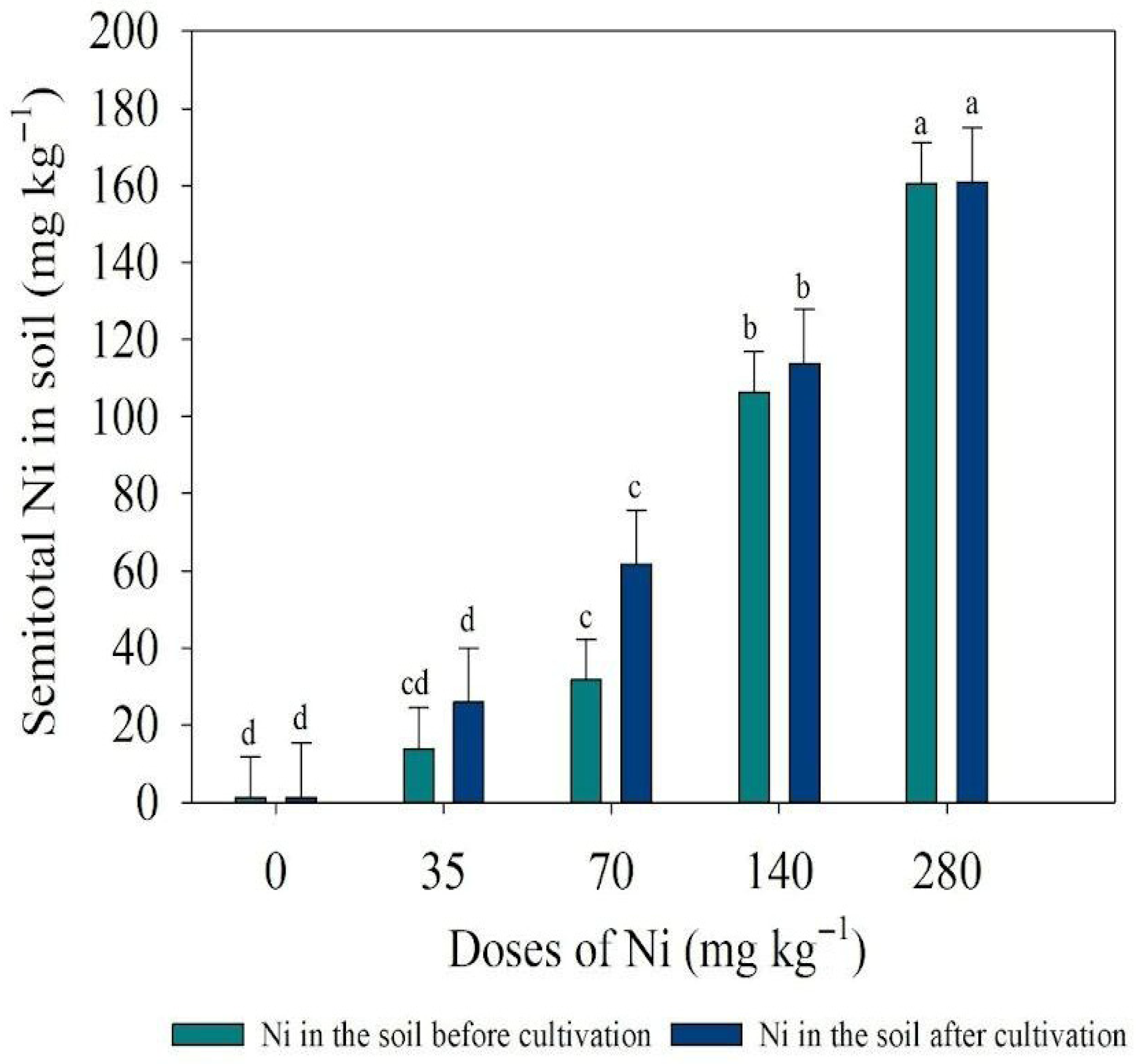
The initial quantification of Ni in the soil (Figure 3) confirmed that all species were established under equivalent contamination conditions, as no differences were observed among them. However, T280 showed the highest Ni concentrations, followed by T140, T70, T35, and T0. This pattern demonstrates that the applied doses were effective in generating distinct levels of metal availability prior to cultivation.
After cultivation (Figure 3), the distribution of Ni in the soil maintained the same trend, with no differences among species. The T0 and T35 treatments exhibited the lowest residual metal concentrations, whereas T280 showed the highest values, followed by T140 and T70, indicating that the initial availability still directly influenced the remaining Ni content even after plant–soil interaction.
Figure 1.
Crotalaria species (C. juncea, C. spectabilis, C. breviflora, and C. ochroleuca) after 54 days of cultivation, subjected to Ni doses (0, 35, 70, 140, and 280 mg kg−1) and grown in soil, for the evaluation of growth, Ni accumulation, and phytoremediation indicators.
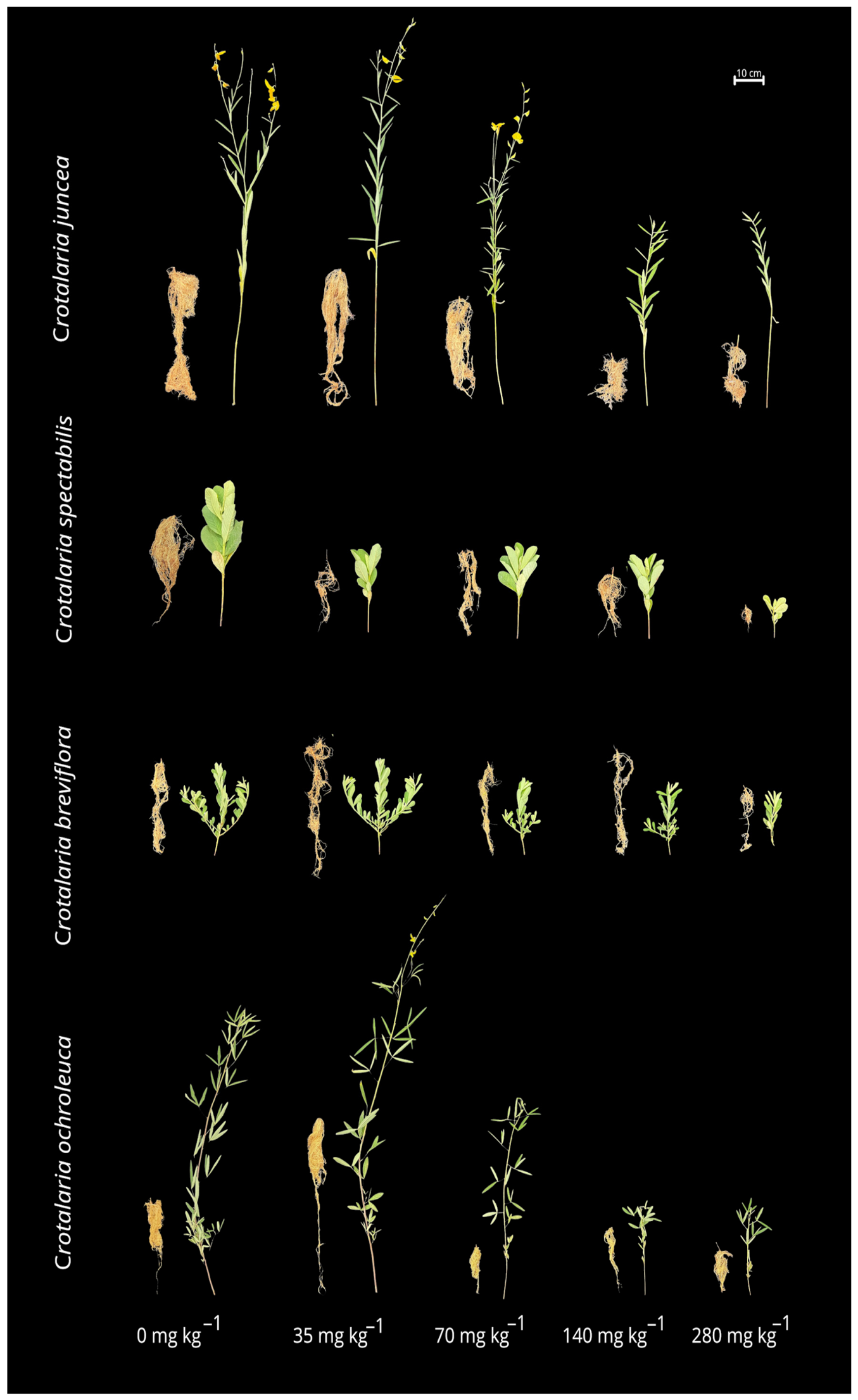
Figure 2.
DMS: shoot dry mass (a); DMR: root dry mass (b); SL: shoot length (c); and RL: root length (d) of four Crotalaria species grown under nickel doses. Means ± standard error followed by the same letter—lowercase for doses and uppercase for species—do not differ from each other according to Tukey’s test at the 5% probability level.
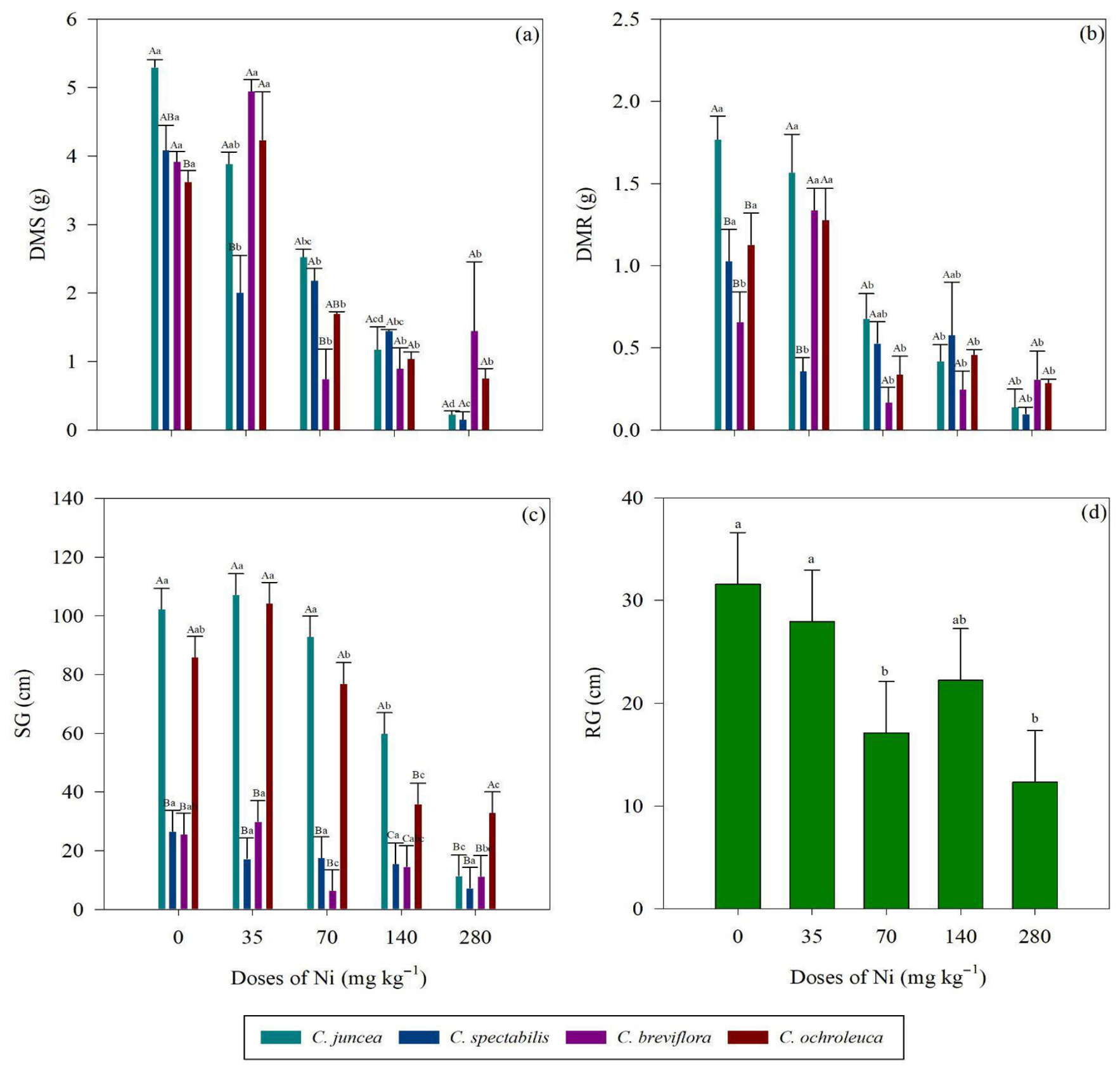
Figure 3.
Semi-total nickel concentration in soil before and after the cultivation of Crotalaria species. Means ± standard error followed by the same lowercase letter do not differ from each other according to Tukey’s test at the 5% probability level.
3.3. Potential for Phytoremediation Use
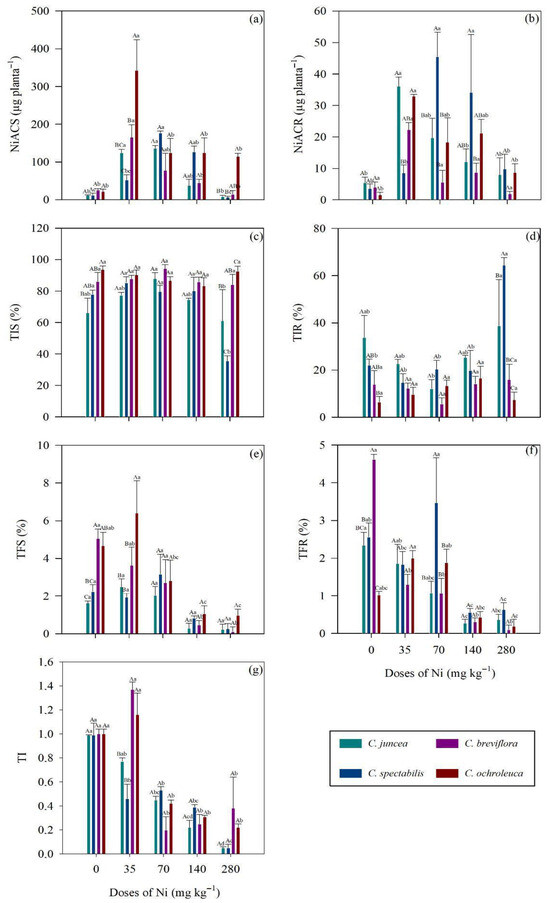
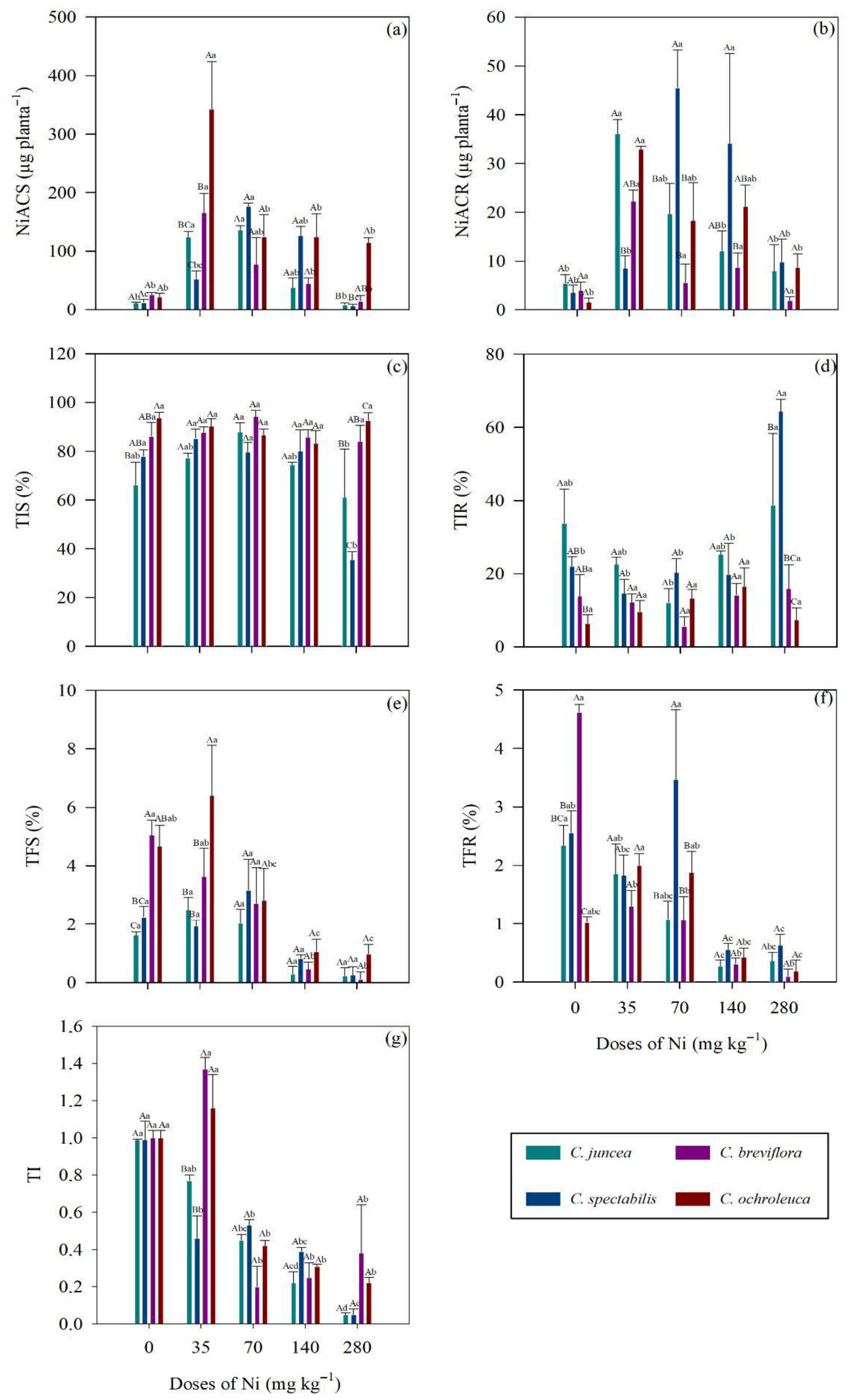
For Ni accumulation in the shoot (Figure 4a), no differences among species were observed in treatments T0, T70, and T140. At T35, C. ochroleuca showed the highest accumulation, whereas C. spectabilis exhibited the lowest values compared to C. juncea and C. breviflora. At T280, C. ochroleuca again stood out, accumulating more Ni than C. juncea and C. spectabilis. Regarding dose effects, C. juncea showed higher values at T35 and T70. For C. spectabilis, maximum accumulation occurred at T70. In C. breviflora, T35 exceeded T0, T140, and T280, while in C. ochroleuca the highest accumulation was also observed at T35, surpassing all other treatments.
Figure 4.
NiACS: Ni accumulation in the shoot (a); NiACR: Ni accumulation in the root (b); TIS: translocation index to the shoot (c); TIR: translocation index to the root (d); TFS: transfer factor to the shoot (e); TFR: transfer factor to the root (f); and TI: tolerance index (g) of four Crotalaria species grown under nickel doses. Means ± standard error followed by the same letter—lowercase for doses and uppercase for species—do not differ from each other according to Tukey’s test at the 5% probability level.
Ni accumulation in roots (Figure 4b) varied among species and doses. In treatments T0 and T280, no differences were observed among the four evaluated species. At T35, C. juncea and C. ochroleuca showed greater root accumulation compared to C. spectabilis, whereas at T70 the highest value was recorded for C. spectabilis. In treatment T140, C. spectabilis again stood out, accumulating more Ni than C. breviflora. When comparing doses within each species, C. juncea showed higher accumulation at T35, while C. spectabilis exhibited higher values at T70 and T140. For C. breviflora, no variation among treatments was observed, whereas in C. ochroleuca root accumulation was higher at T35, exceeding T0 and T280.
The translocation index (TI%) (Figure 4c) showed some specific differences. In the control treatment, C. ochroleuca presented higher values than C. juncea, while no differences among species were observed in T35, T70, and T140. At T280, C. ochroleuca showed the highest TI%, contrasting with the lowest value observed in C. spectabilis. Among doses, C. juncea exhibited higher translocation at T70, whereas in C. spectabilis, treatments T0, T35, T70, and T140 resulted in higher TI% compared to T280. For C. breviflora and C. ochroleuca, no variation among doses was observed.
The root translocation index (Figure 4d) showed that, at T0, C. juncea presented higher values than C. ochroleuca. In treatments T35, T70, and T140, no differences among species were observed, whereas at T280, C. spectabilis recorded the highest index and C. ochroleuca showed lower values than C. juncea. Regarding dose effects, the highest responses were observed at T280 for both C. juncea and C. spectabilis, while C. breviflora and C. ochroleuca showed no variation.
For the shoot transfer factor (TF) (Figure 4e), C. breviflora showed higher values than C. juncea and C. spectabilis in the control, whereas at T35, C. ochroleuca exhibited the highest value. In treatments T70, T140, and T280, no differences among species were observed. When comparing doses, no variation was observed for C. juncea and C. spectabilis. In C. breviflora, the highest values were observed at T0 and T70, while in C. ochroleuca, the highest shoot TF occurred at T35.
The root transfer factor (TF) (Figure 4f) indicated that in the control, C. breviflora showed higher values, while C. ochroleuca presented the lowest. At T70, the highest TF was observed in C. spectabilis, whereas T35, T140, and T280 showed no differences among species. Among doses, C. juncea showed higher TF at T0, with T35 exceeding T140; in C. spectabilis, the peak occurred at T70; in C. breviflora, T0 showed the highest value; and in C. ochroleuca, T35 was higher than T140 and T280.
The tolerance index (TI) reflects the plant’s ability to tolerate the presence of trace elements in the soil and should be greater than 0.5. The species C. juncea, C. spectabilis, and C. ochroleuca were tolerant to Ni up to T70, while C. breviflora showed tolerance only at T35. As no significant differences among species were observed at the highest treatments (T140 and T280), and TI values were lower than 0.5, it can be inferred that the species did not exhibit tolerance to Ni under these conditions (Figure 4g).
3.4. PCA and Pearson Correlation
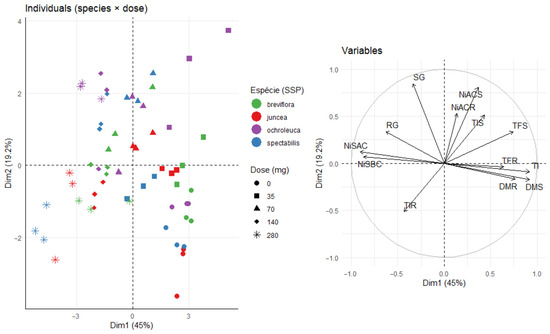
The PCA explained 64.2% of the total variance, with 45% in Dim1 and 19.2% in Dim2. A clear separation of doses was observed along Dim1: 0 and 35 mg grouped on the right, associated with growth variables (DMS, DMR, and TI), while 140 and 280 mg were positioned on the left, correlated with Ni accumulation (NiSAC and NiSBC) (Figure 5).
Figure 5.
Principal Component Analysis (PCA) showing the relationship between growth and nickel (Ni) accumulation variables in Crotalaria species exposed to increasing Ni doses. Dim1 and Dim2 explained 64.2% of the total variance (45% and 19.2%, respectively). Individuals are separated according to species and dose, with lower doses associated with growth variables and higher doses associated with Ni accumulation.
Among species, C. ochroleuca was distinguished along Dim2, showing association with SG. C. spectabilis and C. juncea were more closely related to variables linked to Ni accumulation under higher doses. C. breviflora showed an intermediate distribution, partially overlapping with both low- and high-dose groups, indicating a less distinct response pattern.
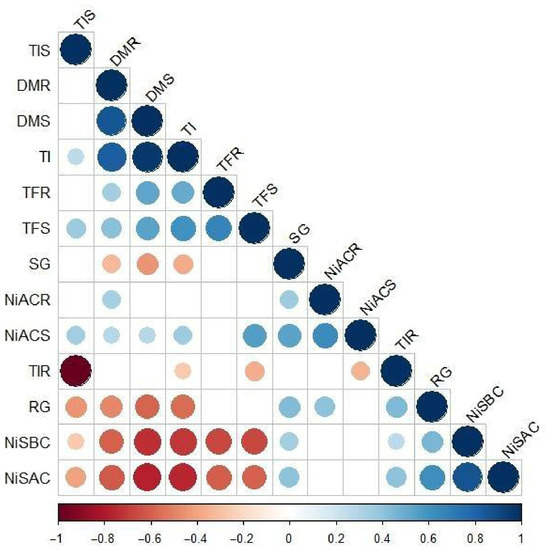
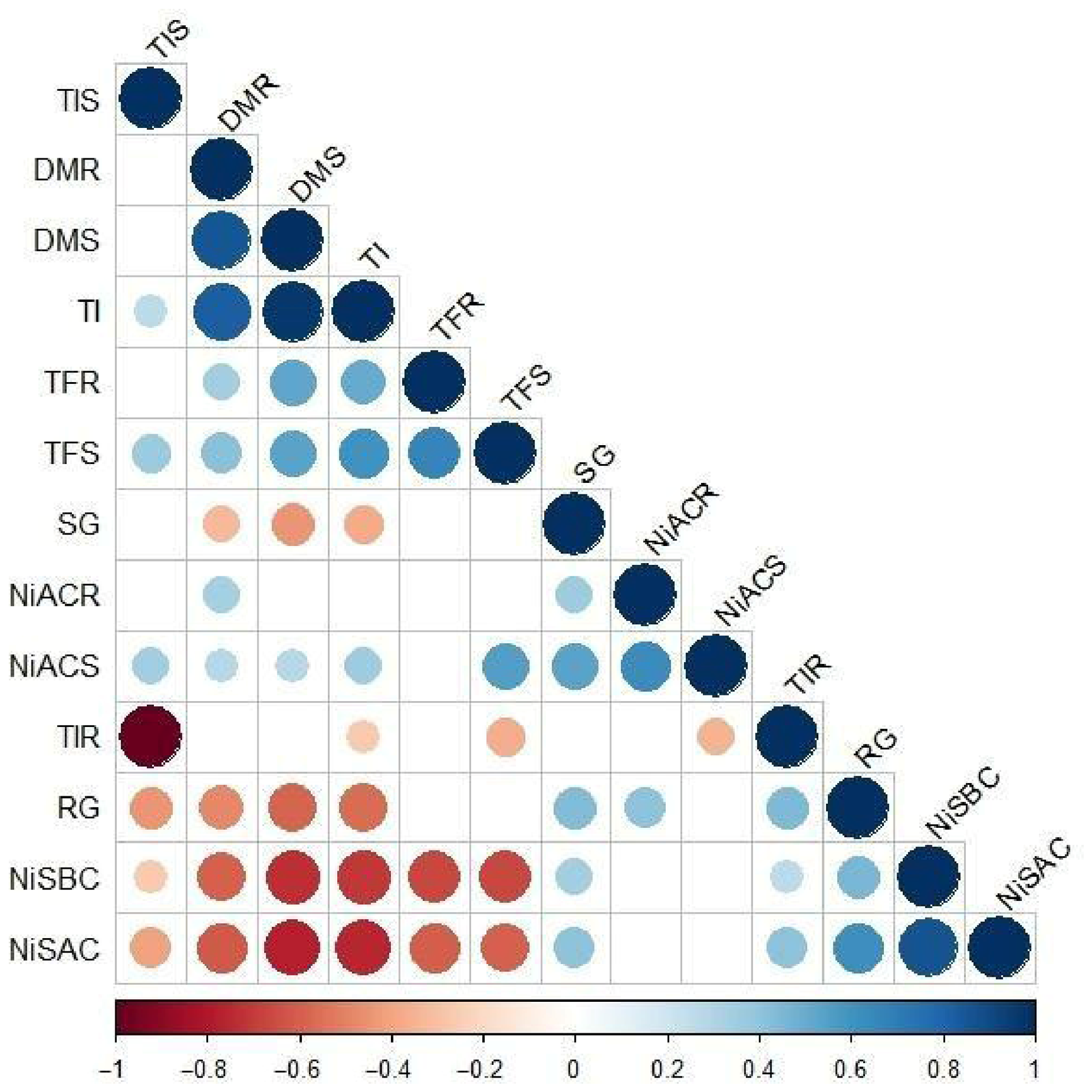
The Pearson correlation matrix revealed distinct patterns of association among the analyzed variables (Figure 6). The variables DMR, DMS, TI, TFR, and TFS exhibited strong positive correlations with each other (r > 0.5), indicating a robust linear relationship and possible interdependence among these parameters. Similarly, a second cluster was identified comprising the variables NiACS, RG, NiSBC, and NiSAC, which also showed significant positive correlations, suggesting that these variables share a common behavior.
Figure 6.
Pearson correlation matrix of four Crotalaria species cultivated under nickel doses. TIS: shoot translocation index; DMR: root dry matter; DMS: shoot dry matter; TI: tolerance index; TFR: root transfer factor; TFS: shoot transfer factor; SG: shoot length; NiACR: Ni accumulation in roots; NiACS: Ni accumulation in shoots; TIR: root translocation index; RG: root length; NiSBC: soil nickel before cultivation; NiSAC: soil nickel after cultivation. Pearson correlation (r): a coefficient of 1 indicates a positive correlation between variables; −1 indicates a negative correlation; ±0.5 indicates a moderate correlation; and 0 indicates no linear dependence between variables. Dark blue represents a strong positive correlation (as one variable increases, the other also increases), whereas dark red represents a strong negative correlation (as one variable increases, the other decreases). Number of observations: 60.
Regarding negative associations, soil Ni before and after cultivation (NiSBC and NiSAC) showed strong negative correlations with dry matter variables (DMR and DMS), as well as with TI, TFR, and TFS (r < −0.5). TIR exhibited a strong negative correlation with TIS. Additionally, the variables SG and RG showed moderate negative correlations with DMR, DMS, and TI, as well as RG with TIS, indicating an inverse relationship, although less pronounced (Figure 6).
4. Discussion
All Crotalaria species exhibited distinct responses to increasing Ni doses, with variations depending on both species and applied dose, reflected in growth parameters, biomass accumulation, and phytoremediation indicators. This behavior highlights that the response to Ni is governed by multiple factors, including species, dose, and the variable analyzed, emphasizing the complexity of the mechanisms involved in metal tolerance.
Ni uptake by plants depends on its availability in the soil solution, which is influenced by edaphic factors such as pH, organic matter content, and the presence of oxides [23,24]. After uptake, Ni tends to accumulate primarily in the roots; however, in some species, part of the element can be transported to the shoot via the xylem [25]. This root accumulation is associated with the retention of the metal at cation exchange sites in the cell walls of vessels and xylem parenchyma [13]. When metal ions reach the symplast of root cells, they are rapidly complexed by organic ligands, reducing their toxicity [26].
4.1. C. breviflora
For C. breviflora, the most consistent responses were observed at doses of 35 and 70 mg kg−1, particularly in root and shoot dry mass. The 35 mg kg−1 dose, in particular, appears to have acted as a supplementary level for growth, which is consistent with the fact that, although Ni is an essential element, its concentration in most plants is relatively low (0.05–10 µg g−1 dry mass) [27]. Thus, as the lowest applied dose, this level may have been sufficient to meet the plant’s nutritional requirements, preventing deficiency. Despite the greater biomass accumulation occurring at the lowest dose, high metal mobility was observed up to 140 mg kg−1, and the maintenance of expressive values at intermediate doses suggests greater efficiency in Ni uptake and mobilization under moderate contamination conditions.
Ni accumulation in the shoot was approximately 644% higher than in the roots, indicating a high translocation capacity. This pattern is associated with hyperaccumulation mechanisms, which involve efficient transport via the xylem, followed by sequestration and compartmentalization of the metal in leaf tissues [28,29]. Compared to species reported in the literature, C. breviflora showed higher shoot accumulation when subjected to 70 mg kg−1, reaching 165.66 mg kg−1, a value more than twice that observed in species such as calendula (8.11 mg kg−1), spinach (7.89 mg kg−1), and sunflower (6.22 mg kg−1) [30].
4.2. C. juncea
Among the analyzed species, C. juncea stood out for presenting the highest dry mass values in both shoots and roots, with partial maintenance of root performance at 35 mg kg−1. This pattern may be related to the role of Ni as a micronutrient in plants, whose presence at low concentrations can stimulate plant growth [31]. Ni participates in important metabolic processes, especially in the synthesis and activation of enzymes involved in plant metabolism, contributing to the proper functioning of these physiological pathways [32]. Similar results have been reported under aluminum (Al) stress, where the species showed a 30% increase in root system development, maintaining growth even under high Al accumulation [33].
On the other hand, parameters related to accumulation and translocation to the shoot were more pronounced at 70 mg kg−1, suggesting that the species maintains high efficiency in internal Ni transport even when it does not reach its maximum growth potential. This pattern may be explained by the fact that Ni, when present in soluble forms, is readily absorbed by roots and exhibits high mobility within plant tissues, contributing to increased uptake at higher doses [34].
Similar behavior has been reported for Crotalaria juncea under Cu exposure, in which higher metal concentrations led to reduced shoot accumulation and increased root retention, with an inverse relationship between shoot and root translocation. This pattern suggests a shift in metal partitioning within the plant, favoring root retention under higher metal availability. Such responses indicate that, under metal stress, plants may restrict translocation to the shoot while enhancing root accumulation as a protective strategy, which may also help explain the patterns observed for Ni in the present study [17].
4.3. C. ochroleuca
For Crotalaria ochroleuca, the 35 mg kg−1 dose resulted in the most favorable responses, including growth (shoot dry mass and length), accumulation (roots and shoots), and phytoremediation indicators. Under this condition, root accumulation was 73.7% lower compared to the highest dose, indicating that elevated Ni concentrations may impair plant mineral nutrition.
At high concentrations, Ni directly competes with ions such as Fe and Mg, reducing their internal translocation [35]; this nutritional imbalance represents an early stage of toxicity [32], consequently affecting growth and productivity [13,36]. This effect is associated with the fact that Ni uptake occurs via low-specificity transporters, such as members of the ZIP family, including IRT1, which also transport other divalent cations such as Fe, Zn, Mn, and Cd. Thus, competition among these elements may influence Ni uptake and distribution within plants, particularly under high soil concentrations [37,38].
In contrast, studies with quinoa have shown that increasing Ni doses may enhance root uptake, with significant increases compared to the control, indicating genotype-dependent responses [29]. In the present study, C. ochroleuca stood out for its high accumulation at 35 mg kg−1 (342.8 mg kg−1), surpassing the other species and representing an increase of 1457% relative to the control. This performance may be associated with efficient transfer of the metal from soil to plant and its distribution within tissues. Additionally, the species maintained high translocation indices across all doses, indicating a consistent capacity for Ni mobilization, regardless of soil concentration.
This pattern suggests that C. ochroleuca may exhibit greater efficiency in Ni loading into the xylem and long-distance transport, possibly related to differences in the activity of metal transporters and the formation of Ni–ligand complexes, such as nicotianamine, histidine, and organic acids, which may enhance metal mobility within plant tissues. Therefore, the high translocation observed may be associated with a strategy similar to that of accumulator species, in which root-to-shoot transport is favored over root retention.
4.4. C. spectabilis
C. spectabilis showed the most notable performance at 70 mg kg−1, with higher root accumulation and transfer factor compared to the other species. Additionally, the species exhibited greater Ni translocation to the roots at the highest dose, while the opposite trend was observed for the shoot. It is known that approximately 50% of the Ni absorbed by plants is retained in the roots, where it accumulates in the vascular cylinder and is directed to cation exchange sites in vessel walls and xylem parenchyma Furthermore, metal-chelating compounds, known as Ni–ligand complexes (including proteins, nicotianamine, histidine, and organic acids), facilitate Ni transport throughout the plant, and their imbalance may impair translocation to the shoot [25].
In addition to these physiological mechanisms, molecular regulation of metal transport may also contribute to the observed pattern. Studies with Noccaea species have demonstrated that increased expression of the vacuolar transporter IREG2 enhances Ni sequestration in root vacuoles, thereby reducing its loading into the xylem and limiting root-to-shoot translocation. For instance, Noccaea japonica exhibits higher IREG2 expression and gene copy number compared to Noccaea caerulescens, resulting in greater Ni retention in roots and lower accumulation in shoots [39].
This suggests that enhanced vacuolar sequestration may act as a key tolerance strategy. Therefore, a similar mechanism may be occurring in C. spectabilis under high Ni exposure (280 mg kg−1), contributing to increased root retention and reduced shoot translocation.
No differences were observed in shoot length for C. spectabilis; however, a reduction in dry mass across treatments was evident. High Ni concentrations can reduce leaf area and impair biomass production [31,32], which may explain the observed decrease in shoot mass. Root dry mass also decreased at 70, 140, and 280 mg kg−1. In roots, reduced elongation, as well as necrosis and morphological alterations, are well-documented effects under Ni toxicity conditions [31].
The distribution of individuals along Dim1 reflects a transition from favorable growth conditions to severe nickel-induced stress. The negative correlation between biomass variables (DMS, DMR) and Ni accumulation (NiSAC, NiSBC) indicates a pronounced phytotoxic effect, with metabolic resources being redirected toward tolerance mechanisms at the expense of growth.
The overlap among species at low doses and their separation at higher doses suggest differential tolerance strategies to Ni. C. ochroleuca exhibited a distinct pattern along Dim2, indicating a specific metabolic response, possibly related to metal exclusion or compartmentalization mechanisms.
It is noteworthy that the observed correlation patterns indicate a functional organization among growth, accumulation, and nickel dynamics parameters, in which plants with better growth performance also tend to exhibit a greater capacity for metal uptake and translocation, possibly reflecting more efficient physiological mechanisms of stress adaptation [40]. The negative association between NiACS and the transfer factors reinforces the species’ efficiency in translocating the metal to its tissues. Furthermore, the strong negative correlation between the root translocation index (TIR) and the shoot translocation index (TIS) highlights a clear pattern of Ni partitioning within the plant. In this context, the results indicate that Crotalaria tends to favor Ni translocation to the shoot rather than its retention in the roots. This behavior is particularly relevant for phytoextraction-based phytoremediation, in which the accumulation of metals in harvestable tissues is essential for the effective removal of contaminants from the environment [8,40]. However, although the evaluated Crotalaria species showed considerable Ni accumulation and high translocation to the shoot, the concentrations observed in this study remain below the threshold commonly used to define hyperaccumulator plants (>1000 mg kg−1 dry mass). In contrast, classical Ni hyperaccumulator species, such as Alyssum murale, are capable of accumulating substantially higher metal concentrations in aerial tissues [41]. Therefore, Crotalaria species should be considered promising candidates for phytoremediation, especially under moderate contamination levels, rather than strict hyperaccumulators.
5. Conclusions
C. juncea, C. spectabilis, and C. ochroleuca showed tolerance to Ni at 35 and 70 mg kg−1, while C. breviflora was tolerant at 35 mg kg−1. However, these species exhibited distinct response strategies in terms of growth, metal accumulation, and mobilization. The 35 mg kg−1 dose promoted plant development and Ni accumulation, whereas concentrations above 70 mg kg−1 resulted in reductions in growth parameters.
C. juncea stood out for its higher biomass production and ability to maintain growth under metal exposure at 35 mg kg−1. Although growth was affected at 70 mg kg−1, this species showed the highest Ni accumulation in the shoot. C. breviflora exhibited high Ni translocation at 35 mg kg−1, indicating potential for phytoextraction under this condition.
Among the evaluated species, C. ochroleuca showed the highest Ni accumulation in the shoot, regardless of dose, associated with a high capacity for metal translocation to this organ. C. spectabilis demonstrated greater root retention at 280 mg kg−1, characterizing a behavior more associated with phytostabilization, although it also showed high shoot accumulation at 140 mg kg−1.
Therefore, Crotalaria species demonstrate potential for use in phytoremediation strategies in contaminated soils with Ni concentrations not exceeding 70 mg kg−1. As for future directions, the study of microbial interactions and gene expression is also relevant; in addition, research studying the phytoremediation of Crotalaria species in the field is also encouraged, since the results and interactions can vary according to the environment.
Author Contributions
Conceptualization, L.S.d.C. and J.V.A.; methodology, J.V.A., M.B.d.S., G.d.S.R., T.S. and M.R.B.; formal analysis, J.V.A. and M.R.B.; writing—original draft preparation, B.S.d.S., R.P.D.S. and B.G.P.C.; writing—review and editing, L.S.d.C. and J.V.A.; supervision, L.S.d.C. All authors have read and agreed to the published version of the manuscript.
Funding
This research was funded by Fundação de Amparo à Pesquisa do Estado de São Paulo, (FAPESP—Brazil, grant number 2020/12421-4 to LSC), and the National Council for Scientific and Technological Development—CNPq, grant number 302499/2021-0 and 302843/2024-8 to LSC.
Data Availability Statement
The original contributions presented in this study are included in the article. Further inquiries can be directed to the corresponding author.
Acknowledgments
This work was carried out with the support of the Pró-Reitoria de Pesquisa/UNESP for sponsoring the studentships to the second author.
Conflicts of Interest
The authors declare no conflicts of interest.
Appendix A
Table A1.
Analysis of variance for growth and nickel-related variables.
References
- Kumar, A.; Jigyasu, D.K.; Kumar, A.; Subrahmanyam, G.; Mondal, R.; Shabnam, A.A.; Cabral-Pinto, M.M.S.; Malyan, S.K.; Chaturvedi, A.K.; Gupta, D.K.; et al. Nickel in Terrestrial Biota: Comprehensive Review on Contamination, Toxicity, Tolerance and Its Remediation Approaches. Chemosphere 2021, 275, 129996. [Google Scholar] [CrossRef] [Scilit] [PubMed]
- Harasim, P.; Filipek, T.; Harasim, P. Nickel in the Environment. J. Elem. 2015, 20, 525–534. [Google Scholar] [CrossRef] [Scilit]
- Genchi, G.; Carocci, A.; Lauria, G.; Sinicropi, M.S.; Catalano, A. Nickel: Human Health and Environmental Toxicology. Int. J. Environ. Res. Public Health 2020, 17, 679. [Google Scholar] [CrossRef] [Scilit] [PubMed]
- CETESB (Companhia Ambiental do Estado de São Paulo). Valores Orientadores para o Solo e as Águas Subterrâneas no Estado de São Paulo [Guiding Values for Soil and Groundwater in the State of São Paulo]. Available online: https://www.cetesb.sp.gov.br (accessed on 9 April 2026).
- Vischetti, C.; Marini, E.; Casucci, C.; De Bernardi, A. Nickel in the Environment: Bioremediation Techniques for Soils with Low or Moderate Contamination in European Union. Environments 2022, 9, 133. [Google Scholar] [CrossRef] [Scilit]
- Morris, J.W.; Scheckel, K.G.; McNear, D.H. Biogeochemistry of Nickel in Soils, Plants, and the Rhizosphere. In Nickel in Soils and Plants; CRC Press: Boca Raton, FL, USA, 2018. [Google Scholar]
- Ameen, N.; Amjad, M.; Murtaza, B.; Abbas, G.; Shahid, M.; Imran, M.; Naeem, M.A.; Niazi, N.K. Biogeochemical Behavior of Nickel under Different Abiotic Stresses: Toxicity and Detoxification Mechanisms in Plants. Environ. Sci. Pollut. Res. Int. 2019, 26, 10496–10514. [Google Scholar] [CrossRef] [Scilit]
- Kabata-Pendias, A.; Mukherjee, A.B. Trace Elements from Soil to Human; Springer: Berlin/Heidelberg, Germany, 2007. [Google Scholar]
- Li, L.; Yan, X.; Li, J.; Tian, Y.; Ren, P. Advances in Cotton Tolerance to Heavy Metal Stress and Applications to Remediate Heavy Metal-Contaminated Farmland Soil. Phyton-Int. J. Exp. Bot. 2020, 90, 35–50. [Google Scholar] [CrossRef] [Scilit]
- Awa, S.H.; Hadibarata, T. Removal of Heavy Metals in Contaminated Soil by Phytoremediation Mechanism: A Review. Water Air Soil Pollut. 2020, 231, 47. [Google Scholar] [CrossRef] [Scilit]
- Gajewska, E.; Skłodowska, M. Effect of Nickel on ROS Content and Antioxidative Enzyme Activities in Wheat Leaves. Biomet. Int. J. Role Met. Ions Biol. Biochem. Med. 2007, 20, 27–36. [Google Scholar] [CrossRef] [Scilit]
- Yusuf, M.; Fariduddin, Q.; Hayat, S.; Ahmad, A. Nickel: An Overview of Uptake, Essentiality and Toxicity in Plants. Bull. Environ. Contam. Toxicol. 2011, 86, 1–17. [Google Scholar] [CrossRef] [Scilit]
- Seregin, I.V.; Kozhevnikova, A.D. Physiological Role of Nickel and Its Toxic Effects on Higher Plants. Russ. J. Plant Physiol. 2006, 53, 257–277. [Google Scholar] [CrossRef] [Scilit]
- Ferreira, T.C.; Aguilar, J.V.; Bomfim, N.C.P.; Olivio, M.L.G.; dos Santos, B.S.; Rosalem, P.F.; de Camargos, L.S. The Fabaceae Family in the Face of the Influence of the Potentially Toxic Element Nickel: A Scoping Review. Discov. Plants 2025, 2, 39. [Google Scholar] [CrossRef] [Scilit]
- Fagorzi, C.; Checcucci, A.; DiCenzo, G.C.; Debiec-Andrzejewska, K.; Dziewit, L.; Pini, F.; Mengoni, A. Harnessing Rhizobia to Improve Heavy-Metal Phytoremediation by Legumes. Genes 2018, 9, 542. [Google Scholar] [CrossRef] [Scilit] [PubMed]
- Jach, M.E.; Sajnaga, E.; Ziaja, M. Utilization of Legume-Nodule Bacterial Symbiosis in Phytoremediation of Heavy Metal-Contaminated Soils. Biology 2022, 11, 676. [Google Scholar] [CrossRef] [Scilit] [PubMed]
- dos Santos, B.S.; Mendonça, G.W.; Ferreira, T.C.; Bomfim, N.C.P.; de Carvalho, I.F.; Aguilar, J.V.; Camargos, L.S. Exploring the Potential of Crotalaria juncea L. for Phytoremediation: Insights from Gas Exchange, Pigment Quantification, and Growth Measurements under Copper Stress. Horticulturae 2024, 10, 746. [Google Scholar] [CrossRef] [Scilit]
- Santoyo-Martínez, M.; Mussali-Galante, P.; Hernández-Plata, I.; Valencia-Cuevas, L.; Flores-Morales, A.; Ortiz-Hernández, L.; Flores-Trujillo, K.; Ramos-Quintana, F.; Tovar-Sánchez, E. Heavy Metal Bioaccumulation and Morphological Changes in Vachellia campechiana (Fabaceae) Reveal Its Potential for Phytoextraction of Cr, Cu, and Pb in Mine Tailings. Environ. Sci. Pollut. Res. 2020, 27, 11260–11276. [Google Scholar] [CrossRef] [Scilit]
- dos Santos, H.G.; Jacomine, P.K.T.; dos Anjos, L.H.C.; de Oliveira, V.A.; Lumbreras, J.F.; Coelho, M.R.; de Almeida, J.A.; de Araujo Filho, J.C.; de Oliveira, J.B.; Cunha, T.J.F. Sistema Brasileiro de Classificação de Solos; Embrapa: Brasilia, Brazil, 2018. [Google Scholar]
- Van Raij, B.; De Andrade, J.C.; Cantarella, H.; Quaggio, J.A. Analise Quimica para Avaliacao da Fertilidade de Solos Tropicais; Instituto Agronômico: Campinas, Brazil, 2001.
- Environmental Monitoring Systems Laboratory. Determination of Metals and Trace Elements in Water and Wastes by Inductively Coupled Plasma-Atomic Emission Spectrometry. In Methods for the Determination of Metals in Environmental Samples; Elsevier: Amsterdam, The Netherlands, 2007; pp. 31–87. [Google Scholar]
- Bomfim, N.C.P.; Ferreira, T.C.; Aguilar, J.V.; Olivio, M.L.G.; dos Santos, B.S.; Carvalho, I.F.; Coscione, A.R.; Souza, L.A.; Camargos, L.S. From Micronutrients to Potentially Toxic Elements: Physiological Responses of Canavalia ensiformis to Copper and Iron. Metabolites 2025, 15, 706. [Google Scholar] [CrossRef] [Scilit]
- Tchounwou, P.B.; Yedjou, C.G.; Patlolla, A.K.; Sutton, D.J. Heavy metal toxicity and the environment. In Molecular, Clinical and Environmental Toxicology; Luch, A., Ed.; Springer: Basel, Switzerland, 2012; Volume 101. [Google Scholar] [CrossRef] [Scilit]
- Adriano, D.C. (Ed.) Nickel. In Trace Elements in Terrestrial Environments: Biogeochemistry, Bioavailability, and Risks of Metals; Springer: New York, NY, USA, 2001; pp. 677–705. [Google Scholar]
- Hassan, M.U.; Chattha, M.U.; Khan, I.; Chattha, M.B.; Aamer, M.; Nawaz, M.; Ali, A.; Khan, M.A.U.; Khan, T.A. Nickel Toxicity in Plants: Reasons, Toxic Effects, Tolerance Mechanisms, and Remediation Possibilities—A Review. Environ. Sci. Pollut. Res. 2019, 26, 12673–12688. [Google Scholar] [CrossRef] [Scilit]
- Haydon, M.J.; Cobbett, C.S. Transporters of Ligands for Essential Metal Ions in Plants. New Phytol. 2007, 174, 499–506. [Google Scholar] [CrossRef] [Scilit]
- Nieminen, T.M.; Ukonmaanaho, L.; Rausch, N.; Shotyk, W. Biogeochemistry of Nickel and Its Release into the Environment. In Nickel and Its Surprising Impact in Nature; John Wiley & Sons, Ltd.: Hoboken, NJ, USA, 2007; pp. 1–29. [Google Scholar]
- Milner, M.J.; Kochian, L.V. Investigating Heavy-Metal Hyperaccumulation Using Thlaspi caerulescens as a Model System. Ann. Bot. 2008, 102, 3–13. [Google Scholar] [CrossRef] [Scilit]
- Tan, H.W.; Pang, Y.L.; Lim, S.; Chong, W.C. A state-of-the-art of phytoremediation approach for sustainable management of heavy metals recovery. Environ. Technol. Innov. 2023, 30, 103043. [Google Scholar] [CrossRef] [Scilit]
- Samal, S.K.; Datta, S.P.; Dwivedi, B.S.; Meena, M.C.; Nogiya, M.; Choudhary, M.; Golui, D.; Raza, M.B. Phytoextraction of Nickel, Lead, and Chromium from Contaminated Soil Using Sunflower, Marigold, and Spinach: Comparison of Efficiency and Fractionation Study. Environ. Sci. Pollut. Res. 2023, 30, 50847–50863. [Google Scholar] [CrossRef] [Scilit] [PubMed]
- Mao, X.; Ahmad, B.; Hussain, S.; Azeem, F.; Waseem, M.; Alhaj Hamoud, Y.; Shaghaleh, H.; Abeed, A.H.A.; Rizwan, M.; Yong, J.W.H. Microbial Assisted Alleviation of Nickel Toxicity in Plants: A Review. Ecotoxicol. Environ. Saf. 2025, 289, 117669. [Google Scholar] [CrossRef] [Scilit] [PubMed]
- Shahzad, B.; Tanveer, M.; Rehman, A.; Cheema, S.A.; Fahad, S.; Rehman, S.; Sharma, A. Nickel; Whether Toxic or Essential for Plants and Environment—A Review. Plant Physiol. Biochem. 2018, 132, 641–651. [Google Scholar] [CrossRef] [Scilit] [PubMed]
- dos Santos, B.S.; Ferreira, T.C.; Olívio, M.L.G.; de Souza, L.A.; de Camargos, L.S. Physiological Responses of Crotalaria spp. to the Presence of High Aluminum Availability in the Soil. Plants 2024, 13, 2292. [Google Scholar] [CrossRef] [Scilit]
- Levy, C.D.C.B. Níquel em Soja: Doses e Formas de Aplicação; Instituto Agronômico de Campinas: Campinas, Brazil, 2013.
- Ahmad, M.S.A.; Hussain, M.; Saddiq, R.; Alvi, A.K. Mungbean: A Nickel Indicator, Accumulator or Excluder? Bull. Environ. Contam. Toxicol. 2007, 78, 319–324. [Google Scholar] [CrossRef] [Scilit]
- Seregin, I.V.; Ivanov, V.B. Physiological Aspects of Cadmium and Lead Toxic Effects on Higher Plants. Russ. J. Plant Physiol. 2001, 48, 523–544. [Google Scholar] [CrossRef] [Scilit]
- Korshunova, Y.O.; Eide, D.; Gregg Clark, W.; Lou Guerinot, M.; Pakrasi, H.B. The IRT1 Protein from Arabidopsis thaliana Is a Metal Transporter with a Broad Substrate Range. Plant Mol. Biol. 1999, 40, 37–44. [Google Scholar] [CrossRef] [Scilit]
- Van der Pas, L.; Ingle, R.A. Towards an Understanding of the Molecular Basis of Nickel Hyperaccumulation in Plants. Plants 2019, 8, 11. [Google Scholar] [CrossRef] [Scilit]
- Nishida, S.; Tanikawa, R.; Ishida, S.; Yoshida, J.; Mizuno, T.; Nakanishi, H.; Furuta, N. Elevated Expression of Vacuolar Nickel Transporter Gene IREG2 Is Associated with Reduced Root-to-Shoot Nickel Translocation in Noccaea japonica. Front. Plant Sci. 2020, 11, 610. [Google Scholar] [CrossRef] [Scilit]
- Ali, H.; Khan, E.; Sajad, M.A. Phytoremediation of Heavy Metals—Concepts and Applications. Chemosphere 2013, 91, 869–881. [Google Scholar] [CrossRef] [Scilit]
- Van Der Ent, A.; Baker, A.J.M.; Reeves, R.D.; Pollard, A.J.; Schat, H. Hyperaccumulators of Metal and Metalloid Trace Elements: Facts and Fiction. Plant Soil 2013, 362, 319–334. [Google Scholar] [CrossRef] [Scilit]
Disclaimer/Publisher’s Note: The statements, opinions and data contained in all publications are solely those of the individual author(s) and contributor(s) and not of MDPI and/or the editor(s). MDPI and/or the editor(s) disclaim responsibility for any injury to people or property resulting from any ideas, methods, instructions or products referred to in the content. |
© 2026 by the authors. Licensee MDPI, Basel, Switzerland. This article is an open access article distributed under the terms and conditions of the Creative Commons Attribution (CC BY) license.