


Abstract
Enhancing technical efficiency in food legume production is essential, since the scope for expanding factor inputs is limited under tightening resource constraints. Higher technical efficiency improves resource allocation, ensures food supply stability, and boosts farm income. To strengthen production performance, using survey data from 817 food legume farm households in five major producing regions of China in 2024, this study employs a two-stage DEA-Tobit model to measure farmers’ technical efficiency in food legume production and to empirically identify its driving factors. The results indicate that: (1) technical efficiency in food legume production shows pronounced regional disparities and substantial within-region heterogeneity; (2) technical efficiency in food legume production improves over time, yet substantial space for efficiency gains remains relative to other staple crops; (3) farm households located at different stages of returns to production inputs show distinct production and management patterns. (4) human capital accumulation, full-time farming status, and participation in food legume cooperative economic organizations exert significant positive effects on technical efficiency. Meanwhile, planting scale exhibits a significant inverted U-shaped relationship with technical efficiency. The findings provide household-level empirical evidence to explain disparities in technical efficiency and identify pathways for improving food legume production.
1. Introduction
Improving the output efficiency of existing inputs to support food security has become a central topic in agricultural economics, as resource constraints tighten and the scope for expanding factor inputs remains limited. Technical efficiency is a key measure of output potential under given inputs [1]. Sustained improvements in technical efficiency provide an important pathway to safeguard food security in resource-constrained settings. Nowadays, the concept of food security is expanding from “quantity security” to an integrated framework of “quantity-nutrition-sustainability”. Within this transition, the food legume sector has great strategic value. The sector helps improve dietary structure, strengthens the supply of plant-based protein [2], supports climate change mitigation and adaptation [3], and advances the sustainable development of agricultural systems [4]. As an important source of plant-based protein, food legumes are widely cultivated worldwide, with major types including mung beans, lentils, broad beans, peas, chickpeas, and many other species, with more than 20 commonly reported varieties [5]. In China, “food legumes” generally refer to legume crops excluding soybeans and peanuts, which are mainly harvested for grains or tender pods for human consumption or related processing uses. It is also an important component of residents’ dietary protein supply and a key contributor to diversifying the food system. As a major global producer and consumer, China cultivates approximately 4 million hectares of food legumes each year and produces about 30 million tons annually, accounting for roughly 5.6% of global output. Among these crops, broad beans, peas, mung beans, adzuki beans, and common beans rank among the world leaders in both production and trade volumes. Over the long term, agricultural policies and academic research have largely focused on enhancing the production capacity of major crops such as rice, wheat, and maize [6,7,8]. However, a wide range of pressures now poses serious threats to the sustainable development of global food systems [9]. On the one hand, food systems are facing structural challenges as concerns over food security intensify and nutritional demand increases. On the other hand, environmental sustainability and the adaptive capacity of agricultural production systems are being progressively weakened by climate change, soil degradation, and biodiversity loss [10,11,12]. Against this backdrop, improving technical efficiency in food legume production is not only critical for advancing the sector but also directly linked to better resource allocation and higher farm income [13]. More importantly, technical efficiency gains provide a practical pathway to balance two objectives, strengthening “quantity security” through staple grain development while enhancing “nutrition quality” through structural optimization.
Extensive evidence has been accumulated on the measurement of crop production technical efficiency and its driving factors. At present, technical efficiency is mainly assessed using two approaches, namely parametric and non-parametric methods. Compared with parametric approaches, non-parametric methods do not require a pre-specified functional form of the production function. The production frontier is constructed from the data, which helps avoid bias caused by functional form misspecification [14,15]. Non-parametric methods can also handle efficiency evaluation with multiple inputs and multiple outputs in a more direct manner. This feature is consistent with the complexity of real-world production processes [16,17]. Regarding applications of non-parametric methods, Li investigated agricultural total factor productivity growth based on DEA [18]. Yu et al. employed DEA to estimate overall technical efficiency, pure technical efficiency, and scale efficiency of grain production in Shandong Province, and then used a Tobit regression model to examine the drivers of grain technical efficiency [19]. Existing studies further show that heterogeneity in crop technical efficiency is shaped by multiple factors [3]. These factors can generally be grouped into two categories. One category comprises internal drivers, including household-controllable factors such as farmers’ individual characteristics and household management features. The other category includes external conditions, such as natural disasters, technical services, and policy support [20].
Prior studies on agricultural technical efficiency have generated valuable insights, yet further extensions remain warranted. Most existing research on technical efficiency has concentrated on major crops such as wheat and rice [21,22,23]. Some studies have examined cash crops, such as shiitake mushrooms and rapeseed [24,25]. By contrast, research on food legumes, which are typically considered minor crops, remains relatively scarce. In addition, existing research has primarily described China’s food legume sector from a macro perspective, including development status [26], development trends, and trade patterns [27]. However, research from a micro-level, farm-household perspective on the production realities of food legumes remains to be further expanded. Accordingly, the marginal contributions of this study are twofold. First, the study focuses on food legumes as minor crops and examines food legume production across different regions of China, which can inform policy design and industrial development. Second, unlike prior macro-oriented studies, this study adopts a micro household perspective to evaluate technical efficiency in food legume production, thereby providing a more direct depiction of production practices in China’s food legume sector.
Building on the above theoretical and practical context, this study adopts the “rational economic agent” assumption to develop a mechanism framework for the drivers of technical efficiency. The drivers are grouped into three categories. First, individual characteristics, proxied by education and age, are expected to improve technical efficiency by enhancing information acquisition, technological understanding, and production decision-making capacity [28]. Second, household production and management characteristics, measured by degree of part-time employment, planting scale, and its squared term, recognize that nonfarm employment may divert resources from agricultural management [29], while scale expansion can improve mechanization and input allocation but may also increase managerial costs, thereby generating a nonlinear “optimal scale” effect [30]. Third, technology and institutional support factors, captured by access to technical services, participation in cooperative organizations, and agricultural insurance coverage, are expected to reduce information and transaction costs, strengthen production service provision, and mitigate uncertainty. These changes may encourage more standardized and efficient production practices and, in turn, raise technical efficiency [31,32]. Accordingly, this study hypothesizes that individual characteristics are positively associated with technical efficiency. At the household production and management level, a lower degree of part-time employment is expected to be associated with higher technical efficiency, whereas planting scale shows a nonlinear relationship with technical efficiency. Technology and institutional support factors are expected to improve technical efficiency. These hypotheses are examined in the subsequent theoretical and empirical analyses.
To test these hypotheses, this study uses input–output data from 817 food legume farm households across multiple regions of China. DEA is applied to measure technical efficiency in food legume production and to characterize its heterogeneity. A Tobit model is then employed to identify the drivers of technical efficiency from the three dimensions of individual characteristics, household production and management characteristics, and technology and institutional support factors. Finally, the empirical evidence is synthesized to derive targeted pathways for improving technical efficiency, providing decision-relevant insights to support quality improvement and efficiency enhancement in the food legume sector.
2. Methods and Data Sources
2.1. Method: Two-Stage DEA–Tobit Efficiency Evaluation Framework
2.1.1. Data Envelopment Analysis
Data Envelopment Analysis (DEA) was first proposed by Charnes et al. [33]. The method constructs a production frontier using linear programming techniques and then evaluates the relative efficiency of decision-making units (DMUs). DEA is commonly applied to estimate overall technical efficiency, pure technical efficiency, and scale efficiency. The underlying logic is to benchmark each DMU against the best-performing units in the sample, thereby determining relative efficiency. In this study, technical efficiency is defined as the ratio of observed output to the maximum feasible output under a given technology, conditional on a fixed input structure and production mode. It reflects the allocation and utilization level of existing production factors at the farm-household level. To measure technical efficiency in food legume production, this study adopts the Dearun v3.2.0.5 software and employs an output-oriented DEA model and assumes variable returns to production inputs (VRS). The basic form of the model is as follows:
In this study, the 817 households were defined as the decision-making units (), denoted as . In Equation (1), denotes the constraints. denotes the number of input variables for each , including labor input, fertilizer input, pesticide input, and machinery input, and denotes the number of outputs, namely food legume yield. and denote the observed amount of the i-th input and the observed level of the r-th output for , respectively. and denote the weights of the i-th input and the r-th output, respectively. denotes the returns to production inputs for .
2.1.2. Tobit Regression Model
The Tobit regression model, also known as the censored regression model, estimates parameters via maximum likelihood estimation (MLE) to account for censoring in the dependent variable. In this framework, the dependent variable is restricted within a certain range, whereas the independent variables are fully observable. In the first-stage DEA, the estimated technical efficiency scores are bounded between 0 and 1, which constitutes censored data. To avoid the estimation bias associated with ordinary least squares (OLS) under censoring, this study uses Stata 17.0 software and employs a Tobit model to examine the driving factors. The basic form of the model is specified as follows:
In Equation (2), denotes the technical efficiency of food legume production for the i-th household. represent the driving factors of technical efficiency, respectively. denote the coefficients associated with these factors. is the constant term, and is the random error term.
2.2. Variable Selection and Descriptive Statistics
2.2.1. Data Source
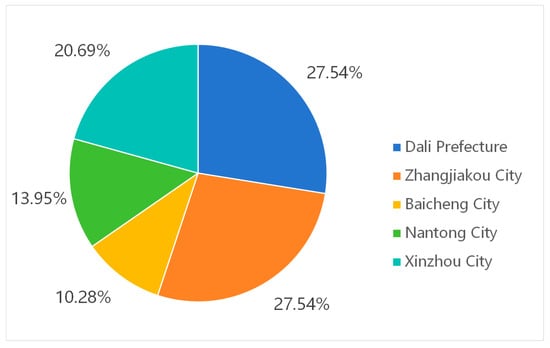
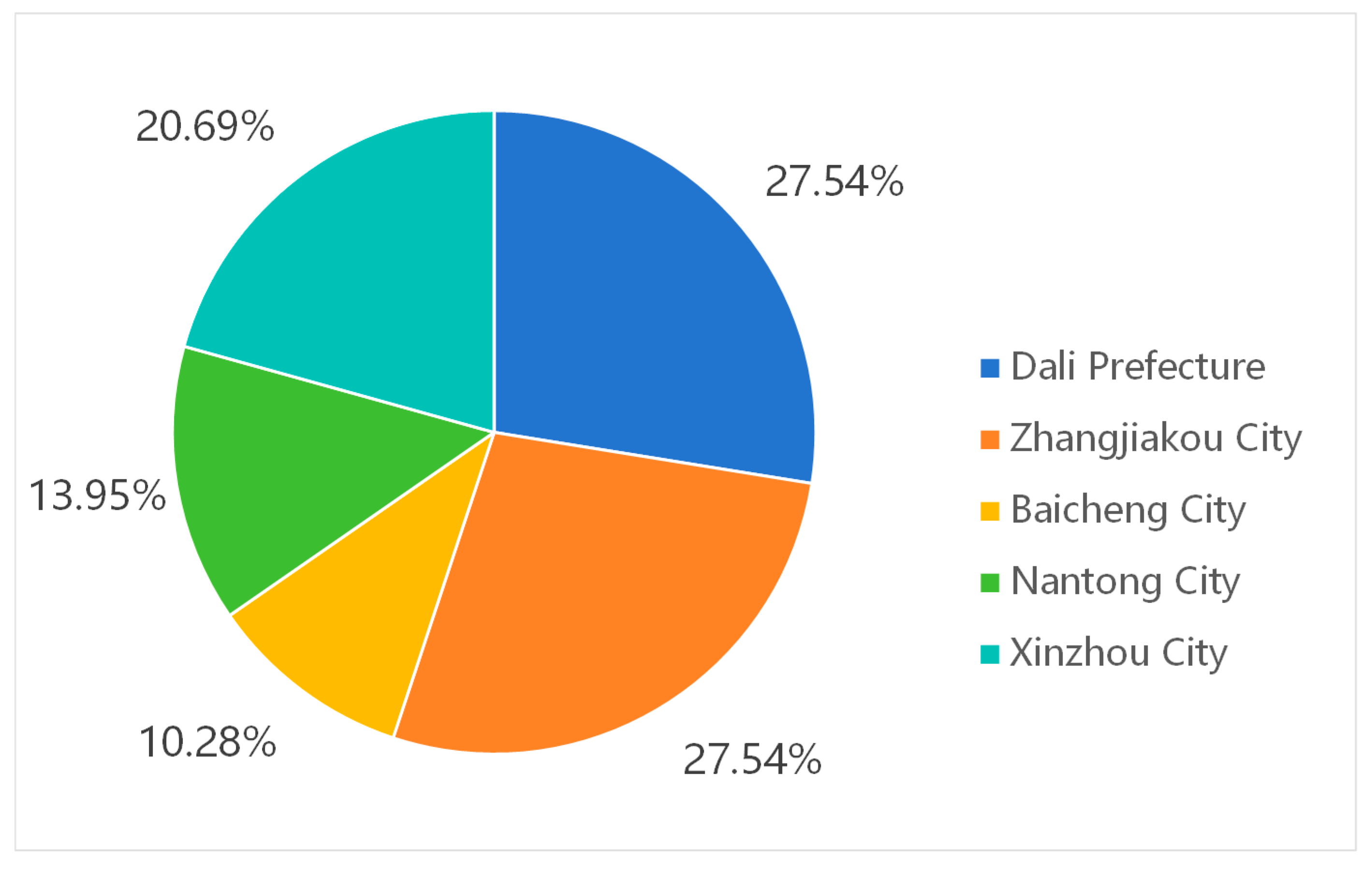
The data used in this study were derived from farm household production statistics collected by the National Food Legume Industrial Technology System between June and December 2024. The dataset covers five major food legume-producing regions in China, including Dali Prefecture in Yunnan Province, Zhangjiakou City in Hebei Province, Baicheng City in Jilin Province, Nantong City in Jiangsu Province, and Xinzhou City in Shanxi Province. The sample distribution is shown in Figure 1.
Figure 1.
Sample Distribution.
A stratified sampling approach was adopted based on the distribution of food legume cultivation across regions. Sample households were selected through a multi-stage process at the county, township, and village levels to obtain farm-level production data. A total of 817 valid household samples were obtained. Among them, 225 samples were collected from Dali Prefecture (27.54%), 225 from Zhangjiakou City (27.54%), 84 from Baicheng City (10.28%), 114 from Nantong City (13.95%), and 169 from Xinzhou City (20.69%).To conduct a longitudinal comparison between 2022 and 2024, the 2022 survey followed the same survey framework and covered the same five regions and 16 counties (or county-level cities). To ensure comparability, the two survey waves were aligned in terms of variable definitions, measurement units, and sample screening criteria.
2.2.2. Variable Selection and Description
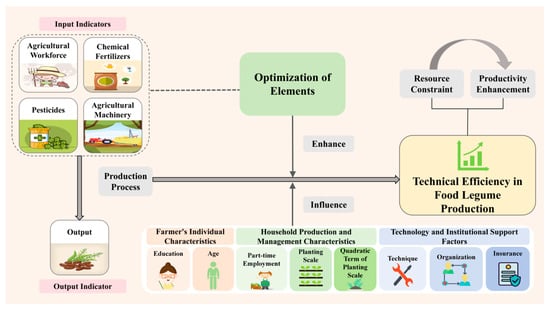
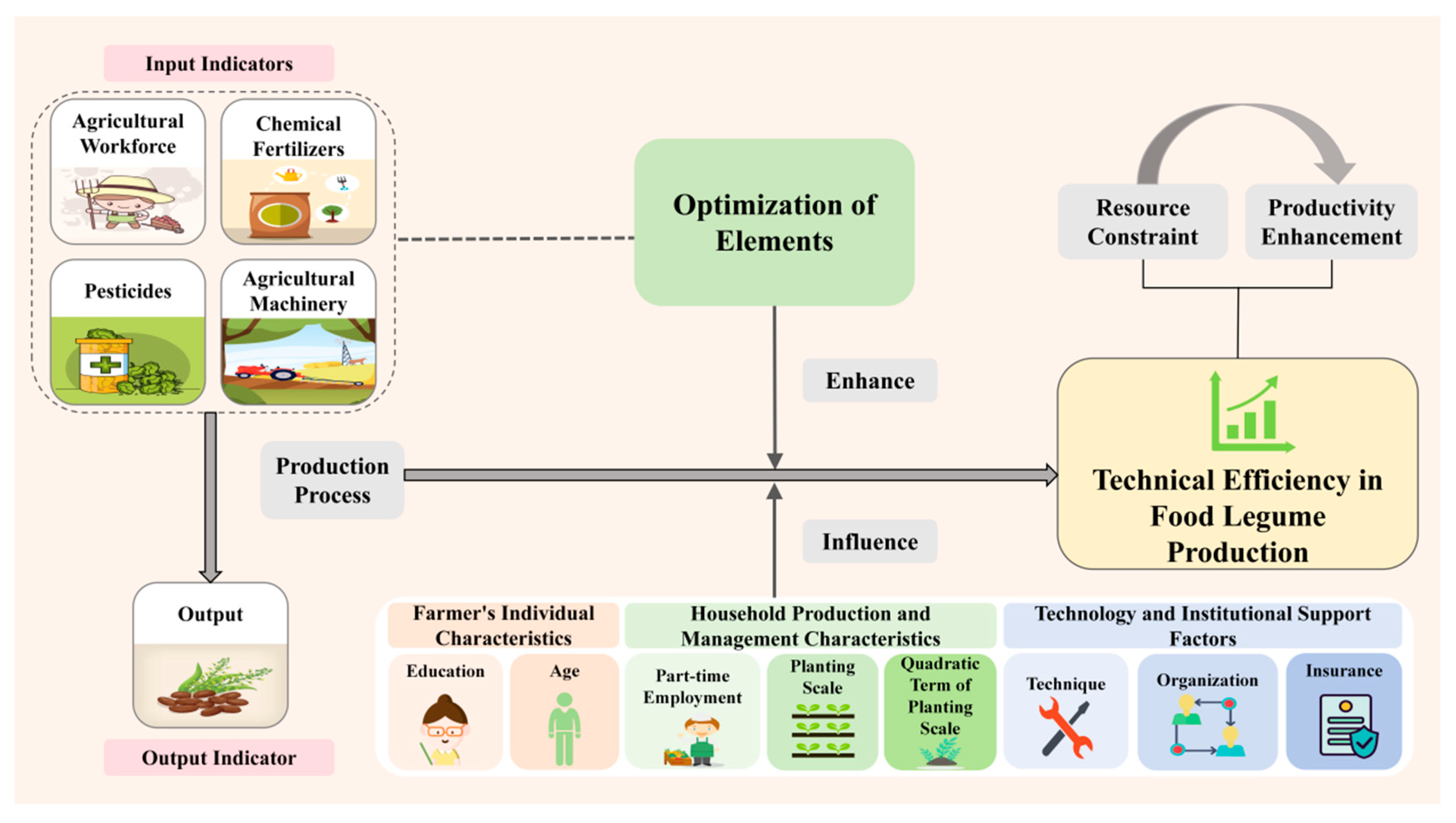
This study specifies labor, fertilizer, pesticide, and machinery as production inputs and food legume yield as the core output, building on prior research [34] and data availability. Technical efficiency improves when these inputs are allocated more efficiently to raise productivity. The theoretical framework is depicted in Figure 2.
Figure 2.
A framework of the driving mechanisms of farm-household technical efficiency in food legume production.
Technical efficiency in food legume production at the household level is jointly shaped by multiple drivers. Assuming farmers are rational decision-makers, this study draws on rational choice theory [35] and an economic rationality perspective [36,37]. It hypothesizes that the driving factors fall into three categories: individual characteristics, household production and management characteristics, and technology and institutional support factors measured by eight specific variables. The hypothesized mechanisms are specified below.
Individual characteristics. Two indicators are included: educational attainment and age. Human capital theory suggests that higher education strengthens the capacity to acquire, interpret, and apply new technologies [28], thereby improving technical efficiency in food legume production. Increasing age often signals accumulated farming experience, which can enhance production performance over a certain period. Accordingly, this study hypothesizes that human capital accumulation and increasing age exert a positive effect on technical efficiency in food legume production.
Household production and management characteristics. Three indicators are included: degree of part-time employment, planting scale, and the quadratic term of planting scale. When household income relies primarily on agriculture, stronger dependence on agricultural returns can intensify incentives to improve production performance and encourage preferential allocation of resources toward farming. In contrast, nonfarm employment can dilute time and attention devoted to agricultural management, and higher nonfarm employment risk is associated with lower agricultural technical efficiency [29]. Planting scale may exhibit nonlinear effects with technical efficiency. Small-scale operations can benefit from intensive cultivation and improve land productivity and resource utilization, yet often fail to capture scale economies from mechanization. Expansion in scale can facilitate mechanized and intelligent equipment adoption and raise efficiency. Beyond a threshold, however, coordination and management costs may increase, and efficiency gains may slow or reverse if managerial and technical capabilities do not keep pace. Existing studies indicate an inverted-U relationship between technical efficiency and planting scale [30]. Accordingly, this study hypothesizes that a lower degree of part-time employment is expected to correspond to higher technical efficiency, whereas planting scale shows a nonlinear association with technical efficiency.
Technology and institutional support factors. Three indicators are included: access to technical services for food legume production, participation in food legume cooperative economic organizations, and purchase of insurance for food legume production and marketing. Households seeking technical services often pursue more refined management and tend to exhibit higher technical efficiency, whereas households rejecting technical support may adopt extensive practices and achieve lower efficiency. Empirical studies have reported higher technical efficiency among technology adopters than among non-adopters [38]. Cooperative participation can further enhance efficiency by providing socialized services such as coordinated mechanized operations, input procurement, and technical guidance [31]. As a result, cooperative members may achieve higher technical efficiency than farm households operating independently [30]. Agricultural production faces combined natural and market shocks, with multiple risk-prone stages. Insurance purchase can mitigate risk-induced losses and support efficiency improvement, thereby contributing to ecological security and production stability [39]. Accordingly, this study hypothesizes that access to technical services for food legume production, participation in cooperatives, and the purchase of agricultural insurance are positively associated with technical efficiency in food legume production.
2.2.3. Descriptive Statistics
The descriptive statistics of the variables are shown in Table 1 and Table 2. In the surveyed sample, the mean technical efficiency of food legume producers is 0.348. Substantial scope exists for improving technical efficiency in food legume production, compared with other staple crops such as rice, for which the average technical efficiency reaches 0.89 [30]. Regarding individual characteristics, the mean education level was 7.99, indicating that farm households had a basic knowledge foundation and the capacity to learn and adopt new technologies. The average age of food legume growers is 61.06 years, indicating an aging labor structure. Regarding household production and management characteristics, most sample households exhibit a low degree of part-time employment, implying that food legume cultivation constitutes the primary income source for the majority of households. In terms of planting scale, both large-scale and small-scale operations coexist in food legume production. With respect to technology and institutional support factors, only a small share of food legume growers receive technical guidance and related services. The survey further indicates that most households seek advanced technologies and specialized services to address production-related technical constraints, reduce production costs, and improve returns. In practice, however, access to effective services remains constrained by several barriers.
Table 1.
Descriptive Statistics of Input-Output Variables.
Table 2.
Descriptive Statistics of Driving-Factor Variables.
2.3. Efficiency Estimation
2.3.1. Technical Efficiency in Food Legume Production at the Farm-Household Level Shows Significant Regional Disparities and Substantial Within-Region Heterogeneity
The average technical efficiency in food legume production across different producing regions in 2024 showed marked regional disparities and pronounced within-region heterogeneity. The results are presented in Table 3. These differences reflect regional gaps in resource endowments, technology adoption, and production modes. Baicheng City reported the highest mean technical efficiency of 0.451, which can be attributed to moderately scaled operations; efficiency peaked when the cultivated area reached a medium scale of 27.48 mu [3]. In contrast, Dali Prefecture exhibited the lowest mean efficiency of 0.198, likely due to small, fragmented production and uneven adoption of production technologies, which may constrain efficiency improvements. The remaining regions reported mean efficiency values ranging from 0.330 to 0.435. The efficiency distribution indicates that each region includes fully efficient households with an efficiency value of 1, alongside households with relatively low efficiency. Beyond regional conditions, household-level differences in technical proficiency, managerial capacity, and the ability to absorb and apply new knowledge also shape technical efficiency. Accordingly, improving technical efficiency in food legume production hinges on both internal potential tapping and external policy support. Internally, technical training and experience-sharing activities need to be strengthened to raise technology diffusion, promote the production practices of high-efficiency households, and effectively narrow efficiency gaps among farm households. Externally, macro-level policy guidance needs to be continuously optimized to create more favorable conditions for technology dissemination.
Table 3.
Average Technical Efficiency of Food Legume Production across Regions.
2.3.2. Measurement of Technical Efficiency, Pure Technical Efficiency, and Scale Efficiency for Food Legume Production
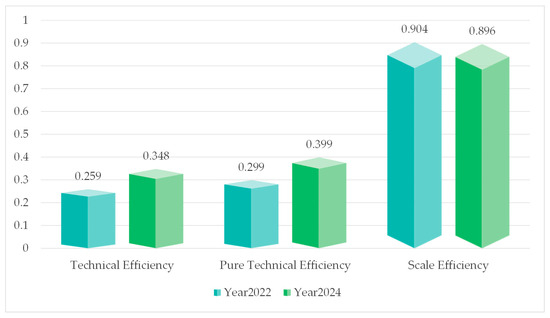
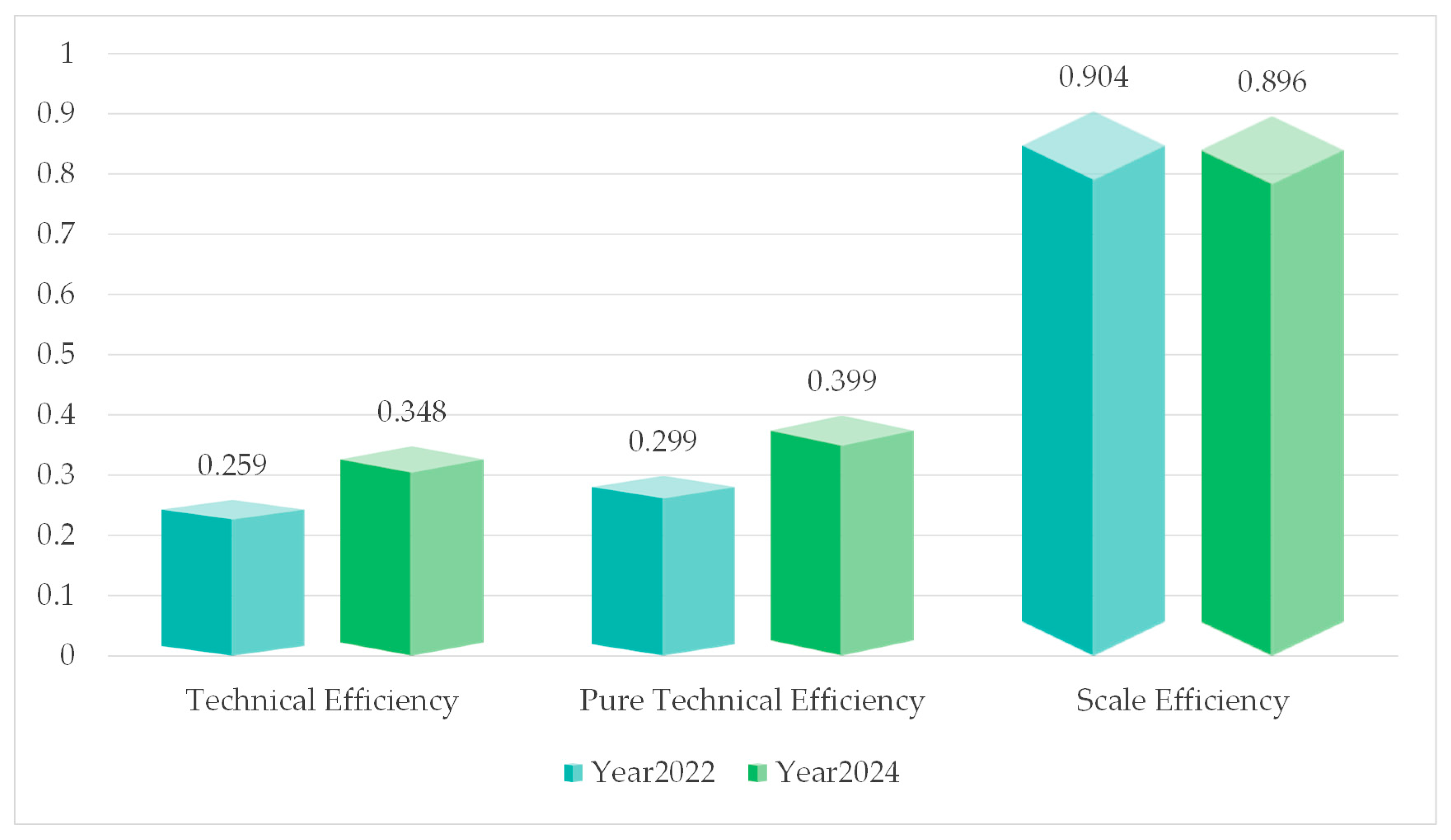
This study measures technical efficiency, pure technical efficiency, and scale efficiency among food legume farm households to identify key production constraints and inform pathways to improve yield, quality, and overall production performance. This study conducts two sets of comparisons. First, temporal changes in production technical efficiency across years are examined through a longitudinal comparison of the 2022 and 2024 datasets. Second, the sources of efficiency gaps are clarified by benchmarking food legumes against other staple crops. The results are presented in Table 4 and Figure 3.
Table 4.
Technical Efficiency, Pure Technical Efficiency, and Scale Efficiency of Food Legume-Producing Households.
Figure 3.
Comparison of technical efficiency, pure technical efficiency, and scale efficiency in 2022 and 2024.
Technical efficiency in food legume production improves over time, yet substantial space for efficiency gains remains relative to other staple crops. The longitudinal comparison indicates that overall technical efficiency increases from 0.259 in 2022 to 0.348 in 2024, representing an improvement of 34.36%. This increase reflects the positive progress made by farm households in production input allocation and technological advancement. To further characterize cross-crop differences, this study compares food legumes with potato and rice. In 2024, the mean technical efficiency for food legumes reaches 0.348. Existing studies show a mean technical efficiency of 0.684 for potato [20] and 0.89 for rice [30]. After removing technical inefficiency, output could increase by 65.20% for food legumes, 31.60% for potatoes, and 11% for rice. These results suggest substantial scope for improving technical efficiency in food legume production relative to other grain crops. The production experiences of other grain crops can be referenced to change farmers’ traditional practices in the use of inputs such as fertilizers and pesticides, and to move away from extensive farming methods. In particular, these experiences highlight the need to correct conventional perceptions and extensive use of fertilizers and pesticides, reduce experience-based input decisions, increase the diffusion of fertilizer- and pesticide-saving techniques, and strengthen their promotion and on-farm application. Since technical efficiency equals pure technical efficiency multiplied by scale efficiency, the level of technical efficiency in food legume production is influenced by both pure technical efficiency and scale efficiency. In 2024, the mean scale efficiency reaches 0.896, whereas mean pure technical efficiency is 0.399. Pure technical efficiency thus constitutes the primary constraint on technical efficiency in food legume production, indicating the need for further technological upgrading. Providing technologies that align with households’ production conditions represents a key pathway for improving technical efficiency.
2.3.3. Analysis of Returns to Production Inputs in Food Legume Production at the Household Level
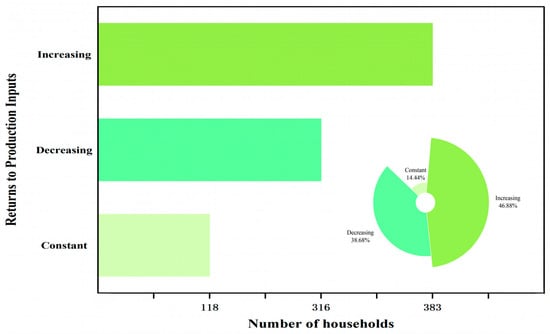
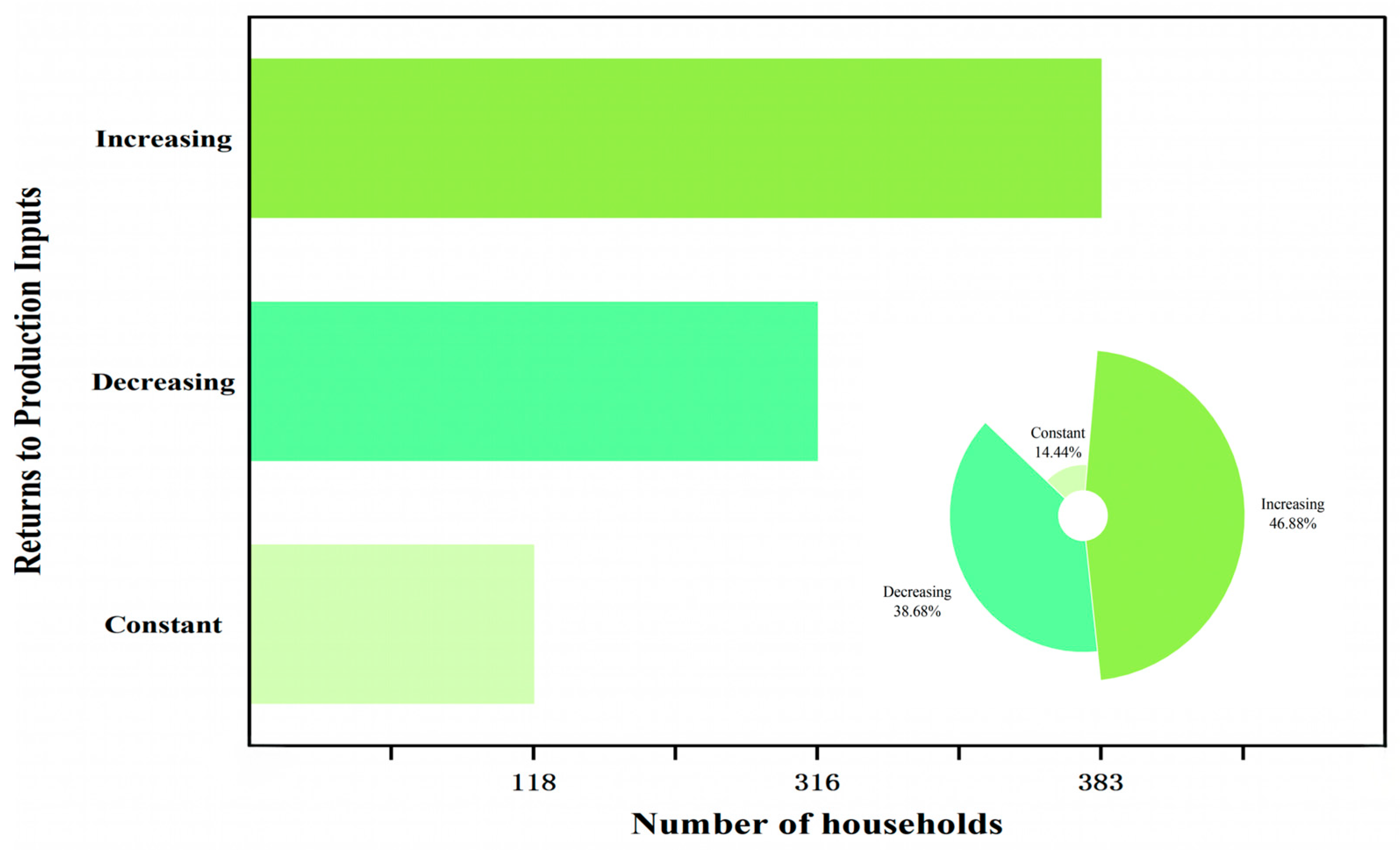
As shown in Figure 4, among the 817 food legume-growing households, 118 exhibit constant returns to production inputs, accounting for 14.44% of the sample. These households operate on the production frontier and have reached an optimal return level under the current technology; without adjusting the input mix, they cannot further increase output. A total of 383 households exhibit increasing returns to production inputs, representing 46.88% of the sample. This pattern indicates insufficient factor inputs, potentially because farm size remains below the level that household labor endowment and managerial capacity can effectively support. In addition, 316 households exhibit decreasing returns to production inputs, accounting for 38.68% of the sample. For these households, input levels are redundant, and further input expansion would generate efficiency losses. Households operating under decreasing returns to production inputs should avoid relying solely on extensive scale expansion to raise technical efficiency. Instead, they should pursue coordinated intensive and extensive development and convert redundant inputs into effective output through improved input allocation and production management.
Figure 4.
Returns to Production Inputs in Food Legume Production at the Farm-Household Level.
2.4. Correlation Analysis of Variables
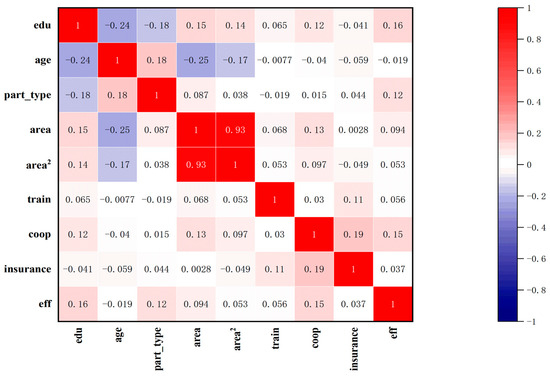
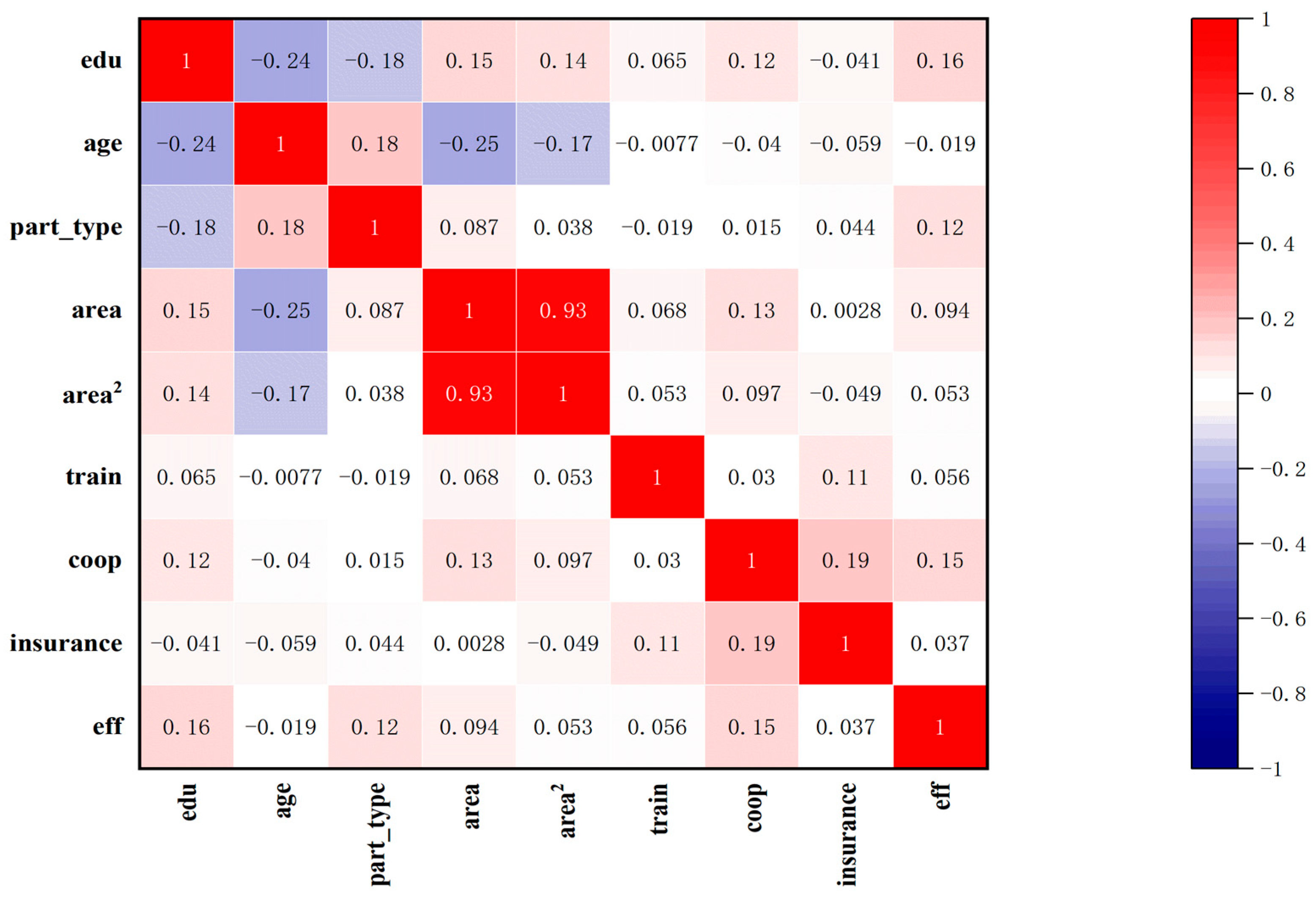
Before conducting the Tobit regression, this study examines correlations among the driving factors of technical efficiency in food legume production to assess potential multicollinearity. The results are presented in Figure 5. Education (edu), Household part-time employment status (part_type), planting scale (area), and Participation in food legume cooperative economic organizations (coop) are significantly and positively correlated with technical efficiency (eff). Moreover, all correlation coefficients remain below 0.8, indicating no serious multicollinearity and supporting the use of Tobit regression.
Figure 5.
Correlation analysis of the variables.
2.5. Tobit Regression Analysis
To mitigate potential estimation bias driven by extreme observations, this study applies 1% winsorization to the variables included in the model. The Tobit regression results are reported in Table 5. Education (edu) exhibits a significantly positive coefficient at the 1% level, indicating that higher educational attainment promotes technical efficiency in food legume production. The coefficient on part-time employment status (part_type) is positive and significant at the 1% level, suggesting that full-time farming households achieve higher technical efficiency than part-time or other households. This finding supports the hypothesis that a lower degree of part-time employment is associated with higher technical efficiency. With respect to planting scale, the linear term of scale (area) is positive and significant at the 5% level, whereas the squared term (area2) is negative and significant at the 10% level. These results confirm a significant inverted-U relationship between technical efficiency and planting scale. Technical efficiency increases with scale expansion at smaller scales but declines once scale exceeds a threshold, implying an optimal scale range that maximizes technical efficiency. The coefficient on participation in food legume cooperative economic organizations (coop) is positive and significant at the 1% level, indicating that joining food legume cooperative organizations contributes to higher technical efficiency. Participating households also outperform those operating independently.
Table 5.
Tobit Regression Results for the Determinants of Technical Efficiency in Food Legume Production.
3. Discussion
3.1. Technical Efficiency in Food Legume Production Shows an Upward Trend and Spatial Disparities
Technical efficiency in food legume production showed an increasing trend. Compared with 2022, technical efficiency in 2024 increased by 34.36%. Under a given input structure, output capacity improved, indicating observable progress in technology and input allocation efficiency during the study period. Meanwhile, technical efficiency exhibited marked spatial heterogeneity across China. Regions with efficiency above the mean included Baicheng, Zhangjiakou, and Nantong, whereas Xinzhou and Dali were below the mean, suggesting differences in resource endowments, production conditions, and key technological inputs [40]. Considering the technical characteristics of food legume production, regions differ in the integration of pest and disease control technologies, adoption of green control measures, and mechanization suitability. These differences can affect pesticide input intensity, field loss rates, and final output performance, thereby transmitting to technical efficiency [41]. In addition, the biological nitrogen fixation and soil-improving attributes of food legumes are closely associated with yield performance. Accordingly, regional heterogeneity in soil suitability and agronomic conditions may further amplify interregional efficiency differentiation [42].
3.2. Significant Differences in Returns to Production Inputs Across Input Levels
The DEA-based classification of returns to production inputs indicates pronounced heterogeneity in farm households’ production and management patterns. One group of farm households exhibits increasing returns to production inputs, suggesting that, under the current input bundle, the production process remains at a stage of insufficient factor matching. Key inputs—such as improved varieties, labor and mechanized services at critical production operations, and effective investments in pest and disease management—are inadequate or not properly implemented, making key operations bottlenecks for output formation. At this stage, additional investments in these critical inputs can generate a relatively large output increment. Another group exhibits decreasing returns to production inputs, which is closer to a situation where input increases do not translate into proportional output gains. Efficiency losses in this group are often constrained by input structure, with a certain degree of redundancy or misallocation. For example, inputs may be concentrated in low-efficiency links or dissipated due to extensive field management, limiting the conversion of additional inputs into yield gains. Deviation from the efficiency frontier therefore more strongly reflects frictions in the “input–output transformation chain”. Consistent with this interpretation, DEA evidence from mung bean production reports differences in efficiency outcomes under VRS and CRS specifications, highlighting that scale and input allocation status can substantially shape efficiency performance and providing empirical support for efficiency losses under decreasing input returns [43].
3.3. Multiple Drivers of Technical Efficiency in Food Legume Production
Education can improve technical efficiency by strengthening information acquisition capacity and farm management skills. Participation in cooperative organizations may enhance technical efficiency by reducing information and transaction costs and facilitating technology diffusion and production coordination. In addition, planting scale shows a significant inverted U-shaped relationship with technical efficiency, indicating the existence of an optimal scale interval for efficiency improvement. Using provincial panel data from China, prior evidence indicates that farmers’ professional cooperatives can significantly raise agricultural technical efficiency, with clear regional heterogeneity [44]. Further discussion is warranted because access to technical services and the purchase of agricultural insurance are positively associated with efficiency, yet the estimated effects are not statistically significant. For technical services, a gap may exist between “having access” and effective delivery in terms of service quality, relevance, and implementation at critical production stages. When service contents are weakly aligned with food legume-specific needs or service intensity is insufficient, efficiency gains may be attenuated [45]. For agricultural insurance, the literature often characterizes it as a risk management and expectation-stabilizing instrument. Insurance mainly influences investment decisions and technology adoption by lowering risk exposure and stabilizing expectations, implying an indirect and potentially lagged pathway to technical efficiency. When insurance protection levels differ markedly across regions, the average effect can be diluted in empirical estimation, resulting in a positive but statistically insignificant association [46].
4. Conclusions and Recommendations
The main conclusions are as follows: (1) technical efficiency in food legume production shows marked regional disparities and substantial within-region heterogeneity; (2) technical efficiency among food legume households improved over the study period, yet considerable room for efficiency gains remains relative to other grain crops; (3) households at different stages of returns to production inputs exhibit distinct production and management patterns; (4) education level, full-time farming status, and participation in food legume cooperative organizations have significant positive effects on technical efficiency, while planting scale displays a significant inverted U-shaped relationship with technical efficiency. Based on these findings, this study proposes the following recommendations:
4.1. Prioritize Supply–Demand Matching of Key Technologies to Improve Technical Capacity in a Targeted Manner
Food legume production technology varies across regions. First, consider regional differences to target improvements in production technologies. For example, in Nantong, fresh broad bean production, a local specialty crop, incurs high labor costs due to manual harvesting, making it essential to promote mechanized harvesting technologies. In Baicheng, mung bean fields often exhibit uneven maturity, which leads to high losses under one-time mechanized harvesting. Therefore, promote segmented harvesting, improved combine-harvester settings, and the breeding of varieties with synchronized maturity. Meanwhile, varietal upgrading should simultaneously prioritize traits such as pest and disease resistance, uniform maturity, and high and stable yield performance, thereby reducing field-level risks and improving suitability for mechanized harvesting. Second, leading regions with relatively advanced production technologies should strengthen their leading role. By further upgrading their technical capacity with advanced technologies, these regions can generate spillover benefits for surrounding areas with lower technical efficiency. Third, establish a “demonstration-led and precision-support” mechanism. Select high-efficiency benchmark households to establish demonstration bases, summarize replicable standardized practices, and implement paired assistance models. These strategies will facilitate learning and hands-on training among low-efficiency households, unlocking their production potential.
4.2. Strengthen Technology Supply and Extension Services to Overcome Last-Mile Barriers to Technology Adoption
To further upgrade quality and enhance efficiency in the food legume sector, technologies must align with farm-household realities. Stronger dissemination and adoption are also necessary. On the one hand, learn from and adopt production experience and management techniques from other staple crops. This calls for promoting standardized fertilizer-saving and pesticide-saving practices and using demonstration-based training to shift farmers away from conventional perceptions and extensive farming methods through demonstration and training. At the same time, develop an eco-efficiency-based “food legume+” production model to optimize input allocation and minimize efficiency loss. In nutrient management, nitrogen input strategies should be optimized by accounting for the biological nitrogen fixation capacity of food legumes, thereby improving input matching and fertilizer use efficiency. On the other hand, provide technologies that align with the actual production needs of farm households. Expedite the diffusion of new techniques and production models from villages to fields, ensuring the effective translation of technological advancements and eliminating the last-mile barriers to technology adoption. In many areas, limited grassroots extension capacity constrains this process, leading to discontinuous implementation and non-standardized technology use. Technical guidance at critical production stages may be insufficient, and the supply of inputs and technology-related and agricultural service factors may be unstable. These constraints can undermine support for yield improvement and efficiency enhancement. Strengthening the training and deployment of grassroots extension personnel, together with ensuring stable and continuous provision of extension and related services, can facilitate farmers’ adoption and effective application of new technologies.
4.3. Account for Production-Stage Heterogeneity and Provide Differentiated Guidance on Input Allocation
Households at different stages of returns to input use require differentiated strategies for efficiency improvement. For households operating on the production frontier, constant returns to production inputs indicate that the current technology has already delivered optimal production returns; adjusting the input mix becomes the primary pathway to further output growth. For food legume households operating below the production frontier, returns to production inputs may fall into either increasing or decreasing stages. Production and management practices should be adjusted dynamically according to the stage they face, while accounting for soil suitability and key agronomic requirements to improve the alignment between input use and production conditions. Households under increasing returns face insufficient inputs; moderate input expansion can therefore raise output effectively. Households under decreasing returns confront redundant input use; these households should avoid relying solely on extensive scale expansion and should instead emphasize intensive development, promote coordinated intensive–extensive progress, and improve technical capacity through more efficient input allocation.
4.4. Promote Coordinated Multi-Channel Drivers to Enhance Production Performance
Technical efficiency in food legume production is jointly shaped by individual characteristics, household production and management conditions, and technology and institutional support factors. To further enhance production performance, we recommend several measures. First, strengthen human capital accumulation to improve farmers’ technological awareness and application capacity, thereby enhancing technical efficiency. Second, encourage part-time farm households to allocate production factors more efficiently and promote moderate-scale operations through land transfer and production trusteeship services, while supporting full-time farm households in consolidating their specialized production advantages. Third, enhance incentives for cooperative participation by communicating the advantages of food legume cooperatives in technical guidance, standardized management, and stable marketing channels. Lower entry barriers and clarify expected gains in output and income to expand cooperative participation, thereby contributing to higher technical efficiency.
Author Contributions
H.Z., S.Z. and C.J. proposed the research question and determined the research design and methodology. Q.W. and C.J. completed the data collection and organization, and Q.W. conducted the data processing and analysis. Q.W. and S.Z. drafted the manuscript. G.Y. and L.Z. participated in the collection of production data and partial data organization. J.M., X.H., Y.D., X.W., N.X., J.L. and D.X. contributed to data collection in different regions. All authors have read and agreed to the published version of the manuscript.
Funding
This research was supported by the earmarked fund for China Agriculture Research System—Food Legumes (CARS-08).
Institutional Review Board Statement
According to Article 32 of the Measures for Ethical Review of Life Science and Medical Research Involving Humans in China, studies using anonymized information data that do not cause harm to individuals and do not involve sensitive personal information or commercial interests may be exempt from ethical review. This study used anonymized survey data, involved voluntary participation, collected no sensitive personal information, and posed no more than minimal risk to participants. Therefore, this study qualified for exemption from ethical review in accordance with Article 32 of the above Measures (National Health Commission of China, 2023, available online: https://www.nhc.gov.cn/qjjys/c100016/202302/6b6e447b3edc4338856c9a652a85f44b.shtml, accessed on 30 March 2026).
Informed Consent Statement
Informed consent was obtained from all subjects involved in the study.
Data Availability Statement
The data presented in this study are available on request from the corresponding author due to privacy reasons.
Conflicts of Interest
The authors declare no conflicts of interest.
References
- Li, J.; Zhang, L. Agricultural frontier technology progress, technical efficiency and farmers’ income increasement. World Agric. 2019, 2, 70–76+107. [Google Scholar]
- Tan, B.; Qiao, C. Opportunities and challenges of pulses in the sustainable development of diets. Food Mach. 2019, 35, 165–169. [Google Scholar]
- Ma, J.; Zhang, H.; Li, N.; Yue, H. Analysis on Production Technical Efficiency of Mung Bean Industry Under Different Cultivating Scales—Taking Mung Bean Production in Baicheng of Jilin Province as an Example. J. Agric. Sci. Technol. 2022, 24, 9–17. [Google Scholar] [CrossRef]
- Bian, X.; Li, H.; Chen, Y. Overview of the Funding and Implementation for Miscellaneous Grains in “Economic Crops” Special-Purpose Project of the National Key R&D Program during the 13th Five-Year Plan. Crops 2023, 39, 1–6. [Google Scholar]
- Zhang, H.; Ma, J.; Yue, H.; Qian, J. Edible Bean Industry and Development in China; China Agriculture Press: Beijing, China, 2021. [Google Scholar]
- Bin Rahman, A.N.M.R.; Zhang, J. Trends in rice research: 2030 and beyond. Food Energy Secur. 2023, 12, E390. [Google Scholar] [CrossRef] [Scilit]
- Reynolds, M.; Foulkes, J.; Furbank, R.; Griffiths, S.; King, J.; Murchie, E.; Parry, M.; Slafer, G. Achieving yield gains in wheat. Plant Cell Environ. 2012, 35, 1799–1823. [Google Scholar] [CrossRef] [Scilit]
- Jiao, Y.; Chen, H.-D.; Han, H.; Chang, Y. Development and utilization of corn processing by-products: A review. Foods 2022, 11, 3709. [Google Scholar] [CrossRef] [Scilit] [PubMed]
- Gouel, C.; Guimbard, H. Nutrition transition and the structure of global food demand. Am. J. Agric. Econ. 2019, 101, 383–403. [Google Scholar] [CrossRef] [Scilit]
- Borrelli, P.; Robinson, D.A.; Panagos, P.; Lugato, E.; Yang, J.E.; Alewell, C.; Wuepper, D.; Montanarella, L.; Ballabio, C. Land use and climate change impacts on global soil erosion by water (2015–2070). Proc. Natl. Acad. Sci. USA 2020, 117, 21994–22001. [Google Scholar] [CrossRef] [Scilit]
- Ortiz-Bobea, A.; Ault, T.R.; Carrillo, C.M.; Chambers, R.G.; Lobell, D.B. Anthropogenic climate change has slowed global agricultural productivity growth. Nat. Clim. Change 2021, 11, 306–312. [Google Scholar] [CrossRef] [Scilit]
- Kumari, A.; Lakshmi, G.A.; Krishna, G.K.; Patni, B.; Prakash, S.; Bhattacharyya, M.; Singh, S.K.; Verma, K.K. Climate change and its impact on crops: A comprehensive investigation for sustainable agriculture. Agronomy 2022, 12, 3008. [Google Scholar] [CrossRef] [Scilit]
- Guo, H.; Xia, Y.; Jin, J.; Pan, C. The impact of climate change on the efficiency of agricultural production in the world’s main agricultural regions. Environ. Impact Assess. Rev. 2022, 97, 106891. [Google Scholar] [CrossRef] [Scilit]
- Li, S.; Fan, C. A Review and Comparison of Stochastic Frontier Analysis and Data Envelopment Analysis Methods. Stat. Decis. 2009, 7, 25–28. [Google Scholar]
- Liu, J.S.; Lu, L.Y.; Lu, W.-M.; Lin, B.J. A survey of DEA applications. Omega 2013, 41, 893–902. [Google Scholar] [CrossRef] [Scilit]
- Boussofiane, A.; Dyson, R.G.; Thanassoulis, E. Applied data envelopment analysis. Eur. J. Oper. Res. 1991, 52, 1–15. [Google Scholar] [CrossRef] [Scilit]
- Wei, X.; Yu, L. Reestimating Total Factor Productivity Growth of China and its Applicability—A Comparison between DEA and SFA. J. Huazhong Agric. Univ. (Soc. Sci. Ed.) 2011, 3, 76–83. [Google Scholar]
- Li, H. Regional Difference Analysis of Agricultural Technology Production Efficiency in China Based on Data Envelopment Analysis. Sci. Technol. Manag. Res. 2020, 40, 59–66. [Google Scholar]
- Yu, Y.; Wang, Y.; Gong, D. Spatial–temporal evolution and influencing factors of grain production efficiency in Shandong Province, China. J. Agric. Resour. Environ. 2023, 40, 728–738. [Google Scholar] [CrossRef]
- Ma, L.; Luo, Q.; Gao, M. Technical Efficiency of Potato Production Farmers in Different Scales in Mountainous Areas—An Empirical Analysis on 453 Farmers in Gansu, Chongqing and Guangdong. J. Huazhong Agric. Univ. (Soc. Sci. Ed.) 2019, 4, 72–80+172–173. [Google Scholar]
- Zhang, L.; Bao, B.; Pan, D. Spatial-Temporal Evolution and Environmental Coordination of Technical Efficiency of Grain Production in Poyang Lake Eco-Economic Zone. J. Econ. Geogr. 2016, 36, 116–123. [Google Scholar]
- Sun, D.; Lu, Y.; Tian, X. The Impact of Productive Services on Rice Production Technical Efficiency in China: An Empirical Analysis Based on Micro-survey Data from Four Provinces (Jilin, Zhejiang, Hunan, Sichuan). J. Chin. Rural. Econ. 2016, 8, 70–81. [Google Scholar]
- Jiang, D.; Zhu, M.; Wu, G. Does the income subsidy improve technical efficiency of wheat production in China? An empirical study by a stochastic frontier analysis model with non-monotonic efficiency effects. Res. Agric. Mod. 2017, 38, 15–22. [Google Scholar]
- Li, A.; Li, J.; Niu, P.; Zhang, Z. Study on Production Efficiency and Influencing Factors of Mushroom Growers in Linxian County. North. Hortic. 2025, 4, 137–143. [Google Scholar]
- Li, R.; Li, G.; Feng, Z. Analysis on Technical Efficiency of Rapeseed Production by Different Scale Households—Based on Survey Data from 689 Households of Hubei, Sichuan and Other Four Provinces. J. Huazhong Agric. Univ. (Soc. Sci. Ed.) 2015, 1, 14–22. [Google Scholar] [CrossRef]
- Han, X.; Song, L. Study on Production and Consumption Characteristics and Industrial Development Trends of Mung Bean and Adzuki Bean in China. J. Agric. Sci. Technol. 2019, 21, 1–10. [Google Scholar] [CrossRef]
- Liu, T.; Zhang, H.; Qian, J. Realistic challenges and international experience in the development of China’s pulse industry. Jiangsu J. Agric. Sci. 2023, 39, 831–840. [Google Scholar] [CrossRef]
- Tian, J.; Yao, S. The Analysis of Agriculture Technical Efficiency in the Background of Sloped Land Conservation Program: Evidence from the Farmers of Zhidan County in Shaanxi Province based on Stochastic Frontier Analysis. J. Stat. Inf. 2013, 28, 107–112. [Google Scholar] [CrossRef]
- Lu, H.; Hu, H.; Fu, S. Land Property, Payrolls Risk and Efficiency of Agricultural Technology. Financ. Trade Res. 2016, 27, 75–82. [Google Scholar]
- Yang, W.; Li, Q. Technical Efficiency of Rice Production in China: Based on Survey Data from 761 Households in 11 Provinces. J. Agrotech. Econ. 2016, 1, 71–81. [Google Scholar]
- Li, B.; Du, W.; Zhang, J.; Zhou, Z.; Zou, S. Can Participation in Cooperatives Stimulate Farmers’ Endogenous Power: A Study Based on the Survey in Tanchang County. Econ. Theory Bus. Manag. 2025, 45, 105–126. [Google Scholar]
- Zhang, Y.; Lv, M. Research on the Technical Efficiency of Family Farm Operation and Its Influencing Factors in Hainan Province. Soc. Sci. Hunan 2023, 3, 59–65. [Google Scholar]
- Charnes, A.; Cooper, W.W.; Rhodes, E. Measuring the efficiency of decision making units. Eur. J. Oper. Res. 1978, 2, 429–444. [Google Scholar] [CrossRef] [Scilit]
- Bao, W.; Xiao, H. Spatial-temporal evolution of grain production technical efficiency and the driving effect of fiscal support for agriculture. J. China Agric. Univ. 2025, 30, 336–348. [Google Scholar]
- Guo, B.; Lv, T.; Li, J. Analysis of the Influence Factors of the Farmland Transferor Choose the Circulation Object—Based on the Perspective of Sustainable Land Use. Econ. Probl. 2013, 1, 102–107. [Google Scholar]
- Chen, C.; Chen, T.; Zhai, Q. Research on Farmers’ Production Efficiency under Different Organization Modes—An Empirical Analysis on Farmers in Jiangsu Province. J. Huazhong Agric. Univ. (Soc. Sci. Ed.) 2018, 1, 31–37+157–158. [Google Scholar]
- Hao, X.; Han, Y.; Li, X.; Lv, X. Regional Differences and Threshold Effects in Wheat Technical Efficiency: Based on Panel Data from 15 Major Wheat Producing Provinces in China. J. Agrotech. Econ. 2016, 10, 84–94. [Google Scholar]
- Liu, J.; Li, C.; Wang, G. Heterogeneity in Adoption of Technology by Farmers and Measurement of Its Technical Efficiency. Rural. Econ. 2020, 8, 100–108. [Google Scholar] [CrossRef]
- Li, Q.; Chen, X.; Chen, K. Agricultural Insurance and Grain Ecological Security: Impact Mechanism and Empirical Test. J. South China Agric. (Soc. Sci. Ed.) 2025, 24, 45–60. [Google Scholar]
- Nassary, R.M.; Massawe, B.H.J.; Nassary, E.K. Spatiotemporal patterns and drivers of bean yield variability in Food-Deficit Countries. Sci. Afr. 2025, 30, E03040. [Google Scholar] [CrossRef] [Scilit]
- Zhang, H.; Yin, G.; He, Y.; Liu, Y.; Luo, H.; Zhang, J.; Zhou, B.; Liu, Z.; Zhang, X.; Zhu, X.; et al. Evaluation of Food Legumes Pest and Disease Control in China: Evidence Using a Provincial-Level Dataset. Agronomy 2025, 15, 2404. [Google Scholar] [CrossRef] [Scilit]
- Zhao, J.; Chen, J.; Beillouin, D.; Lambers, H.; Yang, Y.; Smith, P.; Zeng, Z.; Olesen, J.E.; Zang, H. Global systematic review with meta-analysis reveals yield advantage of legume-based rotations and its drivers. J. Nat. Commun. 2022, 13, 4926. [Google Scholar] [CrossRef] [Scilit] [PubMed]
- Rostami, H.; Azizpanah, A.; Fathi, R.; Taki, M. Comparative analysis of environmental impact and energy consumption in Sesame and mung bean production using life cycle assessment and data envelopment analysis. Energy Nexus 2025, 17, 100397. [Google Scholar] [CrossRef] [Scilit]
- Li, M.; Zhang, S.; Khan, N. Do farmers’ professional cooperatives improve agricultural technical efficiency? Evidence using a national-level dataset of China. Ann. Public Coop. Econ. 2024, 95, 363–383. [Google Scholar] [CrossRef] [Scilit]
- Liu, Q.; Jiang, Y.; Lagerkvist, C.J.; Huang, W. Extension services and the technical efficiency of crop-specific farms in China. Appl. Econ. Perspect. Policy 2023, 45, 436–459. [Google Scholar] [CrossRef] [Scilit]
- Cui, X.; Yu, C.; Zhou, J. Does agricultural insurance promote the new-quality productivity? Evidence from double machine learning. Int. Rev. Econ. Financ. 2025, 105, 104797. [Google Scholar] [CrossRef] [Scilit]

Disclaimer/Publisher’s Note: The statements, opinions and data contained in all publications are solely those of the individual author(s) and contributor(s) and not of MDPI and/or the editor(s). MDPI and/or the editor(s) disclaim responsibility for any injury to people or property resulting from any ideas, methods, instructions or products referred to in the content. |
© 2026 by the authors. Licensee MDPI, Basel, Switzerland. This article is an open access article distributed under the terms and conditions of the Creative Commons Attribution (CC BY) license.