


Abstract
Red clover (Trifolium pratense L.) is a crop used as a forage that possesses an exceptional nutritional profile and digestibility. Unfortunately, this crop has low seed yield. Within the framework of the “Legume Generation” EC-funded project, our team aimed to investigate the role of foliar boron application on pollen viability and pollen tube development, and to assess its overall effect on red clover cultivation. Plants of six commercial diploid red clover cultivars, Nika 11, Sofia 52, AberClaret, Milvus, Global, and S123, were field-grown and boron-treated by spraying with the commercial product “Lebasol”, 11% active water-soluble boron. To reach our purpose, the transcript levels of genes related to flower, pollen, and pollen tube development and boron transport were measured by qRT-PCR; pollen grain viability and count were assessed microscopically. For this research, eight genes were selected: Auxin Response factor (TprARF17); TprAPETALA3; Walls are thin (TprWAT1 and TprWAT2); NIPs genes (Nodulin Intrinsic Protein) TprNIP4;2, TprNIP7;1, TprNIP5;1, and TprNIP6;1. Additionally, total nitrogen content in leaves detached from field-grown boron-treated and untreated plants was assessed and compared with the expression levels of two TprNIP5;1 and TprNIP6;1 transporters. The fresh and dry biomass weight from the first and second cuts was evaluated, as well as the seed collected from the red clover plants. Seed germination percentage and vigor of seedlings were examined in vitro for both boron-treated and untreated groups of two specific cultivars. Collected data confirm that foliar application of boron affects pollen viability and plant development of red clover in the cultivation conditions of South East Europe.
1. Introduction
One of the important worldwide forage legume crops is the red clover [1]. Red clover (Trifolium pratense L.) is a perennial species that possesses the ability for symbiotic nitrogen fixation with soil bacteria from the genus Rhizobium [1]. Other benefits of the red clover include the presence of valuable secondary metabolites, especially isoflavones—daidzein, genistein, formononetinin—with application in medicine with estrogenic, anti-tumor, and anti-inflammatory pronounced activity [2,3].
The red clover is a diploid species (2n = 2x = 14), but commercial tetraploid (2n = 4x = 28) cultivars also exist. It is a cross-pollinated species with a gametophytic self-incompatibility system controlled by a single S-locus. In red clover, S-allele diversity is high among populations; 143 and 193 unique S-alleles have been assessed [4]. The high genetic variation within and among populations makes the breeding and development of new cultivars a slow and long process. Also, the seed yield in this crop is generally low [5].
Within the framework of the project “Legume Generation,” Work Package 6 (WP) focuses on the white and red clover. One of the objectives in this WP is to develop a strategy for the increase in red clover seed production. To achieve this goal, the WP team examines different protocols, including cutting regimes, the application of growth regulators to slow herbage regrowth during flower development, and micronutrient applications to promote flower and pollen development (https://www.legumegeneration.eu/). The task of the Bulgarian team in the WP was to investigate the role of foliar boron application on pollen viability, pollen development, and the total effect of boron on the cultivation of red clover. Boron (B) is an important micronutrient for plant development. It occurs in soil in forms of boric acid (H3BO3) or borates [B(OH)4−], depending on the soil pH [6]. Sufficient B levels also enhance nitrogenase activity and nitrogen fixation by Rhizobium, thereby facilitating the growth of legume plants [7]. The foliar boron application improves seed set, seed yield, and seed quality of alfalfa [8]. In the condition of B deficiency, red clover plants produce fewer flowers, and seed production could be inhibited due to inadequate pollination [9,10]. The effect of boron on flower development, nectar production, seed yield, and germination was also investigated in organic red clover in soils characterized with mild and moderate deficiency (<1 mg B kg−1) [11]. Boron enters the plants via uptake and translocation through a family of transmembrane transporter proteins: the family of boric acid channel proteins NIPs (nodulin-26 intrinsic proteins), which ensure the flow driven by concentration gradients of uncharged boric acid through the membrane [12]. These transporter proteins are divided into three subclasses: I–III. The class II and III are known as transporters of boric and silicic acid [12,13]. In the genome of the model plant Arabidopsis thaliana, the NIPs genes subclass II contain the members AtNIP4;2, AtNIP5;1, AtNIP6;1, and AtNIP7;1 [14]. In plants, B supported the cross-linking of the 90% pectic polysaccharide RG-II, the structural compound of the cell wall [15,16]. The increased need for pectin content during developmental processes like flowering, fruit set, and seed formation leads to upregulation of the transcript level of NIP5;1, NIP6;1, especially in the conditions of B limitation [17]. The function of AtNIP7;1 and AtNIP4;2 is related to the reproductive phase in floral organ processes like anther development, pollen germination, and pollen tube growth [18,19].
In addition to micronutrient transporters, this investigation examined genes of interest important to flower, stamen, and anther development, and vacuolar auxin transport after foliar application of boron: Auxin Response factor (ARF17); APETALA 3; Walls are thin (WAT1 and WAT2). ARF 17 in clover is an orthologue of ARF 17 in Medicago truncatula and Arabidopsis. Our previous research with these two model plants confirms the involvement of ARF17 in anther development [20,21]. Auxin is synthesized in anthers, acting through auxin receptors and coordinating anther dehiscence, pollen maturation, and filament elongation [22]. ARF17 is crucial for anther dehiscence by regulating MYB108 expression [23]. APETALA3 is a homeotic gene that regulates the development of petals and stamens [24]. WALLS ARE THIN1 (WAT1 protein) WAT1 is a tonoplast-localized auxin transporter, regulating intracellular auxin homeostasis in plants [25,26].
To better understand the effect of foliar application of boron for plant development in the red clover crop cultivation, we investigated the total nitrogen content in leaves collected from field boron-treated and untreated plants, and compared it to the expression level of two transporters, NIP5;1, NIP6;1. The fresh and dry weight of the green biomass yielded after the first and the second cut was assessed, as well as the weight of the collected seeds. Seed germination percentage and seedlings’ vigor of two selected cultivars, of boron-treated and untreated, were examined in vitro.
The current study aimed to investigate the effect of foliar application of boron in the cultivation of red clover, which promotes the flower, pollen and plant development. For this purpose, 6 commercial cultivars of red clover were grown in the conditions of South East Europe. The pollen collected from flower heads in May and June was counted and assessed for viability. Transcript levels of 8 genes related to flower and pollen development, pollen tube growth, and boron transport and intracellular auxin levels were assessed in early and mature flowers and leaves, in field-collected samples. Data for total seeds weight, seeds germination percentage, and seedlings vigor of the red clover were collected to assess the effect of foliar application of boron in the field-cultivated red clover in the condition of South East Europe.
2. Materials and Methods
2.1. Plant Material, Field Experiment and Boron Application
The experimental work in this study was carried out with 6 diploid red clover commercial cultivars originating from different European countries. The cvs. Nika 11 and Sofia 52 have Bulgarian origin, AbertClaret and S123 are British cultivars, Milvus originated from Switzerland and cv. Global has a German origin. The seeds from the foreign cvs. were received in the frame of the “Legume Generation” project, WP6. The seeds from the cvs. Nika 11 and Sofia 52 were received from the Bulgarian clover breeder, Prof. Galina Naydenova. Initially, seeds were inoculated with a suspension culture of Rhizobium legumisarum bv. trifolli with optical density OD = 0.4 and incubated in bacteria for 1 h on a rotary shaker. The seeds of clover were germinated and grown in Jiffy peat pellets at the plant growth camera with the parameters: temperature 20–22 °C, relative humidity 60–70%, photoperiod 16/8 h (day/night), light intensity 150–300 mol m−2 s−1. 12-day-old clover plants were transferred to the greenhouse in pots with a diameter of 12 cm. One-month-old clover plants were transferred to the filed at the last week of May 2024. The clover plants were planted at the experimental field in the village of Negovan near Sofia /latitude 42.769455 and longitude 23.404125, altitude 549 m a.s.l./. The soil type of the experimental field is alluvial-meadow (AM) with a neutral pH. From each clover cv. six independent control plants and 6 independent plants for boron treatment were sown in rows with a 25–30 cm distance (Figure S1D). Boron was applied to the leaves and formed early buds during the flowering stage (Figure S1A). Boron was applied by spraying with the commercial product “Lebosol”, 11% active water-soluble boron equal to 150 g/L (Lebosol® Dünger GmbH, Elmstein, Germany, www.lebosol.de). In the field, a water-soluble solution of the commercial product was applied at the final concentration of 0.75 mg/L. In the first year, 2024, the formation of flower heads was very poor or missing in all cvs. except cv. Milvus and S123 had very few flower heads per plant that were visible. In the second year of the establishment of the field experiment, the boron treatment was performed four times each week in May and the first week of June. The boron solution was sprayed on leaves and flower heads with closed florets, as shown in (Figure S1A). In the year 2025, two cuts of the green mass were performed on 20 May and on 17 June. The weight of the fresh and dry green biomass was taken.
2.2. Samples for Pollen Viability and Count
The florets from early (Figure S1B) and mature (Figure S1C) flower heads were collected for pollen count and viability during May and June. The florets were collected and fixed in Carnoy’s fixative with the composition 6:3:1 (alcohol: chloroform: acetic acid). The florets could be stored in fixation solution up to 12 months [27]. Florets were collected before anthesis, when pollen was mature, but anthers were non-dehiscent. 24 h before microscopic observation of pollen and pollen grains, the florets were stained in acetocarmine (1% solution of carmine in 45% acetic acid). Stained florets were dissected to release the anthers and pollen for further microscopic observation. Viable pollen grains were stained ruby-red, while non-viable pollen grains remained orange to brown. The samples were observed under a Carl Zeiss Axio Scope upright microscope (Carl Zeiss MicroImaging, GmbH, Göttingen, Germany, www.zeiss.de) equipped with AxioCam ERc 5s and Axiovision software release 4.8.2. Pollen grain count was performed on free pollen grains visible in the “microscopic field”. For each floret, pollen grains were counted on 20 microscopic fields, and for each cultivar, data for pollen grains from a total of 60 microscopic fields were counted.
2.3. Gene Expression Analyses
In the current study, the expression level of eight genes related to flower, pollen, and pollen tube development, boron transport, and vacuolar auxin transport activators was evaluated. Auxin Response factor (TprARF17); TprAPETALA 3; Walls are thin (TprWAT1 and TprWAT2); TprNIPs genes (Nodulin Intrinsic Proteins) TprNIP4;2, TprNIP7;1, TprNIP5;1, TprNIP6;1 were selected for the expression analyses. The total RNA was extracted from the florets of early and mature flower heads and leaves of the boron-treated and control plants. The samples were taken from the field during the flowering period in May and June. From each flower head, 8 to 10 florets were taken for RNA isolation and 3 to 5 florets for pollen count. RNA isolation was performed with the RNA Plant Kit (EURx Ltd. Gdansk, Poland). One microgram of total RNA was reverse transcribed with the First Strand cDNA Synthesis Kit (Bio-Rad, Hercules, CA, USA). Relative expression levels were determined with the 7300 Real-Time qPCR System (Applied Biosystems, Foster City, CA, USA, https://www.thermofisher.com/bg/en/home/brands/applied-biosystems.html, accessed on 17 March 2026). The qRT-PCR analyses were carried out in a total volume of 20 µL containing 5 µL of cDNA, 0.5 µL gene-specific primers (10 µmol/L), 10 µL SYBR Green Mix (EURx Ltd. Gdansk, Poland), and 4 µL of RNase-free ddH2O. The PCR conditions were: 95 °C for 10 min, followed by 40 cycles of 95 °C for 15 s and 60 °C for 60 s. As a reference, genes (ACTIN and UBIQUITIN10) were used for the normalization of the Ct value. The obtained values of relative gene expression were tracked and averaged. The data were processed with a program, qBASE v 1.3.5 (Center for Medical Genetics, Ghent University Hospital, https://www.ugent.be/ge/biomolecular-medicine/en/research/research-centers/center-for-medical-genetics-ghent, accessed on 17 March 2026). The primers used for the evaluation of expression are shown in Table S1. For each set of samples, two biological repeats, each with three technical repeats, were used for transcript data. The transcript profiles displayed on the figures are the mean value of two biological repeats.
2.4. Nitrogen Content in Leaves
The total nitrogen (TN) content in the plant leaves was determined through combustion of the sample in pure oxygen at 1200 °C (Dumas combustion method), using Primacs SNC 100-IC-E analyzer (HQ—Skalar Analytical B.V., Breda, The Netherlands). Approximately 200 mg of ground lyophilized plant tissue from each variant was analyzed. Analytical calibration was performed using glycine-based liquid calibration solutions (0.1166% and 0.583% TN) and dry glycine (18.66% TN) (Merck, Rahway, NJ, USA, cat. No104201). Calibration curves covering TN (0.02–105 mg) were generated using solution aliquots or solid standards. Calibration was accepted when linearity criteria were met, and correlation coefficients exceeded 0.999. Calibration factors were automatically calculated by the SNAccess software (version 1.0.38.3) according to ISO 8466 linear regression models [28]. Recalculation of TN concentrations was performed by normalizing the measured absolute nitrogen content (mg N) to the exact dry sample mass introduced into the analyzer. Final TN values were expressed as percentage (%) or mg g−1 dry weight. Analytical results were extracted directly from the SNAccess software. Data were reviewed in the post-analysis module, where calibration validity, peak shape, and integration quality were assessed before acceptance of results. Accepted results were exported in tabular format for subsequent analysis.
2.5. In Vitro Seed Germination Capacity
Seeds collected from boron-treated and control plants represented a pool of 6 plants. The seeds from the cvs. Milvus and Sofia 52 were sterilized and in vitro germinated on MS basal medium. Seeds were surface sterilized using the protocol for seed sterilization described at [29], germinated on Murashige and Skoog (MS) basal medium [30], and grown in Petri dishes at a growth chamber (24 °C, with a 16 h photoperiod and light intensity of 350 μmol m–2 s–1). Seeds’ germination percentage was assessed 5, 7 and 14 days after sterilization.
2.6. Statistical Analyses
Transcriptional data represent the mean ± SE, which were analyzed, and the one-way analysis of variance (ANOVA) was applied to estimate the difference between all the variants (differences were considered statistically significant at (p < 0.05 and p < 0.01 levels).
3. Results
This investigation provides a comprehensive dataset for pollen viability, transcript level of genes governing flower and pollen development, and boron transport, as well as nitrogen content in leaves from samples collected of boron-treated and untreated plants. These results expand our understanding of the importance of boron foliar application in red clover cultivated in Europe.
The foliar boron application was performed by spraying the solution on plant leaves and flower heads, as shown in Figure S1A. After each spraying, the florets from early and mature flower heads from boron-treated and control plants were taken for transcript level measurement of the genes of interest (Figure S1B,C). The florets from the same flower heads were collected and fixed for the analysis of pollen count and viability.
3.1. Transcript Level of Selected Genes in Early and Mature Flower Heads
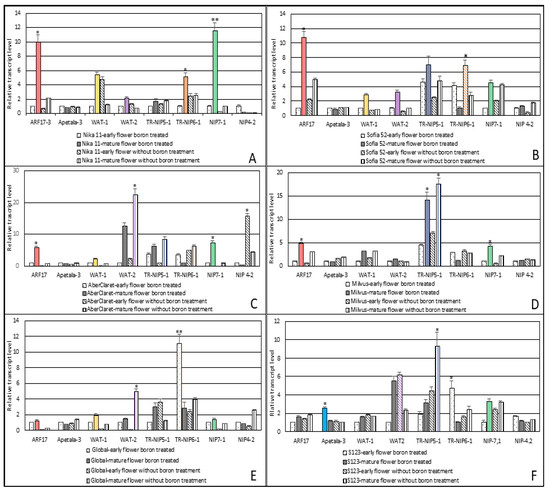
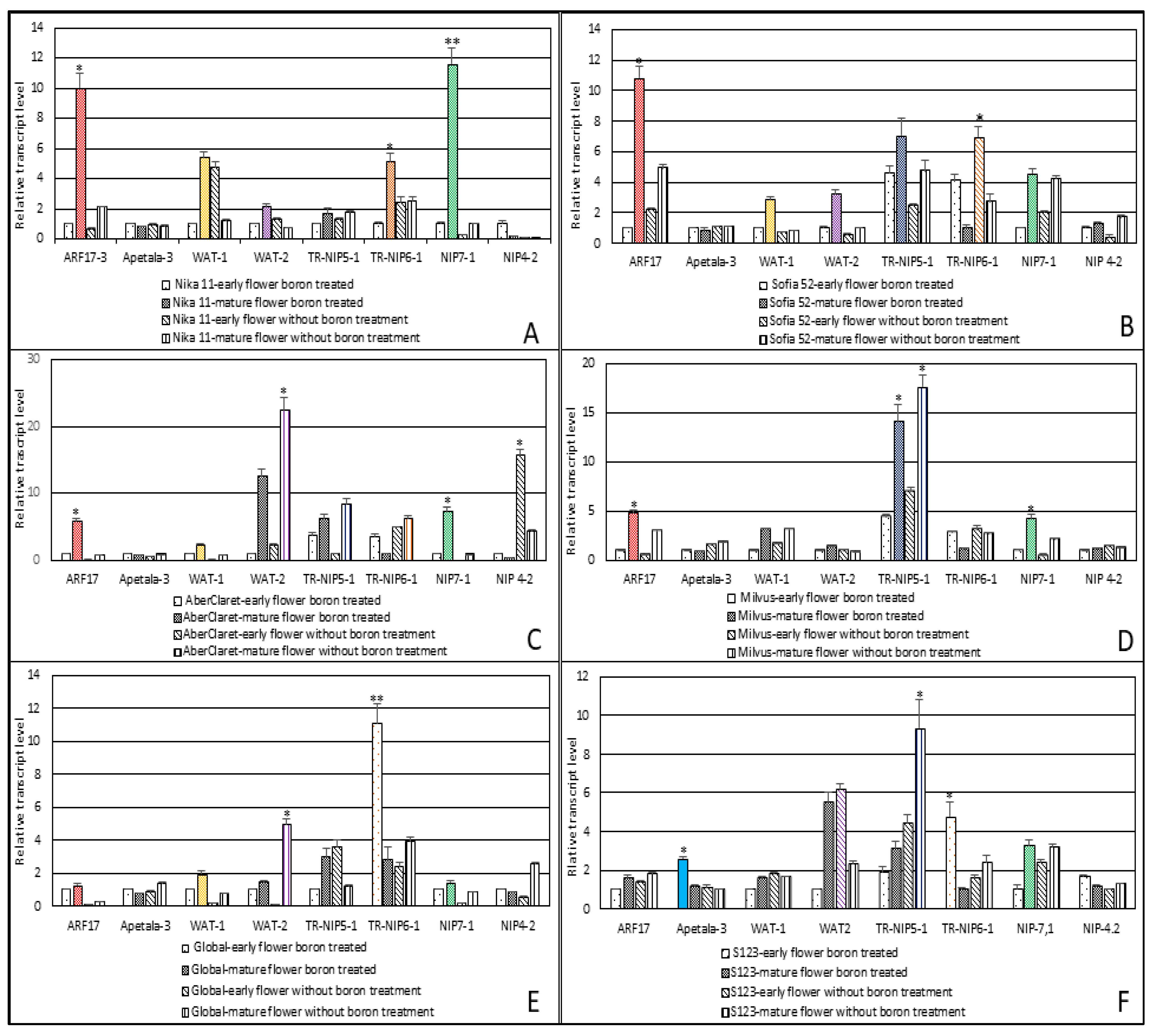
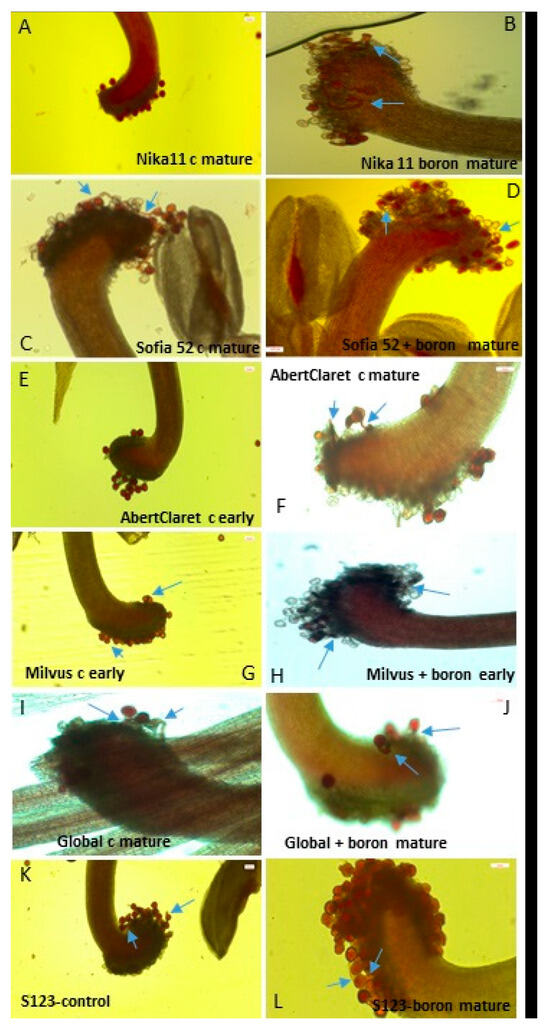
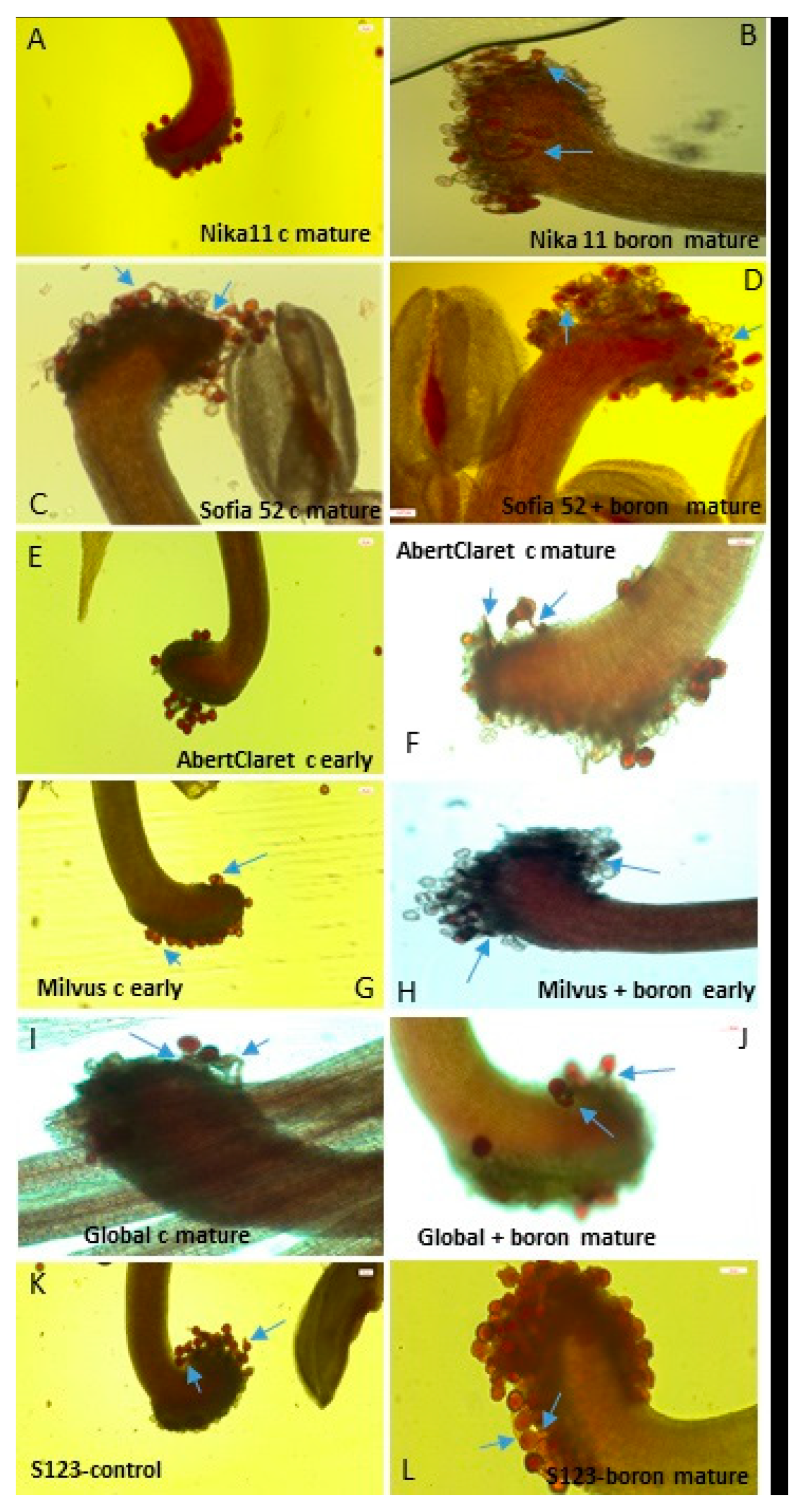
The selected gene encoding TprARF17 is an orthologue of ARF 17 in A. thaliana and M. truncatula. Our previous research with these model species confirms their involvement in anther development. From the performed transcript analyses, the profiles of the mature treated boron flowers showed higher expression in all tested clover cvs. (Figure 1, red bars) except S123. APETALA3 is a homeotic gene that regulates the development of petals and stamens in plants. The obtained expression profile of this gene is nearly identical in early and mature flowers with and without boron treatment in all tested cvs. except for S123, where the expression level of TprAPETALA3 was significantly higher (p < 0.05) in boron treated early flowers (Figure 1F, blue bar). WAT1 and WAT2 are plasma membrane and tonoplast-localized auxin transporters regulating intracellular auxin homeostasis in plants. In our data, the expression of TprWAT1 confirms that this gene was preferably expressed in mature boron-treated flowers in 4 of the tested cvs. (Figure 1, yellow bars) except for Milvus and S123, where its expression does not depend on the treatment (Figure 1D,F). The expression of TprWAT2 was more variable, and the transcript levels detected were not related to the treatment (Figure 1C,E,F, purple bars). The investigated genes, from the NIPs family TprNIP5;1, TprNIP6;1, are related to the boron transmembrane activity but also are connected to the transport of urea [31]. The expression of both boron transporters showed different profiles among the investigated cvs. In cv. Nika 11, the level of expression of TprNIP5;1, showed no difference in flowers treated and untreated with boron, while the expression level of TprNIP6;1 was significantly higher (p < 0.05) in mature flowers boron-treated (Figure 1A, brown bar). In Sofia 52, the expression level of TprNIP5;1, was highest in the boron-treated mature flowers (Figure 1B dark blue bar), while the expression of TprNIP6;1, was almost double in the control early flowers (Figure 1B, brown bar). The expression levels of two boron transporters, TprNIP 5;1 and TprNIP 6;1, in AbertClaert were higher in control early and mature flowers (Figure 1C, dark blue and brown bars). In cv. Milvus a significantly higher level of expression of TprNIP5;1 was detected in mature boron-treated and untreated flowers, more pronounced in untreated (Figure 1D dark blue bars). The boron transporter TprNIP6;1 was characterized with almost equal levels of expression in treated and untreated flowers. The cv. Global was characterized by almost equal levels of expression of TprNIP5;1 in mature boron-treated and early untreated flowers, while the expression of TprNIP6;1 was significantly higher (p < 0.01) in early boron-treated flowers and almost equal in the rest of the samples (Figure 1E brown dotted bar). The expression level of TprNIP 6;1 was similar in cv. S123 is significantly higher in early boron-treated flowers (Figure 1D). The detected expression level of TprNIP5;1 was significantly higher in mature control flowers (Figure 1D, dark blue vertical lines bar). NIP7;1 is functionally characterized as an anther-specific boric acid channel, expressed in developing pollen grains [32], while NIP4;2 is specific for pollen tube growth [19]. The expression profile of TprNIP7;1 was characterized with significantly high expression level in mature boron-treated flowers in 3 of the tested cvs. Nika11, AberClaret, Milvus, and its level were also the highest, but not significantly, in Sofia 52, Global and S123 (Figure 1 green bars). The expression profile of TprNIP4;2 is consistent with results from pollen tube observations. In Nika 11, the low expression level of TprNIP4;2 was detected, where developing pollen tubes were observed in early and mature boron-treated flowers (Figure 2A,B). The observed expression level of TprNIP4;2 in cv. Sofia 52 was almost equal in the boron-treated and untreated flowers. The stuck pollen grains with growing pollen tubes were observed on the pistils of mature boron-treated and untreated samples (Figure 2C,D). The TprNIP4;2 expression level in cv. AbertClaret was significantly higher in early boron control flowers than in the treated ones (Figure 1C and Figure 2E,F), but pollen tubes were observed in both samples. In cv. Milvus, the expression level was almost equal in all tested samples, and viable pollen grains stuck on the pistil with developing pollen tubes were observed in the treated and the untreated early and mature samples. Transcript level of TprNIP4;2 in cv. Global was characterized by a higher expression level in mature control flowers. On Figure 2I, pollen grains with developed pollen tubes were visible, and the developing pollen tubes could be observed on the pistils of mature boron-treated flowers (Figure 2J). In cv. S123, the expression level of TprNIP4;2 was almost equal in all samples tested. Viable pollen grains with developing pollen tubes were observed in control and boron-treated samples (Figure 2K,L).
Figure 1.
Relative transcript level of 8 selected genes in florets collected from early and mature flower heads from boron-treated and untreated plants of red clover. (A) cv. Nika 11; (B) cv. Sofia 52. (C) AberClaret; (D) Milvus; (E) Global; (F) S123. Data represent the mean ± SE. Asterisks denote a statistically significant difference * p < 0.05; ** p < 0.01.
Figure 2.
Pollen tube observation and consistency with the expression level of TprNIP4;2. (A,B) cv. Nika 11 is developing pollen tubes in early and mature boron-treated flowers. (C,D) cv. Sofia 52 growing pollen tubes in mature boron-treated and not-treated samples, (E,F) cv. AbertClaret pollen tubes in boron-treated and not-treated samples, cv. (G,H) pollen tubes in treated and untreated early and mature samples, (I,J) cv. Global, pollen tubes in treated and untreated mature samples, (K,L) cv. S123 pollen tubes were observed in control and boron-treated samples. Blue arrows indicate developing pollen tubes.
3.2. Pollen Viability and Pollen Grain Count
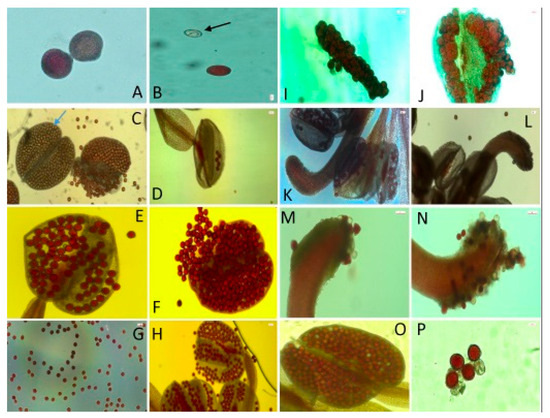
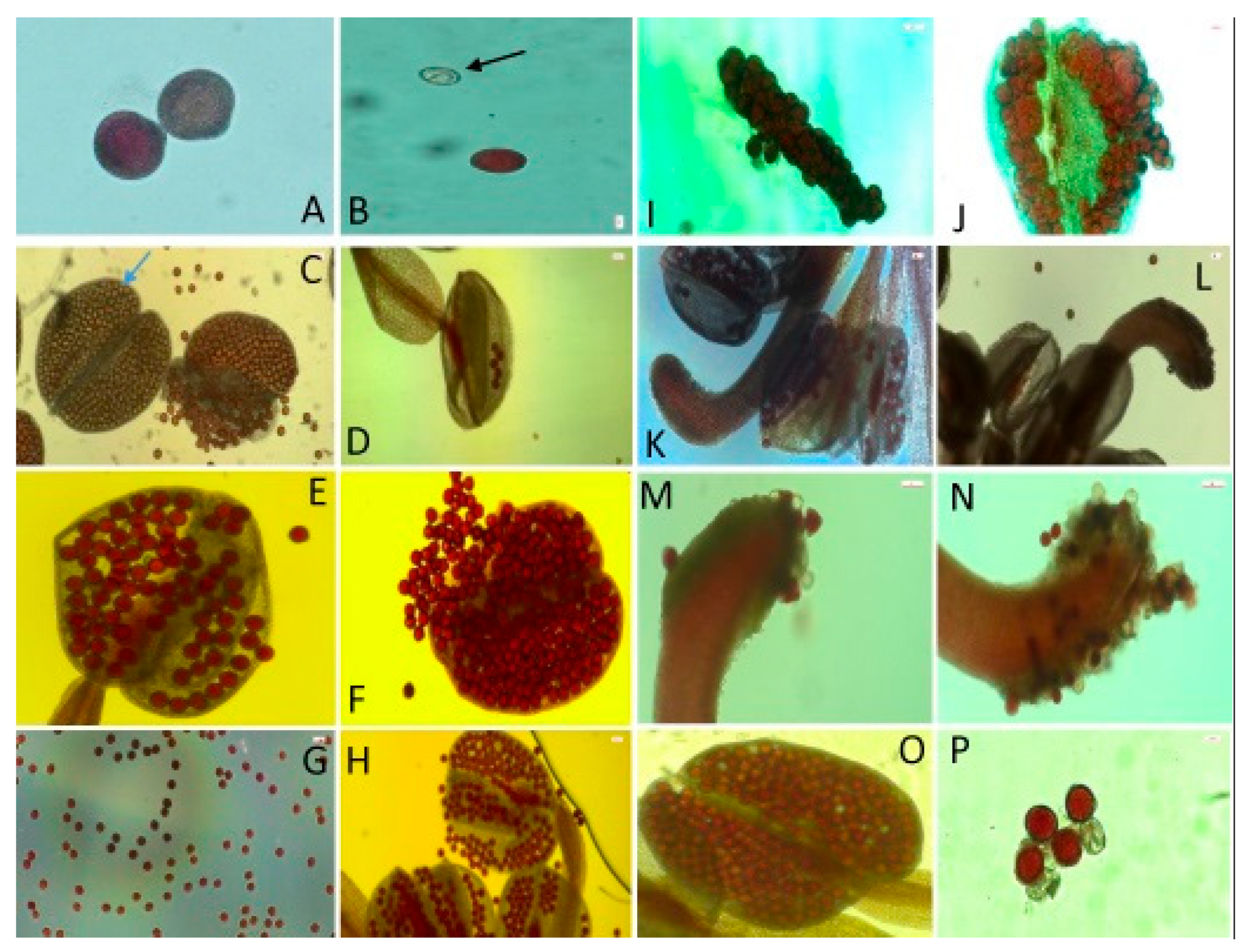
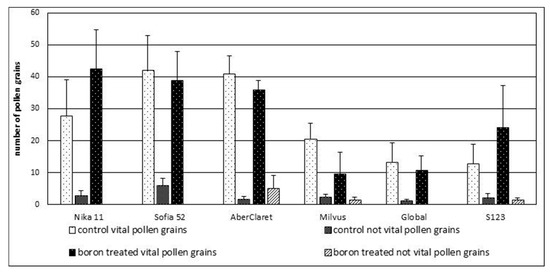
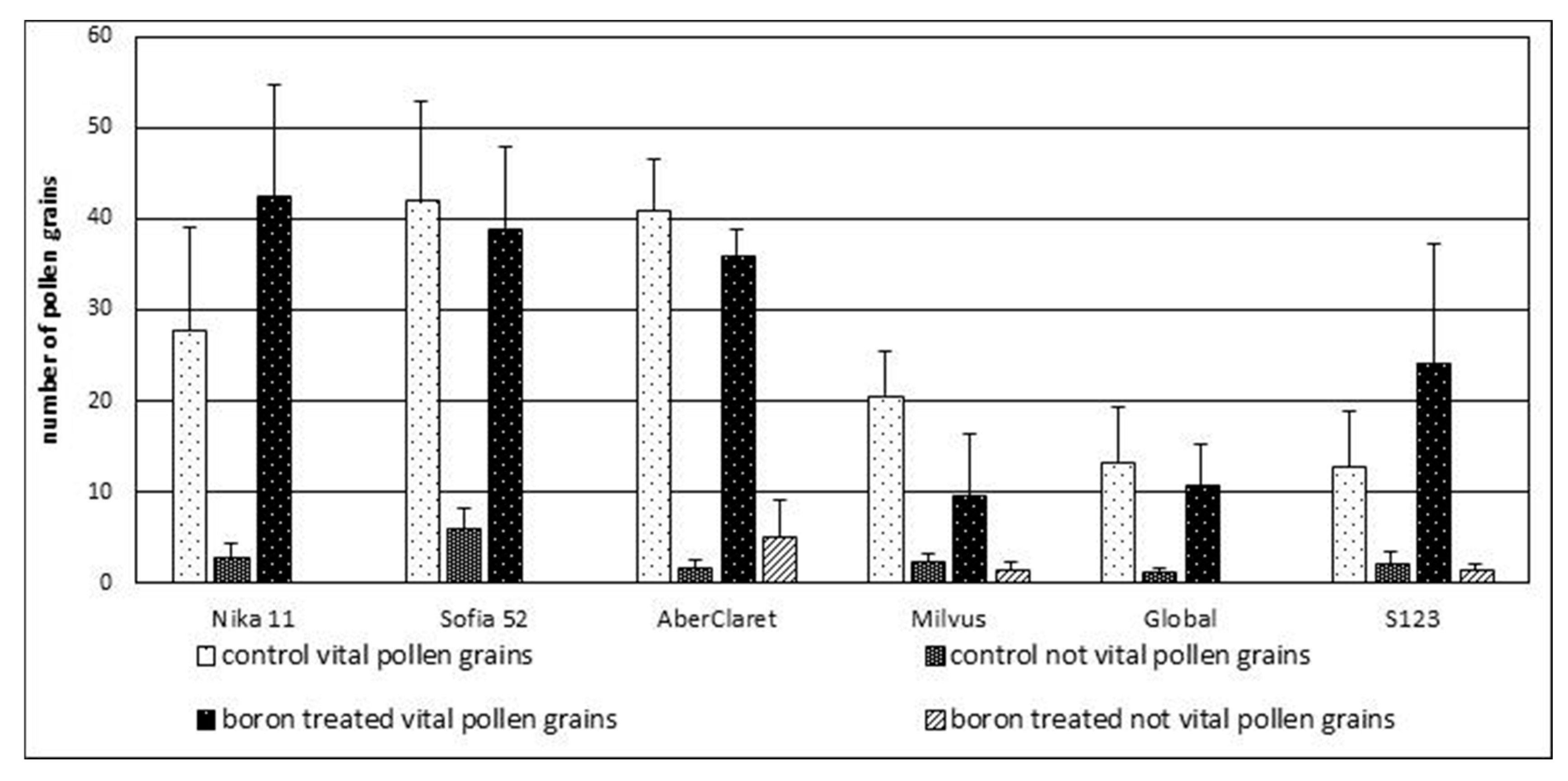
The florets were collected from early and mature flower heads from the field plants during May and June. The florets were fixed and colored 24 h before microscopic observations (as described in the MM section). The viable pollen grains possessed a ruby-red color, and non-viable ones were brown to orange in color, Figure 3A. Uncolored pollen grains were also observed (Figure 3B). The number of pollen grains was assessed by counting only free viable and non-viable pollen grains observed on the microscopic fields. The observation of pollen in cv. Nika 11 showed the presence of not opened anthers with non-viable pollen grains in untreated flowers, while the anthers collected from boron-treated florets were almost empty (Figure 3C,D). Nevertheless, pollen grains stuck on the pistils were detected on both types of samples, treated and untreated, as shown in Figure 2A,B. More viable pollen grains were counted from boron-treated samples (Figure 4). A small number of non-viable pollen grains from the controls were detected. In cv. Sofia 52, the anthers of early flowers, treated and untreated, were full of viable pollen grains (Figure 3E,F). The mean number of pollen grains from boron-treated and untreated samples was almost equal. A low number of non-viable pollen grains were detected in controls (Figure 4). For AberClaret cv., the anthers of florets collected from early flower heads untreated with boron were almost empty, and a lot of free pollen grains were observed. For the boron-treated samples, anthers were full of pollen grains, and pollen grains stuck together in the anthers and outside (Figure 3G–J). More viable pollen grains were detected in controls than in boron treated. Non-viable pollen grains were observed in both controls and boron-treated plants (Figure 4). In contrast to the other three cultivars, Milvus exhibited a reduced pollen grain count, a tendency that remained consistent regardless of foliar boron application. In both early and mature flowers, boron-treated and untreated, empty anthers with pollen grains on the pistils were observed, but there was also a lack of pollen grains on the pistils. Non-viable pollen grains were counted in both treated and untreated florets (Figure 3K,L and Figure 4). In cv. Global, the number of pollen grains in the control samples was lower than that in boron-treated samples, but more pollen grains adhered to the pistils of boron-treated florets (Figure 3M,N). Non-viable pollen grains were observed in the control samples (Figure 4). A low amount of pollen grains was counted in the control florets of cv. S123. The anthers, full of viable pollen grains, were observed, and pistils had either none or very few pollen grains adhered to them. The boron-treated samples displayed empty anthers and a lack of pollen grains on the pistils. Viable, non-viable, and not-developed pollen grains were observed in both types of samples, boron-treated and untreated (Figure 3O,P and Figure 4).
Figure 3.
Observation of pollen viability. (A) viable pollen grain; (B) non-viable pollen grain, arrow (C) cv. Nika 11 closed anther with non-viable pollen grains, blue arrow, (D) cv. Nila 11 open empty anther from born treated florets, (E,F) cv. Sofia 52 anthers from early flowers, treated and untreated with boron, full of pollen grains, (G,H) cv. AberClaret viable pollen grains free and in anther from early flower heads, untreated with boron (I,J) cv. AberClaret viable pollen grains of boron-treated samples, stuck together outside and in the anthers, (K,L) cv. Milvus pistils without pollen grains in boron untreated and treated samples, (M,N) cv. Global, pollen grains in the pistil of boron not-treated and boron-treated samples, (O,P) cv. S123 viable and non-viable, and not-developed pollen grains in both types of samples, untreated and boron-treated.
Figure 4.
Number of free viable and non-viable pollen grains counted in untreated and boron-treated samples of six investigated cvs. Data represent mean value ± SD.
3.3. Assessment of Collected Green and Dry Mass and Content of Nitrogen in Boron-Treated and Untreated Clover Cultivars
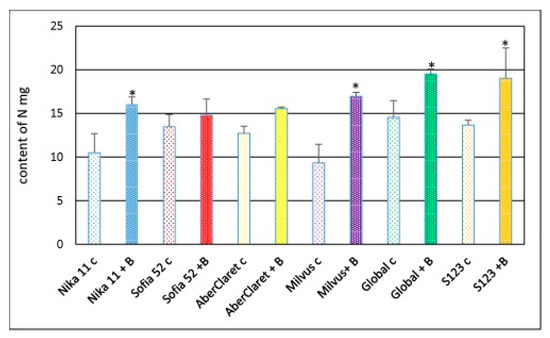
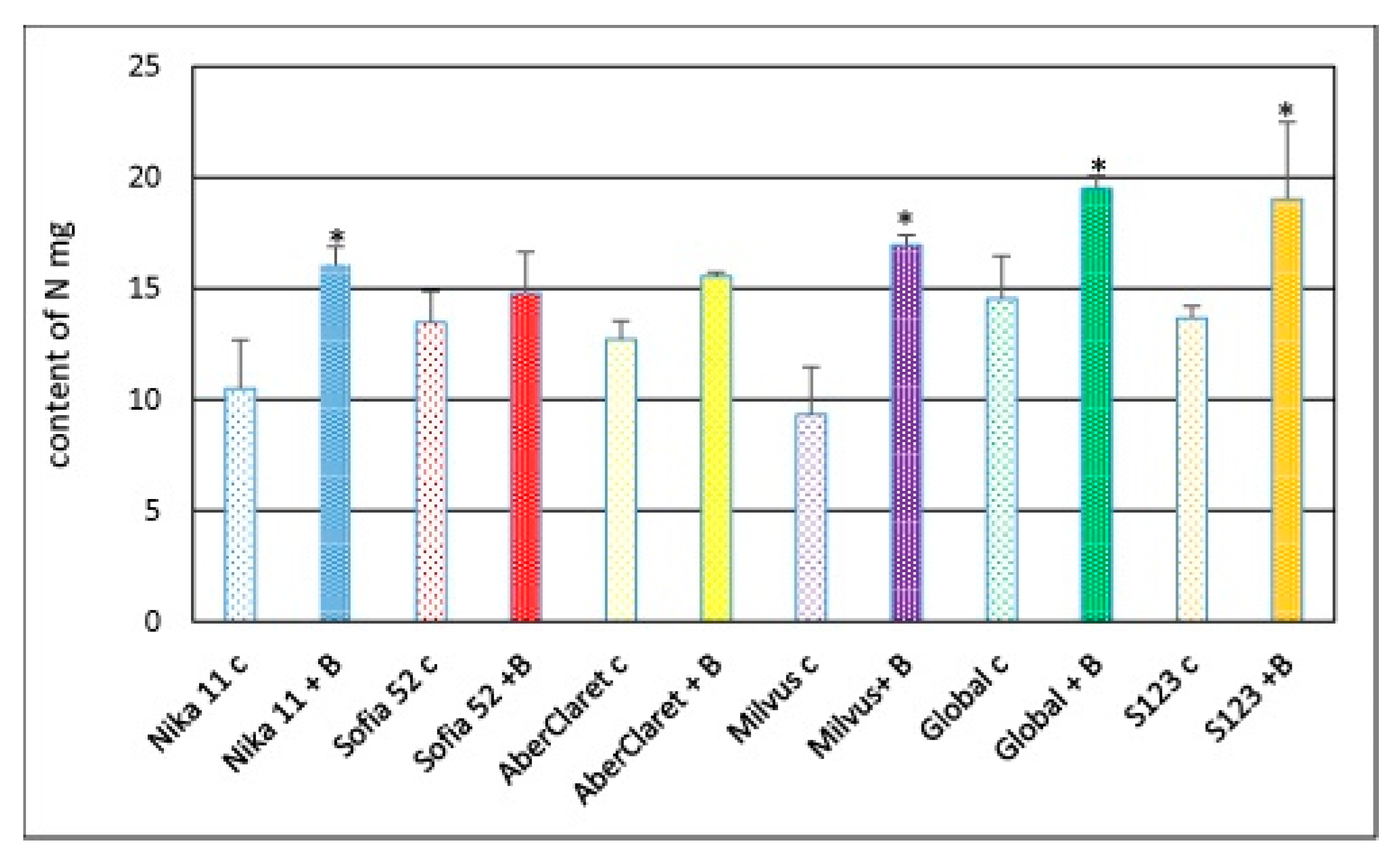
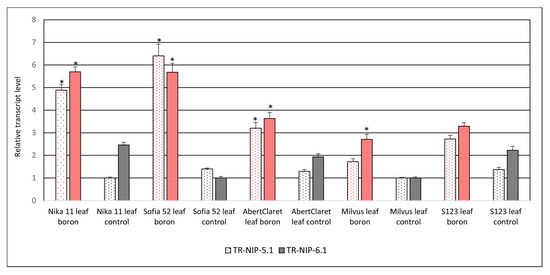
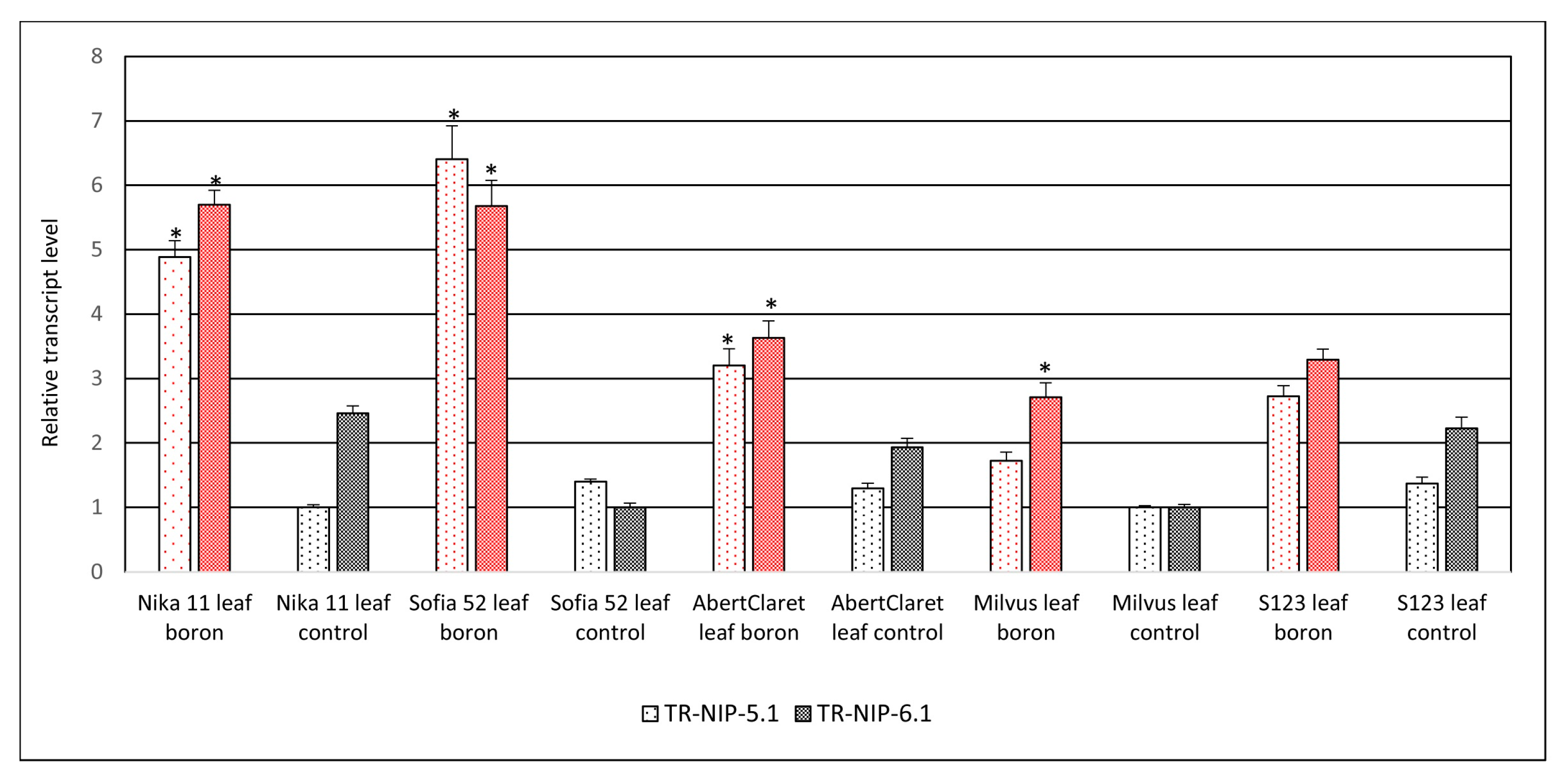
During the year 2025, the green biomass of boron-treated and untreated plants was collected twice on 20 May and 17 June. The data collected from the fresh and dry weight of the green biomass are shown in Table S3. The fresh and dry weight of the green mass of boron-treated plants during I cut in May was significantly higher (p < 0.05) in 4 of the tested cvs. Nika 11, AberClaret, Global and S123. In the cvs. Sofia 52, and Milvus, the weight of the fresh and dry mass was higher in the control plants. Assessment of the data collected from the second cut on 17 June showed that the fresh weight was almost equal in Nika 11, Sofia 52 and Milvus for boron-treated and untreated plants, and was less in boron-treated in cv. AberClaret and in cv. Global. In addition, significantly higher fresh green mass was collected from boron-treated plants of cv. S123. During the second cut, leaf samples from boron-treated and untreated plants were taken for nitrogen content measurement. The results are displayed in Figure 5. The content of N detected in boron-treated samples was higher in all six investigated cvs. The difference in N content was significant (p < 0.05) for the cvs. Nika 11, Milvus, Global and S123. Additionally, the transcript level of two boron transporters, TprNIP5;1 and TprNIP 6;1, was evaluated in green leaves detached from boron-treated and untreated plants during the second cut. The results for the expression profiles are presented in Figure 6. Transcript level of both transporters was higher in all 5 cvs. tested boron-treated leaves (red bars), a significant difference (p < 0.05) was found in the cvs. Nika 11, Sofia 52, AberClaret and Milvus (Figure 6).
Figure 5.
Content of N in mg in leaves detached from untreated and boron-treated plants. Data represent mean value ± SD. Asterisks denote a statistically significant difference * p < 0.05.
Figure 6.
Transcript level of TprNIP5;1 and TprNIP6;1 measured in leaves from untreated and boron-treated plants. Data represent mean value ± SE. Asterisks denote a statistically significant difference * p < 0.05.
3.4. Seed Yield, Seed Germination Ability and Seedlings Vigor
The summer of 2025 was the driest since 1930. The monthly precipitation for June was 33 mm (78 mm is the norm), July was characterized by 17 mm precipitation (63 mm is the norm) and August had 22.6 mm (55 mm is the norm). In June, July, and August, heat waves were recorded in almost the entire plain and semi-mountainous part of the country. In July 2025, temperatures above 40 °C were more frequent and widespread. Seed formation took place in conditions of an extremely hot summer. The quantities of collected seeds were presented as a pool of 6 independent plants treated and untreated with boron. The quantity of collected seeds is shown in Table 1. A positive effect of the foliar boron application was observed in the cv. Sofia 52, where the amount of collected seeds from the pool of 6 plants treated with boron was 6.56 g, while those from the pool of 6 control plants were 4.94 g. The germination percentage of the collected seeds was assessed for the cvs. Sofia 52, and Milvus. The seeds were sterilized and sown on basal MS medium. 5 days later, 24% of the seeds from the Milvus control had germinated, and 35% of the seeds from boron-treated plants had germinated. In Sofia 52, the germination percentage was 8.9% in seeds collected from control plants and 20% of seeds collected from boron-treated plants. Seven days after sowing of seeds on MS basal medium, the germination percentage was increased with 1% in all tested samples. No difference in germination percentage was observed on day 14th. Observations on the obtained seedlings 14 days after sowing on MS basal medium in both cvs. showed seedlings with more vigor developed from seeds collected from boron-treated plants (Figure S2).
Table 1.
The quantity of collected seeds from plants treated with boron and controls.
4. Discussion
4.1. Transcript Analyses and Pollen Viability
The current investigation was performed in the frame of the “Legume generation” project WP 6–“Clover innovation” community /IC/. One of the questions that our Clover IC aims to answer is the low seed yield due to poor pollen viability in red clover. The task faced by the Bulgarian team was to investigate the effect of boron foliar application on the cultivation of six commercial red clover cultivars under the environmental conditions of South East Europe. The soil type of the experimental field is alluvial-meadow, and the content of boron was measured at the end of May. The measurement of the micronutrients in the soil samples was performed according to the ISO:22036:2024 [33]. The content of the boron is presented in Table S2. According to the data on boron content in soil samples, it could be assumed that the experimental field is well supplied with boron. Those data also confirm that foliar application of boron does not allow the accumulation of this element in the soil.
Our investigation was focused on the assessment of the positive effect of boron application on the transcript level of genes related to the flower, pollen, and pollen tube development, and boron transport; pollen viability and development, the amount of fresh and dry weight of collected green mass, the content of nitrogen in leaves, and the total amount of harvested seed. Based on our previous experience with model plants M. truncatula and A. thaliana, we selected TprARF17 and TprAPETALA3, and transcriptomic analyses were performed. The two TprWATs and four TprNIPs genes were selected following the reported data of Kovi et al. (2017) [34] for the differentially expressed genes during flowering and seed setting in tetraploid red clover. ARF17 and APETALA3 are directly involved in flower, stamen, and anther development. The performed transcript analyses of boron-treated and untreated flowers indicate a significantly higher level of expression of TprARF17 in mature boron-treated flowers in all tested cvs. except S123, where the expression level was almost equal in both types of samples (Figure 1). The increased expression of this gene confirms the positive effect of boron application on anthers and pollen development. These data also supported the highest expression of the main boron transporter in the anthers, TprNIP7;1, and high expression of the TprWAT1 in mature boron-treated flowers. The WAT1 is responsible for auxin homeostasis in the cell. Auxin activates ARF17, which is involved in the anther opening and release of pollen grains [22,23,25,26]. We were able to detect a correlation in the expression levels of TprARF17, TprWAT1, TprNIP7;1, in mature boron-treated flowers from the cvs. Nika 11, Sofia 52, Milvus, Global, where these genes maintain high transcript levels. The results collected for pollen viability and count were consistent with the results of the transcript levels in cvs. Nika 11 and Sofia 52. The microscopic observation of pollen and pollen tube development also confirms more viable pollen grains stuck on the pistil and the development of pollen tubes in boron-treated samples. This finding is well documented in all tested cvs. (Figure 2). Altogether, data from transcript analyses confirm the positive effect of boron treatment on flowers and anthers development, anther dehiscence and pollen viability. The expression profiles of two boron transporters, TprNIP5;1 and TprNIP6;1 [31], differ among the tested cvs. Significantly higher expression of boron transporter TprNIP6;1 was detected in boron-treated flowers of cvs. Nika 11, Global and S123, while the expression of TprNIP5;1 was almost equal in both types of samples or higher in boron untreated flowers. The latest information about the boron regulatory mechanism in plants confirms enhanced transcript level of NIP5;1 in the condition of boron limitation [31], which is not the case in our experimental field. NIP6;1 gene encoding a boric channel protein, which preferentially transports boron to the young growing tissues [17]. Obviously, the expression of boron transporters is more genotype-specific and less dependent on the boron treatment. Nevertheless, the results collected on the transcript levels of two boron transporters, TprNIP5;1 and TprNIP6;1, showed that even in the condition of well-supplied soil with boron, the necessity of this nutrient during the developmental processes like flowering, fruit set, and seed formation leads to upregulation of the transcript level of NIP5;1 and NIP6;1. The data collected for pollen viability and count showed the positive influence of boron foliar treatment in cvs. Nika 11, Sofia 52, S123, where more viable pollen grains were detected. The same data also confirm the absence of non-viable pollen grains in boron-treated flowers of cvs. Nika11, Sofia 52, Global (Figure 4).
4.2. Effect of Boron on Yield of a Green Mass, Total N Content in Leaves and Seed Yield
Further analyses on fresh and dry weight of a green biomass collected after the first cut in May also confirm the positive influence of boron treatment. The fresh and dry weight of the green mass of boron-treated plants was significantly higher (p < 0.05) in 4 of the tested cvs. Nika 11, AberClaret, Global and S123. The study of Tomic et al. 2015 [10] reports a positive influence of foliar application of boron on yield components and seed yield in 4 red clover cultivars. In the current study, we were able to detect the positive influence of boron treatment on total N content in leaves. Significantly higher N content was traced in cvs. Nika11, Milvus, Global, and S123, and the level of total N was higher in the other two cvs. Sofia 52, and AberClaret. These data were supported by the measured transcript levels of two boron transporters, TprNIP5;1 and TprNIP6;1, in leaves. Significantly higher expression levels were detected in boron-treated leaves of the cvs. Nika 11, Sofia 52, AberClaret, and Milvus (Figure 6). Data related to the effect of boron application on the quantity of seeds collected from boron-treated and untreated plants confirm its positive effect only in cv. Sofia 52. In this cv. the amount of seeds collected from boron-treated plants was higher. Boron application enhanced the seed germination percentage with 11% and seedling vigor of the Milvus and Sofia 52 cultivars.
5. Conclusions
This research was focused on the assessment of the positive effect of boron application on the transcript level of genes related to the flower, pollen, and pollen tube development, and boron transport; pollen viability and development, the amount of fresh and dry weight of collected green mass, the content of nitrogen in leaves, and the total amount of harvested seed. The obtained results confirm correlation in the expression level of TprARF 17, Tpr-WAT1, TprNIP7;1 in mature boron-treated flowers in the varieties Nika 11, Sofia 52, Milvus and Global. The established data from pollen count and viability, and pollen tube growth, strongly corroborated the transcriptional profiles observed in the Nika 11, Sofia 52 and Global cultivars. Boron treatment also positively affects the fresh and dry biomass collected after I and II cuts in May and June. A positive correlation was established between increased levels of total N in leaves treated with boron compared to controls, which aligns with the elevated expression of two TprNIP genes 5;1 and 6;1 responsible for the transport of boron and ammonia. The applied boron treatment positively affected seed yield only in one of the tested cvs.—Sofia 52. The cv. Sofia 52 is an old Bulgarian cv. created for the climate specificity of Bulgaria, characterized by a very hot and dry Summer. Germination percentage of seeds collected from boron-treated plants of cvs. Sofia 52 and Milvus were higher than in the controls, and in vitro developed seedlings possessed better vigor. Altogether, the collected data confirm that the foliar application of boron positively affects pollen viability and plant development in all investigated cultivars under the cultivation conditions of South East Europe. We also found that applied micronutrient treatment is genotype-specific, but could be recommended in red clover cultivation in regions with a hot and dry summer.
Supplementary Materials
The following supporting information can be downloaded at: https://www.mdpi.com/article/10.3390/agriculture16060681/s1. Figure S1: Red clover in the field. (A) Stage of flower heads for boron application (B) early flower head, (C) mature flower head, (D) independent clover plants in row; Figure S2: Germinating seeds cv. Milvus collected from boron-treated and untreated plants; Table S1: Sequence of primers used; Table S2: Content of boron in soil samples; Table S3: Fresh and dry weight of green mass /g/ collected after first and second cut.
Author Contributions
A.I. conceptualized the study; A.I., M.R. (Miglena Revalska), M.R. (Mariana Radkova) and A.L. collected and analyzed the data; and A.I. wrote the manuscript; M.R. (Miglena Revalska), M.R. (Mariana Radkova), A.L. and G.N. provided a thorough review of the manuscript. All authors have read and agreed to the published version of the manuscript.
Funding
This research was funded by the project “Legume Generation” ID 101081329, funded by EU and supported by the Centre of Competence “Sustainable Utilization of Bioresources and Waste of Medicinal and Aromatic Plants for Innovative Bioactive Products” (BIORESOURCES BG) project BG16RFPR002-1.014-0001, funded by the Program “Research, Innovation and Digitization for Smart Transformation” 2021–2027, co-funded by the EU.
Institutional Review Board Statement
Not applicable.
Data Availability Statement
All the original contributions presented in the study are included in the article; further inquiries could be sent to the corresponding author.
Acknowledgments
The authors would like to thank technicians Kety Krastanova and Sonia Ivanova for their help in supporting experimental work.
Conflicts of Interest
The authors declare no conflicts of interest.
References
- McKenna, P.; Cannon, N.; Conway, J.; Dooley, J.; Davies, W.P. Red clover (Trifolium pratense) in conservation agriculture: Acompelling case for increased adoption. Int. J. Agric. Sustain. 2018, 16, 342–366. [Google Scholar]
- Tripathi, N.; Chaudhary, S. A review on chemical and biological activity of Trifolium pretense. PharmaTutor 2014, 2, 93–101. [Google Scholar]
- Sabudak, T.; Guler, N. Trifolium L.—A review on its phytochemical and pharmacological profile. Phyther. Res. 2009, 23, 439–446. [Google Scholar]
- Vleugels, T.; Amdahl, H.; Roldán-Ruiz, I.; Cnops, G. Factors Underlying Seed Yield in Red Clover: Review of Current Knowledge and Perspectives. Agronomy 2019, 9, 829. [Google Scholar] [CrossRef] [Scilit]
- Tucak, M.; Čupić, T.; Popović, S.; Stjepanović, M.; Gantner, R.; Meglič, V. Agronomic Evaluation and Utilization of Red Clover (Trifolium pratense L.) Germplasm. Not. Bot. Horti Agrobot. Cluj-Napoca 2009, 37, 206–210. [Google Scholar]
- Lilay, G.H.; Thiébaut, N.; du Mee, D.; Assunção, A.G.L.; Schjoerring, J.K.; Husted, S.; Persson, D.P. Linking the key physiological functions of essential micronutrients to their deficiency symptoms in plants. New Phytol. 2024, 242, 881–902. [Google Scholar] [CrossRef] [Scilit]
- Blevins, G.D.; Lukaszewski, K.M. Boron in plant structure and function. Annu. Rev. Plant Biol. 1998, 49, 481–500. [Google Scholar]
- Dordas, C. Foliar Boron Application Improves Seed Set, Seed Yield and Seed Quality of Alfalfa. Agron. J. 2006, 98, 907–913. [Google Scholar] [CrossRef] [Scilit]
- Anderson, N.P.; Garbaçik, C.J.; Chastain, T.G.; Elias, S. Boron effects on red clover seed production and quality. Seed Prod. Res. 2019, 9, 9–11. [Google Scholar]
- Tomić, D.; Stevović, V.; Đurović, D.; Madić, M.; Bokan, N.; Stanisavljević, R. Boron application in red clover (Trifolium pratense L.) seed production. Ir. J. Agric. Food Res. 2015, 54, 59–63. [Google Scholar] [CrossRef] [Scilit]
- Stoltz, E.; Wallenhammar, A.-C. Influence of boron in organic red clover (Trifolium pratense L.) seed production. Grass Forage Sci. 2014, 69, 285–293. [Google Scholar] [CrossRef] [Scilit]
- Roberts, D.M.; Routray, P. The nodulin 26 intrinsic protein subfamily. In Plant Aquaporins: From Transport to Signaling; Springer International Publishing AG: Cham, Switzerland, 2017; pp. 267–296. [Google Scholar]
- Danielson, J.A.; Johanson, U. Phylogeny of major intrinsic proteins. In MIPs and Their Role in the Exchange of Metalloids; Advances in Experimental Medicine and Biology; Springer: New York, NY, USA, 2010; Volume 679, pp. 19–31. [Google Scholar] [CrossRef] [Scilit]
- Wallace, I.S.; Choi, W.G.; Roberts, D.M. The structure, function and regulation of the nodulin 26-like intrinsic protein family of plant aquaglyceroporins. Biochim. Biophys. Acta (BBA)–Iomembranes 2006, 1758, 1165–1175. [Google Scholar] [CrossRef] [Scilit]
- Kobayashi, M.; Matoh, T.; Azuma, J. Two chains of rhamnogalacturonan II are cross-linked by borate-diol ester bonds in higher plant cell walls. Plant Physiol. 1996, 110, 1017–1020. [Google Scholar] [CrossRef] [Scilit]
- O’Neill, M.A.; Ishii, T.; Albersheim, P.; Darvill, A.G. Rhamnogalacturonan II: Structure and function of a borate cross-linked cell wallpectic polysaccharide. Annu. Rev. Plant Biol. 2004, 55, 109–139. [Google Scholar] [CrossRef] [Scilit]
- Tanaka, M.; Wallace, I.S.; Takano, J.; Roberts, M.D.; Fujiwara, T. NIP6;1 is a boric acid channel for preferential transport of boron to growing shoot tissues in Arabidopsis. Plant Cell 2008, 20, 2860–2875. [Google Scholar] [CrossRef] [Scilit]
- Routray, P.; Li, T.; Yamasaki, A.; Yoshinari, A.; Takano, J.; Choi, W.G.; Sams, C.E.; Roberts, D.M. Nodulin intrinsic protein 7;1 is a tapetal boric acid channel involved in pollen cell wall formation. Plant Physiol. 2018, 178, 1269–1283. [Google Scholar] [CrossRef] [Scilit]
- Di Giorgio, J.A.P.; Bienert, G.P.; Ayub, N.D.; Yaneff, A.; Barberini, M.L.; Mecchia, M.A.; Amodeo, G.; Soto, G.C.; Muschietti, J.P. Pollen Specific Aquaporins NIP4;1 and NIP4;2 are Required for Pollen Development and Pollination in Arabidopsis thaliana. Plant Cell 2016, 28, 1053–1077. [Google Scholar] [CrossRef] [Scilit] [PubMed]
- Revalska, M.; Vassileva, V.; Zehirov, G.; Goormachtig, S.; Iantcheva, A. Assessment of the function and expression pattern of auxin response factor B3 in the model legume plant Medicago truncatula. Turk. J. Biol. 2017, 41, 66–76. [Google Scholar] [CrossRef] [Scilit]
- Revalska, M.; Vassileva, V.; Zehirov, G.; Iantcheva, A. Evaluation of the function and expression pattern of Medicago truncatula auxin response factor B3 after heterologous expression in Arabidopsis thaliana. Bulg. J. Agric. Sci. 2016, 22, 783–793. [Google Scholar]
- Cecchetti, V.; Altamura, M.M.; Brunetti, P.; Petrocelli, V.; Falasca, G.; Ljung, K.; Costantino, P.; Cardarelli, M. Auxin controls Arabidopsis anther dehiscence by regulating endothecium lignification and jasmonic acid biosynthesis. Plant J. 2013, 74, 411–422. [Google Scholar] [CrossRef] [Scilit]
- Xu, X.-F.; Wang, B.; Feng, Y.-F.; Xue, J.-S.; Qian, X.-X.; Liu, S.-Q.; Zhou, J.; Yu, Y.-H.; Yang, N.-Y.; Xu, P.; et al. AUXIN RESPONSE FACTOR17 directly regulates MYB108 for anther dehiscence. Plant Physiol. 2019, 181, 645–655. [Google Scholar] [CrossRef] [Scilit]
- Hsu, H.-F.; Hsu, W.-H.; Lee, Y.-I.; Mao, W.-T.; Yang, J.-Y.; Li, J.-Y.; Yang, C.-H. Model for perianth formation in orchids. Nat. Plants 2015, 1, 15046. [Google Scholar] [CrossRef] [Scilit]
- Ranocha, P.; Dima, O.; Nagy, R.; Felten, J.; Corratgé-Faillie, C.; Novák, O.; Morreel, K.; Lacombe, B.; Martinez, Y.; Pfrunder, S.; et al. Arabidopsis WAT1 is a vacuolar auxin transport facilitator required for auxin homoeostasis. Nat Commun. 2013, 4, 2625. [Google Scholar] [CrossRef] [Scilit]
- Ranocha, P.; Denancé, N.; Vanholme, R.; Freydier, A.; Martinez, Y.; Hoffmann, L.; Köhler, L.; Pouzet, C.; Renou, J.-P.; Sundberg, B.; et al. Walls are thin 1 (WAT1), an Arabidopsis homolog of Medicago truncatula NODULIN21, is a tonoplast-localized protein required for secondary wall formation in fibers. Plant J. 2010, 63, 469–483. [Google Scholar] [CrossRef] [Scilit]
- Peterson, R.; Slovin, J.P.; Chen, C. A simplified method for differential staining of aborted and non-aborted pollen grains. Int. J. Plant Biol. 2010, 1, e13. [Google Scholar] [CrossRef] [Scilit]
- ISO 8466-1:2021; Water Quality—Calibration and Evaluation of Analytical Methods—Part 1: Linear Calibration Function. International Organization for Standardization: Geneva, Switzerland, 2021.
- Revalska, M.; Zehirov, G.; Vassileva, V.; Iantcheva, A. Is the auxininflux carrier LAX3 essential for plant growth and developmentin the model plants Medicago truncatula, Lotus japonicus and Arabidopsis thaliana? Biotechnol. Biotechnol. Equip. 2015, 29, 786–797. [Google Scholar]
- Murashige, T.; Skoog, F. A revised medium for rapid growth and bio assays with tobacco tissue cultures. Physiol. Plant. 1962, 15, 473–497. [Google Scholar] [CrossRef] [Scilit]
- Zhou, D.; Luo, R.; Ma, B.; Chen, X. Transport and regulatory mechanisms of boron in plants. Front. Plant Sci. 2025, 16, 1653484. [Google Scholar] [CrossRef] [Scilit] [PubMed]
- Li, T.; Ghoi, W.-G.; Wallace, I.S.; Baudry, J.; Roberts, D.M. Arabidopsis thaliana NIP7;1: An anther-specific boric acid transporter of the aquaporin superfamily regulated by an unusual tyrosine in helix 2 of the transport pore. Biochemistry 2011, 50, 6633–6641. [Google Scholar] [CrossRef] [Scilit]
- ISO:22036:2024; Environmental Solid Matrices—Determination of Elements Using Inductively Coupled Plasma Optical Emission Spectrometry (ICP-OES). International Organization for Standardization: Geneva, Switzerland, 2024.
- Kovi, M.R.; Amdahl, H.; Alsheikh, M.; Rognli, O.A. De novo and reference transcriptome assembly of transcripts expressed during flowering provide insight into seed setting in tetraploid red clover. Sci. Rep. 2017, 7, 44383. [Google Scholar] [CrossRef] [Scilit] [PubMed]

Disclaimer/Publisher’s Note: The statements, opinions and data contained in all publications are solely those of the individual author(s) and contributor(s) and not of MDPI and/or the editor(s). MDPI and/or the editor(s) disclaim responsibility for any injury to people or property resulting from any ideas, methods, instructions or products referred to in the content. |
© 2026 by the authors. Licensee MDPI, Basel, Switzerland. This article is an open access article distributed under the terms and conditions of the Creative Commons Attribution (CC BY) license.