


Abstract
Straw biochar has the potential to improve rice productivity and mitigate greenhouse gas emissions. However, its synergistic regulatory effects on yield performance and methane (CH4) emissions in double-cropping rice systems, especially under the intermediate climate warming scenario, remain poorly understood. A two-year field experiment was carried out from 2022 to 2023 with four treatments: ambient temperature with direct straw incorporation (CKS), ambient temperature with straw biochar incorporation (CKB), warming with direct straw incorporation (WS), and warming with straw biochar incorporation (WB). Rice yield and yield components, CH4 emission characteristics, soil physicochemical properties, and functional microbial abundance were systematically determined. The results showed that for early rice, compared with CKS, CKB maintained a stable yield, while WS had a significantly reduced yield of 7.01% (p < 0.05); compared with WS, WB had an increased yield of 4.65% (p > 0.05), which was mainly attributed to the increases in grain weight, dry matter accumulation from heading to maturity, and leaf SPAD value after heading. For late rice, compared with CKS, CKB had no significant difference in yield, while WS had a decreased yield of 8.47% (p < 0.05); compared with WS, WB had a significantly increased yield of 6.47% (p < 0.05), mainly due to the increases in spikelets per panicle, dry matter accumulation at tillering, as well as the number of secondary branches and spikelets on secondary branches. For CH4 emissions, compared with CKS, CKB significantly reduced CH4 emissions and yield-scaled CH4 emissions by 48.67% (p < 0.05) and 47.75% (p < 0.05) in early rice, and by 35.22% (p < 0.05) and 37.22% (p < 0.05) in late rice, respectively. Compared with WS, WB significantly reduced CH4 emissions and yield-scaled CH4 emissions by 57.81% (p < 0.05) and 59.61% (p < 0.05) in early rice, and by 42.55% (p < 0.05) and 46.09% (p < 0.05) in late rice, respectively. Correlation analysis revealed that CKB and WB reduced CH4 emissions by decreasing soil , DOC, and methanogen abundance in early rice, and by lowering DOC and methanogen abundance in late rice. In summary, straw biochar incorporation can significantly reduce CH4 emissions from double-cropping rice paddies under ambient temperature. Under the intermediate climate warming scenario, this practice can partially mitigate yield losses (significant in the late-rice season) and simultaneously lower CH4 emissions. It is an efficient agricultural management strategy adapted to climate warming, providing a key scientific basis and feasible technical pathways for sustainable production in double-cropping rice regions of South China.
1. Introduction
Climate warming is a critical environmental challenge facing humanity today. The Sixth Assessment Report of the Intergovernmental Panel on Climate Change reported that the global average surface temperature has risen by 1.1 °C relative to the pre-industrial period [1]. Climate-model projections further indicate that under the intermediate climate warming scenario (SSP2-4.5), the global mean temperature is expected to increase by 1.6–2.5 °C by the mid-21st century [1,2]. This will exert profound and irreversible impacts on agroecosystems, highlighting the urgency of developing climate-resilient agricultural practices [3]. Rice is one of the world’s most vital staple crops, feeding more than half of the global population [4]. The double-rice cropping system in southern China represents a core region for rice production, accounting for 34.0% of China’s total rice planting area and 28.6% of national rice yield, respectively [5]. This system plays an irreplaceable role in safeguarding national food security. Nevertheless, this typical cropping system is highly vulnerable to climate warming. Therefore, it is crucial to explore feasible optimization strategies for the double-cropping rice system to achieve stable and high yields under future climate warming.
Climate warming has become a key environmental factor limiting stable and high rice yields across China [6,7]. Numerous previous studies confirmed that climate warming accelerates rice growth stages, restricts photosynthate accumulation, reduces productive panicle number and seed setting rate, and ultimately causes substantial yield losses [8,9,10,11,12]. Meanwhile, warming alters paddy soil conditions as well as disturbing soil microbial activity and nutrient cycling within paddy ecosystems, thereby modifying methane (CH4) emissions from rice paddies [13,14]. Rice paddies constitute the dominant source of CH4 emissions from agricultural ecosystems, contributing 8% of global anthropogenic CH4 emissions [15]. CH4 has a global warming potential 28 times higher than carbon dioxide (CO2), highlighting its severe environmental impacts [1]. To date, extensive domestic and international research has explored the linkage between climate warming and paddy CH4 emissions. Recent findings reveal that warming does not produce consistent significant effects on paddy CH4 fluxes, and its regulatory patterns are largely dependent on ambient background temperature [13,14,16].
Crop straws are major by-products of agricultural production and are rich in nitrogen, phosphorus, potassium, and other nutrients required for crop growth. Straw incorporation has become the main straw utilization method in China due to its simple operation and excellent ability to improve soil fertility [17,18,19]. However, this agricultural practice also poses considerable environmental risks. Fresh straw is readily decomposed by soil microorganisms [17]. Following straw incorporation into paddy fields, the abundant substrates supplied for methanogens substantially promote CH4 emissions [19,20,21]. Under climate warming conditions, rising temperatures further accelerate straw decomposition and the mineralization of soil organic carbon, and thus strengthen the promoting effect of straw incorporation on CH4 emissions [22,23]. There is an obvious conflicting relationship between the advantages of straw incorporation (improving soil fertility and crop yield) and its disadvantage of increasing greenhouse gas emissions. This conflict greatly hinders the coordinated development of food security and ecological protection. Therefore, optimizing straw incorporation management to maintain soil fertility and high crop yield and reducing the promotion effect of straw incorporation on paddy CH4 emissions are essential. In particular, realizing the coordinated goal of stable crop yield and reduced greenhouse gas emissions under climate warming has become a key research focus and technical bottleneck in agricultural climate change research.
Straw biochar incorporation is a new method for straw resource utilization. This process converts crop straw into biochar via pyrolysis before applying it to farmland [24,25]. Straw-derived biochar is characterized by porous structures, stable carbon constituents, and strong nutrient retention capacity [26]. Its soil amendment can improve soil physicochemical properties and modulate soil microbial communities, thereby simultaneously increasing crop yields and reducing greenhouse gas emissions [26,27,28,29]. Existing studies show that straw biochar amendment improves soil water and nutrient retention and optimizes nutrient supply to increase rice grain yield [29,30]. Meanwhile, it reduces paddy CH4 emissions by improving soil aeration, suppressing methanogen activity, and boosting the growth of methane-oxidizing bacteria [29,30,31]. In addition, climatic factors, particularly temperature, regulate crop growth, nutrient absorption, and phenological development [29,32,33]. Such temperature-driven shifts may further modify the functional performance of biochar [29,33]. However, most current studies are carried out under ambient temperature. To the best of our knowledge, scarcely any studies have explored the combined effects of straw biochar incorporation on double-rice yield and CH4 emissions under climate warming.
Accordingly, we hypothesized that the effects of straw biochar incorporation on rice yield and CH4 emissions differ between early and late rice, owing to fundamental differences in climatic conditions and rice phenology across growing seasons. Early rice grows during the transition from spring to summer (March–July), with gradually rising temperatures and relatively abundant rainfall. By contrast, late rice develops from summer to autumn (July–November), experiencing high initial temperatures followed by a gradual temperature decline. These divergent thermal conditions may affect the decomposition rate of straw biochar, soil nutrient availability, and the sensitivity of rice plants to warming. Specifically, we expected that late-rice yield would be more vulnerable to warming, because high temperatures during its early-growth stage (tillering and panicle differentiation) coincide with the period when rice is most sensitive to heat stress. Conversely, we anticipated that straw biochar incorporation would confer greater relative benefits to late rice, as it may mitigate nutrient competition induced by direct incorporation of fresh straw under high temperature conditions. We further hypothesized that the CH4 mitigation effect of straw biochar incorporation would be more pronounced under warming. Higher temperatures can accelerate microbial decomposition and increase substrate supply for methanogenesis, whereas biochar incorporation could constrain this temperature driven stimulation by reducing the availability of labile carbon substrates.
To test this hypothesis, a two-year fixed-site field experiment was carried out from 2022 to 2023 in a typical double-rice cropping system of South China. A free-air temperature increase (FATI) system was adopted to simulate the intermediate warming scenario and two straw management treatments were set up, including direct straw incorporation and straw biochar incorporation. Multiple indicators were systematically measured across all treatments, including rice yield and yield components, dry matter accumulation, paddy CH4 emissions, soil physicochemical properties, as well as the abundances of methanogens and methanotrophs. This study aimed to clarify the regulatory effects and potential mechanisms of straw biochar incorporation on yield performance and CH4 emissions of double rice under ambient temperature and climate warming conditions. The findings provide technical references for optimizing agricultural management practices to balance food security and ecological protection in double-rice cropping regions under current and future climate warming conditions.
2. Materials and Methods
2.1. Experimental Site
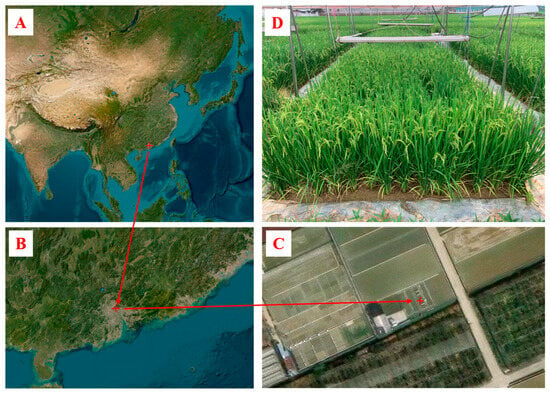
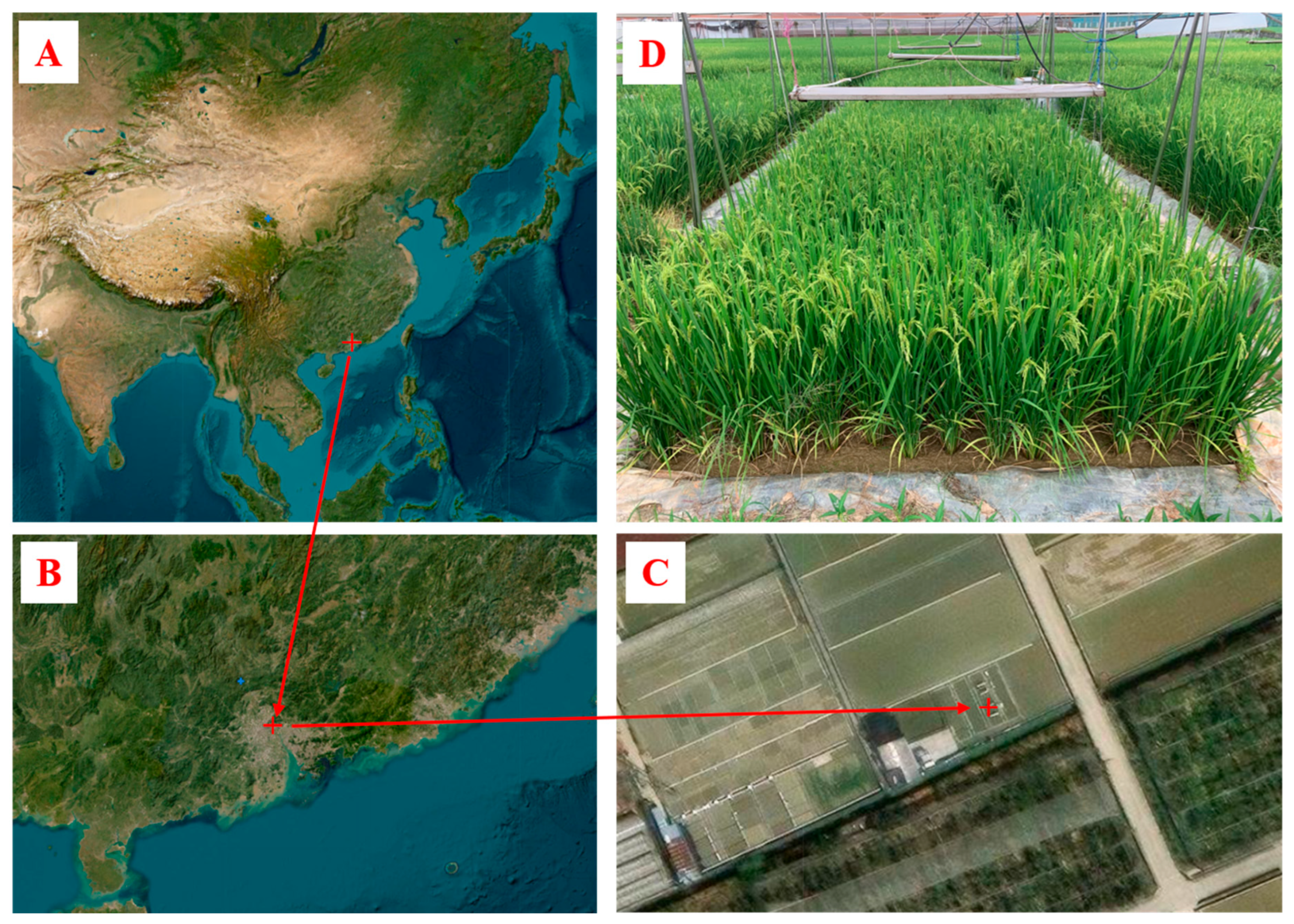
A two-year fixed-site field experiment was carried out from 2022 to 2023 at Dafeng Experimental Base of Guangdong Academy of Agricultural Sciences (23°09′ N, 113°22′ E; Figure 1A–C). This region has a subtropical monsoon climate. The daily average temperature, precipitation, and sunshine hours during the two experimental years are shown in Figure S1. Before the experiment, the basic physiochemical properties of topsoil (0–15 cm) were as follows: pH 5.6, soil organic matter 25.4 g kg−1, total nitrogen 1.12 g kg−1, representing medium soil fertility. According to the Chinese Soil Taxonomy (3rd edition), the experimental soil belongs to Stagnic Anthrosols.
Figure 1.
Satellite images of the experimental site obtained from Google Earth: (A) location of the study site within China (marked in red); (B) location within Guangdong Province (marked in red); (C) plot location at the Dafeng Experimental Base, Guangdong Academy of Agricultural Sciences (marked in red); and (D) representative field photograph of the experiment.
2.2. Test Materials
Yuehesimiao, a widely cultivated inbred indica rice variety in Guangdong Province, was used in this study. Straw biochar was derived from rice straw through pyrolysis. Briefly, rice straw was cut into approximately 10 cm segments, placed in stainless steel barrels, and carbonized in a muffle furnace. The pyrolysis process was performed at 500 °C with a heating rate of 15 °C min−1 and a holding duration of 2 h. The resulting biochar was cooled naturally prior to use. Only minor differences were observed in the physicochemical properties of biochar prepared in 2022 and 2023 (Table 1).
Table 1.
Physicochemical properties of straw biochar.
2.3. Experimental Design
The experiment adopted a split-plot design with warming treatment as the main plot and straw incorporation mode as the subplot, with three replicates for each treatment. A 40 cm wide waterproof ridge was built between adjacent plots to prevent cross-leakage of water and fertilizer. Two main plot levels were set: ambient temperature (no warming) and warming. A FATI system was used for continuous warming of the paddy ecosystem (Figure 1D). The FATI system is a well-established method for simulating future climate warming under field conditions and has been widely applied in warming experiments for rice ecosystems [8,11,12,13]. This system heats the rice canopy using infrared heaters suspended above the canopy. The warming ran day and night from rice transplanting until harvest, and the detailed operation was described by Yang et al. [12].
Two subplot levels were included: direct straw incorporation, and straw biochar incorporation. For direct straw incorporation, all straw from the previous rice crop was returned to the field after harvest. The biochar application rate for straw biochar incorporation was calculated based on the aboveground straw biomass of the previous crop multiplied by the biochar yield rate. The actual application rates are presented in Table 2. In total, four treatments were established: ambient temperature with direct straw incorporation (CKS), ambient temperature with straw biochar incorporation (CKB), warming with direct straw incorporation (WS), warming with straw biochar incorporation (WB). Each plot covered an area of 10.5 m2 (3.5 m long × 3.0 m wide).
Table 2.
Application rates of straw and biochar under different treatments in 2022 and 2023 (g m−2).
As shown in Figure S2, compared with the CKS and CKB treatments, the WS and WB treatments increased the canopy temperature by 2.0 °C in the early season and 2.0 °C in the late season of 2022, as well as by 1.8 °C in the early season and 1.9 °C in the late season of 2023. For soil temperature, the warming treatments increased the soil temperature by 1.0 °C and 0.7 °C in the early and late seasons of 2022, and by 0.9 °C and 1.1 °C in the early and late seasons of 2023, respectively.
2.4. Field Management
Both early- and late-rice seedlings were raised under nursery conditions and transplanted manually at a planting spacing of 19.8 cm × 16.5 cm. Three to four seedlings were planted per hill for early rice and two to three seedlings per hill for late rice. The sowing, transplanting, heading, and maturity dates of early and late rice in 2022 and 2023 are presented in Table S1.
Uniform high-yield local cultivation practices were applied to all treatments for water and fertilizer management [34,35]. Pure nitrogen was applied at 150 kg·hm−2 for both early and late rice, with the ratio of base fertilizer:tillering fertilizer:anicle fertilizer = 5:2:3. Phosphorus (P2O5) was supplied at 48 kg·hm−2 as base fertilizer only. Potassium (K2O) was applied at 180 kg·hm−2 with a base fertilizer:panicle fertilizer ratio of 6:4. Base fertilizer was applied two days before transplanting, tillering fertilizer seven days after transplanting, and panicle fertilizer at the second stage of panicle differentiation.
Water management followed local standard practices: shallow water for transplanting, thin water layer at tillering, field drainage for seedling control, shallow water during panicle initiation, and alternating wet and dry conditions during grain filling. Pests, weeds, and diseases were controlled uniformly following local production standards to avoid obvious biotic stress during rice growth.
2.5. Measurements
2.5.1. Grain Yield and Yield Components
At maturity, three representative sampling points were selected in each plot, with 20 consecutive rice hills surveyed at each point to count the number of panicles. Five representative hills were collected for indoor grain testing to determine spikelets per panicle, filled grain percentage, and grain weight. Forty hills were harvested from each plot for yield measurement, and the grain yield was converted to a standard moisture content of 13.5%.
2.5.2. Dry Matter Accumulation
At the tillering stage (25 days after transplanting), heading stage, and maturity stage, five representative rice plants were collected per plot and separated into stem-leaf and panicle fractions. Samples were deactivated at 105 °C for 30 min and dried at 75 °C to constant weight to record dry weight and to calculate total dry matter accumulation.
2.5.3. Leaf SPAD Value of Early Rice
During the heading stage of early rice in 2023, 20 panicles with consistent growth and uniform heading date were marked. SPAD values of the top first, second, and third leaves of marked panicles were measured using a SPAD-502 chlorophyll meter (SPAD-502 Plus, Konica Minolta, Tokyo, Japan) at 5, 10, 15, 20, and 25 days after heading, and average values were calculated.
2.5.4. Panicle Structure of Late Rice
At the heading stage of late rice in 2023, three rice hills with uniform growth were selected from each plot, and all panicles were picked. The following indicators were recorded: number of primary branches, degraded primary branches, secondary branches, degraded secondary branches, spikelets on primary branches, degraded spikelets on primary branches, spikelets on secondary branches, and degraded spikelets on secondary branches.
2.5.5. CH4 Emissions
Methane flux was measured using the static chamber–gas chromatography method [36]. Sampling was conducted once every 7 days between 9:00 and 11:00 in the morning. The stainless-steel static chamber was 50 cm × 50 cm × 50 cm, equipped with a fan and temperature sensor on the top. During each sampling, the chamber was placed on a fixed base in the paddy field and sealed. Gas samples were collected at 0, 10, 20, and 30 min after sealing. An Agilent 7890A gas chromatograph (Agilent Technologies, Santa Clara, CA, USA) was used to test CH4 concentration. Methane flux was calculated based on concentration changes, and the total seasonal CH4 emissions and methane emission intensity were further computed.
2.5.6. Soil Physiochemical Properties
Topsoil (0–15 cm) samples were collected from each plot at tillering, heading, and maturity stages of early and late rice in 2023 via the five-point mixing sampling method. Stones and plant residues were removed. A portion of fresh soil was stored under refrigeration for measuring extractable nitrogen and dissolved organic carbon (DOC). The remaining soil was air-dried and sieved for soil pH measurement.
Soil pH was determined by the potentiometric method at a soil–water ratio of 1:2.5. Extractable nitrogen ( and ) was extracted with 2 mol L−1 KCl solution and quantified by a flow injection analyzer (FIA star 5000, FOSS, Hillerød, Denmark). DOC was extracted with deionized water and measured by a total organic carbon analyzer (Multi N/C 3100, Jena AG, Jena, Germany).
2.5.7. Abundance of Functional Soil Microorganisms
Real-time quantitative PCR (qPCR) was applied to quantify the abundances of soil methanogens and methanotrophs. Fresh topsoil (0–15 cm) was sampled at the tillering stage of early and late rice in 2023, and total soil microbial DNA was extracted with commercial extraction kits. The functional marker genes mcrA (for methanogens) and pmoA (for methanotrophs) were selected as target genes for quantification. All qPCR assays were conducted on a CFX96 real-time PCR detection system (Bio-Rad Laboratories, Hercules, CA, USA) with two specific primer pairs: MLf/MLr for mcrA and A189f/mb661r for pmoA [13]. Finally, the copy numbers of mcrA and pmoA genes were quantified to reflect the respective abundances of methanogens and methanotrophs.
2.6. Statistical Analysis
Microsoft Excel 2021 was used for data calculation. Two-way analysis of variance was performed using R software (Version 4.3.1), and the LSD test from the agricolae package was adopted for multiple comparisons at the significance level of p < 0.05. All figures and graphs were plotted with Origin 2021.
3. Results
3.1. Grain Yield and Yield Components of Early and Late Rice
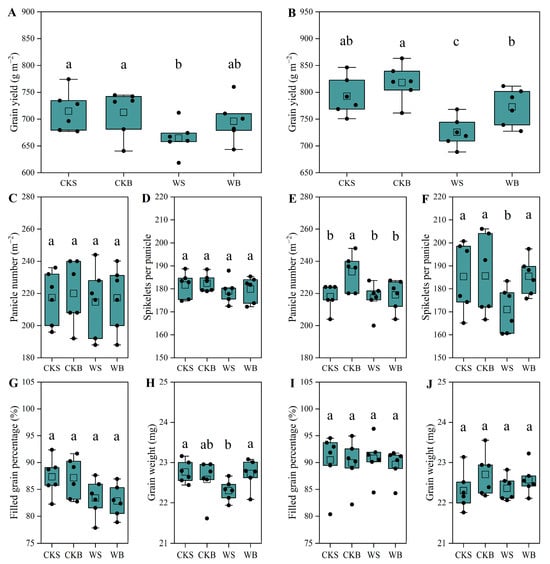
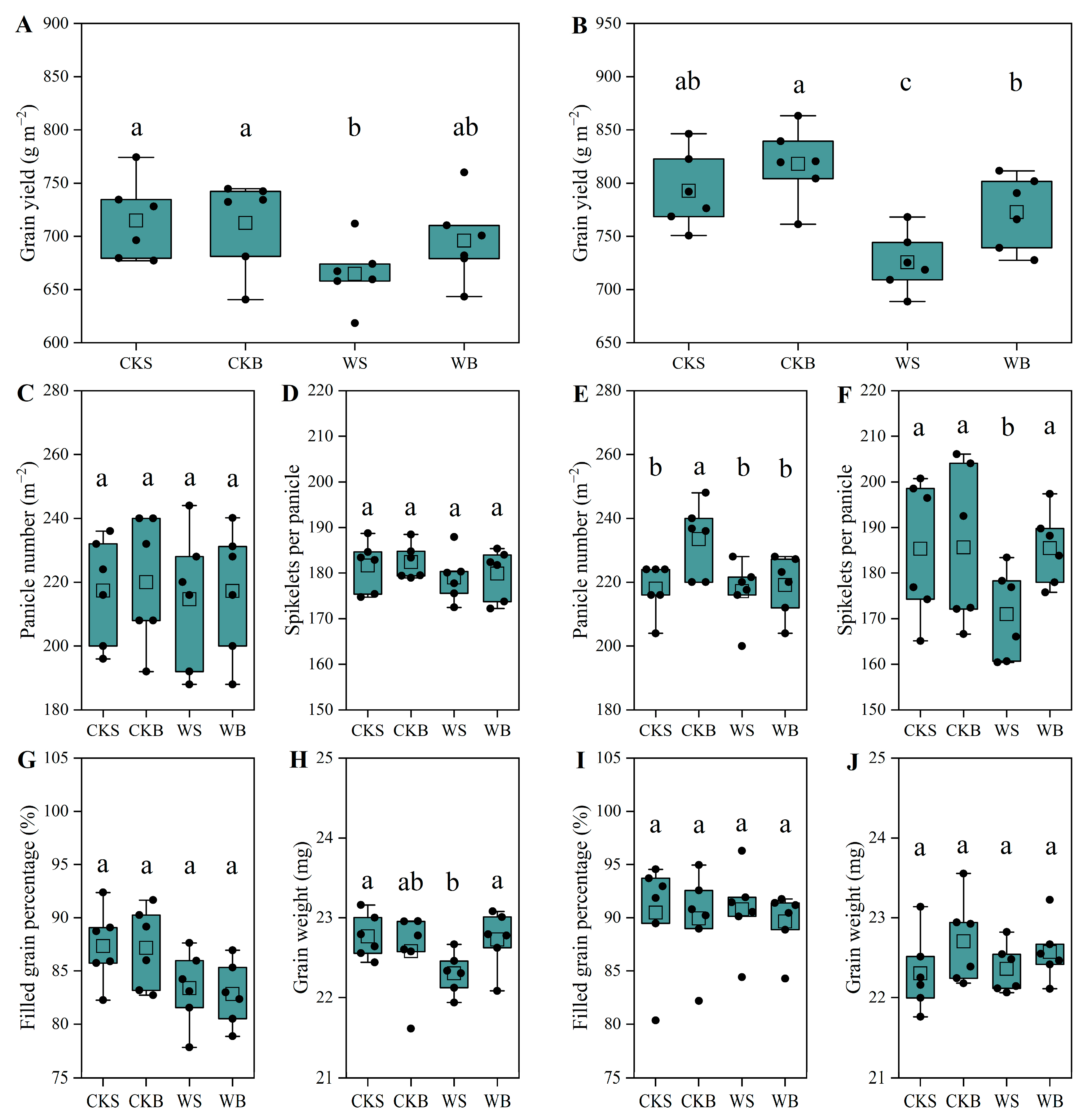
The effects of straw biochar incorporation on double-rice yield differed greatly under ambient and warming conditions (Figure 2). For early rice (Figure 2A,C,D,G,H): Under ambient temperature, grain yield and yield components showed no obvious differences between CKS and CKB. Compared with CKS, WS reduced the two-year average grain yield by 7.01% (p < 0.05). The panicle number, spikelets per panicle, and filled grain percentage did not change significantly, while the grain weight decreased by 2.02% on average (p < 0.05). Under warming conditions, WB increased the two-year average grain yield by 4.65% relative to WS (p > 0.05). No significant differences were found in panicle number, spikelets per panicle, and filled grain percentage, but grain weight rose by 1.90% (p < 0.05).
Figure 2.
Effects of straw biochar incorporation on yield and yield components under ambient and warming conditions. (A,C,D,G,H)—early rice; (B,E,F,I,J)—late rice. CKS, ambient temperature with direct straw incorporation; CKB, ambient temperature with straw biochar incorporation; WS, warming with direct straw incorporation; WB, warming with straw biochar incorporation. The lower and upper boundaries of the box correspond to the lower and upper quartiles, respectively; the square within the box denotes the arithmetic mean of the data; and the vertical lines extending from the box represent the overall distribution range of the data. (n = 6). Different lowercase letters indicate significant differences among treatments (p < 0.05).
For late rice (Figure 2B,E,F,I,J): Under ambient temperature, CKB slightly raised the grain yield with a two-year average increase of 3.19% relative to CKS (p > 0.05). Its panicle number increased by 7.10% on average (p < 0.05), whereas spikelets per panicle, filled grain percentage, and grain weight remained unchanged. Compared with CKS, WS lowered the two-year average grain yield by 8.47% (p < 0.05). Panicle number, filled grain percentage, and grain weight showed no obvious variation, but spikelets per panicle dropped by 7.61% (p < 0.05). Under warming conditions, WB increased the two-year average grain yield by 6.47% compared with WS (p < 0.05). Panicle number, filled grain percentage, and grain weight had no significant changes, while spikelets per panicle increased by 8.58% (p < 0.05).
3.2. Dry Matter Accumulation of Early and Late Rice
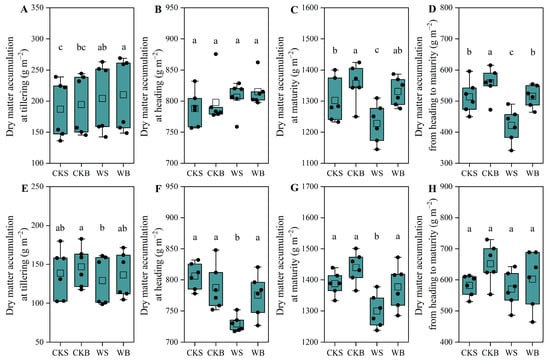
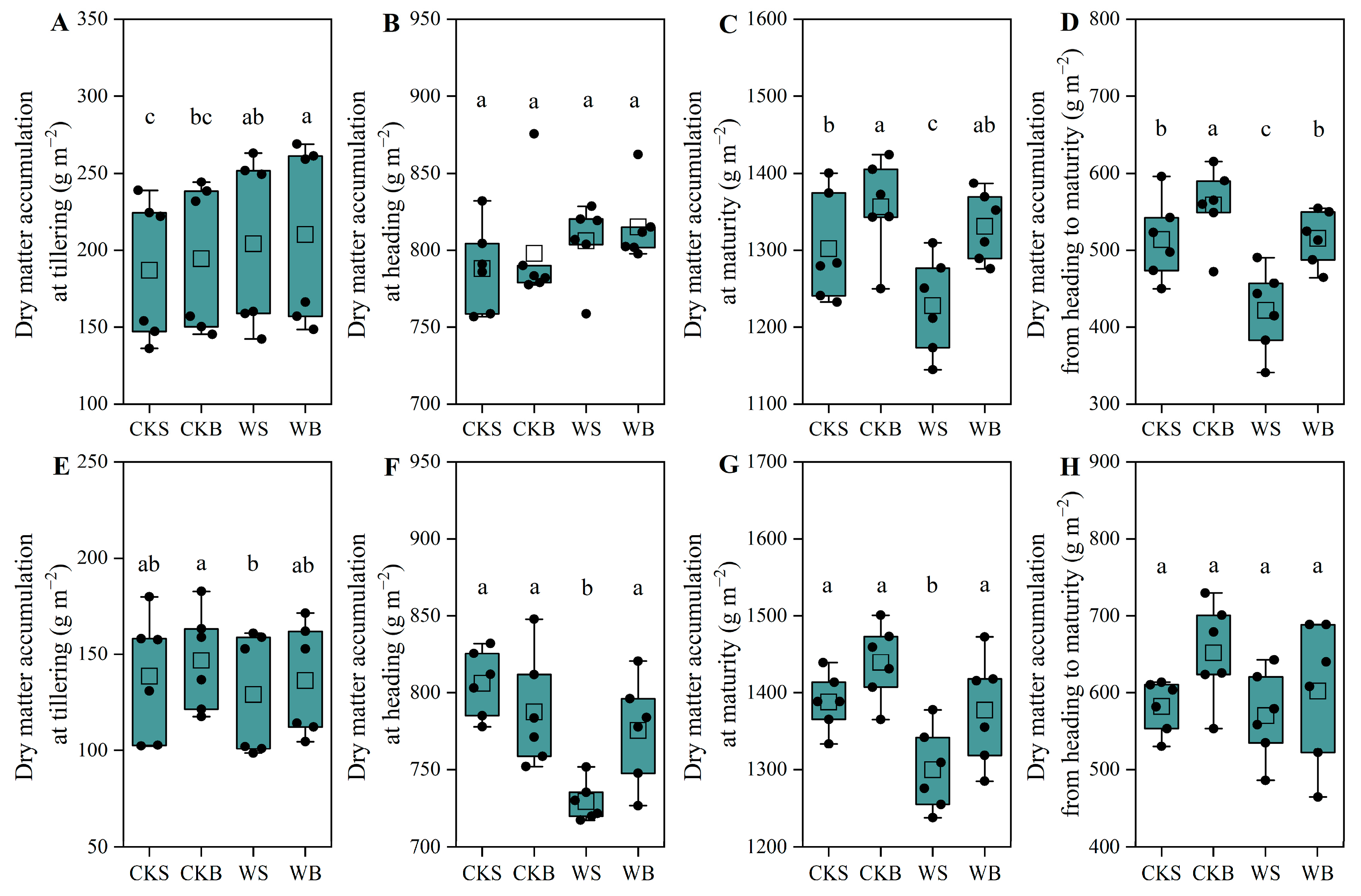
The responses of dry matter accumulation to straw biochar incorporation varied under ambient and warming treatments (Figure 3). For early rice (Figure 3A–D): Under ambient temperature, compared with CKS, CKB increased dry matter accumulation at tillering, maturity, and dry matter accumulation from heading to maturity by 3.89% (p > 0.05), 4.21% (p < 0.05), and 8.96% (p < 0.05), respectively. Dry matter accumulation at heading was not significantly affected. Relative to CKS, WS raised dry matter accumulation at tillering by 8.51% (p < 0.05), with no change at heading. However, dry matter accumulation at maturity and dry matter accumulation from heading to maturity declined by 5.70% (p < 0.05) and 18.07% (p < 0.05). Under warming conditions, WB increased dry matter accumulation at tillering, maturity, and dry matter accumulation from heading to maturity by 3.74% (p > 0.05), 8.44% (p < 0.05), and 22.87% (p < 0.05) compared with WS, while dry matter accumulation at heading remained similar.
Figure 3.
Effects of straw biochar incorporation on dry matter accumulation under ambient and warming conditions. (A–D)—early rice; (E–H)—late rice. CKS, ambient temperature with direct straw incorporation; CKB, ambient temperature with straw biochar incorporation; WS, warming with direct straw incorporation; WB, warming with straw biochar incorporation. The lower and upper boundaries of the box correspond to the lower and upper quartiles, respectively; the square within the box denotes the arithmetic mean of the data; and the vertical lines extending from the box represent the overall distribution range of the data. (n = 6). Different lowercase letters indicate significant differences among treatments (p < 0.05).
For late rice (Figure 3E–H): Under ambient temperature, CKB increased dry matter accumulation at tillering by 6.85% relative to CKS (p > 0.05). Dry matter accumulation at heading, maturity, and dry matter accumulation from heading to maturity had no significant differences between the two treatments. Compared with CKS, WS reduced dry matter accumulation at tillering, heading, and maturity by 7.45% (p > 0.05), 9.50% (p < 0.05), and 6.37% (p < 0.05), respectively. Dry matter accumulation from heading to maturity was not affected. Under warming conditions, WB increased dry matter accumulation at tillering, heading, and maturity by 6.35% (p > 0.05), 6.33% (p < 0.05), and 5.98% (p < 0.05) compared with WS, with no difference in post-heading dry matter accumulation.
3.3. Leaf SPAD Value and Soil Extractable Nitrogen Concentration of Early Rice in 2023
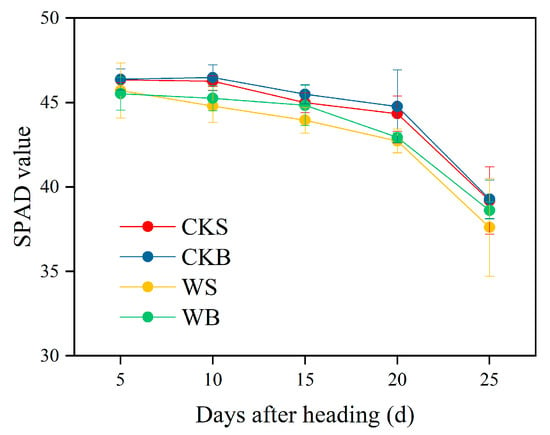
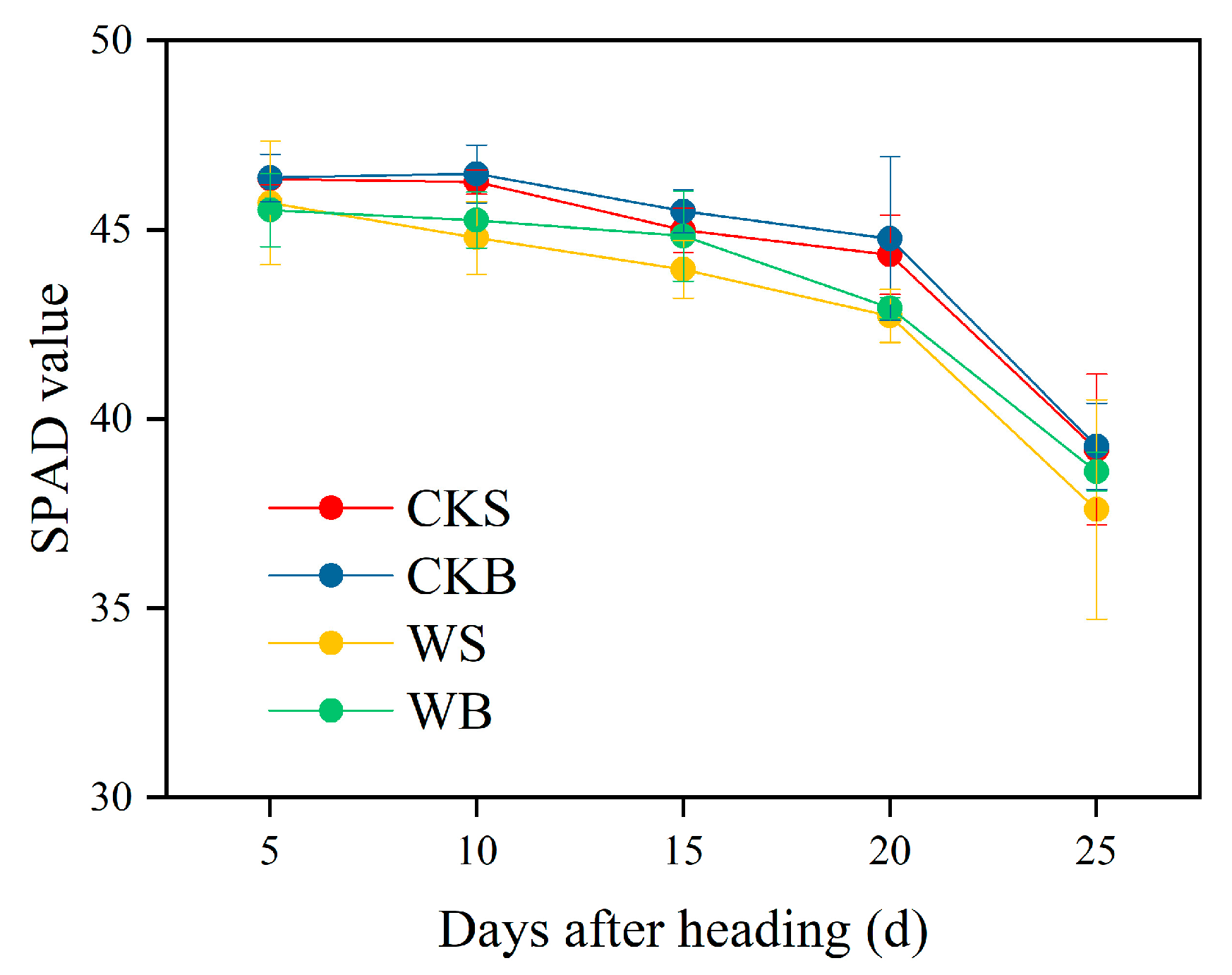
Leaf SPAD values of early rice in all treatments gradually decreased with the increase of days after heading in 2023 (Figure 4). After heading, CKS and CKB maintained higher leaf SPAD values than WS and WB. In addition, WB showed higher SPAD values than WS.
Figure 4.
Effects of straw biochar incorporation on leaf SPAD values of early rice under ambient and warming conditions (2023). CKS, ambient temperature with direct straw incorporation; CKB, ambient temperature with straw biochar incorporation; WS, canopy warming with direct straw incorporation; WB, canopy warming with straw biochar incorporation. Error bars represent standard deviation (n = 3).
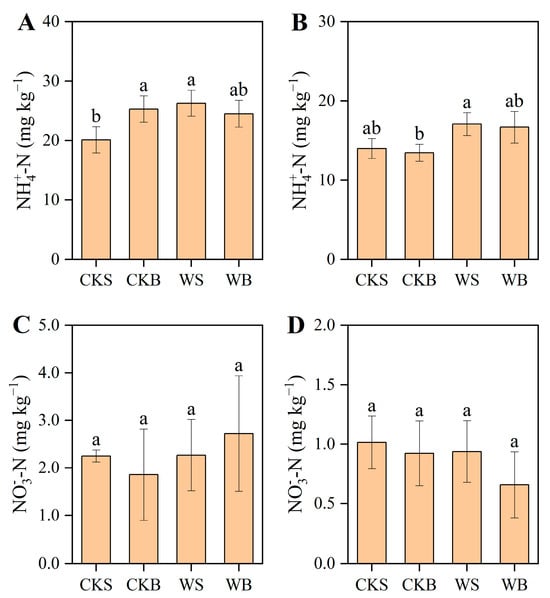
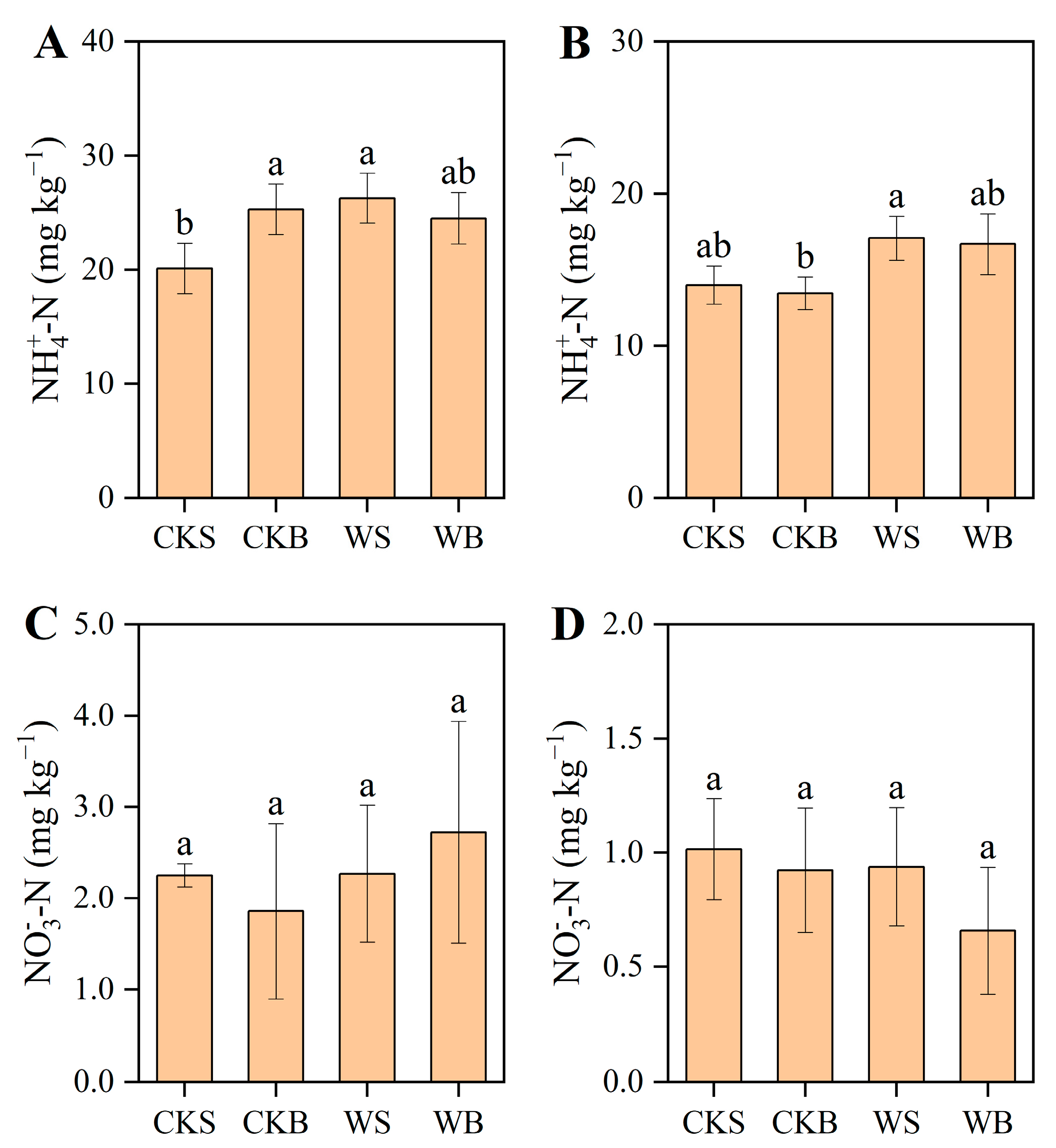
Straw biochar incorporation changed soil concentrations at heading and maturity of early rice but barely affected levels (Figure 5). Under ambient temperature, CKB raised concentration by 25.83% at heading relative to CKS (p < 0.05), while no difference was observed at maturity. Compared with CKS, WS increased concentrations by 30.71% at heading (p < 0.05) and 22.08% at maturity (p > 0.05). Under warming conditions, soil concentrations at heading and maturity showed no significant difference between WB and WS.
Figure 5.
Effects of straw biochar incorporation on soil extractable nitrogen concentration of early rice under ambient and warming conditions (2023). (A,C)—heading; (B,D)—maturity. CKS, ambient temperature with direct straw incorporation; CKB, ambient temperature with straw biochar incorporation; WS, canopy warming with direct straw incorporation; WB, canopy warming with straw biochar incorporation. Different lowercase letters indicate significant differences among treatments (p < 0.05).
3.4. Panicle Structure of Late Rice in 2023
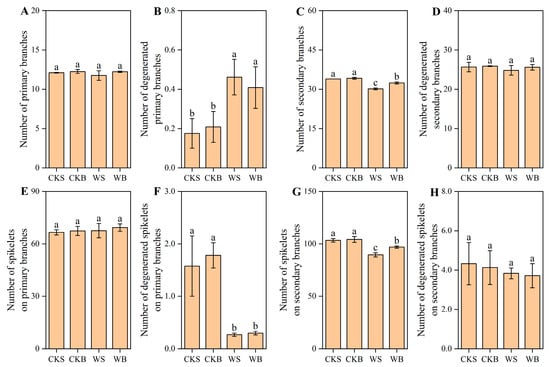
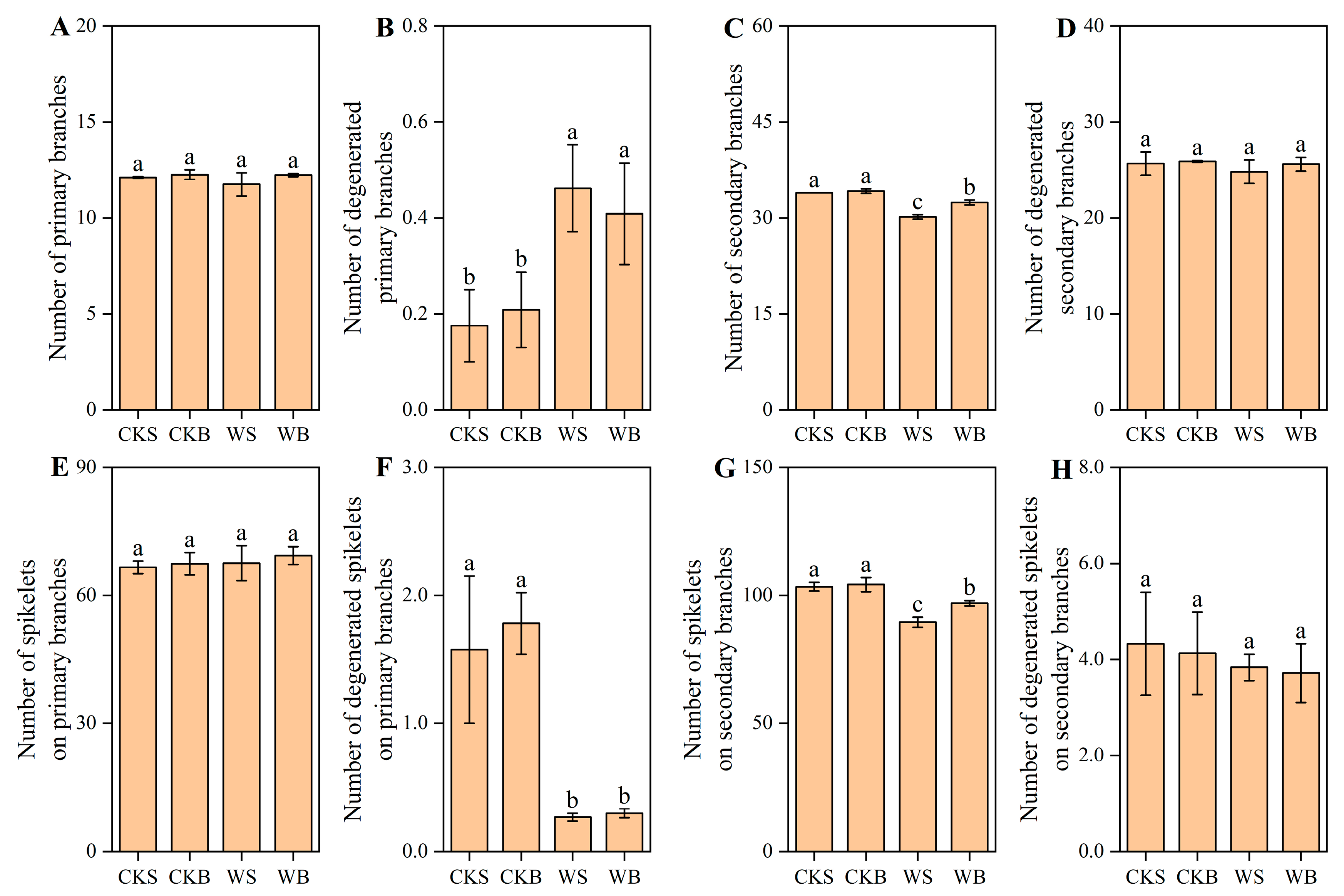
Results from 2023 showed that straw biochar incorporation had no influence on late-rice panicle structure under ambient temperature (Figure 6). Under warming, straw biochar incorporation only altered the number of secondary branches and spikelets on secondary branches, with minor effects on other panicle traits (Figure 6C,G). Specifically, WS reduced the number of secondary branches by 11.07% (p < 0.05) and the number of spikelets on secondary branches by 13.48% (p < 0.05) compared with CKS. Relative to WS, WB increased secondary branches by 7.36% (p < 0.05) and the number of spikelets on secondary branches by 8.40% (p < 0.05). In addition, WS and WB had significantly more degraded primary branches but fewer degraded spikelets on primary branches than CKS and CKB (Figure 6B,F).
Figure 6.
Effects of straw biochar incorporation on panicle structure of late rice under ambient and warming conditions (2023). (A) number of primary branches; (B) number of degenerated primary branches; (C) number of secondary branches; (D) number of degenerated secondary branches; (E) number of spikelets on primary branches; (F) number of degenerated spikelets on primary branches; (G) number of spikelets on secondary branches; (H) number of degenerated spikelets on secondary branches. CKS, ambient temperature with direct straw incorporation; CKB, ambient temperature with straw biochar incorporation; WS, canopy warming with direct straw incorporation; WB, canopy warming with straw biochar incorporation. Different lowercase letters indicate significant differences among treatments (p < 0.05).
3.5. Pearson Correlations Between Grain Yield and Yield-Related Physiological and Agronomic Traits
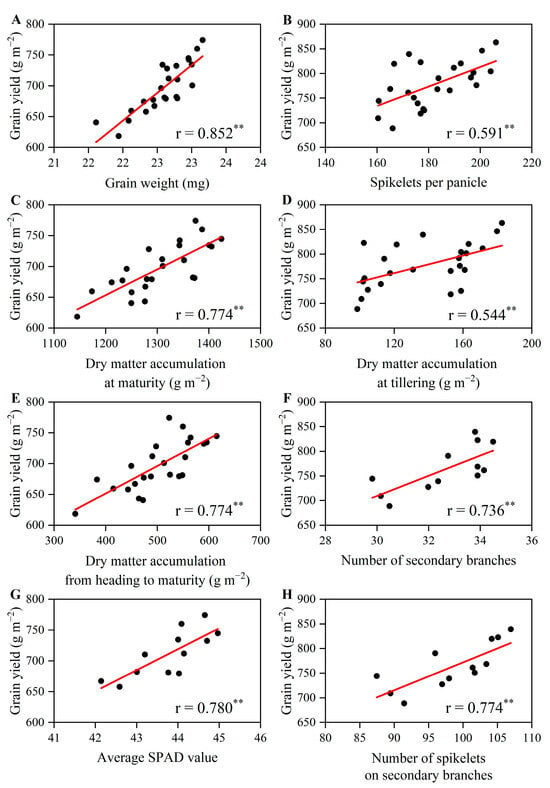
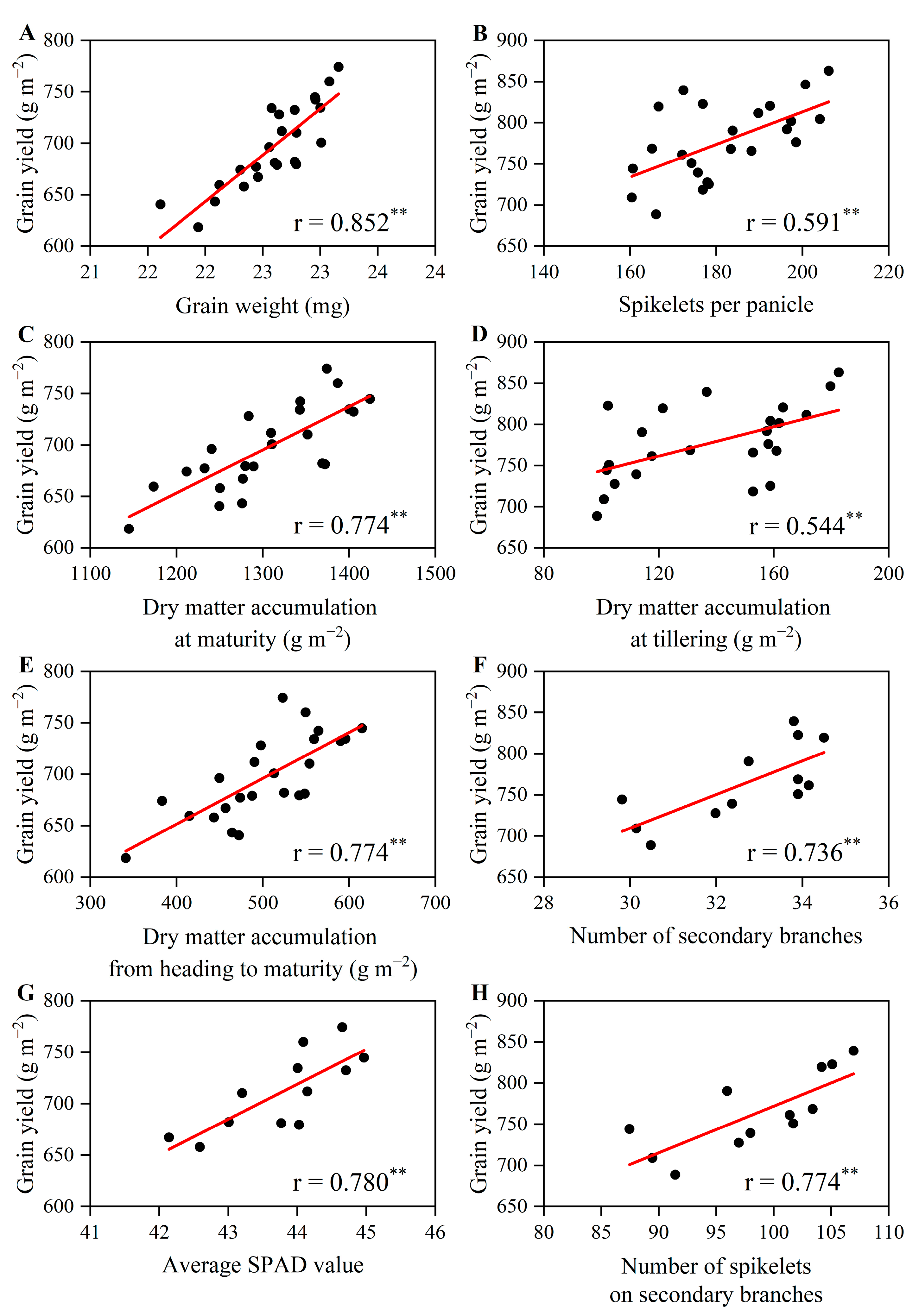
Pearson correlation analyses were performed to explore the relationships between the grain yield and key yield-related agronomic and physiological traits (Figure 7). For early rice, the grain yield exhibited significant positive correlations with the grain weight (p < 0.01), dry-matter accumulation at maturity (p < 0.01), dry-matter accumulation from heading to maturity (p < 0.01), and average SPAD value (p < 0.01). For late rice, the grain yield exhibited significant positive correlations with spikelets per panicle (p < 0.01) dry-matter accumulation at tillering (p < 0.01), number of secondary branches (p < 0.01), and number of spikelets on secondary branches (p < 0.01).
Figure 7.
Pearson correlations between grain yield and yield-related physiological and agronomic traits. (A,C,E,G)—early rice; (B,D,F,H)—late rice. ** denote extremely significant correlations (p < 0.01). (A–E)—n = 24; (F–H)—n = 12.
3.6. CH4 Flux, CH4 Emissions, and Yield-Scaled CH4 Emissions of Early and Late Rice
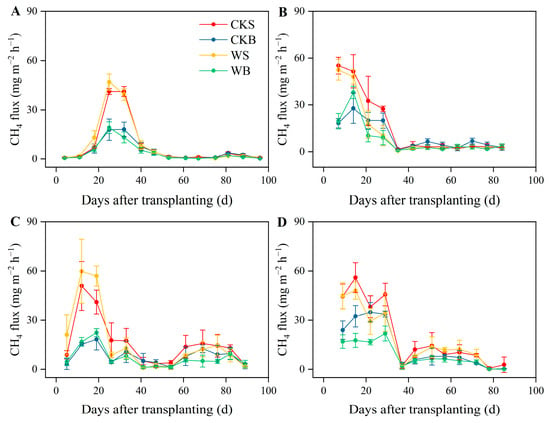
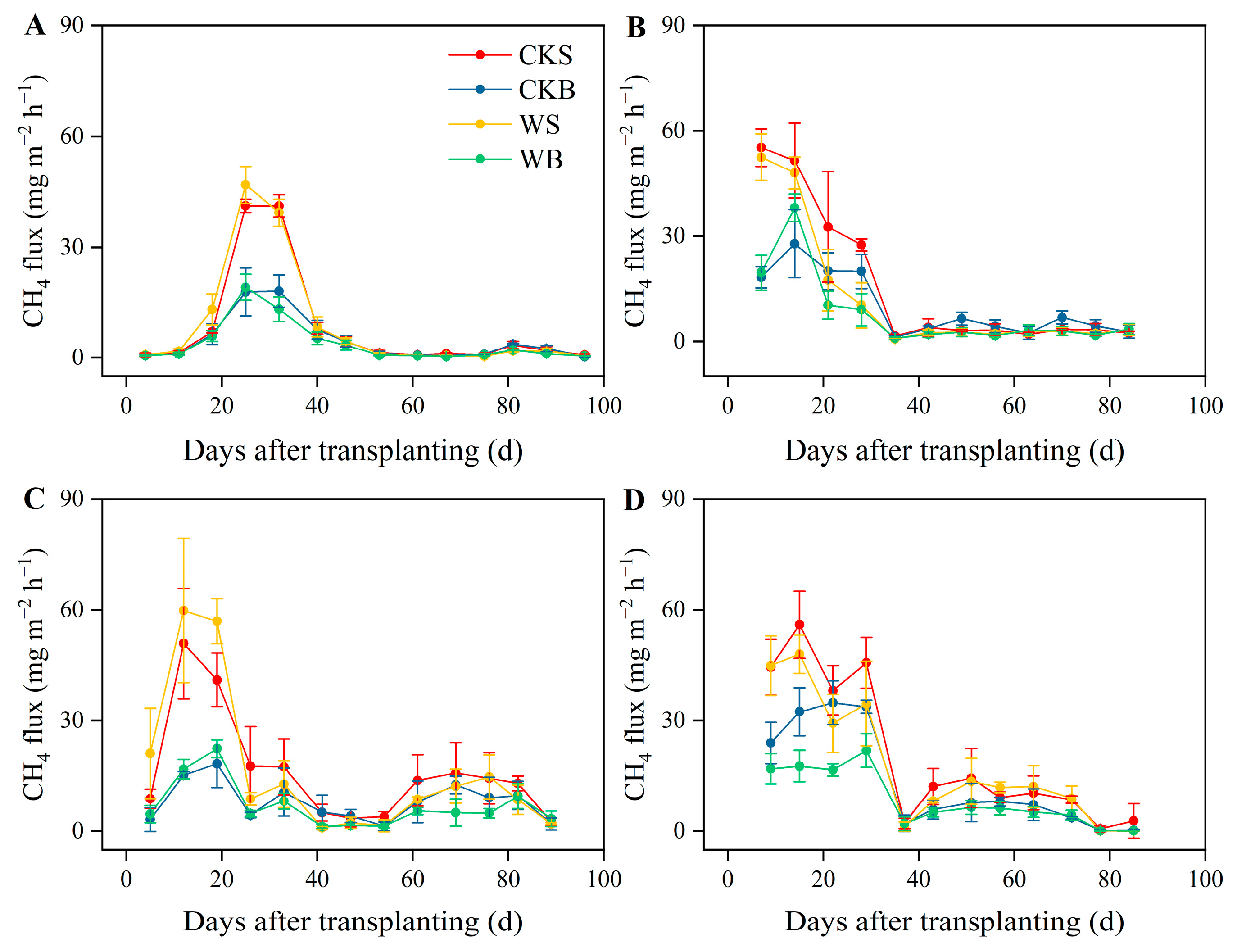
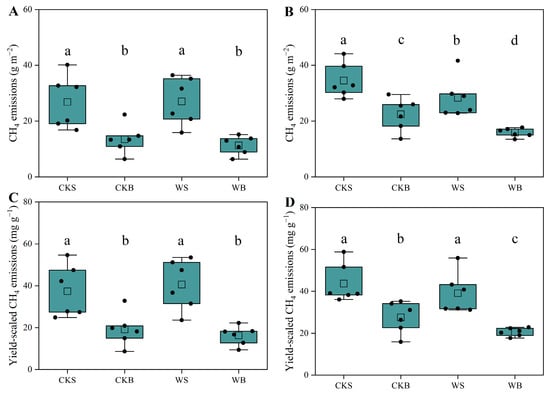
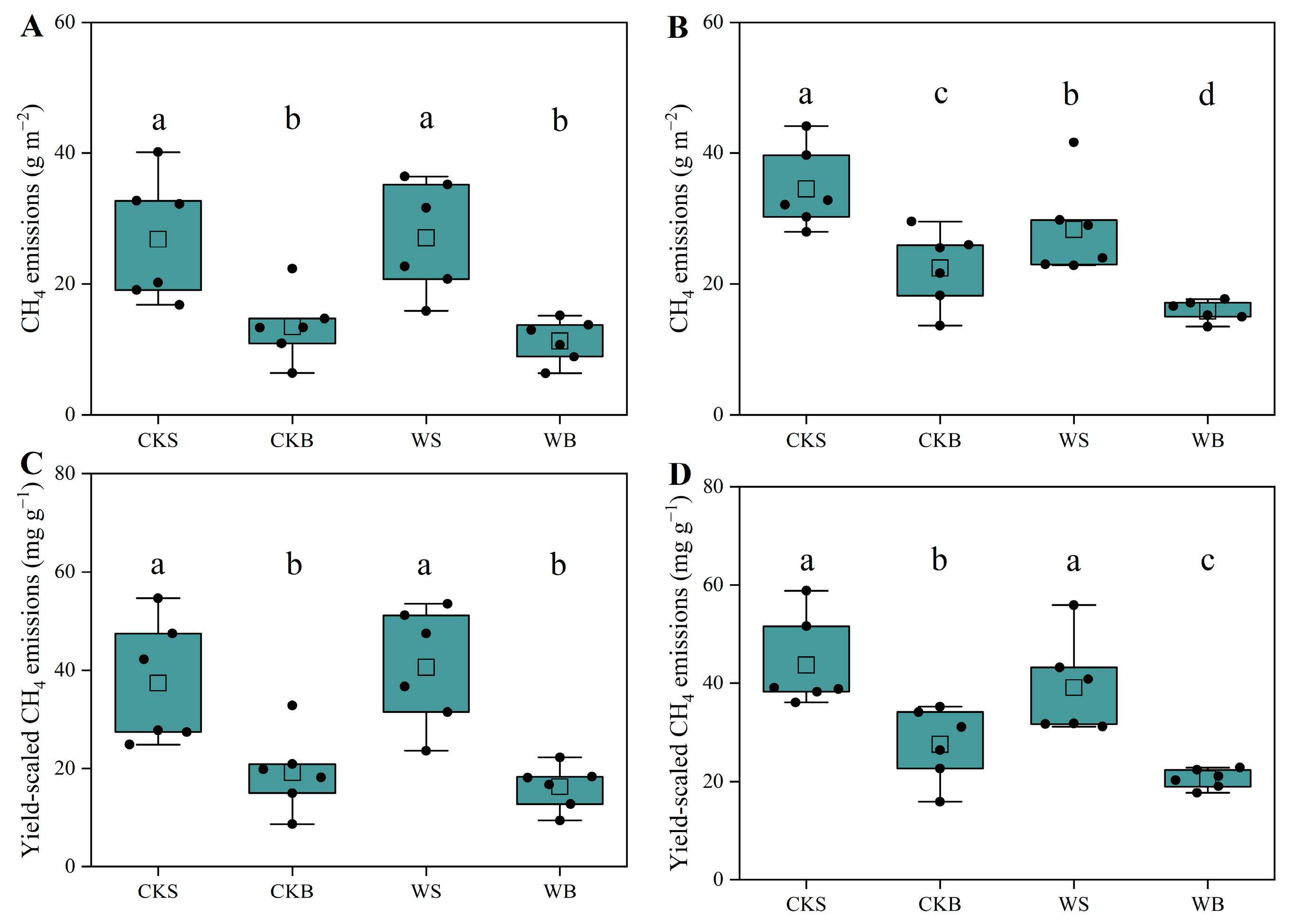
Straw biochar incorporation significantly changed CH4 flux under both ambient and warming conditions and greatly lowered the peak CH4 flux from paddy fields (Figure 8). For CH4 emissions (Figure 9A,B): Compared with CKS, CKB reduced CH4 emissions by 48.67% (p < 0.05) in early rice and 35.22% (p < 0.05) in late rice. WS showed no obvious change in early-rice CH4 emissions but decreased late-rice emissions by 18.43% relative to CKS (p < 0.05). Compared with WS, WB reduced CH4 emissions by 57.81% (p < 0.05) in early rice and 42.55% (p < 0.05) in late rice. For yield-scaled CH4 emissions (Figure 9C,D): Relative to CKS, CKB lowered yield-scaled CH4 emissions by 47.75% (p < 0.05) in early rice and 37.22% (p < 0.05) in late rice. WS had no significant influence on CH4 emission intensity in both rice seasons relative to CKS. Compared with WS, WB reduced yield-scaled CH4 emissions by 59.61% (p < 0.05) in early rice and 46.09% (p < 0.05) in late rice.
Figure 8.
Effects of straw biochar incorporation on CH4 flux under ambient and warming conditions. (A,C)—early rice; (B,D)—late rice. (A,B)—2022; (C,D)—2023. CKS, ambient temperature with direct straw incorporation; CKB, ambient temperature with straw biochar incorporation; WS, canopy warming with direct straw incorporation; WB, canopy warming with straw biochar incorporation. Error bars represent standard deviation (n = 3).
Figure 9.
Effects of straw biochar incorporation on CH4 emissions and yield-scaled CH4 emissions under ambient and warming conditions. (A,C)—early rice; (B,D)—late rice. CKS, ambient temperature with direct straw incorporation; CKB, ambient temperature with straw biochar incorporation; WS, warming with direct straw incorporation; WB, warming with straw biochar incorporation. The lower and upper boundaries of the box correspond to the lower and upper quartiles, respectively; the square within the box denotes the arithmetic mean of the data; and the vertical lines extending from the box represent the overall distribution range of the data. (n = 6). Different lowercase letters indicate significant differences among treatments (p < 0.05).
3.7. Soil Physicochemical Properties and Functional Microbial Abundance at Peak CH4 Flux Stage in 2023
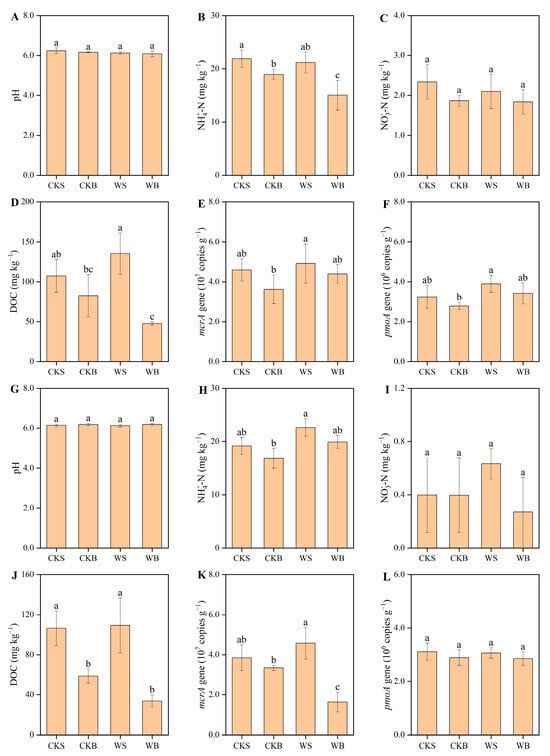
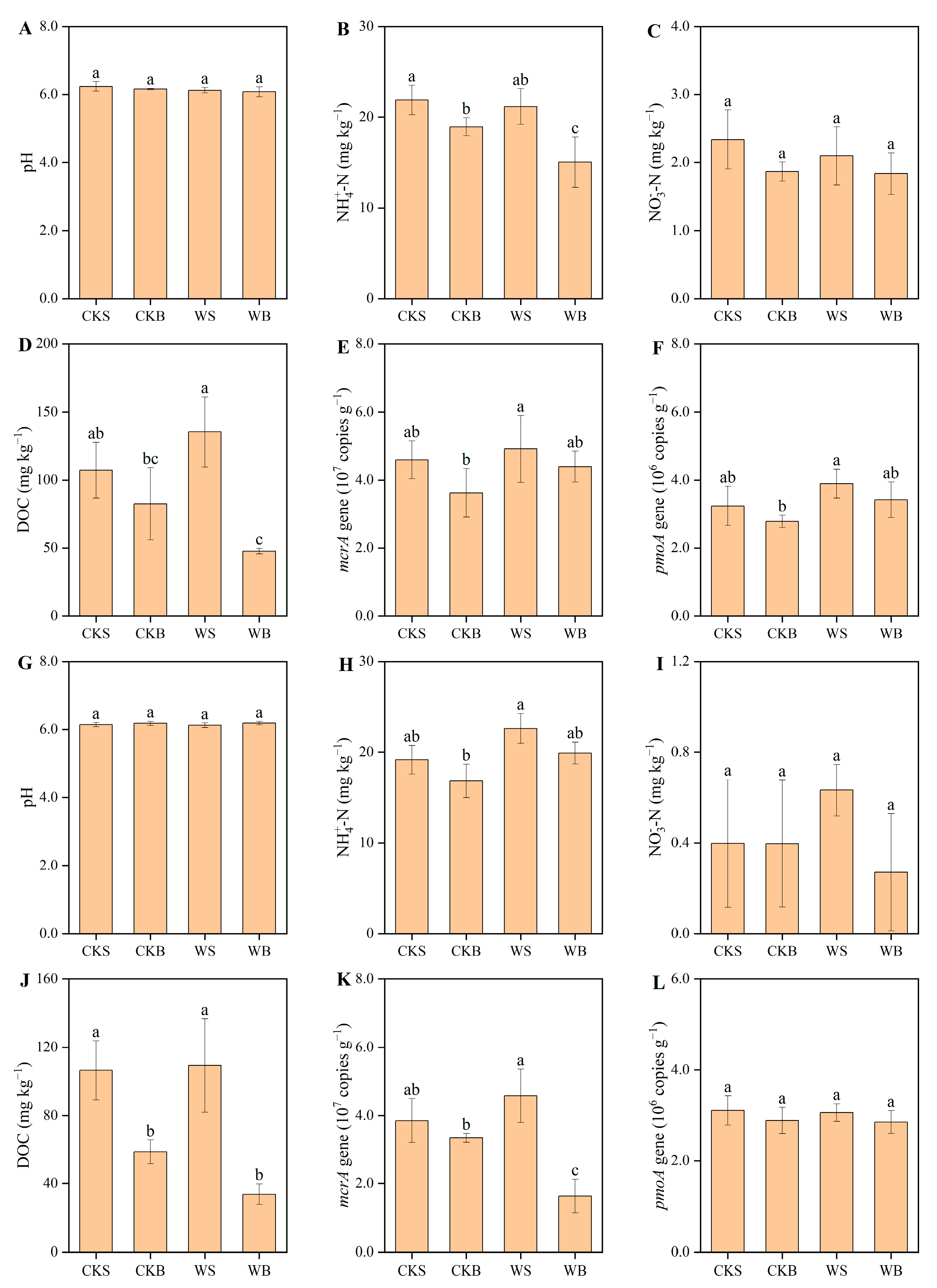
Data from 2023 indicated that straw biochar incorporation had no significant effect on soil pH and concentration under ambient and warming conditions for both rice seasons (Figure 10A,C,G,I). In the early season under ambient temperature (Figure 10B,D–F): Compared with CKS, CKB decreased concentration by 13.47% (p < 0.05), DOC concentration by 23.02% (p > 0.05), methanogen abundance by 21.12% (p > 0.05), and methanotroph abundance by 14.08% (p > 0.05). Under warming conditions, WB reduced concentration by 28.98% (p < 0.05), DOC concentration by 64.73% (p < 0.05), methanogen abundance by 10.66% (p > 0.05), and methanotroph abundance by 23.09% (p > 0.05) relative to WS.
Figure 10.
Effects of straw biochar incorporation on soil pH, extractable nitrogen, DOC, and abundance of methanogens and methanotrophs at tillering under ambient and warming conditions (2023). (A–F)—early rice; (G–L)—late rice. CKS, ambient temperature with direct straw incorporation; CKB, ambient temperature with straw biochar incorporation; WS, warming with direct straw incorporation; WB, warming with straw biochar incorporation. Different lowercase letters indicate significant differences among treatments (p < 0.05).
In the late-rice season under ambient temperature (Figure 10H,J–L): Compared with CKS, CKB lowered concentration by 12.23% (p > 0.05), DOC concentration by 45.02% (p < 0.05), and methanogen abundance by 13.23% (p > 0.05), while methanotroph abundance showed no difference. Under warming conditions, WB reduced concentration by 11.98% (p > 0.05), DOC concentration by 69.19% (p < 0.05), and methanogen abundance by 64.31% (p < 0.05) compared with WS, with no significant variation observed in methanotroph abundance.
3.8. Pearson Correlations Between CH4 Emissions, Concentration, DOC Concentration, and Abundance of Methanogens
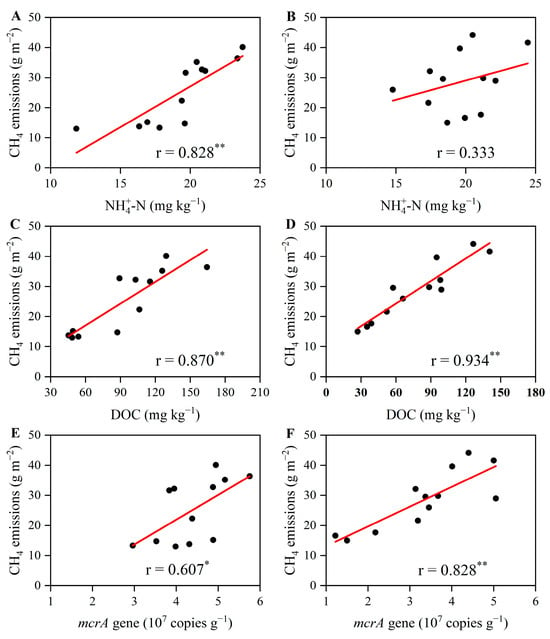
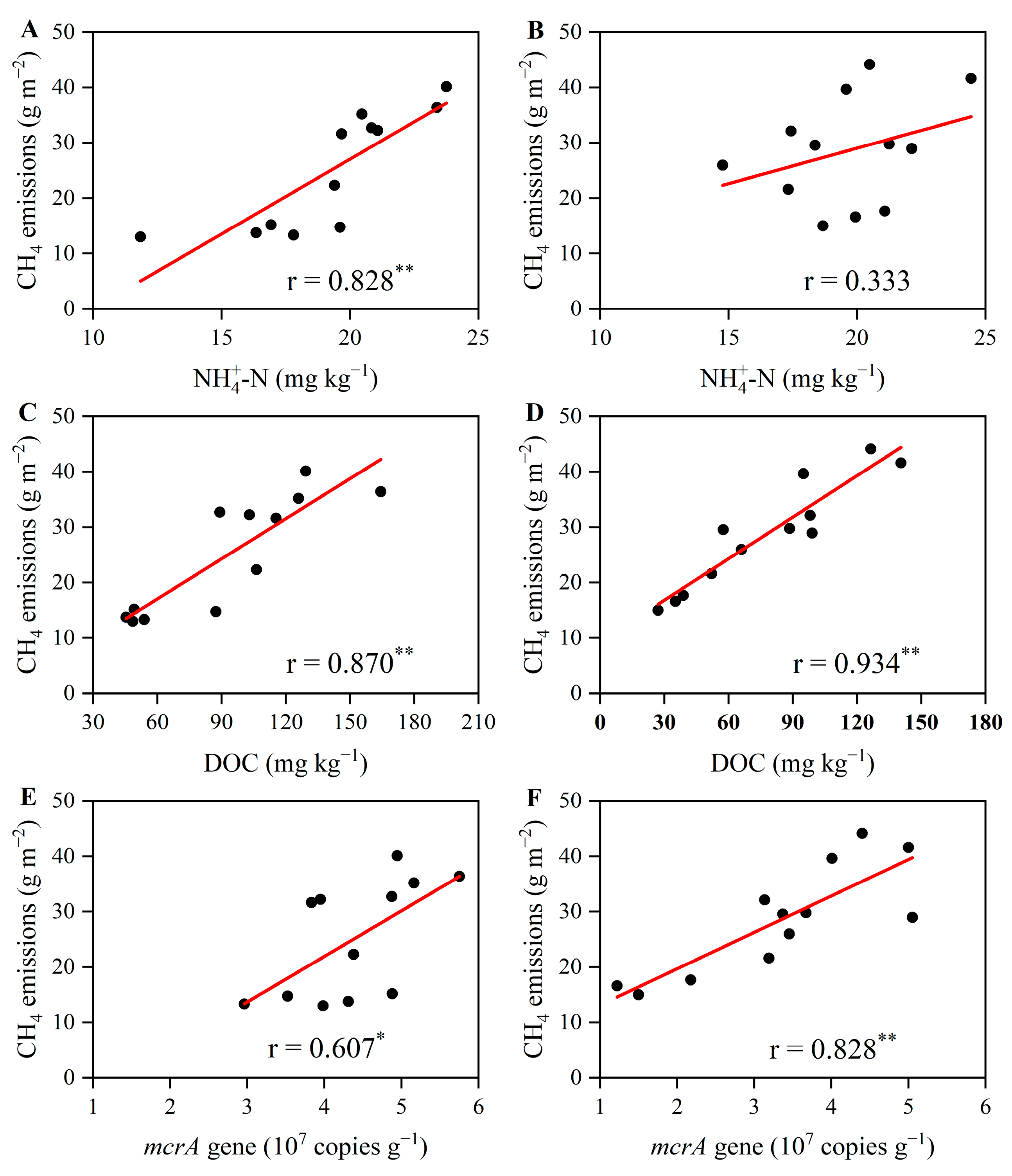
As shown in Figure 11, CH4 emissions exhibited a significant positive correlation with soil concentration in the early-rice season (Figure 11A, p < 0.01), whereas no significant correlation was observed for late rice (Figure 11B, p > 0.05). CH4 emissions were significantly positively correlated with soil DOC concentration in both the early- and late-rice seasons (Figure 11C,D, p < 0.01). Additionally, CH4 emissions were significantly positively correlated with mcrA gene abundance in the early-rice season (Figure 11E, p < 0.05) and late-rice season (Figure 11F, p < 0.01).
Figure 11.
Pearson correlations between CH4 emissions, concentration, DOC concentration, and abundance of methanogens. (A,C,E)—early rice; (B,D,F)—late rice. * and ** denote significant (p < 0.05) and extremely significant (p < 0.01) correlations, respectively. n = 12.
4. Discussion
4.1. Differential Regulatory Effects of Straw Biochar Incorporation on Early- and Late-Rice Yield
Grain yield is a core index to judge the practical value of agricultural management practices. Based on a two-year field experiment, this study found that the yield regulation of straw biochar incorporation showed obvious dependence on climate conditions and differed between early- and late-rice seasons (Figure 2A,B). This result matches previous reports that the yield effect of straw biochar incorporation varies with environmental backgrounds [29,31]. Under ambient temperature, there was no significant difference in grain yield of early and late rice between CKB and CKS (Figure 2A,B). Earlier studies reported inconsistent yield responses to biochar application. Most studies stated that biochar increased rice grain yield [30,31,37]. However, several works found no obvious yield improvement or even yield reduction after biochar addition [38,39,40]. The yield performance of biochar incorporation depends on application rate, initial soil fertility, and experimental duration. Biochar usually brings larger yield gains in poor soil or under high application rates [38,41]. The experimental soil in this study had medium fertility, and the seasonal biochar application rates were relatively low. The supply of nutrients and improvement of soil structure failed to reach the threshold for significant yield promotion. Therefore, straw biochar incorporation could not further raise grain yield under the present experimental conditions.
Under warming conditions, WS significantly reduced early-rice yield compared with CKS (Figure 2A,B). This further demonstrates the negative effects of the intermediate climate warming scenario on rice grain yield [12,42]. This study revealed different yield reduction mechanisms induced by warming between the two rice seasons. The reduction in early-rice yield was mainly attributed to weakened photosynthate production after heading: lower leaf SPAD values after heading (Figure 4) not only reduced dry matter accumulation at maturity, but also decreased dry matter accumulation from heading to maturity, ultimately resulting in lower grain weight (Figure 2H and Figure 3C,D). In contrast, the decrease in late-rice yield was mainly caused by warming-induced inhibition of early-stage plant growth. Under warming conditions, late rice showed reduced dry matter accumulation at the tillering stage (Figure 3E) and declines in the number of secondary branches and spikelets on secondary branches (Figure 6C,G), which in turn reduced spikelets per panicle (Figure 2F). Correlation analyses also supported the above mechanisms: early-rice yield was significantly positively correlated with leaf SPAD values (Figure 7G), dry matter accumulation at maturity (Figure 7C), dry matter accumulation from heading to maturity (Figure 7E), and grain weight (Figure 7A); late-rice yield was significantly positively correlated with dry matter accumulation at the tillering stage (Figure 7D), the number of secondary branches (Figure 7F), spikelets on secondary branches (Figure 7H), and spikelets per panicle (Figure 7B). These observations agree with previous conclusions that warming accelerates plant phenology, shortens the period for dry matter accumulation, disturbs panicle differentiation, and thus cuts spikelets per panicle and grain weight [8,12,43].
Notably, WB could mitigate yield loss caused by warming, whereas this mitigating effect exhibited seasonal dependence (Figure 2A,B). For late rice, WB significantly increased grain yields relative to WS. For early rice, WB produced a numerical increase in yield without reaching statistical significance. These findings suggest that straw biochar incorporation can partially mitigate warming-induced yield losses under the intermediate climate warming scenario. Further analyses of yield-formation processes together with correlation analyses revealed that the mitigation of early-rice yield loss under WB mainly benefited from higher grain weight (Figure 2H), increased post-heading dry matter accumulation (Figure 3D), and the maintenance of high leaf SPAD values after heading (Figure 4). By contrast, the recovery of late-rice yield was primarily attributed to more spikelets per panicle (Figure 2F), improved dry matter accumulation at the tillering stage (Figure 3E), as well as increases in the number of secondary branches and spikelets on secondary branches (Figure 6C,G).
Such seasonal differences may arise from distinct temperature conditions in growing seasons and the ability of biochar incorporation to ease high-temperature stress during the early growth of late rice. Fresh straw incorporated in the late-rice season competes with rice seedlings for nutrients during decomposition, which restricts seedling recovery and early growth. This nutrient competition became more serious under warming, as reflected by the difference in tillering dry matter accumulation of late rice (Figure 3E). In contrast, straw biochar incorporation supported better seedling recovery and early growth of late rice, also supported by tillering dry matter data (Figure 3E). The stable structure of biochar can absorb nutrients and release them slowly, avoiding short-term nutrient competition. In addition, its porous structure improves soil aeration and nutrient retention, creating a better soil environment for early growth of late rice.
4.2. Inhibitory Effect of Straw Biochar Incorporation on CH4 Emissions from Double-Cropping Rice Paddies
Paddy fields are the dominant source of CH4 emissions in agricultural ecosystems, and straw incorporation methods largely control CH4 release [19,25,44]. In this study, straw biochar incorporation greatly reduced seasonal CH4 emissions under both ambient and warming treatments, with a tendency toward numerically greater reductions under warming (Figure 9A,B). Accordingly, straw biochar incorporation acts as an effective mitigation strategy under the intermediate climate warming scenario and can support the emission reduction targets projected for this scenario. This finding further demonstrates that straw biochar incorporation avoids the risk of extra CH4 emissions brought by direct straw incorporation [44,45]. It provides an important solution to balance soil fertility improvement and greenhouse gas reduction [30,31,45].
Previous studies summarized several mechanisms for biochar incorporation to cut CH4 emissions: biochar incorporation raises soil pH [36,46], lowers concentration [47] and DOC concentration [45], decreases methanogen abundance, and increases methanotroph abundance [44].
By analyzing soil physicochemical properties, functional microbial abundance, and their correlations with CH4 emissions, this study clarified three core mechanisms through which straw biochar incorporation suppresses CH4 production in paddies. First, straw biochar incorporation reduces soil DOC concentration (Figure 10D,J), and soil DOC concentration is significantly positively correlated with CH4 emissions (Figure 11C,D). As the primary carbon substrate for methanogens, lower DOC input following straw biochar incorporation suppresses CH4 production via substrate limitation [17,45]. Second, straw biochar incorporation decreases soil concentration (Figure 10B,H), which is also significantly positively correlated with CH4 emissions in early-rice season (Figure 11A). Low levels can inhibit methanogen growth and reproduction [47,48]. Third, straw biochar incorporation reduces methanogen abundance (Figure 10E,K), and methanogen abundance shows a significant positive correlation with CH4 emissions (Figure 11E,F). This phenomenon may be attributed to the simultaneous decline in DOC and concentrations, which together restricted the reproduction of methanogens [45,49]. In addition, no obvious change in methanotroph abundance was observed within the same temperature treatment. This means straw biochar incorporation suppresses CH4 emissions mainly by cutting CH4 production rather than boosting CH4 oxidation.
This study also observed that direct straw incorporation under warming (WS) reduced total late-rice CH4 emissions compared with CKS (Figure 9B). This result differs from most previous reports which stated warming either increases CH4 emissions or causes no significant change [13,14,16]. One plausible explanation for future research is that warming inhibits the early-stage growth of late rice and significantly reduces dry matter accumulation at the tillering stage (Figure 3E). Reduced plant biomass may result in lower root exudates, which serve as key carbon substrates for methanogens [50]. However, since root biomass and root exudates were not measured in this study, this mechanism remains speculative.
Combining grain yield and CH4 emission responses, straw biochar incorporation achieves two targets under the current climate: stable rice yield and lower CH4 emissions. Under the intermediate climate warming scenario, this practice can partially mitigate warming-induced yield losses while simultaneously reducing paddy CH4 emissions. This study provides scientific evidence for shifting straw management from direct incorporation to biochar incorporation: policy-wise, the transition should be incentivized through subsidies and carbon trading; extension-wise, barriers related to cost and awareness should be overcome via mobile pyrolysis units, demonstration plots, and training programs; strategically, this practice can be integrated into climate adaptation plans for the double-cropping rice region in South China, achieving both stable yield and emission reduction.
4.3. Limitations and Perspectives
Although this two-year fixed-site field experiment clarified the combined effects and mechanisms of straw biochar incorporation on double-cropping rice yield and CH4 emissions under ambient and warming conditions, three limitations should be noted. First, this study demonstrated that straw biochar incorporation could partially mitigate warming-induced yield loss and substantially reduce CH4 emissions under the intermediate climate warming scenario, whereas its performance under other climate warming scenarios remains unclear. Second, the experiment lasted only two years. Long-term ecological effects, such as soil carbon pool accumulation and yield stability, were not fully evaluated. Because biochar is very stable, its long-term effects may differ from the short-term responses [27,38,40]. Beyond ecological responses, its broader climate benefits and economic feasibility also remain to be further assessed through life-cycle analysis and multi-site long-term investigations. Third, only a single biochar application rate was adopted in this study, which precludes exploration of the dose-response effect of straw biochar incorporation [27,38]. Future research should establish gradient biochar application rates, integrate long-term field monitoring, and perform process-based model simulation and economic benefit analysis, to further improve the generalizability and predictability of the research conclusions.
5. Conclusions
A two-year field experiment conducted from 2022 to 2023 yielded the following conclusions. Under ambient temperature, straw biochar incorporation stabilized the grain yield of both early and late rice and substantially reduced CH4 emissions across both rice growing seasons. Under the intermediate climate warming scenario, straw biochar incorporation can partially mitigate grain yield losses while markedly lowering seasonal CH4 emissions. Straw biochar incorporation suppressed CH4 emissions mainly by lowering soil , DOC concentrations, and methanogen abundance. Straw biochar incorporation alleviated warming-induced yield loss through different pathways for the two rice seasons. For early rice, it raised grain weight, dry matter accumulation from heading to maturity, and post-heading leaf SPAD values. For late rice, it increased spikelets per panicle, dry matter accumulation at the tillering stage, as well as the number of secondary branches and spikelets on secondary branches. In summary, straw biochar incorporation achieves stable rice yield and CH4 mitigation under the current climate conditions. It further realizes coordinated yield loss reduction and CH4 mitigation under future climate warming. This management practice can help double-rice cropping systems in South China to cope with climate warming and to balance rice productivity and ecological conservation goals.
Supplementary Materials
The following supporting information can be downloaded at: https://www.mdpi.com/article/10.3390/agriculture16171889/s1, Figure S1: Daily mean temperature, precipitation, and sunshine hours during the rice growing seasons in 2022 and 2023; Figure S2: Canopy and soil temperature under ambient (CKS/CKB) and warming (WS/WB) conditions; Table S1: Key growth stages of early and late rice in 2022 and 2023.
Author Contributions
Conceptualization, J.Z. and T.Y.; Formal analysis, H.Y.; Investigation, H.Y. and J.L.; Writing—original draft, H.Y. and J.L.; Writing—review and editing, H.Y., J.L., B.Z., H.Q., J.Z. and TY.; Funding acquisition, T.Y. All authors have read and agreed to the published version of the manuscript.
Funding
This work was supported by the Project of the Young Scientific and Technological Talents Cultivation Program of Guangdong Provincial Association for Science and Technology (SKXRC2025534) and the Talent Development Program of Guangdong Academy of Agricultural Sciences—Junior Associate Researcher (R2023PY-QF001).
Data Availability Statement
The data presented in this study are available on request from the corresponding author.
Conflicts of Interest
The authors declare no conflicts of interest.
References
- IPCC. Climate Change 2021: The Physical Science Basis; Cambridge University Press: Cambridge, UK, 2021. [Google Scholar]
- Foster, G.; Rahmstorf, S. Global warming has accelerated significantly. Geophys. Res. Lett. 2026, 53, e2025GL118804. [Google Scholar] [CrossRef] [Scilit]
- Hultgren, A.; Carleton, T.; Delgado, M.; Gergel, D.G.; Greenstone, M.; Houser, T.; Hsiang, S.; Jina, A.; Kopp, R.E.; Malevich, S.B.; et al. Impacts of climate change on global agriculture accounting for adaptation. Nature 2025, 642, 644–652. [Google Scholar] [CrossRef] [Scilit] [PubMed]
- Yuan, S.; Linquist, B.A.; Wilson, L.T.; Cassman, K.G.; Stuart, A.M.; Pede, V.; Miro, B.; Saito, K.; Agustiani, N.; Aristya, V.E.; et al. Sustainable intensification for a larger global rice bowl. Nat. Commun. 2021, 12, 7163. [Google Scholar] [CrossRef] [Scilit] [PubMed]
- National Bureau of Statistics. China Rural Statistical Yearbook; China Statistics Press: Beijing, China, 2025. (In Chinese) [Google Scholar]
- Liu, Y.J.; Tang, L.; Qiu, X.L.; Liu, B.; Chang, X.N.; Liu, L.L.; Zhang, X.H.; Cao, W.X.; Zhu, Y. Impacts of 1.5 and 2.0 °C global warming on rice production across China. Agric. For. Meteorol. 2020, 284, 107900. [Google Scholar] [CrossRef] [Scilit]
- Song, Y.L.; Wang, C.Y.; Linderholm, H.W.; Fu, Y.; Cai, W.Y.; Xu, J.X.; Zhuang, L.W.; Wu, M.X.; Shi, Y.X.; Wang, G.F.; et al. The negative impact of increasing temperatures on rice yields in southern China. Sci. Total Environ. 2022, 820, 153262. [Google Scholar] [CrossRef] [Scilit] [PubMed]
- Cai, C.; Yin, X.Y.; He, S.Q.; Jiang, W.Y.; Si, C.F.; Struik, P.C.; Luo, W.H.; Li, G.; Xie, Y.T.; Xiong, Y.; et al. Responses of wheat and rice to factorial combinations of ambient and elevated CO2 and temperature in FACE experiments. Glob. Change Biol. 2016, 22, 856–874. [Google Scholar] [CrossRef] [Scilit] [PubMed]
- Chen, C.Q.; van Groenigen, K.J.; Yang, H.Y.; Hungate, B.A.; Yang, B.; Tian, Y.L.; Chen, J.; Dong, W.J.; Huang, S.; Deng, A.X.; et al. Global warming and shifts in cropping systems together reduce China’s rice production. Glob. Food Secur. 2020, 24, 100359. [Google Scholar] [CrossRef] [Scilit]
- Zhou, Y.J.; Xu, L.; Xu, Y.Z.; Xi, M.; Tu, D.B.; Chen, J.H.; Wu, W.G. A meta-analysis of the effects of global warming on rice and wheat yields in a rice–wheat rotation system. Food Energy Secur. 2021, 10, e316. [Google Scholar] [CrossRef] [Scilit]
- Yang, T.T.; Tan, X.M.; Huang, S.; Pan, X.H.; Zeng, Y.J.; Zhang, J.; Cheng, S.H.; Zeng, Y.H. Grain yield and quality performances of different late-season rice cultivars in response to experimental warming in subtropical China. Front. Plant Sci. 2023, 14, 1136564. [Google Scholar] [CrossRef] [Scilit] [PubMed]
- Yang, T.T.; Zou, J.X.; Wu, L.M.; Bao, X.Z.; Jiang, Y.; Zhang, N.; Zhang, B. Experimental warming reduces the grain yield and nitrogen utilization efficiency of double-cropping indica rice in South China. Agriculture 2024, 14, 921. [Google Scholar] [CrossRef] [Scilit]
- Zhang, N.; Wang, L.; Wang, X.N.; Liu, Z.S.; Huang, S.; Wang, Z.H.; Chen, C.Q.; Qian, H.Y.; Li, G.H.; Liu, Z.H.; et al. Effects of warming on greenhouse gas emissions from China’s rice paddies. Agric. Ecosyst. Environ. 2024, 366, 108953. [Google Scholar] [CrossRef] [Scilit]
- Chen, S.Y.; Peng, J.J.; Zhu, C.W.; Huo, Y.X.; Xing, W.; Chen, S.Q.; Xiao, K.Q.; Zhu, Y.G. Global response and mechanism of methane cycling in wetlands under elevated atmospheric CO2 and warming. Glob. Change Biol. 2025, 31, e70325. [Google Scholar] [CrossRef] [Scilit] [PubMed]
- Saunois, M.; Stavert, A.R.; Poulter, B.; Bousquet, P.; Canadell, J.G.; Jackson, R.B.; Raymond, P.A.; Dlugokencky, E.J.; Houweling, S.; Patra, P.K.; et al. The global methane budget 2000-2017. Earth Syst. Sci. Data 2020, 12, 1561–1623. [Google Scholar] [CrossRef] [Scilit]
- Qian, H.Y.; Zhang, N.; Chen, J.J.; Chen, C.Q.; Hungate, B.A.; Ruan, J.M.; Huang, S.; Cheng, K.; Song, Z.W.; Hou, P.F.; et al. Unexpected parabolic temperature dependency of CH4 emissions from rice paddies. Environ. Sci. Technol. 2022, 56, 4871–4881. [Google Scholar] [CrossRef] [Scilit] [PubMed]
- Wang, W.; Lai, D.Y.F.; Wang, C.; Pan, T.; Zeng, C. Effects of rice straw incorporation on active soil organic carbon pools in a subtropical paddy field. Soil Tillage Res. 2015, 152, 8–16. [Google Scholar] [CrossRef] [Scilit]
- Thammasom, N.; Vityakon, P.; Lawongsa, P.; Saenjan, P. Biochar and rice straw have different effects on soil productivity, greenhouse gas emission and carbon sequestration in Northeast Thailand paddy soil. Agric. Nat. Resour. 2016, 50, 192–198. [Google Scholar] [CrossRef] [Scilit]
- Hu, Y.J.; Ma, P.H.; Yang, Z.H.; Liu, S.Y.; Li, Y.C.; Li, L.; Wang, T.C.; Siddique, K.H.M. The responses of crop yield and greenhouse gas emissions to straw returning from staple crops: A meta-analysis. Agriculture 2025, 15, 408. [Google Scholar] [CrossRef] [Scilit]
- Wang, J.Y.; Zhang, X.L.; Xiong, Z.Q.; Khalil, M.A.K.; Zhao, X.; Xie, Y.X.; Xing, G.X. Methane emissions from a rice agroecosystem in South China: Effects of water regime, straw incorporation and nitrogen fertilizer. Nutr. Cycl. Agroecosystems 2012, 93, 103–112. [Google Scholar] [CrossRef] [Scilit]
- Wang, W.Q.; Lai, D.Y.F.; Sardans, J.; Wang, C.; Datta, A.; Pan, T.; Zeng, C.S.; Bartrons, M.; Peñuelas, J. Rice straw incorporation affects global warming potential differently in early vs. late cropping seasons in Southeastern China. Field Crops Res. 2015, 181, 42–51. [Google Scholar] [CrossRef] [Scilit]
- Gaihre, Y.K.; Wassmann, R.; Villegas-pangga, G.; Sanabria, J.; Aquino, E.; Sta Cruz, P.C.; Paningbatan, E.P., Jr. Effects of increased temperatures and rice straw incorporation on methane and nitrous oxide emissions in a greenhouse experiment with rice. Eur. J. Soil Sci. 2016, 67, 868–880. [Google Scholar] [CrossRef] [Scilit]
- Gao, H.; Tian, H.Q.; Zhang, Z.R.; Xia, X.H. Warming-induced greenhouse gas fluxes from global croplands modified by agricultural practices: A meta-analysis. Sci. Total Environ. 2022, 820, 153288. [Google Scholar] [CrossRef] [Scilit] [PubMed]
- He, X.L.; Yang, Y.R.; Huang, B.S.; Wang, Z.H.; Wang, M.X. An overview of characteristic factors of biochar as a soil improvement tool in rice growth-A review. Environ. Res. 2024, 242, 117794. [Google Scholar] [CrossRef] [Scilit] [PubMed]
- Wood, R.; Mašek, O.; Erastova, V. Developing a molecular-level understanding of biochar materials using public characterization data. Cell Rep. Phys. Sci. 2024, 5, 102036. [Google Scholar] [CrossRef] [Scilit]
- Zhao, X.Y.; Elcin, E.; He, L.Z.; Vithanage, M.; Zhang, X.K.; Wang, J.; Wang, S.; Deng, Y.; Niazi, N.K.; Shaheen, S.M. Using biochar for the treatment of continuous cropping obstacle of herbal remedies: A review. Appl. Soil Ecol. 2024, 193, 105127. [Google Scholar] [CrossRef] [Scilit]
- Wu, Z.; Zhang, X.; Dong, Y.B.; Li, B.; Xiong, Z.Q. Biochar amendment reduced greenhouse gas intensities in the rice-wheat rotation system: Six-year field observation and meta-analysis. Agric. For. Meteorol. 2019, 278, 107625. [Google Scholar] [CrossRef] [Scilit]
- Han, S.; Li, H.B.; Rengel, Z.; Du, Z.L.; Hu, N.; Wang, Y.N.; Zhang, A.P. Biochar application promotes crops yield through regulating root development and the community structure of root endophytic fungi in wheat-maize rotation. Soil Tillage Res. 2023, 234, 105827. [Google Scholar] [CrossRef] [Scilit]
- Zhu, Y.H.; Li, S.; Yin, J.; Yang, Y.P.; Du, B. Optimizing biochar application for greenhouse gas mitigation and yield improvement: Integrating meta-analysis with machine learning. Agric. Syst. 2026, 235, 104643. [Google Scholar] [CrossRef] [Scilit]
- Zhang, A.F.; Bian, R.J.; Pan, G.X.; Cui, L.Q.; Hussain, Q.; Li, L.Q.; Zheng, J.W.; Zhang, X.H.; Han, X.; Yu, X.Y. Effects of biochar amendment on soil quality, crop yield and greenhouse gas emission in a Chinese rice paddy: A field study of 2 consecutive rice growing cycles. Field Crops Res. 2012, 127, 153–160. [Google Scholar] [CrossRef] [Scilit]
- Shakoor, A.; Arif, M.S.; Shahzad, S.M.; Farooq, T.H.; Ashraf, F.; Altaf, M.M.; Ahmed, W.; Tufail, M.A.; Ashraf, M. Does biochar accelerate the mitigation of greenhouse gaseous emissions from agricultural soil?—A global meta-analysis. Environ. Res. 2021, 202, 111789. [Google Scholar] [CrossRef] [Scilit] [PubMed]
- Yeboah, S.; Lamptey, S.; Cai, L.; Song, M. Short-term effects of biochar amendment on greenhouse gas emissions from rainfed agricultural soils of the semi–arid loess plateau region. Agronomy 2018, 8, 74. [Google Scholar] [CrossRef] [Scilit]
- Ribas, A.; Mattana, S.; Llurba, R.; Debouk, H.; Sebastia, M.T.; Domene, X. Biochar application and summer temperatures reduce N2O and enhance CH4 emissions in a mediterranean agroecosystem: Role of biologically-induced anoxic microsites. Sci. Total Environ. 2019, 685, 1075–1086. [Google Scholar] [CrossRef] [Scilit] [PubMed]
- Liu, J.S.; Yang, T.T.; Zou, J.X.; Wu, L.M.; Bao, X.Z.; Zhang, B. Effects of reduced nitrogen fertilizer application rates on grain yield and rice quality of early- and late-season dual-use rice in South China. J. Agric. Sci. 2025, 163, 99–109. [Google Scholar] [CrossRef] [Scilit]
- Liang, K.M.; Zhong, X.H.; Fu, Y.Q.; Hu, X.Y.; Li, M.J.; Pan, J.F.; Liu, Y.Z.; Hu, R.; Ye, Q.H. Mitigation of environmental N pollution and greenhouse gas emission from double rice cropping system with a new alternate wetting and drying irrigation regime coupled with optimized N fertilization in South China. Agric. Water Manag. 2023, 282, 108282. [Google Scholar] [CrossRef] [Scilit]
- Wang, C.; Liu, J.Y.; Shen, J.L.; Chen, D.; Li, Y.; Jiang, B.S.; Wu, J.S. Effects of biochar amendment on net greenhouse gas emissions and soil fertility in a double rice cropping system: A 4-year field experiment. Agric. Ecosyst. Environ. 2018, 262, 83–96. [Google Scholar] [CrossRef] [Scilit]
- Zhang, A.F.; Cui, L.Q.; Pan, G.X.; Li, L.Q.; Hussain, Q.; Zhang, X.H.; Zheng, J.W.; Crowley, D. Effect of biochar amendment on yield and methane and nitrous oxide emissions from a rice paddy from Tai Lake plain, China. Agric. Ecosyst. Environ. 2010, 139, 469–475. [Google Scholar] [CrossRef] [Scilit]
- Liu, X.Y.; Zhou, J.S.; Chi, Z.Z.; Zheng, J.W.; Li, L.Q.; Zhang, X.H.; Cheng, K.; Bian, R.J.; Pan, G.X. Biochar provided limited benefits for rice yield and greenhouse gas mitigation six years following an amendment in a fertile rice paddy. Catena 2019, 179, 20–28. [Google Scholar] [CrossRef] [Scilit]
- Oladele, S.O.; Adeyemo, A.J.; Awodun, M.A. Influence of rice husk biochar and inorganic fertilizer on soil nutrients availability and rain-fed rice yield in two contrasting soils. Geoderma 2019, 336, 1–11. [Google Scholar] [CrossRef] [Scilit]
- Jin, P.H.; Chen, Z.; Wang, H.; Lv, R.J.; Hu, T.L.; Zhou, R.; Zhang, J.R.; Lin, X.W.; Liu, Q.; Xie, Z.B. 12-year continuous biochar application: Mitigating reactive nitrogen loss in paddy fields but without rice yield enhancement. Agric. Ecosyst. Environ. 2024, 375, 109223. [Google Scholar] [CrossRef] [Scilit]
- Liu, X.Y.; Zhang, A.F.; Ji, C.Y.; Joseph, S.; Bian, R.J.; Li, L.Q.; Pan, G.X.; Paz-Ferreiro, J. Biochar’s effect on crop productivity and the dependence on experimental conditions—A meta-analysis of literature data. Plant Soil 2013, 373, 583–594. [Google Scholar] [CrossRef] [Scilit]
- Wang, J.Q.; Li, L.Q.; Lam, S.K.; Zhang, X.H.; Liu, X.Y.; Pan, G.X. Changes in nutrient uptake and utilization by rice under simulated climate change conditions: A 2-year experiment in a paddy field. Agric. For. Meteorol. 2018, 250–251, 202–208. [Google Scholar] [CrossRef] [Scilit]
- Xiong, R.Y.; Wu, L.M.; Bao, X.Z.; Zhang, B.; Cao, L.M.; Yang, T.T. Increasing seedling number alleviates the adverse effects of warming on grain yield and reduces greenhouse gas emission in late-season rice. Crop Environ. 2025, 4, 14–22. [Google Scholar] [CrossRef] [Scilit]
- Nan, Q.; Wang, C.; Wang, H.; Yi, Q.Q.; Wu, W.X. Mitigating methane emission via annual biochar amendment pyrolyzed with rice straw from the same paddy field. Sci. Total Environ. 2020, 746, 141351. [Google Scholar] [CrossRef] [Scilit] [PubMed]
- He, H.; Li, D.D.; Wu, Z.R.; Wu, Z.; Hu, Z.H.; Yang, S.Y. Assessment of the straw and biochar application on greenhouse gas emissions and yield in paddy fields under intermittent and controlled irrigation patterns. Agric. Ecosyst. Environ. 2024, 359, 108745. [Google Scholar] [CrossRef] [Scilit]
- Liu, J.Y.; Shen, J.L.; Li, Y.; Su, Y.R.; Ge, T.D.; Jones, D.L.; Wu, J.S. Effects of biochar amendment on the net greenhouse gas emission and greenhouse gas intensity in a Chinese double rice cropping system. Eur. J. Soil Biol. 2014, 65, 30–39. [Google Scholar] [CrossRef] [Scilit]
- Wu, Z.; Dong, Y.B.; Zhang, X.; Xu, X.T.; Xiong, Z.Q. Biochar single application and reapplication decreased soil greenhouse gas and nitrogen oxide emissions from rice–wheat rotation: A three-year field observation. Geoderma 2023, 435, 116498. [Google Scholar] [CrossRef] [Scilit]
- Zheng, Y.; Huang, R.; Wang, B.Z.; Bodelier, P.L.E.; Jia, Z.J. Competitive interactions between methane- and ammonia-oxidizing bacteria modulate carbon and nitrogen cycling in paddy soil. Biogeosciences 2014, 11, 3353–3368. [Google Scholar] [CrossRef] [Scilit]
- Tang, J.Q.; Qian, H.Y.; Zhu, X.C.; Liu, Z.S.; Kuzyakov, Y.; Zou, J.W.; Wang, J.Y.; Xu, Q.; Li, G.H.; Liu, Z.H.; et al. Soil pH determines nitrogen effects on methane emissions from rice paddies. Glob. Change Biol. 2024, 30, e17577. [Google Scholar] [CrossRef] [Scilit] [PubMed]
- Han, C.; Liu, B.; Zhong, W. Effects of transgenic Bt rice on the active rhizospheric methanogenic archaeal community as revealed by DNA-based stable isotope probing. J. Appl. Microbiol. 2018, 125, 1094–1107. [Google Scholar] [CrossRef] [Scilit] [PubMed]

Disclaimer/Publisher’s Note: The statements, opinions and data contained in all publications are solely those of the individual author(s) and contributor(s) and not of MDPI and/or the editor(s). MDPI and/or the editor(s) disclaim responsibility for any injury to people or property resulting from any ideas, methods, instructions or products referred to in the content. |
© 2026 by the authors. Licensee MDPI, Basel, Switzerland. This article is an open access article distributed under the terms and conditions of the Creative Commons Attribution (CC BY) license.