


Abstract
Climate change is altering soil organic carbon stocks and the associated carbon fluxes of cropland ecosystems—including organic matter mineralization, microbial respiration rates, and CO2 emissions—through shifts in temperature and moisture regimes. Ecosystem respiration, the main pathway linking terrestrial carbon pools to atmospheric CO2, directly governs the carbon source–sink balance of croplands. As integral components of the agroecosystem, soil microorganisms directly participate in ecosystem respiration and organic carbon transformation: they contribute to heterotrophic respiration through the decomposition of organic matter, while also synthesizing new organic compounds, forming microbial biomass, and promoting organic carbon stabilization, with their community composition and metabolic activity adjusting to changing environmental conditions. To synthesize research progress and clarify how the field has evolved over the past three decades, we analyzed 290 publications (1991–2025) from the Web of Science Core Collection, combining bibliometric tools (CiteSpace 7.0, VOSviewer 1.6.20) with a structured evidence synthesis to map the research landscape, knowledge structure, hotspot evolution, and mechanistic understanding of the microbial processes underlying cropland ecosystem respiration. Publication output has grown steadily, led by China (161 publications; 55.5%) and the United States (47; 16.2%), which together account for 71.7% of the sample. The knowledge structure has coalesced around five core themes (ecosystem respiration, soil microbial communities, soil organic carbon, carbon cycling, and agricultural management), corresponding to 14 major thematic clusters (Q = 0.668, S = 0.778). Rather than strictly sequential stages, these thematic areas developed largely in parallel, with a gradual shift in research emphasis over time: early work centered on fundamental carbon-cycle processes, including soil respiration flux, organic matter decomposition, and CO2 release, whereas later research increasingly emphasized microbial community structure, functional mechanisms, carbon use efficiency, soil organic carbon stabilization, carbon sequestration, fungal communities, and ecological stoichiometry. The responses of cropland respiration to climate change are context-dependent: under specific conditions their direction and magnitude may be dominated by a single limiting factor, whereas overall they emerge from the coordinated interplay of temperature, moisture, substrate supply, and agricultural management, within which microbial processes play a central but still incompletely resolved role. Future research should prioritize long-term in situ observations, multi-factor coupling experiments, and functional validation of microbial processes, and integrate microbial mechanisms into ecosystem models to strengthen predictions of cropland carbon cycling and support agricultural emission reduction, carbon sequestration, and sustainable management.
1. Introduction
Cropland is one of the terrestrial ecosystems subjected to the highest intensity of anthropogenic management and plays a dual role in the global carbon cycle: on the one hand, tillage disturbance, residue management, fertilization, irrigation, and land-use change can accelerate soil organic carbon decomposition, making croplands a source of greenhouse gas emissions; on the other hand, conservation tillage, straw return, organic inputs, cover crops, and optimized water and nutrient management can enhance soil carbon inputs and sequestration potential [1,2,3]. Cropland covers approximately 12.6% of the global land surface and is also an important source of anthropogenic greenhouse gas emissions: the AFOLU sector (Agriculture, Forestry and Other Land Use) contributed 13–21% of global anthropogenic emissions over 2010–2019 [1,2]. Reassessing cropland soil carbon cycling under climate change is therefore both an urgent scientific question in global change ecology and a practical need for coordinating agricultural emission reduction, carbon sequestration, and food security.
Carbon release from cropland ecosystems can be decomposed hierarchically. Ecosystem respiration, the total amount of CO2 released by plants and soil, consists of plant respiration and soil respiration; soil respiration in turn comprises the autotrophic respiration of plant roots and the heterotrophic respiration dominated by microbial decomposition of organic matter, root exudates, and litter (hereafter referred to as microbial respiration). As one of the largest carbon fluxes in terrestrial ecosystems, soil respiration is the key pathway connecting the soil carbon pool to atmospheric CO2, and its dynamics directly determine the carbon source–sink balance of croplands [3]. Compared with natural ecosystems, cropland soils are subjected to repeated anthropogenic disturbance, water and nutrient management, and seasonal crop inputs, so that soil respiration exhibits more complex responses to temperature, moisture, substrate supply, and agricultural management practices. In this process, soil microorganisms, through their community structure, functional traits, metabolic activity, and carbon use efficiency, may shape the allocation of organic carbon between respiratory release and stable accumulation, thereby affecting the direction of cropland carbon source–sink transformation under climate change [4].
Climate change affects microbial respiration in cropland soils through multiple interacting pathways—warming, drought, altered precipitation patterns, freeze–thaw cycles, and extreme climate events, which together define the climatic context within which cropland systems function, with temperature being one component of that context. Warming usually increases microbial metabolic rates and enzyme activity, accelerating soil organic carbon mineralization, but its long-term effects may be constrained by substrate depletion, microbial thermal adaptation, and community reorganization [3,4,5,6]. Drought and moisture fluctuations regulate respiration intensity by altering soil aeration, substrate diffusion, and microbial osmotic stress [7,8]. Extreme rainfall, heat waves, and drying–rewetting cycles can trigger pulsed carbon release [9,10]. Recent studies further show that soil heterotrophic respiration is highly sensitive to global warming, and that the temperature–moisture coupling relationship is the fundamental basis for interpreting soil respiration dynamics.
At the same time, agricultural management practices and ongoing climate change are exerting dual pressure on the soil microbial systems of croplands. Fertilization changes soil nutrient limitation and microbial C:N:P stoichiometry; straw return and organic inputs increase the supply of labile carbon; tillage systems affect aggregate structure and the physical protection of organic carbon; and irrigation and drainage regulate soil hydrothermal conditions and redox status [11,12,13]. Climate change defines the general conditions under which cropland systems operate, shaping the habitat of soil microorganisms and the course of carbon cycling processes, whereas agricultural management is an anthropogenic factor that modifies these conditions locally; the two operate at different levels of organization but jointly shape microbial communities, respiration processes, and carbon sink functions. Under specific local conditions, interpreting cropland soil respiration through single-factor observations may be a necessary approach for identifying the mechanisms that limit the process, whereas capturing the complex feedbacks between microbial processes and carbon cycling under real field conditions requires integrated multi-factor frameworks. Existing research still has significant limitations: comparability across climate zones, cropping systems, and management regimes is insufficient; the correspondence between microbial community changes and respiration fluxes, as indicators of different levels of organization, has not been fully characterized; systematic integration of the interactions among warming, drought, and agricultural practices is lacking; and a persistent disconnect remains between field observations, controlled experiments, and model predictions [11,14].
The literature search was restricted to 1991–2025, a period covering the complete development trajectory of the field, from single-factor observations to multi-factor interactions, from flux description to microbial mechanism elucidation, and from local experiments to global-scale synthesis, ensuring that the bibliometric analysis fully captures the knowledge structure and hotspot evolution of the field rather than fragments of it [1,3].
Although the literature in this field has grown rapidly, existing syntheses are mostly narrative reviews focusing on single mechanisms or management practices; to the best of our knowledge, no previous study has combined bibliometric analysis with a structured evidence synthesis to characterize the knowledge structure and evolutionary trajectory of the effects of cropland soil microorganisms on ecosystem respiration under climate change. To fill this gap, this study analyzed 290 records retrieved from the Web of Science Core Collection (1991–2025), covering cropland soil microorganisms, soil respiration, carbon mineralization, and CO2 release. The study sets three objectives: (1) to characterize the development landscape of the field in terms of country contributions, temporal phases, journals and disciplines, keyword co-occurrence, topic clusters, and hotspot migration; (2) to systematically synthesize the main mechanisms by which cropland soil microorganisms drive respiration and carbon mineralization under climate change; and (3) to assess the existing gaps in long-term field experiments, multi-factor coupling effects, microbial functional validation, and model predictions, directly addressing the four gaps identified above, namely the insufficient comparability across climate zones, cropping systems, and management regimes; the unresolved correspondence between microbial community changes and respiration fluxes; the lack of systematic integration of climate–management interaction effects; and the disconnect between field observations, controlled experiments, and model predictions [11,14]. These objectives are intended to provide an evidence-based knowledge map of the field and directional guidance for cropland soil carbon cycling research and agricultural emission reduction and carbon sequestration management.
2. Data Sources and Research Methods
2.1. Data Sources and Search Strategy
The database used in this study was the Web of Science Core Collection. The search was conducted on 4 July 2026, with the search field restricted to Topic (TS), which covers title, abstract, author keywords, and Keywords Plus; document types were limited to Articles and Reviews; and the language was restricted to English.
The exact search string as executed is provided below, including field tags, parentheses, truncation, and quotation marks, so that the search is fully reproducible:
TS = (soil microbe* OR soil microorganism* OR microbial community OR fungal OR bacterial OR “microbial respiration” OR “microbial carbon mineralization”).
AND (agricultural land OR cropland OR farmland OR cultivated soil).
AND (“soil respiration” OR ecosystem respiration OR carbon mineralization OR “CO2 flux” OR soil carbon emission).
AND (regulation OR mechanism OR field experiment OR influence OR response OR biogeochemistry). The initial search yielded 944 publications.
2.2. Subject Term Matching and Literature Screening
2.2.1. Function of the Expanded Terms
To distinguish database retrieval from post-retrieval relevance screening, this study explicitly defined the functions of the two types of terms in Table 1. The core terms in the “Original WoS search terms” column of Table 1 were used for the database retrieval in the Web of Science Core Collection (WoSCC), which yielded 944 initial candidate records. By contrast, the terms in the “Subject variant expansion” column, such as soil bacteria, microbiome, archaea, PLFA (phospholipid fatty acid), tillage, and no-till, were used only for topical relevance assessment after retrieval and were not included in the original database search string.
Table 1.
Regular-expression-based topic-word matching rules.
The purpose of the subject variant expansion terms was to improve the capacity of the post-retrieval screening stage to recognize cross-disciplinary differences in terminology. The same research object may be expressed through different formulations across disciplinary backgrounds, research periods, or research paradigms: soil microorganisms, for example, may appear as soil microorganism, soil bacteria, microbiome, or archaea, or be reflected through analytical indicators such as PLFA, whereas agricultural soil contexts may be characterized through specific management practices such as tillage or no-till. Accordingly, this study treats literature acquisition and topical relevance assessment as two sequential but functionally independent steps: database retrieval defines the set of candidate records, and topic screening defines the final analytical sample. This design both maintains the reproducibility of the original search strategy and reduces the likelihood that relevant studies are missed during the subsequent screening stage owing to terminological heterogeneity.
2.2.2. Subject Term Matching and Relevance Judgement Rules
For each deduplicated candidate record, four fields were extracted: Title, Abstract, Author Keywords, and Keywords Plus, which served as the text source for topical relevance matching. Regular expression matching rules were established according to Table 1, and the topic terms were divided into four conceptual groups: Group 1 comprised terms related to soil microorganisms, Group 2 terms related to cropland ecosystems, Group 3 terms related to soil respiration and carbon flux, and Group 4 terms related to regulatory mechanisms and environmental driving factors. The expanded term list additionally incorporated common synonyms, abbreviations, morphological variants, and disciplinary alternative expressions to improve the compatibility of the rules with different term forms.
The automated relevance check followed a “four-group joint matching” principle: a record was deemed to pass the automated topical relevance check only if it matched at least one rule in each of the four groups. It should be emphasized that the automated matching results were not the sole basis for exclusion. Records that did not satisfy all four groups were not immediately and automatically removed; instead, manual relevance review was further conducted using the title and abstract, so as to identify studies that might not have been fully captured by the regular expressions because of differences in terminological expression.
This screening strategy balanced topical specificity and recall capability. On the one hand, the four-group conceptual framework ensured that candidate records simultaneously involved soil microorganisms, a cropland ecological context, respiration or carbon flux processes, and relevant environmental driving or regulatory factors, thereby limiting topical drift. On the other hand, supplementing the automated matching with the expanded term list and manual review reduced the risk of erroneously excluding relevant research, such as long-term field observation studies and soil respiration flux monitoring, that does not contain explicit mechanistic vocabulary such as mechanism, regulation, or driver.
2.2.3. Staged Screening Workflow and Record Counts
Literature screening proceeded sequentially through three stages: deduplication, automated topical relevance check, and manual eligibility assessment (see the literature screening flowchart).
Stage 1: Deduplication. The initial database search yielded 944 candidate records. Deduplication was first performed by exact matching on DOI; records with missing, incomplete, or non-unique DOI information were further compared on the basis of standardized titles. Title standardization comprised unifying letter case, punctuation, spaces, and special characters. After deduplication, 32 duplicate records were removed, and 912 unique records proceeded to subsequent screening: 944 − 32 = 912.
Stage 2: Automated topical relevance check. The four groups of regular expression topic-matching rules were applied to the 912 deduplicated candidate records. Records that matched at least one rule in each of Group 1 soil microorganisms, Group 2 cropland ecosystems, Group 3 soil respiration and carbon flux, and Group 4 regulatory mechanisms and driving factors were deemed to pass the automated topical relevance check; these numbered 513.
The remaining 399 records did not simultaneously satisfy the four-group matching condition. To reduce the false negatives that purely rule-based screening might produce, these records were not automatically excluded at this stage; instead, all 399 records were manually reviewed using their titles and abstracts, focusing on whether they had escaped recognition by the automatic rules because of differences in terminological expression. After this manual review, all 399 records were excluded because they did not match the research topic or the preset inclusion scope; none of them was restored to the subsequent eligibility assessment. Accordingly, the 513 records that passed the automated relevance check constituted the complete input to the next stage of eligibility assessment. The record counts for this stage were therefore: 912 = 513 (passed the automated check and entered eligibility assessment) + 399 (manually reviewed and excluded).
Stage 3: Manual eligibility assessment and full-text review. The 513 records entering eligibility assessment were independently evaluated by two researchers according to the predefined inclusion and exclusion criteria. The title, abstract, and keywords were first reviewed comprehensively; when this information was insufficient to determine the study object, study context, or primary outcome indicators, the full text was retrieved and reviewed.
The inclusion criteria were: (1) the study object was cropland, cultivated land, paddy fields, dryland, or another agricultural soil ecosystem; (2) the study involved soil microorganisms, microbial communities, or microbe-mediated organic carbon decomposition processes; (3) the study involved carbon flux processes such as microbial respiration, soil respiration, heterotrophic respiration, carbon mineralization, or CO2 release; and (4) the study involved at least one climate-change-related environmental factor or agricultural management factor, including warming, moisture variation, drought, precipitation change, freeze–thaw, extreme climate events, fertilization, straw return, tillage systems, or irrigation management.
The exclusion criteria were: (1) the study objects were limited to natural ecosystems such as forests, grasslands, wetlands, or deserts, and cropland-relevant results could not be extracted separately; (2) the study had no substantive connection to soil microorganisms or soil respiration/carbon mineralization processes; (3) the study involved only aboveground plant parts or the crops’ own physiological respiration, without any soil carbon release process; (4) the study was a laboratory incubation study lacking a cropland ecological context and a clear link to actual cropland carbon cycling; and (5) after full-text review, the study topic, object, or outcome was inconsistent with the preset scope of this review.
After the manual eligibility assessment, 223 records that did not meet the inclusion criteria were excluded, and 290 records were retained: 513 − 223 = 290.
The two researchers completed the eligibility judgement independently. For records with discrepant judgements, consensus was first reached through discussion; where agreement still could not be reached, a third researcher made the final adjudication. The 290 records finally included constitute the formal analytical sample of this study and were used for the subsequent CiteSpace and VOSviewer bibliometric analyses and the structured evidence synthesis.
The record counts for the complete screening process were: 944 → 912 → 513 → 290, that is, 944 records from the initial search, with 912 remaining after the removal of 32 duplicates; of these, 513 passed the automated topical relevance check and constituted the input to the subsequent eligibility screening (the remaining 399 records were manually reviewed and excluded at this stage); 223 records that did not meet the inclusion criteria were finally excluded, and 290 records were included in total (Figure 1).
Figure 1.
Process for literature screening and subject term matching.
2.2.4. Sensitivity Analysis and Validation of the Screening Strategy
To evaluate the sensitivity of the screening rules to term settings and the capability of the entire screening workflow to identify genuinely relevant studies, we further conducted a sensitivity test of the screening rules and a benchmark record recall test.
- (1)
- Sensitivity test of the screening rules.
To assess the influence of the subject variant expansion terms on the composition of the final sample, a stricter comparison rule was adopted, namely a matching scheme containing only the core terms defined in Table 1 and excluding the subject variant expansion terms, and the four-group topic matching was re-applied to the final included records. The samples obtained under the original core-term rule and under the expanded-term rule were compared for differences in publication year, country, or region distribution, and main research topic composition.
If the main temporal trends, country contribution patterns, and topical structure of the samples under the two rules remained consistent, the bibliometric results could be regarded as robust to term expansion; if certain research categories were recognized mainly through the expanded terms, those records were further checked manually to determine whether they represented relevant studies that might have been systematically missed when only a fixed set of core keywords was used. This analysis assessed whether the expanded term list changed the main knowledge structure, rather than merely increasing the number of records.
- (2)
- Benchmark record recall test.
Based on domain knowledge and the established influence of existing research, 15 representative relevant records were pre-selected to cover different publication periods (1991–2025), the main research themes of this review, and diverse terminological expressions, so that the recall test could examine the screening workflow across different research contexts to form a benchmark record set, and each was tested, one by one, for whether it could pass the complete workflow of database retrieval → topic-term matching → relevance check → manual eligibility assessment. The recall capability of the screening strategy was evaluated by the number of benchmark records successfully identified and finally retained. Recall = Nretrieved/Nbenchmark × 100%, where Recall is the recall rate of the benchmark records, Nretrieved is the number of records in the benchmark set that were successfully identified and finally retained, and Nbenchmark is the total number of benchmark records predefined. The complete list of benchmark records and their filtering results across each stage of the workflow is provided in Table A2 (Appendix A).
In summary, this study adopted the staged screening framework of initial retrieval → deduplication → topic-term matching → automated relevance check → manual eligibility assessment → sensitivity and recall verification, which maintained the topical focus of the sample while reducing, through expanded-term matching and manual checking, the omission of relevant records that cross-disciplinary terminological heterogeneity might cause, thereby establishing a reproducible and traceable sample basis for the subsequent bibliometric analyses and the structured evidence synthesis. Building on the final record set and integrating the bibliometric results and the manual topic classification, the main environmental driving factors of soil-microbe-mediated cropland carbon cycling under climate change were further grouped into four categories: warming, precipitation change, elevated atmospheric CO2 concentration, and extreme weather events. This classification both corresponds to the main research hotspots identified by the bibliometric analysis and serves as the organizational framework of the mechanistic analysis in Section 4, thereby establishing a logical link among literature screening, hotspot identification, and the synthesis of driving mechanisms.
2.3. Bibliometric Analysis Parameters
CiteSpace node selection (g-index and K = 25). The g-index is defined as follows: publications are ranked in descending order of citation counts, and g is the largest integer satisfying the condition that the total number of citations received by the top g publications is ≥g2. CiteSpace introduces the parameter K as a threshold scaling factor, with the selection criterion g2 ≤ K × N, where N is the total number of candidate nodes within a given time slice; the larger K, the more nodes are included. In this study, K = 25, a moderate-to-loose setting, was adopted to retain highly cited core publications while maintaining network coverage and structural integrity, a setting consistent with common bibliometric practice [15]. Time slices were set to 1 year (35 slices in total, 1991–2025), and within each slice, nodes were selected according to the g-index criterion described above; all other parameters were left at their default settings.
Network pruning and structural metrics. The Pathfinder algorithm with the pruning-sliced networks method was applied to remove redundant connections and retain the backbone structure. Network stability was assessed using network density, betweenness centrality, and the size of the largest connected component [16].
Software versions and parameter settings. Keyword co-occurrence, clustering, burst detection, and timeline analyses were conducted in CiteSpace 7.0, with cluster quality evaluated by modularity Q and the weighted mean silhouette value S. Co-occurrence networks and association strength analysis were performed in VOSviewer 1.6.20, using the default full counting and association strength methods to construct the keyword co-occurrence networks. Default parameter settings were used for both tools.
3. Research Landscape
3.1. Geographic Distribution of the Global Research Landscape
From the country distribution of the 290 records, publication activity in this field can be broadly divided into three tiers in terms of output volume. The first tier comprises China (161 records, 55.5%) and the United States (47 records, 16.2%), which together account for 71.7% of the total sample and represent the two most productive countries in this corpus. These counts reflect the contributions of the sampled records to this review’s corpus; they should not be interpreted as a comprehensive measure of national research capacity or scientific influence. The second tier comprises European and Oceanian countries (Germany, Australia, the United Kingdom, Spain, and France), and the third tier comprises countries with fewer than 10 records (Table A1 in Appendix A). Regionally, Asia, North America, and Europe contributed the vast majority of the research, whereas South America, Africa, and some developing regions showed limited participation (Figure 2).
Figure 2.
Global research landscape by country (1991–2025). Country-level publication data were used to visualize the global spatial distribution of research activity in this field. The map displays the geographic distribution of publication output by country, and the bar chart further identifies the major contributing countries and their respective proportions of the literature, illustrating the relative contribution of different regions to research in this field.
A detailed account of the research characteristics and driving factors of individual countries is provided in Appendix A, covering the thematic emphases reflected in the retrieved records of the major contributing countries (such as the prominence of green agricultural development and long-term observation platforms in China’s records, and process modelling and global-scale synthesis in the United States’ records and global-scale synthesis), the differences in development patterns among regions, and the analysis of the reasons for the under-participation of regions such as South America and Africa; the quantitative indicators for each country are listed together in Table A1.
Publication counts reflect only the scale of research output and cannot measure academic impact. We therefore supplemented the analysis with citation-based indicators (Table A1 in Appendix A), derived from the citation data of the 290 records. Output scale and impact do not fully correspond: China ranked first in publication count (161 records), total citations (6137), and H-index (42), yet its citations per publication were only 38.1, markedly lower than those of the United States (67.0) and the United Kingdom (134.5). The United Kingdom, contributing 1614 total citations from only 12 records, ranked second globally, indicating that its research consists mainly of high-impact foundational publications. China’s low citations per publication partly reflects the concentration of its publications in the recent decade of rapid expansion (2016–2025), during which there has been less time for citations to accumulate; its impact still has room to grow as the literature matures.
To further examine how the “dual-core” structure performs in international collaboration, we constructed a country-level collaboration network based on the authors’ countries of affiliation (Figure 2). The network comprises 48 nodes and 126 collaboration links, with a network density of 0.112, and the largest connected component covers 45 nodes (93.8%). China (degree 26, betweenness centrality 0.309) and the United States (degree 21, betweenness centrality 0.207) rank first and second in the network, and their betweenness centralities far exceed those of all other countries (Germany, in third place, has only 0.069), indicating that the two countries are not only major producers of research output but also the central hubs of the international collaboration network. However, the collaboration patterns of the two countries differ: China’s international collaboration rate is 28.6%, with collaboration taking place mainly within the country, whereas that of the United States is 57.4%. European countries exhibit a multi-center collaborative structure with high collaboration rates (Sweden 88.9%, Austria 80.0%, Germany 76.9%), consistent with their dispersed and balanced output structure. Collaboration links among South American and African countries are sparse, and their under-participation is reflected not only in research output but also in their peripheral position in the global collaboration network. The “dual-core + multi-center” structure observed at the output level therefore also holds in the international collaboration network.
The pattern described above reveals three scientific implications. First, the concentration of research output is closely linked to the development of long-term observation platforms: China draws on its National Ecosystem Observation and Research Network and the United States on the Long-Term Ecological Research (LTER) Network, indicating that the availability of long-term field data is a foundational condition driving research in this field. Second, output scale and impact density are separated: China excels in volume, whereas the United Kingdom, the United States, Germany, and other countries excel in higher citations per publication, indicating that data contributions and theoretical or methodological contributions occupy different positions in the global knowledge system. Third, the geographic imbalance of research participation implies that literature-based global syntheses inevitably emphasize temperate cropland systems of the Northern Hemisphere, while tropical and semi-arid regions and smallholder farming systems lack sufficient field evidence; this is a systematic source of bias that this paper and other global syntheses must explicitly recognize when extrapolating their conclusions.
Future research should strengthen long-term ecological monitoring capacity in tropical regions, the Southern Hemisphere, and developing countries through cross-regional collaboration, data sharing, and multi-scale comparative studies, thereby improving the representativeness and completeness of the global research system. As global change research and the demand for sustainable agriculture continue to grow, this field is expected to move gradually from regional analysis toward collaborative research coupling multiple ecosystems at the global scale.
3.2. Temporal Distribution and Phase Division
As shown in Figure 3, the annual publication output in this field has shown a sustained upward trend. Based on the actual publication year distribution of the 290 sample records, and using the order-of-magnitude changes in the average annual publication rate and the cumulative share as the dividing criteria, the 1991–2025 development trajectory can be divided into three phases: the initial phase (1991–2005), the steady development phase (2006–2015), and the rapid expansion phase (2016–2025). The average annual publication rates in the three phases were 0.9, 4.1, and 23.5 publications per year, respectively, increasing by approximately 4.6-fold and 5.7-fold between successive phases; the cumulative outputs were 14 publications (4.8% of the total sample), 41 publications (14.1%), and 235 publications (81.0%). The third phase, with approximately 80% of the total output, constitutes the main body of knowledge production in this field. Both the annual average rates and the shares reported above can be fully reproduced from the final sample record list, and the phase boundaries are therefore based on a clearly defined data foundation.
Figure 3.
Annual publication output in the research field, 1991–2025. Bars indicate the number of publications per year; the fitted line depicts the overall temporal trend. The figure illustrates the temporal evolution of research output and the phasing of developmental stages in this field.
The initial phase (1991–2005) produced 14 publications, with an average of fewer than 1 publication per year and a maximum of 6 in a single year. Research during this phase was predominantly exploratory and centered on the basic characterization of soil carbon cycling processes, mainly using soil respiration measurements, CO2 flux monitoring, and microbial biomass analysis, and focused on the fundamental relationships between soil microbial activity and carbon transformation. Constrained by the relative scarcity of long-term observation data and systematic experimental platforms, research in this phase relied mainly on local-scale field observations and basic process analyses, which laid the theoretical and methodological foundations for subsequent in-depth studies.
The steady development phase (2006–2015) produced 41 publications, with an average of 4.1 per year (ranging from 1 to 9 in a single year), an approximately 4.6-fold increase in output relative to the initial phase. Research content expanded from single-process measurements to the ecological functions of soil microorganisms and their environmental response mechanisms, with the research focus shifting to the effects of agricultural management measures, land-use change, and environmental factors on soil carbon cycling processes. Meanwhile, methods such as microbial community structure analysis, phospholipid fatty acid (PLFA) profiling, soil enzyme activity assays, and ecological stoichiometry were gradually applied, moving the field from process description toward mechanism elucidation [17,18,19,20,21]. In addition, research on soil nutrient cycling and microbial resource limitation grew steadily, providing new theoretical frameworks for understanding carbon–nitrogen coupling processes in cropland ecosystems.
The rapid expansion phase (2016–2025) produced 235 publications, accounting for 81.0% of the total sample, with an average of 23.5 publications per year (ranging from 13 to 42 in a single year), an approximately 5.7-fold increase in output relative to the steady development phase. The research focus shifted further toward the responses of ecological processes under global change, with particular attention to the effects of climate factors such as warming, drought, and precipitation change on soil microbial processes and carbon cycling functions. At the same time, the rapid development of molecular biology and high-throughput sequencing technologies has advanced the in-depth investigation of microbial community composition, functional gene expression, and microbial functional traits. In recent years, multi-factor interactions, microbial carbon use efficiency (CUE), the temperature sensitivity index (Q10), biochar amendment, and metagenomic approaches have become important research directions, moving the field from traditional ecological process research toward multi-scale mechanism elucidation [5,6,22,23].
From the perspective of the growth trajectory, the annual publication output showed a marked jump between 2019 (13 publications) and 2020 (24 publications), and reached a peak in 2025 (42 publications). This acceleration coincides temporally with the increased international attention on global climate change research and the strengthening of climate action goals; for example, the release of the Special Report on Global Warming of 1.5 °C further raised attention on ecosystem carbon cycling and climate feedback research [24]. It should be noted that the temporal coincidence between the growth in publications and these events does not in itself establish a causal relationship; the changes in publication output may also reflect the combined influence of multiple factors, including research funding policies, methodological and technological advances, the disciplinary expansion of journals, and increased national research investment. This acceleration is therefore presented in this paper as a manifestation of the synergistic action of multiple factors, described only in terms of temporal association and without single-factor causal attribution.
From the perspective of key technological milestones, the three phases exhibit distinct technology–science evolution characteristics. Early work focused mainly on field-based soil CO2 flux observations and their relationships with microbial biomass; subsequently, PLFA profiling was widely used to analyze the evolution of soil microbial community composition [17,18]; from approximately 2013 onwards, the development of enzymatic stoichiometry further advanced research on microbial nutrient limitation mechanisms [19,20,21]; and in recent years, driven by the demand for sustainable agricultural development and climate change adaptation, research has gradually concentrated on soil amendments such as biochar, microbial carbon use efficiency, temperature sensitivity mechanisms, and multi-omics applications, opening new perspectives for elucidating the regulation mechanisms of carbon cycling in cropland ecosystems [5,6,22].
In summary, this field has progressed from basic process observation, through ecological mechanism elucidation, to multi-scale integrated regulation. Future research should further integrate long-term field experiments, multi-omics technologies, and model simulation to deepen the mechanistic understanding of the responses and regulation pathways of carbon cycling in cropland ecosystems, thereby providing a scientific basis for sustainable agricultural management under climate change.
3.3. Journal and Disciplinary Distribution
Based on the 283 of 290 records that contained complete reference lists, a journal co-citation network was constructed. With a threshold of at least 10 local citations, the network comprises 200 journals and 15,983 co-citation edges, of which 6550 are strong edges with co-citation counts of at least 5. The knowledge base is concentrated in four major fields: soil science, ecology, environmental science, and global change research, and the network overall exhibits high connectivity and a strongly multidisciplinary cross-structure (Figure 4). At the publication level, papers are highly concentrated in a small number of journals: the top eight journals by publication count jointly published 105 records, accounting for 36.2% of the total 290.
Figure 4.
Results of journal co-citation network analysis based on CiteSpace7.0. Nodes represent cited journals, and links between nodes indicate co-citation relationships among journals in the literature, reflecting the strength of knowledge associations and the cross-disciplinary structure across academic journals. The network structure reveals the core journal system and knowledge foundation of this research field.
Soil Biology & Biochemistry (SBB) is the undisputed knowledge core: it ranks first in publication count (27 records, 9.3%), with 2527 local citations, approximately three times those of the second-ranked Global Change Biology (GCB, 849). Among the 10 journal pairs with the highest co-citation strength, SBB participates in 9, including the strongest pairs, SBB × GCB (208 co-citations), SBB × Geoderma (196), and SBB × Plant and Soil (183). The next most highly cited journals are Science of the Total Environment (548), Geoderma (543), Agriculture, Ecosystems & Environment (475), Applied Soil Ecology (473), Plant and Soil (442), Soil & Tillage Research (405), and Biology and Fertility of Soils (352), forming a core journal cluster centered on soil processes and cropland ecosystems.
The betweenness centrality analysis (Table 2) shows that the journals that actually act as cross-cluster bridges are ecological and multidisciplinary journals: Proceedings of the National Academy of Sciences (0.0252), Ecology (0.0250), Science (0.0208), Ecological Indicators (0.0198), and Environmental Microbiology (0.0193) rank at the top. Notably, although SBB is the citation core, its centrality is extremely low (0.0002), indicating that it is a major source of the knowledge base rather than a hub of cross-domain dissemination; theoretical exchange among the different research directions within the field is accomplished mainly through the comprehensive ecological journals mentioned above. The original manuscript described Science of the Total Environment as a “bridge” of the network; its measured betweenness centrality is only 0.0016, far below the level of a bridge journal. Its actual role is that of the principal vehicle of the environmental science direction, combining a high publication volume (18 records, ranked 2nd) with high citations (548, ranked 3rd), rather than a network hub. Clustering analysis (greedy modularity) divides the strong-edge network into two major clusters. Cluster 0 (105 journals, 1967 internal strong co-citation edges), represented by SBB, GCB, Plant and Soil, Biology and Fertility of Soils, Nature, Soil Science Society of America Journal, and Ecology, corresponds to soil biological processes, microbial ecology, and ecological theory. Cluster 1 (91 journals, 1750 internal strong co-citation edges), represented by STOTEN, Geoderma, Agriculture, Ecosystems & Environment, Applied Soil Ecology, Soil & Tillage Research, and Catena, corresponds to cropland systems, environmental science, and applied management. The internal edges of the two clusters together account for 56.7% of all strong edges, while the cross-cluster edges connecting the two clusters are carried mainly by bridge journals such as Ecology, PNAS, and Science.
Table 2.
Local citation frequency, publication output, betweenness centrality, and cluster membership of key journals in the journal co-citation network. Local citation count refers to the number of times a journal appears in the reference lists (283 of the 290 records contained complete reference lists); publication count refers to the number of papers published in this record set; betweenness centrality was computed on the weighted co-citation network (strong edges are those with co-citation ≥ 5); and the clusters are the result of modularity optimization of the strong-edge network. The table lists the union of the top 10 journals by local citations and the top five by betweenness centrality, sorted in descending order of local citation count. C0, soil–microbial ecology core cluster (105 journals, 1967 internal strong co-citation edges); C1, cropland–environmental application cluster (91 journals, 1750 internal strong co-citation edges).
Cross-tabulating the references by subject category and publication period clearly reveals the evolution of the knowledge base along the three-phase trajectory described in Section 3.2. In Phase 1 (1991–2005), the foundation period, the knowledge base was dominated by soil science (51.4% of the reference records of that period), followed by ecology (17.1%), while global change, environmental science, and microbiology together accounted for only 20%. All 14 records of this period were published in classic soil science and ecology journals such as Soil Biology & Biochemistry, Global Change Biology, Biology and Fertility of Soils, Geoderma, Plant and Soil, and Biogeochemistry, consistent with the disciplinary structure of the nascent stage of the field. In Phase 2 (2006–2015), the steady growth period, the relative share of soil science declined to 53.5%; references from agro-environmental journals (such as Agriculture, Ecosystems & Environment) started from zero (6 records), and records from the environmental science journal STOTEN appeared from 2015 onwards. In Phase 3 (2016–2025), the explosive expansion period, the knowledge base diversified sharply: reference records in global change (7→302), multidisciplinary (12→441), environmental science (9→265), and microbiology (5→185) journals grew by approximately 43-fold, 37-fold, 29-fold, and 37-fold, respectively, all substantially exceeding the growth of soil science itself (54→1338 records, approximately 25-fold). By the end of this phase, global change, environmental science, and multidisciplinary journals together accounted for 35.8% of reference records (26.7% in Phase 1), the relative share of soil science had declined to 47.5%, and agro-environmental journals had grown from nothing to 2.4%. The publishing journal level corroborates this expansion: records from environmental science and management journals such as STOTEN (from 2015, 16 of 18 published after 2016), Applied Soil Ecology (from 2012, 15 of 17 after 2016), Catena (from 2019), Land Degradation & Development (2020–2025), and Sustainability (2017–2025) are almost entirely concentrated in Phase 3. This spatiotemporal distribution of journals and disciplinary structure supports, at the level of the knowledge base, the evolutionary pathway described in Section 3.2, from basic research in soil and microbial ecology toward global change responses and multidisciplinary environmental management research.
In summary, the journal co-citation network reveals a multi-level knowledge system, with soil biology journals such as SBB as the knowledge core, comprehensive ecology journals such as Ecology, PNAS, and Science as cross-domain bridges, and environmental science journals such as STOTEN as the direction of applied expansion. This system is not static: its disciplinary composition has gradually shifted, along the three phases defined in Section 3.2, from single-pole dominance of soil science toward multidisciplinary synergy among soil science, microbiology, ecology, global change, and environmental management, reflecting the ever-expanding knowledge demands of microbe-mediated soil carbon cycling research in addressing the issues of sustainable agriculture and global change.
3.4. Keyword Co-Occurrence and Thematic Clustering
To reveal the knowledge structure, research hotspots, and topic evolution of the field of soil carbon cycling and microbial ecological processes, keyword co-occurrence analysis and cluster analysis were performed with VOSviewer and CiteSpace, respectively, based on the 290 retrieved records (1991–2025), and keyword network maps were constructed (Figure 5 and Figure 6). Keywords were taken from the Author Keywords and Keywords Plus fields, and no synonym merging was performed. The VOSviewer co-occurrence analysis used a minimum occurrence threshold of 5 and full counting. The CiteSpace cluster analysis used annual time slices (1991–2025), the g-index node selection criterion (k = 25, LRF = 2.5, L/N = 10, LBY = 5), Cosine link strength, the Pathfinder pruning strategy, and the LLR cluster labelling algorithm. The keyword network comprises 422 nodes and 2329 links (network density 0.0262), and the clustering identified 14 main topic clusters (Modularity Q = 0.668, Weighted Mean Silhouette S = 0.778). It should be emphasized that keyword frequencies and co-occurrence relationships reflect the thematic prominence of topics within the sample literature, and do not constitute direct evidence of biological importance or causality; likewise, cluster size indicates only the prominence of a topic in the literature, not greater scientific importance.
Figure 5.
Using VOSviewer version 1.6.20 to generate a keyword co-occurrence analysis and a thematic clustering network diagram for the field of soil carbon cycling and microbial regulation.
Figure 6.
Keyword co-occurrence cluster network analysis. A knowledge map of the research field was constructed based on CiteSpace7.0 keyword co-occurrence analysis of the relevant literature from 1991 to 2025. Different colors denote distinct thematic clusters, node size indicates keyword occurrence frequency, and links between nodes represent keyword co-occurrence relationships. A total of 14 major clusters were identified (Q = 0.668, S = 0.778), encompassing principal research themes including grassland management, microbial community, enzyme activity, soil carbon emission, soil respiration, and biochar.
The VOSviewer results show that keywords such as soil respiration, microbial community, soil organic carbon, biomass, carbon, nitrogen, and land-use have high association strength in the network and constitute the main knowledge nodes in the current literature. As a key ecological process linking the soil carbon pool to atmospheric CO2 exchange, soil respiration is an important indicator for assessing ecosystem carbon dynamics [2,3]; topics related to the microbial community correspond to the processes by which soil microorganisms influence soil carbon transformation through the regulation of organic matter decomposition, nutrient cycling, and carbon use efficiency [9,17]. The prominence of these topics in the literature network reflects the current research emphasis of the field.
CiteSpace clustering further shows that the keyword network has a clear cluster structure (Q = 0.668, S = 0.778). The Q value measures the degree of modularity of the network: it quantifies the extent to which the network is divided into distinct communities (clusters), with higher values indicating that the links within clusters are stronger relative to the links between clusters. The Q = 0.668 obtained in this study is a high value, clearly exceeding the commonly used threshold of 0.3, indicating that the clusters are well separated, with sparse links between them; that is, the keyword communities have clear, non-overlapping boundaries rather than a diffuse distribution. The S value measures the homogeneity within clusters, and the two together reflect the quality and clarity of the network’s cluster structure. The clustering results show that the current literature is organized around several main directions: microbial driving mechanisms, soil respiration and carbon emission, responses to environmental change, and agro-ecological management and regulation.
Microbial-related clusters, including microbial community (#1), soil microbial community (#8), and bacterial biomass (#10), constitute a prominent thematic direction in the literature. As the core drivers of organic matter decomposition and nutrient cycling, soil microorganisms influence carbon mineralization processes and carbon stocks through changes in community composition, biomass, and functional traits [9,17,19]. The research content covered by this direction, such as community composition, biomass, and functional genes, can be identified from the cluster labels and the high-frequency keywords within the clusters; however, cluster analysis itself cannot demonstrate the actual occurrence and relative contributions of these mechanistic processes. The mechanistic evidence comes from the experimental studies reviewed in Section 4, Section 5 and Section 6.
Carbon release-related clusters, represented by soil respiration (#5), basal respiration (#4), CO2 efflux (#7), and soil carbon emission (#3), occupy central positions in the co-occurrence network, highlighting the prominence of soil respiration and carbon emission topics in the literature. Relevant studies mainly concern the variation patterns of soil carbon release under the joint action of microbial respiration, root respiration, and environmental factors [2,3]. Soil respiration is regulated not only by temperature, moisture, and nutrient conditions, but also by land-use type and management measures; it is a key process connecting ecosystem functioning, global change responses, and carbon cycle feedbacks.
The enzyme activity (#2) cluster shows the prominent position of soil enzyme regulation mechanisms in the literature. As the medium through which microorganisms decompose organic matter and acquire nutrients, changes in soil enzyme activity can reflect microbial metabolic strategies and the nutrient limitation status of ecosystem carbon, nitrogen, and phosphorus cycling [18]. Enzyme stoichiometry research further provides, from a resource-limitation perspective, a theoretical framework for understanding microbial regulation of carbon allocation and organic matter decomposition [17,18].
Land-use change and agricultural management clusters, including grassland management (#0) and agricultural management (#13), occupy prominent positions in the literature. Land-use change, agricultural intensification, grazing management, and fertilization can affect soil carbon stocks and emission processes by altering plant inputs, soil environmental conditions, and microbial habitats [8,11,17]. This thematic direction indicates that the current literature has extended from research on natural ecosystem processes toward carbon management and sustainable use in agricultural ecosystems.
The biochar (#6) cluster represents a research direction centered on enhancing soil carbon sequestration through anthropogenic regulation. Given its roles in improving soil structure, increasing the stable carbon pool, and regulating microbial activity, biochar has become one of the important measures for regulating carbon cycling in cropland soils [22,23]. This direction reflects a thematic layout in which the literature has extended from understanding carbon cycling mechanisms toward regulating carbon cycling processes.
Global change-related clusters, including global warming (#11) and carbon dioxide (#12), reflect the prominence of soil carbon feedback topics under the climate context. As global warming and extreme climate events intensify, soil, as one of the largest terrestrial carbon pools, has made its CO2 release responses and feedback mechanisms a key scientific question for predicting future carbon cycle changes [3,4,8]. At the same time, the autotrophic respiration (#9) cluster deepens the understanding of the source decomposition of soil respiration, providing research directions for distinguishing the contributions of plant roots from those of microorganisms.
Combining the VOSviewer and CiteSpace results (Table 3), the thematic structure of the current literature revolves around microbial community functions, soil respiration regulation mechanisms, carbon sequestration measures such as biochar, the impacts of land-use change, and carbon feedback processes under global change, forming a multi-topic cross-disciplinary research system centered on soil carbon cycling processes, linked by microbial regulation mechanisms, and driven externally by global change and agro-ecological management. It should be reiterated that the thematic structure described above characterizes the distributional features of the literature; the research trajectory of this field, from the observation of carbon pool changes, through the elucidation of microbial mechanisms, to the regulation of agricultural ecosystem carbon, is evidenced by the experimental studies reviewed in Section 4, Section 5 and Section 6.
Table 3.
Major thematic directions identified by CiteSpace keyword cluster analysis. Cluster names follow the labeling scheme of CiteSpace (LLR); research directions were synthesized from cluster labels and the high-frequency keywords within each cluster. The listed directions denote thematic prominence in the sampled literature and do not necessarily reflect biological importance or causal mechanisms.
Building on the thematic structure described above, CiteSpace further tracked the temporal evolution of research topics through keyword timeline clustering and burst word detection (Figure 7 and Figure 8). The keyword clustering network yielded a modularity Q of 0.433 and a weighted mean silhouette S of 0.7609, indicating that the cluster structure is clear and internally consistent, and reliably reflects the topic distribution of the field.
Figure 7.
Keyword burst detection analysis based on CiteSpace. Burst detection was applied to keywords in the relevant literature from 1991 to 2025 to reveal the temporal evolution of research hotspots. The blue lines indicate the overall time intervals, and the red segments indicate the duration of keyword bursts; burst strength reflects the intensity of attention a keyword received during a given period. The figure displays 25 keywords with pronounced burst characteristics and their temporal spans, illustrating the progressive shift of research hotspots from early carbon-cycle processes such as soil organic matter and CO2 release toward microbial communities, soil organic carbon sequestration, carbon storage, and ecosystem carbon dynamics.
Figure 8.
Keyword co-occurrence and thematic clustering analysis of cropland soil microorganism-driven soil respiration research based on CiteSpace7.0 (1991–2025). Node size indicates keyword frequency, links between nodes represent co-occurrence relationships, and colors denote distinct cluster categories and their temporal evolution characteristics. The keyword network reveals that research in this field has progressively expanded from early investigation of soil organic matter decomposition, microbial biomass, and basal respiration processes toward multidimensional mechanistic research encompassing climate change responses, temperature sensitivity (Q10), microbial community structure, carbon sequestration, and agricultural management regulation.
Keyword burst word detection further reveals the temporal evolution of research hotspots in this field. Overall, over 1991–2025, research hotspots followed an evolutionary trajectory from the characterization of soil carbon release processes, through the exploration of microbial mechanisms, to soil carbon sequestration and ecological regulation.
In the early stage, organic matter and CO2 flux became the longest-lasting burst keywords, indicating that research during this period focused mainly on soil organic matter decomposition, carbon mineralization processes, and CO2 release patterns. The emphasis was on establishing a basic understanding of soil carbon cycling processes by characterizing ecosystem carbon output through soil respiration measurements and organic matter dynamic analysis, thereby laying the foundation for subsequent mechanism research [2,4].
In the middle stage, research hotspots gradually shifted toward microbial ecological processes. Keywords such as community structure, bacterial community, decomposition, biomass, and temperature sensitivity remained prominent, indicating that microbial community structure and functional traits had become key entry points for explaining variation in soil carbon cycling [9,14,17]. Among these, community structure showed high burst intensity, suggesting that the research community increasingly focuses on how changes in microbial community composition affect organic matter decomposition, carbon release, and ecosystem stability [5,6,8]. At the same time, the rise of temperature sensitivity research further advanced the exploration of soil carbon feedback mechanisms under global change.
In the recent stage, the research focus has further shifted toward soil organic carbon accumulation, stabilization mechanisms, and ecosystem carbon sink functions. Keywords such as soil organic carbon, fungal community, sequestration, stoichiometry, and dynamics have become new research hotspots [11,25]. Specifically, the sustained burst of soil organic carbon reflects the shift of the research focus from carbon release processes toward carbon storage and sequestration mechanisms; the strengthening of the fungal community indicates that the research community increasingly values the role of fungi and mycorrhizal networks in organic carbon formation and stabilization [19,20,21]; stoichiometry highlights the importance of ecological stoichiometry theory in explaining coupled C—N—P cycling and microbial resource limitation; and dynamics reflects that the field is currently moving toward long-term ecological process simulation and dynamic prediction.
In summary, soil carbon cycling research has evolved from the traditional description of carbon release processes into a comprehensive research paradigm that encompasses the elucidation of microbe-driven mechanisms and application-oriented ecosystem carbon regulation, and will play an increasingly important role in enhancing agricultural soil carbon sinks and sustainable management under global change.
4. Mechanisms by Which Climate Change Influences Microbial Respiration in Croplands
Climate change affects microbial metabolic activity and respiration processes by altering the environmental conditions of cropland soils. As defined in the Introduction, microbial respiration refers to the heterotrophic component of soil respiration dominated by microbial decomposition of organic matter, root exudates, and litter. On this basis, temperature changes act mainly by affecting microbial metabolic rates and thermal response characteristics; moisture changes affect microbial activity by regulating soil water potential and oxygen diffusion; elevated atmospheric CO2 concentration affects soil carbon processes mainly by altering plant carbon inputs; and extreme climate events disrupt microbial respiration dynamics through high-intensity acute disturbances [25]. The direction and magnitude of the above climate effects are jointly modulated by soil properties, land-use types, and agricultural management measures [9,10].
4.1. Warming Effects
Temperature is the main environmental factor controlling microbial respiration in cropland soils. Warming should be distinguished from temperature as an environmental factor: warming represents a change in the characteristics of the climatic regime—a long-term upward shift in temperature patterns accompanied by associated changes in other climatic conditions, rather than an independent environmental factor itself. Warming can directly alter microbial metabolic rates, thereby affecting organic matter decomposition and CO2 release [5,6]; however, under long-term warming, microorganisms may weaken the respiratory response through community reorganization and adjustments in metabolic strategies, introducing uncertainty into the net effect of warming [3,5,8]. In the following, the mechanisms by which warming affects microbial respiration in cropland soils are examined from four aspects: the temperature sensitivity index Q10 and its controlling factors; the response of microbial respiration to experimental warming; microbial thermal adaptation and response adjustment; and the modulation of the above temperature responses by resource and environmental changes.
4.1.1. Temperature Sensitivity (Q10) and Its Controlling Factors
Q10 is a key indicator for evaluating the temperature response of respiration, quantifying the factor by which the respiration rate changes per unit increase in temperature [6,7]; in the context of this paper, Q10 refers specifically to the temperature sensitivity of the microbial respiration component. In cropland ecosystems, Q10 is jointly influenced by soil carbon substrate availability, land-use types, and microbial characteristics. Land-use change can alter the soil environment and microbial habitats, thereby affecting the temperature response of microbial respiration [26]. Previous studies have shown that agricultural expansion changes the status of soil organic carbon and nitrogen, with cascade effects on microbial respiration. In a study across land-use types on the North China Plain, Lei et al. found that the conversion of grassland to cropland and orchards significantly increased soil microbial respiration, whereas the restoration of cropland to grassland reduced it, indicating that land-use change regulates carbon release by altering soil resource conditions [27]. Therefore, changes in Q10 are not determined by temperature alone but are jointly shaped by changes in the soil resource environment [6,7,26]. An unresolved question in this context is whether the Q10 of microbial respiration in cropland soils remains a stable parameter across land-use types and climate scenarios, and how its variation is coupled with the soil resource environment under future climate change.
4.1.2. Microbial Respiration Responses Under Experimental Warming
Warming experiments demonstrate that elevated temperature generally stimulates microbial respiration, as higher temperatures enhance microbial metabolic activity and accelerate soil organic matter decomposition [8,9]. However, this stimulatory response does not persist indefinitely; prolonged climatic stress may alter the functional state of microbial communities, modifying their capacity to respond to additional thermal perturbation. Using a long-term land-use experiment, Beugnon et al. found that heat stress increased soil microbial respiration, but that land-use intensity weakened this response [26]. Specifically, microbial respiration increased by approximately 17% under heat stress, whereas high-intensity land use reduced the slope of this response by roughly 25%, suggesting that intensive agriculture may diminish the responsiveness of microbial communities to thermal disturbance. These results indicate that, under future warming scenarios, cropland microbial respiration depends not only on the magnitude of temperature change but also on the legacy effects of long-term land-use history.
4.1.3. Thermal Adaptation and Microbial Response Adjustment
Prolonged warming may drive microbial communities to gradually acclimate to elevated temperatures, leading to adjustment of respiratory responses. Microorganisms may mitigate the effects of rising temperature through shifts in community composition, resource utilization patterns, and metabolic allocation strategies [3,4,14]. Beugnon et al. noted that soil microbial respiration declined under future climate conditions, and that the capacity of microorganisms to respond to additional heat stress was reduced under high-intensity land use [26]. This suggests that the combined pressures of climate change and land-use change may erode the ability of soil microorganisms to sustain ecological functions. Consequently, microbial thermal acclimation in cropland ecosystems warrants further investigation through long-term experiments [3,5].
4.1.4. Interaction Between Warming and Agricultural Management
Agricultural management measures can affect microbial community structure and activity by changing the soil resource environment, including nutrient supply, substrate availability, and moisture status, thereby modulating the response of microbial respiration to warming. The effects of long-term fertilization, changes in land-use intensity, and soil amendment measures are realized mainly through the above microbial pathways; their specific mechanisms and effects are detailed in Section 5.
4.2. Precipitation Change and Moisture Regulation
Moisture is a critical limiting factor for microbial respiration in croplands. Unlike temperature, which primarily affects metabolic rates, moisture changes influence respiration mainly by altering the microbial habitat—including substrate availability, oxygen supply, and the physical space for microbial activity [7,8]. Because precipitation change modifies not only soil water status but also drying-rewetting dynamics and agricultural water management practices, the effects of moisture on cropland microbial respiration are expressed across three dimensions: soil moisture conditions, drying-rewetting processes, and irrigation management with moisture regulation.
4.2.1. Effects of Moisture Conditions on Microbial Respiration
Soil moisture directly affects microbial activity, substrate diffusion, and oxygen supply, and is a key factor regulating microbial respiration in cropland soils. When the soil is too dry, microbial cells suffer water stress, enzymatic reactions and substrate transport are limited, the capacity to decompose organic matter declines, and respiration rates decrease. As moisture increases, the continuity of the water film increases, the diffusion of dissolved organic carbon and nutrients toward microbial cells accelerates, and microbial metabolism and CO2 release are enhanced. When moisture is too high, however, soil pores become saturated with water, oxygen diffusion is limited, aerobic microbial activity is inhibited, and part of the carbon metabolism shifts from aerobic decomposition to anaerobic transformation. Cropland soil microbial respiration therefore has an optimal moisture range, whose specific thresholds depend on soil texture, pore structure, organic matter content, and crop root activity. A structural equation model by Wang et al. showed that soil moisture is a key factor affecting soil (total) respiration, and that moisture directly and indirectly regulates respiration variation by changing nutrient availability [28]; among these pathways, the promotion of microbial metabolism through substrate availability constitutes an important microbial mechanism in the moisture–respiration regulation pathway.
4.2.2. Effects of Drying-Rewetting Cycles on Respiration
Changes in precipitation patterns manifest not only as variations in total rainfall volume but also as prolonged drought durations, altered rainfall intervals, and increased frequency of wet-dry transitions. Persistent drought reduces microbial activity, inducing dormancy in certain microorganisms while restricting extracellular enzyme activity and organic substrate diffusion. Upon rehydration, drought-stressed soils experience soil aggregate disruption, release of soluble organic matter, and accumulation of dead microbial cell remnants, providing abundant readily available substrates for microorganisms within short periods—resulting in significant CO2 release pulses, a phenomenon known as the rehydration pulse effect. Concurrently, surviving microorganisms rapidly resume metabolism after rehydration, further intensifying respiration [9,10]. The frequency and intensity of wet-dry cycles influence both the duration and cumulative magnitude of this pulse effect. Moderate wet-dry cycling may promote organic mineralization, whereas excessive or frequent disturbances can disrupt microbial community structure and compromise long-term metabolic stability. Therefore, under future conditions of increasing precipitation instability, it is essential to consider not only average soil moisture content but also precipitation amounts, frequency, and drought duration when evaluating microbial respiration responses in agricultural soils.
4.2.3. Irrigation Management and Moisture Regulation
Irrigation directly changes the spatiotemporal distribution of soil moisture and the frequency of wet–dry alternation, thereby affecting microbial respiration through the regulation of substrate diffusion, oxygen supply, and soil temperature. Concentrated irrigation following extreme drought can induce a rewetting pulse of CO2 release; by contrast, water-saving practices such as drip irrigation and micro-irrigation maintain relatively stable soil moisture conditions and may alleviate short-term CO2 release pulses. Future research should distinguish microbial respiration from root autotrophic respiration at the field scale in order to assess the actual impact of different irrigation regimes on cropland carbon loss; the specific regulatory effects of irrigation strategies on microbial respiration are detailed in Section 5.
4.3. Elevated Atmospheric CO2 Concentration (eCO2)
The effect of elevated atmospheric CO2 on microbial respiration in cropland soils is realized mainly through plant–soil interactions [27]. Elevated CO2 can enhance plant photosynthesis and increase plant carbon input, thereby changing the rhizosphere environment and microbial activity. The number of cropland free-air CO2 enrichment (FACE) experiments remains limited, and the effect of eCO2 on microbial respiration is subject to considerable uncertainty [27]; existing FACE experiments mostly use total soil respiration as the measured variable, so inferences about the microbial respiration component need to be combined with the separate measurement of root autotrophic respiration. Available evidence indicates that the effect of elevated CO2 on soil respiration depends on changes in plant carbon input and the status of soil nutrient limitation. Future research should expand cropland FACE experiments to determine whether the increased plant carbon input under eCO2 promotes soil carbon accumulation or accelerates carbon release.
4.4. Pulse Effects of Extreme Climate Events
Compared with gradual climate change trends, extreme climate events are characterized by abruptness and high intensity, capable of altering microbial respiration processes over short timescales. Given the mechanistic differences among types of extreme events, their effects on cropland microbial respiration manifest principally as heat-stress effects induced by heatwaves, soil environmental changes driven by freeze–thaw cycles, and moisture pulse effects caused by extreme precipitation.
Heatwaves can rapidly elevate microbial metabolic stress, triggering changes in respiration rate. Beugnon et al. found that heat stress enhanced microbial respiration, but that long-term high-intensity land use reduced the microbial capacity to respond to heat stress, indicating that land-use history may modulate microbial adaptation to extreme high-temperature events. Freeze–thaw cycles primarily influence carbon release during thaw periods by altering soil structure, nutrient release processes, and microbial habitat conditions. Cropland soils, owing to long-term tillage and anthropogenic disturbance, differ from natural ecosystems in structural characteristics and resource supply patterns, and may therefore exhibit distinct freeze-thaw response modes. Furthermore, extreme precipitation events can affect microbial respiration by rapidly altering soil moisture status; rainfall after drought typically stimulates microbial activity and triggers a CO2 release pulse, whereas persistently waterlogged conditions may suppress microbial respiration through oxygen limitation. Extreme climate events thus jointly regulate cropland microbial respiration through rapid changes in temperature, moisture, and the soil environment.
Overall, research on the effects of extreme climate events on cropland microbial respiration remains relatively sparse. Future studies should strengthen long-term in situ observations and multi-factor interaction experiments to further evaluate the impacts of different extreme event combinations and their cumulative effects on cropland carbon cycling processes.
5. Agricultural Management as a Regulator of Microbial Respiration Under Climate Change
Agricultural management practices are an important anthropogenic factor affecting microbial respiration in cropland soils. Under climate change, warming, moisture changes, and extreme climate events alter soil environmental conditions, whereas management practices, including fertilization, land-use systems, biochar application, and organic matter inputs, can further modulate microbial respiration responses by changing soil carbon and nitrogen resources, microbial habitats, and community characteristics. Cropland microbial respiration is therefore determined not by climate factors alone, but by the combined action of climate change and agricultural management [11,25,26]. This section examines how management practices modulate the responses of microorganisms to warming, moisture changes, and their interactions with climate change.
5.1. Modulation of Microbial Thermal Responses by Management Practices
Agricultural management can change soil resource conditions and microbial habitats [14,28], thereby affecting the response of microbial respiration to warming.
Land-use intensity is a key factor shaping the thermal response of microorganisms; as detailed in Section 4.1.2, high-intensity land use reduces the respiratory response to heat stress by approximately 25% [26]. Nutrient management can likewise affect microbial respiration processes against the background of temperature change: Zhong et al. demonstrated that stoichiometric imbalance of soil resources can change the nutrient limitation status of microorganisms, enzyme activity, and carbon use efficiency, thereby affecting microbe-driven carbon release [29]. Agricultural management practices therefore do not merely change the magnitude of microbial respiration, but modulate its response to climate change by reshaping the resource environment on which microorganisms depend.
5.2. Buffering of Microbial Responses to Moisture Stress by Management Practices
Moisture change is a major limiting factor for microbial activity in cropland, and agricultural management can regulate the response of microbial respiration under drought and abnormal precipitation conditions by improving soil structure and water retention capacity. Organic matter inputs, straw return, and organic fertilizer application can increase soil carbon inputs and improve soil structure, providing a relatively stable habitat for microorganisms [11,25,30]. Wang et al. found that organic fertilizer application significantly changed the soil microbial community structure in cropland and affected carbon and nitrogen mineralization processes. Compared with changes in cropping systems, organic fertilizer had a more pronounced effect on microbial community composition and ecological processes, and soil respiration was significantly correlated with soil carbon, phosphorus, and other nutrient indicators [28]. Irrigation management is also an important measure for alleviating moisture stress. Reasonable irrigation can maintain a relatively stable soil moisture environment and prevent the decline of microbial activity caused by prolonged drought; however, excessive irrigation may alter the soil water and air status and affect microbial metabolic processes.
5.3. Synergistic Effects of Management Practices and Climate Change on Microbial Respiration
Complex interactions exist between climate change and agricultural management [26]. Good management practices can enhance the buffering capacity of cropland ecosystems against climate disturbances, whereas high-intensity land use may weaken the stability of microbial systems [27]. Fertilization likewise has dual effects: nutrient inputs can promote plant production and soil resource supply and stimulate microbial activity, but inappropriate fertilization may disrupt the soil nutrient balance, affecting the resource limitation status of microorganisms and their carbon use efficiency. Agricultural management must therefore focus on long-term ecological effects rather than merely pursuing short-term productivity gains [29].
In summary, agricultural management not only affects the magnitude of microbial respiration in cropland soils, but is also an important means of regulating carbon cycle feedbacks under climate change [11,25,26,27,30].
6. Microbial Community Responses to Climate Change and Their Feedbacks
Soil microorganisms are the core biological component linking climate change, agricultural management, and soil carbon cycling processes [9,17,26]. Traditional research has often treated soil respiration as an outcome driven by environmental factors, whereas recent research increasingly recognizes that microorganisms do not merely respond passively to environmental change, but can actively shape soil carbon release and stabilization processes through community reorganization, functional regulation, and resource allocation strategies. In cropland ecosystems, microbial responses are jointly shaped by climate change and agricultural management: on the one hand, changes in temperature, moisture, and atmospheric CO2 concentration alter the microbial habitat; on the other hand, fertilization, tillage, and organic matter inputs change soil resource supply and microbial niches. Elucidating how microbial communities respond to climate change and in turn feedback to soil carbon cycling is therefore crucial for understanding the future carbon dynamics of cropland ecosystems.
6.1. Climate Change Drives Microbial Community Reorganization in Croplands
Climate change can exert selective pressure on cropland microbial communities by altering temperature, moisture conditions, and resource supply [8,9]. Because different microbial taxa possess distinct resource acquisition capacities and environmental adaptation strategies, prolonged environmental change may induce shifts in microbial community composition [13], which further influence soil carbon cycling. Warming generally elevates microbial metabolic rates and promotes short-term organic carbon mineralization, yet prolonged warming may alter microbial resource utilization strategies, driving a shift in some microorganisms toward more conservative resource-use modes and thereby attenuating respiratory responses under sustained warming. In cropland ecosystems, anthropogenic activities further intensify this community selection process: long-term fertilization, tillage disturbance, and land-use change influence community stability and its responsiveness to environmental perturbation by altering soil carbon-to-nutrient stoichiometry and microbial habitat conditions. For instance, high-intensity agricultural use may reduce the functional stability of soil microbial communities, causing them to exhibit response patterns distinct from those of natural ecosystems under future climate change. Future predictions of cropland carbon cycling must therefore consider not only the direct effects of changing climatic factors but also the regulatory role of agricultural management history in shaping microbial community structure, functional stability, and long-term acclimation processes.
6.2. Microbial Functional Traits Regulate Soil Carbon Decomposition
Changes in microbial community composition do not necessarily directly determine soil carbon release [8]; the key question is whether the functional traits and metabolic strategies of microorganisms change. Soil organic carbon decomposition depends mainly on the extracellular enzyme system produced by microorganisms [17,18], and climate change can further affect the strategies by which microorganisms acquire carbon, nitrogen, and phosphorus by changing the activity of carbon-degrading enzymes. Under resource-sufficient conditions, microorganisms may enhance growth and metabolic activity, thereby promoting organic carbon mineralization; under nutrient-limited conditions, they may increase investment in resource-acquiring enzymes to meet elemental demands and sustain metabolic activity. In cropland ecosystems, long-term fertilization and agricultural management further alter the elemental stoichiometric ratios and nutrient availability of soils, thereby affecting the C:N:P limitation status of microorganisms and their pathways of organic carbon utilization. Assessing the impact of climate change on cropland carbon cycling therefore requires moving beyond the traditional focus on microbial abundance and community composition toward changes in microbial functional traits and metabolic processes.
6.3. Microbial Carbon Use Efficiency Shapes Cropland Carbon Feedbacks
Microbial carbon use efficiency (CUE) is a key parameter linking microbial metabolic activity to soil carbon storage [17,18]. Its variation determines whether the organic carbon entering the soil is directed mainly toward short-term respiratory release or toward long-term stable carbon pools through microbial biomass formation and residue accumulation. Climate change can affect CUE by changing microbial metabolic costs and resource limitation status [29]: warming increases the maintenance respiration demands of microorganisms, and when resource supply is insufficient, microorganisms may increase the proportion of carbon allocated to maintenance respiration, releasing more CO2. Conversely, good agricultural management can increase microbial carbon assimilation efficiency by increasing soil carbon inputs and improving nutrient supply [24], promoting the transfer of carbon toward microbial biomass and stable carbon pools. CUE, however, is only one of several determining factors, so as to clarify whether cropland ecosystems will ultimately act as a carbon source or a carbon sink under sustained climate change. Relying solely on soil respiration fluxes to assess future cropland carbon feedbacks has inherent limitations; incorporating CUE into the analytical framework can elucidate soil carbon cycling mechanisms more accurately. The responses of microorganisms to climate change also show marked differences across time scales: short-term environmental changes manifest mainly as adjustments in metabolic rates, whereas long-term climatic stress may induce acclimation through community succession, functional adjustments, and shifts in resource utilization strategies. The respiratory enhancement observed in short-term warming experiments therefore cannot fully represent long-term ecosystem responses. In cropland ecosystems, agricultural management further modulates the adaptive capacity of microorganisms: frequent tillage may destroy stable microbial habitats, whereas organic matter inputs can enhance resource supply and the buffering capacity of the ecosystem.
7. Discussion and Future Research Directions
The bibliometric trajectory over 1991–2025 shows that research on microbial respiration in cropland soils has shifted from an early focus on soil respiration fluxes and microbial biomass toward the exploration of complex interactions among climate change, agricultural management, and microbial functional processes; the keyword clustering and hotspot migration analyses in Section 3.4 show that research hotspots are deepening from the description of overall carbon release processes toward the mechanistic decomposition of the contributions of individual biological components [3,4,8]. On the basis of this evolutionary context and the key findings synthesized in the following discussion, this section first summarizes the main mechanisms by which climate change affects microbial respiration in cropland soils and the methodological challenges that remain, and then proposes four priority research topics. It should be noted that some of the methods involved, such as metagenomics, stable isotope tracing, and process-based models, are already established methodologies; the emphasis of this section is on their systematic integration and deepened application in cropland carbon cycling research, rather than on the novelty of the methods themselves.
Bibliometric analyses and existing studies show that research on microbial respiration in agricultural soils under climate change has shifted from an initial focus on soil CO2 release fluxes and organic matter decomposition rates toward increasing attention on microbial community structure, functional traits, carbon use efficiency, and their interactions with agricultural management practices. This shift reflects a paradigm change in the understanding of soil carbon cycling: from determining “how much carbon was released by environmental change” toward exploring “which microbial processes drive carbon release, what resource constraints govern them, and whether they can be modulated through agricultural management”. Soil microorganisms not only participate directly in organic carbon decomposition and heterotrophic respiration, but also affect the allocation of organic carbon between respiratory losses and stable sequestration through extracellular enzyme secretion, nutrient acquisition, metabolite production, and microbial biomass accumulation. Evaluating the carbon sink function of cropland soils solely by the increase or decrease in soil respiration fluxes therefore cannot fully reflect the real dynamics of soil carbon cycling under climate change.
The effect of climate change on microbial respiration in agricultural soils is not a simple linear process, but is jointly governed by environmental and management factors—temperature, moisture, substrate availability, and nutrient constraints—and modulated by the adaptive responses of soil microorganisms, which act as the direct biological agents driving heterotrophic respiration and organic matter transformation [3,5,6]. Elevated temperature usually enhances enzymatic reaction rates and microbial metabolic activity in the short term, accelerating soil organic matter decomposition and CO2 release. Sustained warming, however, does not necessarily lead to a sustained increase in respiration rates. On the one hand, sustained heating may accelerate the consumption of readily decomposable organic carbon, gradually constraining the carbon sources or nutrient acquisition of microorganisms; on the other hand, microorganisms may develop thermal adaptation through community reorganization, membrane modification, changes in enzyme production strategies, and adjustments of metabolic maintenance costs, thereby reducing the respiratory increase per unit of warming [3,5,8]. These findings indicate that Q10 is not a constant parameter across soil types or time scales, and that its variation must be interpreted in conjunction with substrate quality, microbial community characteristics, and long-term environmental history.
Moisture dynamics further complicate the responses of microbial respiration. Suitable moisture enhances the continuity of the soil water film, promotes the diffusion of dissolved organic carbon, nutrients, and extracellular enzymes, and improves microbial substrate utilization; insufficient moisture causes cellular osmotic stress, limiting substrate transport and microbial metabolism; and excessive soil moisture impedes oxygen diffusion in the pores, potentially inhibiting aerobic decomposition processes. The relationship between soil moisture and microbial respiration is therefore usually non-linear, and its optimal range is affected by soil texture, pore structure, crop root activity, and organic matter content. Notably, precipitation variability includes not only the total annual precipitation, but also changes in precipitation frequency, single-event intensity, and drought duration. Rapid rewetting after drought can trigger marked respiration pulses by releasing organic matter, microbial cell residues, and osmoregulatory substances from aggregates; although individual pulses are short-lived, their cumulative effects under agricultural systems with increasing drying–rewetting frequency may have substantial impacts on annual carbon budgets [9,10].
Temperature and moisture may also exhibit synergistic, compensatory, or threshold effects. Under suitable moisture conditions, warming significantly enhances microbial metabolism, whereas moisture constraints during severe drought can offset the promoting effect of warming; soil waterlogging and anoxia caused by extreme precipitation may shift the effect of warming from promoting aerobic respiration toward affecting anaerobic carbon transformation processes. Similarly, elevated atmospheric CO2 can provide additional organic carbon sources to rhizosphere microorganisms by enhancing plant photosynthesis and increasing root biomass and root exudate inputs; the final outcome, however, depends on whether nutrients such as nitrogen and phosphorus satisfy the combined growth demands of plants and microorganisms. When nutrients are sufficient, increased plant-derived carbon inputs may stimulate microbial activity and soil respiration; under severe nutrient limitation, the additional carbon may instead accumulate in roots, microbial residues, or mineral-associated organic carbon pools. Interactions among different climate factors therefore cannot be simply summed, and must be analyzed comprehensively within the plant—soil—microbe continuum.
The key difference between agricultural and natural ecosystems lies in the long-term influence of anthropogenic practices such as tillage, fertilization, irrigation, straw return, and land-use change. Agricultural management can either amplify climate-driven carbon emissions or enhance the buffering capacity of soil systems. Long-term intensive land use alters soil aggregate structure, nutrient balance, and microbial habitats, and may impair the functional stability of microbial communities under disturbances such as heat waves and drought. As noted in Section 4.1.3, intensive land use weakens the capacity of soil microorganisms to respond to additional heat stress [26], indicating that historical agricultural management practices create lasting ecological legacy effects. By contrast, organic fertilizer application, straw return, biochar use, and conservation tillage can increase carbon inputs, improve soil structure, and regulate moisture status, but their carbon sequestration effects vary by context: newly added organic materials may either stabilize organic carbon or accelerate the decomposition of pre-existing soil organic matter. Evaluating the climate regulation effects of agricultural management therefore requires a comprehensive assessment of soil respiration, microbial carbon use efficiency, microbial biomass formation, and changes in organic carbon components, rather than reliance on short-term CO2 emissions or total soil organic carbon content alone.
The priming effect is another key mechanism for understanding the carbon budget of cropland soils, yet it has often been ignored or only briefly mentioned in previous studies. When fresh organic matter (root exudates, litter, or organic fertilizer and straw return inputs) enters the soil, microbial decomposition of native soil organic matter may be markedly stimulated (positive priming) or suppressed (negative priming), thereby altering the net contribution of new carbon inputs to the soil carbon pool. This effect is not a direct consequence of changes in substrate availability, but an independent synergistic mechanism triggered by microbial responses to new carbon inputs: the energy and nutrients provided by fresh organic matter can promote microbial growth and extracellular enzyme secretion, accelerating the decomposition of recalcitrant native organic matter through co-metabolism; when nutrients such as nitrogen and phosphorus are limiting, microbes may actively decompose native organic matter to acquire nutrients (“nutrient mining”), further amplifying positive priming; and when the input carbon is nutrient-rich and microbes preferentially utilize fresh substrates, the decomposition of native organic matter may be suppressed, manifesting as negative priming.
Climate change can regulate the direction and intensity of the priming effect through multiple pathways. Warming raises microbial metabolic activity and energy demand, which in theory should strengthen microbial dependence on newly input carbon and amplify positive priming; however, the meta-analysis by Li et al. found that the priming of soil organic carbon mineralization was overall suppressed under warming, likely because warming accelerated the consumption of labile carbon, intensified substrate limitation, and shifted the microbial community toward thermotolerant types [10]. The response of the priming effect to climate change is therefore not a unidirectional enhancement, but depends on the interaction among substrate quality, nutrient availability, and the microbial adaptation state. Elevated atmospheric CO2 stimulates photosynthesis and increases root exudate input, which can trigger rhizosphere priming, and its net effect on the soil carbon pool likewise depends on the balance between nutrient supply and microbial demand [25].
In cropland systems, the direction of the priming effect directly determines the actual carbon sink effectiveness of carbon-increasing measures such as organic fertilizer application and straw return. If positive priming is strong, the carbon sequestration gains from new carbon inputs may be partly offset by additional release from the native carbon pool, and carbon budget accounting would thereby overestimate the sequestration potential; conversely, negative priming may enhance the net carbon sequestration capacity of the soil. Future research should therefore incorporate the priming effect into the analytical framework of cropland soil carbon cycling, distinguishing apparent priming from real priming through stable isotope labeling (13C/14C tracing), and combine microbial functional gene analysis with process-based models to quantify priming intensity under combined climate change and agricultural management scenarios, so as to assess the carbon source/sink function of cropland soils more accurately.
From the microbial perspective, changes in community composition do not necessarily correspond to changes in ecological function. Different microbial groups may exhibit functional redundancy, so that even when community structure changes, overall respiratory processes may remain relatively stable in the short term; conversely, small changes in community composition may already trigger marked adjustments in the expression of key functional genes, extracellular enzyme activity, and metabolic allocation patterns. Relying only on indicators such as bacterial and fungal diversity, relative abundance, or microbial biomass therefore makes it difficult to establish a direct causal link between microbial changes and carbon release. At the same time, current research still faces challenges in adequately partitioning the sources of soil respiration: field-measured soil CO2 fluxes usually encompass root autotrophic respiration, rhizosphere microbial respiration, and non-rhizosphere microbial heterotrophic respiration, and each component responds differently to temperature, moisture, and plant growth conditions. During the vigorous crop growth period, root respiration and exudate-induced effects may markedly enhance soil CO2 release, whereas during fallow or post-harvest periods, microbial decomposition of soil organic matter and crop residues may become the dominant contributor. If these respiratory components cannot be distinguished, enhanced root respiration may be misjudged as soil organic carbon loss caused by enhanced plant growth.
In addition, the bibliometric analyses of this study have certain limitations. The research sample was derived mainly from the Web of Science Core Collection; although topic term expansion, regular expression matching, and manual verification enhanced the topical consistency of the literature screening, studies not indexed in this database, non-English outputs, and literature that describes microbial respiration processes using different terminology may still have been missed. Moreover, because the sample is drawn from an English-language database, research reported in other languages may be systematically underrepresented; the geographic distribution of the sample—in which China accounts for 55.5% of the included records—should therefore be interpreted with caution. The keyword co-occurrence and clustering results mainly reflect the high-frequency topics in the literature and their interrelationships, and cannot directly substitute for causal evidence at the experimental level. Some studies simultaneously involve natural and agricultural ecosystems, which may introduce uncertainty into study classification and result interpretation. In addition, the included studies differ considerably in experimental design, measurement methods, and climatic context, and the synthesis here integrates their results at the qualitative level rather than through quantitative effect-size aggregation. The bibliometric results should therefore be regarded as a tool for identifying research evolution and knowledge structure, and interpreted in combination with structured evidence syntheses, quantitative meta-analyses, and long-term field trial data.
Overall, microbial respiration in agricultural soils is a key link connecting climate change, agricultural management, and soil carbon source–sink dynamics, exhibiting pronounced non-linearity, context dependence, and scale effects [3,5,6,8,9,10,19,20,21,26,29]. Systematic research on microbial functional groups, carbon use efficiency, extracellular enzyme regulation, microbial residue formation, and mineral protection mechanisms will not only improve the accuracy of agricultural carbon cycle predictions, but also provide a theoretical basis for carbon sink strategies under different climate conditions and cropping systems.
7.1. Multi-Factor Interaction Experiments and Long-Term Observations
Previous studies have mostly focused on single environmental factors, such as the effects of warming or drought on soil respiration, whereas climate change in real agroecosystems usually manifests as the simultaneous action of multiple environmental drivers. Warming can increase microbial metabolic rates, but moisture limitation may weaken its stimulatory effect; abnormal precipitation can alter microbial metabolic pathways by changing soil oxygen conditions and resource availability. Different climate factors may exhibit synergistic, antagonistic, or even non-linear responses. At the same time, most warming, drought, and rewetting experiments are of short duration, which makes it difficult to fully elucidate slow-variable processes such as substrate depletion, microbial adaptation, and community succession [3,5]; laboratory incubation can control temperature and moisture conditions, but often neglects the combined effects of plant roots, diurnal fluctuations, soil spatial heterogeneity, and agricultural practices.
Future research should conduct long-term multi-factor field experiments that combine warming, precipitation change, and elevated CO2, including the expansion of cropland FACE experiments (Section 4.3), together with agricultural management practices, and should comprehensively compare microbial respiration, root respiration, and soil organic carbon changes under different irrigation regimes and combinations of extreme events, so as to assess the combined and cumulative effects of extreme events. On this basis, the research focus should also shift from characterizing instantaneous responses toward understanding long-term acclimation, attending to key mechanisms such as microbial community stability, functional redundancy, metabolic adjustment, and climate legacy effects, so as to clarify whether cropland ecosystems will ultimately act as a carbon source or a carbon sink under sustained climate change.
7.2. Microbial Functional Mechanisms and Respiration Source Partitioning
Traditional community diversity analysis can reveal changes in microbial composition, but has limitations in explaining the differences in soil respiration responses under different environmental conditions; conventional sequencing technologies can reveal community composition, yet find it difficult to elucidate the specific functional roles of different microbial groups within ecosystems. With the development of microbiome technologies, research is gradually shifting from “which microorganisms are present” toward “which functional processes dominate ecosystem changes”. Future research should integrate metagenomics, metatranscriptomics, stable isotope tracing, and metabolomics to identify the key functional groups controlling carbon degradation, the core metabolic pathways that determine the fate of carbon release versus stabilization, and the mechanisms by which climate change modulates microbial resource utilization strategies; it should also integrate high-throughput sequencing with functional gene analysis to identify the functional groups genuinely involved in the decomposition of plant-derived carbon, microbial residue carbon, and soil organic matter, and to clarify the relative contributions of different carbon sources to microbial respiration. Methodologically, root exclusion experiments, isotope labelling, carbon flux modelling, and continuous automated monitoring should be combined to improve the accuracy of microbial respiration estimates in cropland systems. This direction directly echoes the hotspot evolution revealed in Section 3.4: the bibliometric clustering shows that research is deepening from the description of overall processes toward mechanistic decomposition [3,4,8].
7.3. Microbially Explicit Process-Based Modeling and Regional-Scale Prediction
Many current studies still use CO2 flux as the main indicator for evaluating ecosystem carbon exchange, but respiration flux alone cannot fully reflect the complex carbon cycling processes driven by microorganisms. Existing ecosystem models generally simplify microbial processes and ignore the self-regulatory and adaptive capacities of microorganisms; many models reduce microbial processes to fixed decomposition coefficients and fail to fully account for carbon use efficiency, extracellular enzyme kinetics, microbial adaptation, and changes in community traits. Future models should incorporate key parameters such as microbial biomass dynamics, carbon use efficiency, extracellular enzyme kinetics, microbial environmental acclimation, and the transformation of different organic carbon components, so as to reduce the uncertainty of future predictions of cropland carbon cycling. At the same time, the research scale needs to expand from point experiments to regional predictions: current research still relies heavily on controlled experiments and short-term observations, whereas significant differences exist among climate zones, soil types, cropping systems, and agricultural management regimes. For example, tropical croplands, with higher temperatures and faster carbon turnover, may show stronger respiratory responses, whereas croplands in cold regions may be constrained by freeze–thaw cycles. Future research should integrate long-term ecological observation networks, remote sensing, soil databases, and machine learning models to achieve the transition from site-level experiments to regional predictions, and to enhance the capacity for simulating the global agricultural carbon cycle and assessing climate feedbacks.
7.4. Integrated Multi-Greenhouse-Gas Assessment and Carbon Neutrality Perspectives
Traditional research on cropland soil carbon cycling has focused mainly on CO2 release, treating soil respiration as the primary indicator for evaluating ecosystem carbon exchange. However, cropland ecosystems simultaneously participate in multiple greenhouse gas exchange processes, and their net climate effect depends not only on CO2 emissions but also on the combined contribution of N2O and CH4, whose global warming potentials are substantially higher [1]. Microorganisms not only drive organic carbon decomposition and CO2 release, but also connect the nitrogen and methane cycles through key biogeochemical processes such as nitrification, denitrification, methane oxidation, and methanogenesis. Temperature, moisture, and redox conditions are the common environmental factors regulating these microbial processes: moisture changes can alter soil pore structure and oxygen diffusion, thereby regulating nitrification, denitrification, and methane production and oxidation; long-term moisture changes and extreme precipitation events may further affect greenhouse gas exchange by altering microbial community structure and functional status [8]. The effect of nutrient inputs is clearly double-edged: nitrogen and organic fertilizer application can increase carbon inputs and improve plant productivity, while also enhancing nitrification and denitrification processes and affecting N2O emissions [11,29]; evaluating the ecological benefits of agricultural management measures on the basis of CO2 changes alone may lead to misjudgment of their net climate effects. Zhong et al. demonstrated that changes in soil C:N:P stoichiometry can regulate microbial nutrient limitation, enzyme activity, and carbon allocation strategies, thereby affecting microbe-driven carbon release [29]. Future assessments of agricultural management must comprehensively consider the synergies and trade-offs among carbon storage, nitrogen cycling, and greenhouse gas emissions, and establish a multi-process coupled framework for evaluating ecological effects; synchronous observations of CO2, N2O, and CH4 should also be strengthened, integrating functional gene analysis, isotope tracing, and process-based modelling to establish a coordinated assessment framework for multiple greenhouse gases. In addition, the stabilization capacity of soil organic carbon and the carbon sink potential of croplands can be enhanced by regulating microbial community structure, improving carbon use efficiency, and promoting microbial residue formation [30]; practices such as biochar application, organic inputs, precision fertilization, and conservation agriculture may become important pathways for regulating microbial processes and enhancing cropland carbon sinks, but their long-term ecological effects still require further validation across different climate zones and agricultural systems [11,25,30].
8. Conclusions
Global climate change is profoundly affecting soil microbial activity and its carbon cycling functions in cropland ecosystems. As the key drivers of organic carbon decomposition, nutrient transformation, and greenhouse gas release, soil microorganisms shape the direction and magnitude of cropland carbon source–sink dynamics through their response patterns.
Based on the existing literature and the bibliometric analysis of 290 records from the Web of Science Core Collection, this study draws the following main conclusions:
- (1)
- Climate change affects microbial respiration by altering soil environmental conditions. Warming promotes microbial metabolism and enzyme activity, increasing short-term carbon mineralization rates; drought and precipitation changes regulate microbial activity by changing moisture conditions; and extreme events can trigger short-term carbon release pulses.
- (2)
- Microbial community structure and functional traits, together with the scale of carbon inputs, organic carbon protection mechanisms, and management practices, jointly influence the direction and magnitude of carbon feedbacks under climate change. Microbial community composition, functional gene expression, and carbon use efficiency jointly regulate the decomposition and stabilization of organic carbon. Future research should move further from the characterization of community structure toward the elucidation of functional mechanisms.
- (3)
- Agricultural management is an important regulatory measure for mitigating the effects of climate change. Straw return, organic fertilizer application, biochar addition, and conservation tillage can enhance soil carbon inputs and ecological stability, whereas high-intensity land use may amplify the risk of soil carbon loss. Quantitatively, in the long-term land-use experiment by Beugnon et al. [26], heat stress increased soil microbial respiration by approximately 17%, and high-intensity land use weakened this respiratory response by approximately 25%; because these values derive from a single experimental context, they should be regarded as indicative rather than as broadly applicable management thresholds. For practitioners, maintaining moderate land-use intensity is nevertheless a prudent recommendation to preserve the thermal responsiveness of soil microbial communities and reduce the risk of carbon loss during heatwaves.
- (4)
- Future research should strengthen multi-scale, multi-process integration and model coupling. The combination of long-term field experiments, multi-omics technologies, artificial intelligence, and ecological models can establish a more accurate prediction system for cropland carbon cycling.
The bibliometric analysis identified five core topic clusters and documented the gradual migration of research hotspots from overall soil respiration and CO2 emission measurements toward microbial functional traits, carbon use efficiency, and ecological stoichiometry (Section 3.4); this evolutionary trajectory supports the research priorities above. Overall, research on microbial respiration in cropland soils under climate change is moving from traditional ecological process observations toward mechanism elucidation and precise regulation. An in-depth understanding of the microbe-mediated carbon cycling feedback mechanisms will provide an important theoretical basis for agricultural emission reduction and carbon sequestration, climate-adaptive management, and global carbon cycle prediction. For practitioners, soil microbial respiration, organic carbon content, and land-use intensity should be incorporated into long-term monitoring, with the heat-stress respiratory increase (approximately 17%) and the land-use-induced attenuation of thermal response (approximately 25%) reported by Beugnon et al. [26] serving as indicative quantitative references that should be validated across broader land-use and climatic conditions before being applied to management decisions.
Author Contributions
Conceptualization, J.H.; methodology, J.H. and T.C.; validation, T.C.; formal analysis, J.H., F.Z. and T.C.; resources, and T.C.; data curation, B.Z. and X.M.; writing—original draft preparation, J.H.; writing—review and editing, J.H. and T.C.; visualization, F.Z. and B.Z.; supervision, Y.Z. and T.C.; project administration, T.C.; funding acquisition, T.C. All authors have read and agreed to the published version of the manuscript.
Funding
This research was funded by “Socio-economic Influencing Factors of Soil Erosion in Huangshui River Basin and Its Control Measures, grant number 23Q061”.
Data Availability Statement
No new data were created or analyzed in this study. Data sharing is not applicable to this article.
Conflicts of Interest
The authors declare no conflicts of interest.
Appendix A
Beyond the output counts summarized in Section 3.1 and Table A1, the country contribution patterns also reflect different research traditions, thematic emphases, and driving factors. China ranks first with 161 records (55.5%); its leading output is closely related to the growing demand for green agricultural development, regulation of ecosystem carbon cycling, and soil health management, and has been supported by the construction of long-term ecological observation stations, cropland ecosystem experiment platforms, and multi-scale ecological monitoring networks, which provide important data foundations and technical support for relevant research. The United States ranks second with 47 records (16.2%); as an important contributor to ecology, environmental science, and global change research, it has deep research expertise in soil carbon dynamics, ecosystem process modelling, long-term ecological experiments, and global-scale synthesis, and therefore maintains a significant international influence in this field. Beyond China and the United States, Germany (26 records, 9.0%), Australia (15, 5.2%), the United Kingdom (12, 4.1%), Spain (11, 3.8%), and France (10, 3.4%) have also formed relatively stable research groups, reflecting sustained attention to agroecosystem management, soil quality assessment, and climate change adaptation research. At the regional level, the high output of East Asia is closely related to agricultural intensification, land-use change, and the sustained growth of research investment in ecological and environmental sciences; North America, centered on the United States, constitutes an important research node with notable advantages in the development of theory and methods, the construction of ecological models, and research on ecological processes at the global scale; and Europe exhibits a multi-center coordinated development pattern, with substantial output from Germany, the United Kingdom, France, Spain, Italy, and Sweden alike, its research capacity reflecting a multi-national collaboration model rather than single-country dominance. The prominent position of Australia may be attributed to its unique arid and semi-arid environment, the management needs of grassland agricultural systems, and its soil carbon storage research. By contrast, the contributions of South America and Africa remain limited: although these regions host diverse ecosystem types and play important roles in the global carbon cycle, their research output is constrained by long-term ecological monitoring capacity, the allocation of research resources, and international collaboration networks, with Brazil, for example, contributing only 9 records and other countries even fewer. Overall, China and the United States together contributed 208 records (71.7% of the total sample), constituting a pronounced dual-core research pattern, while Germany, Australia, and several European countries form an important second tier, jointly promoting the internationalization of research in this field.
Table A1.
Academic impact and collaboration indicators of the major contributing countries (1991–2025). Publication counts use full counting, whereby a record is credited to all of its participating countries. Total citations and citations per publication were obtained from the Times Cited (TC) field of the Web of Science Core Collection records retrieved on 4 July 2026. The country h-index is defined as the largest h for which at least h publications involving that country each received at least h citations. The international collaboration rate is the proportion of a country’s publications co-authored with at least one author from another country. Degree centrality and betweenness centrality were computed on the country-level co-authorship network (weighted by the number of co-authored publications), with betweenness centrality expressed as a normalized score. Countries are ranked by publication count; the table lists the top 15 countries by publication count. Data source: Web of Science Core Collection (n = 290).
Table A2.
The 15 benchmark records used in the benchmark recall test (Section 2.2.4). All 15 benchmark records were successfully identified and retained through the complete screening workflow (15/15). This result represents a sensitivity evaluation of the screening strategy rather than a formal estimate of the overall search recall.
References
- IPCC. Climate Change 2023: Synthesis Report; IPCC: Geneva, Switzerland, 2023. [Google Scholar]
- FAO. Land Statistics and Indicators (2000–2020); FAOSTAT Analytical Brief 48; FAO: Rome, Italy, 2022. [Google Scholar]
- Raich, J.W.; Schlesinger, W.H. The global carbon dioxide flux in soil respiration and its relationship to vegetation and climate. Tellus B 1992, 44, 81–99. [Google Scholar] [CrossRef] [Scilit]
- Bond-Lamberty, B.; Bailey, V.L.; Chen, M.; Gough, C.M.; Vargas, R. Globally rising soil heterotrophic respiration over recent decades. Nature 2018, 560, 80–83. [Google Scholar] [CrossRef] [Scilit]
- Bradford, M.A.; Davies, C.A.; Frey, S.D.; Maddox, T.R.; Melillo, J.M.; Mohan, J.E.; Reynolds, J.F.; Treseder, K.K.; Wallenstein, M.D. Thermal adaptation of soil microbial respiration to elevated temperature. Ecol. Lett. 2008, 11, 1316–1327. [Google Scholar] [CrossRef] [Scilit]
- Alster, C.J.; von Fischer, J.C.; Allison, S.D.; Treseder, K.K. Embracing a new paradigm for temperature sensitivity of soil microbes. Glob. Change Biol. 2020, 26, 3221–3229. [Google Scholar] [CrossRef] [Scilit]
- Schipper, L.A.; Hobbs, J.K.; Rutledge, S.; Arcus, V.L. Thermodynamic theory explains the temperature optima of soil microbial processes and high Q10 values at low temperatures. Glob. Change Biol. 2014, 20, 3578–3586. [Google Scholar] [CrossRef] [Scilit]
- Yang, L.; Pan, J.; Wang, J.; Tian, D.; Zhang, C.; Zhao, X.; Hu, J.; Yang, W.; Yan, Y.; Ma, F.; et al. Soil microbial respiration adapts to higher and longer warming experiments at the global scale. Environ. Res. Lett. 2023, 18, 034044. [Google Scholar] [CrossRef] [Scilit]
- Xu, H.; Huang, L.; Chen, J.; Zhou, H.; Wan, Y.; Qu, Q.; Wang, M.; Xue, S. Changes in soil microbial activity and their linkages with soil carbon under global warming. Catena 2023, 232, 107419. [Google Scholar] [CrossRef] [Scilit]
- Li, X.; Feng, J.; Zhang, Q.; Zhu, B. Warming inhibits the priming effect of soil organic carbon mineralization: A meta-analysis. Sci. Total Environ. 2023, 904, 166170. [Google Scholar] [CrossRef] [Scilit]
- Rousk, J.; Brangarí, A.C. Do the respiration pulses induced by drying-rewetting matter for the soil-atmosphere carbon balance? Glob. Change Biol. 2022, 28, 3486–3488. [Google Scholar] [CrossRef] [Scilit]
- Evans, S.; Dieckmann, U.; Franklin, O.; Kaiser, C. Synergistic effects of diffusion and microbial physiology reproduce the Birch effect in a micro-scale model. Soil Biol. Biochem. 2016, 93, 28–37. [Google Scholar] [CrossRef] [Scilit]
- Shen, R.; Xu, M.; Chi, Y.; Yu, S.; Wan, S.; He, N. Microbial membranes related to the thermal acclimation of soil heterotrophic respiration in a temperate steppe in northern China. Eur. J. Soil Sci. 2020, 71, 484–494. [Google Scholar] [CrossRef] [Scilit]
- Morugán-Coronado, A.; Pérez-Rodríguez, P.; Insolia, E.; Soto-Gómez, D.; Fernández-Calviño, D.; Zornoza, R. The impact of crop diversification, tillage and fertilization type on soil total microbial, fungal and bacterial abundance: A worldwide meta-analysis of agricultural sites. Agric. Ecosyst. Environ. 2022, 329, 107867. [Google Scholar] [CrossRef] [Scilit]
- Chen, C. CiteSpace II: Detecting and visualizing emerging trends and transient patterns in scientific literature. J. Am. Soc. Inf. Sci. Technol. 2006, 57, 359–377. [Google Scholar] [CrossRef] [Scilit]
- Chen, C. Searching for intellectual turning points: Progressive knowledge domain visualization. Proc. Natl. Acad. Sci. USA 2004, 101, 5303–5310. [Google Scholar] [CrossRef] [Scilit]
- Sinsabaugh, R.L.; Lauber, C.L.; Weintraub, M.N.; Ahmed, B.; Allison, S.D.; Crenshaw, C.; Contosta, A.R.; Cusack, D.; Frey, S.; Gallo, M.E.; et al. Stoichiometry of soil enzyme activity at global scale. Ecol. Lett. 2008, 11, 1252–1264. [Google Scholar] [CrossRef] [Scilit]
- Sinsabaugh, R.L.; Hill, B.H.; Follstad Shah, J.J. Ecoenzymatic stoichiometry of microbial organic nutrient acquisition in soil and sediment. Nature 2009, 462, 795–798, Correction in Nature 2010, 468, 122. https://doi.org/10.1038/nature09548. [Google Scholar] [CrossRef] [Scilit]
- Moorhead, D.L.; Sinsabaugh, R.L.; Hill, B.H.; Weintraub, M.N. Vector analysis of ecoenzyme activities reveal constraints on coupled C, N and P dynamics. Soil Biol. Biochem. 2016, 93, 1–7. [Google Scholar] [CrossRef] [Scilit]
- Bekhanova, M.; Kuppens, T.; Cuypers, A.; Jozefczak, M.; Malina, R. Biochar’s effect on the soil carbon cycle: A rapid review and meta-analysis. Biochar 2024, 6, 88. [Google Scholar] [CrossRef] [Scilit]
- Meng, X.; Zheng, E.; Hou, D.; Qin, M.; Meng, F.; Chen, P.; Qi, Z. The effect of biochar types on carbon cycles in farmland soils: A meta analysis. Sci. Total Environ. 2024, 930, 172623. [Google Scholar] [CrossRef] [Scilit]
- IPC. Global Warming of 1.5 °C: An IPCC Special Report; Cambridge University Press: Cambridge, UK, 2018. [Google Scholar]
- Kan, Z.R.; Liu, W.X.; Liu, W.S.; Lal, R.; Dang, Y.P.; Zhao, X.; Zhang, H. Mechanisms of soil organic carbon stability and its response to no-till: A global synthesis and perspective. Glob. Change Biol. 2022, 28, 693–710. [Google Scholar] [CrossRef] [Scilit]
- Li, Y.; Chang, S.X.; Tian, L.; Zhang, Q. Conservation agriculture practices increase soil microbial biomass carbon and nitrogen in agricultural soils: A global meta-analysis. Soil Biol. Biochem. 2018, 121, 50–58. [Google Scholar] [CrossRef] [Scilit]
- De Graaff, M.A.; van Groenigen, K.J.; Six, J.; Hungate, B.; van Kessel, C. Interactions between plant growth and soil nutrient cycling under elevated CO2: A meta-analysis. Glob. Change Biol. 2006, 12, 2077–2091. [Google Scholar] [CrossRef] [Scilit]
- Beugnon, R.; Eisenhauer, N.; Lochner, A.; Blechinger, M.J.; Buhr, P.E.; Cesarz, S.; Farfan, M.A.; Ferlian, O.; Howard, A.J.R.; Huang, Y.Y.; et al. Sustainable land use enhances soil microbial respiration responses to experimental heat stress. Glob. Change Biol. 2025, 31, e70214. [Google Scholar] [CrossRef] [Scilit]
- Lei, L.J.; Li, Y.; Zhou, Z.X.; Li, N.; Zhao, C.C.; Li, Q. Cropland abandonment alleviates soil carbon emissions in the North China Plain. Environ. Monit. Assess. 2023, 195, 679. [Google Scholar] [CrossRef] [Scilit]
- Wang, Y.; Li, Q.X.; Li, C.Y. Organic fertilizer has a greater effect on soil microbial community structure and carbon and nitrogen mineralization than planting pattern in rainfed farmland of the Loess Plateau. Front. Environ. Sci. 2023, 11, 1232527. [Google Scholar] [CrossRef] [Scilit]
- Zhong, Z.K.; Li, W.J.; Lu, X.Q.; Gu, Y.Q.; Wu, S.J.; Shen, Z.Y.; Han, X.H.; Yang, G.H.; Ren, C.J. Adaptive pathways of soil microorganisms to stoichiometric imbalances regulate microbial respiration following afforestation in the Loess Plateau, China. Soil Biol. Biochem. 2020, 151, 108048. [Google Scholar] [CrossRef] [Scilit]
- Pan, J.; Liu, Y.; He, N.P.; Li, C.; Li, M.X.; Xu, L.; Sun, O.J. The influence of forest-to-cropland conversion on temperature sensitivity of soil microbial respiration across tropical to temperate zones. Soil Biol. Biochem. 2024, 191, 109322. [Google Scholar] [CrossRef] [Scilit]
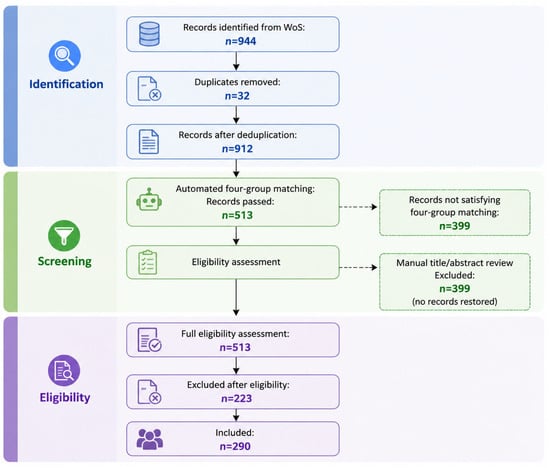
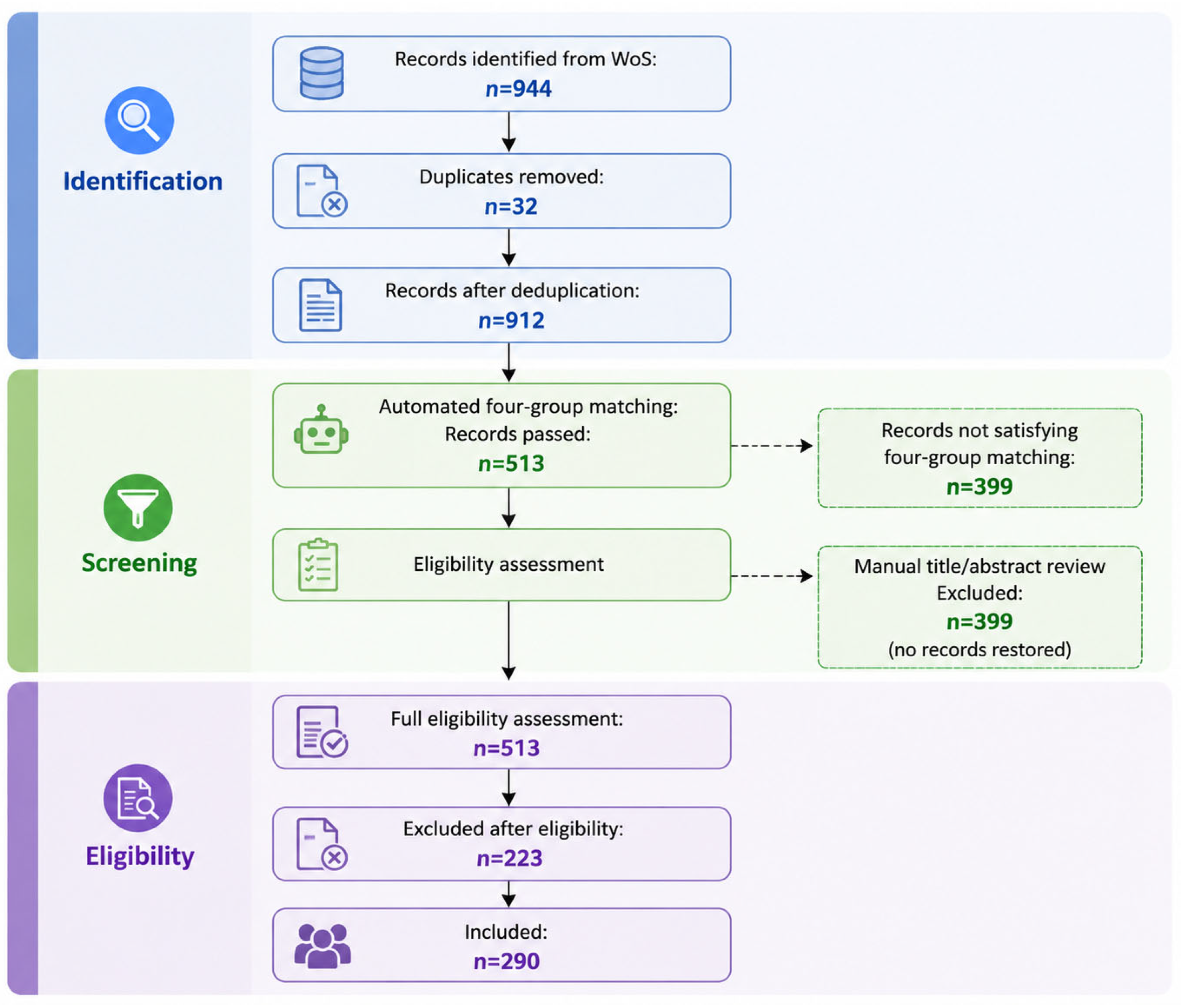
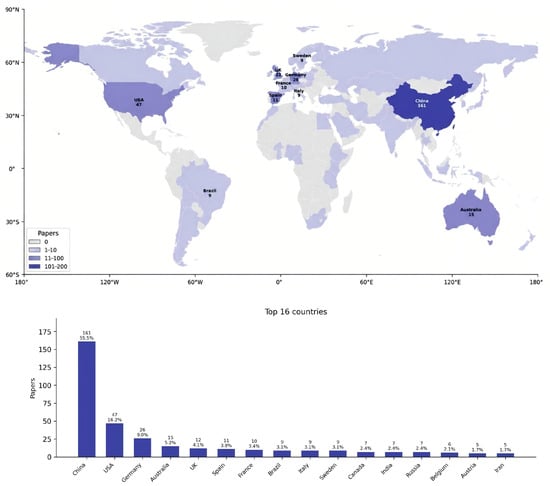
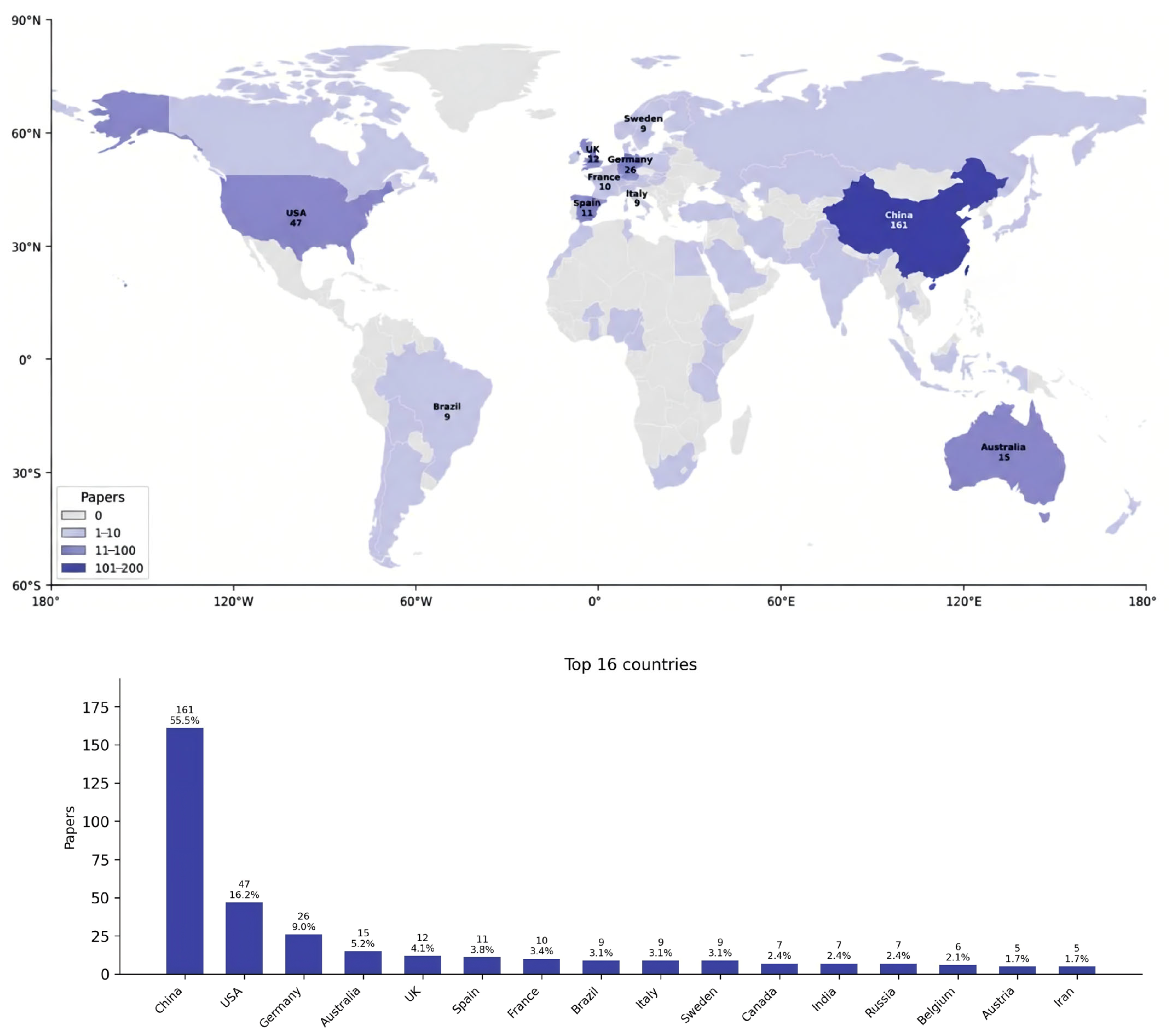
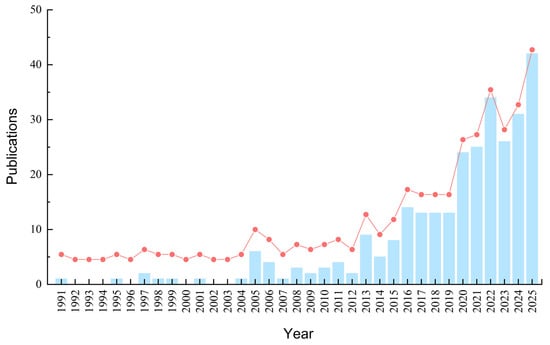
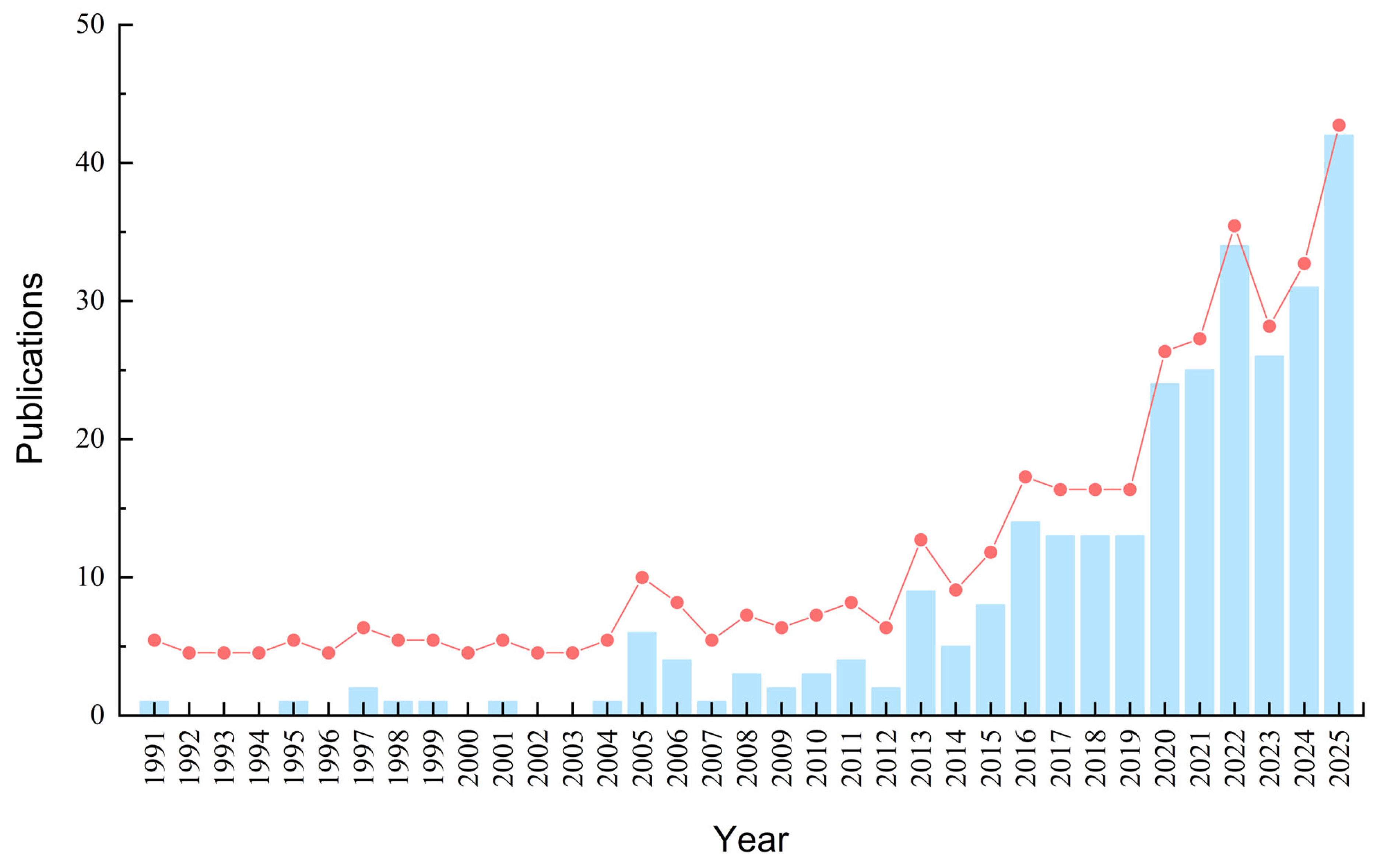
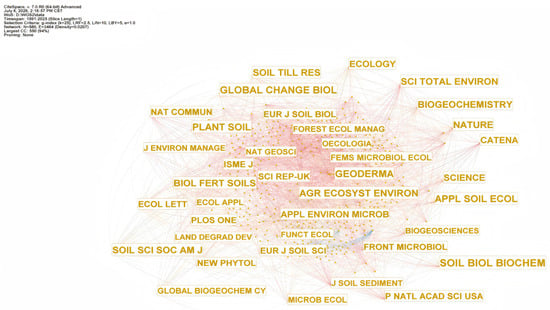
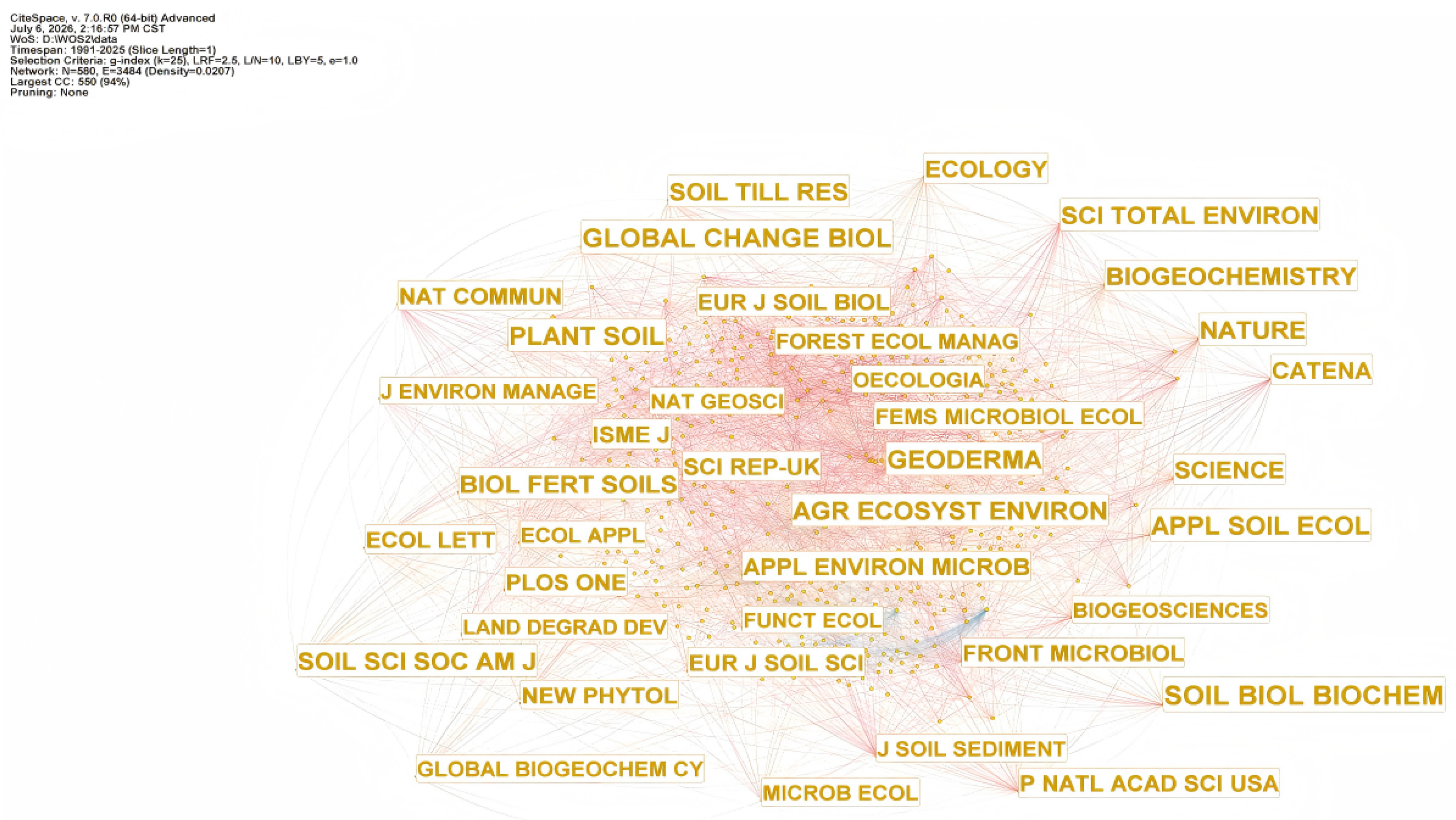
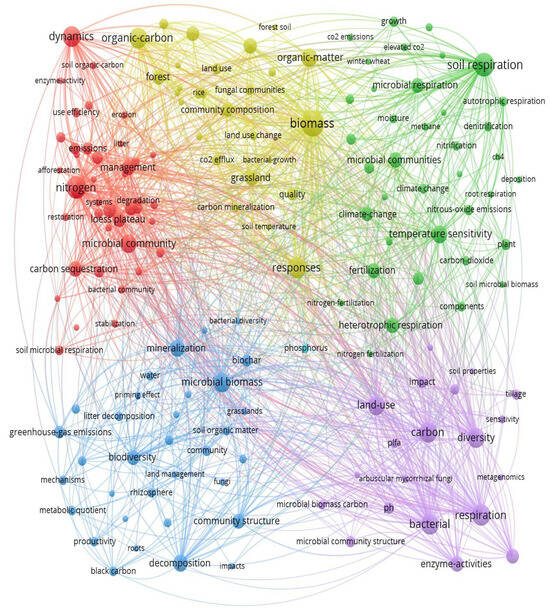
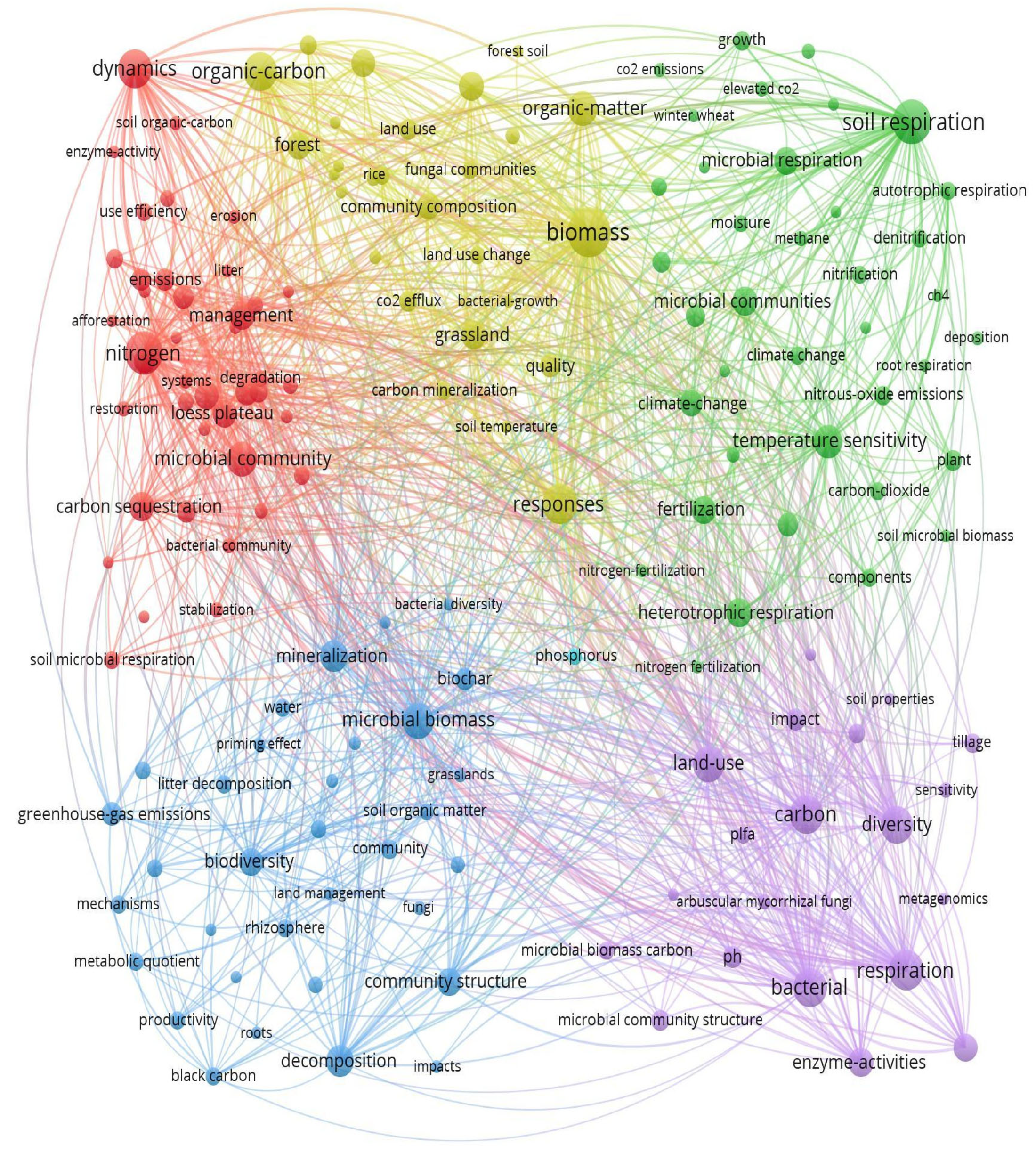
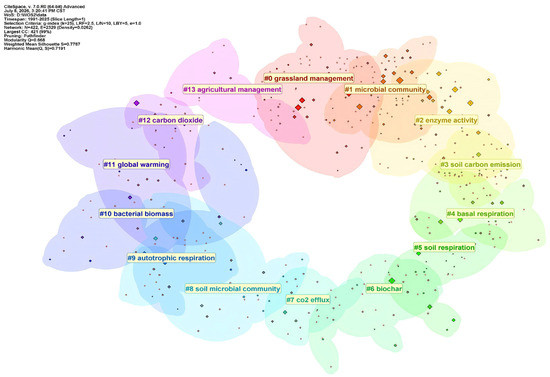
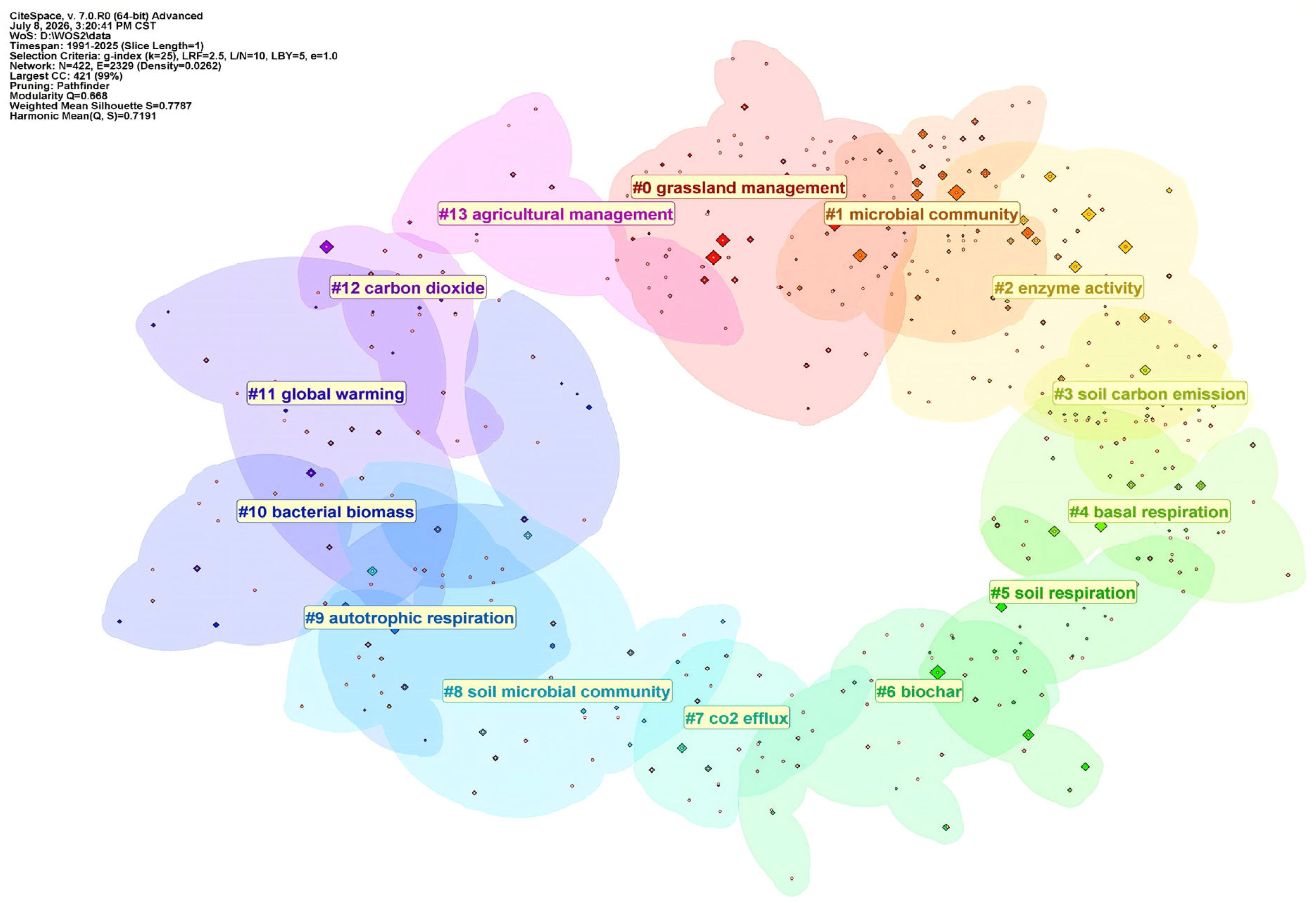
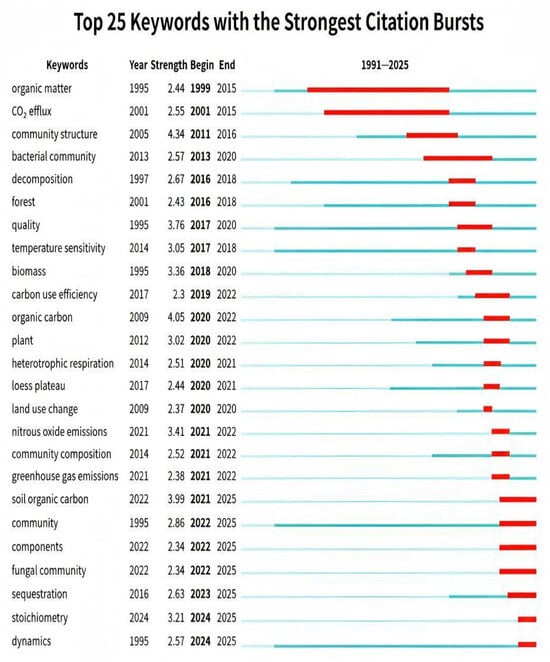
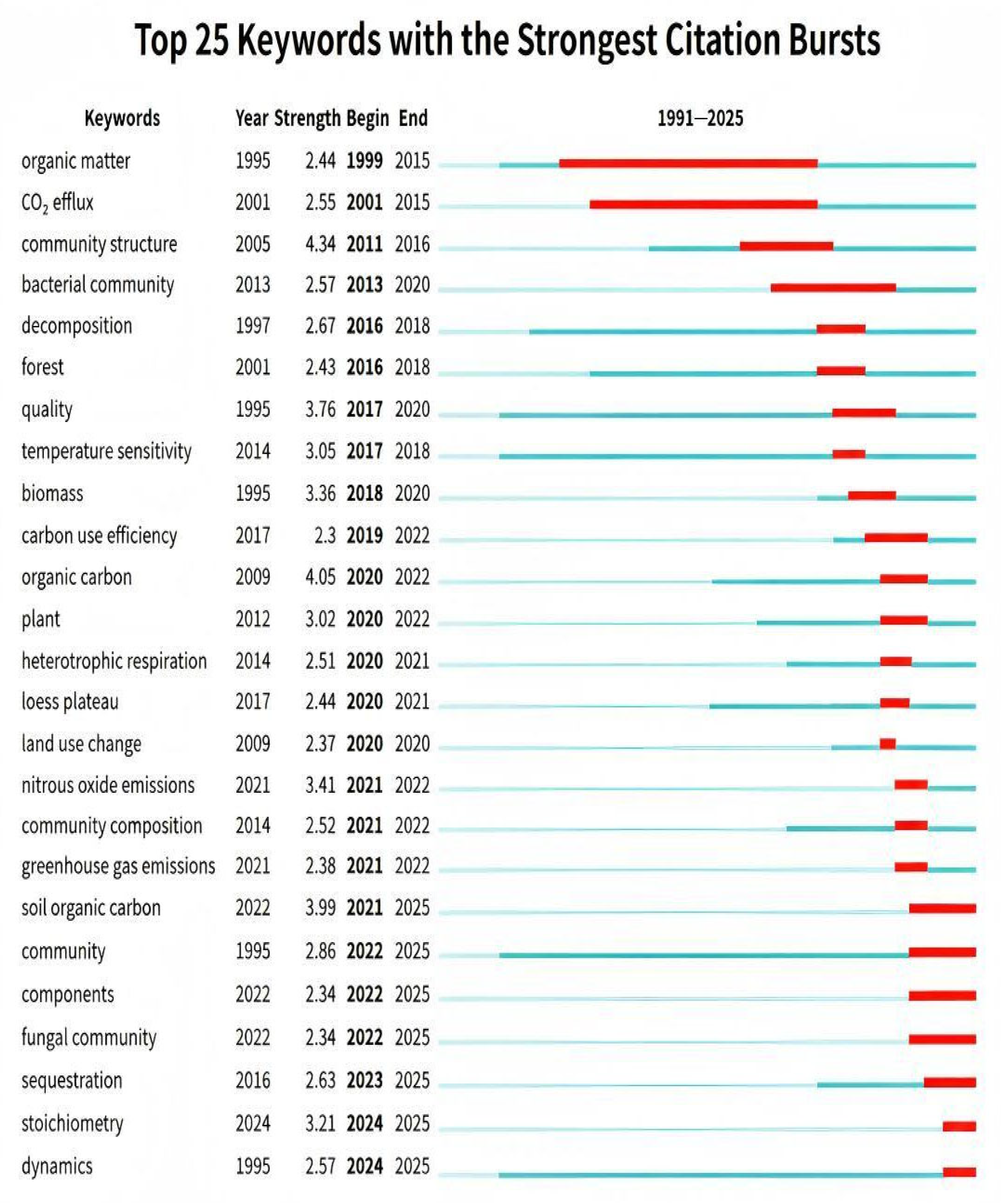
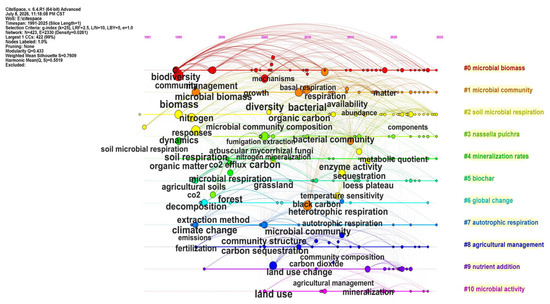
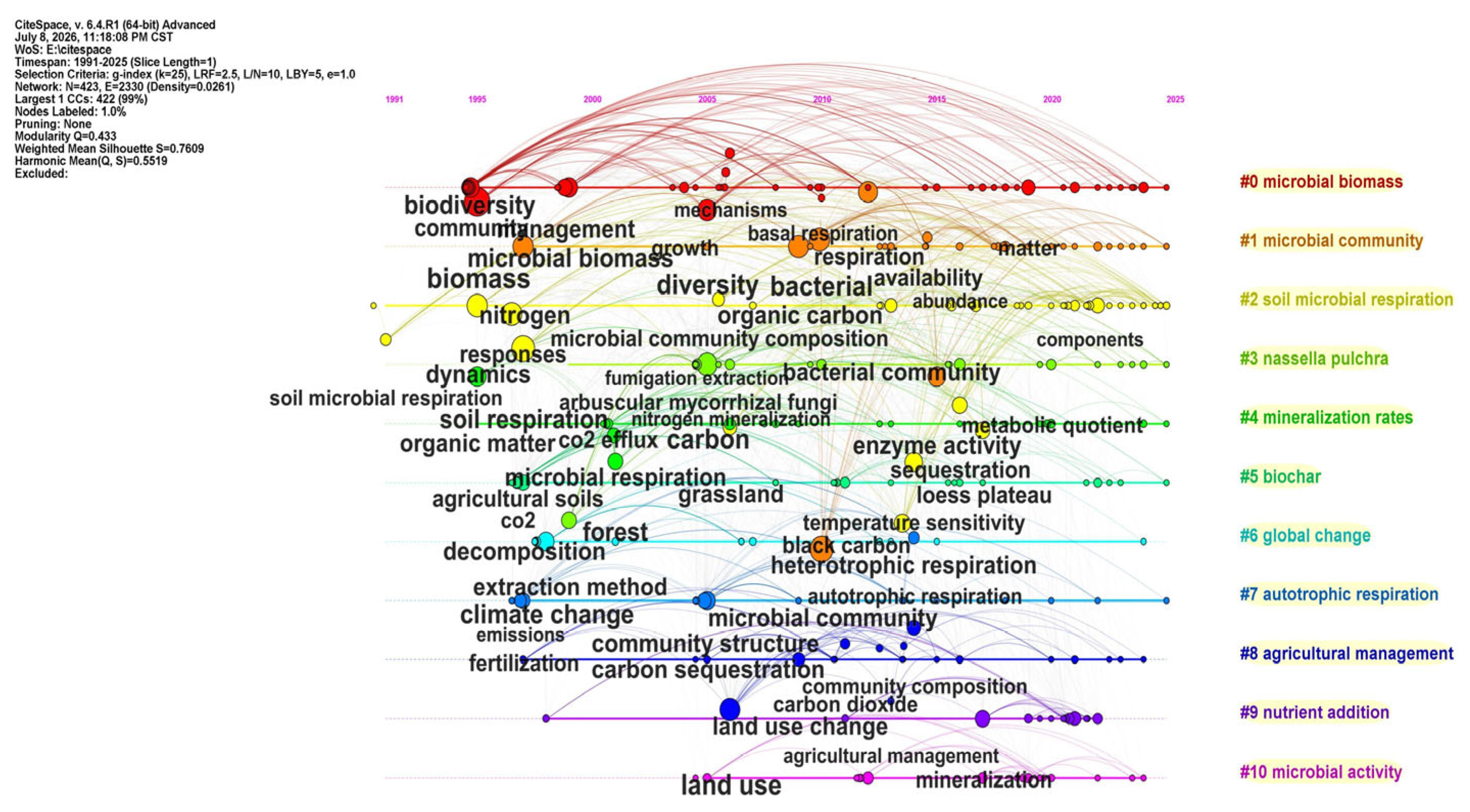

Disclaimer/Publisher’s Note: The statements, opinions and data contained in all publications are solely those of the individual author(s) and contributor(s) and not of MDPI and/or the editor(s). MDPI and/or the editor(s) disclaim responsibility for any injury to people or property resulting from any ideas, methods, instructions or products referred to in the content. |
© 2026 by the authors. Licensee MDPI, Basel, Switzerland. This article is an open access article distributed under the terms and conditions of the Creative Commons Attribution (CC BY) license.