


Abstract
In order to solve the problem of the threshing performance of a large combine harvester being reduced due to the non-adjustable diameter of the threshing drum, a variable-diameter threshing drum with movable radial plates based on the principle of concentric regulation was studied. It was mainly composed of a mechanism for adjusting the diameter by moving the radial plates, six fixed threshing tooth rods, six retractable threshing tooth rods and the single piston rod hollow hydraulic cylinder. The threshing gap can be adjusted by a stepless change of the drum diameter. By using RecurDyn simulation and field performance tests, the adjustable ranges of diameter and gap of the movable variable-diameter threshing drum were 670~710 mm and 10~30 mm. Based on the feed amount of the combine, the rotation speed of the threshing drum and the threshing gap (the diameter of the drum) as the influencing parameters, and the grain entrainment loss rate, grain un-threshed rate and grain breakage rate as the evaluation indexes, the three-factor and three-level response surface tests were carried out, and the result data were analyzed using Design-Expert 13.0. The optimal threshing gap and rotation speed of the threshing drum were determined under different feeding quantities. A comparative test was carried out to adjust and fix the threshing gap and rotation speed of the threshing drum in real time according to the change in feeding amount. The results showed that when the working parameter combination under different feeding amounts was adjusted in real time, the entrainment loss rate was 0.65%, the un-threshed rate was 0.063% and the breakage rate was 0.47%. Compared with the threshing gap and the rotation speed of the threshing drum being fixed, the entrainment loss rate, the un-threshed rate and the breakage rate were reduced by 44.9%, 27.6% and 34.1%, respectively. A threshing drum with variable diameter was provided for a large multi-crop harvesting combine to realize the concentric stepless adjustment of the threshing gap.
1. Introduction
Harvesting machinery, as the main operational tool for grain crop pellets to be returned to the warehouse, is of great significance to maintain national food security. The threshing device is an important working part of the combine harvester [1,2,3,4], which changes the intensity of threshing action and improves the threshing performance by adjusting working parameters such as the rotation speed of the threshing drum and threshing gap in order to adapt to various types, varieties, maturity and humidity of grains.
Studies have shown that by changing the diameter of the threshing drum and concentrically adjusting the threshing gap, there was better transport separation capacity, more uniform distribution of the threshing material and less breakage of the grain straw [5]. For this reason, researchers have investigated variable-diameter threshing drums. Conventional threshing drums [6,7] adjust the drum diameter by manually replacing the threshing element or changing the installation position of the threshing tooth bar, which is time-consuming and laborious to adjust. The structure of mechanically driven variable-diameter threshing drums was complex and it was not easy to achieve stepless adjustment and adaptive control [8,9,10,11]. Yanbin Liu et al. [12] invented a hydraulically driven variable-diameter threshing drum, in which the diameter of the drum was changed by the radial movement of the threshing gear rod driven by the telescopic control linkage of the hydraulic cylinder, thus realizing the adjustment of the threshing gap. Su Zhan [13] designed an electronically controlled self-locking variable-diameter grain roller. By rotating the Archimedean constant speed spiral disk, the six grippers are driven to expand and expand, and then the tooth rod is driven by the connecting rod to change the diameter of the drum. Chen Lipeng [14] used gear drive to change the diameter of threshing drum. However, the current research on variable-diameter threshing drums was only for small feeding-capacity combine harvesters, and there were no intermediate support radial plates or the threshing tooth bar was not fixed with the intermediate support radial plates needed in order to achieve the change in drum diameter. With the development of grain combine harvesters at large, the torque and load on the threshing drum are increasing, which can easily deform the threshing tooth bar and even lead to damage of the threshing separation device, affecting the operational efficiency.
Many researchers have now conducted a large number of multi-factor interaction tests based on orthogonal test methods to determine the operating parameters of combine harvester threshing and separating devices [15,16,17,18,19,20,21,22]. However, the current parameter treatments after field trials are obtained under the specified operating conditions corresponding to an optimal combination of parameters [19,20,21,22], while there are large differences in the physical properties and biomass of grains in different areas of the same plot [23], and a single parameter leads to the problem of poor harvesting adaptation of the combine harvester with reduced threshing performance.
Therefore, in this paper, based on the principle of concentric adjustment and the advantages and disadvantages of the existing adjustment structures, a variable-diameter threshing drum with movable radial plates was designed. A three-factor, three-level response surface test [19,20,21,22,24] was conducted based on the combination harvester feed rate, rotation speed of the threshing drum and threshing gap (drum diameter) as the influencing parameters, and the grain entrainment loss rate, grain un-threshed rate and breakage rate as the evaluation indexes, to provide a grain combination harvester operation parameter adjustment scheme for the feed rate fluctuation in different areas of the same plot.
2. Materials and Methods
2.1. Design and Development
The design was based on the threshing drum of the Super Rui Long combine harvester produced by Jiangsu WROLD Agricultural Machinery Co. (Danyang, China). The specific parameters are shown in Table 1.
Table 1.
Technical parameters of Super Rui Long 4LZ-8.0G(Q) combine harvester.
2.1.1. Variable-Diameter Threshing Drum with Movable Radial Plates
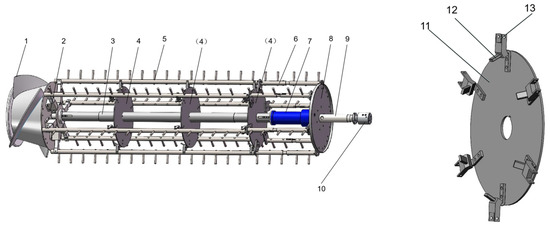
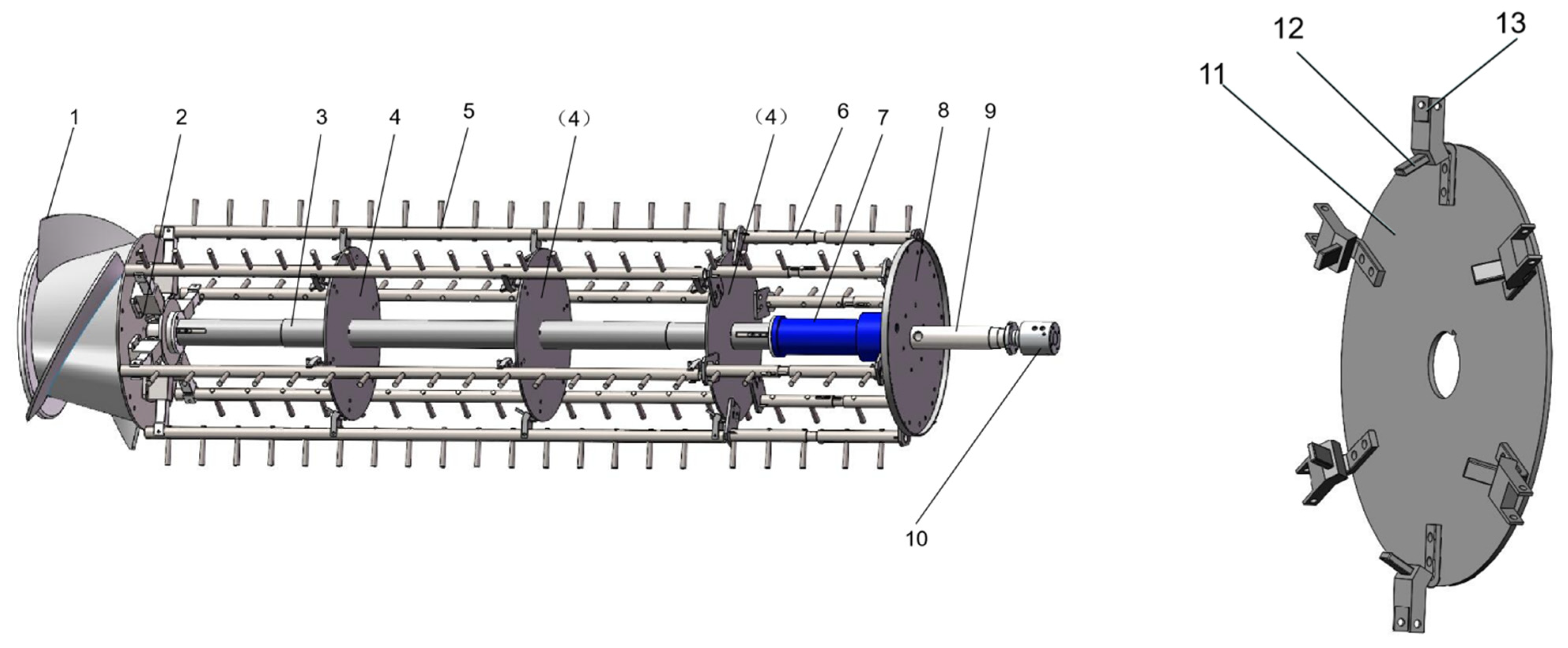
The design of the variable-diameter threshing drum with movable radial plates was based on the principle of the hydraulic-driven variable-diameter threshing drum structure [12] using the Solid Works software, and the structure of the whole machine is shown in Figure 1. The designed threshing drum is mainly composed of the mechanism for adjusting the diameter by moving the radial plates, side disc adjustment mechanism, six fixed threshing gear rods, six retractable threshing gear rods, single piston rod hollow hydraulic cylinder, main shaft, displacement sensor, feeding wheel and hydraulic rotary joint.
Figure 1.
Schematic diagram of the structure of the variable-diameter threshing drum with movable radial plates: 1. feeding wheel, 2. side width plate adjustment mechanism, 3. sleeve, 4. support width plate mobile type adjustment mechanism, 5. fixed gear rod, 6. telescopic gear rod, 7. single piston rod hollow hydraulic cylinder, 8. rear side width plate, 9. spindle, 10. hydraulic rotary joint, 11. width plate, 12. adjustment slide, 13. slider type linkage.
When the diameter of the threshing drum needs to be adjusted, the hydraulic oil will enter the rod or rodless cavity of the single piston rod hollow hydraulic cylinder through the hydraulic swivel joint, pushing the piston rod to expand and contract, thus driving the axial movement of the axial sleeve, and then pushing the guide rail to push the disc along the axial movement, driving the hinge pin to slide along the bevel of the guide rail, driving the connecting rod to move radially along the slide groove; the axial movement of the axial sleeve also drives the movable adjustment structure of the width disc and the diameter adjustment slide on the width disc to move axially together; under the action of the connecting rod and the slider connecting rod, the fixed gear rod moves radially to realize the drum diameter adjustment. The diameter adjustment slide in the movable adjusting structure of the support disk also drives the disk and the diameter adjustment slide on the disk to move axially together, thus pushing the slide linkage to slide along the slide; under the action of the linkage and slide linkage, the fixed gear rod moves radially to realize the drum diameter adjustment. When the diameter of the threshing drum does not need to be moved, the hydraulic oil does not flow so that the piston cylinder of the hollow hydraulic cylinder is at rest, resulting in each adjustment mechanism at rest, ensuring that the position of the threshing tooth rod remains unchanged to achieve a constant diameter. The threshing tines between the two discs near the end (debris removal area) are designed as retractable tines, following the retraction of the hollow hydraulic cylinder.
2.1.2. Hydraulic System
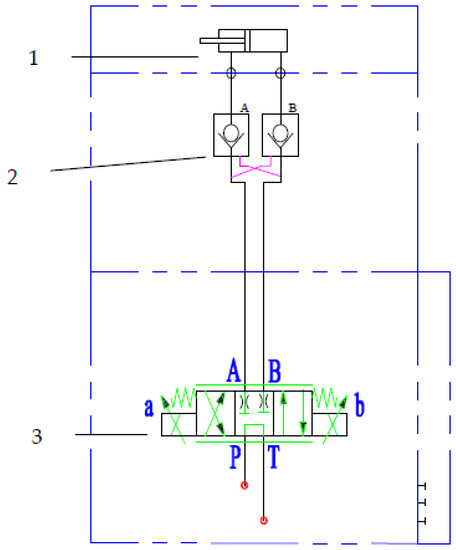
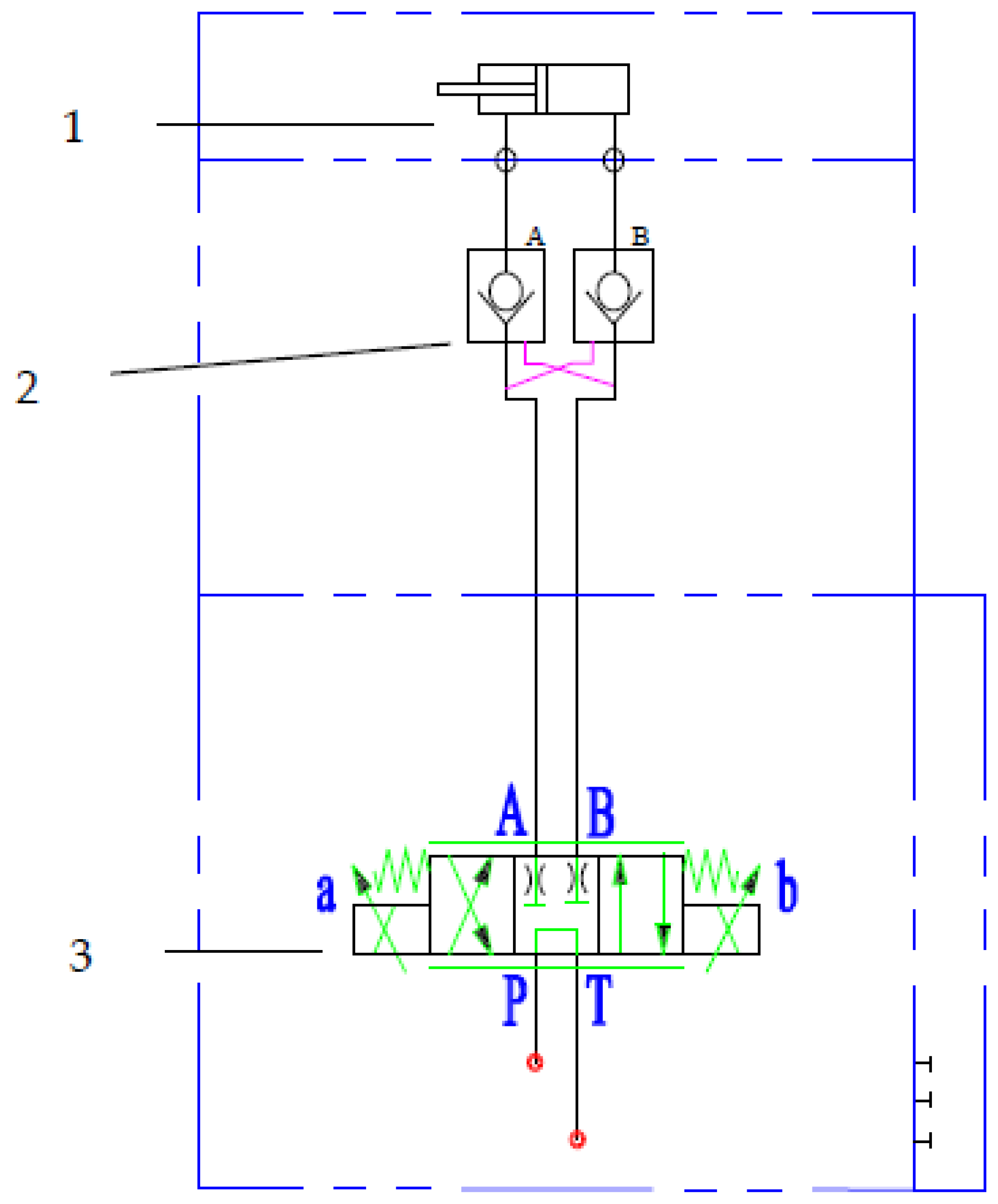
The principle of the hydraulic system scheme is shown in Figure 2. A three-way four-way solenoid proportional reversing valve is used to switch the piston rod of the hollow hydraulic cylinder between telescopic and stationary states. The hydraulic lock is used to ensure that the hydraulic cylinder is self-locking after the diameter adjustment of the threshing drum by preventing the flow of hydraulic oil.
Figure 2.
Hydraulic system schematic: 1. hollow hydraulic cylinder, 2. hydraulic lock, 3. three-way four-way solenoid proportional reversing valve.
2.1.3. Diameter Adjustment Performance Verification
At present, when applying the grain combine harvester to a multi-crop harvesting direction, different crops need different threshing gaps, and the threshing gap is also different for different varieties and different operating environments. According to a large number of experimental studies, the optimum threshing gap for wheat and rice is between 18 mm and 25 mm [11,25,26], for soybean between 24 and 30 mm [27,28], and for Oilseed rape between 11 and 23 mm [29,30]. Therefore, the maximum difference of threshing gap between various crops is 19 mm, and the diameter range of the designed mobile variable-diameter threshing drum was 670~710 mm, i.e., the adjustable range of threshing gap was 30~10 mm.
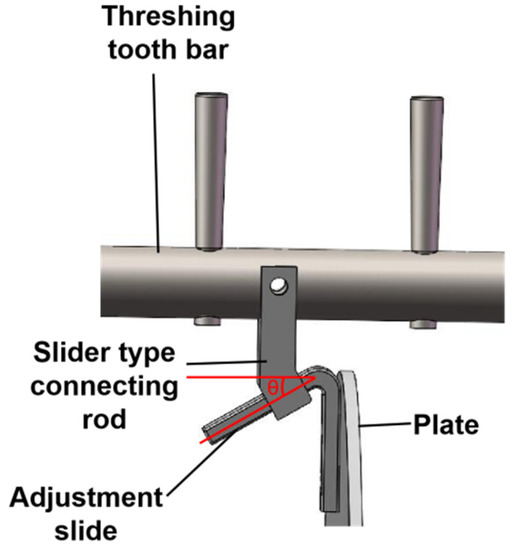
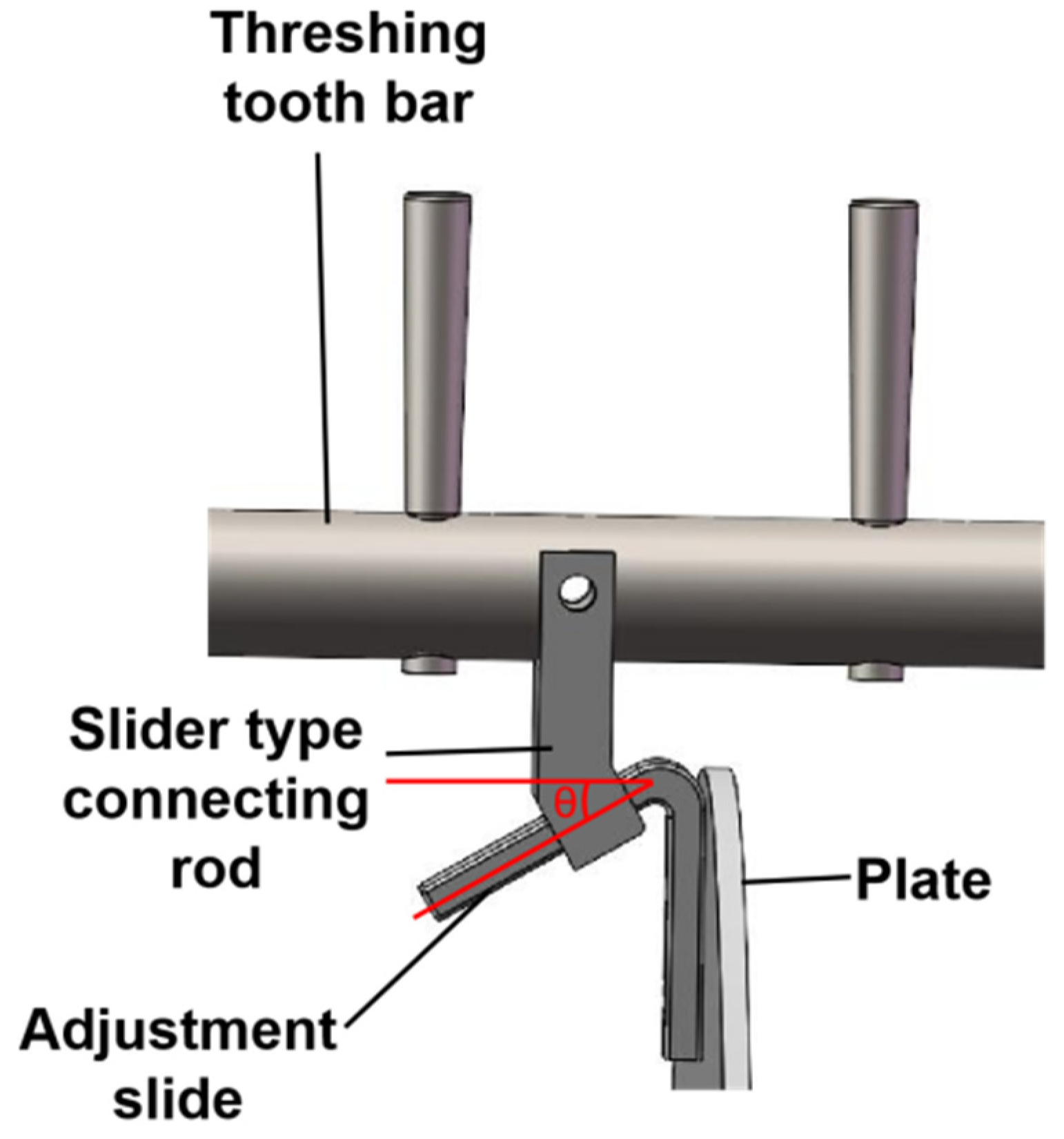
The angle of the guide rail is shown in Figure 3, and the relational expression between the angle of the adjustment slide and the amount of radius adjustment and horizontal travel is as follows:
where dr is the length of the variable-diameter threshing drum radius adjustment; ds is the horizontal stroke of the diameter adjustment mechanism.
Figure 3.
Diagram of adjusting the angle of the slide rail.
The angle was determined to be 30° according to the preliminary study [12].
RecurDyn Simulation
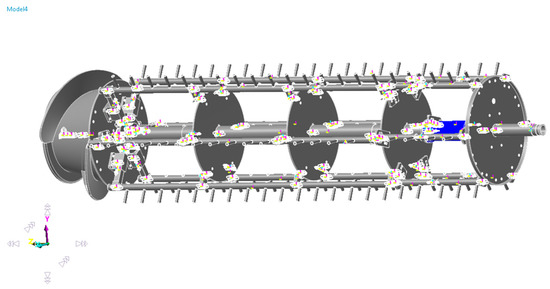
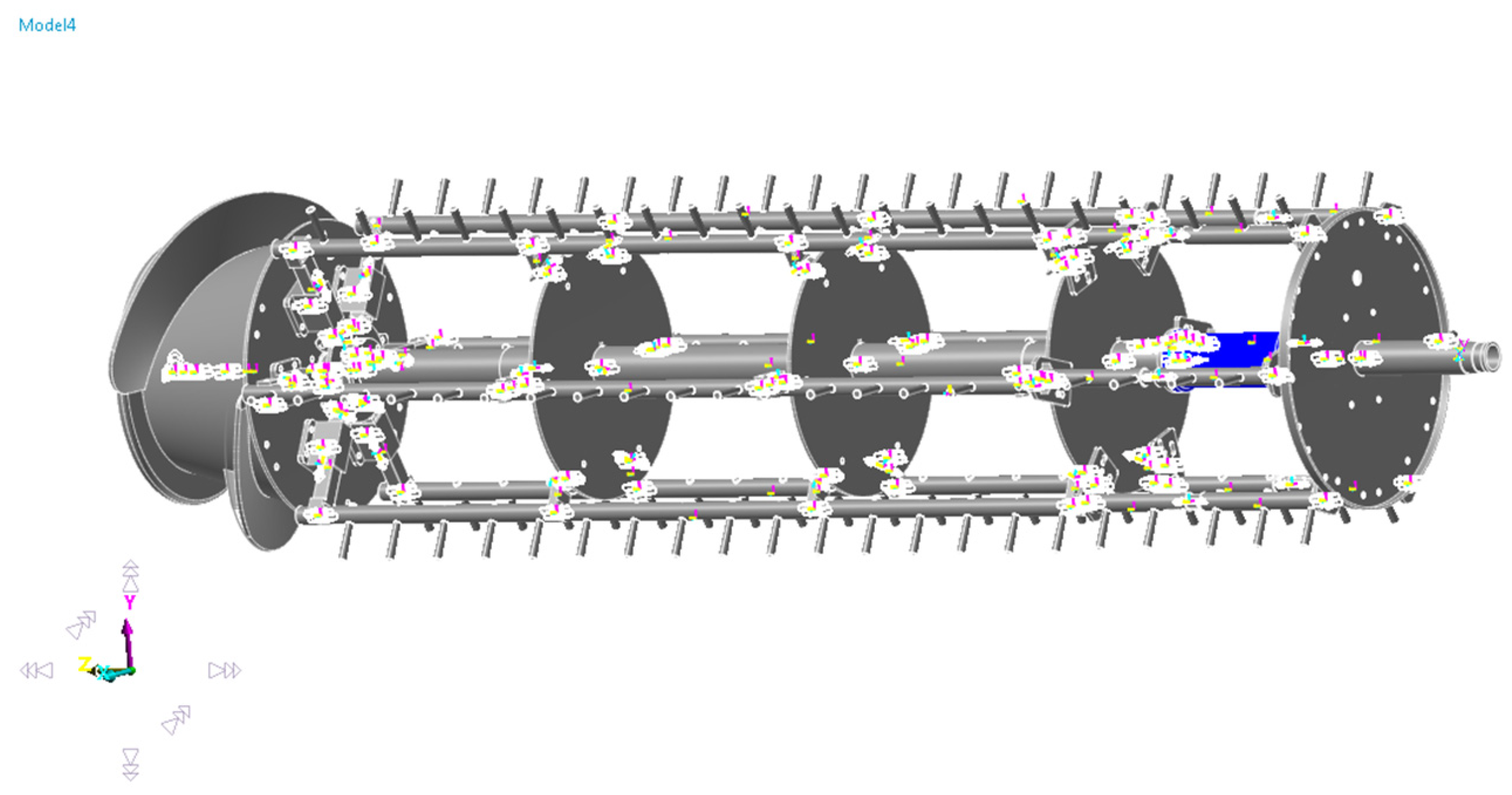
The 3D model of variable-diameter threshing drum with movable radial plates designed by Solidworks was imported into RecurDyn in blocks as required, and the constraints were added to the imported model according to the assembly relationship to simulate its diameter adjustment performance. A total of 1 Revolute constraint, 38 Translate constraints and 88 Fixed constraints were set on the model, and the constraints were added as shown in Figure 4. The gravitational acceleration was applied in the −Y direction, and the material of the model was set to steel. A drive control was added to Trajoint 8, which was the sliding constraint between the piston rod of the hydraulic cylinder and the spindle (simulation time was 8 s), with the expression STEP (time, 0, 0, 4, STEP (time, 4, −34.64, 8, 0)), and a marker point Marker 6 was added to the tip of the peg tooth of any fixed rod to monitor its trajectory.
Figure 4.
Simulation model diagram in RecurDyn.
Performance Verification
The variable-diameter threshing drum with movable radial plates and hydraulic system were assembled in Jiangsu WORLD and integrated into the WORLD Super Rui Long 4LZ-8.0G(Q). The drum diameter adjustment performance was verified by controlling the hydraulic cylinder in the cab through the switch of the proportional valve and reversing valve.
2.2. Field Trials
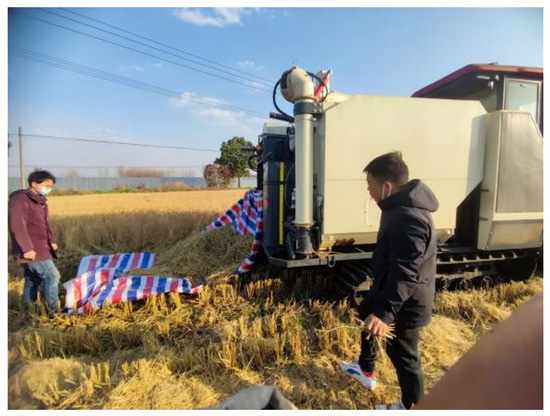
In order to obtain a scheme for the variable-diameter threshing drum with movable radial plates combine harvester to adjust the rotation speed of the threshing drum and threshing gap according to different feeds, a rice field trial [31] was conducted in December 2022 at Happy Farm, Danyang, Jiangsu, China.As shown in Figure 5. The rice variety is Zhendao32. Before the trial, tarpaulins were bundled to the discharge opening of the combine harvester to collect the threshing material, and a 20 m long test area was marked using a marker. After the test, the entrained loss seeds and un-threshed seeds in the detritus were screened to calculate the entrained loss rate and un-threshed rate, and the seeds from the grain bin were unloaded and weighed and randomly sampled to measure the seed breakage rate. Each group of tests was repeated three times, and the performance indexes were averaged.
Figure 5.
Field trial.
2.2.1. Test Protocol
Box–Behnken Center Combination Test
In order to investigate the pattern of influence of combine harvester operating parameters on threshing performance indexes, field experiments were conducted using the combine harvester feed rate, rotation speed of the threshing drum, and threshing gap as influencing factors [32,33]. The adjustment of the feed rate was achieved by changing the forward speed of the combine harvester [34]. The speed of the threshing drum is regulated by the drum gearbox. According to the pre-harvest experiments of rice, the feed rate, rotation speed of the threshing drum and threshing gap were set to 6 kg/s~9 kg/s, 700 r/min~900 r/min and 15 mm~25 mm, respectively, and a three-factor, three-level response surface test was conducted using Design Expert software according to the Box–Behnken central combination test design theory [35,36]. The factor level codes are shown in Table 2.
Table 2.
Factor level coding table.
In order to obtain the optimal combination of operating parameters for different feeding rates of variable-diameter detachment drums, the Optimization function of Design-Expert 13.0 was used to set the constraints for each test factor and evaluation index in Numerical, and the threshing drum speed and threshing gap were set at 700 r/min to 900 r/min. The rotation speed of the threshing drum and threshing gap were set between 700 r/min~900 r/min and 15 mm~25 mm, respectively. The entrained loss rate, un-threshed rate and breakage rate were all taken as the minimum values, while the specific gravity was “3:3:4”. The feed rate was entered in the range of 6 kg/s to 9 kg/s to obtain the combination of threshing gap and rotation speed of the threshing drum parameters that satisfy the constraints for the corresponding feed rate.
Comparative Test Protocol
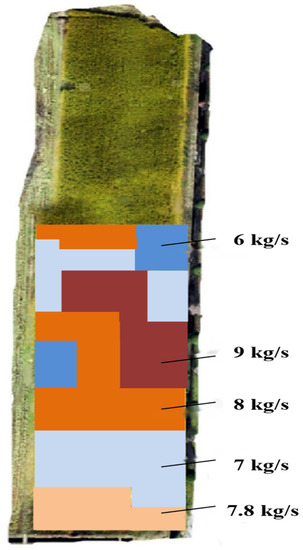
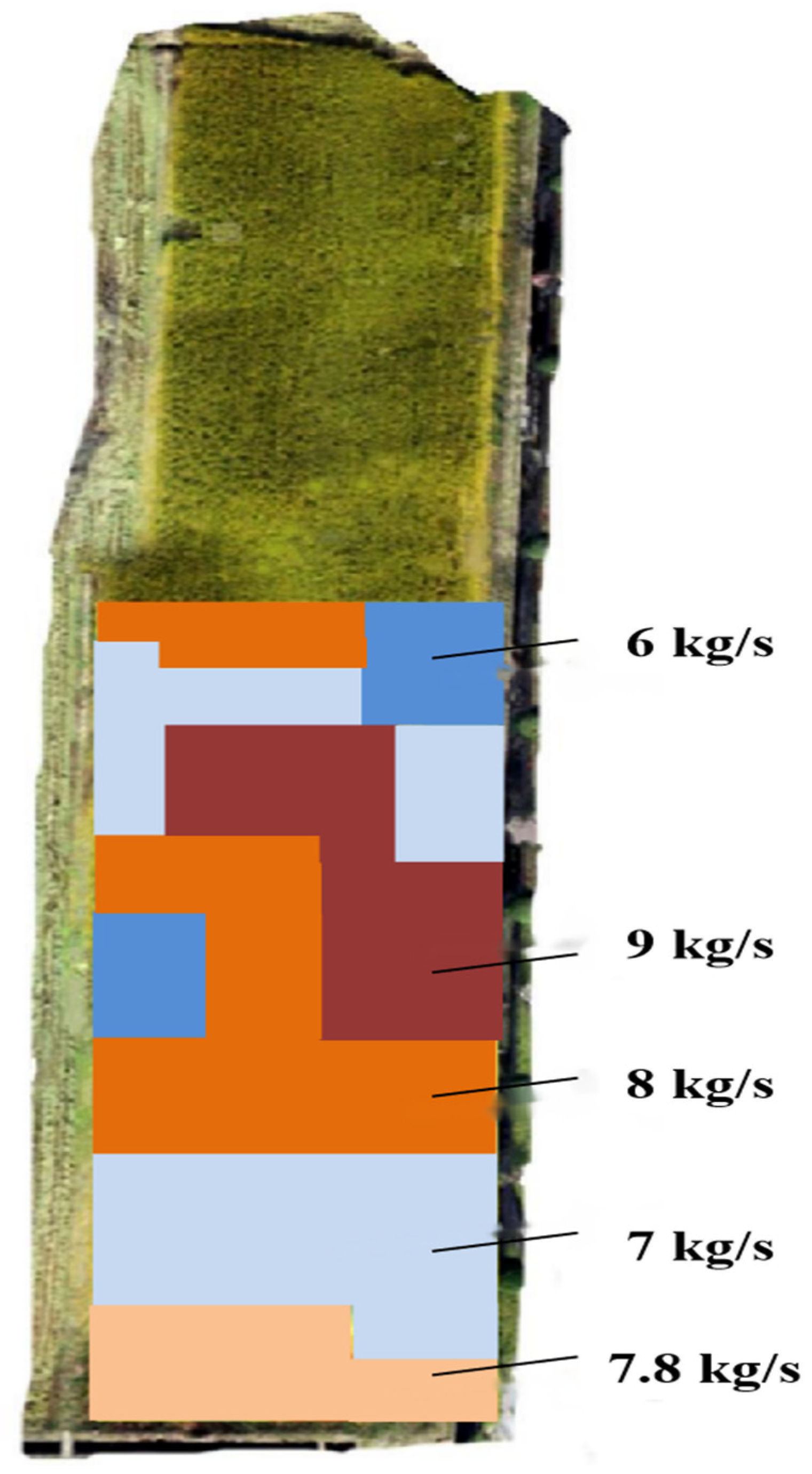
Due to the different crop growth and crop density in the field, as well as combining with the habits of the mechanic driving the combine harvester and the turning needs, the feeding amount of the combine harvester is different in different areas of the same field. Therefore, it is necessary to adjust the threshing gap and drum speed of the combine harvester in real time according to different feeding amounts to improve the operational performance of the combine harvester. According to the study by Lele Wei et al. [25], it was found that the rice density distribution in the field block could be analyzed using UAV photography, while the size of the feeding volume could be deduced based on parameters such as yield and grain-to-grass ratio, and after regularization, the field feeding volume distribution map was obtained as shown in Figure 6. In order to verify that the combine harvester can improve the threshing performance by adjusting the threshing gap and drum speed according to different feeding amounts, two sets of tests were designed for comparison: (i) the drum diameter was adjusted in real time to achieve the required threshing gap according to the optimal combination of parameters at different feeding amounts, and the drum speed was adjusted accordingly; (ii) the combine harvester harvested with a fixed threshing gap and drum speed, which were not adjusted due to changes in the feeding amount. The test procedure was the same as above, with each group of tests conducted three times and the threshing performance averaged.
Figure 6.
Distribution of feeding volume in the field.
3. Results and Discussion
3.1. Performance Verification Results
3.1.1. RecurDyn Simulation Results
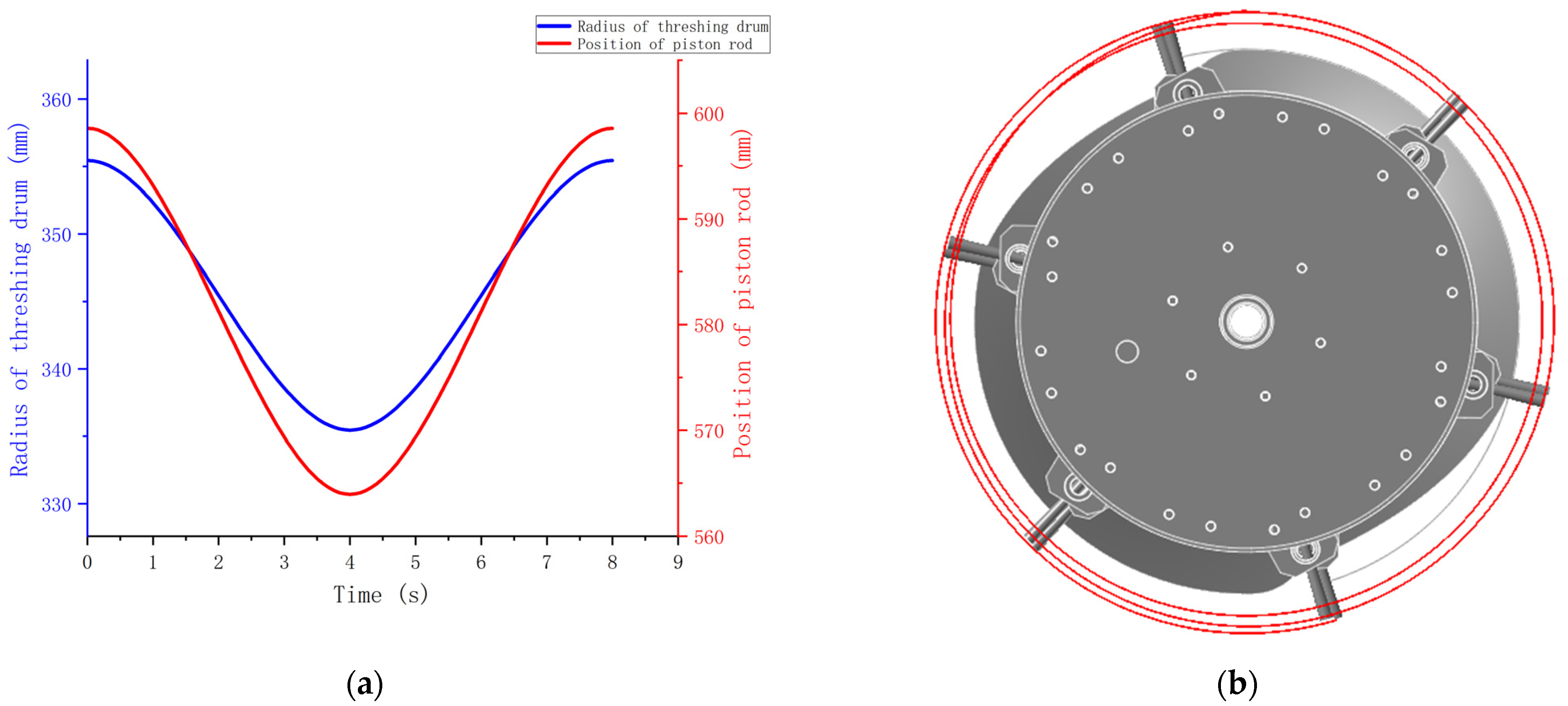
After setting all the parameters and conditions, the simulation was carried out and the results are shown in Figure 7. In 0~4 s, the piston rod of the hydraulic cylinder slowly shrinks with time, and the piston rod shrinks 34.64 mm. At this time, the radius of the variable-diameter threshing drum with movable radial plates changes. The radius change range is 355.44~335.45 mm; that is, the adjustable range of threshing gap is 19.99 mm. In 4~8 s, the piston rod of the hydraulic cylinder extends 34.64 mm with time. The piston rod of the hydraulic cylinder extends 34.64 mm with time at 4~8 s, and the radius change range is 335.45~355.45 mm, which proves that the variable-diameter threshing drum with movable radial plates is adjustable back and forth and the adjustment range is in accordance with the design requirements.
Figure 7.
Simulation of diameter adjustment of RecurDyn-based variable-diameter threshing drum with movable radial plates. (a) Piston rod position along the main shaft and drum diameter variation diagram; (b) Marker 6 motion track.
3.1.2. Installed Performance Verification
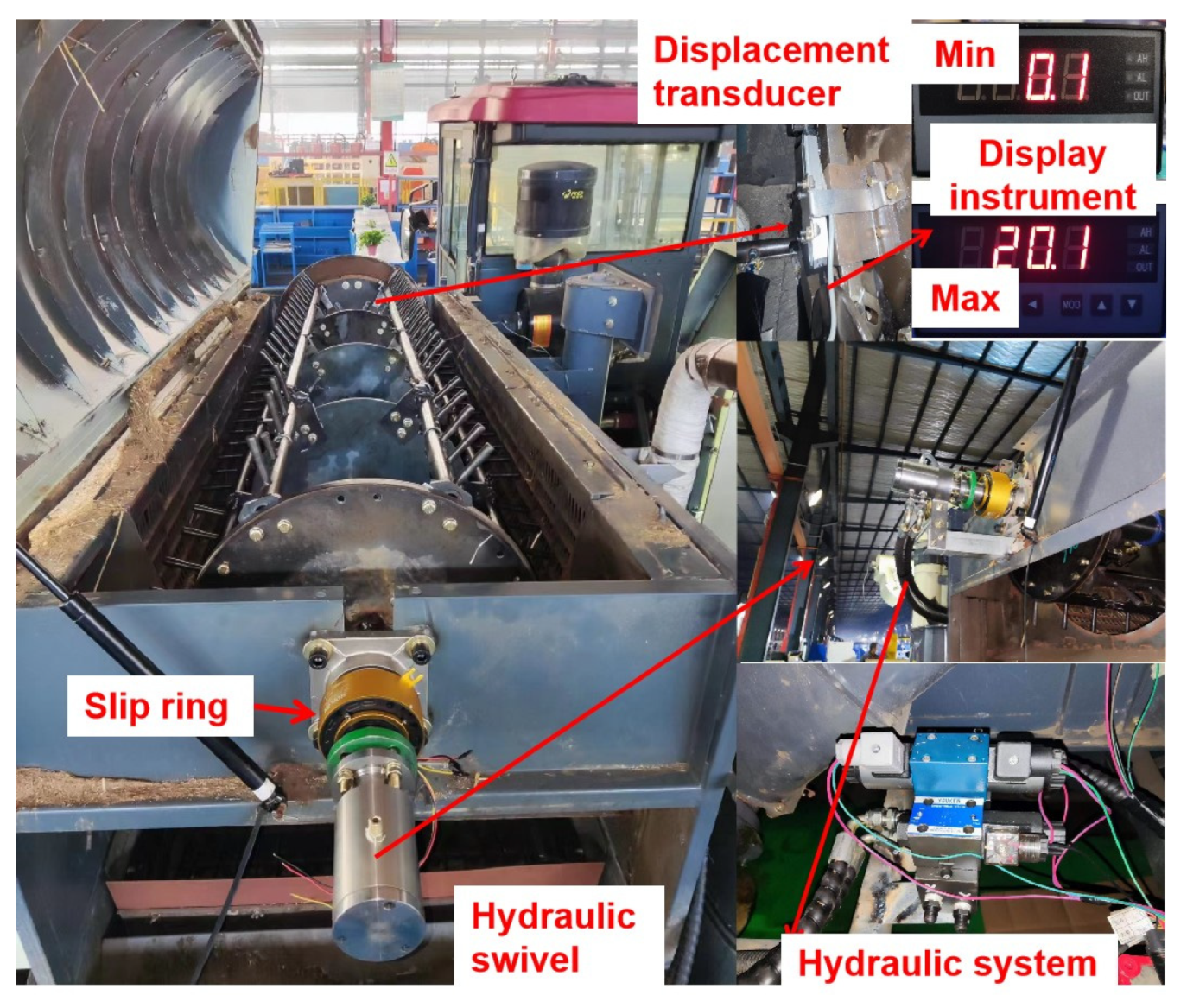
Figure 8 shows the installation positions. The diameter adjustment of the variable-diameter threshing drum with movable radial plates can be realized by manipulating the switch of the proportional valve and reversing valve in the cab. By pushing the switch back and forth, the hydraulic oil is controlled from the hydraulic system through the hydraulic oil pipe into and out of the hollow hydraulic cylinder of the variable-diameter threshing drum with movable radial plates, thus controlling the piston rod of the hollow hydraulic cylinder to expand and retract and achieve the role of diameter adjustment. The monitoring of the threshing gap is indirectly obtained by monitoring the diameter of the threshing drum, and the change value of the threshing drum diameter is obtained by the displacement sensor, and is displayed on the instrument in the cab; the monitoring accuracy is 0.1 mm. After testing, the diameter of the threshing drum can be adjusted freely and the radius can be adjusted by 20 mm, i.e., the range of threshing gap is 20 mm, which meets the design requirements and verifies the rationality of the mechanism and the reliability of the adjustment range.
Figure 8.
Variable-diameter threshing drum with movable radial plates and hydraulic system and related accessories.
3.2. Results of Field Trials
The results were summarized and analyzed according to the formulae of each evaluation index, and the experimental scheme and results are shown in Table 3.
Table 3.
Experimental protocol and results.
3.2.1. Entrainment Loss Rate
An analysis of variance (ANOVA) was performed on the entrapment loss rate by Design-Expert 13.0 [37], and the results are shown in Table 4.
Table 4.
Analysis of variance for entrapment loss rate.
The regression equation for the entrainment loss rate is as follows:
Sj = 0.604 + 0.155A − 0.0225B + 0.03C − 0.045AB − 0.065AC + 0.0655A2 + 0.0755B2 + 0.0405C2
As can be seen from Table 4, the model p-value for the entrainment loss rate is less than 0.01 and the model F-value is 55.39, which indicates that the model is significant. Also, the model coefficient of determination R2 = 0.9862 indicates that the regression model obtained for the entrained loss rate reflects 98.62% of the variation in response values and the misfit term is not significant, indicating that the error in the experimental data is small while the regression equation obtained is a good fit. A p-value less than 0.05 indicates that the model term is significant; in this case, A, B, C, AB, AC, A2, B2 and C2 are the model terms with significant entrainment loss rates.
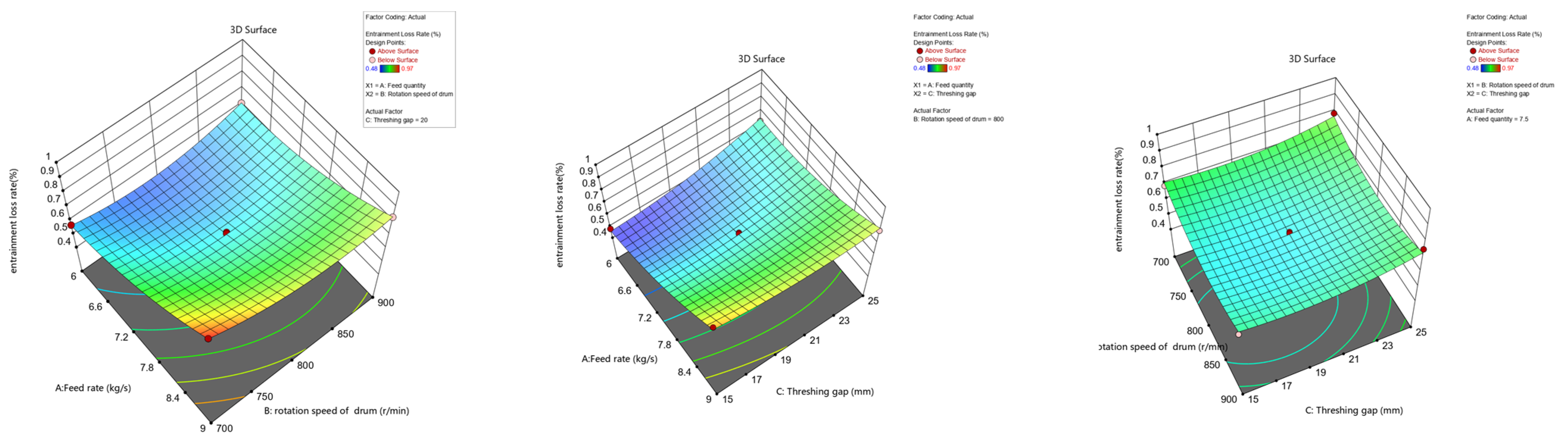
From Table 4, it can be seen that the feeding amount, rotation speed of the threshing drum and threshing gap are the significant terms of entrainment loss, and the response surface of the significant terms and the entrainment loss rate were analyzed comprehensively. From Figure 9, the entrainment loss rate increased with increasing feed volume, which was attributed to the fact that the density and thickness of rice in the threshing chamber increased with increasing feed volume, resulting in increased difficulty in getting the already threshed seeds through the straw to reach the underside of the concave sieve [38]. The entrainment loss rate decreased and then increased with the increase in rotation speed of the threshing drum because the intensity of the action of the threshing element on the crop increased as the speed of the threshing drum increased, and the entrained seeds were more easily separated out, but as the speed continued to increase, the time that the crop remained in the threshing drum decreased, resulting in an increase in entrainment losses. The entrainment loss varies little with the threshing gap, and the overall trend is to increase, because the threshing gap determines the thickness of the crop inside the threshing chamber, and the greater the crop thickness the greater the entrainment loss.
Figure 9.
Response surface of each factor on entrainment loss rate.
3.2.2. Un-Threshed Rate
An analysis of variance (ANOVA) was performed by Design-Expert 13.0 on the un-threshed rate, and the results are shown in Table 5.
Table 5.
Analysis of variance (ANOVA) for the un-threshed rate.
The regression equation for the un-threshed rate is as follows:
W = 0.0592 + 0.016A − 0.0137B + 0.0155C − 0.0118AB − 0.0012AC − 0.0078BC + 0.0073A2 + 0.0198B2 + 0.0058C2
From Table 5, it can be seen that the model p-value for the un-threshed rate is less than 0.01 and the model F-value is 45.05, which indicates that the model is significant. Also, the model coefficient of determination R2 = 0.983, indicating that the regression model obtained for the un-threshed rate reflects 98.3% of the variation in response values and the misfit term is not significant, indicating that the error in the experimental data is small while the regression equation is a good fit. A p-value less than 0.05 indicates that the model term is significant; in this case, A, B, C, AB, BC, A2, B2, and C2 are the model terms with significant un-threshed rates.
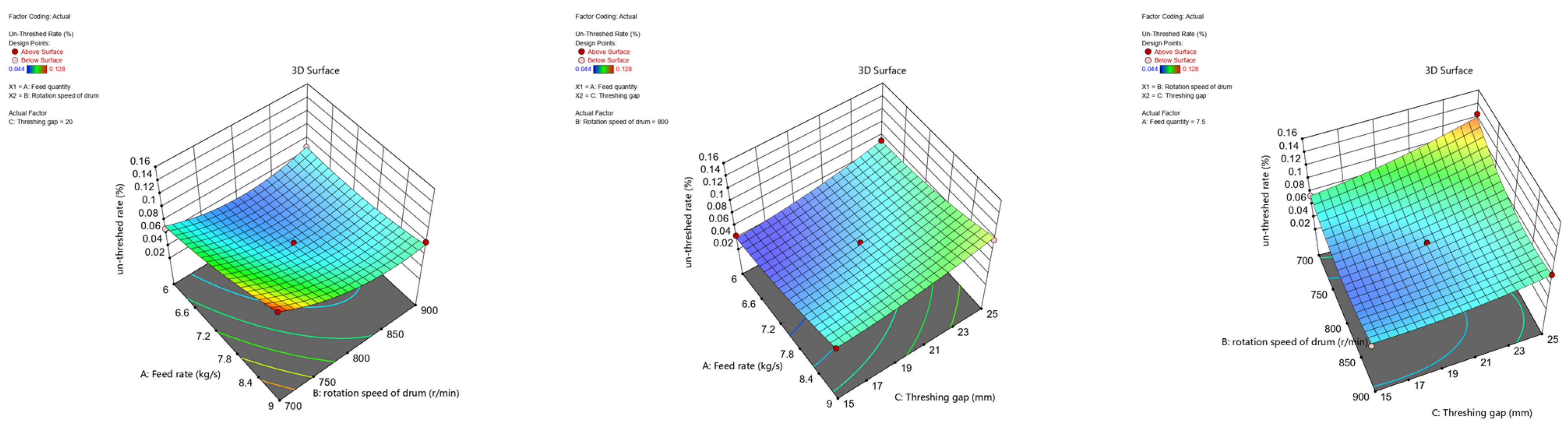
As can be seen from Table 5, for the un-threshed rate, the feeding amount, rotation speed of the threshing drum and threshing gap were significant terms, and the response effects of the significant terms and the un-threshed rate were analyzed comprehensively. As can be seen from Figure 10, the un-threshed rate increased with the increase in feeding volume, because the increase in feeding volume led to the thickness and density of the crop layer inside the threshing chamber, which resulted in the rice spike head interspersed in the middle of the stalk not being in full contact with the threshing element, resulting in some of the seeds not being threshed out and the un-threshed rate increasing. The reason is that when the drum speed increases, the force of the threshing element on the spike head becomes larger, which makes the seeds easier to be threshed out and reduces the un-threshed rate; as the drum speed continues to increase, the crop residence time and the number of threshing actions decrease, resulting in some of the seeds being discharged from the machine before being threshed out. The un-threshed rate increases with the increase in the threshing gap, because the increase in the threshing gap will lead to the contact between the threshing element and the head of the rice spike, which increases the un-threshed rate.
Figure 10.
Response surface of each factor on the un-threshed rate.
3.2.3. Breakage Rate
An analysis of variance (ANOVA) was performed on the breakage rate by Design-Expert 13.0 and the results are shown in Table 6.
Table 6.
Analysis of variance for breakage rate.
The regression equation for the breakage rate is
P = 0.342 + 0.204A + 0.1524B – 0.0544C + 0.0627AB – 0.0648AC – 0.039BC + 0.146A2 + 0.2172B2 + 0.0858C2
As can be seen from Table 6, the model p-value for breakage rate is less than 0.01 and the model F-value is 103.59, indicating that the model is significant. Also, the model coefficient of determination R2 = 0.9925 indicates that the regression model obtained for the crushing rate reflects 99.25% of the variation in response values and the misfit term is not significant, indicating that the error in the experimental data is small while the regression equation is a good fit. A p-value less than 0.05 indicates that the model term is significant; in this case, A, B, C, AB, AC, BC, A2, B2 and C2 are the model terms with significant breakage rates.
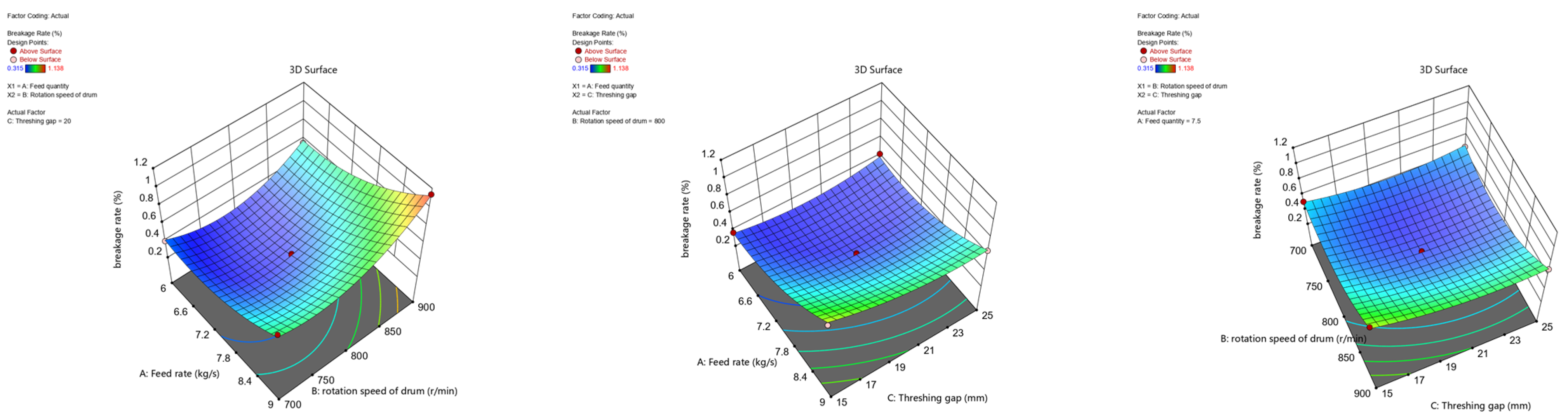
A comprehensive analysis of the response effect of significant factors and the breakage rate was performed. As can be seen from Figure 11, the breakage rate decreases and then increases with the increase in feeding volume; because of the increase in feeding volume, threshing by threshing element striking decreases, and the increase in rubbing threshing between crops reduces the crushing of the threshing element on the seeds, but as the feeding volume continues to increase, a large number of seeds are produced, which increases the probability of striking on the seeds by the threshing element and increases the breakage rate. The breakage rate decreases and then increases with the increase in the threshing drum speed, which is due to the fact that when the drum speed starts to increase, the crop stay time decreases and the probability of impact on the seeds decreases, reducing the breakage rate; the drum speed continues to increase and the striking force of the threshing element for each material becomes larger, increasing the breakage rate of the seeds. The breakage rate decreases as the threshing gap increases, because the material becomes fluffy when the threshing gap increases, reducing the chance of contact between the seeds and the threshing parts and thus reducing the breakage rate.
Figure 11.
Response surface of each factor on breakage rate.
3.2.4. Comparison Test
According to Figure 6 the optimal parameters at the corresponding feeding rates were found and analyzed using Design-Expert software to obtain the required operational prescription. The optimal parameter combinations are shown in Table 7.
Table 7.
Optimal combination of parameters at different feeding rates.
Since the threshing device was adjusted with limited accuracy and could not achieve the accuracy predicted by the optimal combination of parameters, the parameters were adjusted: the rotation speed of the threshing drum was adjusted to an integer level and the threshing gap was kept to one decimal place. Tests were conducted according to the comparative test scheme, and the results are recorded in Table 8.
Table 8.
Comparison test results.
According to Table 8, it can be seen from the three evaluation indexes that the real-time adjustment of the drum diameter to change the threshing gap and rotation speed of the threshing drum during operation reduces the entrainment loss rate by 44.9%, the un-threshed rate by 27.6%, and the breakage rate by 34.1% compared with the fixed parameters. It shows that the real-time adjustment of the working parameters according to the field conditions is effective, and the amplitude disc moving variable-diameter threshing drum has good threshing performance, which improves the operating performance of the combine harvester and lays a firm foundation for the intelligent adaptive adjustment of the threshing gap.
4. Conclusions
- (1)
- In order to solve the problem of the complicated adjustment of the threshing gap in large-size, large-feeding combine harvester and to provide a basis for an adaptive adjustment of the threshing gap, a hydraulically driven variable-diameter threshing drum with movable radial plates based on a concentric adjustment principle is studied, which can quickly adjust the threshing gap by changing the drum diameter.
- (2)
- Through RecurDyn simulation and practical validation, it is verified that the diameter of the variable-diameter threshing drum with movable radial plates can be adjusted, and the drum diameter can be changed by 40 mm when the hollow hydraulic cylinder goes back and forth by 34.64 mm, i.e., the threshing gap can be adjusted by 20 mm.
- (3)
- Through the field test, the evaluation index model of the variable-diameter threshing drum with movable radial plates for a single species of rice was established, and the optimal combination of operating parameters of the threshing drum under different feeding amounts was obtained. The results showed that when the operating parameters were adjusted in real time at different feed rates, the entrainment loss rate was 0.65%, the un-threshed rate was 0.063%, and the breakage rate was 0.47%, compared with the fixed threshing gap and drum speed. Compared with the fixed threshing gap and rotation speed of the threshing drum, the entrained loss rate, un-threshed rate and breakage rate were reduced by 44.9%, 27.6% and 34.1%, respectively. Therefore, the real-time adjustment of threshing parameters is obviously better than the fixed parameters, and the variable-diameter threshing drum with movable radial plates of the amplitude disc can meet the requirements of use and lay a good foundation for adaptive adjustment of the threshing gap.
Author Contributions
Methodology, software, data curation, writing—original draft, F.W.; visualization, investigation, Y.L. (Yanbin Liu); conceptualization, resources, funding acquisition, validation, Y.L. (Yaoming Li); supervision, writing—review & editing, K.J. All authors have read and agreed to the published version of the manuscript.
Funding
The work was supported by National Natural Science Foundation of China (No. 51975257).
Institutional Review Board Statement
Not applicable.
Data Availability Statement
Not applicable.
Conflicts of Interest
The authors declare no conflict of interest.
References
- Liu, H.; Zhang, G.; Zhou, L.; Leng, J.; Wang, D. Library threshing device interactive engineering analysis system based on model. J. Northeast Agric. Univ. 2021, 52, 54–66. [Google Scholar]
- Xie, F.; Luo, X.; Lu, X.; Sun, S.; Tang, C. Effect of roller structural parameter on flexible threshing character for paddy rice. J. Agric. Mech. Res. 2009, 31, 147–151, (In Chinese with English abstract). [Google Scholar]
- Chen, N.; Liu, Z.; Xia, J.; Wang, D.; Zhang, Z.; Chen, D. Parametric design of axial-flow separator of harvester based on Petri net model. J. Agric. Mach. 2017, 48, 123–129. [Google Scholar]
- Hu, B.; Li, Y. Finite element simulation analysis of ear collision in corn threshing. Agric. Equip. Technol. 2018, 44, 4–7. [Google Scholar]
- Su, Z.; Li, Y.; Dong, Y.; Tang, Z.; Liang, Z. Simulation of rice threshing performance with concentric and non-concentric threshing gaps. Biosyst. Eng. 2020, 197, 270–284. [Google Scholar] [CrossRef] [Scilit]
- Ni, Y.; Jin, C.; Wang, T.; Zhou, L.; Liu, Z. Design and experiments of the 4LZ-1.5 soybean combine harvester. Trans. Chin. Soc. Agric. Eng. (Trans. CSAE) 2022, 38, 1–11. [Google Scholar] [CrossRef]
- Wang, X.; Cheng, F.; Pei, E.; Yang, X.; Wang, J.; Zheng, D. Design and test of a hybrid threshing device with telescopic rod teeth and stripes. J. Shanxi Agric. Univ. (Nat. Sci. Ed.) 2022, 42, 107–119. [Google Scholar] [CrossRef]
- Wang, X.; Xie, F.; Li, X.; Liu, D.; Wang, X. Design and experiment on threshing and separation device with adjustable concave gap. J. Hunan Agric. Univ. Nat. Sci. 2019, 45, 205–211, (In Chinese with English abstract). [Google Scholar]
- Wang, X.; Xie, F.; Ren, S.; Wang, X.; Zhang, Z. A mathematical model and test of the horizontalaxial flow threshing separation device. J. Hunan Agric. Univ. Nat. Sci. 2020, 46, 480–487, (In Chinese with English abstract). [Google Scholar]
- Wang, J.; Xu, C.; Tang, H.; Jang, Y.; Liu, Z.; Wang, Z. Variable Diameter Threshing Drum. CN111567230A, 25 August 2020. [Google Scholar]
- Su, Z. Research on Adaptive Control Method of Variable Diameter Drum and Threshing Device of Rice Combine Harvester. Ph.D. Thesis, Jiangsu University, Zhenjiang, China, 2020. [Google Scholar] [CrossRef]
- Liu, Y.; Li, Y.; Dong, Y.; Huang, M.; Zhang, T.; Cheng, J. Development of a variable-diameter threshing drum for rice combine harvester using MBD—DEM coupling simulation. Comput. Electron. Agric. 2022, 196, 106859. [Google Scholar] [CrossRef] [Scilit]
- Su, Z.; Li, Y.; Tang, Z.; Qing, Y.; Wang, J. A Threshing Drum and Combine Harvester with Adjustable Threshing Diameter. CN 108925248B, 5 November 2019. [Google Scholar]
- Li, Y.; Chen, L. A Threshing Drum with Adjustable Threshing Diameter, Adjusting Method and Combine Harvester. CN 111226610A, 5 June 2020. [Google Scholar]
- Jin, C.; Kang, Y.; Guo, H.; Wang, T.; Yin, X. Experimental research on the influence of threshing roller structures on the quality of mechanically-harvested soybeans. Trans. Chin. Soc. Agric. Eng. (Trans. CSAE) 2021, 37, 49–58. [Google Scholar] [CrossRef]
- Liu, Z.; Dai, S.; Tian, L.; Chen, N.; Wang, Z.; Chen, D. Design and Experiment on Rotary Grate Concave Threshing-Separating Unit of Head-feeding Combine Harvester. Trans. Chin. Soc. Agric. Mach. 2018, 49, 169–178. [Google Scholar]
- Si, Z.; Li, Y.; Tang, Z.; Ma, Z.; Li, Y. Parameter optimization and test of cleaning device of horizontal multi-drum combine harvester. Res. Agric. Mech. 2018, 40, 185–189+205. [Google Scholar] [CrossRef]
- Wang, Z.; Lv, P.; Chen, N.; Li, H.; Liu, Z.; Chen, D. Design and Experiment on Axial-flow Differential-speed Threshing—Separating—Cleaning Unit. Trans. Chin. Soc. Agric. Mach. 2016, 47, 53–61. [Google Scholar]
- Kang, J.; Wang, X.; Xie, F.; Luo, Y.; Li, Q.; Chen, Z. Design and experiment of symmetrical adjustable concave for soybean combine harvester. Trans. Chin. Soc. Agric. Eng. (Trans. CSAE) 2022, 38, 11–22. [Google Scholar] [CrossRef]
- Wang, S.; Lu, M.; Hu, J.; Chen, P.; Ji, J.; Wang, F. Design and Experiment of Chinese Cabbage Seed Threshing Device Combined with Elastic Short-rasp-bar Tooth. Trans. Chin. Soc. Agric. Mach. 2021, 52, 86–94. [Google Scholar]
- You, Z.; Yan, J.; Wu, H.; Wang, S.; Cao, M.; Wang, W. Design and Experiment of Seed Combine Harvester for Chinese Milk Vetch Green Manure in Paddy Field. Trans. Chin. Soc. Agric. Mach. 2022, 53, 1–10. [Google Scholar]
- Xiong, W.; Li, Y.; Liu, L.; Xu, L. Design and test of threshing and cleaning device for hilly rice-oil combine harvester. Res. Agric. Mech. 2022, 44, 167–171. [Google Scholar] [CrossRef]
- Wei, L.; Luo, Y.; Xu, L.; Zhang, Q.; Cai, Q.; Shen, M. Deep Convolutional Neural Network for Rice Density Prescription Map at Ripening Stage Using Unmanned Aerial Vehicle-Based Remotely Sensed Images. Remote Sens. 2021, 14, 46. [Google Scholar] [CrossRef] [Scilit]
- Liu, Y.; Zhao, W.; Dai, F.; Shi, R.; Zhang, S.; Fu, Q. Optimization and experiment of working parameters of the seed corn threshing test-bed with variable diameter and variable spacing. Chin. Agric. Mech. Newsp. 2020, 41, 66–74. [Google Scholar] [CrossRef]
- Chen, L. Design and Test of Single-Acting Variable-Diameter Threshing Drum with Toothed Bar of Grain Combine. Master’s Thesis, Jiangsu University, Zhenjiang, China, 2021. [Google Scholar]
- Liu, Y. Parameter Optimization Experiment of Rice Threshing Device with Longitudinal Axial Flow. Master’s Thesis, Hunan Agricultural University, Changsha, China, 2020. [Google Scholar] [CrossRef]
- Wang, X. Research on the Special Thresher for Soybean Breeding with Longitudinal Variable Diameter and Axial Flow. Master’s Thesis, Northeast Agricultural University, Harbin, China, 2020. [Google Scholar] [CrossRef]
- Jin, C.; Guo, F.; Xu, J.; Li, Q.; Chen, M.; Li, J.; Yin, X. Optimization of working parameters of soybean combine harvester. Trans. Chin. Soc. Agric. Eng. (Trans. CSAE) 2019, 35, 10–22. [Google Scholar] [CrossRef]
- Tang, Q.; Wu, C.; Wang, G.; Wu, D.; Jin, M.; Jiang, T. Rape harvest threshing damage experimental study. J. Agric. Mech. Res. 2019, 9, 205–208. [Google Scholar]
- Huang, P. Experimental Study on longitudinal axial flow threshing and separation performance of rape combine harvester. Master’s Thesis, Huazhong Agricultural University, Wuhan, China, 2014. [Google Scholar]
- GB/T 8097-2008; Equipment for Harvesting—Combine Harvesters—Test Procedure, Standardization Administration of China. Standardization Administration of China: Beijing, China, 2008.
- Zhang, T.; Li, Y.; Song, S.; Pang, Y.; Shao, W.; Tang, X. Design and Experiment of Tumorous Stem Mustard Harvester Based on Flexible Gripping. Trans. Chin. Soc. Agric. Mach. 2020, 51, 162–169. [Google Scholar]
- Li, J. Design and Test of Conveying and Threshing Separation Device of Ratooning Rice Combine Harvester. Master’s Thesis, Jiangsu University, Zhenjiang, China, 2020. [Google Scholar]
- Chen, H.; Teng, Y.; Wang, Y.; Shi, N.; Wang, X. Design and Experiment on Single-plant Soybean Threshing Device with Differential Speed Flexible Belts. Trans. Chin. Soc. Agric. Mach. 2018, 49, 96–104. [Google Scholar]
- Geng, D. New Agricultural Mechanics; National Defense Industry Press: Beijing, China, 2011. [Google Scholar]
- Hu, Y. A Comparative Study on the Second-Order Designs in Response Surface Methodology; Tianjin University: Tianjin, China, 2005. [Google Scholar]
- Liu, P.; Jin, C.; Ning, X.; Ni, Y.; Wang, T.; Yin, X. Field performance test and analysis of the cleaning sieve of soybean harvesters. Trans. Chin. Soc. Agric. Eng. (Trans. CSAE) 2020, 36, 36–43, (In Chinese with English abstract). [Google Scholar]
- Teng, Y.; Jin, C.; Chen, Y.; Liu, P.; Yin, X.; Wang, T.; Yu, K. Design and optimization of segmented threshing device of combine harvester for rice and wheat. Trans. Chin. Soc. Agric. Eng. (Trans. CSAE) 2020, 36, 1–12. [Google Scholar] [CrossRef]

Disclaimer/Publisher’s Note: The statements, opinions and data contained in all publications are solely those of the individual author(s) and contributor(s) and not of MDPI and/or the editor(s). MDPI and/or the editor(s) disclaim responsibility for any injury to people or property resulting from any ideas, methods, instructions or products referred to in the content. |
© 2023 by the authors. Licensee MDPI, Basel, Switzerland. This article is an open access article distributed under the terms and conditions of the Creative Commons Attribution (CC BY) license (https://creativecommons.org/licenses/by/4.0/).