Data-Driven Motion Correction Algorithm: Validation in [13N]NH3 Dynamic PET/CT Scans
 ,
,  , , ,
, , ,
Abstract
1. Introduction
2. Materials and Methods
2.1. Study Population
2.2. Inclusion Criteria
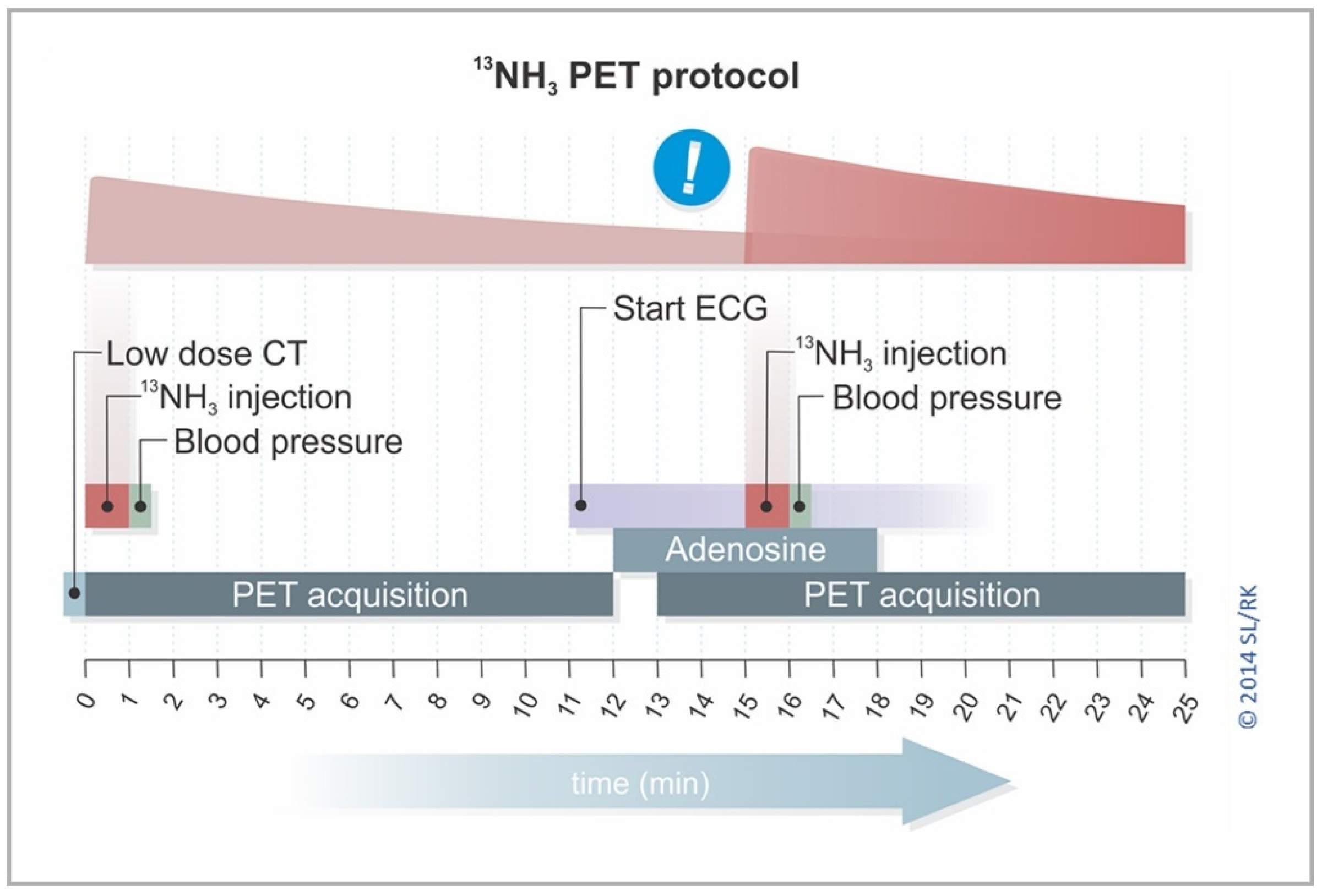
2.3. Image Acquisition
2.4. Image Reconstruction and Processing
2.5. Manual Motion Correction
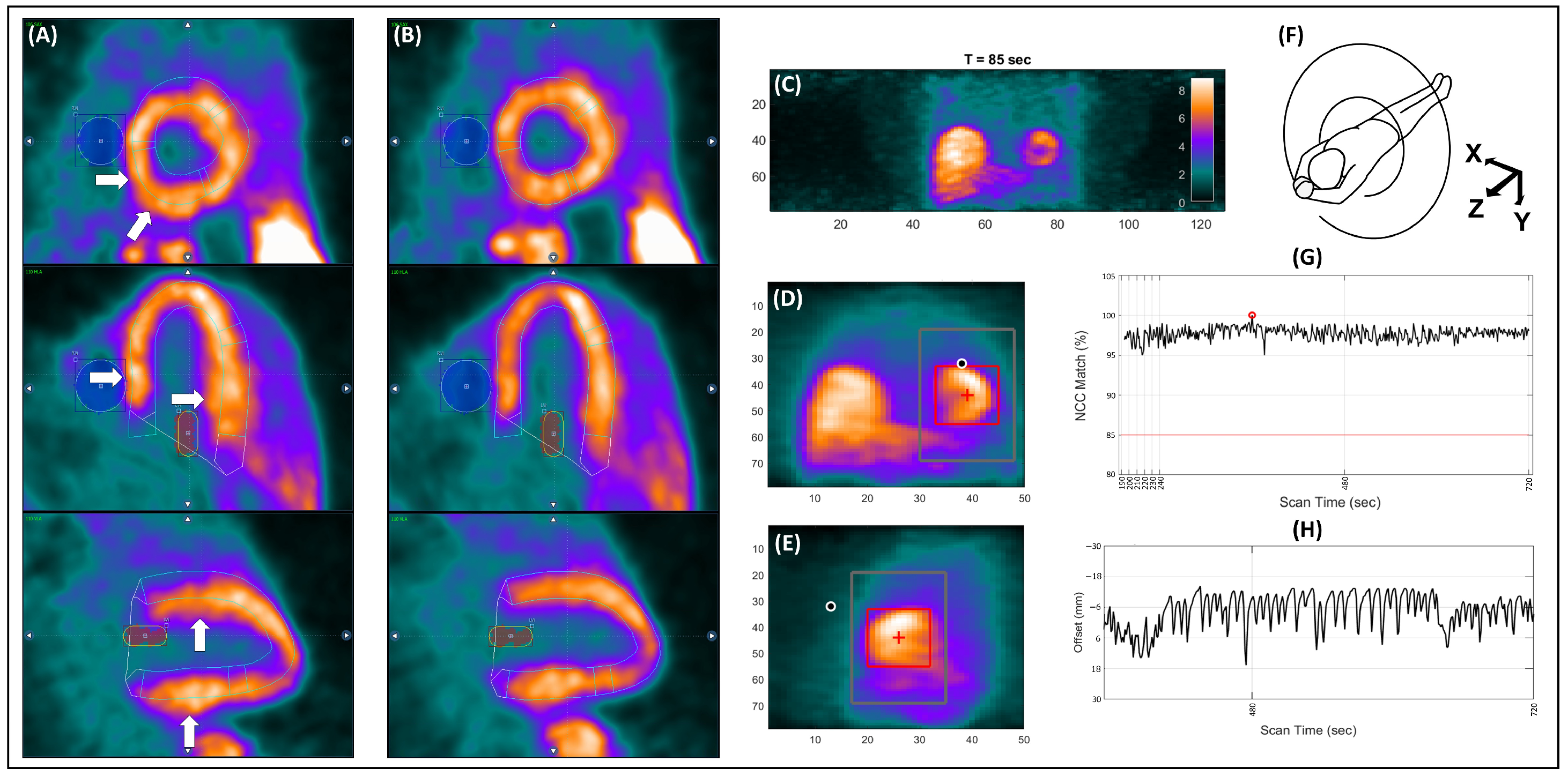
2.6. Data-Driven Motion Correction
2.7. Evaluation Metrics
2.8. Statistical Analysis
3. Results
3.1. Characteristics of Patients
3.2. Effect of MC Tools on MBF Quantification
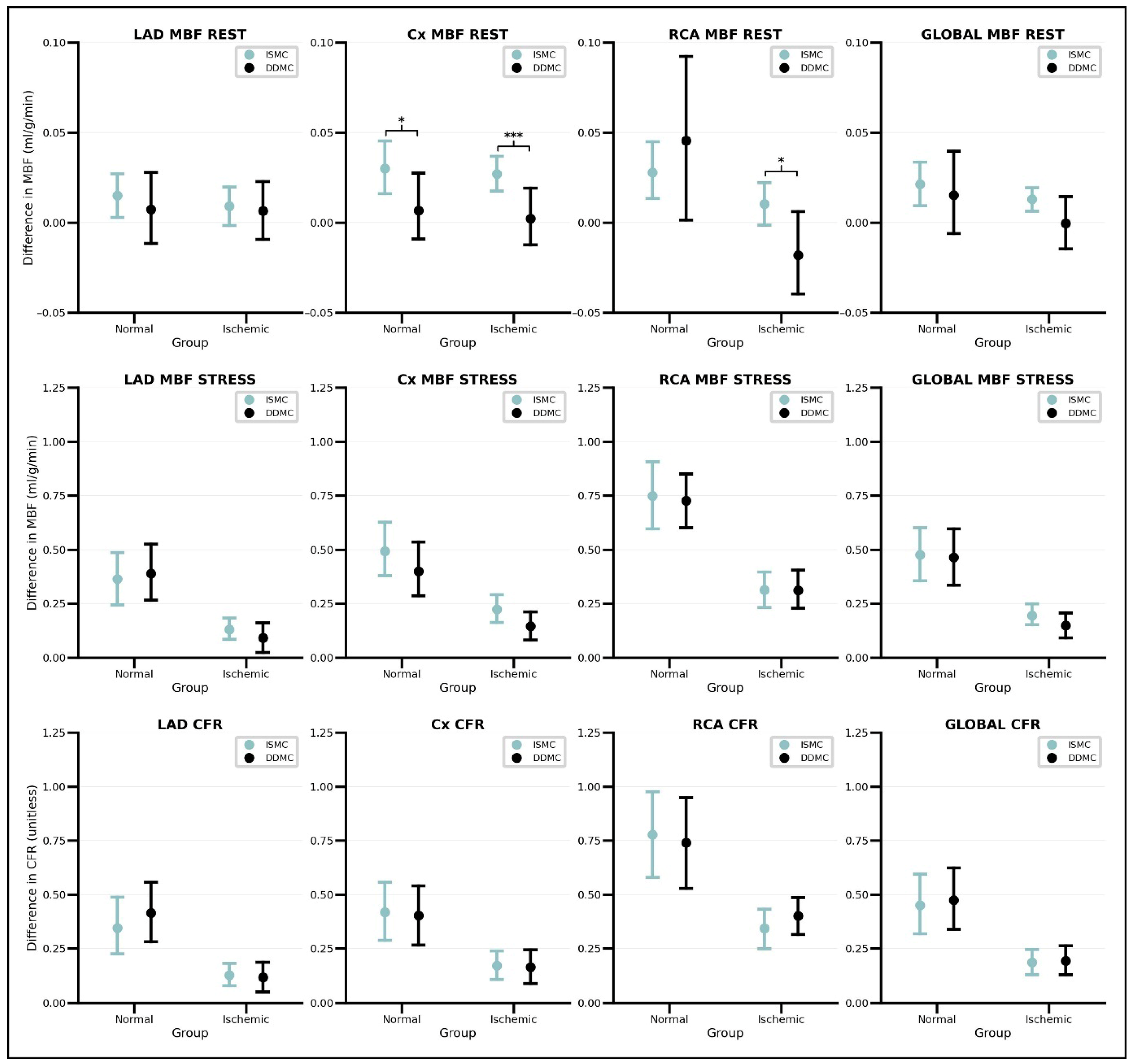
3.3. Effect-Size of MC Tools
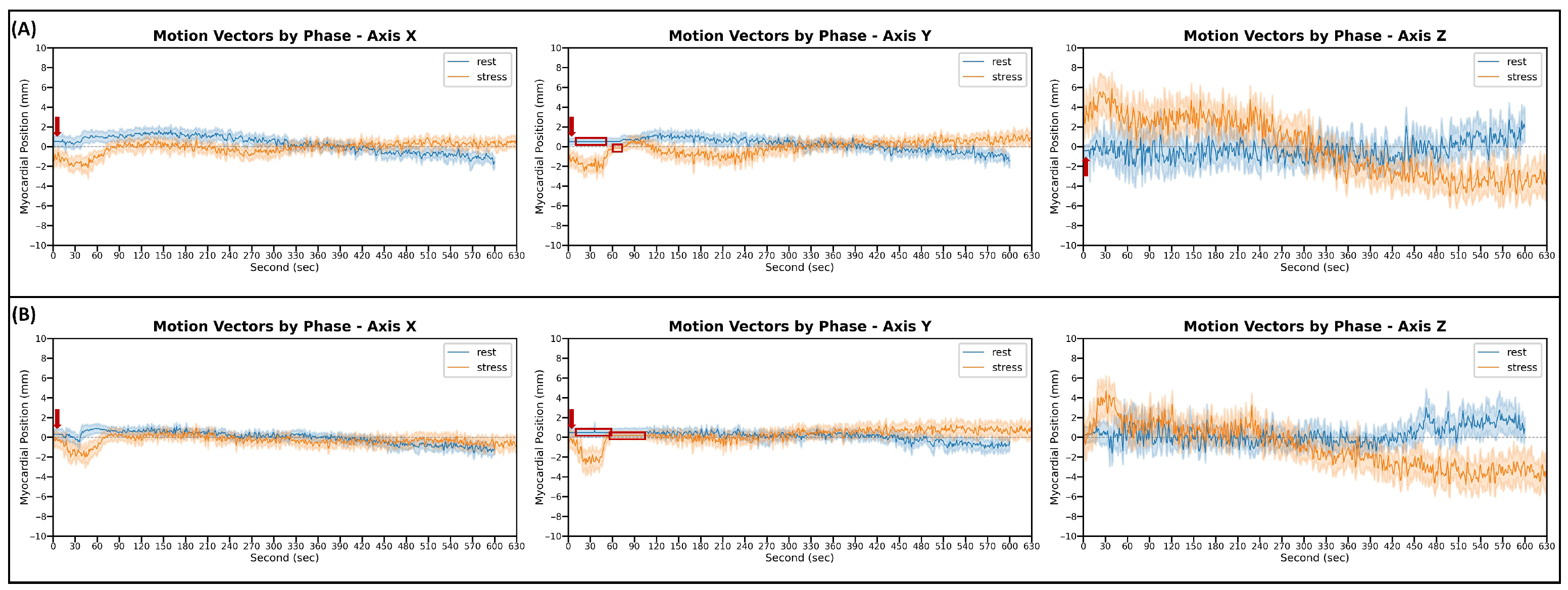
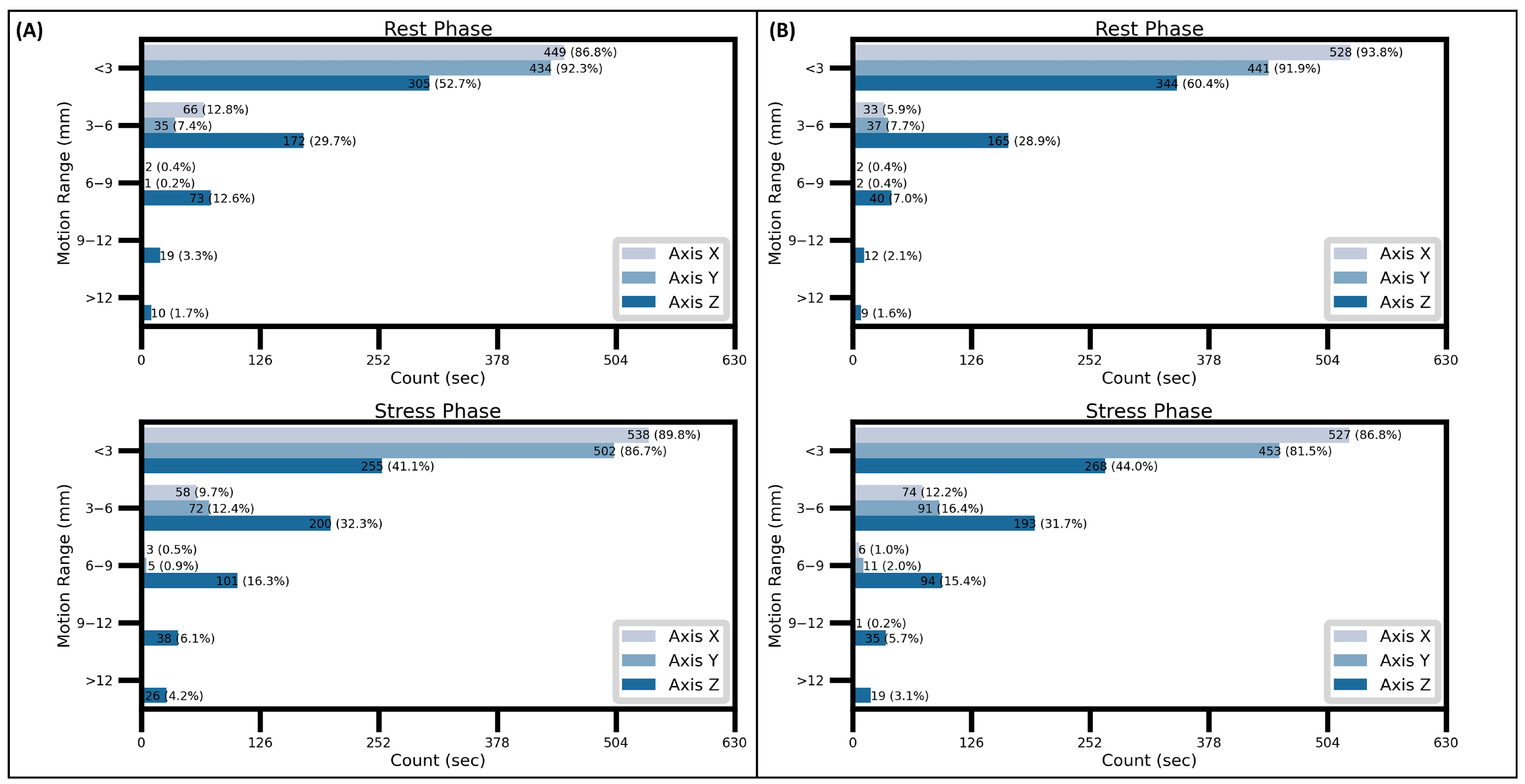
3.4. DDMC Motion Tracking per Second
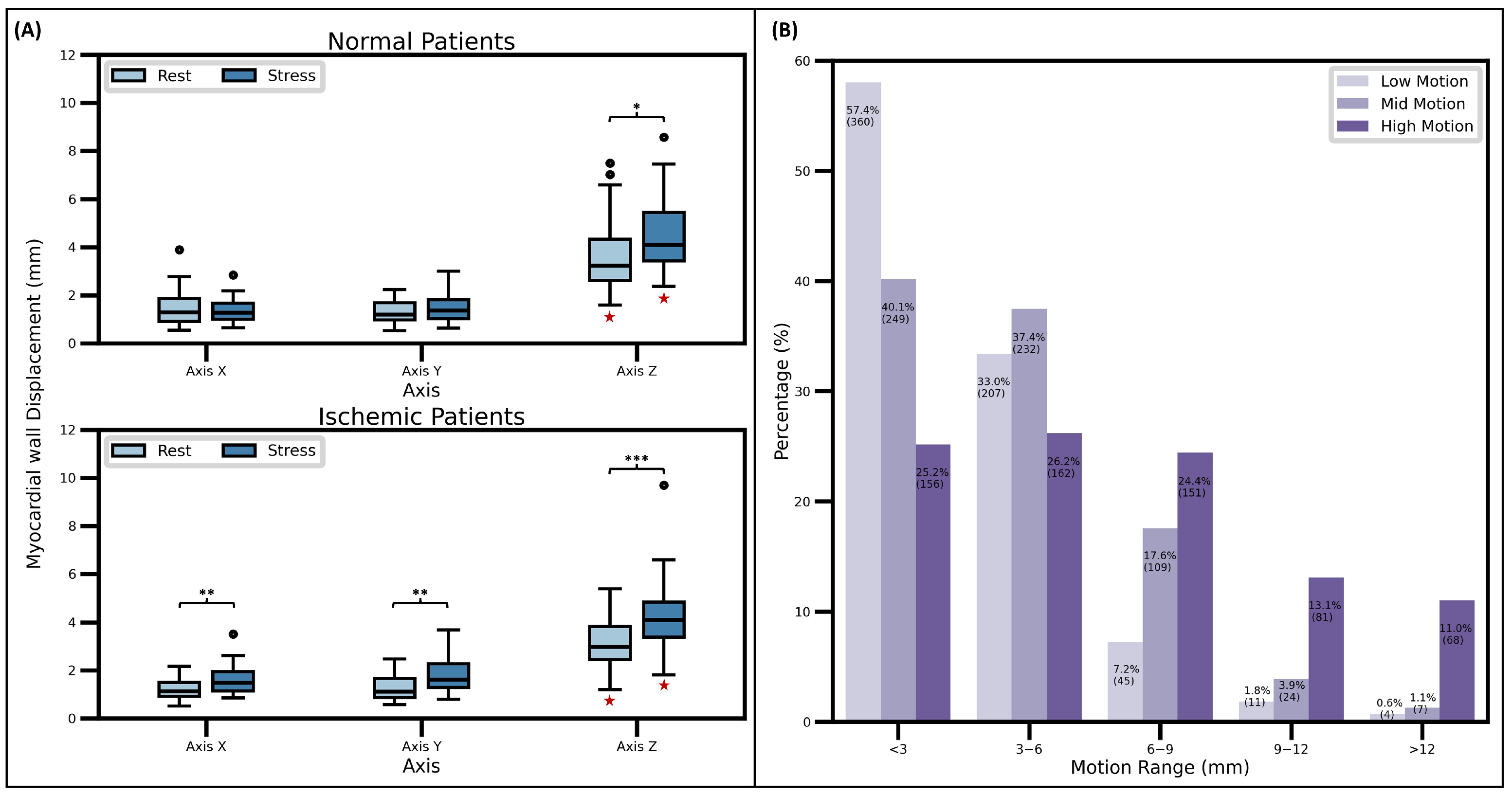
3.5. Amount of Motion as Measured by DDMC
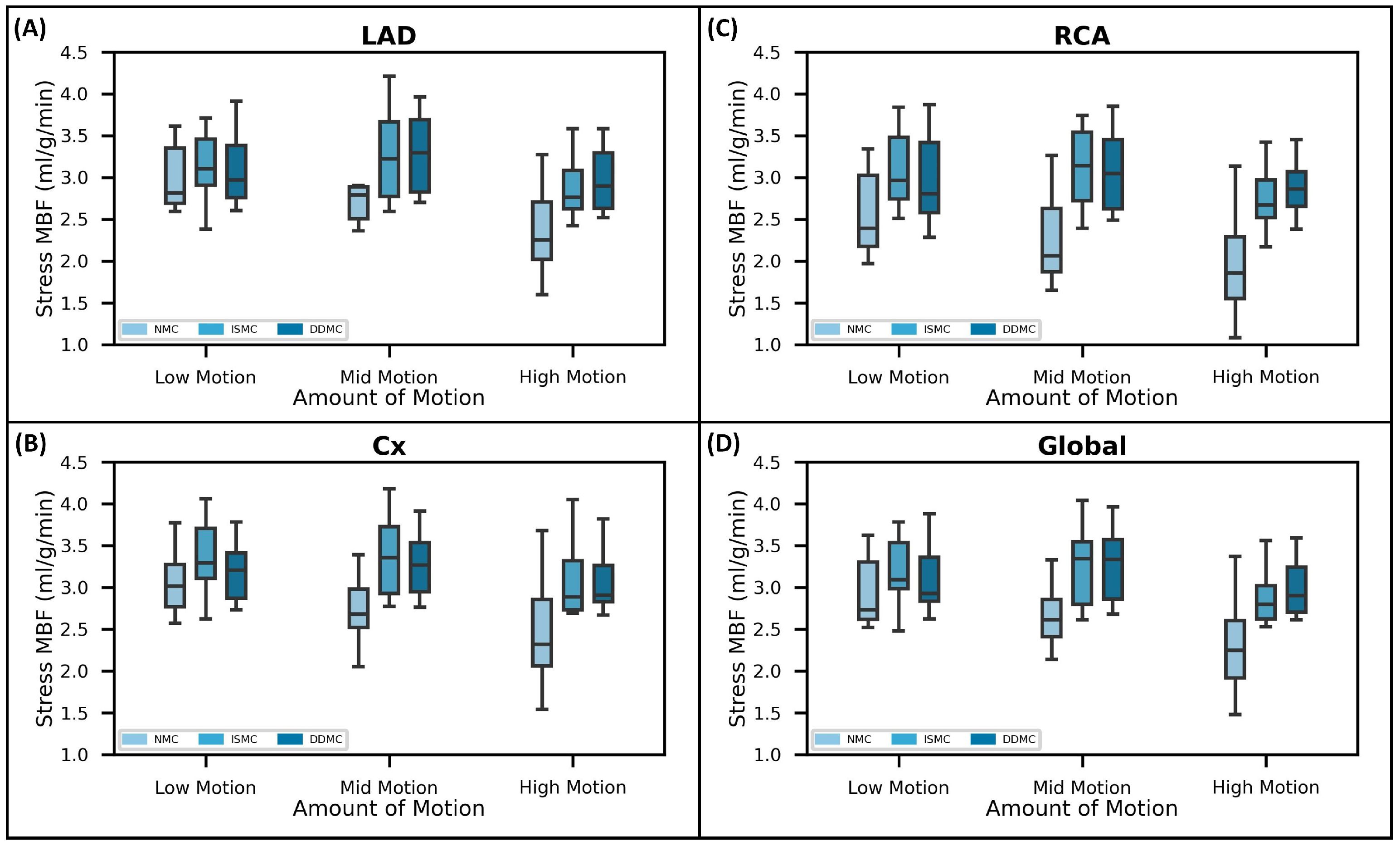
3.6. Effect of the Extent of Motion in MBF Quantification
4. Discussion
5. Conclusions
6. Limitations
Author Contributions
Funding
Institutional Review Board Statement
Informed Consent Statement
Data Availability Statement
Conflicts of Interest
Abbreviations
| PET/CT | Positron emission tomography/computed tomography |
| MBF | Myocardial blood flow |
| CFR | Coronary flow reserve |
| MC | Motion correction |
| DDMC | Data-driven motion correction |
| [13N]NH3 | 13N-labeled ammonia |
| ISMC | In-software motion correction |
References
- Fiechter, M.; Ghadri, J.R.; Gebhard, C.; Fuchs, T.A.; Pazhenkottil, A.P.; Nkoulou, R.N.; Herzog, B.A.; Wyss, C.A.; Gaemperli, O.; Kaufmann, P.A. Diagnostic value of 13N-ammonia myocardial perfusion PET: Added value of myocardial flow reserve. J. Nucl. Med. 2012, 53, 1230–1234. [Google Scholar] [CrossRef] [PubMed]
- Kajander, S.A.; Joutsiniemi, E.; Saraste, M.; Pietilä, M.; Ukkonen, H.; Saraste, A.; Sipilä, H.T.; Teräs, M.; Mäki, M.; Airaksinen, J.; et al. Clinical value of absolute quantification of myocardial perfusion with 15O-water in coronary artery disease. Circ. Cardiovasc. Imaging 2011, 4, 678–684. [Google Scholar] [CrossRef] [PubMed]
- Dietz, M.; Kamani, C.H.; Allenbach, G.; Rubimbura, V.; Fournier, S.; Dunet, V.; Treglia, G.; Lalonde, M.N.; Schaefer, N.; Eeckhout, E.; et al. Comparison of the prognostic value of impaired stress myocardial blood flow, myocardial flow reserve, and myocardial flow capacity on low-dose Rubidium-82 SiPM PET/CT. J. Nucl. Cardiol. 2023, 30, 1385–1395. [Google Scholar] [CrossRef] [PubMed]
- Fukushima, K.; Javadi, M.S.; Higuchi, T.; Lautamäki, R.; Merrill, J.; Nekolla, S.G.; Bengel, F.M. Prediction of short-term cardiovascular events using quantification of global myocardial flow reserve in patients referred for clinical 82Rb PET perfusion imaging. J. Nucl. Med. 2011, 52, 726–732. [Google Scholar] [CrossRef]
- Herzog, B.A.; Husmann, L.; Valenta, I.; Gaemperli, O.; Siegrist, P.T.; Tay, F.M.; Burkhard, N.; Wyss, C.A.; Kaufmann, P.A. Long-term prognostic value of 13N-ammonia myocardial perfusion positron emission tomography added value of coronary flow reserve. J. Am. Coll. Cardiol. 2009, 54, 150–156. [Google Scholar] [CrossRef]
- Murthy, V.L.; Naya, M.; Foster, C.R.; Hainer, J.; Gaber, M.; Di Carli, G.; Blankstein, R.; Dorbala, S.; Sitek, A.; Pencina, M.J.; et al. Improved cardiac risk assessment with noninvasive measures of coronary flow reserve. Circulation 2011, 124, 2215–2224. [Google Scholar] [CrossRef]
- Rijnierse, M.T.; de Haan, S.; Harms, H.J.; Robbers, L.F.; Wu, L.; Danad, I.; Beek, A.M.; Heymans, M.W.; van Rossum, A.C.; Lammertsma, A.A.; et al. Impaired hyperemic myocardial blood flow is associated with inducibility of ventricular arrhythmia in ischemic cardiomyopathy. Circ. Cardiovasc. Imaging 2014, 7, 20–30. [Google Scholar] [CrossRef]
- Lassen, M.L.; Slomka, P.J. Myocardial blood flow: Is motion correction necessary? J. Nucl. Cardiol. 2021, 28, 1347–1348. [Google Scholar]
- Driessen, R.S.; Raijmakers, P.G.; Stuijfzand, W.J.; Knaapen, P. Myocardial perfusion imaging with PET. Imaging Med. 2013, 5, 35–46. [Google Scholar]
- Kyme, A.Z.; Fulton, R.R. Motion estimation and correction in SPECT, PET and CT. Phys. Med. Biol. 2021, 66, 18TR02. [Google Scholar] [CrossRef]
- Mohy-Ud-Din, H.; Karakatsanis, N.A.; Goddard, J.S.; Baba, J.; Wills, W.; Tahari, A.K.; Wong, D.F.; Rahmim, A. Generalized dynamic PET inter-frame and intra-frame motion correction-Phantom and human validation studies. In Proceedings of the IEEE Nuclear Science Symposium Conference Record, Anaheim, CA, USA, 27 October–3 November 2012; IEEE: New York, NY, USA, 2012. [Google Scholar]
- Christensen, N.L.; Nordström, J.; Madsen, S.; Madsen, M.A.; Gormsen, L.C.; Kero, T.; Lubberink, M.; Tolbod, L.P. Detection and correction of patient motion in dynamic 15O-water PET MPI. J. Nucl. Cardiol. 2023, 30, 2736–2749. [Google Scholar] [CrossRef] [PubMed]
- Koenders, S.S.; van Dijk, J.D.; Jager, P.L.; Ottervanger, J.P.; Slump, C.H.; van Dalen, J.A. Impact of regadenoson-induced myocardial creep on dynamic Rubidium-82 PET myocardial blood flow quantification. J. Nucl. Cardiol. 2019, 26, 719–728. [Google Scholar] [CrossRef] [PubMed]
- Nordström, J.; Harms, H.J.; Kero, T.; Sörensen, J.; Lubberink, M. Influence of patient motion on quantitative accuracy in cardiac (15)O-water positron emission tomography. J. Nucl. Cardiol. 2022, 29, 1742–1752. [Google Scholar] [CrossRef] [PubMed]
- Piccinelli, M.; Votaw, J.R.; Garcia, E.V. Motion Correction and Its Impact on Absolute Myocardial Blood Flow Measures with PET. Curr. Cardiol. Rep. 2018, 20, 34. [Google Scholar] [CrossRef]
- Koenders, S.S.; van Dijk, J.D.; Jager, P.L.; Ottervanger, J.P.; Slump, C.H.; van Dalen, J.A. How to detect and correct myocardial creep in myocardial perfusion imaging using Rubidium-82 PET? J. Nucl. Cardiol. 2019, 26, 729–734. [Google Scholar] [CrossRef]
- Hunter, C.R.R.N.; Klein, R.; Beanlands, R.S.; Dekemp, R.A. Patient motion effects on the quantification of regional myocardial blood flow with dynamic PET imaging. Med. Phys. 2016, 43, 1829. [Google Scholar] [CrossRef]
- Choueiry, J.; Mistry, N.P.; Beanlands, R.S.B.; Dekemp, R.A. Automated dynamic motion correction improves repeatability and reproducibility of myocardial blood flow quantification with rubidium-82 PET imaging. J. Nucl. Cardiol. 2023, 30, 1133–1146. [Google Scholar] [CrossRef]
- Mohammadi, I.; Castro, F.; Rahmim, A.; Veloso, J. Motion in nuclear cardiology imaging: Types, artifacts, detection and correction techniques. Phys. Med. Biol. 2022, 67, 02TR02. [Google Scholar] [CrossRef]
- Kuronuma, K.; Wei, C.-C.; Singh, A.; Lemley, M.; Hayes, S.W.; Otaki, Y.; Hyun, M.C.; Van Kriekinge, S.D.; Kavanagh, P.; Huang, C.; et al. Automated Motion Correction for Myocardial Blood Flow Measurements and Diagnostic Performance of 82Rb PET Myocardial Perfusion Imaging. J. Nucl. Med. 2024, 65, 139. [Google Scholar] [CrossRef]
- Lee, B.C.; Moody, J.B.; Poitrasson-Rivière, A.; Melvin, A.C.; Weinberg, R.L.; Corbett, J.R.; Murthy, V.L.; Ficaro, E.P. Automated dynamic motion correction using normalized gradient fields for 82rubidium PET myocardial blood flow quantification. J. Nucl. Cardiol. 2020, 27, 1982–1998. [Google Scholar] [CrossRef]
- Nakazato, R.; Berman, D.S.; Dey, D.; Le Meunier, L.; Hayes, S.W.; Fermin, J.S.; Cheng, V.Y.; Thomson, L.E.J.; Friedman, J.D.; Germano, G.; et al. Automated quantitative Rb-82 3D PET/CT myocardial perfusion imaging: Normal limits and correlation with invasive coronary angiography. J. Nucl. Cardiol. 2012, 19, 265–276. [Google Scholar] [CrossRef]
- Poitrasson-Rivière, A.; Moody, J.B.; Hagio, T.; Weinberg, R.L.; Corbett, J.R.; Murthy, V.L.; Ficaro, E.P. Reducing motion-correction-induced variability in 82rubidium myocardial blood-flow quantification. J. Nucl. Cardiol. 2020, 27, 1104–1113. [Google Scholar] [CrossRef] [PubMed]
- Armstrong, I.S.; Hayden, C.; Memmott, M.J.; Arumugam, P. A preliminary evaluation of a high temporal resolution data-driven motion correction algorithm for rubidium-82 on a SiPM PET-CT system. J. Nucl. Cardiol. 2022, 29, 56–68. [Google Scholar] [CrossRef] [PubMed]
- Mendoza-Ibañez, O.I.; Slart, R.H.J.A.; Alexanderson-Rosas, E.; Martinez-Lucio, T.S.; van der Zant, F.M.; Knol, R.J.J.; Lazarenko, S.V. Inter-Software Reproducibility of Quantitative Values of Myocardial Blood Flow and Coronary Flow Reserve Acquired by [13N]NH3 MPI PET/CT and the Effect of Motion Correction Tools. Diagnostics 2025, 15, 613. [Google Scholar] [CrossRef] [PubMed]
- Rossum, G.V.; Drake, F.L. Python/C Api Manual-Python 3; CreateSpace: Scotts Valley, CA, USA, 2009. [Google Scholar]
- Seabold, S.; Perktold, J. Statsmodels: Econometric and statistical modeling with python. SciPy 2010, 7, 92–96. [Google Scholar]
- Vallat, R. Pingouin: Statistics in Python. J. Open Source Softw. 2018, 3, 1026. [Google Scholar] [CrossRef]
- Sunderland, J.J.; Pan, X.-B.; Declerck, J.; Menda, Y. Dependency of cardiac rubidium-82 imaging quantitative measures on age, gender, vascular territory, and software in a cardiovascular normal population. J. Nucl. Cardiol. 2015, 22, 72–84. [Google Scholar] [CrossRef]
- Rubeaux, M.; Doris, M.K.; Alessio, A.; Slomka, P.J. Enhancing Cardiac PET by Motion Correction Techniques. Curr. Cardiol. Rep. 2017, 19, 14. [Google Scholar] [CrossRef]
- Gao, D.; Tavoosi, A.; Wiefels, C.; Merani, A.; Gardner, K.; Spottiswoode, B.; Hayden, C.; Beanlands, R.; Dekemp, R.A. Data-driven motion correction rescues interpretation of rubidium PET scan with extreme breathing artifacts. J. Nucl. Cardiol. 2023, 30, 818–822. [Google Scholar] [CrossRef]
- Shi, L.; Lu, Y.; Dvornek, N.; Weyman, C.A.; Miller, E.J.; Sinusas, A.J.; Liu, C. Automatic inter-frame patient motion correction for dynamic cardiac PET using deep learning. IEEE Trans. Med. Imaging 2021, 40, 3293–3304. [Google Scholar] [CrossRef]
- Urs, M.; Killekar, A.; Builoff, V.; Lemley, M.; Wei, C.-C.; Ramirez, G.; Kavanagh, P.; Buckley, C.; Slomka, P.J. Dynamic frame-by-frame motion correction for 18F-flurpiridaz PET-MPI using convolution neural network. Eur. J. Nucl. Med. Mol. Imaging 2025. [Google Scholar] [CrossRef]
- Vleeming, E.J.; Lazarenko, S.V.; van der Zant, F.M.; Pan, X.-B.; Declerck, J.M.; Wondergem, M.; Knol, R.J. Cardiac Displacement During (13)N-Ammonia Myocardial Perfusion PET/CT: Comparison Between Adenosine- and Regadenoson-Induced Stress. J. Nucl. Med. Technol. 2018, 46, 114–122. [Google Scholar] [CrossRef]
- Lee, B.C.; Moody, J.B.; Poitrasson-Rivière, A.; Melvin, A.C.; Weinberg, R.L.; Corbett, J.R.; Ficaro, E.P.; Murthy, V.L. Blood pool and tissue phase patient motion effects on 82rubidium PET myocardial blood flow quantification. J. Nucl. Cardiol. 2019, 26, 1918–1929. [Google Scholar] [CrossRef]
- Armstrong, I.S.; Memmott, M.J. A tale of two phases: Can the worst of scans become the best of scans with motion correction? J. Nucl. Cardiol. 2019, 26, 1930–1933. [Google Scholar] [CrossRef]



| Characteristic | Normal Group n = 36 | Ischemic Group n = 43 |
|---|---|---|
| Sex—n (%) | 10/36 male (28%) | 31/43 male (70.5%) |
| Age—mean (SD) | 66 years (±12) | 69 years (±8) |
| BMI—mean (SD) | 27.2 kg/m2 (±4.40) | 28.0 kg/m2 (±8.49) |
| Stress-agent—n (%) | Adenosine: 29 (81%) | Adenosine: 26 (60%) |
| Regadenoson: 7 (19%) | Regadenoson: 17 (40%) | |
| Global MBF in rest—mean (±SD) | 1.02 mL/g/min (±0.27) | 0.94 mL/g/min (±0.23) |
| Global MBF in stress—mean (±SD) | 2.65 mL/g/min (±0.52) | 2.01 mL/g/min (±0.55) |
| Global CFR—mean (±SD) | 2.72 mL/g/min (±0.70) | 2.21 mL/g/min (±0.60) |
| Variable | Mean Value NMC (±SD) | Mean Value ISMC (±SD) | Mean Value DDMC (±SD) | Differences in MBF/CFR Values Related to MC Tool | p-Value (RM-ANOVA) | NMC vs. ISMC | p-Value (Paired t-Test) | NMC vs. DDMC | p-Value (Paired t-Test) | ISMC vs. DDMC | p-Value (Paired t-Test) |
|---|---|---|---|---|---|---|---|---|---|---|---|
| LAD MBF Rest (mL/g/min) | 1.01 (±0.27) | 1.03 (±0.27) | 1.02 (±0.29) | No | ns | - | - | - | - | - | - |
| Cx MBF Rest (mL/g/min) | 1.06 (±0.26) | 1.09 (±0.28) | 1.06 (±0.29) | Yes | <0.01 | Yes | <0.01 | No | ns | No | ns |
| RCA MBF Rest (mL/g/min) | 0.95 (±0.28) | 0.98 (±0.28) | 1.00 (±0.32) | No | ns | - | - | - | - | - | - |
| GLOBAL MBF Rest (mL/g/min) | 1.02 (±0.27) | 1.04 (±0.27) | 1.03 (±0.29) | No | ns | - | - | - | - | - | - |
| LAD MBF Stress (mL/g/min) | 2.73 (±0.51) | 3.09 (±0.46) | 3.12 (±0.42) | Yes | <0.001 | Yes | <0.001 | Yes | <0.001 | No | ns |
| Cx MBF Stress (mL/g/min) | 2.78 (±0.54) | 3.27 (±0.47) | 3.18 (±0.36) | Yes | <0.001 | Yes | <0.001 | Yes | <0.001 | No | ns |
| RCA MBF Stress (mL/g/min) | 2.24 (±0.57) | 2.98 (±0.45) | 2.96 (±0.42) | Yes | <0.001 | Yes | <0.001 | Yes | <0.001 | No | ns |
| GLOBAL MBF Stress (mL/g/min) | 2.65 (±0.52) | 3.12 (±0.44) | 3.11 (±0.38) | Yes | <0.001 | Yes | <0.001 | Yes | <0.001 | No | ns |
| LAD CFR (unitless) | 2.81 (±0.70) | 3.16 (±0.70) | 3.22 (±0.70) | Yes | <0.001 | Yes | <0.001 | Yes | <0.001 | No | ns |
| Cx CFR (unitless) | 2.74 (±0.69) | 3.15 (±0.68) | 3.14 (±0.64) | Yes | <0.001 | Yes | <0.001 | Yes | <0.001 | No | ns |
| RCA CFR (unitless) | 2.45 (±0.76) | 3.23 (±0.79) | 3.19 (±0.81) | Yes | <0.001 | Yes | <0.001 | Yes | <0.001 | No | ns |
| GLOBAL CFR (unitless) | 2.72 (±0.70) | 3.17 (±0.70) | 3.19 (±0.68) | Yes | <0.001 | Yes | <0.001 | Yes | <0.001 | No | ns |
| Variable | Mean Value NMC (±SD) | Mean Value ISMC (±SD) | Mean Value DDMC (±SD) | Differences in MBF/CFR Values Related to MC Tool | p-Value (RM-ANOVA) | NMC vs. ISMC | p-Value (Paired t-Test) | NMC vs. DDMC | p-Value (Paired t-Test) | ISMC vs. DDMC | p-Value (Paired t-Test) |
|---|---|---|---|---|---|---|---|---|---|---|---|
| LAD MBF Rest (mL/g/min) | 0.93 (±0.24) | 0.93 (±0.23) | 0.93 (±0.24) | No | ns | - | - | - | - | - | - |
| Cx MBF Rest (mL/g/min) | 0.98 (±0.26) | 1.01 (±0.26) | 0.99 (±0.26) | Yes | 0.001 | Yes | <0.001 | No | ns | Yes | <0.05 |
| RCA MBF Rest (mL/g/min) | 0.90 (±0.22) | 0.91 (±0.23) | 0.88 (±0.23) | Yes | <0.05 | No | ns | No | ns | Yes | <0.05 |
| GLOBAL MBF Rest (mL/g/min) | 0.94 (±0.23) | 0.95 (±0.23) | 0.94 (±0.23) | No | ns | - | - | - | - | - | - |
| LAD MBF Stress (mL/g/min) | 2.04 (±0.61) | 2.17 (±0.66) | 2.13 (±0.59) | Yes | <0.001 | Yes | <0.001 | Yes | <0.05 | No | ns |
| Cx MBF Stress (mL/g/min) | 2.21 (±0.62) | 2.44 (±0.64) | 2.36 (±0.65) | Yes | <0.001 | Yes | <0.001 | Yes | <0.001 | No | ns |
| RCA MBF Stress (mL/g/min) | 1.71 (±0.63) | 2.02 (±0.74) | 2.02 (±0.76) | Yes | <0.001 | Yes | <0.001 | Yes | <0.001 | No | ns |
| GLOBAL MBF Stress (mL/g/min) | 2.01 (±0.55) | 2.21 (±0.59) | 2.16 (±0.55) | Yes | <0.001 | Yes | <0.001 | Yes | <0.001 | No | ns |
| LAD CFR (unitless) | 2.28 (±0.69) | 2.41 (±0.75) | 2.40 (±0.78) | Yes | <0.001 | Yes | <0.001 | Yes | <0.01 | No | ns |
| Cx CFR (unitless) | 2.34 (±0.65) | 2.51 (±0.69) | 2.50 (±0.76) | Yes | <0.001 | Yes | <0.001 | Yes | <0.001 | No | ns |
| RCA CFR (unitless) | 1.93 (±0.68) | 2.28 (±0.77) | 2.34 (±0.82) | Yes | <0.001 | Yes | <0.001 | Yes | <0.001 | No | ns |
| GLOBAL CFR (unitless) | 2.21 (±0.60) | 2.40 (±0.65) | 2.41 (±0.70) | Yes | <0.001 | Yes | <0.001 | Yes | <0.001 | No | ns |
Disclaimer/Publisher’s Note: The statements, opinions and data contained in all publications are solely those of the individual author(s) and contributor(s) and not of MDPI and/or the editor(s). MDPI and/or the editor(s) disclaim responsibility for any injury to people or property resulting from any ideas, methods, instructions or products referred to in the content. |
© 2026 by the authors. Licensee MDPI, Basel, Switzerland. This article is an open access article distributed under the terms and conditions of the Creative Commons Attribution (CC BY) license.
Share and Cite
Mendoza-Ibañez, O.I.; Slart, R.H.J.A.; Hayden, C.; Martínez-Lucio, T.S.; van der Zant, F.M.; Knol, R.J.J.; Lazarenko, S.V. Data-Driven Motion Correction Algorithm: Validation in [13N]NH3 Dynamic PET/CT Scans. J. Clin. Med. 2026, 15, 984. https://doi.org/10.3390/jcm15030984
Mendoza-Ibañez OI, Slart RHJA, Hayden C, Martínez-Lucio TS, van der Zant FM, Knol RJJ, Lazarenko SV. Data-Driven Motion Correction Algorithm: Validation in [13N]NH3 Dynamic PET/CT Scans. Journal of Clinical Medicine. 2026; 15(3):984. https://doi.org/10.3390/jcm15030984
Chicago/Turabian StyleMendoza-Ibañez, Oscar Isaac, Riemer H. J. A. Slart, Charles Hayden, Tonantzin Samara Martínez-Lucio, Friso M. van der Zant, Remco J. J. Knol, and Sergiy V. Lazarenko. 2026. "Data-Driven Motion Correction Algorithm: Validation in [13N]NH3 Dynamic PET/CT Scans" Journal of Clinical Medicine 15, no. 3: 984. https://doi.org/10.3390/jcm15030984
APA StyleMendoza-Ibañez, O. I., Slart, R. H. J. A., Hayden, C., Martínez-Lucio, T. S., van der Zant, F. M., Knol, R. J. J., & Lazarenko, S. V. (2026). Data-Driven Motion Correction Algorithm: Validation in [13N]NH3 Dynamic PET/CT Scans. Journal of Clinical Medicine, 15(3), 984. https://doi.org/10.3390/jcm15030984