


Abstract
Background: Chronic Spontaneous Urticaria (CSU) profoundly impairs health-related quality of life due to intense pruritus and unpredictable flares. However, its specific influence on patients’ major life-changing decisions (MLCD)—such as career choices, family planning, and personal relationships—remains under-researched. This study aimed to evaluate the overall impact of CSU on MLCD and analyze how disease severity modifies these fundamental life trajectories. Methods: This exploratory, cross-sectional study included adult patients with active CSU (≥6 months’ duration) consecutively recruited from a tertiary hospital. Clinical data were collected, and disease activity was captured via the validated patient-reported Urticaria Activity Score over 7 days (UAS7), categorizing patients as having severe (UAS7 ≥ 28) or mild-to-moderate (UAS7 < 28) disease activity. A 4-point Likert scale adapted from the conceptual framework by Bhatti et al. was used to assess the perceived impact across multiple life-changing decision domains. Results: Thirty patients were evaluated (mean duration 5.6 years; mean UAS7 30.47). CSU substantially impacted MLCD, particularly lifestyle habits (70%), work performance (63.3%), domestic travel/leisure (60%), and clothing choices (60%). Patients with severe CSU reported a markedly higher impairment in professional career choices (52.6% vs. 25.0%, p = 0.030), work performance (84.2% vs. 37.5%, p = 0.036), educational attainment (25.0% vs. 0.0%, p = 0.038), family relationships (71.5% vs. 11.1%, p = 0.022), and lifestyle habits (90.5% vs. 22.2%, p = 0.002) compared to those with mild-to-moderate disease. Conclusions: In this exploratory cohort, CSU was associated with substantial impairments in patients’ MLCD, with a higher frequency of disruption observed among those with severe disease activity. These findings highlight the value of adopting a biopsychosocial perspective in clinical practice to support life trajectories alongside cutaneous symptom control.
1. Introduction
Chronic Spontaneous Urticaria (CSU) is a debilitating cutaneous condition driven by dysregulated mast cell activation, clinically characterized by the recurrent appearance of transient wheals, angioedema, or both, for a duration of at least six weeks [1]. Typical wheals present as a central swelling surrounded by reflex erythema, associated with intense pruritus or a burning sensation, and usually resolve within 24 h [1]. Although its complex pathogenesis may involve various infectious, pseudo-allergic, or autoimmune factors, the underlying cause remains idiopathic in a high percentage of cases, ranging between 80% and 90% in clinical practice [1,2,3].
In Spain, CSU represents a substantial epidemiological burden with an estimated prevalence of 0.6%, showing a growing trend in recent years within European healthcare registries [4]. Despite its low mortality, CSU exerts a profoundly negative impact on patients’ health-related quality of life (HRQoL) [1]. The clinical features of the disease—particularly the severe pruritus and the high unpredictability of acute flares—disrupt numerous daily activities by interfering with sleep architecture, work or academic performance, and social interactions [4]. Indeed, the overall impairment in HRQoL reported by this population has been described as comparable, or even superior, to that caused by other severe chronic systemic conditions, such as advanced ischemic heart disease [4,5,6].
Importantly, the consequences of CSU may extend beyond its immediate effects on daily functioning and influence major decisions with long-term personal and professional implications. Throughout an individual’s life trajectory, pivotal moments requiring decisions that shape their future professional and personal development; these are conceptualized as major life-changing decisions (MLCD) [7,8]. The diagnosis and daily experience of living with a chronic, unpredictable condition like CSU can profoundly influence these choices, compelling patients to continuously reassess their priorities, expectations, and long-term goals. These fundamental MLCD span multiple biographic domains, including the choice of a professional or educational career, family and partner relationships, reproductive choices, and sexuality, as well as housing logistics, leisure activities, sports, and daily lifestyle habits [7,8].
The influence of chronic illness on MLCD was initially conceptualized and evaluated through dedicated instruments by Bhatti et al. [7,8]. To date, the negative impact of high-burden dermatological diseases such as cancer and psoriasis on patients’ MLCD has been objectively documented in the literature [7,9]. Despite the high prevalence of CSU and its well-established disruption of standard quality-of-life indices [4], there is a notable paucity of data regarding how this specific mast-cell-driven disease affects the making of MLCD.
Understanding this influence is fundamental to transitioning from a purely symptomatic therapeutic model to a comprehensive, tailored biopsychosocial approach that meets the real long-term needs of these patients. Therefore, the primary objective of this study was to evaluate the impact of CSU on the making of major life decisions. The secondary objective was to investigate how this biographical impact differed according to patient-reported disease activity assessed via the UAS7.
2. Materials and Methods
2.1. Study Design and Setting
This exploratory, cross-sectional, descriptive, and observational study was conducted at the outpatient clinics of the Department of Dermatology at the Hospital Universitario Virgen de las Nieves (Granada, Spain), a tertiary care referral center. Patient recruitment was performed consecutively during scheduled follow-up appointments.
2.2. Patient Selection and Eligibility Criteria
The study population consisted of adult patients diagnosed with CSU. To ensure focused evaluation and minimize confounding factors linked to other chronic morbidities, eligibility criteria were applied:
- Inclusion Criteria: (1) Clinical diagnosis of CSU with a documented disease duration of at least 6 months; (2) age over 18 years; and (3) provision of written informed consent prior to enrollment.
- Exclusion Criteria: (1) Isolated inducible chronic urticaria without spontaneous wheals (e.g., symptomatic dermographism, cholinergic or cold urticaria); (2) concomitant chronic inflammatory skin diseases with a known high burden on quality of life (e.g., psoriasis, hidradenitis suppurativa, atopic dermatitis); (3) any severe systemic chronic disease capable of independently conditioning life choices (e.g., severe cardiovascular disease, poorly controlled diabetes mellitus, or history of solid organ transplantation); (4) active malignancy or a history of cancer within the past 5 years; and (5) explicit refusal to participate in the study.
2.3. Variables and Clinical Measurement Instruments
Data collection was structured into three main axes through clinical interviews, physical examinations, and validated self-administered questionnaires:
2.3.1. Sociodemographic and Baseline Clinical Characteristics
Sociodemographic and biometric variables included age, sex, current employment status, and highest educational level attained. Clinical parameters evaluated comprised age at CSU onset, overall disease duration, smoking habits, number of affected body areas, and relevant comorbidities (including sleep disturbances, anxiety, and depression). Topographical distribution was recorded based on the clinical involvement of anatomical regions such as the face, trunk and limbs, inframammary fold, hands, buttocks and genitalia.
2.3.2. Evaluation of Major Life-Changing Decisions (MLCD)
The impact of CSU on pivotal biographic decisions was quantified using a specialized structured questionnaire adapted from the conceptual framework developed by Bhatti et al. Individual life decisions were rated by patients using a 4-point Likert scale ranging from 0 (“No impact”) to 3 (“Significant/Much impact”) (see Appendix A). The instrument explored 26 specific life-changing decisions grouped into seven distinct clinical-biographical domains:
- Work-related decisions: Career choice, job performance, promotion opportunities, work absenteeism, income/salary, disease-driven job loss, and early retirement.
- Education-related decisions: Academic performance and achievement of the desired educational level.
- Personal relationships: Family dynamics, socialization/friendships, romantic life, and difficulty finding a partner.
- Reproductive desires and sexuality: Desire to have children, decision to remain childless, restriction on the desired number of children, and presence of sexual dysfunction.
- Housing and relocation: Choice of habitual residence, geographic location of the home, and the decision to live abroad.
- Vacations and leisure: Frequency and destination choices for national and international leisure trips.
- Lifestyle and substance use: Daily lifestyle habits, clothing selection, sports participation, smoking, alcohol consumption, and the requirement for psychopharmacological therapy (anxiolytics, antidepressants, or hypnotics).
Additionally, the questionnaire evaluated the specific negative burden of key physical and emotional symptoms (pain, pruritus, sleep deprivation, physical limitation, embarrassment, lack of confidence, stress/anxiety, and sadness/depression) using the same 4-point scale.
2.3.3. Disease Severity and Quality of Life Indices
- Patient-Reported Outcomes (PROMs): The Urticaria Activity Score over 7 days (UAS7) was used to measure disease activity. The UAS7 is a well-established, validated patient-reported outcome measure (PROM) based on the prospective daily recording of wheal numbers (0 to 3) and pruritus intensity (0 to 3) over 7 consecutive days, yielding a cumulative score from 0 to 42. To analyze the clinical impact of severity on MLCD, patients were stratified into two cohorts: mild-to-moderate disease activity (UAS7 < 28) and severe disease activity (UAS7 ≥ 28).
- Health-related quality of life was measured using the Dermatology Life Quality Index (DLQI), a 10-item validated instrument with a cumulative score from 0 to 30. Subjective symptom intensity over the preceding week was captured via an 11-point Numerical Rating Scale (NRS) for pruritus (0 = no itch; 10 = worst imaginable itch) and an NRS for sleep disturbance (0 = no impact; 10 = critical sleep disruption). Finally, the global perceived long-term biographical impact of CSU was self-reported by patients on a 5-point categorical scale (Absent, Minimal, Moderate, High, or Very High).
2.4. Statistical Analysis
Descriptive statistics were applied to summarize sample characteristics. Continuous variables were tested for normality using the Shapiro–Wilk test and expressed as mean ± standard deviation (SD) for normally distributed data, or as median and interquartile range (IQR) for non-parametric variables. Categorical variables were expressed as absolute frequencies (n) and relative percentages (%).
Comparative analyses between clinical cohorts were performed based on data distribution:
- To compare nominal variables, the chi-squared (χ2) test or Fisher’s exact test was used, as appropriate.
- To compare nominal with continuous variables, Student’s t-test or the Wilcoxon–Mann–Whitney test was used, depending on the normality of the data and the nature of the variables.
Exploration of relationships and associated factors:
- Pearson’s correlation coefficient was used to evaluate the relationship between the different continuous variables.
- The exploration of relationships between variables and the quantification of the magnitudes of association were carried out using linear regression analysis. The independent variables (disease severity, sex, age) were defined as those considered to be predictors of, or influences on, the dependent variable (the making of MLCD).
A two-tailed p-value < 0.05 was considered statistically significant. All statistical analyses were performed using SPSS version 24.0 (SPSS Inc., Chicago, IL, USA).
2.5. Ethical Considerations
The study protocol was reviewed and formally approved by the Biomedical Research Ethics Committee of Granada (Andalusian Biomedical Research Ethics Portal, reference: 1422-N-23). The study was conducted in strict compliance with the ethical principles of the Declaration of Helsinki. All participants (or their legal representatives) received an information sheet and provided written informed consent prior to any study-related procedures. Patient confidentiality was strictly protected through data pseudo-anonymization in accordance with the Spanish Organic Law 3/2018 on Personal Data Protection.
3. Results
3.1. Sociodemographic and Baseline Clinical Characteristics of the Cohort
A total of 30 patients with CSU were included in the study. The mean age was 46.3 years (standard deviation [SD] 14.65), and the female-to-male ratio was 3.28:1 (23 women and 7 men).
The majority of patients experienced disease onset in adulthood (mean age of onset: 40.7 years, SD 16.35) and had a mean CSU duration of 5.6 years (SD 9.96). Most patients were professionally active (76.7%, 23/30), non-smokers (63.3%, 19/30), and had attained higher education (66.7%, 20/30). Regarding reported comorbidities, sleep disturbances (40%, 12/30), anxiety (26.7%, 8/30), and concomitant atopic dermatitis (23.3%, 7/30) were prominent. The mean number of affected body areas was 4.5 (SD 1.59), with the most frequently involved sites being the trunk and limbs (96.7%, 29/30), the face (66.7%, 20/30) and the buttocks (60%, 18/30).
In terms of severity, the mean UAS7 score was 30.47 (SD 12.88), indicating a high overall disease activity in the sample. The mean impact on quality of life, as measured by the DLQI, was 14.3 (SD 7.47). The remaining demographic characteristics are summarised in Table 1.
Table 1.
Socio-demographic and clinical characteristics of the CSU population.
3.2. Bivariate Correlations Between Objective Severity and Patient-Reported Outcomes
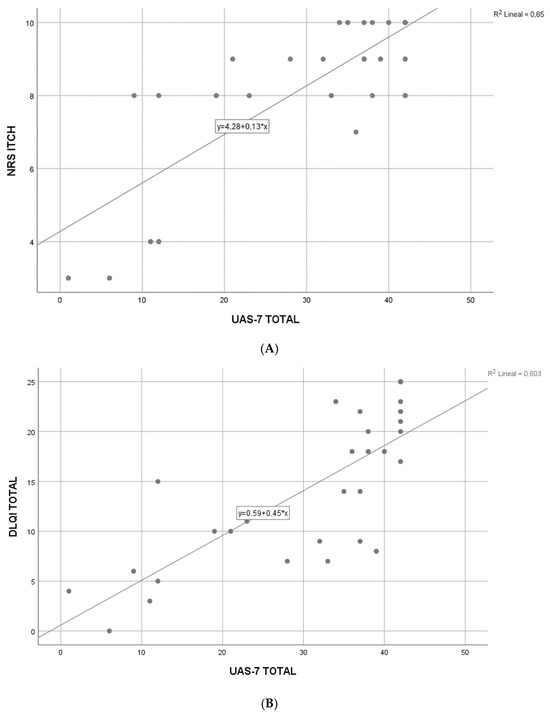
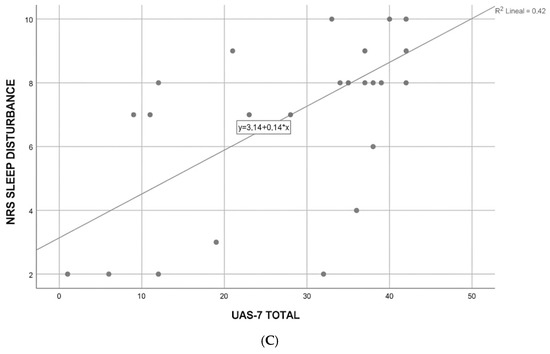
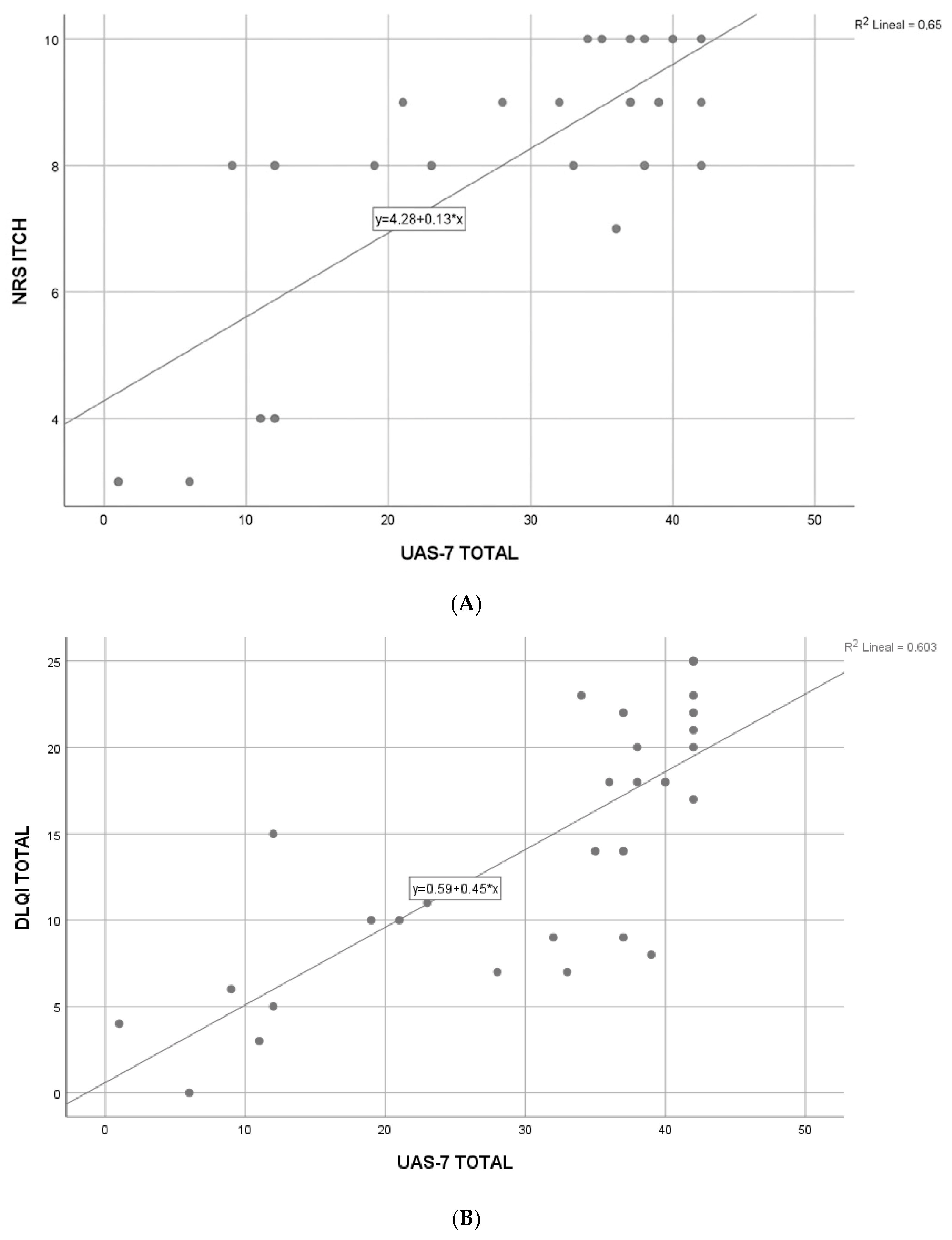
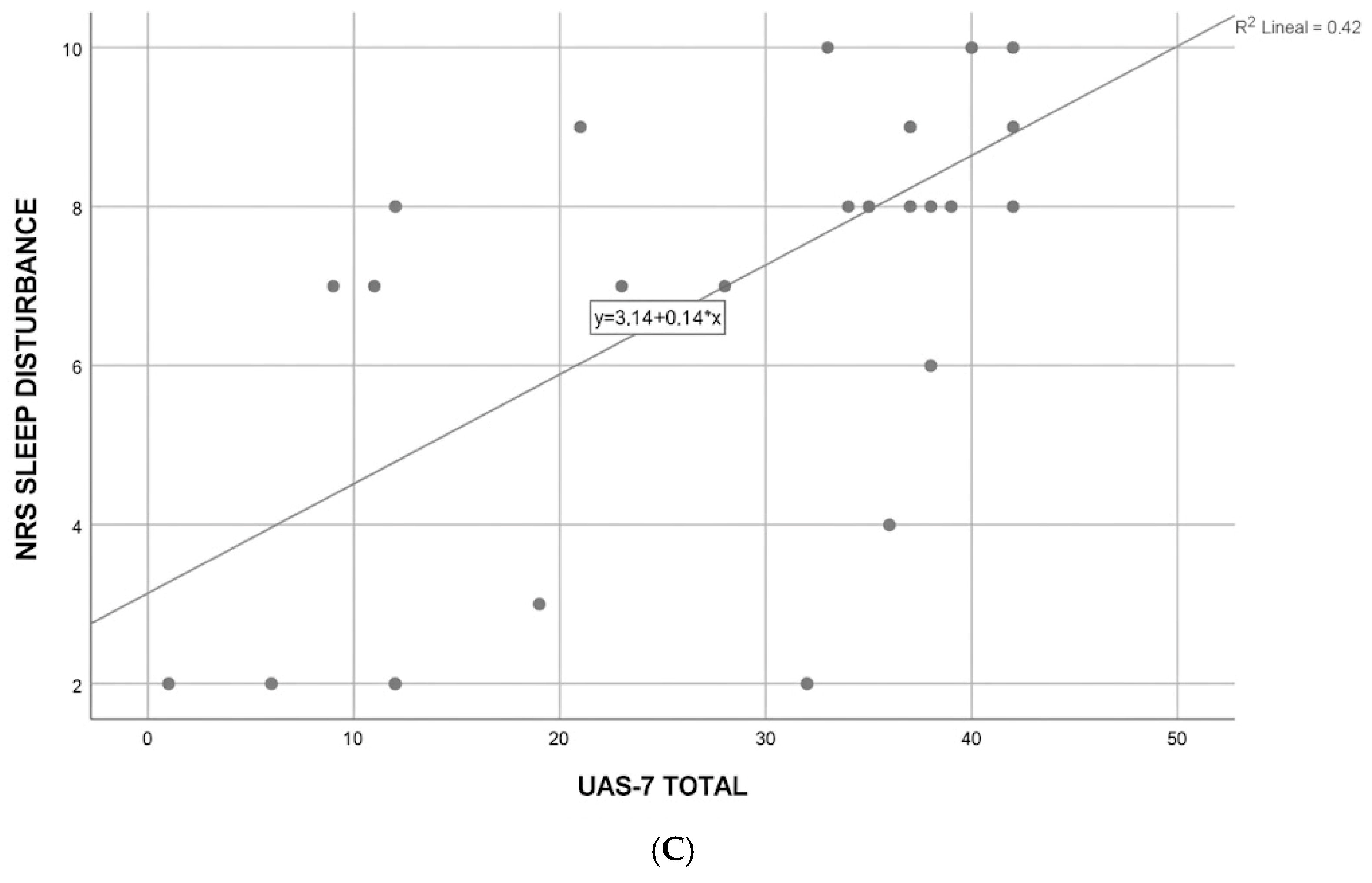
Bivariate correlation analysis demonstrated a positive and statistically significant association between disease activity (total UAS7 score) and patient-reported outcome measures (PROMs). Specifically, higher UAS7 scores correlated with increased NRS pruritus intensity (r = 0.807, p < 0.001) (Figure 1A) and profound impairment of health-related quality of life measured via total DLQI scores (r = 0.776, p < 0.001) (Figure 1B). A significant positive correlation was also observed between UAS7 and the NRS for sleep disturbance (r = 0.655, p < 0.001) (Figure 1C). While a strong correlation between the UAS7 and NRS pruritus was inherently expected—given that daily itch severity represents an intrinsic component of the UAS7 score—this finding provides valuable internal validation confirming the reliability and consistency of symptom reporting within our cohort.
Figure 1.
Bivariate correlation analysis between disease activity (total UAS7 score) and patient-reported outcome measures in patients with CSU: (A) Numerical Rating Scale (NRS) for itch (r = 0.807, p < 0.001); (B) total Dermatology Life Quality Index (DLQI) score (r = 0.776, p < 0.001); and (C) NRS for sleep disturbance (r = 0.655, p < 0.001).
3.3. Quantifying the Global Impact of CSU on Major Life-Changing Decisions
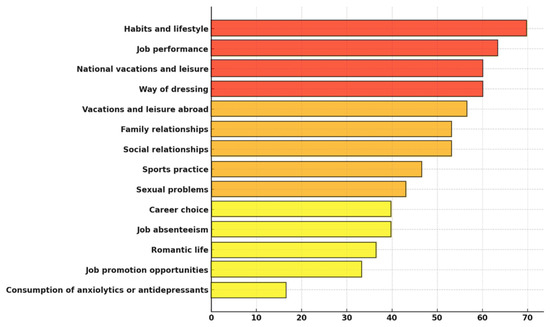
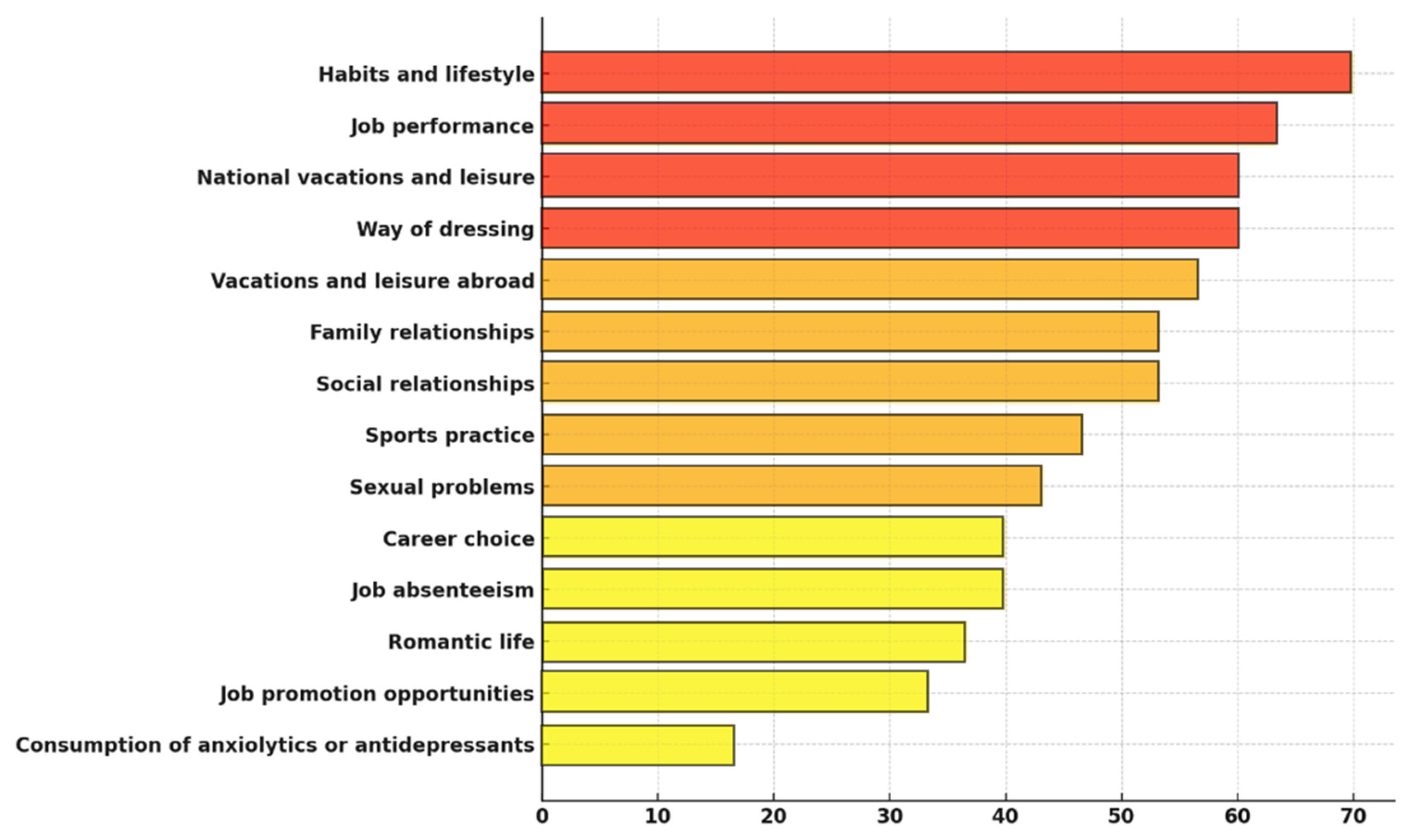
An impact of CSU on the making of major life-changing decisions was observed. A moderate-to-severe impact on overall lifestyle was reported by 70.0% of patients. Other frequently impaired domains included job performance (63.3%), domestic travel and leisure (60.0%), clothing choices (60.0%), international travel (56.7%), family relationships (53.3%), social relationships (53.3%), sports participation (46.7%), sexual relationships (43.3%), choice of professional career (40%), work absenteeism (40%), romantic life (36.7%), career promotion opportunities (33.4%), and the use of anxiolytics and antidepressants (16.6%). Table 2, Figure 2.
Table 2.
Mean score of each MLCD studied in patients with CSU.
Figure 2.
Percentage of patients with CSU reporting a moderate-to-severe impact on the most affected major life-changing decisions (MLCD). Bar colors illustrate the gradient of perceived impact frequency (red: highest impact ≥ 60%; orange: intermediate impact 40–59%; yellow: lower impact < 40%).
MLCD were also substantially conditioned by physical and emotional symptoms related to CSU, including pain, pruritus, sleep deprivation, physical limitation, embarrassment, stress/anxiety, and sadness/depression.
3.4. Stratified Analysis of MLCD Impairment by CSU Disease Activity
To determine the specific influence of disease activity on biographical trajectories, the sample was stratified into a mild-to-moderate cohort (UAS7 < 28, n = 9) and a severe cohort (UAS7 >= 28, n = 21). Comparative analysis revealed that patients with severe disease activity experienced a significantly greater impairment across multiple pivotal life choices.
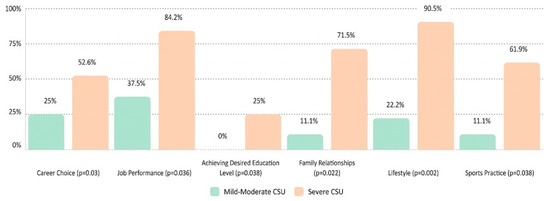
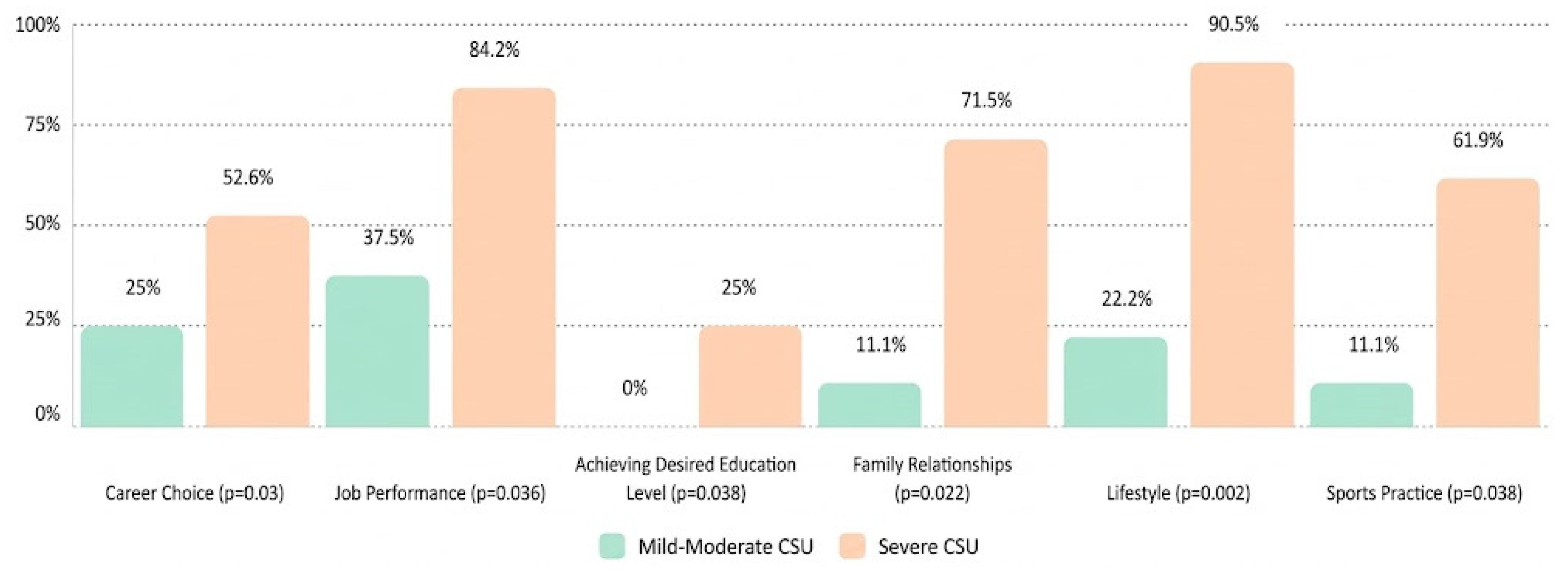
Statistically significant differences were established in professional career choice (52.6% severe vs. 25.0% mild-to-moderate, p = 0.030), job performance (84.2% vs. 37.5%, p = 0.036), and the restricted capability to achieve the desired educational attainment level (25.0% vs. 0.0%, p = 0.038). Furthermore, severe disease status was strongly associated with deteriorated family relationships (71.5% vs. 11.1%, p = 0.022), forced modification of daily lifestyle habits (90.5% vs. 22.2%, p = 0.002), and significant limitation in regular sports participation (61.9% vs. 11.1%, p = 0.038). Decisions with statistically significant differences are shown in Figure 3.
Figure 3.
Percentage of patients with moderate–severe impact on selected life-changing decisions, stratified by CSU disease activity. Only decisions with statistically significant differences (p < 0.05) are shown.
Similarly, severe clinical activity was associated with a significantly higher burden across several physical and emotional symptoms, demonstrating positive associations with reported pain (p = 0.003), pruritus (p = 0.001), severe sleep deprivation (p = 0.002), physical fatigue (p = 0.002), social embarrassment (p = 0.010), stress/mood swings (p = 0.010), and reactive sadness/depression (p = 0.008). The comprehensive statistical stratification of sociodemographic data, clinical variables, and specific MLCD by UAS7 classification is detailed systematically in Table 3.
Table 3.
Impact on Socio-Demographic Characteristics and MLCD by CSU disease activity.
4. Discussion
The present study indicates that CSU exerts a considerable, moderate-to-severe impact on MLCD. Specifically, a significant influence was observed in domains such as lifestyle, work performance, holiday and leisure planning, choice of clothing, and social, family, and sexual relationships, among others. Furthermore, patients with greater disease severity, assessed by the UAS7, experience an even more pronounced impact on these life-changing decisions.
These results are consistent with and expand upon existing evidence regarding impaired quality of life in patients with CSU [4,10]. The literature consistently highlights that factors such as intense pruritus, associated sleep disturbance [6,11], and unpredictable disease flares constitute major drivers of the overall disease burden [10]. These physical manifestations induce substantial psychological distress, including social embarrassment, fatigue, anxiety, and depressive symptoms [12,13], which ultimately hamper social, occupational, and academic functioning [4,10]. Our study confirms this multidimensional impairment by objectifying the impact on specific MLCD related to these domains. Additionally, the strong correlation observed between UAS7 and pruritus NRS (r = 0.807), while inherently expected due to construct collinearity, serves as an internal check supporting the consistency of patients’ symptom self-assessment alongside sleep disruption and DLQI scores.
Likewise, the observation that the impact on MLCD is greater in patients with more severe CSU (UAS7 ≥ 28) is in line with previous studies that correlate higher UAS7 scores with poorer quality of life outcomes [4]. Indeed, CSU severity has been shown to be an independent predictor of quality of life [12]. Our findings reinforce this association, showing how specific decisions in the professional, educational, and social domains are more affected in patients with severe disease.
Our findings align with previous evidence evaluating the impact on MLCD in other chronic inflammatory skin diseases, such as psoriasis [9] and atopic dermatitis [14,15,16]. These studies highlighted major disruptions in career choice, work performance, absenteeism, and clothing preference [9,16]. This convergence across CSU, psoriasis, and atopic dermatitis is expected, as they share key clinical features—including chronic pruritus, visible lesions, and associated stigmatization—that collectively constrain long-term life decisions in a similar manner.
To our knowledge, this is the first study to specifically evaluate the impact of CSU on patients’ major life-changing decisions. Future studies on other chronic dermatological diseases could benefit from using specifically validated questionnaires to measure the impact on MLCD, such as the Major Life Changing Decision Profile (MLCDP) developed by Bhatti et al. [7,8], to standardise the assessment and allow for more robust comparisons. The evaluation of the impact on MLCD could even be considered an additional measure of the overall burden of disease in clinical practice.
An interesting finding in our demographic comparison was the significant difference in disease duration between cohorts, with patients in the mild-to-moderate group presenting a longer mean history of CSU than those in the severe group (11.22 vs. 3.19 years, p = 0.041). This disparity likely reflects patient selection dynamics inherent to tertiary referral centers. Patients with shorter disease duration presenting with acute, highly active, or poorly controlled symptoms are more prone to seek specialized hospital care during severe flares. In contrast, individuals living with CSU for more than a decade may have developed psychological habituation, disease acceptance, or practical coping strategies over time, which could attenuate perceived daily disease activity scores. Nevertheless, we cannot exclude the possibility that disease chronicity itself, independent of immediate flare activity, may exert a cumulative influence on biographical trajectories. Further longitudinal studies are needed to disentangle the distinct contributions of acute symptom severity versus long-term disease exposure to life-changing choices.
This study has certain limitations that should be considered. Firstly, its cross-sectional design precludes establishing causal relationships between CSU activity and major life decisions, meaning findings must be interpreted strictly as observational associations. Secondly, the sample size of 30 patients, particularly the numerical imbalance between the mild-to-moderate and severe CSU cohorts (n = 9 vs. n = 21), represents a major limitation that restricts statistical power and increases the risk of type II errors. Consequently, all between-group analyses must be interpreted as exploratory and hypothesis-generating rather than robust or generalizable differences. Thirdly, conducting the study in a tertiary hospital outpatient setting may have resulted in an overrepresentation of severe or refractory cases. Additionally, regarding pharmacological therapies, 14 of the 30 patients reported treatment with omalizumab, while the remaining patients were receiving H1-antihistamines. However, treatment exposure was not prospectively collected as a structured study variable, and detailed information regarding treatment duration, dosage, therapeutic response, or active status at the time of questionnaire completion was not systematically recorded. Therefore, reliable stratified comparisons according to biologic treatment could not be performed. Biologic treatment may act as a potential confounder, as achieving disease control could attenuate patients’ current perception of disease burden, while patients prescribed biologics may simultaneously represent a subpopulation with historically more severe or persistent disease. Future prospective multicenter studies should systematically capture detailed treatment histories and evaluate their modulating role on major life-changing decisions.
In conclusion, this exploratory study suggests that major life-changing decisions represent an important, often overlooked dimension of the global burden in patients with CSU. Higher disease activity was associated with more pronounced disruptions across occupational, educational, family, and lifestyle domains. These observations underscore the clinical need to integrate a comprehensive biopsychosocial approach into routine practice, supporting patients’ long-term biographic trajectories beyond cutaneous symptom control, as the true burden of the disease extends well into their psychological, emotional, and social spheres.
Author Contributions
Conceptualization, S.A.-S., T.M.-V., L.F.-B. and F.J.L.-P.; methodology, L.F.-B., F.J.L.-P. and T.M.-V.; software, L.F.-B. and F.J.L.-P.; validation, L.F.-B., F.J.L.-P., T.M.-V., R.S.-d.l.T. and C.G.-M.; formal analysis, L.F.-B. and F.J.L.-P.; investigation, L.F.-B., F.J.L.-P., T.M.-V. and C.G.-M.; resources, S.A.-S. and T.M.-V.; data curation, L.F.-B. and F.J.L.-P.; writing—original draft preparation, L.F.-B. and F.J.L.-P.; writing—review and editing, L.F.-B., F.J.L.-P., T.M.-V., A.M.-L. and R.S.-d.l.T.; visualization, L.F.-B. and F.J.L.-P.; supervision, S.A.-S., T.M.-V. and A.M.-L.; project administration, L.F.-B., F.J.L.-P. and S.A.-S. All authors have read and agreed to the published version of the manuscript.
Funding
This research received no external funding.
Institutional Review Board Statement
The study was conducted in accordance with the Declaration of Helsinki and approved by the Ethics Committee (CEIM Granada), approval code: TFG-DAUC-2017, approval date: 10 December 2023.
Informed Consent Statement
Informed consent was obtained from all subjects involved in the study.
Data Availability Statement
The data presented in this study are available on request from the corresponding author due to privacy and ethical restrictions. The data are not publicly available to protect the confidentiality of the participants in accordance with local regulations and ethics committee mandates.
Conflicts of Interest
The authors declare no conflicts of interest.
Abbreviations
The following abbreviations are used in this manuscript:
| AD | Atopic dermatitis |
| CSU | Chronic Spontaneous urticaria |
| DLQI | Dermatology Life Quality Index |
| HRQoL | Health-related quality of life |
| IQR | Interquartile range |
| MLCD | Major life-changing decisions |
| MLCDP | Major Life-Changing Decision Profile |
| NRS | Numerical Rating Scale |
| PROMs | Patient-reported outcome measures |
| SD | Standard deviation |
| SPSS | Statistical Package for the Social Sciences |
| UAS7 | Urticaria Activity Score over 7 days |
Appendix A. Sample Patient Data Collection Questionnaire for UC
| A rellenar por el dermatólogo | |||||
| Edad: | |||||
| Sexo: | __Hombre. | __Mujer | |||
| Edad de debut de la enfermedad: | |||||
| Situación laboral. | __Estudiante, | __Activo, | ___No Activo, | __Jubilado | |
| Nivel de estudios: | __Sin estudios; | __Básicos; | __Superiores | ||
| Número de zonas afectas: | |||||
| Hábito tabáquico: | __Si | __No | |||
| Qué zona es la más afectada | |||||
| __Mano, | ___Genitales, | __Glúteos, | __Submamaria, | __Cara, | __Tronco y extremidades |
| COMORBILIDADES: (MARCAR LAS QUE SÍ) | |||||
| __Ansiedad | |||||
| __Depresión | |||||
| __Dermatitis atópica | |||||
| __Asma | |||||
| __Rinoconjuntivitis | |||||
| __Bajo rendimiento | |||||
| __Problemas del sueño | |||||
| UAS7: | |||||
| DLQI: | |||||
| NRS picor (0–10): | |||||
| NRS sueño (0–10): | |||||
| Intrusividad de la enfermedad en la vida del paciente (subjetivo en base a la anamnesis) | |||||
| __Ausente, | __Mínima, | __Moderada, | __Elevada, | __Muy elevada | |
| A rellenar por el paciente | |||||
| ¿Cómo consideras que es la gravedad de tu URTICARIA CRÓNICA en el momento actual? | |||||
| __Leve | |||||
| __Moderada | |||||
| __Grave | |||||
| ¿De forma global cómo consideras que ha sido el impacto de la URTICARIA CRÓNICA a lo largo de tu vida? | |||||
| __Ausente | |||||
| __Mínimo | |||||
| __Moderado | |||||
| __Elevado | |||||
| __Muy elevado | |||||
| IMPACTO A NIVEL PROFESIONAL: | |||||
| LA URTICARIA CRÓNICA A LO LARGO DE MI VIDA HA INFLUENCIADO… | |||||
| Nunca he trabajado salta siguiente sección | |||||
| La elección de carrera profesional/ocupación | |||||
| __En absoluto; | __Levemente; | __Moderadamente: | __Mucho | ||
| Mi desempeño laboral (lo bien que hago mi trabajo) | |||||
| __En absoluto; | __Levemente; | __Moderadamente: | __Mucho | ||
| Mis oportunidades de ascenso o promoción laboral o de progresión de mi negocio | |||||
| __En absoluto; | __Levemente; | __Moderadamente: | __Mucho | ||
| Los días que he tenido que faltar a mi trabajo | |||||
| __En absoluto; | __Levemente; | __Moderadamente: | __Mucho | ||
| Mis ingresos/salario | |||||
| __En absoluto; | __Levemente; | __Moderadamente: | __Mucho | ||
| Ha sido causa directa de perder/dejar mi trabajo | |||||
| __En absoluto; | __Levemente; | __Moderadamente: | __Mucho | ||
| Ha motivado mi jubilación prematura | |||||
| __En absoluto; | __Levemente; | __Moderadamente: | __Mucho | ||
| EDUCACIÓN: | |||||
| LA URTICARIA CRÓNICA A LO LARGO DE MI VIDA HA INFLUENCIADO… | |||||
| Mi rendimiento educativo (Lo buen/a estudiante que he sido) | |||||
| __En absoluto; | __Levemente; | __Moderadamente: | __Mucho | ||
| Alcanzar el nivel educativo deseado por mí (secundaria, bachiller, FP, universitario etc.…) | |||||
| __En absoluto; | __Levemente; | __Moderadamente: | __Mucho | ||
| RELACIONES PERSONALES | |||||
| LA URTICARIA CRÓNICA A LO LARGO DE MI VIDA HA INFLUENCIADO | |||||
| Mis relaciones familiares | |||||
| __En absoluto; | __Levemente; | __Moderadamente: | __Mucho | ||
| Mi nivel de socialización con otras personas, los/as amigos/as que tengo | |||||
| __En absoluto; | __Levemente; | __Moderadamente: | __Mucho | ||
| Mi vida sentimental | |||||
| __En absoluto; | __Levemente; | __Moderadamente: | __Mucho | ||
| No tener la pareja que me hubiese gustado | |||||
| __En absoluto; | __Levemente; | __Moderadamente: | __Mucho | ||
| DESEOS REPRODUCTIVOS Y SEXUALIDAD | |||||
| LA URTICARIA CRÓNICA A LO LARGO DE MI VIDA HA INFLUENCIADO | |||||
| Mi deseo de tener hijo/as | |||||
| __En absoluto; | __Levemente; | __Moderadamente: | __Mucho | ||
| Si todavía no se ha planteado tener hijo/as pase a la siguiente sección | |||||
| No haber tenido hijo/as | |||||
| __En absoluto; | __Levemente; | __Moderadamente: | __Mucho | ||
| No haber tenido todos los hijos/as que hubiera deseado | |||||
| __En absoluto; | __Levemente; | __Moderadamente: | __Mucho | ||
| Tener problemas sexuales | |||||
| __En absoluto; | __Levemente; | __Moderadamente: | __Mucho | ||
| VIVIENDA | |||||
| LA URTICARIA CRÓNICA A LO LARGO DE MI VIDA HA INFLUENCIADO | |||||
| La elección de mi vivienda habitual (su ubicación, sus características) | |||||
| __En absoluto; | __Levemente; | __Moderadamente: | __Mucho | ||
| La elección de la localidad donde vivo | |||||
| __En absoluto; | __Levemente; | __Moderadamente: | __Mucho | ||
| Vivir en el extranjero | |||||
| __En absoluto; | __Levemente; | __Moderadamente: | __Mucho | ||
| VACACIONES Y OCIO | |||||
| LA URTICARIA CRÓNICA A LO LARGO DE MI VIDA HA INFLUENCIADO | |||||
| Mis vacaciones y viajes de ocio nacionales (la frecuencia, el destino o la duración) | |||||
| __En absoluto; | __Levemente; | __Moderadamente: | __Mucho | ||
| Mis vacaciones y viajes de ocio al extranjero (la frecuencia, el destino o la duración) | |||||
| __En absoluto; | __Levemente; | __Moderadamente: | __Mucho | ||
| DEPORTE Y HÁBITOS DE VIDA | |||||
| LA URTICARIA CRÓNICA A LO LARGO DE MI VIDA HA INFLUENCIADO | |||||
| Cambiar hábitos o mi estilo de vida por mi problema de salud | |||||
| __En absoluto; | __Levemente; | __Moderadamente: | __Mucho | ||
| Mi forma de vestir | |||||
| __En absoluto; | __Levemente; | __Moderadamente: | __Mucho | ||
| La práctica de deporte (el tipo o la frecuencia) | |||||
| __En absoluto; | __Levemente; | __Moderadamente: | __Mucho | ||
| HÁBITOS TÓXICOS | |||||
| LA URTICARIA CRÓNICA A LO LARGO DE MI VIDA HA INFLUENCIADO | |||||
| El tabaco que fumo | |||||
| __En absoluto; | __Levemente; | __Moderadamente: | __Mucho | ||
| Las bebidas alcohólicas que consumo | |||||
| __En absoluto; | __Levemente; | __Moderadamente: | __Mucho | ||
| Los ansiolíticos, antidepresivos o medicamentos que tomo para dormir | |||||
| __En absoluto; | __Levemente; | __Moderadamente: | __Mucho | ||
| El consumo de drogas | |||||
| __En absoluto; | __Levemente; | __Moderadamente: | __Mucho | ||
| ¿Hay algo que consideres que haya disminuido el efecto negativo que la URTICARIA CRÓNICA ha tenido en tu vida? Por ejemplo, algún tratamiento, cirugía, haber perdido peso, haberte hecho la depilación láser | |||||
| Descríbelo: | |||||
| INDICA EN QUÉ MEDIDA ESTOS SÍNTOMAS HAN INFLUENCIADO NEGATIVAMENTE TU VIDA | |||||
| El dolor | |||||
| __En absoluto; | __Levemente; | __Moderadamente: | __Mucho | ||
| El picor | |||||
| __En absoluto; | __Levemente; | __Moderadamente: | __Mucho | ||
| La falta de sueño | |||||
| __En absoluto; | __Levemente; | __Moderadamente: | __Mucho | ||
| Limitación física | |||||
| __En absoluto; | __Levemente; | __Moderadamente: | __Mucho | ||
| Vergüenza | |||||
| __En absoluto; | __Levemente; | __Moderadamente: | __Mucho | ||
| Falta de confianza | |||||
| __En absoluto; | __Levemente; | __Moderadamente: | __Mucho | ||
| Estrés miedo o ansiedad | |||||
| __En absoluto; | __Levemente; | __Moderadamente: | __Mucho | ||
| Deprimirme y estar triste | |||||
| __En absoluto; | __Levemente; | __Moderadamente: | __Mucho | ||
References
- Zuberbier, T.; Aberer, W.; Asero, R.; Abdul Latiff, A.H.; Baker, D.; Ballmer-Weber, B.; Bernstein, J.A.; Bindslev-Jensen, C.; Brzoza, Z.; Bedrikow, R.B.; et al. The EAACI/GA2LEN/EDF/WAO guideline for the definition, classification, diagnosis and management of urticaria. Allergy 2018, 73, 1393–1414. [Google Scholar] [CrossRef] [Scilit] [PubMed]
- Maheshwari, A.; Garg, T.; Chander, R.; Debnath, E. Chronic Spontaneous Urticaria: An Etiopathogenic Study. Indian J. Dermatol. 2022, 67, 92–99. [Google Scholar] [PubMed]
- Schaefer, P. Acute and Chronic Urticaria: Evaluation and Treatment. Am. Fam. Physician 2017, 95, 717–724. [Google Scholar] [PubMed]
- Jauregui, I.; Ortiz de Frutos, F.J.; Ferrer, M.; Gimenez-Arnau, A.; Sastre, J.; Bartra, J.; Labrador, M.; Silvestre, J.F.; Valero, A. Assessment of severity and quality of life in chronic urticaria. J. Investig. Allergol. Clin. Immunol. 2014, 24, 80–86. [Google Scholar] [PubMed]
- Fricke, J.; Avila, G.; Keller, T.; Weller, K.; Lau, S.; Maurer, M.; Zuberbier, T.; Keil, T. Prevalence of chronic urticaria in children and adults across the globe: Systematic review with meta-analysis. Allergy 2020, 75, 423–432. [Google Scholar] [CrossRef] [Scilit] [PubMed]
- Sanchez-Diaz, M.; Rodriguez-Pozo, J.A.; Latorre-Fuentes, J.M.; Salazar-Nievas, M.C.; Alejandro, M.L.; Arias-Santiago, S. Sleep Quality as a Predictor of Quality-of-Life and Emotional Status Impairment in Patients with Chronic Spontaneous Urticaria: A Cross-Sectional Study. Int. J. Environ. Res. Public Health 2023, 20, 3508. [Google Scholar] [CrossRef] [Scilit] [PubMed]
- Bhatti, Z.; Salek, M.; Finlay, A. Chronic diseases influence major life changing decisions: A new domain in quality of life research. J. R. Soc. Med. 2011, 104, 241–250. [Google Scholar] [CrossRef] [Scilit] [PubMed]
- Bhatti, Z.U.; Salek, S.S.; Bolton, C.E.; George, L.; Halcox, J.P.; Jones, S.M.; Ketchell, I.R.; Moore, R.H.; Sabit, R.; Piguet, V.; et al. The development and validation of the Major Life Changing Decision Profile (MLCDP). Health Qual. Life Outcomes 2013, 11, 78. [Google Scholar] [CrossRef] [Scilit] [PubMed]
- Sanchez-Diaz, M.; Diaz-Calvillo, P.; Soto-Moreno, A.; Molina-Leyva, A.; Arias-Santiago, S. Factors Influencing Major Life-Changing Decisions in Patients with Psoriasis: A Cross-sectional Study. Acta Derm. Venereol. 2023, 103, adv11640. [Google Scholar] [CrossRef] [Scilit] [PubMed]
- Goncalo, M.; Gimenez-Arnau, A.; Al-Ahmad, M.; Ben-Shoshan, M.; Bernstein, J.A.; Ensina, L.F.; Fomina, D.; Galvàn, C.; Godse, K.; Grattan, C.; et al. The global burden of chronic urticaria for the patient and society. Br. J. Dermatol. 2021, 184, 226–236. [Google Scholar] [CrossRef] [Scilit] [PubMed]
- Abdel-Meguid, A.M.; Awad, S.M.; Noaman, M.; Abdel Gawad, A.M.; Abou-Taleb, D.A.E. Does chronic urticaria affect quality of sleep and quality of life? J. Public Health Res. 2024, 13, 22799036241243268. [Google Scholar] [CrossRef] [Scilit] [PubMed]
- Choi, W.S.; Lim, E.S.; Ban, G.Y.; Kim, J.H.; Shin, Y.S.; Park, H.S.; Ye, Y.-M. Disease-specific impairment of the quality of life in adult patients with chronic spontaneous urticaria. Korean J. Intern. Med. 2018, 33, 185–192. [Google Scholar] [CrossRef] [Scilit] [PubMed]
- Tzur Bitan, D.; Berzin, D.; Cohen, A. The association of chronic spontaneous urticaria (CSU) with anxiety and depression: A nationwide cohort study. Arch. Dermatol. Res. 2021, 313, 33–39. [Google Scholar] [CrossRef] [Scilit] [PubMed]
- Ali, F.; Vyas, J.; Finlay, A.Y. Counting the Burden: Atopic Dermatitis and Health-related Quality of Life. Acta Derm. Venereol. 2020, 100, adv00161. [Google Scholar] [CrossRef] [Scilit] [PubMed]
- Chopra, R.; Silverberg, J.I. Assessing the severity of atopic dermatitis in clinical trials and practice. Clin. Dermatol. 2018, 36, 606–615. [Google Scholar] [CrossRef] [Scilit] [PubMed]
- Fuentes-Barragán, L.; García-Moronta, C.; Sanabria-de la Torre, R.; León-Pérez, F.J.; Molina-Leyva, A.; Arias-Santiago, S.; Montero-Vílchez, T. Impact on Major Life-changing Decisions in Patients with Atopic Dermatitis. Acta Derm. Venereol. 2025, 105, adv42241. [Google Scholar] [CrossRef] [Scilit] [PubMed]

Disclaimer/Publisher’s Note: The statements, opinions and data contained in all publications are solely those of the individual author(s) and contributor(s) and not of MDPI and/or the editor(s). MDPI and/or the editor(s) disclaim responsibility for any injury to people or property resulting from any ideas, methods, instructions or products referred to in the content. |
© 2026 by the authors. Licensee MDPI, Basel, Switzerland. This article is an open access article distributed under the terms and conditions of the Creative Commons Attribution (CC BY) license.