


Abstract
Background/Objectives: During adolescence, dental caries, erosions, and gingival diseases can significantly impact quality of life. Currently, mobile applications are widely used in health promotion, especially among teenagers, as they offer a modern approach to oral health education. This scoping review aims to evaluate the effectiveness of mobile health (mHealth) applications in improving adolescents’ behavior and knowledge regarding oral hygiene. Methods: Searches were conducted in the Medline/PubMed, Scopus, Web of Science, Embase, and Google Scholar databases. Both randomized and non-randomized clinical trials published between 2015 and 2024 were analyzed. Selected studies evaluated oral hygiene behavior (knowledge and skills), as well as Plaque Index and gingival health indicators, by comparing a control group receiving traditional education with an intervention group using mobile applications for education. Results: Out of 738 articles found, only 21 met the eligibility criteria. Of the total number of included studies, 14 (66.6%) reported that adolescents in the intervention group utilizing mobile applications demonstrated superior plaque control and reduced gingival bleeding compared to those in the control group. Notably, this outcome was observed even in studies employing a single-group design. In contrast, five studies (23.8%) found no statistically significant differences between groups, while two studies (9.6%) indicated that traditional educational methods were more effective than modern methods. Conclusions: The analyzed studies indicate that mobile health applications can be valuable tools for improving adolescents’ oral health. However, some findings also demonstrate that traditional education methods yield similar positive effects.
Keywords:
adolescents; mHealth; mobile applications; knowledge; skills; oral hygiene behavior; dentistry 1. Introduction
Oral diseases affected 3.5 billion people worldwide in 2019, and their incidence is increasing, especially in low- and middle-income countries [1]. According to the latest World Health Organization (WHO) report, in 2019, the prevalence of permanent tooth decay was 29%, increasing by 640 million cases between 1990 and 2019 [1]. Untreated cavities cause pain, discomfort, reduced quality of life, lower self-esteem, and impaired social life [2].
In this context, concrete measures to reduce the incidence of dental caries are essential. These measures include the implementation of preventive and educational programs for oral health, targeting vulnerable age groups, such as preschool children and adolescents [3,4,5], mainly aiming to reduce risk factors associated with the development of carious lesions. The messages conveyed during these educational lessons focus on reducing sugar consumption, improving oral hygiene, using fluoride, and ensuring regular dental check-ups.
A variety of strategies, methods, and tools can be used for oral health education. The forms of health education can be auditory (individual or group conversations, conferences, symposiums, lectures, lessons, seminars, or Q&A sessions); visual (flyers, leaflets, brochures, posters, charts, diagrams, drawings, caricatures, or models); audiovisual (movies, cartoons, TV programs, or theater, such as drama or puppet shows); or complex (exhibitions, trips, book stands, contests, or practical demonstrations).
One of the key factors in choosing the appropriate form of oral health education is the age of the individual or target population.
Adolescence is defined as the age range from 10 to 19 years, a period of multiple biological, emotional, and behavioral changes that impact general and oral health. It is also a crucial stage for acquiring knowledge, skills, relationship management, and other essential attributes necessary for a successful transition to adulthood [6,7,8].
Many risk behaviors that begin in adolescence, such as smoking, alcohol consumption, and drug use, can be prevented through appropriate measures. For adolescents, adherence to preventive measures represents a challenge, as immediate benefits are difficult to understand, and long-term outcomes are not fully perceived [9,10]. Although traditional education has proven effective in changing health behaviors, traditional approaches may pose challenges related to the need for specialists, logistics, or maintaining individual motivation over a long period. In this regard, digital technology, with its characteristics (wide reach, low cost, and attractiveness), can offer an alternative to traditional education [11,12].
Recently, a rapid increase in the number of mobile phones has been observed, which have become an integral part of people’s lives, successfully used in many fields, including health, education, and entertainment [13]. Currently, the number of mobile phones is rising, with approximately 4.88 billion smartphones worldwide in 2024, covering about 60.42% of the global population [14].
According to the WHO report from mid-2020, 96.7% of the world’s population lived within the coverage of a mobile network. Additionally, a higher number of mobile connections than individuals was found worldwide, with 105 subscriptions per 100 inhabitants in 2020 [15].
There are many advantages to using applications in healthcare, such as self-monitoring of behavior, adherence to medications and treatments, increased motivation, disease prevention and management, doctor–patient communication, action planning, and behavioral goal review [16]. With digital technology, remote consultations (teledentistry) can be conducted, motivational messages can be sent to improve treatment adherence, and various mobile applications (mHealth) can be accessed via smartphones.
Mobile health (mHealth) refers to the use of mobile technologies for health interventions [15]. Mobile phones, tablets, and other mobile and digital technologies are used to provide information, training, and access to health services. There is growing evidence supporting the use of mHealth through tools such as text messaging, video messaging, phone calls, mobile internet, mobile applications, visualization and diagnostic tools, and monitoring devices [17].
Although mHealth applications have existed for years, the mobile health app market grew significantly after the outbreak of COVID-19. In 2020, the healthcare sector experienced significant growth in the use of applications, with many companies marketing apps that provide diagnostics and connect patients with online healthcare providers [18].
In 2021, 44% of U.S. consumers used digital tools to track their health, and 33% owned a wearable health or wellness device, with the global mHealth app market expected to reach USD 105.9 billion by 2030 [19].
In dentistry, mobile applications are used in almost all areas, including preventing dental caries [20,21,22,23,24] and periodontal disease [25,26], detecting suspicious oral lesions [27] and traumatic injuries [28], motivating orthodontic patients [29], detecting carious lesions [30,31], oral hygiene education [32], helping anxious patients [33], raising parental awareness about their children’s oral health [34,35], and improving oral hygiene in older adult patients [36]. Moreover, dental erosion is frequently encountered in adolescents, which necessitates both rigorous oral hygiene and non-invasive remineralization treatment. Among the most advanced non-invasive options are toothpastes containing zinc carbonate hydroxyapatite, which have shown effectiveness within a short period in pediatric patients, as demonstrated by a randomized clinical study conducted by Scribante et al. [37]. To further support the management of dental erosion, a dedicated application called Intact-Tooth [38] has been developed, providing valuable resources for both patients and dental professionals.
It is widely recognized that digital methods are preferred by adolescents and young people over traditional educational methods, as they tend to favor short text messages (SMS), multimedia messages (MMS), or videos over brochures or pamphlets [39,40]. Moreover, unlike traditional approaches, mobile education allows for greater accessibility, enabling frequent and sustained contact with health information, offering a fun, interactive, and personalized platform for improving oral health [41].
However, the effectiveness of digital methods in improving oral hygiene knowledge, attitudes, behaviors, and, consequently, oral health indicators in adolescents is not clearly established in the literature. In recent years, review-type studies have been conducted assessing app-based oral health promotion interventions on modifiable risk factors associated with early childhood caries, addressed to parents/caregivers [42]; mobile health applications for children’s oral health improvement [43]; oral hygiene improvement in orthodontic patients [16]; gamification and its impact on oral health of children and adolescents [18,44,45]; mobile apps for dental caries prevention [46]; and the effect of mHealth in improving oral hygiene of adolescents and adults [32,40], but no reviews have focused on teenagers. In this context, the purpose of this review is to address this gap in knowledge by systematizing the results of existing research in this field and identifying the need for future research directions. The data obtained from this review could be useful both for practical application and research, contributing to the development of mHealth strategies for improving the oral health of teenagers.
2. Materials and Methods
This scoping review followed the methodology developed by Aromataris and collaborators in the JBI Manual of Evidence Synthesis [47]. It was drafted using the Preferred Reporting Items for Systematic Reviews and Meta-Analyses (PRISMA) framework, with the PRISMA extension for scoping reviews (Table S1—Supplementary Material) [48], to ensure a comprehensive and systematic approach.
The key stages of the research included defining the research question, developing a comprehensive search strategy, establishing inclusion/exclusion criteria for studies, selecting and analyzing studies based on these criteria, extracting relevant information, and synthesizing the obtained results.
2.1. Review Questions
The research aimed to answer the following questions: (1) Are mobile applications effective in improving adolescents’ oral hygiene? and (2) Are these applications more useful and effective compared to traditional oral health education methods?
These questions were formulated to guide the review process in achieving the proposed objectives of the research.
2.2. Information Sources and Search Strategies
A systematic search was conducted using keywords in the PubMed, Scopus, Web of Science, Embase, and Google Scholar databases, covering the period from 2015 to 2024. The selected databases were searched to identify relevant articles on oral hygiene, adolescents, and mobile health.
To ensure the inclusion of all relevant articles in the review, the search strategy involved combining the keywords “teledentistry”, “mHealth”, “mobile application”, “adolescents”, “oral hygiene”, “oral health”, and “oral health promotion” using the Boolean operators AND and OR, allowing for a refined search. The search strategies are described in Table 1.
Table 1.
Search strategies.
2.3. Inclusion and Exclusion Criteria
To ensure the quality and relevance of the articles included in this scoping review, a set of specific inclusion and exclusion criteria was established (Table 2).
Table 2.
Inclusion and exclusion criteria.
The review included full-text articles published in English between 2015 and 2024, focusing on randomized and non-randomized clinical trials conducted among adolescents (10–19 years old). The selected studies analyzed the use of mobile health (mHealth) technology for raising awareness of the importance of oral hygiene in preventing dental caries and gingival diseases.
Conversely, the review excluded articles published before 2015, abstract-only publications, articles published in languages other than English, studies conducted on age groups outside the 10–19 range (children under 10 or adults over 19), systematic reviews, narrative reviews, scoping reviews, qualitative studies (e.g., focus groups), and irrelevant articles that did not align with the study’s objectives.
The article selection process was carried out in two stages. In the first stage, the titles and abstracts of the retrieved articles were screened for relevance based on the inclusion and exclusion criteria. Subsequently, two independent reviewers (A.M. and L.B.) assessed the available full-text articles to determine their eligibility according to the predefined inclusion and exclusion criteria. Any differences of opinion among the reviewers during each stage of the selection process were resolved with the help of an additional evaluator (E.-R.B.).
The data extracted from the selected articles were entered into a specially designed data extraction form. This form included details such as the first author of the article, year of publication, country where the research was conducted, study objective, study sample (number of subjects, age, specific characteristics, and any orthodontic treatments), intervention performed, type of mHealth technology used, clinical parameters assessed, and the main findings of the study.
By synthesizing the obtained data, the review aimed to provide a clearer picture of the effectiveness of mobile applications in improving adolescents’ oral hygiene behavior and knowledge, as well as to highlight any uncertainties or gaps in research in this field and to outline future research directions.
2.4. Risk of Bias Assessment
To evaluate the risk of bias in randomized clinical trials, the Cochrane Risk of Bias 2 (RoB 2) tool was employed. The five criteria covered by this tool are bias arising from the randomization process, deviations from intended interventions, missing outcome data, measurement of the outcome, and selection of the reported result [49]. For non-randomized clinical trials, the Risk Of Bias In Non-randomized Studies—of Interventions (ROBINS-I) tool was applied. The assessments were independently performed by two reviewers (A.M. and L.B.), with any disagreements resolved through discussion and, when necessary, by consultation with a third reviewer (E.-R.B.).
3. Results
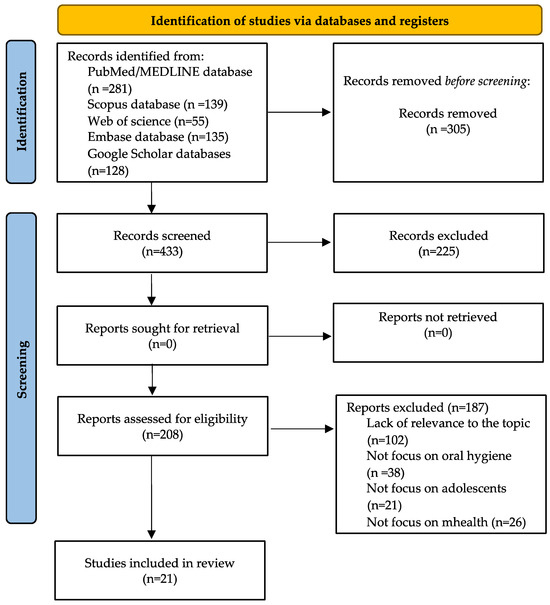
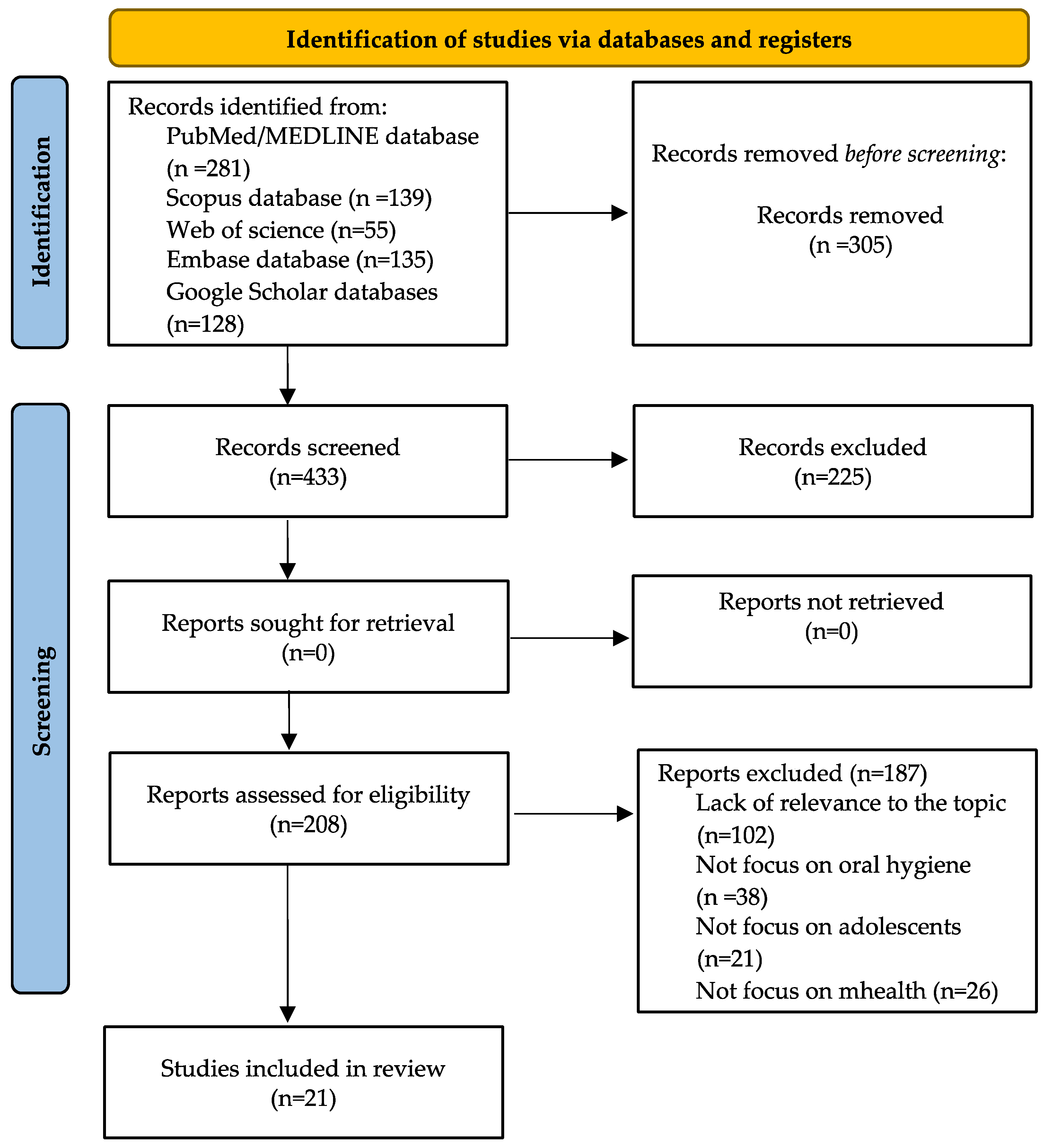
A total of 738 articles were retrieved between December 2024 and January 2025 from the following databases: PubMed/MEDLINE (281 articles), Scopus (139 articles), Web of Science (55 articles), Embase (135 articles), and Google Scholar (128 articles). Of these, 305 were excluded due to duplication, availability only as abstracts, or lack of accessibility. From the remaining 433 records, 225 were deemed irrelevant, leaving 208 articles for eligibility assessment. Among these, 187 articles were excluded due to the following reasons: lack of relevance to the topic, not focusing on oral hygiene, not focusing on adolescents, or not focusing on mHealth. Ultimately, 21 articles were included in the analysis. The search results and study inclusion process are presented in a PRISMA-ScR (Preferred Reporting Items for Systematic Reviews and Meta-Analyses extension for Scoping Reviews) flow diagram in Figure 1 [48].
Figure 1.
The flow diagram for the identification, screening, and eligibility of studies (PRISMA-ScR).
3.1. General Characteristics of the Selected Articles
Out of the 21 selected studies, 18 were randomized controlled clinical trials [50,51,52,53,54,55,56,57,58,59,60,61,62,63,64,65,66,67] and 3 were non-controlled interventional studies [68,69,70], including 1 study conducted without a control group [70].
From the selected clinical trial studies, we found that most researchers included two groups of adolescents: a control group that received traditional education and an intervention group that received educational messages or benefited from mobile phone applications. Furthermore, clinical evaluations were performed, such as the amount of dental plaque assessed using the Plaque Index (PI), gingival health measured by the Gingival Index (GI), and the presence of early carious lesions known as white spot lesions (WSLs). These parameters were assessed at the beginning of the study and at various times, typically at 6 months and 12 months. Additionally, seven studies specifically targeted adolescents with fixed orthodontic appliances [55,56,57,59,62,66,67].
Some studies included a questionnaire to assess both oral health knowledge and practices [54,59,61,63,64,66,68], while others used the questionnaire solely to evaluate the level of knowledge regarding oral hygiene [51,58,70].
The extracted and collected data from the included articles are detailed in Table 3 and organized according to the following parameters: author, year, country, purpose, study design, sample size, test and control group, follow-up time, and findings.
Table 3.
Characteristics of the selected studies.
3.2. Distribution of Articles by Year of Publication
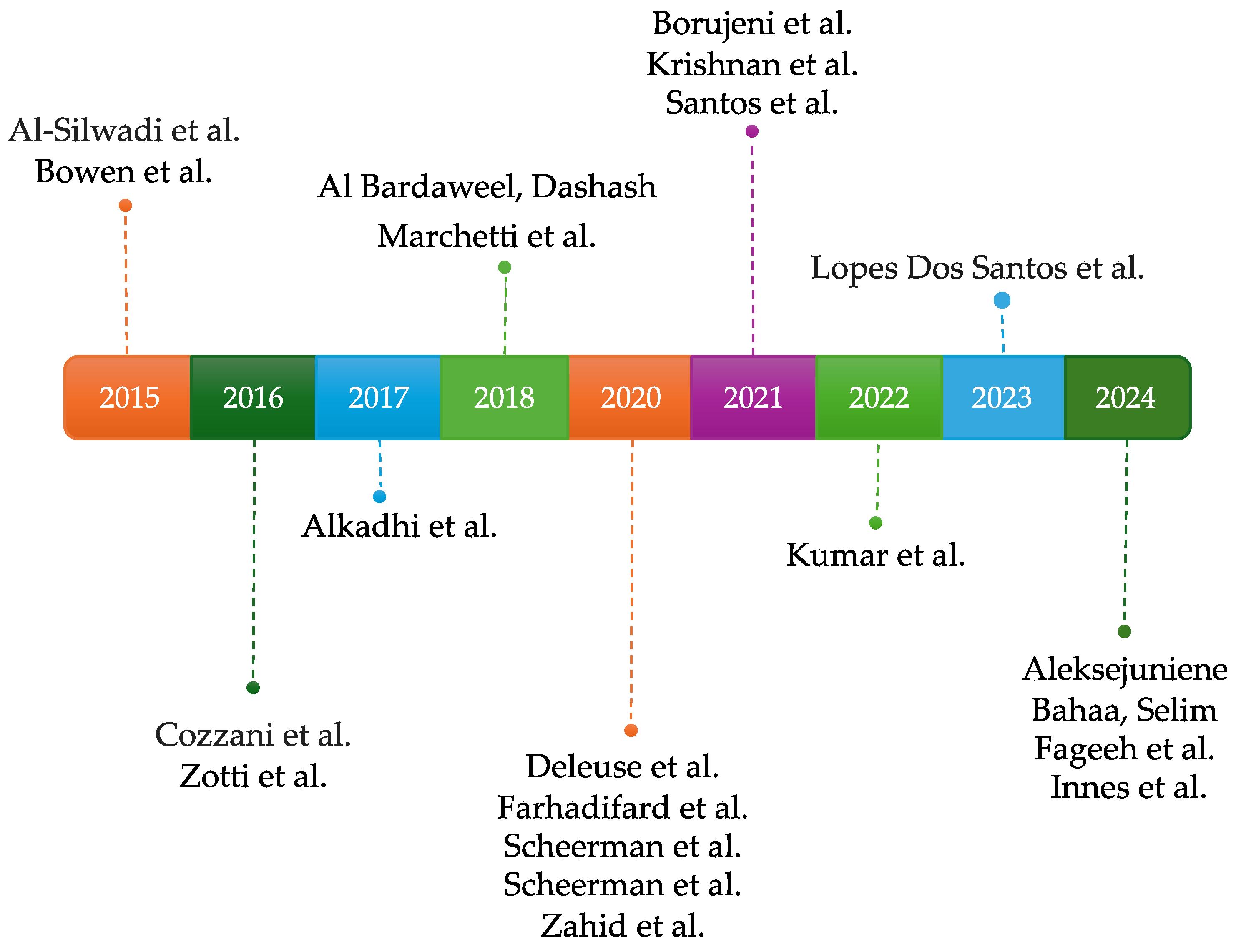
As illustrated in Figure 2, the distribution of articles spans the period from 2015 to 2024. The highest numbers of studies were published in 2020 and 2024, indicating peak research activity in those years, while the lowest numbers were recorded in 2017, 2022, and 2023, with only one article published in each of these years.
Figure 2.
The distribution of articles by publication year [50,51,52,53,54,55,56,57,58,59,60,61,62,63,64,65,66,67,68,69,70].
3.3. Distribution of Studies by Type of Technology Used
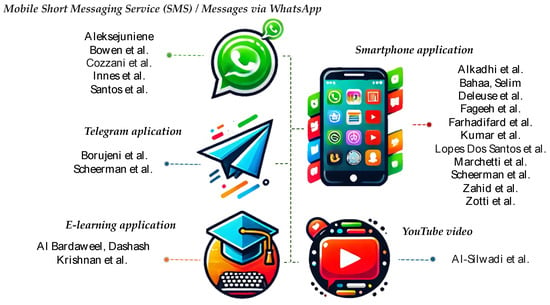
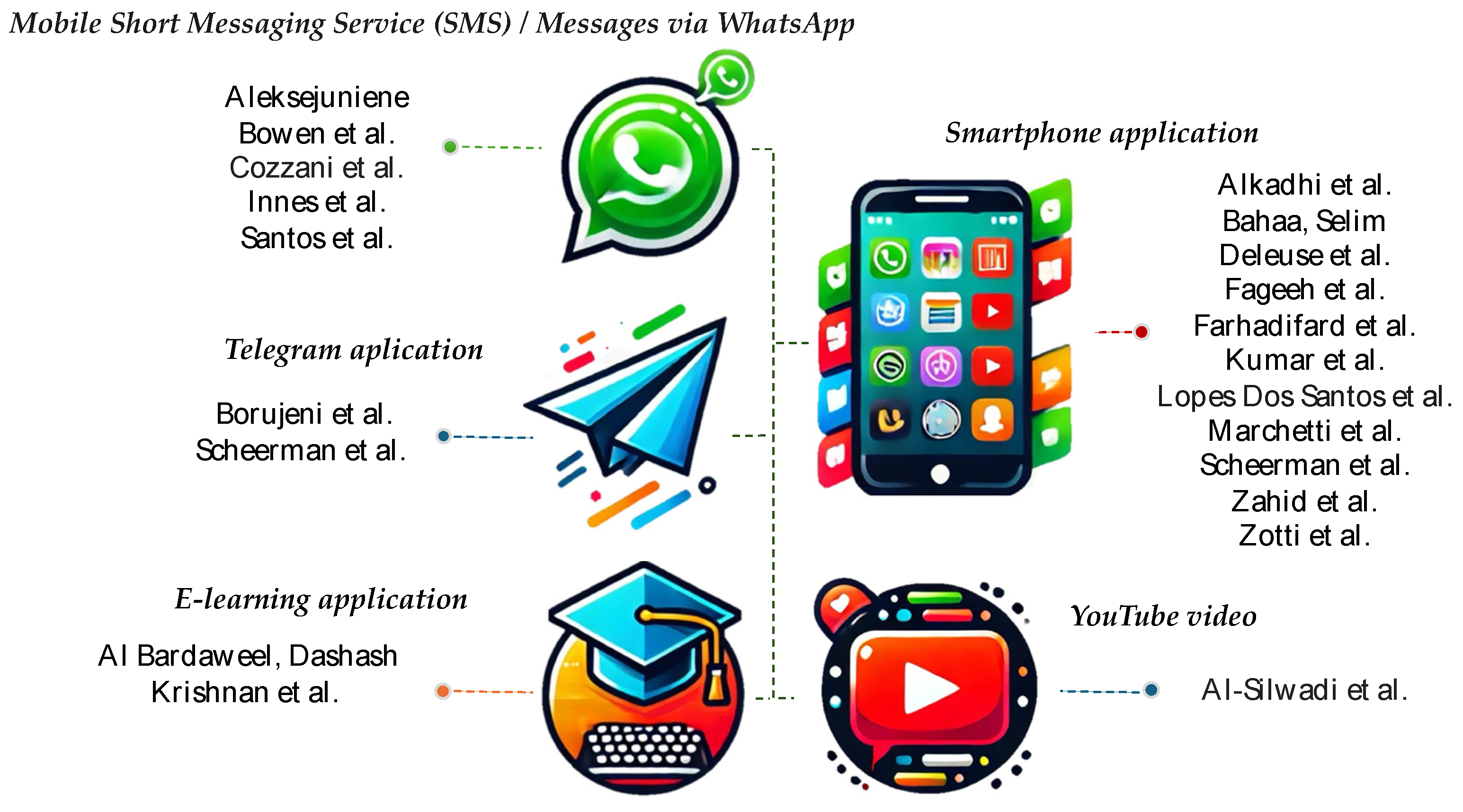
Figure 3 shows that the most frequently used applications in the selected studies were mobile smartphone applications (11), followed by text messages on WhatsApp (5), e-learning (2), and the Telegram application (2), while the YouTube platform was used in only one study.
Figure 3.
The distribution of studies by the mobile technology used [50,51,52,53,54,55,56,57,58,59,60,61,62,63,64,65,66,67,68,69,70].
3.4. Risk of Bias in Included Studies
As shown in Table 4, out of the 18 articles, only 6 studies provided high-quality evidence (low risk), evidence was a concern for 5 studies, and the remaining 7 studies presented low-quality evidence (high risk).
Table 4.
Cochrane risk of bias of randomized controlled trials (RoB2) (green symbol = low risk of bias, yellow symbol = high risk of bias, and blue symbol = concern).
For the three non-randomized controlled trials included in the review (Table 5), the ROBINS-I assessment indicated a risk of bias: a serious risk of bias in the study by Aleksejuniene, a moderate risk in the study by Krishnan, and a low risk in the study by Zahid.
Table 5.
Risk of bias for non-randomized controlled trials (ROBINS-I) (green symbol = low risk of bias, yellow symbol = serious risk of bias, and blue symbol = moderate risk of bias).
4. Discussion
This systematic review provides an overview of mobile application approaches used in promoting oral health among adolescents, particularly for improving oral hygiene. Mobile applications installed on smartphones enable the technological development of user-adapted software to reflect their specific needs, allowing for responsive, confidential, and targeted communication channels [71]. Mobile applications are widely accepted by children and adolescents and offer new opportunities to engage them in personal oral health care. They are considered a more advantageous method compared to traditional approaches for improving healthy behaviors, education, and health monitoring [72].
The age range of 10–19 years is a crucial period for developing healthy behaviors and avoiding unhealthy ones through interventions that can motivate patients to maintain and care for their oral health. This plays a key role in preventing dental caries and periodontal diseases, emphasizing the need for efforts to improve oral hygiene through various methods.
In orthodontic treatments, poor oral hygiene can negatively affect treatment outcomes [55]. Gingival inflammation has harmful effects on the periodontium, including recession, hyperplasia, and subsequent periodontal disease. Orthodontic treatment with fixed appliances increases the risk of enamel demineralization, which is exacerbated in patients with poor oral hygiene. Effective plaque removal and adherence to oral hygiene are major concerns for orthodontists, leading to numerous interventional studies conducted among their patients [50,51,57,59,62,63,64,67].
Currently, numerous mobile applications exist that are designed to help patients improve their behavior for maintaining strict oral hygiene. For example, in 2021, Chen and colleagues reported in Australia the existence of 562 applications in the Google Play Store and iTunes, of which 40 focused on preventing dental caries and periodontal diseases. Among these, oral hygiene was the most frequently targeted preventive behavior, addressed in 93% of applications, while dietary intake was covered in 45%, and fluoride use was included in 42% of applications [46]. For this reason, most of the selected studies (11) used mobile phone applications, followed by text messages and social networks such as Telegram, e-learning platforms, and other digital platforms like YouTube, which are frequently used by adolescents and young people.
After analyzing the selected studies, we found that the research results were not uniform, leading to several different observations.
The majority of studies (n = 11) reported that participants in the intervention groups achieved statistically significantly better outcomes in oral hygiene compared to those in the control groups [51,53,54,55,56,58,59,63,65,66,67]. Additionally, six studies documented notable reductions in Plaque Index and Gingival Index values following the use of mobile health interventions [50,54,61,63,64,65]. Furthermore, a non-randomized study without a control group conducted by Aleksejuniene [68] demonstrated improvements in toothbrushing skills and duration, as well as increased dietary knowledge, after participants received oral health education through mobile phone text messages.
However, other authors, such as Deleuse [57] and Krisnan [69], observed decreases in PI and GI values in both study groups, without statistically significant differences.
Finally, a third group of studies indicated no statistically significant differences between the control and intervention groups regarding improvements in gingival health and plaque levels. This conclusion was reported by Innes [60], Lopes de Santos [62], and Zahid [70]. Moreover, Zahid [70] noted that using mobile applications was more challenging than traditional health education lessons. A similar conclusion was reached by Al Bardaweel [52] in a study comparing adolescents who received education through leaflets and those who received e-learning education: the leaflet cluster had statistically significantly better oral health knowledge than the e-learning cluster at 6 weeks (p < 0.05) and at 12 weeks (p < 0.05).
Regarding the incidence of white spot lesions, Zotti [67] observed a reduction in their occurrence among patients in the intervention group wearing fixed multibracket appliances. In contrast, Deleuse [57], in a similar category of orthodontic patients, found that the incidence remained constant in both intervention and control groups.
Sheerman [66] adopted the concept of the two previously mentioned research groups (adolescents receiving traditional education vs. those receiving education through mobile applications) but introduced a third group including adolescents and their mothers. He found that young people in the third group exhibited better oral hygiene behavior and had lower plaque and gingival bleeding indices compared to those in the intervention and control groups. Additionally, it was noted that “the adolescents in the mother-and-adolescent group reported significantly more perceived social support from their mothers compared to those in the intervention and control groups at six months of follow-up”.
In another study conducted in Canada, Aleksejuniene [68] incorporated a dietary knowledge assessment questionnaire in which adolescents evaluated each food or drink as “tooth-friendly” or not. The study also examined the consumption of vegetables/fruits, carbonated drinks, juices, and sugar-containing products. Oral health messages were sent to all participants via SMS twice a week for one month. Evaluations were conducted after 4–5 weeks, assessing oral self-care skills and total brushing duration (in seconds). Over time, improvements were observed in oral hygiene skills, an increase in toothbrushing time, better knowledge of dietary hygiene, and a reduction in sugar consumption.
A special section of research focused on adolescents with autism spectrum disorder (ASD) and those affected by disabilities (visual or hearing) [58,69].
Krishnan [69] tested the effectiveness of a mobile application (Brush Up) in a sample of 60 adolescents with autism, divided into a control group and an intervention group. Their Plaque Index and Gingival Index were assessed at the beginning of the study and again at 6 and 12 weeks. The results showed no statistically significant differences in the clinical indices evaluated between the two groups.
Fageeh [58] conducted an oral health education program for 50 adolescents with blindness and 50 adolescents with deafness using an innovative platform called Telesmile, adapted specifically for each group. Participants were divided into two groups: the control group received traditional oral hygiene instructions, while the intervention group received guidance through the mobile application. Their knowledge was assessed at the initial visit and again after four weeks. The participants’ oral hygiene knowledge was very poor at the beginning of the study but significantly improved (p < 0.001) after four weeks with the help of the Telesmile application.
Mobile applications have proven to be useful in improving oral hygiene in adults, too. Review studies focusing on adult age groups and those including subjects from all age groups have not highlighted differences between the efficiency of using these applications in adults and in adolescents. However, older adults might require individualized oral health information to feel motivated to adopt mHealth oral health knowledge [73,74,75], while adolescents show greater ease in using new technologies. The longer-term maintenance of positive results remains to be assessed through longitudinal studies.
As a result of the conducted analysis, we can conclude that mHealth applications, combined with messaging and social media, can represent a novel oral health strategy that provides adolescents with timely, accurate, and engaging education, improving behaviors and achieving better gingival and dental health. This is evidenced by a reduction in early white spot lesions, decreased plaque accumulation, and reduced gingival bleeding.
Based on the review of selected articles, we can confidently answer our initial questions: mobile applications represent an attractive educational tool for adolescents, proving to be useful and, in some cases, even more effective than traditional oral health education methods.
Gaps in Literature and Future Research Challenges
The variability of the observed effects across studies may be caused by differences in behaviors, the educational and cultural backgrounds of adolescents’ families, and the heterogeneity of intervention approaches.
However, further research is needed on these intervention strategies, using rigorous study designs on large population samples to evaluate the effectiveness and cost-efficiency of mobile applications in promoting preventive behaviors among adolescents. Since most studies included in this review had short follow-up periods, future research should extend over longer durations to assess whether patient motivation remains consistent or declines over time. Additionally, the availability of such studies would allow for a more comprehensive assessment, such as a systematic review and meta-analysis, to provide a clearer picture of the effectiveness of these interventions.
Finally, the challenges associated with using mobile applications in dentistry should not be overlooked. These include costs, maintaining quality, potential technical issues, and the accuracy of the provided information, which must be verified and approved by specialists in the field [45,76,77].
This study has several limitations. First, there is a possibility that some relevant articles were missed, despite our search criteria being designed to be as comprehensive as possible. Second, several included studies had relatively small sample sizes and short follow-up periods. Lastly, the number of studies meeting the eligibility criteria was relatively low; however, this likely reflects the availability of evidence and published research in the field.
5. Conclusions
Given adolescents’ and young people’s widespread access to mobile technology and the promising results reported by most authors of the selected studies, we can conclude that the field of mobile health is continuously evolving. It demonstrates clear benefits in improving oral health and hygiene behaviors and is successfully used by adolescents.
The practical relevance of this scoping review extends to dental practitioners, who can adopt digital methods for oral health education. These approaches have been proven to be more effective and engaging for children and adolescents compared to traditional methods.
This scoping review highlights the need for further long-term studies, which would enable more comprehensive evaluations, such as systematic reviews and meta-analyses, to provide a broader understanding of the effectiveness of these interventions.
Supplementary Materials
The following supporting information can be downloaded at: https://www.mdpi.com/article/10.3390/jcm14092907/s1, Table S1: Scoping Reviews (PRISMA-ScR) Checklist.
Author Contributions
Conceptualization, A.M. and L.B.; methodology, A.M. and R.-I.V.; software, S.S. and G.I.; validation, G.L.G. and C.I.F.; investigation, A.M., L.B. and E.-R.B.; resources, A.M. and D.Z.; writing-original draft preparation, A.M., L.B. and E.-R.B.; writing-review and editing, L.B.; visualization S.S., G.I. and G.L.G.; supervision, A.M. and R.-I.V.; project administration, E.-R.B. All authors have read and agreed to the published version of the manuscript.
Funding
This research received no external funding.
Institutional Review Board Statement
Not applicable.
Informed Consent Statement
Not applicable.
Data Availability Statement
The data that support the findings of this study are available upon request from the corresponding author.
Conflicts of Interest
The authors declare no conflicts of interest.
References
- WHO. Global Oral Health Status Report: Towards Universal Health Coverage for Oral Health by 2030; World Health Organization: Geneva, Switzerland, 2022; Available online: https://www.who.int/publications/i/item/9789240061484 (accessed on 29 January 2025).
- Wu, L.; Lo, E.C.M.; McGrath, C.; Wong, M.C.M.; Ho, S.M.Y.; Gao, X. Motivational interviewing for caries prevention in adolescents: A randomized controlled trial. Clin. Oral Investig. 2022, 26, 585–594. [Google Scholar] [CrossRef] [Scilit] [PubMed]
- Peres, M.A.; Macpherson, L.M.D.; Weyant, R.J.; Daly, B.; Venturelli, R.; Mathur, M.R.; Listl, S.; Celeste, R.K.; Guarnizo-Herreño, C.C.; Kearns, C.; et al. Oral diseases: A global public health challenge. Lancet 2019, 394, 249–260. [Google Scholar] [CrossRef] [Scilit]
- Chou, R.; Bougatsos, C.; Griffin, J.; Selph, S.S.; Ahmed, A.; Fu, R.; Nix, C.; Schwarz, E. Screening, referral, behavioral counseling, and preventive interventions for oral health in children and adolescents aged 5 to 17 years: A systematic review for the US Preventive Services Task Force. JAMA 2023, 330, 1674–1686. [Google Scholar] [CrossRef] [Scilit] [PubMed]
- Hall-Scullin, E.; Goldthorpe, J.; Milsom, K.; Tickle, M. A qualitative study of the views of adolescents on their caries risk and prevention behaviours. BMC Oral Health 2015, 15, 141. [Google Scholar] [CrossRef] [Scilit] [PubMed]
- Antala, A.V.; Kariya, P.B. Social media as a tool for oral health education in early childhood and adolescents: Opportunities and challenges. Arch. Med. Health Sci. 2025, 10, 4103. [Google Scholar] [CrossRef] [Scilit]
- Sbricoli, L.; Bernardi, L.; Ezeddine, F.; Bacci, C.; Di Fiore, A. Oral hygiene in adolescence: A questionnaire-based study. Int. J. Environ. Res. Public Health 2022, 19, 7381. [Google Scholar] [CrossRef] [Scilit] [PubMed]
- Alhaija, E.S.A.; Al-Saif, E.M.; Taani, D.Q. Periodontal health knowledge and awareness among subjects with fixed orthodontic appliance. Dent. Press J. Orthod. 2018, 23, e1–e40. [Google Scholar] [CrossRef] [Scilit]
- Badawy, S.M.; Kuhns, L.M. Texting and mobile phone app interventions for improving adherence to preventive behavior in adolescents: A systematic review. JMIR mHealth uHealth 2017, 5, e50. [Google Scholar] [CrossRef] [Scilit]
- Graça, S.R.; Albuquerque, T.S.; Luis, H.S.; Assunção, V.A.; Malmqvist, S.; Cuculescu, M.; Slusanschi, O.; Johannsen, G.; Galuscan, A.; Podariu, A.C.; et al. Oral health knowledge, perceptions, and habits of adolescents from Portugal, Romania, and Sweden: A comparative study. J. Int. Soc. Prev. Community Dent. 2019, 9, 470–480. [Google Scholar] [CrossRef] [Scilit]
- Akmal Muhamat, N.; Hasan, R.; Saddki, N.; Mohd Arshad, M.R.; Ahmad, M. Development and usability testing of mobile application on diet and oral health. PLoS ONE 2021, 16, e0257035. [Google Scholar] [CrossRef] [Scilit]
- D’Cruz, A.M.; Aradhya, S. Impact of oral health education on oral hygiene knowledge, practices, plaque control and gingival health of 13- to 15-year-old school children in Bangalore city. Int. J. Dent. Hyg. 2013, 11, 126–133. [Google Scholar] [CrossRef] [Scilit] [PubMed]
- Parker, K.; Bharmal, R.V.; Sharif, M.O. The availability and characteristics of patient-focused oral hygiene apps. Br. Dent. J. 2019, 226, 600–604. [Google Scholar] [CrossRef] [Scilit] [PubMed]
- Sunny, G. How Many People Own Smartphones in the World? (2024–2029). Available online: https://prioridata.com/data/smartphone-stats/ (accessed on 29 January 2025).
- WHO. Mobile Technologies for Oral Health: An Implementation Guide; World Health Organization: Geneva, Switzerland, 2021; ISBN 978-92-4-003522-5. Available online: https://www.dentalhealth.ie/assets/files/pdf/who-oh-mobile-tech-guide-.pdf (accessed on 29 January 2025).
- Patil, S.; Hedad, I.A.; Jafer, A.A.; Abutaleb, G.K.; Arishi, T.M.; Arishi, S.A.; Arishi, H.A.; Jafer, M.; Gujar, A.N.; Khan, S.; et al. Effectiveness of mobile phone applications in improving oral hygiene care and outcomes in orthodontic patients. J. Oral Biol. Craniofac. Res. 2021, 11, 26–32. [Google Scholar] [CrossRef] [Scilit]
- Jangle, S.; Yeravdekar, R.; Singh, A.; Mukherjee, S.K.; Jha, A.K. Mobile health applications: Variables influencing user’s perception and adoption intentions. In Accelerating Strategic Changes for Digital Transformation in the Healthcare Industry; Springer: Cham, Switzerland, 2023; pp. 75–88. [Google Scholar]
- Moreira, R.; Silveira, A.; Sequeira, T.; Durão, N.; Lourenço, J.; Cascais, I.; Cabral, R.M.; Taveira Gomes, T. Gamification and oral health in children and adolescents: A scoping review. Interact. J. Med. Res. 2024, 13, e35132. [Google Scholar] [CrossRef] [Scilit]
- Ramsey, B. What Are mHealth Apps? Types, Examples, Costs, and More. Available online: https://scopicsoftware.com/blog/mobile-health-apps/ (accessed on 29 January 2025).
- Benson, P.E.; Parkin, N.; Dyer, F.; Millett, D.T.; Germain, P. Fluorides for preventing early tooth decay (demineralised lesions) during fixed brace treatment. Cochrane Database Syst. Rev. 2019, 11, CD003809. [Google Scholar] [CrossRef] [Scilit]
- Fernández, C.E.; Maturana, C.A.; Coloma, S.I.; Carrasco-Labra, A.; Giacaman, R.A. Teledentistry and mHealth for promotion and prevention of oral health: A systematic review and meta-analysis. J. Dent. Res. 2021, 100, 914–927. [Google Scholar] [CrossRef] [Scilit]
- Sharma, H.; Suprabha, B.S.; Rao, A. Teledentistry and its applications in paediatric dentistry: A literature review. Pediatr. Dent. J. 2021, 31, 203–215. [Google Scholar] [CrossRef] [Scilit]
- Estai, M.; Bunt, S.; Kanagasingam, Y.; Kruger, E.; Tennant, M. Diagnostic accuracy of teledentistry in the detection of dental caries: A systematic review. J. Evid. Based Dent. Pract. 2016, 16, 161–172. [Google Scholar] [CrossRef] [Scilit]
- AlShaya, M.; Farsi, D.; Farsi, N. The accuracy of teledentistry in caries detection in children: A diagnostic study. Digit. Health 2022, 8, 20552076221109075. [Google Scholar] [CrossRef] [Scilit]
- Li, Y.; Wu, X.; Liu, M.; Deng, K.; Tullini, A.; Zhang, X.; Shi, J.; Lai, H.; Tonetti, M.S. Enhanced control of periodontitis by an AI-enabled multimodal-sensing toothbrush and targeted mHealth micromessages: A randomized trial. J. Clin. Periodontol. 2024, 51, 1632–1643. [Google Scholar] [CrossRef] [Scilit]
- Newton, J.T.; Asimakopoulou, K. Managing oral hygiene as a risk factor for periodontal disease: A systematic review of psychological approaches to behaviour change for improved plaque control in periodontal management. J. Clin. Periodontol. 2015, 42, S36–S46. [Google Scholar] [CrossRef] [Scilit] [PubMed]
- Kaurani, P.; Choubisa, D. Oral Cancer and mHealth in India: An overview. Int. J. Sci. Res. 2020, 9, 1–3. [Google Scholar]
- Huang, B.; Estai, M.; Pungchanchaikul, P.; Quick, K.; Ranjitkar, S.; Fashingbauer, E.; Askar, A.; Wang, J.; Diefalla, F.; Shenouda, M.; et al. Mobile health assessment of traumatic dental injuries using smartphone-acquired photographs: A multicenter diagnostic accuracy study. Telemed. e-Health 2024, 30, 2592–2600. [Google Scholar] [CrossRef] [Scilit] [PubMed]
- Vaid, N.R.; Hansa, I.; Bichu, Y. Smartphone applications used in orthodontics: A scoping review of scholarly literature. J. World Fed. Orthod. 2020, 9, S67–S73. [Google Scholar] [CrossRef] [Scilit]
- Kargozar, S.; Jadidfard, M.P. Teledentistry accuracy for caries diagnosis: A systematic review of in-vivo studies using extra-oral photography methods. BMC Oral Health 2024, 24, 828. [Google Scholar] [CrossRef] [Scilit]
- Kang, Y.M.; Yeo, A.N.; Lee, S.Y. Expert usability evaluation of a mobile application for systematic caries management in children and adolescents: A cross-sectional study. Int. J. Clin. Pediatr. Dent. 2024, 17, 1370–1376. [Google Scholar] [CrossRef] [Scilit]
- Toniazzo, M.P.; Nodari, D.; Muniz, F.W.M.G.; Weidlich, P. Effect of mHealth in improving oral hygiene: A systematic review with meta-analysis. J. Clin. Periodontol. 2019, 46, 297–309. [Google Scholar] [CrossRef] [Scilit]
- Kassem El Hajj, H.; Fares, Y.; Abou-Abbas, L. Assessment of dental anxiety and dental phobia among adults in Lebanon. BMC Oral Health 2021, 21, 48. [Google Scholar] [CrossRef] [Scilit]
- Wang, K.; Yu, K.F.; Liu, P.; Lee, G.H.M.; Wong, M.C.M. Can mHealth promotion for parents help to improve their children’s oral health? A systematic review. J. Dent. 2022, 123, 104185. [Google Scholar] [CrossRef] [Scilit]
- Shirmohammadi, M.; Razeghi, S.; Shamshiri, A.R.; Mohebbi, S.Z. Impact of smartphone application usage by mothers in improving oral health and its determinants in early childhood: A randomized controlled trial in a pediatric dental setting. Eur. Arch. Paediatr. Dent. 2022, 23, 629–639. [Google Scholar] [CrossRef] [Scilit]
- Hakim, H.S.; Rosli, T.I.; Rani, H.; Ashar, A. mHealth and oral health care among older people: A narrative review. J. Res. Med. Dent. Sci. 2024, 12, 9–18. Available online: https://www.jrmds.in/articles/-1099949.html (accessed on 29 January 2025).
- Scribante, A.; Cosola, S.; Pascadopoli, M.; Genovesi, A.; Battisti, R.A.; Butera, A. Clinical and Technological Evaluation of the Remineralising Effect of Biomimetic Hydroxyapatite in a Population Aged 6 to 18 Years: A Randomized Clinical Trial. Bioengineering 2025, 12, 152. [Google Scholar] [CrossRef] [Scilit] [PubMed]
- Butera, A.; Maiorani, C.; Gallo, S.; Pascadopoli, M.; Buono, S.; Scribante, A. Dental Erosion Evaluation with Intact-Tooth Smartphone Application: Preliminary Clinical Results from September 2019 to March 2022. Sensors 2022, 22, 5133. [Google Scholar] [CrossRef] [Scilit]
- Purushothaman, A.; Shenoy, R.P.; Mohammad, I.P.; Junaid, A.; Amanna, S. Chances and challenges of mobile health in public health dentistry. J. Clin. Diagn. Res. 2023, 17, ZE13–ZE16. [Google Scholar] [CrossRef] [Scilit]
- Väyrynen, E.; Hakola, S.; Keski-Salmi, A.; Jämsä, H.; Vainionpää, R.; Karki, S. The use of patient-oriented mobile phone apps in oral health: Scoping review. JMIR mHealth uHealth 2023, 11, e46143. [Google Scholar] [CrossRef] [Scilit]
- Ab Mumin, N.; Yusof, Z.Y.M.; Marhazlinda, J.; Obaidellah, U. Adolescents’ opinions on the use of a smartphone application as an oral health education tool: A qualitative study. Digit. Health 2022, 8, 20552076221114190. [Google Scholar] [CrossRef] [Scilit]
- Ajay, K.; Azevedo, L.B.; Haste, A.; Morris, A.J.; Giles, E.; Gopu, B.P.; Subramanian, M.P.; Zohoori, F.V. App-based oral health promotion interventions on modifiable risk factors associated with early childhood caries: A systematic review. Front. Oral Health 2023, 4, 1125070. [Google Scholar] [CrossRef] [Scilit]
- Mohammadzadeh, N.; Gholamzadeh, M.; Zahednamazi, S.; Ayyoubzadeh, S.M. Mobile health applications for children’s oral health improvement: A systematic review. Inform. Med. Unlocked 2023, 37, 101189. [Google Scholar] [CrossRef] [Scilit]
- Fijačko, N.; Gosak, L.; Cilar, L.; Novšak, A.; Creber, R.M.; Skok, P.; Štiglic, G. The Effects of Gamification and Oral Self-Care on Oral Hygiene in Children: Systematic Search in App Stores and Evaluation of Apps. JMIR MHealth uHealth 2020, 8, e16365. [Google Scholar] [CrossRef] [Scilit]
- Sharif, M.O.; Newton, T.; Cunningham, S.J. A systematic review to assess interventions delivered by mobile phones in improving adherence to oral hygiene advice for children and adolescents. Br. Dent. J. 2019, 227, 375–382. [Google Scholar] [CrossRef] [Scilit]
- Chen, R.; Santo, K.; Wong, G.; Sohn, W.; Spallek, H.; Chow, C.; Irving, M. Mobile apps for dental caries prevention: Systematic search and quality evaluation. JMIR MHealth uHealth 2021, 9, e19958. [Google Scholar] [CrossRef] [Scilit] [PubMed]
- Aromataris, E.; Lockwood, C.; Porritt, K.; Pilla, B.; Jordan, Z. (Eds.) JBI Manual for Evidence Synthesis; JBI: Miami, FL, USA, 2024; Available online: https://synthesismanual.jbi.global (accessed on 29 January 2025).
- Tricco, A.C.; Lillie, E.; Zarin, W.; O’Brien, K.K.; Colquhoun, H.; Levac, D.; Moher, D.; Peters, M.D.J.; Horsley, T.; Weeks, L.; et al. PRISMA extension for scoping reviews (PRISMA-ScR): Checklist and explanation. Ann. Intern. Med. 2018, 169, 467–473. [Google Scholar] [CrossRef] [Scilit] [PubMed]
- Sterne, J.A.C.; Savović, J.; Page, M.J.; Elbers, R.G.; Blencowe, N.S.; Boutron, I.; Cates, C.J.; Cheng, H.-Y.; Corbett, M.S.; Eldridge, S.M.; et al. RoB 2: A revised tool for assessing risk of bias in randomised trials. BMJ 2019, 366, l4898. [Google Scholar] [CrossRef] [Scilit]
- Alkadhi, O.H.; Zahid, M.N.; Almanea, R.S.; Althaqeb, H.K.; Alharbi, T.H.; Ajwa, N.M. The effect of using mobile applications for improving oral hygiene in patients with orthodontic fixed appliances: A randomized controlled trial. J. Orthod. 2017, 44, 157–163. [Google Scholar] [CrossRef] [Scilit]
- Al-Silwadi, F.M.; Gill, D.S.; Petrie, A.; Cunningham, S.J. Effect of social media in improving knowledge among patients having fixed appliance orthodontic treatment: A single-center randomized controlled trial. Am. J. Orthod. Dentofac. Orthop. 2015, 148, 231–237. [Google Scholar] [CrossRef] [Scilit]
- Al Bardaweel, S.; Dashash, M. E-learning or educational leaflet: Does it make a difference in oral health promotion? A clustered randomized trial. BMC Oral Health 2018, 18, 81. [Google Scholar] [CrossRef] [Scilit]
- Bahaa, S.; Selim, K. Effectiveness of smartphone application in improving oral hygiene compared to oral instructions in patients with plaque-induced gingivitis: A randomized controlled trial. Egypt. Dent. J. 2024, 70, 3259–3266. [Google Scholar]
- Borujeni, E.S.; Sarshar, F.; Nasiri, M.; Sarshar, S.; Jazi, L. Effect of teledentistry on the oral health status of patients undergoing fixed orthodontic treatment at the first three follow-up visits. Dent. Med. Probl. 2021, 58, 299–304. [Google Scholar] [CrossRef] [Scilit]
- Bowen, T.B.; Rinchuse, D.J.; Zullo, T.; DeMaria, M.E. The influence of text messaging on oral hygiene effectiveness. Angle Orthod. 2015, 85, 543–548. [Google Scholar] [CrossRef] [Scilit]
- Cozzani, M.; Ragazzini, G.; Delucchi, A.; Mutinelli, S.; Barreca, C.; Rinchuse, D.J.; Servetto, R.; Piras, V. Oral hygiene compliance in orthodontic patients: A randomized controlled study on the effects of a post-treatment communication. Prog. Orthod. 2016, 17, 41. [Google Scholar] [CrossRef] [Scilit]
- Deleuse, M.; Meiffren, C.; Bruwier, A.; Maes, N.; Le Gall, M.; Charavet, C. Smartphone application-assisted oral hygiene of orthodontic patients: A multicentre randomized controlled trial in adolescents. Eur. J. Orthod. 2020, 42, 605–611. [Google Scholar] [CrossRef] [Scilit] [PubMed]
- Fageeh, H.N.; Mansoor, M.A.; Fageeh, H.I.; Abdul, H.N.; Khan, H.; Akkam, A.; Muhaddili, I.; Korairi, S.; Bhati, A.K. “Teledentistry” using a mobile app (Telesmile) to improve oral health among the visually impaired and hearing-impaired populations in Saudi Arabia: A randomized controlled study. Front. Oral Health 2024, 5, 1496222. [Google Scholar] [CrossRef] [Scilit] [PubMed]
- Farhadifard, H.; Soheilifar, S.; Farhadian, M.; Kokabi, H.; Bakhshaei, A. Orthodontic patients’ oral hygiene compliance by utilizing a smartphone application (Brush DJ): A randomized clinical trial. BDJ Open 2020, 6, 24. [Google Scholar] [CrossRef] [Scilit]
- Innes, N.; Fairhurst, C.; Whiteside, K.; Ainsworth, H.; Sykes, D.; El Yousfi, S.; Turner, E.; Chestnutt, I.G.; Keetharuth, A.; Dixon, S.; et al. Behaviour change intervention for toothbrushing (lesson and text messages) to prevent dental caries in secondary school pupils: The BRIGHT randomized control trial. Community Dent. Oral Epidemiol. 2024, 52, 469–478. [Google Scholar] [CrossRef] [Scilit]
- Kumar, R.S.K.; Deshpande, A.P.; Ankola, A.V.; Sankeshwari, R.M.; Jalihal, S.; Hampiholi, V.; Khot, A.J.P.; Hebbal, M.; Kotha, S.L. Effectiveness of a visual interactive game on oral hygiene knowledge, practices, and clinical parameters among adolescents: A randomized controlled trial. Children 2022, 9, 1828. [Google Scholar] [CrossRef] [Scilit]
- Lopes Dos Santos, R.; Spinola, M.D.S.; Carvalho, E.; Lopes Dos Santos, D.C.; Dame-Teixeira, N.; Heller, D. Effectiveness of a new app in improving oral hygiene in orthodontic patients: A pilot study. Int. Dent. J. 2023, 73, 395–402. [Google Scholar] [CrossRef] [Scilit]
- Marchetti, G.; Fraiz, F.C.; Nascimento, W.M.D.; Soares, G.M.S.; Assunção, L.R.D.S. Improving adolescents’ periodontal health: Evaluation of a mobile oral health App associated with conventional educational methods: A cluster randomized trial. Int. J. Paediatr. Dent. 2018, 28, 410–419. [Google Scholar] [CrossRef] [Scilit]
- Santos, J.B.; Pereira, L.C.; Neves, J.G.; Pithon, M.M.; Santamaria, M. Can text messages encourage flossing among orthodontic patients? Angle Orthod. 2021, 91, 650–655. [Google Scholar] [CrossRef] [Scilit]
- Scheerman, J.F.M.; van Meijel, B.; van Empelen, P.; Verrips, G.H.W.; van Loveren, C.; Twisk, J.W.R.; Pakpour, A.H.; van den Braak, M.C.T.; Kramer, G.J.C. The effect of using a mobile application (“WhiteTeeth”) on improving oral hygiene: A randomized controlled trial. Int. J. Dent. Hyg. 2020, 18, 73–83. [Google Scholar] [CrossRef] [Scilit]
- Scheerman, J.F.M.; Hamilton, K.; Sharif, M.O.; Lindmark, U.; Pakpour, A.H. A theory-based intervention delivered by an online social media platform to promote oral health among Iranian adolescents: A cluster randomized controlled trial. Psychol. Health 2020, 35, 449–466. [Google Scholar] [CrossRef] [Scilit]
- Zotti, F.; Dalessandri, D.; Salgarello, S.; Piancino, M.; Bonetti, S.; Visconti, L.; Paganelli, C. Usefulness of an app in improving oral hygiene compliance in adolescent orthodontic patients. Angle Orthod. 2016, 86, 101–107. [Google Scholar] [CrossRef] [Scilit] [PubMed]
- Aleksejuniene, A.M.J. Theory-guided reminder strategy for promoting oral health in adolescents. J. Pediatr. 2024, 10, 27–33. [Google Scholar]
- Krishnan, L.; Iyer, K.; Kumar, P.D.M. Effectiveness of two sensory-based health education methods on oral hygiene of adolescent with autism spectrum disorders: An interventional study. Spec. Care Dentist. 2021, 41, 626–633. [Google Scholar] [CrossRef] [Scilit] [PubMed]
- Zahid, T.; Alyafi, R.; Bantan, N.; Alzahrani, R.; Elfirt, E. Comparison of effectiveness of mobile app versus conventional educational lectures on oral hygiene knowledge and behavior of high school students in Saudi Arabia. Patient Prefer. Adherence 2020, 14, 1901–1909. [Google Scholar] [CrossRef] [Scilit]
- Majeed-Ariss, R.; Baildam, E.; Campbell, M.; Chieng, A.; Fallon, D.; Hall, A.; McDonagh, J.E.; Stones, S.R.; Thomson, W.; Swallow, V. Apps and adolescents: A systematic review of adolescents’ use of mobile phone and tablet apps that support personal management of their chronic or long-term physical conditions. J. Med. Internet Res. 2015, 17, e287. [Google Scholar] [CrossRef] [Scilit]
- Bond, S.J.; Parikh, N.; Majmudar, S.; Pin, S.; Wang, C.; Willis, L.; Haga, S.B. A systematic review of the scope of study of mHealth interventions for wellness and related challenges in pediatric and young adult populations. Adolesc. Health Med. Ther. 2022, 13, 23–38. [Google Scholar] [CrossRef] [Scilit]
- Choi, E.-M.; Park, B.-Y.; Noh, H.-J. Efficacy of mobile health care in patients undergoing fixed orthodontic treatment: A systematic review. Int. J. Dent. Hyg. 2021, 19, 29–38. [Google Scholar] [CrossRef] [Scilit]
- Chau, R.C.W.; Thu, K.M.; Chaurasia, A.; Hsung, R.T.C.; Lam, W.Y.-H. A Systematic Review of the Use of mHealth in Oral Health Education among Older Adults. Dent. J. 2023, 11, 189. [Google Scholar] [CrossRef] [Scilit]
- Tay, J.R.H.; Ng, E.; Chow, D.Y.; Sim, C.P.C. The use of artificial intelligence to aid in oral hygiene education: A scoping review. J. Dent. 2023, 135, 104564. [Google Scholar] [CrossRef] [Scilit]
- Pascadopoli, M.; Zampetti, P.; Nardi, M.G.; Pellegrini, M.; Scribante, A. Smartphone applications in dentistry: A scoping review. Dent. J. 2023, 11, 243. [Google Scholar] [CrossRef] [Scilit]
- Giebel, G.D.; Speckemeier, C.; Abels, C.; Plescher, F.; Börchers, K.; Wasem, J.; Blase, N.; Neusser, S. Problems and barriers related to the use of digital health applications: Scoping review. J. Med. Internet Res. 2023, 25, e43808. [Google Scholar] [CrossRef] [Scilit]



Disclaimer/Publisher’s Note: The statements, opinions and data contained in all publications are solely those of the individual author(s) and contributor(s) and not of MDPI and/or the editor(s). MDPI and/or the editor(s) disclaim responsibility for any injury to people or property resulting from any ideas, methods, instructions or products referred to in the content. |
© 2025 by the authors. Licensee MDPI, Basel, Switzerland. This article is an open access article distributed under the terms and conditions of the Creative Commons Attribution (CC BY) license (https://creativecommons.org/licenses/by/4.0/).