


Abstract
Background/Objectives: The CarerQol instrument is used to measure the quality of life of informal caregivers and to assess the impact that caring for a dependent person has on them. The scale consists of two parts, CarerQol-7D, which measures the effects of informal care using two positive and five negative domains, and CarerQol-VAS, which measures happiness on a visual analog scale. Methods: In the present work, we conducted a systematic review of the instrument since its development in 2006, followed by a (convergent, clinical, and discriminative) validity analysis and a meta-analysis of the reliability of generalizing CarerQol. A total of 54 articles that used CarerQol were identified. Results: The instrument was found to have good convergent, clinical, and discriminant validity, although the average reliability coefficient was 0.67 (95% CI [0.56, 0.75]) for Cronbach’s alpha coefficients and 0.62 (95% CI [0.04, 0.89]) for test–retest reliability coefficients, with a high degree of heterogeneity between the coefficients. Conclusions: According to the psychometric theory, CarerQol is a reliable instrument and can be used for exploratory purposes in the field of research, although it should be used with caution when making decisions in clinical practice.
1. Introduction
1.1. The Reality of Informal Care
Informal carers are crucial in the evolution of care, protecting and enriching the self-esteem of dependent people, accounting for up to 80% of long-term care in Europe [1]. However, taking on this role involves significant challenges, such as combining caregiving with personal and community obligations, which can lead to stress, social isolation, financial problems, and increased mortality risk [2,3,4,5,6,7,8]. Although social support acts as a protective factor [9], lack of training and compensation increases caregivers’ stress and vulnerability [10]. Some countries, such as Sweden, Denmark, and Australia, offer support programs and funding [11,12], but in regions with fewer resources, caregivers face greater difficulties [2,13,14]. Despite the negative aspects, informal care also has positive impacts, such as emotional well-being, personal fulfillment, and strengthened family ties [15,16]. It is therefore essential to allocate funds to support this vulnerable group and to develop tools, such as CarerQol, that assess both the burdens and positive aspects of informal care.
1.2. Other Instruments Measuring Caregiver Burden
A number of scales can be used to assess caregiver burden, such as the CSI instrument [17], the SCQ questionnaire, the Carer Experience Scale (CES) [18,19], or the SRB scale [20]. However, these instruments neglect the effects of informal caregiving and lack an assessment of the burden from the informal caregiver’s own experience [21]. These authors therefore believed that it was imperative to create an instrument that understood the reality of caregiving and incorporated an assessment of the effects of caregiving on informal caregivers in the form of cost and consequence analysis. For this reason, the authors considered it crucial to develop an instrument that would reflect the reality of informal caregiving and include an assessment of the effects of caregiving on the lives of informal caregivers, taking into account both costs and consequences. From this conception, the CarerQol instrument emerged, with the purpose of describing the profile of carers and assessing the impact this role has on their lives [15].
1.3. The Care-Related Quality of Life Instrument (CarerQol)
Brouwer and colleagues [15] took the EuroQol instrument [22] as their starting point as it contains an explanation of the health situation and a health status assessment item [23] to develop CarerQol, which consists of CarerQol-7D and CarerQol-VAS. The first part measures the caregiver’s burden and its impact on seven dimensions, five of which refer to negative aspects (problems associated with relations, mental health, reconciling care with daily activities, finances and problems related to physical condition). The remaining two dimensions refer to positive aspects (the support received and the satisfaction from caregiving).
The dimensions that make up the test are as follows: I find it satisfying to perform my care tasks, I have relational problems with the caregiver (e.g., he/she is very demanding or behaves differently; communication problems), I have problems with my own mental health (e.g., stress, fear, despondency, depression, worry about the future), I have problems combining my care tasks with my daily activities (e.g., household activities, work, studies, family and leisure activities), I have financial problems because of my care tasks, I have support for my care tasks when I need it (e.g., from relatives, friends, neighbours, acquaintances) and I have problems with my own physical health (e.g., more often ill, tiredness, physical stress). Each dimension contains one statement with a 3-choice response scale (1: Not at all; 2: Somewhat; 3: Very much). The higher the sum score, the better the situation and the better the quality of care, while low scores are associated with poor care situations with many problems in the negative dimensions, where very little support is received from others and satisfaction is almost non-existent [24].
The second part of the questionnaire assesses the satisfaction received from caregiving using a 10-point scale that ascends in proportion to the satisfaction received [15].
The instrument is currently translated into 12 other languages [25] and can be distributed to different caregiver populations as its different items do not refer to specific situations, so that it can be used to compare the effects of caregiving in different caregiver groups and in people with disabilities [26]. The instrument thus enables descriptive research on the effects of caregiving on caregivers [27].
Other instruments are also currently in use, such as ASCOT-Carer, which examines the quality of life related to social care through seven domains. However, studies such as that by Rand et al. [28] consider that this instrument does not take into account aspects that may be outside the social care setting, which could be a serious limitation when compared to CareQol.
CarerQol can be a valuable tool for health professionals, researchers, and policy makers to assess and address the needs of informal carers and develop specific interventions to improve their quality of life.
1.4. Objetives and Relevance of Current Study
The main objective of this study was to collect and analyze the psychometric properties of the CarerQol instrument (reliability, convergent, clinical, and discriminative validity) and its applications since its creation in 2006, as there were no previous reviews integrating these aspects. Using the PRISMA method [29], published studies were reviewed, considering design, sampling, caregiver profile, conclusions, and limitations. In addition, the informal caregiving situation was contextualized and a reliability meta-analysis was conducted using the REGEMA method [30] to assess the consistency of the instrument in different settings. The underlying hypothesis was that CarerQol is a valid and reliable tool for measuring both burdens and positive aspects of informal care, adaptable to various clinical and population contexts. In the clinical setting, the study sought to support its use in assessing the well-being of informal caregivers, highlighting its relevance for identifying needs and designing support interventions.
2. Materials and Methods
2.1. Registration of Review
The review was registered in PROSPERO (CRD42022331812), which confirmed that our study was not duplicated and was free of any reporting bias.
2.2. Eligibility Criteria
The criteria for including studies were as follows: (a) the research should be original; (b) be published in peer-reviewed journals between 2006 and January 2022 (both inclusive); (c) have applied the CarerQol instrument in its original structure; (d) contain seven dimensions and an analog scale that measures happiness; (e) be available in full text; and (f) be published in English or Spanish. There were no limitations on research design, geographic location, or sample type.
The meta-analysis was conducted with the same inclusion criteria as the literature review and a new criterion was added that required manuscripts to provide a reliability estimate based on the sample analyzed in the study.
2.3. Search Itinerary
The electronic search of the literature was carried out between September 2021 and January 2022 in different databases, followed by a manual search in which the references of the manuscripts included in the study were reviewed to identify and to include new studies that met the previously stated standards.
The electronic search was carried out in the following databases: WoS, Scopus, Pubmed, Eric, Embase, and ProQuest. The following word combinations were used: caregivers* AND CarerQol*. Therefore, words that were synonymous with the word caregivers were not used.
The “scientific journal” field was chosen to refine the search in the ProQuest database, although no term was limited in the other databases.
2.4. Study Selection Process
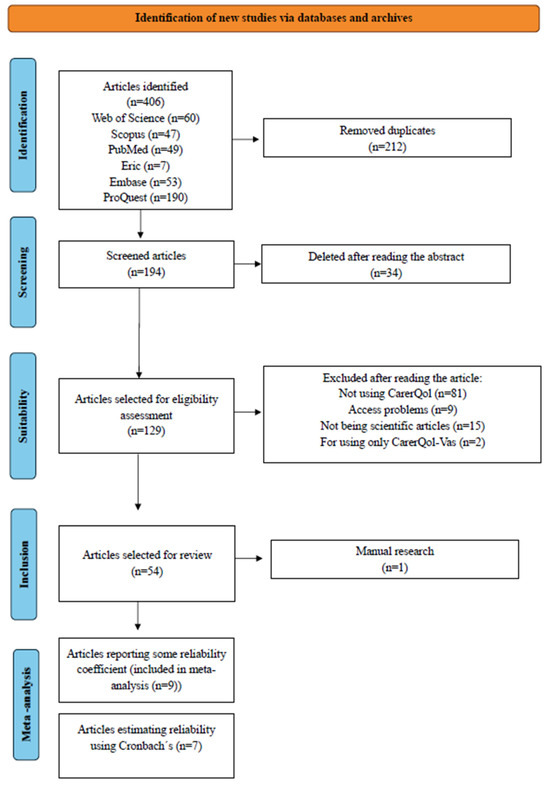
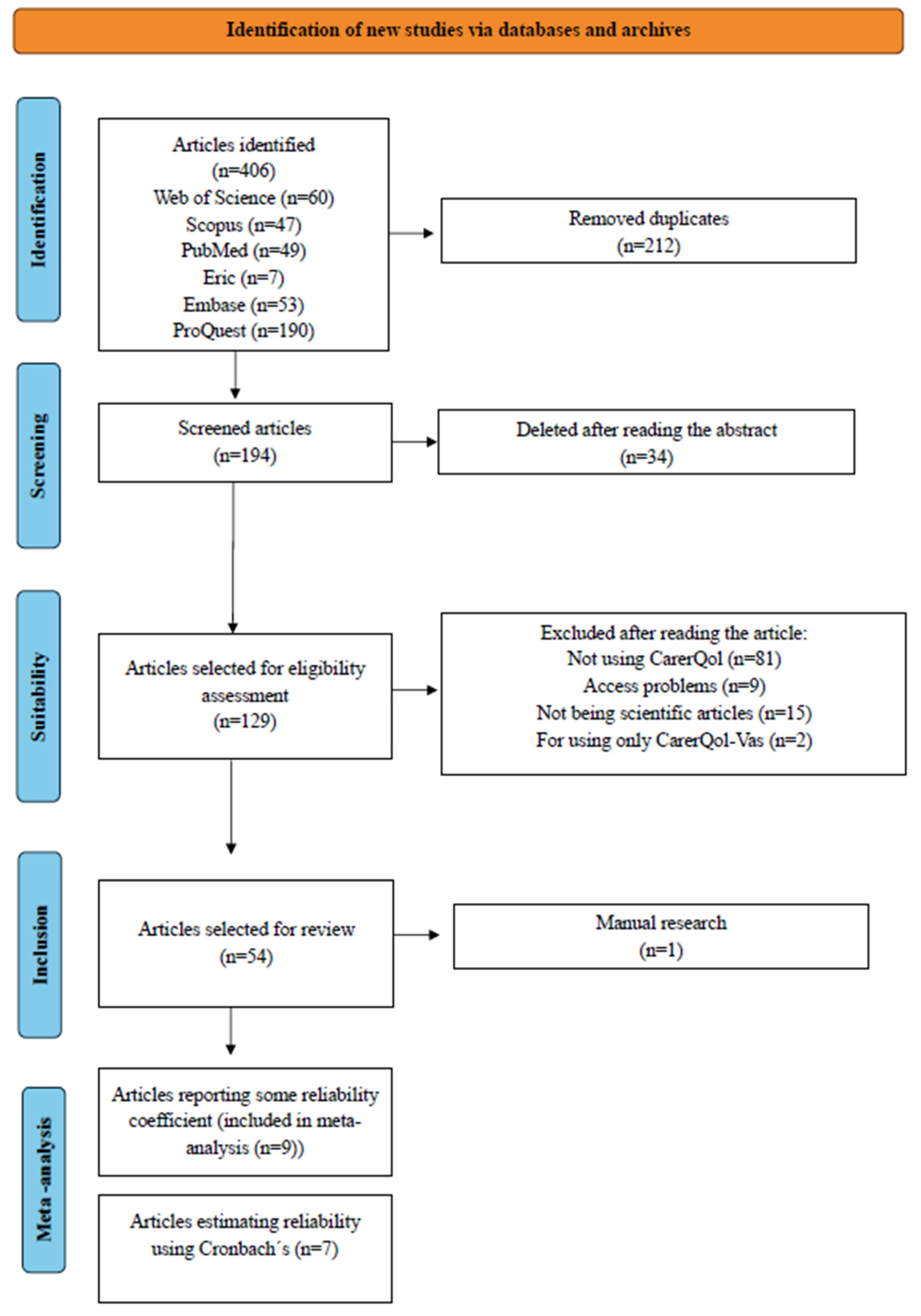
There were 406 articles identified (Pubmed: 50, WOS: 60, Scopus: 47, Eric: 7, Embase: 53, ProQuest: 190), of which 212 were removed as duplicated, leaving a total of 194 articles for review. The first step was to read the abstract, which resulted in 34 articles being eliminated for not dealing with the topic in question, leaving 160 articles that were analyzed in their entirety. After reading the texts in depth, 107 articles were eliminated, so that 54 manuscripts were finally included in the review. To ensure inter-rater reliability, this process was carried out independently by two authors using the Covidence tool.
Only 9 of these 54 articles reported reliability estimates based on the samples analyzed in the respective studies, which meant that only these 9 studies were used for meta-analysis. Figure 1 shows the flowchart used, which describes the study selection process and relevant details.
Figure 1.
Flowchart according to PRISMA.
2.5. Screening Conducted
The articles were analyzed independently by the three authors responsible for this work, based on the previously established inclusion criteria. Inconsistencies were resolved by consensus. Finally, the quality criteria to be used were confirmed by all three researchers.
2.6. The Information Extracted from the Studies
A data extraction protocol was designed and applied systematically. The following details were recorded: (a) author and year, (b) country, (c) continent, (d) type of sample, (e) collective care, (f) version of the scale, (g) type of caregiver, (h) distribution by sex, (i) age of the caregivers, (j) educational level of the caregivers, (k) variables measured in the study, (l) main results obtained, and (m) limitations reported in the studies. The reported reliability coefficients (Cronbach’s alpha and test–retest) and the data referring to the validity of the CarerQol scores were also recorded.
2.7. Validity Analysis Study
Table A3 (Appendix A.1) exclusively contains articles measuring the psychometric properties of the instrument. Of the 54 items included, only 12 were psychometric. The table was organized according to authorship, sample (n), gender, and the psychometric properties analyzed (convergent validity, clinical validity, and construct validity). The validity of the scores were analyzed by the classification proposed in Hoefman et al. [31], which distinguishes among the following: Convergent validity, which assesses whether the constructs underlying CarerQol are similar to other instruments that also assess caregiver burden (strong correlation indicates that CarerQol is effective in accurately measuring what it sets out to assess and that it is consistent with other measurement tools in this area). Discriminative validity, is a vital component of any measurement tool, demonstrating its capacity to effectively distinguish between different groups or conditions that are anticipated to differ in the variable being evaluated. This quality is essential for ensuring that the instrument meaningfully captures variations in the construct it aims to measure. Clinical validity refers to the extent to which a measurement instrument accurately assesses the construct it is intended to measure and demonstrates a meaningful relationship with relevant explanatory variables. These variables can include factors such as age, gender, employment status, and frequency of care.
Although the Hoefman et al. [31] classification was used to distinguish the different types of validity, the quality of measurement tests was assessed through the COSMIN guidelines [32]. The COSMIN initiative aims to improve the selection of health measurement instruments in both research and clinical practice by developing tools to select the most appropriate instrument for a given situation. These guidelines provide a comprehensive framework for assessing both the reliability and validity of instruments, ensuring that all relevant methodological aspects are considered.
2.8. Reliability Estimates
Two reliability estimates were considered for the meta-analytic study: Cronbach’s alpha coefficients and intraclass correlation coefficients. The former assesses the reliability of the internal consistency of the measures and the latter assesses the reliability as the temporal stability of the scores. Cronbach’s alpha coefficients were transformed by Bonett’s formula [33] and the intraclass correlation coefficients were translated to Fisher’s Z to stabilize their variance and normalize their distributions [34]. They were then back-transformed into Cronbach’s alpha coefficients and intraclass correlation coefficient metrics to facilitate interpreting the results of the meta-analysis. In the statistical analysis, a random effects model was applied to estimate the mean reliability coefficient and its 95% confidence interval using the improved method proposed by Hartung and Knapp [35].
2.9. Statistical Analysis
Two separate meta-analyses were performed for Cronbach’s Alpha coefficients (internal consistency) and intraclass correlation coefficients (test–retest reliability). In both cases, a random effects model was assumed to compute the summary statistics of the reliability coefficient using the improved procedure proposed by Hartung and Knapp [35]. Forest plots were displayed to show the average and individual reliability estimate, with 95% CI, and visually assess the heterogeneity of the reliability coefficients in the meta-analyses. The Q-statistic, completed with the I2 index, was computed to examine the variability among the reliability estimates. A Q-statistic with a value p ≤ 0.05 was considered to indicate variability. I2 index values around 25% can be considered as representative of low heterogeneity, 50% as moderate, and 75% as high heterogeneity [36]. The sample characteristics of the studies inducing and reporting test reliability were compared to analyze the degree to which the meta-analysis results can be generalized to all the studies that applied CarerQol. The statistical analyses were conducted in R using the Metafor Package [37].
3. Results
The results section includes an analysis of the methodological aspects of the studies reviewed, focusing on study design, sample size, and data collection methods. It also examines the characteristics of caregiver samples, including age, gender, education, and ethnicity. Additionally, it explores the psychometric properties of the CarerQOL instrument, specifically in validation studies, feasibility and reliability assessments, and valuation studies.
Table A1 (Appendix A.1) lists the main results and characteristics of the 54 studies analyzed, and out of these 12, evaluated the psychometric properties of the instrument.
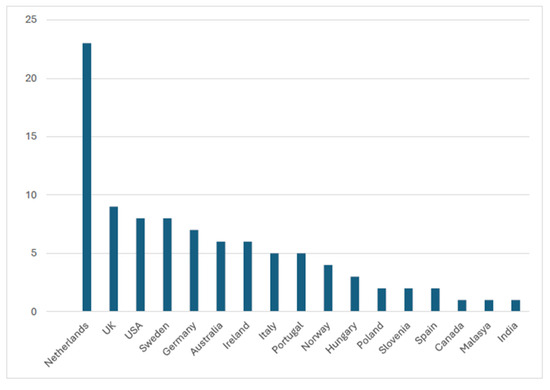
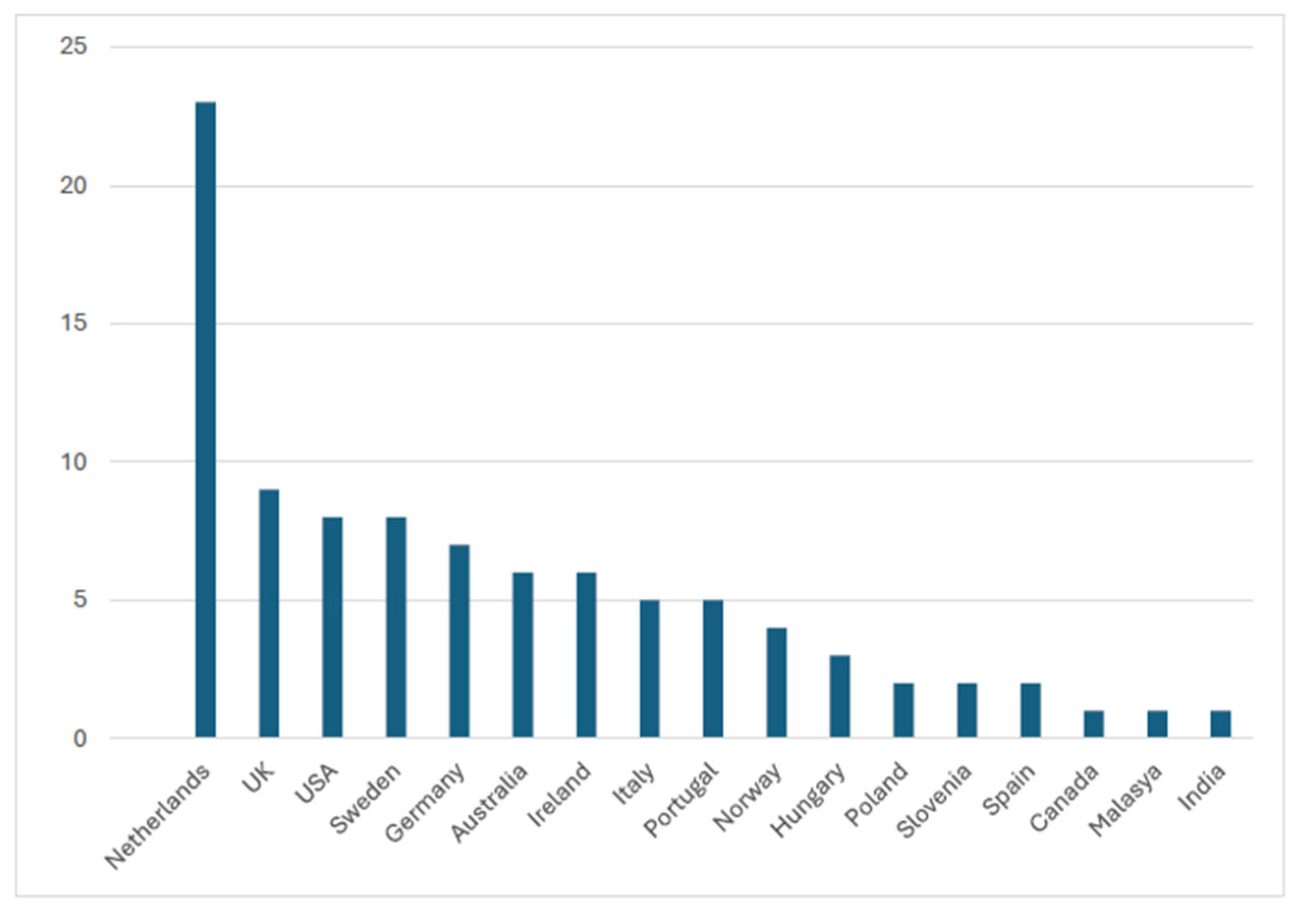
The instrument was applied mostly between 2017 and 2020 (both inclusive) as 62.26% of these publications had been published in the last 5 years. Most studies were carried out in the Netherlands (n = 23), followed by the UK (n = 9), USA (n = 8), Sweden (n = 8), and Germany (n = 7) It is important to note that in some studies, the research was carried out in several countries (Figure 2).
Figure 2.
Geographical location of studies.
Only one application was found in Canada, Malaysia, and India.
3.1. Methodological Aspects of Analyzed Studies
Most of the manuscripts analyzed followed a cross-sectional design (74.1%) with non-probabilistic sampling (79.3%), convenience sampling being the most often used (71.7% of studies). Only 20.7% used probability sampling (simple random sampling was carried out in all studies). The sample size ranged from six participants in the Mulders-Manders et al. [38] study to 5197 participants in the Metzelthin et al. [39] study, with a mean of 471.05 participants and a standard deviation of 850.52.
Moreover, 20.75% of the studies were psychometric, i.e., they analyzed the psychometric properties of the test scores (in this case, reliability and clinical, convergent, and discriminative validity), and most of these were carried out by Hoefman et al. (n = 7). The remaining studies (n = 46) were applied in nature, focusing on caregivers and the various groups in their care [40].
3.2. The Characteristics of the Caregiver Samples Included in the Study
Table A2 (Appendix A.1) lists the main characteristics of the informal carers who have been included in the studies.
3.3. Psychometric Properties of CarerQol Instrument
3.3.1. Validation Studies
Of the 54 articles included, only 12 focused on psychometric factors (see Appendix A.1, Table A3). First, the validity of the different integrated studies was analyzed based on the classification made by Hoefman et al. [31].
3.3.2. Convergent Validity
Only 11 of the analyzed studies examined convergent validity (see Appendix A.1, Table A3), which assesses whether the constructs underlying CarerQol are similar to other instruments that also assess caregiver burden.
Brower et al. [21] demonstrated excellent convergent validity, revealing that greater support and satisfaction in caregiving were associated with increased happiness among caregivers. The CSI score showed a negative correlation with the CarerQol-VAS score, indicating that higher care-related quality of life was linked to lower caregiver burden. Furthermore, CSI was statistically significantly associated with all seven burden dimensions, as expected with CarerQol-7D. Similarly, SRB and PU were also significantly associated with most CarerQol 7D scores in the expected direction.
Payakachat et al. [41] also supported this validity, showing strong correlations between CarerQol-7D and CES-D (r = 0.6549) [42] and moderate correlations with SRB (r = 0.4505). The correlation between CarerQol-VAS and CES-D was (r = −0.74). In this study, the correlation coefficients were interpreted as follows, 0.00–0.19 (very weak), 0.20–0.39 (weak), 0.40–0.59 (moderate), 0.60–0.79 (strong), and 0.80–1.00 (very strong), with p < 0.05 indicating statistical significance [43].
Hoefmann et al. [44] confirmed these findings and found negative associations between CarerQol-VAS and caregiving burden, as well as positive associations between CarerQol-7D and caregiving support and satisfaction. Similarly, SRB, PU, and ASIS were also significantly associated with most CarerQol 7D and CarerQol-Vas scores in the expected direction (see Appendix A.1, Table A3).
Furthermore, Hoefmann et al. [45] reported similar results in caregivers of people with disabilities, demonstrating positive correlations between CarerQol-VAS and support and satisfaction, and negative correlations with the negative dimensions of CarerQol-7D. These authors also demonstrated positive correlations between the positive dimensions of CarerQol-7D and the ASIS and PU instruments, as well as positive correlations between the negative dimensions of CarerQol-7D and the SRB and CSI instruments.
Additional studies, such as those by Hoefmann et al. [31], Richters et al. [46], McLoughlin et al. [47], McCaffrey et al. [48], and Voormolen et al. [49], supported the convergent validity of CarerQol in diverse caregiver populations. In the case of McLoughlin et al. [47] and McCaffrey et al. [48], they found positive correlations between CarerQol-7D and ASCOT-Carer, as well as with EQ-5D and ICECAP-A. In Baji et al.’s [50] study, the following correlations were found: CarerQol 7-D with CarerQol-VAS (r = 0.363), CarerQol-7D with EQ-5D-5L (r = 0.453), CarerQol-7D with EQ VAS (r = 0.387), CarerQol-VAS with EQ-5D-5L (r = 0.453), and CarerQol-VAS with EQ VAS (r = 0.242).
All the studies reported good convergent validity of CarerQol, as CarerQol 7-D correlates, as expected, with CarerQol-VAS, i.e., informal caregivers reported higher levels of happiness when they felt greater satisfaction with caregiving and received support from their environment. Both parts of the instrument correlated with the other instruments, as expected, i.e., caregivers showed higher burdens or negative feelings associated with caregiving when they reported lower happiness, satisfaction, and support associated with caregiving. This correlation reinforces the validity of CarerQol as an effective tool for assessing various aspects of informal caregivers’ experiences and their implications for their emotional well-being.
3.3.3. Clinical Validity
Age
In the study by Brower et al. [21] on caregivers of people with disabilities, age was found to have significant association with CarerQol-VAS.
Gender
Brower et al. [21] also reported that gender was not significantly related to CarerQol-VAS among caregivers of people with disabilities. Additionally, Voormolen et al. [49] highlighted that male gender among caregivers was associated with increased caregiver burden and reduced happiness.
Paid Employment
Brower et al. [21] found no significant relationship between paid employment and CarerQol-VAS among caregivers of people with disabilities.
Frequency of Caregiving
In the study by Brower et al. [21], CarerQol-VAS scores were negatively correlated with the frequency of caregiving, indicating that higher frequency of caregiving was associated with lower reported happiness among caregivers. Voormolen et al. [49] also found that an increase in caregiving intensity was associated with higher caregiver burden and reduced happiness. Baji et al. [50] also found that CarerQol-VAS scores were negatively correlated with frequency of care and higher caregiving burden.
Living with the Caregiver
Brower et al. [21] found a positive correlation between CarerQol-VAS scores and living with the caregiver.
Satisfaction
Hoefman et al. [31,44,45] investigated the relationship between caregiver satisfaction and CarerQol-VAS across different caregiver groups. They consistently found a positive association between caregiver satisfaction and CarerQol-VAS.
Relational Problems and Higher Caregiving Tasks
Hoefman et al. [31,44,45] observed a negative relationship among relational problems, higher caregiving tasks, and CarerQol-VAS.
Health
Voormolen et al. [49] examined caregivers of dementia patients and found that indicators of poorer caregiver and caregiving health status were associated with lower CarerQol utility scores. Baji et al. [50] also reached the same conclusions with their sample of informal caregivers.
Other Factors
Hoefman et al. [31,44,45] noted that institutionalization of the cared-for person, less frequent visits, and less intense caregiving tasks were related to higher levels of happiness among caregivers.
After the individual analysis of the different articles, it was concluded that the CarerQol constructs were associated with certain explanatory variables, such as hours of care, support received, gender, or work, so that it can be concluded that the instrument has good clinical validity, as the participants with similar caregiving experiences have similar scores on CarerQol and, vice versa, those with different caregiving experiences have different scores on the instrument.
3.3.4. Discriminant Validity
Discriminant validity is an important characteristic of any measurement instrument, as it refers to the ability of the instrument to effectively distinguish between different groups or conditions that are supposed to be different in the variable being measured. The discriminative validity of the scores was examined in four studies [31,45,48,50]. In Hoefman et al.’s [45] study with caregivers of people with disabilities, it was observed that those who were supported and had fewer problems had higher scores on CarerQol-VAS, ASIS, and PU, while they had lower scores on SRB and CSI compared to caregivers at the opposite extreme, suggesting that CarerQol-7D can effectively differentiate between low and high burden caregivers. In another study by Hoefman et al. [31] with caregivers of terminally ill patients, it was found that groups with extremely positive evaluations experienced less burden and had higher scores on CarerQol-VAS compared to groups with extremely negative evaluations. McCaffrey et al. [48] observed moderate discriminative validity, as only higher caregiver-related scores were associated with fewer caregiving hours per week on CarerQol-7D.
In the study by Baji et al. [50], CarerQol-VAS scores were higher among caregivers who felt satisfied and received support, particularly when no issues were present. Additionally, both EQ-5D-5L [51] and EQ VAS scores were significantly higher for caregivers without mental or physical health problems.
These findings indicate that CarerQol is able to distinguish between different levels of caregiver burden and satisfaction in various situations.
After analyzing these four articles, it was seen that the instrument had good discriminative validity, as it is able to differentiate between “extreme groups” of caregivers, i.e., caregivers who had a lot of support were satisfied in caregiving and showed low scores on the negative dimensions of CarerQol [relational problems, problems associated with mental health, problems in reconciling care with daily activities, financial problems, and problems related to physical condition], while they were also happier and suffered less burden associated with caregiving.
3.3.5. Feasibility of CarerQol
Feasibility is a measure that shows the percentage of scales completed by the subjects in the sample with no missing items. Brouwer et al. [21] were the first authors to conclude that CarerQol presented excellent feasibility. Based on this, 94% of the participants completed CarerQol-7D and 99% completed CarerQol-VAS (analog scale 1–10). Hoefman et al. [44] noted that the instrument measured caregiver impact in a valid and reliable way and, like Brouwer et al. [21], indicated its good feasibility, as the majority of caregivers (% NR) completed all the required questions. McCaffrey et al. [48] indicated that 99.7% of the respondents completed the questionnaire, while Mbakile-Mahlanza et al. (2019) [52] reported excellent feasibility, as 98% of the subjects completed all the items.
3.3.6. Reliability Study of the Instrument
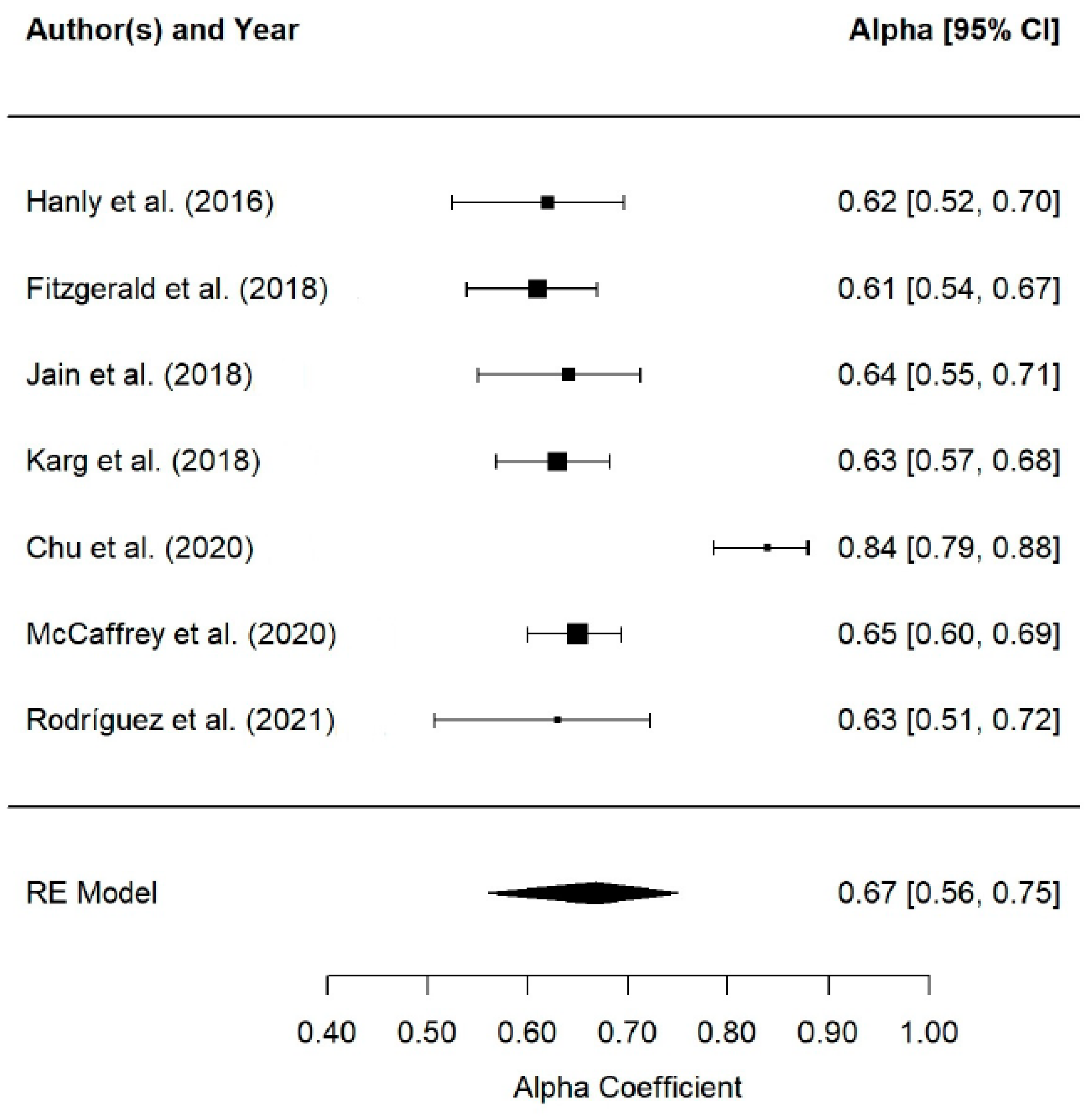
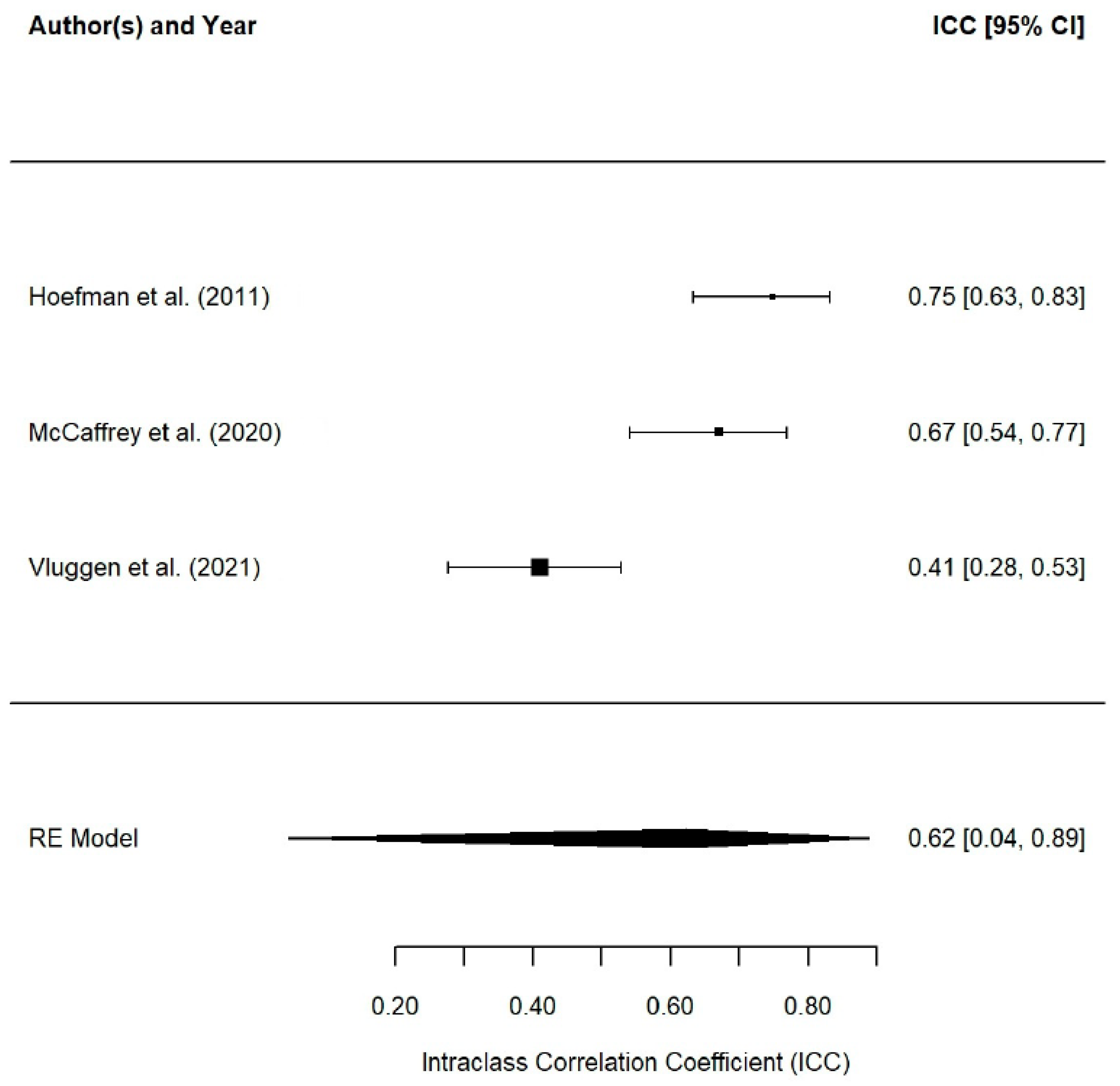
The reliability of the test scores, i.e., the degree to which the instrument produces consistent and coherent results, was examined in a few studies. Of the 54 studies considered, only 9 (17%) reported reliability estimates of the test score reliability estimated on the study sample itself [48,53,54,55,56,57,58,59]. In seven studies, the reliability of the scores was estimated as their internal consistency using Cronbach’s alpha coefficients (see Figure 3) and in three studies, the temporal stability of the scores was estimated by the test–retest method using intraclass correlation coefficients (see Figure 4).
Cronbach’s α coefficient ranged from 0.61 [54] to 0.75 [53], with an average coefficient of 0.67 (95% CI [0.56, 0.75], k = 7) (see Figure 3). There was some evidence of heterogeneity among reliability coefficients (Q(6) = 31.20, p < 0.001, I2 = 88.3%).
Figure 3.
Forest Plot RG MA on Cronbach’s a coefficients [48,53,54,55,56,57,58].
Only three studies examined the test–retest reliability of CarerQol (see Figure 4), and all of them computed the intraclass correlation coefficients (ICCs) as a measure of the score stability. In these studies, the test–retest reliability coefficients ranged from 0.41 [59] to 0.75 [8] and presented an average coefficient of 0.62 (95% CI [0.04, 0.89], k = 3). The time interval between test–retest administrations ranged from 2 weeks [8] to 24 weeks [59], with an average of 15 weeks (SD = 12.73). Again, there was evidence of heterogeneity among the reliability coefficients (Q (2) = 17.90, p = 0.0001, I2 = 87.7%).
To examine the degree to which the results of the meta-analysis can be generalized to all the studies that used the CarerQol instrument, regardless of whether they induced or reported any reliability estimate by means of their own data, the sample characteristics (mean and standard deviation of age and percentage of men) of the studies that reported and those that did not report any estimate of reliability of scores on the CarerQol instrument were compared using separate meta-analyses. No statistically significant differences were found between these two groups in the sample characteristics.
Figure 4.
Plot RG MA on test−retest reliability coefficients [8,48,59].
3.3.7. Valuation Studies
CarerQol-7D Tariffs
Several authors have also calculated tariffs that reflect social preferences for the different care states identifiable through the first part of the instrument (CarerQol-7D) [60,61]. These rates allow the caregiving states to be assessed in terms of care-related quality of life. In the calculation of the CarerQol index score, rates derived from evaluation studies conducted in the general population are used. This methodology contributes significantly to understanding the context of the valuation studies identified in this review.
The resulting scores cover the differences in the importance of the problems that carers may face. There are country-specific tariffs for different versions of the instrument, including Dutch, Australian, German, Swedish, American, English, Hungarian, Polish, and Slovenian [25], that make it easier to introduce the effect of informal care into economic evaluations.
Discrete choice experiments were carried out to calculate the tariffs for different countries, in which the participants were asked to imagine taking care of a family member with a particular condition. They were always required to keep in mind the person to whom they were providing care. The attributes and levels were taken from the first part of the instrument, which include the seven dimensions of CarerQol-7D: (1) satisfaction with caregivers, (2) relational problems, (3) problems associated with mental health, (4) problems in reconciling care with daily activities, (5) financial problems, (6) support received, and (7) problems related to physical conditions. The attribute level range assigned by the participants was “none”, “some”, and “a lot” for all levels [60,61].
Hoefman et al. [27] indicated that the most important utility dimensions of informal care situations in the Netherlands regarding the tariffs calculated in different countries were satisfaction followed by relational problems. In 2017, Hoefman et al. [60] re-measured the tariffs in five countries (Germany, Australia, Sweden, the US, and the United Kingdom), concluding that the most important dimension of usefulness was physical health. However, Germany is a bit behind these countries, as the problems associated with mental health and those related to physical conditions ranked fourth and fifth. Baji et al. [61] also examined CarerQol-7D tariffs in three Central and Eastern European countries, showing that in Hungary and Slovenia, problems related to physical conditions and those associated with mental health showed higher scores, followed by satisfaction. Satisfaction was the most important domain in Poland for those who completed the questionnaire, followed by problems associated with mental health and problems related to physical conditions. In all countries, the least important domains were problems in reconciling care with daily activities and the support received.
4. Discussion
The fundamental aim of this work was to provide an updated review of the main applications of CarerQol to provide researchers and practitioners with a broad overview of the instrument, to check whether its wide application in different contexts is well-reasoned, and to describe and synthesize its main psychometric properties (e.g., reliability and convergent, clinical and discriminative validity). Since its development in the Netherlands in 2006, its use in samples of informal caregivers has progressively increased, especially in the last 5 years, due to some extent to the fact that informality in care is moving out of the background of care systems [62,63]. However, this instrument is most widely used in the Netherlands (43.4%), which may be largely due to the fact that it was developed in this country.
Validity analysis of the CarerQol instrument shows that its underlying constructs are similar to other instruments measuring caregiver strain, such as CSI and the SRB scale. Studies have shown good convergent validity, indicating that informal caregivers report greater happiness and lower emotional burden when they experience job satisfaction and support [8,21,31,41,45,46,47,48,49]. In addition, CarerQol was shown to differentiate between extreme groups of caregivers, reflected in studies where those with greater support and satisfaction have higher scores on CarerQol-VAS and the positive dimensions of CarerQol-7D [45,48]. Furthermore, their constructs were linked to relevant explanatory variables such as the number of hours of caregiving and the support received, showing that caregivers with more help and fewer problems in the negative dimensions report higher satisfaction and lower burden [21,31,44,45,49]. These findings were supported by research such as that of Lutomski et al. [64].
Regarding the reliability of CarerQol, it is noteworthy that most studies (83%) did not report reliability estimates based on study-specific data, despite APA recommendations [65]. Only 17% of the studies provided such estimates, a lower percentage than reported in recent reliability generalization studies [66,67]. Reliability is not an inherent characteristic of the instrument, but of the scores obtained in a specific population [34,68]. According to the APA Task Force on Statistical Inference, authors should report reliability coefficients of the scores analyzed, even when their research does not focus on psychometric aspects [68]. Ignoring the reliability of scores may affect the estimation of effect size and statistical power in hypothesis testing [69], which highlights the importance of their reporting.
Of the studies that reported reliability, Cronbach’s alpha coefficient was the most commonly used method (77.8%), followed by test–retest reliability (33.3%, intraclass correlation coefficient). The mean Cronbach’s alpha was 0.67, below the recommended values for clinical use (>0.90) and research (>0.80), but acceptable for exploratory studies (>0.70), according to Nunnally and Bernstein [70]. Regarding test–retest reliability, there is no theoretical consensus on its interpretation, as it depends on the time interval between measurements [71,72,73]. In this study, the time interval ranged from 6 to 24 weeks, with a mean reliability of 0.62, suggesting temporal stability [72,73]. No significant differences were found between studies that reported reliability and those that did not, indicating that the generalizability of these results is valid for any research using CarerQol.
Assessment studies have generated population-based rate sets of CarerQol-7D in several countries, including Australia, Germany, Hungary, the Netherlands, Poland, Sweden, Slovenia, the UK, and the US. In all of these, all seven dimensions of CarerQol-7D were significantly associated with observed choices and attention-related utility. The areas that contributed most to the utility scores were caregiver satisfaction and mental health problems, while those that contributed least were problems balancing caregiving with daily activities and support received [50,60]. However, it is noted that countries such as Germany and the Netherlands show differences in the valuation of informal care compared to Anglo-Saxon countries and Sweden. As Baji et al. [50] point out, these differences could be due to subjective life expectations, economic differences, labor market participation, and attitudes toward informal care. In addition, family structure, infrastructure, and access to services vary between the regions of Central and Eastern Europe and the Anglo-Saxon countries [60].
4.1. Limitations and Future Research
4.1.1. Methodological Limitations
The study has methodological limitations. The search was limited to “caregivers* AND CarerQol*”, which could have omitted some relevant articles, although it is relevant to mention that a recent study [74] used a combination of terms that only mentioned the name of the scale analyzed. Therefore, words that were synonymous with the word caregivers were not used either. This approach sought to ensure that the review remained within a clear and relevant framework, avoiding the inclusion of studies that might be less relevant or that focused on other aspects of care not directly related to CarerQol.
Regarding reliability, only nine articles provided estimates based on the study sample, which are included in the meta-analysis. The heterogeneity observed in these reliability coefficients suggests that the consistency of CarerQol may vary depending on specific characteristics of the sample, such as age, gender, type of caregiving, or cultural context. However, this study did not explicitly analyze these potential moderators, representing a significant gap in understanding the factors that influence CarerQol’s reliability.
In addition, we used Hoefman’s classification to assess validity, although the “Guidelines for Standards” lists several sources of evidence that could have been used to assess this construct. These choices may have affected the completeness of our assessment of validity.
4.1.2. The Limitations of the Study
Firstly, the language limitations should be considered, including that only papers written in English or translated into Spanish might have affected the number of eligible manuscripts that applied the instrument. Despite the increasing globalization of scientific research, many of the resources and tools available for the management and analysis of scholarly articles are focused on these two languages, which also influences decision-making regarding languages of inclusion. Secondly, most studies did not estimate the reliability of the instrument scores with their sample data, so that only nine studies could be included in the meta-analysis. This might have affected the precision of the average reliability estimate, which might possibly be compromised. Also, given the scarce number of manuscripts which reported a reliability estimate, it was not possible to perform moderator analyses to search for study characteristics (such as substantive and methodological characteristics), which are statistically linked to the reliability estimates and can offer no theoretical explanations for the presence of heterogeneity [75].
4.1.3. Limitations of the Instrument
The CarerQol instrument has several limitations that affect its applicability and accuracy. Firstly, it shows moderate reliability, with Cronbach’s alpha coefficients between 0.61 and 0.75, below the recommended threshold for clinical use (≥0.90), and test–retest reliability varying between 0.41 and 0.75, indicating limited temporal stability. To improve this, further studies are suggested to review and adjust items that generate variability in responses. Second, there is high heterogeneity in reliability coefficients across studies, suggesting that reliability may vary according to cultural context, type of caregiver, or population studied. Moderation analyses are recommended to identify these factors and adapt the instrument accordingly. Furthermore, only 17% of studies using CarerQol report reliability estimates based on their own data, which limits the generalizability of the results. To address this, it is suggested that future studies be encouraged to include specific reliability estimates, following APA recommendations. Finally, although CarerQol was translated into several languages, cultural differences in perceptions of care and quality of life may affect its validity in different contexts. To improve this, it is proposed to conduct cross-cultural validation studies in more countries and to adjust the items to reflect these cultural differences. These improvements could increase the accuracy and applicability of CarerQol in a variety of clinical and research settings.
4.1.4. Study Strengths
This study has a number of strengths; studies involving numerous contexts, cultures, and social aspects were included to increase the generalizability of the results obtained. As Epner and Baile [76] point out, different cultural processes are involved within the same ethnic group, as there are differences in terms of age, gender, religion, among other aspects. All these factors influence the variants observed in the care of people with a disability and their caregivers, allowing us to make different comparisons between caregivers. In addition, this study is the first to include a reliability generalization study of the CarerQol instrument.
5. Conclusions
This study provides an innovate overview of the analysis of the CarerQol tool applied in numerous settings. The clinical convergent and discriminative validity test and the meta-analysis reveal that a large part of these studies lack certain data, which hinders analyzing their results. Only nine manuscripts reported an estimation with their own data, which is far below recent generalization reliability studies. In future research, it will be of vital relevance for other studies to report these data to find the methodological characteristics of manuscripts that are related to reliability estimates.
In conclusion, CarerQol is a valuable instrument for assessing both positive (satisfaction, support) and negative (emotional stress, financial burden, physical health problems) aspects of informal care, notable for its multidimensional approach and adaptability to diverse cultural contexts. Although its moderate reliability (average Cronbach’s alpha coefficient of 0.67) and complexity suggest caution in its use for clinical decision-making, it is especially useful in exploratory research and in specific clinical groups, such as caregivers of people with dementia, autism spectrum disorders (ASDs), chronic illness, severe disabilities, patients in palliative care, or with neurodegenerative diseases. In these contexts, CarerQol allows for the identification of specific needs and the design of personalized interventions to improve the caregiver’s well-being. However, in contexts that require quick or more specific assessments, other instruments may be preferable: the Caregiver Strain Index (CSI) is ideal for measuring emotional and physical burden in a brief manner; Self-Rated Burden (SRB) offers a quick assessment of perceived burden; the Carer Experience Scale (CES) provides a balanced view of the caregiver experience; and ASCOT-Carer focuses on social and emotional well-being.
While it can be a valuable tool for exploring caregiver quality of life, its use must be accompanied by careful consideration and interpretation of the results to ensure meaningful and accurate outcomes. It was also shown to have good clinical, convergent, and discriminant validity.
Author Contributions
Conceptualization, E.C. and M.M.-V.; Methodology, E.C and J.G.-P.; Software, L.B-R. and E.C. Validation, M.M.-V. and L.B-R.; Formal Analysis, M.M.-V. and E.C.; Investigation, J.G.-P. and E.C.; Resources, M.M.-V.; Data Curation, E.C. and J.G.-P.; Writing—Original Draft, E.C. and J.G.-P.; Writing—Review and Editing, L.B.-R. and M.M.-V.; Visualization, J.G.-P. and E.C.; Supervision, L.B.-R. and M.M.-V.; Project Administration, L.B.-R. and M.M.-V.; Funding Acquisition, M.M.-V. All authors have read and agreed to the published version of the manuscript.
Funding
This research received no external funding.
Informed Consent Statement
Not applicable.
Conflicts of Interest
The authors declare that they have no potential conflicts of interest with regard to the research and publication of this manuscript.
Abbreviations
The following abbreviations are used in this manuscript:
| CarerQol | Care-related Quality of Life instrument |
| CSI SCQ | Caregiver Strain Index |
| CES | Carer Experience Scale |
| SRB | Self-Rated Burden |
| ASCOT-Carer | Adult Social Care Outcomes Toolkit for Carers |
| PU | Process Utility |
| ASIS | Assessment of the informal care situation scale |
| ICECAP-A | ICEpop CAPability measure for Adults |
Appendix A
Table A1 lists the main results and characteristics of the 53 studies analyzed.
Table A2 contains the main characteristics of the caregiver samples included in the study.
Table A3 exclusively contains articles measuring the psychometric properties of the instrument.
Weighted ANOVAs results performed on Sample Characteristics of the Studies That Reported and Induced Reliability estimate of Test Score.
A checklist for the corroboration of the meta-analytical report according to REGEMA. The REGEMA checklist is a tool composed of 30 items (1 item for the Title, 1 for the Abstract, 2 for the Introduction, 14 for the Methods, 6 for the Results, 4 for the Discussion, 1 for Funding, and 1 for Protocol). REGEMA can be applied both by researchers that intend to write an RG meta-analysis and to make a critical reading of RG meta-analyses, as well as for editors and reviewers as a tool to assess the adequacy of an RG meta-analysis.
The PRISMA statement comprises a 27-item checklist addressing the introduction, methods, results, and discussion sections of a systematic review report.
Appendix A.1
Table A1.
The main findings of the studies included in the review (N = 53).
Table A2.
Main characteristics of caregivers.
Table A3.
Psychometric properties of the instrument.
Table A4.
Weighted ANOVA results performed on sample characteristics of studies that reported and induced reliability estimate of test score.
Table A5.
A checklist for the corroboration of the meta-analytical report according to REGEMA.
Table A6.
PRISMA checklist.
References
- World Health Organization. Long-Term Care; World Health Organization: Geneva, Switzerland, 2022; Available online: https://www.who.int/europe/news-room/questions-and-answers/item/long-term-care (accessed on 17 October 2024).
- Cejalvo, E.; Martí-Vilar, M.; Merino-Soto, C.; Aguirre-Morales, M.T. Caregiving Role and Psychosocial and Individual Factors: A Systematic Review. Healthcare 2021, 9, 1690. [Google Scholar] [CrossRef] [Scilit]
- Girgis, A.; Lambert, S.; Johnson, C.; Waller, A.; Currow, D. Physical, psychosocial, relationship, and economic burden of caring for people with cancer: A review. J. Oncol. Pract. 2013, 9, 197–202. [Google Scholar] [CrossRef] [Scilit]
- Schofield, D.; Shrestha, R.N.; Zeppel, M.J.B.; Cunich, M.M.; Tanton, R.; Veerman, J.L.; Kelly, S.J.; Passey, M.E. Economic costs of informal care for people with chronic diseases in the community: Lost income, extra welfare payments, and reduced taxes in Australia in 2015–2030. Health Soc. Care Community 2019, 27, 493–501. [Google Scholar] [CrossRef] [Scilit] [PubMed]
- Mosquera, I.; Vergara, I.; Larrañaga, I.; Machón, M.; del Río, M.; Calderón, C. Measuring the impact of informal elderly caregiving: A systematic review of tools. Qual. Life Res. 2016, 25, 1059–1092. [Google Scholar] [CrossRef] [Scilit] [PubMed]
- Van Exel, N.J.; Koopmanschap, M.A.; van den Berg, B.; Brouwer, W.B.; van den Bos, G.A. Burden of informal caregiving for stroke patients. Identification of caregivers at risk of adverse health effects. Cerebrovasc. Dis. 2005, 19, 11–17. [Google Scholar] [CrossRef] [Scilit] [PubMed]
- Zarit, S.H.; Reever, K.E.; Bach-Peterson, J. Relatives of the impaired elderly: Correlates of feelings of burden. Gerontologist 1980, 20, 649–655. [Google Scholar] [CrossRef] [Scilit]
- Hoefman, R.J.; van Exel, N.J.; Foets, M.; Brouwer, W.B. Sustained informal care: The feasibility, construct validity and test-retest reliability of the CarerQol-instrument to measure the impact of informal care in long-term care. Aging Ment. Health 2011, 15, 1018–1027. [Google Scholar] [CrossRef] [Scilit]
- Stjernswärd, S.; Hansson, L. A web-based supportive intervention for families living with depression: Content analysis and formative evaluation. JMIR Res. Protoc. 2014, 3, e8. [Google Scholar] [CrossRef] [Scilit]
- Schulz, R.; Sherwood, P.R. Physical and mental health effects of family caregiving. Am. J. Nurs. 2008, 108 (Suppl. S9), 23–27. [Google Scholar] [CrossRef] [Scilit]
- Börsch-Supan, A.; Brandt, M.; Hank, K.; Schröder, M. Health, Ageing and Retirement in Europe (HAREE) Study; Share-ERIC: Berlin, Germany, 2024; Available online: https://www.share-project.org (accessed on 17 October 2024).
- Department of Social Services. Carer Payment and Carer Allowance; Services Australia: Canberra, Australia, 2024. Available online: https://www.servicesaustralia.gov.au/carer-payment (accessed on 17 October 2024).
- Bru-Luna, L.M.; Martí-Vilar, M.; Merino-Soto, C.; Salinas-Escudero, G.; Toledano-Toledano, F. Variables Impacting the Quality of Care Provided by Professional Caregivers for People with Mental Illness: A Systematic Review. Healthcare 2022, 10, 1225. [Google Scholar] [CrossRef] [Scilit]
- World Health Organization. What Is the Evidence on the Methods Frameworks and Indicators Used to Evaluate Health Literacy Policies Programmes and Interventions at the Regional National and Organizational Levels? World Health Organization, Regional Office for Europe: Geneva, Switzerland, 2022; Available online: https://apps.who.int/iris/bitstream/handle/10665/326901/9789289054324-eng.pdf (accessed on 14 January 2022).
- Brouwer, W.B.; van Exel, N.J.; van den Berg, B.; van den Bos, G.A.; Koopmanschap, M.A. Process utility from providing informal care: The benefit of caring. Health Policy 2005, 74, 85–99. [Google Scholar] [CrossRef] [Scilit] [PubMed]
- Kim, S.; Zemon, V.; Foley, F.W. Measuring personal growth in partners of persons with multiple sclerosis: A new scale. Rehabil. Psychol. 2020, 65, 219–230. [Google Scholar] [CrossRef] [Scilit]
- Robinson, B.C. Validation of a Caregiver Strain Index. J. Gerontol. 1983, 38, 344–348. [Google Scholar] [CrossRef] [Scilit] [PubMed]
- Al-Janabi, H.; Coast, J.; Flynn, T.N. What do people value when they provide unpaid care for an older person? A meta-ethnography with interview follow-up. Soc. Sci. Med. 2008, 67, 111–121. [Google Scholar] [CrossRef] [Scilit]
- Al-Janabi, H.; Flynn, T.N.; Coast, J. Development of a self-report measure of capability wellbeing for adults: The ICECAP-A. Qual. Life Res. 2012, 21, 167–176. [Google Scholar] [CrossRef] [Scilit]
- Van Exel, N.J.; Scholte Op Reimer, W.J.; Brouwer, W.B.; van den Berg, B.; Koopmanschap, M.A.; van den Bos, G.A. Instruments for assessing the burden of informal caregiving for stroke patients in clinical practice: A comparison of CSI, CRA, SCQ and self-rated burden. Clin. Rehabil. 2004, 18, 203–214. [Google Scholar] [CrossRef] [Scilit]
- Brouwer, W.B.; van Exel, N.J.; van Gorp, B.; Redekop, W.K. The CarerQol instrument: A new instrument to measure care-related quality of life of informal caregivers for use in economic evaluations. Qual. Life Res. 2006, 15, 1005–1021. [Google Scholar] [CrossRef] [Scilit]
- EuroQol Group. EuroQol—A new facility for the measurement of health-related quality of life. Health Policy 1990, 16, 199–208. [Google Scholar] [CrossRef] [Scilit]
- Van den Berg, B.; Brouwer, W.B.; Koopmanschap, M.A. Economic valuation of informal care. An overview of methods and applications. Eur. J. Health Econ. 2004, 5, 36–45. [Google Scholar] [CrossRef] [Scilit]
- Koopmanschap, M.A.; van Exel, J.N.; van den Berg, B.; Brouwer, W.B. An overview of methods and applications to value informal care in economic evaluations of healthcare. Pharmacoeconomics 2008, 26, 269–280. [Google Scholar] [CrossRef] [Scilit]
- International Institute for Applied System Analysis. IVICQ Questionnaires; Institute for Medical Technology Assessment: Rotterdam, The Netherlands, 2022; Available online: https://www.imta.nl/questionnaires/ivicq/documents/ (accessed on 14 January 2022).
- DeKoven, M.; Karkare, S.; Kelley, L.A.; Cooper, D.L.; Pham, H.; Powers, J.; Lee, W.C.; Wisniewski, T. Understanding the experience of caring for children with haemophilia: Cross-sectional study of caregivers in the United States. Haemophilia 2014, 20, 541–549. [Google Scholar] [CrossRef] [Scilit] [PubMed]
- Hoefman, R.J.; van Exel, J.; Rose, J.M.; van de Wetering, E.J.; Brouwer, W.B. A discrete choice experiment to obtain a tariff for valuing informal care situations measured with the CarerQol instrument. Med. Decis. Making 2014, 34, 84–96. [Google Scholar] [CrossRef] [Scilit] [PubMed]
- Rand, S.; Malley, J.; Vadean, F.; Forder, J. Measuring the outcomes of long-term care for unpaid carers: Comparing the ASCOT-Carer, Carer Experience Scale and EQ-5D-3 L. Health Qual. Life Outcomes 2019, 17, 184. [Google Scholar] [CrossRef] [Scilit] [PubMed]
- Page, M.J.; Moher, D.; Bossuyt, P.M.; Boutron, I.; Hoffmann, T.C.; Mulrow, C.D.; Shamseer, L.; Tetzlaff, J.M.; Akl, E.A.; Brennan, S.E.; et al. PRISMA 2020 explanation and elaboration: Updated guidance and exemplars for reporting systematic reviews. BMJ 2021, 372, n160. [Google Scholar] [CrossRef]
- Sánchez-Meca, J.; Marín-Martínez, F.; López-López, J.A.; Núñez-Núñez, R.M.; Rubio-Aparicio, M.; López-García, J.J.; López-Pina, J.A.; Blázquez-Rincón, D.M.; López-Ibáñez, C.; López-Nicolás, R. Improving the reporting quality of reliability generalization meta-analyses: The REGEMA checklist. Res. Synth. Methods 2021, 12, 516–536. [Google Scholar] [CrossRef] [Scilit]
- Hoefman, R.; Al-Janabi, H.; McCaffrey, N.; Currow, D.; Ratcliffe, J. Measuring caregiver outcomes in palliative care: A construct validation study of two instruments for use in economic evaluations. Qual. Life Res. 2015, 24, 1255–1273. [Google Scholar] [CrossRef] [Scilit]
- Prinsen, C.A.C.; Mokkink, L.B.; Bouter, L.M.; Alonso, J.; Patrick, D.L.; de Vet, H.C.W.; Terwee, C.B. COSMIN guideline for systematic reviews of patient-reported outcome measures. Qual. Life Res. 2018, 27, 1147–1157. [Google Scholar] [CrossRef] [Scilit]
- Bonett, D.G. Sample size requirements for testing and estimating coefficient alpha. J. Educ. Behav. Stat. 2002, 27, 335–340. [Google Scholar] [CrossRef] [Scilit]
- Sánchez-Meca, J.; López-López, J.A.; López-Pina, J.A. Some recommended statistical analytic practices when reliability generalization studies are conducted. Br. J. Math. Stat. Psychol. 2013, 66, 402–425. [Google Scholar] [CrossRef] [Scilit]
- Hartung, J.; Knapp, G. On tests of the overall treatment effect in meta-analysis with normally distributed responses. Stat. Med. 2001, 20, 1771–1782. [Google Scholar] [CrossRef] [Scilit]
- Higgins, J.P.; Thompson, S.G.; Deeks, J.J.; Altman, D.G. Measuring inconsistency in meta-analyses. BMJ 2003, 327, 557–560. [Google Scholar] [CrossRef] [Scilit] [PubMed]
- Viechtbauer, W. Conducting meta-analyses in R with the metafor package. J. Stat. Softw. 2010, 36, 1–48. [Google Scholar] [CrossRef] [Scilit]
- Mulders-Manders, C.M.; Kanters, T.A.; van Daele, P.L.A.; Hoppenreijs, E.; Legger, G.E.; van Laar, J.A.M.; Simon, A.; Roijen, L.H.-V. Decreased quality of life and societal impact of cryopyrin-associated periodic syndrome treated with canakinumab: A questionnaire based cohort study. Orphanet J. Rare Dis. 2018, 13, 59. [Google Scholar] [CrossRef] [Scilit] [PubMed]
- Metzelthin, S.F.; Verbakel, E.; Veenstra, M.Y.; van Exel, J.; Ambergen, A.W.; Kempen, G.I.J.M. Positive and negative outcomes of informal caregiving at home and in institutionalised long-term care: A cross-sectional study. BMC Geriatr. 2017, 17, 232. [Google Scholar] [CrossRef] [Scilit]
- Donis, J.H. Tipos de diseños de los estudios clínicos y epidemiológicos. Av. Biomed. 2013, 2, 76–99. [Google Scholar]
- Payakachat, N.; Tilford, J.M.; Brouwer, W.B.; van Exel, N.J.; Grosse, S.D. Measuring health and well-being effects in family caregivers of children with craniofacial malformations. Qual. Life Res. 2011, 20, 1487–1495. [Google Scholar] [CrossRef] [Scilit]
- Radloff, L.S. The CES-D Scale: A self-report depression scale for research in the general population. Appl. Psychol. Meas. 1977, 1, 385–401. [Google Scholar] [CrossRef] [Scilit]
- Field, A. Discovering Statistics Using IBM SPSS Statistics, 4th ed.; Sage Publications: Thousand Oaks, CA, USA, 2013. [Google Scholar]
- Hoefman, R.J.; van Exel, N.J.; Looren de Jong, S.; Redekop, W.K.; Brouwer, W.B. A new test of the construct validity of the CarerQol instrument: Measuring the impact of informal care giving. Qual. Life Res. 2011, 20, 875–887. [Google Scholar] [CrossRef] [Scilit]
- Hoefman, R.J.; van Exel, J.; Brouwer, W.B. Measuring the impact of caregiving on informal carers: A construct validation study of the CarerQol instrument. Health Qual. Life Outcomes 2013, 11, 173. [Google Scholar] [CrossRef] [Scilit]
- Richters, A.; Melis, R.J.; van Exel, N.J.; Olde Rikkert, M.G.; van der Marck, M.A. Perseverance time of informal caregivers for people with dementia: Construct validity, responsiveness and predictive validity. Alzheimer’s Res. Ther. 2017, 9, 26. [Google Scholar] [CrossRef] [Scilit]
- McLoughlin, C.; Goranitis, I.; Al-Janabi, H. Validity and Responsiveness of Preference-Based Quality-of-Life Measures in Informal Carers: A Comparison of 5 Measures Across 4 Conditions. Value Health 2020, 23, 782–790. [Google Scholar] [CrossRef] [Scilit] [PubMed]
- McCaffrey, N.; Bucholc, J.; Rand, S.; Hoefman, R.; Ugalde, A.; Muldowney, A.; Mihalopoulos, C.; Engel, L. Head-to-Head Comparison of the Psychometric Properties of 3 Carer-Related Preference-Based Instruments. Value Health 2020, 23, 1477–1488. [Google Scholar] [CrossRef] [Scilit] [PubMed]
- Voormolen, D.C.; van Exel, J.; Brouwer, W.; Sköldunger, A.; Gonçalves-Pereira, M.; Irving, K.; Bieber, A.; Selbaek, G.; Woods, B.; Zanetti, O.; et al. A validation study of the CarerQol instrument in informal caregivers of people with dementia from eight European countries. Qual. Life Res. 2021, 30, 577–588. [Google Scholar] [CrossRef] [Scilit]
- Baji, P.; Brouwer, W.B.F.; van Exel, J.; Golicki, D.; Rupel, V.P.; Zrubka, Z.; Gulácsi, L.; Brodszky, V.; Rencz, F.; Péntek, M. Validation of the Hungarian version of the CarerQol instrument in informal caregivers: Results from a cross-sectional survey among the general population in Hungary. Qual. Life Res. 2021, 30, 629–641. [Google Scholar] [CrossRef] [Scilit]
- Herdman, M.; Gudex, C.; Lloyd, A.; Janssen, M.; Kind, P.; Parkin, D.; Bonsel, G.; Badia, X. Development and preliminary testing of the new five-level version of EQ-5D (EQ-5D-5L). Qual. Life Res. 2011, 20, 1727–1736. [Google Scholar] [CrossRef] [Scilit]
- Mbakile-Mahlanza, L.; van der Ploeg, E.S.; Busija, L.; Camp, C.; Walker, H.; O’Connor, D.W. A cluster-randomized crossover trial of Montessori activities delivered by family carers to nursing home residents with behavioral and psychological symptoms of dementia. Int. Psychogeriatr. 2019, 32, 347–358. [Google Scholar] [CrossRef] [Scilit]
- Chu, S.Y.; Park, H.; Lee, J.; Shaharuddin, K.K.B.; Gan, C.H. Self-stigma and its associations with stress and quality of life among Malaysian parents of children with autism. Child Care Health Dev. 2020, 46, 485–494. [Google Scholar] [CrossRef] [Scilit]
- Fitzgerald, C.; George, S.; Somerville, R.; Linnane, B.; Fitzpatrick, P. Caregiver burden of parents of young children with cystic fibrosis. J. Cyst. Fibros. 2018, 17, 125–131. [Google Scholar] [CrossRef] [Scilit]
- Hanly, P.; Maguire, R.; Balfe, M.; Hyland, P.; Timmons, A.; O’sullivan, E.; Butow, P.; Sharp, L. Burden and happiness in head and neck cancer carers: The role of supportive care needs. Support. Care Cancer 2016, 24, 4283–4291. [Google Scholar] [CrossRef] [Scilit]
- Jain, P.; Subendran, J.; Smith, M.L.; Widjaja, E.; PEPSQOL Study Team. Care-related quality of life in caregivers of children with drug-resistant epilepsy. J. Neurol. 2018, 265, 2221–2230. [Google Scholar] [CrossRef] [Scilit]
- Karg, N.; Graessel, E.; Randzio, O.; Pendergrass, A. Dementia as a predictor of care-related quality of life in informal caregivers: A cross-sectional study to investigate differences in health-related outcomes between dementia and non-dementia caregivers. BMC Geriatr. 2018, 18, 189. [Google Scholar] [CrossRef] [Scilit] [PubMed]
- Rodríguez, A.A.; Martínez, Ó.; Amayra, I.; López-Paz, J.F.; Al-Rashaida, M.; Lázaro, E.; Caballero, P.; Pérez, M.; Berrocoso, S.; García, M.; et al. Diseases Costs and Impact of the Caring Role on Informal Carers of Children with Neuromuscular Disease. Int. J. Environ. Res. Public Health 2021, 18, 2991. [Google Scholar] [CrossRef] [Scilit] [PubMed]
- Vluggen, T.P.M.M.; van Haastregt, J.C.M.; Tan, F.E.; Verbunt, J.A.; van Heugten, C.M.; Schols, J.M.G.A. Effectiveness of an integrated multidisciplinary geriatric rehabilitation programme for older persons with stroke: A multicentre randomised controlled trial. BMC Geriatr. 2021, 21, 134. [Google Scholar] [CrossRef] [Scilit] [PubMed]
- Hoefman, R.J.; van Exel, J.; Brouwer, W.B.F. Measuring Care-Related Quality of Life of Caregivers for Use in Economic Evaluations: CarerQol Tariffs for Australia, Germany, Sweden, UK, and US. Pharmacoeconomics 2017, 35, 469–478. [Google Scholar] [CrossRef] [Scilit]
- Baji, P.; Farkas, M.; Golicki, D.; Rupel, V.P.; Hoefman, R.; Brouwer, W.B.F.; van Exel, J.; Zrubka, Z.; Gulácsi, L.; Péntek, M. Development of population tariffs for the CarerQol instrument for Hungary, Poland and Slovenia: A discrete choice experiment study to measure the burden of informal caregiving. PharmacoEconomics 2020, 38, 633–643. [Google Scholar] [CrossRef] [Scilit]
- Vlachantoni, A.; Evandrou, M.; Falkingham, J.; Robards, J. Informal care, health and mortality. Maturitas 2013, 74, 114–118. [Google Scholar] [CrossRef] [Scilit]
- Del-Pino-Casado, R.; Priego-Cubero, E.; López-Martínez, C.; Orgeta, V. Subjective caregiver burden and anxiety in informal caregivers: A systematic review and meta-analysis. PLoS ONE 2021, 16, 3. [Google Scholar] [CrossRef] [Scilit]
- Lutomski, J.E.; van Exel, N.J.; Kempen, G.I.; van Charante, E.P.M.; Elzen, W.P.J.D.; Jansen, A.P.D.; Krabbe, P.F.M.; Steunenberg, B.; Steyerberg, E.W.; Rikkert, M.G.M.O.; et al. Validation of the Care-Related Quality of Life Instrument in different study settings: Findings from The Older Persons and Informal Caregivers Survey Minimum DataSet (TOPICS-MDS). Qual. Life Res. 2015, 24, 1281–1293. [Google Scholar] [CrossRef] [Scilit]
- Appelbaum, M.; Cooper, H.; Kline, R.B.; Mayo-Wilson, E.; Nezu, A.M.; Rao, S.M. Journal article reporting standards for quantitative research in psychology: The APA Publications and Communications Board task force report. Am. Psychol. 2018, 73, 3–25. [Google Scholar] [CrossRef] [Scilit]
- Badenes-Ribera, L.; Duro-García, C.; López-Ibáñez, C.; Martí-Vilar, M.; Sánchez-Meca, J. The Adult Prosocialness Behavior Scale: A reliability generalization meta-analysis. Int. J. Behav. Dev. 2022, 47, 59–71. [Google Scholar] [CrossRef] [Scilit]
- Rubio-Aparicio, M.; Badenes-Ribera, L.; Sánchez-Meca, J.; Fabris, M.A.; Longobardi, C. A reliability generalization meta-analysis of self-report measures of muscle dysmorphia. Clin. Psychol. Sci. Pract. 2020, 27, e12303. [Google Scholar] [CrossRef] [Scilit]
- Wilkinson, L.; Task Force on Statistical Inference; American Psychological Association; Science Directorate. Statistical methods in psychology journal: Guidelines and explanations. Am. Psychol. 1999, 54, 594–604. [Google Scholar] [CrossRef]
- Slaney, K. Validating Psychological Constructs, 1st ed.; Palgrave Macmillan: London, UK, 2017. [Google Scholar]
- Nunnally, J.C.; Bernstein, I.H. Psychometric Theory, 3rd ed.; McGraw Hill: New York, NY, USA, 1994. [Google Scholar]
- Charter, R.A. A breakdown of reliability coefficients by test type and reliability method, and the clinical implications of low reliability. J. Gen. Psychol. 2003, 130, 290–304. [Google Scholar] [CrossRef] [Scilit] [PubMed]
- Revelle, W.; Condon, D.M. Reliability from α to ω: A tutorial. Psychol. Assess. 2019, 31, 1395–1411. [Google Scholar] [CrossRef] [Scilit]
- Watson, D. Stability versus change, dependability versus error: Issues in the assessment of personality over time. J. Res. Pers. 2004, 38, 319–350. [Google Scholar] [CrossRef] [Scilit]
- Cabedo-Peris, J.; Martí-Vilar, M.; Merino-Soto, C.; Ortiz-Morán, M. Basic Empathy Scale: A Systematic Review and Reliability Generalization Meta-Analysis. Healthcare 2021, 10, 29. [Google Scholar] [CrossRef] [Scilit]
- López-López, J.A.; Marín-Martínez, F.; Sánchez-Meca, J.; Van den Noortgate, W.; Viechtbauer, W. Estimation of the predictive power of the model in mixed-effects meta-regression: A simulation study. Br. J. Math. Stat. Psychol. 2014, 67, 30–48. [Google Scholar] [CrossRef] [Scilit]
- Epner, D.E.; Baile, W.F. Patient-centered care: The key to cultural competence. Ann. Oncol. 2012, 23 (Suppl. S3), 33–42. [Google Scholar] [CrossRef] [Scilit]
- Pangalila, R.F.; van den Bos, G.A.; Stam, H.J.; van Exel, N.J.; Brouwer, W.B.; Roebroeck, M.E. Subjective caregiver burden of parents of adults with Duchenne muscular dystrophy. Disabil. Rehabil. 2012, 34, 988–996. [Google Scholar] [CrossRef] [Scilit]
- Flyckt, L.; Löthman, A.; Jörgensen, L.; Rylander, A.; Koernig, T. Burden of informal caregiving to patients with psychoses: A descriptive and methodological study. Int. J. Soc. Psychiatry 2013, 59, 137–146. [Google Scholar] [CrossRef] [Scilit]
- Kanters, T.A.; van der Ploeg, A.T.; Brouwer, W.B.; Hakkaart, L. The impact of informal care for patients with Pompe disease: An application of the CarerQol instrument. Molecular Genetics and Metabolism 2013, 110, 281–286. [Google Scholar] [CrossRef] [Scilit] [PubMed]
- Hoefman, R.; Payakachat, N.; van Exel, J.; Kuhlthau, K.; Kovacs, E.; Pyne, J.; Tilford, J.M. Caring for a child with autism spectrum disorder and parents’ quality of life: Application of the CarerQol. J. Autism. Dev. Disord. 2014, 44, 1933–1945. [Google Scholar] [CrossRef] [Scilit] [PubMed]
- Janse, B.; Huijsman, R.; de Kuyper, R.D.; Fabbricotti, I.N. The effects of an integrated care intervention for the frail elderly on informal caregivers: A quasi-experimental study. BMC Geriatr. 2014, 14, 58. [Google Scholar] [CrossRef] [Scilit]
- Kraijo, H.; Brouwer, W.; de Leeuw, R.; Schrijvers, G.; van Exel, J. The perseverance time of informal carers of dementia patients: Validation of a new measure to initiate transition of care at home to nursing home care. J. Alzheimer’s Dis. 2014, 40, 631–642. [Google Scholar] [CrossRef] [Scilit]
- Kuhlthau, K.; Payakachat, N.; Delahaye, J.; Hurson, J.; Pyne, J.M.; Kovacs, E.; Tilford, J.M. Quality of life for parents of children with autism spectrum disorders. Res Autism Spectr. Disord. 2014, 8, 1339–1350. [Google Scholar] [CrossRef] [Scilit]
- Garrido-García, S.; Sánchez-Martínez, F.I.; Abellán-Perpiñán, J.M.; van Exel, J. Monetary valuation of informal care based on carers’ and noncarers’ preferences. Value Health 2015, 18, 832–840. [Google Scholar] [CrossRef] [Scilit]
- Tilford, J.M.; Payakachat, N.; Kuhlthau, K.A.; Pyne, J.M.; Kovacs, E.; Bellando, J.; Williams, D.K.; Brouwer, W.B.; Frye, R.E. Treatment for sleep problems in children with autism and caregiver spillover effects. J. Autism. Dev. Disord. 2015, 45, 3613–3623. [Google Scholar] [CrossRef] [Scilit]
- Oldenkamp, M.; Hagedoorn, M.; Slaets, J.; Stolk, R.; Wittek, R.; Smidt, N. Subjective burden among spousal and adult-child informal caregivers of older adults: Results from a longitudinal cohort study. BMC Geriatr. 2016, 16, 208. [Google Scholar] [CrossRef] [Scilit]
- Hind, D.; Parkin, J.; Whitworth, V.; Rex, S.; Young, T.; Hampson, L.; Sheehan, J.; Maguire, C.; Cantrill, H.; Scott, E.; et al. Aquatic therapy for boys with Duchenne muscular dystrophy (DMD): An external pilot randomized controlled trial. Pilot Feasibility Stud. 2017, 3, 16. [Google Scholar] [CrossRef] [Scilit]
- Janssen, E.P.; de Vugt, M.; Köhler, S.; Wolfs, C.; Kerpershoek, L.; Handels, R.L.; Orrell, M.; Woods, B.; Jelley, H.; Stephan, A.; et al. Caregiver profiles in dementia related to quality of life, depression and perseverance time in the European Actifcare study: The importance of social health. Aging Ment. Health 2017, 21, 49–57. [Google Scholar] [CrossRef] [Scilit]
- Oldenkamp, M.; Hagedoorn, M.; Wittek, R.; Stolk, R.; Smidt, N. The impact of older persons’ frailty on the care-related quality of life of their informal caregiver over time: Results from the TOPICS-MDS project. Qual. Life Res. 2017, 26, 2705–2716. [Google Scholar] [CrossRef] [Scilit] [PubMed]
- Stjernswärd, S.; Hansson, L. Outcome of a web-based mindfulness intervention for families living with mental illness—A feasibility study. Inform. Health Soc. Care 2017, 42, 97–108. [Google Scholar] [CrossRef] [Scilit] [PubMed]
- Van Dam, P.H.; Achterberg, W.P.; Caljouw, M.A. Care-related quality of life of informal caregivers after geriatric rehabilitation. J. Am. Med. Dir. Assoc. 2017, 18, 259–264. [Google Scholar] [CrossRef] [Scilit] [PubMed]
- Van de Ree, C.; Ploegsma, K.; Kanters, T.A.; Roukema, J.A.; De Jongh, M.; Gosens, T. Care-related quality of life of informal caregivers of the elderly after a hip fracture. J. Patient Rep. Outcomes 2017, 2, 23. [Google Scholar] [CrossRef] [Scilit]
- Handels, R.; Sköldunger, A.; Bieber, A.; Edwards, R.T.; Gonçalves-Pereira, M.; Hopper, L.; Irving, K.; Jelley, H.; Kerpershoek, L.; Marques, M.J.; et al. Quality of life, care resource use, and costs of dementia in 8 European countries in a cross-sectional cohort of the Actifcare study. J. Alzheimer’s Dis. 2018, 66, 1027–1040. [Google Scholar] [CrossRef] [Scilit]
- Kerpershoek, L.; de Vugt, M.; Wolfs, C.; Woods, B.; Jelley, H.; Orrell, M.; Woods, B.; Jelley, H.; Orrell, M.; Stephan, A.; et al. Needs and quality of life of people with middle-stage dementia and their family carers from the European Actifcare study. Aging Ment. Health 2018, 22, 897–902. [Google Scholar] [CrossRef] [Scilit]
- Baji, P.; Golicki, D.; Prevolnik-Rupel, V.; Brouwer, W.B.; Zrubka, Z.; Gulácsi, L.; Péntek, M. The burden of informal caregiving in Hungary, Poland and Slovenia: Results from national representative surveys. Eur. J. Health Econ. 2019, 20, 5–16. [Google Scholar] [CrossRef] [Scilit]
- Mowforth, O.D.; Davies, B.M.; Kotter, M.R. Quality of life among informal caregivers of patients with degenerative cervical myelopathy: Cross-sectional questionnaire study. Interact. J. Med. Res. 2019, 8, e12381. [Google Scholar] [CrossRef] [Scilit]
- Biswas, B.; Naskar, N.N.; Basu, K.; Dasgupta, A.; Basu, R.; Paul, B. Care-Related Quality of Life of Caregivers of Beta-Thalassemia Major Children: An Epidemiological Study in Eastern India. J. Epidemiol. Glob. Health 2020, 10, 168–177. [Google Scholar] [CrossRef] [Scilit]
- Borges-Machado, F.; Barros, D.; Ribeiro, Ó.; Carvalho, J. The Effects of COVID-19 Home Confinement in Dementia Care: Physical and Cognitive Decline, Severe Neuropsychiatric Symptoms and Increased Caregiving Burden. Am. J. Alzheimer’s Dis. Other Dementiasr. 2020, 35, 1533317520976720. [Google Scholar] [CrossRef] [Scilit]
- Engel, L.; Rand, S.; Hoefman, R.; Bucholc, J.; Mihalopoulos, C.; Muldowney, A.; Ugalde, A.; McCaffrey, N. Measuring Carer Outcomes in an Economic Evaluation: A Content Comparison of the Adult Social Care Outcomes Toolkit for Carers, Carer Experience Scale, and Care-Related Quality of Life Using Exploratory Factor Analysis. Med. Decis. Mak. 2020, 40, 885–896. [Google Scholar] [CrossRef] [Scilit]
- Fifer, S.J.; Ho, K.A.; Lybrand, S.; Axford, L.J.; Roach, S. Alignment of preferences in the treatment of multiple myeloma—A discrete choice experiment of patient, carer, physician, and nurse preferences. BMC Cancer 2020, 20, 546. [Google Scholar] [CrossRef] [Scilit] [PubMed]
- Kanters, T.A.; Brugts, J.J.; Manintveld, O.C.; Versteegh, M.M. Burden of Providing Informal Care for Patients with Atrial Fibrillation. Value Health 2020, 24, 236–243. [Google Scholar] [CrossRef] [Scilit] [PubMed]
- Ten Hoopen, L.W.; de Nijs, P.; Duvekot, J.; Greaves-Lord, K.; Hillegers, M.; Brouwer, W.; Hakkaart-van Roijen, L. Children with an Autism Spectrum Disorder and Their Caregivers: Capturing Health-Related and Care-Related Quality of Life. J. Autism. Dev. Disord. 2020, 50, 263–277. [Google Scholar] [CrossRef] [Scilit] [PubMed]
- Elfrink, T.R.; Ullrich, C.; Kunz, M.; Zuidema, S.U.; Westerhof, G.J. The Online Life Story Book: A Randomized Controlled Trial on the Effects of a Digital Reminiscence Intervention for People with (Very) Mild Dementia and Their Informal Caregivers. PLoS ONE 2021, 16, e0256251. [Google Scholar] [CrossRef] [Scilit]
- Massé García, M.C. La Mujer y el Cuidado de la Vida. Comprensión Histórica y Perspectivas de Futuro. Cuad. Bioet. 2017, 28, 291–301. [Google Scholar]
Disclaimer/Publisher’s Note: The statements, opinions and data contained in all publications are solely those of the individual author(s) and contributor(s) and not of MDPI and/or the editor(s). MDPI and/or the editor(s) disclaim responsibility for any injury to people or property resulting from any ideas, methods, instructions or products referred to in the content. |
© 2025 by the authors. Licensee MDPI, Basel, Switzerland. This article is an open access article distributed under the terms and conditions of the Creative Commons Attribution (CC BY) license (https://creativecommons.org/licenses/by/4.0/).