


Abstract
Background/objectives: Alcohol use during pregnancy can result in adverse outcomes for the offspring, including Fetal Alcohol Spectrum Disorders (FASD). Psychosocial and contextual factors may influence gestational alcohol intake and women’s risk perception. This systematic review aimed to assess pregnant women’s and women of childbearing age’s perceived risk of alcohol use during pregnancy and to evaluate their knowledge of its potential effects on children. Methods: Following the PRISMA guidelines, a systematic search was conducted in Web of Science, PubMed and PsycArticles databases for studies published up to May 2025. Eligible studies examined gestational alcohol use, risk perception, or knowledge of fetal consequences among pregnant women or women of reproductive age. Methodological quality was assessed with the Critical Appraisal of Qualitative Studies tool from the Centre for Evidence-Based Medicine (CEBM). Results: Twenty-nine studies were included. Reported prevalence of alcohol consumption during pregnancy varied considerably across settings. A substantial proportion of women perceived alcohol use during pregnancy as acceptable, often depending on quantity, frequency, type of beverage, or stage of gestation. Knowledge of FASDs was generally limited and frequently restricted to physical malformations. Misconceptions were more common among women with prior alcohol use. The findings highlight persistent gaps in risk perception and knowledge about FASDs. Conclusions: Prevention strategies should not be limited to pregnant women but should also target women of childbearing age, especially those with active drinking patterns, as well as their immediate sociocultural environment. Strengthening professional training, community-based interventions, and consistent public health messaging are essential to reduce gestational alcohol exposure.
1. Introduction
Alcohol consumption during pregnancy is the leading non-genetic cause of intellectual disability in offspring [1]. In 1973, Lemoine and his colleagues coined the term Fetal Alcohol Syndrome (FAS) to describe the effects on the fetus of maternal alcohol consumption during pregnancy, characterised by a specific facial phenotype, prenatal or postnatal growth deficiencies and damage to the central nervous system [2]. However, more recent research has shown that in the total or partial absence of the typical facial characteristics of FAS, neurological and behavioural impairments were also observed in children whose mothers had consumed different quantities of alcohol during pregnancy [3,4]. To accommodate all conditions resulting from prenatal exposure to alcohol, the term Fetal Alcohol Spectrum Disorders (FASD) was defined, which includes both FAS (considered the manifestation with most symptoms) and partial FAS (pFAS), Alcohol-Related Neurodevelopmental Disorder (ARND) and Alcohol-Related Congenital Malformations (ARCM) [5,6,7].
Although the teratogenic effects of alcohol are supported by the scientific community [8,9,10], there is still no agreement on the minimum amount of alcohol necessary to produce adverse effects on the fetus, so the current consensus advocates total abstinence from alcohol during pregnancy as the safest measure to prevent FASDs [11].
Despite this warning, a large number of pregnant women still drink alcohol. A study by Popova et al. (2017) found that the overall prevalence of alcohol consumption during pregnancy was 9.8% [12]. However, there are significant geographical differences. Europe shows the highest prevalence (25.2%), followed by the Americas (11.2%) and Africa (10.0%). In Asia, the prevalence is considerably lower, with 1.8% in South-East Asia and 8.6% in the Western Pacific. Similar patterns are observed for FAS, with Europe presenting the highest rate (37.4 cases per 10,000), compared with 16.6 in the Americas, 14.8 in Africa, 12.7 in the Western Pacific, and 2.7 in South-East Asia. These variations reflect the influence of cultural, socioeconomic, and healthcare factors on drinking patterns. In Spain, it is estimated that 10–15% of pregnant women consume alcohol during pregnancy; however, when objective biomarkers such as maternal hair analysis are applied, prevalence rises to 64.7%, highlighting the substantial underreporting of alcohol use [13].
One of the most important predictors of alcohol intake during pregnancy is the pattern of alcohol consumption prior to pregnancy [14,15,16]. According to the latest Survey on Alcohol and Drugs in Spain (EDADES, 2024), around 74% of women aged between 15 to 44 have consumed alcohol in the last year, and approximately 6 out of 10 women in this age group have consumed alcohol in the last month [17]. In terms of risky consumption patterns, such as acute alcohol intoxication (more commonly known as drunkenness), 16.2% of women aged between 15 and 44 have consumed alcohol in this way in the last 12 months. Regard to binge drinking (BD), defined as the consumption of 5 or more alcoholic drinks for men or 4 or more drinks for women on the same occasion (consecutively or within a two-hour interval), approximately 12% of women in this age group have engaged in BD in the last month.
These data reveal quite alarming numbers regarding the drinking patterns of women of reproductive age. On the one hand, there is the risk of drinking alcohol during unplanned or unwanted pregnancies; on the other hand, we must not forget the time lag between conception and recognition of pregnancy (which in some cases can be weeks), which increases the risk of alcohol consumption during pregnancy and the possible teratogenic effects of this substance on the offspring.
This reality highlights the importance of understanding the factors associated with alcohol consumption during pregnancy. In addition to previous drinking patterns, the influence of other sociodemographic factors on alcohol intake during pregnancy has also been extensively researched. These factors include age [18,19,20,21], educational level [18,19,20,22], nulliparity/multiparity [18,23], and tobacco use [18,19,24]. Nevertheless, research on the psychosocial factors that might also impact the choice to drink alcohol during pregnancy is limited [16,25]. Among these factors, the attitudes and beliefs of pregnant women or women of childbearing age regarding the risks of drinking alcohol during pregnancy are particularly notable, as is their awareness of the teratogenic effects that consuming any amount of alcohol during this period can have on the fetus.
To address the discrepancies between these factors, this systematic review has two objectives: (a) to evaluate the perceived risks associated with alcohol consumption during pregnancy among pregnant women or women of childbearing age, and (b) to assess their knowledge of the potential impact of alcohol on fetal development.
2. Materials and Methods
This systematic review was conducted in accordance with the PRISMA (Preferred Reporting Items for Systematic Reviews and Meta-analyses) guidelines [26].
2.1. Search Strategy
A systematic review of studies was conducted using the Web of Science (WOS), PubMed and PsycArticles databases.
The search was conducted between February and May 2025. A preliminary analysis was performed to identify specific keywords for each database related to FASDs/SAF and gestational alcohol exposure; attitudes, knowledge and risk perception; and pregnancy and women of childbearing age, using the Boolean operators AND/OR. The WOS database search was conducted in the Topic field (title, abstract and keywords); in Pubmed, the All fields field was used; and in Psycarticles, the search was conducted in any field except full text (NOFT).
In the WOS database, the terms fetal alcohol syndrome OR FAS OR fetal alcohol exposure OR fetal alcohol spectrum disorders OR FASD OR fetal alcohol spectrum OR prenatal alcohol exposure OR PAE OR Neonatal ethanol exposure OR neurobehavioral disorder associated with prenatal alcohol exposure OR foetal alcohol syndrome OR Alcohol-exposed pregnancy OR fetal alcohol effects OR prenatal maternal alcohol exposure AND knowledge OR beliefs OR pregnancy warning label OR risk perception OR attitudes OR awareness OR perceived alcohol safety OR reasons OR thoughts OR educational resources AND pregnancy, pregnant patient OR pregnant women OR expectant mother OR mother OR multiparous women OR primiparous women were combined.
In PubMed, the above terms were combined and the following were added: AEP OR foetal alcohol spectrum disorders OR neurobehavioral deficits associated with prenatal alcohol exposure OR alcohol prenatally OR intrauterine alcohol exposure OR fetal alcohol syndrome disorder AND FASD prevention messaging OR pregnancy alcohol risk perception OR perceptions OR health message perceptions AND pregnant mothers OR pregnancy exposure OR new mothers OR postpartum women OR women of childbearing age.
Finally, in the PsycArticles database, all of the above terms were combined with: FAE OR alcohol exposed children OR neuropsychological deficits associated with heavy prenatal alcohol exposure OR prenatal exposure to alcohol OR alcohol prenatally OR alcohol induced behavioral alterations OR effects of alcohol exposure OR alcohol induced deficits OR gestational alcohol exposure OR prenatal ethanol exposure OR prenatal exposure to ethanol OR neonatal alcohol exposure OR effects of neonatal alcohol AND health risks OR judgment AND birth mother OR gestation OR motherhood.
2.2. Selection/Exclusion Criteria
Articles were included in the review if (a) they were written in English or Spanish, (b) they included pregnant women and/or women of reproductive age as the study population, and (c) they measured perceived risk variables regarding gestational alcohol consumption and/or the level of knowledge about the possible teratogenic effects of alcohol. The exclusion criteria were: (a) articles written in a language other than Spanish or English, (b) systematic reviews, conference papers and chapters, (c) target population other than pregnant women or women of reproductive age, (d) articles that did not measure perceived risk variables and/or knowledge of possible effects, and (e) articles focusing on psychoactive substances other than alcohol.
2.3. Data Extraction
The authors performed the data extraction. The following information was collected from each article: authors, year of publication, population characteristics (age, educational level and country), questionnaires used and main results.
To analyse the methodological quality of the selected studies, the Critical Appraisal Tools for Qualitative Studies guidelines of the Centre for Evidence-Based Medicine (CEBM) in Oxford were applied [27]. This tool evaluates eight criteria, assigning each a ‘pass’, ‘fail’ or ‘unclear’ rating when the criterion is partially met: 1. Was the qualitative approach appropriate?, 2. Was the sampling strategy appropriate for the approach?, 3. What data collection methods were used?, 4. How were the data analysed and verified?, 5. Was the researcher’s position described?, 6. Do the results make sense?, 7. Are the conclusions drawn from the results justified?, 8. Are the findings transferable to other clinical settings?
The articles were evaluated independently and then discussed jointly to resolve any discrepancies. Finally, each study was given an overall score of 0–8 points, categorising the quality as follows: low quality: 1–3 points, moderate quality: 4–6 points, and high quality: 7–8 points.
3. Results
3.1. Search and Study Selection
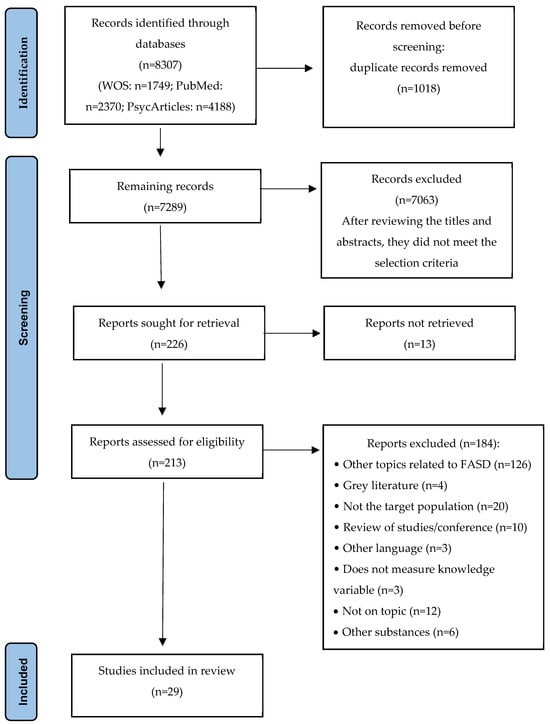
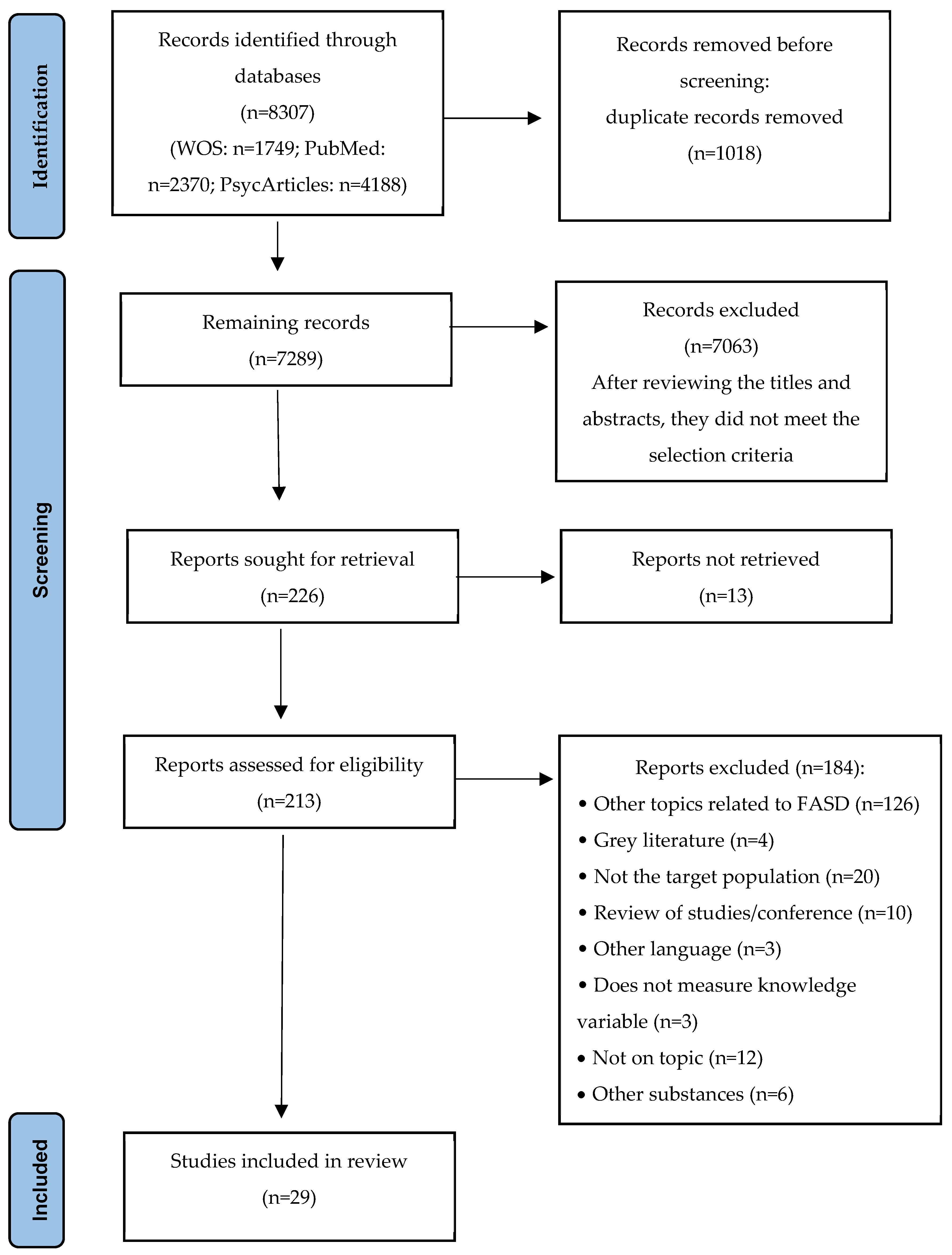
A total of 8307 articles were identified, 1018 of which were eliminated due to duplication. After reviewing titles and abstracts, 7063 articles were excluded for not meeting the selection criteria, leaving 226 for full evaluation. Of these, 13 could not be retrieved, so 213 full-text articles were ultimately evaluated. After applying the inclusion and exclusion criteria, 184 articles were eliminated (see Figure 1). Finally, 29 articles were included in the systematic review.
Figure 1.
PRISMA flowchart.
3.2. Methodological Quality
According to the Critical Appraisal of Qualitative Studies guidelines [27], 12 articles were classified as high quality (3 with 8 points and 9 with 7 points), while 17 articles were considered of moderate quality (11 with 6 points, 5 with 5 points and 1 with 4 points; see Table 1). No articles were rated as low quality and therefore none were eliminated from the final selection.
Table 1.
Analysis of the methodological quality of the articles.
3.3. Study Characteristics
A total of 17,473 individuals participated in the analysed studies, including 9570 pregnant women, 5018 women with children (4553 of whom were in the postpartum period), and 1222 women of childbearing age (see Table 2). Three studies included a total of 1143 pregnant women, women with children and/or women of childbearing age, but did not specify the exact number in each group [36,41,44].
The women interviewed were aged between 18 and 49 years, except in the studies by Cornelius et al. (1997) and Kristjanson et al. (2007), where the average age was 16.3 years and the lower age limit was 16 years [32,41]. Two studies did not report information on the age of the participants [38,46].
In terms of educational level, the majority of women had received secondary or higher education. However, the study by Balachova et al. (2016) also included participants with primary education, and the study by Kaskutas (2000) included women with no formal education [29,40]. In other studies, the educational level of the participants was not specified [35,38,41,46,50,51,53,55].
According to studies including the variable ‘Gestational Alcohol Consumption’ (GAC, n = 17), the prevalence of alcohol intake during pregnancy ranges from 12.7% to 75%, with consumption being more frequent in the first trimester [28,32,42]. Three of the reviewed studies found that virtually all participants reported alcohol consumption during pregnancy; however, it should be noted that these were convenience samples [30,53,55]. Regarding the frequency of consumption (n = 3), this varied from less than once a month to two to four times a month. In terms of the amount consumed (n = 9), this ranged from less than one drink to more than six per occasion/day. Beer and wine were the most commonly consumed beverages (n = 3). Three studies observed a range of 3–23 drinks per week [39,44,48], while another observed a range of 4–84 drinks per week; however, it should be noted that this is a geographical area with high GAC [53]. Regarding consumption prior to pregnancy (n = 10), assessed in periods ranging from 30 days to one year before conception, between 25% and 87.4% of women reported drinking alcohol. Furthermore, risky consumption (1–6%) has been identified in some cases [41,50,56].
In terms of methodology, most of the studies were cross-sectional in design, with the exception of the longitudinal study by Cornelius et al. (1997) [32]. All studies used ad hoc questionnaires and interviews to assess core variables, such as sociodemographic characteristics (e.g., age, educational level, place of residence and socioeconomic status), obstetric characteristics (e.g., pregnancy planning), GAC (e.g., self-reported frequency of alcohol consumption during pregnancy; Alcohol Use Disorder Identification Test—AUDIT [57]; Alcohol Use Disorder Identification Test-Consumption—AUDIT-C [58]; Tolerance, Worry, Eye-opener, Amnesia, Kut down—TWEAK [59]; Tolerance, Annoyed, Cut down, Eye-opener—T-ACE [60]; Student Alcohol Questionnaire—SAQ [61]); perceived risk (e.g., “Do you believe that it is okay to drink a little during pregnancy?”; “Pregnant women should not drink alcohol”), and level of knowledge about GAC and its effects, including FASDs (e.g., “Indicate whether or not prenatal consumption increases the chance of any of the following: miscarriage, infantile withdrawal symptoms, lower intelligence quotient (IQ)/intellectual disability, …”; “How long FAS lasts”; etc.). Some studies have also evaluated other variables of interest for their research, such as depressive symptoms (Edinburgh Postnatal Depression Scale—EPDS [62], Patient Health Questionnaire—PHQ-9 [63] and PHQ-2 [64]), anxiety symptoms (Generalized Anxiety Disorder scale—GAD 2 [65]), consequences of alcohol intake (Drinker’s Inventory of Consequences—DrInc [66]), social support (Oslo 3-items Social Support Scale—OSSS-3 [67]), level of acculturation (Acculturation Scale for Mexican-Americans—ARSMA-II [68]), and social desirability (Marlowe–Crowne Social Desirability Scale [69]).
Finally, the geographical distribution of the studies shows that most come from Europe (n = 12)—although from very diverse locations—followed by America (n = 6), Asia (n = 5) and Africa (n = 6).
Table 2.
Sociodemographic, methodological characteristics and main results of the reviewed articles, by geographical continent.
3.4. Alcohol Consumption During Pregnancy: Perceived Risk and Knowledge of Possible Effects Perceived Risk of Gestational Alcohol Consumption
Most women believe that alcohol can harm the fetus, although the level of risk attributed varies depending on the amount, frequency and timing of pregnancy. While 12–40% believe some alcohol consumption is acceptable during pregnancy, nearly one-third (30%) consider any intake harmless, and around one in five underestimate the risks of low or occasional drinking [29,33,34,47,54]. A substantial minority also perceive certain trimesters or small daily amounts as safe, and up to 9% of pregnant women accept one to two units per week, with a smaller proportion tolerating occasional higher-intensity consumption, including champagne [29,33,38,47,50]. These findings reveal the persistence of permissive beliefs and misperceptions.
Female drinkers tend to minimise the risk associated with low quantities or occasional consumption: 21.2% of drinkers and 14.9% of abstainers consider this pattern to be harmless [34,36]. Similarly, 11–20% perceive that only regular or large quantities cause FAS [47,49]. Longitudinal data from McKnight and Merret (1987) indicate a modest reduction in risk denial over time: in prenatal interviews, 5.8% stated that alcohol does not affect the baby and 10.5% were uncertain, compared with 4.5% and 10%, respectively, in postnatal follow-ups [46]. Consistent with this, over 80% of pregnant women recognise that excessive alcohol consumption increases the risk of miscarriage, neurodevelopmental impairment, low birth weight and malformations [41]. These perceptions contrast sharply with beliefs regarding moderate or non-excessive intake, which remain permissive.
Some studies reveal particularly permissive beliefs. For example, in a study by Eaton et al. (2014) in Cape Town, where a large proportion of pregnant women drink alcohol, 40% of pregnant women and 29% of non-pregnant women disagreed with the idea of avoiding alcohol during pregnancy [35]. Furthermore, 37% and 21% of pregnant and non-pregnant women, respectively, did not believe that fetal harm existed. Up to 31% of pregnant women considered it safe to consume three or more drinks per day, and 35% believed that drinking once a month posed no risk. Perceptions also varied by beverage type: 37–41% considered distilled spirits more harmful than fermented beverages, with 88% identifying spirits as harmful, 38% perceiving wine as risky, and 32% perceiving beer as harmful [29,33,34]. However, 15% believe that the daily consumption of small amounts of beer poses no risk, compared to 6% for wine and 2% for spirits [33]. Regarding quantity, 17% considered three or more glasses of beer per day acceptable, and 11% felt similarly about wine, whereas only 6% reported that no alcoholic beverage is safe during pregnancy [33,44]. In the Philippines, misconceptions about locally consumed beverages are notable. In a study on tuba, a traditional palm wine, 75% of women believed it contained no alcohol, and 48% thought it had beneficial effects for both mother and fetus [39]. These findings underscore the persistence of permissive beliefs, the influence of beverage type on perceived risk, and the potential for cultural and local drinking practices to exacerbate prenatal alcohol exposure.
Studies that took women’s attitudes towards alcohol intake during pregnancy into account, found that 54% of participants had a negative attitude towards it [28]. A more intolerant attitude towards alcohol was associated with a lower frequency of consumption, a lower prevalence of BD episodes, and a reduction in the negative consequences of consumption [32]. The impact of attitude on behaviour was evident: 91% of women who opposed consumption stopped drinking or reduced their intake, compared to 84% of those with more permissive attitudes, in both the pre-pregnancy period and the first trimester. This difference was maintained throughout the three trimesters of the follow-up: 100% of women with anti-consumption attitudes reduced their intake, compared to 92% of those with pro-consumption attitudes [32].
3.5. Knowledge of Possible Efects of Gestational Alcohol Consumption
Knowledge of the risks associated with GAC remains limited. Across studies, between 44% and 73% of women reported little or no awareness of these risks [28,47]. While approximately 48% perceive GAC as harmful to the baby, only 43% identify risks to both mother and child [33,52]. Awareness of FASDs is similarly low: although 34–55% of participants had heard of the syndrome, only 8–38% were able to describe it accurately [29,31,41,43]. High levels of general knowledge about FASDs are context-dependent, as illustrated by an average score of 8.75 out of 10 in a study conducted in Cape Town [45].
Despite some awareness, misconceptions persist. In certain communities, prenatal alcohol use is normalized because no observable adverse effects in newborns have been reported [54]. Although some risks were acknowledged, such as premature birth, blindness and neurological and cognitive impairments, there was also a belief that alcohol intake during pregnancy could have benefits for the fetus and mother, such as ensuring a strong baby or reducing the pain of childbirth.
Despite this partial knowledge, between 84% and 97% of women are aware of alcohol’s teratogenic potential [47,49]. However, only a minority (approximately 20–25%) can identify any specific defect associated with FAS or recognise maternal alcohol consumption as its direct cause [40]. Beliefs regarding the permanence of effects vary: 48–87% consider them permanent, 16% view them as temporary, and 28% are unsure [33,47].
Information from healthcare professionals is often insufficient. Between 15% and 75% of participants reported not having been informed about the risks of alcohol consumption during pregnancy [28,37,39,50], even when nutritional advice is provided. While nearly all participants recognize the importance of factors such as nutrition, exercise, medical visits, and smoking cessation, only 60% identify reducing alcohol as important [39]. Misattribution of outcomes persists: some women link low birth weight to smoking rather than alcohol [46].
Knowledge of official abstinence guidelines is limited, and information availability is sparse [36,44,53]. Nevertheless, nearly all women express willingness to learn about healthy pregnancies, with 98% stating they would abstain if informed of fetal alcohol risks [39].
Exposure to warning messages on alcoholic beverage packaging is uncommon, with only two studies reporting high visibility: 99% of participants reported having seen recommendations to abstain [34], and 97% of the sample suggested avoiding alcohol during pregnancy [47].
A range of factors can influence women’s knowledge of the effects of alcohol on pregnancy and FASDs. At least three studies have identified low educational attainment as a predictor of lower knowledge about the risks of FAS [28,33,37]. Likewise, several studies have highlighted widespread lack of knowledge of the effects of gestational alcohol, particularly among women with children, active drinkers and those in later life [37,44,49]. Active or pre-pregnancy alcohol intake has been associated with lower awareness of FASDs or an underestimation of its risks [29,43,44,53]. Additionally, both younger and older age groups have been associated with higher levels of unawareness [49], as well as a lack of health coverage or low income [47].
Studies by Onwuka et al. (2016), Piotrkowicz et al. (2023) and Huang et al. (2023) have shown that exposure to warning messages or professional counseling significantly improves knowledge and the intention to quit drinking [39,48,49]. However, it has also been observed that, in some contexts, knowledge does not necessarily lead to reduced consumption [41,42].
On the other hand, several studies indicate that GAC is influenced by multiple individual, contextual and social factors. At the individual level, one of the most consistent predictors is a history of alcohol consumption prior to pregnancy [37,42,44,48,51,56]. Similarly, young maternal age (under 30 years) is associated with a higher probability of drinking during pregnancy [31,33,37,44,48,49,50]. Low educational level is another common factor [28,33,34,44,48,50]. Concurrent risk factors include smoking and primiparity [31,44,50], a variable associated with higher consumption [37,48,50].
Other relevant factors include limited knowledge of the effects of GAC [56], lack of pregnancy planning [44,56], partner alcohol consumption [28,44,50], social pressure [39], social acceptance of drinking in festive settings [28,36] and the absence of religious practice or membership of certain religious groups [37,50]. It has also been reported that GAC may be influenced by personal motivations such as emotional coping, perceived permissive social norms, individual decision-making, as well as by a positive or neutral perception of alcohol [28,52].
A lower perception of risk associated with GAC is also associated with higher consumption [33,35], and it has also been found that GAC tends to increase when the consequences of the first pregnancy are perceived as positive or when the consequences of gestational consumption are not appreciated [51,54].
At the community level, the most notable factors include higher levels of acculturation and income [31], unemployment and school dropout [44], delayed initiation of prenatal care [44], and limited exposure to preventive messages regarding GAC [28].
4. Discussion
This systematic review provides a comprehensive overview of two key aspects related to alcohol consumption during pregnancy: risk perception among pregnant women or women of childbearing age, and their knowledge of the potential consequences for offspring.
The results reveal substantial variability in reported prevalence of alcohol use during pregnancy, partly attributable to differences in data collection methods. Studies using biomarkers to determine alcohol intake during pregnancy report higher consumption rates than those relying on self-report [13], suggesting a possible underestimation due to social desirability bias. Regardless of measurement method, gestational alcohol use remains alarmingly common, particularly in the first trimester—a critical period of embryonic development when organogenesis and neurological development are especially vulnerable to teratogenic effects [52].
Pre-pregnancy alcohol consumption emerges as the most consistent predictor of alcohol use during pregnancy [15,16]. The high prevalence of alcohol consumption among women of childbearing age, combined with the frequency of unplanned or unrecognized pregnancies, increases the likelihood of early fetal exposure. These findings underscore the urgent need for preventive and educational strategies targeting all women of reproductive age, particularly those engaging in regular or hazardous drinking.
Although the harmful effects of alcohol during pregnancy are well established, permissive beliefs persist, and uncertainty remains regarding “safe” limits of consumption [72]. While most women acknowledge that alcohol can harm the fetus, perceptions of risk vary according to the amount, frequency, and timing of consumption. Misconceptions persist, with some women considering occasional drinking acceptable, and others perceiving specific gestational stages as “safe” [29,36,39,47,52,73,74,75]. These attitudes are more frequent among women with a history of alcohol use [14,15,16,28,47], who are also more likely to minimize the risks of low-intensity consumption and to believe that only heavy, chronic use is harmful [34,36]. These beliefs persist despite robust evidence that no safe threshold of alcohol intake exists during pregnancy [76].
Cultural and contextual factors further shape perceptions. In European countries like France, Spain and Portugal, the social normalization of alcohol complicates efforts to promote abstinence [36,72,75]. Beverage type also influences perceptions: spirits are widely recognized as harmful, whereas wine and beer are often considered less risky [29,33,34,47]. These cultural framings, where alcohol is viewed as part of lifestyle, hinder the adoption of complete abstinence—even among women previously informed about potential harms. Effective prevention strategies must therefore be context-sensitive and culturally tailored.
It is also important to address the lack of knowledge among some women regarding whether a drink contains alcohol. Misconceptions about local drinks are striking—for instance, Filipino women surveyed did not know that palm wine (tuba) contains alcohol, and considered it beneficial for mother and child [39]. Such misconceptions not only increase maternal exposure but also encourage consumption among offspring, compounding risks.
The persistence of these misconceptions represents a major challenge for clinical practice. Clear and consistent health messaging is essential [77,78,79]: there is no safe level of alcohol consumption during pregnancy, including occasional or low-intensity use. Women’s knowledge about specific consequences of prenatal alcohol exposure remains limited and often inaccurate [28,47]. While many recognise alcohol as teratogenic [47,49], few identify specific disorders such as FASDs, instead associating harms mainly with visible malformations rather than neurodevelopmental deficits [33,34], and believe the effects are temporary or cannot specify their duration. This knowledge gap may reflect insufficient counselling by healthcare professionals, as many women report not receiving professional guidance on the risks of alcohol during pregnancy [37,50]. When counseling is provided, most women indicate willingness to abstain, highlighting a missed opportunity for effective preventive action [39,46].
In summary, a paradox is highlighted: while general awareness that alcohol can harm the fetus has improved, detailed understanding of its full consequences remains limited, misconceptions persist, and cultural and structural barriers continue to normalize consumption. Effective prevention therefore requires an integrated, multilevel strategy that strengthens health professionals’ role, adapts interventions to sociocultural contexts, and communicates a clear evidence-based message: alcohol is unsafe at any level during pregnancy.
One of the most consistent predictors of low knowledge levels is educational attainment [28,33,37], which highlights the importance of tailoring preventative messages to the sociodemographic profile of the population. At the same time, a more pronounced information gap is observed among women who have a history of consumption or who have children [37,44,49], which could be due to a lower perception of vulnerability or the normalisation of alcohol consumption, particularly if no obvious adverse consequences were experienced in previous pregnancies. Studies agree that active or pre-pregnancy alcohol consumption is associated with a higher risk of gestational alcohol intake and an underestimation of its effects, as well as less familiarity with FASDs [29,43,44,53,80]. Furthermore, factors such as a lack of access to health services or a low income can limit opportunities to receive reliable information [47], leading to significant inequalities in maternal and child health.
On a positive note, exposure to warning messages and professional counselling increases knowledge and intention to abstain [48,49], though knowledge alone does not always translate into behaviour change [41,42]. This underscores the need for multidimensional strategies that integrate information with attitudinal, motivational, cultural, and social components.
Individual factors such as pre-pregnancy alcohol use, young maternal age, low educational attainment, smoking, primiparity, and unintended pregnancy are consistently associated with higher risk of gestational drinking [14,15,16,37,42,44,48,51,81]. These variables reflect a profile of greater vulnerability that should be early identified in primary care and obstetric services. It is important to conduct high-quality research to identify the combination of characteristics that best define a potential alcohol consumer during pregnancy. Establishing such a profile would enable not only the tailoring of preventive measures but also their more effective targeting toward the most vulnerable populations.
Personal attitudes play a crucial role: neutral or positive views on gestational drinking, or use of alcohol for coping, increase the likelihood of consumption [28,52]. Here, it is crucial that healthcare professionals are trained to explore ambivalence and reinforce motivation for change. It would also be beneficial to offer guided psychoeducational group interventions combining information, mutual support and healthy coping strategies.
At the relational level, the influence of the immediate environment is also significant. The social acceptance of alcohol consumption in festive contexts, as well as alcohol intake by partners, family or friends, contributes to the normalisation of gestational consumption [28,36,44,50]. Preventive interventions must therefore target not only women but also their social environments.
Finally, structural and community factors, such as limited exposure to preventive messages and late initiation of prenatal care [28,44,82], highlight the need for stronger public health policies and expanded community-based prevention [83,84,85].
In addition to these factors, a temporal analysis of the reviewed articles reveals a progressive shift in risk perception over recent decades. In the 1980s–1990s, knowledge of teratogenic effects was limited, and moderate consumption—particularly of wine and beer—was often normalized in Europe and North America. From the 2000s onward, a trend toward reduced consumption after pregnancy confirmation and increased risk perception emerged, though cultural differences persisted regarding the perceived safety of certain types of beverages. Between 2010 and 2020, campaigns and labeling in Europe and North America contributed to greater recognition that no safe level of alcohol exists, yet detailed knowledge about FASDs remained scarce. Most recently (2020–2024), European studies show high risk perception among younger generations, although with persistent gaps in knowledge about the specific effects of prenatal exposure and the adoption of cultural beliefs that downplay the risk to the fetus of consuming small amounts of alcohol. In addition, in the EU region, despite moderate decreases observed in recent years, the prevalence of alcohol consumption among women remains higher than the global prevalence. This is believed to be due to increased economic wealth, changes in gender roles, lifestyles, and alcohol accessibility [86]. In North America, socioeconomic and ethnic disparities remain, with certain groups still perceiving fermented beverages as safer than distilled spirits. In contrast, in Africa and in certain Asian contexts, high-risk consumption patterns are evident, with elevated prevalence of intake even during pregnancy and a clearly lower risk perception. In these settings, limited access to health information and the influence of cultural beliefs facilitate the persistence of consumption, as seen in the Philippines with traditional beverages. However, several African studies show that risk perception improves following educational interventions, highlighting the preventive potential of culturally adapted awareness programs.
Overall, the temporal evolution reflects a sustained improvement in risk perception and a reduction in consumption across much of Europe and North America, while regional and cultural gaps persist in Africa, Latin America, and Asia. These differences underscore the need for preventive interventions that are sensitive to cultural contexts, as well as for strengthening specific knowledge about FASDs even in regions where abstinence is already predominant.
In summary, achieving a substantive decrease in this behavior requires addressing not only individual, attitudinal and behavioral factors, but also the broader social, cultural, and structural determinants that sustain it. Accordingly, the implementation of multidimensional prevention frameworks—encompassing psychoeducational interventions, psychosocial support, and regulatory policies—appears essential, with careful consideration of the contextual specificities in which such strategies are operationalized.
Despite the comprehensive evidence summarized, several limitations must be acknowledged. Substantial methodological heterogeneity, including differences in inclusion criteria, sampling strategies and measurement instruments used to assess alcohol consumption, knowledge of FASDs, and risk perception, complicates direct comparisons and restricts the generalizability of the results. Furthermore, the reliance on small, non-representative samples in many studies further limits the external validity of the evidence.
The predominant use of self-reported measures to capture alcohol consumption, attitudes, and knowledge introduces additional bias, including social desirability, particularly in contexts where prenatal alcohol use is stigmatized. These factors may underestimate both actual consumption and permissive attitudes, compromising data accuracy.
Taken together, these limitations underscore the urgent need for future research to adopt rigorous, standardized methodological frameworks and to implement validated, internationally comparable instruments, complemented by objective measures. Such approaches are essential to generate robust, high-quality evidence that accurately characterizes gestational alcohol exposure and clarifies its associated risks, thereby informing effective prevention and intervention strategies. Strengthening the evidence base in this way is crucial not only for advancing scientific understanding but also for informing evidence-based prevention programs, shaping public health policy, and guiding targeted interventions aimed at reducing prenatal alcohol exposure and its long-term consequences.
Author Contributions
Conceptualization, M.B.-L. and M.-T.C.-T.; methodology M.B.-L.; software, M.B.-L.; validation, M.B.-L. and M.-T.C.-T.; formal analysis M.B.-L.; investigation, M.B.-L.; resources, M.B.-L.; data curation, M.B.-L.; writing—original draft preparation, M.B.-L.; writing—review and editing, M.B.-L. and M.-T.C.-T.; visualization M.B.-L.; supervision, M.-T.C.-T.; project administration, M.B.-L. and M.-T.C.-T. All authors have read and agreed to the published version of the manuscript.
Funding
This research received no external funding.
Institutional Review Board Statement
Not applicable.
Informed Consent Statement
Not applicable.
Data Availability Statement
Data sharing is not applicable to this article as no new data were created or analyzed in this study.
Conflicts of Interest
The authors declare no conflicts of interest.
Abbreviations
The following abbreviations are used in this manuscript:
| AEP | Alcohol-Exposed Pregnancy |
| ARCMs | Alcohol-Related Congenital Malformations |
| ARND | Alcohol-Related Neurodevelopmental Disorder |
| ARSMA-II | Acculturation Rating Scale for Mexican Americans-II |
| AUDIT | Alcohol Use Disorders Identification Test |
| AUDIT-C | Alcohol Use Disorders Identification Test–Consumption |
| BD | Binge Drinking |
| CEBM | Centre for Evidence-Based Medicine |
| DrInc | Drinker’s Inventory of Consequences |
| EDADES | Survey on Alcohol and Drugs in Spain (Encuesta sobre Alcohol y Drogas en España) |
| EPDS | Edinburgh Postnatal Depression Scale |
| FAE | Fetal Alcohol Effects |
| FAS | Fetal Alcohol Syndrome |
| FASDs | Fetal Alcohol Spectrum Disorders |
| GAC | Gestational Alcohol Consumption |
| GAD-2 | Generalized Anxiety Disorder-2 |
| HED | Heavy Episodic Drinking |
| I1–I8 | Quality assessment items (Table 1) |
| IQ | Intelligence Quotient |
| OB/GYN | Obstetrics and Gynecology |
| OH | Alcohol |
| OSSS-3 | Oslo 3-item Social Support Scale |
| pFAS | Partial Fetal Alcohol Syndrome |
| PAE | Prenatal Alcohol Exposure |
| PHQ-2 | Patient Health Questionnaire-2 |
| PHQ-9 | Patient Health Questionnaire-9 |
| PRISMA | Preferred Reporting Items for Systematic Reviews and Meta-Analyses |
| Q | Quality Score (Table 1) |
| SAQ | Student Alcohol Questionnaire |
| SD | Standard Deviation |
| T-ACE | Tolerance–Annoyed–Cut down–Eye-opener questionnaire |
| TWEAK | Tolerance–Worry–Eye-opener–Amnesia–Kut down questionnaire |
| V/I | Variables/Instruments |
| WOS | Web of Science |
References
- Denny, L.; Coles, S.; Blitz, R. Fetal Alcohol Syndrome and Fetal Alcohol Spectrum Disorders. Am. Fam. Physician 2017, 96, 515–522. [Google Scholar]
- Lemoine, P.; Harousseau, H.; Borteyru, J.P.; Menuet, J.C. Les enfants de parents alcooliques: Anomalies observées à propos de 127 cas. Ouest Médical 1968, 21, 476–482. [Google Scholar]
- Rasmussen, C.; Andrew, G.; Zwaigenbaum, L.; Tough, S. Neurobehavioral outcomes of children with fetal alcohol spectrum disorders: A Canadian perspective. Paediatr. Child Health 2008, 13, 185–191. [Google Scholar] [CrossRef] [Scilit]
- Streissguth, A.P.; O’Malley, K. Neuropsychiatric implications and long-term consequences of fetal alcohol spectrum disorders. Semin. Clin. Neuropsychiatry 2000, 5, 177–190. [Google Scholar] [CrossRef] [Scilit]
- Institute of Medicine. Fetal Alcohol Syndrome: Diagnosis, Epidemiology, Prevention, and Treatment; National Academy Press: Washington, DC, USA, 1996.
- Hoyme, H.E.; Kalberg, W.O.; Elliott, A.J.; Blankenship, J.; Buckley, D.; Marais, A.S.; Manning, M.A.; Robinson, L.K.; Adam, M.P.; Abdul-Rahman, O.; et al. Updated clinical guidelines for diagnosing fetal alcohol spectrum disorders. Pediatrics 2016, 138, e20154256. [Google Scholar] [CrossRef] [Scilit]
- Williams, J.F.; Smith, V.C. Committee on Substance Use and Prevention. Fetal Alcohol Spectrum Disorders. Pediatrics 2015, 136, e1395–e1406. [Google Scholar] [CrossRef] [Scilit]
- Bailey, B.A.; Sokol, R.J. Prenatal alcohol exposure and miscarriage, stillbirth, preterm delivery, and sudden infant death syndrome. Alcohol Res. Health 2011, 34, 86–91. [Google Scholar] [PubMed]
- Cook, J.L.; Green, C.R.; Lilley, C.M.; Anderson, S.M.; Baldwin, M.E.; Chudley, A.E.; Conry, J.L.; LeBlanc, N.; Loock, C.A.; Lutke, J.; et al. Fetal alcohol spectrum disorder: A guideline for diagnosis across the lifespan. CMAJ 2015, 188, 191–197. [Google Scholar] [CrossRef] [Scilit]
- Mamluk, L.; Oddie, S.J.; White, I.R.; Gray, R. The effects of alcohol consumption during pregnancy on maternal and child outcomes: A systematic review and meta-analysis. PLoS ONE 2017, 12, e0171937. [Google Scholar] [CrossRef] [Scilit]
- Conover, E.A.; Jones, K.L. Safety concerns regarding binge drinking in pregnancy: A review. Birth Defects Res. Part A Clin. Mol. Teratol. 2012, 94, 570–575. [Google Scholar] [CrossRef] [Scilit] [PubMed]
- Popova, S.; Lange, S.; Probst, C.; Gmel, G.; Rehm, J. Estimation of national, regional, and global prevalence of alcohol use during pregnancy and fetal alcohol syndrome: A systematic review and meta-analysis. Lancet Glob. Health 2017, 5, e290–e299. [Google Scholar] [CrossRef] [Scilit]
- Gomez-Roig, M.D.; Marchei, E.; Sabra, S.; Busardò, F.P.; Mastrobattista, L.; Pichini, S.; Garcia-Algar, O. Maternal hair testing to disclose self-misreporting in drinking and smoking behavior during pregnancy. Alcohol 2018, 67, 1–6. [Google Scholar] [CrossRef] [Scilit]
- Anderson, A.E.; Hure, A.J.; Kay-Lambkin, F.J.; Loxton, D.J. Women’s perceptions of information about alcohol use during pregnancy: A qualitative study. BMC Public Health 2012, 12, 521. [Google Scholar] [CrossRef] [Scilit]
- Anderson, A.E.; Hure, A.J.; Kay-Lambkin, F.J.; Loxton, D.J. Predictors of antenatal alcohol use among Australian women: A prospective cohort study. BJOG 2013, 120, 1366–1374. [Google Scholar] [CrossRef] [Scilit]
- Skagerström, J.; Chang, G.; Nilsen, P. Predictors of drinking during pregnancy: A systematic review. J. Womens Health 2011, 20, 901–913. [Google Scholar] [CrossRef] [Scilit]
- Observatorio Español de las Drogas y las Adicciones. EDADES 2024. Encuesta Sobre Alcohol y Otras Drogas en España (EDADES) 1995–2024; Delegación del Gobierno para el Plan Nacional sobre Drogas; Ministerio de Sanidad: Madrid, Spain, 2024. [Google Scholar]
- Dumas, A.; Toutain, S.; Simmat-Durand, L. Alcohol use during pregnancy or breastfeeding: A national survey in France. J. Womens Health 2017, 26, 798–805. [Google Scholar] [CrossRef] [Scilit] [PubMed]
- Mårdby, A.C.; Lupattelli, A.; Hensing, G.; Nordeng, H. Consumption of alcohol during pregnancy-A multinational European study. Women Birth J. Aust. Coll. Midwives 2017, 30, e207–e213. [Google Scholar] [CrossRef] [Scilit] [PubMed]
- Lanting, C.I.; Van Dommelen, P.; Van der Pal-de Bruin, K.M. Trends in smoking, alcohol consumption, and folic acid supplementation before and during pregnancy: A population-based study in the Netherlands, 2001–2007. Midwifery 2015, 31, 835–841. [Google Scholar] [CrossRef] [Scilit]
- O’Keeffe, L.M.; Kearney, P.M.; McCarthy, F.P.; Khashan, A.S.; Greene, R.A.; North, R.A.; Kenny, L.C. Prevalence and predictors of alcohol use during pregnancy: Findings from international multicentre cohort studies. BMJ Open 2015, 5, e006323. [Google Scholar] [CrossRef] [Scilit]
- Blasco-Alonso, M.; González-Mesa, E.; Montes, M.G.; Bravo, I.L.; Galdón, F.M.; Campos, F.C.; Estévez, I.B. Exposición a tabaco, alcohol y drogas de abuso en gestantes. Estudio de prevalencia en gestantes de Málaga (España). Adicciones 2015, 27, 99–108. [Google Scholar] [CrossRef] [Scilit] [PubMed]
- Iversen, M.L.; Sørensen, N.O.; Broberg, L.; Damm, P.; Hedegaard, M.; Tabor, A.; Hegaard, H.K. Alcohol consumption and binge drinking in early pregnancy: A cross-sectional study with data from the Copenhagen Pregnancy Cohort. BMC Pregnancy Childbirth 2015, 15, 1–10. [Google Scholar] [CrossRef] [Scilit]
- Balachova, T.; Zander, R.; Bonner, B.; Isurina, G.; Kyler, K.; Tsvetkova, L.; Volkova, E. Smoking and alcohol use among women in Russia: Dual risk for prenatal exposure. J. Ethn. Subst. Abus. 2019, 18, 127–147. [Google Scholar] [CrossRef] [Scilit]
- Hammer, R.; Rapp, E. Women’s views and experiences of occasional alcohol consumption during pregnancy: A systematic review of qualitative studies and their recommendations. Midwifery 2022, 111, 103357. [Google Scholar] [CrossRef] [Scilit]
- Page, M.J.; McKenzie, J.E.; Bossuyt, P.M.; Boutron, I.; Hoffmann, T.C.; Mulrow, C.D.; Shamseer, L.; Tetzlaff, J.M.; Akl, E.A.; Brennan, S.E.; et al. The PRISMA 2020 statement: An updated guideline for reporting systematic reviews. BMJ 2021, 372, n71. [Google Scholar] [CrossRef] [Scilit]
- Centre for Evidence-Based Medicine (CEBM). Available online: https://www.cebm.ox.ac.uk/resources/ebm-tools/critical-appraisal-tools (accessed on 4 April 2025).
- Addila, A.E.; Azale, T.; Gete, Y.K.; Yitayal, M. Individual and community-level predictors of maternal alcohol consumption during pregnancy in Gondar town, Northwest Ethiopia: A multilevel logistic regression analysis. BMC Pregnancy Childbirth 2021, 21, 419. [Google Scholar] [CrossRef] [Scilit]
- Balachova, T.N.; Bard, D.; Bonner, B.; Chaffin, M.; Isurina, G.; Tsvetkova, L.; Volkova, E. Do attitudes and knowledge predict at-risk drinking among Russian women? Am. J. Drug Alcohol Abus. 2016, 42, 272–281. [Google Scholar] [CrossRef] [Scilit] [PubMed]
- Caires, T.L.G.; Santos, R.S. Malformation and death X alcoholism: Perspective of Nursing the Theory of Transitions for alcoholic pregnant women. Rev. Bras. Enferm. 2020, 73, e20180233. [Google Scholar] [CrossRef] [Scilit] [PubMed]
- Chambers, C.D.; Hughes, S.; Meltzer, S.B.; Wahlgren, D.; Kassem, N.; Larson, S.; Riley, E.P.; Hovell, M.F. Alcohol consumption among low-income pregnant Latinas. Alcohol Clin. Exp. Res. 2005, 29, 2022–2028. [Google Scholar] [CrossRef] [Scilit] [PubMed]
- Cornelius, M.D.; Lebow, H.A.; Day, N.L. Attitudes and knowledge about drinking: Relationships with drinking behavior among pregnant teenagers. J. Drug Educ. 1997, 27, 231–243. [Google Scholar] [CrossRef] [Scilit]
- Corrales-Gutierrez, I.; Mendoza, R.; Gomez-Baya, D.; Leon-Larios, F. Pregnant women’s risk perception of the teratogenic effects of alcohol consumption in pregnancy. J. Clin. Med. 2019, 8, 907. [Google Scholar] [CrossRef] [Scilit]
- Dumas, A.; Toutain, S.; Hill, C.; Simmat-Durand, L. Warning about drinking during pregnancy: Lessons from the French experience. Reprod. Health 2018, 15, 20. [Google Scholar] [CrossRef] [Scilit] [PubMed]
- Eaton, L.A.; Pitpitan, E.V.; Kalichman, S.C.; Sikkema, K.J.; Skinner, D.; Watt, M.H.; Pieterse, D.; Cain, D.N. Beliefs about fetal alcohol spectrum disorder among men and women at alcohol serving establishments in South Africa. Am. J. Drug Alcohol Abus. 2014, 40, 87–94. [Google Scholar] [CrossRef] [Scilit]
- Franco, R.; Charro, B.; Xavier, M.R. Perspectivas y experiencias sobre el consumo de bebidas alcohólicas durante el embarazo: Estudio cualitativo con embarazadas de España, Francia y Portugal. Ex Aequo 2020, 41, 107–121. [Google Scholar] [CrossRef] [Scilit]
- Hen-Herbst, L.; Tenenbaum, A.; Senecky, Y.; Berger, A. Pregnant women’s alcohol consumption and knowledge about its risks: An Israeli survey. Drug Alcohol Depend. 2021, 228, 109023. [Google Scholar] [CrossRef] [Scilit]
- Howlett, H.; Gray, W.K.; Dismore, L.; Mackenzie, S.; Langley, K.; Davidson, C.; Rankin, J. A survey of attitudes, beliefs and practice regarding alcohol use and screening in pregnancy: An opportunity for support and education? J. Res. Nurs. 2017, 22, 618–633. [Google Scholar] [CrossRef] [Scilit]
- Huang, A.M.; Neale, M.N.; Darveau, S.C.; Sagliba, M.J.; Moreno, A.J.; Urbina, M.P.G.; Tallo, V.; McDonald, E.A.; Jiz, M.A.; Friedman, J.F. Knowledge, attitudes, practices, and beliefs regarding prenatal alcohol consumption among women in Leyte, the Philippines. Front. Glob. Womens Health 2023, 4, 1156681. [Google Scholar] [CrossRef] [Scilit]
- Kaskutas, L.A. Understanding drinking during pregnancy among urban American Indians and African Americans: Health messages, risk beliefs, and how we measure consumption. Alcohol Clin. Exp. Res. 2000, 24, 1241–1250. [Google Scholar] [CrossRef]
- Kristjanson, A.F.; Wilsnack, S.C.; Zvartau, E.; Tsoy, M.; Novikov, B. Alcohol use in pregnant and nonpregnant Russian women. Alcohol Clin. Exp. Res. 2007, 31, 299–307. [Google Scholar] [CrossRef] [Scilit] [PubMed]
- Kim, O.; Park, K. Prenatal alcohol consumption and knowledge about alcohol consumption and fetal alcohol syndrome in Korean women. Nurs. Health Sci. 2011, 13, 303–308. [Google Scholar] [CrossRef] [Scilit]
- Lee, S.H.; Shin, S.J.; Won, S.D.; Kim, E.J.; Oh, D.Y. Alcohol use during pregnancy and related risk factors in Korea. Psychiatry Investig. 2010, 7, 86–92. [Google Scholar] [CrossRef] [Scilit] [PubMed]
- Lelong, N.; Kaminski, M.; Chwalow, J.; Bean, K.; Subtil, D. Attitudes and behavior of pregnant women and health professionals towards alcohol and tobacco consumption. Patient Educ. Couns. 1995, 25, 39–49. [Google Scholar] [CrossRef] [Scilit] [PubMed]
- Louw, J.G.; Tomlinson, M.; Olivier, L. Unrealistic optimism with regard to drinking during pregnancy among women of childbearing age in a South African community. S. Afr. J. Psychol. 2018, 48, 219–229. [Google Scholar] [CrossRef] [Scilit]
- McKnight, A.; Merrett, D. Alcohol consumption in pregnancy—A health education problem. Br. J. Gen. Pract. 1987, 37, 161–164. [Google Scholar]
- Oechsle, A.; Wensing, M.; Ullrich, C.; Bombana, M. Health knowledge of lifestyle-related risks during pregnancy: A cross-sectional study of pregnant women in Germany. Int. J. Environ. Res. Public Health 2020, 17, 8626. [Google Scholar] [CrossRef] [Scilit]
- Onwuka, C.I.; Ugwu, E.O.; Dim, C.C.; Menuba, I.E.; Iloghalu, E.I.; Onwuka, C.I. Prevalence and predictors of alcohol consumption during pregnancy in South-Eastern Nigeria. J. Clin. Diagn. Res. 2016, 10, QC10–QC13. [Google Scholar] [CrossRef] [Scilit]
- Piotrkowicz, E.; Kowalik, I.; Szymusik, I. The changes in the level of knowledge about the effects of alcohol use during pregnancy among three last generations of women in Poland. Int. J. Environ. Res. Public Health 2023, 20, 2479. [Google Scholar] [CrossRef] [Scilit]
- Senecky, Y.; Weiss, N.; Shalev, S.A.; Peleg, D.; Inbar, D.; Chodick, G.; Nachum, Z.; Bar-Hamburger, R.; Shuper, A. Alcohol consumption during pregnancy among women in Israel. J. Popul. Ther. Clin. Pharmacol. 2011, 18, e261–e272. [Google Scholar] [PubMed]
- Testa, M.; Reifman, A. Individual differences in perceived riskiness of drinking in pregnancy: Antecedents and consequences. J. Stud. Alcohol. 1996, 57, 360–367. [Google Scholar] [CrossRef] [Scilit]
- Ujhelyi, K.; Goodwin, L.; Chisholm, A.; Rose, A.K. Alcohol use during pregnancy and motherhood: Attitudes and experiences of pregnant women, mothers, and healthcare professionals. PLoS ONE 2022, 17, e0275609. [Google Scholar] [CrossRef] [Scilit] [PubMed]
- Watt, M.H.; Eaton, L.A.; Dennis, A.C.; Choi, K.W.; Kalichman, S.C.; Skinner, D.; Sikkema, K.J. Alcohol use during pregnancy in a South African community: Reconciling knowledge, norms, and personal experience. Matern. Child. Health J. 2016, 20, 48–55. [Google Scholar] [CrossRef] [Scilit]
- West, K.; Pauley, A.; Buono, M.; Mikindo, M.; Sawe, Y.; Kilasara, J.; Sakita, F.; Sharla, R.; Mchome, B.; Mmbaga, B.T.; et al. The burden of generational harm due to alcohol use in Tanzania: A mixed method study of pregnant women. PLoS Glob. Public Health 2024, 4, e0003681. [Google Scholar] [CrossRef] [Scilit]
- Zabotka, J.; Bradley, C.; Escueta, M. “How could I have done this?” Thoughts of mothers of children with fetal alcohol syndrome. J. Soc. Work. Pract. Addict. 2017, 17, 258–274. [Google Scholar] [CrossRef] [Scilit]
- Zahumensky, J.; Boda, M.; Serator, V.; Psenkova, P.; Ostatnikova, M.; Gajdosova, M.; Peskovicova, P.; Danfarova, S.; Sirotna, M.; Papcun, P. Risk factors for self-reported alcohol consumption during pregnancy. Bratisl. Med. J. Bratisl. Lekárske List. 2024, 125, 661–665. [Google Scholar] [CrossRef] [Scilit]
- Saunders, J.B.; Aasland, O.G.; Babor, T.F.; de la Fuente, J.R.; Grant, M. Development of the Alcohol Use Disorders Identification Test (AUDIT): WHO Collaborative Project on Early Detection of Persons with Harmful Alcohol Consumption–II. Addiction 1993, 88, 791–804. [Google Scholar] [CrossRef] [Scilit] [PubMed]
- Bush, K.; Kivlahan, D.R.; McDonell, M.B.; Fihn, S.D.; Bradley, K.A. The AUDIT alcohol consumption questions (AUDIT-C): An effective brief screening test for problem drinking. Arch. Intern. Med. 1998, 158, 1789–1795. [Google Scholar] [CrossRef] [Scilit] [PubMed]
- Russell, M.; Martier, S.S.; Sokol, R.J.; Mudar, P.; Bottoms, S.; Jacobson, S.; Jacobson, J. Screening for pregnancy risk drinking: The utility of TWEAK and other brief screening questionnaires. Alcohol Clin. Exp. Res. 1994, 18, 1156–1161. [Google Scholar] [CrossRef] [Scilit]
- Sokol, R.J.; Martier, S.S.; Ager, J.W. The T ACE questions: Practical prenatal detection of risk drinking. Am. J. Obstet. Gynecol. 1989, 160, 863–868. [Google Scholar] [CrossRef] [Scilit]
- Engs, R.C.; Hanson, D.J. The Student Alcohol Questionnaire: An updated reliability of the drinking patterns, problems, knowledge, and attitude subscales. Psychol. Rep. 1994, 74, 12–14. [Google Scholar] [CrossRef] [Scilit]
- Cox, J.L.; Holden, J.M.; Sagovsky, R. Detection of postnatal depression. Development of the 10 item Edinburgh Postnatal Depression Scale. Br. J. Psychiatry 1987, 150, 782–786. [Google Scholar] [CrossRef] [Scilit]
- Kroenke, K.; Spitzer, R.L.; Williams, J.B. The PHQ-9: Validity of a brief depression severity measure. J. Gen. Intern. Med. 2001, 16, 606–613. [Google Scholar] [CrossRef] [Scilit]
- Kroenke, K.; Spitzer, R.L.; Williams, J.B. The Patient Health Questionnaire-2: Validity of a two-item depression screener. Med. Care 2003, 41, 1284–1292. [Google Scholar] [CrossRef] [Scilit] [PubMed]
- Kroenke, K.; Spitzer, R.L.; Williams, J.B.; Monahan, P.O.; Löwe, B. Anxiety disorders in primary care: Prevalence, impairment, comorbidity, and detection. Ann. Intern. Med. 2007, 146, 317–325. [Google Scholar] [CrossRef] [Scilit]
- Miller, W.R.; Tonigan, J.S.; Longabaugh, R. The Drinker Inventory of Consequences (DrInC): An Instrument for Assessing Adverse Consequences of Alcohol Abuse. Test Manual; National Institute on Alcohol Abuse and Alcoholism, Project MATCH Monograph Series No. 95-3911; The U.S. Department of Health and Human Services: Rockville, MD, USA, 1995. [Google Scholar]
- Kocalevent, R.D.; Berg, L.; Beutel, M.E.; Hinz, A.; Zenger, M.; Härter, M.; Nater, U.; Brähler, E. Social support in the general population: Standardization of the Oslo social support scale (OSSS 3). BMC Psychol. 2018, 6, 31. [Google Scholar] [CrossRef] [Scilit]
- Cuéllar, I.; Arnold, B.; Maldonado, R. Acculturation Rating Scale for Mexican Americans–II: A revision of the original ARSMA scale. Hisp. J. Behav. Sci. 1995, 17, 275–304. [Google Scholar] [CrossRef] [Scilit]
- Reynolds, W.M. Development of reliable and valid short forms of the Marlowe-Crowne Social Desirability Scale. J. Clin. Psychol. 1982, 38, 119–125. [Google Scholar] [CrossRef] [Scilit]
- Barrett, G.; Wellings, K. What is a ‘planned’ pregnancy? Empirical data from a British study. Soc. Sci. Med. 2002, 55, 545–557. [Google Scholar] [CrossRef] [Scilit]
- Hollingshead, A.B. Four-Factor Index of Social Status; Unpublished manuscript; Department of Sociology, Yale University: New Haven, CT, USA, 1975. [Google Scholar]
- Peltier, M.R.; Verplaetse, T.L.; Bici, V.; Mokwuah, A.A.; Chavez, C.L.J.; Zakiniaeiz, Y.; KohLer, R.; Garcia-Rivas, V.; Banini, B.A.; Zhou, H.; et al. Alcohol use during pregnancy: The impact of social determinants of health on alcohol consumption among pregnant women. Biol. Sex. Differ. 2025, 16, 49. [Google Scholar] [CrossRef] [Scilit]
- Fletcher, T.M.; Mullan, B.; Finlay-Jones, A. Intention to engage in alcohol use during pregnancy: The role of attitudes and prototypes. Subst. Use Misuse 2023, 58, 1333–1342. [Google Scholar] [CrossRef] [Scilit] [PubMed]
- Pehlke-Milde, J.; Radu, I.; Gouilhers, S.; Hammer, R.; Meyer, Y. Women’s views on moderate and low alcohol consumption: Stages of the subjective transition from pregnancy to postpartum. BMC Pregnancy Childbirth 2022, 22, 902. [Google Scholar] [CrossRef] [Scilit] [PubMed]
- Schölin, L.; Arkell, R. Representations of ‘risky’ drinking during pregnancy on Mumsnet: A discourse analysis. Drug Alcohol. Rev. 2025, 44, 26–36. [Google Scholar] [CrossRef] [Scilit]
- Keenan, K.; Grundy, E.; Kenward, M.G.; Leon, D.A. Women’s risk of repeat abortions is strongly associated with alcohol consumption: A longitudinal analysis of a Russian National Panel Study, 1994–2009. PLoS ONE 2014, 9, e90356. [Google Scholar] [CrossRef] [Scilit] [PubMed]
- Green, F.O.; Harlowe, A.K.; Edwards, A.; Alford, D.P.; Choxi, H.; German, J.S.; Ling, D.; Pawlukiewicz, I.; Peterson, R.; Sternberg, K.; et al. Multi-level approaches to fetal alcohol spectrum disorders prevention education and training for health professionals. Subst. Use Addict. J. 2025, 46, 430–438. [Google Scholar] [CrossRef] [Scilit]
- Chu, J.T.W.; Wilson, H.; Pi, S.; McCormack, J.C.; Marsh, S.; Newcombe, D.; Bullen, C. Knowledge, attitudes and practices towards fetal alcohol spectrum disorder among healthcare workers in New Zealand. J. Intellect. Dev. Disabil. 2025, 50, 10–20. [Google Scholar] [CrossRef] [Scilit]
- Okurame, J.C.; Cannon, L.; Carter, E.; Thomas, S.; Elliott, E.J.; Rice, L.J. Fetal alcohol spectrum disorder resources for health professionals: A scoping review protocol. BMJ Open 2022, 12, e065327. [Google Scholar] [CrossRef] [Scilit]
- Frennesson, N.F.; Merouani, Y.; Barnett, J.; Attwood, A.; Zuccolo, L.; McQuire, C. Prenatal alcohol exposure before pregnancy awareness: A thematic analysis of online forum comments and misinformation. Front. Public. Health 2025, 13, 1525004. [Google Scholar] [CrossRef] [Scilit]
- Saxov, K.R.; Pristed, S.G.; Kesmodel, U.S. Characteristic associated with alcohol drinking in early pregnancy: A cross sectional study. Sci. Rep. 2023, 13, 10925. [Google Scholar] [CrossRef] [Scilit] [PubMed]
- Lyall, V.; Wolfson, L.; Reid, N.; Poole, N.; Moritz, K.M.; Egert, S.; Browne, A.J.; Askew, D.A. “The problem is that we hear a bit of everything…”: A qualitative systematic review of factors associated with alcohol use, reduction, and abstinence in pregnancy. Int. J. Environ. Res. Public. Health 2021, 18, 3445. [Google Scholar] [CrossRef] [Scilit]
- Okulicz-Kozaryn, K.; Segura-García, L.; Bruguera, C.; Braddick, F.; Zin-Szedek, M.; Gandin, C.; Słodownik-Przybyłek, L.; Scafato, E.; Ghirini, S.; Colom, J.; et al. Reducing the risk of prenatal alcohol exposure and FASD through social services: Promising results from the FAR SEAS pilot project. Front. Psychiatry 2023, 14, 1243904. [Google Scholar] [CrossRef] [Scilit] [PubMed]
- Bruguera, C.; Segura-García, L.; Okulicz-Kozaryn, K.; Gandin, C.; Matrai, S.; Braddick, F.; Zin-Sędek, M.; Slodownik, L.; Scafato, E.; Colom, J. Prevention of alcohol exposed pregnancies in Europe: The FAR SEAS guidelines. BMC Pregnancy Childbirth 2024, 24, 246. [Google Scholar] [CrossRef] [Scilit]
- Centers for Disease Control and Prevention. CDC efforts on Fetal Alcohol Spectrum Disorders (FASDs). Available online: https://www.cdc.gov/fasd/about/cdc-efforts.html (accessed on 12 September 2025).
- World Health Organization. Global Status Report on Alcohol and Health and Treatment of Substance Use Disorders; World Health Organization: Geneva, Switzerland, 2024.

Disclaimer/Publisher’s Note: The statements, opinions and data contained in all publications are solely those of the individual author(s) and contributor(s) and not of MDPI and/or the editor(s). MDPI and/or the editor(s) disclaim responsibility for any injury to people or property resulting from any ideas, methods, instructions or products referred to in the content. |
© 2025 by the authors. Licensee MDPI, Basel, Switzerland. This article is an open access article distributed under the terms and conditions of the Creative Commons Attribution (CC BY) license (https://creativecommons.org/licenses/by/4.0/).