Review

Vascular Complications in Extracorporeal Membrane Oxygenation—A Narrative Review

1
Center for Quality, Effectiveness, and Outcomes in Cardiovascular Diseases, Houston, TX 77054, USA
2
Division of Vascular and Endovascular Surgery, Medical College of Wisconsin, Milwaukee, WI 53226, USA
3
Department of Vascular and Endovascular Surgery, Ascension Health, Waco, TX 76710, USA
*
Author to whom correspondence should be addressed.
J. Clin. Med. 2024, 13(17), 5170; https://doi.org/10.3390/jcm13175170
Submission received: 6 July 2024 / Revised: 21 August 2024 / Accepted: 24 August 2024 / Published: 31 August 2024

Abstract

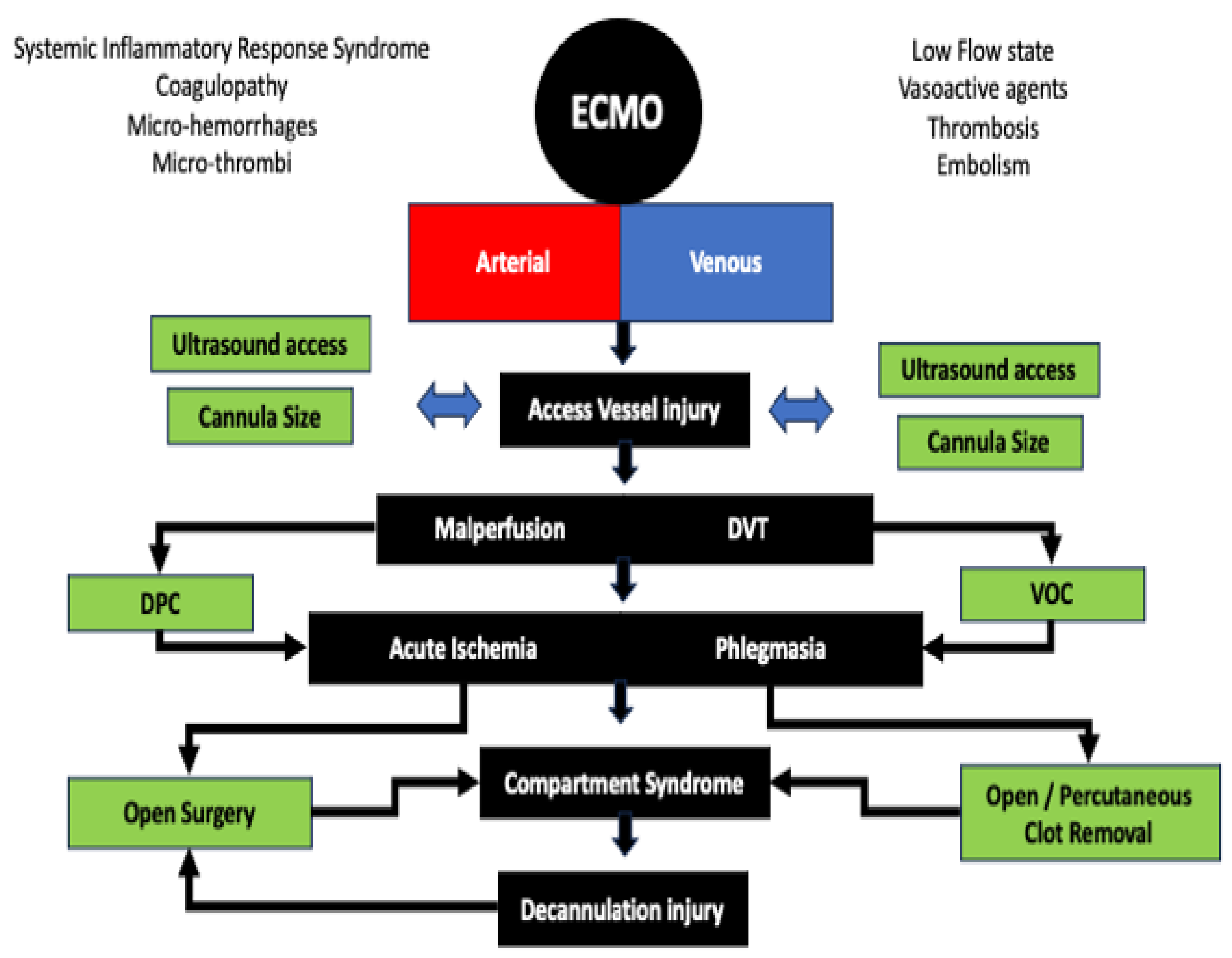
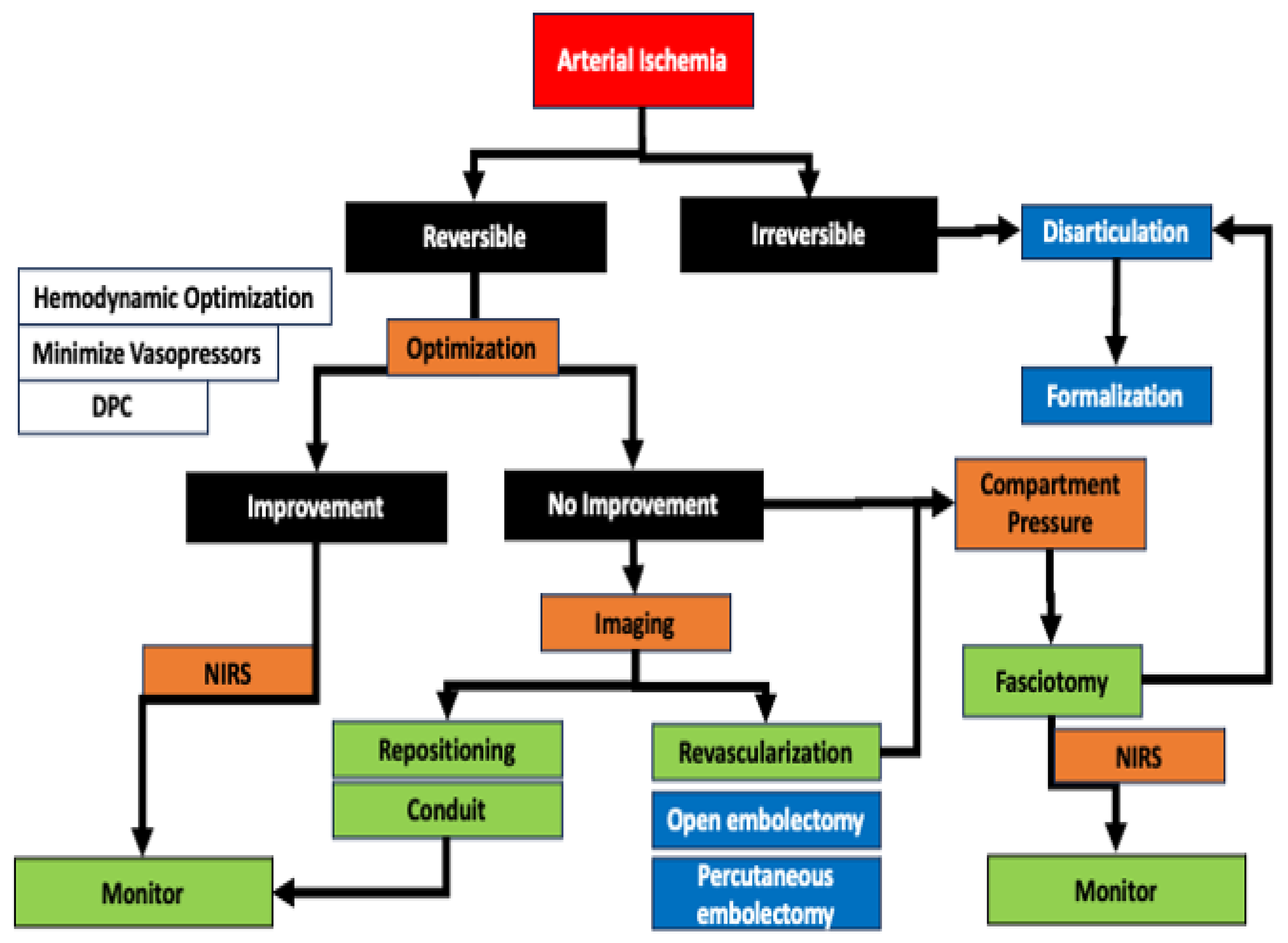
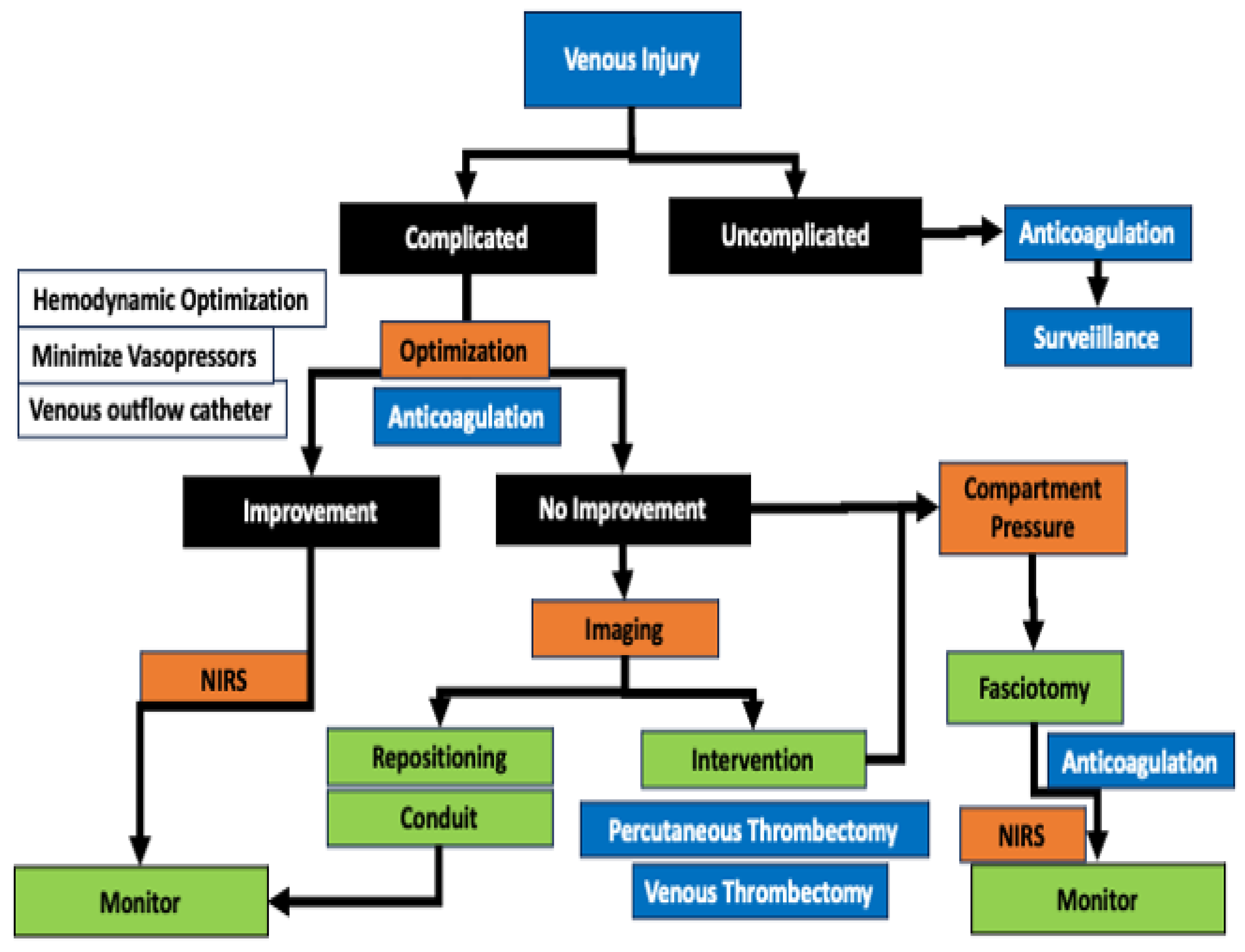
The establishment of a peripheral ECMO circuit can lead to significant arterial and venous complications in 10–30% of patients. Vascular complications, particularly acute limb ischemia, are associated with worsening overall outcomes. Limb ischemia occurs significantly more frequently in the early stages of VA ECMO than in VV ECMO. Mechanisms of limb ischemia include arterial obstruction, cannulation injury, loss of pulsatile flow, thromboembolism, venous stasis from compressive obstruction with large venous cannulas, and systemic vasoconstriction due to shock and pharmacologic vasoconstriction. The care team may use several mitigation strategies to prevent limb ischemia. Arterial and venous complications can be mitigated by careful access site selection, minimizing cannula size, placement of distal perfusion and/or outflow catheter(s), and continuous NIRS monitoring. Rapid intervention, when ischemia or compartment syndrome occurs, can reduce limb loss but may not affect the mortality and morbidity of the ECMO patient in the long term due to their underlying conditions and the etiology of the ECMO need.
Keywords: ECMO; pathophysiology; arterial complications; venous complications; mitigation; outcomes ECMO; pathophysiology; arterial complications; venous complications; mitigation; outcomes