


Abstract
Polyethersulfone (PES) ultrafiltration membranes were fabricated by non-solvent-induced phase separation (NIPS) and characterized through water permeability and molecular weight cut-off (MWCO) measurements. The influence of polymer concentration, coagulation bath temperature, and casting thickness on membrane performance was investigated using accessible characterization methodologies. A total of 27 membrane fabrication experiments were conducted using three PES concentrations (18, 20, and 22 wt.%), three coagulation bath temperatures (6, 8, and 10 °C), and three nominal casting thicknesses (60, 75, and 90 μm). Water permeability ranged from approximately 9 to 80 L m−2 h−1 bar−1, demonstrating a strong influence of fabrication conditions on membrane performance. Polymer concentration was identified as the dominant factor controlling both permeability and MWCO. Increasing PES concentration produced membranes with lower permeability and lower MWCO values, consistent with the reduction in effective pore size, although direct morphological characterization was beyond the scope of this study. Coagulation bath temperature significantly affected both permeability and selectivity, whereas casting thickness significantly affected permeability but showed no significant influence on MWCO. Statistical analysis further revealed a significant interaction between polymer concentration and coagulation bath temperature for MWCO. The results demonstrated a clear permeability–selectivity trade-off characteristic of ultrafiltration membranes prepared by NIPS. Furthermore, the combined use of permeability and MWCO measurements provided sufficient information to identify the effects of fabrication parameters on membrane performance, highlighting the usefulness of accessible characterization methodologies for membrane development, optimization, and technology transfer.
1. Introduction
Water scarcity and declining water quality have become major global concerns due to population growth, urbanization, industrial activity, and climate-related pressures on freshwater resources [1,2,3,4,5]. These challenges have increased the demand for efficient and sustainable water treatment technologies capable of producing high-quality water under diverse operating conditions. Among the available alternatives, membrane-based processes have attracted considerable attention because of their high separation efficiency, operational flexibility and wide applicability in water and wastewater treatment [6,7].
Water pollution is a major global challenge, and addressing it has become a priority for sustainable development [4]. Discharging untreated wastewater, industrial effluents, agricultural runoff, pathogens, and emerging contaminants into natural water bodies has reduced the availability of high-quality water resources [5]. Consequently, water treatment technologies must not only offer high removal efficiency but also be economically viable and adaptable to different operating contexts.
In recent decades, researchers have developed and improved numerous advanced treatment technologies, such as advanced oxidation techniques and membrane filtration processes [6]. Despite this, many of these technologies remain difficult to implement in resource-constrained environments because of high investment costs, operational complexity, or reliance on specialized infrastructure. Therefore, there is increasing interest in approaches that facilitate the implementation and adaptation of advanced treatment technologies in different research and operating environments.
Membrane processes have become one of the most promising technologies for both decentralized and centralized water treatment applications [7]. Their high separation efficiency, compact footprint and operational flexibility make them attractive for a wide range of water and wastewater treatment processes.
Ultrafiltration (UF) membranes are primarily manufactured using the phase-inversion method with non-solvent-induced phase separation (NIPS), a well-established method that remains highly attractive due to its economic viability, driven by low production costs and the sustained growth of the membrane filtration market, particularly for drinking water and wastewater treatment [8]. However, membrane fabrication depends on multiple operating parameters, and small variations in fabrication conditions can significantly affect membrane performance. Understanding the influence of these parameters remains important for membrane optimization and technology transfer.
Previous studies have demonstrated that polymers concentration, coagulation bath temperature, and casting thickness can influence membrane formation during NIPS. Higher polymer concentrations generally increase casting solution viscosity, affecting phase separation kinetics and membrane permeability [9]. Coagulation bath temperature influences membrane morphology and separation performance by modifying the solvent–non-solvent exchange process [10,11]. Similarly, casting thickness can influence membrane structure and permeation properties, as reported for asymmetric Polyethersulphone (PES) membranes [12]. This relationship highlights the importance of evaluating fabrication parameters.
Membrane fabrication is only one part of membrane development; membrane characterization is also necessary to understand the properties and performance of the manufactured product [13,14].
Practical and low-cost characterization methods are needed because advanced techniques such as Scanning Electron Microscopy (SEM), Atomic Force Microscopy (AFM), porometry, and other analytical tools are expensive and not universally available. However, accessible tests such as permeability measurements provide valuable information about water productivity, hydraulic resistance, and overall membrane performance [15,16,17]. Similarly, molecular weight cut-off (MWCO) determination allows for estimation of the membrane separation range and provides an indirect assessment of its effective pore size [18,19]. Simple permeability and MWCO tests can therefore provide valuable information on membrane hydraulic performance and separation behaviour without requiring sophisticated instrumentation [20,21].
Although advanced characterization techniques provide detailed information about membrane morphology and structure, they are not always available in emerging research environments [22]. As a result, the development of membrane research capabilities may be challenging in laboratories with limited access to advanced characterization techniques.
Therefore, there is a growing need for practical approaches that enable membrane fabrication and evaluation using methodologies that can be readily implemented in different research environments. In addition, understanding how fabrication parameters influence membrane performance using accessible characterization tools remains an important challenge.
This study proposes a practical framework for the fabrication and characterization of PES ultrafiltration membranes prepared by the NIPS method. The effects of polymer concentration, coagulation bath temperature, and casting thickness on membrane permeability and molecular weight cut-off (MWCO) were evaluated. In addition to describing the fabrication methodology, this work explores the use of hydraulic permeability and MWCO measurements as accessible tools for assessing membrane performance without relying on sophisticated analytical instrumentation.
The objective of this study was to evaluate how key NIPS fabrication parameters influence membrane hydraulic performance and selectivity, and to assess the usefulness of accessible characterization methods for the functional evaluation of ultrafiltration membranes in different research environments.
2. Materials and Methods
The ultrafiltration membranes were manufactured using the NIPS method. PES from Sigma-Aldrich® was dissolved in dimethylacetamide (DMA) from Sigma-Aldrich® to prepare the casting solution [23,24]. Polymer concentrations and fabrication conditions were selected based on previous studies and adapted to evaluate the influence of key NIPS parameters on membrane performance [23,25].
Membrane characterization was performed using a pilot plant and two functional tests: hydraulic permeability using distilled water and MWCO determination [16,19,26]. These tests were selected because they provide direct information on membrane hydraulic performance and selectivity while relying on instrumentation that is readily available in many research laboratories. The following sections describe the membrane fabrication procedure, the experimental design, the pilot plant configuration, and the characterization methods used in this study.
2.1. Preparation of Casting Solutions
Three casting solutions were prepared by dissolving PES in DMA. DMA was selected due to its solubility capacity for PES and its miscibility with water, which facilitates solvent–non-solvent exchange during membrane formation by NIPS [27]. Polymer concentrations of 18, 20, and 22 wt.% were selected based on values reported in previous studies [28,29]. The solvent density (0.942 g mL−1) was considered when calculating the amount of PES required to prepare each casting solution. Table 1 shows the quantities of reagents used to prepare approximately 50 mL of casting solution at each polymer concentration, yielding 47.1 g of total solution [30].
Table 1.
Quantities for collodion preparation.
The required amount of DMA was weighed into an Erlenmeyer flask, while the corresponding amount of PES was weighed separately on a watch glass. The flask containing DMA was placed on a magnetic stirrer (VELP Scientifica, model F203A0160, Usmate, Italy), and the polymer was gradually added, allowing for partial dissolution after each addition [31]. This procedure minimized particle agglomeration and facilitated complete dissolution of the polymer.
The casting solutions were stirred for at least 48 h while maintaining a small vortex (approximately 1 cm) to ensure adequate mixing and complete polymer dissolution [32,33]. After stirring, the solutions exhibited a viscous but homogeneous appearance, without visible bubbles or polymer agglomerates. When necessary, stirring was extended for an additional 12–24 h to ensure complete dissolution.
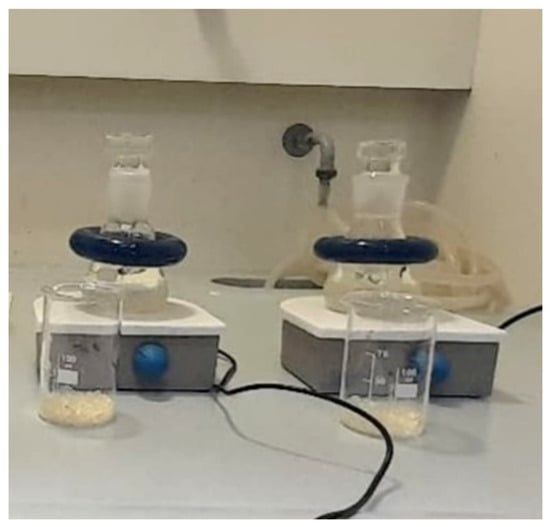
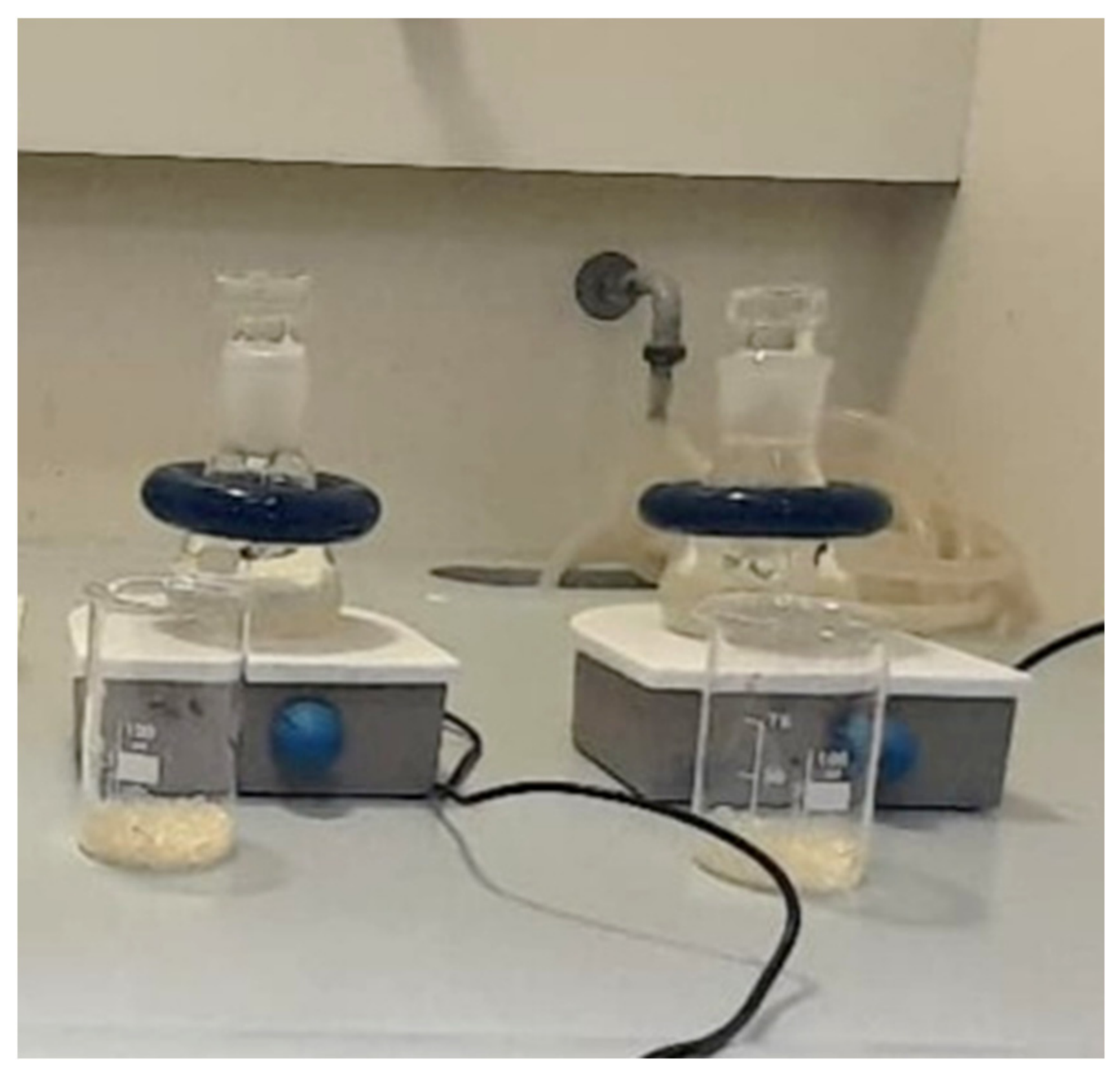
Weighted stabilizing rings were placed on the flasks during stirring to prevent movement and ensure continuous mixing, as shown in Figure 1. Because DMA releases fumes during handling, all preparations were carried out in a fume hood. The flasks were closed with glass stoppers during stirring to prevent contamination and solvent losses [32]. Finally, the casting solutions were stored in a desiccator until use. Parafilm was used to reinforce the seal and minimize moisture uptake from the environment.
Figure 1.
Preparation of the casting solutions. The photograph shows the magnetic stirring system used for dissolving PES in DMA. The Erlenmeyer flasks were kept closed during stirring to minimize solvent losses and contamination, while weighted stabilizing rings were used to prevent flask movement during the prolonged mixing period required for complete polymer dissolution.
2.2. Membrane Manufacturing by the Phase-Inversion Method
The ultrafiltration membranes were fabricated using the NIPS method [8]. Two containers filled with deionized water were used as coagulation baths. Deionized water was obtained from a purification system from Evoqua Water Technologies, model LaboStar PRO TWF UV. The first bath of water was used for phase inversion, while the second was used to rinse residual solvent from the membrane surface [24,34].
A stainless-steel frame was used to secure the support material, ensuring uniform tension across the entire surface and avoiding slack or deformation [35,36,37,38,39]. Approximately 3–4 mL of casting solution was poured onto the support material and uniformly distributed using a casting knife. Casting thicknesses of 60, 75 and 90 µm were evaluated [39].
Immediately after casting, the support and polymer film were immersed in the first coagulation bath, where phase inversion occurred and membrane pore formation began [40,41]. Pore formation results from the solvent–non-solvent exchange that takes place when the cast polymer film comes into contact with the coagulation bath [42,43]. Coagulation bath temperatures of 6, 8 and 10 °C were evaluated because previous studies have reported that low temperatures influence membrane structure formation during NIPS [10,11,25,44]. The selected temperature range was intentionally restricted to low-temperature coagulation conditions in order to evaluate the effect of small temperature variations within the cold phase inversion regime. Rather than comparing low-temperature and room-temperature coagulation, the objective was to determine whether modest changes around these low temperatures could produce measurable differences in membrane permeability and MWCO.
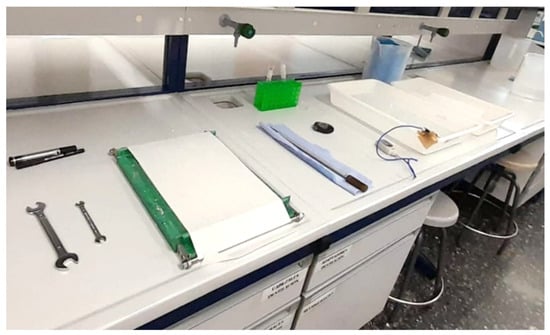
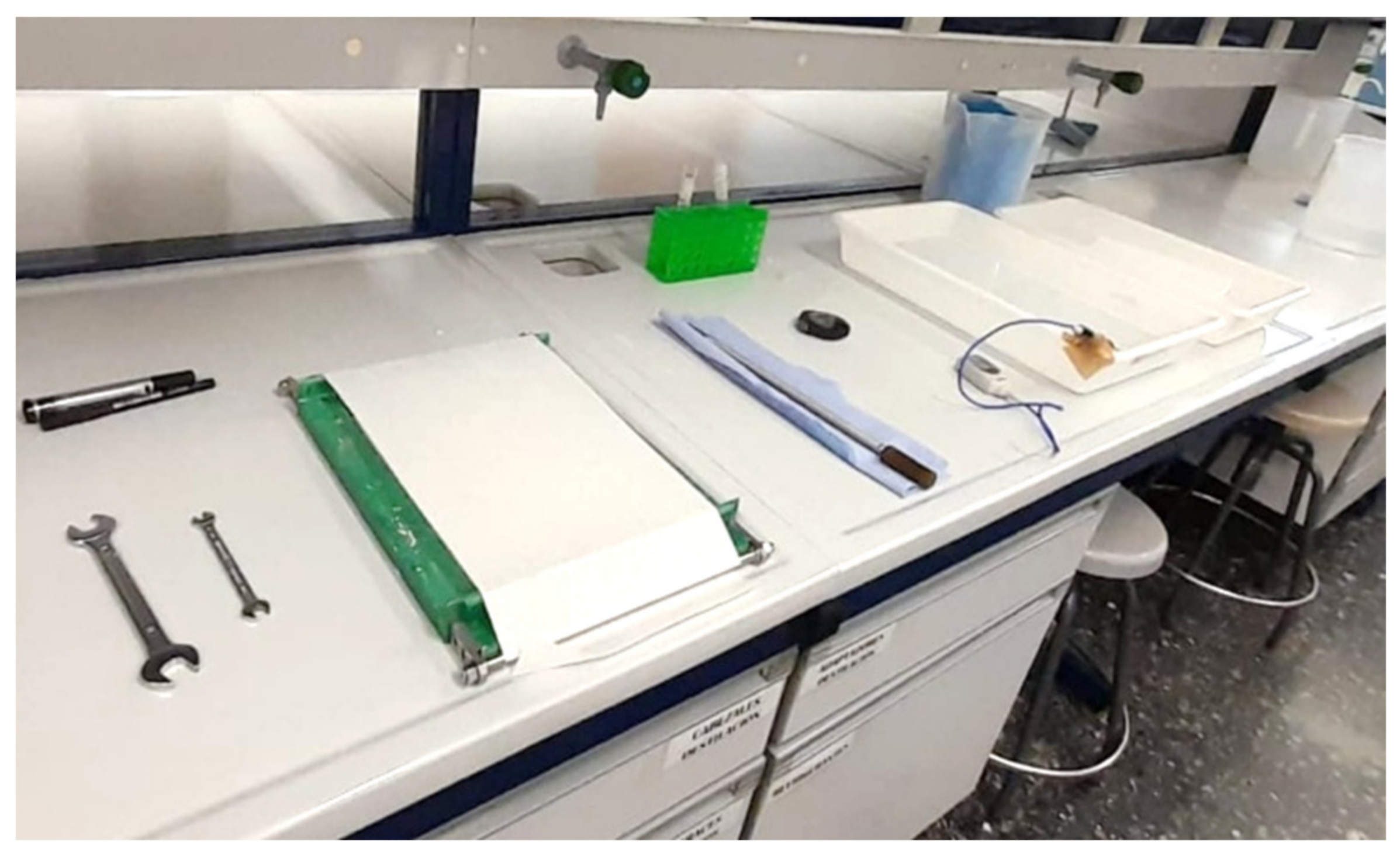
After 10 min, the formed membrane was trimmed and transferred to the second bath for rinsing. The membranes were subsequently stored in sealed bags containing deionized water and labelled according to the fabrication conditions, including polymer concentration, coagulation bath temperature and casting thickness. Figure 2 shows the experimental setup used for membrane fabrication by the NIPS method.
Figure 2.
Experimental setup used for membrane fabrication by the NIPS method. The system included a stainless-steel frame used to secure the support material, a casting knife for spreading the casting solution, and two deionized-water baths used for phase inversion and membrane rinsing.
2.3. Membrane Characterization
This section describes the pilot plant used for membrane characterization and the experimental procedures employed to evaluate hydraulic permeability and MWCO [20,26].
2.3.1. Pilot Plant
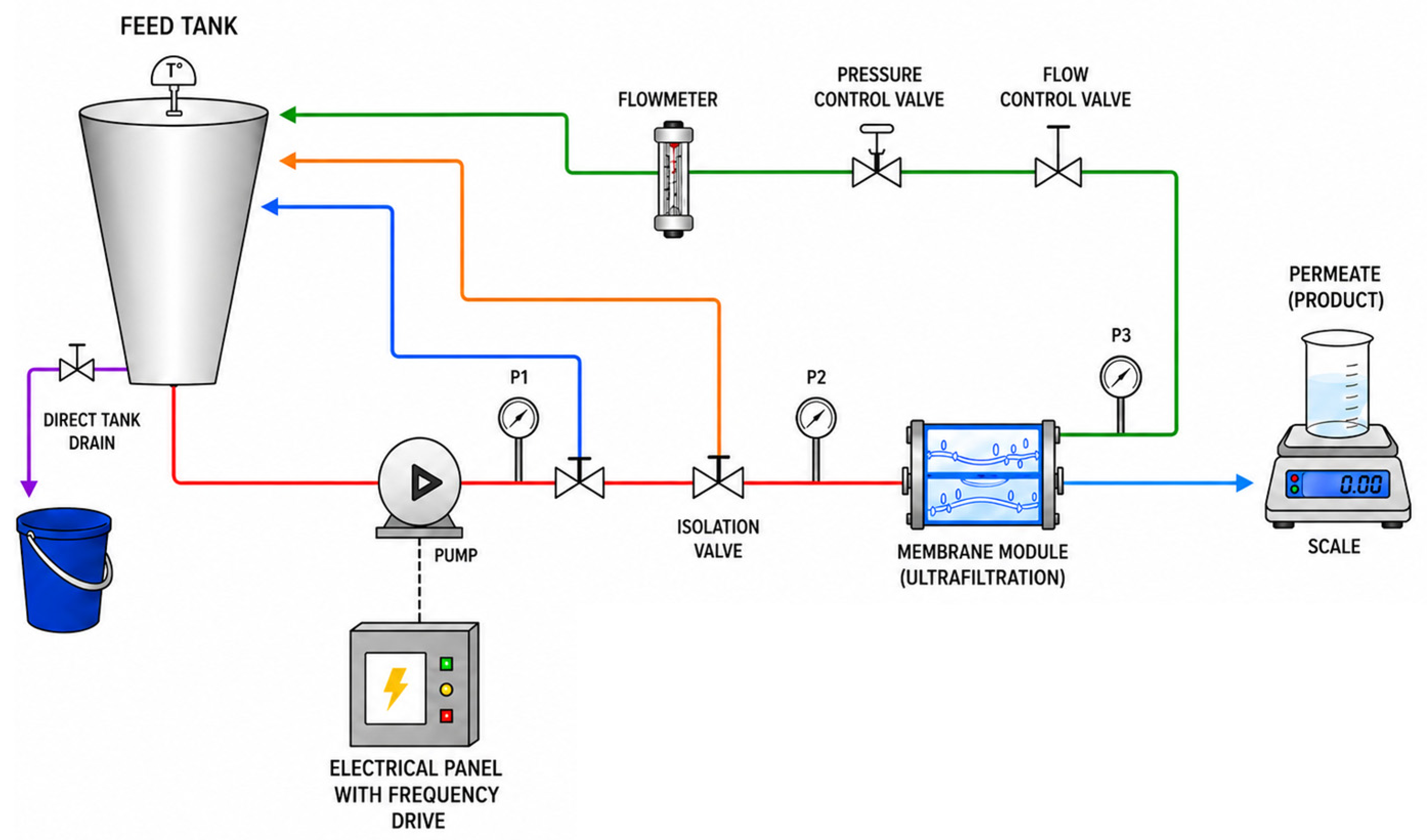
Membrane characterization tests were performed in a pilot plant located in the laboratory of the Center for Water, Energy, and Sustainability Research (CINAES) at the Universidad Católica Boliviana–La Paz. The pilot plant consists of a 10 L conical tank, a Sterlitech CF016A membrane cell with an active membrane area of 20.6 cm2 [45], a LEO 2ACM150H pump (Wenling, China) with a power of 2 HP and a pressure of 40 bar, a flow meter on the return line to the tank, pressure gauges, and flow-regulating valves at the cell’s inlet and outlet. A frequency regulator integrated into the control panel was also included. Temperature was monitored using a digital temperature sensor connected to a computer-based acquisition system, while permeate production was determined using an analytical balance (Mettler Toledo, model ME1002, Greifensee, Switzerland). Both sensors could collect data and transmit it to a laptop computer. Figure 3 shows the system and its components.
Figure 3.
Pilot plant diagram. Water flows from the feed tank through the red stream driven by the pump and reaching the membrane module cell. There is an isolation valve that returns the flow directly to the tank (orange flow) to relieve pressure in cell. After passing through the membrane, there are two streams: a permeate stream (light blue flow) collected on a a scale and a concentrate stream (green flow) that returns to the tank. Additionally, there is a blue stream for system cleaning and a purple stream acting as a direct tank drain.
2.3.2. Permeability Test
The permeability test was performed by running deionized water through the pilot ultrafiltration plant at working pressures of 1, 1.5, 2, and 2.5 bar [17,21]. First, the pilot plant was turned on with a membrane section already in place in the ultrafiltration cell. The pressure was gradually increased to 2.5 bar and maintained for 1 h to compact the membrane before testing [17]. Subsequently, the system was set to 1 bar, and permeate data were recorded every 20 s for 30 min. The permeate volume was calculated using the measured weight and a water density of 1 g/mL. The flux was then calculated as the permeate volume divided by the product of the time and the membrane area, using Equation (1).
where J corresponds to the flux, V is the permeate volume, A is the active area of the membrane, and t corresponds to time.
The experimental data obtained for each membrane were collected at all operating pressures. Hydraulic permeability was calculated as the slope of the linear relationship between permeate flux and transmembrane pressure. The slope was obtained by least-squares fitting with the regression constrained to pass through the origin (0, 0), since no permeate flux is expected in the absence of an applied pressure difference [46,47].
2.3.3. MWCO Test
The MWCO test was performed to evaluate the separation characteristics of the manufactured ultrafiltration membranes [20,21]. Polyethylene glycol (PEG) solutions at different concentrations, a refractometer, an analytical balance, a temperature sensor, a computer or laptop, and the pilot plant were used. PEG (Sigma-Aldrich® St. Louis, MO, USA) solutions with molecular weights of 6, 20 and 35 kDa, together with dextran (75 kDa, Sigma-Aldrich® St. Louis, MO, USA), were used to assess membrane selectivity. These solutes were selected to cover the expected ultrafiltration separation range of the fabricated membranes. All feed solutions were prepared at a concentration of 1% w/w (1 Brix), which was used as an indirect measure of solute concentration.
Prior to the MWCO tests, the membranes were compacted by operating the pilot plant at 2.5 bar for 45 min. Subsequently, each feed solution was filtered at 1 bar for 20 min, and the permeate was collected for analysis. Feed and permeate concentrations were measured using a Hanna Instruments HI96801 refractometer. The rejection percentage was calculated from the difference between feed and permeate Brix values according to Equation (2), where the feed Brix was used as an indirect measure of solute concentration [26,48].
where R is the solute rejection (%), Brixfeed is the feed concentration (Brix), and Brixpermeate is the permeate concentration (Brix).
The MWCO was estimated from the rejection curve obtained by plotting solute rejection against molecular weight. Following the conventional definition, the MWCO was considered as the molecular weight corresponding to approximately 90% solute rejection [49,50].
2.4. Experimental Design
This experimental study was designed to evaluate the influence of key NIPS fabrication parameters on membrane hydraulic permeability and MWCO.
Three fabrication factors were investigated: polymer concentration, coagulation bath temperature, and casting thickness. The levels evaluated for each factor are summarized in Table 2.
Table 2.
Experimental factors and levels.
A total of 27 membrane fabrication experiments were carried out using different combinations of these variables, including replicated conditions to assess experimental variability. The complete list of fabrication conditions is provided in Table S1 (Supplementary Materials).
Hydraulic permeability and MWCO were selected as response variables because they provide functional information regarding membrane productivity and selectivity.
2.5. Statistical Analysis
The influence of polymer concentration, coagulation bath temperature, and casting thickness on membrane performance was evaluated using statistical analysis.
Hydraulic permeability and membrane selectivity were considered the principal response variables. Descriptive statistics were first calculated to assess experimental variability and the reproducibility of the replicated membrane fabrication conditions.
Multiple linear regression models were developed to evaluate the effects of the fabrication parameters on membrane performance. Initially, models including only the main effects of the fabrication variables were considered according to Equation (3):
where Y is the response variable (hydraulic permeability or MWCO), C is the polymer concentration, T is the coagulation bath temperature, and H is the casting thickness.
Subsequently, first-order interaction terms were incorporated to explore possible interactions between fabrication parameters during membrane formation by NIPS according to Equation (4):
The significance of the model coefficients was evaluated at a confidence level of 95% (p < 0.05). Model adequacy was assessed using residual analysis, goodness-of-fit indicators, and analysis of variance (ANOVA). Multiple comparisons between factor levels were carried out using Tukey-adjusted estimated marginal means.
All statistical analyses were performed in R (R Foundation for Statistical Computing, Vienna, Austria) using the RStudio environment (version 2026.07) [51]. Estimated marginal means and Tukey-adjusted pairwise comparisons were obtained using the “emmeans” package (version 2.0.4) [52]. Conceptual illustrations summarizing the influence of polymer concentration and coagulation bath temperature on membrane formation during NIPS (Figures 6 and 7) were generated using a generative artificial intelligence tool (ChatGPT Pro, GPT-6 Astra Pro version, OpenAI, San Francisco, CA, USA) and subsequently reviewed, modified, and validated by the authors to ensure consistency with the experimental results and the scientific interpretation presented in this work. These figures are intended solely for conceptual visualization and do not represent experimental micrographs or direct morphological observations of the fabricated membranes.
3. Results
The performance of the fabricated membranes was evaluated through hydraulic permeability and MWCO measurements. The fabrication conditions corresponding to each membrane are summarized in Table S1 (Supplementary Materials). The following sections discuss the influence of polymer concentration, coagulation bath temperature, and casting thickness on membrane productivity and selectivity.
3.1. Water Permeability
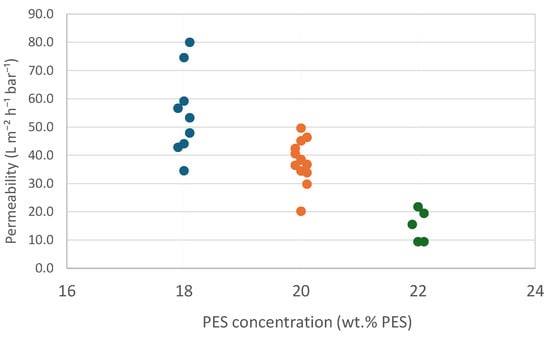
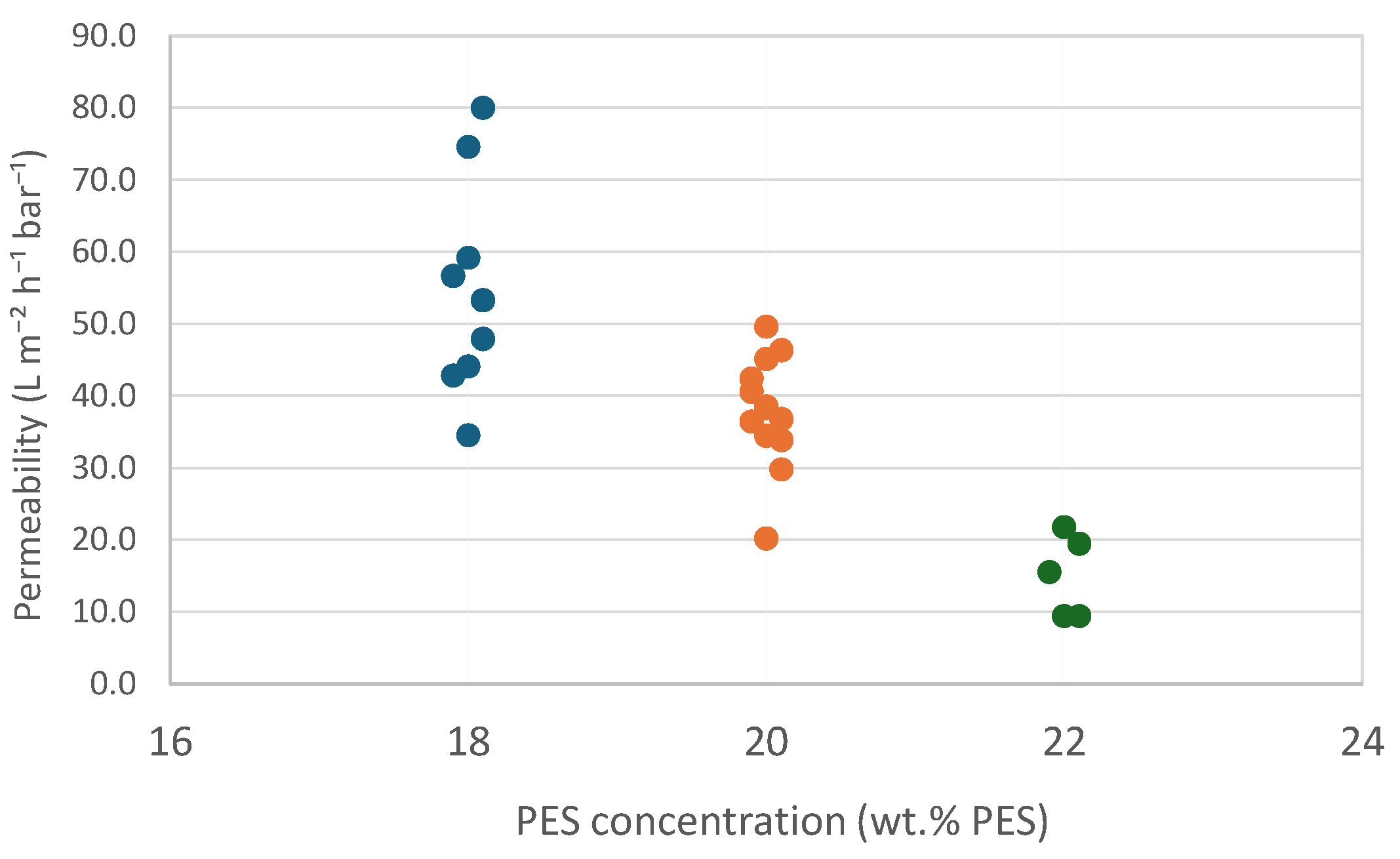
Figure 4 presents the water permeability values obtained for the fabricated membranes. The complete permeability dataset, including flux measurements at each operating pressure and the calculated water permeability values, is provided in Table S2 (Supplementary Materials). A wide range of permeability values was observed, ranging from approximately 9 to 80 L m−2 h−1 bar−1, indicating that the fabrication conditions had a substantial influence on membrane hydraulic performance.
Figure 4.
Water permeability values obtained for membranes fabricated with different PES concentrations. Each point corresponds to an individual membrane fabrication experiment.
Among the investigated fabrication parameters, polymer concentration appeared to have the strongest influence on permeability. Membranes prepared with 22 wt.% PES generally exhibited the lowest permeabilities, ranging from 9.40 to 21.78 L m−2 h−1 bar−1. In contrast, membranes fabricated with 18 wt.% PES frequently exceeded 40 L m−2 h−1 bar−1, reaching maximum values close to 80 L m−2 h−1 bar−1. Membranes prepared with 20 wt.% PES showed intermediate behaviour.
This trend is consistent with the membrane formation mechanism during NIPS [8,29,30]. Increasing polymer concentration increases the viscosity of the casting solution, reducing solvent–non-solvent exchange rates during phase inversion and favoring the formation of denser membrane structures with higher hydraulic resistance [8,9,29,30]. As a result, membranes prepared from more concentrated casting solutions are expected to exhibit lower permeabilities.
In addition to polymer concentration, coagulation bath temperature also affected water permeability. Mean permeability increased with increasing coagulation bath temperature for all polymer concentrations investigated. For membranes prepared with 18 wt.% PES, permeability increased from 46.37 to 62.03 L m−2 h−1 bar−1 when the coagulation bath temperature increased from 6 to 10 °C. Similar trends were observed for membranes prepared with 20 and 22 wt.% PES.
This behaviour is consistent with the NIPS mechanism. Higher coagulation bath temperatures generally accelerate solvent–non-solvent exchange, promoting faster demixing during phase inversion [8,53]. Under these conditions, membrane structures with lower hydraulic resistance may be formed, leading to higher water permeabilities.
Although the effect of coagulation bath temperature was evident, its influence was less pronounced than that of polymer concentration. The differences observed between membranes prepared with 18, 20 and 22 wt.% PES were considerably larger than those associated with the temperature range investigated, suggesting that polymer concentration was the dominant factor controlling membrane water permeability within the experimental domain studied.
The influence of casting thickness on water permeability was less evident than the effects associated with polymer concentration and coagulation bath temperature. In general, membranes fabricated with a nominal casting thickness of 90 µm tended to exhibit lower permeabilities than those prepared with 60 and 75 µm. This behaviour is expected because thicker cast films may increase the hydraulic resistance of the resulting membrane.
However, the effect of casting thickness was not always consistent for all fabrication conditions. It should be noted that the values reported in this study correspond to the nominal thickness imposed by the casting knife. The effective thickness of the selective layer may differ from the nominal value due to variations in casting solution viscosity, interaction with the support material, and phase-inversion kinetics. Consequently, membrane permeability cannot be attributed exclusively to the geometrical thickness imposed during casting.
3.2. Results of MWCO Tests
The selectivity of the fabricated membranes was evaluated using PEG solutions with molecular weights of 6, 20 and 35 kDa together with dextran of 75 kDa. The resulting rejection data were used to estimate the MWCO of the membranes. Complete rejection and MWCO data are provided in Table S3 (Supplementary Materials).
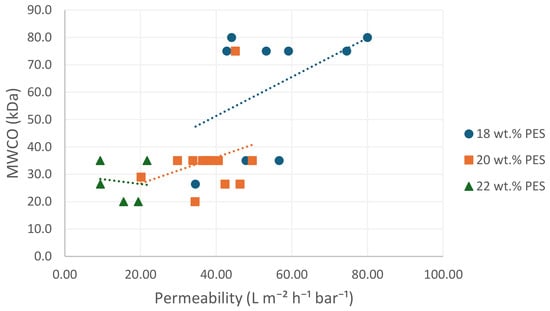
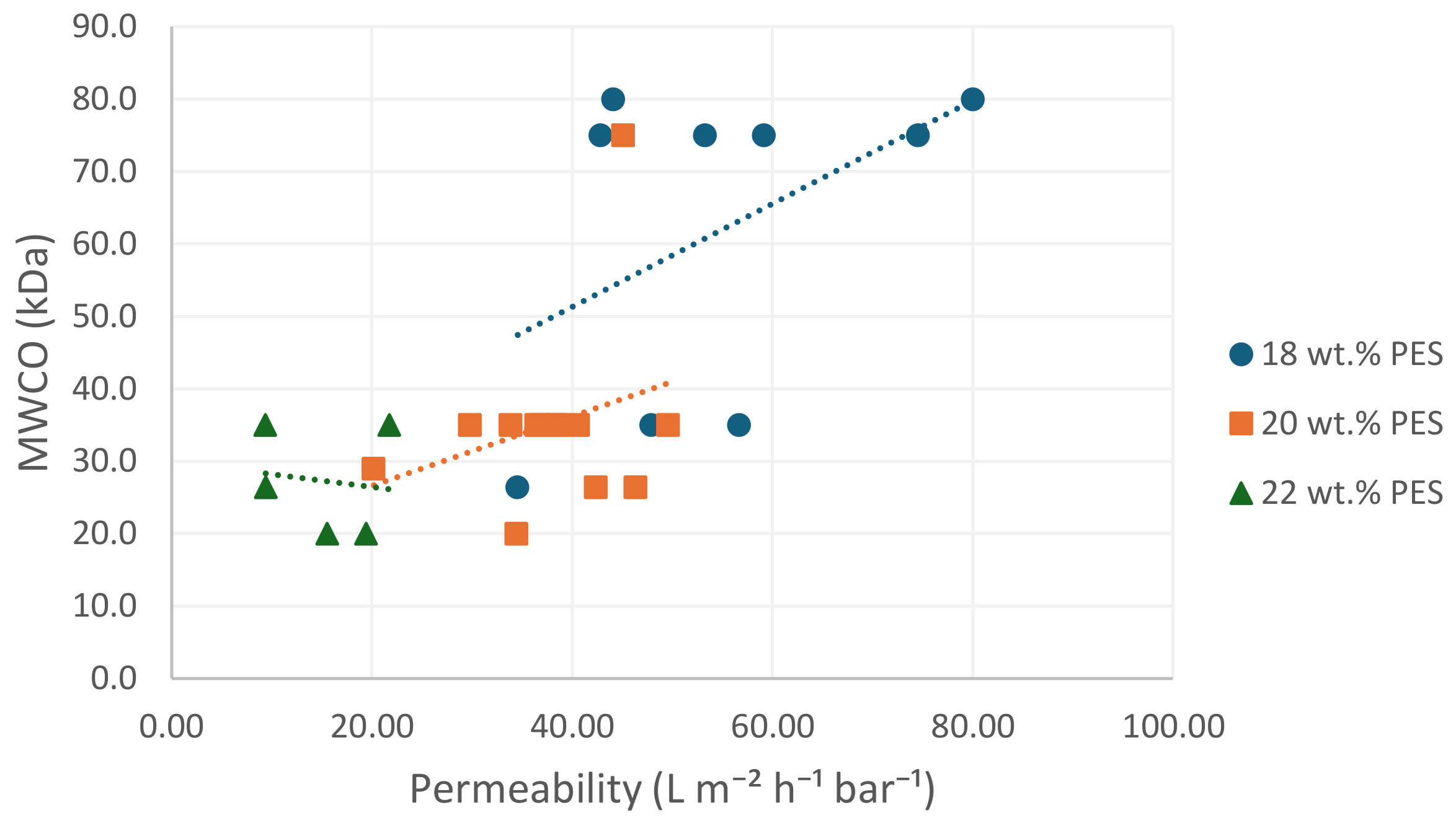
Figure 5 shows the relationship between water permeability and MWCO for membranes fabricated with different PES concentrations. In general, membranes exhibiting lower water permeabilities showed lower MWCO values, whereas membranes with higher permeabilities tended to exhibit higher MWCO values. This behaviour is consistent with the expected permeability–selectivity trade-off commonly observed in ultrafiltration membranes [54].
Figure 5.
Relationship between water permeability and MWCO for membranes fabricated with different PES concentrations. Membranes with MWCO values above the highest molecular weight investigated (>75 kDa) were represented as 80 kDa for visualization purposes.
Polymer concentration exerted a clear influence on membrane selectivity. Membranes fabricated with 22 wt.% PES generally exhibited MWCO values between 20 and 35 kDa, indicating a relatively narrow selectivity range. In contrast, membranes prepared with 18 wt.% PES frequently exhibited MWCO values of 75 kDa or higher, reflecting the formation of more open membrane structures. Membranes fabricated with 20 wt.% PES displayed intermediate behaviour, most commonly exhibiting MWCO values between 26.5 and 35 kDa.
These results are consistent with the permeability trends discussed previously. The lower permeabilities observed for membranes prepared with higher PES concentrations were accompanied by lower MWCO values, whereas the highly permeable membranes fabricated with 18 wt.% PES exhibited substantially larger MWCO values. This observation suggests that increasing polymer concentration promotes the formation of denser membrane structures during phase inversion, simultaneously reducing water permeability and increasing membrane selectivity.
The influence of polymer concentration on MWCO was particularly evident when comparing the membranes fabricated with 18 and 22 wt.% PES. While membranes prepared with 22 wt.% PES remained within a relatively restricted MWCO range, membranes fabricated with 18 wt.% PES covered a much broader selectivity domain. This behaviour may be associated with differences in the viscosity of the casting solutions. At higher polymer concentrations, reduced solvent–non-solvent exchange rates during NIPS may favour the formation of denser selective layers, limiting both permeability and MWCO. Conversely, lower polymer concentrations promote faster demixing and the formation of structures with larger effective pore sizes.
Figure 5 also suggests that the permeability–selectivity trade-off was more pronounced for membranes fabricated with 18 wt.% PES than for those prepared with 20 and 22 wt.% PES. In the latter cases, MWCO values remained within a relatively narrow range despite variations in water permeability. This behaviour may indicate that highly concentrated casting solutions lead to membrane structures whose selectivity is less sensitive to changes in fabrication conditions.
3.3. Statistical Analysis of Membrane Performance
Water permeability and MWCO were evaluated using analysis of variance and multiple linear regression models Table S4 and Figure S1 (Supplementary Materials) to determine the influence of polymer concentration, coagulation bath temperature, and casting thickness on membrane performance.
3.3.1. Water Permeability
A multiple linear regression model including the main effects of polymer concentration, coagulation bath temperature, and casting thickness was developed for water permeability.
The main-effect model explained 88.2% of the observed variability in water permeability (R2 = 0.882, adjusted R2 = 0.867), indicating that the selected fabrication parameters adequately described membrane hydraulic performance within the experimental domain investigated. The regression coefficients and associated significance levels are summarized in Table 3.
Table 3.
Regression coefficients for water permeability.
All three fabrication parameters were statistically significant (p < 0.001). Polymer concentration exhibited the largest regression coefficient (−15.78), confirming the trends previously observed in Figure 4. Increasing polymer concentration produced a marked reduction in membrane permeability. Coagulation bath temperature showed a positive coefficient (12.09), indicating that higher temperatures favoured the formation of more permeable membrane structures. In contrast, casting thickness exhibited a negative coefficient (−13.33), indicating a reduction in permeability as the nominal casting thickness increased.
A second model including first-order interaction terms between polymer concentration, coagulation bath temperature, and casting thickness was also evaluated. Although the inclusion of interaction terms slightly increased the coefficient of determination (R2 = 0.896), the improvement was not statistically significant when compared with the main-effect model (ANOVA comparison, p = 0.4734). Furthermore, the adjusted coefficient of determination did not improve. Consequently, the main-effect model was retained as the most parsimonious representation of the experimental data.
The statistical analysis confirms that polymer concentration was the dominant parameter controlling water permeability, while coagulation bath temperature and casting thickness acted as secondary but statistically significant factors. Residual analysis did not reveal major violations of the assumptions of linear regression; residuals were approximately normally distributed, no severe departures from homoscedasticity were observed, and no highly influential observations were detected (Figure S1, Supplementary Materials). Consequently, the effects of the fabrication parameters on water permeability could be adequately described without considering first-order interactions.
3.3.2. MWCO
A multiple linear regression model including the main effects of polymer concentration, coagulation bath temperature, and casting thickness was developed for MWCO.
The main-effect model explained 71.2% of the observed variability in MWCO (R2 = 0.712, adjusted R2 = 0.674), indicating that the selected fabrication parameters exerted a significant influence on membrane selectivity. Polymer concentration and coagulation bath temperature were both statistically significant (p < 0.001), whereas casting thickness did not show a significant effect on MWCO (p = 0.302).
The regression coefficients indicate that increasing polymer concentration reduced MWCO, while increasing coagulation bath temperature promoted higher MWCO values. These results are fully consistent with the permeability trends discussed previously and support the expected permeability–selectivity trade-off associated with membrane formation by NIPS [54]. Membranes fabricated from more concentrated casting solutions produced lower permeabilities and lower MWCO values, whereas higher coagulation bath temperatures promoted simultaneously higher permeability and higher MWCO values.
A second regression model including first-order interaction terms was subsequently evaluated. The interaction model increased the coefficient of determination from 0.712 to 0.795, although the overall improvement did not reach statistical significance at the 95% confidence level when compared with the main-effect model (ANOVA comparison, p = 0.0717). Nevertheless, a statistically significant interaction between polymer concentration and coagulation bath temperature was identified (p = 0.0118), whereas the remaining interaction terms were not significant. The interaction model explained 79.5% of the observed variability in MWCO (R2 = 0.795, adjusted R2 = 0.734), with a residual standard error of 10.85. The regression coefficients and significance levels obtained for the interaction model are summarized in Table 4.
Table 4.
Regression coefficients for the MWCO interaction model.
This result suggests that membrane selectivity is more sensitive to phase-inversion kinetics than water permeability [8]. The influence of coagulation bath temperature on MWCO depended on polymer concentration, indicating that the effect of temperature became modified by the viscosity-dependent behavior of the casting solution during membrane formation. At lower polymer concentrations, changes in coagulation bath temperature produced larger variations in MWCO, whereas at higher polymer concentrations the selectivity remained within a relatively narrower range.
Although the interaction model provided useful information regarding the combined influence of polymer concentration and coagulation bath temperature, the main-effect model remained adequate for describing the general behavior of the system. Overall, the statistical analysis confirms that polymer concentration was the dominant parameter controlling membrane selectivity, while coagulation bath temperature acted as an important secondary factor and casting thickness exhibited a comparatively limited influence on MWCO.
4. Discussion
The fabricated membranes exhibited a wide range of permeability and MWCO values, demonstrating the strong influence of the selected fabrication parameters on membrane performance. Rather than considering permeability and selectivity as independent responses, the discussion is organized around the mechanisms governing membrane formation by NIPS and the resulting permeability–selectivity relationship. Particular attention is given to the roles of polymer concentration, coagulation bath temperature, and casting thickness in determining membrane structure and performance.
4.1. Dominant Role of Polymer Concentration
As shown in Figure 4 and confirmed by the statistical analysis presented in Section 3.3.1, polymer concentration was the dominant fabrication parameter controlling water permeability. Furthermore, the MWCO results discussed in Section 3.2 and Section 3.3.2 demonstrated that polymer concentration also exerted a strong influence on membrane selectivity. Consequently, polymer concentration emerged as the main factor governing the permeability–selectivity balance of the fabricated ultrafiltration membranes. The influence of polymer concentration may be associated with changes in casting solution viscosity, as commonly reported in the literature on NIPS membrane formation. Although viscosity was not directly measured in this study, this established relationship provides a possible explanation for the observed permeability and MWCO trends. As polymer concentration increases, viscosity increases significantly, reducing molecular mobility and slowing solvent–non-solvent exchange during phase inversion [8,9]. Under these conditions, membrane formation becomes increasingly controlled by diffusion limitations, favouring delayed demixing phenomena and the formation of denser membrane structures with higher hydraulic resistance and lower effective pore size [8,9].
The reduction in water permeability observed throughout the investigated concentration range was not proportional. In particular, the decrease observed when increasing PES concentration from 20 to 22 wt.% was considerably greater than that observed between 18 and 20 wt.%. This behaviour suggests that concentration effects become amplified at higher polymer concentrations, where relatively small changes in polymer content may induce substantial modifications in phase-inversion kinetics and membrane structure.
Such behaviour has been reported for other phase-inversion systems, where highly concentrated polymer solutions may approach gel-like regions characterized by very slow solvent–non-solvent exchange kinetics [9].
The selectivity results support this interpretation. As shown in Figure 5, membranes fabricated with 22 wt.% PES generally exhibited MWCO values between 20 and 35 kDa, whereas membranes prepared with 18 wt.% PES frequently exhibited MWCO values close to or above 75 kDa. These differences indicate that polymer concentration directly affects the development of the selective layer, modifying the pore size distribution responsible for membrane separation performance [8,29,30].
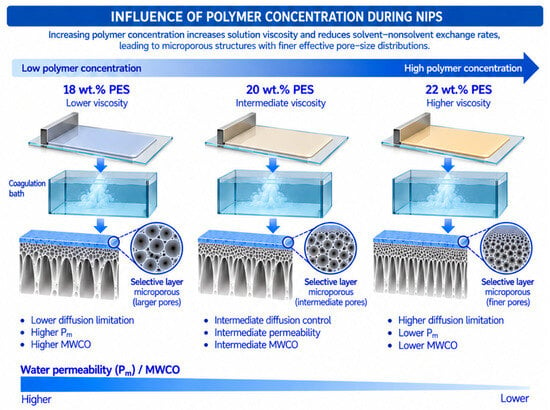
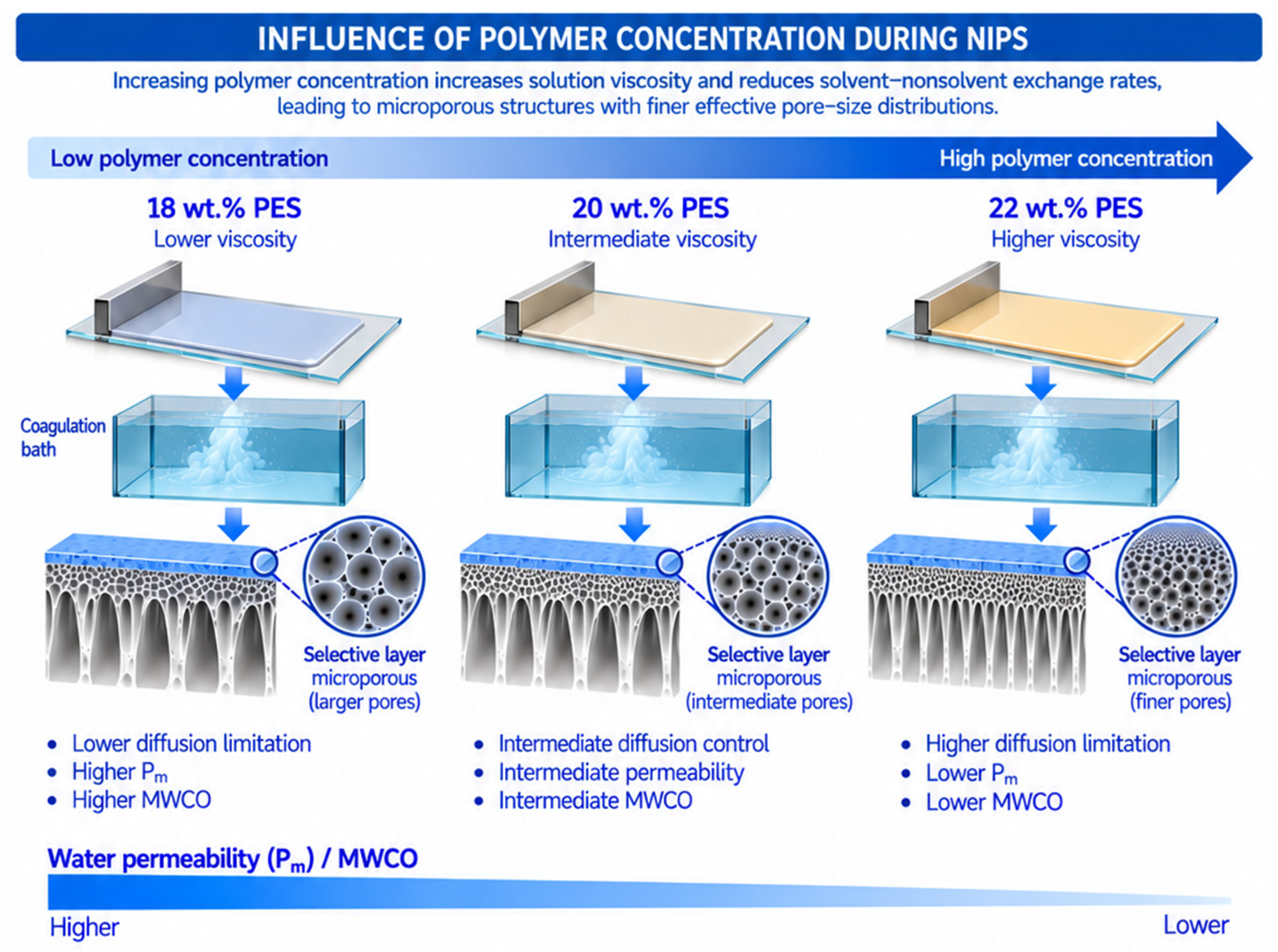
Therefore, polymer concentration acts not only as a compositional parameter but also as a key factor governing casting solution viscosity, phase-inversion dynamics, membrane structure development, and ultimately the permeability–selectivity balance of the fabricated ultrafiltration membranes. Figure 6 summarizes the conceptual effects of polymer concentration on membrane formation during NIPS and the resulting membrane performance.
Figure 6.
Conceptual interpretation of the influence of polymer concentration on membrane formation during NIPS. The scheme summarizes the trends inferred from permeability and MWCO measurements together with membrane formation mechanisms commonly reported in the literature. It does not represent direct morphological observations of the membranes fabricated in this study.
4.2. Influence of Coagulation Bath Temperature
The results presented in Section 3.1 and Section 3.2 showed that increasing coagulation bath temperature promoted both higher water permeabilities and larger MWCO values. Although the effect of temperature was less pronounced than that of polymer concentration, it was statistically significant for both response variables and therefore played an important role in membrane formation during NIPS.
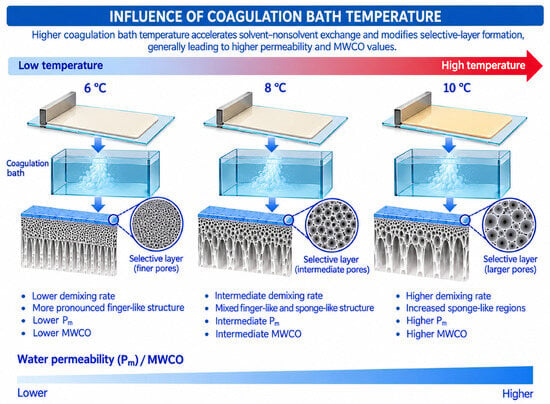
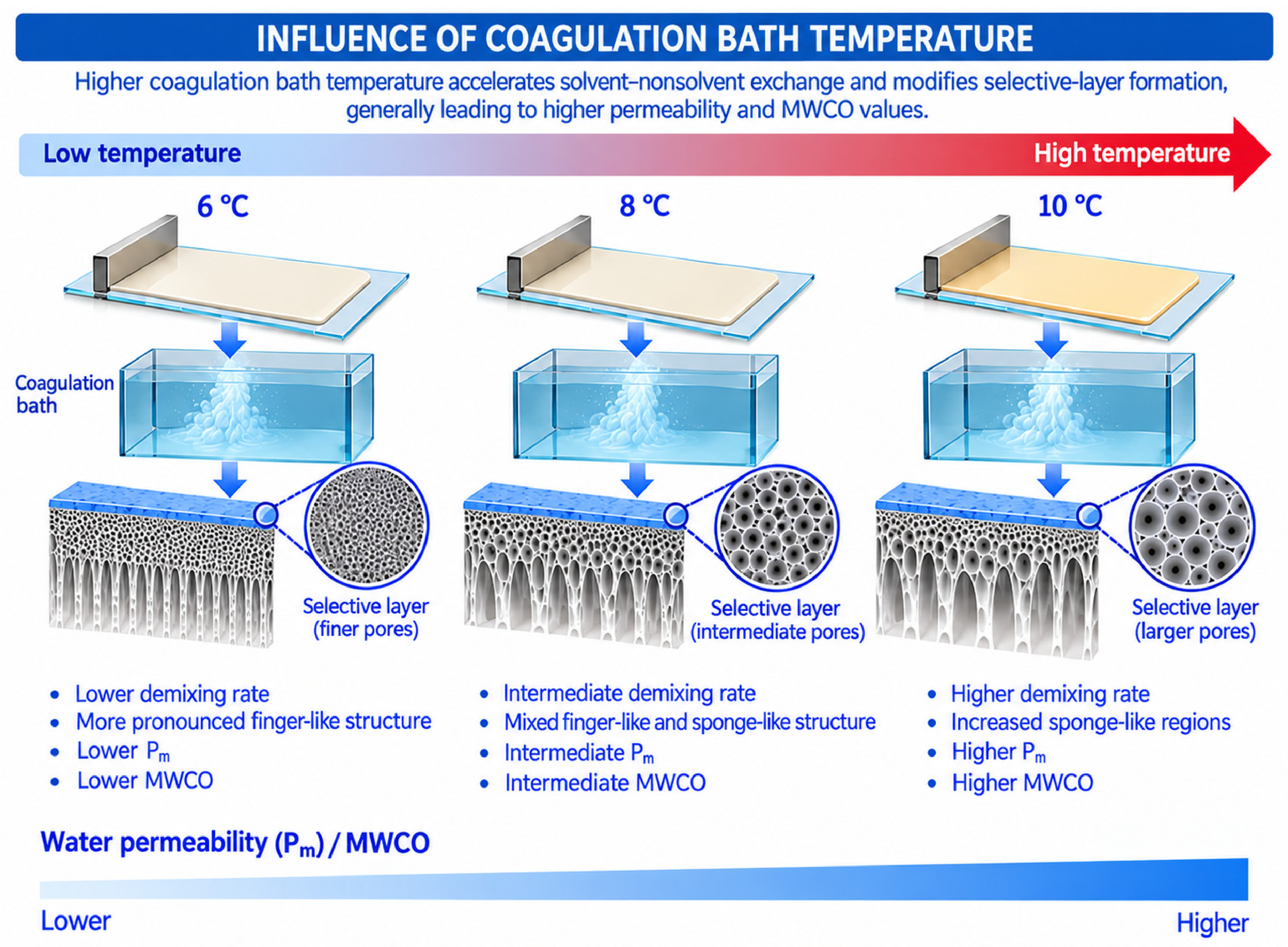
Figure 7 shows the influence of coagulation bath temperature is particularly important during the earliest stages of phase inversion, when the selective surface layer is formed. Since membrane selectivity is primarily governed by the pore size distribution of this thin outer skin, relatively small changes in solvent–non–solvent exchange kinetics during this stage may produce significant variations in MWCO. Consequently, coagulation bath temperature affects not only the overall membrane morphology but also the characteristics of the selective layer responsible for separation performance.
Figure 7.
Conceptual interpretation of the influence of coagulation bath temperature on membrane formation during NIPS. The scheme summarizes the trends inferred from permeability and MWCO measurements together with membrane formation mechanisms commonly reported in the literature. It does not represent direct morphological observations of the membranes fabricated in this study.
Higher coagulation bath temperatures increase molecular mobility and diffusion rates, accelerating the exchange between DMA and water during phase inversion [8,53]. Under these conditions, demixing occurs more rapidly, favoring the development of membrane structures with lower hydraulic resistance and larger effective pore sizes [8,53]. This interpretation is consistent with the simultaneous increase in water permeability and MWCO observed in the present work.
Once the selective layer has been established, coagulation bath temperature continues to influence the development of the membrane substructure. Faster demixing generally promotes the formation of more open porous morphologies, frequently associated with finger-like structures, whereas slower exchange rates favour denser sponge-like regions [9]. These structural differences contribute to the variations observed in water permeability.
The statistical analysis of MWCO revealed an additional feature that was not observed for water permeability. While permeability was adequately described by a model including only the main effects of the fabrication parameters, MWCO exhibited a significant interaction between polymer concentration and coagulation bath temperature. This result suggests that the influence of temperature on membrane selectivity depends on the concentration of the casting solution.
A possible explanation is that temperature and polymer concentration act simultaneously on the dynamics of phase inversion. At lower polymer concentrations, where casting solution viscosity is relatively low, changes in coagulation bath temperature may strongly affect solvent–non–solvent exchange and consequently the structure of the selective layer. In contrast, at higher polymer concentrations, the increased viscosity may partially limit the influence of temperature, reducing its impact on membrane selectivity.
These observations indicate that coagulation bath temperature should not be interpreted as an independent fabrication parameter. Instead, its influence is closely linked to the physicochemical characteristics of the casting solution and to the mechanisms governing the formation of the selective skin layer during phase inversion.
4.3. Structural Basis of Permeability and Selectivity
Figure 5 illustrates the relationship between water permeability and MWCO for the fabricated membranes. The figure reveals the expected permeability–selectivity trade-off characteristic of ultrafiltration membranes [50,54], where membranes exhibiting higher permeabilities generally displayed larger MWCO values, while membranes with lower permeabilities tended to exhibit lower MWCO values and consequently higher selectivity.
As highlighted by the experimental observations and statistical analyses presented in Section 3.1, Section 3.2 and Section 3.3, this relationship is governed by the distinct structural features controlling each membrane response. While water permeability was significantly influenced by polymer concentration, coagulation bath temperature, and casting thickness, MWCO was primarily controlled by polymer concentration and coagulation bath temperature. In addition, a significant concentration–temperature interaction was detected for MWCO but not for permeability.
Water permeability depends on the hydraulic resistance of the complete membrane structure [8,54], including the selective layer, pore connectivity, overall porosity, tortuosity, and the morphology of the supporting substructure. Consequently, transport through the membrane is influenced not only by the characteristics of the selective skin but also by the internal porous architecture generated during phase inversion.
In contrast, MWCO is primarily determined by the pore size distribution of the selective surface layer [18,19,20,21]. Since solute rejection is controlled mainly by the characteristics of this thin outer skin, fabrication parameters affecting the earliest stages of membrane formation exert a stronger influence on MWCO than on permeability.
This interpretation is consistent with the statistical results obtained in this study. Polymer concentration and coagulation bath temperature significantly affected both water permeability and MWCO because both parameters directly influence phase-inversion kinetics. However, casting thickness significantly affected permeability while exhibiting no significant influence on MWCO. This behaviour suggests that variations in nominal casting thickness primarily modified the overall hydraulic resistance of the membrane, whereas the pore size distribution of the selective layer remained comparatively less affected.
The significant concentration–temperature interaction identified for MWCO further supports this interpretation. Since both fabrication parameters directly influence selective skin formation, their combined effect becomes more evident in selectivity measurements than in permeability measurements.
The permeability–selectivity relationship observed in Figure 5 reflects the classical compromise encountered in ultrafiltration membrane design [54]. Membranes fabricated with 18 wt.% PES generally exhibited the highest permeabilities but also the highest MWCO values, whereas membranes prepared with 22 wt.% PES showed lower permeabilities and substantially higher selectivity. Membranes fabricated with 20 wt.% PES occupied an intermediate region between these two extremes, providing a balance between productivity and separation performance.
Overall, the combined analysis of permeability and MWCO demonstrates that membrane performance cannot be adequately interpreted through a single response variable. Water permeability reflects the hydraulic behaviour of the complete membrane structure, whereas MWCO primarily reflects the characteristics of the selective skin layer. Their simultaneous evaluation therefore provides a more comprehensive understanding of membrane formation and performance during NIPS.
4.4. Influence of Casting Thickness and Structural Limitations
The influence of casting thickness on membrane performance was less straightforward than the effects associated with polymer concentration and coagulation bath temperature. As discussed in Section 3.1 and Section 3.3.1, casting thickness significantly affected water permeability, whereas no significant effect was detected for MWCO (Section 3.3.2). These observations suggest that casting thickness predominantly influences the hydraulic resistance of the membrane rather than the characteristics of the selective layer governing membrane selectivity.
At first sight, this behaviour may appear unexpected because thicker cast films are generally associated with increased transport resistance. However, the thickness values considered in this work correspond to the nominal thickness imposed by the casting knife and not necessarily to the effective thickness of the selective layer. During membrane formation, the final structure depends not only on the geometrical conditions imposed during casting but also on factors such as casting solution viscosity, interaction with the support material, solvent–non–solvent exchange kinetics, and polymer precipitation dynamics [8,9].
The permeability results presented in Figure 4 and analysed statistically in Section 3.3.1 indicate that casting thickness contributed significantly to the hydraulic behaviour of the fabricated membranes. In contrast, the MWCO results discussed in Section 3.2 and Section 3.3.2 suggest that nominal thickness exerted a considerably smaller influence on membrane selectivity. This observation supports the hypothesis that casting thickness primarily affects the overall hydraulic resistance of the membrane rather than the pore size distribution of the selective surface layer. Consequently, the nominal thickness defined by the casting knife should be interpreted as an operational fabrication parameter rather than as a direct measurement of the final hydraulic thickness of the membrane, since different casting solutions subjected to the same nominal casting thickness may develop substantially different internal structures and selective layers after phase inversion [8].
A more detailed interpretation of thickness effects would require complementary structural characterization techniques such as scanning electron microscopy, porosity analysis, or direct measurements of the selective layer thickness. Although these techniques were outside the scope of the present study, the combined analysis of permeability (Section 3.1 and Section 3.3.1) and MWCO (Section 3.2 and Section 3.3.2) provides indirect evidence that nominal casting thickness and effective selective-layer thickness should not necessarily be considered equivalent parameters during membrane fabrication by NIPS.
4.5. Accessible Membrane Characterization
The results obtained in this study demonstrate that relevant information regarding membrane performance can be obtained using relatively simple characterization methods based on water permeability and MWCO measurements. Despite the absence of advanced characterization techniques such as scanning electron microscopy, porometry, or surface analysis methods, the selected experimental approach was able to clearly distinguish the effects of fabrication parameters on membrane productivity and selectivity.
The combined analysis of permeability and MWCO provided complementary information regarding membrane formation during NIPS [18,19,20,21]. Water permeability reflected the overall hydraulic behaviour of the membrane structure, whereas MWCO provided information related to the characteristics of the selective layer. Together, these parameters enabled the identification of consistent relationships between polymer concentration, coagulation bath temperature, membrane structure, and performance.
The methodology applied in this study was initially developed and implemented in a specialized membrane research laboratory and subsequently transferred to a different research environment with more limited analytical infrastructure. The successful fabrication, characterization, and comparison of membranes under these conditions demonstrate that meaningful membrane research can be carried out using accessible experimental methodologies when adequate know-how and experimental procedures are transferred and properly implemented.
The results further show that membrane optimization should not be based on permeability or selectivity independently. The combined interpretation of both parameters was essential to identify the permeability–selectivity trade-off and to evaluate the influence of fabrication parameters on overall membrane performance. Consequently, the simultaneous use of permeability and MWCO provides a more realistic framework for membrane optimization than the use of either parameter alone.
The statistical analyses confirmed that the experimental methodology was sufficiently sensitive to identify significant effects associated with fabrication conditions. Polymer concentration emerged as the dominant parameter controlling membrane performance, while coagulation bath temperature acted as an important secondary factor. These conclusions were obtained using instrumentation that is readily available in many research laboratories.
Although advanced structural characterization techniques would provide additional insight into membrane morphology and selective layer formation, the methodology presented here offers a practical framework for membrane fabrication, functional evaluation, technology transfer, and the development of membrane research capabilities in laboratories where access to specialized analytical infrastructure may be limited. The results suggest that permeability and MWCO measurements are valuable tools for preliminary membrane screening, process optimization, comparative studies of membrane fabrication parameters [18,19,20,21], and transferring membrane manufacturing know-how between research laboratories. The proposed approach does not aim to replace characterization techniques like SEM, AFM, contact angle, or porosity analysis, but rather to provide an accessible alternative for preliminary functional evaluation. Therefore, structural interpretations are based on established NIPS mechanisms and should not be considered direct morphological evidence.
While the present study offers helpful insights into the hydraulic performance and size-selective separation characteristics of the fabricated ultrafiltration membranes, these findings can be supported by another methods to determine how effectively they remove specific micropollutants. As highlighted in Directive (EU) 2024/3019 [55], the removal of selected micropollutants is relevant to assessing the performance of quaternary wastewater treatment. Further investigations should therefore evaluate the retention of selected micropollutants using appropriate analytical methods. In addition, ultrafiltration membranes may physically remove microorganisms through size-selective separation; however, their microbial removal efficiency depends on membrane characteristics, microorganism size, membrane integrity, and operating conditions. Consequently, microbiological testing would be required to determine the extent of microbial removal and assess the potential contribution of these membranes to water treatment. Neither micropollutant retention nor microbial removal was experimentally evaluated in the present study. Future research addressing these aspects would complement the permeability and MWCO results and provide a more comprehensive assessment of the potential applicability of the fabricated membranes in water and wastewater treatment.
5. Conclusions
PES ultrafiltration membranes were successfully fabricated using the NIPS method and characterized through water permeability and MWCO measurements. The experimental results demonstrated that membrane performance was strongly governed by the selected fabrication conditions.
Among the investigated parameters, polymer concentration emerged as the dominant factor controlling membrane behaviour. Increasing PES concentration produced membranes with lower water permeability and lower MWCO values, indicating the formation of structures with finer effective pore-size distributions and higher hydraulic resistance. In contrast, increasing coagulation bath temperature promoted both higher permeability and higher MWCO values, confirming its important role in phase-inversion kinetics and selective-layer development.
Statistical analysis confirmed that polymer concentration, coagulation bath temperature, and casting thickness significantly affected water permeability. For MWCO, polymer concentration and coagulation bath temperature were identified as the main controlling parameters, whereas casting thickness did not exhibit a statistically significant influence. Furthermore, a significant interaction between polymer concentration and coagulation bath temperature was observed for MWCO, highlighting the sensitivity of membrane selectivity to phase-inversion conditions during selective-layer formation.
The combined analysis of permeability and MWCO demonstrated the existence of a clear permeability–selectivity trade-off. Membranes fabricated with 18 wt.% PES exhibited the highest permeabilities and largest MWCO values, whereas membranes prepared with 22 wt.% PES showed lower permeabilities and higher selectivity. Membranes fabricated with 20 wt.% PES provided an intermediate compromise between productivity and separation performance.
Finally, the results show that accessible characterization methods based on permeability and MWCO measurements can provide meaningful information about membrane formation and performance. The successful implementation of the methodology in different research environments highlights its usefulness for membrane development, technology transfer, training, and the expansion of membrane research capabilities in laboratories with limited access to advanced analytical infrastructure.
Supplementary Materials
The following supporting information can be downloaded at: https://www.mdpi.com/article/10.3390/membranes16110388/s1, Table S1. Fabrication conditions of the membranes; Table S2. Water fluxes and calculated water permeabilities; Table S3. Solute rejection data and estimated MWCO values; Table S4. Regression coefficients for the MWCO interaction model; Figure S1 → Residual diagnostics (modelo permeabilidad).
Author Contributions
Conceptualization, P.A.A.-T. and J.M.L.-J.; methodology, P.A.A.-T., A.I.C. and J.L.S.C.; software, J.M.L.-J. and J.L.S.C.; validation, J.L.G., A.I.C. and M.I.I.C.; formal analysis, P.A.A.-T. and J.M.L.-J.; investigation, P.A.A.-T. and J.M.L.-J.; resources, P.A.A.-T.; data curation, P.A.A.-T. and J.M.L.-J.; writing—original draft preparation, P.A.A.-T. and J.M.L.-J.; writing—review and editing, P.A.A.-T., J.M.L.-J., J.L.G. and M.I.I.C.; visualization, J.M.L.-J.; supervision, P.A.A.-T. and J.L.G.; project administration, P.A.A.-T.; funding acquisition, P.A.A.-T. All authors have read and agreed to the published version of the manuscript.
Funding
This work was carried out with the aid of a grant from UNESCO and the International Development Research Centre, Canada. The views expressed herein do not necessarily represent those of UNESCO-TWAS, OWSD, IDRC or its Board of Governors. Grant No. 109755-001.
Institutional Review Board Statement
Not applicable.
Informed Consent Statement
Not applicable.
Data Availability Statement
The original contributions presented in this study are included in this article/Supplementary Materials. Further inquiries can be directed to the corresponding author.
Acknowledgments
The authors appreciate the support of the national and regional authorities of the Universidad Católica Boliviana “San Pablo”. This research was carried out with the support of the Center for Research in Water, Energy, and Sustainability (CINAES) of the Environmental Engineering career of Universidad Católica Boliviana “San Pablo” in La Paz.
Conflicts of Interest
The authors declare no conflicts of interest.
Abbreviations
The following abbreviations are used in this manuscript:
| AFM | Atomic Force Microscopy |
| ANOVA | Analysis of Variance |
| CINAES | Centro de Investigación en Agua, Energía y Sostenibilidad |
| DMA | Dimethylacetamide |
| MWCO | Molecular Weight Cut-Off |
| NIPS | Non-Solvent-Induced Phase Separation |
| PEG | Polyethylene Glycol |
| PES | Polyethersulfone |
| SEM | Scanning Electron Microscopy |
| UF | Ultrafiltration |
| UNU-INWEH | United Nations University Institute for Water, Environment and Health |
References
- Kushawaha, J.; Borra, S.; Kushawaha, A.K.; Singh, G.; Singh, P. Climate change and its impact on natural resources. In Water Conservation in the Era of Global Climate Change; Elsevier: Amsterdam, The Netherlands, 2021; pp. 333–346. [Google Scholar] [CrossRef] [Scilit]
- Shemer, H.; Wald, S.; Semiat, R. Challenges and solutions for global water scarcity. Membranes 2023, 13, 612. [Google Scholar] [CrossRef] [Scilit] [PubMed]
- Madani, K. Global Water Bankruptcy: Living Beyond Our Hydrological Means in the Post-Crisis Era; UNU-INWEH Report; UN University: Tokyo, Japan, 2026. [Google Scholar] [CrossRef] [Scilit]
- Ezbakhe, F. Addressing water pollution as a means to achieving the sustainable development goals. J. Water Pollut. Control 2018, 1, 6. [Google Scholar]
- United Nations Environment Program. Towards a Pollution-Free Planet: Background Report; United Nations Environment Program: Nairobi, Kenya, 2017. [Google Scholar]
- Pandit, D.J.; Sharma, A.K. Advanced techniques in wastewater treatment: A comprehensive review. Asian J. Environ. Ecol. 2024, 23, 60–73. [Google Scholar] [CrossRef] [Scilit]
- Aloulou, H.; Attia, A.; Aouay, F.; Khmiri, Y.; Hadj Salem, A.; Saleh, Z.; Ben Amar, R. Functional material innovations in ultrafiltration and microfiltration for advanced water treatment: A comprehensive review. Environ. Sci. Water Res. Technol. 2026, 12, 1670–1692. [Google Scholar] [CrossRef] [Scilit]
- Soler-Cabezas, J.L.; Iborra-Clar, M.I.; Mendoza-Roca, J.A.; Iborra-Clar, A.; Lora-García, J.; Ferrer-Polonio, E.; Cardona-Navarrete, S.C.; Bai, G. Application of novel eco-friendly membranes prepared with recycled high-impact polystyrene to municipal wastewater treatment. J. Clean. Prod. 2026, 555, 148201. [Google Scholar] [CrossRef] [Scilit]
- Kim, S.; Son, J.; Park, H.; Jeong, E.; Nam, K.-H.; Bae, J.-S. Polymer concentration and liquid–liquid demixing time correlation with porous structure of low dielectric polyimide in diffusion-driven phase separation. Polymers 2022, 14, 1425. [Google Scholar] [CrossRef] [Scilit] [PubMed]
- Peng, J.; Su, Y.; Chen, W.; Shi, Q.; Jiang, Z. Effects of coagulation bath temperature on the separation performance and antifouling property of poly(ether sulfone) ultrafiltration membranes. Ind. Eng. Chem. Res. 2010, 49, 4858–4864. [Google Scholar] [CrossRef] [Scilit]
- Amirilargani, M.; Saljoughi, E.; Mohammadi, T.; Moghbeli, M.R. Effects of coagulation bath temperature and polyvinylpyrrolidone content on flat sheet asymmetric polyethersulfone membranes. Polym. Eng. Sci. 2010, 50, 885–893. [Google Scholar] [CrossRef] [Scilit]
- Saleh, M.; Ozay, Y.; Yalvac, M.; Dizge, N. Preparation of composite polyethersulfone membrane containing basalt powder and optimization of the parameters using response surface methodology. Environ. Technol. 2022, 43, 3486–3496. [Google Scholar] [CrossRef] [Scilit] [PubMed]
- Chong, H.Y.; Muhammad, S.A.H.; Norazmi, S.N.; Chang, Z.H.; Teow, Y.H. A review on membrane fabrication: Structure, properties and performance relationship. J. Appl. Membr. Sci. Technol. 2025, 29, 73–97. [Google Scholar] [CrossRef] [Scilit]
- Wang, Y.; Wei, G. Recent trends in polymer membranes: Fabrication technique, characterization, functionalization, and applications in environmental science (part i). Polymers 2024, 16, 2889. [Google Scholar] [CrossRef] [Scilit] [PubMed]
- Hancock, N.T.; Xu, P.; Roby, M.J.; Gomez, J.D.; Cath, T.Y. Towards direct potable reuse with forward osmosis: Technical assessment of long-term process performance at the pilot scale. J. Membr. Sci. 2013, 445, 34–46. [Google Scholar] [CrossRef] [Scilit]
- Krahnstöver, T.; Hochstrat, R.; Wintgens, T. Comparison of methods to assess the integrity and separation efficiency of ultrafiltration membranes in wastewater reclamation processes. J. Water Process Eng. 2019, 30, 100646. [Google Scholar] [CrossRef] [Scilit]
- Wang, Z.; Wu, Y.; Zhang, X. Enhancing ultrafiltration membrane permeability and antifouling performance through surface patterning with features resembling feed spacers. npj Clean Water 2023, 6, 60. [Google Scholar] [CrossRef] [Scilit]
- Meireles, M.; Bessieres, A.; Rogissart, I.; Aimar, P.; Sanchez, V. An appropriate molecular size parameter for porous membranes calibration. J. Membr. Sci. 1995, 103, 105–115. [Google Scholar] [CrossRef] [Scilit]
- Imbrogno, A.; Calvo, J.I.; Breida, M.; Schwaiger, R.; Schaefer, A.I. Molecular weight cut off (MWCO) determination in ultra-and nanofiltration: Review of methods and implications on organic matter removal. Sep. Purif. Technol. 2025, 354, 128612. [Google Scholar] [CrossRef] [Scilit]
- Hilal, N.; Al-Abri, M.; Al-Hinai, H. Characterization and retention of UF membranes using PEG, HS and polyelectrolytes. Desalination 2007, 206, 568–578. [Google Scholar] [CrossRef] [Scilit]
- Idris, A.; Mat Zain, N.; Noordin, M.Y. Synthesis, characterization and performance of asymmetric polyethersulfone (PES) ultrafiltration membranes with polyethylene glycol of different molecular weights as additives. Desalination 2007, 207, 324–339. [Google Scholar] [CrossRef] [Scilit]
- Jaafar, J.; Nasir, A.M. Grand challenge in membrane fabrication: Membrane science and technology. Front. Membr. Sci. Technol. 2022, 1, 883913. [Google Scholar] [CrossRef] [Scilit]
- Chaturvedi, B.K.; Ghosh, A.K.; Ramachandhran, V.; Trivedi, M.K.; Hanra, M.S.; Misra, B.M. Preparation, characterization and performance of polyethersulfone ultrafiltration membranes. Desalination 2001, 133, 31–40. [Google Scholar] [CrossRef] [Scilit]
- Rahimpour, A.; Madaeni, S.S. Polyethersulfone (PES)/cellulose acetate phthalate (CAP) blend ultrafiltration membranes: Preparation, morphology, performance and antifouling properties. J. Membr. Sci. 2007, 305, 299–312. [Google Scholar] [CrossRef] [Scilit]
- Zhou, C.; Hou, Z.C.; Lu, X.F.; Liu, Z.Y.; Bian, X.K.; Shi, L.Q.; Li, L.A. Effect of polyethersulfone molecular weight on structure and performance of ultrafiltration membranes. Ind. Eng. Chem. Res. 2010, 49, 9988–9997. [Google Scholar] [CrossRef] [Scilit]
- Rohani, R.; Hyland, M.; Patterson, D.A. A refined one-filtration method for aqueous based nanofiltration and ultrafiltration membrane molecular weight cut-off determination using polyethylene glycols. J. Membr. Sci. 2011, 382, 278–290. [Google Scholar] [CrossRef] [Scilit]
- Grylewicz, A.; Szymański, K.; Darowna, D.; Mozia, S. Influence of polymer solvents on the properties of halloysite-modified polyethersulfone membranes prepared by wet phase inversion. Molecules 2021, 26, 2768. [Google Scholar] [CrossRef] [Scilit] [PubMed]
- Madaeni, S.S.; Barzin, J.; Jokar, Z. Evaluation of the morphology and performance of polyether sulfone reverse osmosis composite and non-composite membranes. Polym. Polym. Compos. 2009, 17, 101–108. [Google Scholar] [CrossRef] [Scilit]
- Sun, Z.; Chen, F. Hydrophilicity and antifouling property of membrane materials from cellulose acetate/polyethersulfone in DMAc. Int. J. Biol. Macromol. 2016, 91, 1085–1093. [Google Scholar] [CrossRef] [Scilit] [PubMed]
- Amirilargani, M.; Mohammadi, T. Preparation and characterization of asymmetric polyethersulfone (PES) membranes. Polym. Adv. Technol. 2009, 20, 993–998. [Google Scholar] [CrossRef] [Scilit]
- Mansourpanah, Y.; Gheshlaghi, A. Effects of adding different ethanol amines during membrane preparation on the performance and morphology of nanoporous PES membranes. J. Polym. Res. 2012, 19, 13. [Google Scholar] [CrossRef] [Scilit]
- Liu, M.; Skov, A.L.; Liu, S.-H.; Yu, L.-Y.; Xu, Z.-L. A facile way to prepare hydrophilic homogeneous PES hollow fiber membrane via non-solvent assisted reverse thermally induced phase separation (RTIPS) method. Polymers 2019, 11, 356. [Google Scholar] [CrossRef] [Scilit] [PubMed]
- Qu, X.; Zhang, S.; Wang, J.; Liu, L. Polyethersulfone composite membrane blended with with cellulose fibrils. BioResources 2010, 5, 2323–2336. [Google Scholar] [CrossRef] [Scilit]
- Madaeni, S.S.; Rahimpour, A. Effect of type of solvent and non-solvents on morphology and performance of polysulfone and polyethersulfone ultrafiltration membranes for milk concentration. Polym. Adv. Technol. 2005, 16, 717–724. [Google Scholar] [CrossRef] [Scilit]
- Marjani, A.; Nakhjiri, A.T.; Adimi, M.; Jirandehi, H.F.; Shirazian, S. Effect of graphene oxide on modifying polyethersulfone membrane performance and its application in wastewater treatment. Sci. Rep. 2020, 10, 2049. [Google Scholar] [CrossRef] [Scilit] [PubMed]
- Tshindane, P.; Mamba, B.B.; Motsa, M.M.; Nkambule, T.T.I. Delayed solvent–nonsolvent demixing preparation and performance of a highly permeable polyethersulfone ultrafiltration membrane. Membranes 2023, 13, 39. [Google Scholar] [CrossRef] [Scilit] [PubMed]
- Baker, R.W. Membrane Technology and Applications, 3rd ed.; John Wiley & Sons: Chichester, UK, 2012. [Google Scholar] [CrossRef] [Scilit]
- Mulder, M. Basic Principles of Membrane Technology, 2nd ed.; Kluwer Academic Publishers: Dordrecht, The Netherlands, 1996. [Google Scholar] [CrossRef] [Scilit]
- Li, X.; Chen, C.; Li, J. Formation kinetics of polyethersulfone with cardo membrane via phase inversion. J. Membr. Sci. 2008, 314, 206–211. [Google Scholar] [CrossRef] [Scilit]
- Reuvers, A.J.; Smolders, C.A. Formation of membranes by means of immersion precipitation: Part II. The mechanism of formation of membranes prepared from the system cellulose acetate–acetone–water. J. Membr. Sci. 1987, 34, 67–86. [Google Scholar] [CrossRef] [Scilit]
- Matsuyama, H.; Teramoto, M.; Nakatani, R.; Maki, T. Membrane formation via phase separation induced by penetration of nonsolvent from vapor phase. I. Phase diagram and mass transfer process. J. Appl. Polym. Sci. 1999, 74, 159–170. [Google Scholar] [CrossRef] [Scilit]
- Arthanareeswaran, G.; Starov, V.M. Effect of solvents on performance of polyethersulfone ultrafiltration membranes: Investigation of metal ion separations. Desalination 2011, 267, 57–63. [Google Scholar] [CrossRef] [Scilit]
- Marino, T.; Galiano, F.; Molino, A.; Figoli, A. New frontiers in sustainable membrane preparation: Cyrene™ as green bioderived solvent. J. Membr. Sci. 2019, 586, 224–234. [Google Scholar] [CrossRef] [Scilit]
- Thuyavan, Y.L.; Anantharaman, N.; Arthanareeswaran, G.; Ismail, A.F. Impact of solvents and process conditions on the formation of polyethersulfone membranes and its fouling behavior in lake water filtration. J. Chem. Technol. Biotechnol. 2016, 91, 2568–2581. [Google Scholar] [CrossRef] [Scilit]
- Sterlitech Corporation. CF016 Cell Assembly, Crossflow, 316 SS. Available online: https://www.sterlitech.com/cf016-cell-assembly-crossflow-316-ss (accessed on 19 August 2026).
- Xaba, B.M.; Modise, S.J.; Okoli, B.J.; Monapathi, M.E.; Nelana, S. Characterization of selected polymeric membranes used in the separation and recovery of palladium-based catalyst systems. Membrane 2020, 10, 166. [Google Scholar] [CrossRef] [Scilit] [PubMed]
- Khan, R.M.A.; Ahmad, N.M.; Nasir, H.; Mahmood, A.; Iqbal, M.; Janjua, H.A. Antifouling and water flux enhancement in polyethersulfone ultrafiltration membranes by incorporating water-soluble cationic polymer of poly [2-(dimethyl amino)ethyl methacrylate]. Polymers 2023, 15, 2868. [Google Scholar] [CrossRef] [Scilit] [PubMed]
- Méndez, M.L.; Romero, A.I.; Rajal, V.B.; Castro, E.F.; Calvo, J.I.; Palacio, L.; Hernández, A. Properties of polyethersulfone ultrafiltration membranes modified with polyethylene glycols. Polym. Eng. Sci. 2014, 54, 1211–1221. [Google Scholar] [CrossRef] [Scilit]
- Gan, Q.; Howell, J.A.; Field, R.W.; England, R.; Hughes, D. Study of the effects of defects in ultrafiltration membranes on the water flux and the molecular weight cut-off. Desalination 2002, 149, 485–491. [Google Scholar] [CrossRef] [Scilit]
- Combe, C.; Molis, E.; Lucas, P.; Riley, R.; Clark, M.M. Improvement of a method for the characterization of ultrafiltration membranes by measurements of tracers retention. J. Membr. Sci. 2004, 238, 177–190. [Google Scholar] [CrossRef] [Scilit]
- Posit Team. RStudio: Integrated Development Environment for R; Posit Software, PBC: Boston, MA, USA, 2024. [Google Scholar]
- Anderson, J.A. Regression and ordered categorical variables. J. R. Stat. Soc. Ser. B Methodol. 1984, 46, 1–22. [Google Scholar] [CrossRef] [Scilit]
- Fang, P.; Cui, S.; Song, Z.; Zhu, L.; Du, M.; Yang, C. Phase-field simulation of the effect of coagulation bath temperature on the structure and properties of polyvinylidene fluoride microporous membranes prepared by a nonsolvent-induced phase separation. ACS Omega 2023, 8, 180–189. [Google Scholar] [CrossRef] [Scilit] [PubMed]
- Mehta, A.; Zydney, A.L. Permeability and selectivity analysis for ultrafiltration membranes. J. Membr. Sci. 2005, 249, 245–249. [Google Scholar] [CrossRef] [Scilit]
- European Parliament and Council of the European Union. Directive (EU) 2024/3019 of the European Parliament and of the Council of 27 November 2024 concerning urban wastewater treatment (recast). Off. J. Eur. Union 2024, L, 2024/3019, 12 December 2024. Available online: https://eur-lex.europa.eu/eli/dir/2024/3019/oj (accessed on 23 October 2026).

Disclaimer/Publisher’s Note: The statements, opinions and data contained in all publications are solely those of the individual author(s) and contributor(s) and not of MDPI and/or the editor(s). MDPI and/or the editor(s) disclaim responsibility for any injury to people or property resulting from any ideas, methods, instructions or products referred to in the content. |
© 2026 by the authors. Licensee MDPI, Basel, Switzerland. This article is an open access article distributed under the terms and conditions of the Creative Commons Attribution (CC BY) license.