


Abstract
Background: The uptake of human papillomavirus vaccines (HPVV) among men who have sex with men (MSM) remains unsatisfactory. Healthcare providers play a crucial role in improving HPVV acceptability and uptake among MSM. This scoping review aims to provide an overview of (1) the perceived role of healthcare providers by MSM, and (2) the knowledge, beliefs and practices of healthcare providers themselves in promoting HPVV uptake. Methods: A literature search was performed with PubMed and Scopus databases using a specific search string. The relevant original research articles on this topic were identified, and the major findings were charted and discussed. Results: The literature search identified 18 studies on the perceived role of healthcare providers by MSM, and 6 studies on the knowledge, beliefs and practices of healthcare providers in promoting HPVV uptake among MSM. Recommendations by healthcare providers and disclosure of sexual orientation were important positive predictors of higher HPVV acceptability and uptake. Sexual healthcare providers were more confident in delivering HPVV to MSM clients compared to primary practitioners. Conclusion: Recommendation from, and disclosure of sexual orientation to healthcare providers are important in promoting HPVV uptake among MSM. The competency of healthcare providers in delivering HPVV to MSM can be improved by having clearer guidelines, education campaigns and better incentives.
1. Introduction
Human papillomaviruses (HPVs) are double-stranded DNA viruses that belong to the Papillomaviridae family. Over 200 types of HPV have been identified and they infect the skin and mucosae of the upper aero-digestive and anogenital tract [1]. Of these, the carcinogenic HPV type 16, 18, 31, 33, 35, 39, 45, 51, 52, 56, 58 and 59, and the probably carcinogenic HPV type 68 have been categorised as high-risk type [2]. HPV causes almost all cervical cancer, 90% of anal cancer and 30% of oropharyngeal cancer worldwide [3]. On the other hand, infection of low-risk HPV causes low-grade changes and genital warts on the female cervix, vagina, vulva and anus, as well as the male penis, scrotum and anus [4]. While HPV and its health implications in women are well recognised, the same cannot be said for men [5]. A recent meta-analysis in 2021 reported the global prevalence of anal HPV16 was 13.7% in HIV-negative MSM and 28.5% in HIV-positive MSM, while the prevalence of high-risk HPV was 41.2% in HIV-negative MSM and 74.3% in HIV-positive MSM. These values are higher than HIV-negative (HPV16 1.8%, high-risk HPV 6.9%) and HIV-positive men who have sex with women (HPV16 8.7%, high-risk HPV 26.9%) [6]. These findings showed that men who have sex with men (MSM) and men living with human immunodeficiency virus (HIV) were disproportionally affected by HPV.
HPV vaccines (HPVV) have been developed to prevent infection and HPV-associated diseases. Some of the vaccines available in the market currently include bivalent vaccine (Cervarix, against HPV16 & 18), quadrivalent (Gardasil, against HPV 6, 11, 16 and 18) and nonavalent vaccines (Gardasil 9, against HPV6, 11, 16, 18, 31, 33, 45, 53 and 58) [7]. In the United States, the Advisory Committee on Immunization Practices (ACIP) have recommended routine HPV vaccination for females aged 11 or 12 years since 2006 [8] and males aged 13 through 21 years since 2011 [9]. The ACIP also began recommending catch-up HPVV through the age of 26 years for all populations in 2019 [10]. In the United Kingdom, the Joint Committee on Vaccination and Immunisation (JCVI) has recommended HPVV for females aged 12 or 13 years since 2008, males aged 12 years since 2019 and MSM up to the age of 45 years since 2022 [11]. Recent results from a multinational open-label, long-term extension of a randomised controlled phase 3 trial showed that the quadrivalent HPV vaccines could protect men against anogenital disease related to HPV6, 11, 16 and 18 [12]. Various cross-sectional studies also supported that HPV infection was lower in vaccinated MSM compared to unvaccinated counterparts [13,14,15,16]. A declining trend has been reported for the prevalence of anogenital warts in the United States between 2010 and 2016 among women and men who have sex with men or women, which could be attributed to the effects of HPVV [17].
Despite the efficacy of vaccines, the HPVV uptake among MSM remains unsatisfactory [18]. For instance, among 1651 men living with HIV in Ontario, only 7% received HPVV. Of the unvaccinated, only 40% heard about HPVV [19]. A meta-analysis in 2021 showed that the mean HPVV acceptability rate was 63%, uptake rate was 45% and completion rate was 47% among MSM of 78 studies, mostly performed in the United States [20]. Some of the reasons include the misconception about HPVV being reserved for women, the low perceived threat of HPV-related diseases and the stigma attached to HPVV [21]. A recent systematic review has identified HPVV knowledge and recommendation by healthcare providers are facilitating factors, and high cost and doubts about HPVV effectiveness and safety are barriers to HPVV uptake among the sexual minorities [22].
Improving HPVV uptake requires integrated efforts from multilevel stakeholders [23], especially healthcare providers who act as a point of contact and an important source of information about health issues. They could assist in improving knowledge, recommending vaccines and clearing concerns about HPVV. Thus, the objective of this scoping review was to determine (1) the perceived role of healthcare providers by MSM, and (2) the knowledge, beliefs and practices of healthcare providers themselves in improving vaccine acceptability and uptake among MSM. We hope this review can highlight the importance of healthcare providers in promoting HPVV uptake among MSM and subsequently reducing the morbidity of HPV-related diseases.
2. Literature Search
The current review was conducted following the PRISMA guide for scoping review (Table S1) [24]. A literature search was performed using PubMed and Scopus with the search string (Physicians OR “healthcare providers” OR doctors OR professional OR practitioners) AND (MSM OR “Men having sex with men”) AND (vaccination OR vaccines) AND (HPV OR “Human Papilloma Virus”) in April 2022. The search frame was from the inception of databases until the date of the search. No additional filter was applied in the search. Tracing of references cited in included articles was also performed to ensure relevant articles were included.
All original research articles discussing the role of healthcare providers, not limited to medical doctors, in promoting HPVV acceptance and uptake were included. Both the role of healthcare providers perceived by MSM and the healthcare providers themselves was considered. The subjects of the study were required to involve MSM populations or healthcare providers who engaged with MSM. Articles not written in English, not discussing the role of healthcare providers and not containing sub-analysis for the MSM populations were not included. Reviews, letters, editorials and book chapters that did not include primary data were excluded. Conference proceedings and abstracts were also not included to avoid study duplication.
Endnote X9 (Clarivate, Philadelphia, USA) was used to organise the literature and detect duplication of items. Two authors (K.-Y.C. and M.R.H.) independently screened the titles and abstracts of the articles, and then retrieved the full text for detailed examination based on inclusion and exclusion criteria. Any discrepancies in article inclusion were resolved by discussion with the third author (Ekeuku S.O.). Data extraction was performed by the two authors (K.-Y.C. and M.R.H.). The data extracted include authors (years), study design, characteristics of the subjects, major findings and limitations.
3. Results
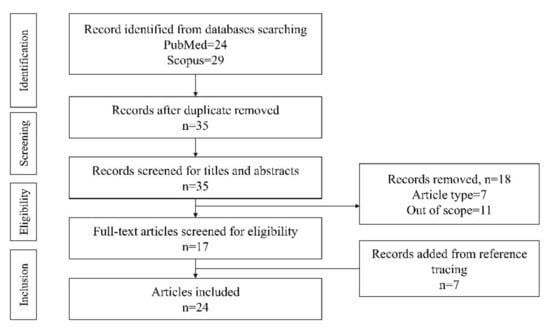
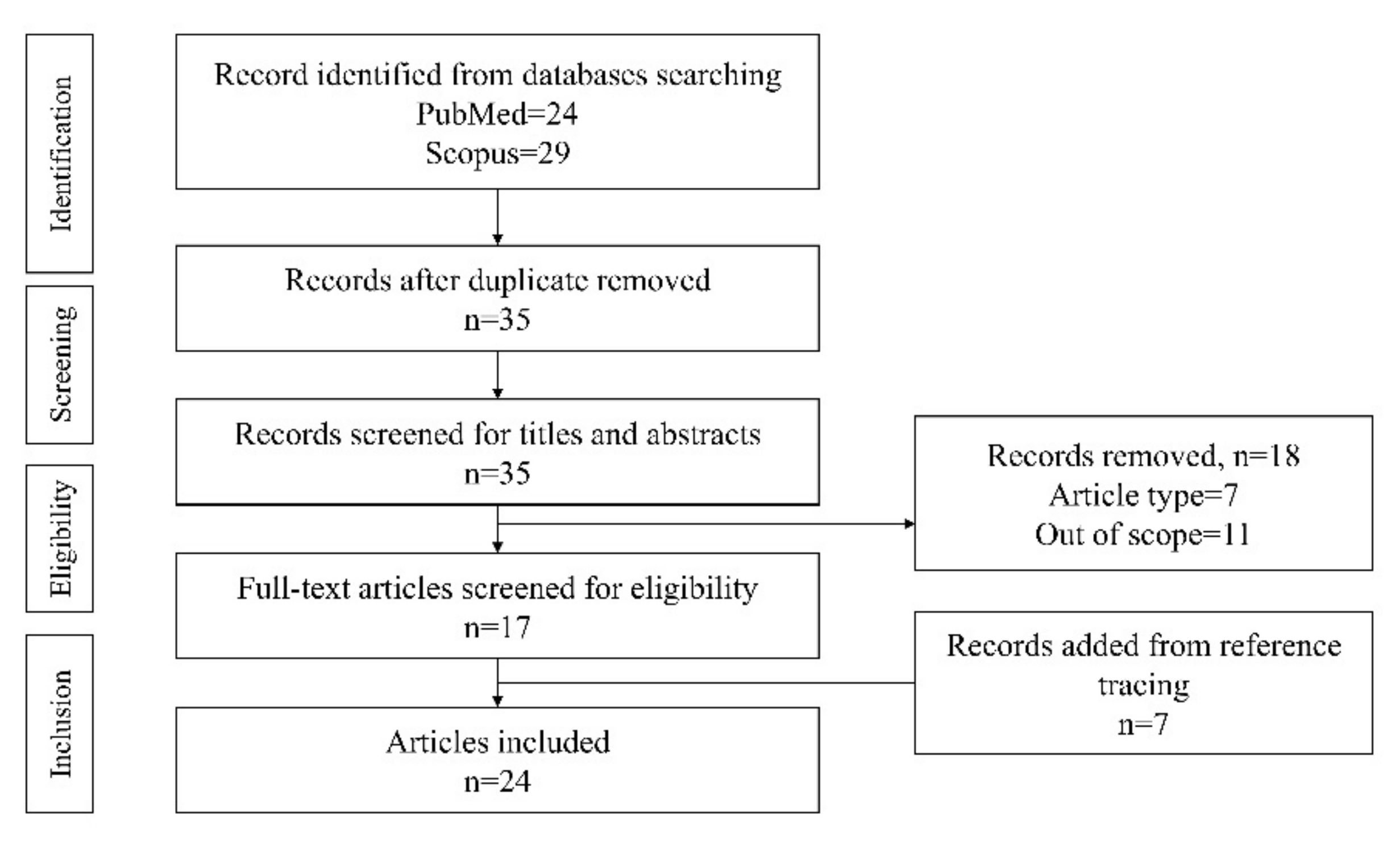
The literature search yielded 24 results in PubMed and 29 results in Scopus. After removing the duplicates, 35 unique articles were identified and subjected to screening (7 were excluded based on article types, 11 were excluded based on topics). Subsequently, the full text of 17 articles was further evaluated. Two articles were rejected, and seven relevant articles were identified from the reference list of included articles. Ultimately, this review included 24 original research articles for analysis (Figure 1, Table S2).
Figure 1.
Article selection process.
All studies included adopted a cross-sectional observational design. A total of 18 studies investigated the perceived role of healthcare providers in promoting HPVV acceptance and uptake by MSM [25,26,27,28,29,30,31,32,33,34,35,36,37,38], while 6 studies investigated the knowledge, beliefs and practices of healthcare providers themselves in delivering HPVV to MSM [39,40,41,42,43]. The MSM were recruited conveniently from sexual health centres [25,27,31], MSM organisations and venues [28,33,35,37], a university [44], MSM social websites or dating apps [30,34,35,38,45] or Facebook [21,36,38]. Several studies also used national sampling of relevant populations [26,29,32,46]. The healthcare providers surveyed were sexual healthcare workers [39,40,41,47], primary healthcare providers or general practitioners [41,42,47] and staff from community-based HIV/AIDS service organisations [43], recruited conveniently. Only one study used a randomised sampling approach to recruit primary care physicians [42]. All studies were conducted in the western countries, including the United States, United Kingdom, Canada and Australia.
From the point of view of MSM, HPVV recommendation from, and disclosure of sexual orientation to healthcare providers were positive predictors of higher vaccine acceptability [26,28,30,32,33,34,35,36,44,45]. Inversely, the absence of an established relationship with healthcare providers, negative emotions, experience and uneasiness in disclosing sexual orientation to healthcare providers as well as the lack of recommendation from healthcare providers were identified as barriers to obtaining HPVV in qualitative studies [21,35,38,45,46]. A recent visit to healthcare providers and access to healthcare facilities also predict higher HPVV uptake [29,34]. A summary of key findings is presented in Table 1.
Table 1.
Perceived importance of healthcare providers in promoting HPVV by MSM.
Among healthcare providers, those involved specifically in sexual healthcare were more likely to recommend HPVV to MSM, be aware of the existing HPVV recommendation and vaccinate MSM [39,41]. Similarly, staff from community-based HIV/AIDS service organisations were aware of HPVV and willing to encourage their client to talk to their healthcare providers about HPVV and direct them to one of the providers [43]. They also believed that they had a positive role in influencing MSM clients in their decision-making process in taking up HPVV [43]. The primary care physicians and general practitioners were more reserved about vaccinating MSM [41,42]. In the United Kingdom, the general practitioners were less aware of HPVV for young MSM, less agreeable to gender-neutral HPVV and less confident in identifying young MSM who might benefit from HPVV and recommending it to them [41]. In the United States, 70.5% of the primary physicians were aware of HPVV recommendation for MSM but only 13.6% routinely discussed sexual orientation and HPVV with male patients aged 22–26 years [42]. The lack of efficacy data on HPVV on older men and cost were major issues that bothered both sexual healthcare specialists and general practitioners alike in Canada [47]. A summary of key findings is presented in Table 2.
Table 2.
Knowledge, beliefs and practices of healthcare providers in providing HPVV.
4. Discussion
This review explored the role of healthcare providers in promoting HPVV uptake from the perspective of MSM and healthcare providers themselves. From the literature, it was identified that vaccine recommendation by, and sex orientation disclosure to healthcare providers were associated with HPVV acceptability among MSM. A pleasant relationship with and easy access to healthcare providers also promote HPVV uptake in MSM. On the other hand, sexual healthcare providers were found to be more knowledgeable and confident in recommending HPVV to MSM clients, compared to general practitioners and primary physicians. HIV/AIDS outreach workers also believed that they played a positive role in influencing HPVV uptake among MSM.
In general, MSM prioritises healthcare providers’ recommendations in accepting HPVV. For instance, 37.6% of MSM aged < 28 years in France who received physicians’ proposal for HPVV initiated the vaccination compared to 1.9% among those who did not receive the same proposal [38]. Wheldon et al. [35] reported that a doctor’s opinion was the only opinion that matters in influencing MSM’s acceptability of the vaccines. These observations may stem from the lack of knowledge about the HPVV among MSM, despite the high awareness of HPV. Even in studies conducted before HPVV was licensed to be used in men, >70% of MSM surveyed by multiple studies had heard about HPV [25,26,28]. However, only 28–30% of MSM were aware of HPVV [25,27]. In a later online study by Cummings et al. [30], awareness about HPV (87.9%) and HPVV (74.1%) was found to increase. Despite this, uncertainties on HPVV remain. A qualitative study by Wheldon et al. [35] reported that young MSM were uncertain about the side effects and efficacy of HPVV, and doubted that the use of live virus in the vaccine can cause HPV. This is obviously a misconception because HPVVs are based on HPV L1 virus-like particles, which are nanoparticles formed by viral structural proteins but do not have any core genetic material [48]. Thus, HPVV cannot cause an HPV infection. Apart from that, some MSM were also worried about the interaction between HPVV and HIV treatment [33]. All these doubts could be cleared with the assistance of healthcare providers.
Discussions with healthcare providers would also improve perceived susceptibility and seriousness of HPV, and correct some biases about the vaccines. Many studies report that higher self-perceived susceptibility of MSM to HPV-related disease, and increased severity of the diseases, predicted higher HPVV uptake [26,27,30]. In a study by Moores et al. [31], less than half of the men registered for STI testing and treatment in Ottawa were aware that HPV is the primary cause of anal cancer. In the same study, MSM who discussed anal cancer screening and prevention with healthcare providers displayed higher knowledge about HPVV [31].
Recommendation for vaccination would not occur without disclosure of sexual orientation. Multiple studies indicated that disclosure of sexual orientation predicted higher HPVV acceptability and uptake [28,29,30,36]. However, only 38% of young MSM disclosed sexual orientation to their healthcare providers in a survey by Stupiansky et al. [34] among users of an online MSM social networking website. A good relationship with healthcare providers will facilitate the disclosure of sexual orientation. Previous negative experiences with healthcare providers which raised the feeling of shame, awkwardness or being judged prevented disclosure [35]. Some MSM felt the necessity to know the providers’ standpoint on LGBT issues for the fear that they might be biased or incompetent in providing care [35]. This issue is not unique to HPVV. In a survey about communication barriers for HIV and STI preventive services, over half of the adolescent MSM avoided disclosure and discussing sexual health issues with healthcare providers owing to fear of heterosexual bias, exposure of their health information to their parents and beliefs that sexual minorities would not receive equal treatment [49].
One of the major challenges is to get MSM, who live in regions where HPV vaccination is not mandatory or pass the age of mandatory vaccination, vaccinated before they are sexually active and exposed to the virus. A meta-analysis has shown early sexual initiation and higher lifetime sexual partners are associated with an increased risk of HPV infection in men [50]. Rank et al. [28] reported median time from sexual debut to first disclosure was 6 years (interquartile range 2–14 years) among MSM in Vancouver. In the same study, 37% of MSM aged < 27 years who never disclosed to any healthcare providers reported >5 sexual partners. In an earlier study, 93% of MSM were willing to disclose their sexual orientation to a provider in exchange for free HPVV, but this finding was only valid until the median age of 20 years (2 years after sexual debut) and after a median of 15 years. The delay in disclosure could nullify the efforts of targeted HPV vaccination among MSM. On the whole, the healthcare providers must create an inclusive and private environment that facilitates disclosure and discussion of sexual behaviours with the client, which will directly contribute to timely vaccine uptake. Alternatively, a gender-neutral school-based HPV vaccination could ensure everyone, including MSM, is protected before exposure.
In terms of preferred facilities to obtain HPVV, some studies revealed MSM preferred sexual health facilities due to the accepting and non-judgemental environment. However, others indicated that young men might not have access to sexual health facilities and preferred general practitioners [33]. Some also suggested the school nurse as a trusted person to deliver the vaccines [37].
It is important to ensure the competency of healthcare providers to educate, identify potential receivers and deliver the vaccines, given the important role they play in HPVV uptake. A survey among UK-based sexual health workers revealed that most of them held positive beliefs on HPVV, including MSM-targeted vaccination (65%), the willingness of MSM to accept HPVV (75%), giving HPVV regardless of age (51%) and providing HPVV through general practitioners and pharmacies (74%). However, only 49% of them believed that they had the skills to identify MSM who would benefit from HPVV and 44% believed that they were sufficiently informed about HPVV for MSM. One study also reported a high level of awareness and willingness to facilitate HPV vaccination for MSM among staff at community-based HIV/AIDS service organisations [43]. These organisations are important in regions with low acceptance of LGBT to promote HPVV, as they tend to be non-judgemental and respect clients’ privacy [51].
In stark contrast to sexual healthcare providers, Merriel et al. [41] revealed that 78.95% of general practitioners in the United Kingdom had low to no knowledge of HPVV for young MSM, and were less likely to believe that young MSM would disclose sexual orientation to them, that they did not have the skills to identify who may benefit from the vaccines and were less likely to recommend HPVV to young MSM. In a survey in Florida, 70.5% of the primary care physicians were aware of the HPVV recommendation for MSM but only 13.6% routinely discussed both sexual orientation and HPVV with their male patients aged 22–26 years. As many as 24.5% of the physicians did not discuss either with their male patients [42]. The pessimism among the primary care and general practitioners could hinder the vaccination effort as they might be the first point of contact before the sexual debut of young MSM. An alternative way to circumvent the selection criteria is to make HPV vaccination universal so that everybody would take HPVV regardless of age, gender and sexual orientation.
A qualitative study among self-referred healthcare providers by Nadarzynski et al. [40] has highlighted some of their concerns on HPVV, which include selection criteria (age or history of genital warts), appropriate healthcare setting to offer HPVV (sexual health clinics or general practices) and funding source (central or local). They also cited lack of political and public support, limited access to HPVV by MSM in rural areas, delayed disclosure of sexual orientation to healthcare providers and poor awareness and motivation to complete the vaccination, as barriers to implementing MSM-targeted HPV vaccination. The solutions proposed to overcome these barriers include official guidelines and awareness campaigns. Integrated clinical procedures would also facilitate MSM-targeted vaccination, which include non-judgemental processing in recording sexual behaviours, incentivising the recording of this information, encouraging MSM not attending sexual health clinics to be vaccinated and setting up reminders to complete vaccination [40]. The healthcare providers should also be aware that HPVV provides similar protection against future exposure to HPV regardless of previous exposure. In MSM with a history of anal genital warts, the risk of future genital warts is reduced if they take the HPVV, regardless of age [52]. This point highlights again the importance for everyone to take HPVV regardless of age, previous exposure to HPV, gender and sexual orientation.
There are several common biases in the studies included in this review. These limitations might not be specific for the studies on this topic but all studies involving sensitive populations such as MSM. Firstly, the generalisation of the findings from these studies should be performed with caution. For studies recruiting MSM in healthcare services, they might be more health-conscious than the non-attendees. Studies recruiting subjects in MSM venues are at risk of self-selecting MSM who were comfortable with their sexual orientation. Some studies were performed in regions more open to the LGBT population. Thus, the subjects may not represent the MSM population who are not ready to disclose their orientation or those in rural areas. Some qualitative studies included have a limited sample size and data might not reach saturation due to constraints in recruiting subjects. For the study on healthcare providers, only one study adopted randomised sampling. The others adopted a convenient sampling approach, which might have oversampled healthcare providers with a specific interest in HPVV for MSM. Lastly, all studies were conducted in western countries with wider LGBT acceptance. The results could be very different in countries that marginalise LGBT populations.
5. Conclusions
Healthcare providers play an important role in promoting HPVV acceptability and uptake among MSM. Discussion of sexual orientation and behaviours with MSM clients predicts higher HPVV uptake, but this requires an open and non-judgemental patient–provider relationship. There is a discrepancy between HPVV knowledge, beliefs and practices among sexual healthcare providers and primary or general healthcare providers, which needs to be bridged to optimise HPVV delivery to MSM. Clearer vaccination guidelines, education and incentives will perhaps motivate the healthcare providers to recommend and deliver HPVV to their MSM clients.
Supplementary Materials
The following supporting information can be downloaded at: https://www.mdpi.com/article/10.3390/vaccines10060930/s1, Table S1: Preferred reporting items for scoping reviews (PRISMA-ScR) checklist; Table S2: List of included and excluded items.
Author Contributions
Conceptualisation, K.-Y.C. and M.R.H.; methodology, K.-Y.C., S.O.E. and M.R.H.; investigation, K.-Y.C., S.O.E. and M.R.H.; resources, K.-Y.C.; data curation, K.-Y.C.; writing—original draft preparation, K.-Y.C.; writing—review and editing, S.O.E. and M.R.H.; visualisation, K.-Y.C. All authors have read and agreed to the published version of the manuscript.
Funding
The authors are supported by Universiti Kebangsaan Malaysia via grant GUP-2020-021.
Institutional Review Board Statement
Not applicable.
Informed Consent Statement
Not applicable.
Data Availability Statement
Not applicable.
Acknowledgments
The authors thank Universiti Kebangsaan Malaysia for the funding.
Conflicts of Interest
The authors declare no conflict of interest.
References
- Boda, D.; Docea, A.O.; Calina, D.; Ilie, M.A.; Caruntu, C.; Zurac, S.; Neagu, M.; Constantin, C.; Branisteanu, D.E.; Voiculescu, V.; et al. Human papilloma virus: Apprehending the link with carcinogenesis and unveiling new research avenues (Review). Int. J. Oncol. 2018, 52, 637–655. [Google Scholar] [CrossRef] [Scilit] [PubMed]
- Petca, A.; Borislavschi, A.; Zvanca, M.E.; Petca, R.-C.; Sandru, F.; Dumitrascu, M.C. Non-sexual HPV transmission and role of vaccination for a better future (Review). Exp. Ther. Med. 2020, 20, 186. [Google Scholar] [CrossRef] [Scilit] [PubMed]
- De Martel, C.; Plummer, M.; Vignat, J.; Franceschi, S. Worldwide burden of cancer attributable to HPV by site, country and HPV type. Int. J. Cancer 2017, 141, 664–670. [Google Scholar] [CrossRef] [Scilit]
- Cutts, F.T.; Franceschi, S.; Goldie, S.; Castellsague, X.; de Sanjose, S.; Garnett, G.; Edmunds, W.J.; Claeys, P.; Goldenthal, K.L.; Harper, D.M.; et al. Human papillomavirus and HPV vaccines: A review. Bull. World Health Organ. 2007, 85, 719–726. [Google Scholar] [CrossRef] [Scilit] [PubMed]
- Boakye, E.A.; Tobo, B.B.; Rojek, R.P.; Mohammed, K.; Geneus, C.J.; Osazuwa-Peters, N. Approaching a decade since HPV vaccine licensure: Racial and gender disparities in knowledge and awareness of HPV and HPV vaccine. Hum. Vaccines Immunother. 2017, 13, 2713–2722. [Google Scholar] [CrossRef] [Scilit]
- Wei, F.; Gaisa, M.M.; D’Souza, G.; Xia, N.; Giuliano, A.R.; Hawes, S.E.; Gao, L.; Cheng, S.-H.; Donà, M.G.; Goldstone, S.E.; et al. Epidemiology of anal human papillomavirus infection and high-grade squamous intraepithelial lesions in 29 900 men according to HIV status, sexuality, and age: A collaborative pooled analysis of 64 studies. Lancet HIV 2021, 8, e531–e543. [Google Scholar] [CrossRef] [Scilit]
- Cheng, L.; Wang, Y.; Du, J. Human papillomavirus vaccines: An updated review. Vaccines 2020, 8, 391. [Google Scholar] [CrossRef] [Scilit]
- Centre of Disease Control and Prevention. FDA Licensure of Bivalent Human Papillomavirus Vaccine (HPV2, Cervarix) for use in females and updated HPV vaccination recommendations from the Advisory Committee on Immunization Practices (ACIP). MMWR. Morb. Mortal. Wkly. Rep. 2010, 59, 626–629. [Google Scholar]
- Centre of Disease Control and Prevention. Recommendations on the use of Quadrivalent Human Papillomavirus Vaccine in Males—Advisory Committee on Immunization Practices (ACIP). MMWR. Morb. Mortal. Wkly. Rep. 2011, 60, 1705–1708. [Google Scholar]
- Meites, E.; Szilagyi, P.G.; Chesson, H.W.; Unger, E.R.; Romero, J.R.; Markowitz, L.E. Human Papillomavirus Vaccination for Adults: Updated recommendations of the Advisory Committee on Immunization Practices. MMWR. Morb. Mortal. Wkly. Rep. 2019, 68, 698–702. [Google Scholar] [CrossRef] [Scilit]
- UK Health Security Agency. HPV Vaccination Guidance for Healthcare Practitioners (Version 6). Available online: https://www.gov.uk/government/publications/hpv-universal-vaccination-guidance-for-health-professionals/hpv-universal-vaccination-guidance-for-healthcare-practitioners-version-3 (accessed on 7 April 2022).
- Goldstone, S.E.; Giuliano, A.R.; Palefsky, J.M.; Lazcano-Ponce, E.; Penny, M.E.; Cabello, R.E.; Moreira, E.D.; Baraldi, E.; Jessen, H.; Ferenczy, A.; et al. Efficacy, immunogenicity, and safety of a quadrivalent HPV vaccine in men: Results of an open-label, long-term extension of a randomised, placebo-controlled, phase 3 trial. Lancet Infect. Dis. 2022, 22, 413–425. [Google Scholar] [CrossRef] [Scilit]
- Meites, E.; Winer, R.L.; Newcomb, M.E.; Gorbach, P.M.; Querec, T.D.; Rudd, J.; Collins, T.; Lin, J.; Moore, J.; Remble, T.; et al. Vaccine effectiveness against prevalent anal and oral Human Papillomavirus infection among men who have sex with men—United States, 2016–2018. J. Infect. Dis. 2020, 222, 2052–2060. [Google Scholar] [CrossRef] [Scilit]
- Chow, E.P.F.; Tabrizi, S.N.; Fairley, C.K.; Wigan, R.; Machalek, D.A.; Garland, S.M.; Cornall, A.M.; Atchison, S.; Hocking, J.S.; Bradshaw, C.S.; et al. Prevalence of human papillomavirus in young men who have sex with men after the implementation of gender-neutral HPV vaccination: A repeated cross-sectional study. Lancet Infect. Dis. 2021, 21, 1448–1457. [Google Scholar] [CrossRef] [Scilit]
- Winer, R.L.; Lin, J.; Querec, T.D.; Unger, E.R.; Stern, J.E.; Rudd, J.M.; Golden, M.R.; Swanson, F.; Markowitz, L.E.; Meites, E. Effectiveness of Human Papillomavirus (HPV) vaccination against penile HPV infection in men who have sex with men and transgender women. J. Infect. Dis. 2022, 225, 422–430. [Google Scholar] [CrossRef] [Scilit]
- Chambers, C.; Deeks, S.L.; Sutradhar, R.; Cox, J.; de Pokomandy, A.; Grennan, T.; Hart, T.A.; Lambert, G.; Moore, D.M.; Coutlée, F.; et al. Anal human papillomavirus prevalence among vaccinated and unvaccinated gay, bisexual, and other men who have sex with men in Canada. Sex. Transm. Dis. 2022, 49, 123–132. [Google Scholar] [CrossRef] [Scilit]
- Mann, L.; Llata, E.; Flagg, E.W.; Hong, J.; Asbel, L.; Carlos-Henderson, J.; Kerani, R.P.; Kohn, R.; Pathela, P.; Schumacher, C.; et al. Trends in the prevalence of anogenital warts among patients at sexually transmitted disease clinics—Sexually Transmitted Disease Surveillance Network, United States, 2010–2016. J. Infect. Dis. 2019, 219, 1389–1397. [Google Scholar] [CrossRef] [Scilit]
- Loretan, C.; Chamberlain, A.T.; Sanchez, T.; Zlotorzynska, M.; Jones, J. Trends and characteristics associated with human papillomavirus vaccination uptake among men who have sex with men in the United States, 2014–2017. Sex. Transm. Dis. 2019, 46, 465–473. [Google Scholar] [CrossRef] [Scilit]
- Grewal, R.; Grennan, T.; Gillis, J.L.; Ogilvie, G.; Gaspar, M.; Grace, D.; Raboud, J.M.; MacPherson, P.A.; Rosenes, R.; Salit, I.E.; et al. Low human papillomavirus (HPV) vaccine uptake among men living with human immunodeficiency virus (HIV): Cross-sectional findings from a clinical cohort. Prev. Med. 2021, 143, 106329. [Google Scholar] [CrossRef] [Scilit]
- Nadarzynski, T.; Frost, M.; Miller, D.; Wheldon, C.W.; Wiernik, B.M.; Zou, H.; Richardson, D.; Marlow, L.A.; Smith, H.; Jones, C.J.; et al. Vaccine acceptability, uptake and completion amongst men who have sex with men: A systematic review, meta-analysis and theoretical framework. Vaccine 2021, 39, 3565–3581. [Google Scholar] [CrossRef] [Scilit]
- Gerend, M.A.; Madkins, K.; Crosby, S.; Korpak, A.K.; Phillips, G.; Bass, M.; Houlberg, M.; Mustanski, B. A qualitative analysis of young sexual minority men’s perspectives on Human Papillomavirus Vaccination. LGBT Health 2019, 6, 350–356. [Google Scholar] [CrossRef] [Scilit]
- Hao, Z.; Guo, Y.; Bowling, J.; Ledenyi, M. Facilitators and barriers of HPV vaccine acceptance, initiation, and completion among LGBTQ Community in the U.S.: A systematic review. Int. J. Sex. Health 2021, 34, 291–307. [Google Scholar] [CrossRef] [Scilit]
- Beavis, A.L.; Levinson, K.L. Preventing cervical cancer in the United States: Barriers and resolutions for HPV vaccination. Front. Oncol. 2016, 6, 19. [Google Scholar] [CrossRef] [Scilit]
- PRISMA. PRISMA for Scoping Reviews. Available online: http://www.prisma-statement.org/Extensions/ScopingReviews (accessed on 7 April 2022).
- Simatherai, D.; Bradshaw, C.S.; Fairley, C.K.; Bush, M.; Heley, S.; Chen, M.Y. What men who have sex with men think about the human papillomavirus vaccine. Sex. Transm. Infect. 2009, 85, 148–149. [Google Scholar] [CrossRef] [Scilit]
- Reiter, P.L.; Brewer, N.T.; McRee, A.-L.; Gilbert, P.; Smith, J.S. Acceptability of HPV Vaccine Among a National Sample of Gay and Bisexual Men. Sex. Transm. Dis. 2010, 37, 197–203. [Google Scholar] [CrossRef] [Scilit]
- Colón-López, V.; Del Toro-Mejías, L.M.; Ortiz, A.P.; Tortolero-Luna, G.; Palefsky, J.M. HPV awareness and willingness to HPV vaccination among high-risk men attending an STI clinic in Puerto Rico. Puerto Rico Health Sci. J. 2012, 31, 227–231. [Google Scholar]
- Rank, C.; Gilbert, M.; Ogilvie, G.; Jayaraman, G.C.; Marchand, R.; Trussler, T.; Hogg, R.; Gustafson, R.; Wong, T. Acceptability of human papillomavirus vaccination and sexual experience prior to disclosure to health care providers among men who have sex with men in Vancouver, Canada: Implications for targeted vaccination programs. Vaccine 2012, 30, 5755–5760. [Google Scholar] [CrossRef] [Scilit]
- Meites, E.; Markowitz, L.E.; Paz-Bailey, G.; Oster, A.M.; White, J.; Todd, J.; Bautista, G.; Flynn, C.; German, D.; Miminos, M.; et al. HPV vaccine coverage among men who have sex with men—National HIV Behavioral Surveillance System, United States, 2011. Vaccine 2014, 32, 6356–6359. [Google Scholar] [CrossRef] [Scilit]
- Cummings, T.; Kasting, M.L.; Rosenberger, J.G.; Rosenthal, S.L.; Zimet, G.D.; Stupiansky, N.W. Catching up or missing out? Human Papillomavirus Vaccine acceptability among 18- to 26-year-old men who have sex with men in a US national sample. Sex. Transm. Dis. 2015, 42, 601–606. [Google Scholar] [CrossRef] [Scilit]
- Moores, A.; Phillips, J.C.; O’Byrne, P.; MacPherson, P. Anal cancer screening knowledge, attitudes, and experiences among men who have sex with men in Ottawa, Ontario. Can. J. Hum. Sex. 2015, 24, 228–236. [Google Scholar] [CrossRef] [Scilit]
- Reiter, P.L.; McRee, A.-L.; Katz, M.L.; Paskett, E.D. Human Papillomavirus vaccination among young adult gay and bisexual men in the United States. Am. J. Public Health 2015, 105, 96–102. [Google Scholar] [CrossRef] [Scilit]
- Nadarzynski, T.; Smith, H.; Richardson, D.; Pollard, A.; Llewellyn, C. Perceptions of HPV and attitudes towards HPV vaccination amongst men who have sex with men: A qualitative analysis. Br. J. Health Psychol. 2017, 22, 345–361. [Google Scholar] [CrossRef] [Scilit] [PubMed]
- Stupiansky, N.; Liau, A.; Rosenberger, J.; Rosenthal, S.L.; Tu, W.; Xiao, S.; Fontenot, H.; Zimet, G.D. Young men’s disclosure of same sex behaviors to healthcare providers and the impact on health: Results from a US national sample of young men who have sex with men. AIDS Patient Care STDs 2017, 31, 342–347. [Google Scholar] [CrossRef] [Scilit] [PubMed]
- Wheldon, C.W.; Daley, E.M.; Buhi, E.R.; Baldwin, J.A.; Nyitray, A.G.; Giuliano, A.R. HPV vaccine decision-making among young men who have sex with men. Health Educ. J. 2017, 76, 52–65. [Google Scholar] [CrossRef] [Scilit]
- Nadarzynski, T.; Smith, H.; Richardson, D.; Bremner, S.; Llewellyn, C. Men who have sex with men who do not access sexual health clinics nor disclose sexual orientation are unlikely to receive the HPV vaccine in the UK. Vaccine 2018, 36, 5065–5070. [Google Scholar] [CrossRef] [Scilit]
- Kesten, J.M.; Flannagan, C.; Ruane-McAteer, E.; Merriel, S.W.D.; Nadarzynski, T.; Shapiro, G.; Rosberger, Z.; Prue, G. Mixed-methods study in England and Northern Ireland to understand young men who have sex with men’s knowledge and attitudes towards human papillomavirus vaccination. BMJ Open 2019, 9, e025070. [Google Scholar] [CrossRef] [Scilit]
- Petit, B.; Epaulard, O. Men having sex with men and the HPV vaccine in France: A low vaccine coverage that may be due to its infrequent proposal by physicians. Vaccine 2020, 38, 2160–2165. [Google Scholar] [CrossRef] [Scilit]
- Nadarzynski, T.; Smith, H.; Richardson, D.; Ford, E.; Llewellyn, C. Sexual healthcare professionals’ views on HPV vaccination for men in the UK. Br. J. Cancer 2015, 113, 1599–1601. [Google Scholar] [CrossRef] [Scilit]
- Nadarzynski, T.; Llewellyn, C.; Richardson, D.; Pollard, A.; Smith, H. UK healthcare professionals’ uncertainties, barriers and facilitators to the introduction of targeted human papillomavirus vaccination for men who have sex with men. Sex. Health 2017, 14, 372. [Google Scholar] [CrossRef] [Scilit]
- Merriel, S.W.D.; Flannagan, C.; Kesten, J.M.; Shapiro, G.K.; Nadarzynski, T.; Prue, G. Knowledge and Attitudes of General Practitioners and Sexual Health Care Professionals Regarding Human Papillomavirus Vaccination for Young Men Who Have Sex with Men. Int. J. Environ. Res. Public Health 2018, 15, 151. [Google Scholar] [CrossRef] [Scilit]
- Wheldon, C.W.; Sutton, S.K.; Fontenot, H.; Quinn, G.; Giuliano, A.R.; Vadaparampil, S.T. Physician communication practices as a barrier to risk-based HPV vaccine uptake among men who have sex with men. J. Cancer Educ. 2018, 33, 1126–1131. [Google Scholar] [CrossRef] [Scilit]
- Wigfall, L.T.; Bynum, S.A.; Brandt, H.M.; Sebastian, N.; Ory, M.G. HPV-Related cancer prevention and control programs at community-based HIV/AIDS service organizations: Implications for future engagement. Front. Oncol. 2018, 8, 422. [Google Scholar] [CrossRef] [Scilit]
- FitzGerald, S.M.; Savage, E.; Hegarty, J. The Human Papillomavirus: Men’s attitudes and beliefs toward the HPV vaccination and condom use in cancer prevention. J. Men’s Health 2014, 11, 121–129. [Google Scholar] [CrossRef] [Scilit]
- Gerend, M.A.; Madkins, K.; Ii, G.P.; Mustanski, B. Predictors of Human Papillomavirus vaccination among young men who have sex with men. Sex. Transm. Dis. 2016, 43, 185–191. [Google Scholar] [CrossRef] [Scilit]
- Jaiswal, J.; LoSchiavo, C.; Maiolatesi, A.; Kapadia, F.; Halkitis, P.N. Misinformation, gendered perceptions, and low healthcare provider communication around HPV and the HPV vaccine among young sexual minority men in New York City: The P18 cohort study. J. Community Health 2020, 45, 702–711. [Google Scholar] [CrossRef] [Scilit]
- Grace, D.; Gaspar, M.; Rosenes, R.; Grewal, R.; Burchell, A.N.; Grennan, T.; Salit, I.E. Economic barriers, evidentiary gaps, and ethical conundrums: A qualitative study of physicians’ challenges recommending HPV vaccination to older gay, bisexual, and other men who have sex with men. Int. J. Equity Health 2019, 18, 159. [Google Scholar] [CrossRef] [Scilit]
- Sanchooli, A.; Aghayipour, K.; Naghlani, S.K.; Samiee, Z.; Kiasari, B.A.; Makvandi, M. Production of Human Papillomavirus Type-16 L1 VLP in Pichia pastoris. Appl. Biochem. Microbiol. 2020, 56, 51–57. [Google Scholar] [CrossRef] [Scilit]
- Fisher, C.B.; Fried, A.L.; Macapagal, K.; Mustanski, B. Patient–provider communication barriers and facilitators to HIV and STI preventive services for adolescent MSM. AIDS Behav. 2018, 22, 3417–3428. [Google Scholar] [CrossRef] [Scilit]
- Rodríguez-Álvarez, M.I.; Gómez-Urquiza, J.L.; Ahmed, H.H.-E.; Albendín-García, L.; Gómez-Salgado, J.; la Fuente, G.A.C.-D. Prevalence and risk factors of Human Papillomavirus in male patients: A systematic review and meta-analysis. Int. J. Environ. Res. Public Health 2018, 15, 2210. [Google Scholar] [CrossRef] [Scilit]
- Ejaz, M.; Ekström, A.M.; Ahmed, A.; Haroon, A.; Ali, D.; Ali, T.S.; Salazar, M. Human Papillomavirus associated prevention: Knowledge, attitudes, and perceived risks among men who have sex with men and transgender women in Pakistan: A qualitative study. BMC Public Health 2022, 22, 378. [Google Scholar] [CrossRef] [Scilit]
- Swedish, K.A.; Goldstone, S.E. Prevention of anal condyloma with Quadrivalent Human Papillomavirus Vaccination of Older men who have sex with men. PLoS ONE 2014, 9, e93393. [Google Scholar] [CrossRef] [Scilit]

Publisher’s Note: MDPI stays neutral with regard to jurisdictional claims in published maps and institutional affiliations. |
© 2022 by the authors. Licensee MDPI, Basel, Switzerland. This article is an open access article distributed under the terms and conditions of the Creative Commons Attribution (CC BY) license (https://creativecommons.org/licenses/by/4.0/).