


Abstract
Patients undergoing cardiac surgery are particularly vulnerable to infectious diseases, which may adversely affect perioperative outcomes and long-term prognosis both before and after the procedure. Moreover, those requiring heart transplantation must take immunosuppressive medications, further compromising their immunity. This narrative review aims to look for the sources of increased risk for infections as well as synthesize vaccination recommendations for these patient groups based on the available literature and guidelines. We considered the influence of age, comorbidities, length of hospitalization, procedure-related risks, and blood product transfusions on the increased risk of vaccine-preventable diseases. By comprehensively addressing these factors, healthcare providers can develop tailored vaccination strategies that maximize protection for cardiac surgical patients while minimizing potential complications and optimizing overall health outcomes.
1. Introduction
Recent years have seen growing awareness of the role of vaccination not only in the prevention of infectious disease, but also as a means of reducing the risk of cardiovascular events and complications in cardiology and cardiac surgery patients.
Patients with chronic cardiovascular disease are considered a high-risk group for various infectious diseases, including coronavirus disease 2019 (COVID-19), influenza, respiratory syncytial virus (RSV) and invasive bacterial disease [1]. Among them, patients undergoing cardiac surgery constitute a particularly vulnerable subgroup, exposed to additional risks, such as cardiopulmonary bypass, blood transfusions and prolonged hospitalisation.
Despite the growing adoption development of less invasive endovascular procedures, the population of patients undergoing cardiac surgery addressed in this review has remained stable or even expanded in recent years. Due to the rapid development of modern surgical techniques, an increasing range of cardiac diseases can be treated surgically. According to the Adult Cardiac Surgery Database (ACSD), which gathers data from the majority of public hospitals in the United States, a total of 211,533 cardiac surgeries were performed in 2021. That data encompasses eight major procedures categories for which The Society of Thoracic Surgeons (STS) has developed risk-adjustment models: isolated CABG (coronary artery bypass grafting), isolated AVR (aortic valve replacement), isolated MVR (mitral valve replacement), MV (mitral valve) repair, AF (atrial fibrillation) correction surgery, aortic aneurysm and tricuspid procedure [2]. According to this database, the number of cardiac surgeries performed in the US remained relatively stable between 2010 and 2021, with a temporary decline observed in 2020 caused by the COVID-19 pandemic [2]. The most common among all performed procedures was isolated coronary artery bypass graft surgery (CABG) representing 72.4% of the total number of procedures in 2021. Among valvular heart defects, isolated aortic valve replacement was the most frequently performed surgery (16,873 cases, accounting for 7.9% of the total) [2]. Similarly, the National Adult Cardiac Surgery Audit (NACSA) reported a total of 25,764 cardiac surgery procedures performed across England, Wales, and Northern Ireland during 2022–2023 reporting period [3].
Another significant group requiring cardiac surgical procedures consists of patients with congenital heart defects. The National Congenital Heart Disease Audit (NCHDA) reported 11,407 procedures for patients with congenital heart disease (CHD) submissions among pediatric and adult patients in 2022/23. The most common congenital cardiac anomalies requiring surgery were tetralogy of Fallot; hypoplastic left heart syndrome (HLHS); transposition of the great arteries with an intact intraventricular septum (TGA-IVS) and atrio-ventricular septal defect (AVSD) [4].
These numbers presented above, together with the continued development of new surgical techniques that make cardiac surgery available to an increasing number of patients, mean that the population concerned is steadily expanding. Vaccines of particular relevance to this group include those against influenza, COVID-19, pneumococcal disease, tetanus, pertussis, RSV, and hepatitis A and B; in immunosuppressed patients after heart transplantation, vaccination against human papillomavirus (HPV) and herpes zoster (varicella-zoster virus, VZV) should additionally be considered.
In recent years, scientific societies issued consensus documents addressing both a specific patient group—heart transplant recipients—and the broader context of respiratory tract infection (RTI) prophylaxis in patients with cardiovascular disease, while a small number of countries, among them Canada, Australia, Taiwan and Poland, address the immunisation needs of this at-risk population in varying degrees of detail. Each of these documents covers only part of the problem, some being confined, for example, to respiratory infections alone, and they are inconsistent with one another: certain vaccines are included in some and omitted from others. This heterogeneity leaves the clinicians involved in the care of these patients—cardiac surgeons, cardiologists, infectious disease specialists and general practitioners—without a single point of reference, and in the absence of a common standard, immunoprophylaxis in this group remains largely dependent on individual judgement. As both immunoprophylaxis strategies and the molecular diagnosis of infection continue to evolve rapidly, there is a clear need for harmonised, evidence-based consensus recommendations on pre- and postoperative vaccine prophylaxis, covering the full range of vaccines relevant to this population.
This literature review summarises the current state of knowledge and the strategies proposed to date. It complements the existing literature by systematising the factors that may contribute to an increased risk of infectious disease in patients undergoing cardiac surgery and by setting out the specific circumstances that arise in the delivery of vaccination in this population, both in terms of need and of the possible precautions and contraindications, with the aim of providing a basis for a unified, consensus-based approach to immunoprophylaxis in this group.
2. Materials and Methods
This narrative review was based on a search of two bibliographic databases, PubMed/MEDLINE and Embase, initially conducted between April and November 2024 and updated in July 2026 to capture more recent publications and recommendations. Search terms, applied as both database index terms and free-text keywords, addressed the study population and vaccination, and included: “cardiac surgery”, “heart surgery”, “cardiothoracic surgery”, “cardiosurgical”, “coronary artery bypass”, “CABG”, “valve surgery”, “valve replacement”, “valve repair”, “vaccination”, “vaccine”, “immunisation”, and “immunization”.
The search was limited to publications from 2000 onwards to reflect contemporary vaccine formulations, immunisation schedules, and clinical recommendations. Sources comprised original research articles, case reports, and clinical practice guidelines concerning infectious disease risk and/or vaccination in adult patients undergoing cardiac surgery, available in full text in English or Polish. Records in other languages, without an available full text, with incomplete data, or published only as conference abstracts were excluded.
Retrieved records were exported to Mendeley Reference Manager and de-duplicated; titles and abstracts were screened first, followed by full-text assessment against the eligibility criteria, with screening organised thematically by author and a subsequent consolidated cross-check to ensure completeness, and any disagreements resolved by discussion.
Clinical practice guidelines were identified separately from the official websites of recognised scientific societies and public health institutions [ESC, EACTS, ACC, CDC/ACIP, WHO], with the most recent version issued by a recognised body selected in each case. Data were synthesised narratively; no meta-analysis or formal risk-of-bias assessment was performed, which is acknowledged as a limitation.
The primary list of chosen publications and online sources was proposed by K.M.L., M.T.-K., M.S., and approved by all the authors.
3. Factors Affecting Vaccination Strategies in Cardiac Surgical Patients
3.1. Age-Related Considerations
Cardiac surgical procedures most often involve two distinct patient groups: those within the first year of life with hemodynamically significant congenital heart defects, and those over the age of 60 undergoing surgeries for acquired cardiovascular diseases [2,4]. These age extremes represent well-established risk factor for infectious diseases that can be prevented through vaccination, including respiratory diseases and invasive bacterial diseases [1].
The implementation of vaccination in children undergoing cardiac surgery is suboptimal. Studies show that children with congenital heart defects who have undergone cardiac surgery have significant delays in vaccination, which persist into school age [5]. Similarly, the implementation of recommended vaccines against influenza and S. pneumoniae in adult patients belonging to risk groups is suboptimal and often falls significantly below targeted vaccination coverage thresholds [6,7,8,9,10,11,12].
In their analysis of a large, nationally representative sample of patients with heart failure in France, Roubille et al. identified age as a significant factor in pneumococcal (PCV13) vaccination: patients were less likely to be vaccinated as they grew older, with the odds of vaccination reduced by 52% in those older than 85 years, relative to younger patients [13].
3.2. Comorbidities
Patients undergoing cardiac surgery often present with multiple comorbidities, further increasing their risk of infectious complications. This underscores the importance of ensuring optimal protection against vaccine-preventable diseases through appropriate immunization strategies.
In children with congenital heart defects, additional factors that increase the risk of infectious diseases include low birth weight, prematurity, bronchopulmonary dysplasia and neurodevelopmental disorders [14]. Among adult patients with acquired cardiovascular diseases, common comorbidities are hypertension, diabetes, obesity, a history of smoking, and lung diseases [15,16].
3.3. Hospitalization Risks
Hospitalization is a known risk factor for infections, with specific implications for cardiac patients [17]. A preoperative hospital stay exceeding 3 days is associated with increased risk of nosocomial infections [18]. The overall length of hospitalization is also a risk factor for hospital-acquired infection in both the youngest and older age groups [19,20]. While the most common hospital-acquired pathogens are Gram-positive cocci, such as Staphylococcus aureus (S. aureus), a significant portion of infections involve other potentially vaccine-preventable pathogens, such as Streptococcus pneumoniae (S. pneumoniae). Hospital-acquired infections may also include viral infections that become complicated with bacterial superinfection, including antibiotic-resistant strains. This is especially concerning during the COVID-19, RSV, or influenza seasons [21].
The duration of hospitalization associated with cardiac surgery depends on the patient’s initial condition, the type of procedure and the presence of early complications [20]. In recent years, cardiac surgical procedures have become more complex [22,23]. Simultaneously, modern surgical techniques and protocols aimed at shortening recovery have developed. Efforts are being made to shorten the hospitalization period to as little as 3 days after surgery for patients with acquired cardiovascular diseases [24].
Once the patient’s clinical condition is stable, hospitalization should be considered as an opportunity to assess vaccination status and administer indicated vaccines or, at a minimum, provide evidence-based vaccination recommendations [25].
3.4. Additional Factors
3.4.1. Blood Products Transfusion
Patients undergoing cardiac surgery may require transfusion of blood products. Both blood product transfusion [19,26] and postoperative hemorrhage requiring transfusion [27] have been identified as risk factors for infection in cardiac surgery patients of all ages.
Transfusions of blood products require careful consideration when planning an optimal vaccination strategy, as they may affect the efficacy of certain vaccines.
The antibodies present in blood products (e.g., whole blood, packed red blood cells and plasma) and in immune globulin preparations can inhibit the immune response to certain vaccines:
- Measles and rubella vaccines—inhibition for at least three months, the exact interval depending on the type and dose of the blood product. Detailed information is provided in the Vaccine Recommendations and Guidelines of the ACIP [28] (see “Timing and Spacing of Immunobiologics” within the General Best Practices for Immunization) and in Table 1 below.
- Mumps and varicella vaccines—the effect is uncertain, but commercial immune globulins do contain antibodies to these viruses, and the same rule therefore applies.
- Following the administration of antibody-containing products, measles, mumps and rubella (MMR) and varicella-zoster virus (VZV) vaccines should be delayed until the antibodies derived from those products have degraded, so as to avoid interference—except in high-risk situations, such as known exposure to a particular infectious disease. If antibody-containing products are required within 14 days after MMR or varicella vaccination, the vaccine dose should be repeated unless protective immunity is confirmed; more generally, whenever a live-virus vaccine is given too soon, a repeat dose is needed after the recommended interval.
- Yellow fever vaccine—interference is unlikely due to low antibody levels in blood products available in countries that are non-endemic for this disease, so in these regions there is probably no need to delay yellow fever vaccine.
- Other live and inactivated vaccines—there is no need to delay these vaccines after antibodies-containing blood products [28].
Table 1.
Suggested intervals between administration of immunoglobulin, blood, other blood products and measles or chickenpox vaccination.
3.4.2. Cardiopulmonary Bypass Procedure and Other Device-Based Support for Sustaining Organ Function
Cardiopulmonary bypass (CPB) during extracorporeal circulation may impact immunoglobulin G (IgG) antibody levels against infectious diseases. Moreover, CBP induces a systemic inflammatory response not only resulting from blood contact with artificial circuit surfaces but also due to ischemia–reperfusion injury, hypothermia and surgical trauma. This response involves complement activation, neutrophil and monocyte activation with cytokine release, transient lymphocyte dysfunction and subsequent postoperative immunosuppression. These mechanisms may contribute independently of vaccine-induced immunity [29].
The process of blood passing through CPB circuit, along with interventions like hypothermia and heparinization, can alter the body’s inflammatory response and potentially lower gamma globulin levels, similar to what is observed in hemodialysis [30]. However, the effect of CPB on post-vaccination antibody responses remains unclear. Previous studies have shown varied results. By measuring antibody titres before CPB and again the following morning, Vergales et al. found that CPB in children aged 2–14 months did not alter post-vaccination antibody levels for diphtheria, tetanus, polio, and Haemophilus influenzae type B (HiB), but was linked to lower titers for pertussis and hepatitis B [31]. This study, however, has several important limitations that are specific to the paediatric setting. The number of vaccine doses a child has received is determined by their age, which means that some patients had received fewer doses of the individual vaccines than others and that the interval between vaccination and surgery differed between patients. Furthermore, the developing immune system of a child may respond to vaccination differently from that of an adult, who may have acquired natural immunity over the course of life through prior infection. It should also be noted that antibody concentrations were measured immediately before and after surgery. Repeat assessment at a later time point—for example, three months postoperatively—would allow a more complete picture to be drawn, taking into account the transient decline in immune function attributable to the procedure itself. Notwithstanding these limitations, the authors conclude that, although antibody titres against pertussis and hepatitis B declined, this should not prompt any change in vaccination strategy in children undergoing cardiac surgery.
Conversely, Hayashi et al. observed a significant reduction in antibody levels against SARS-CoV-2 after CPB in adults [32]. These findings suggest that CPB may affect humoral immunity, although the magnitude of this effect appears to vary between diseases. There is no data about the CPB impact on immunological memory cells.
Multiple studies have shown that longer CPB duration is associated with an increased risk of infectious complications, including pneumonia [33] or Enterobacteriaceae invasive disease [34,35]. Among other evidence, analyses of COVID-19 vaccination, which has been extensively investigated over the last years, indicate that a decline in circulating antibody titres does not necessarily translate into a loss of clinical protection. Importantly, long-term immunity also depends on memory B cells, T-cell responses, and the functional quality of antibodies, none of which have been evaluated in the currently available studies [36].
The use of Extra Corporeal Membrane Oxygenation (ECMO); Intra-Aortic Balloon Pump (IABP); Continuous Renal Replacement Therapy (CRRT) and mechanical ventilation (MV) were indicated as risk factors for pneumonia following cardiac surgery [37]. Therefore, similarly to patients undergoing CPB, individuals at risk of requiring device-based support may benefit from optimization of their vaccination status before surgery.
Current data suggest that the CPB procedure may affect the persistence of vaccine-induced humoral immunity, but the studies are not sufficient to formulate recommendations regarding the need for potential revaccination or booster doses post-CPB.
In summary, when planning an optimal prophylaxis strategy with vaccination, all patients scheduled for cardiac surgery with CPB should be provided with maximum protection against invasive infections and respiratory tract infections.
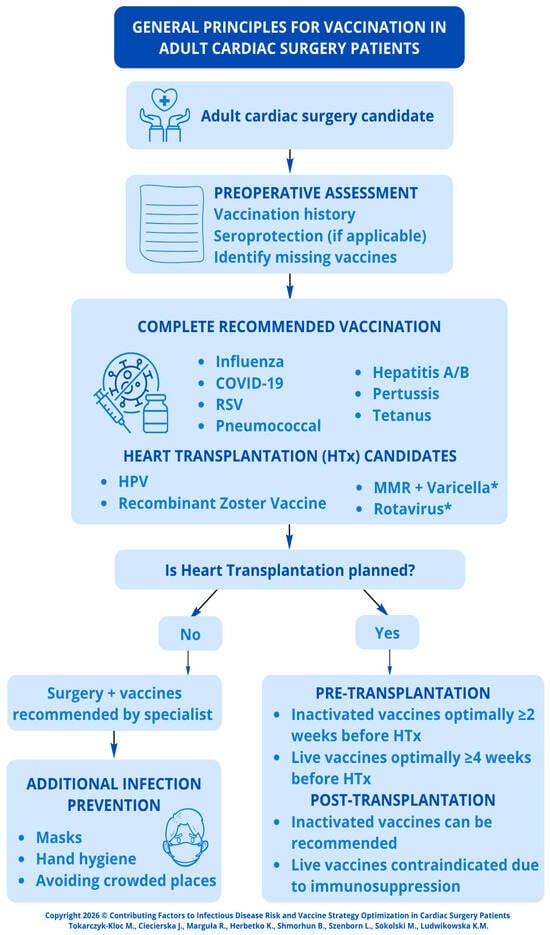
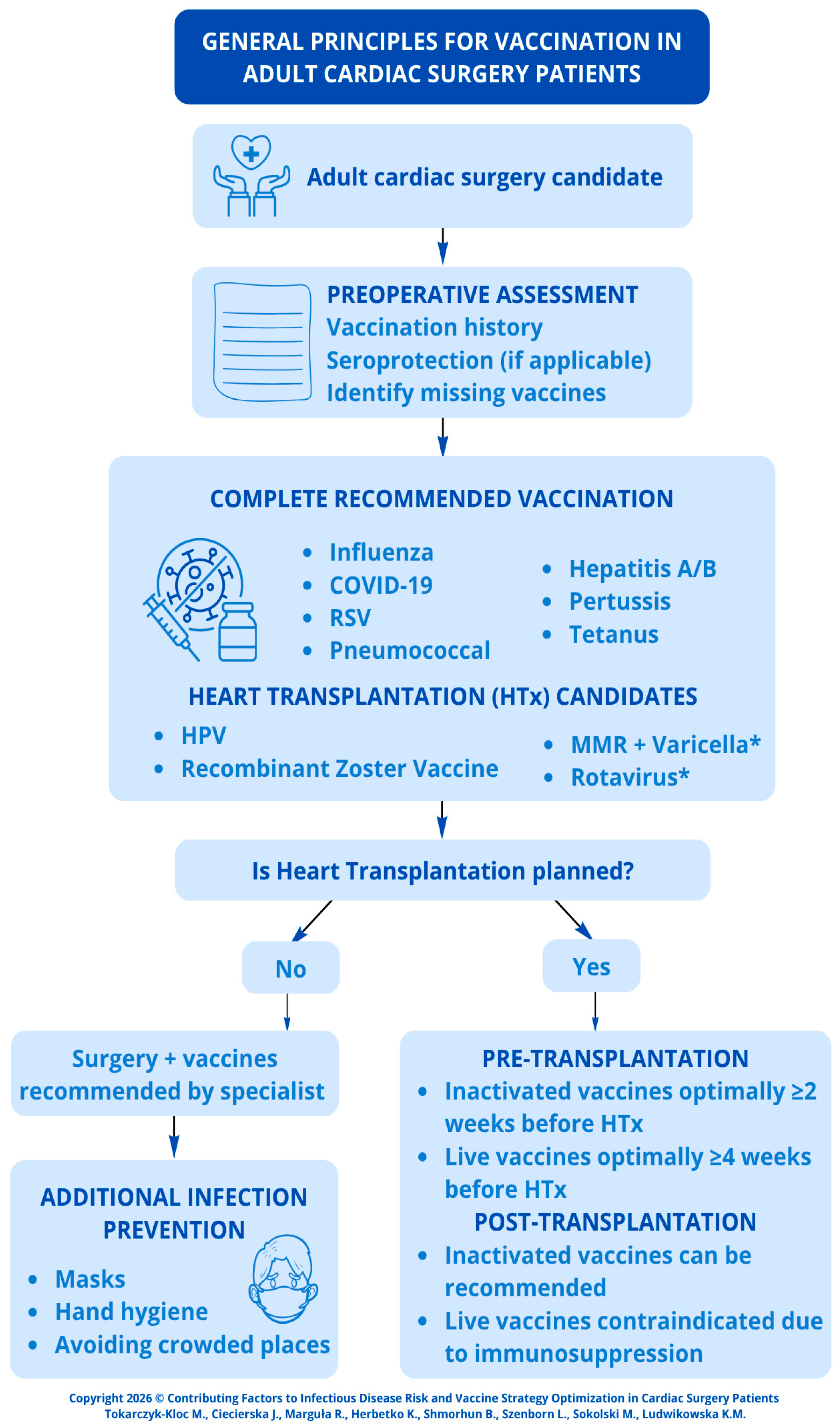
General principles for vaccination in cardiac surgery patients are presented in Figure 1.
Figure 1.
General Principles for Vaccination in Cardiac Surgery Patients. * Depending on the age and serological status of the patient.
3.4.3. Heart Transplantation (HTx)
As a general principle, candidates for HTx require broad protection against infectious diseases through vaccinations. Recommendations state that vaccination history and serological immunity status (when applicable) should be evaluated before heart transplant listing. Current ISHLT recommendations support completion of indicated vaccinations before transplantation as early as possible, as advanced organ dysfunction and medically induced immunosuppression can reduce vaccine efficacy. Patients can receive prior to transplantation both live-attenuated vaccines (when indicated and if they are seronegative against vaccine-preventable diseases, such as measles, mumps, rubella, varicella-zoster virus) and inactivated vaccines, including those against influenza, pneumococcal disease, RSV, tetanus, pertussis, hepatitis A and B, and HPV, following established guidelines. Ideally, these vaccines should be administered and completed at least two weeks before the HTx procedure for inactivated vaccines and at least four weeks before HTx for live vaccines [28,38]. If that is not feasible, inactivated vaccines can be used under immunosuppression, although their effectiveness may be lower than in immunocompetent individuals. Available evidence indicates reduced immunogenicity after transplantation; however, even partial protection is considered preferable to the absence of protection. Therefore, additional non-pharmacological protective measures are often recommended, such as avoiding crowded environments, especially during the infection season, wearing protective masks when avoidance is not possible, and practicing good hand hygiene. Live vaccines are contraindicated in immunosuppressed patients [28]. Further details on post-heart transplantation management are beyond the scope of this review and can be found in “The International Society for Heart and Lung Transplantation (ISHLT) guidelines for the care of heart transplant recipients” [38,39] (see Table 2 below).
It is important to note that neither planned nor completed surgical procedures, including cardiac surgery, constitute contraindications for administering any vaccination at any age [40].
Vaccine safety in patients requiring heart surgery is comparable to that of the general population, and the benefits of vaccination outweigh the risks of adverse effects. These effects are usually mild and last no more than 3 days and such a message is promoted by major medical associations and organizations [41]. However, to avoid uncertainties in interpreting adverse reactions post-vaccination, it is advisable to avoid inactivated vaccines 3–5 days before the planned procedure and live vaccines 7–21 days before the planned procedure. These time frames are based on the period after vaccination during which fever may be expected, depending on the type of vaccine. This should be considered as a precaution, not a contraindication. The decision to vaccinate should be made in consultation with the multidisciplinary care team, including the cardiac surgeon, anesthesiologist, cardiologist, and, when appropriate, a specialist in infectious diseases, clinical immunology, or vaccinology.
4. Discussion
Chronically ill patients, including those requiring cardiac surgery, are particularly vulnerable to infectious diseases and should therefore be prioritized for preventive interventions.
4.1. Vaccine Coverage
Influenza vaccination coverage for at-risk groups remains significantly below the WHO/EU target of 75% [6]. The WHO European region reported that influenza vaccination coverage rates for individuals with chronic conditions are mostly below 40% across 14 European countries [42]. Pneumococcal vaccination coverage also varies widely, with reported rates ranging from as low as 7% in Italy to up to 50% among immunocompromised patients in the United States, and 60% in high-risk groups in Catalonia, Spain [9,10,11,12].
Higher coverage rates were observed in patients aged over 65 years (60% for influenza and 36% for S. pneumoniae), while younger age groups with non-age-related risk factors had lower coverage (28% for influenza and 16% for S. pneumoniae) [10].
Summarizing the above issues, it becomes clear that patients qualified for cardiac surgery are at high risk of infectious diseases. In recent years, vaccinology associations and advisory committees have focused their vaccination recommendations on more narrowly defined high-risk groups. However, cardiac surgical patients remain an uncovered population in this regard. Several recommendations specifically address patients with cardiovascular diseases, while Australian guidelines specify the issue of planned surgery in the context of vaccine interference and identify cardiac surgery with extracorporeal circulation as a factor that may potentially attenuate the post-vaccination response.
The key to understanding the rationale behind protective measures is educating the patient about the risks associated with contracting a particular disease and how to protect against infection—using non-specific methods, such as hand hygiene, protective equipment and avoiding contact with sick individuals, as well as specific methods, including vaccinations.
4.2. Clinical Implementation of Vaccination Process
One potential factor contributing to these low vaccination coverage rates is that high-risk patients, who are often monitored by specialists, may not consult general practitioners—the primary administrators of vaccines in most countries—as frequently as the general population. Specialists typically do not address vaccination with patients, as this responsibility is generally assigned to general practitioners; a vaccination recommendation from a specialist could significantly improve vaccination rates [42,43]. The recent ACC Expert Consensus Statement on Adult Immunizations as Part of Cardiovascular Care explicitly identifies cardiology clinics as an important opportunity for vaccination, since patients may find it easier to discuss how vaccination fits into their treatment plan with their cardiologist than with a primary care physician [44]. Assessment of vaccination status should become a routine component of the preoperative evaluation of cardiovascular patients undergoing cardiac surgery, similarly to perioperative risk assessment and evaluation of clinical status. When necessary, patients should be referred for consultation with an infectious diseases specialist to determine the optimal vaccination strategy and to facilitate vaccination at the earliest appropriate time after surgery.
In Boey et al.’s study investigating vaccination coverage and determinants of vaccination among at-risk patients in Belgium (including patients with heart failure and recipients of solid organ transplants among others), 71% of the studied group reported having received information about influenza vaccination. Among these patients, 60% obtained their information from their general practitioner, while 30% received it from a specialist. For pneumococcal vaccination, 29% of patients reported being informed about the vaccine. Of these, 48% were informed by their general practitioner, and 47% by a specialist. Other sources of information for both influenza and pneumococcal vaccinations were occupational health professionals, family, and friends. Notably, fewer than 10% of patients with chronic conditions received all recommended vaccinations [45]. Researchers investigating reasons for not receiving specific vaccines in solid organ transplant patients, including 127 heart transplant recipients and 200 patients with heart failure, found that they were varied and vaccine dependent. For diphtheria–tetanus vaccination, the most common reasons were a lack of awareness about the recommendation (38%) and forgetting to get the vaccine (29%). Regarding influenza vaccination, 41% of individuals reported that they intended to receive it, while others cited concerns about the vaccine’s safety (13%), necessity (6%), and effectiveness (6%), or were opposed to influenza vaccination (9%). For pneumococcal vaccination, a significant 89% were unaware of the recommendation [46].
The study cited earlier found that, despite frequent contact with nurses, general practitioners and specialists, only 10% of patients had received pneumococcal vaccination in 2020, even though the vaccine was provided free of charge [13]. This points to the need for healthcare professionals to remind patients continually of the importance of vaccination and to monitor immunisation status in every patient.
Sense of security and understanding constitute the most important foundations of any vaccination programme’s efficiency. These foundations can be strengthened by the active participation of healthcare workers and their willingness to provide patients with the time that is indispensable for explaining how vaccination works and demonstrating its effectiveness. Numerous studies have shown that efforts by healthcare workers to increase vaccine confidence play an essential role in improving the uptake of a range of vaccines. Physicians, nurses and physiotherapists are among the most trusted and important sources of health education for patients, and their collaborative effort therefore has considerable potential to dispel the misconceptions that underlie vaccine hesitancy [47,48,49]. For this reason, it is of great importance to raise the awareness of all healthcare workers as to the influence they have on patients, since they remain the most trusted advisors and the most prominent influences on any decision relating to vaccination [50]. They should therefore adopt an open attitude and be properly trained to address questions about vaccines and to discuss their risks and benefits.
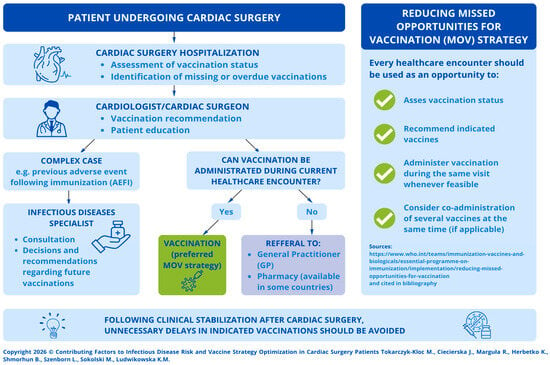
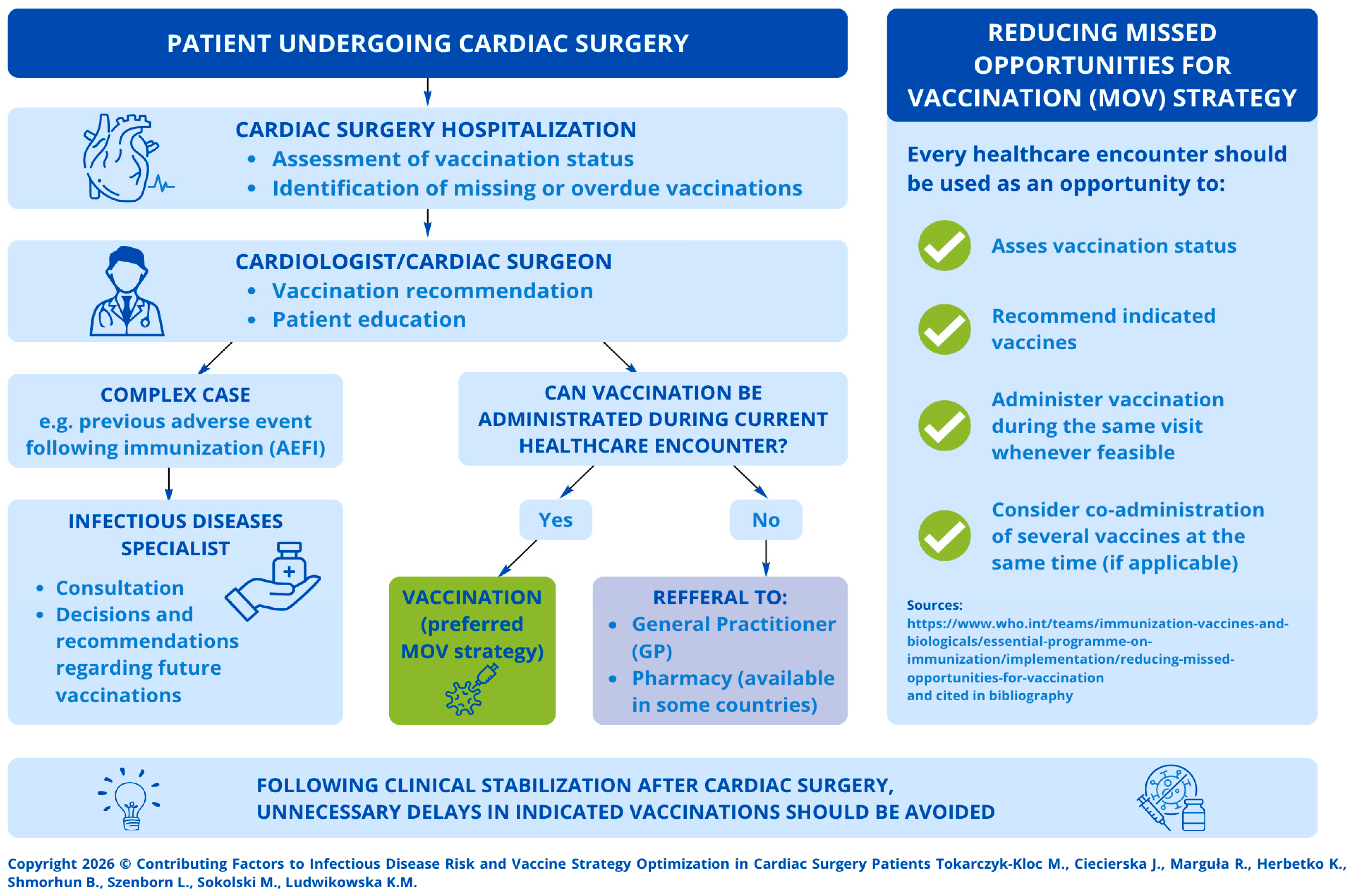
In light of the data presented above, the authors of this manuscript consider that vaccination should be recommended to patients by specialists—namely cardiologists and cardiac surgeons—and ideally administered during hospitalisation, once the patient’s condition has stabilised, thereby avoiding a missed opportunity for vaccination. Where this preferred pathway is not feasible, vaccination should instead be carried out by the general practitioner, at an infectious diseases clinic or, depending on availability and local policy, in community pharmacies and long-term care facilities. In cases of uncertainty, a complex medical history or previous adverse effects, the specialist may refer the patient for consultation with an infectious disease specialist, who will then decide on vaccination. Such collaborative care is essential if patients are to be afforded optimal protection against vaccine-preventable diseases. The approach proposed by the authors is presented in Figure 2.
Figure 2.
Decision-making strategies for reducing Missed Opportunities for Vaccination.
At the same time, the cocoon strategy should not be overlooked. This approach involves vaccinating immunocompetent individuals in the immediate environment of a patient who, for any of a number of reasons, cannot be vaccinated themselves. In the heart transplant recipients discussed in the present review, immunosuppressive therapy precludes the administration of live vaccines; offering these vaccines to close contacts instead may therefore contribute to better protection of the patient [51]. This subject is addressed in detail by the Infectious Diseases Society of America (IDSA) in its Clinical Practice Guideline for Vaccination of the Immunocompromised Host. The guideline recommends that healthy, immunocompetent individuals sharing a household with an immunocompromised patient receive inactivated vaccines in line with the annually updated CDC–ACIP schedules—for example, against influenza and COVID-19—as well as certain live vaccines according to the CDC annual schedule, namely combined measles, mumps and rubella (MMR) vaccine, rotavirus vaccine in infants aged 2–7 months, varicella vaccine and zoster vaccine. Such household contacts may also safely receive the yellow fever and oral typhoid vaccines for travel. Oral polio vaccine (OPV), by contrast, should not be administered to anyone living in a household with an immunocompromised patient [52]. It should be noted, however, that although this guideline remains in force, it was published in 2013, and the evidence on which its recommendations rest may since have been superseded in places.
Like any other medicinal product, vaccines are capable of causing adverse effects. Concern about these effects is a common source of patient anxiety and contributes to vaccine hesitancy and, ultimately, to vaccine refusal. Adequate knowledge and preparation on the part of healthcare staff are therefore essential, as they enable clinicians to address these concerns directly in conversation with patients. A readiness to report any adverse effects in accordance with local protocols is equally important: it underpins the reliability of vaccine safety data, which provides the evidence base for those same conversations. Organisations such as immunize.org can serve as a reliable source of information for healthcare providers, enabling them to build their own knowledge that can then be shared with patients [53].
The fact that the available recommendations do not clearly define the respective responsibilities of the cardiologist, the cardiac surgeon and the general practitioner further underscores the need for the harmonised, consensus-based approach that this review seeks to support.
4.3. Minimizing Missed Opportunities for Vaccination (MOV)
The World Health Organization defines a missed opportunity for vaccination (MOV) as “any contact with health services by an individual (child or person of any age) who is eligible for vaccination (e.g., unvaccinated or partially vaccinated and free of contraindications to vaccination), which does not result in the person receiving one or more of the vaccine doses for which he or she is eligible”. Observation of this phenomenon led the WHO to introduce a strategy aimed at reducing such missed opportunities [54].
Hospitalised patients are frequently among those in need of immunisation—not least because the admission itself may result from deterioration of the underlying condition brought on by a vaccine-preventable infection. Yet, advice issued by specialists to complete vaccination through the family doctor is acted upon by patients too rarely. To close this gap, the Community Preventive Services Task Force (CPSTF) recommended the use of standing orders in 2015 under which healthcare staff—nurses, pharmacists and other providers—are authorised to assess a patient’s vaccination status at every contact with health services and to administer missing doses in accordance with local protocols [55]. Implementing such a strategy is organisationally demanding: it calls for the training of large numbers of staff and for secure funding of the vaccines themselves, both of which remain challenging for local management and national health system policies.
The scale of the problem is illustrated by a retrospective cohort study from Italy, which found that missed opportunities reduce seasonal influenza vaccine coverage among high-risk older adults who access healthcare services frequently but remain unvaccinated. Beyond documenting the under-provision of influenza vaccination during hospitalisation, the authors draw attention to the question of co-administration: although uptake was suboptimal overall, among the doses that were given it was most frequent in the influenza–pneumococcal and influenza–RSV cohorts—a pattern that may translate into effective protection against respiratory tract infections [56].
The clinical benefit of such co-administration is supported by a prospective randomised trial in high-risk heart failure patients attending a hospital-based outpatient clinic. Simultaneous influenza and RSV vaccination, compared with standard of care, significantly reduced the primary outcome, an effect driven by a reduction in infections [43].
Cardiac patients thus stand to derive particular benefit from vaccination, and all healthcare providers involved in their care should make every effort to reduce missed opportunities for vaccination in this group (as presented in Figure 2).
4.4. Vaccine Hesitancy
According to the definition adopted by the WHO SAGE Working Group on Vaccine Hesitancy in 2015, vaccine hesitancy is a “delay in acceptance or refusal of vaccines despite availability of vaccination services” [57] and it has been listed by the WHO among the ten leading threats to global health [58,59].
Despite the availability of vaccination services, of reliable information on their effectiveness and of clear medical indications for their use, vaccine hesitancy remains a growing problem, fuelled by disinformation that is frequently politically affiliated and driven by the pursuit of social polarisation and financial gain [60,61].
A report on medical disinformation published in June 2026 by Wroclaw Medical University in collaboration with Mediaboard Polska found that anti-vaccination narratives accounted for the largest single share of medical disinformation in the Polish media, at 54% of the content analysed between January 2025 and May 2026 [62].
At the same time, recommendation from a healthcare professional is consistently identified as one of the strongest predictors of vaccine uptake [44,63,64]. This makes it all the more important that the position taken by the medical community should rest on rigorous scientific analysis and on the principles of evidence-based medicine. Vaccination is among the most effective and most extensively studied of all public health interventions, and the recent statements issued by scientific societies reinforce this message unequivocally.
4.5. Summary
It is reasonable to hypothesise that vaccine coverage in patients with chronic heart disease requiring cardiac surgery would be higher if unified recommendations were in place, together with greater awareness among healthcare professionals of the vaccines that should be administered to minimise the risk of infection. Such guidance has been clearly formulated for heart transplant recipients. For patients undergoing procedures involving cardiopulmonary bypass, however, our review found no official recommendations; the bypass is mentioned only in the Australian guidelines, as a factor that may potentially attenuate the post-vaccination response. The discrepancies between the positions of the major vaccinology societies are summarised in Table 2.
Table 2.
Summary of published vaccination guidelines developed by various vaccinology societies.
In preparing this manuscript, the authors reviewed a broad range of guidelines and selected those judged most relevant to the questions considered here. We acknowledge that this selection, based on the authors’ knowledge and clinical experience rather than on a predefined systematic search strategy, is a limitation of the present work.
To sum up, vaccine coverage among patients with chronic cardiovascular diseases, including those undergoing cardiac surgery and heart transplantation, is suboptimal and should be improved. The main obstacles to vaccination appear to be the lack of specific recommendations, insufficient knowledge about vaccination indications resulting from the absence of recommendations from healthcare providers managing the patient, and the lack of effective reminder systems for vaccination needs. Among the multitude of medical instructions received by cardiac surgery patients, vaccination information may be overlooked, resulting in missed opportunities for immunization or its suboptimal implementation.
5. Conclusions
In conclusion, patients undergoing cardiac surgery require a detailed approach regarding appropriate immunization, thus avoiding severe infectious diseases and their complications.
The interval between vaccination and heart surgery is unrestricted except for the patients who have planned immunosupressive treatment and live vaccines. As a precaution, overlapping of possible vaccine adverse reactions and surgical complications should be avoided (up to 3–4 days after inactivated vaccines and between 7 and 14 days after live vaccines). For HTx inactivated vaccines should be completed two weeks before surgery, and with live vaccines four weeks before surgery and immunosupressive treatment.
Vaccines particularly recommended for cardiac surgery patients include those against influenza, COVID-19, pneumococcal disease, tetanus, pertussis, RSV, hepatitis A and B, and for immunosuppresed patients after HTx additionally against HPV and VZV. One should also not forget to recommend non-specific means of protection against infections to patients—frequent hand washing, avoiding large crowds, and wearing protective masks. The presented methods can contribute to avoiding infections with severe courses, and thus to improving the quality of life of patients after major cardiac surgeries.
We propose that assessment of vaccination status should become a routine component of preoperative cardiac surgical evaluation and in case of lacking appropriate vaccinations, these should be supplemented as quickly as possible. In our opinion, cardiac surgery represents an opportunity to optimize immunization, rather than contraindication for vaccination.
There is a clear knowledge gap concerning explicit, evidence-based recommendations for patients undergoing cardiac surgery. Further research and concerted effort are needed to ensure that no opportunity to protect these vulnerable patients is missed.
Author Contributions
Conceptualization K.M.L. and M.T.-K.; methodology, K.M.L. and M.T.-K.; validation, M.T.-K. formal analysis, K.M.L., M.S. and L.S.; investigation, K.M.L., M.T.-K., J.C., R.M., K.H., B.S. and M.S.; writing—original draft preparation, K.M.L.; writing—review and editing, K.M.L., M.T.-K., J.C., R.M., K.H., B.S. and M.S.; supervision, M.S. and L.S. All authors have read and agreed to the published version of the manuscript.
Funding
This research was funded by Wroclaw Medical University, grant number SUBZ.C180.24.029.
Institutional Review Board Statement
Not applicable.
Informed Consent Statement
Not applicable.
Data Availability Statement
No new data were created or analyzed in this study. Data sharing is not applicable to this article.
Conflicts of Interest
The authors declare no conflicts of interest.
Abbreviations
| ACC | American College of Cardiology |
| ACIP | Advisory Committee on Immunization Practices |
| ACVC | Association for Acute Cardiovascular Care |
| AHA | American Heart Association |
| CDC | Centers for Disease Control and Prevention |
| CPB | Cardiopulmonary Bypass |
| COVID-19 | coronavirus disease 2019 |
| EAPC | European Association of Preventive Cardiology |
| ESC | European Society of Cardiology |
| HF | heart failure |
| HFA | Heart Failure Association (of the ESC) |
| HTx | Heart Transplant |
| HPV | human papillomavirus |
| IDSA | Infectious Diseases Society of America |
| ISHLT | International Society for Heart and Lung Transplantation |
| MACE | major adverse cardiovascular events |
| MMR | measles, mumps and rubella (vaccine) |
| MOV | missed opportunity for vaccination |
| PCV13 | 13-valent pneumococcal conjugate vaccine |
| RSV | respiratory syncytial virus |
| RTI | respiratory tract infection |
| SAGE | Strategic Advisory Group of Experts (on Immunization) |
| SOC | standard of care |
| SOT | solid organ transplant |
| VZV | varicella-zoster virus |
| WHO | World Health Organization |
References
- O’Leary, M.S.T. Red Book: 2024–2027 Report of the Committee on Infectious Diseases; American Academy of Pediatrics (AAP): Itasca, IL, USA, 2024. [Google Scholar]
- Kim, K.M.; Arghami, A.; Habib, R.; Daneshmand, M.A.; Parsons, N.; Elhalabi, Z.; Krohn, C.; Thourani, V.; Bowdish, M.E. The Society of Thoracic Surgeons Adult Cardiac Surgery Database: 2022 Update on Outcomes and Research. Ann. Thorac. Surg. 2023, 115, 566–574. [Google Scholar] [CrossRef] [Scilit] [PubMed]
- National Adult Cardiac Surgery Audit (NASCA). Available online: https://www.nicor.org.uk/national-cardiac-audit-programme/cardiac-surgery-audit-nacsa (accessed on 11 September 2024).
- National Congenital Heart Disease Audit (NCHDA). Available online: https://www.nicor.org.uk/national-cardiac-audit-programme/congenital-audit-nchda (accessed on 11 September 2024).
- Remmele, J.; Westphal, D.S.; Unterleitner, C.; Becker, R.; Oberhoffer-Fritz, R.; Hager, A.; Ewert, P.; Wacker-Gussmann, A. Do children with congenital heart defects meet the vaccination recommendations? Immunisation in children with congenital heart defects. Cardiol. Young 2021, 32, 1143–1148. [Google Scholar] [CrossRef] [Scilit] [PubMed]
- World Health Organisation (WHO). Fifty-Sixth World Health Assembly (WHA56.19): Preventionand Control of Influenza Pandemics and Annual Epidemics; World Heatlh Organisation: Geneva, Switserland, 2003; Available online: https://apps.who.int/gb/ebwha/pdf_files/wha56/ea56r19.pdf (accessed on 20 September 2024).
- Commission of the European Communities. Proposal for a Council Recommendation on Seasonal Influenza Vaccination; Report No: COM(2009) 353 Final/2; Commission of the European Communities: Brussels, Belgium, 2009. Available online: https://eur-lex.europa.eu/LexUriServ/LexUriServ.do?uri=COM:2009:0353:FIN:EN:PDF (accessed on 20 September 2024).
- Jorgensen, P.; Mereckiene, J.; Cotter, S.; Johansen, K.; Tsolova, S.; Brown, C. How close are countries of the WHO European Region to achieving the goal of vaccinating 75% of key risk groups against influenza? Results from national surveys on seasonal influenza vaccination programmes, 2008/2009 to 2014/2015. Vaccine 2018, 36, 442–452. [Google Scholar] [CrossRef] [Scilit] [PubMed]
- Annunziata, K.; Rak, A.; Del Buono, H.; DiBonaventura, M.; Krishnarajah, G. Vaccination Rates among the General Adult Population and High-Risk Groups in the United States. PLoS ONE 2012, 7, e50553. [Google Scholar] [CrossRef] [Scilit] [PubMed]
- Giese, C.; Mereckiene, J.; Danis, K.; O’donnell, J.; O’flanagan, D.; Cotter, S. Low vaccination coverage for seasonal influenza and pneumococcal disease among adults at-risk and health care workers in Ireland, 2013: The key role of GPs in recommending vaccination. Vaccine 2016, 34, 3657–3662. [Google Scholar] [CrossRef] [Scilit] [PubMed]
- Gallone, M.S.; Infantino, V.; Ferorelli, D.; Stefanizzi, P.; De Nitto, S.; Tafuri, S. Vaccination coverage in patients affected by chronic diseases: A 2014 cross-sectional study among subjects hospitalized at Bari Policlinico General Hospital. Am. J. Infect. Control 2018, 46, e9–e11. [Google Scholar] [CrossRef] [Scilit] [PubMed]
- Vila-Córcoles, A.; Ochoa-Gondar, O.; de Diego, C.; Satué, E.; Vila-Rovira, A.; Aragón, M. Pneumococcal vaccination coverages by age, sex and specific underlying risk conditions among middle-aged and older adults in Catalonia, Spain, 2017. Eurosurveillance 2019, 24, 22–30. [Google Scholar] [CrossRef] [Scilit] [PubMed]
- Roubille, F.; Wyplosz, B.; Fernandes, J.; Grenier, B.; Raguideau, F.; Blanc, E.; Goussiaume, G. Socioeconomic Determinants of Vaccination Against Pneumococcus in 763 945 Patients with Heart Failure. ESC Heart Fail. 2025, 12, 3750–3754. [Google Scholar] [CrossRef] [Scilit] [PubMed]
- Chowdhury, D.; Toms, R.; Brumbaugh, J.E.; Bindom, S.; Ather, M.; Jaquiss, R.; Johnson, J.N. Evaluation and Management of Noncardiac Comorbidities in Children With Congenital Heart Disease. Pediatrics 2022, 150, e2022056415E. [Google Scholar] [CrossRef] [Scilit] [PubMed]
- Alhadidi, A.; Al Smadi, D.A.; Alshobaki, W.; Alawamleh, A.; Al Ghawanmeh, S.; Mohd, A.F. Comorbidities in adult cardiac surgical patients. Int. J. Adv. Med. 2024, 11, 84–88. [Google Scholar] [CrossRef] [Scilit]
- Clough, R.A.; Leavitt, B.J.; Morton, J.R.; Plume, S.K.; Hernandez, F.; Nugent, W.; Lahey, S.J.; Ross, C.S.; O’Connor, G.T. The Effect of Comorbid Illness on Mortality Outcomes in Cardiac Surgery. Arch. Surg. 2002, 137, 428–433. [Google Scholar] [CrossRef] [Scilit] [PubMed]
- Sokolski, M.; Trenson, S.; Sokolska, J.M.; D’AMario, D.; Meyer, P.; Poku, N.K.; Biering-Sørensen, T.; Lassen, M.C.H.; Skaarup, K.G.; Barge-Caballero, E.; et al. Heart Failure in COVID-19: The Multicentre, Multinational PCHF-COVICAV Registry. ESC Heart Fail. 2021, 8, 4955–4967. [Google Scholar] [CrossRef] [Scilit] [PubMed]
- Jiang, W.-L.; Hu, X.-P.; Hu, Z.-P.; Tang, Z.; Wu, H.-B.; Chen, L.-H.; Wang, Z.-W.; Jiang, Y.-A. Morbidity and Mortality of Nosocomial Infection after Cardiovascular Surgery: A Report of 1606 Cases. Curr. Med. Sci. 2018, 38, 329–335. [Google Scholar] [CrossRef] [Scilit] [PubMed]
- García, H.; Cervantes-Luna, B.; González-Cabello, H.; Miranda-Novales, G. Risk factors for nosocomial infections after cardiac surgery in newborns with congenital heart disease. Pediatr. Neonatol. 2018, 59, 404–409. [Google Scholar] [CrossRef] [Scilit] [PubMed]
- Barker, G.M.; O’Brien, S.M.; Welke, K.F.; Jacobs, M.L.; Jacobs, J.P.; Benjamin, D.K.; Peterson, E.D.; Jaggers, J.; Li, J.S. Major Infection After Pediatric Cardiac Surgery: A Risk Estimation Model. Ann. Thorac. Surg. 2010, 89, 843–850. [Google Scholar] [CrossRef] [Scilit] [PubMed]
- Sender, V.; Hentrich, K.; Henriques-Normark, B. Virus-Induced Changes of the Respiratory Tract Environment Promote Secondary Infections With Streptococcus pneumoniae. Front. Cell. Infect. Microbiol. 2021, 11, 643326. [Google Scholar] [CrossRef] [Scilit] [PubMed]
- Li, M.; Zhang, J.; Gan, T.J.; Qin, G.; Wang, L.; Zhu, M.; Zhang, Z.; Pan, Y.; Ye, Z.; Zhang, F.; et al. Enhanced recovery after surgery pathway for patients undergoing cardiac surgery: A randomized clinical trial. Eur. J. Cardio-Thorac. Surg. 2018, 54, 491–497. [Google Scholar] [CrossRef] [Scilit] [PubMed]
- Engelman, D.T.; Ben Ali, W.; Williams, J.B.; Perrault, L.P.; Reddy, V.S.; Arora, R.C.; Roselli, E.E.; Khoynezhad, A.; Gerdisch, M.; Levy, J.H.; et al. Guidelines for Perioperative Care in Cardiac Surgery. JAMA Surg. 2019, 154, 755–766. [Google Scholar] [CrossRef] [Scilit] [PubMed]
- Mejia, O.A.V.; Borgomoni, G.B.; Lasta, N.; Okada, M.Y.; Gomes, M.S.B.; Foz, M.L.N.N.; Bischoff, H.P.G.; Saruhashi, T.; Melro, L.M.G.; Sampaio, M.C.; et al. Safe and effective protocol for discharge 3 days after cardiac surgery. Sci. Rep. 2021, 11, 8979. [Google Scholar] [CrossRef] [Scilit] [PubMed]
- CDC. Vaccines & Immunization. Contraindications and Precautions. Available online: https://www.cdc.gov/vaccines/hcp/imz-best-practices/contraindications-precautions.html (accessed on 18 September 2024).
- Ang, L.B.; Veloria, E.N.; Evanina, E.Y.; Smaldone, A. Mediastinitis and blood transfusion in cardiac surgery: A systematic review. Heart Lung 2012, 41, 255–263. [Google Scholar] [CrossRef] [Scilit] [PubMed]
- Cove, M.E.; Spelman, D.W.; MacLaren, G. Infectious Complications of Cardiac Surgery: A Clinical Review. J. Cardiothorac. Vasc. Anesth. 2012, 26, 1094–1100. [Google Scholar] [CrossRef] [Scilit] [PubMed]
- Special Situations General Best Practices for Immunization. Available online: https://www.cdc.gov/vaccines/hcp/acip-recs/general-recs/special-situations.html (accessed on 20 September 2024).
- Chenouard, A.; Petrier, M.; Bridonneau, C.; André, E.; Davieau, M.; Fourgeux, C.; Mancuso, C.; Davidson, J.; Broquet, A.; Joram, N.; et al. Immune Unresponsiveness to Cardiopulmonary Bypass Is Associated With Unfavorable Outcome in Infants Requiring Cardiac Surgery. JACC Basic Transl. Sci. 2026, 11, 101450. [Google Scholar] [CrossRef] [Scilit] [PubMed]
- Aĝirbaşli, M.; Nguyen, M.; Win, K.; Kunselman, A.R.; Clark, J.B.; Myers, J.L.; Ündar, A. Inflammatory and Hemostatic Response to Cardiopulmonary Bypass in Pediatric Population: Feasibility of Seriological Testing of Multiple Biomarkers. Artif. Organs 2010, 34, 987–995. [Google Scholar] [CrossRef] [Scilit] [PubMed]
- Vergales, J.; Dean, P.; Raphael, J.; Frank, D.; Narahari, A.; Hekking, T.; Rosenberg, C.A.; Roeser, M.; Gangemi, J. Cardiopulmonary Bypass and Infant Vaccination Titers. Pediatrics 2020, 145, e20191716. [Google Scholar] [CrossRef] [Scilit] [PubMed]
- Hayashi, R.; Takami, Y.; Fujigaki, H.; Amano, K.; Sakurai, Y.; Akita, K.; Yamana, K.; Maekawa, A.; Saito, K.; Takagi, Y. Effects of cardiopulmonary bypass on immunoglobulin G antibody titres after SARS-CoV2 vaccination. Interact. Cardiovasc. Thorac. Surg. 2022, 35, ivac123. [Google Scholar] [CrossRef] [Scilit] [PubMed]
- Ji, Q.; Mei, Y.; Wang, X.; Feng, J.; Cai, J.; Ding, W. Risk Factors for Pulmonary Complications Following Cardiac Surgery with Cardiopulmonary Bypass. Int. J. Med. Sci. 2013, 10, 1578–1583. [Google Scholar] [CrossRef] [Scilit] [PubMed]
- Wang, Y.-C.; Wu, H.-Y.; Luo, C.-Y.; Lin, T.-W. Cardiopulmonary Bypass Time Predicts Early Postoperative Enterobacteriaceae Bloodstream Infection. Ann. Thorac. Surg. 2019, 107, 1333–1341. [Google Scholar] [CrossRef] [Scilit] [PubMed]
- Mork, C.; Gahl, B.; Eckstein, F.; Berdajs, D.A. Prolonged cardiopulmonary bypass time as predictive factor for bloodstream infection. Heliyon 2023, 9, e17310. [Google Scholar] [CrossRef] [Scilit] [PubMed]
- Jeyanathan, M.; Afkhami, S.; Smaill, F.; Miller, M.S.; Lichty, B.D.; Xing, Z. Immunological considerations for COVID-19 vaccine strategies. Nat. Rev. Immunol. 2020, 20, 615–632. [Google Scholar] [CrossRef] [Scilit] [PubMed]
- Wang, K.; Zhang, H.-T.; Fan, F.-D.; Pan, J.; Pan, T.; Wang, D.-J. A nomogram predicting pneumonia after cardiac surgery: A retrospective modeling study. J. Cardiothorac. Surg. 2024, 19, 309. [Google Scholar] [CrossRef] [Scilit] [PubMed]
- Velleca, A.; Shullo, M.A.; Dhital, K.; Azeka, E.; Colvin, M.; DePasquale, E.; Farrero, M.; García-Guereta, L.; Jamero, G.; Khush, K.; et al. The International Society for Heart and Lung Transplantation (ISHLT) guidelines for the care of heart transplant recipients. J. Heart Lung Transplant. 2022, 42, e1–e141. [Google Scholar] [CrossRef] [Scilit] [PubMed]
- Rosenthal, L.-M.; Krauss, A.; Miera, O.; Danne, F.; Lunze, F.; Cho, M.-Y.; Photiadis, J.; Berger, F.; Schmitt, K. Changes in Waiting Time, Need for Mechanical Circulatory Support and Outcomes in Paediatric Heart Transplant Recipients. ESC Heart Fail. 2024, 11, 3626–3635. [Google Scholar] [CrossRef] [Scilit] [PubMed]
- CDC. General Best Practices for Immunization. Available online: https://www.cdc.gov/vaccines/hcp/imz-best-practices/index.html (accessed on 20 September 2024).
- CDC. Vaccines & Immunization. Available online: https://www.cdc.gov/vaccines-adults/recommended-vaccines/index.html (accessed on 18 September 2024).
- Doherty, M.; Schmidt-Ott, R.; Santos, J.I.; Stanberry, L.R.; Hofstetter, A.M.; Rosenthal, S.L.; Cunningham, A.L. Vaccination of special populations: Protecting the vulnerable. Vaccine 2016, 34, 6681–6690. [Google Scholar] [CrossRef] [Scilit] [PubMed]
- Biegus, J.; Szenborn, L.; Tkaczyszyn, M.; Zymlinski, R.; Cotter, G.; Zakliczynski, M.; Reczuch, K.; Guzik, M.; Urban, S.; Rosiek-Biegus, M.; et al. Simultaneous Vaccination Against Influenza and Respiratory Syncytial Virus in High-Risk Heart Failure Patients. ESC Heart Fail. 2025, 12, 3869–3877. [Google Scholar] [CrossRef] [Scilit] [PubMed]
- Heidenreich, P.A.; Bhatt, A.; Nazir, N.T.; Schaffner, W.; Vardeny, O. 2025 Concise Clinical Guidance: An ACC Expert Consensus Statement on Adult Immunizations as Part of Cardiovascular Care. JACC 2025, 86, 2085–2098. [Google Scholar] [CrossRef] [Scilit] [PubMed]
- Boey, L.; Bosmans, E.; Ferreira, L.B.; Heyvaert, N.; Nelen, M.; Smans, L.; Tuerlinckx, H.; Roelants, M.; Claes, K.; Derdelinckx, I.; et al. Vaccination coverage of recommended vaccines and determinants of vaccination in at-risk groups. Hum. Vaccines Immunother. 2020, 16, 2136–2143. [Google Scholar] [CrossRef] [Scilit] [PubMed]
- Kadoglou, N.P.E.; Bracke, F.; Simmers, T.; Tsiodras, S.; Parissis, J. Influenza infection and heart failure—Vaccination may change heart failure prognosis? Heart Fail. Rev. 2017, 22, 329–336. [Google Scholar] [CrossRef] [Scilit] [PubMed]
- Loftus, R.; Sahm, L.J.; Fleming, A. A qualitative study of the views of healthcare professionals on providing vaccines information to patients. Pharm. Weekbl. 2021, 43, 1683–1692. [Google Scholar] [CrossRef] [Scilit] [PubMed]
- Kuehn, B.M. Health Care Professionals’ Advice Can Increase COVID-19 Vaccination. JAMA 2022, 327, 518. [Google Scholar] [CrossRef] [Scilit] [PubMed]
- Weinerman, A.S.; Chirila, A.; Hales, B.; Townsend, C.; Tomiczek, N.; Williams, V.R.; Leis, J.A. COVID-19 vaccine uptake among healthcare workers: An achievable quality improvement target. BMJ Open Qual. 2023, 12, e002103. [Google Scholar] [CrossRef] [Scilit] [PubMed]
- Paterson, P.; Meurice, F.; Stanberry, L.R.; Glismann, S.; Rosenthal, S.L.; Larson, H.J. Vaccine hesitancy and healthcare providers. Vaccine 2016, 34, 6700–6706. [Google Scholar] [CrossRef] [Scilit] [PubMed]
- Nitsch-Osuch, A. Cocoon Strategy of Vaccinations: Benefits and Limitations. In Vaccines; InTech: Rijeka, Croatia, 2017. [Google Scholar] [CrossRef] [Scilit]
- Rubin, L.G.; Levin, M.J.; Ljungman, P.; Davies, E.G.; Avery, R.; Tomblyn, M.; Bousvaros, A.; Dhanireddy, S.; Sung, L.; Keyserling, H.; et al. 2013 IDSA Clinical Practice Guideline for Vaccination of the Immunocompromised Host. Clin. Infect. Dis. 2013, 58, e44–e100. [Google Scholar] [CrossRef] [Scilit] [PubMed]
- Immunize.org. Official Guidelines. Available online: https://www.immunize.org/ (accessed on 25 July 2026).
- Reducing Missed Opportunities for Vaccination (MOV). Available online: https://www.who.int/teams/immunization-vaccines-and-biologicals/essential-programme-on-immunization/implementation/reducing-missed-opportunities-for-vaccination (accessed on 24 July 2026).
- The Community Preventive Service Task Force. Increasing Appropriate Vaccination: Standing Orders; The Community Preventive Service Task Force: Atlanta, GA, USA, 2024. [Google Scholar] [CrossRef] [Scilit]
- Contarino, F.; Fiorilla, C.; Bella, F.; Leonforte, F.; Nicosia, V.; Orsi, A.; Calabrò, G.E.; Mistretta, A.; Icardi, G. Missed opportunities and co-administration patterns for influenza vaccination in older adults in Italy: A retrospective cohort study. Vaccine 2026, 77, 128366. [Google Scholar] [CrossRef] [Scilit] [PubMed]
- Summary WHO SAGE Conclusions and Recommendations on Vaccine Hesitancy. Available online: https://www.who.int/docs/default-source/immunization/demand/summary-of-sage-vaccinehesitancy-en.pdf (accessed on 24 July 2026).
- Bussink-Voorend, D.; Hautvast, J.L.A.; Vandeberg, L.; Visser, O.; Hulscher, M.E.J.L. A systematic literature review to clarify the concept of vaccine hesitancy. Nat. Hum. Behav. 2022, 6, 1634–1648. [Google Scholar] [CrossRef] [Scilit] [PubMed]
- Palmieri, C.; Tafuri, S. Vaccine hesitancy: An evolving challenge. Lancet 2026, 407, 311–312. [Google Scholar] [CrossRef] [Scilit] [PubMed]
- Wróblewski, M.; Meler, A. Political polarization may affect attitudes towards vaccination. An analysis based on the European Social Survey data from 23 countries. Eur. J. Public Health 2024, 34, 375–379. [Google Scholar] [CrossRef] [Scilit] [PubMed]
- Larson, H.J. Politics and public trust shape vaccine risk perceptions. Nat. Hum. Behav. 2018, 2, 316. [Google Scholar] [CrossRef] [Scilit] [PubMed]
- Sikora, D. Dezinformacja Medyczna Raport Medialny 1.01.2025–14.05.2026; Wrocław, Poland, 2026; Available online: https://www.re-mind.pl/mowcy/dorota-sikora (accessed on 25 July 2026).
- ECDC. Promoting Vaccination Acceptance and Uptake. Available online: https://www.ecdc.europa.eu/en/immunisation-and-vaccines/communication (accessed on 23 July 2026).
- Fuller, H.R.; Huseth-Zosel, A.; Carson, P.J. Healthcare Provider Recommendations for Vaccination Among Older Adults: Demographic Variation and Associations With Vaccination Uptake. J. Am. Geriatr. Soc. 2025, 74, 885–888. [Google Scholar] [CrossRef] [Scilit] [PubMed]
- CDC. Vaccines Recommendations. Available online: https://www.cdc.gov/vaccines/ (accessed on 20 July 2026).
- Grohskopf, L.A.; Ferdinands, J.M.; Blanton, L.H.; Broder, K.R.; Loehr, J. Prevention and Control of Seasonal Influenza with Vaccines: Recommendations of the Advisory Committee on Immunization Practices—United States, 2024–25 Influenza Season. MMWR Recomm. Rep. 2024, 73, 1–25. [Google Scholar] [CrossRef] [Scilit] [PubMed]
- Heidecker, B.; Libby, P.; Vassiliou, V.S.; Roubille, F.; Vardeny, O.; Hassager, C.; Gatzoulis, M.A.; Mamas, M.A.; Cooper, L.T.; Schoenrath, F.; et al. Vaccination as a new form of cardiovascular prevention: A European Society of Cardiology clinical consensus statement. Eur. Heart J. 2025, 46, 3518–3531. [Google Scholar] [CrossRef] [Scilit] [PubMed]
- Immunization of Immunocompromised Persons: Canadian Immunization Guide. Available online: https://www.canada.ca/en/public-health/services/publications/healthy-living/canadian-immunization-guide-part-3-vaccination-specific-populations/page-8-immunization-immunocompromised-persons.html#a21 (accessed on 20 July 2026).
- Immunization of Persons with Chronic Diseases: Canadian Immunization Guide. Available online: https://www.canada.ca/en/public-health/services/publications/healthy-living/canadian-immunization-guide-part-3-vaccination-specific-populations/page-7-immunization-persons-with-chronic-diseases.html#p3c6a2.6 (accessed on 20 July 2026).
- UK Health Security Agency. Complete Routine Immunisation Schedule. Available online: https://www.gov.uk/government/publications/the-complete-routine-immunisation-schedule#additional-vaccines-for-individuals-with-underlying-medical-conditions (accessed on 23 July 2026).
- Australian Centre tor Disease Control. Vaccination Before or After Anaesthesia or Surgery. Available online: https://immunisationhandbook.health.gov.au/contents/vaccination-for-special-risk-groups/vaccination-before-or-after-anaesthesia-or-surgery (accessed on 20 July 2026).
- Australian Centre for Disease Control. Table. Immunosuppressive Potential of Certain Medical Conditions. Available online: https://immunisationhandbook.health.gov.au/resources/tables/table-immunosuppressive-potential-of-certain-medical-conditions (accessed on 20 July 2026).
- Wu, Y.-W.; Lin, W.-W.; Lin, H.-J.; Lin, P.-L.; Huang, L.-M.; Chen, Y.-C.; Chi, H.; Shen, C.-F.; Lin, T.-H.; Chao, T.-H.; et al. 2025 Expert Consensus Recommendations on Vaccinations in Adults with High Cardiovascular Risk and Cardiovascular Disease: A Report of the Task Force of the Taiwan Society of Cardiology and the Infectious Diseases Society of Taiwan. Acta Cardiol. Sin. 2025, 41, 271–287. [Google Scholar] [CrossRef] [Scilit] [PubMed]
- Kalendarz Szczepień dla Pacjentów z Chorobami Układu Sercowo-Naczyniowego. Available online: https://ptwakc.org.pl/wp-content/uploads/2024/10/Kalendarz-szczepien-dla-pacjentow-z-chorobami-ukladu-sercowo-naczyniowego.pn (accessed on 20 July 2026).

Disclaimer/Publisher’s Note: The statements, opinions and data contained in all publications are solely those of the individual author(s) and contributor(s) and not of MDPI and/or the editor(s). MDPI and/or the editor(s) disclaim responsibility for any injury to people or property resulting from any ideas, methods, instructions or products referred to in the content. |
© 2026 by the authors. Licensee MDPI, Basel, Switzerland. This article is an open access article distributed under the terms and conditions of the Creative Commons Attribution (CC BY) license.