


Highlights
What are the main findings?
- Pooled analyses found no statistically significant benefit of adjunctive n-3 PUFAs for PANSS total scores, clinical response, all-cause discontinuation, or discontinuation due to adverse events.
- Potential effect modification by baseline n-3 PUFA status, formulation, dose, and concomitant antipsychotic treatment remains unconfirmed.
What are the implications of the main findings?
- Routine n-3 PUFA supplementation cannot currently be recommended as adjunctive treatment for schizophrenia based on the available evidence.
- Future trials should standardize EPA and DHA formulations and incorporate membrane biomarkers and prespecified genetic stratification.
Abstract
Background/Objectives: Schizophrenia causes substantial disability and reduced life expectancy, while symptoms frequently persist despite antipsychotic treatment. Long-chain n-3 polyunsaturated fatty acids (n-3 PUFAs) have been proposed as adjunctive therapy because of their anti-inflammatory and neurobiological properties. This systematic review and exploratory meta-analysis evaluated the efficacy and safety of adjunctive n-3 PUFAs in adults with schizophrenia. Methods: The review followed PRISMA 2020 and was prospectively registered in PROSPERO (CRD420251178174). PubMed, Web of Science, Scopus, Ovid, CENTRAL, ClinicalTrials.gov, and ICTRP were searched without language or date restrictions. Randomized controlled trials of n-3 PUFAs added to antipsychotic therapy were included. Risk of bias was assessed using RoB 2. PANSS scores were pooled as mean differences (MDs) using an inverse-variance random-effects model with REML estimation; dichotomous outcomes were pooled as risk ratios (RRs) using an inverse-variance random-effects model with the DerSimonian–Laird estimator or a fixed-effect model with the Mantel–Haenszel method, with a 0.5 continuity correction for zero cells. Results: Of 301 records, 10 randomized controlled trials met the eligibility criteria. Where sufficient comparable data were available, exploratory meta-analyses were conducted. Only one trial provided strict intention-to-treat final PANSS total data. A two-trial sensitivity meta-analysis (116 participants) showed no significant reduction in final PANSS total scores (MD −5.04, 95% CI −14.16 to 4.08; I2 = 55.8%). Results were also nonsignificant for clinical response (RR 1.62, 95% CI 0.27–9.78), all-cause discontinuation (RR 1.32, 95% CI 0.31–5.65), and discontinuation due to adverse events (RR 1.35, 95% CI 0.38–4.81). Extreme sensitivity analyses remained nonsignificant. Subgroup signals involving clozapine or baseline fatty-acid status were not consistently replicated. Evidence was limited by few studies, attrition, and substantial heterogeneity in n-3 PUFA formulation, dose, duration, population, and concomitant antipsychotic therapy. Conclusions: Current evidence does not support routine adjunctive n-3 PUFAs for symptom reduction in adults with schizophrenia. The available data cannot identify an optimal EPA/DHA formulation, dose, or responsive clinical subgroup; larger biomarker-informed trials are needed.
1. Introduction
Schizophrenia affects approximately 0.5–1% of the population and is associated with a marked reduction in life expectancy [1,2]. Although antipsychotics remain the cornerstone of treatment, their clinical effectiveness is limited in a substantial subgroup of patients. Randomized controlled trials (RCTs) indicate that, after 4 to 6 weeks of treatment, approximately one-third of patients fail to achieve a symptomatic response and nearly two-thirds do not meet remission criteria, indicating that many individuals do not obtain clinically meaningful short-term benefit [3].
In this context, polyunsaturated fatty acids (PUFAs) have gained interest as adjunctive interventions because of their structural and signaling roles in the brain. PUFAs and their bioactive mediators modulate neuronal membrane composition and fluidity, membrane-protein activity, neurotransmitter systems, and immune–neuromodulatory pathways, with established anti-inflammatory and pro-resolving effects [4,5]. Biochemically, n-3 PUFAs derived from α-linolenic acid and n-6 PUFAs derived from linoleic acid share desaturation and elongation enzymes. Competition for these pathways means that substrate availability and the n-6:n-3 balance may influence long-chain PUFA synthesis and membrane incorporation [6,7]. Docosahexaenoic acid (DHA; 22:6 n-3) is particularly important for membrane integrity and synaptic signaling linked to receptor and transporter function [4].
In patients with schizophrenia, alterations in membrane lipid metabolism have been consistently described, including reduced PUFA concentrations in erythrocytes and tissues, particularly DHA (22:6 n-3) and arachidonic acid (20:4 n-6), together with increased oxidative stress [5,8,9]. These findings are consistent with impaired phospholipid homeostasis. On this basis, the membrane phospholipid hypothesis proposes that primary abnormalities in lipid metabolism may contribute to the pathophysiology of schizophrenia and that PUFA supplementation could attenuate symptoms or modify clinical trajectories [10].
Eicosapentaenoic acid (EPA; 20:5 n-3) and DHA (22:6 n-3) can be incorporated into synaptic phospholipids and may influence receptor and ion-channel function by modulating membrane microdomains [4]. They also serve as precursors of lipid mediators involved in the resolution of inflammation and may reduce oxidative injury implicated in schizophrenia [5]. Nevertheless, clinical evidence remains mixed. Recent meta-analyses suggest that n-3 PUFA supplementation, particularly EPA (20:5 n-3) at doses ≥1 g/day, may be associated with modest reductions in symptom severity in selected early-illness or more severely affected populations, but heterogeneity across trials is substantial [11,12]. The field therefore combines biological plausibility with mixed clinical findings.
The 2024 systematic review and meta-analysis by Rossier and Hallahan evaluated n-3 PUFA supplementation across a broader spectrum of psychotic populations and treatment contexts [12]. More recent evidence has also extended investigation of n-3 PUFAs to individuals at ultra-high risk for psychosis, including the PURPOSE randomized clinical trial [13]. These studies highlight the evolving evidence base across different stages of psychosis while also underscoring the need to distinguish populations at risk for psychosis from patients with established schizophrenia. In contrast, the present review applies narrower eligibility criteria, focusing on adults with established schizophrenia receiving n-3 PUFAs as adjunctive treatment to standard antipsychotic therapy. This focused approach addresses the clinical applicability of n-3 PUFA supplementation specifically in established schizophrenia and provides an exploratory quantitative synthesis of outcomes for which sufficiently comparable data were available. Therefore, this systematic review aimed to evaluate the efficacy and safety of n-3 PUFAs as adjunctive therapy to antipsychotic treatment in adults with schizophrenia.
2. Materials and Methods
2.1. Protocol and Registration
This systematic review was conducted in accordance with the PRISMA 2020 statement [14] and was prospectively registered in PROSPERO (CRD420251178174). The PRISMA 2020 checklist and the complete PubMed/MEDLINE electronic search strategy are provided as Supplementary Materials (File S1 and Table S1).The research question was structured according to the PICOT framework: adults (≥18 years) with schizophrenia diagnosed according to DSM-IV, DSM-5 (including DSM-5-TR), or ICD-10 criteria; n-3 PUFA supplementation, including EPA (20:5 n-3) and/or DHA (22:6 n-3), administered as an adjunct to standard antipsychotic therapy; standard antipsychotic treatment without n-3 PUFA supplementation, with placebo when applicable, as the comparator; and psychiatric symptom severity (PANSS, BPRS, and CGI) and psychosocial functioning or quality of life (GAF and SOFAS) as primary outcomes. Secondary outcomes included discontinuation attributable to supplementation, hospitalization or relapse, adverse events, and mortality. Only RCTs were eligible.
The registered protocol specified a narrative synthesis without formal quantitative pooling. Following peer review and after assessing the availability and comparability of quantitative data, an additional exploratory random-effects meta-analysis was conducted for outcomes with sufficient compatible data. This quantitative synthesis was not prespecified in the registered protocol and was therefore considered post hoc.
The time component was defined as the duration of follow-up reported in each trial. When multiple assessment points were available, end-of-treatment data were prioritized, and interim evaluations were recorded when reported. All eligibility criteria are listed in Table 1.
Table 1.
Eligibility criteria.
2.2. Information Sources and Search Strategy
The following databases were used to identify records: PubMed/MEDLINE, Web of Science, Scopus, Ovid, and Cochrane CENTRAL, in addition to trial registries (ClinicalTrials.gov). Complementary sources were consulted to identify unpublished or ongoing studies, including the WHO International Clinical Trials Registry Platform (ICTRP) and reference lists of full-text articles. No language or date restrictions were applied.
The search strategy combined MeSH terms and free-text terms related to n-3 PUFAs (e.g., “omega-3 fatty acids,” “EPA,” “DHA,” “docosahexaenoic acid,” “eicosapentaenoic acid,” and “alpha-linolenic acid”) and schizophrenia, together with filters for randomized controlled trials.
2.3. Study Selection
Reference management and screening were conducted using Rayyan (Rayyan Web), accessed in late 2025 [15]. Records were exported from each database in RIS format (or PubMed-compatible formats when applicable). Duplicate records were identified and removed using the platform’s automated function, complemented by manual verification.
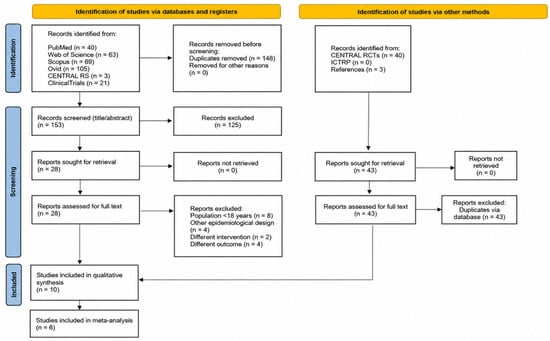
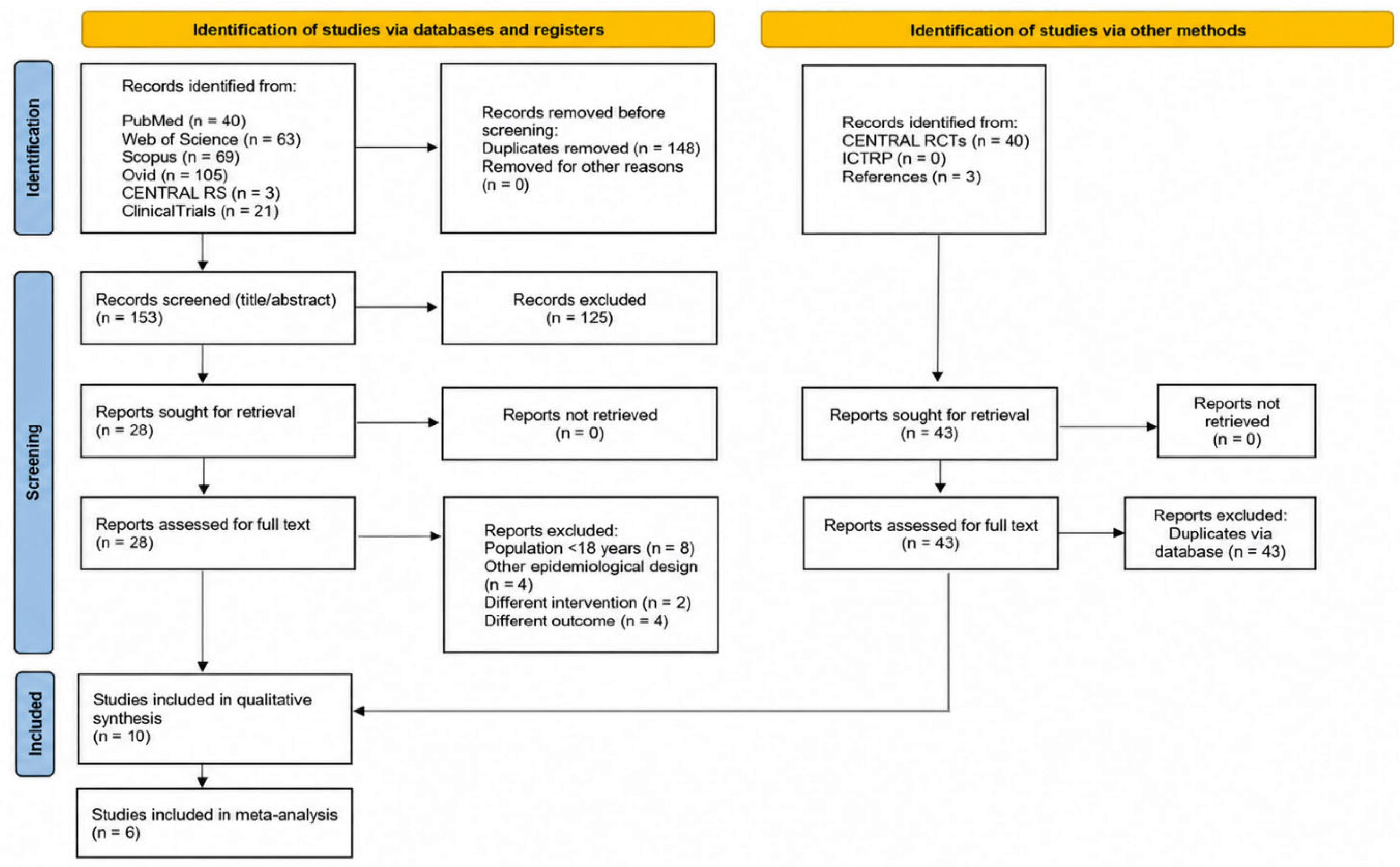
Two reviewers (A.Y., T.G.) independently and in a blinded manner screened titles and abstracts, classifying each record as “included,” “excluded,” or “maybe.” Full-text articles were retrieved for records categorized as “included” or “maybe” to determine final eligibility. Discrepancies were resolved through consensus and, when necessary, adjudicated by a third reviewer (HFGB). Reasons for full-text exclusion were documented explicitly and summarized in Table 1. The overall identification, screening, and eligibility process was depicted using the PRISMA 2020 flow diagram in Figure 1.
Figure 1.
PRISMA 2020 flow diagram illustrating the identification, screening, and selection process of studies included in the systematic review.
2.4. Data Extraction
Data extraction was performed independently by two reviewers (A.Y. and T.G.) using a standardized form. Extracted study features included country and center, design (parallel-group, factorial, or multi-arm), duration, and assessment schedule. Participant characteristics comprised age, sex, diagnostic criteria, clinical setting, and baseline severity. Intervention characteristics included n-3 PUFA formulation, EPA (20:5 n-3) and DHA (22:6 n-3) composition when reported, daily dose, duration, and route of administration. Comparator characteristics included placebo composition when applicable and concomitant standard treatment.
For continuous outcomes (e.g., PANSS total and subscales and CGI), group-level means and standard deviations were extracted at each time point. When only change scores or repeated-measures/mixed-effects model results were reported, available statistical estimates (e.g., effect estimates, p-values, confidence intervals, and interaction time × treatment effects) were extracted for narrative synthesis. For dichotomous outcomes (e.g., discontinuation, adverse events, and mortality), event counts and total sample sizes per arm were recorded.
In trials with multiple active arms (e.g., different n-3 PUFA doses) or factorial designs, the study structure was documented, and analytic strategies were planned to avoid double-counting the control group, using separate dose comparisons or pooling intervention arms when methodologically justified.
Given the clinical and methodological heterogeneity and inconsistent reporting of several outcomes (e.g., BPRS, GAF/SOFAS, hospitalization, or relapse), quantitative synthesis was restricted to outcomes for which at least two clinically and methodologically comparable trials reported sufficient numerical data at the same assessment time. Outcomes that could not be combined were synthesized narratively.
2.5. Risk-of-Bias Assessment
Risk of bias was independently assessed by two reviewers (A.Y., T.G.) using the Cochrane Risk of Bias 2 (RoB 2) tool. The following five domains were evaluated: (1) bias arising from the randomization process; (2) bias due to deviations from intended interventions; (3) bias due to missing outcome data; (4) bias in measurement of the outcome; and (5) bias in selection of the reported result. Disagreements were resolved through consensus and, when required, consultation with a third reviewer (HFGB). No automation tools were used during the risk-of-bias assessment.
2.6. Statistical Analysis and Data Synthesis
Meta-analyses were conducted when at least two clinically and methodologically comparable trials reported sufficient data for the same outcome and assessment time. Continuous outcomes were summarized using means, standard deviations, and sample sizes. Because all combinable symptom outcomes were measured using the Positive and Negative Syndrome Scale (PANSS), effect estimates were expressed as mean differences (MDs) with 95% confidence intervals (CIs) and pooled using the inverse-variance method. Final scores and changes from baseline were analyzed separately, and lower PANSS scores were considered to favor n-3 PUFA supplementation. The primary analysis of final PANSS total scores was restricted to intention-to-treat data. When fewer than two trials fulfilled this criterion, no pooled estimate was calculated, and the individual trial estimate was reported.
Sensitivity analyses incorporated data from participants who completed follow-up, while an additional, less restrictive sensitivity analysis included trials with substantial attrition. Random-effects models were retained when clinical or methodological heterogeneity precluded the assumption of a common underlying effect. Between-study variance (tau2) for continuous outcomes was estimated using restricted maximum likelihood. Wald-type CIs were used in the two-study sensitivity analysis, whereas the Hartung–Knapp adjustment was applied to the additional three-study sensitivity analysis.
Dichotomous outcomes were summarized using event counts and total participants and expressed as risk ratios (RRs) with 95% CIs. Clinical response, all-cause discontinuation, and discontinuation due to adverse events were analyzed separately. A fixed-effect Mantel–Haenszel model was used when I2 was below 40% and clinical and methodological comparability supported a common treatment effect. When I2 was 40% or higher, or relevant between-study differences were present, an inverse-variance random-effects model with the DerSimonian–Laird estimator for tau2 and Wald-type CIs was applied. The Hartung–Knapp adjustment was not used for dichotomous outcomes. When at least one cell within a study contained zero events, a continuity correction of 0.5 was added to all four cells of that study; no correction was applied to studies without zero cells. The Peto method was restricted to the within-trial analysis of mortality in the factorial Bentsen trial and was not used for the principal pooled analyses.
Statistical heterogeneity was assessed using Cochran’s Q test and quantified with the I2 statistic. Model selection was not based exclusively on I2 because heterogeneity estimates are imprecise when few studies are available. Differences in population characteristics, n-3 PUFA formulation and dose, concomitant antipsychotic treatment, follow-up duration, attrition, and analytical population were also considered. An I2 value below 40% was considered potentially unimportant only when clinical and methodological heterogeneity was also limited.
For multi-arm trials, eligible n-3 PUFA groups were combined into a single experimental group by summing sample sizes and event counts for dichotomous outcomes, thereby preventing repeated inclusion of a shared control group. Reports arising from the same trial population were treated as a single study family and were never included simultaneously in the same meta-analysis. Factorial comparisons and subgroup-dependent estimates were analyzed separately when they could not be combined without violating the independence assumption. Outcomes reported by only one eligible trial were presented as individual effect estimates and were not described as meta-analyses.
Two-sided p-values below 0.05 were considered statistically significant. Prediction intervals, meta-regression, between-study subgroup analyses, and assessments of small-study effects using funnel plots were not performed because all pooled analyses contained fewer than five trials. Statistical calculations were reproduced in an audited workbook and verified against Cochrane Review Manager algorithms. Outcomes that remained unsuitable for pooling were summarized narratively, and the certainty of the body of evidence was not formally assessed using the GRADE approach.
3. Results
3.1. Study Selection (PRISMA)
The PRISMA 2020 flow diagram summarizes the identification, screening, and eligibility process (Figure 1). A total of 301 records were identified through database searches. After removal of duplicates and screening of titles and abstracts, 28 full-text articles were assessed for eligibility, of which 10 randomized controlled trials met the inclusion criteria and were included in the qualitative synthesis [16,17,18,19,20,21,22,23,24,25]. Additional records identified through other sources were duplicates of studies already retrieved through database searches and did not contribute to further eligible studies.
3.2. Characteristics of Included Studies
The 10 randomized controlled trials were published between 2001 and 2020 and were conducted in China, Slovenia, Norway, Iran, South Africa, the United Kingdom, and the United States [16,17,18,19,20,21,22,23,24,25]. Follow-up ranged from 6 to 16 weeks. Populations included acute inpatients with violent behavior, patients with chronic or persistent symptoms, participants with tardive dyskinesia, and both inpatient and outpatient samples. Concomitant treatment included clozapine, risperidone, haloperidol decanoate, other conventional antipsychotics, and newer atypical antipsychotics.
The interventions were also heterogeneous. Formulations ranged from fish-oil mixtures containing EPA (20:5 n-3) and DHA (22:6 n-3) to purified ethyl-EPA. EPA content typically ranged from 540 mg/day in fish-oil trials to 4 g/day in ethyl-EPA trials; one multi-component essential-PUFA formulation supplied 396 mg/day of EPA together with DHA and α-linolenic acid. Treatment duration ranged from 6 to 16 weeks. Comparators included mineral oil, liquid paraffin, lactose, or low-dose vitamin E placebo preparations. These differences did not permit reliable dose–response or formulation-specific comparisons [16,17,18,19,20,21,22,23,24,25].
Psychiatric symptom severity was most frequently assessed using the PANSS [16,17,18,19,20,21,22,23,24,25]. Additional outcomes included the CGI [17,18,21,25], MOAS [17,18], ESRS [21], and AIMS [20]. Several trials also reported adverse events and other safety outcomes [16,20,21,22,23,25].
Across studies, symptom severity generally decreased over time in both intervention and control groups, with limited evidence of consistent superiority of n-3 PUFA supplementation over placebo [16,17,18,19,20,21,22,23,24,25]. Detailed study characteristics are summarized in Table 2 and Table 3.
Table 2.
Description of the clinical trials included in the systematic review.
Table 3.
Description of the clinical trials included in the systematic review (continuation).
3.3. Effects of Interventions
Results are presented according to the clinical outcomes assessed across the included studies. A narrative synthesis was used for outcomes with insufficiently comparable data, followed by meta-analysis when at least two clinically and methodologically comparable trials reported the same outcome at a compatible assessment time.
3.3.1. PANSS
In the two Qiao trials involving hospitalized patients with violent behavior, PANSS total and subscale scores decreased in both groups without significant between-group differences. In the 2020 study, the group-by-time interaction was not statistically significant despite reductions at weeks 4 and 8. Similarly, in the 2018 study, PANSS scores decreased at weeks 4, 8, and 12, but n-3 PUFA supplementation was not superior to placebo (p > 0.7 for all between-group comparisons) [17,18]. Bošković et al., in a four-arm trial of placebo, vitamin E, essential PUFAs, and their combination, also found no treatment effect on PANSS total or subscale scores after 4 months [19].
Bentsen et al. reported that treatment effects differed according to baseline erythrocyte PUFA status. Among patients with low baseline PUFA levels, EPA (20:5 n-3) monotherapy was associated with a less favorable PANSS total course than placebo (+12.6 points; 95% CI 1.0–24.4; p = 0.03), whereas concomitant vitamins E and C attenuated this effect. No differences were observed among patients with high baseline PUFA levels [16]. In the 6-week trial by Manteghiy et al., n-3 PUFAs were added to risperidone; apart from a single difference in general psychopathology at week 3, no consistent between-group differences were observed [20]. Emsley et al. likewise found no difference between EPA (20:5 n-3) and placebo in baseline-to-endpoint PANSS change (p = 0.9) [21].
In Peet et al., ethyl-EPA (20:5 n-3) at 2 g/day was superior to placebo for PANSS total (p = 0.04) and general psychopathology (p = 0.03), without differences in positive or negative subscales; the 1 g/day and 4 g/day arms did not show overall superiority [22]. In Emsley et al., the percentage change in PANSS total at 12 weeks favored ethyl-EPA (12.6 ± 14.0 vs. 3.1 ± 13.3; p = 0.03), although the difference was attenuated after adjustment for changes in dyskinesia (p = 0.09) [23]. A pilot trial by Peet et al. suggested a greater percentage improvement in PANSS total with EPA (20:5 n-3) than with DHA (22:6 n-3) or placebo [24]. Fenton et al. found improvement over time in both groups without a significant group-by-time interaction [25].
3.3.2. CGI
Qiao et al. assessed CGI–Severity and reported improvement at weeks 4, 8, and 12 relative to baseline, without between-group differences [18]. Fenton et al. reported identical CGI values at week 16 (3.5 ± 0.7 in both groups), with a time effect but no group-by-time interaction [25]. Emsley et al. collected CGI assessments for tardive dyskinesia and did not report a differential effect of EPA (20:5 n-3) on the global clinical impression of psychotic symptoms [21].
3.3.3. Secondary Outcomes Related to Adverse Events
Bentsen et al. assessed adverse events using the UKU scale and found no association between EPA (20:5 n-3) and/or vitamin allocation and the total number of adverse events. Nine serious adverse events were recorded in the intention-to-treat population; although two deaths occurred in EPA-containing groups, mortality was not associated with treatment allocation (Fisher’s exact p > 0.48) [16]. Peet et al. reported similar rates of new adverse events across groups (placebo, 52%; 1 g, 50%; 2 g, 34%; and 4 g, 59%), predominantly mild gastrointestinal symptoms [22]. In Fenton et al., upper respiratory infection and diarrhea were the most common adverse events in the EPA group (19% each) [25]. Manteghiy et al. reported mild extrapyramidal and gastrointestinal effects without group-specific data or discontinuations due to adverse events [20]. In Emsley et al., one participant withdrew after an overdose; no between-group differences were observed in parkinsonism, dystonia, or akathisia, while dyskinesia improved more with ethyl-EPA at 12 weeks (t = 2.82; p = 0.008) [23].
3.3.4. Mortality
Only Bentsen et al. reported deaths during follow-up (two deaths in EPA-containing groups), with no statistical association between mortality and treatment allocation [16].
3.4. Meta-Analysis Results
Four outcome domains were quantitatively evaluated, yielding six pooled estimates, including sensitivity analyses. None showed a statistically significant difference between adjunctive n-3 PUFAs and control interventions.
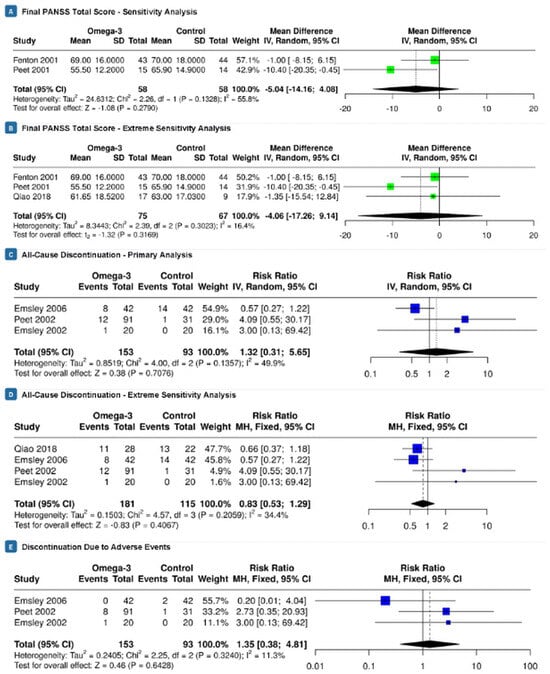
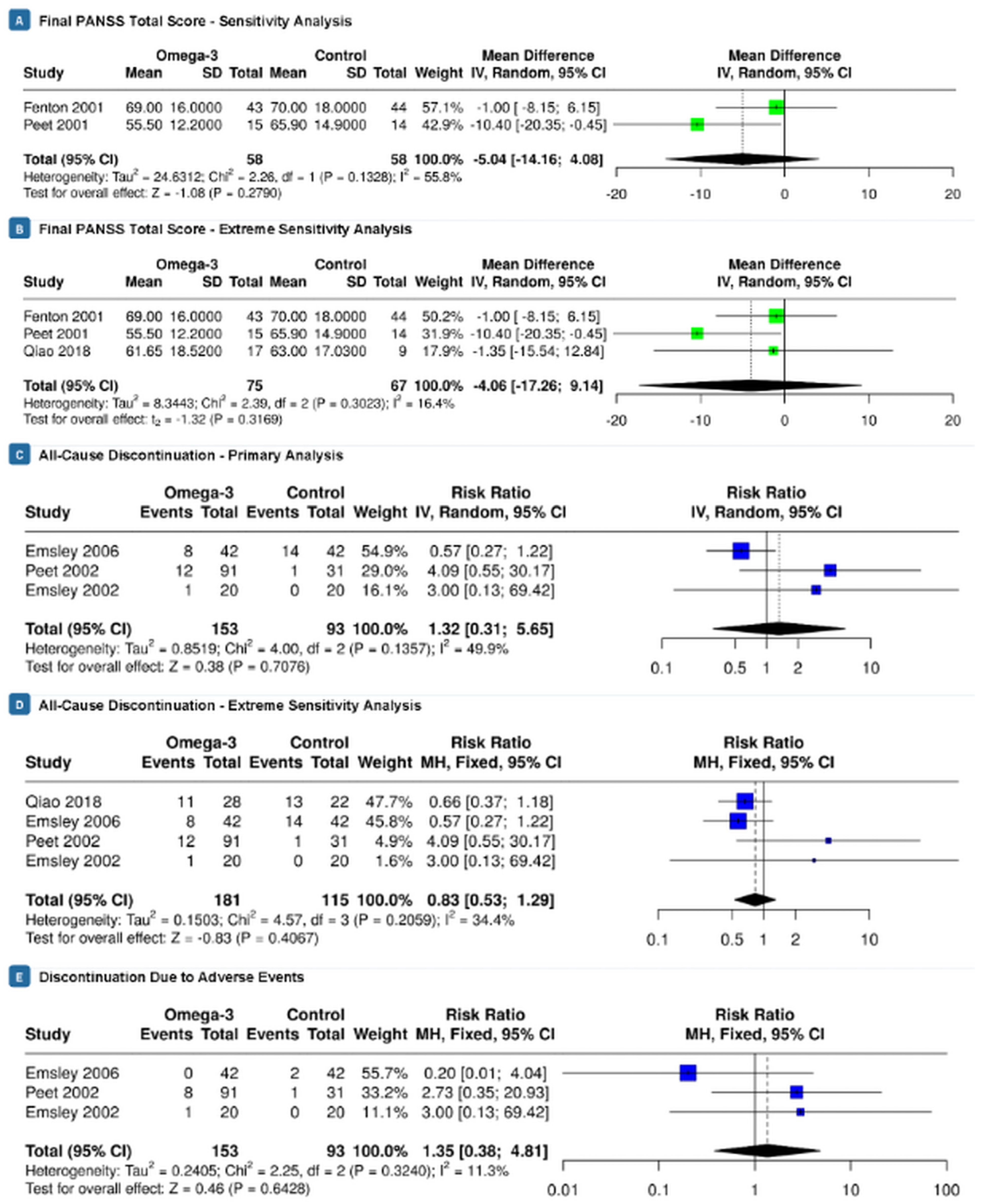
Only Fenton et al. (2001) [25] reported final PANSS total scores for a strict intention-to-treat population; therefore, the primary analysis could not be pooled. This trial (n = 87) found no significant difference between n-3 PUFA supplementation and placebo (MD −1.00, 95% CI −8.15 to 6.15; p = 0.784). A sensitivity analysis of Fenton et al. (2001) [25] and Peet et al. (2001) [24], including 116 participants, also found no significant improvement in final PANSS total scores (MD −5.04, 95% CI −14.16 to 4.08; p = 0.279; I2 = 55.8%). After adding Qiao et al. (2018) [18] in an extreme sensitivity analysis, the result remained nonsignificant (three trials; 142 participants; MD −4.06, 95% CI −17.26 to 9.14; p = 0.317; I2 = 16.4%). Change-from-baseline scores could not be pooled; however, Emsley et al. (2002) [23] individually reported a significant effect favoring n-3 PUFA supplementation (MD −9.50, 95% CI −17.96 to −1.04; p = 0.028).
Clinical response was evaluated in two trials involving 106 participants [21,24]. Response occurred in 8 of 54 participants receiving n-3 PUFAs and 4 of 52 controls, with no significant between-group difference (RR 1.62, 95% CI 0.27 to 9.78; p = 0.601; I2 = 46.1%).
All-cause discontinuation was assessed in three trials involving 246 participants [21,22,23]. Discontinuation occurred in 21 of 153 participants receiving n-3 PUFAs and 15 of 93 controls, with no significant between-group difference (RR 1.32, 95% CI 0.31 to 5.65; p = 0.708; I2 = 49.9%). The extreme sensitivity analysis, which added Qiao et al. (2018) [18], was also nonsignificant (RR 0.83, 95% CI 0.53 to 1.29; p = 0.407; I2 = 34.4%).
Discontinuation due to adverse events was reported in three trials [21,22,23], occurring in 9 of 153 participants receiving n-3 PUFAs and 3 of 93 controls. No significant difference was observed (RR 1.35, 95% CI 0.38 to 4.81; p = 0.643; I2 = 11.2%). Other safety outcomes, including overall adverse events, serious adverse events, and mortality, could not be pooled because comparable data were insufficient.
3.5. Quality Assessment for Risk of Bias
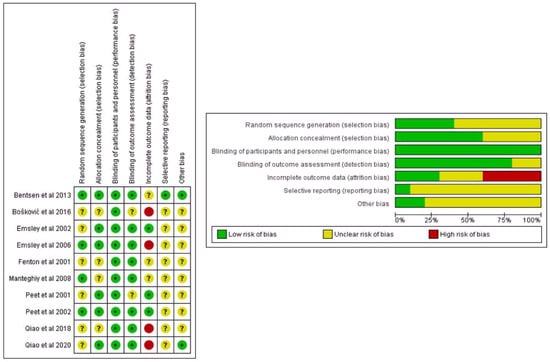
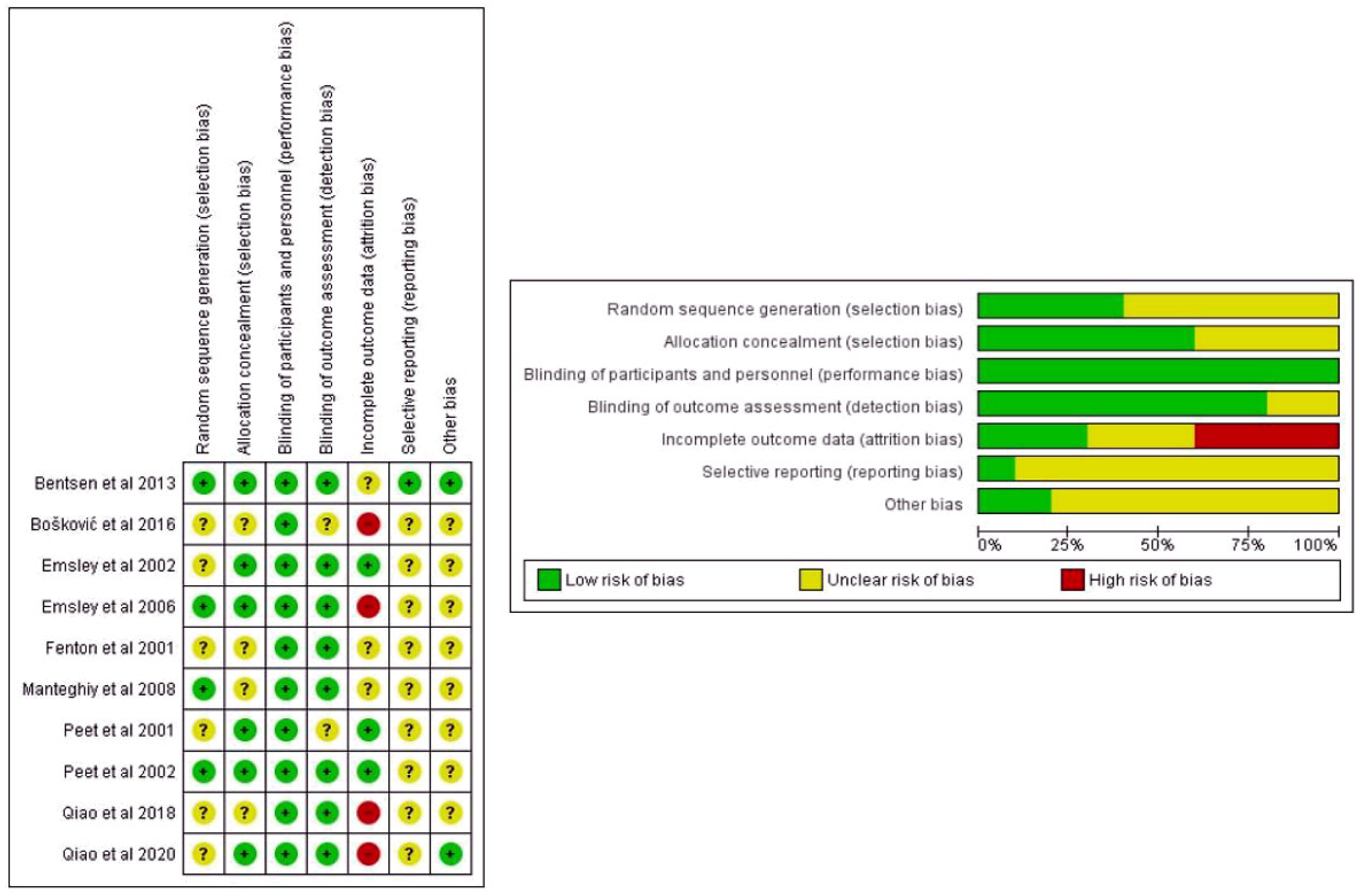
Qiao et al. (2020), Qiao et al. (2018), Bošković et al. (2016), and Emsley et al. (2006) were judged to be at high risk of bias [17,18,19,21]. In all four studies, Domain 3 (missing outcome data) was the primary driver because of high attrition (30–50%) or between-group imbalances (e.g., 19% vs. 33%), without robust imputation or sensitivity analyses and with a plausible likelihood that missingness depended on the true outcome value.
Some concerns were assigned to Bentsen et al. (2013) (low risk in Domains 1, 2, and 4; concerns in Domain 3 because of the pattern and proportion of missing data at 16 weeks) [16]; Manteghiy et al. (2008) (allocation concealment not described, insufficient reporting of missing data, and no protocol or statistical analysis plan) [20]; Emsley et al. (2002) (randomization method not described) [23]; Peet et al. (2002) (limited information in Domains 1, 4, and 5) [22]; and Fenton et al. (2001) (incomplete information in Domains 1, 3, and 5, with moderate missingness) [25].
The study by Peet et al. (2001) was judged to be at low risk of bias because sequence generation and allocation concealment were managed by an independent third party, blinding was maintained, adherence was high, intention-to-treat analysis was used, outcome measurement was valid, and reported outcomes were consistent with the described plan [24] (Figure 2).
Figure 2.
Risk-of-bias assessment of the included randomized controlled trials using the Cochrane RoB 2 tool [16,17,18,19,20,21,22,23,24,25].
Selected forest plots from the exploratory quantitative syntheses are presented in Figure 3.
Figure 3.
Forest plots of selected exploratory quantitative syntheses of adjunctive n-3 polyunsaturated fatty acids versus control interventions in adults with schizophrenia [18,21,22,23,24,25]: (A) final PANSS total score, sensitivity analysis; (B) final PANSS total score, extreme sensitivity analysis; (C) all-cause discontinuation, primary analysis; (D) all-cause discontinuation, extreme sensitivity analysis; and (E) discontinuation due to adverse events.
4. Discussion
Across the pooled analyses, adjunctive n-3 PUFAs did not demonstrate statistically significant benefits for final PANSS total scores, clinical response, all-cause discontinuation, or discontinuation due to adverse events, and sensitivity analyses did not alter this conclusion. Narrative evidence likewise showed no consistent benefit for PANSS or CGI outcomes. Evidence for hospitalization, relapse, mortality, and functional outcomes remained sparse. Short-term tolerability was generally comparable to placebo and was characterized mainly by mild gastrointestinal adverse events. Isolated subgroup signals involving clozapine or baseline PUFA status were not consistently replicated [16,22]. Given the small number of trials and wide confidence intervals, these nonsignificant findings should not be interpreted as proof of equivalence.
A major source of uncertainty was intervention heterogeneity. The trials evaluated mixed fish-oil products and purified ethyl-EPA, with materially different EPA (20:5 n-3) and DHA (22:6 n-3) content, EPA doses, placebo oils, and treatment durations. Consequently, the pooled estimates represent average effects across regimens that are not necessarily biologically interchangeable. The available data cannot establish a dose–response relationship or determine whether EPA-only and EPA/DHA formulations have different clinical effects.
Clinical heterogeneity was also substantial. Participants ranged from acutely hospitalized patients with violent behavior to outpatients with chronic persistent symptoms or tardive dyskinesia, and concomitant treatment included clozapine, risperidone, haloperidol decanoate, and other conventional or atypical antipsychotics. Differences in stage and duration of illness, baseline symptom severity, clinical setting, and antipsychotic exposure may have modified treatment effects and probably contributed to between-study inconsistency. The small number of trials precluded credible subgroup meta-analysis, so the apparent clozapine signal remains exploratory.
Biomarker assessment was insufficient to distinguish pharmacological inefficacy from inadequate biological exposure. Only the two Qiao trials measured plasma EPA (20:5 n-3) and DHA (22:6 n-3) longitudinally [17,18], while Peet et al. assessed erythrocyte membrane fatty acids only in a clozapine subgroup [22]. Most trials therefore could not determine whether participants were n-3 PUFA deficient at baseline, achieved meaningful membrane enrichment, or adhered biologically to supplementation. Moreover, n-3 and n-6 PUFAs share desaturation and elongation pathways; competition between their substrates may influence long-chain PUFA synthesis, membrane incorporation, and the balance of derived lipid mediators [6,7]. Future trials should measure baseline and post-treatment plasma and erythrocyte EPA, DHA, arachidonic acid (20:4 n-6), and n-6:n-3 ratios, together with dietary intake and adherence.
Genetic variation in lipid metabolism is another plausible source of heterogeneity. Nadalin et al. found that variants in PLA2G4A and PLA2G6 were associated with changes in PANSS psychopathology and/or metabolic parameters during antipsychotic treatment, whereas PLA2G4C was not associated with treatment response [26]. Subsequent studies reported that the PPARα L162V variant was associated with LDL-cholesterol changes in a risperidone/paliperidone subgroup [27] and that the COX-2 (PTGS2) rs689466 variant was associated with HDL-cholesterol changes among clozapine-treated patients [28]. These studies evaluated response to antipsychotic medication, not to n-3 PUFA supplementation; their relevance to the present intervention is therefore indirect and hypothesis-generating. Nevertheless, they support prespecified investigation of lipid-metabolism genotypes as potential modifiers in future biomarker-stratified n-3 PUFA trials.
These findings should also be interpreted in light of the risk of bias. Several trials that were at high risk of bias because of incomplete outcome data reported improvement in both groups without significant between-group differences [17,18,19,21]. Trials with some methodological concerns likewise produced mixed findings [20,25]. A few small studies suggested a benefit of ethyl-EPA, but one apparent PANSS improvement was attenuated after adjustment for changes in dyskinesia [21,23,24]. The only trial judged to be at low risk of bias reported benefit confined to a clozapine subgroup [22]. Adverse events were generally mild and comparable to placebo, most commonly gastrointestinal or extrapyramidal symptoms [16,20,21,22,23,25]. Mortality was rarely reported and was not associated with treatment allocation [16]. Overall, isolated positive results should be interpreted cautiously because of imprecision, risk of bias, and clinical heterogeneity.
These findings are broadly consistent with previous reviews. Fusar-Poli et al. found no significant effect of EPA (20:5 n-3) as adjunctive treatment in established schizophrenia [29]. Sommer et al. ranked fatty acids behind other adjunctive anti-inflammatory strategies [30], suggesting that any benefit is likely modest or context-dependent. Cho et al. emphasized substantial heterogeneity and identified isolated positive findings, particularly among patients receiving clozapine, alongside several unfavorable trials [31]. Bozzatello et al. proposed that n-3 PUFAs may be more promising in early illness, first-episode psychosis, or clinical high-risk states; however, evidence in established schizophrenia remained heterogeneous [32]. The Cochrane review by Irving et al. similarly concluded that the evidence remained inconclusive and that the use of n-3 PUFAs for schizophrenia remained experimental [33].
The main strengths of this review include a comprehensive and transparent search strategy, duplicate study selection and data extraction, qualitative and quantitative synthesis, and formal assessment of risk of bias using RoB 2. The review also incorporated the eligible randomized trials and explicitly considered heterogeneity in formulation, dose, population, baseline PUFA status, and concomitant antipsychotic treatment.
Limitations and Future Directions
The evidence base was limited by substantial clinical and intervention heterogeneity, high attrition, incomplete reporting of randomization and allocation concealment, few registered protocols, short follow-up, and sparse reporting of functional or hard clinical outcomes. Inconsistent measurement of baseline and achieved n-3 PUFA status further limited interpretation of biological exposure and potential effect modification.
The quantitative synthesis also had important limitations. Each meta-analysis included only two to four trials, reducing precision and the reliability of heterogeneity estimates, and the primary final-PANSS analysis could not be pooled because only one trial provided strict intention-to-treat data. Publication bias, prediction intervals, meta-regression, and between-study subgroup analyses could not be assessed because every pooled analysis contained fewer than five trials. The certainty of evidence was not formally evaluated using GRADE. An additional limitation is that the quantitative synthesis was not prespecified in the registered protocol and was conducted post hoc after assessing the availability and comparability of quantitative data. Accordingly, the pooled estimates should be considered exploratory and interpreted cautiously.
From a clinical perspective, n-3 PUFAs should not be routinely added to antipsychotic therapy solely to reduce psychotic symptoms. The evidence does not identify an effective EPA/DHA formulation, dose, treatment duration, or clinical subgroup, including patients receiving clozapine. Use for other clinical indications should remain individualized and must not replace evidence-based antipsychotic treatment.
Future RCTs should also prespecify treatment duration and standardized assessment time points to improve comparability across studies. For future trials, an acute-treatment period of approximately 12 weeks could provide a pragmatic window for evaluating symptomatic efficacy, while longer follow-up of 6–12 months would allow assessment of relapse, hospitalization, functioning, quality of life, and longer-term safety. Core clinical outcomes should be assessed using validated and consistently reported instruments, including the PANSS for psychotic symptoms and standardized measures of global clinical status, functioning, and quality of life. To facilitate future quantitative synthesis, trials should prespecify outcome definitions and assessment time points and report group-level means, standard deviations, and sample sizes for continuous outcomes, as well as event counts and denominators for dichotomous outcomes.
5. Conclusions
The meta-analysis did not demonstrate a statistically significant benefit of adjunctive n-3 PUFAs for PANSS total scores, clinical response, all-cause discontinuation, or discontinuation due to adverse events in adults with schizophrenia. However, substantial variation in formulation, dose, duration, population, and concomitant antipsychotic treatment, together with small samples and wide confidence intervals, limits certainty and precludes conclusions about dose–response, formulation-specific effects, or responsive subgroups. Short-term tolerability appeared comparable to placebo, but current evidence does not support routine n-3 PUFA supplementation solely for psychotic symptom reduction. Biomarker- and genotype-informed trials using standardized interventions are needed before a specific role in clinical practice can be defined.
Supplementary Materials
The following supporting information can be downloaded at https://www.mdpi.com/article/10.3390/brainsci16090928/s1; File S1: PRISMA 2020 Main Checklist; Table S1: Complete PubMed/MEDLINE electronic search strategy used for the systematic review.
Author Contributions
Conceptualization, A.P.Y.S. and T.G.; methodology, A.P.Y.S., T.G. and H.F.G.-B.; validation, A.P.Y.S., T.G., H.F.G.-B. and K.B.; formal analysis, A.P.Y.S. and T.G.; investigation, A.P.Y.S. and T.G.; data curation, A.P.Y.S. and T.G.; writing—original draft preparation, A.P.Y.S. and T.G.; writing—review and editing, A.P.Y.S., T.G. and H.F.G.-B.; visualization, A.P.Y.S. and T.G.; supervision, H.F.G.-B. and K.B.; project administration, A.P.Y.S. and T.G. All authors have read and agreed to the published version of the manuscript.
Funding
This research received no external funding.
Institutional Review Board Statement
Ethical review and approval were waived because this study is a systematic review based exclusively on previously published data.
Informed Consent Statement
Not applicable.
Data Availability Statement
No new data were created or analyzed in this study. Data sharing is not applicable to this article.
Conflicts of Interest
The authors declare no conflicts of interest.
Abbreviations
The following abbreviations are used in this manuscript:
| AE | Adverse events |
| AIMS | Abnormal Involuntary Movement Scale |
| ANCOVA | Analysis of covariance |
| BPRS | Brief Psychiatric Rating Scale |
| CGI | Clinical Global Impression |
| CGI-SI | Clinical Global Impression–Severity Index |
| CI | Confidence interval |
| ICD-10 | International Classification of Diseases, 10th Revision |
| DHA | Docosahexaenoic acid (22:6 n-3) |
| DSM-IV | Diagnostic and Statistical Manual of Mental Disorders, Fourth Edition |
| DSM-IV-TR | Diagnostic and Statistical Manual of Mental Disorders, Fourth Edition, Text Revision |
| E-E | Abbreviation used by the authors for E-EPA |
| E-EPA | Ethyl-eicosapentaenoate |
| EPA | Eicosapentaenoic acid (20:5 n-3) |
| EPUFAs | Essential polyunsaturated fatty acids |
| ESRS | Extrapyramidal Symptom Rating Scale |
| GAF | Global Assessment of Functioning |
| GNC | General Nutrition Corporation |
| ITT | Intention-to-treat |
| LMM | Linear mixed model |
| MADRS | Montgomery–Åsberg Depression Rating Scale |
| NIMH | National Institute of Mental Health |
| NS | Not significant |
| PANSS | Positive and Negative Syndrome Scale |
| PUFA | Polyunsaturated fatty acid |
| SD | Standard deviation |
| TD | Tardive dyskinesia |
| UKU | UKU Side Effect Rating Scale |
| USERS | UKU Side Effect Rating Scale (abbreviation used by the authors) |
References
- Saha, S.; Chant, D.; Welham, J.; McGrath, J. A systematic review of the prevalence of schizophrenia. PLoS Med. 2005, 2, e141. [Google Scholar] [CrossRef] [Scilit] [PubMed]
- Correll, C.U.; Solmi, M.; Croatto, G.; Schneider, L.K.; Rohani-Montez, S.C.; Fairley, L.; Smith, N.; Bitter, I.; Gorwood, P.; Taipale, H.; et al. Mortality in people with schizophrenia: A systematic review and meta-analysis of relative risk and aggravating or attenuating factors. World Psychiatry 2022, 21, 248–271. [Google Scholar] [CrossRef] [Scilit] [PubMed]
- Samara, M.T.; Nikolakopoulou, A.; Salanti, G.; Leucht, S. How Many Patients With Schizophrenia Do Not Respond to Antipsychotic Drugs in the Short Term? An Analysis Based on Individual Patient Data From Randomized Controlled Trials. Schizophr. Bull. 2019, 45, 639–646. [Google Scholar] [CrossRef] [Scilit] [PubMed]
- Bazinet, R.P.; Layé, S. Polyunsaturated fatty acids and their metabolites in brain function and disease. Nat. Rev. Neurosci. 2014, 15, 771–785. [Google Scholar] [CrossRef] [Scilit] [PubMed]
- Layé, S.; Nadjar, A.; Joffre, C.; Bazinet, R.P. Anti-Inflammatory Effects of Omega-3 Fatty Acids in the Brain: Physiological Mechanisms and Relevance to Pharmacology. Pharmacol. Rev. 2018, 70, 12–38. [Google Scholar] [CrossRef] [Scilit] [PubMed]
- Zhang, J.Y.; Kothapalli, K.S.; Brenna, J.T. Desaturase and elongase-limiting endogenous long-chain polyunsaturated fatty acid biosynthesis. Curr. Opin. Clin. Nutr. Metab. Care 2016, 19, 103–110. [Google Scholar] [CrossRef] [Scilit] [PubMed]
- Chilton, F.H.; Dutta, R.; Reynolds, L.M.; Sergeant, S.; Mathias, R.A.; Seeds, M.C. Precision Nutrition and Omega-3 Polyunsaturated Fatty Acids: A Case for Personalized Supplementation Approaches for the Prevention and Management of Human Diseases. Nutrients 2017, 9, 1165. [Google Scholar] [CrossRef] [Scilit] [PubMed]
- Satogami, K.; Takahashi, S.; Yamada, S.; Ukai, S.; Shinosaki, K. Omega-3 fatty acids related to cognitive impairment in patients with schizophrenia. Schizophr. Res. Cogn. 2017, 9, 8–12. [Google Scholar] [CrossRef] [Scilit] [PubMed]
- Ouyang, W.C.; Sun, G.C.; Hsu, M.C. Omega-3 fatty acids in cause, prevention and management of violence in schizophrenia: Conceptualization and application. Aggress. Violent Behav. 2020, 50, 101347. [Google Scholar] [CrossRef] [Scilit]
- Horrobin, D.F. The membrane phospholipid hypothesis as a biochemical basis for the neurodevelopmental concept of schizophrenia. Schizophr. Res. 1998, 30, 193–208. [Google Scholar] [CrossRef] [Scilit] [PubMed]
- Goh, K.K.; Chen, C.Y.; Chen, C.H.; Lu, M.L. Effects of omega-3 polyunsaturated fatty acids supplements on psychopathology and metabolic parameters in schizophrenia: A meta-analysis of randomized controlled trials. J. Psychopharmacol. 2021, 35, 221–235. [Google Scholar] [CrossRef] [Scilit] [PubMed]
- Rossier, A.T.; Hallahan, B. The therapeutic effect of omega-3 polyunsaturated fatty acids on symptom severity of psychosis: A systematic review and meta-analysis. Eur. Psychiatry 2024, 67, e88. [Google Scholar] [CrossRef] [Scilit] [PubMed]
- Winter-van Rossum, I.; Slot, M.I.E.; van Hell, H.H.; Bossong, M.G.; Berger, G.; Aschauer, H.; Maat, A.; Walitza, S.; Lavan, O.; Baeza, I.; et al. Effectiveness of Omega-3 Fatty Acids Versus Placebo in Subjects at Ultra-High Risk for Psychosis: The PURPOSE Randomized Clinical Trial. Schizophr. Bull. 2025, 51, 1082–1091. [Google Scholar] [CrossRef] [Scilit] [PubMed]
- Page, M.J.; McKenzie, J.E.; Bossuyt, P.M.; Boutron, I.; Hoffmann, T.C.; Mulrow, C.D.; Shamseer, L.; Tetzlaff, J.M.; Akl, E.A.; Brennan, S.E.; et al. The PRISMA 2020 statement: An updated guideline for reporting systematic reviews. BMJ 2021, 372, n71. [Google Scholar] [CrossRef] [Scilit] [PubMed]
- Ouzzani, M.; Hammady, H.; Fedorowicz, Z.; Elmagarmid, A. Rayyan-a web and mobile app for systematic reviews. Syst. Rev. 2016, 5, 210. [Google Scholar] [CrossRef] [Scilit] [PubMed] [PubMed Central]
- Bentsen, H.; Osnes, K.; Refsum, H.; Solberg, D.K.; Bøhmer, T. A randomized placebo-controlled trial of an omega-3 fatty acid and vitamins E+C in schizophrenia. Transl. Psychiatry 2013, 3, e335. [Google Scholar] [CrossRef] [Scilit] [PubMed]
- Qiao, Y.; Liu, C.P.; Han, H.Q.; Liu, F.J.; Shao, Y.; Xie, B. No impact of omega-3 fatty acid supplementation on symptoms or hostility among patients with schizophrenia. Front. Psychiatry 2020, 11, 312. [Google Scholar] [CrossRef] [Scilit] [PubMed]
- Qiao, Y.; Mei, Y.; Han, H.; Liu, F.; Yang, X.M.; Shao, Y.; Xie, B.; Long, B. Effects of Omega-3 in the treatment of violent schizophrenia patients. Schizophr. Res. 2018, 195, 283–285. [Google Scholar] [CrossRef] [Scilit] [PubMed]
- Bošković, M.; Vovk, T.; Koprivšek, J.; Plesničar, B.K.; Grabnar, I. Vitamin E and essential polyunsaturated fatty acids supplementation in schizophrenia patients treated with haloperidol. Nutr. Neurosci. 2016, 19, 156–161. [Google Scholar] [CrossRef] [Scilit] [PubMed]
- Manteghiy, A.; Shakeri, M.T.; Koohestani, L.; Salari, E. Beneficial antipsychotic effects of omega-3 fatty acids add-on therapy for the pharmacological management of patients with schizophrenia. Iran. J. Psychiatry Behav. Sci. 2008, 2, 35–40. [Google Scholar]
- Emsley, R.; Niehaus, D.J.; Koen, L.; Oosthuizen, P.P.; Turner, H.J.; Carey, P.; van Rensburg, S.J.; Maritz, J.S.; Murck, H. The effects of eicosapentaenoic acid in tardive dyskinesia: A randomized, placebo-controlled trial. Schizophr. Res. 2006, 84, 112–120. [Google Scholar] [CrossRef] [Scilit] [PubMed]
- Peet, M.; Horrobin, D.F.; E-E Multicentre Study Group. A dose-ranging exploratory study of the effects of ethyl-eicosapentaenoate in patients with persistent schizophrenic symptoms. J. Psychiatr. Res. 2002, 36, 7–18. [Google Scholar] [CrossRef] [Scilit] [PubMed]
- Emsley, R.; Myburgh, C.; Oosthuizen, P.; van Rensburg, S.J. Randomized, placebo-controlled study of ethyl-eicosapentaenoic acid as supplemental treatment in schizophrenia. Am. J. Psychiatry 2002, 159, 1596–1598. [Google Scholar] [CrossRef] [Scilit] [PubMed]
- Peet, M.; Brind, J.; Ramchand, C.N.; Shah, S.; Vankar, G.K. Two double-blind placebo-controlled pilot studies of eicosapentaenoic acid in the treatment of schizophrenia. Schizophr. Res. 2001, 49, 243–251. [Google Scholar] [CrossRef] [Scilit] [PubMed]
- Fenton, W.S.; Dickerson, F.; Boronow, J.; Hibbeln, J.R.; Knable, M. A placebo-controlled trial of omega-3 fatty acid (ethyl eicosapentaenoic acid) supplementation for residual symptoms and cognitive impairment in schizophrenia. Am. J. Psychiatry 2001, 158, 2071–2074. [Google Scholar] [CrossRef] [Scilit] [PubMed]
- Nadalin, S.; Zatković, L.; Peitl, V.; Karlović, D.; Vidrih, B.; Puljić, A.; Dević Pavlić, S.; Buretić-Tomljanović, A. Association between PLA2 gene polymorphisms and treatment response to antipsychotic medications: A study of antipsychotic-naïve first-episode psychosis patients and nonadherent chronic psychosis patients. Prostaglandins Leukot. Essent. Fat. Acids 2023, 194, 102578. [Google Scholar] [CrossRef] [Scilit] [PubMed]
- Nadalin, S.; Zatković, L.; Peitl, V.; Karlović, D.; Vilibić, M.; Silić, A.; Dević Pavlić, S.; Buretić-Tomljanović, A. An association between PPARα-L162V polymorphism and increased plasma LDL cholesterol levels after risperidone treatment. Prostaglandins Leukot. Essent. Fat. Acids 2024, 200, 102604. [Google Scholar] [CrossRef] [Scilit] [PubMed]
- Nadalin, S.; Ljoka, I.; Savić, A.; Silić, A.; Peitl, V.; Karlović, D.; Vilibić, M.; Zatković, L.; Buretić-Tomljanović, A. Association between the COX-2 rs689466 polymorphism and antipsychotic treatment: Impact on HDL cholesterol changes in clozapine-treated psychosis patients. Prostaglandins Leukot. Essent. Fat. Acids 2025, 204, 102665. [Google Scholar] [CrossRef] [Scilit] [PubMed]
- Fusar-Poli, P.; Berger, G. Eicosapentaenoic acid interventions in schizophrenia: Meta-analysis of randomized, placebo-controlled studies. J. Clin. Psychopharmacol. 2012, 32, 179–185. [Google Scholar] [CrossRef] [Scilit] [PubMed]
- Sommer, I.E.; van Westrhenen, R.; Begemann, M.J.; de Witte, L.D.; Leucht, S.; Kahn, R.S. Efficacy of anti-inflammatory agents to improve symptoms in patients with schizophrenia: An update. Schizophr. Bull. 2014, 40, 181–191. [Google Scholar] [CrossRef] [Scilit] [PubMed]
- Cho, M.; Lee, T.Y.; Kwak, Y.B.; Yoon, Y.B.; Kim, M.; Kwon, J.S. Adjunctive use of anti-inflammatory drugs for schizophrenia: A meta-analytic investigation of randomized controlled trials. Aust. N. Z. J. Psychiatry 2019, 53, 742–759. [Google Scholar] [CrossRef] [Scilit] [PubMed]
- Bozzatello, P.; Rocca, P.; Mantelli, E.; Bellino, S. Polyunsaturated Fatty Acids: What is Their Role in Treatment of Psychiatric Disorders? Int. J. Mol. Sci. 2019, 20, 5257. [Google Scholar] [CrossRef] [Scilit] [PubMed]
- Irving, C.B.; Mumby-Croft, R.; Joy, L.A. Polyunsaturated fatty acid supplementation for schizophrenia. Cochrane Database Syst. Rev. 2006, 3, CD001257. [Google Scholar] [CrossRef] [Scilit] [PubMed]

Disclaimer/Publisher’s Note: The statements, opinions and data contained in all publications are solely those of the individual author(s) and contributor(s) and not of MDPI and/or the editor(s). MDPI and/or the editor(s) disclaim responsibility for any injury to people or property resulting from any ideas, methods, instructions or products referred to in the content. |
© 2026 by the authors. Licensee MDPI, Basel, Switzerland. This article is an open access article distributed under the terms and conditions of the Creative Commons Attribution (CC BY) license.