


Highlights
What are the main findings?
- Unfavorable patterns of circulating miRNA expression were associated with poor functional outcomes after acute ischemic stroke in both continuous and categorical analyses. Continuous miRNA expression levels were also associated with post-stroke depression, whereas unfavorable categorical lncRNA expression patterns were associated with shorter recurrence-free survival.
- Individual studies have reported that unfavorable patterns of circulating ncRNA expression are associated with cognitive impairment, symptomatic intracerebral hemorrhage, and mortality.
What are the implications of the main findings?
- Circulating ncRNAs may serve as minimally invasive biomarkers for prognostic risk stratification and the identification of patients at increased risk of adverse outcomes after acute ischemic stroke.
- The observed associations are exploratory and should be validated in large, prospective, standardized studies before ncRNA-based prognostic tools can be implemented in clinical practice.
Abstract
Objective: This systematic review and meta-analysis evaluated the association between circulating non-coding RNA (ncRNA) expression and prognosis after acute ischemic stroke (AIS). Methods: Seven databases were searched from inception to 31 August 2026. Observational studies reporting prognostic outcomes after AIS were included. Study quality was assessed using the Newcastle–Ottawa Scale. Adjusted odds ratios (ORs) and hazard ratios (HRs) were preferentially extracted; HRs were reconstructed from Kaplan–Meier curves when necessary. Findings were synthesized narratively, with random-effects meta-analysis performed for comparable studies. Results: Thirty-six studies involving 5649 patients were included. For poor functional outcome, five studies of continuous microRNA (miRNA) expression were pooled after standardization to a 1-SD change toward the adverse expression direction (OR = 1.33, 95% CI: 1.05–1.69; I2 = 62.0%). Three studies of categorized miRNA expression showed an association between adverse expression categories and poor functional outcome (OR = 3.04, 95% CI: 1.66–5.53; I2 = 34.4%). Eight studies of categorized long non-coding RNA expression showed an association between adverse expression categories and shorter recurrence-free survival (HR = 2.29, 95% CI: 1.80–2.92; I2 = 0%). Two studies of continuous miRNA expression yielded a pooled OR of 2.59 for post-stroke depression (95% CI: 1.60–4.21; I2 = 0%). Individual studies also reported associations with cognitive impairment, symptomatic intracerebral hemorrhage, and mortality. Conclusions: Circulating ncRNA expression was associated with several prognostic outcomes after AIS. These findings require prospective validation.
1. Introduction
Acute ischemic stroke (AIS) is a cerebrovascular emergency caused by inadequate cerebral perfusion, resulting in neuronal injury. It is the most common subtype of stroke, accounting for approximately 65.3% of all incident strokes worldwide in 2021 (95% uncertainty interval, 62.4%–67.7%) [1,2]. Cerebral ischemia and hypoxia initiate a cascade of pathological processes, including excitotoxicity, oxidative stress, neuroinflammation, apoptosis, and disruption of the blood–brain barrier [3]. These processes exacerbate secondary brain injury and may ultimately lead to poor functional and clinical outcomes.
Motor dysfunction is one of the most common consequences of AIS. Even among patients with mild ischemic stroke, the 90-day disability rate remains as high as 29% [4]. In addition, up to 80% of stroke survivors experience cognitive or emotional sequelae. Post-stroke depression (PSD) affects approximately 27% of patients, whereas anxiety and vascular cognitive impairment may occur in up to 50% of patients, substantially impairing rehabilitation and quality of life [5]. With global population growth and aging, the absolute burden of AIS continues to increase, placing considerable pressure on health-care systems worldwide. Accurate prognostic assessment is therefore essential for monitoring disease progression, guiding individualized management, and optimizing rehabilitation strategies.
Several approaches are currently used to assess prognosis after AIS, but each has important limitations. Clinical scales, such as the modified Rankin Scale (mRS), are widely used because they are simple and readily interpretable. However, their assessment generally requires follow-up, is resource-intensive, and may be affected by interobserver variability and subjective judgment [6]. The National Institutes of Health Stroke Scale is frequently used as an early outcome measure in stroke trials; however, it is less sensitive to non-motor impairments, and the prognostic value of related clinical scales remains under debate [7,8,9,10]. Other candidate biomarkers, including inflammatory factors, peptides, enzymes, and oxidative or metabolic markers, have not been sufficiently standardized for prognostic assessment in AIS, and their disease specificity remains uncertain [11]. Neuroimaging can visualize the infarct core, ischemic penumbra, and collateral circulation, thereby supporting treatment decisions and prognostic evaluation. Nevertheless, imaging requires specialized equipment and trained personnel, and transporting patients for imaging may be hazardous in those who are critically ill or have unstable vital signs [12]. Accordingly, there is an urgent need for prognostic biomarkers that are safe, convenient, reliable, and readily applicable in clinical practice.
Non-coding RNAs (ncRNAs) have attracted increasing attention as potential biomarkers for a range of diseases because they participate extensively in pathological processes and can be stably detected in peripheral blood, including serum and plasma samples [13]. Several classes of ncRNAs, including microRNAs (miRNAs), circular RNAs (circRNAs), and long non-coding RNAs (lncRNAs), have been reported to be differentially expressed in the peripheral blood of patients with AIS. Their expression has been associated with functional outcomes, PSD, recurrence-free survival, and overall survival after stroke [14,15,16,17]. Previous systematic reviews have synthesized the evidence on circulating miRNAs in relation to post-stroke functional recovery [18] and circulating lncRNAs in relation to stroke severity and prognosis [15]. However, a comprehensive synthesis of the evidence on circulating ncRNAs across multiple prognostic outcomes after AIS has yet to be reported. Therefore, this systematic review and exploratory meta-analysis aimed to evaluate the associations between circulating ncRNA expression and prognosis after AIS and to investigate the potential of circulating ncRNAs as candidate prognostic biomarkers.
2. Methods
This systematic review and meta-analysis was conducted in accordance with the Preferred Reporting Items for Systematic Reviews and Meta-Analyses (PRISMA) guidelines [19]. The review protocol was prospectively registered in the International Prospective Register of Systematic Reviews (PROSPERO; registration number: CRD420261286757).
2.1. Search Strategy
A comprehensive literature search was conducted in seven electronic databases: China National Knowledge Infrastructure (CNKI), Wanfang Data, VIP, PubMed, the Cochrane Library, Embase, and Web of Science. The databases were searched from inception to 31 August 2026. The search strategy used predefined terms related to “acute ischemic stroke” and “non-coding RNA,” together with relevant synonyms and database-specific subject headings. The complete search strategies are provided in Additional file 1.
2.2. Eligibility Criteria
2.2.1. Study Design
Cohort and case–control studies were eligible for inclusion. Conference abstracts, narrative or systematic reviews, animal studies, and cellular or in vitro experiments were excluded.
2.2.2. Biomarker Criteria
Studies were eligible if they evaluated the association between the expression of one or more circulating non-coding RNAs (ncRNAs), including microRNAs (miRNAs), long non-coding RNAs (lncRNAs), and circular RNAs (circRNAs), and prognosis in patients with AIS. ncRNA expression could be analyzed as either a continuous or a categorical variable and had to be measured in peripheral blood-derived samples.
Eligible studies were required to report odds ratios (ORs) or hazard ratios (HRs) with corresponding 95% confidence intervals (CIs), or to provide sufficient data for these effect estimates to be calculated or reconstructed. For continuous exposure analyses, the reported effect scale, such as a per-unit or per-standard-deviation change in ncRNA expression, was recorded. For categorical analyses, the definitions of the exposure categories, reference groups, and direction of the association were extracted.
2.2.3. Study Population
The study population comprised patients diagnosed with AIS. The diagnostic criteria had to be consistent with the Chinese Guidelines for the Diagnosis and Treatment of Acute Ischemic Stroke, the diagnostic criteria established by the American Heart Association/American Stroke Association (AHA/ASA), or relevant authoritative guidelines issued by the World Health Organization (WHO).
2.2.4. Outcomes
Eligible studies were required to report at least one of the following prognostic outcomes:
- (1)
- Functional outcome assessed using the modified Rankin Scale (mRS);
- (2)
- Recurrence-free survival (RFS);
- (3)
- Post-stroke cognitive impairment (PSCI);
- (4)
- Post-stroke depression (PSD);
- (5)
- Symptomatic intracerebral hemorrhage (sICH);
- (6)
- Mortality.
Studies assessing functional outcome using the mRS were eligible regardless of the cutoff value used to define an unfavorable or poor outcome. The definition and assessment time point for each outcome were extracted as reported in the original study.
2.3. Data Extraction
All retrieved records were imported into Zotero (version 10.0.8), and duplicate records were removed. Two reviewers independently screened the titles and abstracts against the predefined eligibility criteria. Disagreements were resolved through discussion with a third reviewer. The full texts of potentially eligible studies were then assessed by the same two reviewers. Studies were excluded if they involved ineligible populations, lacked sufficient outcome data, or did not provide adequate information to calculate the required effect estimates.
Two reviewers independently extracted data using a standardized data extraction form. The extracted information included the first author, publication year, country, ncRNA name and class, biological sample type, sample size, ncRNA detection method, direction of differential expression, exposure specification, follow-up duration, outcome definition, OR or HR with its corresponding 95% CI, adjustment status, and covariates included in the model. Where available, changes in AUC, likelihood ratio test results, IDI, and NRI were also extracted. For categorical exposures, the number of categories, cutoff values, comparison categories, and reference categories were recorded. Multivariable-adjusted estimates were preferentially extracted. When multiple adjusted models were reported, the estimate from the most extensively adjusted model was selected. When HRs were unavailable, Kaplan–Meier curves were digitized using Engauge Digitizer (version 12.1), and individual patient data were reconstructed using the IPDfromKM package (version 0.1.10) in R [20].
2.4. Quality Assessment of Included Studies
The methodological quality of the included studies was assessed using the Newcastle–Ottawa Scale (NOS) [21]. The NOS evaluates three domains: selection of study participants, comparability of study groups, and ascertainment of outcomes or exposures. Two reviewers independently performed the quality assessment, and disagreements were resolved through discussion with a third reviewer. Studies receiving more than 6 points were considered to have relatively high methodological quality. The same reviewers assessed the certainty of the evidence for each pooled outcome using an adapted GRADE approach for prognostic factor studies, considering risk of bias, inconsistency, indirectness, imprecision, and publication bias.
2.5. Statistical Analysis
Statistical analyses were performed using Stata version 16.0 and R version 4.5.2; R was used for individual patient data reconstruction from Kaplan–Meier curves and Cox regression modelling. Meta-analysis results were presented in forest plots when appropriate. A structured narrative synthesis was used as the primary approach because of the expected clinical and methodological heterogeneity among the included studies.
Random-effects meta-analysis was performed using restricted maximum likelihood estimation when at least two independent studies within the same broad ncRNA class (miRNA, lncRNA, or circRNA) evaluated the same outcome and reported sufficiently comparable effect estimates [22]. ORs and HRs were pooled separately. Continuous and categorical measures of ncRNA expression were also analyzed separately. Continuous estimates were pooled when they were reported on the same scale or when the corresponding standard deviations were available or could be reliably calculated to allow conversion to a standardized 1-SD scale. Otherwise, the findings were summarized narratively. Where necessary, per-unit estimates were rescaled to represent a 1-SD increase by multiplying the log OR and its standard error by the study-specific SD. The rescaled log OR and the corresponding confidence limits were then exponentiated to obtain the OR and its 95% CI. Effect estimates were initially extracted as reported in the original studies. Estimates and their corresponding CIs were reciprocated only when necessary to harmonize reference categories or to orient the estimates consistently toward the expression direction associated with an adverse outcome. Estimates were not inverted solely because their values were less than 1. When multiple eligible estimates from the same cohort were available for the same outcome and ncRNA class, only one independent estimate was included in the primary analysis.
If the original study did not designate a primary ncRNA, the first eligible ncRNA listed in the reporting order of the article was selected for the primary analysis, irrespective of its effect magnitude or statistical significance. Alternative eligible estimates from the same cohort were assessed individually in sensitivity analyses by substituting them one at a time.
Between-study heterogeneity was evaluated using the I2 and τ2 statistics. An I2 value greater than 50% was considered indicative of substantial heterogeneity [23]. Subgroup analyses were conducted according to sample matrix. Leave-one-out sensitivity analyses were performed for meta-analyses that included at least three studies. The truncated Knapp–Hartung adjustment was applied in sensitivity analyses of the associations of continuous and categorical miRNA expression with poor functional outcome. For RFS, an additional sensitivity analysis was restricted to studies that directly reported adjusted HRs. Potential small-study effects were assessed using funnel plots and Egger’s test when at least 10 independent studies were included in a pooled analysis. All statistical tests were two-sided, and a P value less than 0.05 was considered statistically significant.
3. Results
3.1. Study Selection
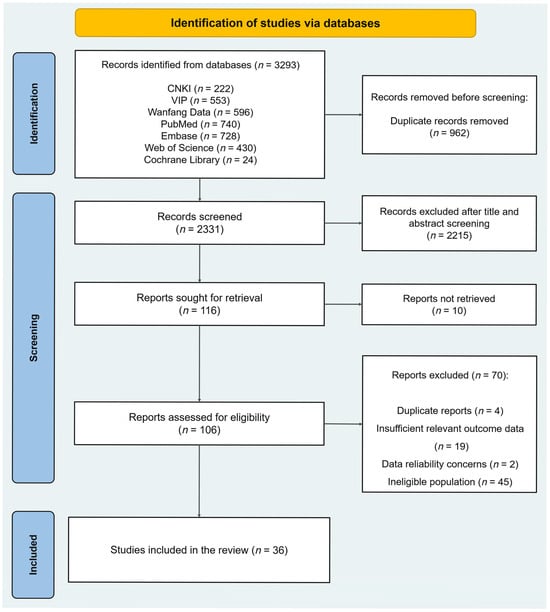
The study selection process is illustrated in Figure 1. The initial search identified 3293 records. After removal of 962 duplicates, 2331 records were screened by title and abstract. Of these, 116 reports were considered potentially eligible and sought for full-text assessment; 10 full-text reports could not be retrieved. Among the 106 reports assessed for eligibility, 70 were excluded because of duplicate reporting, insufficient relevant outcome data, concerns regarding data reliability, or ineligible study populations. Ultimately, 36 studies were included in the systematic review.
Figure 1.
PRISMA flow diagram of the study selection process.
3.2. Study Characteristics
The main characteristics of the 36 included studies are summarized in Table 1 and Table 2. The studies were published between 2017 and 2026. Thirty-two studies were conducted in China (88.9%), whereas the remaining four were conducted in Egypt (n = 2), Poland (n = 1), and Switzerland (n = 1). Overall, the studies included 5649 patients with AIS, with sample sizes ranging from 40 to 329 participants. All samples were obtained from peripheral blood or its components, and ncRNA expression was measured using quantitative reverse-transcription polymerase chain reaction (qRT-PCR). Of the 36 included studies, three evaluated whether adding ncRNA markers to models incorporating established clinical predictors improved prognostic performance (Supplementary File S1).
Table 1.
Characteristics of studies evaluating ncRNA expression as a continuous variable.
Table 2.
Characteristics of studies evaluating ncRNA expression as a categorical variable.
3.3. Quality of Included Studies
The methodological quality of the included studies was assessed using the NOS. Scores ranged from 5 to 9. Twenty-eight studies were considered to be of high quality, and eight were considered to be of moderate quality. No study received a score of 4 or lower. The item-level assessments are presented in Table 3.
Table 3.
Newcastle-Ottawa Scale (NOS) Scores.
3.4. Association Between ncRNA Expression and Functional Outcome After AIS
3.4.1. Continuous ncRNA Expression and Poor Functional Outcome
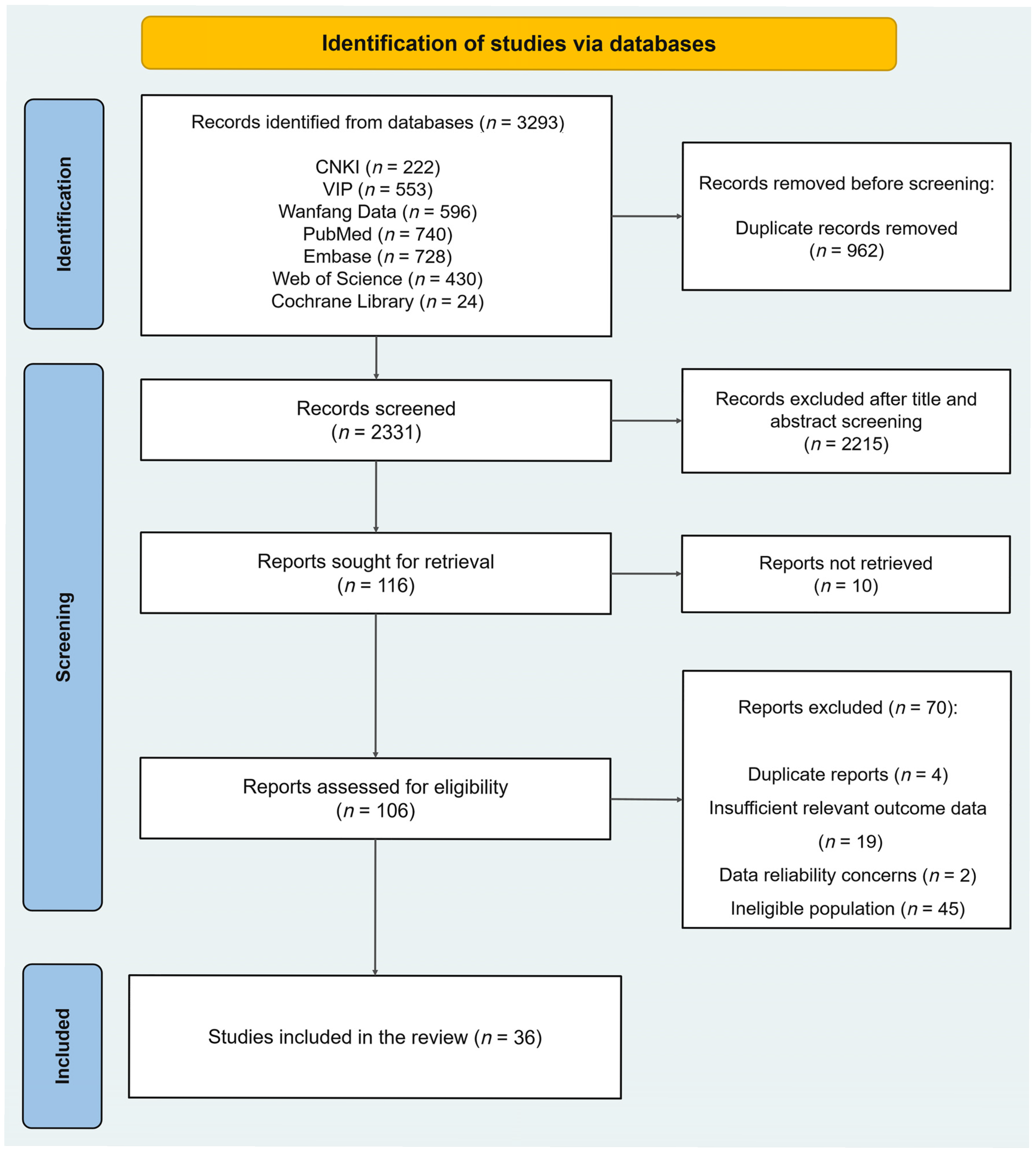
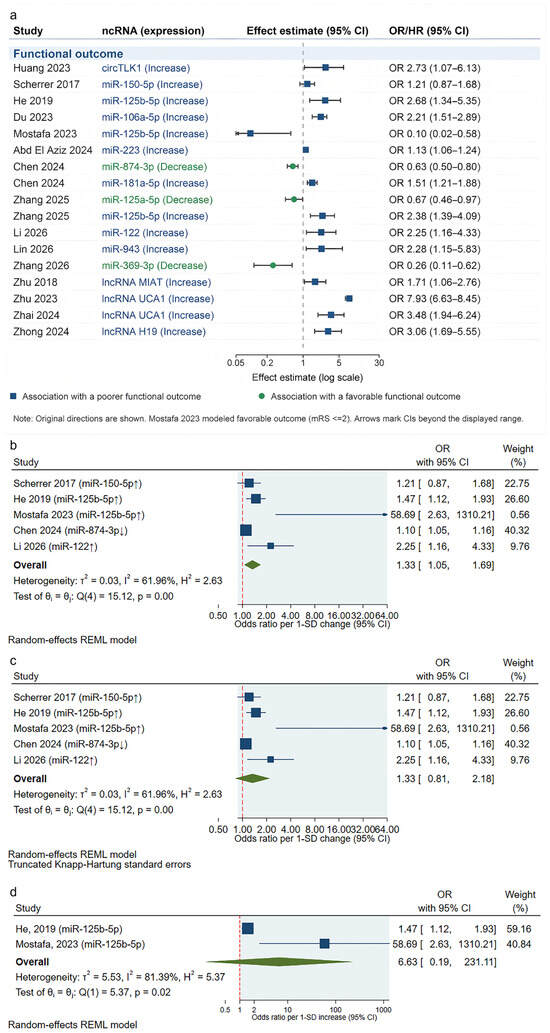
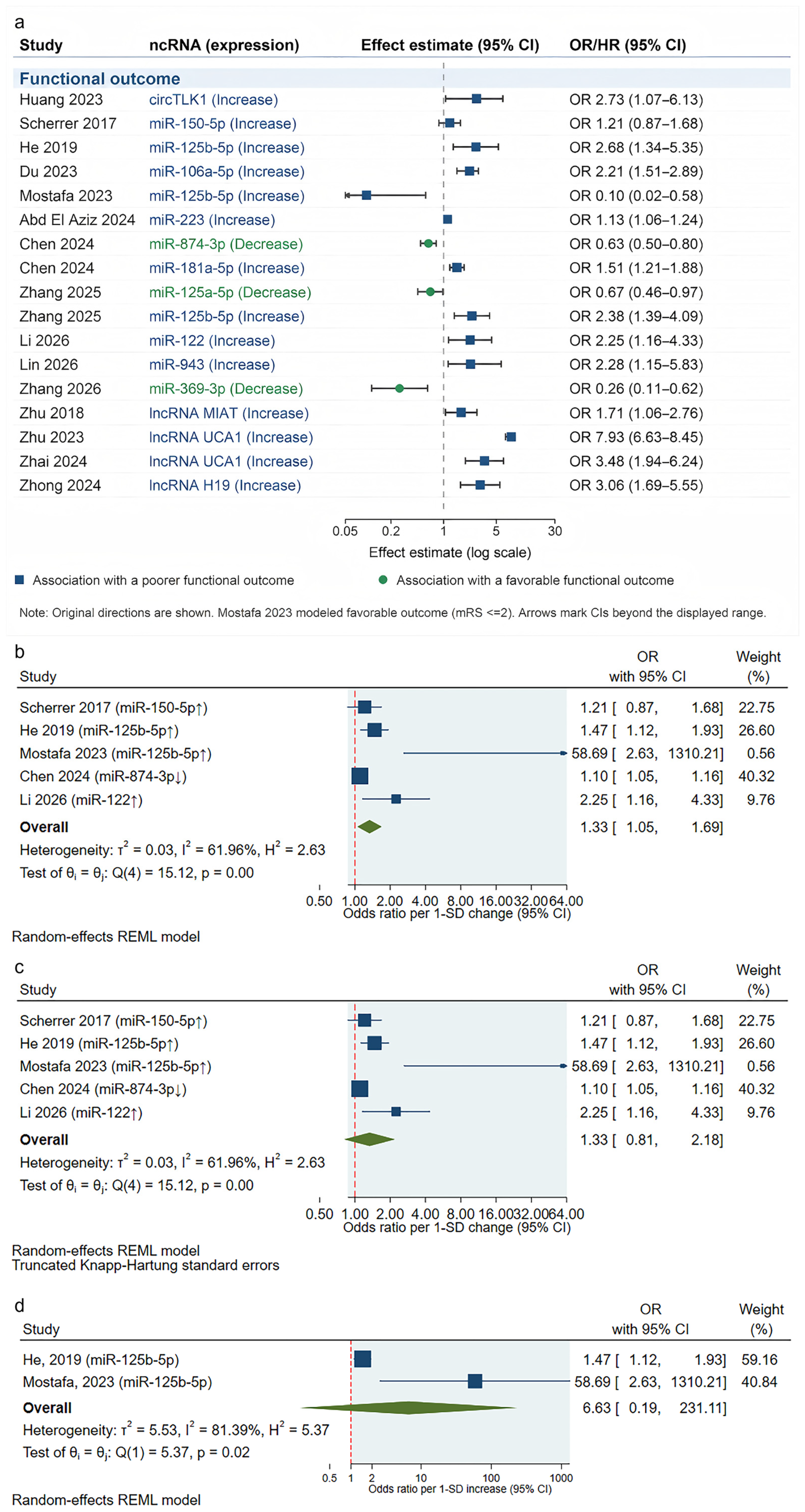
Fifteen studies evaluated 14 distinct ncRNAs as continuous variables in relation to functional outcome, including 10 studies of miRNAs, four studies of lncRNAs, and one study of a circRNA. The detailed findings are summarized in Figure 2a. Higher expression levels of miR-125b-5p, miR-106a-5p, miR-223, miR-181a-5p, miR-122, and miR-943 were associated with higher odds of poor functional outcome. Conversely, lower expression levels of miR-874-3p, miR-125a-5p, and miR-369-3p were also associated with higher odds of poor functional outcome. No statistically significant association was observed between miR-150-5p expression and functional outcome. Higher expression levels of lncRNA MIAT, lncRNA UCA1, lncRNA H19, and circTLK1 were associated with higher odds of poor functional outcome.
Figure 2.
Association between continuous ncRNA expression and poor functional outcome after acute ischemic stroke. (a) Study-level estimates. (b) Forest plot of continuous miRNA expression and poor functional outcome. (c) Sensitivity analysis of the association between a 1-SD change in miRNA expression in the direction associated with poor functional outcome and the odds of poor functional outcome, using a random-effects model estimated by REML with the truncated Knapp–Hartung adjustment. (d) Association between plasma miR-125b-5p expression and poor functional outcome at 3 months.
Of the studies summarized above, five studies reported sufficiently comparable estimates that could be standardized to a 1-SD change and were therefore included in the quantitative synthesis. The pooled analysis showed that a 1-SD change in miRNA expression in the direction associated with an adverse outcome was associated with higher odds of poor functional outcome (OR, 1.33; 95% CI, 1.05–1.69; p = 0.017; I2 = 62.0%; p for heterogeneity = 0.004; Figure 2b). After application of the truncated Knapp–Hartung adjustment, the 95% CI widened to 0.81–2.18 and included the null value of 1 (Figure 2c). Two studies assessed the association between plasma miR-125b-5p expression and poor functional outcome at 3 months using the same exposure scale. The pooled association was not statistically significant (OR, 6.63; 95% CI, 0.19–231.11; Figure 2d). In the study by Chen et al., miR-874-3p was selected for the primary analysis, whereas miR-181a-5p was evaluated in a substitution sensitivity analysis. The remaining estimates were not pooled because of differences in measurement scales or an insufficient number of comparable studies within the same ncRNA class.
3.4.2. Categorical ncRNA Expression and Poor Functional Outcome
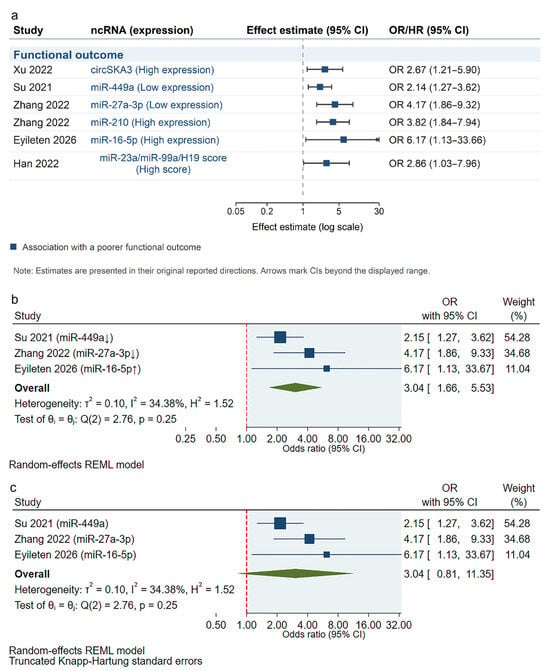
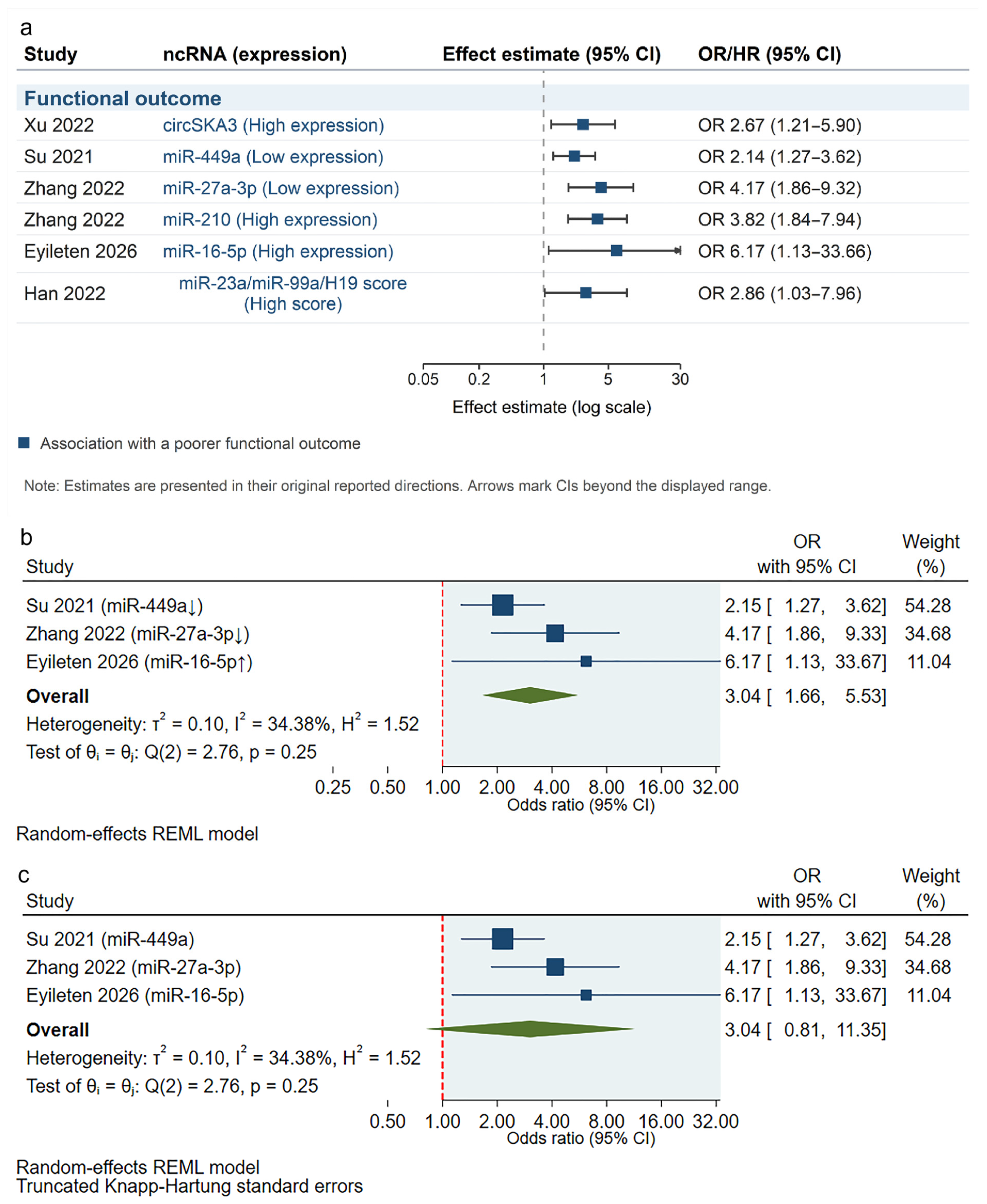
Five studies evaluated categorical ncRNA-related predictors in relation to poor functional outcome, including three studies of miRNAs, one study of a circRNA, and one study of a combined ncRNA score. The detailed findings are summarized in Figure 3a. Lower expression levels of miR-449a and miR-27a-3p, as well as higher expression levels of miR-210 and miR-16-5p, were associated with higher odds of poor functional outcome. Higher circSKA3 expression and a higher combined score comprising miR-23a, miR-99a, and lncRNA H19 were also associated with higher odds of poor functional outcome.
Figure 3.
Association between categorized ncRNA expression and poor functional outcome after acute ischemic stroke. (a) Study-level estimates. (b) Forest plot of categorized miRNA expression and poor functional outcome. (c) Sensitivity analysis of the association between miRNA expression categories associated with an adverse prognosis and the odds of poor functional outcome, using a random-effects model estimated by REML with the truncated Knapp–Hartung adjustment.
Of the studies summarized above, three independent studies of miRNAs reported sufficiently comparable OR estimates and were included in the meta-analysis. Adverse miRNA expression categories were associated with higher odds of poor functional outcome (OR, 3.04; 95% CI, 1.66–5.53; p < 0.001; I2 = 34.4%; p for heterogeneity = 0.25; Figure 3b). After application of the truncated Knapp–Hartung adjustment, the 95% CI widened to 0.81–11.35 and included the null value of 1 (Figure 3c). In the study by Zhang et al., miR-27a-3p was included in the primary analysis, whereas miR-210 was evaluated in a substitution sensitivity analysis. The circRNA estimate and the combined-score estimate were not pooled because each was reported in only one study.
3.5. Association Between ncRNA Expression and Recurrence-Free Survival After AIS
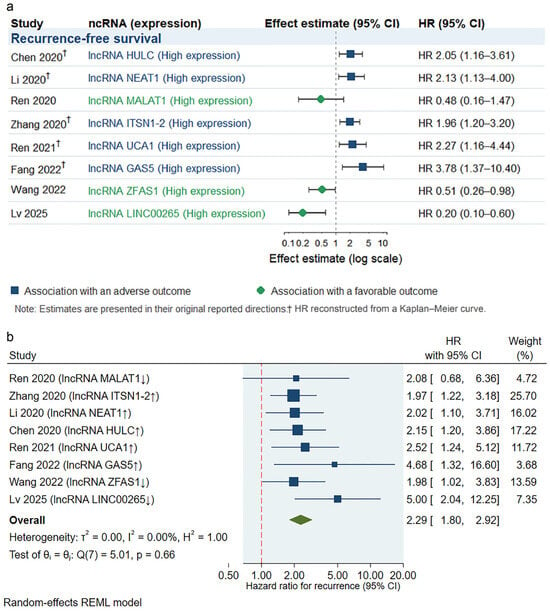
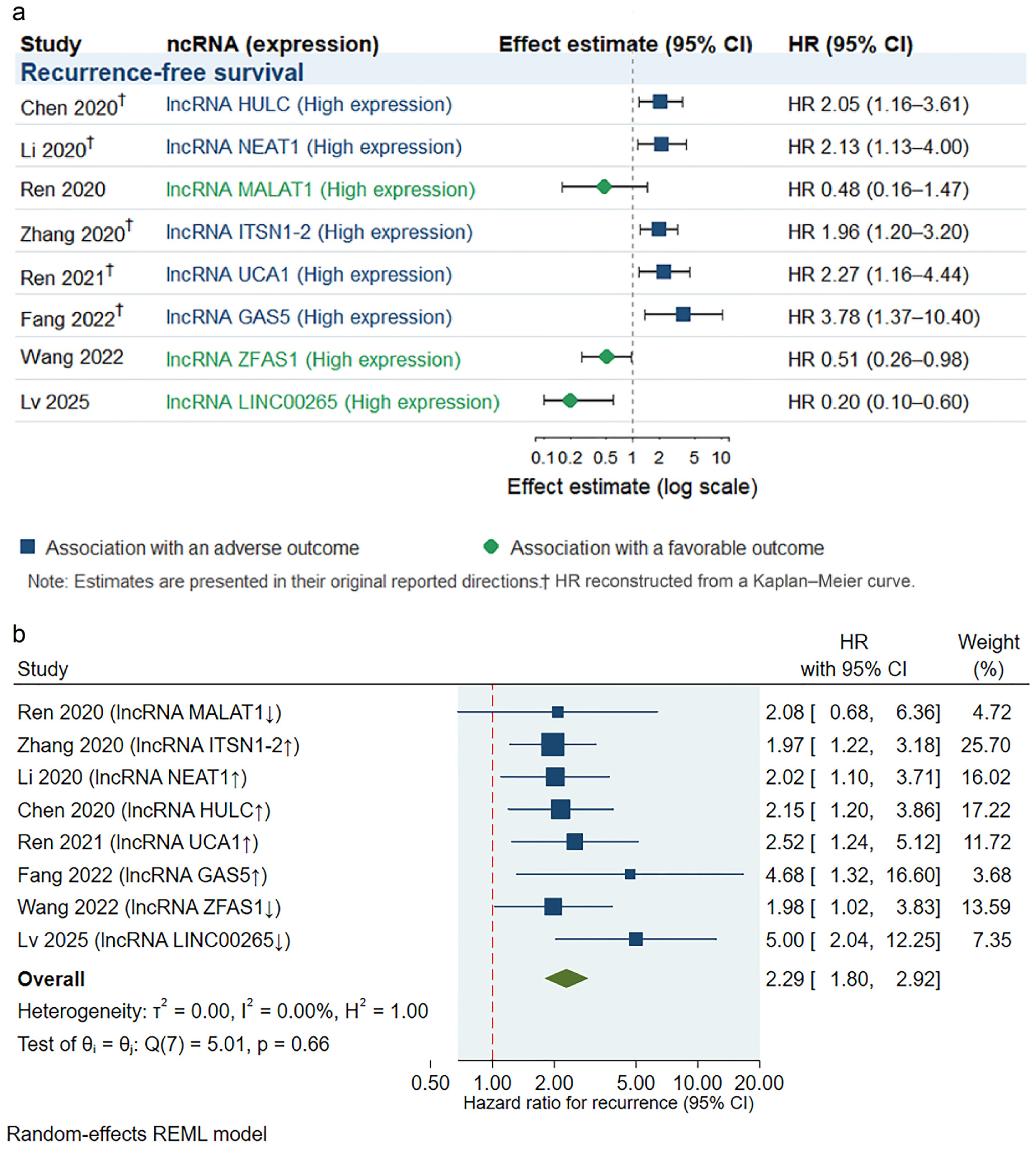
Nine studies evaluated categorical ncRNA-related predictors in relation to RFS, including eight studies of lncRNAs and one study of a circRNA. The detailed findings are summarized in Figure 4a. Higher expression levels of lncRNA HULC, lncRNA NEAT1, lncRNA ITSN1-2, lncRNA UCA1, lncRNA GAS5, and circRNA HECTD1, together with lower expression levels of lncRNA ZFAS1 and lncRNA LINC00265, were associated with shorter RFS. The association between lower lncRNA MALAT1 expression and RFS was not statistically significant.
Figure 4.
Association between categorized ncRNA expression and recurrence-free survival after acute ischemic stroke. (a) Study-level estimates; (b) Forest plot of categorized lncRNA expression and recurrence-free survival.
Of the studies summarized above, eight independent studies of lncRNAs reported comparable HR estimates and were included in the meta-analysis. Adverse lncRNA expression categories were associated with shorter RFS (HR, 2.29; 95% CI, 1.80–2.92; p < 0.001; I2 = 0%; p for heterogeneity = 0.66; Figure 4b). The circRNA estimate was not pooled because it was reported in only one study.
3.6. Association Between ncRNA Expression and Other Prognostic Outcomes After AIS
3.6.1. Continuous ncRNA Expression and Other Prognostic Outcomes
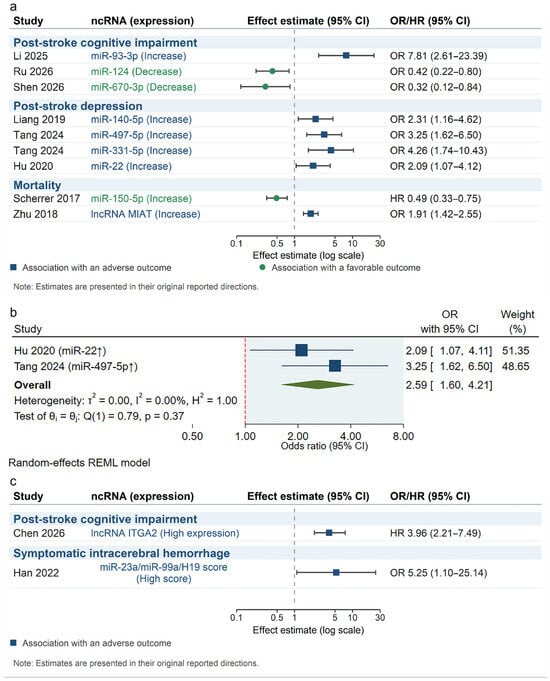
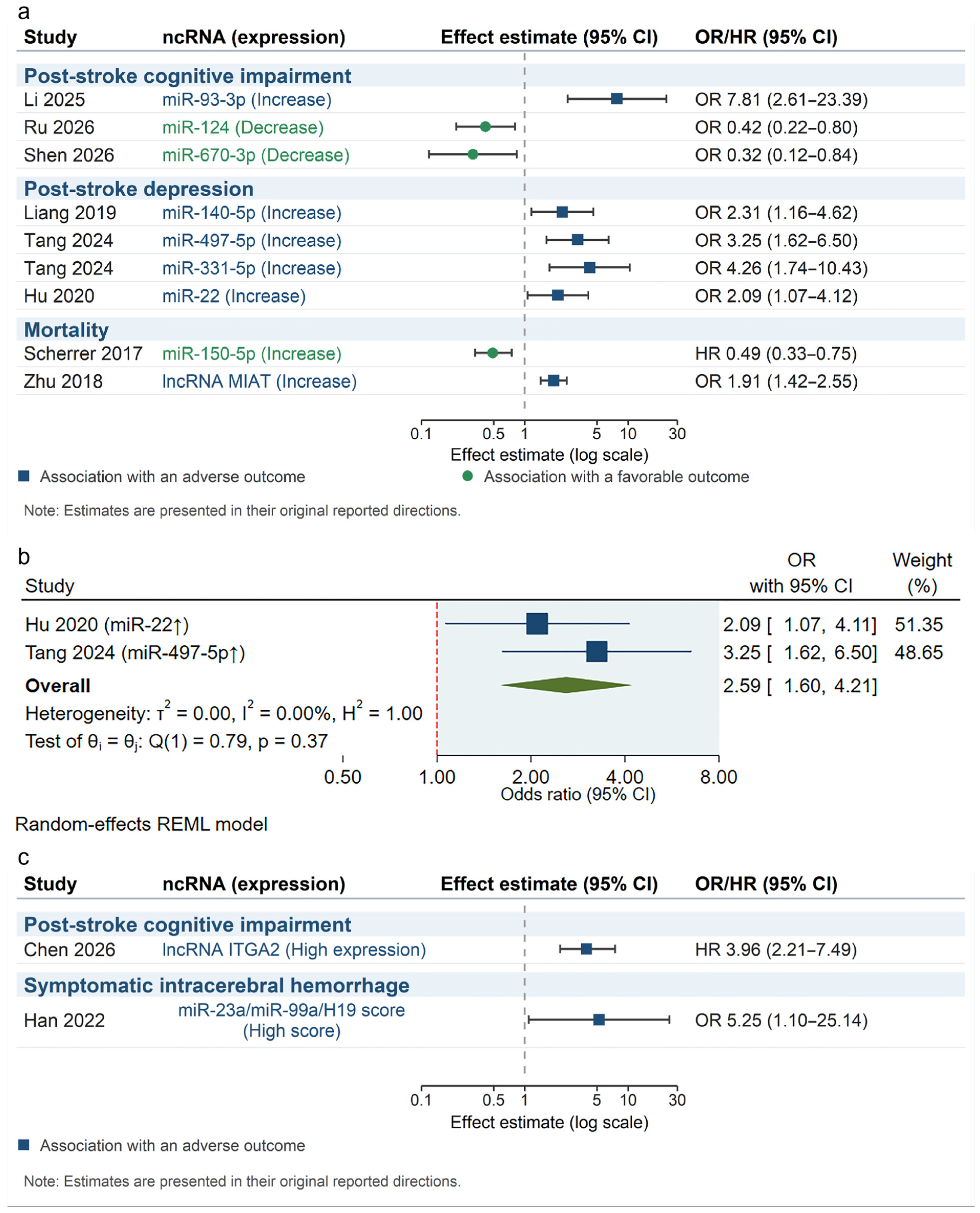
Eight studies evaluated nine distinct ncRNAs as continuous variables in relation to prognostic outcomes other than functional outcome and RFS. These included three studies of PSCI, three studies of PSD, and two studies of mortality. Seven studies evaluated miRNAs, and one evaluated an lncRNA. The detailed findings are summarized in Figure 5a. Higher miR-93-3p expression was associated with higher odds of PSCI, whereas higher expression levels of miR-124 and miR-670-3p were associated with lower odds of PSCI. Higher expression levels of miR-140-5p, miR-22, miR-497-5p, and miR-331-5p were associated with higher odds of PSD. Regarding mortality, higher miR-150-5p expression was associated with a lower hazard of death within 90 days, whereas higher lncRNA MIAT expression was associated with higher odds of all-cause mortality at 3 months.
Figure 5.
Associations between circulating ncRNA expression and other outcomes after acute ischemic stroke. (a) Study-level estimates for continuous ncRNA expression. (b) Forest plot of continuous miRNA expression and post-stroke depression. (c) Study-level estimates for categorized ncRNA expression.
Of the studies summarized above, two independent studies of miRNAs evaluating PSD reported sufficiently comparable OR estimates and were included in the meta-analysis. Higher miRNA expression was associated with higher odds of PSD (OR, 2.59; 95% CI, 1.60–4.21; p < 0.001; I2 = 0%; p for heterogeneity = 0.37; Figure 5b). In the study by Tang et al., miR-497-5p was selected for the primary analysis, whereas miR-331-5p was evaluated in a substitution sensitivity analysis. The remaining estimates were not pooled because of differences in measurement scales or an insufficient number of comparable studies for a given outcome and ncRNA class.
3.6.2. Categorical ncRNA Expression and Other Prognostic Outcomes
Two studies evaluated categorical ncRNA-related predictors in relation to other prognostic outcomes: one assessed an lncRNA and the other evaluated a combined ncRNA score. One study investigated PSCI, whereas the other investigated sICH. The detailed findings are summarized in Figure 5c. Higher lncRNA ITGA2 expression was associated with a higher hazard of PSCI. A higher combined score comprising miR-23a, miR-99a, and lncRNA H19 was associated with higher odds of sICH. The estimates were not pooled because each outcome–predictor combination was evaluated in only one study.
3.7. Subgroup Analyses by Sample Matrix
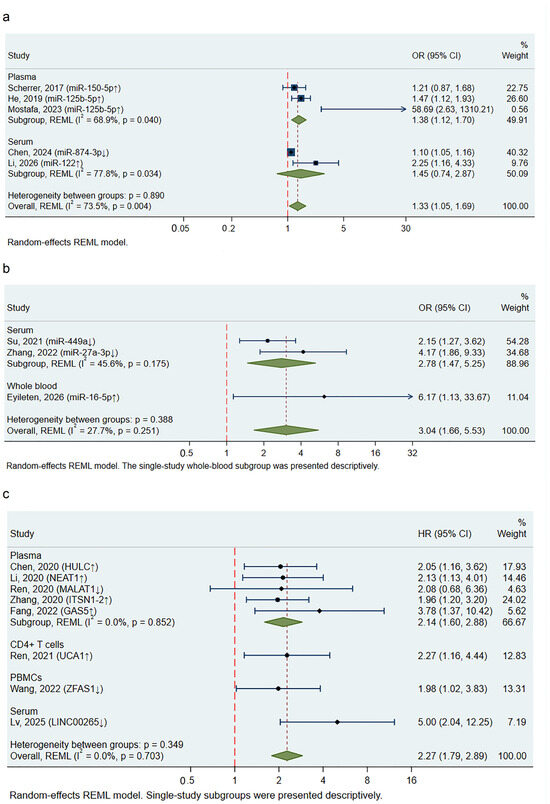
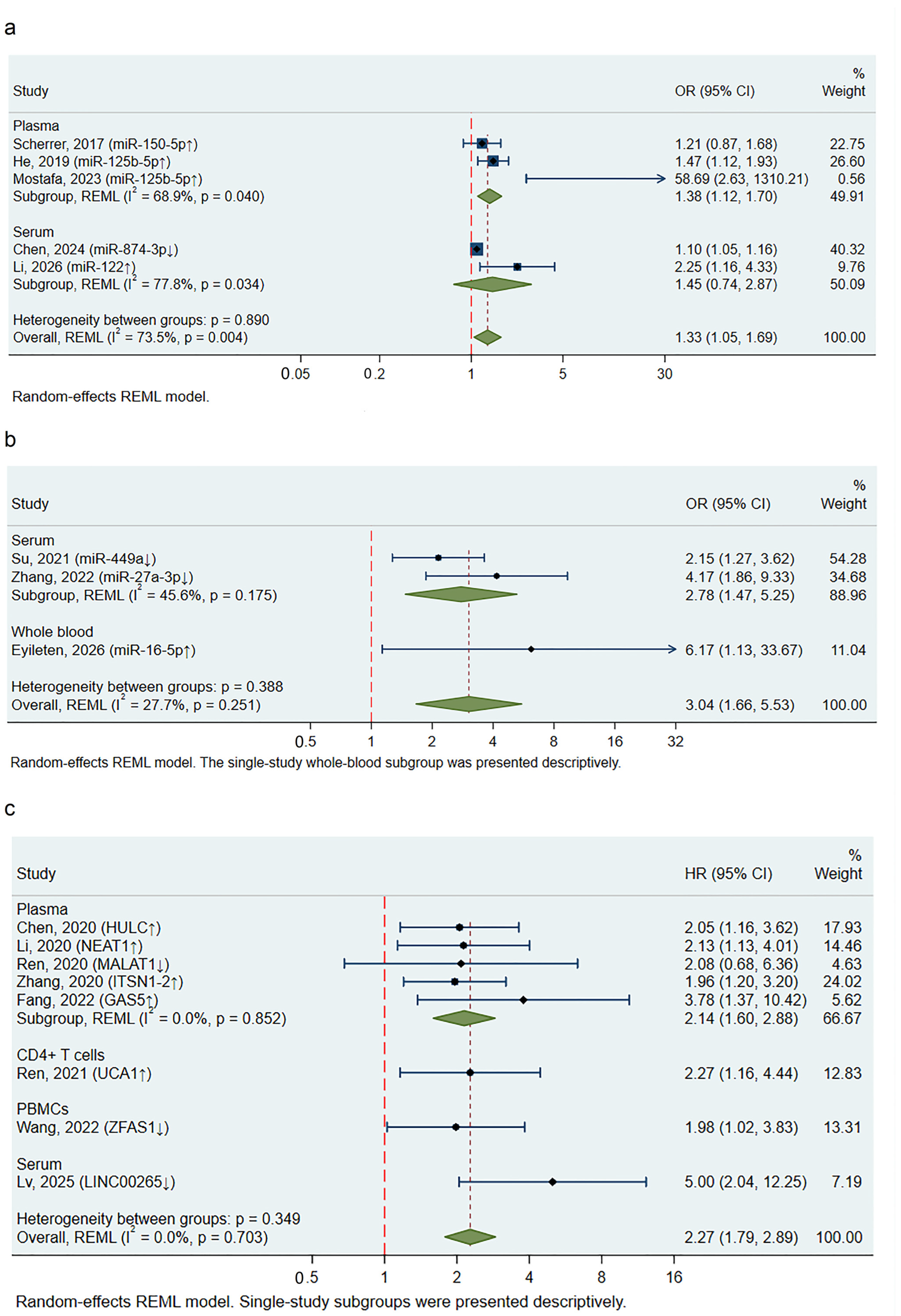
For the association between continuous miRNA expression and poor functional outcome, the pooled OR was 1.38 (95% CI, 1.12–1.70) in plasma and 1.45 (95% CI, 0.74–2.87) in serum, with no statistically significant difference between subgroups (p = 0.890; Figure 6a). For categorical miRNA expression and poor functional outcome, the pooled OR in serum was 2.78 (95% CI, 1.47–5.25), and the difference between sample matrix subgroups was not statistically significant (p = 0.388; Figure 6b). For RFS, the pooled HR in the plasma subgroup was 2.13 (95% CI, 1.59–2.87), with no statistically significant difference across sample matrices (p = 0.335; Figure 6c).
Figure 6.
Sample-matrix subgroup analyses of the associations between circulating non-coding RNA expression and prognosis after acute ischemic stroke. (a) Continuous miRNA expression and poor functional outcome. (b) Categorized miRNA expression and poor functional outcome. (c) Categorized lncRNA expression and recurrence-free survival.
3.8. Sensitivity Analyses
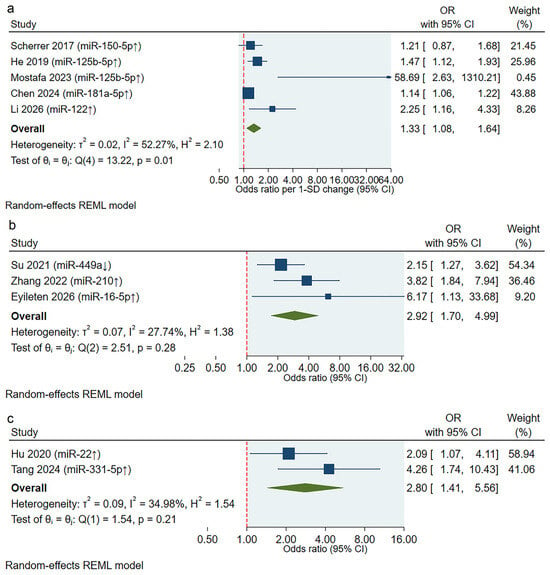
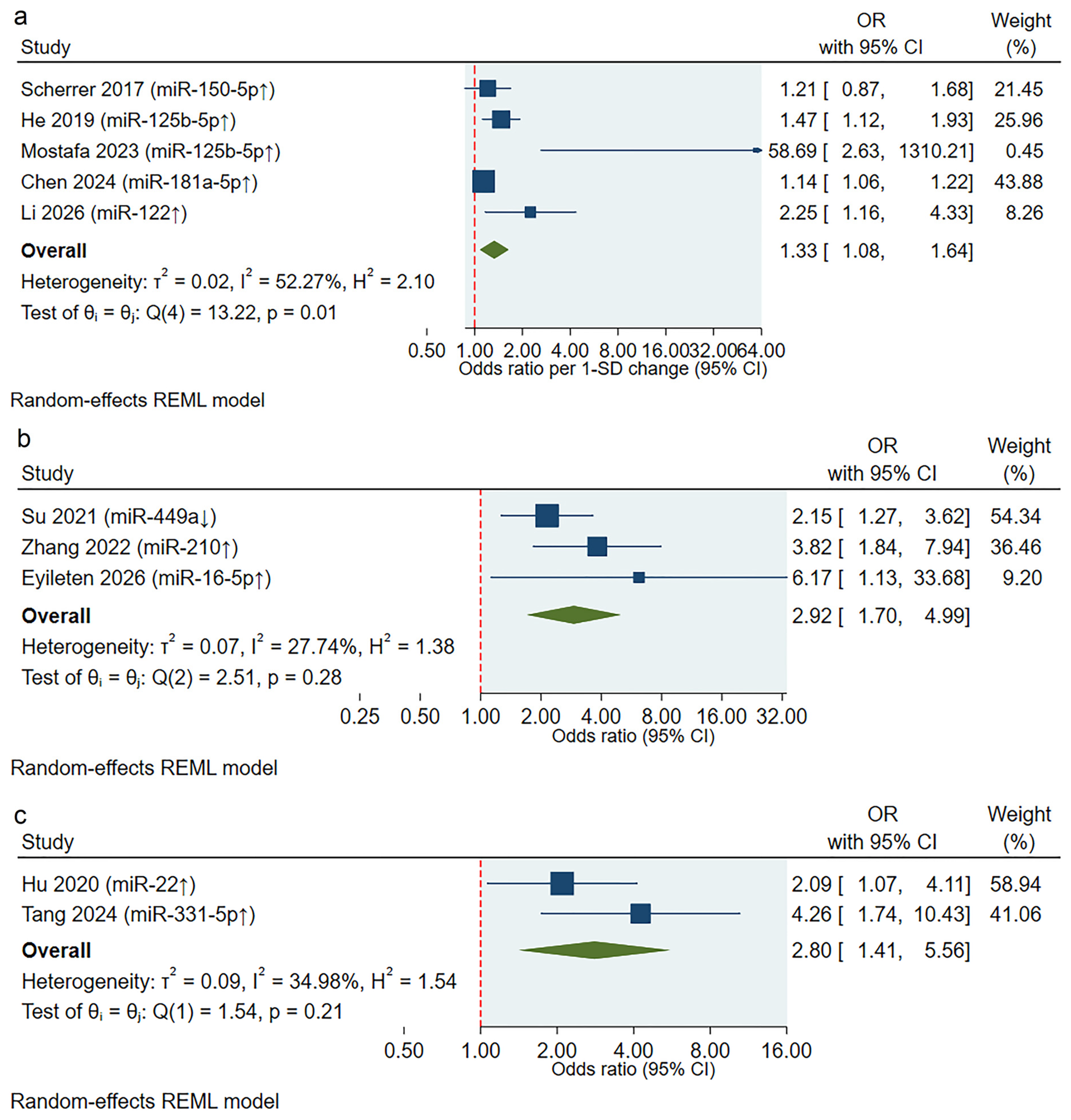
Substitution sensitivity analyses yielded results consistent with those of the primary analyses. Replacing miR-874-3p with miR-181a-5p in the continuous-miRNA analysis of poor functional outcome resulted in a pooled OR of 1.33 (95% CI, 1.08–1.64; I2 = 52.3%; Figure 7a). Replacing miR-27a-3p with miR-210 in the categorical-miRNA analysis resulted in an OR of 2.92 (95% CI, 1.70–4.99; I2 = 27.7%; Figure 7b). For PSD, replacing miR-497-5p with miR-331-5p resulted in an OR of 2.80 (95% CI, 1.41–5.56; I2 = 35.0%; Figure 7c). All substituted estimates remained directionally consistent and statistically significant, suggesting that the primary findings were not materially affected by the selection of the ncRNA estimate.
Figure 7.
Substitution sensitivity analyses of circulating miRNA expression and outcomes after acute ischemic stroke. (a) Continuous miRNA expression and poor functional outcome, replacing miR-874-3p with miR-181a-5p. (b) Categorized miRNA expression and poor functional outcome, replacing miR-27a-3p with miR-210. (c) Continuous miRNA expression and post-stroke depression, replacing miR-497-5p with miR-331-5p.
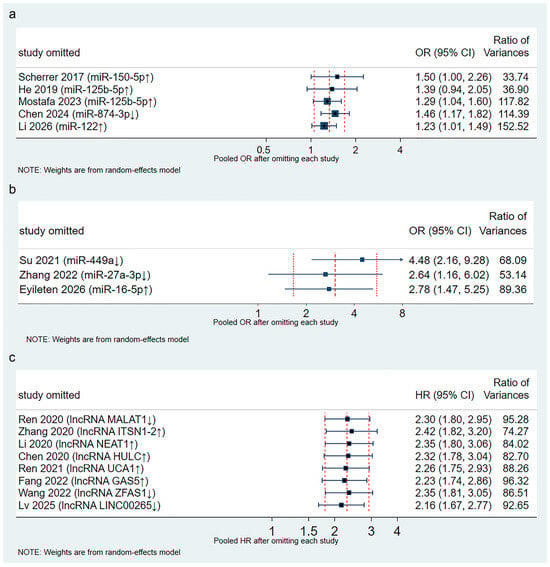
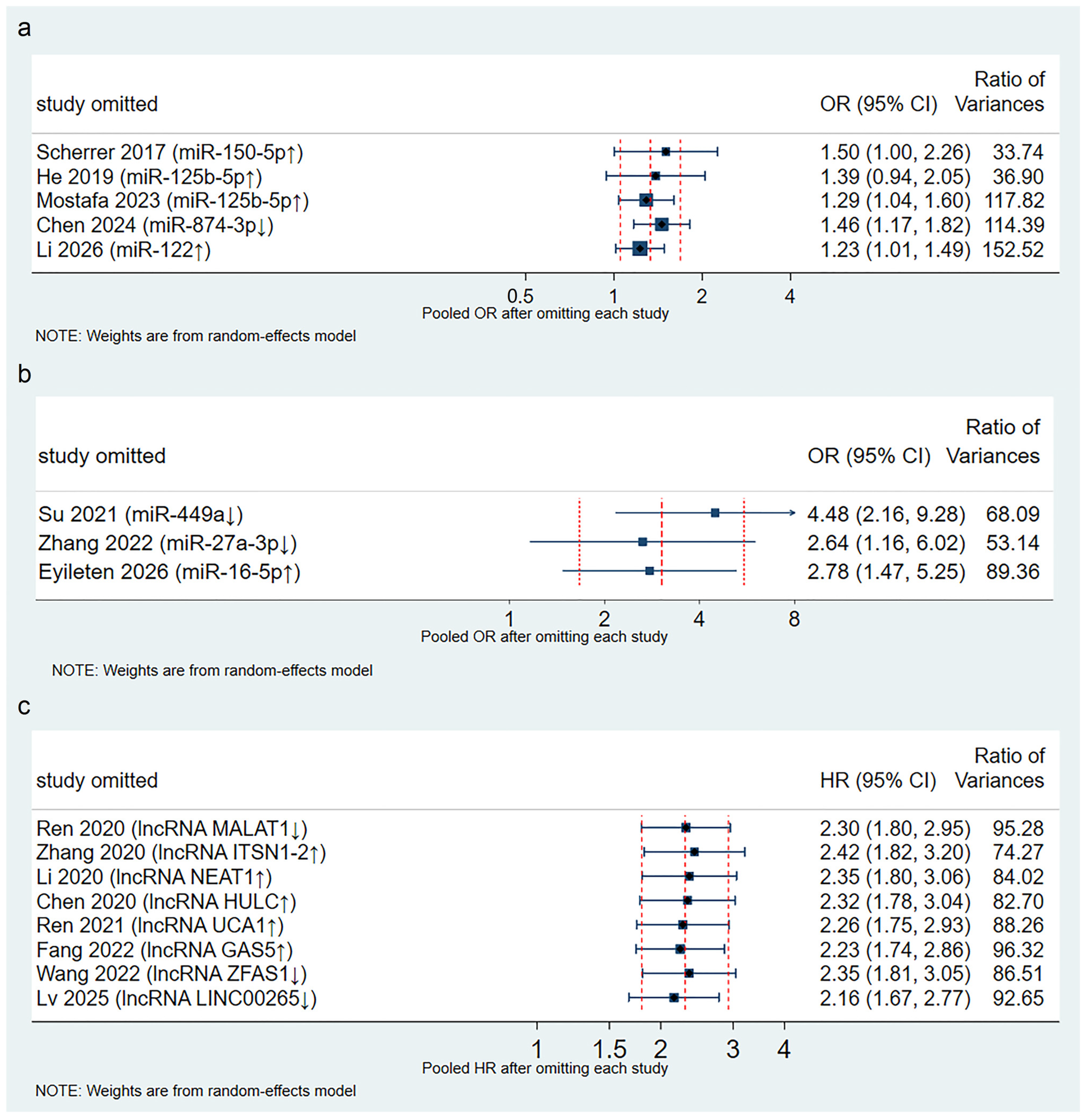
Leave-one-out sensitivity analyses were conducted for the three meta-analyses that included at least three studies (Figure 8). For categorical miRNA expression in relation to poor functional outcome and categorical lncRNA expression in relation to RFS, the pooled associations remained directionally consistent and statistically significant after sequential omission of each study. For continuous miRNA expression, all recalculated ORs remained greater than 1. However, statistical significance became borderline after omission of Scherrer et al. and was lost after omission of He et al., indicating that this pooled association was less robust.
Figure 8.
Leave-one-out sensitivity analyses of the associations between ncRNA expression and outcomes after AIS: (a) continuous miRNA expression and poor functional outcome; (b) categorized miRNA expression and poor functional outcome; and (c) categorized lncRNA expression and recurrence-free survival.
For RFS, a sensitivity analysis restricted to the three studies that directly reported adjusted HRs yielded a pooled HR of 2.68 (95% CI, 1.46–4.91; p = 0.001; I2 = 32.2%).
3.9. Publication Bias
None of the quantitative syntheses included 10 or more independent studies. Therefore, funnel plots and Egger’s regression tests were not performed.
3.10. Certainty of Evidence
Certainty was initially rated as low (⊕⊕⊝⊝) for all five meta-analyses and remained low for categorical lncRNA expression and recurrence-free survival (⊕⊕⊝⊝).
Certainty was downgraded to very low (⊕⊝⊝⊝) for the other four meta-analyses, primarily because of imprecision. The full GRADE assessment is presented in Supplementary File S2.
4. Discussion
This systematic review and exploratory meta-analysis synthesized evidence on the associations between circulating ncRNA expression and prognostic outcomes after AIS. ORs and HRs were pooled separately because they quantify different aspects of prognosis and are not directly comparable. The pooled analyses identified associations between miRNA expression and poor functional outcome or PSD, as well as between lncRNA expression and shorter RFS. Individual studies also reported associations with PSCI, sICH, and mortality. These findings suggest that circulating ncRNAs may provide prognostic information after AIS. However, the evidence remains exploratory, and the observed associations do not establish their clinical utility as prognostic biomarkers.
AIS is a leading cause of death and disability among adults worldwide [59]. Outcomes vary considerably, ranging from complete recovery to persistent disability or death, and are influenced by infarct location, collateral circulation, treatment timing, and comorbidities [60,61]. Although clinical scales, neuroimaging, and baseline clinical characteristics contribute to prognostic assessment, accurately predicting long-term outcomes early after stroke remains challenging [62,63,64]. Circulating ncRNAs have attracted interest because they participate in the pathophysiology of ischemic brain injury, can be detected in peripheral blood, and have been associated with neurological impairment and subsequent clinical outcomes [65].
MiRNAs are endogenous ncRNAs approximately 18–25 nucleotides in length. Many are evolutionarily conserved and exhibit tissue-specific and temporally regulated expression patterns [66]. They were the most extensively investigated ncRNA class in this review, with studies evaluating functional outcome, PSCI, PSD, and mortality. Functional outcome accounted for the largest body of evidence. In the primary analyses, both continuous and categorical miRNA expression were associated with poor functional outcome. Following application of the truncated Knapp–Hartung adjustment, the pooled point estimates remained indicative of higher odds of poor functional outcome, although both 95% CIs included the null value of 1. Two studies also supported a pooled association between continuous miRNA expression and PSD, whereas evidence for PSCI and mortality was derived from individual studies. One study reported that adding plasma miR-150-5p to a clinical model for 90-day mortality after AIS modestly improved discrimination and improved risk reclassification, suggesting potential incremental prognostic value. These associations are biologically plausible given the involvement of miRNAs in neuroinflammation, oxidative stress, blood–brain barrier integrity, and neural plasticity after ischemic stroke. Grigolashvili et al. [67] similarly described the roles of circulating miRNAs in inflammation, apoptosis, oxidative stress, and vascular endothelial dysfunction, together with their associations with stroke severity and clinical outcomes. Nevertheless, the direction and magnitude of the associations differed among individual miRNAs. Moreover, the pooled analyses combined different miRNAs within the same ncRNA class; therefore, the summary estimates reflect associations across the selected biomarkers and should not be interpreted as the prognostic effect of any single miRNA. Further research should validate individual miRNAs and determine whether they provide additional prognostic information beyond established clinical predictors.
LncRNAs are RNA transcripts longer than 200 nucleotides that lack protein-coding capacity and regulate biological processes at the epigenetic, transcriptional, and post-transcriptional levels [68]. In this review, higher expression levels of H19, UCA1, and MIAT were associated with poor functional outcome. Higher categorical ITGA2 expression was associated with PSCI, whereas higher continuous MIAT expression was associated with mortality. Several lncRNAs were also associated with RFS. The pooled analysis showed that adverse lncRNA expression categories were associated with shorter RFS, with a summary HR of 2.29. This estimate summarizes associations across different lncRNAs and does not represent a validated combined expression signature. Another study reported that incorporating lymphocyte lncRNA H19 into a clinical model improved risk reclassification for poor functional outcome at 3 months, suggesting that H19 may help refine prognostic risk stratification after AIS. The observed associations are supported by experimental evidence implicating lncRNAs in ischemic brain injury and recovery. Chen et al. [69] reported that lncRNAs can act as molecular sponges for miRNAs and regulate reperfusion injury, cell death, immune responses, autophagy, angiogenesis, and oxidative stress. Xu et al. [70] showed that ZFAS1 may attenuate inflammation and apoptosis through the miR-421-3p/MEF2C axis. In contrast, NEAT1 has been reported to promote microglial M1 polarization through the miR-374a-5p/NFAT5 axis, thereby exacerbating neuroinflammation and brain injury [71]. These contrasting biological effects provide a possible explanation for the differing directions of association among lncRNAs. A previous meta-analysis also reported associations between circulating lncRNAs and neurological outcomes or long-term mortality after AIS [15]. Collectively, these findings support further investigation of individual lncRNAs, particularly in relation to stroke recurrence.
CircRNAs are single-stranded RNA molecules with covalently closed structures generated through back-splicing. Many exhibit high stability, evolutionary conservation, and tissue-specific expression [72,73]. In this review, circTLK1 and circSKA3 were associated with poor functional outcome, whereas circRNA HECTD1 was associated with shorter RFS. CircRNAs have been implicated in injury and repair after ischemic stroke through the regulation of apoptosis, autophagy, inflammation, oxidative stress, and angiogenesis. Their stability in biological fluids further supports their potential as prognostic biomarkers [74]. However, each association identified in this review was supported by only one study. The evidence for circRNAs therefore remains preliminary and requires replication in larger prospective cohorts with independent validation. Although several studies reported associations between individual ncRNAs and prognosis after adjustment for clinical covariates, an independent association does not necessarily translate into accurate clinical prediction. A single biomarker may have limited sensitivity and specificity and may not adequately capture the complex processes underlying ischemic brain injury and recovery [75]. Models incorporating multiple biomarkers have been explored as a means of improving prognostic assessment in other fields, including oncology [76]. However, studies combining multiple ncRNAs or integrating ncRNAs with established clinical predictors remain scarce in AIS. In this systematic review and meta-analysis, only one included study used least absolute shrinkage and selection operator (LASSO) regression to construct a weighted score incorporating miR-23a, miR-99a, and lncRNA H19. This score was associated with both poor functional outcome at 3 months and sICH after intravenous thrombolysis. Adding the score to the corresponding clinical models also improved risk reclassification for excellent functional outcome at 3 months and for sICH. These findings provide a rationale for evaluating combined ncRNA signatures, given the coordinated regulatory functions of ncRNAs [77,78]. Future studies should determine whether incorporating ncRNAs into models containing clinical, laboratory, and imaging variables improves discrimination, calibration, and clinical decision-making beyond established tools.
The strength and consistency of the pooled findings differed across outcomes, exposure formats, and ncRNA classes. Substantial heterogeneity was observed in the analysis of continuous miRNA expression and poor functional outcome, whereas heterogeneity was low or undetected in the analyses of categorical miRNA expression, PSD, and RFS. However, low I2 values should be interpreted cautiously because heterogeneity is difficult to assess reliably when few studies are available, particularly in the PSD analysis, which included only two studies.
Substitution sensitivity analyses produced results consistent with the primary analyses, suggesting that the pooled associations were not materially affected by the selection of alternative eligible ncRNAs from the same cohort. Nevertheless, the continuous miRNA association with poor functional outcome was less robust in the leave-one-out analysis: statistical significance became borderline after omission of Scherrer et al. and was lost after omission of He et al. This association was sensitive to the exclusion of individual studies and should therefore be interpreted cautiously. For RFS, restricting the analysis to the three studies that directly reported adjusted HRs yielded a pooled estimate consistent with the primary analysis. This finding supports the robustness of the association to this restriction and warrants further evaluation of lncRNAs as potential prognostic markers for RFS after AIS.
Several limitations should be considered. First, 32 of the 36 included studies were conducted in China, limiting the geographic representativeness of the evidence. Second, covariate adjustment varied across multivariable models, and some studies did not specify the covariates included, limiting our ability to assess the potential influence of residual confounding. Third, fewer than 10 studies contributed to each meta-analysis; therefore, publication bias was not formally assessed. Publication bias and selective outcome reporting could not be excluded and may have led to overestimation of the associations. Fourth, differences in biological sample types, outcome definitions, and follow-up durations may have reduced comparability across studies. Fifth, the certainty of the evidence was rated as low to very low using the adapted GRADE approach. Validation in independent cohorts from diverse settings is needed to confirm these associations and determine whether ncRNAs provide incremental prognostic value beyond established clinical predictors. The clinical utility of ncRNAs in routine prognostic assessment after AIS therefore remains to be established.
Multicenter prospective studies with standardized sampling, ncRNA measurement, outcome definitions, and follow-up schedules are needed. Independent validation should establish the reproducibility of individual biomarkers and combined signatures and determine whether they improve prognostic assessment beyond established clinical predictors.
5. Conclusions
Circulating ncRNA expression was associated with several prognostic outcomes after AIS, with pooled evidence supporting class-level associations between miRNA expression and poor functional outcome or PSD, and between lncRNA expression and shorter RFS. These findings support further investigation of circulating ncRNAs as candidate prognostic biomarkers. However, the evidence remains exploratory and does not yet establish their clinical utility. Well-designed multicenter prospective studies with standardized methods and independent validation are needed to determine their potential contribution to prognostic assessment and risk stratification after AIS.
Supplementary Materials
The following supporting information can be downloaded at: https://www.mdpi.com/article/10.3390/brainsci16111269/s1, Supplementary File S1: Incremental prognostic value of ncRNA markers beyond established clinical predictors; Supplementary File S2: Certainty of evidence assessed using an adapted GRADE approach for prognostic-factor studies; Supplementary File S3: Study-level data extraction, effect estimate harmonization, and sources and reconstruction of hazard ratios for recurrence-free survival; PRISMA 2020 Checklist: Completed PRISMA 2020 reporting checklist.
Author Contributions
Conceptualization: Y.Z. and Q.Z.; methodology and reference collection: S.C., Z.Z. and J.L.; formal analysis: S.C. and L.Y.; resources: S.C., L.Y. and Z.Z.; writing—original draft preparation: S.C., Z.Z. and J.L.; writing—review and editing: Y.Z. and Q.Z.; supervision: Y.Z.; project administration: Y.Z.; funding acquisition: Y.Z. and Q.Z. All authors have read and agreed to the published version of the manuscript.
Funding
This study was supported by the Key Research and Development Program of Ningxia (Grant No. 2023BEG02012), the National Natural Science Foundation of China (Grant No. 82260797 and 82160816), the Ningxia Natural Science Foundation (Grant No. 2024AAC03211) and the National College Students’ Innovation and Entrepreneurship Training Program (Grant No. 202510752016).
Institutional Review Board Statement
Not applicable.
Informed Consent Statement
Not applicable.
Data Availability Statement
All data supporting the findings of this study are available within the article and its Supplementary Information.
Conflicts of Interest
The authors declare no conflicts of interest.
References
- Mendelson, S.J.; Prabhakaran, S. Diagnosis and Management of Transient Ischemic Attack and Acute Ischemic Stroke: A Review. JAMA 2021, 325, 1088–1098. [Google Scholar] [CrossRef] [Scilit]
- GBD 2021 Stroke Risk Factor Collaborators. Global, Regional, and National Burden of Stroke and Its Risk Factors, 1990–2021: A Systematic Analysis for the Global Burden of Disease Study 2021. Lancet Neurol. 2024, 23, 973–1003. [Google Scholar] [CrossRef] [Scilit]
- Fan, F.; Chen, M.; Yan, J.; Jiang, H.; Hou, Y.; Zhang, Y.; Meng, X.; Cairang, N.J.; Wang, X. Salidroside Regulates Blood-brain barrier Integrity via Lcn2-NLRP3 Signaling Axis Inhibition for High-altitude Hypoxic Brain Injury Intervention. Phytomedicine 2026, 163, 158907. [Google Scholar] [CrossRef] [Scilit]
- Kim, Y.J.; Choi, S.H.; Kim, T.Y.; Park, H.-M.; Shin, D.J.; Shin, D.H. Factors Associated with Functional Disability in Patients with Acute Stroke Excluded from Alteplase Administration Due to Minor Non-Disabling Neurological Deficits. Front. Neurol. 2022, 13, 1062721. [Google Scholar] [CrossRef] [Scilit]
- Ibic, M.; Miklič, L.; Rakusa, S.; Zmazek, J.; Menih, M.; Caf, K.; Rakusa, M. Cognitive and Emotional Impairments in Acute Post-Stroke Patients-A Cross-Sectional Study. Medicina 2025, 61, 1739. [Google Scholar] [CrossRef] [Scilit]
- Chalos, V.; van der Ende, N.A.M.; Lingsma, H.F.; Mulder, M.J.H.L.; Venema, E.; Dijkland, S.A.; Berkhemer, O.A.; Yoo, A.J.; Broderick, J.P.; Palesch, Y.Y.; et al. National Institutes of Health Stroke Scale: An Alternative Primary Outcome Measure for Trials of Acute Treatment for Ischemic Stroke. Stroke 2020, 51, 282–290. [Google Scholar] [CrossRef] [Scilit]
- Nair, S.; Hurly, J.; Saylor, D. Evaluating the Strengths and Limitations of Structured Modified Rankin Scale Validation Studies—A Systematic Review. J. Stroke Cerebrovasc. Dis. 2025, 34, 108242. [Google Scholar] [CrossRef] [Scilit]
- De Rubeis, G.; Chaturvedi, S.; Kamel, H.; Meschia, J.; Pampana, E.; Saba, L. Heterogeneity in Measurement of NIHSS: A Systematic Review and Meta-Analysis. Neurol. Sci. 2025, 46, 227–237. [Google Scholar] [CrossRef] [Scilit]
- Makharia, A.; Agarwal, A.; Garg, D.; Vishnu, V.Y.; Srivastava, M.V.P. The Pitfalls of NIHSS: Time for a New Clinical Acute Stroke Severity Scoring System in the Emergency? Ann. Indian Acad. Neurol. 2024, 27, 15–18. [Google Scholar] [CrossRef] [Scilit]
- Drozdowska, B.A.; Singh, S.; Quinn, T.J. Thinking about the Future: A Review of Prognostic Scales Used in Acute Stroke. Front. Neurol. 2019, 10, 274. [Google Scholar] [CrossRef] [Scilit]
- Soldozy, S.; Yağmurlu, K.; Norat, P.; Elsarrag, M.; Costello, J.; Farzad, F.; Sokolowski, J.D.; Sharifi, K.A.; Elarjani, T.; Burks, J.; et al. Biomarkers Predictive of Long-Term Outcome after Ischemic Stroke: A Meta-Analysis. World Neurosurg. 2022, 163, e1–e42. [Google Scholar] [CrossRef] [Scilit]
- Pu, S.; Li, S.; Shao, J.; Lin, J.; Li, H.; Shen, J.; Zheng, H. Integrating Cerebrovascular Morphology and Radiomics Features for Predicting Stroke Prognosis: A Retrospective Study. PeerJ 2026, 14, e20588. [Google Scholar] [CrossRef] [Scilit]
- Felekkis, K.; Papaneophytou, C. Special Issue “Circulating Non-Coding RNAs as Diagnostic and Prognostic Markers of Human Diseases”. Int. J. Mol. Sci. 2025, 26, 9448. [Google Scholar] [CrossRef] [Scilit]
- Fernández-Pérez, I.; Vallverdú-Prats, M.; Rey-Álvarez, L.; Giralt Steinhauer, E.; Ois, A.; Cuadrado-Godia, E.; Rodriguez-Campello, A.; Suárez-Pérez, A.; Macias-Gómez, A.; Soriano-Tárraga, C.; et al. Circulating miRNAs Associated with 3-Month Outcome in Patients with Acute Ischemic Stroke. Neurology 2024, 104, e210085. [Google Scholar] [CrossRef] [Scilit]
- Jaberinezhad, M.; Pouya, P.; Najafi, A.; Shafiee, A.; Maleki, S.; Shobeiri, P.; Teixeira, A.L.; Farhoudi, M. Circulating IncRNAs and Their Association with Ischemic Stroke Severity and Prognosis: A Systematic Review and Meta-Analysis. Health Sci. Rep. 2026, 9, e71911. [Google Scholar] [CrossRef] [Scilit]
- Weng, Y.; Xue, C.; Guo, H.; Zhang, L.; Tang, X. Research Progress of miRNA in Post-Stroke Cognitive Impairment. Brain Res. Bull. 2026, 237, 111796. [Google Scholar] [CrossRef] [Scilit]
- Liang, H.-B.; He, J.-R.; Tu, X.-Q.; Ding, K.-Q.; Yang, G.-Y.; Zhang, Y.; Zeng, L.-L. MicroRNA-140-5p: A Novel Circulating Biomarker for Early Warning of Late-Onset Post-Stroke Depression. J. Psychiatr. Res. 2019, 115, 129–141. [Google Scholar] [CrossRef] [Scilit]
- Burlacu, C.-C.; Ciobanu, D.; Badulescu, A.-V.; Chelaru, V.-F.; Mitre, A.-O.; Capitanescu, B.; Hermann, D.M.; Popa-Wagner, A. Circulating MicroRNAs and Extracellular Vesicle-Derived MicroRNAs as Predictors of Functional Recovery in Ischemic Stroke Patients: A Systematic Review and Meta-Analysis. Int. J. Mol. Sci. 2022, 24, 251. [Google Scholar] [CrossRef] [Scilit]
- Page, M.J.; McKenzie, J.E.; Bossuyt, P.M.; Boutron, I.; Hoffmann, T.C.; Mulrow, C.D.; Shamseer, L.; Tetzlaff, J.M.; Akl, E.A.; Brennan, S.E.; et al. The PRISMA 2020 Statement: An Updated Guideline for Reporting Systematic Reviews. BMJ 2021, 372, n71. [Google Scholar] [CrossRef] [Scilit]
- Liu, N.; Zhou, Y.; Lee, J.J. IPDfromKM: Reconstruct Individual Patient Data from Published Kaplan-Meier Survival Curves. BMC Med. Res. Methodol. 2021, 21, 111. [Google Scholar] [CrossRef] [Scilit]
- Stang, A. Critical Evaluation of the Newcastle-Ottawa Scale for the Assessment of the Quality of Nonrandomized Studies in Meta-Analyses. Eur. J. Epidemiol. 2010, 25, 603–605. [Google Scholar] [CrossRef] [Scilit]
- Riley, R.D.; Moons, K.G.M.; Snell, K.I.E.; Ensor, J.; Hooft, L.; Altman, D.G.; Hayden, J.; Collins, G.S.; Debray, T.P.A. A Guide to Systematic Review and Meta-Analysis of Prognostic Factor Studies. BMJ 2019, 364, k4597. [Google Scholar] [CrossRef] [Scilit]
- Higgins, J.P.T.; Thompson, S.G. Quantifying Heterogeneity in a Meta-Analysis. Stat. Med. 2002, 21, 1539–1558. [Google Scholar] [CrossRef] [Scilit]
- Scherrer, N.; Fays, F.; Mueller, B.; Luft, A.; Fluri, F.; Christ-Crain, M.; Devaux, Y.; Katan, M. MicroRNA 150-5p Improves Risk Classification for Mortality within 90 Days after Acute Ischemic Stroke. J. Stroke 2017, 19, 323–332. [Google Scholar] [CrossRef] [Scilit]
- Zhu, M.; Li, N.; Luo, P.; Jing, W.; Wen, X.; Liang, C.; Tu, J. Peripheral Blood Leukocyte Expression of lncRNA MIAT and Its Diagnostic and Prognostic Value in Ischemic Stroke. J. Stroke Cerebrovasc. Dis. 2018, 27, 326–337. [Google Scholar] [CrossRef] [Scilit]
- He, X.; Shi, Y.; Liu, Y.; Li, G.; Zhao, R.; Hu, Y.; Lin, C.; Zhuang, M.; Su, J.; Liu, J. Increased Plasma Levels of miR-124-3p, miR-125b-5p and miR-192-5p Are Associated with Outcomes in Acute Ischaemic Stroke Patients Receiving Thrombolysis. Atherosclerosis 2019, 289, 36–43. [Google Scholar] [CrossRef] [Scilit]
- Du, W.; Fan, L.; Du, J. Neuroinflammation-Associated miR-106a-5p Serves as a Biomarker for the Diagnosis and Prognosis of Acute Cerebral Infarction. BMC Neurol. 2023, 23, 248. [Google Scholar] [CrossRef] [Scilit]
- Huang, J.; Huang, N.; Rao, Q.; Wang, S. Relationship of Serum Exocrine Cyclic RNA Tousled—Like Kinasel with Severity and Prognosis of Acute Cerebral Infarction in the Elderly. Chin. J. Geriatr. Heart Brain Vessel Dis. 2023, 25, 962–965. [Google Scholar] [CrossRef]
- Mostafa, S.; Al Masry, H.; Hussein, M.; Abd Elkareem, R.M.; Masoud, M.M. The Potential Role of Micro-RNA 125b-5p Level in Predicting Outcome from Thrombolytic Therapy in Patients with Acute Ischemic Stroke. J. Thromb. Thrombolysis 2023, 56, 275–282. [Google Scholar] [CrossRef] [Scilit]
- Zhu, X.; Sun, X.; Chai, Q.; Min, L.; Li, H.; Sun, Y.; Bu, C. Dysregulation of Serum UCA1 and Its Clinical Significance in Patients with Acute Cerebral Infarction. Ann. Clin. Lab. Sci. 2023, 53, 719–725. [Google Scholar]
- Aziz, R.E.M.A.E.; Emam, W.A.; El-senosy, F.M.; Kasim, S.A.; Ramadan, M.A.A.; Yehia, F.G.; Alkhawagah, S.M.; ElAttar, R.S.; Elsayed, A.E.; Mohammed, A.R. Clinical and Prognostic Significance of Baseline microRNA 223 in Acute Ischemic Stroke. Egypt. J. Neurol. Psychiatr. Neurosurg. 2024, 60, 46. [Google Scholar] [CrossRef] [Scilit]
- Chen, X.; Xiao, W.; Yue, X.; He, N.; Zeng, X. Relationship between Serum MicroRNA-874-3p, MicroRNA-181a-5p, Wnt/β-Catenin Signaling Pathway and Neurological Function Prognosis in Patients with Acute Ischemic Stroke after Intravenous Thrombolysis. Chin. J. Stroke 2024, 19, 1162–1169. [Google Scholar] [CrossRef]
- Zhai, Y.; Wang, F.; Shen, H.; Li, X.; Gao, F.; Ni, J. Relationship between Serum LncRNA UCAl and NPASDP4 Levels and Neurological Deficits in Patients with Acute Cerebral Infarction and Their Predictive Value for Prognosis. Chin. J. Difficult Complicat. Cases 2024, 23, 1031–1036. [Google Scholar] [CrossRef]
- Zhong, L.; Xie, Z.; Han, Z.; Fan, J.; Wang, R.; Tao, Z.; Ma, Q.; Luo, Y. Long Non-Coding H19 in Lymphocytes: Prognostic Value in Acute Ischemic Stroke Patients. Pharmaceuticals 2024, 17, 1008. [Google Scholar] [CrossRef] [Scilit]
- Zhang, Y.; Li, S.; Zhao, X. Study on the Relationship between Serum miR-125a-5p/miR-125b-5p Levels and Severity and Prognosis of Patients with Acute Ischemic Stroke. J. Brain Nerv. Dis. 2025, 33, 613–620. [Google Scholar]
- Li, J.; Luo, H.; Zeng, Y.; Luo, T.; Liang, H. Correlation between miR-122, HSP70, TNF-α and NIHSS Score and Its Impact on the Prognosis of Patients with Acute Ischemic Stroke. Chin. J. Pract. Nerv. Dis. 2026, 29, 701–706. [Google Scholar]
- Lin, S.; Chen, J. Clinical Value of Serum miR-943 as a Diagnostic and Prognostic Biomarker for Acute Cerebral Infarction and Its Mechanism of Action via Targeting BDNF. Arch. Biochem. Biophys. 2026, 775, 110667. [Google Scholar] [CrossRef] [Scilit]
- Zhang, M.; Yin, L.; Liu, Z.; Meng, Y.; Li, Y.; Meng, J.; Yin, X. Serum miR-369-3p Downregulation Correlates with Poor Prognosis in Acute Ischemic Stroke and Mitigates Endothelial Injury by Targeting VAV3. Neurochem. Res. 2026, 51, 233. [Google Scholar] [CrossRef] [Scilit]
- Li, Z.; Chen, Q.; Dou, C.; Sun, X. Biomarkers for Diagnosis of Acute Ischemic Stroke and Prediction of Post-Stroke Cognitive Impairment: MiR-93-3p. Biomark. Med. 2025, 19, 1211–1220. [Google Scholar] [CrossRef] [Scilit]
- Ru, S.; Zou, T.; Baitiyar, Y.; He, D.; Abudusalam, R.; Ma, J. Predictive Value of Serum miR⁃124, STAT3 Combined with EEG Parameters for Cognitive Impairment after Acute Ischemic Stroke. J. Mol. Diagn. Ther. 2026, 18, 1070–1073. [Google Scholar]
- Shen, J.; Yang, N.; Zhao, M.; Feng, J.; Li, W. Predictive Value of Serum miR-670-3p for Post-stroke Cognitive Impairment in Aging Patients with Acute Ischemic Stroke. Brain Res. 2026, 1889, 150438. [Google Scholar] [CrossRef] [Scilit]
- Hu, J.; Zhou, W.; Zhou, Z.; Yang, Q.; Xu, J.; Dong, W. MiR-22 and Cerebral Microbleeds in Brainstem and Deep Area Are Associated with Depression One Month after Ischemic Stroke. Braz. J. Med. Biol. Res. 2020, 53, e9162. [Google Scholar] [CrossRef] [Scilit]
- Tang, T.; Chen, M.; Yao, S.; Song, Y. Correlation ofmiR-497-5p and miR-331-5p Levels and Neurological Deficit in Ischemic Stroke Patients. Chin. J. Geriatr. Heart Brain Vessel Dis. 2024, 26, 911–915. [Google Scholar] [CrossRef]
- Su, L.; Lan, W.; Sui, R.; Wang, Y. Correlation Analysis of Serum miR-449a, PPAR-Y Levels and Prognosis of Patients with ACI Undergoing Intravenous Thrombolysis. J. Brain Nerv. Dis. 2021, 29, 742–746. [Google Scholar]
- Han, Z.; Li, L.; Tao, Z.; Wang, R.; Zhao, H.; Zheng, Y.; Yang, Z.; Zhong, L.; Fan, J.; Luo, Y. Neutrophilic Noncoding RNAs Predict Outcomes of Acute Ischemic Stroke Patients Treated with Recombinant Tissue Plasminogen Activator. Front. Pharmacol. 2022, 13, 1003806. [Google Scholar] [CrossRef] [Scilit]
- Xu, T.; Li, Y.; Zhu, N.; Su, Y.; Li, J.; Ke, K. circSKA3 Acts as a Sponge of miR-6796-5p to Be Associated with Outcomes of Ischemic Stroke by Regulating Matrix Metalloproteinase 9 Expression. Eur. J. Neurol. 2022, 29, 486–495. [Google Scholar] [CrossRef] [Scilit]
- Zhang, X.; Ma, Z.; Dou, Z.; Zhao, L.; Gao, Y. The Relationship between Serum miRNA-27a-3p, miRNA-210 Levels and Neurological Improvement in Patients with ACI. J. Brain Nerv. Dis. 2022, 30, 154–159. [Google Scholar]
- Eyileten, C.; Wicik, Z.; Shahzadi, A.; Ahmadova, S.; Czajka, P.; Domitrz, I.; Wierzchowska-Ciok, A.; Mirowska-Guzel, D.; Czlonkowska, A.; Postula, M. An Integrative Clinical and Bioinformatic Analysis Identifies MicroRNAs as Biomarkers of Ischemic Stroke Severity. Sci. Rep. 2026, 16, 6242. [Google Scholar] [CrossRef] [Scilit]
- Chen, L.; Zeng, C.; Xing, H.; Chen, M.; Yan, L. LncRNA ITGA2 as a Novel Diagnostic and Prognostic Biomarker for Post-Stroke Cognitive Impairment: A Clinical Investigation. Artery Res. 2026, 32, 10. [Google Scholar] [CrossRef] [Scilit]
- Peng, X.; Jing, P.; Chen, J.; Xu, L. The Role of Circular RNA HECTD1 Expression in Disease Risk, Disease Severity, Inflammation, and Recurrence of Acute Ischemic Stroke. J. Clin. Lab. Anal. 2019, 33, e22954. [Google Scholar] [CrossRef] [Scilit]
- Chen, X.; Zhang, X.; Su, C.; Huang, S. Long Noncoding RNA HULC in Acute Ischemic Stroke: Association with Disease Risk, Severity, and Recurrence-Free Survival and Relation with IL-6, ICAM1, miR-9, and miR-195. J. Clin. Lab. Anal. 2020, 34, e23500. [Google Scholar] [CrossRef] [Scilit]
- Li, P.; Duan, S.; Fu, A. Long Noncoding RNA NEAT1 Correlates with Higher Disease Risk, Worse Disease Condition, Decreased miR-124 and miR-125a and Predicts Poor Recurrence-Free Survival of Acute Ischemic Stroke. J. Clin. Lab. Anal. 2020, 34, e23056. [Google Scholar] [CrossRef] [Scilit]
- Ren, H.; Wu, F.; Liu, B.; Song, Z.; Qu, D. Association of Circulating Long Non-Coding RNA MALAT1 in Diagnosis, Disease Surveillance, and Prognosis of Acute Ischemic Stroke. Braz. J. Med. Biol. Res. 2020, 53, e9174. [Google Scholar] [CrossRef] [Scilit]
- Zhang, Y.; Niu, C. The Correlation of Long Non-Coding RNA Intersectin 1-2 with Disease Risk, Disease Severity, Inflammation, and Prognosis of Acute Ischemic Stroke. J. Clin. Lab Anal. 2020, 34, e23053. [Google Scholar] [CrossRef] [Scilit]
- Ren, B.; Song, Z.; Chen, L.; Niu, X.; Feng, Q. Long Non-Coding RNA UCA1 Correlates with Elevated Disease Severity, Th17 Cell Proportion, Inflammatory Cytokines, and Worse Prognosis in Acute Ischemic Stroke Patients. J. Clin. Lab Anal. 2021, 35, e23697. [Google Scholar] [CrossRef] [Scilit]
- Fang, P.; Wu, Y.; Zhang, Z.; Cui, C.; Dong, X.; Hu, K.; Jia, J.; Duan, X.; Zhang, Y.; Huo, H. The Clinical Value of Long Noncoding RNA GAS5 in Acute Ischemic Stroke: Correlation with Disease Risk, Inflammation, Severity, and Risk of Recurrence. J. Clin. Lab Anal. 2022, 36, e24171. [Google Scholar] [CrossRef] [Scilit]
- Wang, G.; Zhou, Y.; Zhong, T.; Song, A.; Xue, Q. The Role of Blood Lnc-ZFAS1 in Acute Ischemic Stroke: Correlation with Neurological Impairment, Inflammation, and Survival Profiles. J. Clin. Lab Anal. 2022, 36, e24219. [Google Scholar] [CrossRef] [Scilit]
- Lv, Z.; Xie, X. LINC00265 Serves as a Diagnostic and Prognostic Marker for Acute Ischemic Stroke and INHIBITS Disease Progression through the miR-155-5p/TRIM32 Axis. Mol. Neurobiol. 2025, 62, 11712–11722. [Google Scholar] [CrossRef] [Scilit]
- Xie, J.; Xiao, G.; Qu, X.; Wu, R.; Zou, Y.; Hu, X.; Liu, X. Lactate Dehydrogenase A and A Novel Four-Gene Signature as Dual Diagnostic Markers for Lung Adenocarcinoma and Ischemic Stroke. Med. Adv. 2026, 4, 206–221. [Google Scholar] [CrossRef] [Scilit]
- Hu, S.; Liu, B.; Jing, B.; Jing, W.; Xu, Y.; Huang, H.; He, Y.; Zhan, C. Dual-Dimensional Laboratory–Ecological Assessment and Synergistic Intervention of Post-Stroke Unilateral Spatial Neglect: A Case Report. Med. Adv. 2026, 4, 253–259. [Google Scholar] [CrossRef] [Scilit]
- Emergency Medicine Branch. Chinese Medical Association Chinese Emergency Expert Consensus on the Evaluation and Intervention of Collateral Circulation in Acute Ischemic Stroke. Zhonghua Ji Zhen Yi Xue Za Zhi 2022, 31, 1310–1318. [Google Scholar] [CrossRef]
- Wang, X.; Tan, Y.; Yan, J.; Chen, M.; Xie, N.; Wu, S.; Fan, F.; Qi, L.; Gu, S.; Qian, K.; et al. NIR-II Organic Fluorophores Integrated with Blood–brain barrier-penetrating Strategies for Brain Disease Theranostics. Coord. Chem. Rev. 2026, 551, 217466. [Google Scholar] [CrossRef] [Scilit]
- Tvrda, L.; Mavromati, K.; Taylor-Rowan, M.; Quinn, T.J. Comparing the Properties of Traditional and Novel Approaches to the Modified Rankin Scale: Systematic Review and Meta-Analysis. Eur. Stroke J. 2025, 10, 362–370. [Google Scholar] [CrossRef] [Scilit]
- Gundersen, J.K.; Gonzalez-Ortiz, F.; Karikari, T.; Kirsebom, B.-E.; Mertes, K.; Zetterberg, H.; Kvartsberg, H.; Rønning, O.M.; Gísladóttir, B.; Blennow, K.; et al. Neuronal Plasma Biomarkers in Acute Ischemic Stroke. J. Cereb. Blood Flow Metab. 2025, 45, 77–84. [Google Scholar] [CrossRef] [Scilit]
- Li, S.; Xu, Z.; Zhang, S.; Sun, H.; Qin, X.; Zhu, L.; Jiang, T.; Zhou, J.; Yan, F.; Deng, Q. Non-Coding RNAs in Acute Ischemic Stroke: From Brain to Periphery. Neural Regen. Res. 2025, 20, 116–129. [Google Scholar] [CrossRef] [Scilit]
- Yang, Y.; Wang, G.; Tang, Y. Correlation of miRNAs with Infarct Volume in Patients with Acute Ischemic Stroke: A Systematic Review. Medicine 2024, 103, e40728. [Google Scholar] [CrossRef] [Scilit]
- Grigolashvili, M.; Kadyrova, I.; Shayakhmetova, Y.; Beisembayeva, M.; Muratbekova, S.; Koshelyuk, A. Circulating microRNAs in Various Etiopathogenetic Subtypes of Acute Ischemic Stroke: A Human Systematic Review Study. Front. Neurol. 2025, 16, 1623597. [Google Scholar] [CrossRef] [Scilit]
- Dubey, A.K.; Kumar, A.; Nurbekova, Z.; Kumar, N. Long Non-Coding RNAs in Human Disease: An Overview of Biogenesis, Molecular Mechanism and Therapeutic Opportunities. Curr. Issues Mol. Biol. 2026, 48, 414. [Google Scholar] [CrossRef] [Scilit]
- Chen, Q.; Xu, X.; Li, S.; Xiong, T. LncRNA Regulation in Ischemic Stroke and Their Application Prospects. Neural Regen. Res. 2026, 21, 1058–1073. [Google Scholar] [CrossRef] [Scilit]
- Xu, J.; Huang, X.; Liu, S.; Chen, D.; Xie, Y.; Zhao, Z. The Protective Effects of lncRNA ZFAS1/miR-421-3p/MEF2C Axis on Cerebral Ischemia-Reperfusion Injury. Cell Cycle 2022, 21, 1915–1931. [Google Scholar] [CrossRef] [Scilit]
- Jin, F.; Ou, W.; Wei, B.; Fan, H.; Wei, C.; Fang, D.; Li, G.; Liu, W.; Liu, J.; Jin, L.; et al. Transcriptome-Wide Analysis to Identify the Inflammatory Role of lncRNA Neat1 in Experimental Ischemic Stroke. J. Inflamm. Res. 2021, 14, 2667–2680. [Google Scholar] [CrossRef] [Scilit]
- Kristensen, L.S.; Andersen, M.S.; Stagsted, L.V.W.; Ebbesen, K.K.; Hansen, T.B.; Kjems, J. The Biogenesis, Biology and Characterization of Circular RNAs. Nat. Rev. Genet. 2019, 20, 675–691. [Google Scholar] [CrossRef] [Scilit]
- D’Ambra, E.; Capauto, D.; Morlando, M. Exploring the Regulatory Role of Circular RNAs in Neurodegenerative Disorders. Int. J. Mol. Sci. 2019, 20, 5477. [Google Scholar] [CrossRef] [Scilit]
- Chen, X.-L.; Tan, Q.-D.; Chen, K.-J.; Zheng, D.-N.; Deng, H.-W.; He, S.; Mao, F.-K.; Hao, J.-L.; Le, W.-D.; Yang, J. CircRNA and Stroke: New Insight of Potential Biomarkers and Therapeutic Targets. Neurochem. Res. 2024, 49, 557–567. [Google Scholar] [CrossRef] [Scilit]
- Li, J.; Zhang, L.; Zhan, Y.; Han, X.; Deng, C. Molecular and Multimodal Biomarkers in Moyamoya Disease: From Pathogenic Mechanisms to Clinical Translation. Eur. J. Med. Res. 2026, 31, 187. [Google Scholar] [CrossRef] [Scilit]
- Mao, X.-Y.; Perez-Losada, J.; Abad, M.; Rodríguez-González, M.; Rodríguez, C.A.; Mao, J.-H.; Chang, H. ICEMIGE: Integration of CEll-Morphometrics, MIcrobiome, and GEne Biomarker Signatures for Risk Stratification in Breast Cancers. World J. Clin. Oncol. 2022, 13, 616–629. [Google Scholar] [CrossRef] [Scilit]
- Cai, Z.; Li, S.; Yu, T.; Deng, J.; Li, X.; Jin, J. Non-Coding RNA Regulatory Network in Ischemic Stroke. Front. Neurol. 2022, 13, 820858. [Google Scholar] [CrossRef] [Scilit]
- Xu, M.; Yuan, S.; Luo, X.; Xu, M.; Hu, G.; He, Z.; Yang, X.; Gao, R. Construction of an lncRNA-Mediated ceRNA Network to Investigate the Inflammatory Regulatory Mechanisms of Ischemic Stroke. PLoS ONE 2025, 20, e0317710. [Google Scholar] [CrossRef] [Scilit]

Disclaimer/Publisher’s Note: The statements, opinions and data contained in all publications are solely those of the individual author(s) and contributor(s) and not of MDPI and/or the editor(s). MDPI and/or the editor(s) disclaim responsibility for any injury to people or property resulting from any ideas, methods, instructions or products referred to in the content. |
© 2026 by the authors. Licensee MDPI, Basel, Switzerland. This article is an open access article distributed under the terms and conditions of the Creative Commons Attribution (CC BY) license.