


Abstract
Seed germination represents a critical bottleneck for the establishment of halophytic crops under saline conditions. In Sarcocornia neei, a promising biosaline species, previous germination studies have focused almost exclusively on sodium chloride, despite the prevalence of sulfate-dominated salinity in many salt-affected environments. In this study, we evaluated the effects of salt type (NaCl vs. Na2SO4) and salinity level (0, 25, 50, 75 and 100% of sea water salinity) on seed germination of three natural populations from ecologically contrasting environments under controlled conditions. Germination percentage, rate and period and post-stress recovery were quantified. Seed germination responses were strongly site-dependent and differed markedly between salt types. Seeds from the inland saline population exhibited a euhalophytic germination pattern with low germination in distilled water and enhanced germination at moderate NaCl and Na2SO4 concentrations. In contrast, seeds from coastal populations showed the classical decline in germination with increasing salinity but displayed a high capacity for post-stress recovery, particularly under sulfate salinity. These results demonstrate that S. neei harbors substantial intraspecific variation in germination responses to both salt type and concentration, reflecting adaptation to local ionic environments. Our findings underscore the relevance of considering population-level variation when selecting plant material for biosaline agriculture and ecological restoration.
1. Introduction
The continuous increase in the global human population poses a major challenge for agriculture [1,2]. Projections indicate that the population will approach 10 billion by 2050, requiring a substantial increase in food production [3,4]. This demand must be met under increasingly restrictive conditions, including climate change, soil degradation, and reduced freshwater availability.
In this context, the use of marginal resources such as saline soils and water has gained attention as a strategy to expand agricultural production beyond conventional lands. As a result, developing agricultural systems capable of operating under saline conditions has become a key objective in agronomic research [5,6].
Most conventional crops are salt-sensitive (glycophytes). Their productivity declines when soil salinity exceeds threshold levels [7]. In many species, yield reductions begin when electrical conductivity (ECe) surpasses 4.8 dS m−1 [8].
In contrast, halophytes can grow at salinity levels of at least 7.8 dS m−1 [9]. Their tolerance is based on physiological mechanisms such as ion sequestration (mainly Na+ and Cl−) in vacuoles and the accumulation of compatible solutes (e.g., proline and soluble sugars). These processes maintain osmotic balance between intracellular and extracellular compartments [10].
The eHALOPH database reports 1457 salt-tolerant plant species across 123 families. Notably, 75% of these species are concentrated in only 24 families, with Amaranthaceae representing nearly a quarter of all halophytes despite accounting for only ~0.5% of angiosperms [11].
Within this family, the genus Sarcocornia (Salicornioideae) includes species highly adapted to hypersaline environments [12]. These plants typically grow in coastal saline soils worldwide [13], but they also occur in inland saline habitats in arid and semi-arid regions, often forming dense and low-diversity communities [14].
In Chile, Sarcocornia neei (hereafter S. neei) is a native species commonly known as “sea asparagus” [14]. It is a small shrub (<50 cm) with no conservation concerns [15]. Its distribution extends along the Pacific coast from Peru to Chile and includes inland lowland areas in Argentina [13,14,15,16].
Several studies have highlighted S. neei as a promising biosaline crop. It has nutritional value as a leafy vegetable, with significant protein, mineral (K, Mg, Na, Fe, Mn), and fatty acid content [15]. It has also been proposed as a non-conventional food source for humans and livestock [17], and agronomic practices for its cultivation have been explored [18].
Seed germination is a critical stage for crop establishment. Previous studies on S. neei germination have used only NaCl as a salinity source [19]. This approach is common because NaCl is often the dominant salt in saline environments [20,21]. However, many inland saline systems are dominated by sulfates [22,23].
Despite growing interest in S. neei, germination studies remain largely limited to sodium chloride. This overlooks the ecological relevance of sulfate-dominated salinity. In addition, population-level variation associated with contrasting saline habitats remains poorly understood.
Therefore, the aim of this study was to evaluate the effects of salt type (NaCl vs. Na2SO4) and salinity level on seed germination of S. neei. We analyzed seeds from three natural populations originating from contrasting saline environments. Germination percentage, germination rate, germination period, and post-stress recovery were measured to assess ionic and osmotic effects, as well as population-level variation in early germination responses.
Importantly, few studies have explicitly compared the effects of different salt types at equivalent osmotic levels in halophyte germination, limiting our understanding of ion-specific responses.
2. Materials and Methods
The experiment was conducted in the Vegetable Crops Laboratory located at the Isla Teja Campus of the Universidad Austral de Chile, Valdivia, Chile (Latitude 39°48′ S, Longitude 73°15′ W). The trial was established on 7 March 2019. Measurements were made at 24 h intervals from 8 to 29 March 2019.
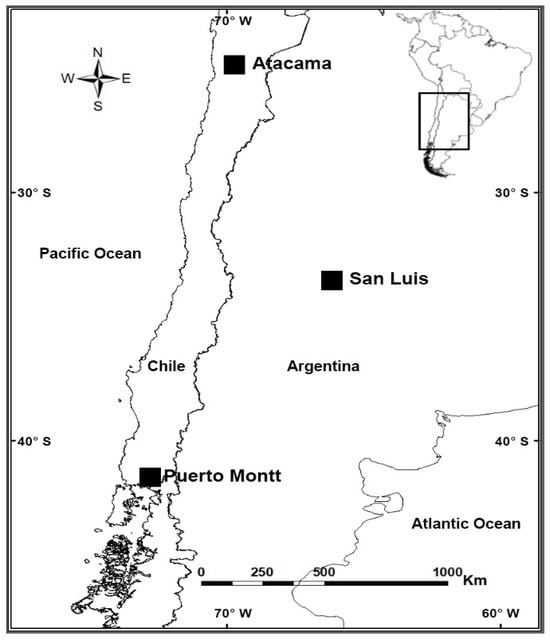
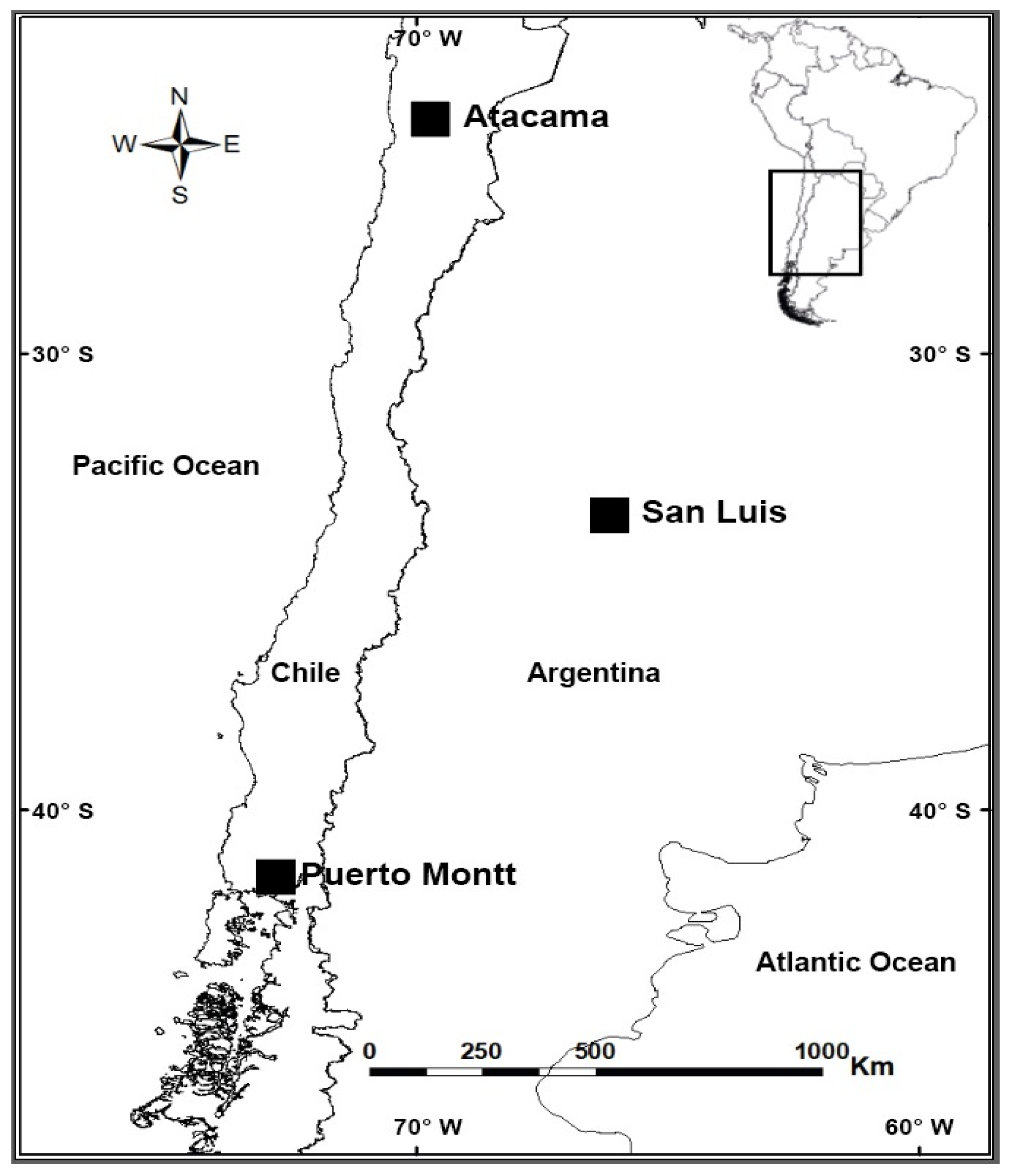
The studies were conducted with mature fruits (utricles, referred to in this study as seeds) of the species S. neei collected from natural populations in three contrasting habitats: (A) a wetland connected to Quebrada Totoral located at latitude 27°53′ S and longitude 70°53′ W, 15 km east of Bahía Totoral in Copiapó province, Atacama Region, Chile; (B) a sandy coastal sector of Bahía Lenca, located at latitude 41°37′ S and longitude 72°39′ W, 33 km east of the city of Puerto Montt in the province of Llanquihue, Los Lagos Region, Chile; and (C) the Bebedero stream located at latitude 33°43′ S and longitude 66°37′ W in the province of San Luis, Argentina, connected to the Salinas del Bebedero, a sodium chloride deposit (Figure 1). The salinities at the seed collection sites were 2.16, 2.04 and 4 dS m−1 in Atacama, Puerto Montt and San Luis, respectively.
Figure 1.
Location of the three S. neei collection sites: Atacama and Puerto Montt (Chile); San Luis (Argentina).
Seeds were manually harvested from mature plants from natural populations during autumn 2018. The collected material was deposited in brown paper bags. Prior to storage, seeds were subjected to a drying process in a Binder model FED400 oven at a temperature of 35 °C for 8 h to reduce humidity and thus avoid the proliferation of microorganisms [24].
To separate seeds from spikelets, the collected material was rubbed inside a brown paper bag. Subsequently, the material was subjected to a sieving process using sieves with different mesh sizes, from 3.505 to 0.508 mm.
To quantify the weight of the seeds, a total of 700 seeds per site were separated by means of metal tweezers and a magnifying glass, grouped into samples of 100 seeds and weighed on a Mettler Toledo model XP205 five-digit analytical balance. The average weight of the 100 seeds from each site was as follows: Atacama, 0.02 g; Puerto Montt, 0.03 g; and San Luis, 0.01 g.
Finally, seeds were stored in the laboratory in hermetically sealed bags duly labeled at 4 °C [24] until the time of testing.
Five salt solutions of different millimolar (mM) concentration equivalent to 0, 25, 50, 75 and 100% of 435.9 mM, the sea water salinity (SWS), were prepared with NaCl and Na2SO4. According to previous studies [19], concentrations higher than 435.9 mM inhibit S. neei seed germination. The amount of salt was calculated by applying molarity equations [22,25]. Salt solutions were prepared at equivalent molar concentrations rather than equivalent osmotic potentials.
where “M” corresponds to the molarity (moles L−1), “n” the number of moles, “V” the volume of solution (L), “m” the mass of solute (g) and “mm” the molar mass (gmol−1).
To prepare each salt solution, the calculated amount of salt was weighed on a Mettler Toledo model XP205 analytical balance. Subsequently, in a beaker, the salt was dissolved in a small volume of distilled water and made up to the mark in a 250 mL volumetric flask. The different salt solutions were stored in properly labeled screw-capped glass bottles. Table 1 summarizes the amount of reagent applied for the preparation of each of the different salt concentrations.
Table 1.
Amount of NaCl and Na2SO4 applied for the preparation of salt solutions and the corresponding EC.
The experiment was organized according to a randomized complete block design. Seeds from each site (Atacama, Puerto Montt and San Luis) were subjected to an exogenous application of two types of salts (NaCl and Na2SO4), with five independent salt concentrations and three replicates per treatment, implementing a total of 90 Petri dishes, 30 per block (site).
To interrupt dormancy, before starting the experiment, all the seeds were subjected to an artificial cold stratification treatment [26]. Seeds from each site were flooded with distilled water in Petri dishes, labeled and stored at 4 °C for 40 days in a refrigerator.
Sowing was performed on 7 March 2019, after the stratification period was over. Sterilized 9 cm diameter glass Petri dishes, previously prepared with a double layer of Whatman N°1 filter paper, were used. Seeds were subjected to a superficial disinfection protocol, by immersion for 30 s under constant agitation in a concentration of 2% sodium hypochlorite to minimize fungal growth [19]. Subsequently, they were washed with abundant distilled water. In each Petri dish, 25 seeds distributed in a 5 × 5 arrangement were homogeneously sown, immersed in 5 mL of saline solution (distilled water, 108.9; 217.9; 326.9 and 435.9 mM NaCl or Na2SO4). Seeds were visually selected with bracts, uniform in size and without apparent damage. Petri dishes were labeled and sealed with a kerosene film (Parafilm®) to prevent water loss by evaporation. The 90 Petri dishes were incubated under white LED light (400–700 nm), 5000 K, at a PPFD of 50 µmol m−2 s−1 at a constant temperature of 20 °C and a regime of 16 h of light and 8 h of darkness in a Tempra® model LG539 controlled growth chamber. The temperature and photoperiod used have been described as favorable for germination of other halophyte species [27,28]. Counts of germinated seeds were performed at 24 h intervals for eleven days. Radicle protrusion ≥ 2 mm (Figures S1 and S2) was used as the germination criterion [26]. To determine whether different salt concentrations affected seed viability, after the eleven days, the non-germinated seeds from each treatment were washed with abundant distilled water and transferred to sterilized glass Petri dishes previously prepared with a double layer of Whatman N°1 filter paper for recovery. The filter paper was moistened with 5 mL of distilled water. Seed germination was monitored for another eleven days.
Four response variables were used to describe the seed germination process. The first three variables evaluated were obtained in the first eleven days of the experiment:
Germination percentage (%G): the number of germinated seeds, with respect to the number of seeds sown, expressed as a percentage:
where “a” is the number of germinated seeds and “b” the number of seeds used.
Germination rate (TI): a measure of germination speed, determined using the modified Timson’s Index for germination speed [29], expressed as
where “G” represents the cumulative germination percentage calculated for 11 days, and “t” is the total germination period in days. The maximum possible value for the data using this index is 100. A value of 100 on the Timson scale indicates that all seeds germinated in 1 day, while 0 indicates that no seeds germinated.
Germination period (GP): this corresponds to the period in days from the first germinated seed [19].
During the recovery period, the variable evaluated was as follows:
Recovery percentage (%R): expressed as a percentage, it was calculated using the following equation [30]:
where “a” is the total number of seeds germinated in the saline solution plus the seeds germinated after transferred to distilled water, “b” is the number of seeds germinated in the saline solution and “c” is the total number of seeds used.
We used mean comparison analyses to compare seed germination responses among specific salinity levels. Prior to statistical analysis, the data on %G and %R were subjected to arcsine transformation to ensure homogeneity of variance. A generalized linear model (GLM) with binomial error distribution and logit link function was used to evaluate the effect of salinity on germination percentage and recovery percentage. A post hoc Chi-Square (X2) test with the Bonferroni correction was carried out to perform all pairwise comparisons between individual treatments (p = 0.0002). ANOVA was used to evaluate the effect of salinity on germination rate, and a post hoc Tukey test was used to compare treatments (p < 0.0001). All statistical analyses were performed in JMP® version 19.0.1 (SAS Institute Inc., Cary, NC, USA, 2025). Untransformed data are presented in Figure 2 and Figure 3 and Table 2 and Table 3.
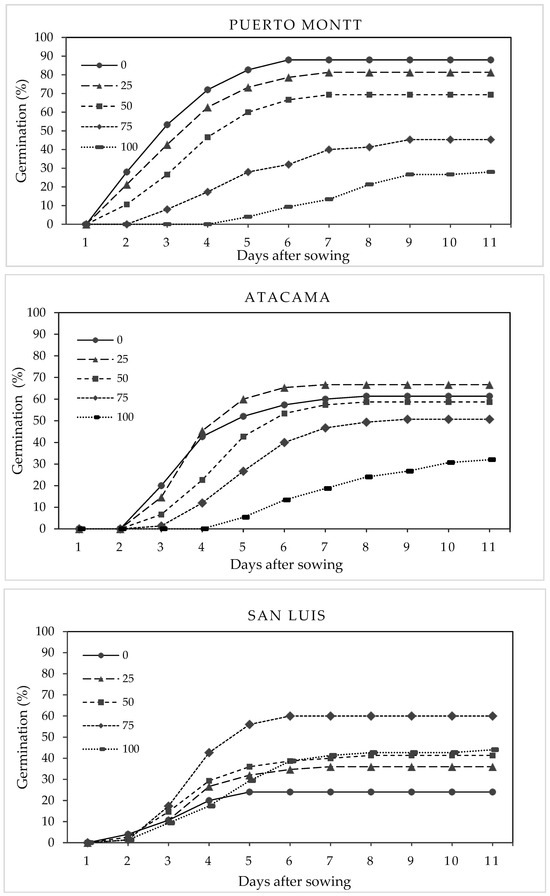
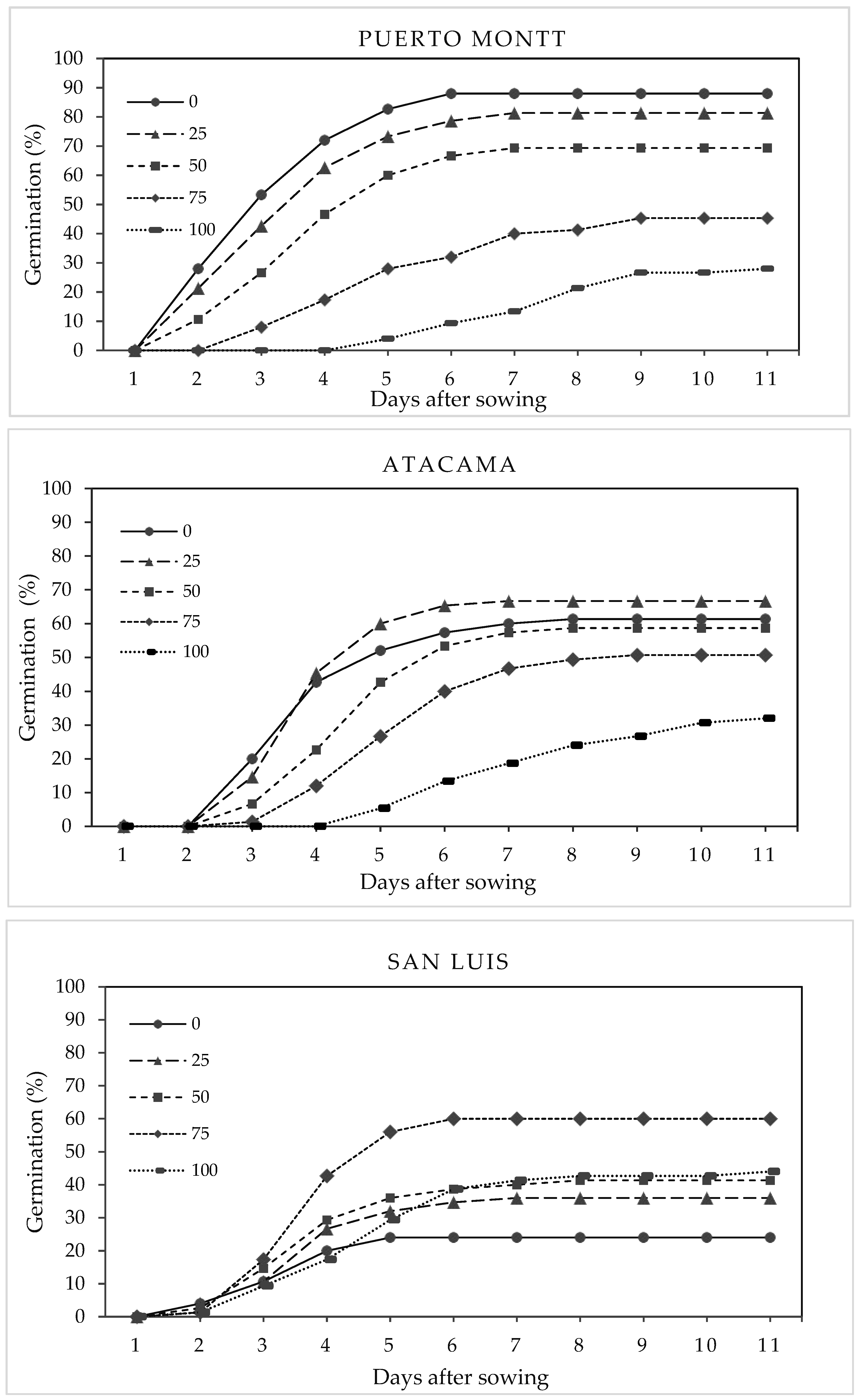
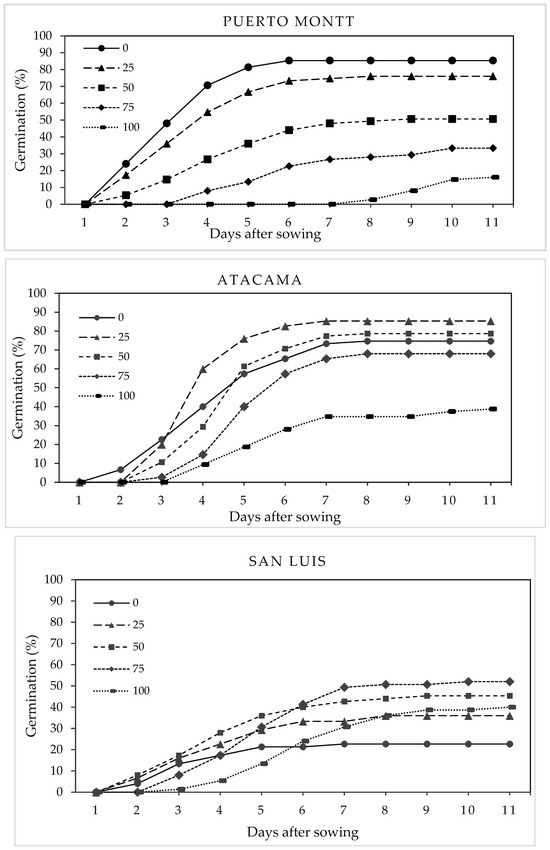
Figure 2.
Germination of S. neei seeds from Puerto Montt, Atacama and San Luis under different salinity levels of NaCl: 0, 25, 50, 75 and 100% of SWS (435.9 mM), the maximum salinity value reported for the germination of the species. Data plotted with Catmull–Rom spline-type smoothed trend lines.
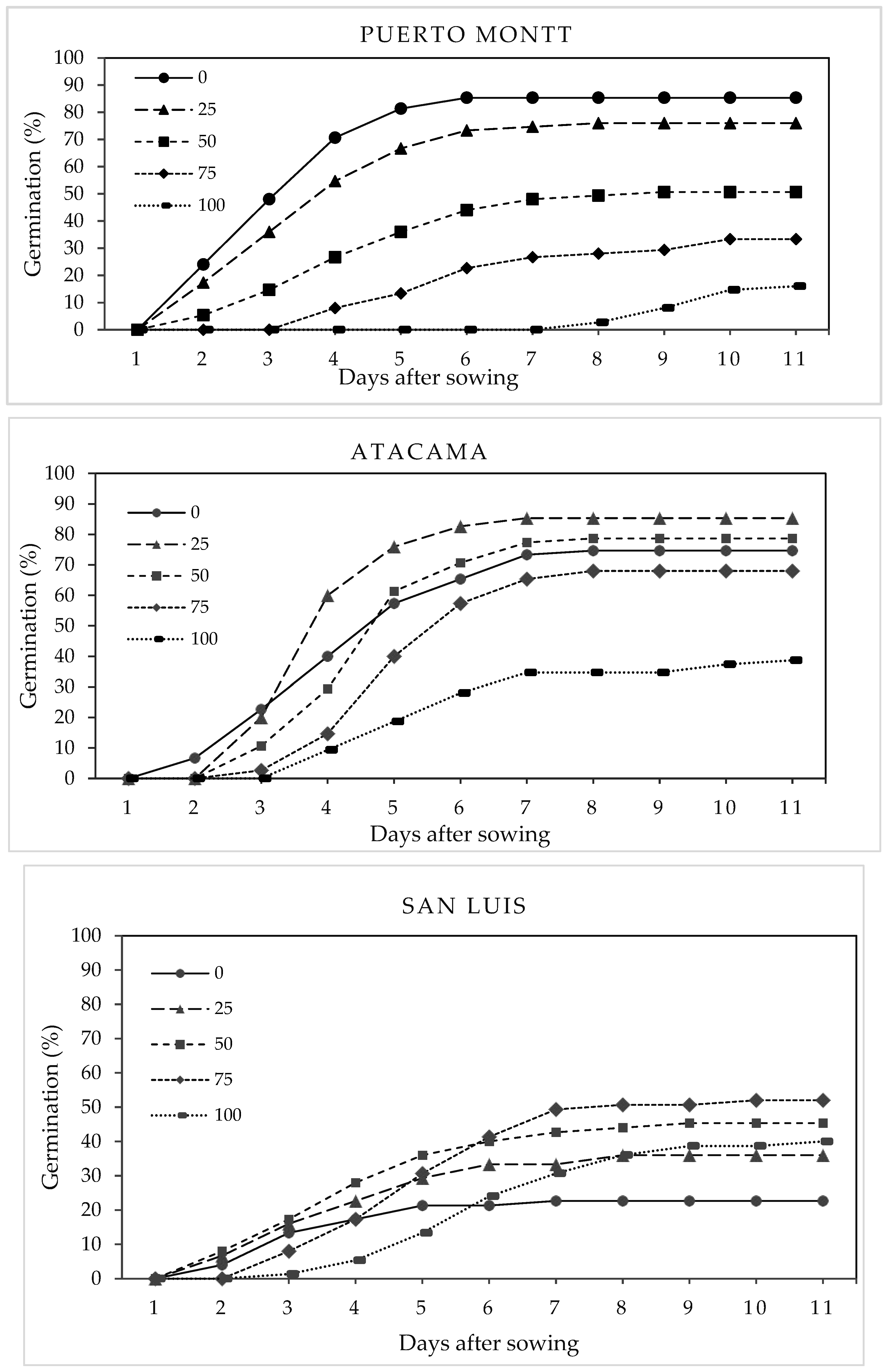
Figure 3.
Germination of S. neei seeds from Puerto Montt, Atacama and San Luis under different salinity levels of Na2SO4: 0, 25, 50, 75 and 100% of SWS (435.9 mM). Data plotted with Catmull–Rom spline-type smoothed trend lines.
Table 2.
Germination percentage (%G), germination rate (TI), and recovery percentage (%R) of S. neei from Puerto Montt, Atacama and San Luis under different salinity levels of NaCl: 0, 25, 50, 75 and 100% of SWS (435.9 mM).
Table 3.
Germination percentage (%G), germination rate (TI), and recovery percentage (%R) of S. neei from Puerto Montt, Atacama and San Luis under different salinity levels of Na2SO4: 0, 25, 50, 75 and 100% of SWS (435.9 mM).
3. Results
Overall, germination responses were significantly influenced by salinity level, population, and their interaction across both salt treatments
3.1. Germination Dynamics of S. neei Under NaCl
The germination percentage of S. neei was significantly affected by the interaction between location and NaCl level (p < 0.0001; Figure 2 and Table 2). The highest germination (88%) occurred in seeds from Puerto Montt at 0% SWS. As reported in prior studies on halophyte germination under salinity [10,19,27,30], increasing NaCl concentrations reduced germination in this site (81, 69, 45 and 28% of germination at 25, 50, 75 and 100% of SWS, respectively). Timson’s Index showed a parallel decline from 69.45 to 11.76% day−1 from 0 to 100% SWS, respectively, while post-stress recovery (%R) increased from 8 to 52% towards the highest salinity.
Seeds from Atacama showed a germination peak of 67% at 25% SWS, maintained relatively stable germination close to 60% at 0 and 50% SWS and then declined at higher salt concentrations (32% at 100% SWS). TI followed the same pattern, from 47.15 to 13.70% day−1 from 25 to 100% SWS. Recovery rose sharply with increasing salinity, peaking at 72% at 100% SWS, indicating a substantial capacity to resume germination after the removal of stress.
In contrast, seeds from San Luis exhibited low germination in distilled water (24% at 0% SWS) but improved markedly with salinity, reaching 36–41% at 25–50% SWS and peaking at 60% at 75% SWS, before remaining at 44% at 100% SWS. TI reflected this profile (18.42% day−1 TI in distilled water, rising to 43.39% day−1 at 75% SWS, then declining to 28.12% day−1 at 100% SWS). Recovery remained minimal across all NaCl levels (0–8%). Within-site pairwise letters in Table 2 indicate significant differences across salinity levels for %G and TI.
Overall, location, NaCl level, and their interaction were significant for germination, TI, and recovery (all p < 0.0001), revealing contrasting NaCl-response profiles among the three sites.
Across NaCl treatments, Chilean sites showed higher germination at lower salinity with progressive declines as NaCl increased. In contrast, the San Luis site displayed low germination in distilled water and higher germination values at moderate NaCl, peaking at 75% SWS.
At salinity levels of 0, 25, and 50% SWS, the germination period for the three sites was 10 days. At 75% SWS, the germination period decreased to an average of 9.1 days, and at 100% SWS, the average decreased to 7.3 days. The difference in the germination period between 100% SWS and 50% SWS or less was significant (p < 0.005). The differences between the other groups were not significant (p > 0.005).
3.2. Germination Dynamics of S. neei Under Na2SO4
Site, Na2SO4 level, and their interaction significantly affected germination (%G), Timson’s Index (TI), and post-stress recovery (%R). For %G and %R, location and salinity level were highly significant (both p < 0.0001) and their interaction was significant (p = 0.0002). For TI, location, salinity level, and their interaction were all p < 0.0001.
In seeds from Puerto Montt, germination (%G) declined monotonically with increasing Na2SO4, from 85% at 0% SWS to 16% at 100% SWS. TI decreased in parallel from 66.91 to 3.76% day−1, while recovery rose sharply with salinity from 7% to 75%.
Germination from Atacama seeds showed a peak of 85% at 25% SWS and remained high (75–79%) at low–intermediate salinity (0–50% SWS), then declined at upper levels (39% at 100% SWS). TI showed a similar buffering (51.27, 60.48 and 51.27% at 0, 25 and 50% SWS) before dropping to 41.09% (75% SWS) and 21.45 (100% SWS). Recovery increased with salinity, peaking at 70% at the highest concentration of Na2SO4 (100% SWS).
Germination of seeds from San Luis was low in distilled water (23%) but improved with sulfate salinity (36, 45 and 52% at 25, 50 and 75% SWS, respectively), remaining 40% at 100% SWS. TI followed the same trend, from 17.33% day−1 (0% SWS) to 32% day−1 (75% SWS), declining to 20.73% day−1 at 100% SWS. Recovery was minimal (0%) across levels, increasing to 9% at 100% SWS.
Na2SO4 revealed contrasting site-specific profiles: a strong decline in germination with a high recovery in Puerto Montt, a buffered mid-range germination response with a high end-point recovery in Atacama, and a low-in-distilled-water and improved-with-salt-profile germination with minimal recovery at the San Luis site.
At salinity levels of 0, 25, and 50% SWS, the germination period for the three sites was 10 days. At 75% SWS, the germination period decreased to an average of 9.7 days, and at 100% SWS, the average decreased to 9.1 days. The difference in the germination period between 100% SWS and 50% SWS or less was significant (p < 0.005). The differences between the other groups were not significant (p > 0.005).
4. Discussion
Our three-site comparison revealed clear site-dependent responses of S. neei seed germination to salt type and concentration. These differences highlight the ecological plasticity of the species and suggest local adaptation. The contrasting germination thresholds likely reflect long-term selection under different ionic and osmotic conditions in each habitat [30].
Seeds from the San Luis site (Salinas del Bebedero) showed a euhalophytic germination pattern. Germination was low in distilled water but increased under moderate NaCl (50–75% SWS). This response suggests physiological preconditioning to chloride-rich environments. Under moderate salinity, Na+ and Cl− may act as signals that promote imbibition and metabolic activation, rather than as purely inhibitory factors. Similar stimulation by NaCl has been reported in Suaeda salsa and Suaeda fruticosa, where seeds from saline environments germinated better at specific salt concentrations [31,32].
In contrast, seeds from Puerto Montt and Atacama showed a progressive decline in germination with increasing NaCl. This pattern is typical of halophytes that are less specialized for chloride-dominated conditions. It agrees with previous studies showing that germination generally decreases with salinity unless populations are strongly adapted to salt [30,32].
The comparison between NaCl and Na2SO4 provided additional insights. In general, Na2SO4 caused stronger inhibition of germination than NaCl (100% SWS; p = 0.0120). This supports the idea that ion-specific effects, not only osmotic stress, influence germination. Similar results have been reported in safflower (Carthamus tinctorius), where Na2SO4 reduced germination more than NaCl under equivalent osmotic conditions [32].
The stronger effect of Na2SO4 may be related to sulfate-specific interactions. These may affect seed coat permeability or disrupt early metabolic processes at the embryo–endosperm interface. In addition, sulfate salts may alter pH or redox balance, further affecting membrane integrity. These mechanisms differ from those induced by NaCl and help explain the observed differences between salt types [23,33].
Despite these inhibitory effects, post-stress recovery was high, especially in seeds from Chilean sites. This indicates that many seeds remained viable under saline conditions and resumed germination after stress removal. Such recovery responses are common in halophytes and reflect an adaptive strategy to cope with fluctuating salinity [34,35].
From an applied perspective, these results highlight the importance of intraspecific variation in S. neei. Seeds from San Luis, which showed improved germination under moderate NaCl, may be suitable for inland saline environments dominated by chlorides. In contrast, seeds from Chilean sites showed strong recovery after stress, which may be advantageous in environments with fluctuating salinity, such as coastal systems.
These findings are consistent with previous studies on the productivity and nutritional value of Sarcocornia and Salicornia under saline irrigation [36,37]. They also emphasize the importance of matching seed origin with the ionic characteristics of target environments. This approach may improve establishment success in biosaline agriculture and ecological restoration.
Together, these results reinforce the need to incorporate ionic composition, and not only salinity levels, into experimental designs and selection strategies for halophyte-based systems.
5. Conclusions
This study demonstrates that seed germination in S. neei is strongly influenced by both salinity type and concentration, with pronounced population-specific responses reflecting ecological plasticity and likely local adaptation. The contrasting germination patterns among the three studied sites indicate that maternal environmental conditions and long-term exposure to distinct ionic regimes play a key role in shaping germination thresholds in this halophytic species.
Seeds from the inland saline basin of San Luis exhibited a euhalophytic germination response, with enhanced germination under moderate NaCl concentrations, suggesting physiological preconditioning to chloride-dominated environments. In contrast, seeds from the Chilean coastal sites showed a more typical decline in germination with increasing salinity, consistent with ecotypes adapted to more variable and less extreme salt regimes.
Across sites, Na2SO4 exerted a stronger inhibitory effect on germination than NaCl, highlighting the importance of ion-specific effects beyond osmotic stress alone. Nevertheless, the high post-stress recovery observed—particularly in the Chilean populations—indicates that salinity primarily delayed germination rather than causing irreversible loss of seed viability.
Overall, these findings underscore the significance of intraspecific variation in S. neei germination ecology and emphasize the need to consider both seed provenance and salt composition when selecting plant material for biosaline agriculture or ecological restoration. Matching seed sources to the dominant ionic characteristics of target environments may enhance establishment success in saline landscapes.
Supplementary Materials
The following supporting information can be downloaded at https://www.mdpi.com/article/10.3390/app16094361/s1, Figure S1: A Petri dish with germinated seeds of Sarcocornia neei; Figure S2: A germinated seed of Sarcocornia neei.
Author Contributions
Conceptualization, A.V., V.G. and M.A.; methodology, A.V., V.G., L.S., B.S., A.Z.F. and M.A.; analysis, A.V., V.G., L.S., A.Z.F. and M.A.; resources, L.S. and M.A.; data curation, A.V. and V.G.; writing—original draft preparation, A.V., V.G. and M.A.; writing—review and editing, A.V., V.G., L.S., B.S., A.Z.F. and M.A.; supervision, L.S. and M.A.; project administration, M.A.; funding acquisition, M.A. All authors have read and agreed to the published version of the manuscript.
Funding
This research received no external funding.
Institutional Review Board Statement
Not applicable.
Informed Consent Statement
Not applicable.
Data Availability Statement
Data are fully available upon request.
Acknowledgments
The authors thank the anonymous reviewers who helped improve the manuscript.
Conflicts of Interest
The authors declare no conflicts of interest.
Abbreviations
The following abbreviations are used in this manuscript:
| EC | Electrical conductivity |
| SWS | Sea water salinity |
| %G | Germination percentage |
| %R | Recovery percentage |
| TI | Germination rate (Timson’s Index) |
References
- Bahar, N.H.; Lo, M.; Sanjaya, M.; Van Vianen, J.; Alexander, P.; Ickowitz, A.; Sunderland, T. Meeting the food security challenge for nine billion people in 2050: What impact on forests? Glob. Environ. Change 2020, 62, 102056. [Google Scholar] [CrossRef] [Scilit]
- Lam, D. The Next 2 Billion: Can the World Support 10 Billion People? Popul. Dev. Rev. 2025, 51, 63–102. [Google Scholar] [CrossRef] [Scilit]
- De Clerck, F.; Barrios, E.; Benton, T.G.; Estrada-Carmona, N.; Garibaldi, L.A.; Jones, S.K.; Navarrete-Frias, C.; Leadley, P.; Mohamed, A.; Obura, D.; et al. Biodiversity, Agriculture and Sustainable Production: GBF Target 10. PLoS Sustain. Transform. 2023, 2, e0000048. [Google Scholar] [CrossRef] [Scilit]
- FAO. The Future of Food and Agriculture—Drivers and Triggers for Transformation; Food and Agriculture Organization of the United Nations: Rome, Italy, 2022. [Google Scholar] [CrossRef] [Scilit]
- Khorsandi, F. Haloculture: Strategy for sustainable utilization of saline land and water resources. Iran. J. Earth Sci. 2022, 8, 164–172. [Google Scholar]
- Devkota, K.P.; Devkota Wasti, M.; Rezaei, M.; Oosterbaan, R. Managing salinity for sustainable agricultural production in salt-affected soils of irrigated drylands. Agric. Syst. 2022, 198, 103390. [Google Scholar] [CrossRef] [Scilit]
- Bui, E.N. Soil salinity: A neglected factor in plant ecology and biogeography. J. Arid. Environ. 2013, 92, 14–25. [Google Scholar] [CrossRef] [Scilit]
- Panta, S.; Flowers, T.; Lane, P.; Doyle, R.; Haros, G.; Shabala, S. Halophyte agriculture: Success stories. Environ. Exp. Bot. 2014, 107, 71–83. [Google Scholar] [CrossRef] [Scilit]
- Flowers, T.J.; Galal, H.K.; Bromham, L. Evolution of halophytes: Multiple origins of salt tolerance in land plants. Funct. Plant Biol. 2010, 37, 604–612. [Google Scholar] [CrossRef] [Scilit]
- Mann, A.; Lata, C.; Kumar, N.; Kumar, A.; Sheoran, P. Halophytes as new model plant species for salt tolerance strategies. Front. Plant Sci. 2023, 14, 1137211. [Google Scholar] [CrossRef] [Scilit] [PubMed]
- Santos, J.; Al-Azzawi, M.; Aronson, J.; Flowers, T.J. eHALOPH a database of salt-tolerant plants: Helping put halophytes to work. Plant Cell Physiol. 2016, 57, e10. [Google Scholar] [CrossRef] [Scilit]
- Steffen, S.; Ball, P.; Mucina, L.; Kadereit, G. Phylogeny, biogeography and ecological diversification of Sarcocornia (Salicornioideae, Amaranthaceae). Ann. Bot. 2015, 115, 353–368. [Google Scholar] [CrossRef] [Scilit]
- Alonso, M.Á.; Crespo, M.B. Taxonomic and nomenclatural notes on South American taxa of Sarcocornia (Chenopodiaceae). Ann. Bot. Fenn. 2008, 45, 241–254. [Google Scholar] [CrossRef] [Scilit]
- Riquelme, J.; Olaeta, J.A.; Galvez, L.; Undurraga, P.; Fuentealba, C.; Osses, A.; Orellana, J.; Gallardo, J.; Pedreschi, R. Nutritional and functional characterization of wild and cultivated Sarcocornia neei grown in Chile. Cienc. Investig. Agrar. 2016, 43, 283–293. [Google Scholar] [CrossRef] [Scilit]
- Meza, V.; Lillo, C.; Rivera, D.; Soto, E.; Figueroa, R. Sarcocornia neei as an indicator of environmental pollution: A comparative study in coastal wetlands of central Chile. Plants 2018, 7, 66. [Google Scholar] [CrossRef] [Scilit]
- Doncato, K.B.; Costa, C.S.B. Potencial nutricional de uma nova variedade de aspargo-marinho Salicornia neei Lag. para dietas humana e animal. Biotemas 2018, 31, 57–63. [Google Scholar] [CrossRef] [Scilit]
- Muñoz-Araya, M.; Alonso, M.; Flórez-Méndez, J. Effect of fertilization on yield and phenology of the halophyte Sarcocornia neei as an emerging crop. Agron. Colomb. 2021, 39, 300–305. [Google Scholar] [CrossRef] [Scilit]
- Alonso, M.F.; Orellana, C.; Valdes, S.; Diaz, F.J. Effect of salinity on the germination of Sarcocornia neei (Chenopodiaceae) from two contrasting habitats. Seed Sci. Technol. 2017, 45, 252–258. [Google Scholar] [CrossRef] [Scilit]
- Lamz Piedra, A.; González Cepero, M.C. Salinity as a problem in agriculture: Plant breeding an immediate solution. Cultiv. Trop. 2013, 34, 31–42. [Google Scholar]
- Reich, M.; Aghajanzadeh, T.; Helm, J.; Parmar, S.; Hawkesford, M.J.; De Kok, L.J. Chloride and sulfate salinity differently affect biomass, mineral nutrient composition and expression of sulfate transport and assimilation genes in Brassica rapa. Plant Soil 2017, 411, 319–332. [Google Scholar] [CrossRef] [Scilit]
- Hadjadj, S.; Mahdjoubi, S.; Hidoub, Y.; Bahaz, T.; Ghedamsi, Z.; Regagda, S.; Arfa, Y.; Ould El Hadj Khelil, A. Comparative effects of NaCl and Na2SO4 on germination and early seedling stages of the halophyte Carthamus tinctorius L. J. Appl. Res. Med. Aromat. Plants. 2023, 35, 100463. [Google Scholar] [CrossRef] [Scilit]
- Reginato, M.; Luna, V.; Papenbrock, J. Current knowledge about Na2SO4 effects on plants: What is different in comparison to NaCl? J. Plant Res. 2021, 134, 1159–1179. [Google Scholar] [CrossRef] [Scilit]
- International Seed Testing Association (ISTA). International Rules for Seed Testing; ISTA: Wallisellen, Switzerland, 2025. [Google Scholar] [CrossRef] [Scilit]
- Zhu, X.; Yang, Z.; Zheng, J.; Liu, J.; Bu, F.; Dai, C.; Lu, Y. Study on mechanical properties of sulfate saline soil improved by CLI-type polymer active agent. Appl. Sci. 2023, 13, 10727. [Google Scholar] [CrossRef] [Scilit]
- Al-Hawija, B.N.; Partzsch, M.; Hensen, I. Effects of temperature, salinity and cold stratification on seed germination in halophytes. Nord. J. Bot. 2012, 30, 627–634. [Google Scholar] [CrossRef] [Scilit]
- Guma, I.R.; Padrón-Mederos, M.A.; Santos-Guerra, A.; Reyes-Betancort, J.A. Effect of temperature and salinity on germination of Salsola vermiculata L. (Chenopodiaceae) from the Canary Islands. J. Arid. Environ. 2010, 74, 708–711. [Google Scholar] [CrossRef] [Scilit]
- Reginato, M.A.; Turcios, A.E.; Luna, V.; Papenbrock, J. Differential effects of NaCl and Na2SO4 on the halophyte Prosopis strombulifera are explained by different responses of photosynthesis and metabolism. Plant Physiol. Biochem. 2019, 141, 306–314. [Google Scholar] [CrossRef] [Scilit] [PubMed]
- Dessì, L. Effects of temperature and salinity on the seed germination of Limonium strictissimum (Salzm.) Arrigoni in the Mediterranean Basin. J. Appl. Seed Sci. 2025, 17, 259–270. [Google Scholar] [CrossRef] [Scilit]
- Timson, J. New method of recording germination data. Nature 1965, 207, 216–217. [Google Scholar] [CrossRef] [Scilit]
- Qi, W.; Ma, H.; Li, S.; Wu, H.; Zhao, D. Seed Germination and Seedling Growth in Suaeda salsa (Linn.) Pall. (Amaranthaceae) Demonstrate Varying Salinity Tolerance among Different Provenances. Biology 2023, 12, 1343. [Google Scholar] [CrossRef] [Scilit] [PubMed]
- Shah, S.Z.; Rasheed, A.; El-Keblawy, A.; Gairola, S.; Phartyal, S.S.; Gul, B.; Hameed, A. Inter-provenance variation in seed germination response of a cash crop halophyte Suaeda fruticosa to different abiotic factors. Flora 2022, 292, 152079. [Google Scholar] [CrossRef] [Scilit]
- Gul, B.; Ansari, R.; Flowers, T.J.; Khan, M.A. Germination strategies of halophyte seeds under salinity. Environ. Exp. Bot. 2013, 92, 4–18. [Google Scholar] [CrossRef] [Scilit]
- Zhang, R.; Zhang, H.; Wang, L.; Zeng, Y. Effect of salt-alkali stress on seed germination of the halophyte Halostachys caspica. Sci. Rep. 2024, 14, 13199. [Google Scholar] [CrossRef] [Scilit] [PubMed]
- Kaya, G. Effect of irrigation water salinity on morphological and physiological characteristics of celery. Int. J. Agric. Environ. Food Sci. 2023, 7, 913–917. [Google Scholar] [CrossRef] [Scilit]
- Flowers, T.J.; Colmer, T.D. Plant salt tolerance: Adaptations in halophytes. Ann. Bot. 2015, 115, 327–331. [Google Scholar] [CrossRef] [Scilit]
- Ventura, Y.; Wuddineh, W.A.; Myrzabayeva, M.; Alikulov, Z.; Khozin-Goldberg, I.; Shpigel, M.; Sagi, M. Effect of seawater concentration on the productivity and nutritional value of annual Salicornia and perennial Sarcocornia halophytes as leafy vegetable crops. Sci. Hortic. 2011, 128, 189–196. [Google Scholar] [CrossRef] [Scilit]
- Ortega Albero, N.; Vallejo Sardon, S.; Lupuţ, I.; Boscaiu, M.; Donat-Torres, M.P.; Fita, A.; González-Orenga, S. Sarcocornia fruticosa, a Potential Candidate for Saline Agriculture: Antioxidant Levels in Relation to Environmental Conditions in the Eastern Iberian Peninsula. Agriculture 2024, 14, 1657. [Google Scholar] [CrossRef] [Scilit]

Disclaimer/Publisher’s Note: The statements, opinions and data contained in all publications are solely those of the individual author(s) and contributor(s) and not of MDPI and/or the editor(s). MDPI and/or the editor(s) disclaim responsibility for any injury to people or property resulting from any ideas, methods, instructions or products referred to in the content. |
© 2026 by the authors. Licensee MDPI, Basel, Switzerland. This article is an open access article distributed under the terms and conditions of the Creative Commons Attribution (CC BY) license.