


Abstract
The rapid expansion of Generative Artificial Intelligence (GAI) is transforming higher education systems, particularly public institutions seeking to advance toward smart governance models and digital transformation. In this context, digital teaching competence emerges as a strategic factor for the effective, ethical, and pedagogically sound adoption of these technologies. This study assesses the level of digital competence among public higher education faculty in Paraguay and examines its predictive capacity regarding the adoption of GAI tools using machine learning models. A nationwide quantitative study was conducted with a sample of 800 faculty members from public universities across Paraguay. Data were collected through a structured questionnaire based on international digital competence frameworks, incorporating additional variables such as attitudes toward GAI, technological experience, institutional infrastructure, and perceived organizational support. Data analysis involved the application of machine learning techniques, including Logistic Regression, Random Forest, and Gradient Boosting, to identify the variables with the strongest predictive power regarding faculty readiness and willingness to integrate GAI into teaching practices. Model performance was evaluated using metrics such as accuracy, F1-scores, and the AUC-ROC. The findings identify key predictors of technological readiness and structural gaps within Paraguay’s public higher education system. This research provides empirical evidence from Latin America on the factors influencing GAI adoption in public sector educational contexts and contributes to the design of educational policies aimed at fostering smart universities and digitally sustainable academic ecosystems.
1. Introduction
Artificial Intelligence (AI) is rapidly transforming higher education, giving rise to a new paradigm characterized by generative tools capable of producing educational content in real time. These technologies include advanced language models (LLMs) and generators of images, audio, and video that interpret complex prompts and produce original material. In educational practice, such innovations promise to enhance both teaching and learning processes. For instance, they can support real-time feedback, personalize learning pathways, and even automate routine instructional tasks. According to Hwang et al. [1], AI in education encompasses applications ranging from data mining and adaptive learning systems to intelligent tutoring and automated assessment systems.
Public higher education institutions play a strategic role within the public sector, functioning not only as educational providers but also as key actors in knowledge production, innovation, and digital capacity building. In the context of smart cities and digital governance, universities contribute to the development of human capital, technological ecosystems, and data-driven decision-making processes [1,2]. Therefore, understanding faculty readiness to adopt generative AI is directly linked to broader processes of public-sector transformation and smart governance [3].
Indeed, the systematic review conducted by Zawacki-Richter et al. [4] identifies several key applications of AI in education, including adaptive learning systems, personalized tutoring, intelligent assessment mechanisms, and predictive models of student performance. Furthermore, natural language processing tools such as GPT-based chatbots have demonstrated positive impacts on students’ cognitive engagement. For example, studies have reported that the use of ChatGPT (OpenAI; version GPT-4, accessed in 2025) in English language classes significantly increases both student participation and linguistic competence. These developments suggest that generative AI has the potential to reconfigure teaching practices by enabling more dynamic, flexible, and student-centered learning environments.
However, alongside the enthusiasm surrounding these pedagogical opportunities, significant challenges have also emerged. Many researchers warn that the rapid evolution of generative AI models is outpacing the capacity of educational institutions and regulatory frameworks to adapt effectively (Dwivedi et al. [5]). For instance, the proliferation of generative AI tools has exposed critical vulnerabilities regarding data privacy and ethical governance, leaving many educational institutions unprepared to address potential risks associated with misuse. Similarly, Kasneci et al. [6] emphasize the novelty of this field and point out that there remains a limited body of research addressing the implications of generative AI within higher education. Their review concludes that the current literature provides only a preliminary understanding of the pedagogical and ethical consequences of integrating generative AI into academic contexts.
At the same time, empirical evidence suggests that universities are adopting a cautious yet open stance toward generative AI technologies. Holmes and Tuomi [7] observe that many leading universities have begun developing institutional policies, training workshops, and pedagogical guidelines to support responsible AI use. These initiatives emphasize ethical awareness, digital literacy, and transparency in academic work. Recent studies have also highlighted the importance of collaborative digital environments and ethical governance in shaping the integration of emerging technologies in higher education. Research on digital collaboration suggests that the development of digital skills in academic contexts is closely linked to collaborative practices and institutional support structures that foster innovation and knowledge exchange [8]. At the same time, broader perspectives on artificial intelligence emphasize the need for comprehensive governance frameworks that integrate ethical, legal, and social considerations in order to ensure responsible technological development [9]. In parallel, recent research on generative AI in education has further emphasized both its transformative potential and the challenges it poses for teaching and learning, particularly regarding pedagogical adaptation and responsible use of large language models [6].
In this context, the technological preparedness of university faculty emerges as a crucial factor. A growing body of research indicates that digital competence among higher education instructors remains uneven and often insufficient for the effective integration of advanced technologies. Basilotta-Gómez-Pablos et al. [10], in their systematic review, report that most studies identify relatively low levels of digital competence among university faculty, particularly in areas related to the pedagogical integration of digital tools. Similarly, Falloon [11] found that the majority of surveyed instructors demonstrate only a basic level of digital competence.
These findings are particularly relevant because the concept of digital competence in higher education is frequently grounded in established frameworks such as the European DigCompEdu model. These frameworks conceptualize digital competence as a multidimensional construct encompassing technological, pedagogical, communicative, and ethical dimensions of digital teaching. While such frameworks provide valuable conceptual guidance, empirical studies consistently show that many instructors still require substantial professional development in order to reach advanced levels of digital competence.
The importance of faculty preparedness becomes even more evident when considering the adoption of emerging technologies such as generative AI. Previous studies suggest that educators with higher levels of technological self-efficacy are significantly more likely to integrate innovative digital tools into their teaching practices [12,13]. Conversely, low confidence in digital environments often leads to resistance toward technological change and reinforces reliance on traditional instructional approaches. Consequently, strengthening both the technological and pedagogical dimensions of teachers’ digital competence has become a key priority for fostering innovation in higher education. In this regard, recent research highlights that the development of digital competence is not only an individual process but also closely linked to collaborative practices and institutional support structures that facilitate knowledge exchange and innovation [8]. Furthermore, broader perspectives on artificial intelligence emphasize the need for integrating ethical, legal, and social considerations into educational contexts, reinforcing the importance of responsible and human-centered approaches to technology adoption [9]. At the same time, emerging evidence on generative AI in education suggests that while these technologies offer significant opportunities for enhancing teaching and learning, their effective use depends on educators’ ability to critically evaluate and pedagogically adapt AI-driven tools within their instructional practices [6].
Beyond individual competencies, structural inequalities also shape the capacity of educational systems to adopt new technologies effectively. Research on the digital divide has long highlighted the persistence of disparities in access to technological resources and digital skills. Van Deursen and Van Dijk [14] argue that even in societies with nearly universal Internet access, significant inequalities remain in terms of the quality of technological access. Households with higher socioeconomic status typically possess multiple devices and the financial resources required to maintain them, while disadvantaged groups often face limitations in terms of equipment availability and stable connectivity.
According to these authors, the traditional “first-level digital divide,” which focused primarily on physical access to technology, has evolved into what they describe as a “material access divide.” This perspective emphasizes the importance of considering not only whether individuals have access to digital technologies, but also the quality and diversity of the devices and resources available to them. Expanding on this framework, Van Dijk [15] argues that research on digital inequality has progressively shifted from issues of physical access toward differences in digital skills and patterns of technology use. In other words, ensuring that educational institutions have Internet connectivity is no longer sufficient; what ultimately determines meaningful digital participation is the ability of individuals to effectively utilize these technologies.
Within higher education systems, these inequalities may translate into significant disparities in educational outcomes. Van Dijk [15] describes how differences in digital skills and usage outcomes constitute a “third-level digital divide,” which ultimately reinforces broader social inequalities. From this perspective, digital transformation in higher education cannot be understood solely as a technological challenge; it is also deeply intertwined with issues of social equity, institutional capacity, and educational policy.
In Latin America, and particularly in Paraguay, these structural dynamics are clearly visible. Recent studies indicate that despite significant progress in national digital inclusion initiatives, important disparities persist across the educational system. Cáceres Troche et al. [16] highlight that programs such as “Paraguay Digital” and various connectivity initiatives promoted by the Ministry of Education have contributed to improvements in technological infrastructure and teacher training. Nevertheless, notable territorial inequalities remain between urban and rural regions, as well as between public and private educational institutions [14].
The COVID-19 pandemic served as a critical catalyst for digital transformation within the region. On the one hand, it demonstrated the potential of digital technologies to expand access to educational resources, enable flexible learning environments, and support personalized learning experiences. On the other hand, it also exposed significant structural limitations within the educational system, including insufficient access to technological devices and limited digital competencies among both teachers and students. As a result, regional research consistently emphasizes the need for comprehensive strategies that integrate investments in connectivity, infrastructure, and—most importantly—continuous teacher professional development in digital pedagogy.
Without such an integrated approach, the introduction of advanced technologies such as generative AI may risk exacerbating existing educational inequalities rather than reducing them. This concern is particularly relevant in public higher education institutions, which often face financial and institutional constraints that limit their capacity to rapidly adopt emerging technologies.
Against this complex backdrop, current research on AI in education increasingly highlights the importance of focusing on human and institutional dimensions rather than purely technological aspects. International studies suggest that the effective integration of AI in education requires a pedagogical approach centered on human–machine collaboration. In this model, AI systems should be understood not as replacements for teachers but as complementary tools that extend educators’ capabilities.
Holmes and Tuomi [7] argue that within such collaborative frameworks, instructors play a central role in training, supervising, and critically evaluating AI systems, while the technologies themselves enhance educational processes through large-scale data analysis and real-time feedback mechanisms. This perspective implies that advancing education in the twenty-first century requires not only technological investment but also a fundamental reconsideration of the role of educators. Teachers are increasingly expected to develop new digital and pedagogical competencies that enable them to critically and creatively integrate AI-based tools into their instructional practices.
Despite the growing global interest in these issues, a significant knowledge gap remains. The current literature provides limited empirical evidence regarding how university faculty actually prepare for and engage with generative AI technologies, particularly in public higher education contexts and in developing regions. Recent reviews, such as Zawacki-Richter et al. [4], indicate that existing studies are still fragmented and offer little systematic evidence from Latin America.
Even fewer studies specifically examine the relationship between digital teaching competence and the adoption of generative AI tools in public universities. This gap is particularly problematic because understanding the factors that influence teachers’ readiness to adopt AI technologies is essential for designing effective educational policies and institutional strategies.
In response to this gap, the present study aims to empirically explore the relationship between the digital competence of university faculty in Paraguay and their willingness to integrate generative AI tools into their teaching practices. More specifically, the research seeks to identify which dimensions of digital competence and which institutional conditions—such as technological infrastructure, professional development opportunities, and faculty attitudes—most strongly predict readiness for generative AI adoption.
Ultimately, this study aims to contribute empirical evidence that can inform both academic research and educational policymaking. For researchers, it provides insights into the dynamics of technological change in teaching practices. For policymakers and institutional leaders, it offers guidance regarding the types of investments, training programs, and support structures necessary to ensure that generative AI technologies are integrated into higher education in ways that are inclusive, pedagogically meaningful, and socially responsible.
Despite the growing interest in generative AI in education, there remains limited empirical evidence examining faculty readiness in public higher education systems, particularly in Latin American contexts. Moreover, few studies have combined digital competence frameworks with machine learning approaches to model adoption readiness. This study addresses this gap by providing empirical evidence from Paraguay using a multidimensional analytical framework.
2. Materials and Methods
The readiness variable was operationalized as a binary outcome (high vs. low) using a median split of the composite readiness score derived from the Likert-scale items. This approach was adopted to facilitate classification modeling and improve interpretability of model outputs. Nevertheless, readiness is conceptually a continuous construct, and the dichotomization should be understood as a methodological decision rather than a theoretical distinction.
A non-probabilistic convenience sampling approach was employed. Participants were recruited through institutional communication channels across multiple public universities. Due to the open distribution strategy, response rates could not be precisely calculated, and potential non-response bias cannot be ruled out.
The questionnaire consisted of multiple items per construct (digital competence, attitudes toward AI, institutional support, and readiness), measured on a 5-point Likert scale. Illustrative examples of the items and their conceptual alignment are provided in Appendix A.
2.1. Participants and Procedure
This study adopted a quantitative cross-sectional design aimed at examining the relationship between digital teaching competence and readiness to adopt Generative Artificial Intelligence (GAI) tools in higher education. The target population consisted of university professors working in public higher education institutions across Paraguay. A nationwide sample of approximately 800 faculty members was recruited using a non-probabilistic convenience sampling approach, based on voluntary participation across multiple public universities in Paraguay, ensuring coverage of diverse academic disciplines and institutional contexts. Data collection was conducted through an online structured questionnaire distributed between March and June 2026. The instrument was disseminated via institutional mailing lists, academic networks, and coordination with university departments. Participation was voluntary and anonymous, and respondents were informed about the objectives of the research before providing consent. The questionnaire collected information on demographic variables, teaching experience, institutional conditions, and levels of digital teaching competence. In addition, participants were asked about their attitudes toward generative AI technologies and their perceived readiness to integrate these tools into teaching practices. All responses were securely stored and prepared for subsequent statistical and machine learning analyses.
2.2. Measures
The questionnaire consisted of multiple items per construct (digital competence, attitudes toward AI, institutional support, and readiness), measured on a 5-point Likert scale ranging from 1 (strongly disagree) to 5 (strongly agree).
Digital teaching competence was assessed through items related to the use of digital tools, pedagogical integration, and technological confidence.
Attitudes toward generative AI included perceptions of usefulness, interest, and perceived impact on teaching.
Institutional support was measured through items related to access to technological resources, training opportunities, and institutional encouragement.
Readiness for AI adoption was assessed through items reflecting willingness and perceived preparedness to integrate generative AI tools into teaching practices.
2.2.1. Digital Teaching Competence
Digital teaching competence was assessed using items adapted from widely recognized frameworks such as DigCompEdu and previous studies on digital competence in higher education [11,17]. This scale evaluated teachers’ ability to integrate digital technologies into pedagogical practices, including digital resource creation, online communication with students, and the pedagogical use of digital learning environments. Responses were measured using a five-point Likert scale ranging from 1 (very low competence) to 5 (very high competence).
2.2.2. Attitudes Toward Generative Artificial Intelligence
Participants’ perceptions and attitudes toward generative AI technologies were measured through items examining perceived usefulness, perceived risks, and openness to technological innovation in teaching contexts. These items aimed to capture faculty members’ overall disposition toward integrating AI tools such as language models, automated feedback systems, and AI-assisted learning platforms into their instructional activities.
2.2.3. Institutional Support and Technological Infrastructure
This dimension assessed the availability of institutional resources supporting digital innovation. Items evaluated factors such as access to technological infrastructure, institutional training programs, technical assistance, and organizational encouragement for the use of emerging technologies in teaching practices.
2.2.4. Readiness for Generative AI Adoption
Faculty readiness to adopt generative AI tools in teaching was measured through a set of items capturing instructors’ willingness, confidence, and perceived ability to incorporate AI-based technologies into their courses. This variable served as the primary dependent variable in the machine learning predictive models used in the study.
2.2.5. Sampling
A non-probabilistic convenience sampling approach was used, based on voluntary participation of faculty members from multiple public universities.
2.2.6. Reliability
Cronbach’s alpha values ranged between 0.78 and 0.89, indicating satisfactory internal consistency.
2.2.7. ML
The dataset was split into training (70%) and testing (30%) sets. A 5-fold cross-validation procedure was applied to ensure robustness.
2.3. Data Analysis
The data analysis process was conducted in several stages, integrating descriptive statistics, reliability analysis, and machine learning techniques. Descriptive statistics (means and standard deviations) were computed for all variables, and internal consistency was evaluated using Cronbach’s alpha. For predictive modeling, the dataset was divided into training (70%) and testing (30%) subsets, and model stability was assessed through 5-fold cross-validation. Logistic Regression was used as a baseline model due to its interpretability, while Random Forest and Gradient Boosting were employed to capture potential nonlinear relationships and interactions among predictors. No extensive hyperparameter tuning was performed in order to ensure comparability across models. All analyses were conducted using widely adopted statistical and data science software.
Prior to model training, data were inspected for missing values and inconsistencies. No severe class imbalance was observed; therefore, no resampling techniques were required. Models were implemented using standard configurations to ensure comparability.
To ensure robustness, a cross-validation procedure was implemented to assess model stability and generalizability, and results were interpreted in relation to potential multicollinearity among predictors. Given the nature of Likert-scale data and conceptually related constructs, particular attention was given to the interpretation of predictive relationships rather than causal inference.
First, a preliminary data cleaning procedure was carried out to ensure the quality and completeness of the dataset. Responses with excessive missing values or inconsistent patterns were removed. Descriptive statistics, including means, standard deviations, and frequency distributions, were calculated to summarize the demographic characteristics of the participants and the distribution of the main study variables. This step provided an overview of the levels of digital teaching competence, institutional support, and attitudes toward generative AI among university faculty.
Second, the internal consistency of the measurement scales was evaluated using Cronbach’s alpha coefficients. Reliability values above the commonly accepted threshold of 0.70 were considered indicative of acceptable internal consistency. This step ensured that the constructs included in the questionnaire adequately captured the theoretical dimensions they were intended to measure.
Following the descriptive and reliability analyses, inferential statistical techniques were applied to examine relationships between variables. Correlation analyses were conducted to explore associations between digital competence, institutional support, attitudes toward AI, and readiness for AI adoption. These analyses helped identify potential predictor variables to be included in the machine learning models.
To further explore predictive relationships within the dataset, several machine learning algorithms were implemented. Specifically, Logistic Regression, Random Forest, and Gradient Boosting models were applied to estimate the probability that a faculty member would demonstrate a high level of readiness to adopt generative AI tools in teaching. These models were selected due to their complementary strengths in handling complex relationships between variables and identifying important predictors.
Model performance was evaluated using standard classification metrics, including accuracy, precision, recall, F1-score, and the Area Under the Receiver Operating Characteristic Curve (AUC-ROC). Cronbach’s alpha values ranged between 0.78 and 0.89 across all scales, indicating acceptable to high internal consistency. A summary of the data sources and analytical components is presented in Table 1.
Table 1.
Summary of Data Sources and Analytical Components of the Study.
3. Results
3.1. Descriptive Synthesis and Thematic Associations
The reported performance metrics correspond to mean values across cross-validation folds. The descriptive analysis provides an overview of the main characteristics of the participating faculty and the distribution of the core variables examined in this study. A total of 800 university professors from public higher education institutions across Paraguay participated in the survey. Participants represented a diverse range of academic disciplines, including social sciences, engineering, education, health sciences, and administrative sciences. The majority of respondents reported more than five years of teaching experience, reflecting a sample with substantial professional background in higher education.
Regarding digital teaching competence, the results indicate moderate levels across most dimensions. Faculty members reported relatively higher competence in basic digital communication and the use of online learning platforms, while lower scores were observed in more advanced areas such as digital content creation, data-driven instructional strategies, and the integration of emerging technologies into teaching practices. In relation to attitudes toward Generative Artificial Intelligence, the descriptive results reveal generally positive perceptions of the potential benefits of AI-based tools in higher education. Many participants recognized the potential of generative AI to support teaching activities, facilitate personalized learning experiences, and improve access to educational resources. However, a notable proportion of respondents also expressed concerns regarding ethical implications, academic integrity, and the reliability of AI-generated content.
The analysis of institutional support and technological infrastructure suggests significant variability across universities. While some institutions reported strong support structures, including training programs and technological resources, others indicated limited institutional guidance for the integration of emerging technologies.
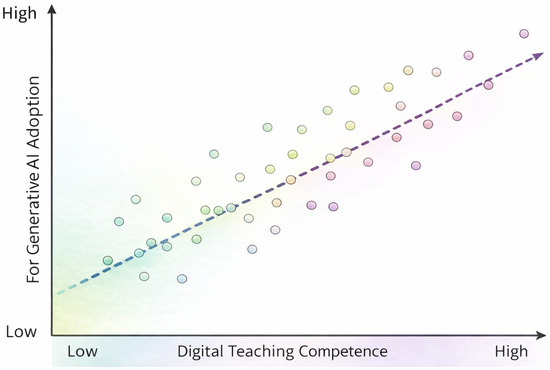
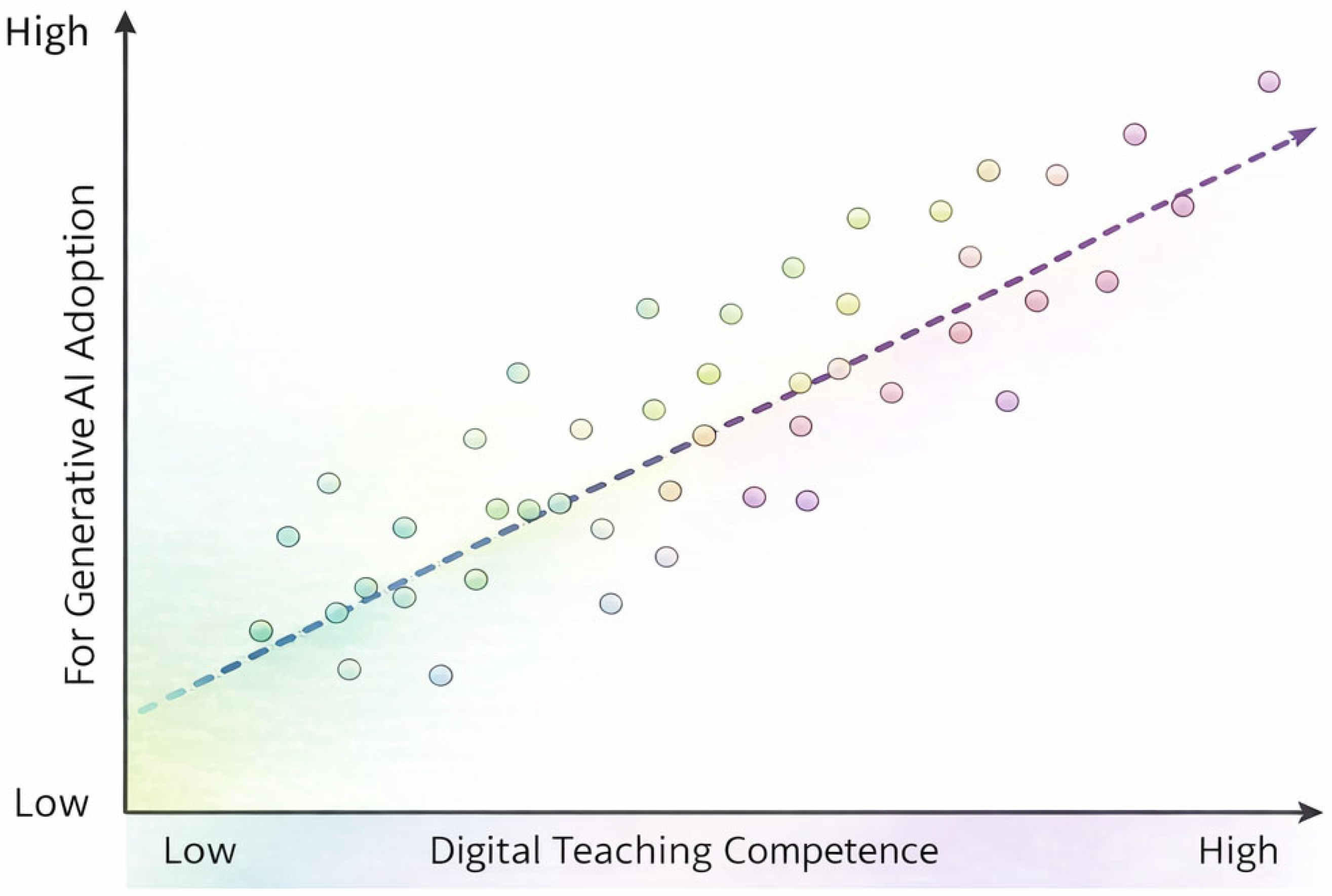
Finally, preliminary thematic associations suggest that higher levels of digital competence and institutional support are positively linked with greater readiness among faculty to adopt generative AI tools in their teaching practices. Figure 1, Figure 2 and Figure 3 present graphical representations derived from the analytical framework and empirical patterns observed in the data.
Figure 1.
Conceptual relationship between digital teaching competence and faculty readiness for Generative Artificial Intelligence adoption in public higher education.
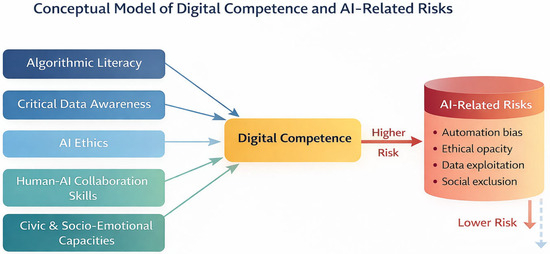
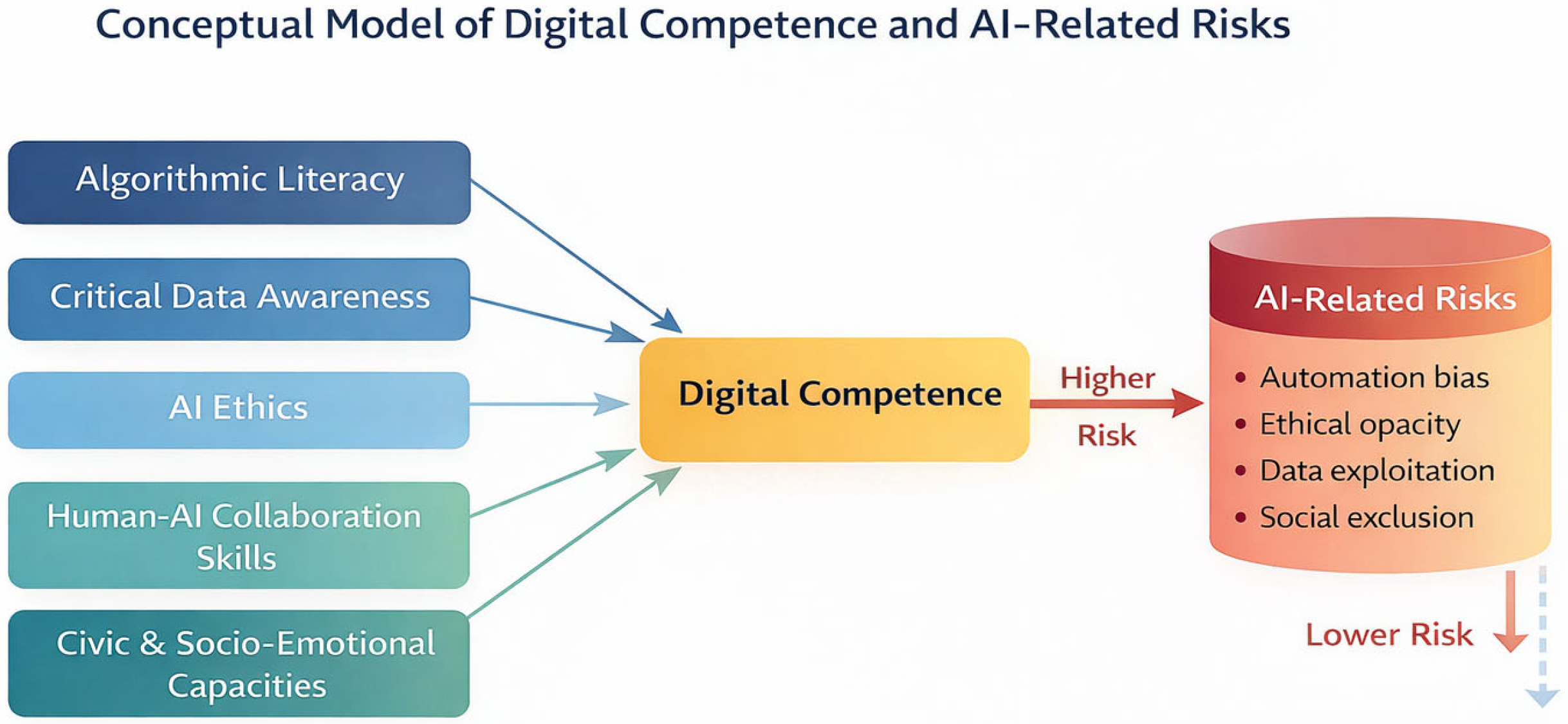
Figure 2.
Conceptual structural model of digital teaching competence and readiness for Generative Artificial Intelligence adoption in public higher education.
Figure 3.
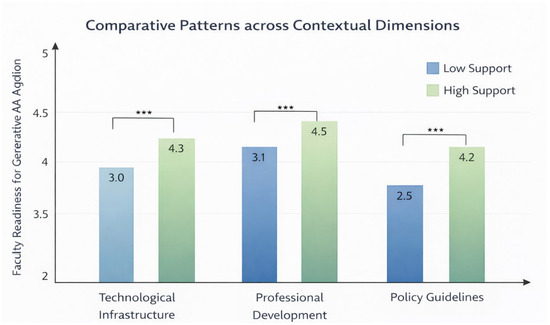
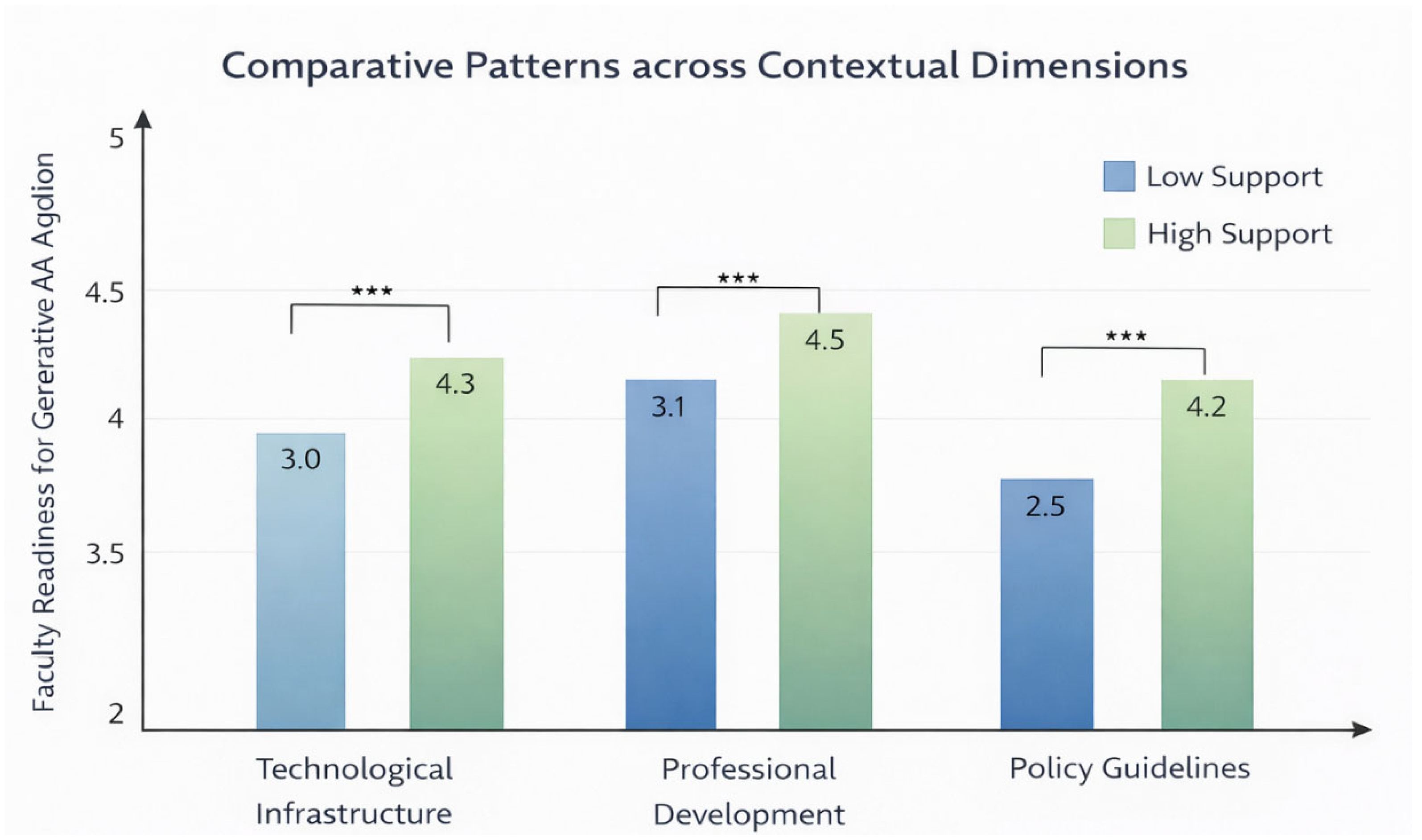
Comparative patterns of faculty readiness for Generative Artificial Intelligence adoption across contextual dimensions in public higher education. Differences between low and high institutional support are statistically significant (*** p < 0.001).
Table 2 is presented as a conceptual synthesis to contextualize the empirical analysis. The table summarizes the main conceptual dimensions and analytical components guiding this study, providing a structured overview of how digital teaching competence, institutional conditions, and readiness for Generative Artificial Intelligence (GAI) adoption are related within the proposed framework.
Table 2.
Summary of conceptual dimensions and analytical relationships in the proposed framework for digital teaching competence and Generative AI adoption in public higher education.
Digital teaching competence is operationalized as a multidimensional construct that includes pedagogical use of digital tools, technological literacy, and awareness of emerging technologies. These dimensions are considered relevant for understanding faculty preparedness to integrate generative AI into teaching practices.
The table also identifies key competence domains—such as digital pedagogy, AI awareness, and digital content creation—that are examined as part of the analytical framework. In addition, institutional factors, including technological infrastructure and professional development opportunities, are incorporated as contextual variables associated with faculty readiness.
Furthermore, the framework is grounded in established digital competence models and research on technology adoption in education, which provide the theoretical basis for the selection of variables included in the analysis.
Overall, Table 2 serves as an organizational tool that links the conceptual structure of the study with the variables examined in the empirical analysis.
To evaluate the predictive capacity of the selected algorithms, three machine learning models—Logistic Regression, Random Forest, and Gradient Boosting—were implemented. The comparative performance of these models is presented in Table 3.
Table 3.
Machine learning model performance for predicting faculty readiness to adopt Generative Artificial Intelligence in public higher education.
Table 3 presents the comparative performance of the machine learning models used to predict faculty readiness to adopt Generative Artificial Intelligence (GAI) in public higher education. Model performance should be interpreted as indicative rather than definitive, given the absence of extensive hyperparameter tuning and detailed variance reporting.
The differences between models should be interpreted cautiously, as no statistical significance testing between model performances was conducted. The results show notable differences in predictive performance across the evaluated algorithms. Among the three models, Gradient Boosting achieved the highest overall performance, obtaining the highest values across the main evaluation metrics, including accuracy, precision, recall, F1-score, and AUC-ROC.
The Random Forest model also demonstrated strong predictive capacity, performing consistently across all metrics and indicating that ensemble-based algorithms are particularly suitable for analyzing multidimensional educational datasets. In contrast, the Logistic Regression model, while still producing acceptable results, showed comparatively lower predictive performance, which is expected given its linear nature and reduced ability to capture nonlinear interactions between variables.
The predictive models used digital teaching competence, institutional support, attitudes toward generative AI, teaching experience, and demographic variables as predictors of faculty readiness for AI adoption.
Table 4 presents the relative importance of the main predictor variables in the Gradient Boosting model. The results suggest that digital teaching competence emerged as the most influential predictor of faculty readiness to adopt generative AI technologies. Institutional support and attitudes toward generative AI also showed substantial importance, highlighting the combined influence of individual competencies and organizational environments in shaping technology adoption in higher education. In contrast, teaching experience and technological infrastructure showed comparatively lower importance, although they still contributed to the overall predictive performance of the model.
Table 4.
Feature importance of predictors in the Gradient Boosting model.
Figure 2 illustrates the conceptual structural model proposed in this study to explain the relationship between digital teaching competence and faculty readiness for the adoption of Generative Artificial Intelligence (GAI) in public higher education. The model positions digital teaching competence as the central explanatory construct influencing educators’ preparedness to integrate AI-based tools into their teaching practices. Several competence dimensions—such as technological literacy, digital pedagogical skills, awareness of artificial intelligence applications, and human–AI collaboration capacities—contribute to strengthening this core competence.
In addition to individual competencies, the model incorporates institutional support factors, including technological infrastructure, professional development opportunities, and institutional policies that encourage digital innovation in teaching. These contextual factors interact with teachers’ digital competence to facilitate or constrain the adoption of AI technologies in educational environments.
Overall, the model proposes that higher levels of digital competence, combined with supportive institutional conditions, increase faculty readiness to responsibly and effectively integrate generative AI tools into university teaching practices.
3.2. Comparative Patterns Across Contextual Dimensions
Figure 3 illustrates the comparative patterns of faculty readiness for Generative Artificial Intelligence (GAI) adoption across key contextual dimensions within public higher education institutions. The figure compares three central institutional factors: technological infrastructure, professional development opportunities, and policy guidelines, each analyzed under conditions of low and high institutional support.
The results suggest that institutional context plays a significant role in shaping faculty readiness to integrate generative AI technologies into teaching practices. Across all three dimensions, higher levels of institutional support are associated with greater readiness among faculty members to adopt AI-based tools. In particular, the dimension of professional development suggests the highest levels of readiness, indicating that access to training programs and continuous professional learning opportunities significantly enhances instructors’ confidence and willingness to experiment with emerging technologies.
Pearson correlation analysis indicated moderate positive associations between digital competence and readiness (r ≈ 0.45–0.60), supporting the observed patterns.
Similarly, improvements in technological infrastructure, such as access to digital platforms, reliable internet connectivity, and AI-compatible educational tools, appear to positively influence faculty preparedness. Meanwhile, clear institutional policies and ethical guidelines regarding AI use also contribute to increased readiness, as they reduce uncertainty and provide a structured framework for responsible implementation.
Overall, the comparative patterns presented in Figure 3 highlight the importance of institutional ecosystems that combine infrastructure, training, and governance to support effective and sustainable AI integration in higher education.
Mean levels of digital competence ranged between 3.4 and 4.1 (SD ≈ 0.6–0.8), indicating moderate to high perceived competence among participants.
4. Discussion
The present study examined the relationship between digital teaching competence and faculty readiness to adopt Generative Artificial Intelligence (GAI) within public higher education institutions in Paraguay. By combining descriptive analysis with machine learning approaches, the findings contribute to a growing body of research on how educators’ competencies and institutional environments shape the integration of emerging technologies in higher education. Overall, the results indicate that both digital competence and institutional support play a central role in explaining faculty readiness for the adoption of generative AI tools.
The findings suggest that digital teaching competence is a key enabling factor for the adoption of generative AI in higher education. Faculty members who reported higher levels of competence in areas such as digital resource management, online communication, and pedagogical use of technology also demonstrated greater readiness to engage with AI-based tools. This result aligns with the DigCompEdu framework [17], which conceptualizes digital competence as a combination of technical, pedagogical, and critical capacities required for effective technology integration. Similarly, previous studies indicate that educators with stronger digital skills are more likely to adopt and experiment with emerging technologies in their teaching practices [10,11]. This perspective is also supported by research on digital literacy and competence development, which emphasizes the importance of multidimensional models integrating cognitive, technical, and ethical dimensions of digital engagement [17,18,19].
In addition to individual competencies, institutional support emerged as a significant factor influencing readiness for AI adoption. The results suggest that faculty members working in environments with stronger technological infrastructure, professional development opportunities, and clear institutional guidelines reported higher levels of readiness. In particular, access to training programs appears to be especially relevant, as it enhances educators’ capacity to understand and apply new technologies in pedagogical contexts. These findings are consistent with previous research emphasizing that digital transformation in higher education depends not only on access to technological resources but also on supportive institutional ecosystems.
The role of technological infrastructure further reinforces this perspective. While access to digital tools and platforms is necessary, it is not sufficient to ensure effective integration of emerging technologies. As highlighted in the literature on digital inequality, differences in the quality of access and in digital skills remain critical factors shaping technology use [14,20]. In this context, the findings suggest that strengthening both infrastructure and digital competence is essential for promoting meaningful adoption of generative AI in higher education, particularly in regions characterized by structural inequalities.
The machine learning analysis provides additional insight into the complexity of these relationships. Ensemble models such as Random Forest and Gradient Boosting achieved higher predictive performance than Logistic Regression, suggesting the presence of nonlinear interactions among digital competence, institutional factors, and attitudinal variables. This indicates that faculty readiness for AI adoption emerges from the interaction of multiple dimensions rather than from a single determinant factor [7,21].
However, the predictive results should be interpreted with caution. An important methodological consideration concerns the conceptual proximity between some predictor variables and the dependent variable. In particular, attitudes toward generative AI share theoretical similarities with readiness constructs, as both reflect dimensions of intention and willingness to adopt technology. This overlap may partially explain the observed predictive performance and suggests that the models capture structured relationships among closely related constructs rather than fully independent predictive effects [1,3].
The findings also provide insight into faculty perceptions of generative AI technologies. While participants generally recognized the potential of AI to enhance teaching and learning processes, concerns related to ethics, academic integrity, and the reliability of AI-generated content were also evident. These concerns reflect broader debates in the literature on artificial intelligence in education, which emphasize the importance of developing ethical frameworks to guide responsible use of AI technologies [22,23].
From a pedagogical perspective, the results support the view that generative AI should be understood as a tool that complements rather than replaces teachers. Previous research highlights that AI technologies can support adaptive learning and personalized instruction, but their effectiveness depends on educators’ ability to interpret and apply them in meaningful ways [22]. In this sense, digital teaching competence remains a central factor in ensuring that AI integration contributes to pedagogical innovation rather than superficial technological adoption.
The regional focus of this study also contributes to the limited body of research on AI adoption in higher education within the Global South. By examining the Paraguayan context, the study highlights the importance of considering structural conditions, institutional capacity, and digital inequalities when analyzing technological transformation processes. As noted by Hilbert [20,24], digital development in such contexts must be understood in relation to broader issues of inclusion and access.
Despite these contributions, the study has several limitations. The use of a non-probabilistic sampling strategy limits the generalizability of the findings, and the cross-sectional design does not allow for causal inference. Additionally, the reliance on self-reported data may introduce response bias. The conceptual proximity between certain variables also suggests the need for more refined measurement instruments in future research [25]. Longitudinal designs and the inclusion of behavioral indicators—such as actual use of AI tools in teaching—would provide a more comprehensive understanding of adoption processes [26]. Moreover, considering the increasing integration of AI-driven technologies in everyday digital environments, future research should also examine potential behavioral implications associated with technology use, including issues related to dependency and self-regulation [27,28].
The findings highlight the importance of digital teaching competence and institutional support as key factors in shaping the adoption of generative AI in higher education. At the same time, they underscore the need for cautious interpretation of predictive models when working with conceptually related variables. From a broader perspective, the integration of AI in education also requires critical reflection on its ethical, social, and pedagogical implications. Scholars such as Coeckelbergh [29] and Selwyn [30] emphasize that the expansion of AI systems in educational contexts must be accompanied by critical awareness of their potential impact on autonomy, teaching roles, and knowledge production. Strengthening teacher training, improving technological infrastructure, and developing clear ethical frameworks will therefore be essential for ensuring that the integration of AI technologies contributes to sustainable and meaningful educational transformation [31].
Therefore, the predictive results should be interpreted as reflecting structured associations within a perception-based measurement framework rather than external behavioral prediction.
4.1. Limitations
An important limitation of this study concerns the reliance on self-reported data for both predictor variables and the outcome measure of readiness. This design introduces a potential risk of conceptual overlap, as the models may partially capture relationships among closely related perceptual and attitudinal constructs rather than independently predicting externally validated behavioral outcomes. In this sense, readiness in the present study reflects perceived preparedness and intention to adopt Generative Artificial Intelligence (GAI), rather than actual observed usage. Future research should incorporate external behavioral indicators—such as system logs, platform usage data, or longitudinal measures of technology adoption—to strengthen the validity of predictive models.
In addition, the study is based on a cross-sectional survey design, which limits the ability to establish causal relationships between digital teaching competence, institutional conditions, and faculty readiness for GAI adoption. Although the analytical approach provides insight into associations among variables, longitudinal research would be necessary to examine how these relationships evolve over time.
Furthermore, the use of self-reported questionnaires may introduce biases related to respondents’ perceptions or social desirability. Faculty members may overestimate or underestimate their levels of competence or readiness. While such measures are common in educational research, future studies could complement them with objective indicators, such as classroom observations or behavioral data on actual technology use.
The study also focuses on public higher education institutions in Paraguay, which may limit the generalizability of the findings to other contexts. Differences in infrastructure, institutional strategies, and governance models across countries suggest that caution is required when extrapolating the results. Comparative research across multiple contexts would provide a broader understanding of AI adoption in higher education.
Additionally, although machine learning techniques were employed to identify predictors of readiness, the models are constrained by the variables included in the survey instrument. Other relevant factors—such as disciplinary differences, institutional leadership, or student-related variables—were not explicitly examined. Future research should expand the analytical framework to capture the complexity of technological adoption processes.
Finally, while the conceptual framework proposed in this study provides a useful interpretative structure, further empirical validation is needed. Future studies should test and refine these relationships using larger datasets, behavioral indicators, and mixed-method approaches to better understand how generative AI can be effectively and responsibly integrated into higher education.
4.2. Future Directions
Building on the findings of this study, future research should focus on advancing empirical and intervention-based approaches that move beyond descriptive analyses of faculty readiness for Generative Artificial Intelligence (GAI) adoption in higher education. One important direction involves the implementation and evaluation of structured professional development programs aimed at strengthening digital teaching competence. Such initiatives may include specialized workshops on AI-assisted pedagogy, training modules on ethical AI use in education, and interdisciplinary programs that combine technological literacy with pedagogical innovation. Longitudinal studies tracking faculty participation in these programs could provide valuable evidence on whether improvements in digital competence translate into greater readiness and more effective integration of generative AI tools in teaching practices.
Another promising avenue concerns the exploration of psychological and pedagogical mechanisms that mediate the relationship between digital competence and AI adoption readiness. Variables such as technological self-efficacy, innovation attitudes, pedagogical flexibility, and openness to experimentation may play important roles in shaping how educators engage with emerging AI technologies. Investigating these mediating factors would contribute to the development of more comprehensive explanatory models that clarify how competence frameworks translate into actual instructional practices.
Future research should also examine the pedagogical impact of generative AI integration on teaching and learning processes. While the present study focuses primarily on faculty readiness and institutional conditions, subsequent investigations could analyze how AI-assisted tools influence instructional design, assessment practices, student engagement, and learning outcomes. Mixed-method designs combining quantitative analysis with qualitative classroom observations could provide deeper insights into the practical implications of AI adoption within real educational environments.
In addition, comparative research across different institutional and regional contexts would significantly enrich the current understanding of AI adoption in higher education. Higher education systems vary widely in terms of technological infrastructure, governance models, and digital transformation strategies. Cross-national studies involving universities from Latin America, Europe, and other regions could help identify common patterns as well as context-specific challenges in the integration of generative AI technologies.
Another important research direction involves the development of more refined measurement instruments for digital teaching competence and AI-related pedagogical skills. While frameworks such as DigCompEdu provide a valuable conceptual foundation, emerging technologies like generative AI introduce new competencies related to algorithmic understanding, AI-assisted content creation, and human–AI collaboration in educational contexts. Future work should therefore aim to operationalize these competencies more precisely and validate measurement scales capable of capturing these evolving skill sets.
Finally, future research should explore how institutional strategies and educational policies can support responsible AI integration in higher education systems. Universities increasingly face the challenge of balancing technological innovation with ethical considerations related to academic integrity, data privacy, and transparency in AI-assisted decision-making. Policy-oriented studies examining governance frameworks, institutional guidelines, and regulatory approaches will be essential for ensuring that the adoption of generative AI technologies contributes to sustainable, inclusive, and pedagogically meaningful digital transformation in higher education. Feature importance values are presented as model-based indicators reflecting relative variable contributions within the predictive model and should not be interpreted as evidence of statistical significance.
5. Conclusions
This study examined the relationship between digital teaching competence and faculty readiness for the adoption of Generative Artificial Intelligence (GAI) in public higher education institutions in Paraguay. The findings suggest that digital competence, when understood as a multidimensional construct that integrates technological, pedagogical, and critical capacities, appears to play a central enabling role in supporting educators’ engagement with emerging AI technologies. Rather than being limited to basic technical skills, digital teaching competence encompasses the ability to critically evaluate digital resources, design technology-enhanced learning environments, and collaborate effectively with AI-assisted tools in pedagogical contexts.
The results reinforce the idea that digital competence functions as a key driver of technological adoption in higher education. Faculty members with stronger digital competencies reported higher levels of readiness to experiment with generative AI tools and to integrate these technologies into their teaching practices. This finding is consistent with established digital competence frameworks such as DigCompEdu [17], which emphasize that educators’ digital skills must combine technical proficiency with pedagogical and ethical awareness. Similarly, previous research highlights that the effective integration of digital technologies in education depends largely on educators’ ability to interpret and apply these tools in pedagogically meaningful ways [10,11].
Another key contribution of the study concerns the role of institutional environments in shaping AI adoption readiness. The results suggest that technological infrastructure, professional development opportunities, and institutional policies supporting digital innovation significantly influence faculty preparedness to engage with AI technologies. These findings align with broader research on digital transformation in education, which stresses that technological change is not driven solely by access to tools but also by supportive organizational ecosystems that encourage experimentation and innovation [7,21].
In addition to technological and institutional factors, the study also highlights the importance of ethical and governance considerations in the adoption of AI in higher education. The rapid development of generative AI tools has generated increasing debate regarding issues such as academic integrity, transparency, and responsible use of automated systems in educational contexts. Scholars such as Floridi [23] and Jobin, Ienca, and Vayena [32] emphasize that ethical governance frameworks are essential for ensuring that AI technologies contribute to socially beneficial outcomes. In this regard, strengthening educators’ digital competence may help foster more critical and responsible engagement with AI-driven technologies. Furthermore, discussions on digital information ecosystems and algorithmic influence highlight the need for stronger digital literacy and critical awareness among users in order to mitigate risks related to misinformation and manipulation in digital environments [33].
From a broader perspective, as shown in Table 1, digital competence plays an important role in supporting human agency within AI-mediated educational environments. Rather than replacing teachers, generative AI technologies should be understood as tools that extend human capabilities and support more adaptive and personalized learning processes. Research on artificial intelligence in education similarly highlights that AI systems can enhance educational experiences when educators remain actively involved in guiding, interpreting, and contextualizing AI-generated outputs [7,34]. At the same time, emerging research on digital behavior and technology use suggests that digital competence can function as a regulatory resource that helps individuals maintain balanced and responsible engagement with digital technologies [16,35]. Moreover, recent studies on generative AI in education underline both its transformative potential and its pedagogical challenges, particularly in relation to responsible use and instructional design [36,37].
The study also contributes to discussions on digital transformation in higher education within the Global South, where technological innovation often intersects with structural inequalities in access to digital resources and training opportunities. Scholars such as Hilbert [20] and Van Deursen and Van Dijk [14] argue that digital development processes must address not only technological infrastructure but also broader social and educational conditions that shape participation in digital societies. By focusing on Paraguay’s public higher education system, this research provides insights into how strengthening digital competence among faculty may support more inclusive participation in emerging AI-driven educational environments.
From a practical standpoint, the findings carry important implications for universities, teacher education programs, and policymakers. Investments in digital infrastructure alone are insufficient to ensure effective technological integration in higher education. Instead, institutions should prioritize comprehensive strategies that combine infrastructure development with continuous professional training in digital pedagogy and AI literacy. Such strategies may include specialized workshops on AI-assisted teaching, interdisciplinary training programs on responsible AI use, and the development of institutional guidelines that clarify ethical and pedagogical standards for AI integration in academic contexts. These approaches are consistent with broader perspectives that emphasize the need for systemic and ecosystem-based strategies to ensure that artificial intelligence contributes to sustainable and socially responsible educational innovation [38].
Finally, the study highlights that digital competence may also play a protective role in managing the broader social and behavioral implications of digital technologies. Research on problematic technology use and digital behavior indicates that individuals with higher levels of digital competence tend to demonstrate greater capacity for self-regulation and critical engagement with digital environments [16,35]. Strengthening digital competence among educators may therefore contribute not only to technological innovation in teaching but also to healthier and more reflective interactions with digital systems.
Recent advances in generative artificial intelligence, particularly large language models such as ChatGPT (OpenAI; version GPT-4, accessed in 2025), have further accelerated the transformation of educational practices in higher education. Recent studies highlight both the opportunities and challenges associated with these technologies, including their potential to support personalized learning, enhance student engagement, and reshape pedagogical processes [5,38,39]. At the same time, concerns related to ethical use, academic integrity, and overreliance on automated systems remain central to ongoing debates [22,23]. These developments reinforce the importance of strengthening digital teaching competence as a critical factor for ensuring responsible and effective integration of generative AI in higher education contexts.
Overall, this study suggests the central role of digital teaching competence as a foundational element for responsible and effective adoption of generative AI technologies in higher education. As AI continues to reshape educational landscapes, strengthening educators’ digital competencies will be essential for ensuring that technological innovation contributes to pedagogical improvement, ethical awareness, and inclusive digital transformation. By positioning digital competence at the intersection of education, technological innovation, and institutional governance, this research contributes to ongoing debates on how higher education systems can navigate the opportunities and challenges of AI-driven digital futures.
Author Contributions
Conceptualization, D.C.-T. and M.G.-G.; methodology, D.C.-T.; software, M.B.-H.; validation, M.G.-G., R.S.-V. and D.C.-T.; formal analysis, D.C.-T.; investigation, M.G.-G.; resources, M.B.-H.; data curation, D.C.-T.; writing—original draft preparation, D.C.-T.; writing—review and editing, M.B.-H.; visualization, R.S.-V.; supervision, D.C.-T.; project administration, M.B.-H.; funding acquisition, D.C.-T. All authors have read and agreed to the published version of the manuscript.
Funding
This work was developed within the framework of the project ‘ConciencIA: Generative Artificial Intelligence in Education: Responsible Use for Pre-Service Teachers’ (PID2024-155949OB-I00), funded in Spain, and is part of a PhD program in Education with Industrial Mention at the Universidad Autónoma de Madrid.
Institutional Review Board Statement
The study was conducted in accordance with the ethical standards of the Research Ethics Committee of the Universidad Autónoma de Madrid (CEI-UAM) and the principles of the Declaration of Helsinki. Ethical approval was granted by the Research Ethics Committee of the Universidad Autónoma de Madrid during its meeting held on 6 February 2026, which issued a favorable ethical report for the doctoral research project associated with this study (CEI-151-3615). The approved protocol includes procedures ensuring voluntary participation, anonymity, and confidentiality of all respondents.
Informed Consent Statement
Informed consent was obtained from all participants involved in the study. Before completing the questionnaire, participants were informed about the objectives of the research, the voluntary nature of participation, and the confidentiality and anonymous treatment of their responses.
Data Availability Statement
The data supporting the findings of this study are available from the corresponding author upon reasonable request. Due to privacy considerations related to the participating institutions and respondents, the dataset is not publicly available.
Acknowledgments
The authors would like to thank the faculty members from public universities in Paraguay who voluntarily participated in this study. The authors also acknowledge the academic support provided by the Universidad Autónoma de Madrid and the ethical oversight granted by its Research Ethics Committee during the development of the doctoral research project from which this study derives. The authors further express their gratitude to the Government of Paraguay and the Paraguayan Air Force for their continuous support and willingness to facilitate access to data. Generative artificial intelligence (e.g., ChatGPT) was used solely as a support tool for writing, language editing, and improving the clarity of the text. It was not used for data analysis, results generation, or scientific conclusions. The authors take full responsibility for the final content of the manuscript.
Conflicts of Interest
The authors declare no conflicts of interest.
Abbreviations
The following abbreviations are used in this manuscript:
| AI | Artificial Intelligence |
| GAI | Generative Artificial Intelligence |
| DC | Digital Competence |
| DTC | Digital Teaching Competence |
| ML | Machine Learning |
| LLMs | Large Language Models |
| NLP | Natural Language Processing |
| HE | Higher Education |
| HEIs | Higher Education Institutions |
| AUC-ROC | Area Under the Receiver Operating Characteristic Curve |
| F1-score | Harmonic Mean of Precision and Recall |
Appendix A. Illustrative Sample of Items
This appendix presents illustrative examples of items included in the questionnaire used to assess digital teaching competence, attitudes toward Generative Artificial Intelligence (GAI), institutional support, and readiness for AI adoption among university faculty in Paraguay. The items are adapted from established digital competence frameworks and previous research on technology adoption in higher education.
The indicators presented below are intended to illustrate the types of questions included in the survey instrument and the conceptual dimensions measured in the study. All items were measured using a five-point Likert scale, ranging from 1 (strongly disagree) to 5 (strongly agree).
| Digital Teaching Competence |
| I feel confident using digital technologies to support my teaching activities. |
| I am able to design learning activities that incorporate digital tools effectively. |
| I can evaluate the reliability and relevance of digital resources used in my courses. |
| Attitudes toward Generative Artificial Intelligence |
|
| Institutional Support and Infrastructure |
|
| Readiness for Generative AI Adoption |
|
References
- Brynjolfsson, E.; Rock, D.; Syverson, C. Artificial Intelligence and the Modern Productivity Paradox: A Clash of Expectations and Statistics. NBER Working Paper No. 24001. 2017. Available online: https://www.nber.org/papers/w24001 (accessed on 20 April 2026).
- Fuchs, C. Towards a critical theory of communication as renewal and update of Marxist humanism in the age of digital capitalism. J. Theory Soc. Behav. 2020, 50, 335–356. [Google Scholar] [CrossRef] [Scilit]
- Autor, D.H. Why Are There Still So Many Jobs? The History and Future of Workplace Automation. J. Econ. Perspect. 2015, 29, 3–30. [Google Scholar] [CrossRef] [Scilit]
- Zawacki-Richter, O.; Marín, V.; Bond, M.; Gouverneur, F. Artificial Intelligence in Higher Education: A Systematic Review of Research on AI Applications in Higher Education—Where Are the Educators? Int. J. Educ. Technol. High. Educ. 2019, 16, 39. [Google Scholar] [CrossRef] [Scilit]
- Dwivedi, Y.K.; Kshetri, N.; Hughes, L.; Slade, E.; Jeyaraj, A.; Kar, A.K.; Baabdullah, A.M. So What If ChatGPT Wrote It? Multidisciplinary Perspectives on Opportunities, Challenges and Implications of Generative AI for Research, Practice and Policy. Int. J. Inf. Manag. 2023, 71, 102642. [Google Scholar] [CrossRef] [Scilit]
- Kasneci, G.; Seßler, K.; Küchemann, S.; Bannert, M.; Dementieva, D.; Fischer, F.; Gasser, U.; Groh, G.; Günnemann, S.; Hüllermeier, E.; et al. ChatGPT for Good? On Opportunities and Challenges of Large Language Models for Education. Learn. Individ. Differ. 2023, 103, 102274. [Google Scholar] [CrossRef] [Scilit]
- Holmes, W.; Tuomi, I. State of the Art and Practice in AI in Education. Eur. J. Educ. 2022, 57, 542–570. [Google Scholar] [CrossRef] [Scilit]
- Mena-Guacas, A.F.; Meza-Morales, J.A.; Fernández, E.; López-Meneses, E. Digital Collaboration in Higher Education: A Study of Digital Skills and Collaborative Attitudes in Students from Diverse Universities. Educ. Sci. 2024, 14, 36. [Google Scholar] [CrossRef] [Scilit]
- Floridi, L. (Ed.) Ethics, Governance, and Policies in Artificial Intelligence; Springer: Cham, Switzerland, 2021. [Google Scholar] [CrossRef] [Scilit]
- Basilotta-Gómez-Pablos, V.; Matarranz, M.; Casado-Aranda, L.A.; Otto, A. Teachers’ Digital Competencies in Higher Education: A Systematic Literature Review. Int. J. Educ. Technol. High. Educ. 2022, 19, 8. [Google Scholar] [CrossRef] [Scilit]
- Falloon, G. From Digital Literacy to Digital Competence: The Teacher Digital Competency (TDC) Framework. Educ. Technol. Res. Dev. 2020, 68, 2449–2472. [Google Scholar] [CrossRef] [Scilit]
- Cabero-Almenara, J.; Barroso-Osuna, J. ICT teacher training: A view of the TPACK model. Cult. Educ. 2016, 28, 633–663. [Google Scholar] [CrossRef] [Scilit]
- Krumsvik, R.J. Teacher Educators’ Digital Competence. Scand. J. Educ. Res. 2014, 58, 269–280. [Google Scholar] [CrossRef] [Scilit]
- Van Deursen, A.J.A.M.; Van Dijk, J.A.G.M. The First-Level Digital Divide Shifts from Inequalities in Physical Access to Inequalities in Material Access. New Media Soc. 2019, 21, 354–375. [Google Scholar] [CrossRef] [Scilit]
- Van Dijk, J. The Digital Divide; Polity Press: Cambridge, UK, 2020. [Google Scholar]
- Cáceres Troche, D.; Boumadan Hamed, M.; Gómez García, M. Digital Competence as Psychological Defense: Impact of Digital Competence on Problematic Mobile Use among Paraguayan University Students. Behav. Sci. 2025, 15, 1687. [Google Scholar] [CrossRef] [Scilit] [PubMed]
- Redecker, C. European Framework for the Digital Competence of Educators: DigCompEdu; European Commission: Luxembourg, 2017. [Google Scholar]
- Mittelstadt, B.D. Principles Alone Cannot Guarantee Ethical AI. Nat. Mach. Intell. 2019, 1, 501–507. [Google Scholar] [CrossRef] [Scilit]
- Pérez-Escoda, A.; García-Ruiz, R.; Aguaded, I. Dimensions of Digital Literacy Based on Five Models of Development. Educ. Sci. 2019, 9, 53. [Google Scholar] [CrossRef] [Scilit]
- Hilbert, M. The bad news is that the digital access divide is here to stay: Domestically installed bandwidths among 172 countries for 1986–2014. Telecommun. Policy 2016, 40, 567–581. [Google Scholar] [CrossRef] [Scilit]
- Bozkurt, A.; Karadeniz, A.; Baneres, D.; Guerrero-Roldán, A.E.; Rodríguez, M.E. Artificial Intelligence and Reflections from Educational Landscape: A Review of AI Studies in Half a Century. Sustainability 2021, 13, 800. [Google Scholar] [CrossRef] [Scilit]
- Cath, C. Governing Artificial Intelligence: Ethical, Legal and Technical Opportunities and Challenges. Philos. Trans. A Math. Phys. Eng. Sci. 2018, 376, 20180080. [Google Scholar] [CrossRef] [Scilit]
- Floridi, L.; Cowls, J.; Beltrametti, M.; Chatila, R.; Chazerand, P.; Dignum, V.; Luetge, C.; Madelin, R.; Pagallo, U.; Rossi, F.; et al. AI4People—An Ethical Framework for a Good AI Society. Minds Mach. 2018, 28, 689–707. [Google Scholar] [CrossRef] [Scilit] [PubMed]
- Acemoglu, D.; Restrepo, P. Robots and Jobs: Evidence from US Labor Markets. J. Political Econ. 2020, 128, 2188–2244. [Google Scholar] [CrossRef] [Scilit]
- Long, D.; Magerko, B. What Is AI Literacy? Competencies and Design Considerations. Proc. CHI Conf. Hum. Factors Comput. Syst. 2020, 1–16. [Google Scholar] [CrossRef] [Scilit]
- Luckin, R.; Holmes, W.; Griffiths, M.; Forcier, L.B. Intelligence Unleashed: An Argument for AI in Education; Pearson: London, UK, 2016. [Google Scholar]
- Brand, M.; Wegmann, E.; Stark, R.; Müller, A.; Wölfling, K.; Robbins, T.W.; Potenza, M.N. The Interaction of Person-Affect-Cognition-Execution (I-PACE) Model for Addictive Behaviors: Update, Generalization to Addictive Behaviors Beyond Internet-Use Disorders, and Specification of the Process Character of Addictive Behaviors. Neurosci. Biobehav. Rev. 2019, 104, 1–10. [Google Scholar] [CrossRef] [Scilit]
- Elhai, J.D.; Levine, J.C.; Hall, B.J. Problematic smartphone use and mental health problems: Current state of research and future directions. Comput. Hum. Behav. 2019, 32, 1–3. [Google Scholar] [CrossRef] [Scilit]
- Coeckelbergh, M. AI Ethics and the Future of Democracy. Philosophies 2020, 5, 12. [Google Scholar]
- Selwyn, N. Should Robots Replace Teachers? AI and the Future of Education; Polity Press: Cambridge, UK, 2019. [Google Scholar]
- Ferrari, A. DIGCOMP: A Framework for Developing and Understanding Digital Competence in Europe; European Commission: Brussels, Belgium, 2013. [Google Scholar]
- Jobin, A.; Ienca, M.; Vayena, E. The Global Landscape of AI Ethics Guidelines. Nat. Mach. Intell. 2019, 1, 389–399. [Google Scholar] [CrossRef] [Scilit]
- Benkler, Y.; Faris, R.; Hal, R. Network Propaganda: Manipulation, Disinformation, and Radicalization in American Politics; Oxford University Press: Oxford, UK, 2018. [Google Scholar]
- Hwang, G.-J.; Xie, H.; Wah, B.W.; Gašević, D. Vision, Challenges, Roles and Research Issues of Artificial Intelligence in Education. Comput. Educ. Artif. Intell. 2020, 1, 100001. [Google Scholar] [CrossRef] [Scilit]
- Compas, B.E.; Jaser, S.S.; Bettis, A.H.; Watson, K.H.; Gruhn, M.A.; Dunbar, J.P.; Williams, E.; Thigpen, J.C. Coping, Emotion Regulation, and Psychopathology in Childhood and Adolescence: A Meta-Analysis and Narrative Review. Psychol. Bull. 2017, 143, 939–991. [Google Scholar] [CrossRef] [Scilit] [PubMed]
- Baidoo-Anu, D.; Owusu Ansah, L. Education in the Era of Generative Artificial Intelligence (AI): Understanding the Potential Benefits of ChatGPT in Promoting Teaching and Learning. J. AI 2023, 7, 52–62. [Google Scholar] [CrossRef] [Scilit]
- Tao, S.; Reichert, F.; Law, N.W.Y.; Rao, N. Digital Technology Use and Adolescent Mental Health Before and During the COVID-19 Pandemic: The Roles of Internet Addiction and Digital Competence. Cyberpsychol. Behav. Soc. Netw. 2023, 26, 739–746. [Google Scholar] [CrossRef] [Scilit]
- Stahl, B.C. Artificial Intelligence for a Better Future: An Ecosystem Perspective on the Ethics of AI and Emerging Digital Technologies; Springer Nature: Cham, Switzerland, 2021. [Google Scholar] [CrossRef] [Scilit]
- Zhai, X. ChatGPT for Next Generation Science Learning. Comput. Educ. Artif. Intell. 2023, 4, 100142. [Google Scholar] [CrossRef] [Scilit]

Disclaimer/Publisher’s Note: The statements, opinions and data contained in all publications are solely those of the individual author(s) and contributor(s) and not of MDPI and/or the editor(s). MDPI and/or the editor(s) disclaim responsibility for any injury to people or property resulting from any ideas, methods, instructions or products referred to in the content. |
© 2026 by the authors. Licensee MDPI, Basel, Switzerland. This article is an open access article distributed under the terms and conditions of the Creative Commons Attribution (CC BY) license.