


Abstract
The Late Permian coal-bearing strata in western Guizhou Province, South China, are developed with multiple coal seams and rich in coalbed methane (CBM) resources. Controlled by the sealing layers within the coal-bearing strata, multiple vertically superposed independent CBM systems were formed, which complicates the CBM accumulation characteristics and limits CBM development. Through systematic sampling of the main coal seams and different lithologic strata in Borehole 101 on the southeastern limb of the Agong Syncline in western Guizhou, mercury intrusion porosimetry (MIP) and Klinkenberg permeability experiments were conducted on coal and rock samples. The results show that the coal samples have an average pore volume of 0.0417 mL/g, an average porosity of 5.37%, an average mercury withdrawal efficiency of 69.79%, and an average well test permeability of 0.3743 mD; the rock samples have an average pore volume of 0.0064 mL/g, an average porosity of 1.43%, an average mercury withdrawal efficiency of 7.88%, and an average Klinkenberg permeability of 0.0128 mD. The pore and permeability conditions of rock layers are significantly poorer than those of coal seams, which favorably contributes to the formation of effective sealing layers between coal seams and facilitates the CBM preservation. Mudstone and argillaceous siltstone in the coal-bearing strata, characterized by their low porosity and permeability, are suitable as effective gas and water barriers between coal seams. Based on a comprehensive analysis of the vertical variations in permeability, porosity, and gas-bearing characteristics of Borehole 101, the Upper Permian coal-bearing strata are preliminarily divided into four independent CBM-bearing systems. These systems are separated by tight rock layers with extremely low permeability and porosity, and their division aligns closely with the third-order sequence stratigraphic framework. The findings can provide a theoretical basis for deepening the understanding of CBM accumulation mechanisms in multi-seam regions and optimizing the orderly CBM development models.
1. Introduction
The Late Permian coal-bearing strata in western Guizhou Province of southern China are characterized by the development of multiple thin coal seams, abundant coalbed methane (CBM) resources, and distinctive CBM accumulation characteristics [1,2,3,4]. Based on the vertical variations in gas content and reservoir pressure of coal seams in the western Guizhou [5] proposed the academic concept of “multi-layer vertically superposed independent CBM-bearing systems.” This concept posits that due to the isolating effect of low-porosity, low-permeability, and dense rock layers between different coal seams (or groups), there is a lack of hydraulic communication vertically. As a result, the gas content, gas saturation and fluid pressure systems remain independent of each other, forming distinct gas-bearing units vertically [6,7,8,9]. The vertical cyclic variations in the porosity and permeability conditions of coal-bearing strata are a primary factor in the formation of vertically stacked CBM systems [3,10].
The formation of superposed CBM systems requires favorable preservation conditions to facilitate CBM accumulation. Coupled with the occurrence of multiple coal seams vertically, this creates enormous CBM resource potential. On the other hand, western Guizhou is one of the regions in China with the highest risk of coal and gas outbursts, and coal mining faces significant gas hazard risks [11]. Efficient CBM development has the dual significance of increasing natural gas supply in southern China and mitigating gas hazards in coal mining [12,13]. The sequence stratigraphic framework controls the vertical variations in coal seam material composition and physical properties. During transgressive cycles, the vitrinite content in coal seams tends to increase, the inertinite content tends to decrease, and permeability tends to increase [14]. During regressive cycles, the vitrinite content tends to decrease, the inertinite content tends to increase, and reservoir physical properties tend to deteriorate [15,16]. Coal seams near the maximum flooding surface generally exhibit the best gas-bearing properties and permeability, making them the primary intervals for CBM development [17]. Coal seams below sequence boundaries often have lower gas-bearing potential due to poorer preservation conditions; additionally, under regional regression, they have high inertinite content and low permeability, making them subsidiary intervals for CBM development [9].
In addition to the sequence stratigraphic framework, tectonic stress and coal seam thickness also control the permeability of coal reservoirs [18,19,20]. Coal seam permeability is relatively high in the transition zone of in situ stress state [21], and the normal fault stress state dominated by vertical principal stress is favorable for maintaining fractures in an open state, thereby enhancing permeability [22]. Identifying deep high-permeability interval is an important approach for achieving efficient development of deep CBM [23,24]. The overpressure state in deep coal reservoirs is conducive to maintaining fracture opening and enhancing coal seam permeability [10,25,26,27,28]. In structurally complex areas, thick coal seams tend to become the primary stress-absorbing layers, leading to the formation of tectonic coal, destruction of the primary fracture system, and a sharp deterioration in reservoir permeability, such as the No. 6 coal seam in western Guizhou [29]. In the early stage of CBM development in western Guizhou, thick coal seams were selected but the results were poor. In recent years, the development interval has avoided the No. 6 coal seam, leading to better development performance [3]. Under the background of high-frequency sedimentary cycles, coal-bearing strata exhibit the superimposed characteristic of frequent interbedding of multiple thin coal seams and sandstone/mudstone layers, which exerts a significant controlling effect on the storage and seepage capacity of coal measure gas reservoirs. Since coal is a rock type with strong brittleness, low mechanical strength, and is prone to fracturing, there is a negative correlation between coal seam thickness and natural fracture density. From the perspective of layer thickness, the smaller the single-layer thickness, the more bedding interfaces there are, and the more complex the transfer and distribution of stress between layers becomes, making it easier to form a high-density fracture network. The development of high-permeability layers in coal measure gas reservoirs is attributed to the increased fracture density under thin interbedded conditions, as exemplified by the Surat Basin in Australia [30].
Regarding the evolution of porosity and permeability of rock layers under the control of the sequence stratigraphic framework, it has been recognized that the maximum flooding surface develops tight, low-porosity, low-permeability marine mudstone layers, whereas the regressive sequence boundary, due to intense dissolution, exhibits well-developed pores in coarse-grained clastic rocks and can form effective coal-measure gas reservoirs under favorable sealing conditions of the overlying strata [31]. The spatial distribution of the marine-continental transitional depositional system controls the development characteristics of the superposed CBM systems. In the delta plain facies, fluid communication between coal seams is relatively strong, the number of superposed gas-bearing systems is small, and a unified gas-bearing system tends to form. In the delta front facies, tight strata are prone to develop, effective fluid communication between coal seams (or coal seam groups) is lacking, and the number of superposed gas-bearing systems is large [1].
However, previous studies have primarily focused on the characteristics and controlling factors of porosity and permeability in coal seams [32,33,34,35,36], while relatively little attention has been paid to the porosity and permeability conditions of the rock strata surrounding coal seams, their cyclicity, and the differences in porosity and permeability between coal seams and rock strata. This has resulted in a limited understanding of the formation mechanisms and division methods of stacked CBM systems [37,38,39], and a limited effectiveness of CBM extraction in areas with multiple coal seams [40,41,42].
This study systematically collected coal and rock samples from various lithologic strata of the Late Permian coal-bearing sequence in the Agong Syncline of western Guizhou. Mercury intrusion porosimetry (MIP) and Klinkenberg permeability experiments were conducted to reveal the vertical cyclic variations in the pore and permeability conditions of coal seams and surrounding rocks. By integrating the gas-bearing characteristics of the coal seams, the formation conditions and vertical distribution patterns of independently stacked CBM systems were elucidated. The findings aim to enhance the understanding of CBM accumulation mechanisms under multi-seam conditions in western Guizhou and provide a theoretical basis for the efficient development of CBM resources in such geological settings.
2. Study Area
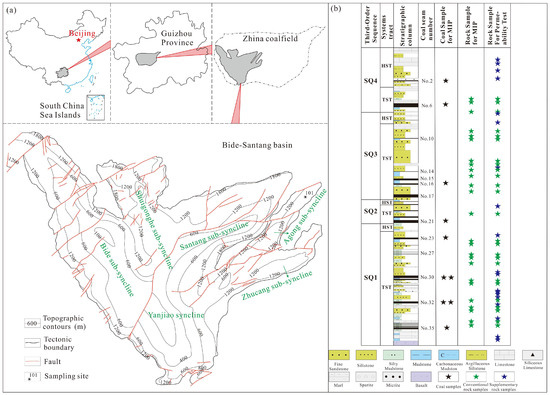
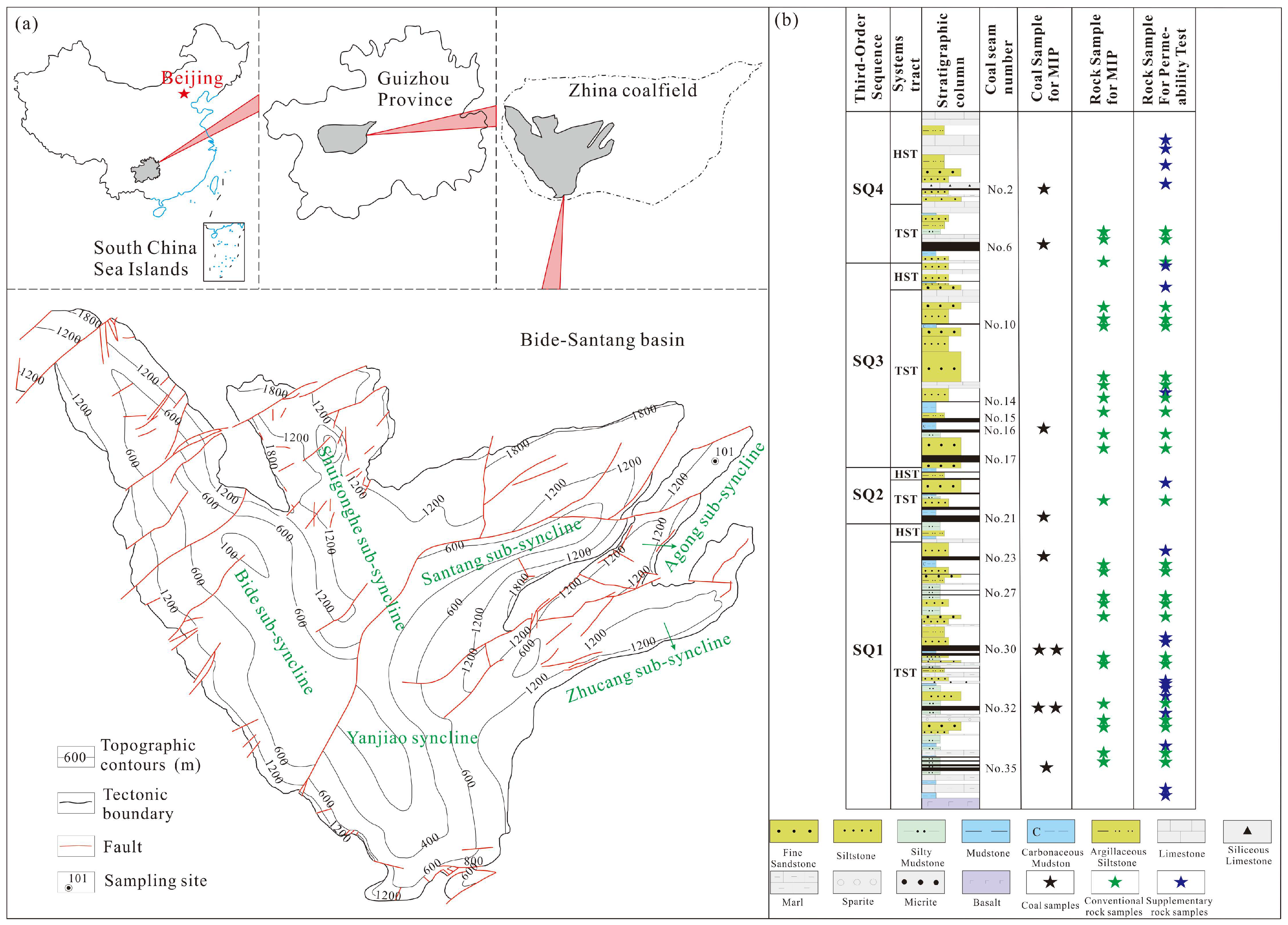
The Agong syncline is located in the eastern part of the Bide–Santang Basin in western Guizhou, and is structurally situated on the southern margin of the Bijie NE-trending structural deformation zone (Unit IV), which belongs to the Zunyi fault arch (Unit III), the Northern Guizhou uplift (Unit II) of the Yangtze Paraplatform (Unit I) [43]. It is bounded by the Nayong fault to the north and terminates at a NE-trending sinistral transform fault to the south. The fold axis generally trends NE, and the structures within the area are dominated by faults, primarily with NE and nearly EW orientations, while secondary folds are underdeveloped. The core of the syncline exposes the middle and lower members of the Feixianguan Formation, Lower Triassic. The sampling site for this study is located on the southeastern limb of the northern part of the Agong syncline (Figure 1a).
Figure 1.
Structural outline and coal-bearing stratigraphic column of the Agong syncline. (TST: Transgressive System Tract; HST: Highstand System Tract; SQ: Sequence.). (a) Geographic location, topography and tectonic outline of the Bide-Santang Basin in Zhina Coalfield, Guizhou, China; (b) Sequence stratigraphic division of coal-bearing strata and distribution of coal samples and rock samples.
The strata in the study area, from oldest to youngest, consist of the Middle Permian Maokou Formation, the Upper Permian Emeishan Basalt Formation, the Longtan Formation, the Changxing Formation, the Lower Triassic Feixianguan Formation, and the Quaternary deposits. The Changxing and Longtan Formations are the primary coal-bearing strata in this region, with the Longtan Formation being predominant. The Longtan Formation has a thickness ranging from 242 to 265 m, averaging 251 m. Its lithology is dominated by fine-grained clastic rocks, interbedded with coal seams, limestone, and siderite layers. The fine clastic rocks include fine sandstone, siltstone, argillaceous siltstone, silty mudstone, mudstone, and carbonaceous mudstone. The Longtan Formation primarily developed in lagoon–tidal flat facies, lower delta plain facies, distributary channel facies, and peat swamp facies. It contains 25 to 38 coal seams with a total thickness of approximately 22 m, of which about 9 seams are considered minable, including coal seams No. 6, 14, 16, 21, 23, 27, 30, 32, and 35. The coal rank is anthracite (Figure 1b).
Within the area, limestone karst aquifers are developed, including the strong karst-fissure aquifer of the Maokou Formation, the moderate karst-fissure aquifer of the Changxing Formation, and the strong karst-fissure aquifers in the second and fourth members of the Feixianguan Formation. Due to constraints imposed by topography, structure, and rock permeability, these karst aquifers lack interconnection and form independent hydrodynamic systems. The widely developed sinkholes and subsurface karst conduits, resulting from the extensive exposure of carbonate rocks, serve as effective pathways for the recharge, runoff, and discharge of both surface water and groundwater. Apart from the karst aquifers, the Longtan Formation constitutes an interlayer fissure aquifer within clastic rocks interbedded with limestone, characterized by weak water-bearing capacity. The main lithologies of the primary aquifers within the Longtan Formation include limestone, fine sandstone, and marl, while mudstone, argillaceous siltstone, siltstone, and coal seams generally act as aquicludes. The first member of the Feixianguan Formation overlying the coal-bearing strata and the underlying Emeishan Basalt Formation both serve as aquicludes, resulting in no direct hydraulic connection between the coal-bearing strata and the limestone karst aquifers of the second member of the Feixianguan Formation and the Maokou Formation. Overall, the water abundance is generally weak in the coal-bearing strata. The Quaternary system forms a porous, weakly water-bearing aquifer.
The Bide–Santang Basin is an important CBM enrichment area in southern China, where preliminary commercial development has been achieved. Over 50 production wells have been put into operation, with average daily gas production of 2000–3000 m3 for vertical/directional wells and 6000–8000 m3 for horizontal wells. Well W1 on the SE limb of the Agong Syncline achieved a maximum daily gas production of 6100 m3/d, and the first proven CBM reserves reported in Guizhou Province was approved for the Agong Syncline, both confirming the CBM development potential of this syncline. However, the development mode for vertical/directional wells in the study area is primarily multi-layer commingled production, which faces the issue of interlayer interference that restricts development performance. Investigating the development characteristics and main controlling factors of superposed CBM systems and reasonably defining production layer combinations to reduce or even avoid interlayer interference during commingled production will be an important approach to increasing single-well gas production, and this is also the main research objective of this study.
3. Samples and Methods
The sampling site is located at Borehole 101 on the southeastern limb of the northern Agong Syncline (Figure 1a). Systematic collections were made of coal core samples from the main coal seams of the Upper Permian coal-bearing strata, along with representative rock core samples (Figure 1b). MIP and Klinkenberg permeability experiments were carried out on rock samples and coal samples to reveal the differences between the two and the cyclic variation characteristics of porosity and permeability, as well as to elucidate the control effect of the sequence stratigraphic framework.
A total of 10 coal samples were taken from eight coal seams stacked vertically, namely coal seam Nos. 2, 6, 16, 21, 23, 30, 32, and 35, among which two samples were collected from each of No. 30 and No. 32 coal seams. Since these two seams contain partings, one sample was taken from the coal above the parting and one from the coal below the parting. The coal samples are numbered from C1 to C10.
Based on sedimentary cycle characteristics, 25 rock samples were collected from coal-bearing strata for MIP, designated as conventional rock samples, numbered 1 to 25. To finely reveal the vertical evolution of formation sealing capacity and to better understand the development characteristics of superposed CBM-bearing systems and the controlling mechanisms of physical properties, an additional 19 rock samples were collected based on vertical variations in lithology, namely supplementary rock samples. The naming rule for the supplementary rock samples is as follows: based on the conventional rock sample number (e.g., Sample 1), the supplementary samples collected shallower than that sample are numbered sequentially (e.g., Sample 1-1, 1-2). Vertical Klinkenberg permeability tests were planned to conduct on a total of 44 rock samples, including conventional rock samples and supplementary rock samples.
MIP experiments were conducted on 10 coal samples and 25 conventional rock samples using an Autopore IV 9510 mercury intrusion porosimeter (Micromeritics Instrument Corporation, Norcross, GA, USA), with an intrusion pressure range of 0.0036–413.315 MPa and a lower detection limit for pore diameter of 3.0 nm. The sample required for the mercury intrusion experiment is a block sample with side lengths of 1–2 cm. Pore size classification of the samples was performed according to the decimal classification system [44], as follows: <10 nm, micropores; 10–100 nm, transitional pores; 100–1000 nm, mesopores; and >1000 nm, macropores.
The sample required for the permeability experiment is a plug sample with a diameter of 2.5 cm and a length of 5 cm, and it must be drilled perpendicular to the bedding plane. Rock sample No. 11 was too fragmented to prepare a plug sample, so the permeability experiment could not be carried out. In addition, due to the coal samples being too fragmented to be made into a plug sample, permeability testing was not performed on them. Therefore, vertical Klinkenberg permeability tests were conducted on a total of 43 rock samples of various lithologies from coal-bearing strata to analyze the sealing capacity of each lithologic unit. The tested lithologies include limestone, marl, fine sandstone, siltstone, argillaceous siltstone, silty mudstone, and mudstone. The tests were performed using a PDP200 pulse-decay Klinkenberg permeameter (Core Laboratories, Houston, TX, USA), with a permeability measurement range of 0.00001–10 mD, suitable for low-permeability tight samples. Nitrogen (N2) was used as the test gas. Additionally, scanning electron microscopy (SEM) experiments were carried out on several typical coal and rock samples to examine the characteristics and filling conditions of pores and fractures.
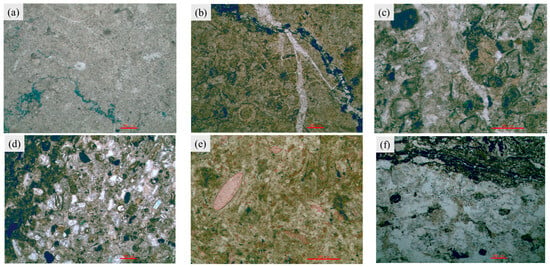
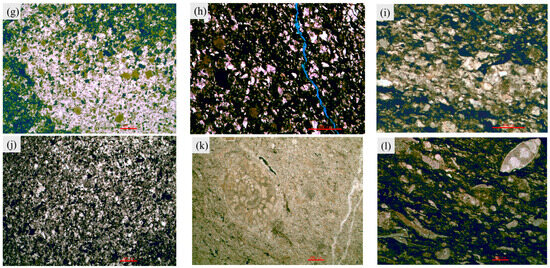
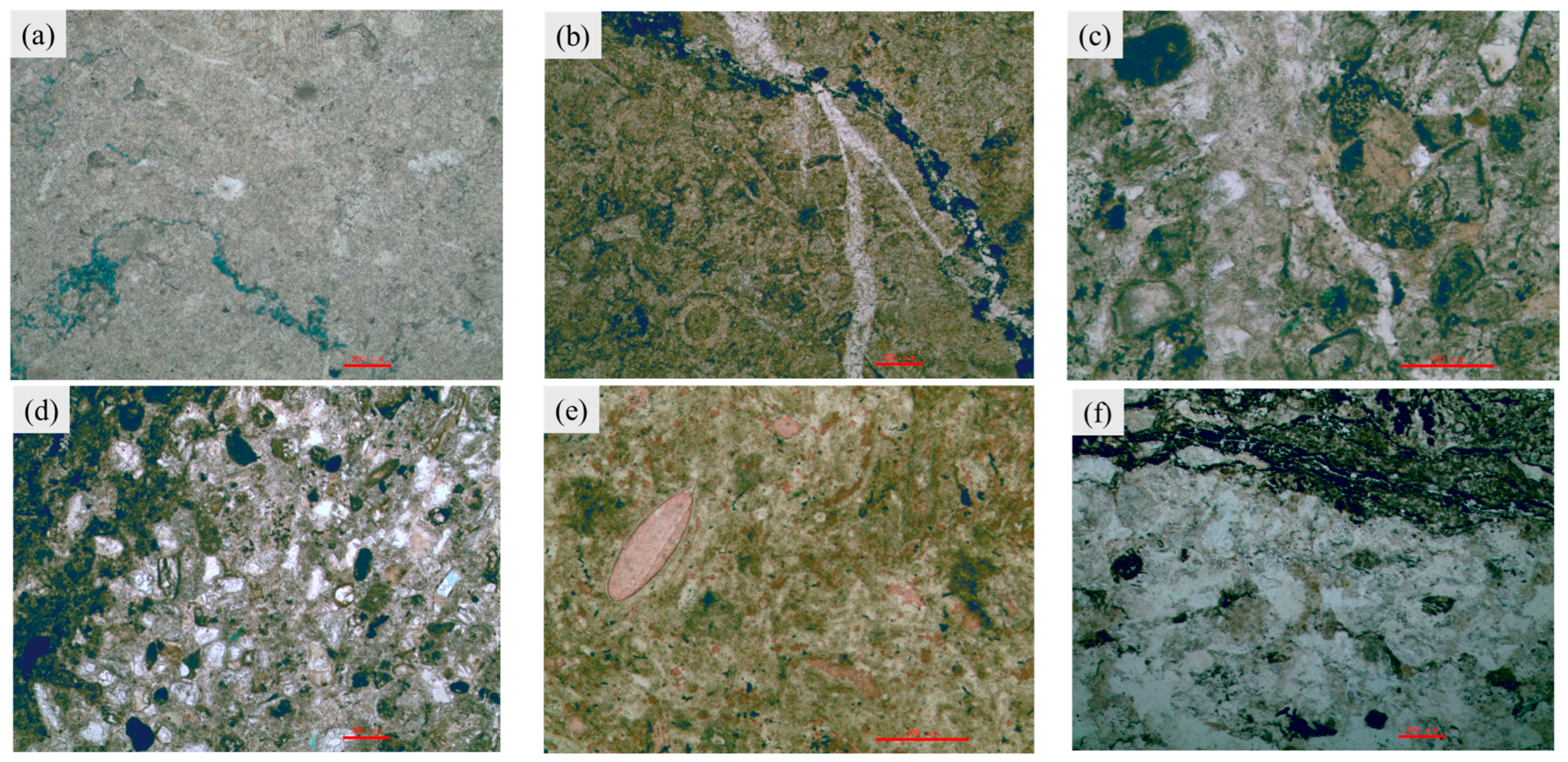
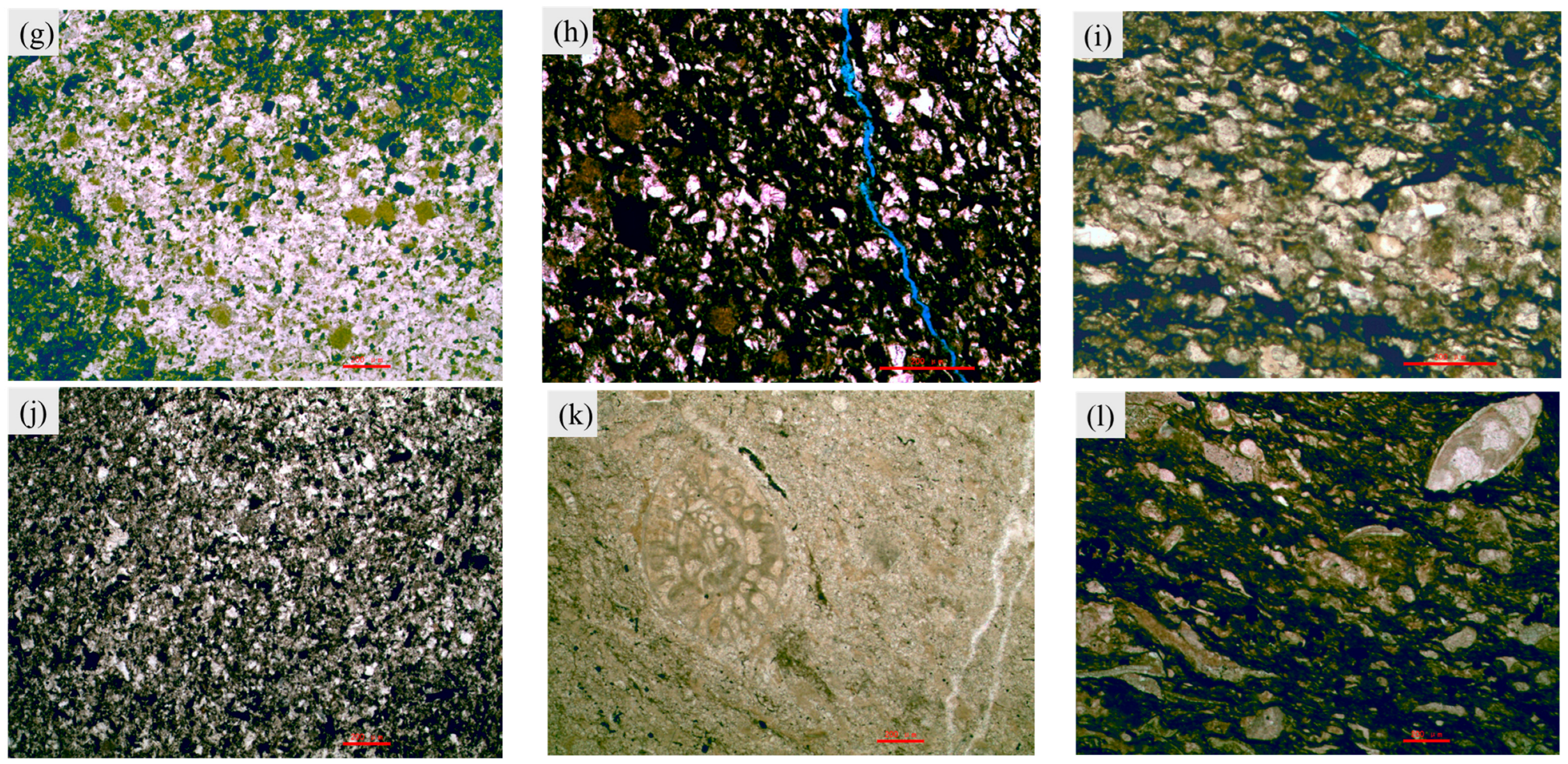
The detailed information of all samples is listed in Table 1. The conventional rock samples were subjected to microscopic lithological identification. Figure 2 shows the microscopic photographs and lithological identification results of 12 of these samples.
Table 1.
Information of samples.
Figure 2.
Plane-polarized light micrograph of typical rock samples: (a), No. 2, Bioclast-bearing micritic limestone, dissolution fractures; (b) No. 3, Bioclastic fine crystalline limestone; (c) No. 4, Dolomitized fine-grained feldspathic lithic sandstone; (d) No. 7, Laminated calcareous fine-grained lithic sandstone; (e) No. 10, Bioclast-bearing, dolomite-bearing, calcareous mudstone; (f) No. 12, Calcareous fine-grained lithic sandstone; (g) No. 13, Carbonaceous muddy coarse siltstone; (h) No. 15, Calcareous argillaceous siltstone, tectonic fractures; (i) No. 17, Carbonatized tuffaceous siltstone; (j) No. 20, Marl; (k) No. 24, Argillaceous bioclastic fine crystalline limestone; (l) No. 25, Bioclast-bearing carbonaceous mudstone.
4. Results
4.1. Pore Structure of Coal Samples
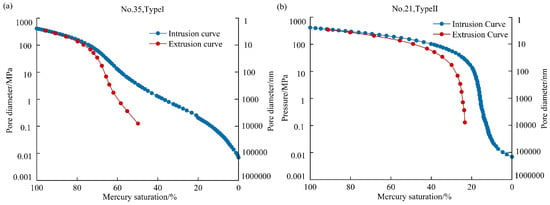
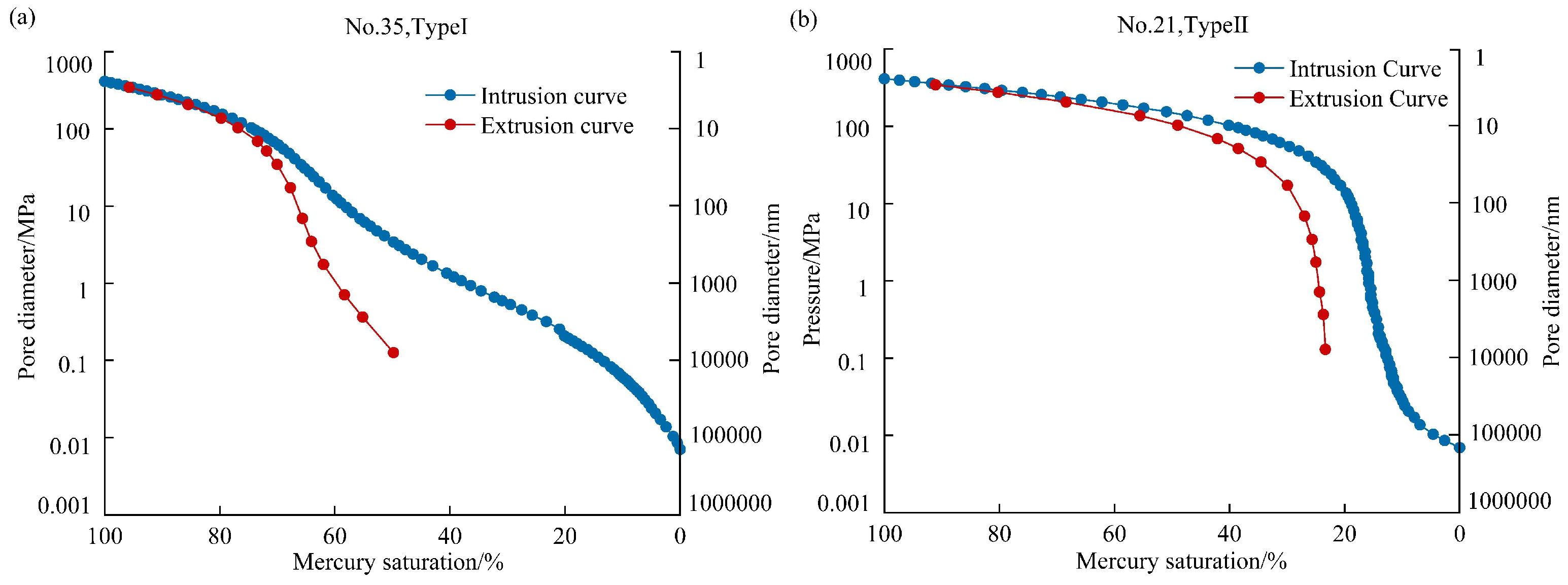
Analysis of the pore distribution characteristics in coal samples, based on the MIP results (Table 2), indicates that the micropores and transitional pores are the most developed, followed by the macropores, while the mesopores are the least developed. Further analysis of capillary pressure curve morphology reveals two types of coal samples (Figure 3). The pore size of coal samples varies greatly, and accordingly, the range of mercury injection pressure also varies widely; therefore, logarithmic coordinates need to be used. Type I, represented by coal seams 2, 32 and 35, exhibits relatively flat mercury intrusion curves, indicating a balanced pore development across all pore size ranges, with well-developed mesopores and macropores. Coal 35 is particularly representative of this type, showing minimal slope variation and a highly uniform pore size distribution. Moreover, this curve type exhibits relatively low mercury withdrawal efficiency of approximate 50%, which suggests poor pore connectivity (Figure 3a). Another type, which encompasses coal samples No. 6, 16, 21, 23 and 30, is termed Type II. Pore development is uneven across all pore size levels, with micropores and transitional pores being significantly better developed than macropores and mesopores, the latter of which are the least developed. The curve morphology represents a low proportion of macropores and a high proportion of transitional pores. The mercury withdrawal efficiency is relatively high, often approaching 80%, which indicates good pore connectivity (Figure 3b). The difference in mercury withdrawal efficiency between the two types suggests that coal samples with a single pore size distribution exhibit high mercury withdrawal efficiency, whereas those with developed pore sizes at all levels exhibit low mercury withdrawal efficiency. Overall, Type II curves are more favourable for CBM enrichment and production.
Table 2.
MIP results of coal samples.
Figure 3.
Types of MIP curves for coal samples: (a) Type I MIP curve of No. 35 coal seam; (b) Type II MIP curve of No. 21 coal seam.
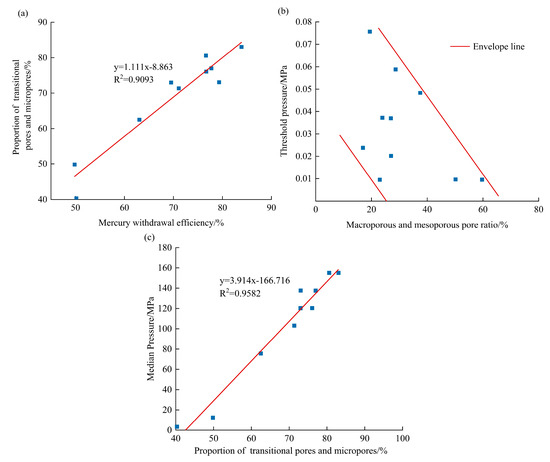
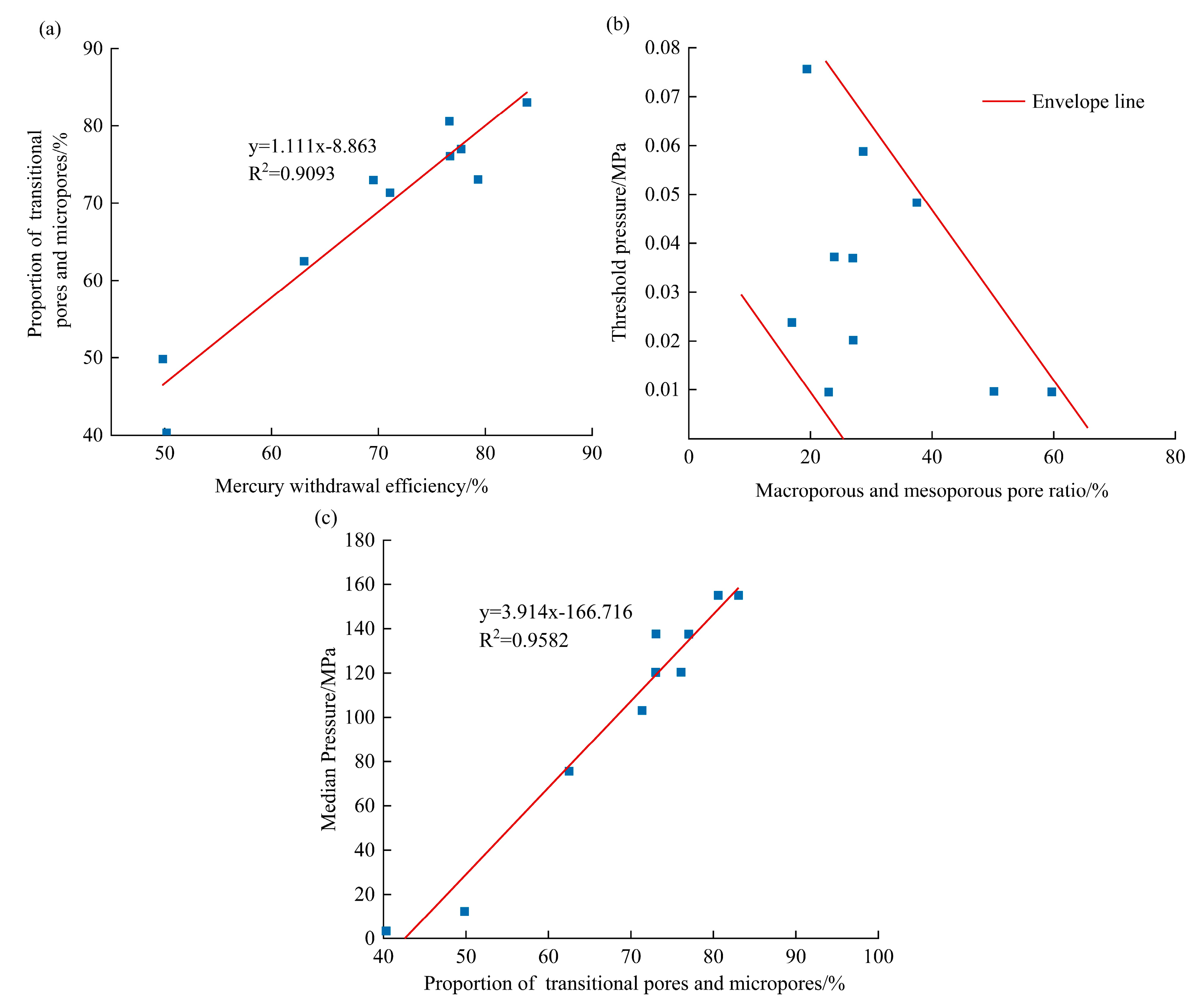
As shown in Table 2, the parameters of Coal Seam 2 and Coal Seam 35 differ significantly from those of other coal seams. For example, their total pore volume, average pore diameter, median volumetric pore diameter and porosity are all notably higher. This is primarily due to the significantly greater development of mesopores and macropores in these two seams. The median volumetric pore diameter and average pore diameter suggest that all seams except Coal Seam 2 and Coal Seam 35 are smaller than 20 nm. This reveals a characteristic dominated by fine pore-throats, with micropores and transitional pores holding a dominant advantage. Overall porosity is relatively low, averaging 5.37%. The mercury withdrawal efficiency is generally high, typically exceeding 50%, which indicates good pore connectivity. This has a positive impact on CBM flow. However, Coal Seams 2 and 35, which developed mesopores and macropores, exhibited relatively low mercury withdrawal efficiency, indicating poor pore connectivity. The reason is that Coal Seams No. 2 and 35 has undergone more intense tectonic deformation. There was a strong positive correlation between the mercury withdrawal efficiency and the proportion of transitional pores and micropores. This reveals that the high mercury withdrawal efficiency of coal samples in this area is related to the presence of a single micropores size (Figure 4a). The efficiency of mercury withdrawal is higher in coals with a homogeneous pore system.
Figure 4.
Inter-parameter correlations of MIP experiments on coal samples: (a) Correlation between mercury withdrawal efficiency and the proportion of transitional pores and micropores; (b) Correlation between the microporous and mesoporous pore ratio and threshold pressure; (c) Correlation between the proportion of transitional pores and micropores and median pressure.
The relatively small differences in specific surface area suggest that the adsorption properties of different coal seams may be similar. However, adsorption characteristics are also influenced by factors such as maceral, coal rank and moisture. Micropores and transitional pores are the primary contributors to specific surface area, as evidenced by the fact that the median pore diameter in specific surface area (approximately 4 nm) is significantly smaller than the median pore diameter in volume. The threshold pressure ranges from 0.0095 to 0.0757 MPa and exhibits an overall negative correlation with the proportion of macropores and mesopores (Figure 4b). In other words, the more developed the mesopores and macropores are, the lower the threshold pressure. The threshold pressure reflects the pressure at which mercury begins to enter the sample in significant quantities. Therefore, the more developed these pores are, the easier it is for mercury to infiltrate and the lower the required threshold pressure value. The median pressure corresponds to the pressure at which mercury saturation reaches 50%, reflecting the characteristics of the pore size distribution. A higher median pressure indicates that the overall pore size distribution tends to be smaller. The strong positive correlation between the median pressure and the proportion of the transitional pores and micropores clearly illustrates this view (Figure 4c).
4.2. Pore Structure of Rock Samples
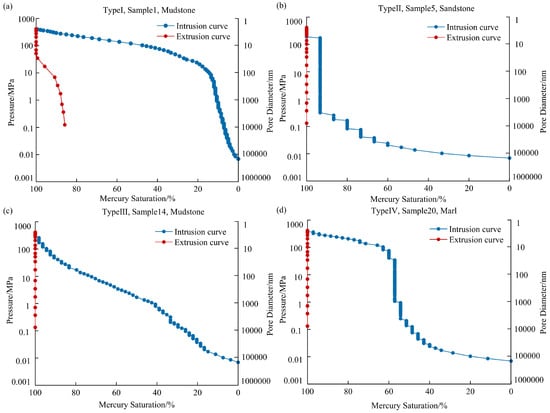
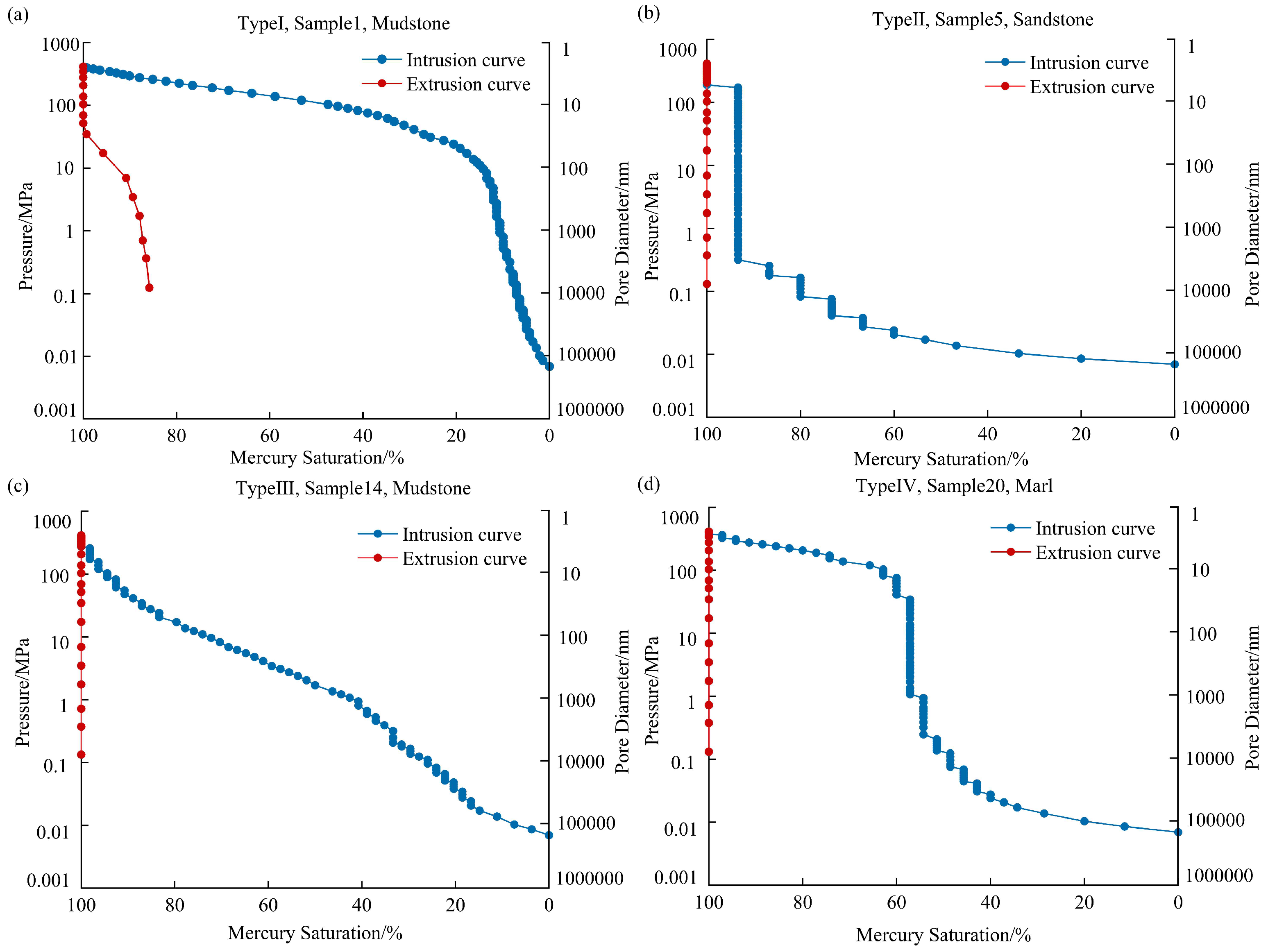
Based on the morphology of the capillary pressure curves, the rock samples were classified into four types (Figure 5).
Figure 5.
Types of MIP curves for rock samples: (a) Type I MIP curve of Sample 1 (mudstone); (b) Type II MIP curve of Sample 5 (sandstone); (c) Type III MIP curve of Sample 14 (mudstone); (d) Type IV MIP curve of Sample 20 (marl).
The first type comprises the largest number of samples, represented by samples 1, 2, 8, 12, 15, 16, 17, 18, 21, 22, and 25. The mercury intrusion curve exhibits a right-upward shift, indicating that the pore-throat distribution is biased towards fine pore-throats. The mercury withdrawal efficiency is poor, indicating poor pore connectivity. This pore structure characteristic often has good sealing performance. The representative lithologies of this type are mudstone, silty mudstone and marl (Figure 5a).
The second type includes samples such as 3, 5, 9, 10, 11, 23, and 24. The mercury intrusion curve of this type show a clear down-leftward shift, indicating that the coarse-pore throat is dominant, while the fine-pore throat is relatively underdeveloped. Mercury showed virtually no release from the sample, indicating extremely poor pore connectivity. The representative lithologies are siltstone and limestone (Figure 5b).
The third type is a transitional category between the first two types. It is exemplified by samples 4, 6, 7 and 14, with the mudstone sample being the most typical. This curve type exhibits minimal slope variation and remains relatively straight overall, indicating uniform pore distribution across all size levels. Sample 6 demonstrates higher mercury withdrawal efficiency. The lithology consists mainly of fine sandstone and carbonaceous mudstone (Figure 5c).
The fourth type is represented by samples 13, 19 and 20. This curve morphology features a distinct vertical segment in the middle and relatively horizontal ends, which indicates a polarised pore size distribution. Specifically, micropores and macropores are relatively developed, while intermediate transitional pores are underdeveloped. Mercury withdrawal efficiency is low. The lithology is dominated by siltstone and marl (Figure 5d).
The overall rock samples exhibited poor mercury withdrawal efficiency, consistent with the fact that the Longtan Formation consists primarily of fine-grained clastic rocks interbedded with limestone and marl. The poor pore connectivity of the surrounding rocks supports the formation of effective sealing layers between coal seams, conducive to CBM preservation.
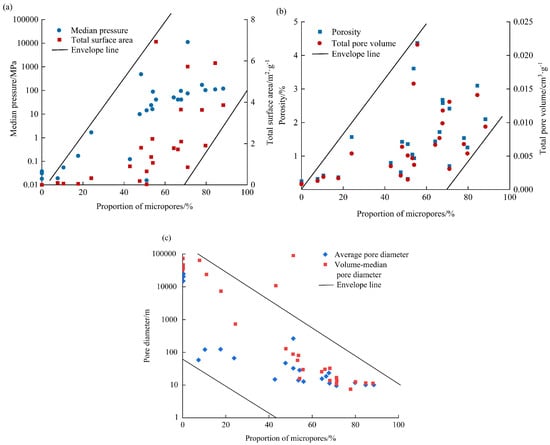
Total pore volume, porosity, volumetric median pore diameters, average pore diameters, median pore pressure, and total specific surface area all exhibit fluctuating variations vertically across different stratigraphic levels. These parameters are strongly influenced by the proportion of micropores: as micropores become more developed, total pore volume, porosity, median pore pressure, and total specific surface area generally increase, while volumetric median pore diameters and average pore diameters generally decrease (Figure 6). The median pressure and pore diameter vary over a wide range, so logarithmic coordinates are needed; other parameters show little variation, so they do not require logarithmic coordinates. Microporosity indicates the extent to which pores have developed. Well-developed microporosity results in higher total pore volume, signifying greater porosity. In rock layers with poorly developed microporosity, although macropores constitute a larger proportion, overall porosity development is low, with small total pore volume. Such examples include samples 10, 11, 23 and 24.
Figure 6.
Relationship between pore structure parameters and micropore proportion of rock samples: (a) Correlations between micropore proportion and median pressure—total surface area; (b) Correlations between micropore proportion and porosity—total pore volume; (c) Correlation between micropore proportion and average pore diameter—volume-median pore diameter.
4.3. Comparison Between Coal Samples and Rock Samples
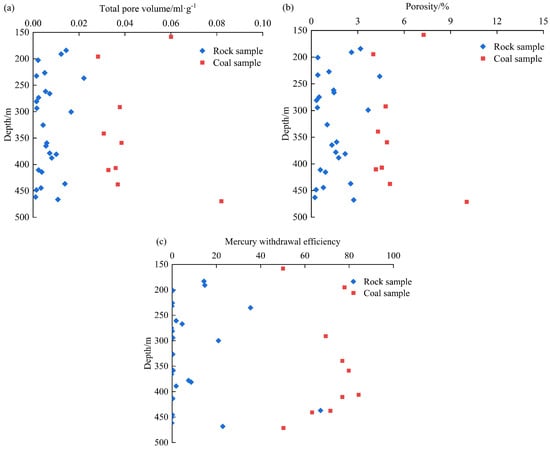
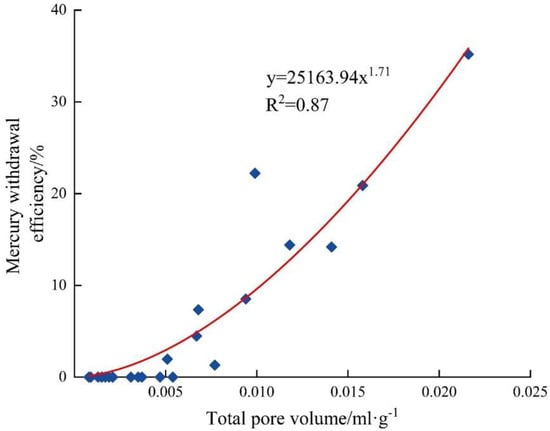
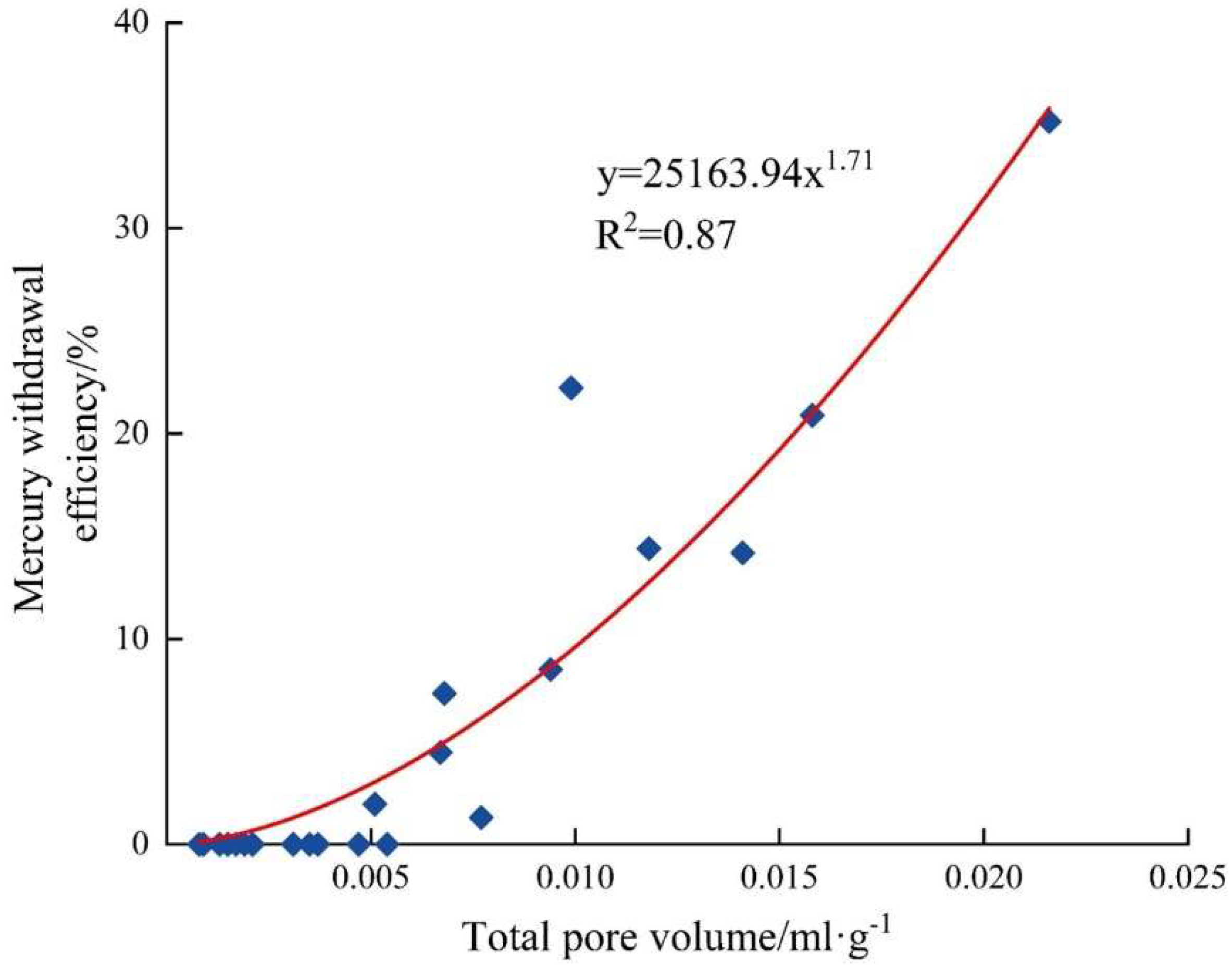
Further analysis of the vertical variation of different pore structure parameters of coal and rock samples was conducted. It is evident that the total pore volume, porosity, and mercury withdrawal efficiency of coal samples are significantly higher than those of rock samples (Figure 7). The substantial difference indicates that the rock strata exhibit significantly weaker pore development and connectivity compared to coal seams, revealing a strong sealing effect on CBM. A detailed analysis of porosity development across different lithologies (Table 3) reveals that mudstone exhibits the highest porosity and pore volume. This is followed by fine sandstone, silt-mudstone, marl, siltstone, muddy siltstone, and limestone. Mercury withdrawal efficiency exhibits a similar distribution pattern and a strong positive correlation with total pore volume. Specifically, mercury withdrawal efficiency tends to increase with rising total pore volume (Figure 8). Lithologies with well-developed porosity, such as mudstone, siltstone, and fine sandstone, often exhibit well-developed micropores. In contrast, lithologies with poorly developed porosity, such as muddy siltstone and limestone, contain a smaller proportion of micropores compared to macropores (Table 3).
Figure 7.
Comparative analysis of pore structure parameters in coal versus rock samples: (a) Relationship between depth and total pore volume of coal and rock samples; (b) Relationship between depth and porosity of coal and rock samples; (c) Relationship between depth and mercury withdrawal efficiency of coal and rock samples.
Table 3.
Comparison of pore development characteristics among different lithologies.
Figure 8.
Relationship between total pore volume and mercury withdrawal efficiency in rock samples.
Overall, the coal-bearing strata in this area consist of fine-grained clastic rocks interbedded with marine limestone. These strata have poorly developed porosity and weak connectivity, forming a well-sealed stratigraphic barrier between coal seams. This stratigraphic sequence provides favorable conditions for CBM preservation while hindering fluid exchange between coal seams. Consequently, unattached multiple superposed CBM-bearing system was formed in the coal-bearing strata.
4.4. Rock Sample Permeability
The Klinkenberg permeability of the rock samples ranged from 0.0006 to 0.1142 mD, with an average of 0.0142 mD, indicating overall low permeability (Table 4). Permeability values increased with lithologies in the following order: argillaceous siltstone, mudstone, limestone, marl, silty mudstone, fine sandstone, and siltstone (Table 5), reflecting the decreasing sealing capacity of these lithologies. The permeability values of argillaceous siltstone, mudstone, limestone, and marl are an order of magnitude lower than those of fine sandstone, siltstone, and silty mudstone. Therefore, under conditions of poorly developed faults and fractures, these lithological strata effectively prevent the vertical migration or loss of CBM. Even fine sandstones and siltstones, which have relatively higher permeability, generally exhibit very low average values below 0.05 mD. The entire coal-bearing strata demonstrates characteristics of tightness and low permeability (Table 4 and Table 5). This aligns with the previous pore structure analysis results of rock samples, where the pore structure characteristics of the coal-bearing strata determine their very low permeability.
Table 4.
Permeability testing results of rock samples in order of increasing depth.
Table 5.
Statistics of mean permeability values for different lithologies.
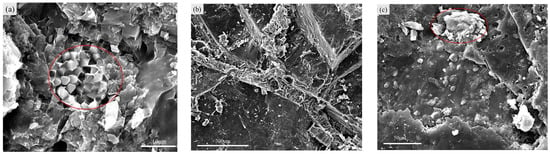
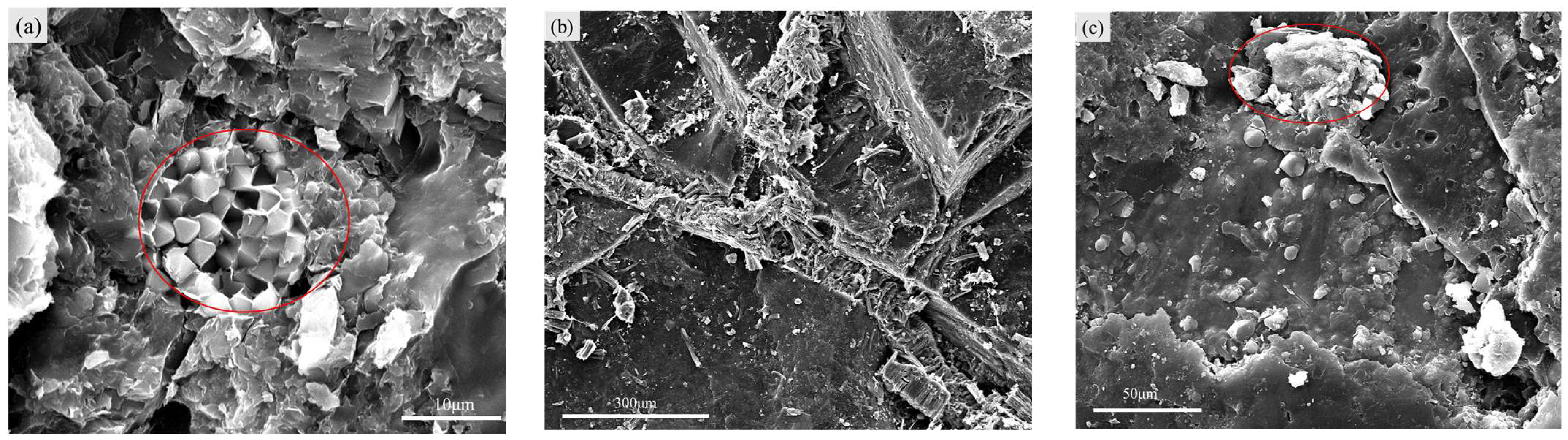
The coal-bearing strata in this area formed in a transitional marine–terrestrial environment. Influence from seawater resulted in early diagenetic pore water that were dominated by weakly alkaline to alkaline conditions. This provided an abundance of Fe2+ for the formation of diagenetic minerals during the early stages of diagenesis [45]. Combined with the strong reducing conditions in peat bog areas, this environment favoured the formation of pyrite. During late diagenesis, the release of substantial amounts of organic acid from the coal-bearing strata promoted the formation of minerals such as kaolinite. The filling of pores by these minerals resulted in highly compacted coal-bearing strata, significantly reducing their pore-permeability conditions (Figure 9). The samples in Figure 9 are all located in the transgressive systems tract, indicating that the transgressive process tends to lead to deterioration of the porosity and permeability of rock layers.
Figure 9.
Pore and fracture fillings in the coal-bearing strata of Borehole 101 under scanning electron microscope: (a) Sample 23, Pyrite filling pores in argillaceous siltstone; (b) Sample C6, Kaolinite filling fractures in coal seam; (c) Sample 16, Kaolinite filling pores in carbonaceous mudstone.
The permeability values of the coal samples were referenced from previous research. According to the air permeability tests on multiple coal seam samples from Well 1001 in the Santang syncline of the Bide–Santang basin, the permeability values of coal samples ranged from 0.07 to 9.47 mD, with an average value of 2.58 mD [46]. This is significantly higher than the permeability values observed in the rock samples. The average well test permeability of two CBM wells located in the Bide–Santang basin was 0.3743 mD [47], also substantially higher than the permeability values obtained from the rock samples tested in this study. It can be inferred that the substantial difference in permeability between surrounding rock strata and coal seams makes vertical gas migration between coal seams extremely difficult. CBM migration is highly restricted to single coal seams, leading to compartmentalized gas systems with poor vertical connectivity.
5. Discussion
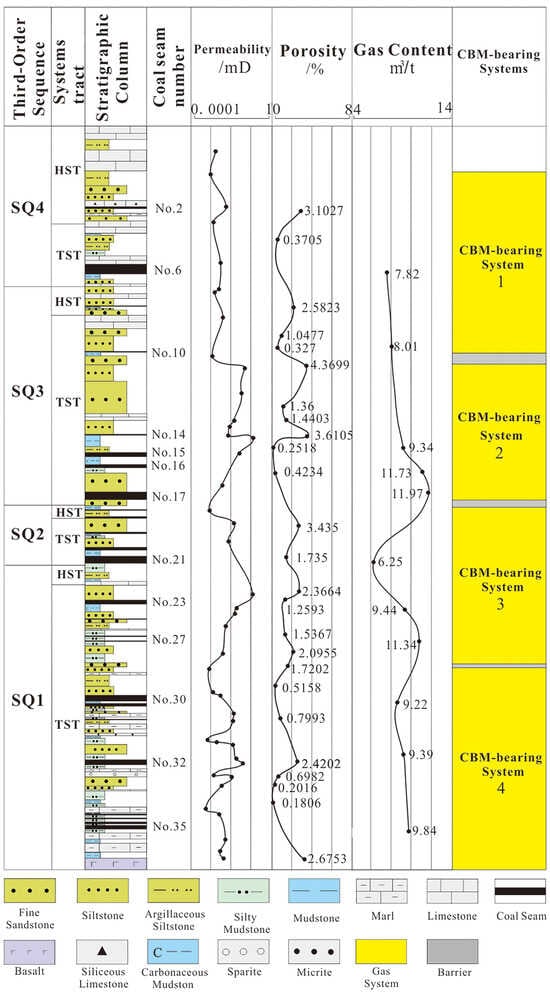
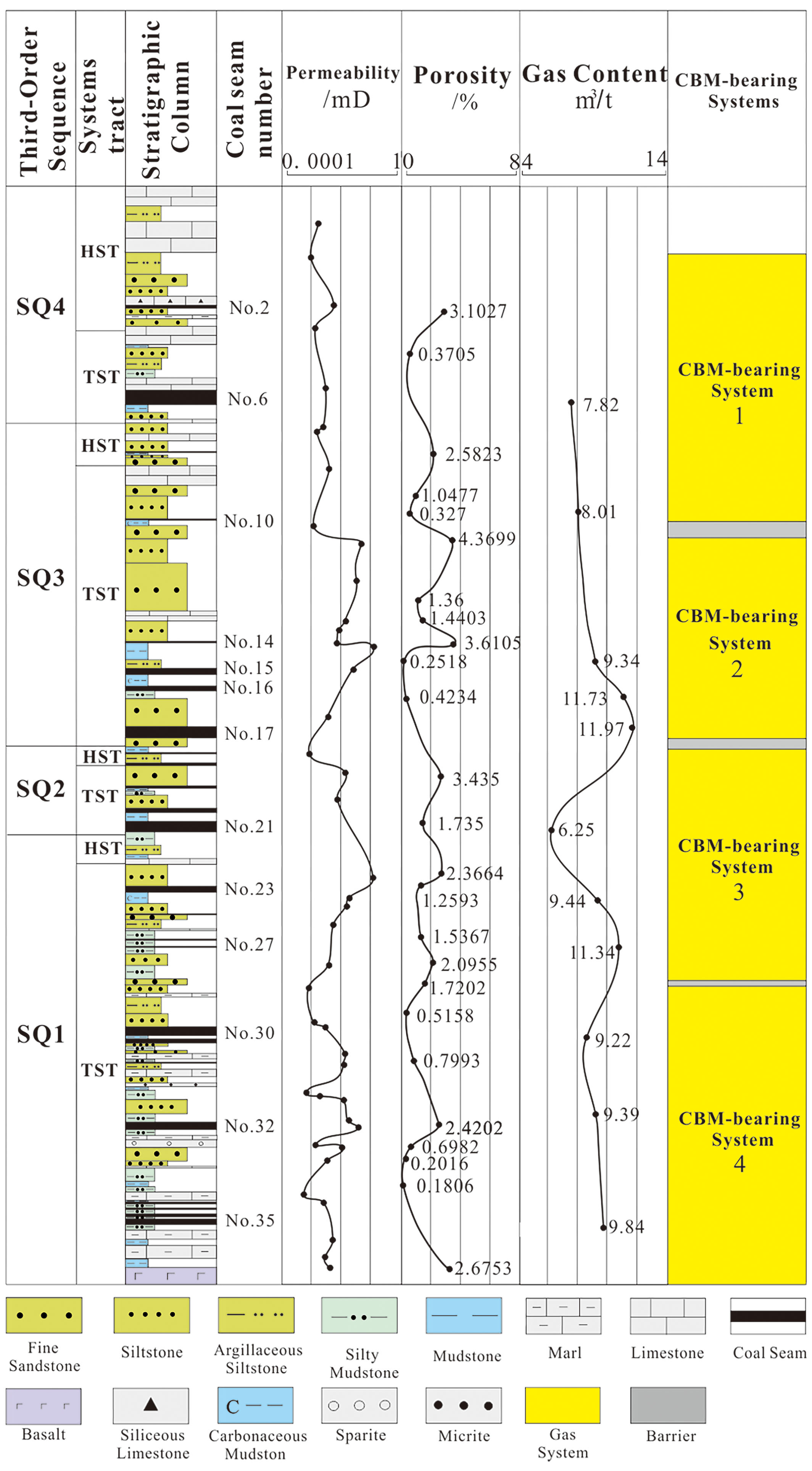
Using permeability, porosity, and gas content data, permeability–porosity and gas-bearing property profiles for Borehole 101 were established (Figure 10). According to the adsorption theory, within a unified fluid pressure system, increased burial depth or lower stratigraphic level of coal seams leads to higher reservoir pressure. This typically causes CBM content to follow a predictable pattern of increase or decrease (below the critical saturation depth), with a relatively stable gas content gradient [48,49]. However, the vertical gas content profile in this borehole displays significant fluctuations that deviate from this expected pattern (Table 6, Figure 10). This suggests poor hydraulic connectivity between the coal seam groups, indicating the presence of independent superposed CBM-bearing systems. Furthermore, the vertical variation in gas content exhibits cyclicity that closely corresponds to the third-order sequence stratigraphic framework.
Figure 10.
Vertical variations in porosity, permeability, and gas-bearing system compartmentalization in the coal-bearing strata of borehole 101, Agong syncline.
Table 6.
Gas content of the principal coal seams in borehole 101, Agong syncline.
By integrating the permeability, porosity, and gas-bearing property profiles, the coal-bearing strata is divided into four independent CBM-bearing systems (Figure 10). These systems are separated by tight, low-permeability, and low-porosity rock layers that prevent fluid (gas and water) exchange between them. Each system is governed by an independent fluid pressure state. Within each system, gas content generally increases regularly with depth, maintaining a relatively stable gradient. In contrast, gas content varies erratically between different systems, and the gas content gradient differs significantly across them (Table 6). Notably, the compartmentalized gas systems show a strong correlation with the third-order sequence stratigraphic framework. This supports previous findings that the sequence stratigraphy controls the development of independent superposed CBM systems [5]. The porosity and permeability of coal seam and rock layers are influenced by sedimentary cycles associated with sequence stratigraphy. Near maximum flooding surface, the content of fine-grained argillaceous material, pyrite and siderite fillings, carbonate cements, and kaolinite increased. This results in the formation of tight, low-porosity, and low-permeability rock layers near sequence boundaries [8,50], which subsequently form the sealing boundaries for the individual gas-bearing systems.
Further analysis reveals that the sealing lithological units forming the boundaries of the CBM-bearing systems are primarily composed of mudstone, silty mudstone, and argillaceous siltstone (Figure 10). This finding aligns with the aforementioned permeability analysis, which identified mudstone and argillaceous siltstone as having the lowest permeability. While limestone and marl exhibit lower measured permeability than silty mudstone in laboratory tests, their fluid flow is predominantly governed by karst fractures, which are heterogeneously developed. Consequently, standard laboratory permeability measurements, designed primarily for porous media, are less representative for fractured rocks like limestone and marl, where connected fracture networks, rather than matrix porosity, control effective permeability and sealing integrity. It can be inferred that mudstone and argillaceous siltstone likely form the most effective sealing layers in this area. Previous studies provide supporting evidence for this conclusion: Ref. [51] observed well-formed quartz and kaolinite crystals filling the pores of mudstone and argillaceous siltstone samples from the coal-bearing strata in western Guizhou, attributing these features to quartz overgrowth and kaolinization under acidic conditions. Ref. [45] proposed that the argillaceous rocks cemented by siderite or pyrite near the maximum flooding surface become highly compact and can act as regional barriers to water and gas flow vertically.
The above classification of CBM-bearing systems can provide a geological basis for the design of CBM development schemes. Ideally, the production layer combination should not cross different CBM-bearing systems to avoid interlayer fluid pressure interference. Previous studies have shown that shallow CBM development in western Guizhou is prone to surface water and shallow groundwater crossflow interference, which restricts pressure drawdown and gas production [3]. Hydrodynamic conditions are weak in deep coal seams, and CBM enrichment conditions are favorable. Therefore, developing the four CBM-bearing systems sequentially from deep to shallow should be the optimal orderly CBM development scheme, i.e., develop CBM-bearing system 4, CBM-bearing system 3, CBM-bearing system 2, and CBM-bearing system 1 in order. Development practice also shows that deep gas-bearing systems have better development performance than shallow ones.
6. Conclusions
(1) The pore development in coal samples progresses from largest to smallest as micropores, transitional pores, macropores, and mesopores. The average total pore volume is 0.0417 mL/g, the average porosity is 5.37%, and the average mercury withdrawal efficiency is 69.79%. The coal samples are classified into two types based on capillary pressure curves, with Type II curves generally being more favorable for CBM accumulation and production.
(2) Rock samples were classified into four pore structure types based on capillary pressure curves, with micropores determining the degree of pore development in the samples. On average, the total pore volume of the rock samples was 0.0064 mL/g, with an average porosity of 1.43%, and the average mercury withdrawal efficiency was 7.88%. Overall, the degree of pore development was low and the pore connectivity was weak. The rock strata exhibited significantly poorer permeability and porosity conditions than the coal seams, displaying highly dense characteristics that formed a fluid flow barrier between coal seams.
(3) The Klinkenberg permeability of the rock samples ranges from 0.0006 to 0.1142 mD, with an average value of 0.0142 mD, indicating an overall ultra-low permeability condition. These values are significantly lower than both the air permeability of coal samples measured in the laboratory and the in situ coal reservoir permeability determined through well testing. Notably, mudstone and argillaceous siltstone exhibit the lowest permeability, confirming their superior sealing capacity.
(4) Based on integrated analysis of vertical variations in permeability, porosity, and gas content characteristics, the coal-bearing strata in the study area are divided into four independent CBM-bearing systems. These systems are separated by tight layers with extremely low permeability and porosity, and their delineation shows strong correspondence with the third-order sequence stratigraphic framework. This study provides critical geological insights for optimizing production coal seams and implementing development strategies in multi-seam CBM reservoirs.
Author Contributions
Conceptualization, L.L. and C.G.; methodology, L.L.; software, C.G.; validation, L.L.; formal analysis, L.L.; investigation, L.L. and C.G.; resources, Y.J.; data curation, C.D.; writing—original draft preparation, L.L.; writing—review and editing, C.G.; visualization, Y.J.; supervision, Y.J.; project administration, C.D.; funding acquisition, C.G. All authors have read and agreed to the published version of the manuscript.
Funding
This work was funded by the National Natural Science Foundation of China (Grant Nos. 42472243 and 42002195).
Institutional Review Board Statement
Not applicable.
Informed Consent Statement
Not applicable.
Data Availability Statement
The original contributions presented in the study are included in the article, further inquiries can be directed to the corresponding authors.
Acknowledgments
We thank all parties and individuals that contributed to this publication.
Conflicts of Interest
Author Lingling Lu was employed by the company Xi’an Coal Aviation Remote Sensing Information Co., Ltd. The remaining authors declare that the research was conducted in the absence of any commercial or financial relationships that could be construed as a potential conflict of interest.
References
- Shen, Y.L.; Qin, Y.; Guo, Y.H.; Yi, T.S.; Yuan, X.X.; Shao, Y.B. Characteristics and sedimentary control of a coalbed methane-bearing system in lopingian (late permian) coal-bearing strata of western Guizhou Province. J. Nat. Gas Sci. Eng. 2016, 33, 8–17. [Google Scholar] [CrossRef] [Scilit]
- Guo, C.; Qin, Y.; Xia, Y.C.; Ma, D.M.; Han, D.; Chen, Y.; Chen, W.; Jian, K.; Lu, L.L. Geochemical characteristics of water produced from CBM wells and implications for commingling CBM production: A case study of the Bide-Santang Basin, western Guizhou, China. J. Pet. Sci. Eng. 2017, 159, 666–678. [Google Scholar] [CrossRef] [Scilit]
- Guo, C.; Yang, X.K.; Qin, Y.; Lyu, P.R.; Taherdangko, R.; Lu, L.L.; Cheng, X. Coalbed methane systems and hydrochemical signature of produced water in the Zhijin Block, Western Guizhou province, China: Implications for gas production. Unconv. Resour. 2025, 8, 100225. [Google Scholar] [CrossRef] [Scilit]
- Ju, W.; Yang, Z.B.; Qin, Y.; Yi, T.S.; Zhang, Z.G. Characteristics of in-situ stress state and prediction of the permeability in the Upper Permian coalbed methane reservoir, western Guizhou region, SW China. J. Pet. Sci. Eng. 2018, 165, 199–211. [Google Scholar] [CrossRef] [Scilit]
- Qin, Y.; Xiong, M.H.; Yi, T.S.; Yang, Z.B.; Wu, C.F. On unattached multiple superposed CBM-bearing system: In a case of Shuigonghe syncline, Zhijin-Nayong coalfield, Guizhou. Geol. Rev. 2008, 54, 65–70. [Google Scholar] [CrossRef] [Scilit]
- Pashin, J.C. Variable gas saturation in coalbed methane reservoirs of the Black Warrior Basin: Implications for exploration and production. Int. J. Coal Geol. 2010, 82, 135–146. [Google Scholar] [CrossRef] [Scilit]
- Hamilton, S.K.; Golding, S.D.; Baublys, K.A.; Esterle, J.S. Stable isotopic and molecular composition of desorbed coal seam gases from the Walloon Subgroup, eastern Surat Basin, Australia. Int. J. Coal Geol. 2014, 122, 21–36. [Google Scholar] [CrossRef] [Scilit]
- Yang, Z.B.; Qin, Y.; Wang, G.X.; An, H. Investigation on coal seam gas formation of multi-coalbed reservoir in Bide-Santang Basin Southwest China. Arab. J. Geosci. 2015, 8, 5439–5448. [Google Scholar] [CrossRef] [Scilit]
- Tang, S.L.; Tang, D.Z.; Tang, J.C.; Tao, S.; Xu, H.; Geng, Y.G. Controlling factors of coalbed methane well productivity of multiple superposed coalbed methane systems: A case study on the Songhe mine field, Guizhou, China. Energy Explor. Exploit. 2017, 35, 665–684. [Google Scholar] [CrossRef] [Scilit]
- Chen, S.D.; Tang, D.Z.; Tao, S.; Chen, Z.L.; Xu, H.; Li, S. Coal reservoir heterogeneity in multicoal seams of the Panguan Syncline, Western Guizhou, China: Implication for the development of superposed CBM-Bearing Systems. Energy Fuels 2018, 32, 8241−8253. [Google Scholar] [CrossRef] [Scilit]
- Qin, Y.; Moore, T.A.; Shen, J.; Yang, Z.B.; Shen, Y.L.; Wang, G. Resources and geology of coalbed methane in China: A review. Int. Geol. Rev. 2018, 60, 777–812. [Google Scholar] [CrossRef] [Scilit]
- Yi, W.; Liang, L.J.; Yan, L.C.; Yan, Z.H.; Chen, J.; Gao, W.; Lou, Y.; Yang, F.Q.; Hu, H.Y.; Zhu, J.W. Key technologies of efficient extraction of coalbed methane (gas) in Guizhou coal mine area. Coal Sci. Technol. 2025, 53, 340–355. [Google Scholar] [CrossRef]
- Guo, G.L. Comprehensive Gas Control Technology in Coal Mines. Energy Energy Conserv. 2025, 111–113+277. [Google Scholar] [CrossRef]
- Shao, L.Y.; Dang, X.Y.; Gao, X.Y.; Wang, D.D.; Wen, H.; Wang, X.T.; Gao, D.; Lu, J. Genetic mechanism of thick coal seams: Astronomical-forcing superimposed multi-staged swamp model. Coal Sci. Technol. 2022, 50, 186–195. [Google Scholar] [CrossRef]
- Shen, J.; Qin, Y.; Zhao, J. Maceral contribution to pore size distribution in anthracite in the South Qinshui Basin. Energy Fuels 2019, 33, 7234–7243. [Google Scholar] [CrossRef] [Scilit]
- Kang, J.; Fu, X.; Elsworth, D.; Liang, S. Vertical heterogeneity of permeability and gas content of ultra-high-thickness coalbed methane reservoirs in the southern margin of the Junggar Basin and its influence on gas production. J. Nat. Gas Sci. Eng. 2020, 81, 103455. [Google Scholar] [CrossRef] [Scilit]
- Shen, Y.; Qin, Y.; Wang, G.G.X.; Guo, Y.; Tong, G. Sedimentary control on the formation of a multi-superimposed gas system in the development of key layers in the sequence framework. Mar. Pet. Geol. 2017, 88, 268–281. [Google Scholar] [CrossRef] [Scilit]
- Zheng, C.; Chen, Y.; Lei, W.L.; Jiang, S.L.; Lin, Y.B. Research progress of tectonic control on coalbed methane development. Min. Saf. Environ. Prot. 2025, 52, 123–129. [Google Scholar] [CrossRef]
- Liu, Y.F. Rsearch and Application of Multi-Scale Flow and Compound Coal Seam Extraction Technology Based on Coal Mass Transfer Principle. Master’s Thesis, Qingdao University of Technology, Qingdao, China, 2025. [Google Scholar] [CrossRef]
- Liu, B.S. Economic Study on Prominent Disaster Characteristics and Gas Safety Management in Coal-Bearing Small Structure areas. Master’s Thesis, China University of Mining and Technology, Xuzhou, China, 2025. [Google Scholar] [CrossRef]
- Shen, J.; Qin, Y.; Li, Y.; Wei, Y.; Yang, C.; Wang, G. In situ stress field in the FZ Block of Qinshui Basin, China: Implications for the permeability and coalbed methane production. J. Pet. Sci. Eng. 2018, 170, 744–754. [Google Scholar] [CrossRef] [Scilit]
- Ju, W.; Jiang, B.; Miao, Q.; Wang, J.L.; Qu, Z.H.; Li, M. Variation of in situ stress regime in coal reservoirs, eastern Yunnan region, South China: Implications for coalbed methane production. Aapg Bull. 2018, 102, 2283–2303. [Google Scholar] [CrossRef] [Scilit]
- Qin, Y. Progress on geological research of deep coalbed methane in China. Acta Pet. Sin. 2023, 44, 1791–1811. [Google Scholar] [CrossRef]
- Li, S.; Qin, Y.; Tang, D.Z.; Shen, J.; Wang, J.J.; Chen, S.D. A comprehensive review of deep coalbed methane and recent developments in China. Int. J. Coal Geol. 2023, 279, 104369. [Google Scholar] [CrossRef] [Scilit]
- Yun, Y.N.; Meng, Z.P.; Gao, C.X.; Lu, Y.X.; Li, J.J. Experimental investigation of pore pressure effect on coal sample permeability under different temperatures. Nat. Resour. Res. 2022, 31, 1585–1599. [Google Scholar] [CrossRef] [Scilit]
- Zou, Y.; Chen, W.H.; Luo, G.; Chen, S.R.; Chen, F.W.; He, W.J.; Liu, X.L.; Zhu, T. Main factors controlling the enrichment and high production of alkaline lacustrine shale oil in Fengcheng Formation, Mahu Sag, Junggar Basin. Xinjiang Pet. Geol. 2025, 46, 693–702. [Google Scholar] [CrossRef]
- Sun, Y.T.; Zhang, P.F.; Liu, F.F.; Luo, L.F.; Zhang, C.X.; Jia, Y.Y.; Zhang, Y.J. Evolutionary characteristics and favorable reservoir distribution of Mesozoic volcanic rocks in Zhuangxi area, Jiyang Depression. J. China Univ. Pet. (Ed. Nat. Sci.) 2025, 49, 42–54. [Google Scholar] [CrossRef]
- Lin, J.Q.; Wei, L.P.; Cao, Z.F.; Wang, X.H.; Rong, W.; Yuan, L.; Ji, J.Q.; Zhang, K.; Zhao, H.Y. Main controlling factors and characterization methods of gas saturation in ultra-deep formations in the southern margin of Junggar Basin. Deep Earth Energy Sci. Technol. 2025, 1, 41–52. [Google Scholar] [CrossRef]
- Yang, Z.B.; Li, Y.Y.; Qin, Y.; Sun, H.S.; Zhang, P.; Zhang, Z.G.; Wu, C.C.; Li, C.L.; Chen, C.X. Development unit division and favorable area evaluation for joint mining coalbed methane. Pet. Explor. Dev. 2019, 46, 583–593. [Google Scholar] [CrossRef] [Scilit]
- Qin, Y.; Shen, J.; Shen, Y.L.; Li, G.; Fan, B.H.; Yao, H.P. Geological causes and inspirations for high production of coal measure gas in Surat Basin. Acta Pet. Sin. 2019, 40, 1147–1157. [Google Scholar] [CrossRef]
- Guo, T.; Zhou, Y.T.; Jin, X.B.; Gao, X.Y.; Peng, X.P. Primary geological characteristics, advances in exploration and production, and strategies of coalbed methane in South China. Coal Geol. Explor. 2025, 53, 44–53. [Google Scholar] [CrossRef]
- Talapatra, A.; Mostafijul, K. The influence of moisture content on coal deformation and coal permeability during coalbed methane (CBM) production in wet reservoirs. J. Pet. Explor. Prod. Technol. 2020, 10, 1907–1920. [Google Scholar] [CrossRef] [Scilit]
- Shilova, T.; Serdyukov, S. Permeability of coking coals and patterns of its change in Leninsky Area, Kuznetsk Coal Basin, Russia. Appl. Sci. 2021, 11, 3969. [Google Scholar] [CrossRef] [Scilit]
- Braga, L.T.P.; Mateusz, K. Permeability measurements of raw and briquette coal of various porosities at different temperatures. Mater. Res. Express 2019, 6, 105609. [Google Scholar] [CrossRef] [Scilit]
- Giffin, S.; Littke, R.; Klaver, J.; Urai, J.L. Application of BIB–SEM technology to characterize macropore morphology in coal. Int. J. Coal Geol. 2013, 114, 85–95. [Google Scholar] [CrossRef] [Scilit]
- Sakurovs, R.; He, L.L.; Yuri, B.; Melnichenko, Y.B.; Radlinski, A.P.; Blach, T.; Lemmel, H.; Mildner, D.F.R. Pore size distribution and accessible pore size distribution in bituminous coals. Int. J. Coal Geol. 2012, 100, 51–64. [Google Scholar] [CrossRef] [Scilit]
- Zuber, M.D. Production characteristics and reservoir analysis of coalbed methane reservoirs. Int. J. Coal Geol. 1998, 38, 27–45. [Google Scholar] [CrossRef] [Scilit]
- Baublys, K.A.; Hamilton, S.K.; Golding, S.D.; Vink, S.; Esterle, J. Microbial controls on the origin and evolution of coal seam gases and production waters of the Walloon Subgroup; Surat Basin, Australia. Int. J. Coal Geol. 2015, 147–148, 85–104. [Google Scholar] [CrossRef] [Scilit]
- Li, S.; Tang, D.Z.; Pan, Z.J.; Xu, H.; Guo, L.L. Evaluation of coalbed methane potential of different reservoirs in western Guizhou and eastern Yunnan, China. Fuel 2015, 139, 257–267. [Google Scholar] [CrossRef] [Scilit]
- Ripepi, N.; Louk, K.; Amante, J.; Schlosser, C.; Tang, X.; Gilliland, E. Determining coalbed methane production and composition from individual stacked coal seams in a multi-zone completed gas well. Energies 2017, 10, 1533. [Google Scholar] [CrossRef] [Scilit]
- Chen, Y.H.; Luo, J.H.; Hu, X.Y.; Yang, Y.G.; Wei, C.T.; Yan, H.P. A new model for evaluating the compatibility of multi-coal seams and its application for coalbed methane recovery. Fuel 2022, 317, 123464. [Google Scholar] [CrossRef] [Scilit]
- Ayers, W.B., Jr. Coalbed gas systems, resources, and production and a review of contrasting cases from the San Juan and Powder River basins. Aapg Bull. 2002, 86, 1853–1890. [Google Scholar] [CrossRef] [Scilit]
- Guo, C.; Qin, Y.; Yi, T.S.; Ma, D.M.; Wang, S.Q.; Shi, Q.M.; Bao, Y.; Chen, Y.; Qiao, J.W.; Lu, L.L. Review of the progress of geological research on coalbed methane co-production. Coal Geol. Explor. 2022, 50, 42−57. [Google Scholar] [CrossRef]
- XoдoT. Coal and Gas Outburst; Song, S.; Wang, Y., Translators; China Industry Press: Beijing, China, 1966. [Google Scholar]
- Shen, Y.L.; Qin, Y.; Guo, Y.H.; Yi, T.S.; Shao, Y.B.; Jin, H.B. Sedimentary controlling factor of unattached multiple superimposed coalbed-methane system formation. Earth Sci.—J. China Univ. Geosci. 2012, 37, 573–579. [Google Scholar] [CrossRef]
- Yang, Z.B. Coalbed Methane Reservoiring Process Under Condition of Multi-Coalbeds Overlay. Ph.D. Thesis, China University of Mining and Technology, Xuzhou, China, 2011. [Google Scholar]
- Guo, C.; Qin, Y.; Yi, T.S.; Chen, Z.L.; Yuan, H.; Gao, J.Z.; Gou, J. A method for identifying coalbed methane co-production interference based on production characteristic curves: A case study of the Zhijin block, western Guizhou, China. Pet. Explor. Dev. 2022, 49, 1126–1137. [Google Scholar] [CrossRef] [Scilit]
- Guo, C.; Xia, Y.C.; Lu, L.L.; Ren, Y.P. Development features and mechanism of multilayer superimposed independent CBM systems in Bide-Santang Basin, western Guizhou, South China. Nat. Gas Geosci. 2017, 28, 622–632. [Google Scholar] [CrossRef]
- Qin, Y.; Wu, J.G.; Shen, J.; Yang, Z.B.; Shen, Y.L.; Zhang, B. Frontier research of geological technology for coal measure gas joint-mining. J. China Coal Soc. 2018, 43, 1504–1516. [Google Scholar] [CrossRef]
- Zhou, P.M.; Jin, J.; Luo, K.Y.; Gao, W.; Chen, J. Unattached multiple layer superimposed coalbed methane system in Songhe mine, west Guizhou. Coal Geol. Explor. 2017, 45, 66–69. [Google Scholar] [CrossRef]
- Yang, Z.B.; Qin, Y.; Chen, S.Y.; Liu, C.J. Controlling mechanism and vertical distribution characteristics of reservoir energy of multi-coalbeds. Acta Geol. Sin. 2013, 87, 139–144. [Google Scholar] [CrossRef]

Disclaimer/Publisher’s Note: The statements, opinions and data contained in all publications are solely those of the individual author(s) and contributor(s) and not of MDPI and/or the editor(s). MDPI and/or the editor(s) disclaim responsibility for any injury to people or property resulting from any ideas, methods, instructions or products referred to in the content. |
© 2026 by the authors. Licensee MDPI, Basel, Switzerland. This article is an open access article distributed under the terms and conditions of the Creative Commons Attribution (CC BY) license.