


Abstract
Postprandial lipemia and glycemia are associated with nutrition-dependent diseases and cardiovascular risks, while antioxidant capacity affects blood circulation and inflammatory biomarkers. This study investigated the impact of Lacticaseibacillus rhamnosus OLXAL-1 and antioxidant intake on the above metabolic states in a randomized crossover design with three arms. Twenty-two healthy participants consumed meals consisting of bread, butter, and yogurt products (placebo or enriched with probiotics (intervention I)) or enriched with probiotics and antioxidants (intervention II). Blood samples were collected before and 30, 90, and 180 min after meal consumption, and biomarkers of lipemia, glycemia, and antioxidant status were examined. However, plasma total antioxidant capacity (TAC) was significantly greater in the combined intervention group compared to placebo (p = 0.04), with an increase of 0.24 mmol/L at 1.5 h postprandially; this effect was time-dependent (p = 0.025). In summary, the coexistence of antioxidants and probiotics showed limited acute effects on metabolic outcomes, with an increase in plasma total antioxidant capacity observed when probiotics and antioxidants were combined, while no significant changes were detected in the remaining biomarkers across intervention groups.
1. Introduction
Postprandial lipemia, characterized by an increase in triglyceride-rich lipoproteins after meal consumption, is a dynamic, non-steady-state condition [1]. This response is influenced by the fatty acid composition of food, including the degree of saturation and chain length, as well as carbohydrate and protein content [2]. Fatty acids serve as key substrates in metabolic pathways and represent an important energy source; however, elevated circulating levels have been associated with lipotoxicity and the activation of inflammatory pathways, which may contribute to cardiometabolic risk [3]. Fatty acids can accumulate in arterial walls, contributing to plaque formation, arterial narrowing, and increased cardiovascular risk [4]. Several factors that affect the postprandial lipemic response have been reported, including fasting hypertriglyceridemia [5], insulin resistance [6], obesity [7], exercise habits [8,9], macronutrient consumption [10] and the food matrix [3].
Following meal consumption, several mechanisms regulate blood glucose levels and maintain homeostasis, with insulin playing a central role [11]. However, consistently high blood sugar levels can lead to insulin resistance, a condition characterized by increased insulin production to regulate blood sugar levels, resulting in chronic hyperinsulinemia [12]. Postprandial glycemia refers to increased blood glucose levels after meal consumption, and is a key factor in the development of diabetes [13]. Moreover, the postprandial state is connected to the eating habits and lifestyle of each individual, as well as the glycemic index of food choices [14].
As nutrition has been shown to play a significant role in the regulation of postprandial lipemia and glycemia, functional foods have gained increasing attention, with several clinical and epidemiological studies exploring their beneficial effects in the postprandial state [15]. Several clinical trials have examined the effect of food extracts rich in carotenoids, polyphenols, and other antioxidant compounds on postprandial lipemia with promising findings [16,17,18]. Moreover, epidemiological data suggest that polyphenols in foods and beverages may have a beneficial effect on postprandial blood glucose control; however, the extent of this effect varies depending on the polyphenol source [19]. Clinical trials have confirmed the positive acute effect of food-derived polyphenols on postprandial glucose elevation and insulin secretion, supporting further investigation into additional sources of bioactive compounds [20,21,22]. However, most available evidence relates to chronic intake, while data on acute postprandial effects remain limited. Polyphenols have also been proposed as prebiotic compounds, and research has shown that indigestible polyphenols serve as a substrate for the development and optimal growth of probiotic bacteria thereby modulating gut microbiota [23,24]. The ability of polyphenols to modulate gut microbiota composition and function may contribute to improvements in glucose and lipid parameters [25].
Exploring the field of novel foods, food fortification with probiotics is a rapidly growing area of the food industry and has attracted special interest in the field of nutrition because of its beneficial properties for human health [26]. Probiotics are live bacteria that, when consumed in sufficient quantities, may confer health benefits, primarily through modulation of the gut microbiota [27,28]. The most commonly investigated and verified health benefits of probiotics are their beneficial effects on gastrointestinal outcomes; however, the effect of probiotic bacteria on metabolic outcomes has recently gained research interest [29]. Specifically, recent studies have suggested that probiotics can contribute to better glycemic control and lipid metabolism, thereby contributing to the management of postprandial glycemia [30,31] and lipemia [32,33]. Different probiotic compounds have been examined for their long-term effects on lipidemic parameters, including Limosilactobacillus fermentum, Lactobacillus acidophilus, Enterococcus faecium, and Streptococcus thermophilus, by reducing postprandial lipid biomarkers, including cholesterol and triglycerides [33,34,35,36,37], whereas evidence on short-term effects remains limited. Moreover, studies on probiotic bacteria such as Lactobacillus acidophilus and Bifidobacterium animalis do not support the hypothesis of probiotic short-term glycemic control [29]; however, a long-term study of B. animalis has shown beneficial effects on glycemic control and lipid profile [38]. To the best of our knowledge, the effects of Lacticaseibacillus rhamnosus OLXAL-1 on metabolic markers have not yet been evaluated in human subjects.
The successful development of probiotic-containing food products requires thorough knowledge of the ability of the microorganism to survive the manufacture and storage of the product is required [39]. Since there is potential for synergistic effects of probiotics and prebiotics, simultaneous supplementation or incorporation of both probiotics and antioxidants with prebiotic effects in a product may be more effective in managing postprandial glycemic and lipemic responses to a greater extent than either intervention alone [27,40]. This synergistic effect may be due to the complementary mechanisms of action of probiotics and polyphenols. Probiotics modulate the gut microbiome, whereas polyphenols can inhibit the activity of enzymes involved in lipid and carbohydrate metabolism [41]. Moreover, unabsorbed dietary polyphenols and their metabolites, phenolic acids, have been shown to promote probiotic growth, and studies have demonstrated that these bioactive compounds can enhance the growth of Lactobacillus spp. and other bacterial species [42]. However, the potential combined acute effects of specific probiotic strains and antioxidant-rich extracts on postprandial metabolism remain insufficiently explored.
Health benefits of probiotics are strain-specific and thus, specific strains can be used for specific health-claims. Novel wild-type probiotics are, firstly, screened (in vitro) for their probiotic potential and subsequent in vivo experiments and clinical trials are needed to confirm any beneficial action. In this study, the strain L. rhamnosus OLXAL-1, isolated from Greek olives (Olea europea var. rotunda), was chosen due to its strong a-glucosidase inhibition in vitro [43]. In addition, freeze-dried immobilized cells of L. rhamnosus OLXAL-1 on oat flakes have demonstrated high survival rate after vitro digestion and during vivo experiments in healthy mice [44], highlighting the appropriateness of the strain to be used as a probiotic candidate. Of note, the inhibition of a-glucosidase, along with other carbohydrate hydrolases, is considered as an effective way to manage postprandial hyperglycemia [45].
Cistus creticus, is a polyphenol- and terpene-rich Mediterranean medicinal plant that has demonstrated antioxidant activity, suggesting potential health benefits beyond its traditional uses. Its complex phytochemical profile and bioactive properties make it an attractive candidate for further research into functional foods and interventions for metabolic health. C. creticus was selected due to its traditional use as a medicinal plant and its promising pharmacological properties with many pharmacological activities [46].
This clinical trial aimed to evaluate the effects of wild-type L. rhamnosus OLXAL-1 strain, used in freeze-dried immobilized oat flakes form and C. creticus extract on postprandial lipemia, glycemia, and antioxidant status in healthy young participants. Specifically, the bioactive compounds of interest were incorporated into yogurt products and served as a high-fat meal. The study included three arms investigating the effect of probiotic fortification and the synergy of probiotic and antioxidant compounds compared to the effect of a placebo meal on certain blood markers associated with postprandial lipemia, glycemia, and antioxidant capacity. These findings may provide valuable insights on the potential benefits of probiotic- and antioxidant-enriched foods for the management of postprandial glycemic and lipid levels.
2. Materials and Methods
2.1. Intervention Meal
2.1.1. Preparation of Oat Flakes with Immobilized L. rhamnosus OLXAL-1
L. rhamnosus OLXAL-1, isolated from Greek olive fruits (Olea europea var. rotunda) that presented antidiabetic action in vitro, was used [43]. Freeze-dried immobilized L. rhamnosus OLXAL-1 on oat flakes was prepared in the Laboratory of Applied Microbiology & Biotechnology, in the Department of Molecular Biology and Genetics, Democritus University of Thrace, based in Alexandroupolis, Greece, as described previsouly [43,44]. In brief, overnight full-grown culture of L. rhamnosus OLXAL-1 was prepared after the inoculation of 107 cells on food-grade medium (2.0% w/v glucose, 0.2% w/v KH2PO4, 0.03% w/v MgSO4, 0.6% CH3COONa, 2.5% w/v yeast extract and 0.005% w/v MnSO4), at 37 °C. Cells were harvested after centrifugation (8500× g, for 10 min, at 4 °C) and immersed in sterile ¼ Ringer’s solution and oat flakes (Achaiko “Edelweiss”, Patras, Greece) were introduced in the cell suspension. After 20 min incubation, the mixture was strained and immobilized cells were washed with ¼ Ringer’s solution. The immobilized cells on oat flakes were transferred to −80 °C overnight, following freeze-drying on a BenchTop Pro (Virtis, SP Scientific, Warminster, PA, USA) freeze-dryer under pressure 30–35 Pa and condenser temperature −101 °C, for 24 h.
2.1.2. Preparation of C. creticus Extract
C. creticus extract was developed in the Laboratory of Organic Chemistry, Department of Chemistry of University of Ioannina, according to the following methodology. The fresh plant material—comprising both leaves and stems—was first treated to remove its moisture content. This was achieved by freeze-drying the samples at 0.1 mbar and 25 °C for 48 h. After drying, the material was ground into a fine powder using a commercial blender. Then, aqueous ultrasound-assisted extraction was carried out, to extract most of the bioactive compounds. Subsequently, water was added to the powder at a ratio of 10 mL per gram. The borosilicate bottle containing the resulting slurry was then placed in an ultrasonic bath operating at 200 W and 30 °C for 1 h, with the bottles being vigorously shaken every 15 min. The suspension obtained was filtered through a glass funnel fitted with a sintered glass filter (porosity 4). The filtration was concentrated by removing the solvent using a rotary evaporator. The concentrated solution was then frozen and subjected to freeze-drying at 0.01 mbar and 30 °C until complete sublimation of volatiles occurred. The final residue was collected and stored in a sealed borosilicate vial at −30 °C [46].
2.1.3. Antioxidant Activity of Lyophilized C. creticus Extract as a Yogurt Fortifier
The antioxidant potential of lyophilized C. creticus extract was examined in a pre-clinical study at three different concentrations using both cellular and non-cellular assays to assess its suitability as a functional fortifier in yogurt. The study evaluated total antioxidant capacity and total phenolic content before and after in vitro gastrointestinal digestion, as well as cellular antioxidant activity using Caco-2 epithelial cells. According to the published results, the mid-level fortification (250 mg extract per 200 g of yogurt) was identified as the optimal dose, achieving the highest cellular antioxidant activity percentage. Analysis of the phenolic profile of C. creticus extract showed it contained mainly Myricitrin, Myricetin 3-galactoside, Gallocatechin, Quercitrin (Quercetin 3-O-rhamnoside), Prodelphinidin B, Myricetin 3-arabinoside, Catechin and Quercetin 3-O-glucoside [46].
2.1.4. Meal Composition Analysis
Dietary information was calculated according to US Department of Agriculture (USDA) tables [47] as for oats, bread and butter and the label of the manufacturer as for the yogurt. Specifically, the two slices of unleavened white bread with a total weight of 80 g and 30 g of unsalted cow butter, 200 g of yogurt and 1 g of oat provided approximately 577.46 kcal, 50.06 g of available carbohydrates and total fat content of 35.18 g, as shown in Table 1. The intake of a high-fat and high-carbohydrate meal, with the specific ratio, can lead to impaired, lipemic, and glycemic, postprandial metabolic homeostasis, which has been linked to an increased cardiovascular and diabetic risk [4].
Table 1.
Nutrient composition of the intervention meals according to USDA database [47].
2.2. Participants
The study was promoted to potential participants through phone calls and recruitment flyers shared on social media. Those who initially agreed to take part attended in-person screening sessions. Participants were evaluated using an eligibility checklist that outlined the inclusion and exclusion criteria.
Participants aged between 18 and 65 years who were in good overall health were considered eligible for inclusion. Exclusion criteria encompassed individuals with a body mass index (BMI) greater than 40 kg/m2 (indicating morbid obesity), those undergoing contraceptive treatments or using probiotic supplements (n = 6), participants with lactose intolerance or allergies/intolerances to any of the study ingredients (e.g., milk protein), pregnant or lactating women, individuals planning pregnancy, users of illicit drugs, or those with chronic alcoholism or an average daily alcohol intake exceeding 50 g. Also excluded were individuals diagnosed with chronic diseases such as cancer, active liver disease, severe kidney dysfunction, or those who had suffered a major stroke within the previous six months, as well as participants with conditions that increase the risk of bleeding or any other serious medical issues that could hinder safe participation in a dietary intervention. People deemed unreliable by the research team, those with an illness shortening life expectancy below the study’s duration, or anyone whose participation was considered unsafe (e.g., substance abuse) were not included. All participants were informed about the study’s purpose and methodology and provided written consent before beginning the trial.
In accordance with the study protocol, anthropometric data was collected using standardized procedures [48]. A medical history questionnaire was completed, and demographic data were recorded. Specifically, body weight (kg) was determined using a body composition analyzer (Tanita SC-330 P, Tokyo, Japan), height (cm) using a stadiometer (Tanita HR-001), and hip and waist circumferences (cm) with a measuring tape. To assess their health background, volunteers filled out a self-administered questionnaire containing two demographic items (sex and age) and three medical history questions: “Have you used any medication during the past six months?”, “Have you taken nutritional supplements within the last six months?”, and “Have you been diagnosed with any clinical condition?”. Additionally, participants completed a brief questionnaire to evaluate their dietary behaviors and general lifestyle habits, which included a food frequency questionnaire and items related to smoking, physical activity, and alcohol consumption during the preceding six months.
2.3. Study Design
This study employed a randomized, placebo-controlled, double-blind, crossover design. The randomization sequence was computer-generated, and both participants and data analysts were blinded to the intervention allocation. It took place in November 2022 within a specially designated facility at the Nutrition and Public Health Unit of the University of the Aegean, located in Lemnos, Greece. The study protocol received approval from the Research Ethics Committee of the University of the Aegean (approval no. 3343, 15 February 2022) and was preregistered on ClinicalTrials.gov prior to the enrollment of the first participant (identifier NCT05612243). All participants provided written informed consent before screening.
The experiment included three test sessions, during which each participant received the placebo and two treatment conditions, separated by a 1-week washout period between sessions. After screening, eligible participants were instructed to maintain their usual diet, lifestyle, and physical activity throughout the study duration. Before each test day, participants were given specific guidelines: they were to fast overnight for 10 h, avoid consuming high-fat meals the evening prior (meal suggestions were provided during screening), and refrain from alcohol consumption or vigorous exercise for 24 h before testing. On each intervention day, a 24 h dietary recall was collected using a written self-report form to document all foods and beverages consumed the day before. During each study visit, participants were served a meal high in fat and carbohydrates, followed by either the intervention or placebo meal, which had to be consumed within 15 min under the supervision of a researcher ensuring adherence to time requirements. In detail, the meal consisted of two slices of unleavened white bread (80 g), unsalted butter (30 g), and plain yogurt (200 g) containing (1) 1 g of immobilized L. rhamnosus OLXAL-1 on oat flakes (9.48 logcfu/g; 3 × 10⁹ cfu per serving) (intervention I group), or (2) 1 g of immobilized L. rhamnosus OLXAL-1 on oat flakes (9.48 log cfu/g; 3 × 10⁹ cfu per serving) and 250 mg lyophilized extract of C. creticus (intervention II group), or (3) 1 g of oat flakes without the strain or the extract (placebo group). All volunteers were asked not to consume any other food, as well as not to smoke and avoid any movement, during each trial period. A researcher maintained compliance control.
For each intervention, meals were prepared by a team investigator. Disposable materials were used for the necessary weightings, and the workbench was thoroughly cleaned using household detergents. Disposable gloves and personal protective equipment were used throughout the process, and hygiene and food safety measures were observed. The two intervention and placebo groups were identified through labeling using alphabetical codes (A, B, and C) to ensure that the treatment allocation was concealed to both the investigator and participants.
2.4. Blood Sampling
Blood samples were obtained via venipuncture at four time points during each study visit. Specifically, 10 mL of blood was drawn by a collaborating physician at 0 min (fasting, prior to meal consumption) and subsequently at 30, 90, and 180 min following the test meal. Samples were collected using clot activator tubes for serum and ethylenediaminetetraacetic acid (EDTA) and heparinized tubes for plasma. At each collection point, the tubes were centrifuged using a Thermo Scientific ST16R refrigerated centrifuge (Thermo Fisher Scientific, Waltham, MA, USA) at 3000× g and 4 °C—15 min for serum and 10 min for plasma. The resulting serum and plasma were then aliquoted and stored at −40 °C.
After the conclusion of the trial, serum samples from all-time points were analyzed using a COBAS c111 automated biochemical analyzer (Roche, Basel, Switzerland) to determine concentrations of high-density lipoprotein cholesterol (HDL-C), low-density lipoprotein cholesterol (LDL-C), total cholesterol (TC), triglycerides (TGL), C-reactive protein (CRP), and uric acid (UA). Insulin (INS) levels were measured using a Maglumi 2000 Plus automated immunoassay system (Snibe, Shenzhen, China). EDTA plasma was used to assess total antioxidant capacity (TAC) at each time point by the Ferric Reducing Antioxidant Power (FRAP) assay following the method of Benzie et al. [49], as well as to determine blood glucose levels through biochemical analysis. The same plasma samples were also analyzed for trimethylamine-N-oxide (TMAO) content using the procedure described in [50]. In addition, heparinized plasma samples collected at baseline and 3 h post-meal were evaluated with the FRAS 5—Free Radical Analytical System to determine pro-oxidant status (d-ROM index), antioxidant potential (PAT index), and overall oxidative stress (OSI index).
2.5. Statistical Analysis
2.5.1. Sample Size Calculation
Sample size calculation revealed that 21 individuals were adequate to detect a significant group × time interaction effect with an effect size of 0.25, at 5% level with 90% chance, based on glycemic and antioxidant biomarkers as the primary outcome variables. Considering a drop out of 40%, the final sample size came up to 28 individuals. The sample size was determined using the G*Power 3.1 software (University of Düsseldorf, Düsseldorf, Germany).
2.5.2. Data Analysis
Descriptive statistics for biomarker concentrations and their incremental changes were expressed as mean ± standard deviation (SD). The distribution of data was evaluated using the Kolmogorov–Smirnov test to verify normality. Repeated-measures analysis of variance (ANOVA) was applied to examine the main effects of time and group, as well as their interaction on the measured biomarkers. The assumption of sphericity was tested using Mauchly’s test, and when it was not met, the Geisser–Greenhouse correction was applied. Post hoc analyses were conducted using the Bonferroni adjustment. For each biomarker, the incremental area under the curve (iAUC) was computed based on the trapezoidal rule, integrating the values above and below the fasting baseline concentration. Descriptive data for iAUCs are reported as mean (95% confidence interval, CI). Differences among the three intervention conditions were analyzed using one-way ANOVA. All statistical analyses were performed with SPSS V21.0 for Windows (IBM Corporation, Armonk, NY, USA) and Prism 9 (GraphPad Software Inc., San Diego, CA, USA). All tests were two-tailed, and statistical significance was defined as p < 0.05.
3. Results
3.1. Participants
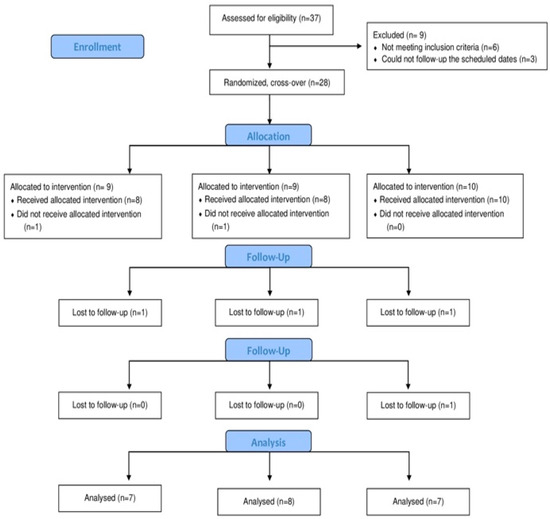
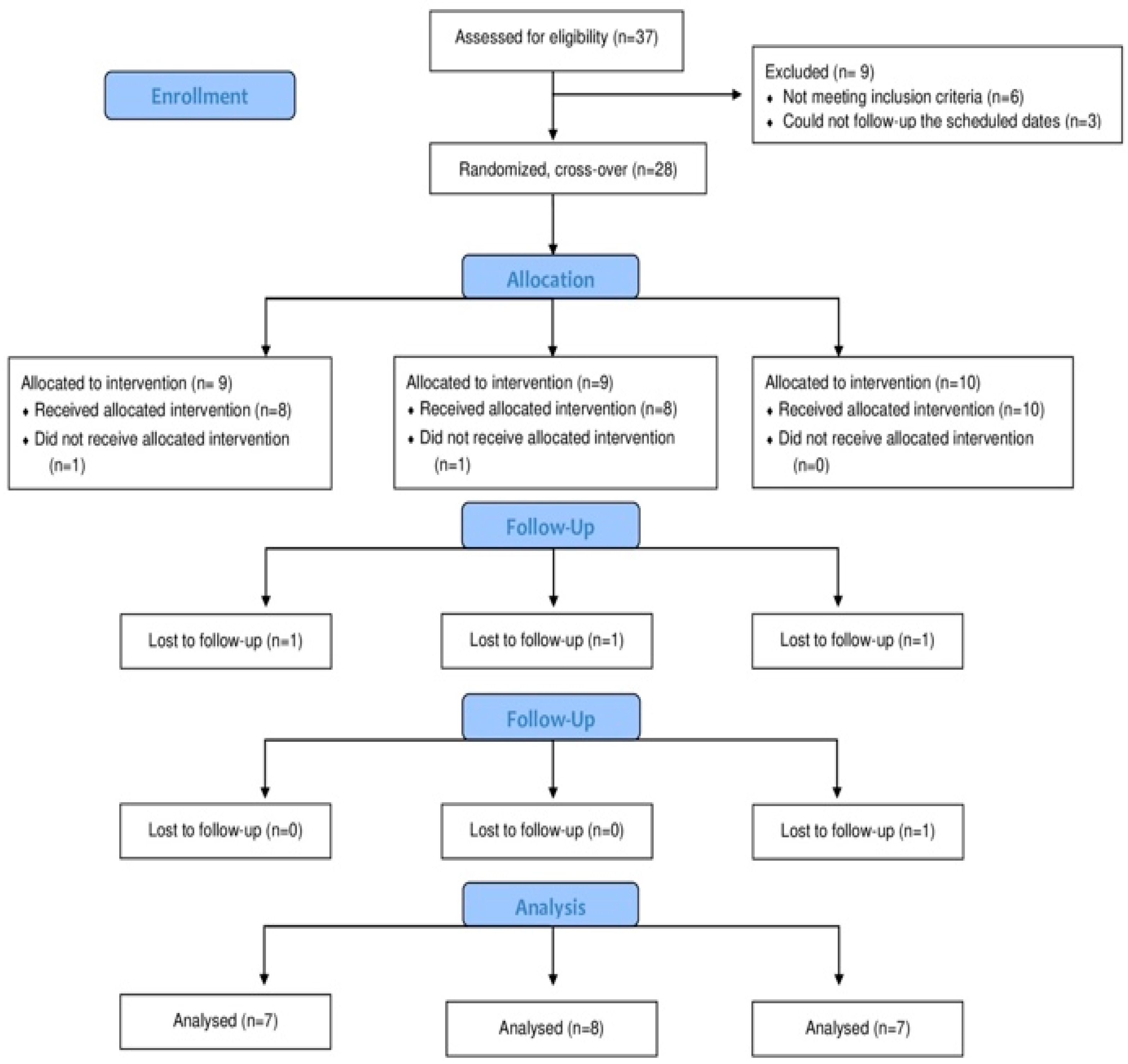
Thirty-seven participants, n = 12 men and n = 25 women, were assessed for eligibility; however, twenty-eight were allocated into the treatment groups. Nine participants were excluded from the study because they either failed to meet the inclusion criteria or were unable to adhere to the scheduled study dates. Recruitment ceased after reaching the required sample size, i.e., n = 28 (n = 10 men and n = 18 women). However, two participants withdrew from the study because they did not like the meal and four withdrew due to time constraints or other commitments (Figure 1).
Figure 1.
CONSORT schematic of participant recruitment, screening, and assessment [51].
Participant baseline characteristics are shown in Table 2. Participants were mostly women (59%) and of young age and overweight on average. About a third of participants were current smokers, whilst a third reported low physical activity (Table 2).
Table 2.
Participants’ general baseline characteristics.
Participants’ biochemical and hormonal parameters at the initial screening are presented in Table 3. Participants had, on average, normal levels for all biomarkers tested (Table 3).
Table 3.
Participants’ biochemical and hormonal profiles at initial screening (n = 22).
3.2. Postprandial Biochemical and Immunological Markers
The main effects of the intervention group and time, alongside their interaction on the postprandial levels in serum TC, HDL-C and LDL-C, TG, UA, CRP and INS, as well as in plasma glucose, following the test meals, are shown in Table 4. A significant time effect was observed for most biomarkers (p < 0.01), indicating expected postprandial fluctuations. However, no significant group or group × time interaction effects were detected for the majority of the measured parameters. A marginal interaction effect was observed for plasma glucose (p = 0.06), although it did not reach statistical significance.
Table 4.
Postprandial changes in serum total, HDL-, LDL-cholesterol, triglycerides, uric acid, CRP and insulin, as well as in plasma glucose, and the significance of group and time effect, following the test meals.
3.3. Postprandial Oxidative Stress Markers
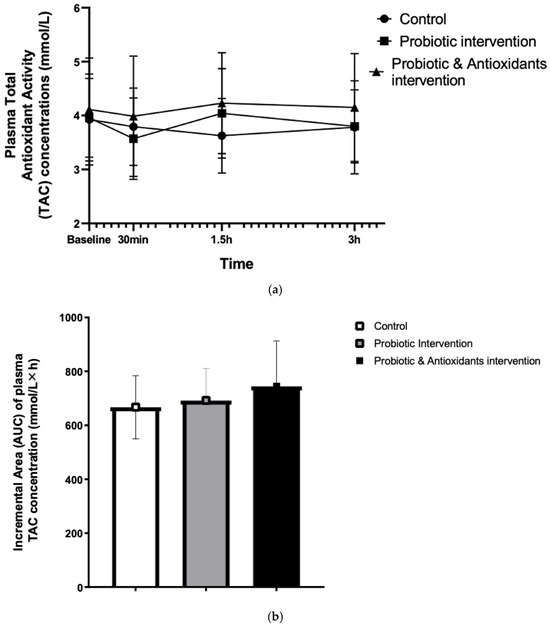
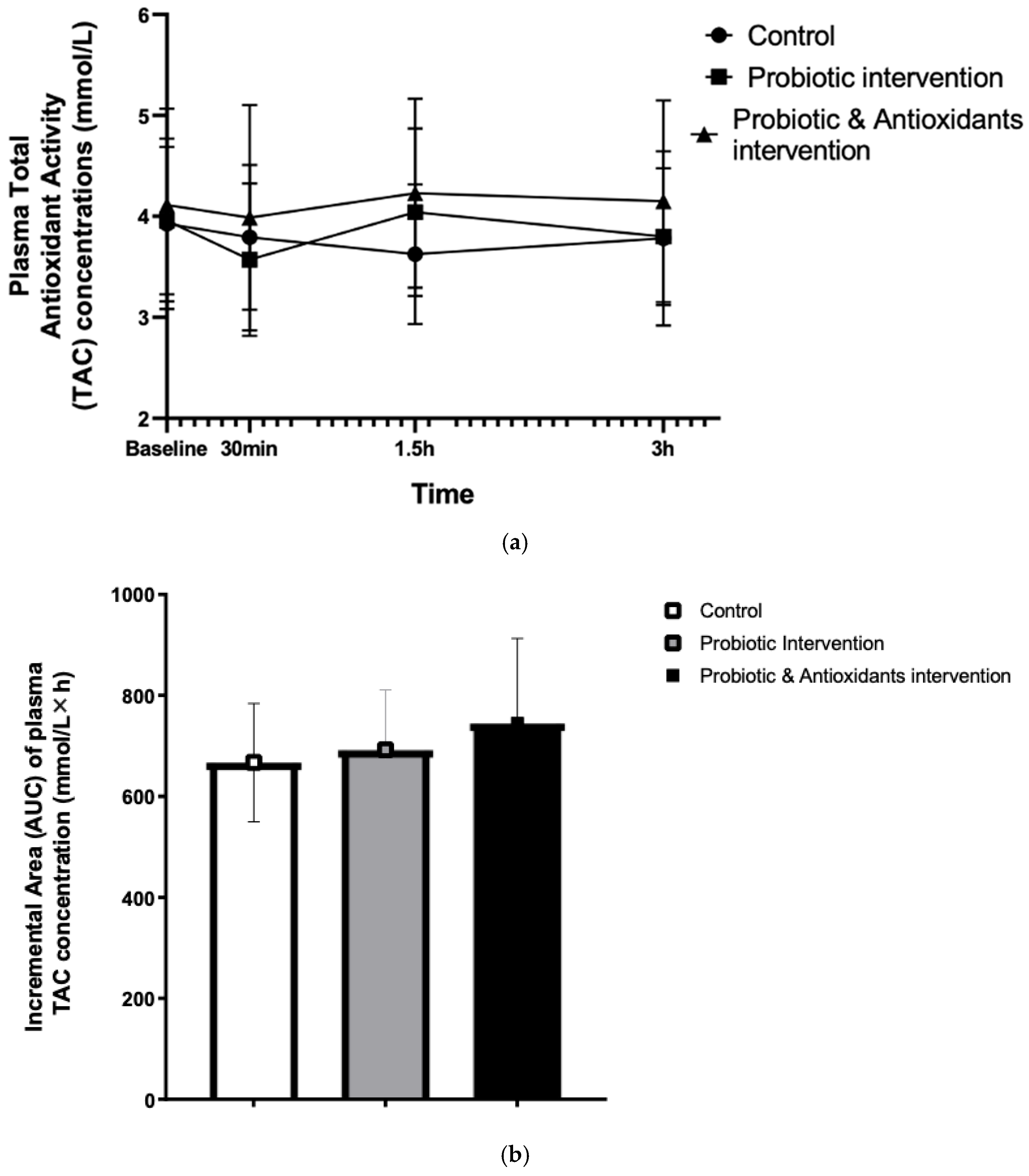
The main effect of the intervention group and time, as well as their interaction on postprandial changes in plasma TAC concentration, dRom, PAT and oxidative stress indexes, are presented in Table 5 and Figure 2a. A significant group × time interaction was observed for plasma TAC (p = 0.02), indicating a differential postprandial response between interventions. Regardless of no significant time or intervention effects, neither group × time interaction effects were observed for plasma dRom, PAT and OSI indexes (all p’s > 0.05, Table 5).
Table 5.
Postprandial changes in plasma TAC concentration, dRom, PAT, OSI and TMAO indexes, and the significance of group and time effect, following the test meals.
Figure 2.
(a) Postprandial responses to the test meals on plasma TAC. (b) The incremental Areas Under Curve (iAUCs) in the three study groups, for plasma TAC, over 3 h after the intake of the test meals.
The incremental Areas Under Curve (iAUCs) for all parameters tested between the three study groups over 3 h after the intake of the test meals are shown in Table 6. In general, the iAUCs were similar between the three groups in all tested biomarkers (all p’s > 0.05). Only TAC iAUC differed significantly between groups (p = 0.03), with higher values observed in the intervention groups compared to placebo (Table 6, Figure 2b).
Table 6.
The incremental Areas Under Curve (iAUCs) in the three study groups, for biochemical parameters tested over 3 h after the intake of the test meals.
4. Discussion
Dairy products are a good source of nutrients, making them a convenient way to meet daily nutritional needs, and they are considered a convenient vehicle for incorporating bioactive compounds and developing functional foods [52]. This has contributed to the growth of the functional dairy market, with numerous products introduced to meet consumer demand. These include fortified milk or milk substitutes, yogurt with added probiotics, and several types of cheese enriched with antioxidants [53]. In parallel, there has been a trend towards the consumption of functional foods that are perceived as healthier and more natural, especially among the younger population [54]. This can be attributed to the fact that younger people are more health-conscious and, as a result, are more interested in functional foods that support particular health goals or address specific health concerns such as weight loss, gut health, and immunity support [55]. Further research is needed to determine the optimal doses and potential benefits of the functional ingredients in dairy products.
The present study tested the hypothesis that yogurt enriched with L. rhamnosus OLXAL-1 or yogurt enriched with this microorganism and antioxidants may have a positive effect on postprandial lipemia, glycemia, and the antioxidant profile in healthy participants. A statistically significant increase in plasma TAC was observed; however, this was not accompanied by consistent changes in other oxidative stress markers, suggesting a limited physiological impact. In the case of probiotic yogurt intervention, there was no significant improvement in plasma antioxidant capacity, in contrast to studies suggesting that probiotic bacteria may enhance the antioxidant properties of yogurt [56]. Regarding other oxidative stress biomarkers, no statistically significant differences in the biomarkers of pro-oxidant status, antioxidant potential, and oxidative stress were noted between the intervention and placebo groups.
The present study also examined whether probiotic-enriched yogurt could influence blood glucose levels to control blood glucose [57,58,59] and diabetic complications [60]. Moreover, the addition of plant-derived products rich in antioxidant and phenolic compounds into probiotic yogurts has a greater effect on postprandial glycemic control in both animal [61] and human studies [13,41,57]. To date, most studies that have found beneficial effects of probiotics and/or antioxidants on the human glycemic response have been long-term clinical trials, with a duration of at least four weeks [28,62,63,64]. In the present short-term study, although no significant differences were observed in 2 h postprandial glucose levels, a transient trend was noted, with higher glucose levels at 30 min in the control group followed by a greater reduction at 1.5 h. Regarding probiotics, this finding may be due to the study design, which was an acute dietary intervention, likely due to the acute study design, which may not allow sufficient time for microbiota-mediated effects, given that no microbiome-related biomarkers were assessed [57,65]. In contrast, other long-term studies did not find a significant reduction in 2 h postprandial glucose levels after the administration of probiotics compared to placebo [66], and such findings may be strain-specific [29]. Regarding antioxidants, a proposed mechanism for glycemic control is the ability to inhibit carbohydrate-hydrolyzing enzymes, such as pancreatic α-amylase and α-glucosidase, and in vitro studies have shown that the addition of phenolic compounds from medicinal plants to yogurt could be an effective treatment for postprandial hyperglycemia [67,68]; however, such mechanisms were not evaluated in the present clinical study. In addition, Helal and Tagliazucchi (2018) showed that a yogurt matrix could enhance the gastrointestinal stability and bioaccessibility of polyphenols [69]. In contrast, the results of the present study are in agreement with previous acute dietary interventions that did not find additional benefits in postprandial glucose levels after the inclusion of antioxidant extracts [70,71,72].
Additionally, the inclusion of metabolically healthy participants may have limited the ability to detect measurable changes, as such populations typically exhibit high metabolic flexibility and lower responsiveness to nutritional interventions. Previous studies reported significant effects of probiotics and/or antioxidants on the reduction in glucose in participants with diabetes [73] but not in healthy people [74]. This likely reflects the metabolic flexibility of healthy individuals in maintaining homoeostatic control [75]. Continuing the examination of the postprandial glycemic response, serum insulin levels were not significantly different among the groups, likely due to the identical meal composition across groups [76,77,78]. However, there was a significant time effect, with an increase from baseline to 30 min followed by a significant decrease from 30 min to each remaining time point. Postprandial insulin tends to mirror postprandial glucose, with an increase in glucose within 1 h and subsequent insulin production, followed by a return to normal values at 2 and 3 h after meal consumption in healthy subjects [77,79,80,81]. Phenolic compounds have been shown to influence insulin sensitivity [82,83]. There is evidence that polyphenolic compounds can enhance insulin secretion from pancreatic β-cells and thus attenuate postprandial glycemia in healthy subjects [84]. In contrast, Skulas-Ray et al. (2011) found that the addition of plant-derived phenolic compounds at high concentrations could lead to reductions in postprandial insulin levels [85], possibly due to an improvement in insulin sensitivity by polyphenols and the reduced insulin requirement to achieve glucose homoeostasis [85,86]. In long-term probiotic studies, fasting is the primary measurement of insulin levels. There are studies that found no statistically significant mean difference between the probiotic and control groups [73,87] whereas others have reported significantly reduced fasting insulin serum levels after probiotic administration [62,63,88,89]. These findings suggest that, in an acute setting, there is no significant effect on postprandial insulinemia by the ingestion of yogurt enriched with probiotics or probiotics plus antioxidants compared to conventional yogurt. The effect of probiotics and antioxidants on insulin secretion could be dependent on the dose and origin of polyphenols, the dose, strain, and number of probiotic species used, the duration of the study, the number and health state of the participants, and the control group.
Regarding postprandial lipemia biomarkers, no significant differences were observed in postprandial TC, TG, HDL-C, and LDL-C responses between the intervention and placebo groups or between the intervention groups. Dietary short- or medium-chain fatty acids have a limited effect on postprandial lipemia because they directly enter the general circulation via the portal route, instead of via chylomicron secretion [90]. This may be explained by the similarity in fatty acid composition and total fat content among the three meals [91]. This may also reflect that the administered dose and acute exposure were insufficient to elicit measurable changes in postprandial lipemia. In addition, the dairy fats provided in the present study, as the only source of saturated fatty acids, contain significant amounts of short- and medium-chain fatty acids. However, many studies have assumed that the biological role of polyphenols is dose-dependent and varies between different polyphenol sources [90]. Research has examined the consumption of a high-fat meal alongside some source of polyphenols, with positive results in animal studies [92], while high variability has been observed in clinical trials [17,18,93,94]. In the present study, the intervention product high in antioxidants did not appear to have any effect on the lipid profile of the volunteers, which can also be attributed to the dose of the antioxidant compound in the final product.
Similarly, in the probiotic intervention, no acute effect was observed on postprandial lipemia, as there was no significant difference in the biomarkers under examination. However, long-term studies (8–12 weeks) have shown favorable effects of daily probiotic intake on TC, LDL-C, HDL-C, and TG lipid biomarkers [95]. Their effects on postprandial lipemia indices appear to be based on several cholesterol-lowering mechanisms, including enzymatic deconjugation of bile acids by bacterial hydrolases, cholesterol binding by small intestine probiotics leading to incorporation of cholesterol in cell membranes of probiotics, and decreased concentration of cholesteryl esters in LDL particles [96]. Serum uric acid levels reflect hyperuricemia, a condition characterized by high serum uric acid concentrations, [97]. Uric acid is generated as a product of purine metabolism, and is considered to be a component of metabolic syndrome and is associated with metabolic syndrome risk factors such as hypertension, elevated triglyceride levels, and insulin resistance [98,99]. Probiotic supplements containing uricolytic bacteria have been proposed to lower serum uric acid levels in hyperuricemic animals, with beneficial consequences on blood pressure [100]. Moreover, research data indicate that regular long-term intake of probiotic yogurt results in a significant decrease in serum uric acid levels [101,102].
The results of the present study did not show a positive association between the consumption of probiotic yogurt and reduction in uric acid, likely due to the acute study design. Specifically, an increase in plasma uric acid after administration of phenol-rich foods/beverages has already been demonstrated and could be ascribed to the interaction of phenols with the secretion and reabsorption of uric acid [103]. The fact that there was no increase in uric acid levels in the present study may be due to the coexistence of probiotics and polyphenols in the intervention product.
Moreover, serum C-reactive protein (CRP) has also been examined as a marker of systemic inflammation, which is elevated in the presence of chronic conditions, including cardiovascular diseases, type 2 diabetes, and metabolic syndrome [104]. Probiotics are suggested for the reduction in inflammation biomarkers as CRP, possibly due to their effects on increasing glutathione (GSH) levels and scavenging superoxide and hydroxyl radicals, decreasing the expression of interleukin-6 (IL-6) in adipocytes, and decreasing adiposity [105,106]. Moreover, dietary antioxidant consumption may affect CRP through oxidative stress and inflammation reduction; however, no significant reduction has been detected in healthy individuals [107,108]. In the present study, CRP levels did not differ among the groups or among the time points of each group, as expected in an acute study with healthy participants.
Continuous experimental findings consistently suggest a potential correlation between gut flora-generated metabolites and disease-associated risk factors [109]. Trimethylamine-N-oxide (TMAO), which is mainly formed from nutritional substrates by intestinal microflora in the colon, has been associated with increased risk of cardiovascular disease (CVD) [110]. According to recent data, a short-term, high-fat diet does not increase fasting plasma TMAO concentrations but appears to increase postprandial TMAO concentrations in response to a high-fat meal [111]. A pilot study with a similar design in healthy volunteers examined the effect of probiotic supplementation on postprandial TMAO concentrations without identifying statistically significant differences between the intervention and control groups [112]. These results agree with those of the present study. Moreover, the current knowledge on the available strategies to reduce TMAO formation is discussed, highlighting the potential of phytochemicals, like antioxidants, to reduce TMAO formation by modulating gut microbiota composition [113]. However, this pathway remains speculative in the context of the present study due to the absence of microbiome analysis. There is insufficient literature on the effect of antioxidants on postprandial concentrations; however, a short-term study on antioxidants showed no effect on TMAO in healthy volunteers [114]. In the present study, TMAO levels did not differ among the groups or among the time points of each group.
Finally, there are some limitations of the current study that should be considered. First, there was a lack of dietary control over the participants’ background diet during the study. Second, the sufficiency of nutrient intake and status in our population may have also affected the main study outcomes, as it is difficult to change the postprandial state in subjects who are already well nourished [115]. Thirdly, the acute design of the study did not allow the probiotic ingredients to differentiate the volunteers’ gut microbiota [116], so that the desired changes would be detectable in the blood biomarkers. Furthermore, no mechanistic biomarkers (e.g., enzyme activity) or microbiome analyses were performed, limiting the ability to support mechanistic interpretations such as α-glucosidase inhibition or gut microbiota modulation. Finally, a larger sample size could have improved the accuracy and strength of the observed effect sizes. In addition, the mechanistic framework remains limited, particularly given the acute design, especially given the acute design, which is inherently unsuitable for microbiota-mediated effects. Finally, the use of healthy young participants with normal biomarkers limits the ability to detect intervention effects. Importantly, the absence of significant findings across most endpoints should be interpreted with caution, as it may reflect limitations related to the intervention dose, the acute nature of the study, and the selection of a metabolically healthy population, rather than a true lack of biological effect.
5. Conclusions
In summary, the study identified a modest increase in plasma TAC following the combined intervention; however, this isolated finding, in the absence of changes in other markers, suggests limited overall impact on oxidative status. No further changes were detected in either intervention group in the postprandial state, likely due to the acute study design. The effects of probiotics may be more evident in long-term interventions, as opposed to a postprandial state study.
Author Contributions
Conceptualization, P.B., Y.K., A.G.T. and A.E.K.; methodology, P.B., O.P., K.A., A.K., I.P., G.M., N.P. and P.P.; software, P.B. and V.B.; validation, A.K., G.M., N.P., O.P. and M.K.; formal analysis, A.E.K., Y.K., A.G.T. and M.K.; investigation, A.V., P.F., E.T., I.P., N.P., P.P. and K.A.; resources, A.V., P.F., E.T., I.P. and P.P.; data curation, G.M. and A.K.; writing—original draft preparation, P.B., A.K., G.M. and N.P.; writing—review and editing, A.E.K., Y.K., A.G.T. and V.B.; visualization, V.B. and P.B.; supervision, A.E.K.; project administration, Y.K., A.E.K. and A.G.T.; funding acquisition, Y.K. All authors have read and agreed to the published version of the manuscript.
Funding
This research is part of the project “Infrastructure of Microbiome Applications in Food Systems-FoodBiomes”, which is co-funded by the European Regional Development Fund (ERDF) under the operational program “Competitiveness, Entrepreneurship and Innovation-EPANEK 2014–2020”, Call 111 “Support for Regional Excellence”.
Institutional Review Board Statement
The study was conducted in accordance with the Declaration of Helsinki and approved by the Institutional Ethics Committee of University of the Aegean (approval 3343/15 February 2022).
Informed Consent Statement
Informed consent was obtained from all subjects involved in the study.
Data Availability Statement
The data presented in this study are available on request from the corresponding author. The data is not publicly available due to ethical issues due to human participants.
Acknowledgments
We are grateful to all volunteers who participated in this study.
Conflicts of Interest
The authors declare that they have no known competing financial interests or personal relationships that could have appeared to influence the work reported in this paper.
References
- Hyson, D.; Rutledge, J.C.; Berglund, L. Postprandial Lipemia and Cardiovascular Disease. Curr. Atheroscler. Rep. 2003, 5, 437–444. [Google Scholar] [CrossRef] [Scilit]
- Drouin-Chartier, J.-P.; Tremblay, A.J.; Maltais-Giguère, J.; Charest, A.; Guinot, L.; Rioux, L.-E.; Labrie, S.; Britten, M.; Lamarche, B.; Turgeon, S.L.; et al. Differential Impact of the Cheese Matrix on the Postprandial Lipid Response: A Randomized, Crossover, Controlled Trial. Am. J. Clin. Nutr. 2017, 106, 1358–1365. [Google Scholar] [CrossRef] [Scilit] [PubMed]
- Dias, C.B.; Moughan, P.J.; Wood, L.G.; Singh, H.; Garg, M.L. Postprandial Lipemia: Factoring in Lipemic Response for Ranking Foods for Their Healthiness. Lipids Health Dis. 2017, 16, 178. [Google Scholar] [CrossRef] [Scilit] [PubMed]
- Papagianni, O.; Loukas, T.; Magkoutis, A.; Kagoudi, M.; Skalkos, D.; Kafetzopoulos, D.; Dimou, C.; Karantonis, H.C.; Koutelidakis, A.E. Postprandial Responses of Serum Cholesterol, Glucose and Plasma Antioxidant Activity, after Intake of an Innovative High Fat Mayonnaise-Based Appetizer, Enhanced with Olive Paste, in Healthy Volunteers. Life 2022, 12, 1385. [Google Scholar] [CrossRef] [Scilit] [PubMed]
- Chan, D.C.; Pang, J.; Romic, G.; Watts, G.F. Postprandial Hypertriglyceridemia and Cardiovascular Disease: Current and Future Therapies. Curr. Atheroscler. Rep. 2013, 15, 309. [Google Scholar] [CrossRef] [Scilit] [PubMed]
- Chen, Y.D.; Swami, S.; Skowronski, R.; Coulston, A.; Reaven, G.M. Differences in Postprandial Lipemia between Patients with Normal Glucose Tolerance and Noninsulin-Dependent Diabetes Mellitus. J. Clin. Endocrinol. Metab. 1993, 76, 172–177. [Google Scholar] [CrossRef] [Scilit]
- Mekki, N.; Christofilis, M.A.; Charbonnier, M.; Atlan-Gepner, C.; Defoort, C.; Juhel, C.; Borel, P.; Portugal, H.; Pauli, A.M.; Vialettes, B.; et al. Influence of Obesity and Body Fat Distribution on Postprandial Lipemia and Triglyceride-Rich Lipoproteins in Adult Women1. J. Clin. Endocrinol. Metab. 1999, 84, 184–191. [Google Scholar] [CrossRef] [Scilit]
- Gill, J.M.; Mees, G.P.; Frayn, K.N.; Hardman, A.E. Moderate Exercise, Postprandial Lipaemia and Triacylglycerol Clearance. Eur. J. Clin. Investig. 2001, 31, 201–207. [Google Scholar] [CrossRef] [Scilit]
- Hardman, A.E. The Influence of Exercise on Postprandial Triacylglycerol Metabolism. Atherosclerosis 1998, 141, S93–S100. [Google Scholar] [CrossRef] [Scilit]
- Lairon, D.; Defoort, C. Effects of Nutrients on Postprandial Lipemia. Curr. Vasc. Pharmacol. 2011, 9, 309–312. [Google Scholar] [CrossRef] [Scilit]
- Papakonstantinou, E.; Oikonomou, C.; Nychas, G.; Dimitriadis, G.D. Effects of Diet, Lifestyle, Chrononutrition and Alternative Dietary Interventions on Postprandial Glycemia and Insulin Resistance. Nutrients 2022, 14, 823. [Google Scholar] [CrossRef] [Scilit]
- Yaribeygi, H.; Farrokhi, F.R.; Butler, A.E.; Sahebkar, A. Insulin Resistance: Review of the Underlying Molecular Mechanisms. J. Cell. Physiol. 2019, 234, 8152–8161. [Google Scholar] [CrossRef] [Scilit] [PubMed]
- Grom, L.C.; Coutinho, N.M.; Guimarães, J.T.; Balthazar, C.F.; Silva, R.; Rocha, R.S.; Freitas, M.Q.; Duarte, M.C.K.H.; Pimentel, T.C.; Esmerino, E.A.; et al. Probiotic Dairy Foods and Postprandial Glycemia: A Mini-Review. Trends Food Sci. Technol. 2020, 101, 165–171. [Google Scholar] [CrossRef] [Scilit]
- Dickinson, S.; Brand-Miller, J. Glycemic Index, Postprandial Glycemia and Cardiovascular Disease. Curr. Opin. Lipidol. 2005, 16, 69. [Google Scholar] [CrossRef] [Scilit] [PubMed]
- Muñoz-Perez, D.M.; Gonzalez-Correa, C.H.; Astudillo-Muñoz, E.Y.; Porras-Hurtado, G.L.; Sanchez-Giraldo, M.; Lopez-Miranda, J.; Camargo, A.; Rangel-Zuñiga, O.A. Alternative Foods in Cardio-Healthy Dietary Models That Improve Postprandial Lipemia and Insulinemia in Obese People. Nutrients 2021, 13, 2225. [Google Scholar] [CrossRef] [Scilit]
- Arranz, S.; Martínez-Huélamo, M.; Vallverdu-Queralt, A.; Valderas-Martinez, P.; Illán, M.; Sacanella, E.; Escribano, E.; Estruch, R.; Lamuela-Raventos, R.M. Influence of Olive Oil on Carotenoid Absorption from Tomato Juice and Effects on Postprandial Lipemia. Food Chem. 2015, 168, 203–210. [Google Scholar] [CrossRef] [Scilit]
- Annuzzi, G.; Bozzetto, L.; Costabile, G.; Giacco, R.; Mangione, A.; Anniballi, G.; Vitale, M.; Vetrani, C.; Cipriano, P.; Della Corte, G.; et al. Diets Naturally Rich in Polyphenols Improve Fasting and Postprandial Dyslipidemia and Reduce Oxidative Stress: A Randomized Controlled Trial. Am. J. Clin. Nutr. 2014, 99, 463–471. [Google Scholar] [CrossRef] [Scilit]
- Mathew, A.S.; Capel-Williams, G.M.; Berry, S.E.E.; Hall, W.L. Acute Effects of Pomegranate Extract on Postprandial Lipaemia, Vascular Function and Blood Pressure. Plant Foods Hum. Nutr. 2012, 67, 351–357. [Google Scholar] [CrossRef] [Scilit]
- Coe, S.; Ryan, L. Impact of Polyphenol-Rich Sources on Acute Postprandial Glycaemia: A Systematic Review. J. Nutr. Sci. 2016, 5, e24. [Google Scholar] [CrossRef] [Scilit]
- Davis, D.W.; Tallent, R.; Navalta, J.W.; Salazar, A.; Lyons, T.J.; Basu, A. Effects of Acute Cocoa Supplementation on Postprandial Apolipoproteins, Lipoprotein Subclasses, and Inflammatory Biomarkers in Adults with Type 2 Diabetes after a High-Fat Meal. Nutrients 2020, 12, 1902. [Google Scholar] [CrossRef] [Scilit]
- Chusak, C.; Thilavech, T.; Henry, C.J.; Adisakwattana, S. Acute Effect of Clitoria ternatea Flower Beverage on Glycemic Response and Antioxidant Capacity in Healthy Subjects: A Randomized Crossover Trial. BMC Complement. Altern. Med. 2018, 18, 6. [Google Scholar] [CrossRef] [Scilit] [PubMed]
- Jokura, H.; Watanabe, I.; Umeda, M.; Hase, T.; Shimotoyodome, A. Coffee Polyphenol Consumption Improves Postprandial Hyperglycemia Associated with Impaired Vascular Endothelial Function in Healthy Male Adults. Nutr. Res. 2015, 35, 873–881. [Google Scholar] [CrossRef] [Scilit] [PubMed]
- Zeighamy Alamdary, S.; Afifirad, R.; Asgharzadeh, S.; Asadollahi, P.; Mahdizade Ari, M.; Dashtibin, S.; Sabaghan, M.; Shokouhamiri, M.R.; Ghanavati, R.; Darbandi, A. The Influence of Probiotics Consumption on Management of Prediabetic State: A Systematic Review of Clinical Trials. Int. J. Clin. Pract. 2022, 2022, e5963679. [Google Scholar] [CrossRef] [Scilit] [PubMed]
- Alves-Santos, A.M.; Sugizaki, C.S.A.; Lima, G.C.; Naves, M.M.V. Prebiotic Effect of Dietary Polyphenols: A Systematic Review. J. Funct. Foods 2020, 74, 104169. [Google Scholar] [CrossRef] [Scilit]
- Ranaivo, H.; Zhang, Z.; Alligier, M.; Van Den Berghe, L.; Sothier, M.; Lambert-Porcheron, S.; Feugier, N.; Cuerq, C.; Machon, C.; Neyrinck, A.M.; et al. Chitin-Glucan Supplementation Improved Postprandial Metabolism and Altered Gut Microbiota in Subjects at Cardiometabolic Risk in a Randomized Trial. Sci. Rep. 2022, 12, 8830. [Google Scholar] [CrossRef] [Scilit]
- Varzakas, T.; Kandylis, P.; Dimitrellou, D.; Salamoura, C.; Zakynthinos, G.; Proestos, C. 6—Innovative and Fortified Food: Probiotics, Prebiotics, GMOs, and Superfood. In Preparation and Processing of Religious and Cultural Foods; Woodhead Publishing Series in Food Science, Technology and Nutrition; Ali, M.E., Nizar, N.N.A., Eds.; Woodhead Publishing: Sawston, UK, 2018; pp. 67–129. ISBN 978-0-08-101892-7. [Google Scholar]
- Kim, S.-K.; Guevarra, R.B.; Kim, Y.-T.; Kwon, J.; Kim, H.; Cho, J.H.; Kim, H.B.; Lee, J.-H. Role of Probiotics in Human Gut Microbiome-Associated Diseases. J. Microbiol. Biotechnol. 2019, 29, 1335–1340. [Google Scholar] [CrossRef] [Scilit]
- Ruan, Y.; Sun, J.; He, J.; Chen, F.; Chen, R.; Chen, H. Effect of Probiotics on Glycemic Control: A Systematic Review and Meta-Analysis of Randomized, Controlled Trials. PLoS ONE 2015, 10, e0132121. [Google Scholar] [CrossRef] [Scilit]
- Ivey, K.L.; Hodgson, J.M.; Kerr, D.A.; Lewis, J.R.; Thompson, P.L.; Prince, R.L. The Effects of Probiotic Bacteria on Glycaemic Control in Overweight Men and Women: A Randomised Controlled Trial. Eur. J. Clin. Nutr. 2014, 68, 447–452. [Google Scholar] [CrossRef] [Scilit]
- Akbari, V.; Hendijani, F. Effects of Probiotic Supplementation in Patients with Type 2 Diabetes: Systematic Review and Meta-Analysis. Nutr. Rev. 2016, 74, 774–784. [Google Scholar] [CrossRef] [Scilit]
- Nikbakht, E.; Khalesi, S.; Singh, I.; Williams, L.T.; West, N.P.; Colson, N. Effect of Probiotics and Synbiotics on Blood Glucose: A Systematic Review and Meta-Analysis of Controlled Trials. Eur. J. Nutr. 2018, 57, 95–106. [Google Scholar] [CrossRef] [Scilit] [PubMed]
- Szulińska, M.; Łoniewski, I.; van Hemert, S.; Sobieska, M.; Bogdański, P. Dose-Dependent Effects of Multispecies Probiotic Supplementation on the Lipopolysaccharide (LPS) Level and Cardiometabolic Profile in Obese Postmenopausal Women: A 12-Week Randomized Clinical Trial. Nutrients 2018, 10, 773. [Google Scholar] [CrossRef] [Scilit]
- Kullisaar, T.; Shepetova, J.; Zilmer, K.; Songisepp, E.; Rehema, A.; Mikelsaar, M.; Zilmer, M. An Antioxidant Probiotic Reduces Postprandial Lipemia and Oxidative Stress. Open Life Sci. 2011, 6, 32–40. [Google Scholar] [CrossRef] [Scilit]
- Kullisaar, T.; Zilmer, K.; Salum, T.; Rehema, A.; Zilmer, M. The Use of Probiotic L. fermentum ME-3 Containing Reg’Activ Cholesterol Supplement for 4 Weeks Has a Positive Influence on Blood Lipoprotein Profiles and Inflammatory Cytokines: An Open-Label Preliminary Study. Nutr. J. 2016, 15, 93. [Google Scholar] [CrossRef] [Scilit]
- Ataie-Jafari, A.; Larijani, B.; Alavi Majd, H.; Tahbaz, F. Cholesterol-Lowering Effect of Probiotic Yogurt in Comparison with Ordinary Yogurt in Mildly to Moderately Hypercholesterolemic Subjects. Ann. Nutr. Metab. 2009, 54, 22–27. [Google Scholar] [CrossRef] [Scilit] [PubMed]
- Schaafsma, G.; Meuling, W.; van Dokkum, W.; Bouley, C. Effects of a Milk Product, Fermented by Lactobacillus acidophilus and with Fructo-Oligosaccharides Added, on Blood Lipids in Male Volunteers. Eur. J. Clin. Nutr. 1998, 52, 436–440. [Google Scholar] [CrossRef] [Scilit]
- Agerbaek, M.; Gerdes, L.U.; Richelsen, B. Hypocholesterolaemic Effect of a New Fermented Milk Product in Healthy Middle-Aged Men. Eur. J. Clin. Nutr. 1995, 49, 346–352. [Google Scholar]
- Ismail, A.; Darwish, O.; Tayel, D.; Elneily, D.; Elshaarawy, G. Impact of Probiotic Intake on the Glycemic Control, Lipid Profile and Inflammatory Markers among Patients with Type 2 Diabetes Mellitus. Clin. Diabetol. 2021, 10, 468–475. [Google Scholar] [CrossRef] [Scilit]
- Stanton, C.; Gardiner, G.; Meehan, H.; Collins, K.; Fitzgerald, G.; Lynch, P.B.; Ross, R.P. Market Potential for Probiotics. Am. J. Clin. Nutr. 2001, 73, 476s–483s. [Google Scholar] [CrossRef] [Scilit]
- Banerjee, A.; Dhar, P. Amalgamation of Polyphenols and Probiotics Induce Health Promotion. Crit. Rev. Food Sci. Nutr. 2019, 59, 2903–2926. [Google Scholar] [CrossRef] [Scilit] [PubMed]
- Anuyahong, T.; Chusak, C.; Thilavech, T.; Adisakwattana, S. Postprandial Effect of Yogurt Enriched with Anthocyanins from Riceberry Rice on Glycemic Response and Antioxidant Capacity in Healthy Adults. Nutrients 2020, 12, 2930. [Google Scholar] [CrossRef] [Scilit]
- Peluso, I.; Romanelli, L.; Palmery, M. Interactions between Prebiotics, Probiotics, Polyunsaturated Fatty Acids and Polyphenols: Diet or Supplementation for Metabolic Syndrome Prevention? Int. J. Food Sci. Nutr. 2014, 65, 259–267. [Google Scholar] [CrossRef] [Scilit] [PubMed]
- Nelios, G.; Santarmaki, V.; Pavlatou, C.; Dimitrellou, D.; Kourkoutas, Y. New Wild-Type Lacticaseibacillus rhamnosus Strains as Candidates to Manage Type 1 Diabetes. Microorganisms 2022, 10, 272. [Google Scholar] [CrossRef] [Scilit] [PubMed]
- Nelios, G.; Prapa, I.; Nikolaou, A.; Mitropoulou, G.; Yanni, A.E.; Kostomitsopoulos, N.; Kourkoutas, Y. Cereals and Fruits as Effective Delivery Vehicles of Lacticaseibacillus rhamnosus through Gastrointestinal Transit. Appl. Sci. 2023, 13, 8643. [Google Scholar] [CrossRef] [Scilit]
- Nikolaou, A.; Mitropoulou, G.; Nelios, G.; Kourkoutas, Y. Novel Functional Grape Juices Fortified with Free or Immobilized Lacticaseibacillus rhamnosus OLXAL-1. Microorganisms 2023, 11, 646. [Google Scholar] [CrossRef] [Scilit]
- Bousdouni, P.; Dalaka, E.; Kandyliari, A.; Gkalpinos, V.; Parisis, N.; Tzakos, A.G.; Theodorou, G.; Kapsokefalou, M.; Koutelidakis, A.E. Assessment of the Antioxidant Activity of Lyophilized Cistus creticus Extract as a Functional Fortifier in Yogurt: A Cellular and Non-Cellular Evaluation. Oxygen 2025, 5, 17. [Google Scholar] [CrossRef] [Scilit]
- FoodData Central. Available online: https://fdc.nal.usda.gov/fdc-app.html#/food-details/170886/nutrients (accessed on 15 March 2023).
- National Center for Health Statistics. National Health and Nutrition Examination Survey III: Body Measurements (Anthropometry); Westat, Inc.: Rockville, MD, USA, 1988. [Google Scholar]
- Benzie, I.F.F.; Strain, J.J. The Ferric Reducing Ability of Plasma (FRAP) as a Measure of “Antioxidant Power”: The FRAP Assay. Anal. Biochem. 1996, 239, 70–76. [Google Scholar] [CrossRef] [Scilit] [PubMed]
- Parisis, N.A.; Bousdouni, P.; Kandyliari, A.; Spyridaki, M.-H.; Koutsogianni, A.D.; Telli, C.; Tsilidis, K.K.; Koutelidakis, A.E.; Tzakos, A.G. Development and Validation of a Simple and Cost-Effective LC-MS/MS Method for the Quantitation of the Gut-Derived Metabolite Trimethylamine N-Oxide in Human Plasma of Healthy and Hyperlipidemic Volunteers. Molecules 2025, 30, 2398. [Google Scholar] [CrossRef] [Scilit]
- CONSORT Group. CONSORT 2010 Statement: Updated Guidelines for Reporting Parallel Group Randomised Trials. BMJ 2010, 340, c332. Available online: https://www.bmj.com/content/340/bmj.c332 (accessed on 23 February 2023). [CrossRef] [Scilit]
- Bimbo, F.; Bonanno, A.; Nocella, G.; Viscecchia, R.; Nardone, G.; De Devitiis, B.; Carlucci, D. Consumers’ Acceptance and Preferences for Nutrition-Modified and Functional Dairy Products: A Systematic Review. Appetite 2017, 113, 141–154. [Google Scholar] [CrossRef] [Scilit]
- Grom, L.C.; Rocha, R.S.; Balthazar, C.F.; Guimarães, J.T.; Coutinho, N.M.; Barros, C.P.; Pimentel, T.C.; Venâncio, E.L.; Junior, I.C.; Maciel, P.M.C.; et al. Postprandial Glycemia in Healthy Subjects: Which Probiotic Dairy Food Is More Adequate? J. Dairy Sci. 2020, 103, 1110–1119. [Google Scholar] [CrossRef] [Scilit]
- Konstantinidi, M.; Koutelidakis, A.E. Functional Foods and Bioactive Compounds: A Review of Its Possible Role on Weight Management and Obesity’s Metabolic Consequences. Medicines 2019, 6, 94. [Google Scholar] [CrossRef] [Scilit]
- Papagianni, O.; Delli, E.; Vasila, M.E.; Loukas, T.; Magkoutis, A.; Dimou, C.; Karantonis, H.C.; Koutelidakis, A.E. The Acute Effect of a Novel Miso-Type Sauce, Enhanced with a Carotenoid-Rich Extract from Fruit By-Products, on Postprandial Biomarkers of Oxidative Stress and Inflammation. Nutrients 2022, 14, 1316. [Google Scholar] [CrossRef] [Scilit]
- Khan, I.T.; Nadeem, M.; Imran, M.; Ullah, R.; Ajmal, M.; Jaspal, M.H. Antioxidant Properties of Milk and Dairy Products: A Comprehensive Review of the Current Knowledge. Lipids Health Dis. 2019, 18, 41. [Google Scholar] [CrossRef] [Scilit]
- Bayat, A.; Azizi-Soleiman, F.; Heidari-Beni, M.; Feizi, A.; Iraj, B.; Ghiasvand, R.; Askari, G. Effect of Cucurbita Ficifolia and Probiotic Yogurt Consumption on Blood Glucose, Lipid Profile, and Inflammatory Marker in Type 2 Diabetes. Int. J. Prev. Med. 2016, 7, 30. [Google Scholar] [CrossRef] [Scilit] [PubMed]
- Ejtahed, H.S.; Mohtadi-Nia, J.; Homayouni-Rad, A.; Niafar, M.; Asghari-Jafarabadi, M.; Mofid, V. Probiotic Yogurt Improves Antioxidant Status in Type 2 Diabetic Patients. Nutrition 2012, 28, 539–543. [Google Scholar] [CrossRef] [Scilit] [PubMed]
- Sahhaf Ebrahimi, F.; Homayouni Rad, A.; Mosen, M.; Abbasalizadeh, F.; Tabrizi, A.; Khalili, L. Effect of L. acidophilus and B. lactis on Blood Glucose in Women with Gestational Diabetes Mellitus: A Randomized Placebo-Controlled Trial. Diabetol. Metab. Syndr. 2019, 11, 75. [Google Scholar] [CrossRef] [Scilit] [PubMed]
- Mollakhalili Meybodi, N.; Mohammadifar, M.A.; Feizollahi, E. Gluten-Free Bread Quality: A Review of the Improving Factors. J. Food Qual. Hazards Control 2015, 2, 81–85. [Google Scholar]
- Chen, L.; Chen, N.; He, Q.; Sun, Q.; Zeng, W. Preparation of a Functional Yogurt with Ligustrum robustum (Rxob.) Blume and Its Action Mechanism. J. Food Sci. 2021, 86, 1114–1123. [Google Scholar] [CrossRef] [Scilit]
- Madjd, A.; Taylor, M.A.; Mousavi, N.; Delavari, A.; Malekzadeh, R.; Macdonald, I.A.; Farshchi, H.R. Comparison of the Effect of Daily Consumption of Probiotic Compared with Low-Fat Conventional Yogurt on Weight Loss in Healthy Obese Women Following an Energy-Restricted Diet: A Randomized Controlled Trial1. Am. J. Clin. Nutr. 2016, 103, 323–329. [Google Scholar] [CrossRef] [Scilit] [PubMed]
- Naseri, K.; Saadati, S.; Ashtary-Larky, D.; Asbaghi, O.; Ghaemi, F.; Pashayee-Khamene, F.; Yari, Z.; de Courten, B. Probiotics and Synbiotics Supplementation Improve Glycemic Control Parameters in Subjects with Prediabetes and Type 2 Diabetes Mellitus: A GRADE-Assessed Systematic Review, Meta-Analysis, and Meta-Regression of Randomized Clinical Trials. Pharmacol. Res. 2022, 184, 106399. [Google Scholar] [CrossRef] [Scilit]
- Takahashi, M.; Miyashita, M.; Suzuki, K.; Bae, S.; Kim, H.-K.; Wakisaka, T.; Matsui, Y.; Takeshita, M.; Yasunaga, K. Acute Ingestion of Catechin-Rich Green Tea Improves Postprandial Glucose Status and Increases Serum Thioredoxin Concentrations in Postmenopausal Women. Br. J. Nutr. 2014, 112, 1542–1550. [Google Scholar] [CrossRef] [Scilit]
- He, M.; Shi, B. Gut Microbiota as a Potential Target of Metabolic Syndrome: The Role of Probiotics and Prebiotics. Cell Biosci. 2017, 7, 54. [Google Scholar] [CrossRef] [Scilit]
- Jiang, H.; Zhang, Y.; Xu, D.; Wang, Q. Probiotics Ameliorates Glycemic Control of Patients with Diabetic Nephropathy: A Randomized Clinical Study. J. Clin. Lab. Anal. 2021, 35, e23650. [Google Scholar] [CrossRef] [Scilit]
- Shori, A.B.; Baba, A.S. Antioxidant Activity and Inhibition of Key Enzymes Linked to Type-2 Diabetes and Hypertension by Azadirachta Indica-Yogurt. J. Saudi Chem. Soc. 2013, 17, 295–301. [Google Scholar] [CrossRef] [Scilit]
- Shori, A.B. Inclusion of Phenolic Compounds from Different Medicinal Plants to Increase α-Amylase Inhibition Activity and Antioxidants in Yogurt. J. Taibah Univ. Sci. 2020, 14, 1000–1008. [Google Scholar] [CrossRef] [Scilit]
- Helal, A.; Tagliazucchi, D. Impact of In-Vitro Gastro-Pancreatic Digestion on Polyphenols and Cinnamaldehyde Bioaccessibility and Antioxidant Activity in Stirred Cinnamon-Fortified Yogurt. LWT 2018, 89, 164–170. [Google Scholar] [CrossRef] [Scilit]
- Ibero-Baraibar, I.; Cuervo, M.; Navas-Carretero, S.; Abete, I.; Zulet, M.A.; Martinez, J.A. Different Postprandial Acute Response in Healthy Subjects to Three Strawberry Jams Varying in Carbohydrate and Antioxidant Content: A Randomized, Crossover Trial. Eur. J. Nutr. 2014, 53, 201–210. [Google Scholar] [CrossRef] [Scilit]
- Koutelidakis, A.E.; Rallidis, L.; Koniari, K.; Panagiotakos, D.; Komaitis, M.; Zampelas, A.; Anastasiou-Nana, M.; Kapsokefalou, M. Effect of Green Tea on Postprandial Antioxidant Capacity, Serum Lipids, C-Reactive Protein and Glucose Levels in Patients with Coronary Artery Disease. Eur. J. Nutr. 2014, 53, 479–486. [Google Scholar] [CrossRef] [Scilit] [PubMed]
- Lim, W.X.J.; Gammon, C.S.; Von Hurst, P.R.; Chepulis, L.; Mugridge, O.; Page, R.A. Hypoglycemic Effects of Antioxidant-Rich Plant Extracts on Postprandial Glycemic Responses in Participants with Prediabetes (GLARE Study). Funct. Foods Health Dis. 2021, 11, 604. [Google Scholar] [CrossRef] [Scilit]
- Sun, J.; Buys, N.J. Glucose- and Glycaemic Factor-Lowering Effects of Probiotics on Diabetes: A Meta-Analysis of Randomised Placebo-Controlled Trials. Br. J. Nutr. 2016, 115, 1167–1177. [Google Scholar] [CrossRef] [Scilit] [PubMed]
- Neri, S.; Signorelli, S.S.; Torrisi, B.; Pulvirenti, D.; Mauceri, B.; Abate, G.; Ignaccolo, L.; Bordonaro, F.; Cilio, D.; Calvagno, S.; et al. Effects of Antioxidant Supplementation on Postprandial Oxidative Stress and Endothelial Dysfunction: A Single-Blind, 15-Day Clinical Trial in Patients with Untreated Type 2 Diabetes, Subjects with Impaired Glucose Tolerance, and Healthy Controls. Clin. Ther. 2005, 27, 1764–1773. [Google Scholar] [CrossRef] [Scilit]
- Burton, K.J.; Rosikiewicz, M.; Pimentel, G.; Bütikofer, U.; von Ah, U.; Voirol, M.-J.; Croxatto, A.; Aeby, S.; Drai, J.; McTernan, P.G.; et al. Probiotic Yogurt and Acidified Milk Similarly Reduce Postprandial Inflammation and Both Alter the Gut Microbiota of Healthy, Young Men. Br. J. Nutr. 2017, 117, 1312–1322. [Google Scholar] [CrossRef] [Scilit] [PubMed]
- Chusak, C.; Pasukamonset, P.; Chantarasinlapin, P.; Adisakwattana, S. Postprandial Glycemia, Insulinemia, and Antioxidant Status in Healthy Subjects after Ingestion of Bread Made from Anthocyanin-Rich Riceberry Rice. Nutrients 2020, 12, 782. [Google Scholar] [CrossRef] [Scilit] [PubMed]
- Kapur, S.; Groves, M.N.; Zava, D.T.; Kapur, S. Postprandial Insulin and Triglycerides after Different Breakfast Meal Challenges: Use of Finger Stick Capillary Dried Blood Spots to Study Postprandial Dysmetabolism. J. Diabetes Sci. Technol. 2010, 4, 236–243. [Google Scholar] [CrossRef] [Scilit] [PubMed]
- Zhang, H.; Yeh, C.; Jin, Z.; Ding, L.; Liu, B.Y.; Zhang, L.; Dannelly, H.K. Prospective Study of Probiotic Supplementation Results in Immune Stimulation and Improvement of Upper Respiratory Infection Rate. Synth. Syst. Biotechnol. 2018, 3, 113–120. [Google Scholar] [CrossRef] [Scilit] [PubMed]
- Jenkins, D.J.A. Decrease in Postprandial Insulin and Glucose Concentrations by Guar and Pectin. Ann. Intern. Med. 1977, 86, 20. [Google Scholar] [CrossRef] [Scilit]
- Kraft, J.R. Detection of Diabetes Mellitus in Situ (Occult Diabetes). Lab. Med. 1975, 6, 10–22. [Google Scholar] [CrossRef] [Scilit]
- Thota, R.N.; Moughan, P.J.; Singh, H.; Garg, M.L. Significance of Postprandial Insulin and Triglycerides to Evaluate the Metabolic Response of Composite Meals Differing in Nutrient Composition—A Randomized Cross-Over Trial. Front. Nutr. 2022, 9, 816755. [Google Scholar] [CrossRef] [Scilit]
- Alkhatib, A.; Tsang, C.; Tiss, A.; Bahorun, T.; Arefanian, H.; Barake, R.; Khadir, A.; Tuomilehto, J. Functional Foods and Lifestyle Approaches for Diabetes Prevention and Management. Nutrients 2017, 9, 1310. [Google Scholar] [CrossRef] [Scilit]
- Mirmiran, P. Functional Foods-Based Diet as a Novel Dietary Approach for Management of Type 2 Diabetes and Its Complications: A Review. World J. Diabetes 2014, 5, 267. [Google Scholar] [CrossRef] [Scilit]
- Bryans, J.A.; Judd, P.A.; Ellis, P.R. The Effect of Consuming Instant Black Tea on Postprandial Plasma Glucose and Insulin Concentrations in Healthy Humans. J. Am. Coll. Nutr. 2007, 26, 471–477. [Google Scholar] [CrossRef] [Scilit] [PubMed]
- Skulas-Ray, A.C.; Kris-Etherton, P.M.; Teeter, D.L.; Chen, C.-Y.O.; Vanden Heuvel, J.P.; West, S.G. A High Antioxidant Spice Blend Attenuates Postprandial Insulin and Triglyceride Responses and Increases Some Plasma Measures of Antioxidant Activity in Healthy, Overweight Men. J. Nutr. 2011, 141, 1451–1457. [Google Scholar] [CrossRef] [Scilit]
- Burton-Freeman, B. Postprandial Metabolic Events and Fruit-Derived Phenolics: A Review of the Science. Br. J. Nutr. 2010, 104, S1–S14. [Google Scholar] [CrossRef] [Scilit] [PubMed]
- Barengolts, E.; Smith, E.; Reutrakul, S.; Tonucci, L.; Anothaisintawee, T. The Effect of Probiotic Yogurt on Glycemic Control in Type 2 Diabetes or Obesity: A Meta-Analysis of Nine Randomized Controlled Trials. Nutrients 2019, 11, 671. [Google Scholar] [CrossRef] [Scilit]
- Zhang, Q.; Wu, Y.; Fei, X. Effect of Probiotics on Glucose Metabolism in Patients with Type 2 Diabetes Mellitus: A Meta-Analysis of Randomized Controlled Trials. Medicina 2016, 52, 28–34. [Google Scholar] [CrossRef] [Scilit] [PubMed]
- Mohammad-Shahi, M.; Veissi, M.; Haidari, F.; Shahbazian, H.; Kaydani, G.-A.; Mohammadi, F. Effects of Probiotic Yogurt Consumption on Inflammatory Biomarkers in Patients with Type 2 Diabetes. BioImpacts 2014, 4, 83–88. [Google Scholar] [CrossRef] [Scilit]
- Desmarchelier, C.; Borel, P.; Lairon, D.; Maraninchi, M.; Valéro, R. Effect of Nutrient and Micronutrient Intake on Chylomicron Production and Postprandial Lipemia. Nutrients 2019, 11, 1299. [Google Scholar] [CrossRef] [Scilit]
- Dubois, C.; Beaumier, G.; Juhel, C.; Armand, M.; Portugal, H.; Pauli, A.M.; Borel, P.; Latgé, C.; Lairon, D. Effects of Graded Amounts (0–50 g) of Dietary Fat on Postprandial Lipemia and Lipoproteins in Normolipidemic Adults. Am. J. Clin. Nutr. 1998, 67, 31–38. [Google Scholar] [CrossRef] [Scilit]
- Kim, M.J.; Jung, H.N.; Kim, K.N.; Kwak, H.-K. Effects of Cranberry Powder on Serum Lipid Profiles and Biomarkers of Oxidative Stress in Rats Fed an Atherogenic Diet. Nutr. Res. Pract. 2008, 2, 158–164. [Google Scholar] [CrossRef] [Scilit]
- Papagianni, O.; Argyri, K.; Loukas, T.; Magkoutis, A.; Biagki, T.; Skalkos, D.; Kafetzopoulos, D.; Dimou, C.; Karantonis, H.C.; Koutelidakis, A.E. Postprandial Bioactivity of a Spread Cheese Enriched with Mountain Tea and Orange Peel Extract in Plasma Oxidative Stress Status, Serum Lipids and Glucose Levels: An Interventional Study in Healthy Adults. Biomolecules 2021, 11, 1241. [Google Scholar] [CrossRef] [Scilit]
- Burton-Freeman, B.; Linares, A.; Hyson, D.; Kappagoda, T. Strawberry Modulates LDL Oxidation and Postprandial Lipemia in Response to High-Fat Meal in Overweight Hyperlipidemic Men and Women. J. Am. Coll. Nutr. 2010, 29, 46–54. [Google Scholar] [CrossRef] [Scilit] [PubMed]
- Abbasi, B.; Mirlohi, M.; Daniali, M.; Ghiasvand, R. Effects of Probiotic Soy Milk on Lipid Panel in Type 2 Diabetic Patients with Nephropathy: A Double-Blind Randomized Clinical Trial. Prog. Nutr. 2018, 20, 70–78. [Google Scholar] [CrossRef]
- Román, G.C.; Jackson, R.E.; Gadhia, R.; Román, A.N.; Reis, J. Mediterranean Diet: The Role of Long-Chain ω-3 Fatty Acids in Fish; Polyphenols in Fruits, Vegetables, Cereals, Coffee, Tea, Cacao and Wine; Probiotics and Vitamins in Prevention of Stroke, Age-Related Cognitive Decline, and Alzheimer Disease. Rev. Neurol. 2019, 175, 724–741. [Google Scholar] [CrossRef] [Scilit] [PubMed]
- Indraratna, P.L.; Williams, K.M.; Graham, G.G.; Day, R.O. Hyperuricemia, Cardiovascular Disease, and the Metabolic Syndrome. J. Rheumatol. 2009, 36, 2842–2843. [Google Scholar] [CrossRef] [Scilit] [PubMed]
- Yoo, T.W.; Sung, K.C.; Shin, H.S.; Kim, B.J.; Kim, B.S.; Kang, J.H.; Lee, M.H.; Park, J.R.; Kim, H.; Rhee, E.J.; et al. Relationship between Serum Uric Acid Concentration and Insulin Resistance and Metabolic Syndrome. Circ. J. 2005, 69, 928–933. [Google Scholar] [CrossRef] [Scilit] [PubMed]
- Luo, Y.; Hao, J.; He, X.; Wang, C.; Zhao, H.; Zhang, Z.; Yang, L.; Ren, L. Association Between Triglyceride-Glucose Index and Serum Uric Acid Levels: A Biochemical Study on Anthropometry in Non-Obese Type 2 Diabetes Mellitus Patients. Diabetes Metab. Syndr. Obes. 2022, 15, 3447–3458. [Google Scholar] [CrossRef] [Scilit] [PubMed]
- García-Arroyo, F.E.; Gonzaga, G.; Muñoz-Jiménez, I.; Blas-Marron, M.G.; Silverio, O.; Tapia, E.; Soto, V.; Ranganathan, N.; Ranganathan, P.; Vyas, U.; et al. Probiotic Supplements Prevented Oxonic Acid-Induced Hyperuricemia and Renal Damage. PLoS ONE 2018, 13, e0202901. [Google Scholar] [CrossRef] [Scilit]
- Fabian, E.; Elmadfa, I. The Effect of Daily Consumption of Probiotic and Conventional Yoghurt on Oxidant and Anti-Oxidant Parameters in Plasma of Young Healthy Women. Int. J. Vitam. Nutr. Res. 2007, 77, 79–88. [Google Scholar] [CrossRef] [Scilit]
- Rezazadeh, L.; Alipour, B.; Jafarabadi, M.A.; Behrooz, M.; Gargari, B.P. Daily Consumption Effects of Probiotic Yogurt Containing Lactobacillus acidophilus La5 and Bifidobacterium lactis Bb12 on Oxidative Stress in Metabolic Syndrome Patients. Clin. Nutr. ESPEN 2021, 41, 136–142. [Google Scholar] [CrossRef] [Scilit]
- Natella, F.; Nardini, M.; Giannetti, I.; Dattilo, C.; Scaccini, C. Coffee Drinking Influences Plasma Antioxidant Capacity in Humans. J. Agric. Food Chem. 2002, 50, 6211–6216. [Google Scholar] [CrossRef] [Scilit]
- Pepys, M.B.; Hirschfield, G.M. C-Reactive Protein: A Critical Update. J. Clin. Investig. 2003, 111, 1805–1812. [Google Scholar] [CrossRef] [Scilit]
- Mazidi, M.; Rezaie, P.; Ferns, G.A.; Vatanparast, H. Impact of Probiotic Administration on Serum C-Reactive Protein Concentrations: Systematic Review and Meta-Analysis of Randomized Control Trials. Nutrients 2017, 9, 20. [Google Scholar] [CrossRef] [Scilit]
- Mousavi, S.N.; Saboori, S.; Asbaghi, O. Effect of Daily Probiotic Yogurt Consumption on Inflammation: A Systematic Review and Meta-Analysis of Randomized Controlled Clinical Trials. Obes. Med. 2020, 18, 100221. [Google Scholar] [CrossRef] [Scilit]
- Luu, H.N.; Wen, W.; Li, H.; Dai, Q.; Yang, G.; Cai, Q.; Xiang, Y.-B.; Gao, Y.-T.; Zheng, W.; Shu, X.-O. Are Dietary Antioxidant Intake Indices Correlated to Oxidative Stress and Inflammatory Marker Levels? Antioxid. Redox Signal. 2015, 22, 951–959. [Google Scholar] [CrossRef] [Scilit] [PubMed]
- Stringa, N.; Brahimaj, A.; Zaciragic, A.; Dehghan, A.; Ikram, M.A.; Hofman, A.; Muka, T.; Kiefte-de Jong, J.C.; Franco, O.H. Relation of Antioxidant Capacity of Diet and Markers of Oxidative Status with C-Reactive Protein and Adipocytokines: A Prospective Study. Metabolism 2017, 71, 171–181. [Google Scholar] [CrossRef] [Scilit] [PubMed]
- Gatarek, P.; Kaluzna-Czaplinska, J. Trimethylamine N-Oxide (TMAO) in Human Health. EXCLI J. 2021, 20, 301–319. [Google Scholar] [CrossRef] [Scilit] [PubMed]
- Thomas, M.S.; Fernandez, M.L. Trimethylamine N-Oxide (TMAO), Diet and Cardiovascular Disease. Curr. Atheroscler. Rep. 2021, 23, 12. [Google Scholar] [CrossRef] [Scilit] [PubMed]
- Boutagy, N.E.; Neilson, A.P.; Osterberg, K.L.; Smithson, A.T.; Englund, T.R.; Davy, B.M.; Hulver, M.W.; Davy, K.P. Short-Term High-Fat Diet Increases Postprandial Trimethylamine-N-Oxide in Humans. Nutr. Res. 2015, 35, 858–864. [Google Scholar] [CrossRef] [Scilit]
- Boutagy, N.E.; Neilson, A.P.; Osterberg, K.L.; Smithson, A.T.; Englund, T.R.; Davy, B.M.; Hulver, M.W.; Davy, K.P. Probiotic Supplementation and Trimethylamine-N-Oxide Production Following a High-Fat Diet. Obesity 2015, 23, 2357–2363. [Google Scholar] [CrossRef] [Scilit]
- Iglesias-Carres, L.; Hughes, M.D.; Steele, C.N.; Ponder, M.A.; Davy, K.P.; Neilson, A.P. Use of Dietary Phytochemicals for Inhibition of Trimethylamine N-Oxide Formation. J. Nutr. Biochem. 2021, 91, 108600. [Google Scholar] [CrossRef] [Scilit]
- Angiletta, C.J.; Griffin, L.E.; Steele, C.N.; Baer, D.J.; Novotny, J.A.; Davy, K.P.; Neilson, A.P. Impact of Short-Term Flavanol Supplementation on Fasting Plasma Trimethylamine N-Oxide Concentrations in Obese Adults. Food Funct. 2018, 9, 5350–5361. [Google Scholar] [CrossRef] [Scilit] [PubMed]
- Meessen, E.C.E.; Warmbrunn, M.V.; Nieuwdorp, M.; Soeters, M.R. Human Postprandial Nutrient Metabolism and Low-Grade Inflammation: A Narrative Review. Nutrients 2019, 11, 3000. [Google Scholar] [CrossRef] [Scilit] [PubMed]
- Mazloom, K.; Siddiqi, I.; Covasa, M. Probiotics: How Effective Are They in the Fight against Obesity? Nutrients 2019, 11, 258. [Google Scholar] [CrossRef] [Scilit] [PubMed]

Disclaimer/Publisher’s Note: The statements, opinions and data contained in all publications are solely those of the individual author(s) and contributor(s) and not of MDPI and/or the editor(s). MDPI and/or the editor(s) disclaim responsibility for any injury to people or property resulting from any ideas, methods, instructions or products referred to in the content. |
© 2026 by the authors. Licensee MDPI, Basel, Switzerland. This article is an open access article distributed under the terms and conditions of the Creative Commons Attribution (CC BY) license.