


Abstract
This study evaluated how the ice dosage and water-to-binder (W/B) ratio affect the uniaxial response of roller-compacted concrete (RCC). Three levels of W/B, 0.40, 0.45, and 0.50, were examined. For every W/B level, five proportions of ice substitution, namely 0%, 25%, 50%, 75%, and 100%, were adopted in the mixing process, producing 15 distinct mixture categories. In each group, three prismatic specimens and three cubic specimens were fabricated for compression testing. Uniaxial compression experiments were conducted to determine the failure characteristics and full stress–strain behavior, whereas scanning electron microscopy (SEM) was used to analyze the internal microstructure. Based on the test data, a constitutive expression describing RCC under uniaxial compression was established. The experimental results showed that, within the investigated range, compressive strength displayed a rise-then-fall trend as the W/B ratio increased from 0.40 to 0.50, and the best overall performance was obtained at W/B = 0.45. Microscopic examination further confirmed that this ratio produced a denser and more integrated internal structure. In addition, the role of ice dosage in governing the mechanical response of RCC varied significantly with the W/B level. The outcomes of this study provide useful support for RCC mix proportion optimization and practical engineering design.
1. Introduction
Compared with conventional concrete, roller-compacted concrete (RCC) has been extensively used in hydraulic engineering owing to its high construction efficiency and reduced consumption of cementitious materials [1,2,3]. Like ordinary concrete, RCC is composed of water, cementitious components, aggregates, and chemical admixtures [4]. Previous studies have demonstrated that the water-to-binder (W/B) ratio is a critical factor governing the strength, durability, and pore structure of RCC and therefore significantly influences its mechanical behavior and engineering performance after hardening [5,6,7,8]. For example, Fakhari [9] reported that increasing the cement content improved the compressive strength, flexural strength, and density of RCC, while Rambabu et al. [10] identified the optimum cement content by comparing different mix proportions.
In mass concrete structures, the early-age temperature field has a significant influence on structural safety [11,12,13], and RCC is no exception [14,15]. When the temperature difference in concrete reaches 20–25 °C, the induced tensile stress may rise to 2.5–3.0 MPa, which can easily cause cracking in stress concentration zones and further accelerate crack propagation [16,17]. Therefore, controlling the placing temperature of RCC is an effective measure for reducing thermal stress and temperature-induced cracking. It has been reported that reducing the temperature difference to 15 °C can decrease thermal stress by about 1.2 MPa [18,19]. Common engineering measures include cooling water pipes, aggregate precooling, and the use of chilled water or ice chips [20,21,22]. Among these methods, ice chips can help maintain a lower temperature state for fresh RCC and promote a more uniform temperature distribution within mass concrete, thereby reducing the risk of temperature cracking [23].
Extensive attention has been given to the role of the W/B ratio in governing the mechanical response of RCC. Rahmani et al. [24,25] showed that reducing the W/B ratio from 0.55 to 0.30 substantially improved RCC performance, leading to nearly doubled compressive strength, an increase of about 40% in tensile strength, and gains of approximately 32% in both flexural strength and static elastic modulus. Sadrmomtazi et al. [26] reported that compressive strength improved as the W/B ratio decreased from 0.65 to 0.45. In contrast, Rahmani et al. [27] found a slight increase in fracture toughness when the W/B ratio rose from 0.41 to 0.58. Aliahmad et al. [28] further assessed RCC specimens prepared with different W/B ratios and compared their compressive strengths at 28, 60, and 90 d, revealing an initial increase followed by a decrease as the W/B ratio varied from 0.45 to 0.65. These findings confirm that the W/B ratio is a key variable controlling RCC performance; however, previous studies have mainly addressed conventional mixture parameters and have rarely considered the extra effect introduced by ice substitution during mixing.
In addition, some studies have examined the use of ice in low-temperature concrete preparation. Andriolo and Li et al. [29,30] produced cement paste mixtures with extremely low W/B ratios by incorporating ice particles, showing that the elimination of the “liquid bridge” effect could improve the uniformity of paste formation, reduce hardened porosity, and enhance compressive strength. Shen et al. [31,32] further reported that ice particles may improve the initial water-retention condition of concrete, which could be beneficial to later hydration development and pore structure optimization. Although these studies indicate that ice replacement can affect both temperature control and material properties, they are mainly concerned with cement paste or conventional concrete systems, and the corresponding influence on RCC, especially under different W/B ratios, has not yet been systematically clarified.
Meanwhile, extensive research has been conducted on compressive stress–strain constitutive models for ordinary concrete, for which rational-function and polynomial formulations are commonly used to characterize the constitutive behavior [33,34,35,36]. Representative constitutive models include the CEB-FIP model [37], together with those proposed by Carreira [38], Wee [39], Yang [40], and Guo [41]. Building on these studies, many researchers have proposed modified constitutive relationships. For example, Li et al. [42] separated the complete concrete stress–strain curve into ascending and descending portions according to the Carreira model and established independent equations for the two branches. Zhang et al. [43] investigated fully graded RCC and developed a freeze–thaw damage model based on fractal theory. Zhao et al. [44] further proposed a new empirical model for typical stress–strain relationships, with particular attention given to the softening branch. Da et al. [45] showed that rational-function models could provide good agreement with experimental curves in describing the descending branch. Li et al. [46] developed constitutive models for freeze–thaw-damaged concrete under uniaxial compression, while Sun et al. [47] and Du et al. [48] established stress–strain models using piecewise regression methods based on Weibull–Lognormal formulations. However, most existing models were established for ordinary concrete or RCC without considering the combined effect of ice replacement and W/B ratio, and the corresponding full stress–strain response of iced RCC remains insufficiently studied.
In summary, previous studies have separately examined the effects of W/B ratio, temperature control measures, or constitutive modeling of concrete and RCC, but three limitations remain. First, the coupled influence of ice content and W/B ratio on the mechanical properties of RCC has not been systematically evaluated. Second, the relationship between the macroscopic response and the internal structural characteristics of iced RCC has not been sufficiently clarified. Third, a constitutive description that is suitable for RCC containing different ice contents under different W/B ratio conditions is still lacking. Therefore, this study considered three representative W/B ratios and five ice content levels to investigate the coupled effects of mixture proportion and ice replacement degree on the compressive behavior of RCC. Compression tests, porosity analysis, and SEM observations were combined to evaluate the macroscopic and microstructural responses of the material, and a constitutive model was further established to describe the stress–strain behavior of RCC under different ice content and W/B ratio conditions. The results of this study are expected to provide both experimental support and a theoretical reference for the mix design and mechanical analysis of iced RCC.
2. Experimental Program
2.1. Experimental Design
This study was conducted to evaluate the effects of ice content and water-to-binder (W/B) ratio on the mechanical properties of roller-compacted concrete (RCC). Three W/B ratios, namely 0.40, 0.45, and 0.50, were considered. For each W/B ratio, five ice content levels (0%, 25%, 50%, 75%, and 100%) were introduced during mixing, resulting in a total of 15 mixture groups. Each mixture group included three prism specimens of 100 mm × 100 mm × 300 mm and three cube specimens of 150 mm × 150 mm × 150 mm for uniaxial compression experiments.
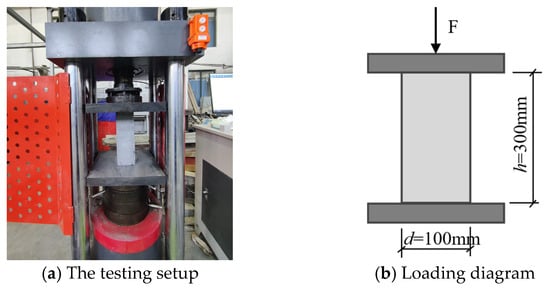
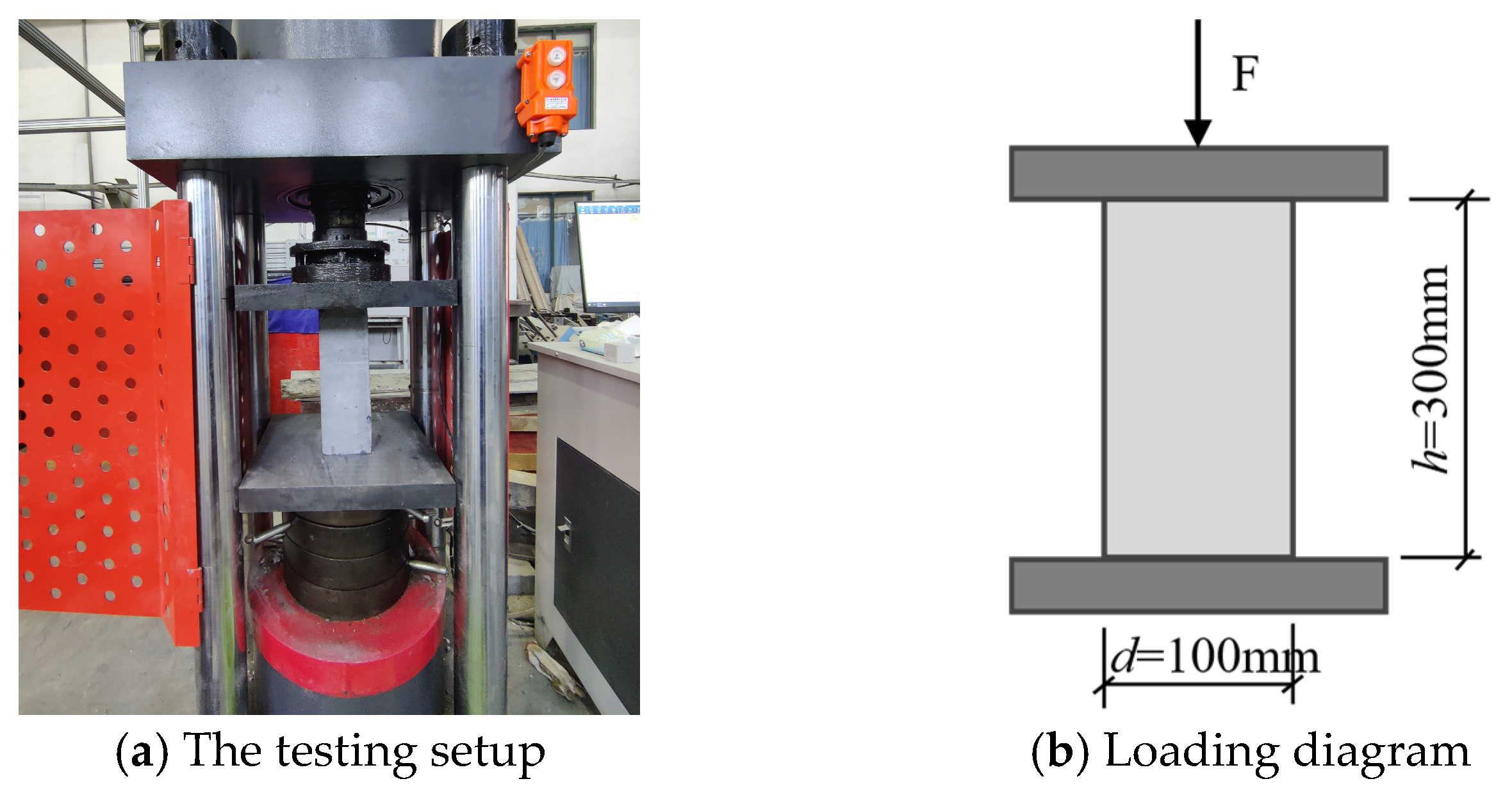
The uniaxial compression tests were performed using a computer-controlled electro-hydraulic servo testing machine with a rated load capacity of 3000 kN. The side surface formed during specimen casting was used as the loading surface. During the formal loading stage, the test was carried out at a fixed loading rate of 0.3 MPa/s. Axial load and displacement data were continuously recorded by the built-in load sensor and displacement gauge of the testing system. The test was terminated when the specimen had clearly lost its load-carrying capacity after peak failure. The testing setup is shown in Figure 1.
Figure 1.
The testing setup.
2.2. Materials and Mix Design
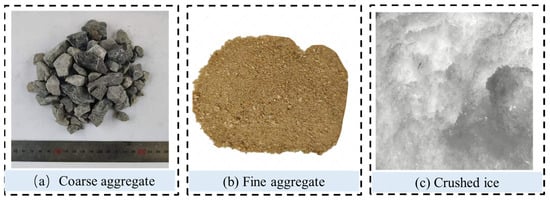
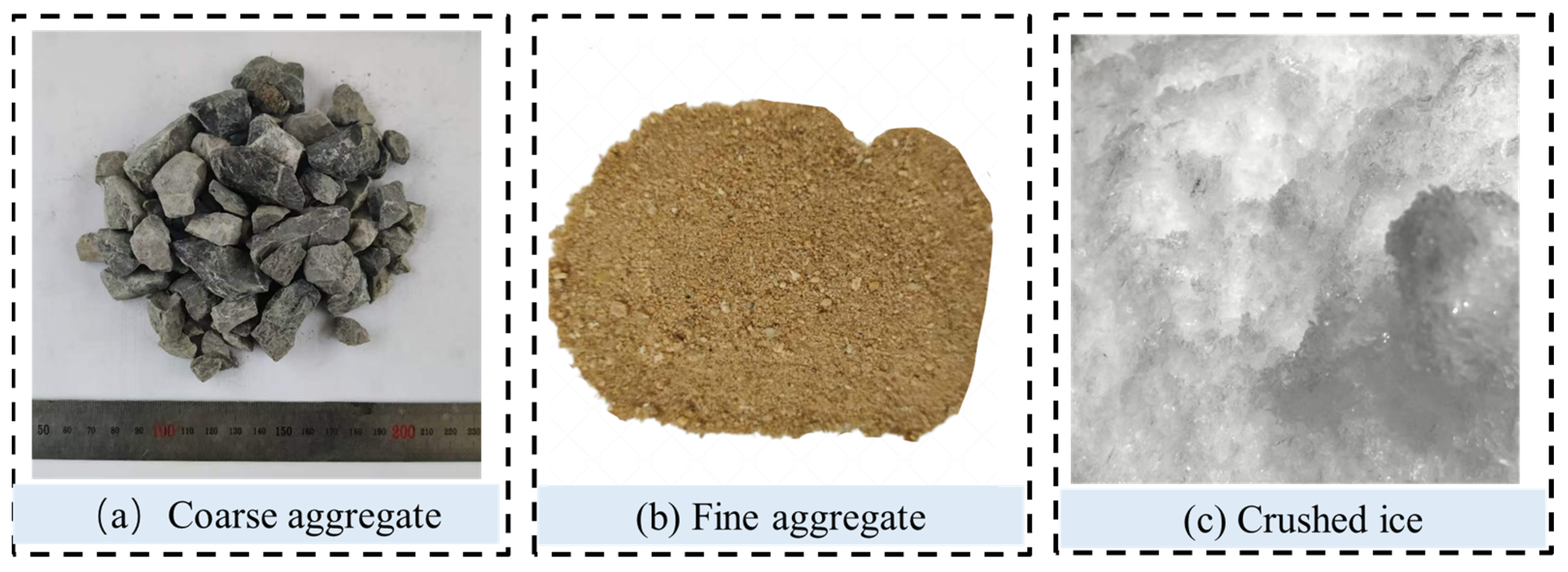
P.O 42.5 ordinary Portland cement provided by Huaxin Cement was used in the present work, and Class I fly ash was used as a supplementary cementitious material. The compositional data of these cementitious materials are presented in Table 1. The coarse aggregate consisted of natural crushed stone with particle sizes ranging from 5 to 40 mm. Gravel fractions of 20–40 mm and 5–20 mm were blended at a mass ratio of 1:1. Natural river sand with a fineness modulus of 2.9 served as the fine aggregate. The coarse aggregate had an apparent density of 2840 kg/m3 and a water absorption of 0.58%, whereas the corresponding values for the fine aggregate were 2621.3 kg/m3 and 3.04%, respectively. According to DL/T 5433-2024 [49], when the minimum mold dimension is 100 mm, coarse aggregate particles larger than 30 mm should be removed by wet sieving before casting, whereas for molds with a minimum dimension greater than 100 mm, particles larger than 40 mm should be removed. Therefore, for the prismatic specimens, particles larger than 30 mm were removed before molding, while for the cubic specimens, the original aggregate grading was retained. Ice used in the test was produced using an integrated ice-making and -crushing machine and then crushed into 1–3 mm particles to ensure uniform mixing during testing. The appearances of raw materials used in this study are shown in Figure 2. A high-performance polycarboxylate superplasticizer served as the admixture, with a dosage corresponding to 0.7% of the total binder content.
Table 1.
Chemical composition of cementitious materials.
Figure 2.
Raw materials.
The RCC mix proportions were established according to the hydraulic concrete mix design specification (DL/T 5330-2015 [50]), and the detailed proportions are listed in Table 2. For each W/B ratio, one control mixture with 0% ice content and four additional mixtures with ice replacement ratios of 25%, 50%, 75%, and 100% were prepared. In the ice-containing mixtures, part of the mixing water was replaced by crushed ice on an equal-mass basis, so that the total mixing water content remained constant.
Table 2.
Mix proportions of RCC specimens (kg/m3).
All mixtures were produced and cured in accordance with DL/T 5433-2024. During mixing, the coarse and fine aggregates were initially blended with the cementitious materials in the dry state, followed by the addition of mixing water and crushed ice. To avoid local clumping in the ice-containing mixtures, the crushed ice was added in batches, and the wet-mixing time was slightly prolonged until the mixture became uniform. The freshly prepared RCC was then placed into molds and consolidated by layer-by-layer filling combined with vibration compaction. After casting, the specimens were sealed to minimize moisture evaporation. The samples were removed from the molds after 48 h and then stored in saturated Ca(OH)2 solution at 20 ± 2 °C until an age of 90 d was reached.
3. Results and Analyses
3.1. Failure Mode
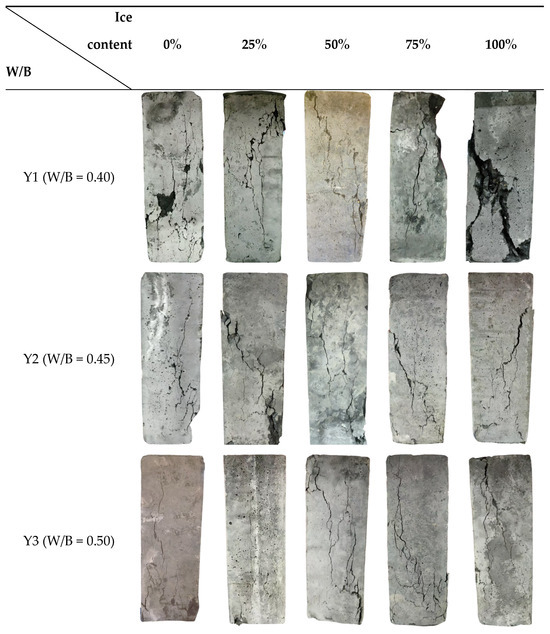
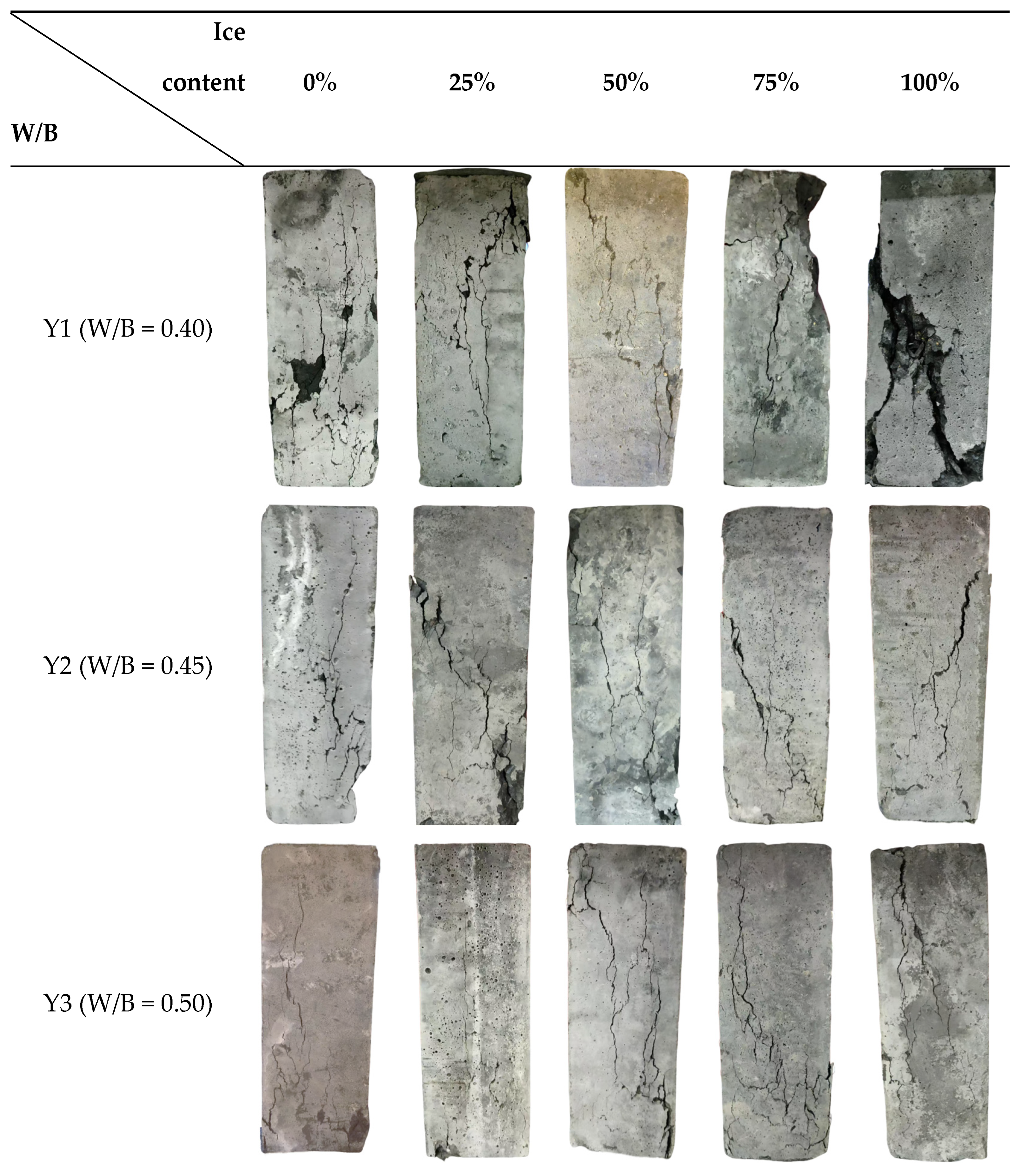
Figure 3 illustrates the typical failure features observed in the tested specimens. Overall, the prismatic specimens mainly exhibited typical shear-slip failure characteristics under uniaxial compression. In addition, some specimens showed localized crushing and block-like spalling near the loading ends. The visible crack development varied with both ice content and W/B ratio. In some specimens, besides the primary diagonal crack penetrating the specimen, several fine cracks approximately parallel to the loading direction could also be observed.
Figure 3.
Failure modes of RCC specimens at different W/B ratios and ice contents.
For W/B = 0.40, the crack development generally became more obvious with increasing ice content, and severe cracking and spalling were observed at 100% ice content. For W/B = 0.45, the specimen at 50% ice content showed relatively lighter visible damage, whereas more obvious cracking appeared again at 75% and 100% ice contents. For W/B = 0.50, the specimens generally exhibited more pronounced cracking than those with lower W/B ratios, indicating a weaker resistance to crack initiation and propagation. In general, higher ice contents tended to aggravate crack development and reduce specimen integrity, although the degree of damage varied among different W/B ratios. This behavior may be associated with the increase in internal defects and stress concentration caused by ice replacement, which tended to promote crack initiation, propagation, and coalescence during loading. Moreover, increasing the W/B ratio generally made the matrix less dense and impaired the internal bonding capacity of the specimen, which in turn promoted crack initiation and subsequent propagation.
3.2. Porosity and Microstructural Observations
The porosity of RCC was determined by the saturated-water method. Before testing, the specimens were vacuum-saturated to a stable saturated state. The saturated-surface dry mass (Ms), suspended mass in water (Mw), and oven-dried mass (Md) were then measured. For each mixture, the porosity value was reported as the mean of three parallel specimens. The open porosity P was calculated as follows:
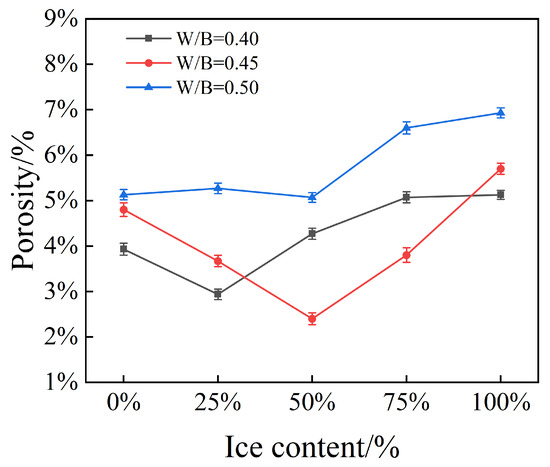
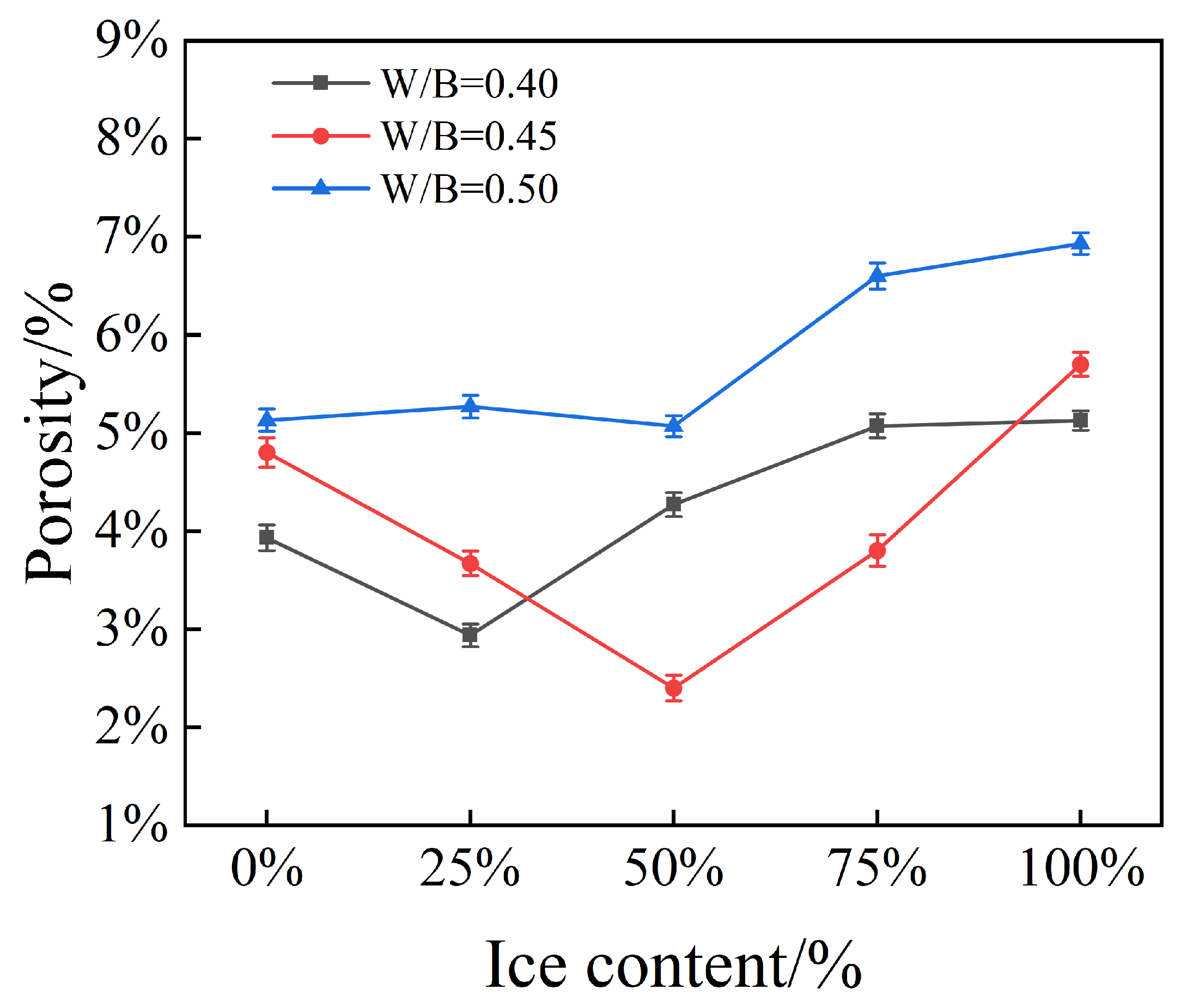
The porosity results obtained by the saturated-water method are shown in Figure 4. For W/B = 0.40, the porosity first decreased and then increased with increasing ice contents, reaching a minimum at 25% ice content. For W/B = 0.45, the porosity also first decreased and then increased, with the minimum value being observed at 50% ice content. For W/B = 0.50, the porosity remained relatively high over the entire range and also reached its minimum at 50% ice content, although the reduction was limited. With further increases in ice content, the porosity increased markedly. These results indicate that a moderate amount of ice may contribute to the formation of a relatively denser internal structure, whereas excessive ice replacement tends to increase the pore volume of RCC.
Figure 4.
Variation in porosity of RCC with ice content under different W/B ratios.
At the same ice content, the porosity generally increased with increasing W/B ratios, although the mixtures with W/B = 0.45 showed relatively lower porosity at some ice contents, particularly at 50% ice content. This result suggests that a higher W/B ratio tended to produce a looser internal structure and a less compact matrix, whereas an appropriate combination of W/B ratio and ice content could contribute to a denser internal structure. The porosity results were broadly consistent with the variations observed in the mechanical properties and failure patterns. Specimens with lower porosity generally exhibited better mechanical performance and relatively less severe cracking, whereas specimens with higher porosity tended to show more obvious cracking and greater mechanical deterioration.
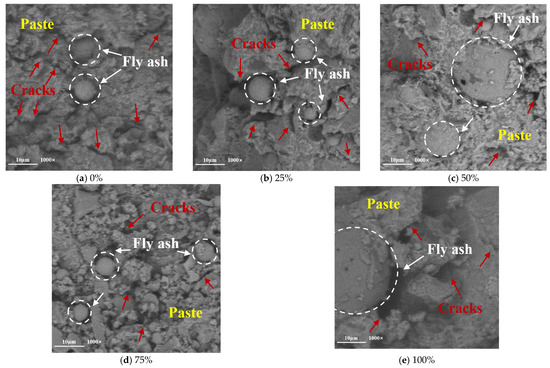
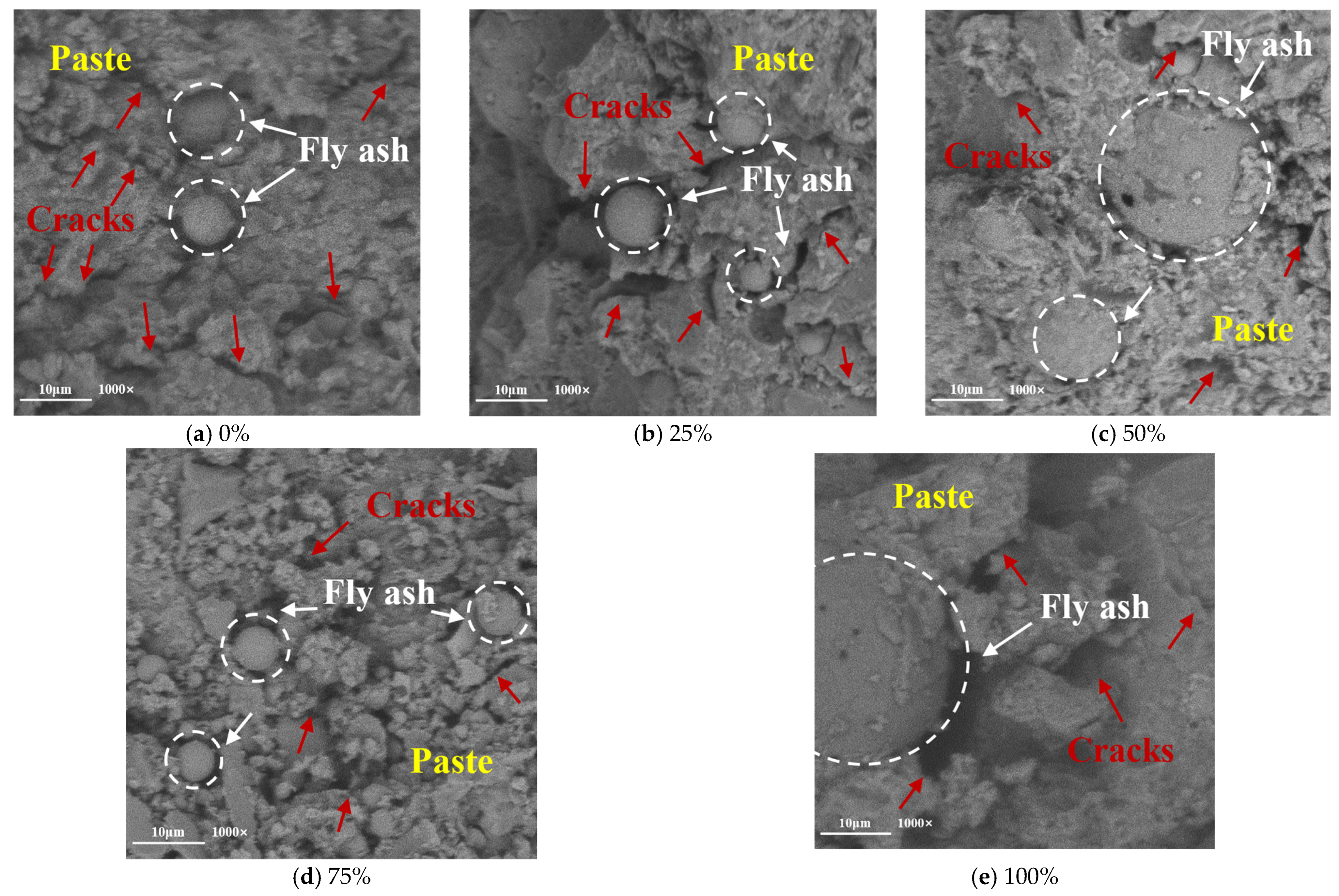
To further examine the internal structure of RCC, SEM observations were conducted on representative samples. Considering that the mixtures with W/B = 0.45 showed relatively representative variations in porosity and mechanical behavior among the tested groups, representative specimens at this W/B ratio were selected for SEM observation to further examine the influence of ice content on the microstructure. Prior to SEM observation, small samples with dimensions of 2–3 mm were taken from the central region of the failed specimens, immersed in anhydrous ethanol to stop hydration, vacuum-dried at 60 °C for 24 h, and then sputter-coated with a thin layer of gold. SEM observation was performed at a magnification of 1000×, and the corresponding images are shown in Figure 5. In this study, SEM was employed to provide supplementary microstructural observations for selected representative mixtures.
Figure 5.
Representative SEM images of RCC specimens at different ice contents (W/B = 0.45).
As shown in Figure 5, the representative samples exhibited different microstructural features at different ice contents. At 0% ice content and W/B = 0.45, hydration products were interconnected but relatively loose, and some spherical fly ash particles remained partially exposed. At 25% and 75% ice contents, more hydration products were observed around the fly ash particles, and the microstructure appeared relatively denser. At 50% ice content, the representative sample showed a comparatively compact internal structure. In contrast, at 100% ice content, the microstructure appeared relatively loose, and more defects and exposed particles could still be observed.
Overall, these qualitative SEM observations were generally consistent with the porosity and mechanical results. In particular, mixtures with relatively lower porosity tended to exhibit a denser microstructure and better mechanical performance, whereas those with higher porosity showed a looser internal structure and more obvious defects.
3.3. Stress–Strain Curves
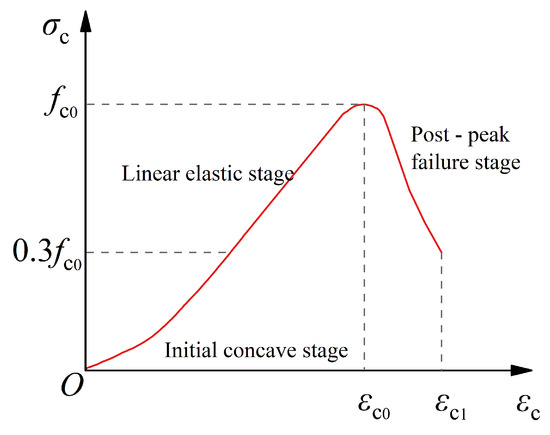
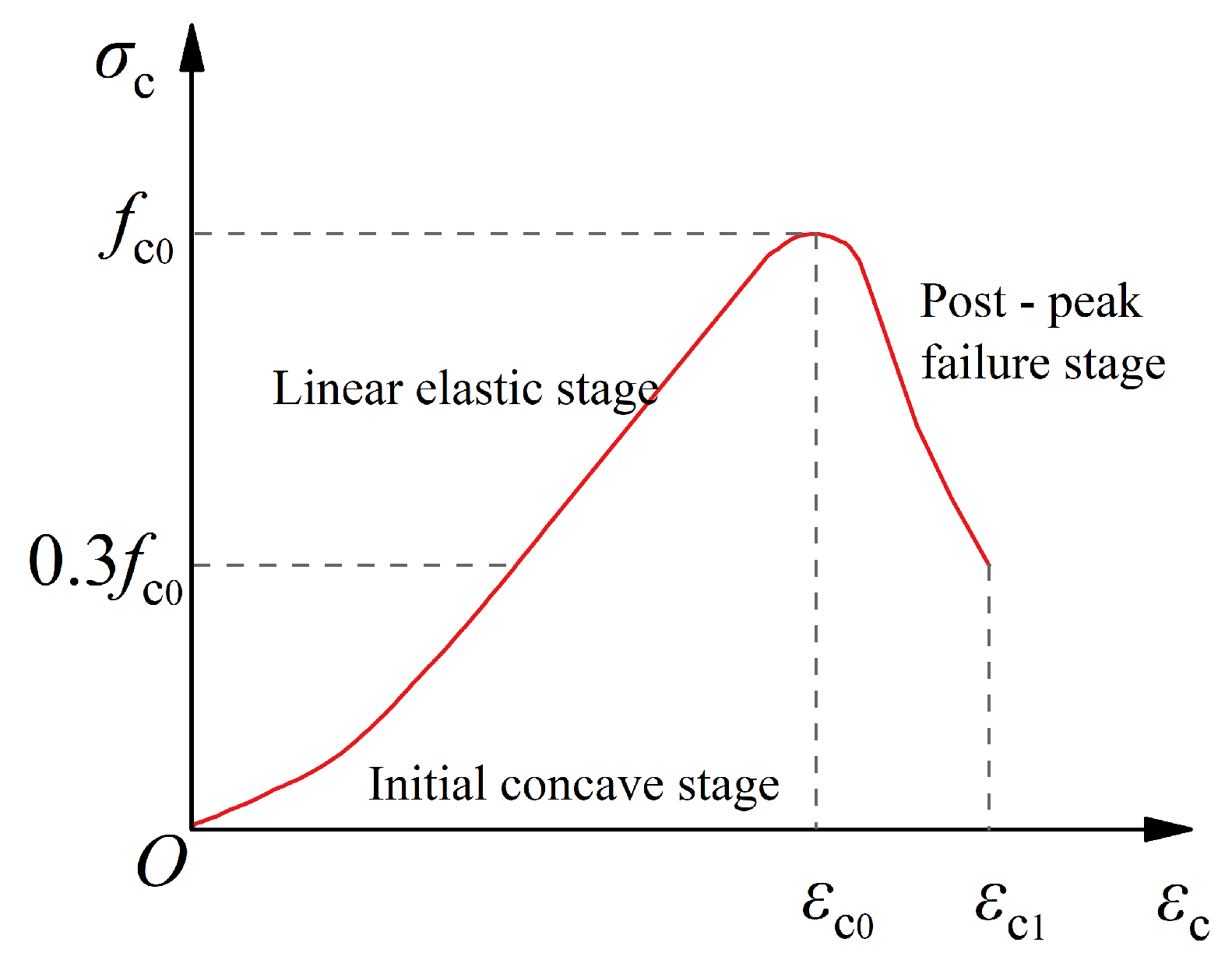
The complete stress–strain curve under uniaxial compression characterizes the mechanical response of roller-compacted concrete (RCC), including stiffness, strength, deformation capacity, and post-peak softening behavior. As illustrated schematically in Figure 6, the curves of the tested specimens could be divided into three stages: an initial concave stage, a nearly linear elastic stage, and a post-peak softening stage.
Figure 6.
Schematic illustration of the stress–strain response.
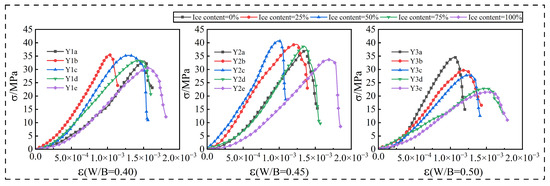
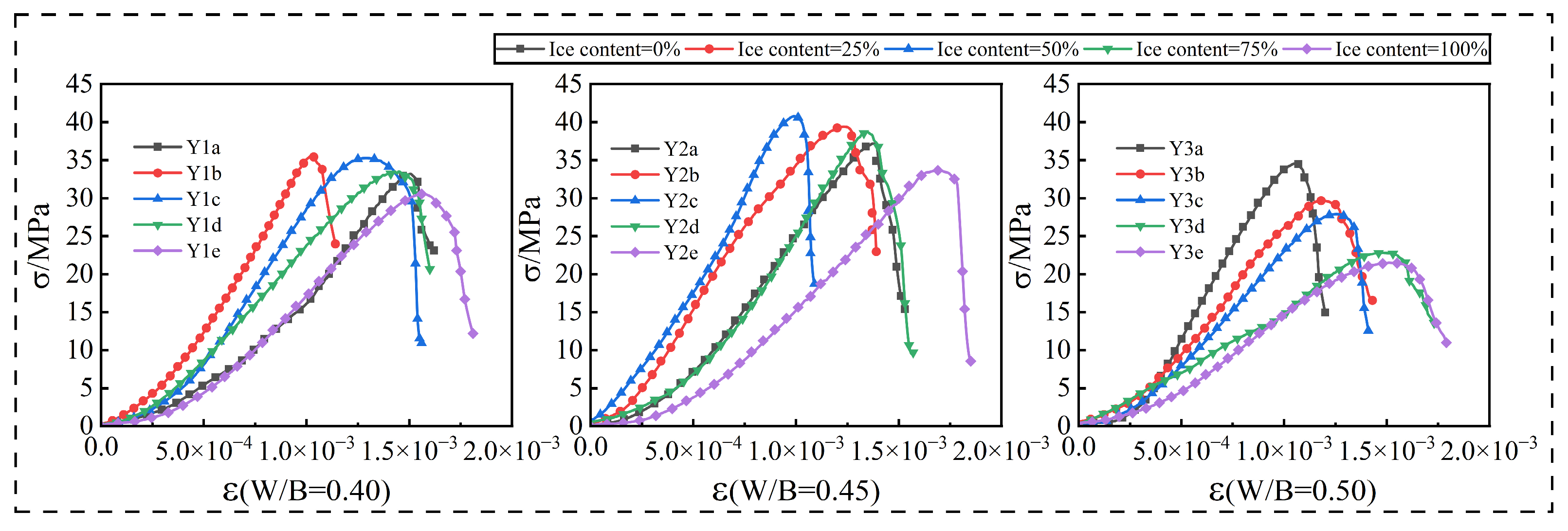
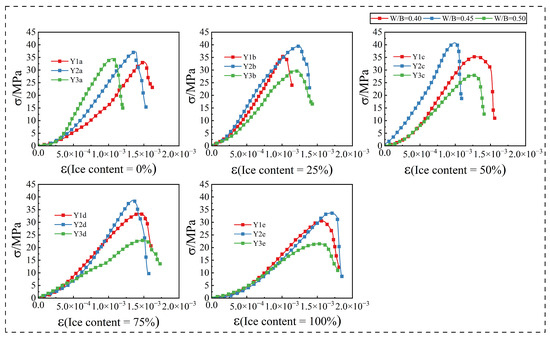
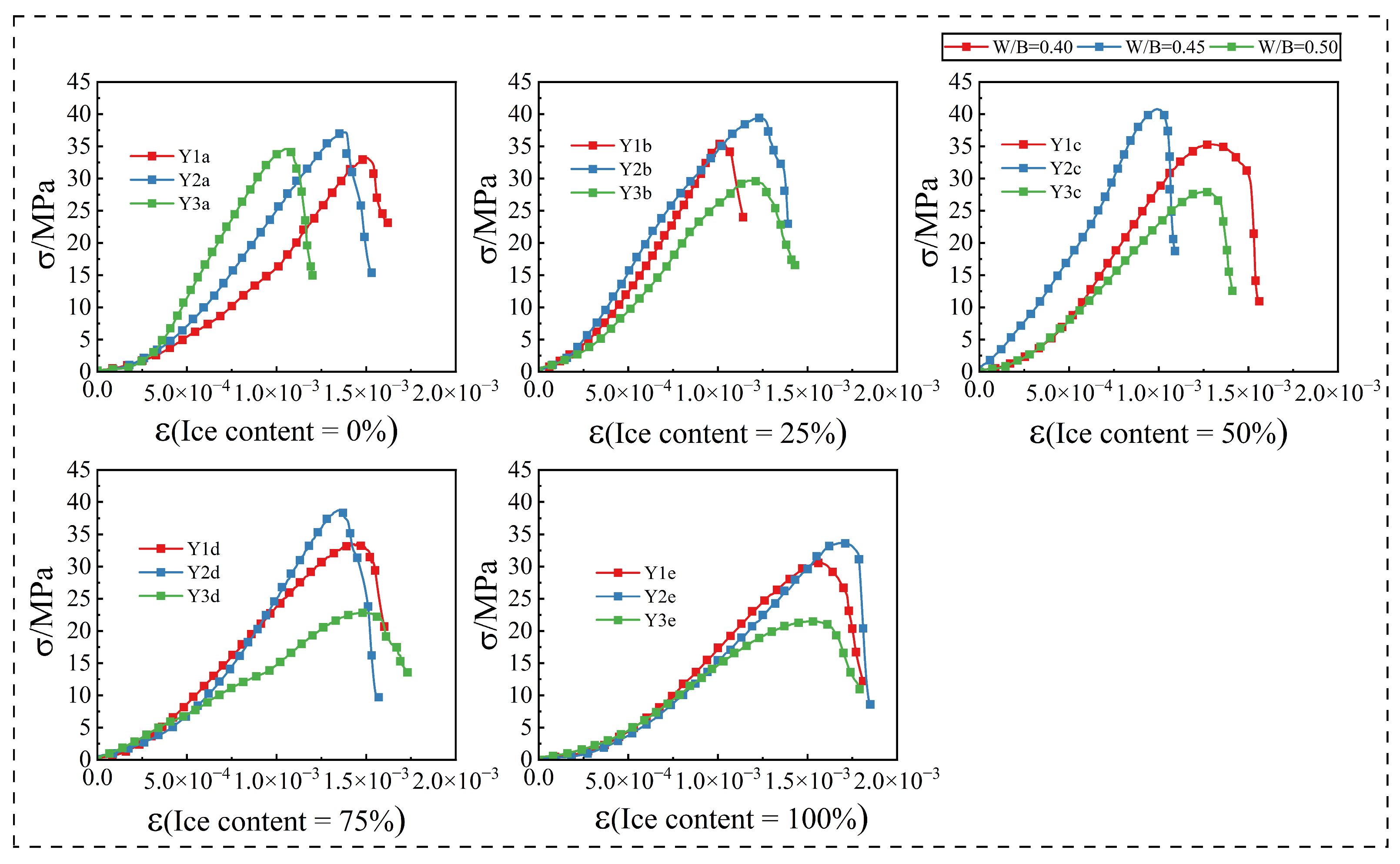
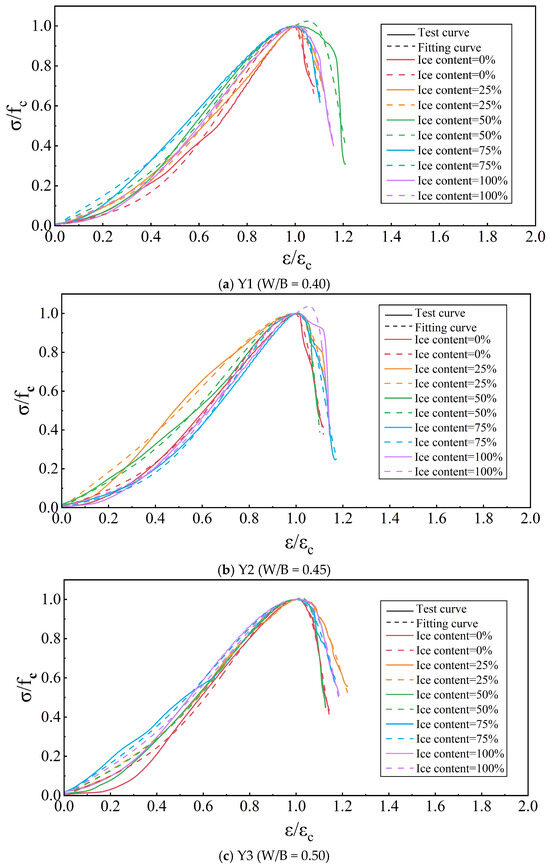
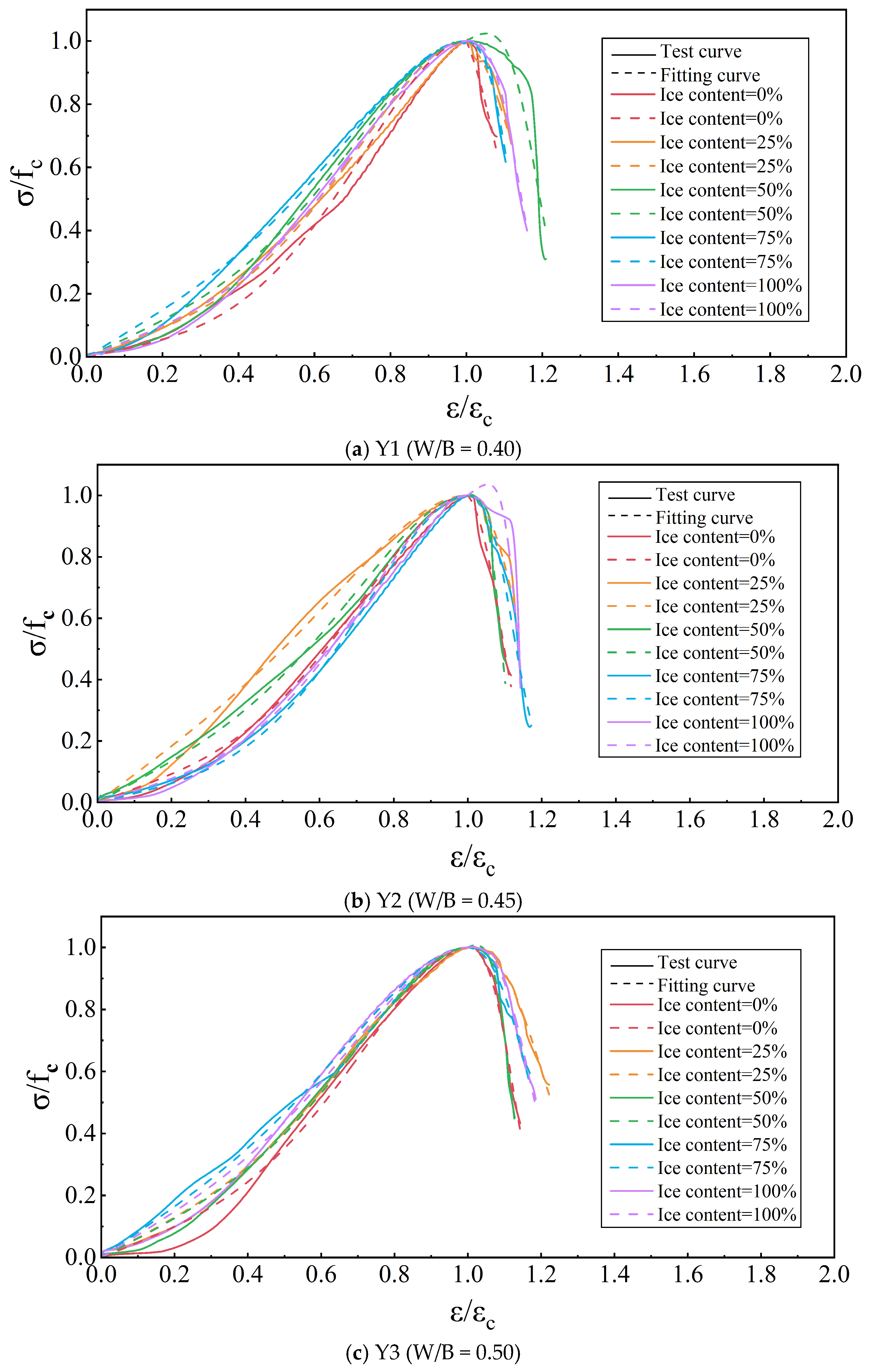
As shown in Figure 7 and Figure 8, all specimens exhibited a brief initial concave stage, mainly due to pore closure and the adjustment of internal defects under compressive loading. In the subsequent ascending branch, specimens with higher peak stress generally showed a steeper slope, indicating greater stiffness. For W/B ratios of 0.40 and 0.45, moderate ice contents, especially 25–50%, resulted in higher peak stress and a steeper ascending branch than those of the control group, suggesting improved stiffness and compressive resistance. In contrast, when the ice content increased to 75% and 100%, the ascending branch became flatter and the peak stress decreased, indicating reductions in stiffness and load-bearing capacity. For W/B = 0.50, the stress–strain curves remained relatively low and flat over the full range of ice contents, and the beneficial effect of moderate ice content was less significant. The peak position and post-peak behavior also varied with W/B ratio and ice content. Specimens with higher peak stress generally reached the peak at a lower strain and exhibited a steeper descending branch, indicating lower ductility and greater brittleness. In contrast, specimens with lower strength tended to show a more gradual post-peak decline and a larger peak strain, reflecting higher deformation capacity. This trend was particularly evident when comparing specimens with the same ice content at different W/B ratios: mixtures with W/B = 0.45 generally achieved the highest peak stress, whereas those with W/B = 0.50 exhibited lower strength and a more extended deformation process.
Figure 7.
Full stress–strain curves of iced RCC various W/B ratios.
Figure 8.
Full stress–strain curves of iced RCC under different ice contents.
Overall, ice content exerted a dual influence on the stress–strain behavior of RCC. An appropriate amount of ice improved stiffness and peak stress, whereas excessive ice content reduced strength and aggravated post-peak embrittlement.
3.4. Analysis of Influencing Factors
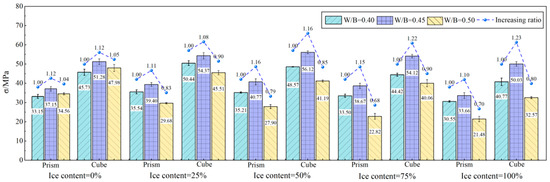
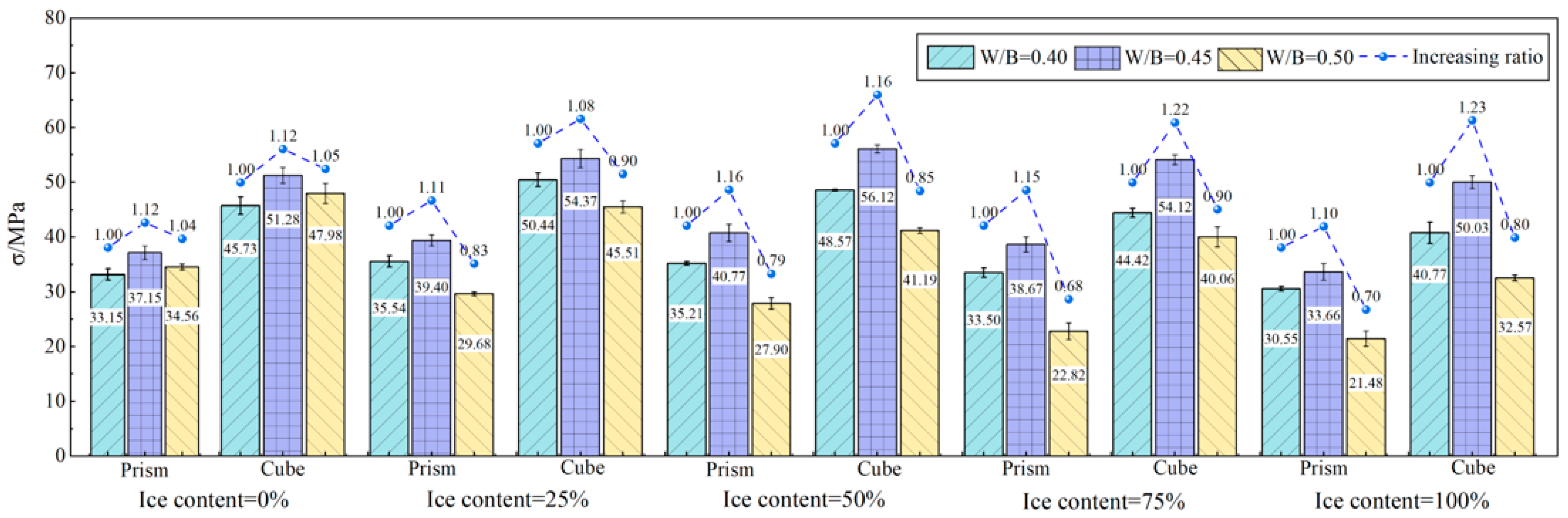
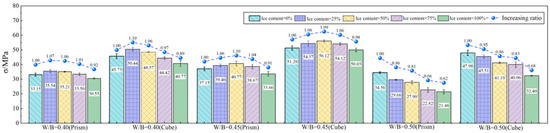
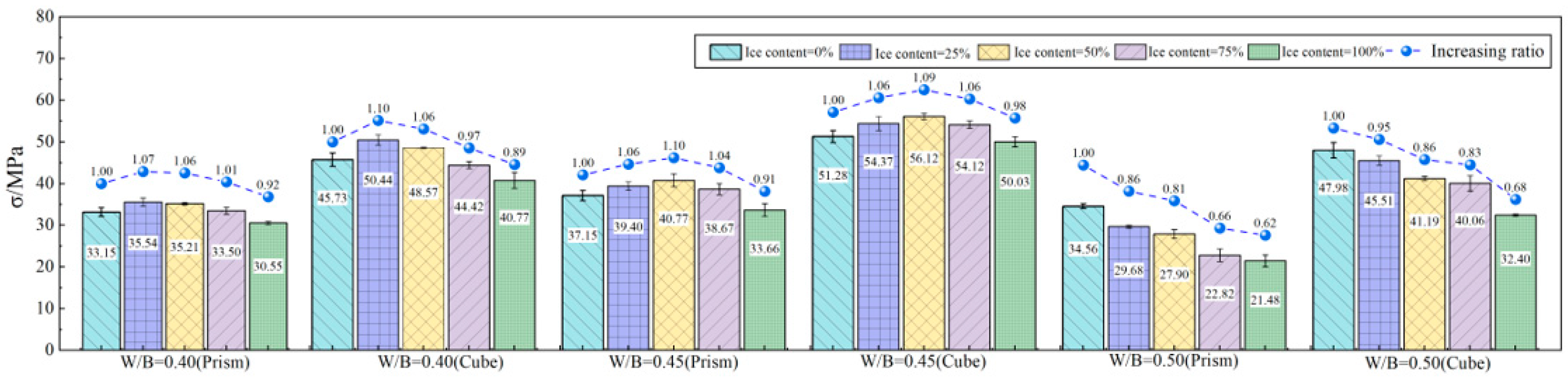
Table 3 and Table 4 summarize the compressive strength results for prismatic and cubic RCC specimens under different W/B ratios and ice contents, reported as the mean ± standard deviation of three parallel specimens. The corresponding variation trends are shown in Figure 9 and Figure 10.
Table 3.
Compressive strength of prismatic RCC specimens (mean ± SD, MPa).
Table 4.
Compressive strength of cubic RCC specimens (mean ± SD, MPa).
Figure 9.
Uniaxial compressive strength of specimens under different W/B ratios.
Figure 10.
Uniaxial compressive strength of specimens under different ice contents.
3.4.1. Effect of W/B Ratio
Figure 9 indicates that the influence of the W/B ratio on the compressive strength of RCC was non-monotonic, with the strength increasing initially and then declining as the W/B ratio rose from 0.40 to 0.50. For both prismatic and cubic specimens, the mixtures with a W/B ratio of 0.45 generally achieved the highest compressive strength at the same ice content, whereas those with a W/B ratio of 0.50 exhibited the lowest strength in most cases. In addition, the strength at a W/B ratio of 0.45 was generally higher than that at 0.40.
This behavior indicates that W/B = 0.45 provided a better balance among water supply, workability, and internal structural development. At W/B = 0.40, the relatively low water content restricted the dispersion of cementitious materials and subsequent hydration development. Consequently, the internal structure did not become sufficiently dense, leading to a lower strength than that obtained at W/B = 0.45. By comparison, when the W/B ratio increased to 0.50, the excess free water increased the capillary porosity and weakened the interfacial transition zone, leading to a looser matrix and lower load-bearing capacity. This interpretation is consistent with the porosity results, in which the specimens with W/B = 0.50 generally showed higher porosity than those with lower W/B ratios.
Therefore, the influence of W/B ratio on compressive strength was governed by the combined effect of hydration development, compaction quality, and pore structure evolution. Within the investigated range, W/B = 0.45 was the most favorable condition for strength development.
3.4.2. Effect of Ice Content
Figure 10 shows that the compressive strength of RCC exhibited a trend of first increasing and then decreasing with increasing ice contents. For mixtures with W/B ratios of 0.40 and 0.45, moderate ice contents, particularly 25–50%, generally enhanced the compressive strength of both prismatic and cubic specimens. However, when the ice content was further increased to 75% and 100%, the strength declined markedly. This reduction was especially pronounced at W/B = 0.50, where both prism and cube strengths decreased continuously as the ice content increased.
The beneficial effect of moderate ice content is associated with two factors. First, the cooling effect of ice reduces the early temperature rise and water evaporation of the mixture, which helps maintain internal moisture and promotes later hydration. Second, under an appropriate ice content, the internal structure becomes relatively denser during subsequent hardening, contributing to pore refinement and improved bonding within the matrix. These trends are consistent with the porosity and SEM observations, which showed lower porosity and a relatively denser microstructure for the mixtures with moderate ice content. However, excessive ice content adversely affects the strength development of RCC. A high amount of ice prolongs the low-temperature stage of the mixture and delays early hydration excessively. After melting, the large amount of ice also increases internal defects and weakens the compactness of the matrix, thereby increasing porosity and reducing load-bearing capacity. This effect becomes more pronounced at higher W/B ratios, where the matrix is already relatively loose and more sensitive to defect development.
Overall, the influence of ice content on compressive strength reflects the combined action of hydration delay, pore structure evolution, and interfacial bonding. Moderate ice content is beneficial to strength development, whereas excessive ice content causes deterioration in internal structure and mechanical performance.
4. Uniaxial Compressive Stress–Strain Constitutive Model
4.1. Comparison of Existing Models
The uniaxial compressive stress–strain relation of RCC is one of the fundamental bases for assessing the mechanical response of RCC structures. To facilitate comparison among specimens, the measured stress–strain curves were normalized using and , where and correspond to the peak strain and peak stress, respectively. After normalization, the curves of RCC under different W/B ratios and ice contents showed similar geometric features, but the ascending and descending branches still exhibited different fitting requirements. Therefore, five typical concrete constitutive models, as listed in Table 5, were selected for comparative analysis.
Table 5.
Representative constitutive models used for comparison.
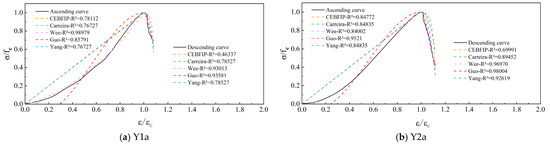
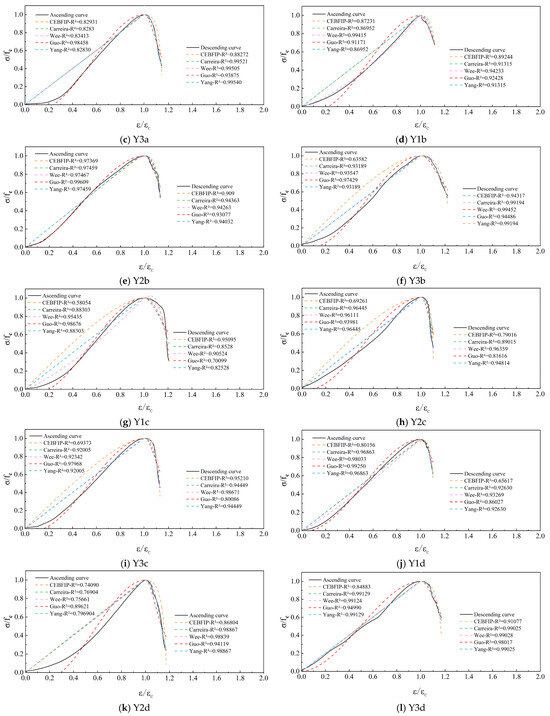
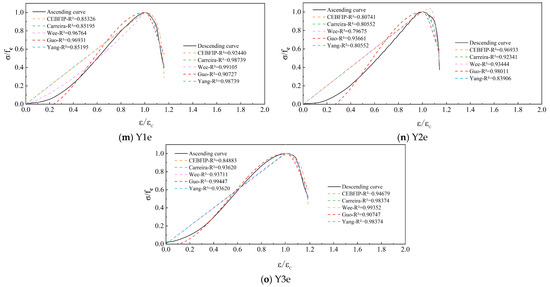
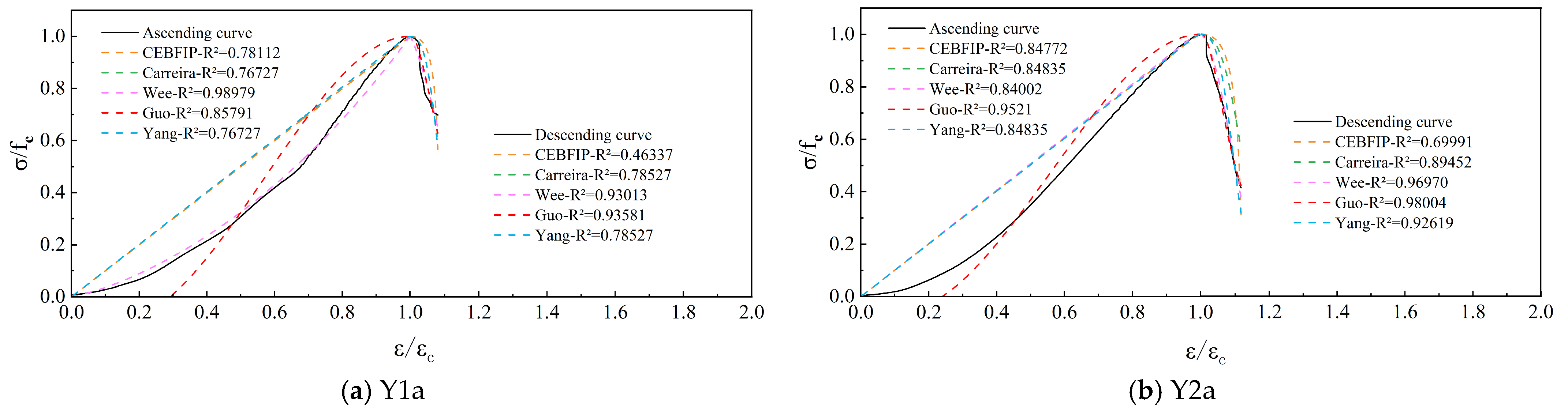
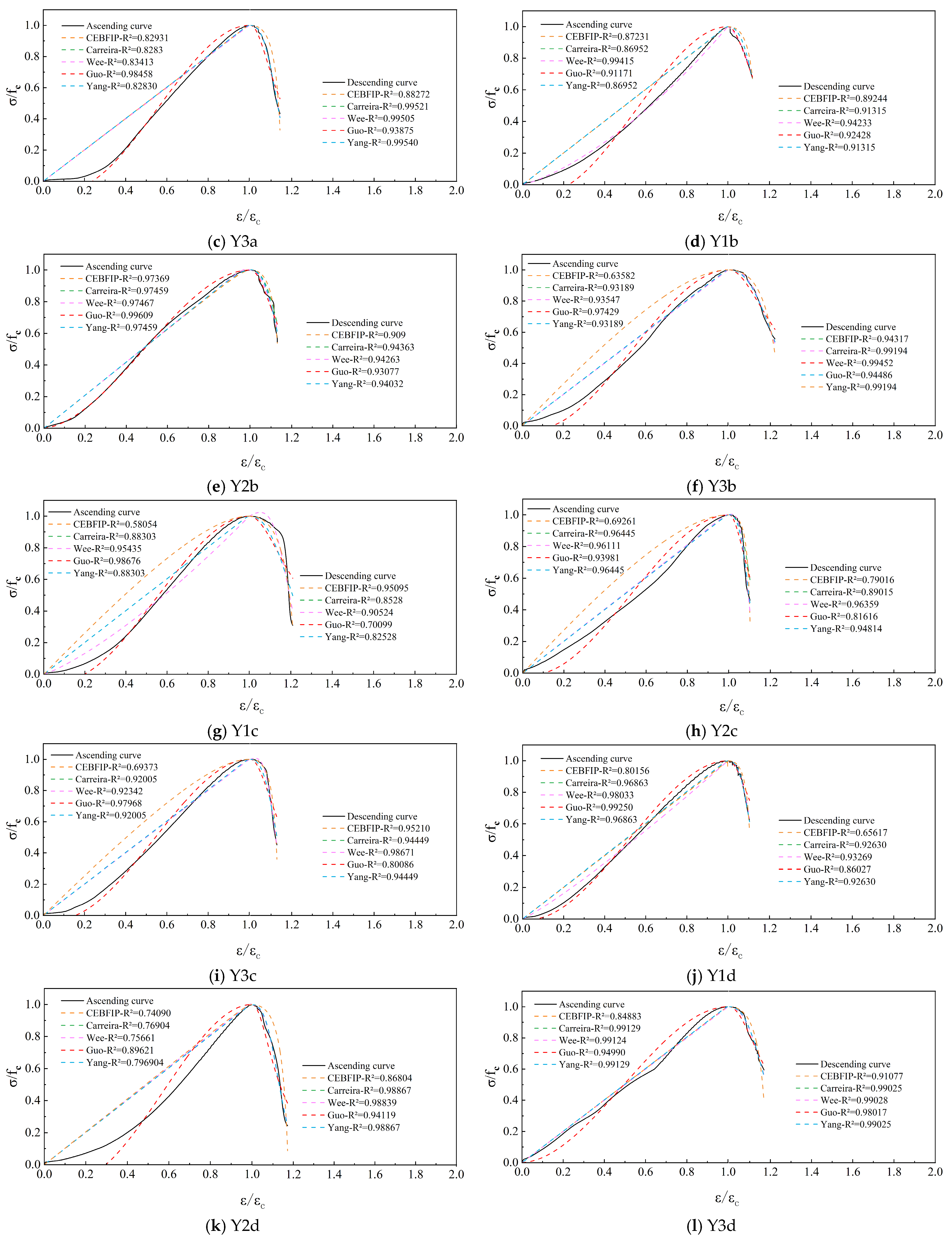
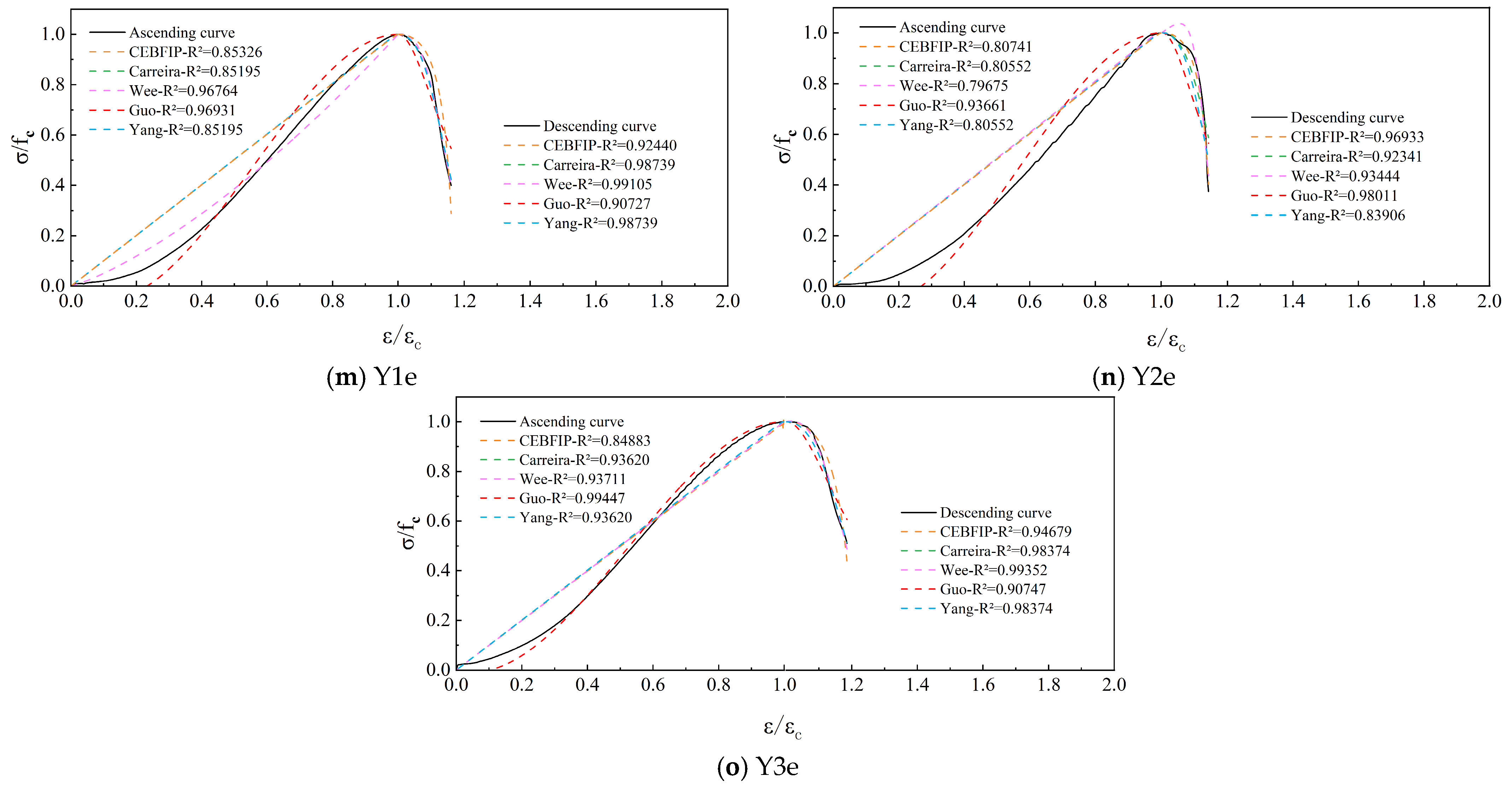
Figure 11 compares the fitting results of the candidate models with the measured dimensionless stress–strain curves. The results show that the CEB-FIP model achieved the poorest overall agreement, especially in the pre-peak region. The Carreira and Yang models produced very similar fitting curves in the ascending branch, but both showed limited ability to capture the initial concave stage and the nonlinear transition before the peak. The Guo Zhenhai model provided the closest overall agreement in the ascending branch and reproduced the pre-peak shape more reasonably than the other models, although it still underestimated the stress in the very initial loading stage for some specimens. In the descending branch, all models except the CEB-FIP model showed acceptable agreement with the test curves, among which the Wee model exhibited the most stable fitting performance and the best agreement with the measured post-peak softening response.
Figure 11.
Comparison between typical stress–strain models and measured curve.
These comparisons indicate that no single conventional model provided the best description of both branches of the full stress–strain curve. This result is physically reasonable, because the ascending branch is mainly governed by pore closure, elastic deformation, and gradual damage accumulation, whereas the descending branch is dominated by crack localization and post-peak softening. Therefore, a stage-wise constitutive expression is more suitable for iced RCC than the direct use of any single existing model.
4.2. Modeling
Based on the comparative analysis above, a piecewise constitutive model was established for the full stress–strain curve of iced RCC. The ascending branch was formulated in a modified Guo Zhenhai-type form, because the Guo Zhenhai model provided the best overall agreement with the pre-peak test curves and reproduced the geometric characteristics of the ascending branch more accurately than the other candidate models. However, the original low-order polynomial form still tended to underestimate the stress in the very initial loading stage for some specimens. To improve the description of the initial concave stage and the nonlinear transition before the peak, higher-order terms were introduced into the ascending branch expression. The proposed formulation allows for more effective characterization of the pre-peak profile while satisfying the essential boundary conditions of the normalized stress–strain relation, namely y(0) = 0, y(1) = 1, and y′(1) = 0. The descending branch was modeled with the Wee equation, which yielded the most stable fits and the best agreement with the measured post-peak softening response. On this basis, the entire stress–strain relationship was described by a piecewise constitutive model in Equation (2), where the modified Guo Zhenhai-type equation was adopted for the ascending part and the Wee model for the descending part.
where , is the strain, and is the peak strain; , is stress, and is compressive strength; is a control parameter for the ascending section; and are control parameters for the descending section.
The fitting performance of the proposed model is presented in Figure 12, and the corresponding parameters are summarized in Table 6. As indicated in Table 6, the proposed model provides an excellent fit to the ascending branch of the experimental stress–strain curves of RCC, with correlation coefficients higher than 0.98. Further, the Wee model shows a strong correlation (R2 > 0.93) with the descending branches. These results suggest that the proposed models can effectively characterize the complete deformation process of RCC. It can be observed that for specimens with different W/B ratios, both and values show an overall increasing trend compared to ice-free specimens, while the value of displays varying degrees of reduction.
Figure 12.
Proposed curve and experimental curve.
Table 6.
Undetermined coefficients of the complete stress–strain curve equation.
5. Conclusions
This study examined the combined effects of ice content and W/B ratio on the uniaxial mechanical behavior of RCC. The main conclusions are summarized as follows:
- (1)
- The compressive strength of RCC exhibited a non-monotonic dependence on the W/B ratio. Within the investigated range, the strength increased first and then decreased as the W/B ratio rose from 0.40 to 0.50, and a W/B ratio of 0.45 generally resulted in the most favorable strength performance. This result indicates that an appropriate W/B ratio can better balance water supply, workability, compaction quality, and internal structural development, whereas excessively low or high W/B ratios are unfavorable to strength improvement.
- (2)
- The effect of ice content on compressive strength strongly depended on the W/B ratio. For mixtures with W/B = 0.40 and 0.45, moderate ice contents, especially 25–50%, improved the compressive strength and were associated with lower porosity and a relatively denser internal structure. In contrast, when the ice content further increased, the strength decreased noticeably, and this reduction was particularly evident at W/B = 0.50. These results indicate that the use of ice in RCC should be controlled within an appropriate range. Moderate ice content is beneficial to later hydration and internal structure optimization, whereas excessive ice content delays early hydration excessively and increases internal defects.
- (3)
- The full stress–strain response of iced RCC was significantly affected by both the W/B ratio and ice content. Moderate ice content improved stiffness and peak stress, whereas excessive ice content reduced strength and aggravated post-peak embrittlement. Based on the comparative analysis of existing models, a piecewise constitutive model was established by combining a modified Guo Zhenhai-type equation for the ascending branch and the Wee model for the descending branch. Within the investigated range, the proposed model showed good agreement with the measured curves and can provide a useful reference for describing the deformation and failure behavior of iced RCC.
- (4)
- From an engineering perspective, the results suggest that both the W/B ratio and ice content should be coordinated in the mix design of RCC. For RCC requiring ice for temperature control, a moderate ice content combined with an appropriate W/B ratio is more favorable for maintaining mechanical performance, whereas excessive ice content under high W/B ratio conditions should be avoided. Therefore, the present study provides experimental support for the mix design, temperature control strategy, and mechanical analysis of iced RCC in practical engineering applications.
Author Contributions
S.P.: Writing—original draft, Methodology, Funding acquisition, Data curation. Y.L.: Writing—original draft, Methodology, Conceptualization. P.L.: Writing—review and editing, Supervision, Project administration, Conceptualization. K.X.: Methodology, Conceptualization. X.C.: Methodology, Conceptualization. All authors have read and agreed to the published version of the manuscript.
Funding
This research was funded by the Natural Science Foundation of Hubei Province (2022CFB662), the State Key Laboratory of Mountain Bridge and Tunnel Engineering, Chongqing Jiaotong University of China (SKLBT-2212), Wuhan Knowledge Innovation Special Dawn Plan Project of China (2023020201020403), and the Fundamental Research Funds for Central Non-Profit Scientific Research Fund for Institutes (CKSF20241023/CL).
Data Availability Statement
The original contributions presented in this study are included in the article. Further inquiries can be directed to the corresponding author.
Acknowledgments
The authors would like to acknowledge the financial support provided by the Natural Science Foundation of Hubei Province (2022CFB662), the State Key Laboratory of Mountain Bridge and Tunnel Engineering, Chongqing Jiaotong University of China (SKLBT-2212), Wuhan Knowledge Innovation Special Dawn Plan Project of China (2023020201020403), and the Fundamental Research Funds for Central Non-Profit Scientific Research Institutes (CKSF20241023/CL). The authors are grateful to Yan Shi for helpful discussion and support during the development of this study.
Conflicts of Interest
The authors declare that they have no known competing financial interests or personal relationships that could have appeared to influence the work reported in this paper.
Abbreviations
The following abbreviations are used in this manuscript:
| RCC | roller-compacted concrete |
| W/B | water-to-binder |
| SEM | scanning electron microscopy |
References
- Zhang, M.; Li, M.; Zhang, J.; Liu, D.; Hu, Y.; Ren, Q.; Tian, D. Experimental study on electro-thermal and compaction properties of electrically conductive roller-compacted concrete overwintering layer in high RCC dams. Constr. Build. Mater. 2020, 263, 120248. [Google Scholar] [CrossRef] [Scilit]
- Yuan, T.F.; Lee, J.Y.; Yoon, Y.S. Enhancing the tensile capacity of no-slump high-strength high-ductility concrete. Cem. Concr. Compos. 2020, 106, 103458. [Google Scholar] [CrossRef] [Scilit]
- Mardani-Aghabaglou, A.; Bayqra, S.H.; Özen, S.; Altun, M.G.; Faqiri, Z.A.; Ramyar, K. Review of research on designing methods and properties of roller compacted concrete mixtures. Pamukkale Univ. J. Eng. Sci. 2020, 26, 419–431. [Google Scholar] [CrossRef] [Scilit]
- Hashemi, M.; Shafigh, P.; Abbasi, M.; Asadi, I. The effect of using low fines content sand on the fresh and hardened properties of roller-compacted concrete pavement. Case Stud. Constr. Mater. 2019, 11, e00230. [Google Scholar] [CrossRef] [Scilit]
- Góra, J.; Piasta, W. Strains of high-performance and ordinary concretes depending on the cement paste volume and the w/c ratio. Constr. Build. Mater. 2023, 403, 133134. [Google Scholar] [CrossRef] [Scilit]
- Naija, A.; Miled, K. Numerical study of the influence of W/C ratio and aggregate shape and size on the ITZ volume fraction in concrete. Constr. Build. Mater. 2022, 351, 128950. [Google Scholar] [CrossRef] [Scilit]
- Gungor, A.G.; Sengun, E.; Yilmaz, Y.; Yaman, I.O. Enhancing bonding performance in two-layer roller-compacted concrete pavements: Bridging laboratory insights with field performance. Constr. Build. Mater. 2024, 418, 135469. [Google Scholar] [CrossRef] [Scilit]
- Lee, H.; Vimonsatit, V.; Huen, W.Y.; Mendis, P. Cohesive-strength properties versus porosity of cementitious materials. Constr. Build. Mater. 2020, 258, 120376. [Google Scholar] [CrossRef] [Scilit]
- Fakhri, M.; Amoosoltani, E. The effect of reclaimed asphalt pavement and crumb rubber on mechanical properties of roller compacted concrete pavement. Constr. Build. Mater. 2017, 137, 470–484. [Google Scholar] [CrossRef] [Scilit]
- Rambabu, D.; Sharma, S.K.; Akbar, M.A. Evaluation of roller compacted concrete for its application as high traffic resisting pavements with fatigue analysis. Constr. Build. Mater. 2023, 401, 132977. [Google Scholar] [CrossRef] [Scilit]
- Xin, J.; Liu, Y.; Zhang, G.; Yang, N.; Wang, J. Comparison of thermal cracking potential evaluation criteria for mass concrete structures. Mater. Struct. 2021, 54, 243. [Google Scholar] [CrossRef] [Scilit]
- Tan, Y.; Tang, K. Evaluate the effect of coarse aggregates on cement hydration heat and concrete temperature modelling using isothermal calorimetry. Heliyon 2024, 10, e38322. [Google Scholar] [CrossRef] [Scilit]
- Do, T.A.; Hoang, T.T.; Bui-Tien, T.; Hoang, H.V.; Do, T.D.; Nguyen, P.A. Evaluation of heat of hydration, temperature evolution and thermal cracking risk in high-strength concrete at early ages. Case Stud. Therm. Eng. 2020, 21, 100658. [Google Scholar] [CrossRef] [Scilit]
- Park, S.; Lee, N.; Park, K.G. Early-age hydration behavior of calcium sulfoaluminate (CSA) cement/ordinary Portland cement-blended ultra-high performance concrete. J. Build. Eng. 2024, 87, 109058. [Google Scholar] [CrossRef] [Scilit]
- Xin, J.; Zhang, G.; Jiang, X.; Chen, Z.; Qi, C.; Lei, Z.; Wang, Z. Exploring the effect of low-heat cement on early-age thermal cracking resistance of roller-compacted concrete. J. Mater. Res. Technol. 2022, 21, 4439–4451. [Google Scholar] [CrossRef] [Scilit]
- Kanavaris, F.; Jędrzejewska, A.; Sfikas, I.P.; Schlicke, D.; Kuperman, S.; Šmilauer, V.; Honório, T.; Fairbairn, E.M.R.; Valentim, G.; Funchal de Faria, E.; et al. Enhanced massivity index based on evidence from case studies: Towards a robust pre-design assessment of early-age thermal cracking risk and practical recommendations. Constr. Build. Mater. 2021, 271, 121570. [Google Scholar] [CrossRef] [Scilit]
- Liu, J.; Tian, Q.; Wang, Y.; Li, H.; Xu, W. Evaluation method and mitigation strategies for shrinkage cracking of modern concrete. Engineering 2021, 7, 348–357. [Google Scholar] [CrossRef] [Scilit]
- de Matos, P.R.; Junckes, R.; Graeff, E.; Prudêncio, L.R., Jr. Effectiveness of fly ash in reducing the hydration heat release of mass concrete. J. Build. Eng. 2020, 28, 101063. [Google Scholar] [CrossRef] [Scilit]
- Xin, J.; Zhang, G.; Liu, Y.; Wang, Z.; Yang, N.; Wang, Y.; Mou, R.; Qiao, Y.; Wang, J.; Wu, Z. Environmental impact and thermal cracking resistance of low heat cement (LHC) and moderate heat cement (MHC) concrete at early ages. J. Build. Eng. 2020, 32, 101668. [Google Scholar] [CrossRef] [Scilit]
- Gaspar, A.; Lopez-Caballero, F.; Modaresi-Farahmand-Razavi, A.; Gomes-Correia, A. Methodology for a probabilistic analysis of an RCC gravity dam construction. Modelling of temperature, hydration degree and ageing degree fields. Eng. Struct. 2014, 65, 99–110. [Google Scholar] [CrossRef] [Scilit]
- Li, X.; Lu, C.; Sun, H.; Cui, Y. Evaluation of residual bond behaviour between rebar and recycled aggregate concrete after high-temperature exposure followed by water spray cooling. Eng. Struct. 2024, 306, 117837. [Google Scholar] [CrossRef] [Scilit]
- Liu, L.; Zhu, C.; Qi, C.; Wang, M.; Huan, C.; Zhang, B.; Song, K.-I. Effects of curing time and ice-to-water ratio on performance of cemented paste backfill containing ice slag. Constr. Build. Mater. 2019, 228, 116639. [Google Scholar] [CrossRef] [Scilit]
- Wang, M.; Liu, L.; Chen, L.; Zhang, X.; Zhang, B.; Ji, C. Cold load and storage functional backfill for cooling deep mine. Adv. Civ. Eng. 2018, 2018, 5435214. [Google Scholar] [CrossRef] [Scilit]
- Rahmani, E.; Sharbatdar, M.K.; Beygi, M.H.A. A comprehensive investigation into the effect of water to cement ratios and cement contents on the physical and mechanical properties of roller compacted concrete pavement (RCCP). Constr. Build. Mater. 2020, 253, 119177. [Google Scholar] [CrossRef] [Scilit]
- Rahmani, E.; Sharbatdar, M.K.; Beygi, M.H.A. The effect of water-to-cement ratio on the fracture behaviors and ductility of roller compacted concrete pavement (RCCP). Theor. Appl. Fract. Mech. 2020, 109, 102753. [Google Scholar] [CrossRef] [Scilit]
- Sadrmomtazi, A.; Lotfi-Omran, O.; Nikbin, I.M. Influence of cement content and maximum aggregate size on the fracture parameters of magnetite concrete using WFM, SEM and BEM. Theor. Appl. Fract. Mech. 2020, 107, 102482. [Google Scholar] [CrossRef] [Scilit]
- Rahmani, E.; Sharbatdar, M.K.; Beygi, M.H.A. Influence of cement contents on the fracture parameters of roller compacted concrete pavement (RCCP). Constr. Build. Mater. 2021, 289, 123159. [Google Scholar] [CrossRef] [Scilit]
- AliAhmad, M.; Miri, M.; Rashki, M. Probabilistic and experimental investigating the effect of pozzolan and Lumachelle fine aggregates on roller compacted concrete properties. Constr. Build. Mater. 2017, 151, 755–766. [Google Scholar] [CrossRef] [Scilit]
- Li, L.; Chen, M.; Guo, X.; Lu, L.; Wang, S.; Cheng, X.; Wang, K. Early-age hydration characteristics and kinetics of Portland cement pastes with super low w/c ratios using ice particles as mixing water. J. Mater. Res. Technol. 2020, 9, 8407–8428. [Google Scholar] [CrossRef] [Scilit]
- Li, L.; Zhang, H.; Guo, X.; Zhou, X.; Lu, L.; Chen, M.; Cheng, X. Pore structure evolution and strength development of hardened cement paste with super low water-to-cement ratios. Constr. Build. Mater. 2019, 227, 117108. [Google Scholar] [CrossRef] [Scilit]
- Shen, Y.; Lv, Y.; Yang, H.; Ma, W.; Zhang, L.; Wei, X. Pore development and mechanical properties of iced concrete during hydration. Constr. Build. Mater. 2022, 353, 129077. [Google Scholar] [CrossRef] [Scilit]
- Shen, Y.; Lv, Y.; Yang, H.; Ma, W.; Zhang, L.; Pan, J. Effect of different ice contents on heat transfer and mechanical properties of concrete. Cold Reg. Sci. Technol. 2022, 199, 103570. [Google Scholar] [CrossRef] [Scilit]
- Wu, F.; Xu, L.; Chi, Y.; Zeng, Y.; Deng, F.; Chen, Q. Compressive and flexural properties of ultra-high performance fiber-reinforced cementitious composite: The effect of coarse aggregate. Compos. Struct. 2020, 236, 111810. [Google Scholar] [CrossRef] [Scilit]
- Xu, S.L.; Cai, X.R. Experimental study and theoretical models on compressive properties of ultrahigh toughness cementitious composites. J. Mater. Civ. Eng. 2010, 22, 1067–1077. [Google Scholar] [CrossRef] [Scilit]
- Sargin, M.; Ghosh, S.K.; Handa, V.K. Effects of lateral reinforcement upon the strength and deformation properties of concrete. Mag. Concr. Res. 1971, 23, 99–110. [Google Scholar] [CrossRef] [Scilit]
- Singh, M.; Sheikh, A.H.; Mohamed Ali, M.S.; Visintin, P.; Griffith, M.C. Experimental and numerical study of the flexural behaviour of ultra-high performance fibre reinforced concrete beams. Constr. Build. Mater. 2017, 138, 12–25. [Google Scholar] [CrossRef] [Scilit]
- Comité Euro-International du Béton. CEB-FIP Model Code 1990 (Design Code); Comité Euro-International du Béton: Lausanne, Switzerland, 1993. [Google Scholar]
- Carreira, D.J.; Chu, K.H. Stress-strain relationship for plain concrete in compression. ACI J. 1985, 82, 797–804. [Google Scholar]
- Wee, T.H.; Chen, M.S.; Mansur, M.A. Stress-strain relationship of high strength concrete in compression. J. Mater. Civ. Eng. 1996, 8, 70–76. [Google Scholar] [CrossRef] [Scilit]
- Yang, K.H.; Mun, J.H.; Cho, M.S.; Kang, T.H.K. Stress-strain model for various unconfined concretes in compression. ACI Mater. J. 2014, 111, 673–685. [Google Scholar] [CrossRef] [Scilit]
- Guo, Z.H. Concrete Strength and Constitutive Relationship: Principles and Applications; China Architecture and Building Press: Beijing, China, 2004. [Google Scholar]
- Li, D.; Zhuge, Y.; Gravina, R.; Mills, J.E. Compressive stress strain behavior of crumb rubber concrete (CRC) and application in reinforced CRC slab. Constr. Build. Mater. 2018, 166, 745–759. [Google Scholar] [CrossRef] [Scilit]
- Zhang, P.; Gao, Z.; Shi, Y.; Lin, Y.; Li, J. Effect of large broken stone content on properties of roller compacted concrete based on fractal theory. Constr. Build. Mater. 2020, 262, 120821. [Google Scholar] [CrossRef] [Scilit]
- Lu, Z.H.; Zhao, Y.G. Empirical stress-strain model for unconfined high-strength concrete under uniaxial compression. J. Mater. Civ. Eng. 2010, 22, 1181–1186. [Google Scholar] [CrossRef] [Scilit]
- Da, B.; Yu, H.; Ma, H.; Tan, Y.; Mi, R.; Dou, X. Experimental investigation of whole stress-strain curves of coral concrete. Constr. Build. Mater. 2016, 122, 81–89. [Google Scholar] [CrossRef] [Scilit]
- Li, Y.; Guo, H.; Zhou, H.; Li, Y.; Chen, J. Damage characteristics and constitutive model of concrete under uniaxial compression after freeze-thaw damage. Constr. Build. Mater. 2022, 345, 128171. [Google Scholar] [CrossRef] [Scilit]
- Sun, C.; Zhu, B.; Luo, T.; Liu, K.; Wei, T.; Yang, S. Uniaxial compressive mechanical properties and stress-strain model for roller-compacted concrete with initial damage subjected to freeze-thaw cycles. Constr. Build. Mater. 2024, 411, 134256. [Google Scholar] [CrossRef] [Scilit]
- Sun, C.; Zhu, B.; Luo, T.; Liu, K.; Wei, T.; Yang, S. Dynamic compressive behavior of freeze-thaw damaged roller-compacted concrete and establishment of constitutive model. Constr. Build. Mater. 2023, 365, 130095. [Google Scholar] [CrossRef] [Scilit]
- DL/T 5433-2024; Test Code for Hydraulic Roller-Compacted Concrete. China Electric Power Press: Beijing, China, 2024.
- DL/T 5330-2015; Code for Mix Design of Hydraulic Concrete. China Electric Power Press: Beijing, China, 2015.

Disclaimer/Publisher’s Note: The statements, opinions and data contained in all publications are solely those of the individual author(s) and contributor(s) and not of MDPI and/or the editor(s). MDPI and/or the editor(s) disclaim responsibility for any injury to people or property resulting from any ideas, methods, instructions or products referred to in the content. |
© 2026 by the authors. Licensee MDPI, Basel, Switzerland. This article is an open access article distributed under the terms and conditions of the Creative Commons Attribution (CC BY) license.