


Abstract
Padel has gained considerable popularity in recent years; however, the characteristics of padel-related injuries characteristics and epidemiological estimates remain poorly defined. This scoping review aimed to describe the epidemiology, incidence, and prevalence of injuries in padel reported following PRISMA extension for scoping reviews (PRISMA-ScR) guidelines. The literature search was conducted between January and June 2025, and studies published within the last five years were eligible for inclusion. Studies were identified through PubMed, SCOPUS, and SPORTDiscus. Methodological quality was assessed using the Newcastle–Ottawa Scale (NOS) for observational and cohort studies and AMSTAR-II for systematic reviews. Fourteen studies including 3581 players were analyzed. In the upper limbs, the elbow was the most commonly injured region, followed by the shoulder, with a predominance of tendinous injuries, particularly involving the extensor carpi radialis brevis tendon. In the lower limbs, the knee and ankle were the most affected joints, with ligament injuries being the most frequent, mainly involving the anterior cruciate ligament and the posterior talofibular ligament, respectively. Padel shows a high incidence and prevalence of injuries, with limited evidence regarding treatment. This review provides a structured overview of injury patterns in padel that may inform clinicians and coaches when prioritizing prevention and conditioning strategies, while highlighting the need for prospective, standardized injury surveillance and padel-specific intervention research.
1. Introduction
Padel is a racket sport that originated in Mexico in the 1960s and is currently practiced worldwide. It is played on a 20 × 10 m enclosed court, where the ball is allowed to rebound off the walls, and follows rules derived from tennis. The unique characteristics of the playing environment and game dynamics differentiate padel from other racket sports and may influence the injury profile of its players. Padel is played exclusively in doubles, with a scoring system derived from tennis, an underhand serve, and wall use as a tactical element; if the ball exits the court after bouncing in the opponent’s court, the point is awarded to the striking team [1].
Currently, padel is experiencing a period of sustained growth, with a progressive increase in both its audience and number of participants, and it is practiced in more than 40 countries worldwide [2,3]. In parallel, performance-related research has expanded, and several systematic reviews have summarized aspects such as anthropometric and physiological variables, biomechanical and physical demands, body composition and fitness, injury risk and rehabilitation strategies, and padel-specific requirements including predominant game actions, player movements, and time structure [4,5,6,7,8,9,10,11,12,13]. However, knowledge regarding padel-related injuries and their potential risks remains limited for professional, amateur, and recreational players, and sport-specific evidence regarding management strategies is still scarce [14,15]. Therefore, a structured synthesis is needed to clarify injury patterns and identify research gaps.
Due to the highly repetitive nature of racket strokes in padel (e.g., trays, smashes, and lobs), certain anatomical regions may be subjected to substantial mechanical load, particularly the lateral epicondyle of the elbow and the glenohumeral joint [14,15]. Lateral epicondylitis has been described as a common complaint in padel, and its management may require consideration of stroke technique, equipment characteristics, and kinetic-chain factors; nevertheless, there is no universal approach and strategies should be individualized [16]. In addition to musculoskeletal complaints, padel’s enclosed court and wall proximity may contribute to sport-specific acute injury scenarios. For example, traumatic maxillofacial injuries have been described in association with racket rebound near the wall during high-effort defensive actions; these may involve open wounds and, in some cases, dentoalveolar trauma requiring appropriate specialist management [17,18,19]. Ocular injuries have also been reported, most commonly caused by ball impact [20].
Padel is a highly dynamic and fast-paced sport, involving frequent accelerations, decelerations, and reactive movements. The incidence of injuries in both upper and lower limbs appears considerable, particularly among amateur players who may have lower technical proficiency and reduced physical conditioning [14,18]. Sudden changes in direction represent a relevant risk context, as they can place high stress on the ligaments of the knee and ankle joints [18]. Overuse problems have also been reported; for instance, one recent study suggested that knee overuse complaints may be prevalent in padel populations [18]. Although detailed padel-specific treatment protocols are rarely reported, conservative care commonly follows general acute injury principles; historically, the R.I.C.E. approach (Rest, Ice, Compression, and Elevation) has been described [19], alongside progressive strengthening and graded return-to-sport strategies.
Several studies have suggested that injury location and type may vary by sex and playing context. Some reports indicate sex-related differences in injury patterns among amateur players [21,22], and other work has suggested that women may experience a higher number of injuries overall [23]. This observation is supported by a study analyzing 305 players that reported a higher injury prevalence in women than in men and more severe injuries in women [23]. Another study found that female padel players had a higher injury incidence than male players per 1000 matches [22]. Previous studies have also reported that the incidence of musculoskeletal injuries in padel is approximately 3 injuries per 1000 h of training and 8 injuries per 1000 matches [18,24]. Beyond players, injury burden among padel coaches has also been highlighted, with incidence increasing proportionally with weekly teaching hours and years of coaching experience [24]. Equipment has been discussed as a potentially modifiable factor; for example, racket weight and balance characteristics may influence upper-limb loading and could be relevant to injury risk [25].
Despite these emerging findings, padel remains a sport with limited injury literature, and there is insufficient evidence providing a detailed understanding of the nature, mechanisms, or management of padel-related injuries. For example, the incidence of Achilles tendon rupture in padel has been reported as currently unknown [26]. Consequently, we conducted a review to examine the incidence, etiology, prevalence, epidemiology, and management-related information of injuries in padel, with the aim of summarizing current evidence and establishing a reliable foundation for future research in this field.
2. Materials and Methods
2.1. Design
This study was designed as a scoping review to map and summarize the available evidence on padel-related injuries, including epidemiology, incidence, prevalence, and reported treatment/management approaches, and to identify gaps in the literature. Given the broad scope of the research questions and the expected heterogeneity of study designs and outcomes, a scoping approach was considered the most appropriate to provide an overview of the field. A structured and transparent search and study selection process was applied. The review is reported following the PRISMA extension for scoping reviews (PRISMA-ScR). The review protocol was not prospectively registered, as protocol registration is encouraged but not mandatory for scoping reviews or structured literature reviews. Study selection, data extraction, and methodological appraisal were conducted by one methodological experience reviewer in evaluation of literature review data [27,28].
2.2. Research Method
A search was conducted in the PubMed, SCOPUS, and SPORTDiscus databases with the aim of identifying scientific studies addressing the incidence, prevalence, epidemiology, and management of injuries in padel, in order to consolidate this information in a single document. Boolean operators “AND” and “OR” were used to construct the search equation with the following terms: “racquet sports,” “racket sports,” “padel,” “paddle-tennis,” “rehabilitation,” “treatment,” “injury,” “injuries,” and “wounds.” More specifically, the search equation was: ((racquet sports OR Padel OR Paddle-tennis OR racket sports) AND (Rehabilitation [MeSH Terms] OR Treatment) AND (wounds AND injuries [MeSH Terms] OR injuries)). The database searches were conducted between January and June 2025, and only studies published within the last five years (2020–2025) were eligible for inclusion.
2.3. Inclusion Criteria
The studies included in this review had to meet the following criteria:
- The study population consisted of individuals with padel-related injuries.
- Study design: randomized controlled trials, cohort and observational studies, systematic and/or narrative reviews. Only studies without a formal design were also accepted.
- Full-text articles had to be freely accessible.
- Studies published within the last 5 (2020–2025) years.
- Studies published in English and/or Spanish.
2.4. Exclusion Criteria
Studies were excluded if they focused on injuries related to other racket sports, such as tennis or badminton, and did not include padel. Additionally, participants in clinical trials were required to be at least 18 years old. No upper age limit was applied.
2.5. Studies Selection
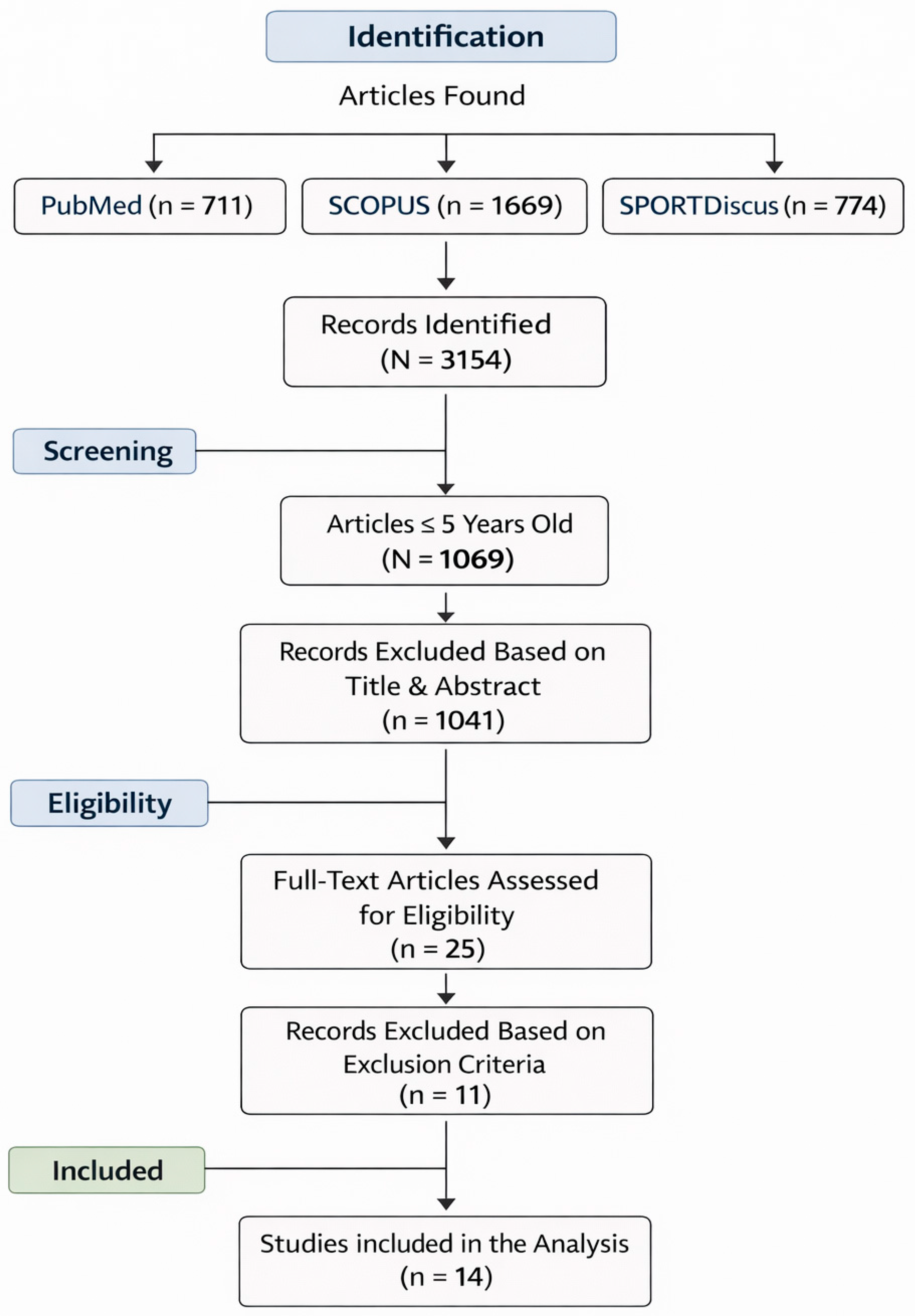
In the initial stage of the study, articles were screened according to the previously defined inclusion and exclusion criteria. The search initially identified 3154 potentially relevant articles; however, applying a 5-year publication limit reduced the pool to 1069 articles, of which 1041 were excluded based on title and abstract. Of the remaining 25 articles, 11 did not meet the inclusion criteria. In conclusion, 14 articles were included in this study. A detailed flow diagram is provided in Figure 1.
Figure 1.
Study Selection Flow Diagram.
2.6. Data Extraction
Data were extracted by reviewing each article individually. Extracted information included: study details (authors and year of publication), participant characteristics (sample size, mean age, sex), injury characteristics (type and location, management, etiology, incidence, prevalence, and epidemiology), study design (randomized controlled trials, cohort studies, observational studies, systematic reviews, narrative reviews, and bibliographic reviews), as well as results and conclusions.
2.7. Methodological Quality Assessment and Risk of Bias
The methodological quality of cohort and observational studies was assessed using the Newcastle–Ottawa Scale (NOS) for observational and cohort studies [29]. Although originally designed to evaluate cohort and case–control studies, the NOS can be adapted for observational studies. The NOS assesses studies across three main domains: selection of participants, comparability of groups, and outcome assessment. Each domain includes several specific items that allow scoring based on predefined criteria. The total score is expressed in “stars,” with a maximum of 9 points. In the “Selection” domain, a study can receive up to 4 stars, evaluating the representativeness of the exposed cohort, selection of the non-exposed cohort, confirmation of exposure, and verification that outcomes were not present at the start of the study. The “Comparability” domain assesses the adequacy of controlling for confounding variables, both in the study design and statistical analysis. One star is awarded for controlling the primary confounding variable, and an additional star for controlling other relevant variables, for a maximum of 2 stars in this domain. Finally, the “Outcome” domain evaluates the quality of outcome measurement, sufficient follow-up time for the outcome to occur, and adequacy of cohort follow-up (proportion lost to follow-up), with a maximum of 3 stars. Accordingly, methodological quality was classified as follows: 7–9 stars indicate high methodological quality, 5–6 stars indicate moderate quality, and fewer than 5 stars indicate low methodological quality
The methodological quality of systematic reviews was assessed using the AMSTAR II scale [30]. This tool consists of 16 items that examine key aspects of the design, conduct, and reporting of systematic reviews. Each item is answered as “Yes,” “Partial Yes,” “No,” or “Not Applicable/No Meta-Analysis.” AMSTAR II does not provide an overall numerical score; instead, it classifies the overall confidence in the results of the review into one of four categories based on the presence or absence of critical flaws in key domains: High confidence: no critical flaws or only minor weaknesses, moderate confidence: one critical flaw, but not multiple, low confidence: more than one critical flaw, critically low confidence: multiple and/or severe critical flaws that substantially compromise the credibility of the findings.
3. Results
3.1. Study Characteristics
Of the 14 included studies, five were descriptive, retrospective, cross-sectional observational studies [14,19,22,23,25], one was a cohort study [31], one was a systematic review [28], and six were narrative reviews [13,15,16,17,24,26].
The study by Muñoz, D. (2022) [13] investigated the incidence of upper limb injuries in amateur players. A total of 950 amateur players participated by completing a questionnaire. The results indicated that the most common types of injuries differed between men and women: in men, muscular and ligament injuries of the shoulder and tendinous injuries of the elbow were more prevalent, whereas in women, muscular injuries of the shoulder, ligament injuries of the elbow, and bone tissue injuries of the wrists and hands were more common. Additionally, the researchers conducted a more detailed analysis of the nature of these injuries and examined potential risk factors, including playing time, characteristics of the paddles used in both matches and training, weekly training and practice volume, players’ experience, and sex, with injuries being more prevalent in men than in women.
Injury definition and ascertainment varied across the included studies (Table 1). Most studies identified injuries using self-reported questionnaires and retrospective recall of symptoms and/or injury history, which may increase measurement error and reporting bias. In a smaller number of studies, injury identification followed a more structured process. For example, injuries occurring during professional competition were first identified through publicly available World Padel Tour injury reports, then verified through direct player contact via an online questionnaire; injuries not confirmed by players were removed, and the final injury data were subsequently coded by the study authors. Overall, the current evidence base largely reflects retrospectively reported injury history over recent seasons, highlighting the need for more standardized and prospective injury surveillance in padel.
Table 1.
Summary of how the authors diagnosed the padel injuries.
Ryman Augustsson, S., 2025 [18] investigated injuries and risk factors in padel players in Sweden. A total of 274 players completed a questionnaire on acute and overuse injuries using the “OSTRC Overuse Injury Questionnaire.” Of these, 250 players reported having sustained at least one injury during the six months prior to completing the questionnaire, resulting in a total of 663 injuries, with a higher incidence in men than in women. The results indicated that the knee was the most affected body region due to overuse, while foot and ankle injuries were associated with the greatest pain.
Alhammad, A., 2025 [21] examined injury incidence with a specific focus on significant differences in injury patterns between genders. A total of 304 players completed a questionnaire addressing playing habits and objectives, self-assessment of injuries and associated pain, and the preventive measures they implemented. The results showed that women had a higher incidence of ligament and muscle injuries in the upper limbs, with a prevalence of 44.6% in women and 8.2% in men. Furthermore, this study reported a higher injury incidence in recreational players compared to previous studies, such as Dahmen, J., 2023 [17]. This study offers a more current perspective, highlighting the importance of preventive methods to reduce injury incidence in padel.
Pérez, F., 2023 [22] investigated the prevalence of musculoskeletal injuries in professional padel players. The researchers analyzed the characteristics of players who had participated in the “World Padel Tour” by reviewing the official website, which reported all injuries sustained by the players. A total of 36 players experienced injuries, accounting for 44 injuries overall. The study found that injury incidence was higher in women than in men, with muscles being the most affected tissue, followed by ligaments and tendons. Among professional player categories, those ranked above the top 50 suffered more injuries than those ranked below, with the higher-ranked players also experiencing the highest number of muscle injuries.
Muñoz, D., 2023 [24] examined the epidemiology of injuries among padel coaches. A total of 228 coaches participated in the study by completing a questionnaire, which revealed that 76% of coaches sustained at least one injury during the previous year. The number of weekly classes and coaching experience were identified as key determinants. Tendon injuries were more prevalent in the upper limbs, particularly in the elbow and shoulder, while in the lower limbs, ligament injuries were more frequent, with ankle sprains being the most common. The study emphasizes the importance of implementing preventive strategies to reduce injuries among padel coaches.
Kasiga, T., 2024 [20] investigated the rising incidence of ocular injuries in padel players in Sweden. Accessing a registry of 255 patients with eye injuries, the researchers found that approximately 100 cases were caused by padel, with the ball being the most frequent cause. Most injuries were classified as moderate; however, 4% of patients experienced long-term or permanent effects.
Fahlström, M., 2022 [15] addressed the treatment of tennis elbow in racket sports. It highlighted that tennis elbow, or lateral epicondylitis, is the most common injury among padel players. The study also notes that as padel gains popularity and more players participate, inexperienced or recreational players may generate new injury patterns related to this condition.
Larsson, E., 2022 [25] focused on Achilles tendon ruptures in racket sports. However, this study only mentions padel to indicate that the incidence of Achilles tendon rupture in this sport is currently unknown.
Dahmen, J., 2023 [17] investigated the prevalence, incidence, and nature of injuries in padel, analyzing data from 2022 participants collected across eight studies. The study found that the elbow was the most frequently injured body region, followed by the knee, shoulder, and lower back. Tendon tissue was the most affected, followed by muscle tissue. Injury incidence was reported as 3 injuries per 1000 h of training and 8 injuries per 1000 matches. The study also reported that injury prevalence in padel ranges from 40% to 95%, depending on the characteristics of the population studied.
Catalfamo, L., 2022 [16] investigated maxillofacial injuries in padel. A total of 16 players who sustained maxillofacial injuries in 2021 were studied. All injuries occurred due to the rebound of the racket against the glass walls of the padel court.
Demeco, A., 2022 [2] focused on physical training, injury risk, and rehabilitation in padel, including 17 articles in its review. This study reported that injury prevalence in padel was 40% in the year prior to the study. The article emphasized the importance of proper physical conditioning and sport-specific training to enhance players’ performance. Although specific injuries were not the primary focus, the study highlighted the need to pay particular attention to the ankles, shoulders, and elbows, as these are the body regions most subjected to stress.
Giustino, V., 2024 [14] reviewed the current knowledge on injuries in padel, including seven articles. The study reported that the most affected regions were the elbow followed by the shoulder in the upper limbs, and the knee in the lower limbs. Tendons, joints, and muscles were identified as the most frequently affected tissues. Participants in the included studies were non-professional players.
Cocco, G., 2024 [23] focused on musculoskeletal injuries occurring in padel. This study did not follow a conventional study design and described the biomechanics and nature of the injuries, as well as the movements and strokes that may cause them. Complementary assessments, such as ultrasonography, were discussed to help locate and classify each injury.
In this review, a total of 13 studies including 3581 padel players were analyzed. Although not all included articles reported the number of male and female participants, in those that did, the number of men was higher than that of women. However, the incidence of injuries was higher in women than in men, while injury prevalence was greater in men. The approximate mean age of male participants was 35.5 years, and that of female participants was 36.5 years. Most studies reported that the geographic region with the highest number of injuries was Spain, where padel is a leading sport. Overall, the articles indicated that the most frequently injured regions in the upper limbs were the elbow followed by the shoulder, and in the lower limbs, the knee followed by the ankle [14,15,16,18,19,24]. Furthermore, most articles reported that the elbow is the most frequently affected body region, followed by knee sprains [14,18]. Six studies indicated that tendinous tissue is the most commonly affected in injuries overall, with a higher incidence in the upper limbs [14,15,16,18,23,25], whereas ligament injuries are very common in the lower limbs [22,25]. Muscle injuries are more frequent in high-level players, while tendinous and ligament injuries are more common in lower-level players [3,23]. It is also important to highlight the increasing relevance of facial injuries in padel due to trauma from the ball or racket, with particular emphasis on ocular and dentoalveolar injuries [17,21].
Since no experimental studies were included, no treatment methods were compared with standard or alternative approaches. Therefore, treatment is generally described rather than being specifically linked to any particular musculoskeletal injury. However, maxillofacial and ocular injuries do include more specific recommendations for their corresponding management (see Table 2) [17,21].
Table 2.
Summary of the most frequent injuries in padel and their main causes.
3.2. Quality Assessment/Risk of Bias
To assess the methodological quality and risk of bias of the studies included in this review, the study design was taken into account. This evaluation was conducted on cohort studies, observational studies, and systematic reviews, which in this review comprised a total of seven articles.
In Table 3 and Table 4, the use of the Newcastle–Ottawa Scale for cohort and observational studies is shown. In Table 3, the study by Kasiga T. et al., 2024 [20], is classified as low risk of bias and demonstrates good methodological quality. In Table 4, the study by Muñoz D. et al., 2022 [13], has the lowest quality among the observational studies, with a high risk of bias. Three of the five studies included in the assessment present a moderate risk of bias, corresponding to fair methodological quality. However, the study by Pérez F., 2023 [22], demonstrates good quality and, consequently, a low risk of bias.
Table 3.
Newcastle–Ottawa Scale (NOS) for Cohort Studies.
Table 4.
Newcastle–Ottawa Scale (NOS) for Observational Studies.
Dahmen J., 2023 [17], which has a systematic review design, was assessed using the AMSTAR-II scale for systematic reviews, as shown in Table 5. The evaluation indicated that this review is of very low quality, with a critically low confidence level due to the presence of more than one critical flaw, according to the user guide by Alhammad, A., 2025 [21].
Table 5.
AMSTAR II Scale for Systematic Reviews.
4. Discussion
The aim of this study was to review published articles on the prevalence, incidence, epidemiology, and management of injuries in padel, in order to identify gaps in the existing literature. Our results reveal that information on this topic is very limited and that most studies are of low methodological quality. Several factors may explain these findings. First, despite the rapid growth of padel, the scientific literature on padel-related injuries appears to be relatively recent and still developing, which limits the number of sport-specific studies available. Second, the evidence is methodologically heterogeneous and is largely based on descriptive, retrospective, and cross-sectional observational designs, as well as narrative reviews, with few prospective cohorts and an absence of experimental trials evaluating treatment efficacy. Third, many studies rely on self-reported questionnaires and retrospective recall, which may increase measurement error and reporting bias. Finally, the lack of standardized operational definitions of injury, differences in outcome measures (e.g., prevalence vs. incidence; acute vs. overuse), and variability in reporting practices reduce comparability across studies and may contribute to lower methodological quality and higher risk of bias. Nevertheless, padel has experienced a remarkable growth in popularity in recent years and has been rapidly spreading worldwide, increasing both the number of amateur and professional players and the number of injuries sustained, which highlights the need for reliable and up-to-date information on the sport’s physical consequences. Since it is not possible to compare the results of this review with previous studies, as this is the first to compile epidemiology, incidence, prevalence, and management of injuries in padel, the following discussion focuses on the evidence currently available. Across the included studies, upper-limb complaints (particularly shoulder, elbow, and wrist/hand) and lower-limb injuries (especially knee and ankle) were among the most frequently reported, although injury definitions and ascertainment methods varied across studies (Table 3). Several plausible sport-specific mechanisms may contribute to these patterns. The high volume of overhead and high-velocity strokes (e.g., smash and overhead variants), often performed under time pressure and with late adjustments, may increase load on the rotator cuff and subacromial tissues, contributing to shoulder pain presentations. Elbow complaints may plausibly relate to repetitive stroke production and grip-related loads: in padel, repeated backhand actions and technical patterns in lower-level players may increase forearm extensor demand, while explosive strokes combining wrist flexion and pronation (e.g., high-intensity volleys/smash variants) may contribute to medial elbow symptoms and may be more frequent in advanced players, consistent with higher stroke speed and technical execution [16,32,33]. Wrist/hand symptoms may be explained by the high repetition of fine racket control, frequent radial/ulnar deviation, and rapid torsional adjustments used to shape ball trajectory; grip style and repeated stroke modification may increase cumulative tendon loading around the wrist in some players [33]. Trunk and abdominal wall complaints may plausibly occur during high-velocity overhead strokes that require rapid trunk rotation and lateral flexion, particularly when players perform late positional adjustments, which may increase strain on the oblique/abdominal musculature. Lower-limb injuries in padel are plausibly driven by repeated short accelerations, abrupt stops, and frequent changes in direction in a confined court, often under reactive conditions (e.g., ball rebounds and wall-related constraints). These demands may increase the likelihood of non-contact knee sprain mechanisms (fixed foot with rapid deceleration/cutting; landing from jumps/smashes) and ankle sprains (forced inversion during lateral/backward recovery steps or destabilized landings) [30]. Importantly, most injuries described across studies were non-contact, suggesting that modifiable factors such as physical conditioning, technique, fatigue, and equipment may contribute to injury occurrence and may represent actionable targets for prevention.
Evidence comparing subgroups remains limited and sometimes inconsistent. According to our results, although no significant differences were found between players of different skill levels, professional players appear more likely to sustain a higher number of injuries, whereas amateur players tend to experience more severe injuries [33]. Differences between genders in amateur players were observed, with the elbow being the most affected region in men and the shoulder in women [5,9]. Since only one study [34] analyzed age differences within recreational players, no definitive conclusions can be drawn regarding this factor. Some studies in amateur padel players also suggest that sex and competition level may influence injury risk, although findings are not fully consistent across studies [13]. Plausible explanations for differences between amateur and professional players include variation in exposure, training load management, physical conditioning, and technical proficiency. Excessive or rapid increases in training/competition load have been linked to elevated injury risk, whereas appropriately developed chronic load capacity may be protective [35]. Similarly, sex-related differences may reflect differences in strength profiles, neuromuscular and biomechanical factors, and movement strategies, which are widely considered multifactorial [36]. Although padel-specific prevention evidence remains limited, these observations support practical preventive considerations such as progressive load management, neuromuscular and strength training (especially for shoulder and lower-limb), movement technique coaching for deceleration/change-of-direction tasks, and structured warm-up programs adapted to player level and sex-specific needs [35,37]. Finally, playing position has not been specifically investigated as a potential risk factor in padel, representing a relevant gap for future research [29].
4.1. Comparison with Other Racket Sports
The incidence of injuries in padel, according to four studies included in this review, is 3 injuries per 1000 h of practice and 8 injuries per 1000 matches [18,22,23,24]. In comparison, tennis shows an injury incidence ranging from 0.04 to 3 injuries per 1000 h played, and from 0.05 to 2.9 injuries per player per year. This data indicates that the injury incidence is higher in padel than in tennis, although comparisons should be interpreted cautiously due to differences in injury definitions, exposure metrics, and data collection methods across studies [21].
Although direct head-to-head comparisons remain limited, the injury patterns reported in padel share several similarities with other racket sports. In badminton, lower-limb injuries predominate (with ankle and knee commonly affected) and sprains/strains are frequently reported, while injury ascertainment is heterogeneous (questionnaires, clinical interviews, medical record review, and in some studies complementary tests such as ultrasound or radiography). In a recent review, lower-limb injuries accounted for 54.3% (particularly on the foot, 22.9%), while upper-limb injuries represented 37.1%, and musculotendinous injuries were the most common type (51.4%) [32]. Badminton epidemiology also highlights movement- and stroke-specific contexts, where the smash and the lunge have been reported among the most frequent situations associated with upper- and lower-limb injuries, respectively [34]. In tennis, epidemiological work similarly reports a notable burden of overuse problems alongside acute injuries, with reported acute injury incidence around 1.2 injuries/1000 h in some cohorts, highlighting the relevance of cumulative load and repetitive demands [32]. In professional tennis, shoulder injuries are frequently attributed to repetitive mechanical overload, and multiple intrinsic and extrinsic risk factors have been explored (e.g., previous injury, technique/skill factors, shoulder flexibility/strength properties, fatigue, and kinetic chain integrity), supporting the importance of load management and sport-specific conditioning in overhead racket sports [32,38]. In squash, classic epidemiological data show a high proportion of strains and sprains and a predominance of lower-extremity involvement, particularly around the ankle/lower leg [39].
Potential explanations for differences in reported incidence between padel and other racket sports should be interpreted cautiously due to methodological variability (injury definitions, exposure metrics, and data collection). However, plausible padel-specific contributors include the enclosed court with glass walls (which may promote reactive, late movement adjustments and occasional contact mechanisms), frequent short accelerations/decelerations in a small playing area, and the predominance of doubles play with shared court coverage demands. These sport-specific contextual factors may influence both injury mechanisms and reporting patterns and support the need for standardized injury surveillance to enable robust cross-sport comparisons [38,39].
With respect to racket characteristics, injury occurrence is higher in amateur players using a racket weighing more than 350 g [25]. Additionally, female players using a soft, round racket, and male players using a harder racket, tend to experience specific hand problems more frequently than those using rackets with different characteristics [32].
The study of injury epidemiology in padel is very limited due to the scarcity of published articles on this topic and the wide variety of studies included in this review. Although only one article compared injuries according to players’ skill level, reporting that higher-level players are more prone to muscle tissue injuries while lower-level players are more prone to tendon injuries [24], some characteristics remain consistent regarding player age and the type of injuries sustained. Younger players are subjected to higher physical demands, as they can maintain energy and performance for longer periods, increasing the risk of overuse injuries due to intensive training. Conversely, older players experience slower recovery due to cumulative load [25].
As regards the upper limbs, shoulder injuries in younger players are characterized by microtraumas, whereas older players tend to suffer tears in this joint [24].
Since we do not have the information or tools necessary to distinguish the skill level of the participants in this study, and due to inconsistencies in the statements of the included studies, we will estimate a general prevalence of injuries among padel players. This prevalence indicates that at least 40% of players have suffered an injury in the past year [13,18,22,23], and at least 76% of padel coaches have been injured while training players. The number of hours taught per week and the years of experience coaching padel are the predominant factors among the most frequently injured coaches [24].
Furthermore, in this review, we observed a considerable disparity of results between studies. A clear example can be seen in the identification of the body tissues most commonly affected by injuries in padel players. While some studies indicate muscular injuries as the most frequent, others highlight joint or tendon-related problems. This lack of consensus may be due to multiple factors, including variability in data collection methods, small sample sizes, or the absence of standardized diagnostic criteria. However, we are aware of the risks associated with practicing this sport without proper preparation, given the rapid and abrupt movements involved, as well as the fact that overhead movements are a risk factor for shoulder injuries.
4.2. Clinical Extrapolation
One of the main practical conclusions drawn from this review is that the injuries most frequently reported/diagnosed in padel players include epicondylitis (particularly lateral epicondylalgia) and knee sprains, with ankle involvement also commonly described. These findings are clinically useful because they point to the dominant load drivers in padel: (i) repetitive stroke production with grip-related demands (especially backhand patterns and technical variability across levels) and (ii) repeated short accelerations, abrupt stops and change-of-direction actions in a confined court. Therefore, prevention and rehabilitation in padel should prioritize strategies that address these sport-specific stressors rather than relying on generic recommendations.
From an applied perspective, this review supports a shift toward padel-specific injury-prevention culture at all levels (beginner to elite). In practice, this means that physiotherapists, coaches, and strength and conditioning specialists should actively educate players on (a) progressive exposure to playing volume and intensity, (b) recognizing early symptoms and responding with timely load modification, and (c) implementing simple, consistent routines that target the most exposed tissues and movement patterns in padel. Education is particularly relevant in amateur players, where rapid increases in weekly volume and technique variability may amplify forearm and elbow loading [16,33].
Preventive actions should start with modifiable external factors that are highly relevant in padel settings. Court conditions should be safe and predictable (clean and obstacle-free surface; appropriate cushioning; and, where applicable, appropriate and evenly distributed silica sand to avoid slipping events). Equipment choices should be individualized to reduce unnecessary load peaks: appropriate footwear for multidirectional movements, suitable grip size and tackiness, and paddles with weight and balance adapted to the player’s characteristics and technical level (to limit excessive wrist/forearm strain during repeated strokes) [16,33]. These practical measures are highly implementable and can be integrated into routine coaching and clinical screening.
In parallel, physical preparation should be explicitly designed around padel’s recurrent demands. Given the prominence of elbow-related complaints and epicondylitis in the included literature, training programs should include progressive strengthening/endurance of the forearm musculature and technique-focused coaching to reduce excessive wrist/forearm load during backhand and high-intensity net play [16,33]. For the lower limb, the recurring padel pattern of repeated deceleration and cutting suggests focusing on neuromuscular control and strength capacities that support safe stopping, turning and landing mechanics (particularly for knee and ankle stability). These priorities are consistent with the injury patterns mapped in this review and represent actionable targets for clinicians and coaches.
It is also important to clarify the scope of treatment guidance that can be extrapolated from the present review. A key finding is that many included studies provide limited or no padel-specific treatment protocols, which restrict strong sport-specific clinical recommendations. Consequently, clinical management should be framed as evidence-informed practice that combines general principles of tissue rehabilitation with padel-specific return-to-play demands. In acute soft-tissue injuries, recent approaches emphasize Protection and Optimal Loading rather than prolonged rest, supporting early, symptom-guided mobilization and progressive loading to promote recovery and limit deconditioning [40,41,42]. For ligament injuries, particularly knee and ankle sprains, rehabilitation should emphasize restoration of joint stability through targeted strengthening and proprioceptive training; in severe cases or when persistent instability is present, surgical intervention may be required followed by structured rehabilitation [20,42]. For tendon-related complaints, conservative management often prioritizes progressive loading, with eccentric-focused approaches commonly used for tendinopathy presentations (e.g., patellar and Achilles-related problems) [20,43,44,45]. For muscle injuries, symptom-guided functional rest followed by a progressive program (mobility, then isometric/concentric/eccentric strengthening and sport-specific reconditioning) is generally recommended; return to play should be based on restoration of strength and neuromuscular control and should avoid pain provocation [46,47,48,49,50,51,52,53,54]. Importantly, in padel these rehabilitation principles should be integrated with a padel-specific progression (gradual reintroduction of high-intensity overhead strokes; increasing frequency of deceleration/change-of-direction tasks; and controlled exposure to match-like reactive situations), because these actions represent the sport’s key stressors and are likely to determine symptom recurrence.
4.3. Prospective Studies
Given the limited number and generally low methodological quality of the existing studies on padel-related injuries, there is an urgent need for research with greater rigor and clinical applicability. Future work should prioritize prospective injury surveillance using clearly stated operational injury definitions and consistent reporting of exposure (training and match hours) to enable meaningful incidence estimates and robust comparisons across studies. It is also essential to standardize how injuries are ascertained (e.g., symptom-based questionnaires versus clinical assessment) and to report this transparently, as variability in definitions and diagnostic approaches substantially limits comparability and clinical translation.
Beyond surveillance, future observational studies should systematically differentiate between player level (amateur vs. professional) and sex, as the subgroup differences observed are clinically intriguing and may inform targeted prevention strategies. This requires adequately powered cohorts, consistent injury definitions, and clear reporting of player characteristics, training load, and competition exposure. Such studies would form the foundation for subsequent experimental research (controlled trials) evaluating padel-relevant preventive and therapeutic interventions, including warm-up/prevention routines and load-management strategies tailored to padel’s movement profile. Finally, future systematic reviews should aim for higher methodological rigor and greater homogeneity in inclusion criteria and outcome definitions to establish a stable evidence base and accelerate the development of padel-specific, clinically applicable guidelines.
4.4. Strength and Limitations
One of the main strengths of this review is that it constitutes the first comprehensive study to compile information on the epidemiology, prevalence, and incidence of the most common injuries in padel into a single document, while also proposing clinical preventive recommendations and potential lines of future research. To achieve this, the review draws not only on information from previous reviews but also incorporates recent studies, providing a completer and more up-to-date overview of the current state of knowledge on this topic.
On the other hand, certain limitations must be acknowledged. This review exhibits a high degree of heterogeneity, as it includes studies with different methodological designs (observational studies, cohorts, narrative reviews, and systematic reviews), which complicates the interpretation and comparison of results. Additionally, the methodological quality of many included articles was moderate or low, implying a relevant risk of bias that may affect the validity of the conclusions. This is compounded by the limited availability of studies specifically addressing padel-related injuries, particularly those with experimental or longitudinal designs, necessitating broader inclusion criteria to produce a more comprehensive review. Additionally, study selection, data extraction, and methodological appraisal were performed by a single reviewer, which may increase the risk of missed studies and extraction/appraisal errors. This limitation should be considered when interpreting the findings.
This scarcity of sport-specific scientific literature reflects a significant gap in knowledge despite the global growth of padel. Consequently, this review highlights the urgent need to promote future research with greater methodological rigor, homogeneous study designs, representative samples, and clearly defined objectives. Only in this way will it be possible to consolidate a solid scientific foundation that enables the development of more effective injury prevention and treatment strategies in padel.
5. Conclusions
This scoping review summarizes the current evidence on the epidemiology, prevalence, incidence, and management-related information of injuries in padel across playing levels. Overall, the available literature suggests that injuries are common in padel, with a predominance of upper-limb complaints—particularly involving the elbow and tendinous structures, where lateral epicondylalgia (tennis elbow) is frequently reported—and lower-limb injuries often affecting ligamentous tissues, especially the knee and ankle, where sprains are commonly described. The limited incidence data available indicate approximately 3 injuries per 1000 training hours and 8 injuries per 1000 match hours, with a higher incidence reported in men compared with women. In addition, the included studies suggest that a substantial proportion of players (around 40%) report at least one injury over the previous year. Despite these findings, the evidence base remains limited and methodologically heterogeneous, with variability in injury definitions, ascertainment methods, and exposure reporting, and with scarce padel-specific data on treatment strategies. These limitations restrict strong causal inferences and highlight the need for prospective, methodologically robust injury surveillance using standardized operational definitions and consistent exposure metrics, as well as well-designed studies evaluating padel-specific prevention and rehabilitation approaches. From an applied perspective, the patterns mapped in this review support prioritizing prevention strategies tailored to padel’s main demands, including progressive load management, sport-specific conditioning (with emphasis on shoulder–forearm and lower-limb strength/neuromuscular control), technique coaching, and appropriate equipment and court safety measures. Promoting injury-prevention awareness among players, coaches, and healthcare professionals is essential to foster safer and more sustainable participation in padel from recreational to elite levels.
Author Contributions
D.H.-H.: Conceptualization, Investigation, Methodology, Writing—original draft. A.G.-M.: Conceptualization, Investigation, Writing—original draft. A.G.-R.: Conceptualization, Methodology, Writing—original draft. J.J.P.-M.: Investigation, Methodology, Writing—original draft. D.A.-N.: Methodology, Project administration, Writing—original draft. S.N.-L.: Conceptualization, Supervision, Validation, Visualization, Writing—review and editing. All authors have read and agreed to the published version of the manuscript.
Funding
This research received no external funding.
Institutional Review Board Statement
Not applicable.
Informed Consent Statement
Not applicable.
Data Availability Statement
Not applicable.
Acknowledgments
During the preparation of this manuscript/study, the authors used ChatGPT, version 5.2, for the purposes of reviewing grammar quality. The authors have reviewed and edited the output and take full responsibility for the content of this publication.
Conflicts of Interest
The authors declare no conflicts of interest.
References
- Lauxtermann, L.; Stubbs, B. Padel, pickleball and wellbeing: A systematic review. Front. Psychol. 2025, 16, 1614448. [Google Scholar] [CrossRef] [Scilit] [PubMed] [PubMed Central]
- Demeco, A.; de Sire, A.; Marotta, N.; Spanò, R.; Lippi, L.; Palumbo, A.; Iona, T.; Gramigna, V.; Palermi, S.; Leigheb, M.; et al. Match Analysis, Physical Training, Risk of Injury and Rehabilitation in Padel: Overview of the Literature. Int. J. Environ. Res. Public Health 2022, 19, 4153. [Google Scholar] [CrossRef] [Scilit]
- Muñoz, D.; Coronado, M.; Robles-Gil, M.C.; Martín, M.; Escudero-Tena, A. Incidence of Upper Body Injuries in Amateur Padel Players. Int. J. Environ. Res. Public Health 2022, 19, 16858. [Google Scholar] [CrossRef] [Scilit] [PubMed]
- García-Benítez, S.; Courel-Ibáñez, J.; Pérez-Bilbao, T.; Felipe, J.L. Game Responses During Young Padel Match Play: Age and Sex Comparisons. J. Strength Cond. Res. 2018, 32, 1144–1149. [Google Scholar] [CrossRef] [Scilit] [PubMed]
- Sánchez-Alcaraz, B.J.; Courel-Ibáñez, J.; Díaz, J.; Grijota, F.J.; Muñoz, D. Effects of score difference and relevance of the point on temporal structure in first division padel matches. J. Sport Health Res. 2019, 11, 151–160. [Google Scholar]
- Escudero-Tena, A.; Sánchez-Alcaraz, B.J.; García-Rubio, J.; Ibáñez, S.J. Analysis of Game Performance Indicators during 2015–2019 World Padel Tour Seasons and Their Influence on Match Outcome. Int. J. Environ. Res. Public Health 2021, 18, 4904. [Google Scholar] [CrossRef] [Scilit]
- Zırhlı, O.; Demirci, N. The Influence of functional training on biomotor skills in girl tennis players aged 10–12. Balt. J. Health Phys. Activ. 2020, 12, 33–45. [Google Scholar] [CrossRef] [Scilit]
- Courel-Ibáñez, J.; Sánchez-Alcaraz, B.J.; Garcia Benitez, S.; Echegaray, M. Evolution of padel in Spain according to practitioners’ gender and age. Cult. Cienc. Deporte 2017, 12, 39–46. [Google Scholar] [CrossRef] [Scilit]
- Escudero-Tena, A.; Muñoz, D.; Sánchez-Alcaraz, B.J.; García-Rubio, J.; Ibáñez, S.J. Analysis of Errors and Winners in Men’s and Women’s Professional Padel. Appl. Sci. 2022, 12, 8125. [Google Scholar] [CrossRef] [Scilit]
- Sánchez-Alcaraz, B.J.; Jiménez, V.; Muñoz, D.; Ramón-Llin, J. External training load differences between male and female professional padel. J. Sport Health Res. 2021, 13, 445–454. [Google Scholar]
- Sánchez-Alcaraz, B.J.; Jiménez, V.; Muñoz, D.; Ramón-Llin, J. Efficiency and distribution of the final attacking strokes in professional padel. Rev. Int. Med. Cienc. Act. Física Deporte 2022, 22, 635–648. [Google Scholar] [CrossRef] [Scilit]
- Ramón-Llin, J.; Guzmán, J.; Martínez-Gallego, R.; Muñoz, D.; Sánchez-Pay, A.; Sánchez-Alcaraz, B.J. Stroke Analysis in Padel According to Match Outcome and Game Side on Court. Int. J. Environ. Res. Public Health 2020, 17, 7838. [Google Scholar] [CrossRef] [Scilit]
- Muñoz, D.; Toro-Román, V.; Vergara, I.; Romero, A.; Fernández de Ossó Fuente, A.I.; Sánchez-Alcaraz, B.J. Analysis of the gold point and its relationship with performance in male and female professional padel players. Retos Nuevas Tend. Educ. Física Deportes Recreación 2022, 45, 275–281. [Google Scholar] [CrossRef] [Scilit]
- Giustino, V.; Figlioli, F.; Patti, A.; Vicari, D.S.S.; Alamia, G.; Palma, A.; Romualdo, C.-L.; Thomas, E.; Bianco, A. Injuries in padel players: What is known? A scoping review. Int. J. Sports Sci. Coach. 2024, 19, 1286–1295. [Google Scholar] [CrossRef] [Scilit]
- Fahlström, M.; Zeisig, E. Management of Tennis elbow in racket sports—A literature review. Int. J. Racket Sports Sci. 2022, 4, 25–31. [Google Scholar] [CrossRef] [Scilit]
- Catalfamo, L.M.; Scozzaro, C.; Cicchiello, S.; Scozzaro, M.P.; Romeo, C.; De Rinaldis, D.; Saccà, S.; Nava, C.; Calvo, A.; De Ponte, F.S. Maxillofacial Injuries in Padel Game. J. Maxillofac. Oral Surg. 2022, 21, 1393–1396. [Google Scholar] [CrossRef] [Scilit]
- Dahmen, J.; Emanuel, K.S.; Fontanellas-Fes, A.; Verhagen, E.; Kerkhoffs, G.M.M.J.; Pluim, B.M. Incidence, prevalence and nature of injuries in padel: A systematic review. BMJ Open Sport Exerc. Med. 2023, 9, e001607. [Google Scholar] [CrossRef] [Scilit]
- Ryman Augustsson, S.; Lundin, F. Injuries and risk factors in Swedish padel. Sports Orthop. Traumatol. 2025, 39, 68–76. [Google Scholar] [CrossRef] [Scilit]
- Petersen, W.; Rembitzki, I.V.; Koppenburg, A.G.; Ellermann, A.; Liebau, C.; Brüggemann, G.P.; Best, R. Treatment of acute ankle ligament injuries: A systematic review. Arch. Orthop. Trauma. Surg. 2013, 133, 1129–1141. [Google Scholar] [CrossRef] [Scilit]
- Kasiga, T.; Bro, T. Padel an increasing cause of sport-related eye injuries in Sweden. Acta Ophthalmol. 2024, 102, 74–79. [Google Scholar] [CrossRef] [Scilit] [PubMed]
- Alhammad, A.; Almalki, H.; Ghulam, H.; Al-Harbi, R.; Al-Harbi, S.; Al-Shareif, S.; Althomali, O.; Taiar, R. Assessing the Spread of the Sport of Padel and the Prevalence and Causes of Injuries Among Padel Players. Healthcare 2025, 13, 367. [Google Scholar] [CrossRef] [Scilit] [PubMed]
- Pérez, F.; Rubia, A.; Cañadas, E.; Lorenzo-Calvo, J.; Marquina, M.; García-Sánchez, C. Musculoskeletal injury prevalence in professional padel players. A retrospective study of the 2021 season. Phys. Ther. Sport 2023, 63, 9–16. [Google Scholar] [CrossRef] [Scilit]
- Cocco, G.; Ricci, V.; Corvino, A.; Abate, M.; Vaccaro, A.; Bernabei, C.; Cantisani, V.; Vallone, G.; Caiazzo, C.; Caulo, M.; et al. Musculoskeletal disorders in padel: From biomechanics to sonography. J. Ultrasound 2024, 27, 335–354. [Google Scholar] [CrossRef] [Scilit] [PubMed]
- Muñoz, D.; Toro-Román, V.; Escudero-Tena, A.; Sánchez-Alcaraz Martínez, B.J. Epidemiología de las lesiones laborales en entrenadores de pádel. Retos Nuevas Perspect. Educ. Física Deporte Recreación 2023, 47, 359–364. [Google Scholar] [CrossRef] [Scilit]
- Larsson, E.; Brorsson, A.; Carmont, M.R.; Fahlström, M.; Zeisig, E.; Nilsson-Helander, K. A narrative review of Achilles tendon ruptures in racket sports. Int. J. Racket Sports Sci. 2022, 4, 9–15. [Google Scholar] [CrossRef] [Scilit]
- Stewart, L.A.; Clarke, M.; Rovers, M.; Riley, R.D.; Simmonds, M.; Stewart, G.; Tierney, J.F. PRISMA-IPD Development Group Preferred Reporting Items for Systematic Review and Meta-Analyses of individual participant data: The PRISMA-IPD Statement. JAMA 2015, 313, 1657–1665. [Google Scholar] [CrossRef] [Scilit] [PubMed]
- Tricco, A.C.; Lillie, E.; Zarin, W.; O’Brien, K.K.; Colquhoun, H.; Levac, D.; Moher, D.; Peters, M.D.J.; Horsley, T.; Weeks, L.; et al. PRISMA Extension for Scoping Reviews (PRISMA-ScR): Checklist and Explanation. Ann. Intern. Med. 2018, 169, 467–473. [Google Scholar] [CrossRef] [Scilit] [PubMed]
- Shea, B.J.; Reeves, B.C.; Wells, G.; Thuku, M.; Hamel, C.; Moran, J.; Moher, D.; Tugwell, P.; Welch, V.; Kristjansson, E.; et al. AMSTAR 2: A critical appraisal tool for systematic reviews that include randomised or non-randomised studies of healthcare interventions, or both. BMJ 2017, 358, j4008. [Google Scholar] [CrossRef] [Scilit]
- Lo, C.K.L.; Mertz, D.; Loeb, M. Newcastle-Ottawa Scale: Comparing reviewers’ to authors’ assessments. BMC Med. Res. Methodol. 2014, 14, 45. [Google Scholar] [CrossRef] [Scilit]
- Peters, M.D.J.; Marnie, C.; Tricco, A.C.; Pollock, D.; Munn, Z.; Alexander, L.; McInerney, P.; Godfrey, C.M.; Khalil, H. Updated methodological guidance for the conduct of scoping reviews. JBI Evid. Synth. 2020, 18, 2119–2126. [Google Scholar] [CrossRef] [Scilit] [PubMed]
- Li, L.; Asemota, I.; Liu, B.; Gomez-Valencia, J.; Lin, L.; Arif, A.W.; Siddiqi, T.J.; Usman, M.S. AMSTAR 2 appraisal of systematic reviews and meta-analyses in the field of heart failure from high-impact journals. Syst. Rev. 2022, 11, 147. [Google Scholar] [CrossRef] [Scilit] [PubMed] [PubMed Central]
- Kekelekis, A.; Nikolaidis, P.T.; Moore, I.S.; Rosemann, T.; Knechtle, B. Risk Factors for Upper Limb Injury in Tennis Players: A Systematic Review. Int. J. Environ. Res. Public Health. 2020, 17, 2744. [Google Scholar] [CrossRef] [Scilit] [PubMed] [PubMed Central]
- Gebremariam, L.; Hay, E.M.; van der Sande, R.; Rinkel, W.D.; Koes, B.W.; Huisstede, B.M. Subacromial impingement syndrome—effectiveness of physiotherapy and manual therapy. Br. J. Sports Med. 2014, 48, 1202–1208. [Google Scholar] [CrossRef] [Scilit]
- Guermont, H.; Le Van, P.; Marcelli, C.; Reboursière, E.; Drigny, J. Epidemiology of Injuries in Elite Badminton Players: A Prospective Study. Clin. J. Sport Med. 2021, 31, e473–e475. [Google Scholar] [CrossRef] [Scilit] [PubMed]
- Soligard, T.; Schwellnus, M.; Alonso, J.M.; Bahr, R.; Clarsen, B.; Dijkstra, H.P.; Gabbett, T.; Gleeson, M.; Hägglund, M.; Hutchinson, M.R.; et al. How much is too much? (Part 1) International Olympic Committee consensus statement on load in sport and risk of injury. Br. J. Sports Med. 2016, 50, 1030–1041. [Google Scholar] [CrossRef] [Scilit] [PubMed]
- Hewett, T.E.; Myer, G.D.; Ford, K.R. Anterior cruciate ligament injuries in female athletes: Part 1, mechanisms and risk factors. Am. J. Sports Med. 2006, 34, 299–311. [Google Scholar] [CrossRef] [Scilit] [PubMed]
- Dos’Santos, T.; Thomas, C.; Comfort, P.; Jones, P.A. The Effect of Training Interventions on Change of Direction Biomechanics Associated with Increased Anterior Cruciate Ligament Loading: A Scoping Review. Sports Med. 2019, 49, 1837–1859. [Google Scholar] [CrossRef] [Scilit] [PubMed] [PubMed Central]
- Fu, M.C.; Ellenbecker, T.S.; Renstrom, P.A.; Windler, G.S.; Dines, D.M. Epidemiology of injuries in tennis players. Curr. Rev. Musculoskelet. Med. 2018, 11, 1–5. [Google Scholar] [CrossRef] [Scilit] [PubMed] [PubMed Central]
- Berson, B.L.; Rolnick, A.M.; Ramos, C.G.; Thornton, J. An epidemiologic study of squash injuries. Am. J. Sports Med. 1981, 9, 103–106. [Google Scholar] [CrossRef] [Scilit] [PubMed]
- Verow, P. Squash. Practitioner 1989, 233, 876, 878–879. [Google Scholar] [PubMed]
- Campos, P.T.; da Costa, M.Q.; Lascano, G.C.M. Achilles tendon rupture: Discussion and updates. J. Foot Ankle 2024, 18, 308–314. [Google Scholar] [CrossRef] [Scilit]
- Vuurberg, G.; Hoorntje, A.; Wink, L.M.; van der Doelen, B.F.W.; van den Bekerom, M.P.; Dekker, R.; van Dijk, C.N.; Krips, R.; Loogman, M.C.M.; Ridderikhof, M.L.; et al. Diagnosis, treatment and prevention of ankle sprains: Update of an evidence-based clinical guideline. Br. J. Sports Med. 2018, 52, 956. [Google Scholar] [CrossRef] [Scilit] [PubMed]
- Challoumas, D.; Pedret, C.; Biddle, M.; Ng, N.Y.B.; Kirwan, P.; Cooper, B.; Nicholas, P.; Wilson, S.; Clifford, C.; Millar, N.L. Management of patellar tendinopathy: A systematic review and network meta-analysis of randomised studies. BMJ Open Sport Exerc. Med. 2021, 7, e001110. [Google Scholar] [CrossRef] [Scilit]
- Wall, C.; Byrnes, J.; Botha, L.; Roe, J. Acute sport-related knee injuries. Aust. J. Gen. Pract. 2023, 52, 761–766. [Google Scholar] [CrossRef] [Scilit]
- Bleakley, C.M.; Glasgow, P.; MacAuley, D.C. PRICE needs updating, should we call the POLICE? Br. J. Sports Med. 2012, 46, 220–221. [Google Scholar] [CrossRef] [Scilit]
- Leong, N.L.; Kator, J.L.; Clemens, T.L.; James, A.; Enamoto-Iwamoto, M.; Jiang, J. Tendon and Ligament Healing and Current Approaches to Tendon and Ligament Regeneration. J. Orthop. Res 2020, 38, 7–12. [Google Scholar] [CrossRef] [Scilit] [PubMed]
- Orchard, J.; Best, T.M. The management of muscle strain injuries: An early return versus the risk of recurrence. Clin. J. Sport Med. Off. J. Can. Acad. Sport Med. 2002, 12, 3–5. [Google Scholar] [CrossRef] [Scilit]
- Díaz-García, J.; González-Ponce, I.; López-Gajardo, M.A.; Manzano-Rodríguez, D.; Lobo-Triviño, D.; RubioMorales, A.; García-Calvo, T. How mentally fatiguing is play a semiprofessional padel competition? A study of gender differences. Padel Sci. J. 2023, 1, 7–22. [Google Scholar] [CrossRef] [Scilit]
- Díaz-García, J.; González-Ponce, I.; López-Gajardo, M.Á.; Van Cutsem, J.; Roelands, B.; García-Calvo, T. How Mentally Fatiguing Are Consecutive World Padel Tour Matches? Int. J. Environ. Res. Public Health 2021, 18, 9059. [Google Scholar] [CrossRef] [Scilit]
- Lupo, C.; Condello, G.; Courel-Ibáñez, J.; Gallo, C.; Conte, D.; Tessitore, A. Effect of gender and match outcome on professional paddle tennis competitions. RICYDE Int. J. Sport Sci. 2018, 14, 29–41. [Google Scholar] [CrossRef] [Scilit]
- Villena-Serrano, M.; Castro-López, R.; Zagalaz-Sánchez, M. Analysis of the subjective well-being of the paddle tennis player. Rev. Psicol. Deporte 2020, 29, 29–37. [Google Scholar]
- Conde-Ripoll, R.; Llanos, M.B.; García, J.M.; Sánchez-Alcaraz, B.J. Wall stroke analysis in professional padel. Rev. Entren. Deport. 2021, 35, 3–11. [Google Scholar]
- Fernandez, A.; León-Prados, J.A. Technical and tactical assessment tool for padel. Int. J. Med. Phys. Act. Sport Sci. 2017, 17, 693–714. [Google Scholar]
- Gea García, G.M.; Conesa Garre, C.M.; Courel-Ibáñez, J.; Menayo Antúnez, R. Ball type and court surface: A study to determine the ball rebound kinematics on the padel wall. Int. J. Perform. Anal. Sport 2021, 21, 226–241. [Google Scholar] [CrossRef] [Scilit]

Disclaimer/Publisher’s Note: The statements, opinions and data contained in all publications are solely those of the individual author(s) and contributor(s) and not of MDPI and/or the editor(s). MDPI and/or the editor(s) disclaim responsibility for any injury to people or property resulting from any ideas, methods, instructions or products referred to in the content. |
© 2026 by the authors. Licensee MDPI, Basel, Switzerland. This article is an open access article distributed under the terms and conditions of the Creative Commons Attribution (CC BY) license.