


Featured Application
mHealth intervention to promote physical activity and healthy nutrition to counter aging-related decline and reduce cardiovascular and metabolic disease risks.
Abstract
The evolution of the mHealth era offers the possibility of behavioral interventions to promote changes in lifestyle habits with prevention relevance. These tools are considered digital therapeutics (DTx) and follow the MDR 745/2017 for testing, validation, and certification. In the frame of the ACTIVE3 project, we developed a platform composed of a mobile app, a wearable device, and a cloud backend to support healthy aging intervention in a population of 60–80-year-old subjects. This paper describes the clinical trial protocol and the baseline data of the recruited population. The explored parameters describe the effect of the DTx in the physical, nutritional (and metabolic), and cognitive domains, leveraging the Walking Group initiatives coordinated by ATS Brianza that are active in the Lecco area; in addition, system usability and acceptance were analyzed. The study started on 1 September 2024, and the analyzed baseline data are presented here. With respect to an expected population of 200 subjects, we received interest and consent to participate from 237 subjects: over-enrollment was allowed and all these subjects were accepted into the study. The characterization of the study population at the initial time of the trial was carried out, and the outcomes are presented here. The population is generally more active than Italian people of the same age. According to the outcome of the 6MWT, the population was divided into three groups: trained participants (42 subjects), active participants (142 subjects), and sedentary participants (58 subjects). The tests at month 12 were recently competed, and the final results will be available in winter 2025–2026.
1. Introduction
The United Nations organization has declared the period 2021–2030 the Decade of Healthy Aging [1], based on epidemiological data highlighting a rapid increase in the elderly population not only in developed countries but also in middle- and low-income countries. In this context, the demographic evolution of Italian society over the last twenty years, combined with the increase in life expectancy achieved thanks to advances in prevention and treatment approaches, makes the share of the population over 60 increasingly significant [2]. This population group is heterogeneous but includes a significant portion of individuals still working or functioning well personally and socially, although they are often afflicted by one or more chronic diseases or present risk factors for future acute or chronic pathological events. Our scientific findings after a simple search in the PubMed repository, which extracted 166 publications on clinical trials and randomized controlled trials in the period 2020–2025 using the following keywords: “ healthy lifestyle, prevention, physical activity, elderly”, confirm that adopting healthy lifestyles, including regular physical activity and a healthy diet, can have a beneficial impact in terms of reducing the risk of neurological and cardiovascular diseases by modifying parameters related to these risks [3]. Among these, Body Mass Index (BMI), systolic and diastolic blood pressure (BP), and glycemic and lipid levels play a particularly important role. In addition to physical activity and diet, other parameters, such as satisfactory social interaction, can positively influence healthy aging, resulting in cost reductions due to the lower incidence and impact of acute and chronic diseases. In the same extracted studies, several suggest that the active involvement of recipients of interventions aimed at modifying lifestyle habits is a key factor in determining the success of such interventions [4,5,6,7,8,9,10,11,12,13,14,15,16].
In this line of research, the increasing diffusion of basic digital skills—digital literacy—even among the over-60 population suggests that people can benefit from mCoaching approaches. However, the adherence to and effectiveness of such empowerment models depends on multiple factors, like the specific target (physical activity, nutrition, physiological or mental health factors, social factors, etc.), the cultural and educational background of participants, and the sociodemographic contexts where their potential large-scale application is expected. Focusing on physical activity and nutrition, which are the main targets of this present study protocol, a Spanish multicenter randomized controlled trial demonstrated a positive short-term (3-month) effect on physical activity and adherence to a Mediterranean diet using a dedicated app. However, the population targeted by the intervention had an average age of 50 years [6]. In another similar study, the same research group evaluated the effect of mHealth intervention at 3 and 12 months on arterial stiffness and central hemodynamic parameters in a sedentary population with overweight and obesity. Their study offers an interesting perspective about the adherence rate of mHealth interventions: they recruited 253 subjects at the initial visit, 237 of them (93.7%) completed the visit at 3 months of the intervention, and 217 (85.3%) completed the visit at 12 months, i.e., at the end of the intervention [17].
In the frame of the Work Package 2 of the project “Active3—Everyone, Everywhere, Everyday” in the Lecco area, we designed and developed a coaching app to promote physical activity as a preventative tool for healthy aging in those aged 60–80. The objective of WP2 of the Active3 project is to develop a digital solution for promoting and monitoring physical activity in social settings (real or virtual) that implements a preventive medicine approach to healthy aging. Specifically, the objective of the action related to Work Package 2 is to develop a personalized, data-driven coaching platform co-designed with local healthcare services (ATS Brianza, the Territorial Health Agency), clinicians, technologists, designers, and management engineers to stimulate and promote an active lifestyle and prevent health risks among the over-60 population in Lecco and its province.
Healthy aging initiatives, such as the walking groups coordinated by ATS Brianza, are already active in the Lecco area. This personalized coaching platform aims to leverage these initiatives for prevention and treatment purposes. The goal is to:
- Create a user-friendly technological tool for local healthcare services (ATS)/clinical organizations to promote physical activity as a driver of lifestyle-based prevention;
- Test this digital therapeutic practice (with a clinical study) on a cohort of 200 individuals to validate its usability, adherence, and preliminary efficacy.
This paper aims to describe the methodological approach used for the implementation of the predicate digital therapeutics, the clinical protocol defined to analyze the impact of this multidimensional approach, including the use of an e-coaching platform to promote healthy aging, on the adherence to the intervention and quality of life of individuals over 60, aged between 60 and 80, in the Lecco area, and the baseline data of the recruited subjects.
2. Materials and Methods
2.1. The Active3 Platform
The platform is composed of three elements:
- -
- The app;
- -
- The wearable device;
- -
- The dashboard.
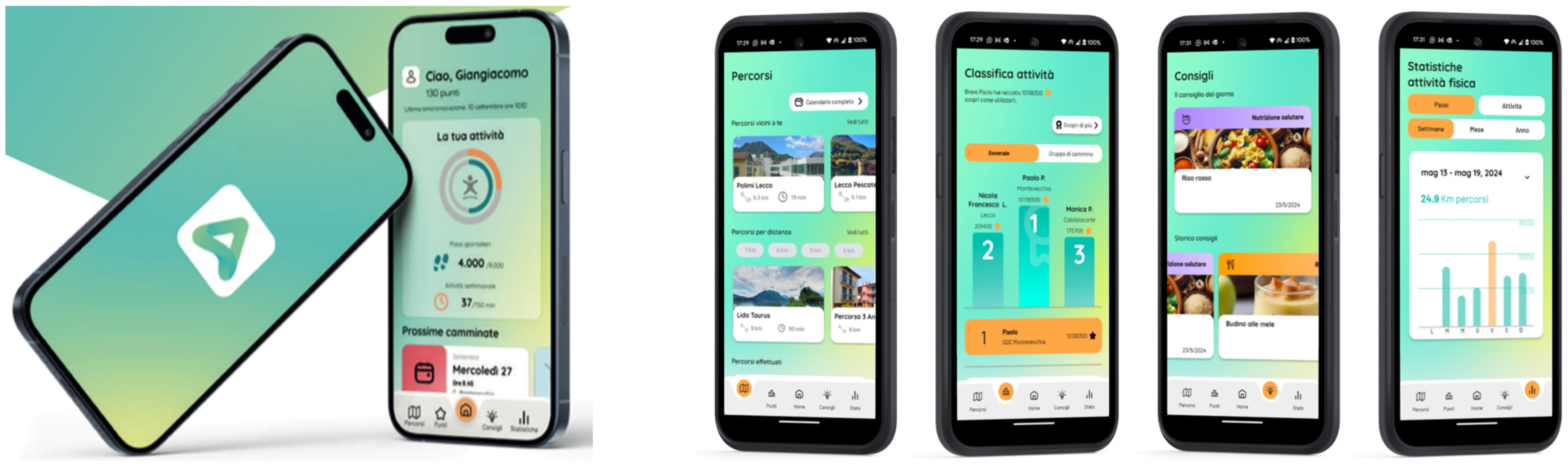
The Active3 app recorded steps and heart rate, kept a weekly food diary, and provided motivational feedback to encourage sedentary individuals to become active (150 min of physical activity weekly) and active individuals to maintain a healthy lifestyle (Figure 1).
Figure 1.
The Active3 app and its main sections (from left to right): home page, personal dashboard, pathways to walk, rankings, nutritional tips, personal physical statistics.
The measuring device was a non-medical device (Garmin VivoActive 5®, Olathe, KS, USA) selected after a comparative analysis and reliability assessment for steps and distance measurement, and it measured steps, speed, and heart rate. The device was given to all participants free of charge. The Active3 app, developed for Android and iOS platforms, was the software with which participants interacted with the Active3 project.
In particular, the app was divided into four main sections:
- -
- Movement data;
- -
- Walking group and activities;
- -
- Rewards;
- -
- Tips (nutrition and activity);
- -
- Profile.
The app was connected via SpikeAPI to the Garmin VivoActive 5 wearable device. Through this software library, the app was able to record all steps and physical activity data measured by the wearable device. The collected data were stored in a cloud database (Google Firebase) so that they could be analyzed at the end of the clinical study and used to generate rewards and rankings. The recorded data were:
- -
- Number of steps taken daily;
- -
- Minutes of moderate activity per day;
- -
- Minutes of vigorous activity per day;
- -
- Minutes of inactivity per day;
- -
- Distance traveled;
- -
- Heart rate (HR);
- -
- HR at rest.
The walking group and activity section allowed participants to view the routes and schedules of the walking group. The app was also a means of communicating with participants about the event calendar, confirming attendance and viewing routes, and allowing them to follow the routes via GPS. Steps and minutes of moderate/intense activity were measured by means of the Garmin VivoActive 5 smartwatch so that the measurements were always active regardless of whether the phone was with the user or not. During organized walking groups, the path was recorded by smartphone GPS. The accuracy was dependent on the smartphone used, but thanks to the Kalman filter algorithm, the accuracy was improved by clinical partners, especially during forest pathways. Based on gender, age, and their health status, each participant received a goal for steps and minutes of activity. This goal was always visible on the main screen of the app. Considering this goal and how GPS measures activity, users received rewards in terms of virtual fitness coins (“fitcoins”) to establish a social ranking. This incentivized users to reach their goals. Furthermore, the app included a leaderboard, allowing users to view their ranking based on their physical activity and receive additional rewards in case of further physical activity exceeding the recommended action. The goal was not to test the competitive factor among participants but rather to encourage individuals to engage in physical activity with the aim of obtaining a final reward. Patient engagement is recognized in the scientific literature as a key factor in improving clinical outcomes, treatment adherence, and the sustainability of healthcare systems. More highly engaged individuals show higher levels of activation, self-management skills, and participation in decision-making processes, with positive effects on both the quality of care and the reduction of healthcare costs [18,19]. In this context, several studies highlight how reward mechanisms—understood not only as financial incentives but also as symbolic recognition, positive feedback, gamification, and motivational reinforcement—can play a significant role in supporting and sustaining engagement over time.
In particular, digital interventions and eHealth programs that integrate reward systems have been shown to promote healthy behaviors, increase treatment adherence, and strengthen patients’ intrinsic motivation [20,21]. The application also included a section containing dietary suggestions in the form of tips and recipes aimed at increasing awareness of eating habits and promoting adherence to the Mediterranean diet, which is widely recognized as one of the most effective dietary patterns for health promotion and the prevention of chronic diseases, representing a fundamental pillar in healthcare. Numerous epidemiological studies and clinical trials have shown that high adherence to the Mediterranean diet is associated with a significant reduction in the risk of cardiovascular diseases, type 2 diabetes, obesity, certain types of cancer, and cognitive decline [22,23]. The tips section offered users “health tips” for staying more active and eating healthily. This section of the application was developed by a team of clinical nutritionists and was informed by a Mediterranean diet adherence questionnaire (with the calculation of the corresponding dietary score) administered to the study participants prior to the platform’s design in order to obtain a preliminary overview of the population’s main dietary habits and to support the development of targeted recommendations. This section functioned as a blog, allowing users to read these tips. Users can also activate notifications to receive a message when a new tip is added to the app. Users did not receive catering because there is a wide availability of products and food for the Mediterranean diet in the surrounding markets and malls. The nutritional and recipe tips also stimulated shopping activity so that physical activity and cognitive exercise (memory for products, money management, social relationships, etc.) were reinforced.
All data, tips, and rewards were saved in the cloud. For privacy reasons, the database was pseudonymized, meaning all user data were linked to an alphanumeric identifier and not directly linked to the individual. Only by accessing the personal database was it possible to link sensitive data to the individual.
The app’s profile section also included a questionnaire on eating habits based on the Mediterranean diet. The profile section included a button to request account deletion; this option allowed for all data to be deleted from the cloud databases as required by the GDPR. Users could also request a copy of their data from administrators.
2.2. The Clinical Study
As part of the Active3 project, to test the usability of the app’s digital therapeutics (DTx) intervention for the prevention of cardiovascular and metabolic risk, in WP2, we conducted a clinical trial entitled “Randomized study of healthy lifestyle promotion using an app versus health education in sedentary individuals or participants in walking groups aged 60 to 80.” The study was registered on ClinicalTrial.gov with the identifier NCT07350915. The protocol was configured as a randomized controlled clinical trial on the impact of a multidimensional approach to the empowerment of people over 60 with respect to the adoption of a healthy lifestyle. This study aimed to analyze the impact of a multidimensional approach involving the use of an e-coaching platform to promote healthy aging on the adherence to the intervention and quality of life of individuals aged 60 to 80 in the Lecco area. The secondary objectives of the study included changes in risk factors, such as blood pressure, obesity, and glycemic and lipid control, as well as changes in the neuropsychological profile in terms of cognitive performance. Specifically:
- -
- The primary endpoint of the study was adherence at 12 months, calculated as the percentage of individuals still following the protocol at 12 months, i.e., using the app or undergoing the scheduled evaluations if randomized to the control group. Co-primary endpoint usability was assessed;
- -
- The secondary endpoint was represented by changes in blood LDL levels, whereas a number of other variables were exploratory endpoints, including shifts in glycemic levels, BMI, blood pressure, performance in the 6 min walking test, and changes in scores at neuropsychological evaluation.
2.3. Inclusion and Exclusion Criteria
The clinical study had the following inclusion criteria:
- -
- People aged between 60 and 80 years;
- -
- People able to provide valid written informed consent.
The only exclusion criterion was the presence of different comorbidities (for typology or severity) that according to the judgment of the clinician, the proposed physical activity is contraindicated for; otherwise, the adherence could be affected.
2.4. Randomization and Allocation
The clinical validation was planned to be conducted on 200 healthy subjects aged 60–80, recruited from participants in walking groups (active) or students at the University of the Third Age (sedentary). All participants provided informed consent to the study after an informational interview with the investigators and participated voluntarily. They were planned to be randomized into two groups (intervention and control). The study used pseudonymization with codes relating to the four groups of subjects, which was carried out through randomization and consecutive numbering. Data matching was implemented only in the event of incidental findings during testing and the study. Recruitment was conducted in collaboration with the territorial health authority, and testing was conducted in collaboration with the reference hospital for the area (blood and psychological tests) and Villa Beretta (physical and physiological tests).
A group of 100 individuals was originally planned to be recruited, consisting of those who had already participated in walking groups coordinated by ATS in the Lecco area, alongside 100 sedentary individuals. Individuals were followed for 12 months, and primary and secondary outcome parameters were monitored before the start of the program and at the midpoint (6 months) and final 12-month intervals. Participants were randomly allocated to four different study groups according to gender, age, BMI, and the 6 min walking test (6MWT) score (this parameter was used to define sedentary, active, or trained people):
- Group A1: Fifty individuals from the walking groups who received APPs and wearables for 12 months;
- Group A2: Fifty individuals from the walking groups who did NOT receive APPs and wearables for 12 months (control group);
- Group B1: Fifty sedentary individuals from the same area/municipalities who received APPs and wearables;
- Group B2: Fifty sedentary individuals, preferably from the same area/municipalities, who were not given apps or wearable devices.
All participants were administered a questionnaire on eating habits, BMI assessment, blood pressure, heart rate, 6MWT, the SF-36 quality of life scale, and neuropsychological tests. Blood samples were drawn for blood glucose, glycated hemoglobin, triglycerides, and cholesterol (total and LDL). The battery of neuropsychological tests administered includes the Mini Mental Scale Examination (MMSE) and specific tests for different cognitive domains, such as the digit span test, the 15-word list, figure copying and recall, Raven matrices, attentional matrices, the Boston naming test, the Trail Making Test, and the Wisconsin Test (short version). Usability evaluation was conducted using the System Usability Scale (SUS) and Technology Acceptance Model (TAM) questionnaires.
All individuals were tested according to the following initial, intermediate, and final screening schedules:
(a) At month 0 (= recruitment): all evaluations;
(b) At month 6 (excluding neuropsychological evaluations);
(c) At month 12 (end of the study): all evaluations.
The app was powered by baseline data to provide personalized goals, both regarding suggested changes in dietary habits and the type and amount of physical exercise required/proposed. The goals were set by the app on a weekly basis.
The wearable provides information on activity time, number of steps, distance traveled, and heart rate.
A week of physical activity monitoring was planned at the start of the trial. Based on the individual results of this monitoring, the app set differentiated goals.
The goal table for people belonging to different age groups and levels of active lifestyle was set as follows:
- -
- For sedentary or active participants, for the period of month 0–month 6:
60–70 Years > 3000–4000 Steps Daily and 90 Min of Physical Activity;
70–75 Years > 2100–3500 Steps Daily and 75 Min of Physical Activity;
75–80 Years > 1800–2800 Steps Daily and 70 Min of Physical Activity.
- -
- For sedentary or active participants, for the period of month 6–month 12:
60–70 Years > 6000–8000 Steps Daily and 150 Min of Physical Activity;
70–75 Years > 4500–7500 Steps Daily and 130 Min of Physical Activity;
75–80 Years > 4000–7000 Steps Daily and 120 Min of Physical Activity.
- -
- For active to trained participants, for the period of month 0–month 6:
60–70 Years > 6000–8000 Steps per Day and 200 Min of Physical Activity;
70–75 Years > 5500–7500 Steps per Day and 180 Min of Physical Activity;
75–80 Years > 5000–7000 Steps per Day and 150 Min of Physical Activity.
2.5. Endpoints of the Study
As the platform was intended to promote a multimodal intervention that is recommended for a better prevention impact [24], different endpoints in the three main domains were expected: physical, metabolic, and cognitive. The primary objectives of the study were:
- Adherence to the proposed program measured by the duration of use of the platform (app) and number of programs completed;
- Analysis of the usability of the platform using the SUS questionnaire.
Instead, the secondary objective of the study was defined as the preliminary evaluation of the clinical efficacy of the behavioral intervention by assessing the changes in LDL cholesterol levels; concerning other indices of efficacy of the intervention, we also considered the following secondary metabolic, cognitive, physical, and behavioral parameters:
- 3.
- Changes in BMI (metabolic);
- 4.
- Changes in systolic and diastolic BP (metabolic);
- 5.
- Changes in glycated hemoglobin levels (metabolic);
- 6.
- Changes in psychometric test scores (cognitive);
- 7.
- Changes in 6MWT score (physical);
- 8.
- Transition from a sedentary lifestyle to moderate physical activity, according to the WHO recommendations (behavioral).
Upon enrollment in the study, all participants were provided with information brochures containing recommendations for healthy living, particularly regarding diet and physical activity. Group data were analyzed separately, comparing pre- and post-intervention data for each group. Statistical analyses used parametric and non-parametric tests for continuous variables, while Fisher tests were used for dichotomous variables. Data relating to pre- and post-study changes in each subgroup were analyzed using Student’s t-tests for paired data. A separate analysis was also planned for the dropout group to highlight any differences in their pre-trial clinical profile compared to participants who remained active at 12 months.
Regarding the evaluation criteria to assess the study outcome, we used the following grid:
- -
- For the primary endpoint of adherence, a percentage of individuals still actively following the proposed program of 70% in the intervention group is considered satisfactory. The literature on clinical studies of this type shows that, for example, empowerment interventions aimed at lifestyle changes or the adoption of specific diets are burdened by a dropout rate from 15% to about 30% [25,26];
- -
- For the primary endpoint of usability, an average SUS score of 75 in the intervention group is considered satisfactory.
3. Results
This section is divided into the two main outcomes at this level of the study: (a) enrollment and (b) description of the baseline of the population health at recruitment (month 0). A statistical analysis was performed using NCSS statistical software Version 24.0.7.
3.1. Enrollment
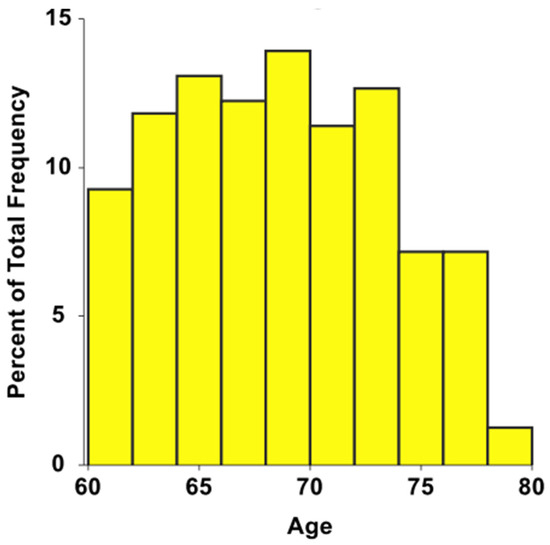
In the recruitment phase, we received interest from 243 subjects, and after a pre-eligibility check and informed consent approval and signature, a total of 237 subjects (mean age: 69.11, SD: 4.95) were enrolled in the study with a well-balanced age distribution among them (Figure 2. This number exceeded the original prevision but we encountered an enthusiastic engagement, so decided to enlarge the threshold. Through stratified randomization by gender, age, BMI, and 6MWT distance used to define sedentary, active, or trained people, we allocated 100 participants to the control group and 137 subjects to the intervention group after the execution of the 6MWT that was used to obtain the three clusters of subjects in the function of their starting physical functioning level (sedentary, active, trained). This decision was made to have a larger intervention group for the reason of a possible dropout rate that could impact the results. The control group that was composed of people continuing their normal lifestyles and receiving only a standard educational program and related material was expected not to have any risk of dropout.
Figure 2.
Descriptors of the population at the enrollment of the clinical study: numerosity of subjects by age range (interval amplitude: 2 years).
In this study, we decided not to limit the intervention group to the initially planned 100 participants. This decision stems from the expected efficacy of digital therapeutics in supporting healthy lifestyle changes [27]; therefore, we aimed to broaden the access to a beneficial tool for counteracting aging. While this choice results in an imbalance between the groups and a subsequent reduction in statistical power, it was considered acceptable for the following reasons:
(i) The participants belong to a highly homogeneous group (as evidenced by their general characteristics), which significantly reduces the risk of randomization bias;
(ii) A higher dropout rate may occur within the intervention group due to potential technical issues related to app usage, which could ultimately rebalance the group sizes.
Of course, participants were not blinded to the study because the intervention meant the distribution of the system. Thus, after the explanation of the protocol and the informed consent signature, random allocation to the intervention or control groups with the provision of the app and wearable device made the subjects aware of this. Pseudoanonymization was used by the researchers to manage the eventual adverse events or incidental findings.
Regarding gender distribution, a total of 153 female participants (65.1%) and 82 male subjects (34.9%) were enrolled (Table 1), and age distribution was well balanced (Figure 2).
Table 1.
Participant characteristics and baseline data.
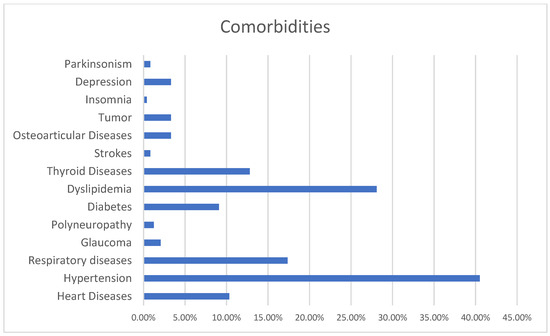
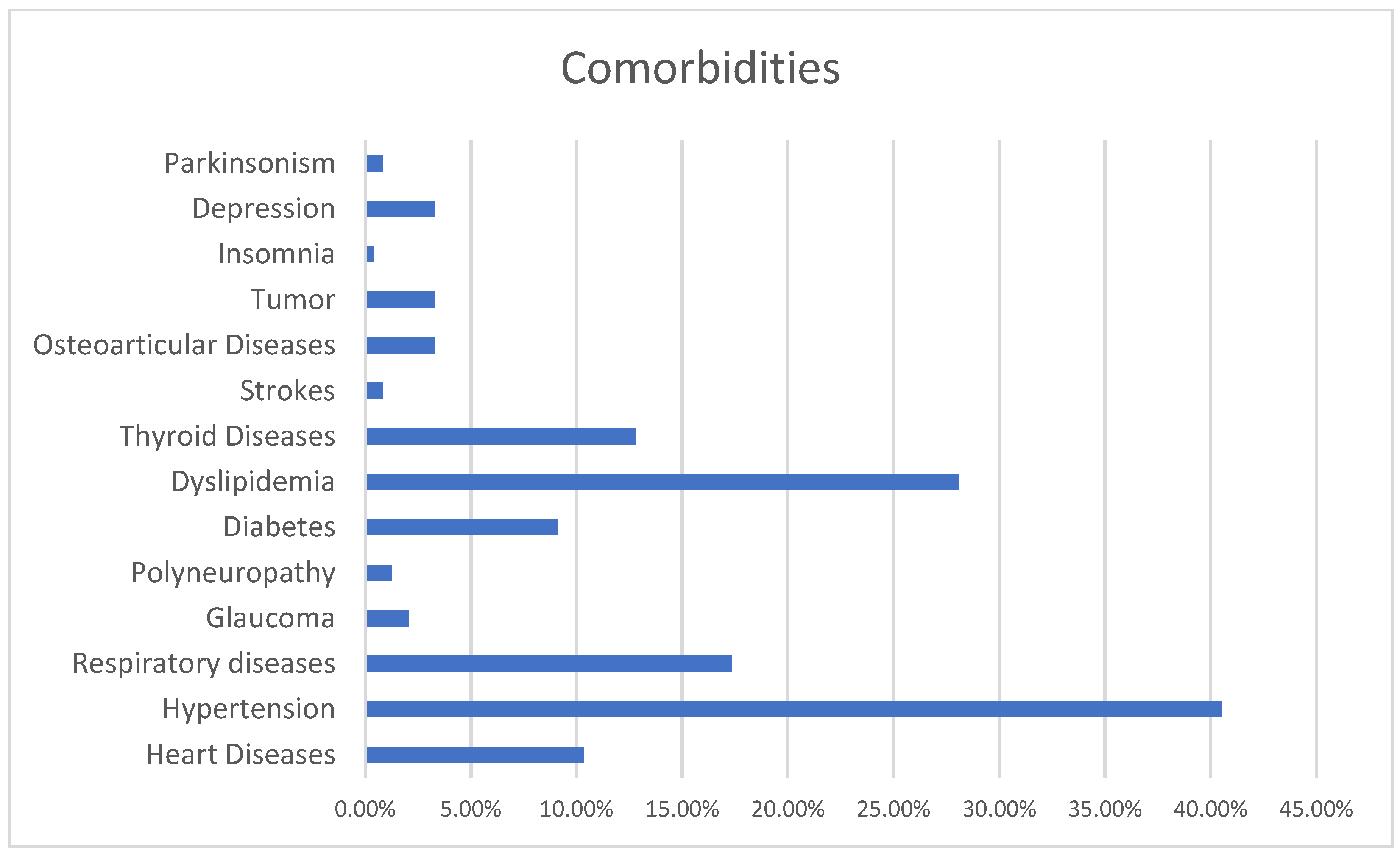
During the enrollment, the subjects also compiled an anamnestic questionnaire to frame their health in a more complete assessment. This was very interesting to understand the comorbidities of the sample population so that the intervention could also be integrated in a personal and social format along with the goals. The categories of comorbidities were 15 in total, (Figure 3) and the rate of occurrence in the population for the first five pathologies was:
Figure 3.
Comorbidities shown in the recruited population.
Hypertension: 40.50%;
Dyslipidemia: 28.10%;
Respiratory diseases: 17.36%;
Thyroid disease: 12.81%;
Heart disease: 10.33%.
Remarkably, despite the population of this study being a selected subgroup of the general population, with a high rate of active individuals who were all motivated in joining this initiative, the frequency of morbidities was very similar to the one reported for the general population of the same age cohorts by the territorial Health Agency (ATS) in the Lecco and Brianza areas in 2023 [28]. As expected, hypertension and dyslipidemia were the most common pathologies in the population. The most interesting aspect was the high rate of thyroid disease, which has more of an impact than diabetes (occurrence: 9.09%) on this population.
The analysis of the recorded comorbidities revealed significant differences by sex: diabetes was more prevalent in males, and osteoarticular diseases and thyroid dysfunction were more prevalent in females (Table 2). No significant differences were observed by age.
Table 2.
Statistically significant prevalence in comorbidities data by sex.
3.2. Baseline Data on the Control and Intervention Populations
After recruitment, we defined a 2-week period for the intensive scheduling of the visits for all participants to measure the baseline levels of the three intervention domains (physical, metabolic, and cognitive) through the parameters described in the protocol. Specifically, we adopted BMI, HR at rest and at the end of exercise, and 6MWT to describe the physical and lifestyle categories (sedentary, active, and trained according to the walked path with respect to the expected one as defined in Ref. [29]). For physiologic and metabolic status, we carried out a blood examination to measure blood glucose, glycated hemoglobin, triglycerides, and cholesterol (total and LDL), along with the questionnaire of Mediterranean diet adherence. The assessment of the cognitive status was carried out through the battery of neuropsychological tests (MMSE, digit span test, the 15-word list, figure copying and recall, Raven matrices, attentional matrices, the Boston naming test, the Trail Making Test, and the Wisconsin Test—short version).
3.2.1. Physical Activity Baseline Data
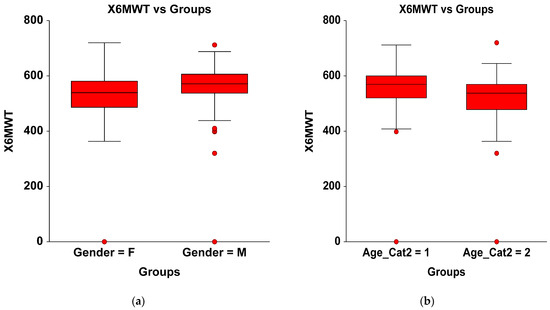
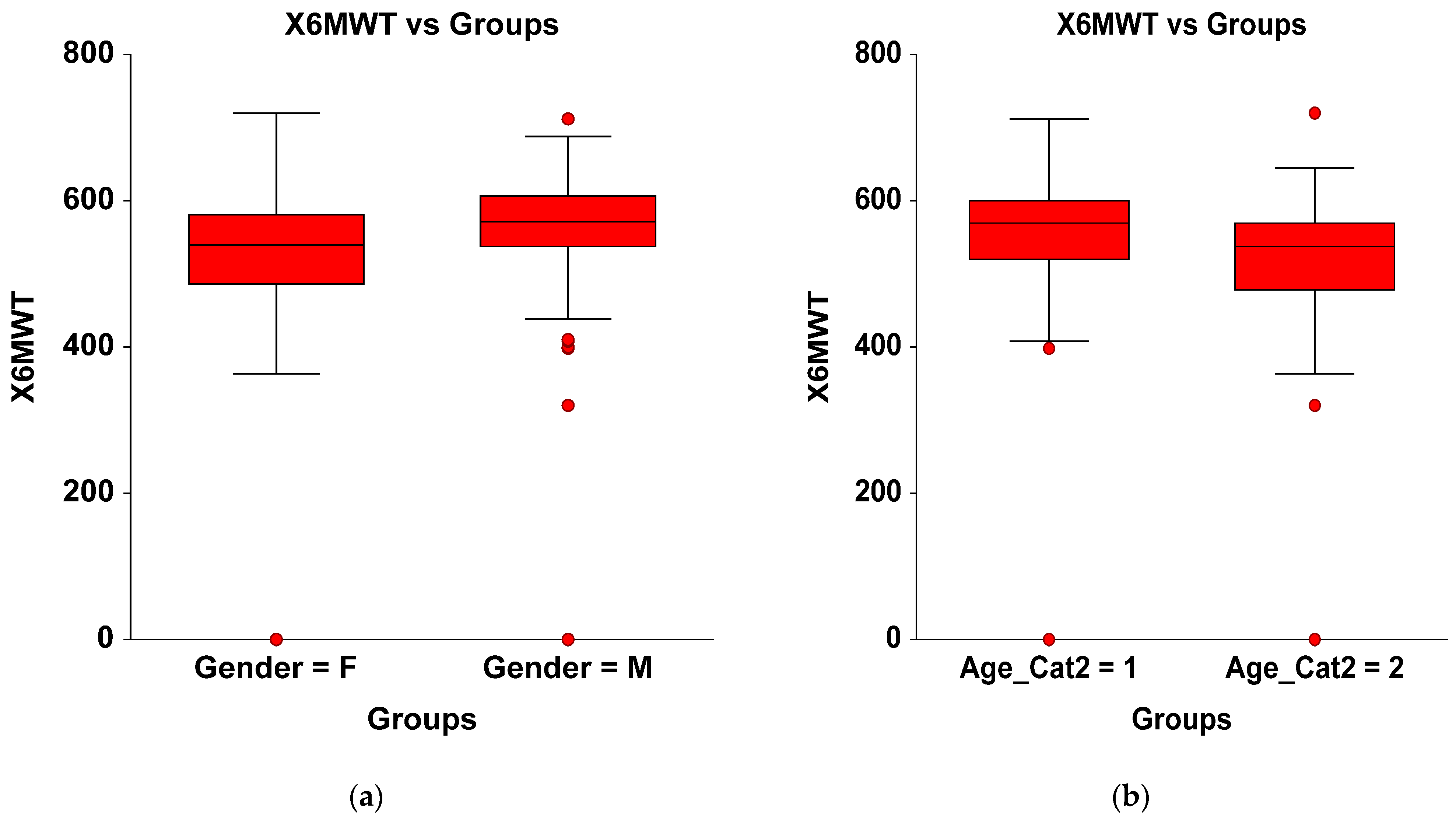
The 6MWT showed that the overall performance was very good for the population, and as expected, male subjects presented a better performance than females for people in the age range of 60–70 years compared to 71–80 years (Figure 4a,b).
Figure 4.
6MWT data (the walked path in m; mean and SD): (a) for male and female populations; (b) by age range (Age_Cat2 = 1 are subjects within the 60–70 years age range; Age_Cat2 = 1 are subjects within the 71–80 years age range).
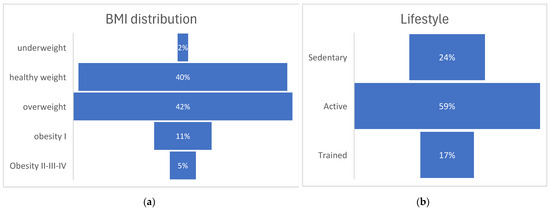
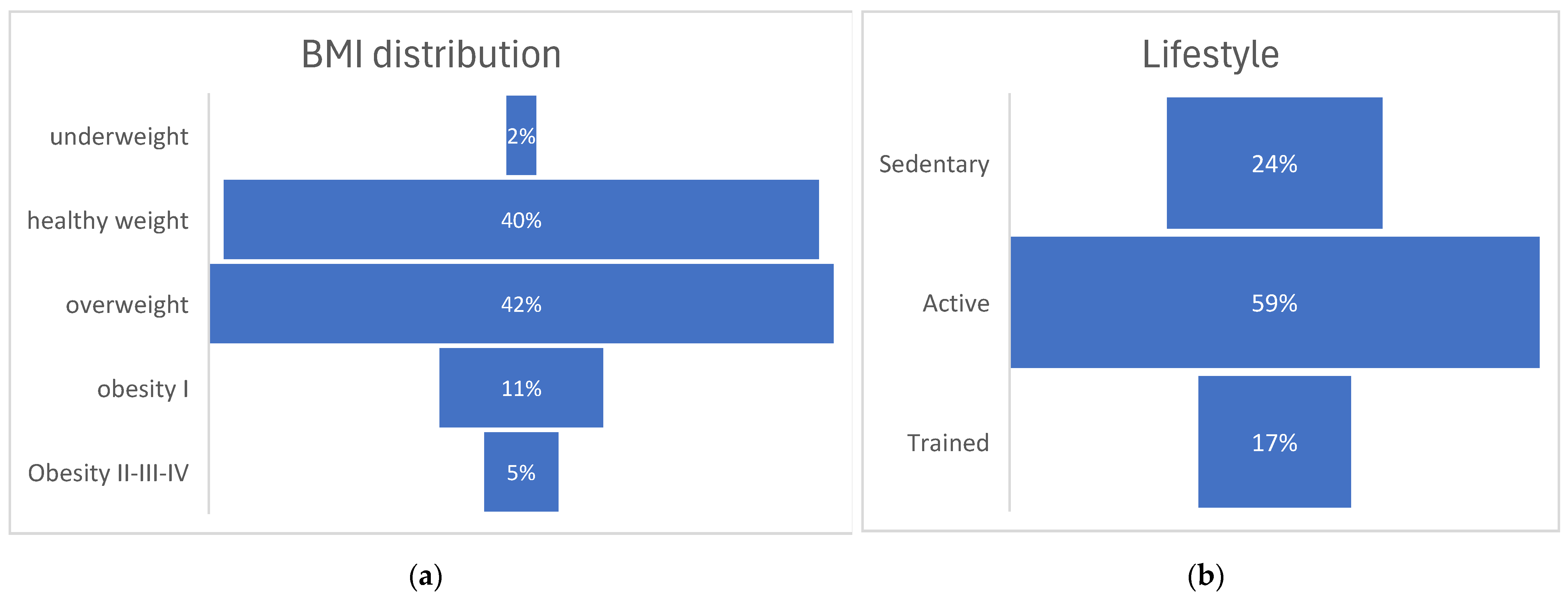
By comparing the actual 6MWT performance versus the expected walking path as determined by Duncan et al. [29] in the functions of sex and age, we clustered the population into two categories: sedentary people (who performed a 6MWT distance < 92% of the expected path) and active people (who walked between 92 and 108% of the interval of the expected path). The population performed very well: 59% were active people, while only 24% had sedentary behavior. The interest and participation in hiking and outdoor activities for the Lecco citizens led to 17% of active people (Figure 5b). In the population, 40% of people presented a healthy weight, while 58% had overweight (42%) or obesity (16%) (Figure 5a).
Figure 5.
Physical descriptors of the population at the enrollment of the clinical study: (a) BMI; (b) lifestyle defined in relation to the 6MWT performance.
3.2.2. Metabolic Baseline Data
Blood sampling data (Table 3) evidenced a prevalence of hypercholesterolemia (both total and LDL levels) in the population: respectively, 63% for high LD levels and 57% for total LDL levels. Triglycerides were in the normal range for 87% of the population; also, glycemia (73% of people in the normal range) and glycated hemoglobin (87% of people in the normal range) showed a very good outcome.
Table 3.
Basic metabolic parameters of the analyzed population and percentage distribution.
3.2.3. Cognitive Baseline Data
About cognitive data, among the set of tests administered to the population, the most widely adopted and that most completely describes the cognitive performance of the enrolled population is MMSE. The MMSE score is interpreted on a scale from 0 to 30, with lower scores indicating cognitive impairment. A score of 26/30 or higher is generally considered normal. MMSE scores in the range between 26 and 24 are the index of a borderline condition worthy of further analysis. Lower scores indicate impairment: mild (between 18 and 24), moderate (between 10 and 18), and severe (less than 10) [30,31,32,33,34,35,36]. Table 4 reports the baseline cognitive assessment of the population: healthy subjects represented 73% of the sample, and only 6% showed mild cognitive impairment. Despite these results, they demonstrated ability in managing the app and social activity, so they presented no exclusion criteria. The same was found for borderline subjects.
Table 4.
Cognitive classification of the analyzed population and percentage distribution.
4. Discussion
We are at the debut of the DTx era, and validation and impact assessment are just at the beginning. Contemporarily, we are living through the societal challenge of healthy aging as a strategic pillar for the healthcare systems in several countries. This paper describes the Active3 system and the protocol of the clinical trial for the evaluation of the usability and impact of the proposed DTx intervention.
The enrollment was even better than expected, so that the intervention population exceeded the foreseen size for the statistical significance. The characterization of the study population at the initial time of the trial was carried out, and the outcomes are presented. The population is generally more active than the general Italian population of the same age. We had a relationship with an area where elderly individuals are indeed active: they have social roles; engage in outdoor walking and, for some, even hiking; and they take care of their grandchildren, and so they represent a high target population with respect to many individuals in other situations.
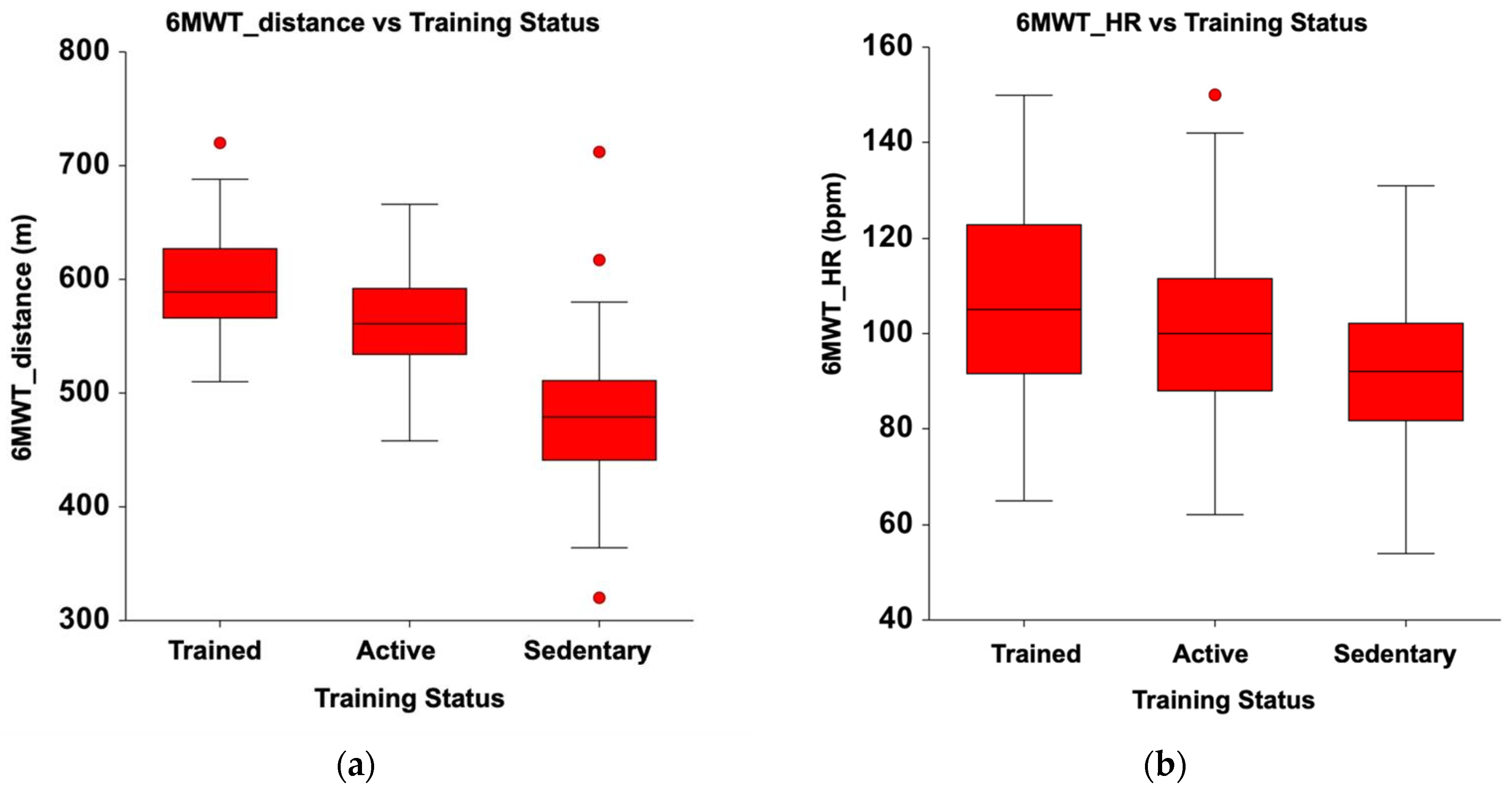
The following variables were considered for statistical analysis: resting heart rate, heart rate during the 6MWT, meters walked during the MWT, BMI, blood glucose, glycated hemoglobin, total cholesterol, LDL cholesterol, and triglycerides. The only variables for which a significant difference was found between all groups are meters walked during the 6MWT and heart rate during the 6MWT (Figure 6). Regarding the path length walked during the 6MWT, as might be expected, the more trained a subject is, the longer they can walk: the average walked path by trained people (42 subjects) was 592.81 m, while for active participants (142 subjects), it was 559.70 m, and the distance for sedentary people (58 subjects) decreased to 479.74 m. The Bonferroni Multiple Comparison Test (all pairs) confirmed a statistically significant difference among all groups. Significant differences were also observed in meters walked in the 6MWT test by sex and age: males walked more meters, as did the younger group.
Figure 6.
Distance and heart rate in the three categories of enrolled subjects: (a) average (and SD) walked distance in trained, active, and sedentary people; (b) average (and SD) HR in trained, active, and sedentary people during the 6MWT.
Again, sedentary subjects had a lower increase in heart rate than active and trained subjects; it was also noted that the more trained the subject, the higher their heart rate was during exercise (Figure 6b).
Regarding anamnestic, metabolic, and cognitive data, the shown comorbidities and cognitive performances are in line with expectancies and epidemiologic data.
5. Conclusions
The proposed DTx represented one of the first digital interventions in Italy dedicated to prevention for the 60–80-year-old population. The proposed RCT aimed to evaluate the usability and adherence of such a digital solution in a generation that is often not expert in the use of digital technology. This represented the primary endpoint to be investigated. At the same time, a preliminary analysis of clinical efficacy was expected. More specifically, the Active study set up a multidomain intervention based on behavioral therapy promoting active aging, balanced nutrition, and social activity, so that positive outcomes are expected in four domains: (1) usability and adherence, (2) physical activity, (3) nutritional and metabolic parameters, and (4) cognitive scores. The protocol was registered in the ClinicalTrials.gov platform with the Unique Protocol ID: Active3-WP2.
The enrollment exceeded expectations, and this demonstrated the need and interest of the population for innovative healthcare services. The recruited participants underwent a multifactorial baseline assessment demonstrating higher scores than standard data for people of similar age.
The study started on 1 September 2024, and the results will be available in winter 2025–2026.
Author Contributions
Conceptualization, G.A. and YAS.; methodology, G.A., A.S., A.M., and G.R.; investigation, P.P., R.D.S., G.C.M., G.P., F.M., M.S., and E.G.; data curation, D.T., R.C., F.M., A.S., and G.A.; writing—original draft preparation, G.A.; writing—review and editing, G.A., G.R., and A.S. All authors have read and agreed to the published version of the manuscript.
Funding
This research was funded by Fondazione CARIPLO and Regione Lombardia, emblematic project “Active3—Everyone, Everywhere, Everyday”.
Institutional Review Board Statement
This study was conducted in accordance with the Declaration of Helsinki and approved by the Ethics Committee of Politecnico di Milano (protocol code 01/2024, approved on 23 January 2024).
Informed Consent Statement
Informed consent was obtained from all subjects involved in this study.
Data Availability Statement
The data presented in this study are available on request from the corresponding author due to GDPR and destination of use restriction.
Conflicts of Interest
The authors declare no conflicts of interest. The funders had no role in the design of the study; in the collection, analyses, or interpretation of data; in the writing of the manuscript; or in the decision to publish the results.
References
- WHO. Decade of Helathy Ageing. Available online: https://www.who.int/initiatives/decade-of-healthy-ageing#:~:text=The%20United%20Nations%20Decade%20of,communities%20in%20which%20they%20live (accessed on 27 November 2025).
- Indicatori Demografici ISTAT. Available online: https://demo.istat.it/tavole/?t=indicatori (accessed on 27 November 2025).
- Pubmed Search. Available online: https://pubmed.ncbi.nlm.nih.gov/?term=healthy+lifestyle%2C+prevention%2C+physical+activity%2C+elderly&filter=datesearch.y_5&filter=pubt.clinicaltrial&filter=pubt.randomizedcontrolledtrial (accessed on 27 November 2025).
- Ping, Y.; Visaria, A.; Suppiah, S.D.; Tan, Y.W.; Malhotra, R. Prevalence and correlates of medication reminder app “use and use intention” among older adults. Expl. Res. Clin. Soc. Pharm. 2022, 6, 100150. [Google Scholar]
- Coricelli, C.; Aiello, M.; Lunardelli, A.; Galli, G.; Rumiati, R. sFEra APP: Description and usability of a novel tablet application for executive functions training. J. Cogn. Enhanc. 2022, 6, 389–401. [Google Scholar] [CrossRef] [Scilit]
- Recio-Rodriguez, J.I.; Agudo-Conde, C.; Martin-Cantera, C.; González-Viejo, M.N.; Fernandez-Alonso, M.D.; Arietaleanizbeaskoa, M.S.; Schmolling-Guinovart, Y.; Maderuelo-Fernandez, J.A.; Rodriguez-Sanchez, E.; Gomez-Marcos, M.A.; et al. Short-term effectiveness of a mobile phone app for increasing physical activity and adherence to the Mediterranean diet in primary care: A randomized controlled trial (EVIDENT II Study). J. Med. Internet Res. 2016, 18, e331. [Google Scholar] [CrossRef] [Scilit] [PubMed]
- Jungreitmayr, S.; Kranzinger, C.; Venek, V.; Ring-Dimitriou, S. Effects of an App-Based Physical Exercise Program on Selected Parameters of Physical Fitness of Females in Retirement: A Randomized Controlled Trial. Front. Physiol. 2022, 13, 821773. [Google Scholar] [CrossRef] [Scilit]
- Wesselman, L.M.; Hooghiemstra, A.M.; Schoonmade, L.J.; de Wit, M.C.; van der Flier, W.M.; Sikkes, S.A. Web-Based Multidomain Lifestyle Programs for Brain Health: Comprehensive Overview and Meta-Analysis. JMIR Ment. Health 2019, 6, e12104. [Google Scholar] [CrossRef] [Scilit]
- Ling Wong, E.M.; Leung, D.Y.P.; Lon Tam, H.; Wang, Q.; Yeung, K.W.; Leung, A.Y. The effect of a lifestyle intervention program using a mobile application for adults with metabolic syndrome, versus the effect of a program using a booklet: A pilot randomized controlled trial. Clin. Interv. Aging 2021, 16, 633–644. [Google Scholar] [CrossRef] [Scilit] [PubMed]
- Godos, J.; Grosso, G.; Ferri, R.; Caraci, F.; Lanza, G.; Al-Qahtani, W.H.; Caruso, G.; Castellanov, S. Mediterranean diet, mental health, cognitive status, quality of life, and successful aging in southern Italian older adults. Exp. Gerontol. 2023, 175, 1121–1143. [Google Scholar] [CrossRef] [Scilit]
- Rego, M.L.; Cabral, D.A.; Costa, E.C.; Fontes, E.B. Physical exercise for individuals with hypertension: It is time to emphasize its benefits on brain and cognition. Clin. Med. Insights Cardiol. 2019, 13, 1179546819839411. [Google Scholar] [CrossRef] [Scilit]
- Vanacore, N.; Di Pucchio, A.; Lacorte, E.; Bacigalupo, I.; Mayer, F.; Cesari, M.; Canevelli, M. Dal mild cognitive impairment alla demenza: Qual è il ruolo della sanità pubblica? Position statement. Recenti Progr. Med. 2017, 108, 211–215. [Google Scholar]
- Sachdev, P.S.; Lipnicki, D.M.; Kochan, N.A.; Crawford, J.D.; Thalamuthu, A.; Andrews, G.; Brayne, C.; Matthews, F.E.; Stephan, B.C.M.; Lipton, R.B.; et al. The prevalence of mild cognitive impairment in diverse geographical and ethnocultural regions: The COSMIC Collaboration. PLoS ONE 2015, 10, e0142388. [Google Scholar] [CrossRef] [Scilit]
- Schroder, H.; Fitò, M.; Estruch, R.; Martinez-Gonzales, M.; Corella, D.; Salas-Salvadò, J.; Lamuela-Ravento, R.; Ros, E.; Salaverrìa, I.; Fiol, M.; et al. A Short Screener Is Valid for Assessing Mediterranean Diet Adherence among Older Spanish Men and Women. J. Nutr.–Nutr. Epidemiol. 2011, 141, 1140–1145. [Google Scholar] [CrossRef] [Scilit]
- Seinfeld, S.; Sanchez-Vives, M.V. Healthy Aging Promotion through Neuroscientific Information-Based Strategies. Int. J. Environ. Res. Public Health 2015, 12, 12158–12170. [Google Scholar] [CrossRef] [Scilit]
- Van Wier, M.F.; Ariëns, G.A.M.; Dekkers, J.C.; Hendriksen, I.J.M.; Pronk, N.P.; Smid, T.; VanMechelen, W. ALIFE@Work: A randomised controlled trial of a distance counselling lifestyle programme for weight control among an overweight working population. BMC Public Health 2006, 6, 140. [Google Scholar] [CrossRef] [Scilit] [PubMed]
- Gómez-Sánchez, L.; Gómez-Sánchez, M.; Lugones-Sánchez, C.; Rodríguez-Sánchez, E.; Tamayo-Morales, O.; Gonzalez-Sánchez, S.; Magallón-Botaya, R.; Ramirez-Manent, J.I.; Recio-Rodriguez, J.I.; Agudo-Conde, C.; et al. Long-Term Effectiveness of a Smartphone App and a Smart Band on Arterial Stiffness and Central Hemodynamic Parameters in a Population with Overweight and Obesity (Evident 3 Study): Randomised Controlled Trial. Nutrients 2022, 14, 4758. [Google Scholar] [CrossRef] [Scilit]
- Carman, K.L.; Dardess, P.; Maurer, M.; Sofaer, S.; Adams, K.; Bechtel, C.; Sweeney, J. Patient and family engagement: A framework for understanding the elements and developing interventions and policies. Health Aff. 2013, 32, 223–231. [Google Scholar] [CrossRef] [Scilit] [PubMed]
- Hibbard, J.H.; Stockard, J.; Mahoney, E.R.; Tusler, M. Development of the Patient Activation Measure (PAM): Conceptualizing and measuring activation in patients and consumers. Health Serv. Res. 2004, 39, 1005–1026. [Google Scholar] [CrossRef] [Scilit] [PubMed]
- Barello, S.; Triberti, S.; Graffigna, G.; Libreri, C.; Serino, S.; Hibbard, J.; Riva, G. eHealth for Patient Engagement: A Systematic Review. Front. Psychol. 2016, 8, 2013. [Google Scholar] [CrossRef] [Scilit] [PubMed]
- Sardi, L.; Idri, A.; Fernández-Alemán, J.L. A systematic review of gamification in e-Health. J Biomed. Inform. 2017, 71, 31–48. [Google Scholar] [CrossRef] [Scilit] [PubMed]
- Sofi, F.; Cesari, F.; Abbate, R.; Gensini, G.F.; Casini, A. Adherence to Mediter-ranean diet and health status: Meta-analysis. BMJ 2008, 337, a1344. [Google Scholar] [CrossRef] [Scilit] [PubMed]
- Estruch, R.; Ros, E.; Salas-Salvadó, J.; Covas, M.I.; Corella, D.; Arós, F.; Gómez-Gracia, E.; Ruiz-Gutiérrez, V.; Fiol, M.; Lapetra, J.; et al. Primary Prevention of Cardiovascular Disease with a Mediterranean Diet Supplemented with Extra-Virgin Olive Oil or Nuts. N. Engl. J. Med. 2018, 378, e34. [Google Scholar] [CrossRef] [Scilit] [PubMed]
- Lee, W.J.; Peng, L.N.; Lin, C.H.; Chen, R.C.; Lin, S.Z.; Loh, C.H.; Kao, S.L.; Hung, T.S.; Chang, C.Y.; Huang, C.F.; et al. Effects of incorporating multidomain interventions into integrated primary care on quality of life: A randomised controlled trial. Lancet Healthy Longev. 2021, 2, e712–e723. [Google Scholar] [CrossRef] [Scilit] [PubMed]
- Stepanian, N.; Larsen, M.H.; Mendelsohn, J.B.; Mariussen, K.L.; Heggdal, K. Empowerment interventions designed for persons living with chronic disease—A systematic review and meta-analysis of the components and efficacy of format on patient-reported outcomes. BMC Health Serv. Res. 2023, 23, 911. [Google Scholar] [CrossRef] [Scilit] [PubMed]
- Bertoli, S.; Capodaglio, P.; Colosimo, S.; De Amicis, R.S.; Gilardini, L.; Bruno, A.; Mambrini, S.P.; Pietrabissa, G.; Cavaggioni, L.; Castelnuovo, G.; et al. Effectiveness of a Digital Therapy on 6-Month Weight Loss in People With Obesity: The Digital Therapy to Promote Weight Loss in Patients With Obesity by Increasing Their Adherence to Treatment (DEMETRA) Randomized Clinical Trial. J. Med. Internet Res. 2025, 27, e72054. [Google Scholar] [CrossRef] [Scilit] [PubMed]
- Vincek, V.; Rogina, Z.K.; Bogataj, D. Impact of digital technology on the quality of life of older adults-literature review. IFAC-PapersOnLine 2024, 58, 304–309. [Google Scholar]
- Agenzia Di Tutela Della Salute Della Brianza, Epidemiologia_Cronicita_2023. Available online: https://www.ats-brianza.it/images/pdf/epidemiologia/2024/cronicita-2023-.pdf (accessed on 27 November 2025).
- Duncan, M.J.; Mota, J.; Carvalho, J.; Nevill, A.M. An Evaluation of Prediction Equations for the 6 Minute Walk Test in Healthy European Adults Aged 50–85 Years. PLoS ONE 2015, 10, E0139629. [Google Scholar] [CrossRef] [Scilit]
- Ware, J.E., Jr.; Sherbourne, C.D. The MOS 36-item short-form health survey (SF-36). I. Conceptual framework and item selection. Med. Care 1992, 30, 473–483. [Google Scholar] [CrossRef] [Scilit] [PubMed]
- Apolone, G.; Mosconi, P. The Italian SF-36 Health Survey: Translation, validation and norming. J. Clin. Epidemiol. 1998, 51, 1025–1036. [Google Scholar] [CrossRef] [Scilit] [PubMed]
- Truong, Q.C.; Cervin, M.; Choo, C.C.; Numbers, K.; Bentvelzen, A.C.; Kochan, N.A.; Brodaty, H.; Sachdev, P.S.; Medvedev, O.N. Examining the validity of the Mini-Mental State Examination (MMSE) and its domains using network analysis. Psychogeriatrics 2024, 24, 259–271. [Google Scholar] [CrossRef] [Scilit] [PubMed]
- Foderaro, G.; Isella, V.; Mazzone, A.; Biglia, E.; Di Gangi, M.; Pasotti, F.; Sansotera, F.; Grobberio, M.; Raimondi, V.; Mapelli, C.; et al. Brand new norms for a good old test: Northern Italy normative study of MiniMental State Examination. Neurol. Sci. 2022, 43, 3053–3063, Erratum in Neurol. Sci. 2024, 45, 5563–5564. https://doi.org/10.1007/s10072-024-07585-7. [Google Scholar] [CrossRef] [Scilit] [PubMed]
- Foderaro, G.; Isella, V.; Mazzone, A.; Biglia, E.; Di Gangi, M.; Pasotti, F.; Sansotera, F.; Grobberio, M.; Raimondi, V.; Mapelli, C.; et al. Correction to: Brand new norms for a good old test: Northern Italy normative study of MiniMental State Examination. Neurol. Sci. 2024, 45, 5563–5564. [Google Scholar] [CrossRef] [Scilit]
- Kukull, W.A.; Larson, E.B.; Teri, L.; Bowen, J.; McCormick, W.; Pfanschmidt, M.L. The Mini-Mental State Examination score and the clinical diagnosis of dementia. J. Clin. Epidemiol. 1994, 47, 1061–1067. [Google Scholar] [CrossRef] [Scilit] [PubMed]
- Kistler-Fischbacher, M.; Gohar, G.; de Godoi Rezende Costa Molino, C.; Geiling, K.; Meyer-Heim, T.; Kressig, R.W.; Orav, E.J.; Vellas, B.; Guyonnet, S.; da Sliva, J.A.P.; et al. Cognitive function in generally healthy adults age 70 years and older in the 5-country DO-HEALTH study: MMSE and MoCA scores by sex, education and country. Aging Clin. Exp. Res. 2025, 37, 88. [Google Scholar] [CrossRef] [Scilit] [PubMed]


Disclaimer/Publisher’s Note: The statements, opinions and data contained in all publications are solely those of the individual author(s) and contributor(s) and not of MDPI and/or the editor(s). MDPI and/or the editor(s) disclaim responsibility for any injury to people or property resulting from any ideas, methods, instructions or products referred to in the content. |
© 2026 by the authors. Licensee MDPI, Basel, Switzerland. This article is an open access article distributed under the terms and conditions of the Creative Commons Attribution (CC BY) license.