


Abstract
Small-sized pumpkin varieties are favored by consumers for their starchy texture, rich nutrients, and sweet flavor. Hybrid breeding is currently the primary method used for developing new varieties of small-sized pumpkins. Therefore, systematically evaluating the postharvest storage quality of hybrid materials is of great significance for the breeding, screening, and popularization of varieties with high storage tolerance and superior quality. In this study, three hybrid F1 small-sized pumpkin fruit varieties (Jinbei#1, Jinbei#2, Jinbei#3) generated by the Horticulture Research Institute, Sichuan Academy of Agricultural Sciences were employed to systematically evaluate their main quality indicators and edible sensory quality during ambient (25 °C) and cold (13 °C) storage. The results showed that Jinbei#3 fruits exhibited optimal storability, with the lowest weight loss rate, an extremely low rot rate, and higher carotenoid accumulation, making it suitable for popularization as a storability-oriented and nutrient-fortified variety. Jinbei#1 fruits had the highest dry matter and amylopectin contents, the lowest amylose/amylopectin ratio, and a relatively higher soluble solids content, receiving the optimal overall acceptability scores, making it suitable for popularization as a high-quality fresh-eating variety. Jinbei#2 performs moderately overall. The study results clarified the postharvest storage quality characteristics of three small-sized pumpkin varieties, providing a theoretical basis and data support for the directed breeding and selective popularization of high-quality small-sized pumpkin varieties.
1. Introduction
Small-sized pumpkin (Cucurbita maxima) varieties are characterized by starchy texture, rich nutrition, sweet flavor, and suitability for home consumption. In many markets, particularly in Asia, small-sized pumpkin varieties have gained higher commercial value and consumer preferences compared to traditional large-fruited pumpkins due to their convenience for households and their unique mealy texture, and both their cultivation area and consumer demand have been steadily increasing in recent years [1].
In the breeding of small-sized pumpkins, high yield, stress tolerance, adaptability, fruit quality, and stability and durability during storage and transport are the core breeding objectives [2,3]. To achieve the above breeding objectives, various methods can be used to develop new small pumpkin varieties, including hybrid breeding, introgression, pedigree selection, population selection, and marker-assisted breeding. Hybrid breeding, which combines different parental resources to produce hybrid offspring with distinct traits, is currently the primary method used in the selection and breeding of small-sized pumpkin varieties [4]. However, in actual breeding practices, it is often difficult to combine different desirable traits within a single variety. Therefore, selecting hybrid varieties with various favorable traits is crucial for meeting the diverse market requirements. For example, local markets prioritize flavor and cooking quality, while long-distance distribution requires excellent storability [5].
After harvest, small-sized pumpkins continue to undergo active metabolic processes, leading to weight loss, softening, rotting, and a decline in nutritional quality, which severely affects their storage performance and shelf life [6]. Hence, postharvest storage quality characteristics are a key evaluation dimension in hybrid breeding for small-sized pumpkins. A systematic evaluation of fruit quality changes during storage provides a comprehensive picture of the storability of different hybrid varieties, as well as their nutritional and sensory characteristics, which offers a scientific basis for screening superior varieties suitable for long-term storage with excellent flavor and nutritional quality and provides a theoretical basis for the targeted breeding of new small-sized pumpkin varieties with high-quality and storability [7].
In recent years, the Horticulture Research Institute, Sichuan Academy of Agricultural Sciences has conducted systematic hybrid breeding work on small-sized pumpkins, obtaining a series of new hybrid materials with diverse traits. However, the postharvest storage characteristics and quality change patterns in these hybrid materials remain unclear, as systematic evaluation of storage quality is lacking. This study systematically evaluated the storage quality characteristics of three hybrid F1 small-sized pumpkin fruit varieties (Jinbei#1, Jinbei#2, Jinbei#3) bred by the Horticulture Research Institute, Sichuan Academy of Agricultural Sciences during storage at room temperature and low temperature by comparing the main quality indicators (weight loss rate, respiration rate, firmness, rot rate, dry matter content, soluble solids content (SSC), carotenoid content, and amylose/amylopectin contents and their ratio) in combination with sensory evaluation. The outcomes of this study can clarify the postharvest storage quality performance of various hybrid varieties, providing data support for the selective popularization of superior small-sized pumpkin varieties while also serving as a theoretical basis for the subsequent breeding of high-quality and storable small-sized pumpkin varieties.
2. Materials and Methods
2.1. Plant Materials
Three hybrid F1 small-sized pumpkin varieties (Jinbei#1, Jinbei#2, Jinbei#3) generated by the Horticulture Research Institute, Sichuan Academy of Agricultural Sciences were grown under standardized management at the ‘Pidu’ base of Sichuan Academy of Agricultural Sciences. The fruits were harvested at maturity and transported to the laboratory within 2 h, followed by 24 h pre-cooling in a 13 °C cold storage facility. After pre-cooling, 200 fruits of uniform size and free from mechanical damage or pests and diseases were selected from each hybrid material and divided into two groups: one group was stored at 25 °C (RH ≈ 85%) for 20 d, and the other group was stored in a cold storage facility at 13 °C (RH ≈ 75%) for 60 d. For fruits stored at 25 °C and 13 °C, measurements and sampling were conducted at intervals of 5 d and 15 d, respectively, based on distinct storage durations and expected rates of quality deterioration under the two temperature conditions. Weight loss and respiration rate were determined using 10 fixed fruits. In addition, 18 non-fixed fruits (3 biological replicates, 6 fruits per replicate) were employed at each time point to determine rot rate, firmness, dry matter content, and SSC, as well as for sensory evaluation. At the same time, fruit pulp of the 18 non-fixed fruits (3 biological replicates, 6 fruits per replicate) was collected, flash-frozen with liquid nitrogen, and stored at −80 °C for subsequent physicochemical analysis.
2.2. Rot Rate Statistics
At each sampling time point, the number of rotten fruits was recorded. The rot rate was calculated using the following formula:
2.3. Measurement of Weight Loss Rate
The weight of 10 fixed fruits was recorded at each sampling time point. The weight loss rate was calculated using the following formula:
2.4. Determination of Respiration Rate
Fruit respiration rates were determined using the method described by Liu et al. [8]. Ten fixed fruits were divided into three groups (3–4 fruits per group) and placed in plastic containers (21 L), which were sealed for 2 h. Subsequently, CO2 concentrations in the ambient air and inside the plastic containers were measured using an O2/CO2 gas analyzer (model: CheckMate3, Dansensor, Ringsted, Denmark). The respiration rate was defined as CO2 mass produced by fruit per kilogram per hour and expressed as mg kg−1 h−1.
2.5. Determination of Firmness
Fruit firmness was determined according to the method described by Yuan et al. [9]. Fruit firmness was measured at two equidistant points on the fruit’s equator using a texture analyzer (model: TA.XT Plus, SMS, Godalming, UK) equipped with a P/2 probe. The penetration speed was 1 mm s−1, and the penetration depth was 15 mm. Fruit firmness was defined as the average force over the penetration displacement range of 5–15 mm. The firmness was expressed in newtons (N).
2.6. Determination of Dry Matter Content
The determination of dry matter content in fruit is conducted in accordance with the National Food Safety Standard GB 5009.3-2016 (China) [10]. The fruit is peeled, pitted, chopped, and dried in an oven at 105 °C until reaching a constant weight. Dry matter content was calculated using the following formula:
2.7. Determination of SSC After Steaming
The SSC of the steamed fruit pulp was measured using a pocket refractometer (model: PAL-1, ATAGO, Tokyo, Japan).
2.8. Determination of Carotenoid Content
The carotenoid content of fruit pulp was determined using the method described by Xu et al. [11] with minor modifications in extract volume, cycles, and time. The β-carotene standards were dissolved in anhydrous ethanol to prepare a series of gradient standard solutions to construct a standard curve. The frozen pulp powder (0.5 g) was mixed with 9 mL of anhydrous ethanol. The mixture was subjected to ultrasound-assisted extraction for 15 min under light-proof conditions, followed by a 30 min static period. After that, the mixture was centrifuged at 9600× g at 25 °C for 4 min. The supernatant was collected, and its absorbance was measured at 450 nm, using anhydrous ethanol as a blank control. The content of carotenoids was calculated based on the standard curve and was expressed as g kg−1 fresh weight (FW).
2.9. Determination of Amylose and Amylopectin Contents
The amylose and amylopectin contents of the fruit pulp were determined using the Amylose Content Assay Kit (Solarbio, Beijing, China) and the Amylopectin Content Assay Kit (Solarbio, China), respectively. The amylose and amylopectin contents are expressed in g kg−1 FW.
2.10. Sensory Evaluation
The texture, mealiness, sweetness, and overall acceptability of the steamed pumpkin fruit were evaluated by 10 professionally trained researchers. The steamed pumpkin samples were provided to each evaluator in a randomly numbered form. Additionally, the evaluators were required to rinse their mouths with water between different samples to minimize cross-influences. The scoring criteria were developed based on the method of Ren et al. [12], and the sensory evaluation card is shown in Table 1:
Table 1.
The sensory evaluation criteria for baby pumpkin fruits.
2.11. Statistical Analysis
All data are presented as mean ± SE, and a one-way ANOVA followed by Duncan’s test was performed using Origin 2024 to assess significant differences between groups. Different lowercase letters indicate significant differences between groups at the p < 0.05 level.
3. Results
3.1. Fruit Storability
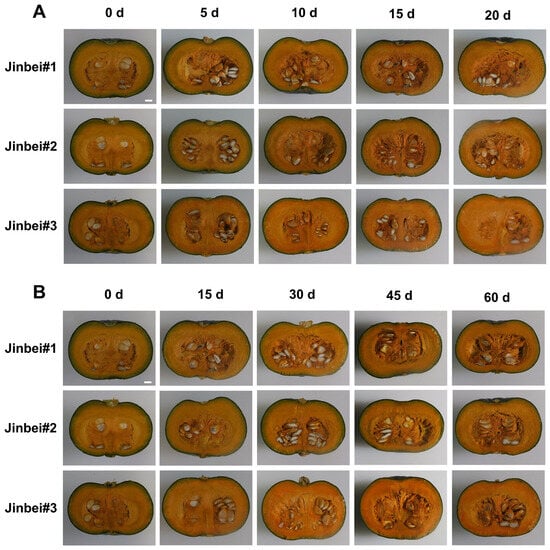
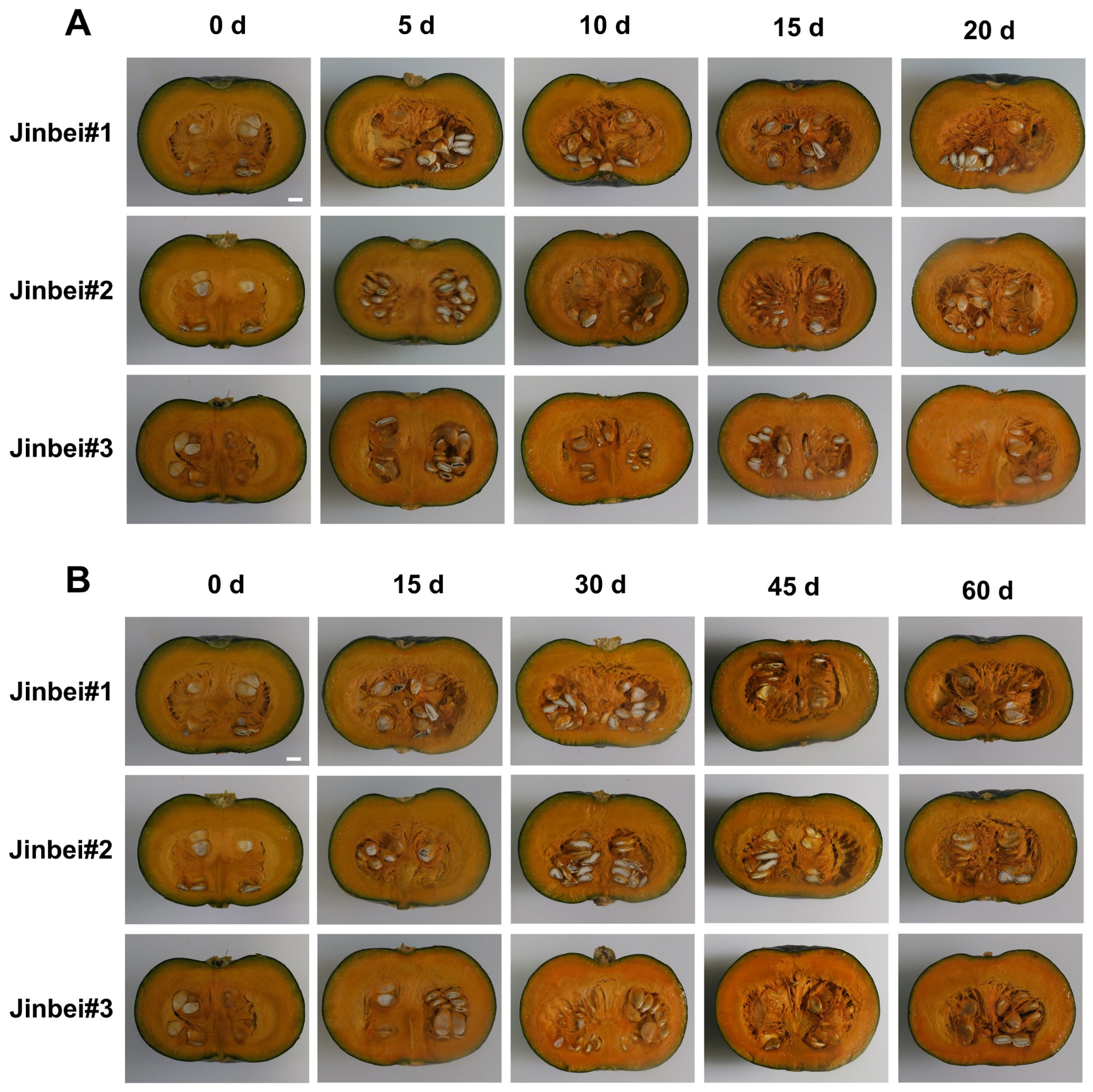
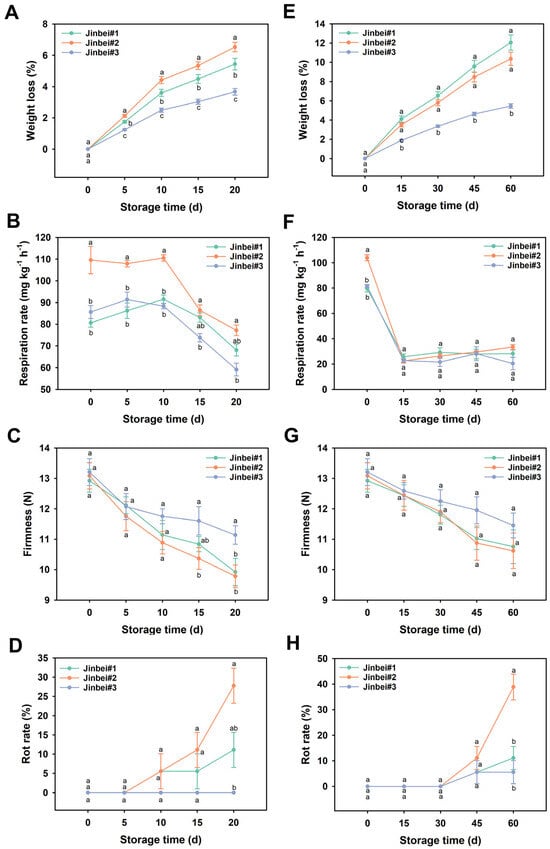
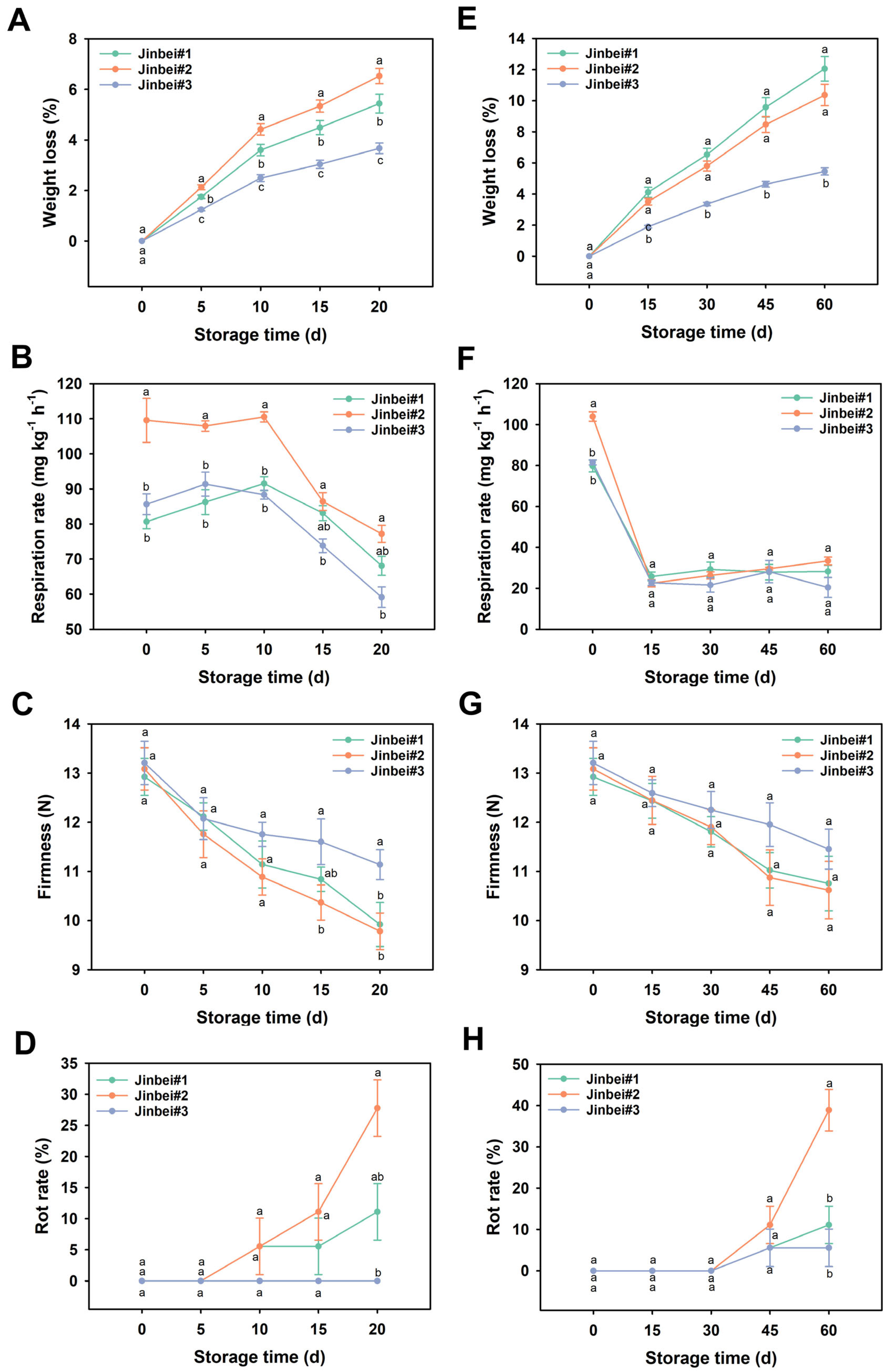
The fruit storability-related indicators were first assessed. Cross-section views of the fruit under ambient (25 °C) and cold (13 °C) storage conditions are shown in Figure 1. Under ambient storage conditions, the weight loss rates of the three fruit varieties all showed a continuously increasing trend due to ongoing respiration and transpiration; however, there were significant differences in weight loss rates among the three varieties during storage (Jinbei#2 > Jinbei#1 > Jinbei#3) (Figure 2A). The respiration rates of the three fruit varieties remained relatively stable during the early storage period but declined in the later stage owing to a weakened metabolic rate caused by fruit senescence. Among them, Jinbei#2 fruits exhibited the highest respiration rate, while there was no significant difference between Jinbei#1 and Jinbei#3 fruits (Figure 2B). The firmness of the three fruit varieties exhibited a gradual decline during storage due to continuous cell wall degradation. There was no significant difference in firmness between Jinbei#1 and Jinbei#2 fruits, whereas Jinbei#3 fruits retained a higher level of firmness during the later stages of storage (10–20 d) (Figure 2C). In addition, the rot rates of Jinbei#1 and Jinbei#2 fruits gradually increased during storage due to the decline in resistance caused by fruit senescence, whereas Jinbei#3 fruits showed complete absence of rot throughout the storage period (Figure 2D).
Figure 1.
Cross-sectional views of Jinbei#1, Jinbei#2, and Jinbei#3 pumpkin fruits during storage at 25 °C (A) and 13 °C (B).
Figure 2.
Weight loss rate (A), respiration rate (B), firmness (C), and rot rate (D) of Jinbei#1, Jinbei#2, and Jinbei#3 pumpkin fruits during storage at 25 °C. Weight loss rate (E), respiration rate (F), firmness (G), and rot rate (H) of Jinbei#1, Jinbei#2, and Jinbei#3 pumpkin fruits during storage at 13 °C. Data are presented as mean ± SE (n = 3). Different lowercase letters indicate significant differences among groups at p < 0.05.
During cold storage, the above indicators showed generally consistent trends with those observed under ambient temperature conditions, owing to similar physiological mechanisms. Notably, the weight loss and respiration rates of the three fruit varieties were significantly suppressed, with Jinbei#3 fruit still exhibiting the lowest weight loss rate (Figure 2E), while there were no significant differences in respiration rate or firmness over storage (Figure 2F,G). No rot was observed in the three fruit varieties during storage from 0 to 30 d. The rot rate of Jinbei#2 fruit increased rapidly after 30 d of storage, while the rot rates of Jinbei#1 and Jinbei#3 fruits remained at a low level during the later stages of storage (Figure 2H).
The above results showed that Jinbei#3 fruit exhibited the strongest water-holding capacity and storability among the three fruit varieties during both ambient and cold storage.
3.2. Variations in Dry Matter Content, SSC, and Carotenoid Content of Fruit
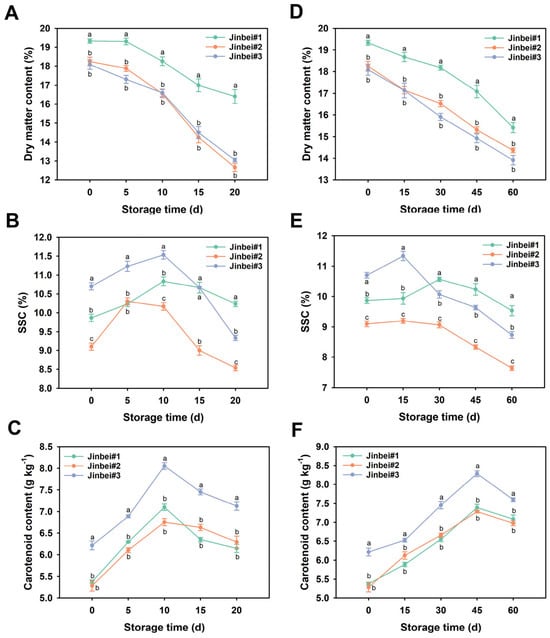
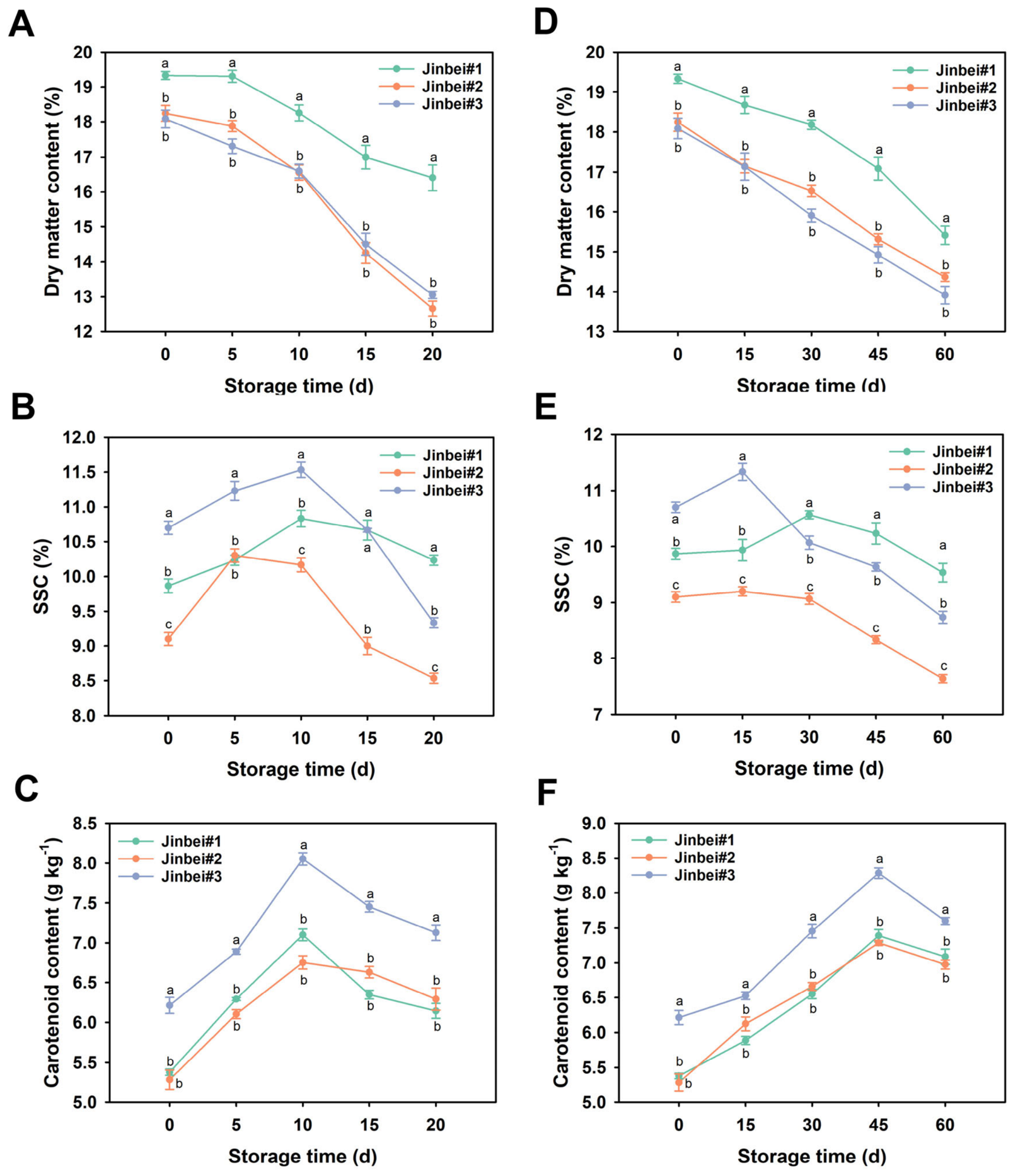
During ambient storage, the dry matter content of Jinbei#1, Jinbei#2, and Jinbei#3 fruits decreased continuously from initial values of 19.3%, 18.2%, and 18.1% to 16.4%, 12.7%, and 13.1%, respectively, due to the ongoing consumption of respiratory metabolism. However, throughout the storage period, the dry matter content of Jinbei#1 was higher than that of Jinbei#2 and Jinbei#3 by an average of 13.5% and 13.5%, respectively (Figure 3A). The SSC of the three fruit varieties first increased and then decreased, a trend which is determined by the dynamic levels between the saccharification of starch and respiratory consumption during storage. Specifically, the SSC of Jinbei#1 and Jinbei#3 peaked at 10.8% and 11.5%, respectively, by the 10 d of storage, while the SSC of Jinbei#2 peaked at 10.3% by the 5 d of storage. The SSC level of Jinbei#3 was high during the early storage period, while that of Jinbei#1 remained at a high level during the late storage period; the SSC level of Jinbei#2 remained at a low level throughout the entire storage period (Figure 3B). The carotenoid content of Jinbei#1, Jinbei#2, and Jinbei#3 fruits also showed an initial increase followed by a decrease, with all reaching their peak values at 7.1 g kg−1, 6.8 g kg−1, and 8.1 g kg−1 by the 10th d of storage. This trend is attributable to the fact that the anabolic and catabolic metabolisms of carotenoids predominate during the ripening and senescence stages of harvested pumpkin fruit, respectively. Notably, the carotenoid contents of Jinbei#3 fruits were significantly higher than those of Jinbei#1 and Jinbei#2 throughout the storage period by an average of 14.3% and 15.0%, respectively (Figure 3C).
Figure 3.
Dry matter content (A), SSC (B), and carotenoid content (C) of Jinbei#1, Jinbei#2, and Jinbei#3 pumpkin fruits during storage at 25 °C. Dry matter content (D), SSC (E), and carotenoid content (F) of Jinbei#1, Jinbei#2, and Jinbei#3 pumpkin fruits during storage at 13 °C. Data are presented as mean ± SE (n = 3). Different lowercase letters indicate significant differences among groups at p < 0.05.
During cold storage, the above indicators displayed a similar overall trend in physiological changes to those exhibited under ambient temperature conditions. The dry matter content of Jinbei#1 fruits remained significantly higher than that of Jinbei#2 and Jinbei#3, but the decline in dry matter content was suppressed in all three fruit varieties (Figure 3D). The SSC of Jinbei#1 and Jinbei#3 reached peak values of 10.6% and 11.3% at 30 d and 15 d, respectively, while the saccharification of Jinbei#2 fruit was inhibited, and its SSC remained at a lower level throughout the storage period (Figure 3E). The peak carotenoid content in Jinbei#1, Jinbei#2, and Jinbei#3 fruits was delayed to 45 d of storage, reaching 7.4 g kg−1, 7.3 g kg−1, and 8.3 g kg−1, respectively. Throughout the storage period, the average carotenoid content of Jinbei#3 was 11.7% and 11.6% higher than that of Jinbei#1 and Jinbei#2, respectively (Figure 3F).
The aforementioned results showed that Jinbei#1 and Jinbei#3 exhibited higher dry matter content and carotenoid content at harvest and during ambient/cold storage, respectively. Additionally, the SSC of Jinbei#1 remained at higher levels during the middle and late stages of storage.
3.3. Variations in Fruit Starch Composition and Content
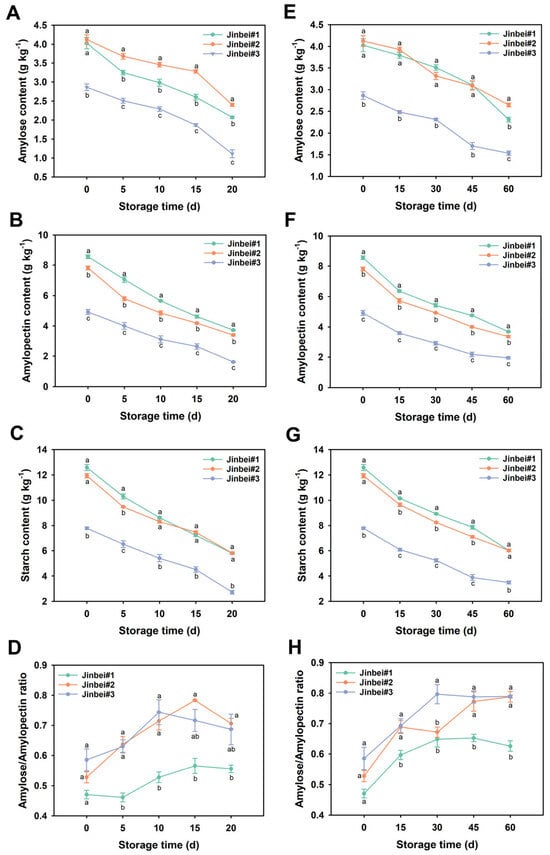
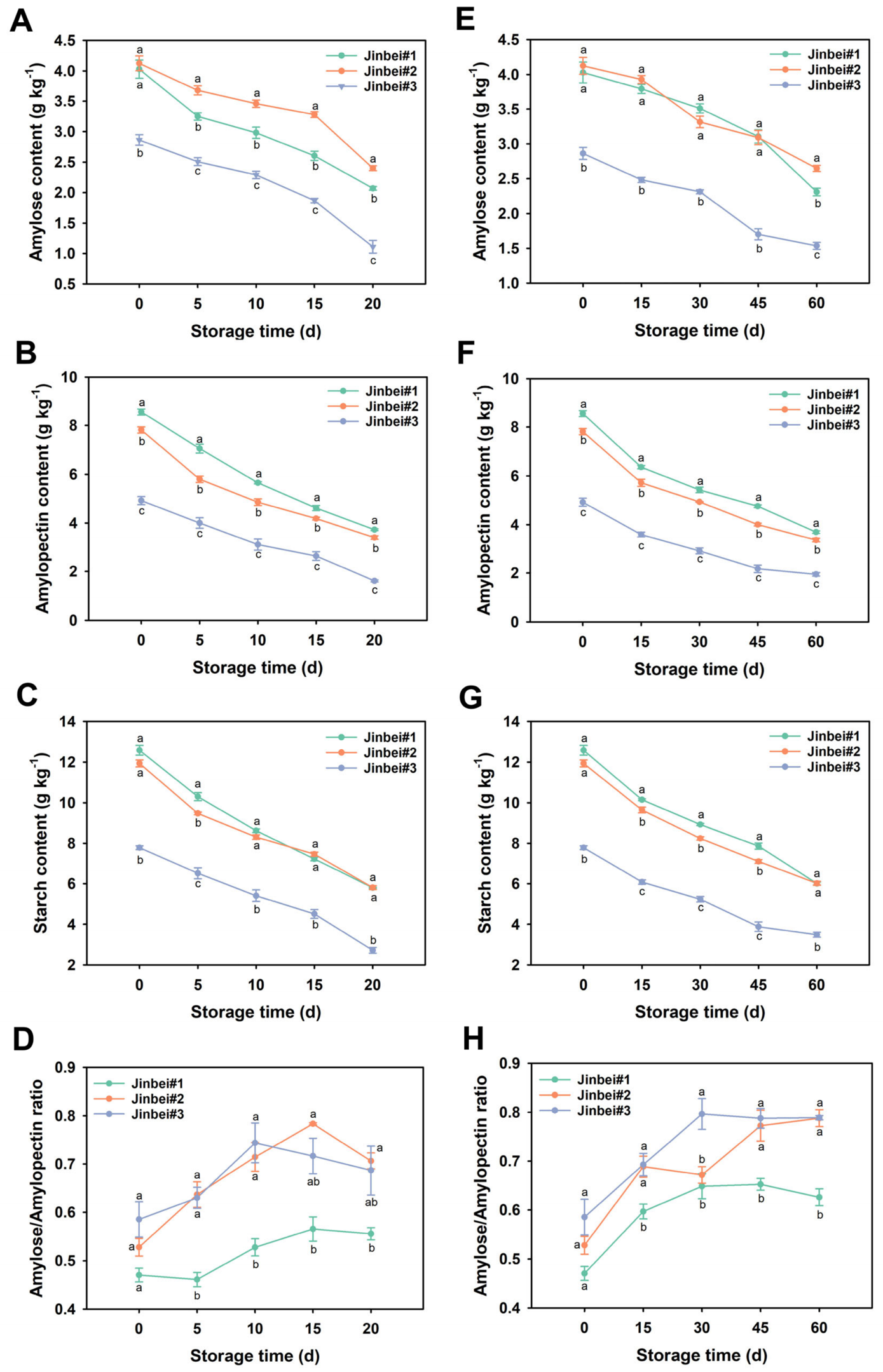
To further elucidate the starch composition of Jinbei#1, Jinbei#2, and Jinbei#3 fruits, the contents of amylose and amylopectin and their ratios were measured. Under ambient storage conditions, the amylose, amylopectin, and total starch contents of the three fruit varieties all showed a declining trend due to postharvest saccharification and ongoing respiratory consumption (Figure 4A–C). Specifically, the amylose content followed the order Jinbei#2 > Jinbei#1 > Jinbei#3. The amylose content in Jinbei#1, Jinbei#2, and Jinbei#3 fruits decreased continuously from initial storage values of 4.0 g kg−1, 4.1 g kg−1, and 2.9 g kg−1 to 2.1 g kg−1, 2.4 g kg−1, and 1.1 g kg−1, respectively (Figure 4A). The amylopectin content followed the order Jinbei#1 > Jinbei#2 > Jinbei#3. The amylopectin content in Jinbei#1, Jinbei#2, and Jinbei#3 fruits decreased continuously from initial storage values of 8.6 g kg−1, 7.8 g kg−1, and 4.9 g kg−1 to 3.7 g kg−1, 3.4 g kg−1, and 1.6 g kg−1, respectively (Figure 4B). There was no significant difference in total starch content between Jinbei#1 and Jinbei#2 fruits during most of the storage time, whereas the total starch content of Jinbei#3 fruits remained significantly lower than that of Jinbei#1 and Jinbei#2 fruits throughout the entire storage period (Figure 4C). The ratio of amylose/amylopectin in the three fruit varieties generally showed an initial increase followed by a decrease; this is because amylopectin in starch usually serves as the preferred substrate during the starch degradation process. It is worth noting that the amylose/amylopectin ratio in Jinbei#1 was significantly lower than that in Jinbei#2 and Jinbei#3 (Figure 4D).
Figure 4.
Amylose content (A), amylopectin content (B), starch content (C), and amylose/amylopectin ratio (D) of Jinbei#1, Jinbei#2, and Jinbei#3 pumpkin fruits during storage at 25 °C. Amylose content (E), Amylopectin content (F), Starch content (G), and amylose/amylopectin ratio (H) of Jinbei#1, Jinbei#2, and Jinbei#3 pumpkin fruits during storage at 13 °C. Data are presented as mean ± SE (n = 3). Different lowercase letters indicate significant differences among groups at p < 0.05.
Under cold storage conditions, the amylose, amylopectin, and total starch contents of the three fruit varieties also exhibited a declining trend due to similar mechanisms of saccharification and respiratory consumption, but the decline rate was significantly inhibited compared to ambient storage conditions (Figure 4E–G). Specifically, the amylose content followed the order Jinbei#1 ≈ Jinbei#2 > Jinbei#3. The amylose content in Jinbei#1, Jinbei#2, and Jinbei#3 fruits decreased continuously from initial storage values of 4.0 g kg−1, 4.1 g kg−1, and 2.9 g kg−1 to 2.3 g kg−1, 2.6 g kg−1, and 1.5 g kg−1, respectively (Figure 4E). The amylopectin content followed the order Jinbei#1 > Jinbei#2 > Jinbei#3. The amylopectin content in Jinbei#1, Jinbei#2, and Jinbei#3 fruits decreased continuously from initial storage values of 8.6 g kg−1, 7.8 g kg−1, and 4.9 g kg−1 to 3.7 g kg−1, 3.4 g kg−1, and 1.9 g kg−1, respectively (Figure 4F). The total starch content of Jinbei#1 was the highest among the three fruit varieties, while that of Jinbei#3 was significantly lower than that of Jinbei#1 and Jinbei#2 (Figure 4G). The ratio of amylose/amylopectin in the three fruit varieties generally showed an initial increase followed by stabilization due to the preferential substrate selectivity of amylopectin during the starch degradation process. The amylose/amylopectin ratio in Jinbei#1 fruit remained significantly lower than that in Jinbei#2 and Jinbei#3 for most of the storage time (Figure 4H).
The above data indicate that, among the three fruit varieties, Jinbei#1 has the highest amylopectin content and a lower amylose/amylopectin ratio, while Jinbei#3 has the lowest amylose, amylopectin, and total starch contents.
3.4. Fruit Sensory Evaluation
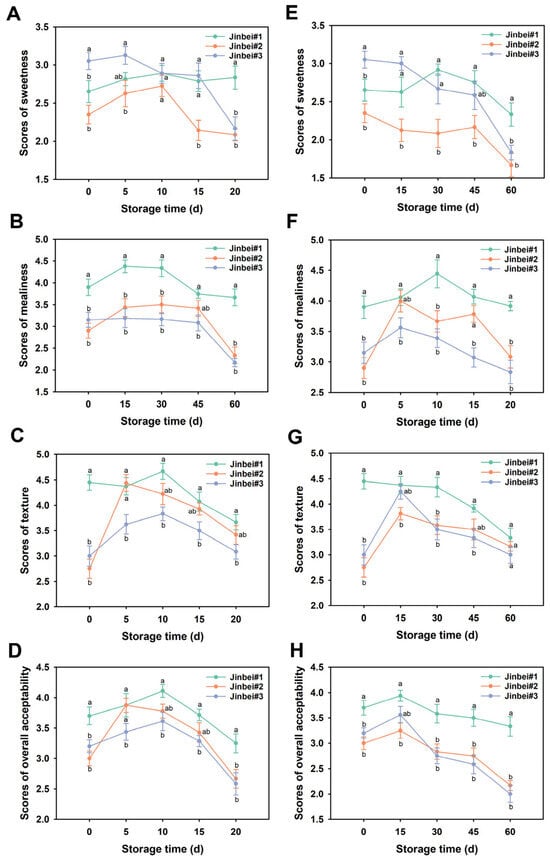
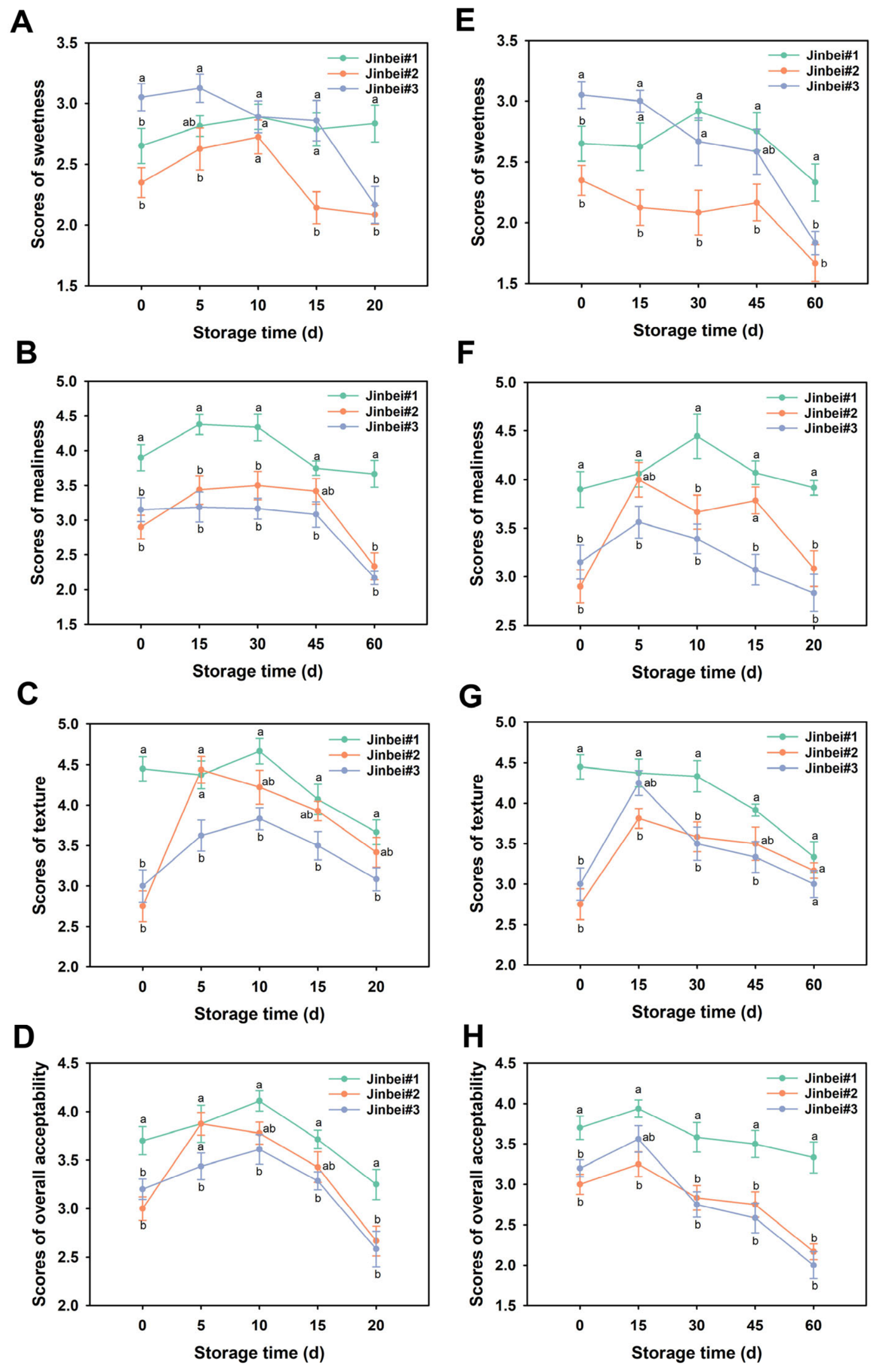
To provide a tangible assessment of the edible quality of Jinbei#1, Jinbei#2, and Jinbei#3, sensory evaluation of the fruits at different storage stages was conducted. Under ambient storage conditions, the sweetness, mealiness, texture, and overall acceptability scores of Jinbei#1, Jinbei#2, and Jinbei#3 fruits all showed a trend of initially increasing and then decreasing, reaching their optimal levels at 5–10 d of storage. The sweetness score of Jinbei#3 remained at a relatively high level during the early to middle stages of storage, but it was lower than that of Jinbei#1 fruits at the end of storage. Additionally, Jinbei#1 acquired the highest scores for mealiness, texture, and overall acceptability during most of the time of storage, while Jinbei#2 and Jinbei#3 were relatively comparable (Figure 5A–D).
Figure 5.
Sensory scores of sweetness (A), mealiness (B), texture (C), and overall acceptability (D) for Jinbei#1, Jinbei#2, and Jinbei#3 pumpkin fruits during storage at 25 °C. Sensory scores of sweetness (E), mealiness (F), texture (G), and overall acceptability (H) for Jinbei#1, Jinbei#2, and Jinbei#3 pumpkin fruits during storage at 13 °C. Data are presented as mean ± SE (n = 10). Different lowercase letters indicate significant differences among groups at p < 0.05.
Under cold storage conditions, the sweetness score for Jinbei#3 was highest at the initial storage stage (0 d), remained at a relatively high level between 15 and 45 d, but declined rapidly towards the end of storage. The sweetness score for Jinbei#1 remained at a relatively high level during the middle and late stages of storage, while the sweetness score for Jinbei#2 was the lowest throughout the entire storage period. Moreover, Jinbei#1 remained optimal among the three varieties in terms of mealiness, texture, and overall acceptability during most of the storage period, while Jinbei#2 and Jinbei#3 scored similarly in these attributes (Figure 5E–H).
Comprehensive evaluation of the above dimensions suggested that Jinbei#1 exhibited the optimal edible sensory quality during storage among the three fruit varieties.
3.5. Correlation Analysis
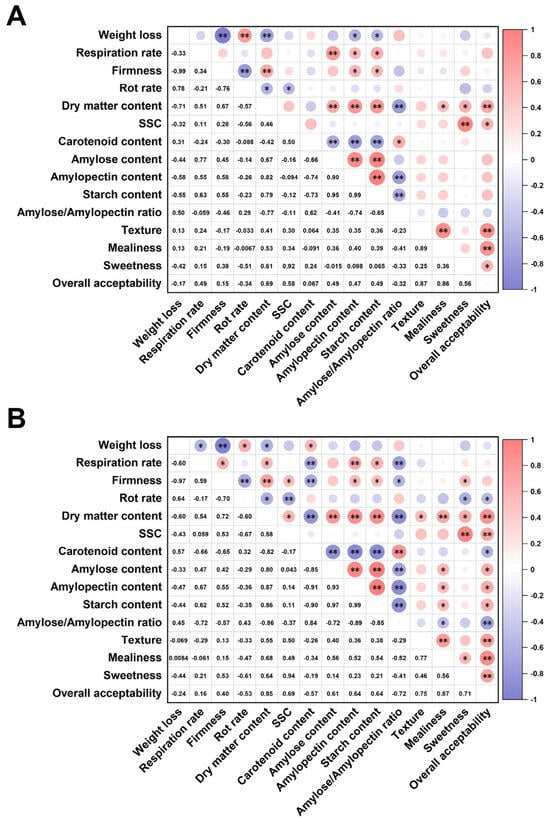
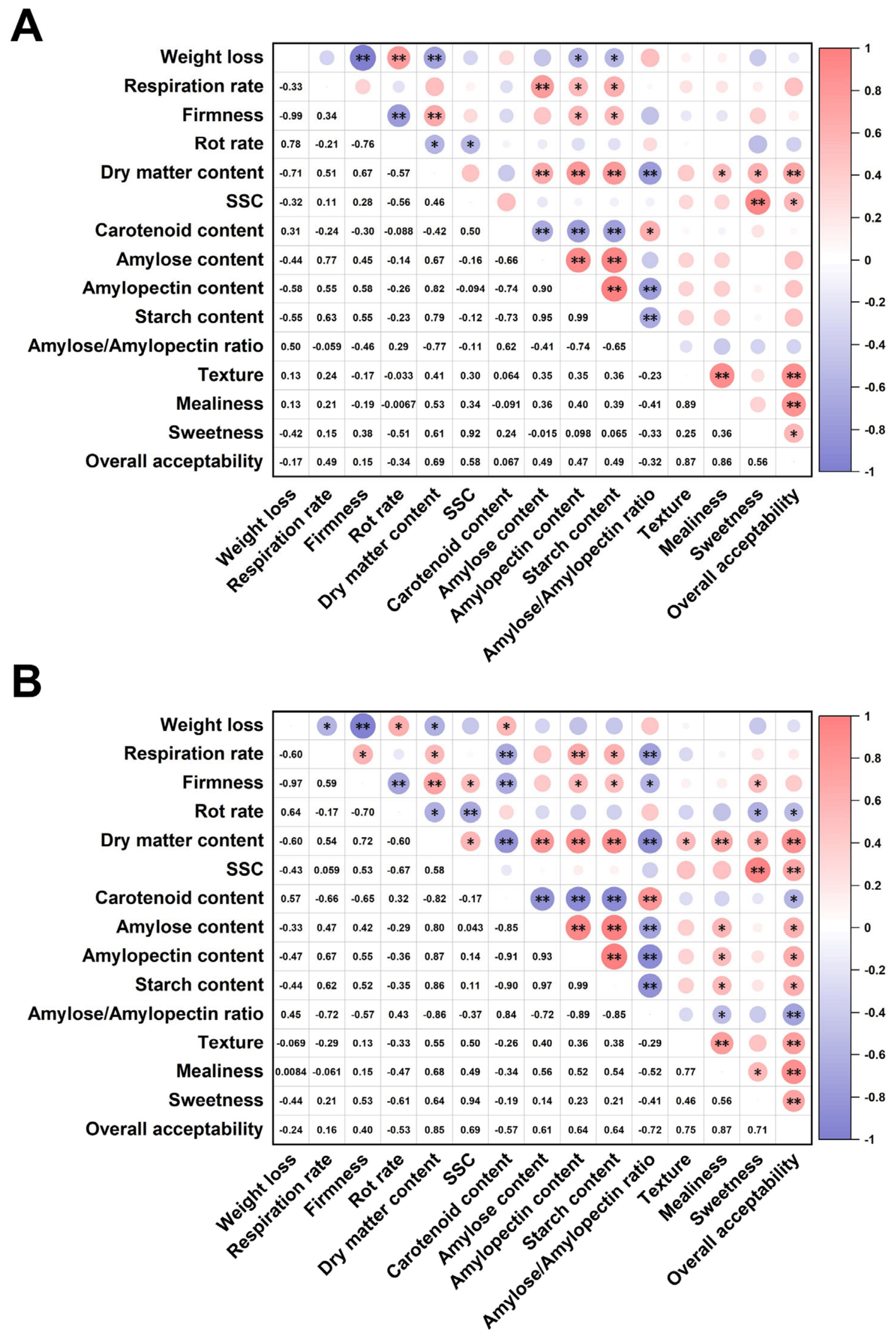
Furthermore, a correlation analysis of the above-mentioned testing indicators was conducted. The results showed that, under both ambient and cold storage conditions, the weight loss rate (key indicator of storage stability) was significantly positively correlated with the rot rate, while exhibiting a significant negative correlation with both firmness and dry matter content. Another key indicator of storability, the rot rate, showed a significant negative correlation with dry matter content and SSC. Regarding the correlations between storage quality indicators and sensory evaluation dimensions, sweetness showed a significant positive correlation with SSC and dry matter content. Mealiness exhibited a significant positive correlation with dry matter content. Texture, however, was independent and did not show consistent correlations with other indicators. Overall acceptability showed significant positive correlations with sweetness, mealiness, texture, dry matter content, and SSC (Figure 6A,B).
Figure 6.
Correlation analysis of storability and quality parameters of Jinbei#1, Jinbei#2, and Jinbei#3 pumpkin fruits during storage at 25 °C (A) and 13 °C (B). The values in the heatmap are Pearson’s correlation coefficients. Red circles indicate positive correlation, and blue circles indicate negative correlation. A larger circle indicates a stronger correlation. * and ** denote significant correlations at p < 0.05 and p < 0.01, respectively.
The above results indicate that the storage of small-sized pumpkin fruits is associated with a decrease in firmness and dry matter content, and that fruit varieties with high water-holding capacity tend to be more storable. Furthermore, fruit sweetness is primarily influenced by SSC and dry matter content. Sweetness is closely correlated with dry matter content, while texture may be attributed to the inherent characteristics of fruit varieties.
4. Discussion
This study systematically evaluated the storage characteristics and postharvest quality changes in three hybrid F1 small-sized pumpkin varieties (Jinbei#1, Jinbei#2, and Jinbei#3) under ambient and cold storage conditions, with the aim of providing a basis for breeding and popularizing storage-resistant, high-quality varieties. The results indicated that there is significant genetic diversity in the postharvest physiological characteristics of different hybrid varieties.
4.1. Differences in Fruit Storability and Potential Causes
In this study, it was found that Jinbei#3 fruit exhibited the optimal storability with the strongest water-holding capacity, higher firmness, and extremely low rot rates under both ambient and cold storage conditions. In contrast, Jinbei#2 fruit showed poorer storability, with higher weight loss and rot rates. Jinbei#1 fruit has a low rot rate during the late storage stage, but suffers from a high postharvest weight loss rate. Correlation analysis further confirmed that there is a significant positive correlation between rot rate and weight loss rate. The fruit cuticle is a critical barrier that controls postharvest water loss and defends against external microbial invasion [13,14]. Therefore, Jinbei#3 fruit is speculated to possess a more fully developed cuticle, which enhances resistance to pathogens at the physical barrier level. Moreover, water loss is a primary driver of postharvest senescence [15]. Owing to its excellent water-holding capacity, Jinbei#3 fruit can effectively maintain normal cell turgor and the compartmentalization integrity of the membrane system during storage, thereby delaying tissue senescence and guaranteeing basal disease resistance metabolism, such as sustaining higher expression levels of pathogenesis-related proteins and a more efficient antioxidant defense system, endowing the fruit with stronger pathogen resistance. The excellent storability of Jinbei#3 fruit also makes it a potential research material for identifying key genes associated with cuticle formation in pumpkin fruit. Furthermore, the low temperature of 13 °C can effectively extend the storage time of the three pumpkin varieties and maintain fruit quality; this is closely related to the significant reduction in respiration at 13 °C, indicating that a low temperature of 13 °C can effectively inhibit the activity of the tricarboxylic acid cycle and electron transport chain in pumpkin fruit mitochondria.
4.2. Differences in Postharvest Fruit Quality and Potential Causes
Dry matter content is a key indicator influencing the texture, sweetness, and nutritional density of pumpkins, and starch is a major component of dry matter [16]. In this study, the dry matter content of Jinbei#1 fruits was significantly higher than that of Jinbei#2 and Jinbei#3 during storage, which is attributed to their higher starch content and lower respiration rate. Notably, while the SSC of Jinbei#1 fruits was not the highest during the early storage period, it remained at a relatively high level throughout the middle and late storage stages. In contrast, the SSC of Jinbei#3 peaked during the early storage period but declined rapidly during the middle and late stages. This may be attributed to the higher dry matter and starch content in Jinbei#1, which allowed for a sustained supply of soluble sugars during the middle and late storage stages. In contrast, Jinbei#3 has the lowest starch content and limited starch reserves, which may result in insufficient saccharification potential in the later storage stages. Carotenoids are an important nutritional component of pumpkin [17]. The carotenoid content in Jinbei#3 fruits was significantly higher than that in Jinbei#1 and Jinbei#2 fruits throughout the storage period, suggesting that a higher level of carotenoid synthesis may occur in Jinbei#3 fruits. Carotenoids are isoprenoids, and their biosynthetic precursor isopentenyl pyrophosphate (IPP) is synthesized via the methylerythritol-4-phosphate (MEP) pathway in higher plants [18]. Therefore, the transcriptional regulation of key genes in the MEP pathway and the carotenoid branch pathway is closely related to carotenoid accumulation. It is speculated that the key MEP pathway gene deoxyxylulose 5-phosphate synthase (DXS) and the key carotenoid branch pathway genes phytoene synthase (PSY), phytoene desaturase (PDS), ζ-carotene desaturase (ZDS), and lycopene β-cyclase (LCYB) displayed high-level transcription in Jinbei#3 fruit. The high-level transcription of these genes may result from two possible reasons. First, variations in the cis-acting elements within these gene promoters may enhance the binding affinity of upstream transcriptional activators or disrupt the binding sites of upstream transcriptional repressors. Second, the master regulatory transcription factors for carotenoid biosynthesis may be expressed at high levels in Jinbei#3 fruit, thereby promoting the high-level transcription of these genes. In addition, carotenoids are lipophilic antioxidants that can effectively quench singlet oxygen and scavenge lipid peroxyl radicals through their long-chain conjugated double-bond structure, serving as important components of the non-enzymatic antioxidant system that enhances the postharvest total antioxidant capacity of the fruit [19]. Given that carotenoids possess potent antioxidant properties, high carotenoid levels may mitigate oxidative damage via scavenging reactive oxygen species generated by pathogen infection, thereby potentially enhancing disease resistance and reducing the rot rate of Jinbei#3 fruits. Moreover, carotenoid-rich Jinbei#3 fruits can also serve as research material for elucidating the synthesis and regulatory mechanisms of carotenoids in pumpkin fruits.
Jinbei#1 fruits exhibited optimal edible sensory quality, which is closely related to the sweetness and mealiness provided by its high dry matter content. The mealiness of pumpkin is primarily related to starch content and the amylose/amylopectin ratio [20]. In this study, Jinbei#1 fruits had the highest amylopectin content and the lowest amylose/amylopectin ratio, while sensory evaluations showed that Jinbei#1 consistently received the highest scores for mealiness. These results support the notion that varieties rich in amylopectin are more likely to exhibit mealiness [21]. In contrast, Jinbei#3 had the lowest levels of both amylose and amylopectin, resulting in a significantly lower mealiness score than Jinbei#1. Starch degradation requires the synergistic action of multiple enzymes: α-amylase hydrolyzes the internal α-1,4-glucosidic bonds in amylose chains, β-amylase sequentially cleaves α-1,4 bonds from the non-reducing ends, while the α-1,6-glycosidic bonds at the branch points of amylopectin must rely on debranching enzymes (e.g., pullulanase) for complete hydrolysis [22]. In the present study, judging from the degradation rate of amylose content under ambient storage conditions, Jinbei#1 fruit may possess higher amylose-degrading enzyme (α- and β-amylases) activity, leading to an accelerated overall degradation of amylose, thereby maintaining the low amylose/amylopectin ratio that is directly associated with the high mealiness. Correlation analysis also confirmed that mealiness is significantly positively correlated with dry matter content, and since starch constitutes the majority of dry matter, this further validates the above conclusion. It is worth noting that the texture dimension in sensory evaluation did not show a consistent correlation with other physicochemical indicators, suggesting that texture may be determined more by variety-specific characteristics, such as cell structure and the composition of cell wall polysaccharides, rather than single chemical components. According to the correlation analysis results of this study, the indicators that were significantly positively correlated with overall acceptability for fresh consumption were sweetness, mealiness, texture, dry matter content, and SSC. This indicates that sweet sugars (sucrose, fructose, glucose) and dry matter content (closely associated with mealiness) are the key metabolic characteristics of pumpkin varieties suitable for fresh consumption.
4.3. Selective Popularization and Breeding Guidance Based on Postharvest Storage Quality Differences
From the perspective of variety popularization, Jinbei #1 can be marketized as a high-quality fresh-eating variety due to its excellent edible quality. Jinbei #3 is characterized by low weight loss, low rot rate, and high carotenoid levels and is suitable for popularization as a storable and nutrient-fortified variety. Furthermore, correlation analyses conducted under both ambient and low-temperature conditions confirmed that the rot rate was significantly positively correlated with the weight loss rate, while overall acceptability was significantly positively correlated with dry matter content and SSC. Therefore, from a breeding perspective, water-holding capacity can serve as a key screening trait for the breeding of small-sized pumpkin varieties with excellent storability. Dry matter content and SSC can serve as key screening traits for the breeding of high-quality fresh-market small-sized pumpkin varieties. In future research, the quantitative trait loci (QTLs) associated with the superior traits of Jinbei#1 and Jinbei#3 can be identified through establishing a pumpkin germplasm population and analyzing the linkage between genetic markers and traits. Subsequently, the QTLs underlying the superior traits of Jinbei#1 and Jinbei#3 can be introgressed into the recipient parent to integrate advantageous traits via marker-assisted breeding.
5. Conclusions
In summary, this study identified the postharvest storage quality characteristics of three hybrid F1 small-sized pumpkin varieties. Compared with ambient temperature storage conditions, low temperature significantly inhibited nutrient substance metabolism, prolonged shelf life, and delayed the optimal edible time of the three fruit varieties. Moreover, under both ambient temperature and cold storage conditions, Jinbei#3 exhibited optimal storability and the highest carotenoid content and can be popularized as a storage-tolerant and nutrient-fortified variety; Jinbei#1 had the best edible quality and can be popularized as a high-quality fresh-eating variety; Jinbei#2 showed average overall performance. The research results provide crucial data support and theoretical basis for the selective popularization and directed breeding of storable and high-quality small-sized pumpkin varieties.
Author Contributions
Methodology: G.L. (Gangshuai Liu) and Y.T.; Formal analysis and investigation: G.L. (Gangshuai Liu), Y.T., Y.Y. and J.L.; Writing—original draft preparation: G.L. (Gangshuai Liu); Writing—review and editing: G.L. (Gangshuai Liu), C.L., Y.T., Y.Y., J.L., G.L. (Genyun Liang), X.L. and J.G.; Funding acquisition: J.G.; Resources: C.L., G.L. (Genyun Liang) and X.L.; Supervision: X.L. and J.G. All authors have read and agreed to the published version of the manuscript.
Funding
This research was funded by Provincial and Municipal Agricultural Subsidy Special Funds for the Construction of the CAU-SCCD Advanced Agricultural & Industrial Institute; and the Sichuan Innovation Team of National Modern Agricultural Industry Technology System (SCCXTD-2024-5).
Institutional Review Board Statement
Not applicable.
Informed Consent Statement
Not applicable.
Data Availability Statement
Data will be made available on request.
Conflicts of Interest
The authors declare no conflicts of interest.
References
- Chen, X.C.; Tian, Z.J.; Wang, H.L.; Jia, Y.J.; Zhang, R. A new mini pumpkin F1 hybrid—‘Baibeibei’. China Veg. 2025, 5, 171–173, (In Chinese with English abstract). [Google Scholar] [CrossRef]
- Kong, X.B.; Zhang, X.L.; Liu, Y.; Chu, W.H.; Yang, H.G.; Liu, F.; Yang, L. Evaluation and screening of new miniature pumpkin cultivars for cultivation in facilities. Vegetables 2023, 10, 57–61, (In Chinese with English abstract). [Google Scholar] [CrossRef]
- Liu, Z.H.; Li, J.S.; Liao, B.T.; Jiang, K.; Yan, J. A new pumpkin F1 hybrid—‘Youbei No.2’. China Veg. 2024, 7, 122–124, (In Chinese with English abstract). [Google Scholar] [CrossRef]
- Zhao, D.; Wen, L.; Wang, Y.Q.; Wang, X.Q.; Li, Z.G.; Wang, X.; Xu, C.M.; Li, Y.; Yang, F. Breeding of a new pumpkin cultivar Longbei No. 1. China Cucurbits Veg. 2026, 39, 229–232, (In Chinese with English abstract). [Google Scholar] [CrossRef]
- Dhillon, N.P.S. Twenty years of cucurbit breeding research at the world vegetable center. Crop Sci. 2025, 65, e70204. [Google Scholar] [CrossRef] [Scilit]
- Liu, Z.; Wang, P.; Liu, Z.; Sun, L.; Li, X.; Liu, J.; Xing, R.; Zhang, X.; Deng, H.; Zhang, Y. Dynamic changes and correlation analysis of pumpkin quality and physiological indicators during postharvest storage. HortScience 2024, 59, 1543–1549. [Google Scholar] [CrossRef] [Scilit]
- Xu, Y.; Wang, M.; Abbas, H.M.K.; Xue, S.; Zhu, J.; Meng, Q.; Jin, Q.; Fu, M.; Qu, S.; Zhong, Y. Comparing the differences in quality profiles and antioxidant activity in seven pumpkin cultivars (Cucurbita moschata and Cucurbita maxima) at harvest and during postharvest storage. Food Chem. X 2024, 22, 101383. [Google Scholar] [CrossRef] [Scilit]
- Liu, S.; Huang, H.; Huber, D.J.; Pan, Y.; Shi, X.; Zhang, Z. Delay of ripening and softening in ‘Guifei’ mango fruit by postharvest application of melatonin. Postharvest Biol. Technol. 2020, 163, 111136. [Google Scholar] [CrossRef] [Scilit]
- Yuan, N.; Wang, Y.; Guan, Y.; Chen, C.; Hu, W. Effect of nisin on the quality and antioxidant activity of fresh-cut pumpkins (Cucurbita moschata Duch.). Horticulturae 2023, 9, 529. [Google Scholar] [CrossRef] [Scilit]
- GB 5009.3-2016; Determination of Moisture in Foods. National Health and Family Planning Commission of the People’s Republic of China: Beijing, China, 2016; pp. 1–14. Available online: https://chinastandards.org/standards/gb-5009-3-2016 (accessed on 25 April 2026).
- Xu, X.J.; Li, K.; Zhang, G.L. Extraction process of carotenoids in pumpkin pulp and changes of its contents during fruit development of pumpkin. China Cucurbits Veg. 2018, 31, 11–14+23, (In Chinese with English abstract). [Google Scholar] [CrossRef]
- Ren, G.Q.; Yang, S.K.; Bian, S.J.; Guo, W.L.; Li, X.Z. Evaluation of pumpkin nutrient quality based on correlation and principal component analysis. China Cucurbits Veg. 2023, 36, 37–42. Available online: https://link.cnki.net/doi/10.16861/j.cnki.zggc.2023.0115 (accessed on 25 April 2026). (In Chinese with English abstract).
- Liu, G.-S.; Li, H.-L.; Peng, Z.-Z.; Liu, R.-L.; Han, Y.-C.; Wang, Y.-X.; Zhao, X.-D.; Fu, D.-Q. Composition, metabolism and postharvest function and regulation of fruit cuticle: A review. Food Chem. 2023, 411, 135449. [Google Scholar] [CrossRef] [Scilit]
- Wu, W.; Jiang, B.; Liu, R.; Han, Y.; Fang, X.; Mu, H.; Farag, M.A.; Simal-Gandara, J.; Prieto, M.A.; Chen, H.; et al. Structures and functions of cuticular wax in postharvest fruit and its regulation: A comprehensive review with future perspectives. Engineering 2023, 23, 118–129. [Google Scholar] [CrossRef] [Scilit]
- Lufu, R.; Ambaw, A.; Opara, U.L. Water loss of fresh fruit: Influencing pre-harvest, harvest and postharvest factors. Sci. Hortic. 2020, 272, 109519. [Google Scholar] [CrossRef] [Scilit]
- Xu, Y.; Luo, J.; Xue, S.; Jin, Q.; Zhu, J.; Lu, S.; Meng, Q.; Du, H.; Fu, M.; Zhong, Y. Development of comprehensive prediction models for pumpkin fruit sensory quality using physicochemical analysis, near-infrared spectroscopy, and machine learning. J. Food Compos. Anal. 2024, 134, 106530. [Google Scholar] [CrossRef] [Scilit]
- Bisht, A.; Maurya, S.K.; Bhatt, L.; Singh, D.; Prasad, B.; Verma, S.; Kumar, V.; Khapte, P.S.; Gruda, N.S.; Kumar, P. Exploitation of heterosis for yield and quality enhancement in pumpkin (Cucurbita moschata Duch. Ex Poir.) hybrids. Horticulturae 2025, 11, 473. [Google Scholar] [CrossRef] [Scilit]
- Sun, T.; Yuan, H.; Cao, H.; Yazdani, M.; Tadmor, Y.; Li, L. Carotenoid metabolism in plants: The role of plastids. Mol. Plant 2018, 11, 58–74. [Google Scholar] [CrossRef] [Scilit]
- Xu, P.; Wang, Y.; Luo, C.; Xue, A.; Du, H.; Chen, J. Advances in synthetic strategies for microalgal carotenoid enhancement and emerging applications. Antioxidants 2026, 15, 359. [Google Scholar] [CrossRef] [Scilit]
- Abbas, H.M.K.; Huang, H.-X.; Yang, Y.-F.; Xie, Y.-H.; Zou, J.-F.; Xue, S.-D.; Song, D.-G.; Wu, T.-Q.; Li, J.-X.; Zhong, Y.-J. Characterization of Starch in Cucurbita moschata germplasms throughout fruit development. J. Agric. Food Chem. 2020, 68, 9690–9696. [Google Scholar] [CrossRef] [Scilit]
- Zhao, S.Y.; Li, L.; Liu, X.Q.; Zhao, G.J.; Wu, H.B.; Luo, J.N.; Gong, H.; Zheng, X.M.; Li, J.X. Predictive model for comprehensive quality evaluation of pumpkin (Cucurbita moschata) fruit based on sensory analysis, texture characteristics and physicochemical components. Food Sci. 2022, 43, 63–71. Available online: https://link.cnki.net/urlid/11.2206.TS.20220408.1430.002 (accessed on 25 April 2026). (In Chinese with English abstract).
- Stitt, M.; Zeeman, S.C. Starch turnover: Pathways, regulation and role in growth. Curr. Opin. Plant Biol. 2012, 15, 282–292. [Google Scholar] [CrossRef] [Scilit]

Disclaimer/Publisher’s Note: The statements, opinions and data contained in all publications are solely those of the individual author(s) and contributor(s) and not of MDPI and/or the editor(s). MDPI and/or the editor(s) disclaim responsibility for any injury to people or property resulting from any ideas, methods, instructions or products referred to in the content. |
© 2026 by the authors. Licensee MDPI, Basel, Switzerland. This article is an open access article distributed under the terms and conditions of the Creative Commons Attribution (CC BY) license.