


Abstract
The demand for safe, minimally processed, and sustainable foods has driven the search for an array of natural preservation strategies. Essential oils (EOs), plant-derived secondary metabolites, exhibit broad-spectrum antimicrobial and antioxidant activities, inhibiting bacteria, fungi, and oxidative processes responsible for food spoilage. However, their volatility, low water solubility, and instability limit their direct application in foods. Nano-emulsification technology addresses these challenges by producing stable nanoscale droplets that enhance EO bioavailability, enable controlled release, and improve interactions with microbial targets. This review summarizes recent research on plant-derived EO nano-emulsions (EO-NEs) applied directly to foods or incorporated into edible coatings, with particular emphasis on antimicrobial activity, antioxidant effects, sensory properties, and shelf-life extension. A structured literature search was conducted using Web of Science, Scopus, PubMed, ScienceDirect, and Google Scholar, focusing on studies published between 2020 and 2026 that investigated EO-NEs in food preservation. Incorporating EO-NEs into edible coatings and biodegradable films can extend the shelf life of perishable foods, including fruits, vegetables, dairy, and meat while preserving sensory and nutritional quality. This approach also supports sustainability by reducing spoilage and waste, valorizing agro-industrial by-products, and promoting the circular economy through compostable packaging. Despite challenges in standardization, scalability, and regulatory alignment, EO-NEs offer a promising strategy integrating food safety, quality, and environmental sustainability.
1. Introduction
Food preservation aims to extend shelf life while ensuring safety and nutritional quality, with storage life reflecting how long a food resists physical, biochemical, and microbiological changes [1]. Based on their shelf life, foods can be classified as perishable, semi-perishable, and non-perishable. Perishable foods include milk and dairy products, meat, poultry, eggs, seafood, fresh bakery products, and chilled ready-to-eat meals. Semi-perishable foods include fruits, vegetables, cheeses, biscuits, and certain bakery products. Non-perishable foods include dry beans, nuts, flour, sugar, canned foods, and commercially sterilized ready-to-eat meals. The shelf life of bakery products and ready-to-eat meals depends on their composition, processing, and storage conditions [2,3,4,5]. Spoilage arises from physical, microbial, or chemical changes, and is controlled via temperature, water activity, pH, preservatives, and proper packaging [2]. For instance, conventional meat preservation methods extend shelf life but face drawbacks such as high costs, moderate stability, and limited durability. Innovative technologies address these issues by reducing waste and energy use, enhancing safety and quality, and minimizing environmental and health risks [6]. Cheese storage poses challenges due to microbial contamination by bacteria, yeasts, and molds, which can cause off-flavors and reduce quality. Moisture loss in some varieties increases hardness and affects sensory properties, while microbial growth, especially on surfaces, is influenced by handling and environmental conditions [7]. As for bakery products, they are susceptible to similar physical, chemical, and microbial spoilage, with mold growth being the most economically significant due to the high water activity in many items, posing a costly challenge for the industry [8]. As such, extending the shelf life of bread and bakery products requires: (a) moisture control via proper packaging, (b) optimized formulation and processing to slow staling, and (c) storage conditions that limit microbial growth [9]. Fresh fruits and vegetables naturally carry harmless microflora but can be contaminated during cutting or peeling, making them prone to bacterial, yeast, and mold growth. Their high carbohydrates, low protein, and slightly acidic pH favor spoilage, while physical damage triggers enzymatic browning. Microbial enzymes accelerate deterioration, so preservation relies on additives, physical treatments, or advanced packaging to maintain quality and extend shelf life [10]. Finally, ready-to-eat meals face significant safety challenges due to the risk of microbial contamination during production, storage, and transportation while also being prone to quality issues, including the loss of nutritional value over time, protein denaturation, lipid oxidation, and flavor modification [11].
The increasing demand for sustainable food production and clean-label products has encouraged the food industry to explore natural alternatives to synthetic additives [12]. Plant-derived compounds, including essential oils (EOs), have generated particular interest due to their potential to improve food safety and quality while extending shelf life [13,14]. Their application may also contribute to reducing food spoilage and associated food waste, supporting more sustainable food preservation strategies [15,16].
Natural additives promote sustainability by improving food stability, reducing spoilage, and enabling eco-friendly production. Their use aligns with transparency, traceability, and minimal processing, fostering innovation, ethics, and consumer trust in the modern food industry [17]. EOs provide the primary antimicrobial and antioxidant activity, but their direct application in foods is limited by their hydrophobicity, volatility, strong aroma, and instability. At the same time, nano-emulsions (NEs) (20–500 nm droplets) provide a stable delivery system, improving dispersion, reducing volatility, and enabling controlled release of EOs. Studies have shown that NEs not only improve the antimicrobial efficacy of EOs but also stabilize their activity under varying environmental conditions. Physicochemical analyses also show that NEs are practical for application. Nano-emulsification can overcome some of EOs’ limitations by improving the dispersion, physical stability, and delivery of EO constituents in aqueous food systems. When incorporated into edible coatings, EO nano-emulsions (EO-NEs) provide a practical platform that combines the biological activity of the EOs with the coating’s barrier and surface-protection properties. Therefore, the combination of EO, nano-emulsion technology, and edible coatings represents an integrated approach in which each component contributes a distinct function to food preservation [1,18,19]. For one, the development of EO-NEs-based biodegradable films aligns with the principles of the circular economy and life-cycle sustainability. This is because these systems utilize renewable feedstocks, reduce fossil-derived plastic usage, and offer composability at the end of life, making EO-NEs critical in transitioning from linear packaging models to closed-loop food systems. Nano-based systems enhance EO stability, bioavailability, and controlled release, overcoming volatility and solubility limits while boosting antimicrobial and antioxidant efficacy. Eco-friendly synthesis and biodegradable carriers make EO-NEs a sustainable solution while advancing sustainable food preservation. Despite challenges like cost, scalability, and regulation, innovations promise multifunctional, safe, and efficient food technologies [20,21].
Although numerous studies have investigated EO-NEs for food preservation, the available evidence remains fragmented across food matrices, EO compositions, nano-emulsion characteristics, coating materials, and evaluation criteria. Moreover, differences in formulation, droplet size, EO concentration, storage conditions, and analytical methods complicate direct comparison among studies. Therefore, an updated and critical synthesis of recent experimental evidence integrating formulation characteristics, antimicrobial and antioxidant efficacy, sensory effects, food-specific applications, safety, regulatory considerations, and sustainability is needed. Accordingly, this review aims to summarize and critically discuss experimental research published between January 2020 and September 2026 on plant-derived EO-NEs used directly in food products or incorporated into edible coatings, with particular emphasis on their antimicrobial, antifungal, and antioxidant effects, sensory attributes, effects on food quality, and shelf-life outcomes across different food matrices. The review also considers nano-emulsion formulation and stability, safety and regulatory aspects, sustainability, waste reduction, and the prospects and challenges associated with industrial application.
2. Literature Search and Review Methodology
A structured literature search was conducted to identify original research articles published between 2020 and 2026 addressing the application of plant-derived EO-NEs in food preservation. The search was performed using major bibliographic databases relevant to food science, life sciences, and biomedical research, including Web of Science Core Collection, Scopus, PubMed/MEDLINE, ScienceDirect, and Google Scholar. The search strategy consisted of combining terms referring to essential oils (“essential oil” or “essential oils”), nanoemulsions (“nanoemulsion”, “nanoemulsions”, or “nano-emulsion”), and specific food categories. Searches were conducted separately for different food categories, including fruits, vegetables, dairy products, and meat and meat products.
Studies were included if they: (i) were original research articles published in peer-reviewed journals; (ii) explicitly investigated plant-derived EOs formulated as nano-emulsions (EO-NEs); (iii) applied the EO-NEs directly to a food product or incorporated them into a food-compatible system, such as an edible coating or active packaging; and (iv) reported experimental outcomes related to antimicrobial, antibacterial, antifungal, antioxidant, sensory, physical quality, or shelf-life properties. Studies in which free EO was used as a comparator were eligible, provided that an EO-NE was also investigated in the same study.
Studies were excluded if they: (i) investigated free EOs only, without an EO-NE; (ii) used other nano-encapsulation systems (e.g., polymeric nanoparticles, nano-capsules, liposomes, or other nano-carriers) without an essential-oil nano-emulsion; (iii) used fixed/vegetable oils, plant extracts, isolated compounds, or individual phytochemicals instead of an EO; (iv) did not explicitly identify the tested material as an EO; (v) investigated non-food applications; or (vi) were reviews, book chapters, conference abstracts, editorials, or other non-original publications.
The selection of publications was based on their relevance to the review scope and the predefined inclusion and exclusion criteria. Potentially relevant articles were assessed to confirm that the EO was formulated as a nano-emulsion, applied to a food product or food-compatible system, and evaluated for at least one of the specified experimental outcomes.
3. Food-Related Properties of EOs
In recent years, food oxidation and spoilage caused by microorganisms have become significant concerns for the food industry and consumers. Excessive amounts of reactive oxygen species (ROS) can result in lipid peroxidation, glycation, oxidation, and nitration of proteins, enzyme inactivation, DNA damage, and other alterations in cellular organelles [22]. Plant EOs are widely recognized as a valuable source of natural antioxidants, as demonstrated in various experimental models. These antioxidant properties of EOs are attributed to their secondary metabolites and phenolics with conjugated double bonds, such as monoterpene phenols like thymol and carvacrol. The active ingredients exhibit redox properties, playing a crucial role in the decomposition of peroxides and the neutralization of free radicals [1].
To reduce health hazards and extend the shelf-life of food products, the use of EOs as natural antimicrobial agents appears to be a promising approach. The application of various EOs in the food industry has proven effective in inhibiting the growth of foodborne pathogens, with chemical analyses of EOs identifying a range of ingredients, many of which have significant antimicrobial properties [23]. For example, EOs obtained from plants of the Lamiaceae family, such as oregano, lavender, thyme, hyssop, anise hyssop, mint, rosemary, and basil, have been shown to possess antimicrobial effects [24]. Also, there are many plants from other families with promising antimicrobial activity. Tumbarski et al. [25] demonstrated that Hypericum perforatum L. (St. John’s Wort) EO (Hypericaceae family) had antimicrobial effects against Gram-positive and Gram-negative bacteria, while El-Kalamouni et al. [26] showed the antibacterial and antifungal effects of Achillea millefolium L. (common yarrow) EO from the Asteraceae family.
The antimicrobial activity of EOs depends on their chemical composition and concentration, with different constituents targeting Gram-positive and Gram-negative bacteria, yeasts, and molds through complementary or overlapping mechanisms [27]. Their antibacterial effects involve multiple cellular targets, including the cell wall and membrane, nucleic acids, and respiratory and energy metabolism [28]. Primarily, the lipophilic components of EOs disrupt cell membrane integrity and permeability, causing leakage of intracellular components, loss of membrane potential, disruption of proton gradients and pumps, ATP depletion, and impaired electron transport and respiration. EOs may also alter membrane fatty acids, phospholipids, and polysaccharides, denature proteins and lipids, and inhibit key enzymes, ultimately leading to cell death [29,30,31]. In bacteria and fungi, EOs can additionally interfere with the synthesis of DNA, RNA, proteins, and polysaccharides, while prolonged exposure may reduce efficacy through resistance development [30]. Antifungal activity involves disruption of the cell wall and membrane, inhibition of ergosterol synthesis and signaling pathways, alteration of membrane fluidity and mitochondrial permeability, and interference with cell-cycle progression, sporulation, and biofilm formation. These effects cause electrolyte and cellular-content leakage, impaired protein, calcium and energy metabolism, nucleic-acid and lipid damage, and ultimately apoptosis, necrosis, or cell lysis [30,32]. The chitin-rich fungal cell wall represents a selective target absent in human cells, making EO constituents such as carvacrol, thymol, and pinene promising natural antifungals; notably, these compounds may be more effective as components of whole EOs than in isolation [30,33]. Before elucidating mechanisms of action, antifungal efficacy should be established by determining the concentration required to inhibit or kill fungal cells and distinguishing the cellular target (e.g., membrane, wall, or intracellular components) from the specific biochemical mode of action [32].
Beyond their antimicrobial and antioxidant activities, the applicability of EOs in food systems is influenced by several additional factors. Their effectiveness may be modified by interactions with food matrix components, such as proteins, lipids, and carbohydrates, as well as by pH, water activity, and salt content, which can affect the availability and activity of their constituents [25]. An important limitation when interpreting antimicrobial results obtained under in vitro conditions is that they cannot be directly extrapolated to real food matrices. The antimicrobial efficacy of EOs may be considerably influenced by food composition and physicochemical characteristics. In particular, lipids may reduce the availability of hydrophobic EO constituents by promoting their partitioning into the fat phase, while proteins and carbohydrates may interact with or bind these compounds, limiting their diffusion and contact with microbial cells. Furthermore, pH, water activity, salt content, and the physical structure of the food can influence both the stability and antimicrobial performance of EOs. Consequently, concentrations that are effective in laboratory assays may not achieve comparable inhibitory effects in food products, where higher concentrations may be required. These factors should also be considered when evaluating EO-NEs, as their improved dispersion and delivery do not necessarily guarantee the same antimicrobial performance across different food matrices. Therefore, validation in the intended food product is essential to establish their actual preservation potential [34,35,36]. Their intense characteristic aroma and flavor may also influence the sensory properties and consumer acceptance of treated foods, potentially limiting the concentrations suitable for application [12,26,27]. Furthermore, EOs contain volatile compounds that may undergo oxidation, volatilization, and degradation during processing and storage, resulting in changes in chemical composition and functional activity [15,16,17,37]. Storage conditions, particularly temperature and light exposure, are therefore important for maintaining their chemical and functional stability. Finally, their application requires appropriate safety assessment, considering their chemical composition, effective concentration, exposure, and intended food application. The presence of potentially toxic constituents and applicable regulatory restrictions should also be considered when evaluating their suitability as food preservatives [26].
As mentioned, despite their broad antimicrobial and antioxidant activities, the practical application of EOs in food systems is constrained by their physicochemical properties, including hydrophobicity, volatility, susceptibility to degradation, and the potential sensory impact associated with their strong aroma. These limitations have stimulated the development of delivery systems capable of improving the dispersion, stability, and controlled release of EO constituents. Among these approaches, nano-emulsification has attracted increasing attention for food preservation applications.
4. Nano-Emulsion Technology for Food Preservation
4.1. Definition, Formulation Strategies and Stabilization of Nano-Emulsions
Nanotechnology offers diverse formulations, including polymeric, metal, metal oxide nanoparticles, and lipid-based carriers like liposomes, solid lipid nanoparticles, and micro- or nano-emulsions (MEs/NEs). MEs and NEs are easy and low-cost to produce, improving bioavailability by dispersing active compounds as nanometric oil droplets. Surfactants stabilize these water–oil dispersions by reducing interfacial tension [38].
EO-NEs can be produced using both high-energy and low-energy approaches. High-energy methods, such as high-pressure homogenization and ultrasonication, use mechanical energy to disrupt larger droplets into smaller ones, whereas low-energy methods rely primarily on physicochemical changes in composition or phase conditions to generate fine dispersions. The choice of method depends on the properties of the EO, emulsifier system, desired droplet size, energy input, and formulation composition. At the same time, droplet size is influenced by both processing conditions and oil–surfactant interactions [36]. Nano-emulsions are produced by applying external forces, such as pressure or energy, to break large emulsion droplets into nano-sized droplets, improving physicochemical and sensory properties. The physicochemical properties and visual appearance of nano-emulsions depend on droplet size distribution, refractive indices of the dispersed and continuous phases, phase composition, and interfacial characteristics. Smaller and relatively uniform droplets may improve optical clarity and physical stability, but droplet size alone does not determine the long-term stability of a nano-emulsion.
For instance, the kinetic stability of nano-emulsions is governed by the balance between attractive and repulsive interactions among droplets. Repulsive electrostatic and steric interactions can create energy barriers that reduce droplet aggregation and delay phase separation. The relative contribution of these mechanisms depends on the emulsifier system and formulation conditions, including pH, temperature, and ionic strength [38,39,40,41].
Compared with conventional emulsions, nano-emulsions generally exhibit improved resistance to gravitational separation because of their smaller droplet size. According to Stokes’ law, the creaming or sedimentation velocity is proportional to the square of the droplet radius; consequently, reducing droplet size considerably decreases the rate of gravitational separation. At the nanoscale, Brownian motion also becomes increasingly relevant relative to gravitational forces, helping to maintain a more uniform droplet distribution. However, small droplet size alone does not prevent flocculation or coalescence. Resistance to flocculation is primarily associated with electrostatic repulsion and steric hindrance provided by the adsorbed emulsifier layer, whereas resistance to coalescence depends on the ability of this interfacial layer to maintain its integrity and prevent the fusion of adjacent droplets. These mechanisms are influenced by emulsifier type and concentration, pH, ionic strength, and temperature [39,40,41].
Despite these advantages, nano-emulsions remain kinetically stable rather than thermodynamically stable systems and may undergo destabilization during storage. In particular, their small droplet size and high interfacial curvature may promote Ostwald ripening, which occurs when dispersed-phase molecules migrate from smaller droplets, characterized by higher Laplace pressure and chemical potential, towards larger droplets through the continuous phase. In EO-NEs, the relatively high water solubility of some oil constituents may further contribute to this process. The use of ripening inhibitors, such as less water-soluble oil components, and strongly adsorbing emulsifiers, including polymeric surfactants, can help reduce molecular diffusion and slow droplet growth [38,39,40]. Thus, emulsifiers, including surfactants, proteins, and lipids, play a central role in nano-emulsion formation and stabilization. They facilitate droplet formation in both high- and low-energy emulsification methods, sometimes in combination with co-surfactants or co-solvents. Emulsifiers can be classified as natural (e.g., proteins, polysaccharides, phospholipids, saponins, and biosurfactants) or synthetic (e.g., Tweens and Spans), with natural emulsifiers often preferred in food applications [40,41,42]. In addition to their influence on physical stability, droplet size and size distribution affect the optical and rheological properties of nano-emulsions, as well as their ability to deliver bioactive compounds. Increasing droplet concentration may also increase viscosity, depending on the formulation and interactions between droplets. These characteristics make nano-emulsions promising systems for preserving food quality and extending shelf life, provided that their physical stability is maintained during storage [40,42].
The physicochemical characteristics of EO-NEs may also influence their antimicrobial performance by affecting the dispersion, interfacial transport, and availability of bioactive compounds. At a given EO concentration, smaller droplets provide a larger total interfacial area, which may facilitate the transfer of EO constituents from the dispersed oil phase into the surrounding aqueous phase and improve their distribution within the food matrix. A relatively narrow droplet size distribution may further contribute to more uniform delivery of antimicrobial compounds. Zeta potential is particularly relevant to physical stability, as it reflects the electrostatic contribution to droplet–droplet interactions and may help predict system resistance to aggregation. However, its influence on antimicrobial efficacy is indirect and depends on the formulation and the surrounding medium. Similarly, emulsifier type and concentration affect interfacial properties and the release of EO constituents, potentially modifying their availability for interaction with microbial cell membranes. These effects are not necessarily proportional to droplet size or zeta potential, since antimicrobial activity also depends on EO composition, active compound concentration, and the susceptibility of the target microorganisms. The performance of EO-NEs may also vary under different food storage conditions. Temperature can affect droplet mobility, interfacial properties, and the volatility and diffusion of EO constituents, while pH and ionic strength may modify electrostatic interactions and the stability of the emulsifier layer. In addition, interactions with food components, including proteins, lipids, and polysaccharides, may alter the distribution and availability of antimicrobial compounds within the food matrix. Consequently, changes in formulation stability and EO release during storage may influence the persistence of antimicrobial activity. Therefore, droplet size, polydispersity index, zeta potential, and physical stability should be evaluated under conditions relevant to the intended food application, alongside antimicrobial activity measurements throughout the storage period [19,40,41,43].
4.2. Safety and Regulatory Considerations
Despite their promising applications, safety and regulatory aspects remain key considerations for EOs and NEs deployment in food systems. The potential for nanoparticle migration into food matrices, bioaccumulation, and long-term exposure effects must be thoroughly assessed through toxicological studies. Regulatory harmonization across jurisdictions is essential to facilitate the safe commercialization of nanostructured packaging systems [44]. Current evidence suggests that the use of emulsifiers like Tween 80, combined with food-grade EOs and biodegradable polymers, provides a low-risk profile [45]. The safety assessment of EO-NEs should also consider the emulsifiers and other formulation components, rather than focusing exclusively on the EOs. Dammak et al. [46] highlighted concerns regarding the potentially toxic effects associated with the high concentrations of synthetic emulsifiers sometimes required for nano-emulsion formulation, supporting the interest in natural alternatives. Moreover, McClements and Rao [47] emphasized that the potential toxicity of formulation components and the biological fate of nano-emulsions should be considered when evaluating their suitability for food applications. Since emulsifiers may influence the sensory properties of food products, particularly texture and mouthfeel, depending on their type and concentration, this should be considered when selecting the emulsifier system and evaluating the suitability of EO-NEs for specific food applications.
Nevertheless, Awlqadr et al. [18] recommend more standardized evaluations, including migration studies and chronic exposure assays to support broader adoption. The FDA has classified 160 EOs as Generally Recognized as Safe (GRAS) for use in food preparation, cosmetics, and pharmaceuticals [48]. In Europe, a community list of authorized substances is currently being developed, considering the European Food Safety Authority (EFSA) evaluation of each compound. They are included in Regulation (EC) 1334/2008 of the European Parliament and of the Council [49] on flavorings and certain food ingredients with flavoring properties for use in and on foods. Some EO compounds have restrictions on use in different foods, such as estragole, methyl-eugenol, and pulegone; meanwhile, others could be used as food flavorings, such as limonene, α-phellandrene, β-caryophyllene, β-ocimene, linalool, menthol, myrtenol, elemol, and 1,8-cineole. The safety and toxicity of NEs depend on their interactions with biological systems. Most studies reviewed by Wani et al. [50] reported low toxicity or no apparent adverse effects at the tested doses. However, dose-dependent adverse effects were observed in some cases. For example, garlic oil nano-emulsions caused no evident hematological or histological alterations at 0.46 mL/kg in rats, whereas administration at 18.63 mL/kg resulted in immediate mortality. Similarly, paclitaxel nano-emulsions produced hematological alterations at 12.8 mg/kg, while no prominent adverse effects were reported at 3 and 6.5 mg/kg. These findings highlight that nano-emulsion safety depends on formulation composition, dose, and the experimental model used. The safety profile of an EO-NE cannot be inferred solely from its nanoscale droplet size. It depends on the chemical composition of the EO, emulsifier and other formulation components, as well as their concentrations, the physico-chemical characteristics of the nano-emulsion, the intended route and level of exposure, and the food matrix. In addition, nano-emulsification may alter the dispersion, release, and bioaccessibility of EO constituents; therefore, safety assessments should consider the formulated system rather than the EO alone [38,50]. Further studies are needed to clarify exposure, migration or release, and potential long-term effects under realistic food-use conditions.
4.3. Development of Edible Coatings Containing EO-NEs
In edible coating applications, nano-emulsions can serve as delivery systems for hydrophobic bioactive compounds such as EOs. Their incorporation into a coating matrix can improve the dispersion and distribution of EO constituents and may facilitate their gradual release at the food surface. The resulting system combines the biological activity of the EO with the film-forming and barrier properties of the coating matrix. However, the performance of the coating depends on the composition and concentration of the EO-NE, the type of biopolymer, interactions between the dispersed phase and the polymeric matrix, and the physicochemical properties of the final coating [42]. EOs are integrated into active films/coatings to provide antimicrobial effects, but their hydrophobicity, volatility, and instability limit retention and efficacy. To overcome this, techniques such as encapsulation, nano-emulsions, Pickering emulsions, multilayer systems, and electrospinning enable sustained and controlled EO release under varying conditions. Compared to coarse emulsions, EO-NEs improve stability, bioavailability, and film performance while minimizing structural disruption. Active films and coatings—made from biodegradable polysaccharides, proteins, or lipids—regulate mass transfer between food and the environment. Incorporating EOs enhances their antimicrobial properties, making EO-based packaging a sustainable and effective alternative to plastics for food preservation [51]. For instance, EOs combined with biopolymers like gelatin, chitosan, methylcellulose, or starch enhance antibacterial, antioxidant, and physical properties of edible coatings. Such coatings effectively inhibit pathogens, including S. aureus, L. monocytogenes, V. parahaemolyticus, and S. Typhi while preventing mold and yeast growth. Polysaccharide-based coatings (e.g., chitosan, pectin, alginate, gellan, starch) are widely used due to their biodegradability, abundance, and low cost. Starch-based coatings, especially when reinforced with nano-crystals, further extend the shelf life of fresh produce, making them promising sustainable alternatives for food preservation [43]. Direct incorporation of free EOs into coating formulations may affect film structure and mechanical properties, limit the amount of EO that can be incorporated, and promote phase separation or oiling. Incorporation of EO-NEs may improve the homogeneity of the dispersed oil phase and facilitate a more controlled distribution of EO constituents within the coating matrix. Depending on formulation and processing conditions, this may contribute to improved coating stability and antimicrobial performance while reducing the need for direct incorporation of large amounts of free oil. Nevertheless, the effects of nano-emulsification on mechanical properties, barrier performance, release kinetics, and sensory characteristics remain formulation-dependent and should be evaluated experimentally [1].
Overall, the formulation and characterization of EO-NEs involve several interconnected factors, from the selection of oil, aqueous phase, and emulsifiers to the preparation method and processing conditions. The resulting nano-emulsions are characterized in terms of droplet size distribution, polydispersity, zeta potential, physicochemical properties, chemical composition, and physical stability. Figure 1 summarizes these key aspects and their relationships within EO-NEs development for food applications.
Figure 1.
Overview of EO-NEs formulation, preparation, and characterization for food applications. The figure was generated with the assistance of ChatGPT-5 (OpenAI) based on the content of the manuscript and the authors’ specifications. The authors reviewed and edited the generated output using BioRender and took full responsibility for the scientific content and accuracy of the figure.
4.4. Antimicrobial Efficacy of EO-NEs for Edible Coatings
EO-NEs can exhibit stronger antibacterial effects than free EOs due to improved dispersion and interactions with microbial membranes; however, this advantage is not universal and depends on formulation characteristics and environmental conditions. Their antimicrobial performance is influenced by droplet size, surfactant type, and the physicochemical stability of the formulation. Storage time and temperature, pH, and ionic strength also affect nano-emulsion stability by promoting droplet aggregation, flocculation, coalescence, or phase separation [38]. These changes may compromise formulation properties and, consequently, antimicrobial performance. Kang et al. [52] demonstrated that storage temperature, pH, NaCl concentration, and storage time affected the physicochemical stability of a citrus EO-NE, highlighting the importance of optimizing formulation and storage conditions to maintain its antimicrobial activity. Therefore, the antimicrobial advantages of EO-NEs should be evaluated under conditions relevant to their intended food application. Moreover, nano-emulsions can deliver EO constituents by regulating their partitioning between the dispersed oil droplets and the surrounding aqueous phase. EO molecules gradually transfer from the oil phase into the aqueous phase through interfacial partitioning and diffusion, driven by concentration gradients and the physicochemical properties of the individual compounds. This dynamic partitioning may maintain bioactive constituent availability over time, although the release profile is not necessarily controlled or sustained across all formulations. Experimental evidence was provided by Hassanzadeh et al. [53], who investigated garlic EO-NEs and demonstrated that both temperature and oil-to-emulsion ratio significantly affected the release kinetics of volatile compounds. Higher temperatures and higher oil loading accelerated the release process. Similarly, Mehrana et al. [54] evaluated the in vitro release behavior of spearmint EO-NEs and demonstrated that formulation composition influenced their release characteristics and antimicrobial performance. The release behavior of EO-NEs is therefore influenced by several interconnected parameters, including EO composition and water solubility, droplet size and interfacial area, emulsifier type and concentration, oil-to-water ratio, temperature, and the physicochemical properties of the surrounding medium. In food applications, interactions with the food matrix or polymeric coating may further modify diffusion and mass transfer, thereby affecting the availability of EO constituents at the target surface. Consequently, nano-emulsification may contribute to a more gradual delivery of antimicrobial compounds, but prolonged antimicrobial activity should be confirmed experimentally for each formulation and application [51,53,54,55]. These release pathways and the main factors governing EO release from nano-emulsions are schematically illustrated in Figure 2.
Figure 2.
Schematic representation of EO release from nano-emulsions, illustrating partitioning between the oil and aqueous phases, diffusion towards the food surface, antimicrobial action, and the main factors influencing release behavior. The figure was generated with the assistance of ChatGPT-5 (OpenAI) based on the content of the manuscript and the authors’ specifications. The authors reviewed and edited the generated output using BioRender and took full responsibility for the scientific content and accuracy of the figure.
Moreover, the antimicrobial performance of EO-NEs may be influenced by the emulsifier system, which can contribute to or modify the activity of the incorporated EOs. Certain surfactants may exhibit intrinsic antimicrobial activity, depending on their chemical structure and surface charge. Also, interactions between emulsifiers and EO constituents may enhance or reduce the antimicrobial efficacy of the resulting formulations, demonstrating that the antimicrobial activity of nano-emulsified natural antimicrobials was influenced by the emulsifier system, partly due to differences in the concentration of active compounds available in the aqueous phase [27,56]. Similarly, Liao et al. [57] reported that the choice of emulsifier, comparing sodium caseinate and lecithin, affected the antibacterial performance of emulsions and emulsion-based films containing EO compounds. These findings highlight that the antimicrobial activity of EO-NEs cannot be attributed exclusively to the incorporated EOs, as the emulsifier system may also contribute to or modify their effects. Therefore, appropriate controls containing the emulsifier alone are important to distinguish its intrinsic antimicrobial activity from the effects arising from interactions with EO constituents.
Several studies have directly compared the antimicrobial activity of EOs with that of their corresponding nano-emulsions. Overall, nano-emulsification generally improved antimicrobial efficacy, although the extent of this improvement varied depending on the EO and the microorganism tested. Saffarian et al. [58] reported a fourfold reduction in MIC and MBC values against E. coli for the nano-emulsified oregano and Carum cupticum EOs compared with their non-emulsified counterparts. Similarly, Dghais et al. [59] observed larger inhibition zones for cinnamon and curcuma EO-NEs than for the corresponding free EOs, although the magnitude of the improvement differed between the two formulations and bacterial strains. Almadiy et al. [60] also reported enhanced antibacterial activity following nano-emulsification of Achillea EOs, although improvements in MIC and MBC values were not consistent across all tested microorganisms and endpoints. In the study by Sayadi et al. [61], both lemon verbena EO and its nano-emulsion, incorporated into sage seed gum-based edible coatings, exhibited antimicrobial activity, with the nano-emulsion-containing formulation showing favorable results in the food application.
Despite these findings, direct comparison among studies remains difficult because antimicrobial assays, EO concentrations, nano-emulsion compositions, droplet sizes, emulsifier concentrations, inoculum levels, and exposure times are not standardized. In addition, antimicrobial activity observed in culture media may not translate directly to the same magnitude of effect in complex food matrices, where proteins, lipids, pH, water activity, and other components can modify EO availability. Consequently, the potential advantage of nano-emulsification should be interpreted in relation to formulation characteristics and food-matrix conditions rather than as a universal improvement over EOs.
5. Applications of EO-NEs in Food Preservation
The increasing consumer preference for fresh, nutritious, and minimally processed foods has significantly shaped research priorities in postharvest technology and food preservation. Fresh-cut fruits and vegetables, despite their nutritional value and convenience, are highly perishable due to increased exposure to oxygen, moisture loss, enzymatic browning, and microbial contamination that occurs after processing [62]. The benefits of EO-NEs in postharvest preservation are manifold. Firstly, their antimicrobial activity spans a broad spectrum, encompassing both Gram-positive and Gram-negative bacteria, as well as yeasts and molds [63,64].
5.1. Fresh-Cut Fruits and Vegetables
EO-NE coatings can effectively suppress oxidative reactions such as lipid oxidation and enzymatic browning, which are critical contributors to quality deterioration in fruits and vegetables. By acting as radical scavengers and enzyme inhibitors, EOs help maintain the sensory, nutritional, and visual quality of produce during storage. The inclusion of EOs in polysaccharide- or protein-based coating matrices also contributes to water vapor resistance, further delaying spoilage [65]. Several studies have also demonstrated the efficacy of EO-NEs in disrupting biofilms on food surfaces, a critical challenge in food sanitation. Biofilms, structured microbial communities embedded in an extracellular matrix, exhibit resistance to conventional antimicrobial treatments. Research has shown that EO-NEs inhibit biofilm formation and reduce existing microbial loads on leafy greens, berries, and sprouts [66,67]. Table 1 summarizes recent applications of plant-derived EO-NEs in fresh-cut fruits and vegetables, including the main EO constituents, target products, the characteristics and application of the nano-emulsions, their potential functional properties, and the reported sensory and quality evaluation of the treated food products.
Table 1.
Applications of plant-derived EO-NEs in the postharvest preservation of fresh and minimally processed fruits and vegetables.
Figure 3 provides a visual overview of EO-NE applications in fruits and vegetables, highlighting the EOs investigated, the main application methods, representative food matrices, and the reported effects on preservation and product quality.
Figure 3.
Overview of EO-NE applications in fruit and vegetable preservation. The figure was generated with the assistance of ChatGPT-5 (OpenAI) based on the content of the manuscript and the authors’ specifications. The authors reviewed and edited the generated output using BioRender and took full responsibility for the scientific content and accuracy of the figure.
5.2. Dairy Products
Milk represents a good medium for growth and multiplication of spoilage and pathogenic microorganisms. To prevent post-pasteurization contamination, new food preservation strategies have been developed, including the use of natural compounds with inhibitory or bactericidal properties, such as EOs. Dairy products are highly susceptible to spoilage and contamination by pathogenic microorganisms. Consequently, the application of EO-NEs has proven to be a more effective preservation strategy compared to the use of pure EOs [93]. Table 2 provides a structured summary of plant-derived EO-NE applications across various dairy products, including the bioactive compound content, specific food types, the characteristics and application of the nano-emulsions, their potential functional properties, and the reported sensory and quality evaluation of the treated products.
Table 2.
Applications of plant-derived EO-NEs in preservation of dairy products.
Figure 4 illustrates the application of EO-NEs in dairy products, presenting examples of EOs and dairy matrices investigated, the main incorporation and coating approaches, and their reported contributions to microbial control and dairy product quality.
Figure 4.
Overview of EO-NE applications in dairy product preservation. The figure was generated with the assistance of ChatGPT-5 (OpenAI) based on the content of the manuscript and the authors’ specifications. The authors reviewed and edited the generated output using BioRender and took full responsibility for the scientific content and accuracy of the figure.
5.3. Meat and Meat Products
Nano-emulsions, owing to their nanometric size, offer unique advantages such as a larger contact surface area and greater physicochemical stability. Since meat matrices have a complex chemical composition that can interact with EO compounds and reduce their bioactivity, EO-NEs represent an effective alternative to pure oils, enhancing interactions with specific targets in meat and improving antimicrobial and antioxidant activity [111]. Table 3 provides a structured summary of plant-derived EO-NE applications across various meat and meat products, including the bioactive compounds involved, specific food types, the characteristics and application of the nano-emulsions, their potential functional properties, and the reported sensory and quality evaluation of the treated products.
Table 3.
Applications of plant-derived EO-NEs in preservation of meat and meat products.
Figure 5 summarizes the application of EO-NEs in meat preservation, illustrating the EOs and meat matrices investigated, the main application methods, and their reported effects on microbial stability, lipid oxidation, physicochemical properties, and sensory acceptability.
Figure 5.
Overview of EO-NE applications in meat and meat product preservation. The figure was generated with the assistance of ChatGPT-5 (OpenAI) based on the content of the manuscript and the authors’ specifications. The authors reviewed and edited the generated output using BioRender and took full responsibility for the scientific content and accuracy of the figure.
In summary, EO-NEs represent a sustainable, effective, and versatile tool for enhancing preservation of foods. Through improved antimicrobial delivery, controlled compound release, and compatibility with biodegradable coating systems, this technology supports modern demands for safer, cleaner, and more sustainable food preservation methods.
6. Decision-Making Framework and Research Roadmap for Food Applications
The selection of an appropriate EO-NE system for food preservation should consider the food matrix characteristics, the main spoilage microorganisms, the desired preservation outcome, and the technological requirements of the application. As demonstrated by the studies summarized in Table 1, Table 2 and Table 3, EO selection, emulsifier composition, droplet size, EO concentration, and coating material should be adapted to the specific food category. The following framework (Table 4) summarizes the main considerations for developing food-specific EO-NE formulations.
Table 4.
Food-specific considerations for the selection and development of EO-NEs for food preservation.
Following this food-specific approach, the development of EO-NE formulations should involve several consecutive steps: (i) characterization of the food matrix and identification of the main spoilage targets; (ii) EO selection and chemical characterization according to the intended biological activity; (iii) selection of suitable food-grade emulsifiers and preparation methods; (iv) optimization of droplet size distribution, PDI, zeta potential and physical stability; (v) determination of the effective EO-NE concentration in the actual food matrix; (vi) evaluation of sensory acceptance and food quality throughout storage; and (vii) assessment of safety, regulatory compliance, scalability and economic feasibility.
Particular attention should be given to balancing biological efficacy with sensory acceptance and safety. Concentrations producing strong antimicrobial activity in vitro may not necessarily be suitable for direct food applications, as higher EO levels can negatively affect flavor, aroma and consumer acceptance [96,105]. Regulatory assessment should also consider the individual EO constituents, emulsifiers, coating materials, intended food category and proposed conditions of use [49].
This integrated framework may support the development of reproducible, food-specific EO-NE formulations and facilitate their transition from laboratory studies to practical food applications.
7. Waste Reduction and Economic Considerations for the Food Industry
EO-NEs may provide economic benefits to the food industry primarily through their ability to delay spoilage, maintain product quality, and extend the storage period of perishable foods. Recent experimental studies have demonstrated these preservation effects in different fresh products. For example, Zhu et al. [132] developed a cinnamon EO-NE and evaluated its application in strawberry preservation. The treatment extended the shelf life of strawberries to 7 days at ambient temperature (20–25 °C), whereas untreated strawberries showed visible spoilage after 3 days. The treated fruits also exhibited lower weight loss and reduced mold development compared with the control samples. Similarly, Shizari et al. [133] investigated a cinnamon EO-NE incorporated into a sage seed gum coating and reported improved strawberry preservation over a 9-day storage period, including lower weight loss and reduced microbial counts. More recently, Tafa et al. [90] developed a pectin-based edible coating containing rosemary EO-NE for apple and banana preservation. During storage at room temperature for up to 25 days, the coated fruits exhibited lower weight loss and microbial deterioration than the untreated samples.
These findings indicate that EO-NE-based coatings may contribute to reducing postharvest losses by delaying microbial deterioration and maintaining the quality of perishable products. From a practical perspective, extending the storage period may provide greater flexibility in product distribution and marketing and may reduce the quantity of food discarded because of premature spoilage. However, the actual reduction in food waste and associated economic losses depends on the food product, storage conditions, formulation performance, and supply-chain characteristics.
Despite these promising results, the direct economic advantages of EO-NEs have not yet been sufficiently quantified. Their potential cost-effectiveness depends on several factors, including EO availability and price, emulsifier and biopolymer costs, energy consumption during nano-emulsion production, processing capacity, formulation stability, and compatibility with existing food-processing and packaging technologies. Although high-energy methods, such as ultrasonication and micro-fluidization, and low-energy approaches, such as spontaneous emulsification and phase inversion, offer different possibilities for formulation and production, their economic feasibility must be assessed under industrial processing conditions. Furthermore, consumer interest in natural preservatives and clean-label products may support the commercial potential of EO-NE-based preservation systems; nevertheless, consumer acceptance and market value should be evaluated for specific products and applications. Industrial implementation also involves technical challenges that may not be fully reflected in laboratory-scale studies. Scaling up nano-emulsion production while maintaining a consistent droplet size distribution and physical stability can require careful adjustment of processing parameters and equipment configuration. High-energy methods, such as ultrasonication and micro-fluidization, may involve substantial energy requirements and limitations related to processing capacity, whereas low-energy methods may be more sensitive to formulation composition and operating conditions. In addition, variations in the composition of natural EOs, possible losses of volatile constituents during processing and storage, and the need to maintain formulation stability throughout the product’s shelf life may affect batch-to-batch reproducibility and industrial applicability. These challenges should be considered when selecting the production method and evaluating the feasibility of large-scale applications. Therefore, techno-economic assessments and pilot- or industrial-scale studies are required to determine whether the improvements in food preservation achieved with EO-NEs translate into measurable cost savings and commercial advantages.
8. Circular Economy Approach Using By-Products for EO Extraction
The extraction of EOs from agro-industrial by-products represents a promising circular economy strategy, as it enables the conversion of biomass residues into valuable bioactive compounds. Citrus peels, neem seed cake, and herbaceous residues contain volatile compounds that may be recovered and used in food-preservation applications, thereby creating opportunities for biomass valorization and reducing the accumulation of organic waste [21,134]. The feasibility and environmental performance of this approach, however, depend on the availability and composition of the raw materials, extraction yields, processing requirements, and the quality of the recovered EOs.
As such, the use of green extraction and processing technologies may further support the valorization of these resources. Techniques such as ultrasound-assisted extraction and solvent-free extraction have been investigated as alternatives to conventional extraction methods, while ultrasound-assisted emulsification, membrane emulsification, and phase-inversion techniques offer different possibilities for nano-emulsion preparation and control of droplet size [9,20,43]. Nevertheless, the environmental advantages of these approaches cannot be assumed solely from the use of alternative processing methods, since energy consumption, water requirements, processing time, equipment scale, and raw-material pretreatment also influence their overall environmental performance.
The incorporation of EO-NEs into biodegradable polymer matrices, including chitosan, pectin, starch, and other polysaccharide-based materials, offers opportunities for developing active edible coatings and biodegradable food-packaging materials [43]. Experimental studies have demonstrated the potential of combining EO-NEs with biopolymer-based coatings to improve the preservation of fresh products. For example, Gharibzahedi and Altintas [135] investigated an edible coating containing eryngo EO-NE stabilized with sonicated insect protein isolate and evaluated its effects on strawberry quality and shelf-life. Other studies have also reported improved preservation of fresh produce using EO-NEs incorporated into pectin- and gum-based coating systems [90,133]. These findings support the technological feasibility of combining bioactive nano-emulsions with film-forming biopolymers for active food-packaging applications.
The use of renewable and biodegradable materials may reduce reliance on conventional petroleum-derived packaging in selected applications. However, biodegradability, compostability, and overall environmental benefits depend on the complete material formulation, packaging performance, and end-of-life conditions. Therefore, these properties should be confirmed through standardized testing rather than inferred from the individual components of the packaging system.
This transition from consumer demand and regulatory pressure to natural, nano-formulated solutions and their potential industrial applications is illustrated in Figure 6. All things considered, biomass valorization, EO recovery, nano-emulsion technology, and biopolymer-based coatings provide a potential pathway for integrating food preservation with circular resource use. However, as mentioned, the sustainability of these systems should be assessed across the complete production chain. Further research should therefore include life-cycle assessment, process-scale evaluation, resource and energy consumption measurements, techno-economic analysis, and standardized biodegradability and compostability testing to establish the conditions under which EO-NE-based coatings can provide measurable environmental and economic benefits.
Figure 6.
Conceptual pathways linking agro-industrial biomass valorization, EO recovery, nano-emulsion formulation, and food-preservation applications. The figure was generated with the assistance of ChatGPT-5 (OpenAI) based on the content of the manuscript and the authors’ specifications. The authors reviewed and edited the generated output using BioRender and took full responsibility for the scientific content and accuracy of the figure.
9. Conclusions
EO-NEs represent a promising approach for the preservation of perishable foods, addressing several limitations associated with the direct application of EOs, including poor water dispersibility, volatility, and limited stability. The studies reviewed demonstrate that EO-NEs can provide antibacterial, antifungal, and antioxidant effects and, when applied directly or incorporated into edible coatings and biodegradable films, can contribute to the preservation of food quality and the extension of shelf life across a range of food matrices, including fruits, vegetables, dairy products, and meat. Sensory outcomes were generally compatible with food acceptance, although the effects depended on the EO type, concentration, formulation, coating matrix, and food product.
The information summarized in the tables highlights the diversity of EO-NE formulations, their physicochemical properties, application conditions, and reported effects on food quality and preservation. Despite the promising results reported across different food categories, several challenges remain before their wider commercial implementation. Differences in formulation methods, characterization parameters, EO concentrations, and experimental conditions highlight the need for more standardized protocols to improve comparability and reproducibility. Although several studies have demonstrated the effectiveness of EO-NEs in real food matrices, further validation under industrially relevant processing, storage, and distribution conditions is required. In addition, long-term safety assessments, including migration, consumer exposure, and potential toxicological effects, remain important research priorities. Finally, industrial-scale production, formulation stability, reproducibility, and economic feasibility require further investigation to support practical implementation.
From a sustainability perspective, EO-NEs incorporated into biodegradable coatings and films may contribute to food-waste reduction and the development of alternative packaging systems. However, these environmental benefits should be demonstrated through life-cycle, resource-use, and economic assessments rather than assumed from the use of natural or biodegradable components alone. Overall, EO-NEs offer a versatile platform for natural food preservation, but further research and technological validation are required to support their consistent and sustainable transition from laboratory-scale applications to practical food systems.
Author Contributions
Conceptualization, A.L.N. and L.C.S.; methodology, A.L.N., L.C.S., C.R.P., M.M., T.E.C.; formal analysis, A.L.N. and L.C.S.; investigation, A.L.N., L.C.S., C.R.P., M.M., R.V., T.E.C., A.M.R.; resources, R.V.; writing—original draft preparation, A.L.N. and L.C.S.; writing—review and editing, L.C.S., C.R.P., M.M.; visualization, A.L.N. and L.C.S.; supervision, A.M.R.; All authors have read and agreed to the published version of the manuscript.
Funding
This research received no external funding.
Data Availability Statement
The data presented in this study are available from the corresponding author upon reasonable request.
Acknowledgments
This work was supported by a grant from the Ministry of Research and Innovation, CNCS-UEFISCDI, Romania, project PN-IV-P2-2.1-TE-2023-1083, financing contract no. 12TE/08.01.2025. During the preparation of this manuscript, the authors used AI [OpenAI; ChatGPT] exclusively for language editing, improvement of text clarity, and generating the figures. All scientific content, data interpretation, and final manuscript revision were performed by the authors.
Conflicts of Interest
Author Lacramioara Alina NISTOR was employed by the company Innovation Solutions SRL. The remaining authors (Liana Claudia SALANȚĂ; Carmen Rodica POP Teodora Emilia COLDEA Mihaela MIHAI Rodica VÂRBAN; Ancuța Mihaela ROTAR) declare that the research was conducted in the absence of any commercial or financial relationships that could be construed as a potential conflict of interest.
References
- Sharma, K.; Babaei, A.; Oberoi, K.; Aayush, K.; Sharma, R.; Sharma, S. Essential Oil Nanoemulsion Edible Coating in Food Industry: A Review. Food Bioprocess Technol. 2022, 15, 2375–2395. [Google Scholar] [CrossRef] [Scilit]
- Amit, S.K.; Uddin, M.M.; Rahman, R.; Islam, S.M.R.; Khan, M.S. A review on mechanisms and commercial aspects of food preservation and processing. Agric. Food Secur. 2017, 6, 51. [Google Scholar] [CrossRef] [Scilit]
- Smith, J.P.; Daifas, D.P.; El-Khoury, W.; Koukoutsis, J.; El-Khoury, A. Shelf Life and Safety Concerns of Bakery Products—A Review. Crit. Rev. Food Sci. Nutr. 2004, 44, 19–55. [Google Scholar] [CrossRef] [Scilit] [PubMed]
- Bonanno, L.; Bergis, H.; Gnanou-Besse, N.; Asséré, A.; Danan, C. Which Domestic Refrigerator Temperatures in Europe? Focus on Shelf-Life Studies Regarding Listeria monocytogenes (Lm) in Ready-to-Eat (RTE) Foods. Food Microbiol. 2024, 123, 104595. [Google Scholar] [CrossRef] [Scilit] [PubMed]
- Jimenez, P.S.; Bangar, S.P.; Suffern, M.; Whiteside, W.S. Understanding retort processing: A review. Food Sci. Nutr. 2024, 12, 1545–1563. [Google Scholar] [CrossRef] [Scilit] [PubMed]
- Rahman, U.U.; Sahar, A.; Ishaq, A.; Aadil, R.M.; Zahoor, T.; Ahmad, M.H. Advanced meat preservation methods: A mini review. J. Food Saf. 2018, 38, e12467. [Google Scholar] [CrossRef] [Scilit]
- Costa, M.J.; Maciel, L.C.; Teixeira, J.A.; Vicente, A.A.; Cerqueira, M.A. Use of edible films and coatings in cheese preservation: Opportunities and challenges. Food Res. Int. 2018, 107, 84–92. [Google Scholar] [CrossRef] [Scilit] [PubMed]
- Saranraj, P.; Geetha, M. Microbial Spoilage of Bakery Products and Its Control by Preservatives. Int. J. Pharm. Biol. Arch. 2012, 3, 38–48. [Google Scholar]
- Noshirvani, N.; Fakhri, L.A. Advances in Extending the Microbial Shelf-Life of Bread and Bakery Products Using Different Technologies: A Review. Food Rev. Int. 2024, 41, 87–112. [Google Scholar] [CrossRef] [Scilit]
- Sucheta; Singla, G.; Chaturvedi, K.; Sandhu, P.P. 2–Status and recent trends in fresh-cut fruits and vegetables. In Fresh-Cut Fruits and Vegetables; Siddiqui, M.W., Ed.; Academic Press: Cambridge, MA, USA, 2020; pp. 17–49. [Google Scholar] [CrossRef] [Scilit]
- Zhang, Z.; Xu, G.; Hu, S. A Comprehensive Review on the Recent Technological Advancements in the Processing, Safety, and Quality Control of Ready-to-Eat Meals. Processes 2025, 13, 901. [Google Scholar] [CrossRef] [Scilit]
- Djuragic, O.; Čabarkapa, I.; Šeremešić, M.M.; Rakita, S.; Tomičić, Z. Feed Additives, Their Role, and Technological Properties. In Sustainable Use of Feed Additives in Livestock; Arsenos, G., Giannenas, I., Eds.; Springer: Cham, Switzerland, 2023; pp. 17–45. [Google Scholar] [CrossRef] [Scilit]
- Salanță, L.C.; Tofană, M.; Jimborean, M.A.; Ignat, M.V.; Pop, C.R.; Pop, A. Chapter 6: Minimally Processed Food Safety–An Overview of Fruits and Vegetables Packaging Enriched with Bioactive Agents. In Agricultural Research Updates: Volume 37; Gorawala, P., Mandhatri, S., Eds.; Nova Science Publishers: Hauppauge, NY, USA, 2021. [Google Scholar] [CrossRef] [Scilit]
- Karnwal, A.; Kumar, G.; Singh, R.; Selvaraj, M.; Malik, T.; Al Tawaha, A.R.M. Natural biopolymers in edible coatings: Applications in food preservation. Food Chem. X 2025, 25, 102171. [Google Scholar] [CrossRef] [Scilit] [PubMed]
- Hussain, S.; Akhter, R.; Maktedar, S.S. Advancements in Sustainable Food Packaging: From Eco-Friendly Materials to Innovative Technologies. Sustain. Food Technol. 2024, 2, 1297–1364. [Google Scholar] [CrossRef] [Scilit]
- Michel, M.; Eldridge, A.L.; Hartmann, C.; Klassen, P.; Ingram, J.; Meijer, G.W. Benefits and challenges of food processing in the context of food systems, value chains and sustainable development goals. Trends Food Sci. Technol. 2024, 153, 104703. [Google Scholar] [CrossRef] [Scilit]
- Maurya, A.; Singh, V.K.; Das, S.; Prasad, J.; Kedia, A.; Upadhyay, N.; Dubey, N.K.; Dwivedy, A.K. Essential Oil Nanoemulsion as Eco-Friendly and Safe Preservative: Bioefficacy Against Microbial Food Deterioration and Toxin Secretion, Mode of Action, and Future Opportunities. Front. Microbiol. 2021, 12, 751062. [Google Scholar] [CrossRef] [Scilit] [PubMed]
- Awlqadr, F.H.; Altemimi, A.B.; Omar, A.M.A.; Saeed, M.N.; Qadir, S.A.; Faraj, A.M.; Al-Manhel, A.J.A.; Salih, T.H.; Hesarinejad, M.A.; Vieira, I.R.S. Advancing Sustainability in Fruit and Vegetable Packaging: The Role of Nanotechnology in Food Preservation. eFood 2025, 6, e70060. [Google Scholar] [CrossRef] [Scilit]
- Donsì, F.; Ferrari, G. Essential oil nanoemulsions as antimicrobial agents in food. J. Biotechnol. 2016, 233, 106–120. [Google Scholar] [CrossRef] [Scilit] [PubMed]
- Omidian, H.; Cubeddu, L.X.; Gill, E.J. Harnessing Nanotechnology to Enhance Essential Oil Applications. Molecules 2025, 30, 520. [Google Scholar] [CrossRef] [Scilit] [PubMed]
- Ali, E.A.; Mohammed, D.M.; El Gawad, F.A.; Orabi, M.A.; Gupta, R.K.; Srivastav, P.P. Valorization of Food Processing Waste Byproducts for Essential Oil Production and Their Application in Food System. Waste Manag. Bull. 2025, 3, 100200. [Google Scholar] [CrossRef] [Scilit]
- Valdivieso-Ugarte, M.; Gomez-Llorente, C.; Plaza-Díaz, J.; Gil, Á. Antimicrobial, Antioxidant, and Immunomodulatory Properties of Essential Oils: A Systematic Review. Nutrients 2019, 11, 2786. [Google Scholar] [CrossRef] [Scilit] [PubMed]
- Bajpai, V.K.; Baek, K.-H. Biological Efficacy and Application of Essential Oils in Foods-A Review. J. Essent. Oil Bear. Plants 2016, 19, 1–19. [Google Scholar] [CrossRef] [Scilit]
- Frezza, C.; Venditti, A.; Serafini, M.; Bianco, A. Phytochemistry, Chemotaxonomy, Ethnopharmacology, and Nutraceutics of Lamiaceae, Studies in Natural Products Chemistry. In Studies in Natural Products Chemistry: Volume 62; Atta-ur-Rahman, Ed.; Elsevier: Amsterdam, The Nehterlands, 2019; pp. 125–178. [Google Scholar] [CrossRef] [Scilit]
- Tumbarski, Y.; Ivanov, I.; Todorova, M.; Gerasimova, A.; Dincheva, I.; Makedonski, L.; Nikolova, K. Chemical Composition and Biological Activities of St John’s Wort (Hypericum perforatum L.) Essential Oil from Bulgaria. Appl. Sci. 2024, 14, 11754. [Google Scholar] [CrossRef] [Scilit]
- El Kalamouni, C.; Venskutonis, P.R.; Zebib, B.; Merah, O.; Raynaud, C.; Talou, T. Antioxidant and Antimicrobial Activities of the Essential Oil of Achillea millefolium L. Grown in France. Medicines 2017, 4, 30. [Google Scholar] [CrossRef] [Scilit] [PubMed]
- Rao, J.; Chen, B.; McClements, D.J. Improving the Efficacy of Essential Oils as Antimicrobials in Foods: Mechanisms of Action. Annu. Rev. Food Sci. Technol. 2019, 10, 365–387. [Google Scholar] [CrossRef] [Scilit] [PubMed]
- Ju, J.; Xie, Y.; Guo, Y.; Cheng, Y.; Qian, H.; Yao, W. The inhibitory effect of plant essential oils on foodborne pathogenic bacteria in food. Crit. Rev. Food Sci. Nutr. 2019, 59, 3281–3292. [Google Scholar] [CrossRef] [Scilit] [PubMed]
- Álvarez-Martínez, F.; Barrajón-Catalán, E.; Herranz-López, M.; Micol, V. Antibacterial plant compounds, extracts and essential oils: An updated review on their effects and putative mechanisms of action. Phytomedicine 2021, 90, 153626. [Google Scholar] [CrossRef] [Scilit] [PubMed]
- Tariq, S.; Wani, S.; Rasool, W.; Shafi, K.; Bhat, M.A.; Prabhakar, A.; Shalla, A.H.; Rather, M.A. A comprehensive review of the antibacterial, antifungal and antiviral potential of essential oils and their chemical constituents against drug-resistant microbial pathogens. Microb. Pathog. 2019, 134, 103580. [Google Scholar] [CrossRef] [Scilit] [PubMed]
- Khan, A.; Moni, S.S.; Ali, M.; Mohan, S.; Jan, H.; Rasool, S.; A Kamal, M.; Alshahrani, S.; Halawi, M.; A Alhazmi, H. Antifungal Activity of Plant Secondary Metabolites on Candida albicans: An Updated Review. Curr. Mol. Pharmacol. 2022, 16, 15–42. [Google Scholar] [CrossRef] [Scilit] [PubMed]
- Mani-López, E.; Cortés-Zavaleta, O.; López-Malo, A. A review of the methods used to determine the target site or the mechanism of action of essential oils and their components against fungi. SN Appl. Sci. 2021, 3, 44. [Google Scholar] [CrossRef] [Scilit]
- Nazzaro, F.; Fratianni, F.; Coppola, R.; De Feo, V. Essential Oils and Antifungal Activity. Pharmaceuticals 2017, 10, 86. [Google Scholar] [CrossRef] [Scilit] [PubMed]
- Zheng, L.; Guo, H.; Zhu, M.; Xie, L.; Jin, J.; Korma, S.A.; Jin, Q.; Wang, X.; Cacciotti, I. Intrinsic Properties and Extrinsic Factors of Food Matrix System Affecting the Effectiveness of Essential Oils in Foods: A Comprehensive Review. Crit. Rev. Food Sci. Nutr. 2024, 64, 7363–7396. [Google Scholar] [CrossRef] [Scilit] [PubMed]
- Burt, S. Essential Oils: Their Antibacterial Properties and Potential Applications in Foods—A Review. Int. J. Food Microbiol. 2004, 94, 223–253. [Google Scholar] [CrossRef] [Scilit] [PubMed]
- Hyldgaard, M.; Mygind, T.; Meyer, R.L. Essential Oils in Food Preservation: Mode of Action, Synergies, and Interactions with Food Matrix Components. Front. Microbiol. 2012, 3, 12. [Google Scholar] [CrossRef] [Scilit] [PubMed]
- Kyriakoudi, A.; Mourtzinos, I. Novel Plant Extracts as Food Additives. In Sustainable Use of Feed Additives in Livestock; Arsenos, G., Giannenas, I., Eds.; Springer: Cham, Switzerland, 2023; pp. 229–244. [Google Scholar] [CrossRef] [Scilit]
- Pavoni, L.; Perinelli, D.R.; Bonacucina, G.; Cespi, M.; Palmieri, G.F. An Overview of Micro- and Nanoemulsions as Vehicles for Essential Oils: Formulation, Preparation and Stability. Nanomaterials 2020, 10, 135. [Google Scholar] [CrossRef] [Scilit] [PubMed]
- Gupta, A.; Eral, H.B.; Hatton, T.A.; Doyle, P.S. Nanoemulsions: Formation, Properties and Applications. Soft Matter 2016, 12, 2826–2841. [Google Scholar] [CrossRef] [Scilit] [PubMed]
- Liu, Q.; Huang, H.; Chen, H.; Lin, J.; Wang, Q. Food-Grade Nanoemulsions: Preparation, Stability and Application in Encapsulation of Bioactive Compounds. Molecules 2019, 24, 4242. [Google Scholar] [CrossRef] [Scilit] [PubMed]
- Karthik, P.; Ezhilarasi, P.N.; Anandharamakrishnan, C. Challenges Associated in Stability of Food Grade Nanoemulsions. Crit. Rev. Food Sci. Nutr. 2017, 57, 1435–1450. [Google Scholar] [CrossRef] [Scilit] [PubMed]
- Sneha, K.; Kumar, A. Nanoemulsions: Techniques for the preparation and the recent advances in their food applications. Innov. Food Sci. Emerg. Technol. 2022, 76, 102914. [Google Scholar] [CrossRef] [Scilit]
- Lakshmayya, N.S.V.; Mishra, A.K.; Mohanta, Y.K.; Panda, J.; Naik, B.; Mishra, B.; Varma, R.S. Essential oils-based nano-emulsion system for food safety and preservation: Current status and future prospects. Biocatal. Agric. Biotechnol. 2023, 53, 102897. [Google Scholar] [CrossRef] [Scilit]
- Ma, X.; Tian, Y.; Yang, R.; Wang, H.; Allahou, L.W.; Chang, J.; Williams, G.; Knowles, J.C.; Poma, A. Nanotechnology in healthcare, and its safety and environmental risks. J. Nanobiotechnology 2024, 22, 715. [Google Scholar] [CrossRef] [Scilit] [PubMed]
- Devi, L.S.; Mukherjee, A.; Das, M.R.; Kumar, S. Antimicrobial Efficacy of Eugenol and Neem Oil Nanoemulsions Against Foodborne Pathogens and Food Spoilage Fungi. Food Bioeng. 2025, 4, 101–112. [Google Scholar] [CrossRef] [Scilit]
- Dammak, I.; Sobral, P.J.A.; Aquino, A.; Neves, M.A.; Conte-Junior, C.A. Nanoemulsions: Using Emulsifiers from Natural Sources Replacing Synthetic Ones—A Review. Compr. Rev. Food Sci. Food Saf. 2020, 19, 2721–2746. [Google Scholar] [CrossRef] [Scilit] [PubMed]
- McClements, D.J.; Rao, J. Food-Grade Nanoemulsions: Formulation, Fabrication, Properties, Performance, Biological Fate, and Potential Toxicity. Crit. Rev. Food Sci. Nutr. 2011, 51, 285–330. [Google Scholar] [CrossRef] [Scilit] [PubMed]
- Inanoglu, S.; Goksen, G.; Nayik, G.A.; Nejad, A.S.M. Essential oils from Lamiaceae family (rosemary, thyme, mint, basil). In Essential Oils Extraction, Characterization and Applications; Nayik, G.A., Ansari, M.J., Eds.; Academic Press: Cambridge, MA, USA, 2023; pp. 309–324. [Google Scholar] [CrossRef] [Scilit]
- Regulation (EC) No 1334/2008 of the European Parliament and of the Council of 16 December 2008 on Flavourings and Certain Food Ingredients with Flavouring Properties for use in and on Foods and Amending Council Regulation (EEC) No 1601/91, Regulations (EC) No 2232/96 and (EC) No 110/2008 and Directive 2000/13/EC (Text with EEA Relevance), Consolidated Version in 2026. Available online: https://eur-lex.europa.eu/legal-content/EN/TXT/?uri=CELEX%3A02008R1334-20260216 (accessed on 5 September 2026).
- Wani, T.A.; Masoodi, F.A.; Jafari, S.M.; McClements, D.J. Safety of Nanoemulsions and Their Regulatory Status. In Nanoemulsions Formulation, Applications, and Characterization; Jafari, S.M., McClements, D.J., Eds.; Academic Press: Cambridge, MA, USA, 2018; pp. 613–628. [Google Scholar] [CrossRef] [Scilit]
- Zhang, W.; Jiang, H.; Rhim, J.-W.; Cao, J.; Jiang, W. Effective strategies of sustained release and retention enhancement of essential oils in active food packaging films/coatings. Food Chem. 2022, 367, 130671. [Google Scholar] [CrossRef] [Scilit] [PubMed]
- Kang, Z.; Chen, S.; Zhou, Y.; Ullah, S.; Liang, H. Rational Construction of Citrus Essential Oil Nanoemulsion with Robust Stability and High Antimicrobial Activity Based on Combination of Emulsifiers. Innov. Food Sci. Emerg. Technol. 2022, 80, 103110. [Google Scholar] [CrossRef] [Scilit]
- Hassanzadeh, H.; Alizadeh, M.; Hassanzadeh, R.; Ghanbarzadeh, B. Garlic Essential Oil-Based Nanoemulsion Carrier: Release and Stability Kinetics of Volatile Components. Food Sci. Nutr. 2022, 10, 1613–1625. [Google Scholar] [CrossRef] [Scilit] [PubMed]
- Mehrana, M.; Masouma, S.; Memarzadehb, M. Enhancing Stability and Antimicrobial Activity of Spearmint Essential Oil Nanoemulsion through Formulation Optimization by Mixture Experimental Design and In Vitro Drug Release Study. J. Dispers. Sci. Technol. 2025, 46, 108–118. [Google Scholar] [CrossRef] [Scilit]
- Doi, T.; Wang, M.; McClements, D.J. Emulsion-Based Control of Flavor Release Profiles: Impact of Oil Droplet Characteristics on Garlic Aroma Release during Simulated Cooking. Food Res. Int. 2019, 116, 1–11. [Google Scholar] [CrossRef] [Scilit] [PubMed]
- Donsì, F.; Annunziata, M.; Vincensi, M.; Ferrari, G. Design of Nanoemulsion-Based Delivery Systems of Natural Antimicrobials: Effect of the Emulsifier. J. Biotechnol. 2012, 159, 342–350. [Google Scholar] [CrossRef] [Scilit] [PubMed]
- Liao, W.; Dumas, E.; Ghnimi, S.; Elaissari, A.; Gharsallaoui, A. Effect of Emulsifier and Droplet Size on the Antibacterial Properties of Emulsions and Emulsion-Based Films Containing Essential Oil Compounds. J. Food Process. Preserv. 2021, 45, e16072. [Google Scholar] [CrossRef] [Scilit]
- Saffarian, H.; Rahimi, E.; Khamesipour, F.; Hashemi Dehkordi, S.M. Antioxidant and antimicrobial effect of sodium alginate nanoemulsion coating enriched with oregano essential oil (Origanum vulgare L.) and Trachyspermum ammi oil (Carum cupticum) on food pathogenic bacteria. Food Sci. Nutr. 2024, 12, 2985–2997. [Google Scholar] [CrossRef] [Scilit] [PubMed]
- Dghais, S.; Ben Jemaa, M.; Chouchen, M.; Jallouli, S.; Ksouri, R.; Falleh, H. Nano-Emulsification of Cinnamon and Curcuma Essential Oils for the Quality Improvement of Minced Meat Beef. Foods 2023, 12, 235. [Google Scholar] [CrossRef] [Scilit] [PubMed]
- Almadiy, A.A.; Nenaah, G.E.; Assiuty, B.A.A.; Moussa, E.A.; Mira, N.M. Chemical composition and antibacterial activity of essential oils and major fractions of four Achillea species and their nanoemulsions against foodborne bacteria. LWT-Food Sci. Technol. 2016, 69, 529–537. [Google Scholar] [CrossRef] [Scilit]
- Sayadi, M.; Eskandari, Z.; Jafarpour, D.; Jamali, N. Effect of sage seed gum edible coating incorporated with leaves of lemon verbena (Aloysia citrodora) essential oil nanoemulsion on chemical, microbial and sensory properties of fresh Turkey meat. J. Food Meas. Charact. 2024, 18, 6816–6828. [Google Scholar] [CrossRef] [Scilit]
- Chen, D.; Zhang, Y.; Zhao, J.; Liu, L.; Zhao, L. Research Progress on Physical Preservation Technology of Fresh-Cut Fruits and Vegetables. Horticulturae 2024, 10, 1098. [Google Scholar] [CrossRef] [Scilit]
- Guo, J.; Gao, Z.; Li, G.; Fu, F.; Liang, Z.; Zhu, H.; Shan, Y. Antimicrobial and Antibiofilm Efficacy and Mechanism of Essential Oil from Citrus Changshan-Huyou, Y.B. Chang against Listeria Monocytogenes. Food Control 2019, 105, 256–264. [Google Scholar] [CrossRef] [Scilit]
- Alizadeh Behbahani, B.; Noshad, M.; Falah, F. Cumin Essential Oil: Phytochemical Analysis, Antimicrobial Activity and Investigation of Its Mechanism of Action through Scanning Electron Microscopy. Microb. Pathog. 2019, 136, 103716. [Google Scholar] [CrossRef] [Scilit] [PubMed]
- Sharma, R.; Nath, P.C.; Das, P.; Rustagi, S.; Sharma, M.; Sridhar, N.; Hazarika, T.K.; Rana, P.; Nayak, P.K.; Sridhar, K. Essential Oil-Nanoemulsion Based Edible Coating: Innovative Sustainable Preservation Method for Fresh/Fresh-Cut Fruits and Vegetables. Food Chem. 2024, 460, 140545. [Google Scholar] [CrossRef] [Scilit] [PubMed]
- Amrutha, B.; Sundar, K.; Shetty, P.H. Spice Oil Nanoemulsions: Potential Natural Inhibitors against Pathogenic, E. coli and Salmonella Spp. from Fresh Fruits and Vegetables. LWT 2017, 79, 152–159. [Google Scholar] [CrossRef] [Scilit]
- Quatrin, P.M.; Verdi, C.M.; de Souza, M.E.; de Godoi, S.N.; Klein, B.; Gundel, A.; Wagner, R.; de Almeida Vaucher, R.; Ourique, A.F.; Santos, R.C.V. Antimicrobial and Antibiofilm Activities of Nanoemulsions Containing Eucalyptus Globulus Oil against Pseudomonas Aeruginosa and Candida Spp. Microb. Pathog. 2017, 112, 230–242. [Google Scholar] [CrossRef] [Scilit] [PubMed]
- Gago, C.; Antão, R.; Dores, C.; Guerreiro, A.; Miguel, M.G.; Faleiro, M.L.; Figueiredo, A.C.; Antunes, M.D. The Effect of Nanocoatings Enriched with Essential Oils on “Rocha” Pear Long Storage. Foods 2020, 9, 240. [Google Scholar] [CrossRef] [Scilit] [PubMed]
- Zhang, Y.; Dai, J.; Ma, X.; Jia, C.; Han, J.; Song, C.; Liu, Y.; Wei, D.; Xu, H.; Qin, J.; et al. Nano-Emulsification Essential Oil of Monarda Didyma L. to Improve Its Preservation Effect on Postharvest Blueberry. Food Chem. 2023, 417, 135880. [Google Scholar] [CrossRef] [Scilit] [PubMed]
- Abdalla, G.; Mussagy, C.U.; Sant’Ana Pegorin Brasil, G.; Scontri, M.; da Silva Sasaki, J.C.; Su, Y.; Bebber, C.; Rocha, R.R.; de Sousa Abreu, A.P.; Goncalves, R.P.; et al. Eco-Sustainable Coatings Based on Chitosan, Pectin, and Lemon Essential Oil Nanoemulsion and Their Effect on Strawberry Preservation. Int. J. Biol. Macromol. 2023, 249, 126016. [Google Scholar] [CrossRef] [Scilit] [PubMed]
- Moosavi-Nasab, M.; Behroozi, B.; Gahruie, H.H.; Tavakoli, S. Single-to-Combined Effects of Gelatin and Aloe vera Incorporated with Shirazi Thyme Essential Oil Nanoemulsion on Shelf-Life Quality of Button Mushroom. Qual. Assur. Saf. Crops Foods 2023, 15, 175–187. [Google Scholar] [CrossRef] [Scilit]
- Poovai, P.D.; Kumaran, N.; Iyengar, A.; Kalpana, P.; Ramasubramaniyan, M.R. A Study on Coating of Hydroxypropyl Methylcellulose Incorporated with a Nano-Emulsion of Piper Betel Leaf Essential Oil to Enhance Shelf-Life and Improve Postharvest Quality of Tomato (Solanum Lycopersicum, L.). J. Appl. Nat. Sci. 2023, 15, 252–261. [Google Scholar] [CrossRef] [Scilit]
- Mehraban, A.; Vazifedoost, M.; Didar, Z.; Khodaparast, M.H.H.; Atash, M.M.S. Effect of emulsion and nano-emulsion of Salvia chorassanica essential oil coatings on strawberries quality. Arch. Leb. 2021, 72, 202–212. [Google Scholar] [CrossRef]
- Gumede, S.; Mpai, S.; Kesavan Pillai, S.; Sivakumar, D. Nano Emulsion of Essential Oils Loaded in Chitosan Coating for Controlling Anthracnose in Tomatoes (Solanum lycopersicum) During Storage. Foods 2025, 14, 3038. [Google Scholar] [CrossRef] [Scilit] [PubMed]
- Khatab, E.S.; Mohamed, A.A. Effectiveness of Nano-emulsions and Essential Oil of Fennel and their Major Components against Botrytis cinerea. Egypt. J. Phytopathol. 2024, 52, 35–46. [Google Scholar] [CrossRef] [Scilit]
- El-Argawy, E.; El-Dash, S.; El-Ghannam, A.; Ghozlan, M.H. Efficacy of Some Nano-Emulsions of Essential Oils to Control Strawberry Grey Mold Post Harvest Disease. J. Agric. Env. Sci. 2023, 22, 29–52. [Google Scholar] [CrossRef] [Scilit]
- Iqbal, S.Z.; Waseem, M.; Naz, F.; Iqbal, M.; Ayub, M.A.; Mohammed, O.A.; Razis, A.F.A. Application of Chitosan and Pectin-Based Nanoemulsion Coating for the Preservation of Plum (Prunus domestica) Fruit. Food Sci. Nutr. 2025, 13, e70824. [Google Scholar] [CrossRef] [Scilit] [PubMed]
- Kebriti, I.; Solgi, M.; Velashjerdi, M. Improving quality of strawberry by novel essential oil nanoemulsions of Echinophora platyloba combined with Aloe vera gel and gum arabic. Sci. Rep. 2025, 15, 1731. [Google Scholar] [CrossRef] [Scilit] [PubMed]
- Moradiyan, M.H.; Sadeghi, M.R.; Abdolmaleki, K.; Fard, Z.A.; Abedi-Firoozjah, R.; Lalabadi, M.A. Enhancing Postharvest Shelf Life of Ficus Rubra Using a Bio-based Pickering Nanoemulsion Coating Enriched with Pelargonium Essential Oil. J. Polym. Environ. 2025, 33, 5349–5370. [Google Scholar] [CrossRef] [Scilit]
- Davy, V.M.; Wortham, T.; Bedine, M.A.B.; Voundi, S.O.; Ntah, M.A.A.; Majoumouo, M.S.; Tchameni, S.N.; Dhal, N.K.; Lambert, S.M. Nanoemulsion-Based Enhancement of the Antifungal Activity of Clove and Ginger Essential Oils Combination against Fungi Causing Papaya Rot. Appl. Biochem. Biotechnol. 2026, 198, 10637–10670. [Google Scholar] [CrossRef] [Scilit] [PubMed]
- Moradiyan, M.H.; Sadeghi, M.R.; Yazdanbakhsh, H.; Azizi-Lalabadi, M. Pickering nanoemulsion gelatin–chitosan coatings containing rose essential oil for extending the shelf life. J. Food Meas. Charact. 2026, 20, 15412–15431. [Google Scholar] [CrossRef] [Scilit]
- Showkat, S.; Anjum, N.; Ayaz, Q.; Mustafa, S.; Malik, A.R.; Beigh, M.A.; Banday, N.; Gulzar, B.; Wani, S.M. Enhancing shelflife of plum fruit by chitosan-based nanoemulsion coating incorporated with ginger essential oil. Appl. Food Res. 2025, 5, 100768. [Google Scholar] [CrossRef] [Scilit]
- Pandey, V.K.; Srivastava, S.; Singh, R.; Dar, A.H.; Dash, K.K. Effects of clove essential oil (Caryophyllus aromaticus L.) nanoemulsion incorporated edible coating on shelf-life of fresh cut apple pieces. J. Agric. Food Res. 2023, 14, 100791. [Google Scholar] [CrossRef] [Scilit]
- Chen, F.; Kowaleguet, M.M.G.M.; Shi, W.; Zhang, S.; Dai, J.; Ban, Z.; Wang, L.; Wu, Y.; Wang, H. Associating chitosan and nanoemulsion as a delivery system of essential oil; the potential on quality maintenance of minimally processed produce. LWT 2022, 155, 112925. [Google Scholar] [CrossRef] [Scilit]
- El-Wahab, G.M.M.A.; Shoala, T.; Amin, B.H.; Masoud, S.A. The potency of Syzygium aromaticum and Rosmarinus officinalis oils in the emulsion and nano-emulsion form to limit gray mould of strawberry fruits. Indian Phytopathol. 2023, 76, 853–865. [Google Scholar] [CrossRef] [Scilit]
- Javanmardi, Z.; Saba, M.K.; Nourbakhsh, H.; Amini, J. Efficiency of nanoemulsion of essential oils to control Botrytis cinerea on strawberry surface and prolong fruit shelf life. Int. J. Food Microbiol. 2023, 384, 109979. [Google Scholar] [CrossRef] [Scilit] [PubMed]
- Krush, G.H.; Rastegar, S.; Ramezanian, A.; Hashemi, H. Innovative composite edible coatings of chia seed gum, gum Arabic incorporated with Nano-emulsion of Oliveria decumbens essential oil for prolonging navel orange fruit shelf life. Int. J. Biol. Macromol. 2025, 307, 142270. [Google Scholar] [CrossRef] [Scilit] [PubMed]
- Promwee, A.; Matan, N. Revealing the mechanism underlying the use of preharvest nano-emulsion of citrus essential oil for reducing browning injury and maintaining postharvest quality of chili during cold storage. Postharvest Biol. Technol. 2025, 219, 113274. [Google Scholar] [CrossRef] [Scilit]
- Fan, K.; Li, L.; Wu, J. Antibacterial mechanism of ultrasound combined with oregano essential oil nano-emulsion on Escherichia coli O157:H7 and application in cherry tomatoes storage. Int. J. Food Microbiol. 2025, 442, 111348. [Google Scholar] [CrossRef] [Scilit] [PubMed]
- Tafa, B.; Tariku, Y.W.; Duraisamy, R. Maintaining fruit quality and reducing waste: A pectin-rosemary nano-emulsion coating for apple and banana preservation. Appl. Food Res. 2025, 5, 101317. [Google Scholar] [CrossRef] [Scilit]
- Kraśniewska, K.; Gniewosz, M.; Adhikari, A. Nanoemulsion enhances antimicrobial efficacy of Spanish marjoram essential oil against Listeria monocytogenes and E. coli O157:H7 on spinach leaves. Int. J. Food Microbiol. 2026, 444, 111466. [Google Scholar] [CrossRef] [Scilit] [PubMed]
- Tabassum, N.; Aftab, R.A.; Yousuf, O.; Ahmad, S.; Zaidi, S. Application of nanoemulsion based edible coating on fresh-cut papaya. J. Food Eng. 2023, 355, 111579. [Google Scholar] [CrossRef] [Scilit]
- de Souza, H.F.; dos Santos, F.R.; Cunha, J.S.; Pacheco, F.C.; Pacheco, A.F.C.; Soutelino, M.E.M.; Martins, C.C.N.; Andressa, I.; Rocha, R.d.S.; da Cruz, A.G.; et al. Microencapsulation to Harness the Antimicrobial Potential of Essential Oils and Their Applicability in Dairy Products: A Comprehensive Review of the Literature. Foods 2024, 13, 2197. [Google Scholar] [CrossRef] [Scilit] [PubMed]
- Mahmoudzadeh, P.; Aliakbarlu, J.; Moradi, M. Preparation and antibacterial performance of cinnamon essential oil nanoemulsion on milk foodborne pathogens. Int. J. Dairy Technol. 2022, 75, 106–114. [Google Scholar] [CrossRef] [Scilit]
- Yusuf, S.; Rezk, A.M.; Elsherif, W.M.; Ali, A.I. Improvement of yoghurt safety by addition of thyme- oil and thyme oil Nano emulsion as antibacterial agent. J. Adv. Vet. Res. 2025, 15, 41–46. [Google Scholar]
- El-Sayed, S.M.; El-Sayed, H.S. Antimicrobial nanoemulsion formulation based on thyme (Thymus vulgaris) essential oil for UF labneh preservation. J. Mater. Res. Technol. 2021, 10, 1029–1041. [Google Scholar] [CrossRef] [Scilit]
- Yemiş, G.P.; Sezer, E.; Sıçramaz, H. Inhibitory Effect of Sodium Alginate Nanoemulsion Coating Containing Myrtle Essential Oil (Myrtus communis L.) on Listeria monocytogenes in Kasar Cheese. Molecules 2022, 27, 7298. [Google Scholar] [CrossRef] [Scilit] [PubMed]
- Pourshamohammad, S.; Amrani, M.; Sarabi-Aghdam, V.; Abedi, A.-S.; Mahmoudzadeh, M. Investigating the surfactant-to-oil ratio, type of ripening inhibitor, and modified starch on the stability of Carum copticum essential oil nanoemulsions: Application in yoghurt drink. J. Agric. Food Res. 2024, 16, 101207. [Google Scholar] [CrossRef] [Scilit]
- Gadallah, A.H.; Hafez, R.S.; Fahim, K.M.; Ahmed, L.I. Application of rosemary oil nano-emulsion as antimicrobial and antioxidant natural alternative in pasteurized cream and Karish cheese. Int. J. Food Microbiol. 2024, 422, 110823. [Google Scholar] [CrossRef] [Scilit] [PubMed]
- Christaki, S.; Moschakis, T.; Hatzikamari, M.; Mourtzinos, I. Nanoemulsions of oregano essential oil and green extracts: Characterization and application in whey cheese. Food Control 2022, 141, 109190. [Google Scholar] [CrossRef] [Scilit]
- Gharibzahedi, S.M.T.; Altintas, Z. Transglutaminase-Induced Free-Fat Yogurt Gels Supplemented with Tarragon Essential Oil-Loaded Nanoemulsions: Development, Optimization, Characterization, Bioactivity, and Storability. Gels 2022, 8, 551. [Google Scholar] [CrossRef] [Scilit] [PubMed]
- Kamal, S.M.; Elsherif, W.M.; Faried, A.M. Antibacterial potential of black seed oil and its nanoemulsion against Listeria monocytogenes and Salmonella Typhimurium in yoghurt. J. Adv. Vet. Res. 2024, 14, 1188–1194. [Google Scholar]
- Kayiran, S.D.; Bolgen, U.M.G.; Akgül, E.; Kadiroglu, P.; Cengiz, N.; Cevikelli, T.; Onan, D.; Ozkan, E.E.; Bozdogan, G.; Boga, M.; et al. Chemical composition, characterization, and antimicrobial properties of Thymbra spicata essential oil-based nanoemulsions and its application on curd cheese. Front. Nutr. 2025, 12, 1615832. [Google Scholar] [CrossRef] [Scilit] [PubMed]
- Nanakali, N.M. Fabrication of nano-encapsulated angelica (Heracleum persicum) essential oil for enriching dairy dessert: Physicochemical, rheological and sensorial properties. IET Nanobiotechnol. 2023, 17, 171–181. [Google Scholar] [CrossRef] [Scilit] [PubMed]
- El Gwad, A.A.; Mohammed, S.A.; El-Sayed, S.M.; Abdel- Hakim, E.H. The Role of Thyme and Clove Essential Oils Nanoemulsions in Quality Improvement of Soft Cheese. SCVMJ 2024, 29, 437–447. [Google Scholar] [CrossRef] [Scilit]
- Elsherif, W.M.; AL Shrief, L.M.T. Effects of three essential oils and their nano-emulsions on Listeria monocytogenes and Shigella flexneri in Egyptian Talaga cheese. Int. J. Food Microbiol. 2021, 355, 109334. [Google Scholar] [CrossRef] [Scilit] [PubMed]
- Zhang, Q.; Peng, Y.; Liu, Z.; Huang, M.; Bi, X.; Ahmad, M.; Hao, G. Fabrication and physicochemical characterization of Litsea cubeba essential oil nanoemulsion/chitosan composite films for yak butter preservation. Food Chem. 2026, 513, 148987. [Google Scholar] [CrossRef] [Scilit] [PubMed]
- Fahim, K.; Mahmoud, N.; Ismail, S.; Hamouda, R.; Ibraheim, G.; Gohari, S. Influence of Fortification with Nano Cinnamon Essential Oil on physicochemical, Microbiological and Sensory Perspectives of Soft Cheese and Labneh. Egypt. J. Chem. 2026, 69, 115–127. [Google Scholar] [CrossRef] [Scilit]
- Habibvand, M.; Yousefi, M.; Ahmed, S.A.; Hassanzadeh, H. Formulation of nanoemulsion carriers containing Pennyroyal (Mentha pulegium) and Gijavash (Froriepia subpinnata) essential oils for enriching Doogh (Iranian dairy drink). IET Nanobiotechnol. 2023, 17, 80–90. [Google Scholar] [CrossRef] [Scilit] [PubMed]
- Nadi, W.G.; Ahmed, L.I.; Awad, A.A.N.; Shemis, M.A.; Taher, E.M. Impact of fabricated clove and ginger oil nano-emulsions on the survival of Staphylococcus aureus and Aspergillus flavus in labneh: A fermented model. J. Dairy Res. 2025, 92, 241–249. [Google Scholar] [CrossRef] [Scilit] [PubMed]
- da Silva, B.D.; do Rosário, D.K.A.; Weitz, D.A.; Conte-Junior, C.A. Essential oil nanoemulsions: Properties, development, and application in meat and meat products. Trends Food Sci. Technol. 2022, 121, 1–13. [Google Scholar] [CrossRef] [Scilit]
- Lotfy, T.M.R.; Shawir, S.M.S.; Badawy, M.E.I. The impacts of chitosan-essential oil nanoemulsions on the microbial diversity and chemical composition of refrigerated minced meat. Int. J. Biol. Macromol. 2023, 239, 124237. [Google Scholar] [CrossRef] [Scilit] [PubMed]
- Wang, L.; Liu, T.; Liu, L.; Liu, Y.; Wu, X. Impacts of chitosan nanoemulsions with thymol or thyme essential oil on volatile compounds and microbial diversity of refrigerated pork meat. Meat Sci. 2022, 185, 108706. [Google Scholar] [CrossRef] [Scilit] [PubMed]
- Snoussi, A.; Chouaibi, M.; Koubaier, H.B.H.; Bouzouita, N. Encapsulation of Tunisian thyme essential oil in O/W nanoemulsions: Application for meat preservation. Meat Sci. 2022, 188, 108785. [Google Scholar] [CrossRef] [Scilit] [PubMed]
- Pinelli, J.J.; de Abreu Martins, H.H.; Guimarães, A.S.; Isidoro, S.R.; Gonçalves, M.C.; de Moraes, T.S.J.; Ramos, E.M.; Piccoli, R.H. Essential oil nanoemulsions for the control of Clostridium sporogenes in cooked meat product: An alternative? LWT 2021, 143, 111123. [Google Scholar] [CrossRef] [Scilit]
- Cheng, C.; He, X.; Li, H.; Zhang, Y.; Sun, S.; Liu, G.; Li, Y. Study on the antibacterial activity of Litsea essential oil nanoemulsion and its effect on the storage quality of duck meat. J. Mol. Liq. 2024, 410, 125610. [Google Scholar] [CrossRef] [Scilit]
- Zixiang, W.; Jingjing, Z.; Huachen, Z.; Ning, Z.; Ruiyan, Z.; Lanjie, L.; Guiqin, L. Effect of nanoemulsion loading a mixture of clove essential oil and carboxymethyl chitosan-coated ε-polylysine on the preservation of donkey meat during refrigerated storage. J. Food Process. Preserv. 2021, 45, e15733. [Google Scholar] [CrossRef] [Scilit]
- Shahrampour, D.; Razavi, S.M.A. Novel antimicrobial/antioxidant Eremurus luteus root gum coating containing rosemary essential oil nanoemulsions for extension of chicken meat shelf life. Food Sci. Nutr. 2023, 11, 3131–3140. [Google Scholar] [CrossRef] [Scilit] [PubMed]
- Bakheet, D.B.M.; Ahmed, H.Y.; Elsherif, W.A.; Abd-Allah, S.M.S. Enhancing Beef Burger Properties Using Lemongrass Oil Nanoemulsion. Assiut Vet. Med. J. 2024, 70, 179–203. [Google Scholar] [CrossRef] [Scilit]
- Moadab, F.R.; Azizkhani, M. The Effect of Chitosan Edible Coating Containing Nanoemulsion of Eryngium campestre Essential Oil on the Quality of Ostrich Meat During Storage in Refrigerator. Food Sci. Nutr. 2025, 13, e70237. [Google Scholar] [CrossRef] [Scilit] [PubMed]
- Kaur, M.; Mehta, N.; Chatli, M.K.; Malav, O.P.; Dhaka, P. Fabrication of Blended Rosemary/Oregano Essential Oil Nanoemulsions: Characterization, Antimicrobial Properties, and Application in Pork Patties. J. Food Biochem. 2026, 8885143. [Google Scholar] [CrossRef] [Scilit]
- Hassan, M.; Shaltout, F.; Nabil, M. The Efficacy of Ginger and Thyme Nanoemulsions on Enhancing Minced Beef Preservation, Microbial Inhibition and Quality Retention. Egypt. J. Vet. Sci. 2026, 57, 405–412. [Google Scholar] [CrossRef] [Scilit]
- Dadashi, O.; Azizkhani, M. Evaluation of the Impact of Alginate Coating Infused with Nanoemulsified Eryngium Campestre Essential Oil on the Physicochemical and Microbial Quality of Ostrich Thigh Meat. J. Food Process. Preserv. 2026, 4656753. [Google Scholar] [CrossRef] [Scilit]
- Raeisi, M.; Mohammadi, B.H.; Coban, Ö.E.; Mohammadi, M.A. Evaluation of the effect of carboxy methyl cellulose coating incorporated with Origanum vulgare L. and Trachyspermum Copticum nanoemulsions on shelf life extention of refrigerated ostrich meat. J. Food Meas. Charact. 2025, 20, 1671–1679. [Google Scholar] [CrossRef] [Scilit]
- Kong, I.; Pui, L.P.; Degraeve, P.; Wang, Y.; Li, Y.; Nyam, K.L. Nanoemulsion-enhanced gelatin-chitosan edible films with kesum (Persicaria minus Huds.) essential oil: A novel antibacterial packaging for minced beef. J. Food Meas. Charact. 2025, 20, 3291–3306. [Google Scholar] [CrossRef] [Scilit]
- Ghanem, A.; Hassanin, F.; Shaltout, F.; Nabil, M. Evaluation of Thyme Essential Oil Nano-emulsion as an Innovative Strategy for Chicken Meat Preservation. Egypt. J. Vet. Sci. 2026, 57, 757–765. [Google Scholar] [CrossRef] [Scilit]
- Lv, Y.; Yuan, R.; Xu, X.; Wang, Y.; Lv, F.; Wang, M.; Ma, C.; Li, H.; Wang, C. Stable encapsulation of thyme essential oil nanoemulsions by TGase-modified potato protein: Application in chicken breast preservation. J. Food Meas. Charact. 2026, 20, 17032–17043. [Google Scholar] [CrossRef] [Scilit]
- Perveen, S.; Iqbal, K.J.; Majeed, H.; Luqman, A.; Ishaq, M.; Gu, H.; Wang, C.; Irm, M.; Chidewe, L. Whey protein isolate stabilized menthol essential oil nanoemulsion: Characterization and application for shelf-life extension of fish fillets. J. Food Meas. Charact. 2026, 20, 7625–7636. [Google Scholar] [CrossRef] [Scilit]
- Soleimaninejad, A.; Ahari, H.; Anvar, A.; Allahyaribeik, S. Ginger essential oil nanoemulsions outperform ginger extract nanoemulsions in extending the shelf life of tilapia fillets. Sci. Rep. 2026, 16, 30751. [Google Scholar] [CrossRef] [Scilit] [PubMed]
- Elmonsef, A.S.; El Khawas, K.; Khalid, S.; Elsabagh, R.; Youssef, E. Combined Antimicrobial Efficacy of Chitosan and Lemongrass Essential Oil Nanoparticles against Foodborne Pathogens in Meat Fillets during Cold Storage. Egypt. J. Vet. Sci. 2026, 57, 767–777. [Google Scholar] [CrossRef] [Scilit]
- Mehraie, A.; Khanzadi, S.; Hashemi, M.; Azizzadeh, M. New coating containing chitosan and Hyssopus officinalis essential oil (emulsion and nanoemulsion) to protect shrimp (Litopenaeus vannamei) against chemical, microbial and sensory changes. Food Chem. X 2023, 19, 100801. [Google Scholar] [CrossRef] [Scilit] [PubMed]
- Zhu, Y.; Chen, T.; Meng, Z.; Li, T.; Zhang, J.; Zhang, N.; Luo, G.; Wang, Z.; Zhou, Y. Preparation and Characterization of a Novel Green Cinnamon Essential Oil Nanoemulsion for the Enhancement of Safety and Shelf-Life of Strawberries. Int. J. Food Microbiol. 2025, 427, 110935. [Google Scholar] [CrossRef] [Scilit] [PubMed]
- Shizari, P.A.; Davoodi, F.; Hassani, D.; Amiri, S.; Hassani, B. Effect of Nanoemulsion-Based Sage Seed Gum Coating Containing Cinnamon Essential Oil on Shelf Life Extension of Strawberry. Food Hydrocoll. Health 2025, 8, 100242. [Google Scholar] [CrossRef] [Scilit]
- Kumar, S.; Singh, N.; Devi, L.S.; Kumar, S.; Kamle, M.; Kumar, P.; Mukherjee, A. Neem Oil and Its Nanoemulsion in Sustainable Food Preservation and Packaging: Current Status and Future Prospects. J. Agric. Food Res. 2022, 7, 100254. [Google Scholar] [CrossRef] [Scilit]
- Gharibzahedi, S.M.T.; Altintas, Z. Eryngo Essential Oil Nanoemulsion Stabilized by Sonicated-Insect Protein Isolate: An Innovative Edible Coating for Strawberry Quality and Shelf-Life Extension. Food Chem. 2025, 463, 141150. [Google Scholar] [CrossRef] [Scilit] [PubMed]
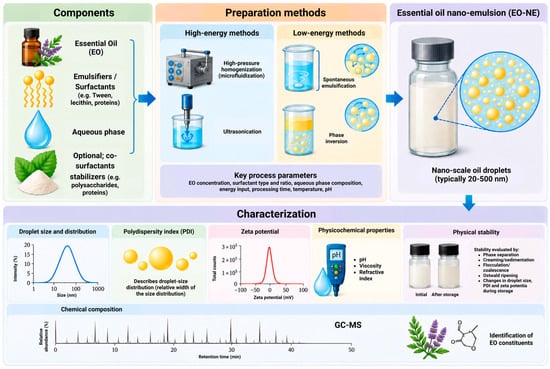
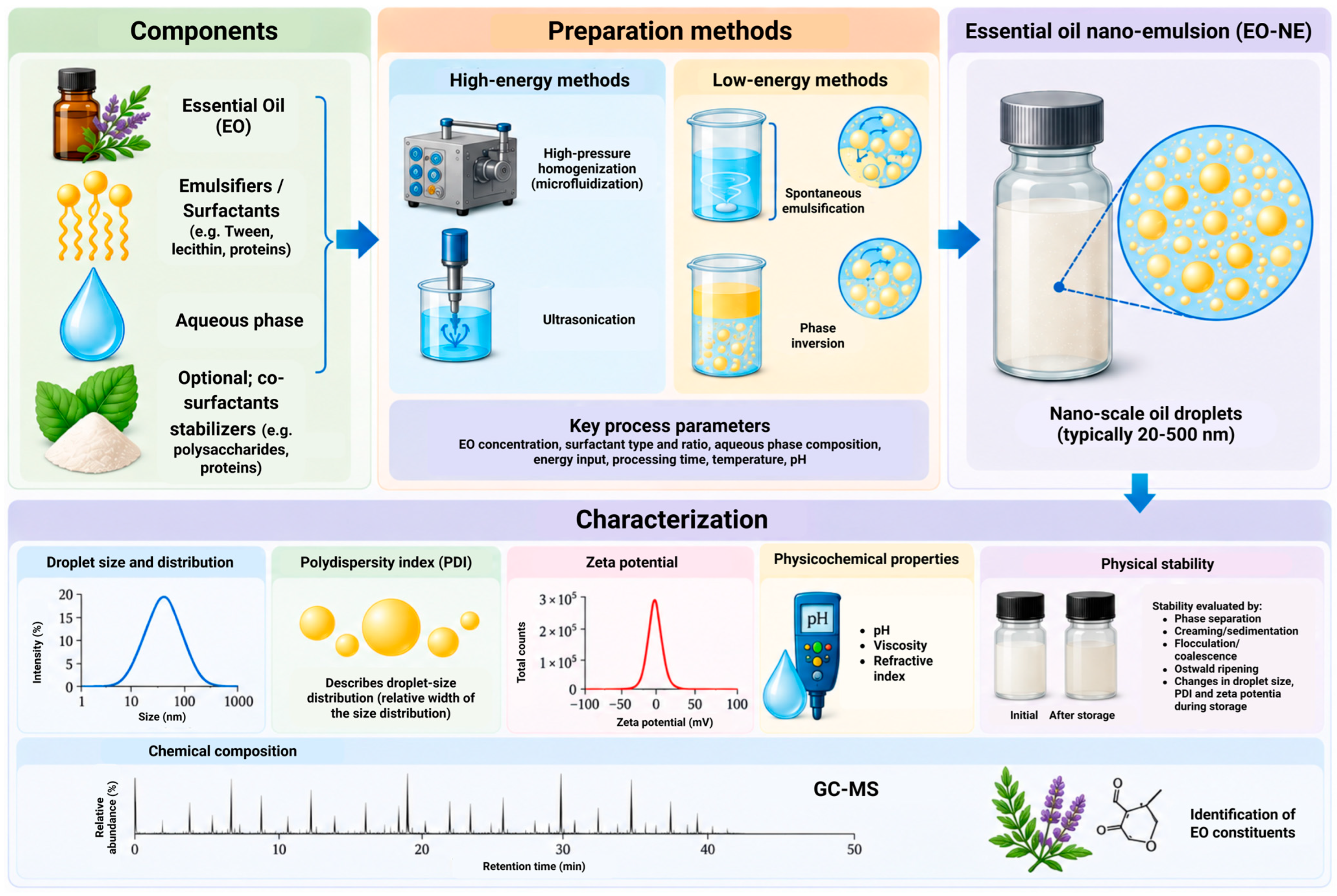
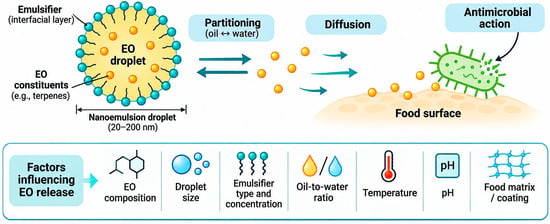
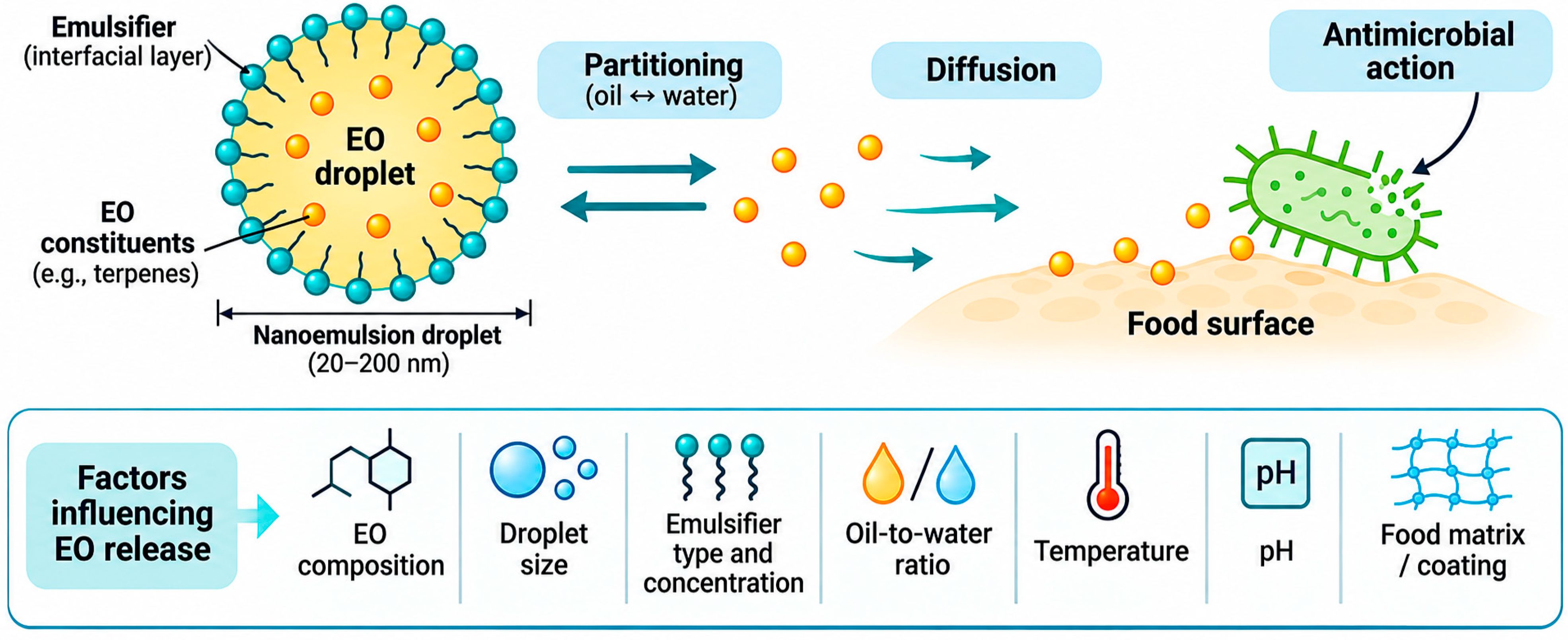
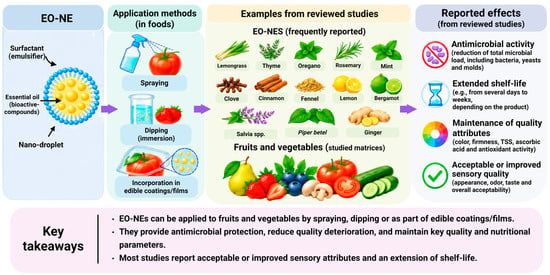
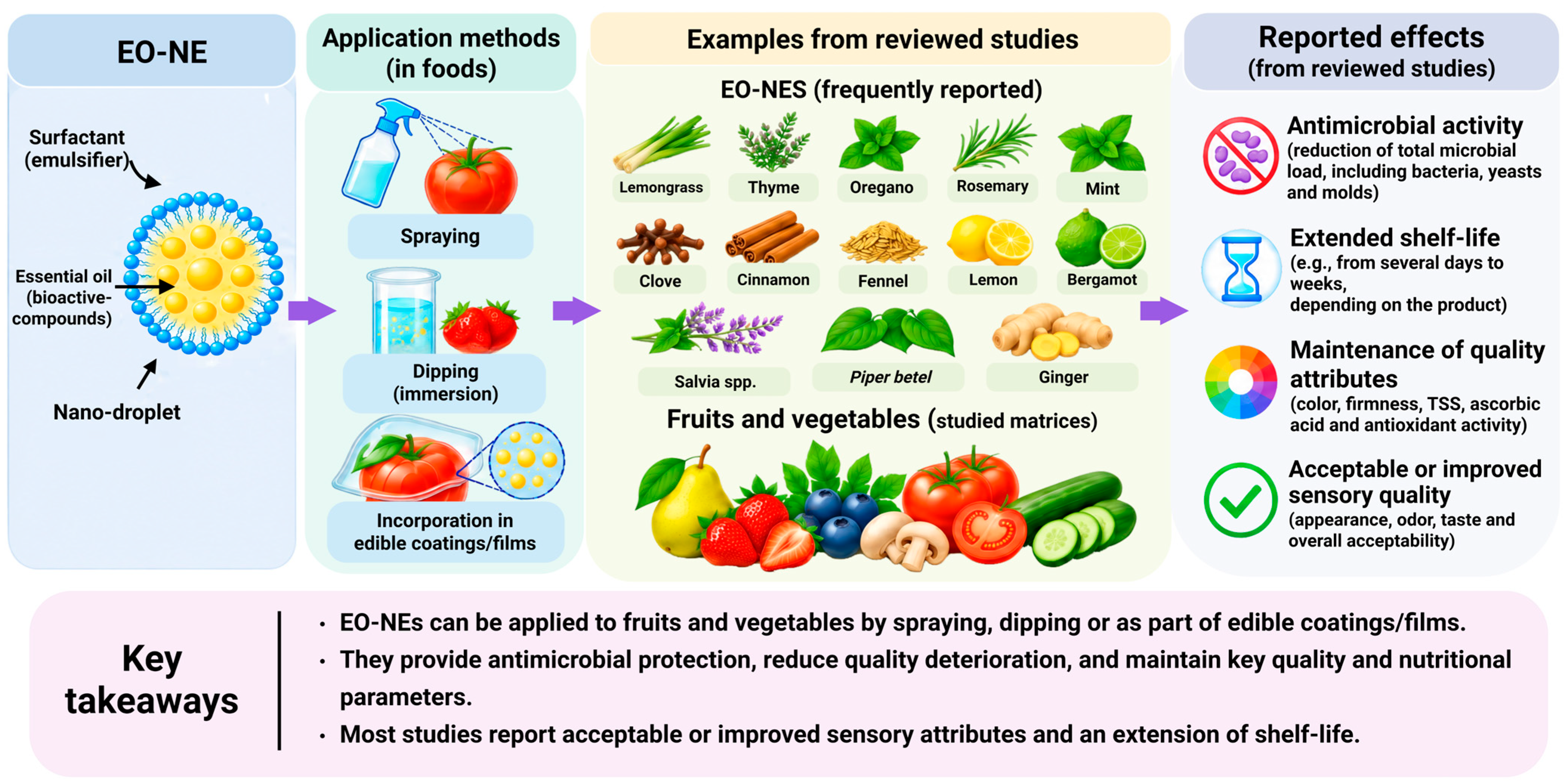
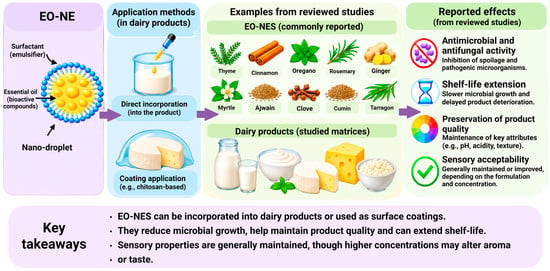
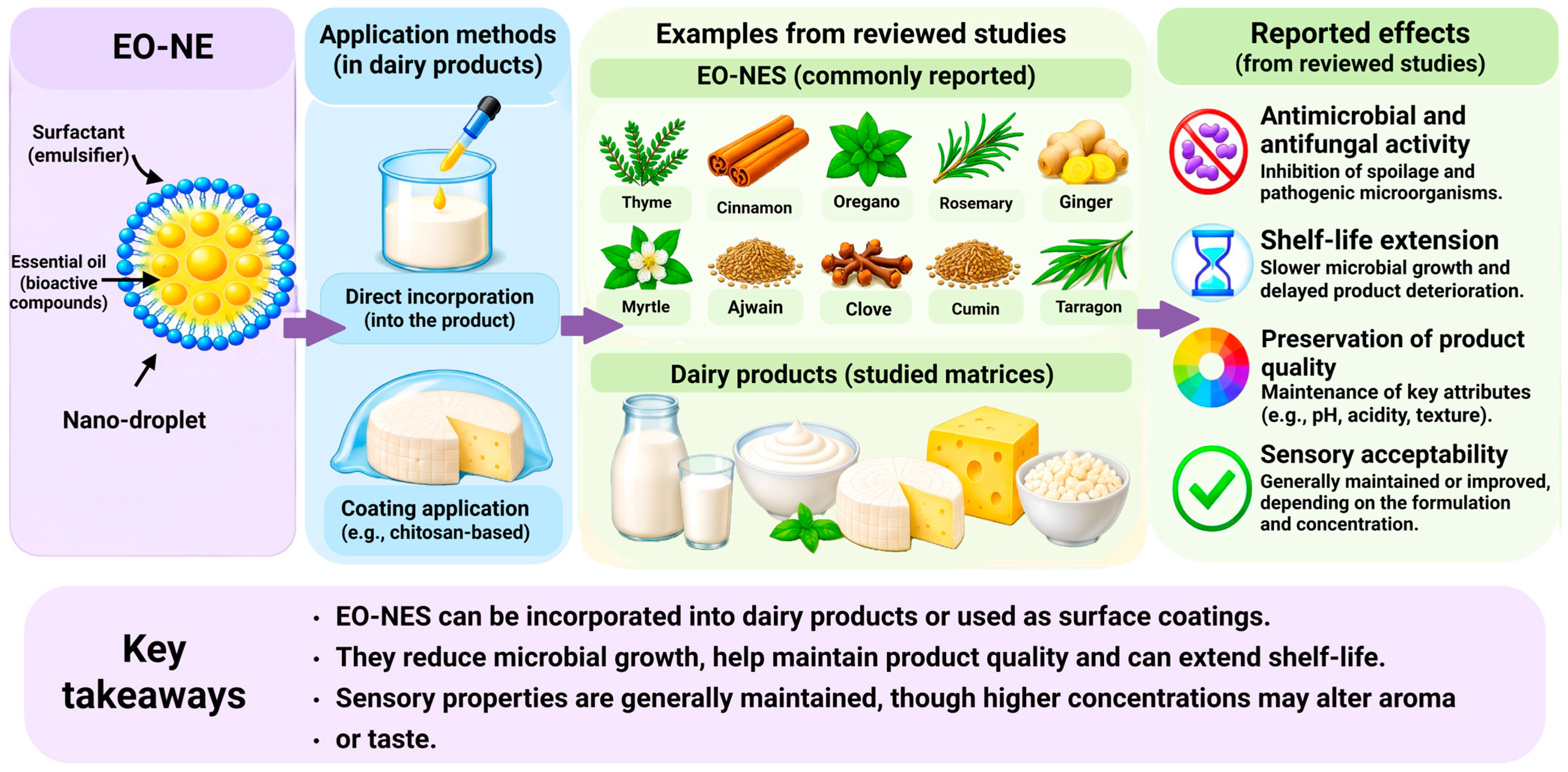
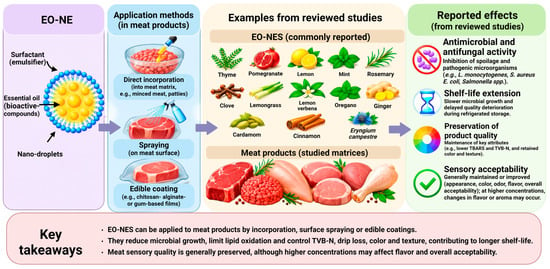
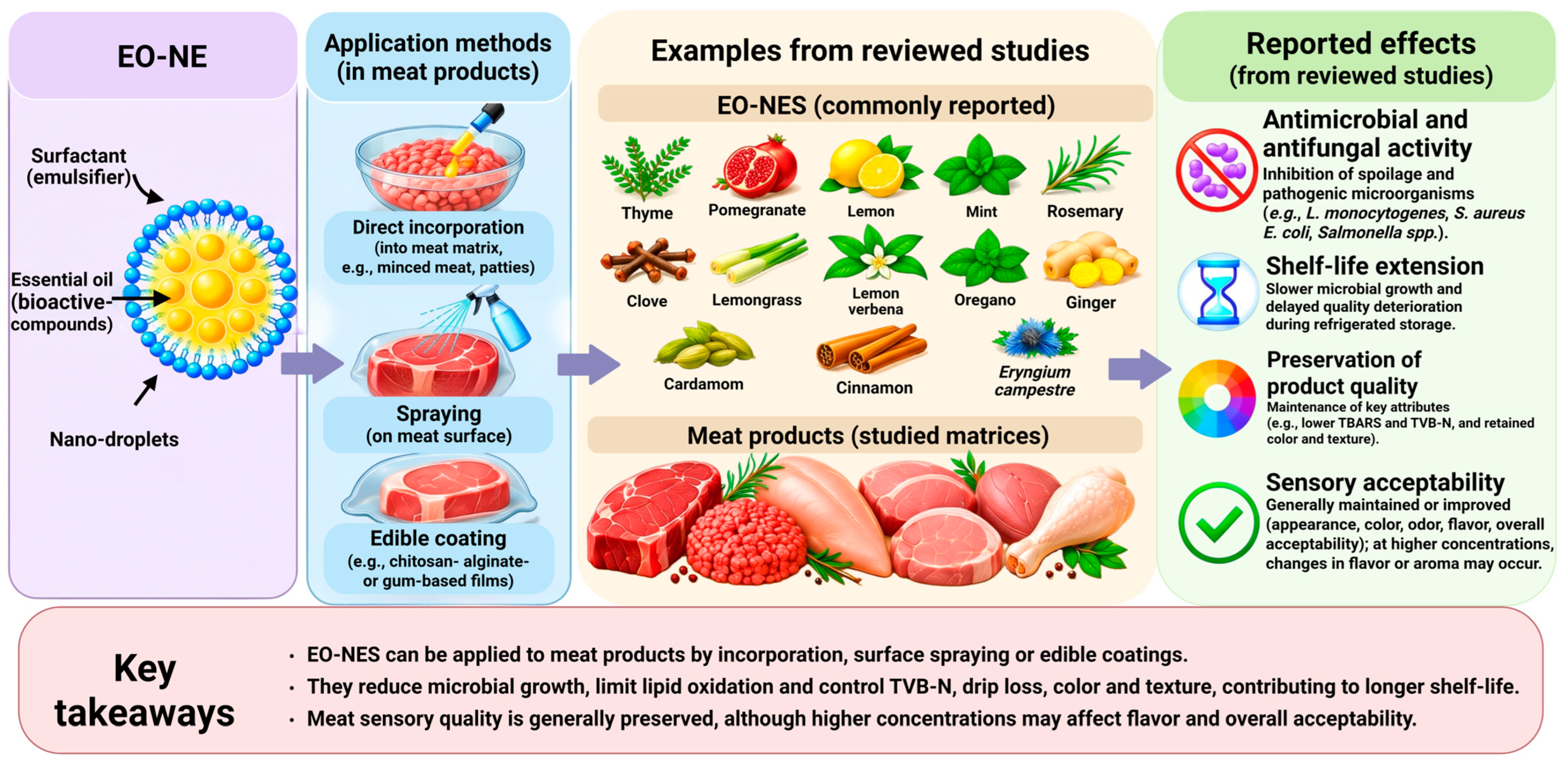
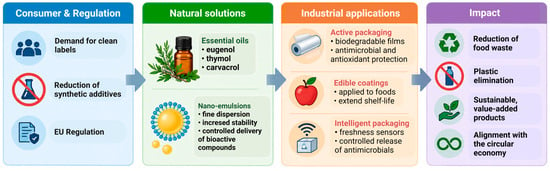
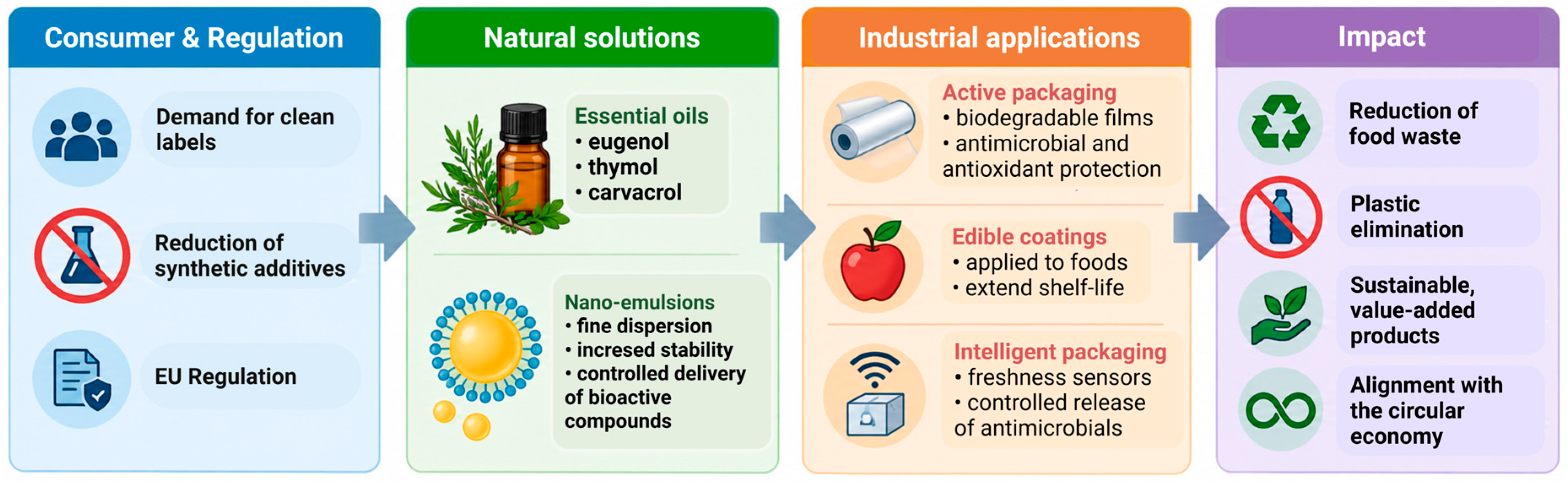

Disclaimer/Publisher’s Note: The statements, opinions and data contained in all publications are solely those of the individual author(s) and contributor(s) and not of MDPI and/or the editor(s). MDPI and/or the editor(s) disclaim responsibility for any injury to people or property resulting from any ideas, methods, instructions or products referred to in the content. |
© 2026 by the authors. Licensee MDPI, Basel, Switzerland. This article is an open access article distributed under the terms and conditions of the Creative Commons Attribution (CC BY) license.