


Abstract
Radon, a radioactive indoor pollutant with a linear no-threshold lung-cancer link, has a building performance obligation of 100–300 Bq/m3.This systematic review, conducted in accordance with the PRISMA 2020 guidelines, screened 253 records and synthesised 103 references (94 studies plus 9 additional records). Geology establishes potential source strength; in the cases reviewed, at comparable source strength, air renewal was the dominant controllable determinant. Heat-recovery ventilation reduced radon by a median of 39%; sub-slab depressurisation exceeded 85% in a high-concentration pilot yet left 662 and 328 Bq/m3 above the 300 Bq/m3 reference level; and a barrier reduced radon by about 90%, but residuals remained above recommendations. Radon-controlled prototypes achieved 86% reductions at 34% fan runtime, from 8000 to 800 Bq/m3; infiltration-reducing retrofits were associated with 32–67% increases. Low-cost monitors showed 20–50% errors below 200 Bq/m3 (3–5% for the best field units). Within the screened literature, no peer-reviewed model-predictive or reinforcement-learning study with radon in its objective was identified; digital-twin indoor-environmental-quality frameworks omit radon. Alicante campaigns (2–22 days, passive detectors) indicate the conditions measured, not average annual exposure, without independent ≥1-season corroboration. Radon is a conditional tracer of air renewal, not a CO2, VOC or PM proxy. A decision hierarchy, a measure–model–mitigate–control framework and six gaps are proposed.
1. Introduction
People in industrialised societies spend most of their lives indoors, and the quality of the air they breathe depends largely on how buildings renew it. Among indoor pollutants, radon occupies a singular position. It is a radioactive gas produced by the decay of radium in soil, rocks and some building materials, it is colourless and odourless, and it accounts for roughly half of the average annual effective dose received by the general population from all natural radiation sources [1]. Pooled analyses of residential case-control studies in Europe and North America describe a linear, no-threshold relationship between prolonged exposure and lung cancer, with an excess relative risk of approximately 8.4% per 100 Bq/m3 in the European dataset [2] and a comparable association in the North American data [3]. Because risk persists at the concentrations found in ordinary dwellings, radon is not a marginal concern reserved for mining regions or granitic uplands, where exposures have long been documented [4,5,6,7]; it is a general feature of building performance.
That understanding has been converted, over the past decade, into an enforceable regulatory framework. The World Health Organization recommends a reference level of 100 Bq/m3 and accepts concentrations up to 300 Bq/m3 only where the lower value cannot be achieved [8], while Council Directive 2013/59/Euratom requires Member States to set reference levels no higher than 300 Bq/m3, prepare national radon action plans, and address radon in workplaces and public buildings [9]. National transpositions have followed at different speeds. In Spain, RD 732/2019 introduced radon into the regulation of new and renovated buildings, classifying municipalities by radon potential and prescribing protective measures where required [10], and a National Radon Plan adopted in 2024 set out monitoring and remediation priorities [11]. Compliance has therefore become a building-operation problem. Predictive maps identify where attention is warranted, but they do not determine the concentration occupants actually breathe; recent work in Spain reclassified 61.75% of municipalities when population and building characteristics were incorporated [12]. Managing radon means managing air renewal in specific buildings, rather than simply drawing finer maps.
Two technological developments make this operational task newly tractable. The first is continuous, increasingly affordable radon sensing. Devices once confined to laboratories or long integrating campaigns can now report hourly concentrations, and IoT architectures integrate them with temperature, humidity, carbon dioxide and particulate measurements [13,14]. The second is data science. Machine-learning models predict indoor radon from geological, building and meteorological covariates with useful accuracy [15,16], and a few prototypes have closed the loop, using radon measurements to actuate ventilation directly [17,18]. Ventilation research has itself moved towards intelligent control, with demand-controlled, model-predictive and learning-based strategies reporting substantial energy savings without sacrificing comfort [19]. Yet these fields of literature rarely meet: within the literature screened here, reviews of intelligent ventilation discuss carbon dioxide and particulate matter while mentioning radon only in passing, a pattern visible in the authors’ prior synthesis [19] and consistent with an independent review that finds radon transport, exposure and data-driven modelling are largely disconnected [20], and radon studies seldom engage with the control literature. This review is radon-specific, integrating health evidence, metrology and measured mitigation performance rather than treating indoor air quality generally as [19] does, and connecting that evidence to control-grade sensing and advanced control rather than to mapping or statistical identification alone [20,21]. Individual prototypes have already coupled radon monitoring to ventilation control [17,18,22], but the integrated problem of radon-aware ventilation, spanning control-grade sensing, prediction and regulation-aligned targets, has not yet been assembled into a systematic design practice.
This review addresses that gap. Its central question is how ventilation strategies, combined with sensing and data-driven methods, can control radon effectively and improve indoor air quality in buildings. Three subsidiary questions structure the analysis: how health evidence and regulation define the control targets that ventilation must meet; what measurement and mitigation studies show about achievable performance, energy trade-offs and their determinants; and what underground and heritage buildings, together with data-driven prototypes, reveal about the remaining obstacles. The search behind this synthesis is documented in the “Review Methodology” section, and the review’s negative findings are bounded by that search rather than stated as universal facts.
The paper follows the arc of the problem. Section 2 establishes the health and regulatory baseline. Section 3 explains radon generation, entry and accumulation, and argues that air renewal, not geology alone, determines indoor concentrations. Section 4 examines the measurement chain and introduces the distinction between monitoring-grade and control-grade data. Section 5 synthesises the evidence on ventilation and mitigation, including the energy-efficiency dilemma. Section 6 analyses underground and heritage buildings through the Alicante case programme and comparable international studies. Section 7 reviews predictive modelling and smart control, and identifies the absence of radon from advanced control objectives. Section 8 integrates the findings into a measure–model–mitigate–control framework and a prioritised research agenda, and Section 9 concludes.
Review Methodology
This systematic review was conducted and reported in accordance with the PRISMA 2020 guidelines [23]. The completed PRISMA 2020 checklist is provided in Supplementary Material S3, and the study flow is shown in Figure 1. The protocol was not pre-registered before the search was executed. Following the journal’s recommendation, the review protocol has been registered retrospectively in the Open Science Framework: https://osf.io/j2k5v (accessed on 6 November 2026); DOI: 10.17605/OSF.IO/J2K5V.
Figure 1.
PRISMA 2020 flow diagram of study selection.
Eligibility criteria. Inclusion requirements comprised peer-reviewed articles, conference proceedings or official documents reporting original radon measurements or outcomes for ventilation, mitigation, sensing, prediction, control or regulation; records were excluded when they reported no radon or ventilation outcome, were unavailable in English or Spanish, were non-peer-reviewed material other than official sources, or duplicated retained evidence.
Information sources and search strategy. Scopus, Web of Science, ScienceDirect and Google Scholar were searched for records published between 2015 and 2026, with seminal earlier works retained; English-language records and Spanish official sources were eligible, and the search was executed on 5 October 2026. Google Scholar results are indicative only, because that interface is neither stable nor exhaustively reproducible. The core block (radon OR 222Rn) was combined with six theme blocks: ventilation (ventilation, air exchange, air renewal, heat recovery); sensing and IoT (sensor, monitor, detector, IoT, low-cost); machine learning (machine learning, neural network, LSTM, prediction, control, model predictive control, reinforcement learning, digital twin); underground and heritage (underground, tunnel, cave, mine, heritage, historic); CFD and modelling (CFD, multizone, CONTAM, COMIS); and regulation (reference level, action level, directive, building code). Occupational and mine-ventilation records were screened within the same queries rather than treated as a separate literature. The full query strings, per-database and per-theme counts, deduplication and screening record, and the eligible and uncited record lists are provided in the Supplementary Search Record (Supplementary Material S1). Citation chaining from six seed papers (UNSCEAR 2000 [24], Darby et al. [2], Krewski et al. [3], the WHO Handbook [8], Collignan and Powaga [25] and the authors’ prior review [19]) contributed a foundational layer on geogenic mapping, health, risk and metrology.
Selection process. In total, 253 records were identified: 89 through database searching, 158 through citation chaining and 6 from the authors’ prior works considered directly. Two duplicates were removed, leaving 251 records screened at the title and abstract level; 140 records were excluded at that stage, and 111 full texts were assessed for eligibility. Seventeen records were excluded after full-text consultation because their evidence duplicated retained sources or fell outside scope, leaving 94 studies included in the systematic review. Eight additional standards and technical documents, together with the PRISMA 2020 reporting guideline [23], were identified outside the search, giving 103 references in total, all of which are cited in the manuscript.
Figure 1 presents the PRISMA 2020 flow diagram of study identification, screening and inclusion for this systematic review.
Data items. The outcomes re-reported from the included studies are quantitative: radon concentrations, ventilation rates, percentage reductions and model-performance metrics, each tied to the detector type, campaign duration and operating conditions of its source study. For the Alicante campaigns, the provenance of every re-reported value is documented in Supplementary Material S2.
Risk of bias and quality appraisal. No formal risk-of-bias tool was applied, because the synthesis is narrative and cross-disciplinary; the evidence in each theme was instead appraised for methodological soundness during full-text assessment, attending to peer review, reporting of uncertainty and baseline conditioning. The absence of a formal appraisal instrument is acknowledged as a limitation.
Synthesis. Findings were synthesised narratively by the six themes above; no meta-analysis was performed, so effect measures, pooled estimates and certainty grading do not apply. Absence claims (G1–G3, Section 8) are bounded to the screened corpus of English-language records and Spanish official sources, which covers journal literature rather than standards catalogues.
2. Health Risk and Regulatory Framework
2.1. Epidemiological Evidence
Residential radon is among the most thoroughly quantified environmental carcinogens, and risk persists at the concentrations commonly found indoors. Darby et al. [2] combined individual data from 13 European case-control studies (7148 lung cancer cases, 14,208 controls) and estimated an 8.4% increase in lung cancer risk per 100 Bq/m3 (95% CI 3.0–15.8), rising to 16% (5–31) after correction for measurement error, with the linear trend significant below 200 Bq/m3. Krewski et al. [3] obtained a compatible estimate from seven North American studies (odds ratio 1.11 at 100 Bq/m3, 95% CI 1.00–1.28) that matched the 1.12 predicted from miner cohorts. About 2% of all cancer deaths and 9% of lung cancer deaths in Europe were attributed to residential radon [2].
Never-smokers are the most policy-relevant subgroup, as their exposure is not confounded by tobacco. Cheng et al. [26] pooled four collaborative studies and reported an adjusted excess relative risk of 0.15 per 100 Bq/m3 (95% CI 0.06–0.25) for never-smokers against 0.09 (0.03–0.16) for ever-smokers; the difference was not statistically significant (p = 0.32), so the result should be read as evidence of low-dose risk rather than effect modification by smoking. The joint effect of radon and smoking is described as sub-multiplicative or approximately additive in the European and North American pooled analyses and the WHO Handbook [2,3,8]. Radon and its short-lived progeny dominate natural public exposure [1,24], and no threshold has been demonstrated, so protection is modelled as a linear function of cumulative exposure. Dose, however, depends on the short-lived progeny, the equilibrium factor F between radon gas and its decay products (typically around 0.4 indoors), and the unattached fraction; continuous monitors measure 222Rn gas, so gas-phase concentrations are a proxy for exposure rather than a direct measure of dose [1,27,28]. Spanish ecological evidence from Galicia agrees at population level [29], although such designs cannot establish individual causality.
2.2. International Reference Framework
The WHO Handbook on Indoor Radon [8] converts this evidence into public-health guidance: a national reference level of 100 Bq/m3 is recommended to minimise health risk, with values up to 300 Bq/m3 tolerated only where 100 Bq/m3 cannot be achieved under prevailing national conditions. ICRP Publication 126 reaches the same interval from radiological protection, treating radon as an existing exposure situation and recommending a derived reference level between 100 and 300 Bq/m3 with an annual dose benchmark of the order of 10 mSv [27]. IAEA Safety Guide SSG-32 adds the programme architecture: representative surveys and mapping, preventive measures for new buildings, corrective actions for existing ones and management of high-occupancy buildings [30]. Reference levels and programme maturity remain heterogeneous internationally; the 2007 WHO survey [31] remains a historical benchmark, and current national frameworks are illustrated by the Spanish programme and its potential map [11,32].
For European buildings the binding instrument is Directive 2013/59/Euratom, which obliges Member States to set national reference levels for indoor radon not exceeding 300 Bq/m3 as an annual average and to adopt national radon action plans for dwellings, public buildings and workplaces. In workplaces it requires measurement programmes in priority areas and types of workplace, notification when concentrations persistently exceed the reference level, and management as a planned exposure situation when doses may exceed 6 mSv per year [9], converting an epidemiological gradient into enforceable limits and monitoring duties.
2.3. National Implementation: Spain as a Case Study
Spain shows how these obligations reach building practice. The binding instrument transposing Directive 2013/59/Euratom is Real Decreto 1029/2022, a partial transposition that sets a reference level of 300 Bq/m3 as an annual average for indoor radon (art. 72(a)), imposes workplace measurement and notification obligations (arts. 75–76) and brings radon within the dose-management regime (art. 19) [33]. On that basis, CTE DB-HS6, introduced by RD 732/2019, requires protective measures in new buildings and interventions sited in the municipalities listed in Appendix B of the CTE DB-HS6, organised into zones I and II derived from CSN measurements. Accepted solutions include a protective barrier, a ventilated containment space and sub-slab depressurisation; their effectiveness must be verified experimentally, and habitable rooms must also satisfy the ventilation requirements of DB-HS3 and RITE. The National Radon Plan of 2024 structures implementation around five axes covering knowledge, buildings, occupational exposure, priority areas and communication, while the CSN radon potential map and the MARNA gamma map define the municipality list used for zoning [10,11,32].
The mapping basis of the Spanish system is also its weakest point. Ferriol-Galmés et al. [12] integrated the CSN potential map with cadastre data on twelve million buildings and found that 4927 municipalities, 61.75% of the total, changed classification once building height, floor level and population distribution were included, with the largest deviations in densely populated areas. A geology-only map therefore describes source potential rather than occupant exposure, and compliance cannot be inferred from location; the authors’ Alicante campaigns reinforce this by recording concentrations of concern in underground spaces on clay and limestone soils nominally classified as low risk. Those cases are examined in Section 6.
2.4. From Reference Levels to Ventilation Design Targets
Meeting a 100–300 Bq/m3 reference level means specifying ventilation that dilutes and removes radon under real operating conditions. The standards governing building ventilation do not themselves set radon limits: EN 16798-1 [34] defines indoor air quality categories and design ventilation rates, whereas ASHRAE Standards 62.1 and 62.2 specify minimum rates for commercial and residential buildings [35,36]. A building that satisfies code ventilation may therefore still exceed a radon reference level, so compliance requires building-level verification: radon is a specification problem for buildings rather than a mapping problem for regions.
Two objections deserve acknowledgement. Risk below 100 Bq/m3 remains contested, since confidence intervals widen at the lowest exposures even though the linear trend was significant below 200 Bq/m3 [2,26], and mitigation carries real costs. The appropriate response concedes the uncertainty while limiting its policy consequences: under a no-threshold model, and given that increased air renewal also serves general indoor air quality, precautionary demand-controlled ventilation is a reasonable default first measure in occupied buildings with a moderate source term and a serviceable envelope, within the decision hierarchy set out in Section 5.3 and subject to the outdoor-air caveat discussed in Section 5.4; buildings with high source strength follow the source-control-first branch of that hierarchy, and fixed or passive measures are preferred wherever they demonstrably meet the target. The review does not claim a dose threshold, nor does it treat all buildings as equally exposed; reference levels define a performance target that only building-level verification can confirm. Understanding how radon enters and accumulates is the prerequisite for meeting that target without over-ventilating.
3. Radon Generation, Transport and Accumulation Physics
3.1. Sources and Geogenic Potential
Indoor radon begins with a source in the ground, but its strength cannot be inferred from geology alone. The geogenic radon potential combines soil-gas radon concentration with gas permeability, because a radium-rich but impermeable substrate releases little radon [4]. This dual criterion underpins standardized site indices, such as the three-tier radon index based on soil-gas concentration and permeability classes [37], and field protocols combining soil-gas sampling, permeability and radium content [38]. National programmes applied the concept regionally in France [5] and central Hungary [39], with mapping uncertainty depending on sampling density. Earlier screening used aerial gamma-ray spectrometry, which indicates relative soil-gas radon over wide areas but does not substitute for site measurements [40].
Geostatistical treatments expose the decisions embedded in map production: comparative kriging shows that method choice materially changes predicted soil-gas surfaces, so validation is essential [41], and when indoor measurements are modelled with geological and building covariates in Lombardy, building characteristics add explanatory power and floor level emerges as a strong predictor [42]. Maps thus describe a potential that the building filters. Building materials form a second, usually smaller source: laboratory measurements show that construction products contribute a quantifiable fraction of indoor radon, normally secondary to soil gas at high-risk sites but potentially relevant where that source is weak [43]. Geogenic maps are therefore best read as prioritization tools rather than as predictions of indoor concentration.
3.2. Entry Mechanisms and Driving Forces
Radon enters buildings by diffusion and pressure-driven advection, with the balance set by the envelope pressure field. Diffusion follows the concentration gradient between soil gas and indoor air and dominates where advective forces are small, whereas advection carries soil gas through cracks, joints and service penetrations whenever the envelope is depressurized relative to the ground [25]. The stack effect, wind loading and mechanical exhaust contribute to that depressurization, and monitoring at the Sopronbánfalva Geodynamic Observatory shows that barometric pressure and temperature variations modulate radon over short time scales [44]. Airtightness and ventilation regime act jointly, with indoor depressurization and air change rate the governing variables [25]. Section 6 examines how mitigation manipulates these same variables.
3.3. Accumulation and the Air-Exchange-Rate Argument
If entry supplies radon, air renewal determines its steady-state concentration, and the contrast within a single geological setting can be extreme. In Alicante, seven constructions monitored with electret chambers over 2- to 22-day campaigns found the highest values in buried structures with virtually no ventilation, while operational railway tunnels with mechanical extraction remained far lower [45]. Section 6.2 reports these cases in full; their weight here lies in the consistent ventilation contrast across sites on nominally low-risk clay and limestone soils, and their short passive campaigns cannot be generalized to long-term exposure without corroboration.
Source-term models clarify why accumulation is not a function of ventilation alone. Analytical treatments of exhalation from porous structures distinguish purely diffusive from diffusive-advective transport and provide closed-form solutions for perimeter walls, partition walls and structures in direct contact with soil or embankments; direct measurement of exhalation is extremely difficult, justifying model-based assessment [46]. Coupled heat, moisture and air transfer adds weather dependence: in aerated-concrete walls, exhalation increases with relative humidity and approximately linearly with pressure difference, whereas solar radiation decreases it, and material radon parameters, relative humidity and solar radiation are the most sensitive factors [47]. Because exhalation responds to humidity and pressure, ventilation timing affects the source term as well as removal.
3.4. Modelling Approaches
Mass-balance and multizone models represent a building as a network of zones connected by airflow paths, solving conservation equations for air and contaminant transport. COMIS, developed within IEA Annex 23 and evaluated against field data in more than ten countries, established the nodal multizone architecture still used for infiltration and pollutant analysis [48]. A CONTAM model of a Ljubljana apartment reproduced the observed radon dynamics with moderate correlation (r = 0.62) and identified design ventilation rates of 0.5 air changes per hour (ACH; 36.6 m3/h) and 0.7 ACH (46.9 m3/h) as sufficient to keep CO2 below 1000 and 800 ppm and radon below 100 Bq/m3 [49]. Such models capture whole-building air exchange but homogenize each zone, limiting their ability to resolve local gradients.
CFD resolves those gradients. The measurement-to-simulation chain was established in a closed test room, where measured surface exhalation (1.59 ± 0.10 Bq m−2 h−1) and a ventilation rate inferred from accumulated-radon decay reproduced the measured spatial distribution, confirming radon as a natural tracer of air renewal [50]. Benchmarks in naturally ventilated rooms show agreement within 7% (door closed) and 19% (door open) against analytical solutions, with the highest concentrations near the floor [51], and open-source solvers adapted from heat-conduction codes reproduce flux benchmarks and radon build-up in closed containment [52]. The spatial gradients these models reveal also constrain monitoring-point placement, a question examined in Section 4.
At building and site scale, simulations inform design. Validated finite-element models of sub-slab air chambers quantify depressurization reductions of 45–90%, largest in smaller structures, and warn that forced-air injection can raise indoor radon through overpressure in tall chambers [53]. In a former uranium mine, CFD showed natural ventilation providing only 0.13–0.25 ACH against up to 2.21 ACH with forced ventilation [54], and scale-model experiments found outdoor-air introduction reducing radon by up to 89.5% against 25.0% with extraction [55]. A systematic review nevertheless finds continuum, mass-balance and data-driven approaches largely disconnected, a scale gap taken up in Section 7 [20].
Across these scales, the physics delivers a consistent message. Indoor radon is an airflow problem conditioned by a variable source: geology and building materials set the potential, pressure-driven entry and exhalation feed it, and air renewal determines the concentration occupants breathe. The Alicante cases show how wide the resulting range can be within one city and one nominally low-risk geology. They also expose the limits of the evidence: short campaigns with integrating detectors, sparse soil-gas sampling and drifting calibrations propagate into simulated concentrations, and the scale gap persists because model classes are validated against data of unequal quality, so model performance remains bounded by metrology; the measurement chain is the next constraint on radon-aware ventilation and the subject of Section 4.
4. Monitoring and Sensing Technologies
The measurement chain is the weakest link in radon-aware ventilation. Mitigation and control decisions inherit the accuracy, response time and reliability of the devices that produce them, and these properties vary widely across detector classes and even across units of the same model. A device adequate for awareness campaigns may fail as a control input, a difference rarely visible in manufacturer specifications. This section examines reference methods, evaluates low-cost continuous monitors against reference instruments, follows networked sensing into long-term campaigns, and defines the signal quality that closed-loop control requires. Sensing is not a neutral observer of radon dynamics but a design constraint on any automated ventilation strategy.
4.1. Reference Methods and the Metrological Frame
Reference measurement of indoor radon relies on two complementary families. Passive integrating detectors, including alpha-track devices and electret ion chambers, accumulate the signal over weeks to months, need no power, and return a single time-averaged concentration. Active monitors sample continuously and resolve temporal variation, but depend on power, periodic calibration and higher capital cost. The ISO 11665 series, in particular Parts 2–4 [56,57,58,59], provides the metrological frame for both, classifying methods into spot, continuous and integrated measurements with uncertainty treatment, while IEC 61577-2 and IEC 61577-3 specify performance and type-test requirements for radon and radon-decay-product instruments [60,61]; NTP 440, an occupational-hygiene note first issued in the 1990s, provided early Spanish measurement-protocol guidance [62], whereas current legal thresholds derive from Real Decreto 1029/2022 [33]. The choice is technical and regulatory: the reference level is defined over an annual average that integrated detectors represent naturally and continuous devices must reproduce by aggregating their time series.
Heritage environments narrow the choice further. Nastro et al. [63] compared passive and active methods in historical buildings and argued that instrument selection must respect conservation constraints, which favor unobtrusive devices and restrict powered equipment inside protected fabric. The Alicante campaigns followed this logic, deploying E-PERM electret chambers in 2–22-day campaigns across buried shelters, warehouses and tunnels [45,64,65]; these produced defensible contrasts at low cost and with minimal intrusion, yet return only campaign averages. That limitation bears directly on control: integration suppresses the short-term dynamics, such as the response to door openings or fan cycles, that a controller must regulate.
4.2. Low-Cost Continuous Monitors: Accuracy, Drift and Interference
Continuous low-cost monitors are the only sensor class inexpensive and compact enough for dense deployment and closed-loop operation, and their measured accuracy has improved enough to attract systematic intercomparison across detection principles. Rábago et al. [66] collocated seven consumer monitors with different detection principles against an AlphaGUARD for 54 days and reported differences of 5–16%, Pearson correlations of 0.63–0.90, response lags of 1–3 h for ionization-chamber and semiconductor units against 5–15 h for photodiode-based models, and missing records equal to 1–19% of expected data. The spread across detection principles exceeded the spread across units within a principle, suggesting that sensor architecture, rather than manufacturing tolerance alone, determines whether a device can follow ventilation-driven changes in concentration.
Long-term behaviour is more demanding than short-term collocation. Daraktchieva et al. [67] exposed seven consumer monitors and passive etched-track detectors to high and low levels across two 3-month periods; only the passive detectors met a 10% error criterion at both exposures. Below the 200 Bq/m3 UK action level, one monitor remained within 10% while the others degraded to 20–50% errors, and individual calibration factors drifted between −46% and +63% over four years. Tsapalov et al. [68] placed these results in a metrological strategy, showing that temporal variability, not detector sensitivity, dominates decision uncertainty and that a calibration-factor uncertainty below 0.30 (k = 2) suffices for periods of two to three months, implying that accuracy claims are duration-dependent rather than intrinsic to a model.
Field validation in occupied buildings confirms the risk. Giang et al. [69] collocated 45 electronic monitors for 98 days in a Canadian home (mean 99 Bq/m3): the best units reached 3–5% error after 13 weeks and RMSE of 5–6 Bq/m3 on two-day averages, while others ranged from −47% to +220%. Thoron interference compounds this picture: Tamakuma et al. [70] showed that low sampling flow rates can underestimate thoron by up to a factor of five and that cross-interference biases radon readings, making flow control and multi-flow calibration necessary QA/QC measures. Solid-state designs may reduce cost and power [71], and placement matters equally: emissions varied more than fourfold at centimetre scale and were unexpectedly high at electrical outlets [72], so room-average monitors can miss localized ingress routes.
4.3. IoT Architectures and Long-Term Campaigns
Networked sensing has moved radon monitoring from periodic surveys toward continuous observation. Blanco-Novoa et al. [73] interfaced a commercial detector with an ESP8266 node that transmitted hourly measurements with NTP timestamps to a cloud backend with threshold alerts, and verified that the microcontroller and WiFi radio produced no measurable interference. Pereira et al. [74] advanced the architecture with the RnProbe edge device, combining a radon sensor specified to ±10% up to 3700 Bq/m3 with CO2, temperature, humidity and pressure sensing and dual LoRa/WiFi radio; 15 devices were installed in Portuguese public buildings, with CO2 as an occupancy proxy and pressure as a window-opening indicator, and LoRa extended coverage where WiFi was unavailable.
Long campaigns have begun to exploit these architectures. Nunes et al. [14] operated an RnProbe for 546 days in a public building and resolved a broad seasonal cycle with a negative correlation between radon and indoor temperature, although the humidity relationship remained inconclusive and the pressure effect could not be separated from occupancy and ventilation actions. That confound points to a recurring methodological problem: continuous data streams contain ventilation signatures but rarely contain ventilation measurements. Barros et al. [13] identified the absence of standardized calibration procedures and of reported power and cost figures as the main barriers to comparability and scalability, tying the IoT literature back to the metrological evidence above.
4.4. From Monitoring Data to Control-Grade Signals
Translating monitoring records into control inputs demands an explicit accuracy budget with placement and maintenance protocols. Sensor error propagates into actuation, so a monitor reading 20–50% low below 200 Bq/m3 may delay fan activation until concentrations substantially exceed the setpoint, and drift of tens of percent over years can turn a compliant installation into a biased one. Reference re-checks, duplicate units and scheduled recalibration are practical countermeasures [68]. Placement compounds the problem: detectors belong in the lowest occupied space and away from openings and ingress paths, yet emission varies at centimetre scale [72], so a single point cannot represent a room without stating what it measures.
Table 1 translates this distinction into a minimum specification for control-grade radon data. The values are design targets anchored to the intercomparison evidence reviewed above [65,66,67,68,69,70,71]: they define the envelope within which an actuation decision can be justified, not the performance of current consumer devices.
Table 1.
Minimum control-grade specification for continuous radon data used in closed-loop ventilation control (design targets, not certification criteria).
Certification would layer such a class onto the existing IEC and ISO instrument standards [57,58,59,60,61], using CEN/TS 17660-1 [75] and the analogous MCERTS/EN 15267 and US EPA/AQ-SPEC programmes for other pollutants as evaluation templates; the pathway extends an established architecture rather than creating a new metrological domain.
Co-monitoring supplies the missing context. Carbon dioxide distinguishes occupancy-driven ventilation from baseline air exchange, particulate matter and temperature–humidity records support source attribution, and pressure data reveal window or door operation, as the RnProbe and Giang deployments demonstrate [69,74]. CO2-based occupancy inference is not infallible: geogenic CO2 emissions, for example in coal-mining districts or areas affected by underground coal fires, can raise indoor concentrations without occupants, so corroborating signals are needed where such sources are plausible. These covariates help a controller separate dilution from source-driven change and avoid reacting to meteorological transients. The review therefore distinguishes monitoring-grade data, adequate for screening, awareness and annual-average compliance, from control-grade data, which requires characterized uncertainty, bounded drift, verified response time and traceable calibration throughout deployment. Current low-cost monitors satisfy the first standard far more reliably than the second, and defining that gap is a precondition for the mitigation strategies examined next.
5. Ventilation Strategies and Radon Mitigation
Ventilation is the most broadly applicable lever for controlling indoor radon, because indoor concentrations emerge from the balance between radon entry and air renewal rather than from geological potential alone. As noted in Section 2.4, neither EN 16798-1 [34] nor ASHRAE Standards 62.1 and 62.2 [35,36] addresses radon, so radon management is layered onto rules conceived for comfort and occupant-generated pollutants. Performance depends on three interacting factors: the achieved air exchange rate (ACR, expressed in 1/h and quoted elsewhere as air changes per hour, ACH), the pressure balance across the envelope, and the interruption of soil-gas pathways. The subsections below examine these mechanisms, the evidence for different systems, soil depressurization, the energy penalty, and radon-controlled prototypes.
5.1. Mechanisms of Ventilation-Based Radon Control
Indoor radon at steady state reflects the balance between entry from soil, building materials and water and removal by air exchange. Throughout this review, a determinant is controllable when building operation can adjust it after construction (air renewal and, where installed, the envelope pressure regime), as distinct from geological source potential and source pathways, which are fixed or require construction works to alter. Dilution therefore scales with ACR, but the relationship is not linear, because ventilation also modifies the pressure field that drives advective entry. Collignan and Powaga [25] showed that indoor radon activity concentration is governed by two coupled parameters, indoor depressurization and ACR, both set by envelope airtightness and by the ventilation system. Arvela et al. [76] reported 2–3 Pa indoor–outdoor pressure differences in balanced mechanical supply and exhaust ventilation systems with heat recovery (MSEV) versus 5–9 Pa in mechanical exhaust ventilation (MEV) houses, with radon about 30% lower in the former. System choice therefore turns on whether extraction draws soil gas inward toward the occupied zone. The same mechanism operates intermittently through local exhaust devices such as kitchen range hoods and bathroom fans, whose short operation windows can depressurize the occupied zone enough to draw soil gas inward. The corresponding control response is a pressure-aware sequence: monitor the indoor–outdoor differential pressure and offset the supply airflow to hold the occupied zone at or slightly above ground pressure, following the supply-airflow offset and pressure-control logic of ASHRAE Guideline 36 [77].
Where ventilation interacts directly with the entry path, underground spaces offer the clearest illustration. The Alicante tunnel comparison summarised in Section 6.2 is consistent with air renewal being, in the cases reviewed and at comparable source strength, the dominant controllable determinant, the determinant most amenable to operational adjustment, although the two tunnels also differed in lining completion, construction stage and train-induced airflow, so the contrast does not isolate air renewal from geology or from source-pathway sealing. Extraction in such settings both dilutes indoor air and intercepts the advective flow that would otherwise carry soil gas through cracks and joints. Effective design therefore couples an ACR target with a pressure target that keeps the occupied zone at or slightly above ground pressure.
5.2. Evidence from Mechanical Ventilation Systems
Field evidence supports balanced mechanical ventilation with heat recovery, although performance varies with envelope airtightness. In a Canadian study of 13 occupied and 3 test houses, Gaskin et al. [78] recorded initial lower-floor radon of 91–312 Bq/m3 (median 175) with the heat-recovery ventilator (HRV) off; continuous high-speed operation reduced radon by a median of 39%, with reductions up to 80% in an electric-baseboard house and an average of 54% in the airtight twin houses. Sustained exhaust-only devices, by contrast, increased depressurization and raised radon, with the highest concentrations at only −5 Pa. The direction of the pressure imbalance, not the volume of air moved, therefore determines whether ventilation mitigates or aggravates radon entry; intermittent depressurization episodes from local exhaust devices are managed with the pressure-aware sequence described in Section 5.1 rather than by raising continuous airflow.
Removal rises steeply with ACR but saturates, and shutdown triggers rapid rebound. In an 85 m2 Korean apartment, Jeong and Cho [79] measured one-hour radon removal of 23.5%, 30.4%, 39.7% and 60.2% at 0.5, 1.0, 1.5 and 2.0 ACH, respectively; about 1.0 ACH was needed to approach 20 Bq/m3, and radon rebounded within roughly one hour. Jiránek and Kačmaříková [80] translated this behavior into a design constraint: ventilation intensity should not exceed 0.6 1/h, equivalent to a radon supply rate (the rate at which radon enters the zone per unit volume, expressed in Bq m−3 h−1) no higher than 60 Bq m−3 h−1 for a target of 100 Bq/m3, while cyclic operation cuts energy use. Felicioni et al. [81] found through life-cycle assessment that more than 95% of impacts were operational, that balanced ventilation with heat recovery outperformed exhaust ventilation, and that viability ended at about 100 Bq m−3 h−1 of supply. Because both figures are defined against the same 100 Bq/m3 target, they bracket one design window: the reconciled usable supply-rate range is 60–100 Bq m−3 h−1, above which the airflow needed for dilution becomes disproportionate to the health benefit.
Radon also interacts with moisture and biological pollutants, which constrains the flow regimes that can be adopted. Keskikuru et al. [82] found that pressurizing a ventilated crawl space with indoor exhaust air prevented convective radon flow from the soil but increased microbial growth, whereas supply and exhaust ventilation of both spaces reduced fungal spores and the entry of radon and microbial volatile organic compounds; sealed concrete ground structures performed well at 0.2–1.0 1/h, while plastic and extruded-polystyrene covers produced high mould indices. Radon control cannot be separated from moisture and microbial management, because the same flow regimes govern all three.
5.3. Soil Depressurization and Combined Strategies
Where source strength is high, soil depressurization (SSD) remains the benchmark technology. Fuente et al. [83] monitored a Spanish pilot house for one year across closed and depressurized phases. Closed-phase averages reached 54,625 Bq/m3 in the basement and 26,421 Bq/m3 on the ground floor; active soil depressurization reduced radon by more than 85% in every phase, reached 99% (662 and 328 Bq/m3 in basement and ground floor), and needed only a 20 W fan. These percentages are baseline-dependent, since the closed-phase basement exceeded 50,000 Bq/m3; the same relative reduction would correspond to a much smaller absolute change at typical domestic concentrations, so the figure should not be transferred as a design expectation, and the validated CFD range discussed below is the more representative design span. Sicilia et al. [53] extended the design space through a validated CFD model of sub-slab air chambers, reporting reductions of 45–90% that depended on building length, with smaller structures gaining most. Chamber height improved pressure reduction, higher flow rates gave diminishing returns, and forced-air ventilation could raise radon through overpressure in tall chambers.
Combining envelope and ventilation measures can relax the airflow otherwise required. Nunes and Curado [84] applied a barrier membrane over the floor of a confined ground-floor space in a historic building and reduced radon by about 90%, yet residual exposure remained above recommended levels, and they estimated that coupling the membrane with mechanical ventilation would lower the required ACR from 30–60 to 4–6. The evidence therefore supports an explicit, quantified decision hierarchy rather than a single universal ordering. First, where source strength is high (provisionally, to be validated: a closed-phase basement concentration above 300 Bq/m3 or a high soil-gas radon index class on the concentration–permeability classification [37]), or where ventilation is constrained by existing underground or heritage fabric, source control is primary, because the largest efficacy figures in this review come from these measures (above 85–99% for soil depressurization [83]; about 90% for barriers [84]), and CTE DB-HS6 lists sub-slab depressurization among its accepted solutions subject to experimental verification [10]. Second, where the source term is moderate and the envelope is serviceable (both provisional, to be validated in situ), demand-controlled ventilation within an energy ceiling, here the reconciled 0.6 1/h and 60–100 Bq m−3 h−1 supply window [80,81], is the default because it is reversible and also serves general indoor air quality; it must keep the occupied zone at or slightly above ground pressure and avoid exhaust-induced depressurisation, which can raise radon entry [76,78]. If branch 2 fails to hold the target over one heating season of verification, it escalates first to a combined measure, branch 3, where source control and ventilation are deployed together, and, if the target is still not demonstrated, the site is reclassified as branch 1. If the radon signal is lost or fails plausibility checks, the controller defaults to the ventilation floor rather than following an unverified setpoint. This ordering matters most in heritage and underground contexts, where each measure must justify its physical impact on protected fabric and structural work is often restricted.
Three rival explanations qualify the hierarchy and set its limits. First, the Alicante gradient is equally compatible with a source-strength explanation: geogenic flux, exposed ground-contact area and building volume differ across the sites, and no source-term measurements were reported for the Británica complex, so the cases support a within-site contrast, not a claim that ventilation outranks source control. Second, where source strength is high, the source-control-first pathway is correct and the largest measured reductions belong to it [83,84]; the hierarchy adopts that pathway rather than replacing it. Third, fixed or passive measures (scheduled ventilation, passive stacks or crawl-space treatments) may meet an annual-average target at lower cost and complexity than closed-loop control, and should be preferred where they demonstrably do. The control-research agenda adds value only in the cases those pathways leave open: sources that fluctuate or cannot be reduced below the target, intermittently occupied spaces, and the energy and multi-pollutant trade-offs of continuous dilution, which require measurement, prediction and verification rather than a fixed installation. In the cases reviewed, at comparable source strength, air renewal was the dominant controllable determinant of the concentration occupants breathe, which is why its operation rather than only its provision frames the research agenda.
5.4. The Energy-Efficiency Dilemma
Tightening the envelope to reduce heating demand can raise radon, because measures that cut infiltration also reduce baseline air renewal. Symonds et al. [85], using 470,689 UK homes linked to an energy-efficiency database, found that homes with double glazing averaged 67% higher geometric mean radon than homes without a recorded fabric retrofit, with increases of 47% for loft insulation and 32% for wall insulation. These are associational contrasts, and dwelling age, construction and self-selection may contribute; regression to the mean cannot be excluded for homes identified through a single extreme measurement. Collignan et al. [86] found higher average concentrations in 3233 retrofitted Breton houses, highest in unventilated granite or stone houses on slab-on-grade foundations. Vasilyev et al. [87] attributed the higher radon of new energy-efficient buildings to extremely low measured ventilation rates, and Arvela et al. [76] predicted a doubling of radon when airtightness improves from 4.0 to 0.6 1/h at 50 Pa.
The dilemma is therefore one of coupled control rather than competing objectives. Collignan and Powaga [25] demonstrated through simulation that depressurization and ACR respond jointly to airtightness and ventilation regime, so a retrofit that changes both can shift radon non-linearly. The transient multizone optima reported in Section 3.4 (0.5–0.7 ACH, radon below 100 Bq/m3) define the narrow window in which health and energy goals can be reconciled [49]. Any recommendation to increase air renewal must also account for outdoor air quality: in urban or wildfire-exposed environments, filtered, preferably balanced mechanical ventilation or standalone filtration should accompany higher air change rates, and the operating decision must weigh radon removal against particulate ingress [19].
5.5. Radon-Controlled Ventilation Prototypes
The logical response to this window is to operate ventilation on demand, guided by continuous radon measurements rather than fixed schedules. Dehnert et al. [17] demonstrated this in an Ore Mountains apartment block: a decentralized heat-recovery system controlled wirelessly by radon monitors reduced the living room from 8000 to 800 Bq/m3, kept closed-door rooms between 300 and 800 Bq/m3, and recovered up to 93% of heat in a building where uncontrolled concentrations had reached 14,000, 6000 and 2000 Bq/m3 on successive floors. Alvarellos et al. [18] pushed the concept toward low-cost automation in a Galician research room, reducing radon by 86%, holding concentrations below the 300 Bq/m3 threshold 90% of the time against 0.01% under natural conditions, and running the fan for only 34% of the time. Together they show that radon-controlled operation decouples mitigation from continuous energy penalties. They remain above-ground applications; underground and heritage buildings invert these conditions through extensive ground contact, absent baseline ventilation and intermittent occupancy, and Section 6 examines that critical category.
6. Underground and Heritage Buildings: Alicante Cases and International Comparisons
6.1. The Critical Case: Ground Contact, Low Air Renewal and Conservation Constraints
Underground and heritage buildings concentrate the conditions that make radon difficult to manage. Their envelopes remain in extended contact with the ground, so the source term is large and persistent; original openings have often been sealed to protect the fabric; and mechanical ventilation is absent or intermittent. Occupancy is episodic, yet guides, custodians and construction crews may spend long working periods above workplace reference levels. Conservation rules limit the structural interventions available. Because accumulation responds to even small changes in air exchange, these spaces turn radon into a sensitive diagnostic of air renewal: a dual role, pollutant and indicator, that frames the evidence below.
6.2. The Alicante Case Programme
Measured evidence from Alicante illustrates how far concentrations can diverge from map-based expectations. In the Plaza Balmis Civil War shelter, a 22-day E-PERM campaign (four zones, six samples per zone) recorded means of 97–220 Bq/m3, highest at a walled secondary entrance [64]. A companion 10-day survey of the Séneca shelter (five zones) returned means of 65–150 Bq/m3; both retain only incidental renewal through their entrances [65]. The buried Británica warehouses, measured over two days with 36 samples across six zones, returned means of 1200–2400 Bq/m3 in a complex of former fuel tanks with virtually no air exchange [88]. The paired monitoring study of Alicante’s urban railway tunnels provides the counterpoint: values remained below 100 Bq/m3 throughout the operational Luceros-Marq tunnel, operational sections monitored in the wider programme remained below 26 Bq/m3, and an unfinished stretch of the same tunnel averaged 180 Bq/m3, whereas the unfinished Serra Grossa tunnel reached 690–1100 Bq/m3, a contrast consistent with air renewal playing the dominant controllable role, although the two settings also differed in lining completion, construction stage and train-induced airflow and no source-term campaign accompanied them [45,89]. Across seven constructions monitored with integrating electret chambers in campaigns of 2–22 days, mean concentrations spanned 13–2400 Bq/m3 [45]. Campaign-average values such as these are indicative of the measured conditions and are not directly comparable with annual-average reference levels [8,33].
These spaces lie on clay and limestone soils that national radon maps classify as low or very low risk, and in these cases, at comparable source strength, air renewal was the dominant controllable determinant of concentration, the determinant most amenable to operational adjustment, although the source-strength rival explanation in Section 5.3 cannot be excluded. The programme is a case series assembled for mechanism illustration, not a population-representative sample, and does not estimate prevalence or average exposure. Its limitations should be stated plainly: the campaigns lasted 2–22 days, relied on passive integrating devices that cannot resolve short-term dynamics, and were conducted in several unoccupied buildings; no source-term measurements were reported for the Británica complex, and detection limits, occupancy status and QA/QC details remain in the source articles, to which the re-reported values are secondary. Several sites were measured once at extreme concentrations, so regression to the mean cannot be excluded and seasonal confounding is unresolved; these values require confirmation through longer, continuous records. No independent, non-Alicante dataset spanning at least one season corroborates this case series; the international evidence in Section 6.3 is comparable in kind but is not a replication. Five of the case-study sources are the authors’ own campaigns, so three further biases deserve explicit mention: the sites were selected because they were expected to be extreme rather than randomly; the measurement settings (short passive campaigns in mostly unoccupied buildings) limit representativeness; and the ventilation-contrast interpretation, although consistent with the independent evidence in Section 6.3, rests partly on self-collected data that have not been independently re-measured. The authors invite independent re-measurement of the Alicante sites.
6.3. Comparable International Evidence
International studies of comparable spaces reproduce the pattern over longer records. In the underground tourist route beneath Książ Castle, three years of hourly monitoring gave annual means of 943 Bq/m3 (2018), 1179 Bq/m3 (2017) and 1025 Bq/m3 over the period, with a maximum of 3629 Bq/m3; construction openings lowered concentrations while summer stagnation produced values above 2200 Bq/m3 [90]. In the Tarnowskie Góry silver mine, two years of quarterly track-detector measurements along a 1740 m route yielded annual means of 1160 ± 270 and 1210 ± 270 Bq/m3, with radon falling while the fan operated and rebounding to several kBq/m3 after switch-off [91]. Both cases link exposure to the ventilation regime and support forced ventilation for staff.
The tracer function of radon is equally well documented: it tracked daily, seasonal and spatial air movements in the naturally ventilated Coal Mine tourist route, with summer maxima and winter minima [6], and hourly monitoring in the Niedźwiedzia Górna cave resolved air-exchange episodes of about two weeks in winter and 6–9 days in transition [92]. In the Pech Merle painted cave, means ranged 1274–5281 Bq/m3 with transient values above 15,000 Bq/m3, and natural ventilation dominated the cave atmosphere [93]. Continuous radon and CO2 monitoring in the Altamira Polychrome Room identified 37 short degassing–recharging events [94]. Roman catacombs display the highest values in this literature, up to about 45,400 Bq/m3, with the frequently visited San Callisto lower than the geologically similar but rarely opened Pretestato [95].
Mitigation experience in occupied heritage and public buildings is thinner but consistent. The barrier trial of Section 5.3 left residual exceedance and required ventilation [84]. In Mediterranean public buildings, ventilation again emerges as the controllable factor: University of Granada buildings showed means of 12–95 Bq/m3 (overall mean 43 Bq/m3), lowest in ventilated areas regardless of building age and higher than expected in poorly ventilated basements [96]; a survey of 67 Campania schools recorded approximately 262 Bq/m3 in kindergartens and 292 Bq/m3 in primary and secondary schools, close to the 300 Bq/m3 reference level [97], and earlier school and hospital surveys linked hot spots to ground-floor, basement and ground-contact rooms [98,99]. During subway construction, concentrations mostly remained within 5–500 Bq/m3, highest at the heading roadway [7].
6.4. Heritage-Compatible Mitigation and Monitoring
Mitigation in these settings must respect the fabric that makes them significant, favoring a hierarchy that avoids structural alteration: interrupt the source pathway reversibly, improve mechanical air renewal, and manage occupancy rather than open new penetrations. The Británica case makes the point directly: the proposed response was mechanical ventilation and better air renewal, not further openings in the rock [88]. Where continuous monitors can be installed without physical or visual impact, monitoring should be occupancy-aware, since guides, maintenance staff and visitors spend different times underground and concentrations rebound within hours of fan switch-off [91]. Radon itself supplies the verification signal, acting as an indicator of ventilation performance rather than only as a hazard to be checked.
Two requirements follow. First, heritage and underground sites need long-term continuous records rather than short screening campaigns, because concentrations respond to weather, visitor flows and intermittent fan operation on time scales that integrating detectors cannot resolve. Second, mitigation must be operated and verified, not merely installed; the difference between an operational and an unfinished tunnel, or between fan-on and fan-off periods, is the difference between compliance and exposure. Meeting both means converting radon time series into predictions and control decisions, the subject of Section 7.
7. Data-Driven Prediction and Smart Control
7.1. Predictive Modeling of Indoor Radon
Statistical learning has turned indoor radon from a variable that can only be measured into one that can be predicted at regional and national scales. Kropat et al. [15] combined k-medoid clustering of geological units with ensemble regression trees over roughly 240,000 measurements from 150,000 Swiss buildings, explaining up to 33% of radon variance (29% for Bayesian additive regression trees), with geological and spatial controls stronger than building characteristics. Carrion-Matta et al. [100] applied random forests with Shapley explanations to 7515 monthly measurements across 623 ZIP codes in Minnesota and Michigan, obtaining cross-validated correlations of 0.68 and 0.67 with root-mean-square errors of 47.8 and 52.5 Bq/m3; topography, geology and soil composition dominated, but their ranking differed between the two states, so predictor importance is region-specific and models require recalibration rather than reuse.
Oni et al. [101] trained an artificial neural network on 192 rooms in southwestern Nigeria using meteorological and geological inputs and reported a Nash–Sutcliffe efficiency of 0.997 with a mean absolute percentage error of 3.64%; naturally ventilated classrooms averaged 28.3 Bq/m3 against more than 52 Bq/m3 in offices, a contrast that places ventilation practice inside an otherwise geologically driven model. That efficiency is exceptional for environmental time series and may reflect overfitting, information leakage or non-independent validation splits; it should not be treated as transferable until externally reproduced, and models trained on one climate, geology and building stock require recalibration elsewhere. Li et al. [16] fitted a spatial random forest to more than 2.8 million historical short-term measurements and 81 predictors, producing monthly community-level estimates with R2 = 0.70 and a mean absolute error of 24.6 Bq/m3 where at least 15 measurements were available per area. Prediction error fell rapidly as measurement density increased, making monitoring coverage, rather than algorithm choice, the binding constraint on spatial accuracy.
Regression estimates concentrations; classification addresses whether a building is likely to exceed a reference level. Wu et al. [102] trained XGBoost and deep neural network classifiers on 156,072 Swedish properties and predicted radon intervals by building type; XGBoost reached a macro-F1 between 0.93 and 0.96, whereas the neural network achieved only 0.64 to 0.74, and the ventilation system ranked among the most important predictors alongside uranium and thorium concentrations. Petermann et al. [103] moved from point estimates to probabilistic mapping, fitting quantile regression forests for about 21.3 million dwellings and deriving exceedance probabilities of 12.5% above 100 Bq/m3 and 2.2% above 300 Bq/m3. Rey et al. [21] classified the field into descriptive, regression, geostatistical and machine-learning families, noting that most studies still model average concentrations rather than the exceedance events that regulation targets. Reported performance spread largely reflects validation design: random cross-validation overestimates skill for spatially autocorrelated data relative to spatial or temporal blocking; point prediction within sampled areas is easier than extrapolation to unsampled areas; and classifier performance depends on class-imbalance handling. Many reviewed models lack external validation on independent datasets, so reported metrics describe internal fit more often than deployable accuracy.
7.2. Smart Ventilation Control and Where Radon Stands
Ventilation control has developed a rich methodological toolkit over the past decade, yet radon sits at its margin. The authors’ prior review of 51 intelligent-ventilation studies [19] organizes the field into demand-controlled ventilation, model predictive control, deep reinforcement learning and heuristic or artificial-neural-network strategies. That synthesis reports aggregate energy savings of 38 ± 12% (mean ± standard deviation across the reviewed studies) without measured loss of indoor air quality, and it treats sensing, prediction and actuation as a single cyber-physical loop. Radon, however, appears only as a passing geographical concern in the reviewed corpus, and the independent scale-gap review of radon modelling reaches a compatible conclusion from an adjacent literature [20]. The control literature has matured without radon in view, while radon prototypes remain disconnected from it, leaving a methodological gap between two bodies of work that share the same actuator.
The prototypes summarised in Section 5.5 demonstrate that closed-loop radon control works at room scale. Valcarce et al. [104] moved from control to forecasting, using LSTM networks over one year of 10-min data to drive a fan from predicted concentrations; concentrations fell on approximately 75% of the 10-min monitoring occasions, that is, on three-quarters of the intervals at which the threshold comparison was made, while longer horizons increased dispersion and degraded predictability.
The most recent radon prototype reframes the control problem as a decision task. Abad et al. [22] compared rule-based control against regression-to-classification and direct classification of fan state in two underground galleries, reporting recall above 0.975 for the direct classifier with fewer than four million parameters, fewer unsafe exposure events and lower energy use than the rule-based baseline; the regression-to-classification route accumulated errors because radon time series behave as a near-random walk. The central methodological gap is nonetheless explicit: within the English-language 2015–2026 literature screened here, no peer-reviewed model predictive control or reinforcement learning study was identified that places radon in its objective function or constraint set. The ventilation–energy–radon trade-off is consequently managed by thresholds and heuristics rather than formally optimized within a closed loop.
7.3. Digital Twins and Multi-Agent Frameworks
Digital twins promise precisely the integration that radon control lacks. A systematic review of 62 digital-twin contributions to healthy-building research [105] found that indoor environmental quality twins are dominated by dose-related indicators and quantitative, sensor-driven architectures, while building semantics and occupant-centred variables remain under-integrated, limiting their representation of long-term exposure. No digital-twin framework for indoor environmental quality that includes radon as an explicit state variable was identified within the literature screened here. The omission matters: a digital twin is the natural place to fuse intermittent pollutant measurements with faster building signals, maintain a continuous state estimate and evaluate control actions before execution, so without a radon state such twins cannot support the predictive, occupancy-aware ventilation that the prototypes suggest is feasible at room scale.
The authors’ earlier framework couples multi-agent systems with a digital twin for adaptive predictive ventilation, closing the monitoring–analysis–action loop and treating the twin as an active control component rather than a visualization layer [106]. The architecture selects among multiple air intakes to reconcile indoor air quality with energy use, but the proposal remains conceptual, lacks experimental validation and does not currently include radon as an explicit state variable. Populating it with radon would require the probabilistic outputs of models such as Petermann et al. [103] as spatial priors, continuous monitor streams as observations and the forecasting and classification components reviewed above as the prediction layer, converting an abstract architecture into a testable radon-aware controller.
7.4. Toward a Radon-Aware Control Pipeline
Closing the loop requires five methodological commitments. First, the loop needs an explicit state-estimation or data-assimilation layer that fuses intermittent reference measurements, continuous monitor streams and building signals (occupancy, pressure and airflow) into a running radon-state estimate with quantified uncertainty; the decision hierarchy selects the actuator set, and the control layer then operates it. Second, control decisions must rest on control-grade data (Section 4): the absence of standardized calibration procedures across IoT radon prototypes [13] remains a barrier to trustworthy actuation. Third, forecasting should operate at short horizons where LSTM performance is defensible [104], with uncertainty propagated into the switching decision rather than discarded. Fourth, occupancy and energy should be co-optimized instead of treated as afterthoughts, since the prototypes above show that partial runtime already delivers most of the achievable reduction. Fifth, robustness must extend to sensor faults and cyber-physical security, an area where harmonized accuracy requirements and fault-detection protocols remain incomplete [19].
Cross-site generalization remains the final requirement. Models trained in one climate or building stock often degrade when deployed elsewhere, and the authors’ prior review proposes federated learning, model-agnostic meta-learning and transfer learning as remedies that share experience across buildings without centralizing sensitive data [19]. Applied to radon, these techniques could let a small number of well-instrumented buildings anchor models for a wider stock, complementing the measurement-density effect documented by Li et al. [16]. Sensor fusion, short-horizon prediction, co-optimization, fault tolerance and transferable learning together describe a radon-aware pipeline that is technically within reach. Section 8 integrates it into the measure–model–mitigate–control framework and research agenda.
7.5. Integration, Demand Response and Fail-Safe Operation
A radon-aware controller is a building-systems component, not a standalone algorithm, and its feasibility depends on how it is integrated, how it participates in load flexibility and how it fails. The loop should expose its signals over mainstream building protocols (BACnet, KNX or Modbus for plant; MQTT for telemetry) mapped to an open semantic model (Brick, Haystack or ASHRAE 223P), so that radon becomes a first-class point alongside temperature, CO2 and airflow rather than a vendor-specific channel. A minimal radon-state data model needs, per zone, measured and estimated concentration with uncertainty, source class and target setpoint, ventilation state, specific fan power and runtime fraction, pressure differential, and calibration and data-quality flags; the high-performance sequences of ASHRAE Guideline 36 [77] provide a template for embedding such points in standard ventilation logic.
Demand response introduces a second objective that must never override the first. Where grid or tariff signals curtail ventilation for energy, radon and other pollutant floors are hard constraints: flexibility may modulate airflow within a band but never below the ventilation floor required by the applicable branch of the decision hierarchy, so load shifting never trades exposure for energy; the constraint belongs in the control contract.
Because a spoofed or failed signal can suppress ventilation, minimum fail-safe rules for the loop are: (i) authenticated and encrypted telemetry and commands, because the prototypes reviewed here use unauthenticated radio or local-network paths; (ii) cross-sensor plausibility checks against CO2, occupancy and pressure before any airflow reduction is accepted; (iii) fault detection and diagnostics that flag frozen, drifting or implausible sensors [19]; and (iv) default to the ventilation floor on signal loss, timeout or failed plausibility check. Continuous monitoring that infers occupancy also raises data-governance duties: retention limits, aggregation and clear disclosure, and the facility operator or custodian, who must run, maintain and verify the loop, should be treated as a design stakeholder from commissioning onward.
8. Synthesis: A Measure–Model–Mitigate–Control Framework and Research Agenda
The evidence reviewed above converges on a practical proposition: radon can be managed as a dynamic indoor-air-quality target, but only if four functions operate together. Any integrated strategy must first confront the trade-off between radon mitigation, energy use and indoor environmental quality.
The trade-off is real, but its magnitude is a design and control variable rather than a fixed penalty. Energy-efficiency retrofits that reduce uncontrolled infiltration are associated with higher indoor radon [76,85,87], while ventilation reverses that accumulation; Section 5.2 and Section 5.3 document the resulting performance range. Energy demand depends on how ventilation is operated: operational impacts dominate life-cycle assessment [81], demand-based operation can meet a 100 Bq/m3 target within the reconciled 60–100 Bq m−3 h−1 supply window [80,81], and a radon-actuated controller achieved an 86% reduction at 34% fan runtime [18]. The unresolved difficulty is comparability: studies report air change rates, percentage reductions, fan power and supplied concentrations in different currencies, which prevents shared design targets. Any recommendation to raise air renewal must also account for outdoor air quality: in urban or wildfire-exposed environments, filtered, preferably balanced mechanical ventilation or standalone filtration should accompany higher air-change rates [19].
Figure 2. The measure–model–mitigate–control loop with the three-branch decision hierarchy and the verification gate; the control-grade boundary is marked.
Figure 2.
The measure–model–mitigate–control loop with the three-branch decision hierarchy and the verification gate.
Six gaps, identified in the search and confirmed by the synthesis, define the research agenda. They are summarised in Table 2 and explained below. Each gap was scored on expected impact, feasibility with current methods and urgency for the applied readership, with dependency as a modifier; a High label required strength on all three criteria, and G4 is graded High because field demonstration of G1 and G2 depends on full-season validation, while G5 and G6 remain Medium because they affect transferability and comparability rather than the operation of the loop.
Table 2.
Prioritised research gaps for radon-aware ventilation (G1–G3 conditional on the English-language 2015–2026 literature screened; see the Supplementary Search Record, Supplementary Material S1).
G1–G3 are conditional on the corpus screened here (English-language records and Spanish official sources, 2015–2026, in literature databases rather than standards catalogues), and the full search record is provided in Supplementary Material S1.
The framework that emerges from this evidence, summarised as measure–model–mitigate–control, organises the four functions as a closed loop. Measurement must be fit for purpose: reference methods remain the basis for compliance, but control requires continuous data whose accuracy, drift behaviour and placement have been qualified (Section 4). Modelling converts sparse measurements into spatially and temporally resolved estimates by combining geogenic priors, building covariates and time-series features, with performance ranging from modest explanatory power for national mapping (R2 = 0.33; [15]) to strong classification of exceedance risk (macro-F1 0.93–0.96; [102]). Mitigation follows the decision hierarchy of Section 5.3, whose provisional trigger bands, pressure constraint, escalation rule and sensor-failure fallback make the branch choice explicit; the hierarchy selects the actuator set. Control then operates the selected assets on demand, co-optimising radon, energy and occupancy within the digital-twin and multi-agent architectures of Section 7.5 [105,106]. Verification closes the loop: performance must be demonstrated over seasons and occupancy regimes, with an escalation check after one heating season, not inferred from short campaigns. The framework’s practical consequences differ by category and are summarised in Table 3: new buildings can integrate radon-aware ventilation at design stage, retrofits should treat post-intervention testing as mandatory, and underground and heritage buildings need mechanical renewal and continuous monitoring rather than structural intervention. Control must also reconcile radon with CO2-based demand control, because a strategy that follows only the CO2 signal can cut airflow precisely when radon accumulates; both signals must constrain the operating floor, and occupancy inference from CO2 should be corroborated where geogenic CO2 sources are plausible, such as coal-mining districts or areas affected by underground coal fires (Section 4.4). Architectures differ mainly in complexity and failure mode: fixed-rate ventilation with a verified 0.5–0.6 1/h floor is simple but energy-blind; CO2 demand control adds occupancy responsiveness but needs a radon floor; radon-based and radon-triggered strategies add direct protection at the cost of sensor dependence; and model-predictive or learning-based control remains unproven for radon and must be compared against these simpler alternatives. Table 3 summarises how targets, sensing grade, first measure and verification differ by building category.
Table 3.
Proposed design-stage and research metrics for radon-aware ventilation, distinct from annual-average regulatory compliance.
Occupied hours are hours with recorded occupancy (schedules, CO2 or access logs), and the measurement point is breathing height in the lowest occupied space. These metrics are proposed for design and research, not as annual-average compliance criteria. The runtime–reduction trade-off they should capture is illustrated by the prototype that held the 300 Bq/m3 threshold for 90% of the time at 34% fan runtime [18].
Addressing G1 and G2 requires control research that treats radon as a state variable with slow dynamics and health-based constraints rather than a comfort proxy. G3 requires extending the existing IEC and ISO instrument standards [57,58,59,60,61] with a control-grade performance class and evaluation template, following the architecture of CEN/TS 17660-1 [75] and the analogue programmes for other pollutants, including drift compensation and placement requirements (Table 1). G4 requires field trials that run for at least a full seasonal cycle and report rebound behaviour after actuation stops. G5 and G6 are, in part, a coordination task: harmonised reporting of air change rates, delivered concentrations, fan energy and health outcomes would let regulators set performance-based requirements instead of prescribing measures. None of these gaps is insurmountable with current technology; their persistence reflects disciplinary separation rather than any fundamental obstacle. Two boundary conditions apply. In hot-humid or low-resource settings, minimum viable monitoring combines passive detectors with targeted active checks, ventilation must be tuned to the local climate and building stock rather than transposed, and regulatory sequencing may need to precede certification markets [19]. Where performance-based requirements are adopted, verification pathways should attach to existing instruments such as building permits, energy performance certificates and post-retrofit inspections, with split-incentive remedies for rented and social housing and clear data-governance rules for continuous monitoring.
In summary, the synthesis supports a shift in how radon is framed. The framing shifts from a geological hazard to be mapped and avoided toward a conditional tracer of air-renewal performance that can be measured continuously, predicted statistically and controlled actively. Section 9 draws the implications for research and practice.
9. Conclusions
This review asked how ventilation strategies, combined with sensing and data-driven methods, can control radon and improve indoor air quality in buildings. Radon is a persistent, no-threshold health risk that regulation now frames as a building-performance obligation, and within the cases reviewed, at comparable source strength, air renewal was the dominant controllable determinant of indoor concentrations, the determinant most amenable to operational adjustment, while geology sets the potential for entry and source control remains primary where the source term is high. The contrasts reported here make the point concretely: in Alicante, constructions on soils classified as low risk ranged from below 26 Bq/m3 in an operating, mechanically ventilated tunnel to more than 2400 Bq/m3 in buried warehouses with virtually no air renewal [45,88]. Those figures come from passive campaigns of 2–22 days, several in unoccupied buildings, and describe the conditions measured rather than annual exposure. Predictive maps remain useful for prioritising where to measure, but they cannot substitute for building-level measurement and management.
The tools needed to manage radon actively now exist, but they are unevenly mature. In the studies reviewed, heat-recovery ventilation reduced concentrations by a median of 39%, and soil depressurisation exceeded 85% in an extreme pilot house where source strength was high; demand-based operation can deliver such reductions without continuous energy penalties. Continuous sensing and IoT architectures make hourly monitoring feasible, and machine-learning models predict indoor radon with sufficient skill to inform control. What prevents integration is the absence of a control-grade measurement chain, the scarcity of long-term field validation, the fragmentation of performance metrics, and the absence of any peer-reviewed advanced control strategy with radon inside its objective function within the screened English-language 2015–2026 literature (see Supplementary Material S1). Digital-twin frameworks for indoor environmental quality were likewise not found to include radon within that corpus. These are metrological, methodological and operational gaps rather than technological impossibilities, and the framework of Section 8 provides a structure for closing them.
Three implications follow. For researchers, the priorities are control-grade sensing standards, radon-aware predictive control, long-term validation across seasons, and harmonised reporting; benchmarking a radon-aware controller in a shared, BOPTEST-style test case would make the G1 and G4 agenda testable against a common reference [107]. For practitioners, the decision hierarchy of Section 5.3 now carries provisional trigger bands, a pressure constraint, a fallback on sensor failure and a one-season verification and escalation rule: source control (including sub-slab depressurisation, accepted under CTE DB-HS6 [10]) where the trigger is met or ventilation is constrained; demand-controlled ventilation within the reconciled 60–100 Bq m−3 h−1 ceiling where the source term is moderate and the envelope is serviceable; combined strategies where neither alone demonstrates the target; post-retrofit testing; and continuous monitoring in underground and heritage buildings. Because the loop must be run, maintained and verified, the facility operator or custodian should be treated as a design stakeholder from commissioning onward, with the integration and fail-safe requirements of Section 7.5. For regulators, the evidence supports performance-based requirements that reward verified indoor concentrations rather than prescribed measures alone, and the incorporation of radon into the ventilation standards that currently address comfort and other pollutants. Radon is an unusually informative tracer of air-renewal performance, conditional on source strength: it responds directly to air renewal and accumulates where ventilation fails. It is not a proxy for CO2, VOC or PM and should be used alongside those indicators. Treating it as a dynamic indoor-air-quality target, rather than a static geological attribute, is the practical conclusion of this review.
Supplementary Materials
The following supporting information can be downloaded at https://www.mdpi.com/article/10.3390/app162211331/s1, Supplementary Material S1: Search Record. Full Boolean search strings, databases, search dates, deduplication and screening counts, and the eligible and uncited record lists. Supplementary Material S2: Alicante Campaign Uncertainty. Consolidated table of the Alicante measurement campaigns (detector type, campaign dates and duration, occupancy, measured values and reported uncertainty). Supplementary Material S3: PRISMA 2020 Checklist. Completed 27-item PRISMA 2020 reporting checklist with the location of each item.
Author Contributions
Conceptualization, C.R.-M. and V.E.-I.; methodology, C.R.-M.; investigation, C.R.-M. and M.D.A.-M.; formal analysis, C.R.-M.; data curation, C.R.-M. and M.D.A.-M.; writing—original draft preparation, C.R.-M.; writing—review and editing, V.E.-I. and M.D.A.-M.; visualization, C.R.-M.; supervision, V.E.-I.; project administration, V.E.-I.; funding acquisition, V.E.-I. All authors have read and agreed to the published version of the manuscript.
Funding
This work was supported by the project “AIRES6D: Advances in air renewal techniques in buildings, 6D consideration”, within the framework of the Grants for Emerging Research Groups of the Generalitat Valenciana (CIGE/2024/202).
Institutional Review Board Statement
Not applicable.
Informed Consent Statement
Not applicable.
Data Availability Statement
No new data were created or analyzed in this study. Values re-reported in this review are secondary; the source articles contain the primary measurements, detector calibration details and quality-assurance information. All data discussed are contained within the cited articles.
Acknowledgments
The authors would like to express their gratitude to the Technology and Sustainability in Architecture (TSA) and Robotics, Vision and Intelligent Technologies (RoViT) Research Groups, as well as the University Institute of Water and Environmental Sciences (IUACA) at the University of Alicante, for their institutional, scientific and technical support during the development of this work. During the preparation of this work, the authors used generative artificial intelligence tools for language editing and assistance in preparing the manuscript for submission. The authors reviewed and edited the output and take full responsibility for the content of the publication. Under no circumstances were AI tools used to generate data, analyses, or substantive conclusions.
Conflicts of Interest
The authors declare that they have no known competing financial interests or personal relationships that could have appeared to influence the work reported in this paper. In the interest of transparency, seven of the 103 cited references ([19,45,64,65,88,89,106]) are prior works by the authors; they supply the primary case evidence for the Alicante programme, and [19] is the authors’ prior review of intelligent ventilation. These works are presented alongside independent international evidence, and independent replication of the Alicante findings is invited.
References
- United Nations Scientific Committee on the Effects of Atomic Radiation. Sources and Effects of Ionizing Radiation: UNSCEAR 2008 Report to the General Assembly, with Scientific Annexes, Volume I: Annex B—Exposures of the Public and Workers from Various Sources of Radiation; United Nations: New York, NY, USA, 2010; Available online: https://www.unscear.org/unscear/en/publications/2008_1.html (accessed on 6 November 2026).
- Darby, S.; Hill, D.; Auvinen, A.; Barros-Dios, J.M.; Baysson, H.; Bochicchio, F.; Deo, H.; Falk, R.; Forastiere, F.; Hakama, M.; et al. Radon in homes and risk of lung cancer: Collaborative analysis of individual data from 13 European case-control studies. BMJ 2005, 330, 223. [Google Scholar] [CrossRef] [Scilit] [PubMed]
- Krewski, D.; Lubin, J.H.; Zielinski, J.M.; Alavanja, M.; Catalan, V.S.; Field, R.W.; Klotz, J.B.; Létourneau, E.G.; Lynch, C.F.; Lyon, J.I.; et al. Residential radon and risk of lung cancer: A combined analysis of 7 North American case-control studies. Epidemiology 2005, 16, 137–145. [Google Scholar] [CrossRef] [Scilit] [PubMed]
- Kemski, J.; Siehl, A.; Stegemann, R.; Valdivia-Manchego, M. Mapping the geogenic radon potential in Germany. Sci. Total Environ. 2001, 272, 217–230. [Google Scholar] [CrossRef] [Scilit] [PubMed]
- Ielsch, G.; Cushing, M.E.; Combes, P.; Cuney, M. Mapping of the geogenic radon potential in France to improve radon risk management: Methodology and first application to region Bourgogne. J. Environ. Radioact. 2010, 101, 813–820. [Google Scholar] [CrossRef] [Scilit] [PubMed]
- Tchorz-Trzeciakiewicz, D.E.; Parkitny, T. Radon as a tracer of daily, seasonal and spatial air movements in the Underground Tourist Route “Coal Mine” (SW Poland). J. Environ. Radioact. 2015, 149, 90–98. [Google Scholar] [CrossRef] [Scilit] [PubMed]
- Tan, B.; Yang, G.; Fu, S.; Xu, C. Study on radon concentration variation during subway construction. Radiat. Prot. Dosim. 2020, 191, 409–422. [Google Scholar] [CrossRef] [Scilit] [PubMed]
- World Health Organization. WHO Handbook on Indoor Radon: A Public Health Perspective; World Health Organization: Geneva, Switzerland, 2009; Available online: https://www.who.int/publications/i/item/9789241547673 (accessed on 6 November 2026).
- European Union. Council Directive 2013/59/Euratom of 5 December 2013 Laying Down Basic Safety Standards for Protection Against the Dangers Arising from Exposure to Ionising Radiation; OJ L 13, 17.1.2014; European Union: Brussels, Belgium, 2013; pp. 1–73. Available online: https://eur-lex.europa.eu/eli/dir/2013/59/oj (accessed on 6 November 2026).
- Gobierno de España. Real Decreto 732/2019, de 20 de Diciembre, por el que se Modifica el Código Técnico de la Edificación, Aprobado por el Real Decreto 314/2006; Documento Básico HS6: Protección Frente a la Exposición al Radón; BOE Núm. 311, 27.12.2019; Gobierno de España: Madrid, Spain, 2019; Available online: https://www.boe.es/diario_boe/txt.php?id=BOE-A-2019-18528 (accessed on 6 November 2026).
- Ministerio de Sanidad; Consejo de Seguridad Nuclear. Plan Nacional Contra el Radón; Ministerio de Sanidad: Madrid, Spain, 2024; Available online: https://www.sanidad.gob.es/areas/sanidadAmbiental/riesgosAmbientales/radon/publicaciones/docs/Plan_Nacional_contra_el_Radon.pdf (accessed on 6 November 2026).
- Ferriol-Galmés, M.; Elio, J.; Petermann, E.; Gutiérrez-Villanueva, J.L.; Laguna, J.C.; Gorría, T.; Bernabeu, M.; Jiménez, M.; Delgado-Cano, D.; Mena-Guerrero, J.; et al. Radon risk mapping in Spain: A population and building-inclusive approach. Environ. Int. 2026, 208, 110016. [Google Scholar] [CrossRef] [Scilit] [PubMed]
- Barros, P.; Curado, A.; Lopes, S.I. Internet of Things (IoT) technologies for managing indoor radon risk exposure: Applications, opportunities, and future challenges. Appl. Sci. 2021, 11, 11064. [Google Scholar] [CrossRef] [Scilit]
- Nunes, L.J.R.; Curado, A.; Lopes, S.I. Understanding seasonal indoor radon variability from data collected with a LoRa-enabled IoT edge device. Appl. Sci. 2023, 13, 4735. [Google Scholar] [CrossRef] [Scilit]
- Kropat, G.; Bochud, F.; Jaboyedoff, M.; Laedermann, J.-P.; Murith, C.; Palacios, M.; Baechler, S. Improved predictive mapping of indoor radon concentrations using ensemble regression trees based on automatic clustering of geological units. J. Environ. Radioact. 2015, 147, 51–62. [Google Scholar] [CrossRef] [Scilit] [PubMed]
- Li, L.; Stern, R.A.; Garshick, E.; Zilli Vieira, C.L.; Coull, B.; Koutrakis, P. Predicting monthly community-level radon concentrations with spatial random forest in the Northeastern and Midwestern United States. Environ. Sci. Technol. 2023, 57, 18001–18012. [Google Scholar] [CrossRef] [Scilit] [PubMed]
- Dehnert, J.; Altendorf, D.; Trabitzsch, R.; Grünewald, H.; Geisenhainer, R.; Oeser, V.; Streil, T.; Weber, L.; Schönherr, B.; Thomas, J.; et al. Radon protection in apartments using a ventilation system wireless-controlled by radon activity concentration. J. Radiol. Prot. 2021, 41, S109–S118. [Google Scholar] [CrossRef] [Scilit] [PubMed]
- Alvarellos, A.; Lopez Chao, A.; Rabuñal, J.R.; García-Vidaurrázaga, M.D.; Pazos, A. Development of an automatic low-cost air quality control system: A radon application. Appl. Sci. 2021, 11, 2169. [Google Scholar] [CrossRef] [Scilit]
- Rizo-Maestre, C.; Flores-Moreno, J.M.; Nebot Sanz, A.; Echarri-Iribarren, V. Intelligent ventilation and indoor air quality: State of the art review (2017–2025). Buildings 2026, 16, 65. [Google Scholar] [CrossRef] [Scilit]
- Pourkiaei, M.; Pourfayaz, F.; Wang, J. Bridging the scale gap for indoor radon transport and exposure modeling: A systematic review. npj Clean Air 2026, 2, 43. [Google Scholar] [CrossRef] [Scilit]
- Rey, J.F.; Antignani, S.; Baumann, S.; Di Carlo, C.; Loret, N.; Gréau, C.; Gruber, V.; Goyette Pernot, J.; Bochicchio, F. Systematic review of statistical methods for the identification of buildings and areas with high radon levels. Front. Public Health 2024, 12, 1460295. [Google Scholar] [CrossRef] [Scilit] [PubMed]
- Abad, L.; Ramonet, F.; González, M.; Anaya, J.J.; Aparicio, S. RadonFAN: Intelligent real-time radon mitigation through IoT, rule-based logic, and AI forecasting. AI 2026, 7, 67. [Google Scholar] [CrossRef] [Scilit]
- Page, M.J.; McKenzie, J.E.; Bossuyt, P.M.; Boutron, I.; Hoffmann, T.C.; Mulrow, C.D.; Shamseer, L.; Tetzlaff, J.M.; Akl, E.A.; Brennan, S.E.; et al. The PRISMA 2020 statement: An updated guideline for reporting systematic reviews. BMJ 2021, 372, n71. [Google Scholar] [CrossRef] [Scilit] [PubMed]
- United Nations Scientific Committee on the Effects of Atomic Radiation. Sources and Effects of Ionizing Radiation: UNSCEAR 2000 Report to the General Assembly, with Scientific Annexes; United Nations: New York, NY, USA, 2000. [Google Scholar]
- Collignan, B.; Powaga, E. Impact of ventilation systems and energy savings in a building on the mechanisms governing the indoor radon activity concentration. J. Environ. Radioact. 2019, 196, 268–273. [Google Scholar] [CrossRef] [Scilit] [PubMed]
- Cheng, E.S.; Egger, S.; Hughes, S.; Weber, M.; Steinberg, J.; Rahman, B.; Worth, H.; Ruano-Ravina, A.; Rawstorne, P.; Yu, X.Q. Systematic review and meta-analysis of residential radon and lung cancer in never-smokers. Eur. Respir. Rev. 2021, 30, 200230. [Google Scholar] [CrossRef] [Scilit] [PubMed]
- International Commission on Radiological Protection. ICRP Publication 126: Radiological protection against radon exposure. Ann. ICRP 2014, 43, 5–73. [Google Scholar] [CrossRef] [Scilit] [PubMed]
- International Commission on Radiological Protection. ICRP Publication 137: Occupational Intakes of Radionuclides: Part 3. Ann. ICRP 2017, 46, 1–486. [Google Scholar] [CrossRef] [Scilit] [PubMed]
- Barbosa-Lorenzo, R.; Ruano-Ravina, A.; Cerdeira Caramés, S.; Barros-Dios, J.M. Radón residencial y cáncer de pulmón. Un estudio ecológico en Galicia. Med. Clín. 2015, 144, 304–308. [Google Scholar] [CrossRef] [PubMed]
- International Atomic Energy Agency. Protection of the Public Against Exposure Indoors Due to Radon and Other Natural Sources of Radiation; IAEA Safety Standards Series No. SSG-32; IAEA: Vienna, Austria, 2015; Available online: https://www.iaea.org/resources/safety-standards (accessed on 6 November 2026).
- Zeeb, H. International Radon Project. Survey on Radon Guidelines, Programmes and Activities; WHO HSE/PHE/RAD: Geneva, Switzerland, 2007. [Google Scholar]
- Consejo de Seguridad Nuclear. Mapa del Potencial de Radón en España; CSN: Madrid, Spain, 2017; Available online: https://www.csn.es/mapa-del-potencial-de-radon-en-espana (accessed on 6 November 2026).
- Gobierno de España. Real Decreto 1029/2022, de 21 de Diciembre, por el que se Aprueba el Reglamento Sobre Protección de la Salud Contra los Riesgos Derivados de la Exposición a las Radiaciones Ionizantes; BOE-A-2022-21682; Boletín Oficial del Estado: Madrid, Spain, 2022; Available online: https://www.boe.es/buscar/act.php?id=BOE-A-2022-21682 (accessed on 6 November 2026).
- EN 16798-1:2019; Energy Performance of Buildings—Ventilation for Buildings—Part 1: Indoor Environmental Input Parameters for Design and Assessment of Energy Performance of Buildings Addressing Indoor Air Quality, Thermal Environment, Lighting and Acoustics. European Committee for Standardization (CEN): Brussels, Belgium, 2019. Available online: https://standards.cencenelec.eu (accessed on 6 November 2026).
- ANSI/ASHRAE Standard 62.1-2025; Ventilation and Acceptable Indoor Air Quality. ASHRAE: Atlanta, GA, USA, 2025. Available online: https://www.ashrae.org/technical-resources/bookstore/standards-62-1-62-2 (accessed on 6 November 2026).
- ANSI/ASHRAE Standard 62.2-2025; Ventilation and Acceptable Indoor Air Quality in Residential Buildings. ASHRAE: Atlanta, GA, USA, 2025. Available online: https://www.ashrae.org/technical-resources/bookstore/standards-62-1-62-2 (accessed on 6 November 2026).
- Neznal, M.; Matolín, M.; Barnet, I.; Mikšová, J. The New Method for Assessing the Radon Risk of Building Sites; Prace Ceského Geologického Ústavu; Czech Geological Survey: Prague, Czech Republic, 2004; pp. 7–47. [Google Scholar]
- Tanner, A.B. Methods of characterization of ground for assessment of indoor radon potential at a site. In Field Studies of Radon in Rocks, Soils, and Water; CRC Press: Boca Raton, FL, USA, 1991; pp. 1–13. [Google Scholar]
- Szabó, K.Z.; Jordan, G.; Horváth, Á.; Szabó, C. Mapping the geogenic radon potential: Methodology and spatial analysis for central Hungary. J. Environ. Radioact. 2014, 129, 107–120. [Google Scholar] [CrossRef] [Scilit] [PubMed]
- Duval, J.S. Use of aerial gamma-ray data to estimate relative amounts of radon in soil gas. In Field Studies of Radon in Rocks, Soils, and Water; CRC Press: Boca Raton, FL, USA, 1991; pp. 155–162. [Google Scholar]
- Buttafuoco, G.; Tallarico, A.; Falcone, G. Mapping soil gas radon concentration: A comparative study of geostatistical methods. Environ. Monit. Assess. 2007, 131, 135–151. [Google Scholar] [CrossRef] [Scilit] [PubMed]
- Borgoni, R.; Tritto, V.; Bigliotto, C.; De Bartolo, D. A geostatistical approach to assess the spatial association between indoor radon concentration, geological features and building characteristics: The case of Lombardy, Northern Italy. Int. J. Environ. Res. Public Health 2011, 8, 1420–1440. [Google Scholar] [CrossRef] [Scilit] [PubMed]
- Lavi, N.; Steiner, V.; Alfassi, Z.B. Measurement of radon emanation in construction materials. Radiat. Meas. 2009, 44, 396–400. [Google Scholar] [CrossRef] [Scilit]
- Mentes, G.; Eper-Pápai, I. Investigation of temperature and barometric pressure variation effects on radon concentration in the Sopronbánfalva Geodynamic Observatory, Hungary. J. Environ. Radioact. 2015, 149, 64–72. [Google Scholar] [CrossRef] [Scilit] [PubMed]
- Rizo-Maestre, C.; Echarri-Iribarren, V. Radon gas in the city of Alicante. High risk of low indoor air quality in poorly ventilated buildings. Int. J. Environ. Res. Public Health 2020, 17, 8762. [Google Scholar] [CrossRef] [Scilit] [PubMed]
- Di Carlo, C.; Maiorana, A.; Ampollini, M.; Antignani, S.; Caprio, M.; Carpentieri, C.; Bochicchio, F. Models of radon exhalation from building structures: General and case-specific solutions. Sci. Total Environ. 2023, 885, 163800. [Google Scholar] [CrossRef] [Scilit] [PubMed]
- Chen, Y.-C.; Xie, D.; Jia, Q.-R.; Zeng, J.; Chen, G.-J.; Yang, Y. Numerical simulation study on the radon exhalation mechanism of building walls influenced by coupled heat-moisture-air transfer. J. Environ. Radioact. 2025, 285, 107675. [Google Scholar] [CrossRef] [Scilit] [PubMed]
- Feustel, H.E. COMIS—An international multizone air-flow and contaminant transport model. Energy Build. 1999, 30, 3–18. [Google Scholar] [CrossRef] [Scilit]
- Dovjak, M.; Vene, O.; Vaupotič, J. Analysis of ventilation efficiency as simultaneous control of radon and carbon dioxide levels in indoor air applying transient modelling. Int. J. Environ. Res. Public Health 2022, 19, 2125. [Google Scholar] [CrossRef] [Scilit] [PubMed]
- Chauhan, N.; Chauhan, R.P.; Joshi, M.; Agarwal, T.K.; Aggarwal, P.; Sahoo, B.K. Study of indoor radon distribution using measurements and CFD modeling. J. Environ. Radioact. 2014, 136, 105–111. [Google Scholar] [CrossRef] [Scilit] [PubMed]
- Adelikhah, M.; Imani, M.; Kovács, T. Measurements and computational fluid dynamics investigation of the indoor radon distribution in a typical naturally ventilated room. Sci. Rep. 2023, 13, 2064. [Google Scholar] [CrossRef] [Scilit] [PubMed]
- Rana, D.; Jha, V.; Patnaik, R.L.; Singh, M.K.; Jha, S.K. Modeling the radon build-up in a closed environment using developed OpenFOAM solver. J. Radioanal. Nucl. Chem. 2025, 334, 263–273. [Google Scholar] [CrossRef] [Scilit]
- Sicilia, I.; Frutos, B.; Sainz, C.; Alonso, C.; Martín-Consuegra, F. Analysis of a radon mitigation system using sub-slab air chamber: CFD model development and validation in an experimental case. J. Environ. Radioact. 2026, 297, 108046. [Google Scholar] [CrossRef] [Scilit] [PubMed]
- Suárez-Vázquez, M.; Somoza, V.; Varela Ballesta, S.; Otero-Cacho, A.; Muñuzuri, A.P.; Rábago, D.; Celaya, S.; Mira, J. Seasonal study of radon concentrations in a uranium mine: A CFD comparison between natural and forced ventilation. Results Eng. 2026, 29, 108483. [Google Scholar] [CrossRef] [Scilit]
- Lucchetti, C.; Galli, G.; Tuccimei, P. Indoor/outdoor air exchange affects indoor radon—The use of a scale model room to develop a mitigation strategy. Adv. Geosci. 2022, 57, 81–88. [Google Scholar] [CrossRef] [Scilit]
- ISO 11665-1:2019; Measurement of Radioactivity in the Environment—Air: Radon-222—Part 1: Origins of Radon and Its Short-Lived Decay Products and Associated Measurement Methods. International Organization for Standardization (ISO): Geneva, Switzerland, 2019. Available online: https://www.iso.org/standard/76006.html (accessed on 6 November 2026).
- ISO 11665-2:2019; Measurement of Radioactivity in the Environment—Air: Radon-222—Part 2: Integrated Measurement Method for Determining Average Potential Alpha Energy Concentration of Its Short-Lived Decay Products. International Organization for Standardization (ISO): Geneva, Switzerland, 2019. Available online: https://www.iso.org/standard/76007.html (accessed on 6 November 2026).
- ISO 11665-3:2020; Measurement of Radioactivity in the Environment—Air: Radon-222—Part 3: Spot Measurement Method of the Potential Alpha Energy Concentration of Its Short-Lived Decay Products. International Organization for Standardization (ISO): Geneva, Switzerland, 2020. Available online: https://www.iso.org/standard/76008.html (accessed on 6 November 2026).
- ISO 11665-4:2021; Measurement of Radioactivity in the Environment—Air: Radon-222—Part 4: Integrated Measurement Method for Determining Average Activity Concentration Using Passive Sampling and Delayed Analysis. International Organization for Standardization (ISO): Geneva, Switzerland, 2021. Available online: https://www.iso.org/standard/82061.html (accessed on 6 November 2026).
- IEC 61577-2:2014; Radiation Protection Instrumentation—Radon and Radon Decay Product Measuring Instruments—Part 2: Specific Requirements for 222Rn and 220Rn Measuring Instruments. International Electrotechnical Commission (IEC): Geneva, Switzerland, 2014.
- IEC 61577-3:2011; Radiation Protection Instrumentation—Radon and Radon Decay Product Measuring Instruments—Part 3: Specific Requirements for Radon Decay Product Measuring Instruments. International Electrotechnical Commission (IEC): Geneva, Switzerland, 2011.
- Instituto Nacional de Seguridad e Higiene en el Trabajo. NTP 440: Radón en Ambientes Interiores; INSHT: Madrid, Spain, 1997; Available online: http://insht.es/InshtWeb/Contenidos/Documentacion/FichasTecnicas/NTP/Ficheros/401a500/ntp_440.pdf (accessed on 6 November 2026).
- Nastro, V.; Carnì, D.L.; Vitale, A.; Lamonaca, F.; Vasile, M. Passive and active methods for Radon pollution measurements in historical heritage buildings. Measurement 2018, 114, 526–533. [Google Scholar] [CrossRef] [Scilit]
- Rizo-Maestre, C.; Echarri-Iribarren, V. The radon gas in underground buildings in clay soils. The Plaza Balmis shelter as a paradigm. Int. J. Environ. Res. Public Health 2018, 15, 1004. [Google Scholar] [CrossRef] [Scilit] [PubMed]
- Rizo-Maestre, C.; Echarri-Iribarren, V. The importance of checking indoor air quality in underground historic buildings intended for tourist use. Sustainability 2019, 11, 689. [Google Scholar] [CrossRef] [Scilit]
- Rábago, D.; Fernández, E.; Celaya, S.; Fuente, I.; Fernández, A.; Quindós, J.; Rodriguez, R.; Quindós, L.; Sainz, C. Investigation of the performance of various low-cost radon monitors under variable environmental conditions. Sensors 2024, 24, 1836. [Google Scholar] [CrossRef] [Scilit] [PubMed]
- Daraktchieva, Z.; Howarth, C.B.; Wasikiewicz, J.M.; Miller, C.A.; Wright, D.A. Long-term comparison and performance study of consumer grade electronic radon integrating monitors. J. Radiol. Prot. 2024, 44, 031508. [Google Scholar] [CrossRef] [Scilit] [PubMed]
- Tsapalov, A.; Kovler, K.; Bossew, P. Strategy and metrological support for indoor radon measurements using popular low-cost active monitors with high and low sensitivity. Sensors 2024, 24, 4764. [Google Scholar] [CrossRef] [Scilit] [PubMed]
- Giang, A.; Lemieux, A.; Mekarski, P.; Li, T. Cumulative and real-time performance of consumer-grade electronic radon monitors in a Canadian single-family home over three months. J. Radiol. Prot. 2026, 46, 031533. [Google Scholar] [CrossRef] [Scilit] [PubMed]
- Tamakuma, Y.; Kranrod, C.; Jin, Y.; Kobayashi, H.; Nugraha, E.D.; Sanpei, A.; Kiso, M.; Hashimoto, H.; Negami, R.; Hosoda, M.; et al. Characterization of commercially available active-type radon–thoron monitors at different sampling flow rates. Atmosphere 2021, 12, 971. [Google Scholar] [CrossRef] [Scilit]
- Shor, R.; Nemirovsky, Y. Study of CMOS sensing system for radon and alpha radiation. Radiation 2021, 1, 250–260. [Google Scholar] [CrossRef] [Scilit]
- Pressyanov, D.; Dimitrov, D. Fine-scale spatial distribution of indoor radon and identification of potential ingress pathways. Atmosphere 2025, 16, 943. [Google Scholar] [CrossRef] [Scilit]
- Blanco-Novoa, O.; Fernández-Caramés, T.M.; Fraga-Lamas, P.; Castedo, L. A cost-effective IoT system for monitoring indoor radon gas concentration. Sensors 2018, 18, 2198. [Google Scholar] [CrossRef] [Scilit] [PubMed]
- Pereira, F.; Lopes, S.I.; Carvalho, N.B.; Curado, A. RnProbe: A LoRa-enabled IoT edge device for integrated radon risk management. IEEE Access 2020, 8, 203488–203502. [Google Scholar] [CrossRef] [Scilit]
- CEN/TS 17660-1:2021; Air Quality—Performance Evaluation of Air Quality Sensor Systems—Part 1: Gaseous Pollutants in Ambient Air. European Committee for Standardization (CEN): Brussels, Belgium, 2021.
- Arvela, H.; Holmgren, O.; Reisbacka, H.; Vinha, J. Review of low-energy construction, air tightness, ventilation strategies and indoor radon: Results from Finnish houses and apartments. Radiat. Prot. Dosim. 2014, 162, 351–363. [Google Scholar] [CrossRef] [Scilit] [PubMed]
- ASHRAE. ASHRAE Guideline 36-2021, High-Performance Sequences of Operation for HVAC Systems; ASHRAE: Atlanta, GA, USA, 2021. [Google Scholar]
- Gaskin, J.; Zhou, L.G.; Li, Y.E.; Tardif, P. Ventilation approaches and radon control in Canadian houses. Front. Public Health 2025, 13, 1569494. [Google Scholar] [CrossRef] [Scilit] [PubMed]
- Jeong, J.; Cho, K. Experimental study on CO2 and radon mitigations in an apartment using a mechanical ventilation system. Buildings 2023, 13, 1439. [Google Scholar] [CrossRef] [Scilit]
- Jiránek, M.; Kačmaříková, V. Applicability of ventilation systems for reducing the indoor radon concentration. Radiat. Prot. Dosim. 2020, 191, 202–208. [Google Scholar] [CrossRef] [Scilit] [PubMed]
- Felicioni, L.; Jiránek, M.; Vlasatá, B.; Lupíšek, A. An environmental evaluation of ventilation systems aimed at reducing indoor radon concentration. Buildings 2023, 13, 2706. [Google Scholar] [CrossRef] [Scilit]
- Keskikuru, T.; Salo, J.; Huttunen, P.; Kokotti, H.; Hyttinen, M.; Halonen, R.; Vinha, J. Radon, fungal spores and MVOCs reduction in crawl space house: A case study and crawl space development by hygrothermal modelling. Build. Environ. 2018, 138, 1–10. [Google Scholar] [CrossRef] [Scilit]
- Fuente, M.; Rábago, D.; Goggins, J.; Fuente, I.; Sainz, C.; Foley, M. Radon mitigation by soil depressurisation case study: Radon concentration and pressure field extension monitoring in a pilot house in Spain. Sci. Total Environ. 2019, 695, 133746. [Google Scholar] [CrossRef] [Scilit] [PubMed]
- Nunes, L.J.R.; Curado, A. Confined spaces in buildings with high indoor radon concentration: A case study analysis with the application of constructive remediation measures. Buildings 2023, 13, 49. [Google Scholar] [CrossRef] [Scilit]
- Symonds, P.; Rees, D.; Daraktchieva, Z.; McColl, N.; Bradley, J.; Hamilton, I.; Davies, M. Home energy efficiency and radon: An observational study. Indoor Air 2019, 29, 854–864. [Google Scholar] [CrossRef] [Scilit] [PubMed]
- Collignan, B.; Le Ponner, E.; Mandin, C. Relationships between indoor radon concentrations, thermal retrofit and dwelling characteristics. J. Environ. Radioact. 2016, 165, 124–130. [Google Scholar] [CrossRef] [Scilit] [PubMed]
- Vasilyev, A.V.; Yarmoshenko, I.V.; Zhukovsky, M.V. Low air exchange rate causes high indoor radon concentration in energy-efficient buildings. Radiat. Prot. Dosim. 2015, 164, 601–605. [Google Scholar] [CrossRef] [Scilit] [PubMed]
- Rizo-Maestre, C.; Echarri-Iribarren, V.; Prado-Govea, R.; Pujol-López, F. Radon gas as an indicator for air quality control in buried industrial architecture: Rehabilitation of the old Británica warehouses in Alicante for a tourist site. Sustainability 2019, 11, 4692. [Google Scholar] [CrossRef] [Scilit]
- Rizo-Maestre, C.; Echarri-Iribarren, V.; Galiano-Garrigós, A. Ventilation as an indispensable tool for healthy constructions: Comparison of Alicante’s urban railway tunnels. Sustainability 2019, 11, 6205. [Google Scholar] [CrossRef] [Scilit]
- Fijałkowska-Lichwa, L.; Przylibski, T.A. Assessment of occupational exposure from radon in the newly formed underground tourist route under Książ castle, Poland. Radiat. Environ. Biophys. 2021, 60, 329–345. [Google Scholar] [CrossRef] [Scilit] [PubMed]
- Grygier, A.; Skubacz, K.; Piech, A.; Sobik-Szołtysek, J. Two-year assessment of radon exposure in the underground tourist route in the Historic Silver Mine in Tarnowskie Góry (Poland). Sci. Rep. 2025, 15, 8828. [Google Scholar] [CrossRef] [Scilit] [PubMed]
- Fijałkowska-Lichwa, L.; Tyc, A.; Przylibski, T.A. Radon (222Rn) as a tracer of cave air exchange. Air Qual. Atmos. Health 2025, 18, 867–897. [Google Scholar] [CrossRef] [Scilit]
- Perrier, F.; Bourges, F.; Girault, F.; Lartiges, B.; Bonnet, S.; Genty, D.; Denele, Y.; Regard, V.; Régnier, É.; Bouquerel, H.; et al. Radon-222 signatures of atmospheric dynamics in the Pech Merle Painted Cave, France: Consequences for management and conservation. Sci. Total Environ. 2024, 949, 174648. [Google Scholar] [CrossRef] [Scilit] [PubMed]
- Sainz, C.; Fábrega, J.; Rábago, D.; Celaya, S.; Fernandez, A.; Fuente, I.; Fernandez, E.; Quindos, J.; Arteche, J.L.; Quindos, L. Use of radon and CO2 for the identification and analysis of short-term fluctuations in the ventilation of the Polychrome Room inside the Altamira Cave. Int. J. Environ. Res. Public Health 2022, 19, 3662. [Google Scholar] [CrossRef] [Scilit] [PubMed]
- Soldati, G.; Ciaccio, M.G.; Galli, G.; Cannelli, V.; Piersanti, A. Monitoring radon concentration in Roman catacombs: A long-term analysis across different geological settings. Environ. Geochem. Health 2025, 47, 335. [Google Scholar] [CrossRef] [Scilit] [PubMed]
- Calvente, I.; Núñez, M.I.; Chahboun Karimi, R.; Villalba-Moreno, J. Survey of radon concentrations in the University of Granada in Southern Spain. Int. J. Environ. Res. Public Health 2021, 18, 2885. [Google Scholar] [CrossRef] [Scilit] [PubMed]
- Ambrosino, F.; La Verde, G.; Oliva, R.; Hanfi, M.Y.; Sarno, A.; Pugliese, M. Indoor radon risk assessment in education buildings from kindergarten to high school in Campania region. Front. Built Environ. 2025, 11, 1532791. [Google Scholar] [CrossRef] [Scilit]
- Bochicchio, F.; Žunić, Z.S.; Carpentieri, C.; Antignani, S.; Venoso, G.; Carelli, V.; Cordedda, C.; Veselinović, N.; Tollefsen, T.; Bossew, P. Radon in indoor air of primary schools: A systematic survey to evaluate factors affecting radon concentration levels and their variability. Indoor Air 2014, 24, 315–326. [Google Scholar] [CrossRef] [Scilit] [PubMed]
- Vimercati, L.; Fucilli, F.; Cavone, D.; De Maria, L.; Birtolo, F.; Ferri, G.; Soleo, L.; Lovreglio, P. Radon levels in indoor environments of the University Hospital in Bari-Apulia Region Southern Italy. Int. J. Environ. Res. Public Health 2018, 15, 694. [Google Scholar] [CrossRef] [Scilit] [PubMed]
- Carrion-Matta, A.; Lawrence, J.; Kang, C.-M.; Wolfson, J.M.; Li, L.; Zilli Vieira, C.L.; Schwartz, J.; Demokritou, P.; Koutrakis, P. Predictors of indoor radon levels in the Midwest United States. J. Air Waste Manag. Assoc. 2021, 71, 1515–1528. [Google Scholar] [CrossRef] [Scilit] [PubMed]
- Oni, O.M.; Aremu, A.A.; Oladapo, O.O.; Agboluaje, B.A.; Fajemiroye, J.A. Artificial neural network modeling of meteorological and geological influences on indoor radon concentration in selected tertiary institutions in Southwestern Nigeria. J. Environ. Radioact. 2022, 251–252, 106933. [Google Scholar] [CrossRef] [Scilit] [PubMed]
- Wu, P.-Y.; Johansson, T.; Sandels, C.; Mangold, M.; Mjörnell, K. Indoor radon interval prediction in the Swedish building stock using machine learning. Build. Environ. 2023, 245, 110879. [Google Scholar] [CrossRef] [Scilit]
- Petermann, E.; Bossew, P.; Kemski, J.; Gruber, V.; Suhr, N.; Hoffmann, B. Development of a high-resolution indoor radon map using a new machine learning-based probabilistic model and German radon survey data. Environ. Health Perspect. 2024, 132, 097009. [Google Scholar] [CrossRef] [Scilit] [PubMed]
- Valcarce, D.; Alvarellos, A.; Rabuñal, J.R.; Dorado, J.; Gestal, M. Machine learning-based radon monitoring system. Chemosensors 2022, 10, 239. [Google Scholar] [CrossRef] [Scilit]
- D’Amico, A.; Currà, E.; Bluyssen, P.M. Digital twin applications for indoor environmental quality in healthy building research: A systematic review of indicators, methods and computational paradigms. Build. Environ. 2026, 304, 115014. [Google Scholar] [CrossRef] [Scilit]
- Rizo-Maestre, C.; Flores-Moreno, J.M.; Nebot-Sanz, A.; Huesca-Tortosa, J.A. Multi-agent systems and digital twins as a basis for smart buildings with integrated sustainable efficient ventilation. Buildings 2026, 16, 1026. [Google Scholar] [CrossRef] [Scilit]
- Blum, D.; Arroyo, J.; Huang, S.; Drgoňa, J.; Jorissen, F.; Walnum, H.T.; Chen, Y.; Benne, K.; Vrabie, D.; Wetter, M.; et al. Building optimization testing framework (BOPTEST) for simulation-based benchmarking of control strategies in buildings. J. Build. Perform. Simul. 2021, 14, 586–610. [Google Scholar] [CrossRef] [Scilit]
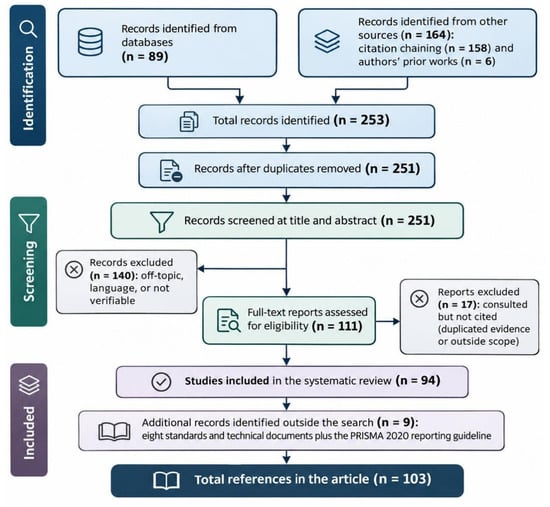
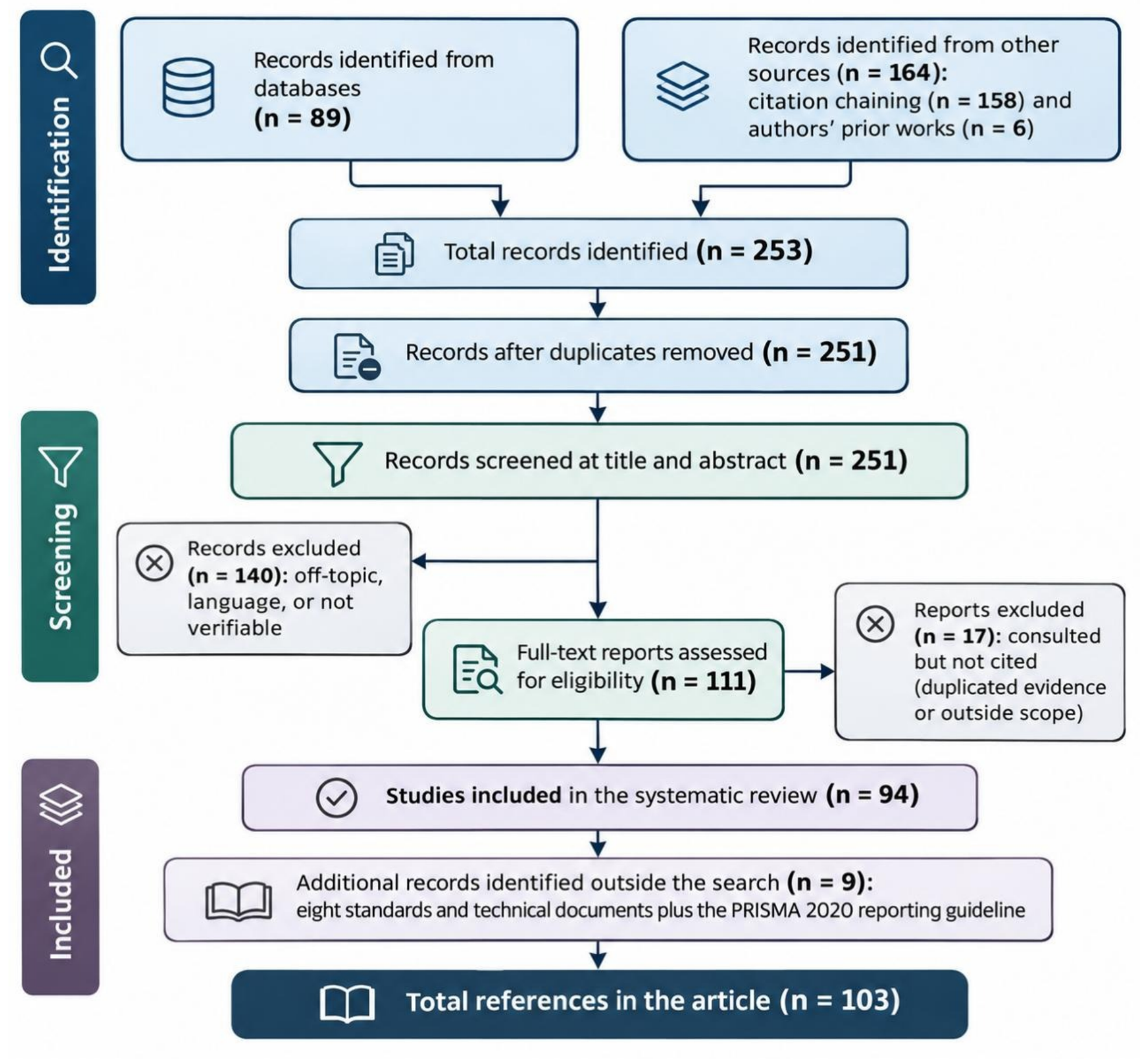
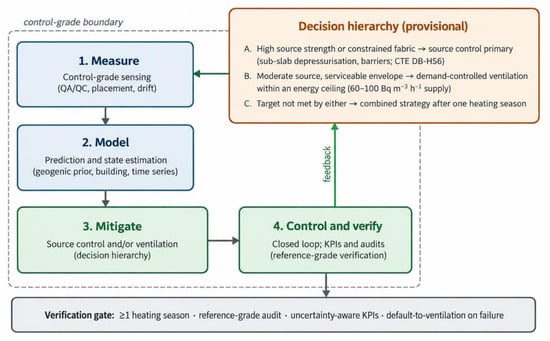
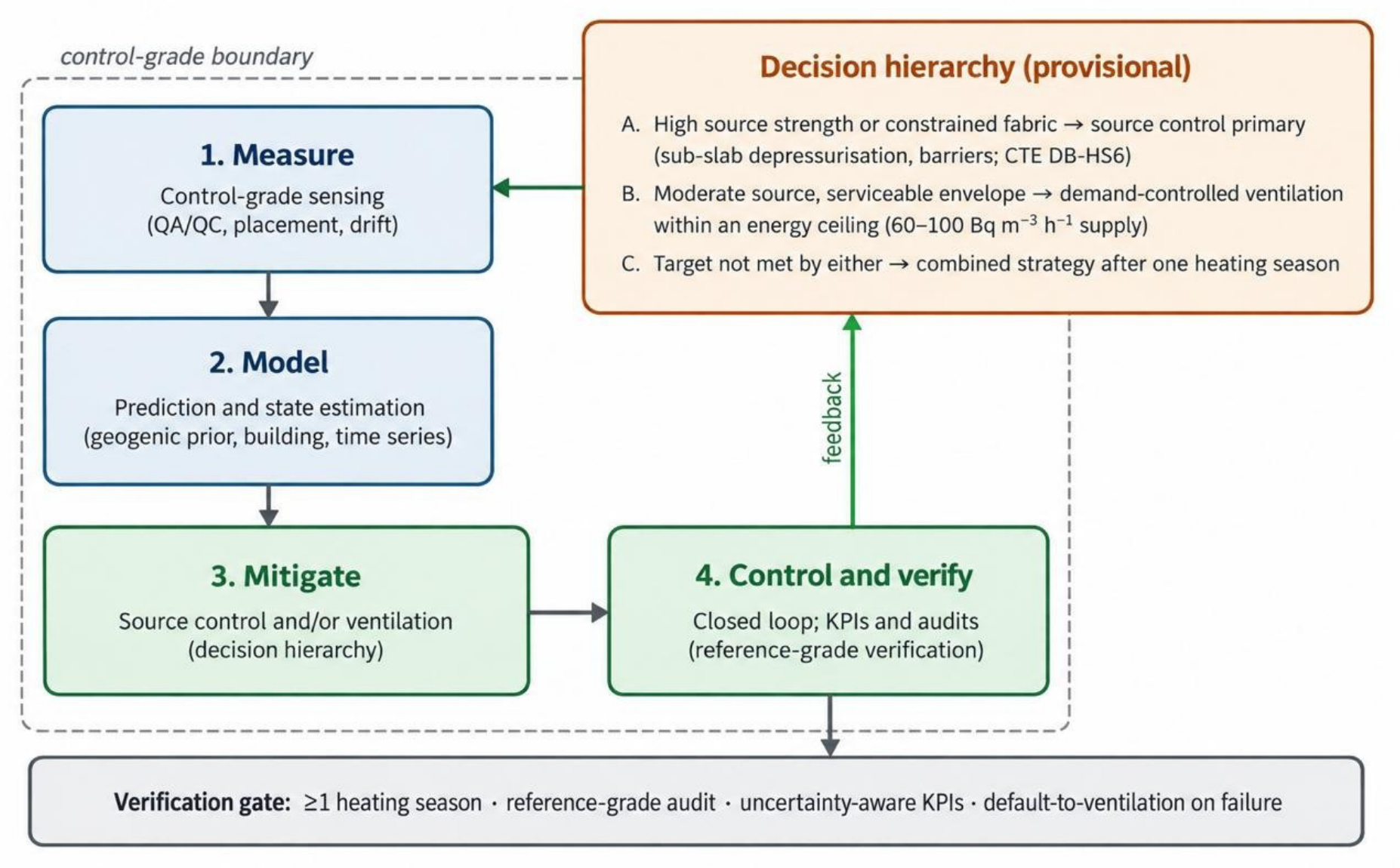

Disclaimer/Publisher’s Note: The statements, opinions and data contained in all publications are solely those of the individual author(s) and contributor(s) and not of MDPI and/or the editor(s). MDPI and/or the editor(s) disclaim responsibility for any injury to people or property resulting from any ideas, methods, instructions or products referred to in the content. |
© 2026 by the authors. Licensee MDPI, Basel, Switzerland. This article is an open access article distributed under the terms and conditions of the Creative Commons Attribution (CC BY) license.