


Abstract
Mixed reality (MR) presents potential to provide personalized learning through alignment of users’ activity with instructional assistance. Still, the nature of such adaptations and the educational value of personalization in this context have not been fully explored yet. This systematic review synthesizes 40 publication reports retrieved from Scopus (2016–2026) on personalized mixed reality in higher and professional education focusing on the aspects of educational context, technology configuration, means of adaptation, and learning outcomes. This review explores how individual performance, movements, gaze and dialogue affect the adjustment of feedback, coaching and practice. Five categories of personalized MR were revealed: coaching and rehearsing based on performance, feedback driven by sensors, eye-tracking-based attention management, guidance by an expert remotely connected through mixed reality and conversational or embodied artificial intelligence. Human coaching is prevalent among the evidence base, especially in teacher education, whereas recent research applies increasingly complex technology-assisted interventions in medicine, technology and other branches of higher education. The clearest reported benefits concern proximal teaching behaviors and procedural performance. Evidence for sustained unaided learning and authentic transfer remains limited. Bundled interventions require the careful attribution of outcomes to their individual components. The process of personalization was done mostly while performing current tasks or during sessions. There is no evidence available on persistent computational learner models across multiple sessions. This review summarizes current practices of personalized support in mixed reality and identifies a further research agenda of adaptive-learning-pathway design and evaluation.
1. Introduction
Mixed reality (MR) is used in education for interventions that connect physical learner activity with digitally represented tasks, agents or guidance. Two established uses of the term are relevant to this review: HMD-based MR applications can relate digital information to the learner’s body, tools or surrounding workspace, whereas screen-based mixed-reality simulations place learners in live interaction with virtual interlocutors, often for professional rehearsal. These configurations provide different forms of physical–digital interaction and are distinguished throughout the synthesis. Their common relevance to the present review is the use of learner-specific evidence to alter feedback, guidance or a subsequent practice opportunity.
The educational value of such a system does not arise automatically from the display technology. For this review, immersion alone was insufficient for classification as personalized learning. It required evidence that information about an individual learner altered a subsequent instructional response. This distinction becomes increasingly important as contemporary MR devices incorporate gaze tracking, articulated hand tracking, spatial mapping, computer vision, voice input and generative artificial intelligence.
This instructional emphasis is consistent with the review of VR learning theories by Marougkas et al. [1], which discusses constructivist, experiential and cognitive approaches to immersive educational design. Such literature gives the pedagogical justification for linking immersion-based activities with educational goals and feedback. In the current MR review, the new question concerns the impact of the learner-specific evidence on the instructional response.
Historically, personalized learning has entailed the adaptation of the content, feedback, difficulty, speed or learning path to the needs of the learner. Research on feedback has shown that information is most useful when it is tied to a goal, interpreted in the context of current performance and translated to the next step [2,3]. Accordingly, the definition of a personalized MR system goes beyond its interaction capacity and implies a relationship between learner evidence and the instructional response. In this review, learner evidence denotes the information about an individual learner that is captured before, during or after a learning activity and on which an instructional decision is based. Examples include observed task performance and errors, body or tool movement, gaze or visual attention, spoken or written dialogue, activity traces, the situational context of the task, assessment responses and a previously established level of expertise. Fixed group characteristics, such as the study program of a cohort, are not learner evidence because they do not distinguish one learner’s current state from another’s.
An earlier systematic review of Immersive Virtual Reality in education examined the question of personalization in terms of its presence in each individual feature and found that at least one personalization mechanism was present in 50 of 69 included studies. Categories such as real-time object manipulation, intuitive navigation, personalized feedback, guidance and gamification dominated, while the adaptation of content was still rather limited [4]. The review provided a valuable lesson in examining applications not just from the perspective of their effectiveness but also from that of their specific educational mechanisms. This study follows the same logic in the domain of MR but applies a more rigid analytical boundary. Interaction or learner choice by themselves cannot be considered personalization if there is no modification of the instructional response based on learner-specific evidence.
This stricter boundary is particularly useful for MR because the technology can support very different types of adaptation. In teacher education, a human tutor may observe performance in an avatar-based mixed-reality simulation and select an individualized feedback target. In a HoloLens application, gaze or pose data may trigger a warning or redirect attention. In a procedural simulator, tool depth can change haptic cues. In embodied-AI systems, dialogue history and contextual information can shape the behavior of a virtual agent. These systems differ considerably in apparatus and implementation, but they share a common educational mechanism: the instructional response depends on evidence generated by the learner.
The aim of this review is to examine empirical assessments of learner-contingent personalization in MR for higher and professional education published in 2016–2026 and retrieved by 15 August 2026. Screen-based avatar MR simulation and HMD-based MR are considered two separate display modes, with AI function evaluated independently prior to synthesis of the overall pattern. In addition to providing details about educational application fields, sample demographics, and devices and methodologies used, the comparison includes the personalization approach, the nature of both human and machine support, as well as the extent of learner data persistence beyond task performance. Specific emphasis is placed on patterns found within the selected literature reports.
Although previous reviews have examined immersive VR, MR and AI-supported immersive learning, none of them, to the best of our knowledge, has used learner-contingent personalization in MR as its unit of analysis. Existing syntheses either treat personalization as one design feature among many, are confined to a single domain, such as teacher education, or focus on the technology rather than on whether learner-specific evidence changes instruction (Section 2.3). The present review therefore makes three contributions: First, it applies an operational, closed-loop definition of personalization consistently across screening, extraction and synthesis. Second, it jointly maps learner evidence, interpretation locus (human, automated or comparative human–AI), adapted instructional element, timing and persistence while coding display configuration separately from pedagogical mechanism. Third, it appraises the evidence in a comparator-, timing- and dependence-aware manner, distinguishing component from package effects, immediate from retained or transferred learning, and publication volume from independent replication.
The remainder of this paper is organized as follows: Section 2 presents the conceptual background on MR as an educational technology and on personalized and adaptive learning and analyzes existing reviews to establish the research gap. Section 3 describes the review methodology, including the research questions, the search strategy and justification for the database and time window, the eligibility criteria, the screening, the data extraction and coding procedures, the methodological appraisal, the report-linkage audit and the assessment of meta-analysis feasibility. Section 4 presents the results, organized according to the research questions (RQ1–RQ5). Section 5 discusses the principal findings, their relationship to adjacent research, methodological requirements for future studies, human factors and governance issues, and the limitations of the review. Section 6 presents the conclusions. Appendix A reports the report-level data that support the synthesis.
2. Conceptual Background
2.1. Mixed Reality as an Educational Technology
The term mixed reality has been used in different ways since the reality–virtuality continuum proposed by Milgram and Kishino [5]. In contemporary educational research, the term commonly refers to systems in which virtual information is combined with the learner’s physical context and can be interacted with in real time. Optical see-through devices such as the Microsoft HoloLens and Magic Leap and video-passthrough headsets such as the Meta Quest series are prominent examples. Their educational affordances include spatial registration, direct manipulation, situated guidance, collaborative visualization and the possibility of keeping real tools, peers, or instructors visible during a learning activity.
MR does not have a single definition shared by all research communities, as Speicher et al. [6] demonstrate. The present review retains two established educational usages rather than treating them as technically interchangeable. In screen-based avatar mixed-reality simulation, a physically present learner interacts with virtual interlocutors through an external display, and the simulation may be mediated by a human interactor. This usage is established in teacher education research [7,8]. In HMD-based MR, the implemented application relates digital material to physical learner activity or context through a head-mounted interface. The shared analytical object is learner-contingent instructional support, while the display and interaction configuration remain separate contextual characteristics.
For this review, MR is a publication-defined scope encompassing these two educational usages, not a claim that every screen simulation satisfies a spatial-display definition or that all immersive technologies are included. Screen/avatar simulation and HMD-based MR are coded as separate display strata. The HMD category records the configuration used in the evaluated intervention and does not identify a headset model with a unique MR architecture. Reports presented only as AR, VR or inseparable generic XR are outside this scope and are not relabeled. Within the eligible scope, learner evidence must change an instructional response. Display configuration, pedagogical mechanism, interpretation locus and AI functionality are therefore distinct dimensions.
2.2. Personalized and Adaptive Learning
Personalized learning is frequently used as an umbrella term for instructional approaches that respond to differences among learners. However, several distinct concepts are often combined under this label. Customization permits a learner or instructor to select settings. Learner control provides choices regarding pace, order, viewpoint, or interaction. Differentiation changes resources or support for predefined groups. Adaptation uses evidence generated during learning to modify a subsequent response. A persistent learner model goes further by accumulating evidence across time and using that representation to guide later instructional decisions.
A related implementation of personalized learning in traditional e-learning has been discussed by Troussas and Krouska [9]. The authors have proposed a Java tutoring system which utilizes the logs of learner actions along with metadata (such as task difficulty and cognitive level) to recommend new learning activities and explain recommendations. This provides an example of the connection between the representation of learner actions and personalized learning.
This distinction is especially important in immersive technology. The earlier VR review by Marougkas et al. [4] identified real-time manipulation and intuitive navigation as frequently reported personalization techniques, reflecting the value of user control in virtual environments. The present review uses a narrower definition because contemporary MR can capture information that is more directly connected with individual learning. A gaze trace can show that a learner repeatedly misses a relevant object. Instrument pose can identify a procedural error. A virtual classroom can expose a weakness in questioning practice. Dialogue can reveal a misconception. These data can be interpreted by a coach, a rule-based system, a machine learning model, or an AI agent and can then modify feedback, guidance, task conditions, or the next rehearsal opportunity.
Thus, an intervention was considered to be learner-contingent if learner-specific data was collected, analyzed, and used to change a future instructional action. Instructional action can be immediate or delayed, human or computer-generated, and simple or complex. All that is important is contingency. Feedback presented to all learners, options for choosing level of difficulty, unrestricted exploration, or analysis of learners’ performance after intervention cannot satisfy these criteria unless there is modification of the instruction based on learner-specific data. Human-mediated personalization refers to the situation where selection of learner-specific response happens through coaching or tutoring by humans. Computer adaptation implies that the selection or generation of the response happens by computer. Both can satisfy these contingency criteria of the review, but they are not equivalent forms of automation.
2.3. Existing Reviews and the Research Gap
Reviews relevant to the present study can be grouped into four strands: (i) reviews of immersive VR and MR in higher education; (ii) reviews and meta-analyses of the training effectiveness of extended reality; (iii) reviews of classroom and mixed-reality simulation in teacher education; and (iv) reviews of personalization, intelligent tutoring and AI in immersive environments. Table A7 summarizes the focus of these reviews and the complementary focus of the present review.
In the first strand, Radianti et al. [10] mapped immersive VR applications for higher education and reported that learning theories were rarely used to guide application design and that evaluations focused more on usability than on learning outcomes. Hamilton et al. [11] reviewed experimental studies of head-mounted immersive VR and concluded that the methods used to evaluate learning outcomes were often inadequate. For MR specifically, Banjar et al. [12] identified only 12 experimental studies on the effectiveness of MR in higher education between 2017 and 2021, most of which concerned three-dimensional manipulation and visualization rather than procedural learning. Liu et al. [13] reviewed head-mounted MR learning systems in higher education and reported a rapid growth of applications in medicine, engineering and spatial learning, together with small samples, heterogeneous outcomes and limited theoretical grounding; they also observed that personalized-learning support remains underutilized. These reviews describe the technological landscape and recurring methodological weaknesses, but they treat personalization, at most, as one design feature among many.
In the second strand, the meta-analysis by Kaplan et al. [14] found that training delivered through VR, AR and MR produced outcomes comparable to, rather than different from, those of conventional training. The question is therefore no longer only whether MR can be used for training but also which instructional mechanisms make MR-based training effective and for whom. Neither this meta-analysis nor the reviews of the first strand isolate learner-contingent adaptation as the mechanism of interest.
In the third strand, reviews of classroom and mixed-reality simulation in teacher education [7,8,15,16] consistently identify rehearsal, feedback and coaching as central to the value of simulation. Theelen et al. [15] reported that feedback from teacher educators was among the most frequently cited educational affordances of classroom simulations, Ersozlu et al. [16] showed that TeachLivE research has relied mainly on qualitative and single-subject designs, and Ade-Ojo et al. [7] and Qualls et al. [8] synthesized the use of mixed-reality simulation in preservice teacher preparation, highlighting rehearsal, coaching, confidence and repeated practice in complex classroom interactions. However, these reviews are restricted to teacher education and do not compare human coaching with sensor-based or AI-generated adaptation in other professional domains.
In the fourth strand, reviews of personalization and intelligence in immersive learning approach the problem from the technology side. Marougkas et al. [4] found at least one personalization mechanism in 50 of 69 immersive VR studies but counted interaction features such as object manipulation and navigation as personalization. Papakostas et al. [17] identified the lack of personalization as a research gap in AR applications for spatial-ability training. Lampropoulos [18] reviewed the integration of intelligent tutoring systems into AR and VR environments and reported adaptive content, feedback and guidance, while Liu et al. [19] reviewed contextual AI in extended reality for personalized learning and concluded that the educational evidence remains less mature than the technology. These reviews do not restrict their analysis to MR, do not require evidence that learner-specific data altered an instructional response, and do not systematically distinguish human-mediated from automated interpretation.
Taken together, the existing reviews leave four gaps that justify the present review. First, no review has used learner-contingent adaptation, rather than the presence of interactive or adaptive features, as the eligibility criterion for MR education. Second, human-mediated personalization (coaching, tutoring and telementoring) and automated or AI-based personalization have been reviewed in separate literatures, so their evidence bases have not been compared within a common framework. Third, the depth of personalization, that is, whether adaptation is episodic, in situ or supported by a persistent learner model, has not been examined. Fourth, previous syntheses have rarely examined whether reported benefits can be attributed to the adaptive component rather than to the MR medium, additional practice or human guidance, or whether several publications report the same samples. The present review addresses these gaps in three ways. First, it links learner evidence, interpretation, instructional response, timing and persistence within one analytical framework. Second, it compares human-mediated and automated support, including an explicit human–AI feedback comparison. In doing so, it keeps display configuration separate from pedagogical mechanism. Third, it applies comparator-based attribution and a report-linkage audit. Attribution distinguishes benefits of the whole instructional package from evidence about the personalized component. The linkage audit distinguishes the number of publications from independent replication. The reviews discussed in this section provide conceptual context rather than additional identification sources, and the resulting frequencies characterize the Scopus-retrieved corpus within the stated eligibility boundaries.
3. Materials and Methods
This review followed the general planning, conducting and reporting stages recommended for systematic literature reviews by Kitchenham and Charters [20]. PRISMA 2020 was used to structure reporting of identification, screening, eligibility and inclusion [21], and PRISMA-S [22] informed reporting of the Scopus search strategy. Because interventions, outcomes and designs were heterogeneous, the synthesis was structured narratively and by effect direction rather than treated as a single pooled effect [23]. This study is a systematic review of learner-contingent personalization in MR for higher and professional education.
Review Registration: This systematic review was not registered.
3.1. Review Objectives and Research Questions
This review aims to determine how personalization has actually been implemented and evaluated in MR education. An application was not classified as personalized merely because its authors used terms such as adaptive or intelligent, or because learners could interact with it. Instead, eligibility and coding focused on whether learner-specific evidence altered a subsequent instructional response. This operational definition was used consistently across screening, extraction and synthesis.
This review compares learner-contingent support across the screen/avatar and HMD-based MR strata. Mechanism counts describe the distribution of mechanisms across the included reports, while educational findings are interpreted in the context of the reports’ display configurations, learner groups, tasks, and comparators. They are not combined into an effect estimate for a single homogeneous MR technology.
The following research questions guided this review:
RQ1. Which learner-contingent personalization mechanisms have been implemented in MR for higher, preservice professional and professional education?
RQ2. What learner evidence is used to drive personalization, who or what interprets that evidence and when is the personalized response delivered?
RQ3. Which educational domains, learner groups, MR display configurations and devices are represented in the included studies?
RQ4. What advantages, learning outcomes, methodological limitations and human-factor concerns are reported for the different personalization approaches?
RQ5. To what extent do current MR systems maintain learner models or adapt learning trajectories beyond immediate feedback and session-local support?
3.2. Search Strategy
The literature search was conducted in Scopus on 15 August 2026 and covered publication years 2016–2026. The choice of database and time window is justified below. The query was applied to titles, abstracts and keywords without subject-area restrictions. It combined MR terminology and relevant device names with broad education and training terms. Personalization, adaptation and AI terms were not mandatory search conditions because eligible learner-contingent support may be described as coaching, feedback, guidance or scaffolding. These decisions address disciplinary differences in terminology while retaining a reproducible search expression. Eligibility was then determined from the intervention, learner population and evidence-to-response relationship rather than from the presence of a personalization label.
Scopus was selected as the single bibliographic source for four reasons. First, it is the largest curated abstract and citation database of research literature and indexes research journals, conference proceedings and scholarly books [24]; this breadth is needed because MR education research is dispersed across the computing, engineering, health profession and education venues. Second, comparative coverage studies show that the journal coverage of Web of Science is largely contained within Scopus: about 99% of the journals indexed in Web of Science are also indexed in Scopus [25], and Scopus indexes a larger number of unique titles across fields [26,27]. Third, Scopus indexes conference proceedings together with journals [24], including the ACM and IEEE proceedings in which several included reports appeared (e.g., [28,29]), so that full conference papers from computing venues, an important publication channel for HMD-based MR and AI-agent studies, can be retrieved together with education and health journals through one reproducible query. Fourth, the use of Scopus as the sole or main source is established in comparable reviews of immersive and educational technology, including the systematic review of personalization in immersive VR by Marougkas et al. [4], the review of AR for spatial-ability training by Papakostas et al. [17], the overview of twenty-five years of AR research in education by Avila-Garzon et al. [30] and the combined bibliometric and systematic review of twenty-two years of AR and VR research by Angra et al. [31]. Using a single database also allowed the complete query and filters to be reported as one executable expression (Table 1), together with the search date and the number of retrieved records. The trade-off is that records indexed only in Web of Science, ERIC, IEEE Xplore or the ACM Digital Library, for example, practitioner-oriented education journals or reports not indexed in Scopus, may have been missed; this limitation is discussed in Section 5.6.
Table 1.
The Scopus search strategy used for this review.
The 2016–2026 window was defined a priori for three reasons. First, 2016 marks the appearance of the Microsoft HoloLens [32], the first widely available self-contained MR headset; this device generation and its successors (and comparable passthrough headsets) introduced the integrated head, hand and spatial tracking, and, later, eye tracking on which most HMD-based learner-contingent adaptations in the corpus depend, and research applications of this device class have accumulated from that release onward [32]. Second, a window of approximately one decade is consistent with previous systematic reviews of immersive learning [1,4,17] and allows the present findings to be compared directly with the VR personalization review [4]. Third, the screen-based avatar MR simulation literature published before 2016, including early TeachLivE research, has already been synthesized in reviews of simulation in teacher education [7,8,15,16]; the present review therefore focuses on the subsequent period, in which coaching-based simulation research coexists with sensor-rich HMD and AI-supported systems. Studies published before 2016 are not considered unimportant: they underpin the coaching paradigm examined here, and their exclusion is acknowledged as a scope limitation in Section 5.6.
Because the search period included the year in which the search was run, coverage of 2026 is necessarily partial. Only reports published and indexed in Scopus by 15 August 2026, including articles in press, could be retrieved; reports published later in 2026, or indexed with a delay, are not represented. The 2026 count is therefore treated as a partial-year snapshot (Section 4.1) and is not extrapolated, and an update of the search would be required to extend the corpus. To support replication, the expression in Table 1 can be entered directly into the Scopus Advanced Search interface: it contains all field, document-type, language and publication year restrictions, so no additional interface filters were applied. The number of records retrieved and all subsequent screening counts are reported in Figure 1.
Figure 1.
The PRISMA 2020 flow diagram for the Scopus search (search date: 15 August 2026). The search identified 485 records. After deduplication and screening, 40 publication reports were included.
The eligible learner population comprised higher-education learners, preservice professionals, postgraduate trainees and practicing professionals. K–12 pupils were outside the scope, but school settings were not intrinsically ineligible when practicing or preservice teachers were themselves the learners. For this reason, school- or child-related NOT terms were not used in the Scopus query. Population exclusions were applied during screening. Table 1 provides the complete Scopus search expression.
The Scopus search returned 485 records. The report-to-record reconciliation confirmed that the 40 included publication reports appeared in the retrieved Scopus result set. This was a reconciliation of the included reports with the search records and did not constitute an additional identification source.
3.3. Inclusion and Exclusion Criteria
Inclusion and exclusion criteria were established so that the final corpus would be concerned with learner-contingent personalization and not with the general issue of whether MR is helpful in educational settings. What distinguished a relevant system from a non-relevant one was the closed loop, whereby the learner-contingent evidence affected the feedback, guidance, dialogue, coaching, scenario behavior, practice goal or other form of instruction. Interactive systems delivering the same logic of instruction to all learners were excluded. Table 2 summarizes the inclusion and exclusion criteria.
Table 2.
Inclusion and exclusion criteria.
Technology eligibility and learner contingency were assessed separately. Eligible interventions were explicitly reported as MR or mixed-reality simulation and had a separable implemented configuration assignable to the screen/avatar or HMD-based MR stratum. The MR label or headset model alone did not establish personalization: learner-specific evidence had to change an instructional response. Reports presented only as AR, VR or inseparable generic XR were outside the stated scope. The implemented display configuration and the instructional decision process were recorded separately, enabling mechanism and outcome interpretation within each configuration.
3.4. Exclusion Process and Screening of Papers
The Scopus search yielded 485 records. Deduplication removed 47 duplicate records, leaving 438 unique records for title/abstract screening.
Title and abstract screening excluded 262 records that were clearly outside the predefined publication, population, educational-context, technology or learner contingency scope. A total of 176 reports were sought for retrieval. School-setting terminology was not itself a reason for exclusion when teachers or other professionals were the learners.
One of those 176 reports was unretrievable, leaving 175 reports for eligibility review. The five eligibility criteria included: (1) an educational or training intervention of an empirical nature, (2) an eligible higher-education, preservice professional, postgraduate or professional learner population, (3) a separable and concrete MR intervention, (4) participant-based assessment, and (5) a concrete learner-contingent adaptation loop wherein specific learner evidence altered an instructional response.
Review of full texts rejected 135 of the 175 retrieved articles because of one of the following five reasons: ineligible publication or non-empirical (n = 46), no closed learner-contingent adaptation loop (n = 35), MR not separable from AR/VR/generic XR or not educationally focused (n = 26), no eligible learner evaluation (n = 20), and an ineligible learner population or context (n = 8). Forty publication reports met the eligibility criteria and were included in the qualitative synthesis. Figure 1 shows the complete PRISMA 2020 flow for the Scopus search.
During full-text screening, that is, when the complete article rather than only its title and abstract was read, each report was checked against the five criteria in the fixed order listed above. An excluded report was assigned only the first criterion it failed so that each exclusion was counted under one primary reason and no report was counted twice in Figure 1.
Three reviewers, Andreas Marougkas (A.M.), Christos Troussas (C.T.) and Akrivi Krouska (A.K.), independently screened titles and abstracts, assessed full-text eligibility, extracted data and evaluated the included reports against the predefined criteria. Their decisions were compared, and disagreements were discussed with reference to the criteria and the source report. Unresolved cases were adjudicated by Cleo Sgouropoulou (C.S.). Eligibility decisions and full-text exclusion reasons were recorded in the structured review matrix, with one primary exclusion reason assigned to each excluded report.
3.5. Data Extraction and Coding
For each included publication report, the following information was extracted: publication year, study setting, educational level, participant group, domain, sample size, MR platform or device, display configuration, study design, interpretation locus, timing of adaptation, primary personalization mechanism, learner evidence, adapted instructional element, main finding and methodological descriptors. AI functionality was recorded separately from the display configuration. Unique report identifiers (P01–P40) were assigned to the included publication reports and are used consistently throughout Appendix A. The prefix P (publication report) is used for these identifiers to avoid confusion with the research questions (RQ1–RQ5). The publication report remains the descriptive unit because publication-level reporting does not always permit definitive reconstruction of sample or program overlap across separate papers. Where shared samples or closely related programs are explicitly documented, this dependence is considered when interpreting the evidence. Otherwise, independence is not assumed.
Comparison of the implementation characteristics across reports was performed at the descriptive level in order to reveal similar and dissimilar approaches to personalization. Coding allowed for distinguishing whether human, automated and/or hybrid support was used, the instructional components that were modified, the timing of the support as well as the retention of the learner information. Educational, behavioral, performance and experiential outcomes were summarized separately from implementation characteristics. Such an approach allows for making a comparative analysis of various interventions without the assumption that a certain implementation of the technology ensures educational success. Display configuration was determined according to the apparatus listed in Appendix A Table A1. Three reports focusing on embodied-AI functionality (P25, P32 and P40) use head-mounted MR and belong to this display configuration. AI-agent functionality can be observed in the coding of the mechanism of personalization. Therefore, the six conversational/AI-guidance reports cannot be considered a separate hardware configuration.
The primary personalization mechanism was classified independently by at least two members of the three-reviewer team identified in Section 3.4. Coding was based on the learner evidence and the instructional response central to the evaluated intervention. Display configuration, interpretation locus and adaptation timing were coded separately. The independent decisions were compared against the category definitions and source descriptions, and disagreements were resolved through the discussion and adjudication procedure described in Section 3.4. The final matrix assigns one primary mechanism to each report, preventing duplicate counting in the five-category distribution. Agreement was not summarized with a single statistical coefficient because coding was conducted as independent classification followed by criterion-referenced consensus rather than as a fixed double-coding exercise. To make the reliability of the classification verifiable, the final code for every report is published with its supporting learner evidence and adapted instructional element (Table A3), together with the corresponding display, locus, timing and design codes (Table A1, Table A2 and Table A4), so that each decision can be checked against the source report.
Performance-contingent coaching involves changing the feedback or rehearsal target based on the performance of the individual learner. Sensor-contingent feedback involves changing the corrective feedback based on the learner’s movement or pose or the state of the tool. Gaze-aware feedback involves changing highlighted or visited material based on the learner’s attention evidence. Telementoring involves an expert response to the task performed remotely. Conversational or embodied AI involves using the learner’s dialogue and task evidence to change the generated guidance.
Automated interpretation refers to the computational selection or generation of an instructional response and includes both conventional rules and AI-supported processing. A sensor is an evidence source, not an AI method: a threshold warning or depth-to-haptic mapping can be automated without demonstrating a learned or generative model. Conversely, AI may contribute perception or state estimation while the instructional response is selected by a conventional rule. The six-report conversational-/embodied-AI category identifies the primary pedagogical mechanism, not the total number of interventions containing AI. AI-related claims are tied to the component described in the source, such as learned cross-modal representations, language model generation or specified knowledge-based inference, rather than inferred from sensing, automation, embodiment or an intelligent-system label. P33 is identified as an explicit human–AI feedback comparison; it does not establish that a combined human–AI controller selected instructional responses.
3.6. Methodological Appraisal and Synthesis
Six review-specific domains structure the methodological interpretation: the study design and the inference it supports, the comparator content, the reported learner sample and analysis unit, retention and transfer assessment, specification of the adaptation mechanism and attribution to the personalized component. The domains are reported as descriptive profiles rather than combined into an overall concern grade or numerical quality score. Design is identified from the reported study method, while sample-size categories describe the available learner denominator and do not establish statistical precision. Mechanism reporting is clear when the learner signal, interpretation and changed response can be reconstructed and partial when an element remains underspecified. Attribution concerns the contrast actually evaluated: a component comparison supports a more direct inference about adaptive support, a bundled comparison permits only partial attribution, and uncontrolled change does not isolate the component. Immediate unaided assessment is distinguished from delayed retention and authentic transfer. Table A5 reports the domain-level profiles. The domains are not a validated risk-of-bias instrument. Established appraisal tools such as the Mixed Methods Appraisal Tool (MMAT) [33] and the Medical Education Research Study Quality Instrument (MERSQI) [34] were considered; they provide design-specific quality criteria, but they do not assess the comparator content, the reconstructability of the adaptation mechanism or attribution to the personalized component, which are central to the questions of this review. The corpus additionally includes single-case and design science evaluations. The domains were derived from the inferential issues emphasized in the SWiM reporting guideline [23], namely, design, comparator, outcome timing and attribution of effects, and from the closed-loop definition of this review, which requires the adaptation mechanism to be reconstructable. The domains were applied throughout the independent assessment and consensus procedure described in Section 3.4, and every domain-level judgement is reported in Table A5 so that readers can re-examine it.
Quantitative frequencies describe publication reports and are not pooled educational-effect estimates. Findings are organized by personalization mechanism, display configuration, outcome construct, comparator and assessment timing. Knowledge, procedural performance, teaching behavior, attention, self-efficacy, usability and feasibility support different inferences and are interpreted separately. Table A4 provides report-level design, timing, comparator and outcome summaries, while Table A5 describes methodological and retention/transfer characteristics.
The synthesis distinguishes comparisons that inform the contribution of personalized support, comparisons of bundled instructional packages, and uncontrolled or feasibility evaluations. Attribution follows the actual comparator and the balance of practice exposure, instructional content and human contact. Coaching-versus-no-coaching comparisons are not automatically treated as tests of individualized tailoring against equal-dose generic feedback. Within-group improvement is not interpreted as a between-group benefit.
Immediate supported performance, immediate unaided assessment, delayed retention and authentic transfer are distinguished. Mixed and non-significant findings are retained alongside favorable findings, and outcome directions are not counted as votes for effectiveness. Selected study-specific numerical findings are presented in Section 4.5. Effect sizes, confidence intervals and sampling variances are not reconstructed when the source information is insufficient.
3.7. Study/Report-Linkage Audit
Non-independence risk was assessed via companion paper identification, overlaps among authors and institutions, recruitment context, sample size, timing of study, simulated scenario, intervention protocol, and outcome definition. Links were identified as companion papers, probable sample overlaps, same research projects with apparent separate samples, or absent. P25 and P32 refer to the same group of 26 participants enrolled in the embodied-GenAI MR study on companion analysis. P23 and P24 come from the same teacher education coaching project and use the same text-based-coaching-versus-self-reflection paradigm. Published descriptions (n = 99 for the text-based replication in P23 and n = 93 in P24) suggest probable large sample overlaps. In contrast, P08 refers to an earlier cohort, and P15/P31 evaluate the same gaze-aware research project but with different samples (n = 8 and n = 22). Appendix A Table A6 provides details on these links and the supporting evidence.
The linkage audit shows why publication report and independent study are not interchangeable. P23 contains five randomized trials, including two teaching-task analyses conducted with the same participant sample, while P21 reports two separate intervention studies in one article. For this reason, the 40 included publication reports are retained as the descriptive unit of this review, while confirmed or probable report dependencies are explicitly flagged and considered when interpreting repeated findings.
The 40 publication reports are not treated as 40 independent samples. Companion or overlapping reports contribute complementary information rather than separate confirmations of an effect. Participant totals are not summed across potentially overlapping reports. Publication frequencies describe the report corpus, whereas replication and possible quantitative synthesis require consideration of independent samples and individual study contrasts.
3.8. Assessment of Meta-Analysis Feasibility
Quantitative synthesis requires sufficiently comparable independent contrasts, compatible outcome constructs and assessment times, and effect estimates with recoverable sampling variance. Two or more suitable independent estimates may be combined in principle. In this corpus, controlled comparisons differ in targeted skills, practice structures, comparator contents and outcome definitions. Report dependence and multiple trials within a publication also require sample-level handling. A common personalization label or the presence of controlled designs is therefore insufficient to justify pooling. This review retains study-specific numerical findings and structured syntheses without presenting a pooled educational-effect estimate across these heterogeneous comparisons.
The most homogeneous candidate subset was the group of controlled studies of performance-contingent coaching in screen/avatar simulation (e.g., P06, P07, P08, P14, P18, P23 and P24). Even within this subset, comparators ranged from massed practice without feedback (P07) or live practice (P14) to self-reflection (P23, P24), and outcomes ranged from observed teaching behaviors to self-reported responses. In addition, P23 contains five trials, two of which analyze the same participant sample, and P23 and P24 probably share participants (Section 3.7). Pooling these contrasts would therefore combine different causal questions and count some learners more than once. Among the HMD-based reports, no two independent studies shared the same mechanism, comparator and outcome construct. A meta-analysis was therefore not performed; it will become feasible when at least two independent studies report comparable contrasts with recoverable sampling variances.
4. Results
4.1. Publication Trends and Geographic Distribution
The 40 included publication reports were published in 2016–2026 and retrieved in the search ending on 15 August 2026. Sixteen reports were published in 2016–2022 and 24 in 2023–2026, including 10 reports in 2025. The 2026 count represents a partial-year retrieval snapshot and is not treated as a complete annual total. Publication trends are therefore described within the search period without extrapolating the 2026 count to the full calendar year.
Geographical distribution was highly clustered. The United States accounted for 26 reports (65.0%), followed by Germany, Finland, and China with two reports each; each remaining jurisdiction contributed one report. This clustering may in part result from the prolonged use of mixed-reality simulation with avatars in American teacher training programs. Yet, this narrows down the generalizability of the results to other higher-education systems with different curriculum contents, technology bases, coaching cultures, languages, and data policy requirements. Thus, the geographical distribution across twelve jurisdictions should not be interpreted as evidence of a balanced multicultural sample. Table 3 presents the geographic distribution.
Table 3.
Geographic distribution of included reports (n = 40).
The geographic concentration is also reflected in the mechanism composition. Performance-contingent coaching accounts for 23 of 26 US reports (88.5%) and two of 14 reports from other jurisdictions (14.3%). The prominence of coaching in the overall corpus therefore partly reflects the concentration of teacher education research programs. These frequencies describe the distribution of evaluated approaches; they do not estimate national differences in effectiveness. Transferability is considered in relation to educational domain, language, curriculum, instructor expertise and infrastructure.
4.2. Sample Demographics and Educational Domains
Undergraduate and initial professional preparation formed the largest learner group, representing 19 reports (47.5%). Seven reports involved postgraduate or advanced professional training, four involved practicing professionals and two combined career stages. Eight reports described an adult or university context without enough information to classify the educational level more precisely. This lack of participant detail is not trivial in a personalization review because expertise is itself a plausible adaptation variable. A feedback rule that is appropriate for a novice may be redundant or distracting for an advanced learner. Table 4 summarizes the educational levels.
Table 4.
Educational levels of included reports.
The corpus consisted mainly of teacher/professional education. Twenty-five reports (62.5%) focused on teacher preparation, special education preparation, consultation or professional learning. Medical and surgical preparation included five reports, as well as STEM/technical preparation. General higher-education learning assistance and language/motor learning were topics of the rest of the studies. The evidence is not evenly distributed across higher-education disciplines. Personalization was studied mostly in areas where the learner’s performance could be observed and practiced. Table 5 presents the educational-domain distribution.
Table 5.
Main educational-domain families represented in this review.
Cross-tabulation of Table A1, Table A2 and Table A3 shows that the 25 reports in the teacher/professional-education family are the same 25 reports classified as screen/avatar simulation and performance-contingent coaching. Their interpretation category is human in 24 reports, with P33 comparing human and AI feedback. The other 15 reports use HMD-based MR and comprise six conversational-/embodied-AI, four sensor-contingent, three telementoring and two gaze-aware mechanisms. Twelve of these HMD reports use automated interpretation and three use human-expert guidance. Table A8 presents this descriptive relationship. Thus, the overall coaching frequency reflects the composition of the included educational literature and cannot establish an inherent preference for human-mediated personalization across MR education.
The 31 reports were able to provide single numeric denominators to represent their learner populations. However, the remaining nine reports had participant descriptions which were not comparable between studies due to their being multi-study, pilot, procedural, or otherwise non-comparable in nature. Out of the 31 reports which provided a single numeric denominator, the median sample size was 24 participants (IQR: 11–34) and 25 (80.6%) had 50 or fewer learners. This reflects a common challenge in immersive-learning research: highly technical interventions are often evaluated using sample sizes adequate for feasibility assessments or detecting medium-sized effects, but insufficient for investigating heterogeneity in treatment responses. When it comes to personalized learning, this poses a particularly limiting factor since the question concerns both whether an intervention works and for whom. Table 6 summarizes the sample-size distribution.
Table 6.
The distribution of reports with a single numeric learner denominator suitable for cross-study summary (n = 31).
4.3. Contemporary MR Systems and Apparatus
The corpus comprised 25 screen/avatar simulation reports and 15 HMD-based MR reports. These display strata coincide with different educational and mechanism profiles, as shown in Table A8: the former contains teacher/professional-education coaching reports, while the latter includes procedural, gaze-aware, remote-guidance and conversational-/embodied-AI interventions. The embodied-AI reports P25, P32 and P40 remain in the HMD stratum, and AI functionality is a computational characteristic rather than a third display configuration. Platform counts therefore describe the included applications and do not establish that a display architecture determines the instructional mechanism or its effectiveness.
The HMD literature involved the Microsoft HoloLens 2, Meta Quest passthrough configurations, Magic Leap 2, Apple Vision Pro, motion-sensing HTC Vive, and unspecified headsets. Table 7 provides the distribution of the hardware independent of the personalization approach. Devices and applications vary in terms of motion tracking, gaze detection, tool position and dialogue. Agent functionalities could leverage any of these input data, as well as the context of conversations or tasks.
Table 7.
MR platform families represented in included reports.
The capabilities of the hardware alone have not dictated the level of personalization. Only some of the systems included in the corpus have demonstrated the ability to transform sensory data into pedagogically meaningful evidence, and none have demonstrated a persistent learner representation supporting sustained learning across multiple sessions.This observation concerns the 40 included publication reports rather than all contemporary MR systems.
4.4. Personalization Techniques in Mixed-Reality Education (RQ1–RQ2)
The theme of personalization serves as the cornerstone of this literature review. The articles included in this review were categorized based on how the instructional process was altered for the learner as opposed to how the term “personalized” was utilized by authors. Five major types of this phenomenon have been identified. Though each of them varies in terms of technical sophistication, all of them meet the closed-loop standard. Table 8 summarizes these five mechanisms.
Table 8.
Primary personalization mechanisms identified in 40 included reports.
4.4.1. Performance-Contingent Coaching and Rehearsal
Performance-contingent coaching was the most common form of personalization, cited in 25 articles (62.5%). The majority of these papers were from teacher and special education. Following completion of a simulation teaching, consultation, or classroom management task, a coach, instructor, supervisor, or trained interactor evaluated performance and chose feedback, a target skill, or what to focus on in the next practice attempt. In other words, personalization involved an instructional choice and not a software feature.
Initial demonstrations of the potential of this approach to modifying the targeted professional skills through repeated practices included Vince Garland et al. [51], Pas et al. [52], Dawson and Lignugaris/Kraft [53], Driver et al. [54], and Krach and Hanline [55]. These five studies demonstrated some improvement in prompting, behavior management, collaboration, or consultation skills, and these investigations established feasibility, although several used very small samples and combined simulation, coaching, course instruction and repeated practice.
Experimental evidence for the role of performance-contingent feedback was more consistent and convincing. Sayeski et al. [56] showed superiority of distributed practice with feedback over massed practice without feedback. Cohen et al. [35] demonstrated large gains in targeted teaching behaviors after the application of brief directive coaching, whereas Walters et al. [38] conceptually replicated the effect of coaching on prompting-sequence implementation. Bondie et al. [39] demonstrated differential effects of differentiated coaching and personalized practice depending on participants’ experience. Two publications by Cohen et al. [36,37] demonstrated robustness and heterogeneity of the effect across tasks and coaching conditions.
This body of evidence shows that personalization in MR does not require an automated algorithm: human interpretation can create a highly learner-specific closed loop. At the same time, the approach has an attribution problem because MR exposure, coaching quality, additional instructional time and repeated deliberate practice [57] are often bundled. Improvement may therefore reflect excellent coaching rather than a unique effect of MR.
4.4.2. Sensor-Contingent Motor and Procedural Feedback
Other studies employed MR sensors for detecting learner movement or instrument status and responding to learners in action. This mechanism is more directly sensor-driven than post-task coaching in that the feedback information is converted from the sensed information in real time as the learner performs the task. In Shao et al. [43], motion-based information was used to give learner-specific feedback during American Sign Language teaching. In He et al. [45], deviation of poses in pedicle screw placement was used to trigger warnings and adaptive guidance; the experiment involved a randomized trial including unaided evaluation after learning. In Guruge et al. [44], needling depth was associated with haptic feedback in an acupuncture simulation task for self-correction by the learner in repetitive training, though without a control group in the pilot study.
Wang et al. [46] is particularly relevant, since the system not only detected the mistake but modified the information density and scaffolding based on the learner’s expertise. In this sense, personalization becomes more about instructional adaptation than mere performance feedback. According to the authors, this led to better skills development and knowledge retention; however, the replicability of the research suffered from insufficient descriptions of the adaptive algorithm and the whole intervention procedure.
P34 also illustrates why AI implementation and pedagogical mechanism are separate. Wang et al. [46] describe cross-modal deep learning, while the adapted instructional element is expertise-contingent information density and scaffolding. The report therefore remains in the sensor-contingent mechanism category without implying that its computational implementation is exclusively rule-based. Likewise, sensing or corrective cueing alone is not used as evidence of AI.
These works introduced adaptation from movement, pose, or the state of the used tools, and this makes these works different from those working with data collected during quiz or interaction logging sessions, although the evaluations were limited both in time and scale. Real-time feedback could help learners to perform better when the feedback is there, but stronger studies should determine whether the skill persists after feedback is removed and the skill is transferred to authentic settings.
4.4.3. Gaze-Aware Attention Feedback
This personalization based on visual attention occurred in two studies stemming from the same research line. Liu et al. [29] showed that the gaze trace of an individual learner could be transformed into attention feedback, thereby confirming the possibility of utilizing visual attention as instructional evidence. More direct comparative evidence was found in the AF Mix study [50], where personalized feedback following exploration helped learners notice information they were unable to notice previously.
The significance of this approach for education stems from the distinction between general and learner-specific signals. In the former case, all learners are provided with the same signal indicating an important object. Gaze awareness allows us to find out what specific learner did not pay attention and to provide him or her with the appropriate signal. Nevertheless, gaze is not equal to knowledge. Looking at something does not prove that the learner understands the object, and lack of gaze does not prove ignorance. Thus, future systems should consider both gaze and task performance and the learner’s prior knowledge or explanation.
4.4.4. Live Remote-Expert Guidance and Telementoring
Three recent HMD studies implemented personalization through live remote-expert support. Chen et al. [47], Connolly et al. [48] and Mastropasqua et al. [49] allowed an expert to observe an unfolding procedure and provide individualized verbal guidance, annotation, or correction through the MR interface. This mechanism differs from avatar coaching because the support is delivered in situ during a real or simulated procedural task.
The results of the studies are more about feasibility, accessibility and efficiency rather than about the superiority of the method. Both types of tutoring improved cannulation skill, with no significant difference after the feedback according to Connolly et al. [48]. In the surgical task of damage control, HoloLens tutoring increased task scores and decreased completion time, but a number of clinical outcomes did not show any improvement according to Chen et al. [47]. Mastropasqua et al. [49] demonstrated the feasibility of vitreoretinal telementoring for various procedures, although the number of fellows in their study was only two.
The educational advantage of this method is that the expert judgment can be given right where and when it is needed. The disadvantage of the method is that MR, the expert’s knowledge, attention to the task, the communication bandwidth and supervision of the procedure cannot be separated into individual factors. Therefore, future studies have to report the time taken by an expert to give feedback, the quality of the communication and the exact information provided during the process, as well as compare MR telementoring with equally intensive non-MR tutoring.
4.4.5. Conversational- and Embodied-AI Guidance
Six publication reports, all published in 2025–2026, had conversational- or embodied-AI guidance as their primary personalization mechanism. Such AI is based on conversation, activity traces, computer vision, or contextual data that define the response of the agent. Nguyen et al. [40] created an embodied-AI agent in MR space to facilitate active and self-regulated learning. Dang et al. [58] described interaction traces of the same broader research program and determined distinctive patterns of AI-led and learner-led collaboration. Duan et al. [59] considered learner-initiated GenAI conversation in the MR learning space, while Ahmed et al. [41], Cheon et al. [28] and Song et al. [42] continued the development of this pattern into context-aware virtual agents and socially shared regulation, which is a concept known in computer-supported collaborative learning [60].
We distinguish general chatbot functionality and MR-based AI. The latter was coded only if the spatial context, learner’s actions, dialogue status, or any other MR-based information influenced the generated response. For instance, Ahmed et al. [41] illustrate such contextual personalization, while Song et al. [42] link embodied AI with group regulation support.
The evidence is still at an early stage. Most studies are design science demonstrations, small pilots, or short comparative evaluations. Positive perceptions and conversational fluency are encouraging, but they do not establish durable learning. Cognitive load, response latency, hallucinated or inconsistent guidance and accountability for incorrect advice remain important concerns. Nygren et al. [61] (P33) explicitly compare AI-generated feedback with expert feedback on simulated teaching. This is a comparison of feedback content and pedagogical judgment rather than evidence that a jointly operating human–AI controller improved learner outcomes.
4.4.6. What Learner Evidence Drives Personalization?
Performance or behavioral observation of the learner was the major type of evidence used in 28 (70.0%) papers. It includes observation of learner performance in avatar-based simulation and remote-expert observation during procedures. The main evidence used in six (15.0%) AI-guidance reports were dialogue, activity, or context. Gaze/visual attention was found in two papers, motion/pose deviation in two papers, tool state/needling depth in one paper and previous expertise in one paper. Table 9 presents the distribution of the learner evidence.
Table 9.
Primary learner evidence used to drive personalized response.
An important distinction should be made between current and future approaches to personalization in mixed reality (MR). Current systems still require evidence of an externally observable performance event. This means that a learner asks a bad question, misses a step, makes a wrong move or needs some guidance. But very rarely do current systems try to derive the more general learner state, such as misconception, probability of mastery, cognitive load, or affect.
4.4.7. Human and Automated Interpretation and Human–AI Comparison
Human interpretation predominated across the corpus as a whole: a total of 27 reports (67.5%) were based largely on the use of a coach, tutor, faculty member, or remote expert. Twelve reports (30.0%) were based largely on automated interpretation, while only one report (2.5%) made an explicit comparison between human and AI-based interpretation. Adaptation delivery also varied widely: a total of 26 reports (65.0%) delivered adaptations episodically, often following a performance attempt, 13 (32.5%) delivered adaptation in situ, and one utilized both approaches. Table 10 summarizes the interpretation loci and adaptation timing.
Table 10.
Primary interpretation loci and timing of adaptation.
Figure 2 presents the cross-tabulation of the display configuration, interpretation locus, and adaptation delivery. Screen-based avatar MR simulation was mostly performed through human interpretation, and it followed an episodic schedule. In the case of HMDs, both human and automated interpretation, as well as in situ and episodic delivery, were represented.
Figure 2.
Display configuration by interpretation category and adaptation timing across 40 publication reports. HMD-based MR and screen/avatar simulation are separate strata. Human–AI comparison denotes P33, which compares generated and expert feedback rather than demonstrating joint human–AI controller. Counts describe publication reports, not independent samples or comparative effectiveness.
4.4.8. What Is Actually Adapted?
The adapted feature contains more information than the label assigned to it in the application. Twenty-five articles adapted mainly the feedback, coaching, or target for the next rehearsal. Six adapted the conversation and regulation guidance via an AI agent. Three adapted the live annotation or correction using telementoring. Three adapted the sensor-contingent corrective feedback, warning, or haptics. Two articles used redirection of attention through gaze information. One article only adapted the information density and scaffolding based on learner experience. Table 11 summarizes the instructional elements adapted.
Table 11.
Primary instructional elements changed by learner evidence.
Instructional adaptations in the entire corpus mainly involved feedback, coaching, and task support. Section 4.4.10 evaluates whether these adaptations go beyond the current learning experience.
4.4.9. Interpretation Loci Across Publication Periods
The publication profile differed between the two periods. In 2016–2024, 22 of 24 reports used human interpretation and two used automated interpretation. In 2025–2026, up to the 15 August search date, ten of 16 reports used automated interpretation, five used human interpretation and one compared human and AI-generated feedback. The periods also differed in display composition: the earlier group comprised 22 screen/avatar and two HMD reports, whereas the latter group comprised three screen/avatar and 13 HMD reports. These are report-level descriptions of differently composed literature strata, not longitudinal measurements of a common population of educational systems.
The larger automated share in the later period is interpreted alongside the greater representation of HMD-based procedural, sensing and AI-guidance studies. It does not establish that MR education as a field has replaced human coaching with automation, or that AI rather than conventional computational feedback accounts for every automated intervention. The domains, display configurations, publication years and interpretation loci co-vary in this corpus. The comparison therefore describes a change in the retrieved publication mix and does not isolate technological progress or adoption or comparative educational effectiveness.
4.4.10. Personalization Depth, Persistence and Learner Models
The difference between episodic adaptation and lasting personalization represents a final level of analysis. Episodic feedback can be very personalized, and in situ adaptation can be technologically advanced, but both of these things do not imply creation of a learner model. A learner model which is persistent needs to accumulate evidence, show progress or uncertainty, establish a relationship between observations and domain knowledge or components of skills and inform later instructional decisions.
None of the included reports implemented all of these functions across sustained learning sessions. Several teacher education programs used repeated rehearsal, and coaches implicitly remembered prior performance. Wang et al. [46] adapted scaffolding according to expertise, and gaze-aware systems used individual attention traces, but these examples remained local to a task or session. No system demonstrated a longitudinal mastery model comparable to those used in intelligent tutoring systems, and no study dynamically adapted a multi-session curriculum pathway.
The absence of a documented longitudinal learner model should not be interpreted as proof that such models are technically infeasible. It identifies a gap in the reporting and evaluation of the included interventions. Repeated practice or retained dialogue alone does not demonstrate curriculum adaptation unless accumulated learner evidence changes later instructional decisions.
4.5. Effectiveness and Reported Educational Advantages (RQ4)
Results are summarized by display configuration, personalization mechanism, comparator and outcome type. Table A4 links the study design, adaptation timing, comparator and narrative outcomes for each report. Selected numerical findings are presented below, while Table A5 describes methodological and retention/transfer characteristics. Each finding is interpreted according to its actual contrast: component comparisons inform the contribution of adaptive support, bundled comparisons concern the instructional package, and uncontrolled or feasibility findings support more limited inferences. Mixed and non-significant results are retained. Companion reports are not treated as independent replications, heterogeneous estimates are not aggregated, and outcome directions are not counted as votes for effectiveness.
Applying this rule to the profiles in Table A5, attribution to the personalized component was rated strong in four reports (P08, P23, P24 and P31), in which the evaluated contrast varied the coaching or adaptive component while the MR experience was held constant; partial in nine reports; unclear or partial in four; and weak in the remaining 23, which were mostly uncontrolled, single-group or feasibility designs. Consequently, most reported benefits describe instructional packages in which MR exposure, additional practice, instructional time and human guidance co-occur, and only a small subset of the corpus can inform the specific contribution of personalization over and above the MR medium, extra training or human guidance.
The most consistent evidence of beneficial performance comes from human-mediated coaching. Randomized and replicated studies conducted in teacher education reported improvement in targeted teaching behaviors, prompt sequences, questioning behaviors, and implementation fidelity. The important thing is that these benefits are tied to particular skills rather than the general effect on academic achievements. In some cases, weaker or inconsistent benefits were reported on transfer, self-efficacy, or blinded observational outcomes, implying that improvement within the simulation does not necessarily translate into performance in real-life settings.
In the case of procedural training, He et al. [45] randomized 32 students between MR training and digital-textbook training in pedicle screw placement, a spinal surgery procedure in which a screw is inserted through the narrow bony pedicle into the vertebral body. Participants placed screws in the L3 vertebra of a physical lumbar spine phantom reconstructed from patient CT data. In the MR condition, a HoloLens 2 headset overlaid guidance on the phantom while an external camera tracked the instruments during a 15 min guided exercise; participants then placed one screw without assistance. Placement accuracy was measured on post-procedure CT as the transverse screw angle, that is, the absolute angle between the screw and the reference axis of the vertebra in the axial plane. Smaller angles indicate a more accurate trajectory, whereas larger deviations increase the risk of breaching the pedicle wall. In the unaided assessment immediately after the intervention, the mean transverse angle was 13.88° ± 6.98° in the MR group versus 20.89° ± 11.59° in the control group (mean ± SD, p = 0.049). The task completion rate, expressed as a proportion from 0 to 1, was 1.00 [1.00–1.00] versus 0.88 [0.80–1.00], and the number of errors per participant was 0 [0–0] versus 2 [1–3.8] (median [IQR], both p < 0.01). No cortical breach occurred in the MR group, compared with two of 16 placements in the control group. A 12-item theoretical quiz showed no significant between-group difference. These findings support task-specific performance benefits immediately after withdrawal of assistance, but comparison involves changing the whole instructional package and does not isolate adaptation. Immediate unaided assessment cannot demonstrate the retention of the skill.
The gaze-aware system provides a narrower but theoretically relevant benefit: personalized feedback can direct the user’s attention towards information missed by the particular learner. Currently, there is more evidence on attention change than on the long-term improvement of knowledge. The same applies to embodied-AI and conversational systems: they are mostly considered feasible, engaging, or supportive but rarely provide evidence from delayed-retention, authentic-transfer or component-controlled comparisons.
Remotely guided instruction offers data both on delivery and learning outcomes. In Connolly et al. [48], 16 subjects were assigned to HoloLens-based versus face-to-face tutoring, in equal proportions. The task was peripheral intravenous cannulation on an artificial training model, and competency was rated from video recordings by two tutors with a validated 29-point insertion-skill checklist, so the maximum possible score was 29 points, and higher scores indicated more complete and correct performance. Before feedback, both groups scored about 18.6 points (approximately 64% of the maximum). After metrics-based feedback and supervised practice, the scores were 26.69 ± 1.85 in the HoloLens group and 27.94 ± 1.37 in the face-to-face group (mean ± SD, p = 0.11), corresponding to about 92% and 96% of the maximum. Both post-feedback scores are therefore high, and both groups improved significantly from baseline (p < 0.001). No pass threshold is reported, so the scores indicate the relative completeness of the procedure rather than certified competence. The cited between-group effect size according to Cohen’s d was −0.77, where the HoloLens served as the intervention. While improvement occurred in both conditions, such changes do not confirm an advantage of MR. Such a sample size and lack of statistical difference do not establish equivalence or non-inferiority.
Across the included publication reports, proximal skill or task performance was the most consistently favorable outcome class. Evidence for long-term retention, transfer to unaided authentic activity, instructor workload, equity and cost-effectiveness was much less developed.
Immediate unaided performance is distinguished from delayed retention and authentic transfer. The scarcity of longer-term evaluation limits conclusions about maintained competence after support withdrawal, without establishing that such effects are absent. Repeated participation across sessions does not by itself demonstrate a persistent computational learner model or an adaptive curriculum pathway. Only four reports provided any retention or transfer evidence, recorded as present or partial in Table A5 (P03, P19, P28 and P34); the remaining reports did not report a delayed-retention or authentic-transfer assessment (NR or no delayed test in Table A5). Conclusions about durable learning therefore rest on a very small part of the corpus, and the strength of the effectiveness conclusions is correspondingly limited to proximal, task-specific outcomes.
4.6. Limitations Identified Across Included Studies
The methodological profiles in Table A5 identify limitations relevant to interpretation of the findings. Learner samples were frequently small: among the 31 reports providing a single numeric learner denominator suitable for summary analysis, 25 (80.6%) involved 50 or fewer participants. Sample size is reported descriptively, while precision depends on the outcome, design and available statistical information. These sample characteristics also limit the ability to examine learner heterogeneity and determine for whom an intervention is beneficial.
The second limitation is intervention bundling. In avatar-based simulation, MR practice is often combined with coaching, repeated rehearsal, coursework and reflection. In automated systems, a new headset, a new interface, an adaptive cue and an AI agent may be introduced simultaneously. When multiple components change together, the study can show that the package is useful but cannot identify which component caused the effect.
Thirdly, there is a tendency toward proximal assessment: task performance is most commonly assessed immediately after receiving feedback. Retention, transfer of knowledge to an authentic setting, and unaided performance after removal of adaptive assistance have rarely been examined, although this is one of the critical problems. There is the danger of creating a system that will help a learner perform better only when guidance is available.
Finally, there is a lack of transparency in adaptive decision making. Although human coaches usually take into account many contextual variables, they often do not provide a clear algorithm for their decision making. Automated systems provide descriptions of intelligent response but do not specify the exact threshold or state the updating rules, reaction delay, failure condition, or overriding rules.
An additional limitation involves issues related to human factors. HMDs’ weight, FOV, interaction errors, visual fatigue, gesture recognition, network latency, and setup cost could impact user performance regardless of pedagogical theory. While these are often seen as usability considerations, they can have implications for cognitive load and the feasibility of an intervention. In this regard, the limitations align with cognitive-load theories on instructional design [62] and multimedia-learning theories that stress the importance of carefully controlling instructional message selection and presentation [63].
The personalization signals in personalized MR raise issues surrounding data governance. Information regarding gaze, speech, movement, and inferred competence could potentially be sensitive. The use of AI guidance prompts the question of incorrect or potentially harmful guidance provided through such systems. Given that data governance mechanisms did not qualify as extraction variables, their reporting rate cannot be estimated in this review. The resulting recommendations are provided in Section 5.5. Table 12 summarizes the recurring limitations and their implications.
Table 12.
Recurring limitations and their implications for personalized MR research.
4.7. Report-Linkage Considerations
Performance-contingent coaching and rehearsing were noted in 25/40 (62.5%), conversational- and embodied-AI guidance in 6/40 (15.0%), sensor-contingent motor and procedural feedback in 4/40 (10.0%), telementoring in 3/40 (7.5%), and gaze awareness feedback in 2/40 (5.0%). Linkage analysis yielded one companion report pair (P25/P32) and one likely overlapping report pair (P23/P24). Since this review was done using publication reports, this dependence is acknowledged in terms of interpretation of the strength of the evidence and its replicability. This means that repetitions from these clusters would not be regarded as independent confirmations.
It thus follows that the temporal pattern can only be described on the basis of the publication reports: human interpretation covered 22/24 publication reports between 2016 and 2024 (91.7%), while automated interpretation covered 10/16 publication reports from 2025 to August 2026 (62.5%). These numbers are reflective of the inclusion criteria used in terms of the composition of the publication corpus and not separate studies or individual participants. The identified report linkages warrant caution when interpreting the apparent amount of replication within particular research programs.
5. Discussion
5.1. Principal Findings
The analysis offers a different view of personalization than that obtained through tallying of interactive functions. Instead of automatic adaptation being the main form of personalization, performance-dependent feedback provided by a human coach is the primary way in which personalization is achieved. This method comprises almost two-thirds of the corpus and has the most developed evidence base among the included literature due to the fact that it has been analyzed numerous times and even tested experimentally in several studies. Automated MR applications are on the rise, but their evidence base is much newer and more diverse.
A second major finding is the descriptive association between interpretation and timing. Human personalization is usually episodic: a learner performs, a coach interprets the performance and the next feedback or rehearsal target is selected. Automated personalization is usually in situ: a gaze pattern, pose deviation, tool state, dialogue turn, or contextual event triggers a response during the task. These are not simply different implementations of the same mechanism. They represent different educational strengths. Human interpretation may support contextual judgment, whereas automated interpretation may enable rapid responses. Comparative advantages in consistency, workload and scalability require direct measurement.
A third finding concerns personalization depth. In most of the included interventions, the main change was in immediate feedback, but the corpus does not feature any examples of curriculum-level adaptation on the basis of a persistent learner model. This research path is marked out as distinct from the included studies while recognizing the educational value of targeted episodic feedback.
A comparative design for MR could be taken from the adjacent field of AR research. Papakostas et al. [64] present the PARSAT, an application for training spatial abilities that utilizes fuzzy weighting and decision-making rules for activity selection based on learners’ knowledge levels, with learning materials organized according to the SOLO taxonomy. The PARSAT is used in the context literature and is not included in the corpus of 40 MR reports.
Geographic concentration is intertwined with this educational composition. The United States accounts for 26 reports, including 23 coaching reports, while two of the 14 reports from other jurisdictions concern coaching. Because domain, display and mechanism coincide in the teacher/professional-education group, these publication frequencies cannot separate national influences from the tasks and research programs represented. Transfer to another context should be judged against the match in learner expertise, instructional goals, language, curriculum, coach availability, equipment and assessment conditions. Findings from coached teaching rehearsal should not be generalized directly to automated procedural support, and short HMD evaluations should not be treated as evidence that expert coaching is unnecessary.
5.2. Relationship to Adjacent VR Personalization Research
The findings thus build on and modify the picture of personalization that was previously presented in the immersive VR study conducted by Marougkas et al. [4]. The previous study recognized a large number of personalization-related functions, including real-time object manipulation, navigation, feedback, guidance, and gamification, and concluded that adaptive learning content was poorly represented. This study also reaches a similar conclusion through a different analytical approach.
The present review distinguishes learner control from learner-contingent personalization. Manipulation, navigation and gamification are coded as personalized only when learner-specific evidence changes the instructional response. Within the included MR corpus, the recurrent mechanisms are performance-contingent coaching, sensor-based procedural support, gaze-aware feedback, remote-expert guidance and conversational or embodied AI. The conceptual contribution is the joint comparison of learner evidence, interpretation, response, timing and persistence, with display configuration coded separately. This is a complementary analysis of the identified MR reports rather than a general claim that MR and VR necessarily implement personalization in different ways.
The two reviews therefore point to a common research gap from different technological perspectives. Immersive systems offer substantial interaction capabilities, but interaction alone does not create adaptive pedagogy. The unresolved challenge is to connect learner evidence with instructional decisions in a way that is transparent, persistent when appropriate and demonstrably superior to a non-adaptive alternative.
Recent VR research offers another concrete example for comparison purposes: Marougkas et al. [65] combine fuzzy cognitive maps, flow theory and gamification in a Java programming game to personalize feedback and challenge based on learner performance. This serves to illustrate how and why gamification and learner-contingent adaptation need to be coded as two distinct aspects because gamification can be used alongside adaptive mechanisms without establishing contingency. As an example of a VR study, this contribution provides useful information for comparative purposes and does not feature in the MR analysis.
5.3. What Makes Personalization in MR Distinctive?
MR differs from existing adaptive technology in terms of the evidence it can collect and where the support can be delivered. In this corpus, the consequential differences were embodied sensing, delivery in situ, and the presence of human coaches or remote experts in the interpretation loop. A human coach or remote expert can continue being in the loop while MR supplies additional visual or spatial information.
These properties create opportunities but also create a risk of overclaiming. More sensing does not automatically produce better personalization. A gaze tracker can generate thousands of data points without identifying a meaningful misconception. An AI agent can produce fluent feedback without knowing whether the learner needs that feedback. A remote tutor can provide excellent guidance while the headset adds little beyond communication access. The educational value of personalization therefore depends on the validity of the inference, not the quantity of data collected.
The most promising future direction is multimodal but selective learner modeling. Rather than collecting every available signal, systems should use the minimum combination of evidence needed to improve a consequential instructional decision. For example, gaze may be combined with task success to distinguish missed information from efficient visual strategy. Pose may be combined with procedural stage to distinguish harmless variation from a critical error. Dialogue may be combined with prior performance to distinguish a request for clarification from a persistent misconception.
Work on educational conversational systems offers another design reference. Troussas et al. [66] combine time-sensitive fuzzy memory weighting with the thematic organization of previous interactions to support contextually personalized responses in Java education. For future MR research, this suggests a way to investigate how a selected interaction history could inform later guidance. Whether such a memory mechanism improves durable learning in MR remains an empirical question. The conversational-system study is contextual evidence outside the included corpus.
5.4. Methodological Requirements for the Next Generation of Studies
In any future research into adaptive systems, there will need to be some means by which mechanism attribution can be achieved. Comparisons between a new adaptive MR system and a textbook involve changes to all of the major factors: the medium, interaction, feedback, novelty and personalization. This could yield a result that shows superiority but would still not show why. Better research design involves value-added studies where the MR content and exposure remain constant while the personalization mechanism changes. Table 13 summarizes methodological requirements for stronger evidence.
Table 13.
Methodological requirements for stronger evidence on personalized MR.
There is also a need to examine adaptation fidelity. For human coaches, this means documenting what feedback is provided and how consistent it is. For computer-based systems, what signals were detected, what rules or models interpreted them and what responses were made should be tracked, including timeliness and failures or overrides. If this is not done, it is difficult to determine if a null effect is due to an ineffective educational technique or an unreliable adaptation mechanism.
A third requirement is to evaluate learning after support disappears. Personalized MR is especially vulnerable to assistance effects because the system can guide the learner continuously. Immediate performance may improve while the learner remains dependent on the cue. Delayed, unaided and transfer measures should therefore become standard in procedural and professional training.
5.5. Human Factors, Ethics and Governance: Extracted Evidence and Author Recommendations
Consent procedures, privacy safeguards, data retention policies, model governance and AI-override rules were not prespecified as dedicated extraction variables in this review. The synthesis can therefore identify that sensor-rich and AI-enabled interventions use potentially sensitive learner signals, but it does not estimate how frequently specific governance safeguards were reported across the 40 reports. Claims about the prevalence of privacy or AI-governance practices are consequently avoided.
Author recommendations are distinguished from those empirical findings. Future MR studies that use gaze, voice, hand motion, posture, timing, physical-error or dialogue data should report what is sensed, why each signal is educationally necessary, how long it is retained, who can access it, and how learners can challenge incorrect inferences. In high-stakes professional training, automated advice should also have explicit uncertainty handling and human-override conditions. These are governance recommendations derived from the review problem, not outcomes demonstrated by the included studies.
Evaluation of AI guidance should address correctness, fairness, data governance and operational reliability. Guidance should be checked against domain-expert judgments, with misleading outputs and inconsistencies reported. Relevant learner-group differences in guidance quality should be examined where the design permits. Gaze, voice, movement, dialogue and inferred competence require purpose-linked collection, access controls and retention policies. Model/version information, grounding sources, fallback behavior and human-override conditions should be specified, particularly in professional training where incorrect guidance has consequential implications.
5.6. Limitations of the Review
This review covers articles in English-language journals and full-length conference papers indexed in Scopus that were obtained from Scopus on 15 August 2026 and published between 2016 and 2026. Scopus facilitates cross-disciplinary searching, but the synthesis is constrained by the database sources, search, and indexing at the search date. The report-to-record concordance ensures the provenance of the included reports and does not constitute a sensitivity analysis. Mechanism frequencies thus indicate characteristics of the searched corpus and not the distribution of all approaches used in MR education.
Two scope decisions deserve specific mention. First, the 2016 lower bound excludes earlier screen-based avatar simulation studies, notably early TeachLivE research. Because this earlier literature has been synthesized in teacher education reviews [7,8,15,16] and consists mainly of simulation with human feedback [16], its inclusion would most likely have enlarged the coaching category rather than the automated categories, but it would have increased the number of coaching studies available for appraisal. Second, reliance on Scopus means that reports indexed only in Web of Science, ERIC, IEEE Xplore or the ACM Digital Library were not retrieved. Given the high overlap between Scopus and Web of Science journal coverage [25], this risk is the greatest for education-specific sources outside Scopus. Supplementary searches of ERIC and Web of Science, together with backward and forward citation searching, are recommended for future updates of this review. Finally, the agreement between reviewers in mechanism coding was not quantified with a statistical coefficient, and the six appraisal domains (Section 3.6) are review-specific rather than a validated instrument; both choices are mitigated, but not eliminated, by the full report-level publication of codes and judgements in Appendix A.
The scope also accounts for two common applications of the MR designation: screen or avatar simulation and head-mounted MR. These applications are separately identified due to differences in the equipment, educational tasks, and modes of support provided. Reports identified only as AR or VR do not fall within the publication-defined scope, which is not meant to be a comprehensive taxonomy of immersive technologies. Teacher/professional education, display arrangement and coaching correlate highly in this corpus and therefore cannot be assumed to be independent effects. Report connection is considered in evaluating replication, and the results are generalized based on documented learner, task and application conditions.
6. Conclusions
This systematic review examined learner-contingent personalization in higher and professional MR education in publication reports from 2016 to 2026 retrieved by 15 August 2026. Forty publication reports met the closed-loop inclusion criterion and were included in the final review corpus. The corpus contains two display configurations, screen-based avatar MR simulation and HMD MR, with AI functionality considered separately. Across these configurations, learner-contingent support was implemented through human coaching and rehearsal, sensor-contingent procedural feedback, gaze-aware attention support, remote-expert guidance and conversational or embodied AI.
Human interpretation predominates in the earlier publication group, while automated interpretation is more frequent in the later group. These groups differ substantially in their domains and display compositions, so the pattern describes the retrieved literature rather than a field-wide transition toward AI or evidence of superior automation. The prominence of coaching is similarly concentrated in teacher/professional education and screen/avatar simulation. Transferability depends on the learner expertise, instructional task, curriculum, language, instructor capacity, equipment and comparator actually evaluated. The report-linkage audit also identifies related publications, which are not treated as independent replications.
Within the included corpus, personalization was concentrated mainly in feedback, coaching and guidance rather than sustained curriculum adaptation. The reported educational benefits principally concern proximal, task-specific outcomes, and durable unaided learning and authentic transfer require further evidence. No included report documented a persistent computational learner model that accumulated evidence across sessions to manage a multi-session learning pathway. Future studies should isolate the adaptive component, assess learning after support withdrawal and report the learner-evidence-to-response mechanism in a form that can be independently audited.
Author Contributions
Conceptualization, A.M., C.T. and A.K.; methodology, A.M., C.T. and A.K.; validation, A.M., C.T. and A.K.; formal analysis, A.M., C.T. and A.K.; investigation, A.M., C.T. and A.K.; resources, A.M., C.T. and A.K.; writing—original draft preparation, A.M., C.T. and A.K.; writing—review and editing, A.M., C.T. and A.K.; visualization, A.M., C.T. and A.K.; supervision, C.S. All authors have read and agreed to the published version of the manuscript.
Funding
This research received no external funding.
Institutional Review Board Statement
Not applicable.
Informed Consent Statement
Not applicable.
Data Availability Statement
Conflicts of Interest
The authors declare no conflicts of interest.
Appendix A. Detailed Characteristics of Included Reports
The following tables provide the report-level contextual and methodological data used for the synthesis. Each publication report is assigned a stable identifier (P01–P40). These IDs prevent accidental double counting across appendices but do not imply that all reports represent independent samples. Where sample or program overlap is uncertain, the report remains the evidentiary unit and the uncertainty is retained rather than resolved by assumption. In these appendices, “NR” denotes information that could not be reliably determined from the published report. Table A3 provides the report-level coding of the personalization mechanisms, learner evidence and adapted instructional elements.
Table A1.
Contexts, participants and equipment of included reports (n = 40).
Table A2.
Display configurations, interpretation loci, timing, designs and main findings of included reports (n = 40).
Table A3.
Personalization mechanism coding used in synthesis.
Table A4.
Study designs, adaptation timing, comparators and narrative outcome summaries of included publication reports (n = 40).
Table A5.
Descriptive methodological profiles of included publication reports. Domains are defined in Section 3.6. NR indicates information not reported or not reliably determined from extracted description; it does not establish absence.
Table A6.
Report-linkage audit used to identify potential non-independence among included publication reports.
Report-linkage note: Confirmed or probable overlaps are flagged to prevent publication counts from being interpreted automatically as independent-study or independent-sample counts. This review retains the 40 publication reports as its descriptive unit. Appendix A Table A6 documents the linkage evidence and the interpretive treatment applied to each cluster.
Table A7.
Analytical foci of related reviews and present review.
References
- Marougkas, A.; Troussas, C.; Krouska, A.; Sgouropoulou, C. Virtual Reality in Education: A Review of Learning Theories, Approaches and Methodologies for the Last Decade. Electronics 2023, 12, 2832. [Google Scholar] [CrossRef] [Scilit]
- Hattie, J.; Timperley, H. The power of feedback. Rev. Educ. Res. 2007, 77, 81–112. [Google Scholar] [CrossRef] [Scilit]
- Shute, V.J. Focus on formative feedback. Rev. Educ. Res. 2008, 78, 153–189. [Google Scholar] [CrossRef] [Scilit]
- Marougkas, A.; Troussas, C.; Krouska, A.; Sgouropoulou, C. How personalized and effective is immersive virtual reality in education? A systematic literature review for the last decade. Multimed. Tools Appl. 2024, 83, 18185–18233. [Google Scholar] [CrossRef] [Scilit]
- Milgram, P.; Kishino, F. A taxonomy of Mixed Reality visual displays. IEICE Trans. Inf. Syst. 1994, 77, 1321–1329. [Google Scholar]
- Speicher, M.; Hall, B.D.; Nebeling, M. What is Mixed Reality? In Proceedings of the 2019 CHI Conference on Human Factors in Computing System, Glasgow, UK, 4–9 May 2019. [Google Scholar] [CrossRef] [Scilit]
- Ade-Ojo, G.O.; Markowski, M.; Essex, R.; Stiell, M.; Jameson, J. A systematic scoping review and textual narrative synthesis of physical and mixed-reality simulation in pre-service teacher training. J. Comput. Assist. Learn. 2022, 38, 861–874. [Google Scholar] [CrossRef] [Scilit]
- Qualls, L.W.; Carlson, A.; Scott, S.N.; Cunningham, J.E.M.; Hirsch, S.E. Special Education Teachers’ Preservice Experiences With Mixed-Reality Simulation: A Systematic Review. Teach. Educ. Spec. Educ. 2024, 47, 124–141. [Google Scholar] [CrossRef] [Scilit]
- Troussas, C.; Krouska, A. Path Based Recommender System for Learning Activities Using Knowledge Graphs. Information 2023, 14, 9. [Google Scholar] [CrossRef] [Scilit]
- Radianti, J.; Majchrzak, T.A.; Fromm, J.; Wohlgenannt, I. A systematic review of immersive virtual reality applications for higher education: Design elements, lessons learned, and research agenda. Comput. Educ. 2020, 147, 103778. [Google Scholar] [CrossRef] [Scilit]
- Hamilton, D.; McKechnie, J.; Edgerton, E.; Wilson, C. Immersive virtual reality as a pedagogical tool in education: A systematic literature review of quantitative learning outcomes and experimental design. J. Comput. Educ. 2021, 8, 1–32. [Google Scholar] [CrossRef] [Scilit]
- Banjar, A.; Xu, X.; Iqbal, M.Z.; Campbell, A. A systematic review of the experimental studies on the effectiveness of mixed reality in higher education between 2017 and 2021. Comput. Educ. X Real. 2023, 3, 100034. [Google Scholar] [CrossRef] [Scilit]
- Liu, S.; Toreini, P.; Maedche, A. Mixed Reality Learning Systems with Head-Mounted Displays in Higher Education: A Systematic Review. Technol. Knowl. Learn. 2026, 31, 1101–1135. [Google Scholar] [CrossRef] [Scilit]
- Kaplan, A.D.; Cruit, J.; Endsley, M.; Beers, S.M.; Sawyer, B.D.; Hancock, P.A. The effects of virtual reality, augmented reality, and mixed reality as training enhancement methods: A meta-analysis. Hum. Factors 2021, 63, 706–726. [Google Scholar] [CrossRef] [Scilit]
- Theelen, H.; van den Beemt, A.; den Brok, P. Classroom simulations in teacher education to support preservice teachers’ interpersonal competence: A systematic literature review. Comput. Educ. 2019, 129, 14–26. [Google Scholar] [CrossRef] [Scilit]
- Ersozlu, Z.; Ledger, S.; Ersozlu, A.; Mayne, F.; Wildy, H. Mixed-reality learning environments in teacher education: An analysis of TeachLivE™ research. SAGE Open 2021, 11, 21582440211032155. [Google Scholar] [CrossRef] [Scilit]
- Papakostas, C.; Troussas, C.; Krouska, A.; Sgouropoulou, C. Exploration of augmented reality in spatial abilities training: A systematic literature review for the last decade. Inform. Educ. 2021, 20, 107–130. [Google Scholar] [CrossRef] [Scilit]
- Lampropoulos, G. Augmented reality, virtual reality, and intelligent tutoring systems in education and training: A systematic literature review. Appl. Sci. 2025, 15, 3223. [Google Scholar] [CrossRef] [Scilit]
- Liu, Z.; Cheon, S.; Stanbury, A.; Jiao, X.; Xing, W.; Kang, H. Towards contextual-based AI: A scoping review of artificial intelligence in X reality for personalized learning. Comput. Educ. Artif. Intell. 2026, 10, 100523. [Google Scholar] [CrossRef] [Scilit]
- Kitchenham, B.; Charters, S. Guidelines for Performing Systematic Literature Reviews in Software Engineering; EBSE Technical Report EBSE 2007 01; Keele University: Keely, UK; University of Durham: Durham, UK, 2007. [Google Scholar]
- Page, M.J.; McKenzie, J.E.; Bossuyt, P.M.; Boutron, I.; Hoffmann, T.C.; Mulrow, C.D.; Shamseer, L.; Tetzlaff, J.M.; Akl, E.A.; Brennan, S.E.; et al. The PRISMA 2020 statement: An updated guideline for reporting systematic reviews. BMJ 2021, 372, n71. [Google Scholar] [CrossRef] [Scilit]
- Rethlefsen, M.L.; Kirtley, S.; Waffenschmidt, S.; Ayala, A.P.; Moher, D.; Page, M.J.; Koffel, J.B.; PRISMA-S Group. PRISMA-S: An extension to the PRISMA statement for reporting literature searches in systematic reviews. Syst. Rev. 2021, 10, 39. [Google Scholar] [CrossRef] [Scilit]
- Campbell, M.; McKenzie, J.E.; Sowden, A.; Katikireddi, S.V.; Brennan, S.E.; Ellis, S.; Hartmann-Boyce, J.; Ryan, R.; Shepperd, S.; Thomas, J.; et al. Synthesis without meta analysis (SWiM) in systematic reviews: Reporting guideline. BMJ 2020, 368, l6890. [Google Scholar] [CrossRef] [Scilit]
- Schotten, M.; El Aisati, M.; Meester, W.J.N.; Steiginga, S.; Ross, C.A. A brief history of Scopus: The world’s largest abstract and citation database of scientific literature. In Research Analytics: Boosting University Productivity and Competitiveness Through Scientometrics; CRC Press: Boca Raton, FL, USA, 2017; pp. 31–58. [Google Scholar]
- Singh, V.K.; Singh, P.; Karmakar, M.; Leta, J.; Mayr, P. The journal coverage of Web of Science, Scopus and Dimensions: A comparative analysis. Scientometrics 2021, 126, 5113–5142. [Google Scholar] [CrossRef] [Scilit]
- Mongeon, P.; Paul-Hus, A. The journal coverage of Web of Science and Scopus: A comparative analysis. Scientometrics 2016, 106, 213–228. [Google Scholar] [CrossRef] [Scilit]
- Pranckutė, R. Web of Science (WoS) and Scopus: The titans of bibliographic information in today’s academic world. Publications 2021, 9, 12. [Google Scholar] [CrossRef] [Scilit]
- Cheon, S.; Stanbury, A.J.; Arjunamahanthi, P.; Kottur, H.; Kang, H. Learning Inside the Chip: A Design Science Approach to Developing MR Lab and an AI Agent for Conceptual, Procedural and Spatial Understanding in Microelectronics Education. In Proceedings of the 2026 CHI Conference on Human Factors in Computing Systems, Barcelona, Spain, 13–17 April 2026; pp. 1–17. [Google Scholar] [CrossRef] [Scilit]
- Liu, S.; Toreini, P.; Maedche, A. Designing Gaze Aware Attention Feedback for Learning in Mixed Reality. In Proceedings of the Mensch und Computer, Darmstadt, Germany, 4–7 September 2022; pp. 503–508. [Google Scholar] [CrossRef] [Scilit]
- Avila-Garzon, C.; Bacca-Acosta, J.; Kinshuk; Duarte, J.; Betancourt, J. Augmented reality in education: An overview of twenty-five years of research. Contemp. Educ. Technol. 2021, 13, e302. [Google Scholar] [CrossRef] [Scilit]
- Angra, S.; Jangra, S.; Gulzar, Y.; Sharma, B.; Singh, G.; Onn, C.W. Twenty-two years of advancements in augmented and virtual reality: A bibliometric and systematic review. Front. Comput. Sci. 2025, 7, 1470038. [Google Scholar] [CrossRef] [Scilit]
- Park, S.; Bokijonov, S.; Choi, Y. Review of Microsoft HoloLens applications over the past five years. Appl. Sci. 2021, 11, 7259. [Google Scholar] [CrossRef] [Scilit]
- Hong, Q.N.; Fàbregues, S.; Bartlett, G.; Boardman, F.; Cargo, M.; Dagenais, P.; Gagnon, M.-P.; Griffiths, F.; Nicolau, B.; O’Cathain, A.; et al. The Mixed Methods Appraisal Tool (MMAT) version 2018 for information professionals and researchers. Educ. Inf. 2018, 34, 285–291. [Google Scholar] [CrossRef] [Scilit]
- Reed, D.A.; Cook, D.A.; Beckman, T.J.; Levine, R.B.; Kern, D.E.; Wright, S.M. Association between funding and quality of published medical education research. JAMA 2007, 298, 1002–1009. [Google Scholar] [CrossRef] [Scilit]
- Cohen, J.; Wong, V.; Krishnamachari, A.; Berlin, R. Teacher Coaching in a Simulated Environment. Educ. Eval. Policy Anal. 2020, 42, 208–231. [Google Scholar] [CrossRef] [Scilit]
- Cohen, J.; Anglin, K.; Wiseman, E. Tailoring Teacher Supports: A Mixed Methods Analysis of Responses to Coaching and Self Reflection. AERA Open 2024, 10, 23328584241289876. [Google Scholar] [CrossRef] [Scilit]
- Cohen, J.; Wong, V.C.; Krishnamachari, A.; Erickson, S. Experimental Evidence on the Robustness of Coaching Supports in Teacher Education. Educ. Res. 2024, 53, 19–35. [Google Scholar] [CrossRef] [Scilit]
- Walters, S.M.; Hirsch, S.E.; McKown, G.; Carlson, A.; Allen, A.A. Mixed Reality Simulation With Preservice Teacher Candidates: A Conceptual Replication. Teach. Educ. Spec. Educ. J. Teach. Educ. Div. Counc. Except. Child. 2021, 44, 340–355. [Google Scholar] [CrossRef] [Scilit]
- Bondie, R.; Zusho, A.; Wiseman, E.; Dede, C.; Rich, D. Can Differentiated and Personalized Mixed Reality Simulations Transform Teacher Learning? Technol. Mind Behav. 2023, 4, 49–75. [Google Scholar] [CrossRef] [Scilit]
- Nguyen, A.; Gul, F.; Dang, B.; Huynh, L.; Tuunanen, T. Designing Embodied Generative Artificial Intelligence in Mixed Reality for Active Learning in Higher Education. Innov. Educ. Teach. Int. 2025, 62, 1632–1647. [Google Scholar] [CrossRef] [Scilit]
- Ahmed, N.; Shaduly, Z.A.S.; Lataifeh, M.; Afyouni, I. Perceive, Adapt and Interact: An Intelligent Virtual Agent for Education in Mixed Reality. IEEE Trans. Vis. Comput. Graph. 2026, 32, 4239–4249. [Google Scholar] [CrossRef] [Scilit]
- Song, Y.; Lee, J.C.K.; Wu, K.; Ding, J.; Que, Y. Embodyverse: Developing an Embodied AI Robot Supported Mixed Reality Environment for Socially Shared Regulation of Learning. Comput. Educ. X Real. 2026, 9, 100164. [Google Scholar] [CrossRef] [Scilit]
- Shao, Q.; Sniffen, A.; Blanchet, J.; Hillis, M.E.; Shi, X.; Haris, T.K.; Liu, J.; Lamberton, J.; Malzkuhn, M.; Quandt, L.C.; et al. Teaching American Sign Language in Mixed Reality. Proc. ACM Interact. Mob. Wearable Ubiquitous Technol. 2020, 4, 152. [Google Scholar] [CrossRef] [Scilit]
- Guruge, K.; Herath, H.M.K.K.M.B.; Madusanka, N.; Park, H.J.; Na, C.S.; Yi, M.; Lee, B.-I. Advancing Medical Training With Mixed Reality and Haptic Feedback Simulator for Acupuncture Needling. Sensors 2025, 25, 6934. [Google Scholar] [CrossRef] [Scilit]
- He, Q.; Li, J.; Xiao, Y.; Tian, J.; Mao, N.; Lu, S.; Zhang, Y.; Zhao, Y. An Immersive Mixed Reality Surgical Self Training System for Precise Pedicle Screw Placement: A Randomized Controlled Trial. BMC Med. Educ. 2025, 25, 1360. [Google Scholar] [CrossRef] [Scilit]
- Wang, C.; Zhu, M.; Zakaria, S.A.S. Cross Modal Deep Learning Enhanced Mixed Reality Accelerates Construction Skill Transfer From Experts to Students. Sci. Rep. 2025, 15, 34462. [Google Scholar] [CrossRef] [Scilit]
- Chen, C.; Kang, N.; Zhong, X.; Jia, Y.; Jiang, R.; Dai, C.; Yang, H.; Chen, L.; Du, W.; Zong, Z. Design and Evaluation of a Remote Damage Control Surgery Real Time Guidance System Based on HoloLens 2 in Low Speed Network Environments. Sci. Rep. 2026, 16, 4480. [Google Scholar] [CrossRef] [Scilit]
- Connolly, M.; Iohom, G.; O’Brien, N.; Volz, J.; O’Muircheartaigh, A.; Serchan, P.; Shorten, G. Delivering Remote Procedural Training on Peripheral Intravenous Cannulation to Medical Students Using the Microsoft HoloLens 2: A Mixed Methods Evaluation. BMC Med. Educ. 2026, 26, 403. [Google Scholar] [CrossRef] [Scilit]
- Mastropasqua, R.; Ruggeri, M.L.; Quarta, A.; Tartaro, R.; Vecchiarino, L.; Brescia, L.; Ciacci, C.V.d.S.; Aloia, R.; Gironi, M.; Palladinetti, I.; et al. Mixed Reality Headset in Vitreoretinal Surgical Teaching: A Newly Defined Telementoring Model. Int. J. Retin. Vitr. 2026, 12, 66. [Google Scholar] [CrossRef] [Scilit]
- Liu, S.; Toreini, P.; Maedche, A. AF Mix: A Gaze Aware Learning System With Attention Feedback in Mixed Reality. Int. J. Hum. Comput. Stud. 2025, 198, 103467. [Google Scholar] [CrossRef] [Scilit]
- Vince Garland, K.M.; Holden, K.; Garland, D.P. Individualized Clinical Coaching in the TLE TeachLivE Lab: Enhancing Fidelity of Implementation of System of Least Prompts Among Novice Teachers of Students With Autism. Teach. Educ. Spec. Educ. J. Teach. Educ. Div. Counc. Except. Child. 2016, 39, 47–59. [Google Scholar] [CrossRef] [Scilit]
- Pas, E.T.; Johnson, S.R.; Larson, K.E.; Brandenburg, L.; Church, R.; Bradshaw, C.P. Reducing Behavior Problems Among Students with Autism Spectrum Disorder: Coaching Teachers in a Mixed Reality Setting. J. Autism Dev. Disord. 2016, 46, 3640–3652. [Google Scholar] [CrossRef] [Scilit]
- Dawson; Lignugaris/Kraft, B. Meaningful Practice: Generalizing Foundation Teaching Skills From TLE TeachLivE to the Classroom. Teach. Educ. Spec. Educ. J. Teach. Educ. Div. Counc. Except. Child. 2017, 40, 26–50. [Google Scholar] [CrossRef] [Scilit]
- Driver, M.K.; Zimmer, K.E.; Murphy, K.M. Using Mixed Reality Simulations to Prepare Preservice Special Educators for Collaboration in Inclusive Settings. J. Technol. Teach. Educ. 2018, 26, 57–77. [Google Scholar]
- Krach, S.K.; Hanline, M.F. Teaching Consultation Skills Using Interdepartmental Collaboration and Supervision with a Mixed Reality Simulator. J. Educ. Psychol. Consult. 2018, 28, 190–218. [Google Scholar] [CrossRef] [Scilit]
- Sayeski, K.L.; Hamilton Jones, B.; Cutler, G.; Earle, G.A.; Husney, L. The Role of Practice and Feedback for Developing Teacher Candidates’ Opportunities to Respond Expertise. Teach. Educ. Spec. Educ. J. Teach. Educ. Div. Counc. Except. Child. 2019, 42, 18–35. [Google Scholar] [CrossRef] [Scilit]
- Ericsson, K.A. Deliberate practice and acquisition of expert performance: A general overview. Acad. Emerg. Med. 2008, 15, 988–994. [Google Scholar] [CrossRef] [Scilit]
- Dang, B.; Huynh, L.; Gul, F.; Rosé, C.; Järvelä, S.; Nguyen, A. Human AI Collaborative Learning in Mixed Reality: Examining the Cognitive and Socio Emotional Interactions. Br. J. Educ. Technol. 2025, 56, 2078–2101. [Google Scholar] [CrossRef] [Scilit]
- Duan, Y.; Xu, X.; He, H.; Li, S.; Gu, Y. Blending Mixed Reality and Generative AI to Teach Geography: An MR+GenAI Learning Environment. J. Interact. Learn. Res. 2025, 36, 83–100. [Google Scholar] [CrossRef] [Scilit]
- Järvelä, S.; Hadwin, A.F. New frontiers: Regulating learning in CSCL. Educ. Psychol. 2013, 48, 25–39. [Google Scholar] [CrossRef] [Scilit]
- Nygren, T.; Samuelsson, M.; Hansson, P.O.; Efimova, E.; Bachelder, S. AI Versus Human Feedback in Mixed Reality Simulations: Comparing LLM and Expert Mentoring in Preservice Teacher Education on Controversial Issues. Int. J. Artif. Intell. Educ. 2025, 35, 2856–2888. [Google Scholar] [CrossRef] [Scilit]
- Sweller, J.; van Merriënboer, J.J.G.; Paas, F. Cognitive architecture and instructional design: 20 years later. Educ. Psychol. Rev. 2019, 31, 261–292. [Google Scholar] [CrossRef] [Scilit]
- Mayer, R.E. Multimedia Learning, 3rd ed.; Cambridge University Press: Cambridge, UK, 2021. [Google Scholar]
- Papakostas, C.; Troussas, C.; Krouska, A.; Sgouropoulou, C. Personalization of the Learning Path within an Augmented Reality Spatial Ability Training Application Based on Fuzzy Weights. Sensors 2022, 22, 7059. [Google Scholar] [CrossRef] [Scilit]
- Marougkas, A.; Troussas, C.; Krouska, A.; Sgouropoulou, C. An adaptive virtual reality game for programming education using fuzzy cognitive maps and pedagogical models. Smart Learn. Environ. 2025, 12, 62. [Google Scholar] [CrossRef] [Scilit]
- Troussas, C.; Krouska, A.; Mylonas, P.; Sgouropoulou, C.; Voyiatzis, I. Fuzzy Memory Networks and Contextual Schemas: Enhancing ChatGPT Responses in a Personalized Educational System. Computers 2025, 14, 89. [Google Scholar] [CrossRef] [Scilit]
- Pas, E.T.; Waasdorp, T.E.; Bradshaw, C.P. Coaching Teachers to Detect, Prevent and Respond to Bullying Using Mixed Reality Simulation: An Efficacy Study in Middle Schools. Int. J. Bullying Prev. 2019, 1, 58–69. [Google Scholar] [CrossRef] [Scilit]
- Fraser, D.W.; Marder, T.J.; DeBettencourt, L.U.; Myers, L.A.; Kalymon, K.M.; Harrell, R.M. Using a Mixed Reality Environment to Train Special Educators Working With Students With Autism Spectrum Disorder to Implement Discrete Trial Teaching. Focus Autism Other Dev. Disabil. 2020, 35, 3–14. [Google Scholar] [CrossRef] [Scilit]
- Hudson, M.E.; Voytecki, K.S.; Owens, T.L.; Zhang, G. Preservice Teacher Experiences Implementing Classroom Management Practices Through Mixed-Reality Simulations. Rural Spec. Educ. Q. 2019, 38, 79–94. [Google Scholar] [CrossRef] [Scilit]
- Zimmer, K.; Driver, M.; Alvarez McHatton, P. Performance Feedback in Teacher Preparation: Improving Preservice Teachers’ Use of High Leverage Practices Through Mixed-Reality Simulation. Gatew. Teach. Educ. 2020, 31, 8–18. [Google Scholar]
- Rosati Peterson, G.L.; Piro, J.S.; Straub, C.; O’Callaghan, C. A Nonverbal Immediacy Treatment With Pre Service Teachers Using Mixed Reality Simulations. Cogent Educ. 2021, 8, 1882114. [Google Scholar] [CrossRef] [Scilit]
- Mendelson, E.J.; Piro, J.S. An Affective, Formative and Data-Driven Feedback Intervention in Teacher Education. J. Curric. Teach. 2022, 11, 13–29. [Google Scholar] [CrossRef] [Scilit]
- DeSantis, W.J.; Delcourt, M.A.B.; Shore, B.M.; Greenwood, J.C. Impact of Data-Driven Feedback and Coaching on Preservice Teachers’ Questioning Skills for Higher-Order Thinking within a Mixed-Reality Simulation Environment. Educ. Sci. 2023, 13, 596. [Google Scholar] [CrossRef] [Scilit]
- Doty, C.M.; Geraets, A.A.; Wan, T.; Nix, C.A.; Saitta, E.K.H.; Chini, J.J. Impact of High Intensity Training With a Mixed Reality Simulator on Graduate Teaching Assistants’ Use of Questioning. Phys. Rev. Phys. Educ. Res. 2023, 19, 020101. [Google Scholar] [CrossRef] [Scilit]
- Gravett, S.; Van der Merwe, D.; Ramsaroop, S.; Tshabalala, P.; Bremner, C.; Mello, P. Mixed Reality Simulation to Support Practice Learning of Preservice Teachers. Educ. Sci. 2023, 13, 1062. [Google Scholar] [CrossRef] [Scilit]
- Hirsch, S.E.; Griffith, C.A.; Kelley, M.H.; Carlson, A.; McKown, G. Increasing Preservice Teachers’ Knowledge and Skills Using a Mixed Reality Simulator: The Tale of Two Studies. Teach. Educ. Spec. Educ. J. Teach. Educ. Div. Counc. Except. Child. 2023, 46, 204–222. [Google Scholar] [CrossRef] [Scilit]
- Peterson Ahmad, M.B.; Keeley, R.; Frazier, A. Using Mixed Reality to Support Inclusive Teaching Strategies in General and Special Education Preparation Programs. Soc. Sci. 2023, 12, 596. [Google Scholar] [CrossRef] [Scilit]
- Kelley, M.H.; Qualls, L.W.; Scott, S.N.; Hirsch, S.E. Mixed Reality Simulation to Prepare Preservice Teachers to Use Culturally Responsive Teaching Strategies: A Pilot Study. J. Spec. Educ. Technol. 2025, 40, 65–78. [Google Scholar] [CrossRef] [Scilit]
- Larson, K.E.; Myers, L.; Hirsch, S. Using Mixed-Reality Simulation and Coaching in Special Education Courses to Improve Communication Skills With Paraeducators. J. Spec. Educ. Technol. 2025, 41, 443–454. [Google Scholar] [CrossRef] [Scilit]
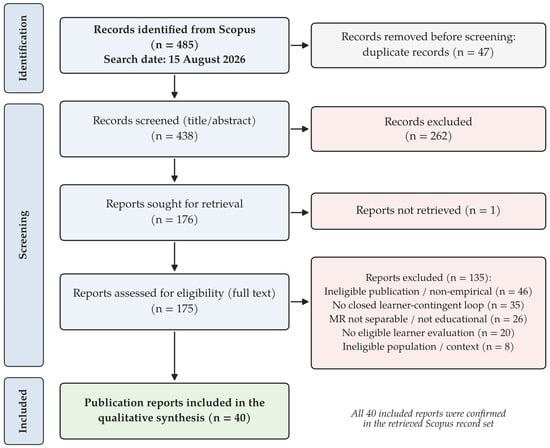
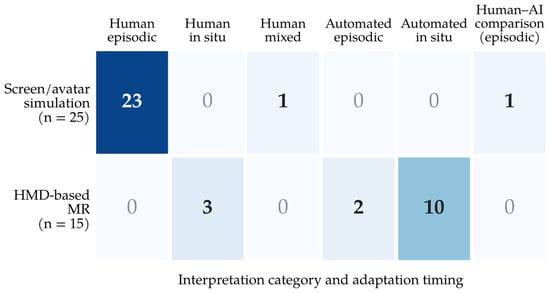

Disclaimer/Publisher’s Note: The statements, opinions and data contained in all publications are solely those of the individual author(s) and contributor(s) and not of MDPI and/or the editor(s). MDPI and/or the editor(s) disclaim responsibility for any injury to people or property resulting from any ideas, methods, instructions or products referred to in the content. |
© 2026 by the authors. Licensee MDPI, Basel, Switzerland. This article is an open access article distributed under the terms and conditions of the Creative Commons Attribution (CC BY) license.